Bikesrepublic

ducati

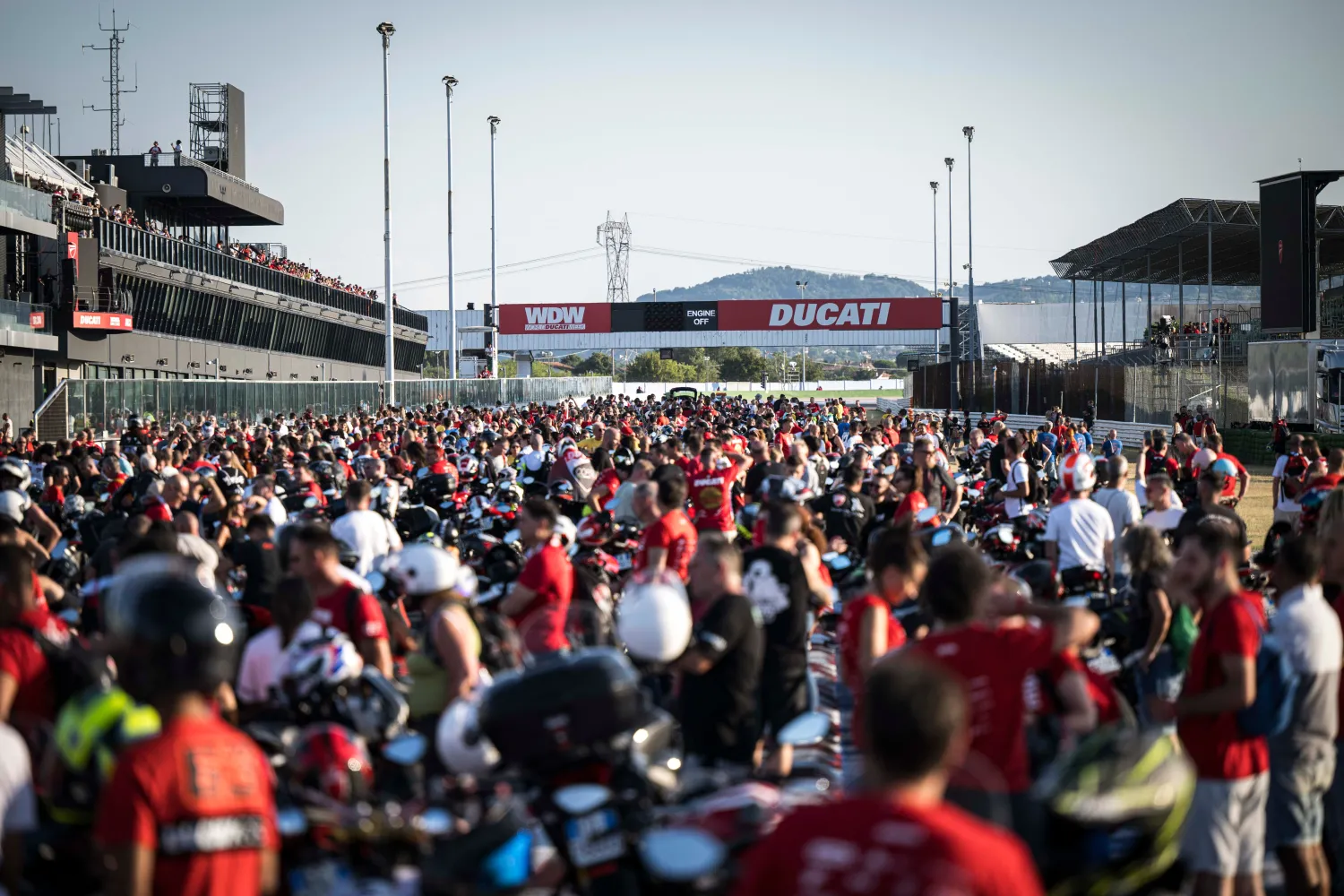
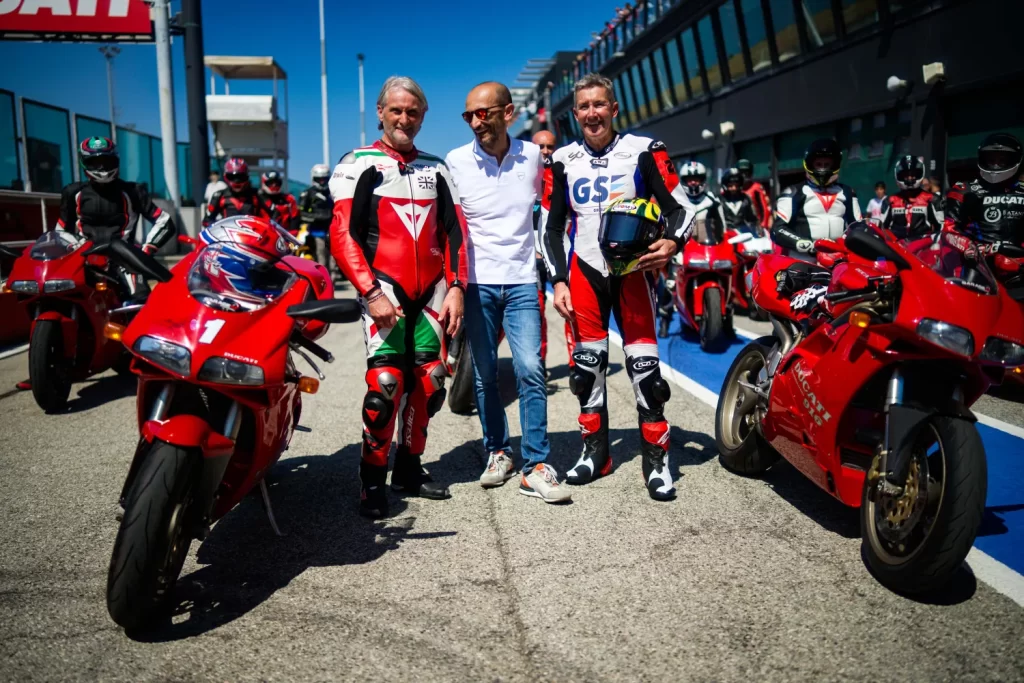
World Ducati Week 2024 telah mencatatkan rekod kehadiran baharu, selepas menyaksikan lebih 94,000 hadirin dari 86 negara berbeza.

Dan dalam media sosial, Ducati melaporkan 17 juta tayangan, tetapi kemungkinan besar disebabkan oleh telatah Marc Marquez dalam perlumbaan Race of Champions.

Bercakap selepas acara itu, Claudio Domenicali, Ketua Pegawai Eksekutif Ducati, berkata:

“World Ducati Week ialah acara yang lebih baik daripada apa-apa lagi yang merangkumi misi jenama kami untuk menawarkan pengalaman yang tidak dapat dilupakan kepada peminat kami, dicipta di sekitar motosikal istimewa, yang merupakan gabungan ajaib teknologi dan keindahan dalam gaya sukan Itali tulen. Nombor edisi ini adalah luar biasa dan merupakan bukti bahawa cinta untuk Ducati di dunia tidak pernah begitu kuat saya ingin mengucapkan terima kasih kepada setiap peserta, tetapi juga semua kakitangan yang kebanyakannya terdiri daripada pekerja Ducati yang, seperti biasa, bekerja keras untuk menjadikan pengalaman yang luar biasa ini mungkin. Terima kasih juga kepada semua Ducati Corse dan khususnya kepada penunggang, wira WDW, yang menyediakan diri mereka kepada peminat dan memberikan kami persembahan yang unik di dunia seperti Lenovo Race of Champions Prestasi yang dicapai oleh yang baharu Panigale V4 benar-benar luar biasa: pusingan terpantas dalam kelayakan hanya 3.2 saat dari rekod perlumbaan MotoGP, yang dimiliki Francesco Bagnaia dengan 1m31.8s. Sama hebatnya ialah keazaman yang sekali lagi dibuktikan oleh Pecco sebagai yang terbaik perlumbaan di mana setiap orang mempunyai basikal yang sama.”

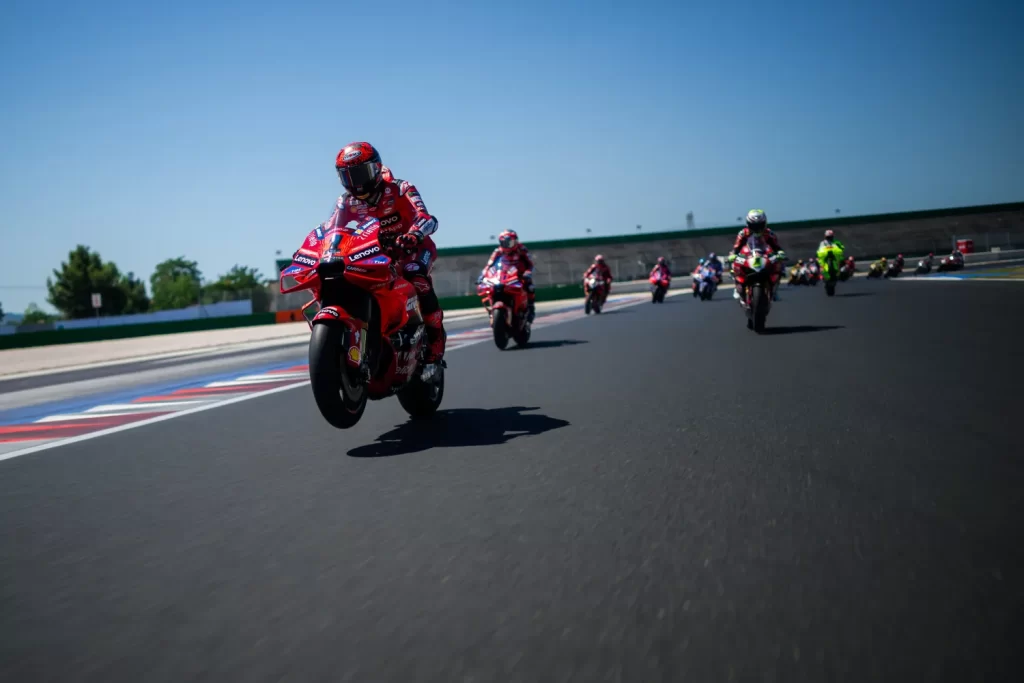
Walaupun perlumbaan Race of Champions adalah acara pameran, Francesco Bagnaia melakukan pusingan kelayakan dengan masa terpantas 1m35.4s yang luar biasa untuk meletakkan dirinya di petak pertama, dengan menunggang Ducati Panigale V4 (2025) yang baru dilancarkan. Ia hanya 3.2s lebih perlahan daripada rekod pusingan MotoGP di litar Misano tempat perlumbaan itu diadakan. Sebagai perbandingan, Panigale V4 sebelumnya adalah 4.0 saat lebih perlahan dari rekod tersebut.

Kemudian, di selekoh terakhir pada pusingan terakhir perlumbaan, Marquez ke arah menerkam pelumba kilang WSBK Ducati Nicolò Bulega. Bulega terhempas teruk tetapi tidak mengalami sebarang kecederaan serius. Rakaman video di tepi trek kelihatan seolah-olah Marc telah menggunakan Bulega sebagai tambatan dan melanggarnya keluar dari trek, tetapi Bulega kemudiannya menyatakan bahawa dia terkejut dengan gerakan Marquez yang membuatnya tertekan brek dengan kuat, oleh itu menyebabkan dirinya terhempas. Namun, ia menunjukkan sifat agresif dan keinginan Marc untuk menang, walaupun ia adalah suatu acara “persahabatan”.

Kami rasa peserta di Minggu Ducati Dunia 2024 telah mendapat pengalaman seumur hidup mereka.

World Ducati Week 2024 set a new attendance record, after seeing more than 94,000 attendees from 86 different countries.

And in social media, Ducati reported 17 million impressions, but most likely due to Marc Marquez’s antics in the Race of Champions.

Speaking after the event, Claudio Domenicali, Ducati CEO, said:

“World Ducati Week is the event that better than anything else embodies our brand’s mission to offer memorable experiences to our enthusiasts, created around special bikes, which are a magical combination of technology and beauty in pure Italian sporting style. The numbers of this edition are extraordinary and are proof that the love for Ducati in the world has never been so strong. I want to thank every single participant, but also all the staff composed mostly of Ducati employees who, as usual, worked hard to make this incredible experience possible. Thanks also to all of Ducati Corse and in particular to the riders, the heroes of WDW, who made themselves available to the fans and gave us a show that is unique in the world like the Lenovo Race of Champions. The performance achieved by the new Panigale V4 is truly incredible: the fastest lap in qualifying was just 3.2 seconds away from the MotoGP race track record, which belongs to Francesco Bagnaia with 1m31.8s. Equally incredible is the determination with which Pecco once again proved to be the best, in a race where everyone had exactly the same bike.”

While the race was an exhibition event, Francesco Bagnaia put in an incredible 1m35.4s qualifying lap to put himself on pole, riding the newly launched 2025 Ducati Panigale V4. It was only 3.2s slower than the MotoGP lap record at the Misano circuit where the race was held. By comparison, the previous Panigale V4 was 4.0 seconds off the record.

Then, on the last lap of the race, Marquez lunged at WSBK Ducati factory rider Nicolò Bulega from a long way back into the final corner. Bulega crashed heavily but did not sustain any serious injuries. Trackside video footage looked as if Marc had used Bulega as a berm and punted him off the track, but Bulega would later state that he was surprised by the move and overbraked, therefore causing himself to crash. Still, it showed Marc’s aggression and desire to win more than anything else, even it was at a “friendly.”

Well, we guess the attendees at World Ducati Week 2024 had the time of their lives.

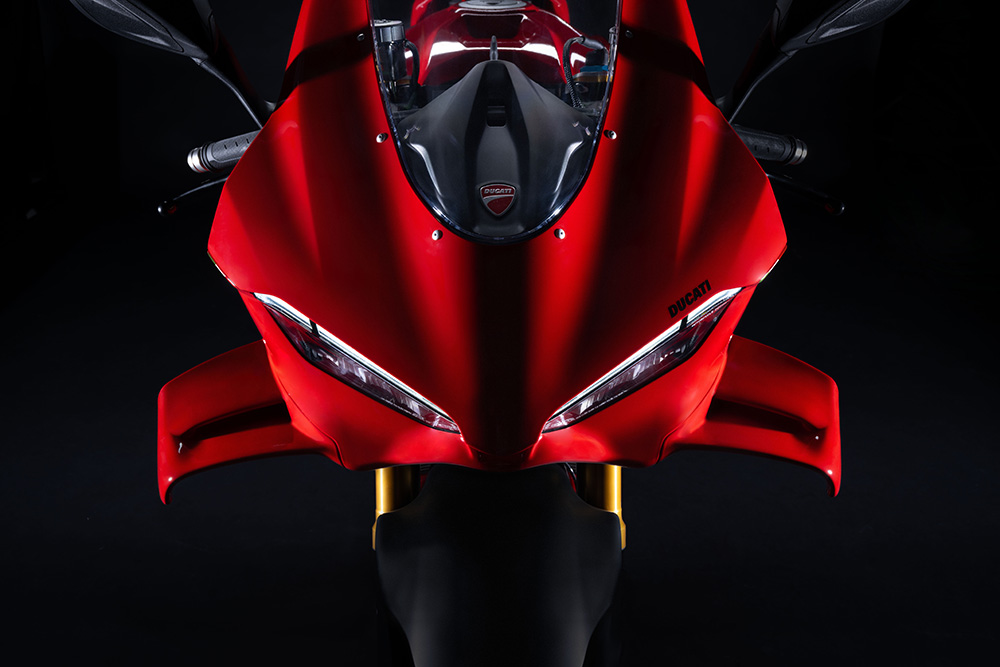
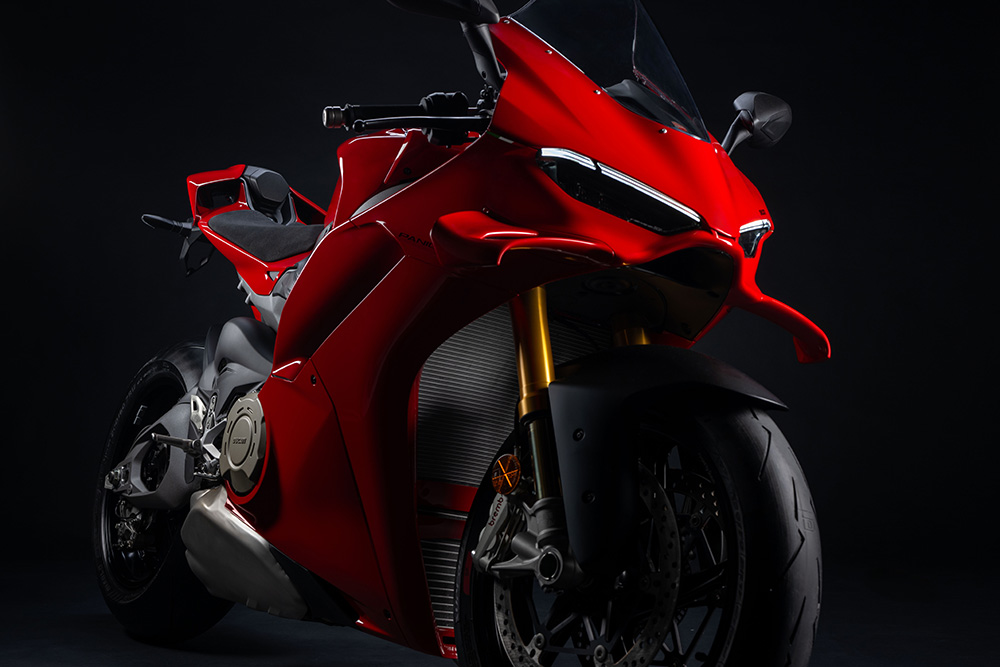
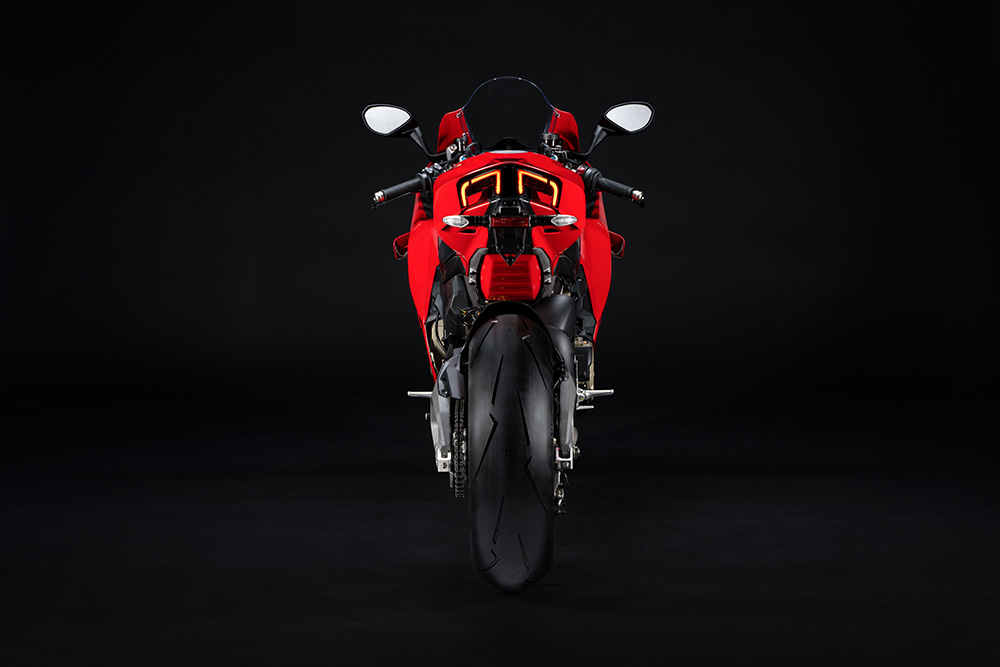
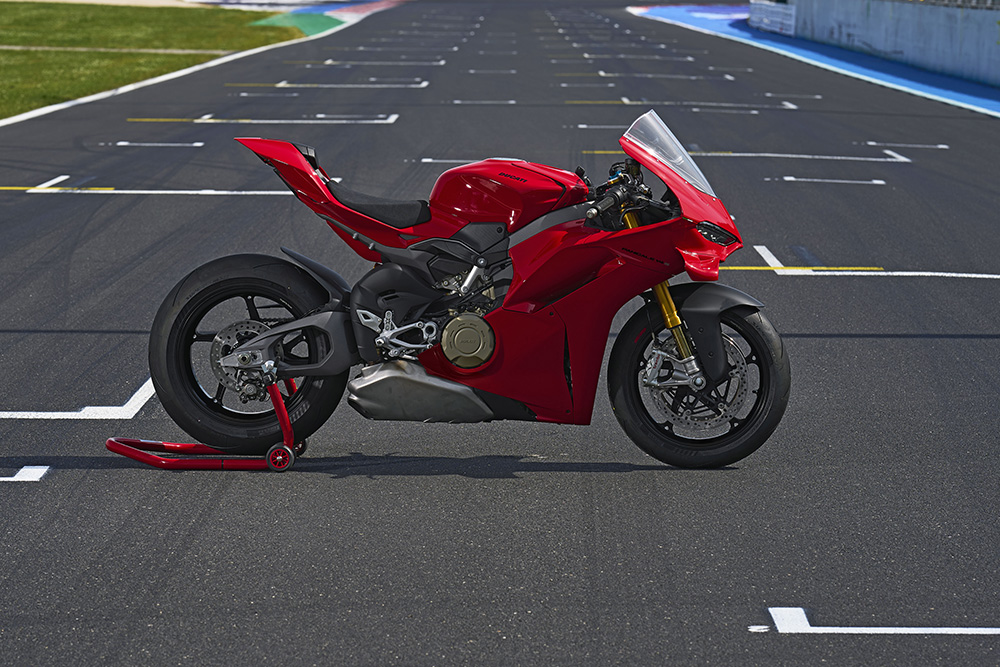
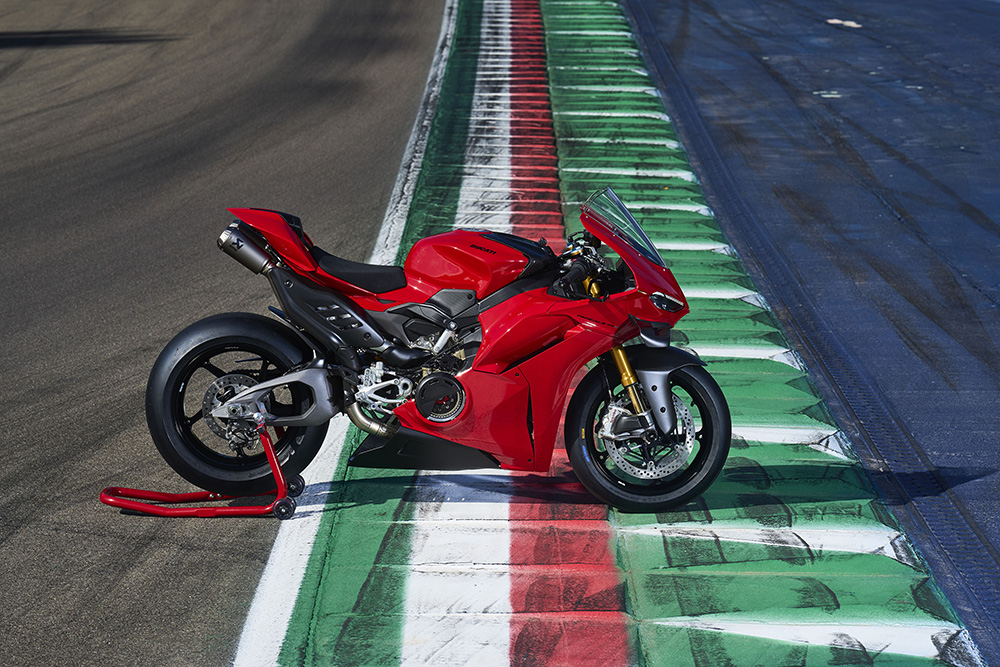
Ducati Panigale V4 (2025) telah lancarkan dan membuatkan semua peminat Ducati teruja. Termasuklah kami.

Seperti setiap semakan, Ducati telah memuatkan segala-gala ciri dan teknologi ke dalam model ini, hanya kecuali enjin Desmosedici GP. Senarai ciri-ciri baharu amat panjang dan setiap satu memerlukan satu artikel penuh, jadi kami telah merumuskannya ke dalam senarai 5 ciri baharu.

1. Rekabentuk baharu
  • Rekabentuk Ducati Panigale V4 (2025) diilhamkan oleh Ducati 916 yang menakluki dunia.

  • Mereka kemudian menambah ciri aerodinamik dan ergonomik baharu yang diperoleh daripada Desmosedici GP.
  • Terdapat paip kemasukan udara yang baharu dan disembunyikan di bawah “dagu” fairing, serta pelana lebih lebar dan lebih panjang untuk memberikan lebih banyak ruang untuk penunggang.

  • Fairing baharu mengurangkan rintangan aerodinamik sebanyak 4% dan memastikan penunggang berada dalam gelembung udara yang tenang.
  • Sayap dengan dwi-profil kali dan memberikan jumlah daya ke bawah yang sama seperti model sebelumnya.

  • Bentuk madgad depan juga telah disemak untuk menyalurkan udara penyejukan dengan lebih baik kepada penyejuk minyak.
2. Ergonomik baharu
  • Kedudukan tunggangan telah dibangunkan dengan objektif untuk menyepadukan penunggang ke dalam ciri aerodinamik motosikal dan meningkatkan kawalan.

  • Semakan ini menghasilkan  ruang yang lebih luas, dan tambahan pula ceruk yang dalam bahagian atas tangki mengelakkan gangguan pada pelindung dagu topi keledar.
  • Kawasan belakang tangki digabungkan dengan penutup sisi dan bentuk pelana untuk menyokong penunggang dengan lebih baik semasa fasa brek, masuk selekoh dan di dalam selekoh.

  • Pemijak kaki telah dialihkan 10mm ke dalam, bagi meningkatkan kelegaan dan meningkatkan penembusan aerodinamik.
3. Casis baharu
  • Francesco Bagnaia berjaya membuat lap 1m35.8s di atas sebuah Panigale V4 semasa Perlumbaan Juara di Misano pada 2022, yang hanya 4 saat lebih perlahan daripada 1m31.8s pada Desmosedici GP.

  • Oleh itu, Ducati Corse meminta casis dengan sasaran kekukuhan kerangka dan lengan ayun yang baharu.
  • Jadi, jurutera Ducati menyemak semula kekukuhan sisi untuk kerangka bagi mengekalkan cengkaman pada sudut condong melebihi 60°(!).

  • Kerangka baharu ini juga lebih ringan pada 3.47kg berbanding 4.2kg yang sebelumnya.
  • Kerangka ini dipadankan dengan lengan ayun dua belah baharu yang digelar Ducati Hollow Symmetrical Swingarm.

  • Lengan swingarm mengurangkan kekukuhan sisi sebanyak 37% dan 2.7kg lebih ringan daripada versi satu sisi sebelumnya.
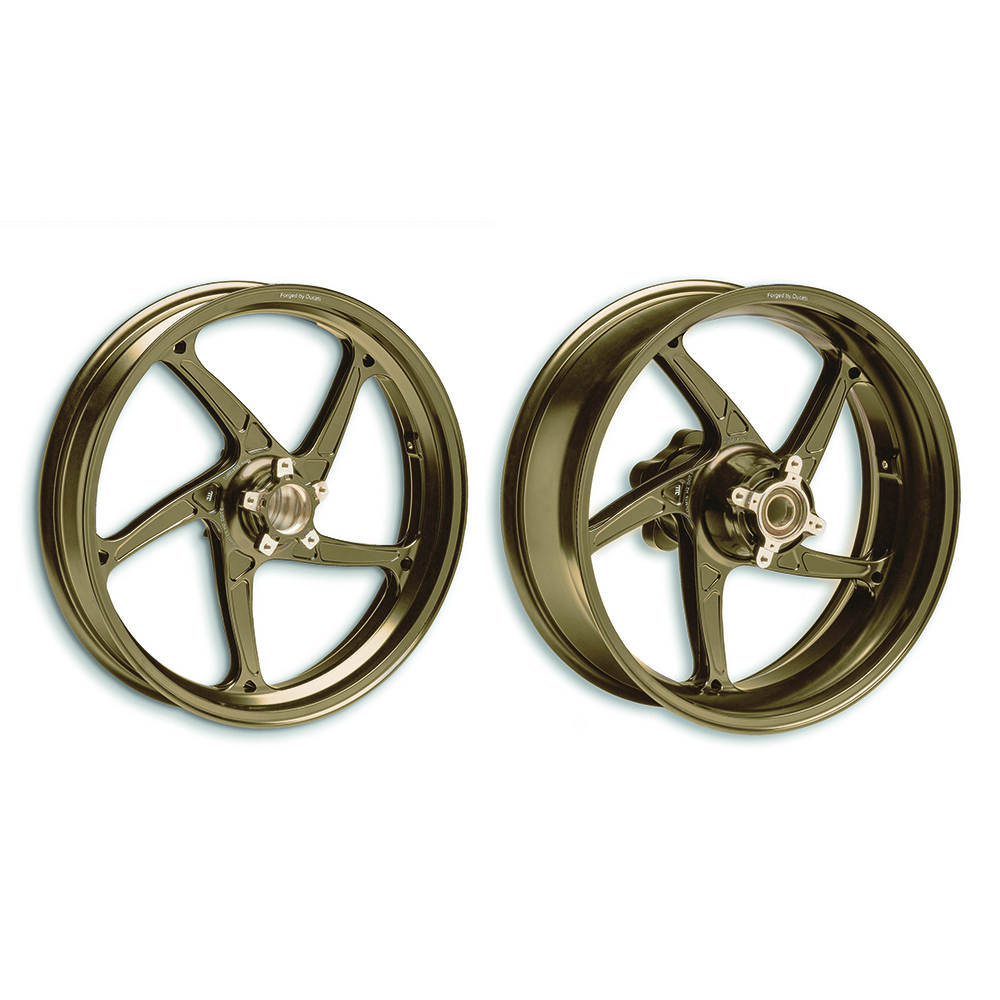
  • Versi V4 S menerima roda aloi aluminium yang beratnya hanya 2.95kg untuk bahagian hadapan dan 4.15kg untuk belakang.

  • Suspensi Öhlins NPX/TTX generasi ketiga dikawal secara elektronik bagi Panigale V4 S.
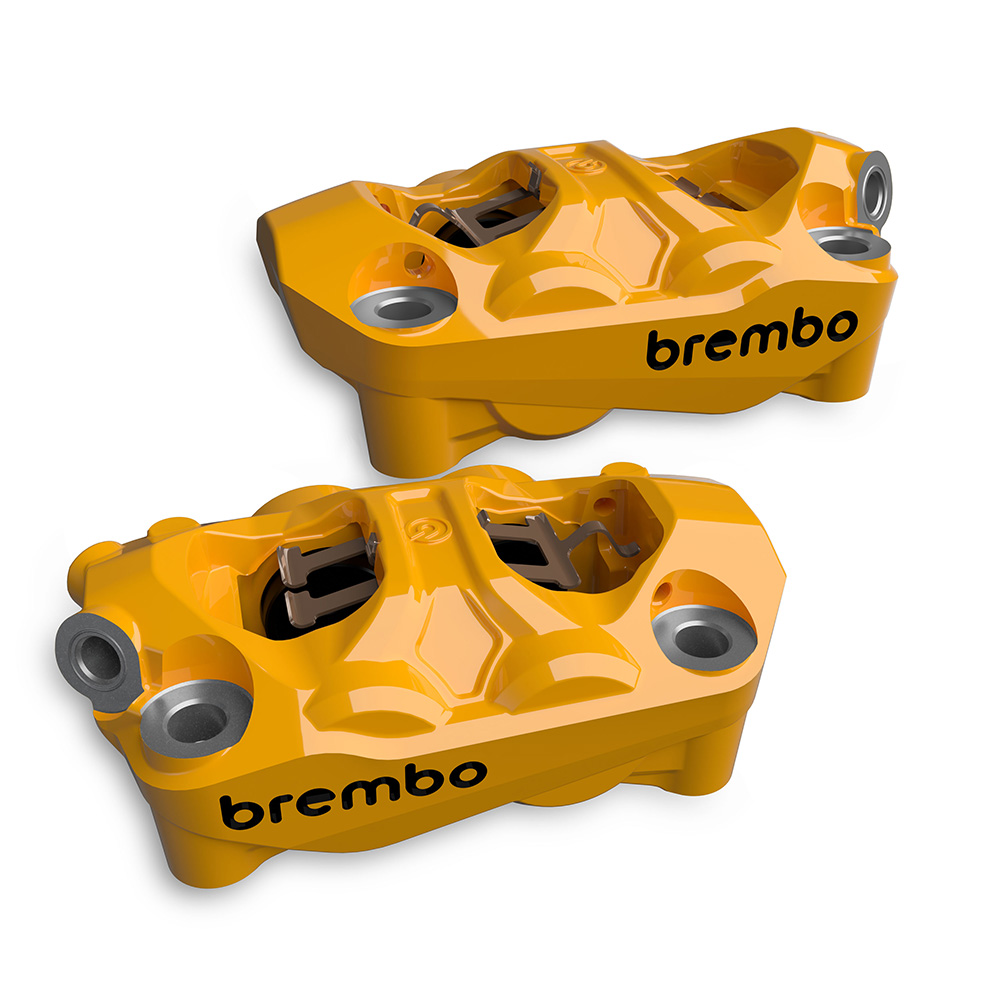
  • Ducati Panigale V4 (2025) adalah motosikal yang pertama dilengkapi dengan kaliper brek hadapan Brembo Hypure baharu. Mereka lebih ringan sebanyak 60 gram sebagai sepasangan.

  • Satu lagi ciri pertama di dunia ialah sistem Race eCBS, yang dibangunkan bersama oleh Bosch dan Ducati. Sistem ini memerlukan artikel yang khusus untuknya!
4. Ducati Vehicle Observer (DVO)
  • Sistem ini mensimulasikan input lebih daripada 70 penderia (sensor), mengikut strategi kawalan elektronik.

  • Ducati Panigale V4 (2025) dilengkapi dengan pakej kawalan elektronik yang lengkap: Ducati Traction Control DVO, Ducati Slide Control, Ducati Wheelie Control DVO, Ducati Power Launch DVO, Engine Brake Control, dan Ducati Quick Shift 2.0.
  • Sistem DQS 2.0 menggunakan strategi berdasarkan penderia kedudukan sudut gendang gear, dengan itu boleh menggunakan rod anjakan gear tanpa suis mikro.

5. Papan pemuka MotoGP
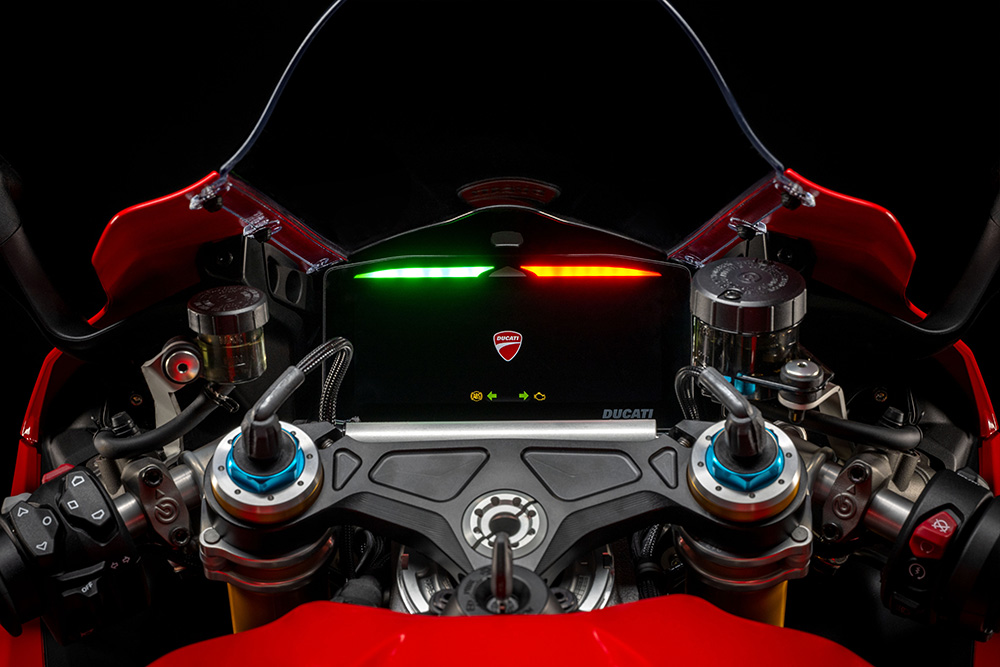
  • Papan pemuka bersaiz 6.9-inci yang baharu sepenuhnya diletakkan sedemikian rupa sehingga tidak mengganggu penglihatan penunggang.

  • Kaca pelindung menggunakan teknologi Optical Bonding untuk memastikan data senang dibaca walaupun pada siang hari.
  • Paparan Track baharu memaparkan parameter seperti g-Meter, Power & Torque, dan Lean Angle.

  • Info Mode Track menggunakan sistem perolehan data DDL yang menggunakan GPS dan dibangunkan bersama pakar 2D.
Sebagai penutup

Ini hanyalah beberapa ciri utama untuk Ducati Panigale V4 (2025) baharu. Kami akan menyelidiki setiap ciri dan menulis artikel mengenainya tidak lama lagi, jadi nantikan!

Galeri Foto Ducati Panigale V4 (2025)

The 2025 Ducati Panigale V4 has been revealed, sending Ducatistis into a frenzy. Us included.

As with each revision, Ducati has thrown everything into this one, sans the Desmosedici GP engine. The list eye-watering long and some of these features require full articles to be written for each of them, so we have summed it up into a list of 5 new things.

1. New styling
  • The 2025 Ducati Panigale V4’s design was inspired by the subliminal and world-conquering Ducati 916.

  • They then added new aerodynamic and ergonomic solutions derived from the Desmosedici GP.
  • A new central air intake hidden under the chin, and the seat is wider and longer to provide more room for the rider.

  • The new fairing reduces aerodynamic resistance by 4% and keeps the rider in a bubble of calm air.
  • The wings are double-profiled and provides the same amount of downforce as the previous model’s.

  • The mudguard’s shape has also been revised to provide better cooling air to the oil cooler.
2. New ergonomics
  • The riding position was developed with the objectives of integrating the rider into the bike’s aerodynamics and improving control of the bike.

  • The revision results in  greater roominess, and additionally the deep recess in the upper part of the tank avoids interference with the chin guard of the helmet.
  • The rear area of the tank, combined with the side covers and the shape of the seat, better supports the rider during braking, entering and cornering phases, making it easier for the rider to anchor himself.

  • The footrests have been moved 10 mm inwards, increasing ground clearance and improving aerodynamic penetration.
3. New chassis
  • Franceso Bagnaia set a lap time of 1m35.8s on a Panigale V4 during the Race of Champions at Misano in 2022, which was only exactly 4 seconds slower than the 1m31.8s on his Desmosedici GP.

  • Ducati Corse requested new stiffness targets for the frame and swingarm.
  • So, Ducati’s engineers revised the frame’s lateral stiffness to maintain grip at lean angles now over 60°(!).

  • It is also lighter at 3.47kg compared to the previous 4.2kg.
  • This revised frame is mated with a new forged double-sided swingarm dubbed the Ducati Hollow Symmetrical Swingarm.

  • The swingarm reduces lateral stiffness by 37% and is 2.7kg lighter than the previous single-sided version.
  • The V4 S receives forged aluminium alloy wheels that weigh only 2.95kg for the front and 4.15kg for the rear.

  • Third generation electronically controlled Öhlins NPX/TTX suspensions of the Panigale V4 S.
  • The new 2025 Ducati Panigale V4 is the first motorcycle to be equipped with the new Brembo HypureTM front brake callipers. They are lighter by 60 grams per pair.

  • Another important world premiere is the Race eCBS system, developed by Bosch in collaboration with Ducati. This system needs an entire article dedicated to it!
4. Ducati Vehicle Observer (DVO)
  • The system simulates the input of over 70 sensors, according to electronic control strategies.

  • The 2025 Ducati Panigale V4 is equipped with the complete package of electronic controls: Ducati Traction Control DVO, Ducati Slide Control, Ducati Wheelie Control DVO, Ducati Power Launch DVO, Engine Brake Control and Ducati Quick Shift 2.0.
  • The DQS 2.0 system uses a strategy based solely on the angular position sensor of the gear drum, thus being able to use a gear shift rod without microswitches.

5. MotoGP dashboard
  • A completely new 6.9-inch dashboard placed in such a way it does not interfere with the rider’s vision.

  • The protective glass uses Optical Bonding technology to ensure optimal readability on a black background even during the day.
  • New Track display on the dashboard to display parameters such as g-Meter, Power & Torque, Lean Angle.

  • The Info Mode Track uses the DDL data acquisition system which utilised GPS and developed together with specialist 2D.
In a nutshell

These are just the main points for the new 2025 Ducati Panigale V4. We shall delve into each point soon, so stay tuned!

2025 Ducati Panigale V4 Photo Gallery

Di tatkala kami kagum dengan barisan Ducati yang menggunakan enjin V4 semasa yang terdiri daripada Panigale V4, Streetfighter V4, Multistrada V4, dan terbaru Diavel V4, Ducati sebenarnya telah membuat enjin V4 walaupun sebelum menghasilkan enjin V-Twin pertama mereka. Sebaliknya dan mungkin ironisnya, enjin V-Twin yang membawa nama Ducati kepada orang ramai, sebelum mereka kembali ke V4 untuk menguasai litar perlumbaan dunia. Jawapannya ada kaitan dengan motosikal yang dipasang enjin V4 pada masa itu, iaitu Ducati Berliner 1260 Apollo yang tampil pada 1964.

Bagaimana ia bermula

Pengedar Ducati di Amerika Syarikat, adik beradik Joe dan Mike Berliner dari Berliner Motor Corporation yakin mereka boleh menjual motosikal kepada jabatan polis Amerika. Tetapi mereka terpaksa bersaing dengan Harley-Davidson yang mempunyai monopoli dalam segmen itu.

Jadi, Joe Berliner mendekati Ducati pada tahun 1959 dengan cadangan untuk membina motosikal itu. Ducati dimiliki oleh kerajaan Itali pada masa itu dan hanya mengeluarkan 200cc Elite. Dan, mereka juga berada dalam keadaan kewangan yang buruk seperti semua pengeluar motosikal Itali lain yang terpaksa bersaing dengan populariti Fiat 500.

Walaubagaimanapun, spesifikasi rasmi jabatan polis AS semakin diseragamkan di seluruh negara, dan mereka mengutamakan produk nasional mereka iaitu Harley. Mereka memerlukan kapasiti enjin sekurang-kurangnya 1200cc, jarak roda minimum 60 inci/1525mm, dan tayar 5.00 inci x 16 inci.

Mike Berliner menghantar dua Harley Duo Glide kepada Ducati untuk penilaian. Selepas mempertimbangkan rekabentuk enjin Harley FL 74 inci padu (1212cc) yang kuno, ketua Ducati Dr. Giuseppe Montano dan ketua jurutera Dr. Fabio Taglioni bersetuju bahawa mereka boleh menghasilkan rekabentuk yang lebih cekap dan moden. Taglioni menerima tugasan itu sebagai suatu cabaran teknikal dengan penuh semangat.

Malangnya para birokrat di Rom menunjukkan banyak keraguan yang mengakibatkan rundingan dilanjutkan sehingga 1961 sebelum Montana mendapat kata putus, dan selepas Berliner berjanji untuk menaja jamin projek itu termasuk kos pembangunan dan pengeluaran.

Nama Apollo dipilih oleh adik-beradik Berliner sebagai penghormatan kepada program bulan Apollo yang baru sahaja bermula.

Enjin dan prestasinya

Taglioni diberitahu untuk membuat enjin yang besar lebih besar dan lebih pantas dan oleh itu, dia merekabentuk sebuah unit V4 90°, 1257cc, sejukan udara, dua injap, dengan aci engkol 180°. Lejang dan gerek masing-masing adalah 84.5 mm dan 56 mm, menjadikannya enjin Ducati dengan nisbah gerek/lejang yang paling luas pada masa itu. Penggerakan injap dikendalikan oleh rod penolak (pushrod) dan lengan jungkit (rocker arms), bukannya syaf pemacu dan gear serong (bevel gear). Ia menghasilkan 100 hp pada hanya 7,000 RPM.
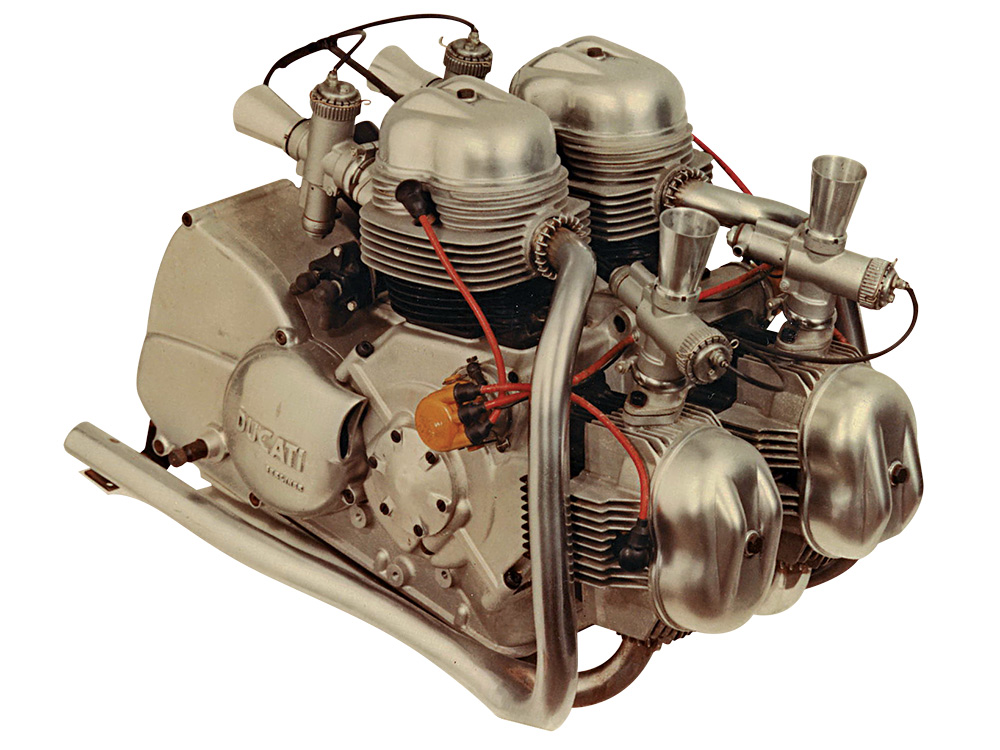
Ducati memasangkan transmisi 5-kelajuan untuk mengatasi pesaing mereka yang mempunyai kotak gear 4-kelajuan. Taglioni juga menyediakan peruntukan untuk memuatkan transmisi automatik (CVT) pada masa hadapan.

Enjin itu dipasang dalam kerangka tugas berat. Terdapat pemula tendangan (kick starter) bagi penunggang yang berani atau yang dengan tulang kering besi, tetapi terdapat juga pemula elektrik yang kelihatan serupa dengan Fiat TV1100. Juga terdapat penjana (stator) 200w yang besar di sebelah kanan untuk menampung semua peralatan elektrik polis. Ceriani membangunkan suspensi, serta brek dram  depan dan belakang.

Berat motosikal ini ialah 270 kg, kering. Walaupun itu agak banyak walaupun mengikut piawaian hari ini, ia sebenarnya lebih ringan daripada Harley dengan 291 kg.
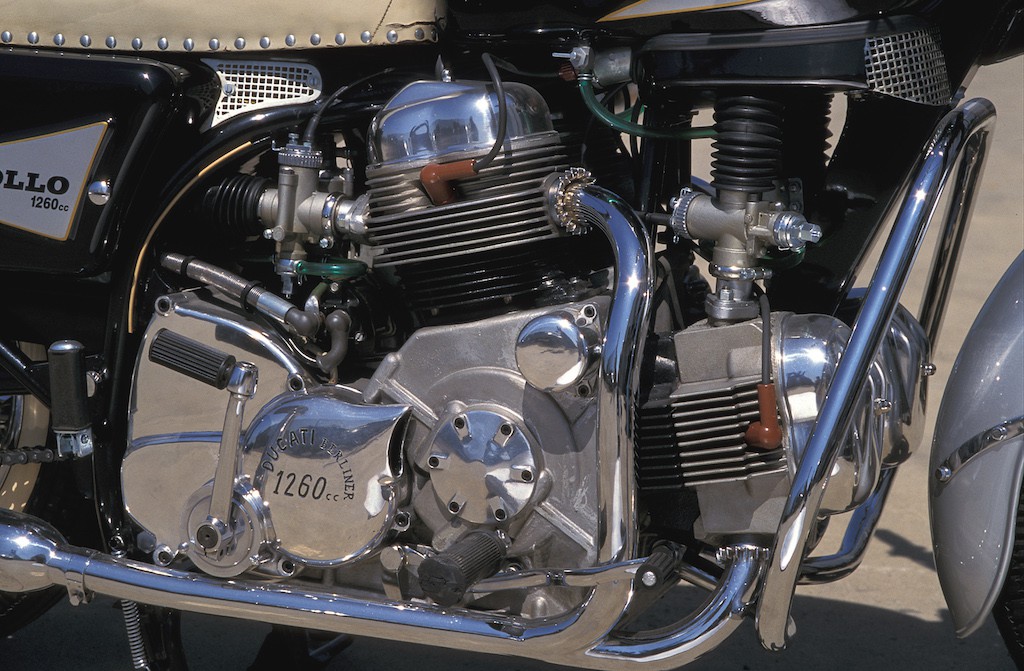
Ducati melengkapkan penggayaan motosikal ini dengan tangki bahan api gaya ‘peanut,’ pelana ‘koboi’ dengan rel genggam sangkar berkrom, serta fork depan dan penyerap hentakan belakang yang kelihatan serupa dengan Harley Duo Glide.

Dua prototaip berfungsi sepenuhnya telah dibina, dengan satu dicat emas untuk ditunjukkan oleh Berliner di pameran, manakala satu lagi dalam warna hitam dan perak. Terdapat juga dua enjin ganti tambahan.

Tunggang uji

Penunggang ujian Ducati, Franco Farne, keluar daripada kilang Ducati untuk melakukan ujian jalanan sulung buat motosikal itu, namun dia kembali dengan keputusan: “pengendaliannya seperti trak.” Tetapi Ducati Berliner 1260 Apollo menebuskan dirinya dengan prestasi garis lurus, di mana ia mencecah lebih 200 km/j. Ujian ini mengesahkan bahawa ia merupakan motosikal Eropah terpantas pasca Perang Dunia Kedua.

Malangnya, prestasi yang menakjubkan itu juga menyebabkan kejatuhannya, terutamanya kerana ia dipasang dengan tayar kereta 16 inci. Seorang lagi penguji Ducati, dan bekas mekanik GP Giancarlo Fuzzi‚ keluar untuk ujian kelajuan tinggi pada autostrada Milan-Bologna. Tiba-tiba tayar Pirelli belakang motosikal ini mengembang dan tertanggal bunganya, malah keseluruhan tayar tercabut daripada rim pada kelajuan kira-kira 160 km/j. Fuzzi memanggil kelangsungan hidupnya sebagai ” satu keajaiban.”
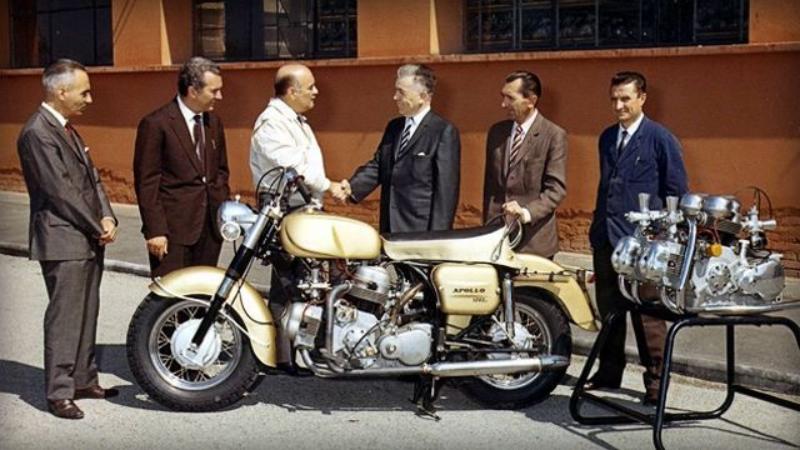
Kuasa enjin itu kemudiannya dikurangkan kepada 80 hp dengan menurunkan nisbah mampatan dan memasang sesondol yang kurang agresif, tetapi ia masih terlalu kuat bagi mana-mana tayar pada masa itu. Sekali lagi ia telah dikurangkan kuasanya dengan menurunkan nisbah mampatan dan 65 hp; barulah kehausan tayar dikatakan “boleh diterima.”

Sebagai perbandingan, Moto Guzzi Grand Prix 500cc V8 mempunyai roda 20-inci, tetapi kuasa enjin 78 hp-nya sudah cukup untuk mengoyakkan tayar belakangnya.

Penghujung projek

Berliner gembira dengan persembahan itu dan terus mencetak risalah untuk menjual motosikal itu. Mereka bercadang untuk menjual versi ‘normale‘ dengan kuasa yang dikurangkan kepada orang awam sebagai model jelajah, sambil mengekalkan versi ‘Sport‘ yang berkuasa penuh untuk penguatkuasa undang-undang. Malah, 65 hp dari V4 masih lebih berkuasa daripada enjin Harley yang menghasilkan hanya 55 hp.

Bagaimanapun, versi yang dikurangkan kuasa enjin terpaksa bersaing dengan motosikal Eropah lain seperti BMW dan British Twins.

Harley juga boleh mendakwa bahawa harga Apollo sebanyak USD 1,500 itu terlalu mahal dan mereka menawarkan sesuatu yang hampir dengan prestasi itu pada harga yang jauh lebih murah.

Kemudian kerajaan Itali memutuskan bahawa pasaran terhad untuk model Apollo ini tidak membawa faedah daripada segi kos perkakas dan pengeluaran, dan menarik balik pembiayaan projek. Ini adalah tamparan hebat kepada rancangan perniagaan Berliner.

Sesuatu peluang yang terlepas

Ducati Berliner 1260 Apollo sebenarnya boleh menjadi ‘superbike‘ yang pertama jika teknologi tayar  masa itu dapat menampung kuasa enjinnya. Sebaliknya, Honda CB750 muncul pada tahun 1969 untuk menuntut penghormatan itu. Walaupun begitu, ia hanya mempunyai 68 hp dan kelajuan tertinggi 201 km/j. Kawasaki Z1 dengan enjin 903cc pada tahun 1972 pun hanya menghasilkan 81 hp dan kelajuan tertinggi 209 km/j.

Beberapa tahun kemudian, Honda dan Suzuki akan meniru rekabentuk V4 Ducati untuk mereka menguasai perlumbaan GP.

Ia sememangnya suatu peluang yang terlepas.

Walaubagaimanapun, reka bentuk enjin V4 membawa Taglioni kepada merekabentuk enjin yang akan membawa penguasaan Ducati dalam perlumbaan superbike, iaity V-Kembar (V-Twin) 90º. Tetapi dapat dilihat bahawa enjin V4 1257cc ini mempunyai tempat di hatinya, yang mana salah satu enjin ganti tersebut berada di dalam pejabatnya sehingga persaraannya pada 1984.

Hari ini, prototaip hitam dan perak itu dimiliki oleh Hiroaki Iwashita, dan ditempatkan di muziumnya di Yufuin di pulau Kyushu, Jepun.

Nasib prototaip berwarna emas tidak diketahui.

While we revel at the current Ducati’s V4 lineup consisting of the Panigale V4, Streetfighter V4, Multistrada V4, and most recently the Diavel V4, Ducati had actually made a V4 engine even prior to producing their first V-Twin engine. Instead, perhaps ironically, it was the V-Twin that went on to bring the Ducati name to the masses, before they went back to the V4 to dominate the world’s racing circuits. The answer has to do with the machine the engine was fitted to: The Ducati Berliner 1260 Apollo which debuted in 1964.

How it began

Ducati’s United States distributor, the brothers Joe and Mike Berliner of Berliner Motor Corporation were convinced they could sell motorcycles to the American police departments. But they had to compete with Harley-Davidson who had a free run in that segment.

So, Joe Berliner approached Ducati in 1959 with a proposal to build that bike. Ducati was owned by the Italian government at the time and produced only the 20occ Elite. And, they were also in a bad state as with all other Italian motorcycle manufacturers who had to contend with the Fiat 500’s popularity.

However, official US police department specifications were increasingly standardised across the country, and naturally favoured their national product i.e. Harley. They required an engine capacity of at least 1200cc, a minimum 60-inch/1525mm wheelbase, and 5.00-inch x 16-inch tyres.

Mike Berliner shipped two Harley FL Duo Glides to Ducati for evaluation. After considering the design of the archaic 74 cubic inch (1212cc) Harley FL’s engine, Ducati’s chief Dr. Giuseppe Montano and chief engineer Dr. Fabio Taglioni agreed they could produce a more efficient and modern design. Taglioni eagerly accepted the commission as a technical challenge.

Unfortunately the bureaucrats in Rome showed much scepticism which resulted in dragged out negotiations until 1961 before Montana got the green light, and after Berliner promised to underwrite the project including development and production costs.

The name Apollo was chosen by the Berliner brothers in honour of the Apollo moon program which had just begun.

The engine and its performance

Taglioni was told to make the big bigger and faster and so, he designed a 1257cc, air-cooled, two-valved, 90° V4, with a 180 crankshaft. The bores and strokes were 84.5 mm and 56 mm, respectively, making it the most oversquare Ducati engine at the time. Valve actuation was handled by pushrods and rocker arms, rather than tower shafts and bevel gears. It made 100 hp at just 7,000 RPM.

Ducati gave it a 5-speed transmission to up the ante against their rivals who had 4-speed gearboxes. Taglioni even designed a provision to fit an automatic (CVT) in the future.

The engine was mounted in a heavy duty open cradle frame. There was a kick starter for the brave or with steel shins, but there was also an electric starter which looks similar to the Fiat TV1100’s. There was a massive 200w generator on the right side to cater for all the police electrical equipment. Ceriani developed the suspension, and front and rear single leading show drum brakes.

Weigh was finally tallied at 270 kg, dry. Although that is a lot even by today’s standards, it was actually lighter than the Harley’s 291 kg.

Ducati completed the bike’s styling with a peanut-style fuel tank, cowboy seat with a chrome cage grab rail, and forks and shocks that look similar to the FL’s.

Two fully working prototypes were built, one was painted gold for Berliner to demonstrate at shows, while another in black and silver. There were also two extra spare engines.

The test

So, off went Ducati’s test rider Franco Farne on the bike’s maiden test, only for him to return with the verdict: “It handles like a truck.” But the Ducati Berliner 1260 Apollo made up for it in straight-line performance, where it hit more than 200 km/h. It confirmed that it was most powerful the fastest European bike.

Unfortunately, that amazing performance was also its downfall, especially because it was fitted with those 16-inch automobile tyres. Another Ducati tester, and former GP mechanic Giancarlo Fuzzi‚ went out for a high speed test on the Milan-Bologna autostrada when the whitewall rear Pirelli ballooned, detached its tread, and came off the rim at around 160 km/h. Fuzzi called his survival “a miracle.”

The engine was subsequently detuned to 80 hp by lowering the compression ratio and fitting less aggressive cams, but it was still too much for any tyre at the time. Again it was detuned by lowering the compression even more to 65 hp and tyre wear became “acceptable.”

By comparison, the Moto Guzzi Grand Prix 500cc V8 had 20-inch wheels, but its 78 hp also shredded the bike’s tyres.

The end of the project

Berliner was of course happy with the performance and went ahead to print flyers to sell the bike. They planned to sell the detuned ‘normale‘ version to civilians as a touring model, while reserving the fully powered ‘Sport‘ version for law enforcement. In fact, 65 hp from the V4 was still more powerful than Harley’s 55 hp.

However, the detuned version had to contend with other European bikes such as BMW and British Twins.

Harley could also undercut the Apollo’s price of USD 1,500 by saying that they offer something close to that performance and a much cheaper price.

Then the Italian government decided that the limited market did not justify the tooling costs of production, and withdrew project funding. This was a severe blow to Berliner’s business plans.

What it could have been

The Ducati Berliner 1260 Apollo could have been the very first ‘superbike’ had tyre technology been up to the task; that and if it had used 18-inch tyres instead. Instead, the Honda CB750 appeared in 1969 to claim the honour. Even then, it had only 68 hp and a top speed of 201 km/h. Heck, even the “groundbreaking” Kawasaki Z1’s 903cc inline-four in 1972 produced only 81 hp and a top speed of 209 km/h.

Years later, Honda and Suzuki would copy the V4’s design for them to dominate GP racing.

It was indeed as missed opportunity.

However, the V4 engine’s design led Taglioni to design the engine that would bring about Ducati’s dominance in the superbike racing: The 90º V-Twin. But it could be seen that the 1257cc V4 had a place in his heart, which one of the spare engines sat in his office until his retirement in 1984.

Today, the black and silver prototype is owned by Hiroaki Iwashita, and resides in his museum at Yufuin on the island of Kyushu, Japan.

The fate of the gold coloured prototype is unkown.

Will we may see the end of the Ducati V-Twin superbike, with the announcement of the Ducati Panigale V2 Superquardro Final Edition? The factory will still utilise the 90° V-Twin engine in other models, of course, but it will be a sad day to see the absence of a two-cylinder Ducati superbike in the lineup, for it was the V-Twin (Ducati calls it the ‘L’-Twin) that cemented Ducati’s name in the halls of excellence.

So maybe it is a good time to retrace the evolution of the Ducati V-Twin superbike. (This article only covers Ducati’s sportbikes with the Panigale V2 Superquardro Final Edition as the main picture.)

When did the Ducati V-Twin begin?

As with almost all manufacturers, Ducati had started with building single-cylinder engines. The first one was in fact a 48cc unit made by SIATA which Ducati installed in the bicycle in 1950.

Ducati actually built their first V4 engined motorcycle called the Berliner 1260 Apollo in 1964. It was a beast that almost no one could ride and no rear tyre could withstand the engine’s torque and power. Well, why not: The 1257cc air-cooled 90° V-Four engine produced 100 hp at just 7,000 RPM. By comparison, the Harley V-Twin of the era did only 55 hp. (We shall write a story about this intriguing bike soon!)

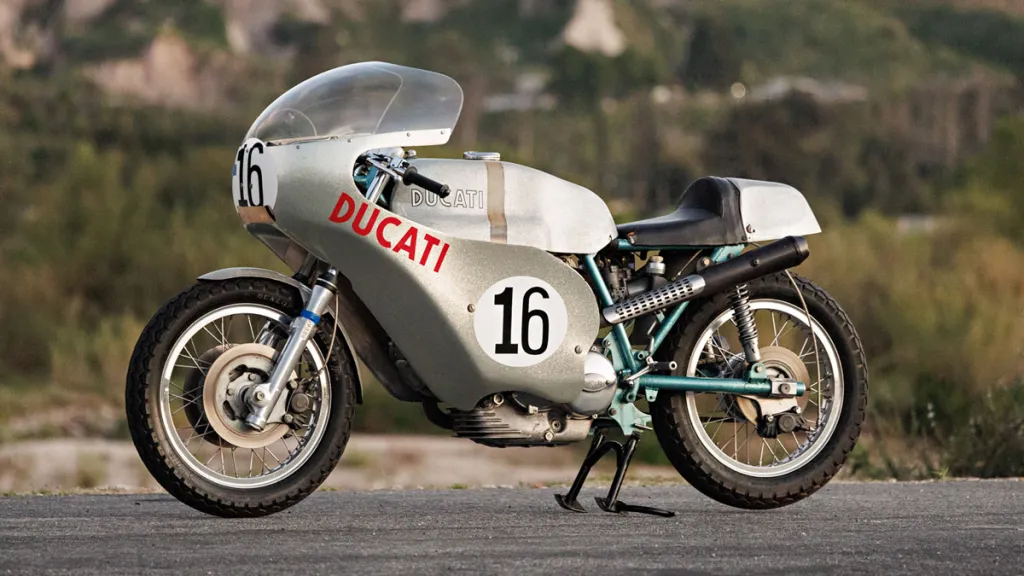
One day, 20th March 1970, Dr. Fabio Taglioni began sketching on a 90° V-Twin engine. It was from here that an entire slew of models came about both in racing and its adoption to street models, including 500cc racebikes and 750cc road bikes. The Ducati 750 Imola Desmo went on to win the Imola race in 1972.

The camshafts were driven off a tower shaft and bevel gear system up to this point. Taglioni introduced the Pantah 500SL with belt-driven cams in 1980. This belt-driven system continued until the Superquardro V-Twin came to light on the Panigale 1199.

Two became four

Dr. Taglioni had experimented with the four-valved head but seemed to have made no headway. Instead, it was his understudy, Massimo Bordi who successfully designed and pushed it through.

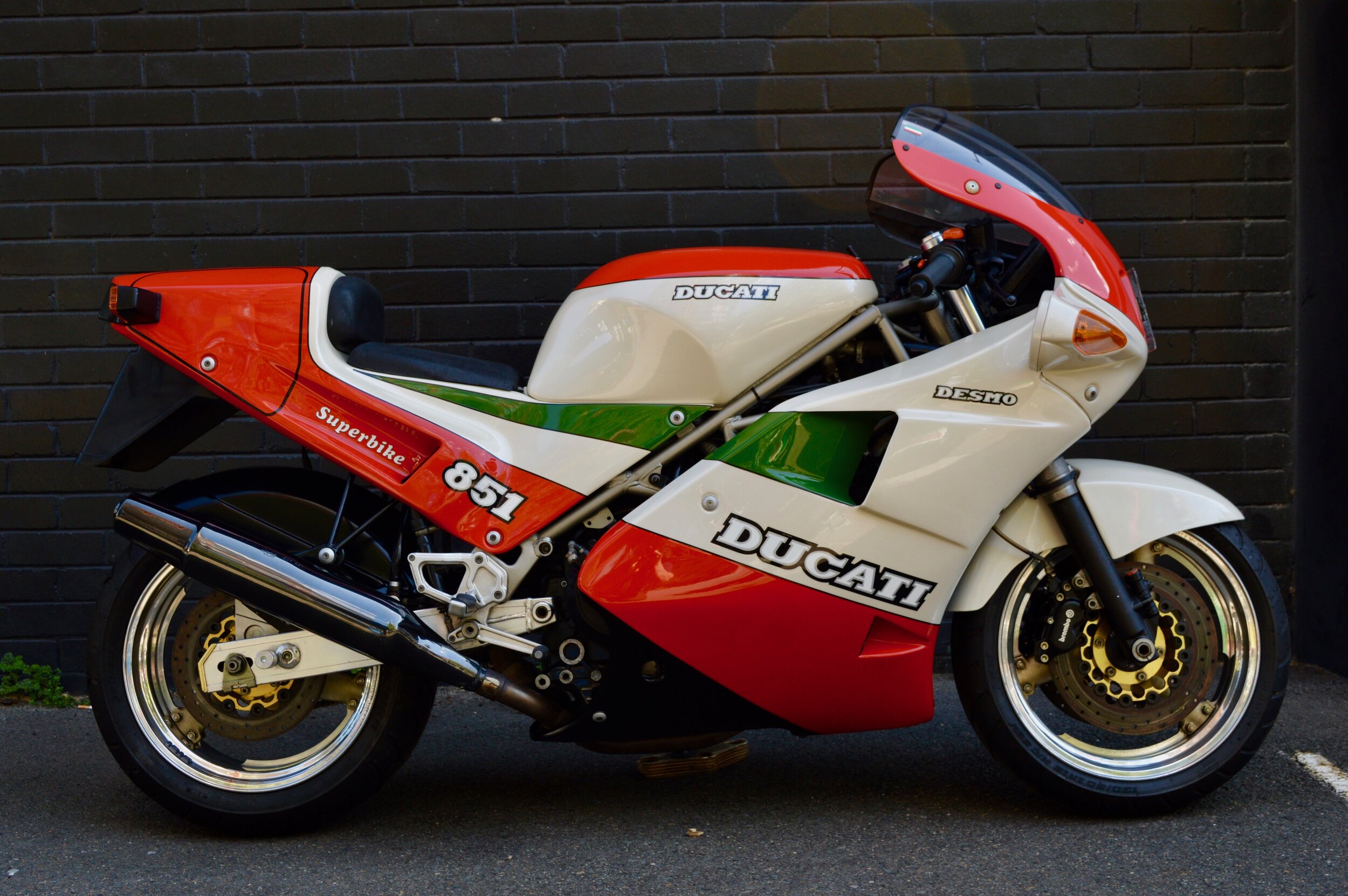
The four-valve 90° V-Twin engine, now known as the Desmoquattro, began in the prototype 748IE Bol d’Or racer in 1986, before being adopted in the Ducati 851 in 1987. At the same time, it was also Ducati’s first liquid-cooled engine. Raymond Roche took the 851 to the first World Superbike crown for Ducati in 1990 hence starting Ducati’s domination in the championship.

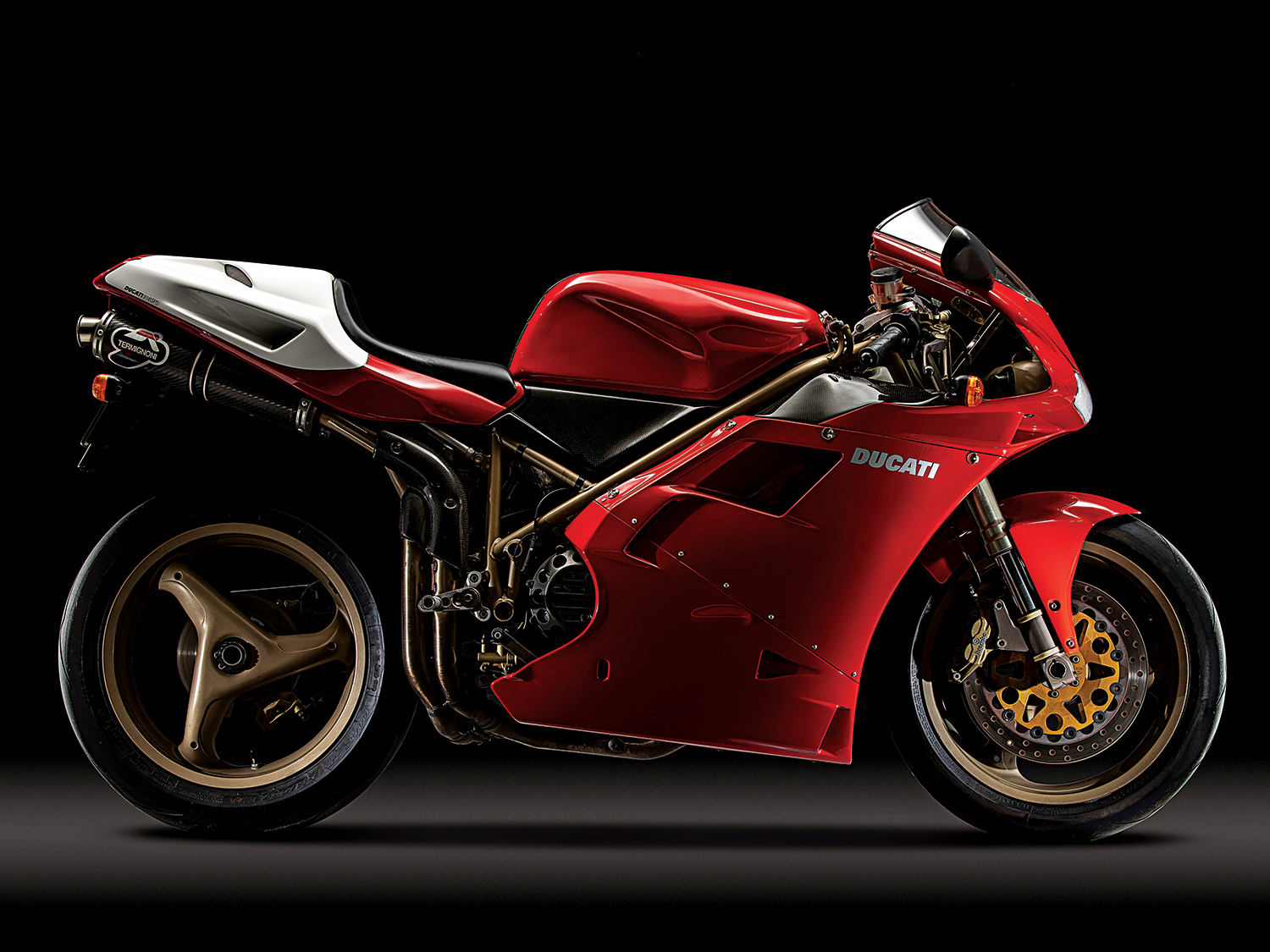
The 851 became the 888, then came the iconic 916 that in turn became the 955 (ultra limited SP version only), and finally the 996.

Subcategories of the Desmoquattro

Testastretta

In 2001, Ducati brought out the 996R homologation model. It was essentially used the 998cc engine  which featured the new Testastretta head or “narrow head.” The new Testastretta had the included valve angle reduced from 40 degrees to 25 degrees. As such, the bore could be made bigger to increase the rev limit, hence producing more top end power.

The 999, designed by Pierre Terblanche was a wholly redesigned bike, followed in 2003. However, the design was way too far of its time and was severely panned, despite the 999 being better in almost every department.

Testastretta Evoluzione

The 999 was in turn succeeded by the 1098 in 2007. It was the most powerful V-Twin of the era and was well-received, what with a styling that “evolved” from the 916. The 1098 became the 1198 in 2009.

Superquadro

The 1098/1998 lineup was subsequently replaced by the 1199 Panigale in 2012 hence began the Superquardro engine. It was the most powerful V-Twin at the time, punching out 195 hp and 133 Nm.

There were several changes, most obvious was the deletion of the belt-driven cams for a hybrid gear/chain drive. Ducati made four displacements for this engine, ranging from 898cc to 1285cc.

The smaller V-Twin sportbikes

We need to mention the smaller capacity Ducati sportbikes as they led to the Ducati Panigale V2 Superquardro Final Edition. Amidst the 916 was the smaller 748 which Ducati raced in the SuperSport categories vs. 600cc inline-four superbikes. The 748’s engine was of course, a 90° Desmo V-Twin with four-valves per cylinder, but displaced 748cc. So, to complete the timeline, the 748cc engine started getting bigger becoming the 749, 848, 899, and finally the present 955 with the Superquardro engine. The 955cc Panigale was rebranded as the Panigale V2 following the debut of the Panigale V4 in 2018.


Enjin Ducati Panigale V-Twin (atau “L-Twin” seperti yang ditegaskan Ducati) nampaknya memainkan peranan sokongan sejak Panigale V4 diperkenalkan pada 2018. Walaubagaimanapun, enjin V-Twin a.k.a. V2 masih bertahan kerana ia menawarkan harga yang lebih berpatutan dan prestasi yang lebih senang dicapai dalam kategori bawah 1000cc. Tetapi adakah ia akan ditamatkan secara berperingkat selepas Ducati Panigale V2 Superquardro Final Edition (2025) ini?

Ducati Panigale V2 Superquardro Final Edition (2025) ini memberi penghormatan kepada enjin Superquardro pertama yang membuat penampilan sulungnya dengan Panigale 1199 pada 2012. Dan sudah tentu, ia merupakan pengeluaran yang terhad kepada 555 unit sahaja.

Rekabentuk grafik FE ini telah direka oleh Drudi Performance yang lagenda (merekalah yang merekabentuk grafik topi keledar terkenal termasuk untuk Valentino Rossi).

Di bawah fairing itu terdapat beberapa komponen menarik termasuk penutup silinder, penutup klac, dan penutup takungkan minyak yang dibuat daripada magnesium. Gerek silinder bersalut Nikasil, manakala lengan aci sesondol (camshaft) disalut DLC. Enjinnya diletakkan dalam kerangka monocoque, seperti sebelum ini. Set alat bantu elektronik tetap ada dan terdiri daripada tetapi tidak terhad kepada kawalan cengkaman, kawalan roda, Cornering ABS EVO, Ducati Quick Shift, kawalan brek enjin.

Dan terdapat juga komponen Öhlins iaitu suspensi depan dan belakang serta peredam stereng. Anda akan memijak pemijak bilet aluminium daripada Rizoma. Komponen yang dibuat daripada gentian karbon termasuk madgad depan dan belakang, penutup penyenyap ekzos, pelindung penutup klac (di atas penutup magnesium), penutup lengan ayun, penutup penyerap hentak. Bateri adalah litium-ion, dan terdapat genggaman bar hendal khas juga. Bercakap tentang hendal, ia dipasangkan pada pengapit yang dimesin (billet) di mana anda juga boleh menemui nombor siri motosikal yang diukir menggunakan laser.

Terdapat juga kit trek khas untuk Ducati Panigale V2 Superquardro Final Edition (2025) ini yang terdiri daripada kit pengemas untuk pemegang plat lesen dan cermin, penutup tangki bahan api aluminium bilet, dan modul GPS untuk pemerolehan data DDA.

Ducati Malaysia tidak mendedahkan harga tetapi media luar negara mengatakan ia dijual dari USD 28,000 (RM 130,534.69). Ia boleh didapati mulai Oktober 2024.

The Ducati Panigale V-Twin (or “L-Twin” as Ducati insists) seems to play a supporting role ever since the Panigale V4 was introduced in 2018. However, the V-Twin a.k.a. V2 still survives as it offers a more affordable and accessible alternative in the sub-1000cc category. But will it be phased out after this 2025 Ducati Panigale V2 Superquardro Final Edition?

The 2025 Ducati Panigale V2 Superquardro Final Edition (FE), it pays tribute to the the first Superquardro engine which made its debut with the Panigale 1199 in 2012. And of course, production is limited, to 555 units.

The FE’s livery was designed by the legendary Drudi Performance (who also designed some famous helmets including Valentino Rossi’s), featuring swooshing lines.

Underneath that fairing are some trick componentry including magnesium cylinder heads, clutch cover, and oil pan cover. The cylinder bores are Nikasil coated, while the rocker arms are DLC coated. The engine is housed in a monocoque frame, as before. The suite of electronic aids remain, of course, consisting of but not limited to traction control, wheelie control, Cornering ABS EVO, Ducati Quick Shift, engine brake control.

And there is Öhlins: front and rear suspension and steering damper. You will be stepping on billet aluminium Rizoma footpegs. Carbon fibre parts include front and rear mudguards, exhaust silencer cap, clutch cover protector (over the magnesium cover), swingarm cover, shock absorber cover. The battery is lithium-ion, and there are special handlebar grips, too. Speaking of handlebars, they are clipped onto a billet triple clamp where you can also find the bike’s serial number laser etched onto it.

There is also a special track kit for the 2025 Ducati Panigale V2 Superquardro Final Edition which consists tidy kits for the licence plate holder and mirrors, billet aluminium fuel tank cap, and GPS module for DDA data acquisition.

Ducati Malaysia did not reveal the price but overseas medias say it sells from USD 28,000 (RM 130,534.69). It will be available from October 2024.

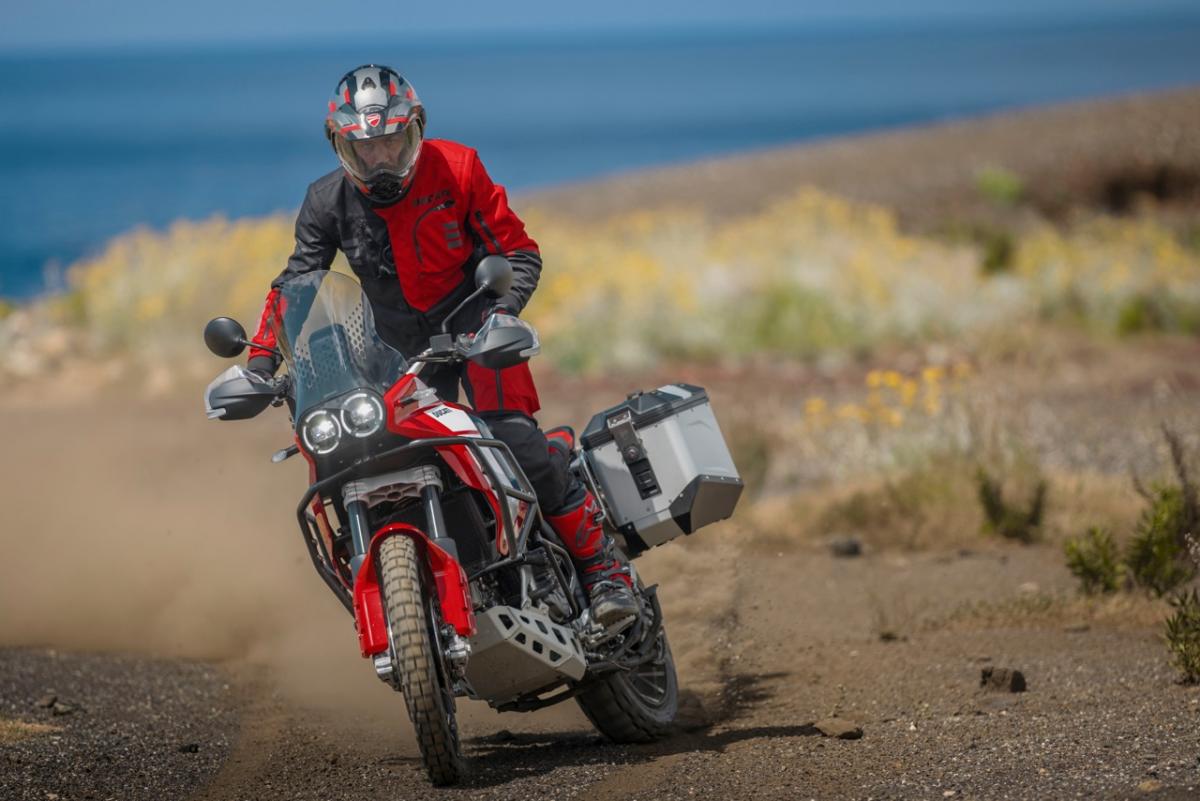
Inilah Ducati Desert X Discovery (2024): Desert X dengan semua peralatan penjalahan rasmi yang anda perlukan.

Ia menggunakan motosikal standard sebagai asas, yang sudah cukup berkuasa dengan enjin 937cc, V-Twin 90° (Ducati menegaskan ia adalah ‘L-Twin’) yang menghasilkan 110 hp.


Dan seolah-olah itu tidak mencukupi, anda mendapat suspensi KYB boleh laras, kaliper brek Brembo M50, sepasang cakera brek 320mm di hadapan, rim depan 21 inci dan belakang 18 inci yang dipasang dengan tayar Pirelli Scorpion Rally STR, serta skrin TFT dengan ciri Bluetooth sebagai standard.

Untuk membawanya kepada spesifikasi Discovery, Ducati menambahkan:

  • Pelindung enjin.
  • Pelindung tadahan minyak.
  • Pelidung tangan yang diperkuatkan.
  • Pelindung radiator.
  • Skrin depan jelajah yang lebih tinggi.
  • Pemanas handel.
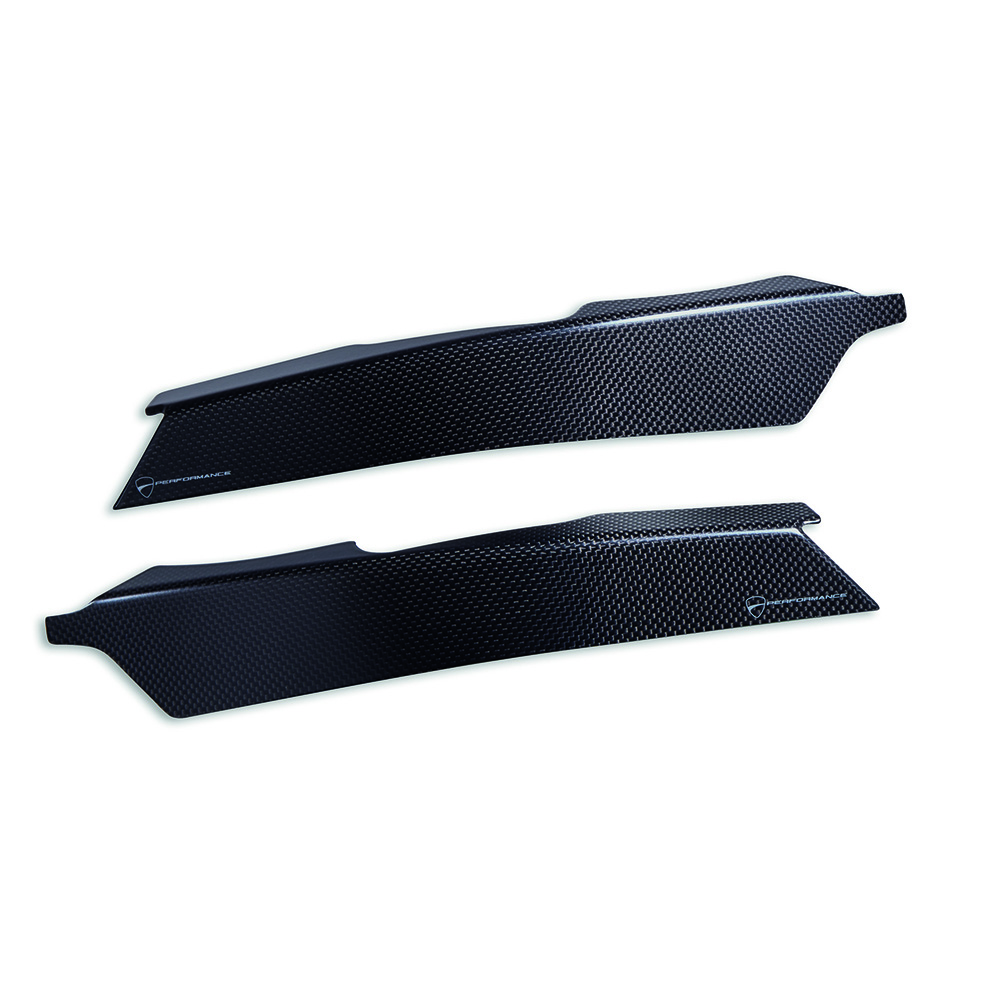
  • Topang tengah.
  • Sepasang kotak simpanan barangan aluminium berkapasiti 76 liter.

Tiba-tiba idea untuk menunggang motosikal ini ke tapak perkhemahan terpencil bukanlah suatu rancangan yang perlu membimbangkan.

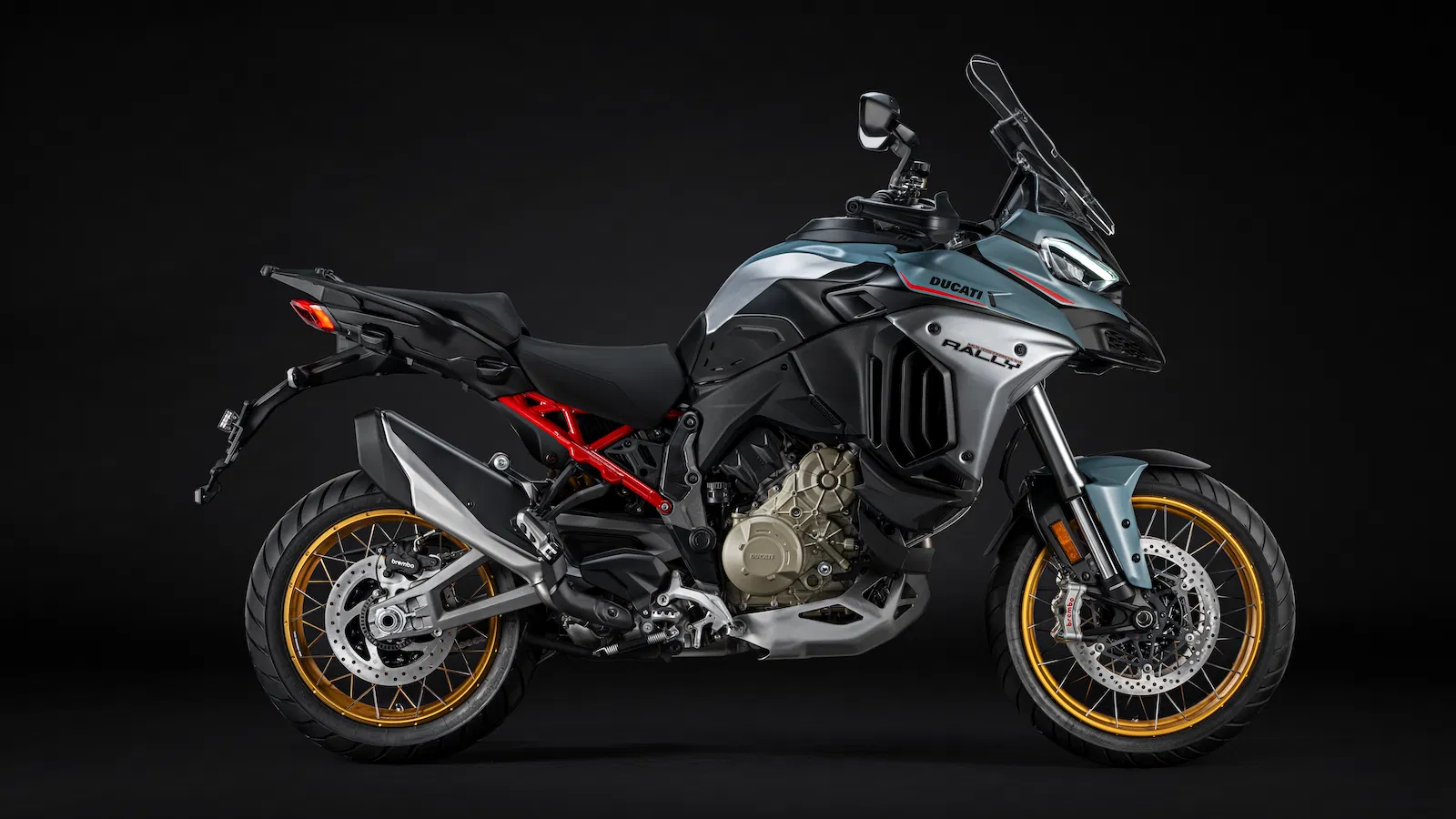
Ducati Desert X Discovery (2024) berharga £17,295 (RM103,185.71), iaitu £2,300 (RM13,722.29) lebih tinggi daripada Desert X standard.

Tetapi… harga itu sebenarnya lebih mahal daripada Ducati Multistrada V4 standard yang dijual pada harga £16,995 (RM101,394.30) di UK.

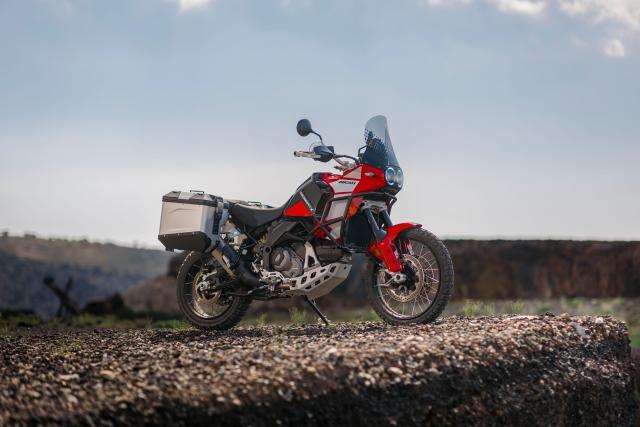
Here comes the 2024 Ducati Desert X Discovery: The Desert X with all the official touring accoutrements you can shake a stick at.

It uses the stock bike as the base, which is already potent enough what with the 937cc, 90° V-Twin (Ducati insists it is an ‘L-Twin’) that produces 110 hp.

And as if that’s not enough, you have adjustable KYB suspension, Brembo M50 brake calipers, 320mm brake discs up front, 21-inch front and 18-inch rear wheel shod with Pirelli Scorpion Rally STR tyres, and TFT display with connectivity suites. As standard.

To bring it to the Discovery spec, Ducati added:

  • Engine protectors.
  • Sump guard a.k.a. bash plate.
  • Reinforced hand protectors.
  • Radiator protector.
  • Larger touring screen.
  • Heated grips.
  • Centre stand.
  • A pair of 76-litre aluminium adventure side cases.

And suddenly the idea of riding the bike to a remote campsite is not such a worrisome prospect.

The 2024 Ducati Desert X Discovery is priced at £17,295 (RM103,185.71), which is £2,300 (RM13,722.29) more than the standard Desert X.

But… that price is actually dearer than the standard Ducati Multistrada V4 which sells for £16,995 (RM101,394.30) in the UK.

Ia kini rasmi selepas spekulasi berminggu-minggu yang telah mendorong peminat MotoGP menjadi kecoh: Jorge Martin akan ke Aprilia pada 2025.

Saga itu bermula apabila juara MotoGP 7 kali Marc Marquez berpindah ke Gresini Ducati untuk musim 2024, dan sejak itu dijangka menyertai pasukan pengilang Ducati untuk menggantikan Enea Bastianini sebagai rakan sepasukan kepada juara dua kali dan juara bertahan Francesco ” Pecco” Bagnaia.

Ia sudah tentunya cukup untuk membuat Martin menyuarakan pendapat. Beliau telah mencabar Pecco untuk kejuaraan sepanjang 2023, dan kini mendahului kejuaraan tahun ini. Martin merasakan bahawa dia berhak mendapat tempat itu kerana prestasinya.

Ducati kini menghadapi masalah: Mereka mempunyai tiga pelumba hebat lain yang bersaing untuk tempat di dalam pasukan pengilang idaman, dan ia mungkin menyebabkan bos mereka tidak dapat tidur malam. Oleh itu, pengeluar itu nampaknya terhenti membuat keputusan. Lagipun, ia belum lagi musim perpindahan pelumba.

Saga semakin hangat apabila Martin secara terbuka menyatakan (mengancam) samada dia ditemptakan di dalam pasukan pengilang atau dia akan meninggalkan Ducati sama sekali. Terdapat laporan bahawa dia telah mula berbincang dengan KTM, Aprilia, dan juga Yamaha sejak itu.

Ducati kini berada di dalam suatu keadaan yang rumit. Dan mereka perlu menyelesaikan isu ini dengan cepat untuk mengelakkan gangguan seperti ini pada awal musim ini.

Beberapa jam sebelum pengumuman rasmi Aprilia dan Martin, Autosport telah menerbitkan berita bahawa, walaupun tidak disahkan pada masa itu, Marquez telah dipilih sebagai rakan sepasukan Bagania, oleh itu Martin ditinggalkan. La Gazzetta dello Sport melaporkan bahawa pengurusan Ducati, Marquez, dan Martin mengadakan pertemuan tertutup pada hari Khamis, di mana Marquez diminta untuk menunggang di dalam pasukan Pramac. Bagaimanapun, Marquez memberitahu mereka “Pramac bukan pilihan untuk saya,” dengan “wajah yang sangat serius.”

Sekali lagi, berita itu tidak disahkan pada masa itu, dan kemudiannya datanglah kejutan bahawa Jorge Martin akan berada di Aprilia pada tahun depan.

Namun belum ada berita rasmi daripada Ducati berhubung nasib Marquez. Bastianini pula dilaporkan pernah berbincang dengan KTM, Aprilia dan Yamaha (tak ada orang nak ke Honda ka?).

Martin mungkin bukan pilihan yang baik sebagai rakan sepasukan Bagnaia, dan juga tidak sesuai dalam pasukan Itali itu memandangkan kecenderungannya dalam membuat kenyataan bombastik. MotoGP bukan seperti zaman Wayne Rainey dan John Kocinski yang memakki hamun Yamaha secara terbuka. Setiap orang perlu bertindak mengikut tatacara korporat pada masa kini.

Bagi Marquez, dia telah menunjukkan bakat luar biasanya dengan bertarung di bahagian hadapan walaupun dengan hanya menunggang Desmosedici GP23 yang kira-kira 1.5 saat lebih perlahan daripada GP24. Juga, terdapat banyak syarikat yang ingin menajanya. Oleh itu, adalah kurang wajar bagi Ducati jika mereka membiarkan beliau pergi ke pasukan pembuat saingan.

Archive

Follow us on Facebook

Follow us on YouTube