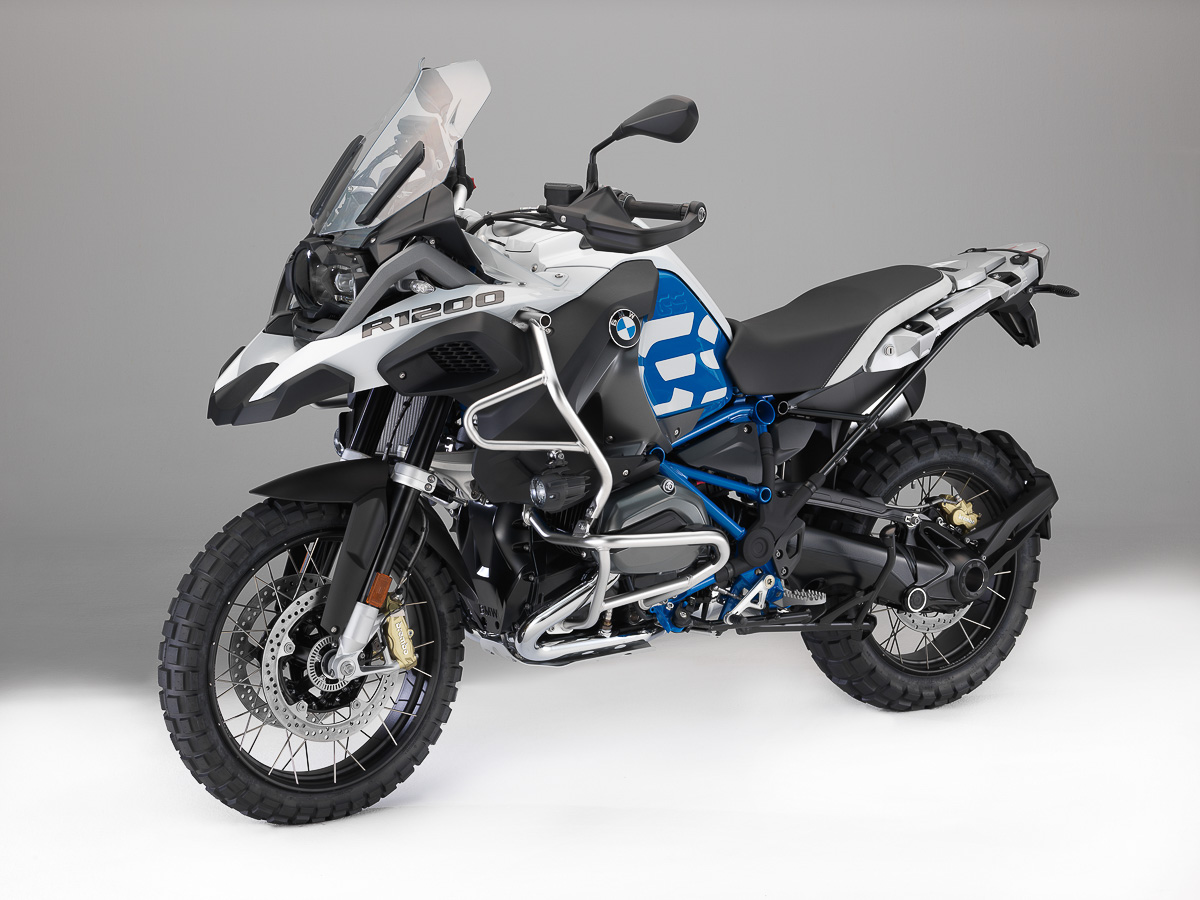
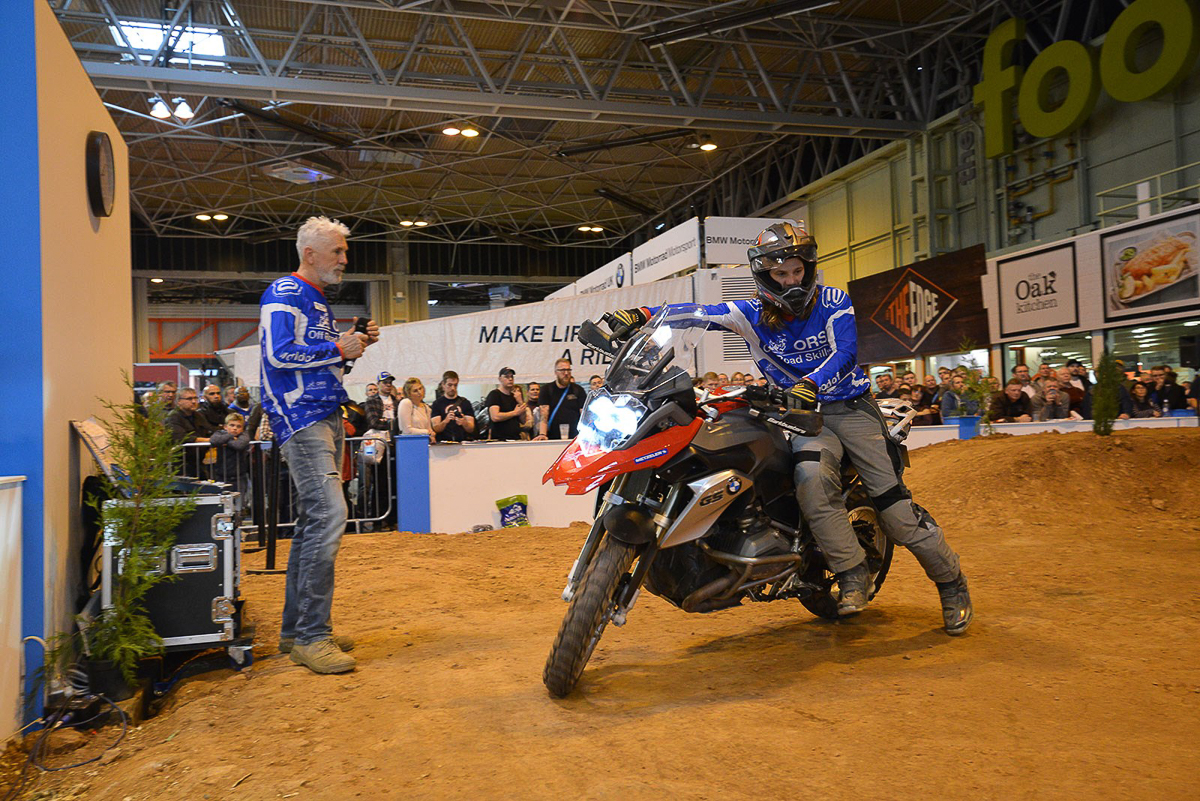
During the recent Motorcycle Live 2017 show in the UK, BMW Motorrad showcased their BMW R 1200 GS by jumping it in the middle of the event hall.
Weighing in at 274kg fully loaded with fuel, the off-road rider made it look so easy in such a small space where riding a normal motorcycle would be tough.
The BMW GS Experience setup during the UK’s biggest motorcycle show was all about highlighting how capable BMW Motorrad bikes are both on and off the road.
Image source: MCN
During the recent Motorcycle Live 2017 aka “The UK’s biggest motorcycle show”, over 100,000 bike fans from around the world made their way up to Birmingham to check out the latest updates in the world of motorcycling. Out of all the manufacturers who took part, BMW Motorrad put on quite a show especially their indoor-outdoor setup. (more…)
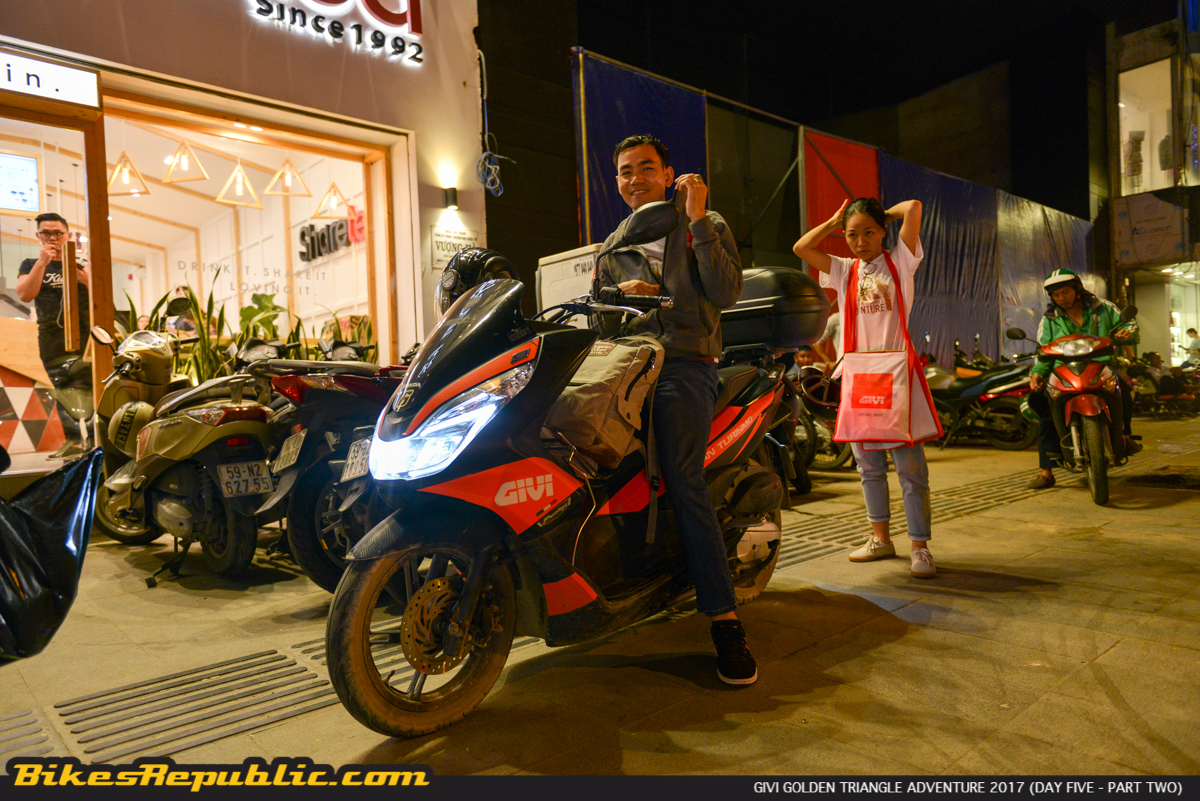
True to the GIVI Explorer spirit, we explored downtown Ho Chi Minh City after dinner.
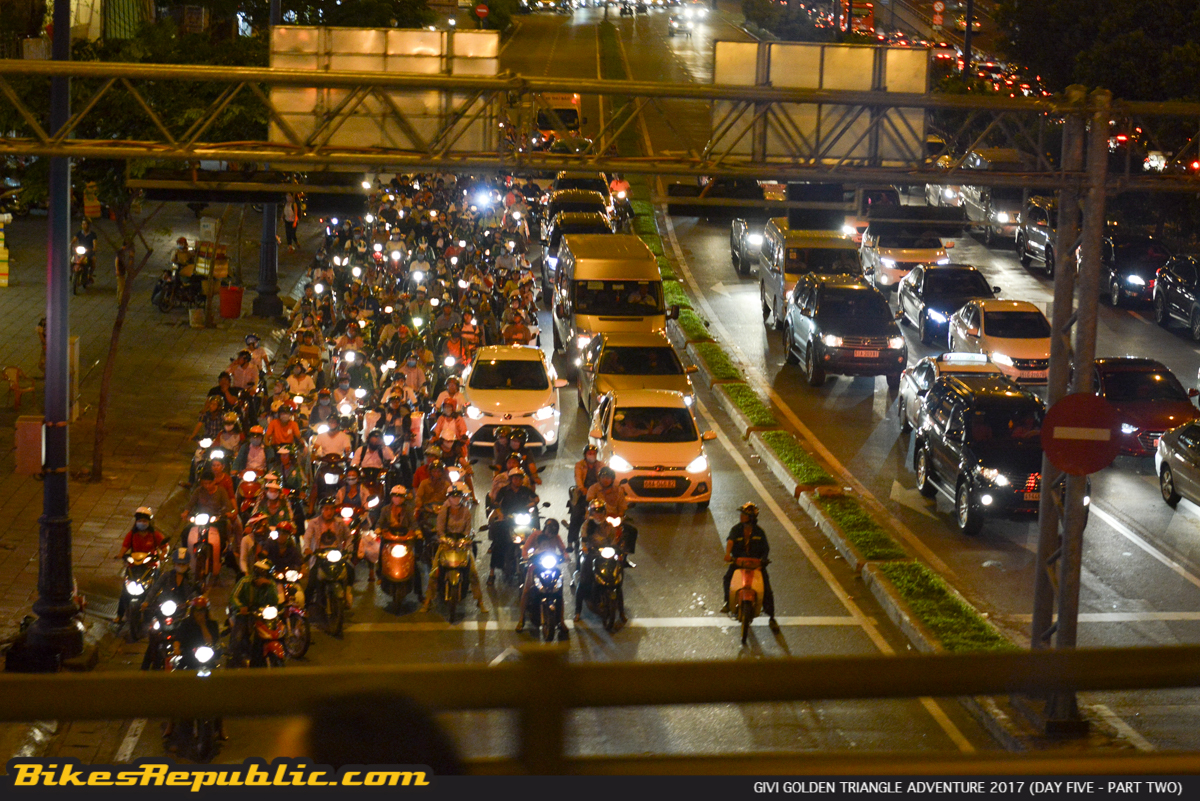
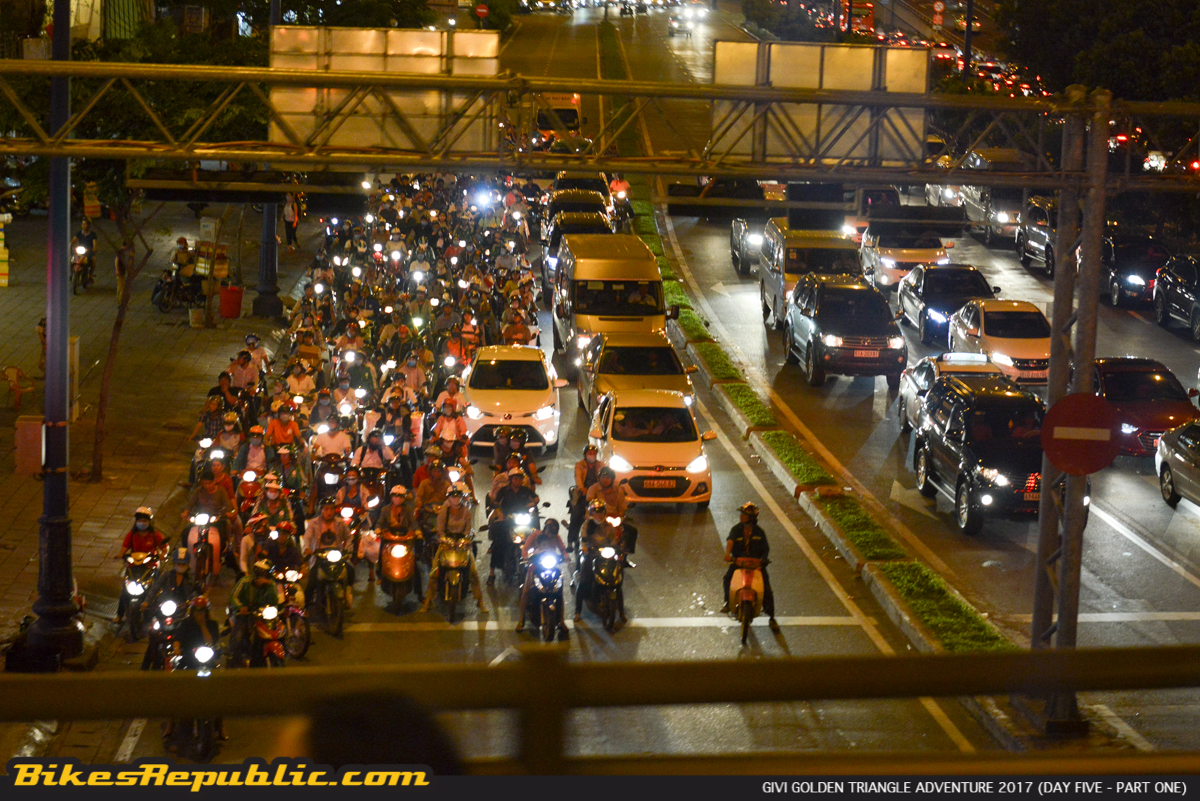
Ho Chi Minh City is thriving with 7 to 7.5 million motorcycles.
The city’s main charm is the mix of classical and modern buildings, and rich heritage.
13th November 2017, Ho Chi Minh City (HCMC), Vietnam – The GIVI Golden Triangle Adventure 2017 participants freshened up and boarded a bus specially chartered to transport us downtown for dinner.
GIVI did so to mercifully spare us the hassle of having to suit up again, and ride through that traffic.
A VIP had joined us by now. She was Ms. Hendrika Visenzi, daughter of GIVI’s founder, Mr. Giuseppe Visenzi (the first two letters of his name became GIVI). The Hevik sub-brand was under Ms. Visenzi’s charge (HEnrika, GIvi, Kappa). She rode with us from this point on.
Ms. Hendrika Visenzi
The local guide on the bus announced that the restaurant wasn’t far away and we had time to shop at the Takashimaya Mall nearby, before getting back together for dinner. That sounds great, maybe I could get something for family and friends back home.
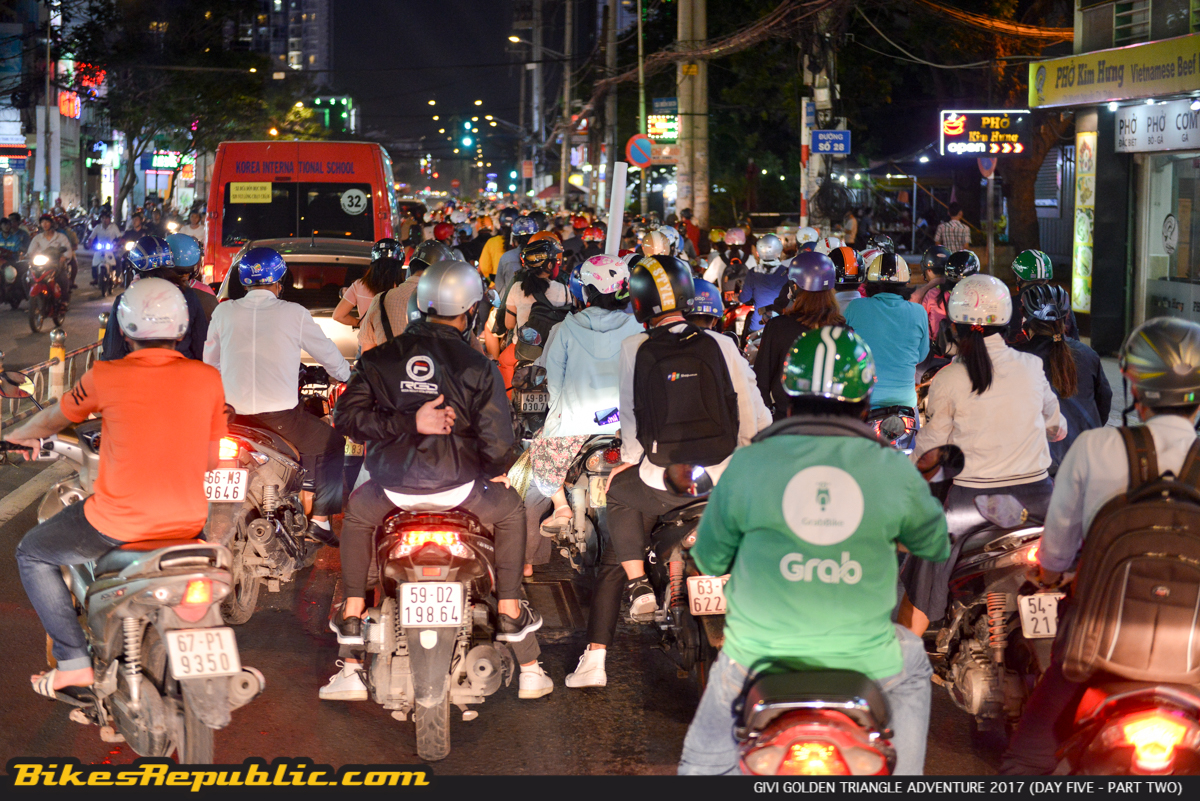
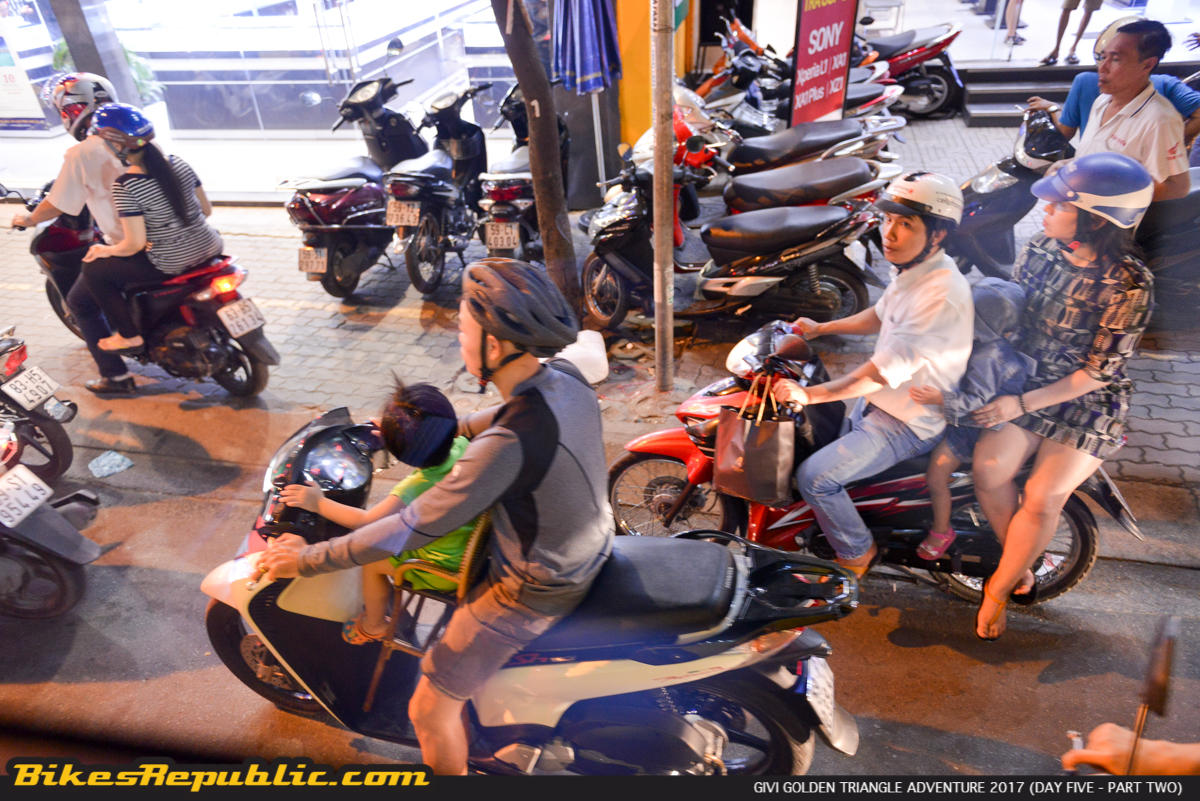
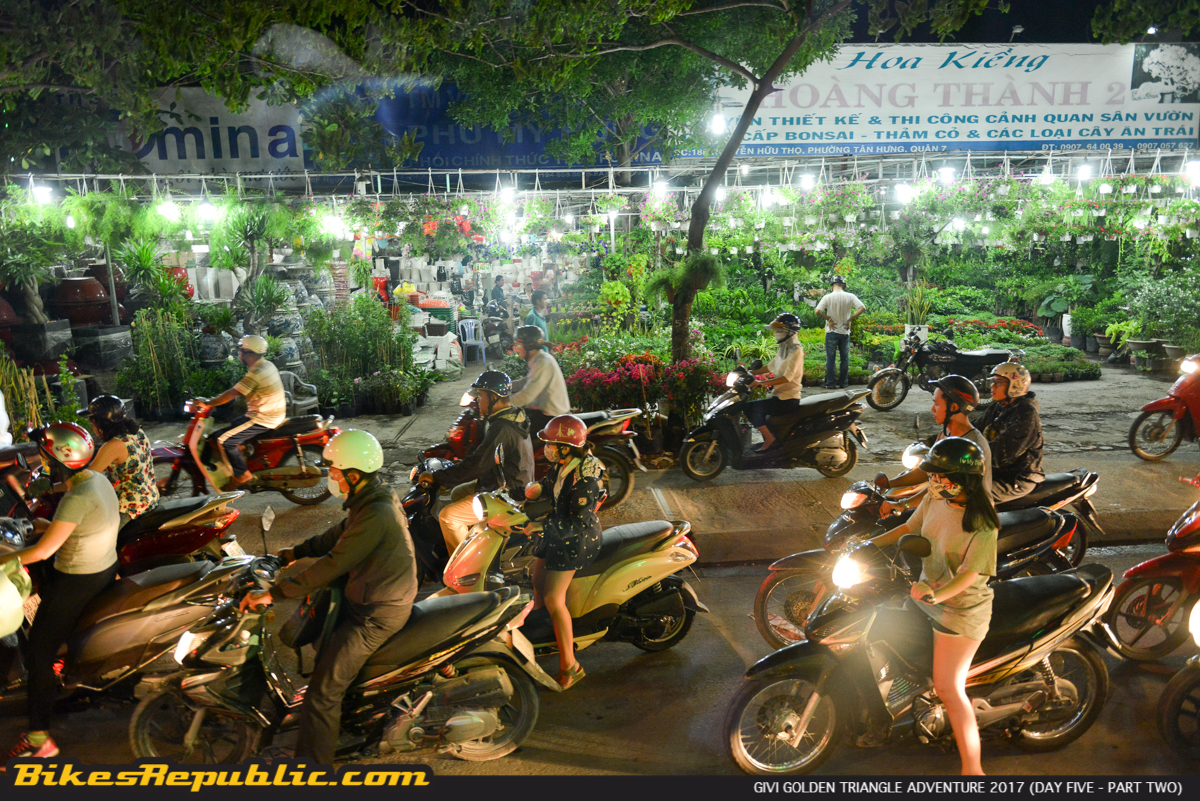
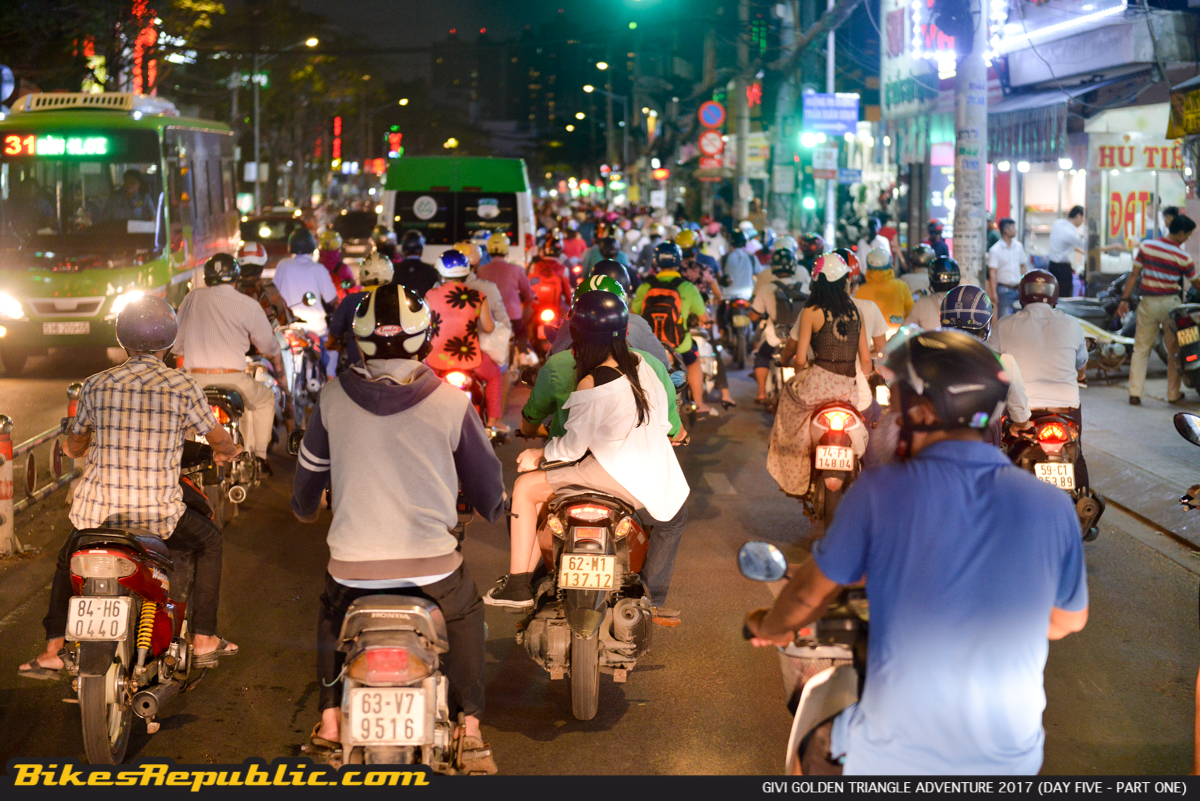
As usual, it was already dark by 7pm and the roads seemed to be fully illuminated by the headlamps of the scooters and mopeds. There are 7.5 million motorcycles to HCMC’s population of 10 million.
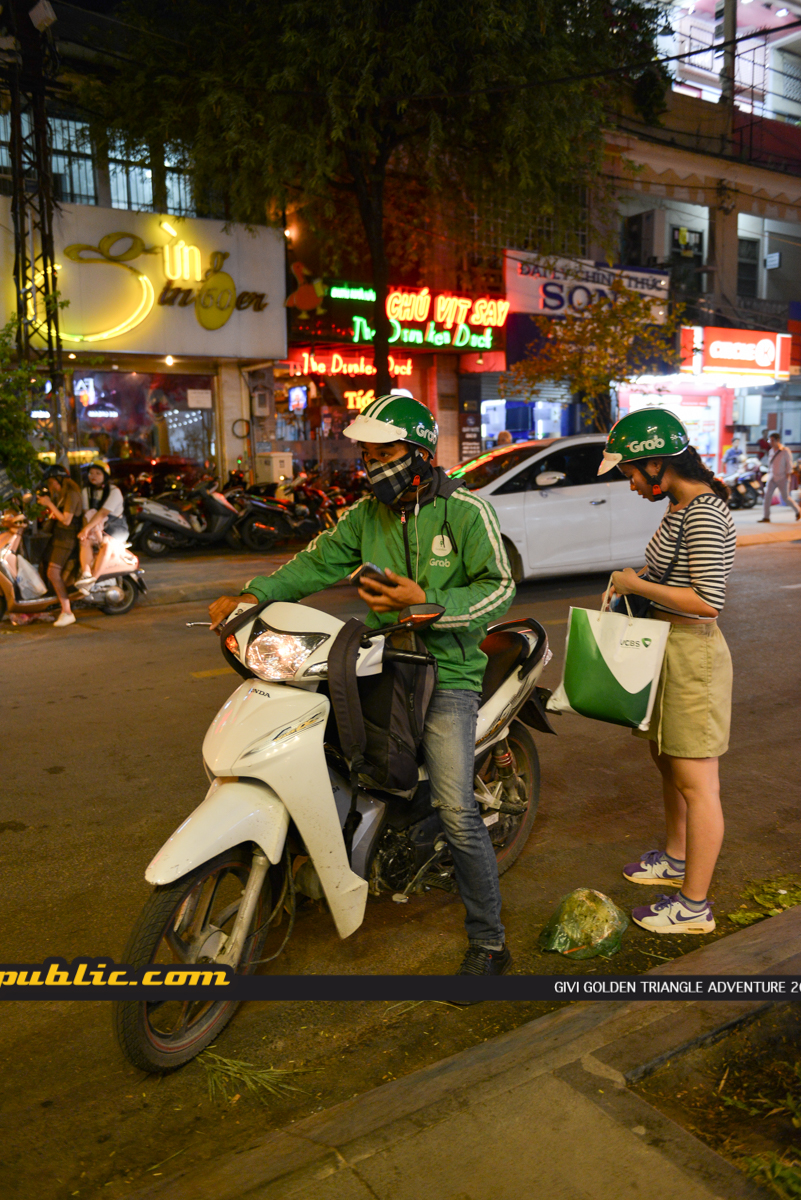
It was explained that HCMC has a chronic parking problem, therefore the motorcycle was the perfect tool. The rich would have their drivers drop them off at their destinations and the driver would continue to drive around in circles until their bosses are done with their business. Hence if the city was a body, motorcycles are the blood cells. There were many Grab Bikes too!
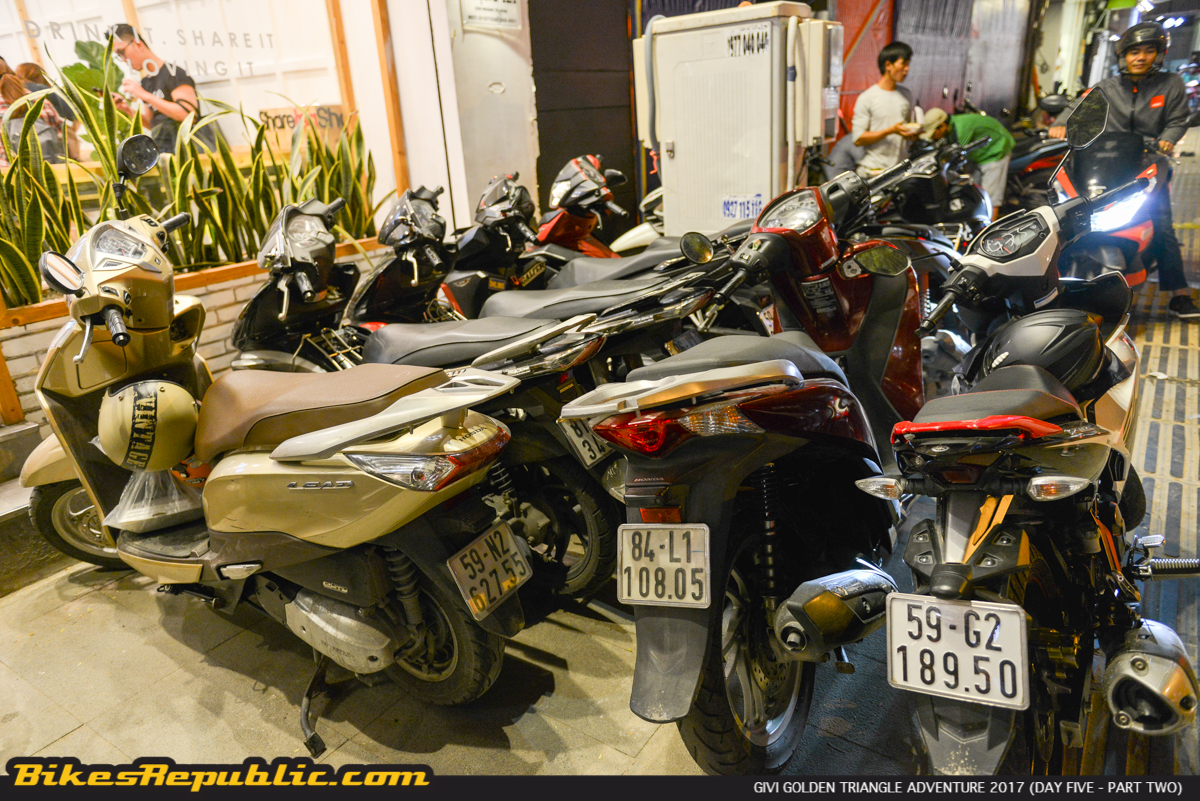
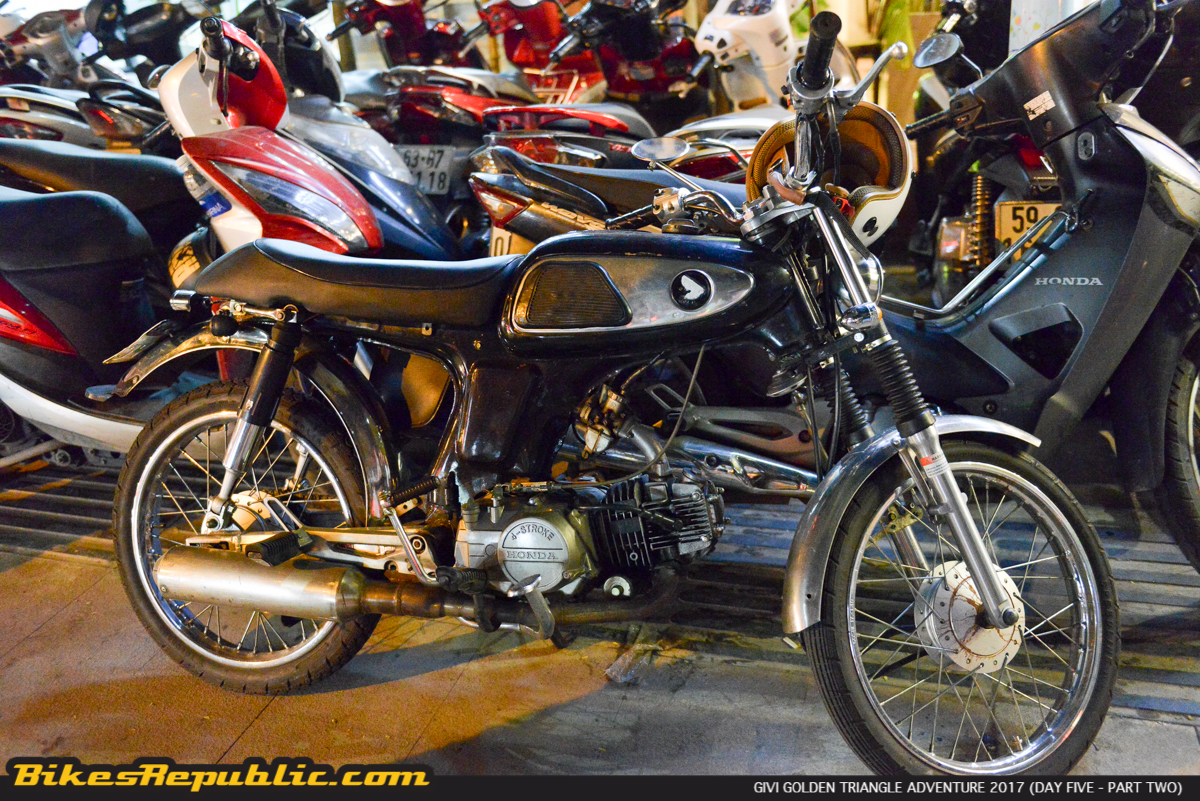
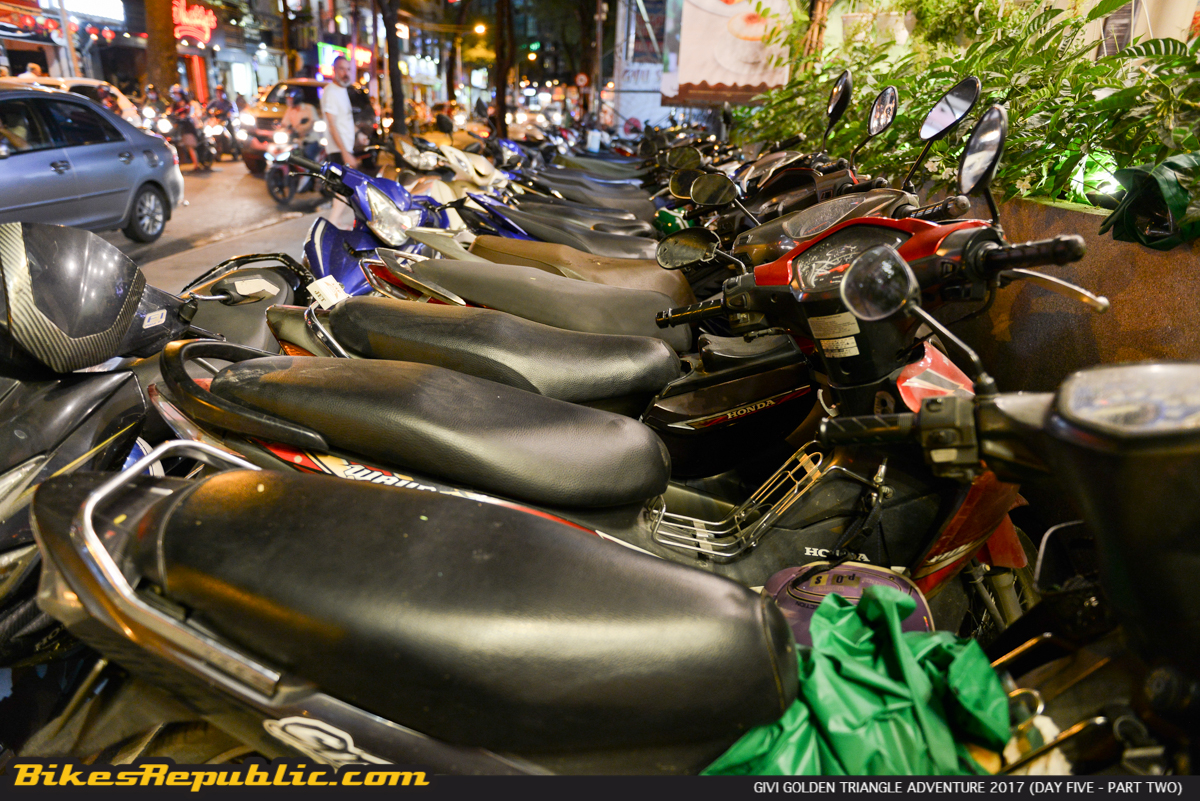
It was also pointed out to us on how the bikes were parked – squished together as if they were bicycles. The owners of these motorcycles will park them inside their living rooms when they get home.
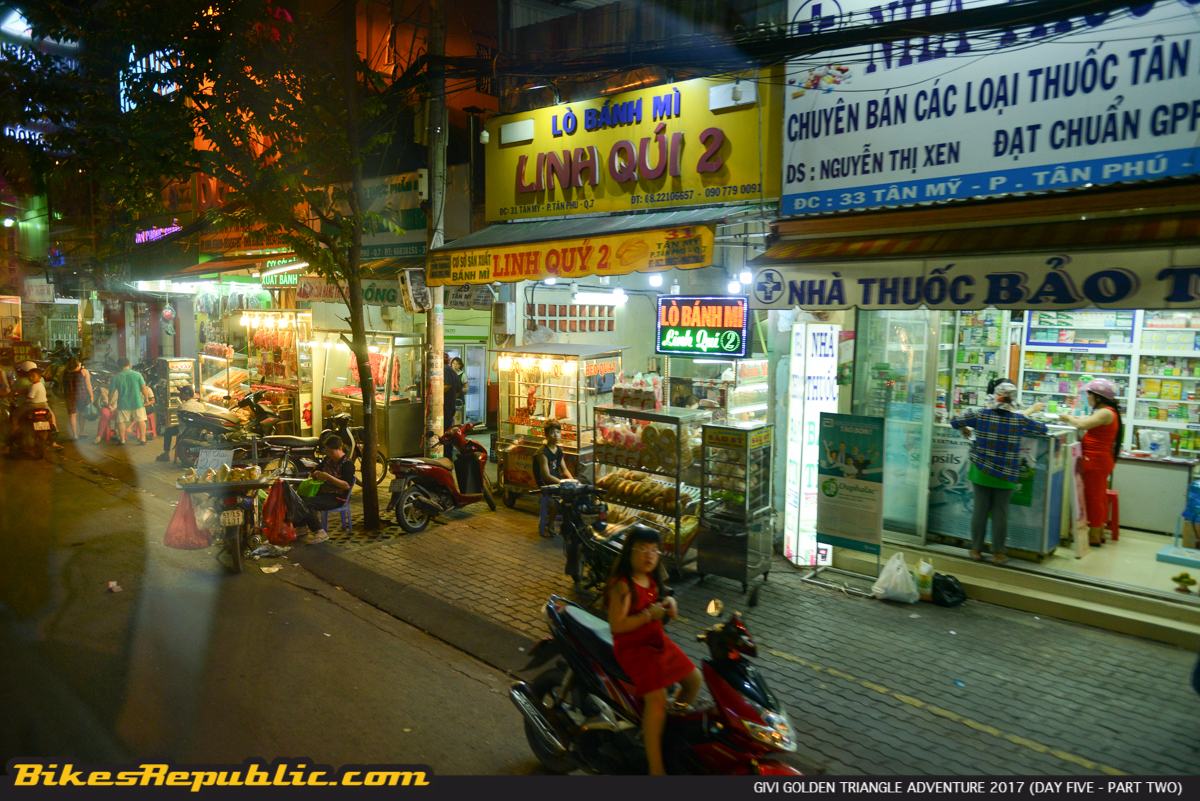
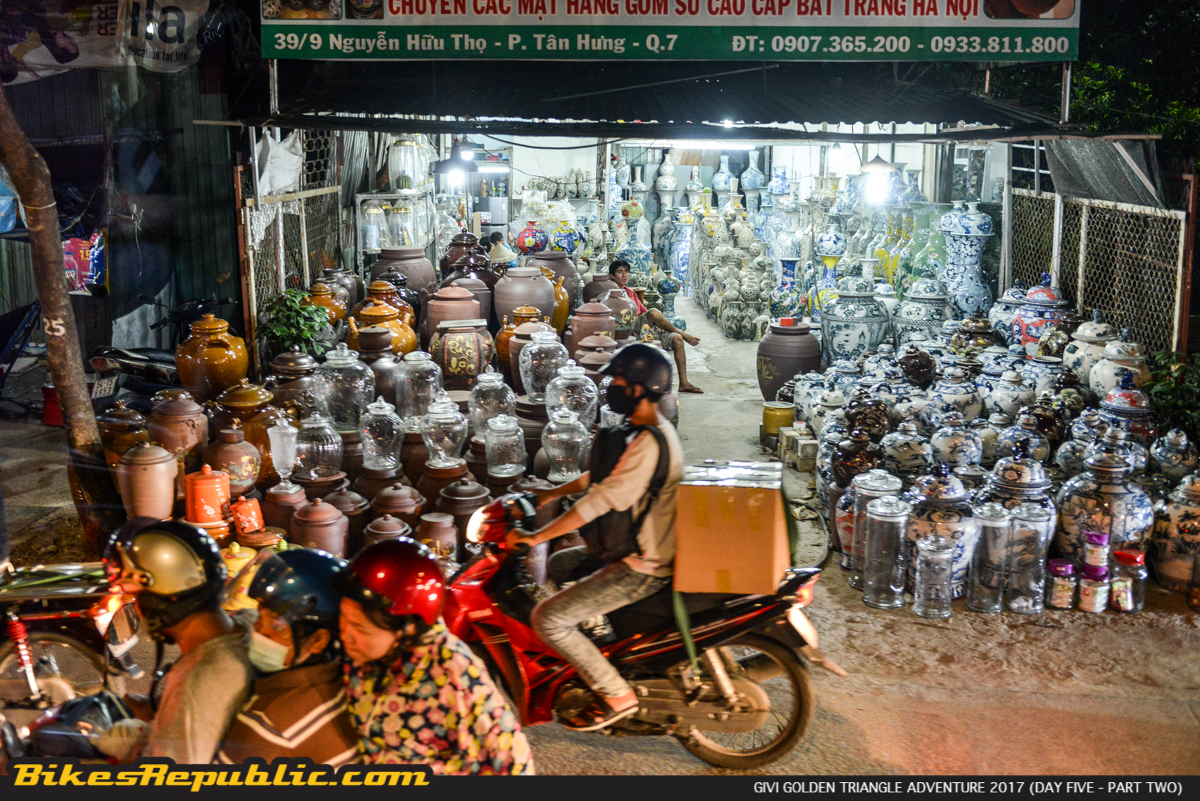
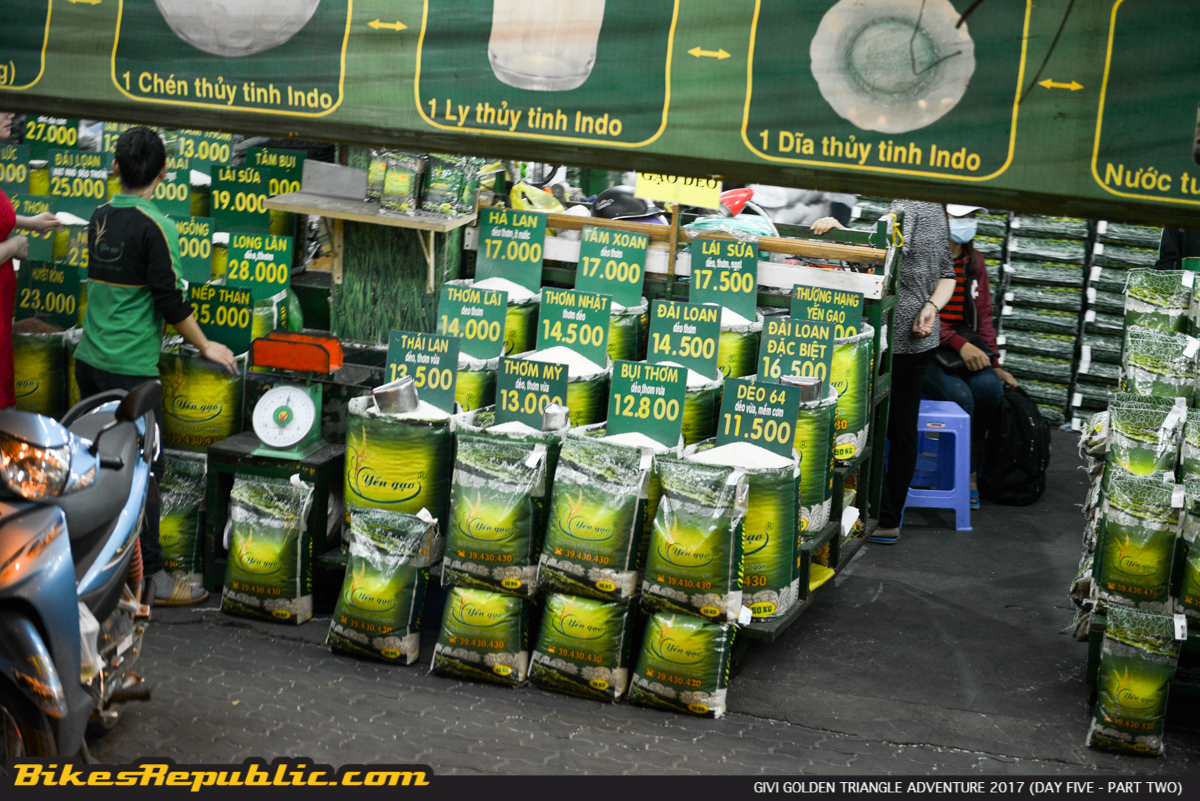
Shops lined the road, selling everything from foodstuff to house stuff.
In the meantime, mopeds kept zipping by. One fast guy swerved through everyone else and was closed to being squeezed like a bug between our bus and a car. Ronald, Enrique and myself were seated at the front and we started yelling. Man, that puckered us up real good.
Other impatient riders would hop onto the sidewalks, sometimes against the traffic.
Our guide was right, our makan place wasn’t far from the hotel, but even he miscalculated the amount of time we needed to get there.
I took us more than an hour to get to the restaurant and it was already too late to visit the mall, so we decided to foot it to dinner. Here’s another adventure: Crossing the never-ending stream called “the road.”
The trick was to see an opening, then step confidently onto the street and keep walking in a steady and predictable manner. That allowed the local riders to guesstimate where you’re headed so they could go around you. Ismadi and I said a prayer, and I almost had my eyes closed when we crossed en masse.
We made it!
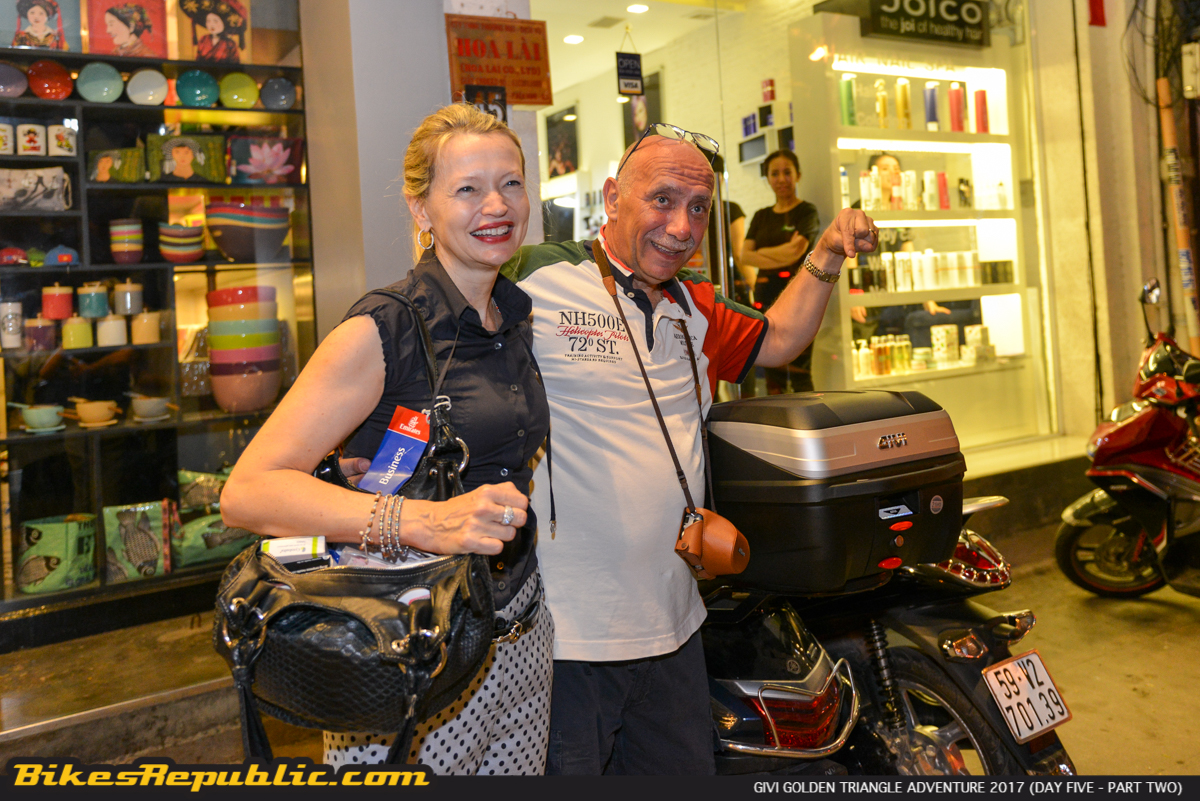
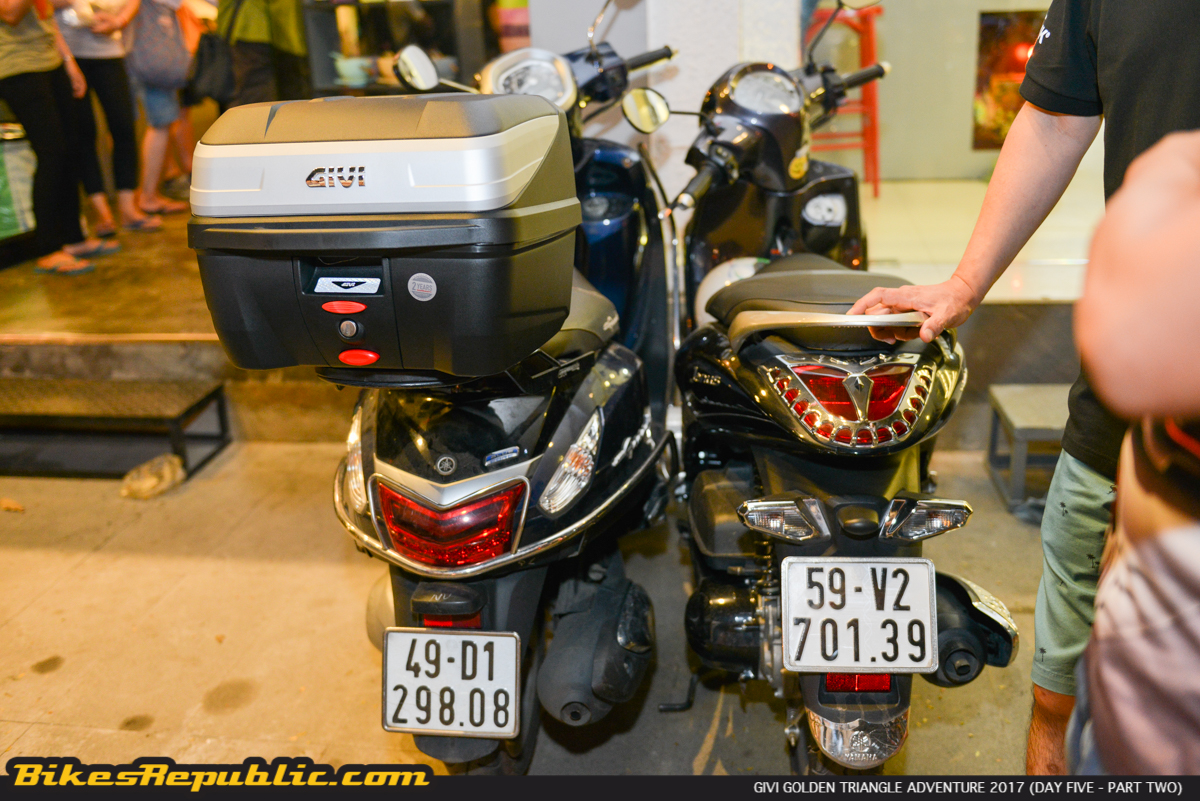
We also noticed that all bikes were fully stock and most glaring of all, no bike had any luggage tacked to it (due to lack of parking space). Well, except for one scooter which carried a B32 top case! That was enough to send us all into a celebratory mood!
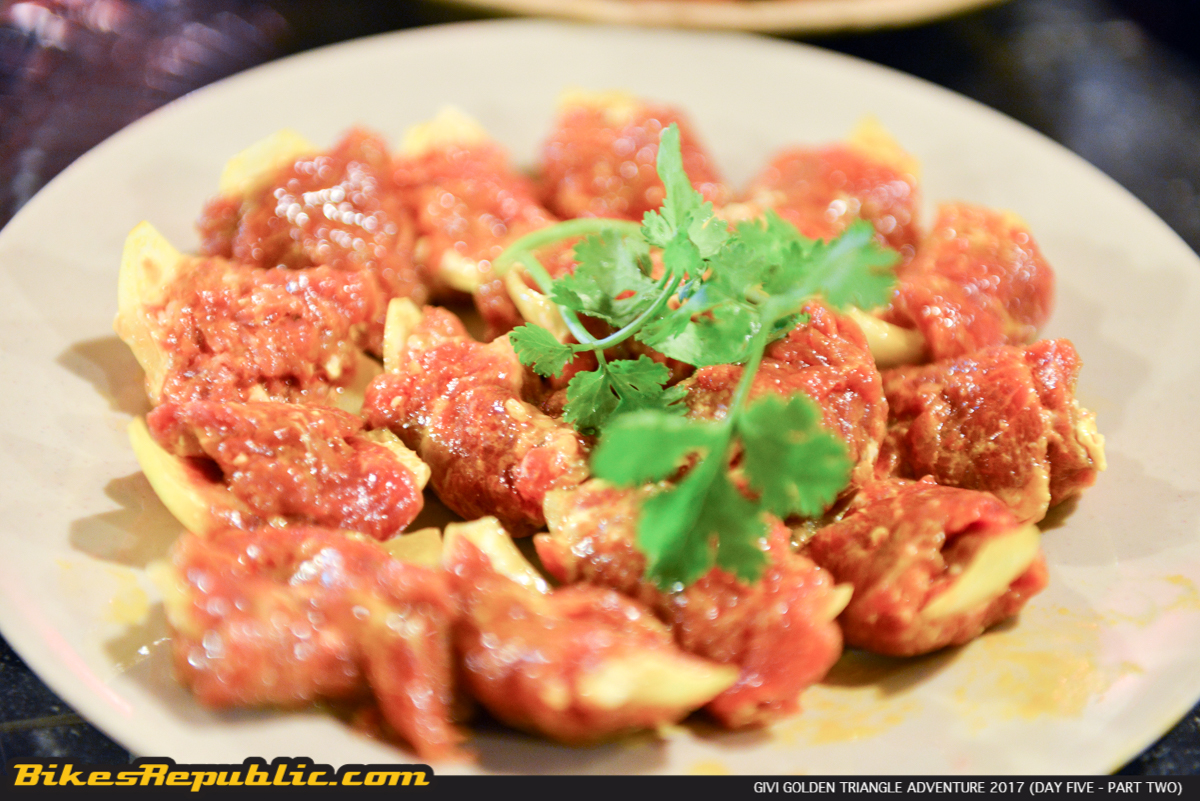
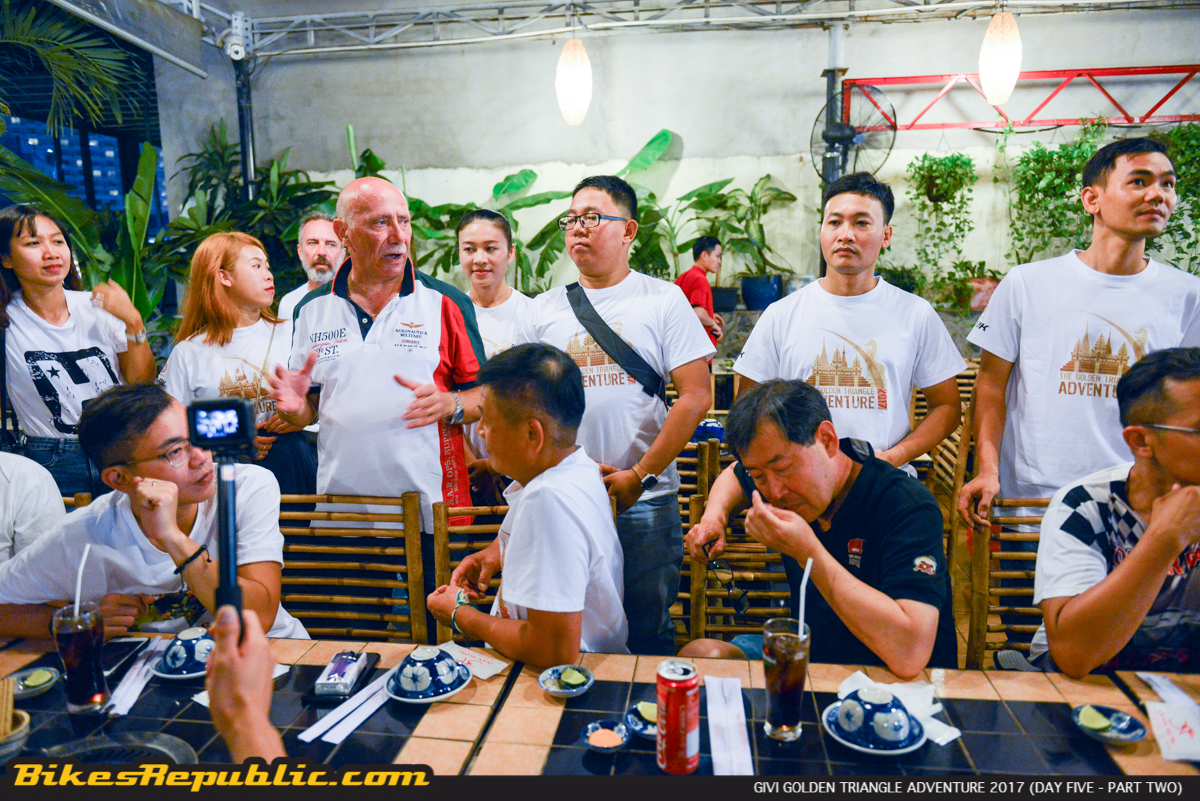
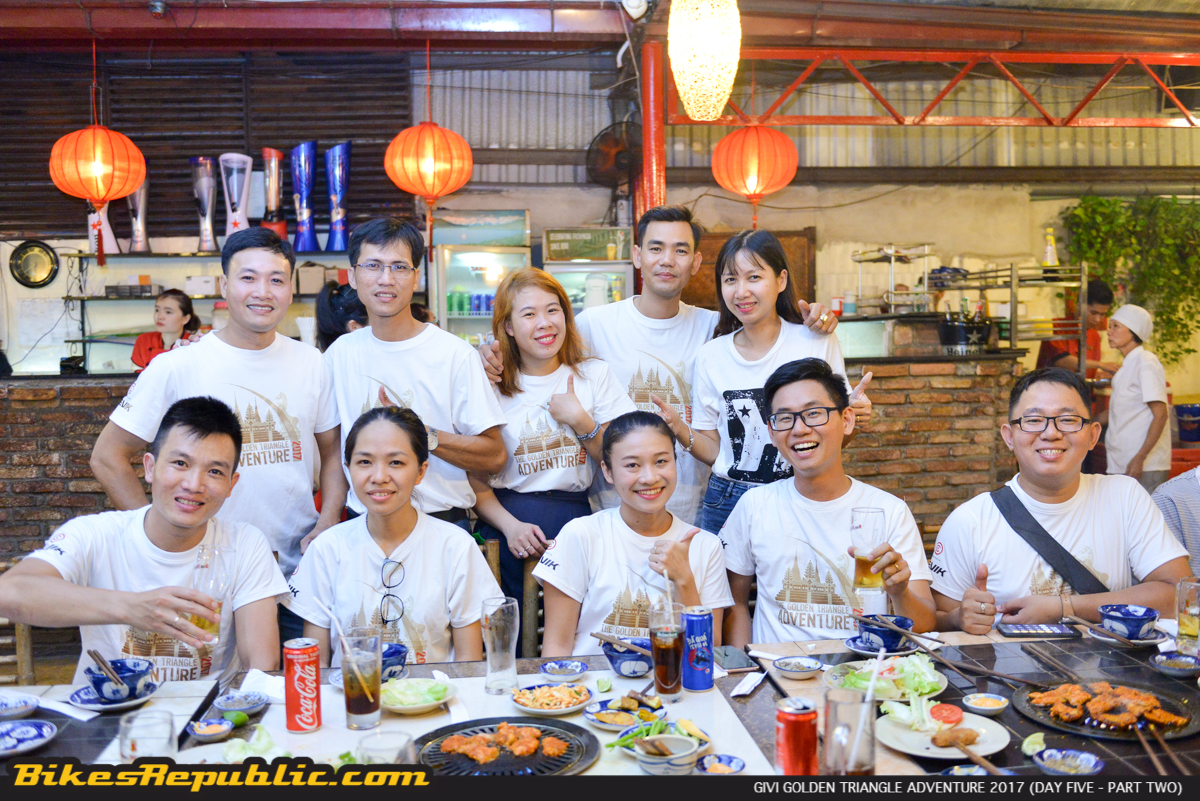
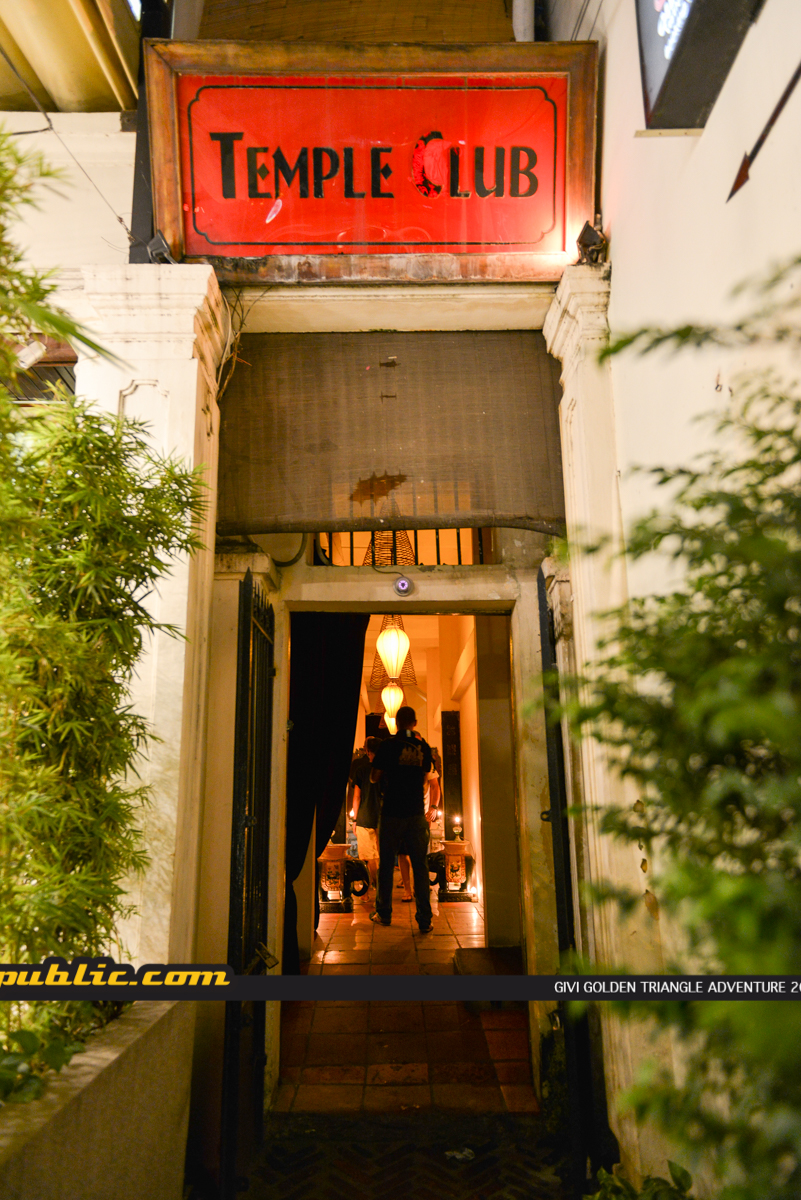
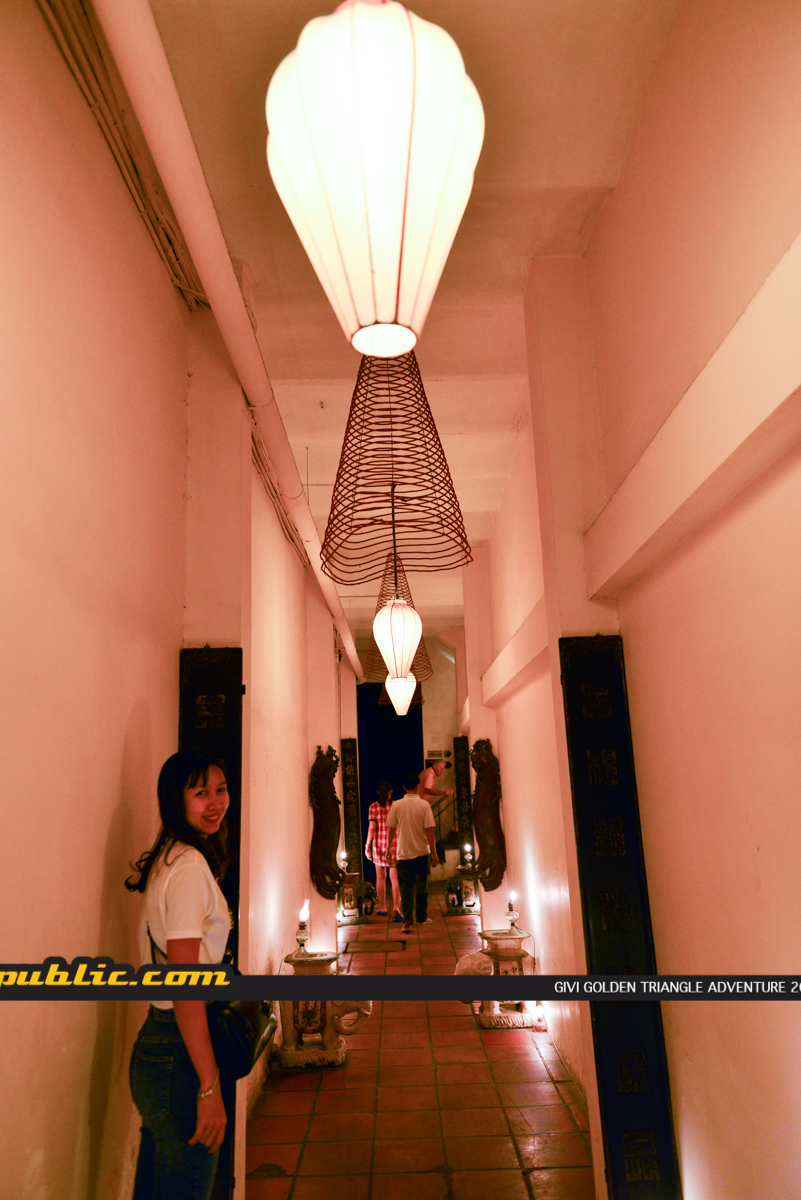
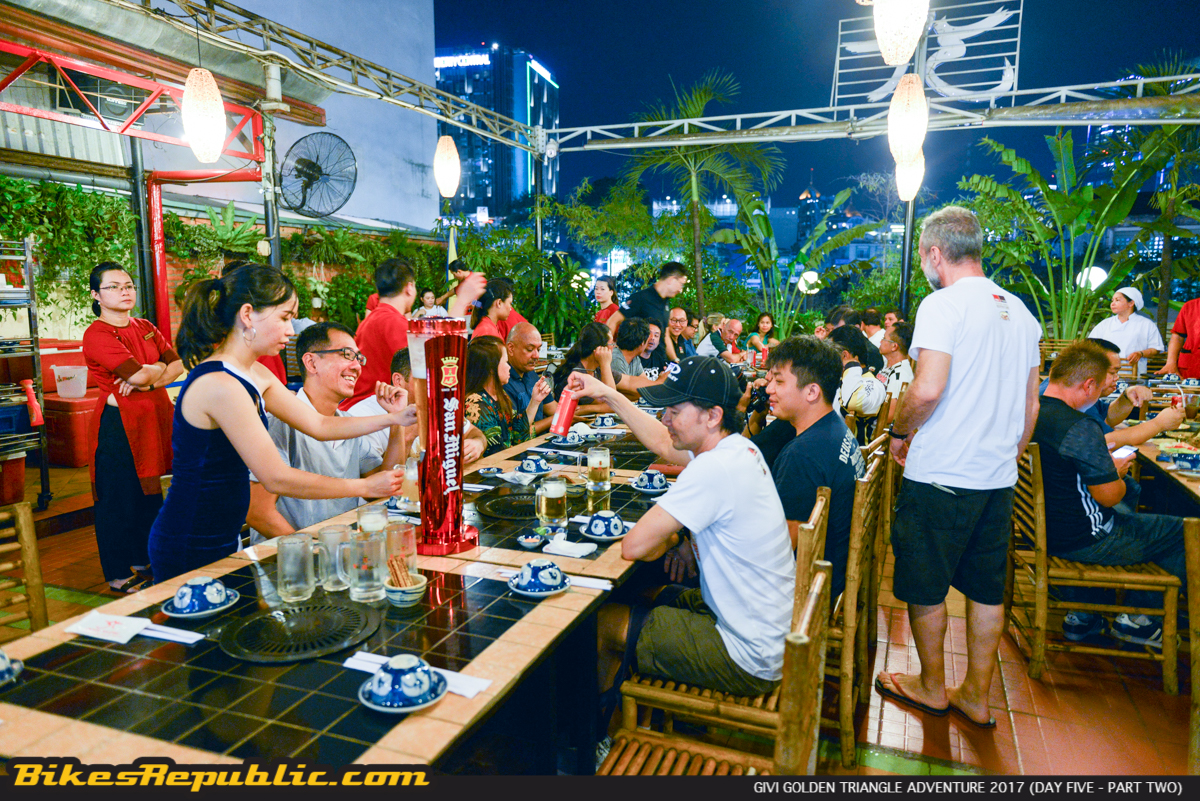
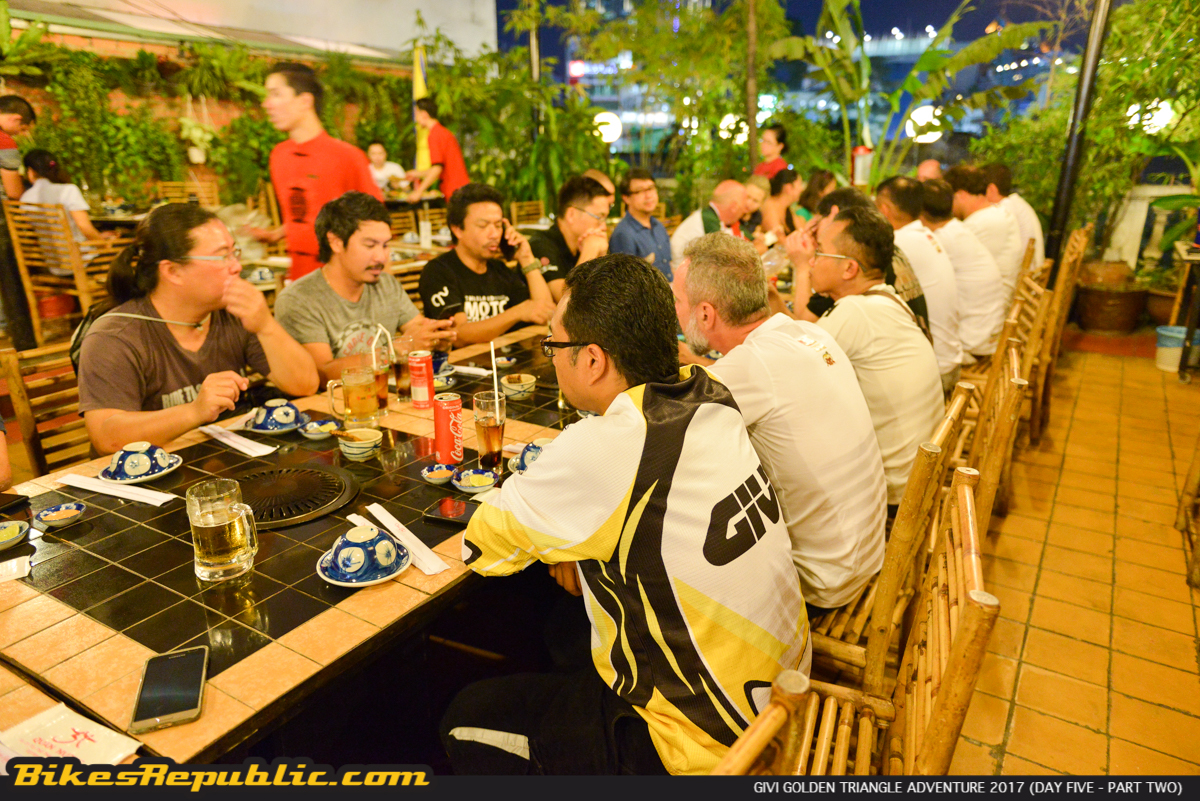
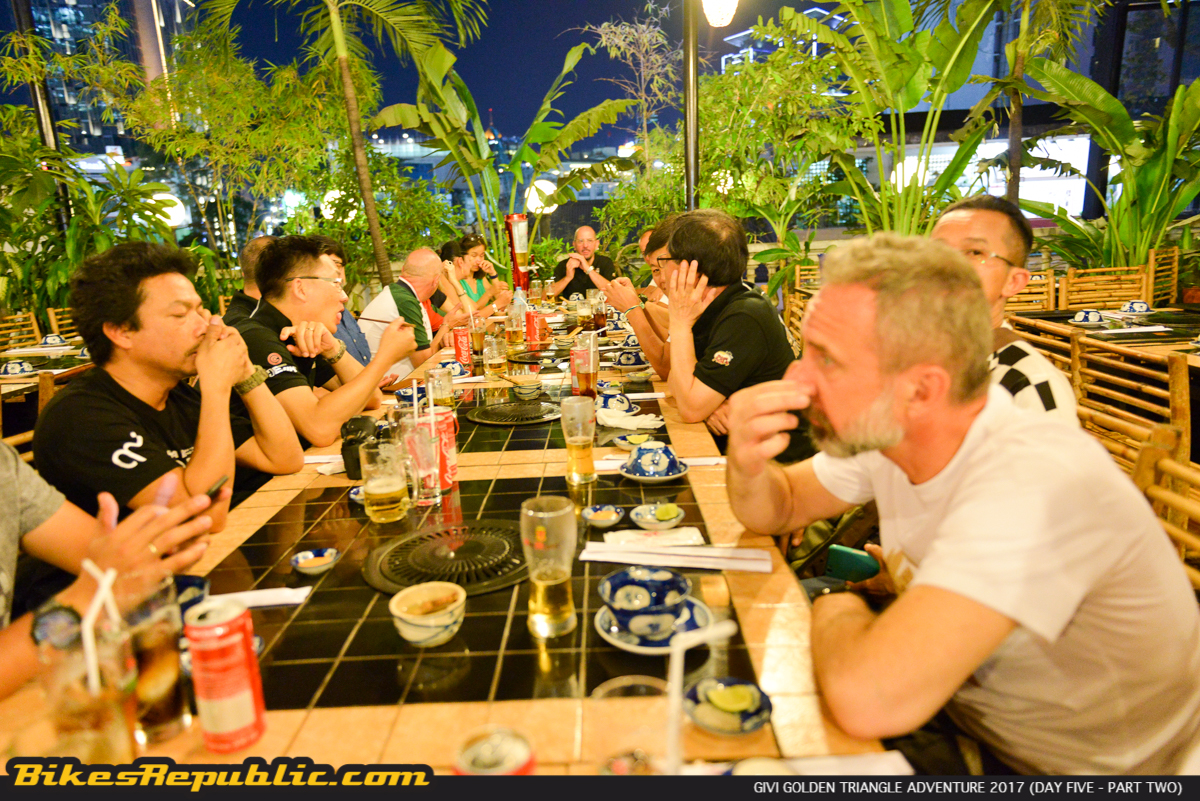
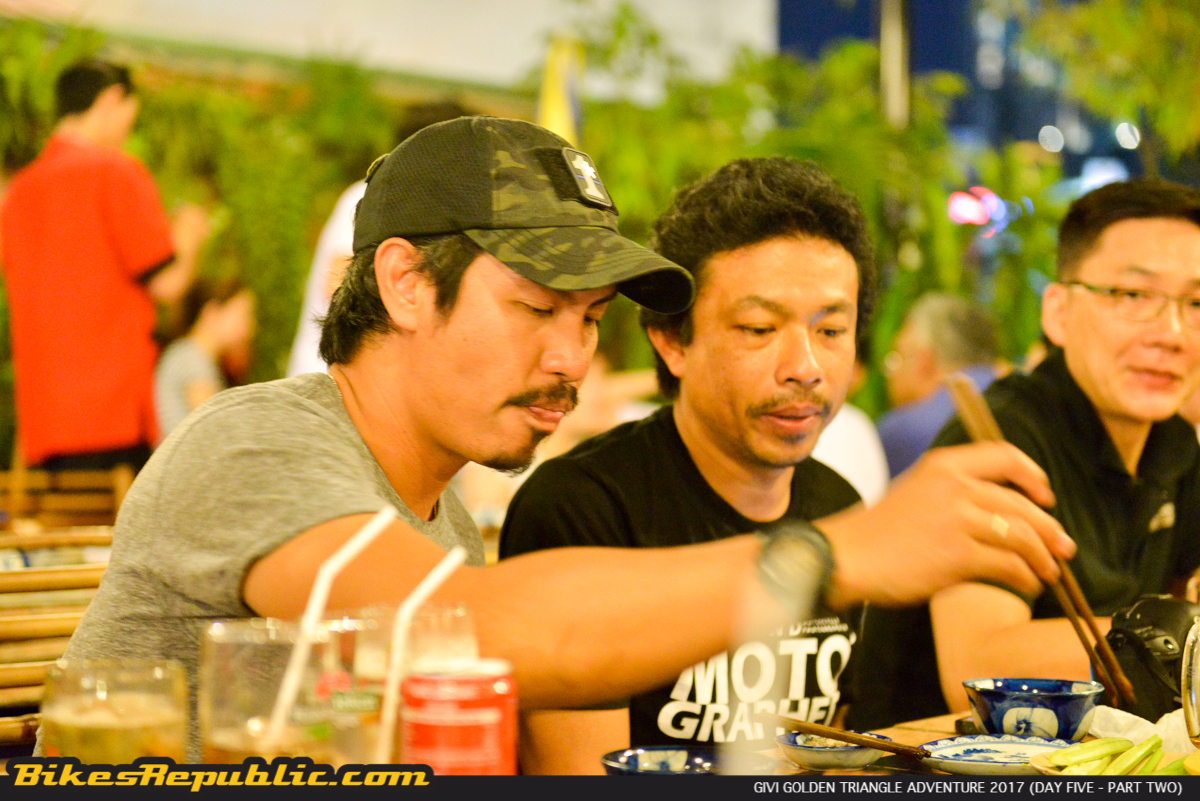
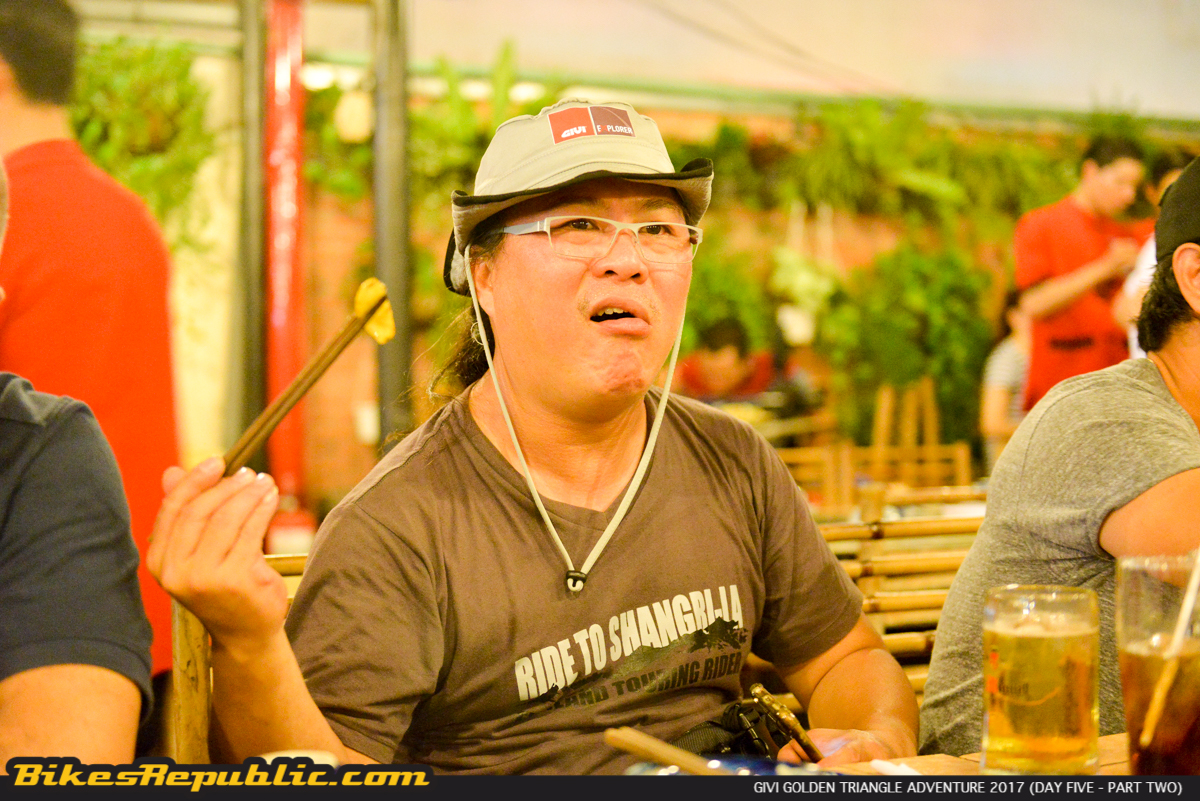
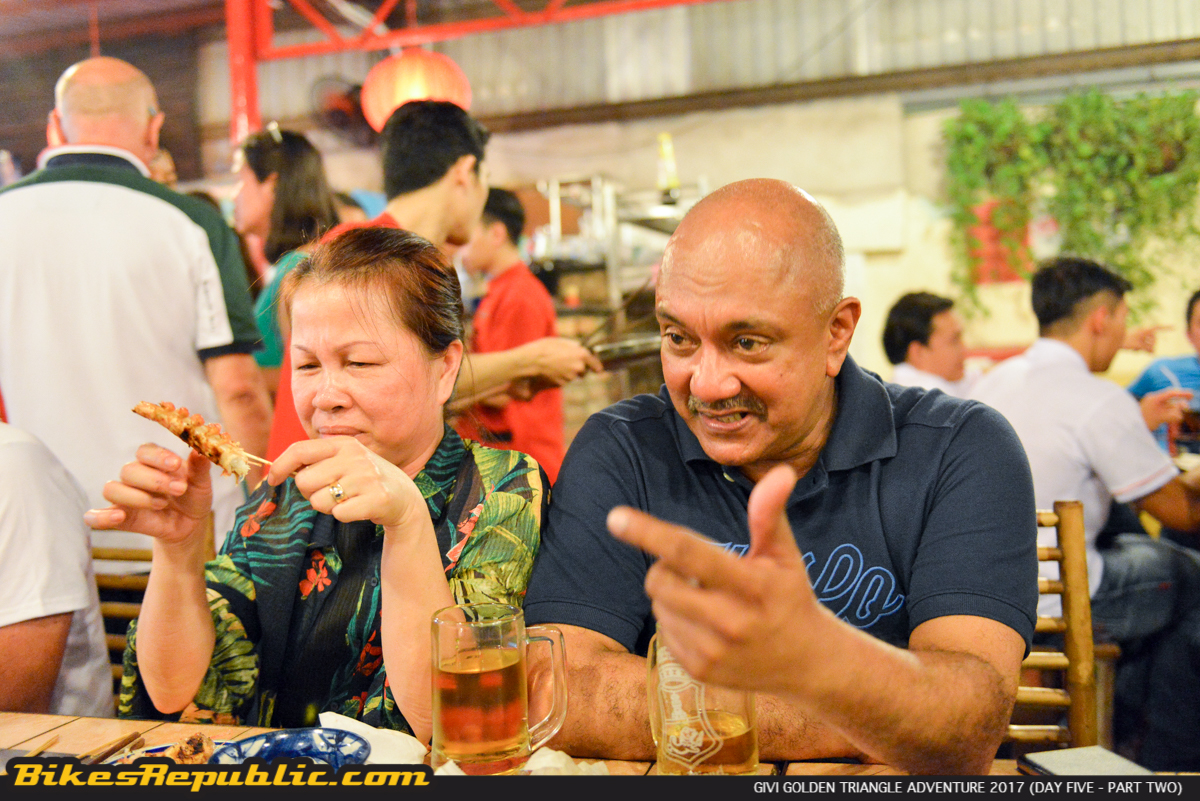
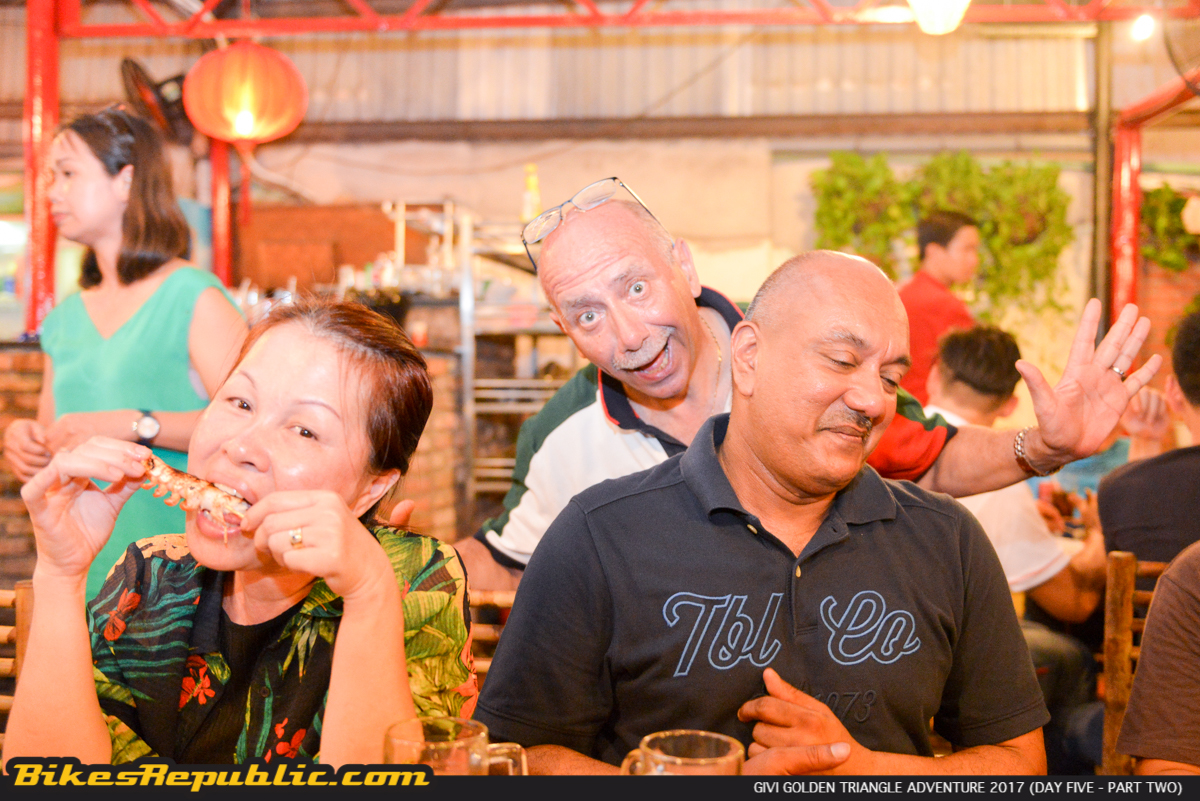
Dinner was at the 3T Vietnamese BBQ Restaurant on the rooftop of the Temple Club Restaurant. Superb food! I’m allergic to seafood so I hammered on the Vietnamese spring rolls and chicken all night.
A group from GIVI Vietnam had also joined us. Joseph explained that it was through these hardworking individuals that we were enjoying the exclusive line of riding gear during the GIVI Golden Triangle Adventure 2017.
Here’s a personal note to them (hope you guys are reading this): The gear were truly amazing. Both the new jacket and pants kept me cool when it was really hot. They fitted my body well and allowed lots of freedom of movement without flapping in the wind. Also, all the accessories worked. My favourites were the X-45 Fibre helmet, Hevik Lumbar Support belt, and the Technical T-shirt. Well done!
Now, where were we? Oh yes, dinner.
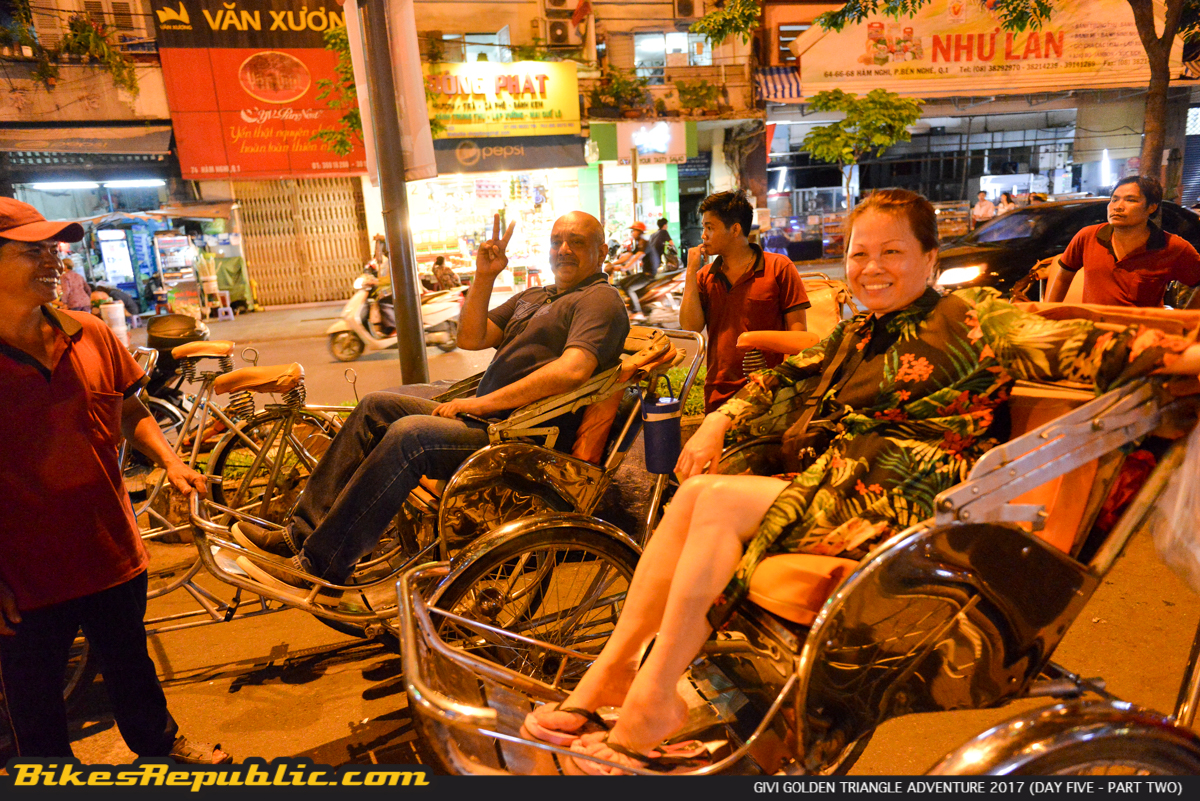
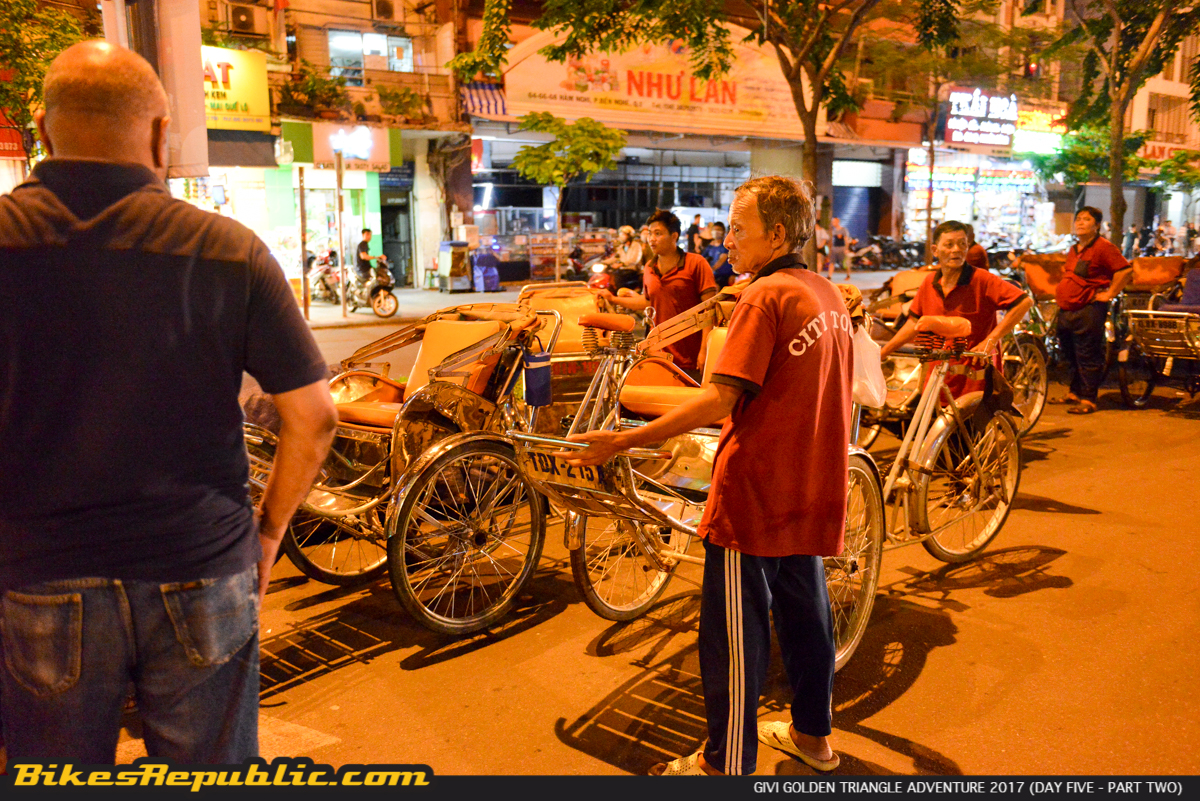
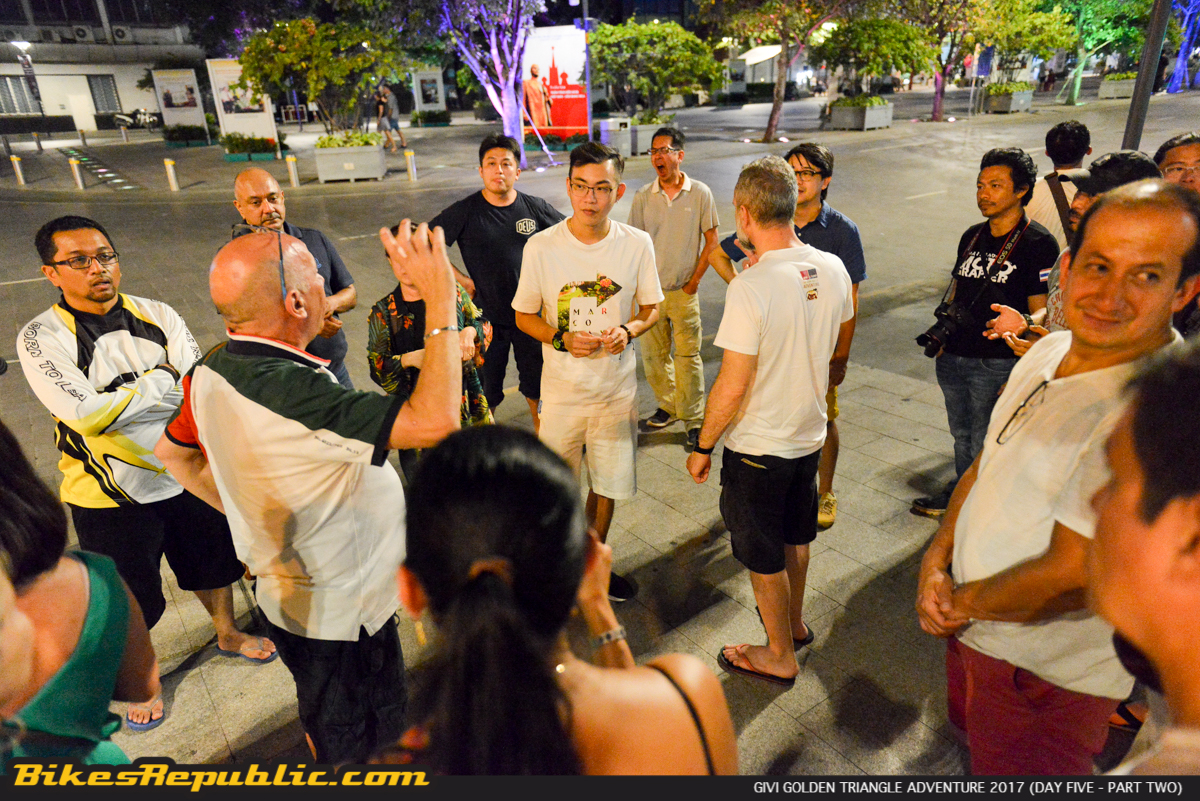
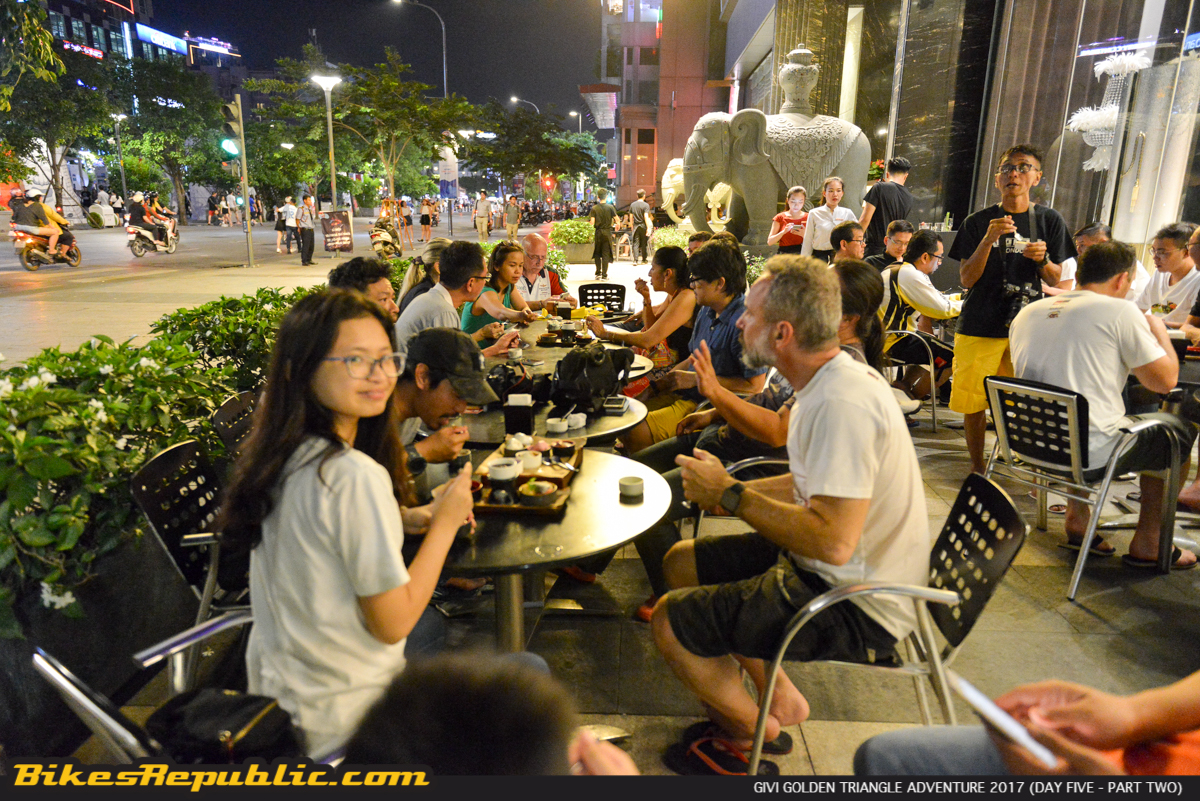
We went out on foot again after the thoroughly satisfying dinner and chartered every trishaw we saw at a square. Sure, we were swamped by traffic again at first, but we didn’t care by now as every GIVI Explorer was laughing and giggling like children. A few Explorers took to riding the trishaws instead of being ferried. GIVI Golden Triangle Adventure 2017 happened on three wheels, too! Hah!
It was only now that I discovered just how beautiful HCMC was! I was shooting pictures of the guys around when I spotted, first an M48 Patton tank with Vietnamese Army insignia, followed by the tail section of a Northrop F-5E Tiger II fighter jet and Bell UH-1 helicopter in a compound! Being a military history buff, I asked the trishaw uncle, “Is that the museum?” He just smiled and shrugged. Then I heard, “Yes, that’s the War Museum” from behind somewhere. I looked around to see a young couple wearing surgical masks on a scooter to the left. “But it’s closed now,” said the rider in perfect English. I thanked him and they nodded. Whoa! I have to come back here!
It was during this time that it occurred to me how HCMC has thrived. HCMC, known as Saigon at the time was the capital of South Vietnam, and had been the scene of battles and bombings during the Vietnam war. Being the first “televised war,” there were many enduring images from Saigon, but perhaps the most famous was of choppers airlifting civilians from the US Embassy (Operation Frequent Wind) on 30th April 1975, which marked the Fall of Saigon and end of the war.
It’s been forty-two years since then and Vietnam, although remaining a communist country, had opened its borders to trade and tourism.
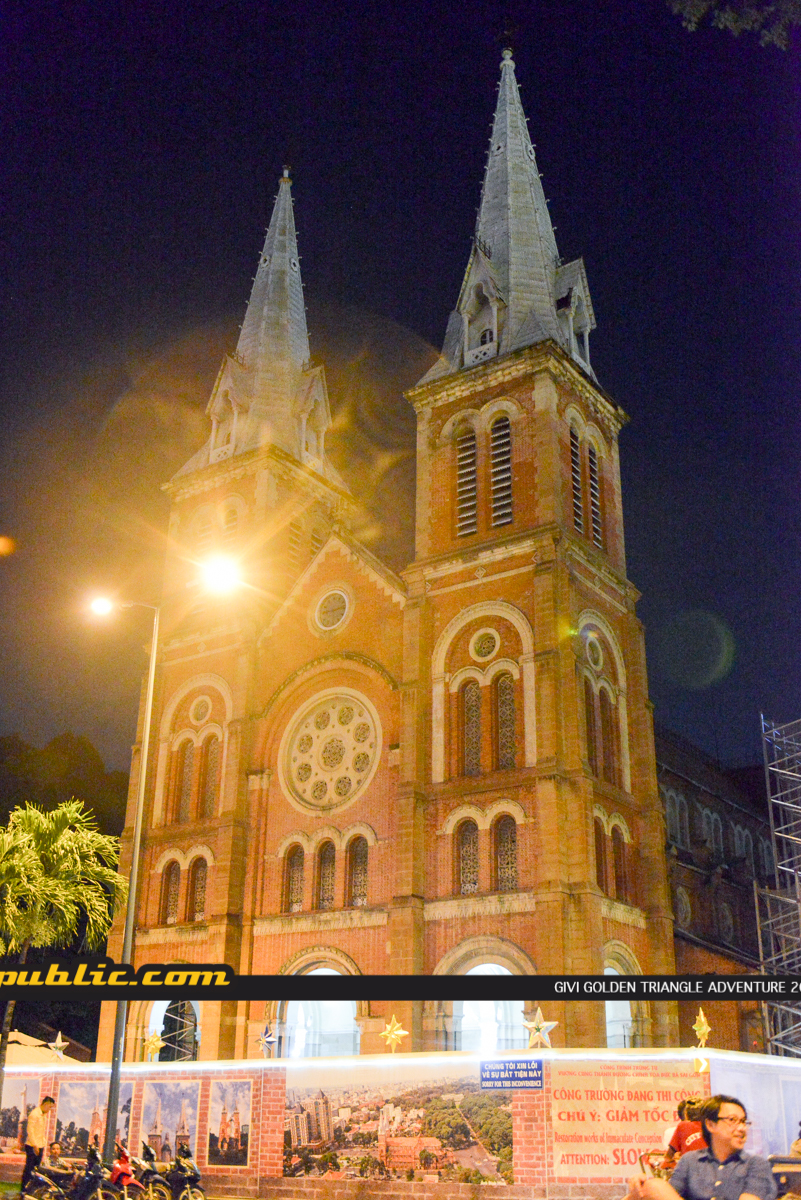
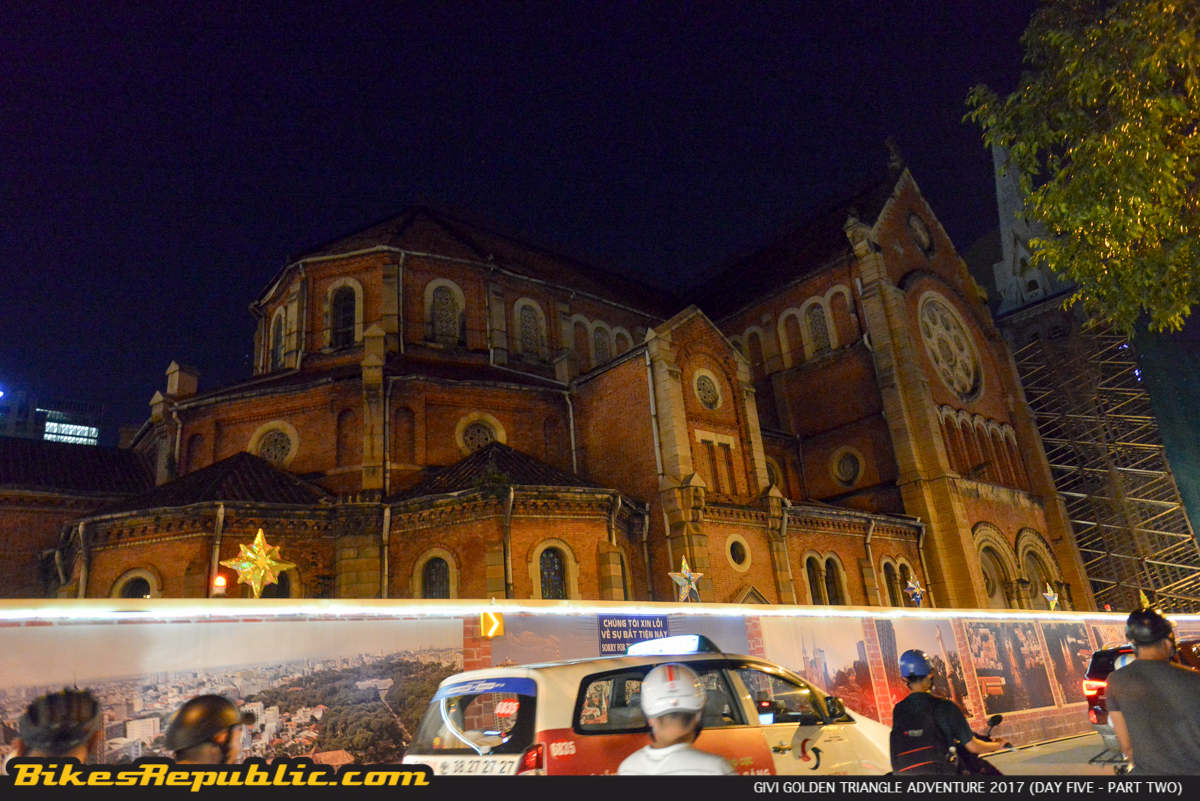
Our convoy of trishaws rounded an intersection and a large classical cathedral like those you’d find in Europe came into view. it turned out to be called Saigon Notre-Dame Basilica, just like the one in France. It was built by the French in 1863 and completed in 1880.
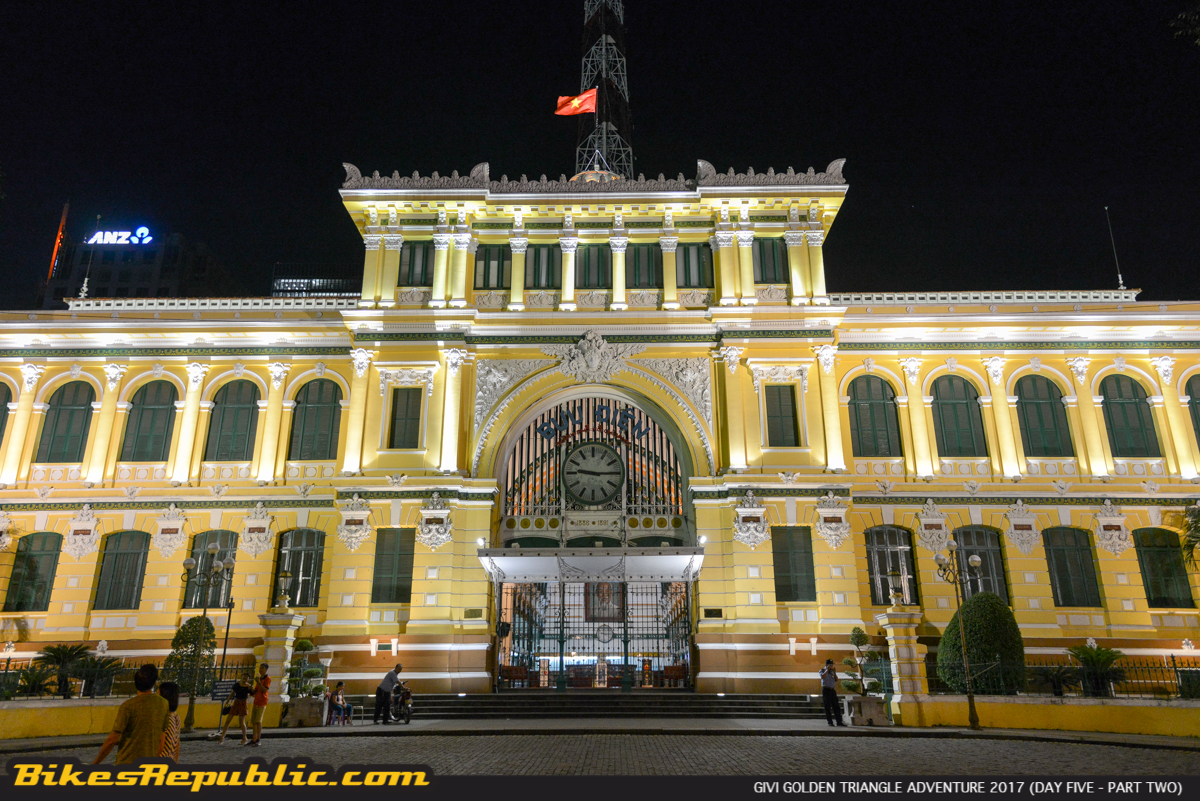
On the other side of the street was a beautiful classical building, the Saigon Central Post Office. Completed in 1891, it was designed by the architect Gustave Eiffel, the French civil engineer who owned the firm which built the Eiffel Tower in Paris.
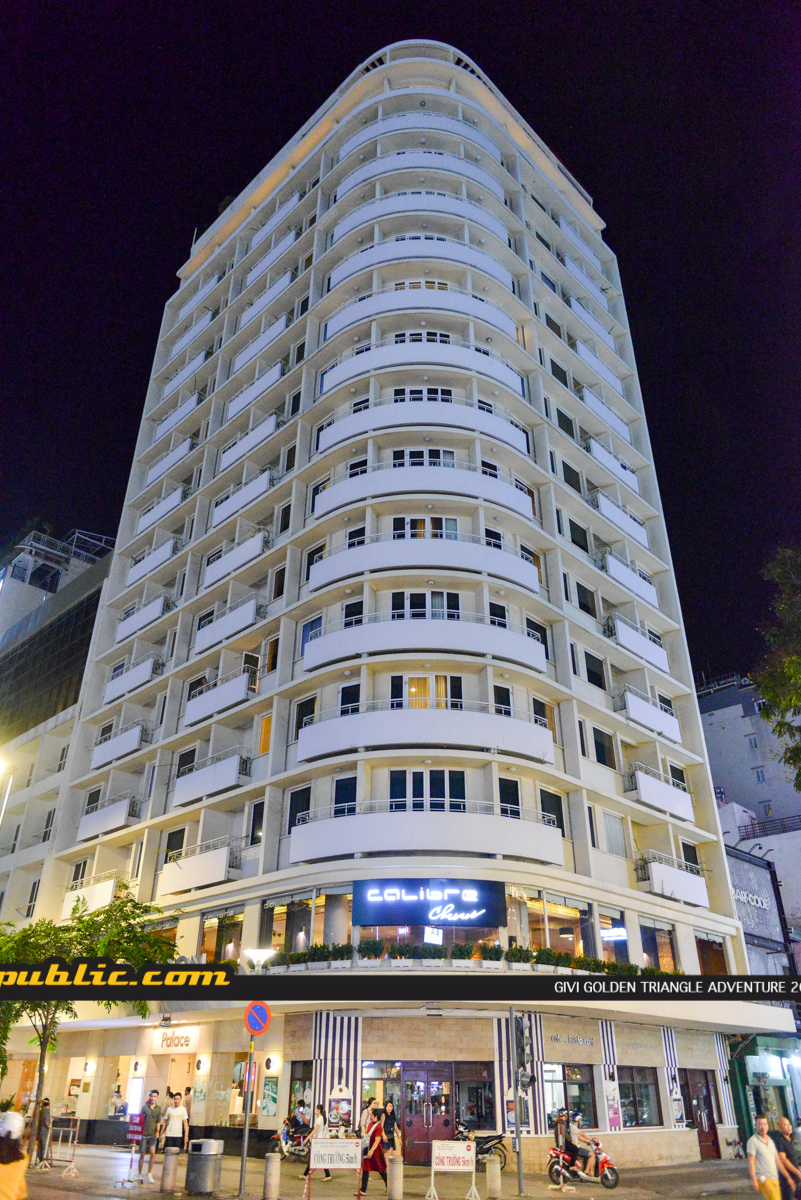
We stopped for a photograph session, then continued onwards past the river front of the Saigon River. Here, we saw European-styled luxury hotels, exactly like those you’d see in movies. And up the road was a large cruise ship at the Saigon River Dock. An ultra-modern skyscraper with an open-air deck shoots into the air on the opposite side.
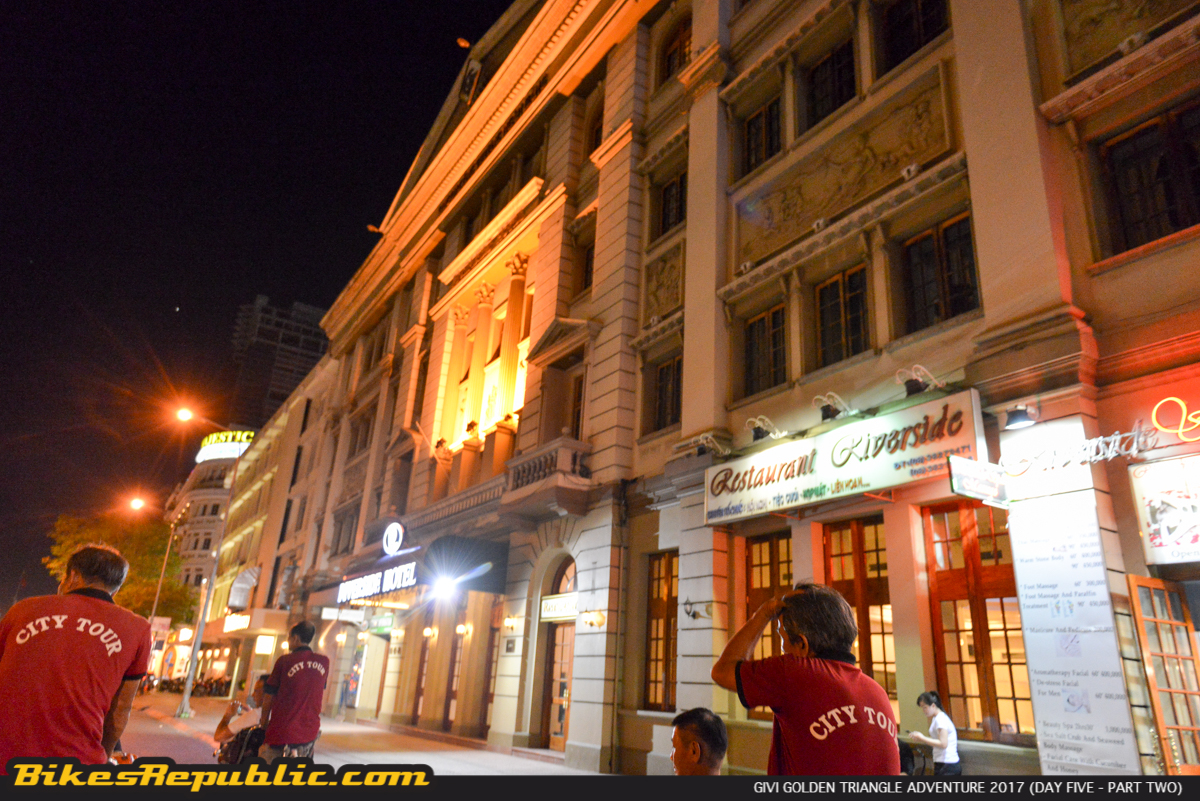
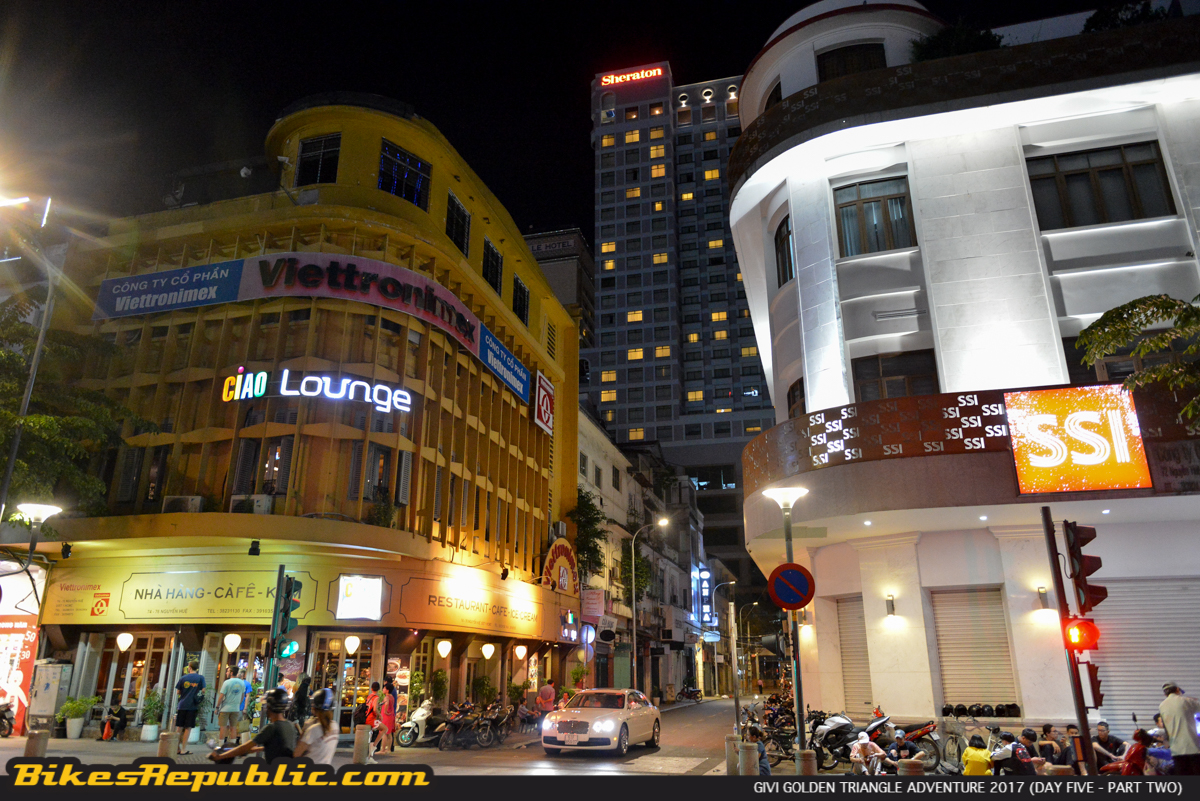
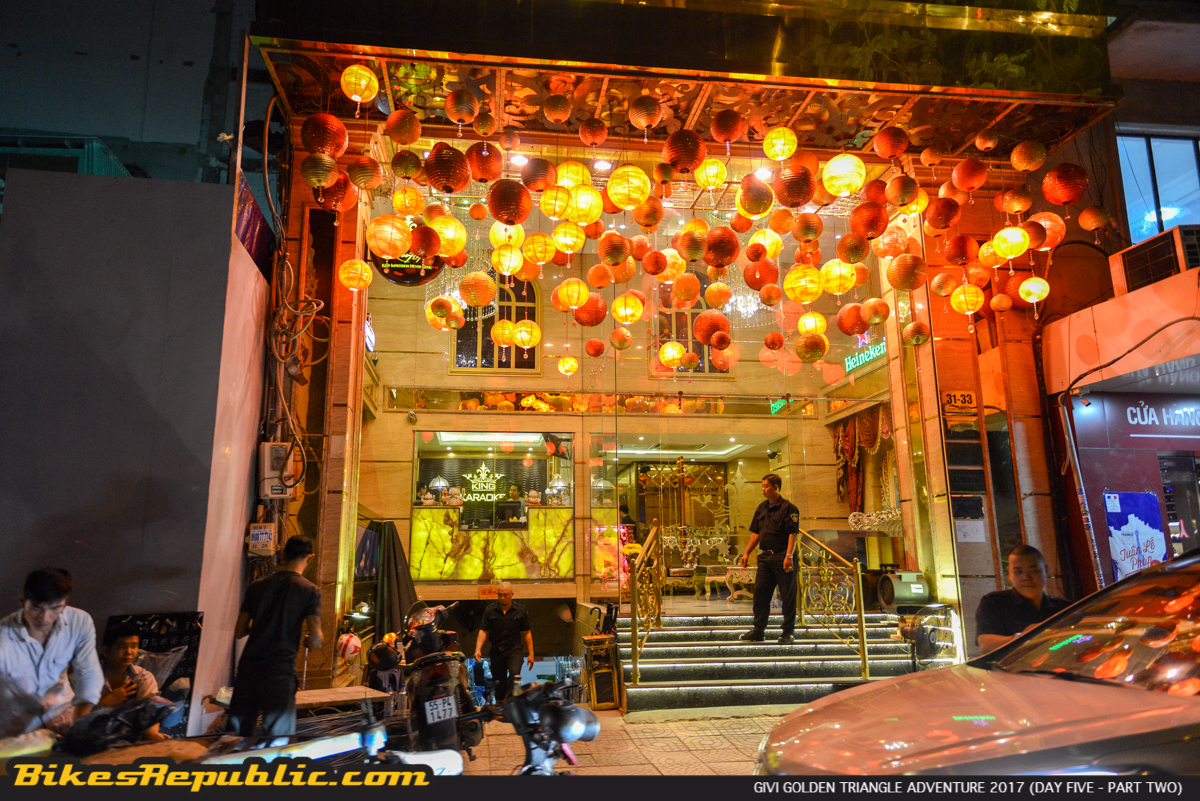
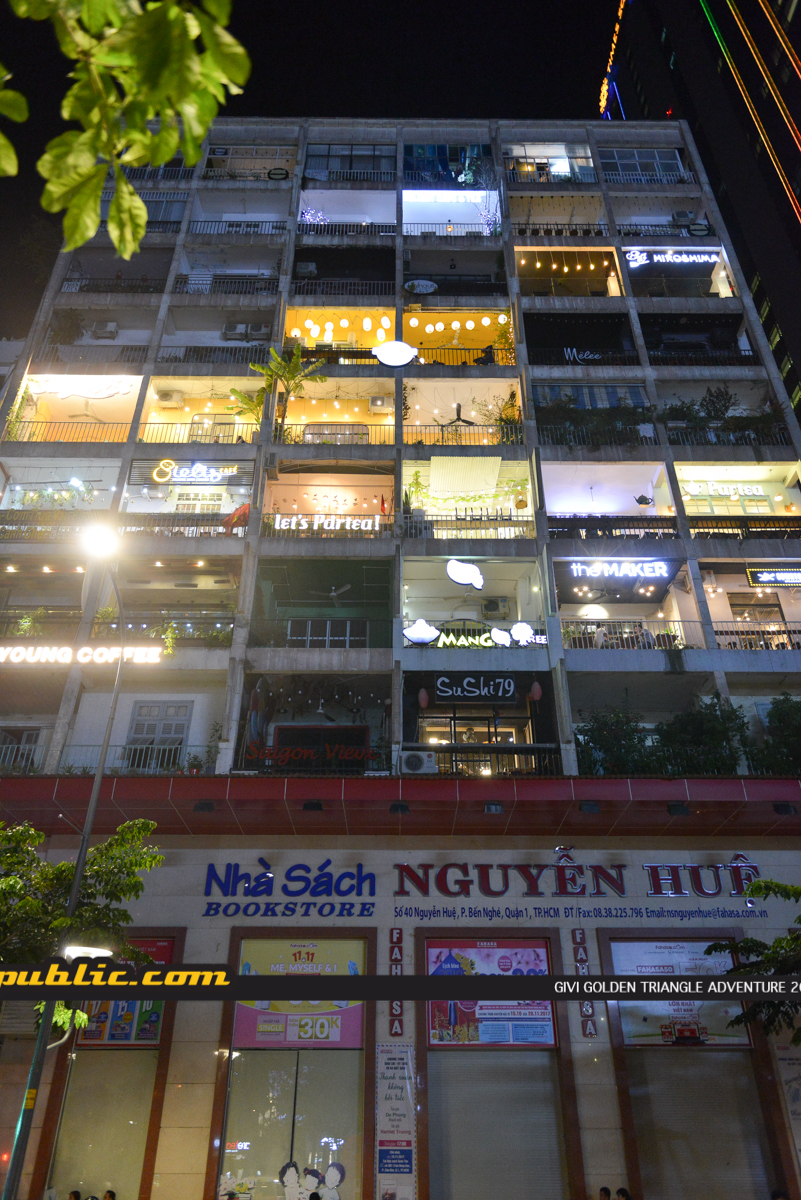
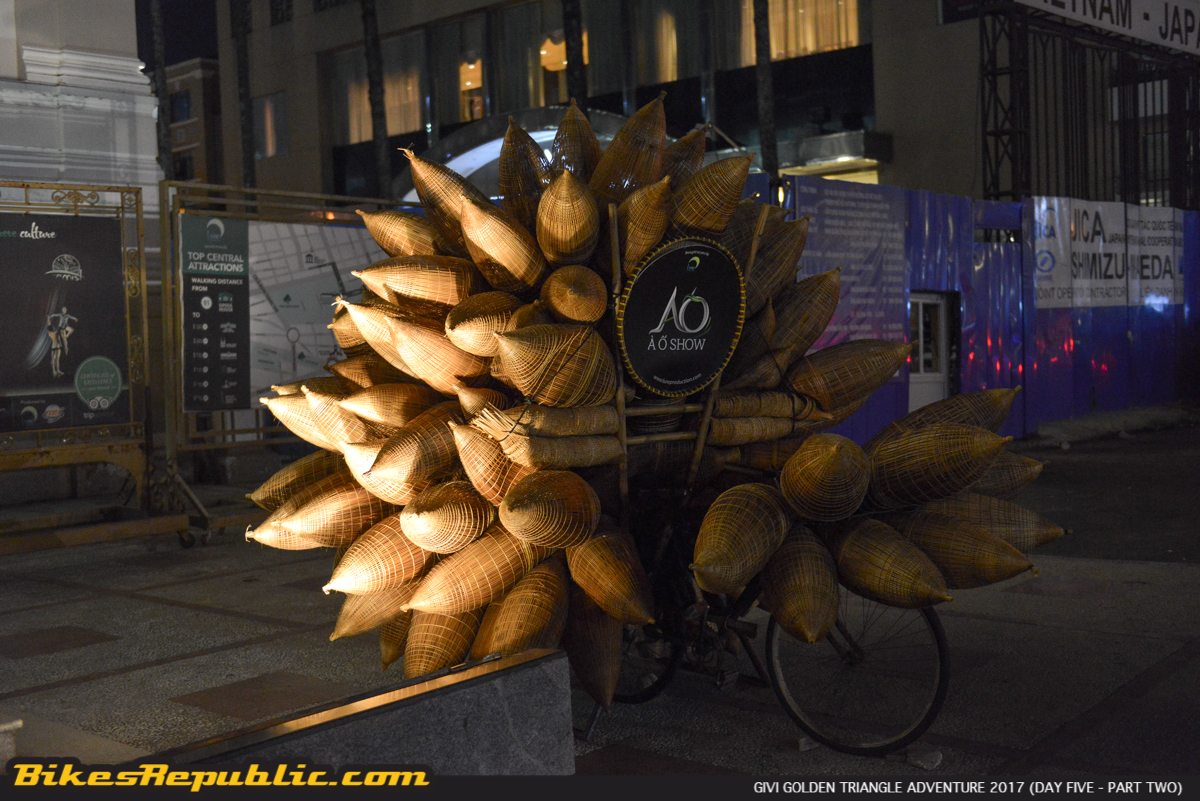
That’s the charm of HCMC. Classical colonial buildings amidst modern buildings and modern lifestyles. We stopped at the Nguyen Hue Walking Street and continued on foot. This stretch encompasses more classical and old buildings converted to shops and hotels.
There was a concert here along the median between the lanes. The Explorers stopped for ice-cream at the foyer of The Reverie Saigon, HCMC’s most luxurious hotel. Wisnu and I spotted a brightly lit building about 500m to the north and decided to investigate.
The concert was over by now and the street was reopened to light traffic. Pretty Vietnamese ladies caught our eyes. We stopped opposite the Rex Hotel to shoot a few pictures when we spotted a Bentley Continental GT poking its nose out of a side street.
We kept walking and discussed about the ride as we hadn’t done so since this GIVI Golden Triangle Adventure 2017 first started. We were roomies during the GIVI Wilderness Adventure 2015 in South Africa. But we kept getting distracted by the Vietnamese girls. Oh yes, friends have warned us about this.
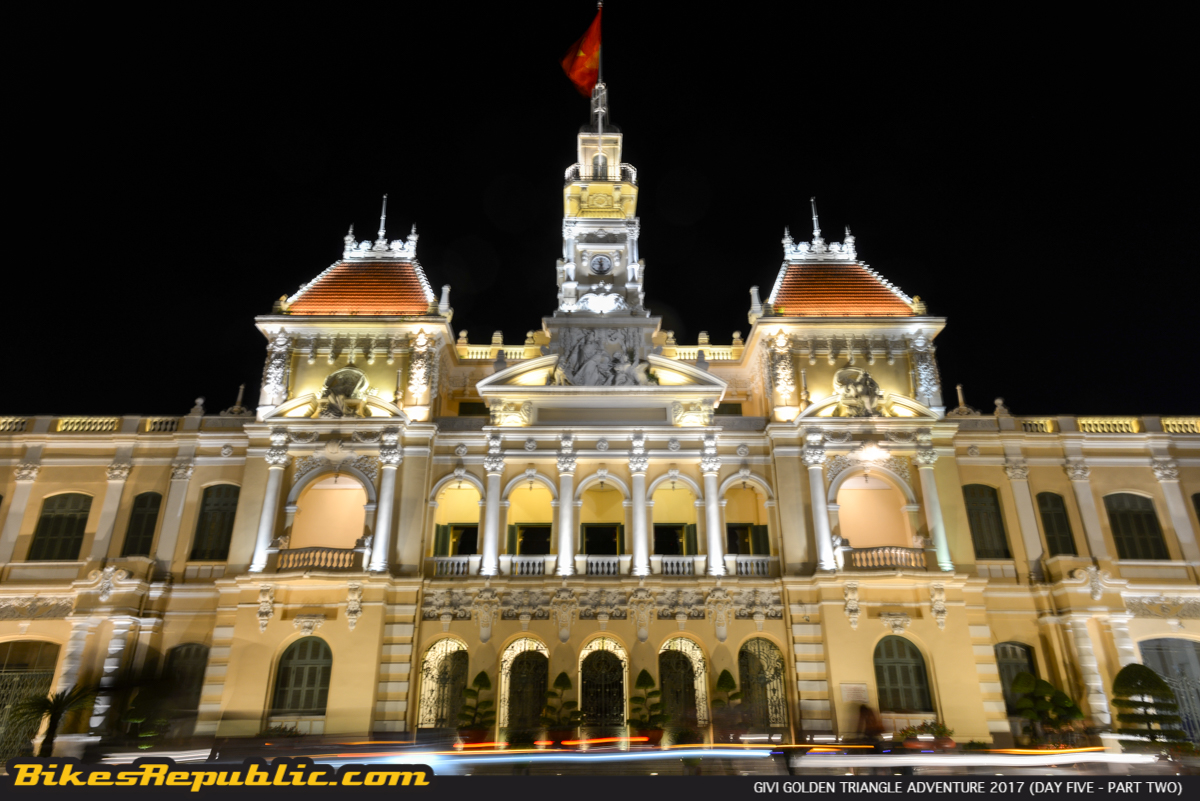
We arrived at the building. It was gorgeous, beautifully restored and maintained. It was the HCMC City Hall. We got busy photographing it when we heard the roars of sportscars. They were Ferraris and Lamborghinis and they charged down Nguyen Hue Street.
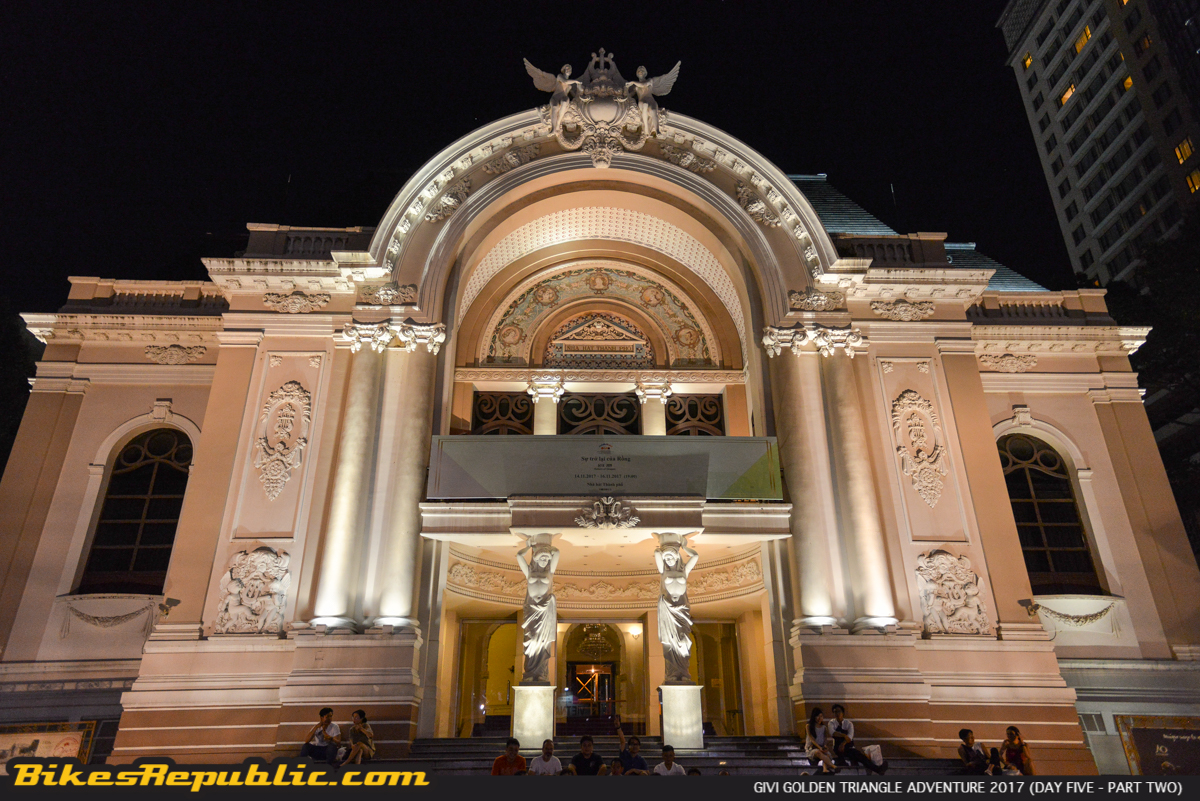
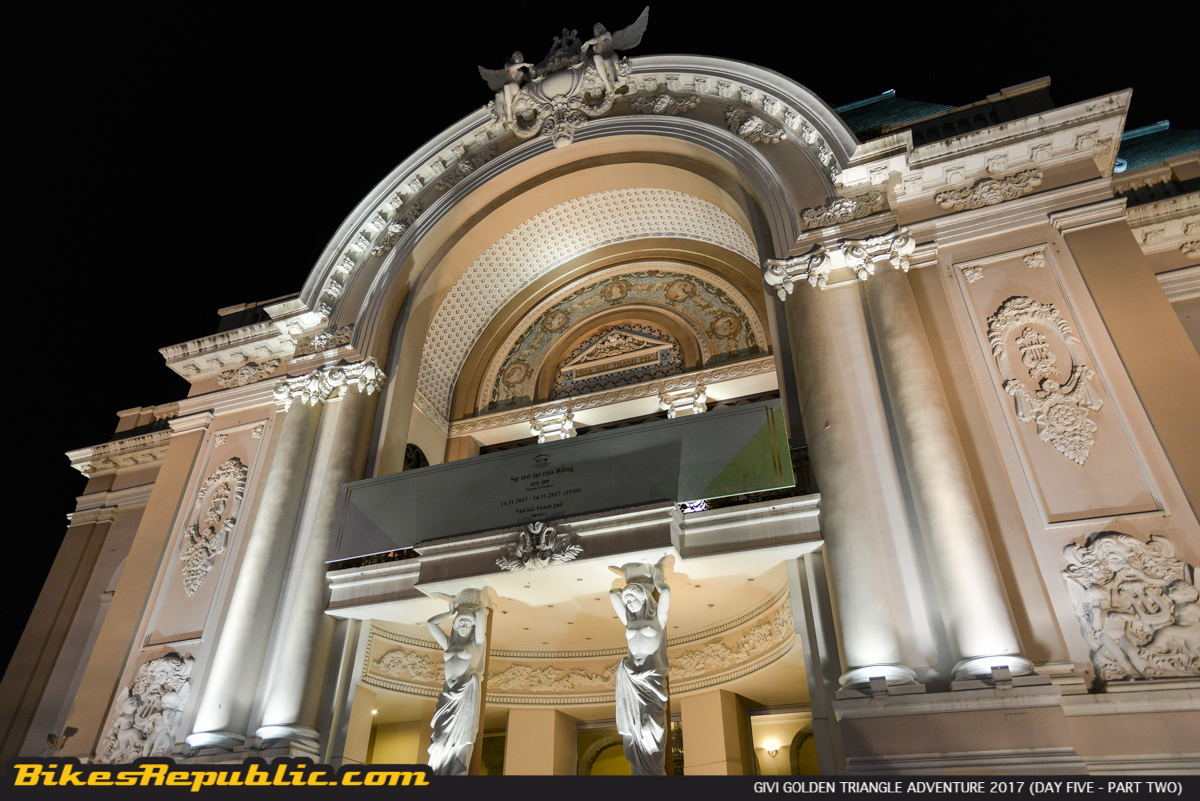
The group had finished their ice-cream and caught up with us there. They too started shooting the pictures of the City Hall. We continued walking and ended up at another prominent classic building, this time it was the Municipal Theatre of HCMC, but better known as the Saigon Opera House.
Built in 1897 by French architect Eugene Ferret, and restored in 1995, it was shaped like Opera Garnier in Paris. Right opposite was an old building, with a large “Louis Vuitton” signage on top of the entrance.
The left side of the building was boarded up as the authorities are building an underground MRT system.
From here, we took taxis back to the hotel in District 7 and called it a night. I regretted that decision as there’s so much more of HCMC to be discovered. For a few Explorers and myself who had been here the first time we vowed to return. The memory of the traffic had faded into oblivion.
The WorldSBK 2018 season will be updated with new rules such as allowing teams to use ‘aerodynamic components’ on their race motorcycles.
There is a catch however as any of the aerodynamic components must first be made available to the homologated motorcycle.
The world of production superbikes in 2019 will be quite interesting if WorldSBK pick up this new ruling seriously considering how a big of an advantage ‘aerofairings’ can be especially seen in MotoGP.
Image source: Pinterest
The FIM World Superbike Championship has been introducing a lot of revolutionary changes and updates for 2018 to make the motorsport more exciting and appealing to fans around the world. Despite some setbacks laid out for some manufacturers such as limiting engine RPMs to make the field more evenly competitive, the Superbikes commission will now allow the use of ‘aerodynamic components’ come 2018. (more…)
The GIVI Golden Triangle Adventure 2017 Explorers left Cambodia behind for Vietnam on Day Five.
Downtown traffic was the main concern as we neared Ho Chi Minh City.
Vietnam proved to be another contrasting experience.
13th November 2017, Ho Chi Minh City, Vietnam – It’s time for the GIVI Golden Triangle Adventure 2017 to leave Cambodia (for the time being) as we pushed forward to Vietnam.
The weather stayed clear all morning, thankfully, but the downside was it was starting to get hot by 8am as we prepared to head out from the Phnom Penh Hotel.
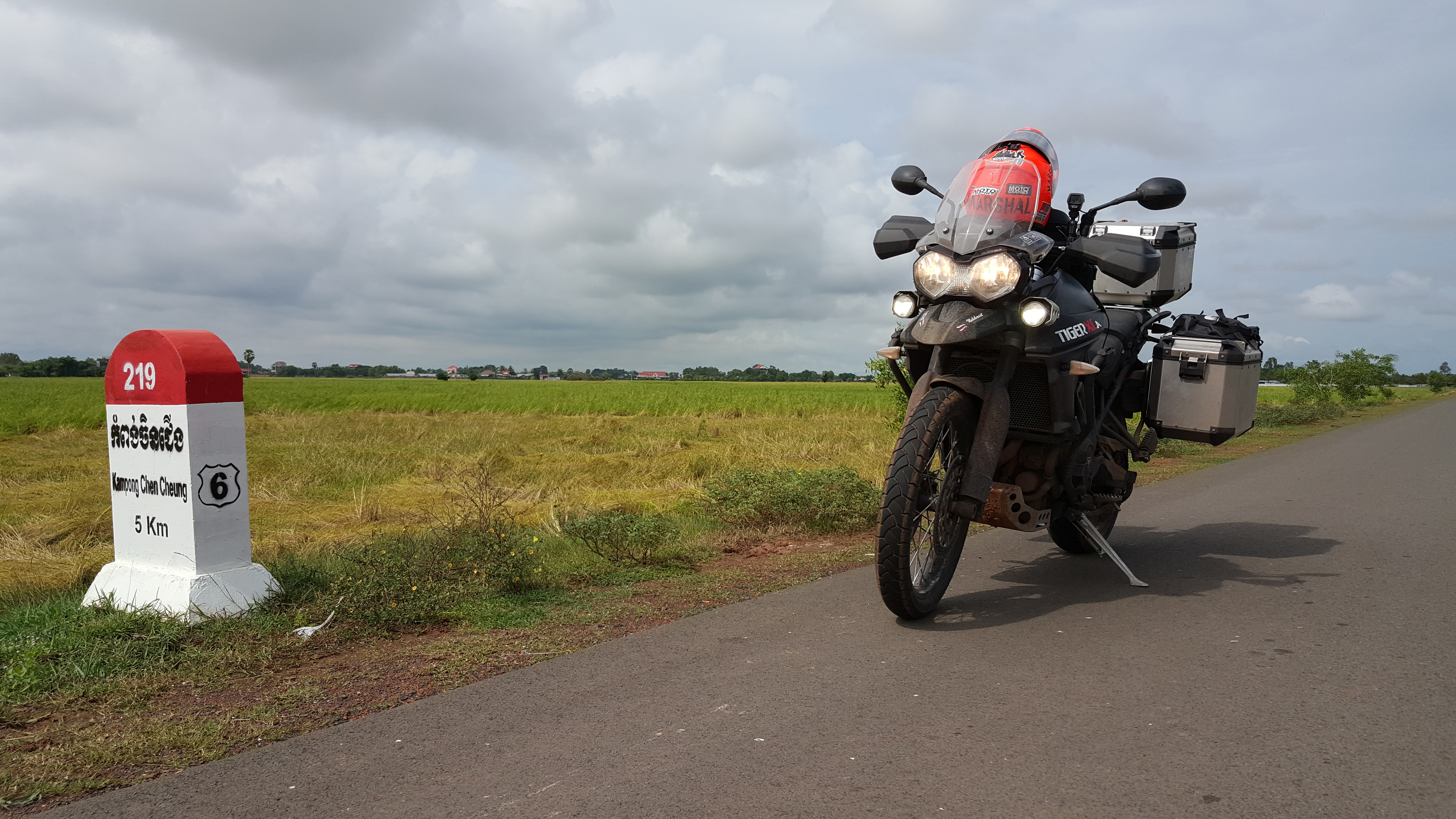
Apart from crossing the great Mekong River at Naek Loeung, the rest of Cambodia was uneventful, to put it succinctly. with more small towns interspersed with paddy fields along the way. Traffic was moderately heavy with the usual mopeds, large SUVs, among those huge Peterbilts and Mack trucks, and of course, more mopeds. It may look like there are many curves and corners along the way, but it was straight in reality.
Courtesy of GIVI Explorer and Nikkasit
Still, am just happy to be here to see a whole different country.
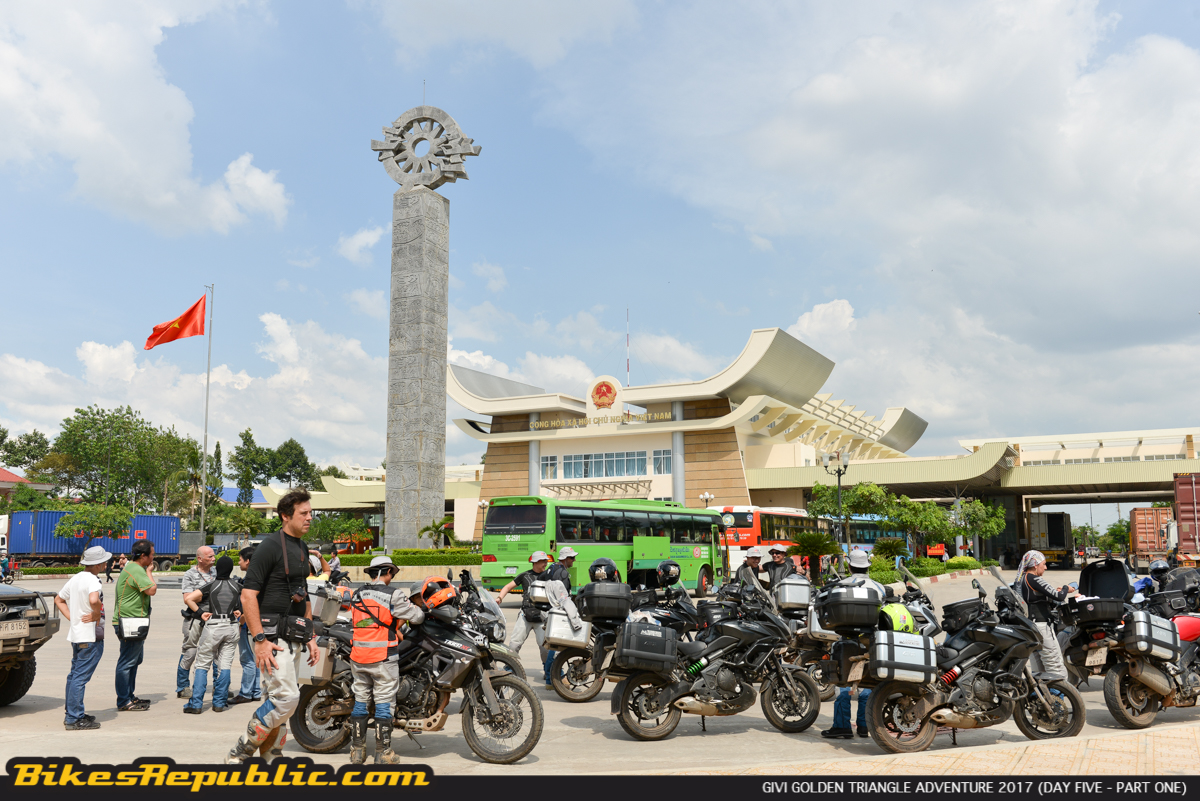
And that notion brought along a surprise as we reached the Cambodia-Vietnam border crossing at Moc Bai.
Just as with the border crossing from Thailand, there were a number of casinos on the Cambodian side, and they were called glamourous names such as those in Las Vegas. We didn’t get to find out if “what happens in Vegas stays in Vegas,” tho’.
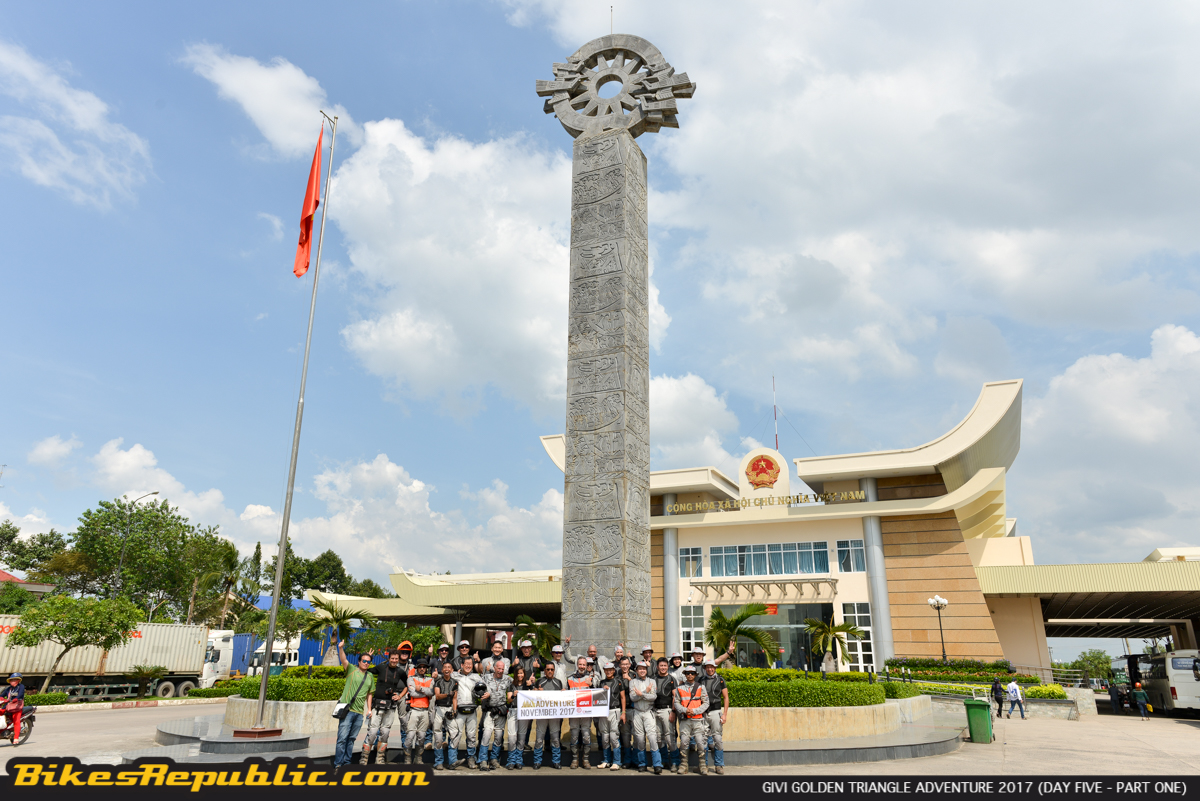
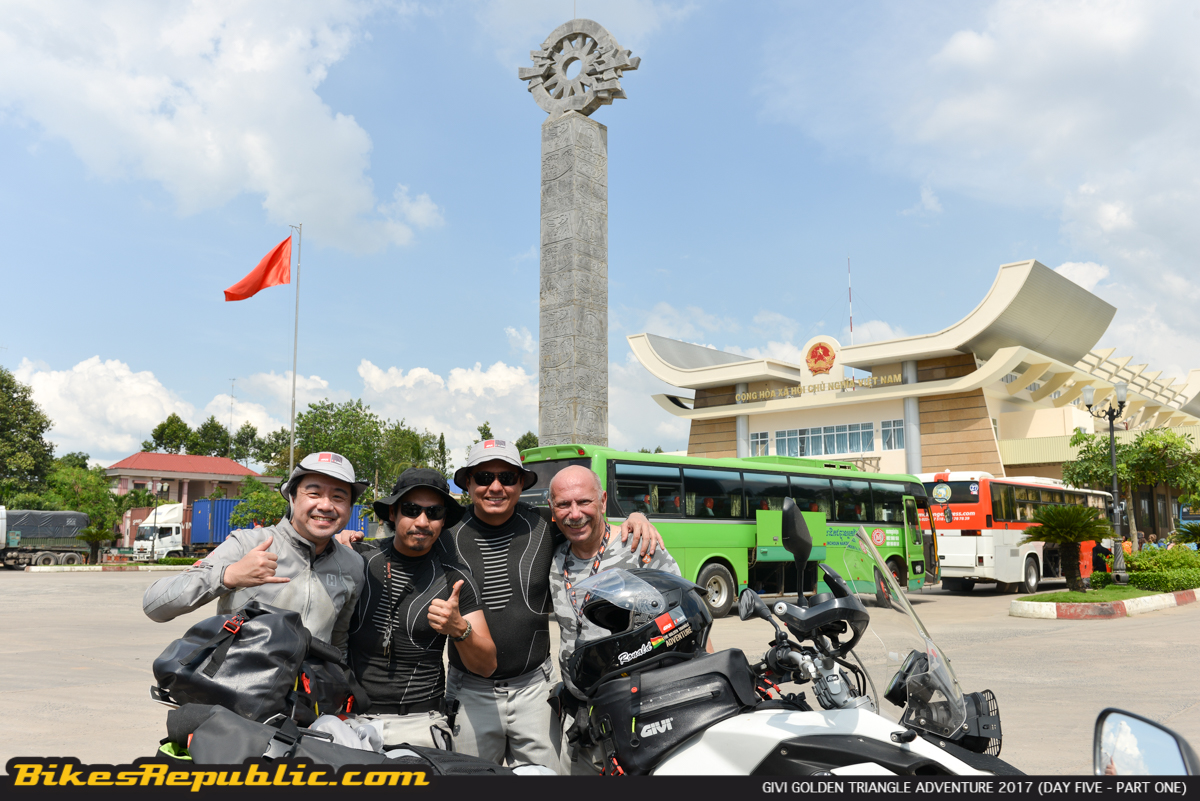
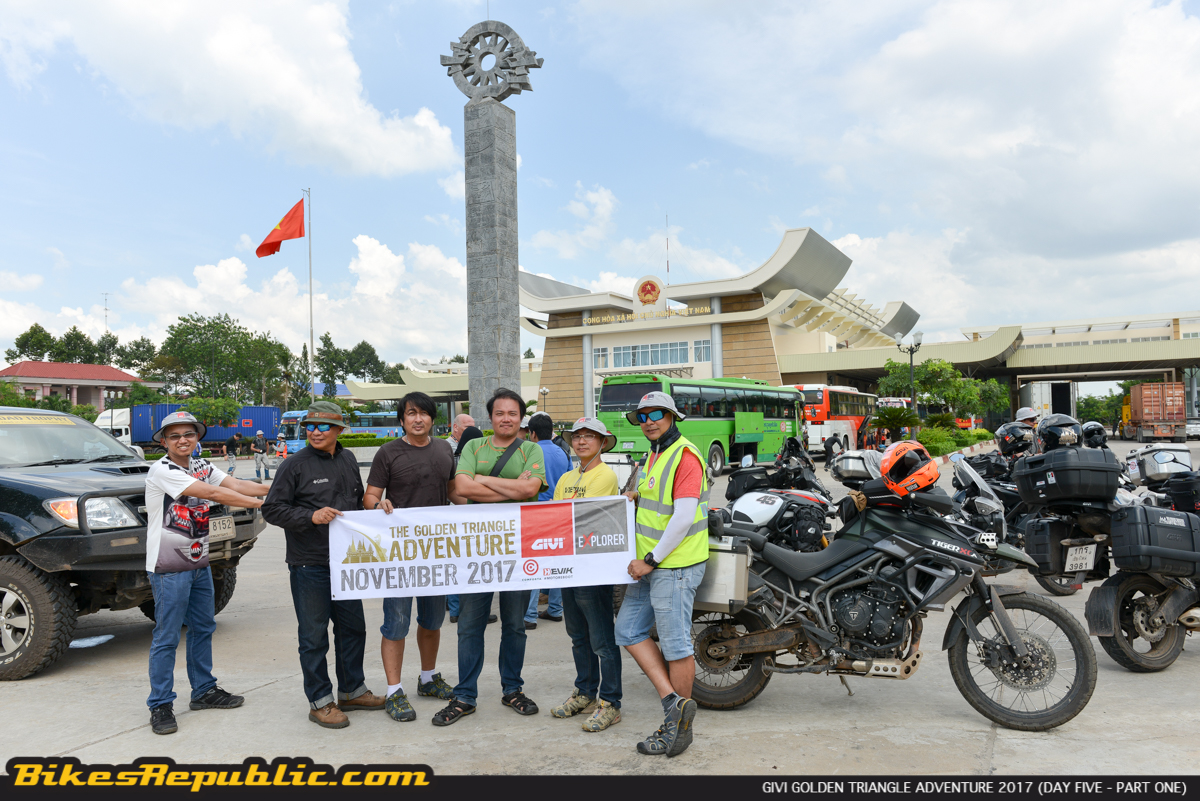
The Moc Bai Border Crossing consists of beautifully constructed buildings in the traditional Vietnamese style. The administration building was no doubt modern, but it was unmistakably Vietnamese. We stopped to wait for the organizers to sort out the paperwork, while we took photographs with the GIVI Golden Triangle Adventure 2017 banner, to stamp the evidence that “we were here.”
Then as we were running around with our cameras and our phones, the marshals announced, “Okay, let’s go!” What? Wait, that was just like 20 minutes. We waited for almost an hour to cross into Cambodia a few days prior.
I noticed a blue and yellow Honda CBR600RR among us for the first time. It had a loud exhaust, semi-slick tyres, but no mirror and he was way up front of the pack.
It turned out that he was our guide to the hotel from the border. The Vietnamese authorities prohibits the entry of overseas motorcycles, unless you’re guided by a government-designated guide.
So nevermind, since we’ve only 100 kilometres to go to Ho Chi Minh City.
We were swallowed up by packs of mopeds soon enough. Well, “pack” isn’t the correct word, but swarms would be accurate.
Before I proceed further, please allow me to state on record that this isn’t a criticism of the way people ride and drive in their own countries. Instead, it serves as one of the episodes in the GIVI Golden Triangle Adventure 2017.
We had been briefed earlier by Joseph about the traffic in Vietnam and Ho Chi Minh City. I’ve seen pictures and documentaries about Vietnam, so I made an offhand joke with a few guys that we might be surprised to find a local sitting on one of the boxes when reach the hotel.
Right in the thick of it, it was disconcerting at first, but conditioning, survival instinct and defensiveness kicked in as the mopeds crossed right in front of us, or overtaking one another without checking behind or alongside, etc. The duty to avoid them and stay save therefore fell squarely on the shoulders of each Explorer. Still, that didn’t mean being aggressive, instead one should be assertive. Oh yes, there’s a huge difference between the two.
Anyway, most of us started to struggle further along, including the hardworking Marshals who were getting overwhelmed. They had nominated me as their assistant marshal after the first day, so we did what I we could to open a path for the rest of the convoy.
But most of us started to get an inkling of something was wrong as we kept riding in the same traffic for two hours without getting anywhere. Worse of all, there wasn’t even a split second to check out the sights.
Remember the guy on the CBR? With no mirrors and being prone on the tank, he couldn’t look behind to see where we were. He had been briefed back at the border crossing to take another route (Joseph and Giorgio are familiar with Ho Chi Minh City) to avoid the gridlock, but he had guided us down the very route we had wanted to avoid.
So, we ended up covering 25 kilometres in two hours.
However, all of us made it to the Merperle Crystal Palace Hotel safe sound and that was what mattered the most.
It had taken us the better part of a day to cover the 289 kilometres from Phnom Penh. By comparison, that distance (minus 3 kilometres) was the same as travelling from the Rawang R&R to the junction of the Sultan Abdul Halim Muadzam Shah Bridge (the new Penang Bridge). But, that’s what an adventure is: Experiencing something totally different from everyday norms.
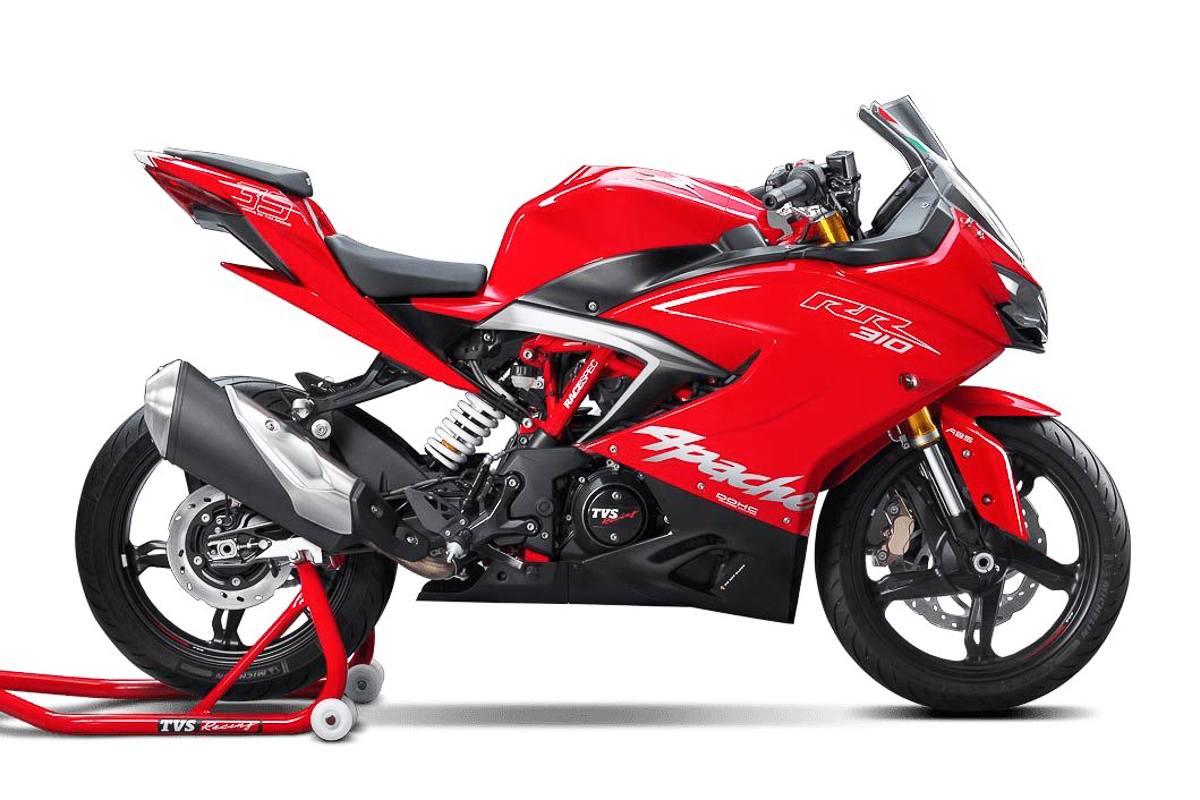
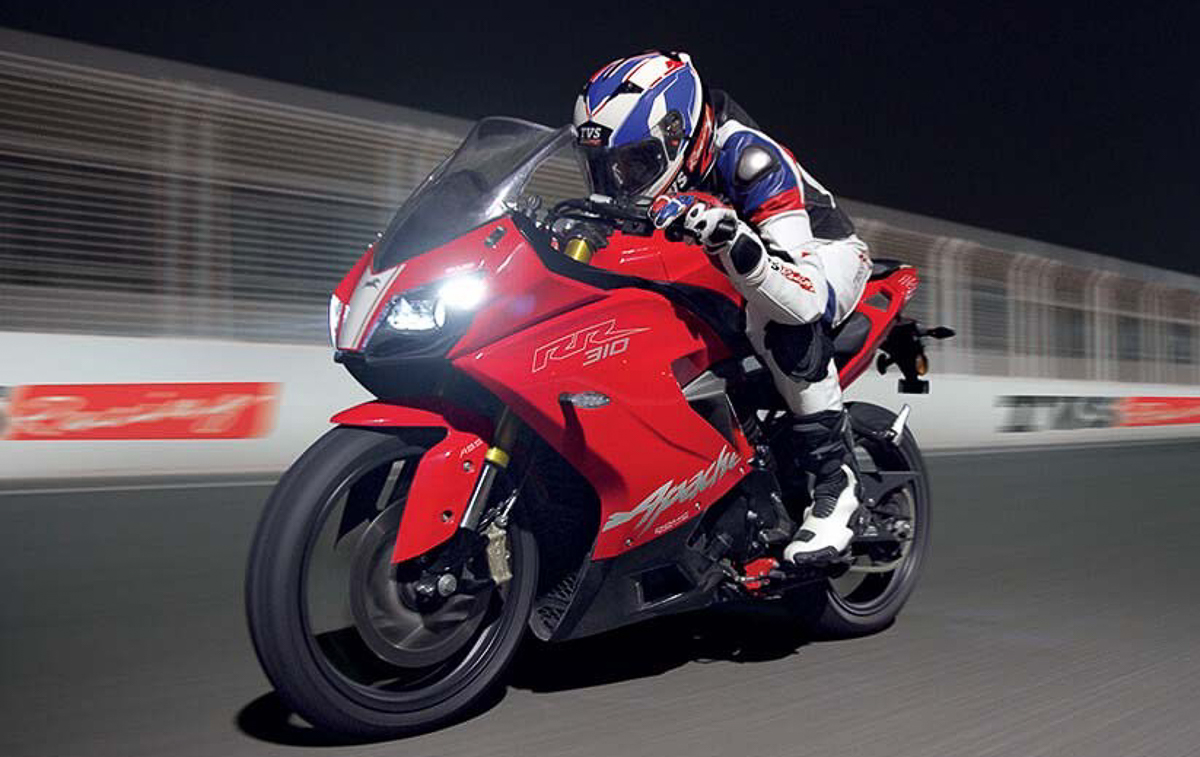
The highly-awaited 2018 TVS Apache RR 310 has been launched yesterday which thanks to a joint-partnership between TVS Motor Company and BMW Motorrad.
Using the same 313cc single-cylinder engine and chassis as the 2017 BMW G 310 R and BMW G 310 GS, the Apache RR 310 punches out 34hp and 28Nm of torque.
The 2018 TVS Apache RR 310 is priced at INR205,000 which is around RM19,975 (direct conversion)
After almost one year filled with setbacks and delays, the 2018 TVS Apache RR 310 has finally been launched yesterday in India. The joint partnership between BMW Motorrad and India’s TVS has resulted in the birth of what some say the next generation entry-level sports bike. (more…)
Not all engines look alike and a few are truly beautiful.
They not only belong to legendary bikes but they made the bikes legends.
Yes, the engine is the heart of the motorcycle. But while non-bikers are confused by how a lump of metal could do stir up so much emotions in us, to us they’re mechanical porn. Here are the best-looking motorcycle engines, in no particular order.
1. AJS 7R
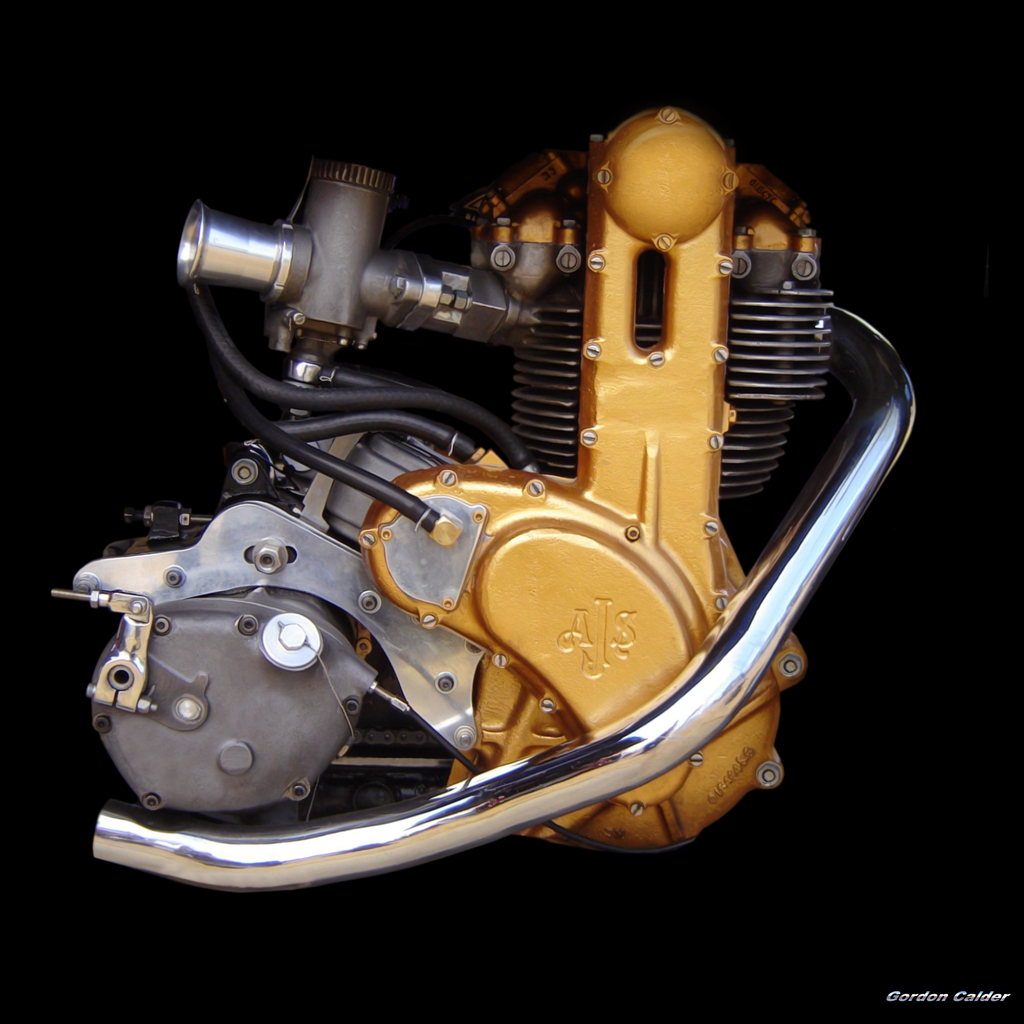
The AJS 7R was a 350cc race bike built from 1948 to 1963. Commonly known as the “Boy Racer,” it won victories for both the factory and privateers from its inception.
Designed by Phil Walker, the single overhead camshaft (SOHC) was driven by a chain from the outside of the engine block, hence the “tower cover.” That cover and cylinder head cover were painted gold contrasting against the gray and black parts of the engine.
AJS 7R engine – Courtesy of over-blog.com
2. HRD Vincent Black Shadow/Black Lightning
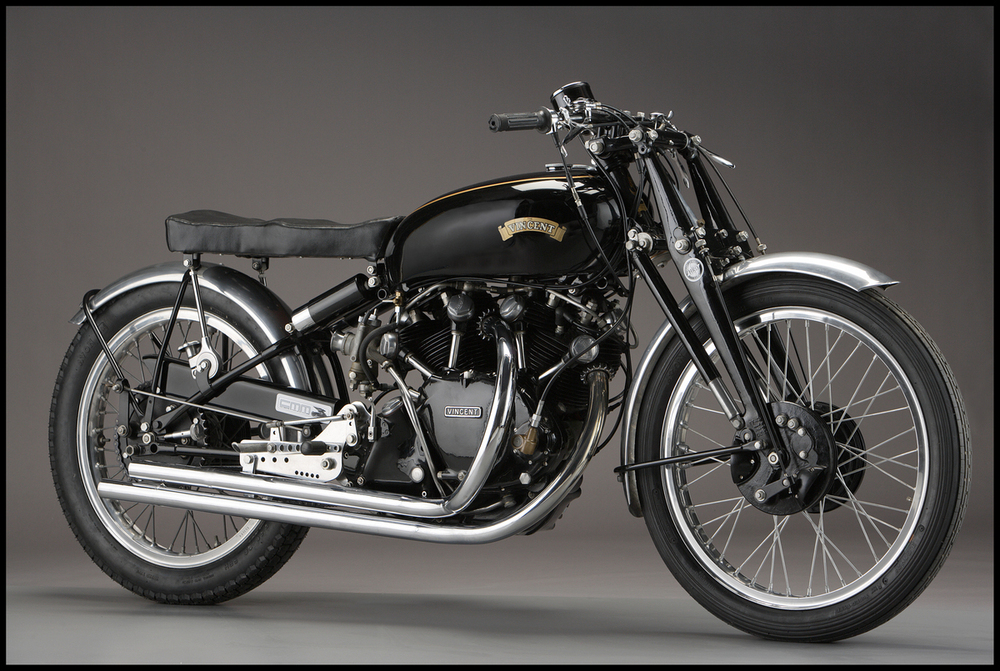
The 1948 HRD Vincent Black Lightning was the race bike spawned from the Black Shadow.
It was the fastest production bike of its time, and widely acknowledged as the first superbike.
HRD Vincent Black Lightning – Courtesy of singout.org
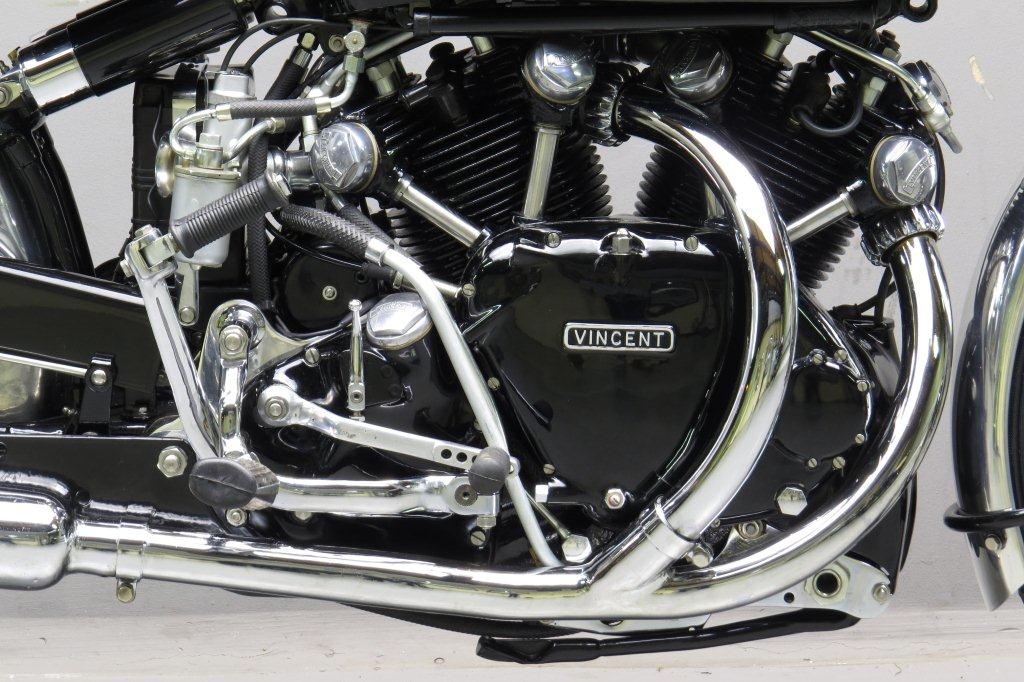
The Black Lightning was stripped down and its 998cc, air-cooled, pushrod, overhead valve (OHV), 47.5-degree V-Twin on the Black Lightning had stronger connecting rods, larger intake ports, polished rocker gear, steel idler gears, racing carbs and manual-advance magneto, pushing it to a top speed of 240 km/h.
HRD Vincent Black LIghtning engine – Courtesy of yesterdays.nl
Yes, yes, 240 km/h is attainable by most middleweight bike these days, but look at those skinny tyres the Vincent rolled on!
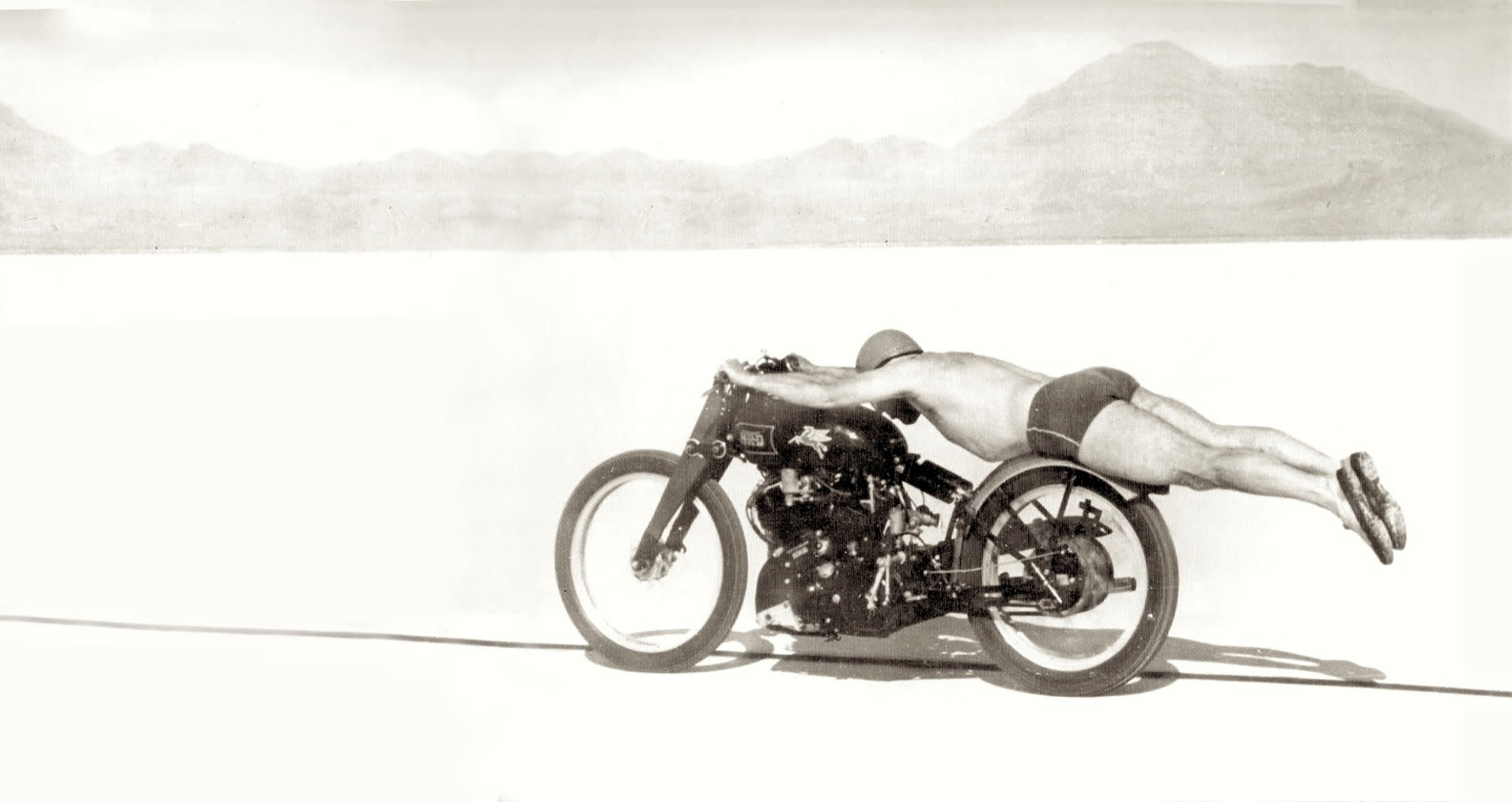
In September 1948, Rollie Free attempted to break US national motorcycle speed record at the Bonneville Salt Flats. He could only reach 239.1 km/h during practice so he stripped down to his swimming shorts, rubber cap and sneakers for the final run and hit an average of 241.905 km/h (regulations required two runs). That bike became known as the “Bathing Suit Bike.”
Rollie Free – Courtesy of americanmotorcyclist.com
But it’s the level of attentiveness to detail and quality that made Vincents’ engines true works of art. Sadly, it was that kind of passion which made them time- and cost-consuming to produce.
Only 31 Black Lightnings were ever built.
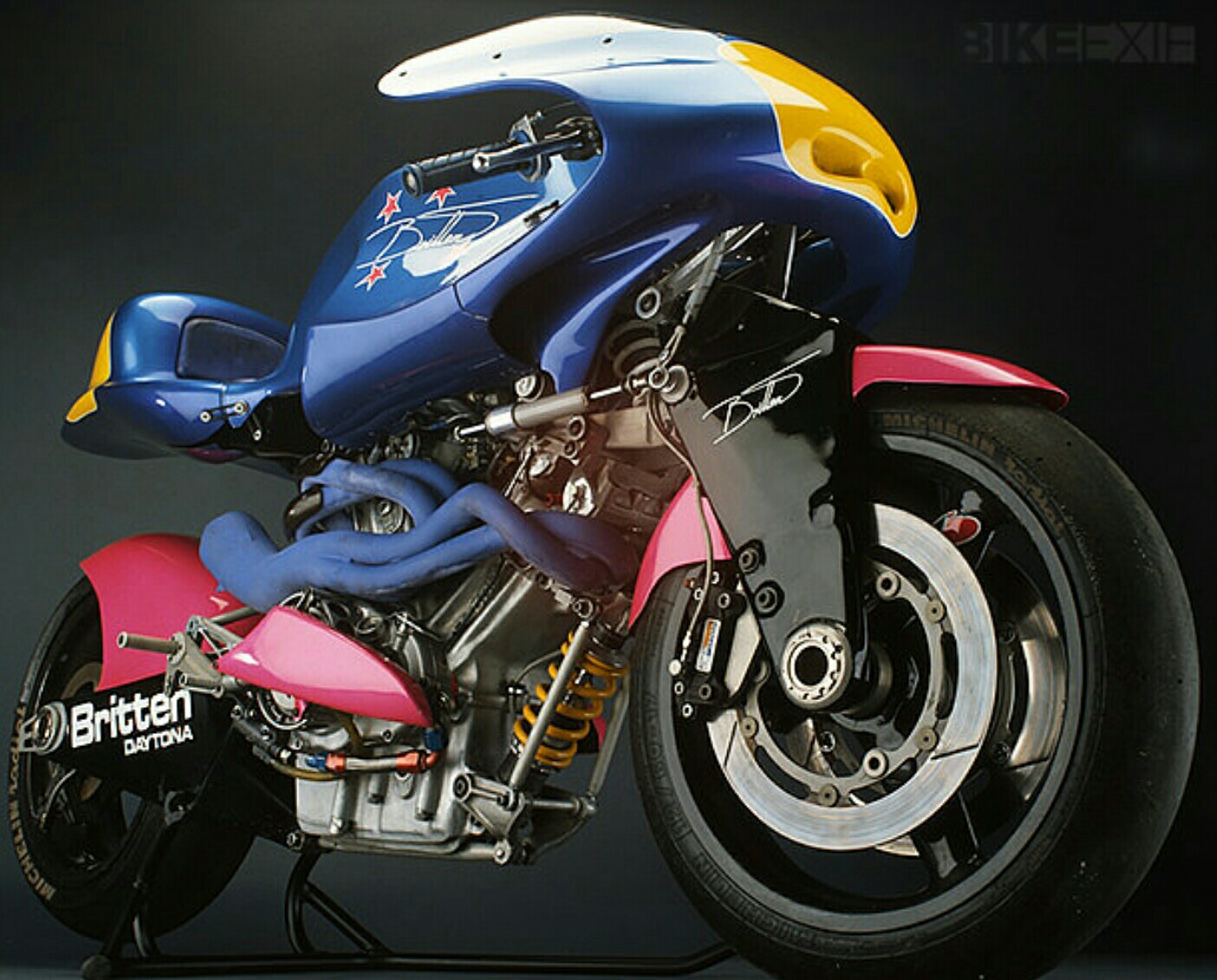
3. Britten V1000
Frustrated with the lack of parts and reliability of stock engines, New Zealander John Britten decided to do the impossible: Building his own bike and engine.
Working from his home shed with a few buddies, he came up with a creation in 1991 that not only looks radical, but went on to dominate the Battle of the Twins championship over the factory bikes.
John Britten passed away in 1995 and only ten plus the one initial bike were made.
Britten V1000 – Courtesy of pinimg.com
4. Ducati Singles
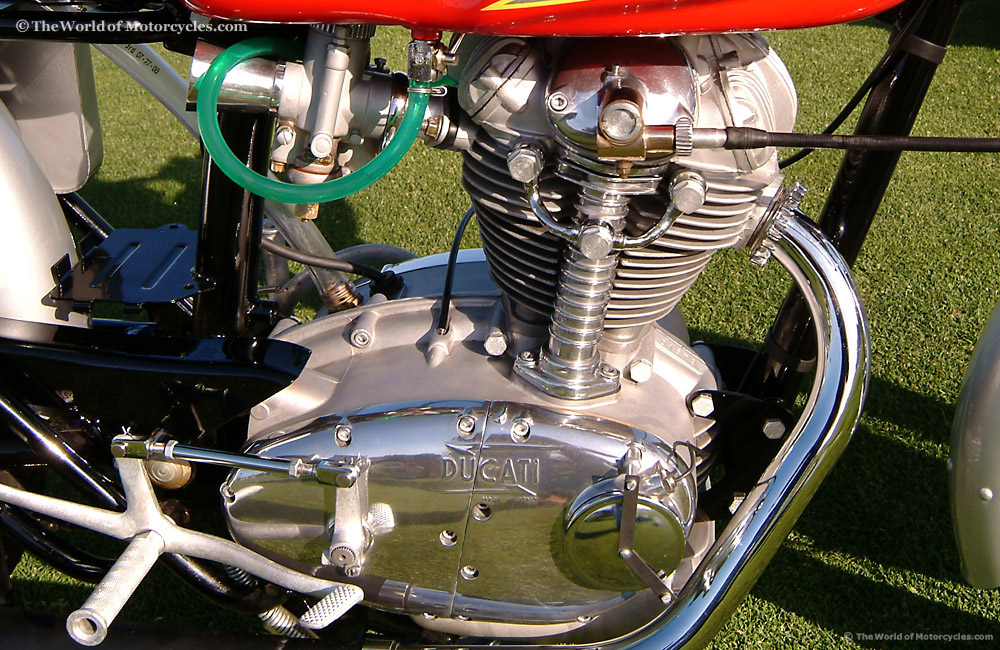
Fabio Taglioni adapted the desmodromic valve drive to Ducatis to combat valve float (the valves staying open, thereby causing loss of compression and peak performance) at high RPM. To turn the camshaft, a vertical shaft (also called a tower shaft) on the right side of the engine sent drive up to the camshaft’s idler gears through a bevel gear.
The resulting engine design together with typical Italian attention was the purest testament in the “form follows function” sense, and the “Desmo” became the trademark of Ducati.
Ducati 250 Single – Courtesy of Vintage Motorcycle Photographs
5. Kawasaki W650/W800
The bevel gear lives! Well, for a while.
Ducati’s bevel drive was soon replaced by belt and finally chain drive in the interest of simplicity and weight savings, which saw the disappearance of the tower shaft and knuckle-like bevel gear cover next to the cylinder block.
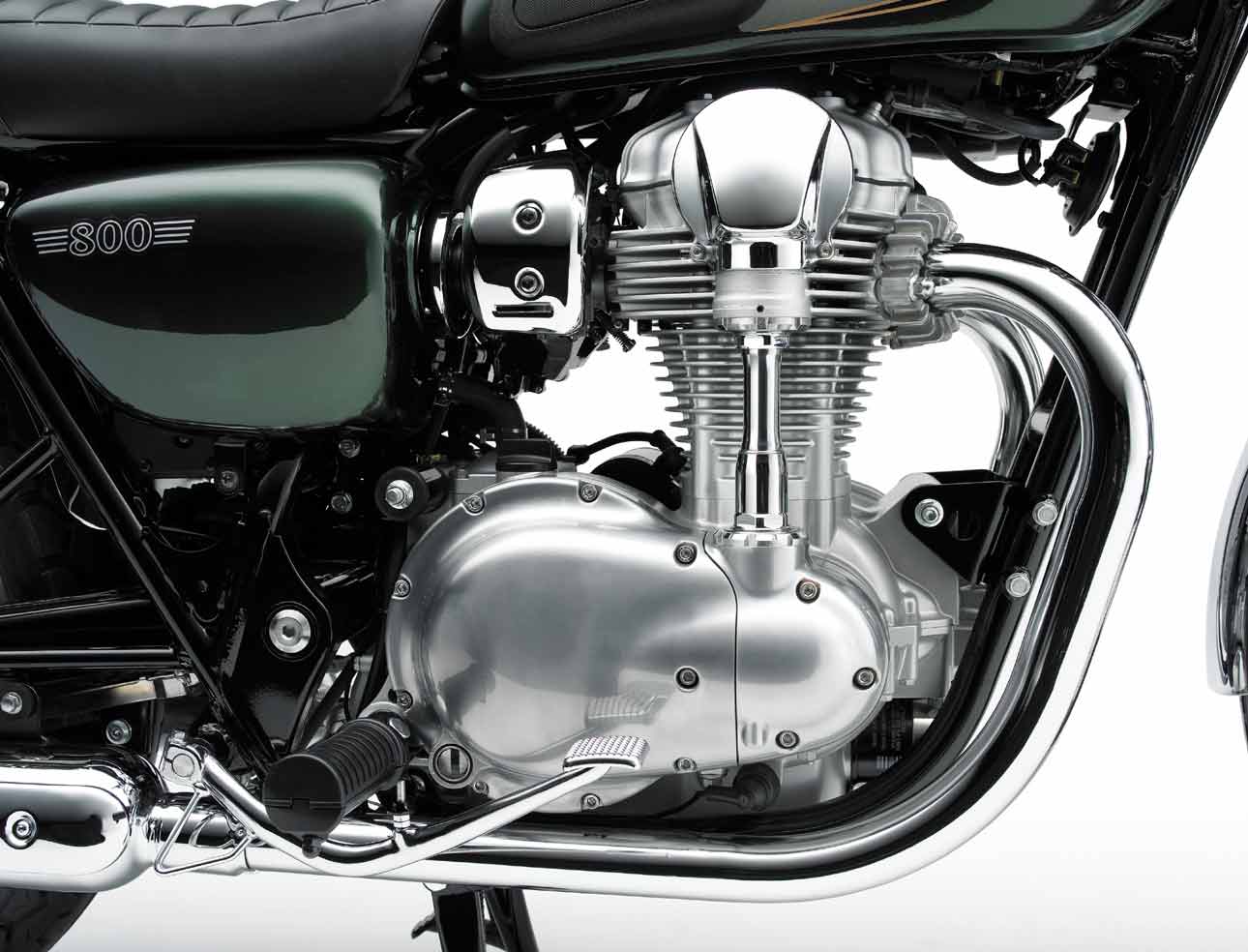
But hang on, here comes the retro Kawasaki W650 and the later W800. Such beautiful bikes deserve beautiful engines, don’t they?
Then Kawasaki announced earlier this year that the W800 will be discontinued as will not meet future emissions requirements!
NOOOO!!!
W800 engine – Courtesy of kawamotor.de
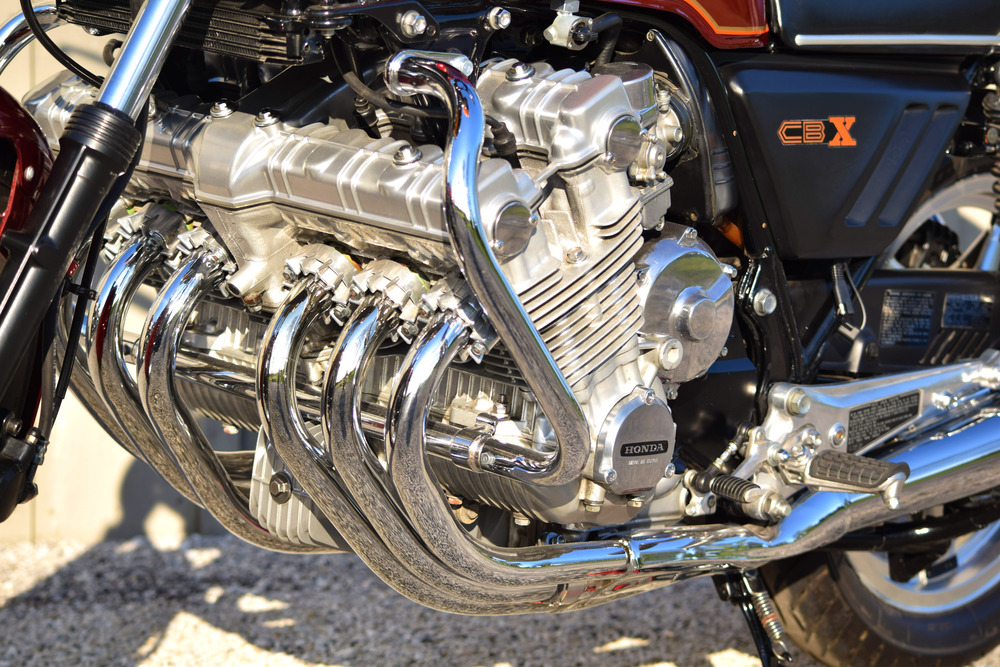
6. Honda CBX
Speaking of Kawasaki, the 1978 Honda CBX was Honda’s weapon in the titanic arms race between the two Japanese companies. Honda’s wants to reclaim the world’s fastest production bike crown which it lost to the Kawasaki Z1.
Featuring a 105 bhp, 1047cc, air-cooled, DOHC, 24-valve, inline-Six, with six carburetors, it hit a top speed 216 km/h. But that’s just part of the story. The 1979 CBX blew through the ¼-mile run in 11.36 seconds, at 189.82 km/h.
The engine looks large and ungainly in the bike, but it’s only big at the top. The lower parts of the engine were made narrower but moving the alternator and final drive away to other locations to provide more ground clearance for spirited cornerning.
Honda CBX engine – Courtesy of squarespace.com
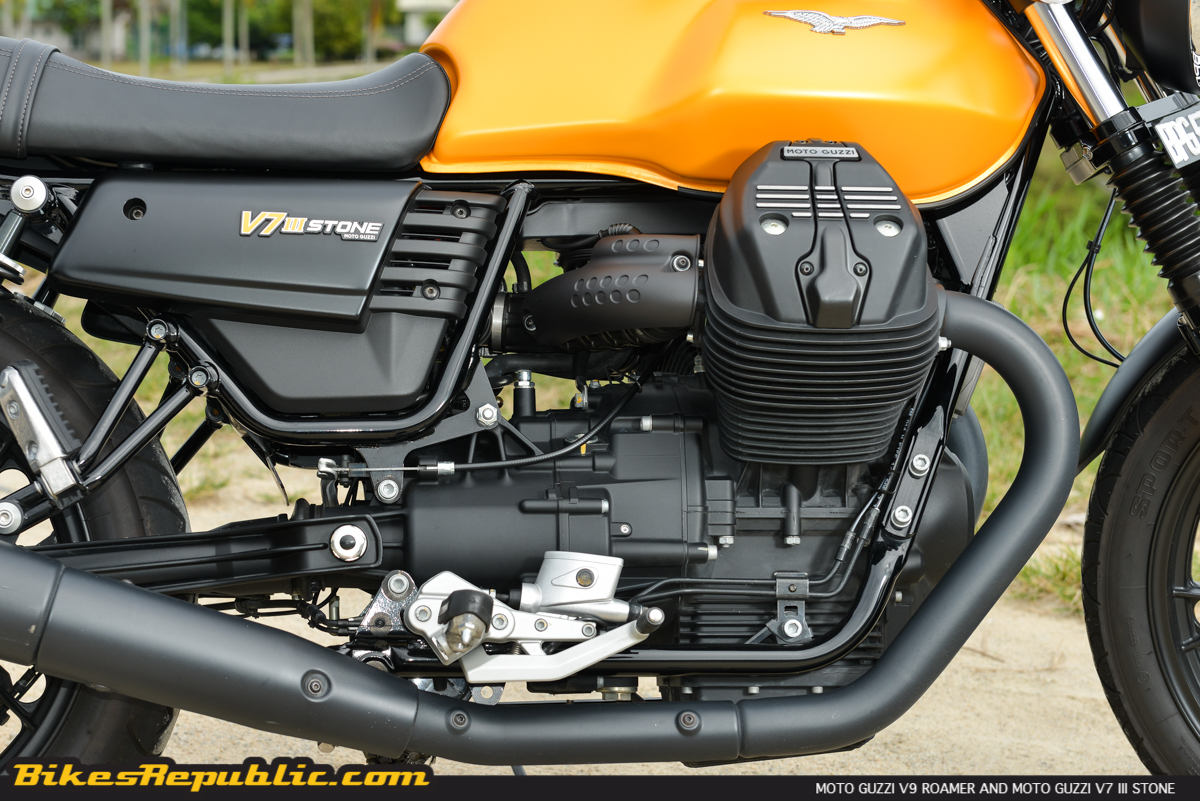
7. Moto Guzzi V-Twin
There’s no mistaking the Moto Guzzi V-Twin, with both cylinders sticking out the side. This transverse mounting uses the airflow to help cool cylinders and their alloy rocker covers, learned from aircraft experience, instead of having both cylinders stuffed longitudinally along the frame.
The deep, finned oil sump design has also survived to this day.
The newer engines such as the 843cc unit powering the V9 series and 744cc unit powering the V7 series are now fully Euro4 compliant, and are much smoother and easier to live with.
Moto Guzzi V-Twin
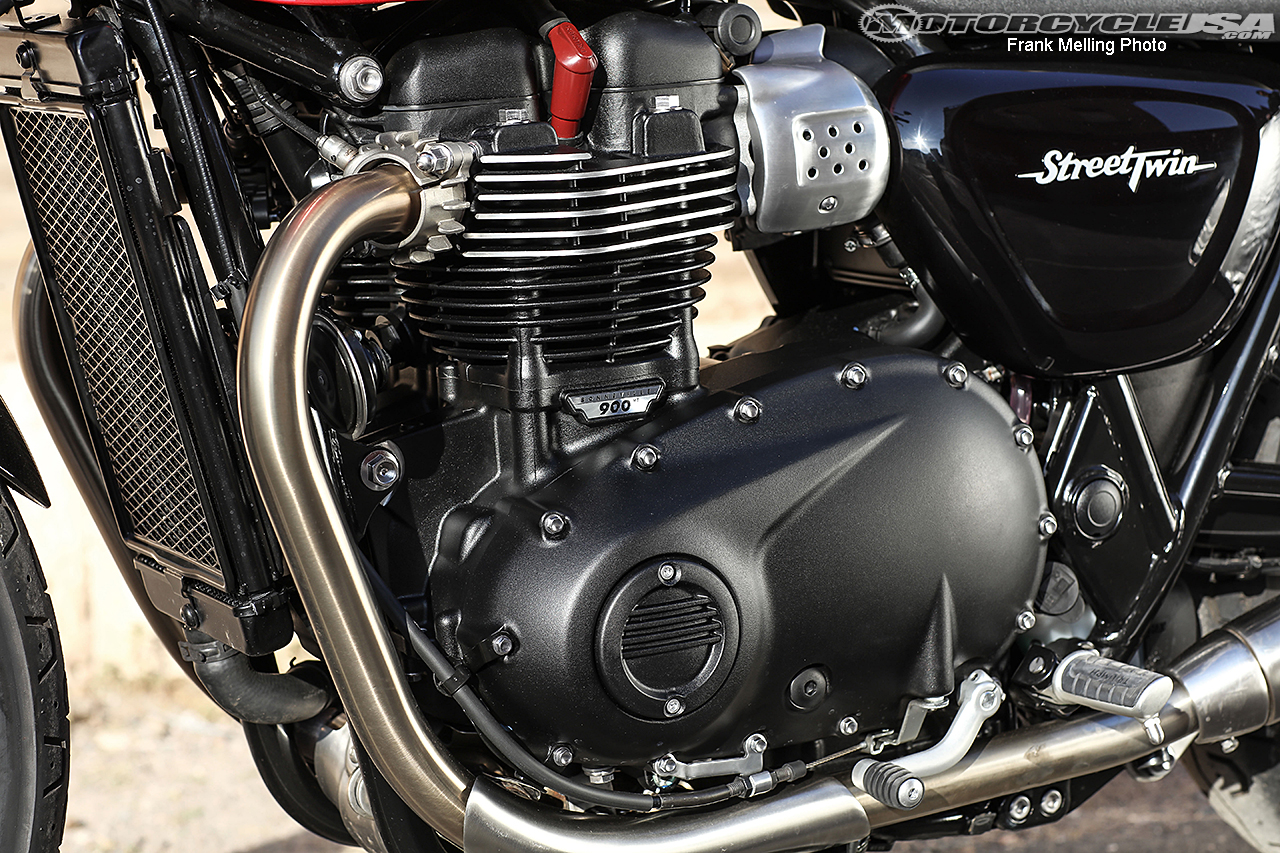
8. Triumph Twin
Whether in pre-unit form or the later iterations, Edward Turner’s created an icon. From the timing cases to the angular cylinder and finning around the cylinder block, the Triumph Twin is a distinctively beautiful power unit.
The essential design has been carried forward to the current crop of Triumph modern classics, never losing its trademark and appeal in spite of liquid-cooling.
Triumph Twin – Courtesy of motorcycle-usa.com
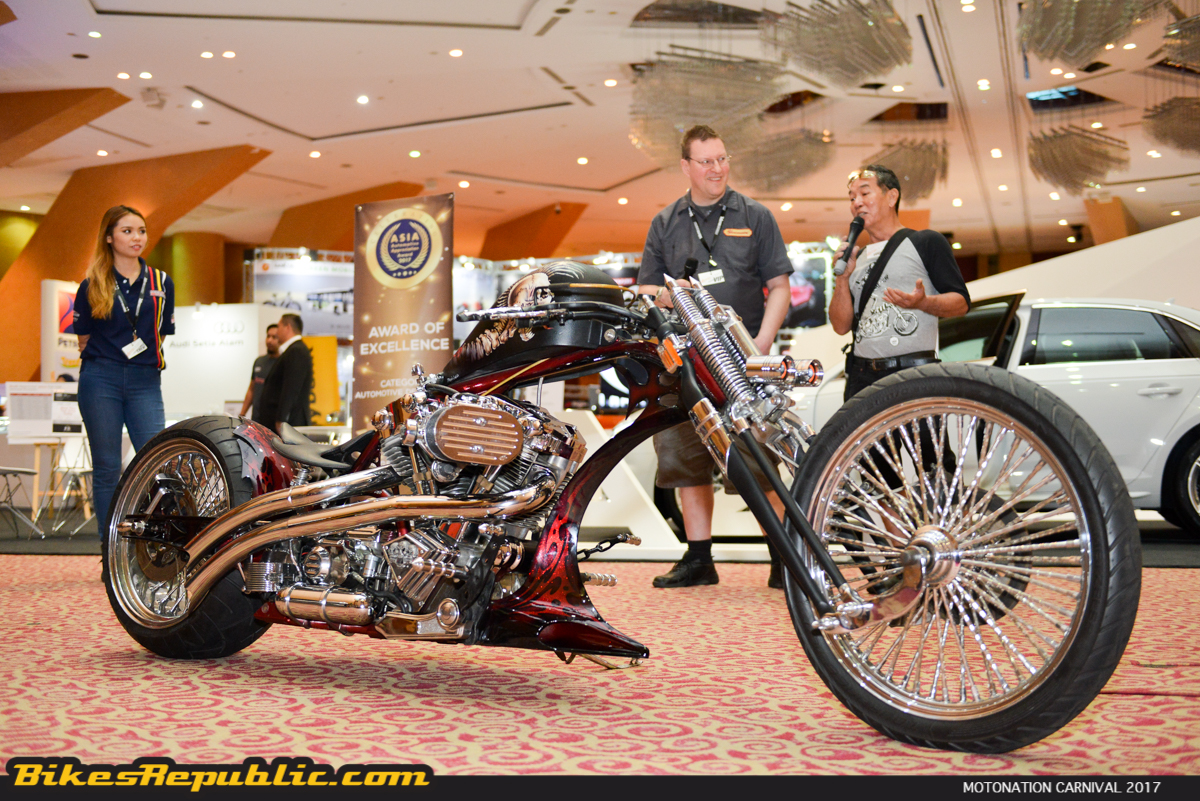
9. Harley-Davidson V-Twin
How does one argue with something that has become an icon over so many decades?
Sure, one could argue that there isn’t much innovation or substantial power gain in the Motor Company’s V-Twins, but that’s not the point.
In any way you look at it, H-D’s 45-degree V-Twins (both the Big Twin and Sportster Evolution) form the focal point of all Harleys (except for the V-Rod) and that’s why so many customizers still prefer the Harley V-Twin (along with the aftermarket engines from S&S) as the starting point of their creations.
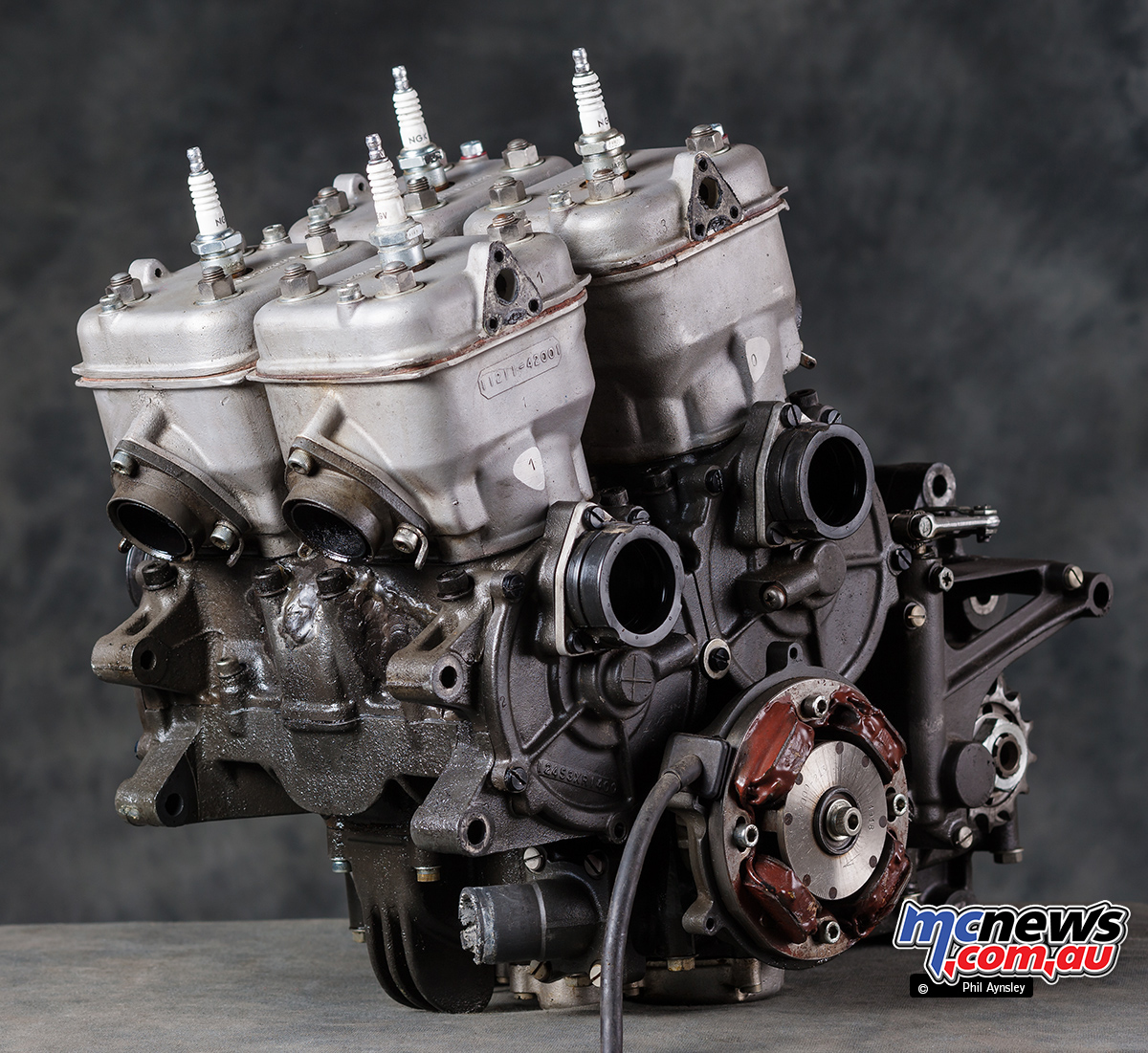
10. Suzuki “Square Four”
The Suzuki RG500 “Gamma” was built between 1985 and 1987, directly inspired by the RGB500 Grand Prix machine which won 7 consecutive constructors titles in the 500cc class with riders such as Barry Sheene.
The 498cc, liquid-cooled, two-stroke, twin-crank, rotary valved, four-cylinder engine had its cylinders arranged in a square configuration, hence the common pet name of “Square Four.” All four cylinders were arranged on the same plane in the earlier versions, while the later versions saw the front two and rear two staggered for better placement in the frame and weight distribution.
It was also the last 500cc two-stroke race replica ever built (the Bimota V-Due didn’t work).