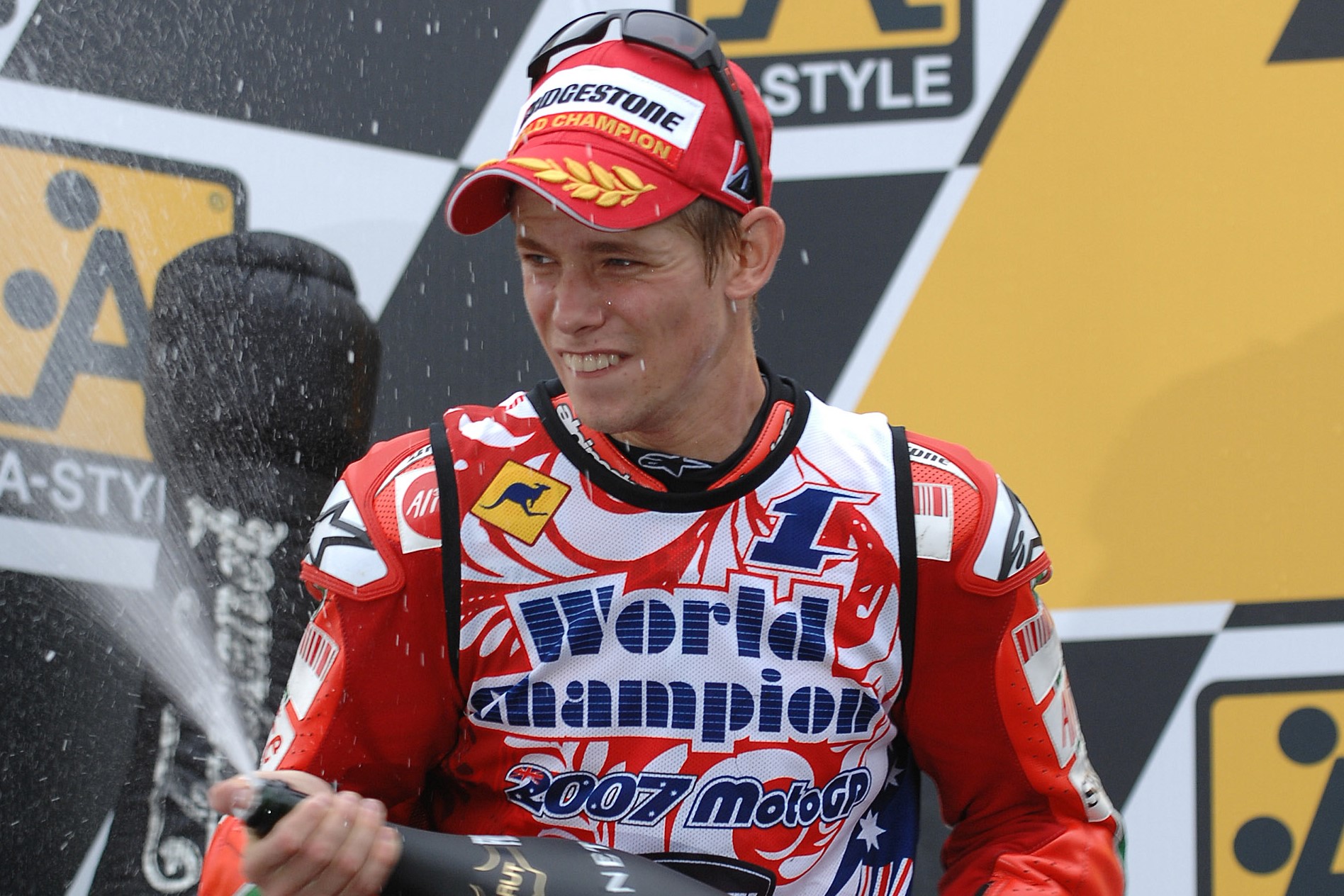
The move was officially announced recently and sees the Australian reconnecting with the team that granted him his first MotoGP world champion’s title back in 2007.
Stoner’s move away from HRC test-riding duties was long rumoured in the past few months, but both the Australian and HRC opted to officially announce his departure sometime just last week. In the process, the folks at HRC also stated their thanks and gratitude towards Stoner and his contributions over the last few years as a HRC test-rider.
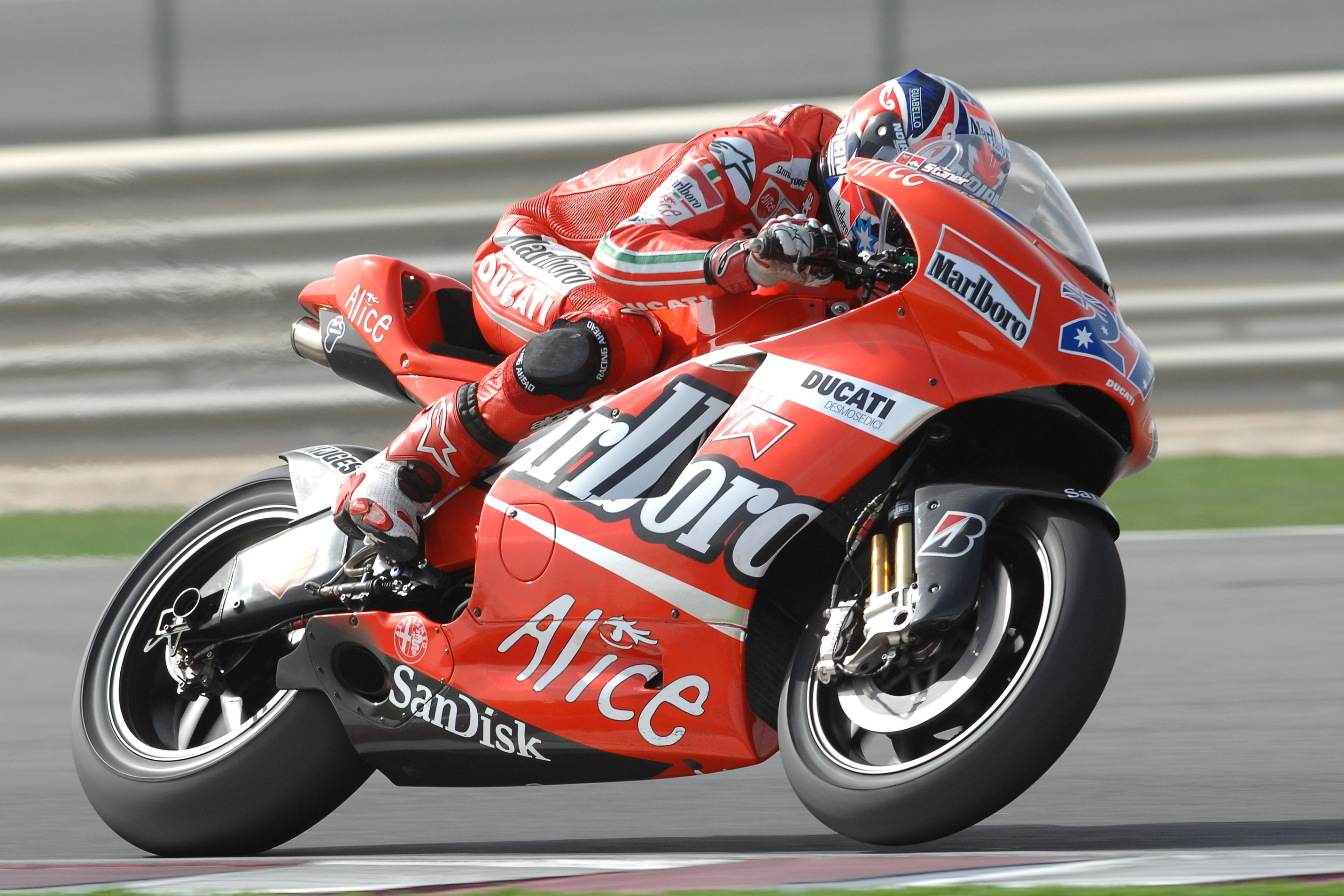
After retiring from MotoGP in 2012, Stoner continued as a test-rider for HRC, but only rode sporadically since then, spending no more than a couple of days annually astride a Honda GP bike. Sources report that the move was made for two reasons, the first of which being the fact that the Australian kept good ties with the Italian team even after leaving it for HRC and secondly was the timely arrival of Gigi Dall’Igna as the head of Ducati Corse that made a return to Ducati even more attractive.
Presently, Ducati confirmed that Stoner will mainly focus on private tests and not riding in any of the official 2016 pre-season test sessions in Sepang, Phillip Island or Qatar. Whilst the prospect of Stoner returning on-track astride a Ducati GP bike for a wildcard outing appears to be slim, Ducati fans can instead rejoice at the fact he will be reappearing at next year’s World Ducati Week 2016 festivities in Bologna, Italy.
Sources: Asphaltandrubber and Visordown
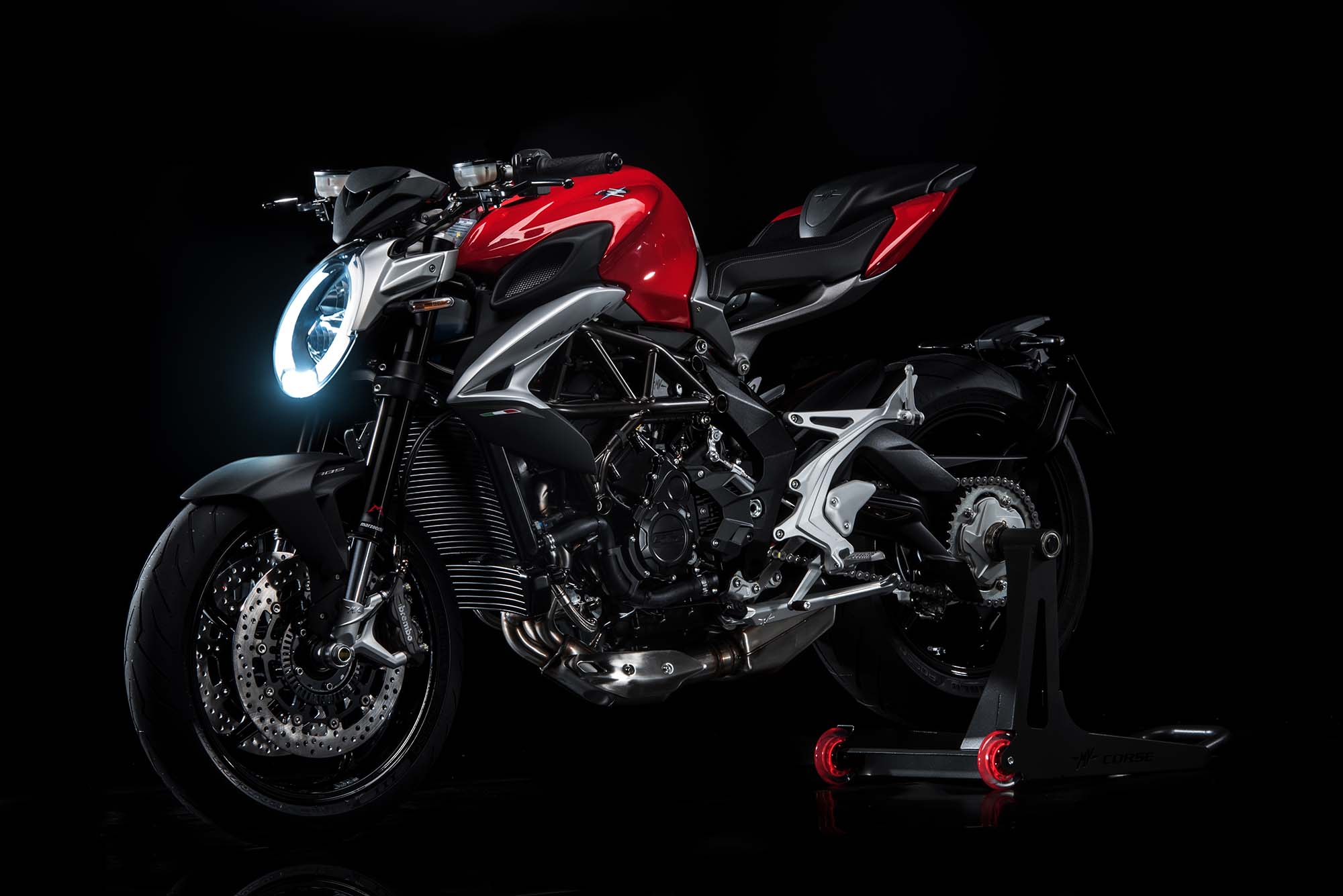
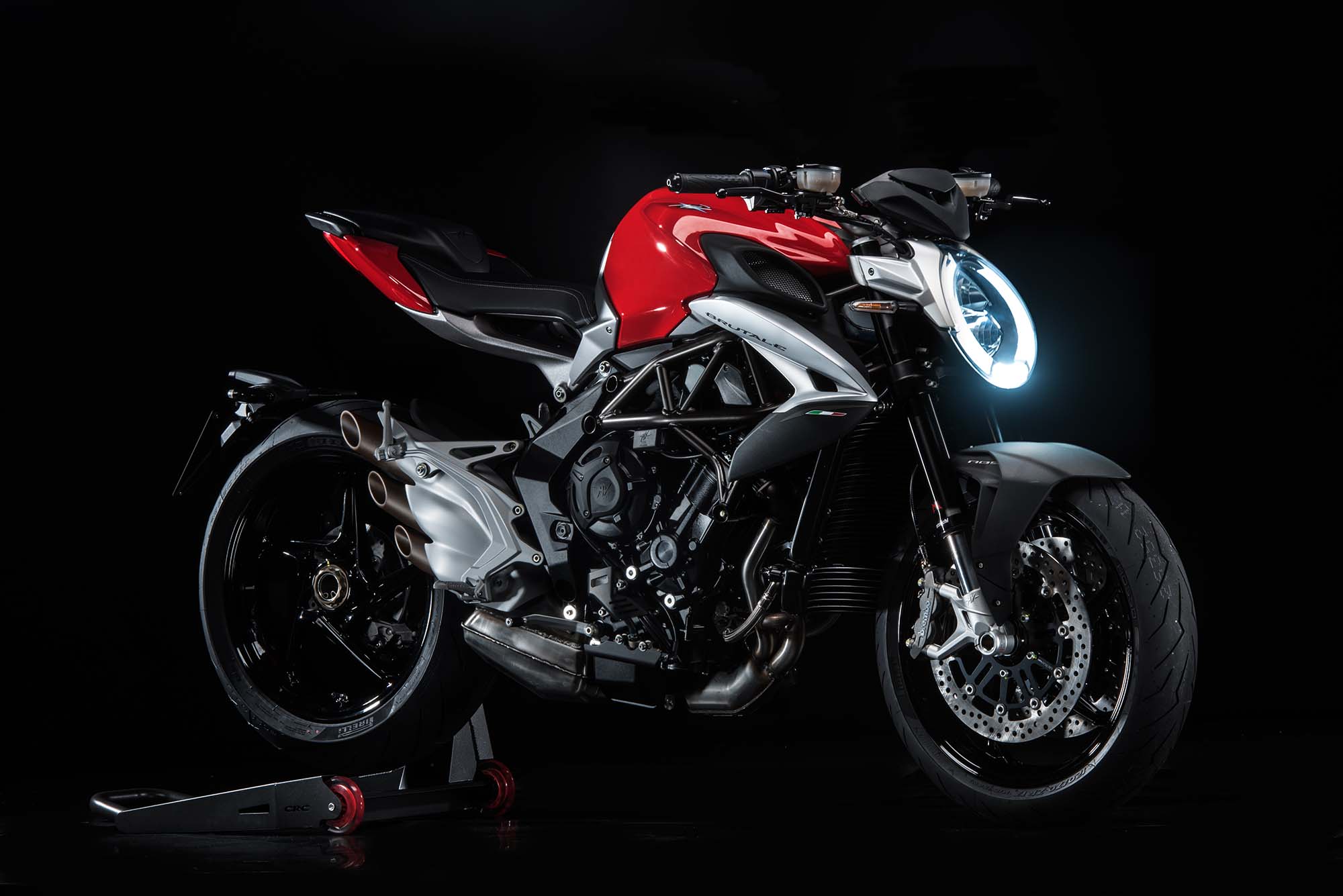
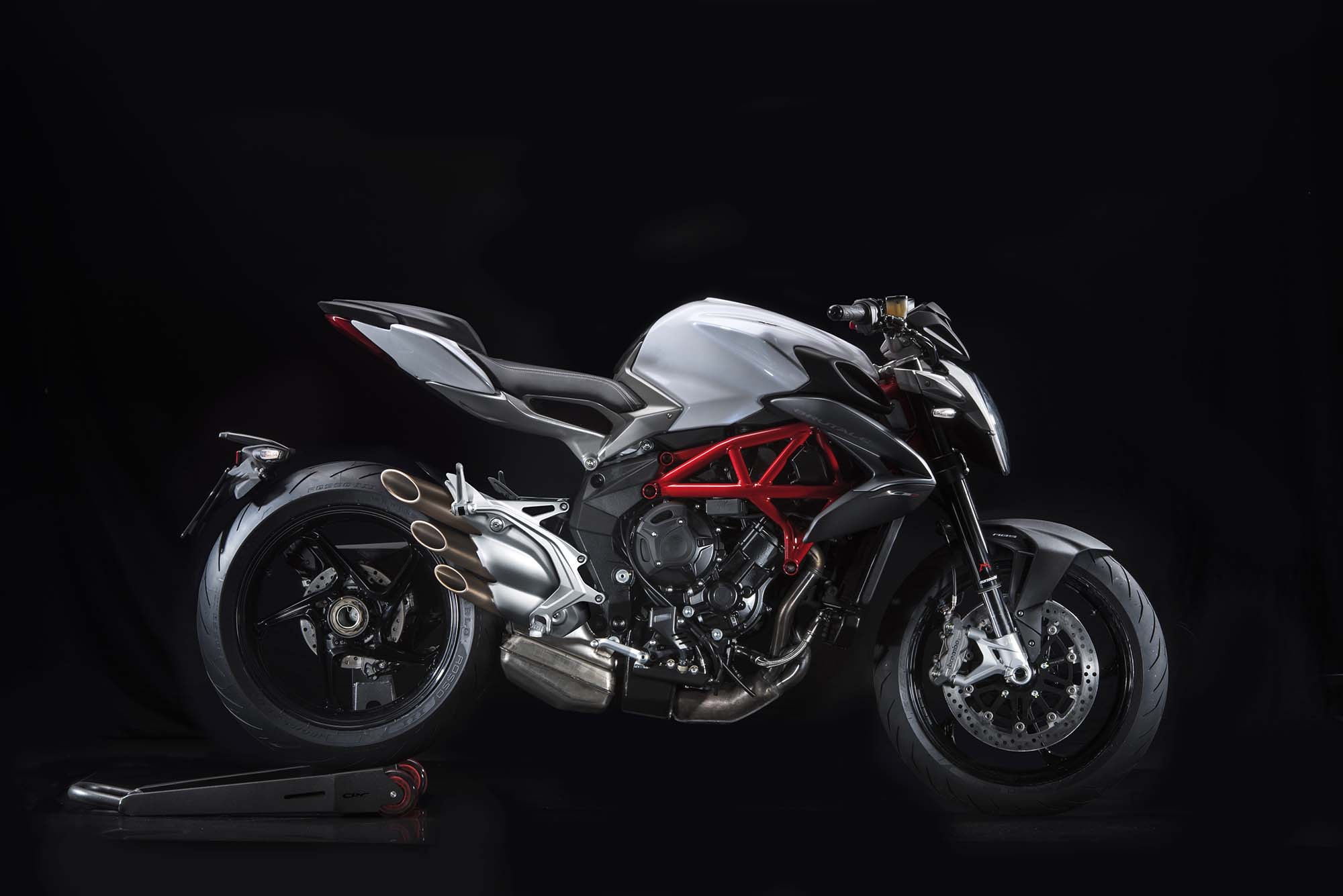
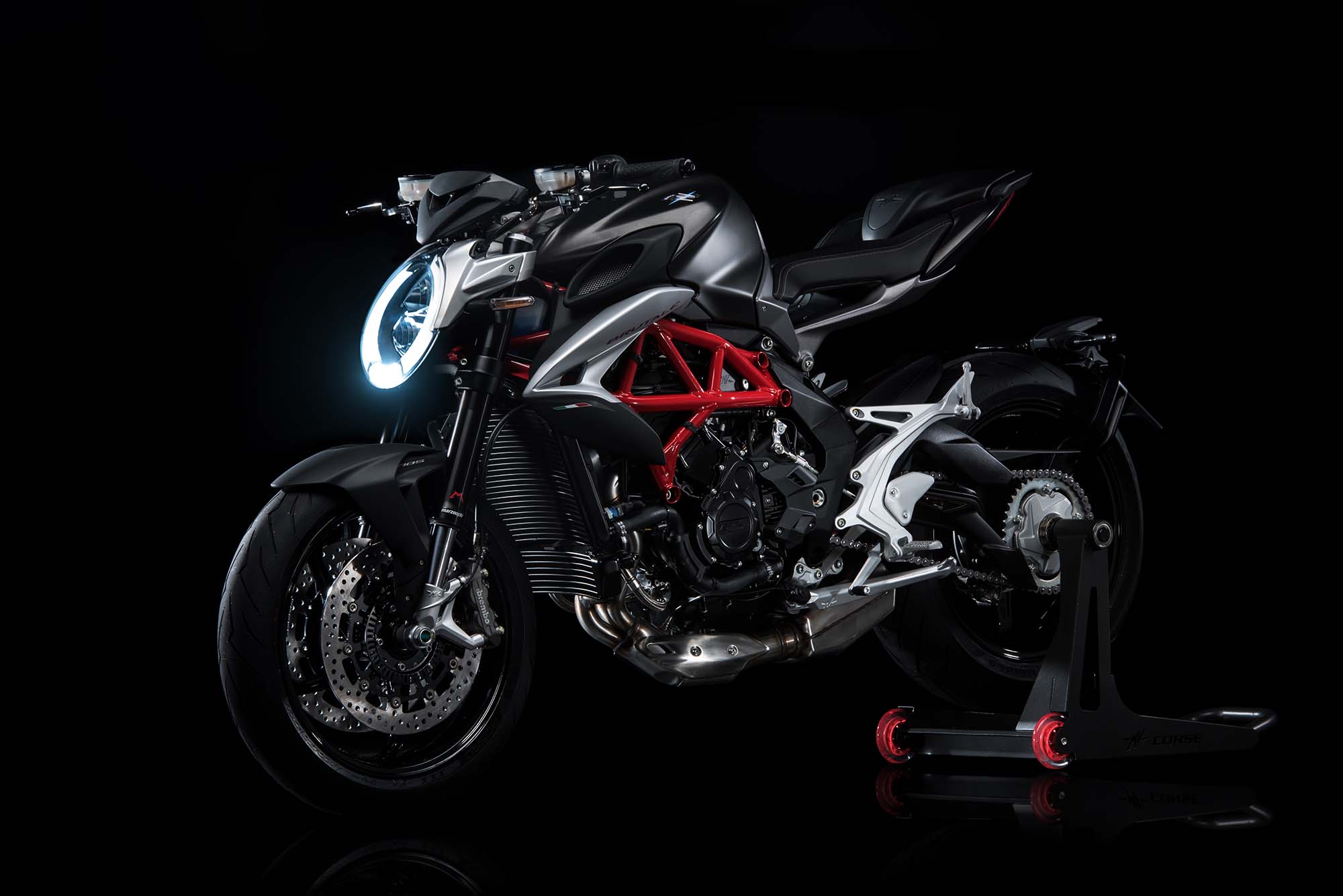
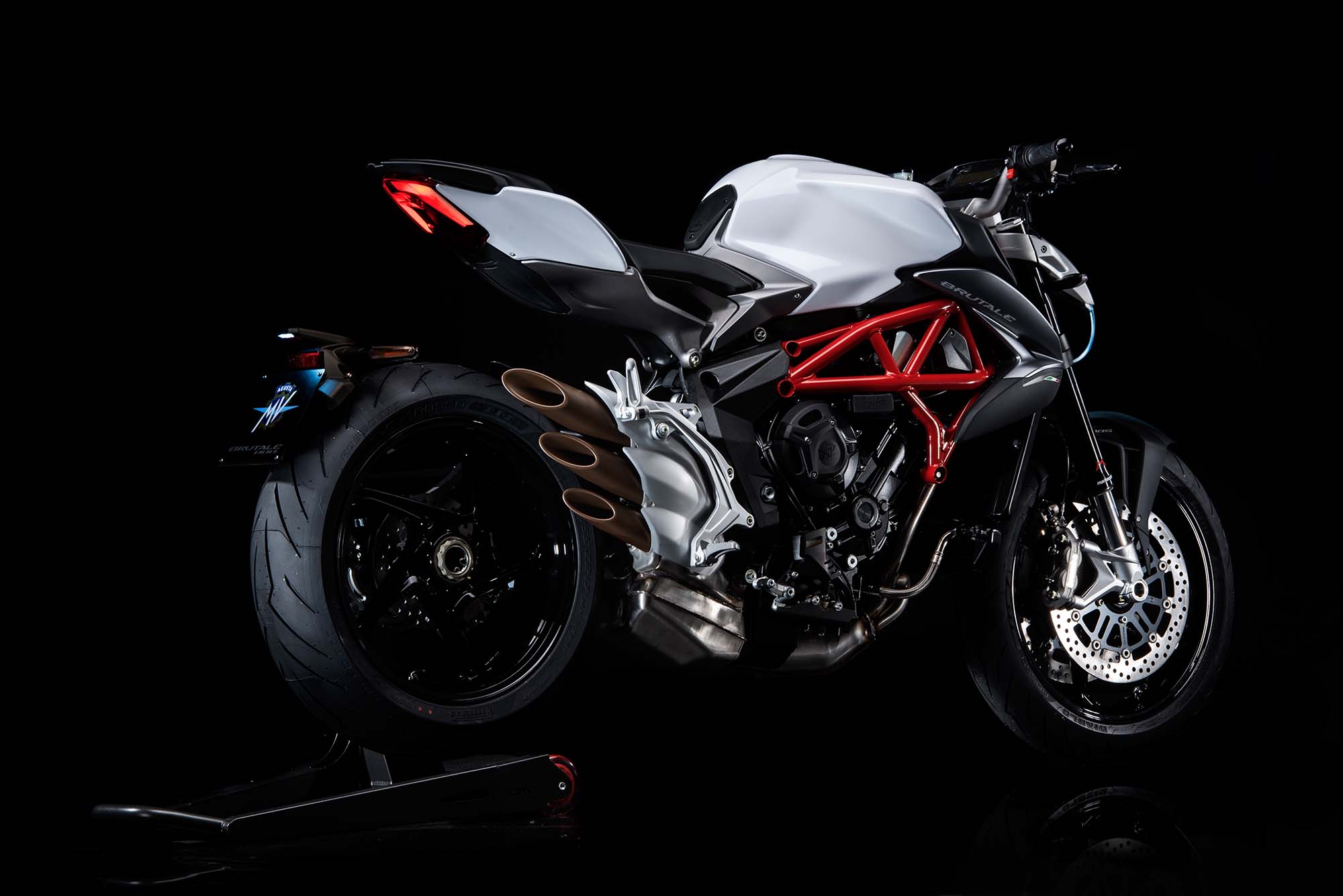
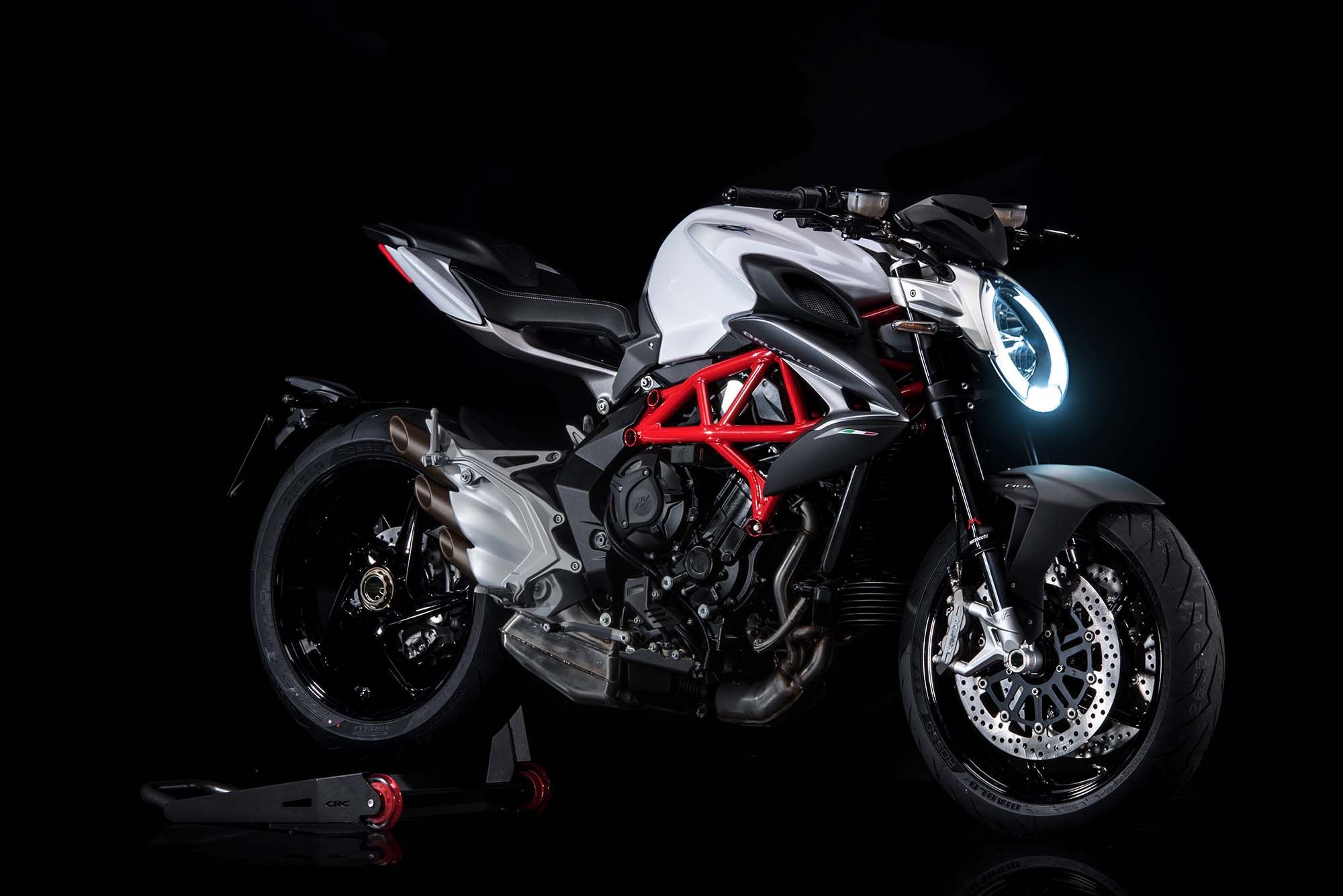
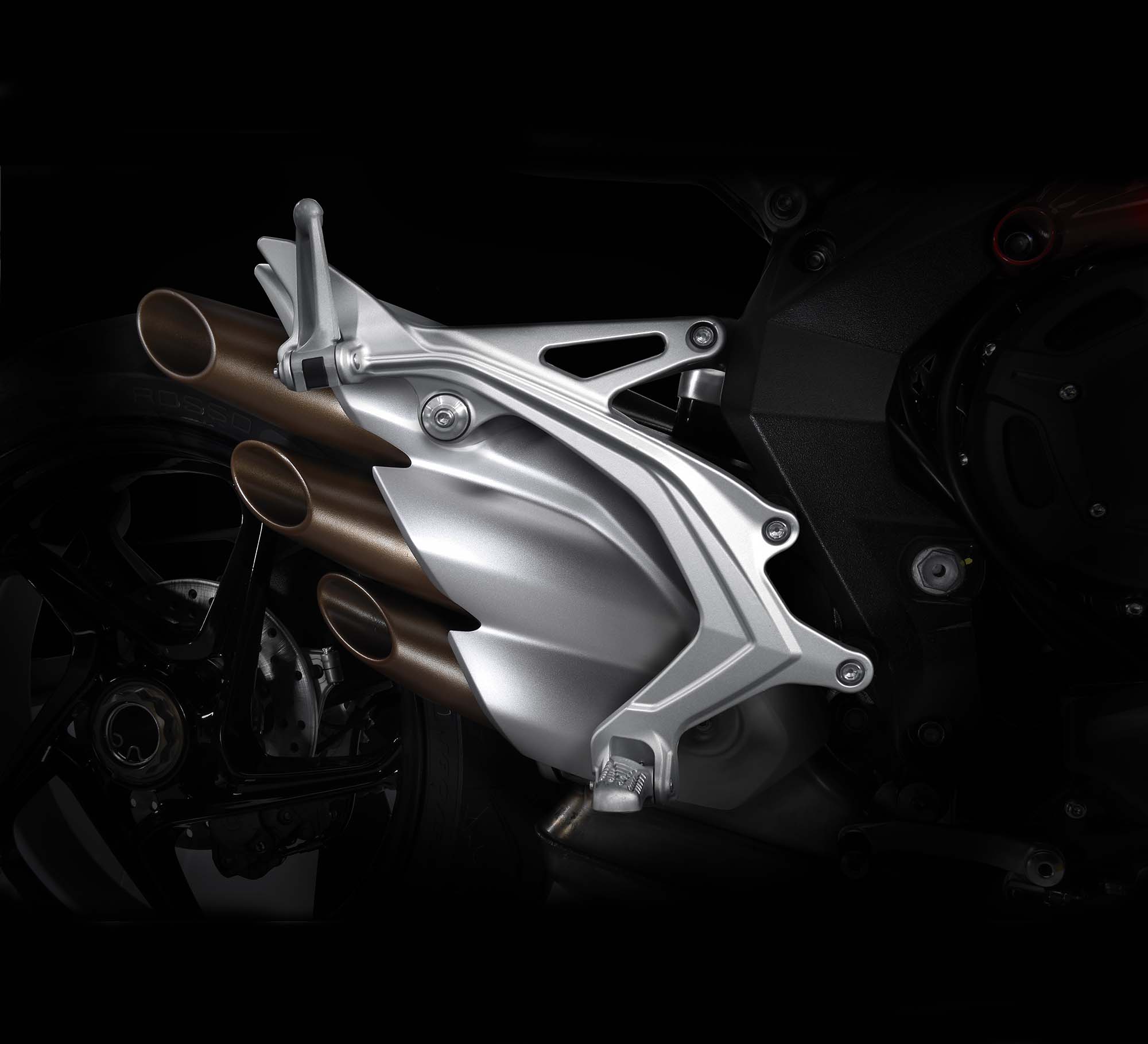
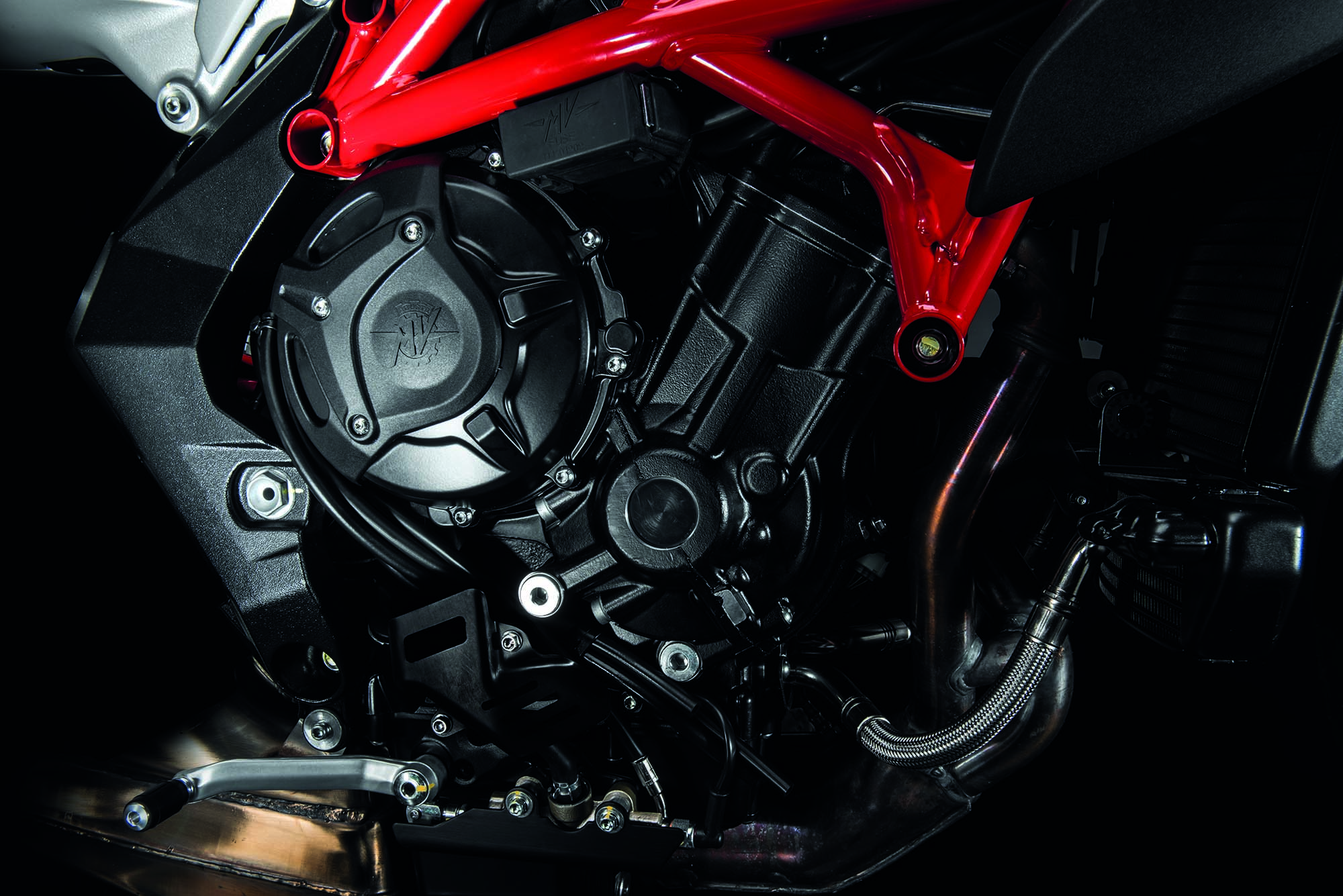
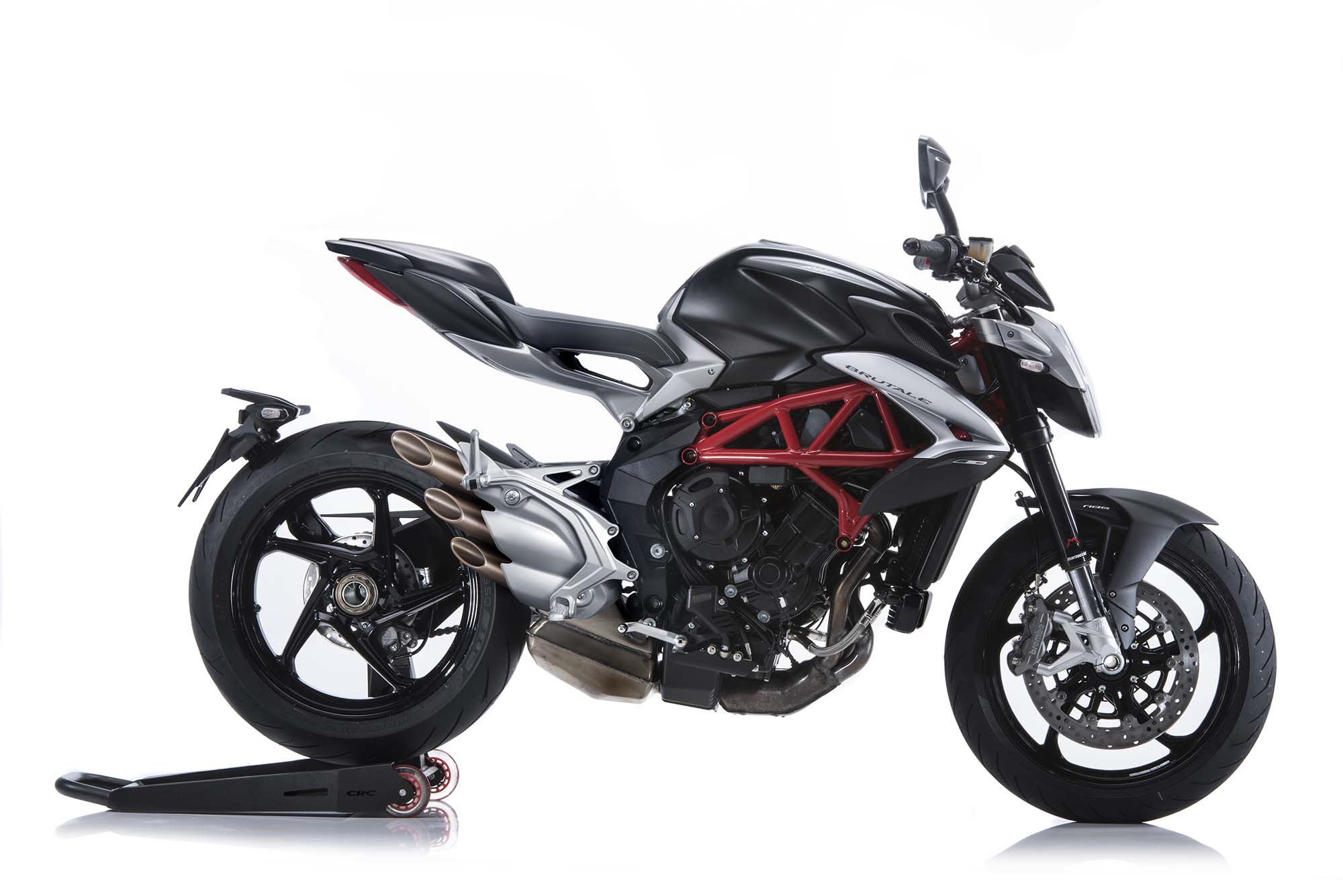
Though it was revealed fully in a ‘teaser’ video not too long ago, MV did not release much facts and details surrounding its refreshed naked bike until its official presentation in the show.
Firstly, the newly updated and Euro4-compliant engine now churns out 116hp at 11,500rpm whilst peak torque has risen by 25% as well to 82.6Nm at 7,600rpm. Besides that, the Brutale 800’s slipper clutch has been updated with a new hydraulically-operated unit whilst gearshifts are now handled by MV’s electronic quick-shifter that works in both up- and down-shifts.
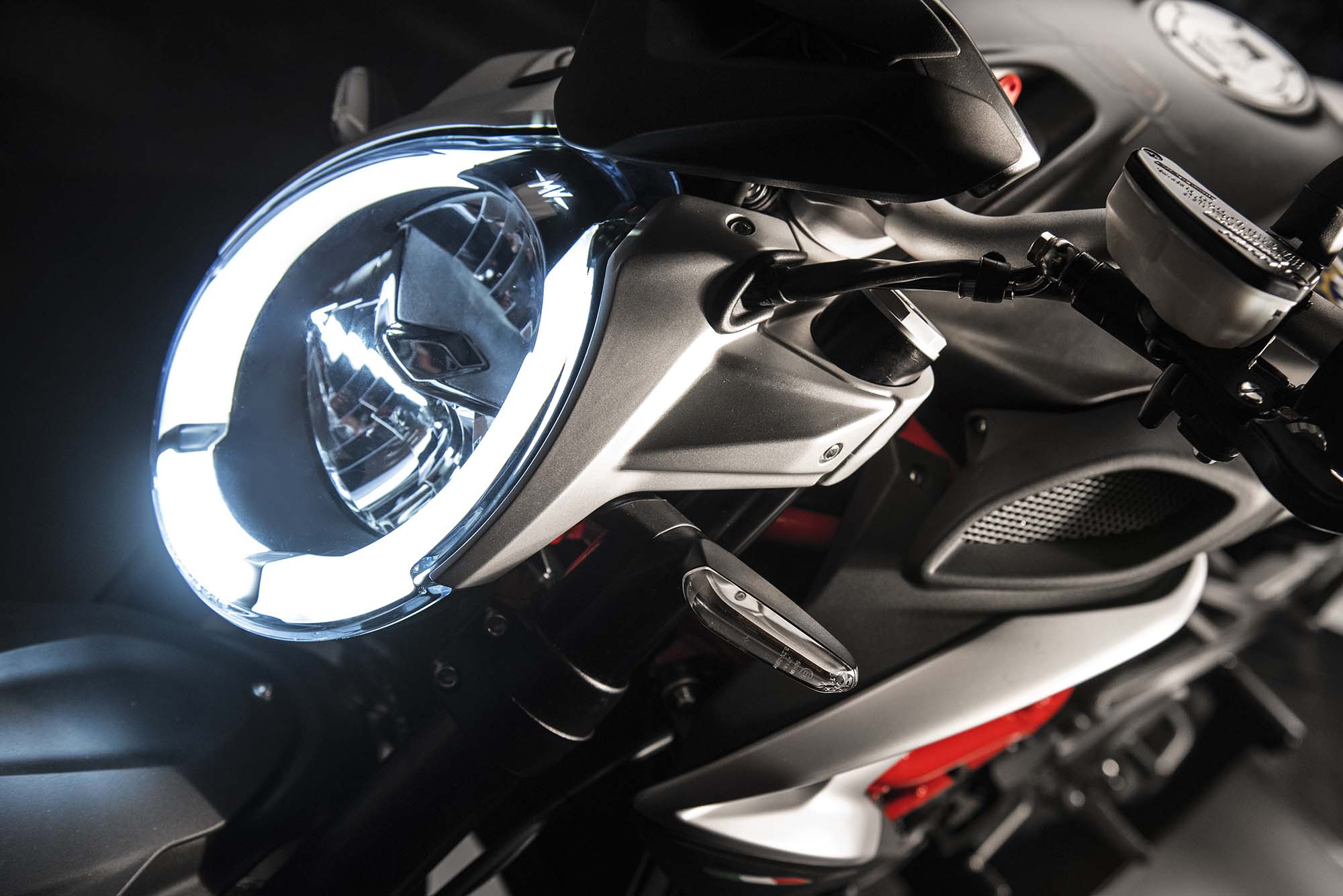
The bike still uses MV’s MVICS electronics package that includes a ride-by-wire throttle and eight setting traction control system.
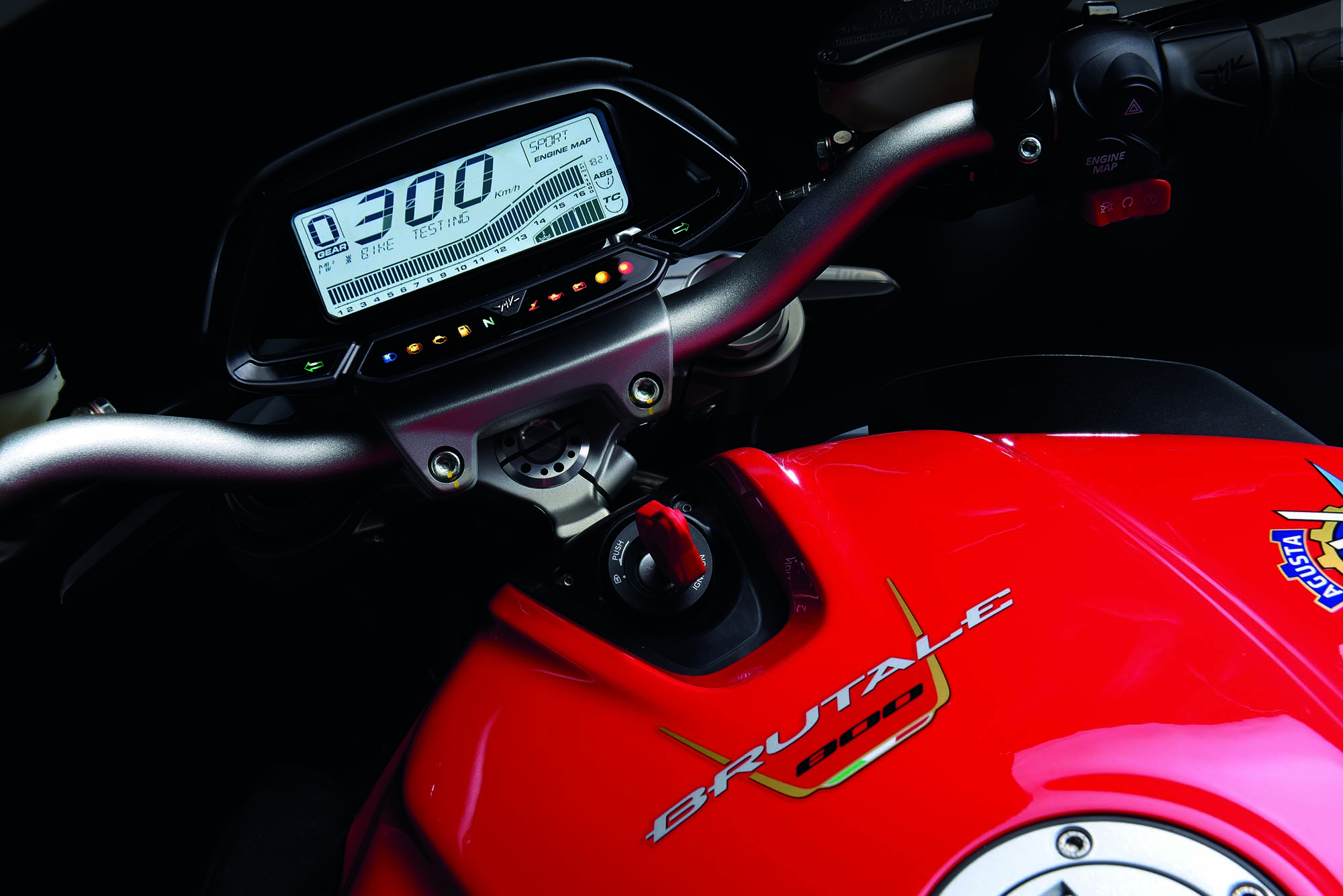
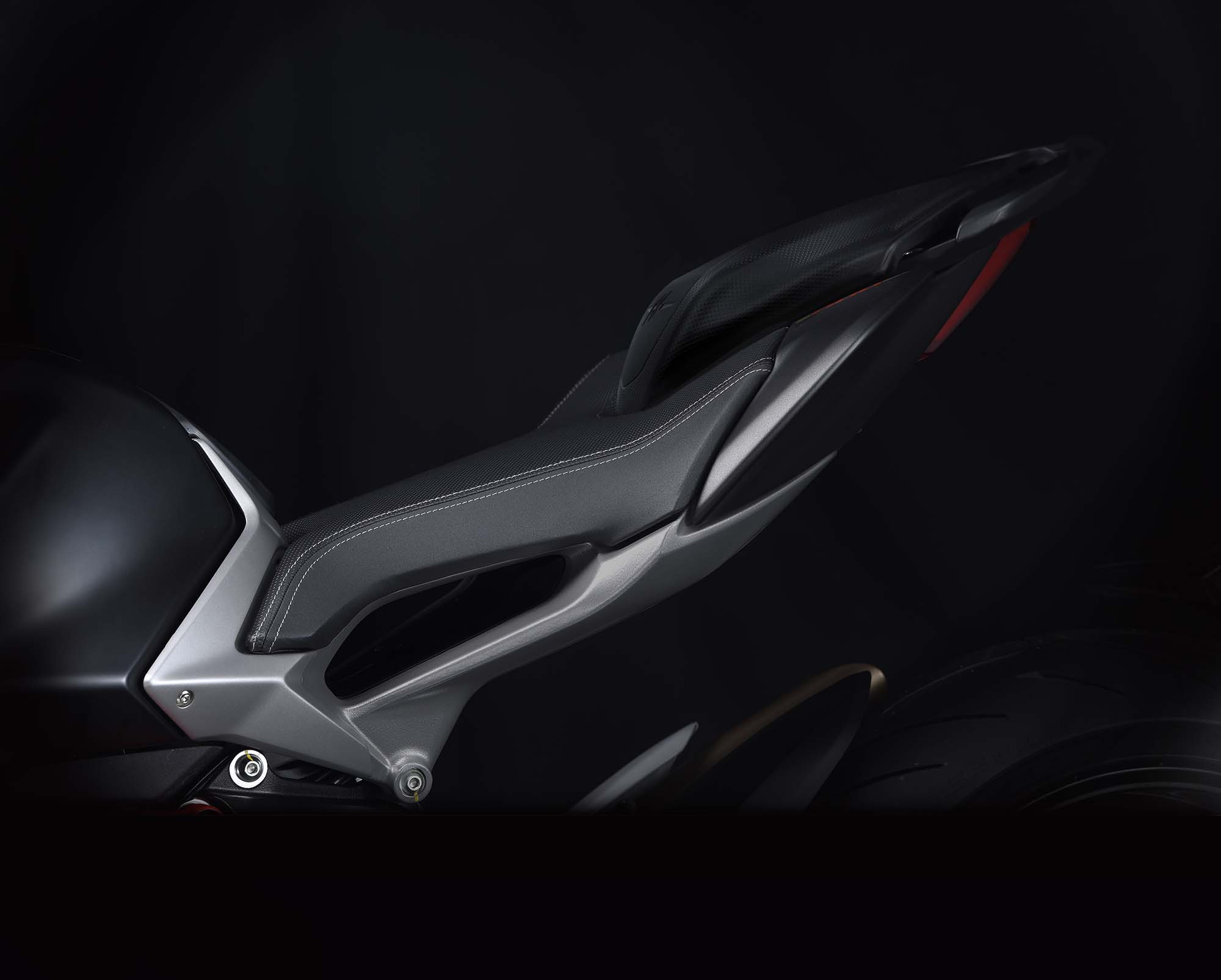
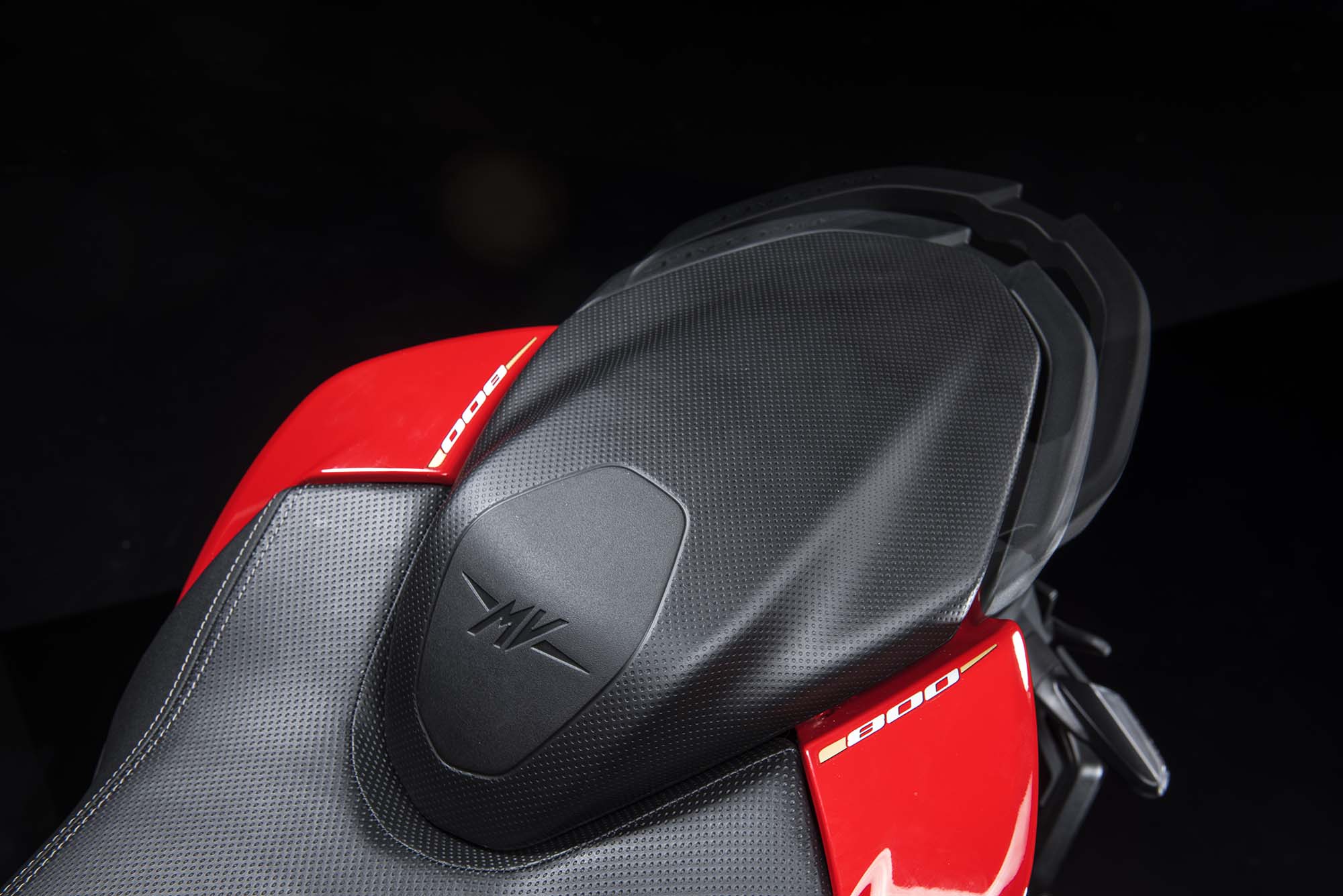
Calling the new Brutale 800 ‘the most beautiful Brutale ever’, MV says it is ‘more muscular and streamlined’ when explaining the naked bike’s lightly refreshed styling. Highlights here include the sculpted tank and seat unit, as well as the restyled plastic panels at the side of the radiator.
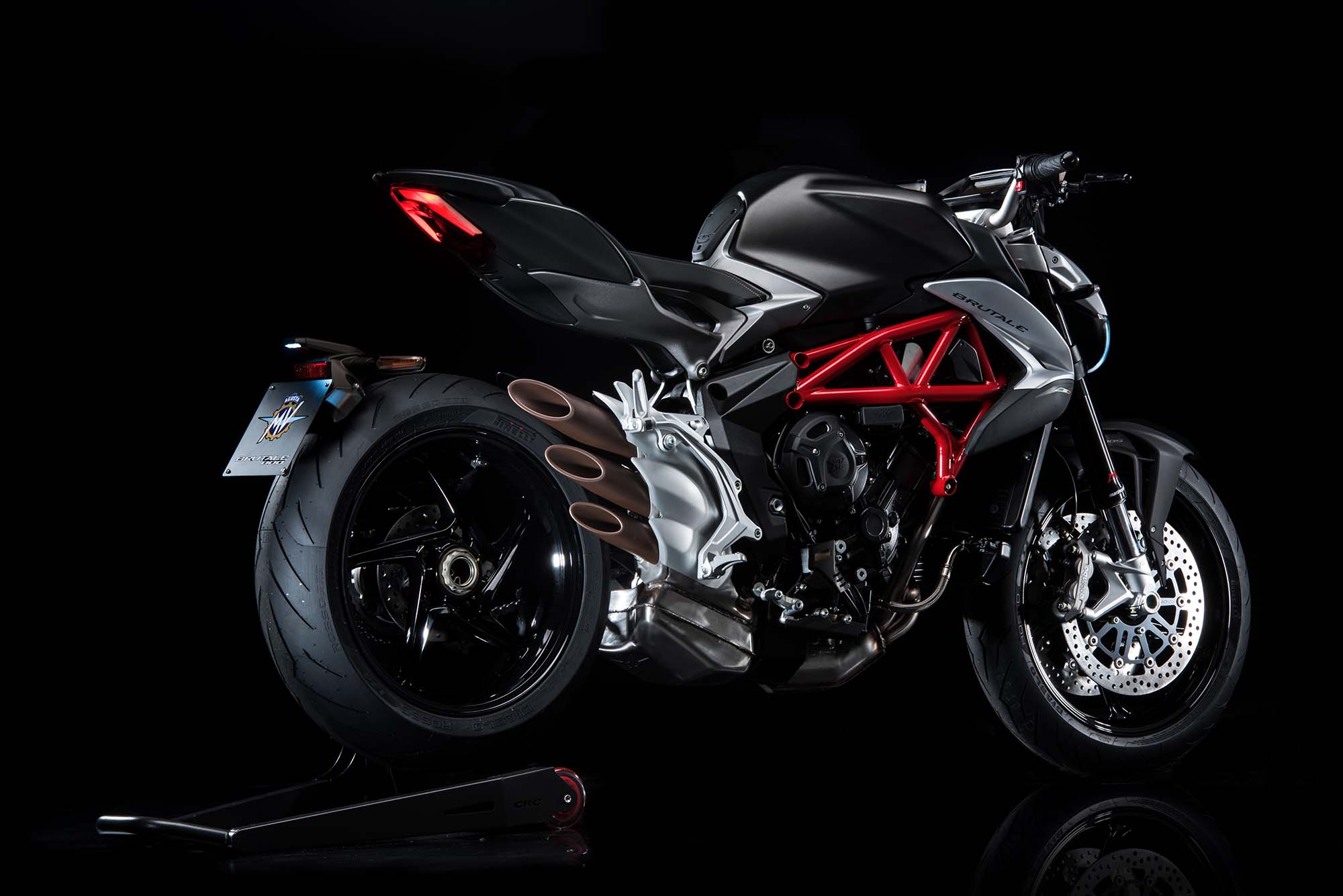
Check our more photos of the refreshed MV Agusta Brutale 800 in the gallery we’ve prepared below.
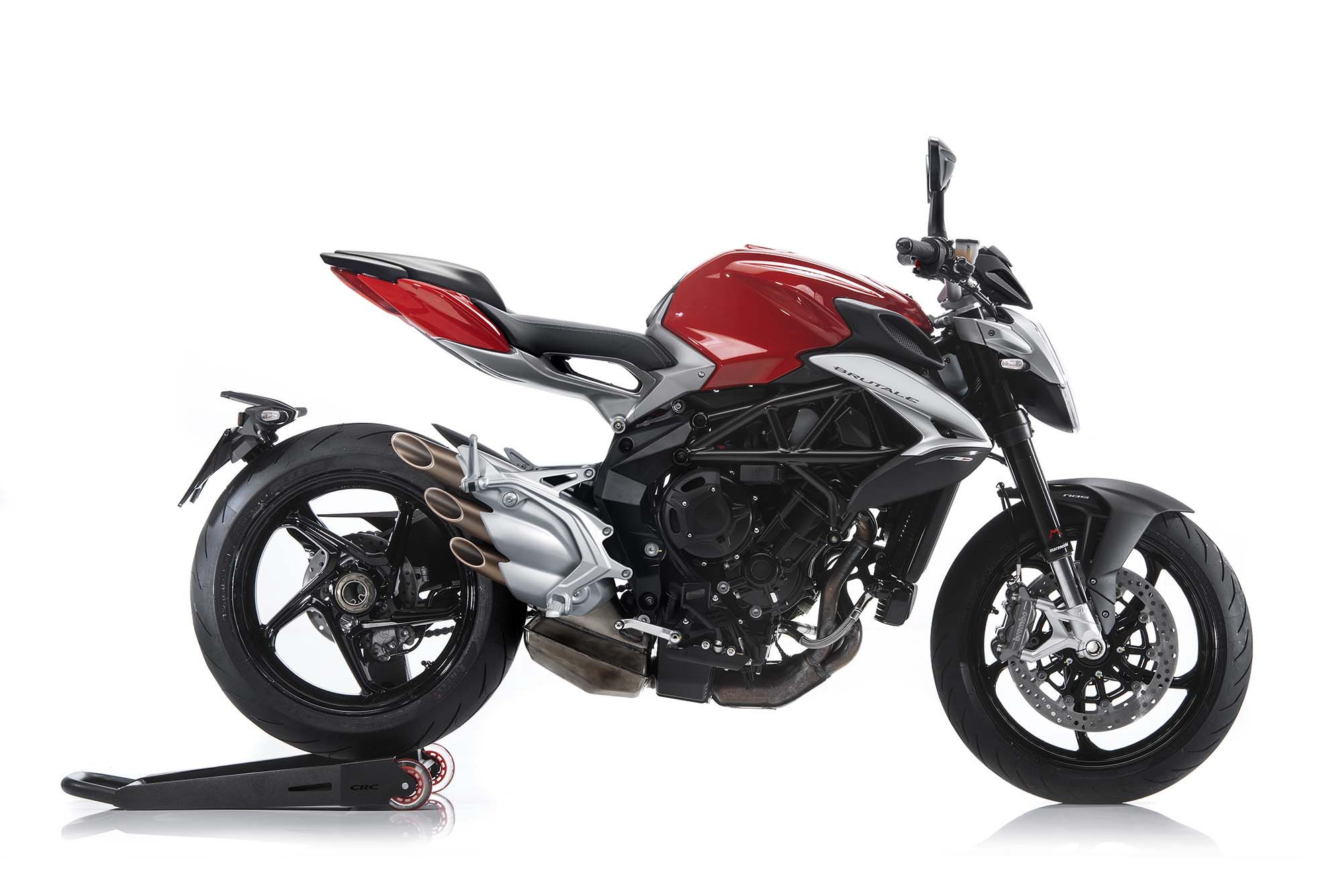
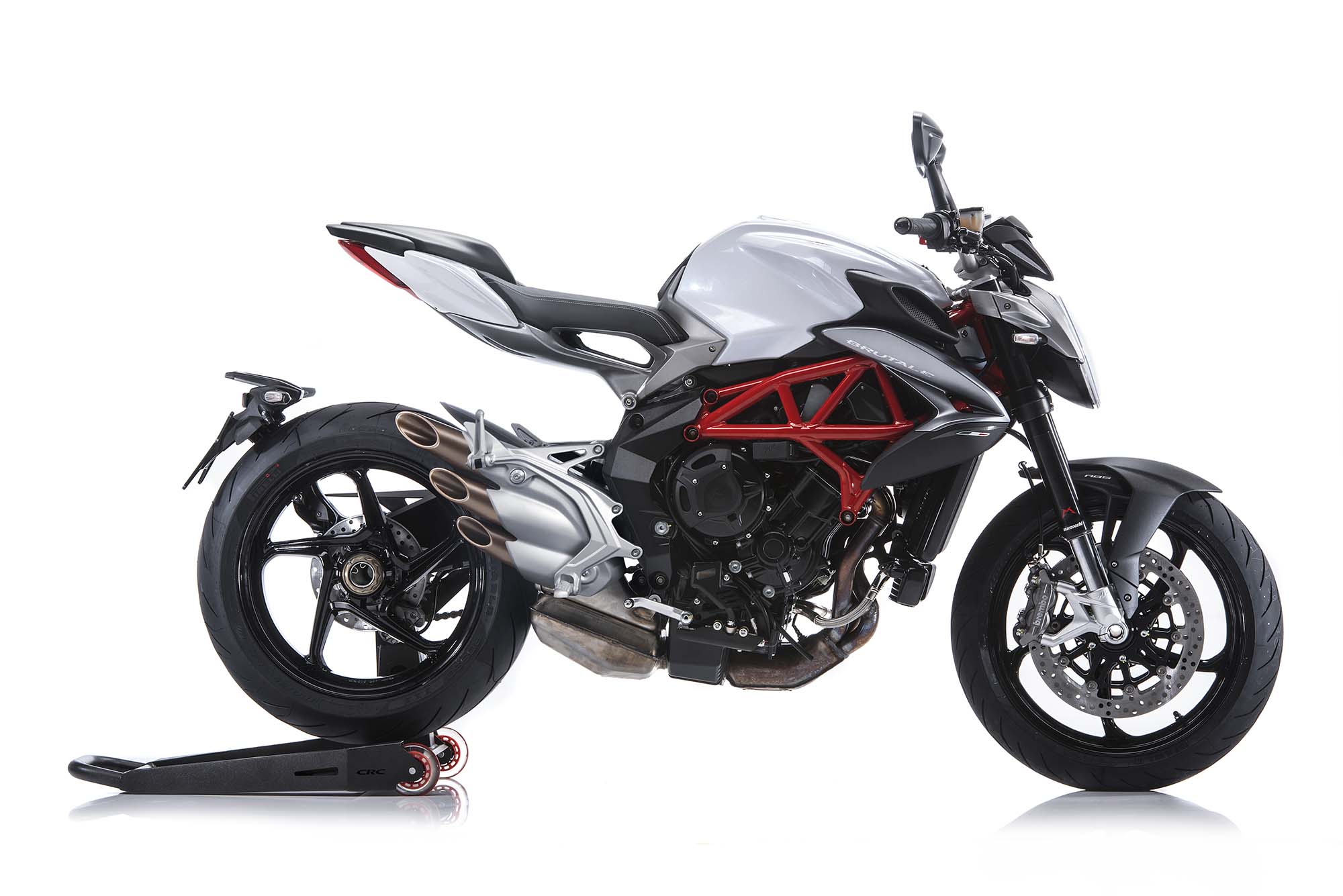


Sources: Asphaltandrubber / Visordown
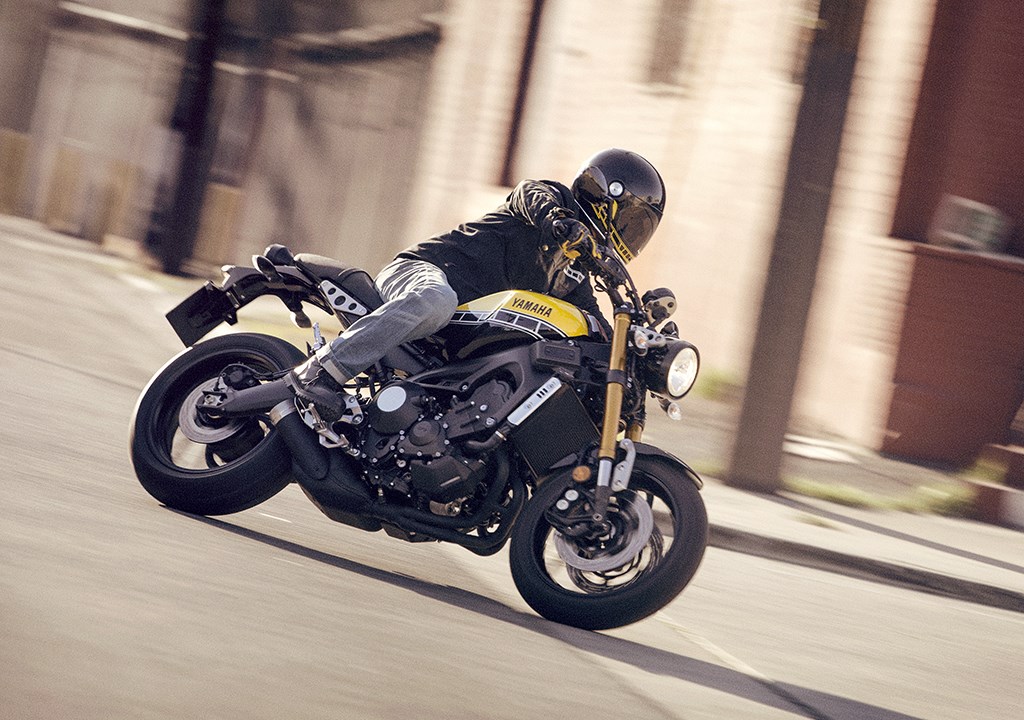
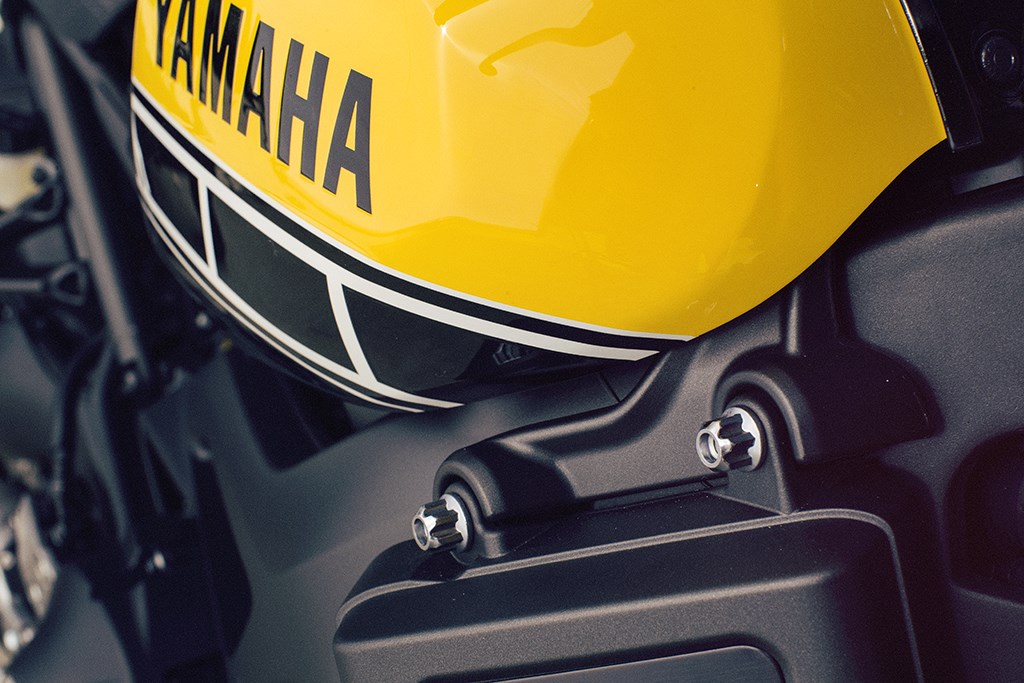
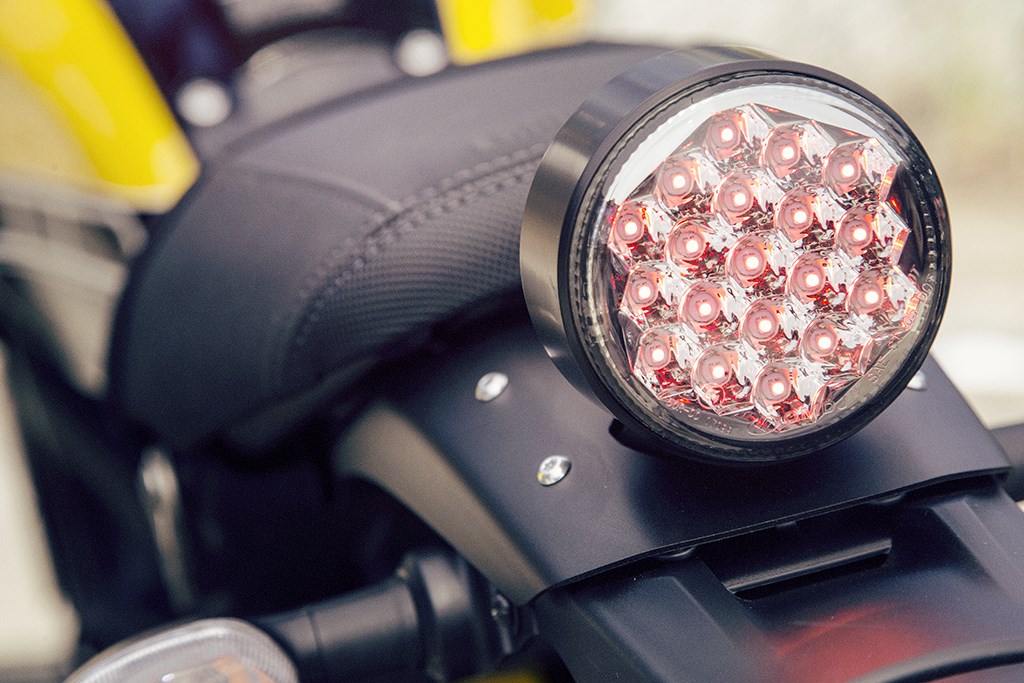
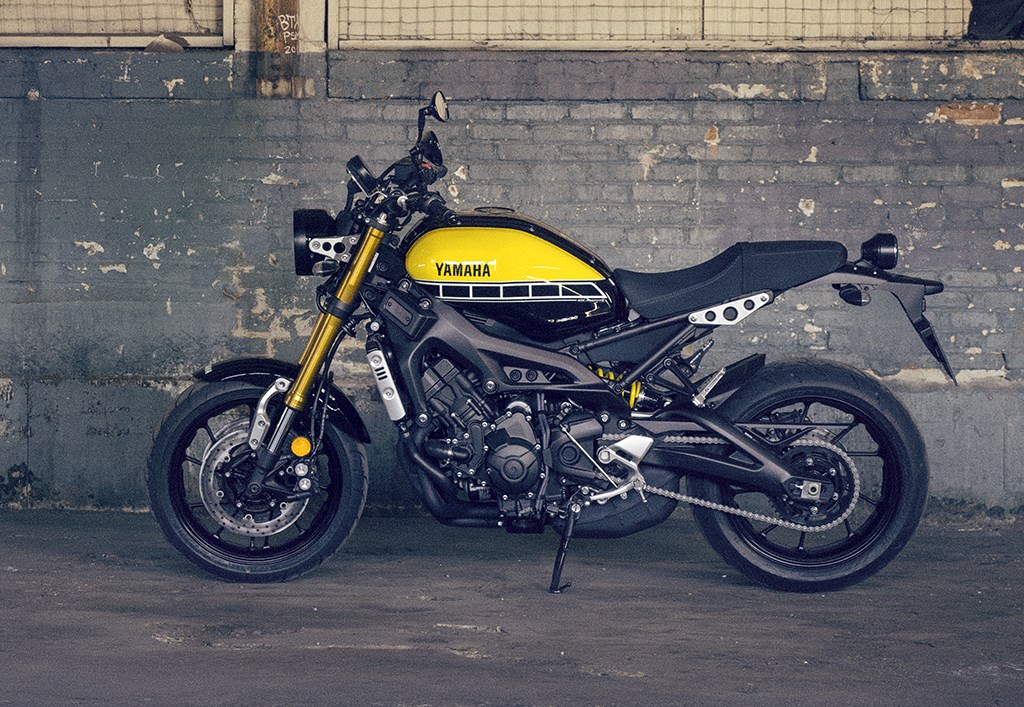
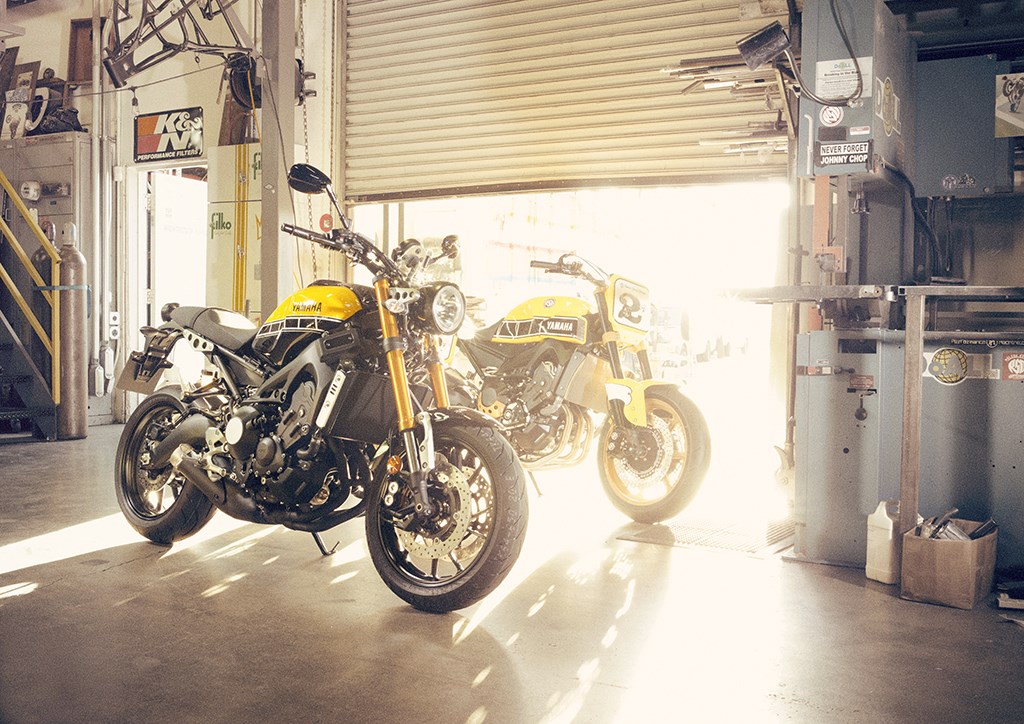
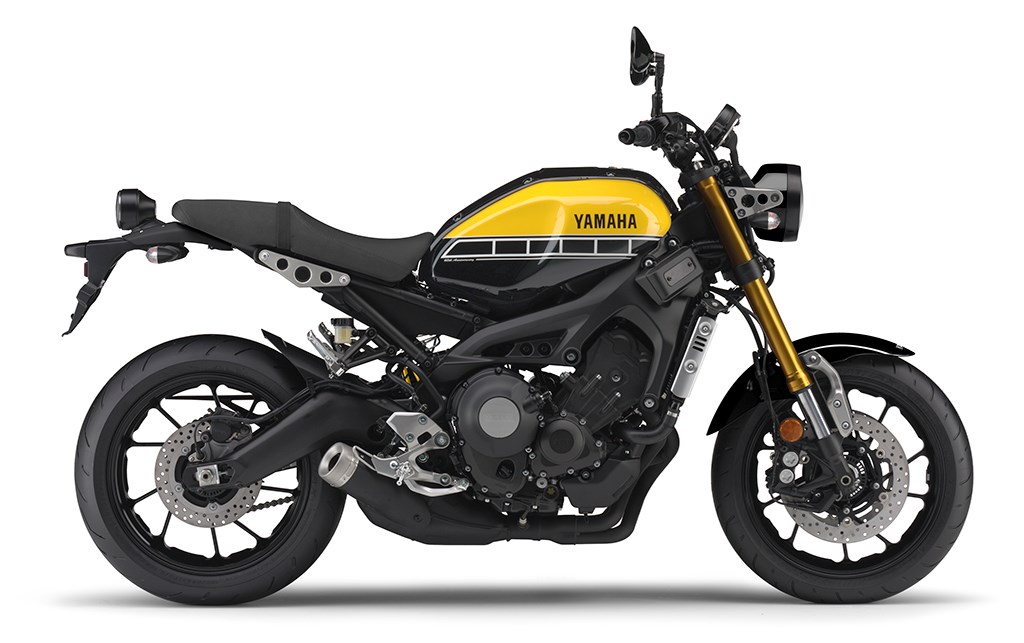
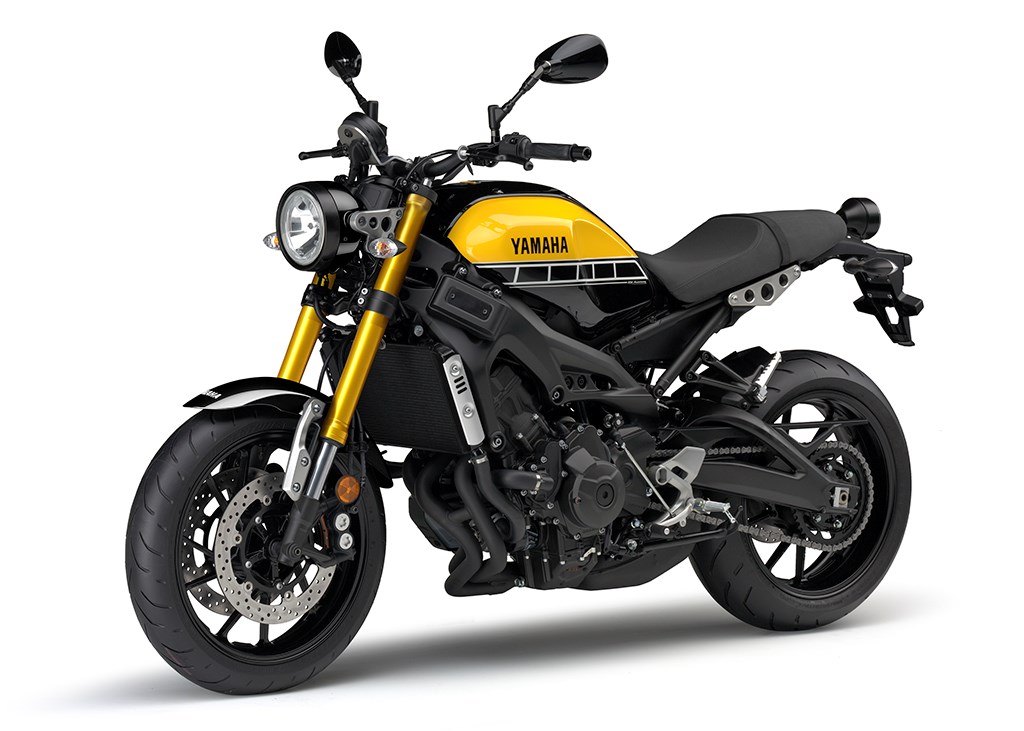
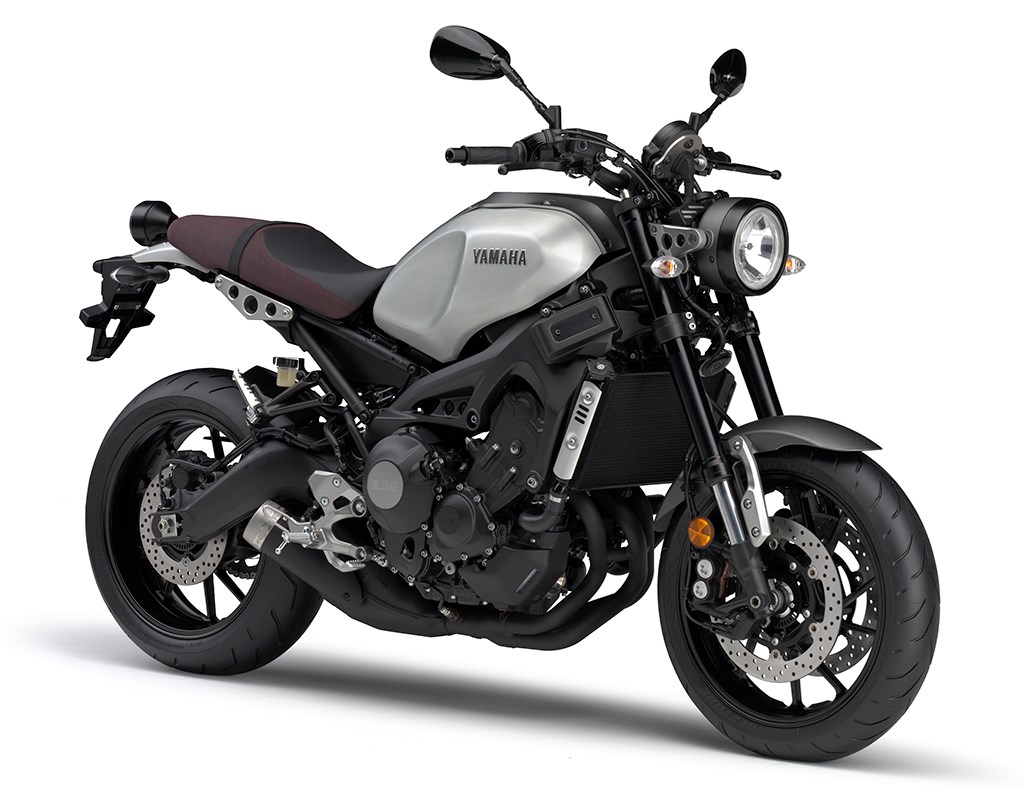
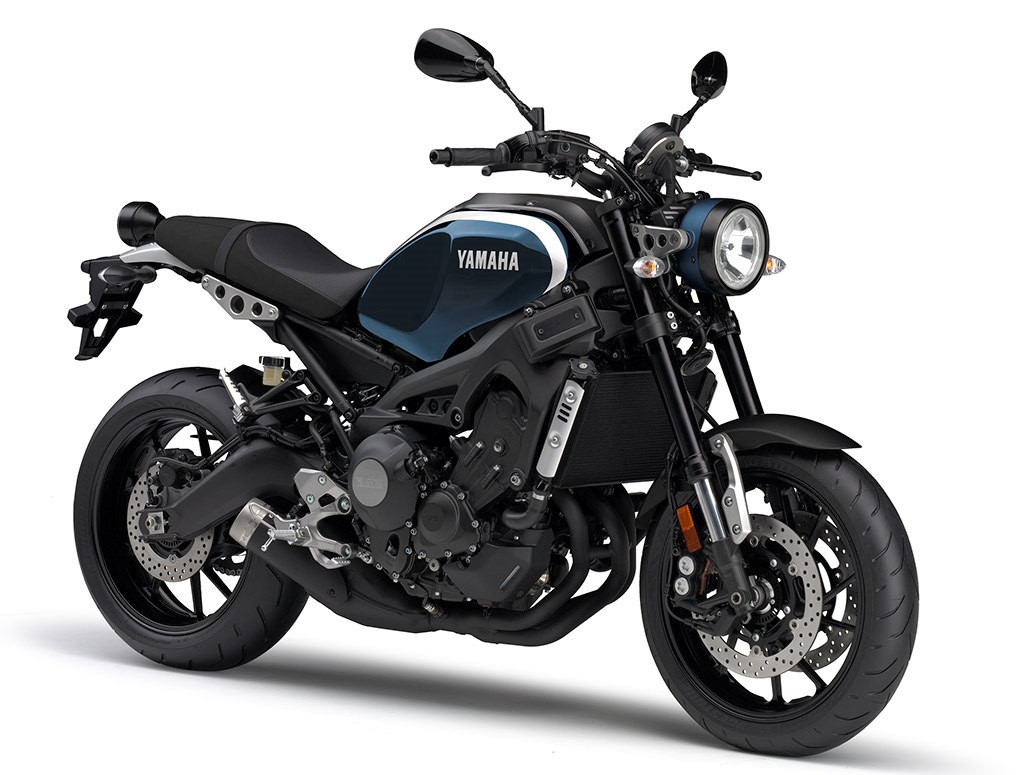
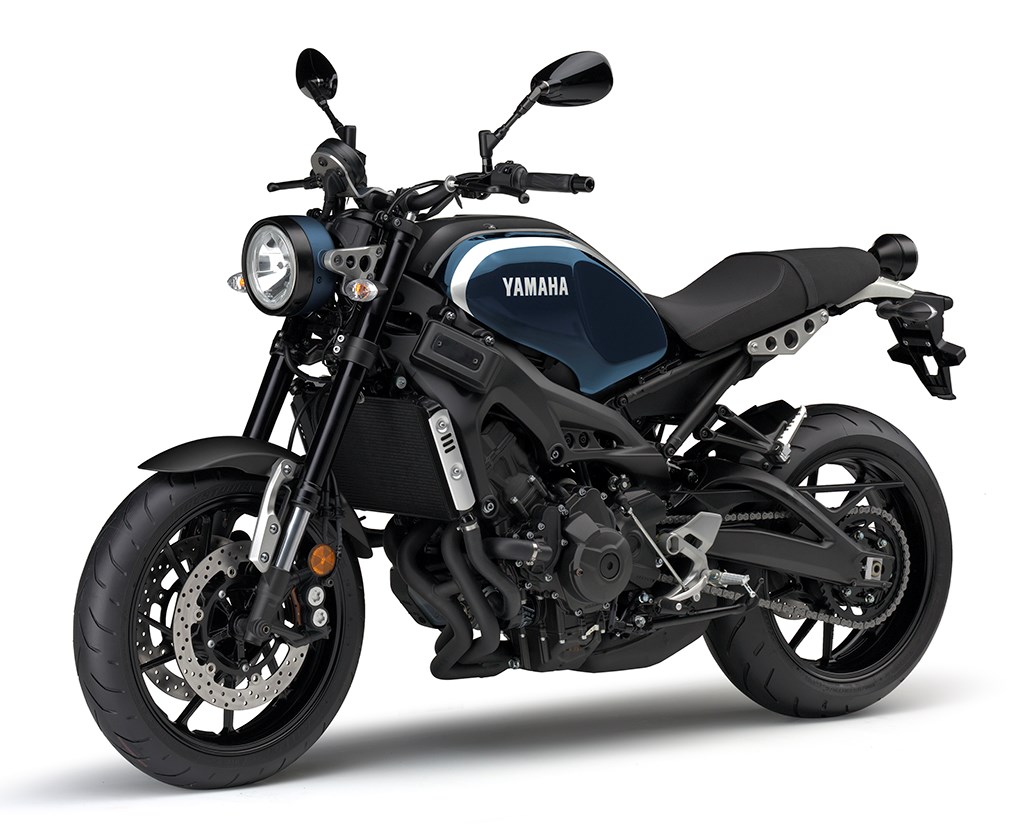
Previewed as the Yamaha MT-09 Faster Wasp concept just weeks earlier, the new XSR900 not only sees Yamaha expanding the MT-09 naked’s range, it also now joins in the ranks of Yamaha’s “Sport Heritage” line as well.
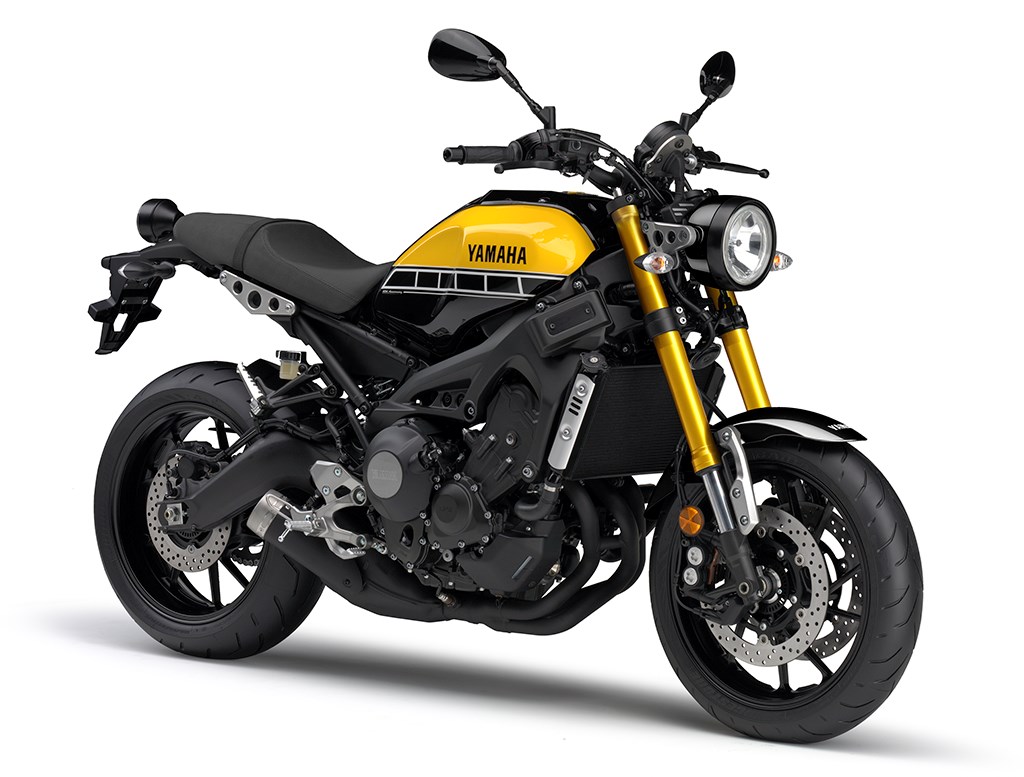
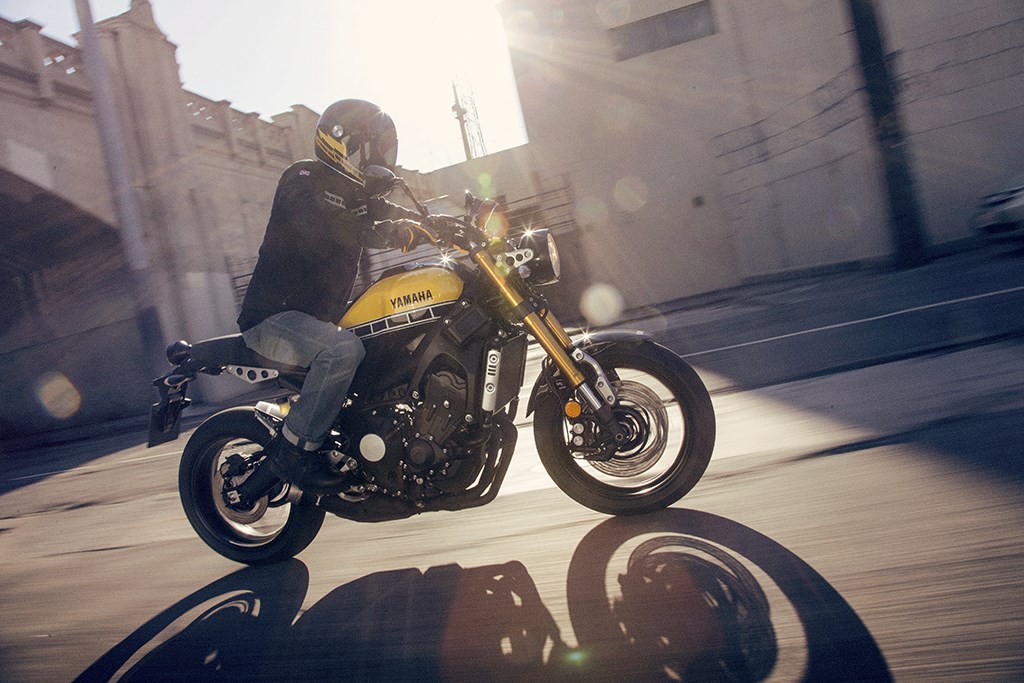
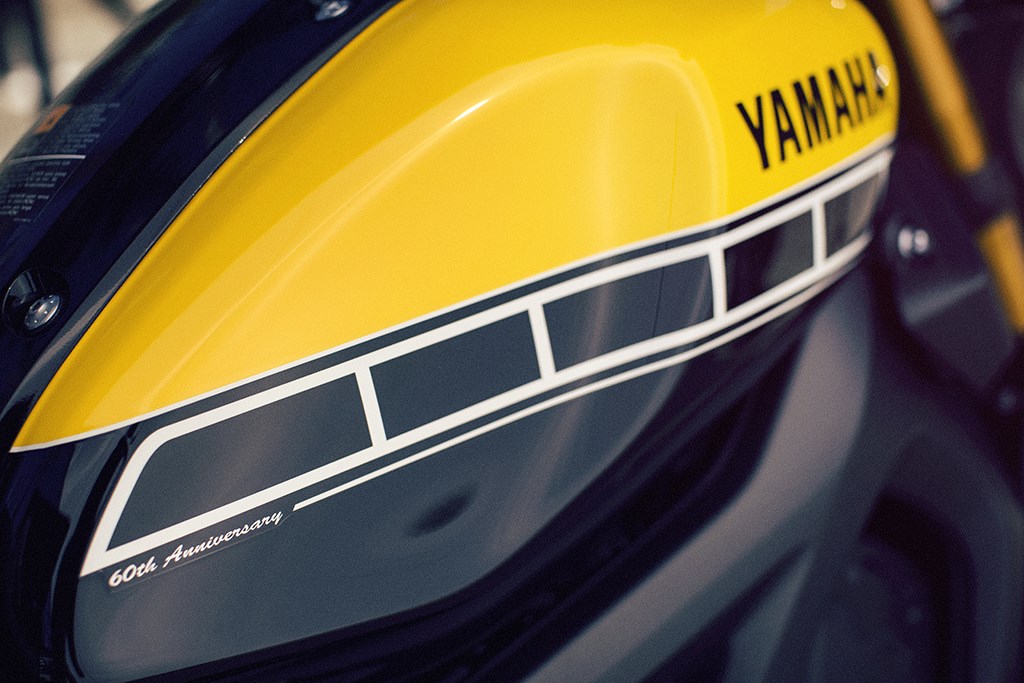
Sitting above the MT-07-based XSR700 model, the Yamaha XSR900 revealed at EICMA 2015 features the brand’s iconic yellow-black speedblock paint scheme, with much of the Roland Sands Design (RSD) concept’s lines being retained as well.
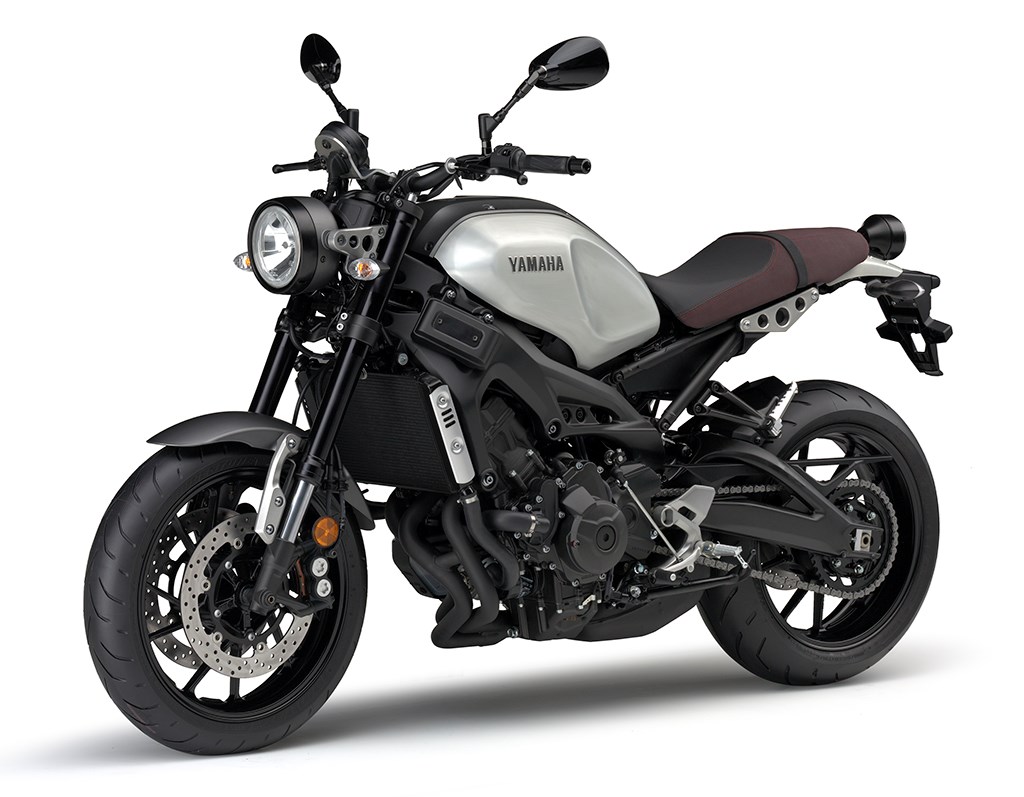
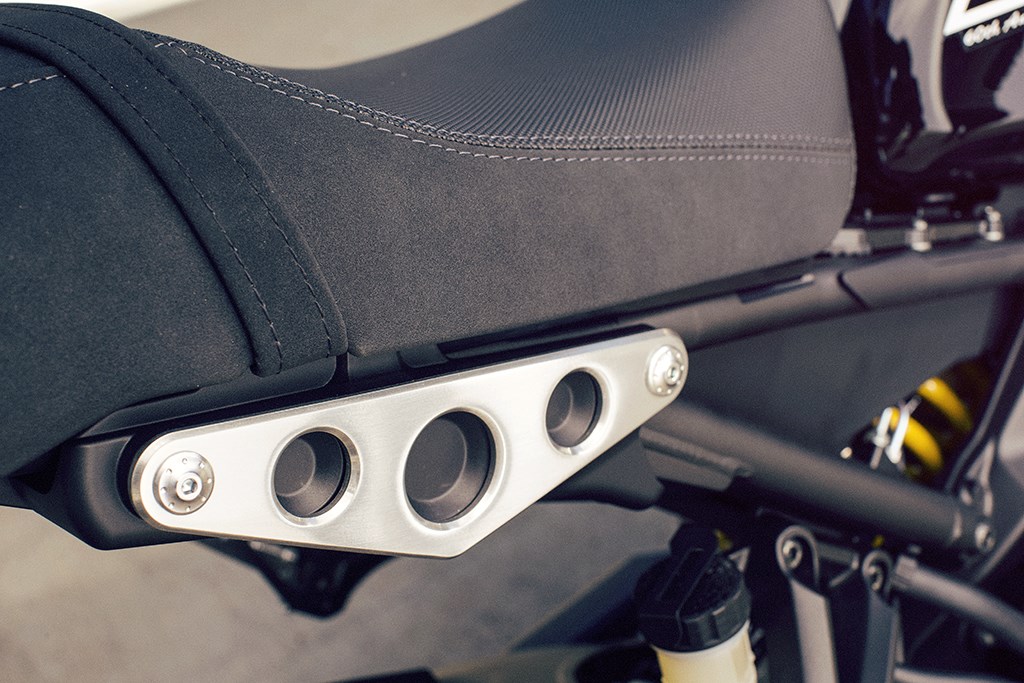
Underneath, all remains business as usual as it retains the MT-09 base bike’s chassis architecture and 847cc triple-cylinder powertrain. However, like the updated 2016 Yamaha MT-09, it gains with a newly added traction control feature and offers three selectable riding modes as well.
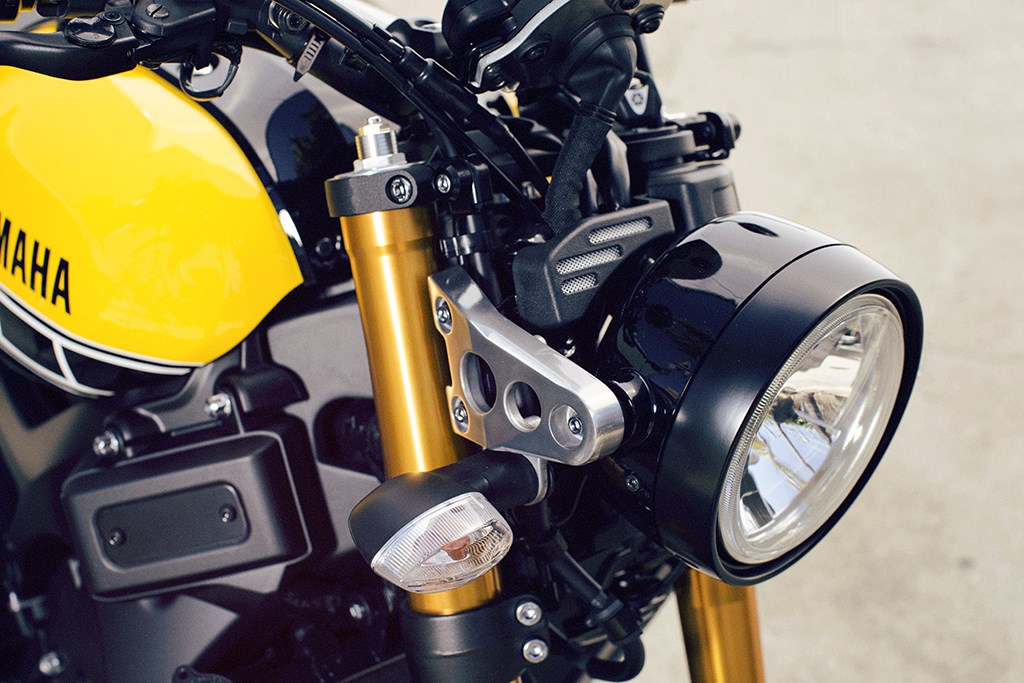
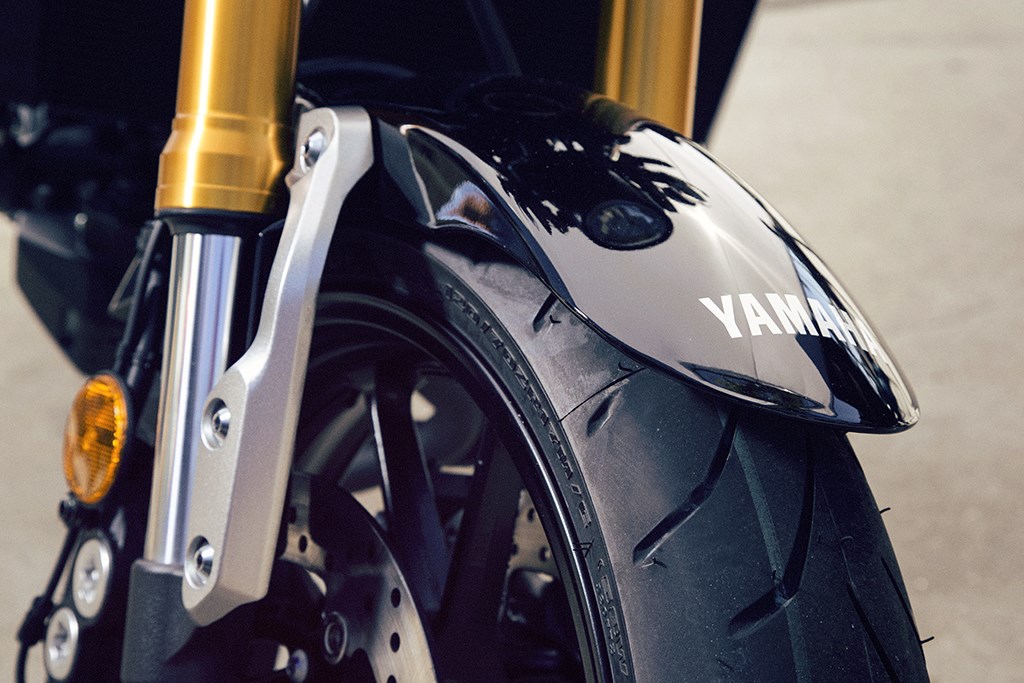
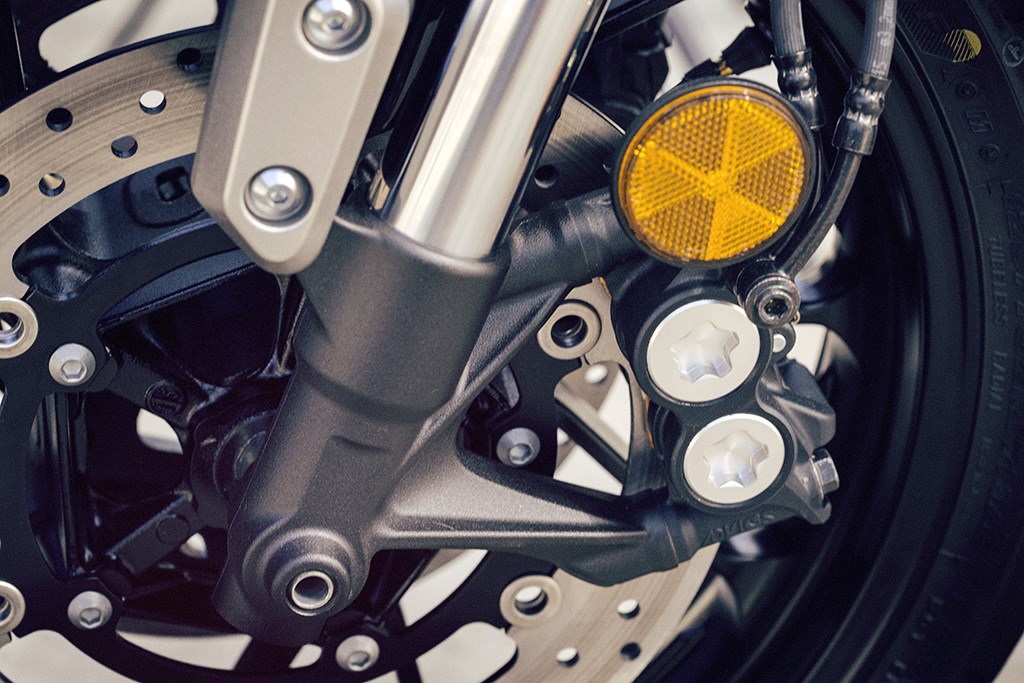
There’s also an assist and slipper clutch feature as well lifted from the updated 2016 MT-09. Other notable features include a pair of 41mm inverted front forks, an adjustable shock, as well as radially mounted brake calipers with ABS.
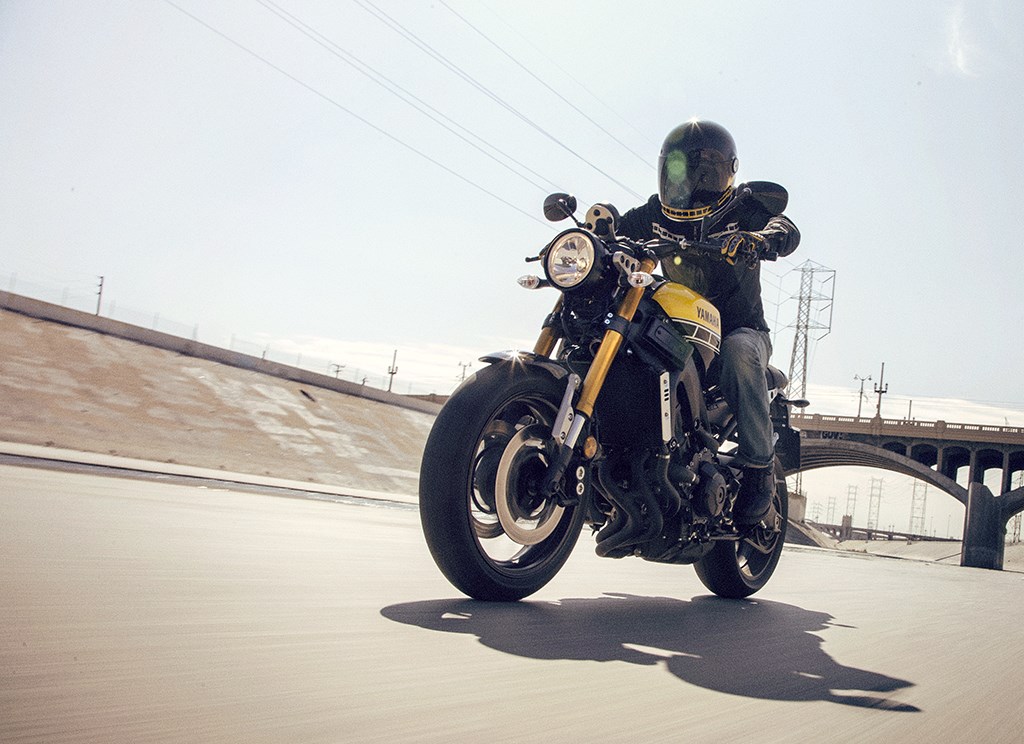
Yamaha also stated that a wide array of accessories will be made available for customers when the bike’s sales commence in March next year.
Check out more photos of the new Yamaha XSR900 in the extensive gallery we’ve prepared below.
Sources: Asphaltandrubber / MCN / Visordown

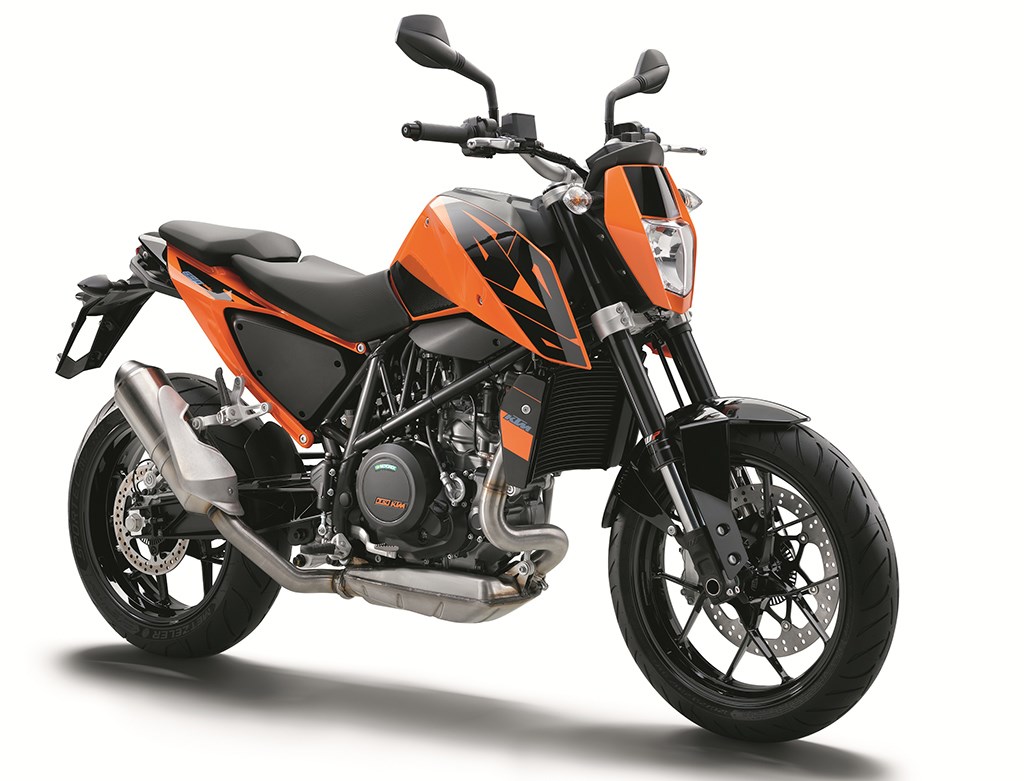
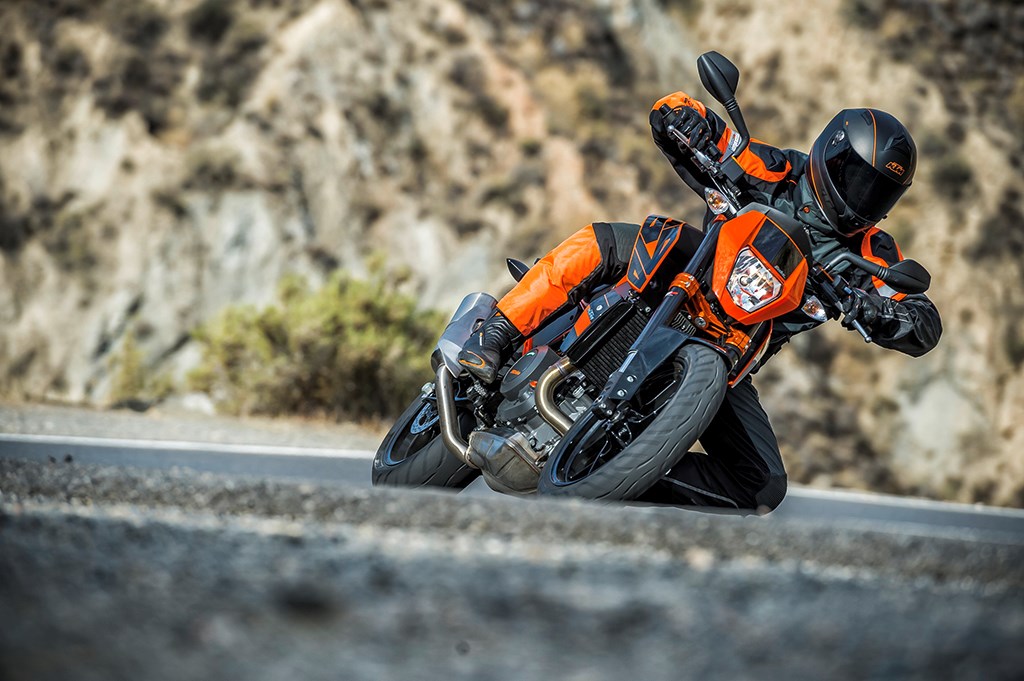
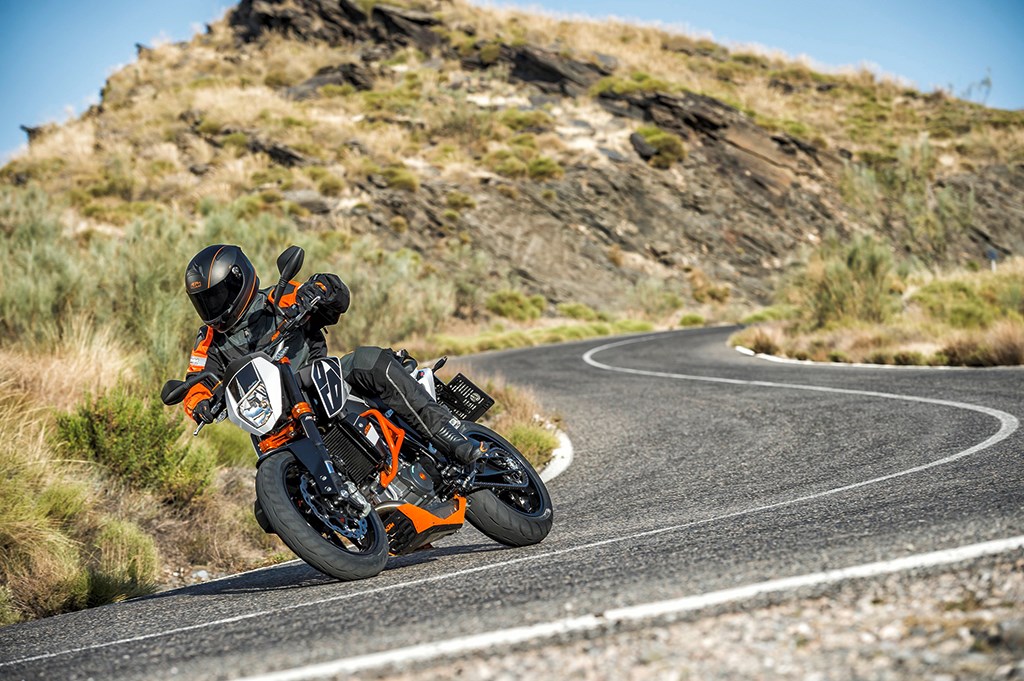
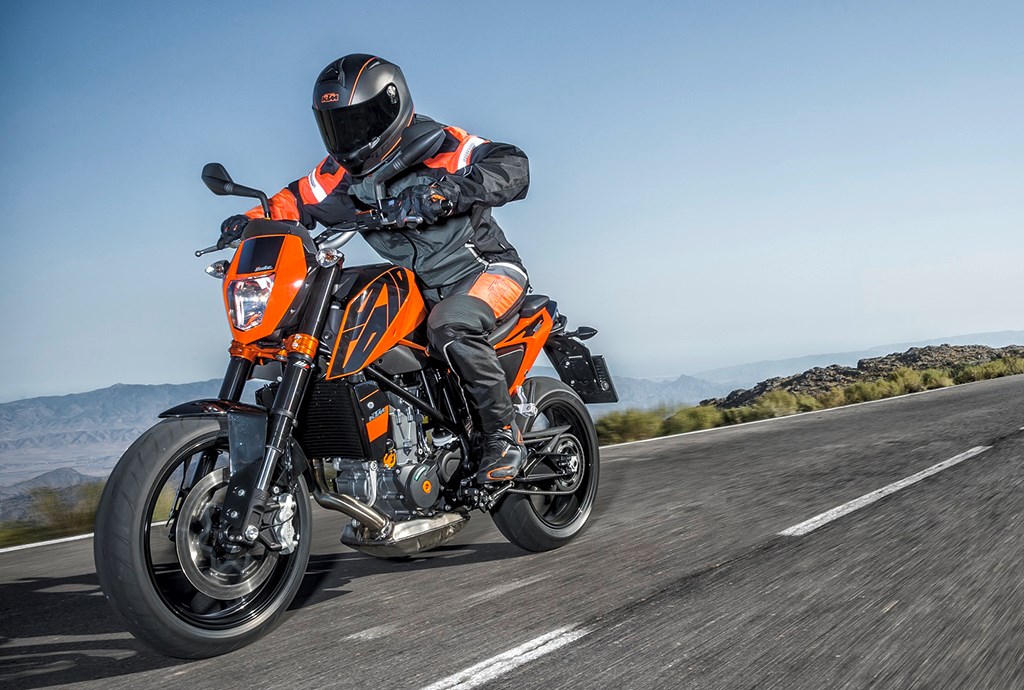
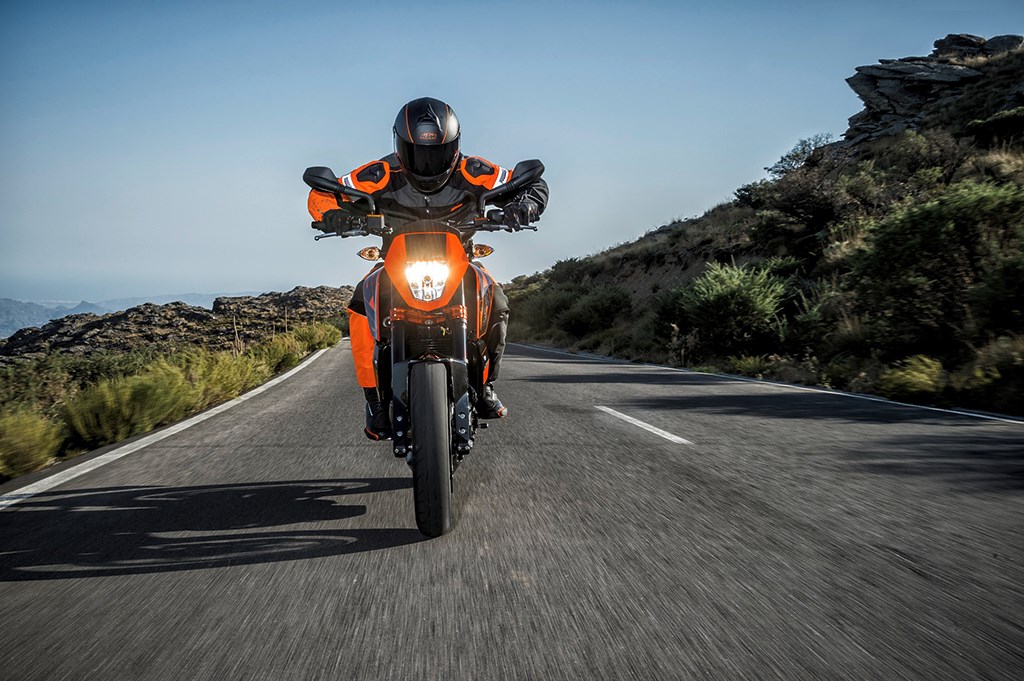
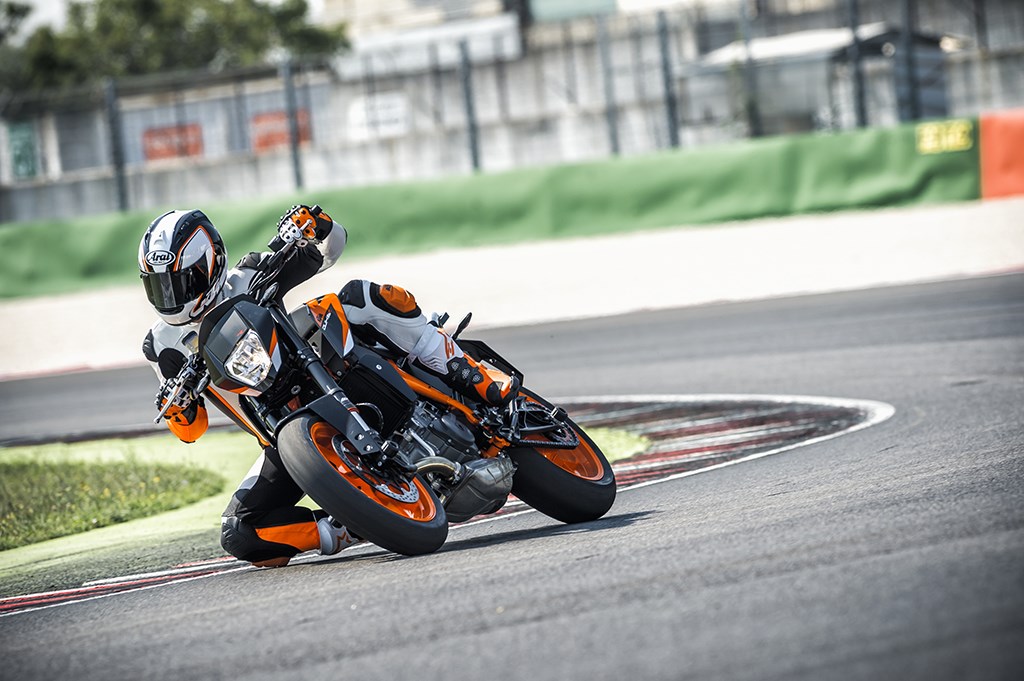
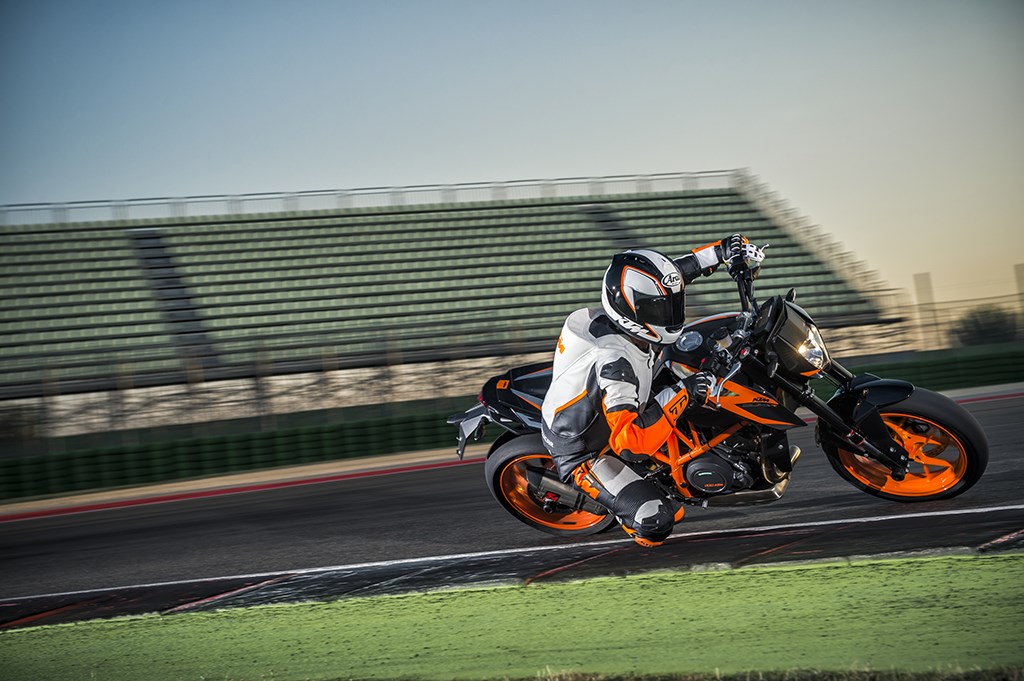
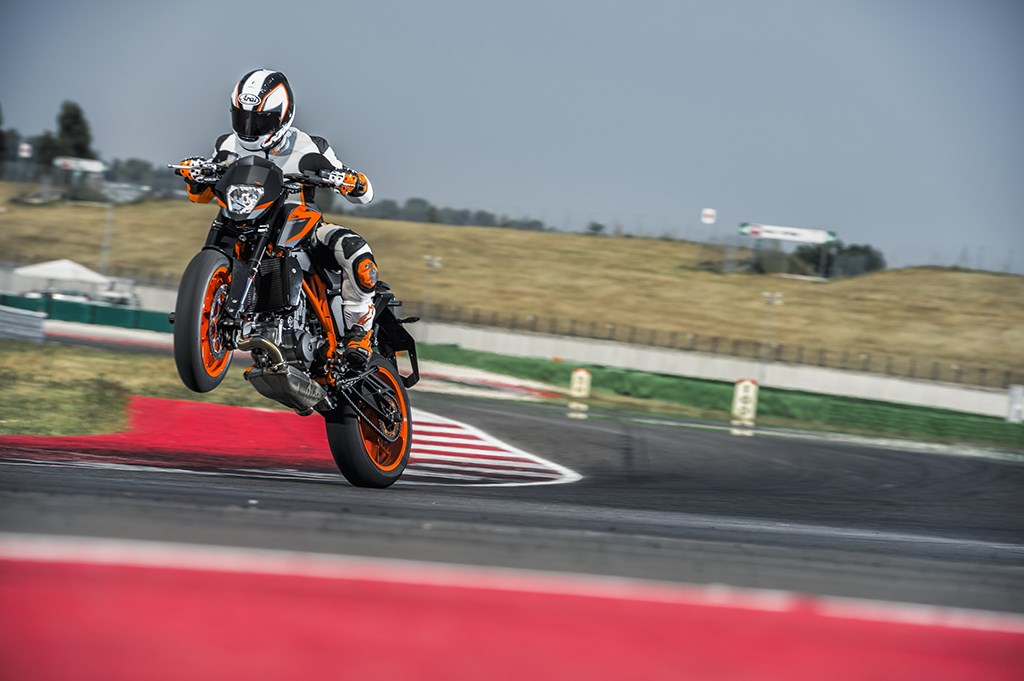
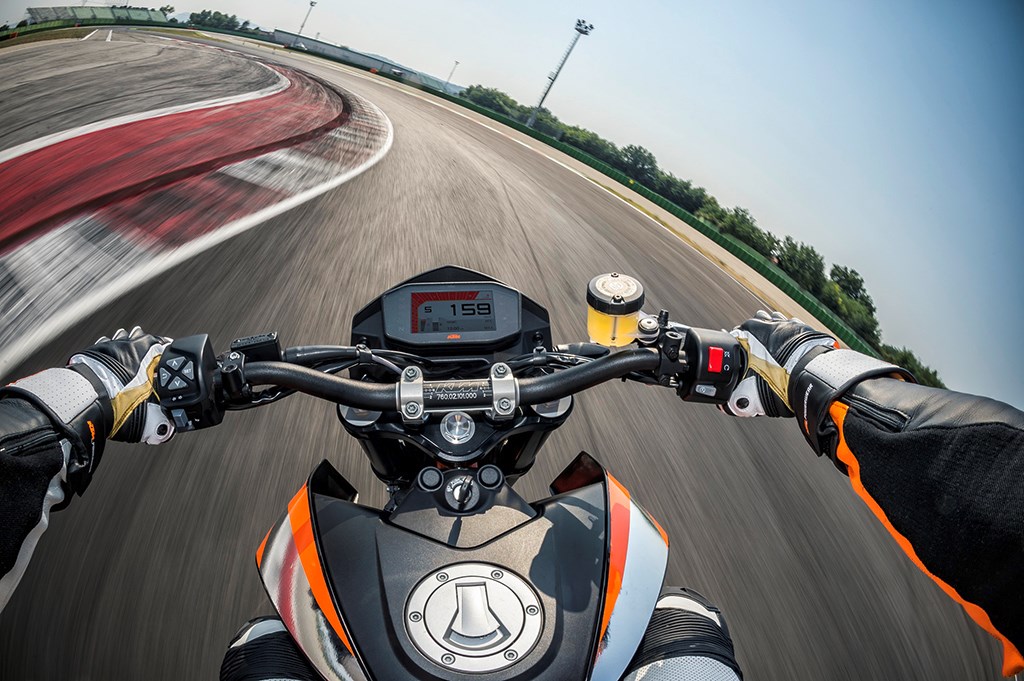
Previewed just weeks ago in prototype form, the new 2016 KTM 690 Duke boasts several enhanced new features and hardware starting with its powertrain. The heavily revised 690cc LC4 single-cylinder now thumps out a higher output of 73hp and 73.8Nm whilst gaining a powerband that is 1,000 rpm wider than before too.
Part of the major changes made in the engine included the revised intake camshaft that now doubles up as an additional balancer shaft, resulting in lower vibrations. KTM states that both the intake and exhaust systems have been also been optimised for Euro4 emissions compliance too, making it KTM’s first engine to comply with Euro4 as well.
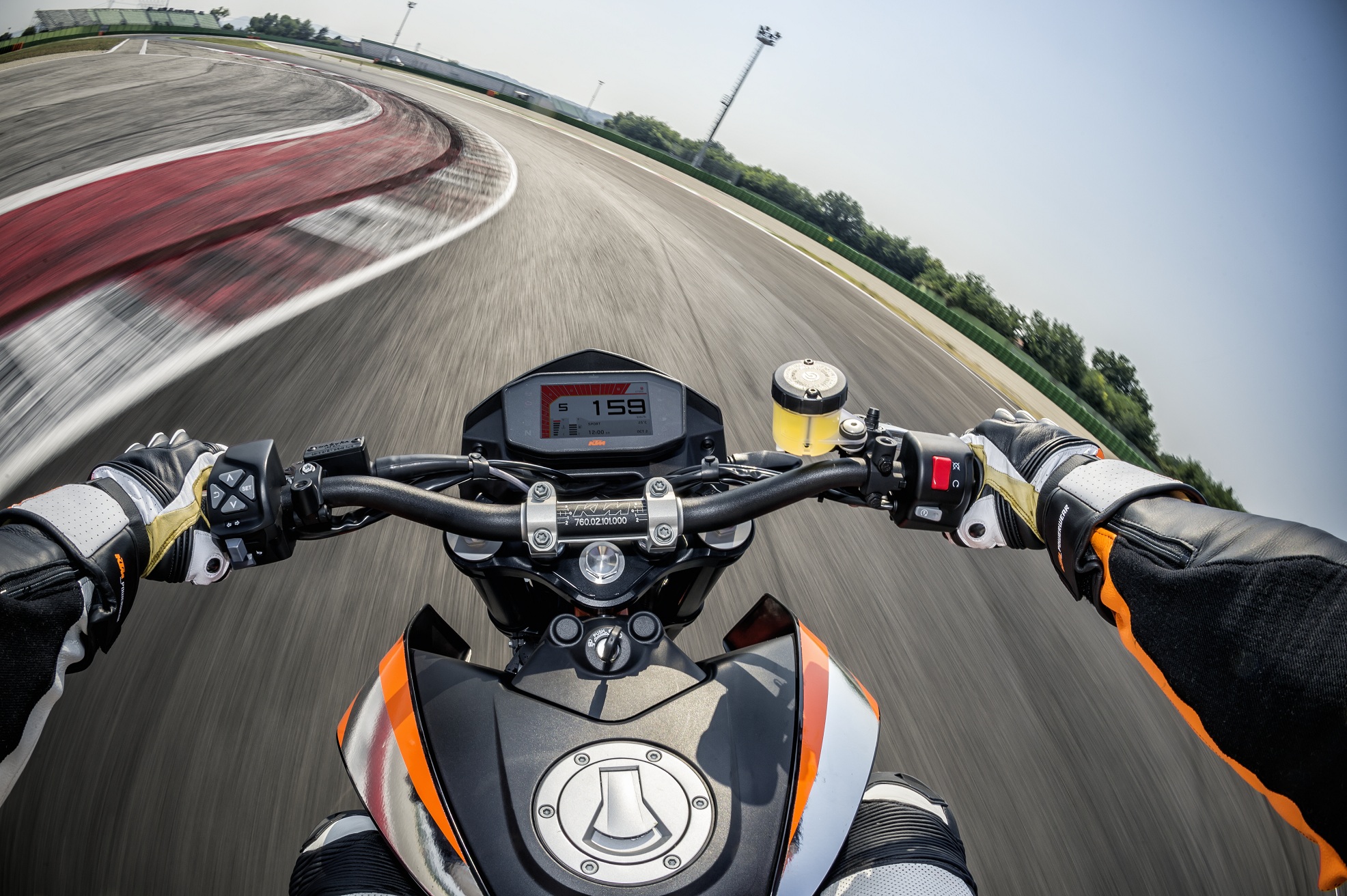
Apart from that comes the addition of new a cornering ABS suite, making the 2016 KTM 690 Duke the first bike in class to feature it. The naked also underpins a newly redesigned chassis frame with increased handling stability, followed by the adoption of new and re-profiled seats, LED rear lighting, as well as a nifty new TFT instrument display.
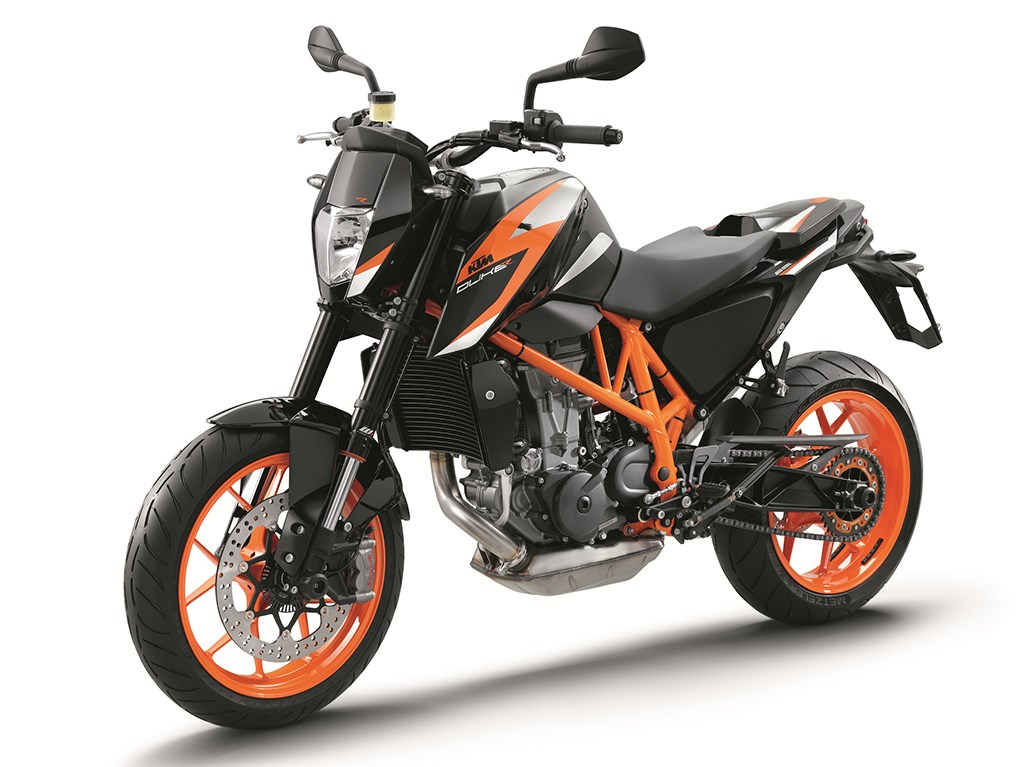
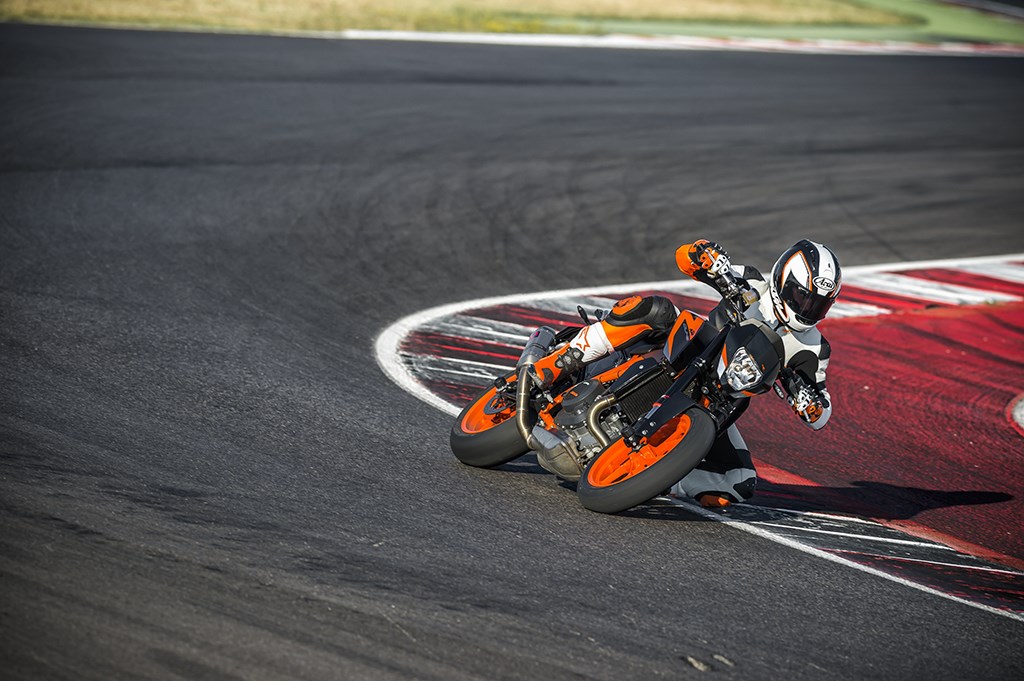
Sitting at the top of the range is the racier 2016 KTM 690 Duke R variant. Besides the offer of a bigger 75hp punch, it is set apart from the standard 690 Duke thanks to its orange-painted frame and wheels, not forgetting the signature Akrapovič exhausts system added into the package as well.
As it is, this is one nutty middleweight that we know many around the world will be anxiously waiting for.
Sources: Asphaltandrubber / MCN / Visordown
The change vitalized over the past few years with the release of models such as the Yamaha Super Ténéré, Triumph Tiger Explorer, KTM 1290 Adventure, and Ducati Multistrada 1200, which are basically upright sport-touring motorcycles that provide endless comfort and mindless speed.
However, BMW Motorrad, the brand which invented the segment back in 1973 with the R90S, vows to bring sports tourers back to their glory days with the introduction of the 2016 R1200RS. Believe it or not, the bike we are looking at here is the first RS model to be offered by the company after nine years, since the 2005 K1200RS – a hefty sport-tourer featuring a 130-horsepower flat four.
This latest version, however, is a bit more faithful to its R100RS roots and features a boxer engine. The 1,170cc boxer, which is the same 125-horsepower semi-water cooled engine that is powering the GS, is capable of producing 125hp at 7,750 rpm, and 125Nm of peak torque at 6,500rpm.
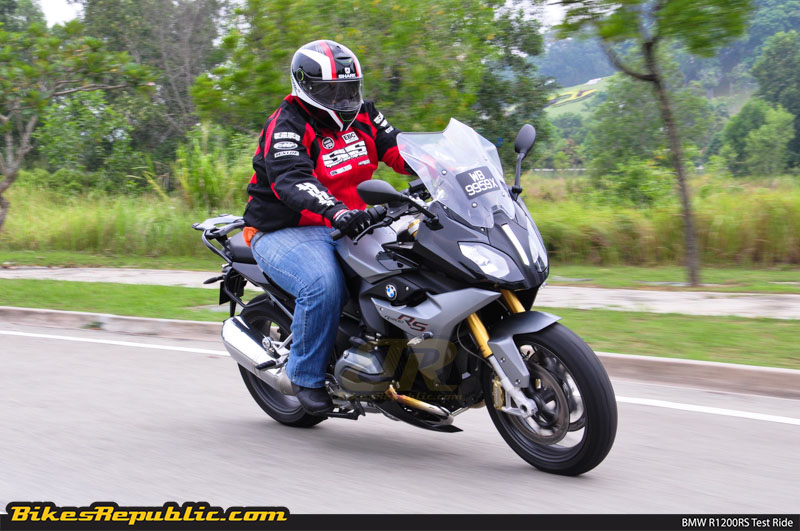
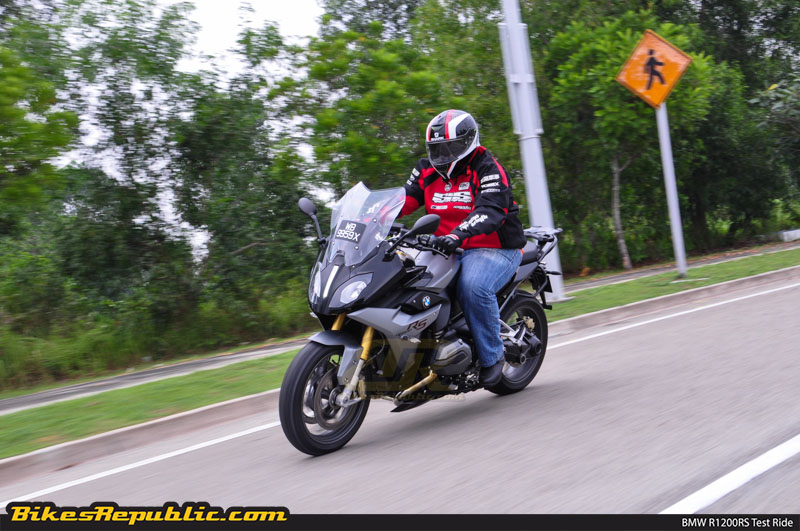
In terms of design, it is obvious that the guys behind the drawing board in Munich were looking to cater to the sportier side of the spectrum. From what we can see the R1200RS is nearly identical to R1200R, with the RS sporting a half fairing and two-way adjustable windscreen for better aerodynamics at speed. The highlight is of course, the symmetrical twin headlights, similar to the S1000RR and the S1000XR.
Our favourite feature on the RS was the bike’s exposed frame, which gives it a very radical and sporty appearance, unlike its predecessor which looked rather conservative. Complementing the sportiness is the wheels, as well as the massive exhaust pipe.
With a wheelbase length of 1,529mm, and seat height of 820mm, the R1200RS is a pretty bulky bike, but its dimensions make it ideal for both touring and inter-city riding. It also features a handlebar setup that puts the body in a slightly more forward and lower position, but not one that compromises comfort, even for big-sized riders.
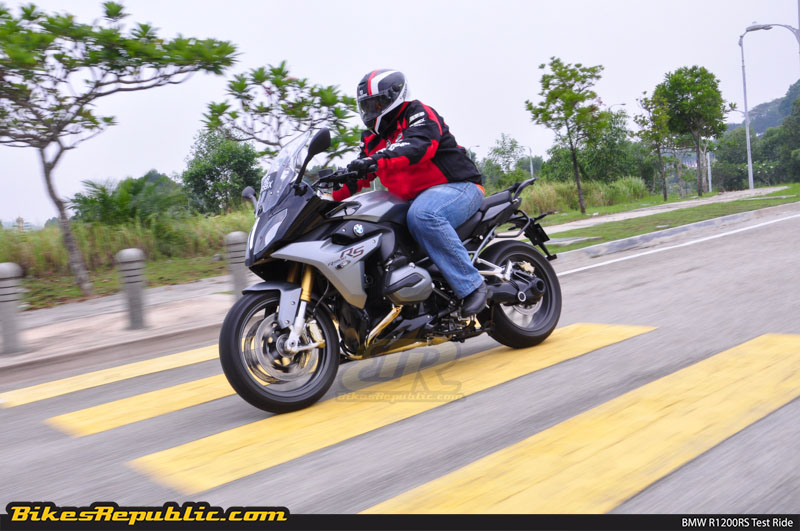
As much as the technical equipment is concerned, the R1200RS comes with shaft drive, an upside-down, 45mm Sachs telescopic fork up front, Paralever suspensions setup at the rear, Dynamic ESA , and a whole lot of the BMW electronics, including ABS, Automatic Stability Control (ASC) and two riding modes as standard.
Performance wise, the R1200RS’ engine has been tuned for more torque at lower rpm compared to other BMWs that use the same engine. So, we had to be gentle on the throttle as it was a case of ‘ask and you shall receive’. Regardless of whether we were overtaking in the city, or cruising on the highway, power delivery was just instant, and so seamless.
Adding to the smooth riding experience was the anti-hopping oil-bath clutch which had a light feel, and could be pressed with only two fingers. Upshifting and downshifting could be done effortlessly throughout our stint with the bike. Overall, the engine never showed any signs of struggling, and power was always present, inspiring us to push it further and have quite a bit of fun.
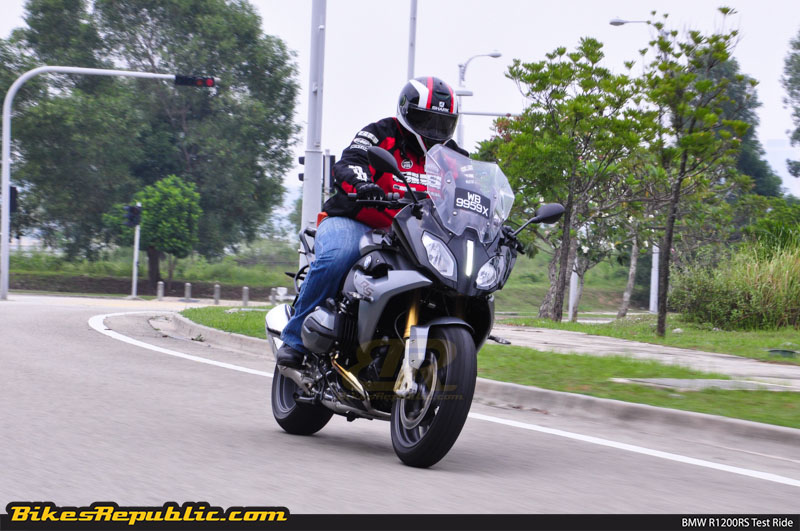
With two riding modes to choose from (Road and Dynamic), we were in Road mode most of the time, which offered a much snappier power delivery and less intervention of electronic aids such as DTC and ABS. We also had the liberty of choosing between two damping modes – Road and Dynamic – where each was available in three spring preload selections (single rider, single rider with luggage, or two-up).
Braking duties were handled by dual 320mm discs up front squeezed by radially-mounted Brembo four-piston calipers, and a single 276mm disc squeezed by a Brembo two-piston caliper out back. Feel at both the front-brake lever and rear-brake pedal was exceptional, the front allowing for one-finger slowing most of the day.
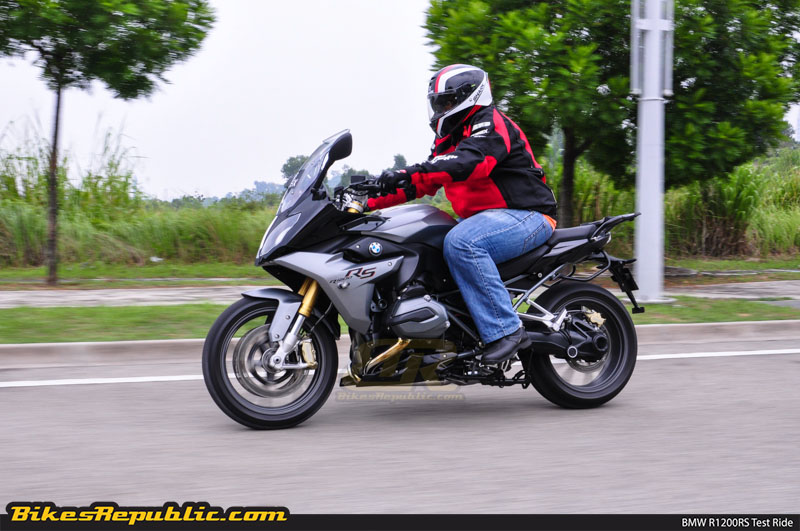
As good as it looked and performed, the R1200RS wins big in terms of practicality and convenience as well. One item that stands out on the RS is the new instrument cluster. It was definitely among the best there is in the market. Featuring a combination of both digital and analog readings, the TFT screen layout offered all the info we needed, and it could be customized to display different views as well.
Adding to convenience was the keyless system, which allowed us to keep the key-fob in the pocket at any given moment, even when we needed to start the bike, or to unlock the handle or popping open the gas cap.
And as for fuel capacity, the 18-litre tank allowed us to clock about 300km before the fuel warning indicator lit up. In terms of consumption, the R1200RS returned an average of 24km/l, which was more than what we had expected.
In all, the R1200GS is more than just a fairing-equipped R1200R. Thanks to the small, yet significant changes such as the slightly longer wheelbase for touring stability, the handlebar, and the tweaked engine, it definitely has its own distinct characteristics.
It does not only offer the same level of performance as a sports bike, but does it without sacrificing comfort and practicality. Complemented by the sporty looks, the R1200RS is a dream come true for those who have been longing for a proper sports tourer.
Engine: Air/liquid-cooled four stroke flat twin boxer engine
Displacement: 1,170cc
Max power: 125PS at 7,750rpm
Max torque: 125Nm at 6,500rpm
Top speed: Over 200km/h
Fuel consumption: 4.1-l/100km
Fuel tank capacity: 18-litres
Drive: Shaft
Seat height: 820mm
Weight: 236kg
Price: RM101,900
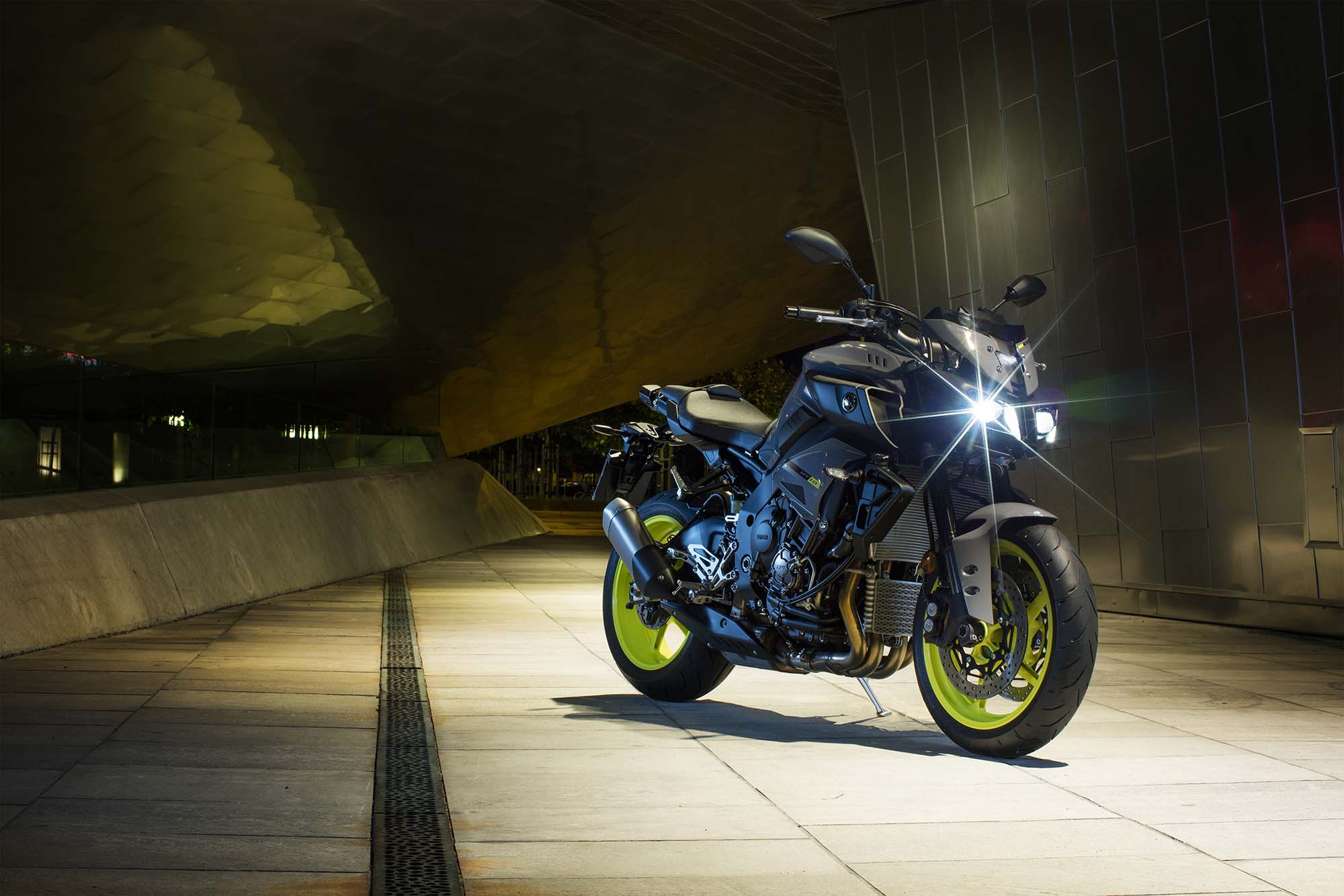
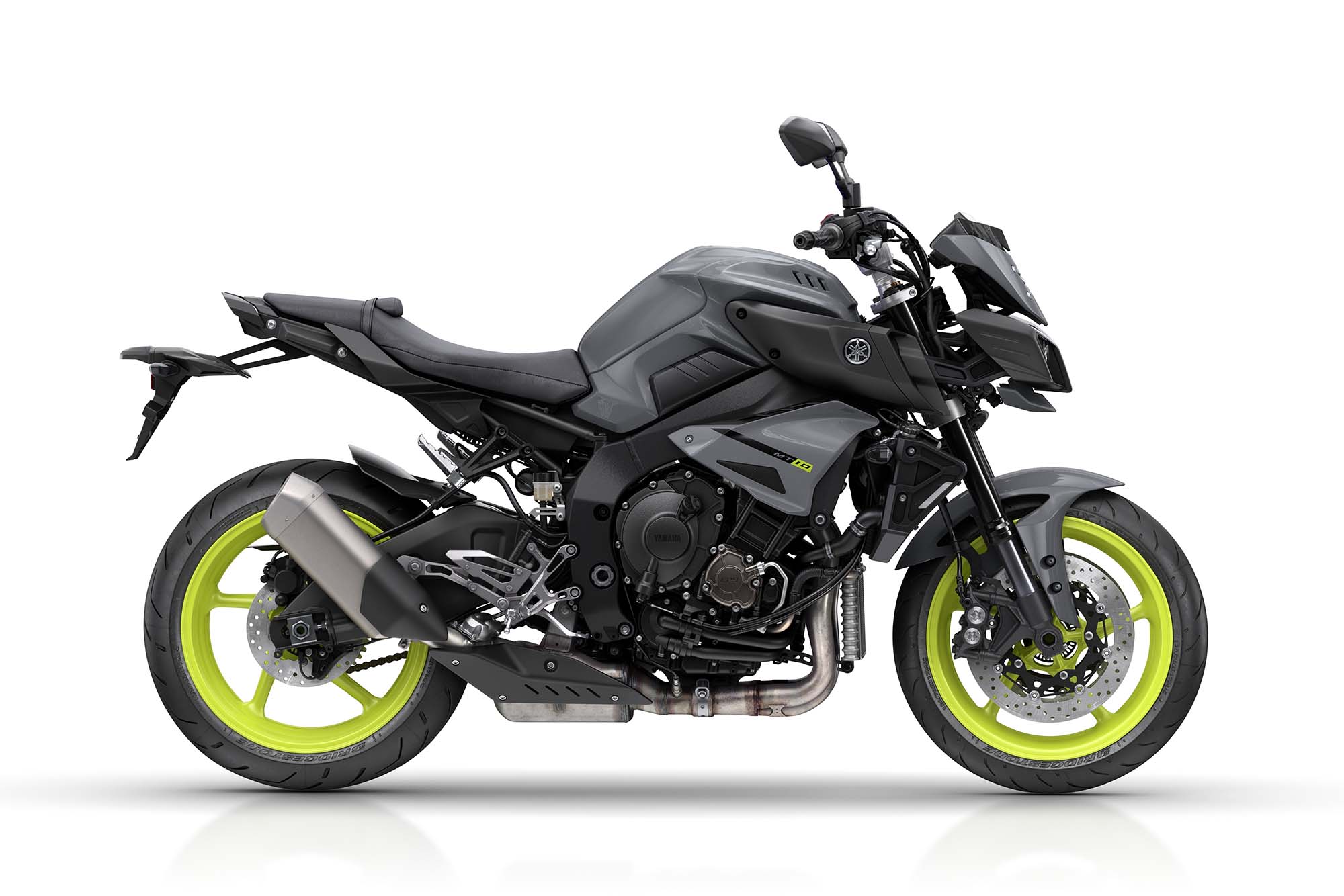
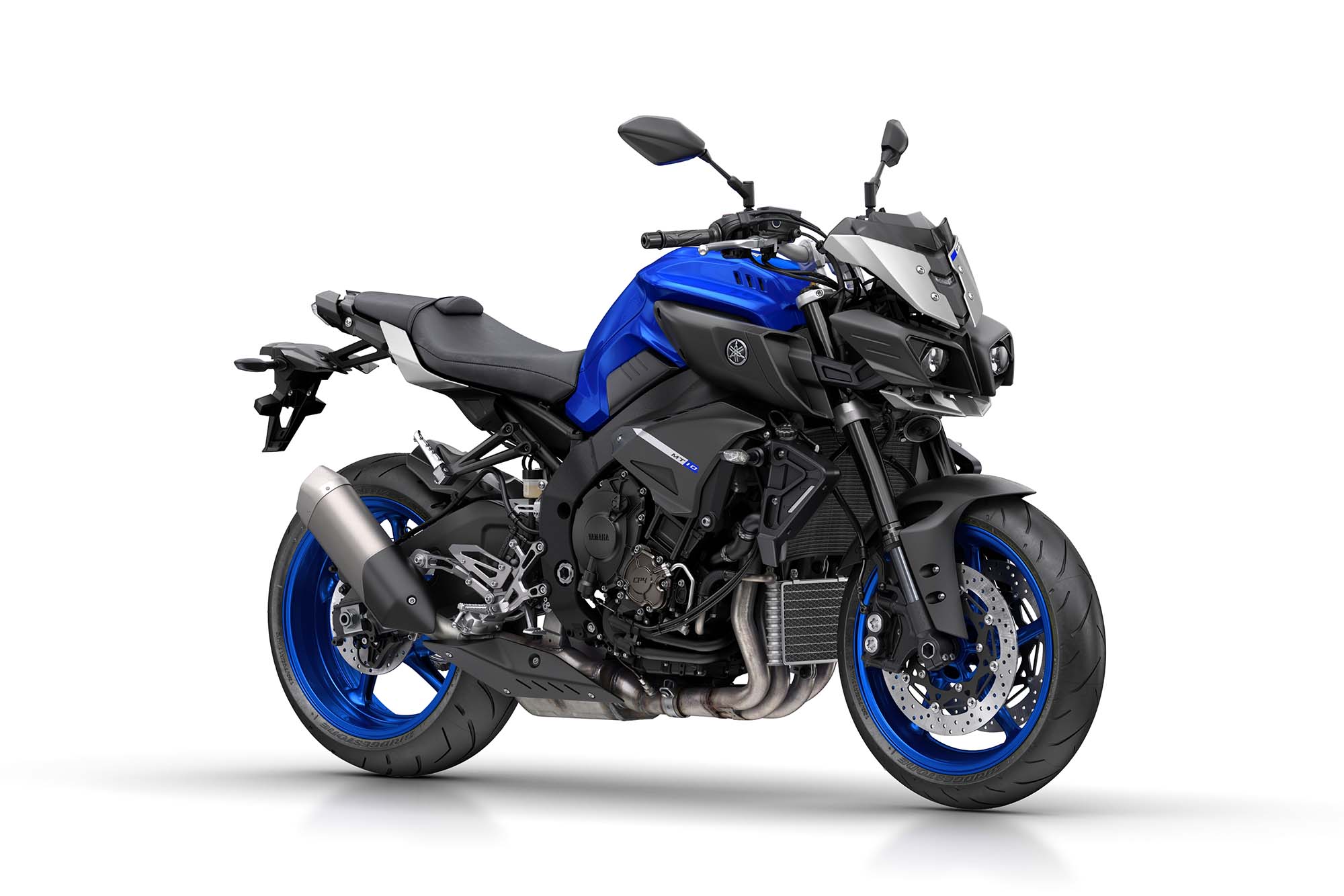
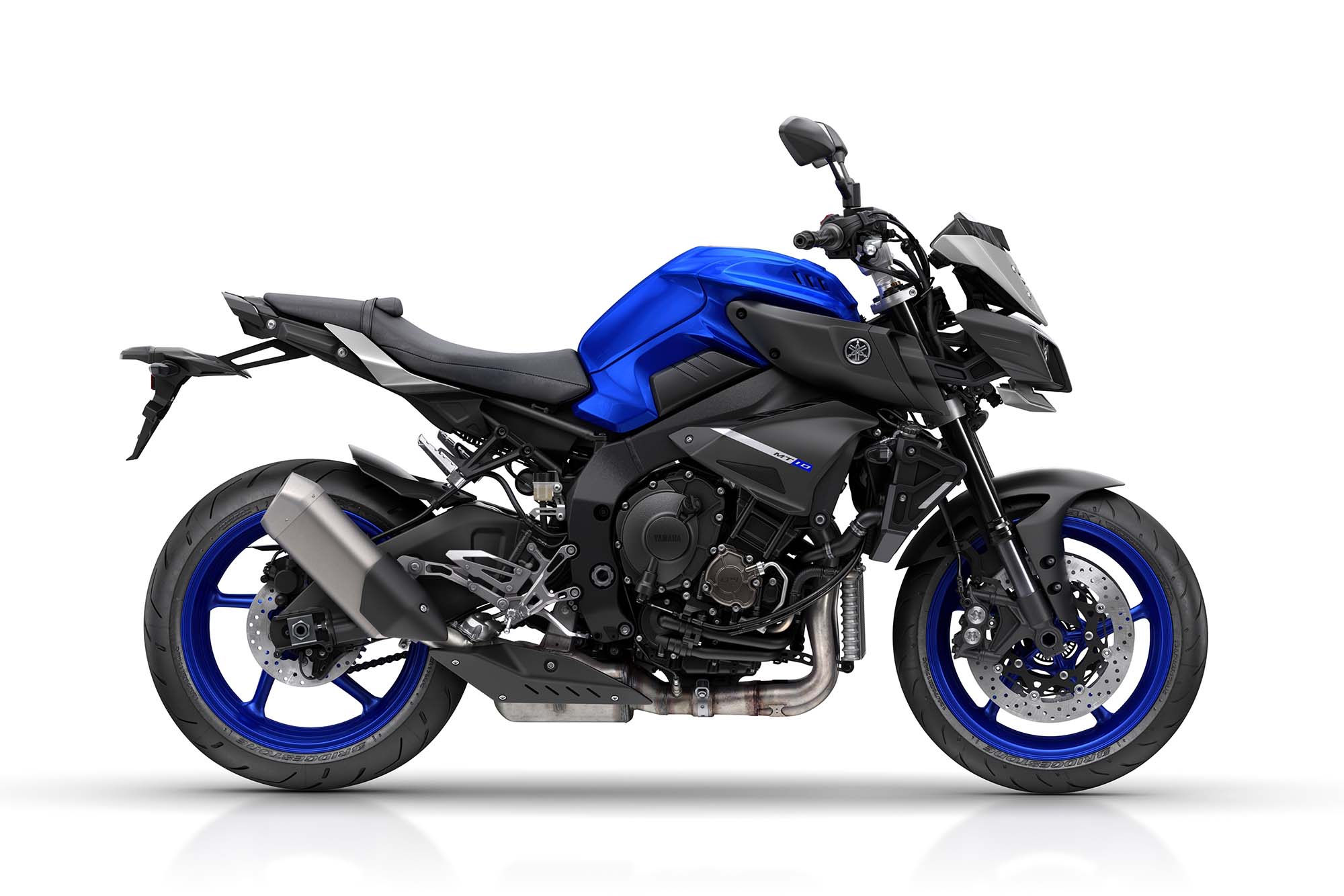
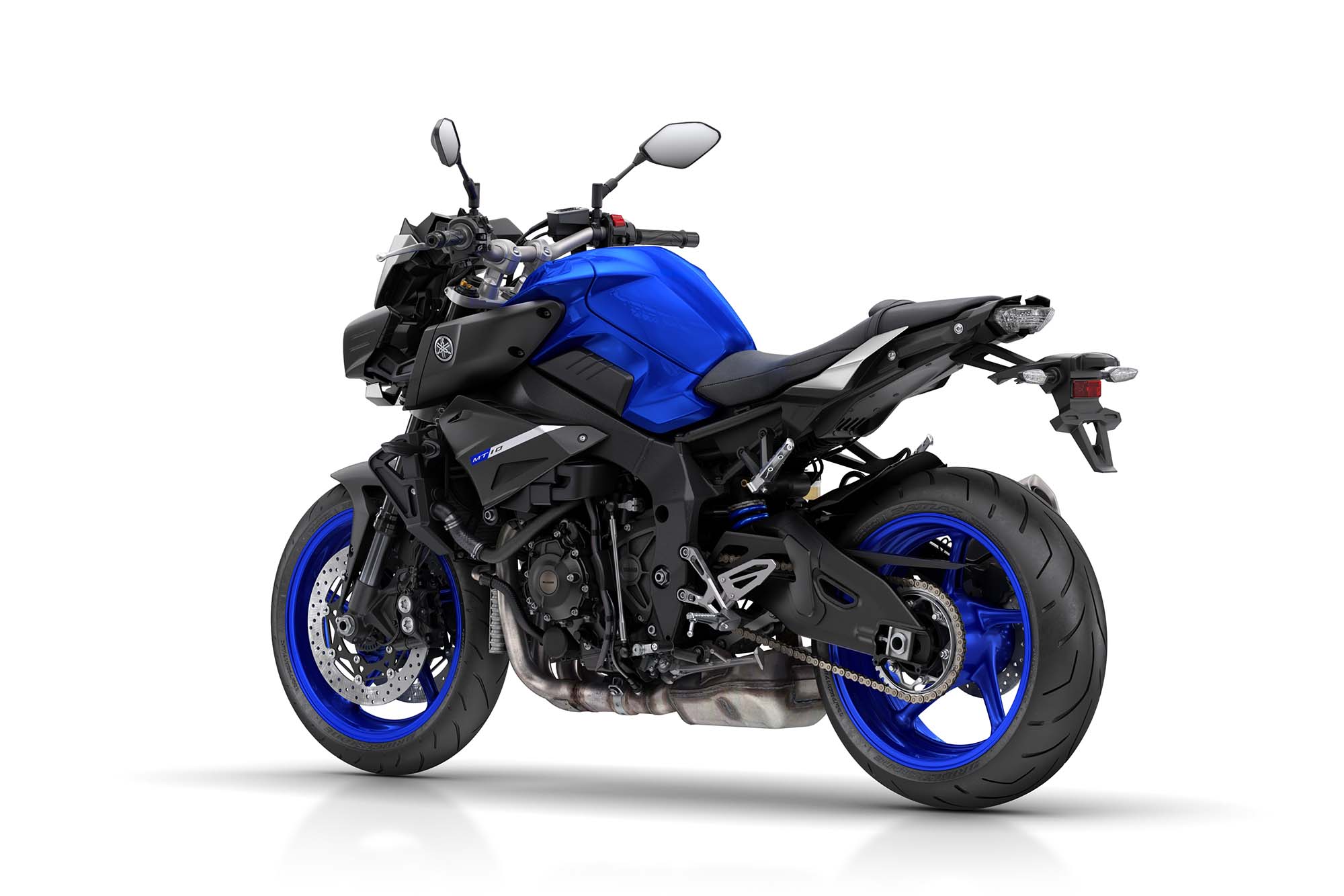
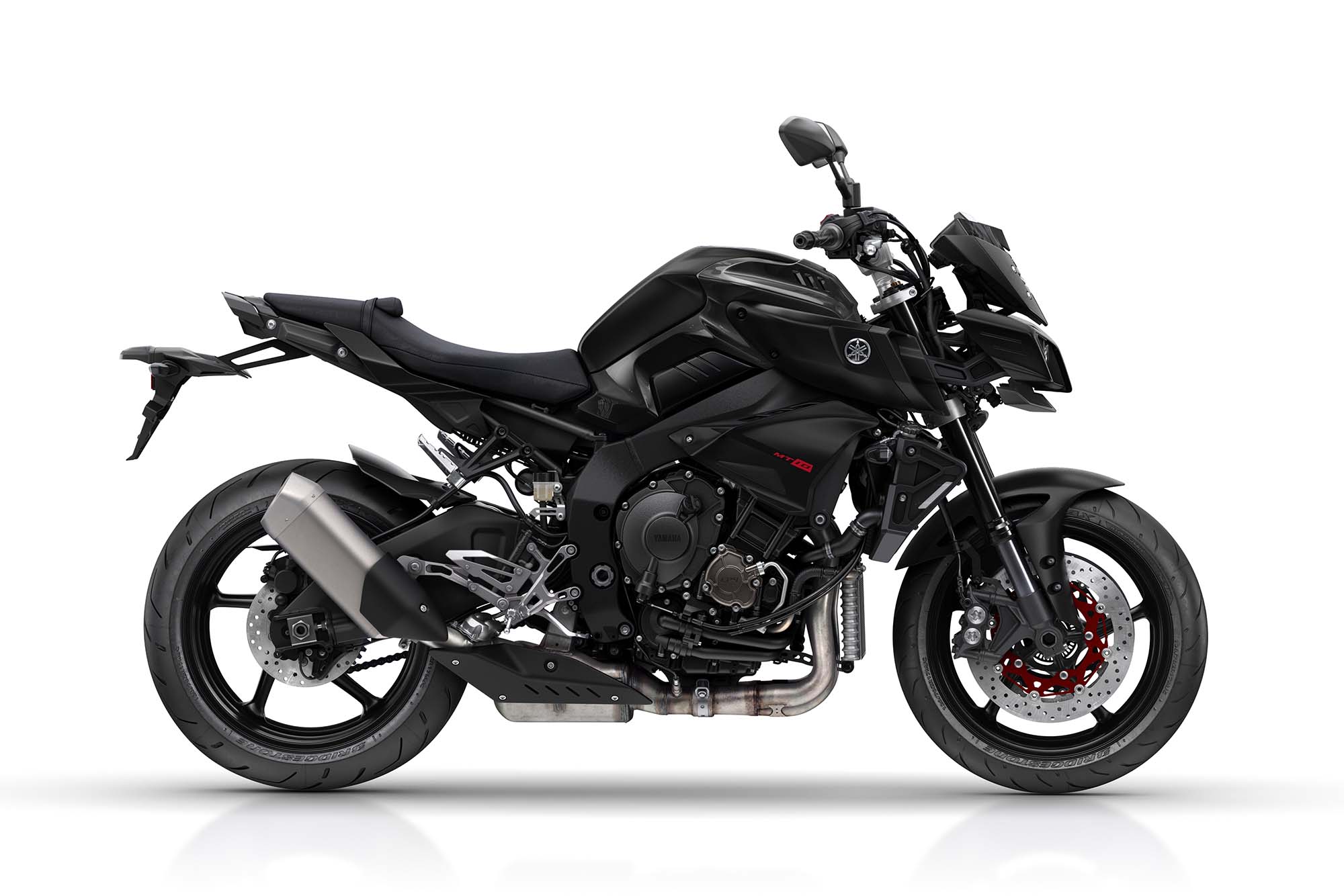
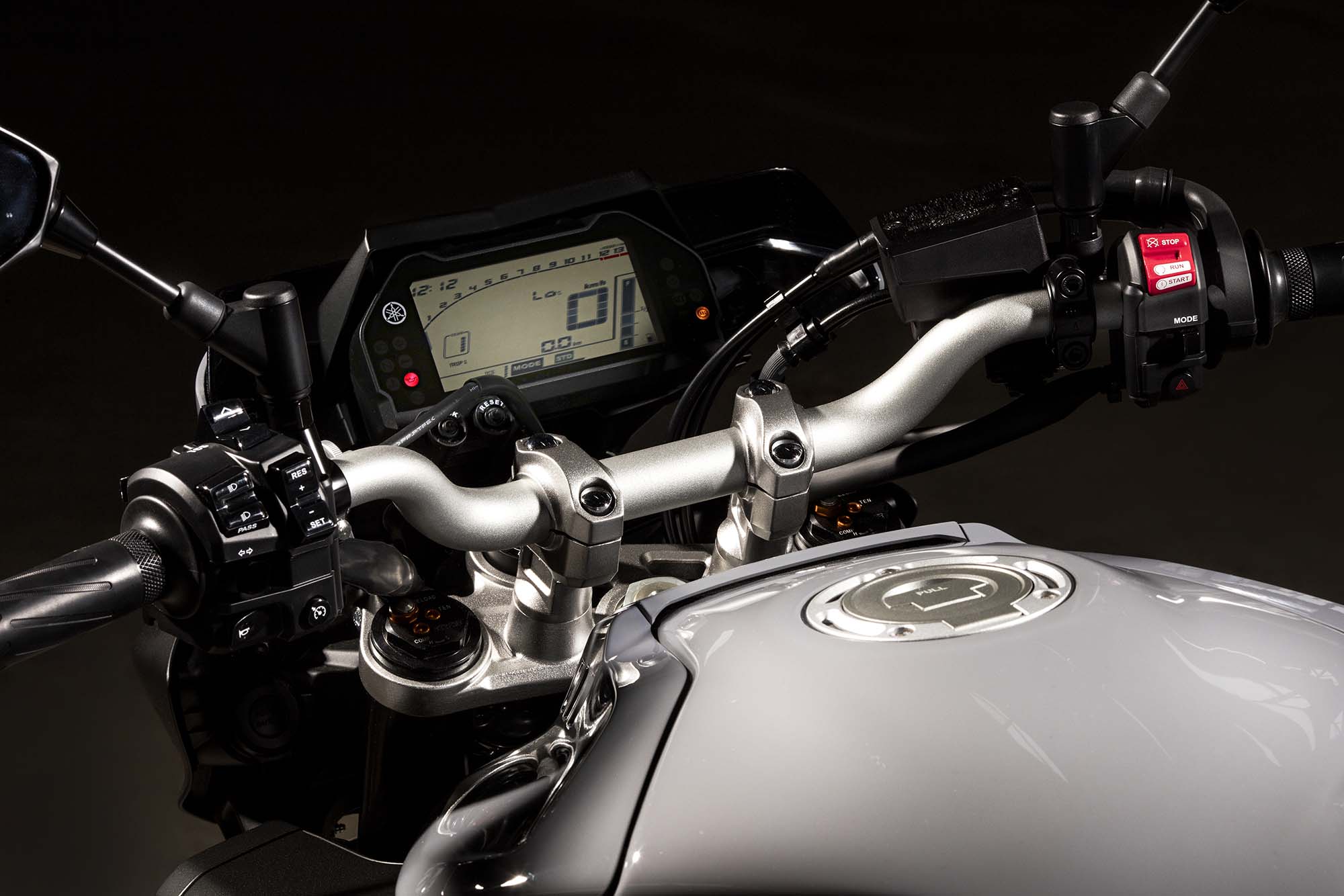
Meet the all-new Yamaha MT-10 super-naked. Essentially, this is the budget-friendly Yamaha R1S superbike as we know it reborn as a streetfighter.
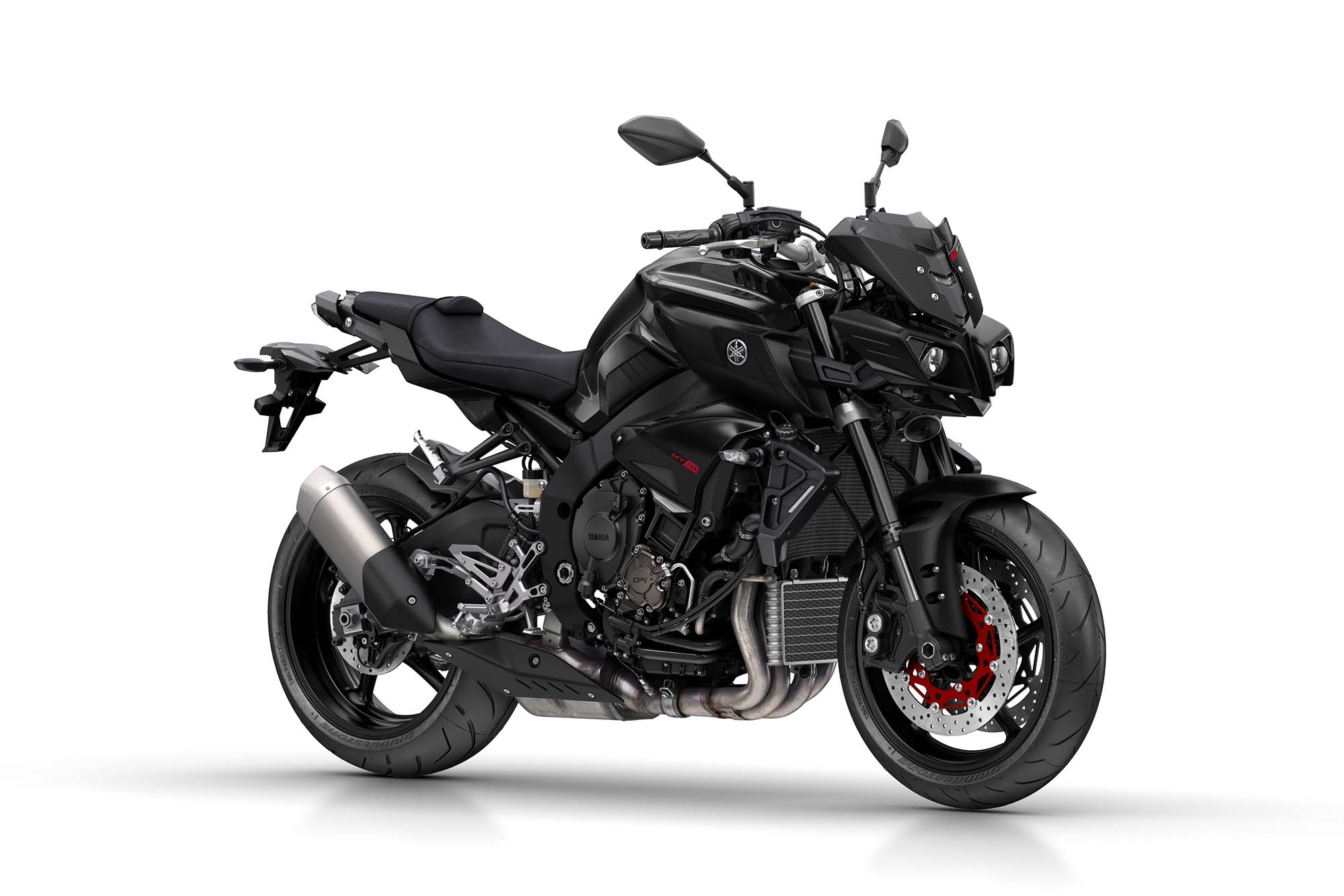
As far as its design goes, the work is rather controversial to say the least with Yamaha fans being divided over it. Nevertheless, we can’t argue at the fact that it looks rather sharp and quite futuristic, more akin to some of Yamaha’s radical concepts instead of a full-blown production bike.
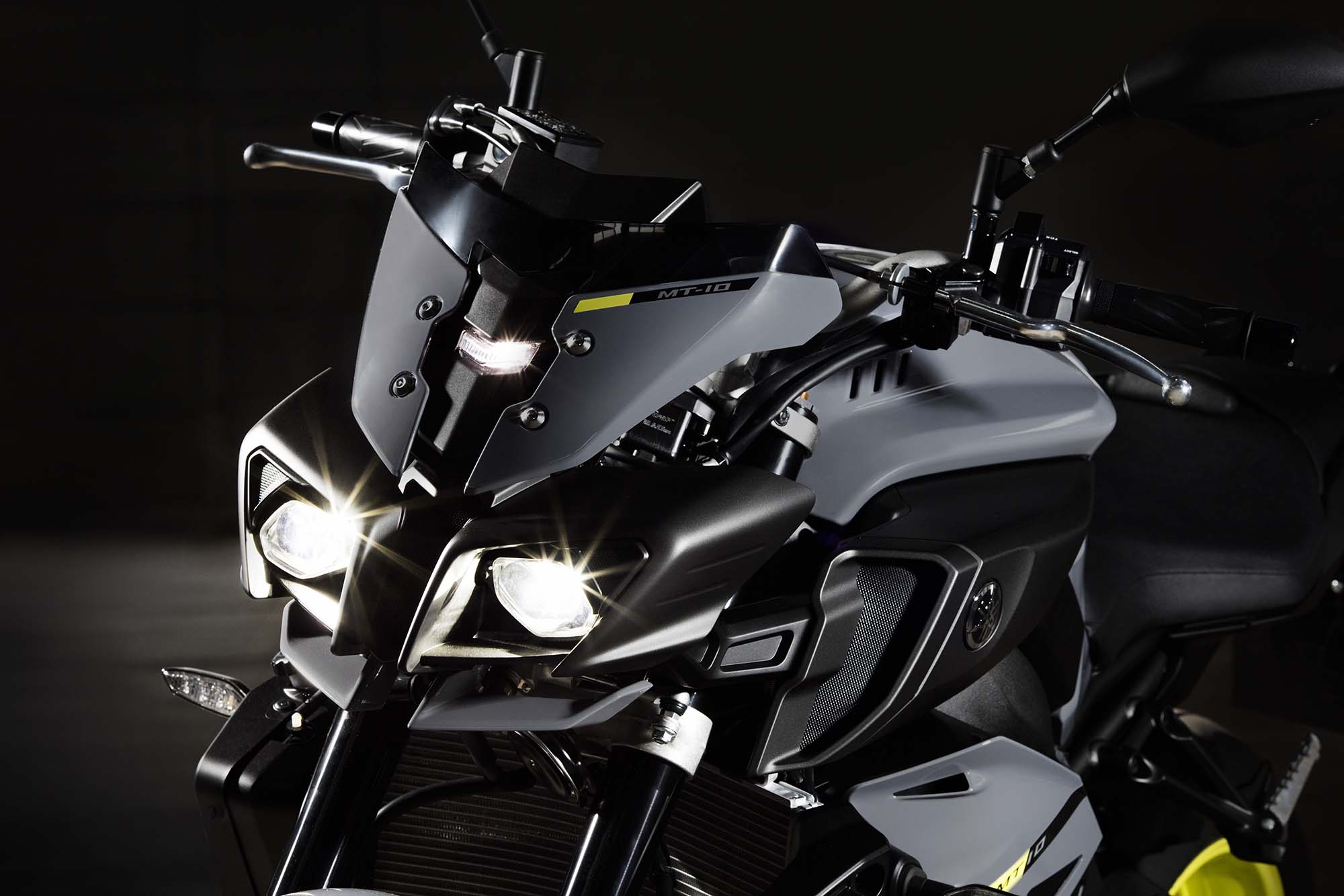
More importantly, the MT-10’s arrival signals Yamaha entry into the competitive super-naked segment, and sees the brand completing its range of offerings to cover a wide spectrum of buyers. Yamaha has been absent in the high performance naked bike segment since perhaps the Fazer 1000 model.
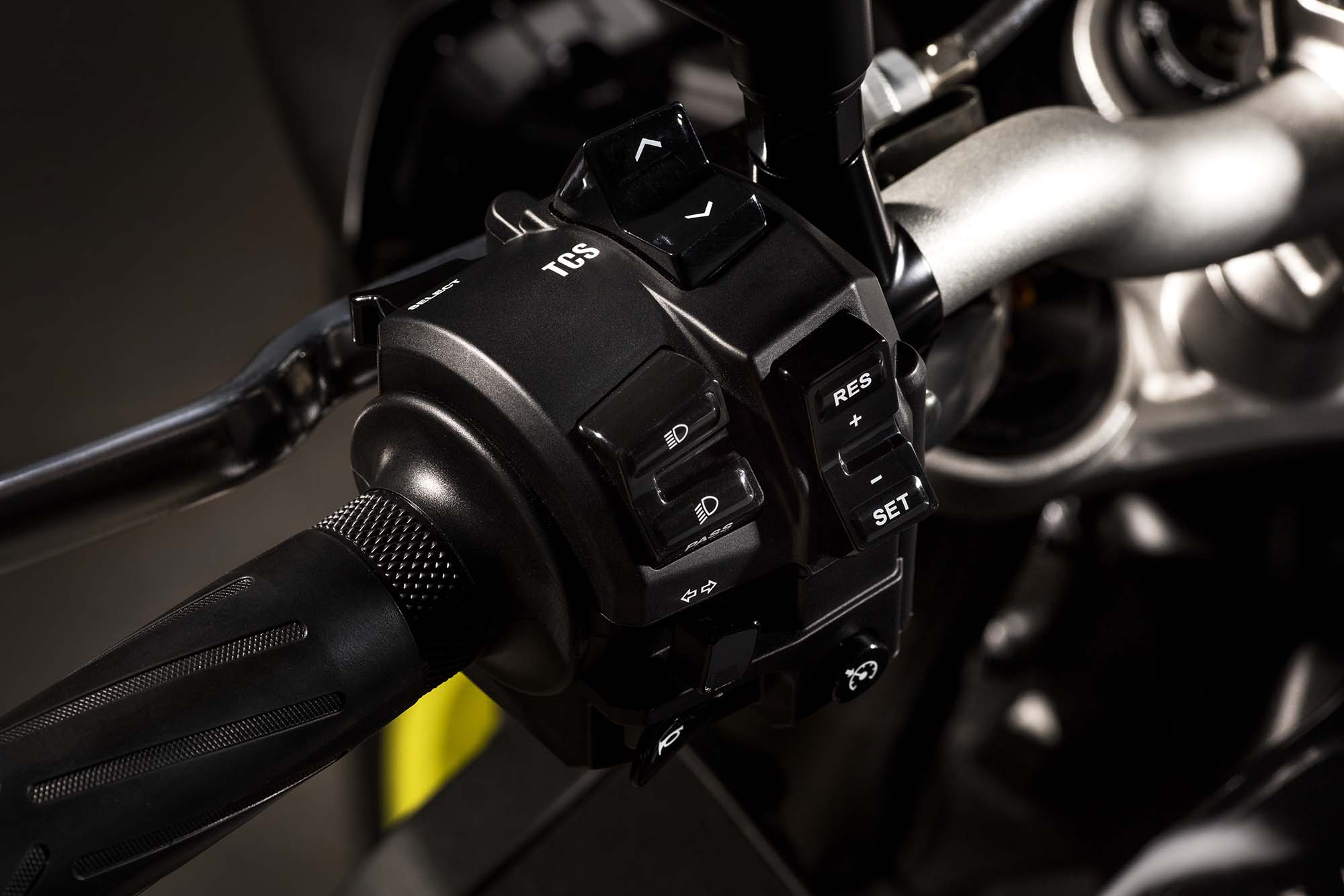
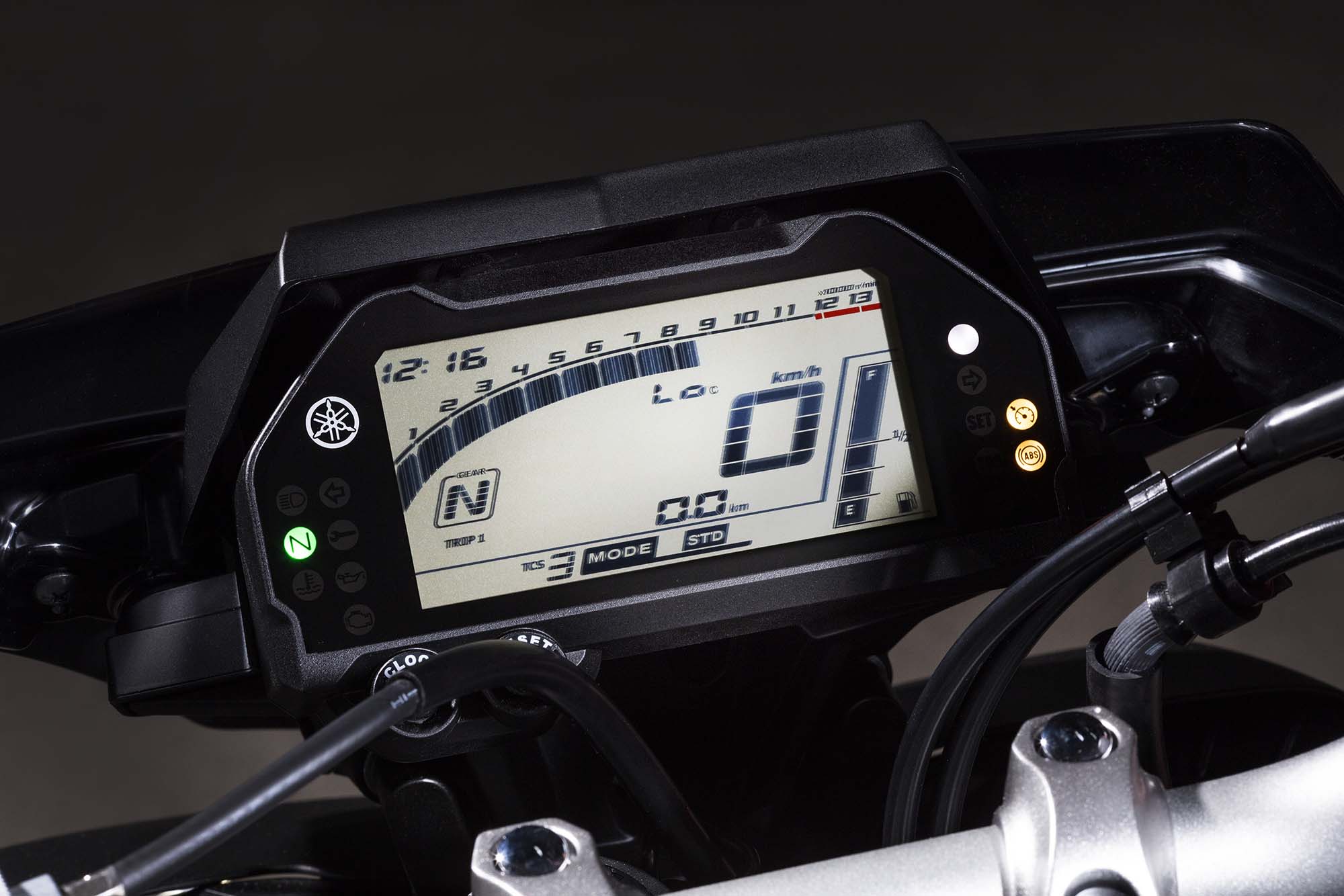
Being based on the venerable R1 superbike, the MT-10 shares the same 998cc CP4 crossplane in-line four-cylinder from its fully-faired sibling, albeit detuned ‘slightly’ with just 165hp and roughly 101.6Nm of torque. Complementing the powertrain are features such as a three-level traction control feature, a slipper clutch, as well as a cruise control function.
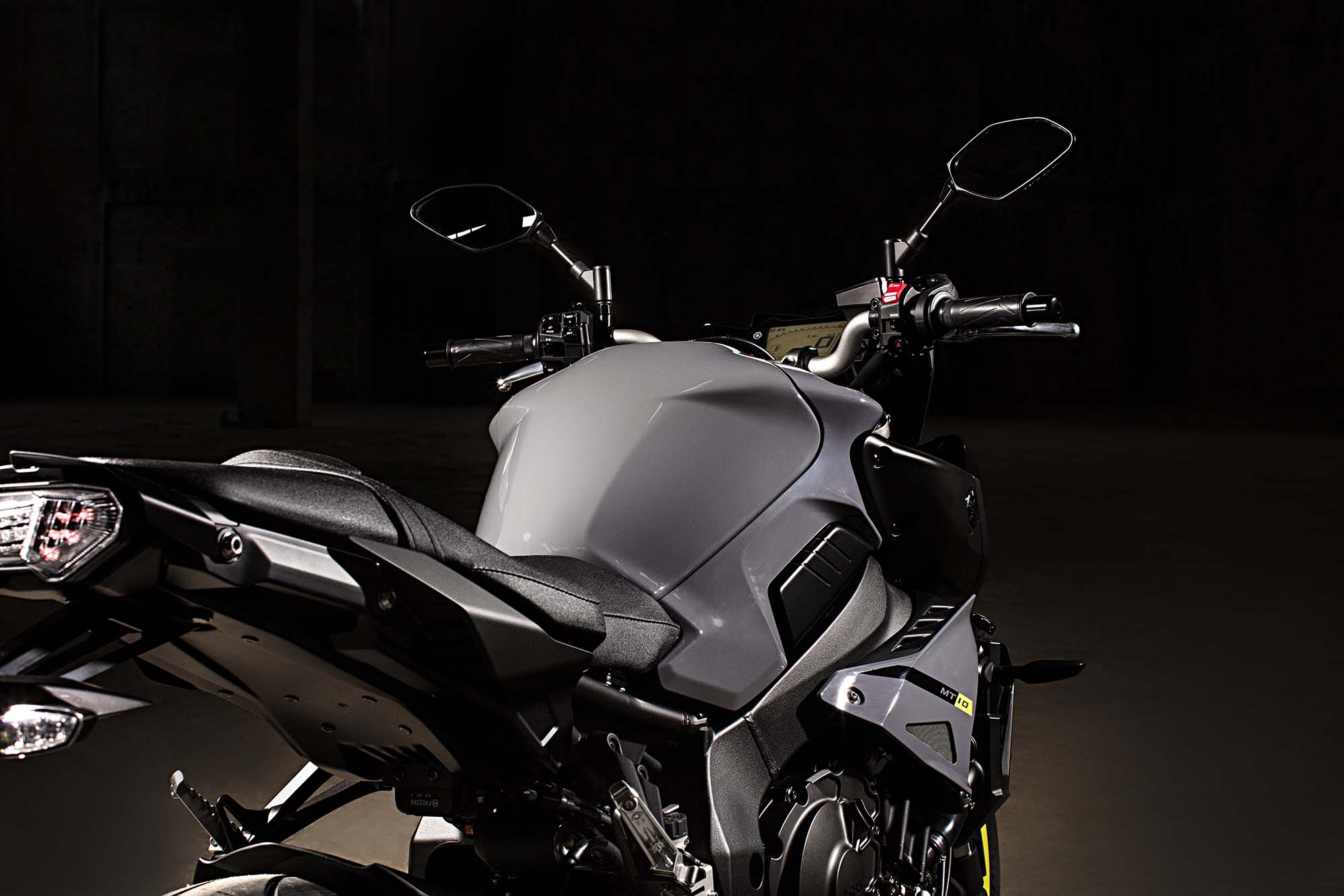
The chassis is also derived from the R1S, with the MT-10 also retaining the same suspension set and swingarm assembly. And, minus the Bosch IMU, much of the R1S’s electronics package is also retained here in the MT-10. Other notable highlights include a full LCD dash, 320mm twin floating front discs with quad-piston radial calipers combined with a single 220mm rear disc with a sliding calipers, as well as ABS.
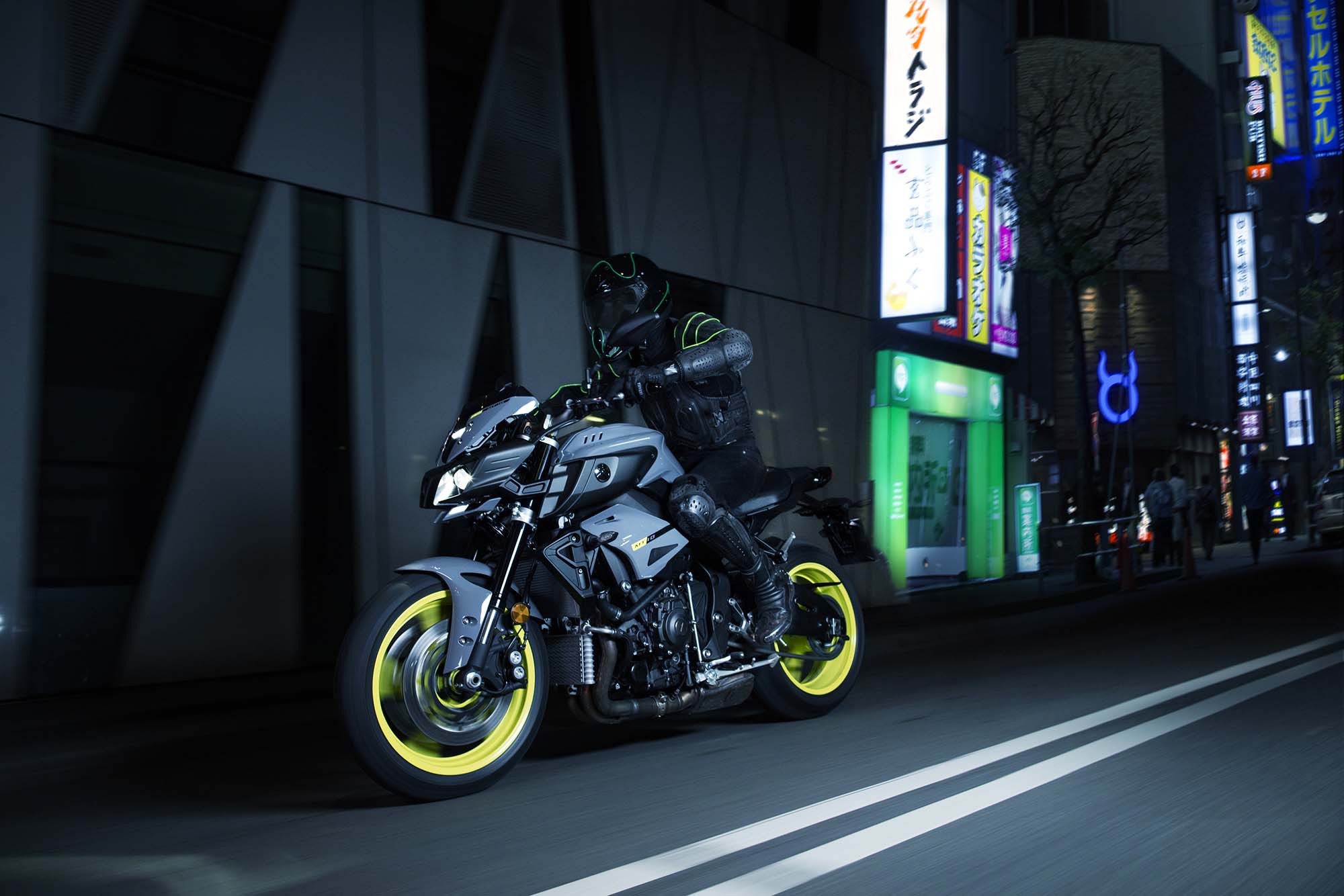
Clearly, Yamaha has got the BMW S1000R naked in its target crosshairs, explaining the standard equipped cruise control. This being based on the budget R1S, we can also expect this MT-10 to carry a lower pricing from the flagship R1 as well. There is no doubt though that the MT-10 now sits at the top of the brand’s MT naked model range.

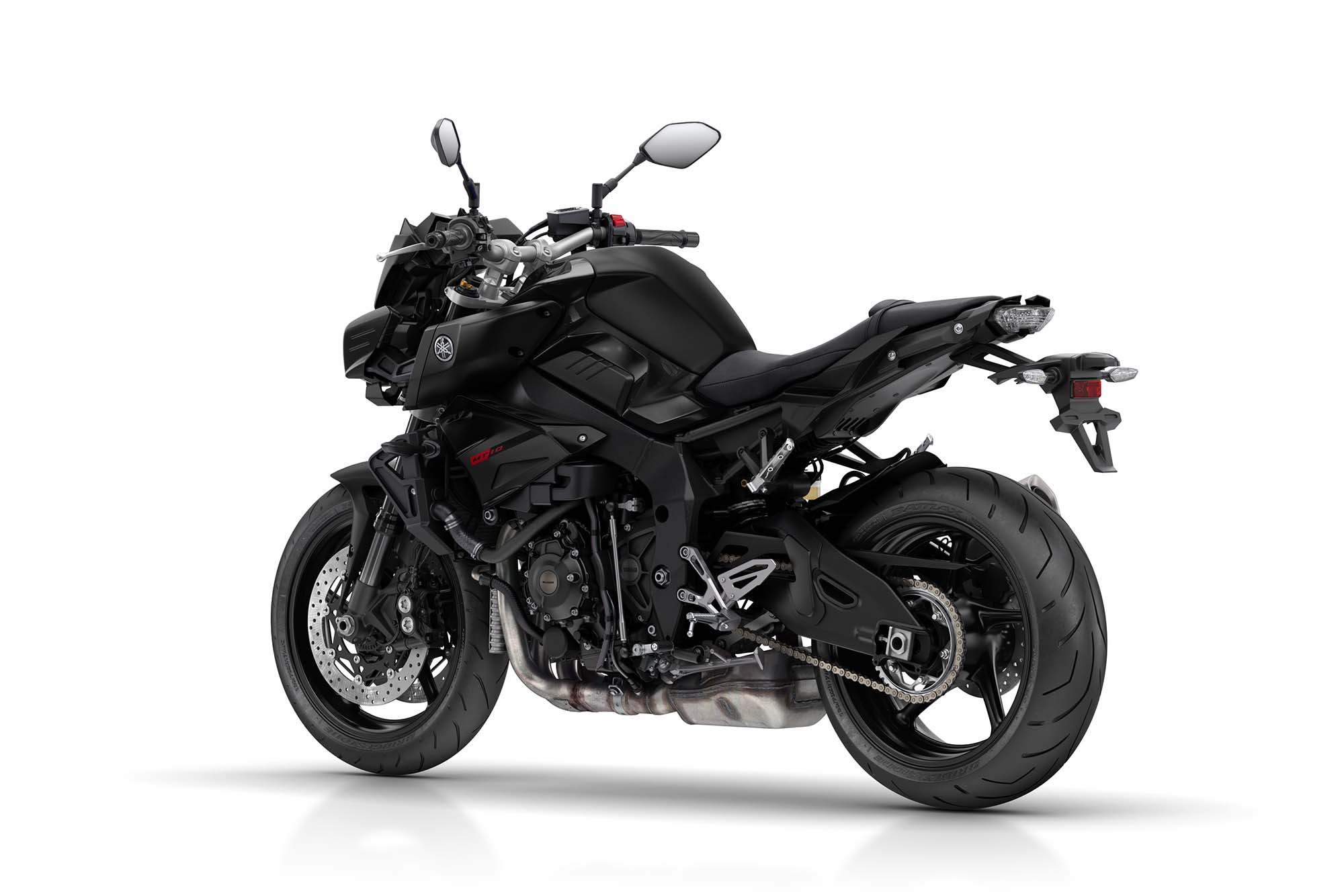
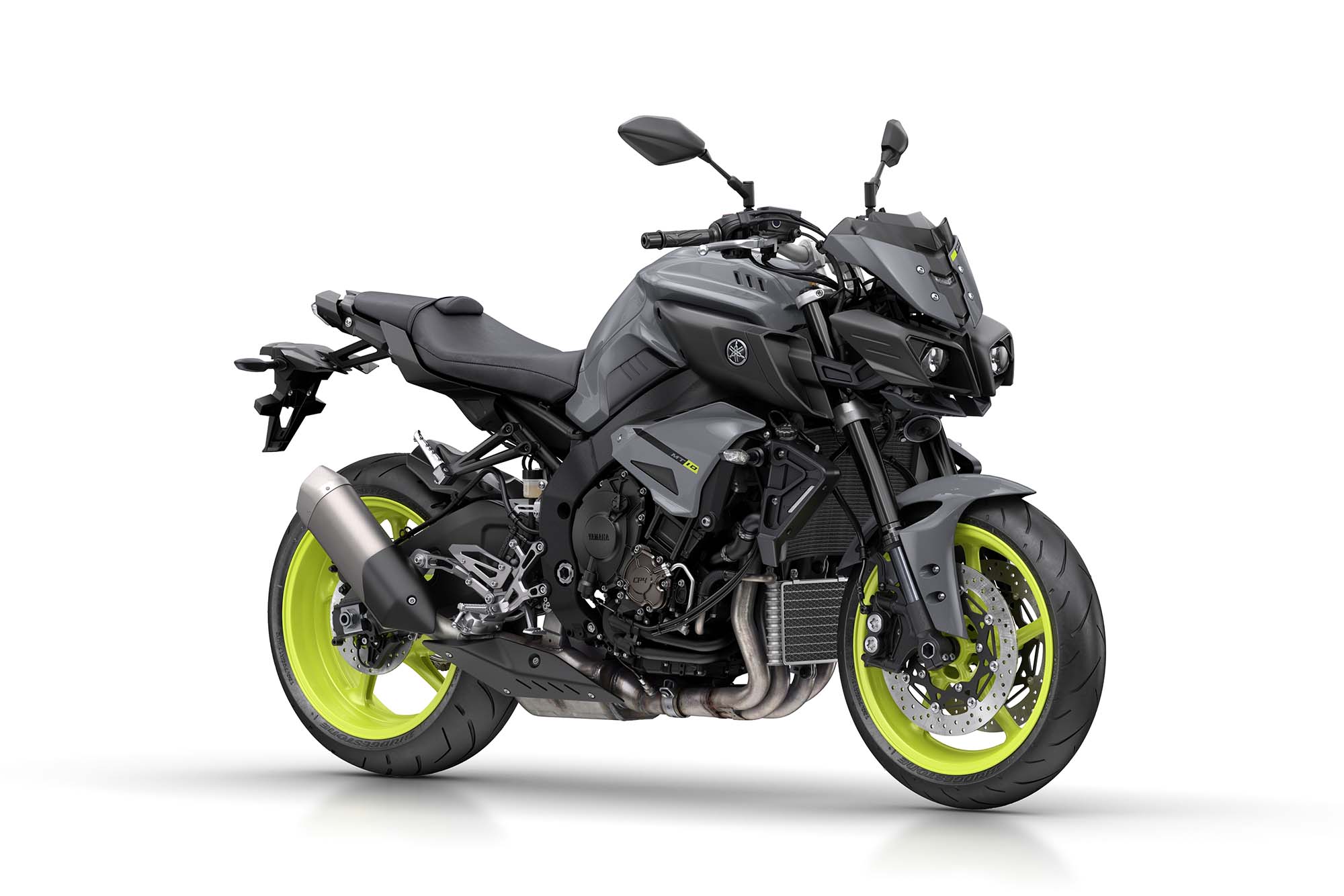
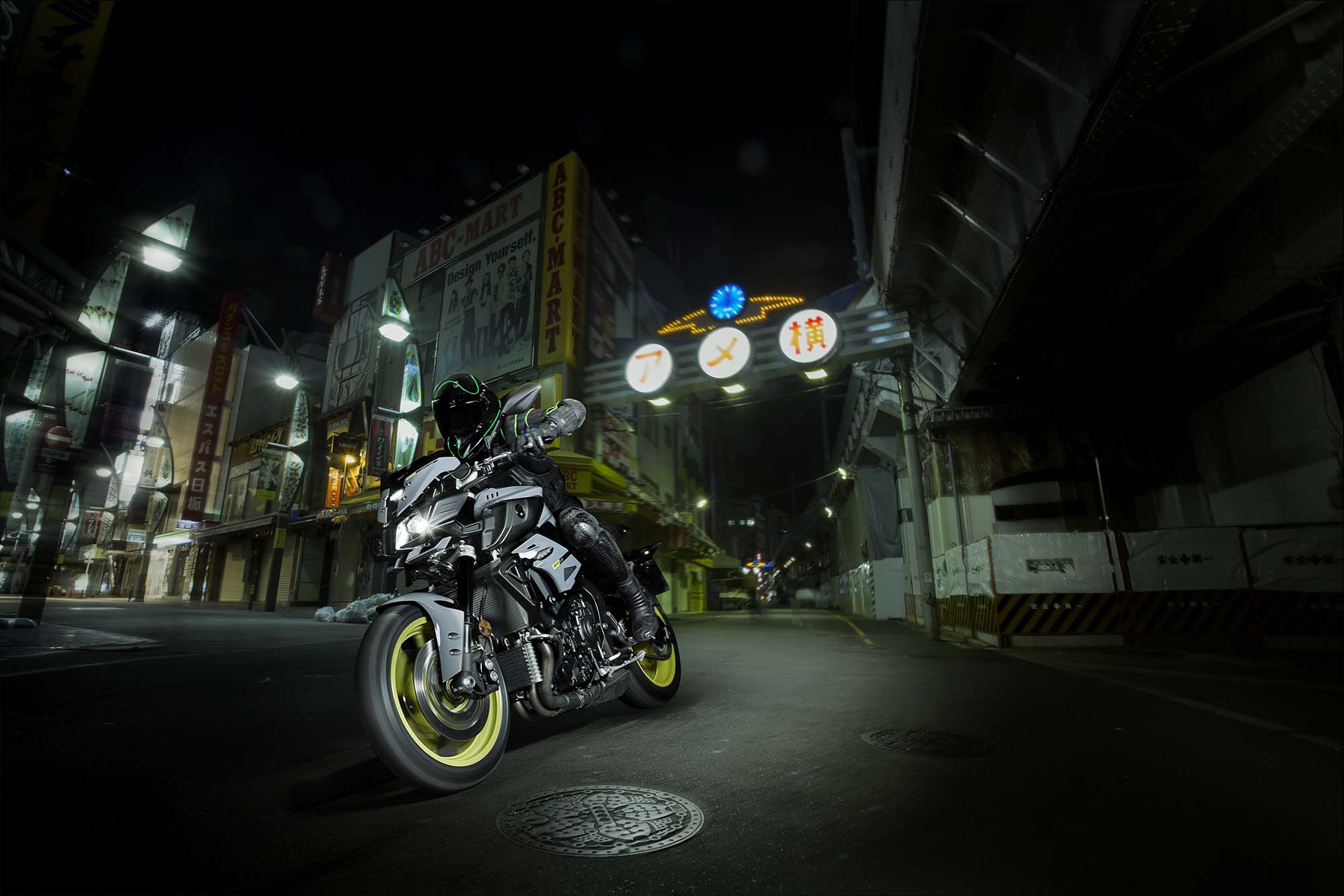
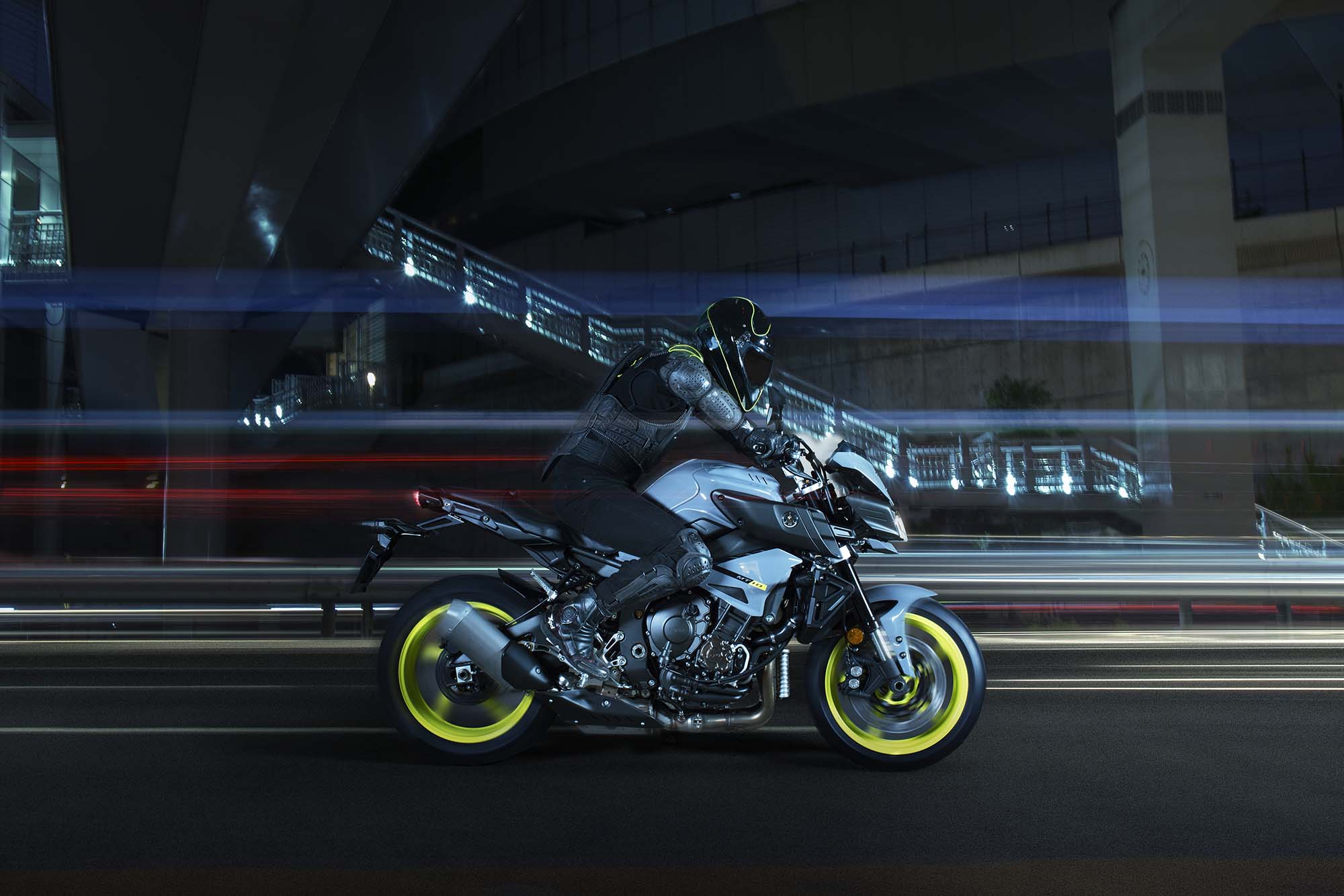
Sources: Asphaltandrubber / Visordown / MCN
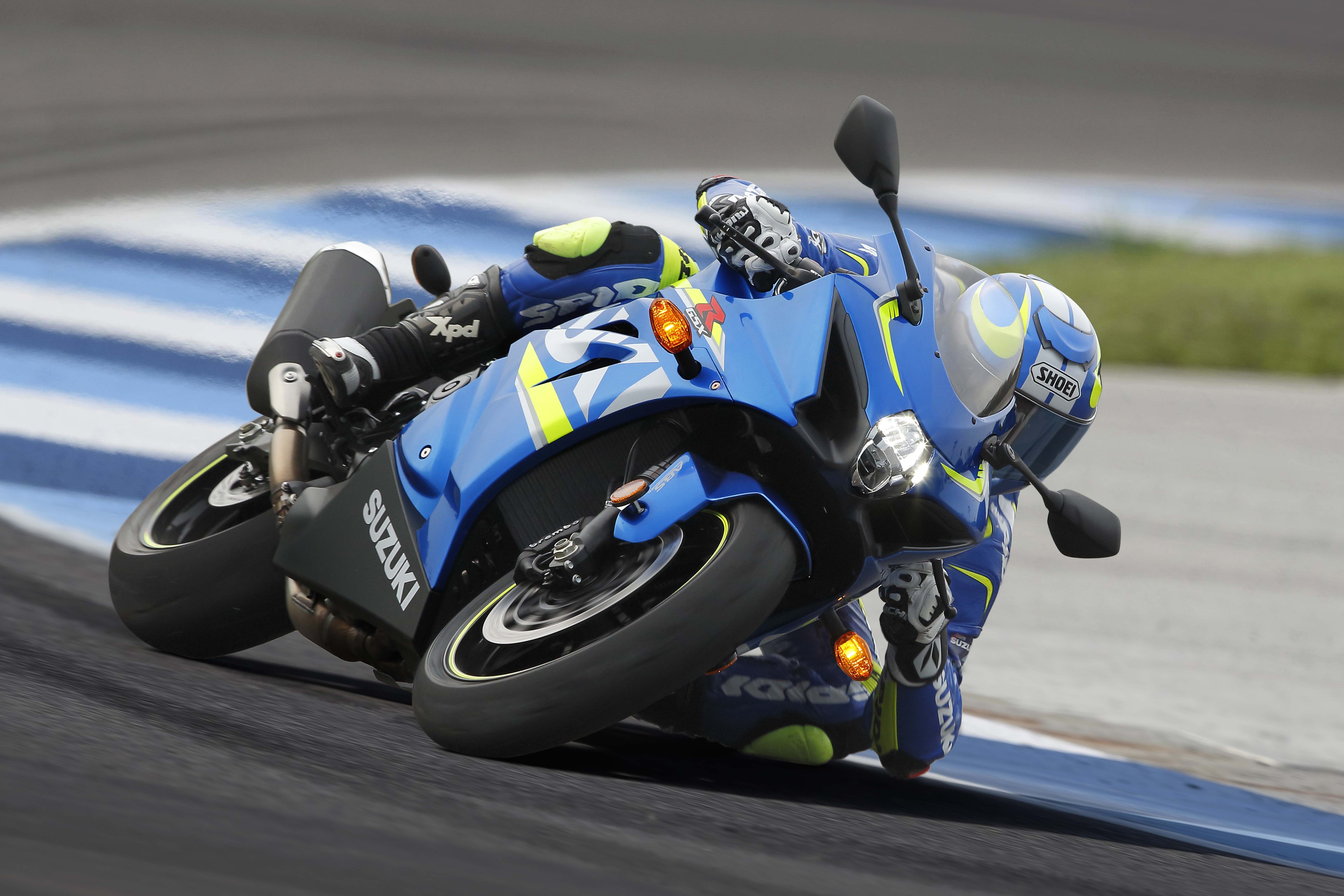
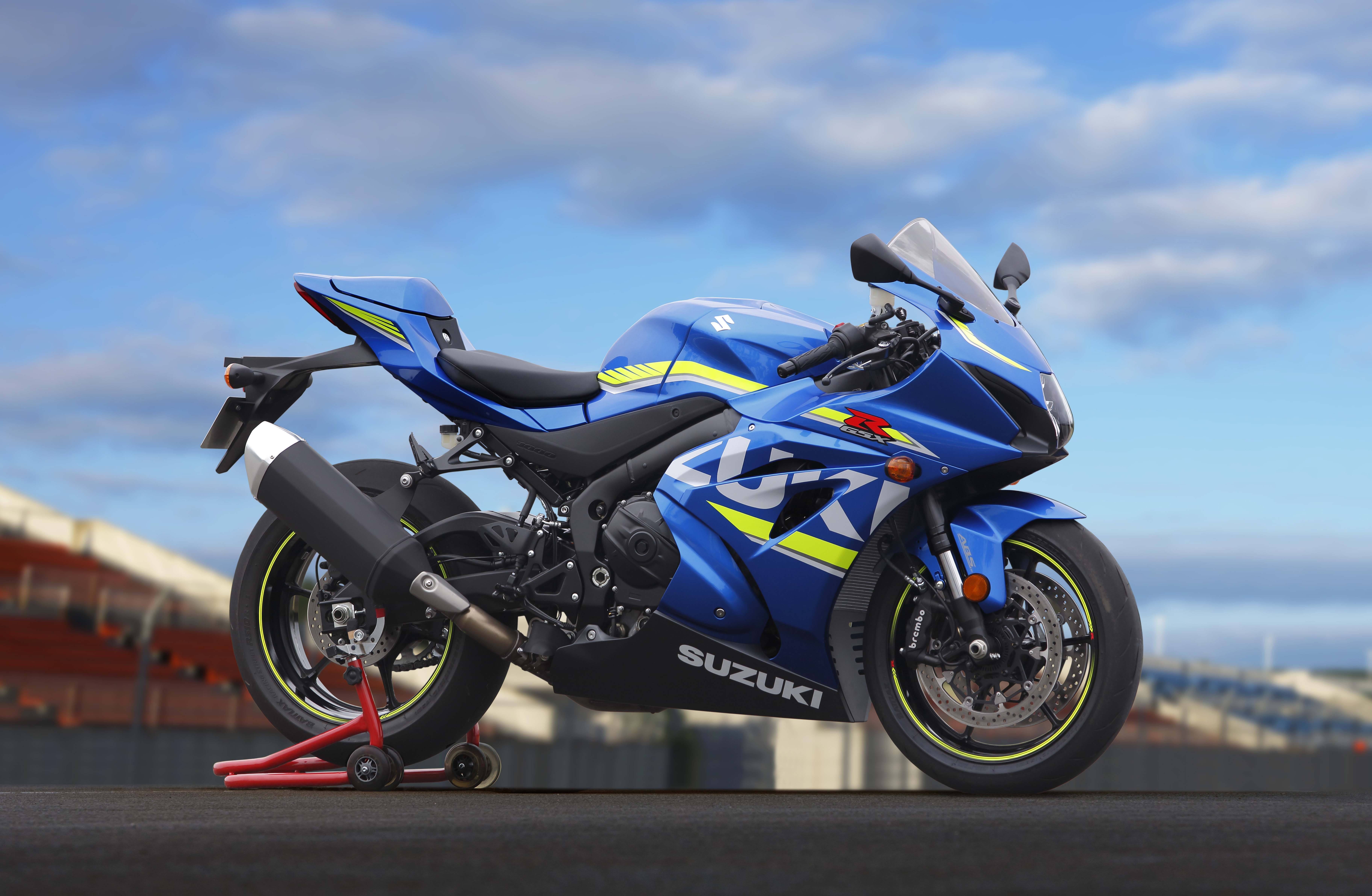
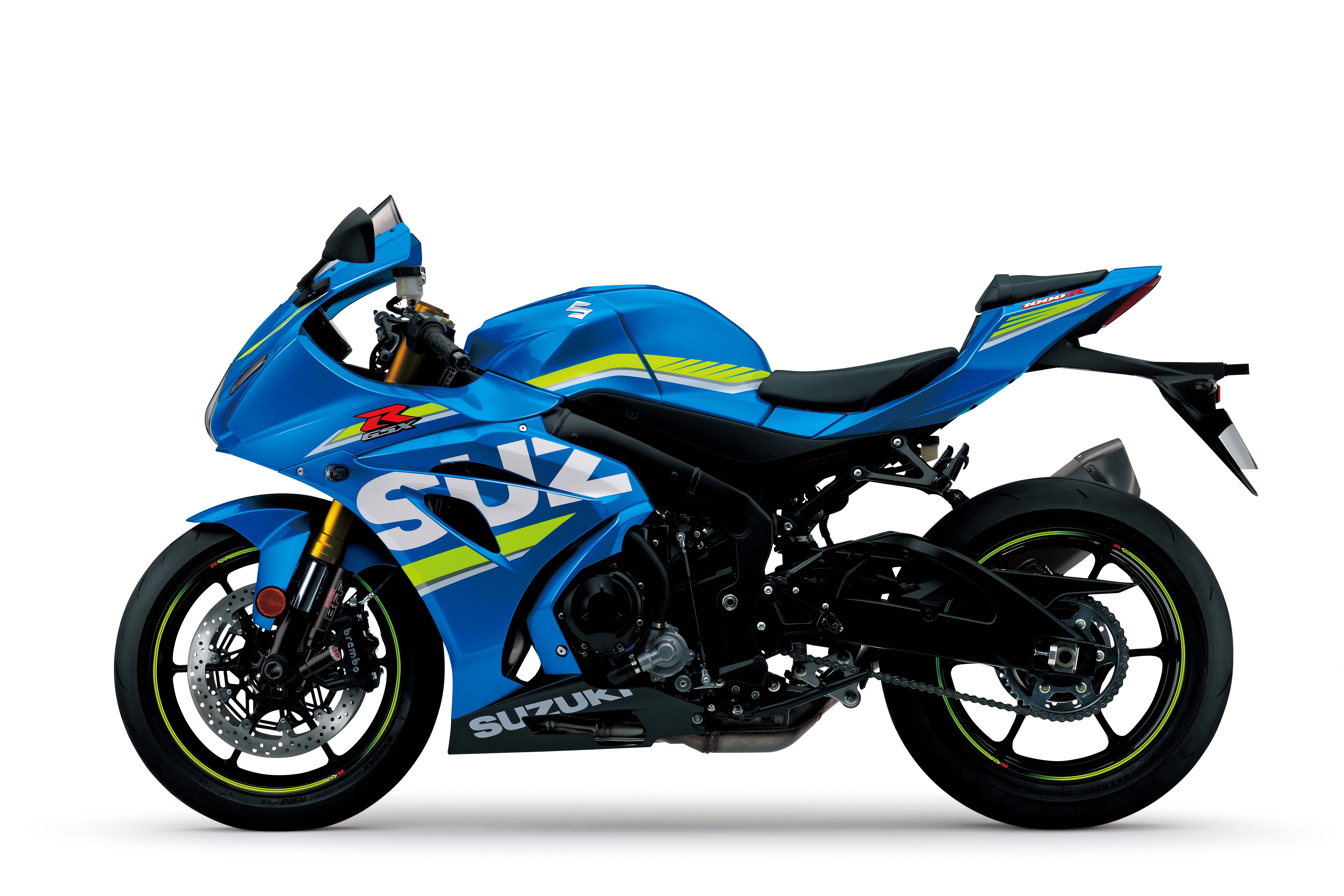
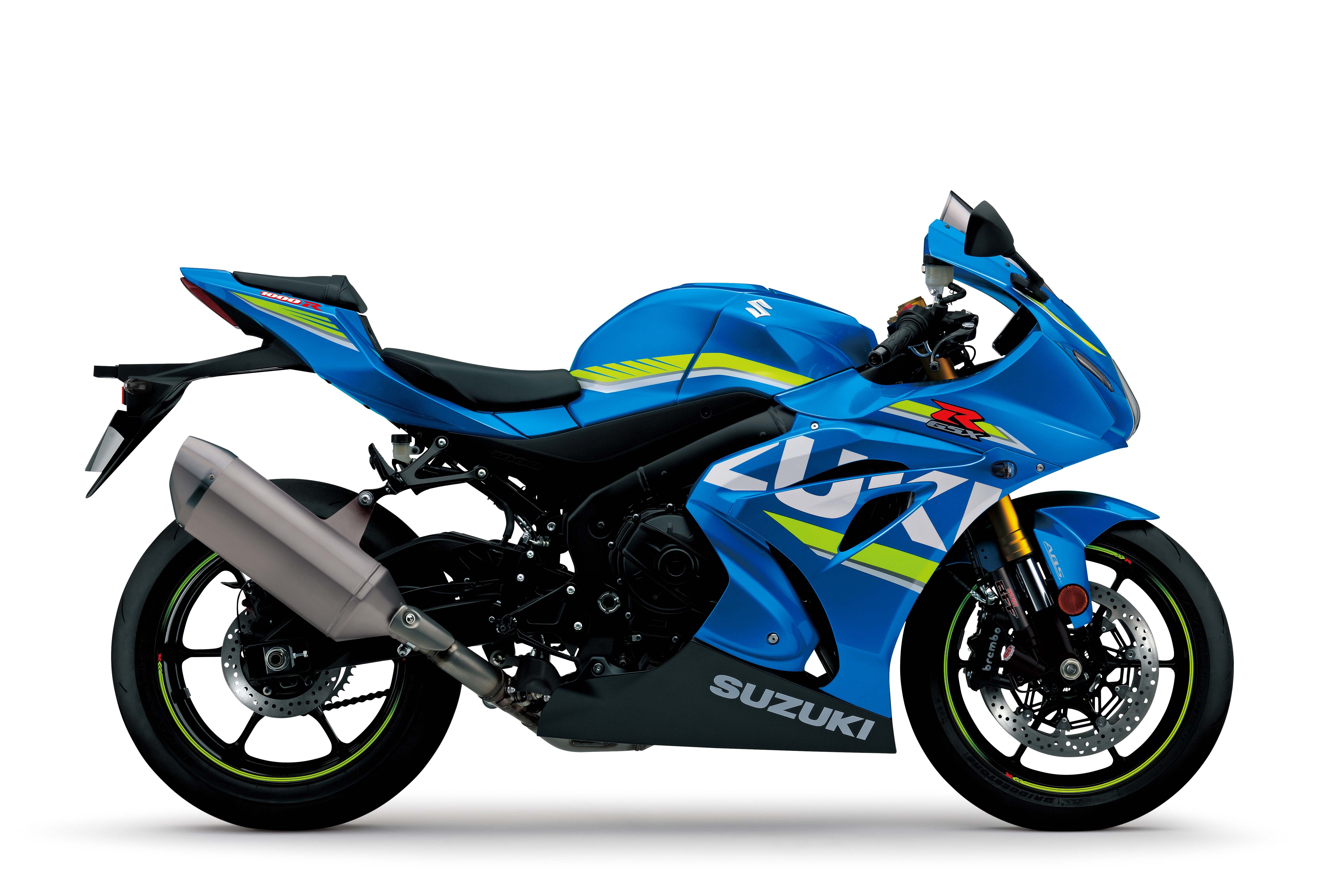
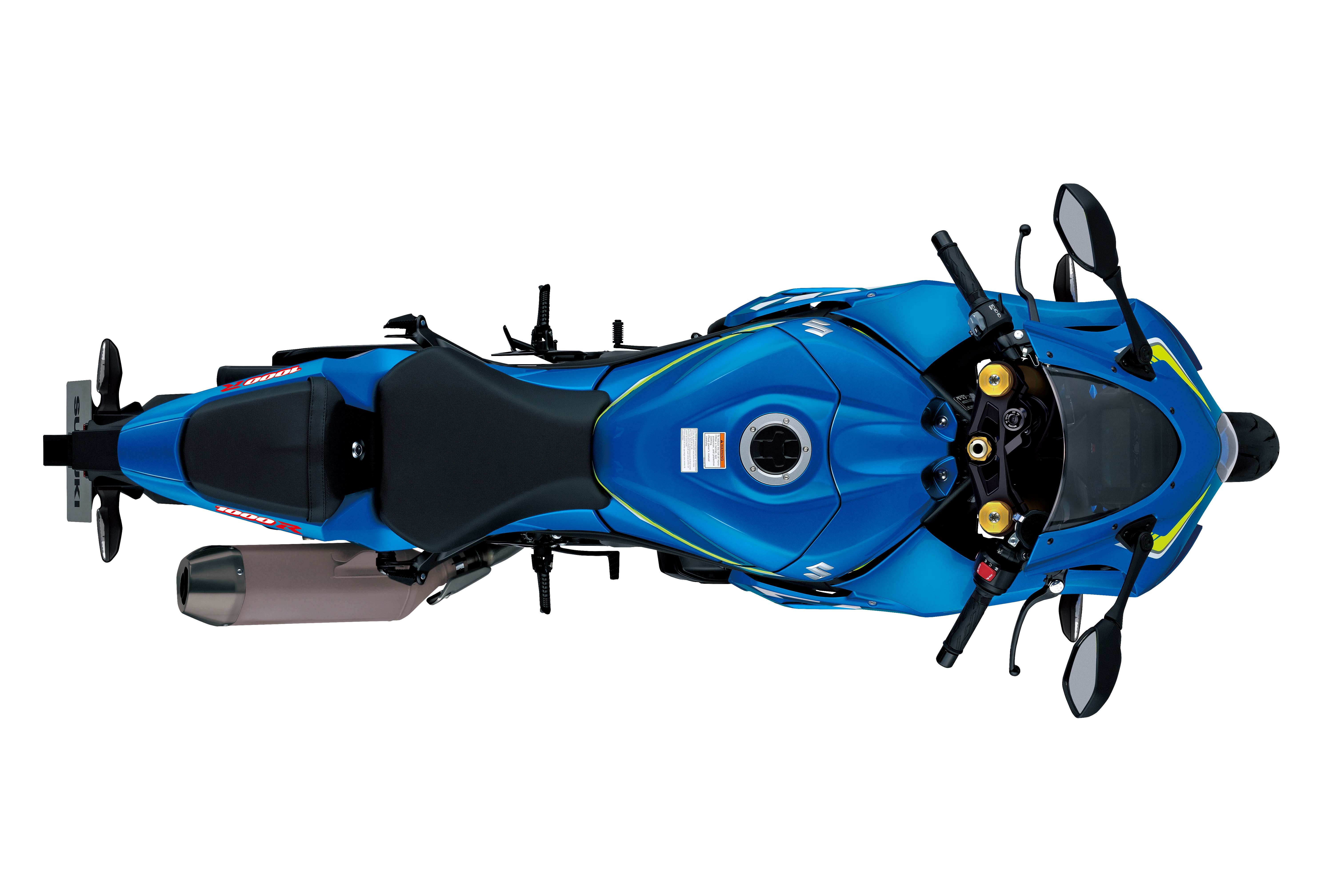
Its been a full 11 years since Suzuki fully updated the model, and this new GSX-R1000, which bears the ‘L7’ chassis code, arrives sporting plenty of new hardware and an all-new look as well.
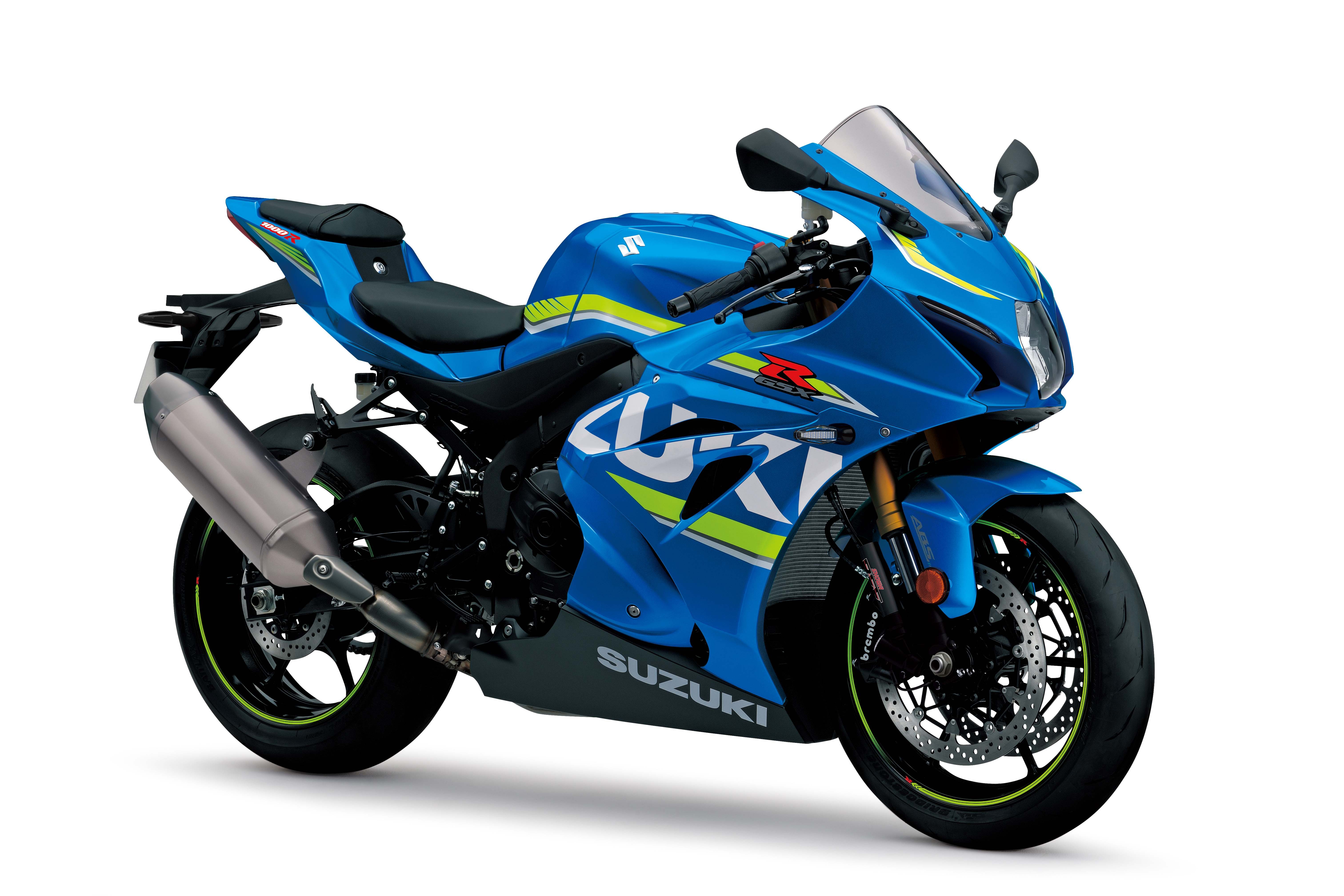
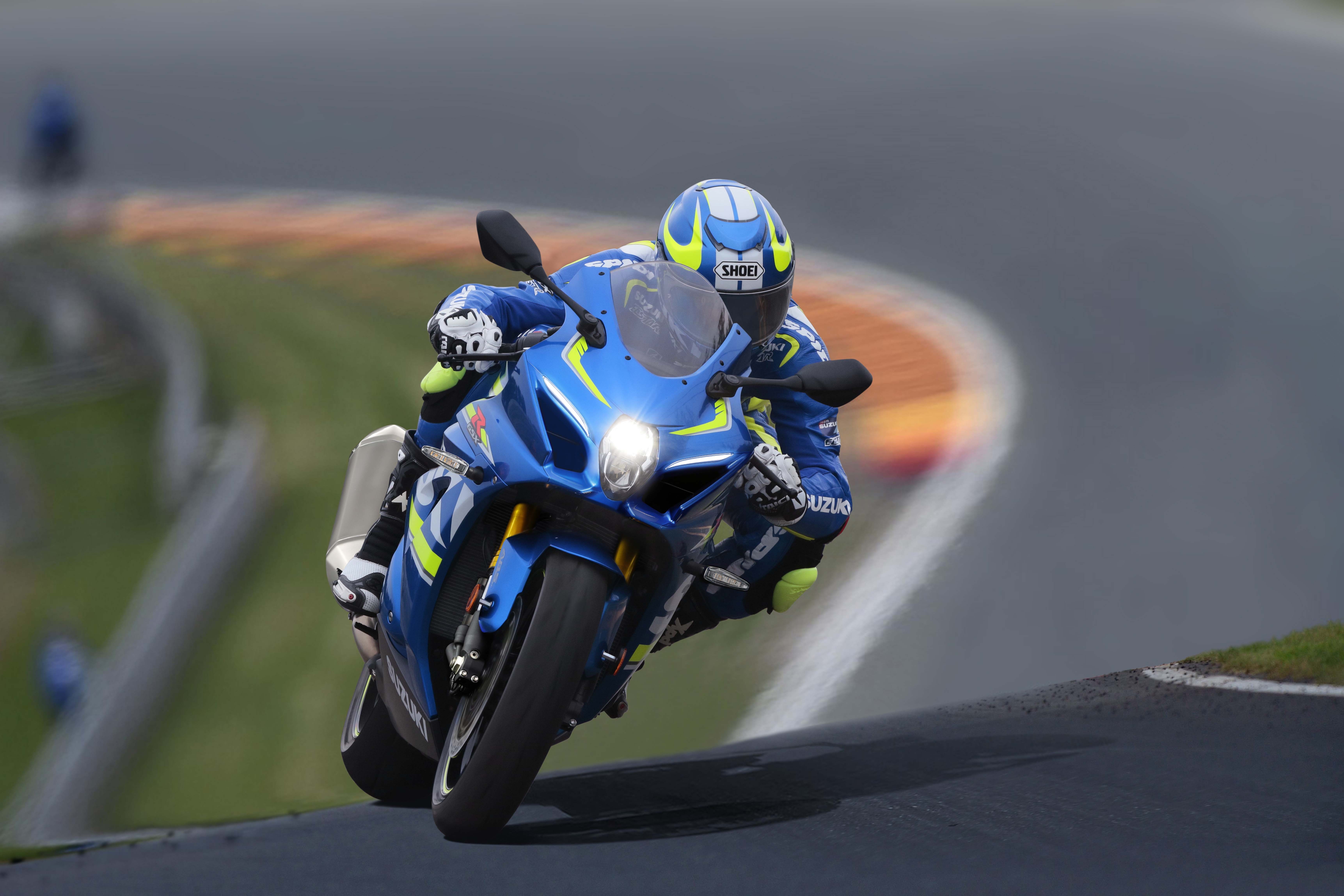
Suzuki claims this new sixth generation GSX-R1000 is the lightest, most powerful and best handling GSX-R ever built, and we have very little reason to doubt that claim. This 6th generation GSX-R1000, or better known as the ‘Gixxer’ thousand amongst fans, is also the most highly equipped version of the superbike ever built.
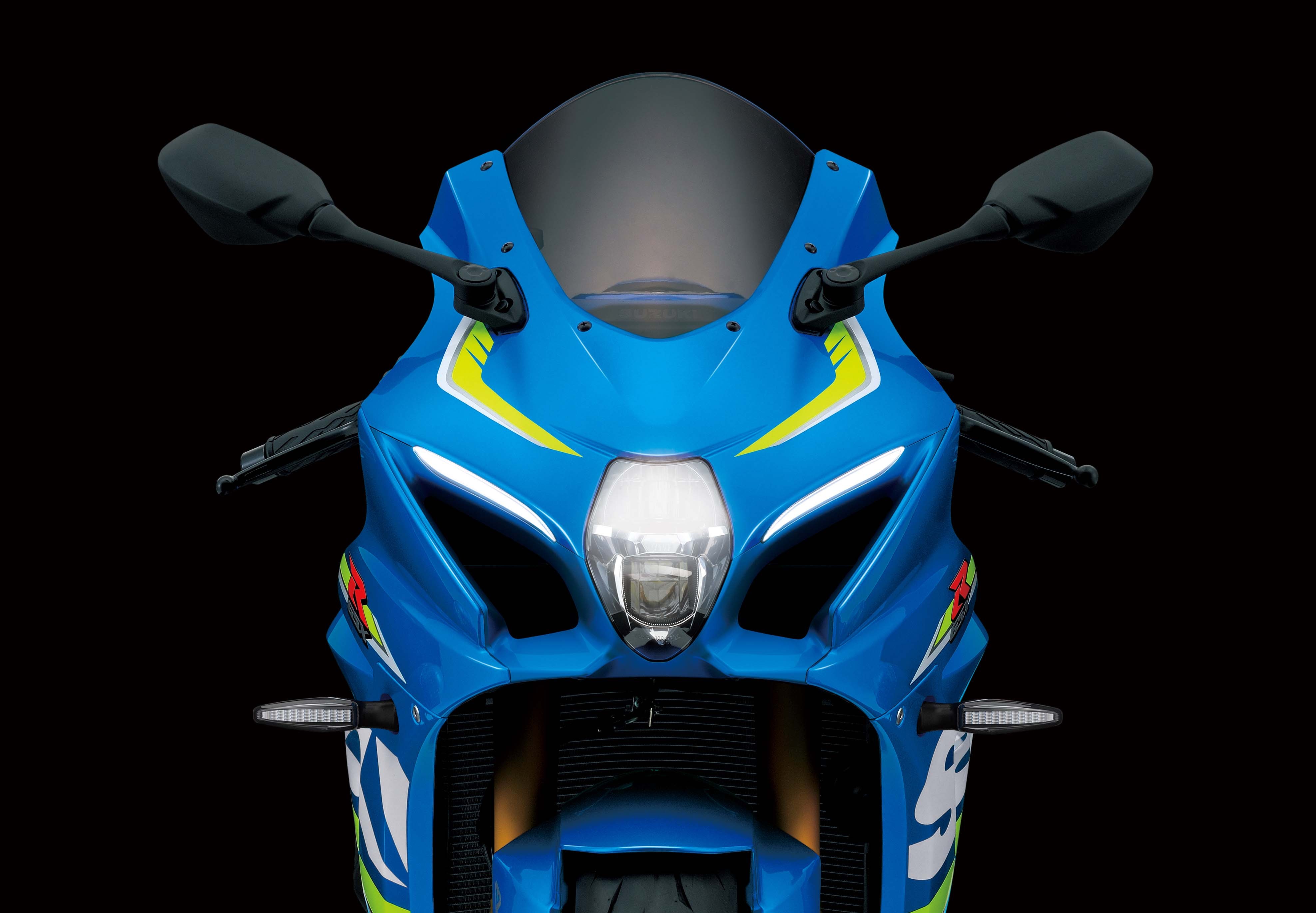
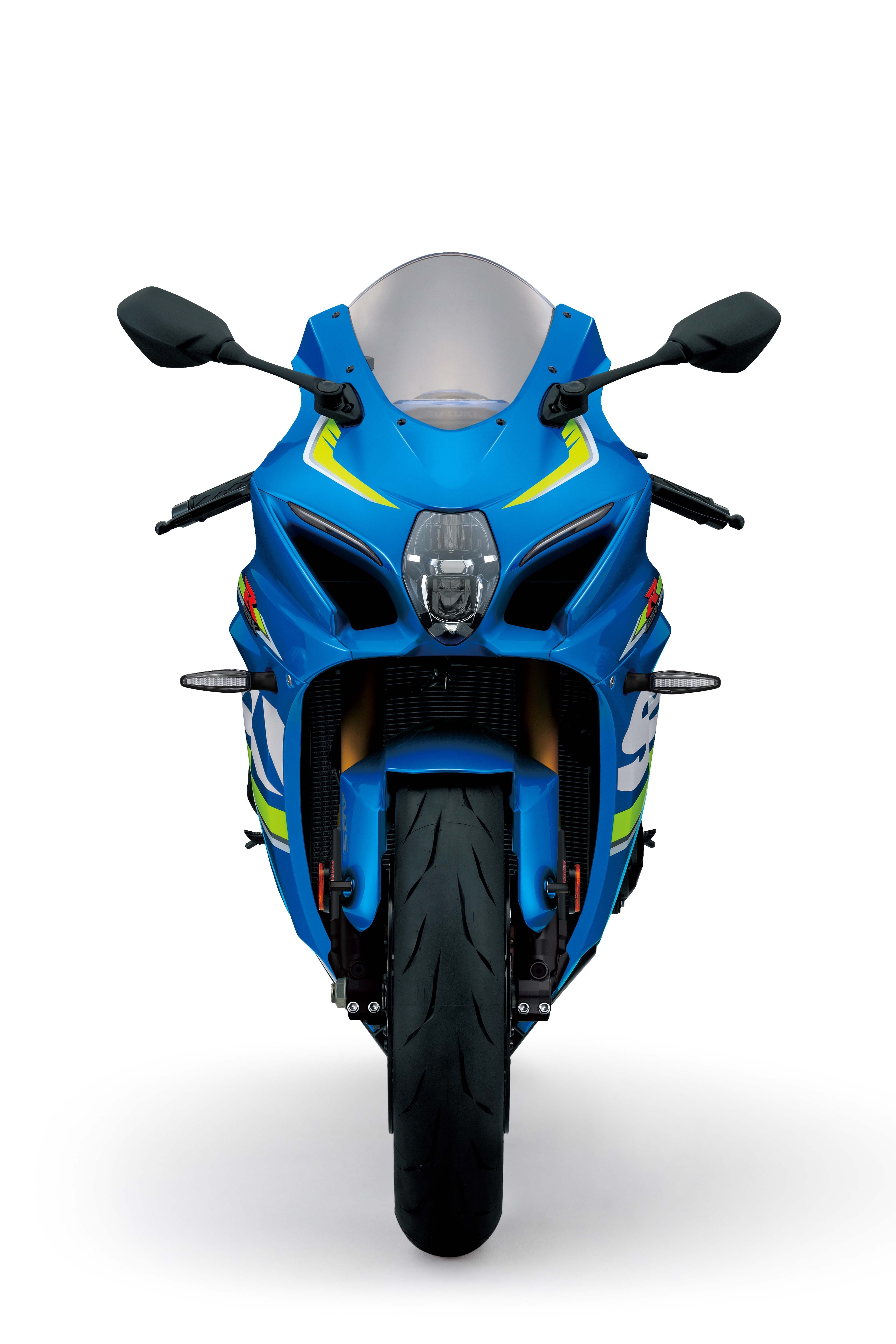
As far as looks go, the sixth-gen Gixxer thousand now boasts a brand new face and yet, the bike’s lines remains rather distinctively unmistakable as a Gixxer. There’s new LED lighting all round that is complimented with a new LED dash display as well, giving this new L7 Gixxer a very high-tech touch. Of course, what counts for the most is what’s beneath the pretty new metal and this sixth-gen Gixxer has got plenty to boast.
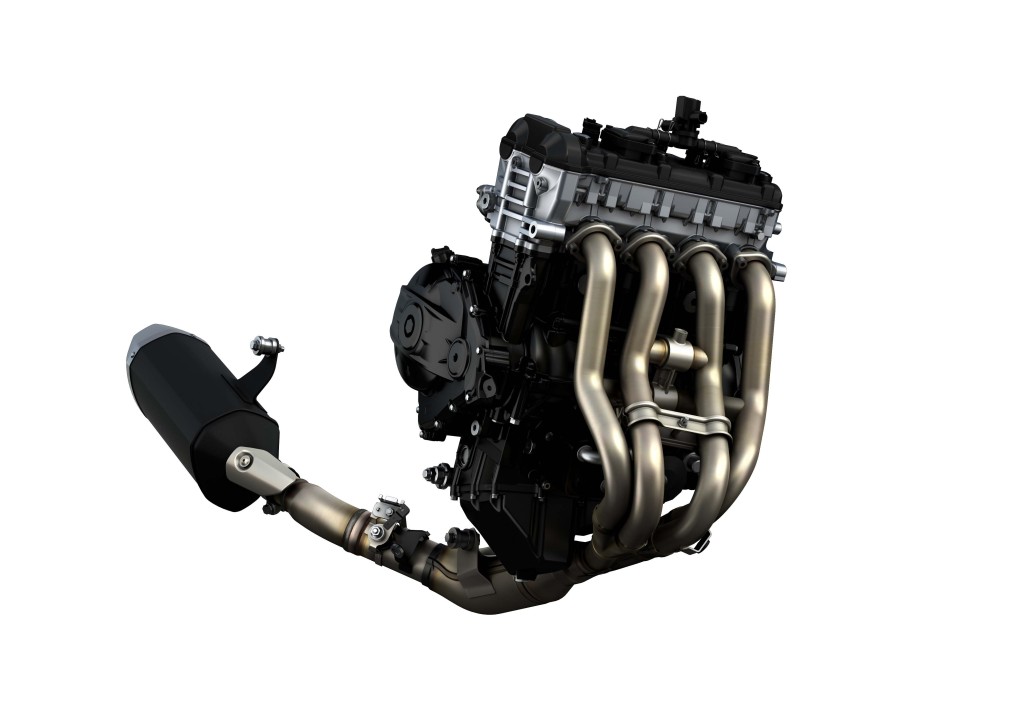
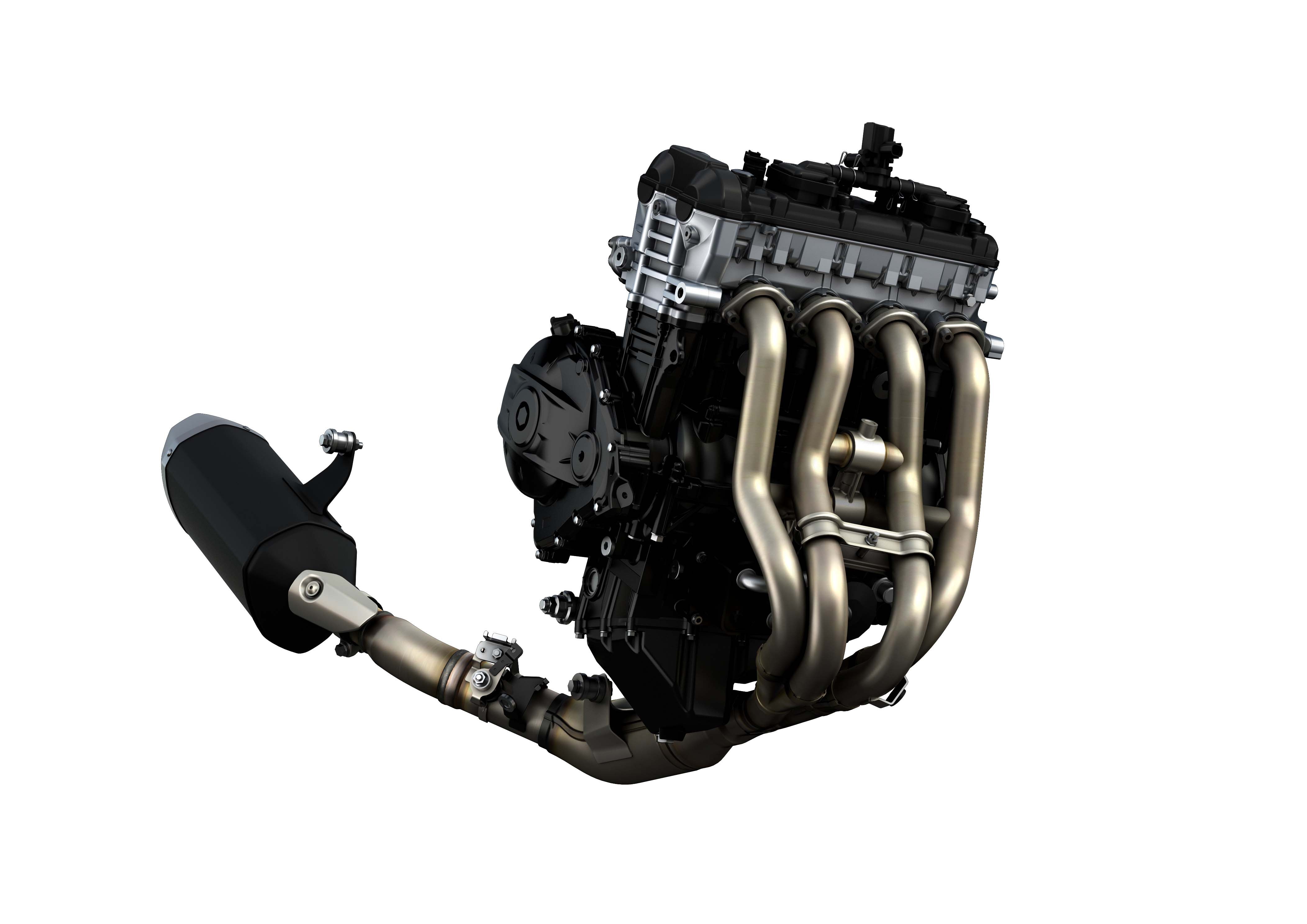
For starters, it gains with a new and improved 999cc in-line four-cylinder engine primed with variable valve timing (VVT). The S-brand’s new litre-sized screamer offers 200hp and about 111Nm of peak torque. Highlights here include Suzuki Racing Finger valve train follower rocker arm to improve valve control and allow higher rpm, while the Suzuki Exhaust Tuning-Alpha (SET-A) and Suzuki Top Feed Injector (S-TFI) systems, which all combine to make what Suzuki call their Broad Power System. Crucially though, much of these were developed off the S-brand’s GSX-RR MotoGP bike.
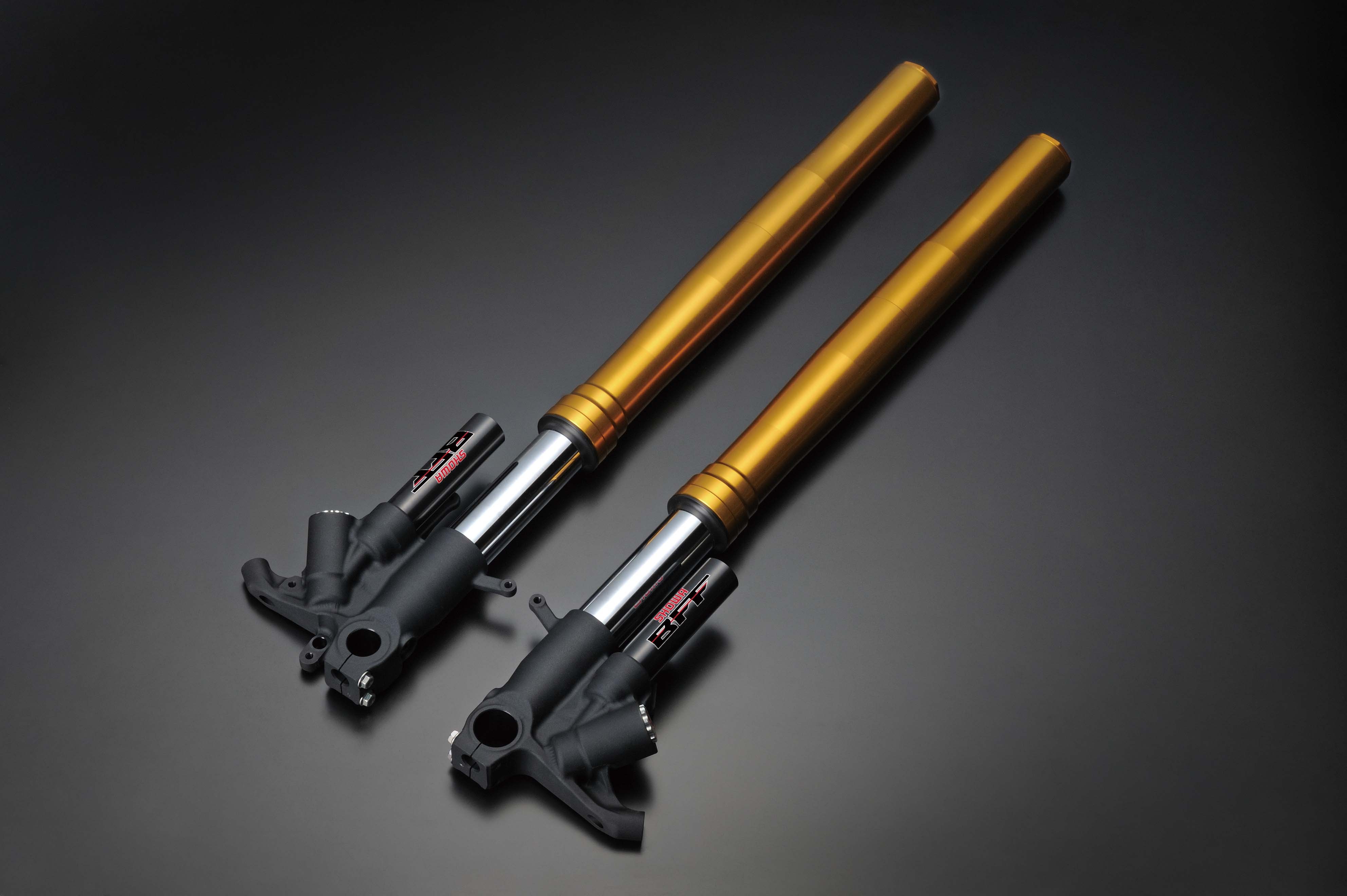
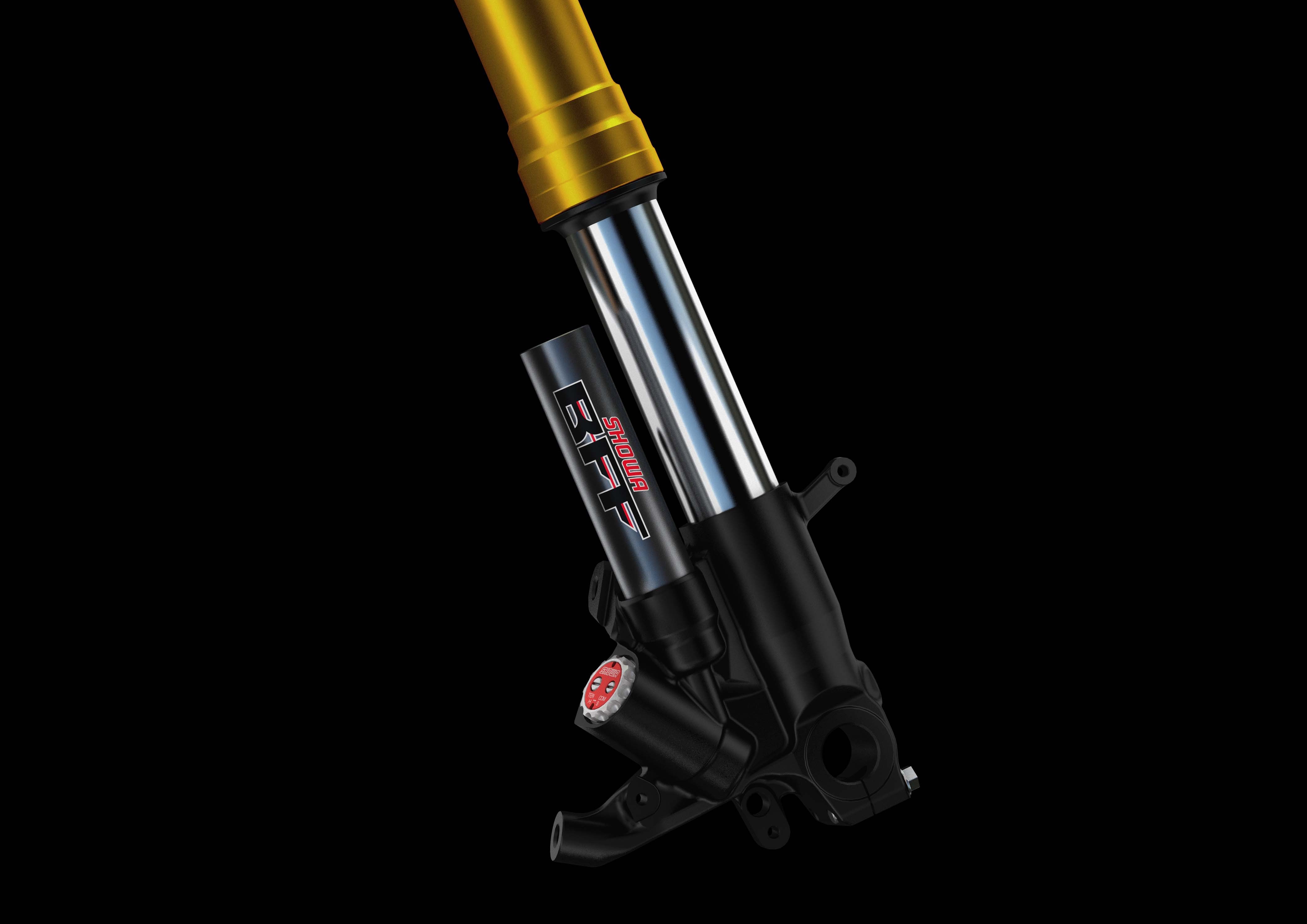
The mill is encased within an all-new chassis design made using lightweight aluminium, but the icing on its cake has to be the Showa Balance Free Front Forks (BFFF) that was first seen in the rivalling 2016 Kawasaki Ninja ZX-10R. The Gixxer takes things up a notch though by pairing that with Showa’s Balance Free Rear Cushion at the back, and if our trained eyes are correct, you even get of twin Brembo anchors up front as well.
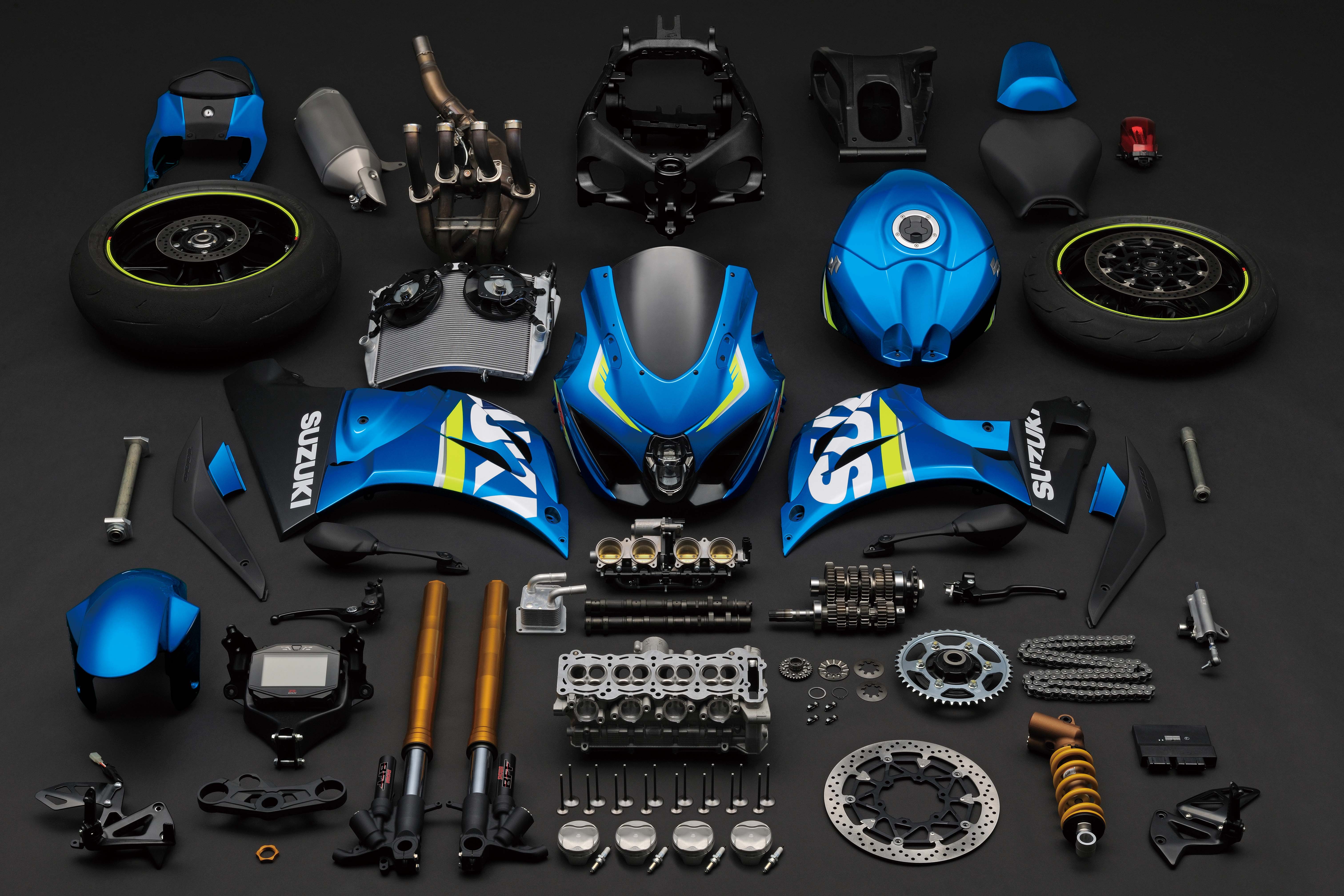
Like the rivalling Yamaha YZF-R1 and Kawasaki ZX-10R, the new Gixxer thousand also arrives with a full array of new electronics and advanced rider aids. Things start off with a quick-shifter and auto-blipper, followed by a 10-level traction control system, launch control, as well as three different riding modes thanks to ride-by-wire, not forgetting the all-important advanced ABS suite too.
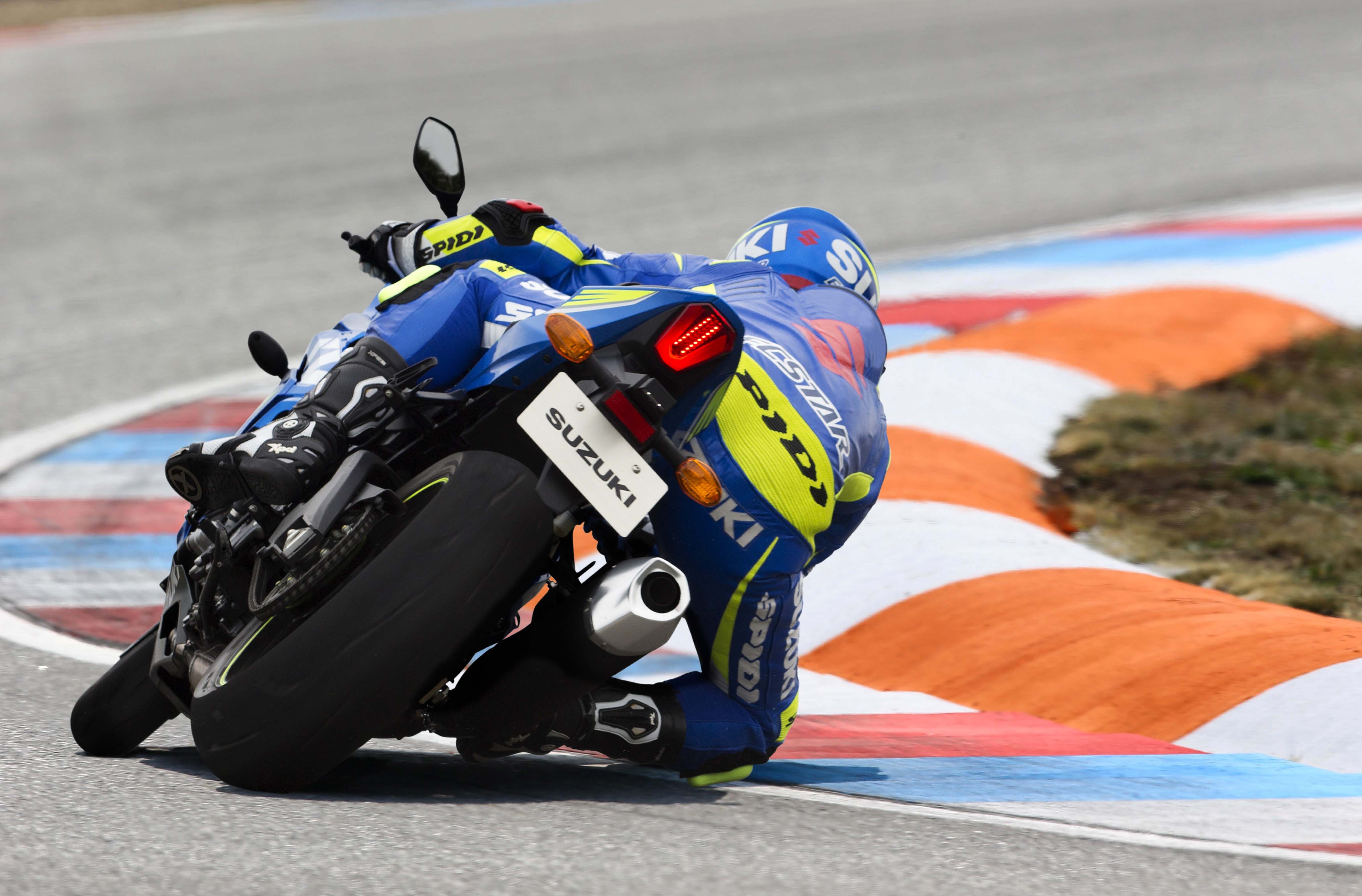
The new sixth-generation Suzuki GSX-R1000 is expected to hit markets starting early next year but prices are still undisclosed for now. Nevertheless, this is one superbike we know will stack well against its other Japanese- and European-made litre-classed rivals indeed.

Sources: Asphaltandrubber and MCN