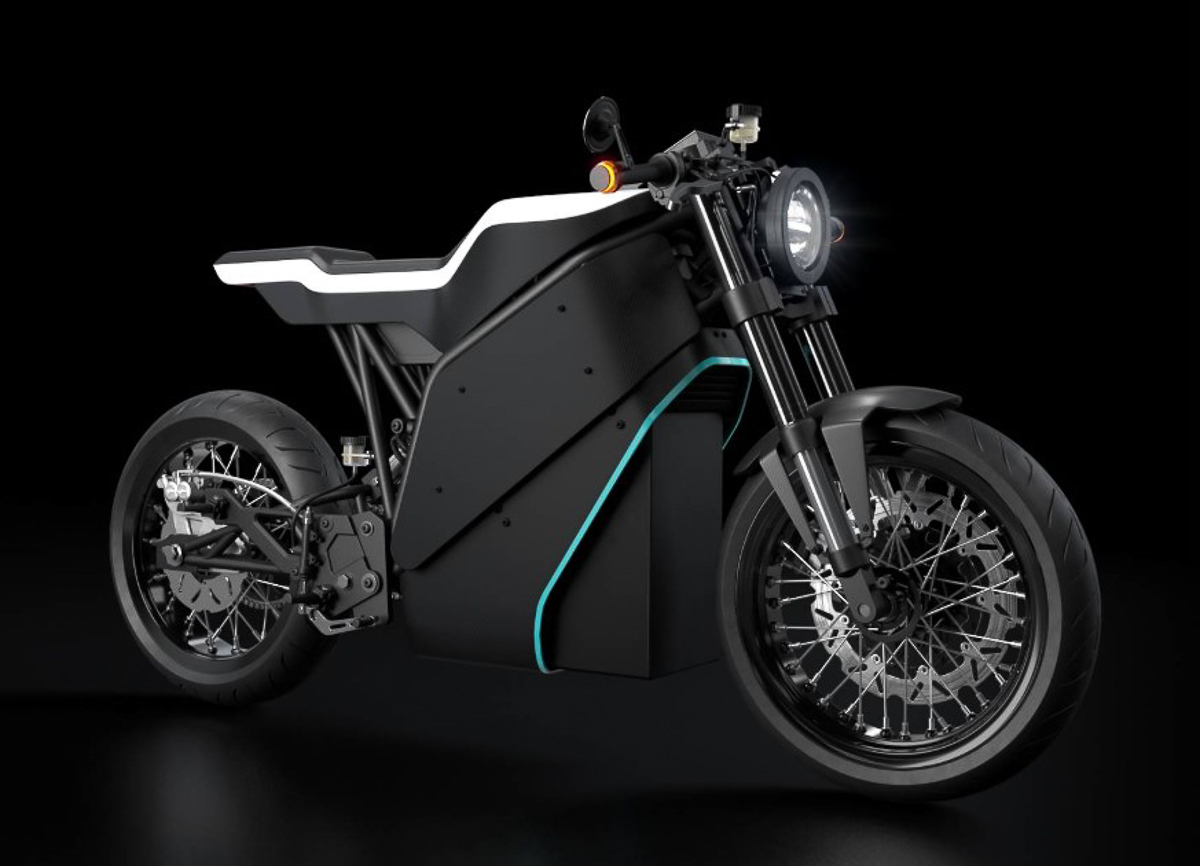
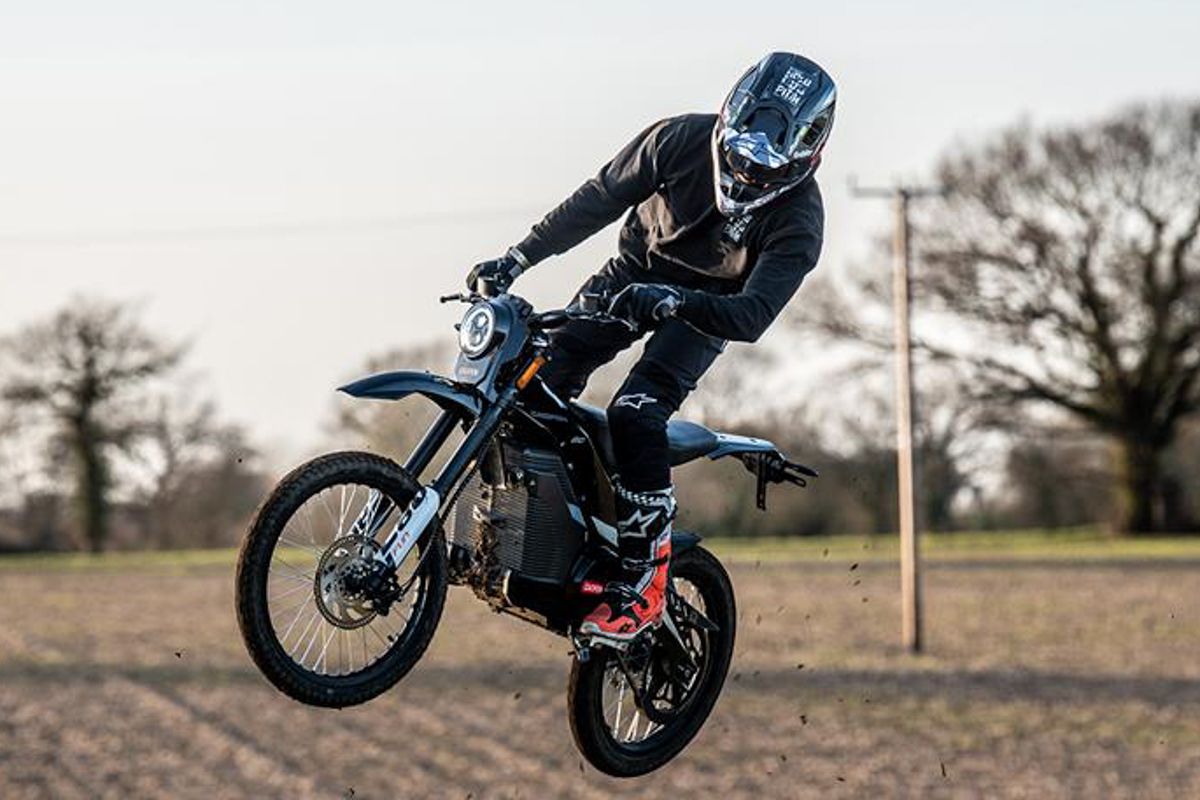
The world of electric mobility is getting bigger by the day and the latest addition to this ever-growing industry comes in the form of the Yatri Project Zero; Nepal’s first electric bike. Yes, it’s an advanced electric motorcycle hailing from Nepal. Talk about awesomeness. (more…)
Train yourself right and you will never have to fear rain again.
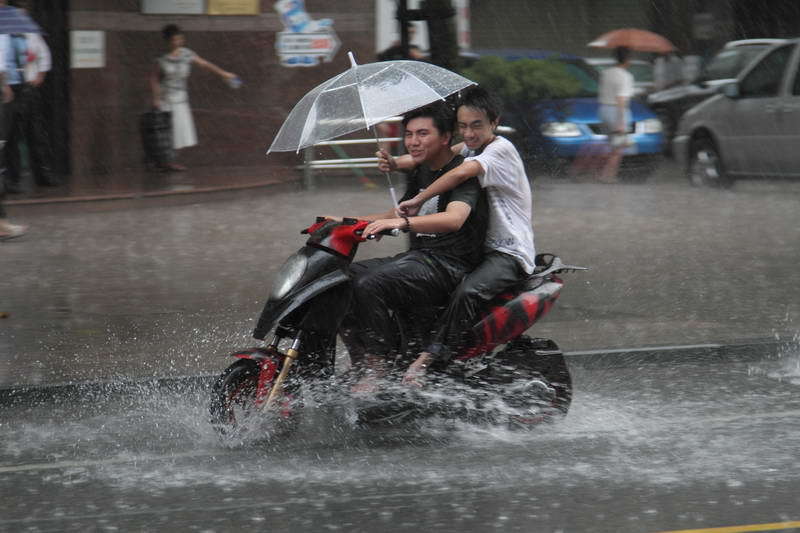
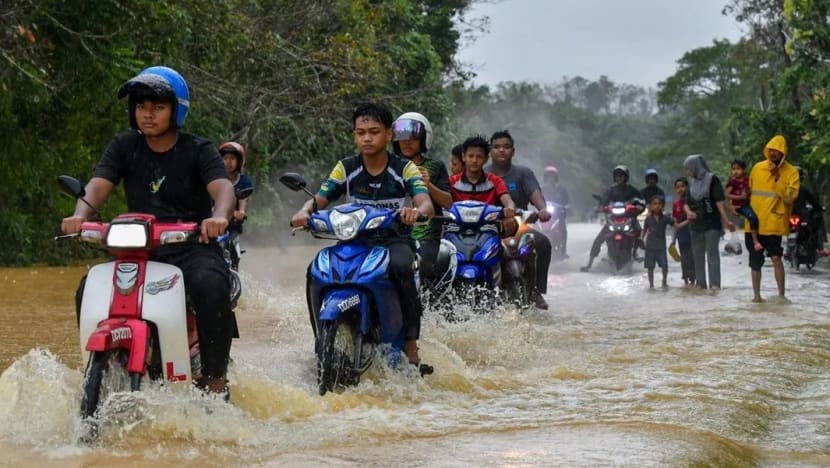
We had published “How to Ride Through Flash Floods” some time back, so it’s only right that we present these 10 tips for riding in the rain since it’s the wet season in Malaysia. Oh wait… It’s either hot or raining, anyway.
Riding in the rain can be more fun since the weather is cooler. Your senses are also heightened for extra concentration.
1. Ride bright
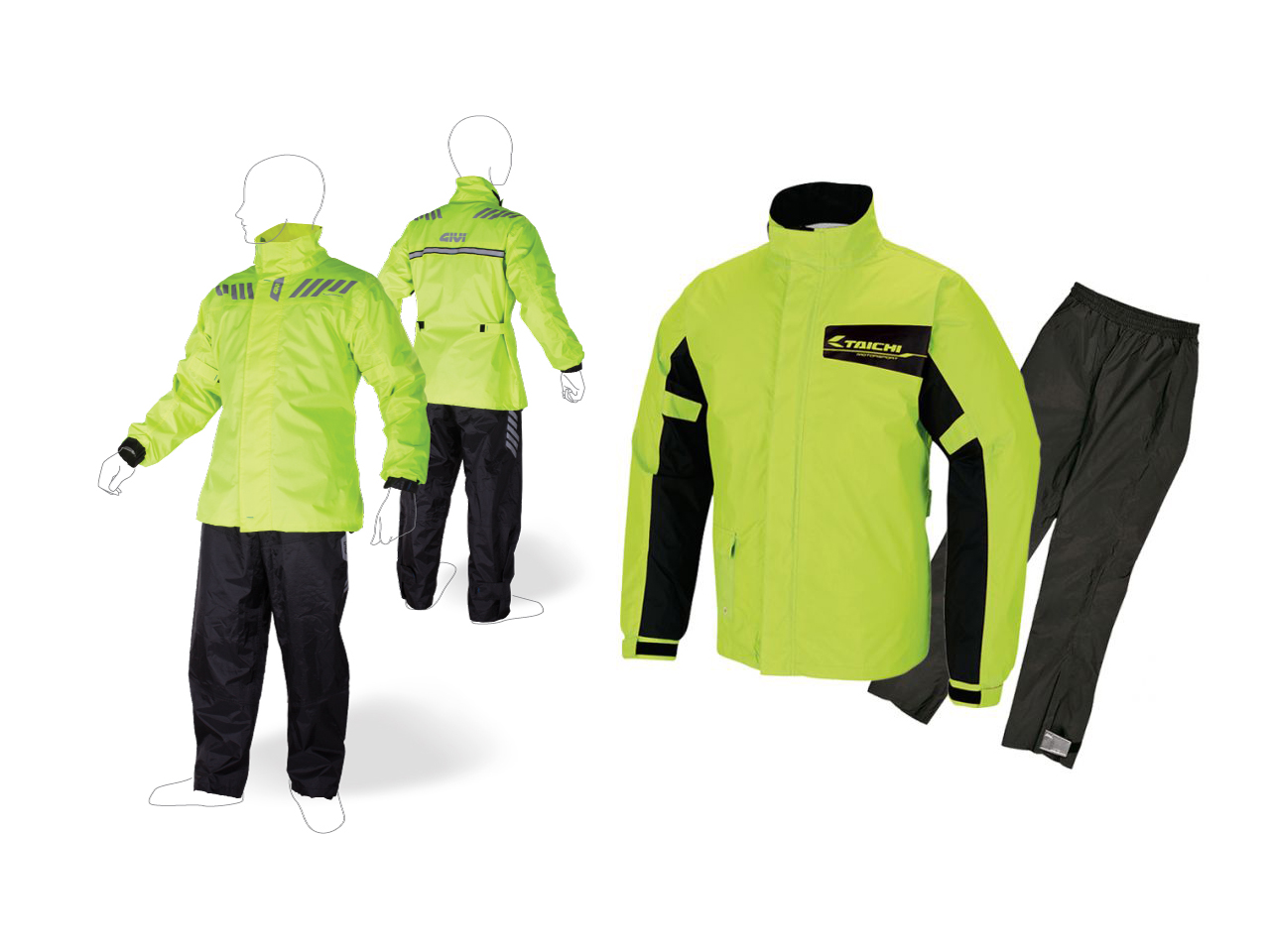
To us, this is the primary requisite. If it’s already important to ride in bright clothing when it’s sunny, it becomes imperative in the rain. Do get yourself a set of waterproof gear in bright fluorescent yellow or fluorescent orange. Failing which, you can also wear a vest over your gear. Be seen, be safe.
2. Stop in safe areas
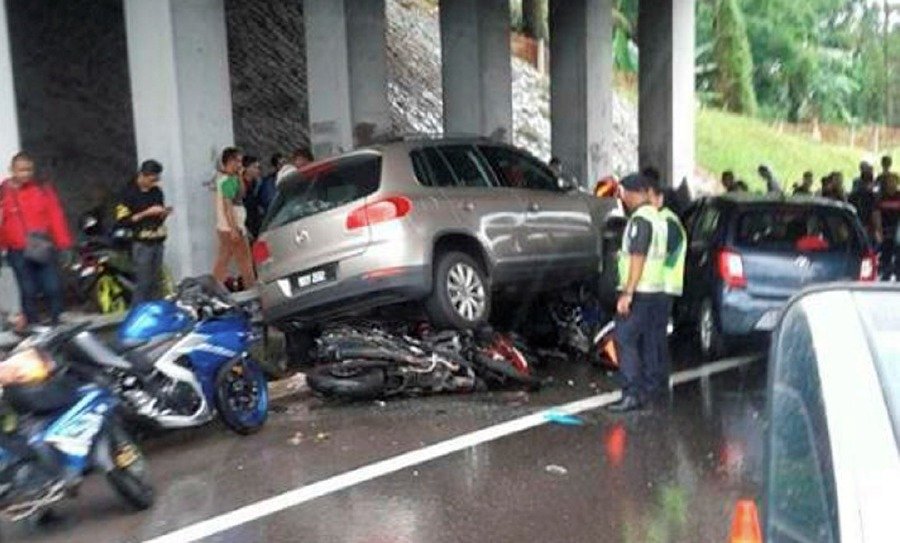
We’re bikers too, so we understand that we’ve to stop somewhere to pull on our rain gear or if conditions get too dicey to continue. However, use utmost discretion in where you choose to stop. Stopping under a flyover is an obvious opportunity, we won’t debate it, but don’t stay on your bike. Park it, switch on the parking lights (if so equipped) and go behind the barrier. There’ve been too many cases of zombie drivers who rammed into groups of motorcyclists under the flyover.
4. Slow down… but not too slow
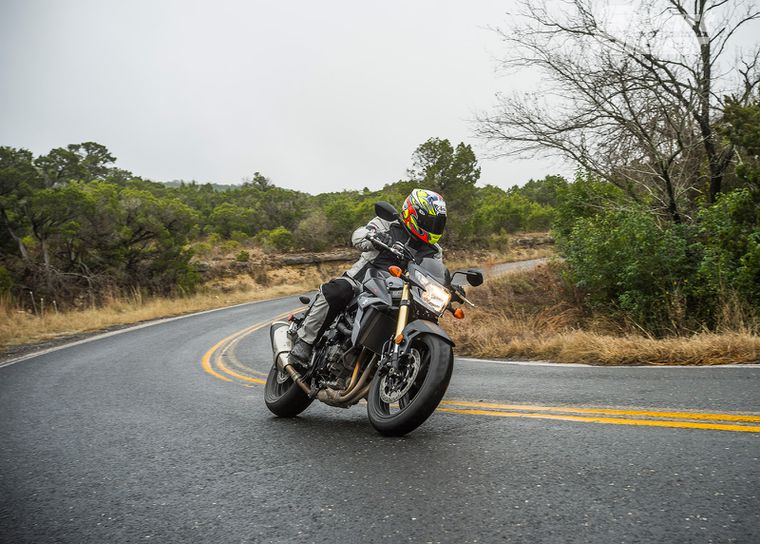
Don’t slow down too much – Photo credit cycleworld.com
Slowing down in the rain is obvious, but don’t go too slow. The tyres need some speed to evacuate water from their contact patches. Besides that, the wheels need some speed to have gyroscopic forces which contribute to motorcycle stability. Riding too slow will cause the tyres to slide too early or loss of stability. There’s no hard rule to slow down by how much because it depends on the bike, tyres and rider. Going too slow is also dangerous because you may become a bowling pin for impatient/zombie/blind vehicle drivers. So, judge for yourself.
4. Be smooth
Being smooth at the controls allows the bike i.e. chassis, tyres to work like they’re intended to. Smooth here means no sudden changes in direction, acceleration and braking. As such, give yourself more room to the vehicles in front and all around you.
5. Stay loose
Photo credit ultimatemotorcycling.com
Stay loose on the bike by not stiffening up your body. Stiffening up runs counter to bike dynamics and it will force bad situations to become worse, for example if the tyres let go. Keep your arms and torso relaxed and clamp your thighs to the fuel tank at all times.
6. One thing at a time
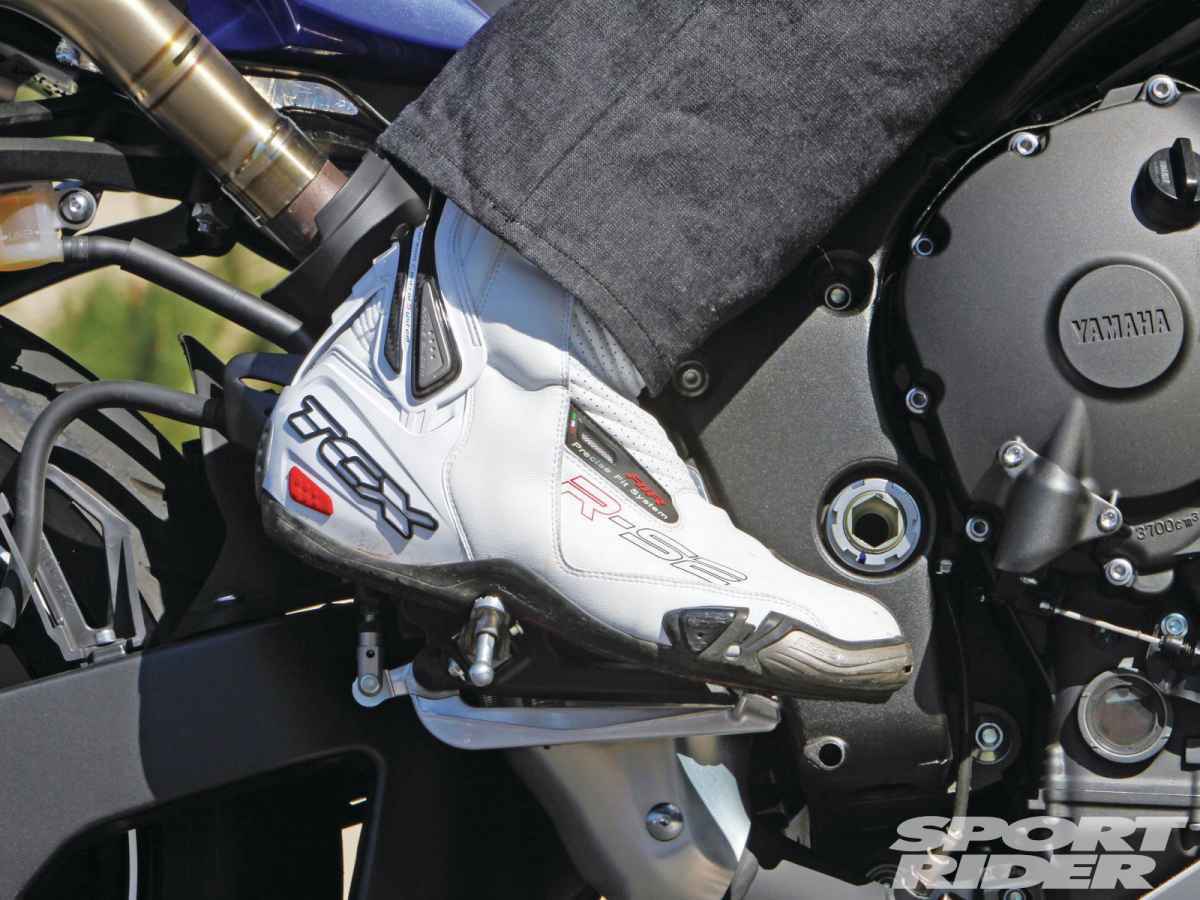
Courtesy of Sport Rider
It means separating your braking, turning and acceleration inputs. It’s best to not brake and downshift at the same time, even if your bike is equipped with a slipper clutch. So do brake and downshift earlier before the corner, to allow the chassis and tyres to settle down before turning in. Also roll on your throttle smoothly through the corner and at the exit.
7. Puddles are NOT fun
Photo credit directasia.com
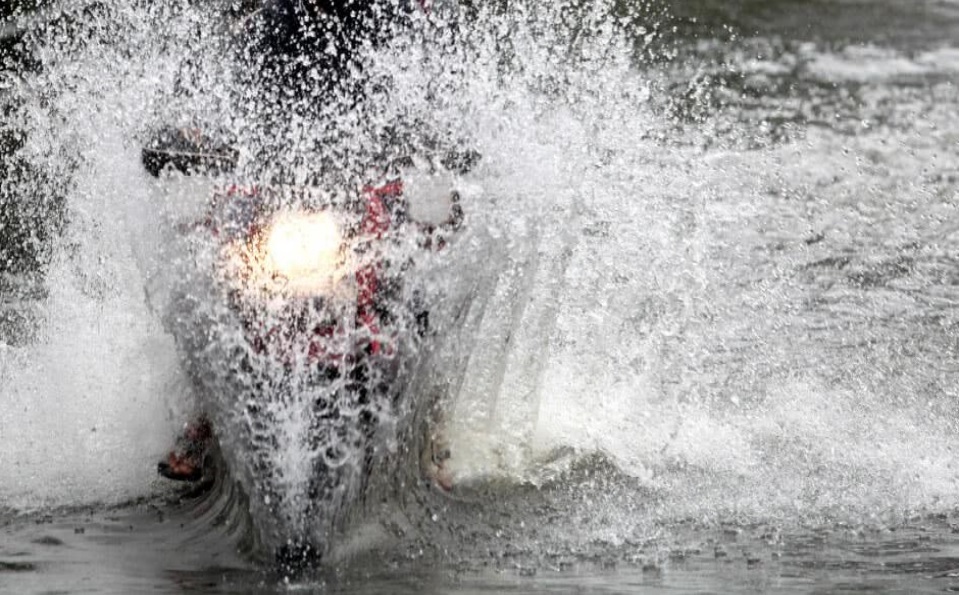
Yes, we loved to jump into puddles when we were kids. Or causing a huge splash when riding. But they can be downright dangerous as it’s hard to gauge the water’s depth or if it’s hiding a deep hole. So, steer clear if possible, but if you can’t, slow down and maintain a steady speed. Chopping the gas will have the water acting as an instant brake and can cause you to drop the bike.
8. Have a vision
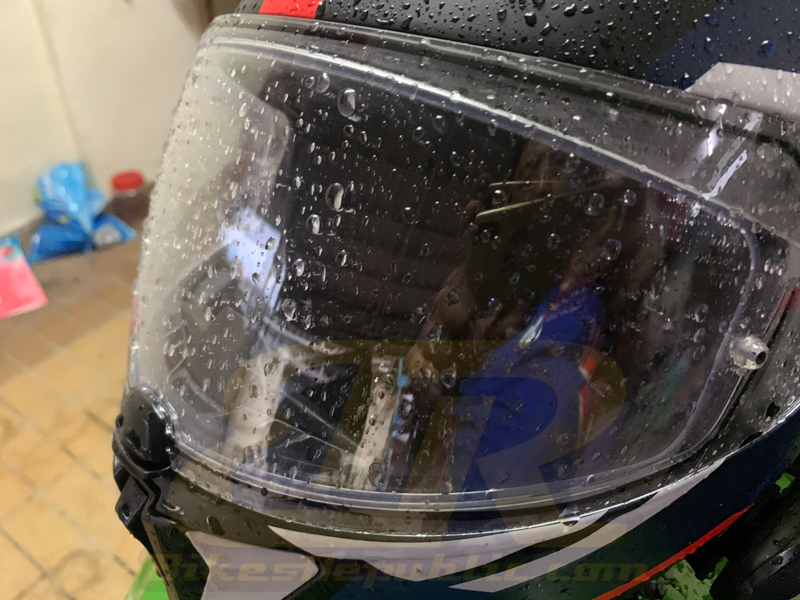
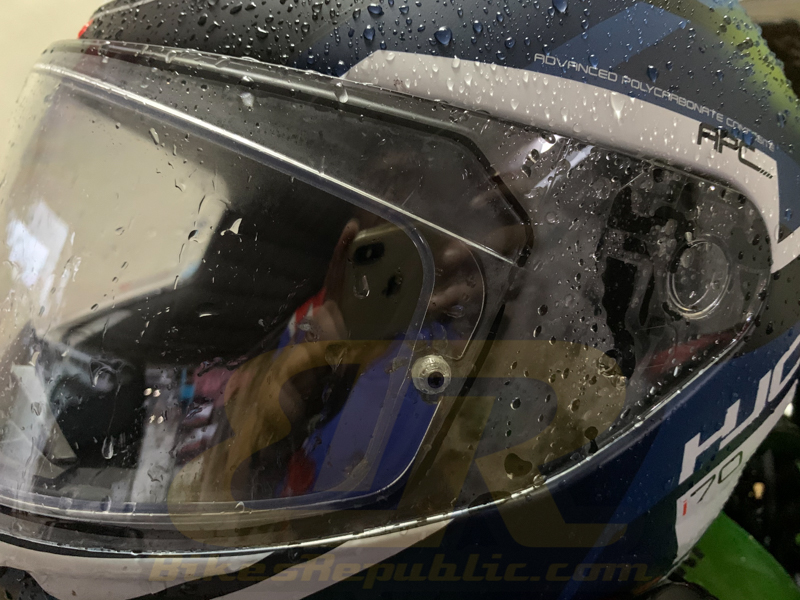
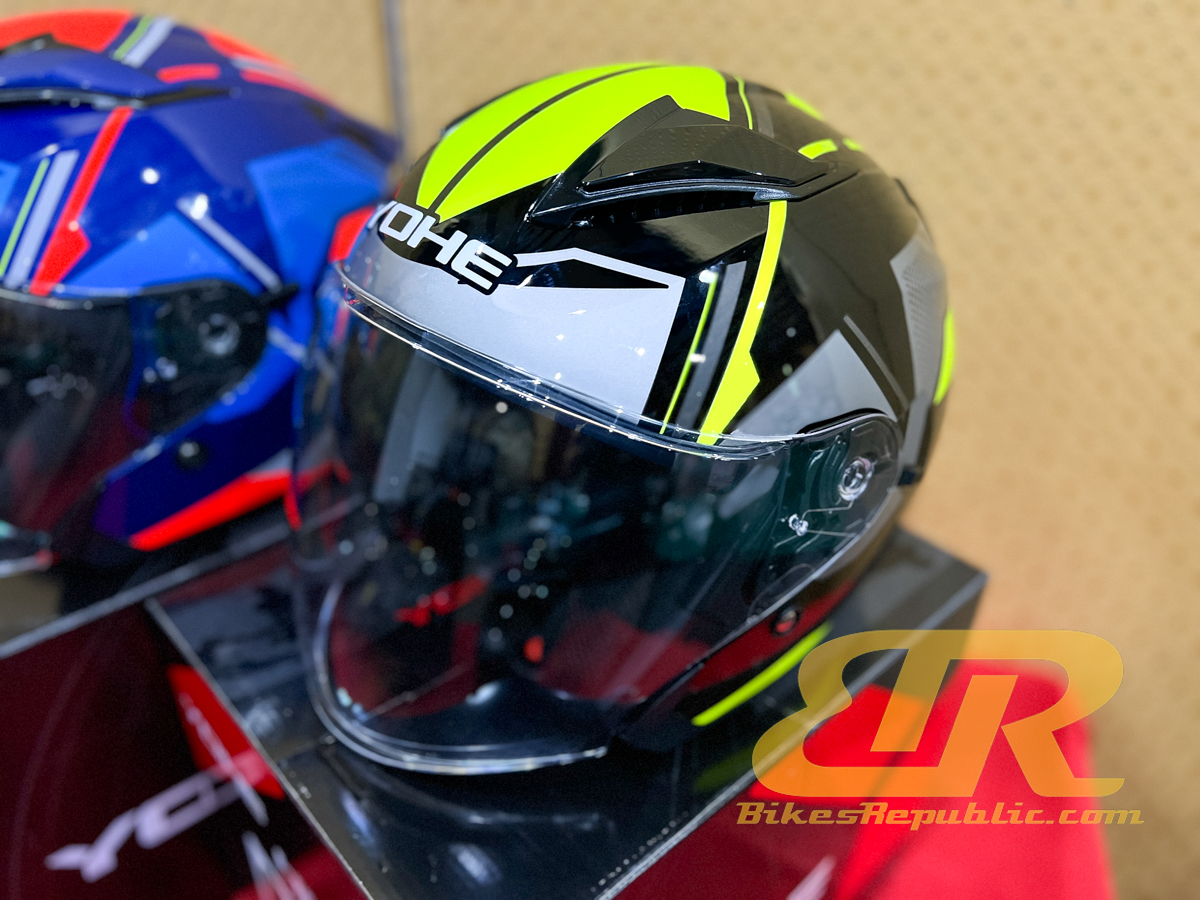
The most difficult thing while riding in the rain is trying to see out of the helmet, right? Jet-type helmets (open-faced with visor) work best. On the other hand, if you ride with a full-faced helmet, get one with a Pinlock anti-fog insert. It makes all the difference in the world! However, please remember this: DO NOT flip up the visor as long as you’re under the rain, because if you do, rainwater will run down between the Pinlock and visor, causing it to fog.
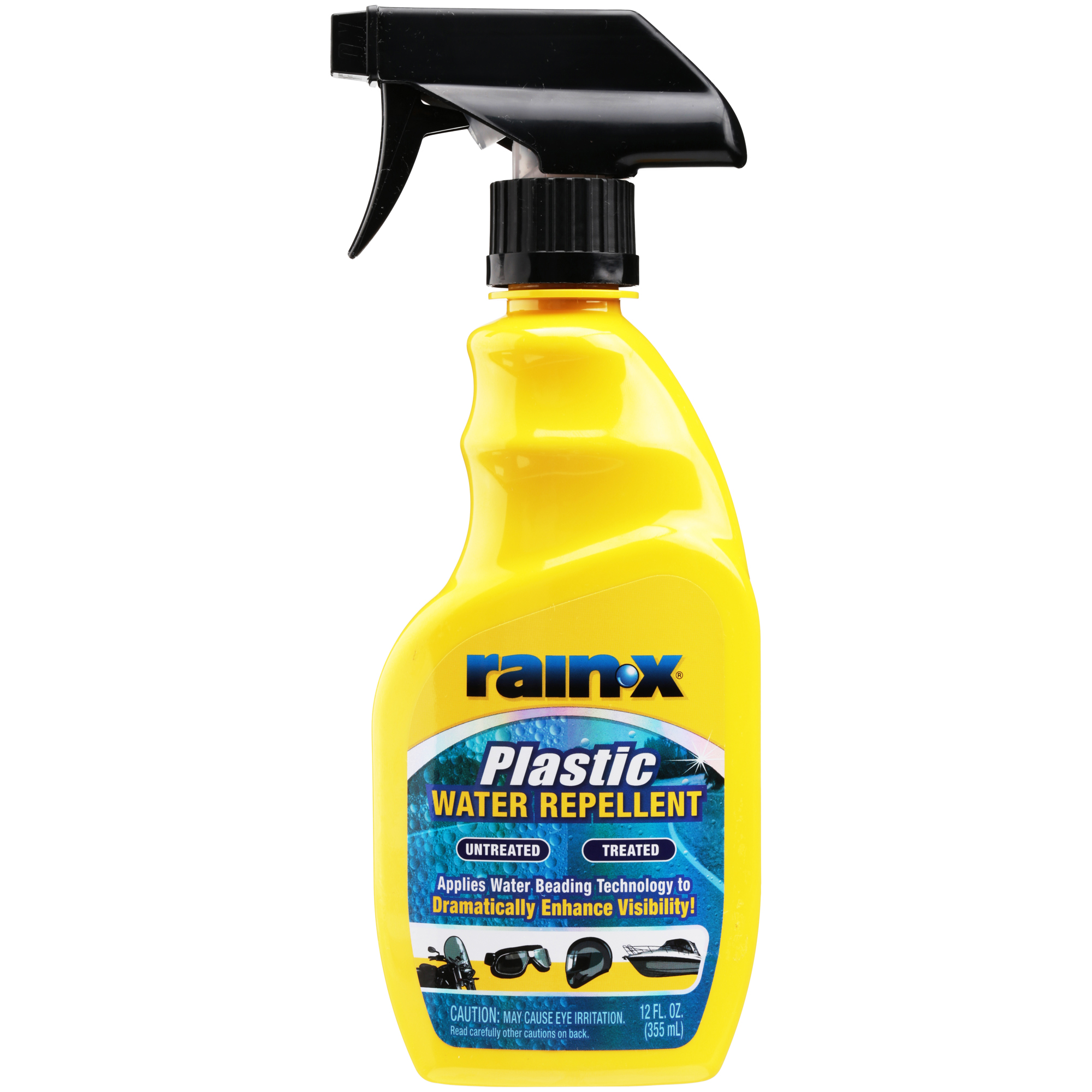
Also, you can treat the outer part of the visor with light automotive wax. It will bead up the water into small droplets and the wind blows them away when you’re riding. It’s not perfect, but it sure beats a non-coated visor. Our favourite is the original Rain-X Plastic Water Repellant. (The important distinction here is “plastic.” DO NOT apply the normal Rain-X for car windshields on your helmet visor as the RainX will eat away its coating!)
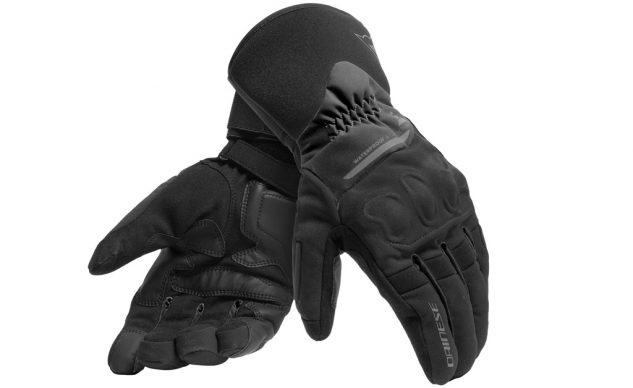
9. The gloves stay on
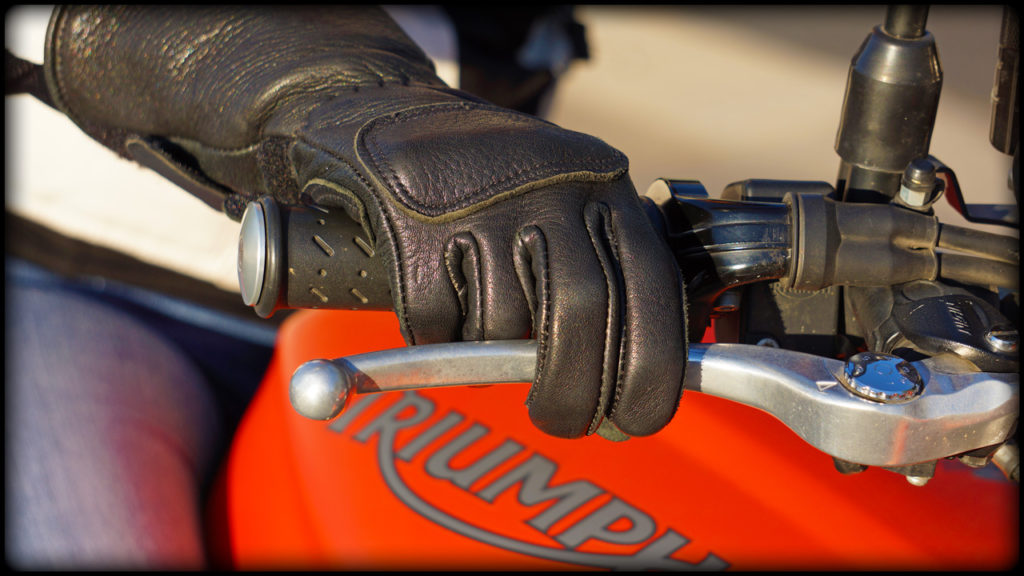
Yes, they’ll get soaked, but twisting the throttle and holding on to the handlebar with bare palms is much less than fun. At least you’ve a better grip and your hands are kept protected by debris or (touch wood) a crash. Or have a spare pair of waterproof gloves. You can use the palms of the gloves to wipe your helmet visor, as a bonus. (This writer wears rubber surgical gloves under his regular gloves during rainy weather. A perk of having a wife who’s a nurse. Heh heh heh.)
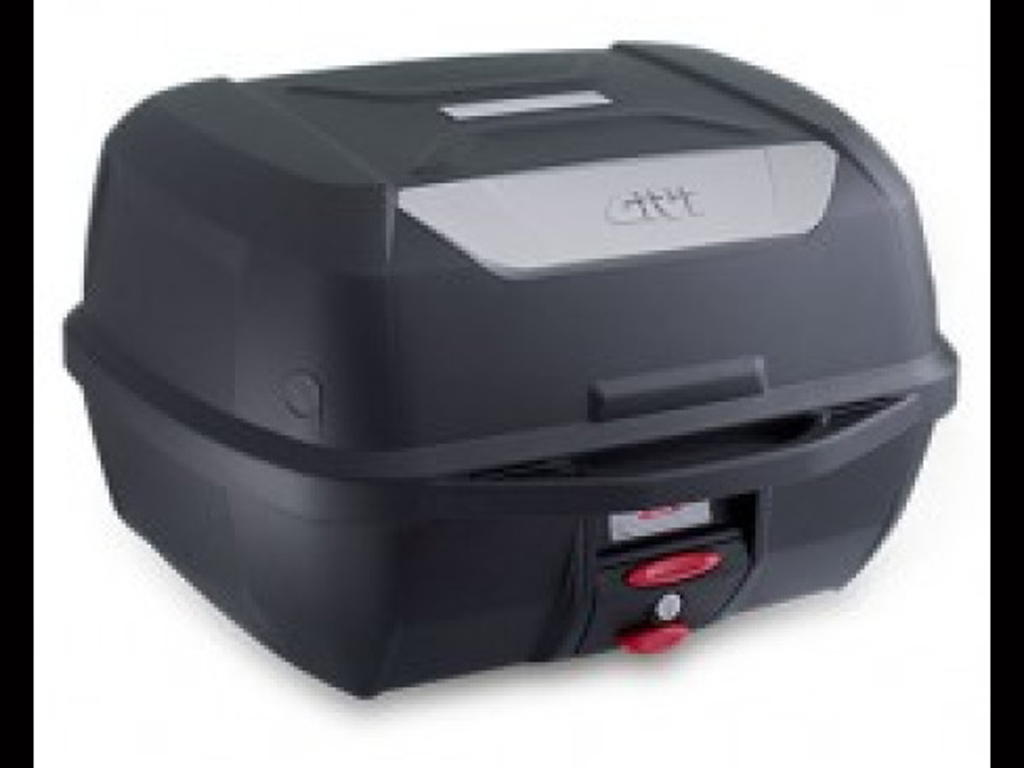
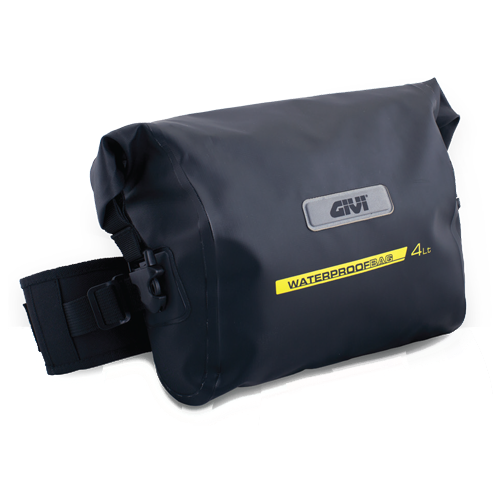
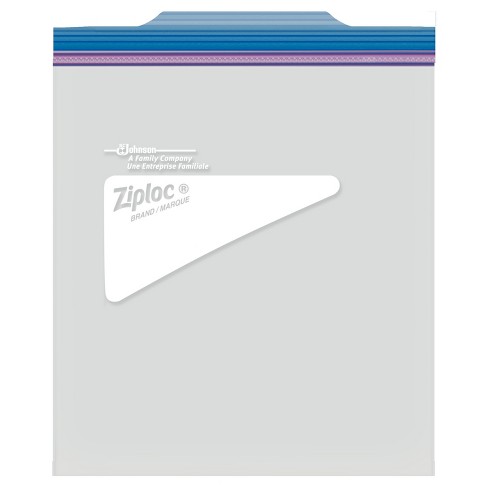
10. Waterproof everything
Ziploc bags, a waterproof pouch, or even better a top case to carry your belongings. No one enjoys trying to dry soaked cash or other important stuff you may have in your wallet. Worse is your smartphone unless if it’s waterproof.
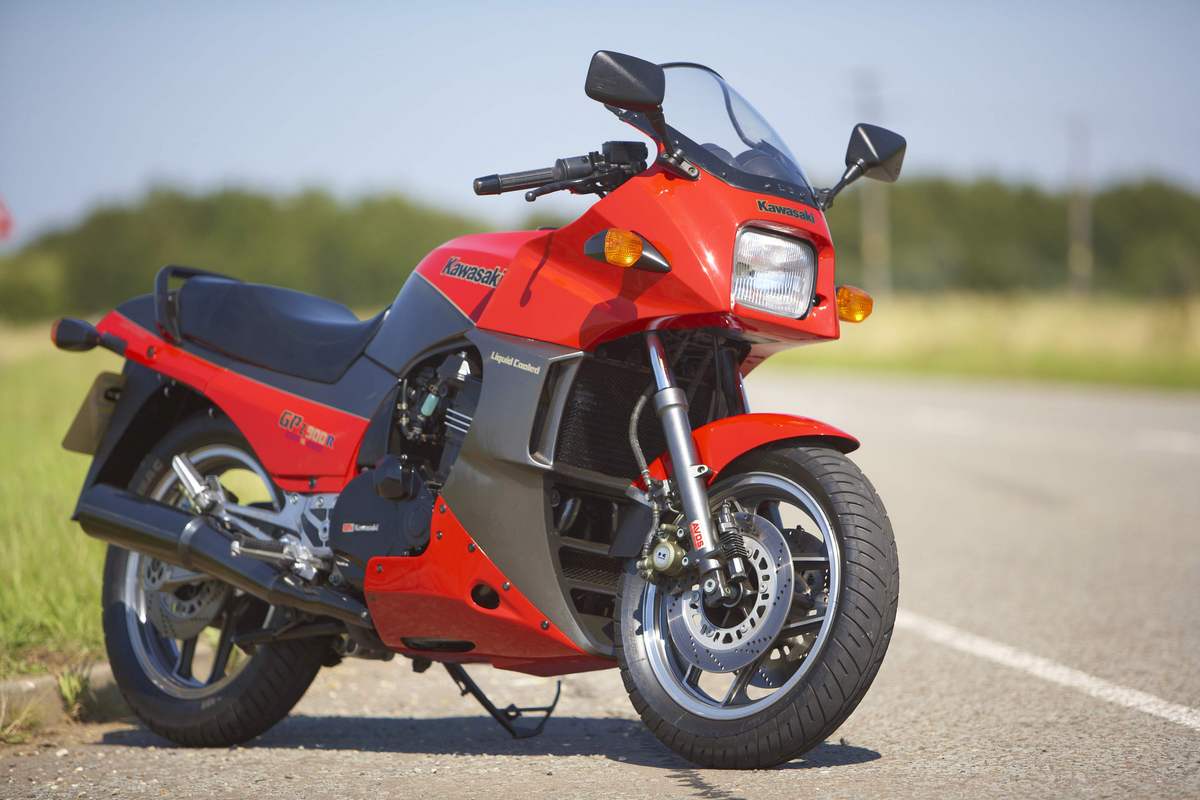
The folks from Kawasaki just posted a very interesting video showing the evolution of the extremely iconic Kawasaki Ninja GPZ900R. It’s basically a morphing video showing all 16 models of the GPZ900R since its launch back in 1984 all the way up to the last one released back in 2003. The question that keeps playing in our minds is, why would Kawasaki post up this video just last week? (more…)
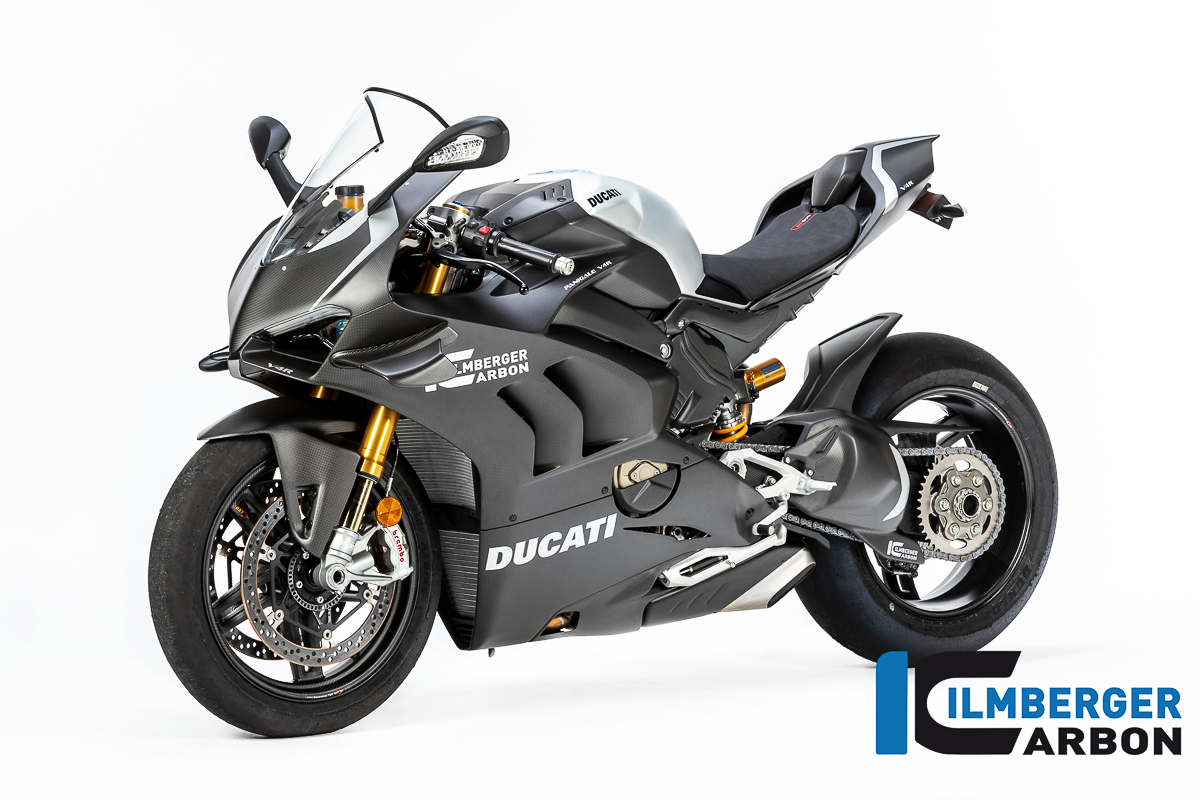
We once wrote about the possibility of 2019 BMW S 1000 RR owners turning their superbikes into carbon fibre editions thanks to Ilmberger Carbon. Now, owners of the powerful Ducati Panigale V4 R can also turn their machines into carbon monsters with some very cool parts available for purchase on their website. (more…)
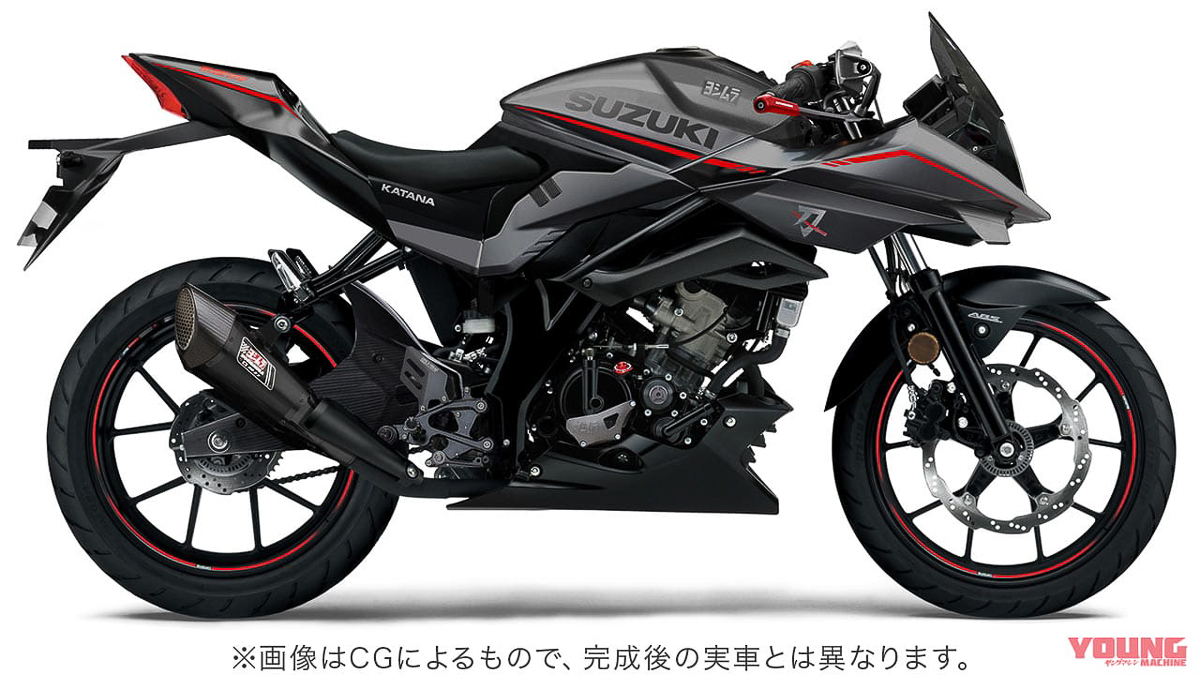
The Suzuki Katana has had quite a cult following ever since its birth ever since its release in the 1980s and the latest 2019 reincarnation model is nothing short of a crowd favourite from several markets around the globe. News about a ‘baby’ Katana model have been popping up and we might just see the appearance of the Suzuki Katana 125R sooner than we think. (more…)
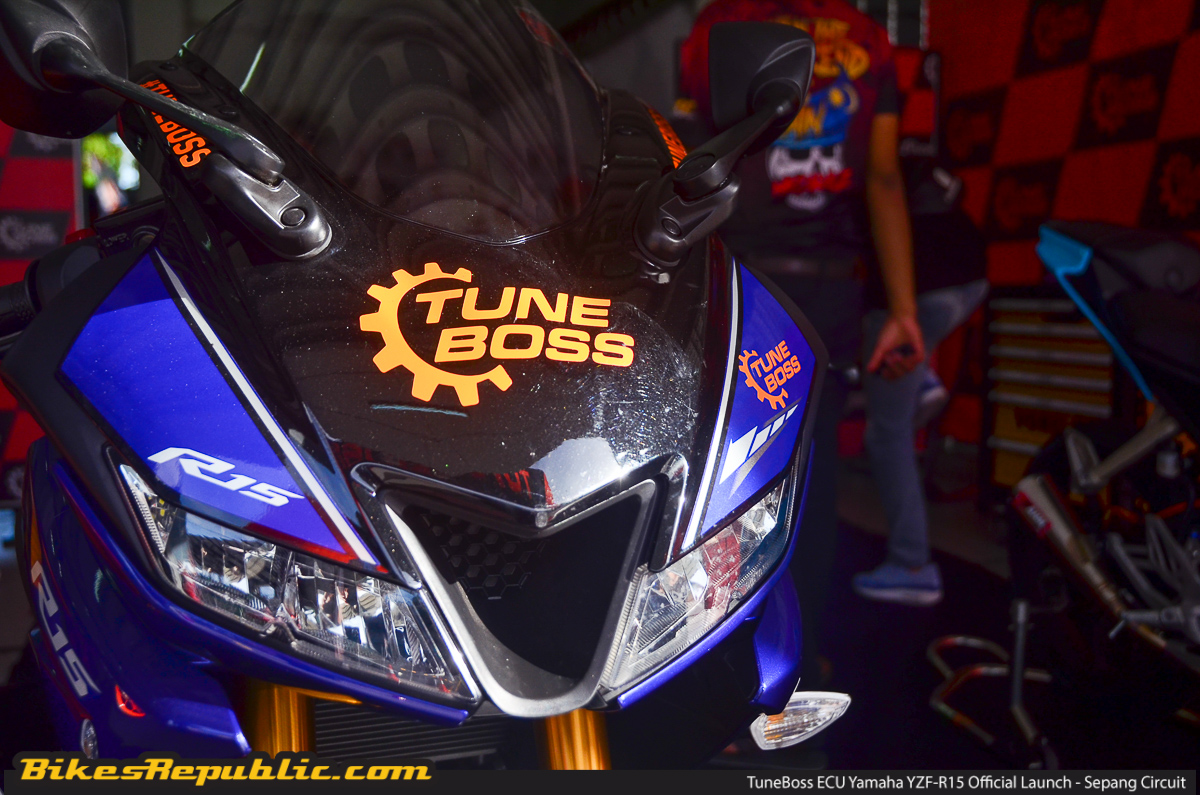
FSR Technology is renowned for their electronics mastery in producing high-end performance ECUs at affordable prices for a selection of popular small-capacity motorcycles here in Malaysia. Earlier today, they’ve successfully launched their latest TuneBoss ECU for the Yamaha YZF-R15 V3 at their TuneBoss Owners Trackday at Sepang International Circuit. (more…)