Bikesrepublic

Latest News

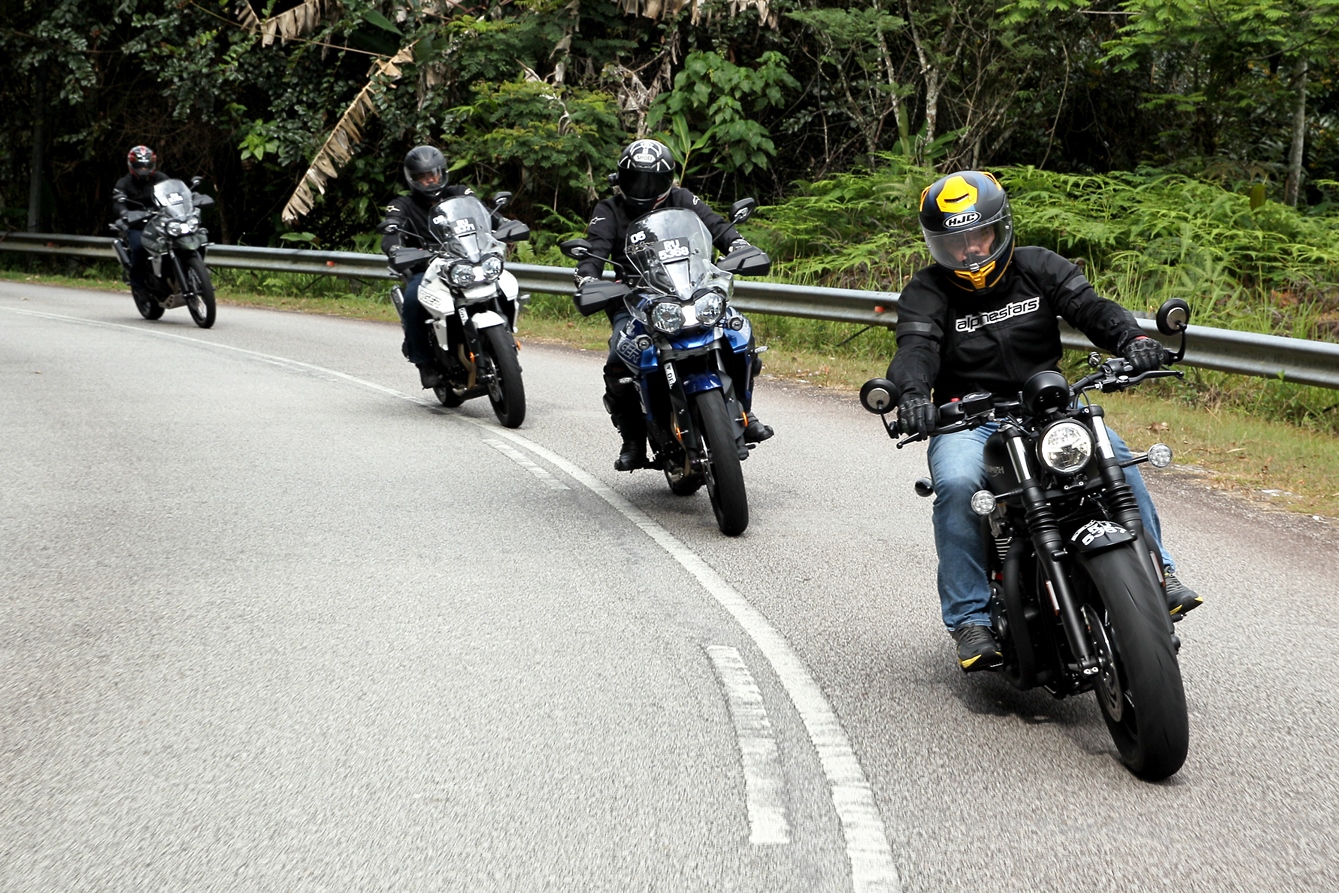
  • It’s sport-tourers for Part 2 of the Top Motorcycles for the Touring Season.

  • Sport-tourers are fast bikes that are also practical.

  • The appeal of sport-tourers are practicality, comfort and some good speed.

In Part 1 of Top Motorcycles for the Touring Season, we’ve covered dual-purpose bikes. (Please click here for the article.) If you could recall, dual-purpose bikes are called such since they could be ridden on both the road and off-road.

In Part 2 here, let’s take a look at sport-tourers, motorcycles that combine the speed and handling of sportbikes with the practicality of touring and dual-purpose motorcycles.

LIGHTWEIGHT

There aren’t specific lightweight sport-tourers in the sub-400 to 500cc segment. In this case, we could call any bike a sport-tourer unless they are dual-purpose bikes such as the Kawasaski Versys-X and BMW G 310 GS. Case in point is the Kapcai Touring Malaysia group who equip their Yamaha Y15ZRs with large GIVI top cases and go touring. Another great example is Anita Yusof who toured around the world on a Yamaha FZ150i. Let’s proceed to the middleweight section.

MIDDLEWEIGHT

There are so many bikes that occupy this segment but we’ve picked a few.

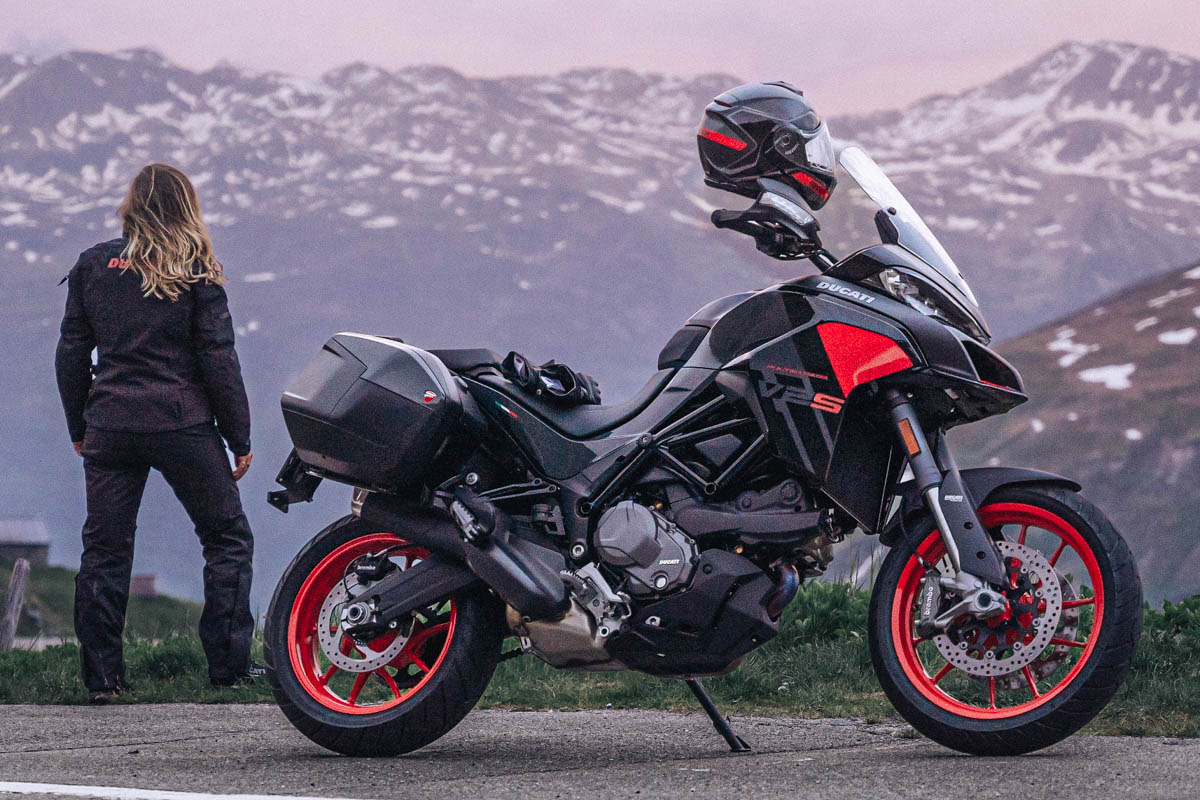
DUCATI MULTISTRADA 950

The Multistrada 950 was born from Ducati’s decision to introduce a range of bikes that are more affordable and accessible to a wider range of riders. Consequently, the 950 is bereft of high technologies such as the semi-active suspension and single-sided swingarm of its 1200cc and 1260 brothers. But that only means that the 950 is lighter and a joy to ride without needing to think about setting the electronics.
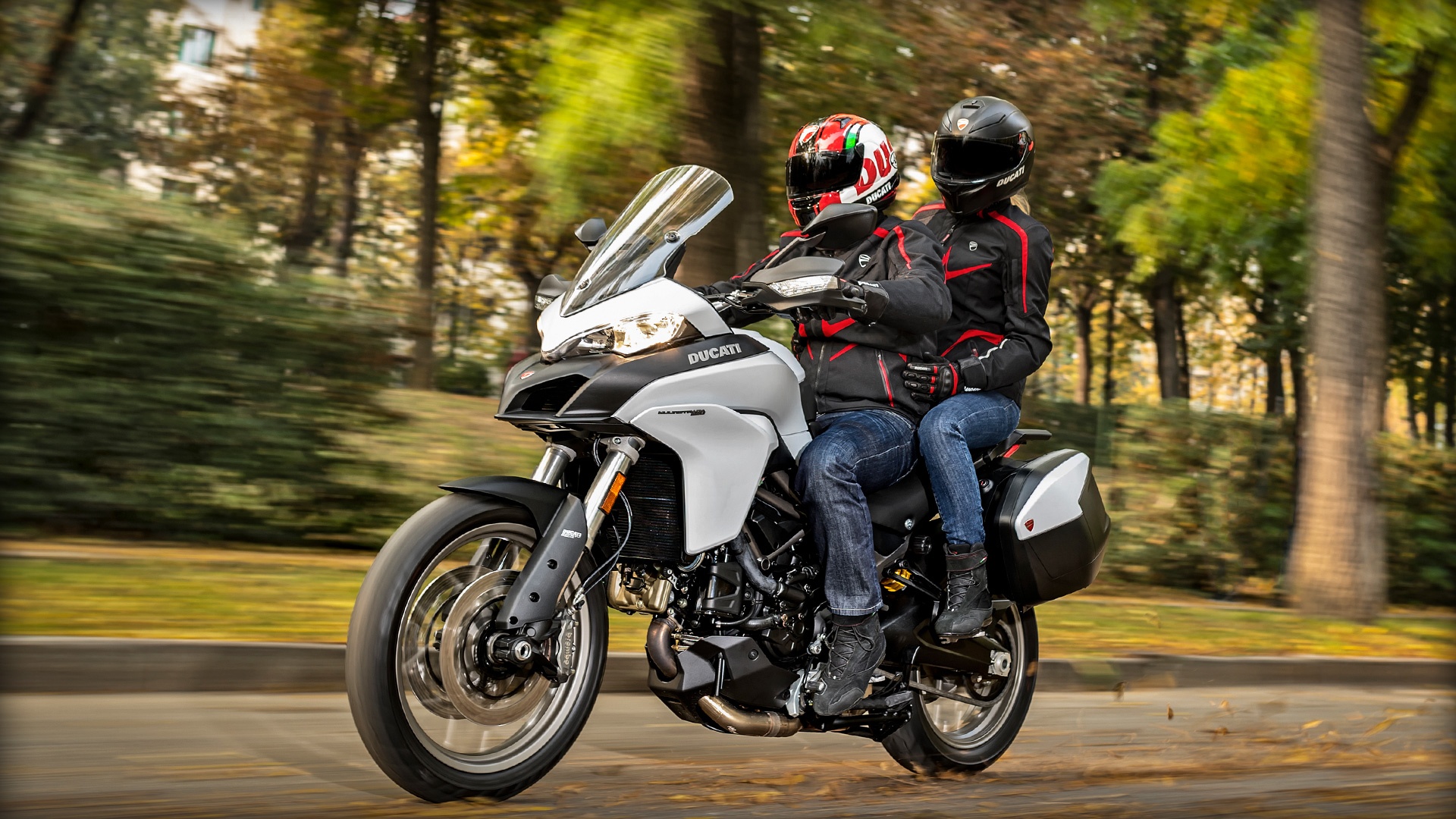
Engine type Liquid-cooled, DOHC, four valves per cylinder, 90o V-Twin
Displacement 947 cc
Maximum power 111 bhp (83 kW) @ 9000 RPM
Maximum torque 96 Nm @ 7750 RPM
Seat height 840 mm
Dry Weight 205 kg
Fuel capacity 20 litres
KAWASAKI VERSYS 650

The Versys 650 has gone through many cosmetic changes with each generation, although the engine and hardware stayed the same. The current model’s design follows the distinctive look of all current Kawasaki motorcycles. The 648cc parallel-Twin is torquey and has enough grunt up top for a spirited run. The windscreen and bodywork protect the rider from windblast well enough while the long-travel suspension is comfortable for most applications. Speaking of the suspension, it features a remote preload adjuster and the seat height isn’t too tall for most riders. There are plenty of cargo solutions in the market for this bike.
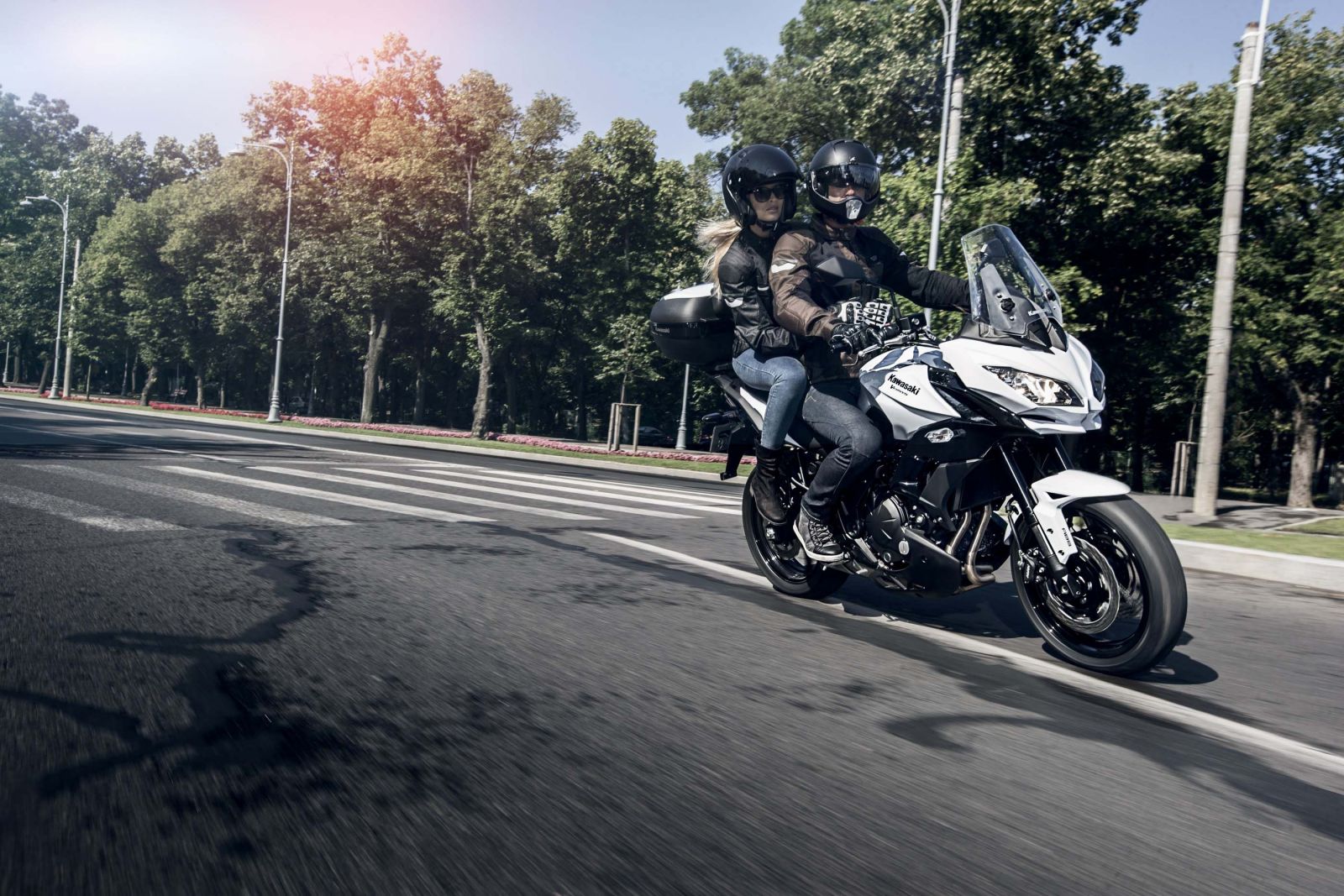
Engine type Liquid-cooled, DOHC, four valves per cylinder, parallel-Twin
Displacement 649 cc
Maximum power 68.4 bhp (51 kW) @ 8500 RPM
Maximum torque 64 Nm @ 7000 RPM
Seat height 840 mm
Kerb weight 214 kg
Fuel capacity 21 litres
MV AGUSTA TURISMO VELOCE 800

The Turismo Veloce 800 came about when AMG pumped in some capital into MV Agusta, and signaled a small but significant change of direction in terms of product development and features. Hence, the Turismo Veloce was the first MV Agusta to feature a fully LCD instrument panel which includes all the pertinent data. Scrolling, instead of rummaging, through the menus was also thankfully painless. The suspension was also made suppler and the Lusso model includes large-size panniers. MV Agusta had also managed to get rid of the snatchy throttle. The bike still looks beautiful after a couple of years.

Engine type Liquid-cooled, DOHC, four valves per cylinder, inline-Triple
Displacement 798 cc
Maximum power 110 bhp (81 kW) @ 10150 RPM
Maximum torque 80 Nm @ 7100 RPM
Seat height 850 mm
Dry weight 191 kg
Fuel capacity 21.5 litres
SUZUKI V-STROM 650 XT

The V-Strom 650’s engine has been in circulation for more than 15 years and it’s more popular than its 1000cc brethren. It’s because the 650 has a smoother and more linear power. Compared to the Kawasaki Versys 650, the V-Strom 650 is larger hence wider and longer seats. The suspension is also rather plush. It goes by carrying out its duties quietly to stage of being blamed as “bland.”
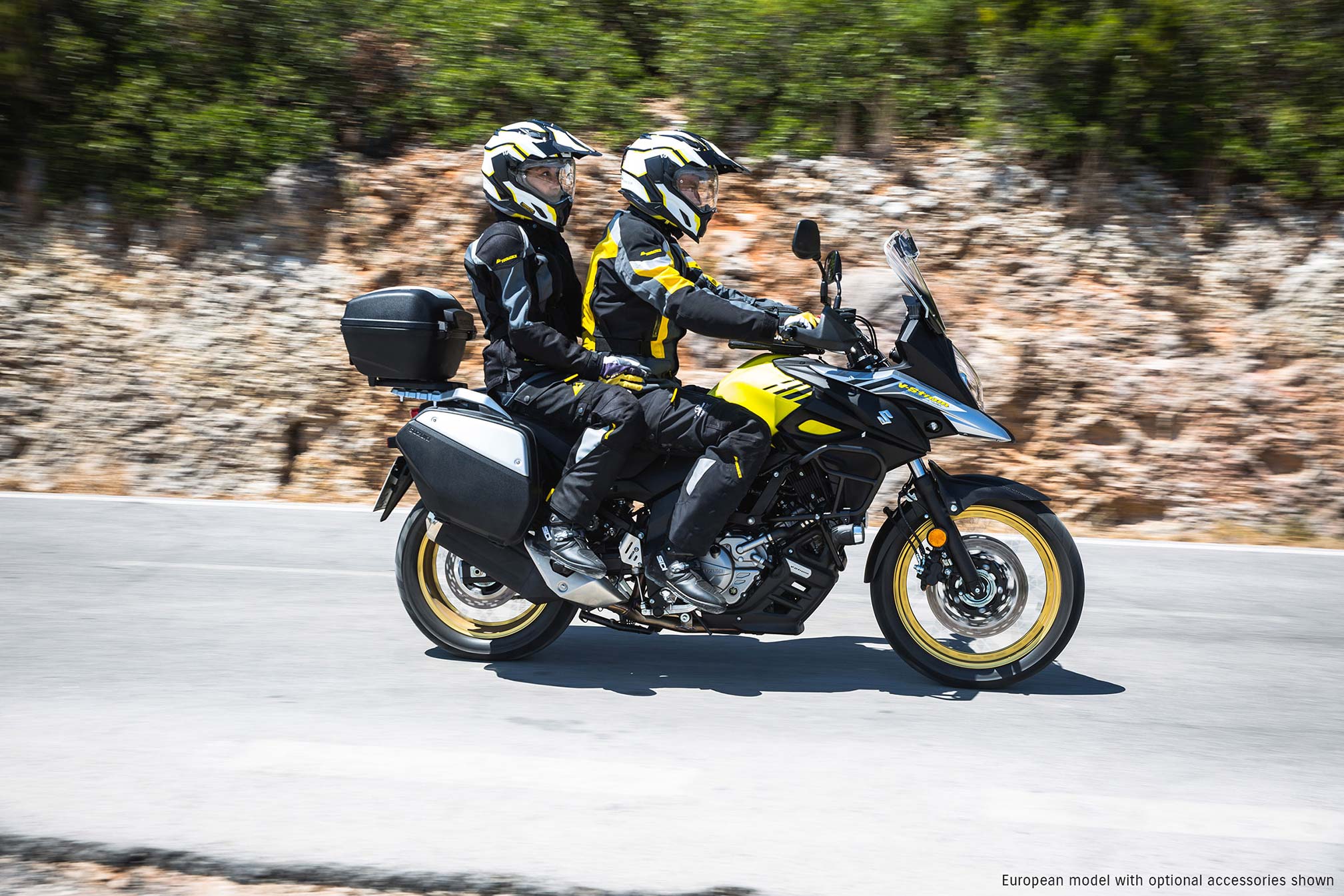
Engine type Liquid-cooled, DOHC, four valves per cylinder, 90o V-Twin
Displacement 645 cc
Maximum power 66.6 bhp (49 kW) @ 8800 RPM
Maximum torque 60 Nm @ 6400 RPM
Seat height 835 mm
Wet Weight 216 kg
Fuel capacity 20 litres
YAMAHA MT-09 TRACER

The Tracer is the sport-touring version of the MT-09 naked bike, hence it is light, fast and quick on its feet. The bodywork does an adequate job of keeping wind off the rider’s torso, while the large-sized LCD panel is lifted from the Super Tenere. The long-travel suspension is quite soft.
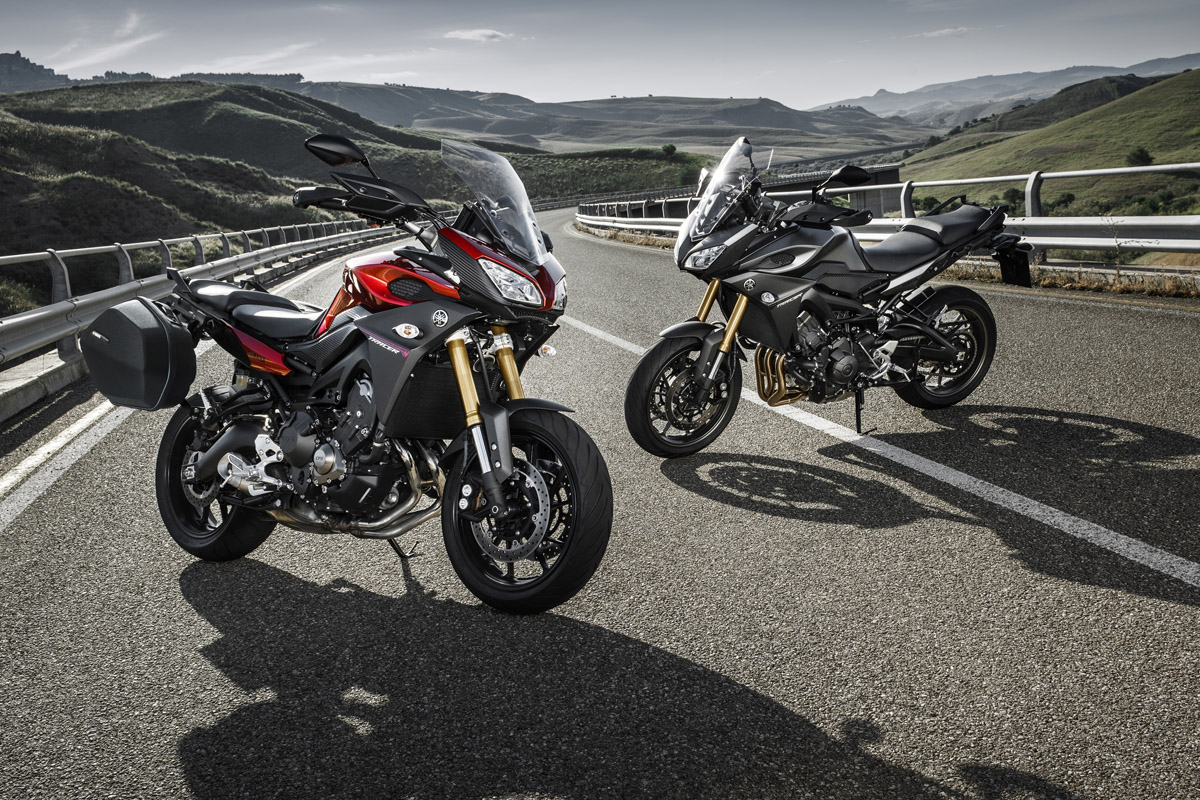
Engine type Liquid-cooled, DOHC, four valves per cylinder, inline-Triple
Displacement 847 cc
Maximum power 114 bhp (84.6 kW) @ 10000 RPM
Maximum torque 87.5 Nm @ 8500 RPM
Seat height 845 – 860 mm
Wet Weight 207 kg
Fuel capacity 18 litres

HEAVYWEIGHT

We’ve come to the top of the crop. These are the Concordes should we compare them to airliners.

BMW S 1000 XR

With the engine derived from the S 1000 RR superbike, the S 1000 XR is BMW’s weapon to attack the big bore sport-touring segment. It’s got everything here including the ESA semi-active suspension, ride modes, traction control, and panniers. That inline-Four is an ultra-flexible power unit: It’ll pull hard from just below 60 km/h in sixth gear all the way to its top speed without batting an eyelid.

Engine type Liquid-cooled, DOHC, four valves per cylinder, inline-Four
Displacement 999 cc
Maximum power 165 bhp (121 kW) @ 11000 RPM
Maximum torque 112 Nm @ 9250
Seat height 840 mm
Wet weight 228 kg
Fuel capacity 20 litres
BMW R 1200 RT

For a little bit more character compared to the uber machine S 1000 XR, the R 1200 RT fits the bill nicely. It shares that same wasser-Boxer of the R 1200 GS which means torque everywhere. The RT is also well-appointed in its instrumentation and creature comforts, as well as the suspension which is again similar to GS’s. Those large panniers are… er… large and you could fit almost anything in them.

Engine type Liquid-cooled, DOHC, four valves per cylinder, Boxer-Twin
Displacement 1170 cc
Maximum power 125 bhp (92 kW) @ 7750 RPM
Maximum torque 125 Nm @ 6500 RPM
Seat height 805 – 825 mm
Wet weight 274 kg
Fuel capacity 25 litres
DUCATI MULTISTRADA 1260

Ducati launched the Multistrada 1260 to compete with the other monsters in the segment. (As if the 1200 wasn’t fast enough.) Well, it wasn’t about speed, said Ducati; they fitted the 1262cc DVT engine from the XDiavel to address the flat spot at 5500 RPM of the 1200 DVT engine. Surely enough, there’s an 18% torque increase at that RPM. The swingarm has also been lengthened by a significant 48mm for more stability when carrying a passenger and cargo. The S model includes a bi-directional quickshifter, Ducati Link App and electronic suspension as well as colour-coded luggage.
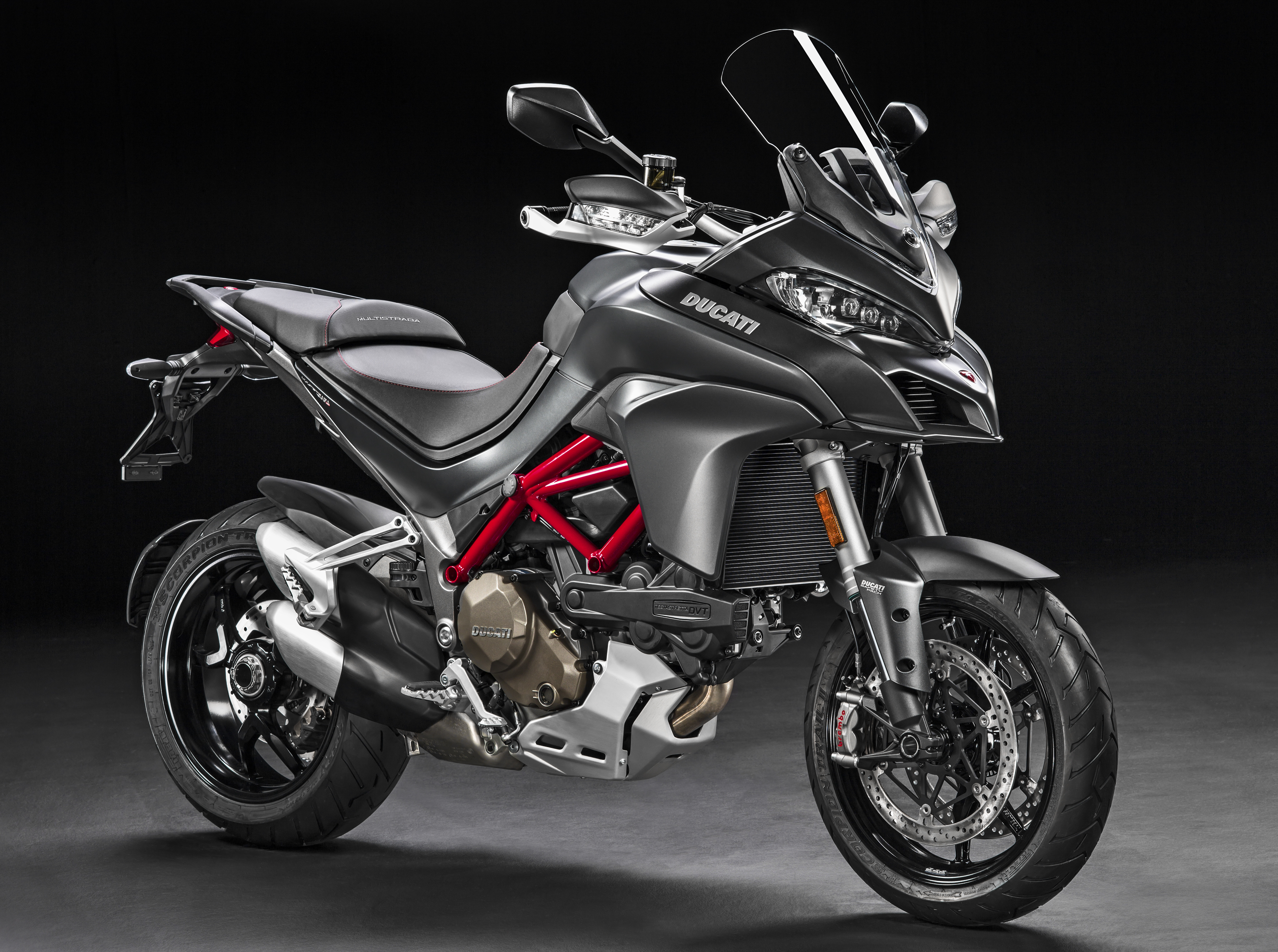
Engine type Liquid-cooled, DOHC, four valves per cylinder, 90o V-Twin
Displacement 1262 cc
Maximum power 156 bhp (116.2 kW) @ 9500 RPM
Maximum torque 129.5 Nm @ 7500 RPM
Seat height 825 – 845 mm
Dry weight 209 kg
Fuel capacity 20 litres
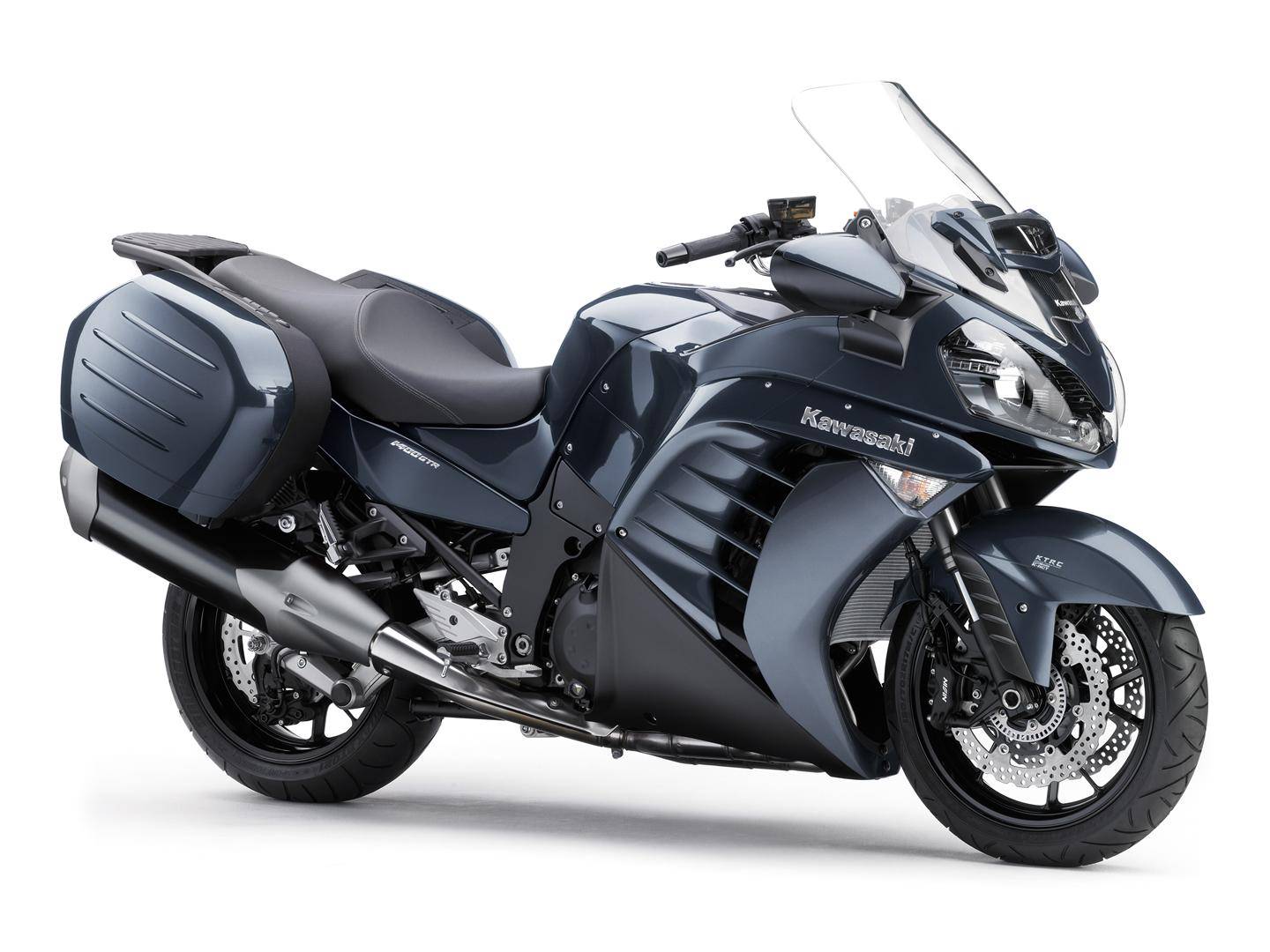
KAWASAKI 1400GTR

The GTR found massive popularity in Malaysia and the world over. It’s fast – having an engine derived from the Ninja ZX-14 has that effect – yet comfortable. The seating position is neutral behind that large nose and tall screen. There is plenty of storage space, too.
Engine type Liquid-cooled, DOHC, four valves per cylinder, inline-Four
Displacement 1362 cc
Maximum power 153 bhp @ 8800 RPM
Maximum torque 138.3 Nm @ 6200 RPM
Seat height 815 mm
Wet weight 313 kg
Fuel capacity 22 litres
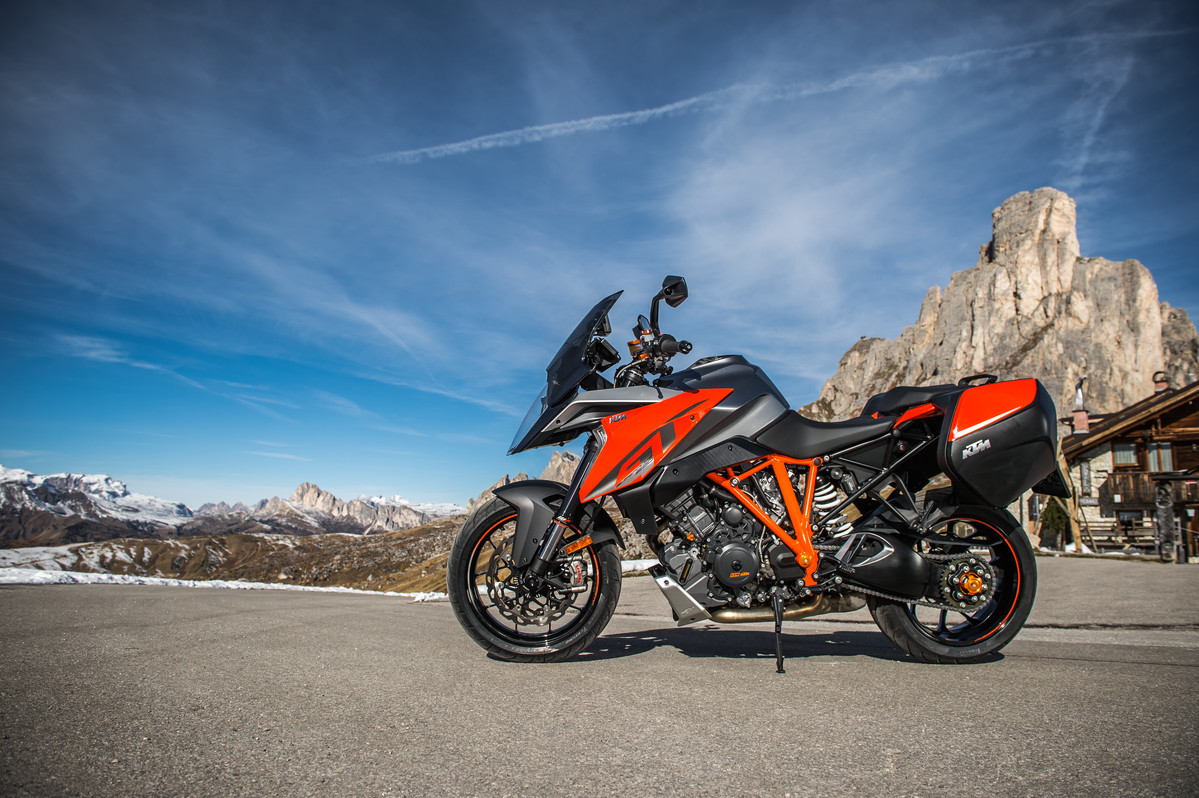
KTM 1290 SUPER DUKE GT

Dubbed “The Missile” during its launch, this bike is the epitome of leaning towards sport in the sport-touring equation. Its super-powered by the engine of the 1290 Super Duke R, punching out 173 bhp and 144 Nm of torque. But what makes the 1290 Super Duke GT such a great bike is how the bike “assists” you in becoming a better rider through the power mode, traction control and semi-active suspension strategies. But it isn’t all about speed on the GT as it’s equally docile when ridden at sane speeds in urban settings. This is one bike for riders who wish to get there quickly and have more time to enjoy himself.
Engine type Liquid-cooled, DOHC, four valves per cylinder, 75o V-Twin
Displacement 1301 cc
Maximum power 173 bhp (129 kW) @ 9500 RPM
Maximum torque 144 Nm @ 6750 RPM
Seat height 835 mm
Wet weight 228 kg
Fuel capacity 23 litres

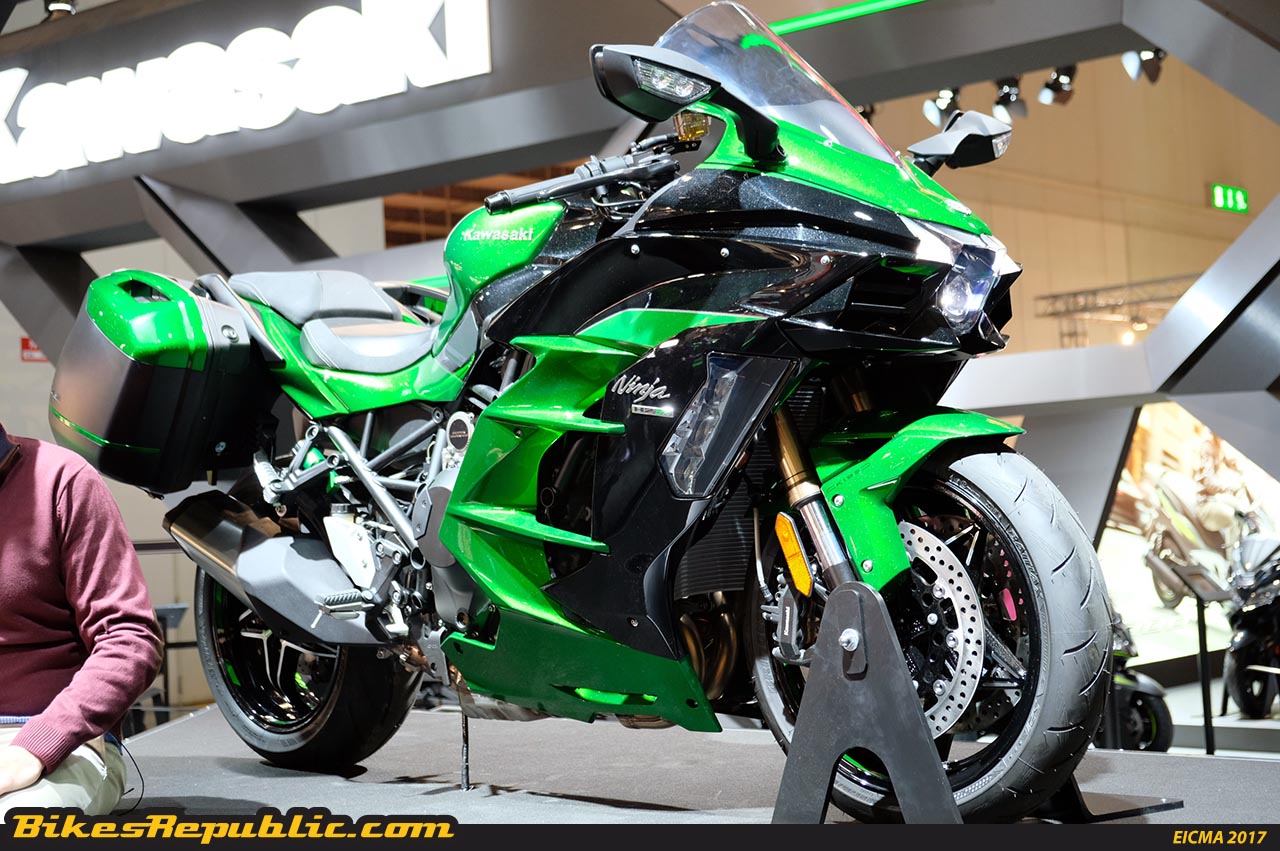
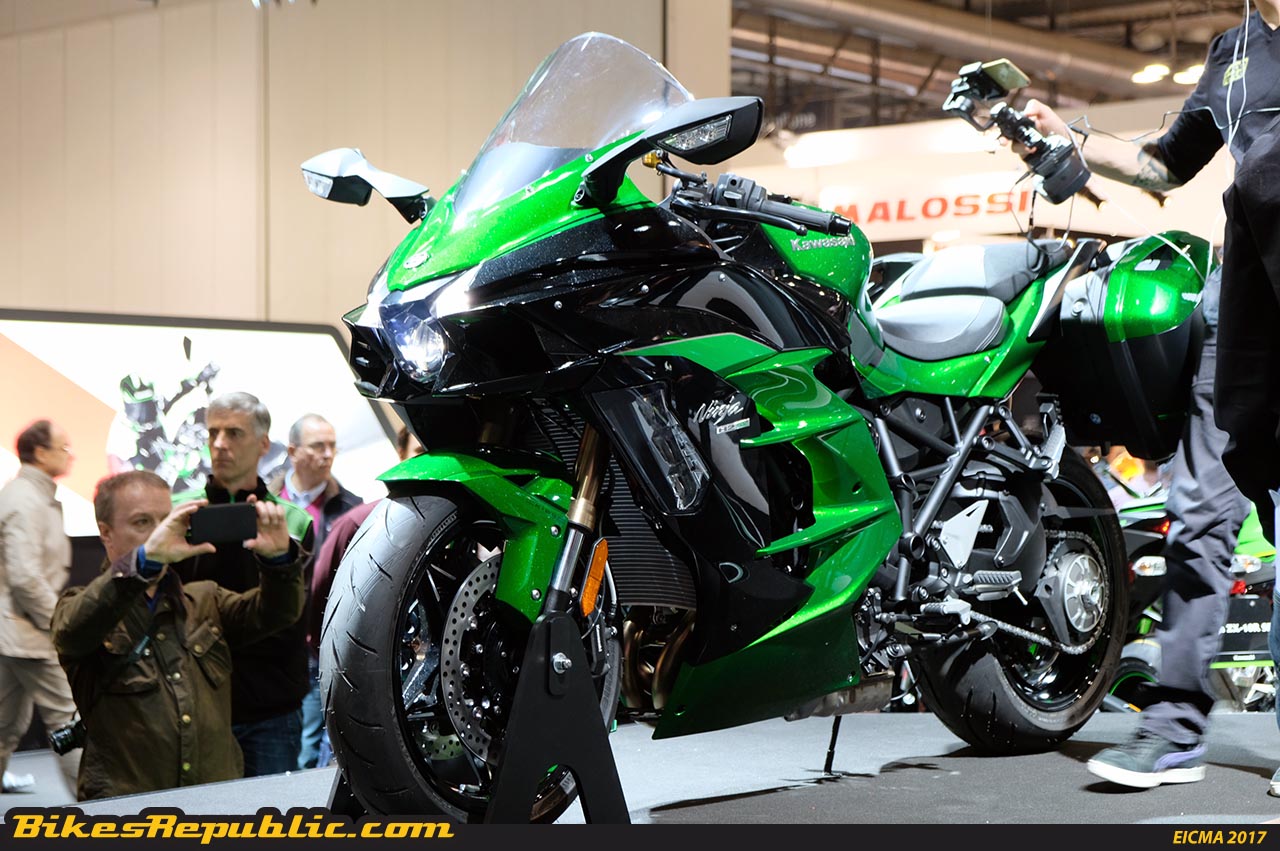
Some reliable sources have indicated that the 2018 Kawasaki H2 SX might arrive in Malaysia sometime in May.

Kawasaki Motors Malaysia (KSMB) did announce before that it’ll debut within the second quarter of 2018.

As for pricing, our best guess would be somewhere around the RM150,000 range.

The world’s most powerful touring motorcycle that is the 2018 Kawasaki Ninja H2 SX which was launched late last year during EICMA 2017 in Milan, Italy will be making its way here in Malaysia. The good news is that it might be closer than you think so those who are interested can start saving up for the world’s only production sport-touring motorcycle. (more…)

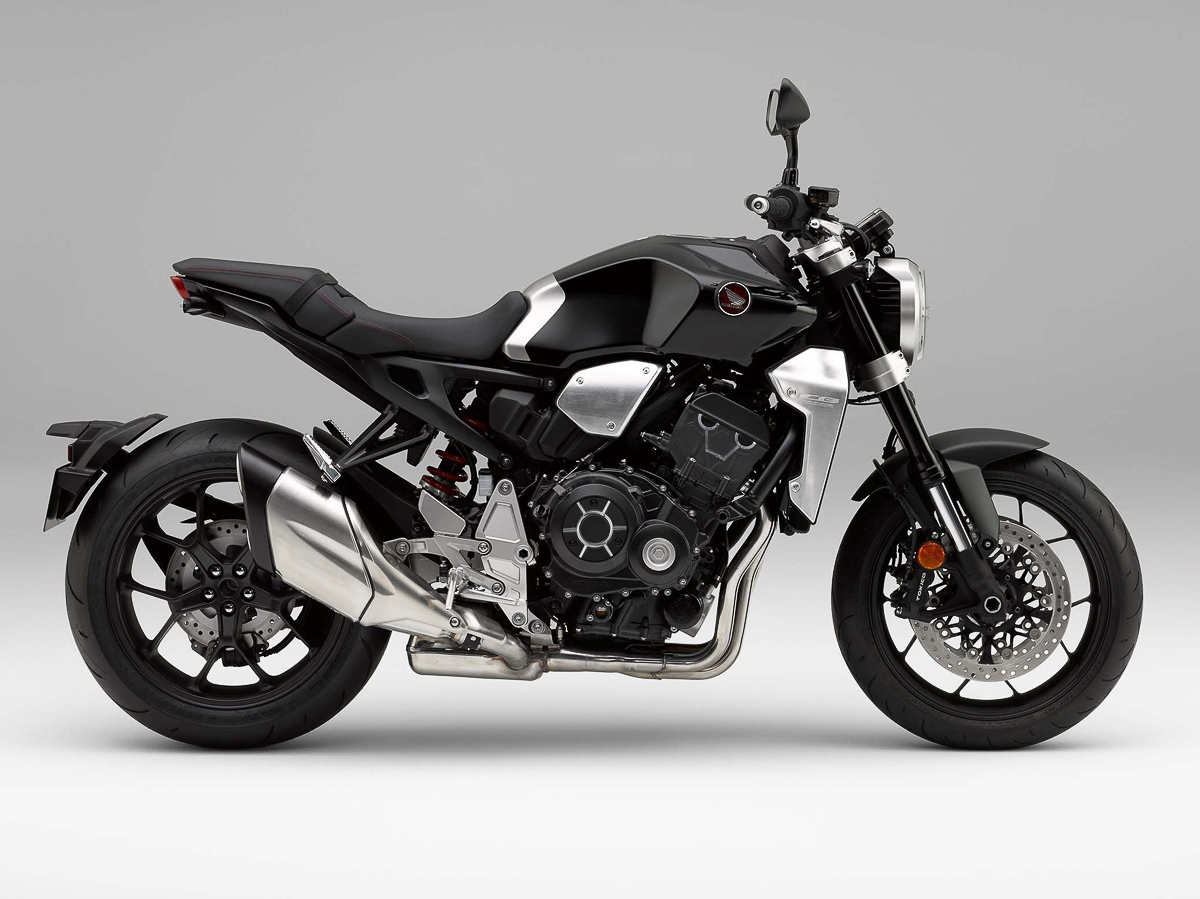
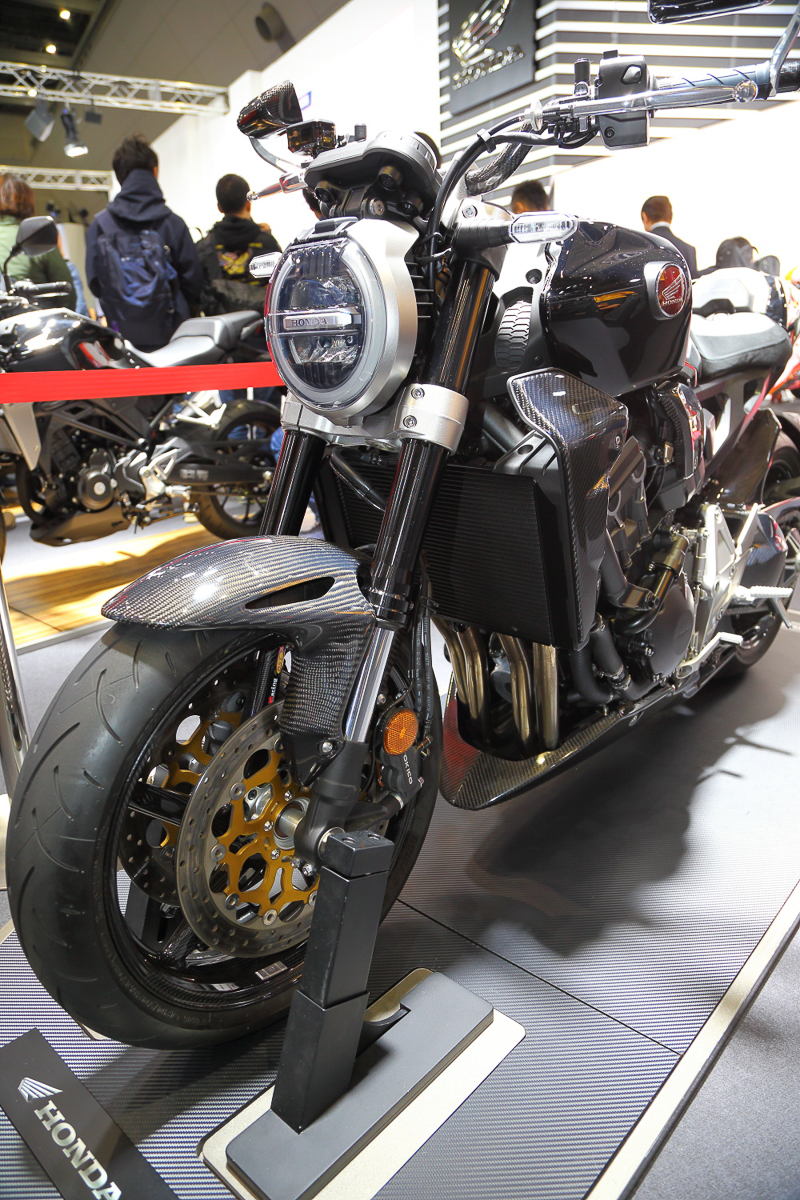
A one-off custom carbon fibre 2018 Honda CB1000R Carbon Edition was revealed during the 2018 Tokyo Motorcycle Show.

Built by Magical Racing, everything from its wheels to handlebars have been replaced with carbon fibre parts.

A Yamamoto Racing Spec-A full-system exhaust with gold silencer brings everything together.

It was only a few months ago when Honda unleashed their latest ‘Neo Sports Cafe’ machine called the 2018 Honda CB1000R. Their super capable naked bike was taken to an entirely new level this year at the 2018 Tokyo Motorcycle Show when a custom Honda CB1000R have been literally drowned in carbon fibre. (more…)

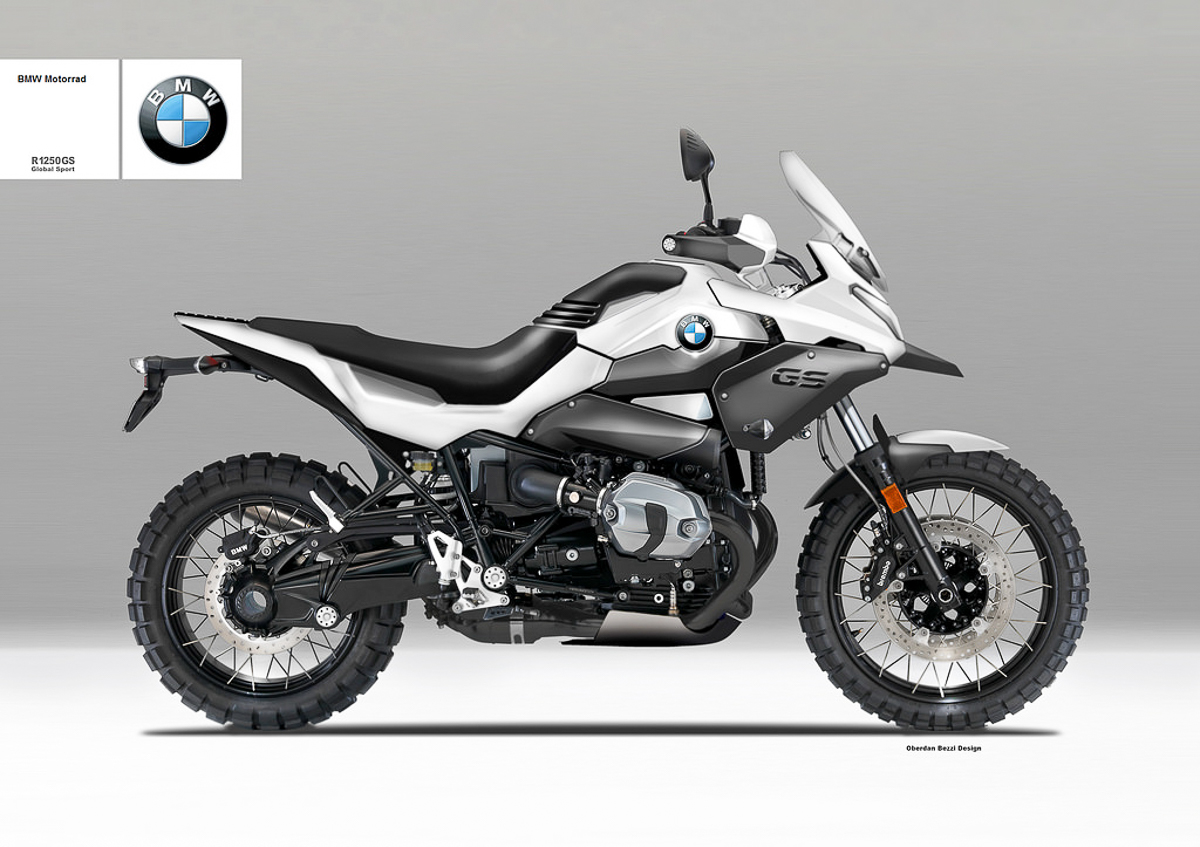
This BMW R1250 Global Sport Concept was designed by Oberdan Bezzi.

Designed to be a sportier touring machine, the BMW R1250 has a lower and more aggressive stance.

Powered by a 1,250cc air-cooled boxer engine, conquering any riding terrains would be easier and faster.

When it comes to the world of touring motorcycles, there are many candidates to fill in the place but none more so than BMW Motorrad and their hyper-capable GS series. From its birth up until the present, there’s basically a GS model for anyone and everyone looking for the perfect adventure machine that’ll basically take them everywhere. (more…)

  • It’s touring season for Malaysian bikers again.

  • While one could tour with any bike, riding one which is designed specifically for the purpose would be perfect.

  • We start with dual-purpose (DP) machines.

Touring season is upon us Malaysian bikers head out to tour the country as well as to Thailand for Songkran, Phuket Bike Week and various our locations. As the saying goes, “Always use the right tool for the right job,” it applies to the type of bike, too. Of course, there are hardcore riders who tour all the way to Chiang Mai in northern Thailand on 1970s Vespas and Lambrettas or mopeds, but there’s nothing like riding purpose-built machines.

We’ve put together a collection of bikes that we’ve tested and a (very) few that we hadn’t. However, we start with dual-sports (DP) motorcycles in Part 1.

As the designation implies, dual-sport motorcycles are suited for rough road and off-road riding, hence you could safely handle difficult situations (such as broken roads, dirt from a previous landslide should they arise handle well even at low speeds. They are also able to carry lots of luggage in addition to a passenger with ease. Long travel suspension soaks up surface irregularities, contributing to rider comfort. Adventure-tourers usually have bigger fuel tanks too, for longer ranges. Many, if not all, feature lower engine compression ratios meaning they could accept lower octane fuel.

Please note that we’ve left out the enduro-style DPs as they have limited range and luggage carrying capacity for long-distance touring.

LIGHTWEIGHT

The lightweight DP motorcycle segment isn’t necessarily new if you include enduros and trail bikes; but the segment is now joined by the “mini” Versys and GS.

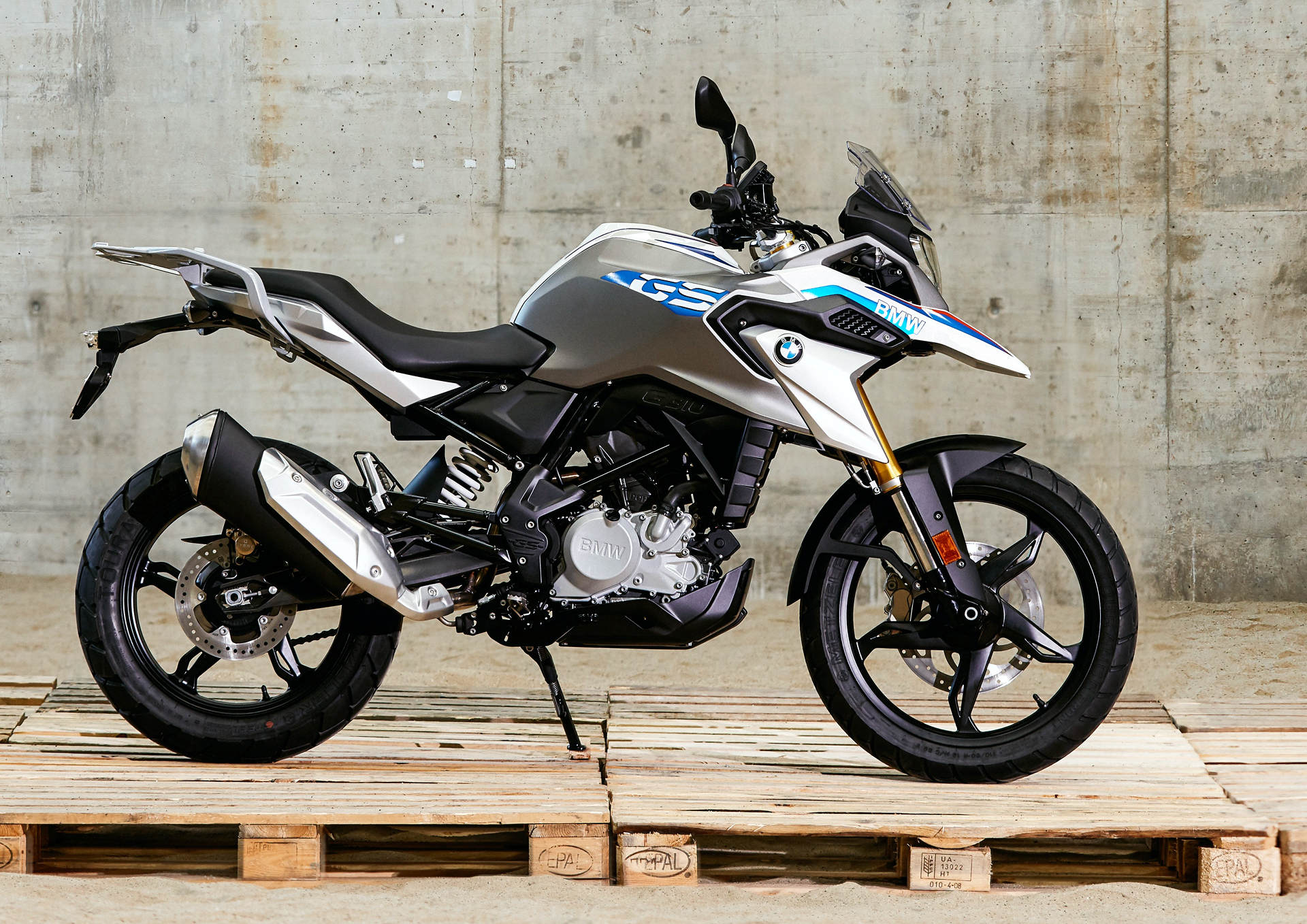
BMW G 310 GS

The G 310 GS is the adventure version of the G 310 R roadster. (Please click here for our full review.) BMW Motorrad intended the bike for the far-flung markets hence the affordability and simplicity of these models. The G 310 GS is commendably fast on tarmac and has a great balance when ridden off-road.

Engine type Liquid-cooled, 4-stroke, DOHC, 4-valves, single-cylinder
Displacement 313 cc
Maximum power 34 bhp (25 kW) @ 9500 RPM
Maximum torque 28 Nm @ 7500 RPM
Seat height 835 mm (unladen)
Wet weight 169.5 kg (ready to ride)
Fuel capacity 11 litres
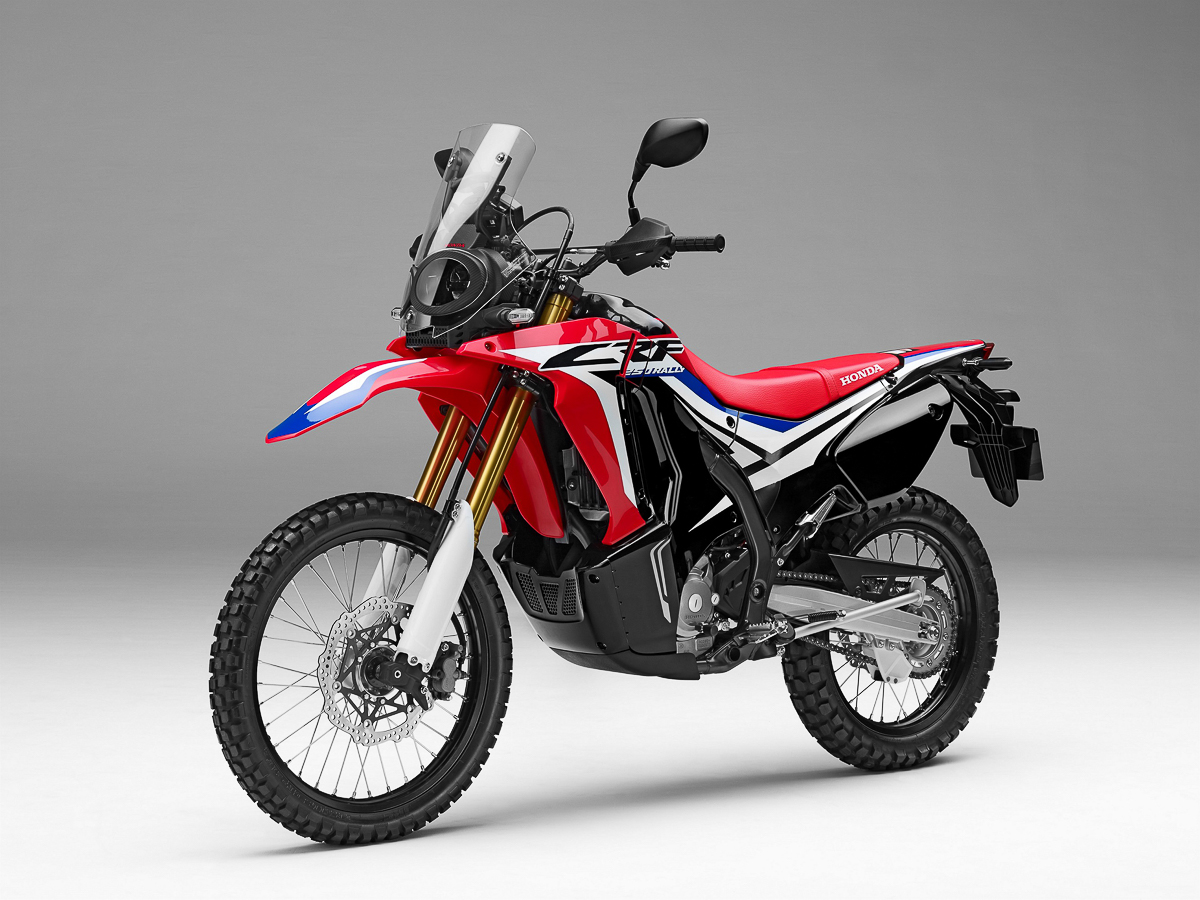
HONDA CRF250 RALLY

The CRF250 Rally is probably the best-looking bike in this lightweight group. (Please click here for our full review.) It features a handsome bodywork, along the lines of its CRF1000L Africa Twin bigger brother and will all the beautiful Honda quality you can shake a stick at. The engine is derived from the CBR250 and its got a nice set of LED headlamps. The CRF250 Rally is geared more towards relaxed off-road trail riding, hence it isn’t a real roadrunner. But if your holiday plan calls for riding off-road and camping, it’s hard to beat this bike.

Engine type Liquid-cooled, 4-stroke, DOHC, 4-valves, single-cylinder
Displacement 249 cc
Maximum power 23 bhp (24.7 kW) @ 8500 RPM
Maximum torque 22 Nm @ 7000 RPM
Seat height 895 mm
Wet weight 157 kg
Fuel capacity 10 litres
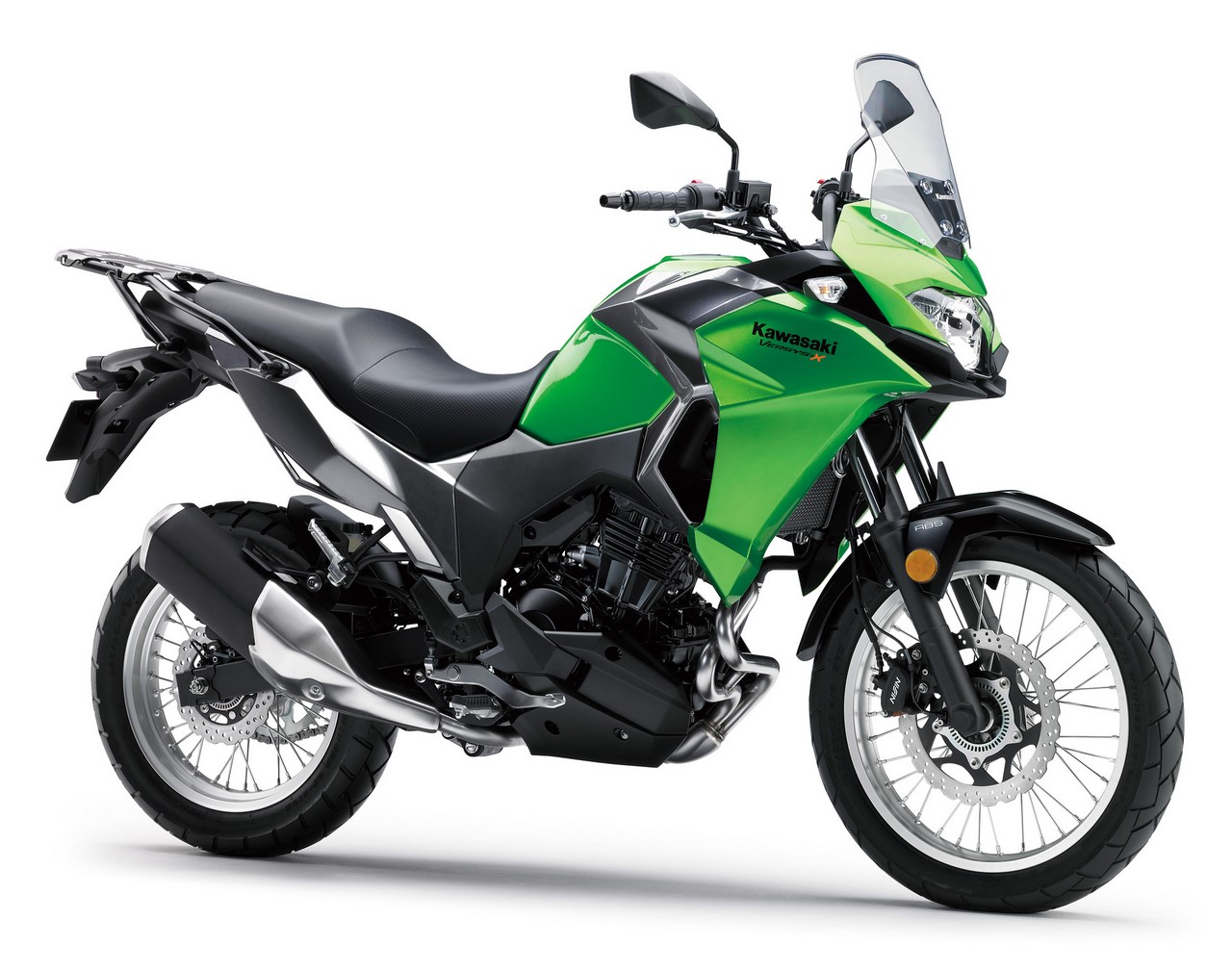
KAWASAKI VERSYS-X 250

It could be said that the Versys-X burst onto the scene. (Please click here for our full review.) Here was a bike that resembles the popular KLR650, is very light and has a lively 250cc engine sourced from the Ninja 250. Kawasaki had given the Versys-X longer legs (presumably for off-road riding), incidentally making it a quick road bike. The suspension may feel a little simple but it gets the job done in absorbing hard bumps supporting the occupants’ weight plus luggage.

Engine type Liquid-cooled, 4-stroke, DOHC, 4-valves, parallel-Twin
Displacement 249 cc
Maximum power 33.1 bhp (24.7 kW) @ 11500 RPM
Maximum torque 21.7 Nm @ 10000 RPM
Seat height 815 mm
Curb weight 173 kg
Fuel capacity 17 litres

MIDDLEWEIGHT

While the middleweight sport-touring segment is the most hotly contested, there are not many middleweight DPs except for BMW and Triumph in Malaysia.

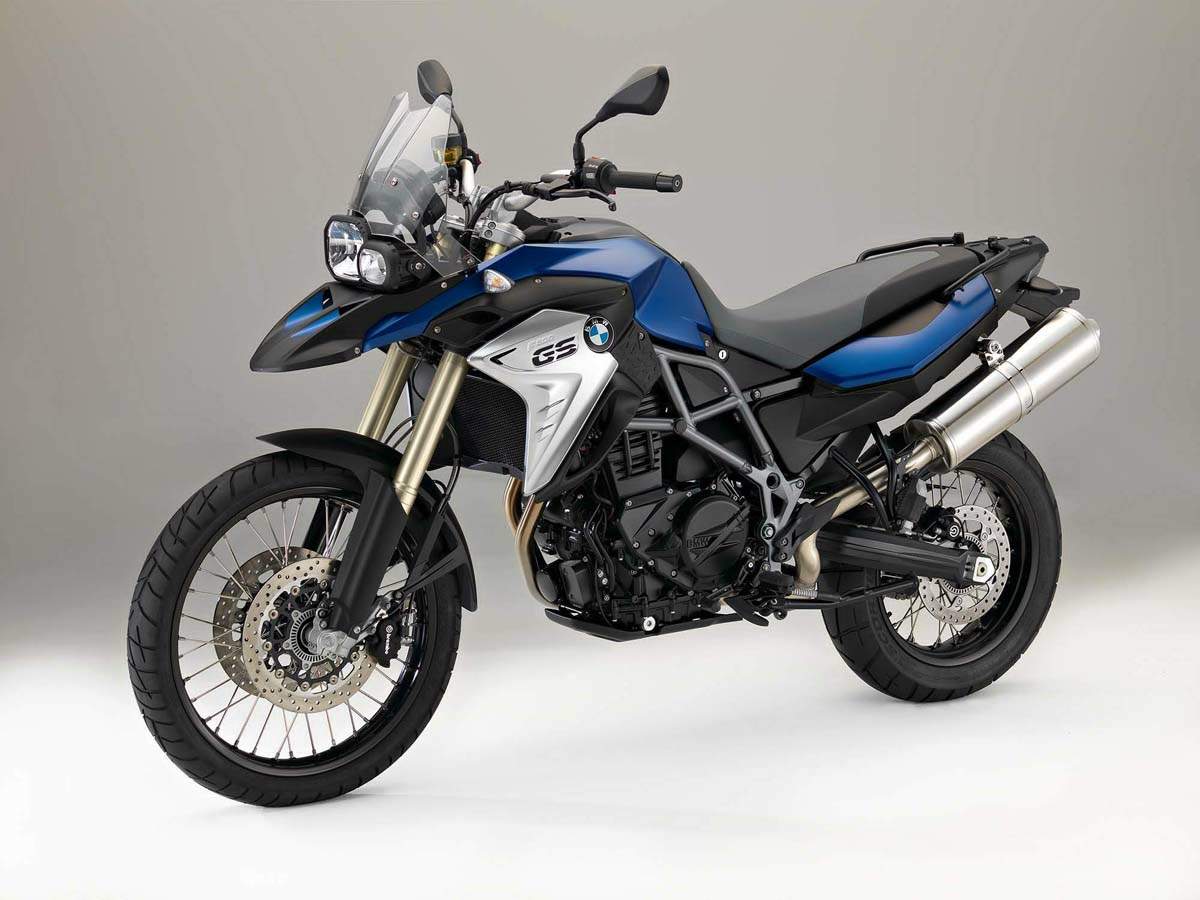
BMW F 800 GS / F 800 GS ADVENTURE

The BMW F 800 GS and its Adventure variant has been around for some time. Slender cross-section and midsection, long travel suspension, ability to haul luggage, simplicity in maintenance and repair makes it the favourite among BMW riders who love to ride off-road. The model is slated for replacement by the new F 850 GS.

Engine type Liquid-cooled, 4-stroke, DOHC, 4-valves, parallel-Twin
Displacement 798 cc
Maximum power 85 bhp (62.5 kW) @ 7500 RPM
Maximum torque 80 Nm @ 5750 RPM
Seat height 890 mm
Wet weight 229 kg
Fuel capacity 24 litres

*Specifications based on the F 800 GS.

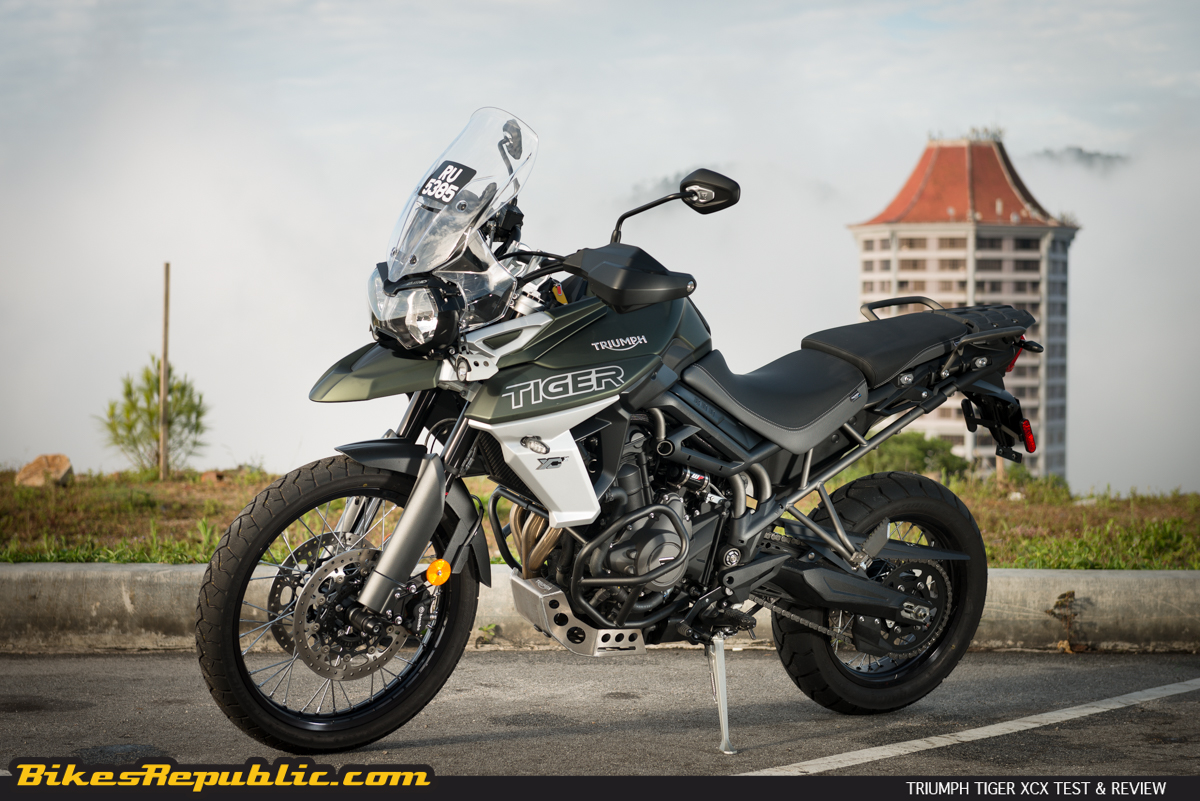
TRIUMPH TIGER 800

The Triumph Tiger 800 had enjoyed splendid sales and following from the previous model and the Hinckley-based manufacturer had successfully updated the 2018 model to make it even better. (Please click here for our full review.) There were 200 revisions just to the engine and chassis, there’s a new TFT screen and switchgear lifted from the Street Triple RS, bigger and adjustable windscreen and comfy seats, among other things. Updates to the chassis has resulted in a surefooted, confident ride. Refined Ride Modes, traction control and smooth engine power delivery sets new standards. The Triumph Tiger 800 is currently the best 800cc DP.

Choose from two different lines and six specs: XCx and XCa are adventure oriented, while the XR, XRx, XRx LRH and XRt are more road-oriented.

Engine type Liquid-cooled, 4-stroke, DOHC, 4-valves, inline-Triple
Displacement 800 cc
Maximum power 95 bhp (62.5 kW) @ 9500 RPM
Maximum torque 79 Nm @ 8050 RPM
Seat height 840 – 860 mm
Dry weight 205 kg
Fuel capacity 19 litres

*Specifications based on the Tiger 800 XCx.

HEAVYWEIGHT

This segment is populated by the technologically-laden heavy hitters. Everything from electronic suspension to lean-sensitive traction control and ABS are found here.

BMW R 1200 GS / R 1200 GS RALLYE / R 1200 GS ADVENTURE

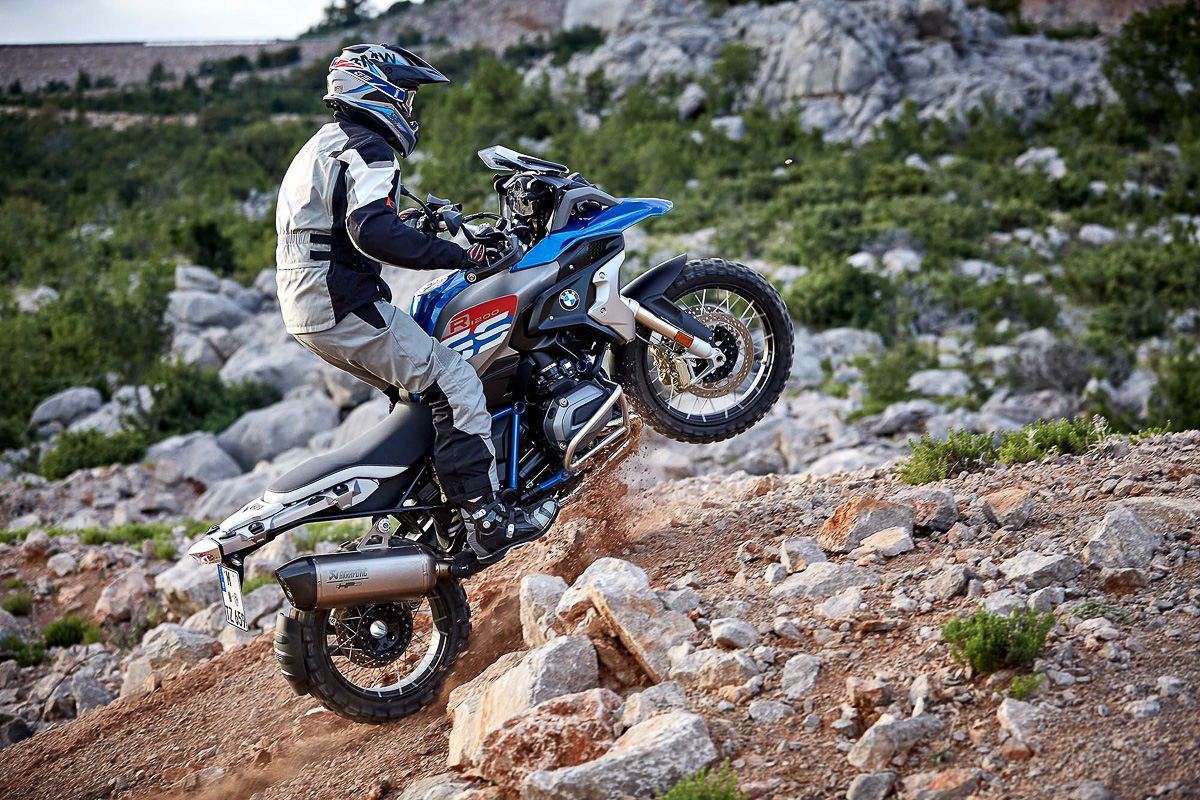
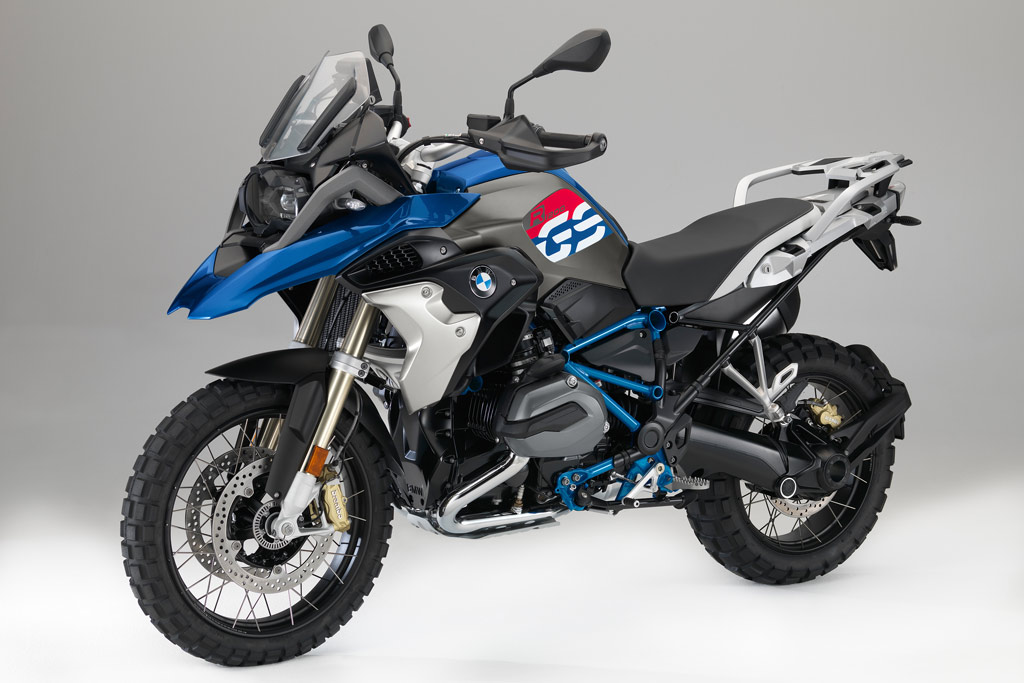
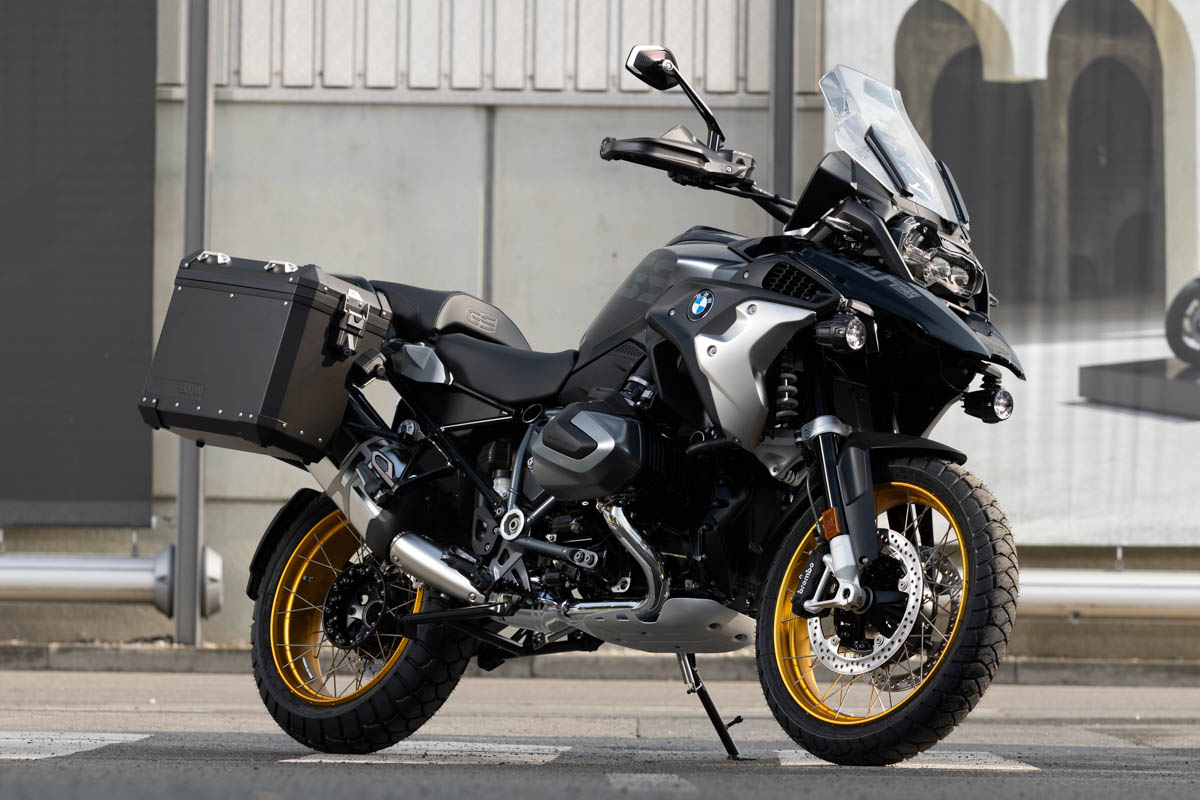
What else could be written about the massively popular BMW R 1200 GS that hasn’t been? Long-range comfort, ability to haul everything apart from the house itself (216 kg permissible payload), goes anywhere, etc. etc., and it just keeps getting better and better.

Engine type Liquid-cooled, 4-stroke, DOHC, 4-valves, Boxer-Twin
Displacement 1170 cc
Maximum power 125 bhp (92 kW) @ 7750 RPM
Maximum torque 125 Nm @ 6500 RPM
Seat height 850 – 870 mm
Kerb weight 244 kg
Fuel capacity 20 litres

*Specifications based on the BMW R 1200 GS Rallye.

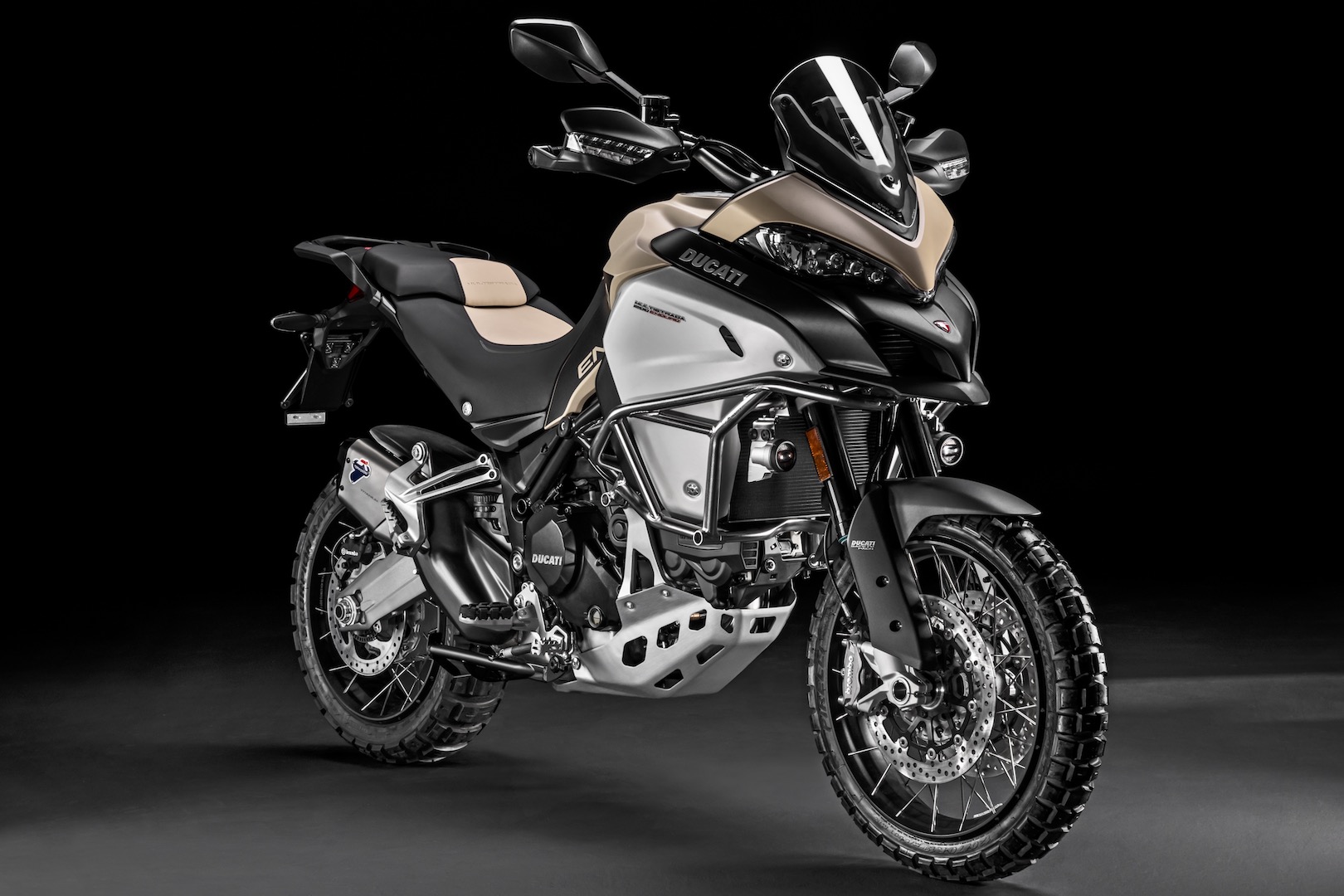
DUCATI MULTISTRADA 1200 ENDURO / MULTISTRADA 1200 ENDURO PRO

Although the Multistrada 1200 (and Multistrada 1200S) include an “Offroad” ride mode setting, it isn’t truly capable of taking on the gnarlier stuff other than a kampong (village) trail. Ducati knew they had a great sport-tourer but they were missing out on the go-anywhere territory, which is dominated by BMW and KTM.

Ducati revised the bike to give the Enduro more offroad capabilities such as the riding position, wheels, suspension, seat, handlebar, windscreen, gearing, traction control and a 30-litre fuel tank. The Enduro Pro version is fitted out with offroad accessories. The wonderfully smooth DVT-equipped engine is retained.

Engine type Liquid-cooled, 4-stroke, DOHC, 4-valves, 90o V-Twin
Displacement 1198 cc
Maximum power 160 bhp (117.7 kW) @ 9500 RPM
Maximum torque 136 Nm @ 7500 RPM
Seat height 870 mm
Kerb weight 254 kg
Fuel capacity 30 litres

*Specifications based on the Multistrada 1200 Enduro.

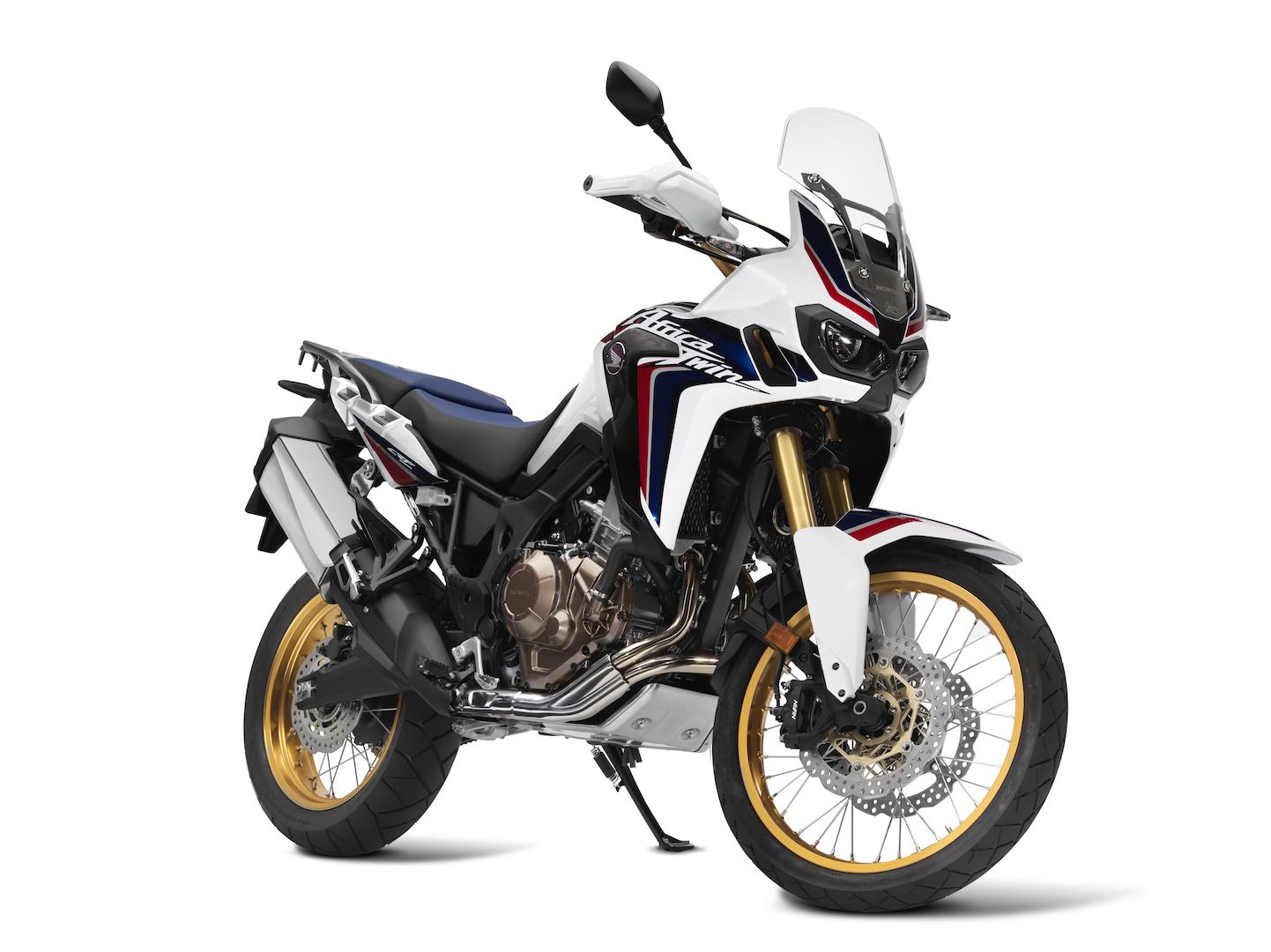
HONDA CRF1000L AFRICA TWIN

The Africa Twin name is one which is synonymous with DP that many fans cursed and swore when production stopped from 2004. Its comeback in 2016 was hailed as one of the biggest events and it has been selling steadily since then. Honda’s quality is on every control and surface you see and touch, and it’s offered in manual or Honda’s proprietary DCT automatic transmission. It’s one of the easiest big bore machines to ride.

Engine type Liquid-cooled, 4-stroke, DOHC, 4-valves, parallel-Twin
Displacement 998 cc
Maximum power 93.8 bhp (70 kW) @ 7500 RPM
Maximum torque 98 Nm @ 6000 RPM
Seat height 850 – 870 mm
Kerb weight 232 kg
Fuel capacity 19 litres

*Specifications based on the manual transmission option.

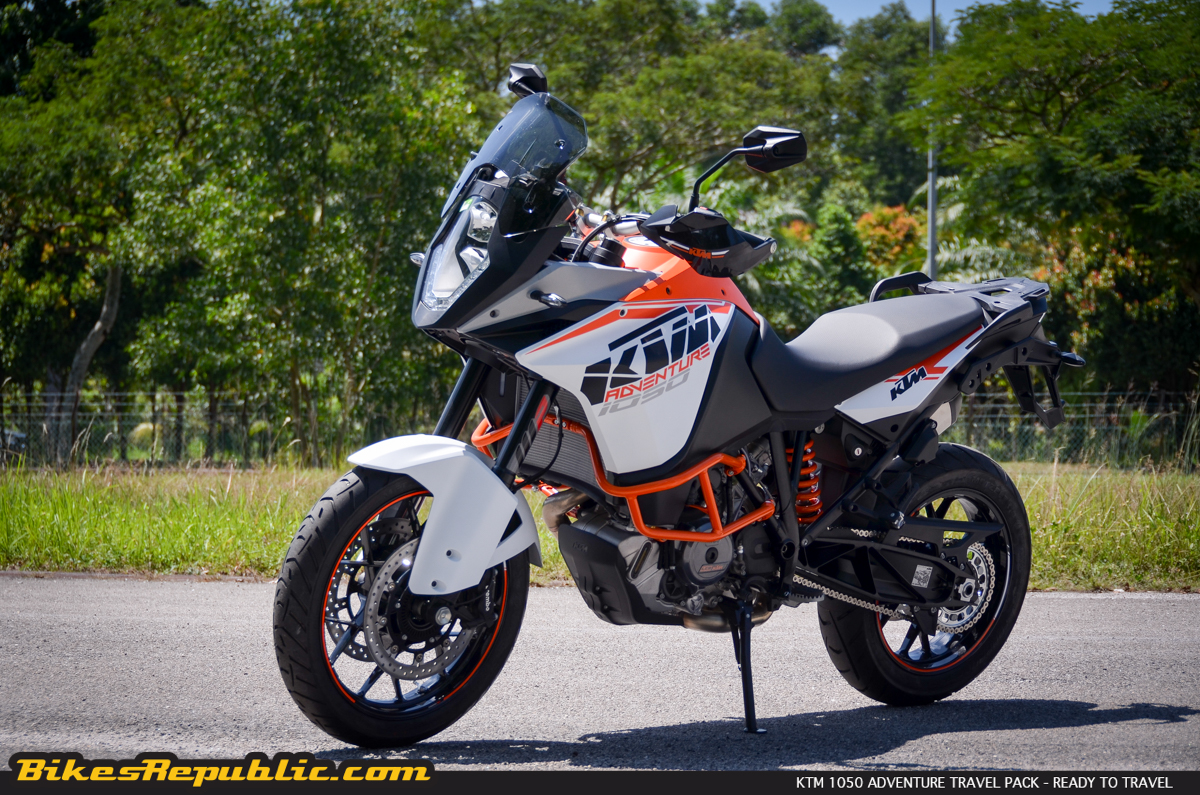
KTM 1050 ADVENTURE

The KTM 1050 Adventure is the model to entice new adventure riders into the Austrian giant’s adventure lineup.

Low seat height, low weight, easy handling are its core characteristics. It may not have as much technology such as the 1290 range but it holds its own with stuff like three Power Modes, assist and slip clutch, two-channel ABS, and a torquey engine. It may be a road-centric bike but all you need is a set of adventure tyres to ride both on and off-road.

Engine type Liquid-cooled, 4-stroke, DOHC, 4-valves, 75o V-Twin
Displacement 1050 cc
Maximum power 93.8 bhp (68.8 kW) @ 6200 RPM
Maximum torque 107 Nm @ 5750 RPM
Seat height 850 mm
Dry weight 212 kg
Fuel capacity 23 litres
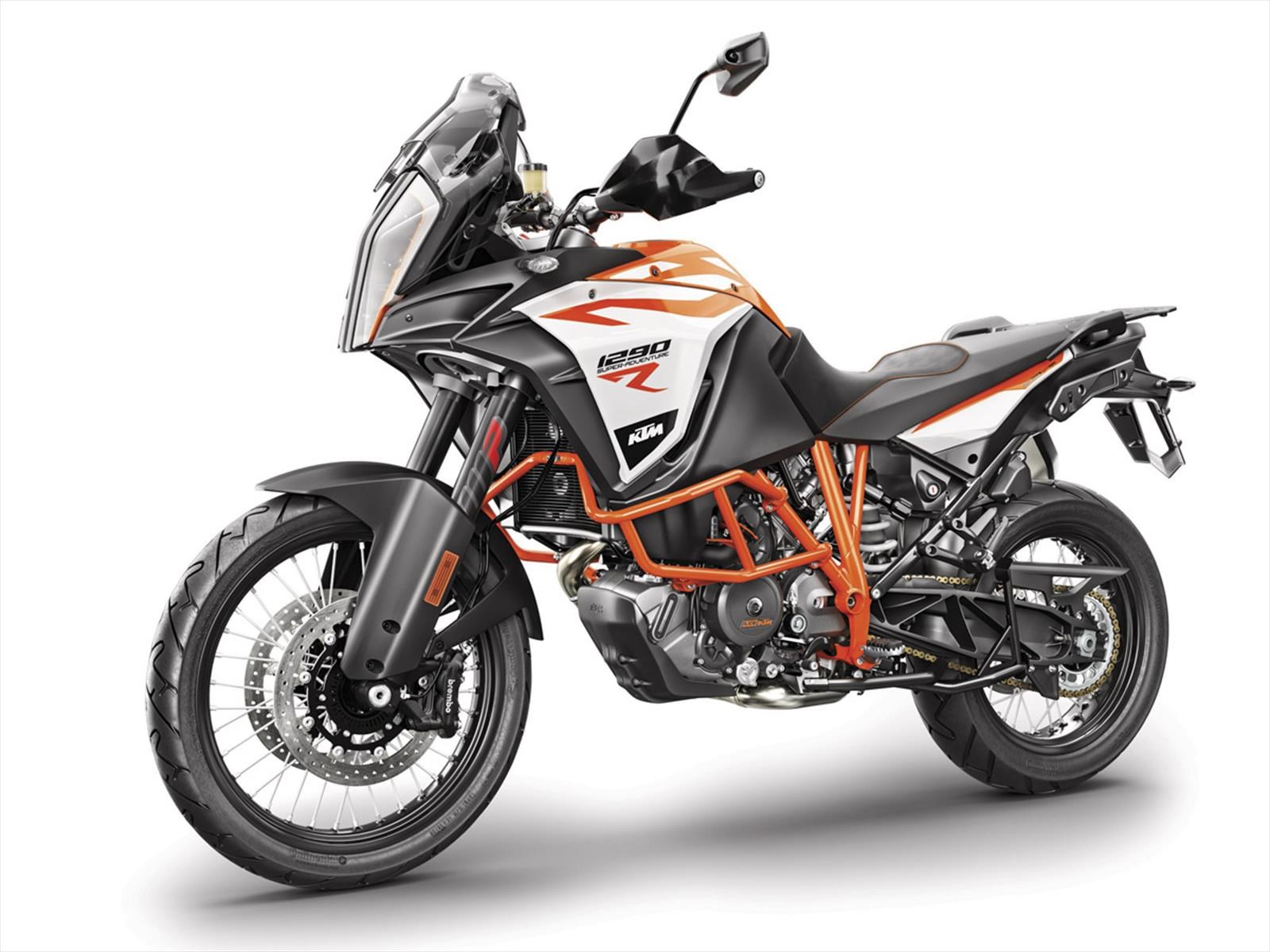
KTM 1290 SUPER ADVENTURE R

There are two versions of the 1290 Super Adventure. The 1290 Super Adventure S is for the road (although it could do off-road too), while the 1290 Super Adventure R is geared for off-road riding. The 1290 Super Adventure lineup consists of technological marvels and are “fierce” bikes if you choose to ride fast (only 5 kg more than the 1050 Adventure but with 160 bhp on tap), but they are also civil when ridden at sane speeds. The new 1290 Super Adventure R also look great with that distinctive LED headlight. As we mentioned before there are so much technology to list down but the main ones are electronically controlled WP Semi-Active suspension, lean-sensitive traction control and ABS, five riding modes. Owners can opt for the Travel Pack which includes Hill Hold Control, Motor Slip Regulation, up and down Quickshifter+, KTM My Ride which turns the 6.5-inch LCD instrument panel into your communications centre. The 1290 Super Adventure R differs from the S-version in the wheels, windscreen and off-road traction control strategy.

Engine type Liquid-cooled, 4-stroke, DOHC, 4-valves, 75o V-Twin
Displacement 1031 cc
Maximum power 160 bhp (118 kW) @ 8750 RPM
Maximum torque 140 Nm @ 6750 RPM
Seat height 890 mm
Dry weight 217 kg
Fuel capacity 23 litres
  • Racing paint schemes highlight the manufacture’s brand and sponsors.

  • Factories then build race replica motorcycles to “commemorate” the racing.

  • Here are a few great looking race replica bikes that we’ve singled out.

Are they a way for manufacturers to charge more or are they artifacts resulting from reminiscence of old time fans? There are many race replicas resplendent in similar or even sometimes identical paint schemes and decals, but there are only a few that looked truly good, and we’ve picked out the best. Did we miss any? You be the judge.

1. Any Yamaha with Speed Blocks

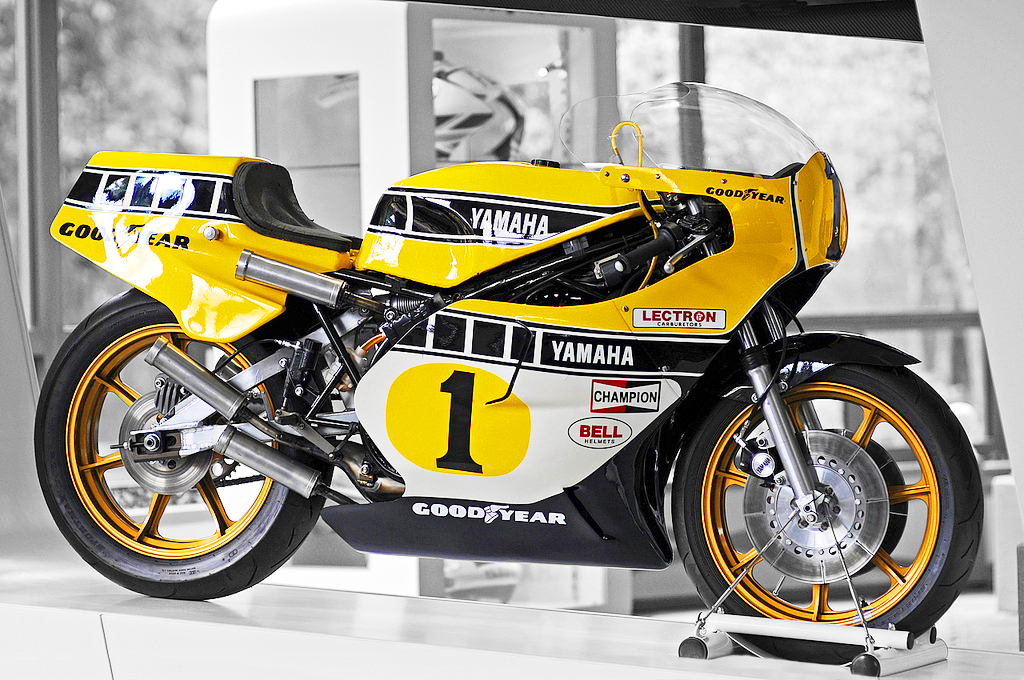
The yellow and black “Speed Blocks” are so anonymous with Yamaha that you could remove all the brand’s stickers and emblems and people still would not mistake one as any other brand. It started in 1972 as a racing branding exercise and it was on “King” Kenny Roberts’ exploits that made it one of the most – if the most – enduring paint schemes. (Roberts was the AMA Grand National Champion in 1973 and 1974, and Motorcycle Grand Prix World Champion from 1978 to 1980).

Yamaha “issued” the Speed Block design on the RD400 in 1977, and certain special models later on, but the design is so popular that Yamaha owners, regardless of type of bike, would regularly makeover their bikes in that scheme.

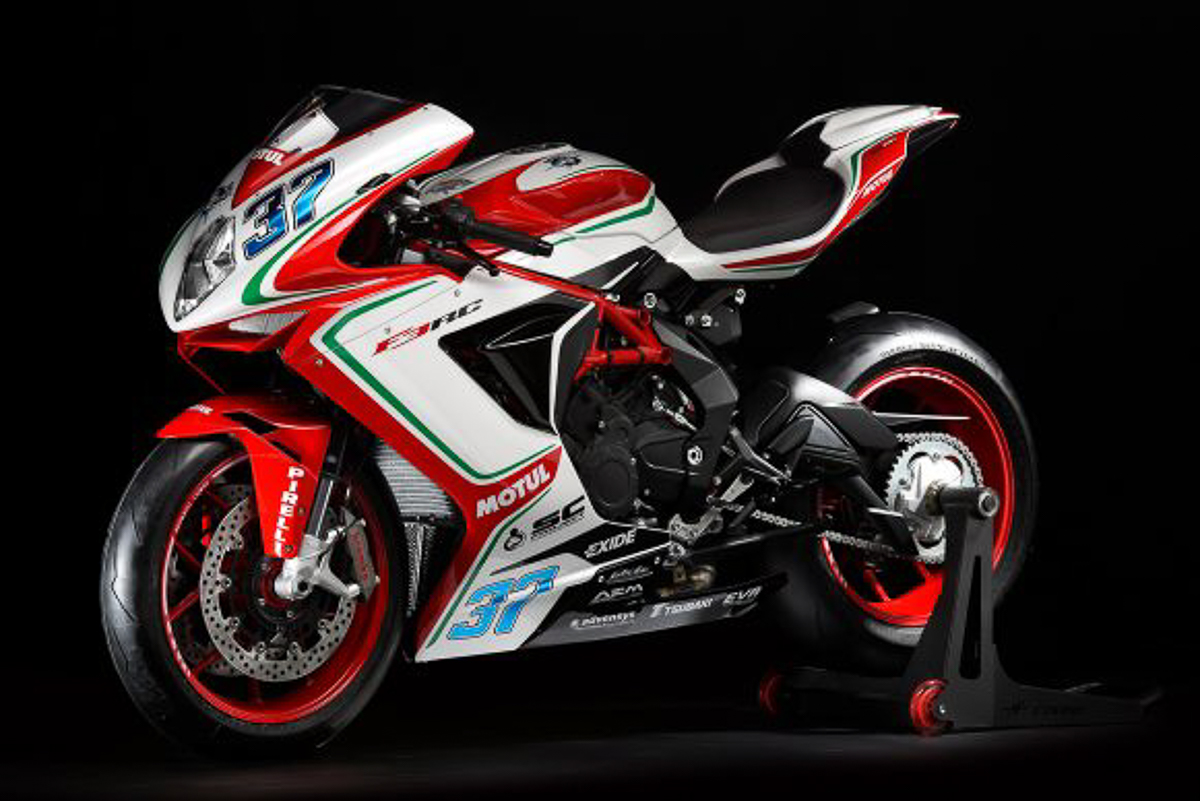
2. MV Agusta F3 657 RC and F3 800 RC

MV Agusta had a good run in the World Supersport Championship (WSSP)  in 2016 on the three-cylinder F3 and decided to market the F3 657 RC and F3 800 RC (RC for Reparto Corse loosely meaning racing department in Italian) race replica models.

But it was the revised for 2018 graphics that were the real beauty. Every strip was designed to either highlight or complement the F3’s svelte yet aggressive lines and wedges. The Tricolore scheme was tastefully done with enough restraint that one could not mistake the bike for its Italian heritage yet not ashamed as being “overly Italian.”

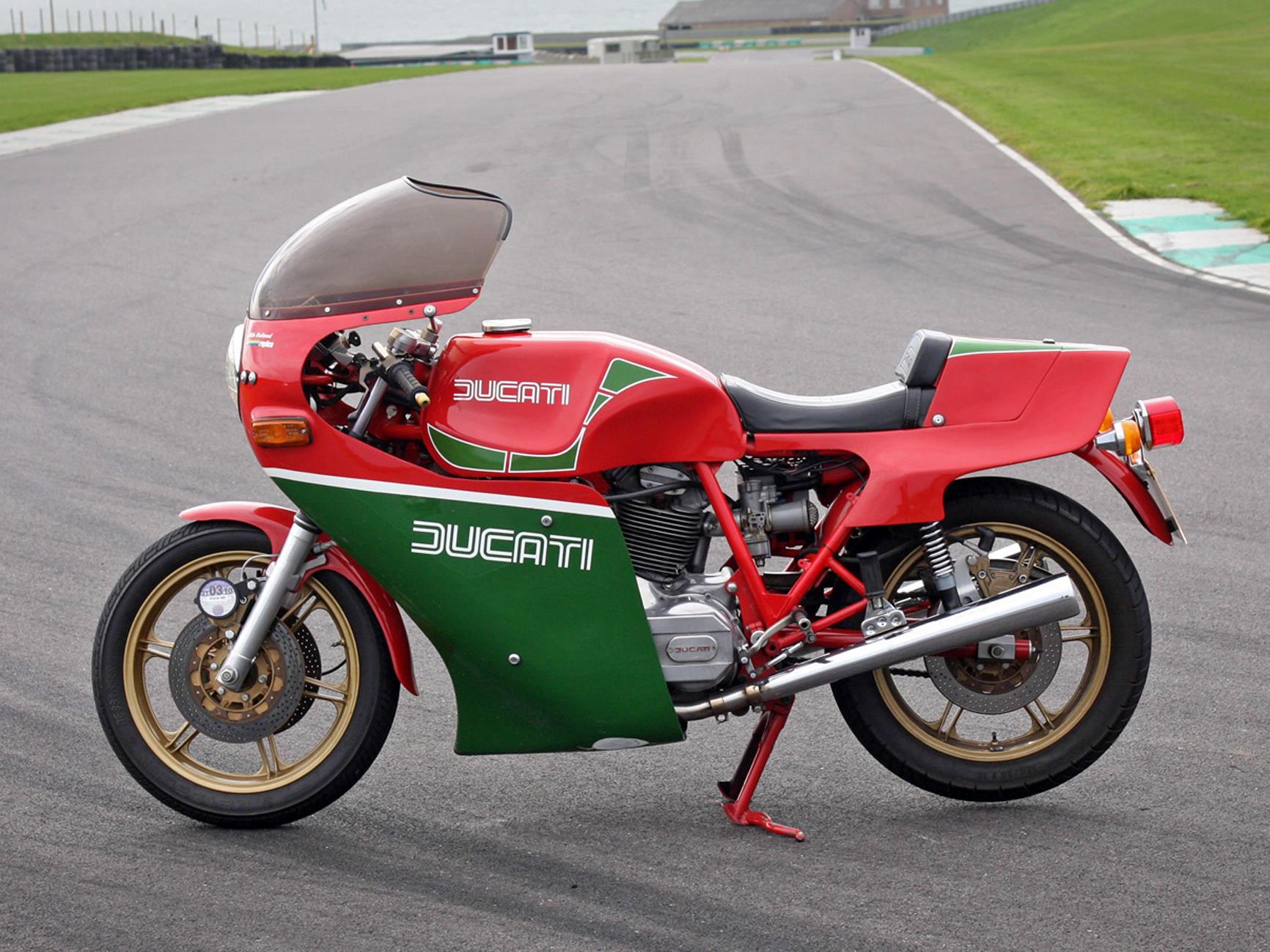
3. Ducati 900 MHR (Mike Hailwood Replica)

If you looked at a colour wheel, red and green are complimentary colours. Well, they are the primary colours of Christmas, after all. However, they somehow do not seem to agree in automotive applications. Except if you are of Italian origin. We are not talking about the classic Italian flag’s Tricolore scheme with a little bit of the three colours throughout here, we are pointing to the huge panels of red and green motif.

Ducati 900 MHR – Photo credit Pinterest.com

But it worked great on the 1979 Ducati 900 Mike Hailwood Replica (MHR), which Ducati created after Mike the Bike’s emphatic win at the Isle of Man TT. It sure did not look like a something Santa would ride does it? Try the same scheme on a Panigale and see what happens.

4. Honda RC30

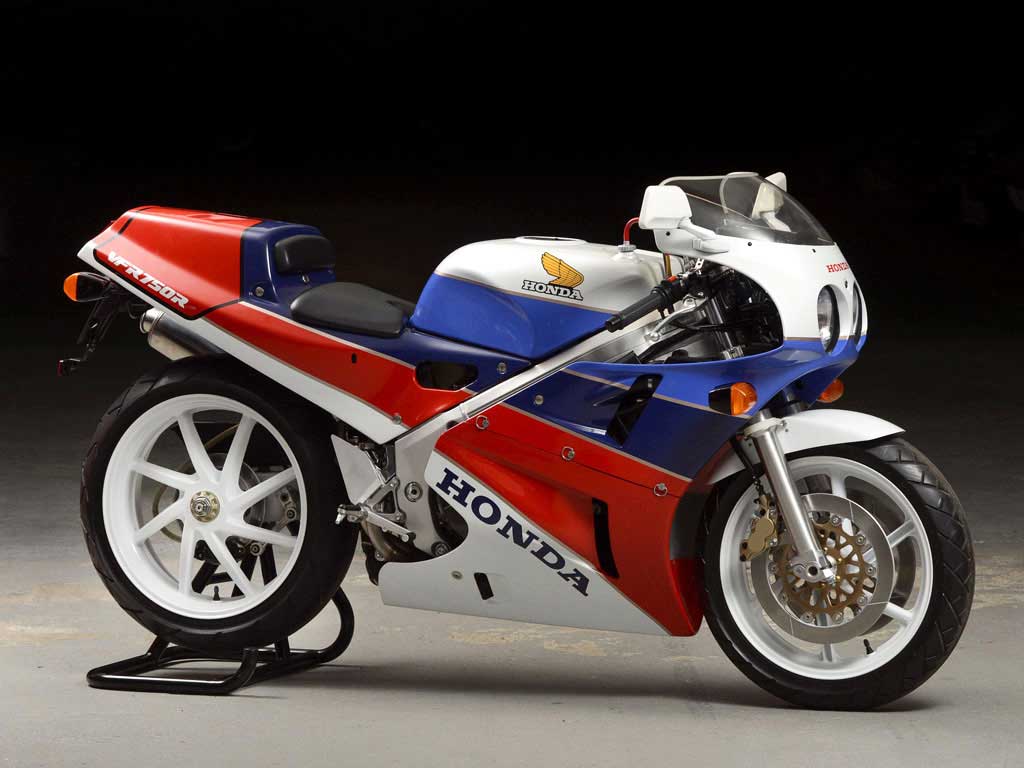
The 1987 Honda VFR750R – better known as the RC30 –  was produced by the Honda Racing Corporation (HRC) as a homologation model for superbike racing. Hence, the 750cc V-4 bike was a rolling technological wonder, echoing Honda’s desire to conquer the championship. It was consequently a damn expensive motorcycle when it was launched. Fred Merkel rode it to the inaugural World Superbike Championship in 1989.

Honda RC30 – Photo credit half-mag.com

But as much as the bike was fast and laden with cutting edge technology, it was how Honda painted the bike that made it so achingly beautiful. The combination of large swaths of white, blue, red then white again with those snowy white wheels became legendary. The bike still looks fresh at after 31 years. Only 3000 were ever built.

Let’s not mention the Castrol livery though.

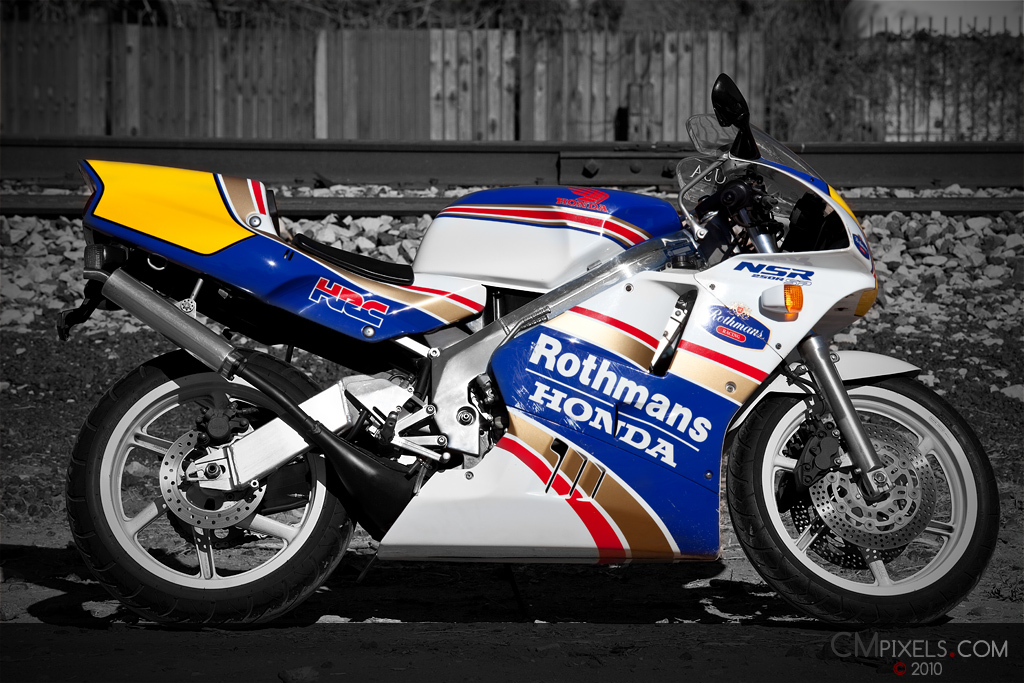
5. Rothmans Honda

Smoking is a nasty habit. Okay, we’ve got that out of the way.

The heydays of Honda’s racing dominance were on bikes painted in Rothmans colours. So many bikes and champions came from the era when tobacco money bankrolled racing, such as Freddie Spencer, Wayne Gardner, Eddie Lawson, Mick Doohan on Honda machinery in the 500 GP. But it wasn’t only motorcycle racing, as Rothmans covered many over racing championships too including the Porsches in Le Mans and Paris-Dakar Rally.

The sponsorship theme was channeled down to race replica road bikes as well, including that famous NSR250R SP in the Hong Kong movie Full Throttle starring Andy Lau.

Honda NSR250R SP – Photo credit CMPixels.com

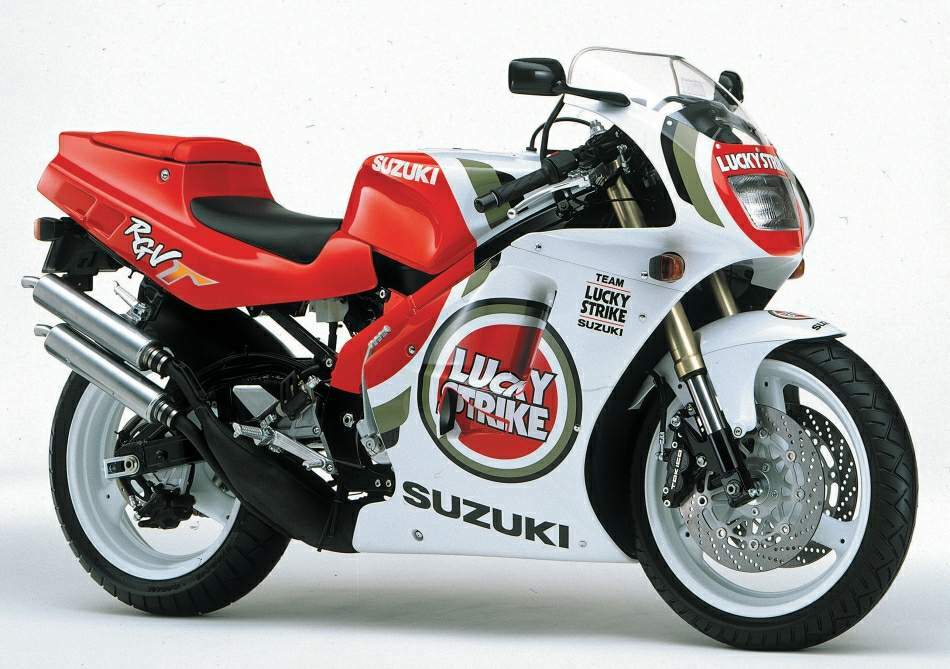
6. Lucky Strike RGV250

More of tobacco advertising but those were the best-looking bikes by far. Or is it this writer’s age?

Lucky had started their foray into 500cc World GP by sponsoring the Yamaha factory team in which Wayne Rainey and Kevin McGee were riders. Rainey won the 1990 championship.

Suzuki RGV250 Lucky Strike – Photo credit motorcyclespecs.co.za

But the even more famous was when Lucky Strike sponsored the Suzuki team, and the rider was none other than Rainey’s fiercest rival, the lanky Texan Kevin Schwantz. Although Rainey was the most successful rider in their contest by being crowned champion three years in a row, Schwantz was the wild one, providing the best entertainment to millions of spectators the world over and made a lasting impression on a future multiple world champion, Valentino Rossi.

The Lucky Strike colours stuck with Schwantz throughout his career, through his 1993 championship-winning year and his retirement in 1994.

Suzuki had stopped producing the gob-smacked powerful RG500 many years earlier and the closest two-stroke was the RGV250 Gamma. So, the Hamamatsu based manufacturer did the right thing by lucky-striking the bike from 1992. Just as the Speed Blocks were invariably tied to Yamaha, so was the Lucky Strike paint scheme to Suzuki, so much so that so many Suzukis bore those two words in a golden-brown circle. Needless to say that many RGV250s were painted by owners to mimic Schwantz’s bike.

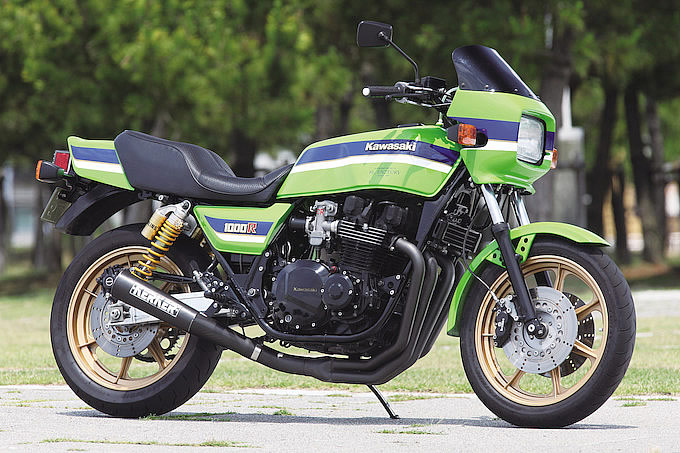
7. Kawasaki Z1000R ELR

Aw, nevermind the Kawasaki Z900RS. Yes, yes it’s the soul successor to the legendary 1972 Z and a wonderful bike, but the most beautiful race replica Kawasaki has to be the 1982 KZ1000R.

The story started in 1981 with many unsold KZ1000J (a beefed-up Z1). But Eddie Lawson had just won the AMA Superbike Championship and Mike Vaughn, Kawasaki’s Marketing Director in America suggested to Kawasaki to build an Eddie Lawson race replica. Kawasaki agreed and they built the KZ1000R from the KZ1000J as the base model with parts added from the GPz1100.

Kawasaki KZ1000R ELR

But long story short, the KZ1000R ELR (for Eddie Lawson Replica) looks just so right in air-cooled superbike glory, topped off with Kawasaki’s signature lime-green paint with white and blue stripes; along with the dished seat and black 4-into-1 Kerker megaphone. And it’s this theme that Kawasaki carried over the new Z900RS Café Racer.

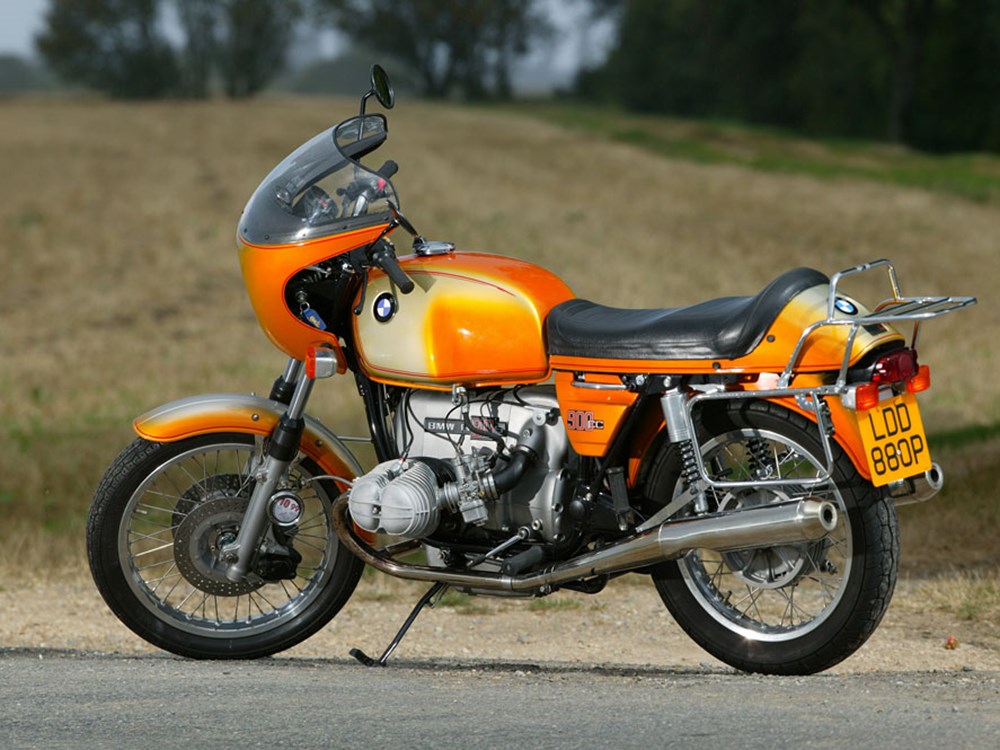
8. BMW R90S

BMW had a problem in the early 1970s. The buying public painted the image of BMW motorcycles as being staid (a gentle word compared to boring), belonging to those with a predilection for “cigars and slippers.”

BMW turned to Hans Muth to design a sportbike. (Hans Muth would go on to create the Suzuki Katana in 1979, the bike made production in 1981.)

The result was the R90S in 1973.

BMW R90S – Photo credit MCN

BMW then took it up a step further by entering the bike in the inaugural AMA Superbike race at the Daytona International Speedway in 1976 where Steve McLaughlin won, followed by Reg Pridmore. Pridmore followed up by capturing the 1976 AMA Superbike Championship. BMW took to producing the R90S in the Daytona Orange paint scheme to commemorate the win.

By the way, a total of 17,455 R90S were sold between 1973 to 1976. Indeed, the R90S served as the inspiration to then BMW’s design chief Ola Stenedard and Roland Sands who came up with the Concept 90, which led to the BMW R nineT in 2013. But the real successor was of course the 2017 R nineT Racer.

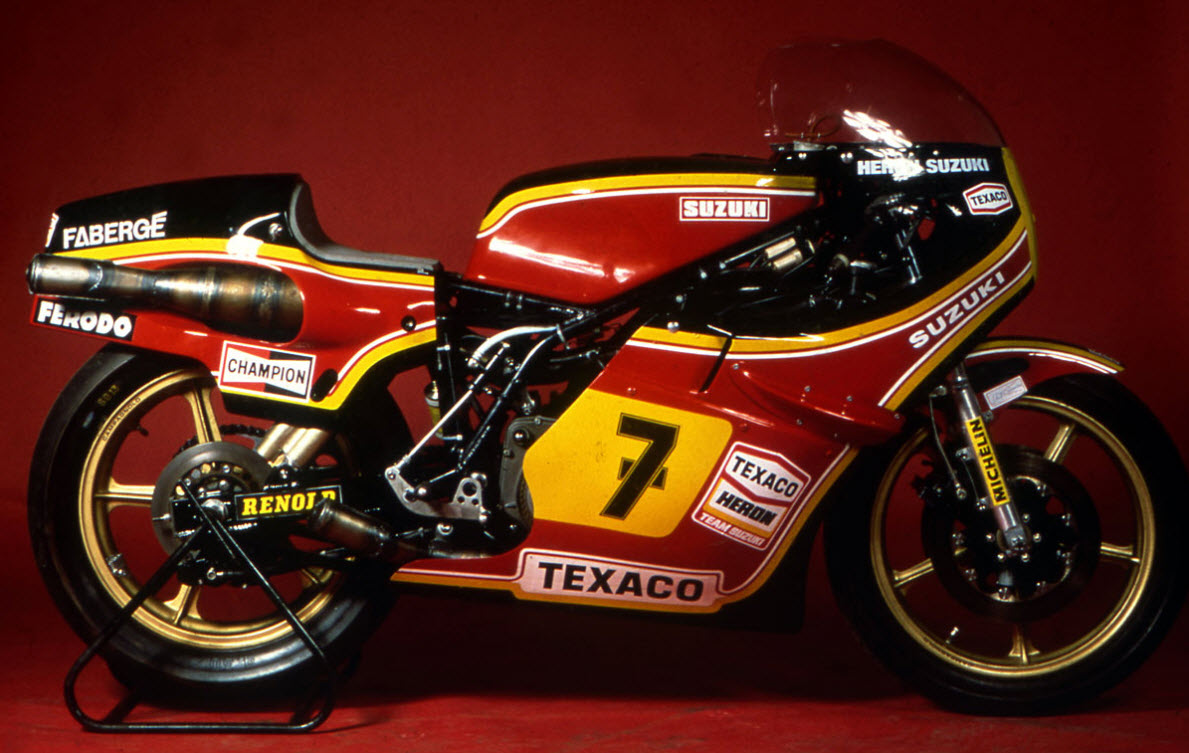
9. Barry Sheene Suzuki

Barry Sheene was Britain’s last Grand Prix champion up to Danny Kent in 2015. “Bazza” as he’s popularly known in England captured the 1976 and 1977 World Motorcycle Grand Prix titles onboard the Suzuki RG500.

Some of his exploits thrust him into the stuff of legends, such as the 280 km/h crash about the Suzuki XR11 at Daytona in 1975. He broke a femur, collarbone, arm, fractured several vertebrae and skinned his back. He came back to racing just seven weeks later and won his first ever GP race in nine weeks after the crash.

But it was the RG500 “XR14” and “XR22” which were as legendary as the man who rode it that’s high in race fans’ hearts. There were two base colours, red and white, outlines by yellow and black stripes. Suzuki never officially produced race replicas with those colour schemes for one reason or another but just as legends die hard, so do these colour schemes, as owners made their own Barry Sheene replica paintjobs.

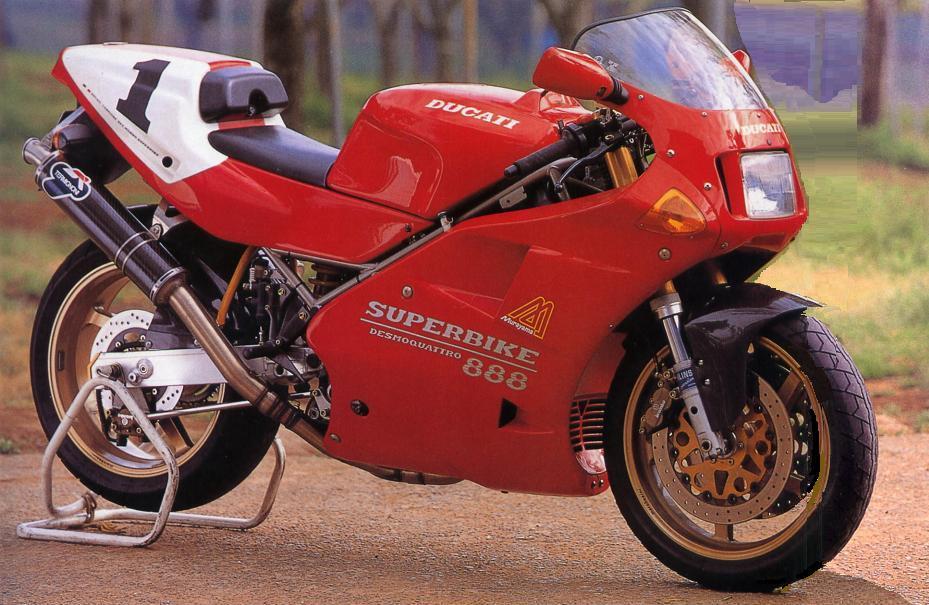
10. Ducati 888 SP5

Although the Ducati 888 was not the first Ducati to break the Japanese manufacturers’ stranglehold in superbike racing, it was the last Ducati “squarish” (and loud!) superbike before they all went pointy with the introduction of the Ducati 916. While other racing motorcycles sometimes look garish with all the splashy graphics, the 888 SP5 race replica made do with large slab-sided fairings in blood red and a white number plate painted on its tailsection. The black carbon front fender offset all that red paint and that was it.

Who says simplicity is not beauty?

Archive

Follow us on Facebook

Follow us on YouTube