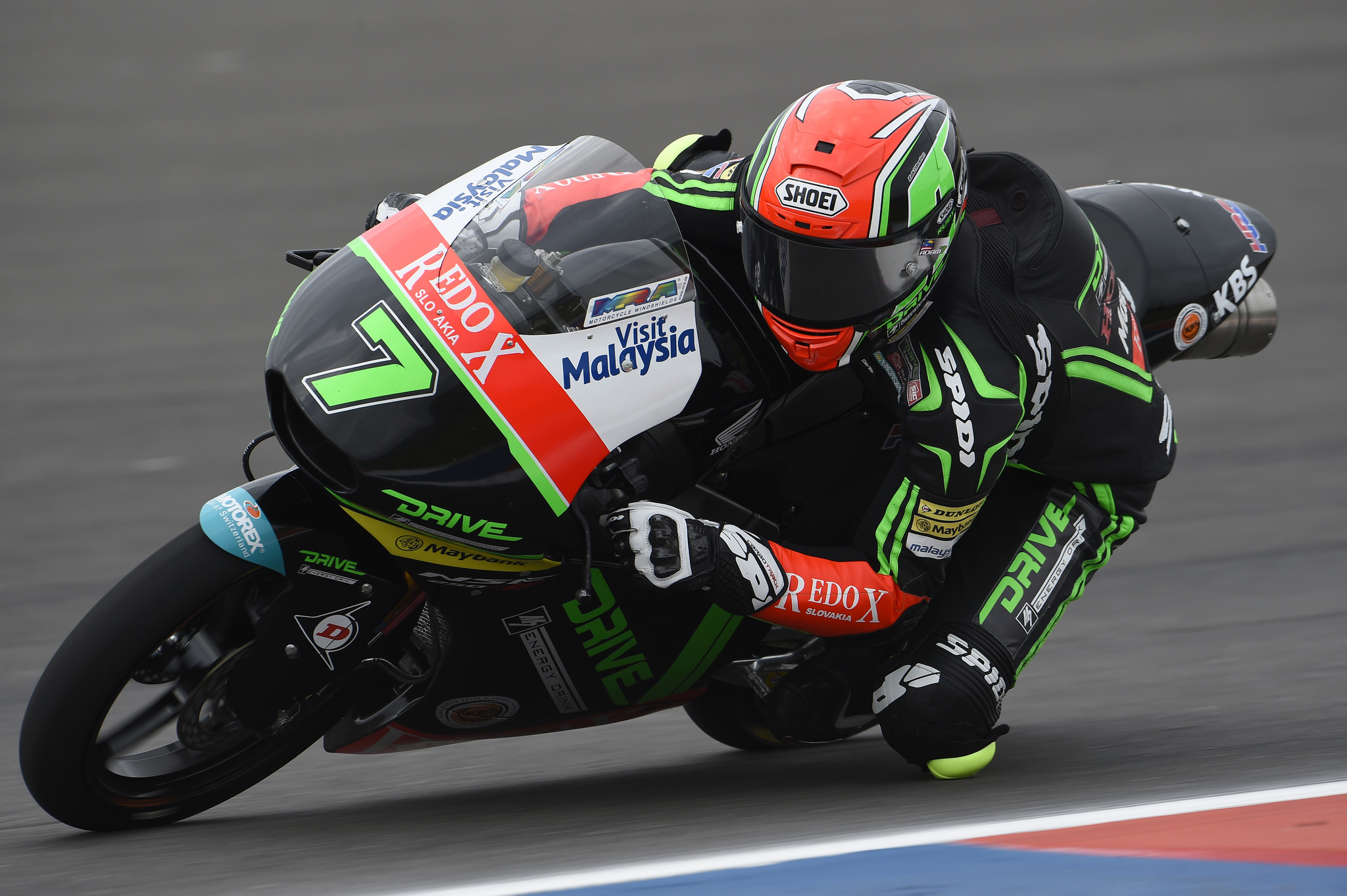
Remember the time when M7 Racing sponsored the SIC Racing Moto3 squad back in 2015 and 2016? Drive M7 Energy Drink was the main sponsor and it turned out that they’ve not been paying their part under the sponsorship agreement and SIC has filed a lawsuit regarding the matter. (more…)
We were coming through social media when we came upon an article comparing factory and satellite teams in MotoGP.
We thought we could add more details as we’re currently looking at the 370-page 2020 FIM Motorcycle Grand Prix Regulations. The questions revolved mostly around why satellite team riders are on factory-spec bikes, too.
What’s a “factory team”?
A factory team is a team entered directly by the manufacturer. Consequently, the team has the highest budgets hence the best riders and team members; and first priority to parts and upgrades; and of course, top sponsors.
This why every rider on the grid aims to join a factory team. Factory teams also provide much higher levels of technical, PR, physical and even psychological support. The salary is also much higher. Along with these perks come bikes that can actually perform because which rider doesn’t want to perform well and win?
What’s a “satellite team”?
A satellite team has no bike of their own. As such, they have to rent them from a manufacturer. Yes, rent because MotoGP bikes are (usually) not for sale. What level of machinery or parts depends on how much they could shell out.
A satellite team’s budgets are from sponsors and are more constrained, hence the disparity in terms of support for the riders.
Traditionally, the factory usually provides lesser equipment to the satellite team because they don’t like to be beaten by the “lesser team.” However, we’ve seen manufacturers extending one or two of their latest bikes to satellite teams lately.
Reasons to run satellite teams
1. Data collection
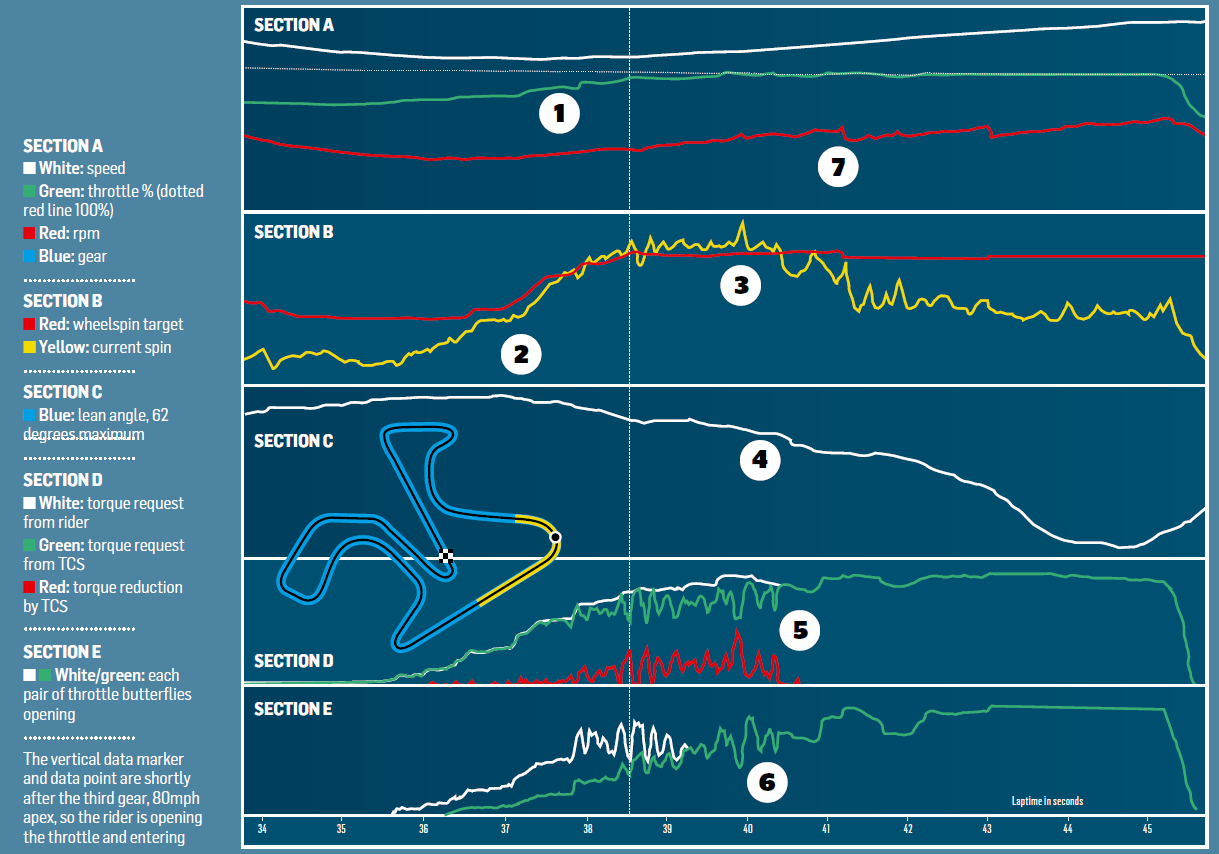
Credit Motor Sport Magazine
Data here pertains to information which could be used to speed up development for building and setting up a race winning bike. Even the factory team has to justify the astronomical costs for going racing to the management and shareholders.
Data consists of suspension, chassis balance, traction control, engine map settings, etc.; sector times, lap times, corner speeds, top speeds; performance of parts, tyres, the engine; and almost everything else.
The role of data supplier is even more critical in these last 3 years when FIM reduced the number of test sessions to cope with including extra rounds. Gone were the days of unlimited testing, tyres, engines and development throughout the year. Doing so reduces costs to encourage more manufacturers to join the championship and create closer racing.
So, since there are fewer opportunities to test and gather data, having a satellite team in effect doubles data collection.
2. Exposure
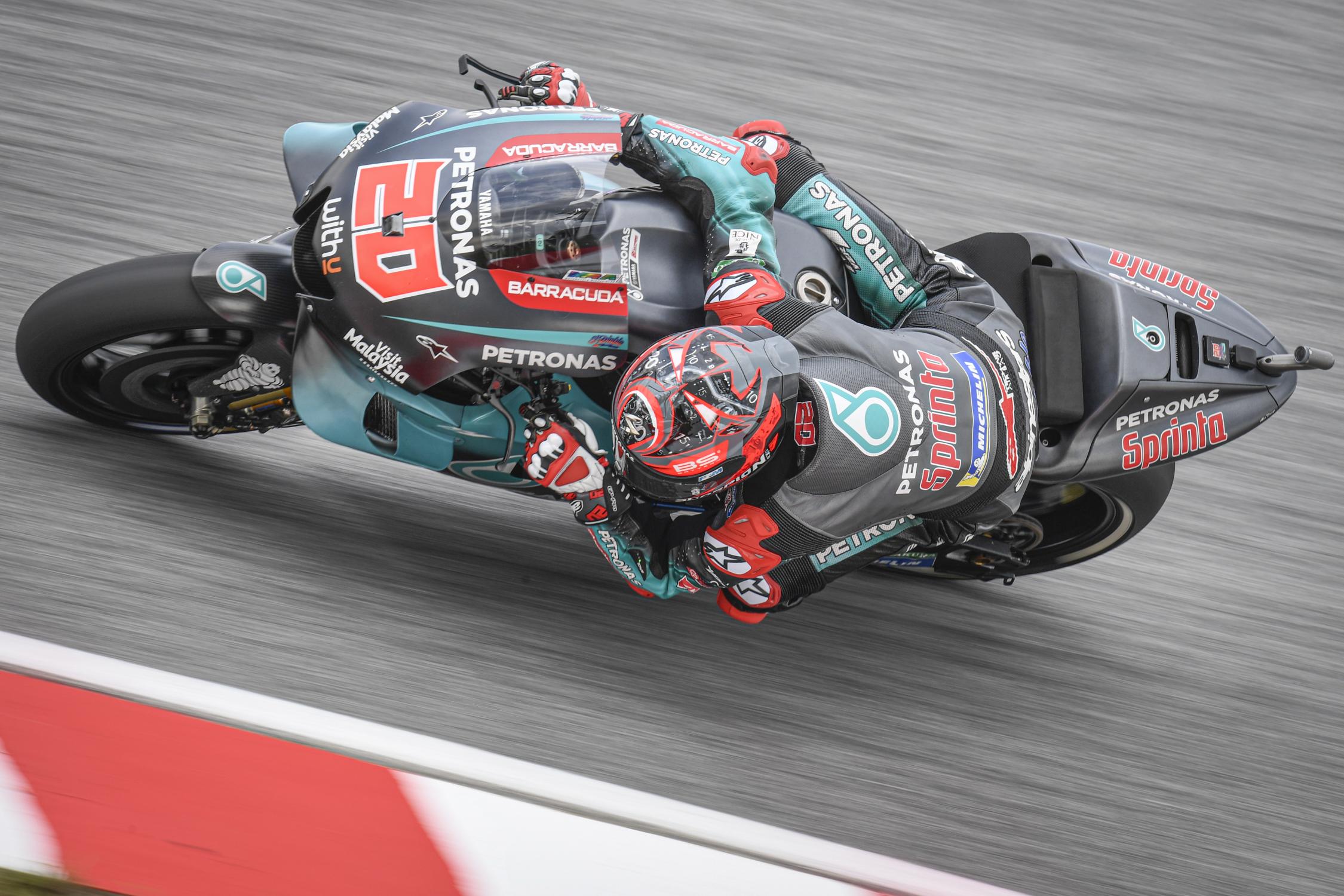
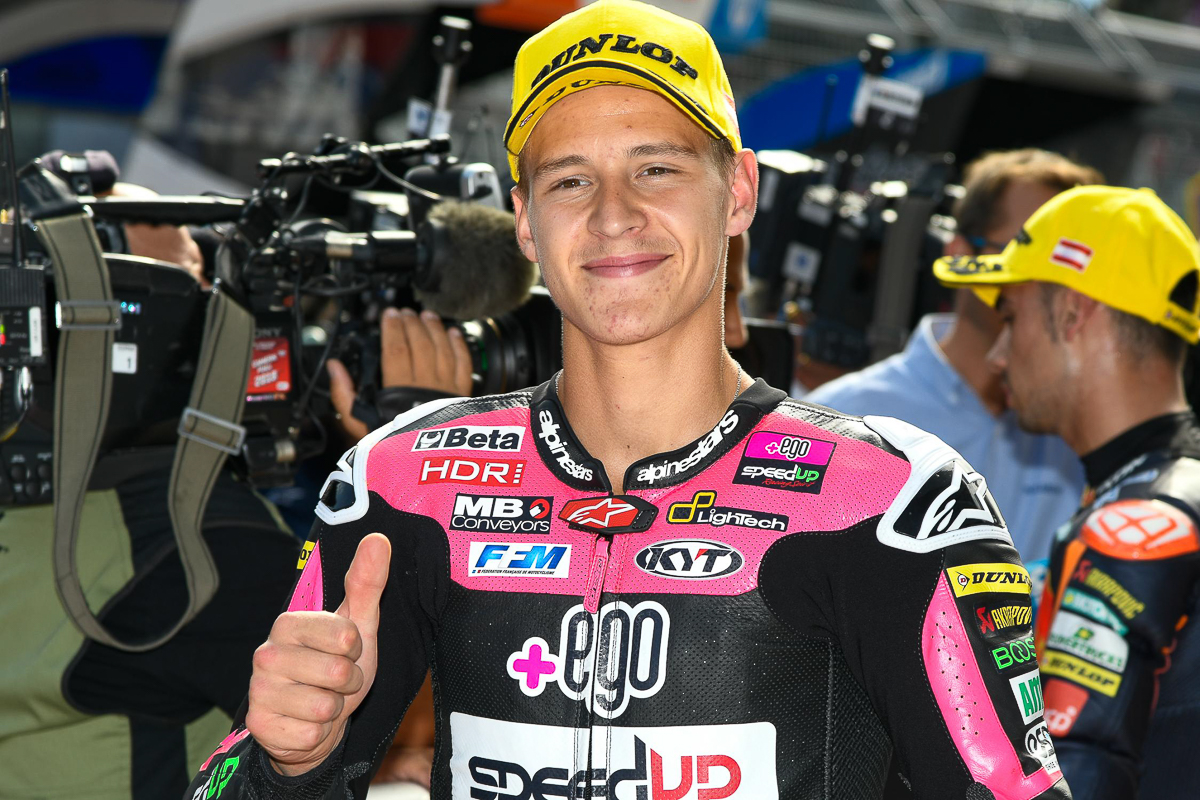
Quartararo may be in the PETRONAS Yamaha Sepang Racing Team, but he’s still on a Yamaha.
Having more than one team running the same brand provides the higher chances of being spotted by spectators at the track and those in front of their TV screens.
3. To bring in new riders
New riders are usually signed to satellite teams before being “promoted” to the factory teams. There is no point in putting someone who may struggle to perform on a full factory machine when there could be other better riders. There are exceptions of course, but this is normally the case.
How does this affect teams?
Suzuki may have run at the front and won a number of races, but they also suffered from inconsistent form in 2018 and 2019. The same goes with Aprilia. These two teams also couldn’t audition new riders in satellite teams.
KTM on the other hand, suffered from not having a MotoGP-winning rider to develop their bikes, as Dani Pedrosa was sidelined from his role throughout the 2019 season.
The Yamaha team definitely benefitted from Fabio Quartararo’s surprising and amazing debut. This was one reason why we saw the resurgence of factory rider Maverick Vinalez at the end of the season.
Honda, well… they’ve got Marc Marquez.
So, why not give everyone equal machines?
The simple answer is: Cost.
Renting a top MotoGP bike is around € 2 million per rider per season these days. No electronic part is less than € 1,000. A carbon fibre part is valued at € 2 per 100 g. A Marchesini magnesium alloy wheel costs € 4,000.
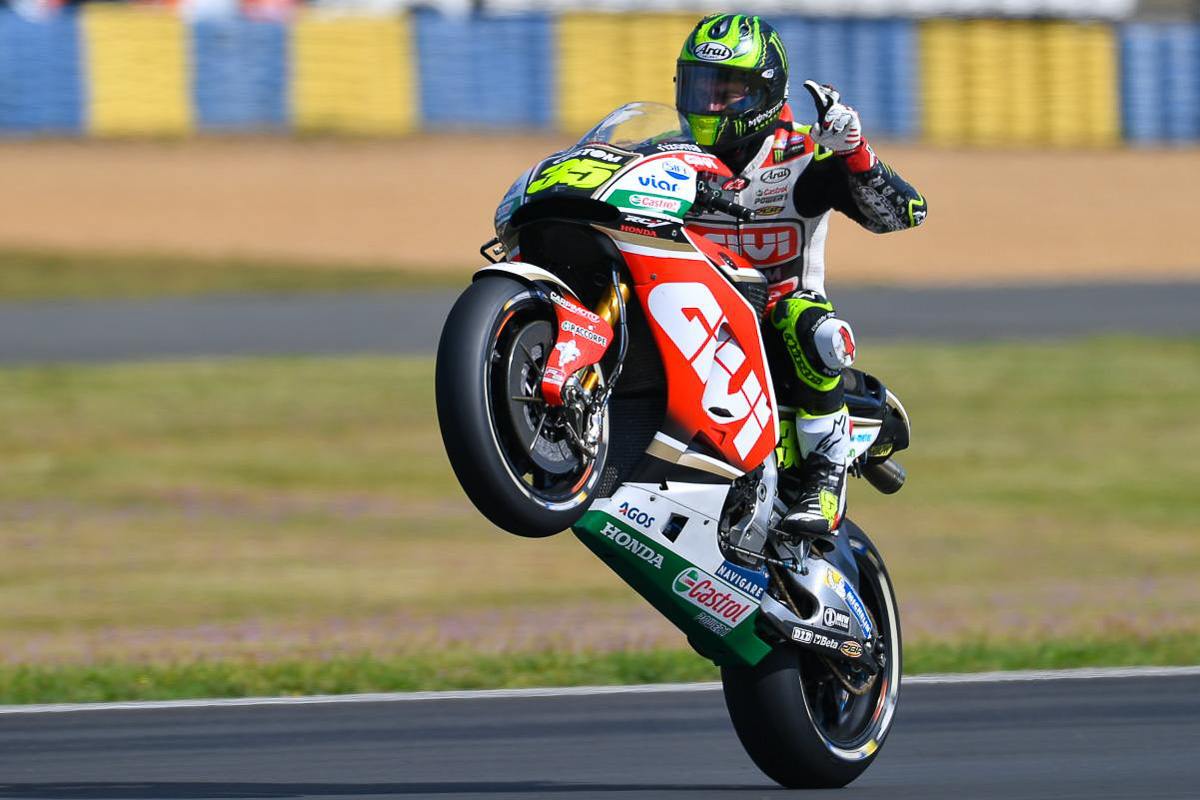
A manufacturer will find it more productive and cost efficient to support the best rider in their stable, hence building a bike which suits his riding style. Marc Marquez is the best example. The other best Honda rider, Cal Crutchlow found himself in mid-pack almost throughout last season as he couldn’t get used to the bike. Even three-time world champion Jorge Lorenzo had to call it quits.
A manufacturer with vast resources like Honda couldn’t even build two different bikes for each of their riders. Hold on, what we meant by two different bikes was two variants instead of just two bikes. Each rider may have two bikes per round, but the constructor may well build three or four bikes per rider for the entire season. The number could be higher but the true quantity has never been revealed.
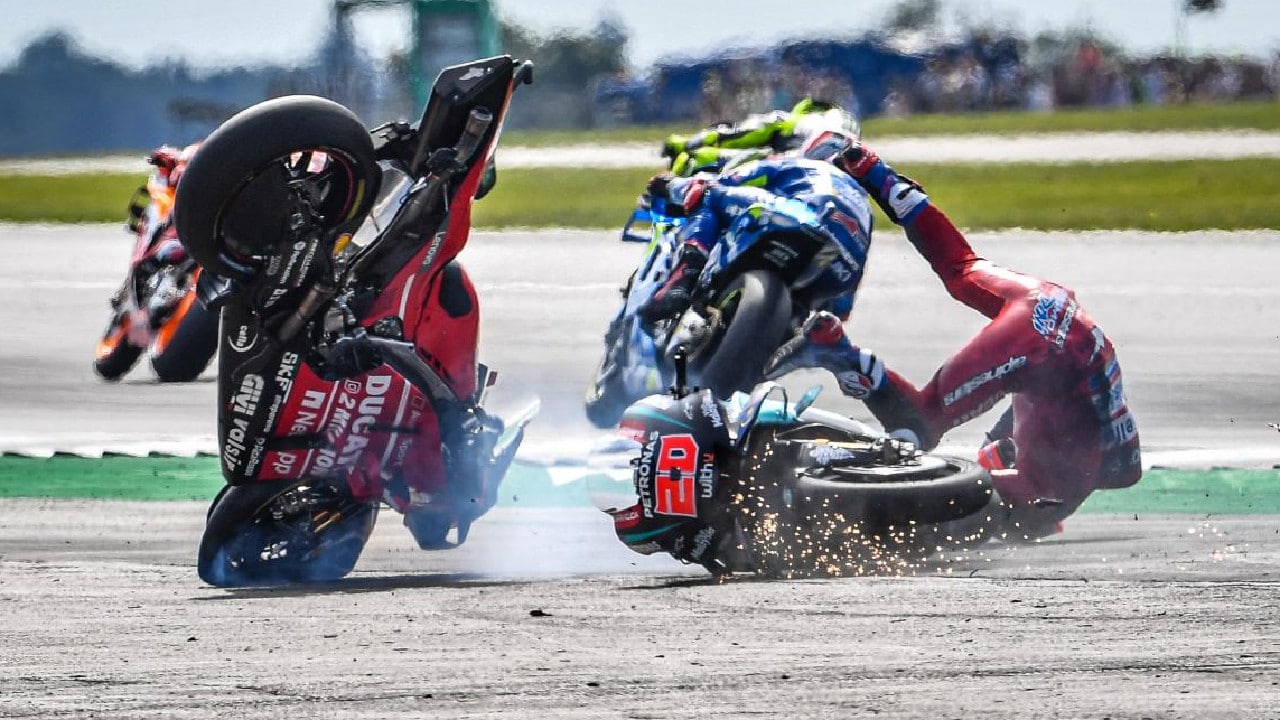
Apart from that are the costs arising from crashes.
Photo credit MotoGP.com
Hence, the satellite teams usually made do with the older bikes. Oh, they come without wheels and suspension. Consumables such as tyres are sponsored but the FIM had placed a limit on the number each team could use per season. Anything extra would have to be paid by the team. Could they afford higher prices?
As we mentioned earlier, the top manufacturers such as Honda, Yamaha and Ducati are now providing factory-spec bikes to the best riders in their respective satellite teams. This was why we have closer competition these days.
Conclusion
Hope you find the above information useful. You’re always welcome to share your thoughts with us.
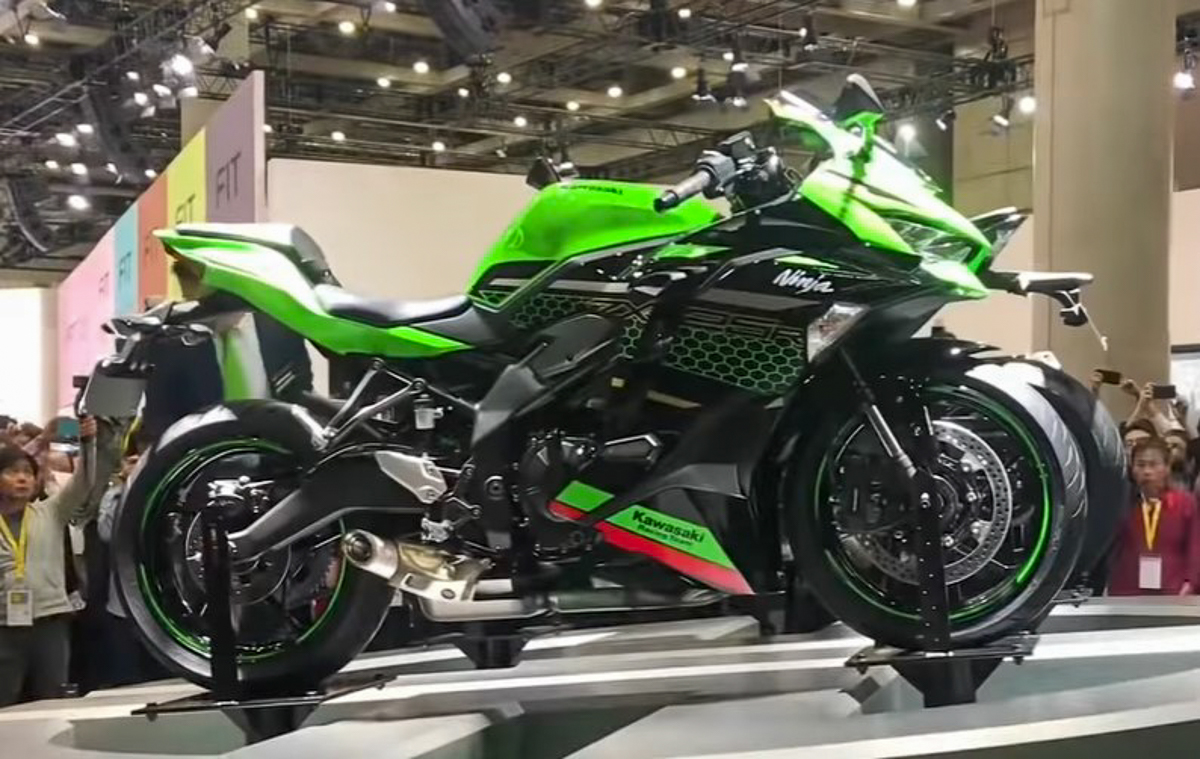
PT Kawasaki Motor Indonesia is setting up for a monstrous Kawasaki Bike Week 2020 at Pantai Karnaval Ancol, Jakarta where they’ll be taking the opportunity to launch one of the most highly anticipated 250cc street bike of this generation, the 2020 Kawasaki Ninja ZX-25R. (more…)
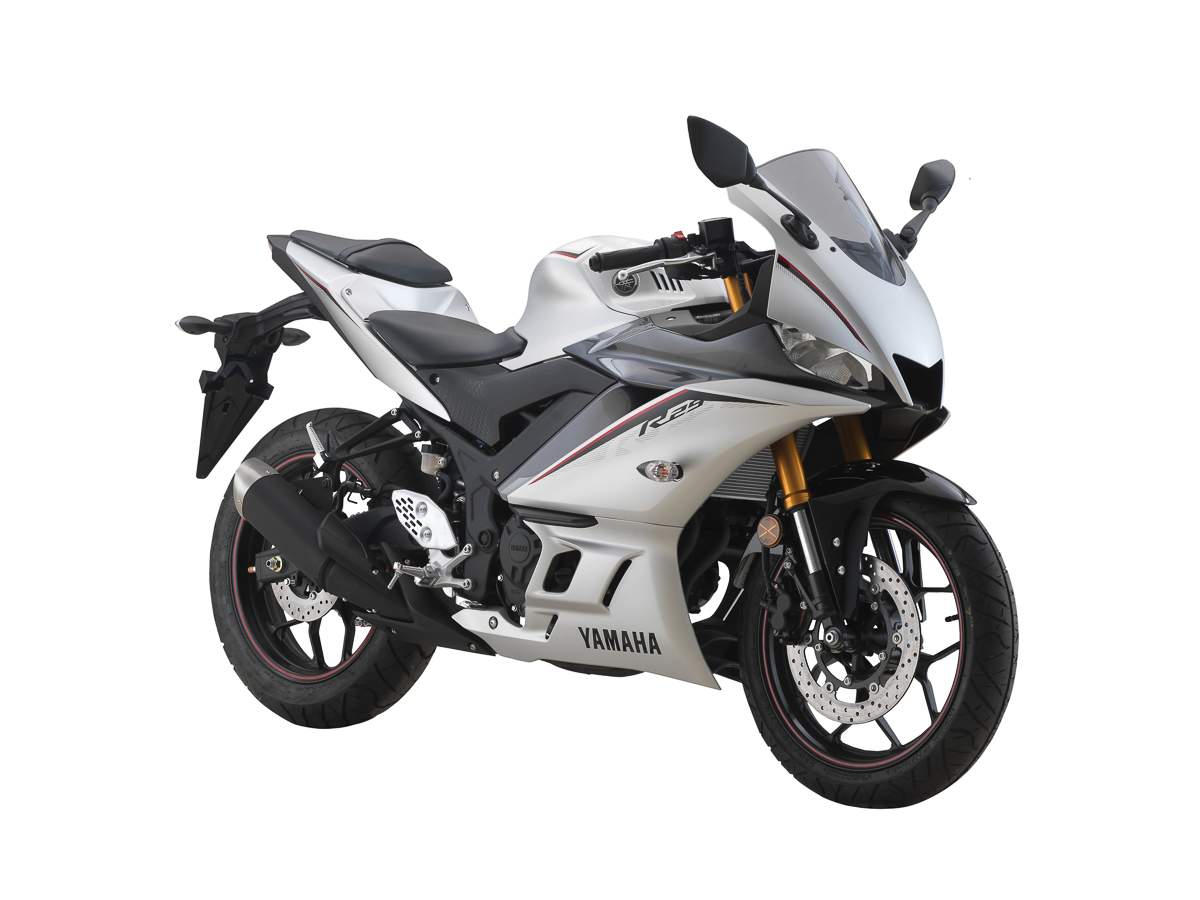
2020 just got a bit better with Hong Leong Yamaha Motor (HLYM) announcing new colour options for the 2020 Yamaha YZF-R25. Regarded as one of the best-selling 250cc bikes in the street segment, new owners can choose between two new colour options for their 2020 ride. (more…)
A recent interview with Dorna’s CEO, Carmelo Ezpeleta, with GPOne unveiled one hell of a bomb in the MotoGP world as Kawasaki recently requested if they’re able to compete in a race as wildcard BUT with their WorldSBK-spec ZX-10RR. (more…)
Hobby for a biker? How about building motorcycle model kits?
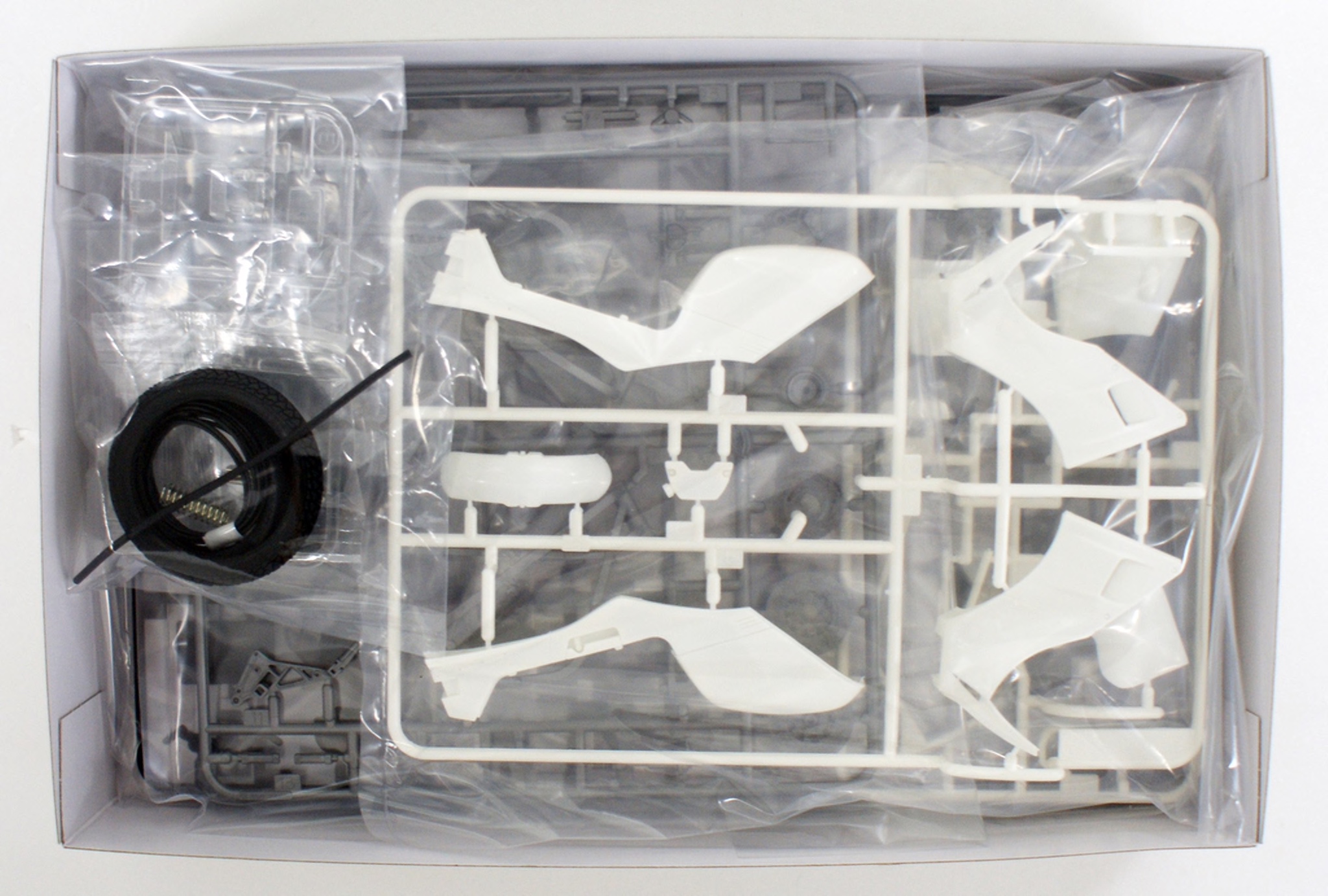
The kits come in pieces which you have to assemble into a complete bike.
The hobby is great for relaxation and self-discipline.
Bikers can have other hobbies, too, other than just riding. One of the best would be building motorcycle model kits.
There’s nothing like the amount of satisfaction and gratification when you assembled something that came in pieces into your favourite bike. You need to have patience, eye for detail, finesse, determination, discipline and concentration to work through all the challenges and frustration to come away with the end result. Good or otherwise, I bet you’d still feel happy when the bike is finally assembled complete with its decals.
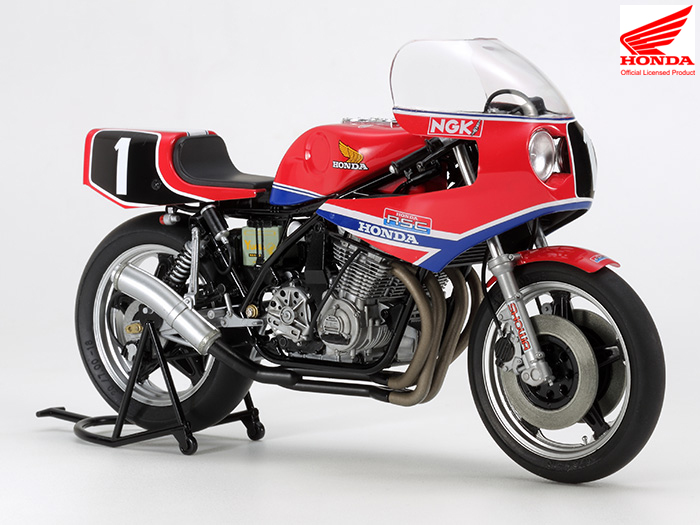
Honda RS1000 Suzuka racer – Credit Tamiya.com
Patience is a dying virtue in this current society which is driven by instant gratification. That’s why social media is so addictive to so many ways. But why not use current media such as YouTube to search out tips on assembly techniques? We didn’t have any guide at all except for the assembly instructions when I started this hobby in the mid-80s. We’re so much luckier now.
The way I see it, assembling model kits is a great way of being at peace with yourself. I know for a fact that I’d switch to a zen-like state and shut out the world completely when I work on a model (even on a Lego set). It’s probably the best way to slow your heart rate down after a hectic day at the office or after your family’s gone to sleep. It may also be the very thing to return that great virtue called patience.
No, these kits aren’t necessarily for kids, perception be damned. I remembered that when a girl I who tried to impress complained to her friends that I brought her to the toy section during our date. She friendzoned me. But hey, I got to complete the Tamiya RZ350 kit without having to waste money and time on her any further nyah, nyah. She didn’t know how much work it’s required to bring a legendary bike from hundreds of pieces of non-painted plastic.
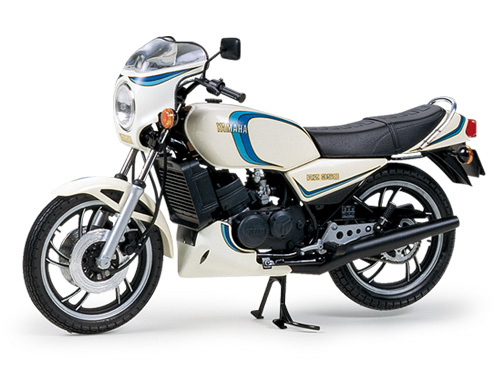
Yamaha RZ350 – Credit Tamiya.com
If you’ve never seen how a kit looked like before, check out the picture below.
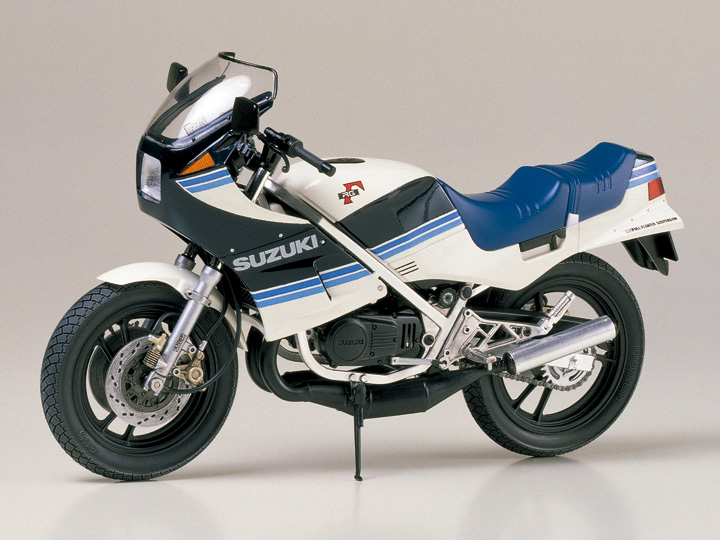
Tamiya Suzuki RG250 Gamma kit – Credit Tamiya.com
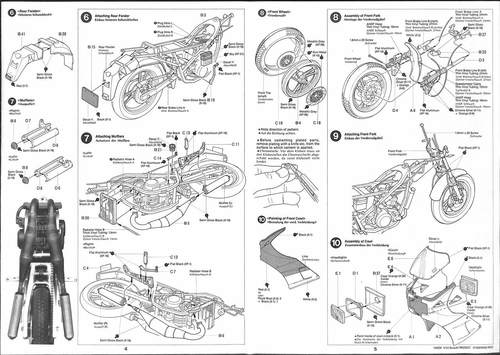
My late-Dad presented me with a 1/12th-scale Suzuki RG250 from Tamiya when I was 14 years old in 1986. I opened the box with glee, thinking that it’s a completely built-up bike. I was greeted by a frame with “exploded” parts in a clear plastic bag, instead. The kit included a manual that presented a brief description on the particular bike.
Suzuki RG250 Gamma – Credit Tamiya.com
My Dad sat down and helped me get started. He bought me the paint, paint pens, brushes, clippers, etc., except for the airbrush and compressor as they were too expensive even at the time. I found that the most difficult process was painting and detailing, while assembly was more or less a breeze.
Credit Tamiya.com
I remembered building up the bike as best as I could with what I had at hand. The end result was far from those built by long-time enthusiasts, but hey, I was super satisfied.
I’ve stuck with the Tamiya brand since then due to the high level of details and well, Tamiya is essentially the only brand that’s left today. Millennials or kids probably associate the brand to the Mini 4WD racers.
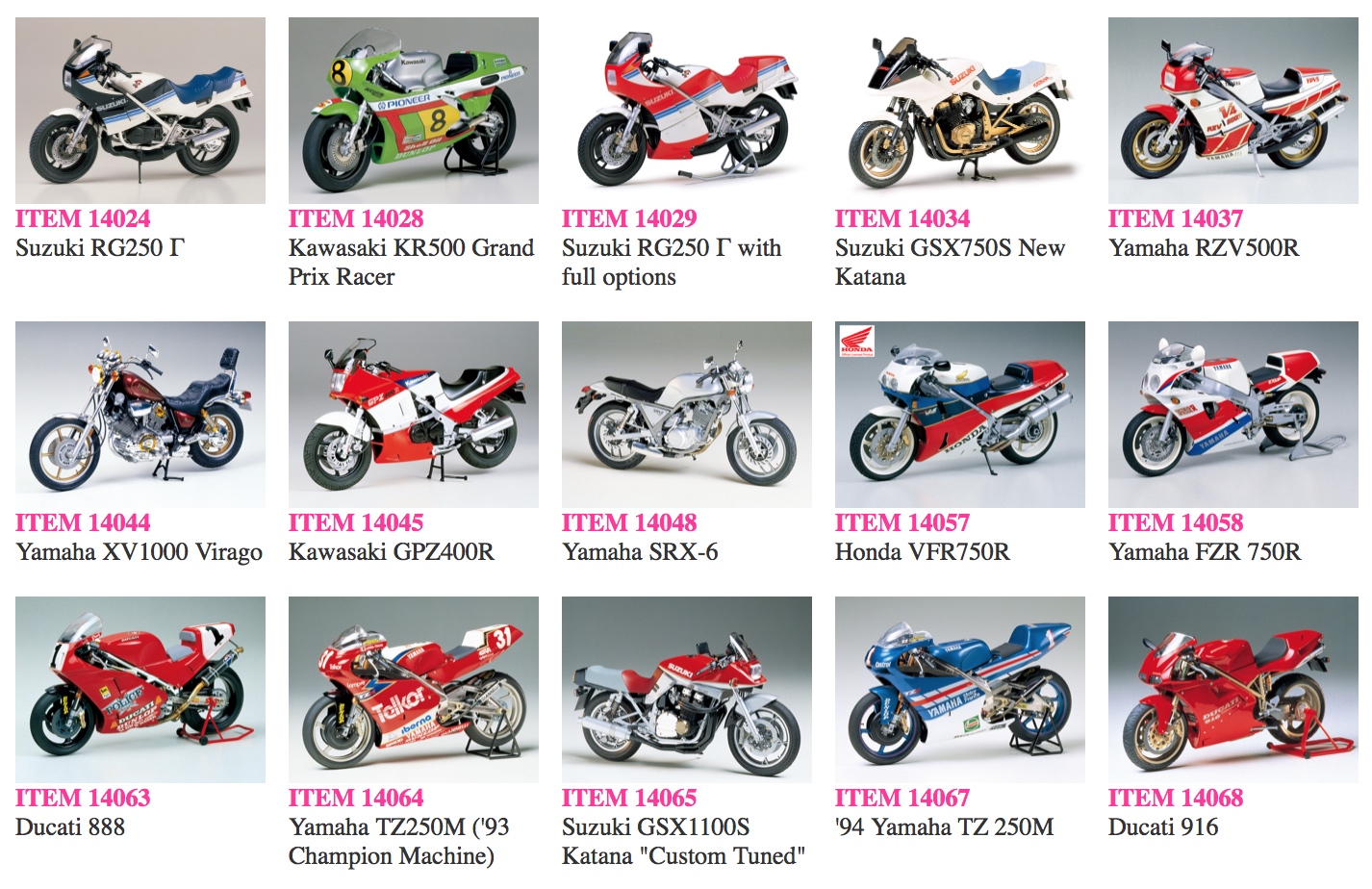
Their motorcycle model catalog is filled with some 72 1/12th-scale and just 12 big-sized 1/6th-scale kits. These are motorcycles that made impacts in motorcycling. There aren’t more because they weren’t licensed by the respective manufacturers.
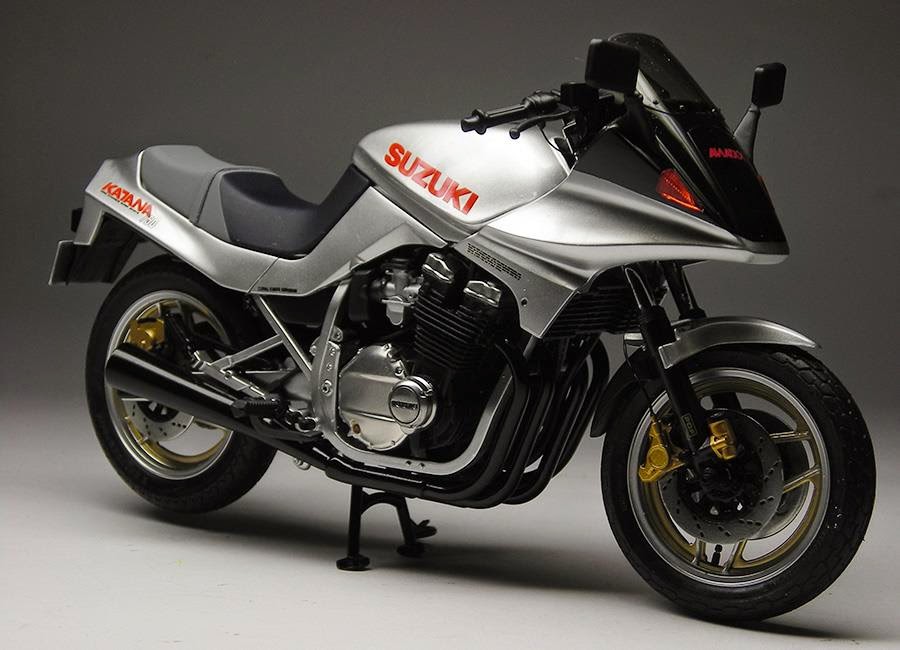
Still, the 1/12 kits include legends such as the Kawasaki H2R and H2; Ducati 888, 916, Desmosedici, Panigale; Suzuki Katana 750 (with pop-up headlight), 1000 and 1100; Honda RC30; Yamaha YZR500 GP racer, YZR-M1, YZF-R1M; etc. A number of models have been discontinued including the bevel drive Ducati 900SS, Mike Hailwood Replica and 900 NCR Racer.
Screenshot of Page One of the 1/12 catalog – Credit Tamiya.com
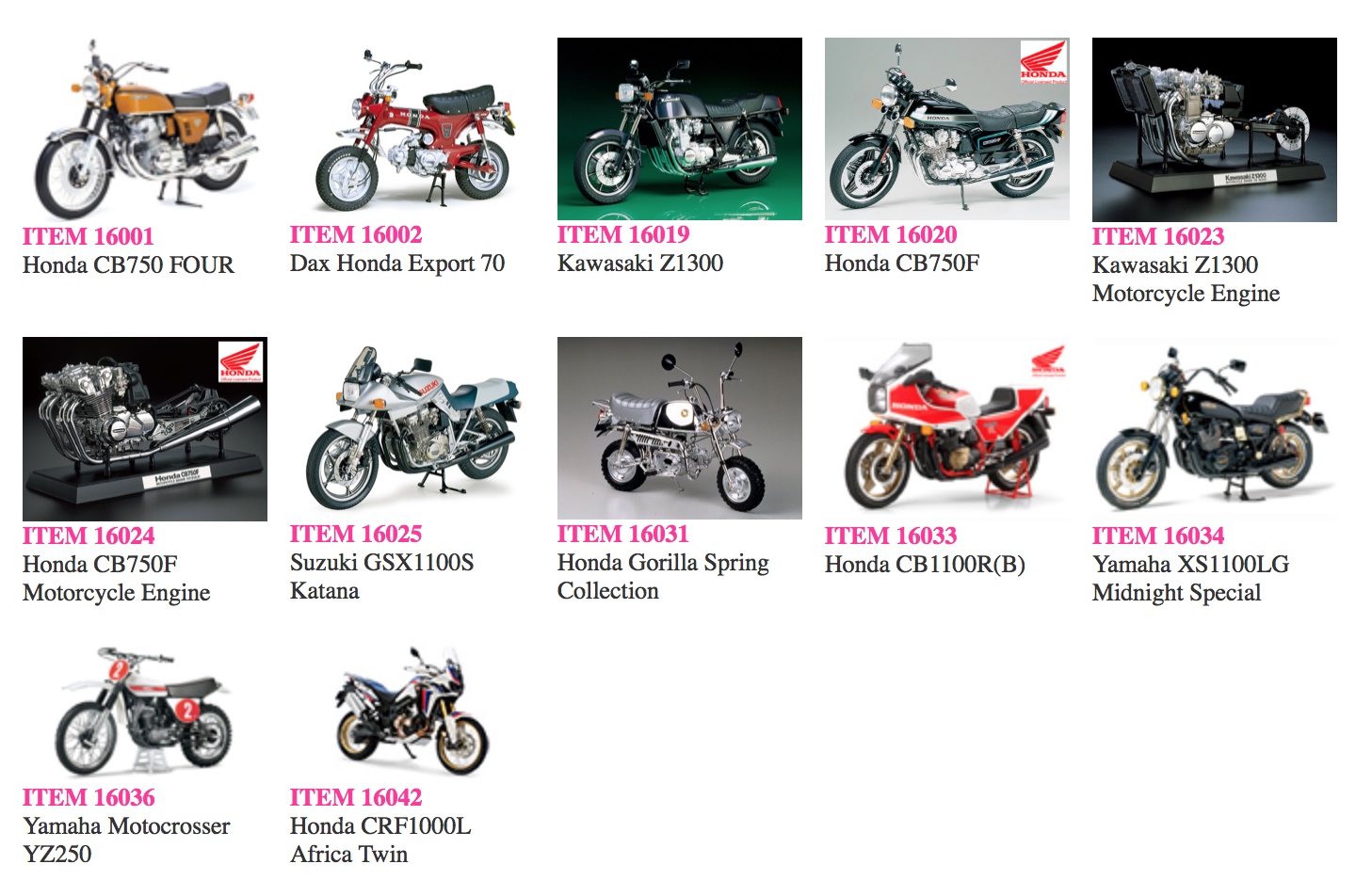
The 1/6 kits are reserved for certain groundbreaking bikes, such as the 1981 Honda CB750, Suzuki GSX-1100S Katana. But there are two engines kits here: One for the 1979 Honda CB750F and another for the Kawasaki Z1300.
Screenshot of the 1/16 catalog – Credit Tamiya.com
I wish BMW Motorrad and Triumph would license their bikes to Tamiya. I’ll be building a BMW R32 or Triumph Rocket 3 or Thruxton TFC with glee!
They are not cheap these days, though. Each 1/12 kit will set you back around RM 300 (curse you, inflation!). However, am of the opinion that the money will be well-spent. Unless someone deposits RM 2.6 billion into my bank account (I know, the joke is stale but hey, is there a better example?), I could never get to own any one of these legends. Even then, bikes like the YZR500 or RG500 aren’t for sale at any price! So, RM 300 for a historic motorcycle isn’t that bad and I don’t have to worry about where to store it. Hey, RM 300 is about the price of a Playstation game, anyway.
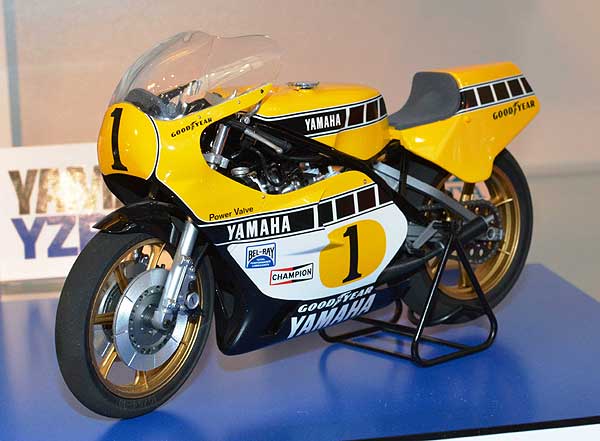
Tamiya Yamaha YZR500 – Credit Grand Prix Models on Twitter