Bikesrepublic

Latest News

  • Besides the Bimota H2 Tesi, Kawasaki is now rumoured to be working on their own hub centre steering motorcycle.

  • What is hub centre steering (HCS)?

  • To understand HCS, we need to look at what forks go through first.

While we await the new Kawasaki Ninja H2 powered Bimota Tesi H2, Kawasaki themselves are rumored to be working on a hub centre steering (HCS) bike themselves.

It may be of no coincidence that Kawasaki bought out 49% of Bimota’s shares, after all. It now appears that the Japanese manufacturer needed Bimota’s extensive experience in building HCS motorcycles (besides superb frames).

We don’t see this sort of front end on many production bikes, truth be told. Those that did were just more than a handful: Yamaha GTS1000, four models from Vyrus, and of course, the Bimota Tesi 3D. Interestingly, Vyrus was working hand-in-hand with Bimota in developing the Tesi 3D but chose to split away to produce their own HCS bikes.

There were also HCS bikes in the 500cc World GP Championship in the late 80s. Powered first by Honda then ROC, they turned in some encouraging results.

What is actually HCS? How does it work? And why is it considered revolutionary?

But first, we have to understand how the front end of a motorcycle works, starting with the age-old telescopic forks. (The term “telescopic forks” applies to both conventional and upside-down forks.)

What are the functions of the forks?

We’ve described how forks work in a previous article. But let’s describe their functions.

The roles of the forks are to:
  1. Support the weights of the bike and rider through preloading the springs.
  2. Provide compression and rebound damping.
  3. Steer the front wheel, hence the bike.
  4. Hold the front wheel in place thereby “attaching” the front wheel to the bike.
  5. Carry the brake calipers.

That’s a lot, don’t you think?

What happens when the bike is moving?

When a bike is travelling straight up, the wheel is deflected upwards when it contacts a bump. The forks compress, the re-extend after passing the bump. Changing directions is also easy as no other forces are acting on the front end, except for the bump.

The suspension on this dirt bike has fully compressed during landing off a jump. Try to steer the bike when this happens – Credit Dirt Legal

Imagine the rider braking hard for a corner.

The decelerative forces from the brake calipers are pushed into the forks. Weight of the rider and motorcycle is shifted to the front due to inertia and compress the forks.

Now imagine the front tyre contacting a bump at this very moment. Much of the forks’ travel have been taken up due to braking and now more is requested by the bump.

The results are the bike will be difficult to turn as the tyre is hopping over the bump or worse, subsequent bumps. Also, more forces are being directed into the front tyre (as the suspension doesn’t have more travel) causing it to be squished out sideways. Consequently, the increased footprint makes turning the bike much harder.

Apart from that, provided that the front brake doesn’t lock up, all the weight will be shifted to the front and inertia forces the rear end to slide out.

Rear tyre sliding under braking. See how compressed is the front end – Credit Cycle World

In extreme cases of weight transfer will lift the rear end of the bike. As a result, the bike becomes squiggly, unsettled, unstable. This is also when rear brake becomes redundant, hence braking distance is increased. Worse, the rear end’s lifting while the front-end hops over bumps.

It’s spectacular to look at Marc Marquez  doing this and still make the corners, but it’s not a great idea on the road! What do most riders do in this situation? Answer: Let off the brake and run straight off the road.

Using a heavier (harder spring) or dialing in more low-speed compression damping helps but neither or both will eliminate the problem completely. Besides, the front end will become less compliant.
Additionally, extreme braking or sharp bumps or a combination of both can force the fork legs to bend backwards slightly, but enough to cause the sliders and legs to touch each other, thereby creating stiction. Stiction is the combination of two words, namely static and friction. It may also be influenced by the word stick. When stiction occurs, a large amount of force is needed to break the friction. The rider would feel as if the front suspension has stuck in its stroke. The solution is to make bigger diameter and stiffer forks but doing so creates their own set of problems. This is why high-end fork sliders are TiN (titanium nitrate) coated.

TiN coated fork slider – Credit reportmotori,it

Additionally, the length of the forks creates a leverage against the headstock (where the triple clamps are mounted to). Again, engineers respond by making larger forks, headstock and frame to compensate.

However, creating stiffer forks and headstock adds weight. But more critically, it will cause loss of feel of the front tyre especially when the bike is leaned over in a corner. In fact, extreme stiffness can induce front wheel chatter. When the rider losses feel or the tyre chatters, he’ll lose confidence, and loss of confidence forces him to slow down.

Check out the size of the headstock and centre spar of this Kawasaki Ninja ZX-10R frame. Some riders complain of lack of feel in corners. It’s due to lack to lateral flex

So, it’s a constant battle between fork, headstock and frame stiffness against stiction and leverage.

There are advantages of the forks, of course. However, these were brought on by the familiarity of how they feel and how we compensate. Other plus points are that forks require less complex architecture, are lighter and comparatively cheaper than HCS.

That’s it for now, we’ll look at how HCS functions, besides their pros and cons next time.

Filming of the new Matrix 4 movie is currently underway and photos of Keanu Reeves on the film set showcased his character, Neo, riding pillion with Trinity (Carrie-Anne Moss) onboard a Ducati Scrambler. Looks like Neo is still not done riding it out with Ducati in the Matrix movie franchise, folks. (more…)

KTM is ready for some serious MotoGP 2020 podium contention with the official unveiling of the Red Bull KTM Factory Racing and Red Bull KTM Tech 3 liveries. Fighting for the top spot will be Pol Espargaro and Brad Binder on the factory squad as well as Miguel Oliveira and Iker Lecuona on the satellite outfit. (more…)

Remember the time when M7 Racing sponsored the SIC Racing Moto3 squad back in 2015 and 2016? Drive M7 Energy Drink was the main sponsor and it turned out that they’ve not been paying their part under the sponsorship agreement and SIC has filed a lawsuit regarding the matter. (more…)

  • Why are there satellite teams in MotoGP?

  • What are they and what do they do?

  • Why the disparity in machinery?

We were coming through social media when we came upon an article comparing factory and satellite teams in MotoGP.

We thought we could add more details as we’re currently looking at the 370-page 2020 FIM Motorcycle Grand Prix Regulations. The questions revolved mostly around why satellite team riders are on factory-spec bikes, too.

What’s a “factory team”?

A factory team is a team entered directly by the manufacturer. Consequently, the team has the highest budgets hence the best riders and team members; and first priority to parts and upgrades; and of course, top sponsors.

This why every rider on the grid aims to join a factory team. Factory teams also provide much higher levels of technical, PR, physical and even psychological support. The salary is also much higher. Along with these perks come bikes that can actually perform because which rider doesn’t want to perform well and win?

What’s a “satellite team”?

A satellite team has no bike of their own. As such, they have to rent them from a manufacturer. Yes, rent because MotoGP bikes are (usually) not for sale. What level of machinery or parts depends on how much they could shell out.

A satellite team’s budgets are from sponsors and are more constrained, hence the disparity in terms of support for the riders.

Traditionally, the factory usually provides lesser equipment to the satellite team because they don’t like to be beaten by the “lesser team.” However, we’ve seen manufacturers extending one or two of their latest bikes to satellite teams lately.

Reasons to run satellite teams

1. Data collection
Credit Motor Sport Magazine

Data here pertains to information which could be used to speed up development for building and setting up a race winning bike. Even the factory team has to justify the astronomical costs for going racing to the management and shareholders.

Data consists of suspension, chassis balance, traction control, engine map settings, etc.; sector times, lap times, corner speeds, top speeds; performance of parts, tyres, the engine; and almost everything else.

The role of data supplier is even more critical in these last 3 years when FIM reduced the number of test sessions to cope with including extra rounds. Gone were the days of unlimited testing, tyres, engines and development throughout the year. Doing so reduces costs to encourage more manufacturers to join the championship and create closer racing.

So, since there are fewer opportunities to test and gather data, having a satellite team in effect doubles data collection.

2. Exposure

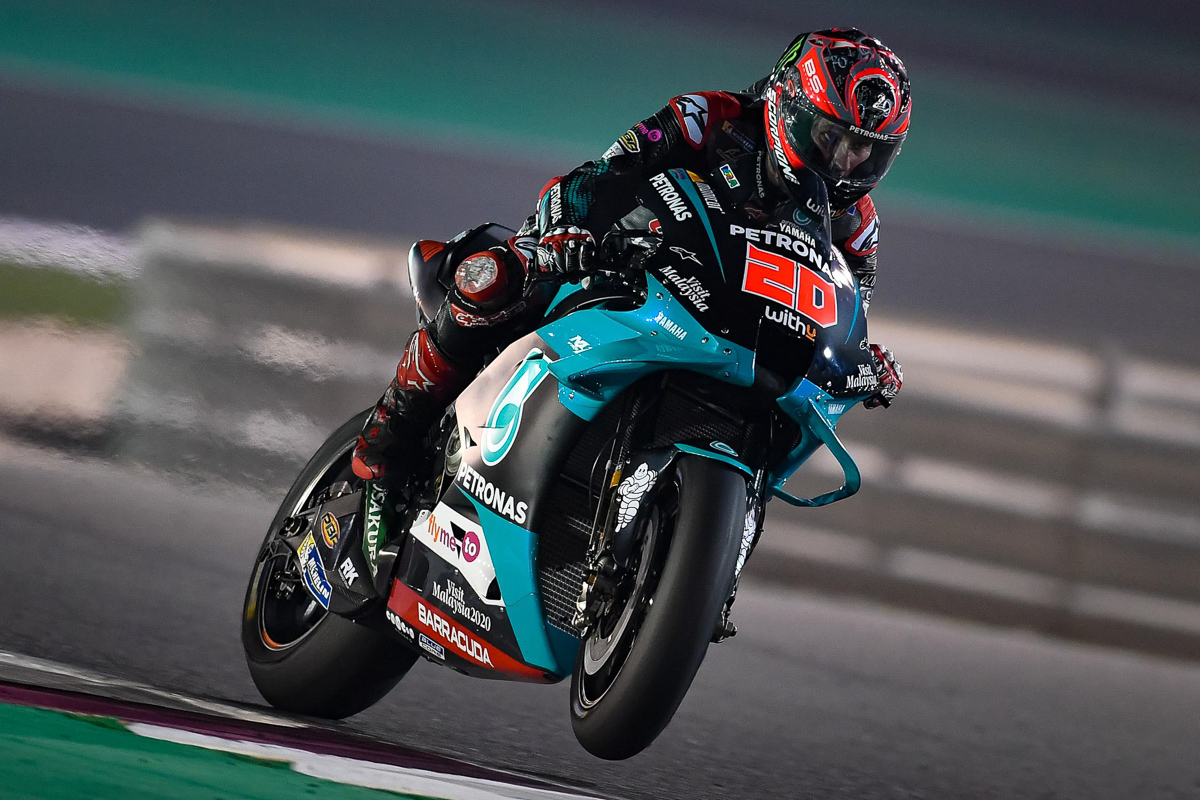
Quartararo may be in the PETRONAS Yamaha Sepang Racing Team, but he’s still on a Yamaha.

Having more than one team running the same brand provides the higher chances of being spotted by spectators at the track and those in front of their TV screens.

3. To bring in new riders

New riders are usually signed to satellite teams before being “promoted” to the factory teams. There is no point in putting someone who may struggle to perform on a full factory machine when there could be other better riders. There are exceptions of course, but this is normally the case.

How does this affect teams?

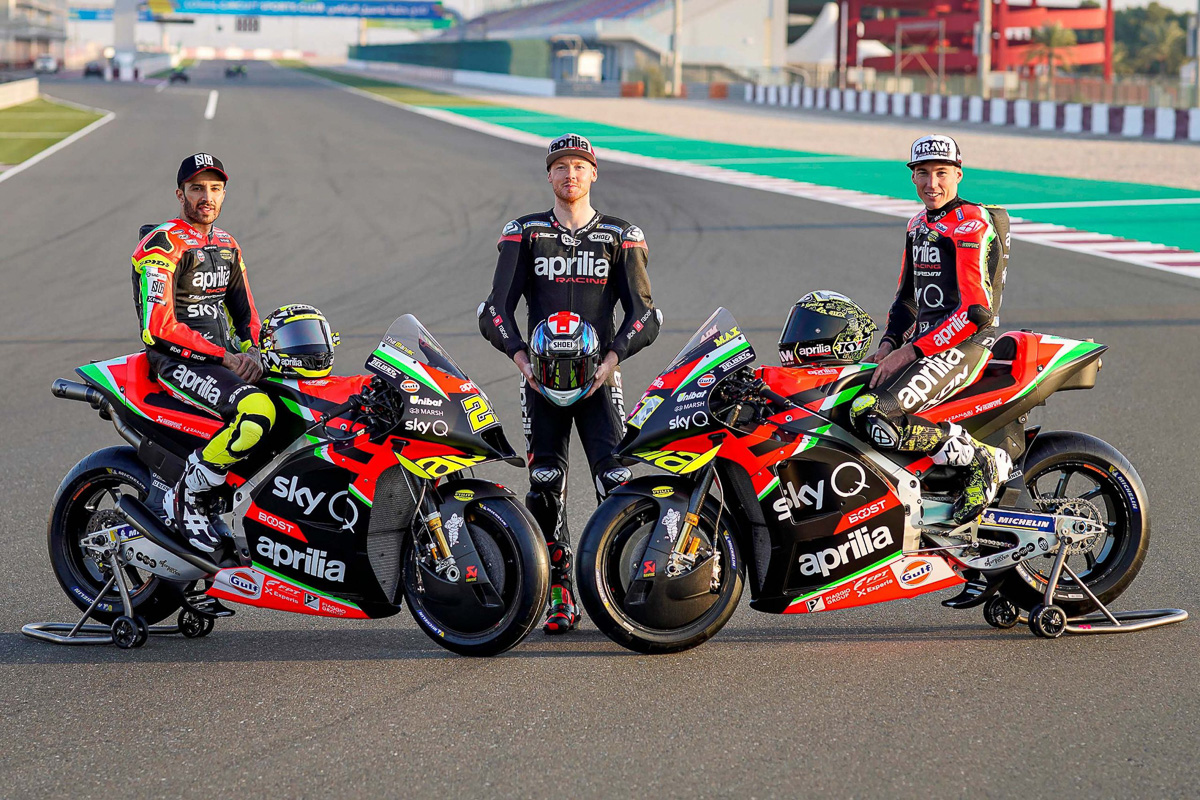
Suzuki may have run at the front and won a number of races, but they also suffered from inconsistent form in 2018 and 2019. The same goes with Aprilia. These two teams also couldn’t audition new riders in satellite teams.

KTM on the other hand, suffered from not having a MotoGP-winning rider to develop their bikes, as Dani Pedrosa was sidelined from his role throughout the 2019 season.

The Yamaha team definitely benefitted from Fabio Quartararo’s surprising and amazing debut. This was one reason why we saw the resurgence of factory rider Maverick Vinalez at the end of the season.

Honda, well… they’ve got Marc Marquez.

So, why not give everyone equal machines?

The simple answer is: Cost.

Renting a top MotoGP bike is around € 2 million per rider per season these days. No electronic part is less than € 1,000. A carbon fibre part is valued at € 2 per 100 g. A Marchesini magnesium alloy wheel costs € 4,000.

A manufacturer will find it more productive and cost efficient to support the best rider in their stable, hence building a bike which suits his riding style. Marc Marquez is the best example. The other best Honda rider, Cal Crutchlow found himself in mid-pack almost throughout last season as he couldn’t get used to the bike. Even three-time world champion Jorge Lorenzo had to call it quits.

A manufacturer with vast resources like Honda couldn’t even build two different bikes for each of their riders. Hold on, what we meant by two different bikes was two variants instead of just two bikes. Each rider may have two bikes per round, but the constructor may well build three or four bikes per rider for the entire season. The number could be higher but the true quantity has never been revealed.

Apart from that are the costs arising from crashes.

Photo credit MotoGP.com

Hence, the satellite teams usually made do with the older bikes. Oh, they come without wheels and suspension. Consumables such as tyres are sponsored but the FIM had placed a limit on the number each team could use per season. Anything extra would have to be paid by the team. Could they afford higher prices?

As we mentioned earlier, the top manufacturers such as Honda, Yamaha and Ducati are now providing factory-spec bikes to the best riders in their respective satellite teams. This was why we have closer competition these days.

Conclusion

Hope you find the above information useful. You’re always welcome to share your thoughts with us.

PT Kawasaki Motor Indonesia is setting up for a monstrous Kawasaki Bike Week 2020 at Pantai Karnaval Ancol, Jakarta where they’ll be taking the opportunity to launch one of the most highly anticipated 250cc street bike of this generation, the 2020 Kawasaki Ninja ZX-25R. (more…)

Archive

Follow us on Facebook

Follow us on YouTube