Bikesrepublic

Latest News

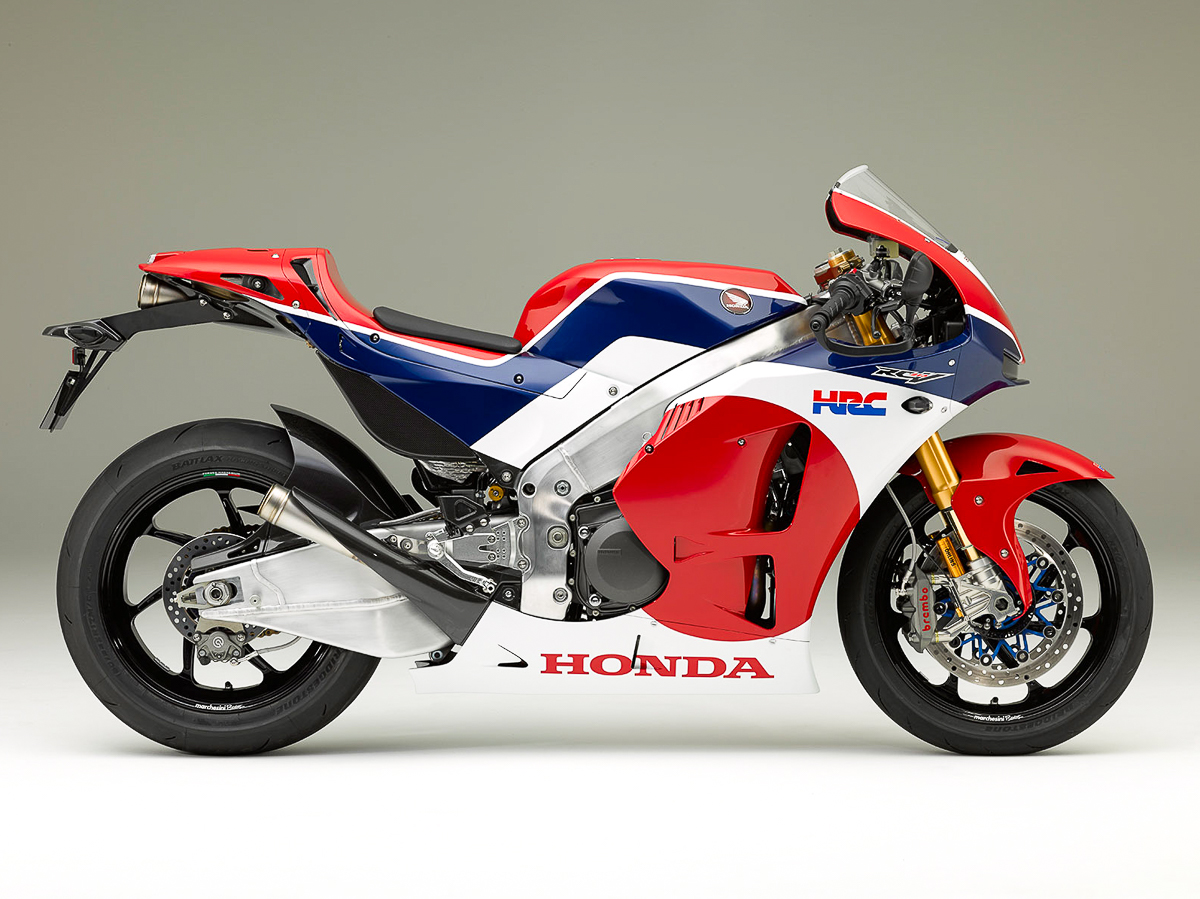
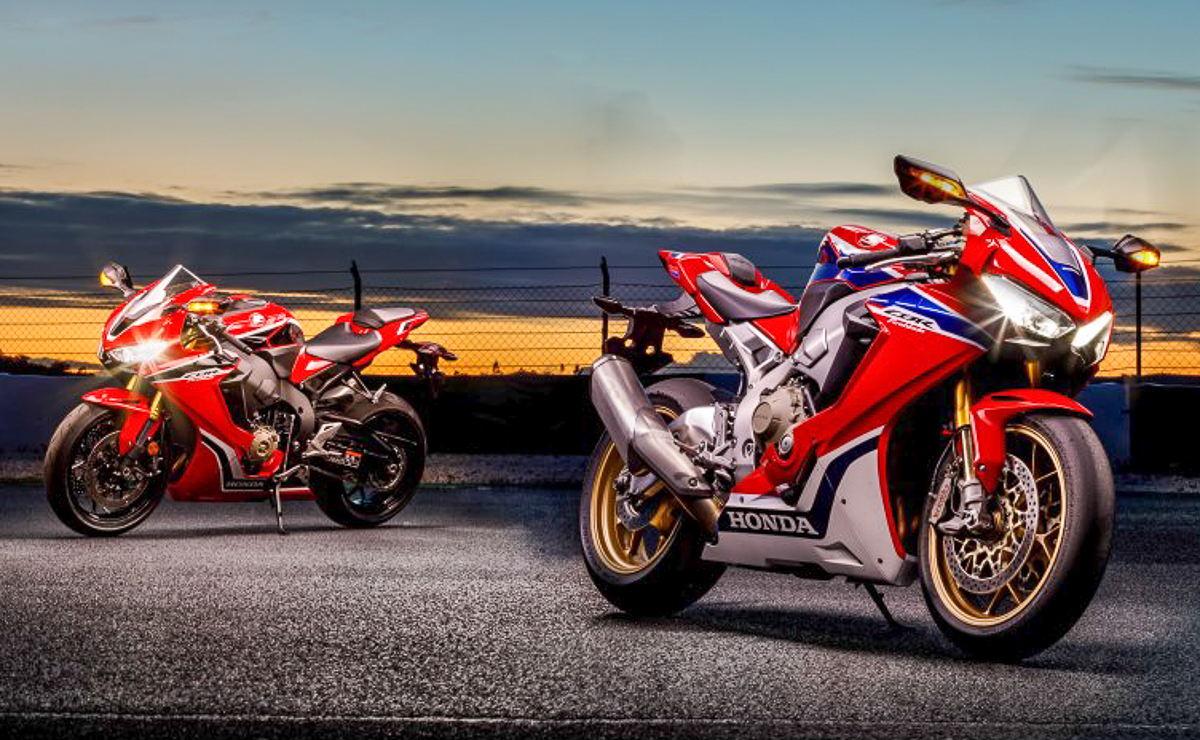
In today’s Bikes Republic feature, we’ve prepared a very special beginner’s guide to Honda big bikes that are available here in Malaysia.

While most Malaysians already consider Boon Siew Honda (BSH) as a household name when it comes to small capacity mopeds and scooters, BSH do offer a wide range of bigger capacity bikes.

From the ever powerful Honda CBR1000RR superbike to the uber-cool Honda Rebel 500 cruiser, there’s always the right Honda bike for everyone from beginners to veteran riders.

Image source: www.ndtvimg.com

While most Malaysians are already familiar with Boon Siew Honda (BSH) as a major household name when it comes to the world of cubs, mopeds and small capacity motorcycles, those looking for something a bit more should also know that BSH offers a wide range of bigger capacity two-wheelers that’ll suit any type of rider for any riding situation. (more…)

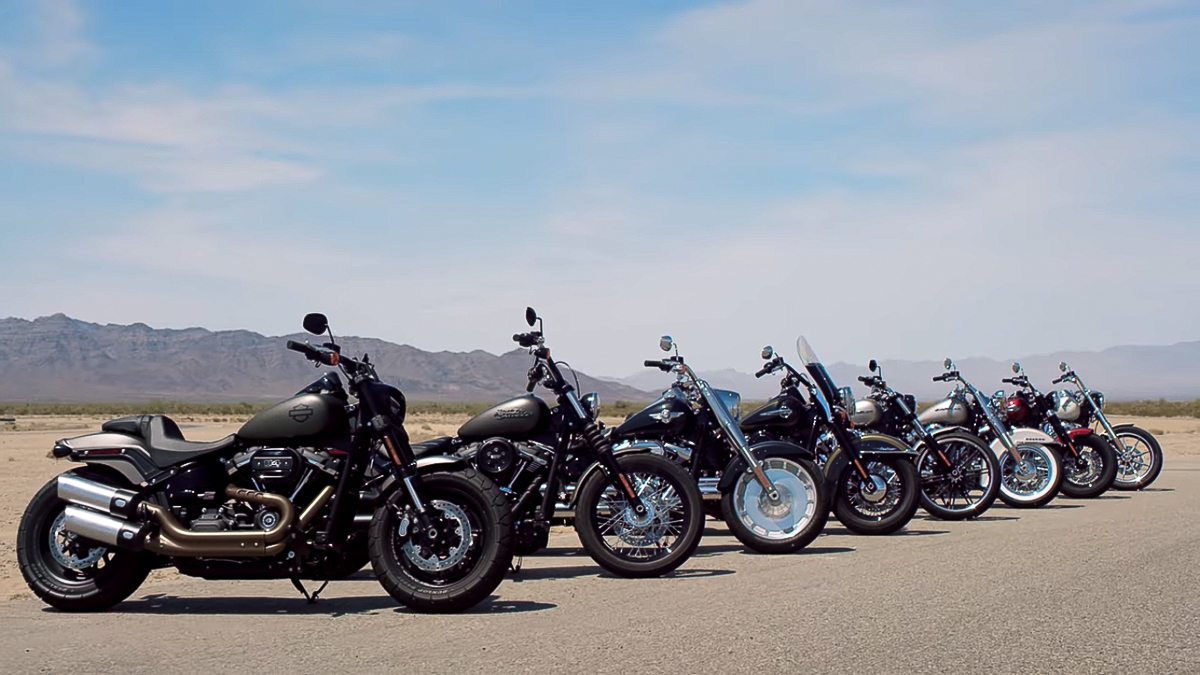
Harley-Davidson has launched their biggest Softail line-up yet with EIGHT new models for 2018.

The new 2018 Softail series includes the Fat Bob, Fat Boy, Street Bob, Low Rider, Softail Slim, Deluxe, Breakout and lastly, the Heritage Classic.

All new 2018 Softail models come with new frame, suspension and powertrain for improved riding experience and power delivery that combines H-D’s iconic look with modern technology.

Harley-Davidson has launched their biggest 2018 line up yet embedded with the most cutting edge technology. 115 years of experience and R&D has resulted in not one, not two, not even five but EIGHT brand new 2018 Softail models. (more…)

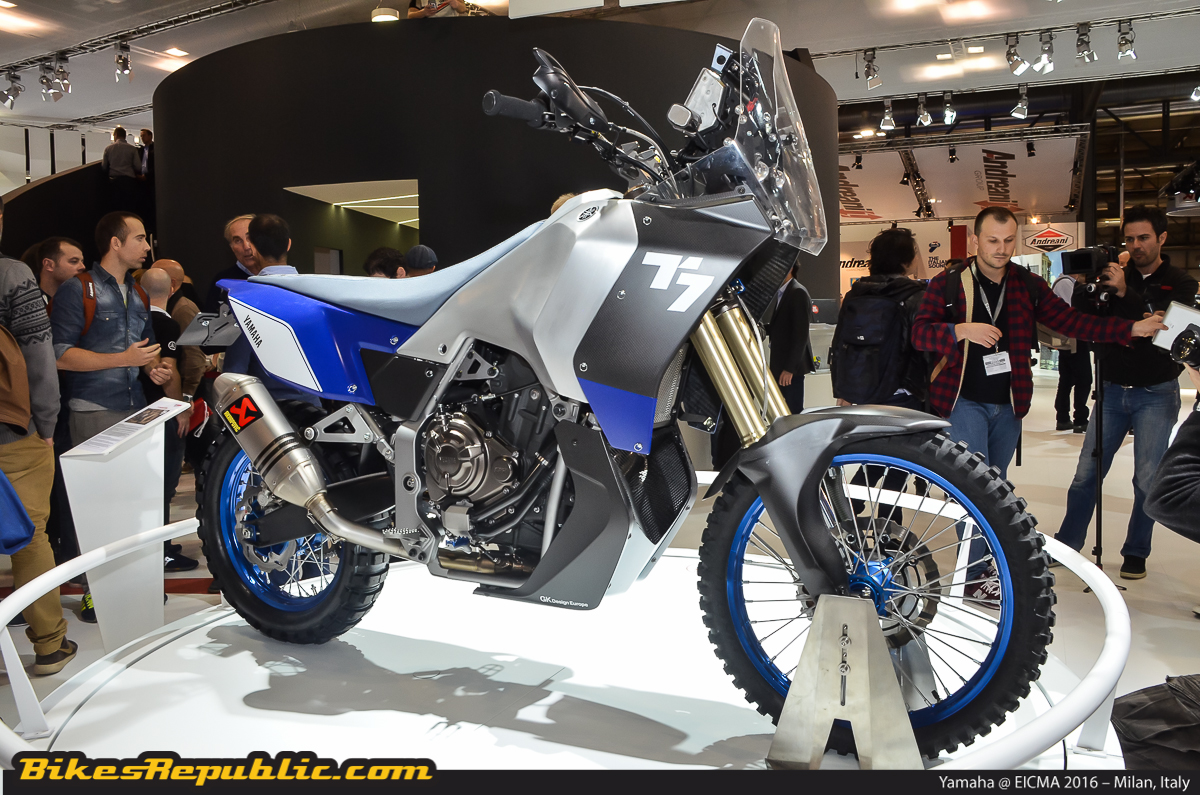
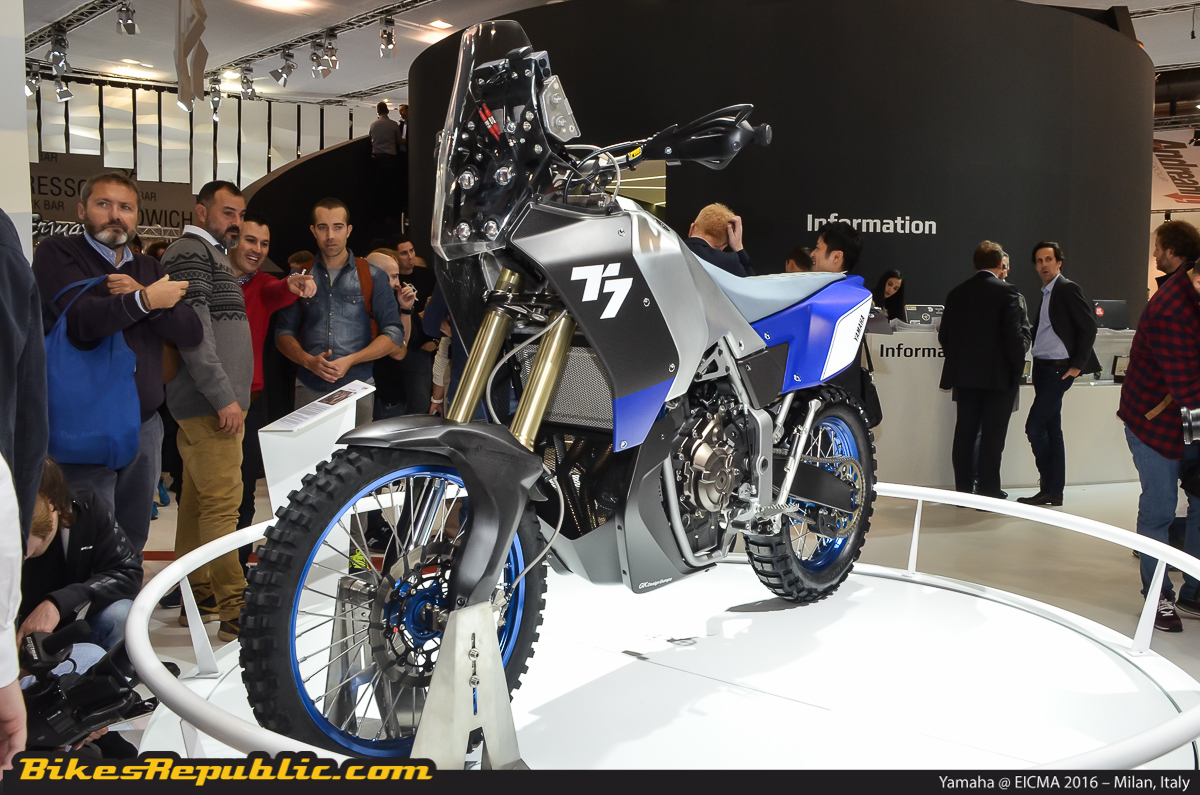
The latest teaser video posted by Yamaha Motors Europe entitled “Your adventure awaits” has got everyone excited with rumours that the Yamaha T7 Concept will go into production.

Introduced last year during the EICMA Milan show, the T7 Concept gained a lot of attention and praise with its futuristic yet rugged lines ready to conquer any terrain.

The fully-function concept bike has made a few appearances but on 6 September 2017, it might make its official appearance as Yamaha’s latest production middleweight dual-sport bike.

The world was super excited when Yamaha launched the futuristic T7 Concept last November during the EICMA show in Milan, Italy. Looks like the chance of the Yamaha T7 remaining a concept is slowly dissipating with the manufacturer’s latest teaser video for a brand new adventure two-wheeler. (more…)

  • The Honda NSS300 is placed as a premium scooter.

  • Its best features are agility, storage space and fuel economy.

  • Practical for commuting and long-distance riding.
Boon Siew Honda (BSH) Malaysia had called upon the local motorcycling media to attend an iftar (breaking fast) event at the Sepang International Circuit (SIC).

The program sheet stated, “Test ride of BSH’s latest big bikes on track.” Whoa! Who could ever resist such an invite, regardless of the fasting month.
So we made our way to the circuit, listened intently to the briefing, and went down to the pits to find a gaggle of gleaming Hondas parked on the pit lane. There were the CBR650F, CB650F, CBR500R, CB500F, CB500F, CBR250R, CRF250L, Rebel 500, and three large scooters.

Err… wait a minute. Scooters on the fabled SIC track? Here where GP greats race on? Surely there’s a mix up.
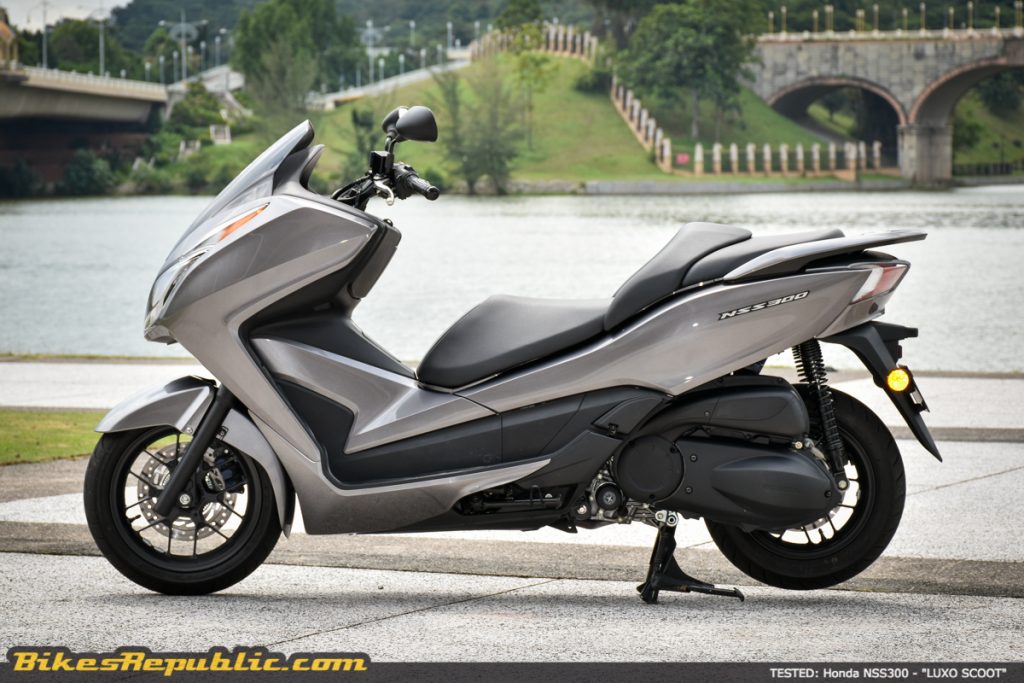
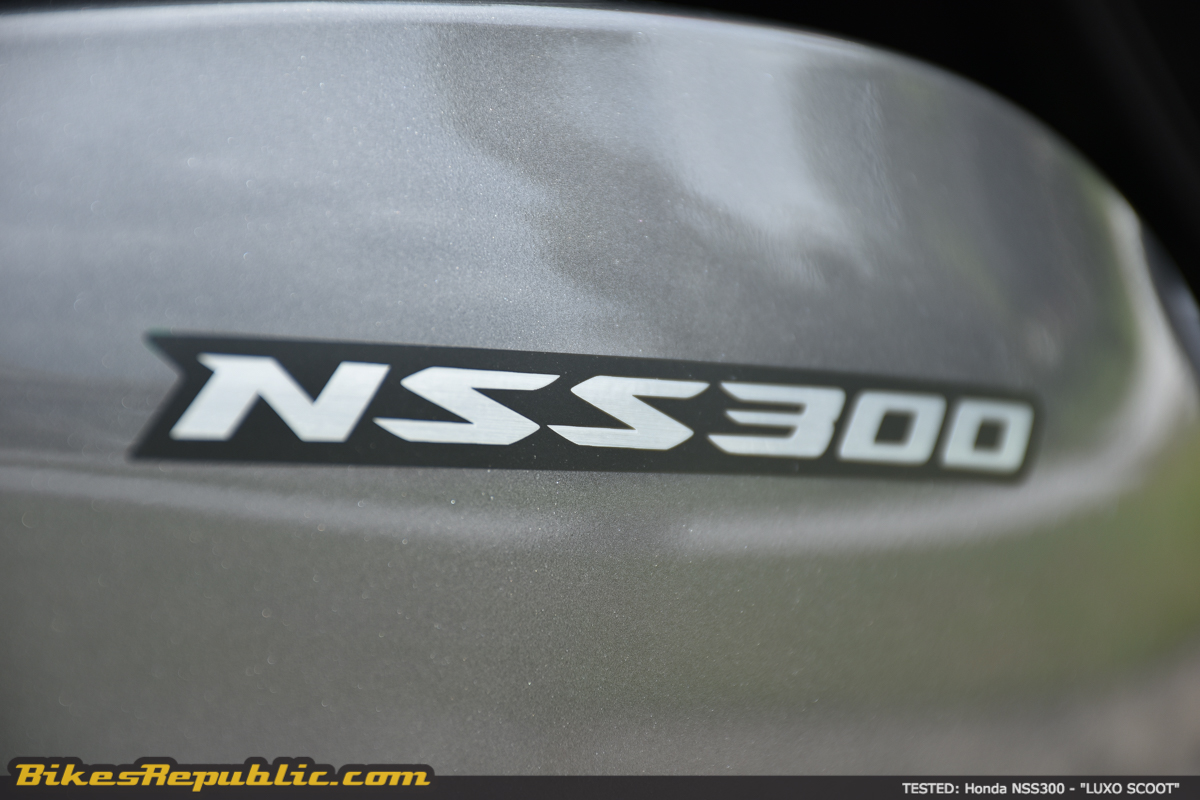
Anyway, I kept my mouth shut and we switched bikes at every session of 3 laps. And I was finally on the white coloured scooter. It said “NSS300” on the flanks. I climbed on, in complete RS Taichi leather racesuit and stared at the car-like instrument cluster.

BSH’s personnel signaled us to go and out I went of the pit lane and onto the circuit.
Down into Turn One and Two, it dawned on me of how agile the NSS300 was, despite its long, long wheelbase and wide body. But it was when I flew threw Turn Three, then swept down the hill from Turn Four to Five and through Six, which curved all the way to the front straight that I realized that this was a scooter unlike any other.

Small-wheeled scooters have a tendency wobble in long sweeping corners, but the NSS300 was stable on its sides, so much so there were journos who were throwing off sparks from the centrestand and grounding the fairing.
The engine responded immediately to the throttle and was so smooth that it was almost electric-like, belying the fact that it has one-cylinder. Speed climbed effortlessly as we blasted, er… swooshed down the front straight.

Everyone regrouped at the paddock afterwards for breaking fast. We compared notes and while all bikes were good, it was the NSS300 that had surprised everyone.
I made a mental note that we needed to test this bike on the road someday. Will it do well on out in the real world too?

Well, who says prayers are never granted? BSH had arranged an NSS300 for us and I jumped on the opportunity like an unconditional donation.
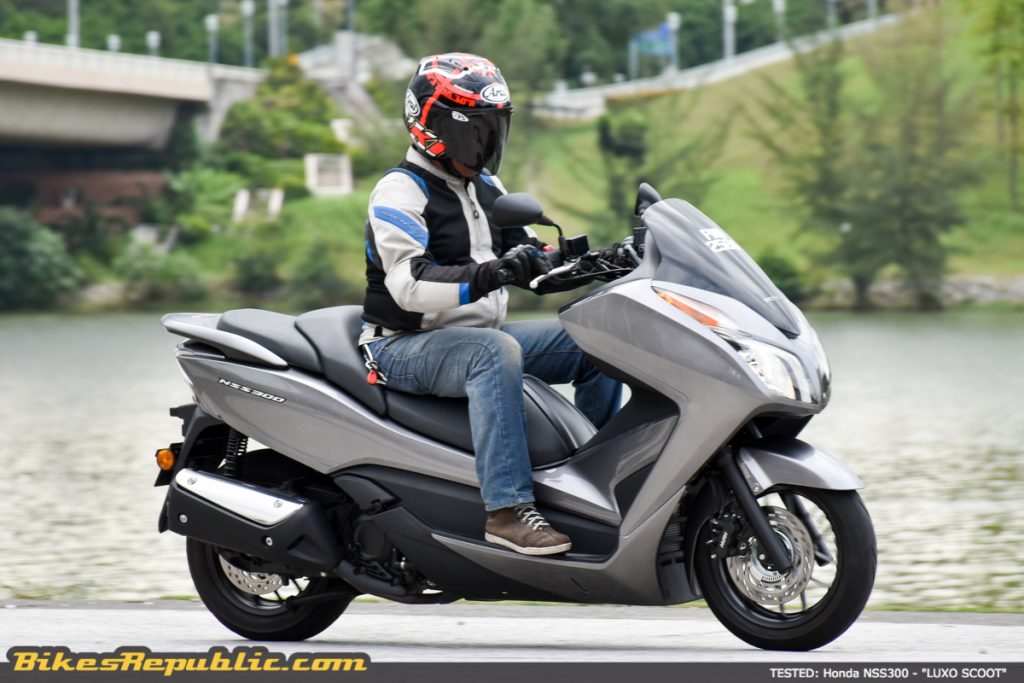
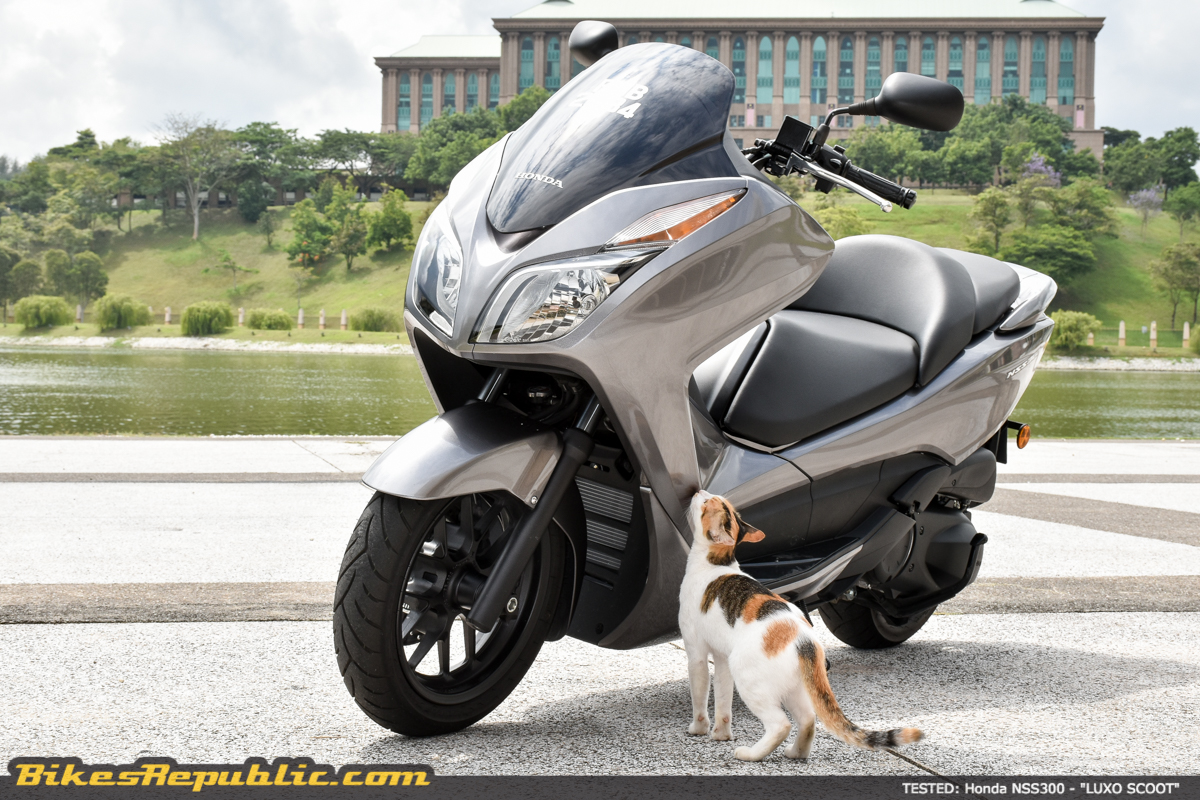
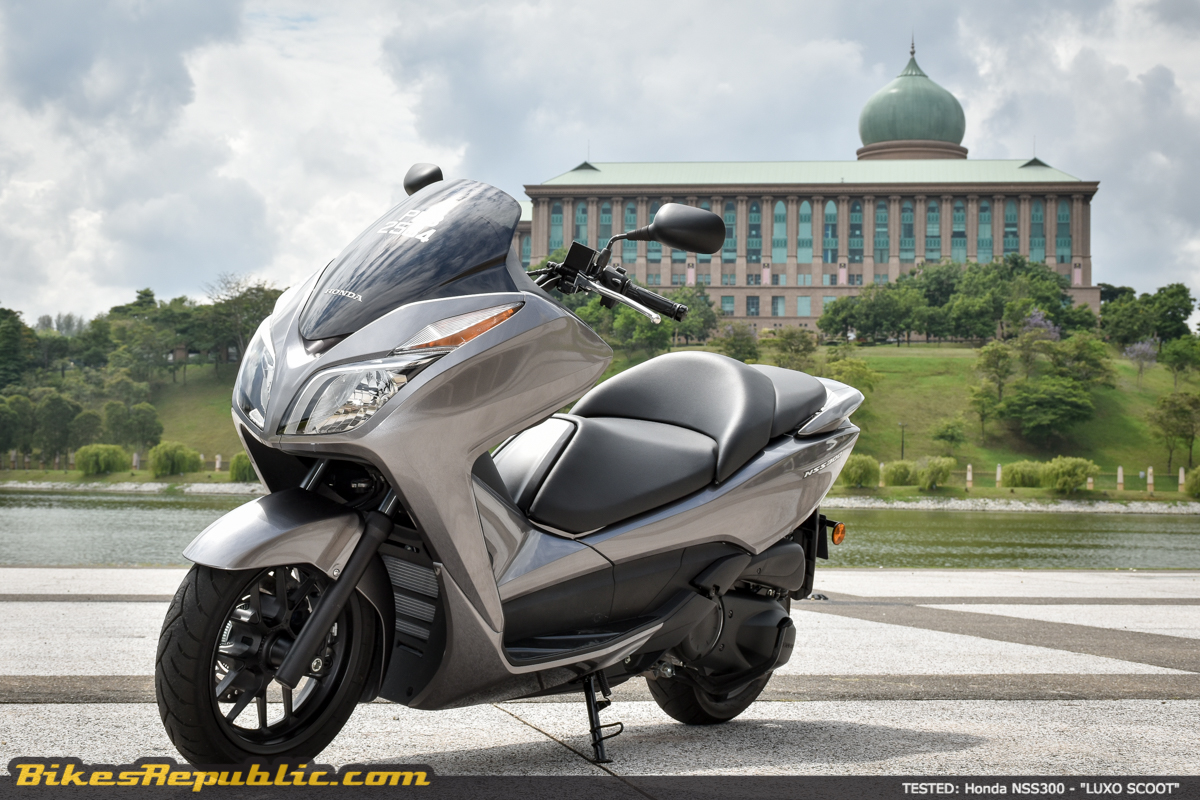
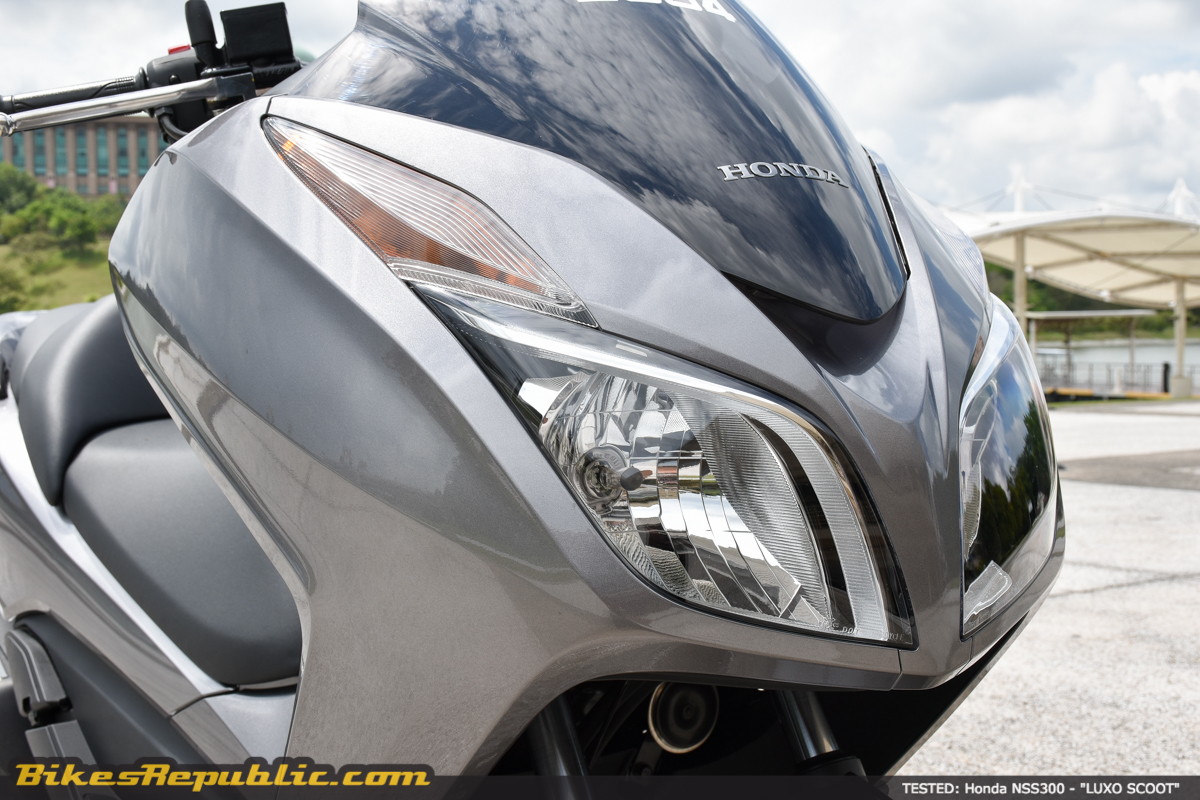
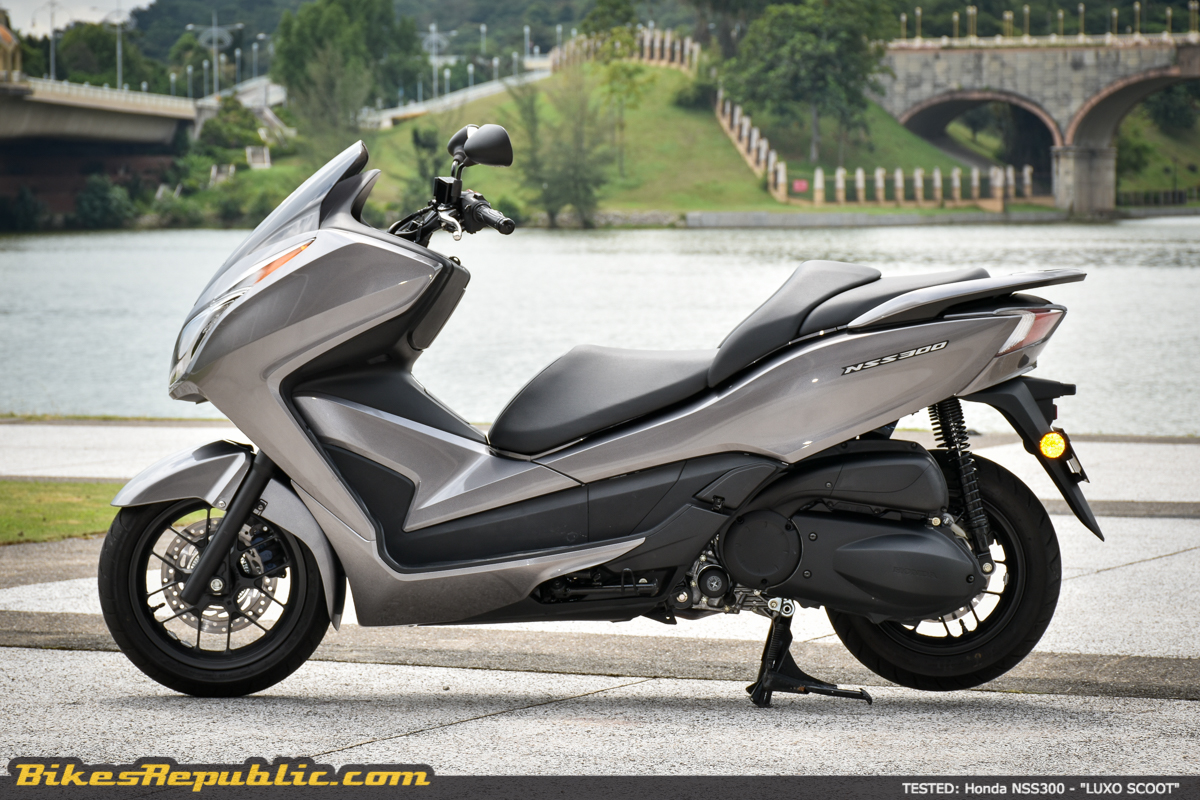
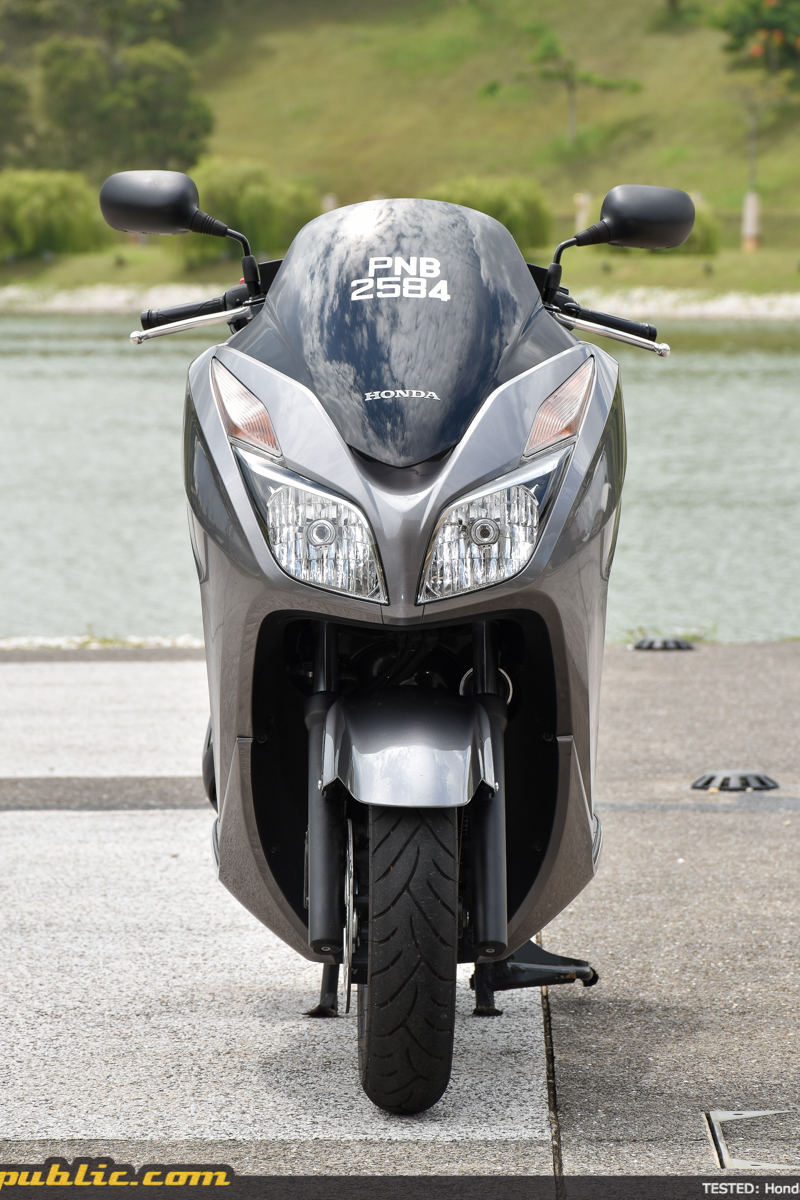
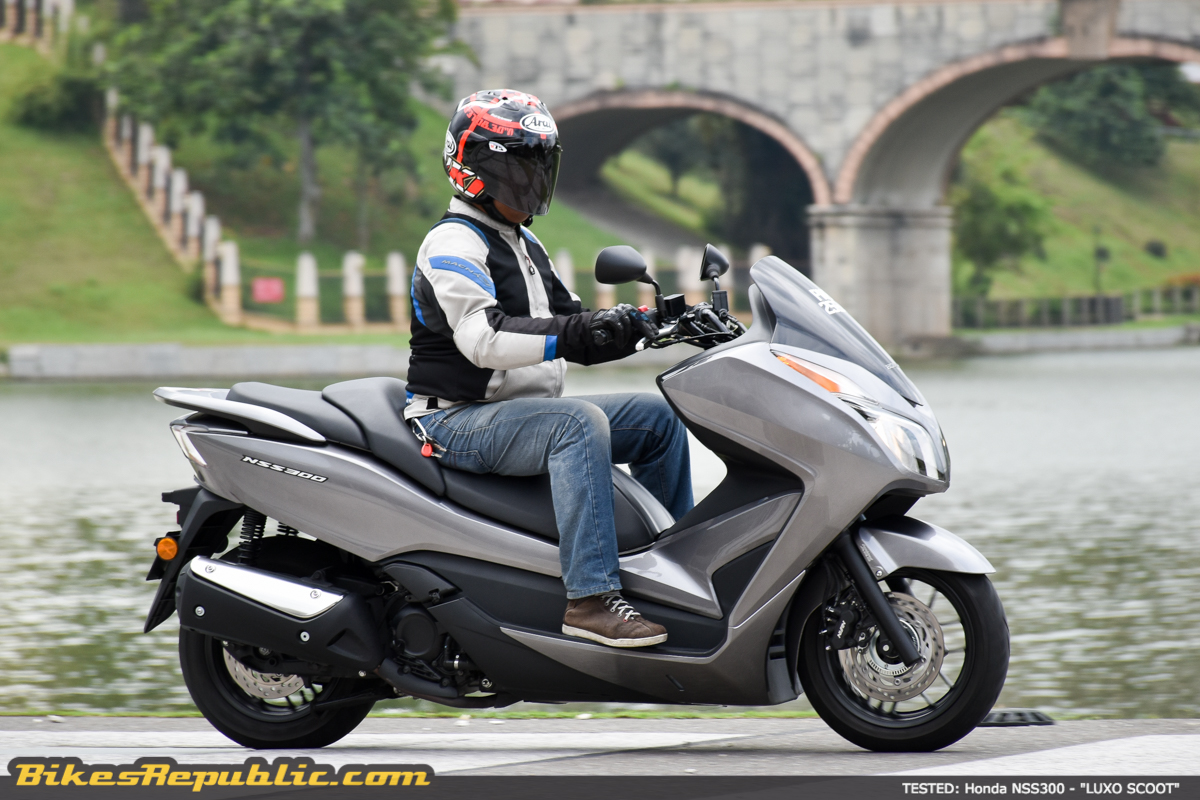
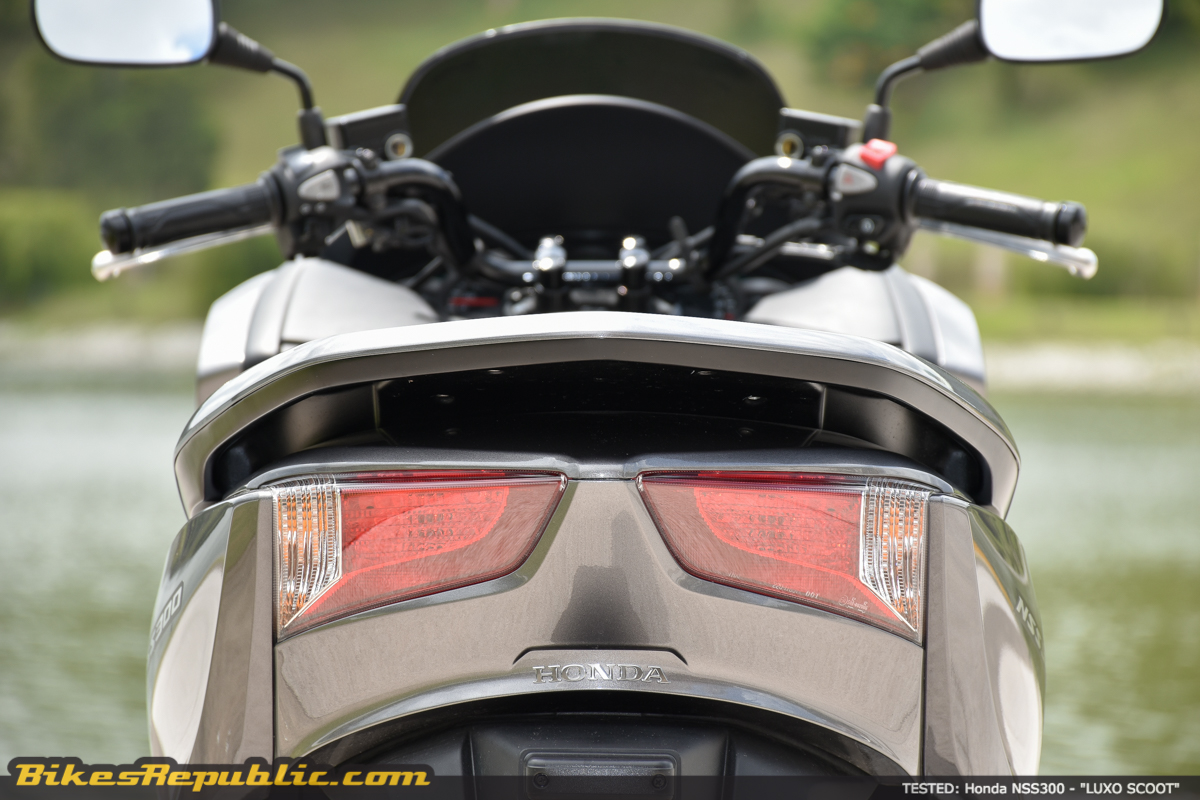
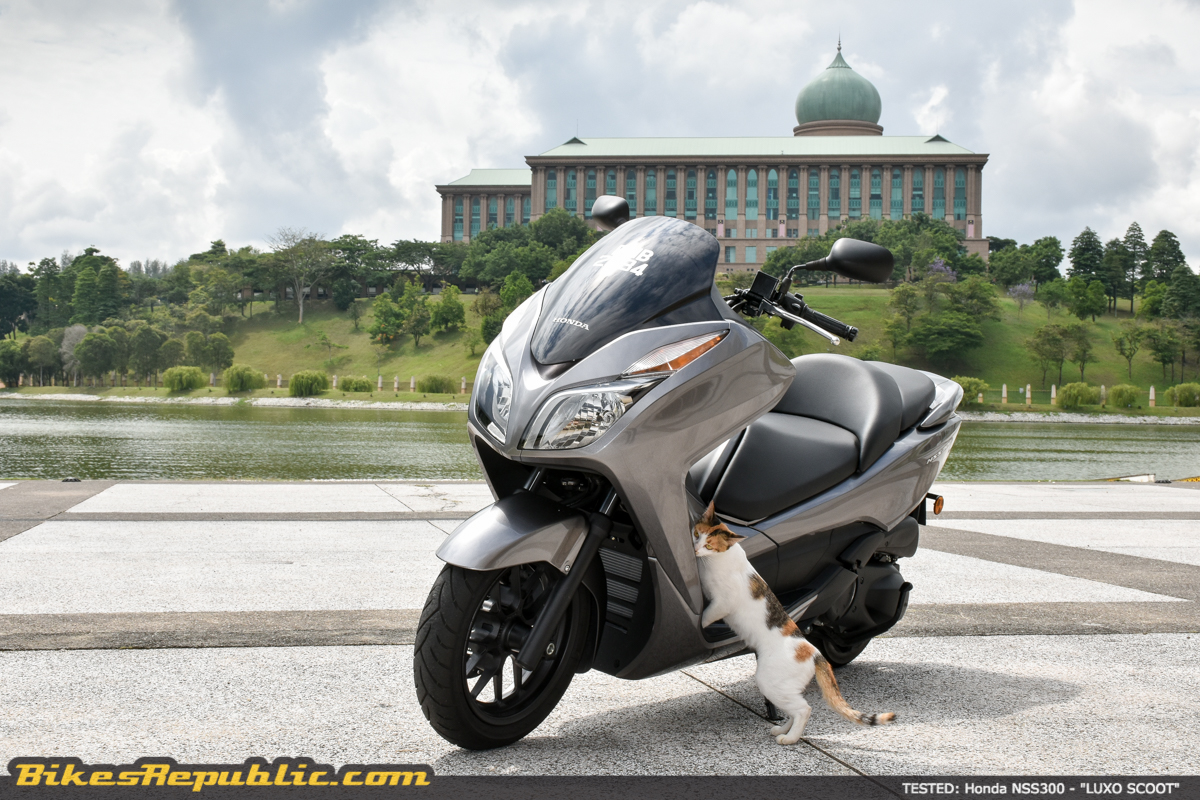
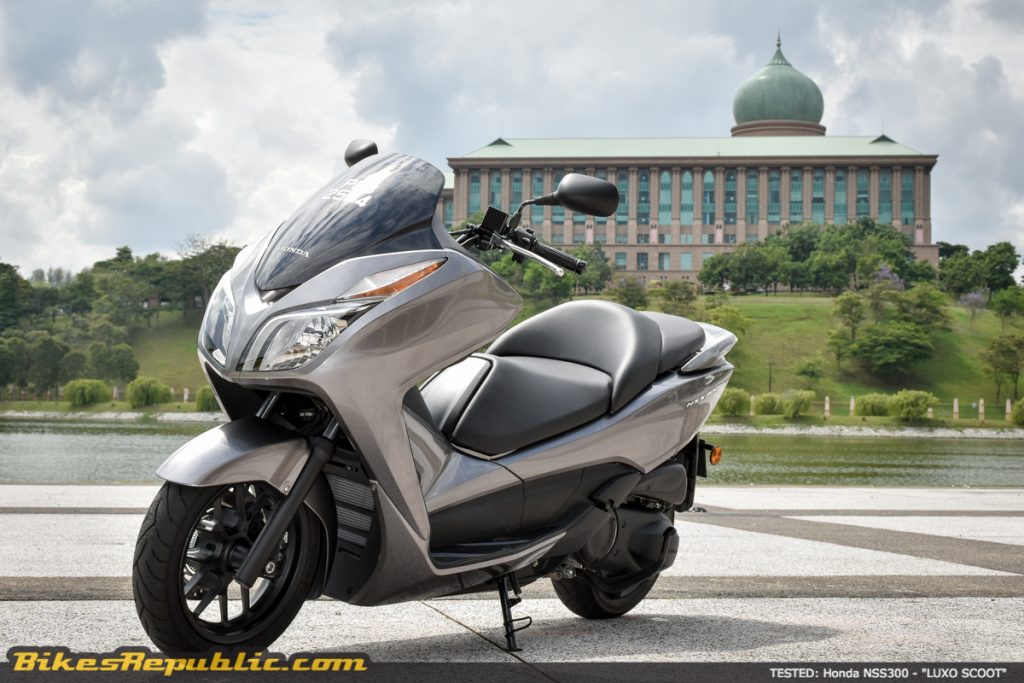
Known as the Forza in certain countries, the Honda NSS300 is offered as a luxury scooter. On first viewing, it looks like a PCX150, but make that a supersized PCX.

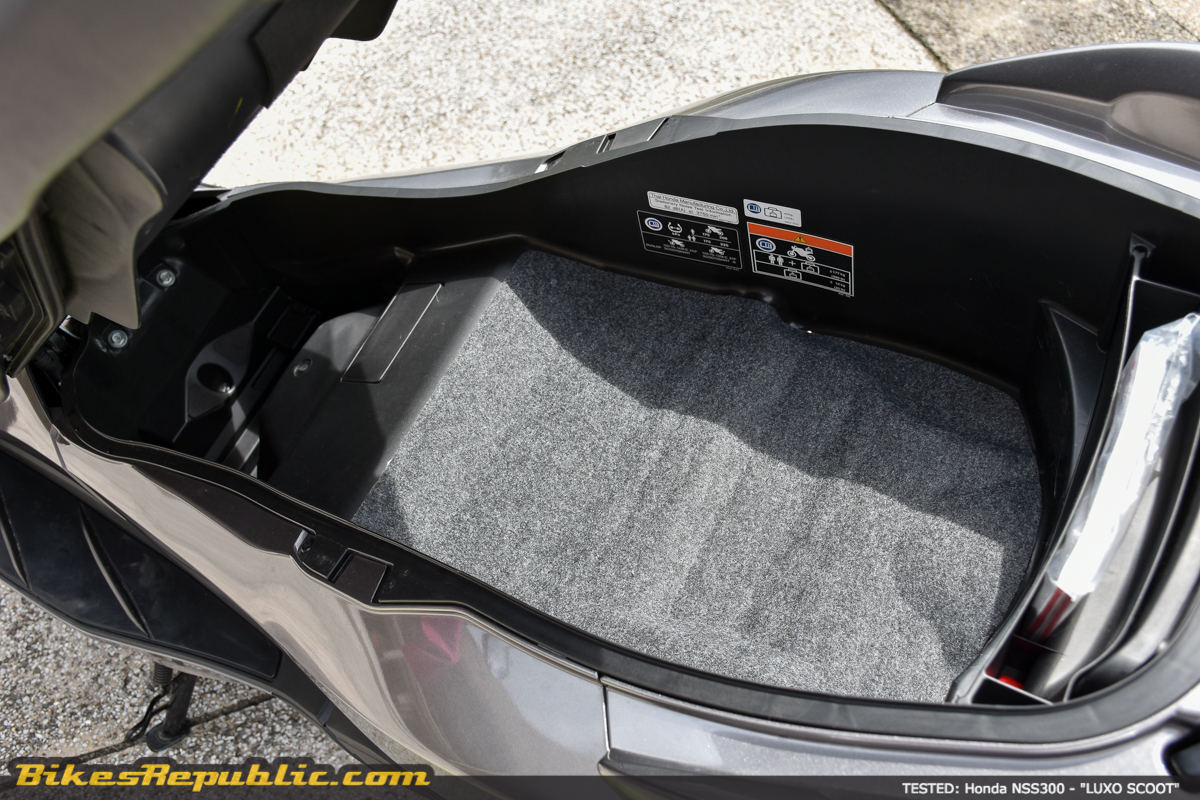
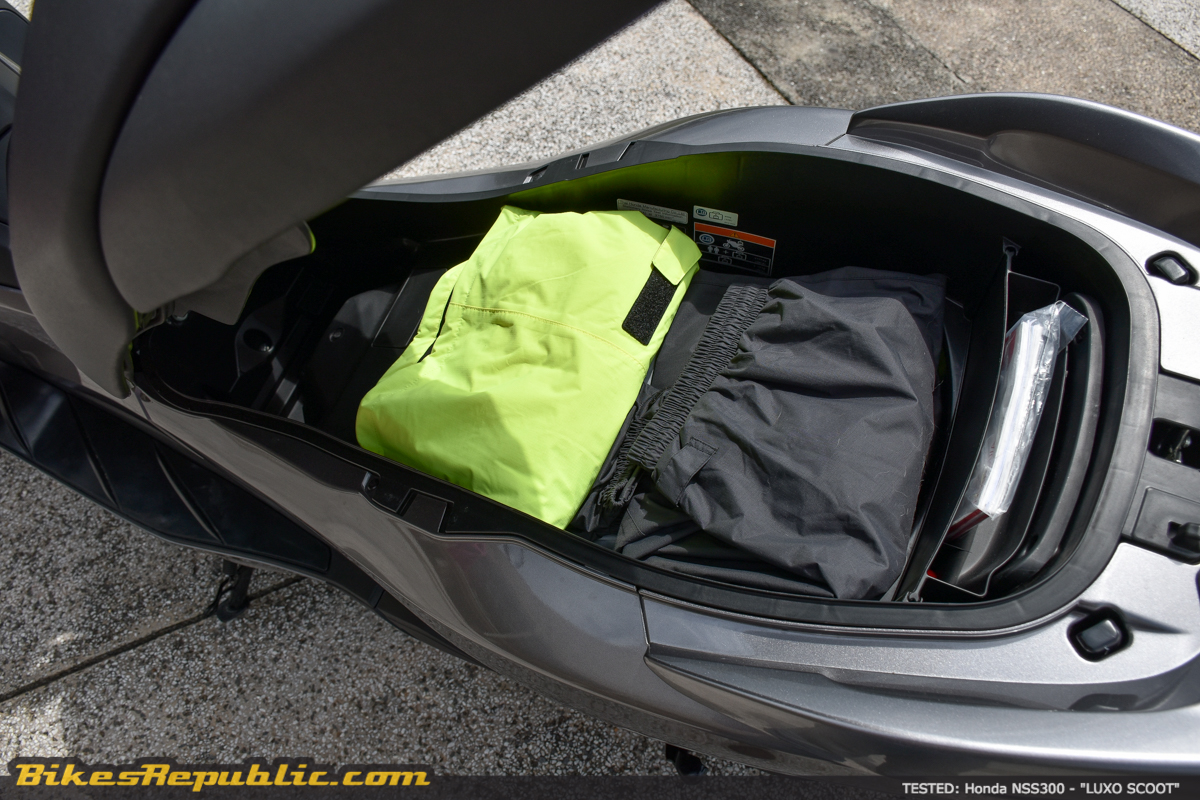
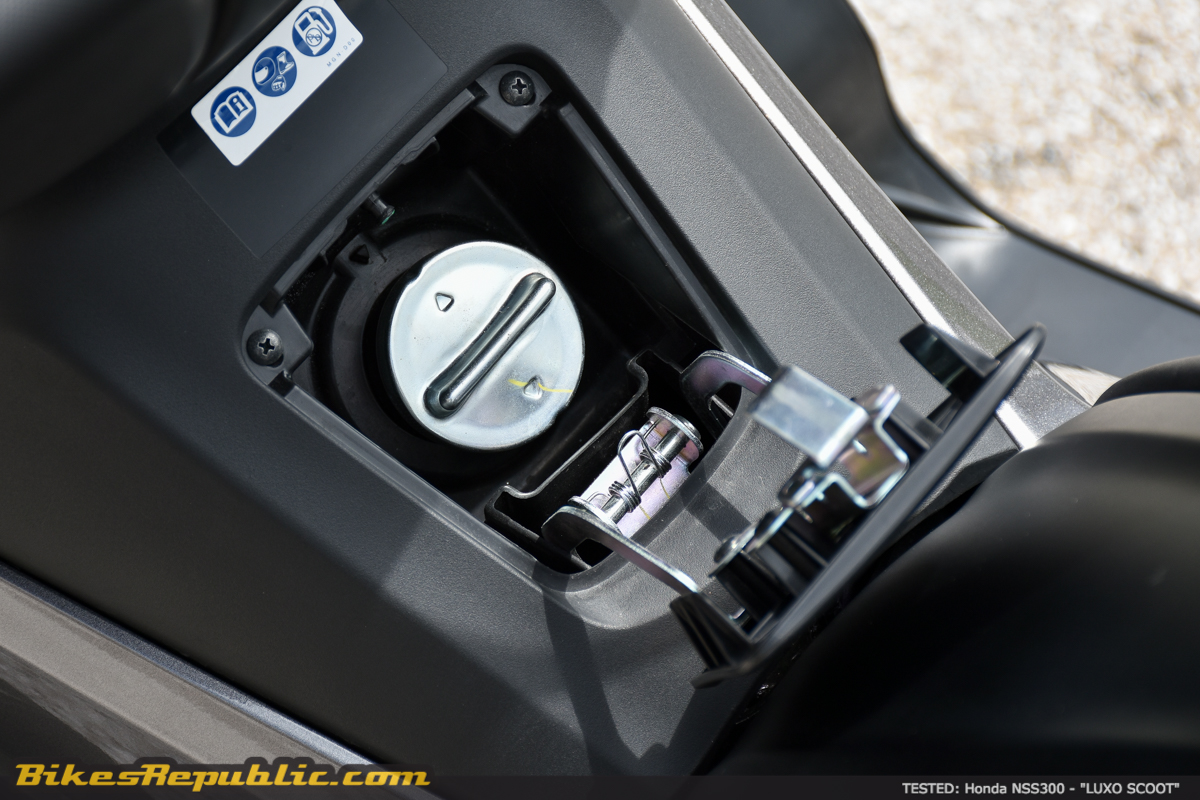
While the PCX is a compact runabout, the NSS fills the roles from being an everyday commuter to a long-distance automatic tourer. As such, the bigger NSS offers plenty – make that a lot – of storage space. There’s a cavernous 62-liters of space under the seat alone.
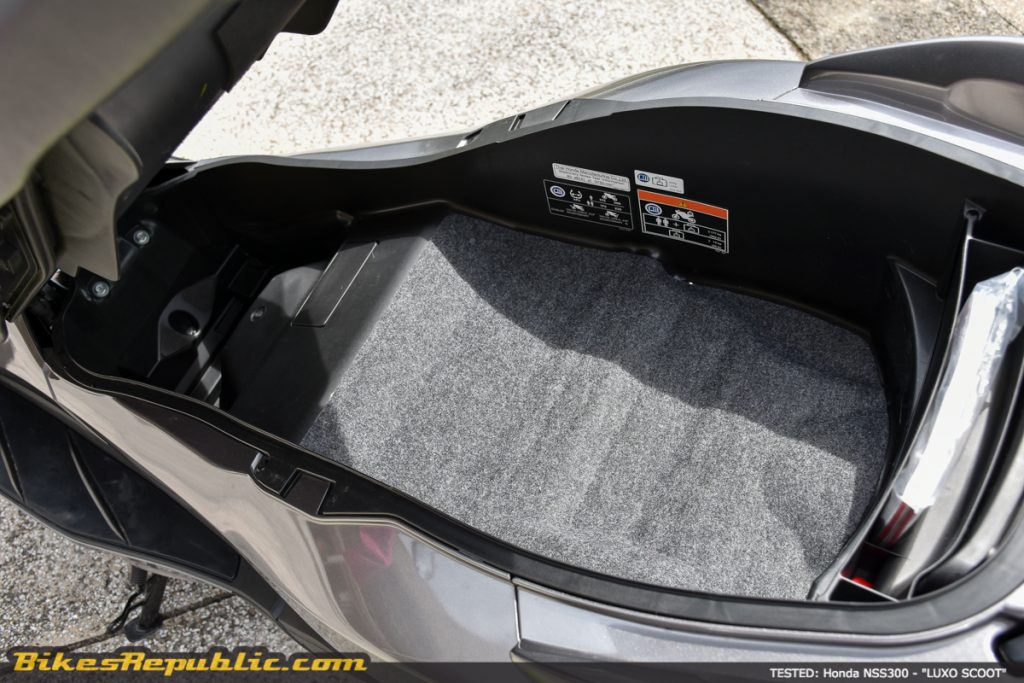
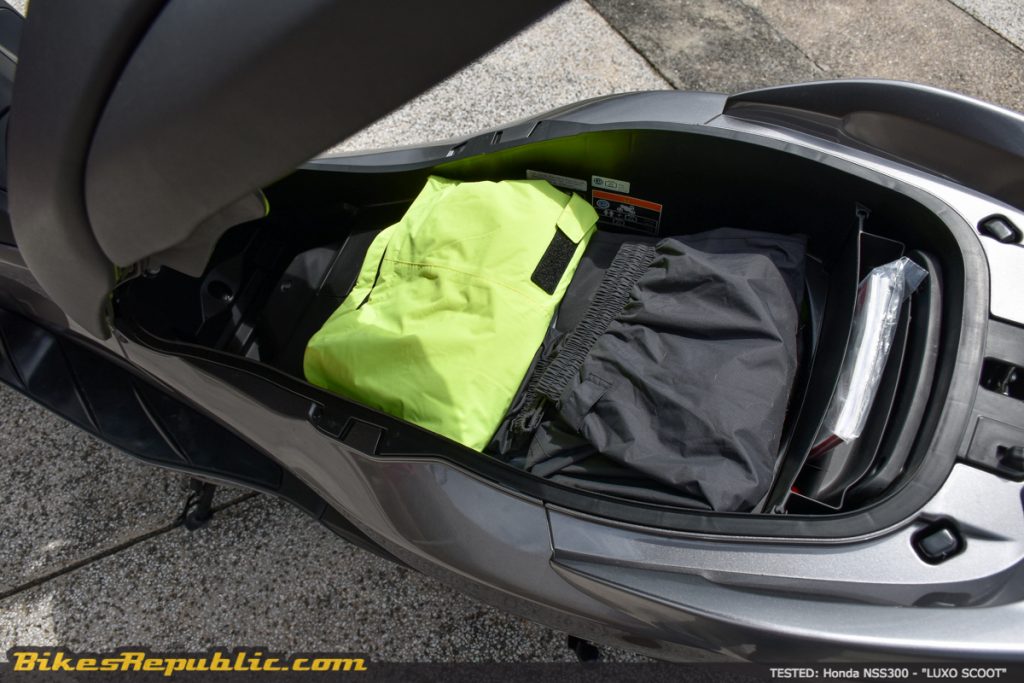
I could stuff two jet type helmets under the seat with two sets of rainsuits; or one helmet, a backpack, a small camera bag and two sets of rainsuits. Talk about practicality. Add on a GIVI M43 Mulebox ADV top box and you’ll have crossborder tourer.
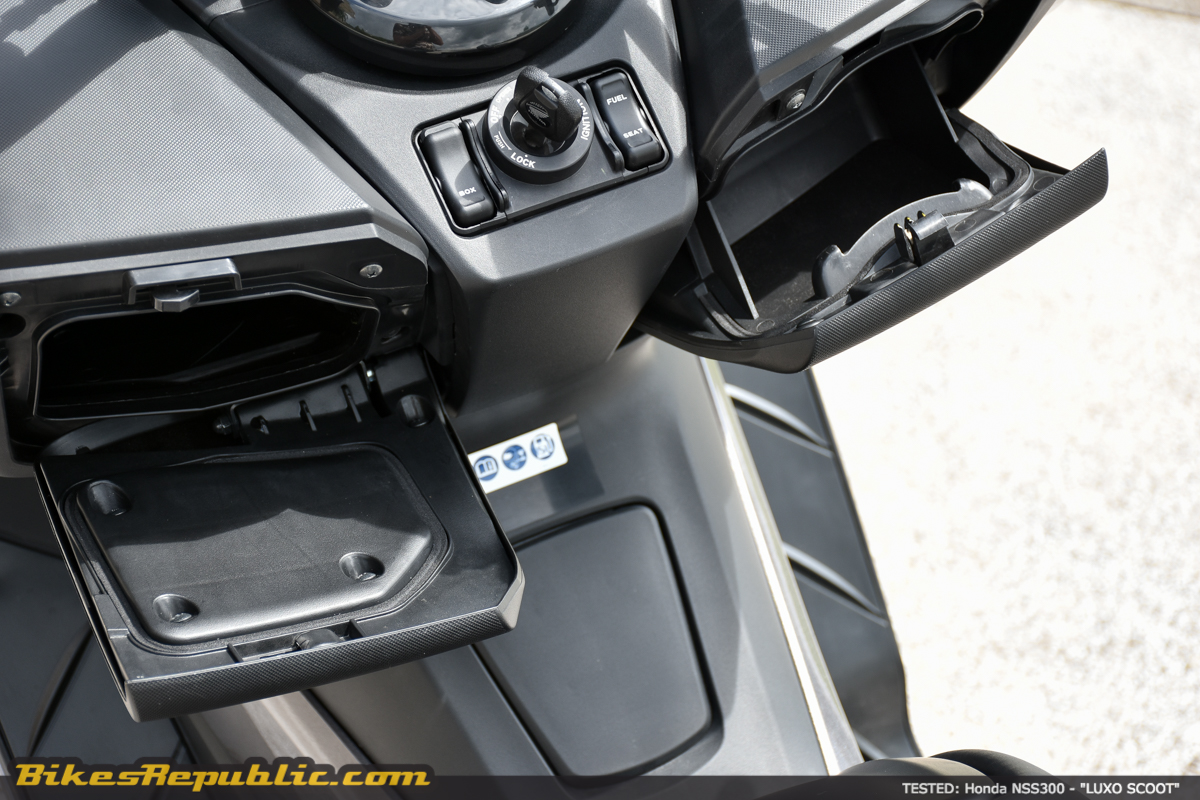
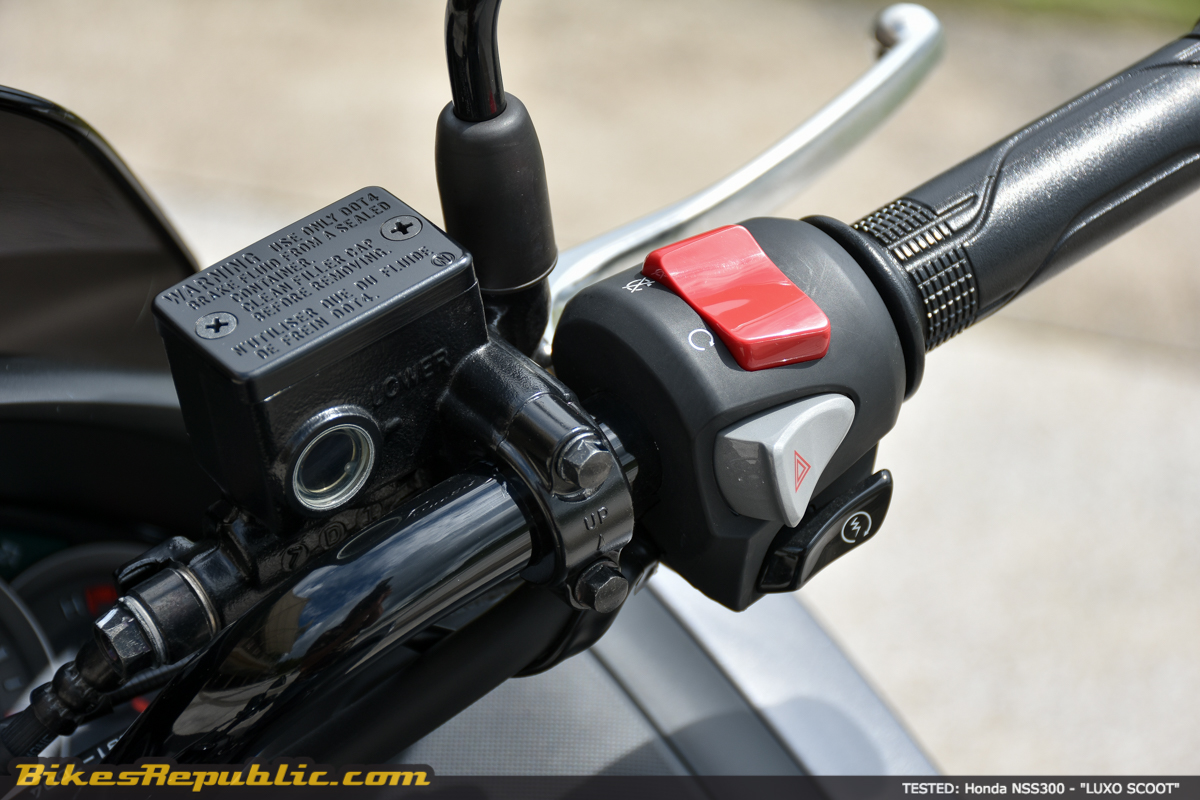
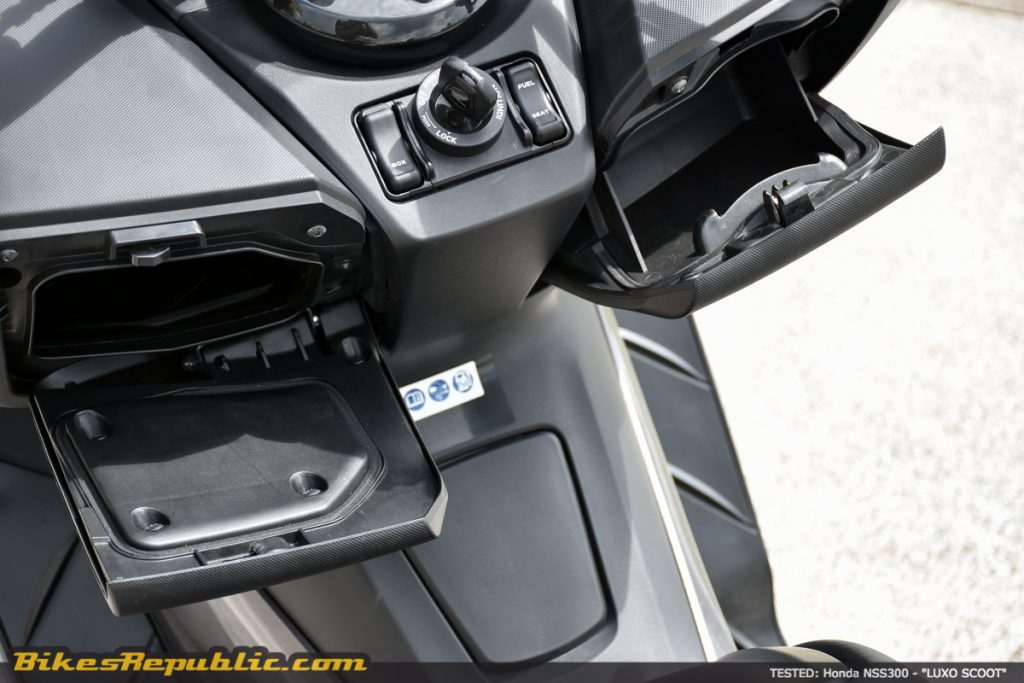
There are two more “glove boxes” embedded in the large fairing up front. The right compartment is not lockable and smaller, enough for a wallet or pack of ciggies. The left compartment, on the other hand, has to be released via a button. It’s so deep I could reach in all the way with my forearm right up to the elbow! A scary movie might have that arm pulled by a monster inside… Anyhow, I stored a bottle of 100 Plus, plus my phone and a pair of gloves in there. There’s also a cigarette lighter-type 12V socket in there for you to charge your phone or other devices.
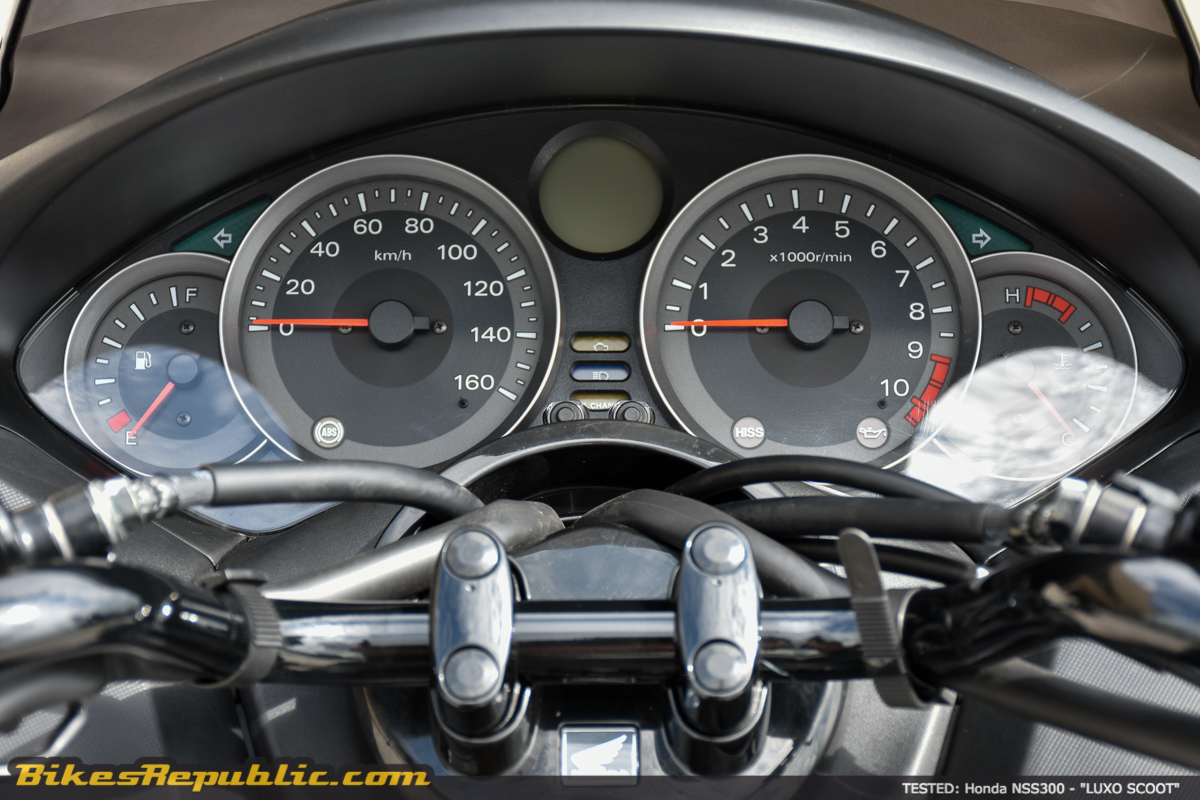
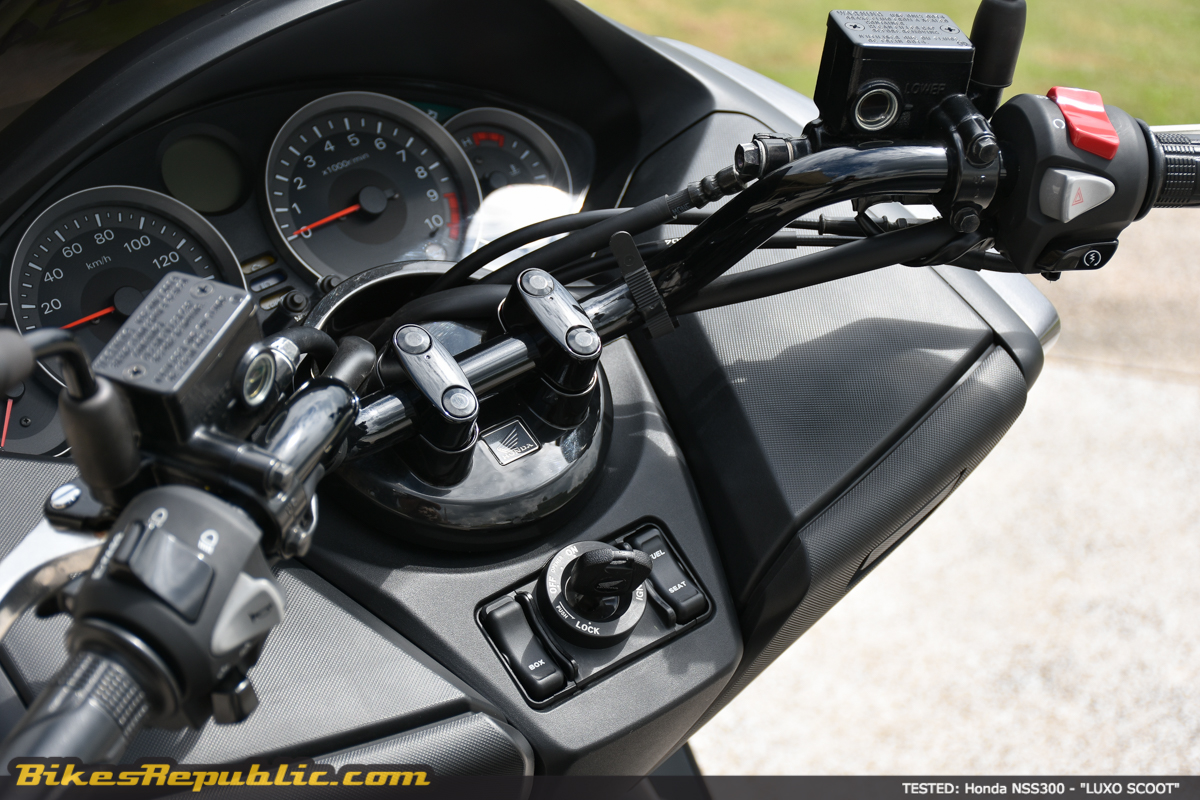
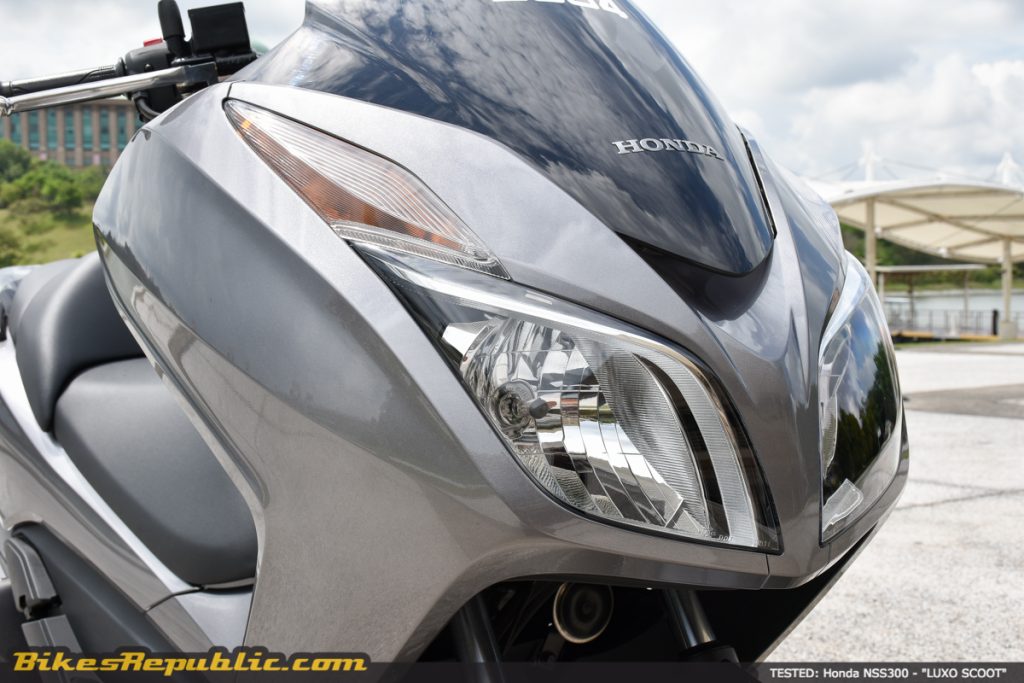
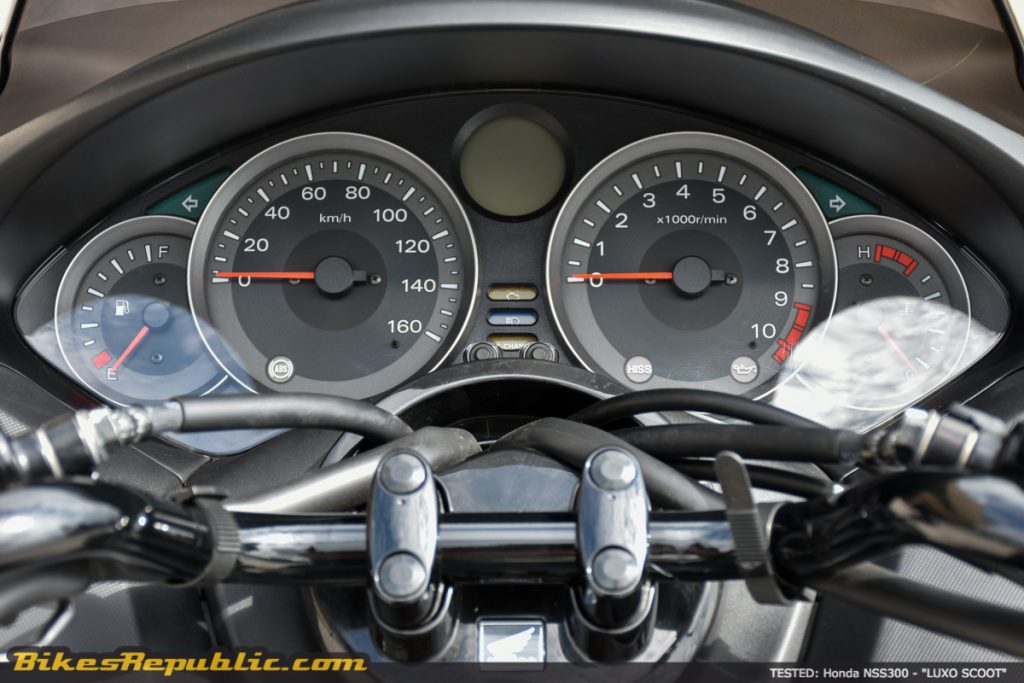
The large instrument cluster looks familiar… like it belonged in a Honda car or Gold Wing, perhaps? The view is dominated by the large analog speedo and rev counter, flanked by the fuel and coolant temperature gauges. There’s a smaller round LCD on the top which displayed the average litre/100 km fuel consumption.
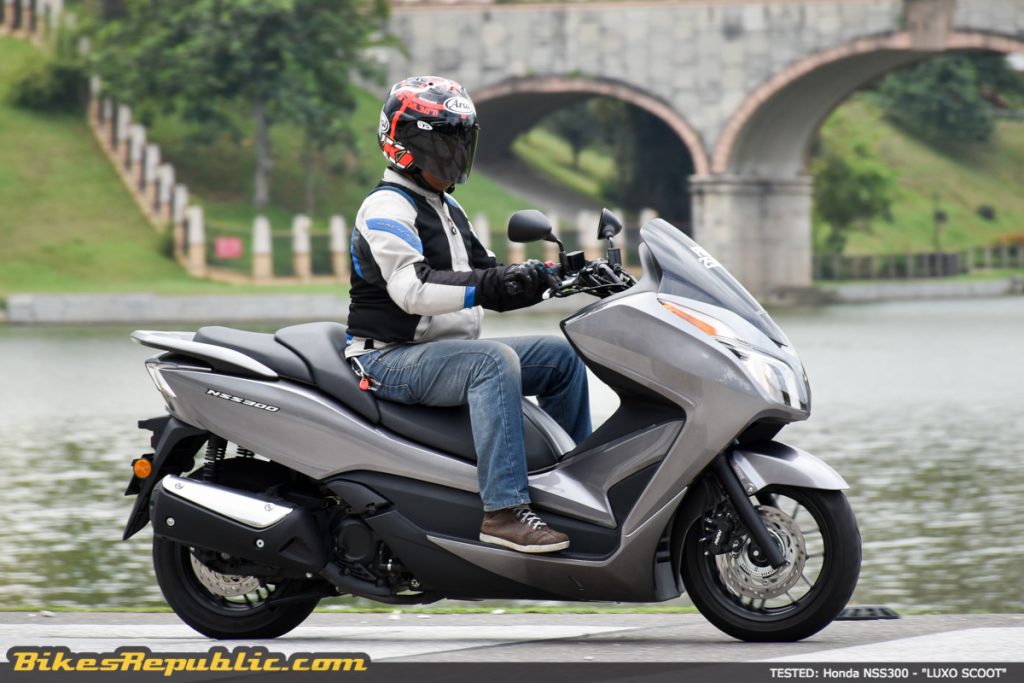
As large as the NSS300 looks, its seat is actually quite low. The sides are tapered off so even a short rider like me had no problems setting both feet down at stoplights. The seat widens to the rear up to the backstop. A nice touch. The rear portion is wide and deeply cushioned.

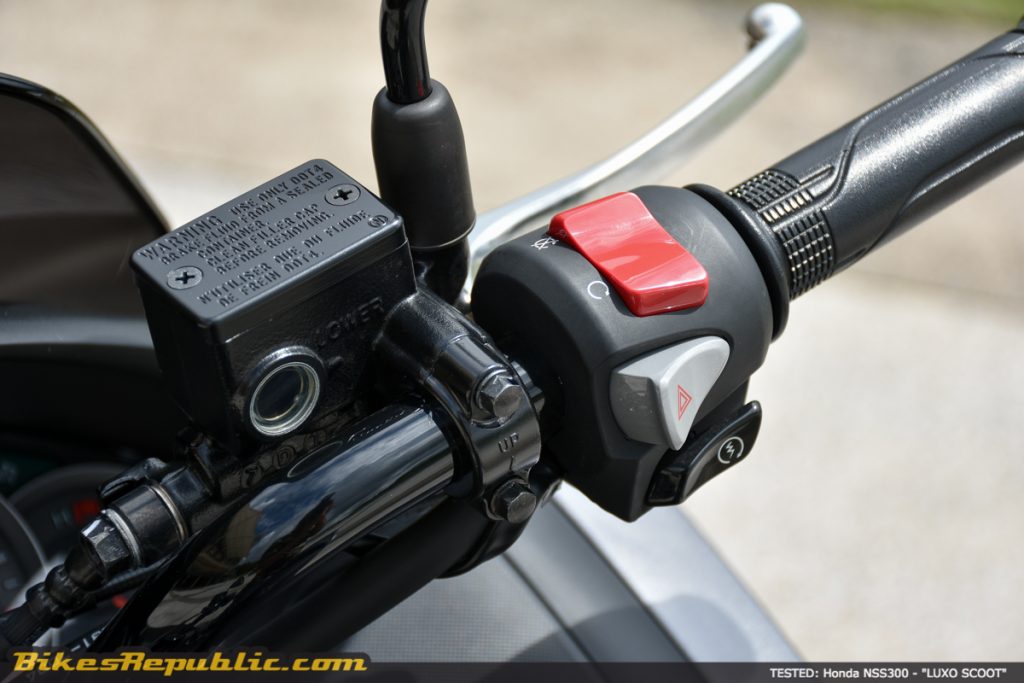
Insert the chip embedded HISS (Honda Ignition Security System) key and start the engine. It fires up with a small thump from the large piston then settles down into a zen-like idle. Twist the throttle and off you go.
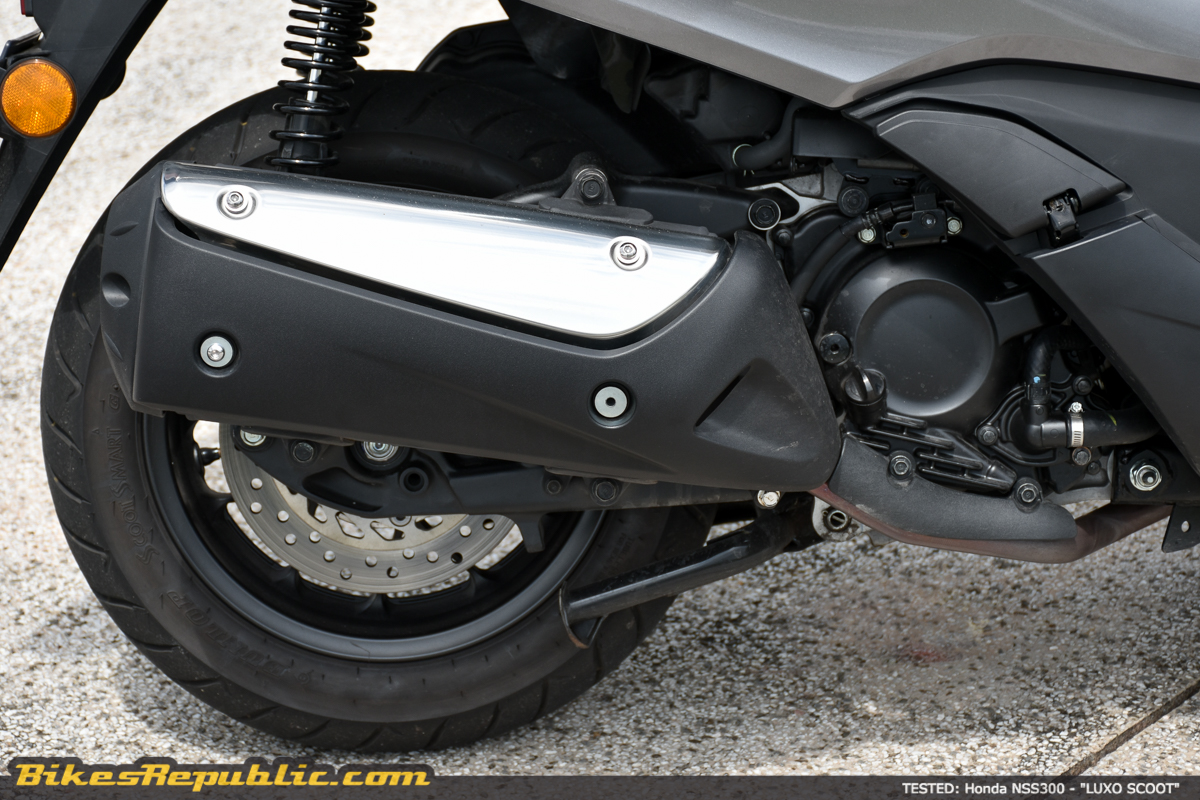
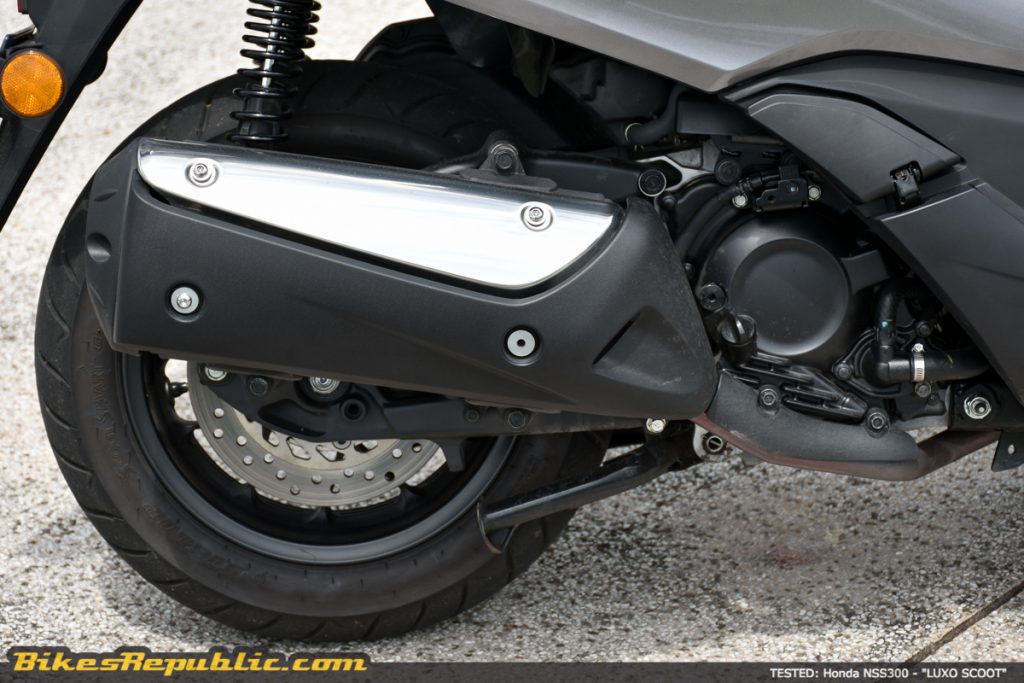
The liquid-cooled, SOHC, single-cylinder, 279cc engine is governed by Honda’s proprietary PGM-FI electronic fuel injection system and coupled to a seamless CVT. The combination provided plenty of torque from standstill to almost anywhere in the powerband.
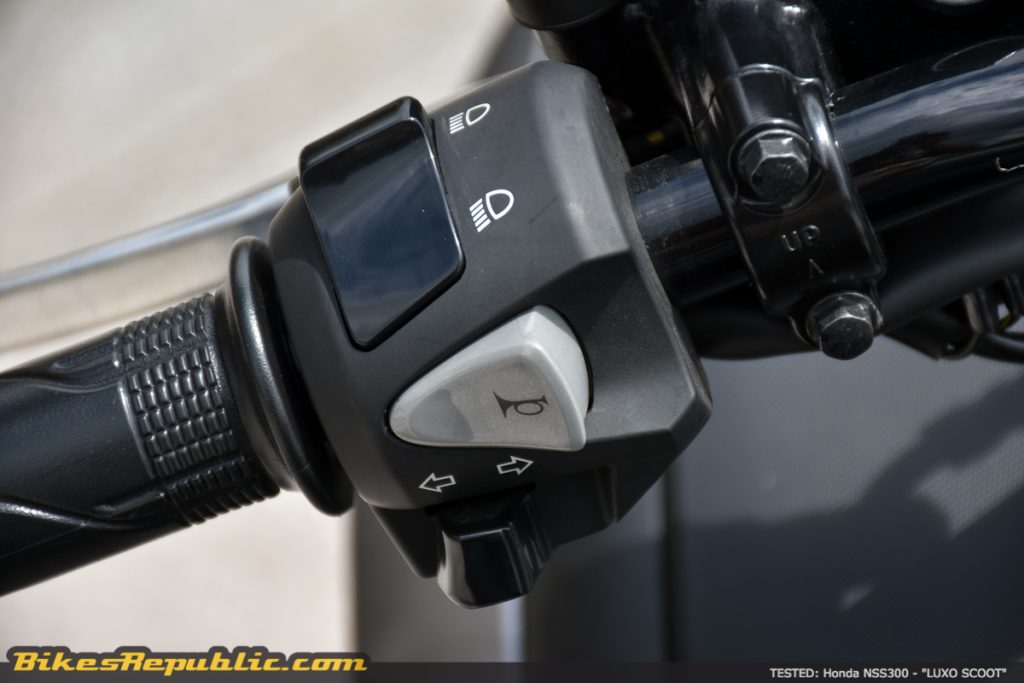
The bike’s size caused some early reservations during our urban test, as I wondered if there’s enough space to filter. Again, these dimensions are misleading – the NSS300 allows you to leave your brain in that left side compartment and go even more bonkers than the already bonkers KL traffic, especially when dispatch riders try to act the foo. Each gap was an invitation to the top step of the podium, each traffic light was a dragstrip’s Christmas lights, each corner was the Rothmans corner.
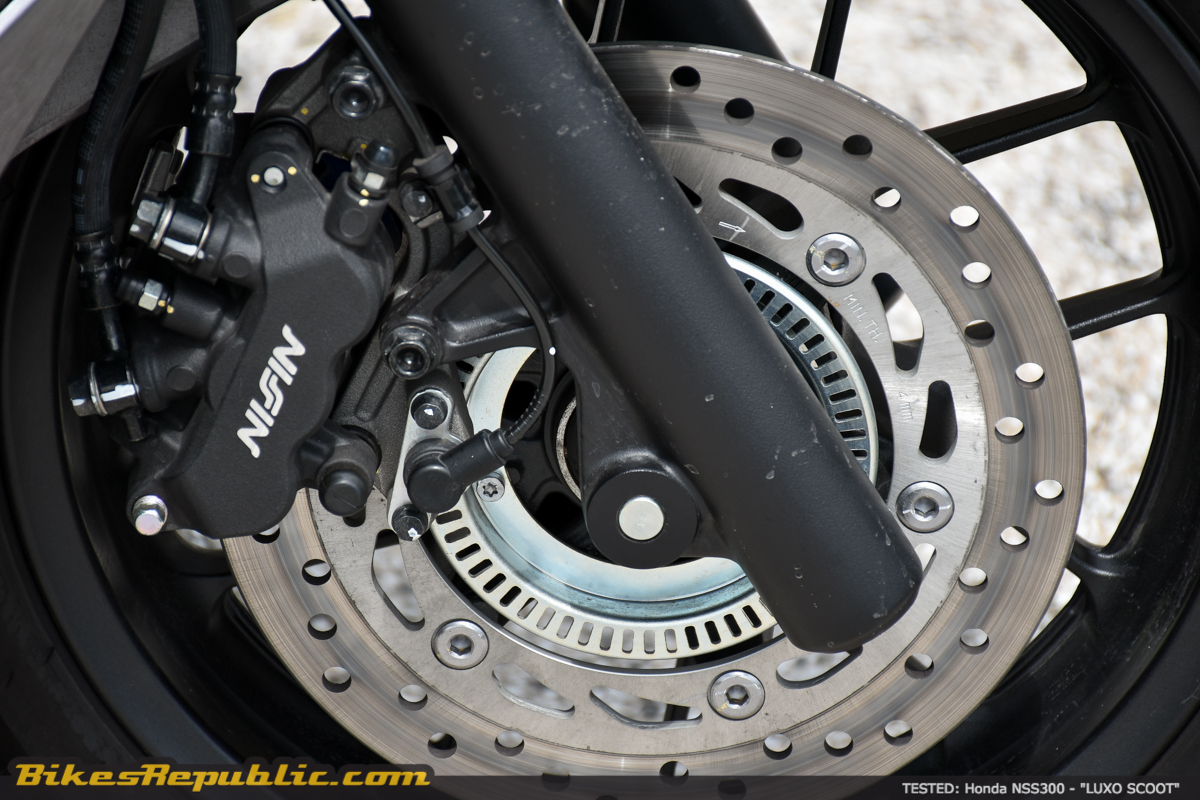
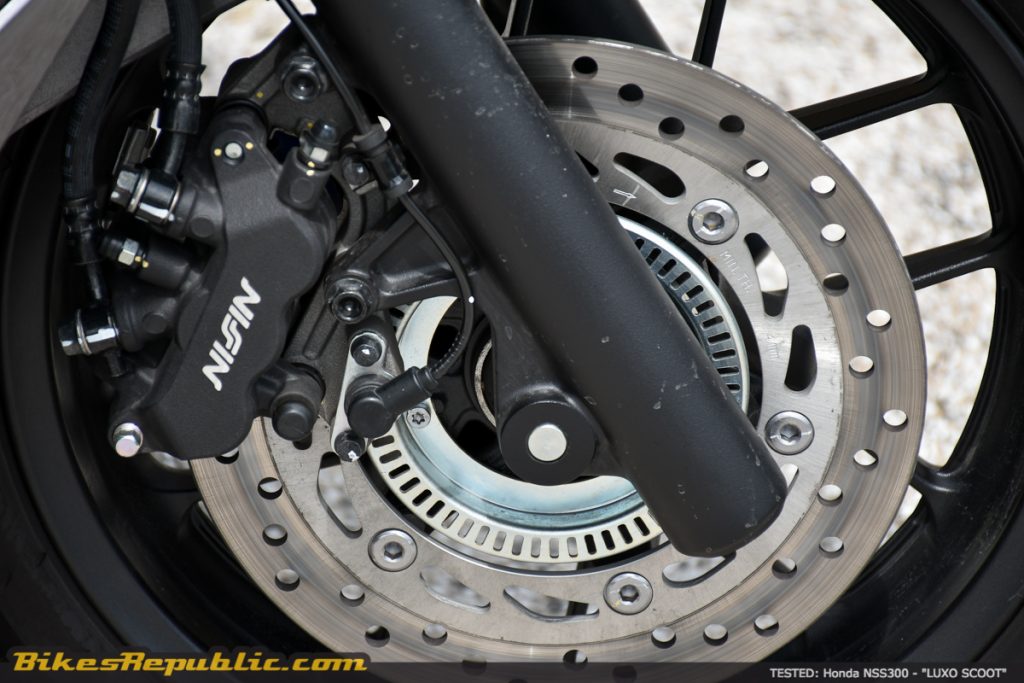
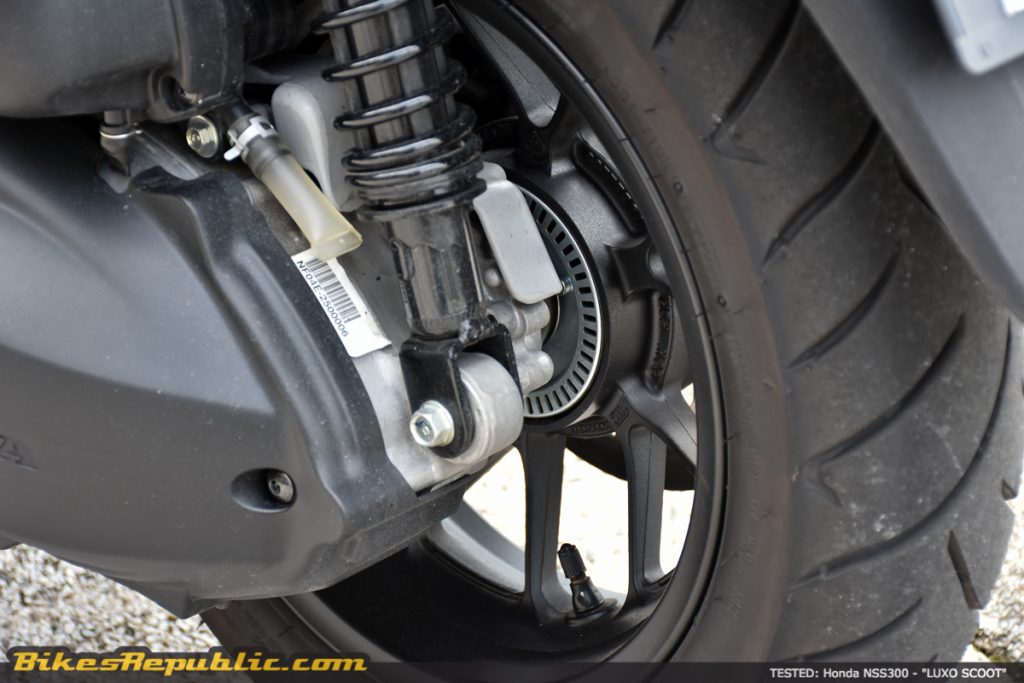
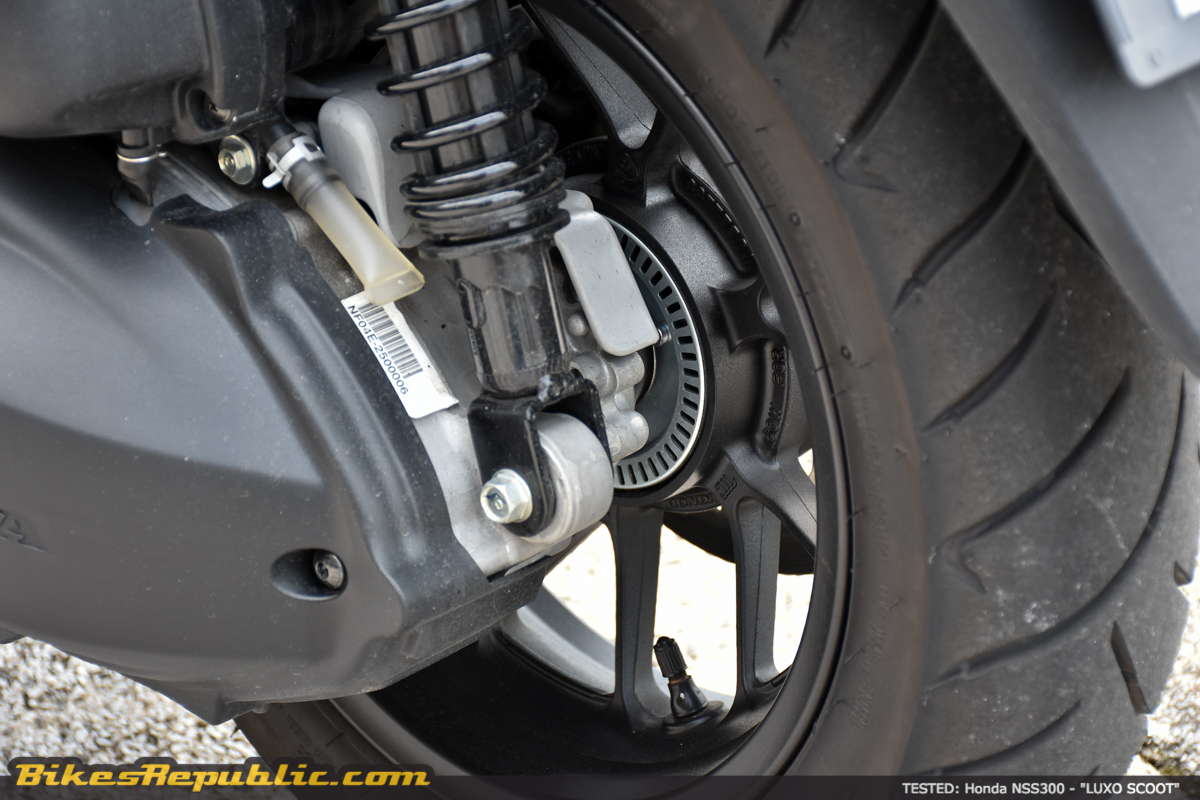
With the super strong Combined Braking System, backed up by Combined ABS, there was no fear of running into the back of another vehicle. The bike just stops almost on a dime. Honda quoted a kerb weight of 194 kg, but the bike certainly felt a lot lighter than that.
We also had the opportunity to ride the NSS300 on long-ish trips to where we first met, the Sepang International Circuit, to cover an event over the weekend.

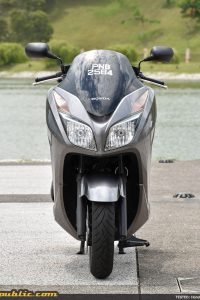
Out on the highway, the bike just purred along, never stressed even when ridden at high speeds. It was also apparent that Honda had put in much wind tunnel time as there was very little buffeting, despite the low screen. The deep seat coddled our bums, the long floorboards provided all sorts of feet placement (from the straight up motorcycle posture to being like a garden slug) and the handlebar wa close to the body. Our expectations of touring on the NSS300 was confirmed.
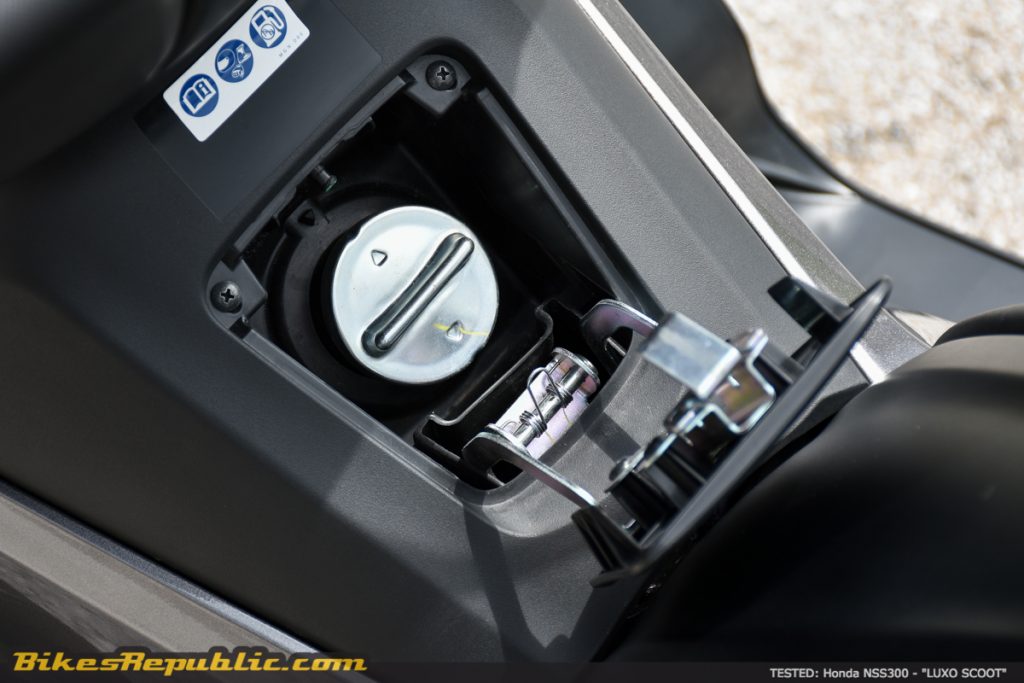
Owning a scooter also meant savings in fuel costs. Honda claimed a frugal 3.24 litre/100 km (30.8 km/litre) consumption. That’s quite close to our best of 3.6 litre/100 km figure, considering the amount of hard charging in the city and high speed riding on the highways. The best range we got from the 11.6-litre fuel tank was 308 km. Not bad at all.
Shortcomings? Again, it’s the condition of our sorry excuse for “roads.” Potholes as deep as fish ponds, patches that seemed like the Titiwangsa range, uneven surfaces like the whoops on a motocross track played havoc with the suspension. However, the NSS300’s suspension coped as well as it could for a scooter, never bottoming out. Uneven long corners also caused the bike to weave slightly, but the bike never threatened to lose its footing and slide out. Honda had also equipped the NSS300 with the excellent Dunlop Scootsmart tyres, which are based on the Sportsmart sport-touring tyres. They gripped well on wet roads too.
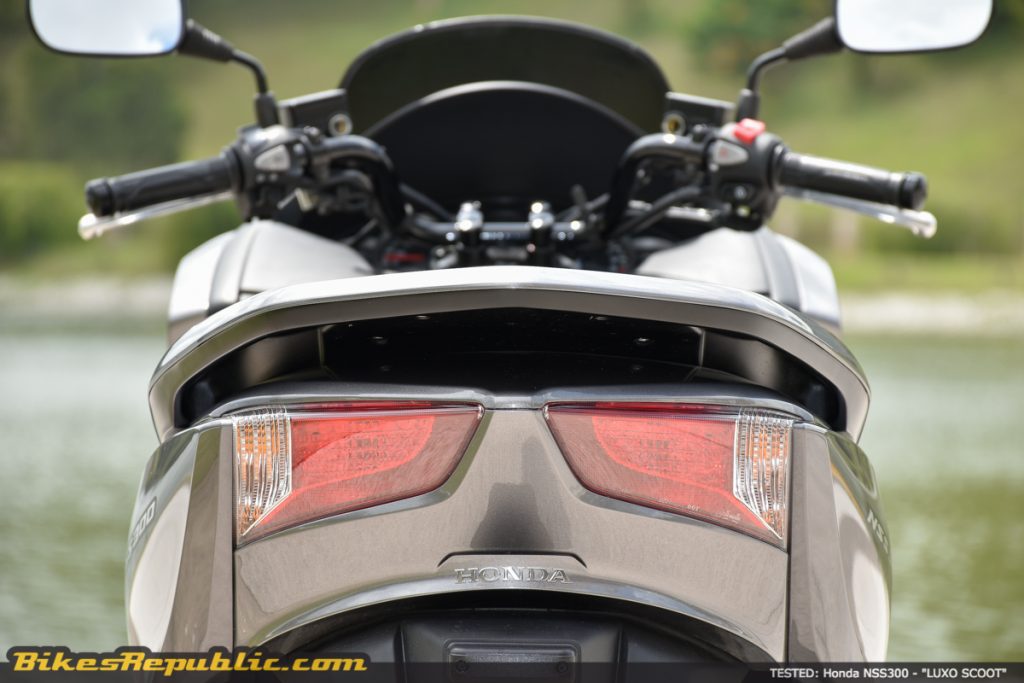
In conclusion, the Honda NSS300 is a refined, practical, rider-friendly, and good-looking motorcycle. You could just jump on and go without having to worry about much of anything else. It may seem pricey, but test ride one and you’ll most probably own it.

TECHNICAL SPECIFICATIONS

ENGINE
Engine type Liquid-cooled, 4-stroke, SOHC, single-cylinder
Compression ratio 10.5 : 1
Bore X Stroke 72.0 mm X 68.5 mm
Displacement 279 cc
Fuel system PGM-FI electronic fuel injection
Maximum power 25.5 bhp (19.0 kW) @ 7500 RPM
Maximum torque 26.0 Nm @ 5000 RPM
TRANSMISSION  
Clutch Automatic, centrifugal
Gearbox V-Matic CVT (constantly variable transmission)
CHASSIS
Front suspension 35 mm telescopic forks
Rear suspension Twin shocks
Front brakes Single disc, with Combined Braking System and optional Combined ABS
Rear brake Single disc, with Combined Braking System and optional Combined ABS
Front tyre 120/70-14
Rear tyre 140/70-13
FRAME & DIMENSIONS
Frame Underbone
Wheelbase 1546 mm
Seat height 716 mm
Kerb weight 194 kg
Fuel capacity 11.6 litres


PICTURE GALLERY
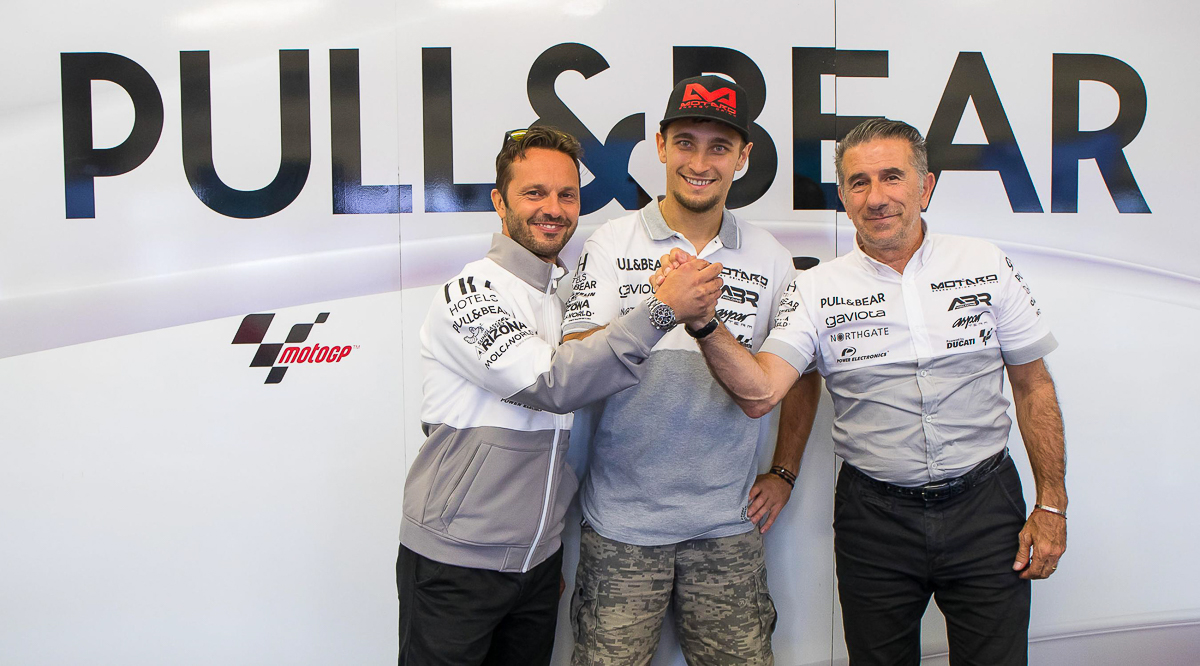
Both seats on the Pull&Bear Aspar Team for 2018 after the announcement of Karel Abraham signing for yet another season with the MotoGP squad.

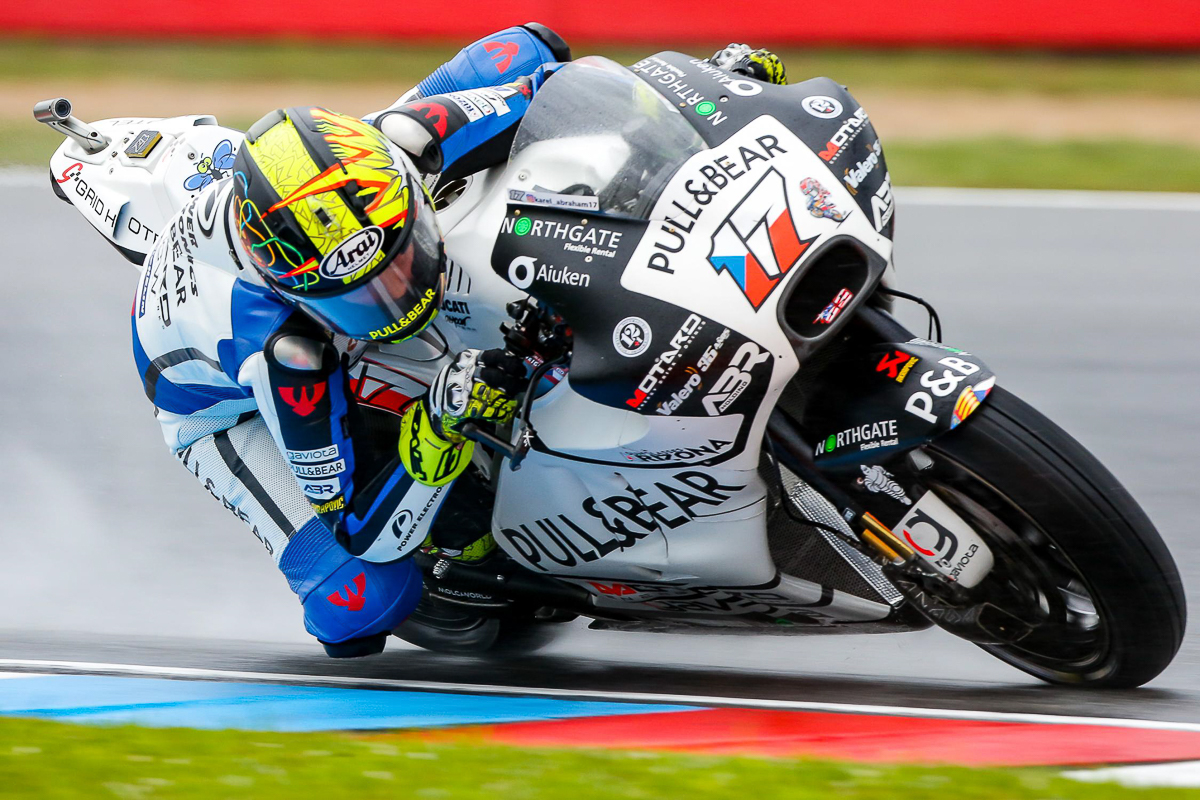
The return of Abraham back on the MotoGP grid so far has been quite positive with constant top 10 finishes and even a front row start from the 27 year old from Czech Republic.

Abraham will continue his MotoGP efforts next season alongside his current Spanish team mate, Alvaro Bautista.

After the recent breaking news of Takaaki Nakagami moving up to MotoGP next season as the second LCR Honda rider after signing a contract with HRC, another seat has been filled for 2018. Karel Abraham has been confirmed to continue riding for the Pull&Bear Aspar Team for yet another season. (more…)

  • The 2017 FIM Asia Supermoto Championship starts on 2nd September 2017.

  • 2016 Champion Gabit Saleh from Malaysia is set to defend his title.

  • 2015 Champion Trakarn Thangthong from Thailand returns.

The 2017 season of the FIM Asia Supermoto Championship kicks off on 2nd September 2017 at the Thailand Circuit Motorsports Complex, Nakhon Chai Si, near Bangkok, Thailand.

Promoted by the Asia Supersports Group (ASG), E-Plus Global and Bikenation, the championship has come a long way from its humble beginnings, consisting of a series of races cobbled together, to what is now a series which has attracted participation and attention the world over.

But why is supermoto popular? Here are the Top 10 reasons:

10. THE ATMOSPHERE

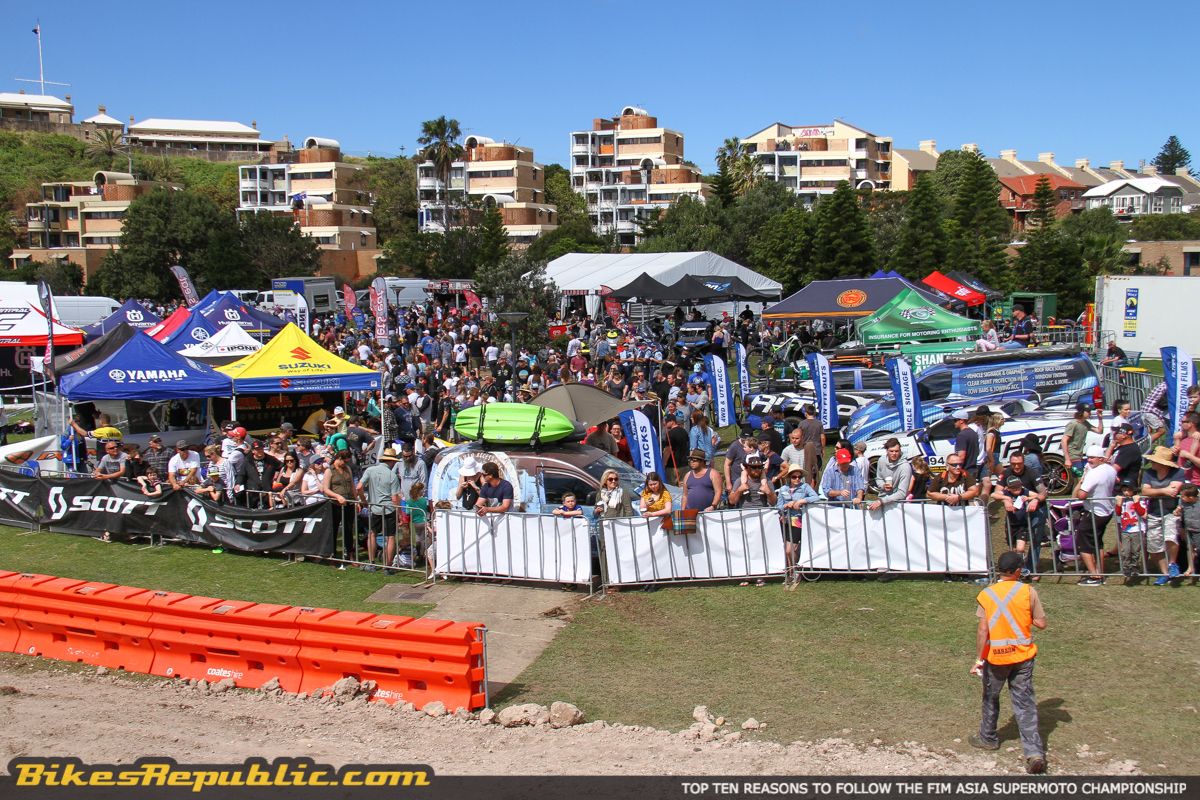
Yes, it’s true that there’s a carnival-like atmosphere at any race, but you could find all sorts of stuff from the very affordable to the most expensive stuff at supermoto races. There’s also the authentic street food at each of the countries supermoto visits, compared to having to spend RM15 for a diarrhea-inducing burger at the track.

9. THE PITS

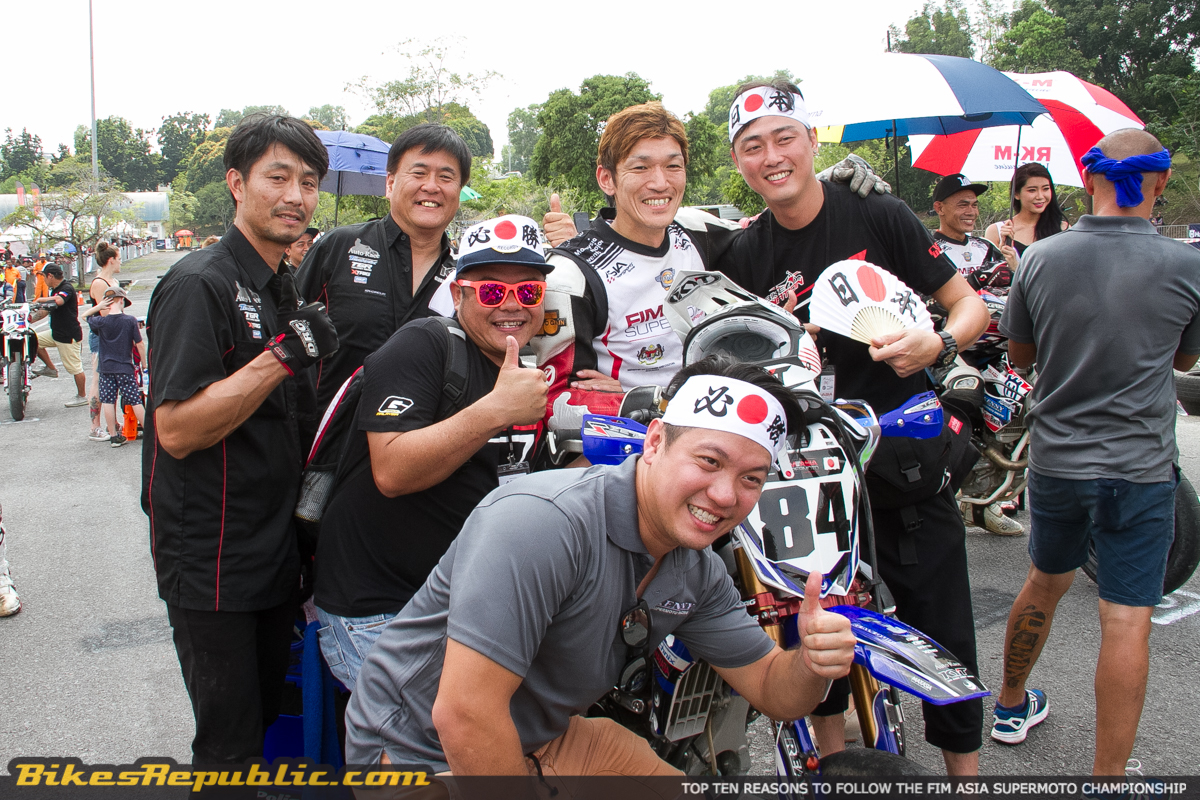
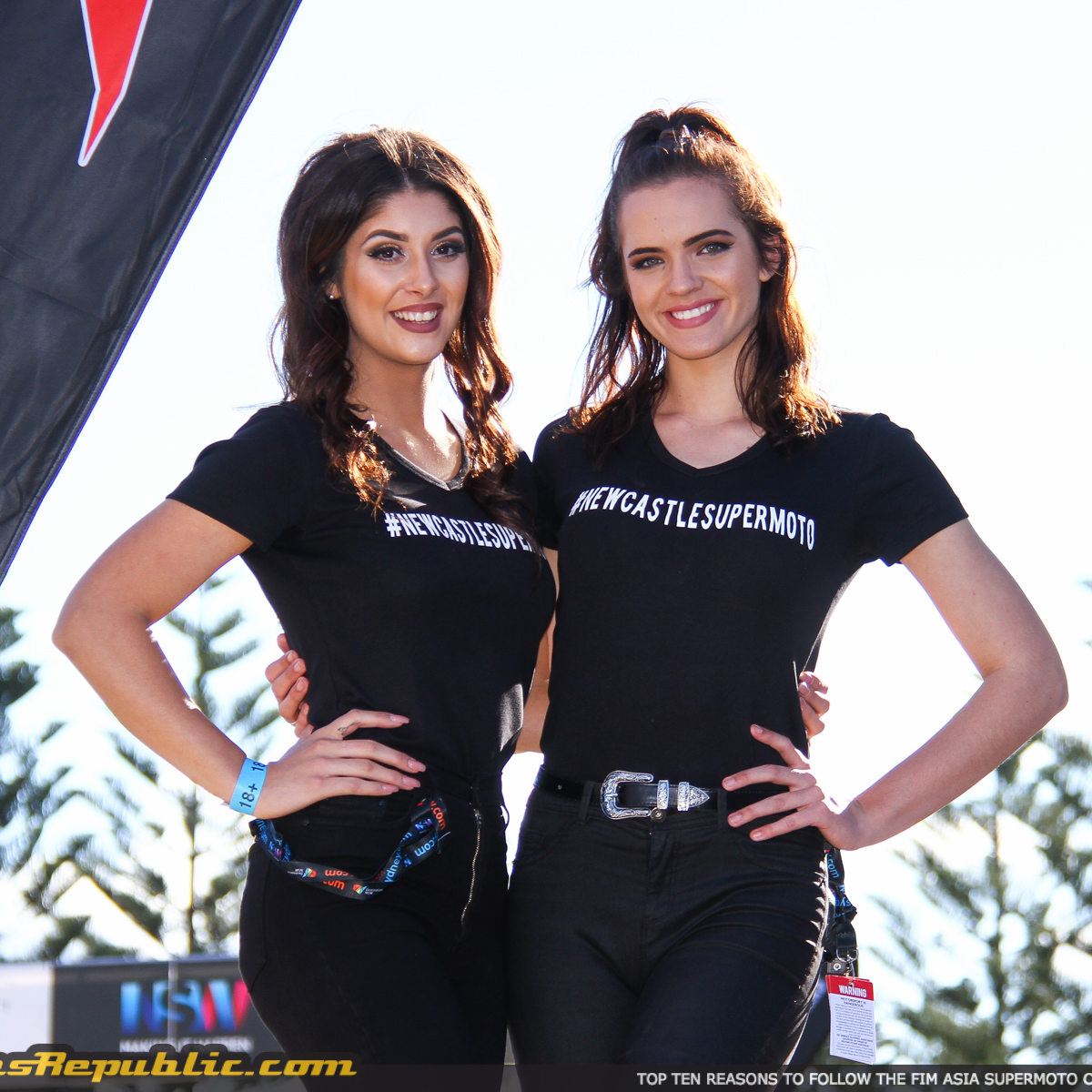
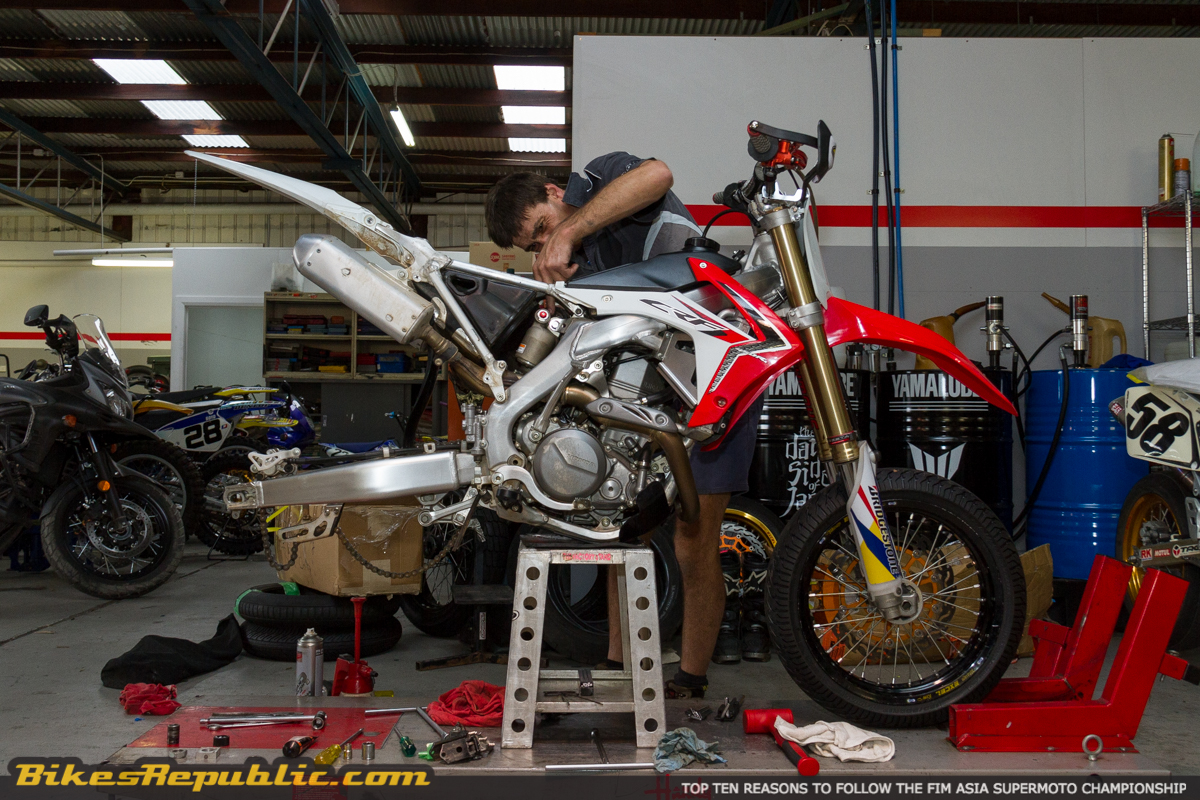
The pits and paddock areas are not enclosed in concrete booths. You could see the bikes up close and how the teams work on them. Call out to the riders and they are more than happy to go over for selfies and autograph your gear. Same with some of the umbrella girls.

8. THE UNITED NATIONS

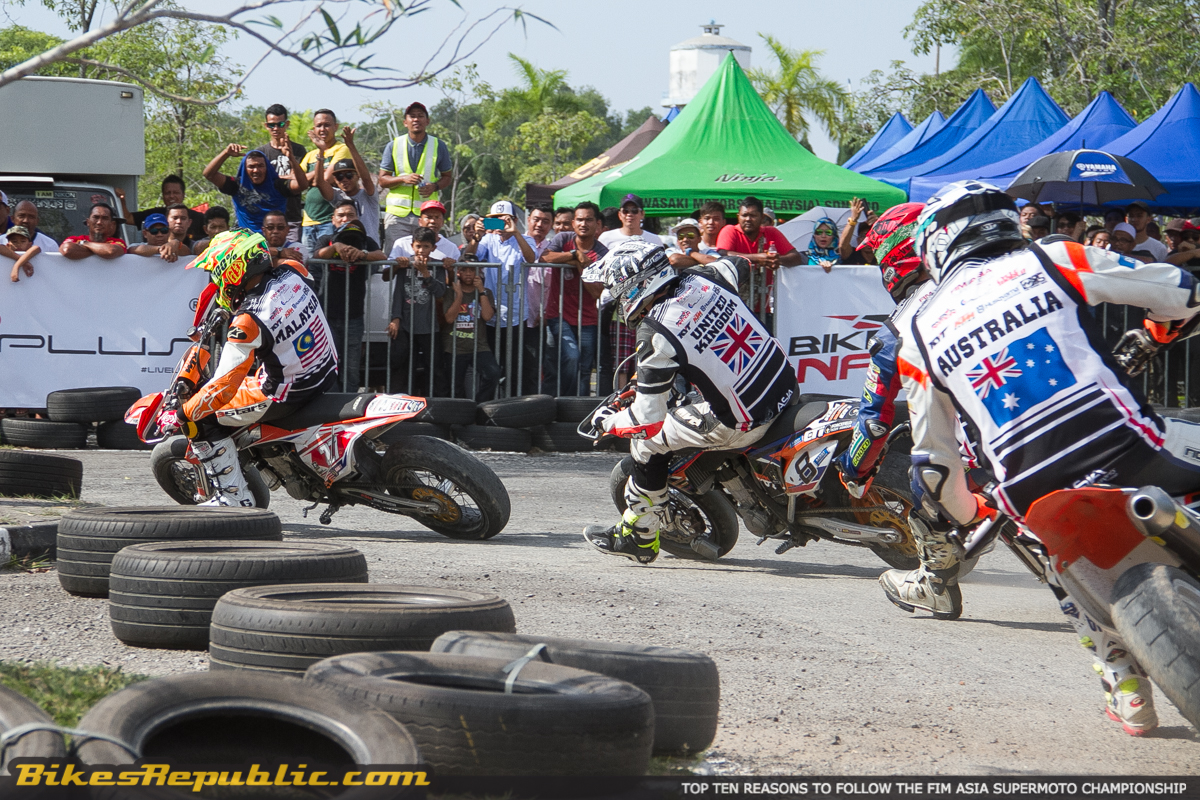
The championship may be titled “FIM Asia Supermoto,” but the field consists of riders from as far away as Australia, India, Sri Lanka, Russia, France, United Kingdom and the United States in addition to those from Asia. It’s truly an international championship.

7. THE BIKES

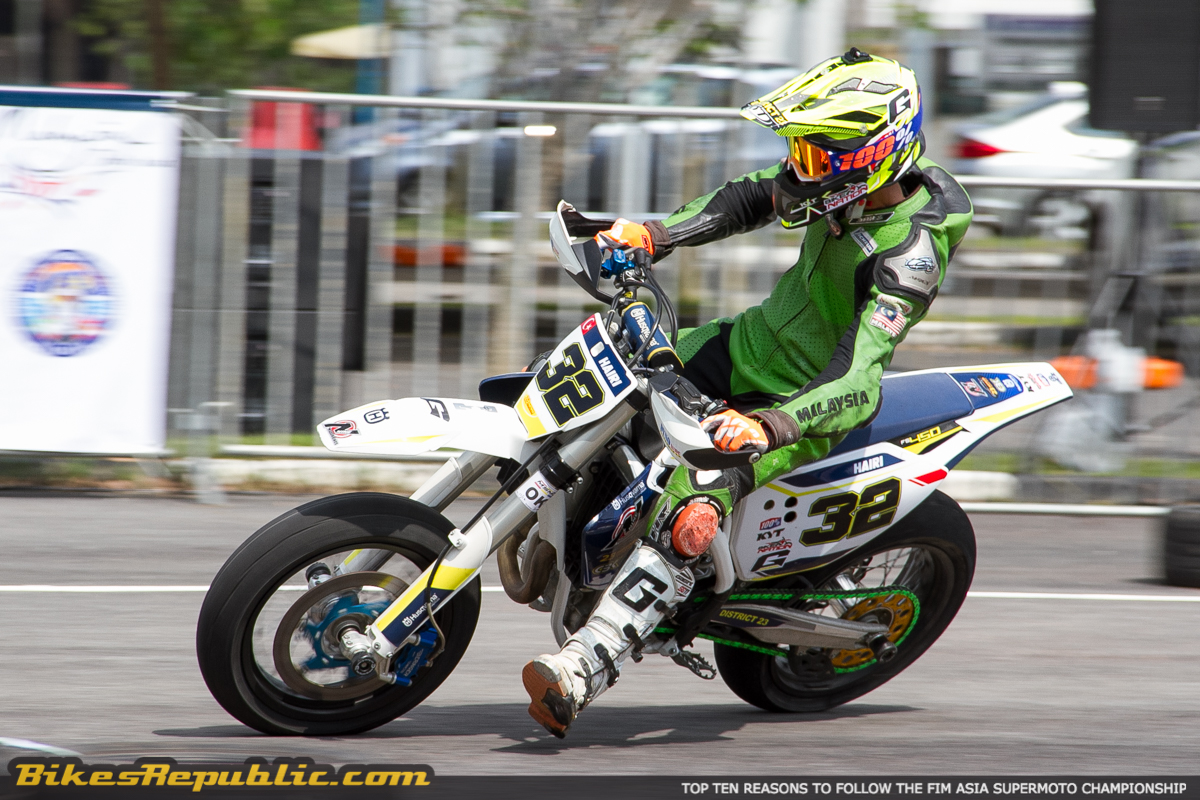
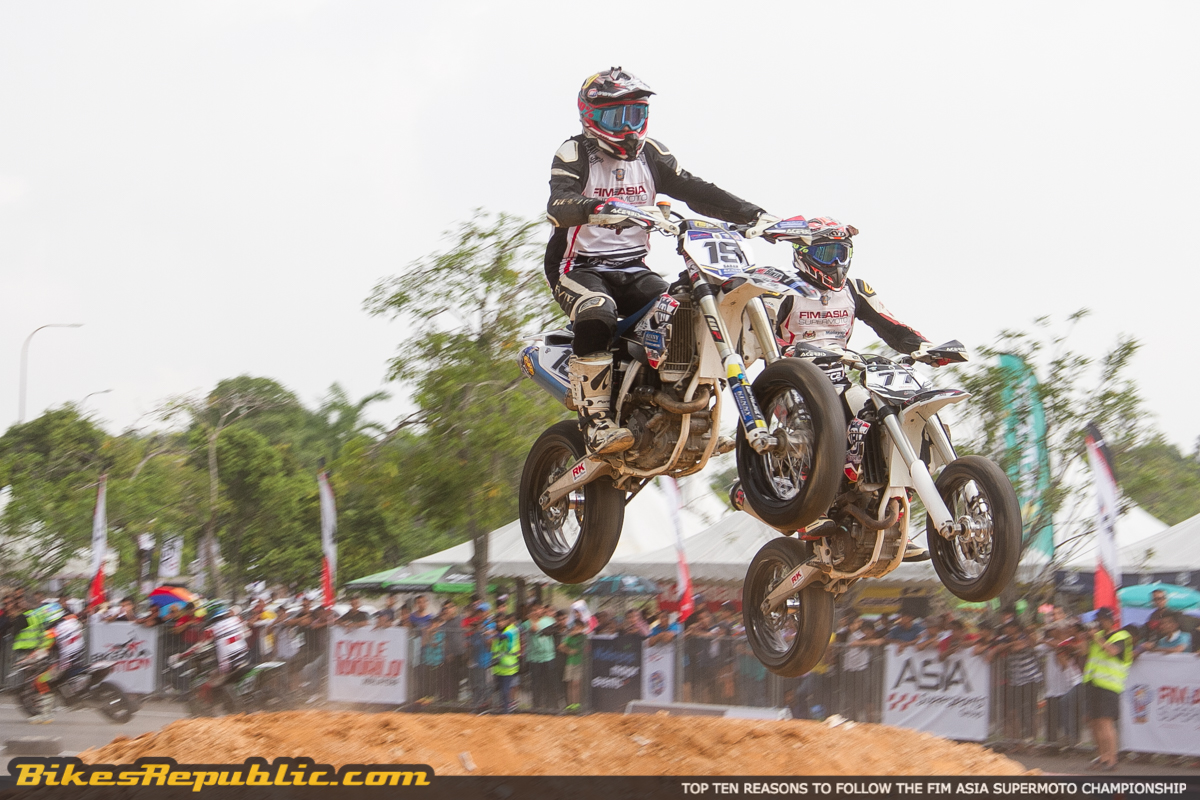
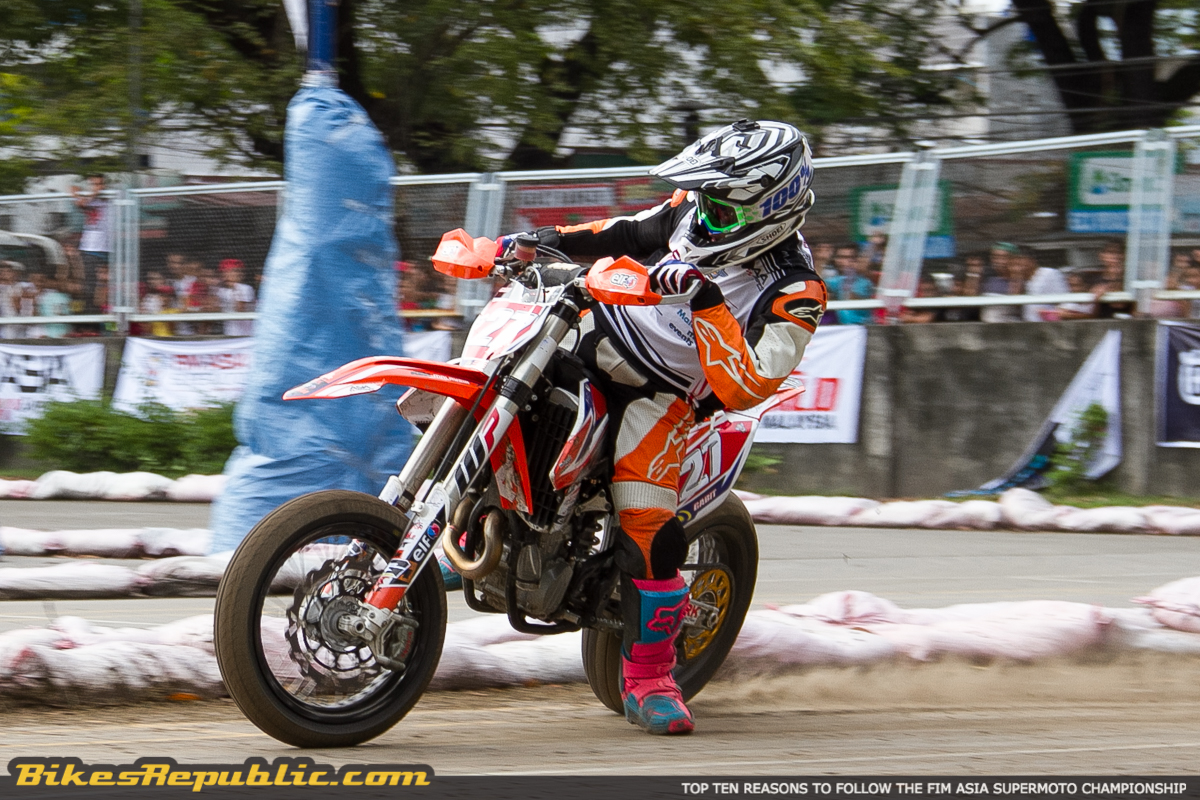
The motorcycles that compete in supermoto usually originate from motocross bikes (enduro bikes in some cases), with the wheels swapped out for 16-, 16.5- or 17-inch ones and shod with sticky rubber. The suspension is also reworked to have less travel and stiffer for the high-speed stresses of the road course. These aren’t purpose-built racing prototypes like in MotoGP, but bikes that you and I could purchase from the shop down the block and modify for road riding or racing.

6. THE PERSONALITIES
Since supermoto isn’t much like other motorsports, there are plenty of colourful characters in the paddock and on track.

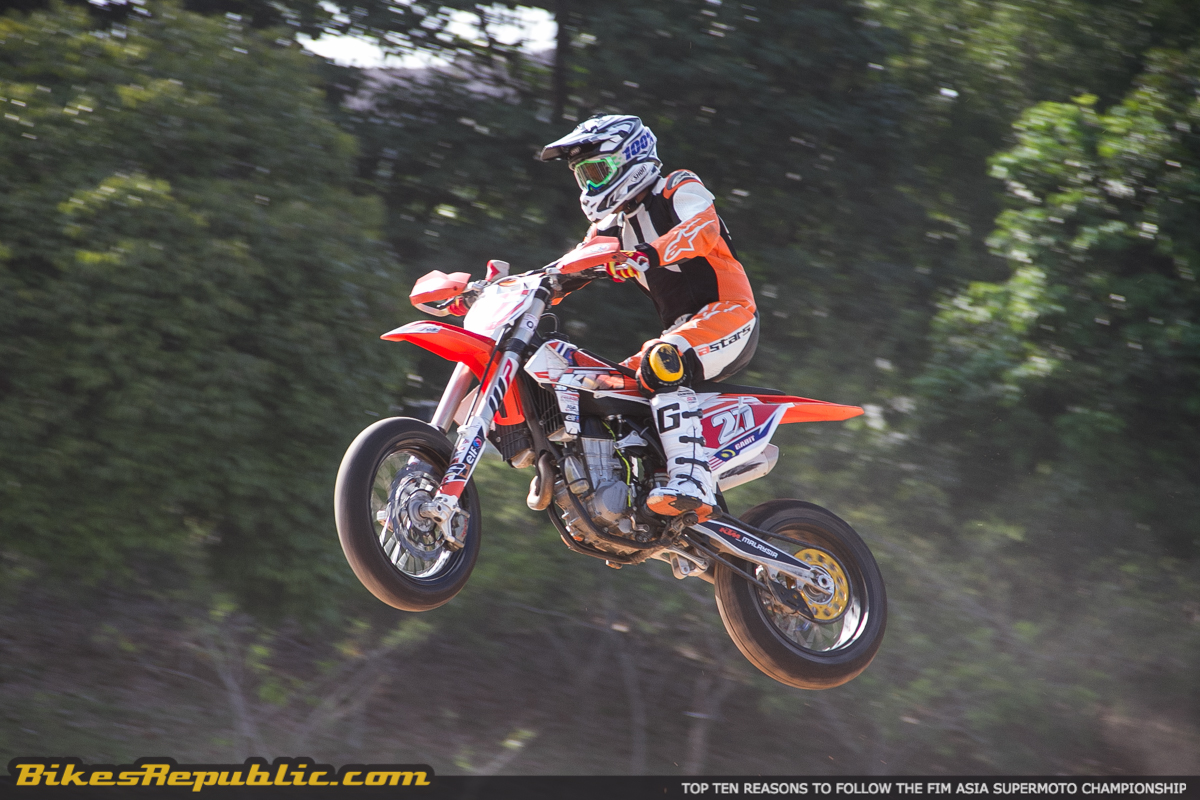
2016 FIM Asia Supermoto Champ, Gabit Saleh from Malaysia rides aggressively almost like a high-speed bulldozer that smashes through all the different sections. Being a part-time stunt rider, he’s especially entertaining when he flies through the air. His signature is his head twitch, a sign that he’s switched on his personal “Race Mode.”

Gaban Saleh, Gabit’s older brother could be described as the road warrior when he races. He’s probably the hardest rider to pass as he puts up a huge fight rather than ceding a position easily. His riding style is also very aggressive and a thrill to watch.

Lewis Cornish from the UK is quiet and unassuming but he is just superfast and never gives up. He’s unafraid to charge through the smallest of gaps to grab the win – as Trakarn found out in the final round in 2015.

10-time British Supermoto Champ, Chris Hodgson is always jovial and happy-go-lucky but takes no prisoners on track. He can spot an opportunity to pass when no one does. His signature are his long, long high-speed drifts.

5. THE VIEW

Whereas other forms of motorsports cordon off the spectators far away from the action on track, you could view supermoto from almost up next to the riders as they flash by. You could hear the rear tyres howl when the riders drift into corners, smell the exhaust and rubber, feel the rumble in your chest and even see the expressions of the riders.

4. THE COMBO

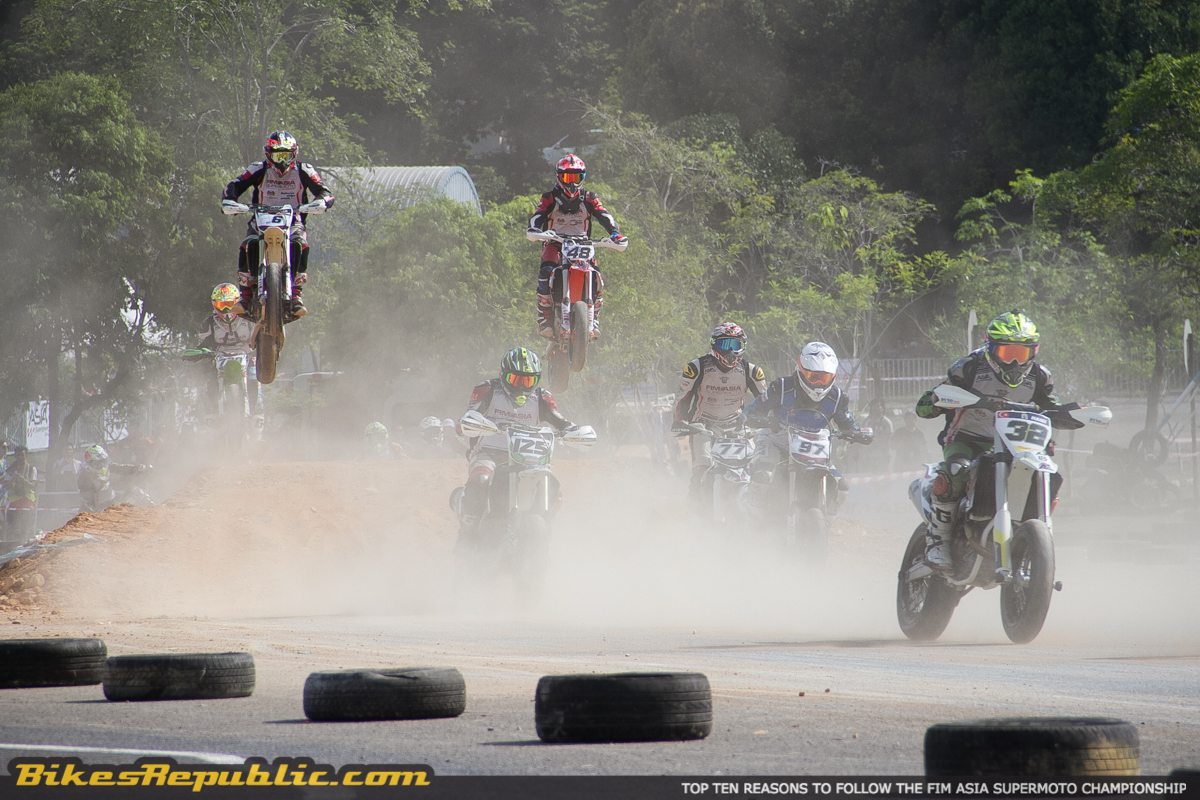
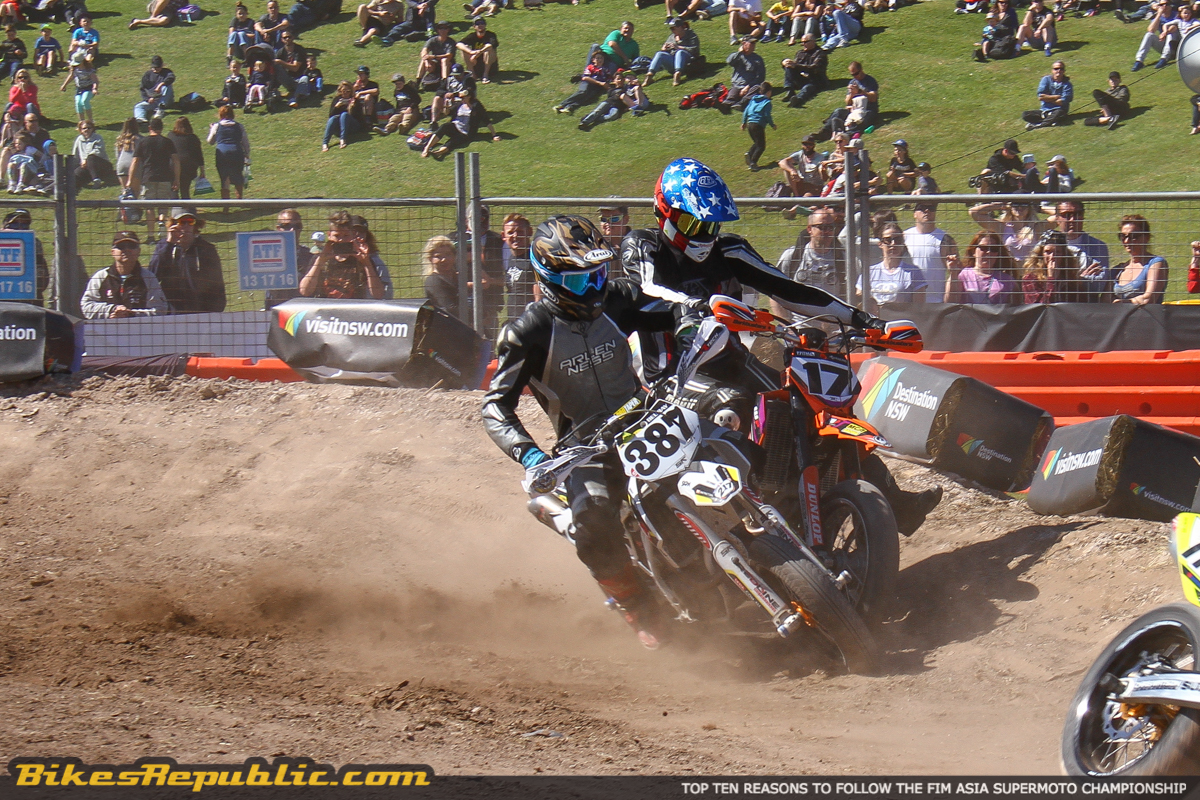
Supermoto combines roadracing, motocross and flat track disciplines into one race. That means instead of having to visit three different races, you could watch all three in one race. There are two sections to each track: A tarmac section and a motocross section consisting of mountain-like jumps.

The riders have to perform well in all disciplines; being good at just any two, what more if just one of the three, would mean getting left behind.

3. THE WEATHER

As in the show goes on regardless of weather.

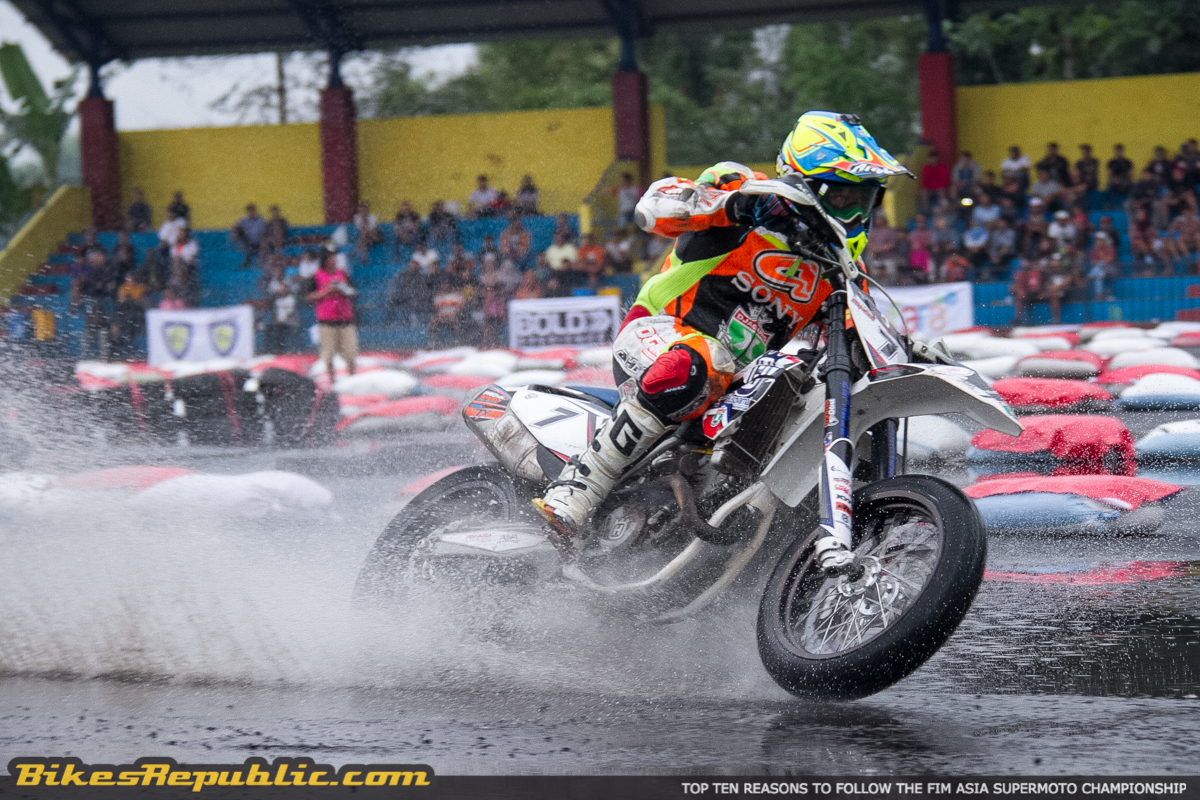
For example, the second round of the 2016 season was held in Malang, Indonesia. The weather had been hot all week, then rain came down with a vengeance during the weekend. The torrential rain was so heavy that puddles around certain parts of the track were ankle-deep. Yet, that didn’t stop the riders from battling tooth and nail against each other as if it was a jetski race.

2. THE SLIDES

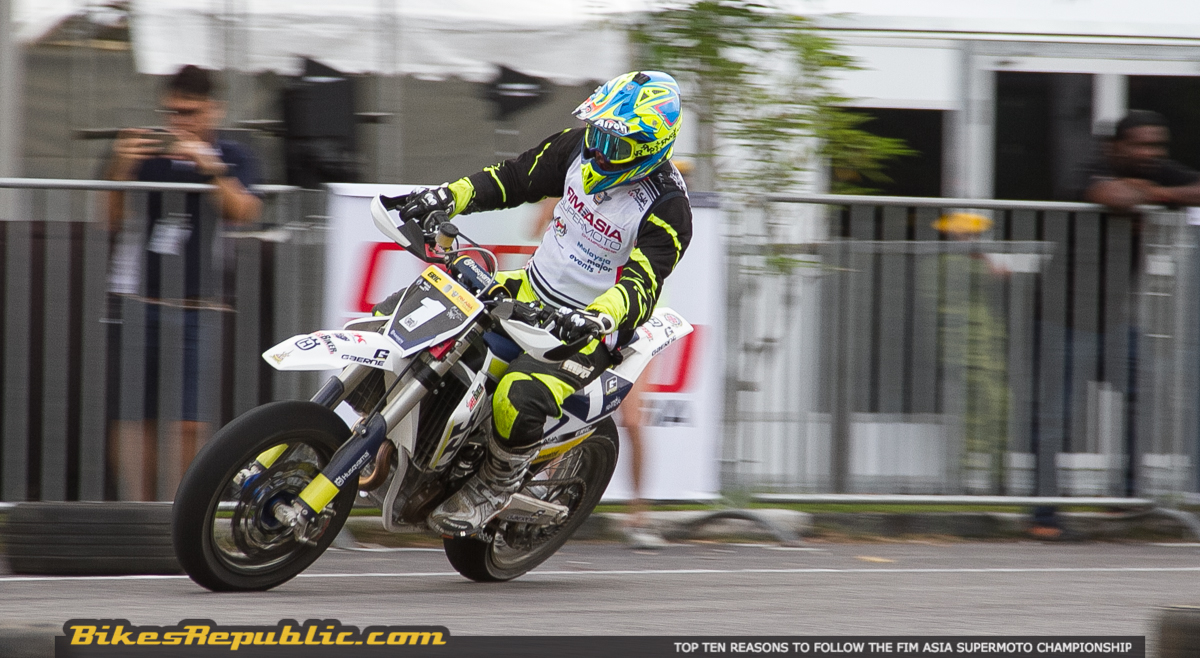
Apart from the inclusion of both tarmac and offroad sections, drifting and powersliding are the hallmarks of supermoto racing.

The rider would blast down the straight into the braking zone, snap the rear wheel outwards and howl into the corner, and finally powerslide out, laying down a dark line on the track.

Seeing them do so lap after lap, laying down their bikes almost on their sides as they slide through corners is one of the most spectacular sights in motorcycle racing. As was in Indonesia, they’d even do it in the rain!

1. THE RACING

Well, what is racing without the action, right? But supermoto racing is elbow-to-elbow in the literal sense.

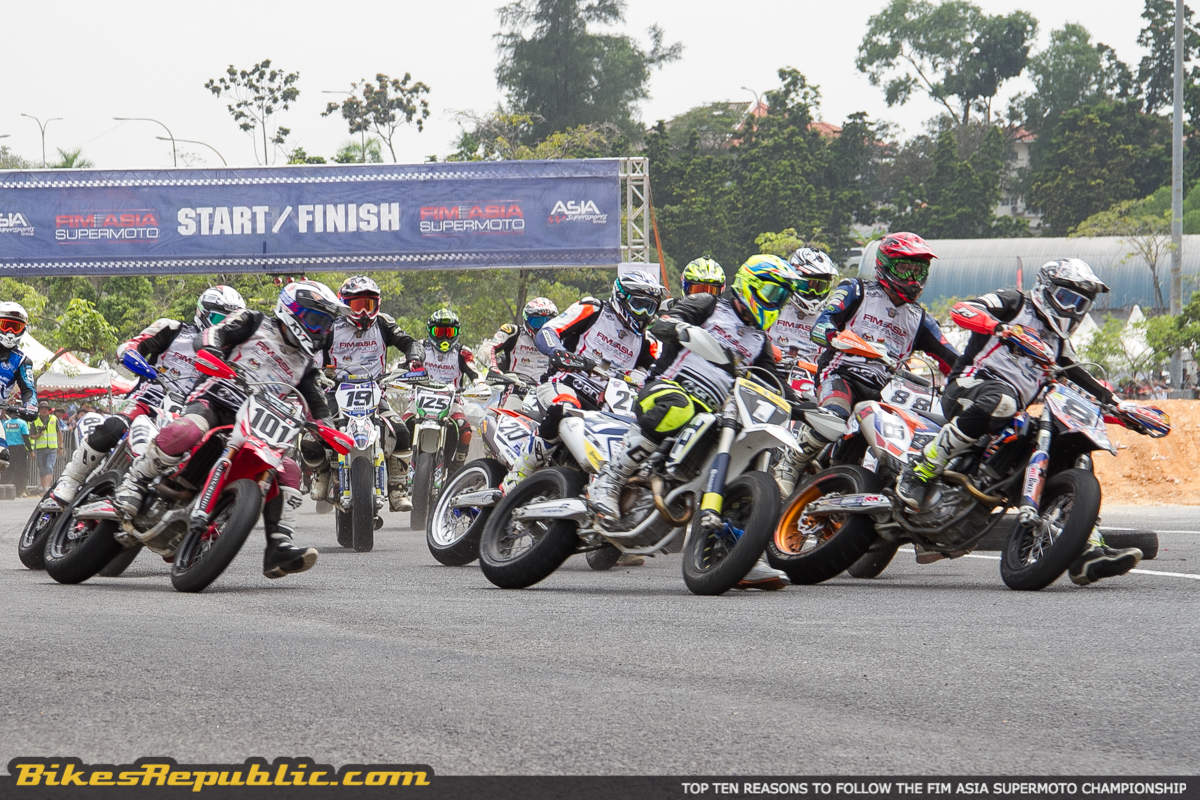
Supermoto race starts are always heart attack inducing as 30-odd riders pile into one tight corner, similar to motocross starts. You could see the riders having both elbows out, pushing other riders inside and outside away from him, while his opponents do the same to push him out of the way in return.

And while most motorsports see the greatest excitement at the start and a couple of laps after, supermoto features dogfights throughout the field, throughout the race. Lesser humans would be on their heads in no time.

So there you go. Do start following supermoto if you haven’t already, you could find many great videos on YouTube and the internet. Make sure you follow the latest reports on the 2017 FIM Asia Supermoto Championship at their official Facebook page and here at Bikes Republic.

Archive

Follow us on Facebook

Follow us on YouTube