Bikesrepublic

Wahid Ooi

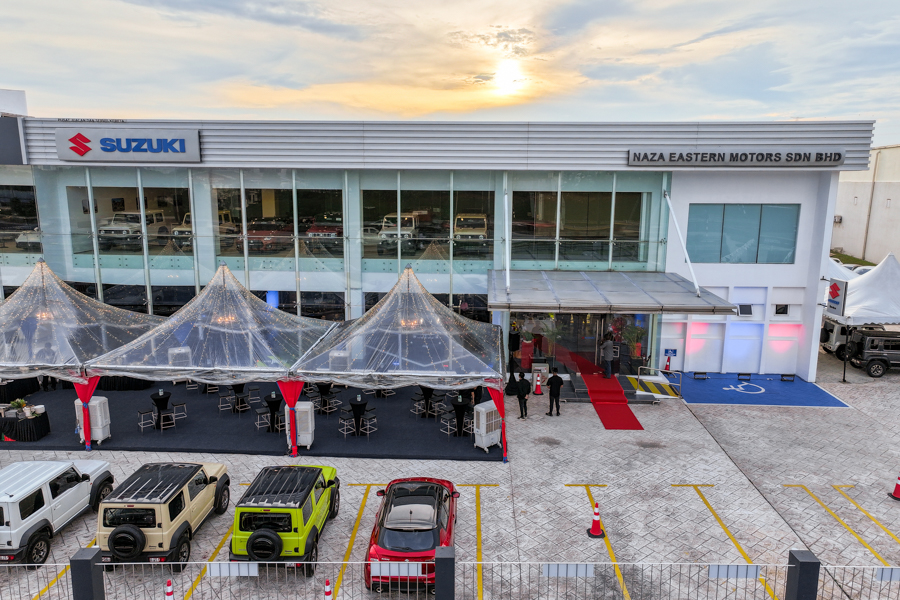
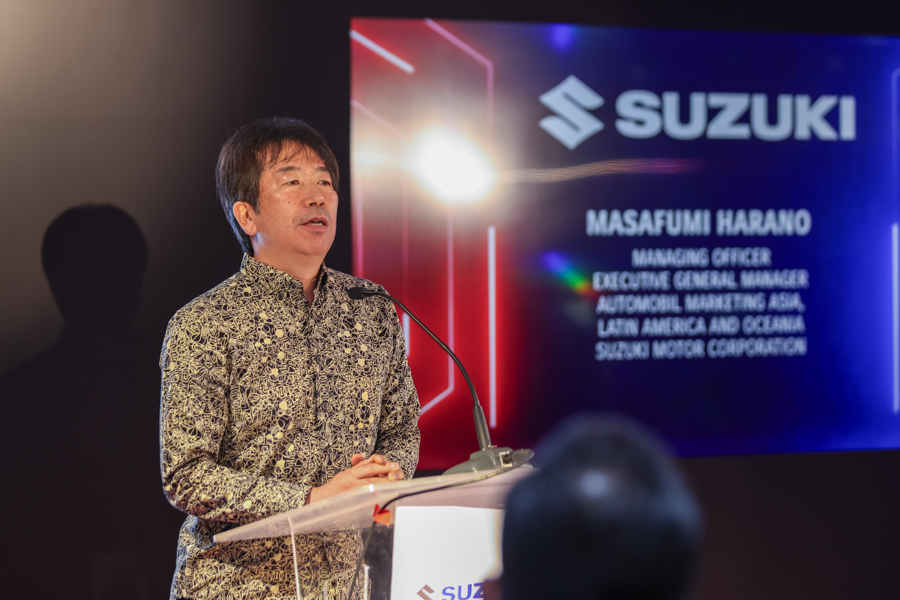
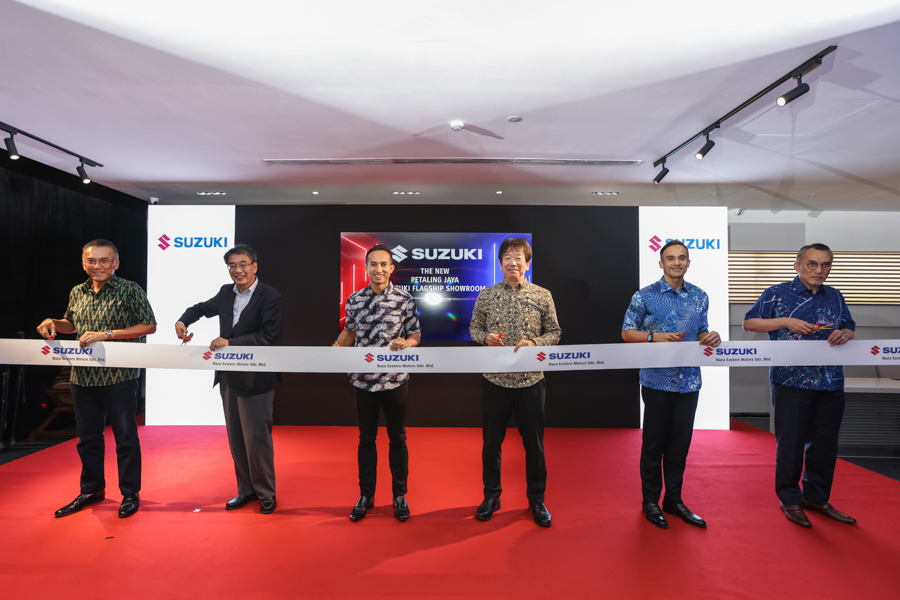
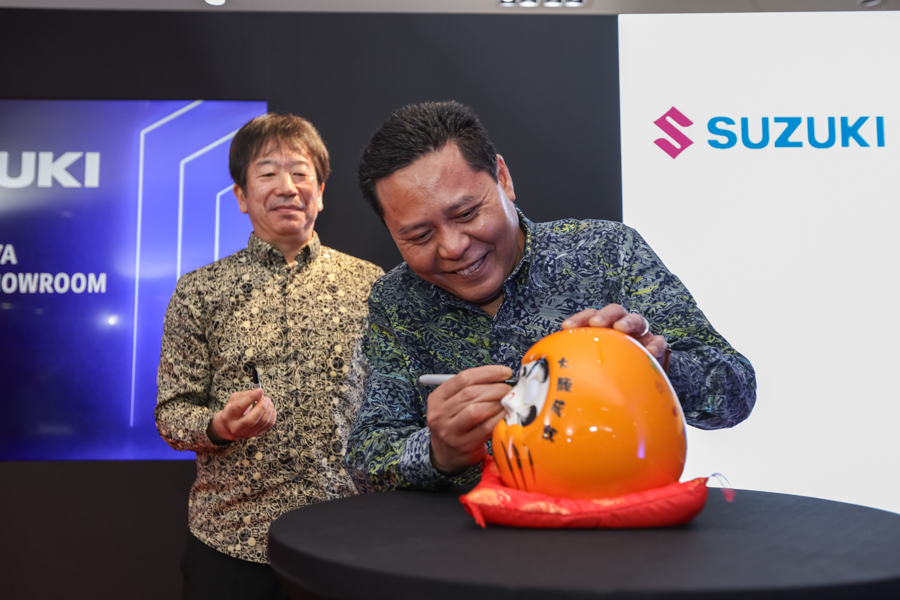
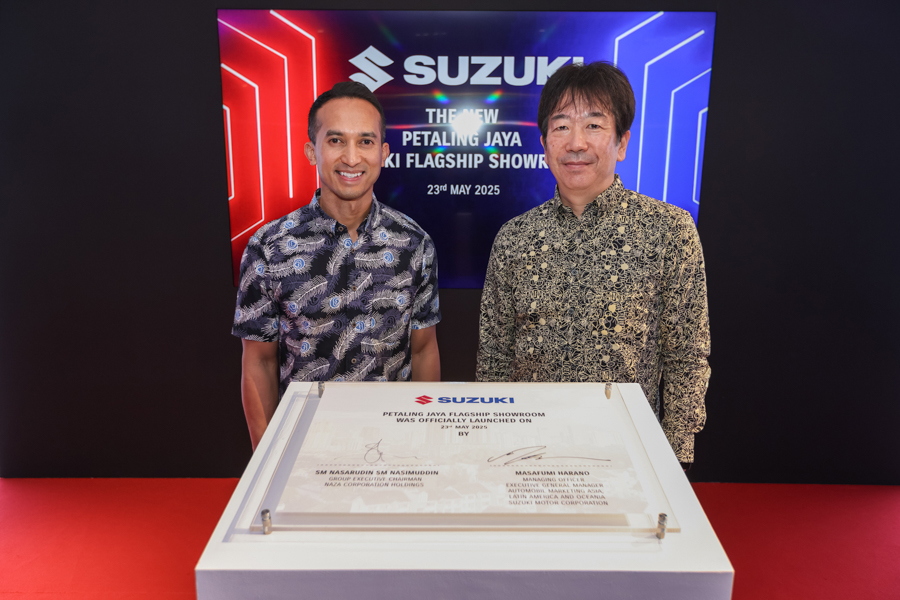
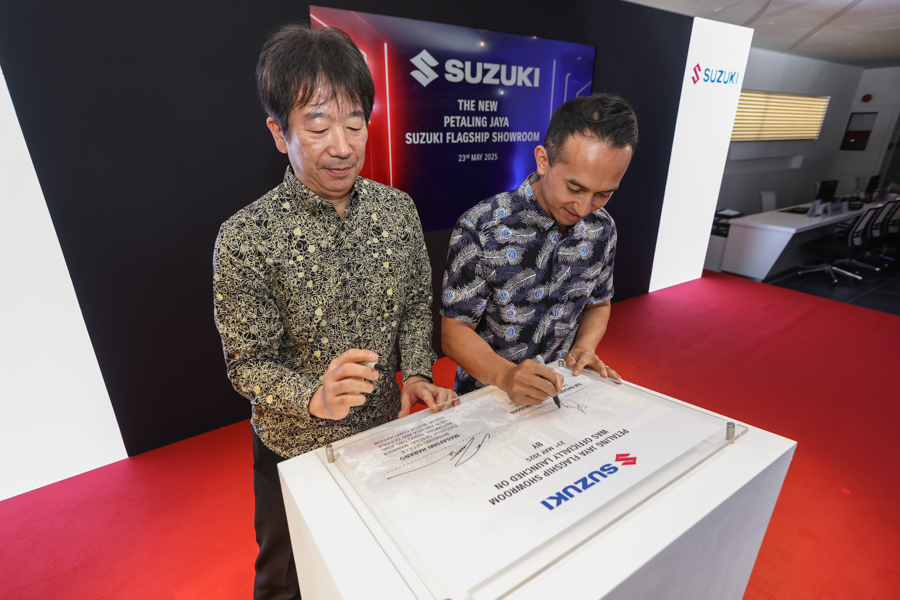
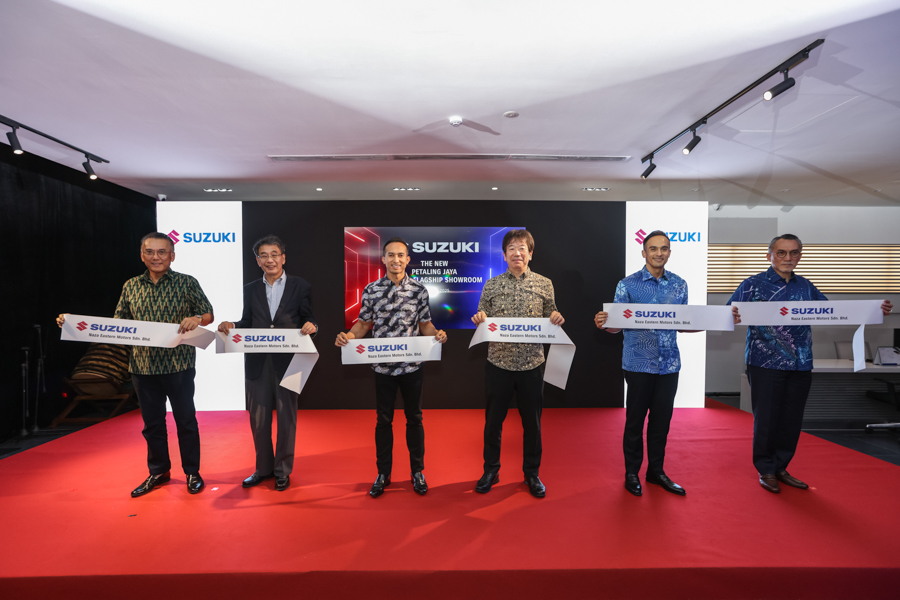
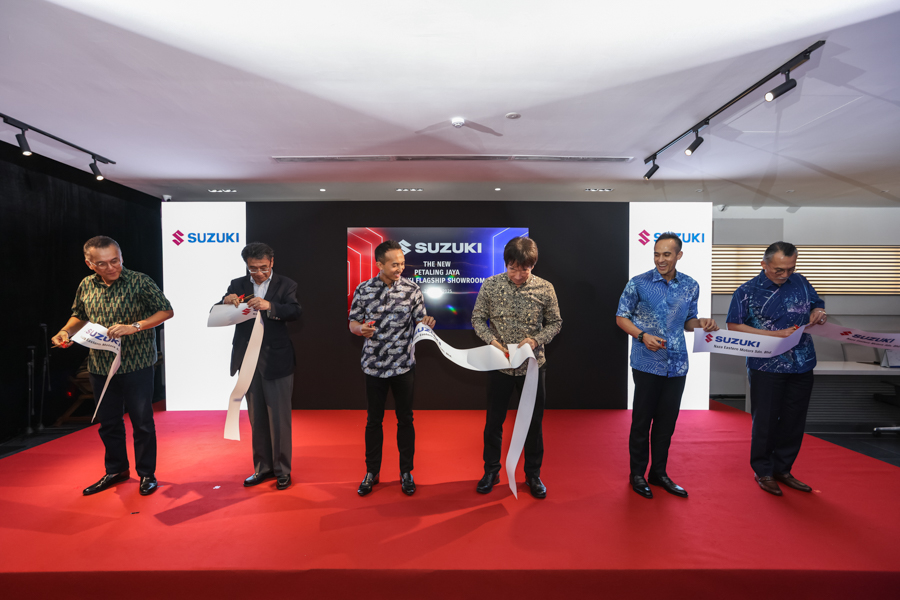
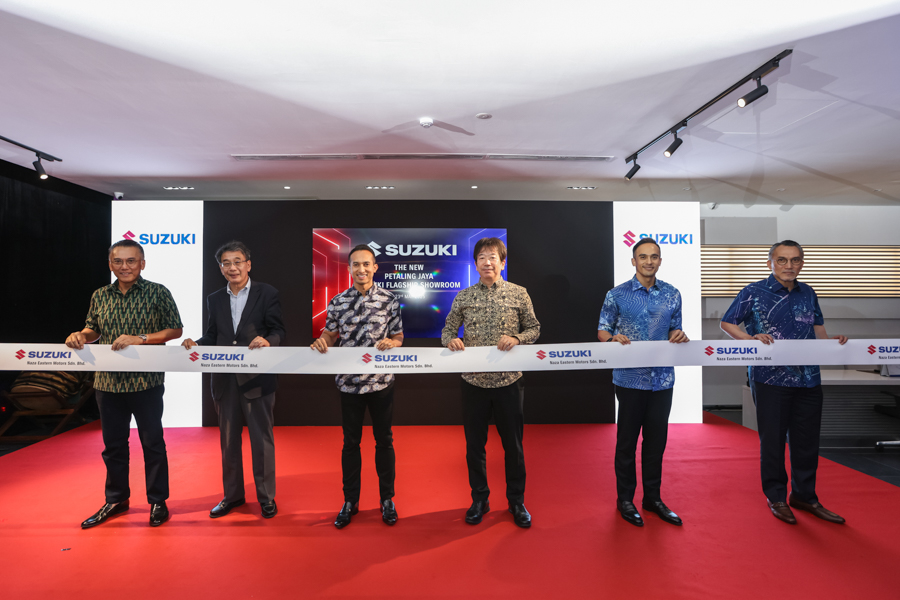
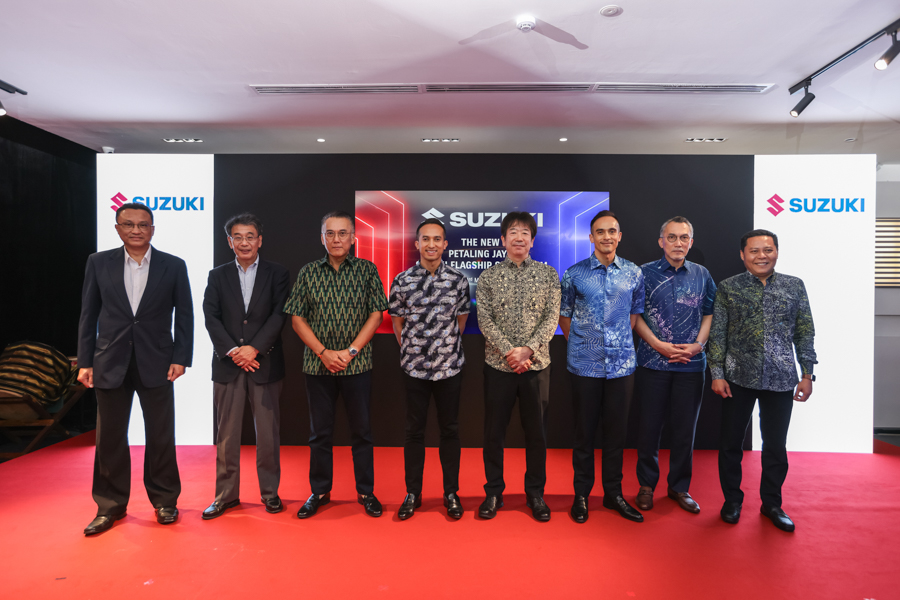
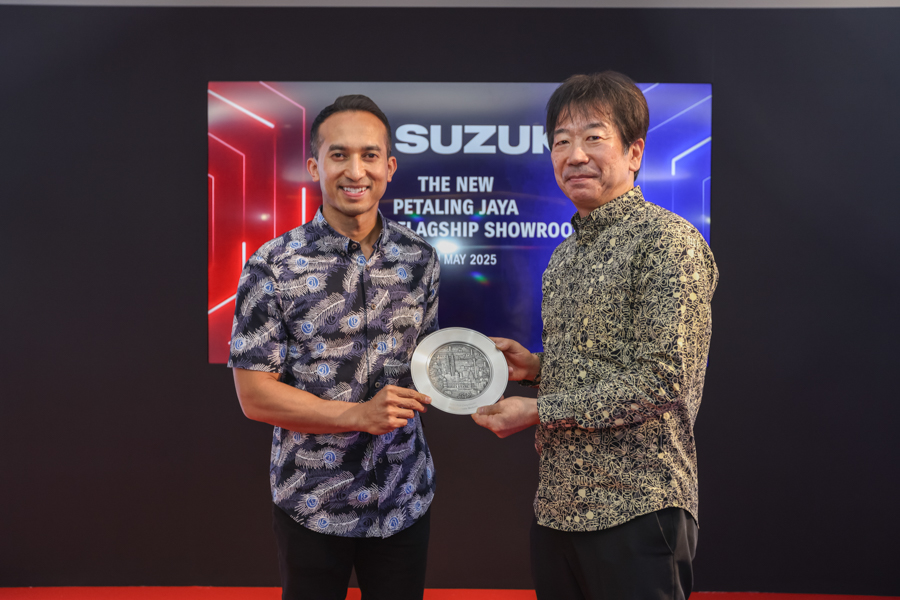
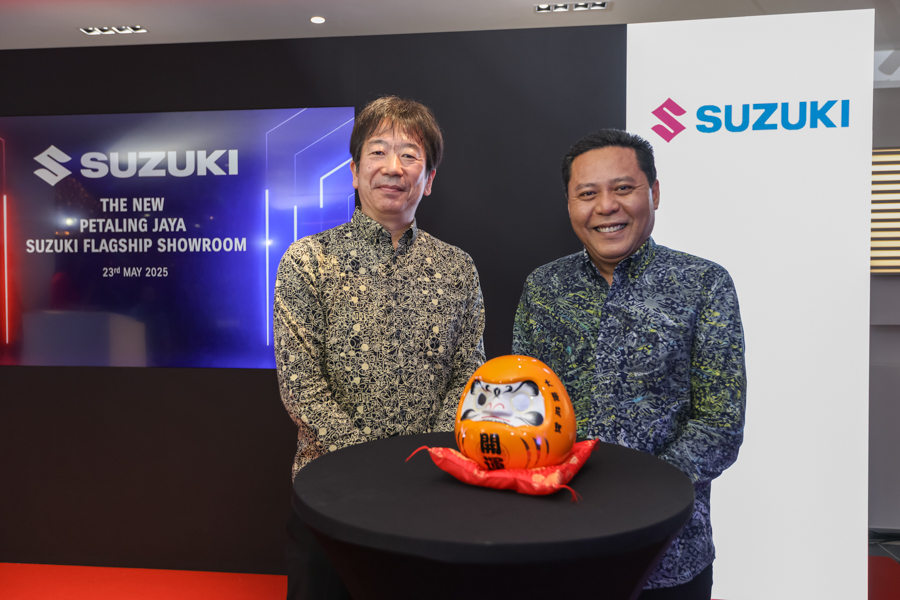
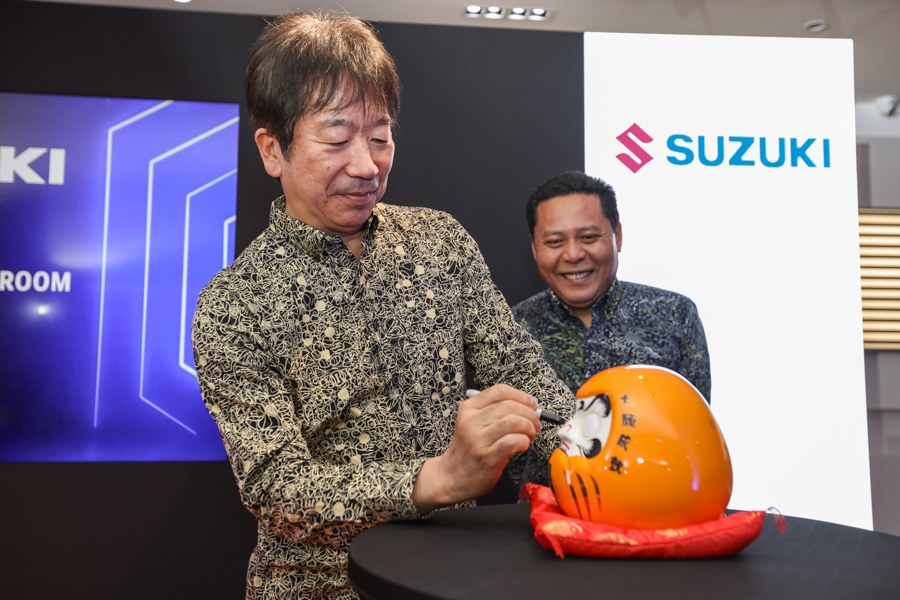
Petaling Jaya, 23 May 2025 – Marking a key milestone in its transformation journey, NAZA Automotive Group (NAZA Auto), through its wholly-owned subsidiary Naza Eastern Motors, today officially launched the first flagship Suzuki Cars Malaysia showroom in Petaling Jaya — a state-of-the-art facility designed to redefine the Suzuki retail experience in Malaysia and accelerate the brand’s growth trajectory in the country.

Strategically located next to the iconic NAZA Auto Mall, the 5,000-square-foot flagship showroom is more than just a sales outlet — it is a destination experience, reflecting NAZA Auto’s sharpened focus on customer-centric innovation and sustainable business growth.

The showroom incorporates Suzuki’s latest corporate identity and design, featuring vibrant zones, dedicated service counters within the showroom itself, a lifestyle lounge with a kids’ corner, and private discussion rooms—delivering a seamless, personalised experience from product discovery to ownership.

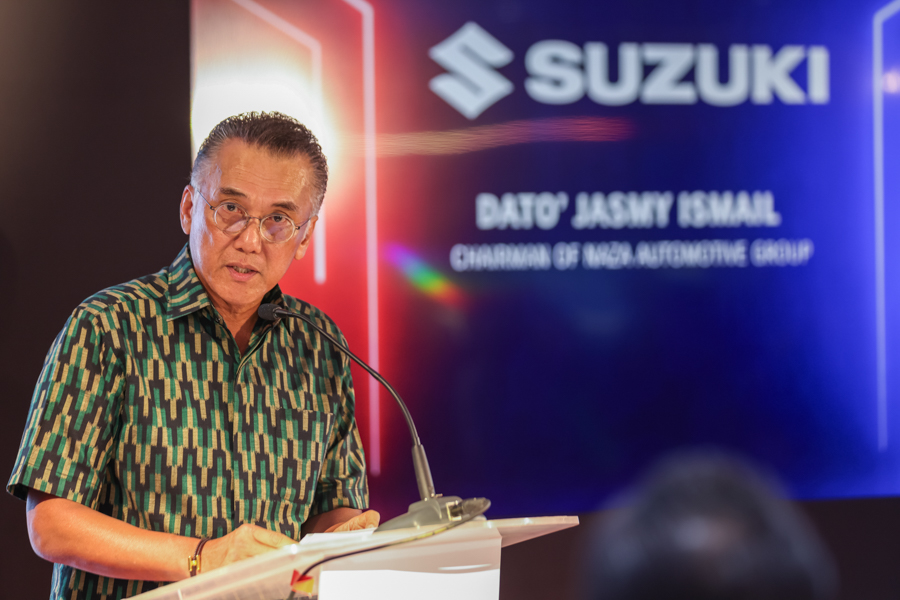
Dato’ Jasmy Ismail, Chairman of Naza Automotive Group, said the launch embodies NAZA Auto’s broader vision to future-proof its business and deepen its engagement with Malaysian consumers in an evolving, experience-driven market.

This flagship showroom is a bold statement of NAZA Auto’s transformation into a leaner, more agile, and customer-focused automotive group. It reflects our strategic realignment to concentrate on core, high-impact segments like Suzuki, which remains one of the most trusted and dynamic brands in the compact and urban mobility space,” Dato’ Jasmy said.

This facility is not just about showcasing cars—it is about creating meaningful, end-to-end customer journeys, delivering value beyond products, and ensuring Suzuki continues to thrive as a brand of choice in Malaysia’s highly competitive automotive industry.

As part of its ongoing realignment strategy, NAZA Auto is streamlining its business portfolio to focus on profitable automotive brands while phasing out non-core, lifestyle-oriented segments that no longer align with its long-term objectives. Suzuki Cars Malaysia is a strategic growth pillar under this roadmap, with plans to expand its dealership footprint over the next few years, supported by digital engagement platforms, innovative aftersales solutions, and loyalty programmes tailored to meet the needs of an evolving customer base.

The new Petaling Jaya showroom will also serve as the exclusive showcase for all future Suzuki models entering the Malaysian market, solidifying its position as the central hub for Suzuki’s brand experience and new product rollouts.

In conjunction with the launch, customers can look forward to exclusive mid-year promotions and tailored loyalty programmes, designed to reward both new and existing Suzuki owners.

As we celebrate this significant opening, NAZA Auto reaffirms its confidence in the Malaysian automotive industry’s growth potential, especially in the compact SUV and crossover segments where Suzuki’s versatility, reliability, and distinctive style continue to resonate strongly,” added Dato’ Jasmy.

NAZA Auto remains committed to investing in innovative, customer-first solutions and strengthening our leadership in the Malaysian automotive sector by building sustainable, profitable, and future-ready businesses that create long-term value for our customers, partners, and stakeholders.

The launch of the flagship showroom reinforces NAZA Auto’s positioning as a trusted automotive leader in Malaysia, and reflects the Group’s continued resilience and agility to adapt to industry shifts, while embracing new opportunities in mobility, digitalisation, and customer engagement.

Photo gallery

Pulau Pinang, 23 Mei 2025 – Boon Siew Honda meneruskan dedikasinya terhadap kelestarian alam sekitar dengan menganjurkan aktiviti pembersihan pantai di R&R Bagan Ajam, Pulau Pinang, pada Sabtu lepas.

Diilhamkan oleh YB Chee Yeeh Keen, Ahli Dewan Undangan Negeri (ADUN) Bagan Jermal, inisiatif ini merupakan sebahagian daripada komitmen berterusan Boon Siew Honda terhadap kelestarian, selaras dengan kepercayaan syarikat untuk mewujudkan masa depan di mana keseronokan mobiliti wujud seiring dengan penjagaan alam sekitar. Sejajar dengan usaha untuk memberi sumbangan positif kepada komuniti sekitar, program ini juga menekankan tanggungjawab syarikat yang melangkaui produk dan teknologi dengan menyokong persekitaran yang lebih bersih dan sihat melalui tindakan kolektif.

Aktiviti ini menandakan permulaan Honda Ride to Reach, satu inisiatif Tanggungjawab Sosial Korporat (CSR) Boon Siew Honda yang berdedikasi untuk membantu komuniti yang memerlukan, bermula dari dalam organisasi itu sendiri. Ia mencerminkan komitmen Boon Siew Honda terhadap kedua-dua tanggungjawab alam sekitar dan penglibatan aktif dalam komuniti.

Maklumat Media

Aktiviti bermula pada pukul 7:30 pagi dengan perarakan konvoi basikal Ride to Reach dari Ibu Pejabat Boon Siew Honda ke R&R Bagan Ajam untuk menjalankan aktiviti pembersihan pantai. Secara keseluruhan, 64.8 kilogram sisa telah dikutip dan dihantar ke pusat pengurusan sisa yang ditetapkan untuk pemprosesan dan pelupusan yang bertanggungjawab.

Encik Rosidan bin Haron, Ketua Pegawai Pentadbiran dan Pengerusi Ride to Reach, berkata, “Saya gembira kerana Boon Siew Honda dapat menyumbang ke arah memperbaiki ruang awam kita pada tahun ini. Ini adalah sebahagian daripada usaha dan tanggungjawab berterusan kami dalam menghijaukan dan memelihara alam sekitar. Tahun lepas, kami berjaya menanam 888 pokok di sekitar Ibu Pejabat Boon Siew Honda. Kini, dengan melangkah ke luar premis kami, saya berharap dapat melihat lebih banyak inisiatif alam sekitar yang memberi impak dan mampan daripada Boon Siew Honda.”

Aktiviti ini disertai oleh 51 rakan sekerja Boon Siew Honda, termasuk Encik Rosidan dan Encik Koji Nishimura, Ketua Pegawai Pembuatan & Pembelian.

Pada masa depan, Boon Siew Honda merancang untuk memperluas usaha ini dengan melibatkan rakan niaga dan penunggang Honda dalam program CSR yang akan datang. Bersama-sama, kami beraspirasi untuk mewujudkan komuniti yang lebih kuat, bersatu padu, dan prihatin.

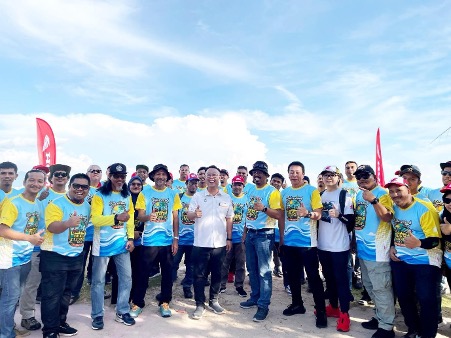
Penang, 23rd May 2025 – Boon Siew Honda continues its dedication to environmental sustainability through the organization of a beach clean-up activity held at R&R Bagan Ajam, Penang, last Saturday.

Officiated by YB Chee Yeeh Keen, Bagan Jermal’ state legislative assembly (ADUN), the initiative was part of Boon Siew Honda’s ongoing commitment to sustainability, reflecting our belief in creating a future where the joy of mobility coexists with care for the environment. Aligned with our dedication to  contributing positively to the communities around us, this effort also highlights our responsibility beyond products and technology by supporting a cleaner, healthier environment through collective action.

This activity marked the commencement of Honda Ride to Reach, a Corporate Social Responsibility (CSR) initiative by Boon Siew Honda dedicated to supporting communities in need, starting from within the organization itself. It reflects Boon Siew Honda’s commitment to both environmental responsibility and active community engagement.

Press Information

The activity started at 7:30am with a flag off for the Ride to Reach bike convoy ride from Boon Siew Honda Headquarters to R&R Bagan Ajam for the beach cleaning activity. Overall, 64.8 kilograms of waste has been collected and properly redirected to designated waste management centers for responsible processing and disposal.

Mr. Rosidan bin Haron, Chief Administrative Officer and Chairman of Ride to Reach expressed, “I am happy that Boon Siew Honda is able to contribute to improving our public spaces this year. This is part of our ongoing effort and responsibility toward greening and sustaining our environment. Last year, we successfully planted 888 plants around Boon Siew Honda Headquarters. Now that we are venturing beyond our premises, I look forward to seeing even more impactful and sustainable environmental initiatives from Boon Siew Honda.

The activity was attended by 51 Boon Siew Honda’ associates including Mr. Rosidan and Mr. Koji Nishimura, Chief Manufacturing & Purchasing Officer.

Moving forward, Boon Siew Honda plans to expand these efforts by involving business partners and Honda riders in future the CSR programs. Together, we aspire to foster a stronger, more connected, and caring community.

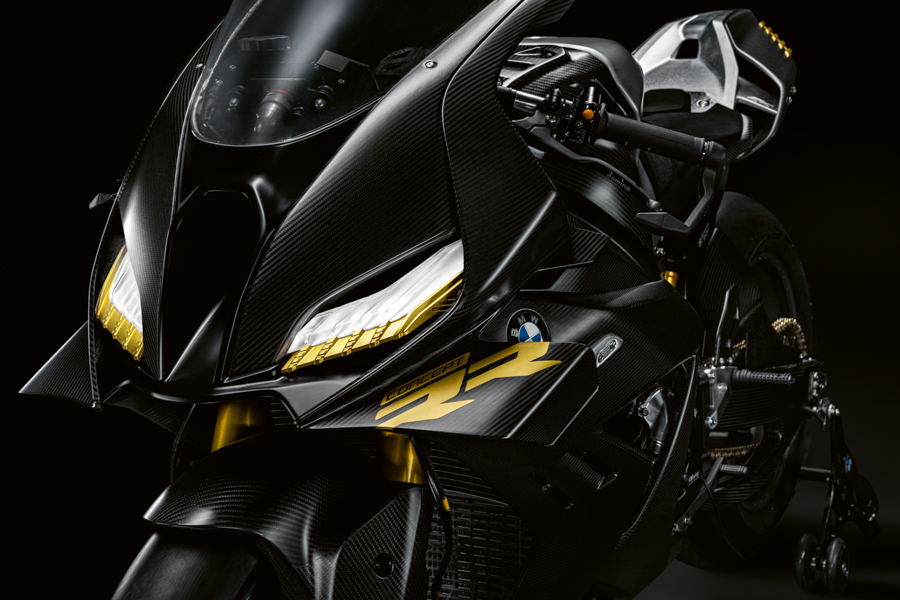
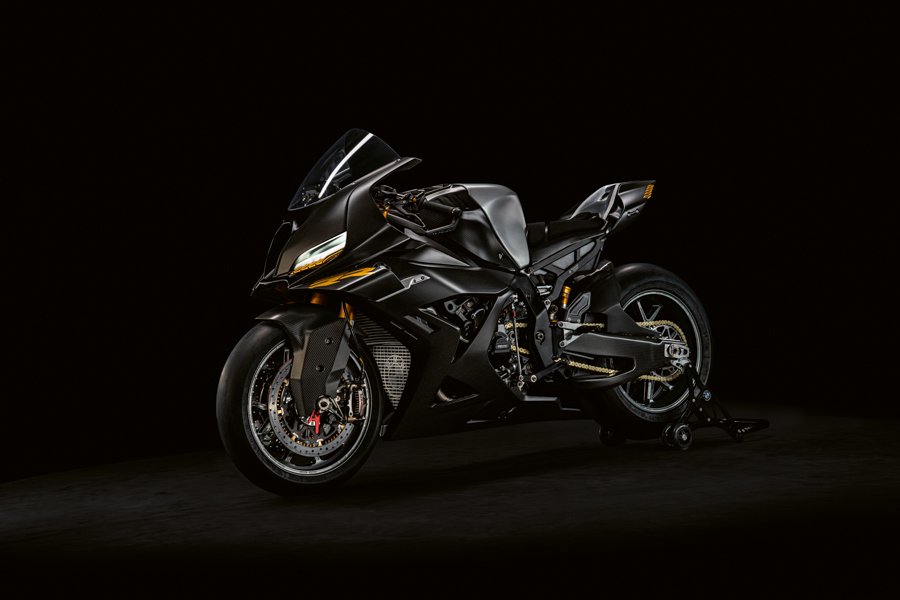
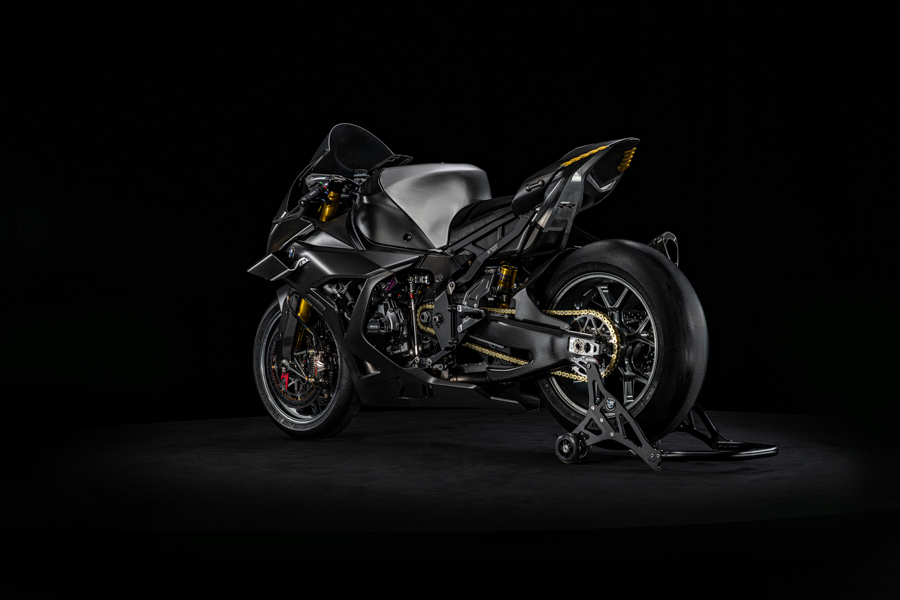
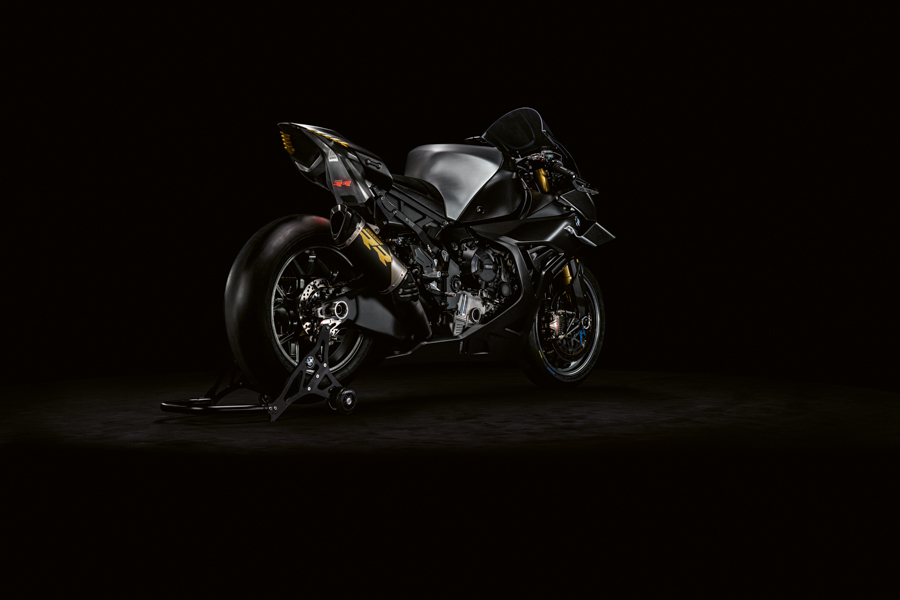
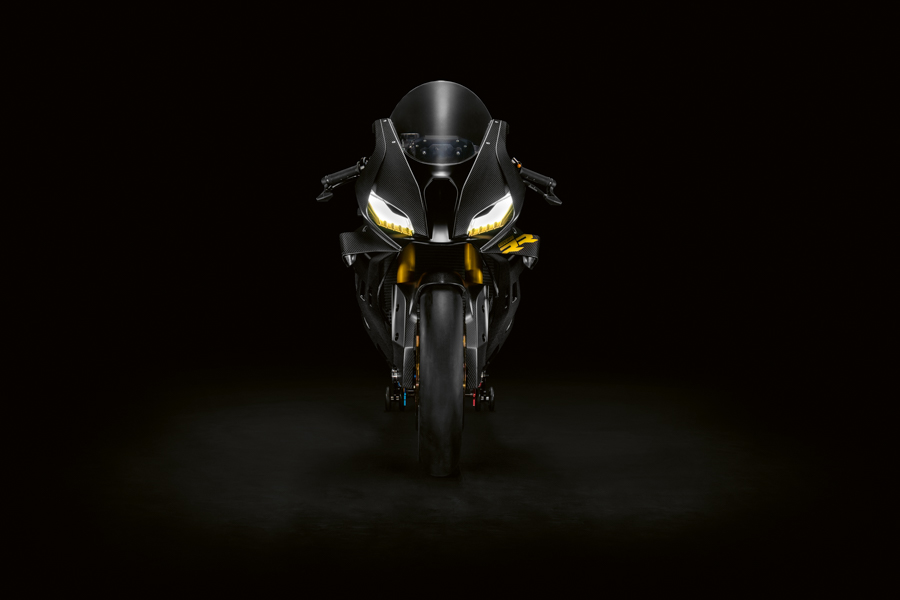
Ia belum masanya untuk S 1000 RR generasi baharu, sekurang-kurangnya bukan dalam bentuk produksi, tetapi BMW Motorrad telah mendedahkan BMW Concept RR awal pagi tadi. Konsep RR ini ditunjukkan kepada senarai tetamu khas yang eksklusif di acara Concorso d’Eleganza Villa d’Este tahun ini di tepi Tasik Como, Itali.

Dengan ini, BMW Motorrad telah mengesahkan komitmen mereka terhadap model superbike RR pada masa hadapan. Konsep baharu ini ini dikuasakan oleh enjin 1000cc yang sama seperti S 1000 RR yang ditunggang oleh juara World Superbike Toprak Razgatlıoğlu. Ia bukan enjin 800cc seperti yang dispekulasi oleh sesetengah pihak. Malah, enjin ini menghasilkan lebih daripada 226 hp.

Malangnya, ia belum dijual buat masa ini, terutamanya memandangkan enjin tersebut tidak mematuhi piawaian pelepasan. Namun, kita boleh yakin bahawa BMW pasti akan mengambil inspirasi daripada konsep ini untuk model RR pada masa depan.

Salah satu contohnya ialah lampu hadapan yang mencadangkan bahawa ia juga akan tersedia sebagai mesin yang boleh digunakan di atas jalan raya, sementara model khusus lumba seperti Yamaha YZF-R1 dan Suzuki GSX-R1000RR di Eropah juga akan ditawarkan.

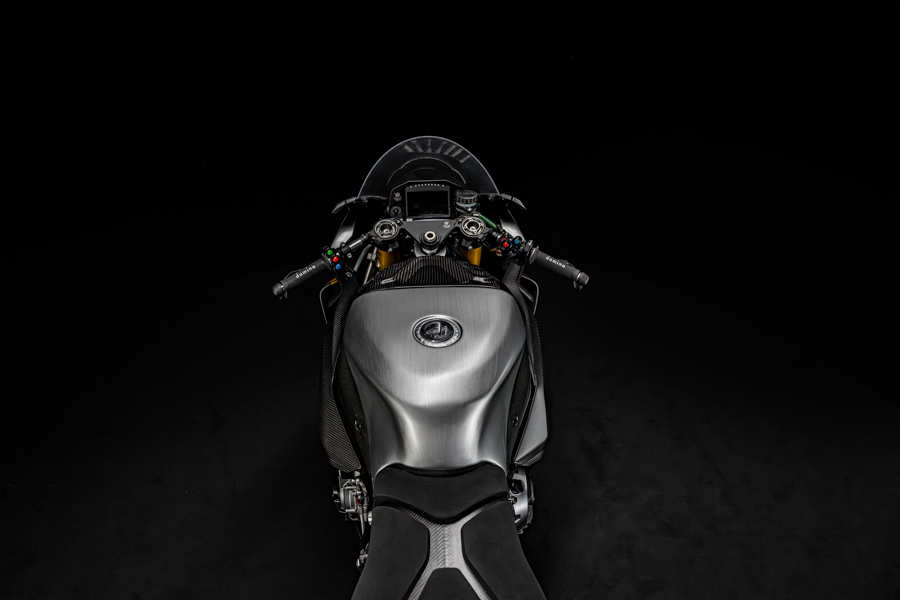
Dari segi elektronik, ia mengekalkan sistem kawalan elektronik yang sama seperti mesin lumba World Superbike, yang menguruskan enjin, kawalan cengkaman tayar, brek enjin, suis berasaskan lumba, dengan paparan TFT warna penuh standard digantikan dengan meter yang lebih kecil dan khusus untuk litar, dan lain-lain.

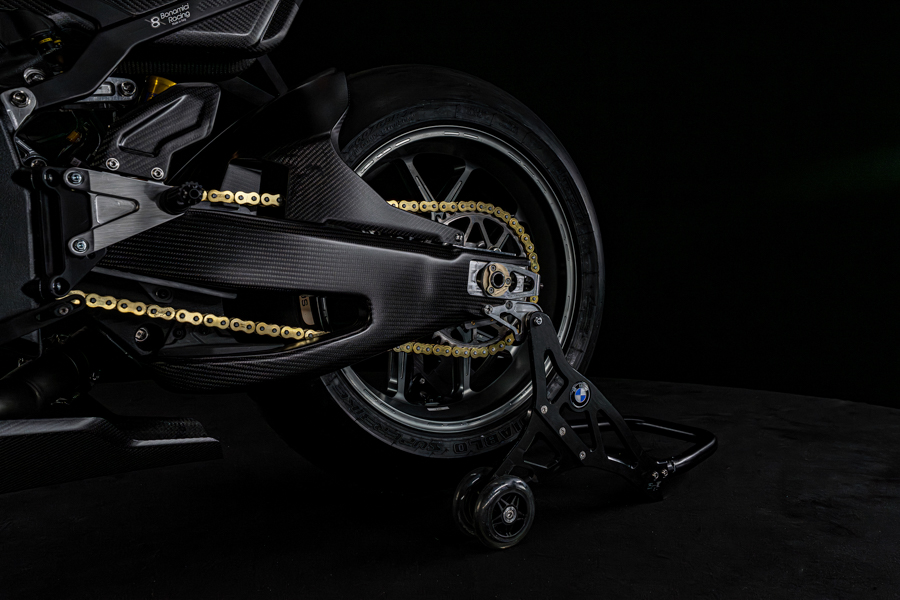
Rangka ini juga mempunyai paksi lengan ayun dan pemijak kaki dengan kedudukan yang boleh dilaras.

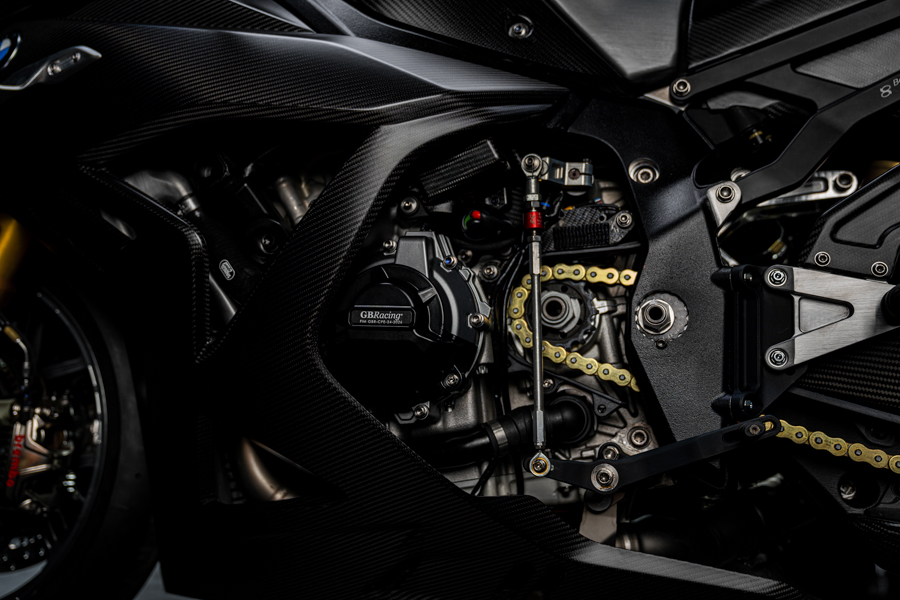
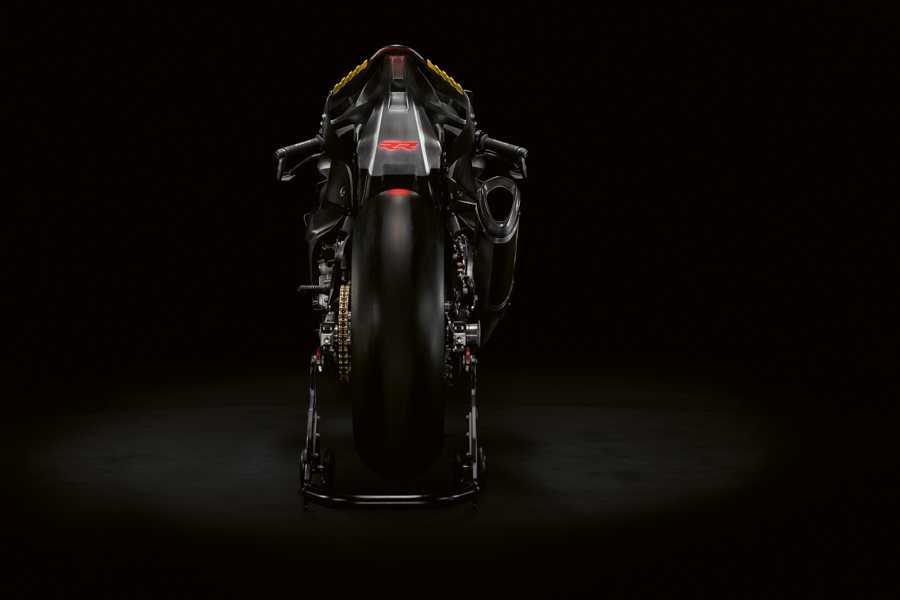
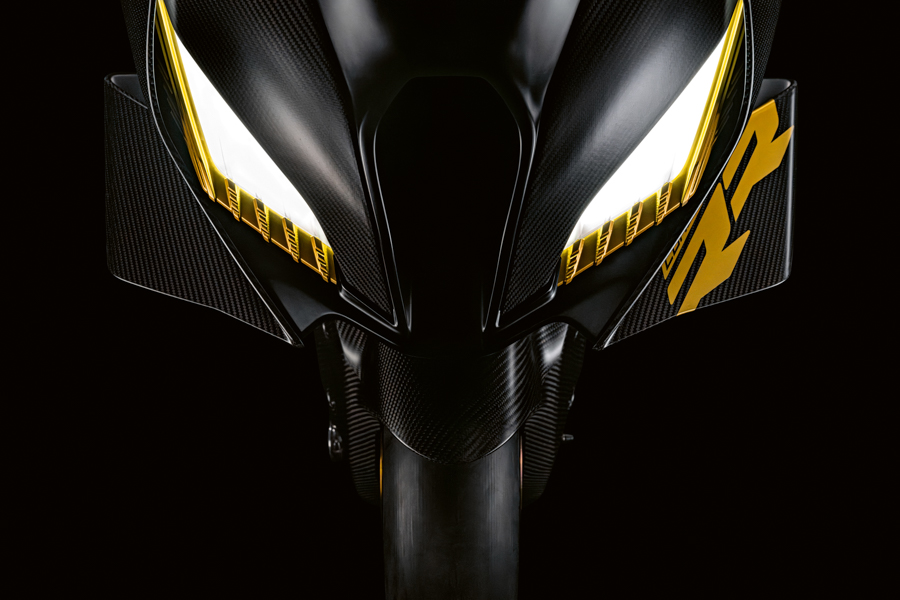
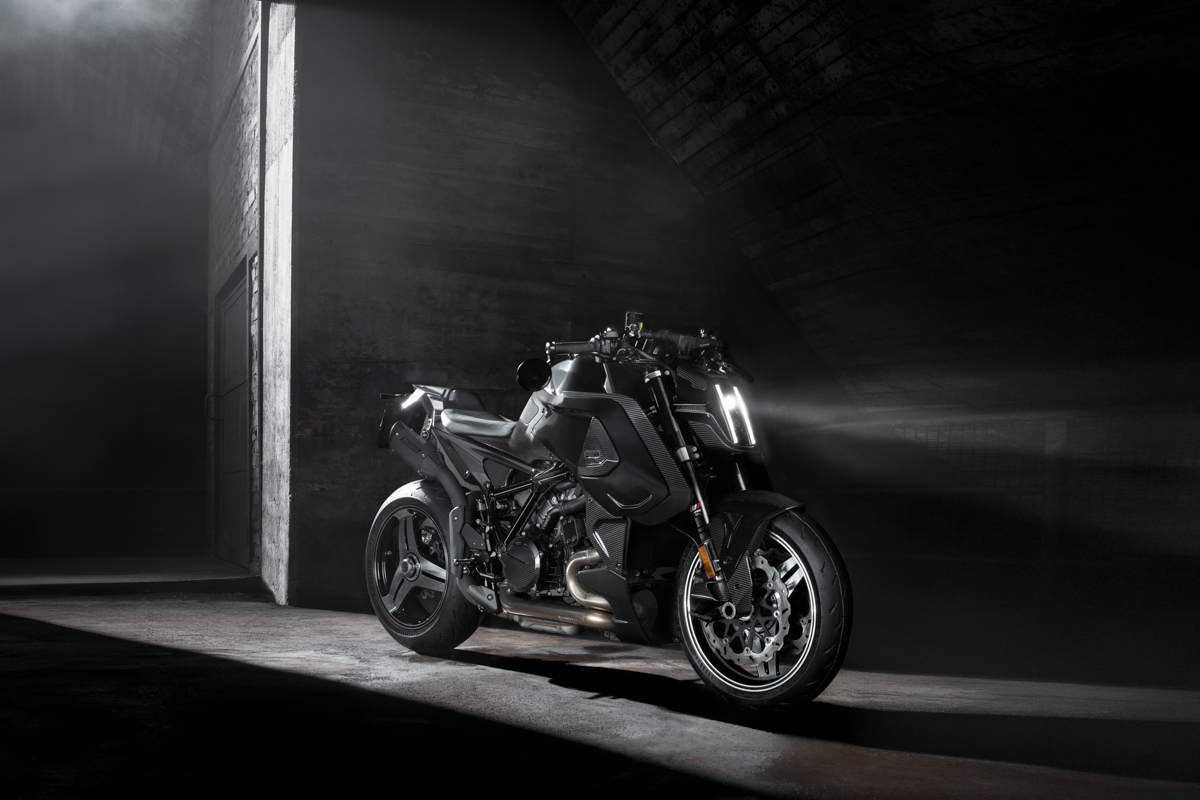
BMW Concept RR dibalut dengan fairing yang menakjubkan, dan diperbuat daripada gentian karbon. BMW menyatakan bahawa mereka menekankan aerodinamik untuk kelajuan maksimum yang tinggi dan kelajuan di selekoh. Walaubagaimanapun, sayapnya lebih kecil berbanding S 1000 RR dan M 1000 RR semasa. Terdapat sirip sekunder berhias emas seperti bulu mata untuk melancarkan aliran udara di sebelah lampu hadapan.

Satu-satunya perkara yang perlu ditunggu sekarang ialah pengumuman BMW Motorrad bahawa ia akan tersedia untuk pembeli awam dan pasukan lumba. Ia pasti akan berlaku.

Galeri foto

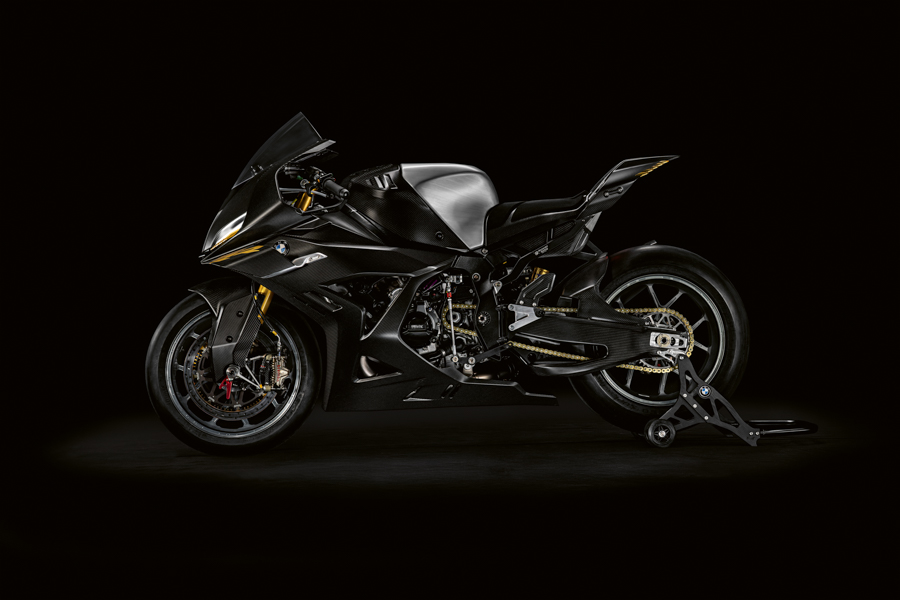
Well, it did not turn out to be the new generation of S 1000 RR yet, at least not in its production form, but BMW Motorrad had revealed the BMW Concept RR early this morning. The Concept RR was shown to an exclusive list of special guests at this year’s Concorso d’Eleganza Villa d’Este event on the banks of Lake Como, in Italy.

In doing so, BMW Motorrad have confirmed their commitment to future RR superbike models. The striking new concept is powered by the same 1000cc engine as Toprak Razgatlıoğlu’s World Superbike-winning S 1000 RR. It is not an 800cc engine as some may have speculated. In fact, it is the engine that produces more than 226 hp.

Unfortunately, it is not for sale at the moment, especially since that engine is not constrained by emissions standards. But we can be sure that BMW will surely draw upon the concept for the future RR.

One example are the headlights, which suggest that it will be also available as a road-legal machine, while the race-only model will also be available such as the Yamaha YZF-R1 and Suzuki GSX-R1000RR in Europe.

In terms of electronics, it retains the same electronic control systems as the World Superbike racing machine, which governs engine management, traction control, engine braking, race derived switchgear, with the standard full colour TFT dash display stripped out for a smaller, track-only dials, etc.

The frame features swingarm pivots and footpegs with adjustable positions, too.

The BMW Concept RR is wrapped in a stunning bodywork, made of carbon fibre. BMW say that they emphasise aerodynamics for high top speeds, and cornering speeds. However, the winglets are smaller than those on the current S 1000 RR and M 1000 RR, There are gold-trimmed eyelashes-like secondary fins to smooth out airflow beside the headlights.

The only thing to wait for now is BMW Motorrad’s announcement that it will be made available to the buying public and race teams. It will happen.

Photo gallery

KTM telah diberikan talian hayat pada saat terakhir oleh rakan lama mereka, Bajaj Auto, seperti yang dijangka. Dan dengan itu, Bajaj bakal memegang saham majoriti pembuat motosikal berwarna oren itu.

Berita ini muncul selepas laporan bahawa KTM telah memperoleh suntikan dana €600 juta minggu lepas. Khabar angin mula tersebar bahawa Bajaj adalah pembawa dana tersebut. Namun, KTM tidak mendedahkan sumber dana itu, manakala Bajaj berdiam diri.

Dan kemudian…

Pada Khamis, Bajaj Auto membuat pengumuman rasmi bahawa mereka merancang untuk mengambil alih kawalan majoriti KTM AG melalui anak syarikat milik penuh mereka, Bajaj Auto International Holdings BV (BAIHBV). Selain itu, rancangan pembiayaan penuh akan berjumlah €800 juta untuk menstabilkan kewangan KTM dan menyokong penyusunan semula yang sedang berjalan.

Perjanjian ini menandakan perubahan besar dalam strategi global Bajaj Auto bagi segmen dua roda, kerana ia beralih daripada pemegang saham minoriti kepada pemegang saham majoriti dalam KTM. Syarikat yang berpangkalan di Pune, India ini telah lama bekerjasama dengan KTM, tetapi langkah ini akan memberikannya kawalan operasi dan kewangan yang lebih mendalam, mengukuhkan kedudukannya dalam segmen motosikal berprestasi tinggi dan sukan di peringkat global.

Menurut fail pertukaran saham Bajaj Auto bertarikh 22 Mei 2025, Lembaga Pengarah telah meluluskan cadangan itu pada 21 Mei. Inisiatif pembiayaan ini bertujuan untuk memberikan kecairan segera kepada KTM dan memenuhi tarikh akhir yang ditetapkan mahkamah Austria berkaitan pelan penyusunan semula hutang syarikat.

Tarikh Akhir 23 Mei

Pembiayaan ini bertujuan memenuhi tarikh kritikal 23 Mei 2025 yang ditetapkan mahkamah Austria. Di bawah pelan penyusunan semula yang diluluskan mahkamah, KTM mesti menyelesaikan 30 peratus tuntutan pemiutang sebelum tarikh tersebut. Kegagalan berbuat demikian boleh mengakibatkan prosiding muflis dan penamatan daripada pentadbiran sendiri.

Sokongan kewangan Bajaj Auto amat penting untuk mengelakkan senario ini, memastikan kelangsungan operasi KTM dan melindungi reputasi globalnya sebagai jenama motosikal premium.

Perincian Paket Penyelamat €800 Juta

Sebagai sebahagian daripada pakej penyelamat, BAIHBV telah melaksanakan perjanjian kemudahan untuk memberikan pinjaman bercagar sebanyak €450 juta kepada KTM AG. Dana ini akan dipegang dalam escrow sehingga diluluskan oleh mahkamah Austria. Selain itu, anak syarikat Bajaj telah melanggan bon boleh tukar bernilai €150 juta yang dikeluarkan oleh Pierer Bajaj AG (PBAG), sebuah entiti KTM.

Komitmen baru ini adalah tambahan kepada €200 juta yang telah disalurkan oleh Bajaj sebagai hutang pemegang saham, menjadikan jumlah sokongan kewangan kepada €800 juta.

KTM has been thrown a lifeline at the 11th hour by their long-time partner Bajaj Auto, as most expected. And in doing so, Bajaj is set to become the majority and controlling stakeholder in Team Orange.

The news came on the back of a news that KTM had secured an €600 million infusion last week. Rumours began circulating that it was Bajaj who brought that bag of cash. However, KTM did not disclose the “donating” party while Bajaj kept mum.

And then…

Come Thursday, Bajaj Auto made the formal announcement that they plan to acquire majority control of KTM AG, through their wholly owned subsidiary, Bajaj Auto International Holdings BV (BAIHBV). Besides that, the full funding plan will be €800 million in order to stabilise KTM’s finances and support its ongoing restructuring.

The deal marks a significant transformation in Bajaj Auto’s global two-wheeler strategy, as it transitions from a minority shareholder to majority stakeholder in KTM. The Pune-based company has long partnered with KTM, but this move will give it deeper operational and financial control, bolstering its position in the high-performance and sports motorcycle segment globally.

According to Bajaj Auto’s stock exchange filing dated May 22, 2025, the Board approved the proposal on May 21. The funding initiative is designed to provide immediate liquidity to KTM and meet a court-imposed deadline in Austria related to the company’s debt restructuring plan.

May 23rd deadline

The funding is aimed at meeting a critical deadline of May 23, 2025 set by Austrian courts. Under the court-approved restructuring plan, KTM must settle 30 percent of creditor claims by that date. Failure to do so could result in insolvency proceedings and removal from self-administration.

Bajaj Auto’s financial backing is essential to avert this scenario, ensuring KTM’s operational continuity and shielding its global reputation as a premium motorcycle brand.

Breakdown of the €800 million rescue package

As part of the rescue package, BAIHBV has executed a facility agreement to extend a secured loan of €450 million to KTM AG. This will be held in escrow until approved by the court in Austria. Additionally, Bajaj’s subsidiary has subscribed to €150 million worth of convertible bonds issued by Pierer Bajaj AG (PBAG), a KTM group entity.

These new commitments are in addition to the €200 million  already infused by Bajaj as shareholder debt, bringing the total financial backing to €800 million.

We published news earlier that Honda believes that electric vehicles is the way of the future. And now, that philosophy has been strengthened further when Honda Motor Co., Ltd. Director, President and Representative Executive Officer (Global CEO) Toshihiro Mibe held a press briefing during the 2025 Honda Business Briefing, on Honda initiatives centering on automobile electrification.

The company had just sold 20.57 million units of motorcycles, which account for approximately 40% of the global motorcycle market.

From the official Press Release

TOKYO, Japan, May 20, 2025 — Honda Motor Co., Ltd. Director, President and Representative Executive Officer (Global CEO) Toshihiro Mibe held a press briefing today, on Honda initiatives centering on automobile electrification.

Following is a summary of his formal remarks:
  1. Recent changes in the EV market environment and the direction of the strategy realignment

In order to  sustainably offer the joy and freedom of mobility, Honda has put the highest priority on its initiatives in the areas of the environment and safety, including an ambitious goal to “achieve carbon neutrality for all products and corporate activities” and “zero traffic collision fatalities” by 2050.

For small-size mobility products including passenger vehicles, Honda believes that electric vehicles (EVs) are the optimal solution for achieving carbon neutrality from a long-term perspective. Based on this belief, Honda made the strategic decision to make a major shift toward the popularization of EVs and has been making progress with various initiatives.

In the meantime, the environment surrounding the automobile industry is changing day by day. Uncertainty in the business environment is increasing, due particularly to the slowdown in the expansion of EV the market due to several factors, including changes in environmental regulations, which had been the premise for the widespread adoption of EVs, as well as changes in trade policies of various countries. In order to maintain its competitiveness in such a business environment and continue to help and inspire people through its mobility products and services, Honda must create new value not only through electrification but also with enhanced application of intelligent technologies, and then offer such value to a broader range of customers in more accessible and affordable ways.

From this standpoint, Honda will realign its automobile electrification strategy, in the following two directions.

    • Further enhance the competitiveness of EV and HEV models with the core focus on application of intelligent technologies.
    • Strengthen its business foundation through the reassessment of the powertrain portfolio.

In the area of applying intelligent technologies, which will be the most critical competitive area of automobile business in the future, while focusing on independent development of next-generation ADAS as a key driving  force, Honda will create new value from multiple aspects, while also leveraging collaboration with partners.  With this core focus on the advancement of intelligent technology applications, Honda will strengthen its business foundation by reassessing its powertrain portfolio, such as EVs and HEVs.

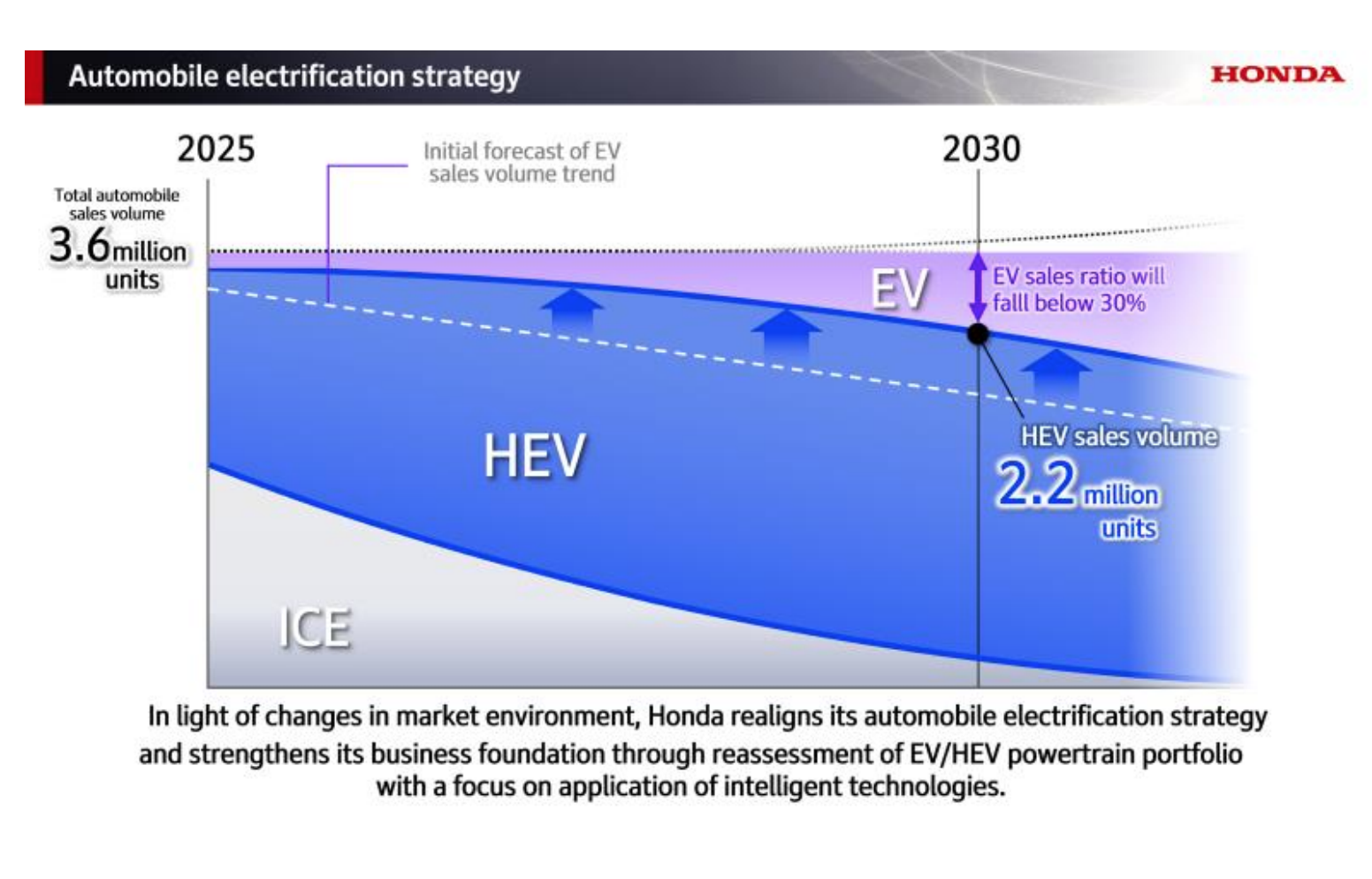
As for EVs, due to the revision of the product launch plan considering the recent market slowdown, the Honda global EV sales ratio in 2030 is now expected to fall below the previously announced target of 30%. On the other hand, current market demand for HEV models is high. Therefore, Honda will position its HEVs, mostly next-generation HEV models to be introduced to market in 2027 onward, as the powertrain that will play a key role during the transition period toward the popularization of EVs and further enhance its HEV lineup.

With the steady execution of this realignment, by 2030, Honda will strive to increase total automobile sale volume to above the current level of 3.6 million units, with a HEV sales target of 2.2 million units at the core.
1-1. Enhancing the competitiveness of automobile models through the development and expanded application of next-generation ADAS.

As one of the key technologies to enhance application of intelligent technologies, Honda is currently developing its original next-generation ADAS which assists the driver with vehicle operations such as acceleration and steering throughout the entire route, whether on expressways or surface roads, to the destination the driver inputs on the navigation system. Developing next-generation ADAS is especially challenging in urban areas, where there are various types of people sharing the road, and where turning at intersections is frequent. However, by leveraging the recognition and behavior planning technologies we have amassed through our automated driving development, Honda is working to develop next-generation ADAS that enables safe and comfortable driving all the way to the destination, including in urban environments. Honda will apply this new, next-generation ADAS to a broad range of key EV and HEV models Honda will launch in North America and Japan around 2027.

Currently, next-generation ADAS technologies are being adopted mainly to high-end EV and PHEV models due to technical challenges such as power supply constraints and the need for SoC cooling. However, the full-fledged hybrid system of Honda has technological advantages necessary to overcome such challenges as it meticulously performs highly efficient energy management. Also, based on the Honda M/M Concept*1, which calls for maximizing the space available for people and minimizing the space required for mechanical components, Honda can install ADAS-related devices while minimizing the impact on cabin space and vehicle
design, which makes it possible to equip small-size vehicles with next-generation ADAS.

By leveraging such unique strengths of Honda HEV and car design technologies and by adopting this next-generation ADAS not only to EVs but also to increasingly popular HEVs, Honda will take advantage of its large business scale to achieve both high competitiveness and low cost, and offer high value-added “joy of mobility” at affordable prices for more customers.

In China, where electrification and application of intelligent technologies are proceeding faster than other regions, Honda will work with Momenta Global Limited, a Chinese startup company developing autonomous driving technology, to develop next-generation ADAS optimized for road conditions in China and install it to all future models Honda will launch in China.

1-2. Strengthening Honda EV strategy

Honda will further advance its original two-motor hybrid system, e:HEV hybrid system, and platforms in all aspects. Both small-size and mid-size e:HEV systems will realize the world’s most efficient powertrain through various advancements such as an expansion of range where the engine operates most efficiently and an increase in the driving efficiency of the hybrid unit. By combining this hybrid system with 1) a next-generation platform which is advanced in all aspects, including driving stability and further weight reduction, and 2) a newly-developed electric AWD drive unit that realizes highly precise and responsive motor control, Honda will strive to improve the fuel economy of the next-generation e:HEV model by more than 10% and further advance a driving experience unique only to Honda, which is high-quality, exhilarating and resonating with all of the driver’s senses.

Moreover, to increase the cost competitiveness of HEV models, which are the core of Honda automobile business, Honda is pursuing further cost reduction mainly with key components such as batteries and motors with various initiatives including co-creation activities with suppliers, further improvement of production efficiency and commonization of more parts and components. Through these initiatives, along with an increase in sales volume, Honda is aiming to reduce the cost of the next-generation hybrid system by more than 50% compared to the hybrid system installed to models introduced in 2018, and by more than 30% compared to the hybrid system introduced in 2023 to current models.

In the North American market, which is the main battleground for Honda HEV models, there continues to be solid demand for large-size vehicles with spacious interiors and high cargo capacity. In order to fulfil such demand in a sustainable manner, Honda will develop a hybrid system for large-size vehicles, which will feature powerful driving performance, high towing capability and high environmental performance, with an aim to apply this hybrid system on products to be launched in the latter half of the 2020s.

While further refining the competitiveness of its products, Honda will launch 13 next-generation HEV models globally, over a four-year span starting in 2027, to build a broad lineup of HEV models and capture growing HEV demand in the market.

1-3. Initiatives toward popularization of EVs

Due to the recent market slowdown, the Honda EV sales ratio in 2030 is now expected to fall below the previously announced target of 30%. In light of this outlook, Honda is reassessing its EV strategy and roadmap, including plans for the EV product lineup and the timing of relevant investments including one to build a comprehensive EV value chain in Canada.

In the meantime, there is no change in the Honda position that EVs are the optimal solution to achieve carbon neutrality of passenger vehicles. Therefore, Honda will steadily carry out initiatives being undertaken to prepare for the future EV shift at the appropriate timing.

As for the Honda 0 Series, which will become the main pillar of the company’s future EV business, the first-generation models will be introduced to market next year. Through these models, Honda will offer the value of SDVs tailored to each and every user through “ultra-personal optimization,” which is made possible mainly by the ASIMO OS and AD/ADAS Honda introduced at CES 2025.

In order to offer even more sophisticated AD/ADAS functions, the next-generation Honda 0 Series models will be equipped with the Centralized E&E Architecture. In addition, jointly with Renesas Electronics, Honda will develop a high-performance system-on-chip (SoC), which will achieve one of the industry’s top class AI performances of 2,000 TOPS 2 (Sparse) with 20 TOPS/W power efficiency. With these technologies, Honda will continue to increase the value SDVs can offer to its customers. Looking ahead to the forthcoming period of EV popularization, Honda will steadily work to build a strong EV brand and business foundation from a long-term perspective.

1-4. Summary of the realignment of the automobile electrification strategy

Honda is committed to creating new and unique value suited to the era of intelligent and electrified mobility products. When the driver wants to take the wheel, they can enjoy high-quality and exhilarating “joy of driving” unique only to Honda, and when the driver wants a stress-free ride to the destination, they can take advantage of the value of SDVs and enjoy a comfortable ride whether on surface roads or expressways. Honda will provide such a wide range of experiential value in one vehicle.

Moreover, as a symbol of the transformation of Honda automobile business, the new “H mark” will be used not only for EV models, but for major HEV models, starting with the next-generation models to be introduced to market in 2027 and beyond.

1-5. Automobile production and procurement systems

Honda is striving to pursue a resilient supply chain strategy that is not easily swayed by fluctuations in demand—such as shifts between EVs and HEVs—or unforeseeable factors such as changes in government policies in different countries.

During the early adoption period, where fluctuations in the speed of EV popularization are expected, Honda will establish a flexible production system that is capable of optimizing production according to demand and sales strategies. This will be achieved mainly with mixed-model production lines capable of producing both EVs and HEVs. In anticipation of continuous growth in HEV sales and a mid- to long-term EV shift, Honda is working to secure a stable supply of electrified components, particularly batteries, by optimizing supply capacity and allocation, including the effective use of existing assets.

Moreover, Honda has established supply chains based on its longstanding commitment to “build products close to the customer,” which is a concept of “local production for local consumption.” In addition, Honda has been strengthening its flexible production system that enables the swift transfer of production models between facilities.

Such a system is enabling Honda to adjust the production allocation flexibly according to demand. While maintaining a commitment to “local production for local consumption,” Honda will continue to strengthen its supply chains to be resilient to unexpected changes in the market.

2. Initiatives in motorcycle business

For the fiscal year ended March 31, 2025, Honda motorcycle unit sales reached 20.57 million units, which account for approximately 40% of the global motorcycle market, setting an all-time record for fiscal year sales in 37 countries and territories. Moreover, demand for motorcycles is expected to grow further, particularly in the Global South, which includes India, the world’s largest motorcycle market, where population is increasing and people’s income is increasing. Industry-wide sales are expected to grow from the current level of 50 million units to the level of 60 million units by around 2030.

In order to capture this growing demand, Honda will offer attractive products tailored to the diverse needs of global customers and also optimize its product supply system. Furthermore, in order to maintain its position as an industry leader in environmental initiatives, Honda will accelerate electrification of its motorcycle products, while also improving the fuel economy of its ICE models and expanding the lineup of flex-fuel compatible models.

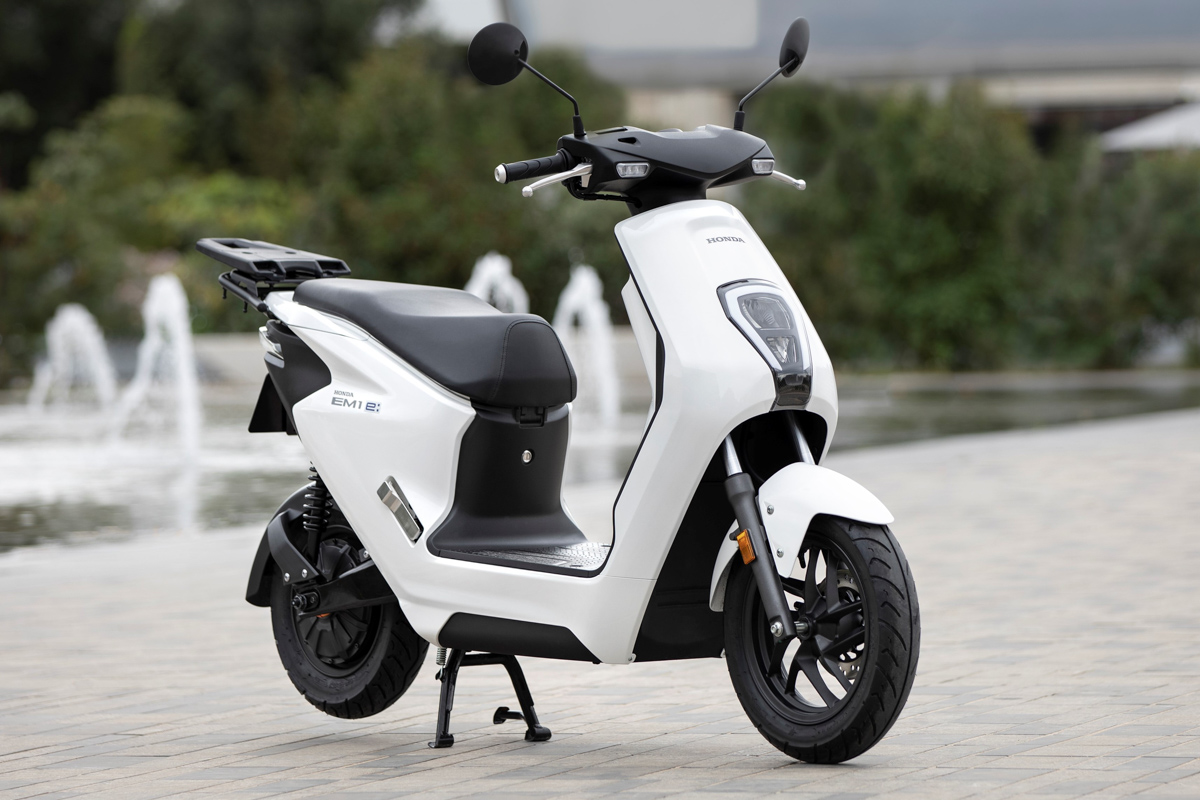
As for electric motorcycle models, in February of this year, Honda began sales of Active e: and QC1, which were announced in India last year. Moreover, sales of CUV e: and ICON e:, global electric commuter models began first in Indonesia, then in Vietnam, Thailand and the Philippines. The CUV e: is also scheduled to go on sale in Europe and Japan this year. Going forward, Honda will modularize models developed exclusively as electric models and begin production at a highly efficient, dedicated electric motorcycle production plant which will become operational in India in 2028, which will enable further strengthening of the electric motorcycle business structure. Through these initiatives, Honda will offer more affordable electric  motorcycle models to more customers, and further down the road, Honda will strive to capture the No. 1 market share in the electric motorcycle market, as well.

In this way, by continuously launching attractive products and building an efficient supply system for both ICE and electric models, Honda will effectively capture growing demand for motorcycles. As a result, in the long term, Honda motorcycle business, including both ICE and electric models, will establish a solid profit base with a global market share of 50% and ROS of more than 15% as of FY2031 (fiscal year ending March 31, 2031).

3. Financial strategy – improvement in profitability, reassessment of resource investment, capital allocation 

Toward 2030, Honda will improve profitability with 1) continuous expansion of motorcycle business, 2) cost reduction effects in automobile business associated with the adoption of the next-generation e:HEV system and platforms, and 3) an increase in unit sales of HEV models, and will keep making progress toward achieving the company-wide ROIC target of 10% for the FY2031 (fiscal year ending March 31, 2031).

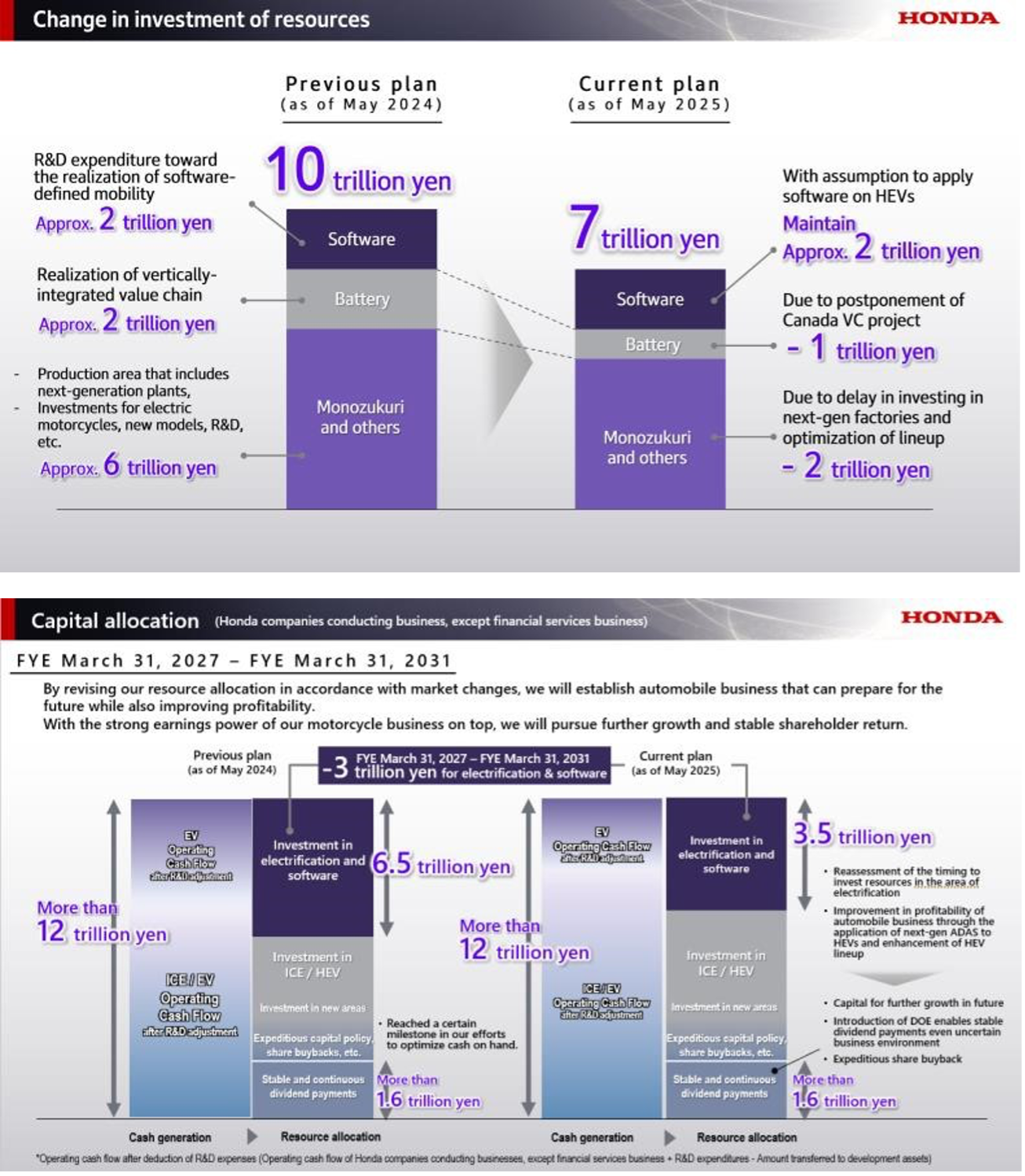
As for the plan announced last year to invest 10 trillion yen in resources to pursue its electrification strategy, Honda decided to reduce the investment amount by 3 trillion yen, to a total of 7 trillion yen, over the period through the FY2031 (fiscal year ending March 31, 2031), based on its decision to postpone the project to establish a comprehensive EV value chain in Canada and change the timing to construct dedicated EV production plants.

Regarding the changes in capital allocation over the five-year period starting from the 2027 fiscal year, in light of the reduction in the resource investment amount, Honda will strive to generate more than 12 trillion yen in cash, combining its ability to generate cash stably from its motorcycle business and an increase in unit sales of HEV models. As for resource allocation through the 2031 fiscal year, while reducing EV-related investment by 3 trillion yen, Honda expects a minimal increase in investment related to HEV business. As for shareholder returns, Honda will maintain the previously announced target and strive for more than 1.6 trillion yen.

Revising its resource allocation by responding to market changes swiftly and flexibly, Honda will establish automobile business that can prepare for the future while also improving profitability. By adding the strong earnings power of its motorcycle business, Honda will pursue further growth even under uncertain market conditions. Moreover, Honda made a decision to introduce DOE (dividend on equity ratio) as an expression of its ongoing commitment to maintain shareholder returns in line with business growth. In this way, Honda will achieve growth through further strengthening of its business structure and stable, and continuous shareholder returns at the same time.
Here is Part 2 of the history of more recent technologies that have made motorcycles they are today.

6. Suzuki GSX-R1000 K7 (2007)

As we mentioned earlier, Yamaha somehow dropped the ball after developing the ride-by-wire system by not giving their bikes ride/power modes. (Your bike needs to have ride-by-wire throttle for ride/power modes.) Suzuki got rolling with it when they introduced the GSX-R1000 K7 the next year, along with the B-King. Granted, they had only two rides modes, namely A and B. Mode A gave full engine power, while B cuts it back for riding in the rain.

7. Ducati 1098R (2007) – IMU-based traction control

Some say the first motorcycle to feature traction control was the BMW K1. However, it featured ABS which is the simplest form of traction control. Instead, it was the Honda ST1100A (1992) which followed the ST1100 Pan European that had both ABS and a rudimentary traction control system.

The true modern TCS which works via the ECU and IMU (inertial measurement unit) which calculated the motorcycle’s lean angle and pitch was introduced with the Ducati 1098R. The system, developed by Bosch, provided eight levels of TC settings.

The system was further developed and became Ducati’s integrated electronics suite which debuted with the Multistrada 1200 in 2010.

8. BMW R 1200 GS (2008) – Electronic suspension

Several high-end modern motorcycles use electronic suspension, including sportbikes, sport-tourers, nakeds, dual-sports. However, it began with the 2008 BMW R 1200 GS.

Developed by Sachs, BMW called it ESA (Electronic Suspension Adjustment) and was offered as an option back then. It altered the rear shock’s preload through a handlebar button and stepper motor.

The system was further upgraded to include more settings such as rider only, rider only with luggage, rider and pillion without luggage, and rider and pillion with luggage. Further development saw the advent of Dynamic ESA which self balances.

On the 2013-2014 BMW S 1000 RR HP4, BMW introduced the Dynamic Damping Control system which adjusted the rear suspension’s damping on-the-fly.

Other manufacturers followed suit, especially Ducati which featured the also Sachs developed Skyhook system. Showa also developed their electronic suspension that are fitted to er… Japanese bikes. KTM models such as the 1290/1390 Super Duke GT uses WP’s electronic suspension.

Anyhow, this system is complex and expensive, thus is limited to, as we said earlier, top-tier models. And oh, it is banned in WSBK and MotoGP. Although it is allowed in the FIM Endurance World Championship, teams favour non-electronic suspensions as their insides are easier to fettle with.

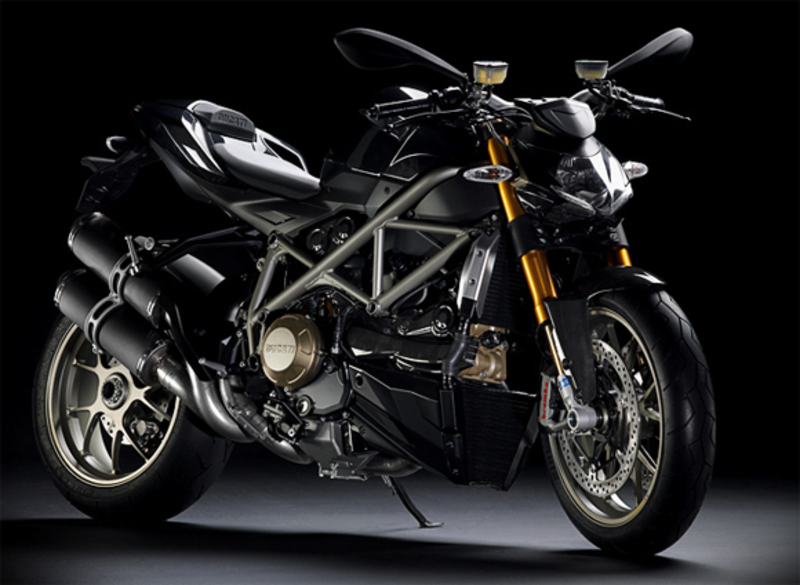
9. Ducati Streetfighter 1100 (2009) – LED headlights

So many Ducatis in this list… but yeah, they truly pushed new features on their motorcycles. LED headlights are everywhere these days, even on kapcais. And it all began with this bike.

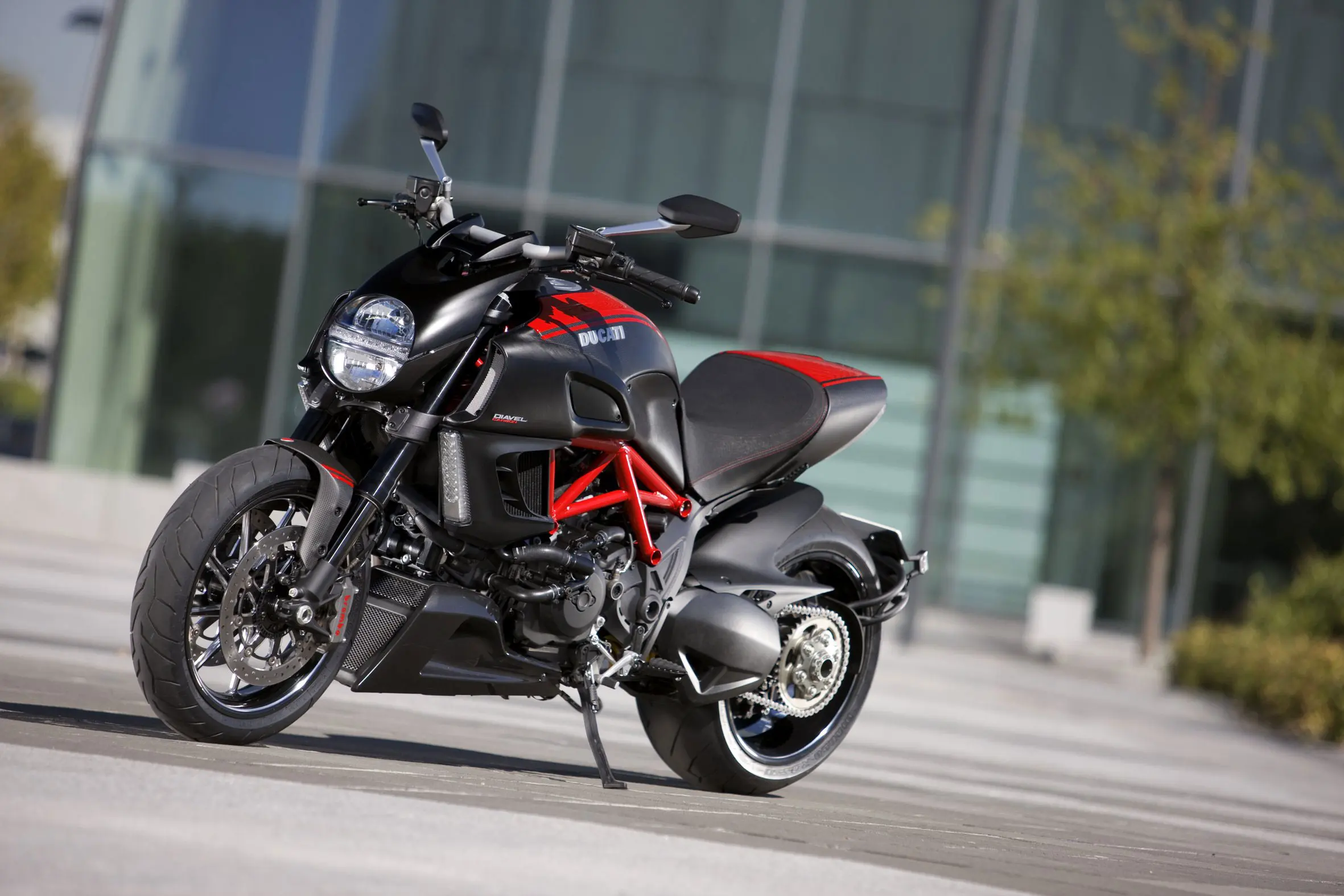
10. Ducati Diavel (2011) – TFT display

Motorcycle instrument clusters were LCD for a long time, then came the TFT which offered much sharper pixels. Soon, riders could pair their smartphones to the TFT for music streaming, phone operations, and navigation.

However, it was the Ducati Monster 1200R in 2016 which showed off the world’s first fully-colour TFT screen.

The TFT is screen is everywhere now and new motorcycles are expected to feature it.

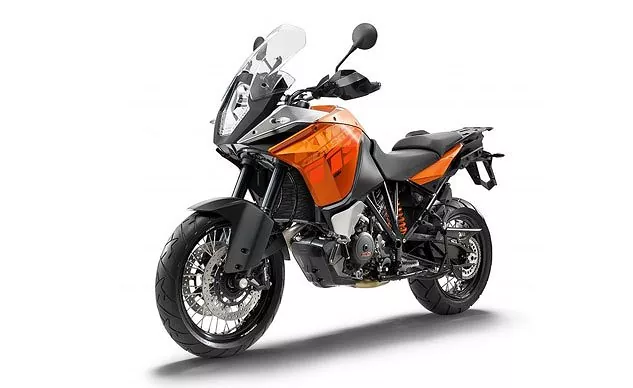
11. KTM 1190 Adventure (2014) – Cornering ABS

Traction control and ABS are good, but actually needs different parameters and strategies when the bike is leaned over into a corner. Remember that the motorcycle’s tyre profile is rounded compared to cars that are flatter. So, applying the brakes until (standard) ABS activates in a corner will just have the bike standing straight up instead of tracking along the chosen line. The same happens when TCS decides to cut engine torque in the middle of the corner.

So again, Bosch went to work and introduced Cornering ABS and Cornering Traction Control – packaged as “MSC” (Motorcycle Stabilily Control) to the 2014 KTM 1190 Adventure, by further utilising the IMU’s data. KTM was so confident in the system that they called the 1190 Adventure “The uncrashable motorcycle.”

Continental also developed their own system and was fitted to the first BMW S 1000 XR.

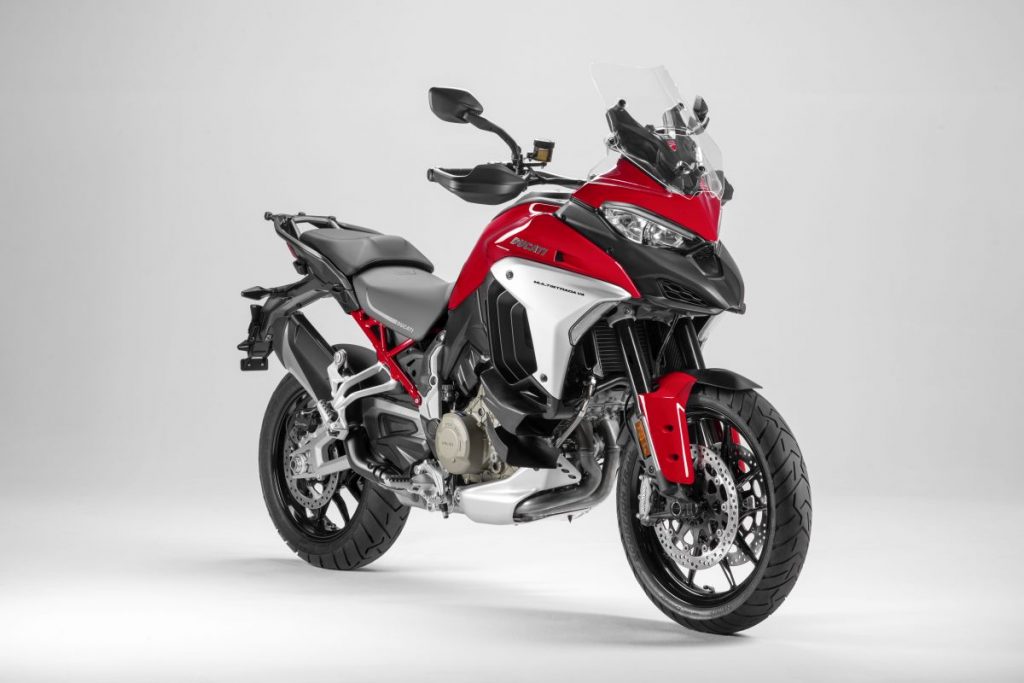
12. Ducati Multistrada V4 (2020) – Radar and Adaptive Cruise Control

BMW was the first to announce that they were working on a radar equipped bike and adaptive cruise control, but were undoubtedly shocked by Ducati who introduced it on the Multistrada V4. Included in the suite was also Blind Spot Detection which detected and warned the rider of other vehicles.

BMW S 1000 RR (2027) generasi baharu akan didedahkan pada 23 Mei, 7 malam CEST (1 pagi, 24 Mei di Malaysia). BMW Motorrad baru sahaja mengeluarkan imej acah dalam platform media sosial mereka sebelum pelancaran.

Imej acah itu menunjukkan sebuah motosikal yang diprofilkan dengan latar belakang hitam dan kelabu, dan kita hanya boleh melihat bentuk asas S 1000 RR. Namun, bahagian atas cermin depan yang besar, tangki bahan api yang dibelah, pelana, dan unit ekor kelihatan jelas . Anda juga boleh melihat sayap depan yang besar juga.

Bagaimanapun, adakah model BMW S 1000 RR (2027) baharu ini membawa peningkatan prestasi? Enjin empat silinder sebaris semasa menghasilkan 209 hp dan 112.6 Nm. Ia bukan yang paling berkuasa di kalangan superbike yang lain, jadi peningkatan kuasa maksimumnya juga boleh memberi manfaat kepada motosikal ini dalam gelanggang Kejuaraan Superbike Dunia (WSBK).

BMW S 1000 RR (2025)
BMW telah menggunakan casis prototaip yang tidak dihomologasikan apabila mereka memenangi mahkota WSBK pada 2024 sebagai sebahagian daripada kelonggaran yang diberikan mengikut peraturan kejohanan. Walaubagaimanapun, mereka terpaksa kembali kepada kerangka S 1000 RR yang standard (mengikut peraturan WSBK), dan itu menyebabkan penunggang peniglang dan juara dunia Toprak Razgatlıoğlu mengadu hampir setiap hujung minggu. Oleh itu, kerangka baharu juga merupakan suatu yang amat penting.
Pelancaran pada 24 Mei ini sepatutnya untuk varian asas S 1000 RR, manakala varian homologasi perlumbaan M 1000 RR akan menyusul setahun selepas itu.

Mark you calendar! The new generation 2027 BMW S 1000 RR will be revealed on 23 May, 7pm CEST (1am, 24 May in Malaysia). BMW Motorrad has just released a teaser image in their social media platform ahead of the launch.

The teaser image shows a bike profiled against a black and gray background, and we can just make out the silhouette of an S 1000 RR. Apparent are the top of a large windscreen, split fuel tank, seat, and tail unit. You should also be able to pick out the large front winglets, too.

Anyway, will there be a performance enhancement? The current inline-four-cylinder engine produces 209 hp and 112.6 Nm. It is not the most powerful among its peers (on paper anyway), so upping its maximum power may also benefit the bike in World Superbike competition.

2025 BMW S 1000 RR

Apart from the engine, BMW had used a prototype and unhomologated chassis when they won the WSBK crown in 2024 as part of the championship’s concessions. However, had to revert to the roadgoing S 1000 RR frame (as per WSBK rules), only to see factory rider and champion Toprak Razgatlıoğlu complaining almost every weekend. Thus a new frame could well be in the works, too.

The reveal should be for the base S 1000 RR variant, while the racing homologation M 1000 RR ought to follow a year after.

Modern motorcycles are technological marvels, in due to advances in the materials and techniques used to build them, tyres , suspension, and of course, electronics, besides aerodynamics. But all begin from somewhere in time. There are motorcycles that revolutionised motorcycles to the state we are in right now.

We have covered the mechanical advances in a previous article, so we will cover mostly on the electronics front in this one.
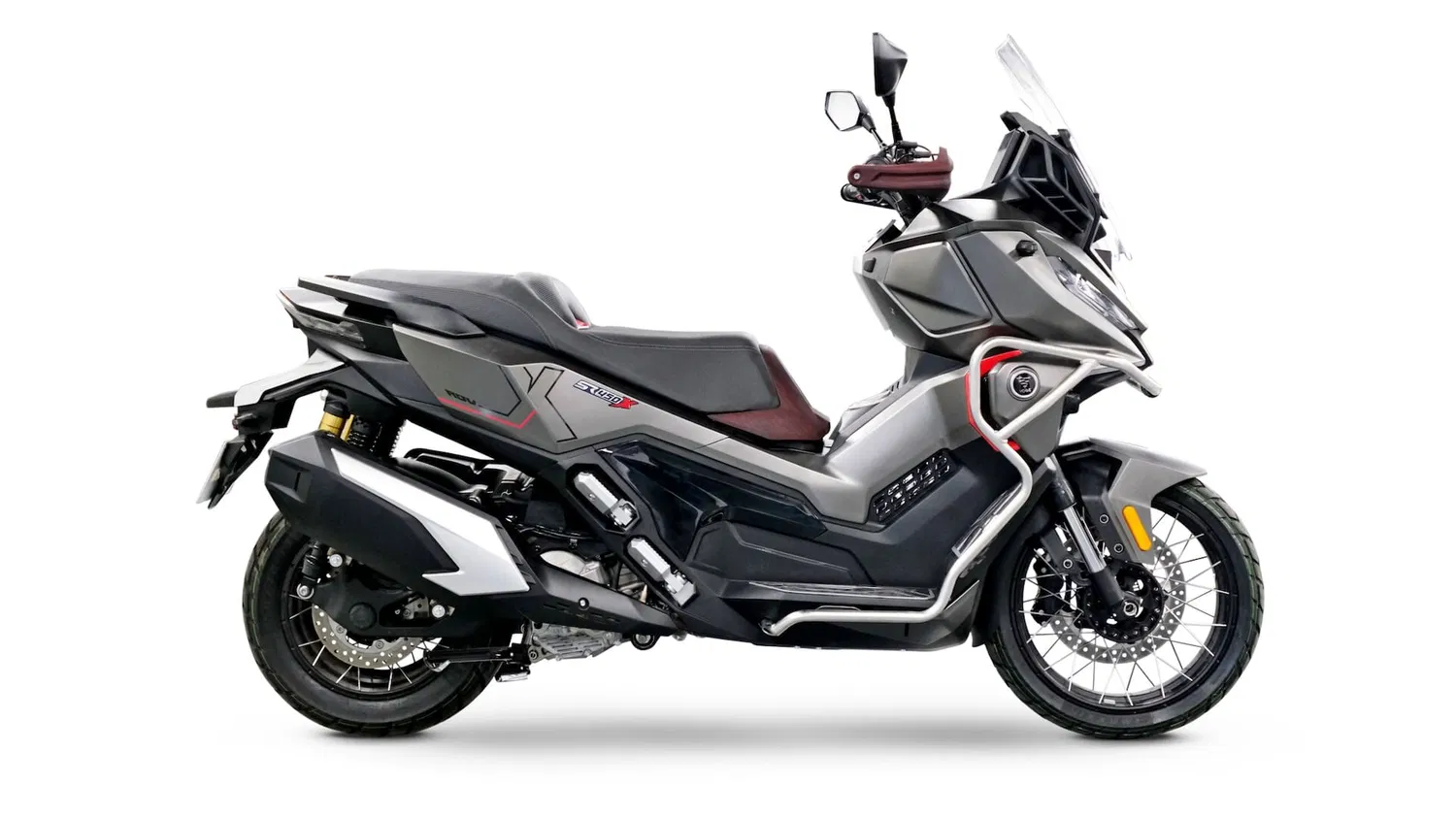
1. Honda X-ADV (2017) – The one which popularised adventure scooters
Okay, the first one on the list is not about electronic advancements, although the Honda X-ADV is equipped with the trick Honda Dual-Clutch Transmission (DCT).

It was not the first adventure scooter, either, but it was the definitely the adventure scooter (despite Honda insisting that it is a “crossover motorcycle”) that popularised the adventure scooter segment. Look at where we are now… Honda launched the ADV350, followed by the ADV160, followed by almost every manufacturer issuing their own adventure scooters: WMoto, Zontes, SYM, just to name a few.

2. Kawasaki Z1000H (1980) – First fuel injected engine

Save for a handful of small motorcycles, big and small bikes in this age are electronically fuel injected. The method of fuel delivery is primarily used to clean up exhaust emissions, but it can also boost performance tremendously compared to the carburetor. And it is so ubiquitous that we do not even need to think about it anymore.

While electronic fuel injection fully caught on in the late-90s and early-00s, the 1980 Kawasaki Z1000H was already equipped with it. However, the market did not catch on to it as it needed to go against the well-established carburetor.

The next fuel injected bike would be the Kawasaki GPz1100 in 1981, followed by Honda’s first EFI bike, the CX500 Turbo in 1983.

3. BMW K100RS/K1 (1988) – First motorcycle ABS

The Anti-lock Braking System (ABS) was first develop for cars by Daimler Benz way back in 1978, only to find its way onto a motorcycle in 1988 when BMW launched the K100RS SE and K1. These were primitive systems and added 10 kg to the motorcycle’s weight. This system was also the grandaddy of traction control. The Ducati 1098 R became the first production motorcycle to include race TC.

Other manufacturers were slow to catch on, and BMW continued to persist with it, despite complaints of the system having faults here and there. But now ABS is a necessity, a guard against panic braking.

4. Bimota Tesi 1D (1991) – First digital meter display

This was hard to nail down but it was the Bimota Tesi 1D which had the first LCD digital display. And we meant completely digital, not part digital, part analog. The Tesi’s display had a strip for the tachometer, which another LCD panel for speed, temperature, odometer and fuel level. Looking back, it looks so rudimentary!

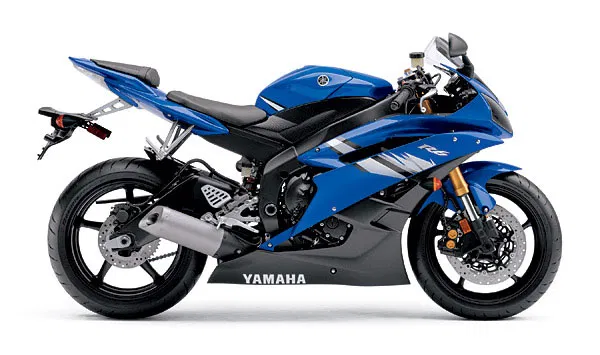
5. Yamaha YZF-R6 (2006) – First ride-by-wire throttle

Along with a new crossplane engine equipped YZF-R1, Yamaha launched the updated YZF-R6 with fuel injection. It also had four titanium valves per cylinder and a stratospheric 17,500 RPM redline. All these changes resulted in 133 hp at 14,500 RPM.

Oh yes, it had the Yamaha Chip Controlled Throttle (YCC-T) ride-by-wire throttle. However, it was not a true system like today as there were throttle cables leading to the ECU which calculated the throttle valve opening and injection. Yamaha did not capitalise fully on this technology by giving the bike ride modes and Suzuki capitalised on it.

Closing

Okay, that was Part 1, now onwards to Part 2!

Archive

Follow us on Facebook

Follow us on YouTube