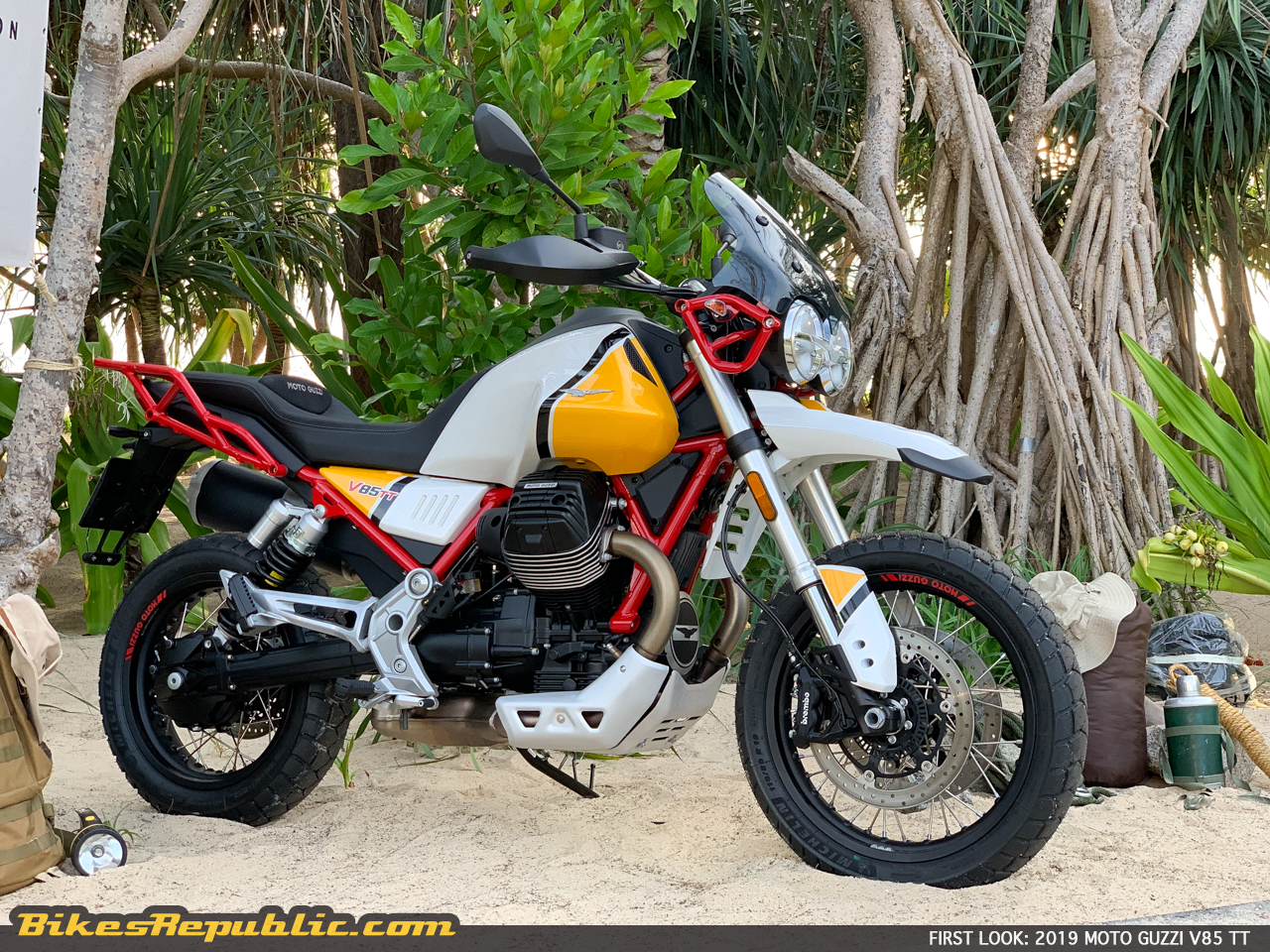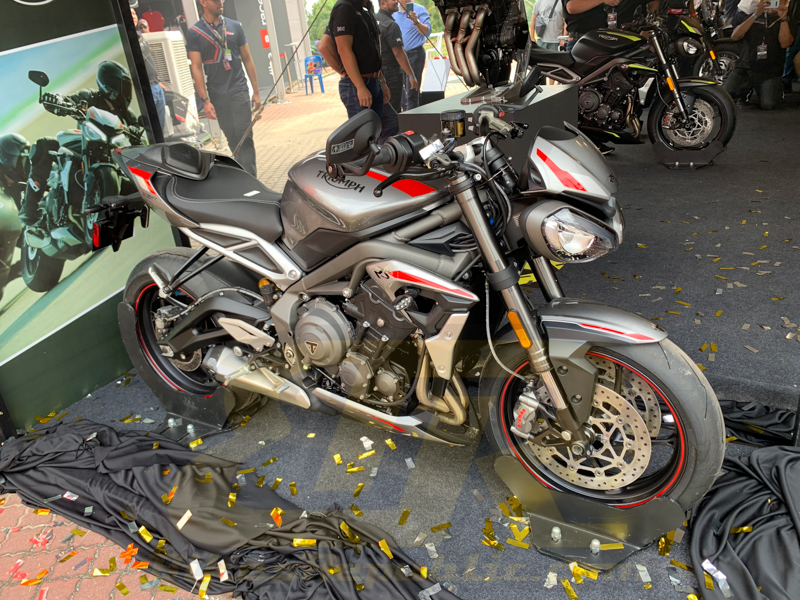
Guy Martin Triumph will replicate the scene of a Triumph jumping over the fences in “The Great Escape.”
He will ride the new Scrambler 1200 XE for the attempt.
It’s scheduled to take place on 8th December.
Guy Martin Triumph will replicate the scene of Steve McQueen’s character jumping a Triumph over the fences in “The Great Escape.”
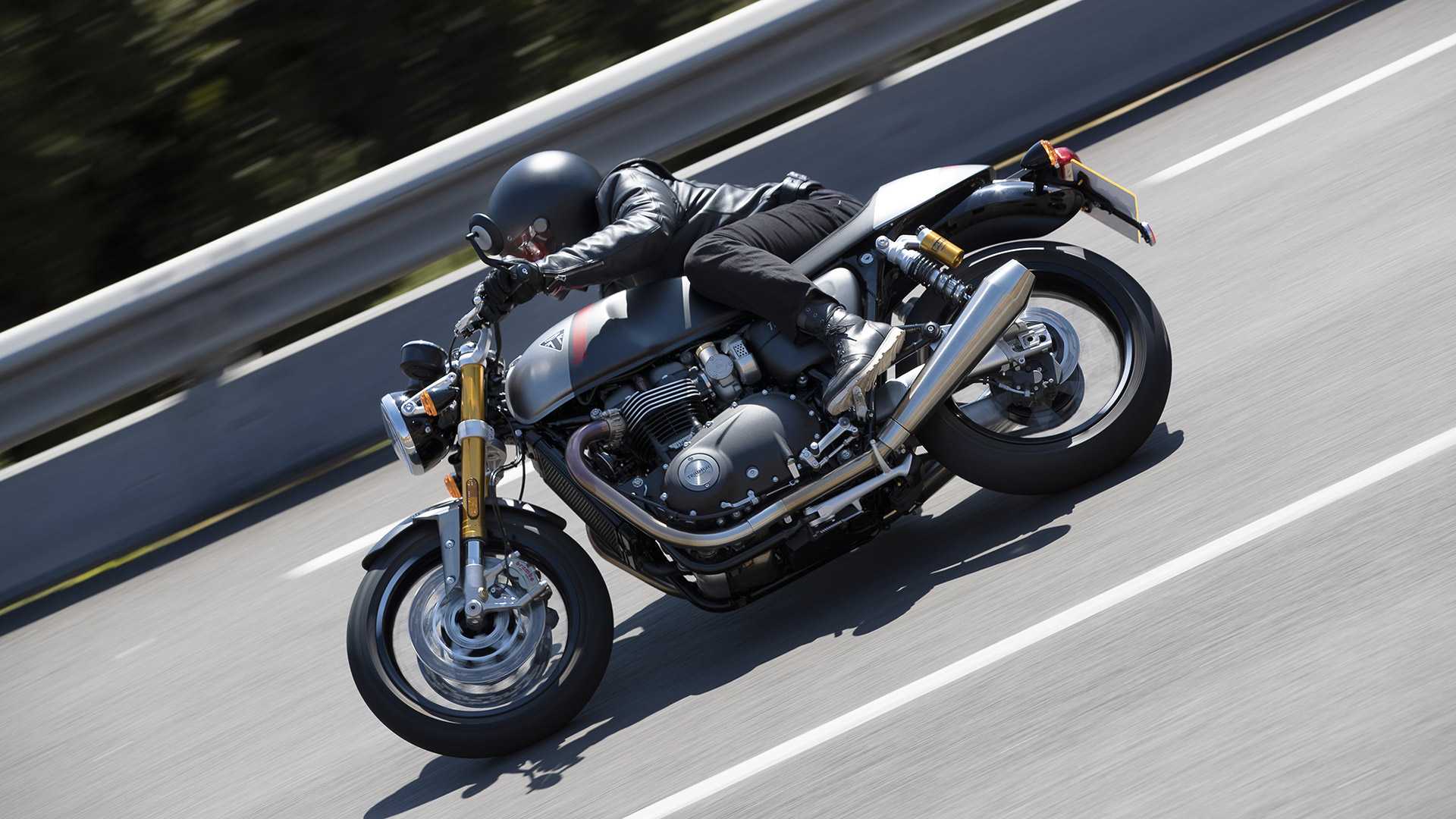
However, he will attempt it on the new Triumph Scrambler 1200 XE, instead of the classic TR6. The new bike has better power, frame and suspension to go with it, but the technical crew will upgrade the suspension in some ways to cushion the landing, just like in the movie.
The stunt will take place on 8th December, so stay tuned.
In the 1963 movie, Captain Virgil (played by McQueen) attempted to break out of a German Nazi POW camp. He got his hands on a “BMW R75” but was soon surrounded by German troops as he tried to escape from a town. The only way out was past a series of lower fences and the main 4m (12 feet) perimeter fence.
The image of him and bike suspended mid-air, clearing the fence became so famous that it even graced everything from t-shirts to song album covers – all propounding about freedom from oppression.
Truth is, the bike was a Triumph TR6 which was dressed up to look like a BMW R75. The R75 was rare in those days after the war and when the film was shot. Also, it was McQueen’s stuntman buddy Bud Ekins who made the infamous jumps.
However, we’d like to add that both McQueen and Ekins compete on TR6s in a number of rallies and winning them.
These were the reasons why Triumph introduced the commemorative Bonneville McQueen and Bonneville Ekins.
Learning leads to better understanding of our own riding techniques and motorcycle.
Everybody makes mistake. Marc Marquez, Valentino Rossi, Fabio Quartararo certainly do it. So, do you and me. But it’s learning from those mistakes that’ll make us better riders.
But it’s what we do about those mistakes that make us better riders, regardless if we’re the 8-time world champion or the daily commuter. It’s this learning process that gets me up every morning to search for something new to discover. In fact, it’s what’s driven me still love motorcycles for the past 31 years.
You see, traffic conditions tomorrow may not be the same as today’s. Certain drivers could be crankier on Mondays, mellower in the middle of the week, reckless on Fridays, and relaxed to the stage of negligence during the weekend. Or you know that they couldn’t see you in their side mirrors on rainy days.
These are some of the things we need to learn as bikers – in the interest of safety. If you critique the way you ride on a constant basis by asking yourself questions, it will make you a better rider. Start asking yourself, “Why did I almost overshoot that corner?” or “How come the rear tyre wants to skid all the time,” or “Why do I have so many close calls every time I ride?” Well, you won’t become a better rider automatically. We don’t live in the Matrix where we could download skills into our brains. But asking those questions is the first step in encouraging you to learn more on how to ride better and safer.
To illustrate, we asked Cal Crutchlow a question during the Malaysian MotoGP last year. “Don’t you riders get scared after crashing so much?” He was with GP legend Randy Mamola at the time, and both of them answered, “It’s scarier when you don’t know why you crashed. We need to learn why we crashed so we can ride better and get better results.”
Cal certainly crashed a lot, but Marquez crashed even more as he pushed to discover the limits all the time.
Photo credit Autosport.com
We’re not telling you to crash to learn. Instead, do evaluate your riding and get some advice. But, get advice from who have gone through formal training for that advice. Do NOT get advice from a buddy just because rides faster than you. Instead, if rides faster than you BECAUSE he had attended advance riding classes, he’s the one you go to for riding advice.
Better yet, sign up for advance riding classes. There are a number of good ones in Malaysia. Google them.
The biggest problem with Malaysians generally, is their laziness to read and perform some research. My late father would bring me to the public library. I spent large chunks of my salary to buy books and magazines when I began working – all because I wanted to know more about bikes and how to ride them properly.
Today, you can get all these for free by tapping out the keywords in Google or YouTube. And yet, some people are still too lazy to even search. So, these people would make the same mistakes on and on, for example using slick tyres on public roads, using components that are of no benefit, or even using the wrong engine oil.
Training at Most Fun Gym
However, there are a number of books you should own for reference at any time such as Keith Code’s Twist of the Wrist Vol. 2; or Nick Ienatsch’s Sport Riding Techniques: How to Develop Real World Skills for Speed, Safety and Confidence on the Street and Track; or Lee Park’s Total Control. Even the Dummies’ Guide to Motorcycles isn’t bad. It’s important to start somewhere.
Another enemy of bikers is their ego which their bodies can’t cash (to borrow a line from Top Gun, but not paraphrasing). There’ve been so many times that we’ve met riders who took our advice as criticism, instead of something positive. There’s no place for ego in motorcycling. Ego gets you killed.
So, learn. Being a smarter rider is one of the fun parts of motorcycling.
The BMW R18 is heading into production and will be revealed in 2020.
BMW Motorrad released the technical details of the engine.
At 1802cc, it’s the largest Boxer engine.
The BMW R18 is now heading into production and will be fully revealed in 2020.
While the running prototypes look great, it’s the engine that proves to be the biggest intrigue. That’s because at 1802cc, it’s the largest Boxer (horizontally opposed-twin) ever made, consequently how will BMW contain all that heft and make it work.
Wonder no more because BMW has released the technical specs.
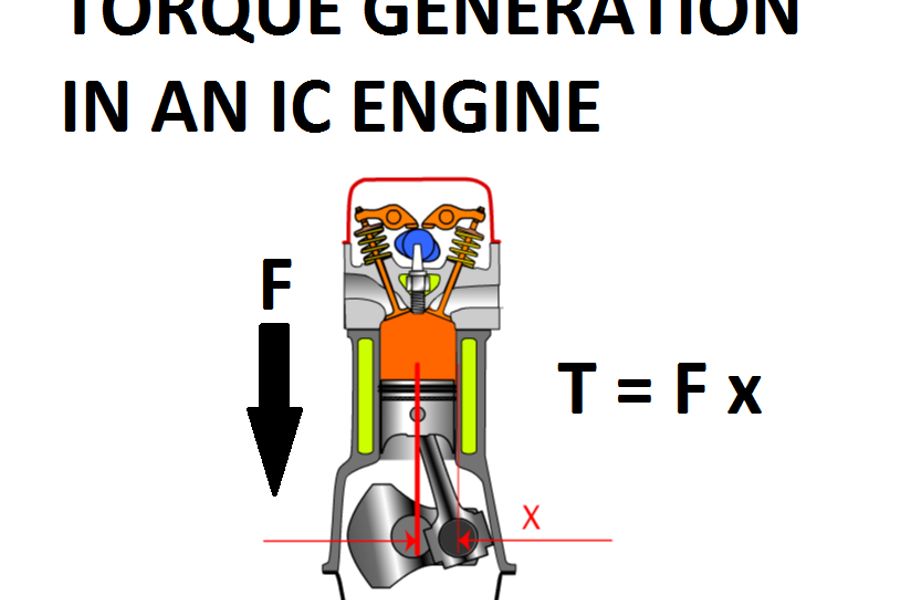
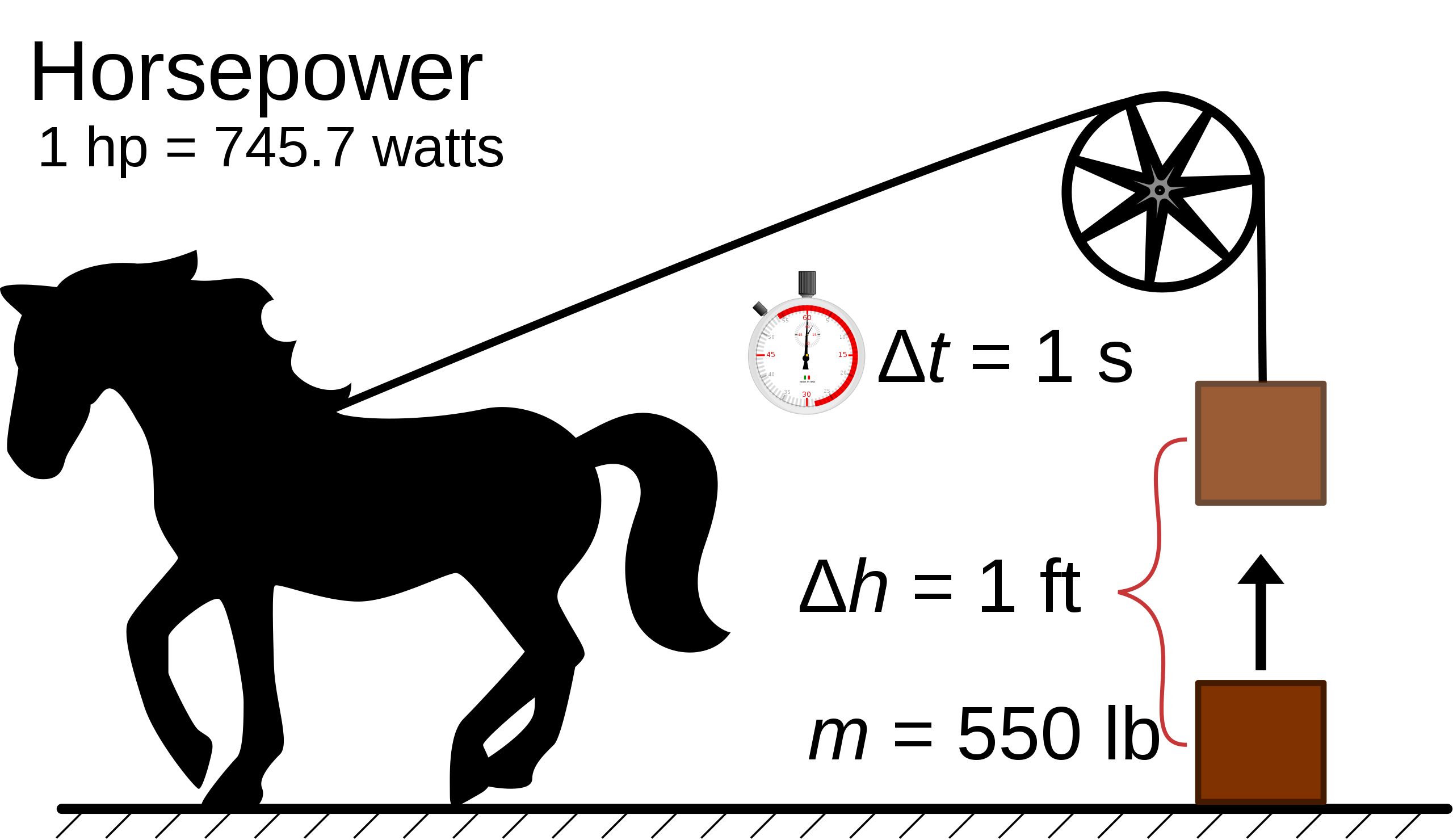
First and foremost, the engine produces 91 bhp at 4,750 RPM and 158 Nm of torque at 3,000 RPM. Although oversquare in architecture with 107.1 mm x 100 mm bore and stroke, BMW claims that more than 150 Nm of that torque is already available from 2,000 to 4,000 RPM meaning that it’s made for cruising, not high-speed blasting unlike the Ducati Diavel. The cylinder bores are Nikasil coated (nickel matrix silicon carbide).
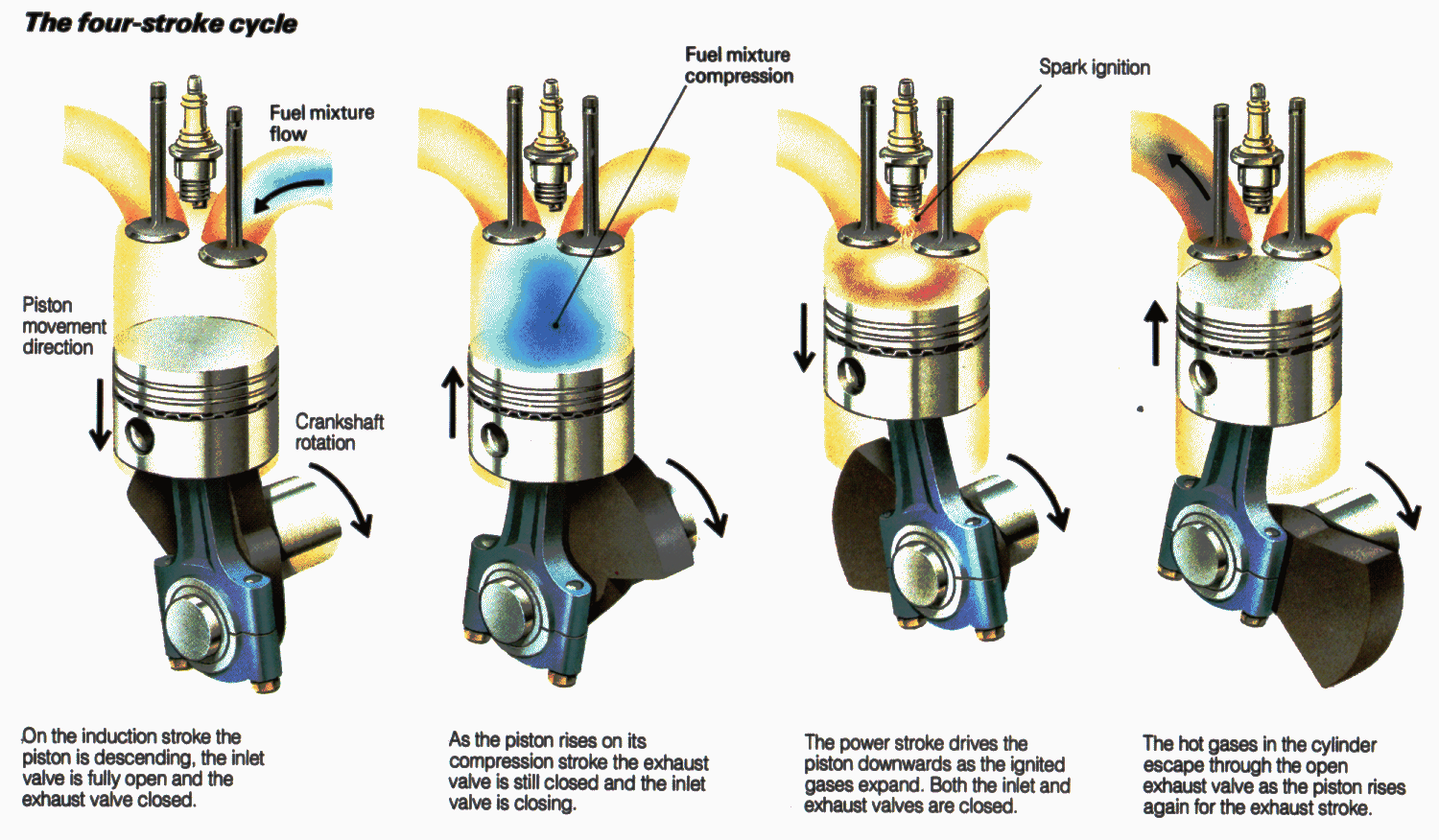
Each cylinder head houses two steels valves – one 41.2 mm intake and one 35 mm exhaust – in OHV (overhead valves) configuration. The camshafts sit higher on either side of the crankshaft and driven by a chain. The cam lobes operate the pushrods that pushe the rocker arms to open and close the valves, in turn. An OHC (overhead cam) design would make the cylinders even longer (since they’re laid down horizontally) and limiting lean angles.
With such huge pistons and conrods moving back and forth there’s bound to be vibration. BMW addressed this by bolstering the crankshaft with a central main bearing which cuts down on bending forces.
The powerplant is air and oil-cooled, as per the classic Boxers but also because liquid-cooling will add more heft. It already weighs 110.8 kg including the transmission and intake system. An oil-cooler is standard fitment.
BMW reverted to a single-disc dry clutch for the R18. It’s feature on all BMW Boxers prior to the wasser-head (liquid-cooled or “LC”) Boxer in 2012. However, the R18’s clutch is “self-reinforcing” (self-servo which compresses the clutch plate to the friction plate when running, resulting in softer clutch pull) and anti-hop (slipper clutch) functions.
But guess what? BMW offers a reverse gear option.
Apart from that, the manufacturer also revealed that the shaft final drive will be kept exposed just like the classic R-series bikes of yore.
There are many other details, of course but those above are the most common ones that most riders would like to know.
So apart from being a modern engine with classic touches, the design itself is pretty interesting. It looks really art-deco especially with that large cover up front and aerofoils on the cylinder head covers.
It could be sold under Trail 125 or Hunter Cub name.
It’s an homage to the original Honda Cub trail of the 60s.
It looks like the Honda CT125 is headed into production.
The prototype bike was first shown at the Tokyo Motor Show but could be sold under a different name. Bennets UK reported that the manufacturer had trademarked the “Trail 125” and “Hunter Cub” names in the US.
The bike is based on the Super Cub 125 which our sister site Motomalaya.net reviewed a few months back. The four-stroke, single-cylinder engine produces 9.5 bhp, sent through a 4-speed gearbox. As the name suggests, and to highlight the bike’s vocation, it’ll be fitted with chunky knobby tyres on wire spoke rims. The CT125 will also receive a substantial pressed-steel frame instead of the Super Cub’s steel-tube chassis. The exhaust is also placed high a la scramblers.
In fact, the CT125 is an homage to the Honda Cub off-road line-up in the 60s. You’ve probably seen a few running around in Malaysia or hiding in a shed.
We hope it’ll make its way to Malaysia. It’s definitely one cut off-roader!
Didi Resources Sdn. Bhd. has been appointed as the new Piaggio and Vespa distributor in Malaysia.
A Motoplex concept shop will also be opened to offer all brands under the Piaggio Group umbrella.
The news follows Naza Primera’s announcement to cease Vespa operations.
Didi Resources Sdn. Bhd. has been appointed as the new Piaggio and Vespa distributor in Malaysia.
The announcement was made by the Piaggio group. As such, Didi Resources will take over the role from Naza Primera Sdn. Bhd. The news follows the announcement made by Naza Primera yesterday.
Mr. Gianluca Fiume, Chairman & General Director of Piaggio Vietnam cum Executive Vice President Asia Pacific 2 Wheeler, said, “The appointment of Didi Resources is part of Piaggio’s business strategy to group the Piaggio, Vespa, Aprilia and Moto Guzzi brands under a single entity to maximize efficiencies across all aspects of the business and reinforce customer commitment in Malaysia. With the Piaggio Group brands under one roof established under the Motoplex concept, we are able to better offer a wider range for potential customers who seek an enriching Italian two-wheel experience backed by style, technology, superior performance and rich heritage. We look forward to collaborating closely with Didi Resources to push forward the brands to greater heights.”
According to Mr. Rewi Hamid Bugo, Chairman of Didi Resources Sdn. Bhd, “In addition to handling Aprilia and Moto Guzzi, we are very honoured to be presented with this opportunity to manage Piaggio and Vespa, the premium scooter brands which have transformed the concept of individual mobility and freedom. With this acquisition we can now manage Piaggio, Vespa, Aprilia and Moto Guzzi under the iconic Motoplex concept of the prestigious Piaggio Group for the Malaysian market. Didi Resources is firmly committed to strengthening the positioning of the brands by intensifying marketing and communication efforts, offering dedicated aftersales support, affirming the communities, and ensuring that engagement with the brands is continuous in the light of a competitive two wheel environment in Malaysia.”
Motoplex is the most innovative retail model for the two-wheeler industry and enables importers and dealers to leverage the potential of the Group brands and products in the same outlet. Each Motoplex store provides the full offer of the Piaggio, Vespa, Aprilia and Moto Guzzi brands in a single location,together withservices, accessories, merchandising and entertainment,to give customers an exciting global overview and a unique experience of the two-wheeler world.
Launched in 2015, the Group has already passed the significant milestone of 500 Motoplex stores open around the world in Europe, the Americas, Oceania, Asia, and the Indian subcontinent, alongside the traditional distribution network. Among the main cities in which Motoplex Stores have been opened are New York, Bangkok, Tokyo, Milan, Pune, Malta, Madrid, London, Berlin, Vienna, Lisbon, Stuttgart, Sydney, Jakarta and Bali.
The official appointment of Didi Resources as sole importer and distributor for Piaggio and Vespa will take effect from 1 January 2020. Plans for the construction of the Motoplex are underway with the launch scheduled in early 2020. A complete listing of Vespa dealers is available on https://www.vespa.com/my_EN/store-locator.html.
All we can say please lock up even if you’re stepping into 7-Eleven for a couple of minutes, or if the bike’s parked within your driveway. Thieves look for instances of vulnerability and won’t want to spend a long time trying to unlock that disc lock (for example).
On another note, deaths caused by road accidents in 2018 dropped 2.4% from the previous year, from 4,499 to 4,391.
While that number looks big, it represents only 1.1 percent of the total number of reported road accidents. Selangor registered the highest fatality rate of 1,046 cases, while Kelantan had the highest injury rate of 1,626.
Remember to gear up and ride safe. Like a public safety message once said, “Don’t become a statistic.”
Naza Premira Sdn. Bhd. will cease Vespa operations.

The move takes effect from 1st January 2020.
They will continue to provide services for the brand until 31st December 2019.
Naza Premira Sdn. Bhd. announced that they will cease operations for the Vespa brand with effect from 1st January 2020.
The news was confirmed by Group Executive Chairman & Group CEO of Naza Corporation Holdings Sdn. Bhd., SM Nasarudin SM Nasimuddin.
“Since July, the Naza Group and Piaggio Group have been in mutual discussion with regards to the separation. We thank the Piaggio Group for our nine-year partnership and wish them all the best with their new partner.”
He added that letting the brand go was due to the corporation reassessing and strengthening their operations.
The company will continue to provide vehicle service, parts, warranty and aftersales service until 31st December 2019.
Although the news may come as no surprise to some, executives from the Piaggio Group had brushed aside the question on many occasions prior to this. The last such instance was during the Moto Guzzi V85TT Asia Pacific Media Launch in May 2019 which took place in Thailand.
As for the future distributor, it is expected that Didi Resources Sdn. Bhd. will take over the operations. This in view of them already being the custodians of two other Piaggio Group brands namely Moto Guzzi and Aprilia.
Another accident and death occurred due to loose clothing.
It claimed the life of a 10-year-old girl this time.
This isn’t the first time.
There’ve been many motorcycle accidents caused by loose clothing and another such incident took the life of a 10-year-old.
The accident took place in Kampung Gong Tanah Merah, Jertih, Terengganu yesterday.
According to the victim’s aunt, who was riding the motorcycle, her daughter’s rain suit had gotten stuck in the bike’s sprocket. It then tied around her throat and dragged her off the bike. She passed away on the spot.
Chief of Police for the Besut District, Superintendent Abdul Rozak Muhammad confirmed the accident and death. He said that the subsequent autopsy found that Tuan Nur Irdina Najwa Tuan Rosli had suffered mortal wounds to the throat.
She was spending her school vacation in her grandparents’ hometown.
This isn’t the first occurrence. Many media outlets and us have reported many times about the need to secure loose clothing while riding a motorcycle, for both the rider and pillion. Motorcycle occupants are faced with a chain final drive that’s open to the environment. The chain could act as a chainsaw, while the wheel and sprocket as pulleys.
Yet it seems that all the advice fell on deaf ears, just as countless advice on safe riding and proper techniques. Another frustrating was the victims’ family blaming fate (takdir) for the accidents, when it was their negligence and could’ve been fully avoidable. What? Is god responsible now?
Is every motorcycle supposed to be fitted with an enclosed chainguard like the Honda EX5?
Stop wearing jackets front to back and secure those loose clothing today. Also, bear tie-downs and soft luggage in mind.
They are now being tested at the Jerez pre-season tests.
The frames are still made of steel but have a different shape.
You may have heard of Red Bull KTM Factory Racing Team rider Pol Espargaro singing praises about the KTM RC16 MotoGP bike’s new frame.
He even went as far as setting the same lap time as reigning world champion Marc Marquez at one point. He then thanked test rider Dani Pedrosa for his input.
The first new frame was tested at the first 2020 pre-season test at Valencia last week. It still features steel as the material but in rectangular form instead of the usual tube-shape KTM had been using since the first RC16.
Comparison of the frames at Valencia – Photo credit Motor Sport Magazine
Now there’s a second frame at the Jerez tests, painted black presumably to hide its shape.
“The black frame is the newest one, maybe not the biggest improvement, but it’s already a small step better (than the orange frame,” said Espargaro.
“We have an advantage over the others because our metal tube chassis is much faster (to make) than the others. This is going to be helpful to us,” he revealed.
Indeed, that’s true as the aluminium beam frames in MotoGP are machined from billet(!), instead of being cast or extruded. This main section which includes the headstock and spars are then welded to the uprights.
KTM RC16 new frame v2 – Photo credit Crash.net
On the other hand, steel beams are extruded then welded together. In fact, the team could cut and weld different sections with much ease compared to welding aluminium frames.
Overall, the team is seeking to create a bike that’s better in terms of turning, traction and stability. As Espargaro said of the old frame, “The best part about our bike is the front. On the brakes the bike is stable, and we can go deep in braking. Normally the problems we have is from the back of the bike, low grip and low turning (difficult to turn).”
Pedrosa also took to the track during the test sessions. Hopefully we’ll get to see him again in Malaysia.
What do the markings on engine oil bottles tell us?
A full understanding of engine oils results in using the correct oil.
Using the wrong oil could result in higher maintenance and repair costs.
It always happens. Post anything about engine oil and emotions get stirred harder than a Frappuccino. There are just so many fears, myths and misunderstanding. So, let’s start with the basics such as the markings on engine oil bottles.
Every engine oil bottle has markings on them, telling us something about its properties. What goes on beyond that would be the specifics such as the base oil, additive packages, high-heat protection, etc.
GRADE
This is the oft-discussed property. Common nomenclatures are 5W-40, 10W-40, 15W-40 and so forth. They’re also marked as SAE 10W-40, sometimes (these days) but we’ll get to SAE later.
They denote the viscosity index (VI) of the oil at certain conditions. We say again, “certain conditions.” Viscosity means the flow properties of oil. A less viscous fluid flows easier and we usually call it “thin.” On the other hand, a more viscous fluid flows slower and we call it “thick.”
So, a 10W-40 oil is more viscous then 15W-50.
Credit Rymax Lubricants
The “W” stands for winter and tells us what the viscosity is when the ambient temperature (weather) drops to freezing point and below. Please refer to the chart below.
So, a 10W-40 oil can maintain a viscosity index of 10 at -25-degrees Celsius. As such, the “W” in engine oils doesn’t concern us in Malaysia at all, unless the Earth shifts the Equator to become the North or South Pole somehow. It also doesn’t matter we stayed overnight at Genting Highlands.
By the way, oils with two numbers are called “multigrades” because they can perform through a wider range of temperatures compared to single grade oils such as SAE 40.
As for the upper ranges, more viscous oil is needed at higher ambient temperatures. Since our weather normally stays below 40-degree Celcius, any 40-grade is good enough. However, using a 50-grade oil such as 15W-50 is also okay especially for older engines that need more sealing.
One caveat that must be observe is the use of oil that’s too thin or too thick. Too thin and the oil will be too light at high temperatures to provide good protection, while an oil which is too think may not get pumped through small gap sufficiently. The safest bet is to go by the engine manufacturer’s recommendation then move to a higher viscosity when the bike ages.
SAE
SAE stands for Society of Automotive Engineers. They are the people who set the standards for engineering professionals in various industries. Among the key members were Henry Ford, Thomas Edison, Glenn Martin, Orville Wright and Charles Kettering. They currently have over 138,000 members worldwide.
Oil properties standards such as viscosity index was specified by SAE called the SAE J300.
Although not shown these days, oil grades still adhere to SAE standards.
API SL/SM/SN
You may have heard friends say “SN” grade. This has no connection to the viscosity index. Some even called it “oil quality” but the real desription is the oil’s service standard as classified by the American Petroleoum Institute (API).
The short explanation for the classification is the oil’s suitability to the performance of vehicles, according to when they were produced. In other words, newer bikes require higher oil specification oil. This is because the oil grades were developed hand-in-hand with automotive manufacturers and the API.
The current standard for petrol engines, SN, was introduced in October 2010 for vehicles produced from 2011 onwards. Grades SA through SH are considered obsolete and should not be used.
The classifications are backward compatible, meaning that you can use SN oil for older vehicles. Refer to the chart above.
Classifications are made depending on the oil’s properties such as soot thickening, seal compatibility, aftertreatment compatibility, fuel economy, oxidative thickening, piston deposits, sludge and wear.
JASO MA or JASO MA2
The short description is the oil’s compatibility with “wet clutches.” The engine oil in virtually all motorcycles (apart from certain models) is shared between protecting engine parts, the transmission and clutch.
As such, the oil needs to withstand high temperatures and pressures from combustion, shearing forces in the gearbox, and still allow the clutch plates and friction to grip each other in order to transfer the engine’s power. This is why we should never, ever use engine oils for cars!
Anyway, the standard is JASO T 903:2006. To meet JASO requirements, the oil must be of API SG classification and above.
The oil is tested for dynamic friction, static friction and stop time to meet the JASO T 904:2006 clutch friction test results. They are then divided further into JASO MA, JASO MA1, JASO MB, and JASO MA2.
Do consult your user’s manual if your bike requires JASO MA/MA2 specification oil.
CONCLUSION
We’ll stop at this for the moment. We’ll take a look at the lubricants’ base oil such as PAO, ester, GTL, mineral, etc.
Marc Marquez is set to receive another shoulder surgery, this time to his right shoulder.
He had dislocated the shoulder in Motegi.
But subsequent crashes in Sepang, Valencia and Jerez worsened its condition.
Marc Marquez had a much-publicized surgery for his dislocated left shoulder in 2018, but he is now going to have another, this time to his right shoulder.
He had already dislocated the shoulder at Motegi but the spill during Q2 at Sepang exacerbated the injury.
Trailing Fabio Quartararo, he highsided at Turn 2 and landed hard on his ankles and knees at Sepang. He was forced to cancel the dinner appointment with participants of the Honda Asia Journey later that night. When he made a video conference call to address them, there were apparent bruises and lacerations to parts of his right knee and thigh. But no one knew that he had actually dislocated his right shoulder.
But Marc being Marc, he continued racing and finished the race in second behind Maverick Vinalez, thereby maintaining his Top 2 finish all year except for one race. He went on to win the season finale at Valenica two weeks later.
He would highside again two days later at the same track during the first 2020 off-season tests and landed on the right shoulder
If that wasn’t enough, he crashed again five days later at the current tests at Jerez, again landing on his right shoulder.
The reigning MotoGP champion will have to face a long rehabilitation period through winter. Testing duties will be taken over by Cal Crutchlow and Stefan Bradl.
The GrabBike pilot programme will last for six months from January 2020.
Interested riders need to sign up by 2nd December 2019.
Grab is hiring motorcycle e-hailing riders in view of the Ministry of Transport’s decision to greenlight the service for a pilot programme.
As we published earlier, the programme will run for six months beginning January 2020. It will be carried out in the Klang Valley only in order for the ministry and e-hailing operators to collect data.
Interested riders can sign up by 2nd December 2019. Successful applicants will be notified within 5 working days or by 9th December.
Conditions to fulfill include: The motorcycle must not be more than five years old; the rider has a valid motorcycle license; he or she above 18 years old; and no outstanding summonses with the police or Road Transport Department (JPJ).
GrabBike drive-partners are also expected to deliver food (except for cake and pizza). As such, they will each be provided with a smaller food delivery bag and special training. Also, riders are not allowed to turn off requests for ferrying passengers, although they can do so for food deliveries.
In terms of renumeration, the operator will charge a 20% commission for their cash wallet.
GrabBike also says that for the first month only, riders in the Klang Valley will receive special incentives, a riding jacket and helmet for the pillion.