Bikesrepublic

Latest News

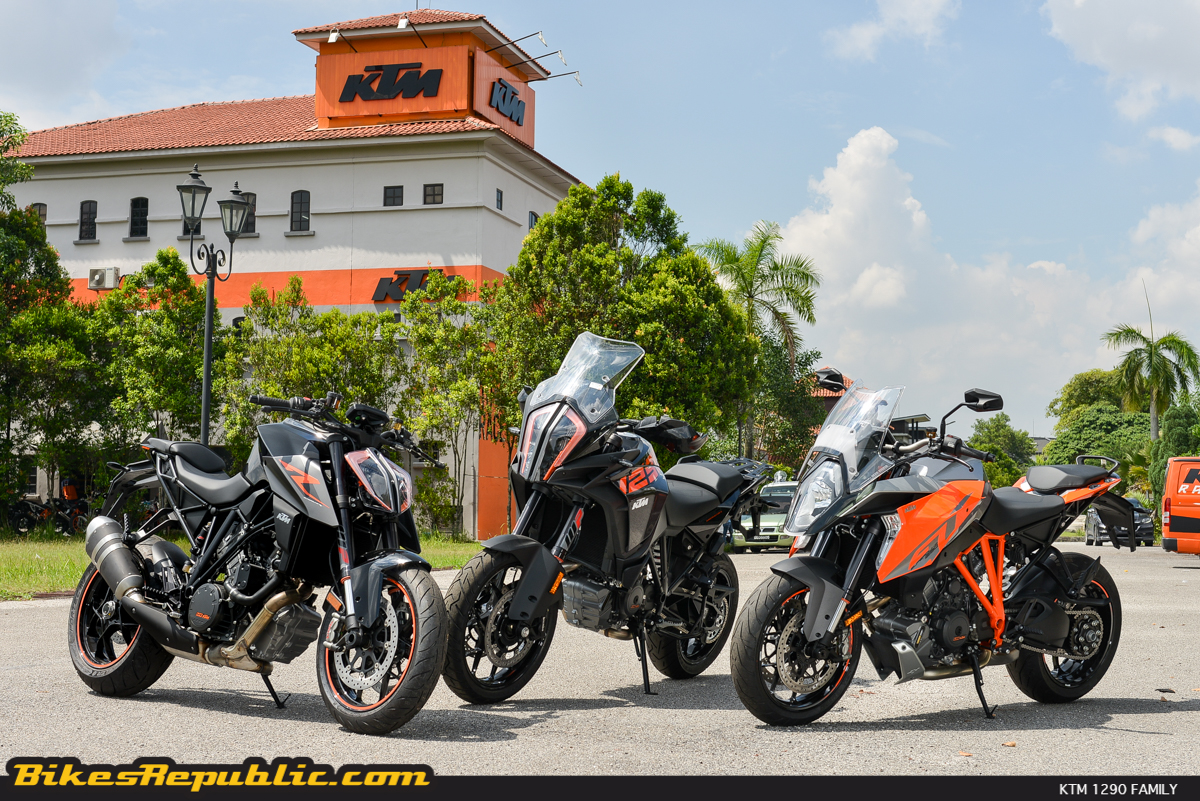
  • The KTM 1290 Super family is the flagship range for KTM.

  • Built around the 1301cc, DOHC, liquid-cooled, 75o V-Twin in different tuning they are exhilarating to ride.

  • The 1290 Super family consists of a naked sportbike, sport-tourer and adventure-tourer.

KTM’s 1290 Super family represents the pinnacle of motorcycling, not only in terms of engineering but also in design. But most of all, it’s the thrill of being on two wheels that they provide, never straying from the Austrian giant manufacturer’s “Ready to Race” philosophy.

Apart from a fully-faired sportbike, the 1290 series consists of the types of stupendous motorcycles that not only provide entertainment and smiles every kilometre, but also practicality in virtually any situation.

With the assistance of KTM Malaysia, we’ve assembled the power family for Christmas and the new year.

1290 Super Duke R
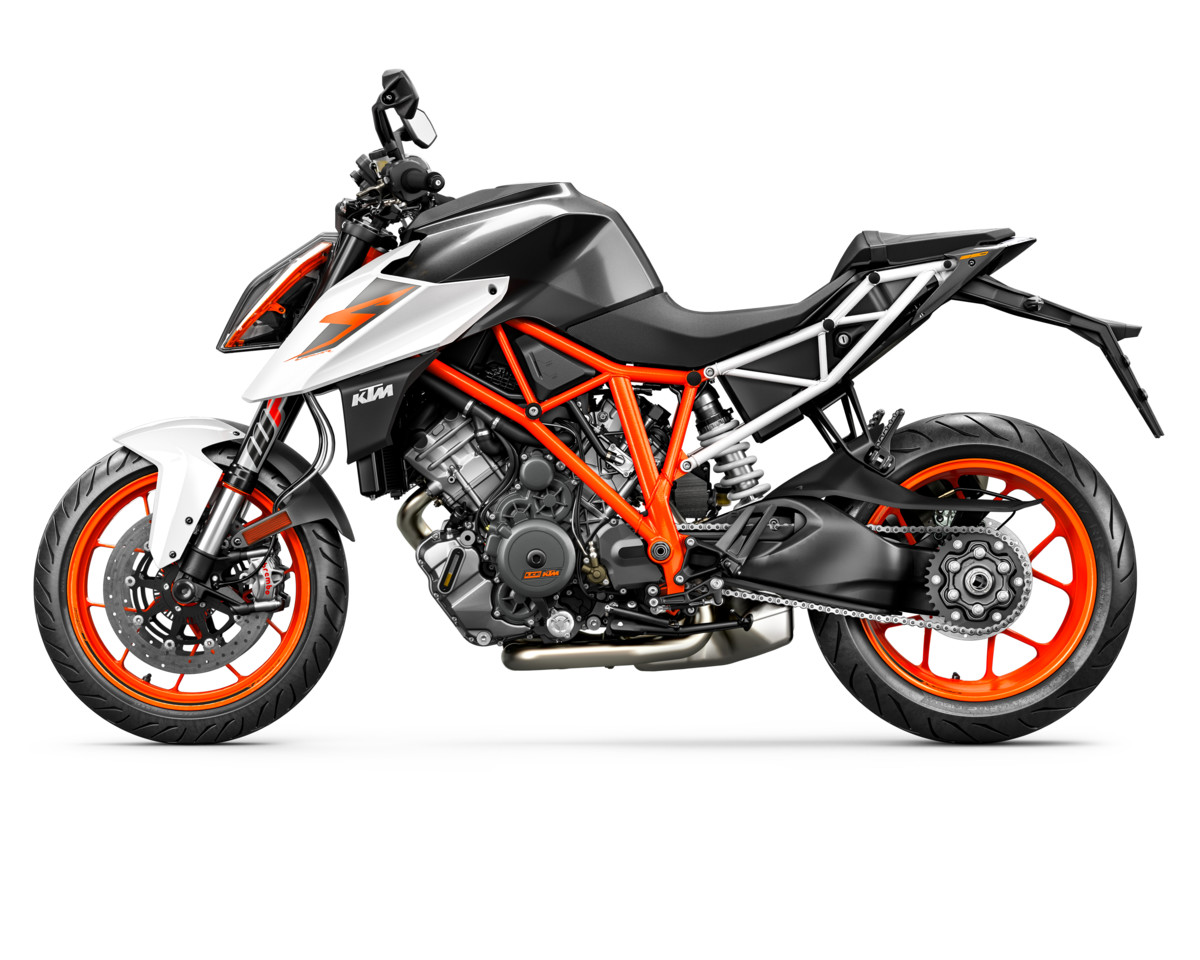
The 2014 KTM 1290 Super Duke R broke new grounds in providing a real kick to any rider, be they new or seasoned ones. Even veteran motojournalists who have ridden hundreds of bikes in their careers and lifetime swooned over it.

This was the start of “The Beast” and the “super naked sportbike” category.

But as if the 1290 Super Duke R could not be improved further, KTM went ahead and bettered even themselves. For 2017, the 1290 Super Duke R was built from the ground up.
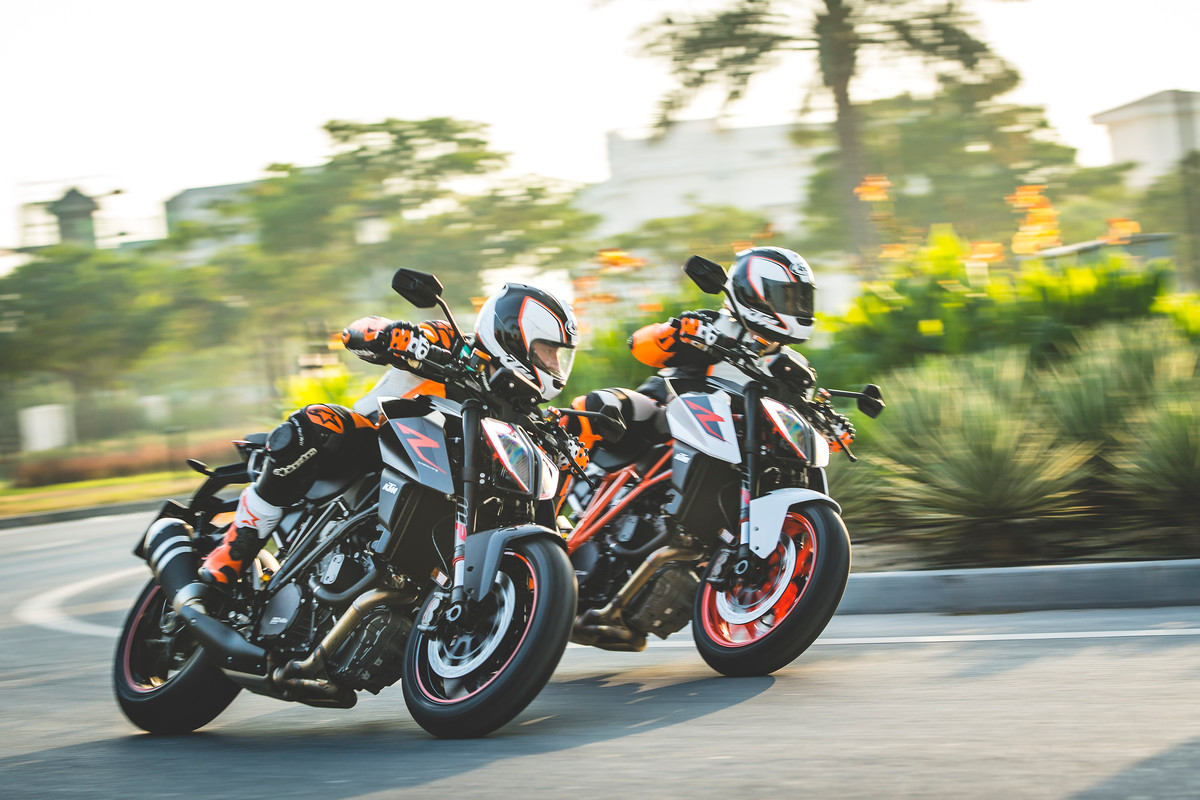
The first thing anyone notices about the 2017 model is the fierce and distinctive split headlamp. The channel which splits the two sides actually performs as a cooling duct to reduce the temperature of the LED headlamps. Additionally, the main beam will come on automatically when the motorcycle is coming to a stop during daytime running.

The 1301cc, 75-degree, V-Twin engine was reworked and retuned for more power, yielding a horizon-bending 177 bhp and 140 Nm of torque. Specs on paper doesn’t reflect on the true character of the new 1290 Super Duke R, however.
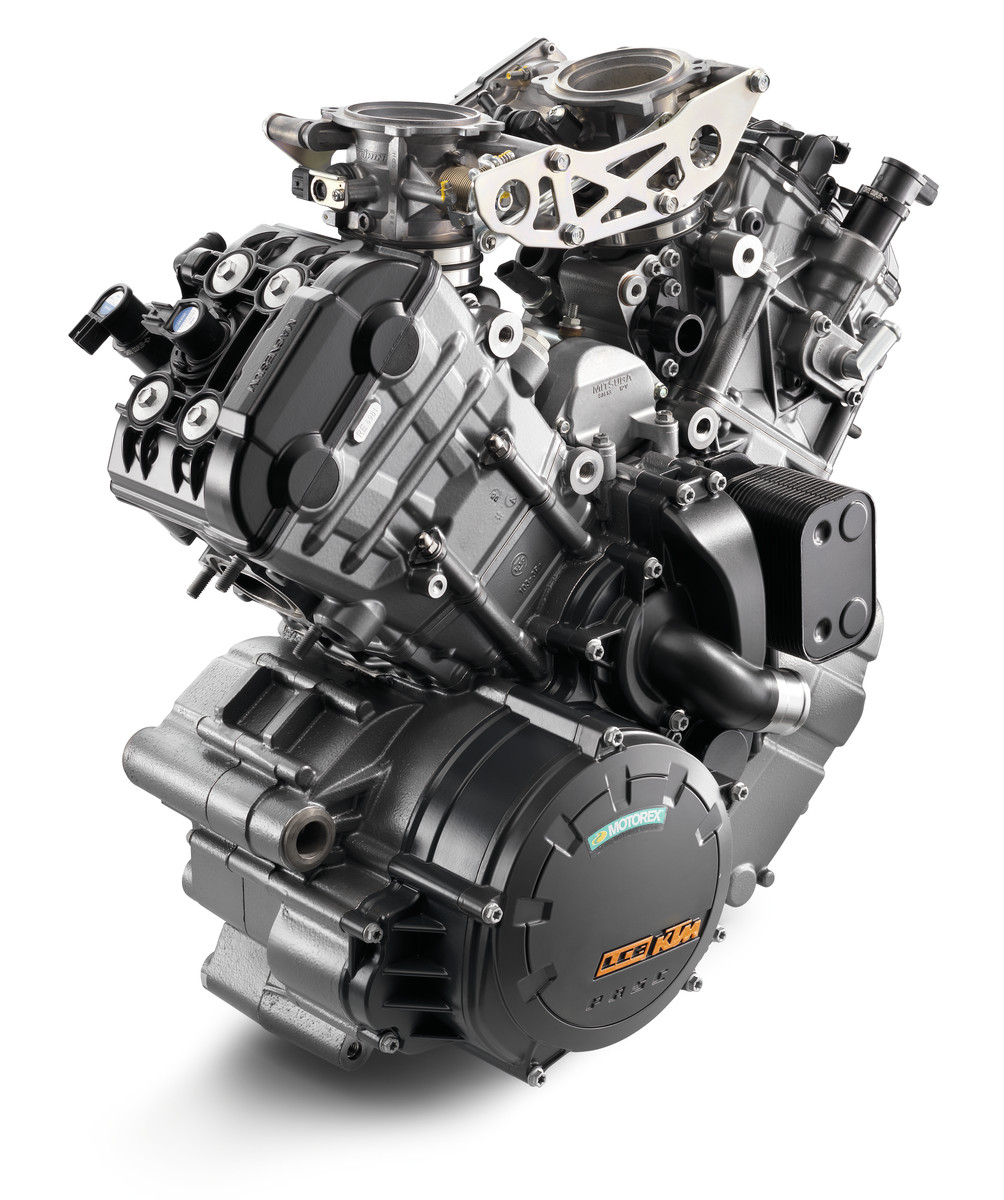
While the 2017 model is faster than ever, it builds its speed in a smoother and controlled manner. Riders will not find a sudden burst of speed as if the bike has a hidden NOS injection system. This encourages confidence and smoother riding for even greater enjoyment. KTM did this by designing resonator chambers on the cylinder heads to smoothen the torque output.

The frame, chassis and riding position of the new 1290 Super Duke R have likewise been revised. The new frame is stronger yet lighter, the state-of-the-art WP suspension is fitted for total control. The brakes are Brembo all around, with M50 Monobloc four-piston calipers up front for maximum safety.

The new handlebar is 20 wider, 5 mm lower and 18.5 mm more toward the front. It also features a 22mm adjustment range to fit riders of any physique. Such placement puts more weight onto the front wheel for maximum control, besides provided better wind protection.

What’s a powerful motorcycle if not to be enjoyed in safety, correct? The KTM 1290 family are technological wonders and the 1290 Super Duke R is no exception. Gracing the bike are a plethora of electronic aid including Motorcycle Stability Control (MSC), Ride-by-Wire throttle, Ride Modes, Motorcycle Traction Control (MTC), ABS, Race On System, Tyre Pressure Monitoring System (TPMS), and Cruise Control, among others.
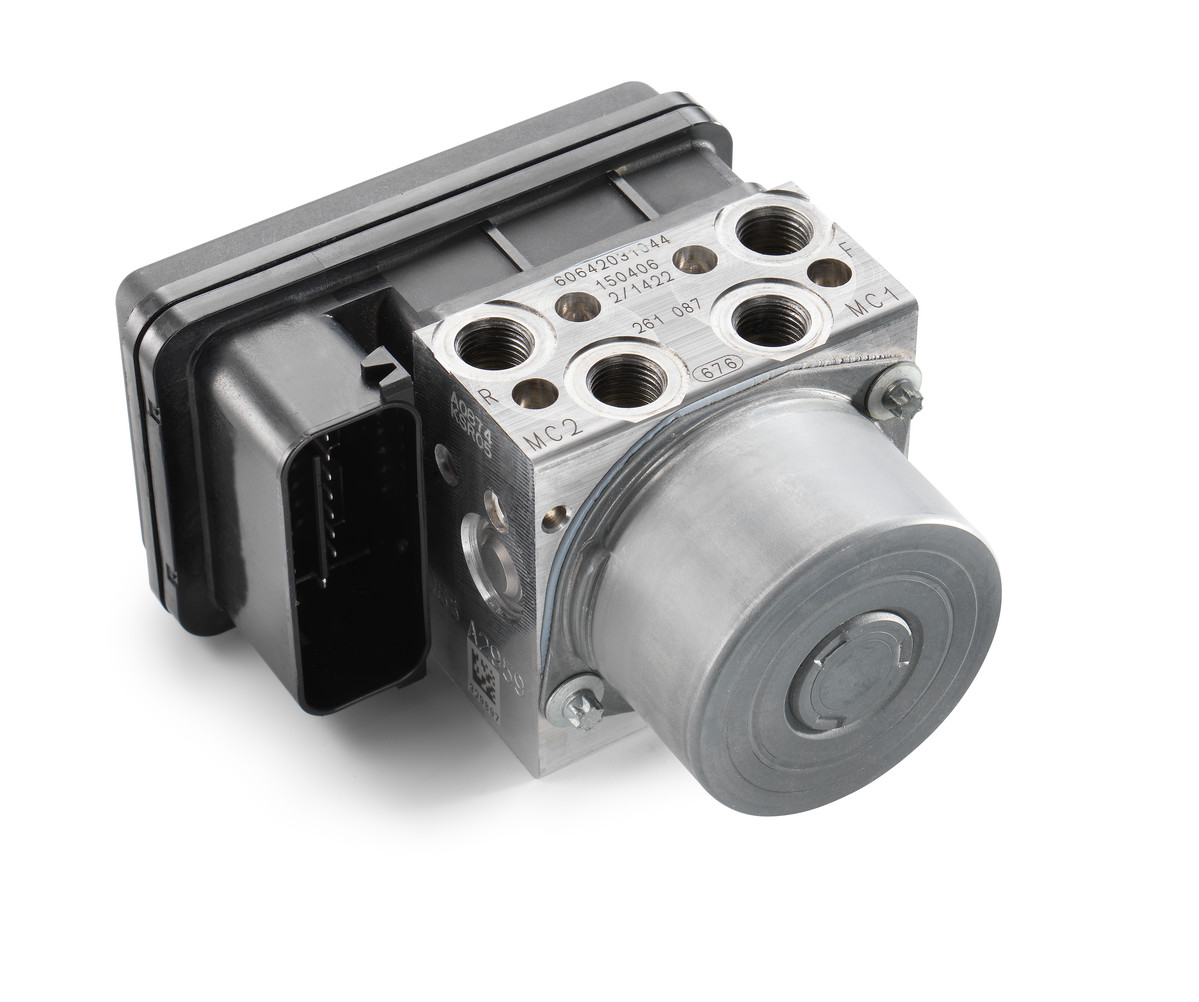
Owners can also upgrade the bike with the optional Quick Shift +, Motor Slip Regulation (MSR), My Ride connectivity suite, besides the Performance Pack and Track Pack.

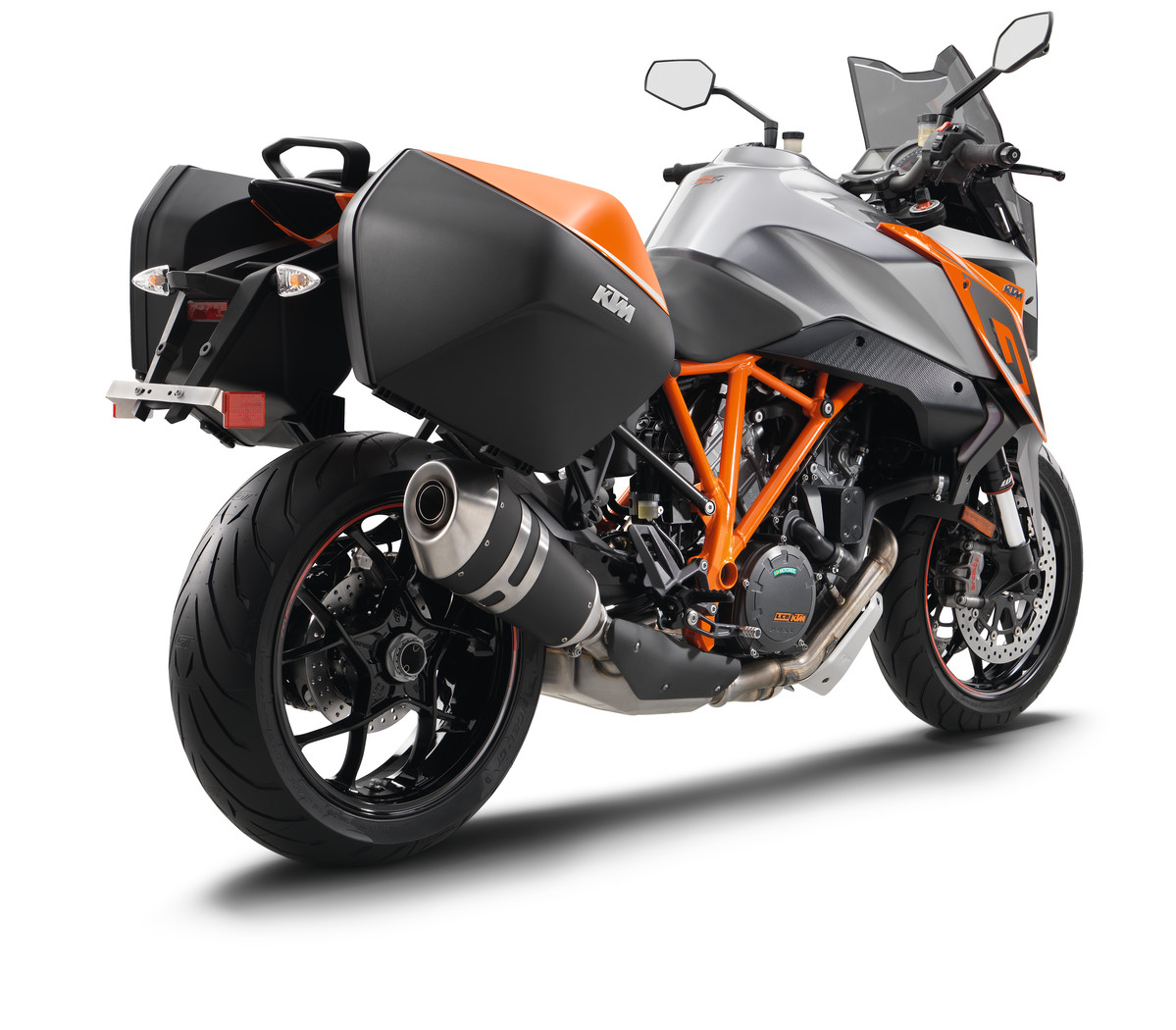
1290 Super Duke GT
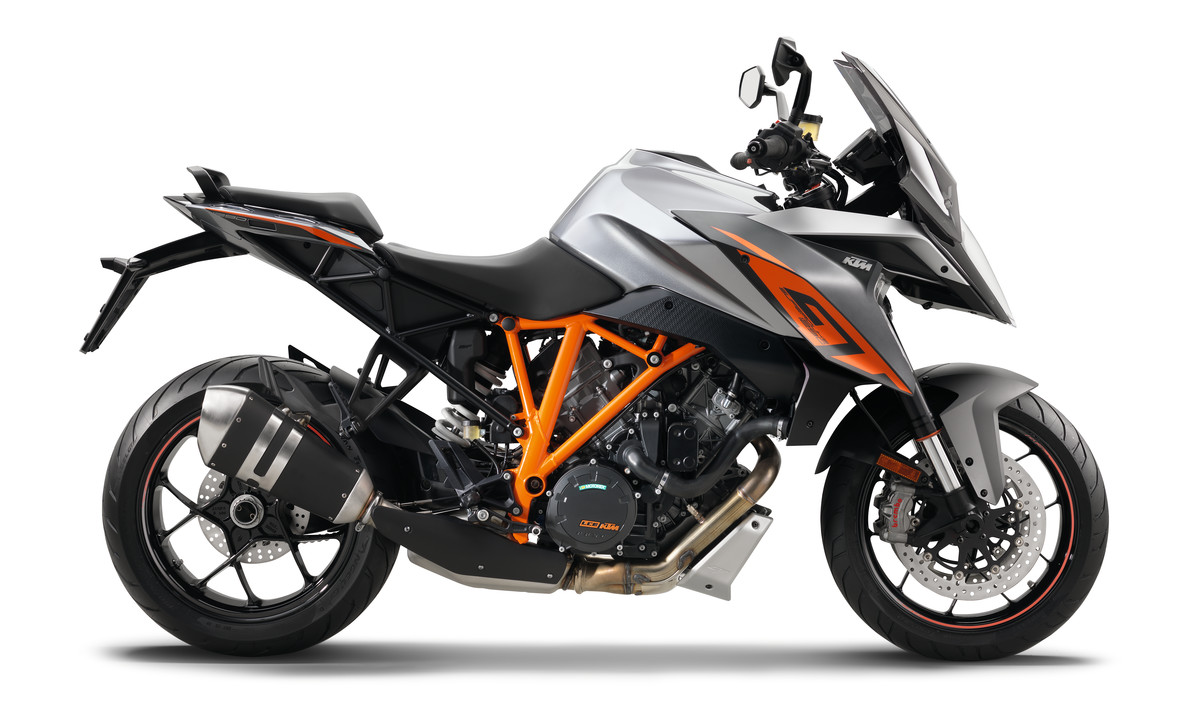
The 1290 Super Duke GT is KTM’s answer for a big bore sport-tourer that not only gets you places but flies to your long-distance destination while blasting other sport-tourers into the paddy fields. Yes, a bike has that effect when it’s built on the 1301cc 1290 Super Duke R’s engine platform.


However, the 1290 Super Duke GT differs from the 1290 Super Duke R in terms of comfort. The GT features a large frontal bodywork with an adjustable windscreen for wind protection on long rides, while mounting points for the panniers have been built in.
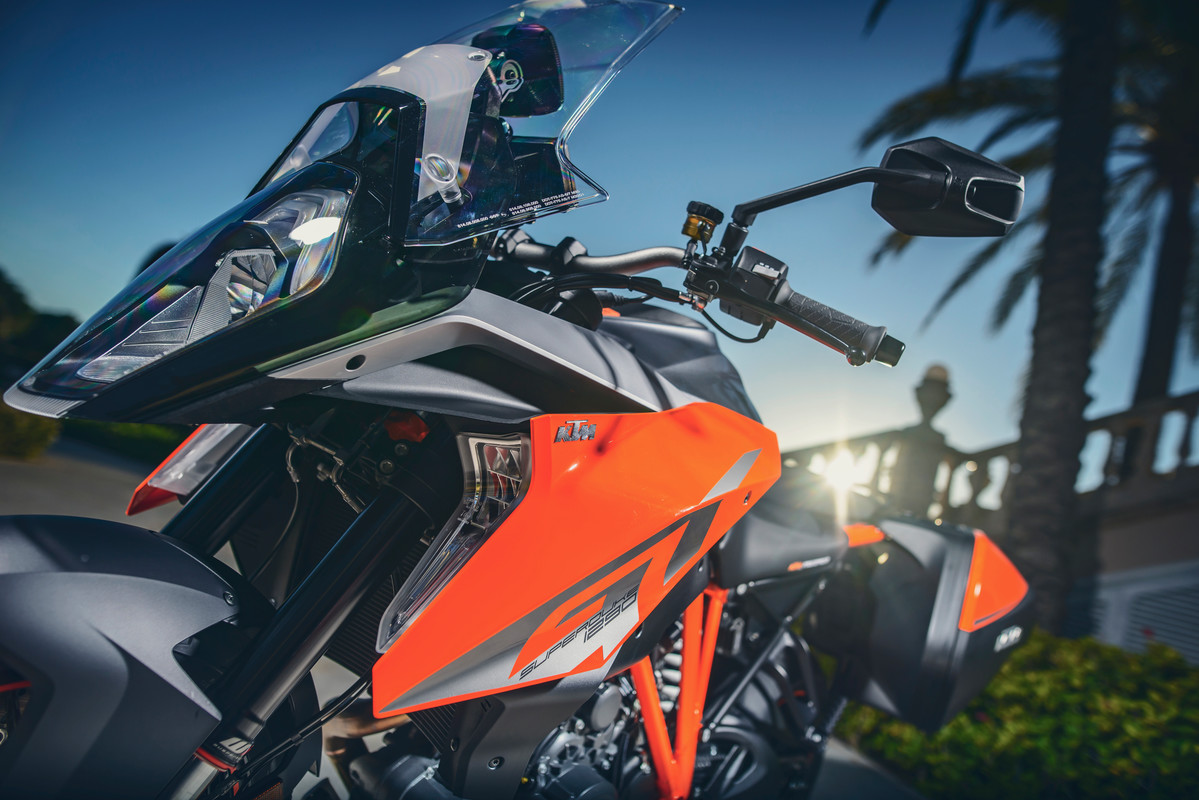
Likewise, the suspension uses the WP Semi-Active electronically adjustable variety, which varies its damping rates on the go. You could choose between Sport, Road and Comfort damping modes, besides the load for one rider, rider with cargo, rider with passenger, and rider and passenger with cargo. The system will keep the bike in optimum chassis balance for optimum handling at all times.
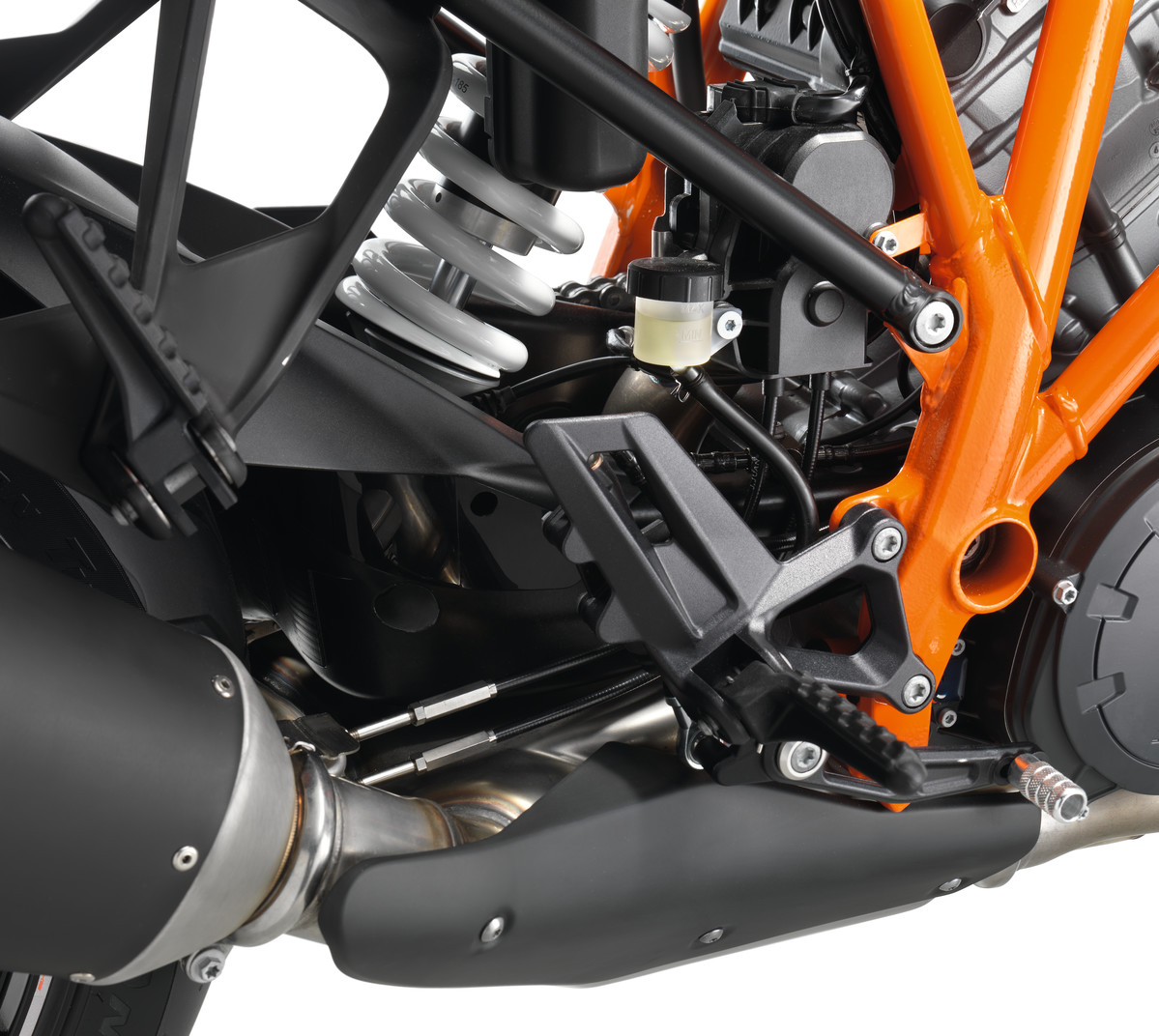
And handling (besides the speed, of course!) is where the 1290 Super Duke GT truly excels.

If there’s a bike in this world that seem to self-steer through a corner at blinding speeds, this is the one! No other large capacity sport-tourer has the propensity to steer into a corner and blast away like it, while remaining superbly composed over anything the road throws at it – all the while you’re seated comfortably on it.
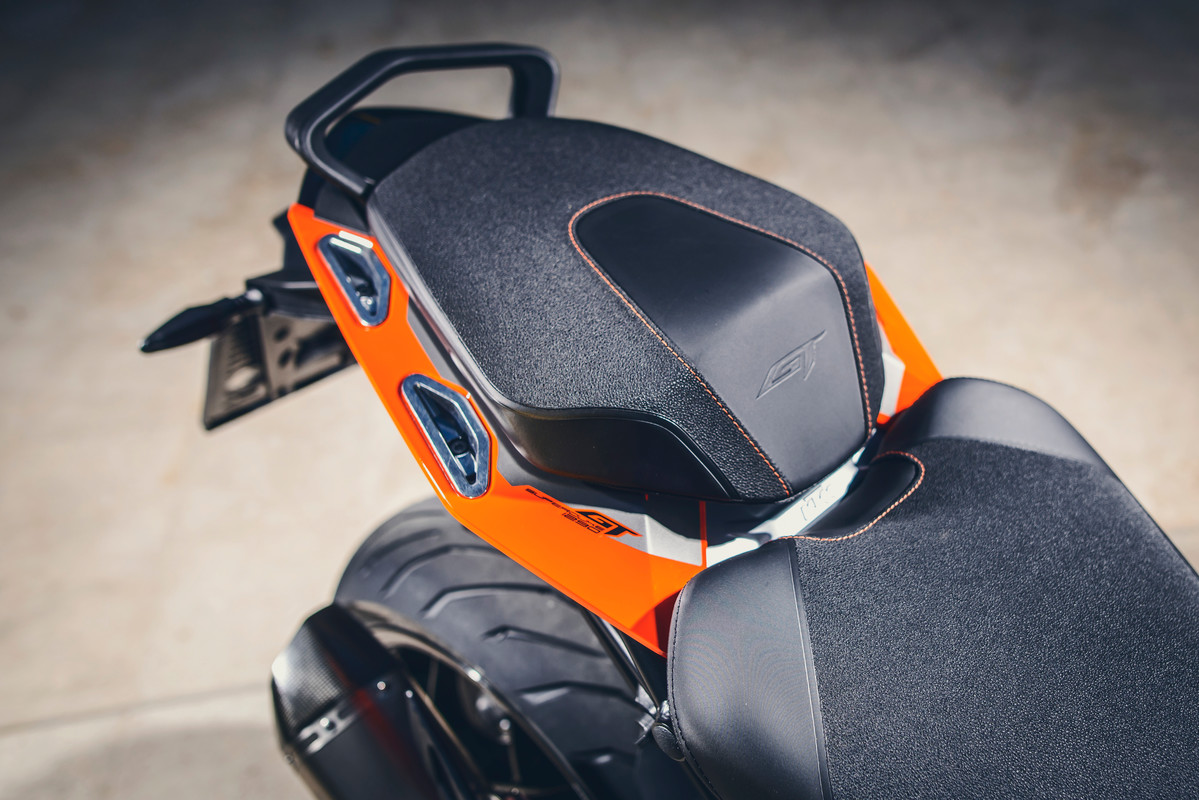
Just like its 1290 brethren, the 1290 Super Duke GT is laden with the some of the best motorcycle technology available to the public. The electronics suite includes Ride-by-Wire, Ride Modes, the aforementioned WP Semi-Active Suspension, Motorcycle Stability Control (MSC), LED Cornering Lights, Motorcycle Traction Control (MTC), Quickshifter, Cruise Control, Tyre Pressure Monitoring System (TPMS), ABS and many more.
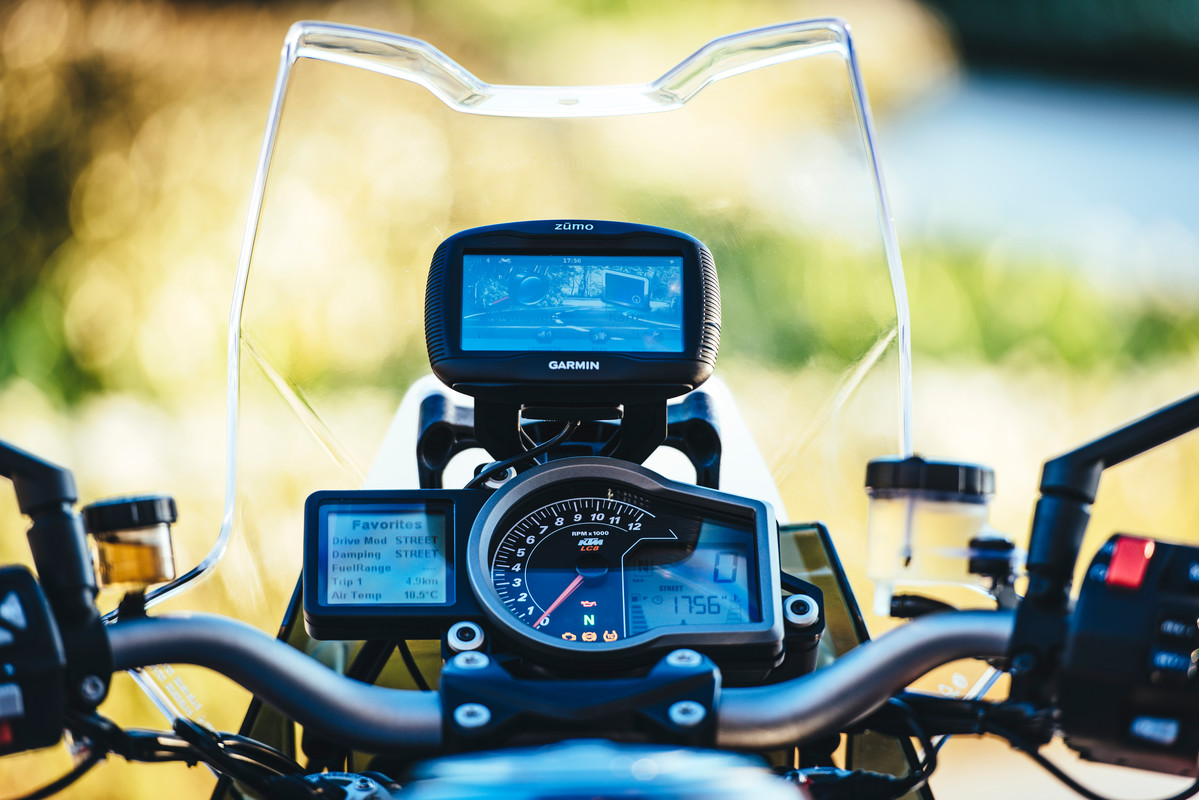
You could upgrade your 1290 Super Duke GT by adding the optional Hill Hold Control (HHC) and Motor Slip Regulation (MSR).
1290 Super Adventure S
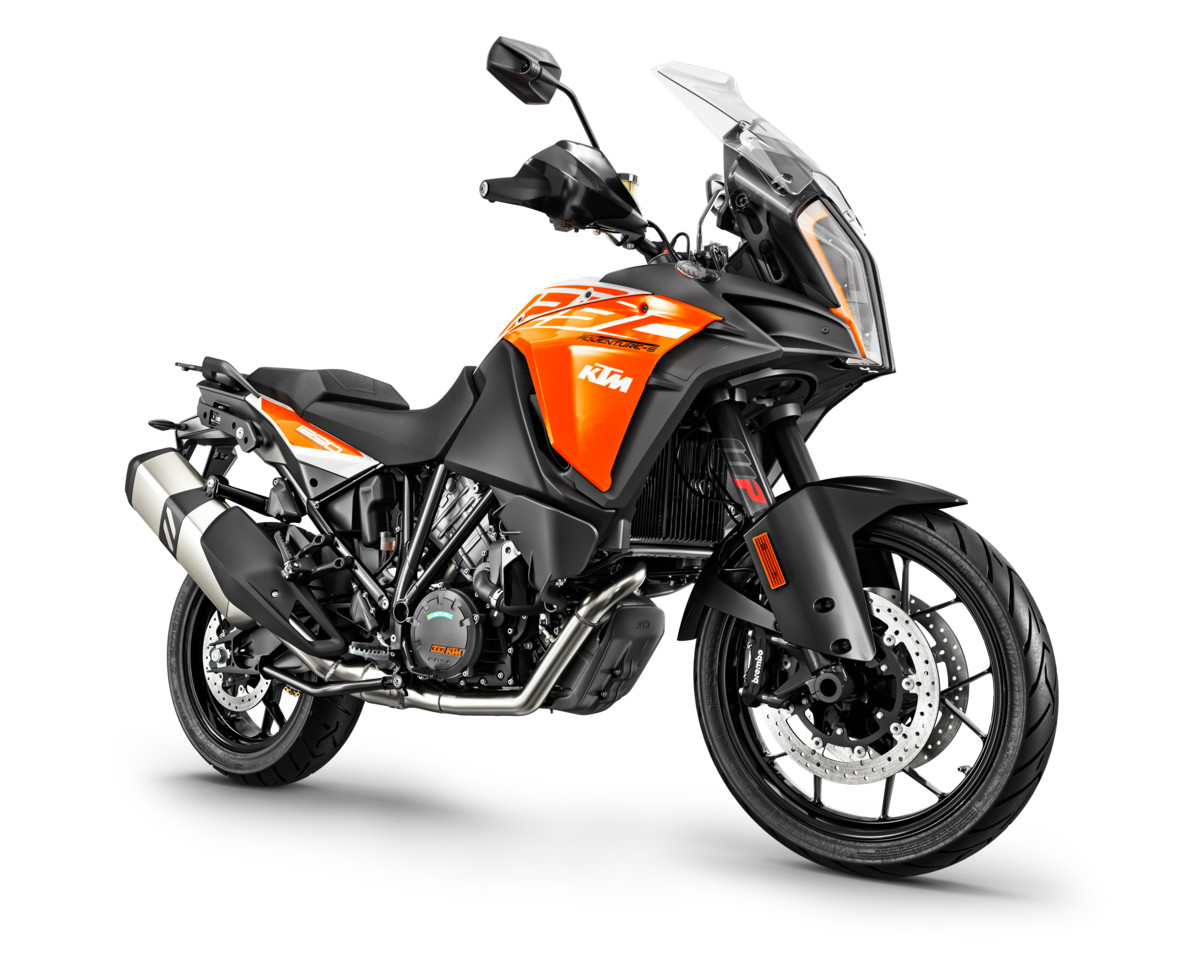
Along with offroad bikes, adventure bikes have been the hallmark of KTM.

The 1290 Super Adventure S and its more offroad-oriented 1290 Super Adventure R brother are the flagship KTMs.

Although the 2017 model had evolved from its predecessor, the 1290 Super Adventure T, KTM had almost entirely revised it.

The most obvious change is to the design. KTM had wanted a look that doesn’t replicated other bikes in the market and something that’s unmistakably KTM. When the designers split the LED headlamp to incorporate the cooling channel in between – voila! – the result was something never seen before.

The engine is based on The Beast but retuned for overall smoothness and absolute reliability such as DLC coating on the cylinder bores and a long service interval. It still punches out 160 bhp and 140 Nm of torque. But to demonstrate its flexibility, 108 Nm are already available from as low as 2500 RPM!
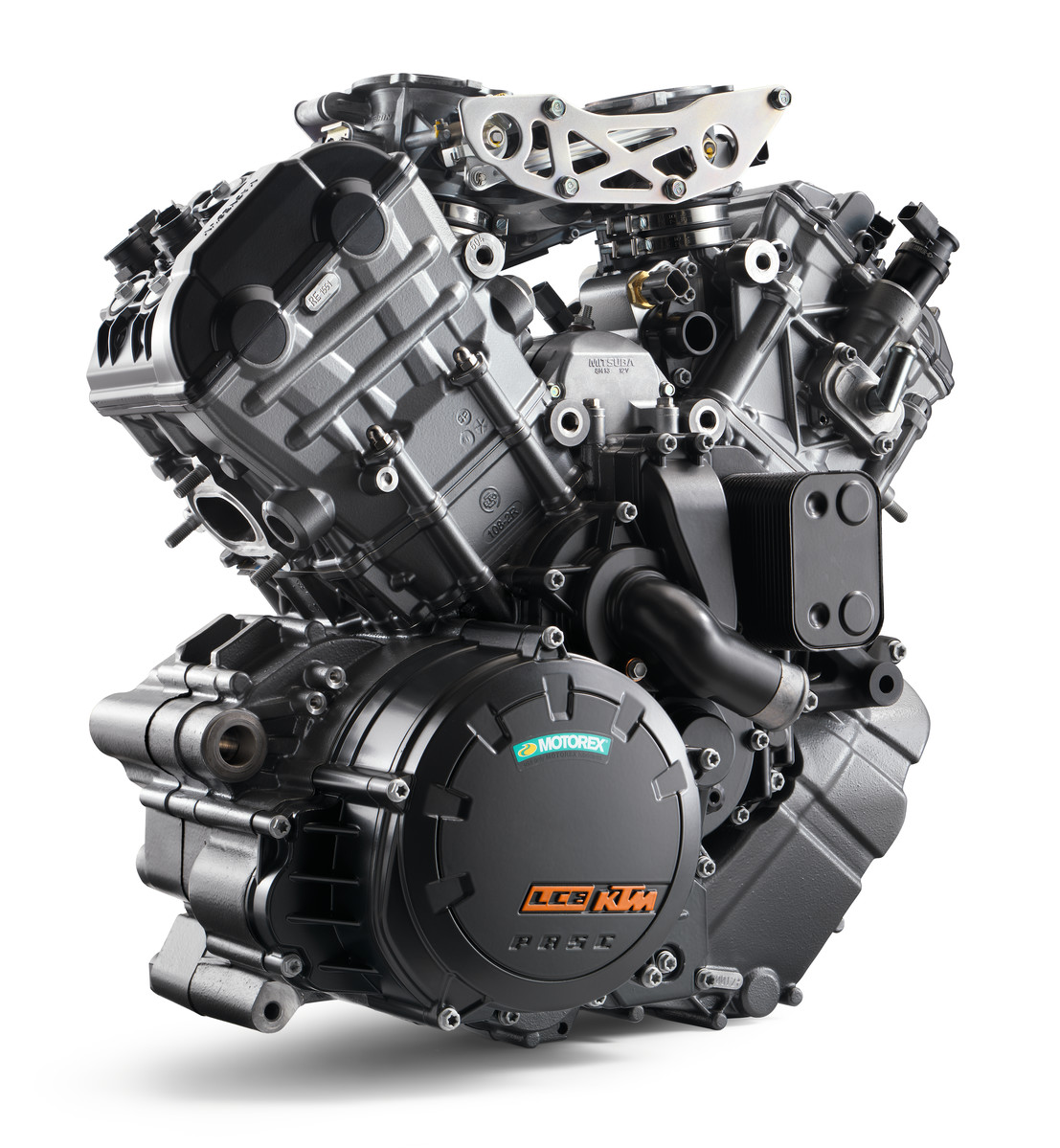
Its chrome-moly steel trellis frame is again, strong and light, weighing only 9.8 kg. Both ends are suspended by WP’s Semi-Active Suspension, update for this bike to carry almost any load you wish.

The 1290 Super Adventure S is also a technology-laden adventure-tourer, but has additional features specific to it. In addition to the usual fare, the bike has Offroad Ride Mode, Offroad Traction Control, Offroad ABS, lean angle sensitive Cornering ABS and Combined Braking.

You could upgrade your 1290 Adventure S with a suite of features as part of the optional Travel Pack which includes Quick Shift +, Hill Hold Control (HHC), Motor Slip Regulation (MSC) and My Ride.
Husqvarna has signed a strategic global partnership with MOTOREX lubricants starting January 2018.

All new Husqvarna off-road and street bikes will be first filled with MOTOREX lubricants and future maintenance and service works.

MOTOREX Oils also became one of the official partners for the Rockstar Energy Husqvarna Factory Racing in this year’s AMA Supercross Championship.

A strategic global partnership has been announced between Husqvarna Motorcycles and MOTOREX lubricant. As of January 2018, all new Husqvarna street and off-road bikes will be using its lubricants. (more…)

  • The Honda CRF250L and CRF250 Rally were intended as a beginner offroader and adventure-tourer respectively.

  • Both utilise the same engine but different suspension rates.

  • Prices start at RM24,378.94(basic price with GST) for CRF250L, and RM28,618.94 (basic price with GST) for the CRF250 Rally.

Designing a bike for the masses isn’t an easy proposition in this day and age, despite motorcycles being super-segmented according to their intended usage.

Even so, there are bikes that could fit its primary role plus one or two secondary roles pretty well, earning the title as “all-rounders.” Conversely, there are bikes that manufacturers seemingly tried too hard to fit too many roles into one bike and came away as being diluted.

Boon Siew Honda launched the 2017 CRF205L and CRF250 Rally during the company’s special Iftar event for motojournalists at the Sepang International Circuit (click here for our report).

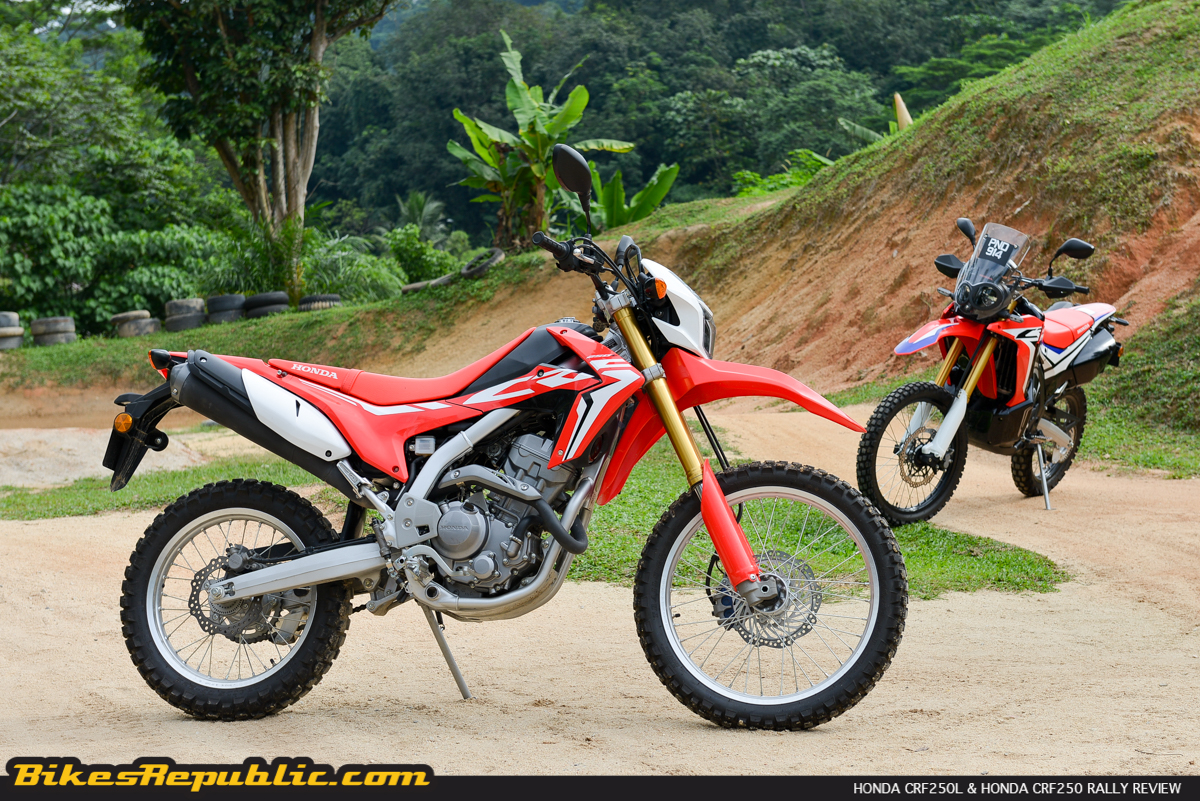
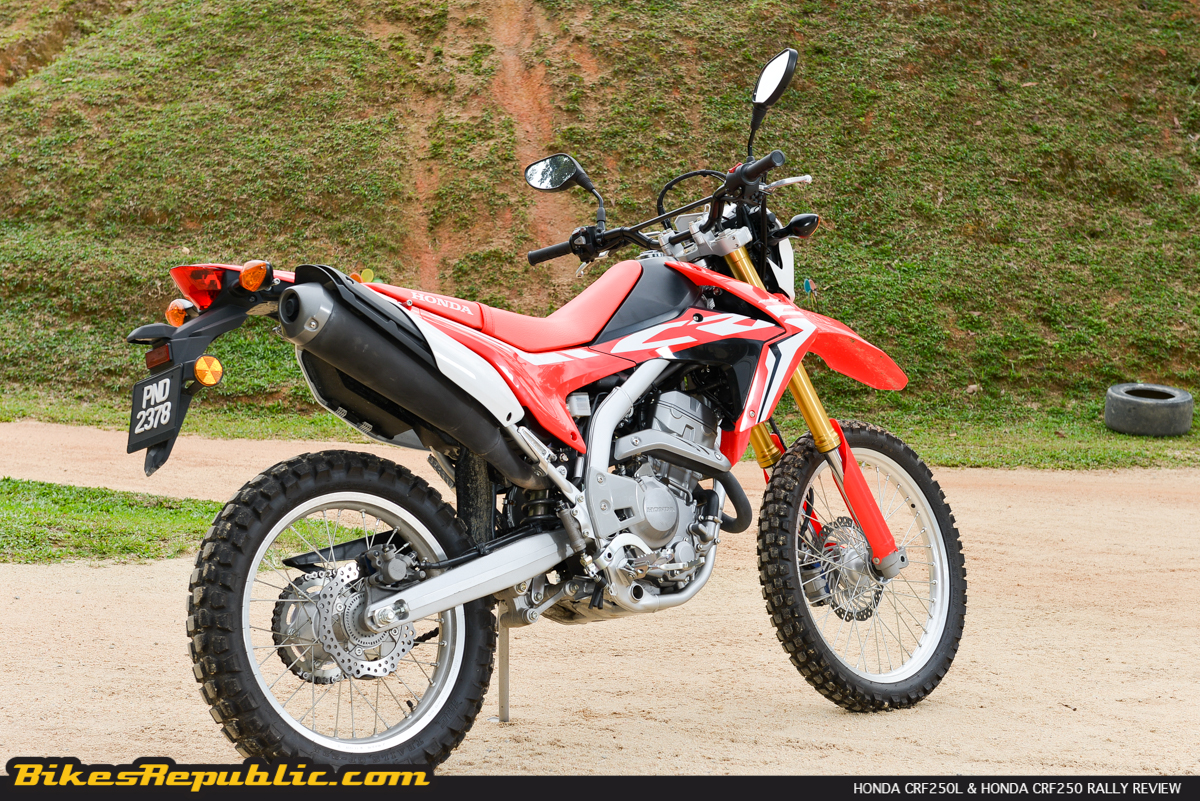
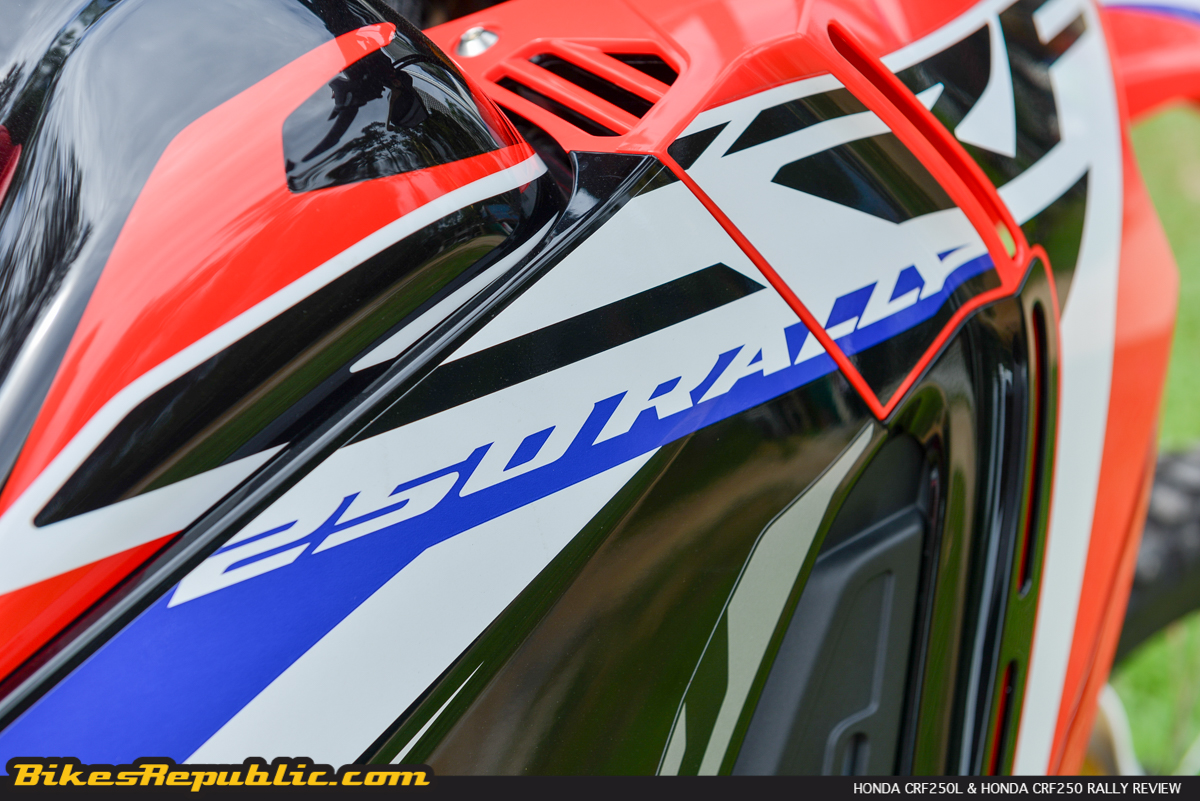
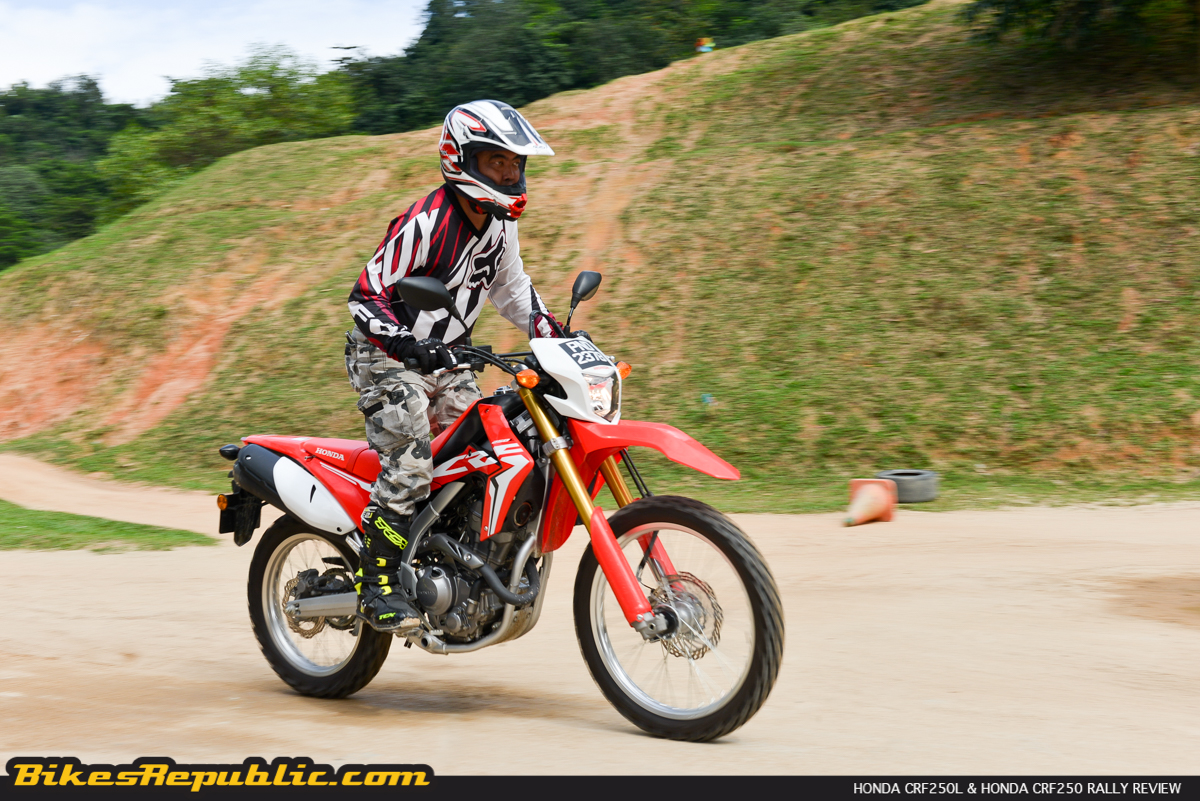
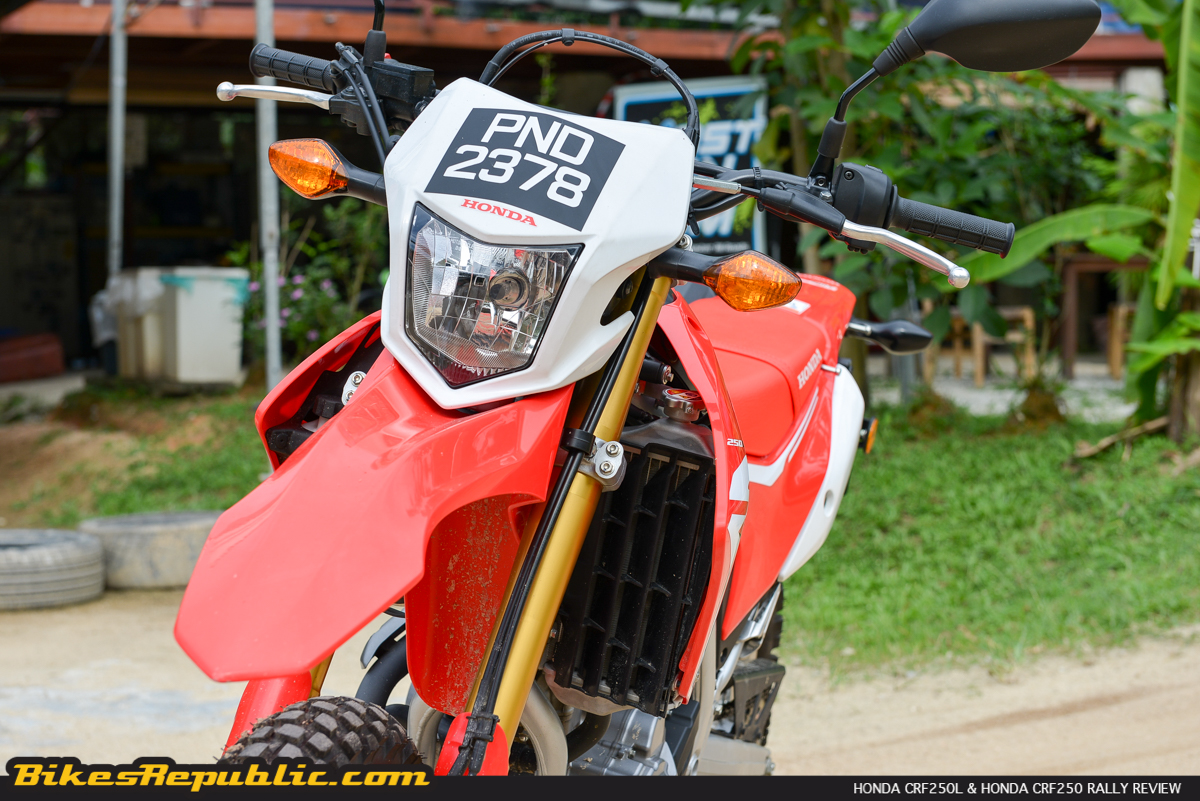
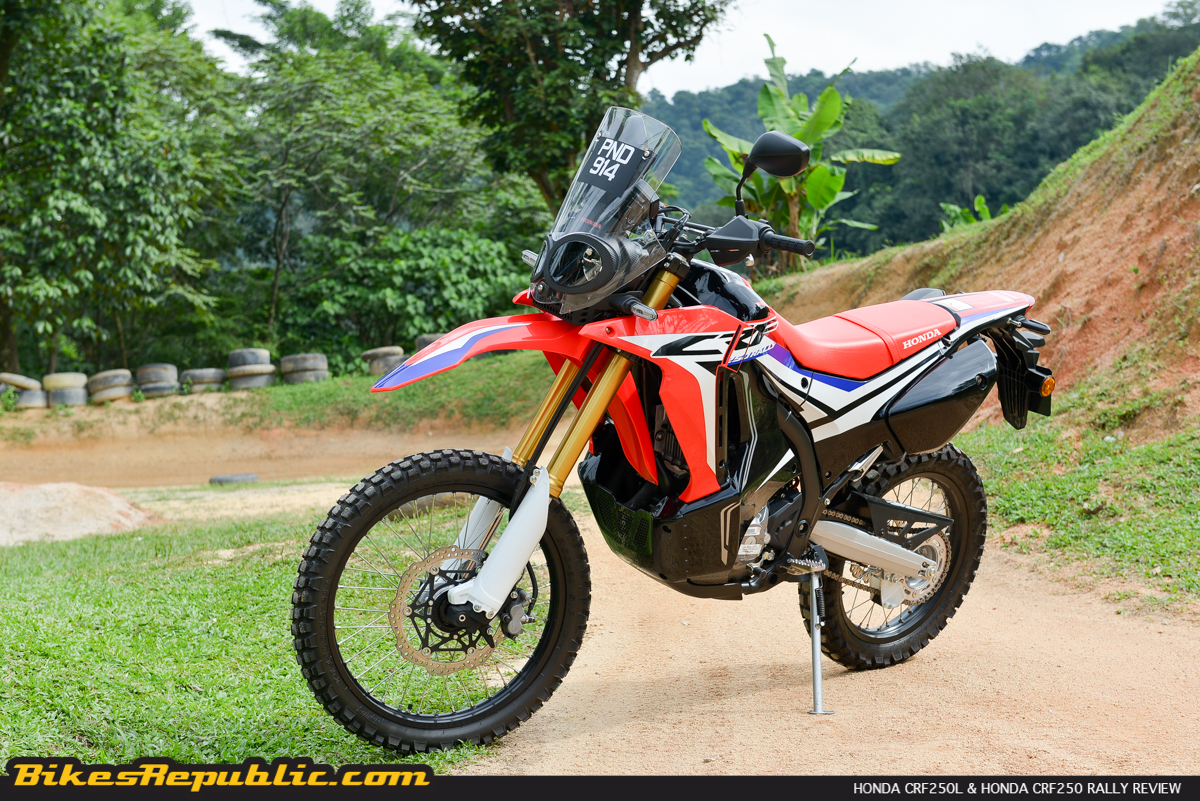
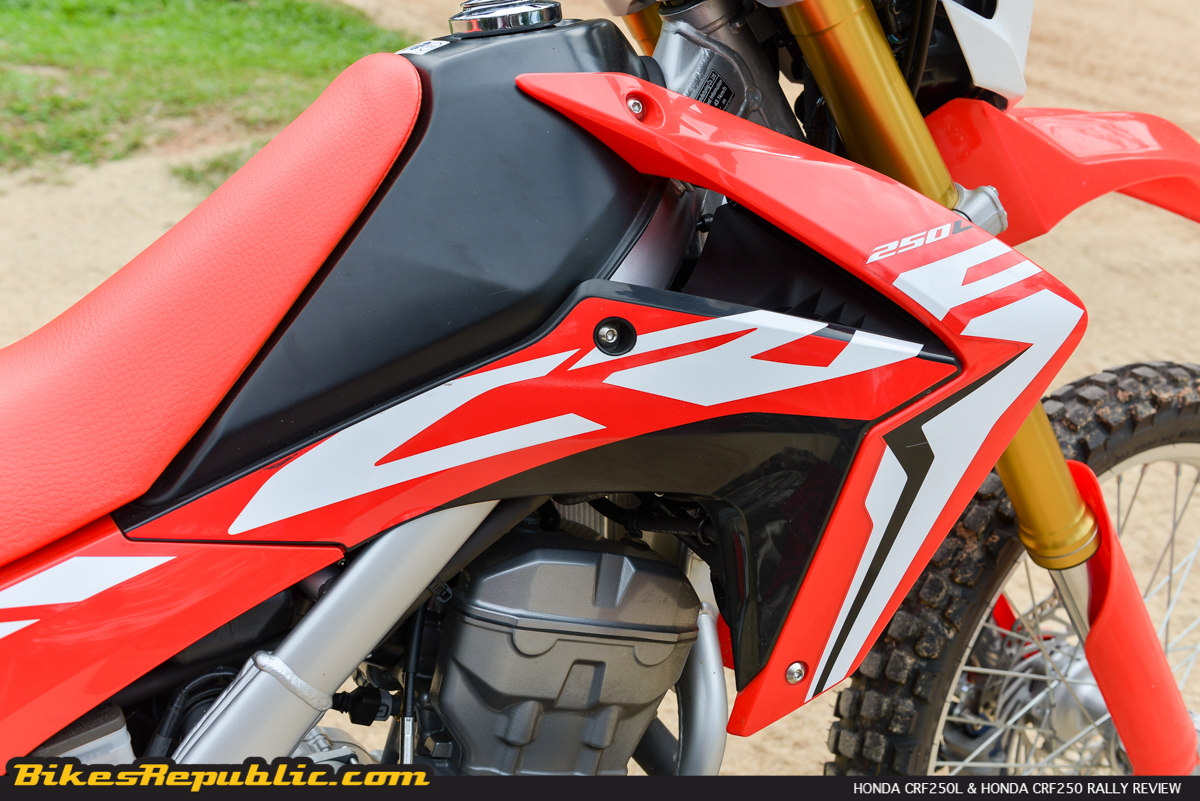
Being a dirtbike enthusiast, I was pretty excited to be present during the launch. Both bikes look great – the CRF250L certainly had some of the looks of the CRF250R motocrosser and looks like a proper enduro, while the CRF250 Rally looked like a proper adventure bike to have ran away from the Dakar Rally.


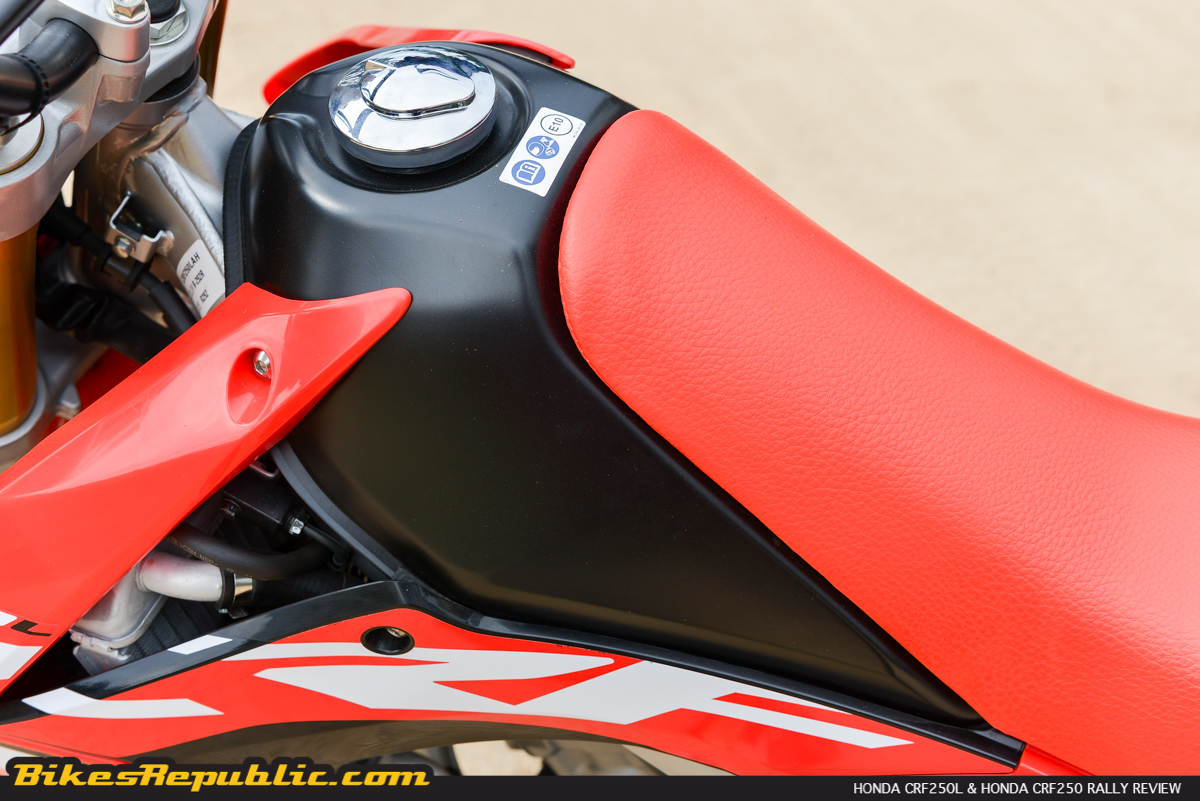
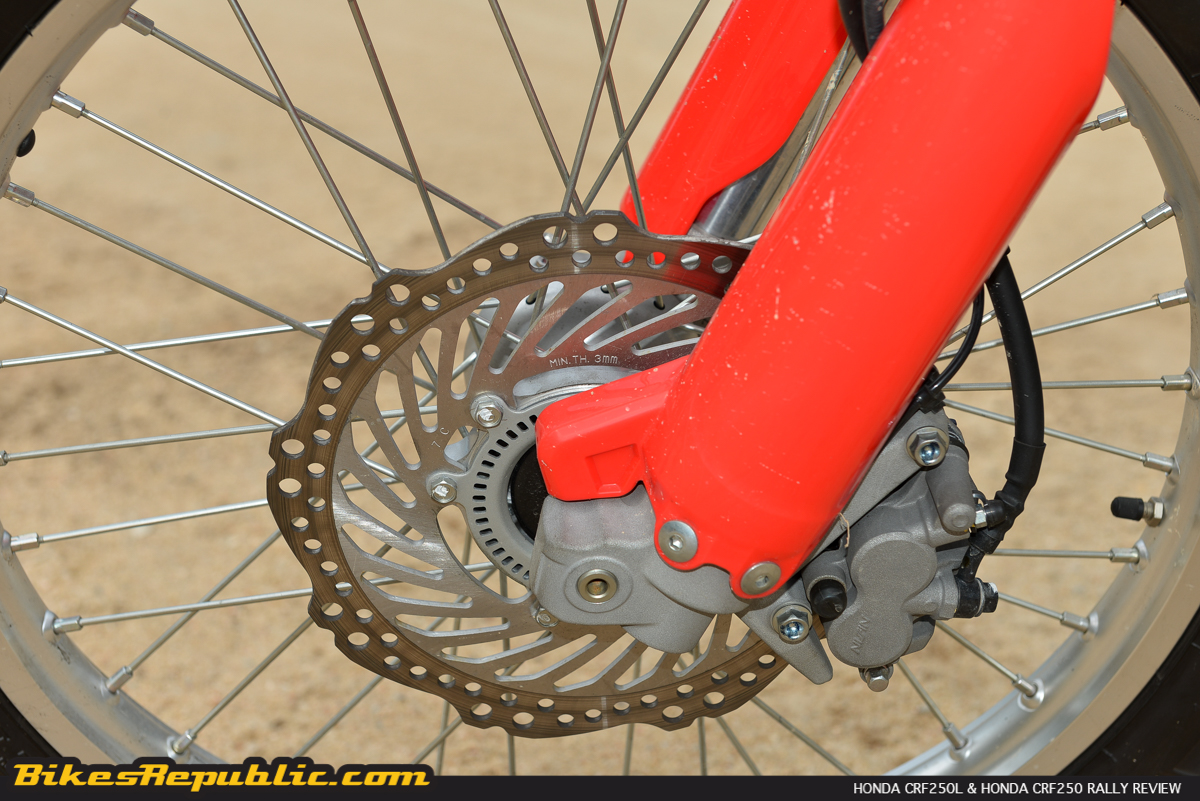
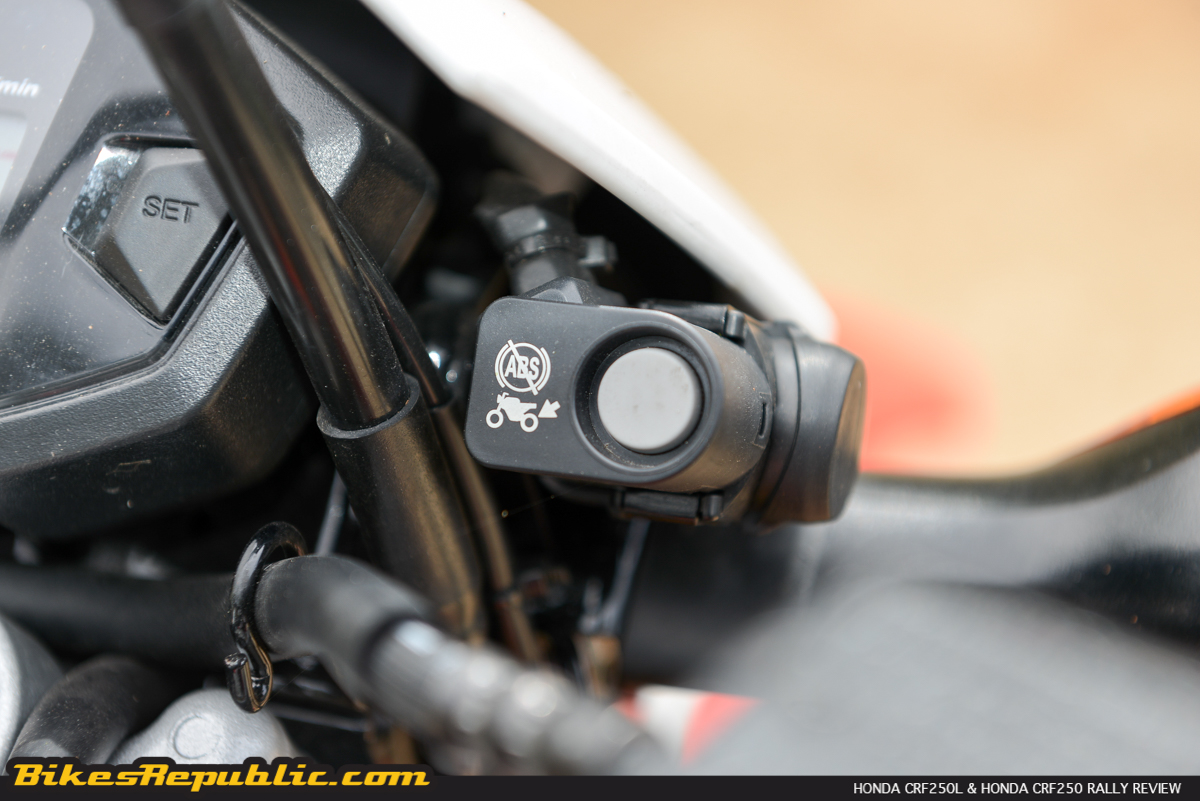
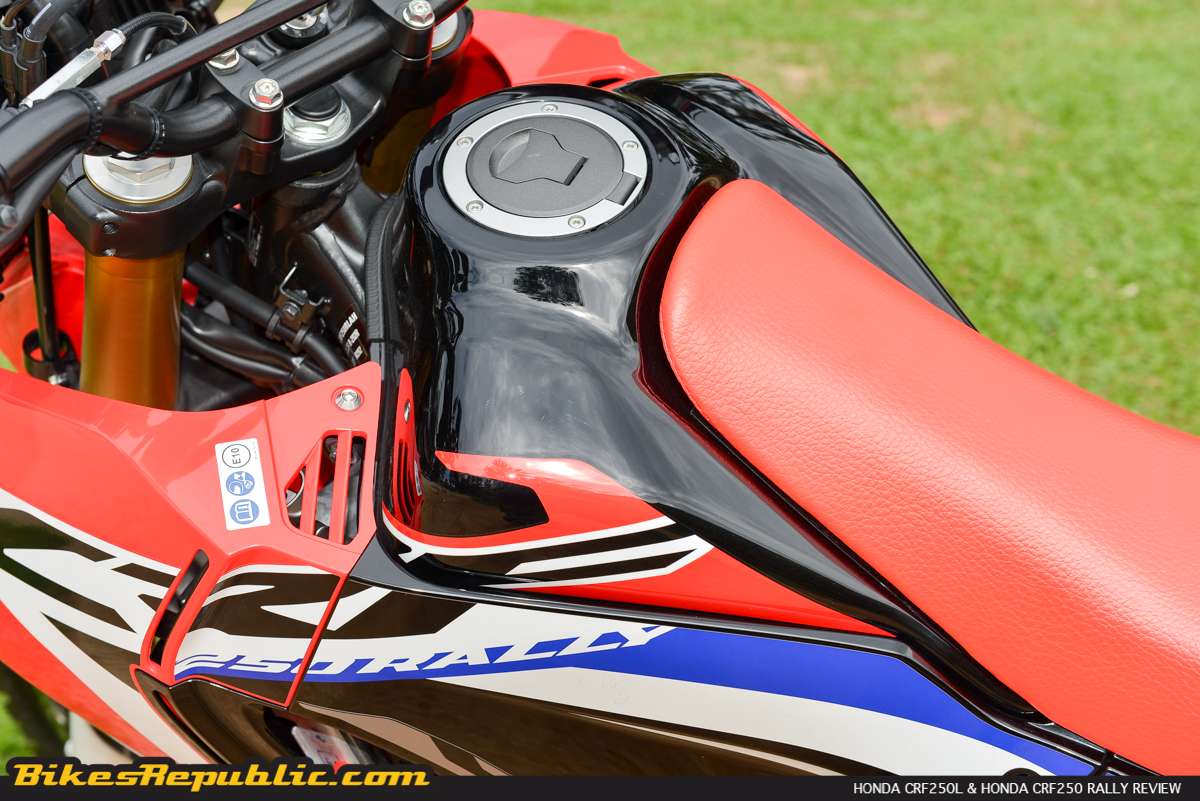
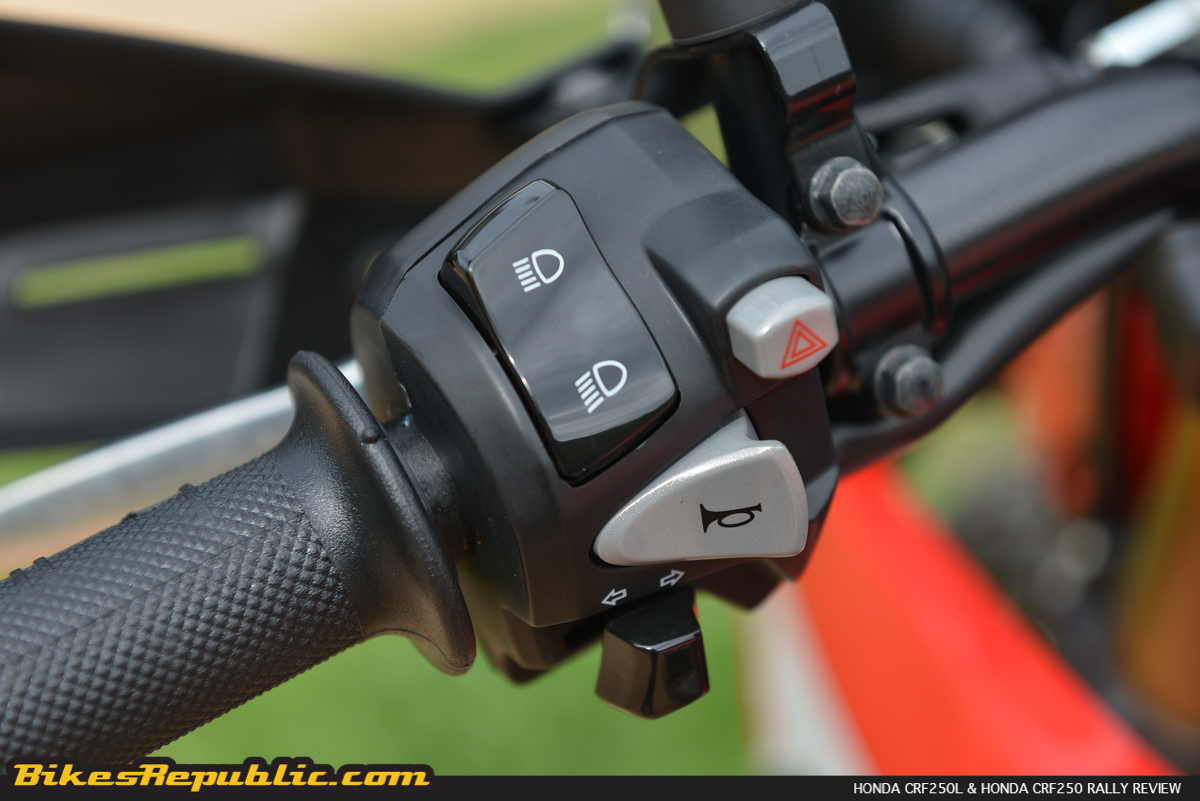
In typical Honda fashion, the bikes exuded the kind of quality hardly matched by other manufacturer, save one or two. The paintwork, fit between the panels, switchgear, front and rear lamps, frame, engine, swingarm, etc., etc., right down to the last bolt and nut were quality.

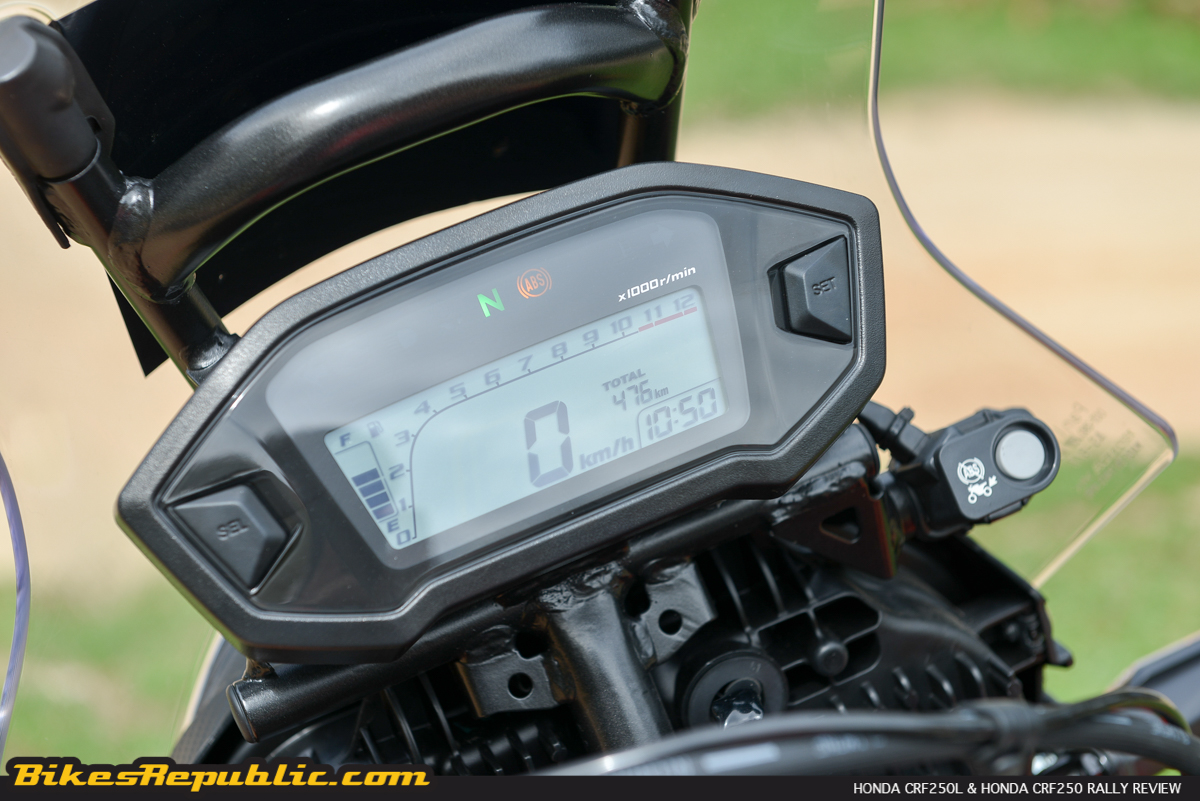
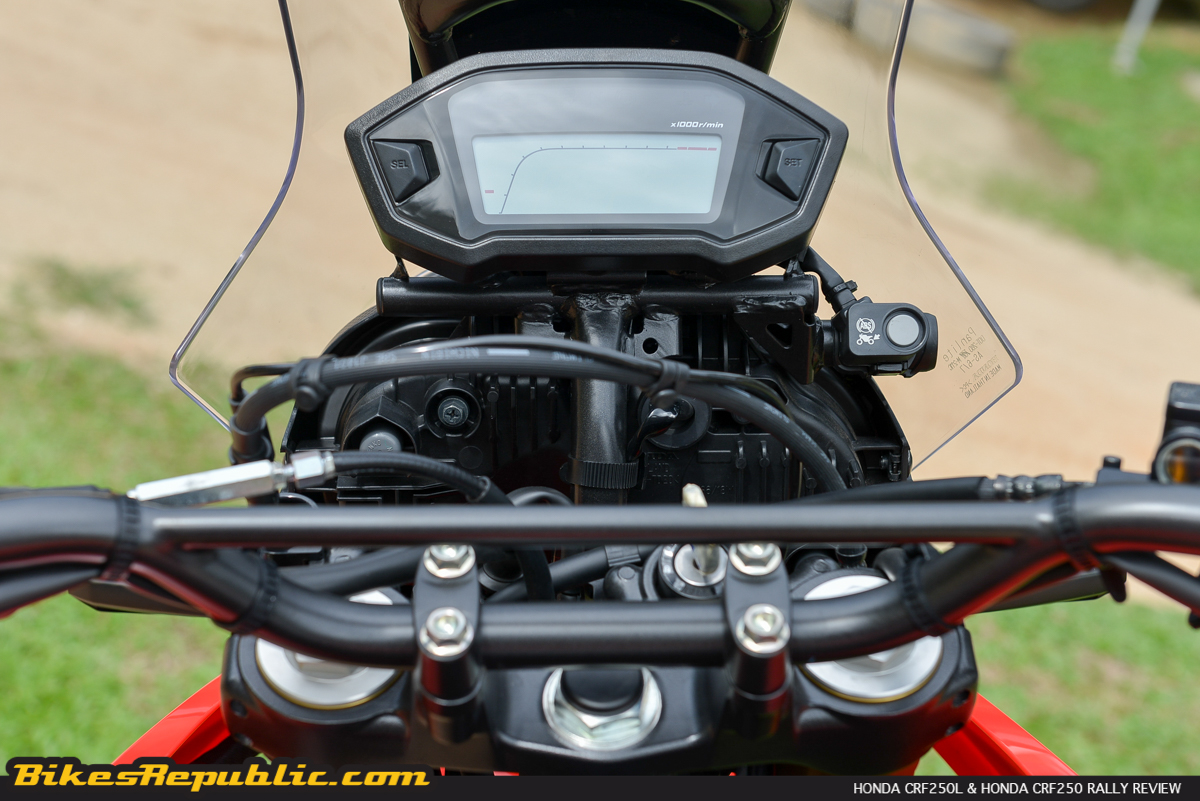
The instrument panel was simple but Honda managed to squeeze quite a number of good information, including a fuel gauge, and the rev counter bar is on top of the speedo. Good call.

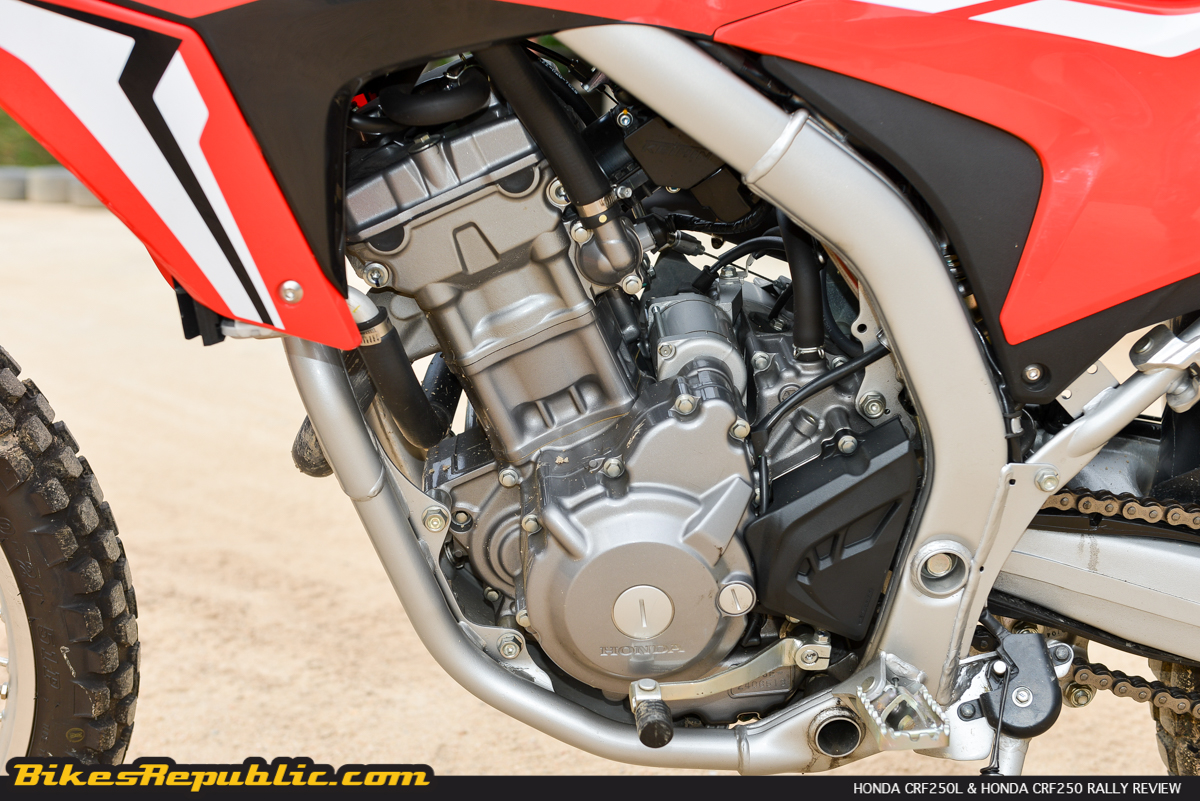
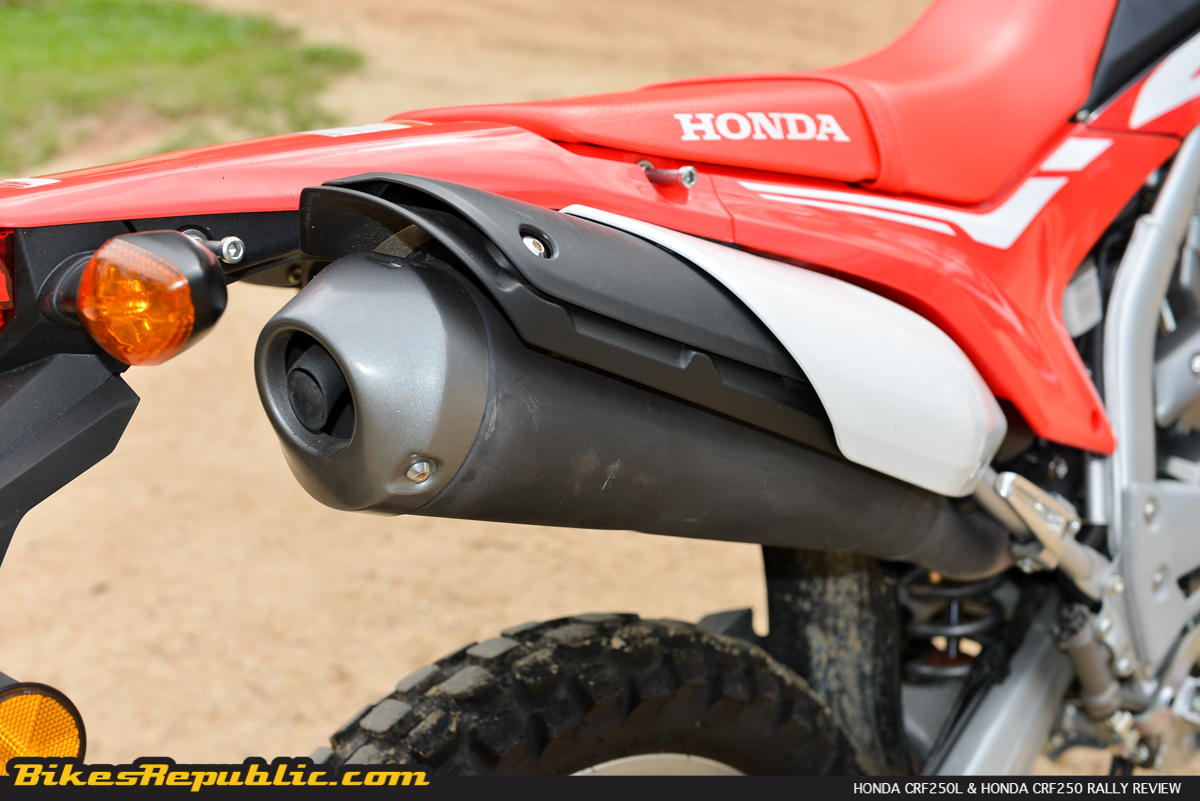
The PGM-FI fueled 249cc, DOHC, four-stroke, single-cylinder engine started up without fuss. But also without sound from the exhaust. It was super quiet.

We set course for our Sifu’s MX school, Most Fun Gym (MFG).

Out on the road and as expected, the CRF250L felt unplanted. But dirtbikes have always been torquey and offer a different kind of entertainment on the road, right? Right?

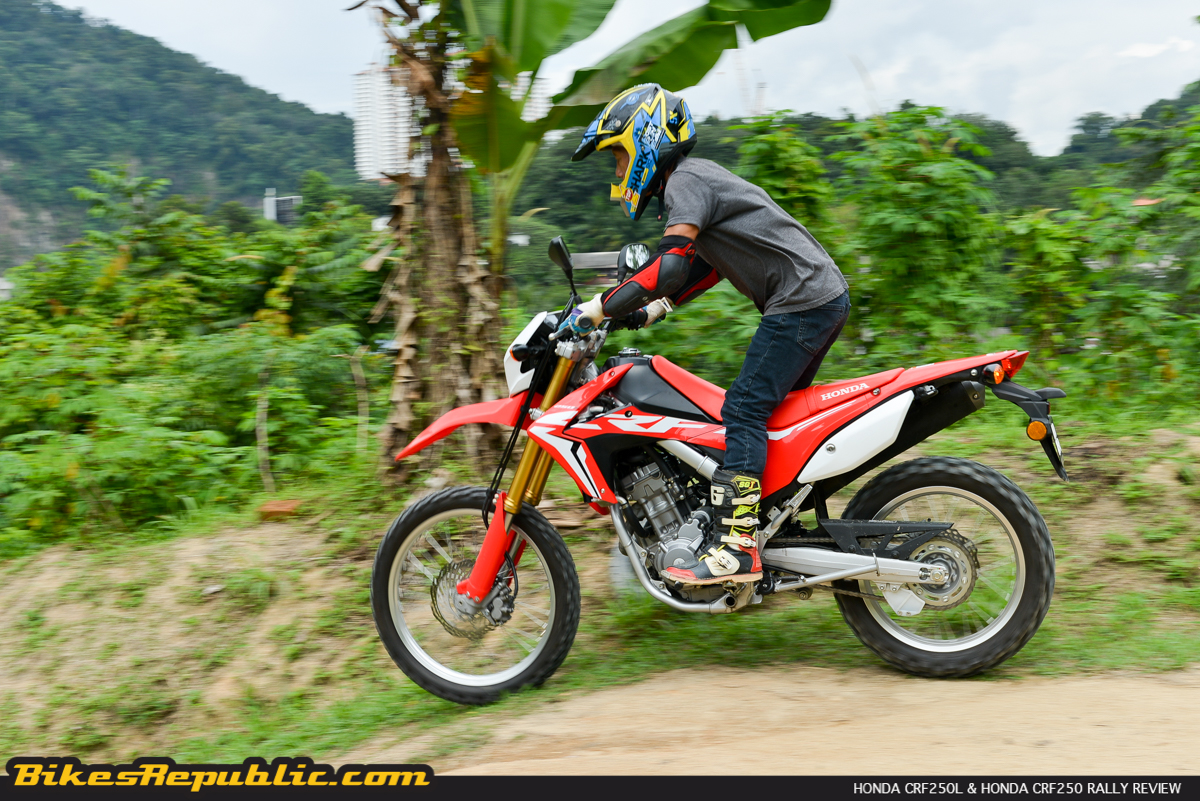
Well, being in the middle of a gaggle of rempits revving their engines, I thought it’d be the right time to educate them about dirtbikes. First engaged, clutch in, I revved it up to 6000 RPM, popped the clutch as I moved my weight backwards on the seat for a wheelie. The CRF went brrrrrrrrrrrr and the handlebar started flick-flacking back and forth, and all I saw were the rear lights of those rempits as they disappeared up the road.

Fine, let’s see how it rides over the rest of the road.

The long-travel suspension soaked up most bumps, but running the bike through potholes had both ends hitting the hard part of their travel almost immediately. Too soft.

Okay, okay. Let’s do it in the dirt then.

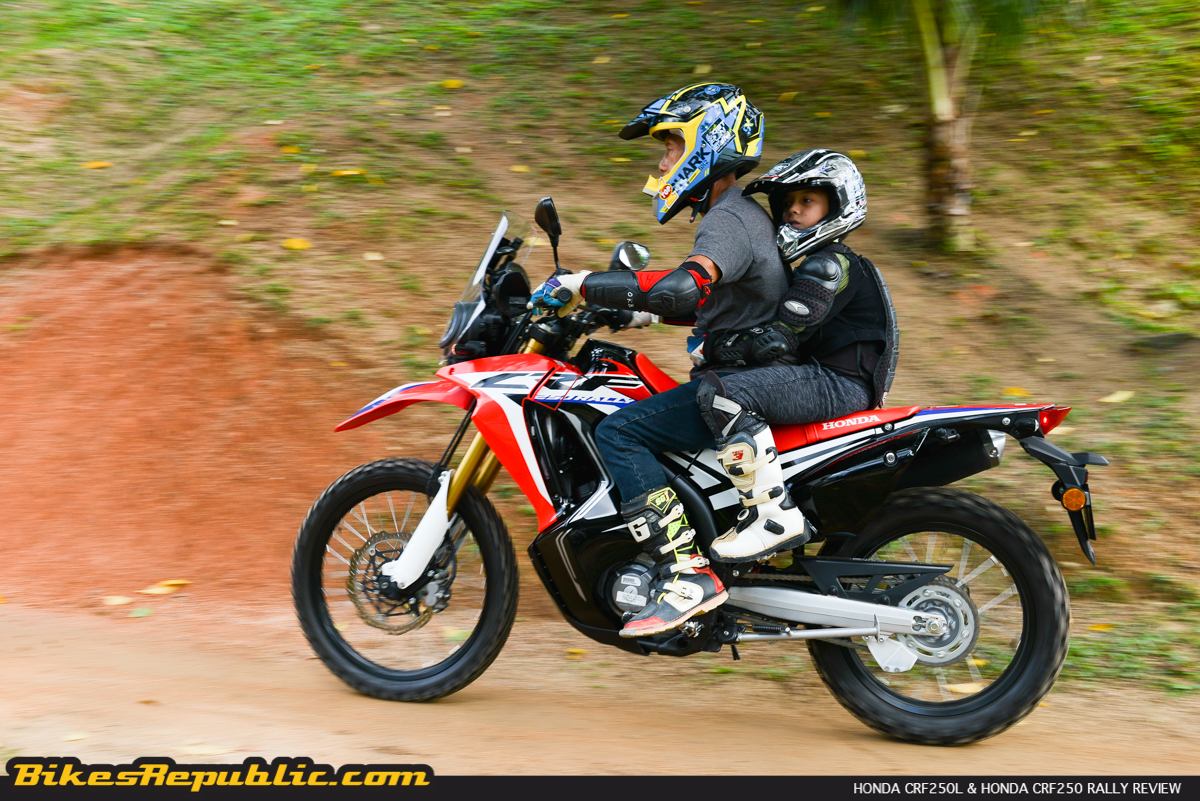
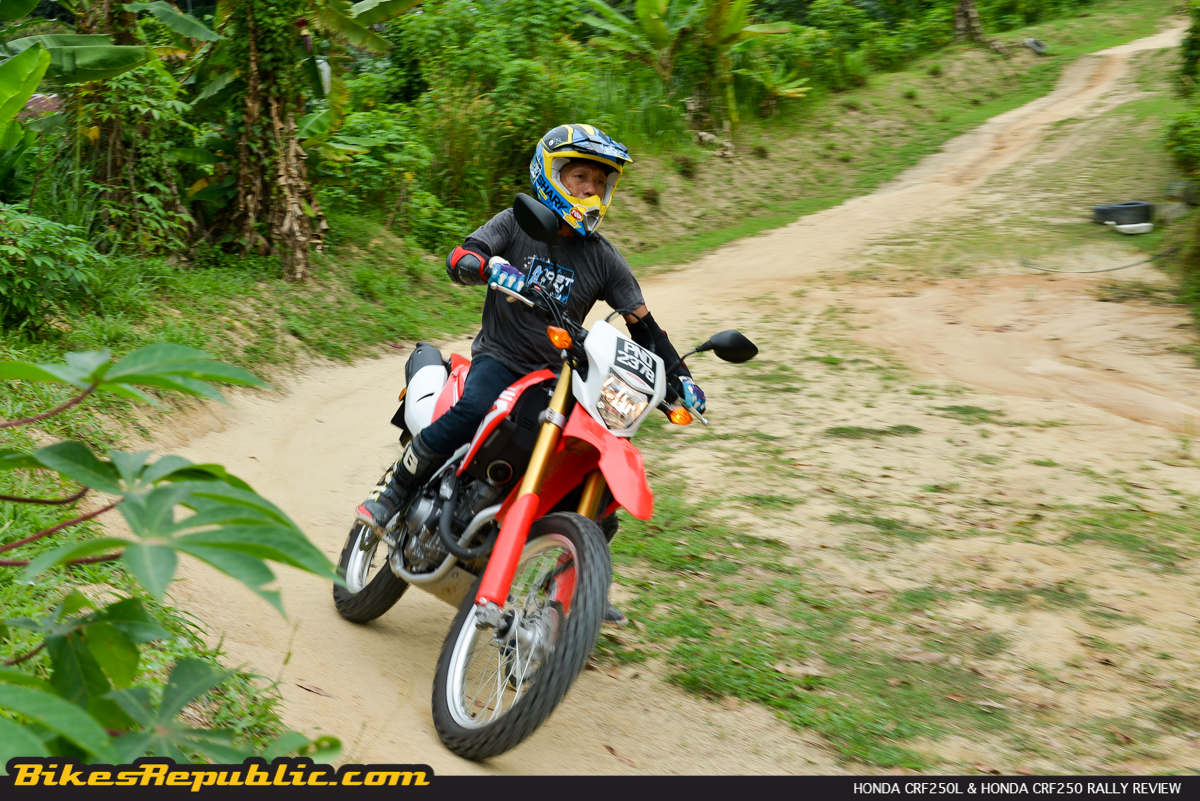
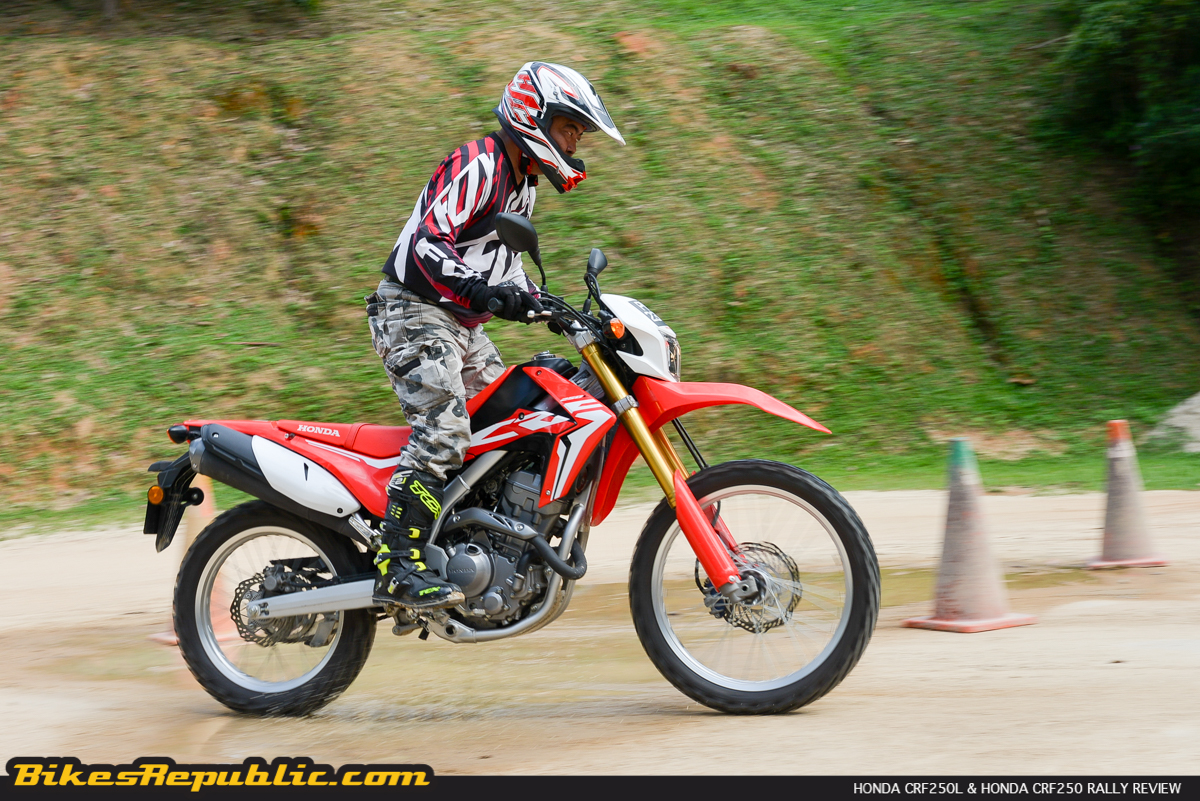
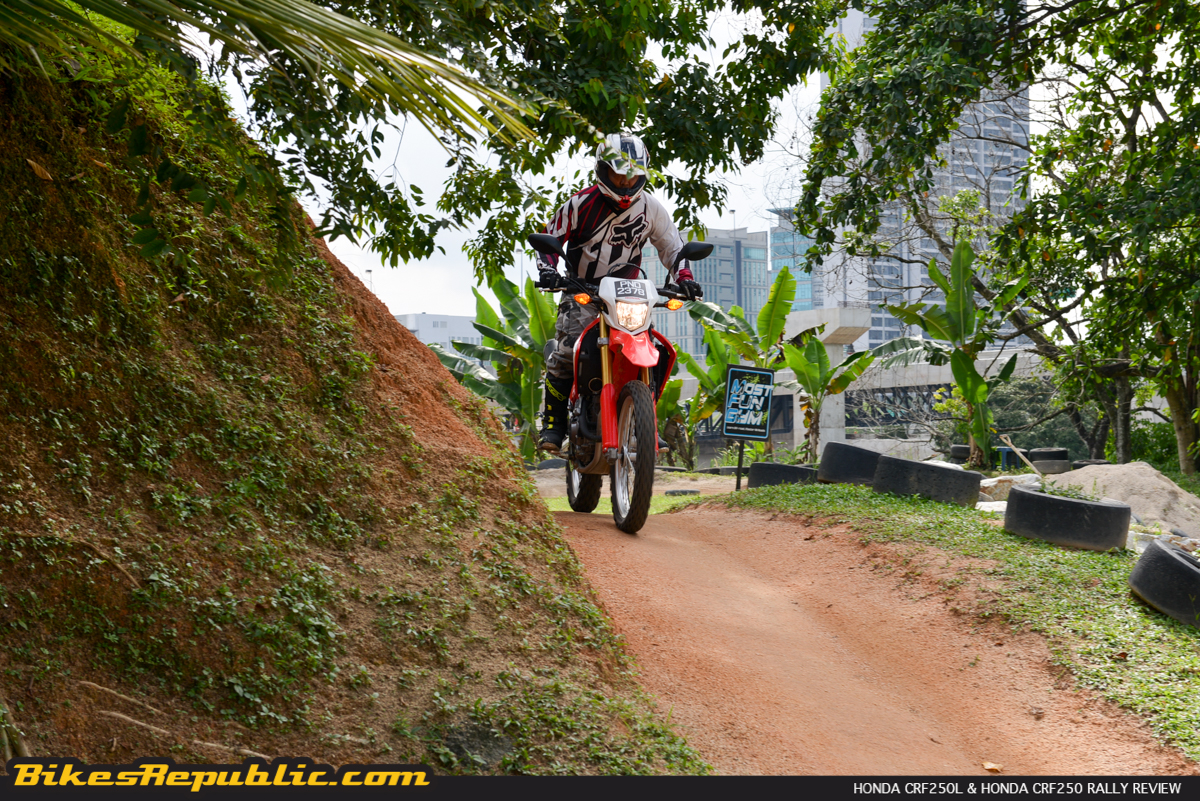
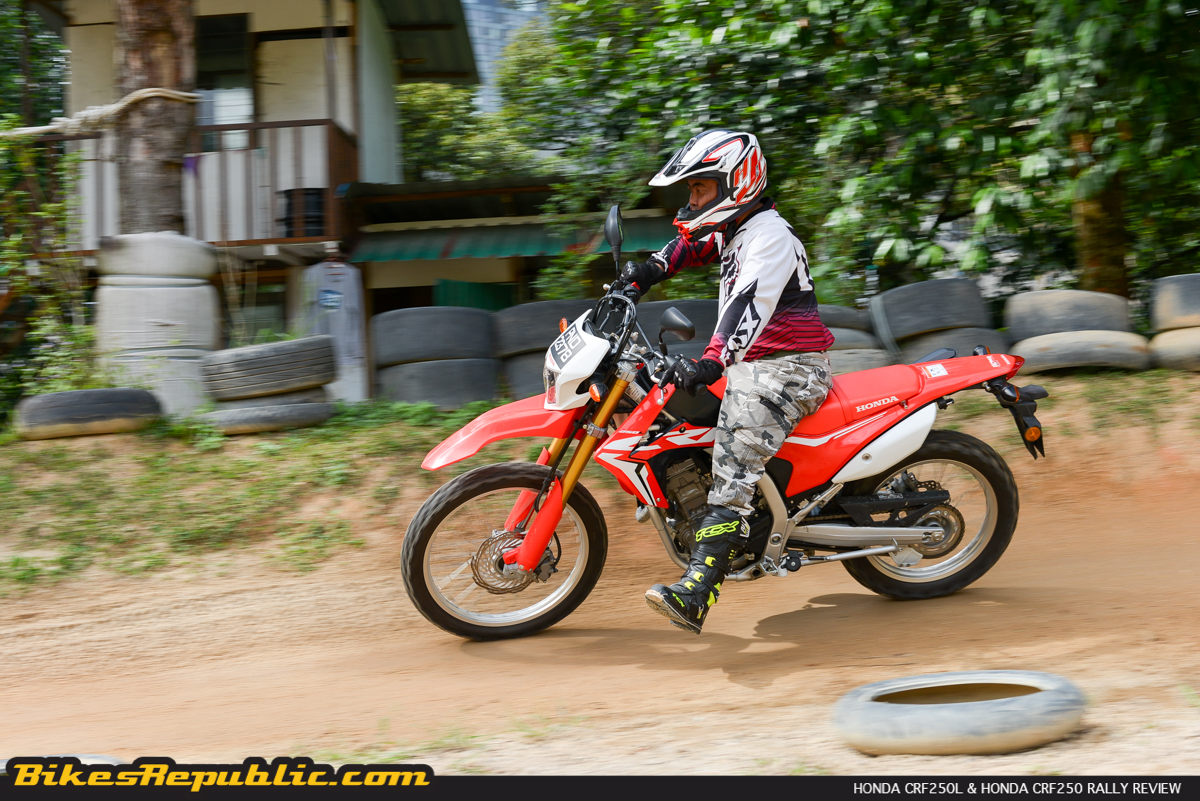
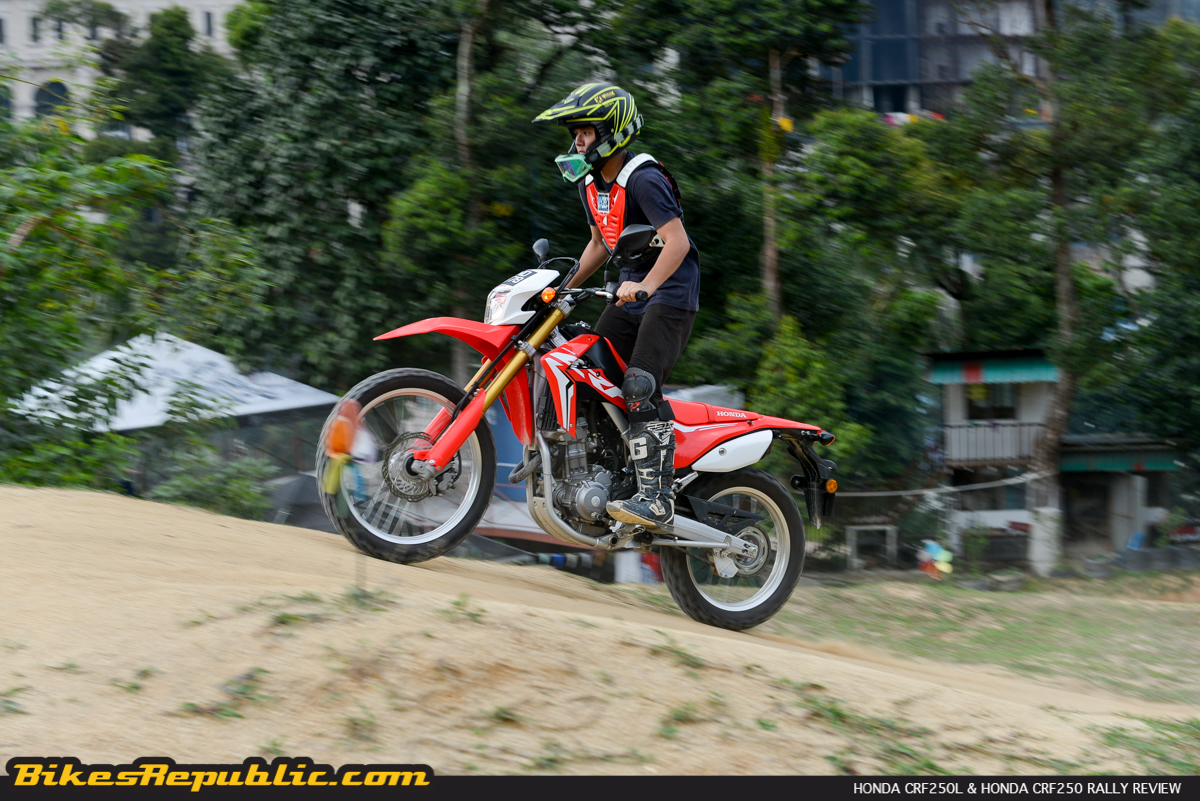
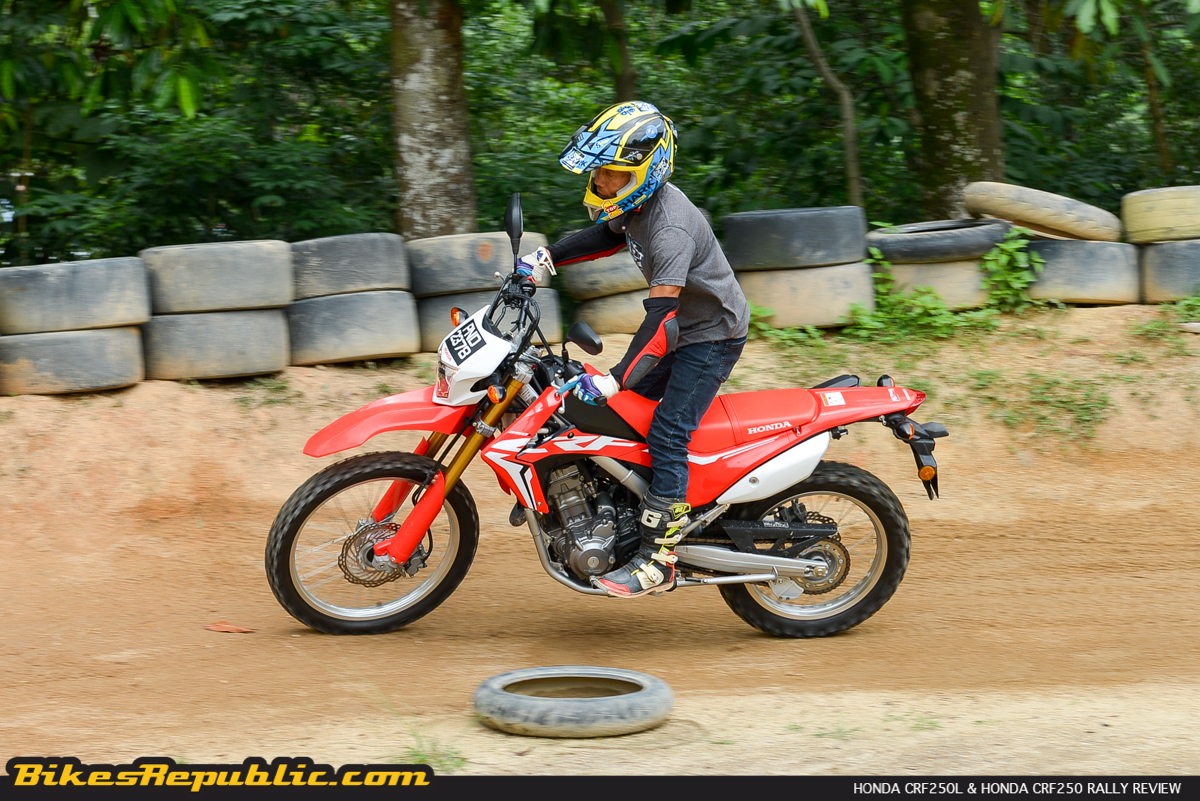
The CRF250L was joined by the CRF250 Rally at MFG, where Oh Kah Beng, his understudy Ryan, Ahirine, Sep and myself took turns riding both bikes in the dirt.

CRF250L

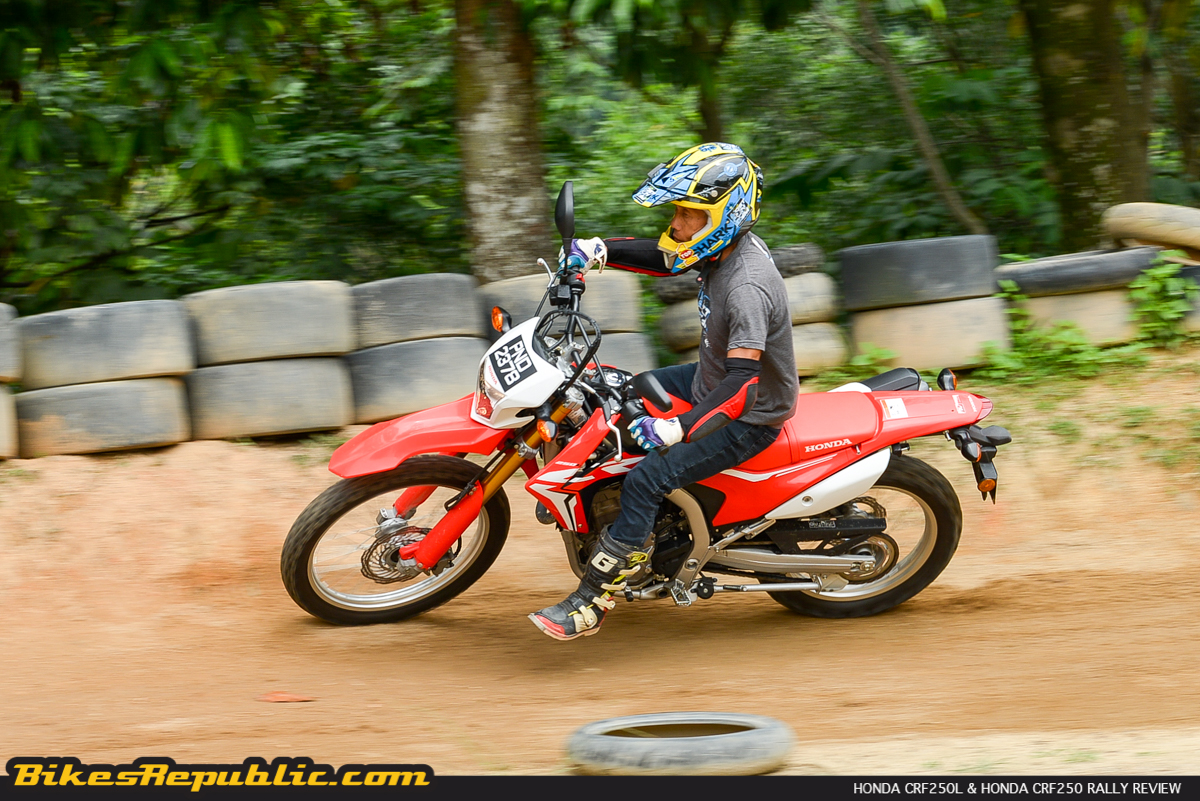
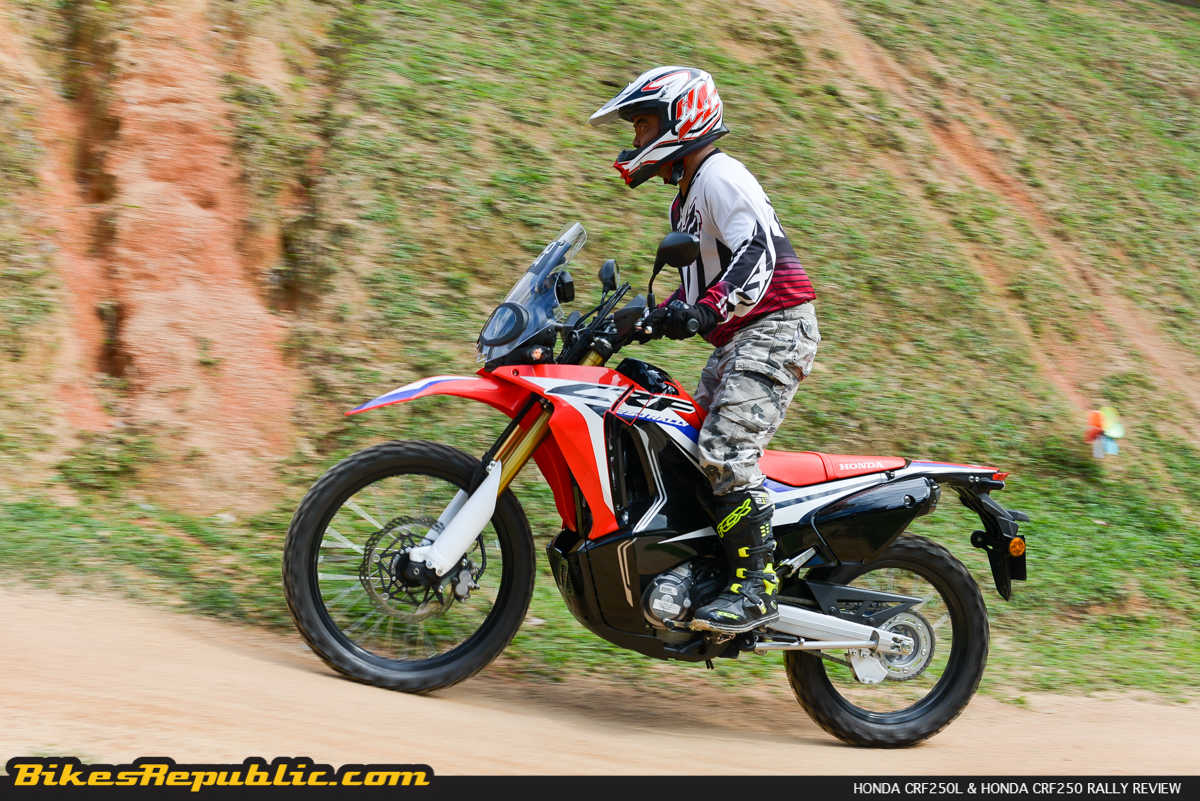
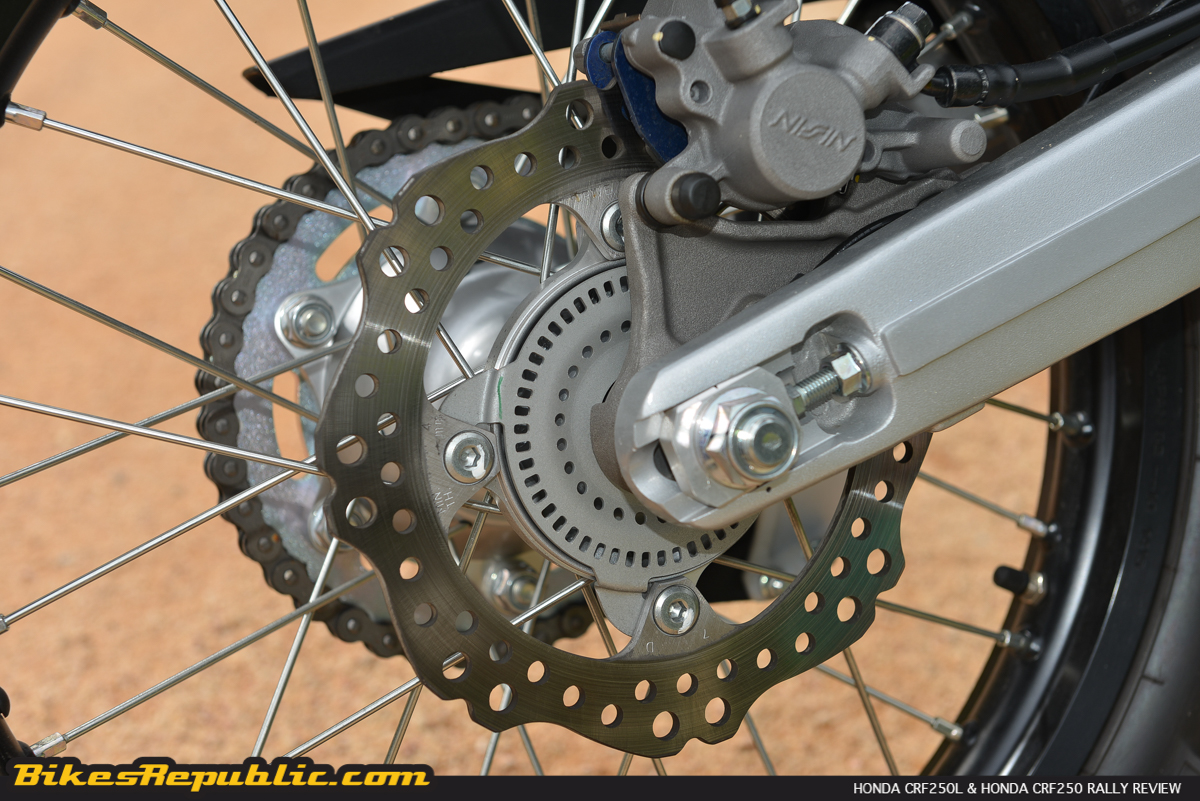
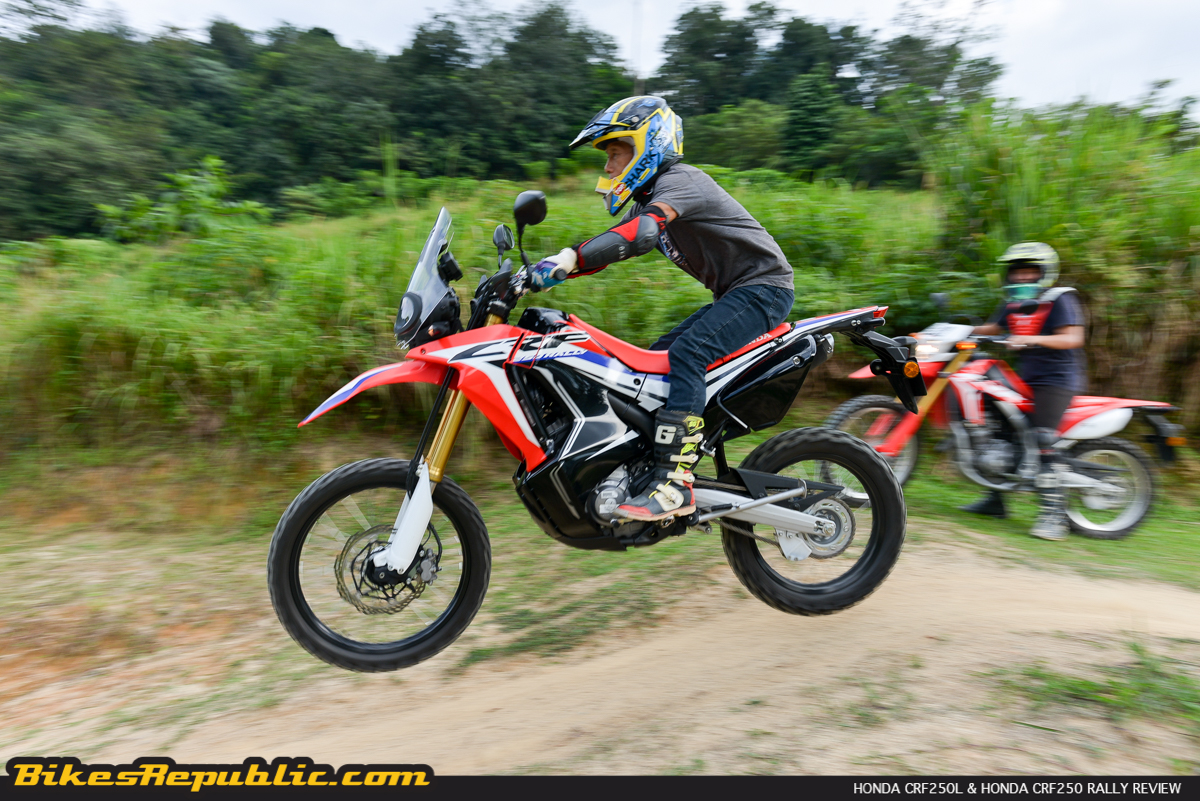
Oh Kah Beng (OKB) took it up over the entire course at MFG. But the bike was visibly struggling up the steep inclines, necessitating OKB to use first gear. “The bike has a soft powerband and needs to revved to get it going,” the GP legend said. “Look at the rear sprocket,” he continued while pointing at it, “It seems to have been geared for the road.”

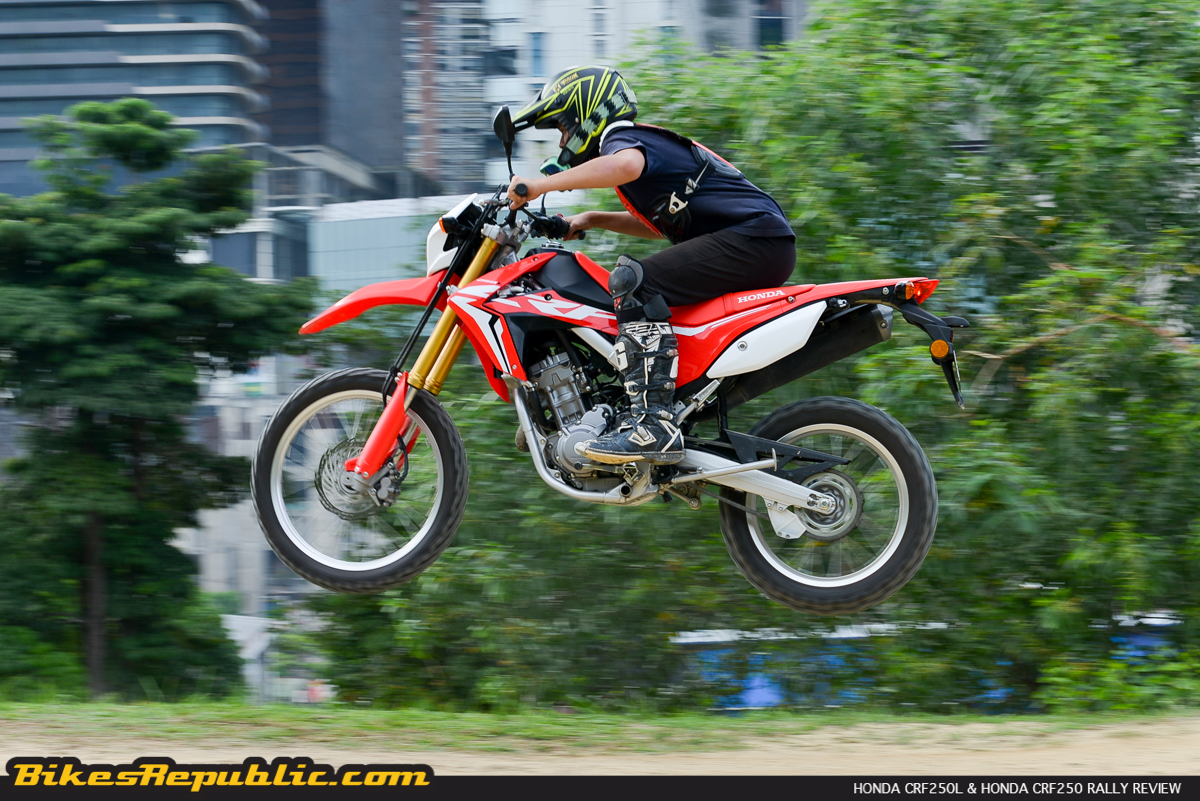
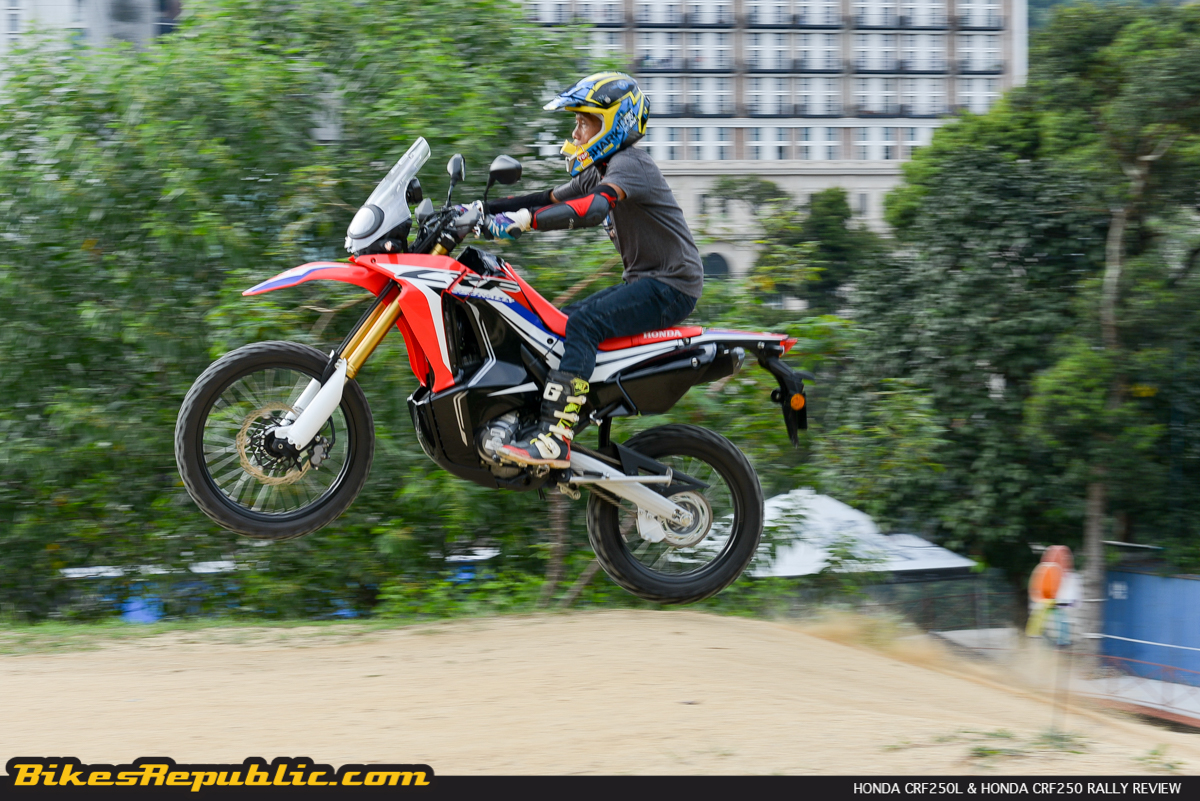
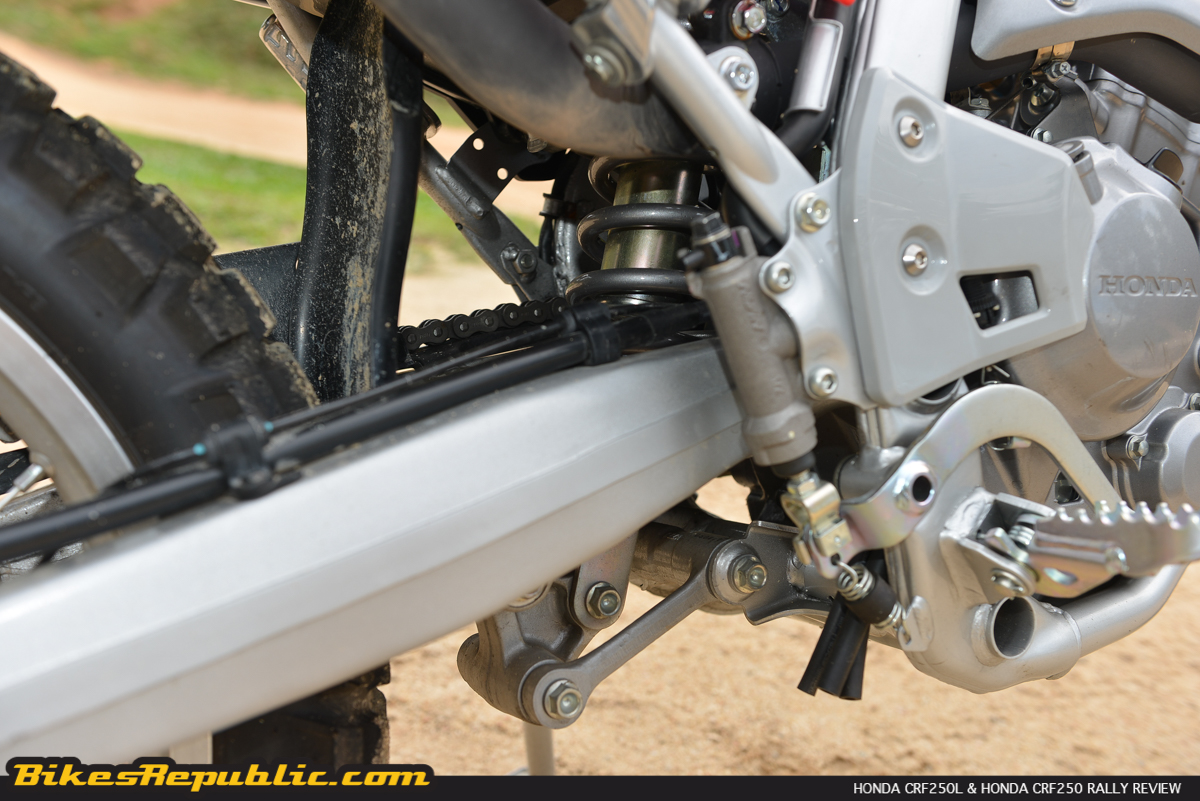
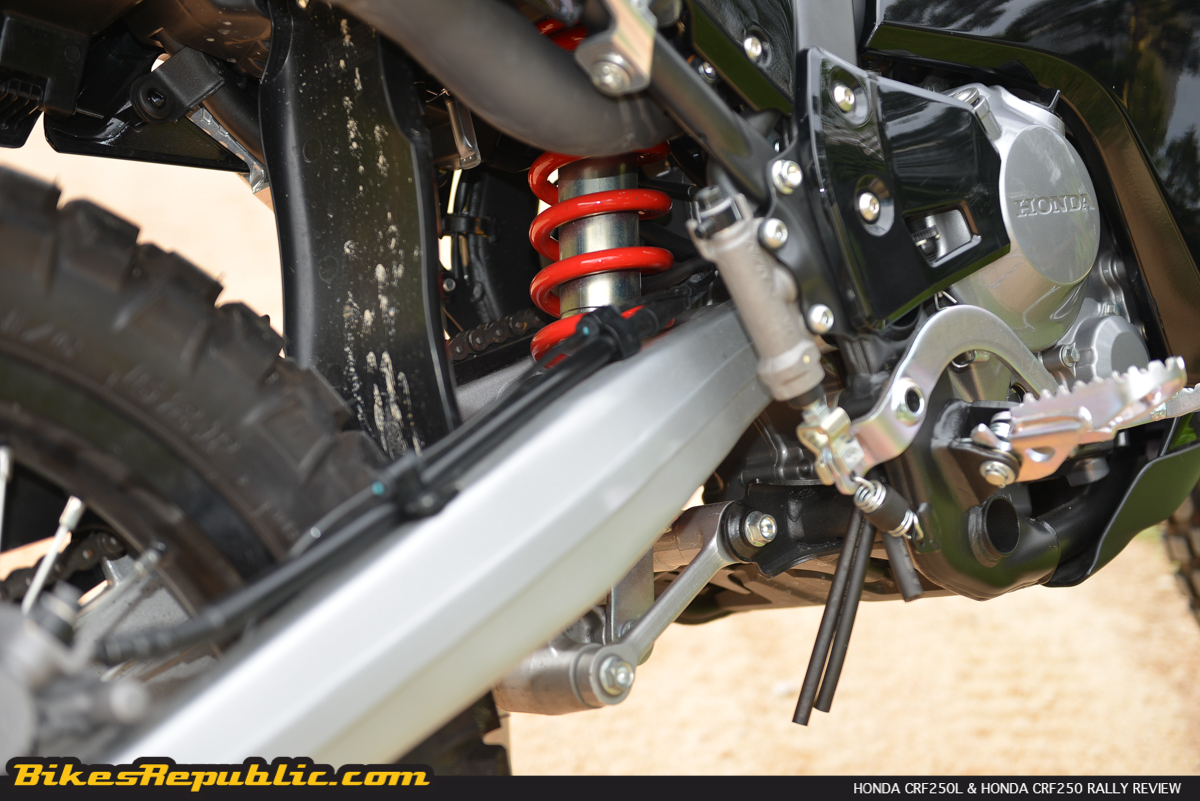
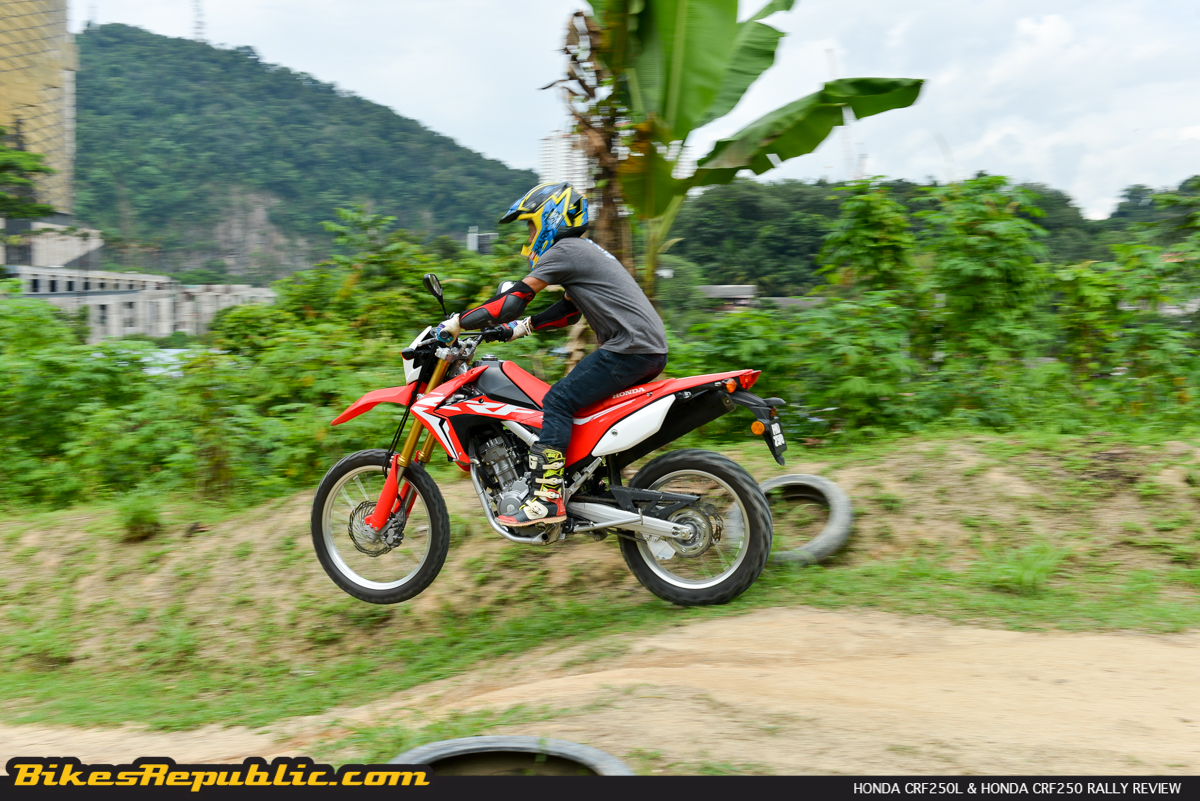
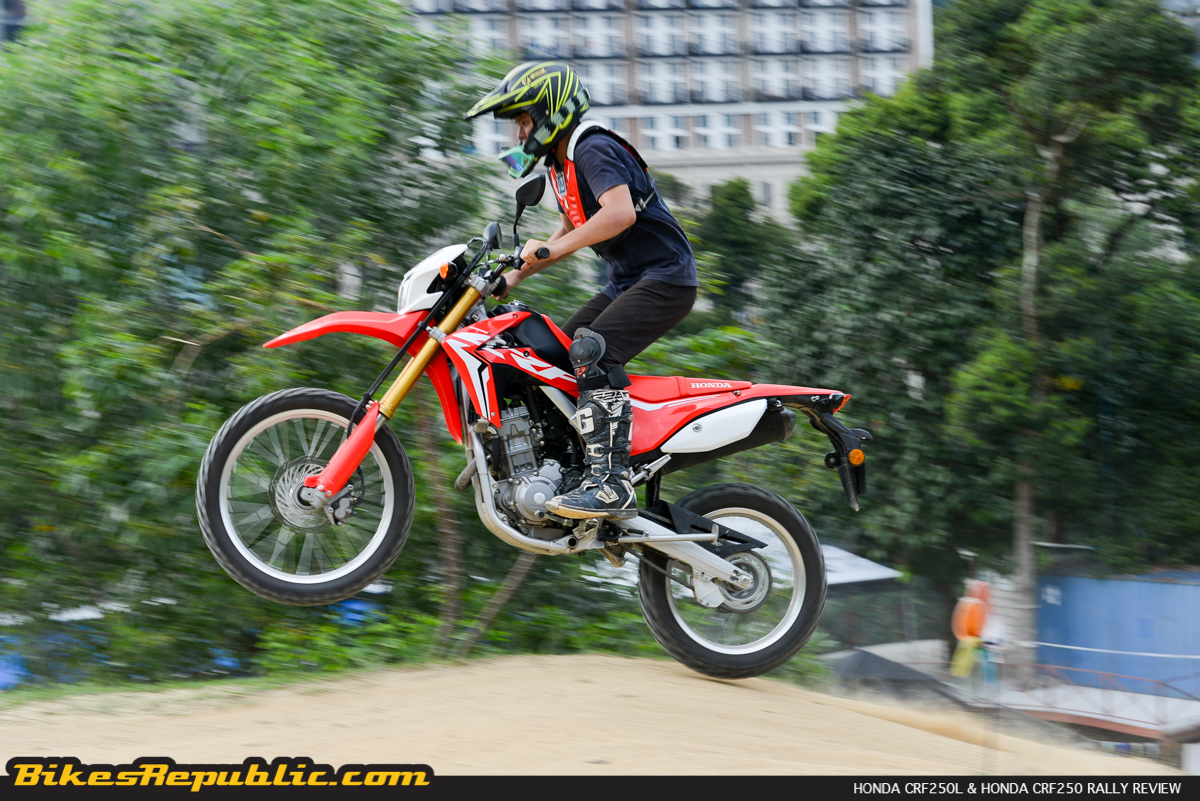
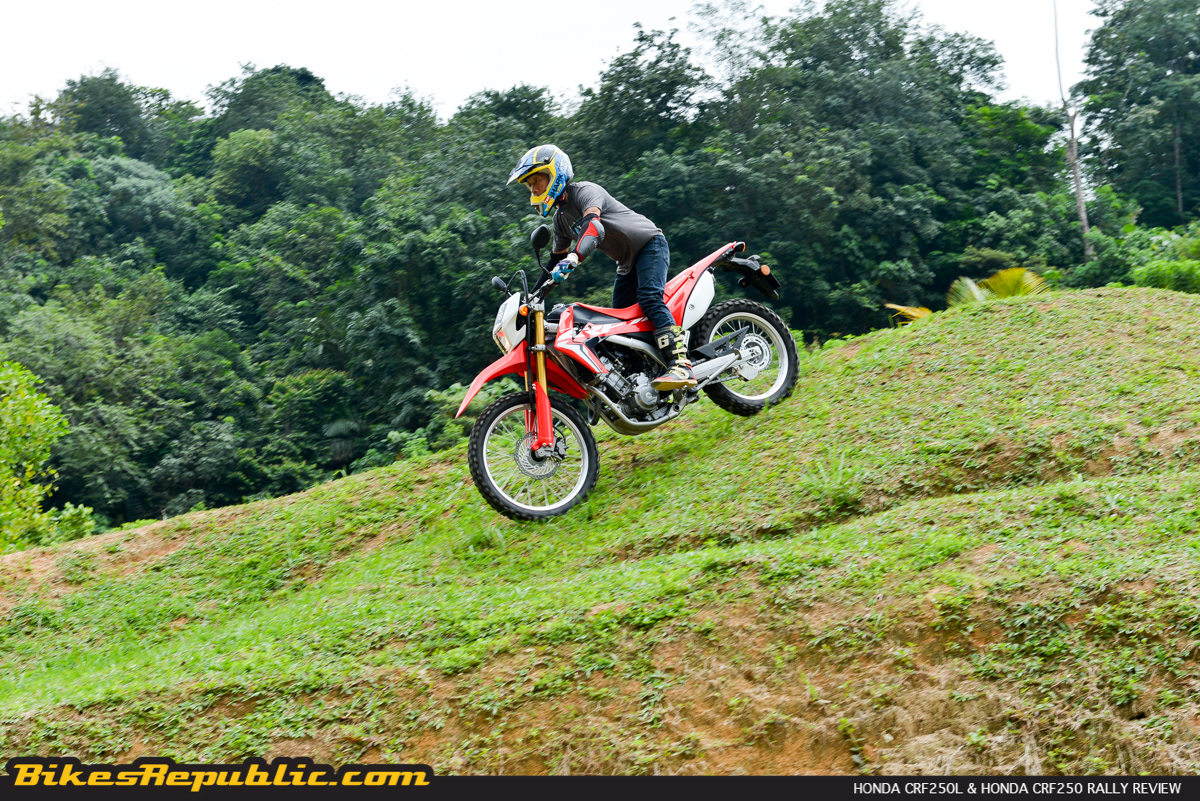
OKB also jumped the bike once. Only once. Observing and shooting photos from the trackside, I saw the rear suspension bottom out with a loud clunk. “I didn’t jump anymore after that. It just bottomed out too early and easily,” said OKB.

I took over while OKB continued with instructing his students. Coming off the humps, bumps and turns, the rear end squatted ominously. There was no point in pushing harder because we discovered that the CRF250L is much more suited for trail “cruising,” rather than as a hardcore enduro bike.

Ridden at a super relaxed pace without jumps and hard turns, the bike was comfortable and composed. It’s a shame since the CRF250L has a quick-revving engine, mated a superb frame and body but let down by being overly soft of both ends.

CRF250 Rally

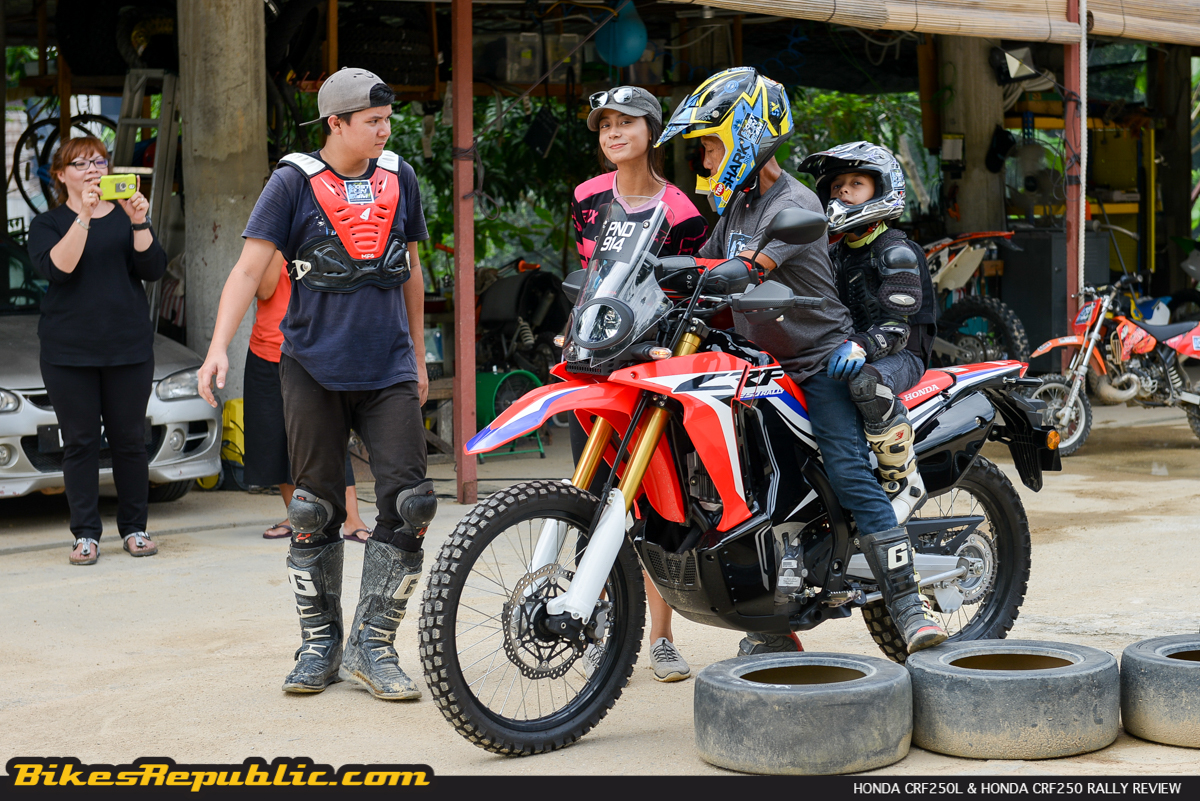
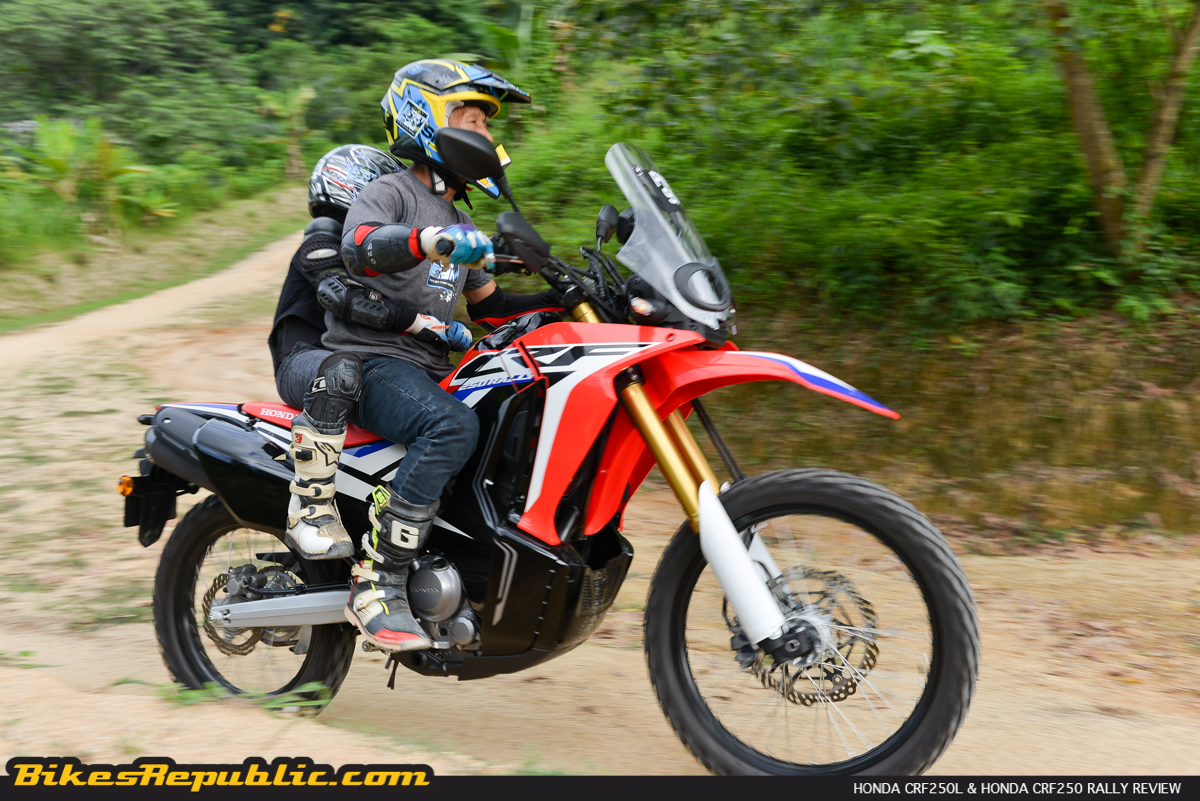
As mentioned earlier, the CRF250 Rally really looked the part of an adventure-tourer.

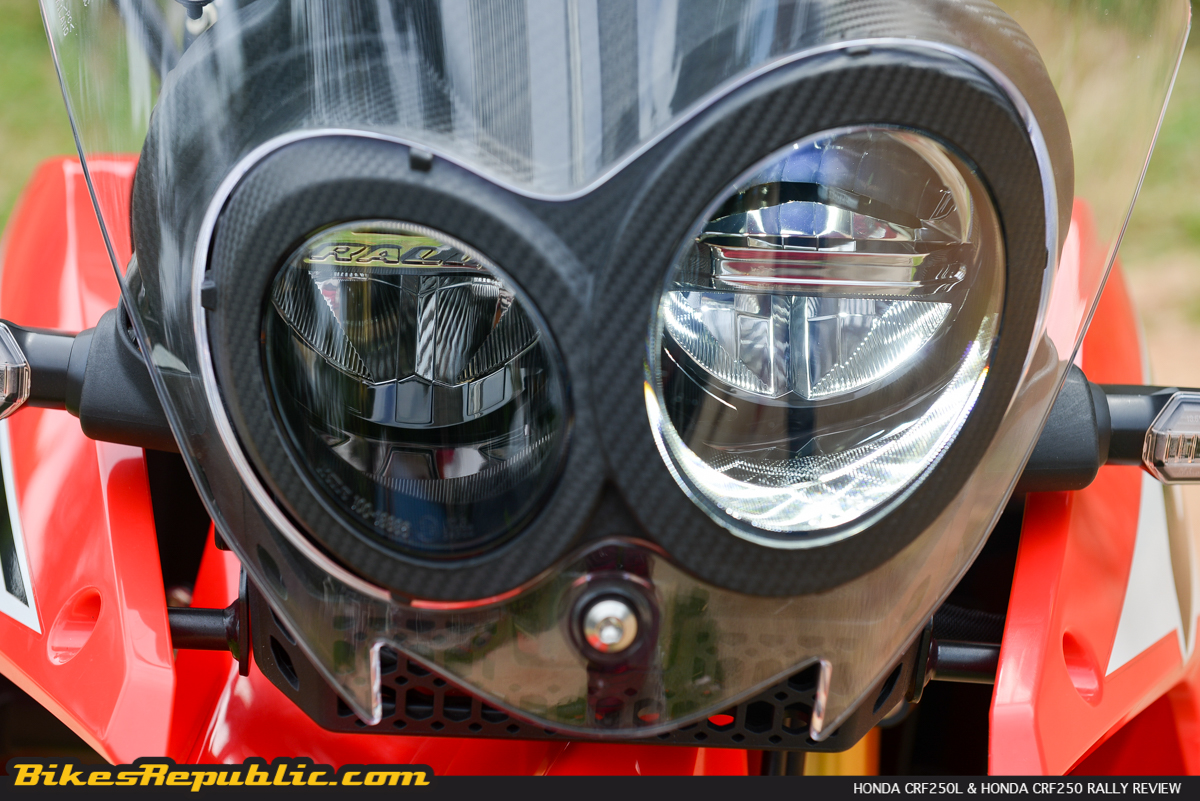
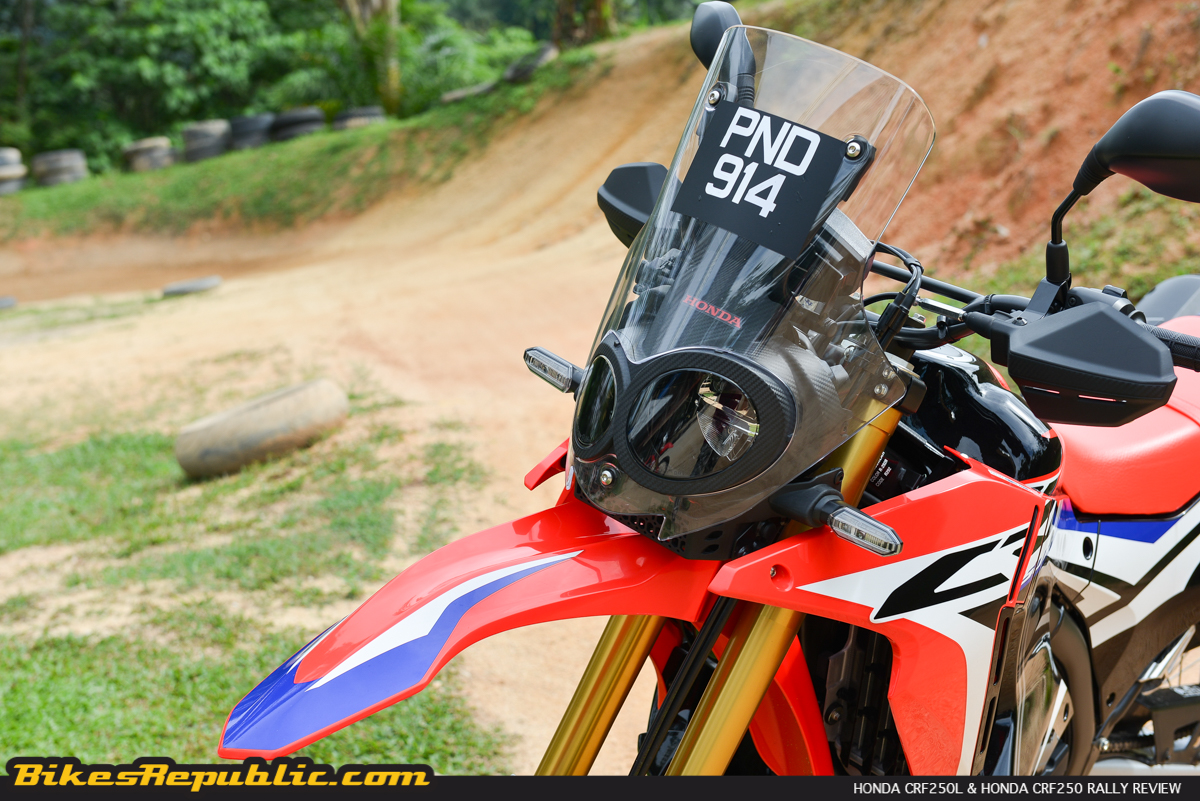
It has a windscreen, super bright dual LED headlamps (the binnacles look like goggles – nice!), a large front bodywork which looked like it had extra fuel tanks, and a large rear section. The colour combination was really pretty too.

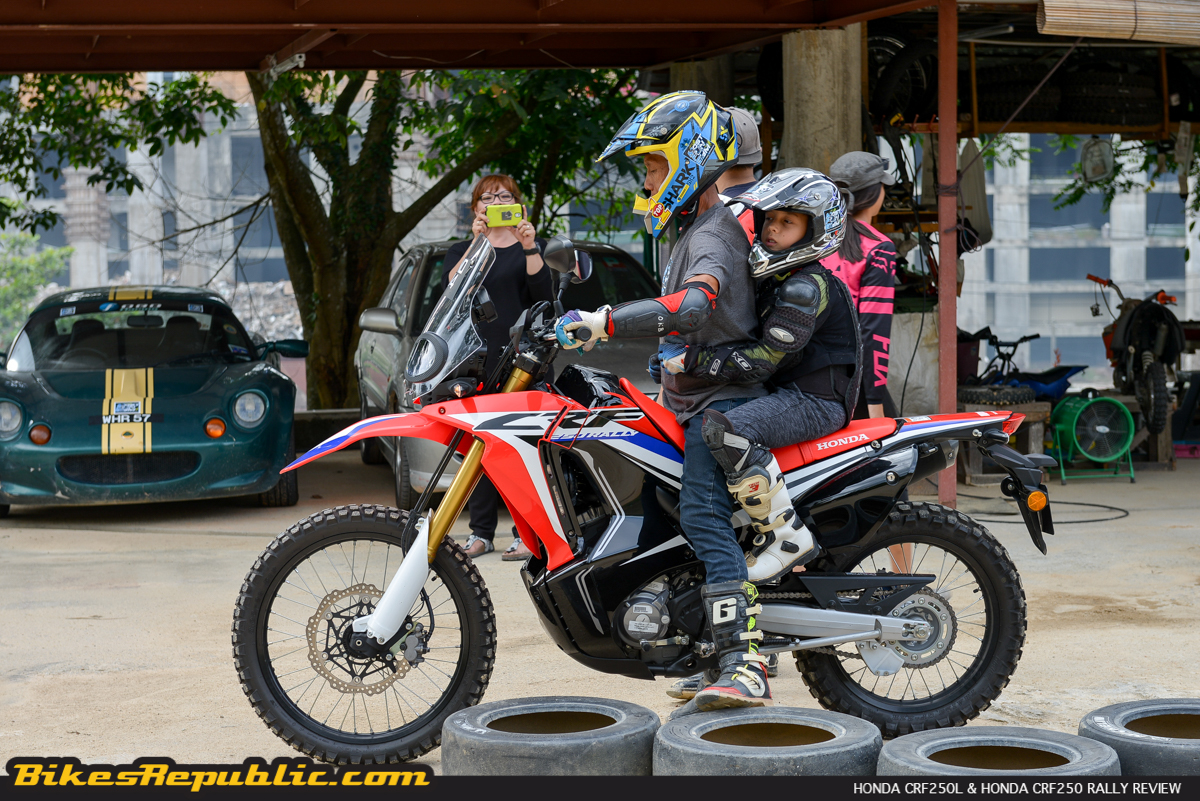
OKB first rode it with a student as his passenger to show him the different points around the track. He then went full tilt after dropping the kid off.

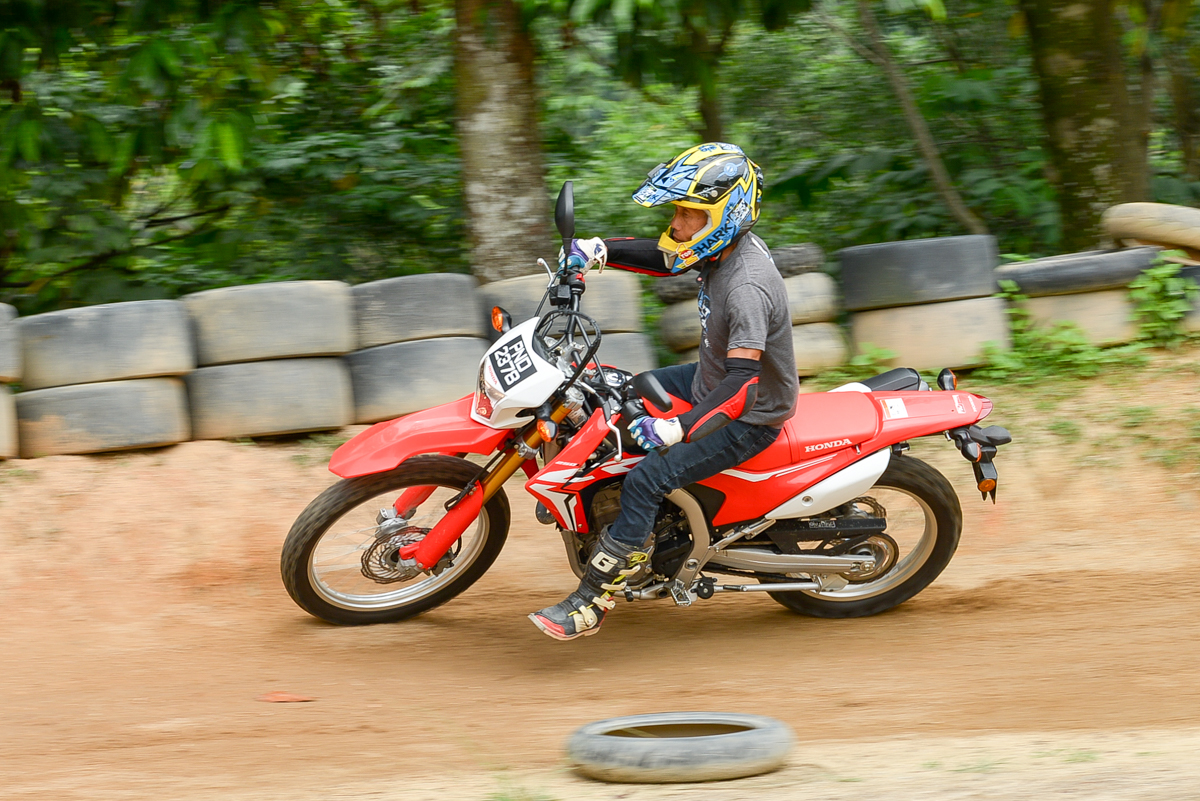
The Rally was visibly harder sprung than the CRF-L and it didn’t bottom out. That was probably because it had to carry more bodywork and load when the owner takes it touring.

However, the engine response was the same as the CRF-L, which needed lots of revs over the harder parts. The rear sprocket is also geared for road riding. “It needs more kick,” said OKB.

OKB continued, “But in all, I liked the Rally better as it’s more composed around the track. It looks pretty sexy too.”

“On the other hand, it doesn’t ride too well on the road, so it means it’s meant for touring in the dirt.”

Sifu is right. I rode the bike on the road and it didn’t want to steer very well. However, once it started to lean, the front end plops into the corner. This was despite me riding it both road (lean in) and dirt style (push down).

Conclusion

I have my heart torn out for this Honda duo.

We understand that the CRF250L’s soft rear spring was intended to sag more with the rider on board so as not to intimidate with a tall ride height, but perhaps a more progressive spring would be good? It’s already using Honda’s wonderful Pro-Link set up anyway. As for the power delivery, it’s great for beginners as it’s not overwhelming. I guess you could always replace the rear sprocket for a bigger one when your skills improve.

As for the Rally. We can’t get over how beautiful it looked, but it too needs some improvements to make it the perfect all-rounder. It could be made to handle better on the road and in the dirt. But again, it was okay as a beginner bike.

PICTURE GALLERY

  • The Kelab Motorsikal Helang Malaysia is well known for carrying out charitable causes.
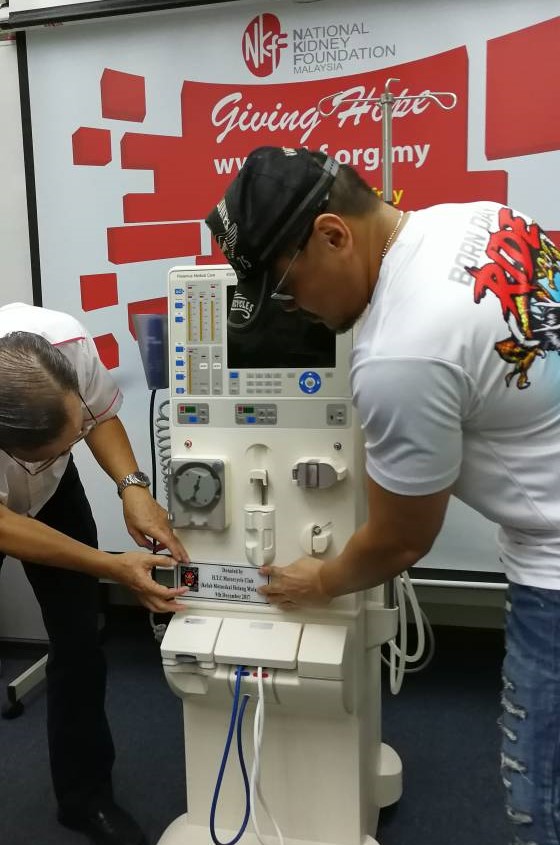
  • Recently donated a new dialysis machine to the National Kidney Foundation.
  • The club consists of businessmen and professionals who are passionate about Harleys and charitable causes.

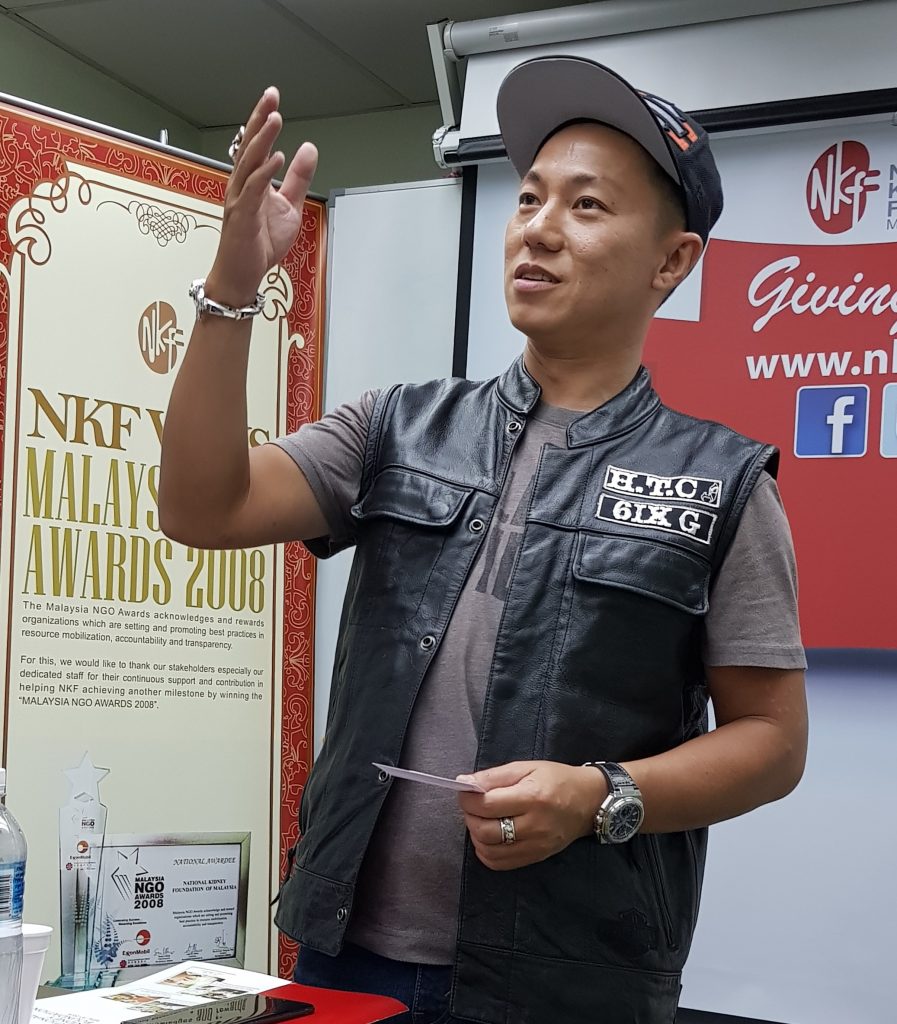
A group of Harley-Davidson bikers thundered through the roads of Petaling Jaya on a Saturday morning to the National Kidney Foundation (NKF) headquarters, all for a good cause. The Kelab Motorsikal Helang Malaysia, which is more commonly known as HTC MC and is well known for supporting charitable deeds regularly, raised RM38,500 to purchase a Dialysis Machine for NKF. Mr Chua Hong Wee, NKF’s CEO was there to receive the machine from one of the founding committee, Mr Tou G.

After 5 years of riding Harley-Davidsons, the club continues their charitable works with the contribution of a dialysis machine to NKF, which will inevitably help the needy. This motorcycle club was formed by a small group of riding friends who were passionate about riding Harley-Davidson motorcycles. Through the regular rides and charity events, the bond of friendship and brotherhood within HTC MC remains strong.

Since 1969 NKF strives to raise the standards of care to needy patients with kidney failure. Spending more than RM30 million annually through subsidizing dialysis treatments to 1,600 patients by utilizing 477 Dialysis Machines located in 26 centers nationwide. Each treatment costs RM163.00 of which the patient only pays RM40.00. The Malaysian government subsidizes RM50.00 and NKF pays the balance of RM73.00 for each patient. The average lifespan of each machine is about 7 to 10 years and at 75% efficiency it will help approximately 822 chronic patients each year.
HTC also welcomes partnership with suitable corporate companies for future CSR programs and projects. For more information and other enquiries, please contact Alvin Seah at +60127827787 or Lim Joon Seong at +60123813122

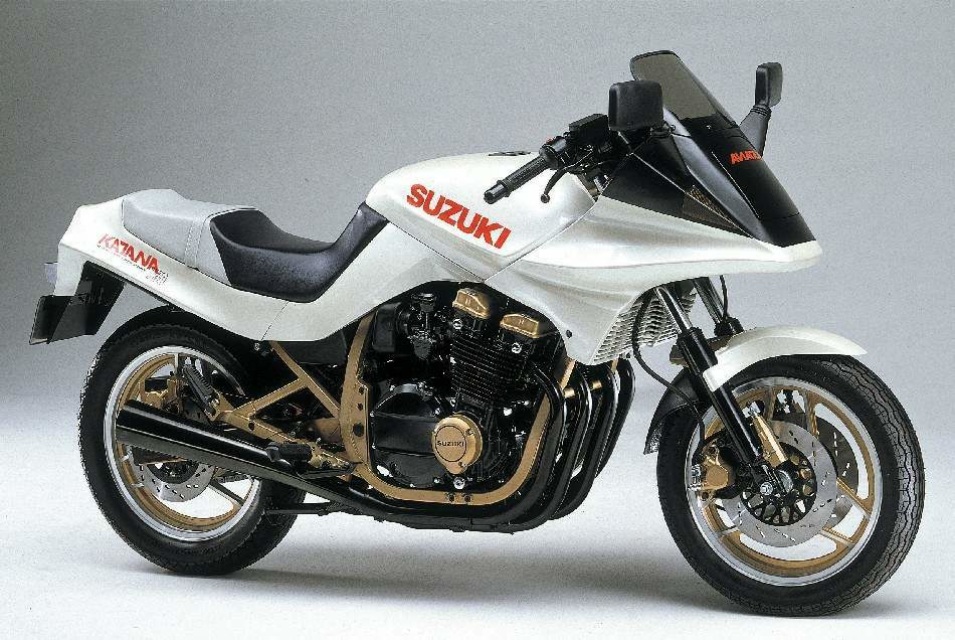
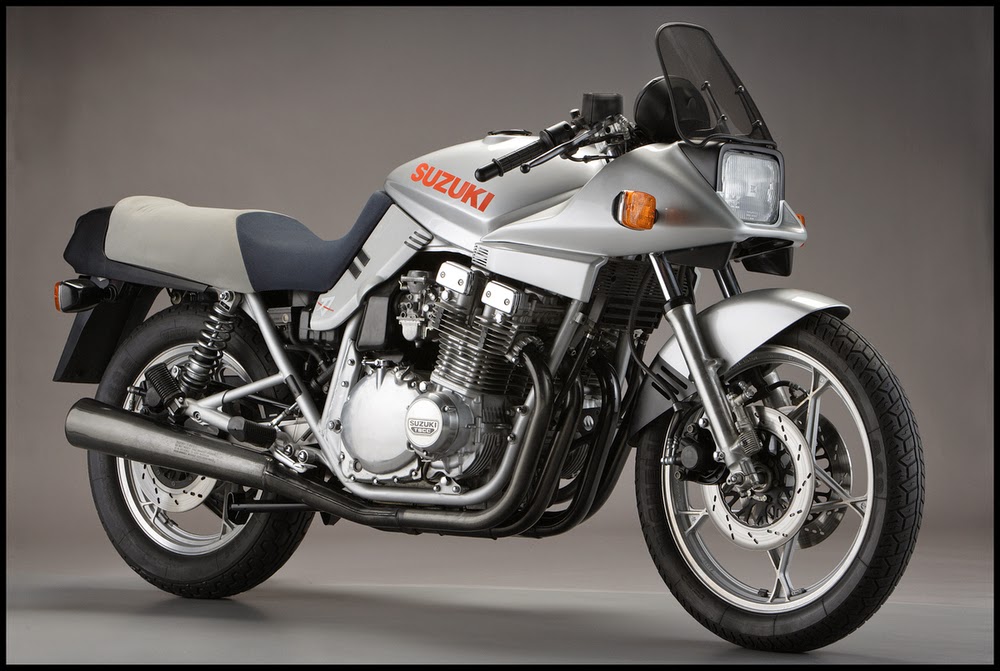
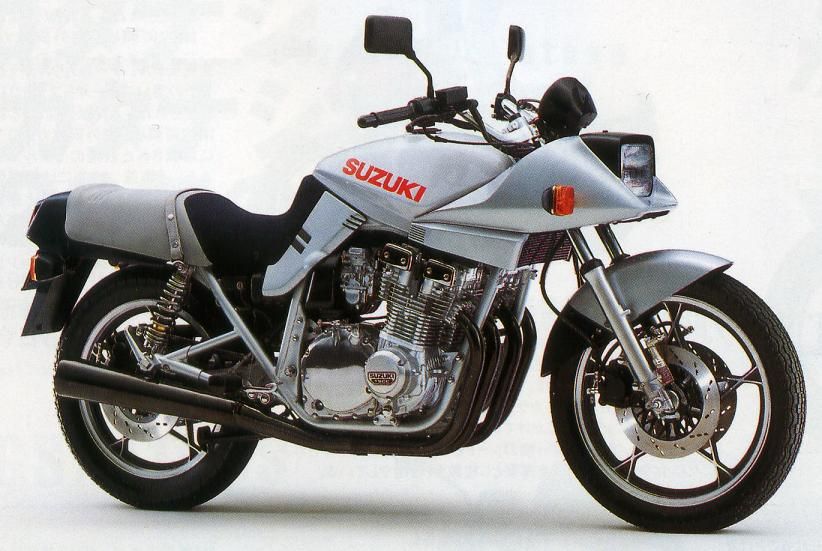
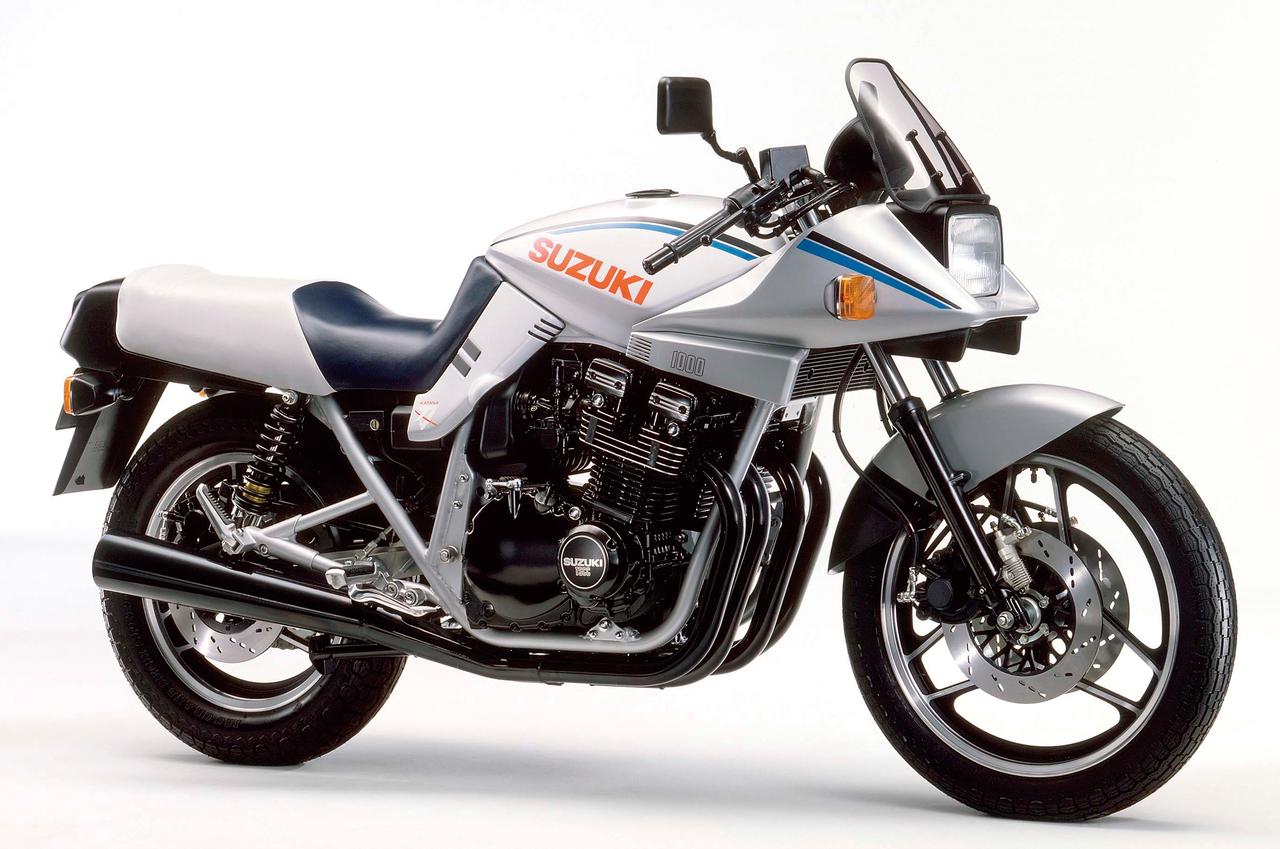
Here in Part 4 of the Ten Most Unusual Motorcycles, we look at a Suzuki which has gone on to a cult status.: The GSX1100 and GSX750 Katana.

Please click here for Part 1 (Suzuki RE5), here for Part 2 (Honda CBX1000), and here for Part 3 (Yamaha GTS1000).

The name “Katana” alludes to the Japanese Samurai sword, hence the symbol. The name and logo went on to grace many other Suzukis thereafter. Here in Malaysia, remember Suzuki Best and RG owners would apply the stickers to their bikes? That was part of the Katana’s legacy.

The Suzuki Katana was designed by Hans Muth and his company, Target Design. Muth was the ex-design chief at BMW and was tasked with overhauling the Japanese manufacturer’s image.
Suzuki chose one of Muth’s designs and the first production Suzuki GSX1100S Katana was made public in 1980. While they didn’t follow the concept’s design to the letter, many important design cues were adopted.
The design was avant-garde from the cookie cutter bikes of the era. Most notable feature was how the rear part of the fuel tank and front portion of the seat blended together. Also, the passenger’s seat was slightly raised and coloured differently, lending to a solo-seater look. Yes, it was the Suzuki Katana that started it.

The 1075cc, air-cooled, DOHC, inline-Four produced 109.5 bhp and Suzuki claimed the Katana as being the fastest production motorcycle. It ran the ¼-mile (400m) in 11.9 seconds at 191.5 km/h.

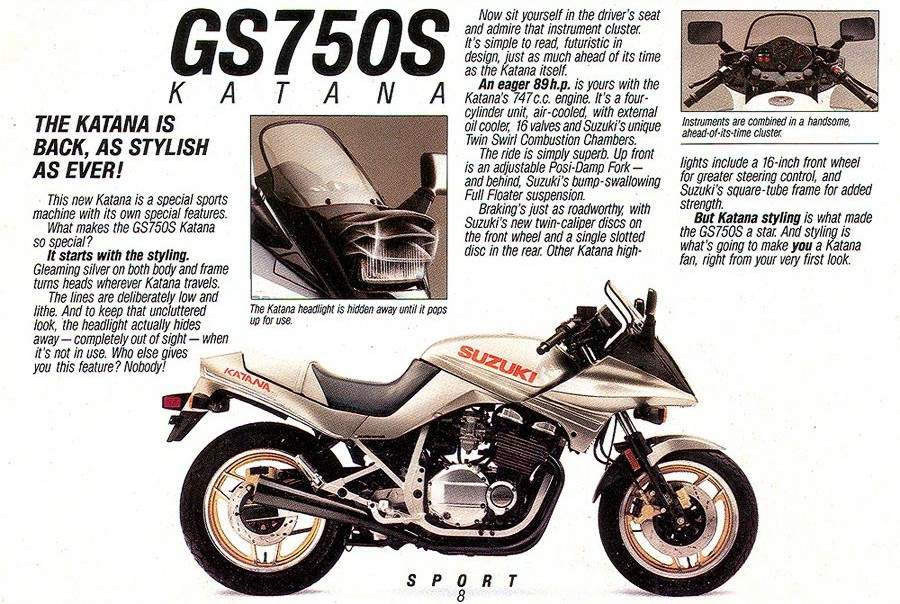
Following in the 1100’s tyre tracks, Suzuki launched the GSX750S Katana in 1981 and it had no windscreen. The model with the windscreen was the 750SS. The 747cc, air-cooled, DOHC, inline-Four produced 68 bhp.

1981 also saw the superbike racing homologated 1000S, since superbike racing capped the engine capacity at 1000cc. it had Mikuni smooth-bore carburettors among other racing accoutrements. This was the rarest Katana and collectors will pay a ransom for one!

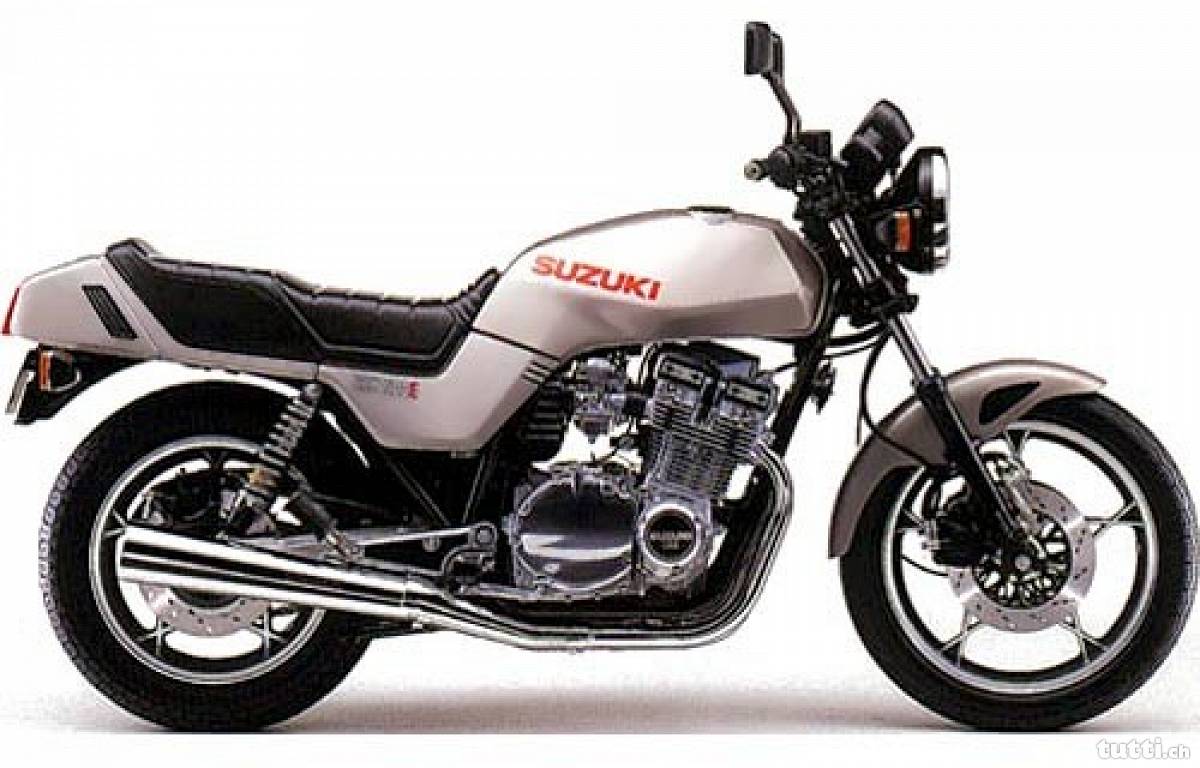
1982 saw the Katana’s futuristic looks being modified to feature a round headlamp and tail unit from the previous year’s GSX1100E for the American market. Buyers there were obviously slow in adapting to change.

Not many changes were afoot for the Katanas in 1983, but it was 1984 when the 750 was forever known as the legend.

For that year, the GSX750SE Katana was a completely new model. The 16-valve, oil-cooled, inline-Four was taken from the GSX750R/ES/EF and made 90 bhp. It was also given the Positive Damping Forks up front and Suzuki Full Floater rear suspension which did away with the dual shocks. The frame, parts of the wheels and engine were painted in gold.

The most well-known feature was of course the pop-up headlight.

The Suzuki GSX750S continued into its last year of production in 1985 for the worldwide market and 1986 for the domestic market, making these models somewhat rare. Many collectors would love to have one in their collection.

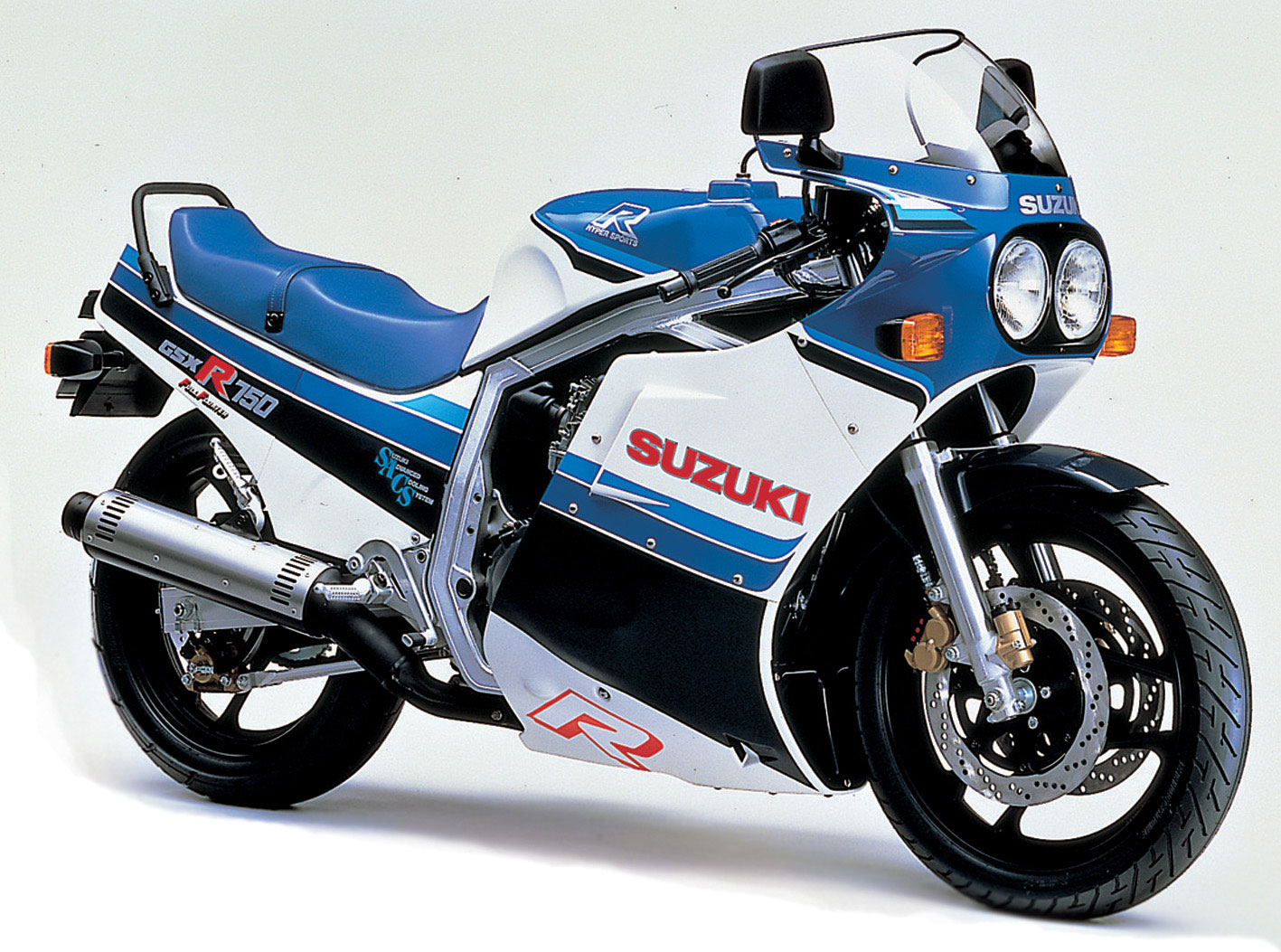
It was sadly the same on the GSX1100S Katana front as it faded in obscurity as Suzuki had launched the GSX-R750F sportbike in 1985. Affectionately known as the “Slabside” or “Slabby,” the first Gixxer heralded the new age of race replica sportbikes and Suzuki went all out to capitalize on it.

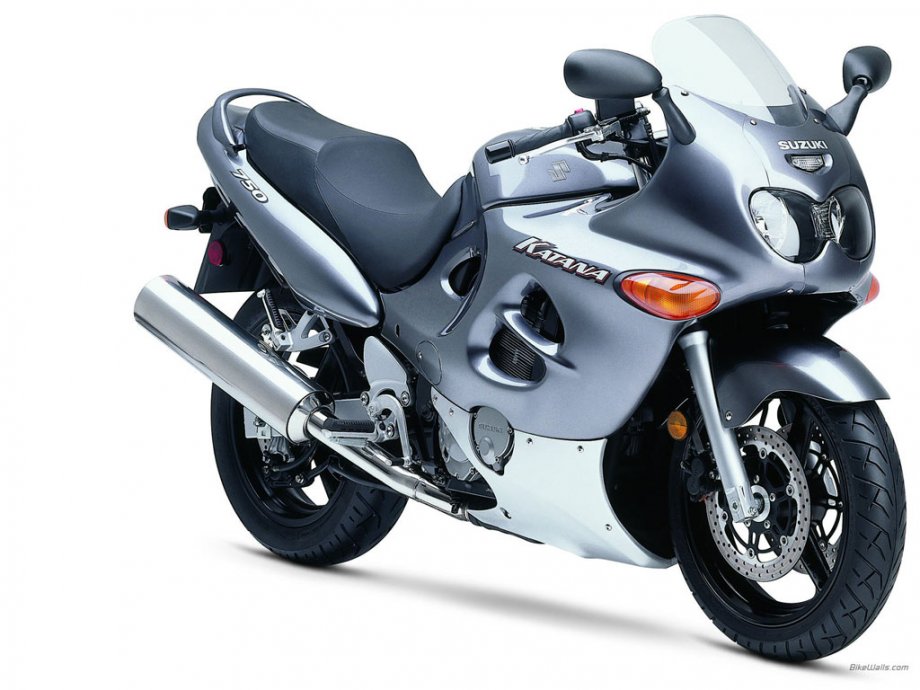
Perhaps realizing their mistake, Suzuki in America tried to revive the Katana name in 1988, by slapping the name and symbol on a host of sport-touring and touring models, but it was not to be the same.

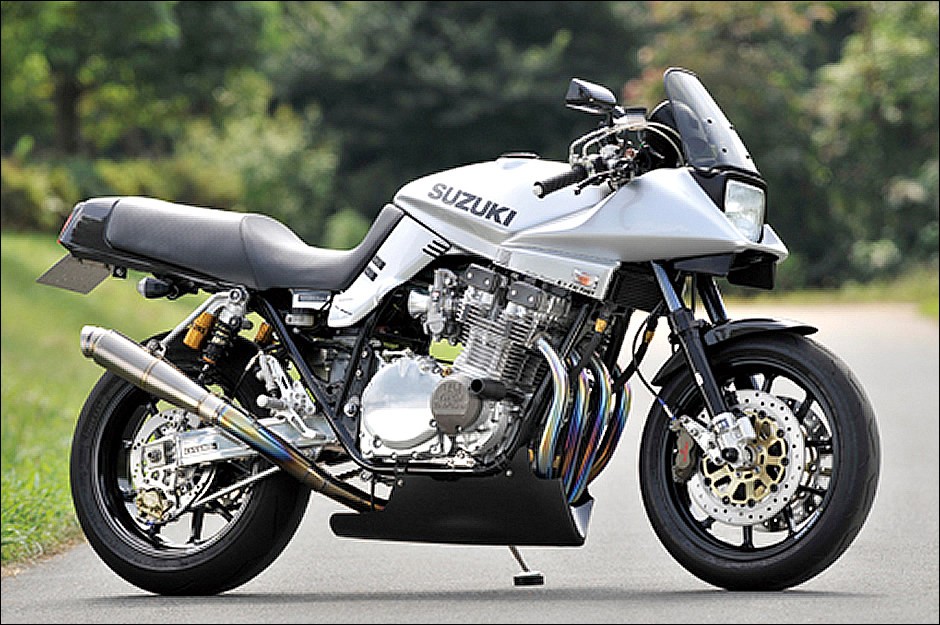
It’s a great shame to lose the Katana as it is still beautiful even after 27 years. It was truly unusual for its time and it still is somewhat today (that’s why there are many customized Katanas around today).

Please click here for Part 1 (Suzuki RE5), here for Part 2 (Honda CBX1000), and here for Part 3 (Yamaha GTS1000).

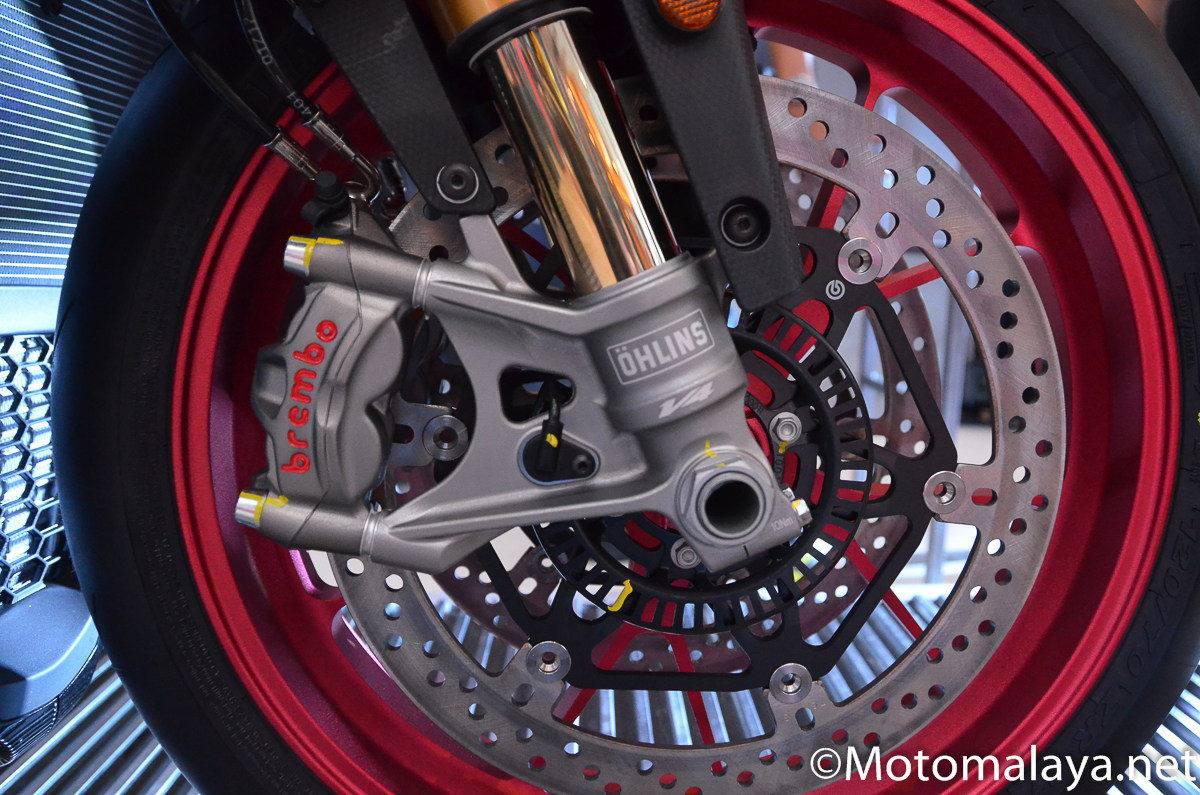
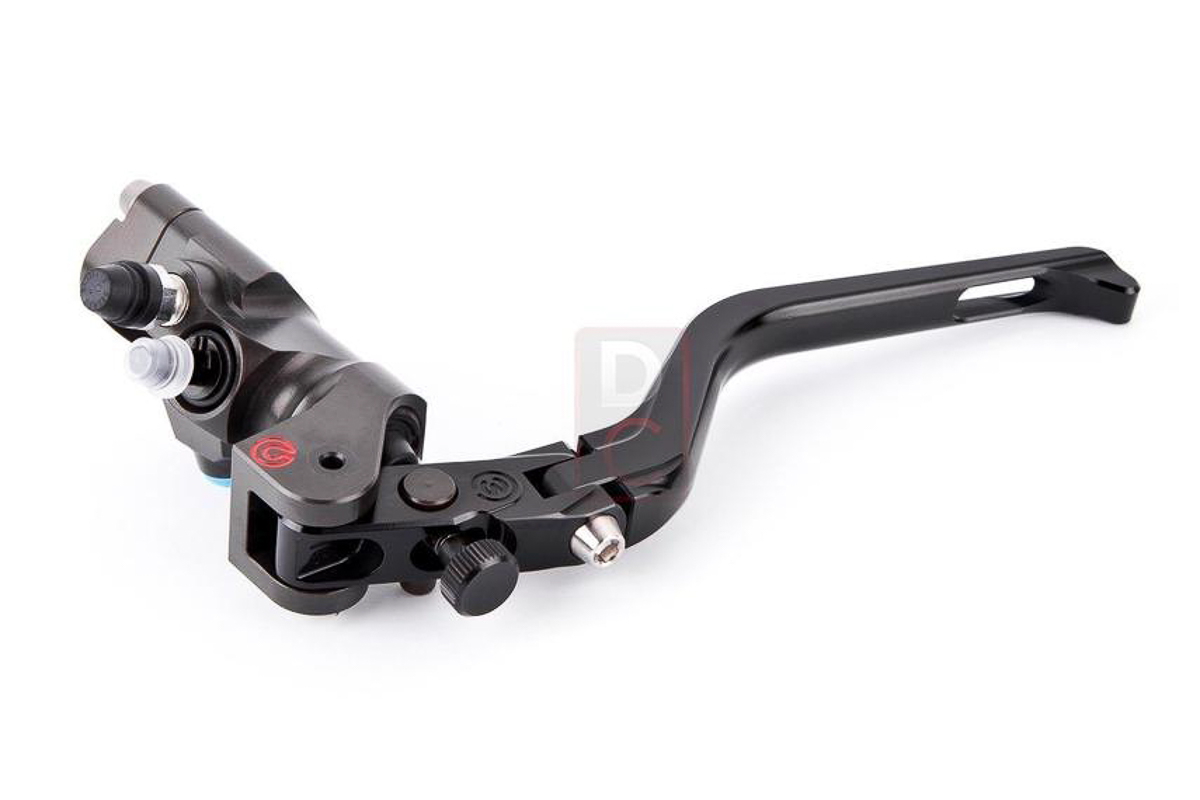
A huge Brembo brake recall has been issued in the US in reference to their popular PR16 radial master cylinder unit commonly paired with Brembo M50 calipers.

Apparently, the internal piston in the master cylinder made out of plastic is prone to cracks which may lead to major brake failure.

The recall for some models from Ducati and Aprilia in the US has been confirmed and Brembo will issue a new aluminium master cylinder piston as replacement.

In reference to a recent report made by Asphalt and Rubber, the gods of braking technology Brembo has officially issued a massive recall on their PR16 radial master cylinder unit which is the master cylinder usually found together with the Brembo M50 calipers. (more…)

Archive

Follow us on Facebook

Follow us on YouTube