Bikesrepublic

Latest News

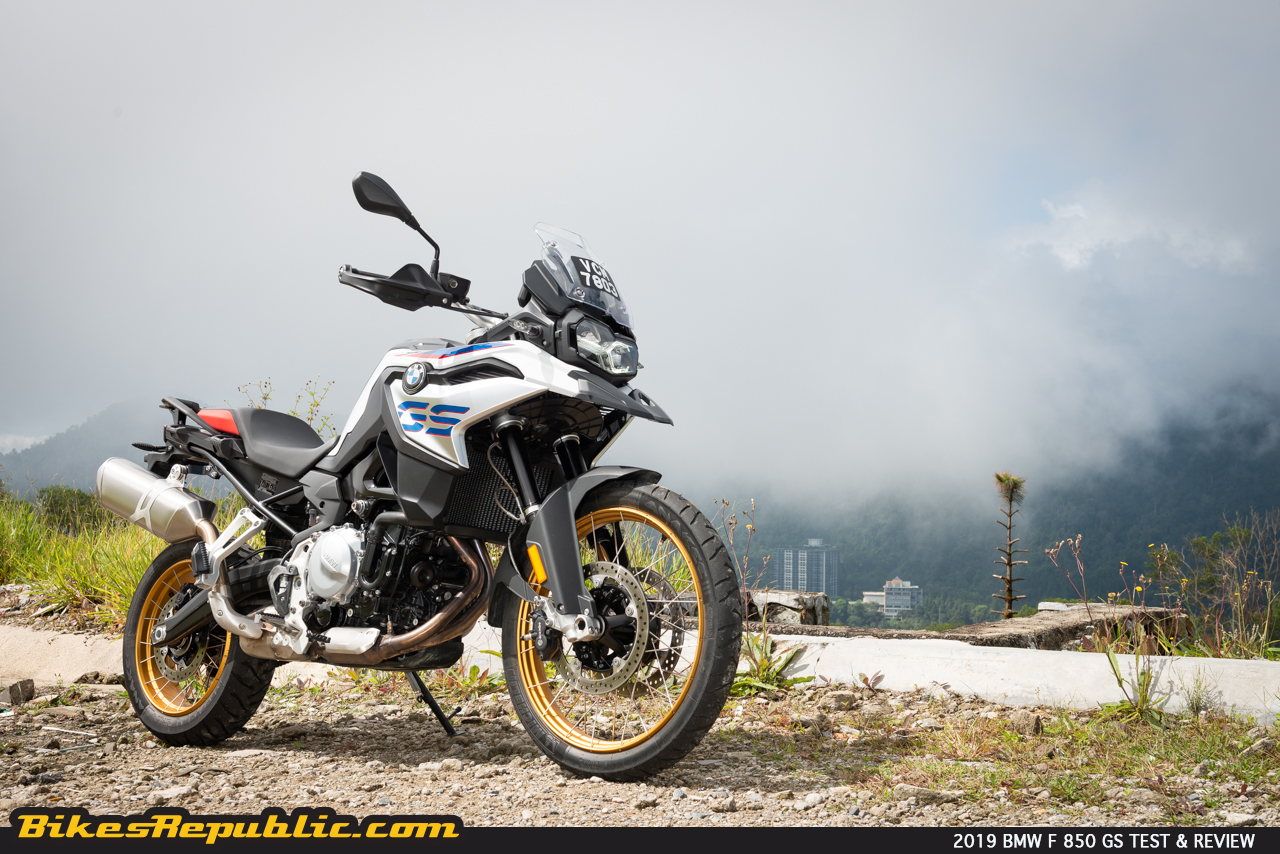
  • The 2019 BMW F 850 GS is all-new and brings much welcomed refinements.

  • It filled its sport-touring capacity pretty well.

  • However, it’s really strong in off-road riding.

The 2019 BMW F 850 GS is finally available since its launch in October last year.

It’s immediately evident that the new bike takes the middleweight GS to greater heights, making its F 800 GS predecessor look spartan and unfinished, even.
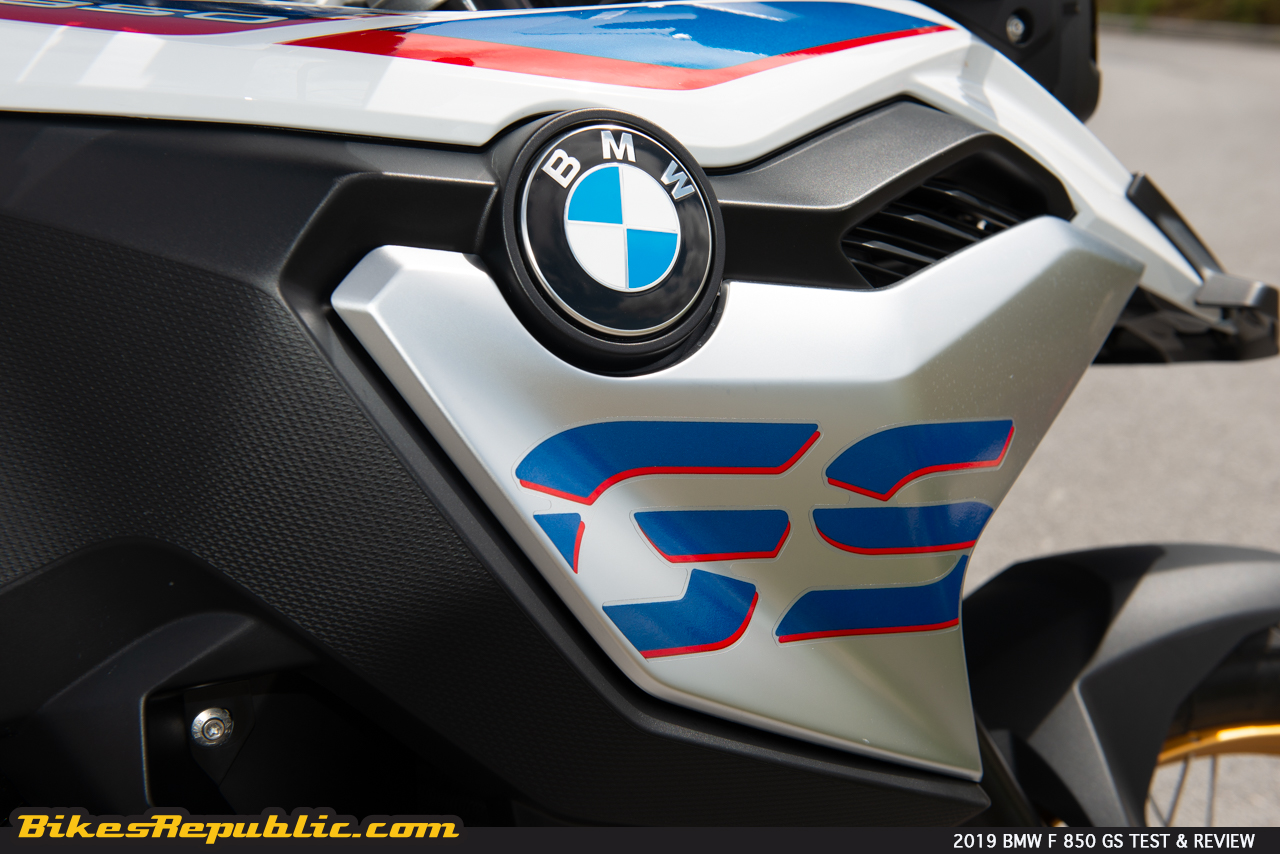
Of course, BMW Motorrad has to update the F 8XX GS line-up to where it is now. Its competitors, the Triumph’s excellent third-generation Tiger 800 line-up and KTM 790 Adventure have set the middleweight standard.

Styling

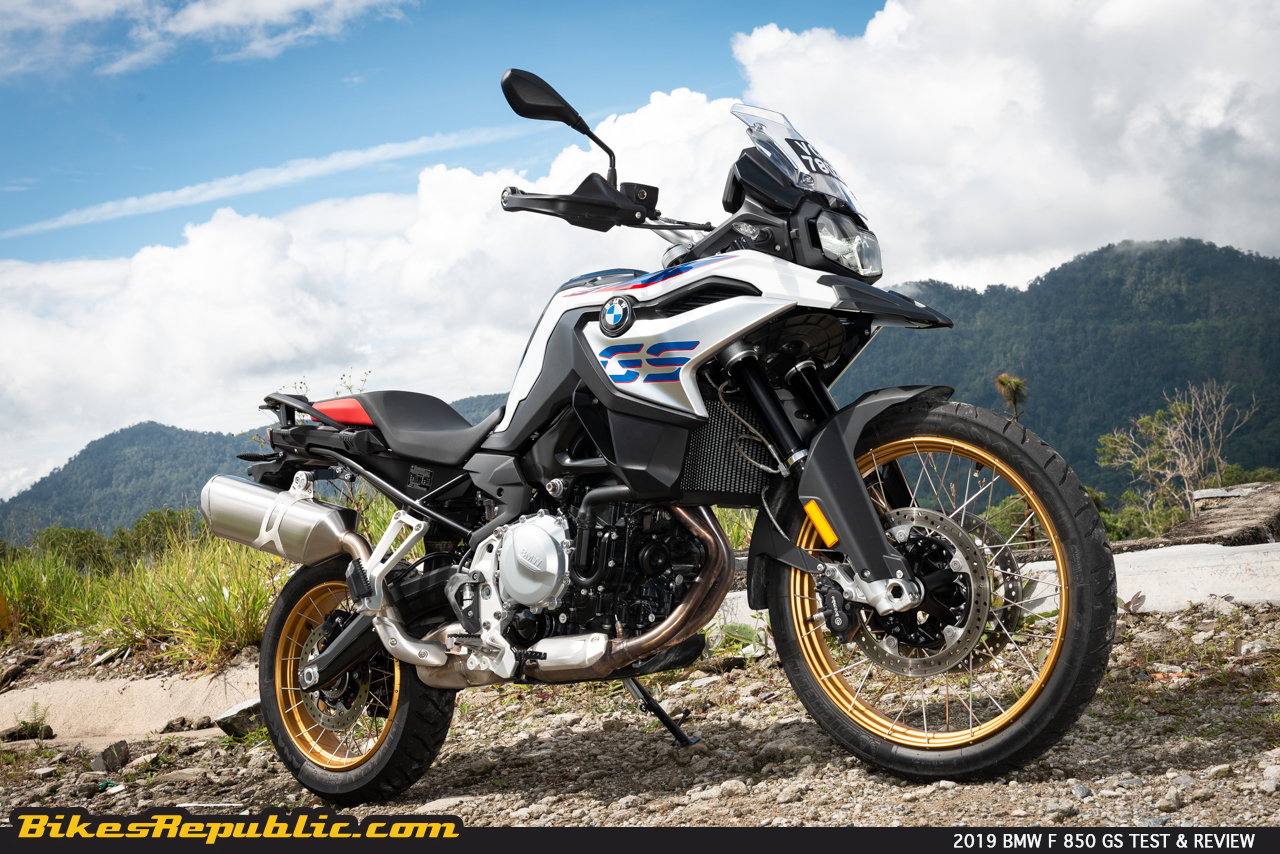
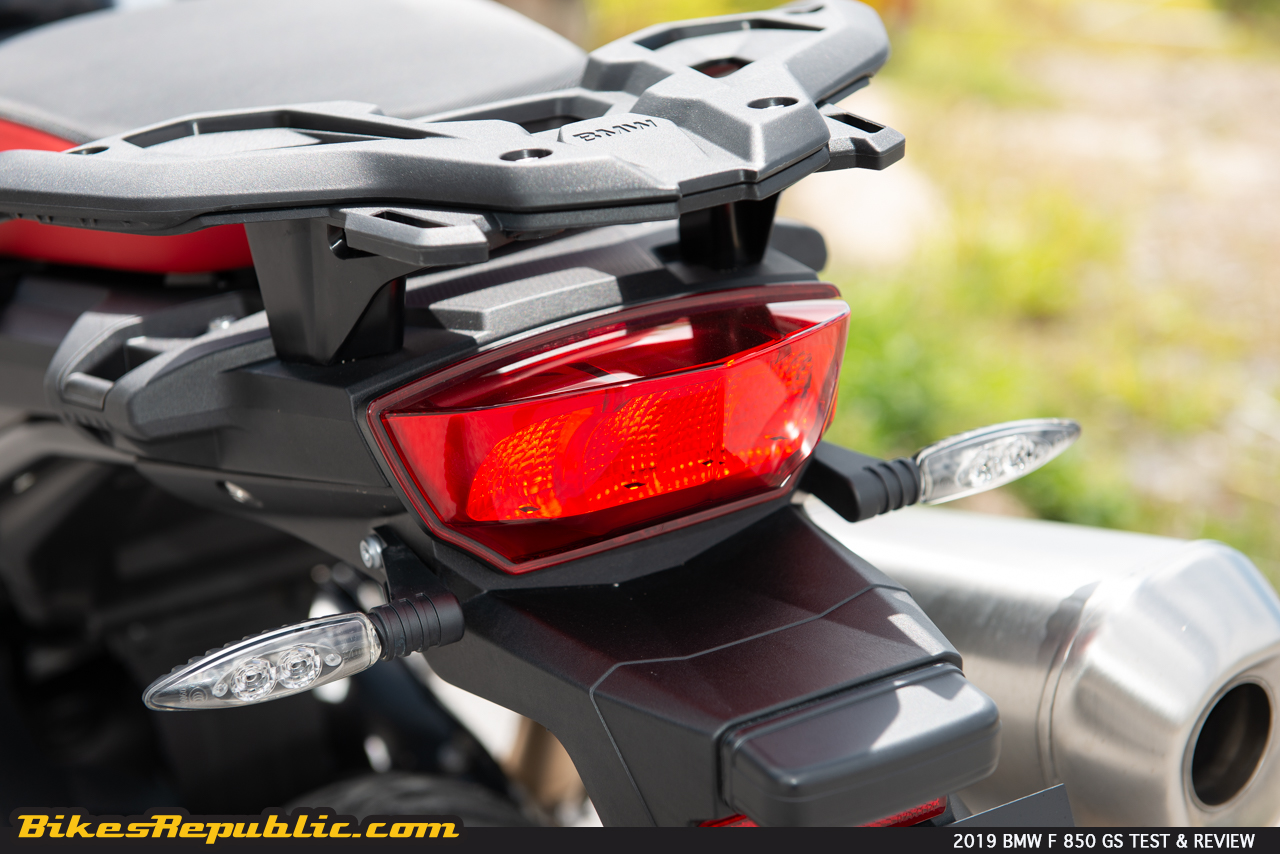
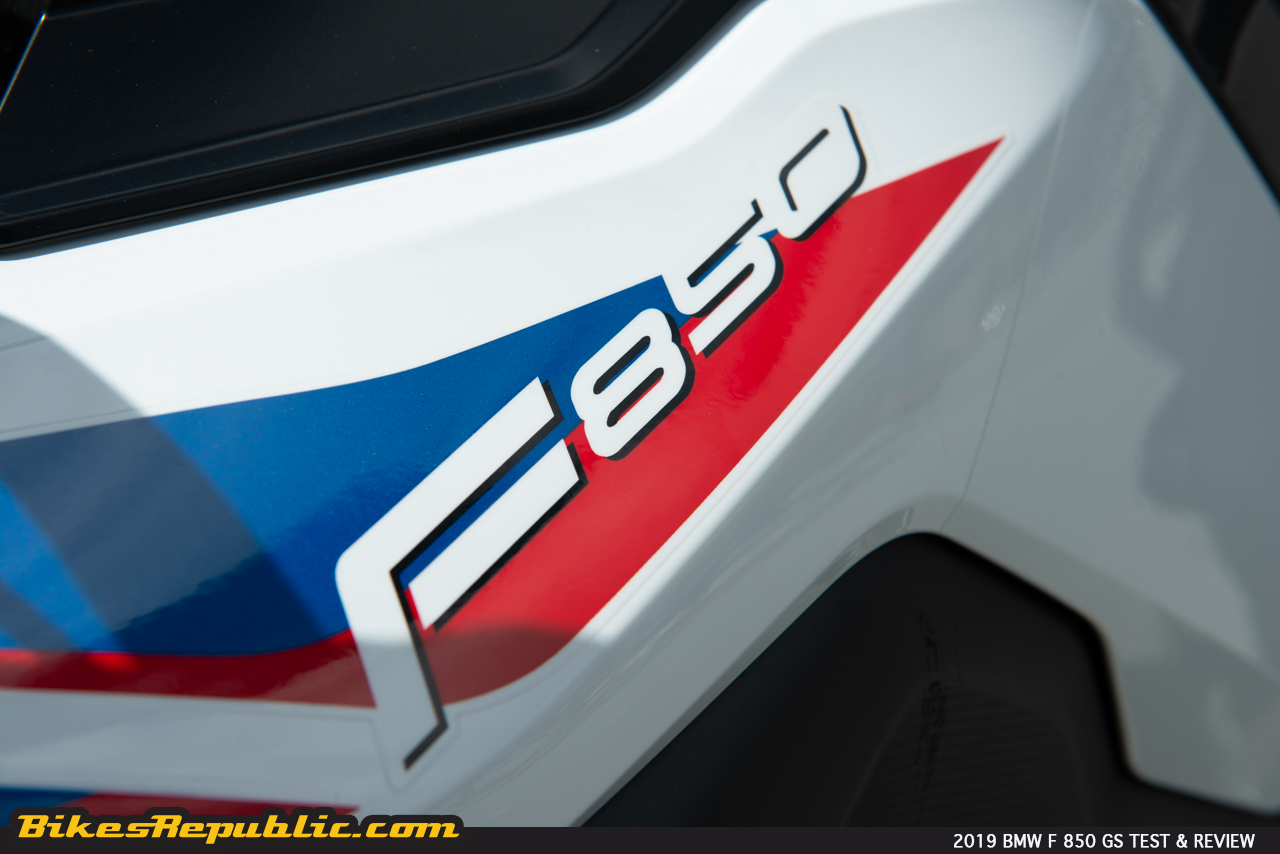
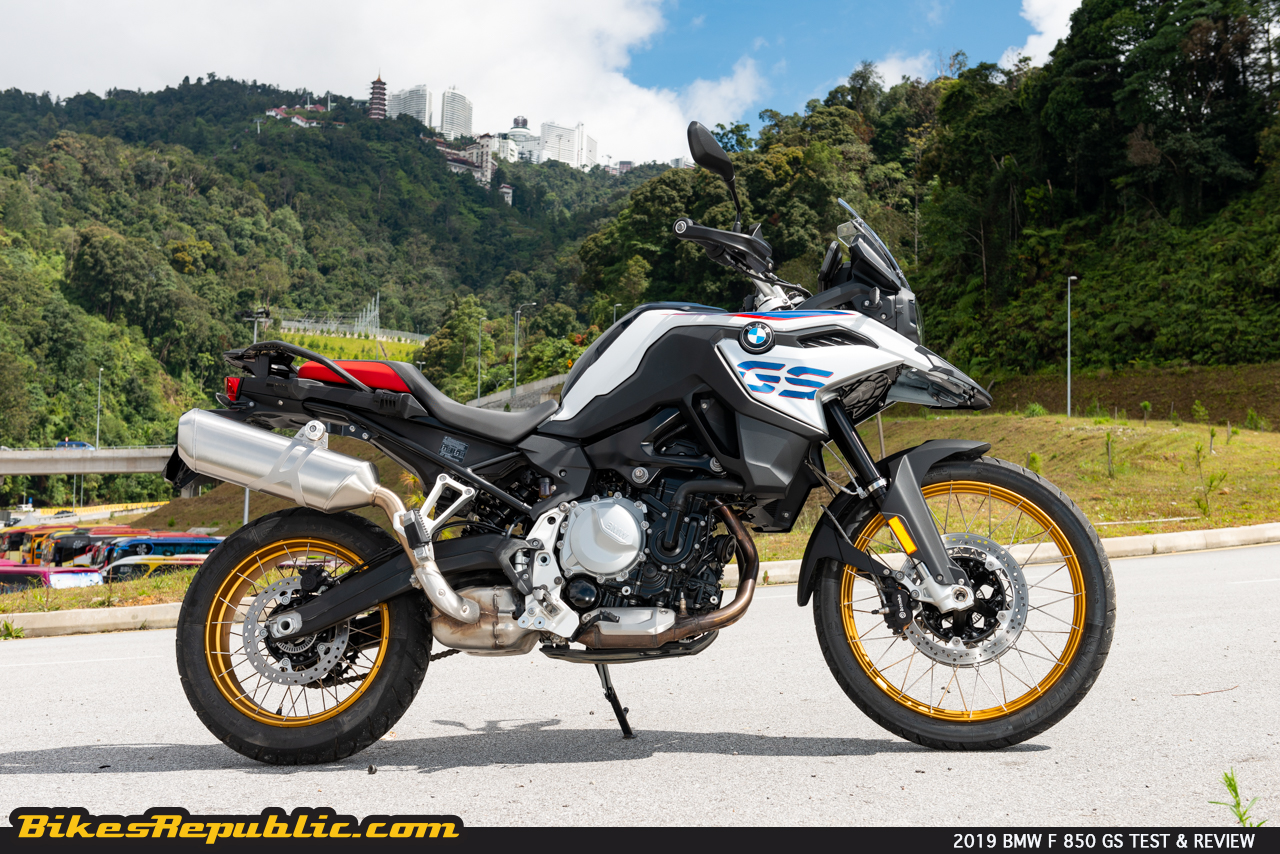
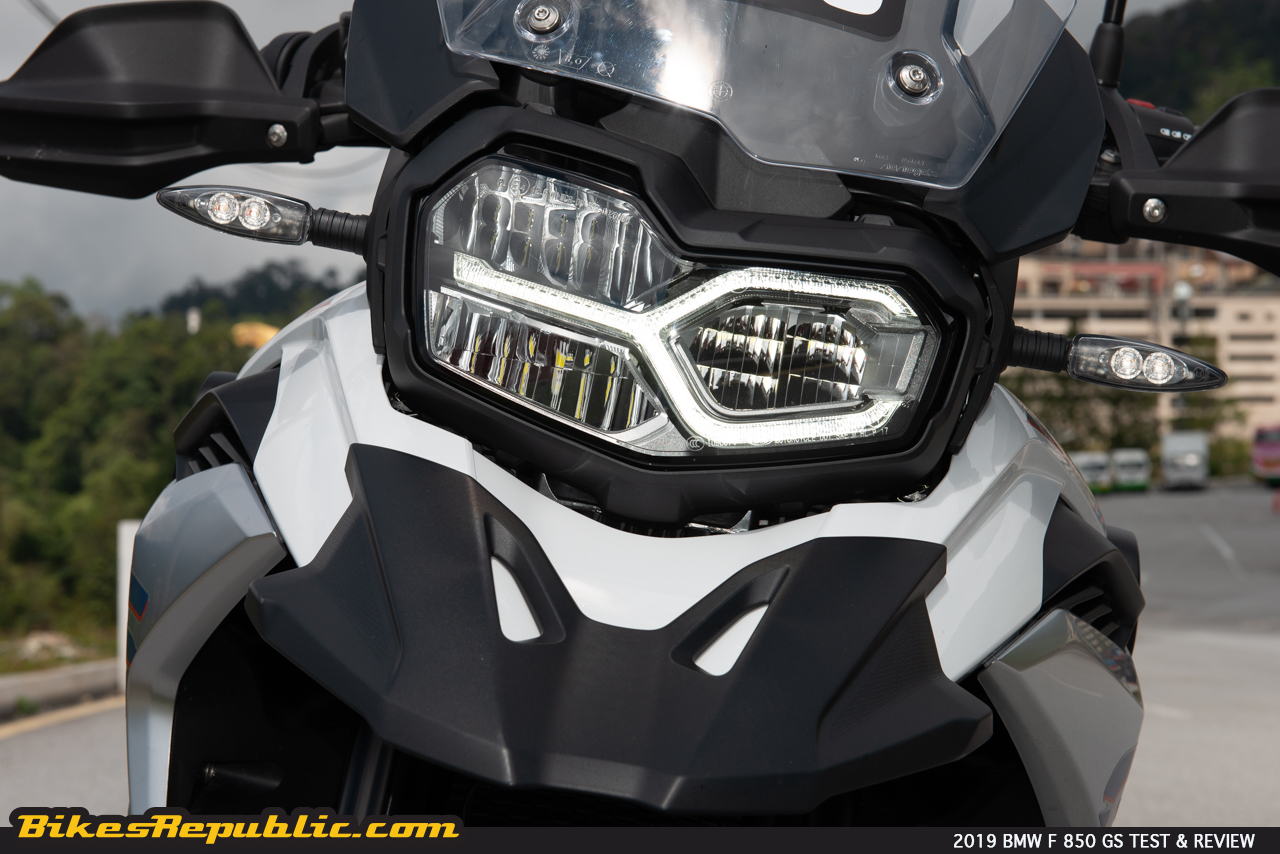
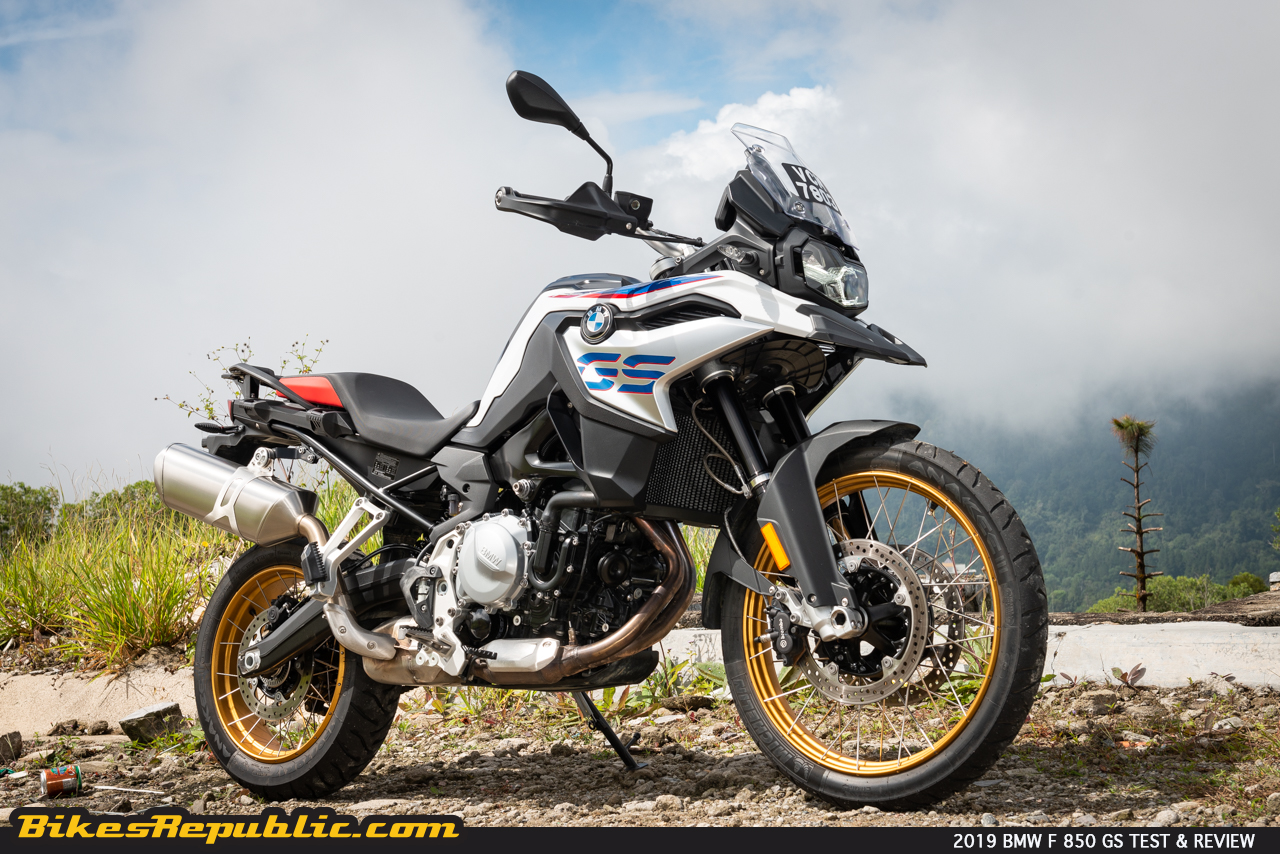
It would appear as if the F 850 GS and new R 1250 GS were designed side-by-side. It’s unmistakably a GS but also an 850. It’s a handsome bike to look at from any angle: The sharp front beak, asymmetric LED headlight, flowing body lines, terminating with an R 1200/R1250 GS taillamp. The spoked gold wheels also add to the entire appeal.
Hard Parts

First up, the engine. The new 853cc parallel-Twin has a new firing order, eschewing the old 360crank (both pistons rise and fall simultaneously). Instead, the new crank has a 270offset to mimic a 90V-Twin. It results in a smoother torque curve and reduced vibrations.

The new engine produces 95 bhp at 8,250 RPM and92 Nm of torque at 6,250 RPM. The 2,000 RPM spread between maximum horsepower and torque means the engine is “flexible.”
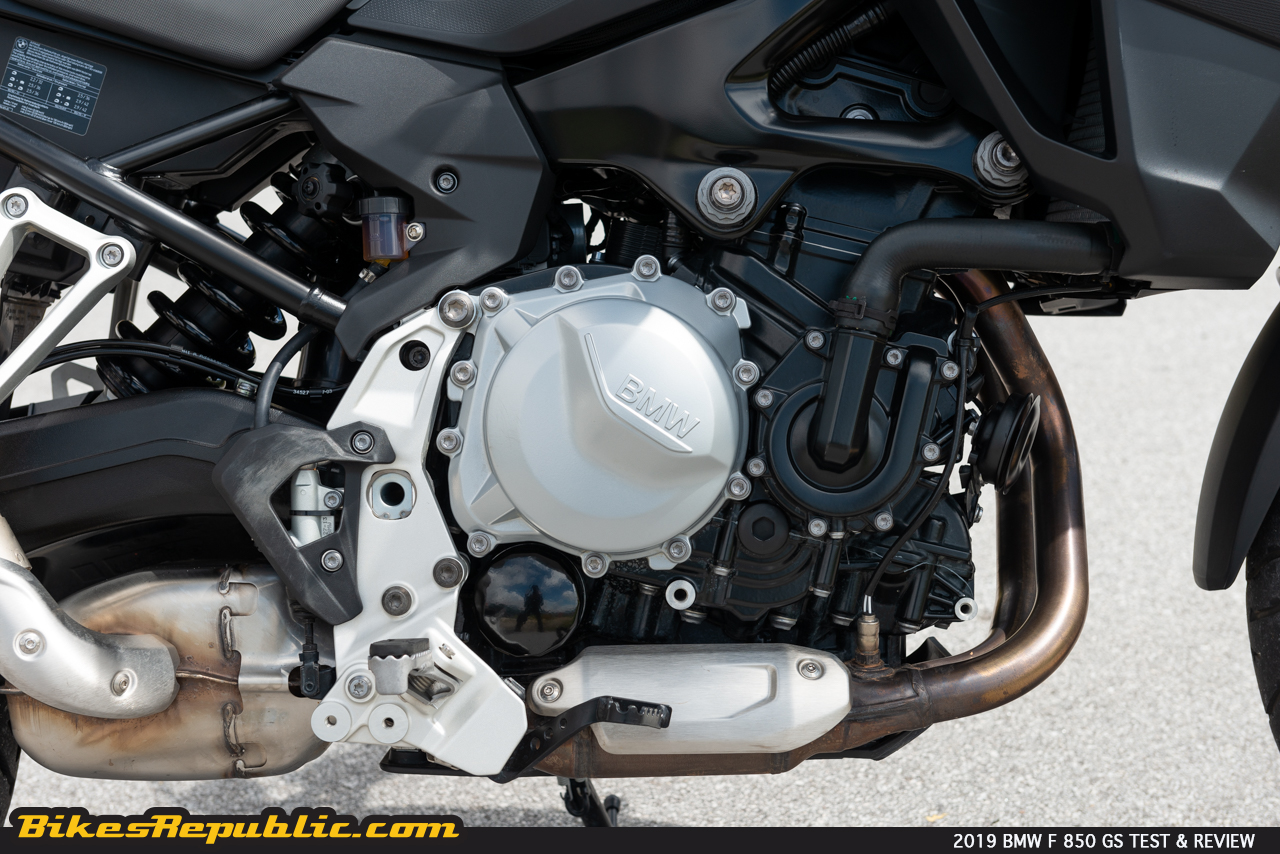
Besides that, the transmission now features a slipper clutch, and the final drive is on the left side.

Along with a new frame, the fuel tank is now in its traditional placement in front of the rider. Doing so results in a more balanced 49/51 front/rear weight distribution. There’s a new frame for the new bike, too, consisting of deep-drawn and welded components.
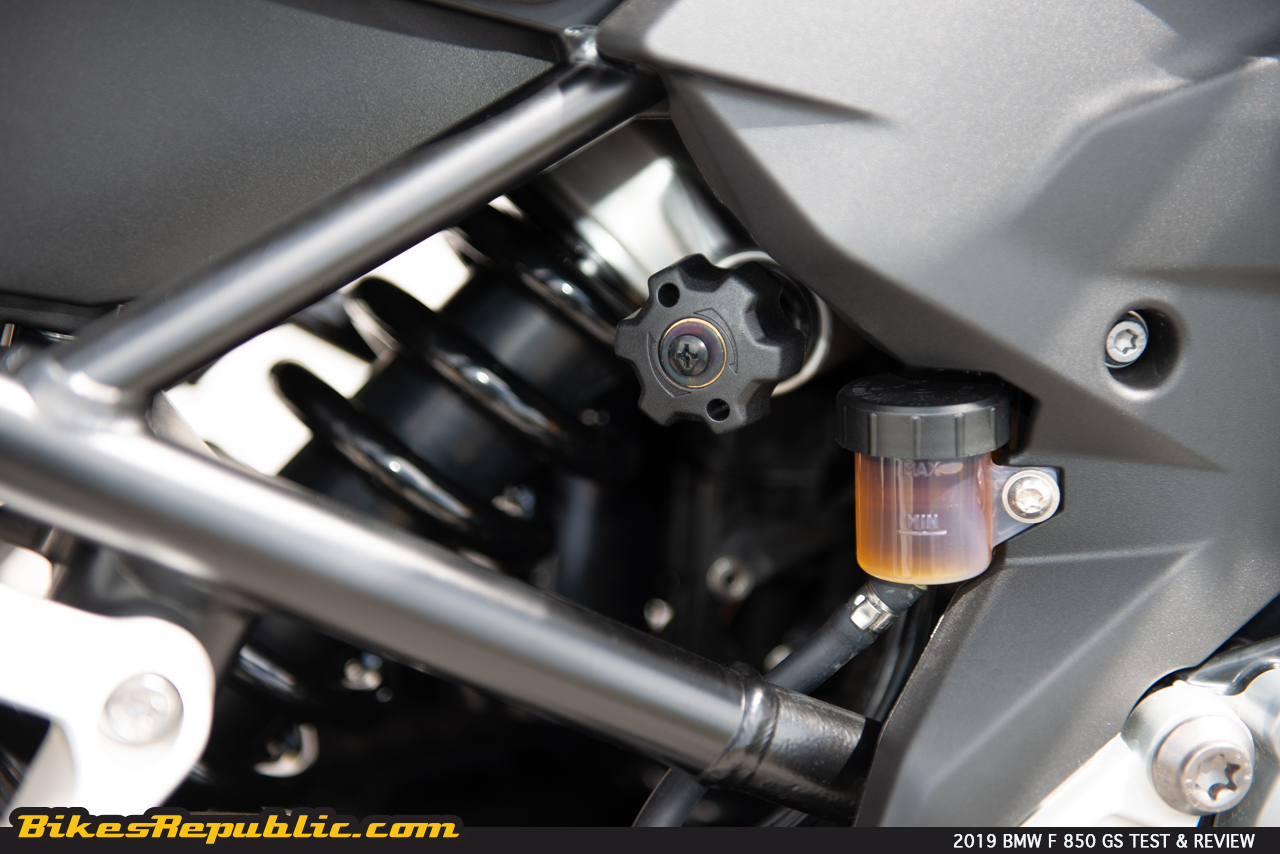
The front forks are new but non-adjustable, while the new rear monoshock is adjustable for preload and rebound damping.

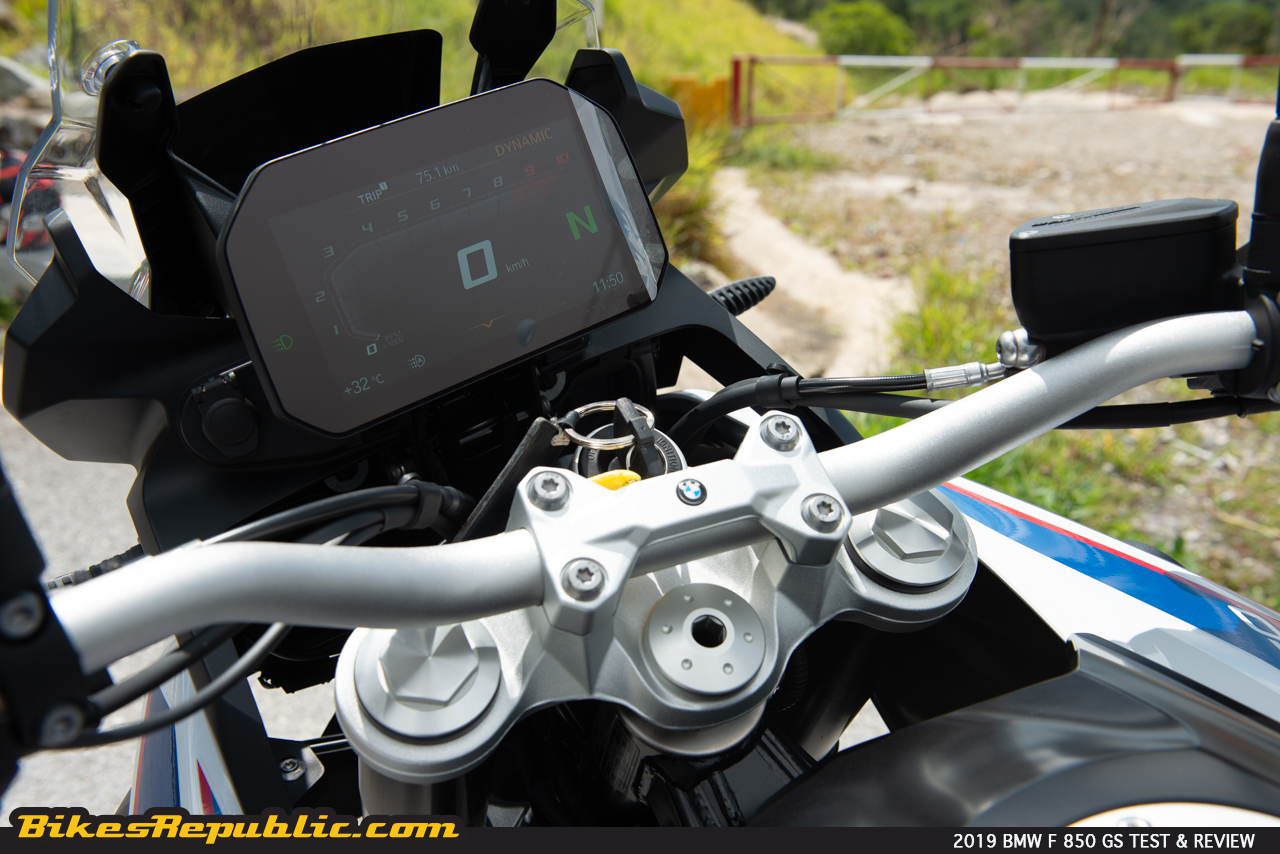
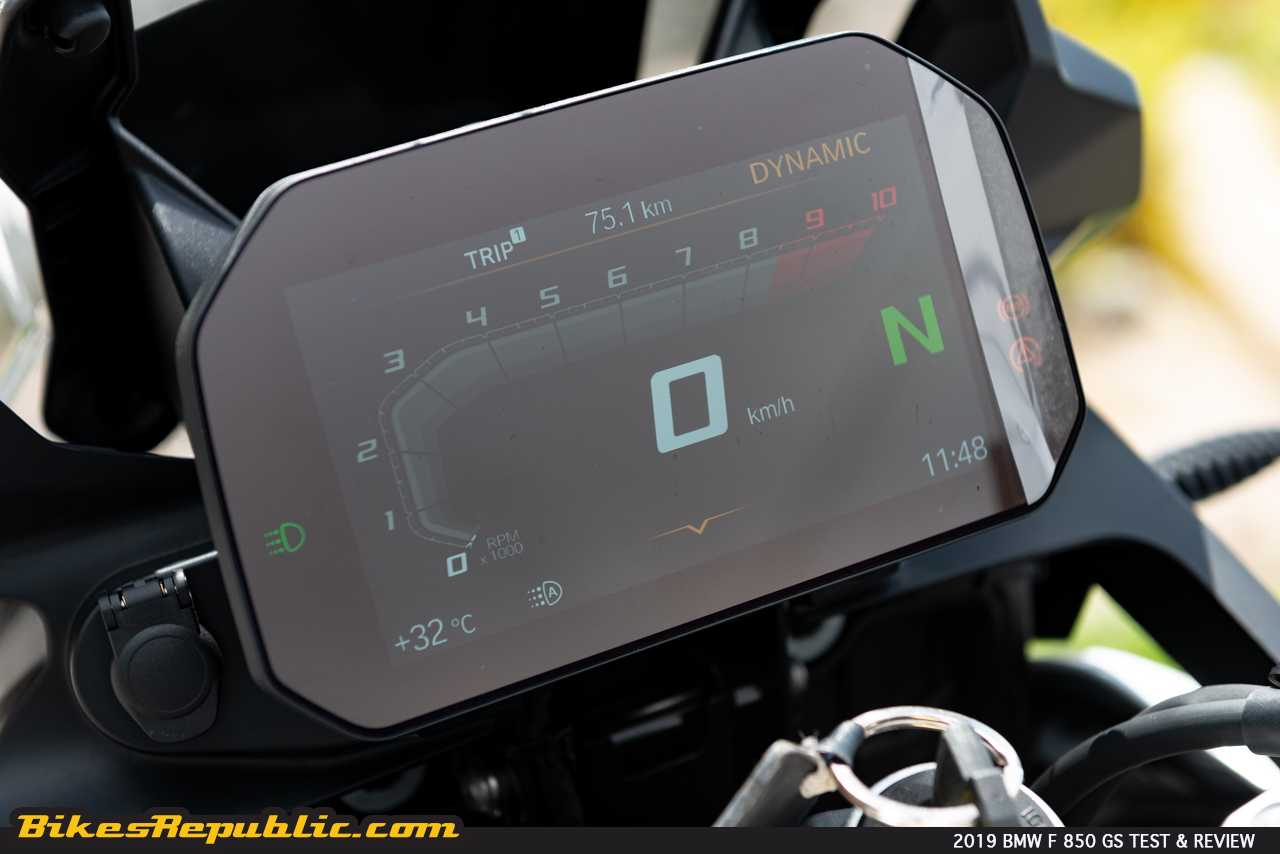
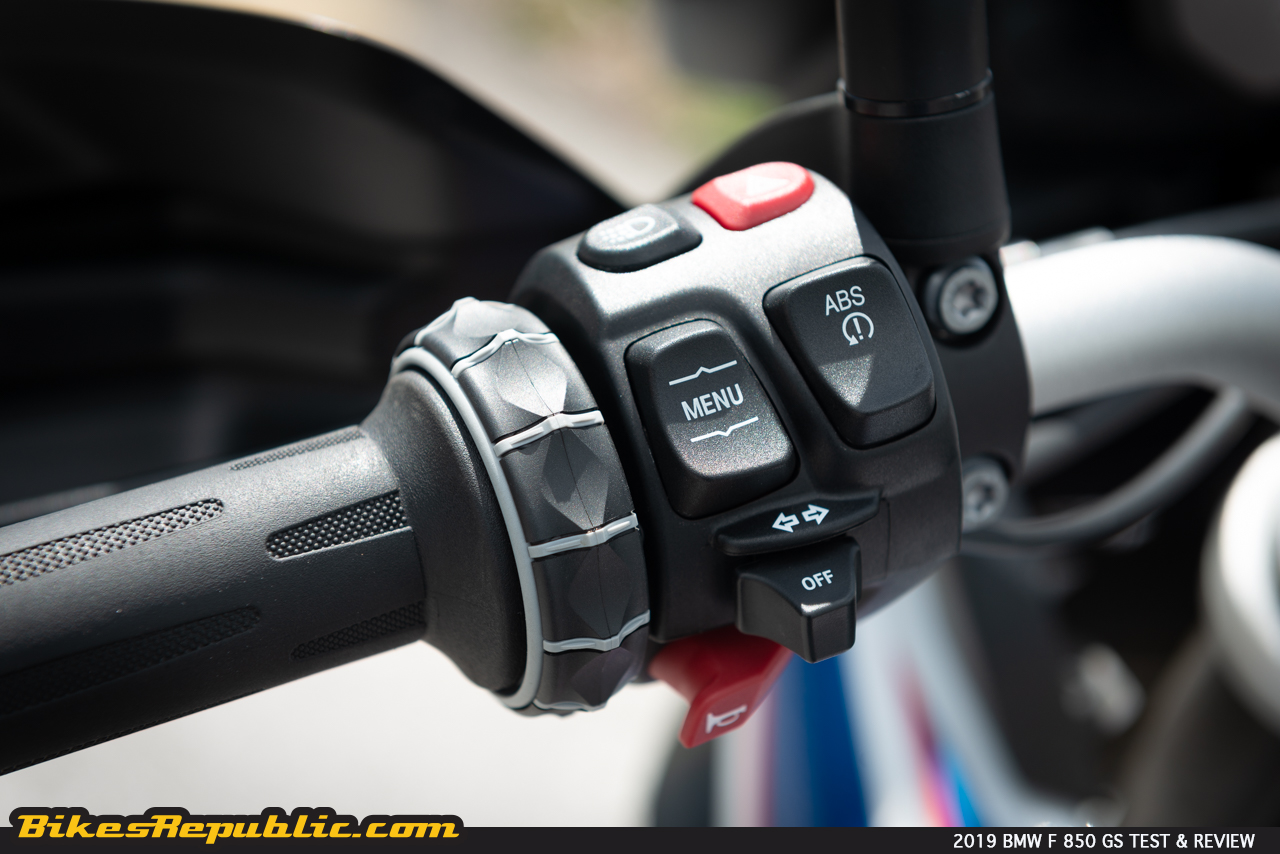
Facing us was the new multifunction TFT screen. The main “page” showed data such as revs, speed and gear position, but you need to scroll to other pages for the fuel level and range. One needs time to accustom himself of flipping through the menus. It requires multiple presses on the MENU button and multi controller. However, there’s so much information in there for you to play with at the traffic lights (and impressing other motorcyclists).
Riding Impression

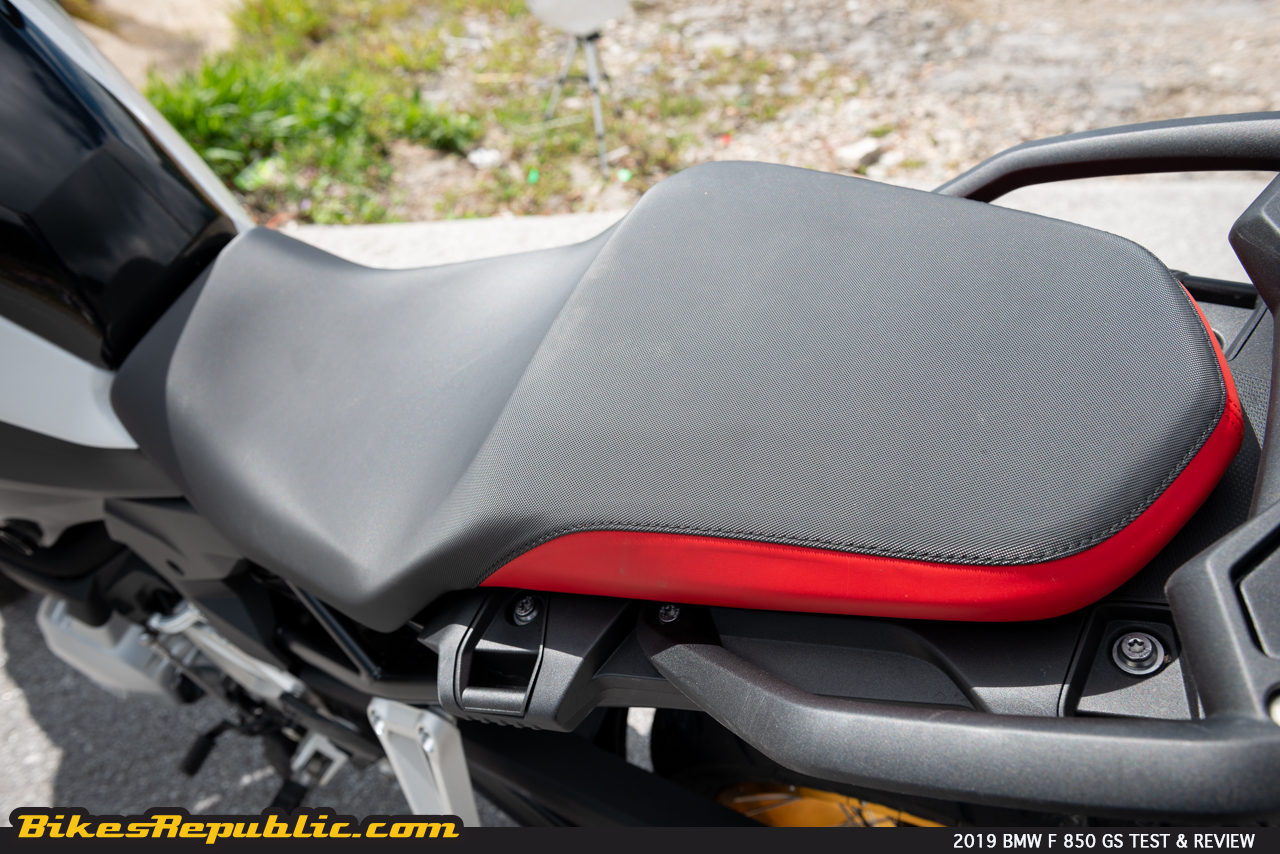
This particular unit was fitted with the low seat option, allowing our feet to reach the ground easily.

The seating position was predictably straight up, with the handlebars rising high and back to meet our hands. Yet, the handlebar’s width was just nice without being too wide, so we didn’t feel like we’re trying to hug a tree.
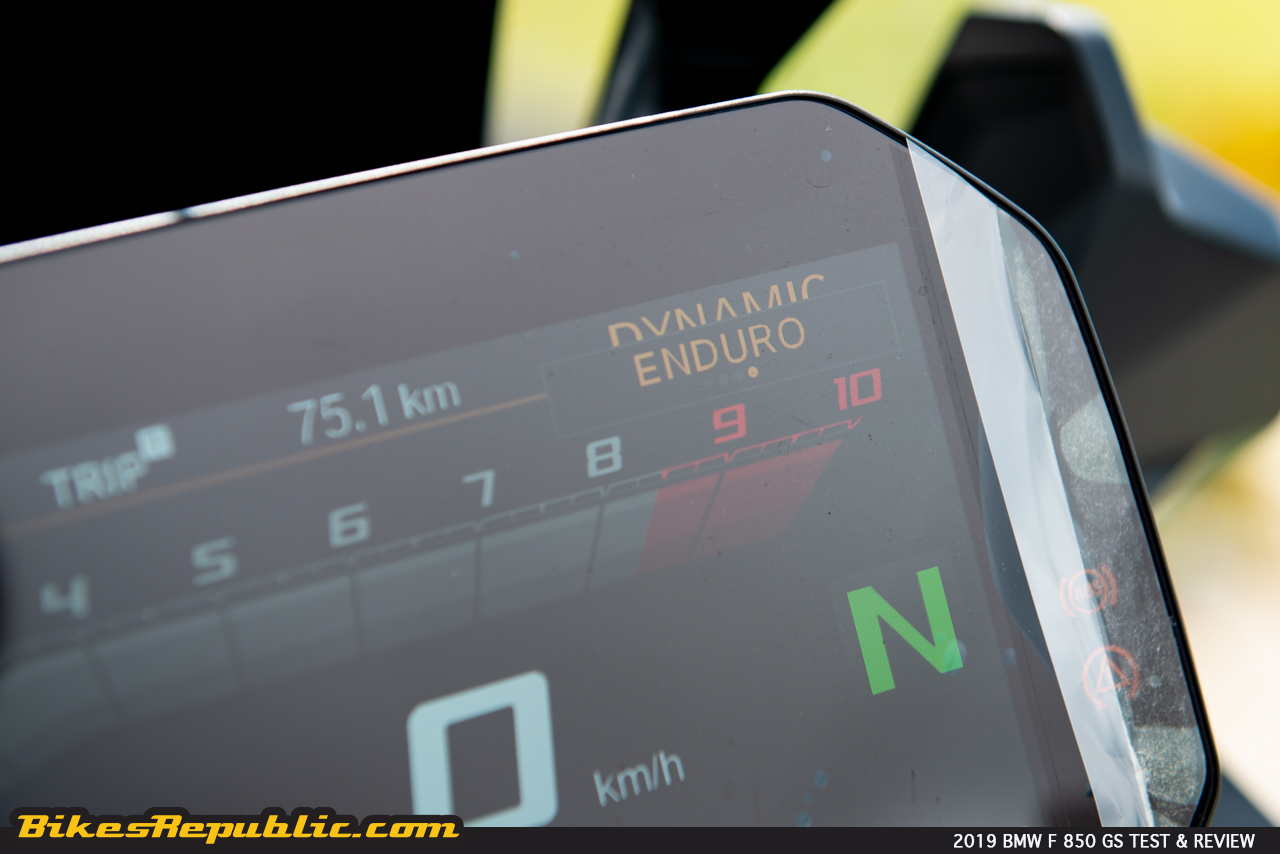
There were four ride modes: DYNAMIC, ROAD, RAIN, ENDURO while ENDURO PRO was a greyed-out option. We preferred to ride in DYNAMIC as it was akin to SPORT mode.

However, the throttle felt soft and a little detached regardless of mode we chose, as if the throttle cable had a little bit too much slack. And hence why we rode in DYNAMIC.
Don’t be fooled, nevertheless! This new engine is a potent one and will jump forward like an R 1200 GS if you twist the throttle like it’s a bottle cap. The bike will blast through the revs and gears all the way past 200 km/h (bye-bye Honda Accord driver who wanted to “test power”). The new wide transmission ratios made it really easy to cruise at 150 to 160 km/h all day.
The suspension was a bit of a revelation, too. It felt too soft therefore with not much feedback. Coupled with the low seat (it put our weight over the rear wheel), it needed more effort in getting the bike turned. However, that softness paid back in spades when the bike hooked up in mid-corner as the centrifugal forces pushed the bike’s weight down into the stiffer part of the suspension’s stroke.

We’ve hammered the bike through corners between 160 to 180 km/h (got the videos to prove it).
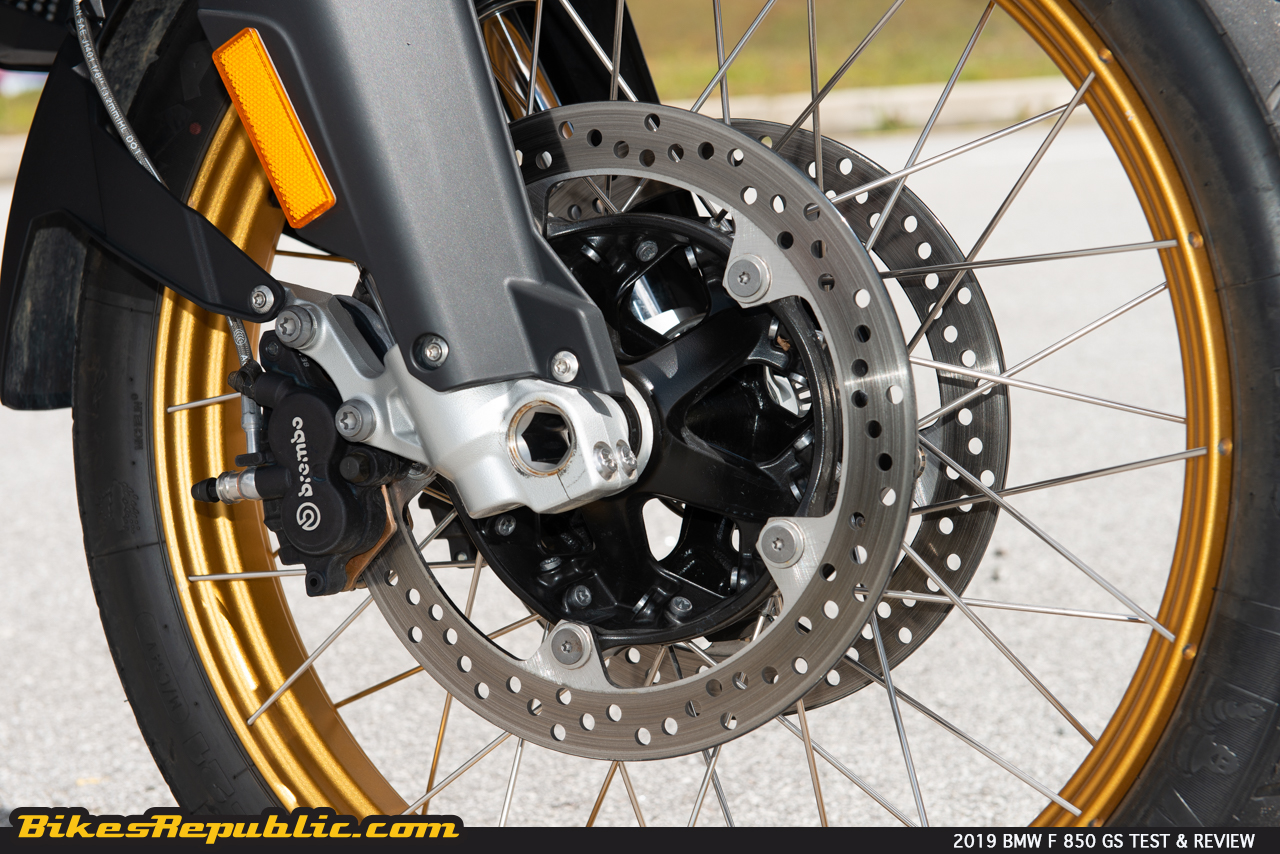
On the other hand, the suspension never bottomed out. The rear shock pogo’d a little before rebound damping adjustment but it’s acceptable.

But the F 850 GS was an easy bike to learn. We were soon snapping it over and utilizing the extra rolling speed due to the slipper clutch. The soft suspension totally absorbed every bump on the road and held the bike on the chosen line. The lack of feedback was scary at first, but we learned to trust the Michelin Anarkee tyres and took them to their edges (and the footpeg feelers).
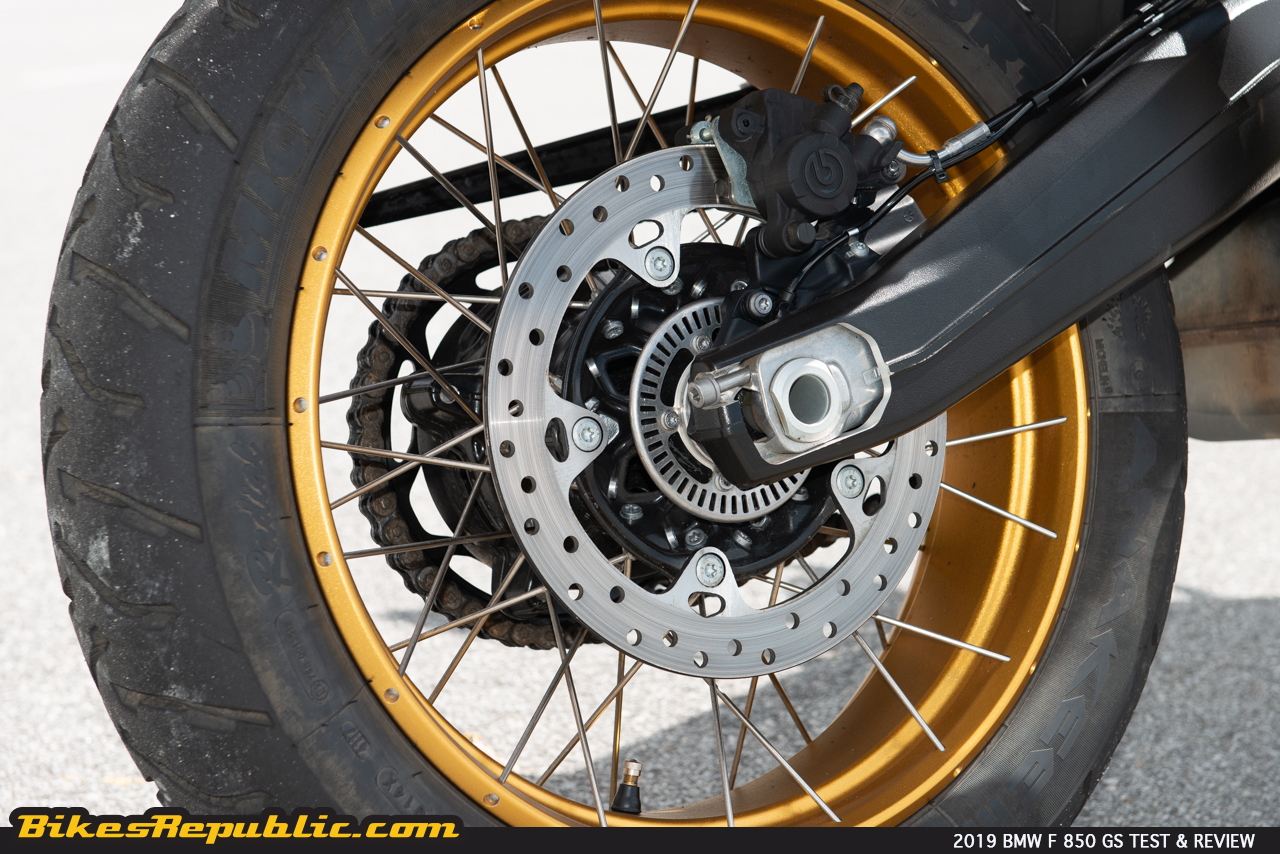
Still, we wished for some adjustability for the front forks, especially in terms of compression damping to add more “feel” when riding on the road. A lack of feedback on wet roads caused a concern if the tyres were to suddenly break traction. Also, the forks dived a lot under braking.

In the end, we found that the F 850 GS is geared more towards adventure-touring although it preformed its sport-touring role well. That kind of suspension action is like what you find on enduro bikes, and we know most riders won’t mind it. Plus, the low, non-adjustable windscreen is a giveaway to the bike’s off-road intentions.
As such, it took on an entirely different character in the dirt. The soft initial throttle response allowed us to manipulate our speed with more sensitivity and predictability. The long-travel suspension soaked up bumps very well even while we sat down.

Conclusion

The 2019 BMW F 850 GS is a great step forward for the model. It’s now more “modern,” faster and comfortable, hence easier to live with. Besides the off-road capabilities, it’s also now more practical for long-distance touring.

The F 850 GS offers something accessible for a wider range of riders, who want something more affordable, lighter and smaller than the R 1250 GS. Indeed, the F 850 GS may be more capable than its bigger brother in many ways.
TECHNICAL SPECIFICATIONS

ENGINE

ENGINE TYPE 2-cylinder, 4-stroke, DOHC, liquid-cooled, parallel-Twin with 270crankshaft
DISPLACEMENT 853 cc
BORE x STROKE 84.0 mm x 77.0 mm
POWER 95 hp (70 kW) @ 8,250 RPM
TORQUE 92 Nm @ 6,250 RPM
COMPRESSION RATIO 12.7:1
TRANSMISSION Constant mesh, 6 speed
FUEL SYSTEM Electronic fuel injection with ride-by-wire throttle
CLUTCH Multiple-plate wet clutch with slipper feature, cable operated
CHASSIS
FRAME Bridge-type frame, steel shell construction
FRONT SUSPENSION Upside-down ø 37 mm forks
REAR SUSPENSION Monoshock with WAD strut, spring preload hydraulically adjustable, rebound damping adjustable
SUSPENSION TRAVEL FRONT/REAR 230 mm / 215 mm
FRONT BRAKE 2x 2-piston floating calipers, ø 305 mm floating discs
REAR BRAKE 1X single-piston floating caliper, ø 265 mm brake disc
ABS BMW Motorrad ABS (disengable)
TIRES FRONT/REAR 90/00 R-21; 150/70 R-17
STEERING HEAD ANGLE 28o
TRAIL 126 mm
WHEEL BASE 1,593 mm
SEAT HEIGHT 860 mm standard, 815 mm with suspension lowering kit, 835 mm with low seat, 875 with OE comfort seat, 890 with OA rally seat
FUEL TANK CAPACITY 15 litres
WEIGHT (READY TO RIDE) 229 kg
  • Monster Yamaha rider Maverick Vinalez was the fastest rider on Day 2 of the MotoGP 2019 Sepang Winter Test.

  • His blistering time of 1m 58.897s was just 0.067s behind the fastest Winter Test record.

  • Marc Marquez was relegated to 8thafter being fastest on Day 1.

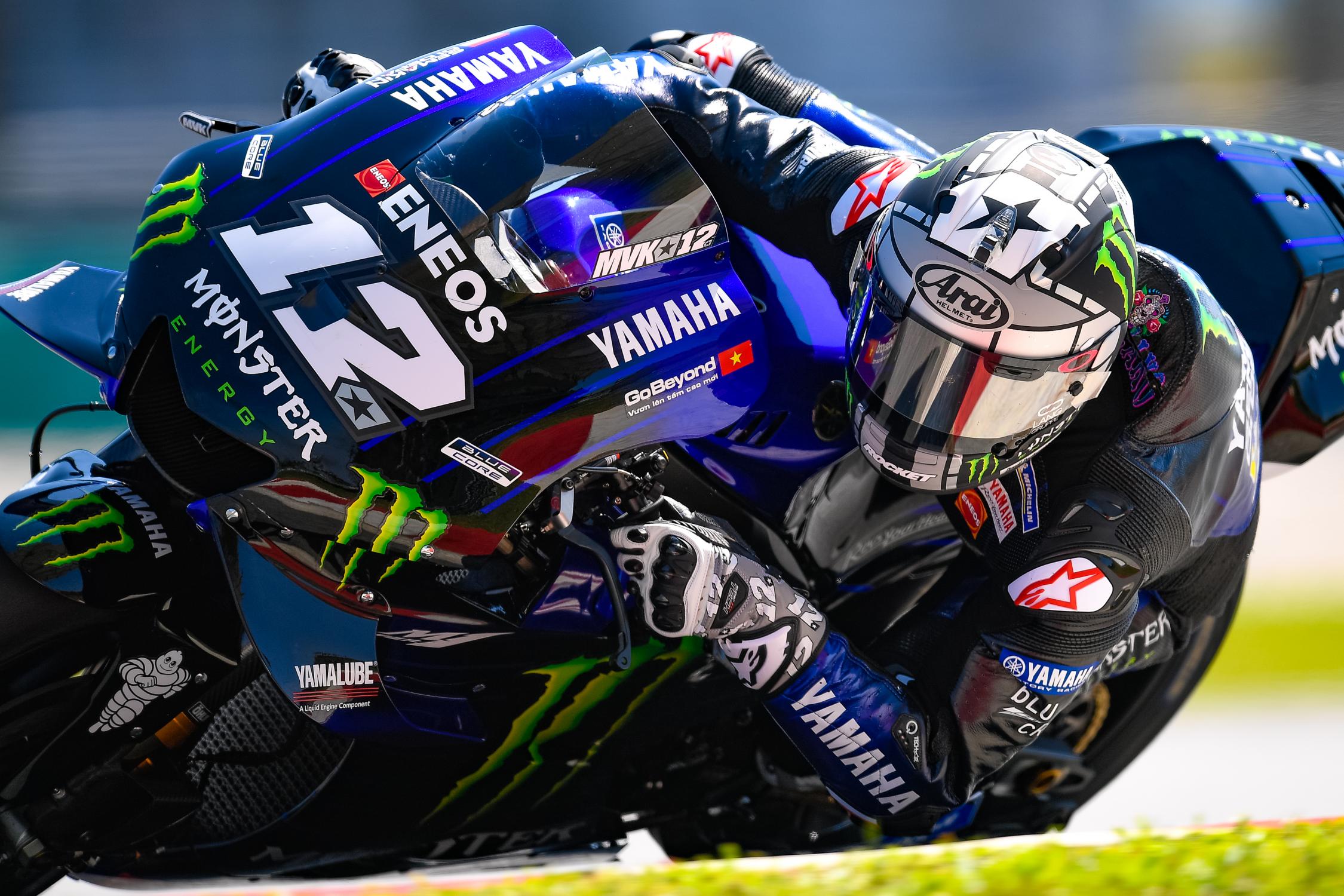
The MotoGP 2019 Pre-Season test kicked off at the Sepang International Circuit yesterday. The action continues today with Maverick Vinalez of Monster Energy Yamaha factory teaming claiming the fastest time.

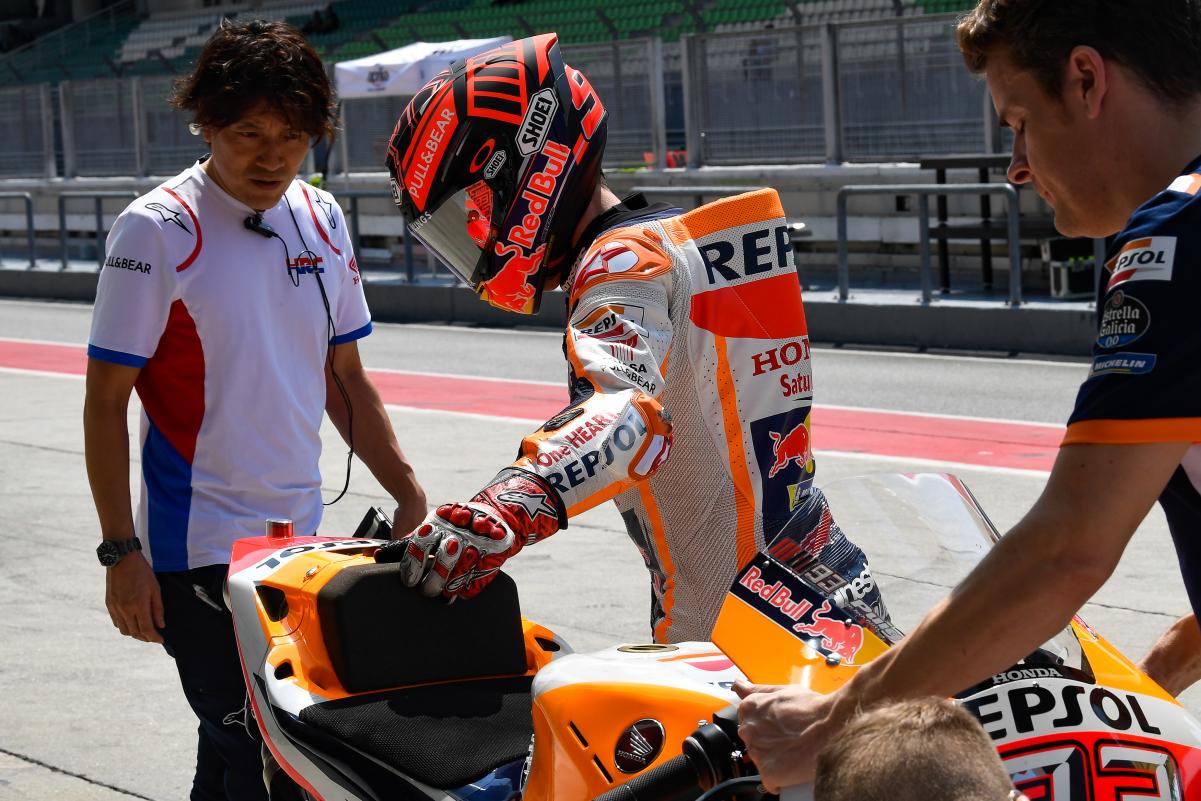
Repsol Honda rider and defending world champion Marc Marquez secured the fastest time on the first day, allaying fears of his recovering shoulder. He put in only 29 before stopping to allow his shoulder to rest, leaving his time of 1m 59.621s on the board for the night.

Marc Marquez at SIC test – Photo credit MotoGP.com

But how things can change in less than 24 hours in MotoGP.

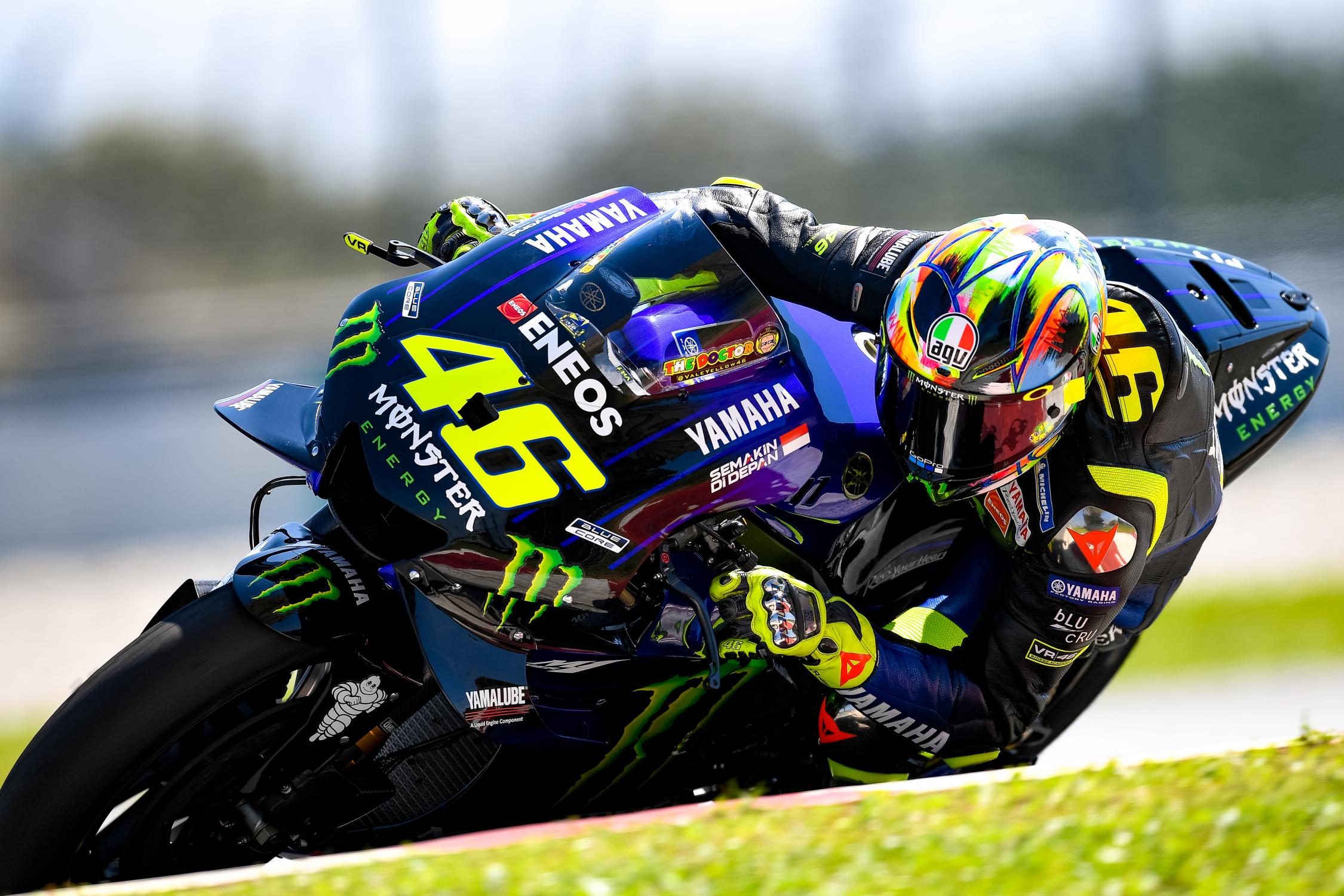
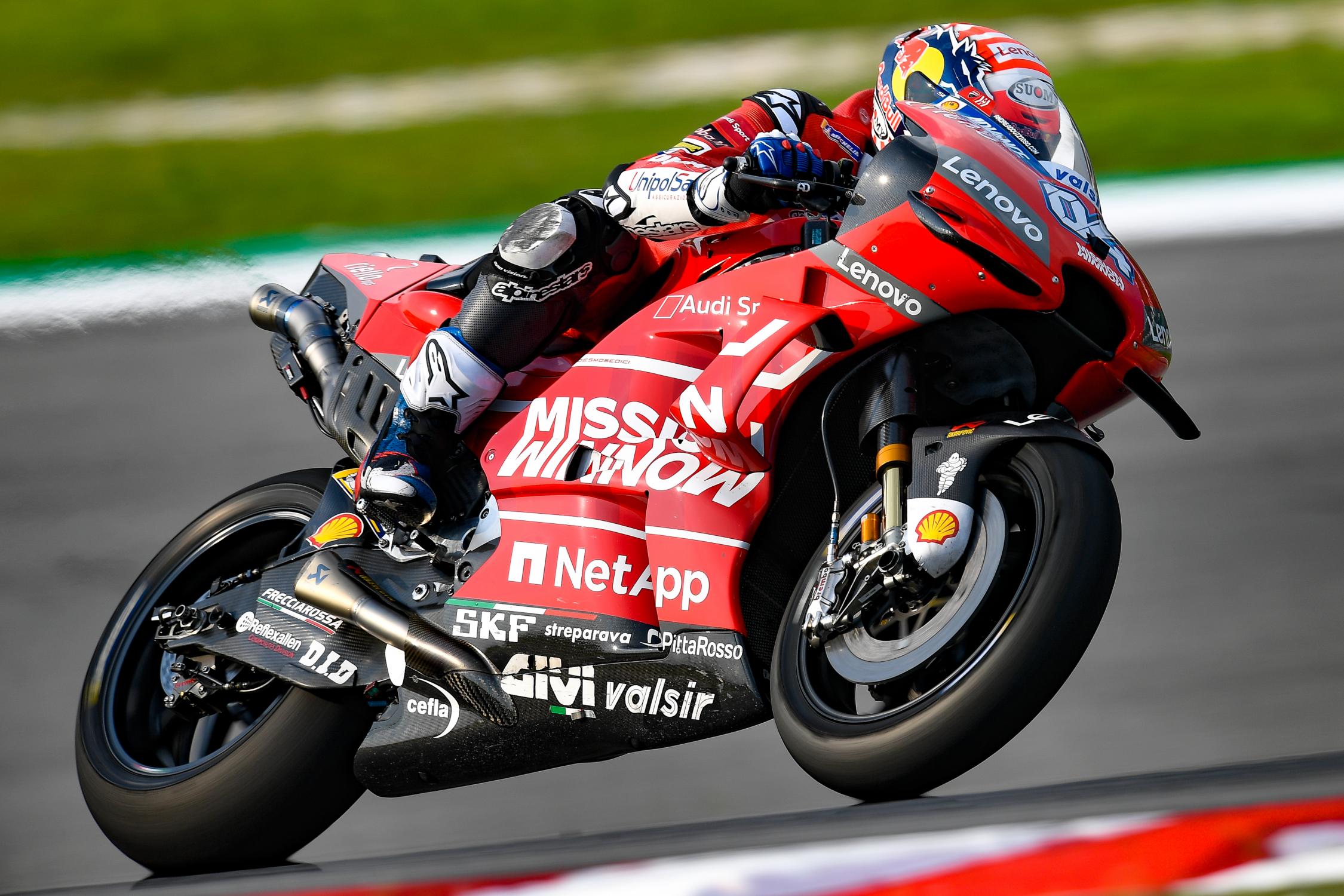
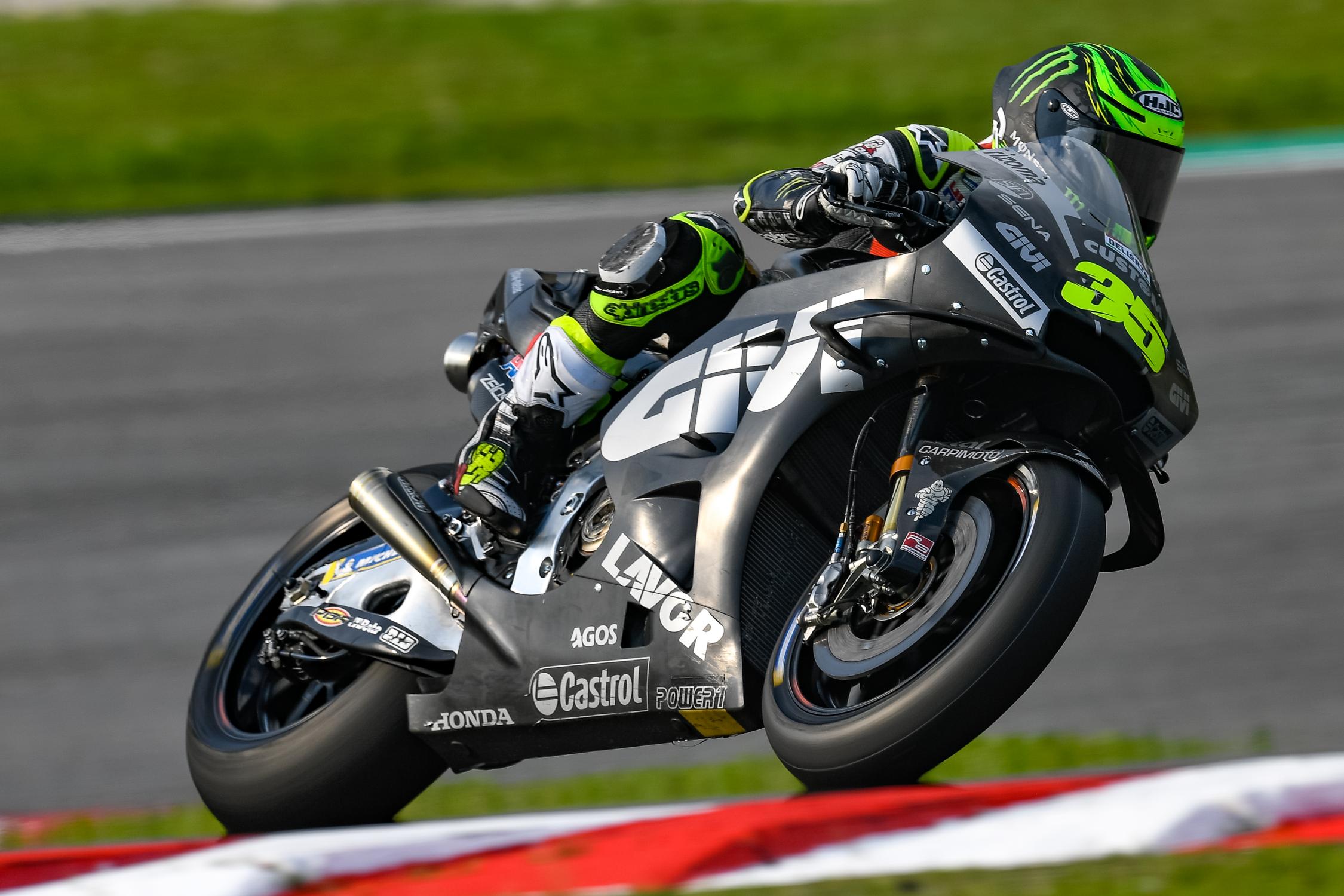
Valentino Rossi (Monster Yamaha) started out the day fastest before being toppled by Andrea Dovizioso (Mission Winnows Ducati) and Cal Crutchlow (LCR Honda).

Valentino Rossi at SIC test – Photo credit MotoGP.com

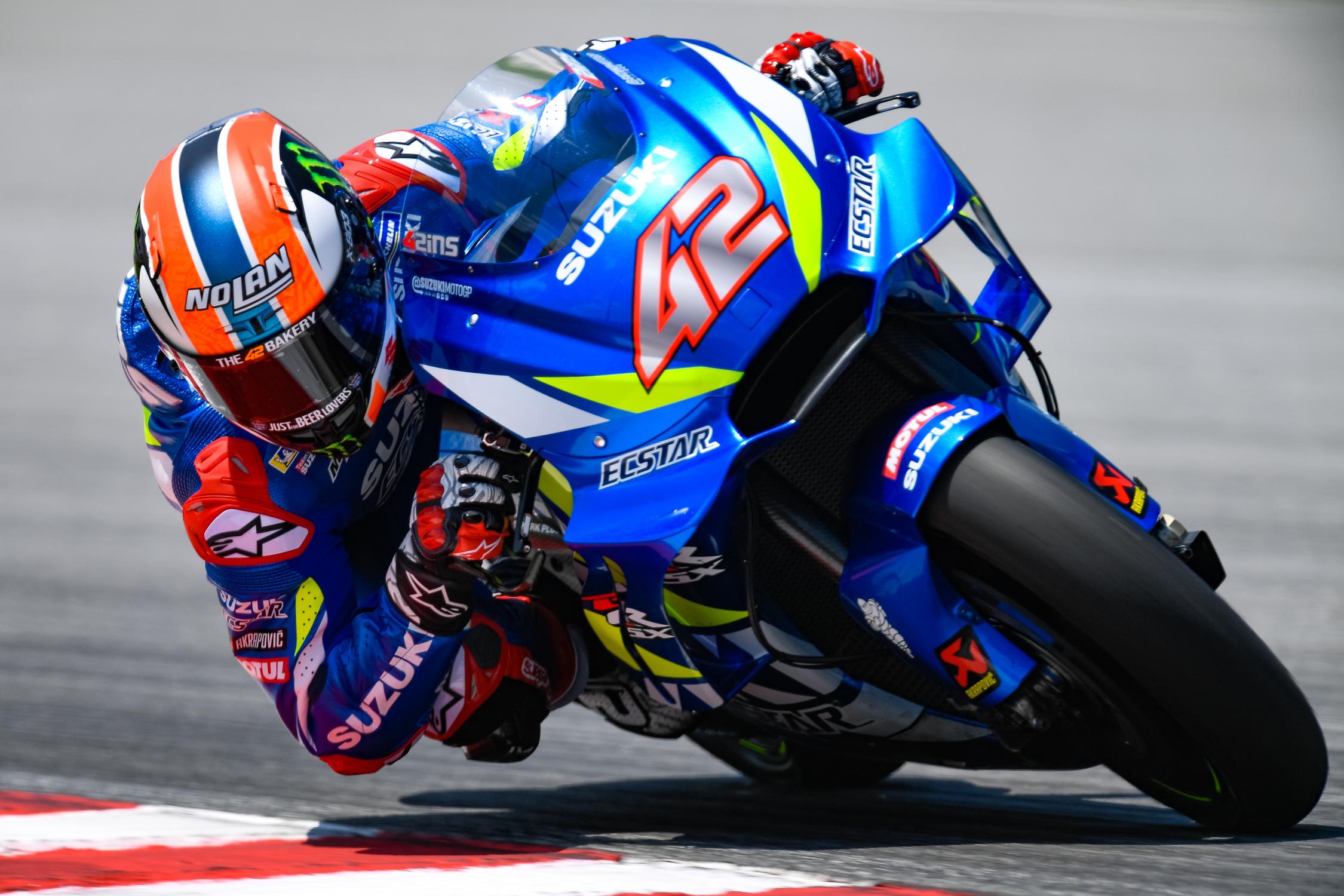
Alex Rins (Suzuki Ecstar) then took over from Dovizioso. Rins had placed his Suzuki as second fastest yesterday. Pramac Ducati rider Jack Miller improved on his times and also went ahead of Dovizioso.

Andrea Dovizioso at SIC test – Photo credit MotoGP.com

However, a late charge by Vinalez put him right on top for the day. He was the only rider to lap under the 1m59s mark, with 1m 58.897s. That’s still just 0.067 second to Repsol Honda rider Jorge Lorenzo’s unofficial Sepang record of 1m 58.830s he set during the 2018 Winter Test on a Ducati.

Alex Rins at SIC test – Photo credit MotoGP.com

Judging by today’s times, a few riders may well dip under 1m 58s tomorrow if the weather holds. That’s because the top 19 riders were covered by just 1 second!

Cal Crutchlow at SIC test – Photo credit MotoGP.com

As for Marquez, he could go no faster than 1m 59.790 with the new engine. The time relegated him to 8th. His new teammate Jorge Lorenzo is also missing from the test as he nurses his broken scaphoid.

Jack Miller at SIC test – Photo credit MotoGP.com

Apart from Johann Zarco who finished 11thbest, the other KTM riders languished in the lower positions as they try to tame and sort out the RC16 wild beast.

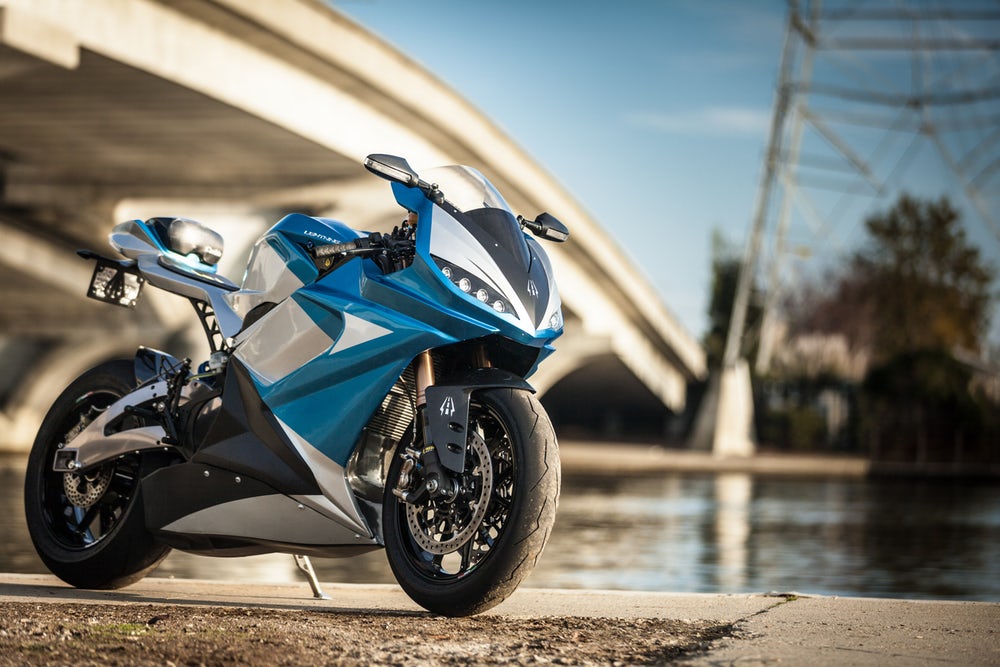
  • We know the Lightning LS-218 is currently the fastest road legal bike.

  • But how quickly does it get “there”?

  • Watch this video as Lightning Motorcycles strap an LS-218 to a dyno.

We’ve said it before and say it again: Modern electric motorcycles are fast! They put down so much instantaneous torque that would MotoGP riders grin from ear to ear. Such is true especially with the Lightning LS-218.

We’ve written about the amazing bike before (please click here for the full article). To jog your memory, it is currently the fastest road-legal production motorcycle. The “218” in its name attests to the speed it hit on the Bonneville Salt Flats i.e. 218 mph (350.8 km/h).

It also held the Pike Peak International Hill Climb record since 2012 and was only broken last year by a KTM 1290 Super Duke R. However, the Lightning’s record still holds as the fastest electric motorcycle up that treacherous hill.

The speed is attributable to the bike’s electric motor’s torque. And it’s exactly what Lightning Motorcycles wants to show in this video.


The LS-218 is strapped down on a dyno. The roller is spun up before the bike’s motor took over, punching it to 257 km/h (160 mph) in a matter of seconds. But that’s not all, the real kicker here is how the bike pulled from 160 to 241 km/h (100 to 150 mph) in 2 seconds!

Yet, the manufacturer didn’t give the bike full throttle all the way. Lighting Motorcycles’ Matt Schulwitz told Electrek that the LS-218’s tyre would just keep spinning on top of the dyno’s roller if they gunned the throttle from standstill. That’s what 228 Nm of does. So, that’s the reason they spun up the dyno first rather than let the bike’s power spin it up.

This means the motor pulls and pulls without hiccups through the rev range. Shall we change the cliché pulls like a freight train to mean electric motors?

Lightning Motorcycles are slated to release a low-price model in March 2019.

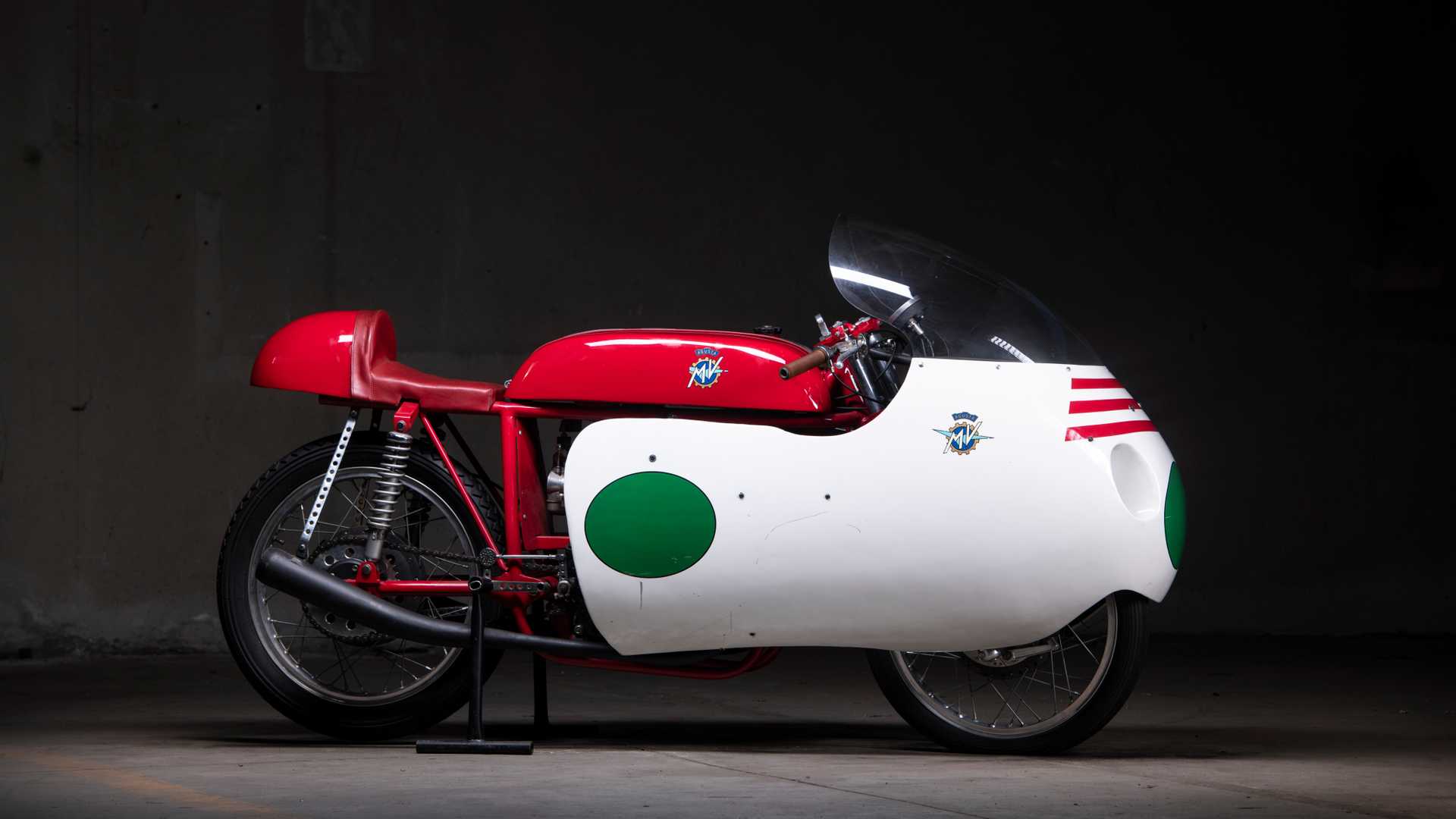
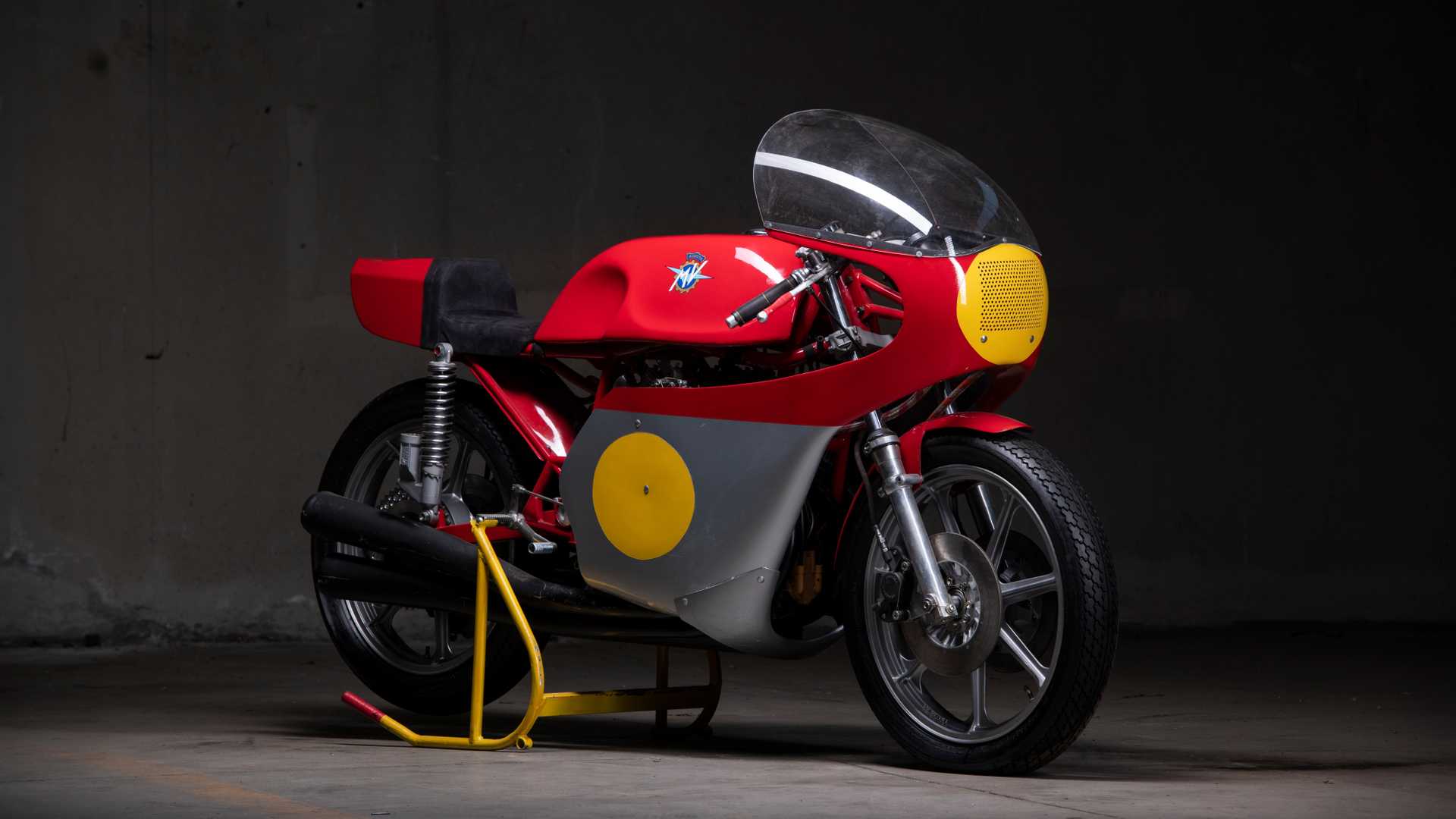
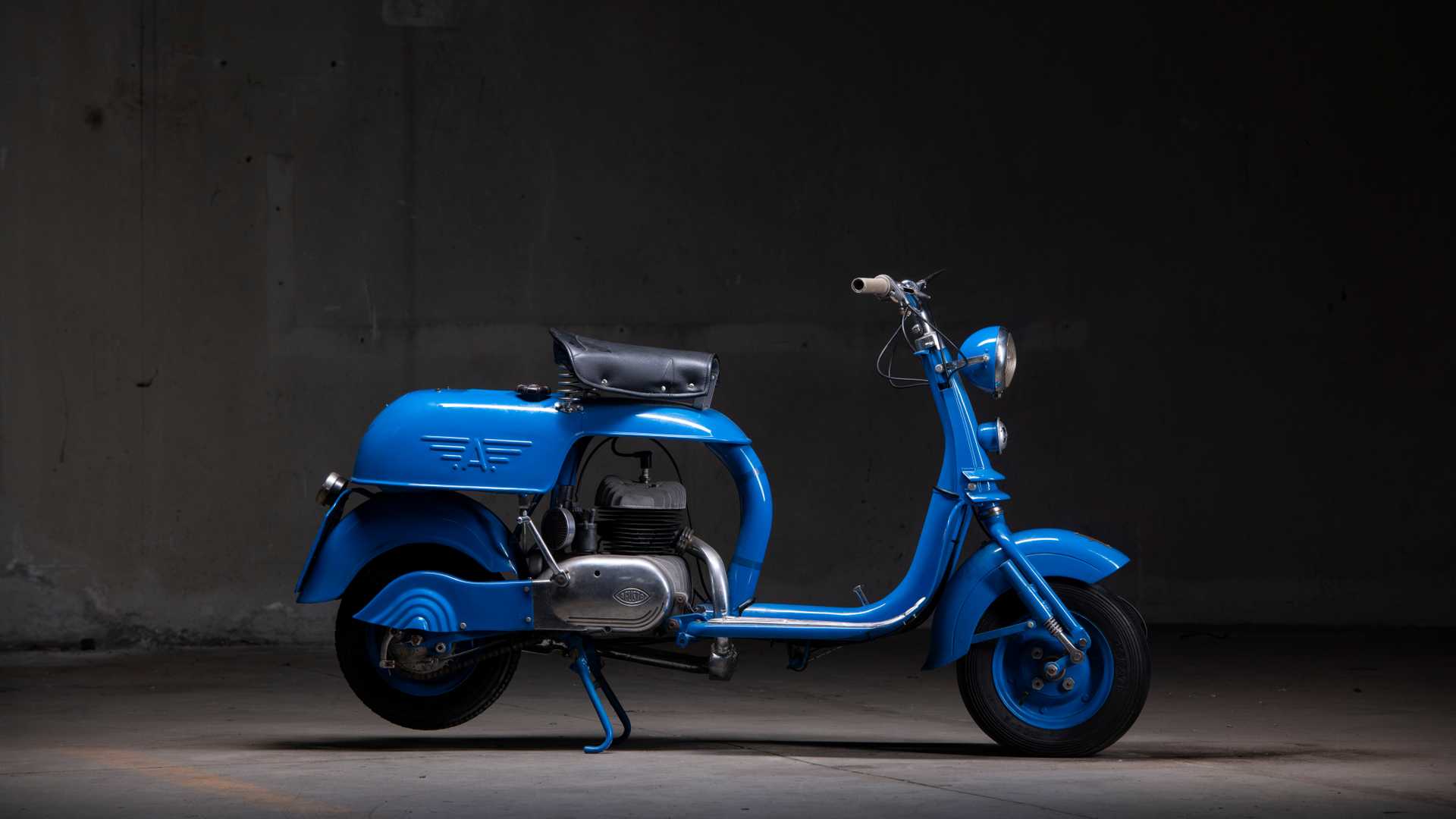
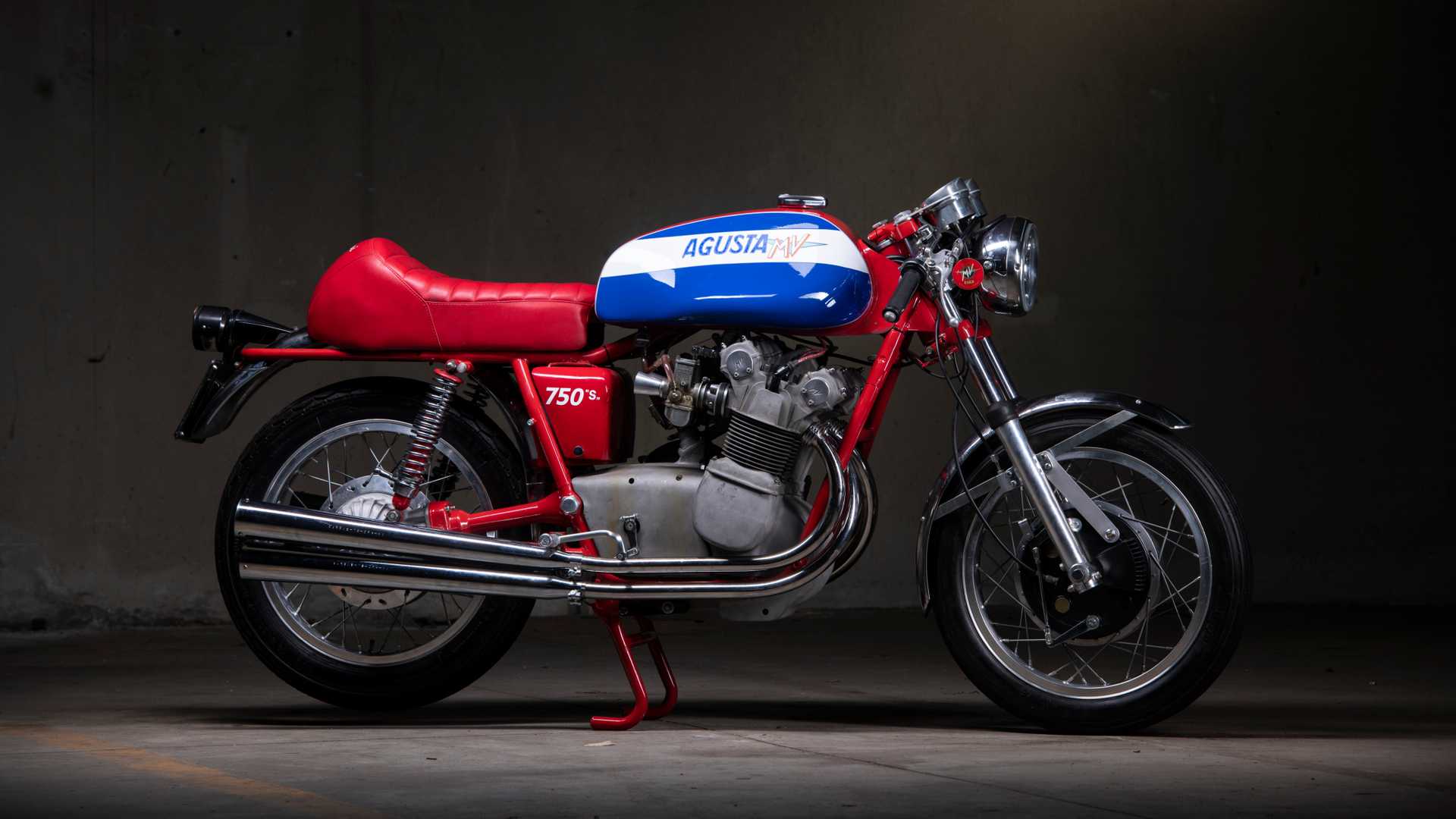
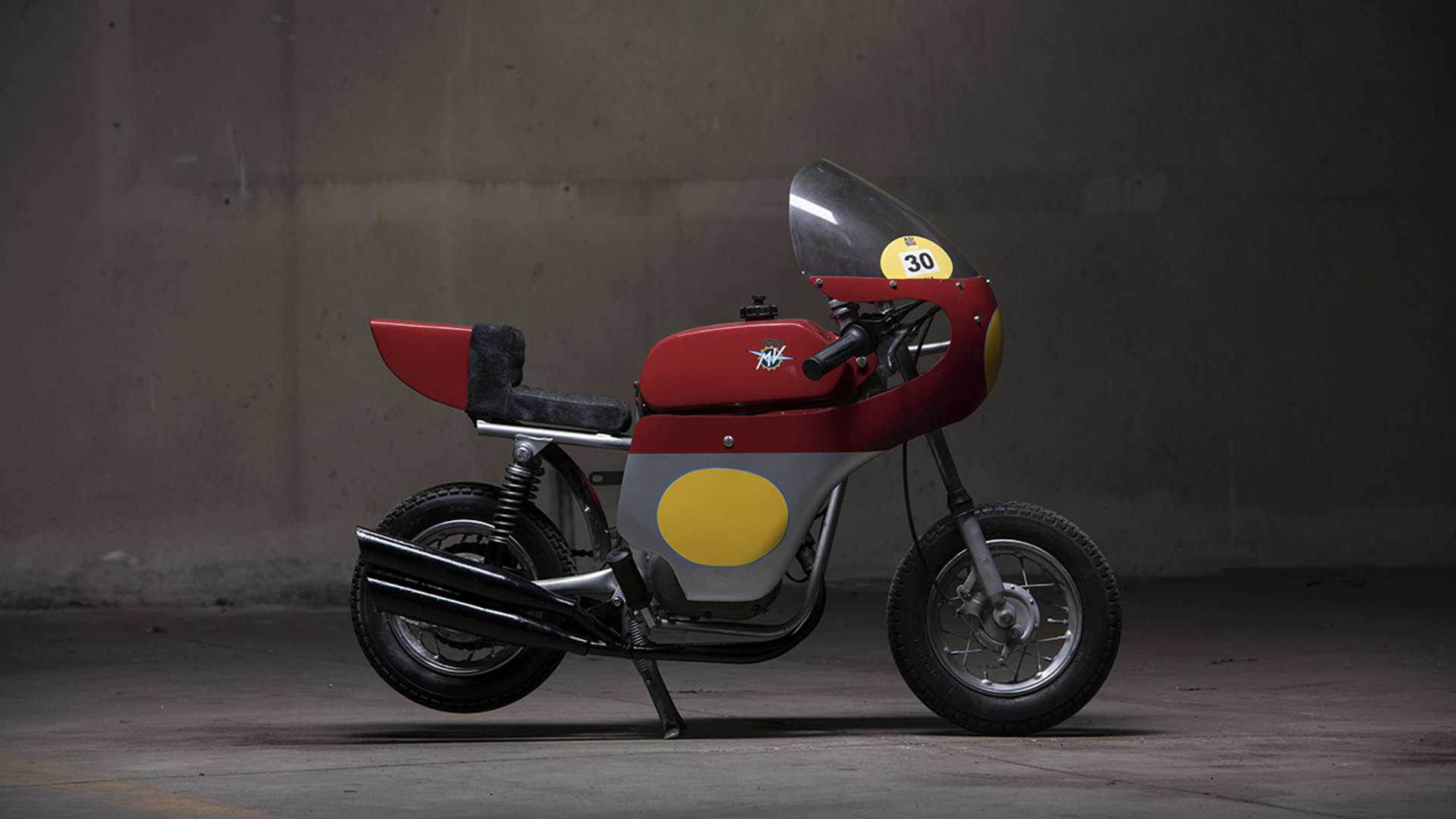
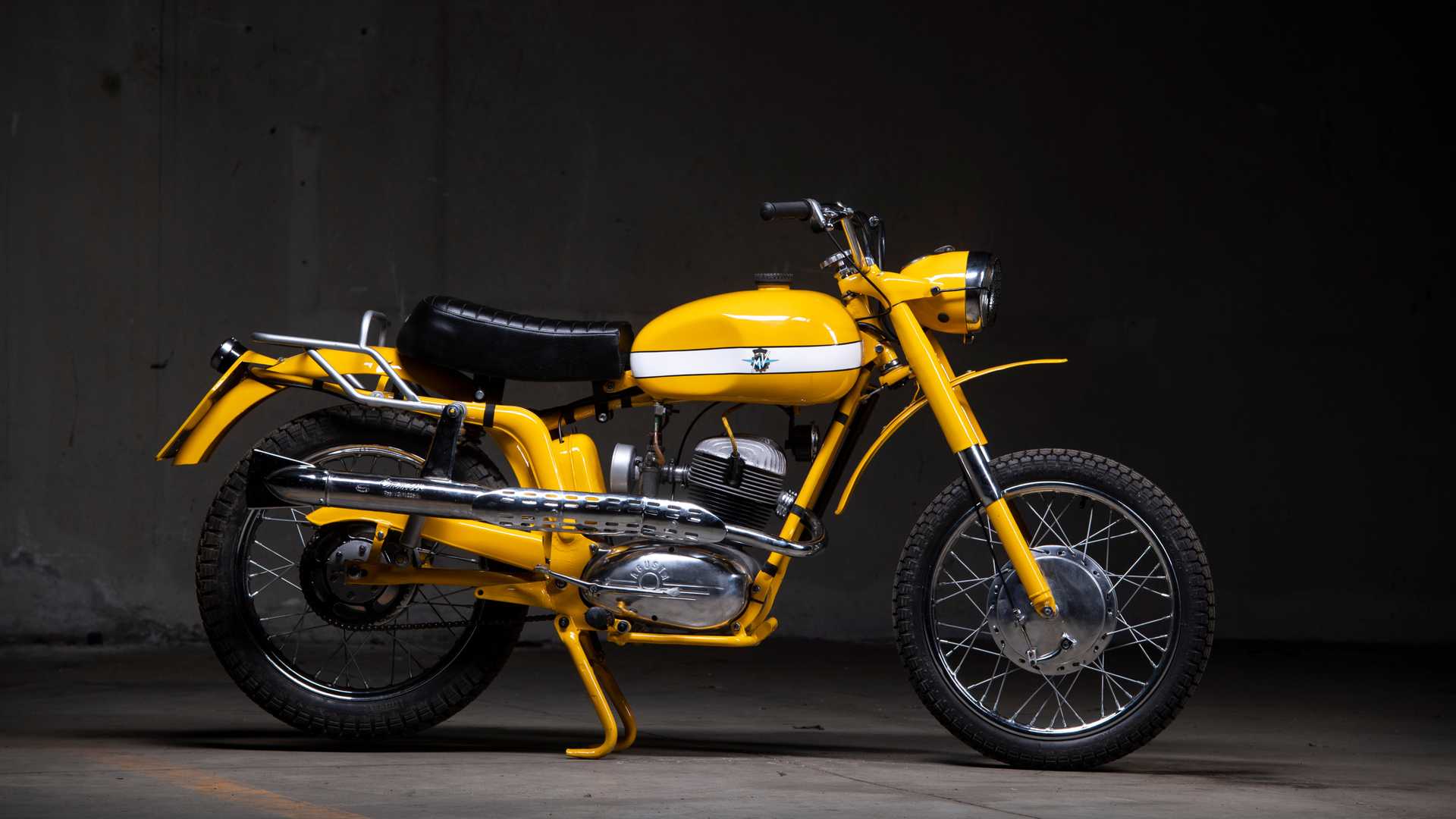
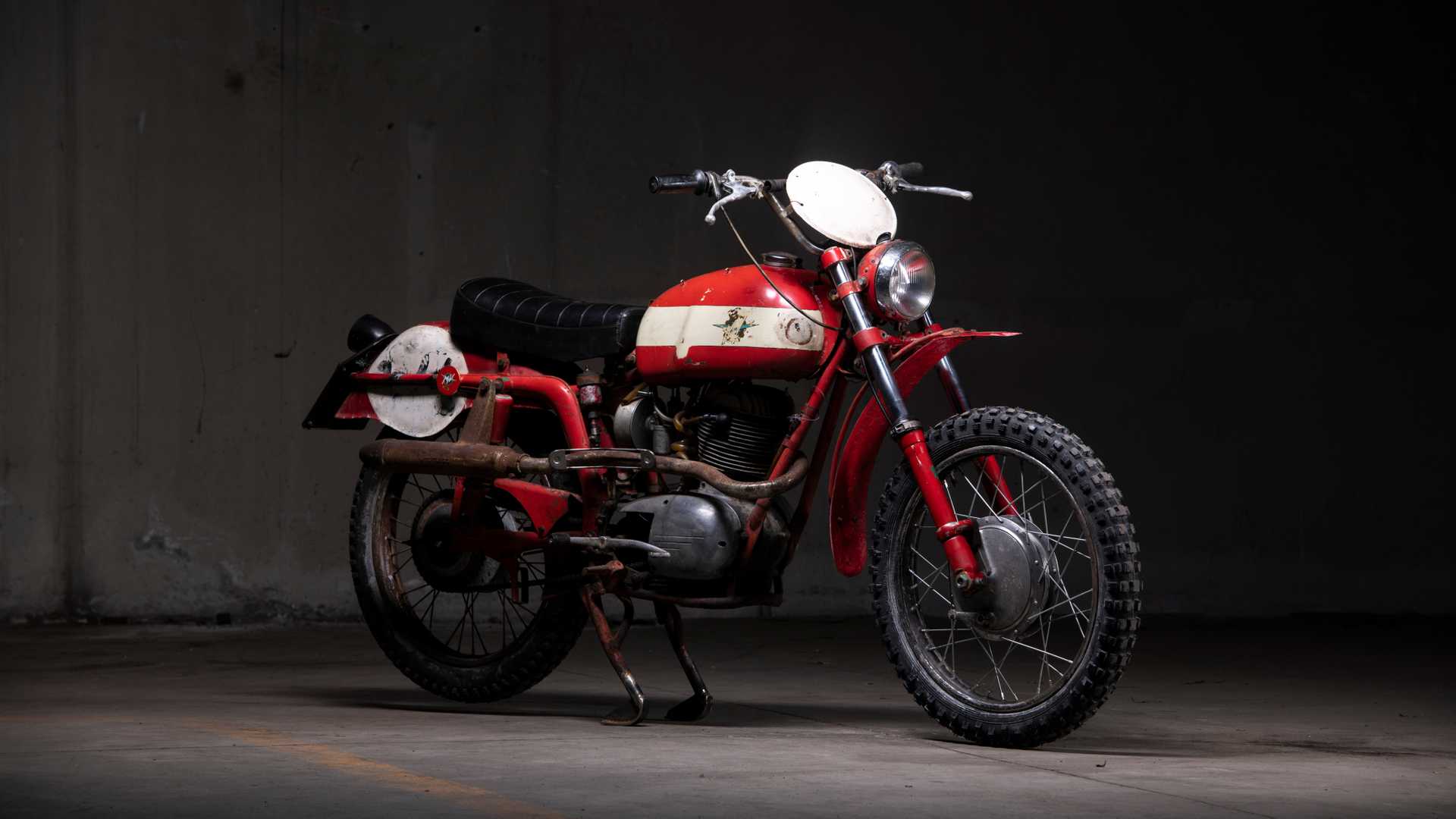
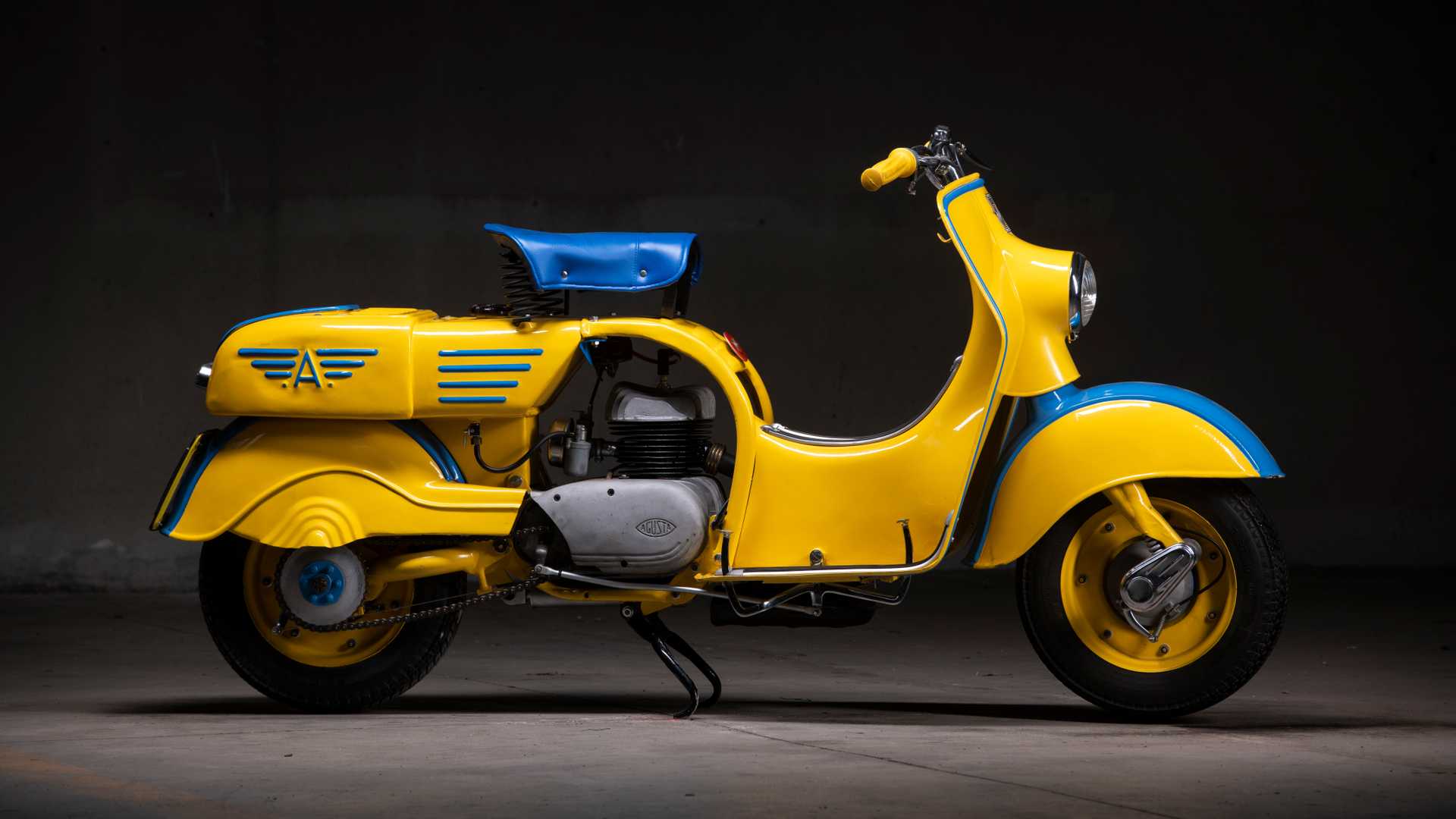
  • A collection of MV Agusta classics will be sold in Paris.

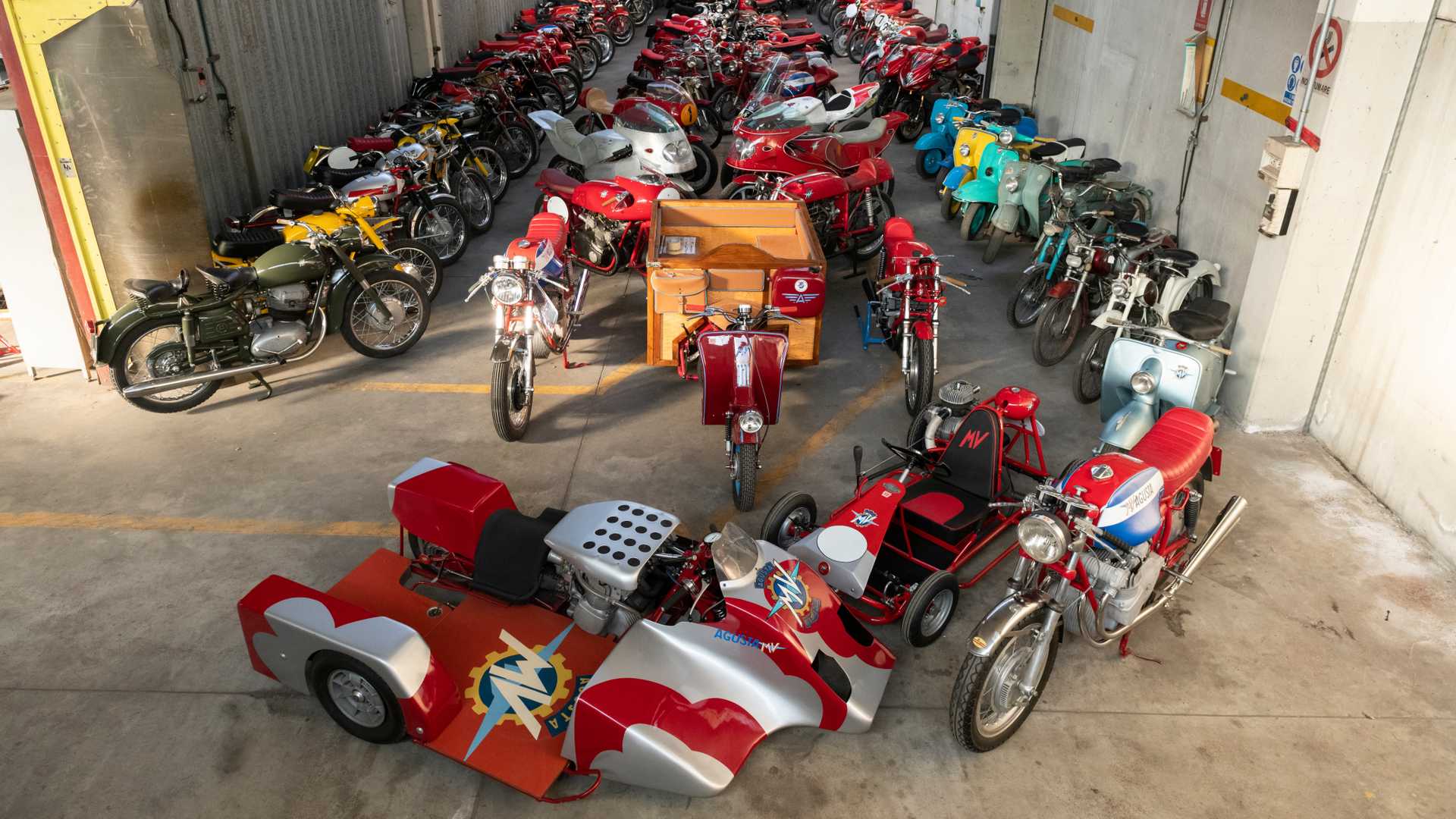
  • The collection consists of 90 bikes including prototypes, one-off race bikes, production bikes, scooters.

  • They are expected to fetch between €3,000 to €250,000 each.

We’ve seen vintage, classics and modern motorcycles individually listed in Mudah.my, but this is something amazing. Up for sale is a collection of approximately 90 classic and iconic MV Agusta motorcycles.

The collection was put together by a family through their love for the Italian marque. The current owner’s uncle worked in the family’s MV workshop long ago. He even raced some of the bikes at the Giro d’Italia and Milan-Tarento races.

1974 500 four-cylinder Corsa Replica

It was him who bought these bikes, which didn’t cost so much at the time. As the collection grew over time, he rented an unused factory near Monaco to store this massive collection. The man had some of these bikes were restored by ex-factory mechanics, evidently without thought to cost. There are among these bikes that were built by Arturo Magni himself.

1972 750S John Surtees Tribute

Consequently, all the bikes are in running condition and are certified by the MV Agusta museum.

1952 Scooter Ovunque

The collection consists of volume production models and one-off specials, scooters, road bikes, and prototypes from as far back as 1945. There’s even a mini bike that was made for Phil Read’s son before it went into production. It was modelled after Read’s own race bike. The owner wasn’t boasting when he claimed it to be the world’s largest collection of the Italian brand.

1953 125A Callesino

Artcurial Motorcars will sell them at the retro Salon in Paris on 9thFebruary (there’s still time to get your flight tickets). They are estimated to fetch between €3,000 to €250,000 each.

1972 750S ex-Arturo Merzario

All pictures: Rideapart.com

PICTURE GALLERY

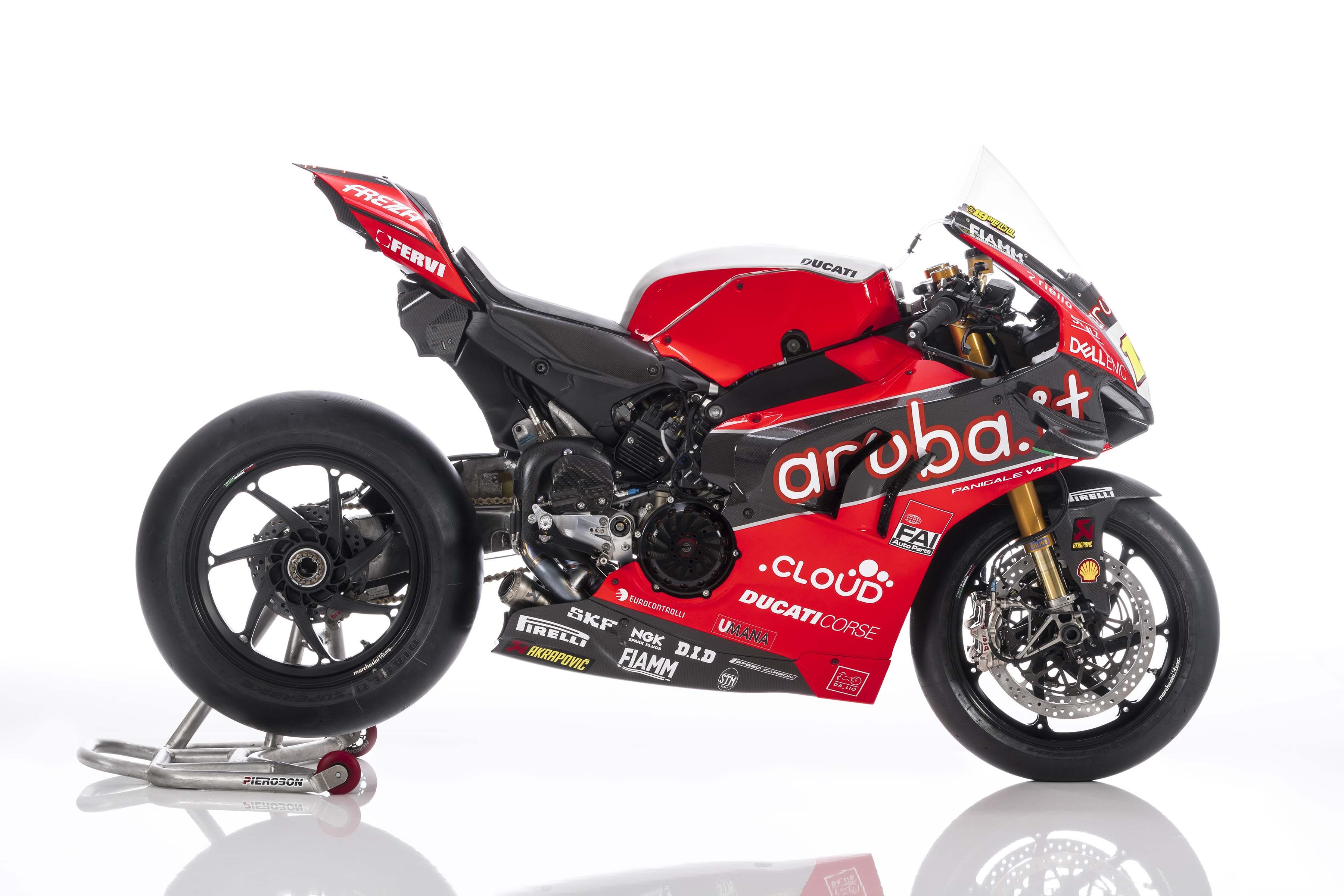
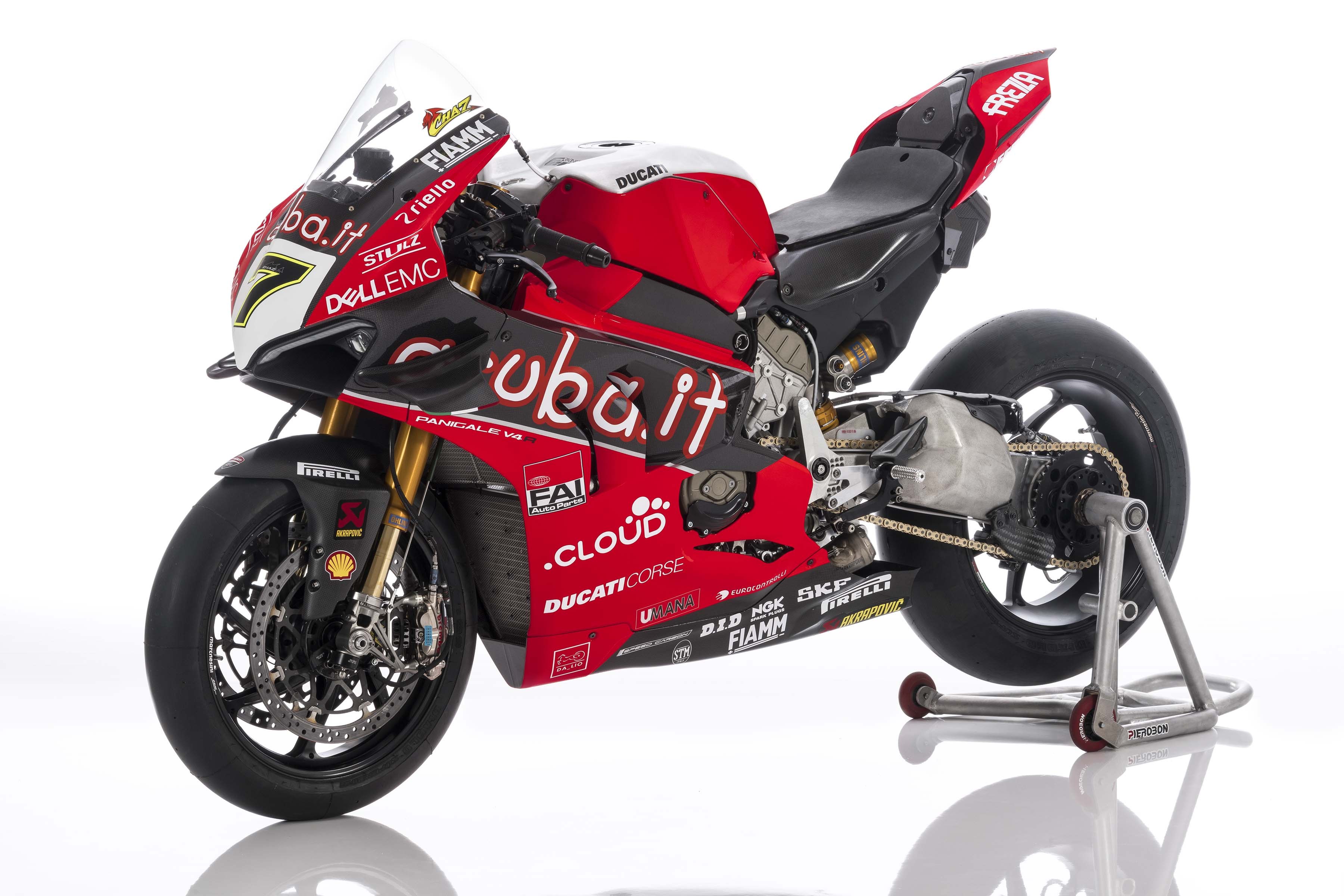
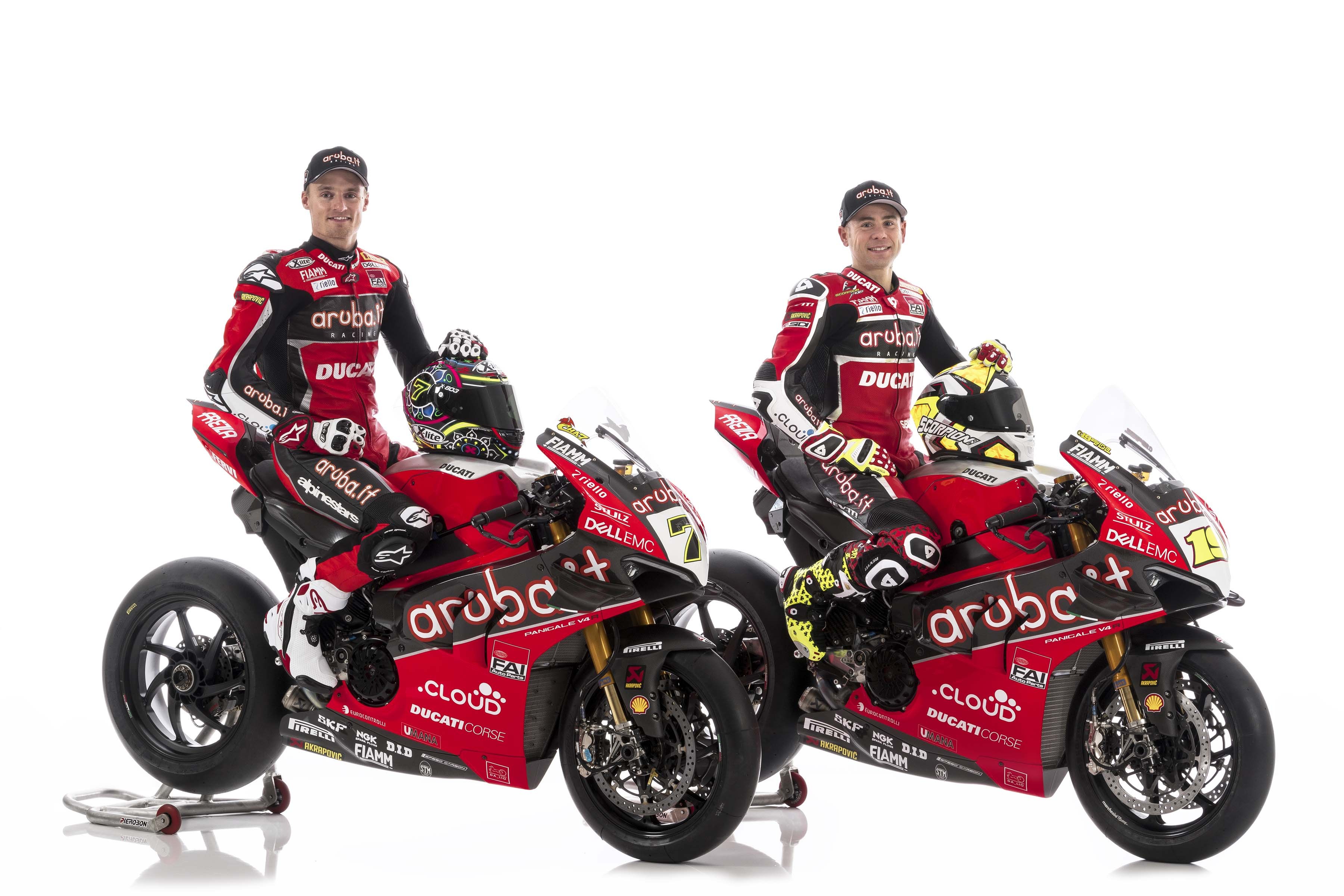
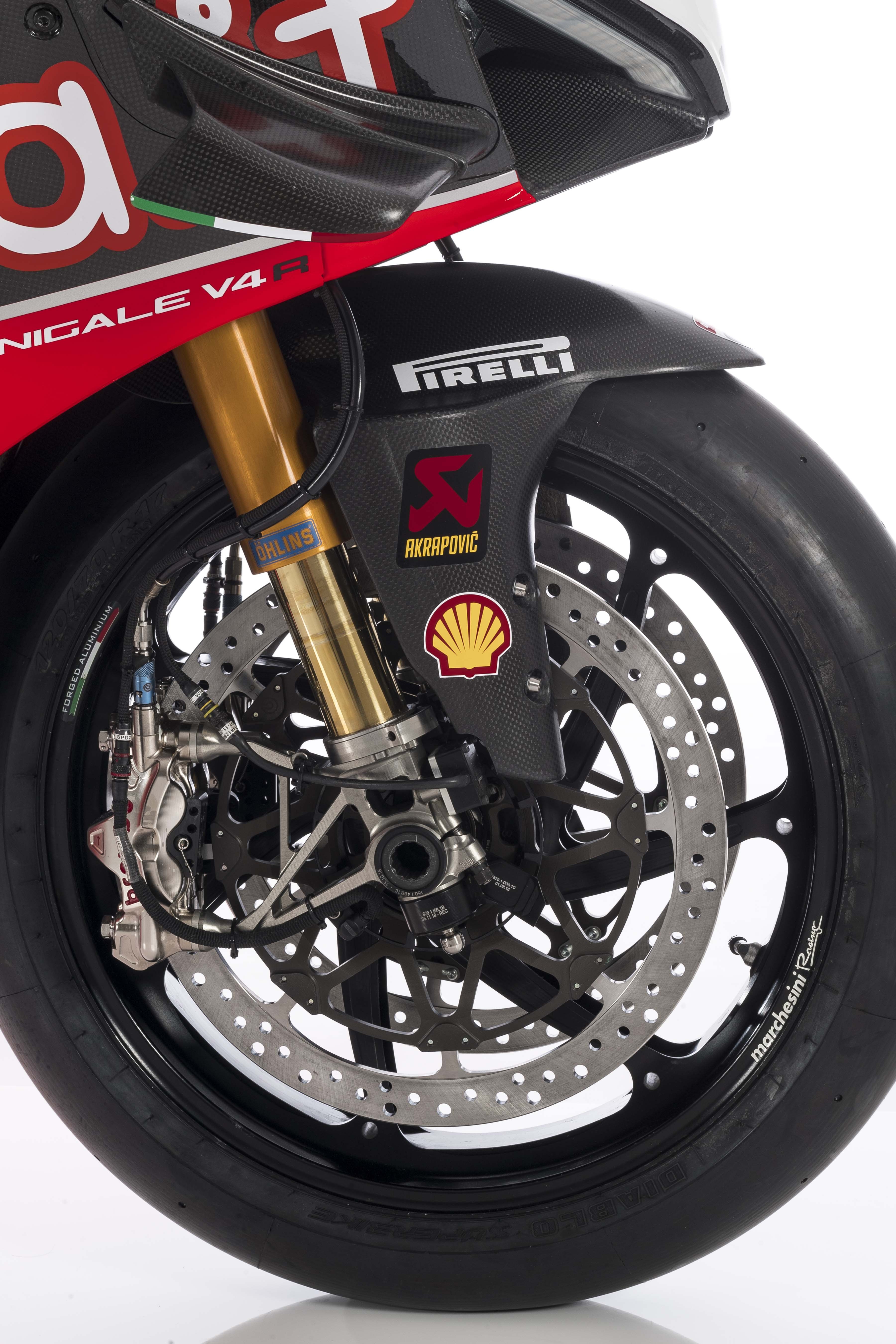
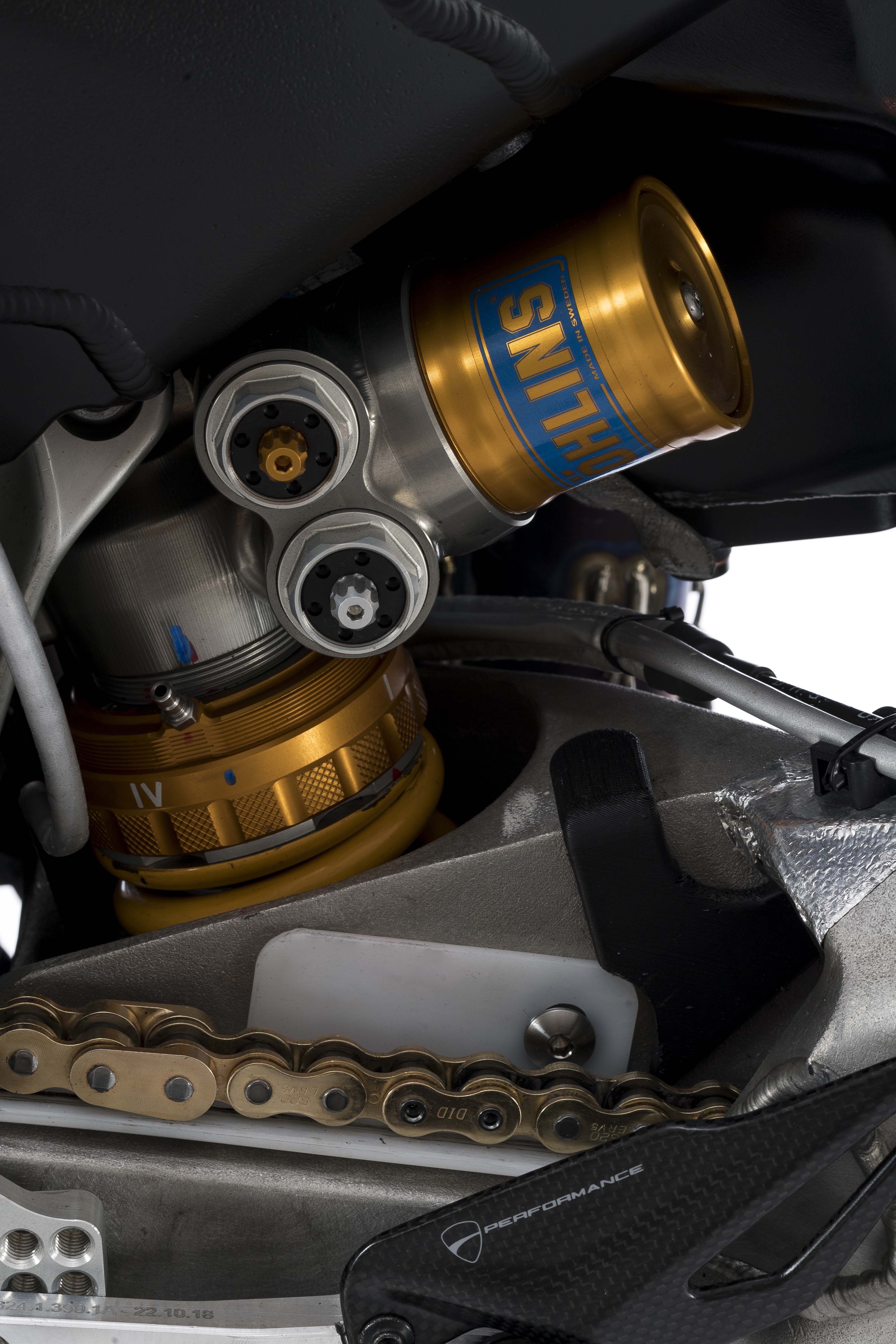
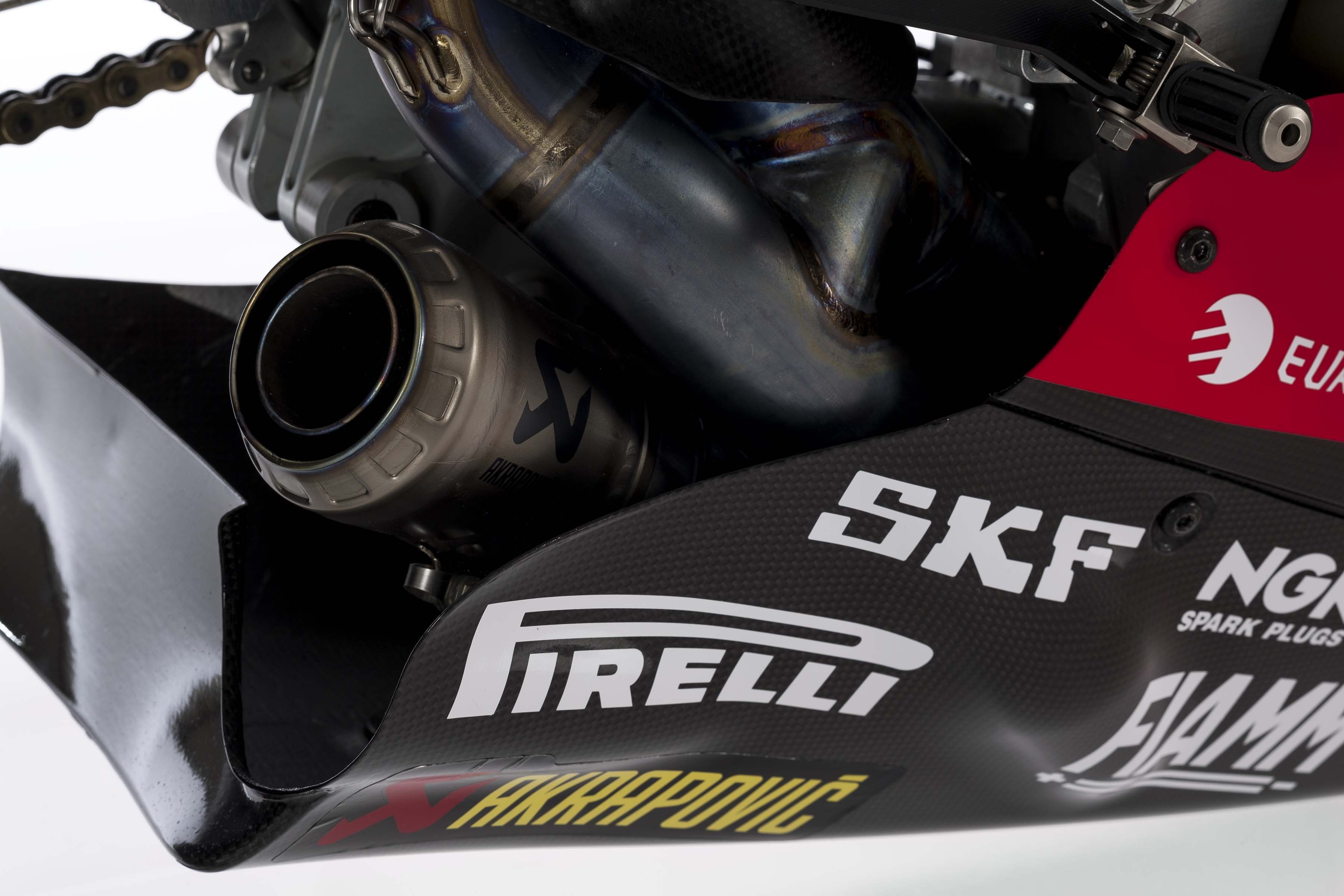
  • The Aru Aruba.it Racing – Ducati Superbike launched their WorldSBK 2019 Ducati Panigale V4 R.

  • Returning rider Chaz Davies is joined by newcomer and ex-MotoGP rider Alvaro Bautista.

  • WorldSBK 2019 marks the first time Ducati races with a V-Four bike.

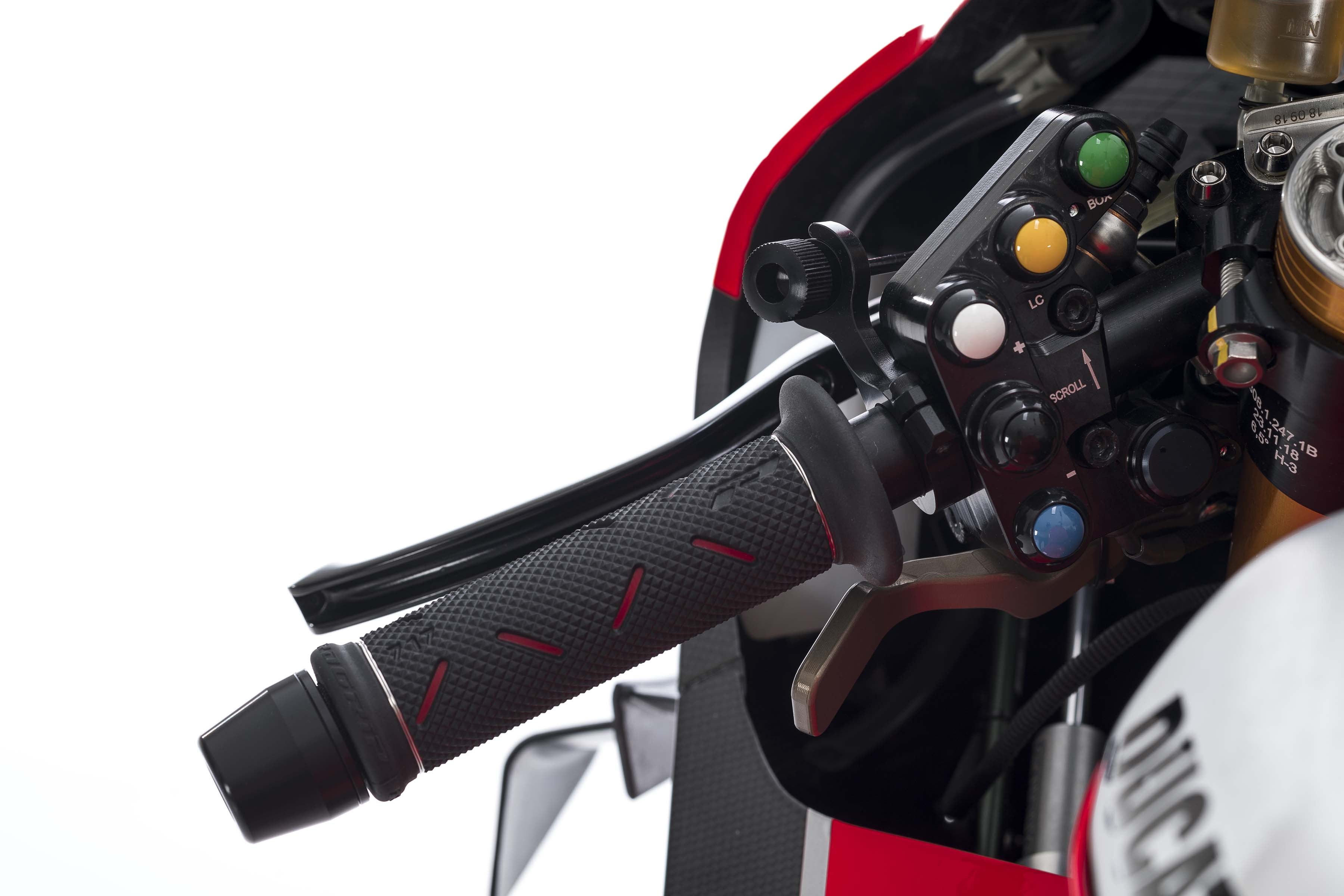
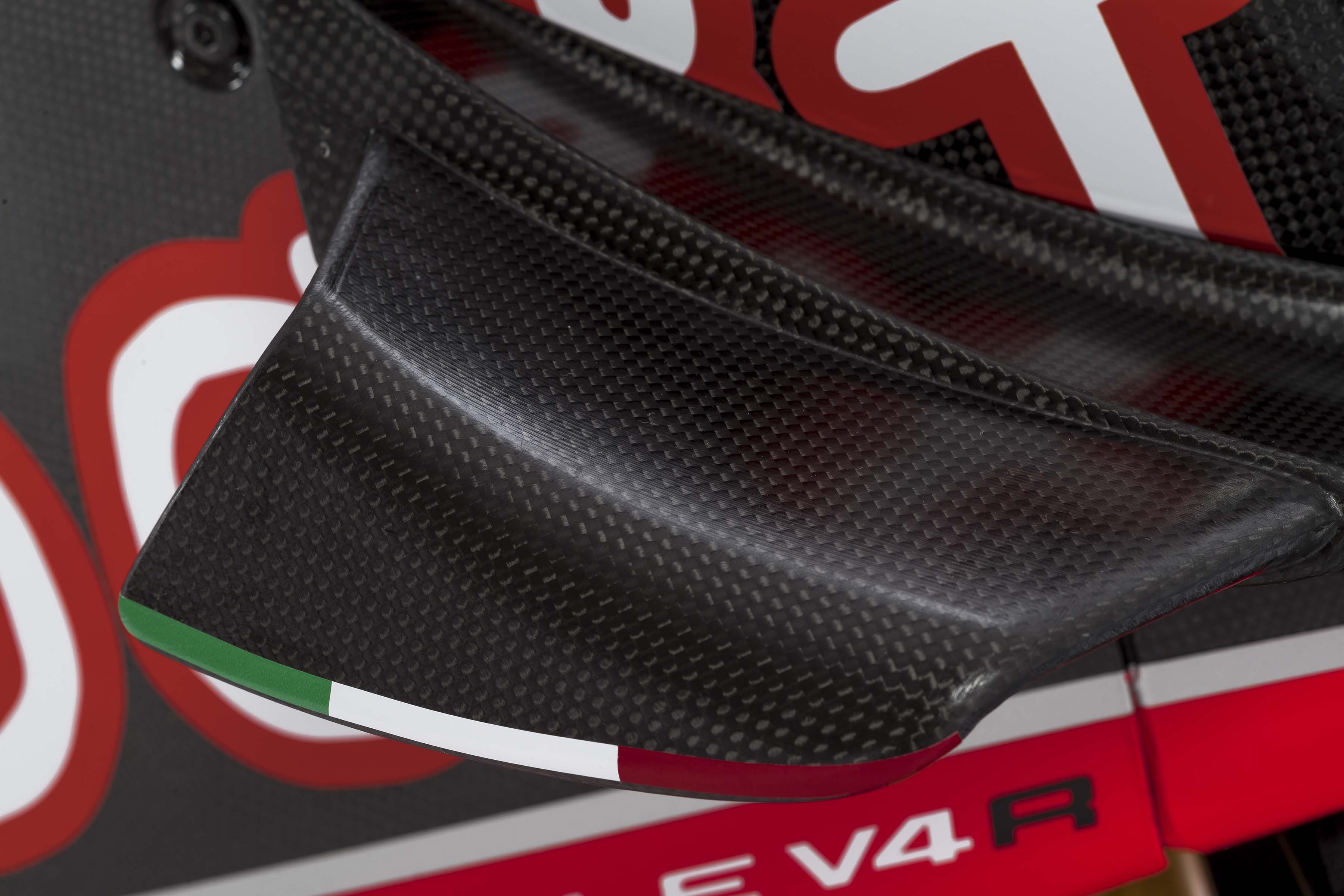
It’s not only the season for wishing prosperity, it’s also when international race teams launch their teams for the 2019 season. The Aruba.it Racing – Ducati Superbike team launched their 2019 Ducati Panigale V4 R for WorldSBK 2019.

The team’s riders Chaz Davies and newcomer Alvaro Bautista will ride the new bikes in an effort to recapture the WorldSBK crown for Ducati. The Italian manufacturer had a stranglehold of the WorldSBK throughout the Nineties and it was through that championship that Ducati became a household name, before they ventured into MotoGP. However, they have not won a superbike title for the last seven years.


“We’ll be working with only one aim in mind: to win,” said Gigi Dall’Igna about Ducati Corse’s WorldSBK program.

The Ducati Panigale V4 R is also an important milestone for Ducati as it is their first V-Four-powered road bike. Indeed, the manufacturer created the Panigale V4 as their basis to win the WorldSBK title, and thereby breaking their long tradition of producing V-Twin superbikes. WorldSBK and World Supersport championships are production-based.

Make no mistake, the Ducati Panigale V4 R is a potent missile right out of the crate. On the other hand, the team and manufacturer are pragmatic in their approach.  “The project is still at an early stage and development has started auspiciously well, but we still have to perfect several details and we have a clearly defined development program,” added Dall’Igna.

Team rider Chaz Davies will spend his fifth year with the red bikes and is a regular hard charger. He’s not afraid to swap paint, rubber and leather with four-time and current WorldSBK champion Jonathan Rea of Kawasaki.

Alvaro Bautista could prove to be the dark horse of the factory with his extensive experience and knowledge garnered in MotoGP. He may well score a few wins this season.

All pictures: Ducati and Asphalt & Rubber

  • The Malaysian police have caught the Singaporean bikers with taped up number plates.

  • Malaysian Inspector-General of the Police confirmed the news

  • They paid up their summons.

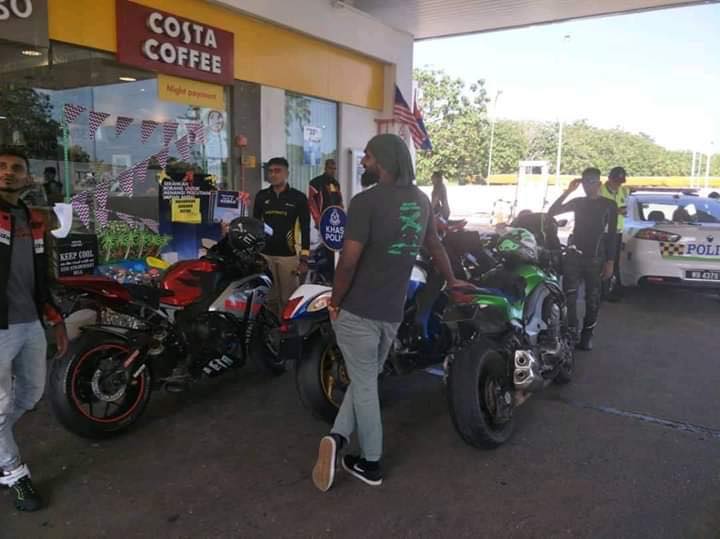
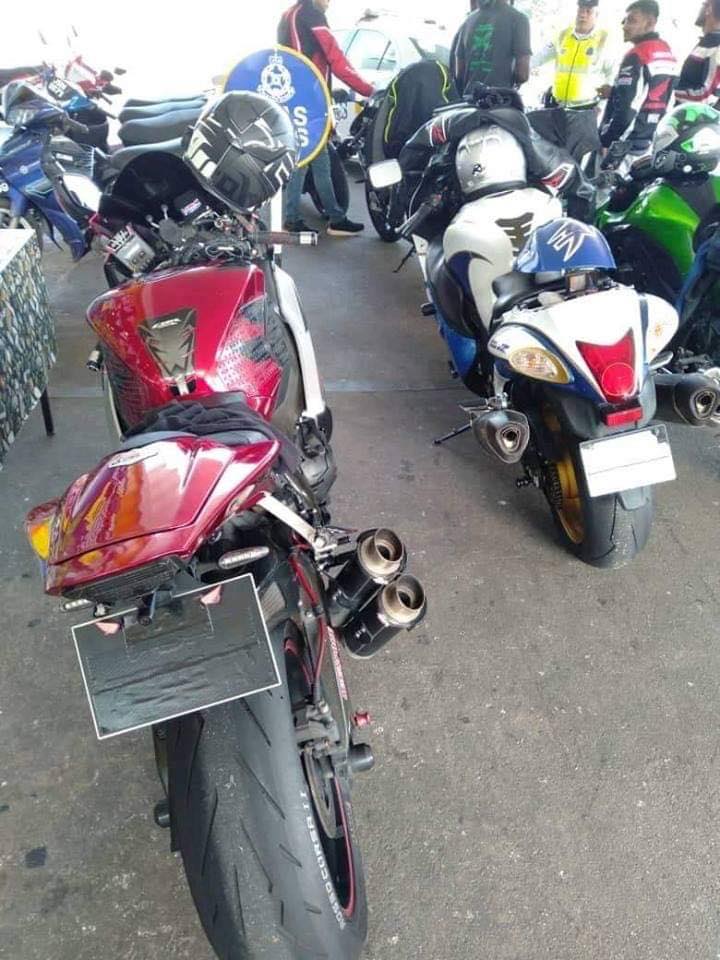
PDRM caught the Singaporeans bikers who taped up their bikes’ number plates yesterday.

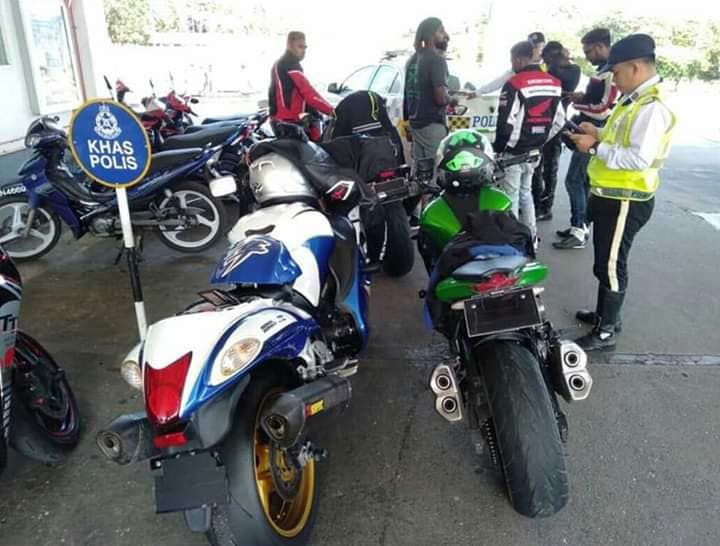
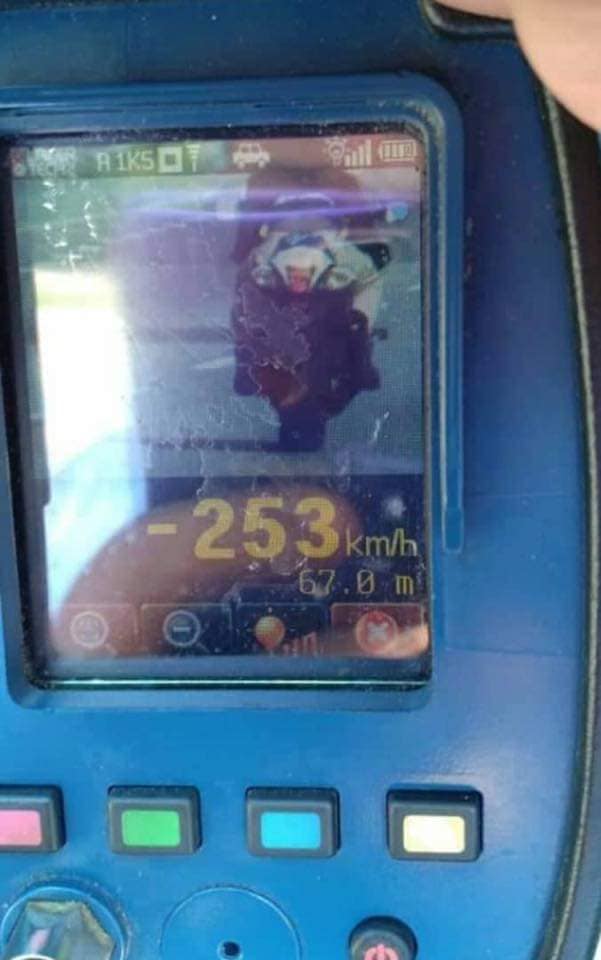
PDRM showed a radar gun picture of a Suzuki Hayabusa travelling at 253 km/h, although they did not specify where the group was stopped.

Another picture of a PDRM highway patrol car stopped in front of the motorcycles outside a petrol station shop. The bikers were seen taking selfies and smiling nonchalantly.

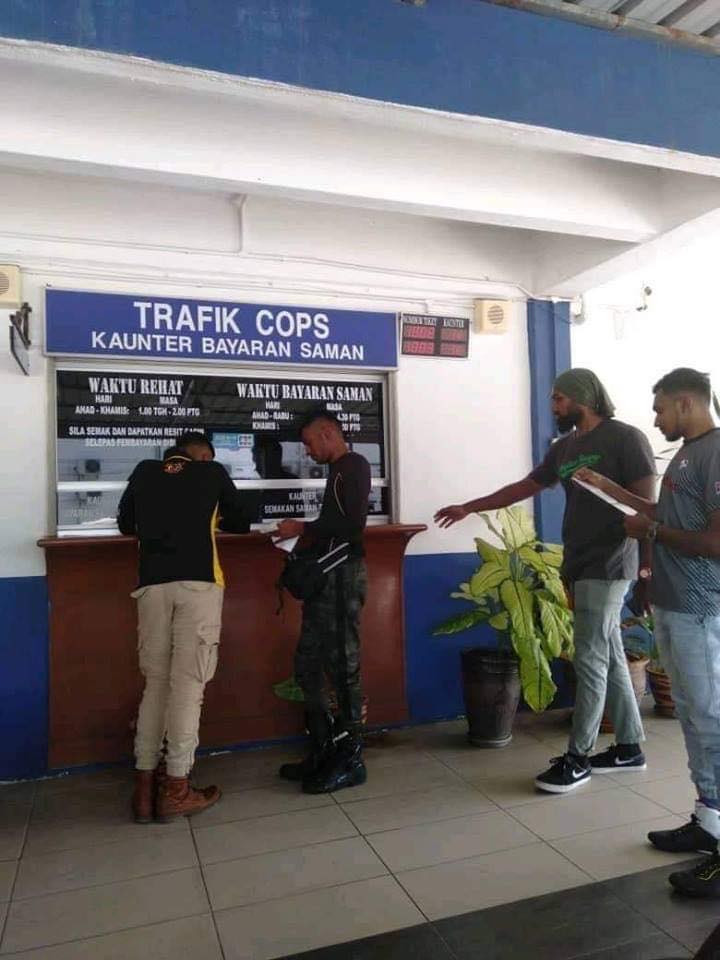
The next set of photos saw them paying up their summons at a PDRM payment counter. We assume they were escorted to the nearest police station.

Inspector-General of Police Tan Sri Dato’ Sri Mohamad Fuzi Harun confirmed that the group were Singaporeans and the dashcam video was caught in Johor Bahru. “We have taken action against those bikers involved, regardless if they are locals, what more foreigners,” he added during a media press conference yesterday.

The Royal Malaysian Police had set up roadblocks and speed traps on Malaysia’s main highways and roads in conjunction with the Chinese New Year. Major celebrations in the country always sees the exodus of thousands of Malaysians to their hometowns and holiday destinations. So, it was foolhardy to pull such a “trick.”

This unruly bunch were lucky they didn’t get involved in accidents and causing even more difficulties to highway users during this busy time.

In any case, well done, PDRM.

All pictures: Info Roadblock PDRM/JPJ

Archive

Follow us on Facebook

Follow us on YouTube