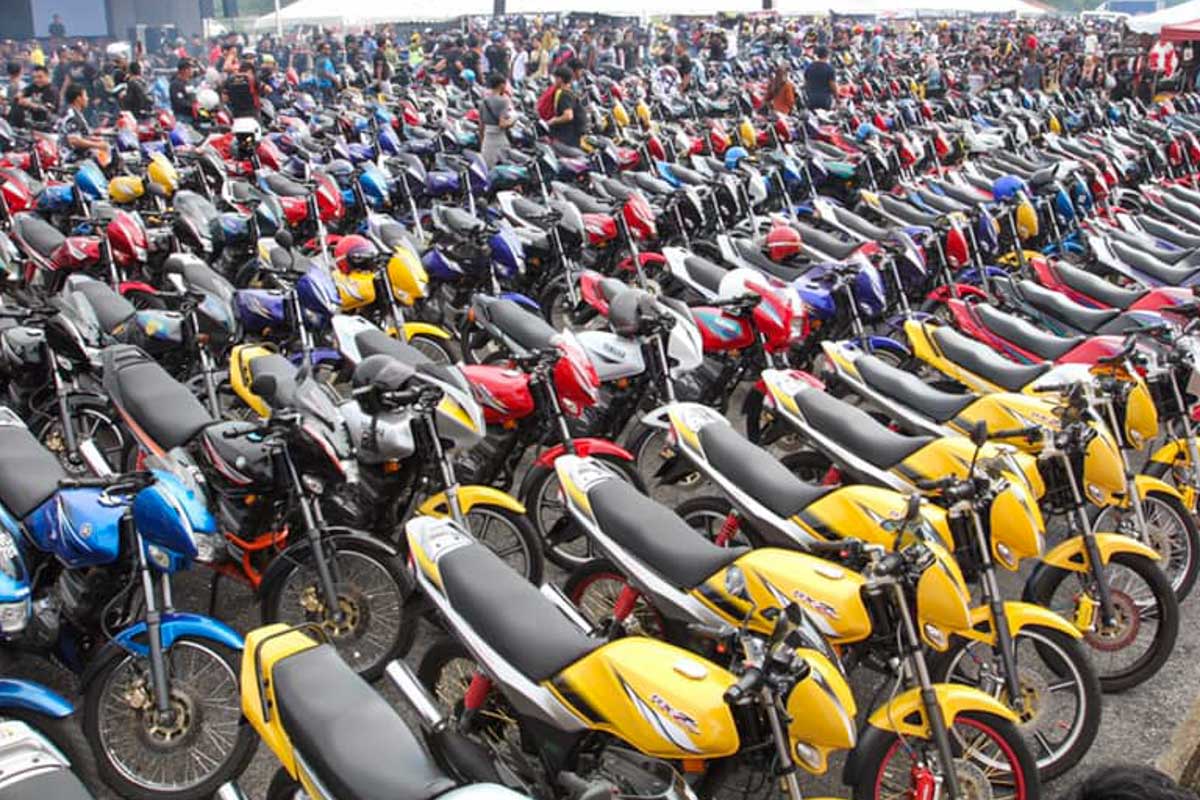
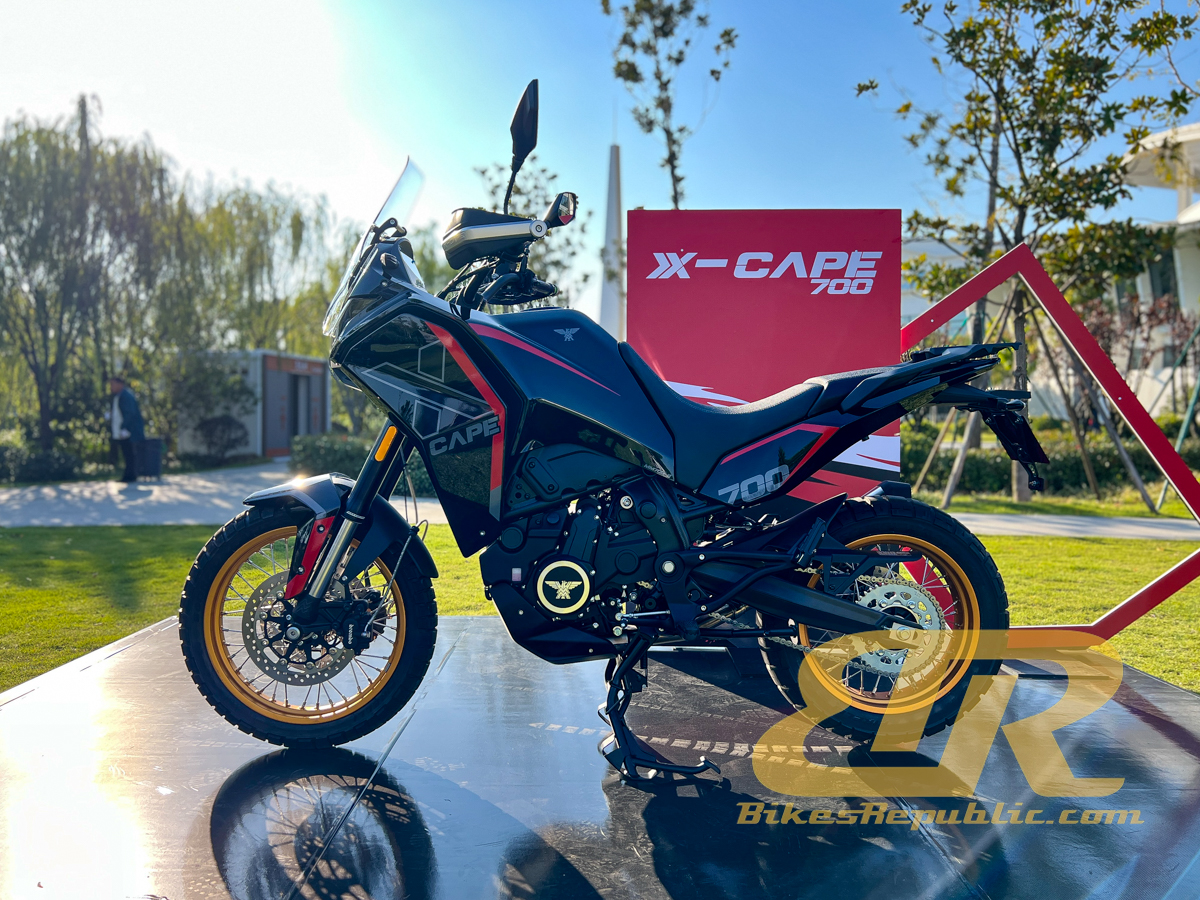
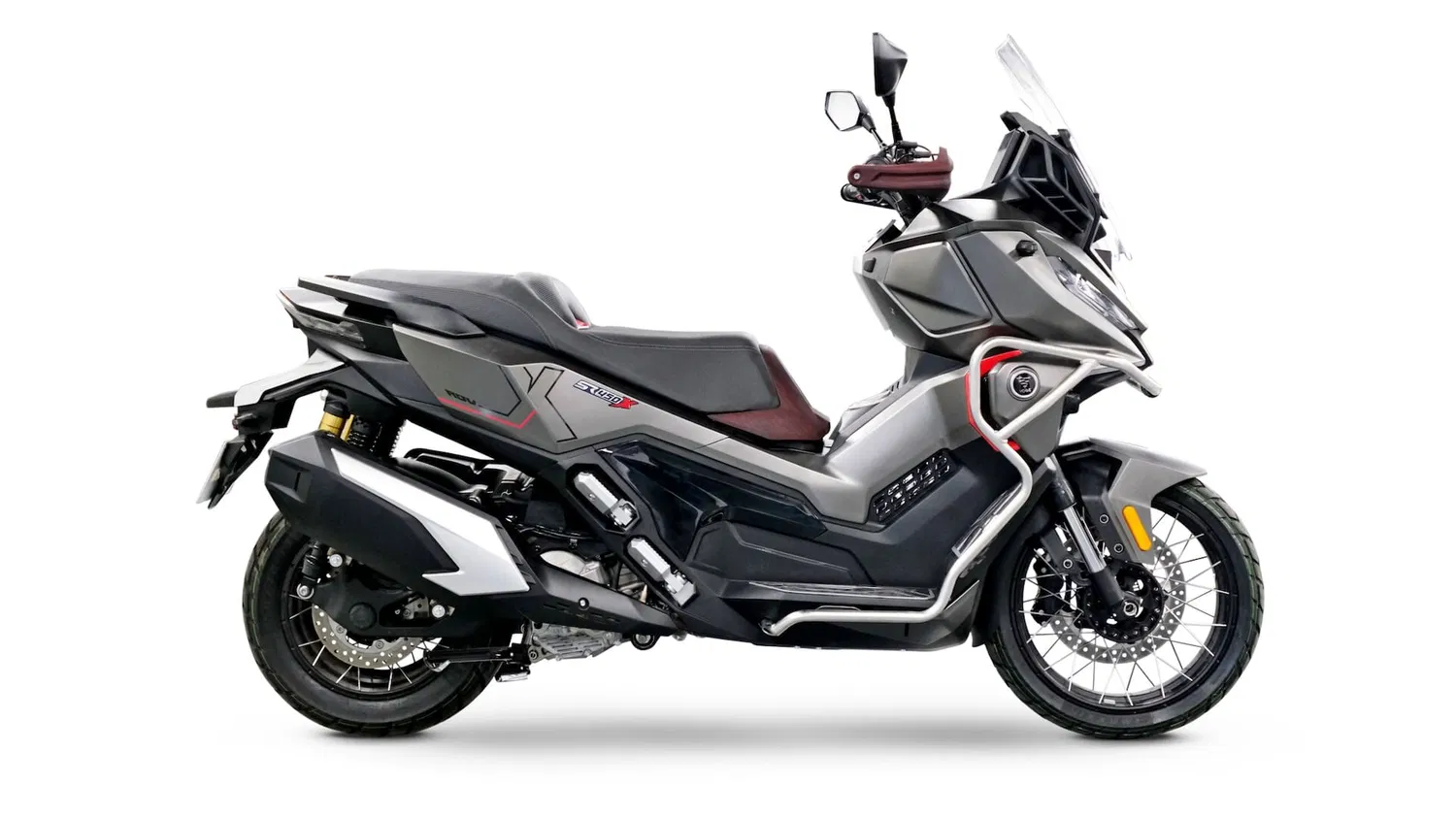
The prices of kapchais may go up as much as 20 percent from next year.
Motorcycle manufacturers and dealers say buyers will be affected by inevitable price hikes should the revised open market value (OMV) for vehicles is implemented.
The Malaysian Automotive Association (MAA) said in January the implementation of the revised OMV had been deferred once again after its expiration on Dec 31, 2024.
The OMV excise duty revision – officially known as the Excise (Determination of Value of Locally Manufactured Goods for the Purpose of Levying Excise Duty) Regulations 2019 or “OMV 402” – is now set to take effect in January 2026.
OMV 402 was originally scheduled to take effect in 2020, but the Covid-19 pandemic had the Finance Ministry putting it on hold until 2021. It was deferred again for 2021. MAA lobbied the government to defer OMV 402 and was granted a two-year extension until 31 December 2024.
The revised regulations OMV calculation stated that the profit and general expenses incurred or accounted in the manufacture of a vehicle, plus also of its sale value.
This revision leads to higher the taxable value of vehicles, resulting in higher prices.
The Motorcycle and Scooter Assemblers and Distributors Association of Malaysia (MASAAM) and the Malaysian Motorcycle and Scooter Dealers Association (MMSDA) raised concerns that manufacturers may struggle to fully absorb the increased duties.
This will potentially drive up motorcycle prices by 10 per cent to 20 per cent, depending on the models, they claimed. As such, kapchais currently priced at RM10,000 could cost between RM11,000 and RM12,000 after the revision.
This is not good news, given that the Malaysia motorcycle market is ‘soft’ lately. According to the Motor Cycle Data website which tracks the number of motorcycles that were actually delivered to buyers, Malaysia saw a -19.9% drop in 2024 compared to the 2022 record year.
There is no denying the fact that motorcycles are a big part of our lives. We are surrounded by bikes. We feel that it is safe to say that almost every Malaysian has been on a motorcycle at least once in their lives.
Although two-wheelers have been around Malaysia since independence, their popularity grew massively only after the Honda Cub took over the world. Since the first ever Honda Cub, hundreds of bikes landed on our shores, but only a handful went on to become icons, thanks to either good design or downright reliability.
That said, below is our list of the top 10 iconic bikes that basically ruled our roads. In fact, some of them are still going strong today.
1) Honda Cub (Also known as the Honda ‘Bulat’)
Unveiled in 1958, the Honda Cub did not only rule Malaysian roads, but the whole world. It is in fact, the bike that was responsible for changing the image of bikes on a global scale. Just like how Air Asia made flying accessible to the masses, the Honda Cub was the first motorcycle to reach homes. First introduced as the C70, the Cub has gone through many generations, and is still going strong. We won’t be surprised if this bike, which is also dubbed as the greatest bike ever built by many, outlives many of us.
2) Honda EX5
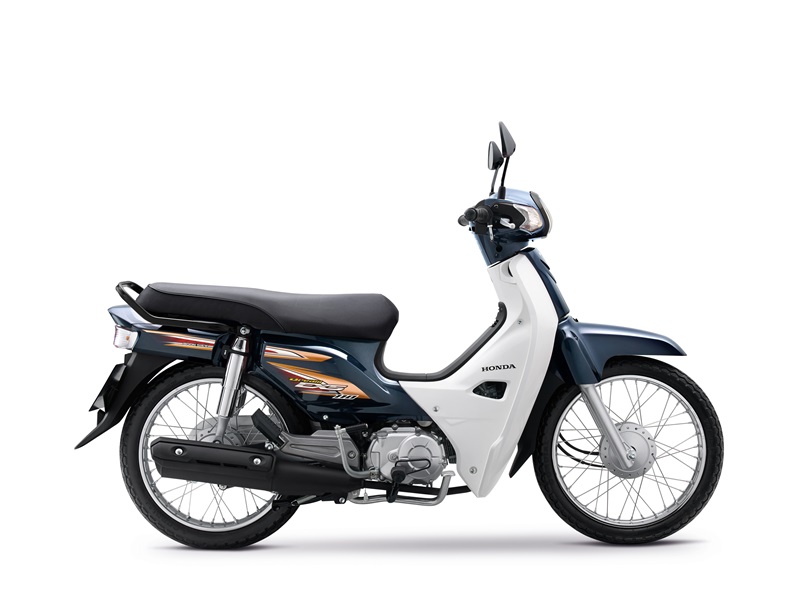
The EX5, which is the Honda Cub’s “grandchild”, is without a doubt, the most popular bike to be on our streets. Unveiled in 1986, the EX5 was the first motorcycle for many Malaysians. Initially powered by a 97cc made in Japan, the EX5 was updated with a 110cc engine. Known for its durability and reliability, the EX5’s legacy is still going strong, and doesn’t seem like it will be slowing down any time soon.
3) Yamaha Sport 100
Photo courtesy of malaysianbikers.com.my
Also unveiled during the same era as the EX-5, the Yamaha Sport 100, which is also more commonly known as the “100 sports” by Malaysians, was the next most popular thing after the EX-5. Still being used by many riders, both young and old, the Sport 100, which is infamously known for emitting white smoke(it is a two-stroker), is still being widely used nationwide, 30 years after its debut.
4) Suzuki RGV 120
In the 1990s, the Malaysian ‘Kapchai’ market saw a new buying trend – the demand for two-strokers was on the rise. Younger riders were more interested in “radical” models, that came with a clutch, and could easily go past the speed limit, and looked more modern than bikes like the EX-5 and the Yamaha Sport 100. This was when the Suzuki RGV 120 came into the picture and took over the streets. Sought mostly by the youth back in the days, the first thing that will come to our mind when we see the RGV 120 is definitely the infamous modified screaming exhaust pipes. How can we forget that?
5) Yamaha RX 115
Photo courtesy of Yamaha RX 115 Fan Club Facebook
The Yamaha RX 115 was a naked 115 cc bare-boned motorcycle which made its debut in 1981. Besides Malaysia, the RX 115 is also very popular in Thailand, Pakistan, Turkey, Uruguay, Singapore and Colombia. Today, the RX 115 will surely be present at any and every retro motorcycle show or gathering held in Malaysia.
6) Yamaha RXZ
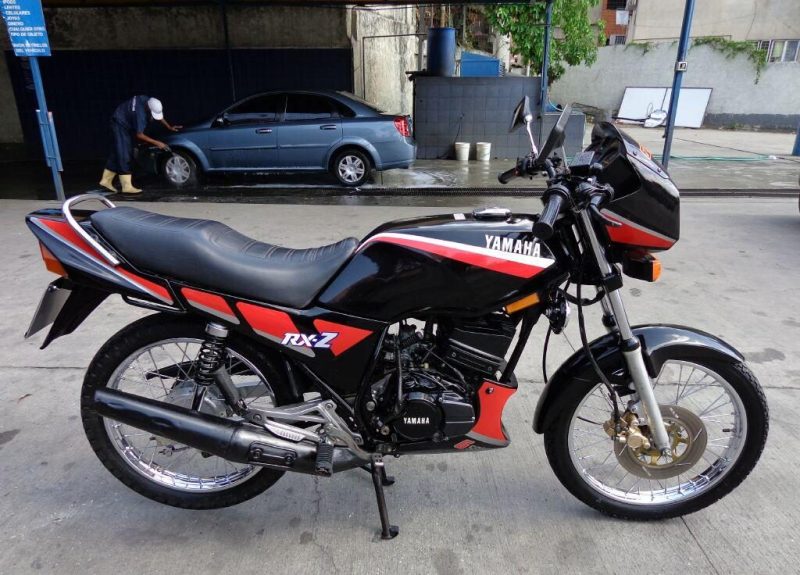
If there was one bike that was guaranteed to get you attention from the ladies back in the 1990s, it was definitely the Yamaha RXZ. Powered by a potent two-stroke 135cc engine with insane amount of torque, the RXZ was not only good looking, but packed quite a punch in terms of performance as well. Truth be told, it was arguably the best looking bike of its time.
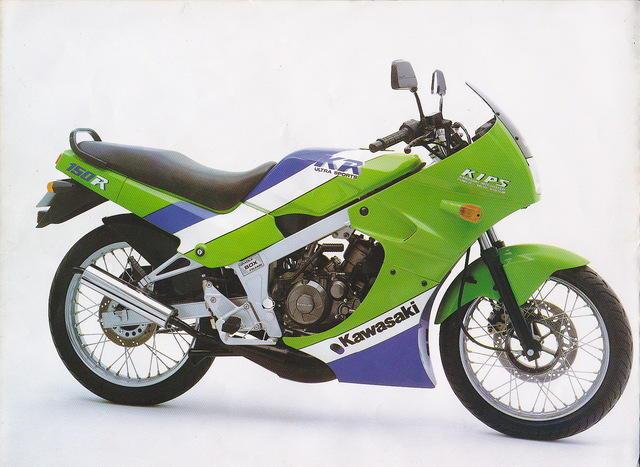
7) Kawasaki KR-150 Series (KIPS)
First unleashed in 1990 by Kawasaki, the Kawasaki KR-150, which is also known as the KIPS, was one of the favourites among speed-demons of the 90s. Looking like a mini GPZ 600, the KR150 was among the most powerful and reliable tw0-strokers to rule our streets. Even though the glory days of two-stroke engines are long gone, we can still see a few running around our roads till today.
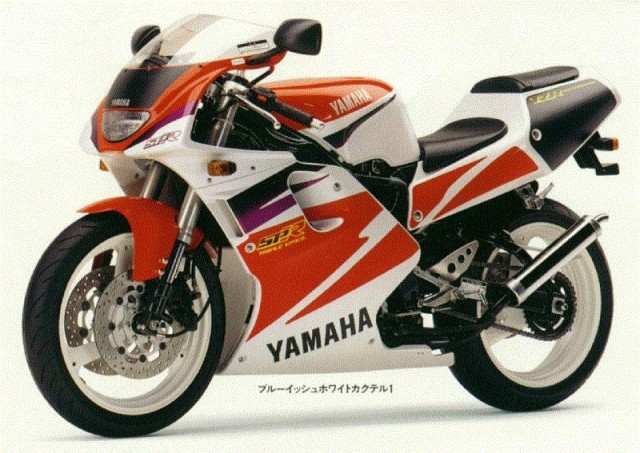
8) Yamaha TZM 150
Photo courtesy of Motomalaya.net
A legendary bike based on the TZR 250 that could kick out an impressive 35hp at 10,500RPM. Thanks to the powerful liquid-cooled, two-stroke engine with 59.0mm x 54.0mm bore and stroke setup, the TZM could rev to insane rpm. Complemented by 30mm Mikuni carbs, the engine was capable of propelling this bike up to 208km/h. How is that for performance?
9) Suzuki TXR 150 Panther
If there was one bike that could match, or outdo Yamaha’s RXZ in terms of styling and performance, it was none other than the Suzuki TXR 150 Panther. Some say that it could even outperform the TZM. First launched in 1982, the Panther’s production ended in 1991. Although the official production of the Panther didn’t go on for as long as some of its rivals, the bike has a massive cult following and still remains popular among retro bike enthusiasts.
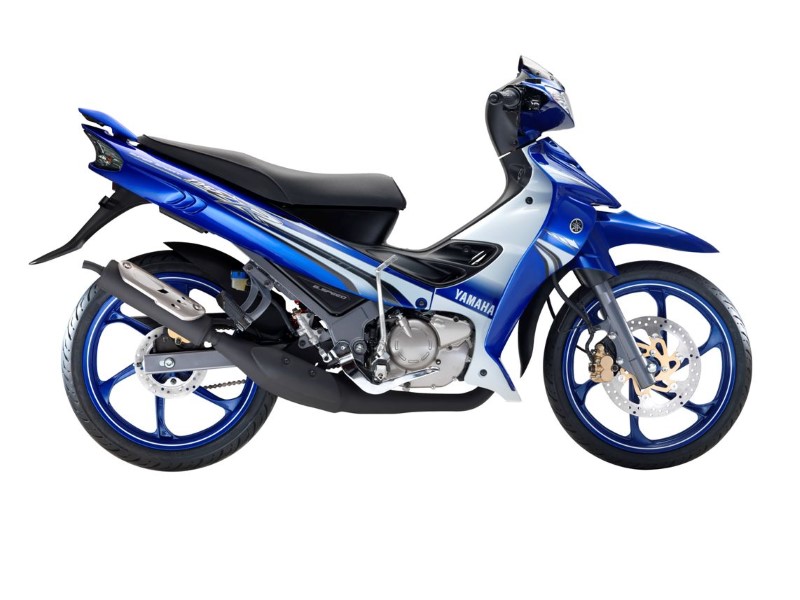
10) Yamaha 125Z
The Yamaha Y125Z or better known as Yamaha Z (in Europe) is a 125 cc two-stroke underbone bike which made its debut in 1998 as a successor of the Y 110 SS. It is said that the 125Z was the first 2-stroke underbone motorcycle to come with a catalytic converter. Beside being sold in most Southeast Asian countries especially in Malaysia and Singapore, it was also sold in Greece.
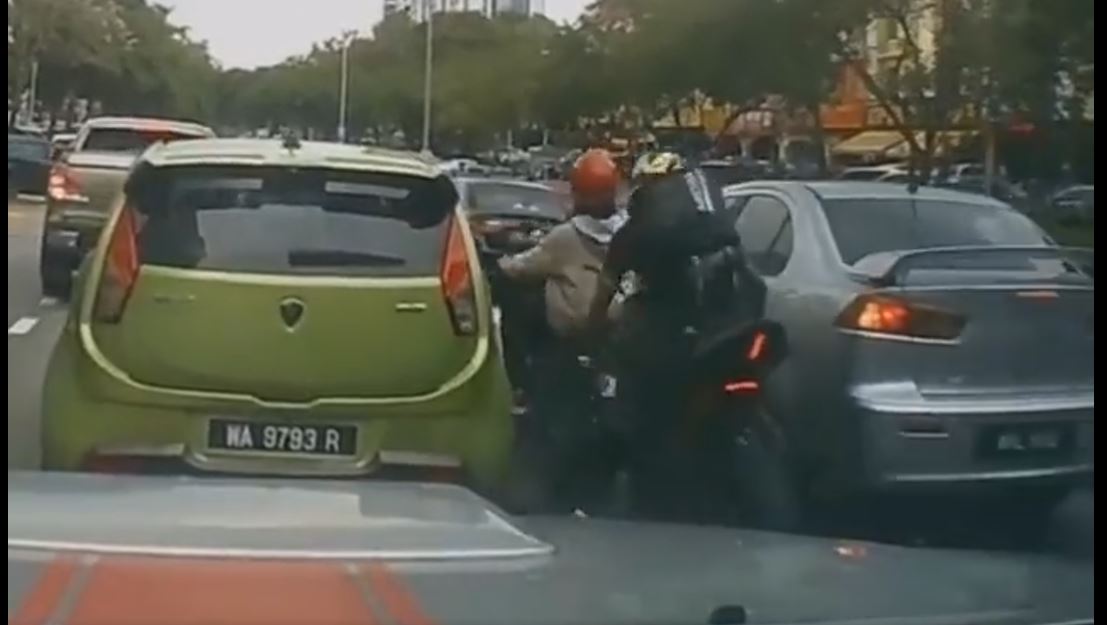
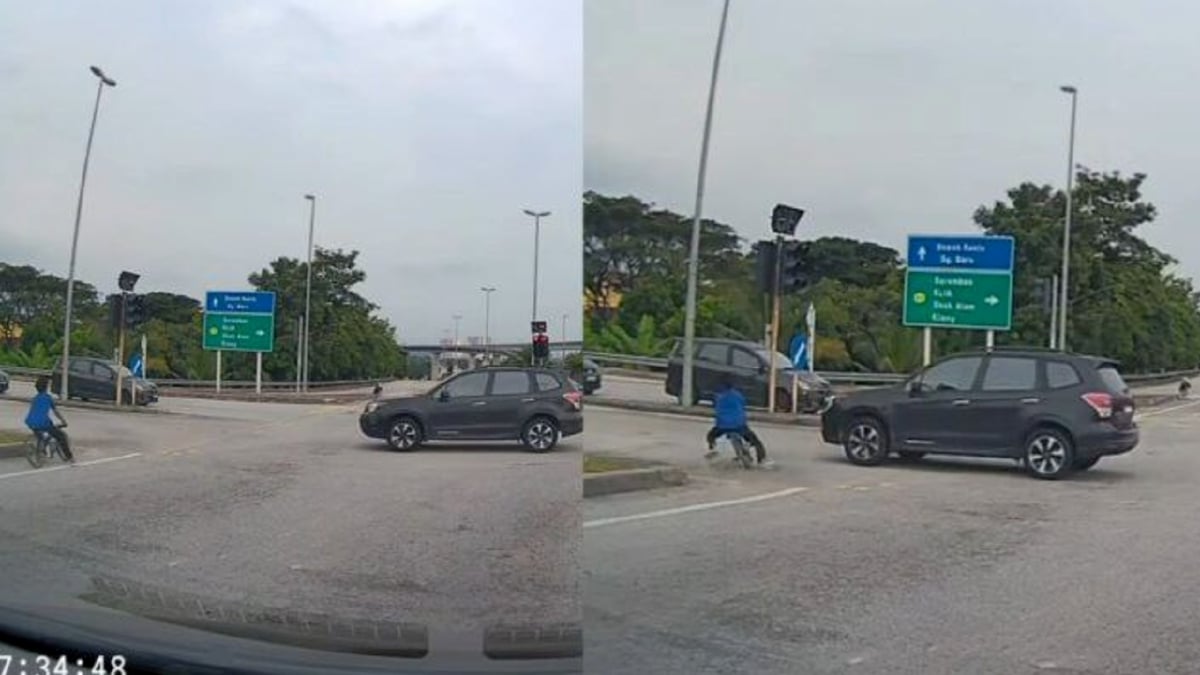
Viral dashcam footage shows two bikers crashing into each other after a failed lane-filtering attempt, and one of them blames the car driver. Who’s really at fault?
Transport Minister YB Anthony Lake said it will be impractical to ban kapchais.
He stressed that it makes up the majority of motorcycles in Malaysia.
The call to ban the type of motorcycle outright was met with outrage.
The Transport Minister, YB Anthony Lake responded to demands that kapchais should be be banned, saying that it would impractical to ban them.
“There are non-governmental groups related to road safety that wants a ban on kapchai motorcycles,” he said.
“But we have to look at it practically as a vast majority of the estimated 16 million registered motorcycles are kapchai motorcycles.”
“Many would be affected if we ban the motorcycles today and my view is that it would be difficult to impose such a ban,” he said when answering a supplementary question raised by Datuk Seri Fadillah Yusof (GPS-Petrajaya) in the Dewan Rakyat on Tuesday (Oct 29).
The suggestion to ban kapchais was made by an individual with MIROS (Malaysian Institute of Road Safety). It drew instant flak throughout Malaysia.
MIROS scrambled to release a press statement, distancing themselves from the what the individual suggested, saying that it was a personal statement instead of stance adopted by the agency.
YB Loke also stressed that there’s no plan to ban kapchais despite encouraging the switch to electric scooters. There are also no plans to ban them on highways, but dedicated motorcycle lanes will be built as part of the 12th Malaysia Plan.
A “safety activist” recommended that the government ban kapchais from Malaysian roads.
He suggests electric scooters be used as the alternative.
It’s because electric scooters have limited range and lower speeds.
A “safety activist” recommended to the government that kapchais should be banned from Malaysian roads, reports Careta.my.
Speaking at a Malaysia Institute of Road Safety Research (MIROS) event, Sharhim Tamrin said that the government should consider electric scooters as the alternative, as they have limited range and top speeds of around 80km/h only.
He said this based on his findings that countries like China and Taiwan have banned kapchais. (The two countries did not “ban” kapchais, instead they urged the use of electic scooters as fuel is expensive and China especially didn’t want their economy to depend on petroleum. – Editor)
“I have, informally, proposed this to a number of government agencies. I will also send a (formal) proposal to the government to ban kapchais,” he said during a forum at the event.
A similar proposal was forwarded by Works Minister Fadilah Yusof in 2013, on the grounds of safety. He called for kapchais to be banned from entering highways.
Shahrim also mentioned the trend of 15- and 16-year-olds who likes to ride fast. He also called motorcycle manufacturers to task for advertising motorcycles as performance machines, which would influence the owners to ride fast and some to modify their bikes to go faster.
Assistant Director of Enforcement for the Traffic Investigations and Enforcement Department of the Royal Malaysia Police concurred that the government should ban motorcycles below 250cc.
According to him, there were more car accidents last year compared to motorcycles, but it’s the latter that contributed to higher death rates.
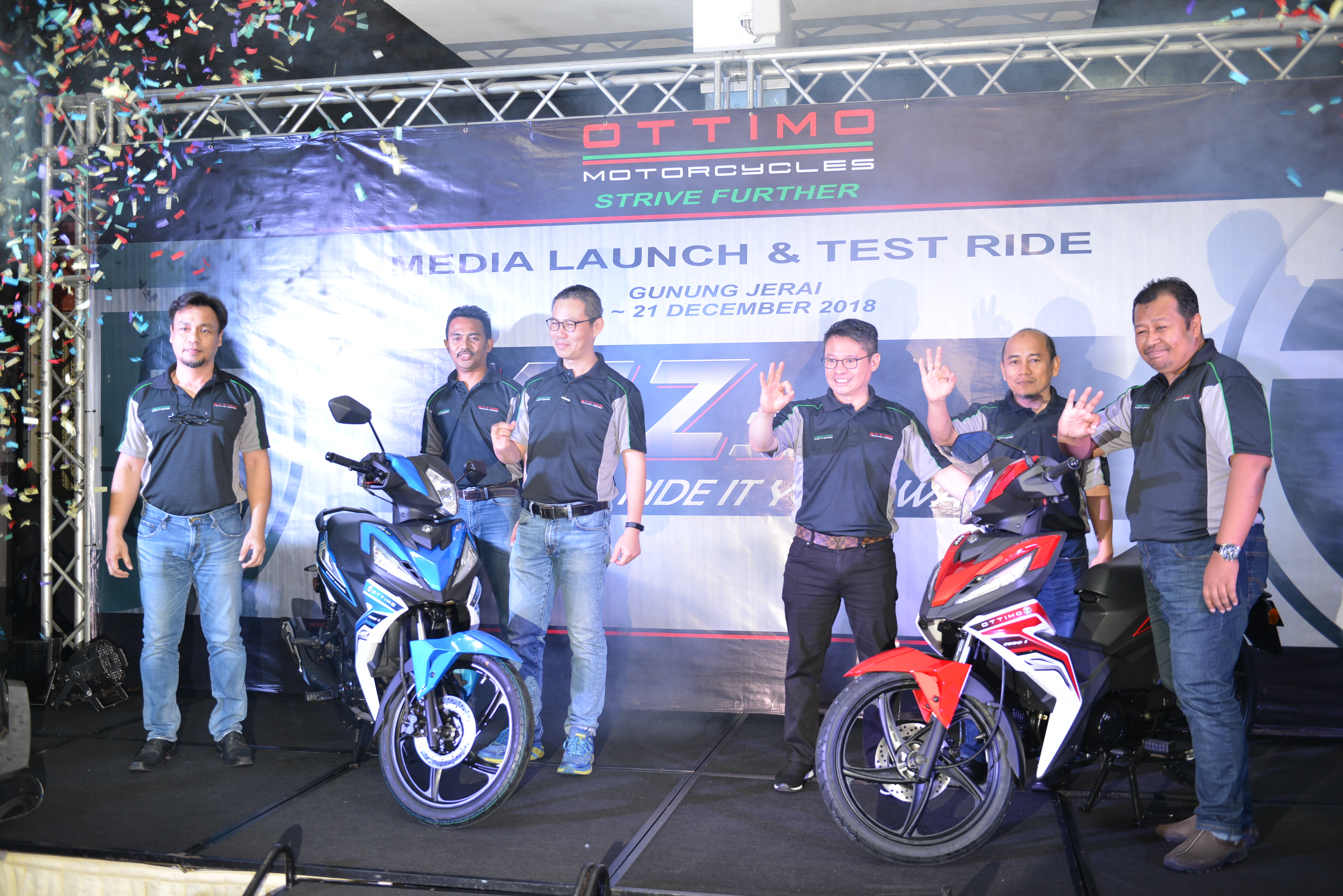
Ottimo Technologies Sdn. Bhd secara rasminya telah memperkenalkan model pertama mereka, VIZ110.
Dijana oleh enjin satu silinder empat lejang 110cc, ianya juga didatangkan dengan tangki bahanapi 3.6 liter diperakui sebagai kenderaan cekap tenaga (EEV).
Harga pengenalan ditetapkan pada RM4,288 (harga asas, tidak termasuk insurans dan cukai jalan).