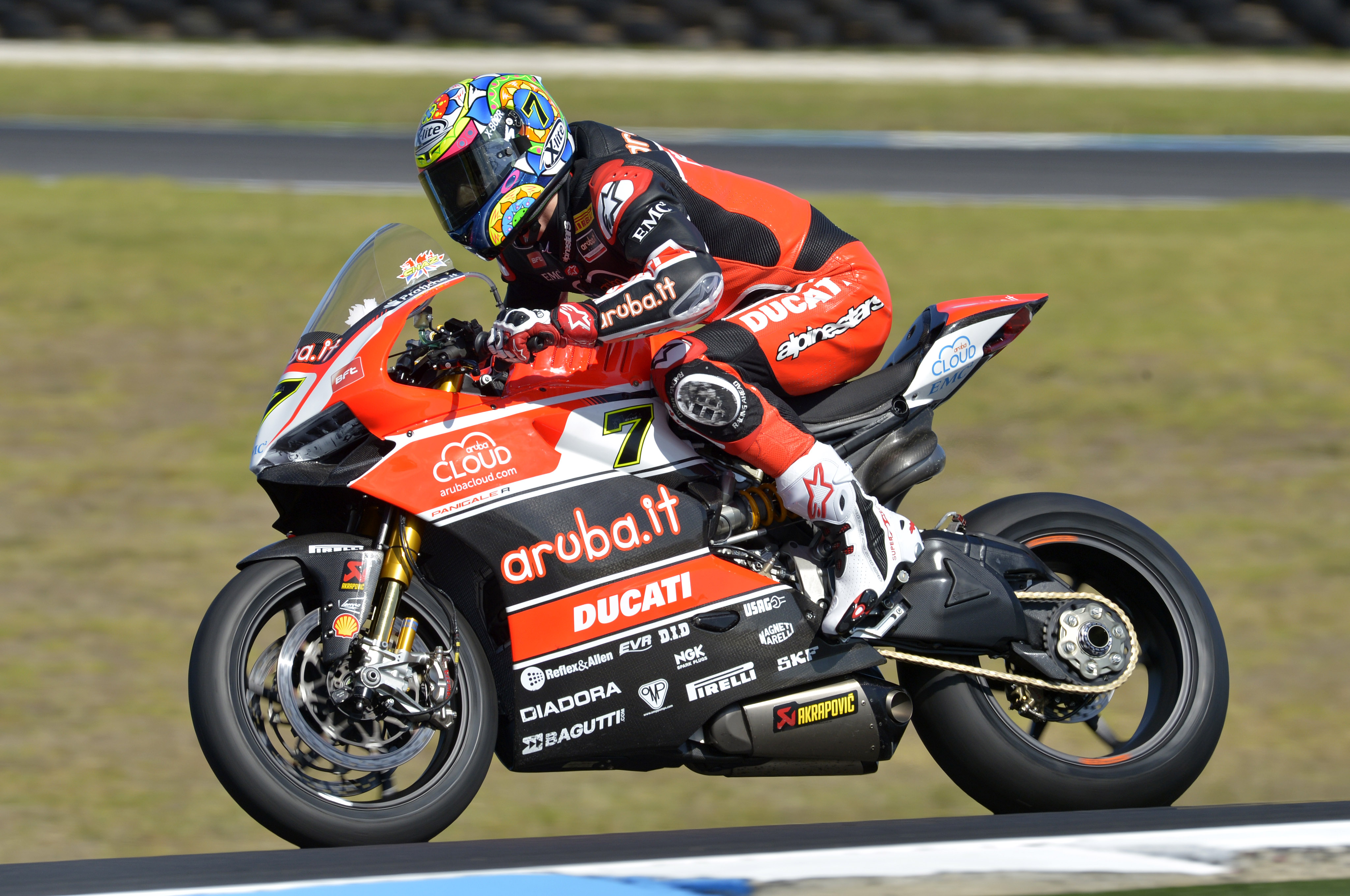
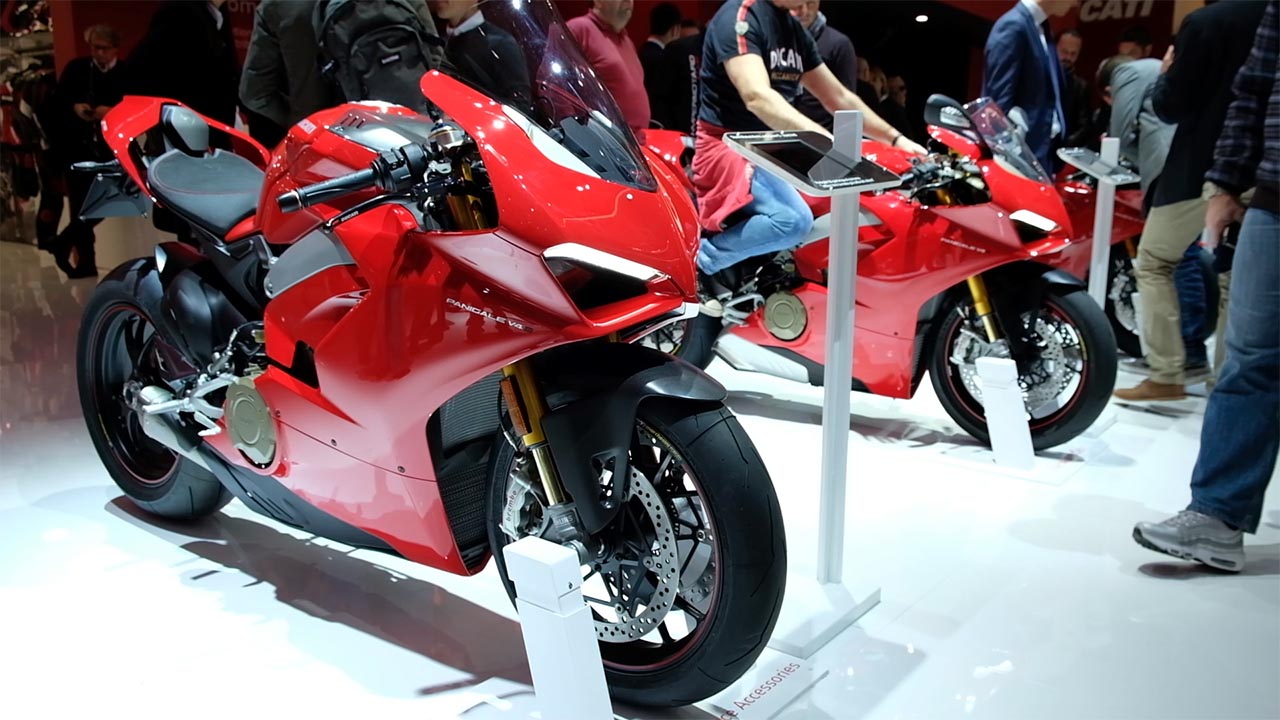
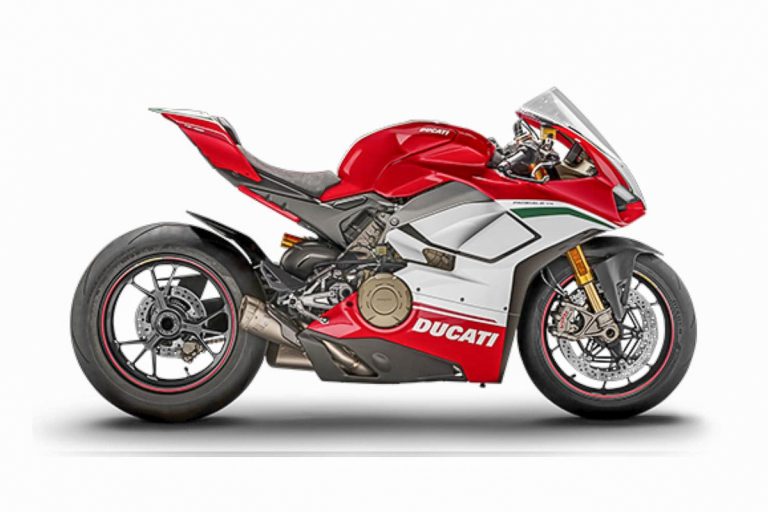
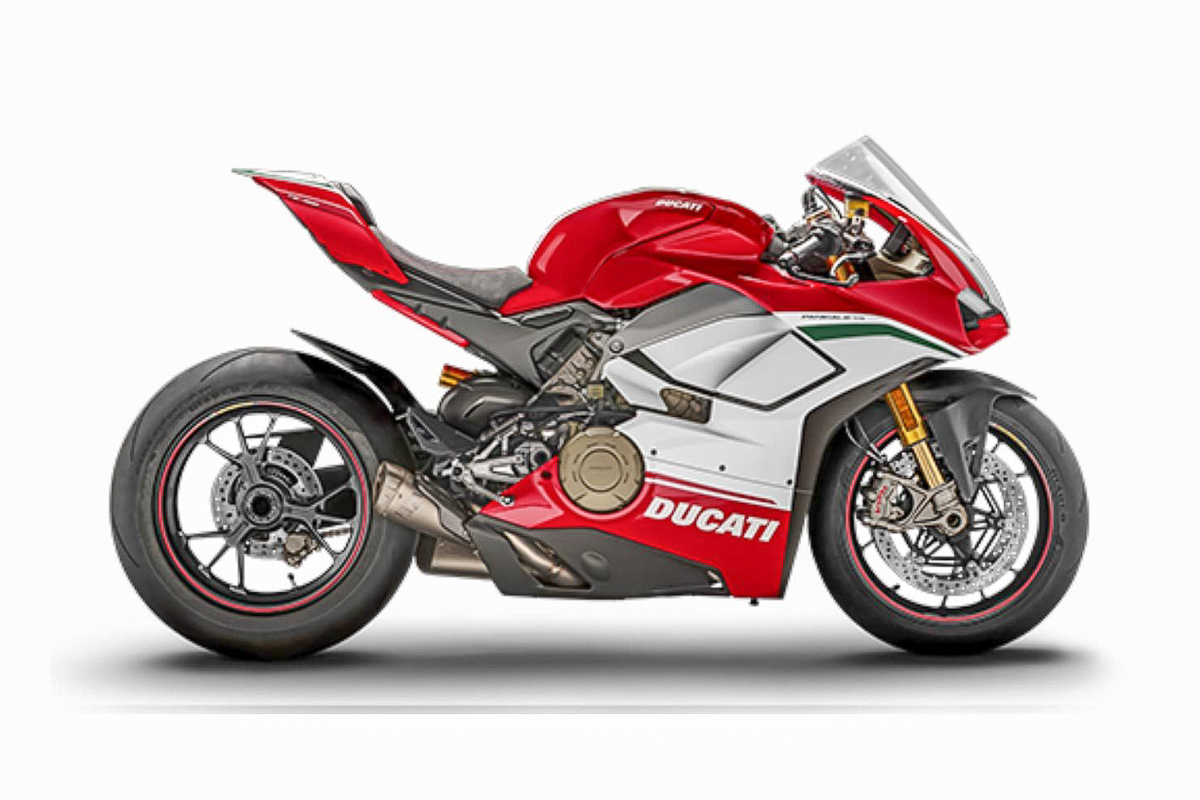
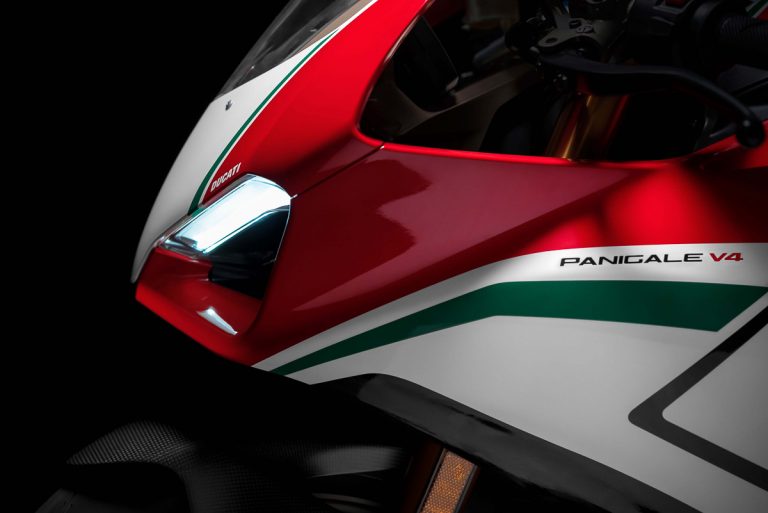
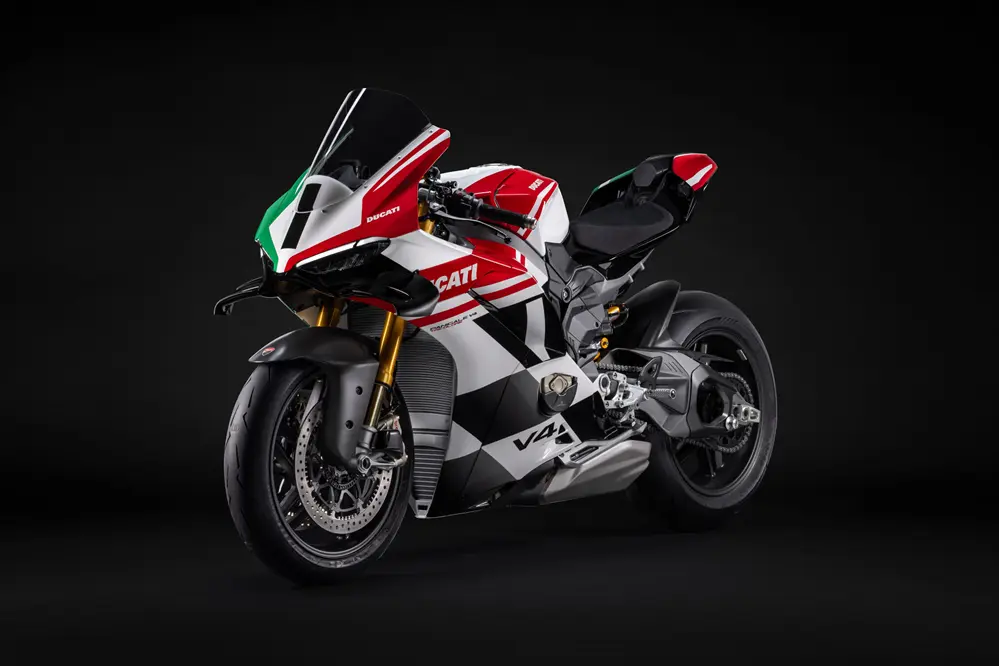
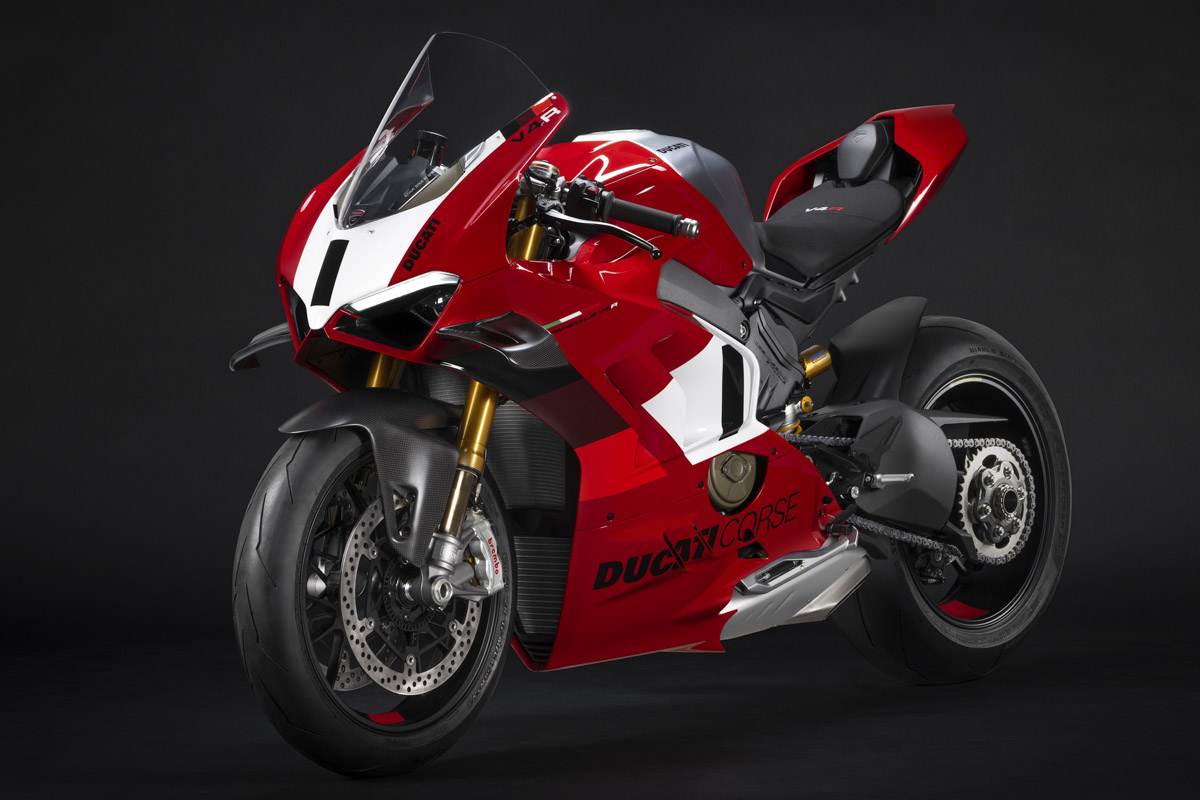
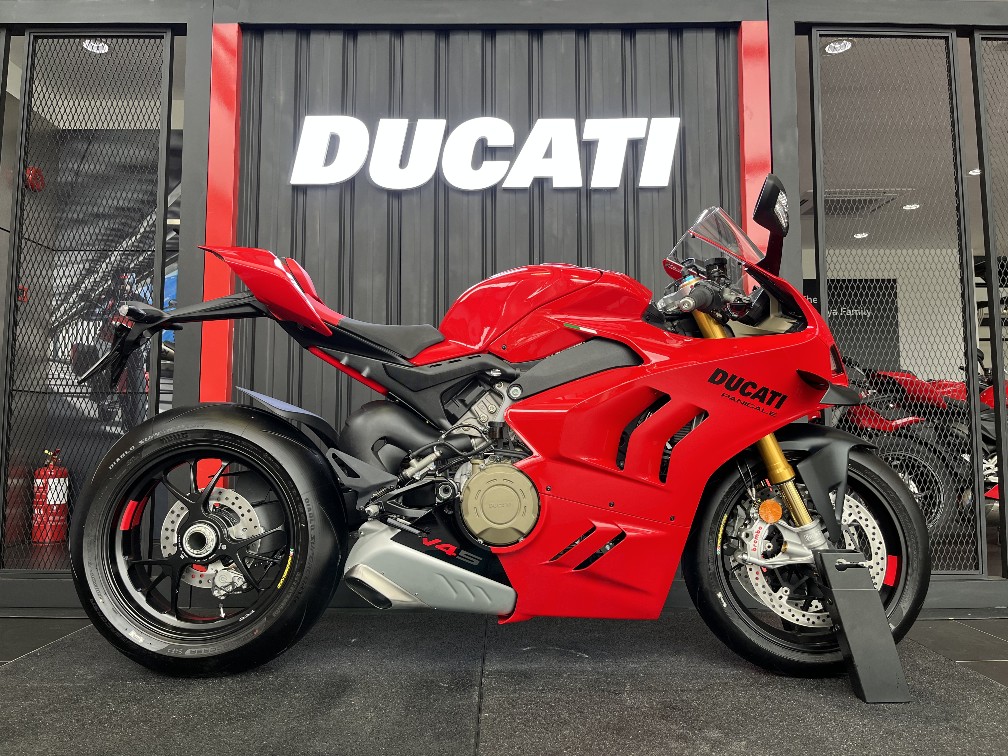
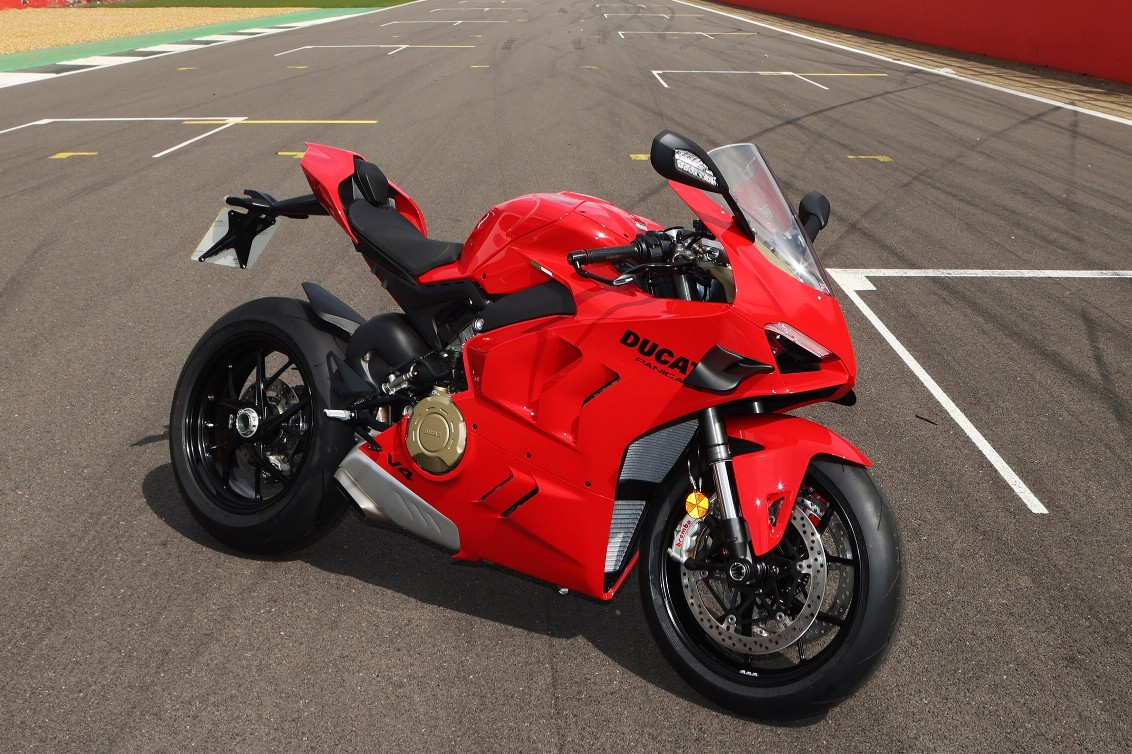
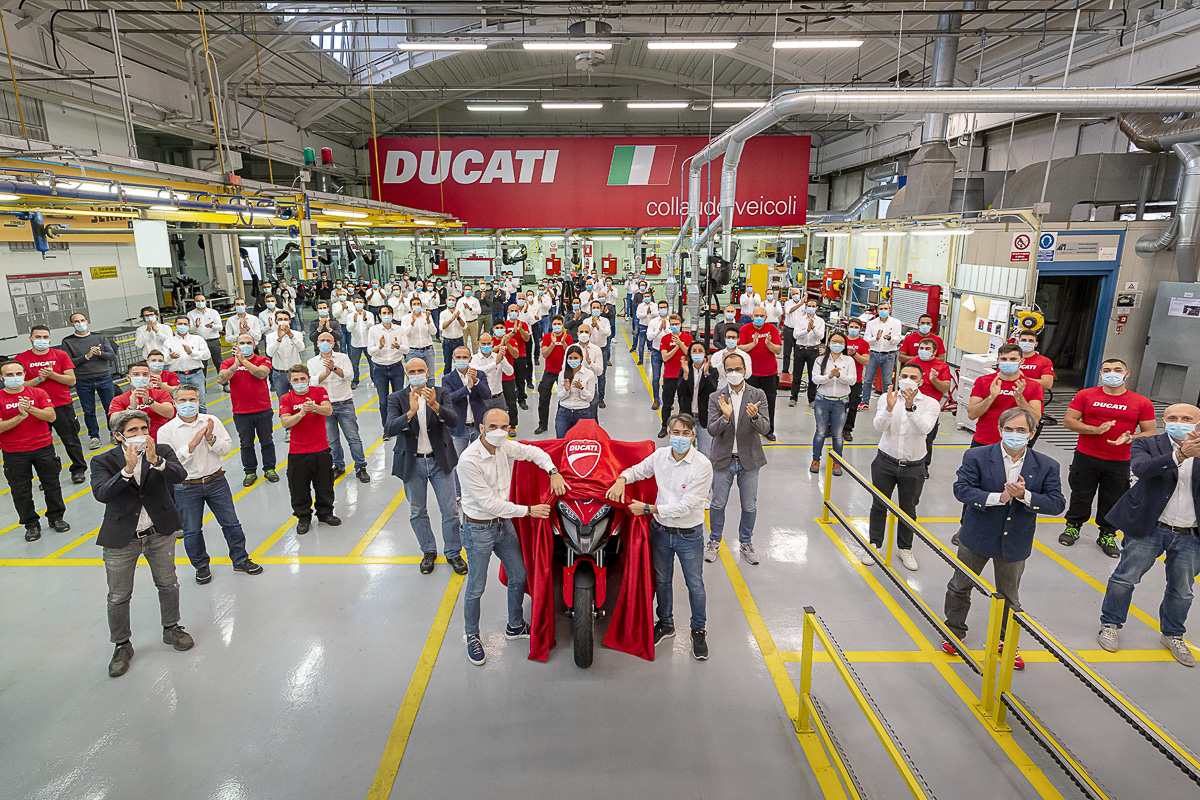
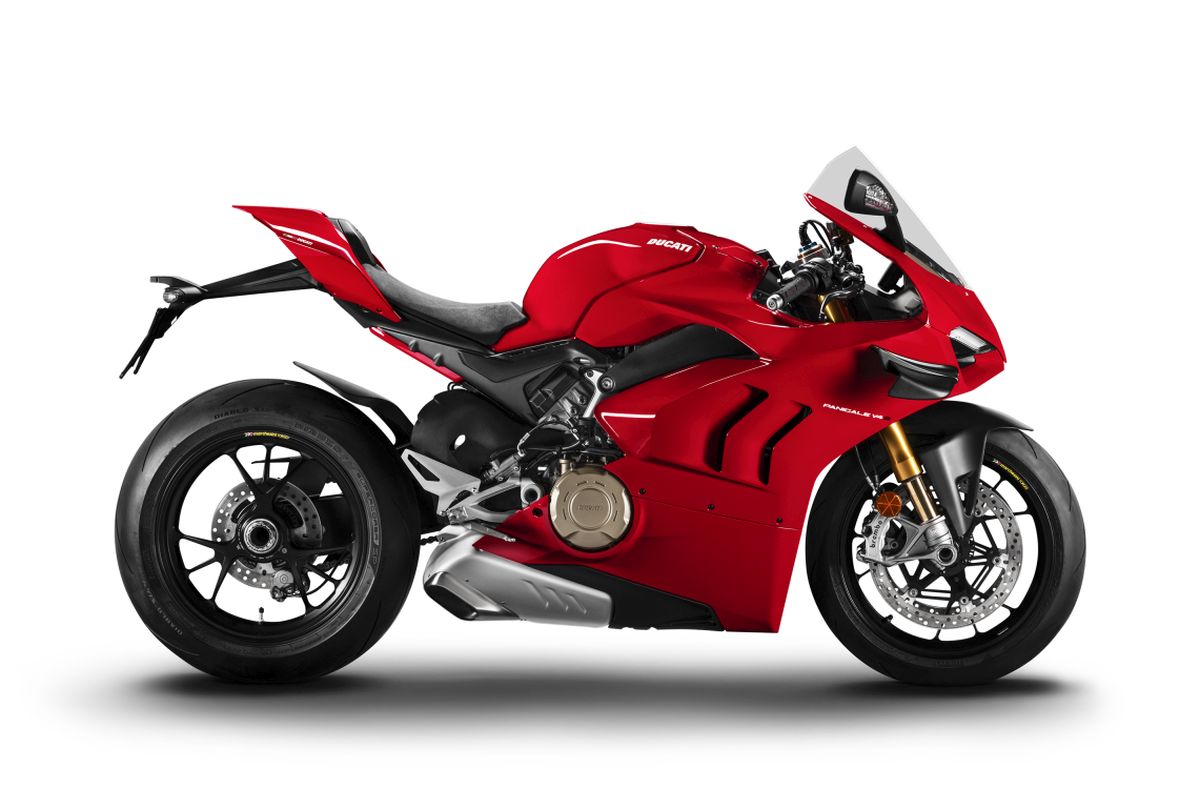
Ducati Panigale V4 telahpun dilancarkan di pasaran seluruh dunia dan ramai yang bertanya tentang prestasi jentera superbike terbaharu dari Ducati.
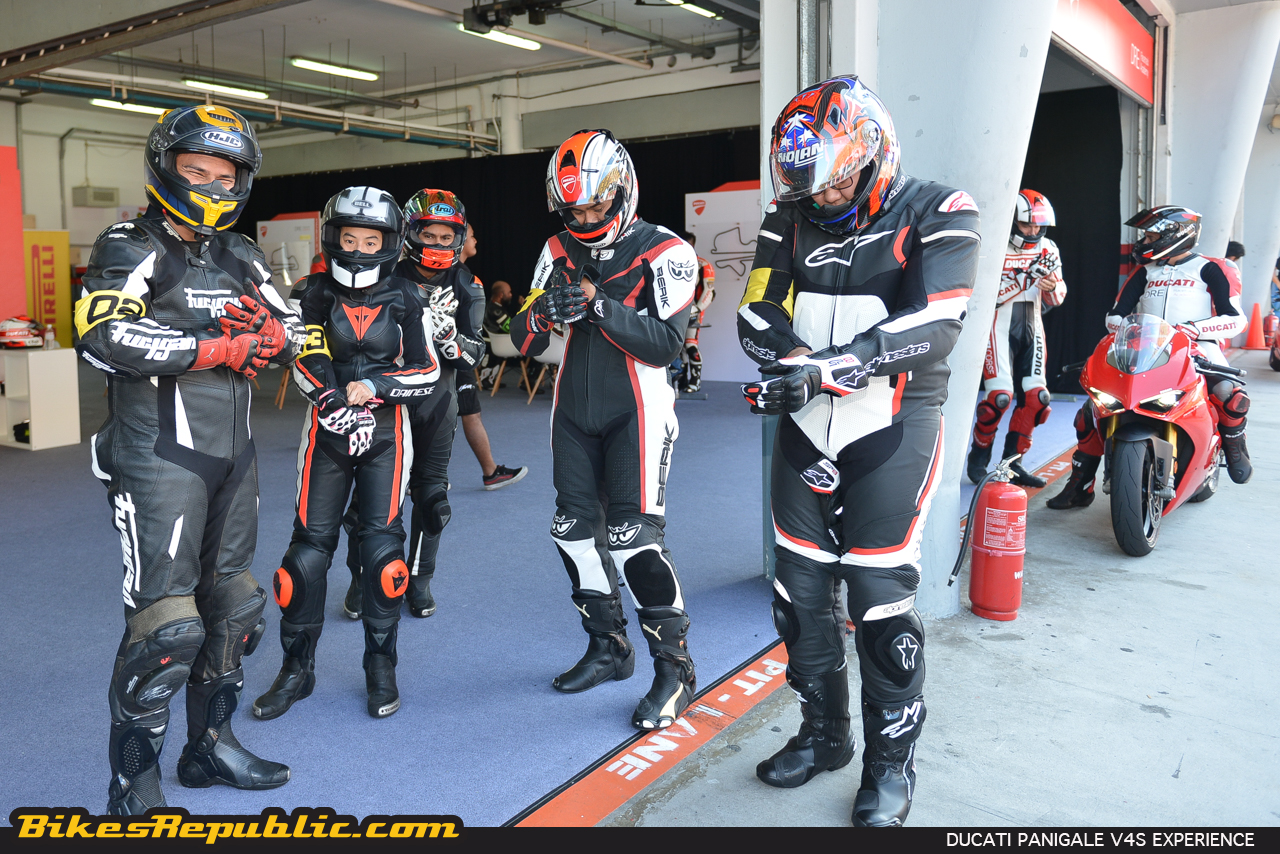
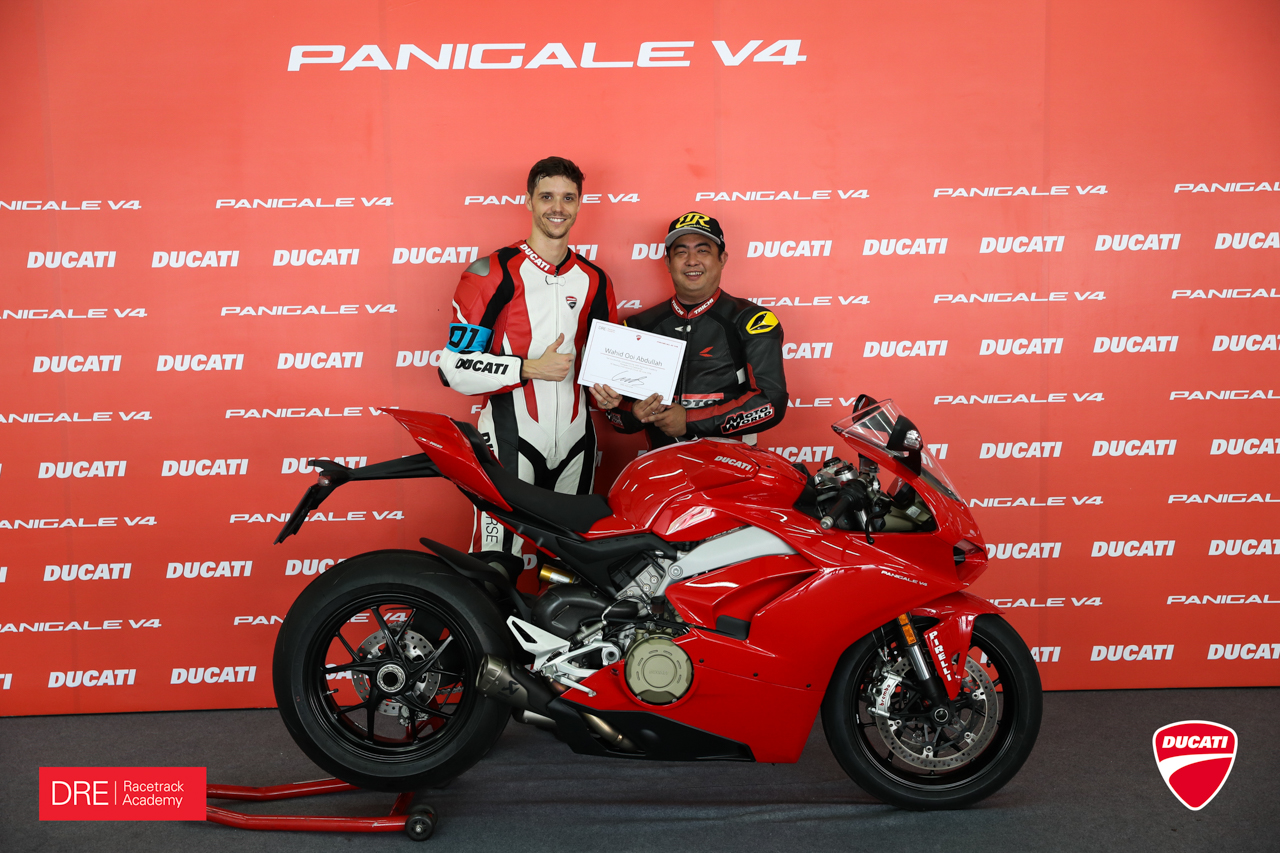
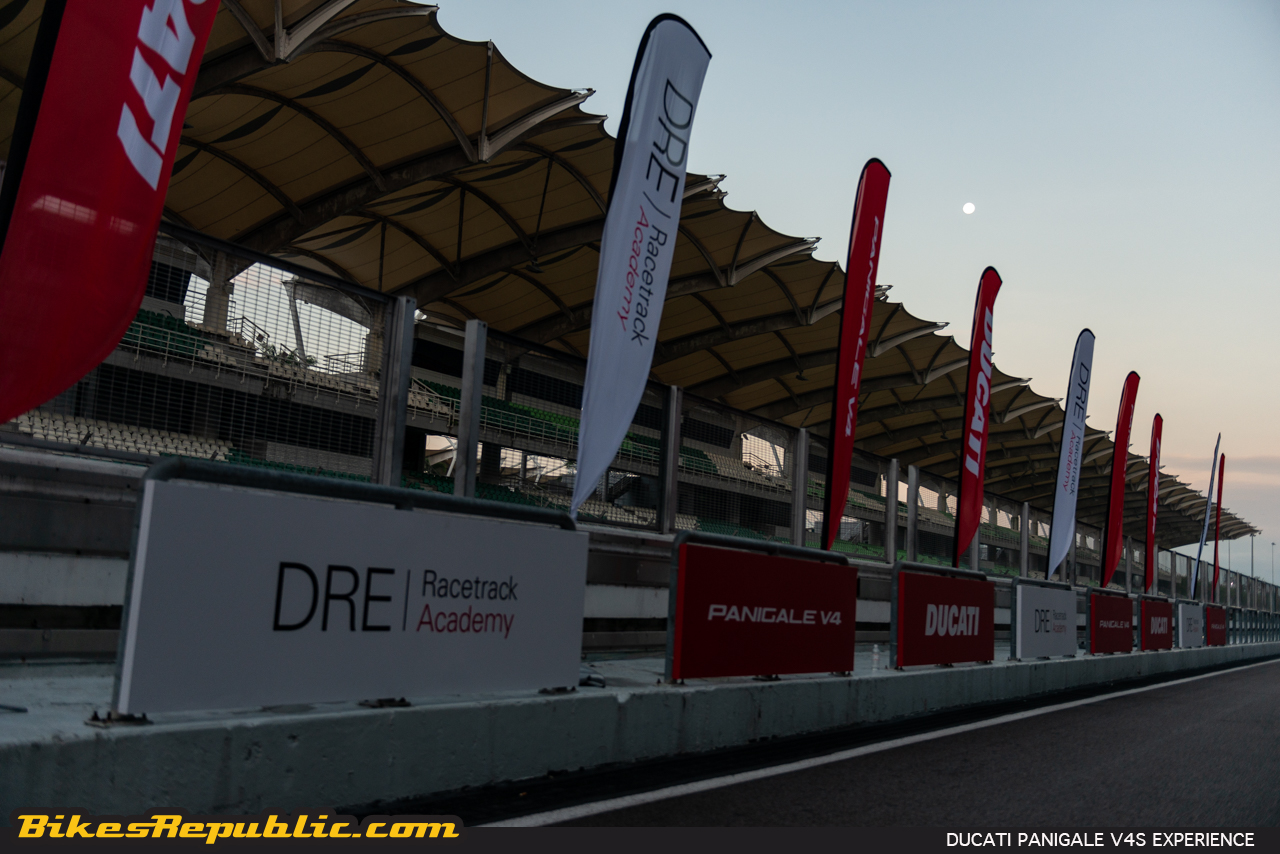
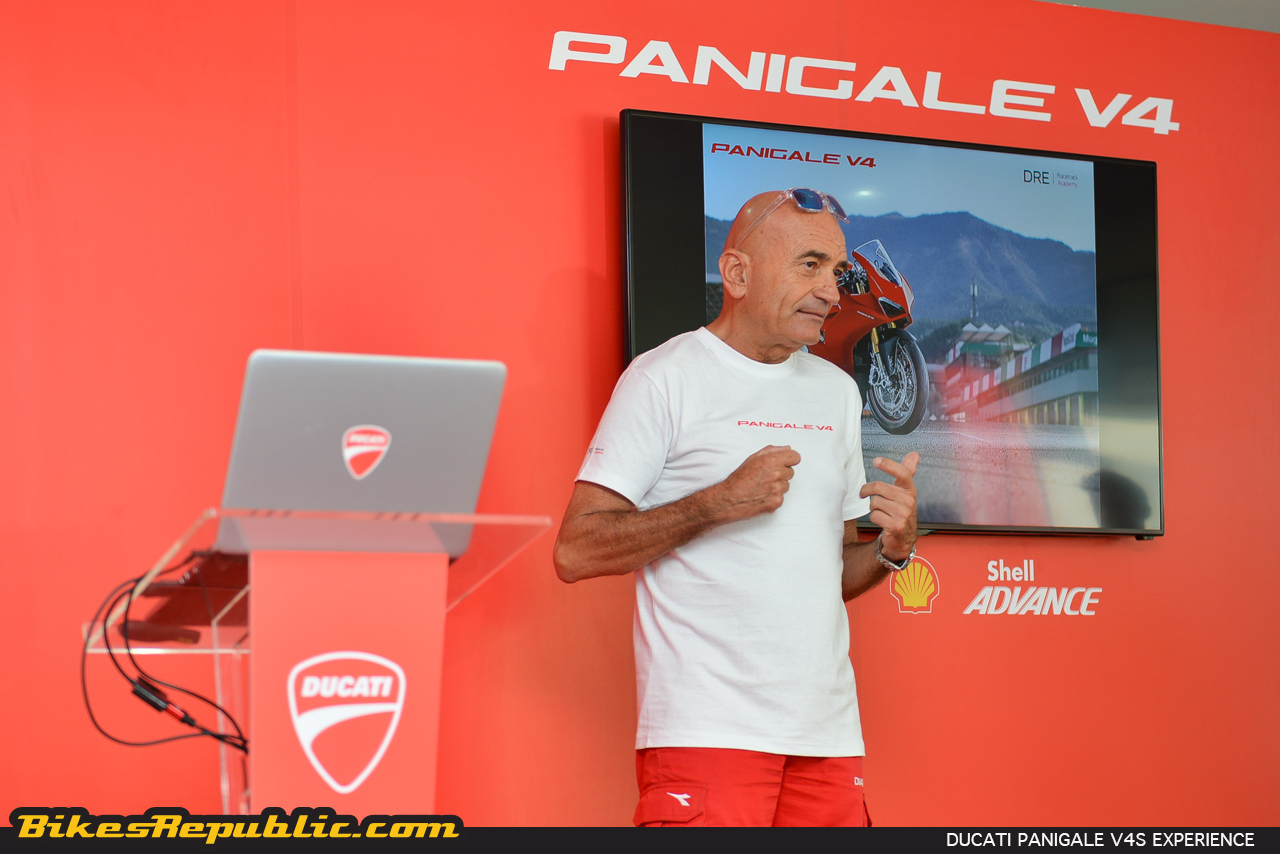
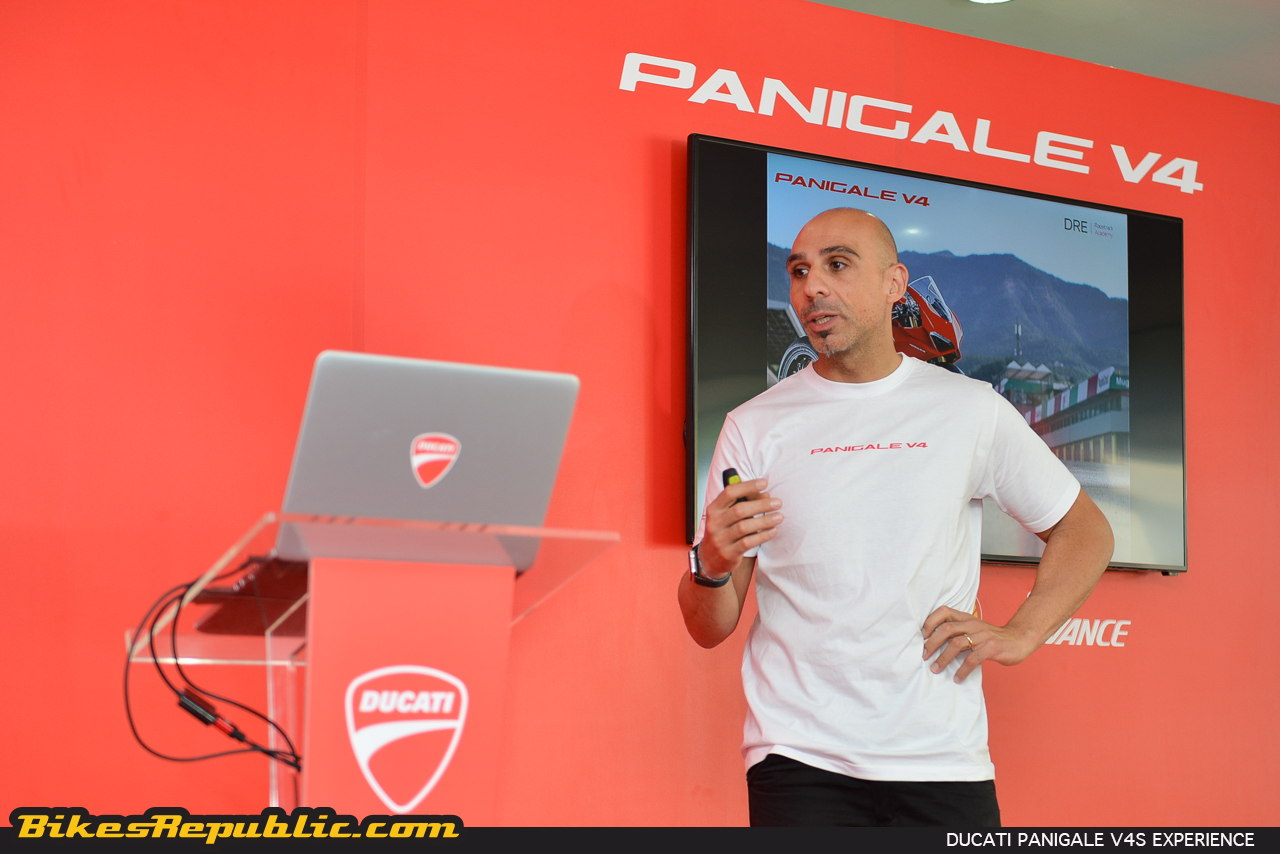
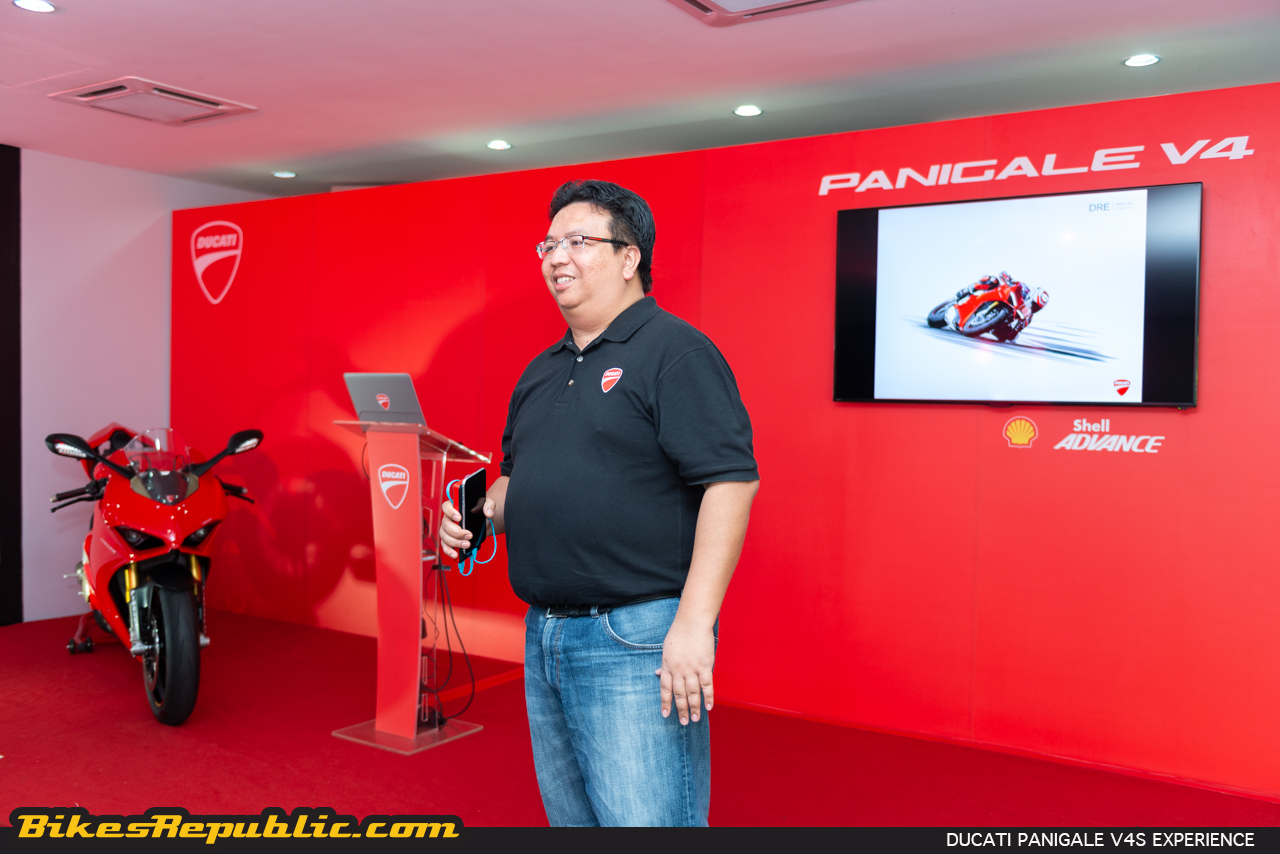
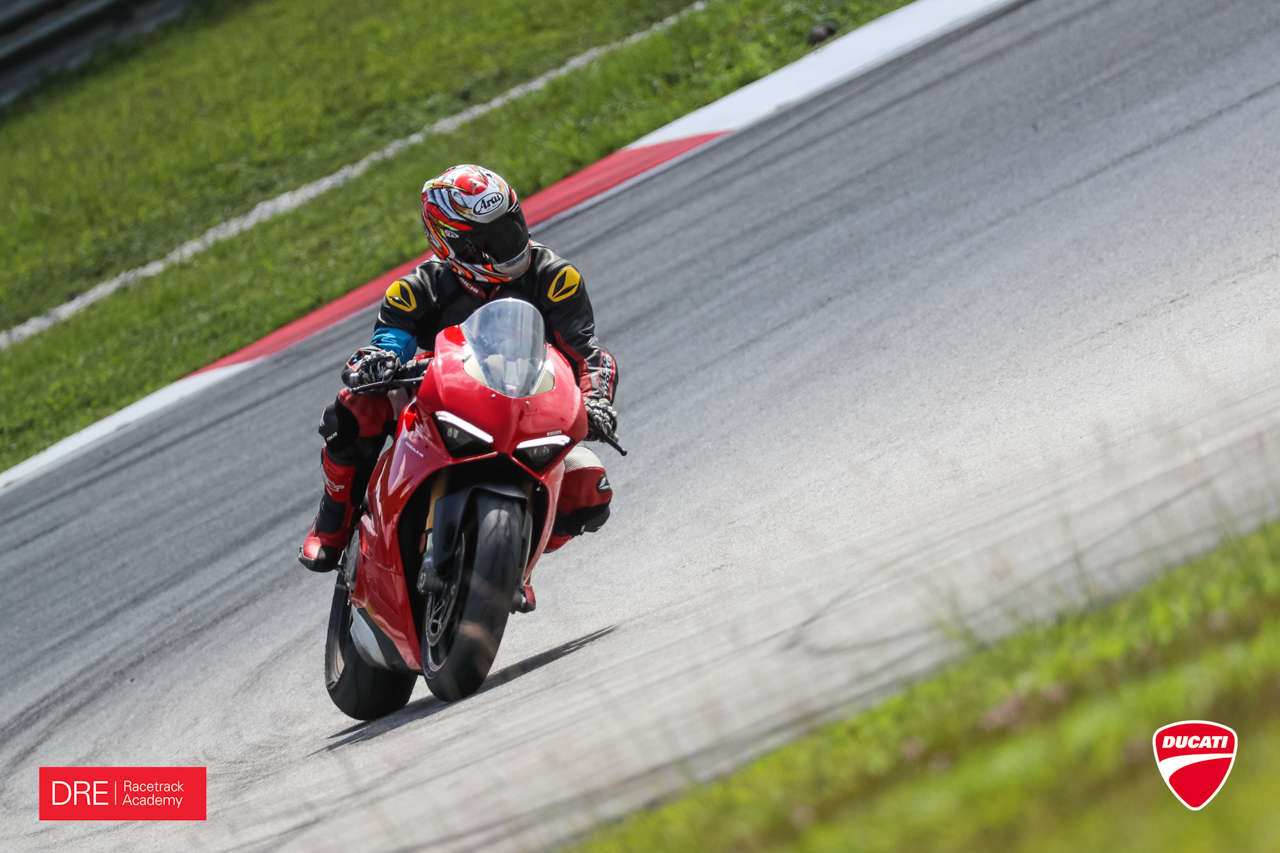
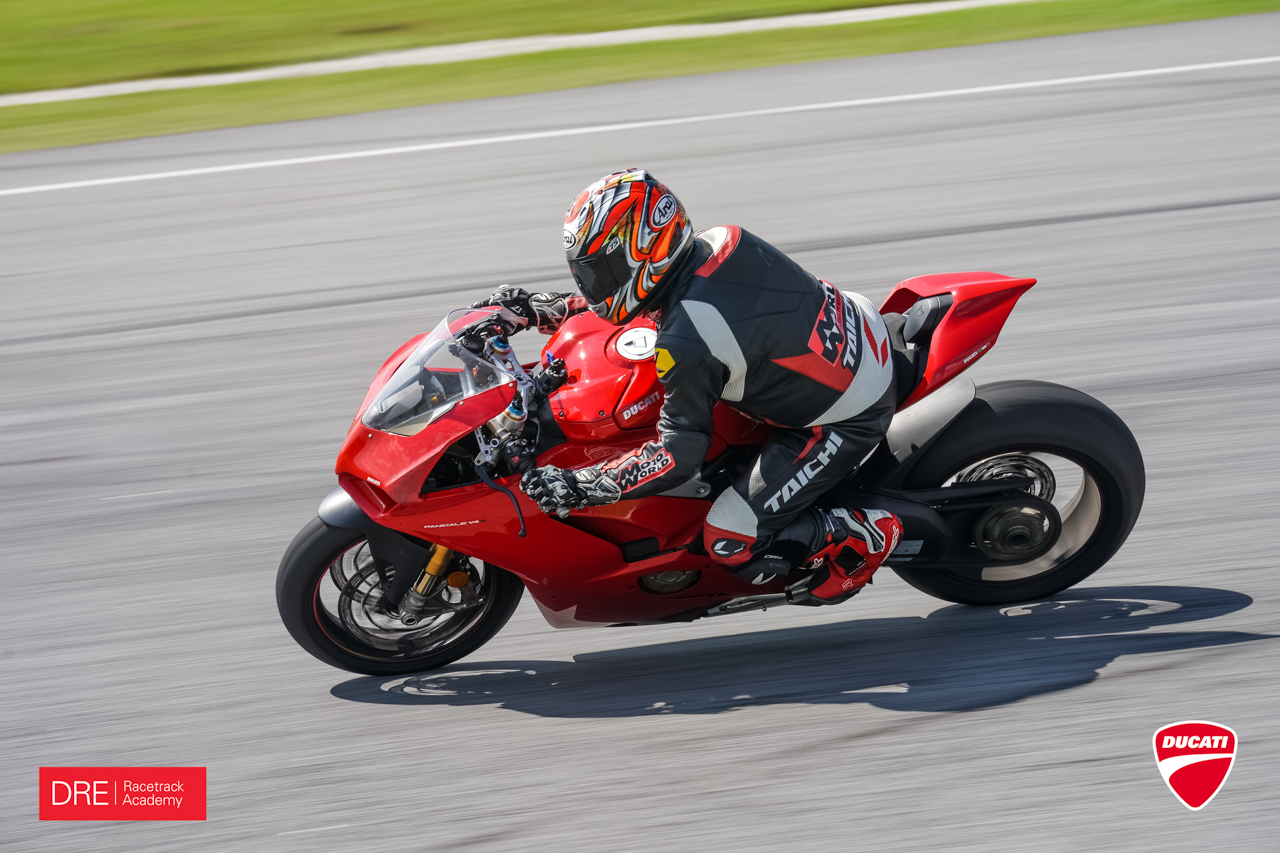
Ducati Malaysia telah menjemput kami untuk menyertai Ducati Riding Experience (DRE) di dalam litar SIC iaitu program DRE Racetrack Academy.
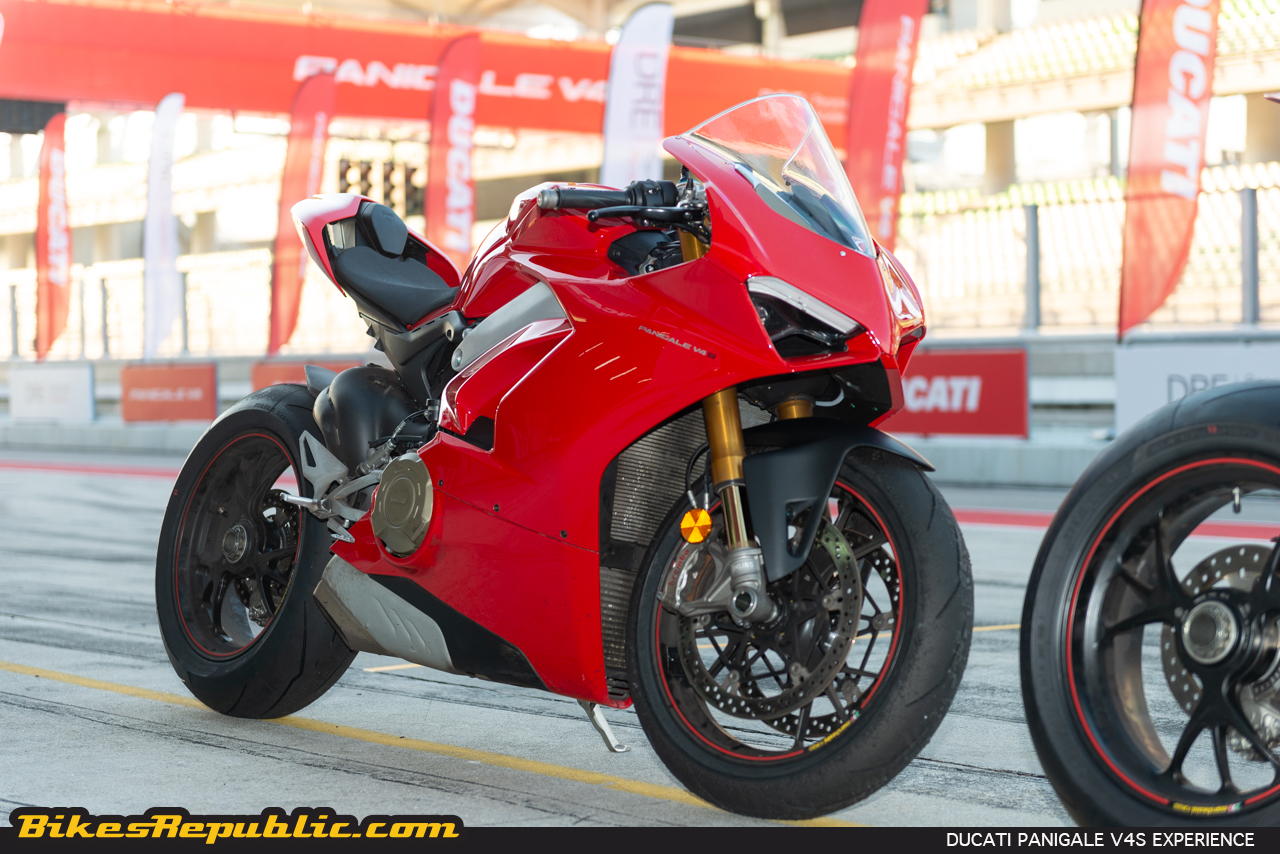
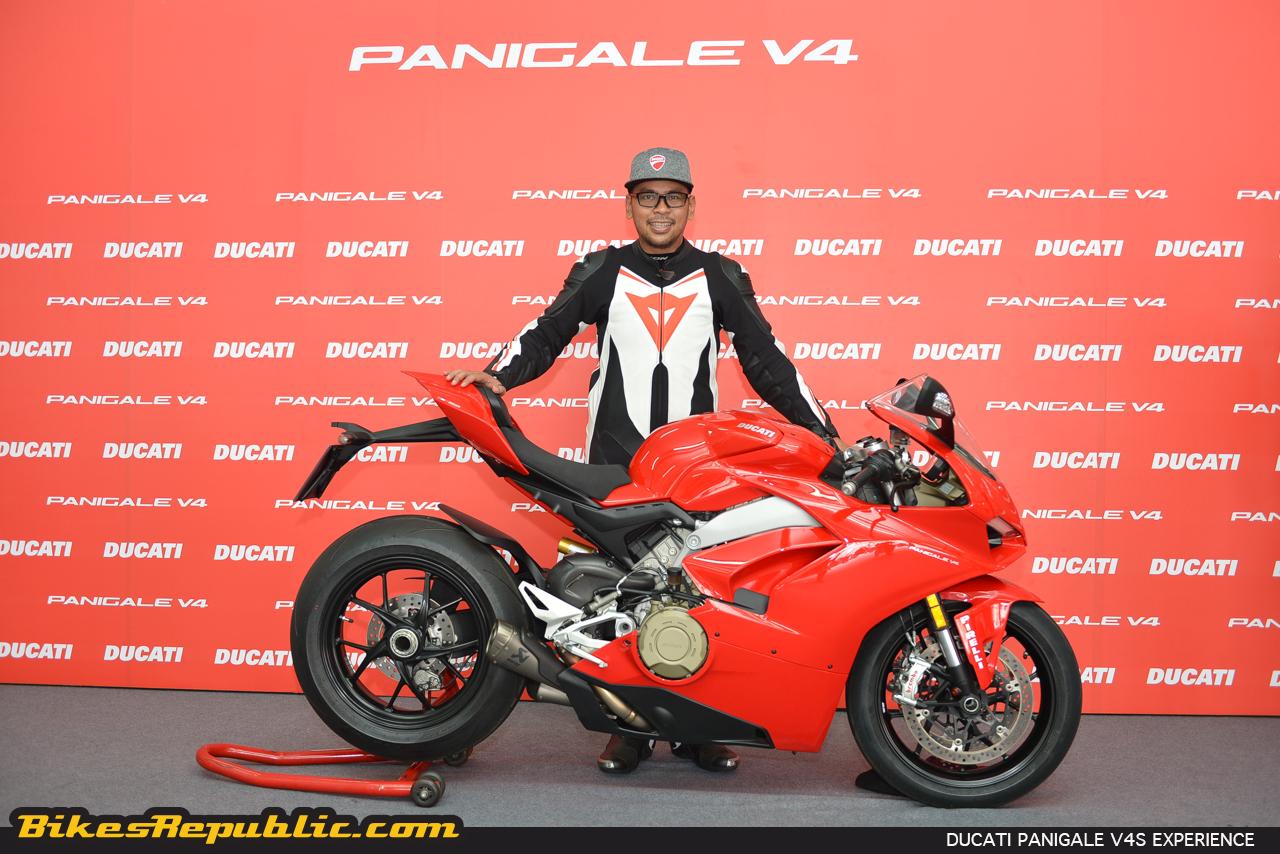
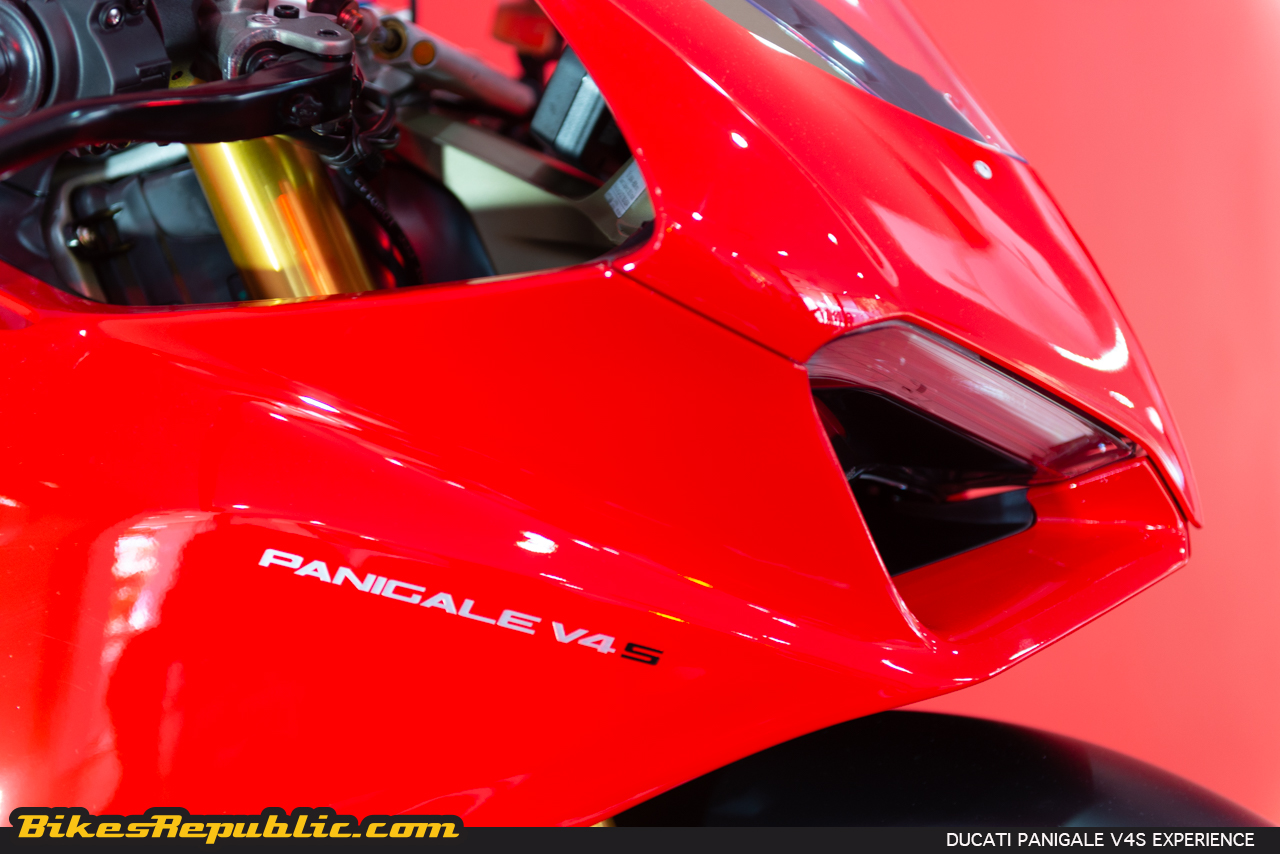
Kami diberi peluang untuk mencuba jentera Ducati Panigale V4 S dan uji secara maksimum kehebatan superbike Ducati Panigale generasi baru ini.
Sejak tahun lepas lagi, kami di MotoMalaya.net telah mengikuti perkembangan sebuah motosikal keluaran Italy yang bakal mengubah persepsi dunia terhadap ‘superbike’. Pengeluar motosikal terkemuka Ducati mempunyai rancangan untuk menghasilkan superbike generasi baharu mereka yang paling berkuasa dan terkini berinspirasikan mesin lumba MotoGP Ducati Desmosedici. (more…)
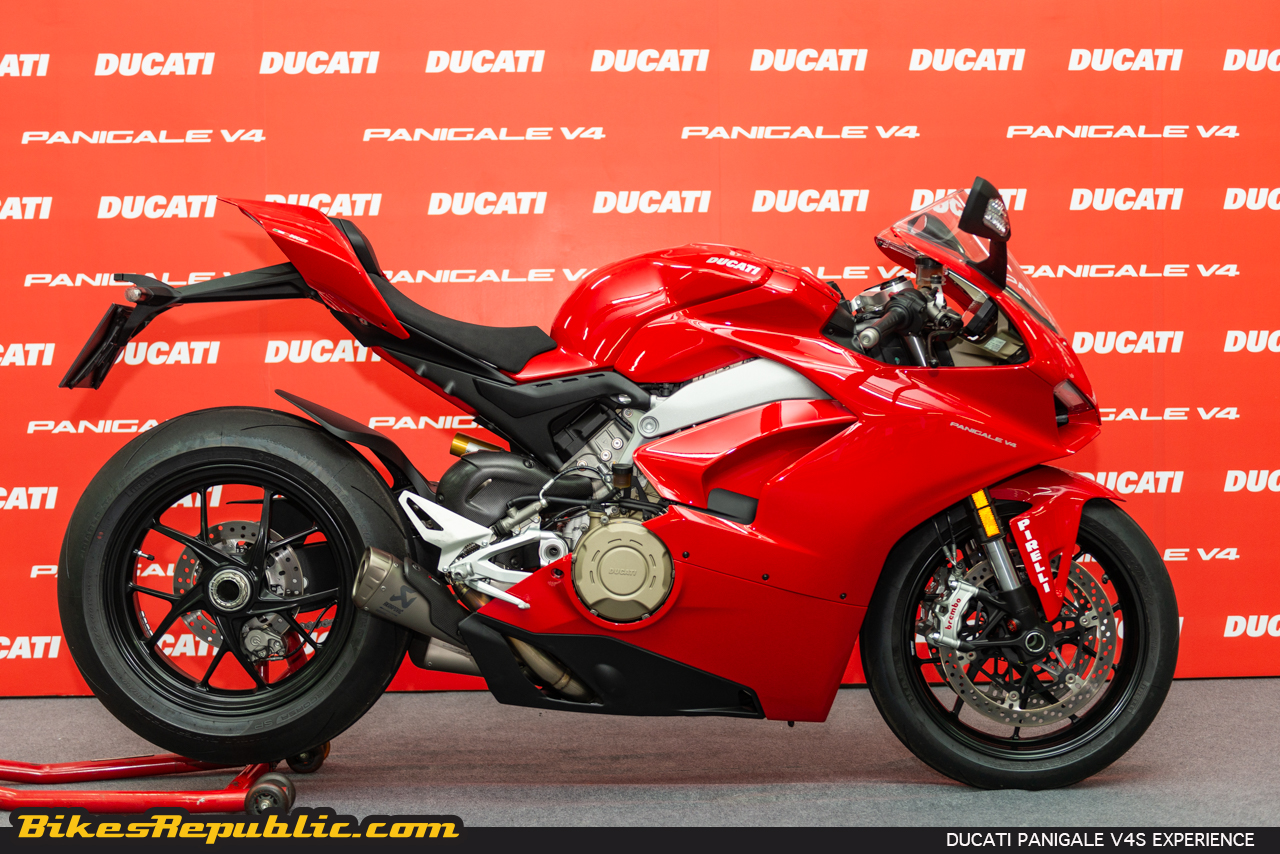
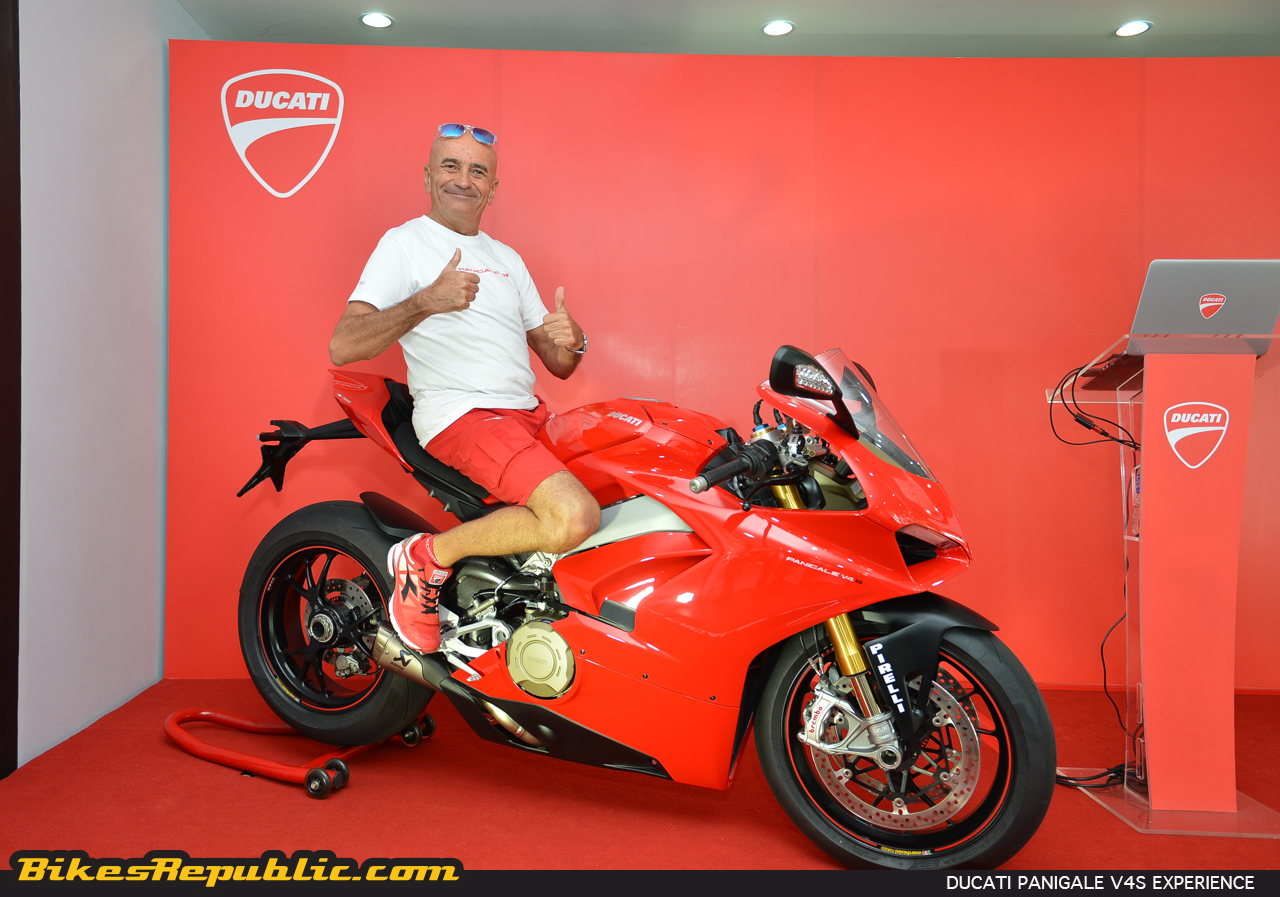
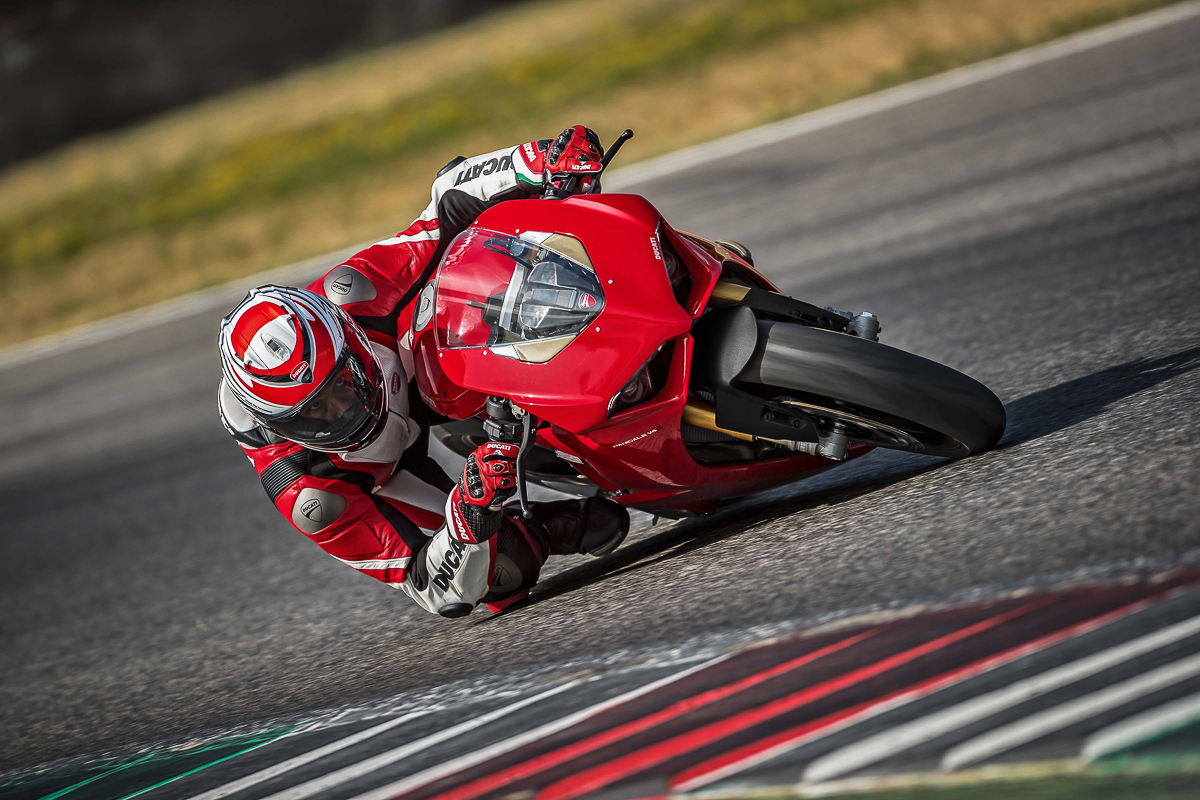
The new Ducati Panigale V4, V4S, V4 Speciale mark the manufacturer’s departure from their trademark V-Twin sportbikes.
The Panigale V4 is set to bring the Superbike World Championship title back to Italy.
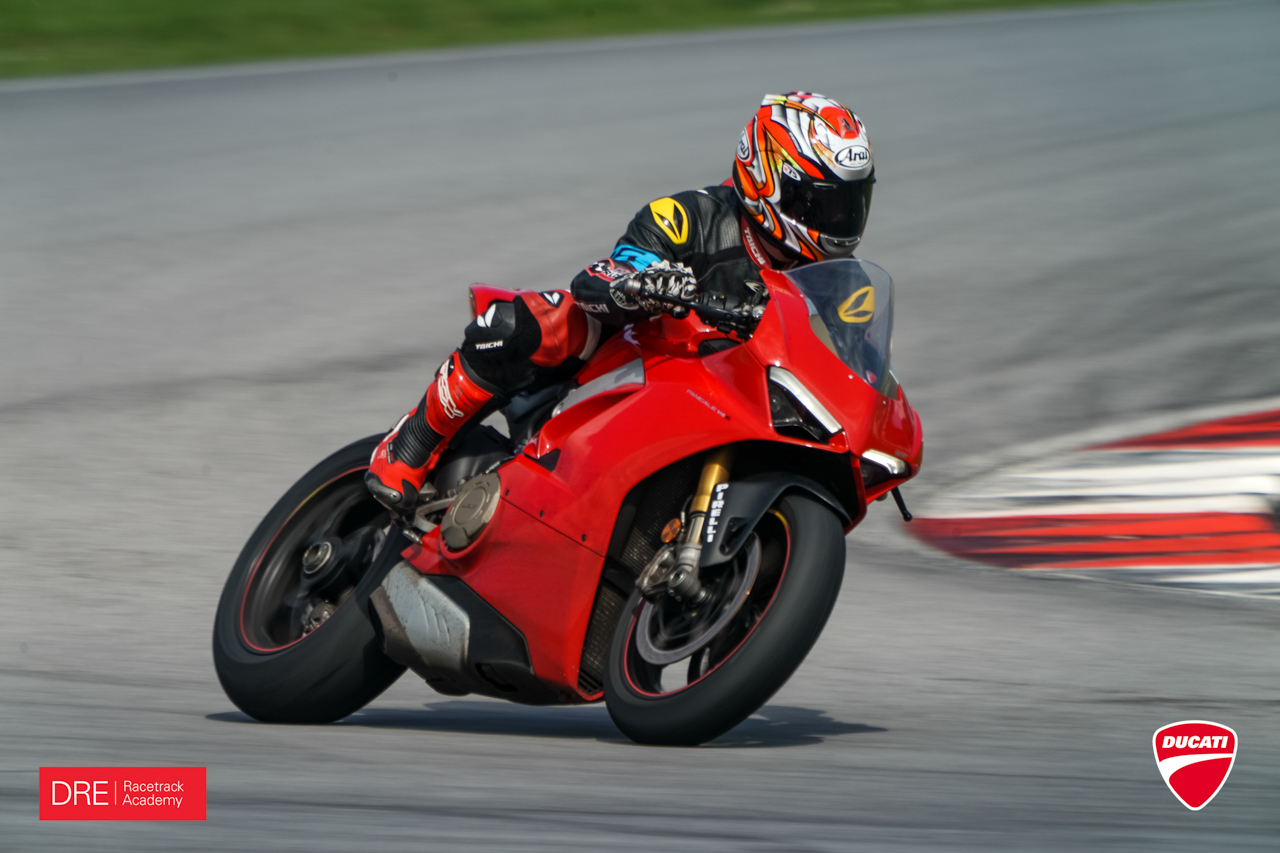
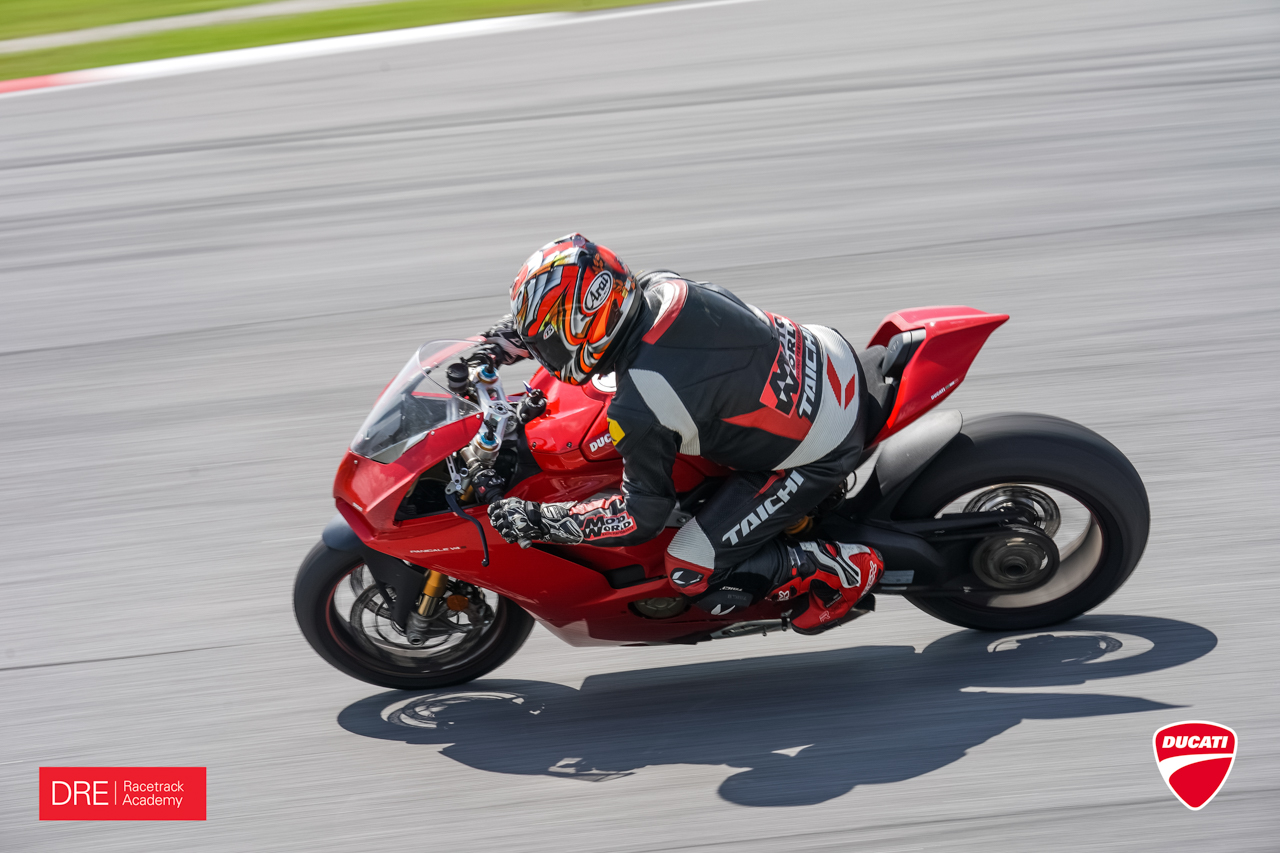
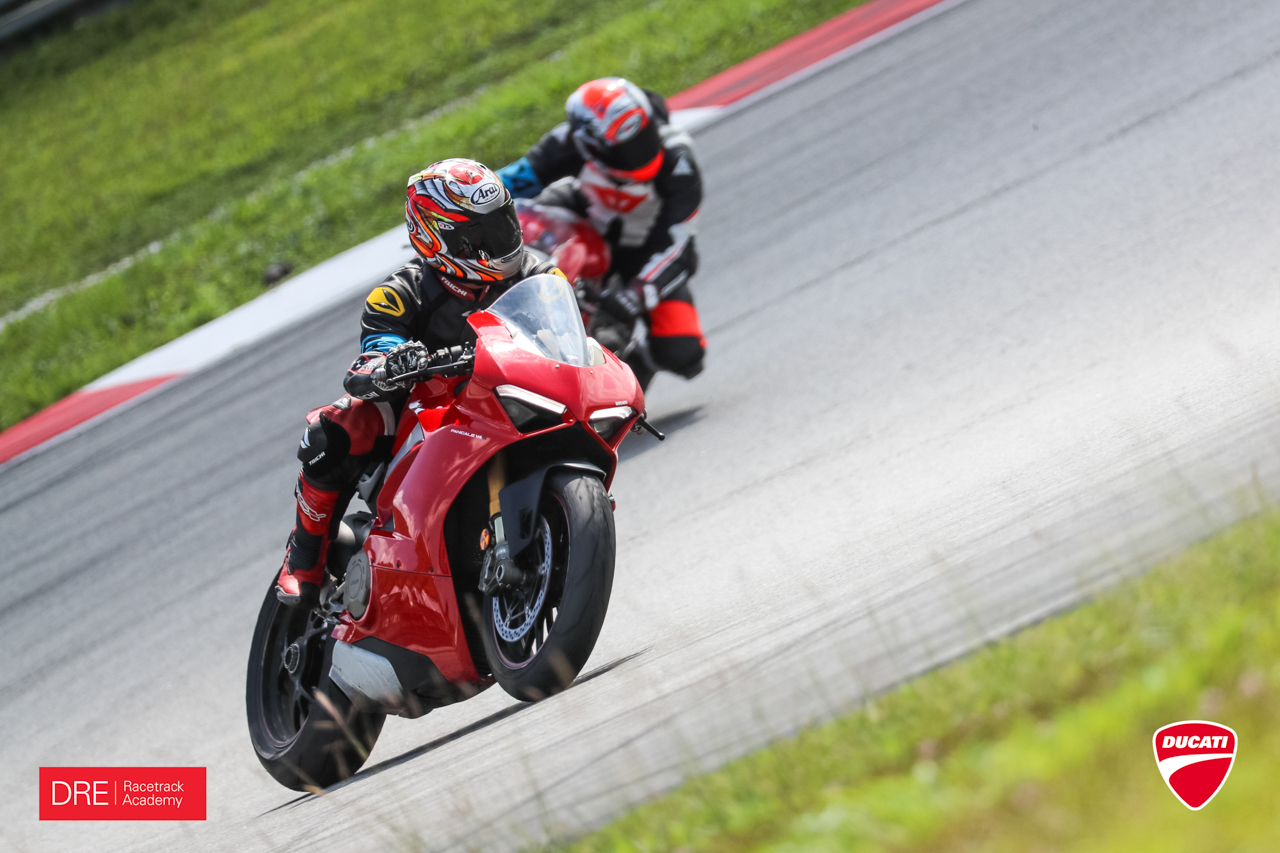
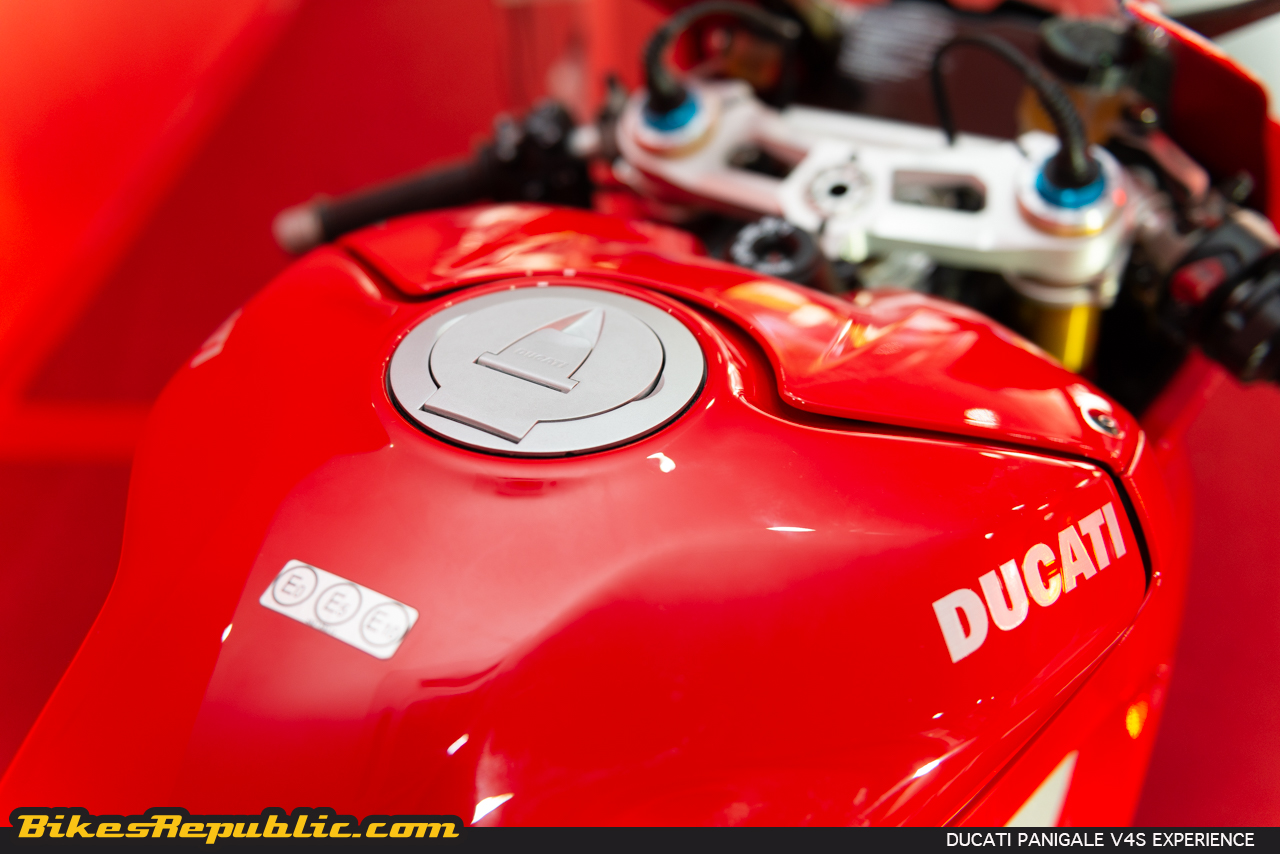
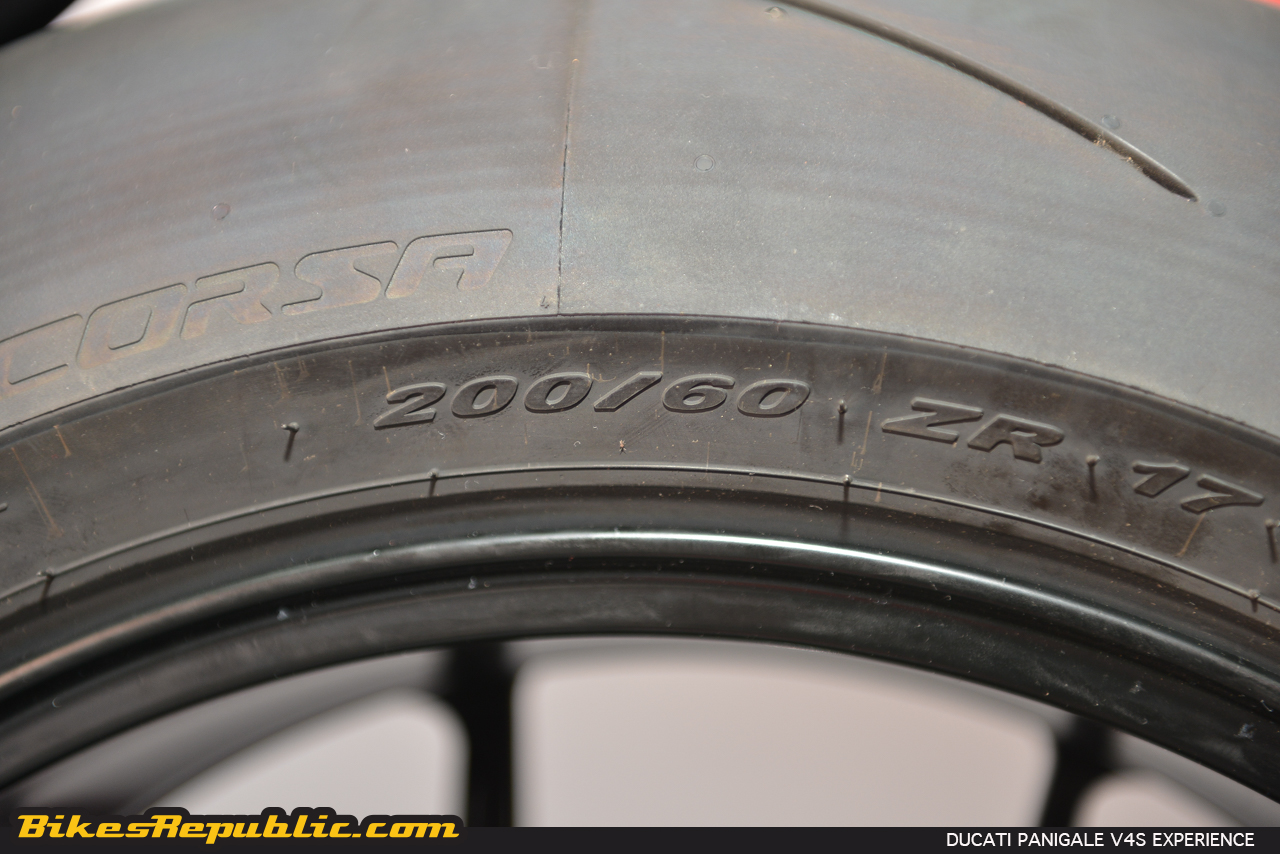
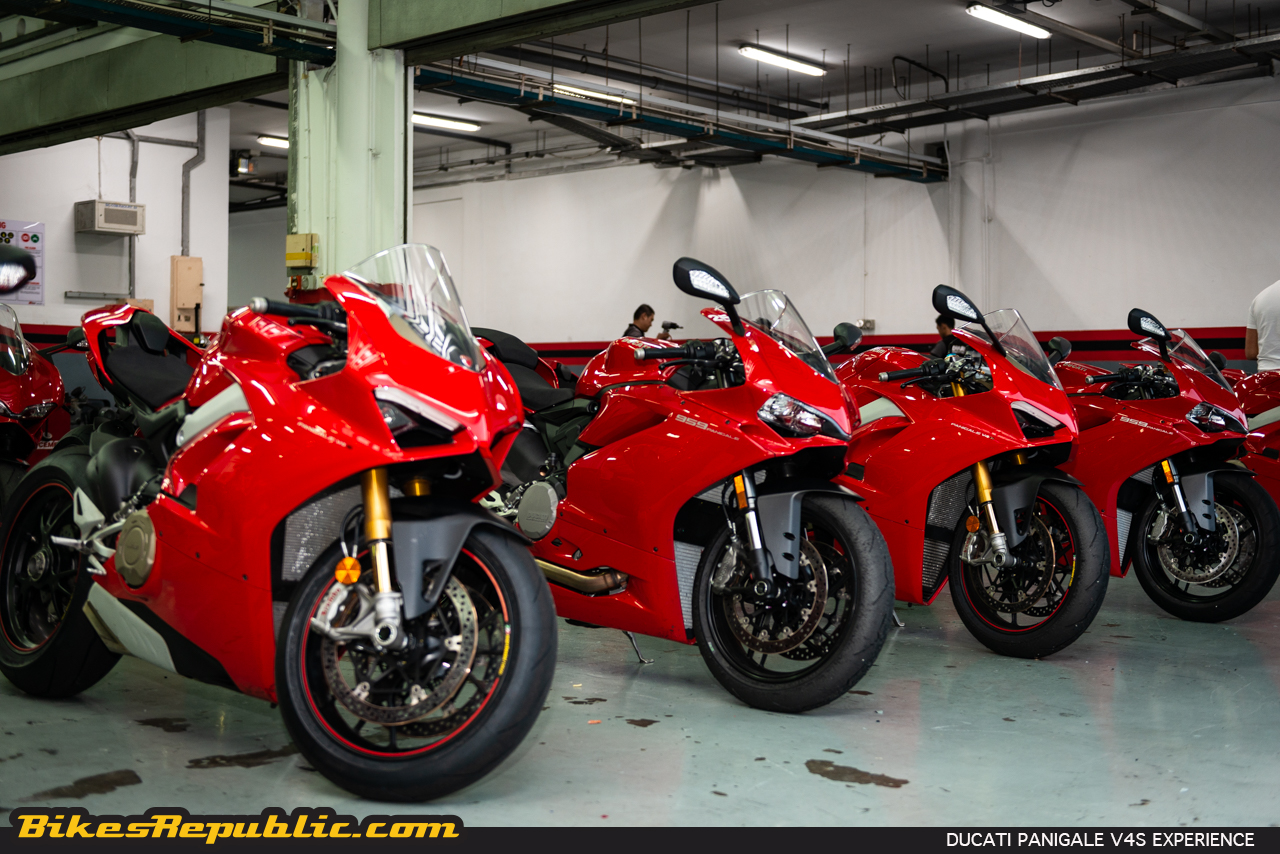
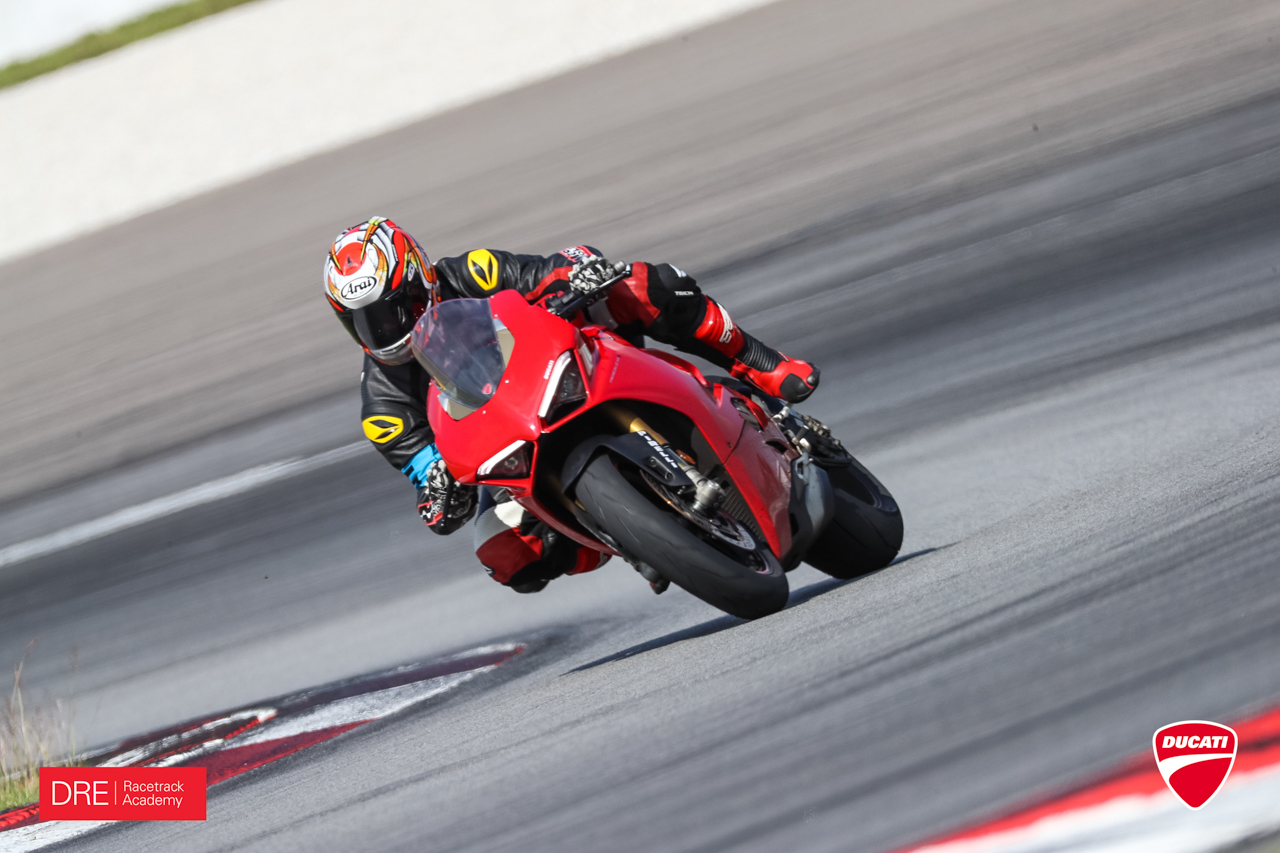
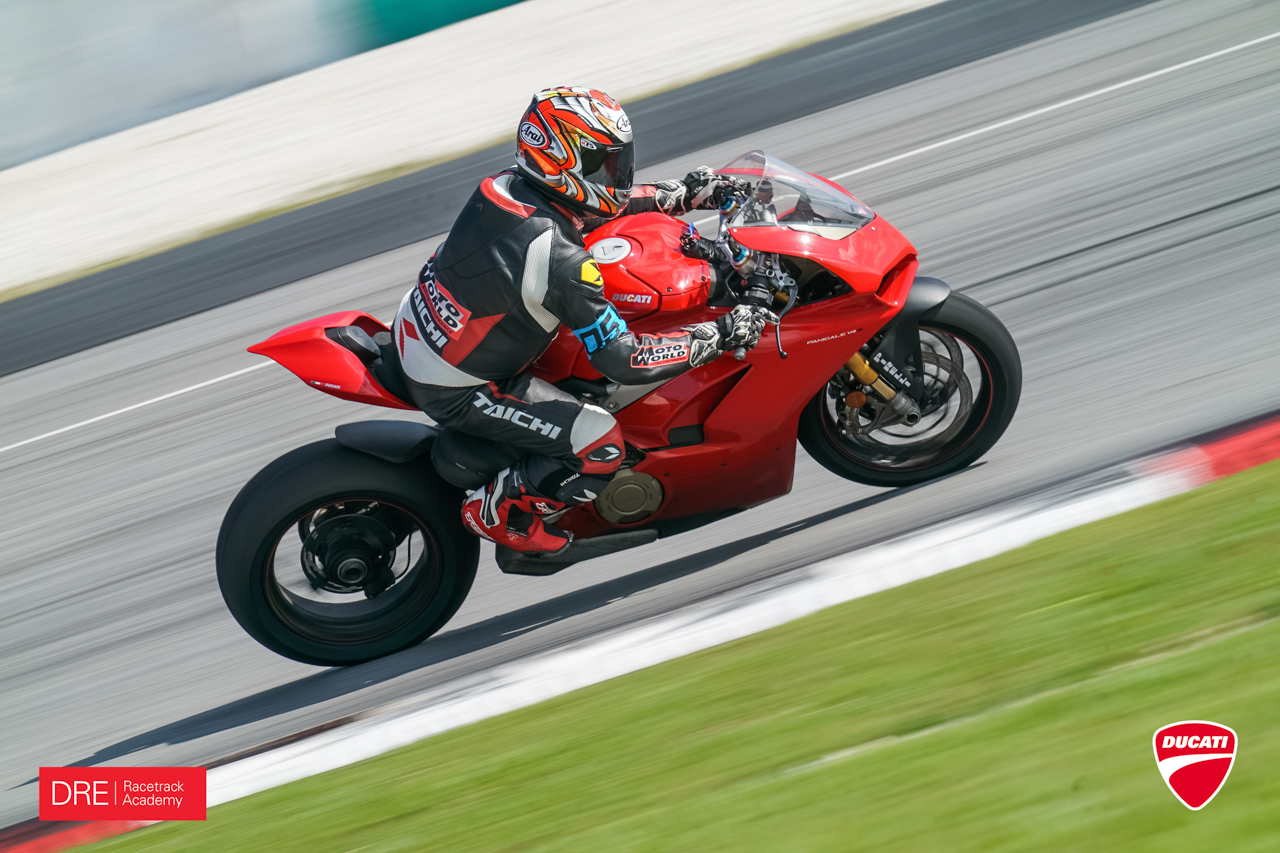
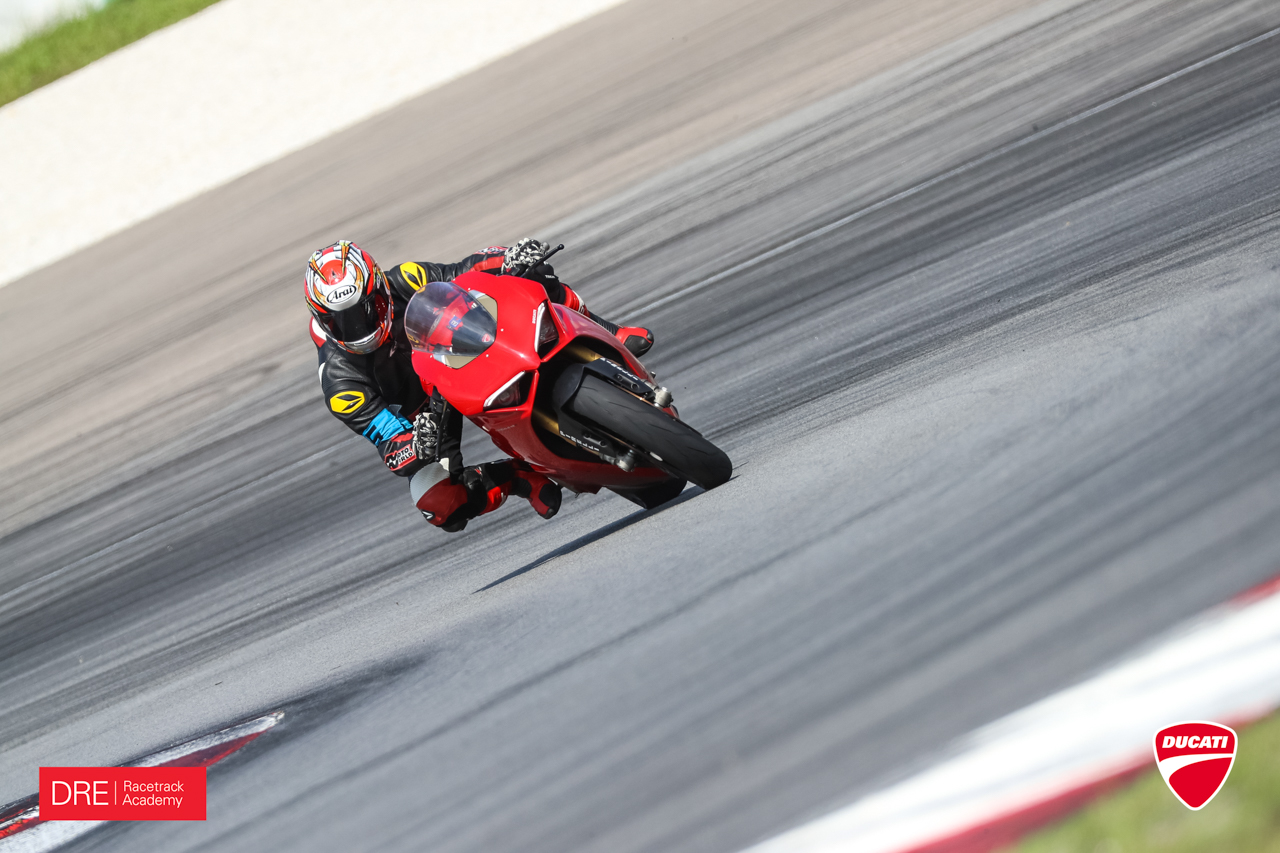
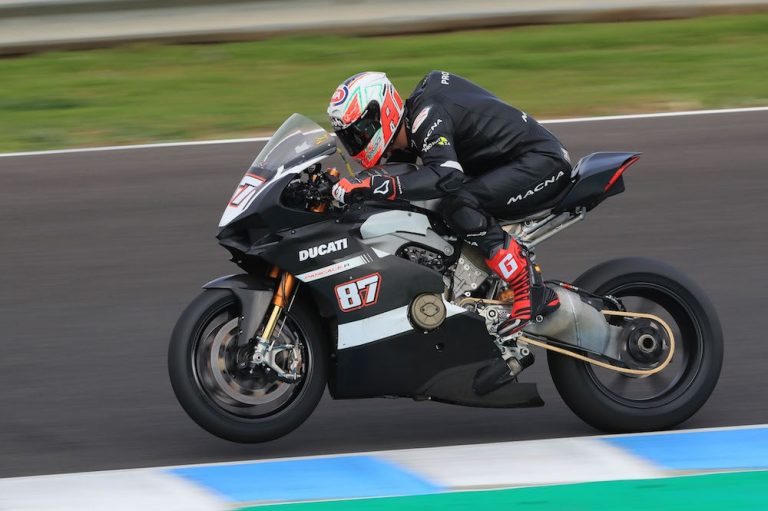
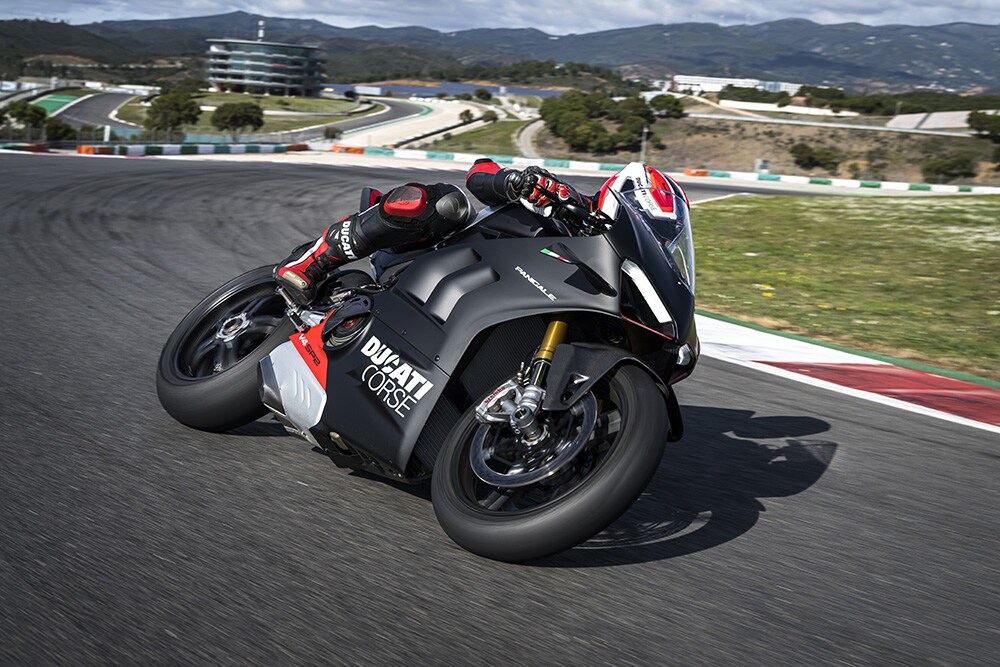
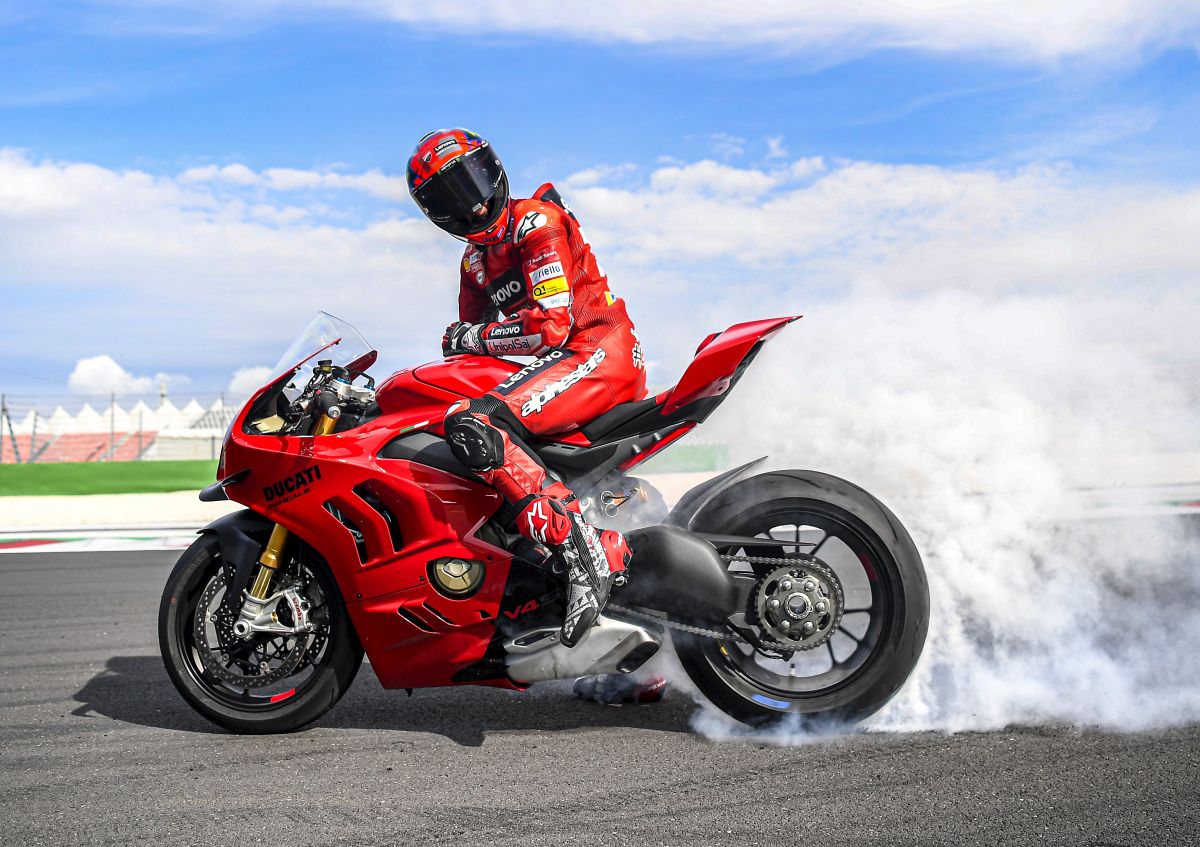
We tested the Panigale V4S during the Ducati Racing Experience (DRE) at SIC.
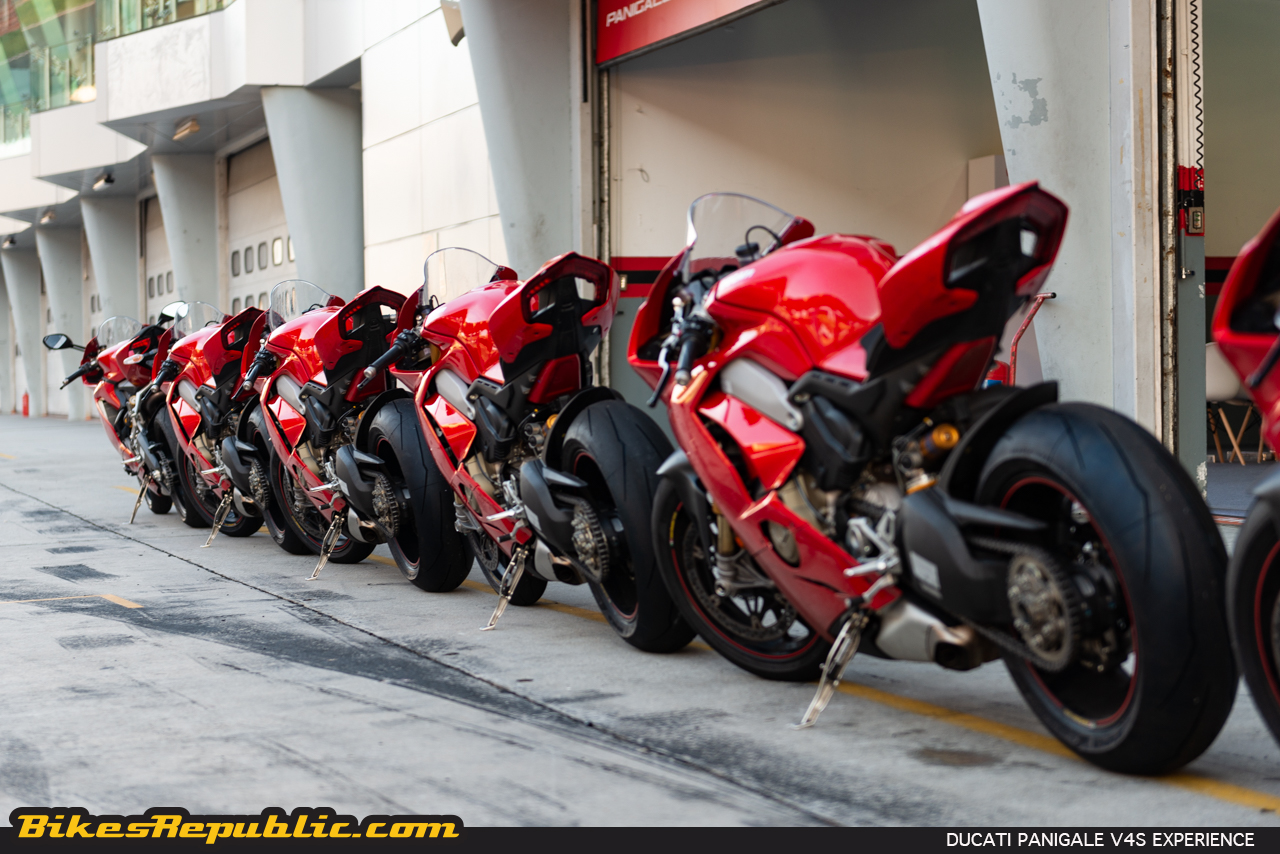
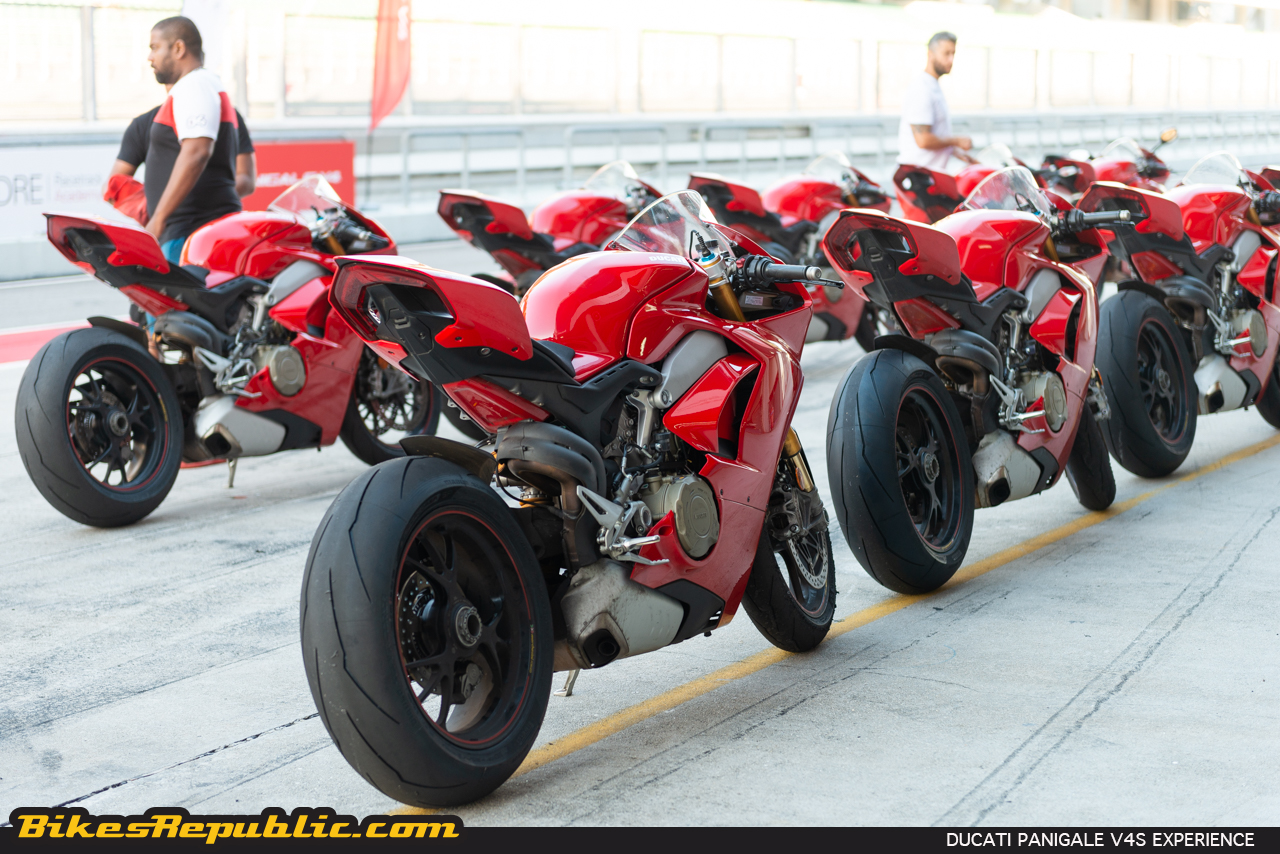
Standing before the Ducati Panigale V4S in the Sepang Circuit pitlane, am having trouble inserting my earplugs. It had seemed like my ear holes constricted in the last 30 seconds.
I looked at my hands. They were quivering, while the blood red Ducati seemed to squint and taunt, “Ride me if you dare.”
It’s probably a well-known fact to the extent of being passé now. The Ducati Panigale V4 is the Borgo Panigale-based manufacturer’s weapon for reclaiming the coveted Superbike World Championship title.
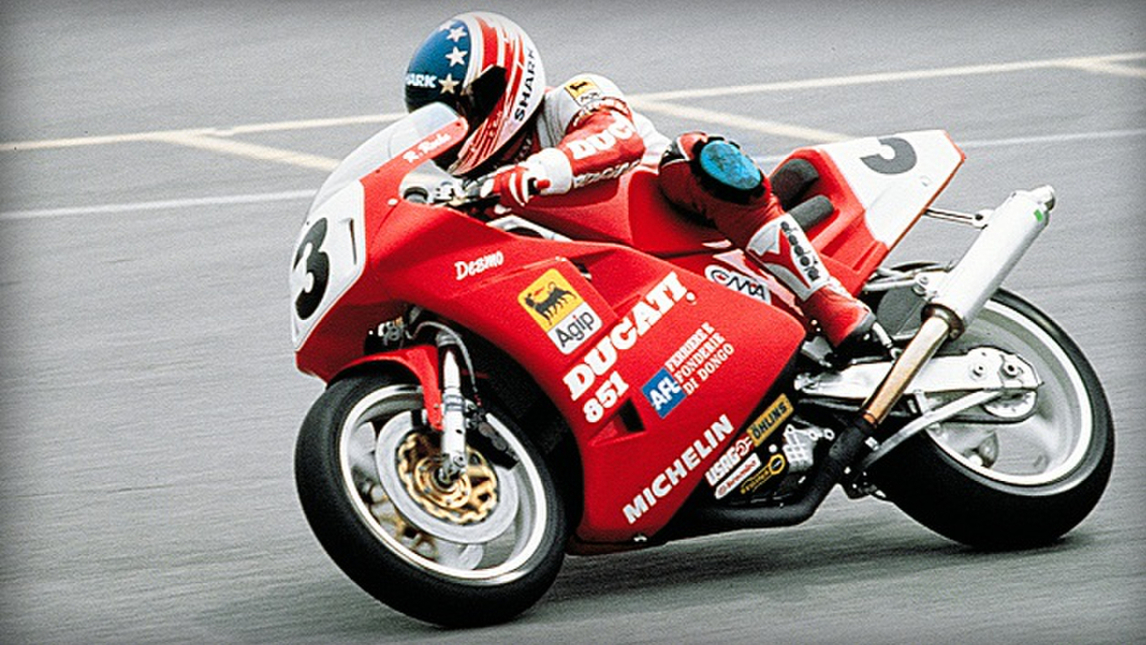
Ducati had dominated the production-based championship with the V-Twin engine. Beginning with Raymond Roche’s first title win on the 851 in 1990 and the last by Carlos Checa on the 1098R in 2011, Ducati won 14 rider and 17 manufacturer titles during those 24 years.
However, rule changes in the series had swung the favour back towards 4-cylinder motorcycles. Current Ducati riders kept finding themselves outgunned on many occasions and had resorted to over-committing to compensate for the lack of power.
Well, Ducati isn’t one to sit still while allowing their supremacy being stomped on.
In terms of out-and-out power production for a specific capacity, the V-Twin had reached the end of its development path. Ducati had probably tried all the possible solutions in wringing the last bit of performance over the years, apart from retaining the engine format as a signature, but there’s just no way to push on something that will not yield.
So, turning to their race winning experience in MotoGP, Ducati decided to go the V-Four route.
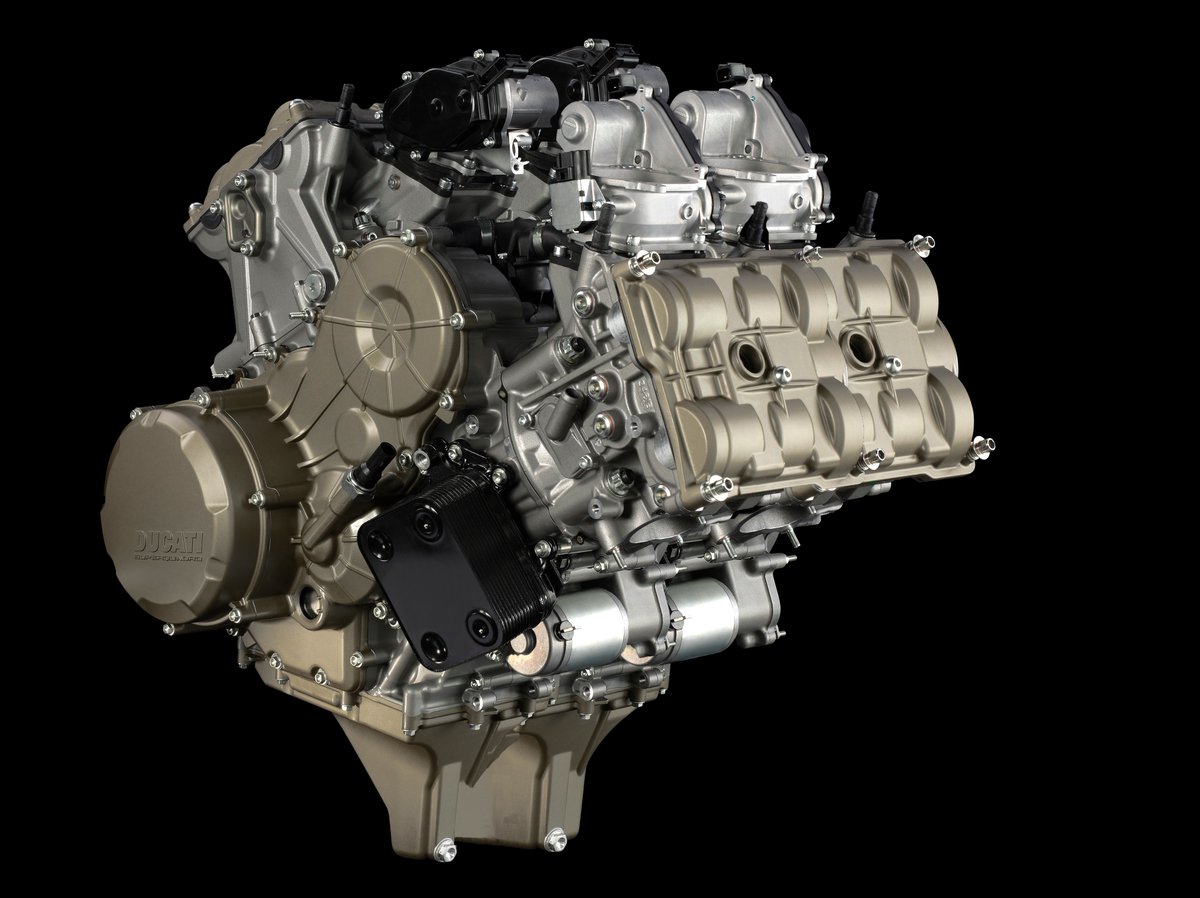
There will be two engines, one for road use and another for racing which will be unveiled later for the 2019 SBK season. The former which we tested here is hence called “Desmosedici Stradale” meaning Desmodromic 16-valves (“sedici” in Italian) Road.
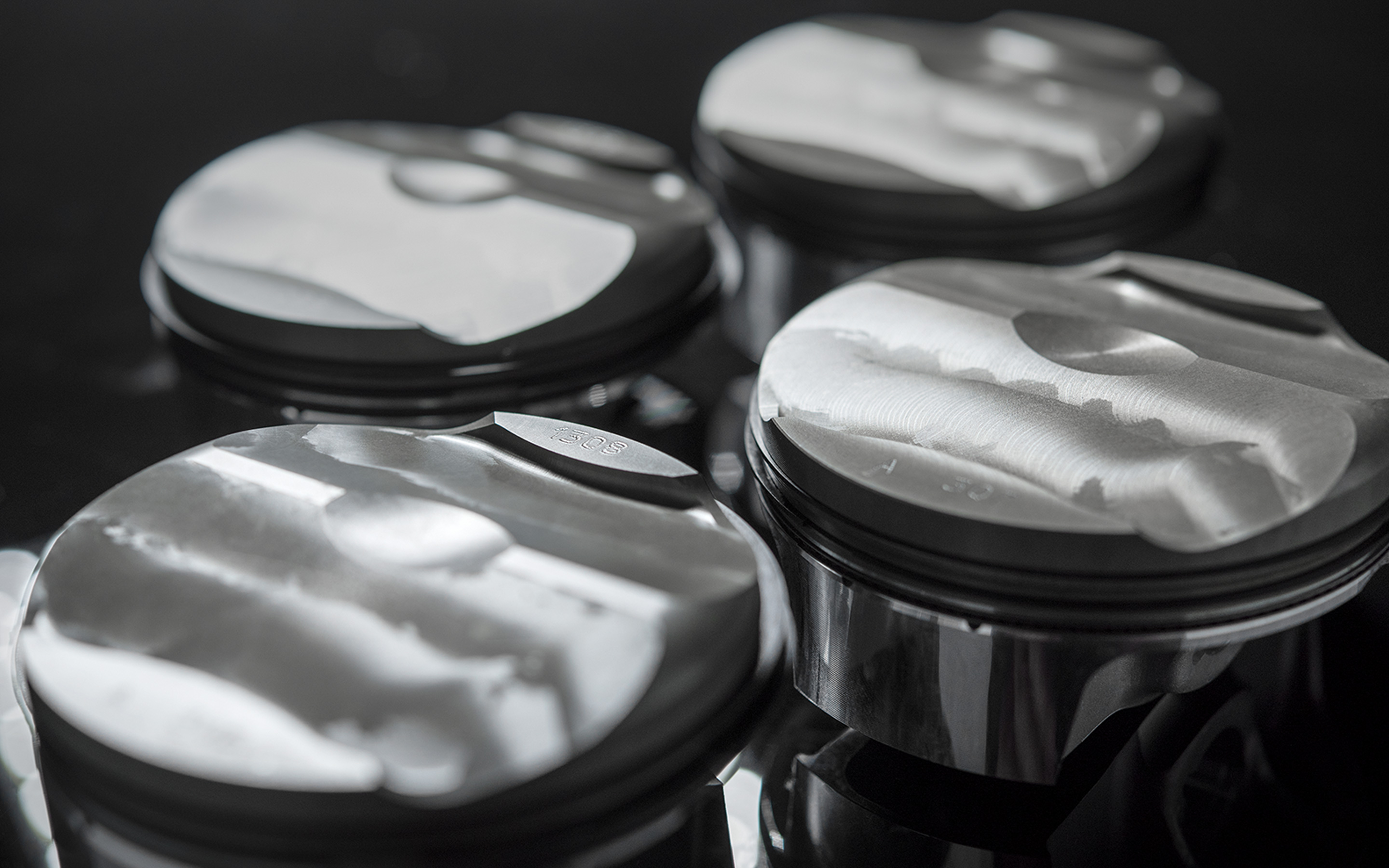
The Desmosedici Stradale displaces 1103cc and produces a whopping 214 bhp @ 13,000 RPM (226 bhp with race kit) and 124 Nm @ 10,000 RPM. That’s a great 3,000 RPM spread between peak torque and horsepower, meaning that the engine has a flexible power curve, instead of being peaky like the 1299 it replaces.
Being a 90o V4 means it has a natural balance it and doesn’t incur power and weight penalties from using balancer shafts. It also makes the engine much more compact, allowing the engineers to place the engine for more optimal weight distribution within the frame.
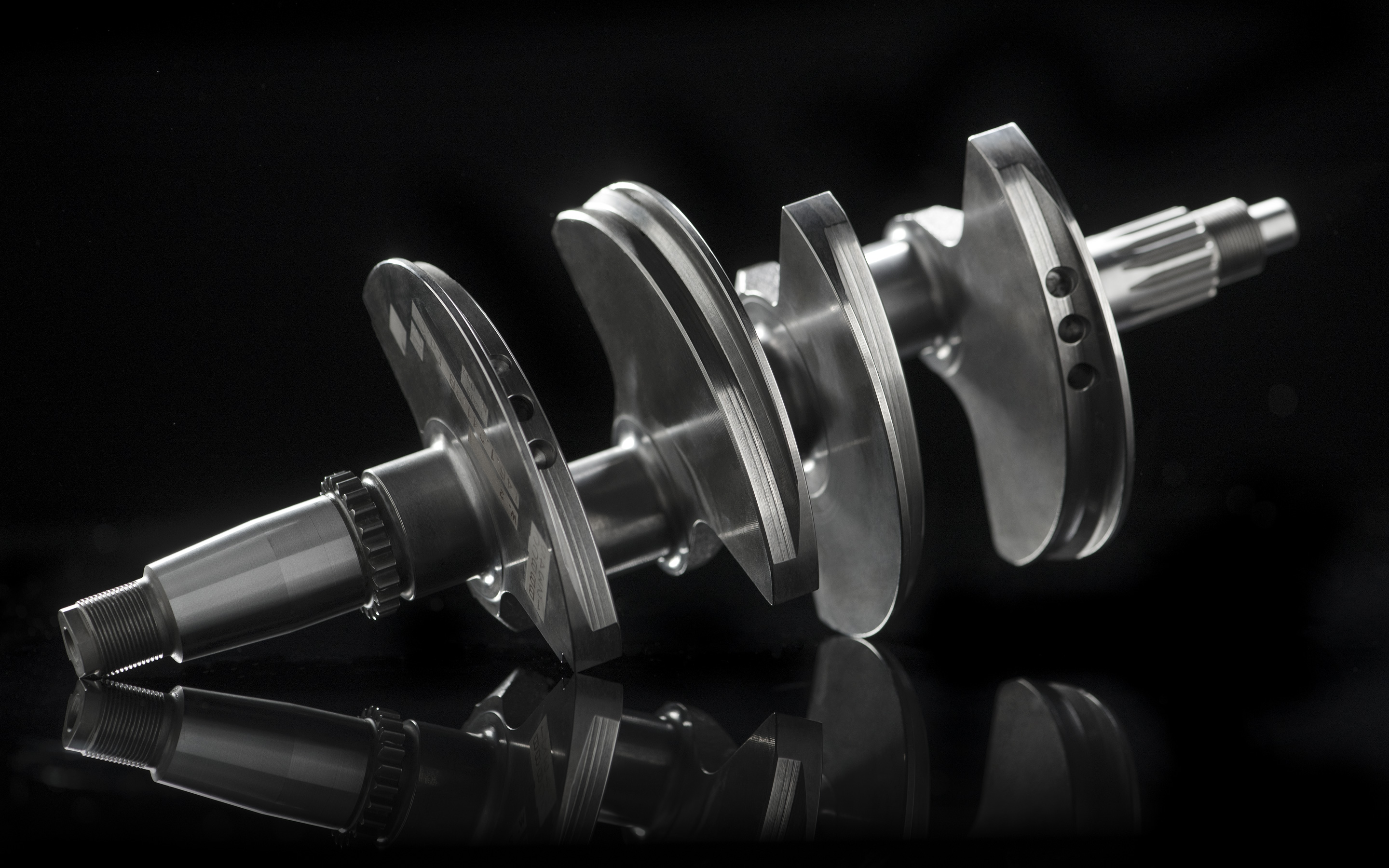
The crankshaft counter-rotates, spinning “backwards,” opposing the rear tyre’s rotation. This is a direct influence from Ducati MotoGP’s bikes. The spinning and reciprocating masses inside and engine create their own inertia and gyroscopic effect, adding to the rear tyre’s. Having a counter-rotating crank hence negates some of these forces, resulting in a bike that is easier to turn and rein in that raw power from inducing wheelies. GP aficionados will tell you that Honda did exactly this on their NSR500 two-stroke GP beast.
Ducati calls the new engine’s firing order “Twin Pulse” as it fires first the left bank of cylinders, then the right, replicating a V-Twin’s. It gives the bike a unique aural and handling character.
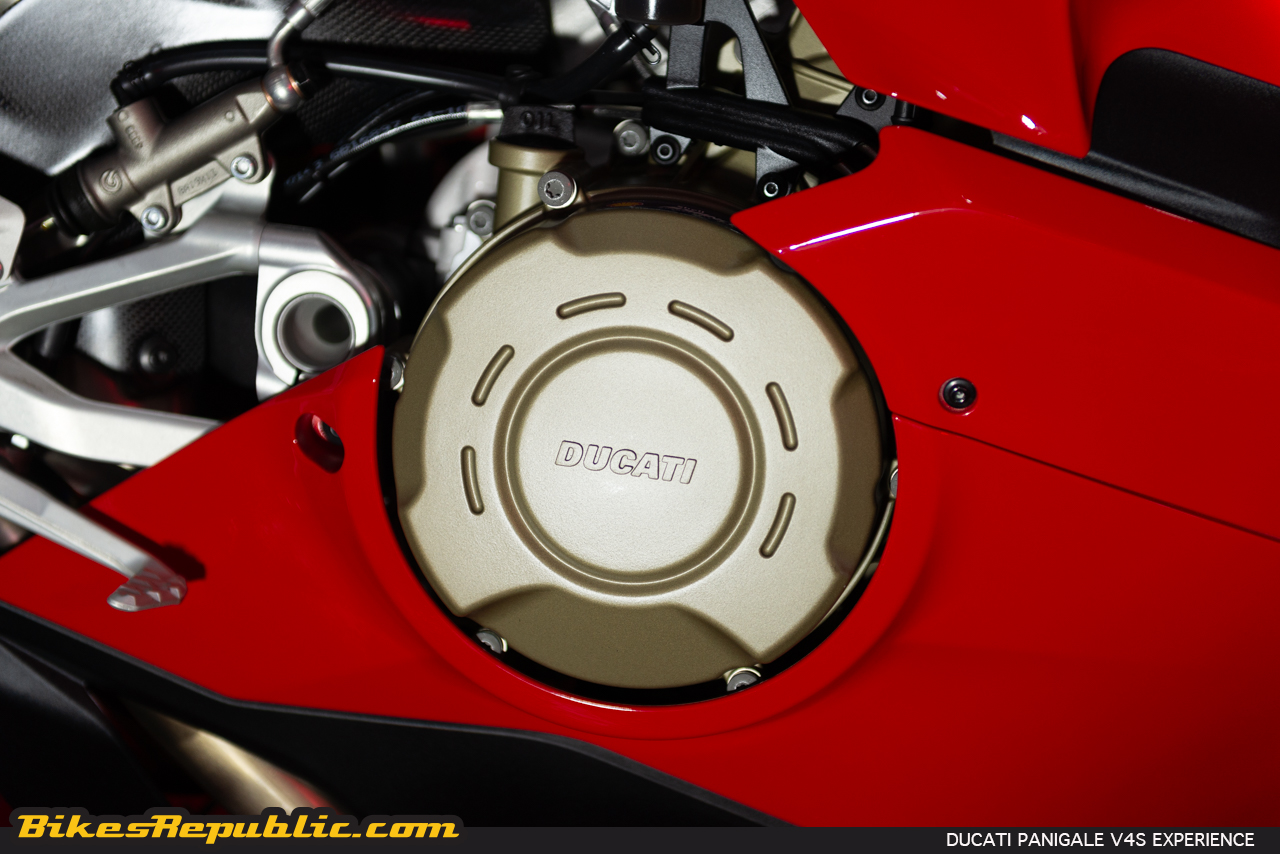
Ducati wanted a compact engine despite gaining two extra cylinders, so they turned to magnesium alloy covers for the cylinder head, clutch, stator and oil sump. They ended up with an engine that’s only 2kg heavier than the V-Twin 1285cc Superquadro.
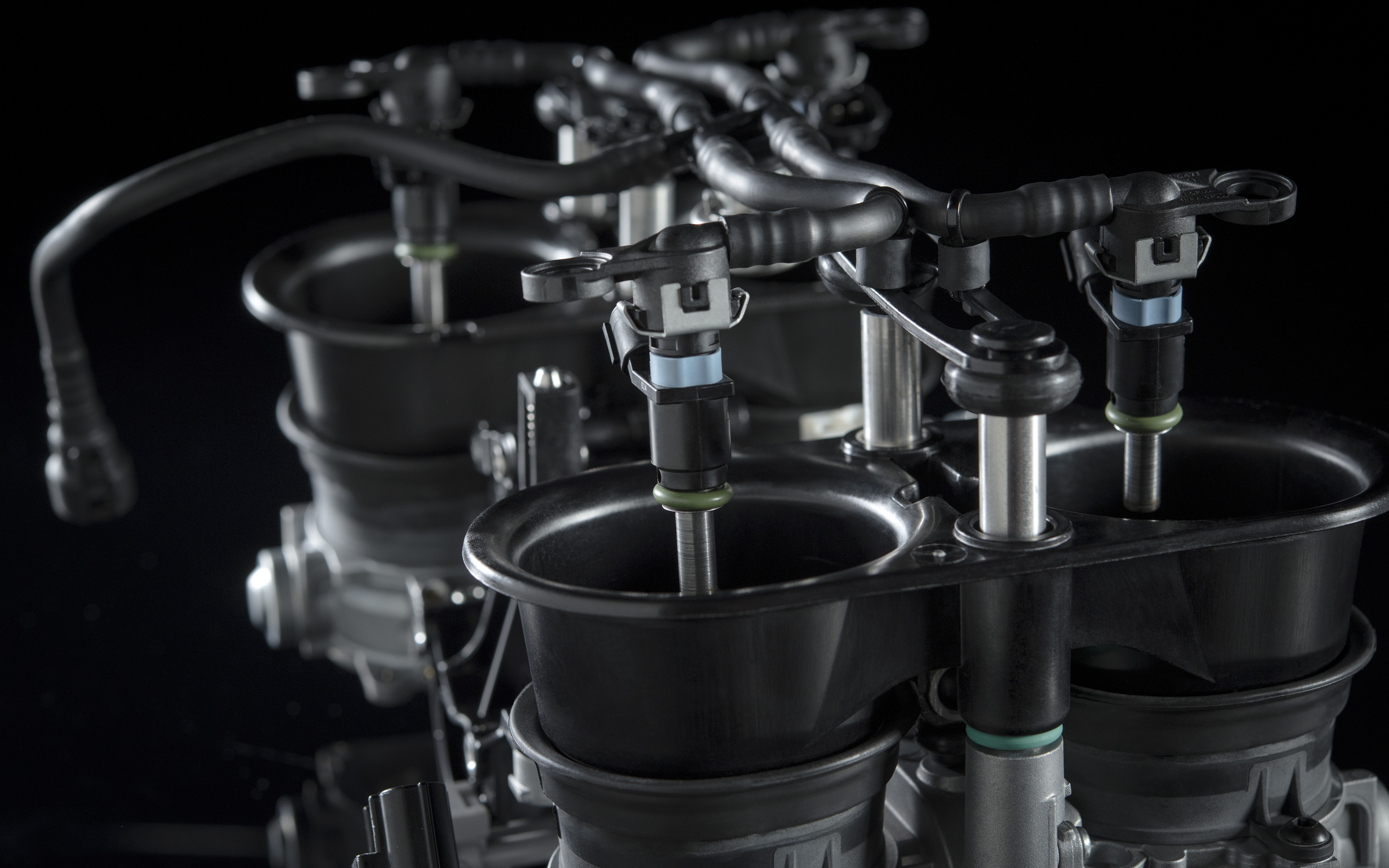
Other features include variable length intake funnels, dual injectors per throttle body and oval throttle bodies.
The chassis department has also received changes, accordingly.
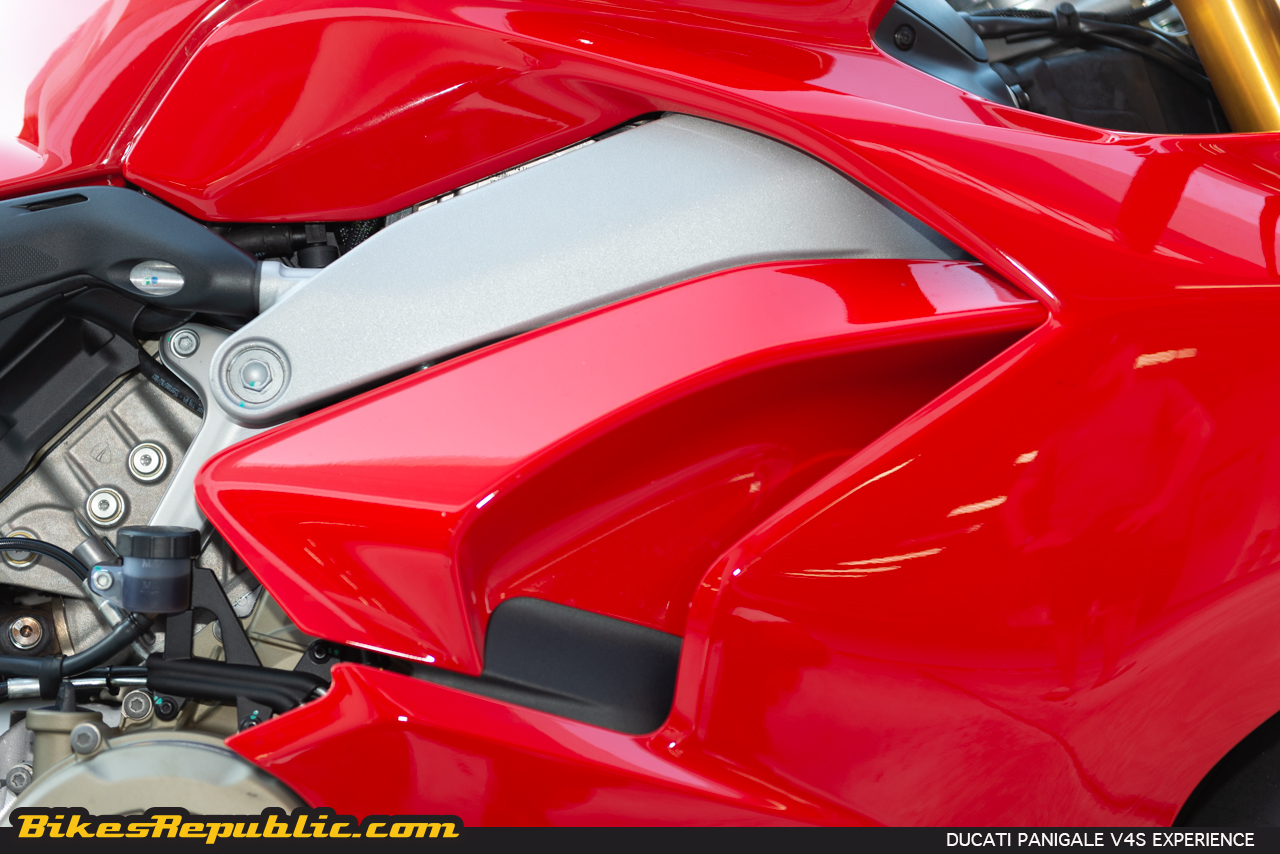
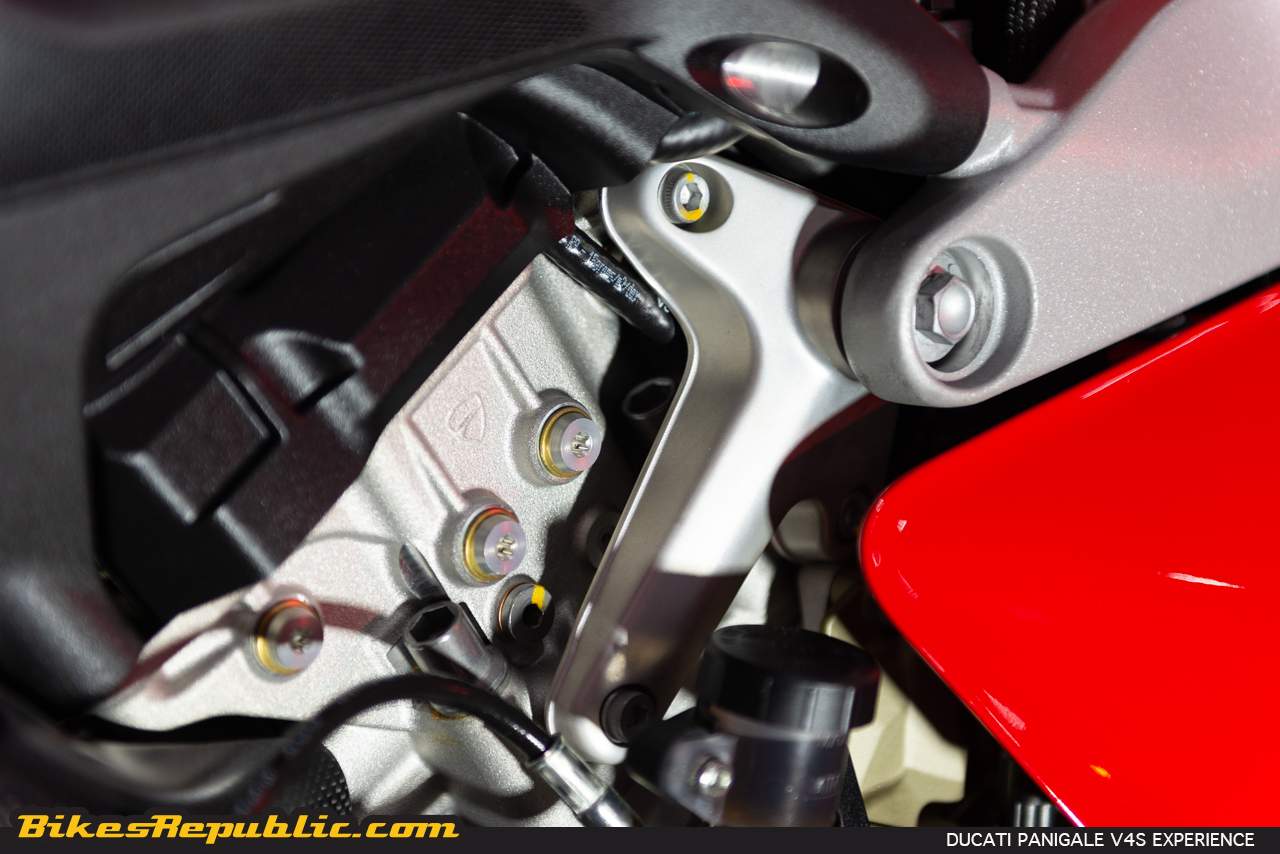
Instead of the monocoque design used by earlier Panigales, there is a now an aluminium “beam frame.” But it only extends a short way from the headstock.
A peek inside sees the engine being rotate upwards (by 42o). As such, the entire engine could be moved further forward, allowing for a longer swingarm. A longer swingarm promotes stability by keeping the front tyre on the road longer, allowing the bike to hug the chosen line even when power is applied.
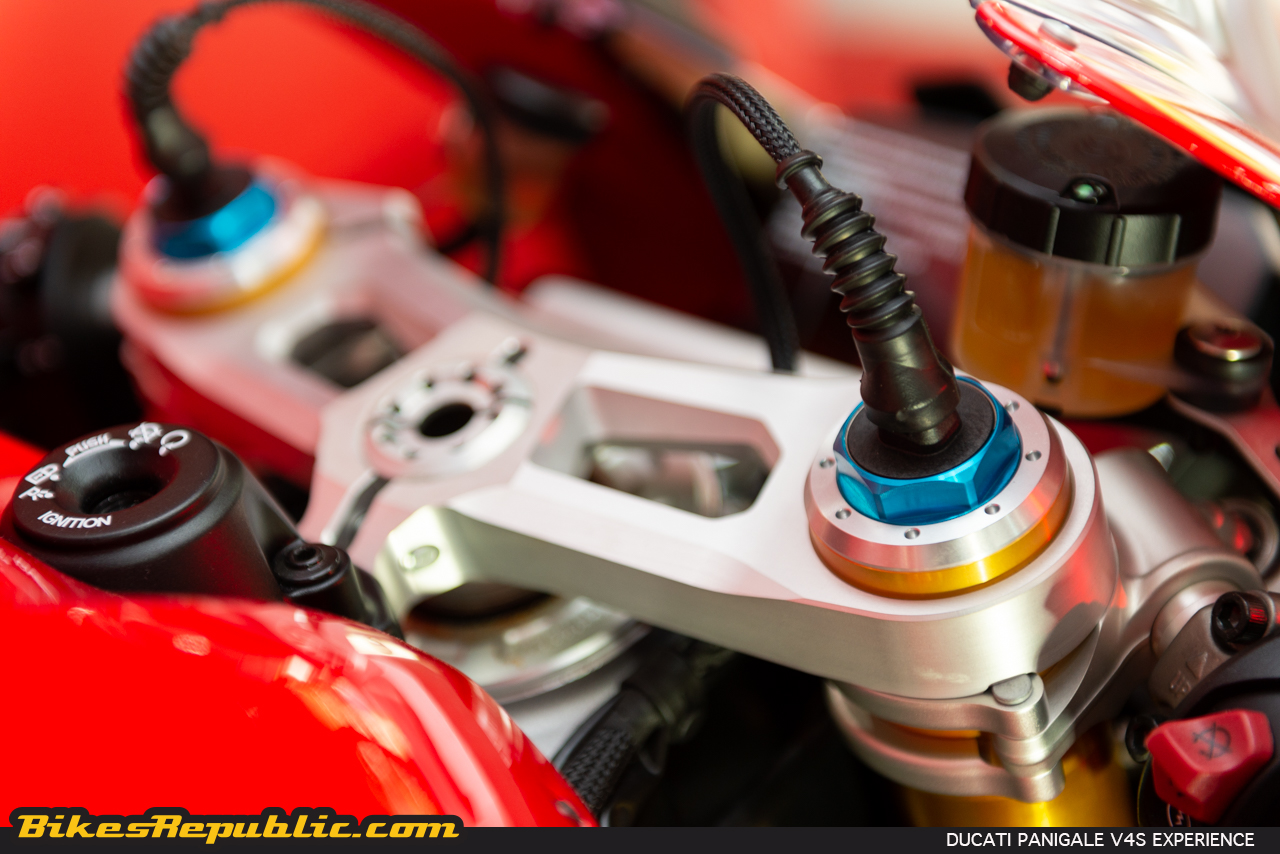
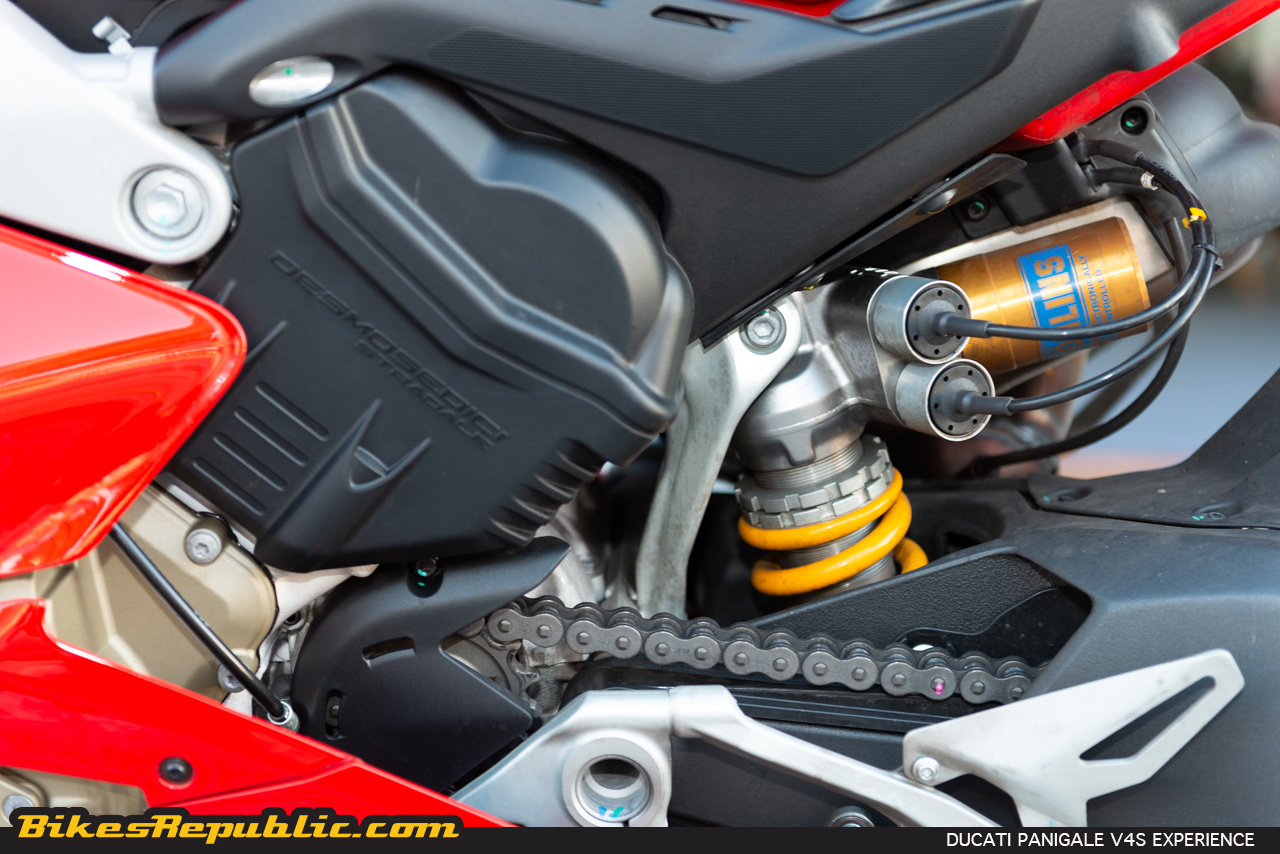
Since this is the “S” version, it uses the electronically-controlled Öhlins suspension front and rear. The system monitors suspension movements and damping up to 100 times per second. Sure, that’s what most electronic suspensions do these days, but here’s the main difference. Instead of just letting the ECU choose the rates based on ride mode, the Panigale V4S’s system lets you work on objectives i.e. what do you want to achieve. For example, you could specify more stability under eye-popping hard braking, plus more stability in mid-corner, less rearward weight transfer under hard acceleration, etc. On a “manual” suspension, on the other hand, you could only tune the suspension for one, maybe two characteristics while the rest are compromises at best.
The rear shock has been moved to the traditional central position, since there’s more space.
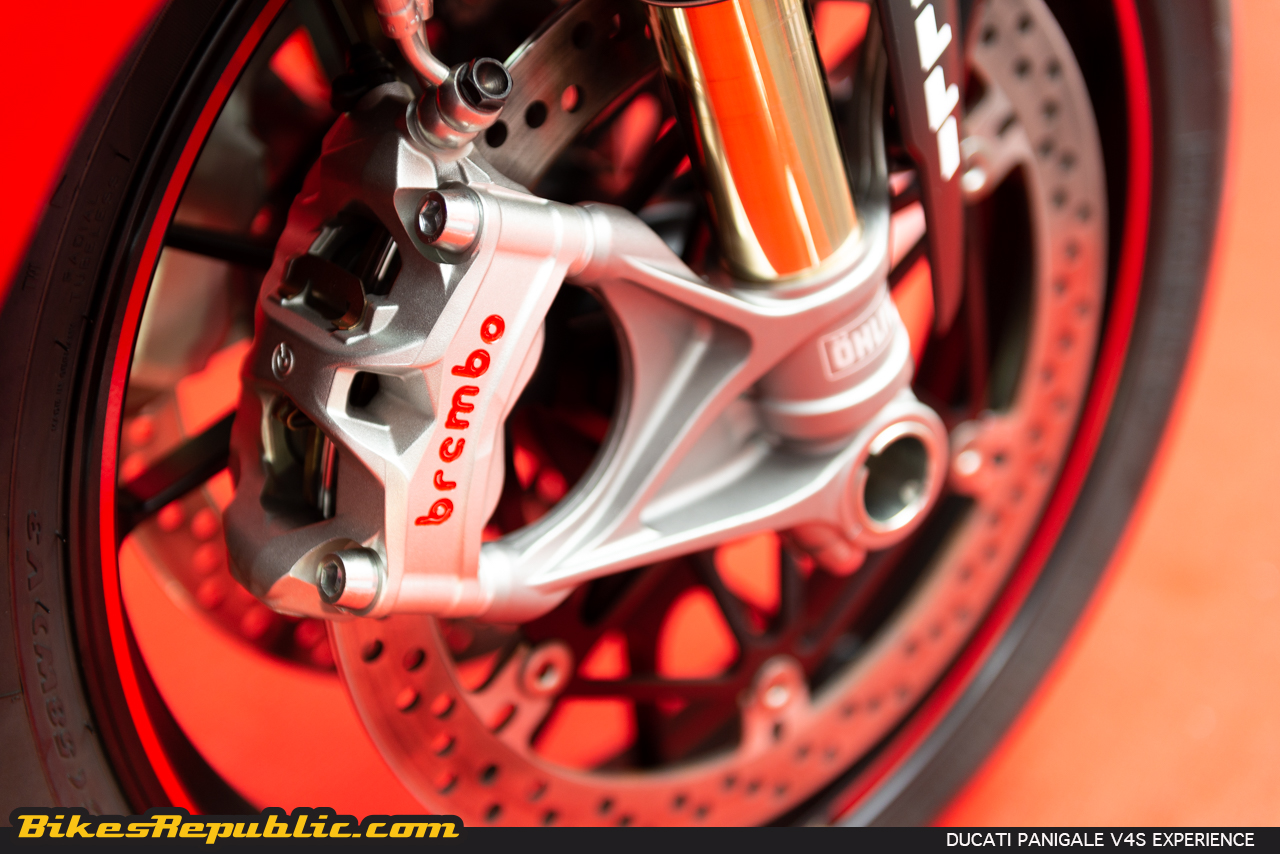
The front brakes use the latest Brembo Stylema monobloc calipers that are 70g lighter per caliper, yet more rigid. They grip massive 330mm discs.
Enough. Enough of tech talk (yaaawwwnn), let’s ride.
I took a long hard breath to calm my nerves and stuck the earplugs in, at last. Riding a sub-200 bhp superbike is already crazy enough, this one is above 200 bhp.
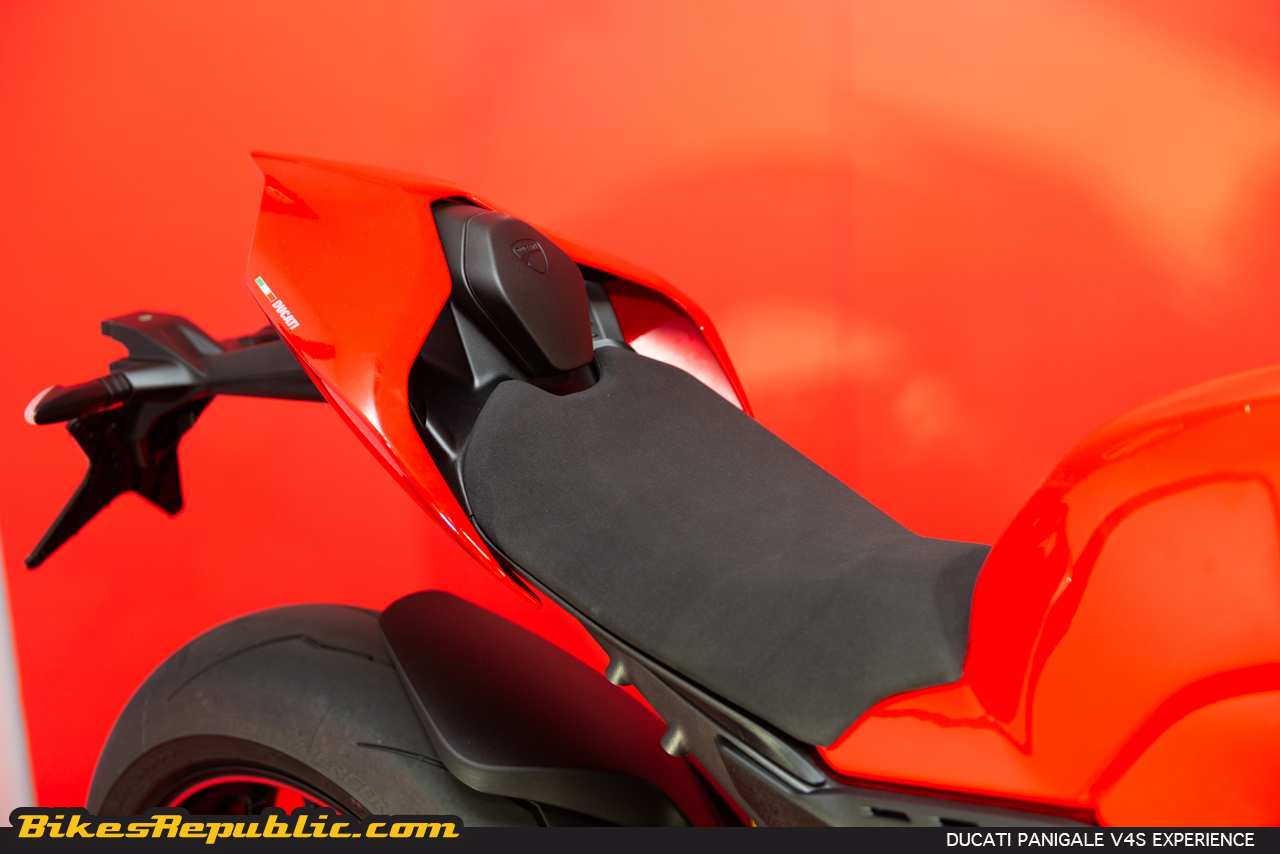
Sitting position is bang-on Panigale, so you won’t feel out-of-place if you switched over from the V-Twin. The seat was much suppler, however.
The V4 fired up and sounded… wait, have DRE put me on the wrong bike? Why did it sound like a Twin? I looked down and my gaze met a massive aluminium structure below the top triple clamp. Owh, it was the V4. When Ducati said the engine fires like a V-Twin times 2, they weren’t joking. The ride mode was set to “SPORT.”
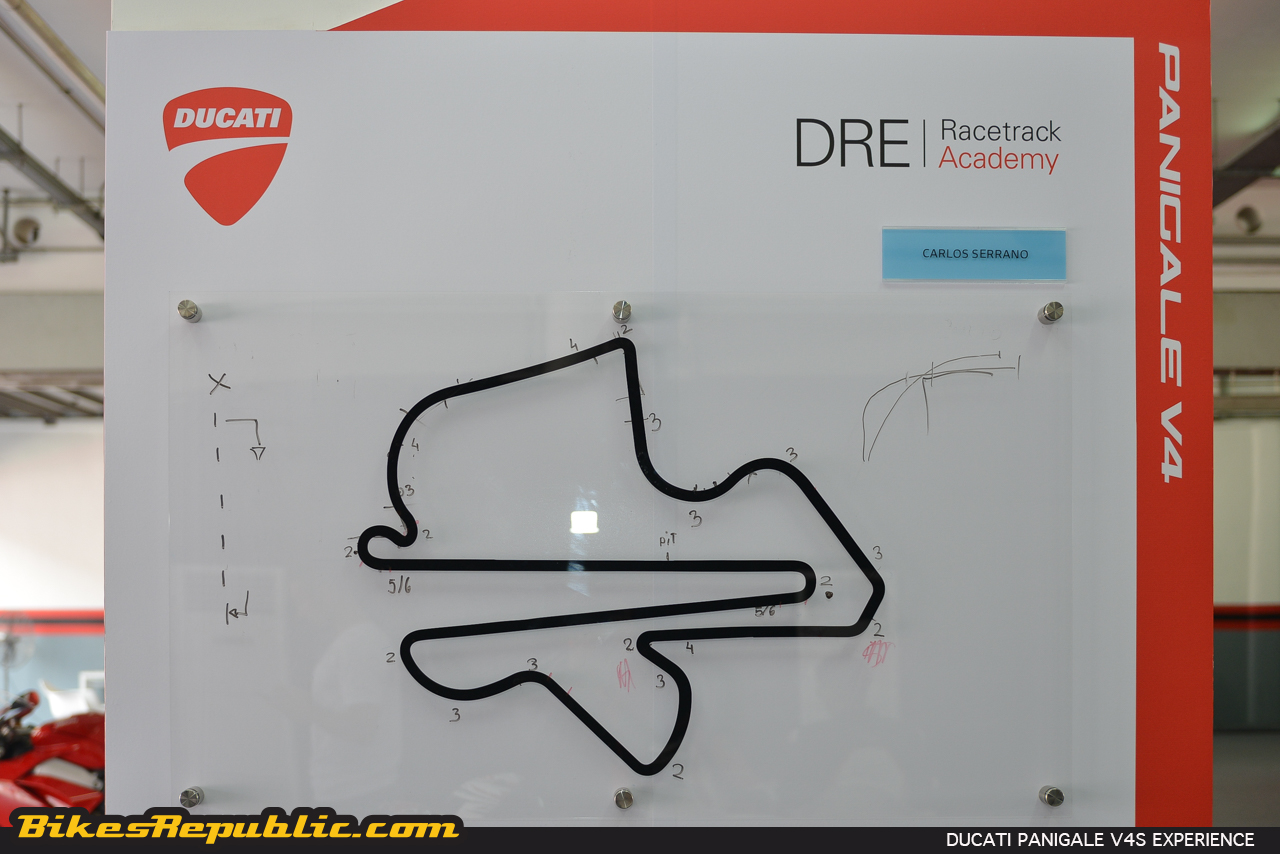
My group’s Ducati Racing Experience (DRE) instructor, one uproarious Spanish racer named Carlos Serrano flashed a thumb’s up and we were underway.
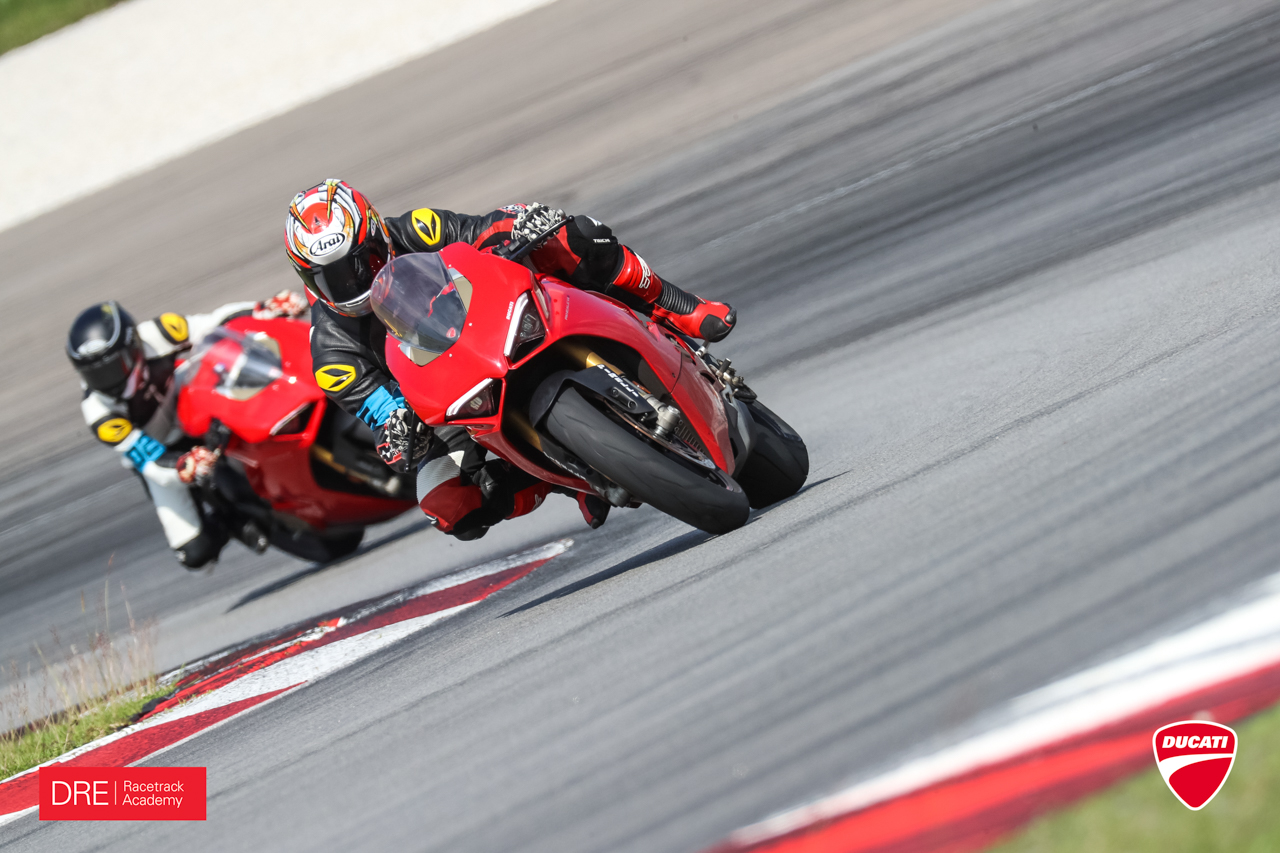
The bike pulled hard but err… smoothly from the pit exit and we leaned into Turn One without touching the brakes. Turn Two had always scared me due to the bumps at the braking point/entry and the blind apex, so I approached it with some trepidation, but the Panigale V4S ran over those bumps and holes like a sport-tourer. What the…? I had expected to be bumped around the seat and my arms punched into the shoulder sockets.
Through the faster turns, i.e. 3, 5, 7, 8, 10, 12, and 13, I had already gone faster than I even did before, but it was as if those were just straights with the bike leaned over. I fed in power smoothly as on other bikes but the bike actually yawned!
There were still a few wet patches hugging the inner parts of the turns but the bike flew over them as if they weren’t there.
Down into hard braking areas such as Turns 1, 4, 9, and 15, a single-finger pull on the brake lever was enough to haul the bike down from insane speeds. I found myself constantly over-braking and too early in the first session.
And did I mention the bike actually felt… comfortable? Where were the mid-corner bumps in Turns 2 and 9? Did SIC resurface the track last night?
I felt disoriented as we headed into the pit entrance after 5 laps.
As with every DRE, critique and instructions followed after every session. Serrano commented that we were turning into corners too early. One participant commented that aiming for the apex that late meant that we had to quick flick the bike, risking losing the front. Serrano smiled, closed his eyes and wagged his head, “No, no, don’t worry, this bike can do it. Just snap it over.”
He also mentioned that we were slow in getting back on the throttle. All of us spoke up that it’ll either cause the bike (read: other than the Panigale V4S) to overshoot or slide the rear tyre. Serrano repeated his smile-close-eyes-wag-head routine, “Don’t worry, just open.”
Okay. Flick in late, open throttle early. Got that.
Out on track for the second session, all of us “just open.” Oh my. The bike picked up so much speed in mid-corner that would have other bikes jumping the curbs and headed to KLIA in a hurry.
And I was still braking too hard, too early! Grrrr! I didn’t matter if we were blasting down the back straight at 280+ km/h, braking just after the 200m marker was a waste of time. I had to get back on the throttle by the 50m mark. Besides that, I’d usually trail the rear brake a little to keep the rear in check, but it was optional on the Panigale V4S.
I was upset at myself for being so slow when we went back in again. Truth is, I was sure I had gone faster than ever before yet, I just couldn’t find the limits of the bike. It actually boiled down to being too used to sportbikes that are akin to holding onto The Rock as he thrashes around.
No, it wasn’t about lack of feedback on the V4, for there was plenty. But it was how compliant it felt that fully confused me. Make no mistake, this is a positive point for regular sportbike riders and track day junkies. As opposed to other bikes, the Panigale V4S doesn’t wear you down.
I switch to race mode for the next session. This time, the bike’s acceleration was absolutely brutal, even in mid-corner! Don’t get the wrong impression, though, because while it accelerated like rocket sled, it was incredibly smooth, unlike something which left your brain 100m behind. Now you know why I was confused.
I was confident enough to trail brake into the corners and the feedback at the brake lever and handlebar was solid. The bike waggled a little as I sat up for Turns 15 and 1 but it never ever felt like things were going to get out of hand. Forget the internet, this was way more entertaining.
But we only had the morning session and I almost did an extra lap during the last session as I have having so much fun. I walked away feeling a little unsatisfied, however, as I never managed to sniff, much more explore, the bike’s astronomical limits.
The conclusion I could safely draw is this: The Ducati Panigale V4S is easily the fastest superbike out there, but it’s also the easiest to ride (super) fast.
For more pricing details and to view the bike, please visit Ducati Malaysia.
PICTURE GALLERY
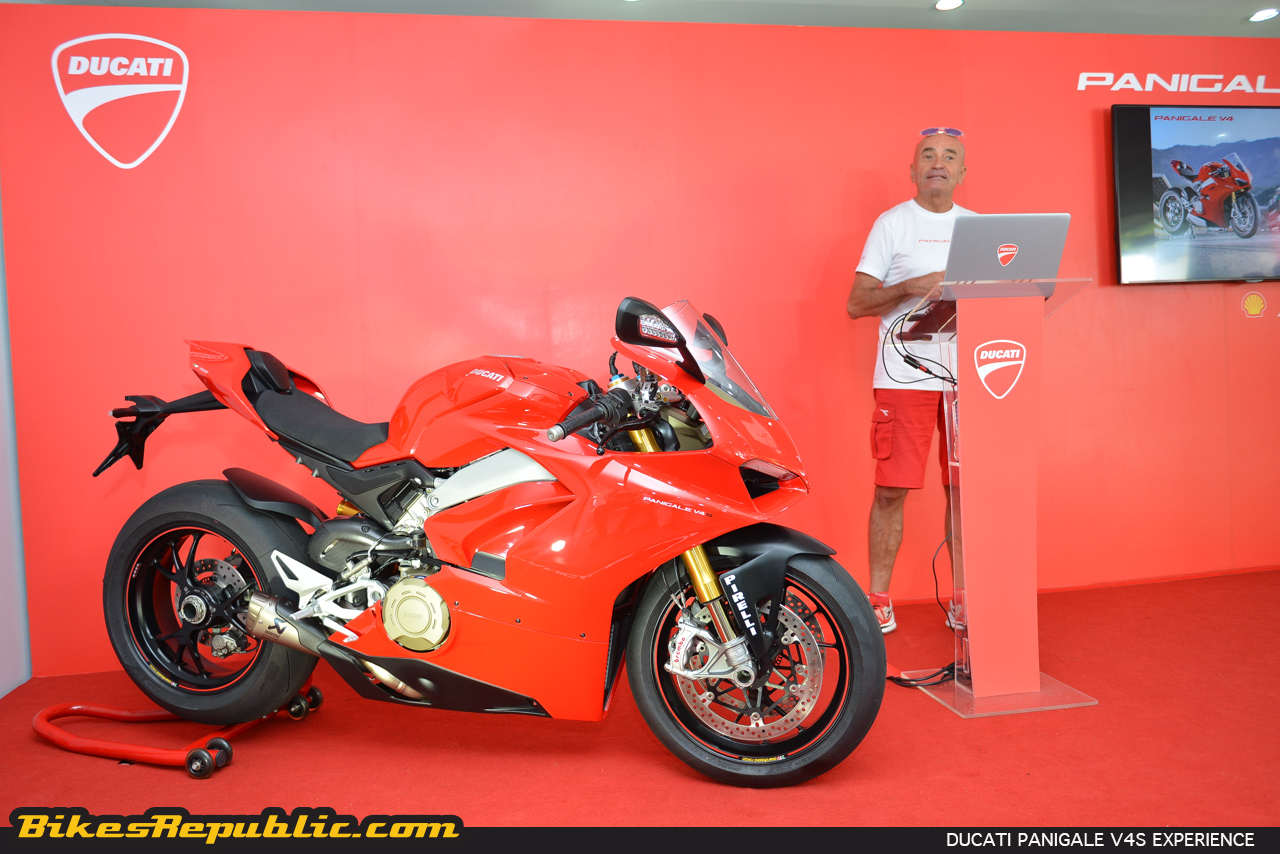
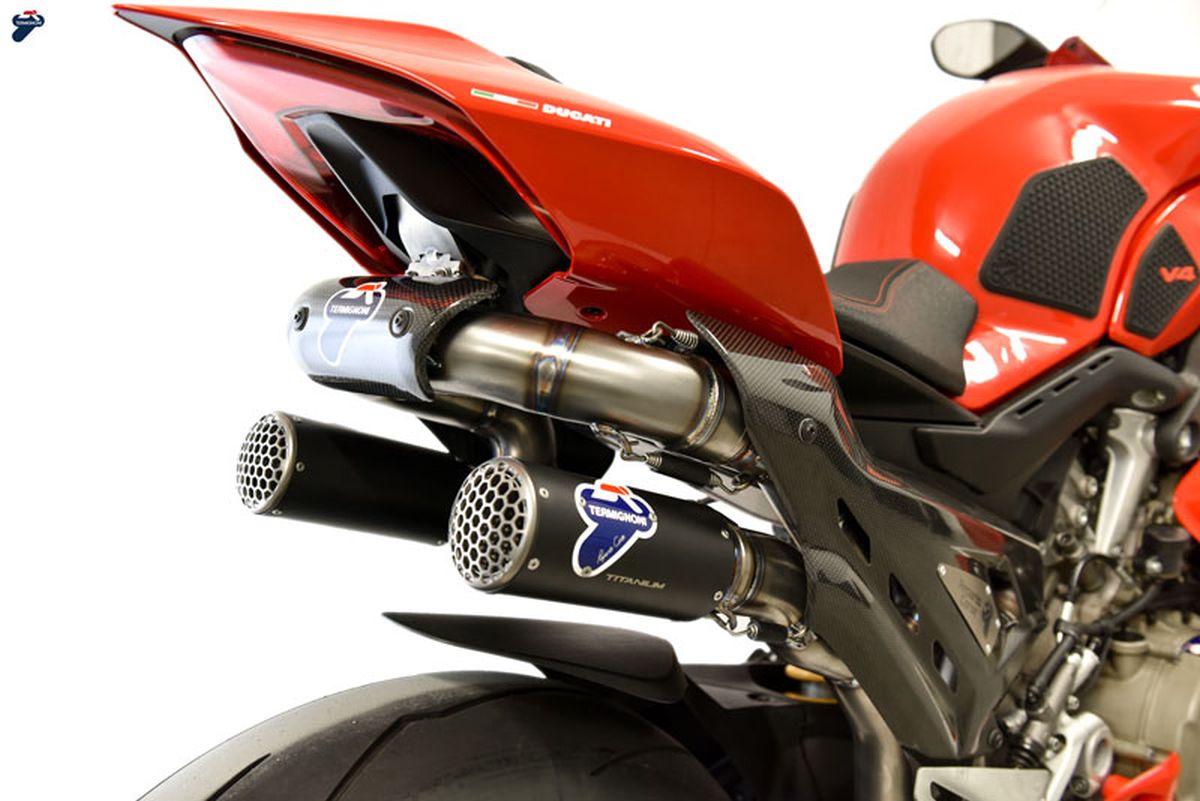
Aluminium has replaced the monocoque structure on the Ducati Panigale V4
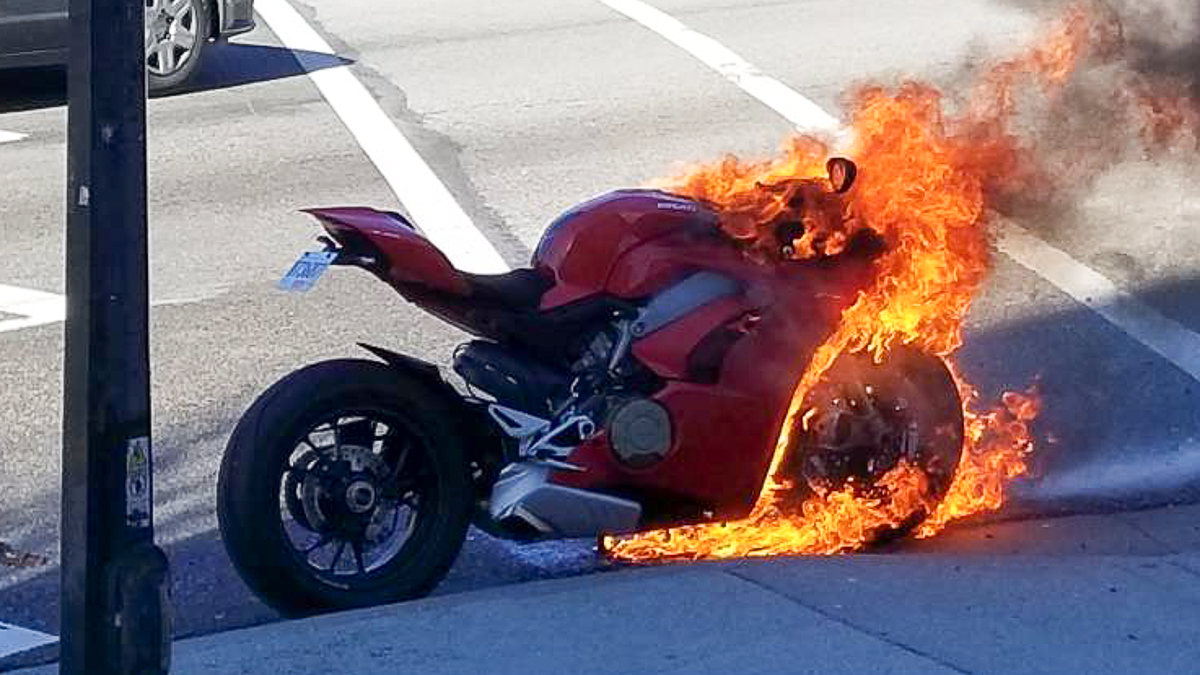
One particular 2018 Ducati Panigale V4 caught on fire last week in Vancouver, Canada.
The cause is unknown but the rider was riding normally on city streets when the bike was engulfed in flames.
Ducati North America has responded quickly and inspections are currently underway to ensure that this was only one isolated case.
Some worrying news has surfaced itself just recently about one of the most highly-regarded superbikes in the modern era. The technologically-marvelled 2018 Ducati Panigale V4 is all about being the best of the best but one particular machine in Canada was a bit too ‘hot’ to handle. (more…)
The 2019 Ducati Panigale V4 R has been caught testing in Jerez together with the Ducati WorldSBK factory team.
Built for racing and comply with the new WorldSBK rules, the R version will run a 1,000cc V4 engine.
Expect the Panigale V4 R to be launched in July during the World Ducati Week 2018.
While most of the international motorcycle media just got back from a very exciting 2018 Ducati Panigale V4 test ride session organised in Valencia, we’ve been getting a lot of questions on when and where the one-litre Panigale R race version will break its cover. (more…)
Ducati telah menjual lebih daripada 55,800 motosikal di seluruh dunia pada tahun 2017 (55,871 secara keseluruhannya) yang mana ianya merupakan peningkatan kecil dari 55,451 pada tahun 2016.
Pengeluar dari Itali tersebut meneruskan trend peningkatan jualan positifnya bagi lapan tahun yang lalu.
Ducati telah merancang untuk terus meningkatkan lagi margin jualannya mereka pada tahun ini dengan model 2018 mereka yang mana di antaranya merupakan motosikal yang dinanti-nantikan, Ducati Panigale V4.
Ducati sold over 55,800 bikes worldwide in 2017 (55,871 in total) which is a slight increase from 55,451 back in 2016.
The Italian manufacturer continues with its upward positive sales trend for the past eight years.
Ducati plans to continue to increase their sales margin this year with their 2018 models which include the highly-awaited Ducati Panigale V4.
Image source: MotoGP
Ducati is proud to deliver the positive news that they have successfully delivered a total of 55,871 motorcycles to their customers around the globe. While most manufacturers are reporting a slight decrease in sales margin, Ducati saw a slight increase in sales figures compared to 2016 where they sold 55,461 units. (more…)
Motosikal Ducati Panigale V4 2018 dijangka tiba di Malaysia seawal bulan Mac 2018.
Tempahan sudah mula dibuka bagi ketiga-tiga varian bermula dari Panigale V4 asas, Panigale V4 S hinggalah untuk motosikal edisi terhad, Panigale V4 Speciale.
Ducati Petaling Jaya turut menganjurkan acara Ducati Red Weekend pertamanya pada 13 dan 14 Januari 2018 di mana anda boleh mengetahui dengan lebih lanjut mengenai motosikal V4 ini atau pun mana-mana model lain yang sedang dalam promosi.
The 2018 Ducati Panigale V4 is expected to arrive on Malaysian shores as early as March 2018.
Bookings are already open for all three variants from the base Panigale V4, Panigale V4 S up to the limited edition Panigale V4 Speciale.
Ducati Petaling Jaya is also organising its first Ducati Red Weekend on 13 and 14 January 2018 where you can know more about the V4 or any other models on sale.
According to some news that has been travelling in the World Wide Web, folks are getting super excited on the arrival of the 2018 Ducati Panigale V4. Based on reliable sources, the Italian manufacturer’s first full production four-cylinder superbike is expected to arrive in Malaysia as early as March 2018. (more…)
Satu pos Facebook terkini oleh Ducati Pulau Pinang telah mengandaikan bahawa motosikal Ducati Panigale V4 2018 telah dibuka untuk tempahan.
Dengan harga runcit semasa beserta GST pada RM133,900 hingga RM359,900, anda kini boleh mula membuat tempahan untuk motosikal Panigale V4, V4 S, dan V4 Speciale.
Dijana oleh enjin 1,103cc, Desmosedici Stradale V4 90 darjah, evolusi terkini Panigale ini menghasilkan 212hp hingga 226hp.
A recent Facebook Post by Ducati Penang indicated that the 2018 Ducati Panigale V4 is now open for booking.
With a tentative retail price with GST of RM133,900 to RM359,900, you can now place your booking for the Panigale V4, V4 S, and the V4 Speciale.
Powered by 1,103cc Desmosedici Stradale 90° V4 engine, the latest Panigale evolution produces 212hp to 226hp.
A recent post by Ducati Penang has confirmed that the latest 2018 Ducati Panigale V4 which is set to launch sometime in the first half of next year has already begun accepting bookings for them. In the Facebook post, Ducati Penang has stated the tentative retail price with GST for all three Panigale V4 models. (more…)
Semenjak pelancaran motosikal Ducati Panigale V4 2018, orang ramai telah tertanya-tanya berkenaan harganya bagi pasaran di seluruh dunia.
Walaupun ianya telah disahkan yang motosikal ini akan ditetapkan di antara €22,590 (RM110,182) hingga €39,900 (RM194,608) di Eropah, kami menyangkakan yang ianya mungkin sekali akan berharga di antara RM180,000 hingga RM250,000 setibanya motosikal itu di Malaysia nanti.
Khabar angin serta desas desus telah mengatakan yang ianya mungkin sekali jauh lebih murah daripada apa yang kami sangkakan dengan harganya mungkin sekali ditetapkan pada paras RM150,000 atau serendah RM120,000.