Bikesrepublic

Latest News

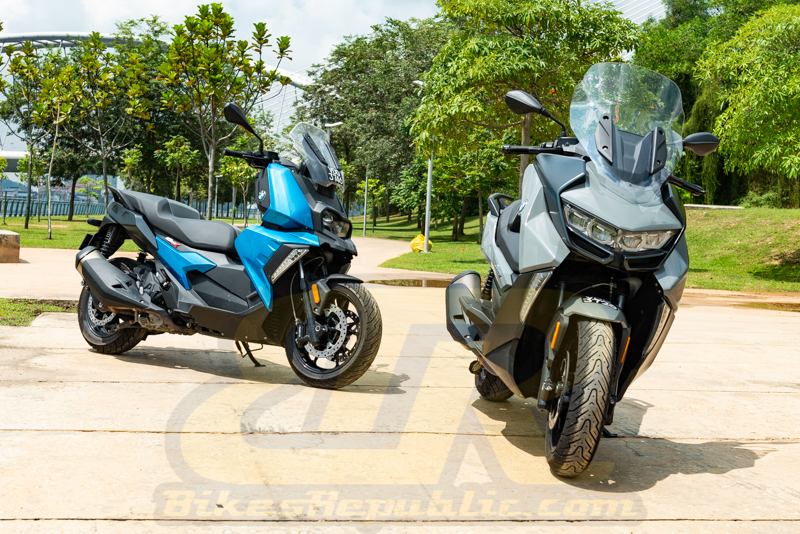
  • The BMW C 400 X and BMW C 400 GT are part of BMW Motorrad’s Urban Mobility lineup.

  • They are well equipped with the TFT screen, Bluetooth connectivity, Keyless Ride, ASC and ABS.

  • Sure, they are scooters but they ride like big bikes hiding underneath the bodywork.

Scooters. Lovely bikes to ride as commuters, low fuel consumption, lots of cargo space. But iffy handling, lowly specs and “meh” performance. Right? But what about the BMW C 400 X and BMW C 400 GT?

Now, this dynamic duo are really different in almost every single way. Hear us out.

BMW C 400 Platform

BMW Motorrad calls their scooters “Urban Mobility.” The C 400 lineup are the smallest of the C-series which includes the larger (and faster) C 650 range.

Both are powered by the 350cc, single-cylinder engine which produces 34 bhp at 7,500 RPM and 35 Nm of torque at 6,000 RPM. Power is sent through a  centrifugal clutch and finally a stepless CVT transmission.
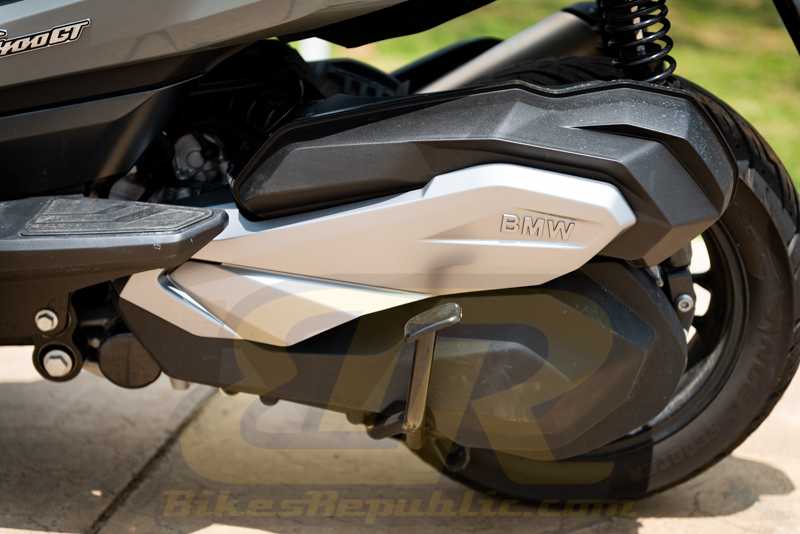
The forks are 35 mm units with double spring struts at the rear. But there are two 265 mm brake discs up front and one at the back. Wheelbase is a slightly long 1565 mm. ABS and ASC (Automatic Stability Control i.e. traction control) are standard on both bikes.

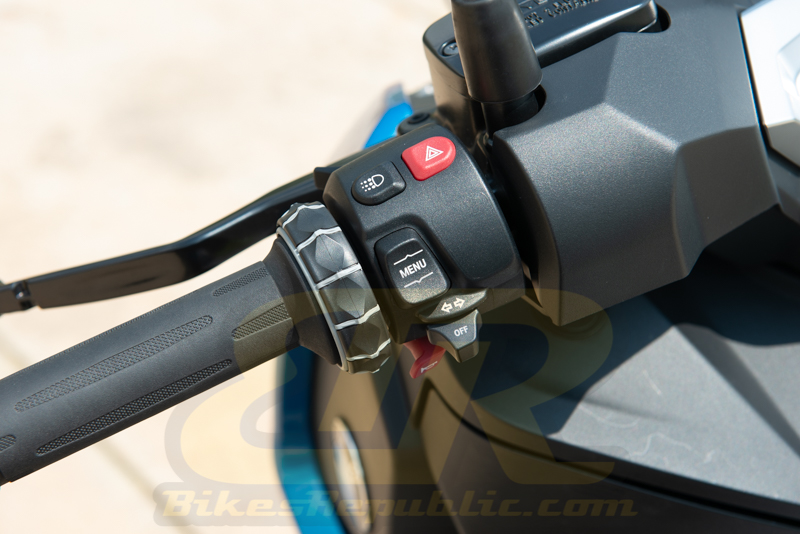
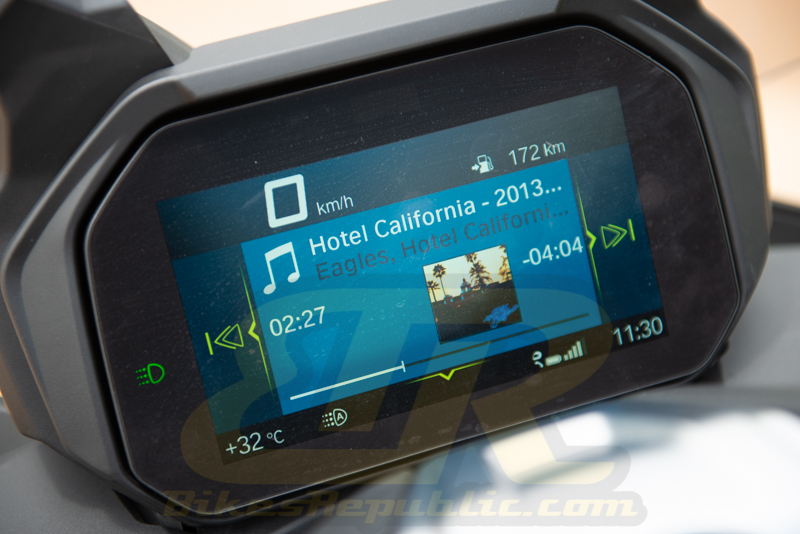
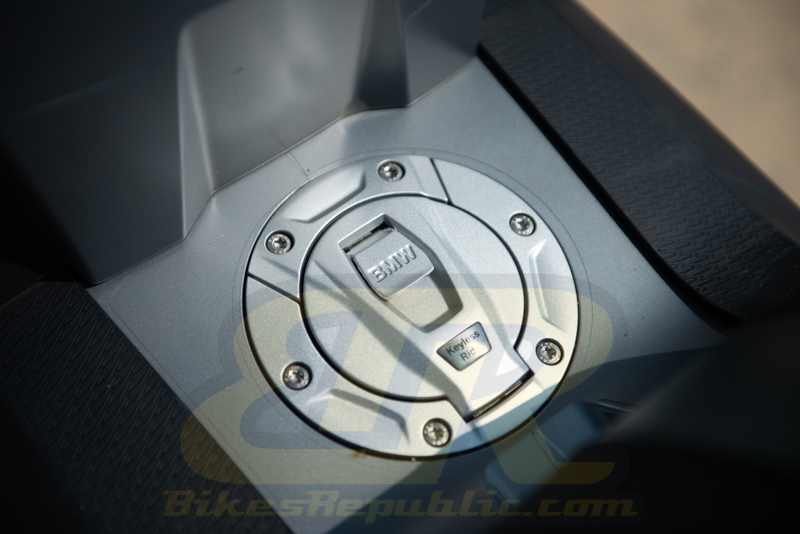
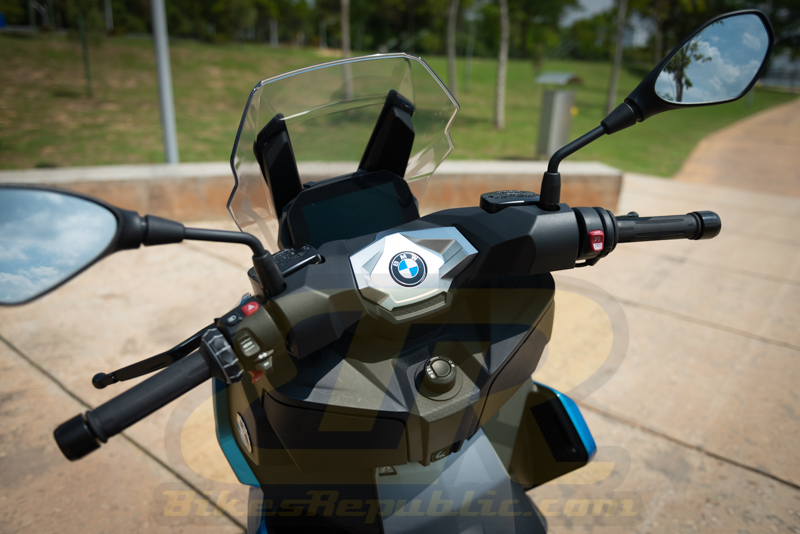
That large TFT screen takes centre stage when you approach either bike. Look closer and you’d pick out the keyless ignition button, keyless fuel cap and BMW multi-controller wheel.

The TFT can connect to your phone and Bluetooth communicator.
This is where it gets interesting.  You can have navigation on the TFT screen when connected to the BMW Connect app on your phone, showing you turn-by-turn directions.

Switching to the multimedia screen, you can see the music that’s playing through it. From there, you could use the multifunction wheel on the handlebar to play, pause, choose the song, and even playlist. Only problem was we couldn’t get the karaoke function to work. Just kidding.
Now flip it to the phone function and you’d see your phone’s contacts. Select the person you want to call and voila.
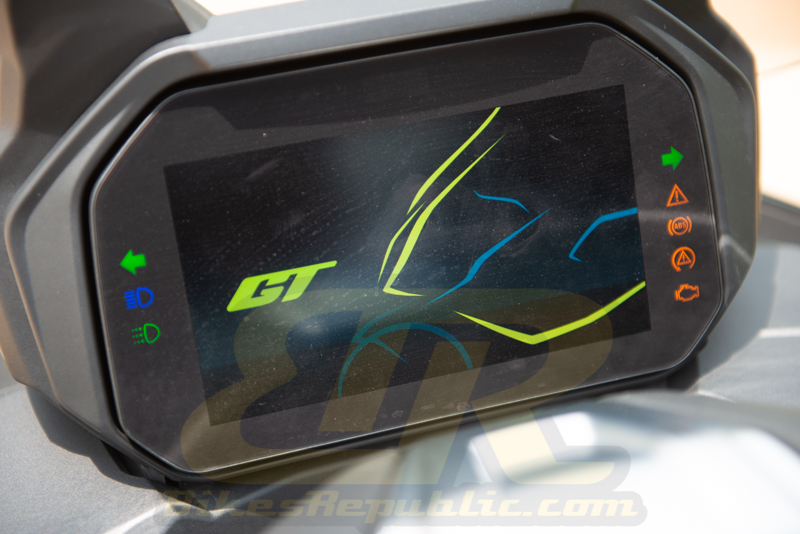
Sure, these functions are available on bigger bikes, too but no other scooter outside of BMW’s line-up do.

BMW C 400 X (from RM 44,500)
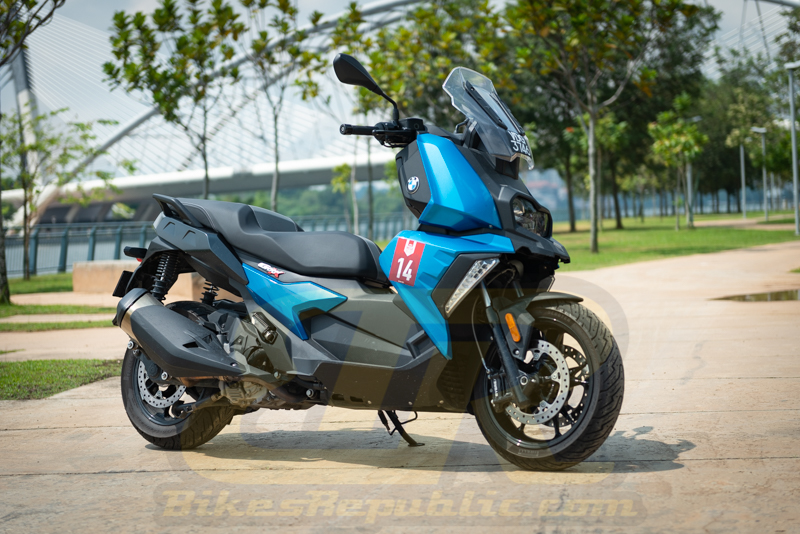
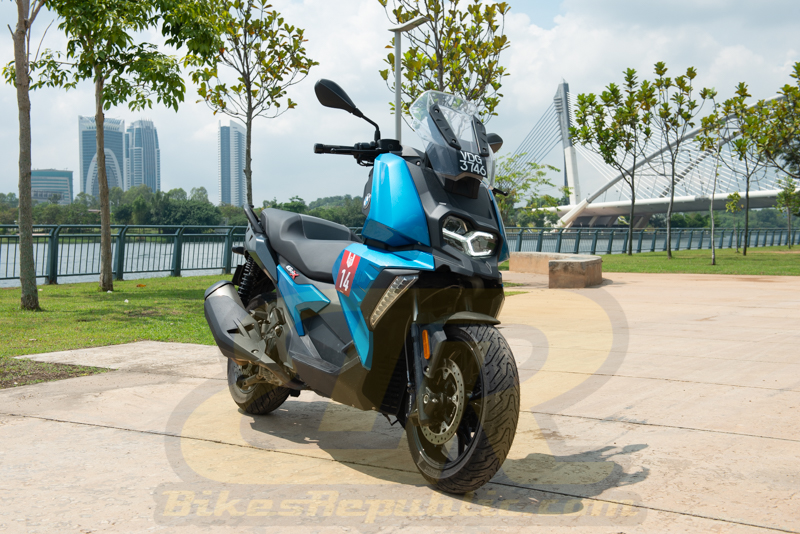
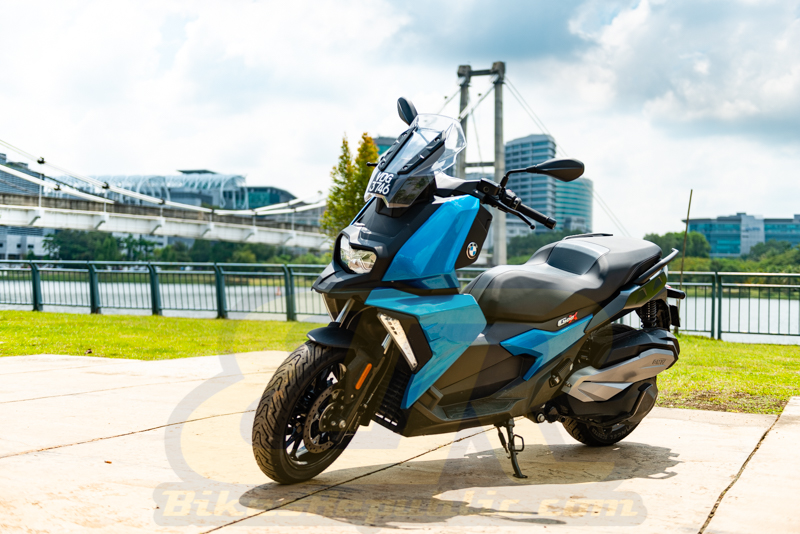
The C 400 X is designed for daily commuting. That explains its distinctive “cut down” look for easy manoeuvring through city traffic and narrow streets. 

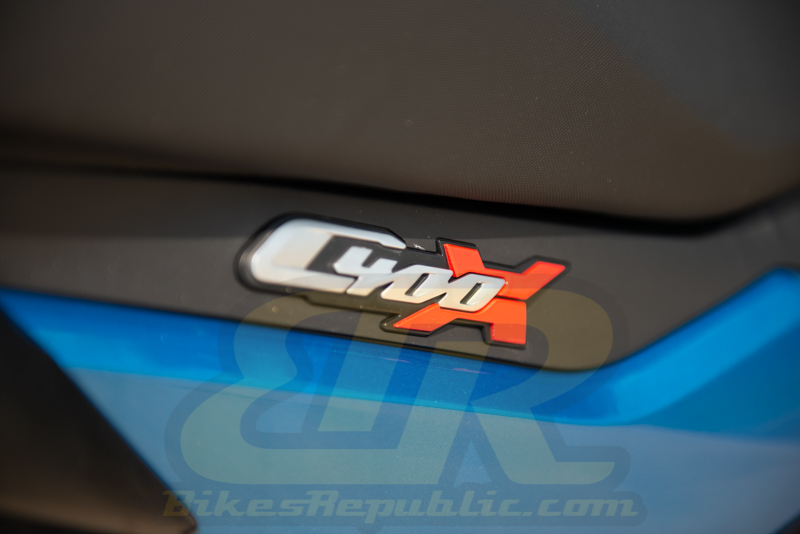
Compared to the C 400 GT, the “X” has a flyscreen, thinner seats and minimal bodywork. The headlamp looks similar to the R 1250 GS’s while the  tail section looked like it was tacked on although it shares the G 310 R’s design.

It weighs 204 kg fully fuelled and ready to go. But it could still carry 201 kg of payload! That means if you and your passenger weigh a total of 150 kg, you could still load 51 kg of luggage onto the bike. What is this? A GS?

But it’s a scooter, right? Yes, until you ride it.
Twisting the throttle the first time, I gave it a wristful like I would on other scooters and small bikes. The bike just took off down the road so fast I thought I was going to blow past the intersection and into the Oldtown White Coffee’s lobby up ahead. Whoa boy!

A two fingered pull on the front and rear brakes brought the bike to a complete stop as quickly as a big bike on Brembo brakes. I kid you not.
Approaching the sweeper after the fire station at Cyberjaya, I slowed well down as I feared that the handlebar may wag back and forth, besides grounding the bodywork like on other scooters. Surprise, surprise. The handlebar stayed steady as if it has a steering damper (it doesn’t) and there was a huge amount of ground clearance left.

So, I gunned it into the next left-hander which led to highway at much higher speeds. The bike’s low CG-long wheelbase combination actually let the bike hold its line and truly railed through. Again, the handlebar stayed steady. It was as if I was riding a conventional big bike.
We had the opportunity to ride both bikes to a camping trip organised by GIVI Asia (Malaysia) the next day. Running on the highway to GIVI Asia;s HQ at Bukit Beruntung, the C 400 X ran at 130 km/h without feeling like it was going to throw out the piston and rod through the footboard, despite its quoted top speed of 139 km/h.

Y-suku (Yamaha Y15ZR) riders tried to give chase but they soon gave up.
The engine was very economical too, still leaving 2/3 of the 12.8-litre fuel after that 63.3 km blasting.

It was a 137 km ride from GIVI Asia’s HQ at Bukit Beruntung to Lata Lembik in Pahang. Part of the route covered Batang Kali from Ulu Yam Lama to Gohtong Jaya, before descending back down to Genting Sempah. From there it was on the Karak Highway, then through Bentong.

My colleague Amirul was ahead on the C 400 GT, riding with pillion.

Heading up Batang Kali, both of us were constantly snapping at the back wheels of the bigger bikes up ahead. The road was wet but both of us C 400 riders just kept up the pace.
And we still had 2 out of 10 bars of fuel left  when we reached our destination.

BMW C 400 GT (from RM 48,500)
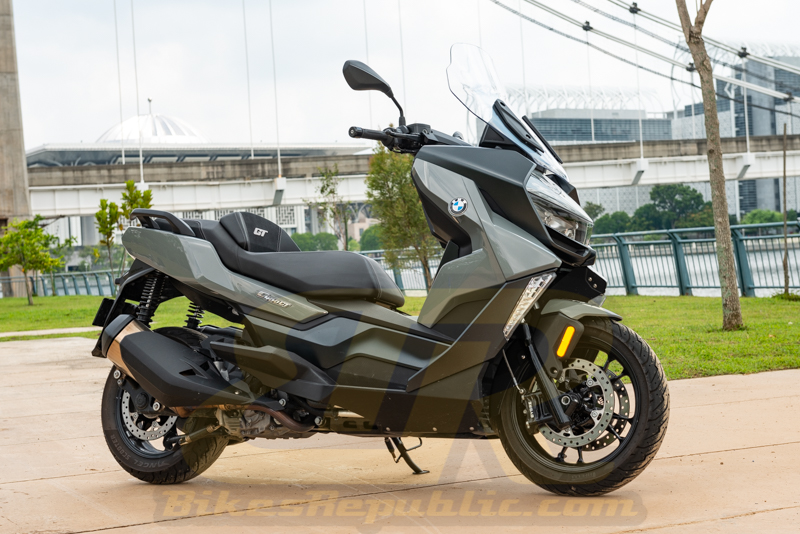
We switched bikes later in the week.

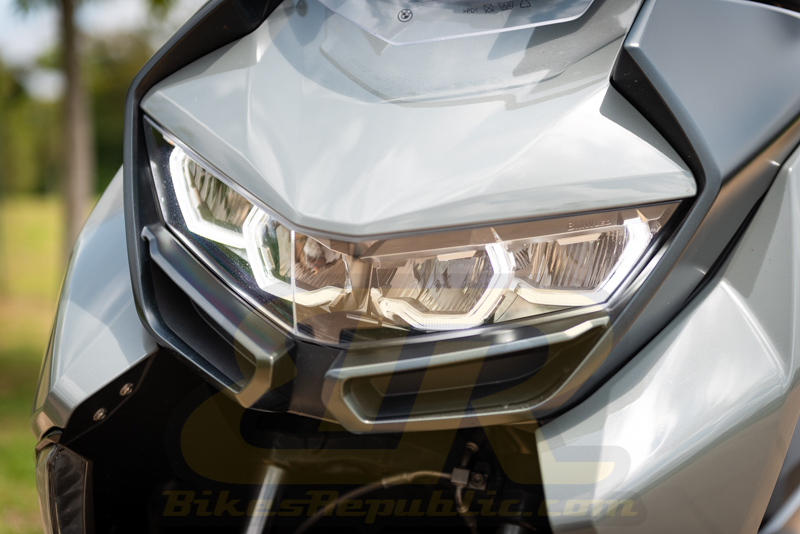
It takes on the maxi scooter style for touring, hence the “GT” designation. You get a larger bodywork, and larger and taller windshield for more protection from the elements. The headlamp and taillamp were just as distinctive as the X’s although styled differently.
The seats were felt a little wider and taller due to extra padding. The front panel was style differently and had two lockable cubby holes just like the X’s. There’s a USB connector inside the left compartment for charging devices.
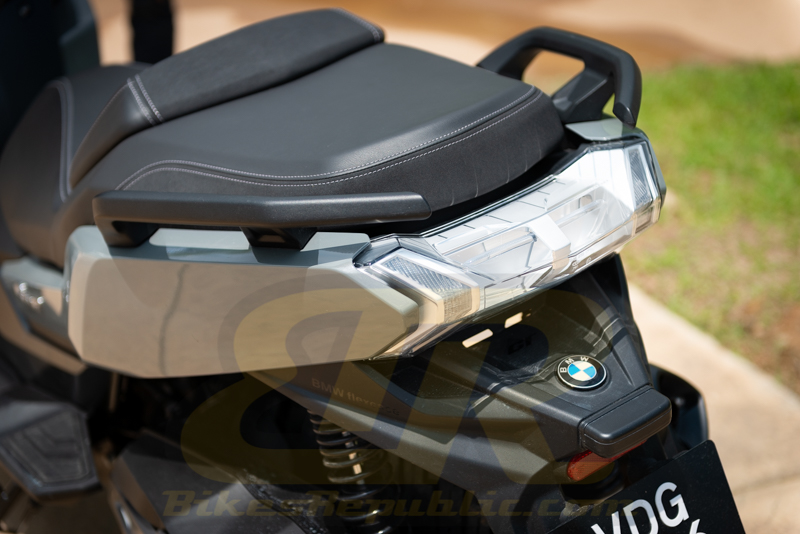
The extra bodywork brings it wet weight to 212 kg, but maximum permissible payload increases to 203 kg.
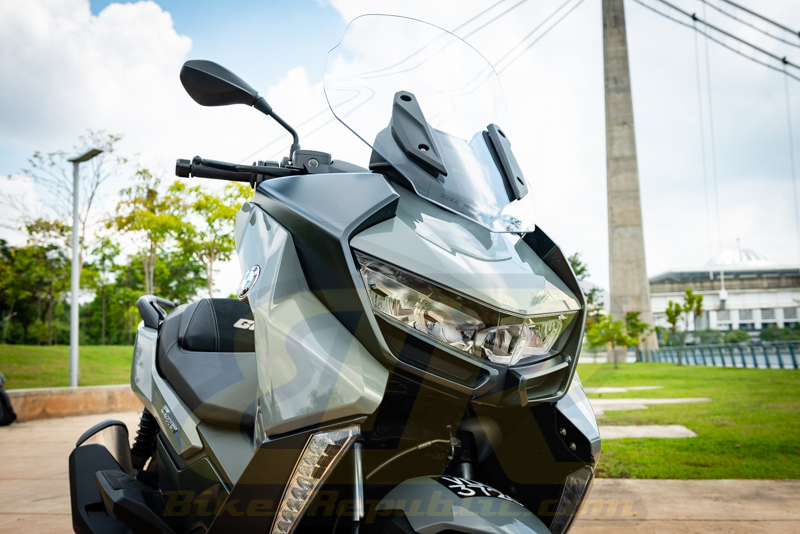
That’s a far as the difference goes between the two bikes, the rest are based on a shared platform.
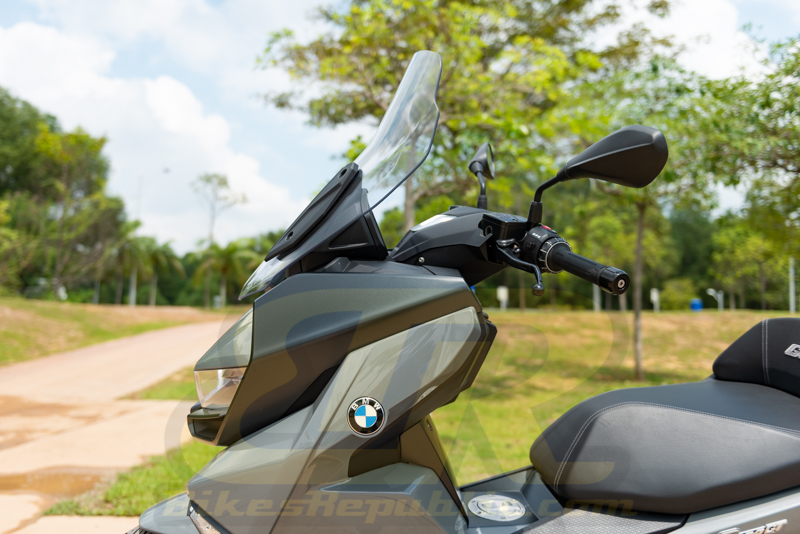
The GT has a taller seat height due to the taller seat but I liked the extra comfort it afforded. Riding it out the first time, the lack of windblast was immediately discernible. 

But the bike still hoots down the road like the X. The extra comfort was especially appreciated when riding the 60 km daily commute as I didn’t get buffeted by the wind. The windshield was great at stopping rain and water splashed off other vehicles in front.
 

The GT’s handling was slightly different to X’s due to the higher seat.  Although it still tracks through corners, the handlebar did wag around. But as long as the bike headed to where I pointed it, I wasn’t concerned.

Conclusion

The only shortcoming was storage space under the seat. In order to keep the seat low and body narrow, the underseat compartment was shallow. Yes, you could place two jet-type helmets in there, but you couldn’t lay down a laptop backpack. Ah well, a top case will cure this.
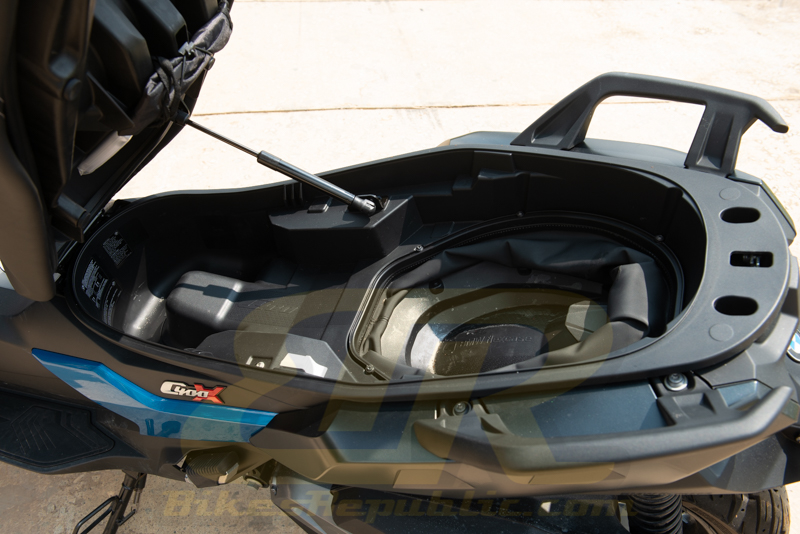
Another thing was you have turn on the ignition in order to open the forward storage compartments and seat. We know it was designed as so in the interest of safety, though.

They ain’t exactly cheap but if you are the type who loves scooters, they are truly worth your hard-earned money.

We loved the C 400 X and C 400 GT. Both actually surprised us at how good they were as scooters… er… Urban Mobility vehicles. Maybe that’s why BMW Motorrad doesn’t call them scoots.
  • A Malaysian rider lost his bike in London.

  • The city was his last stop after reaching a other destinations.

  • We wish him the best and hope he has a way out soon.

A Malaysian rider who aimed to ride around the world lost his bike in London recently.

Paul Wong began his solo ride on 28th September to various destinations and London was his last stop. He parked his BMW S 1000 XR sport-tourer in front of a restaurant before it went missing, believed to have been stolen.

The red coloured bike bears Malaysian number plates, with a doll dog attached to the rearview mirror.

We hope Paul can be reunited with his bike soon or there’s a way for him out of this hardship.

The theft is in contrast with a number of foreign bikes that were tampered with or had their front brake calipers stolen in Malaysia. Brake caliper thefts may be rampant in Malaysia but not entire bikes, especially large capacity bikes.

It’s the reverse in London where motorcycle theft is an epidemic. The local police has got their hands full in trying to stamp out the crime, while vigilante groups have cropped up to “assist.” The police and insurance companies have advised motorcycle owners to install GPS trackers on their motorcycles lately.

Perhaps we should install such system in Malaysia soon, too.

Source: Careta.my

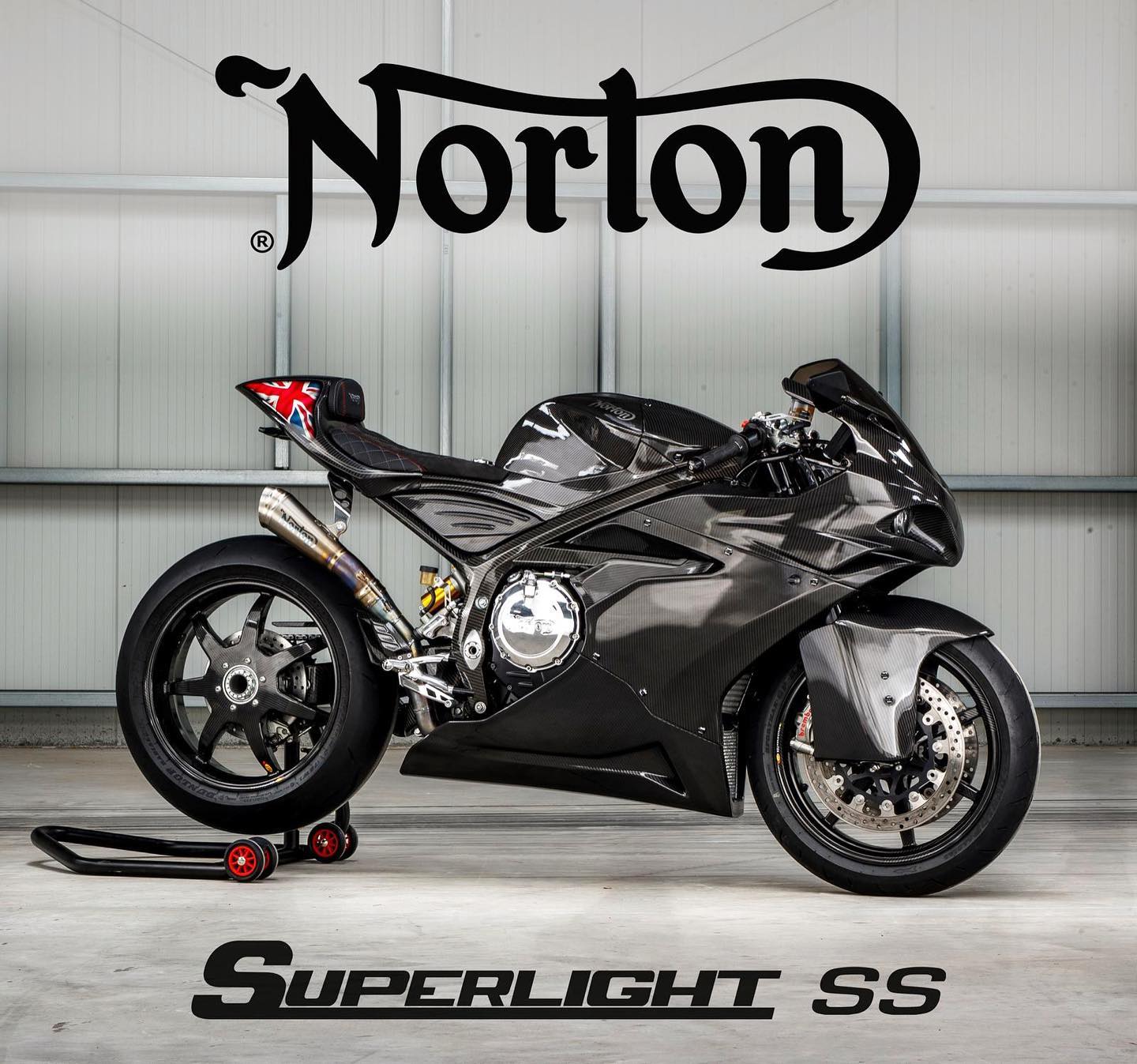
  • The supercharged Norton Superlight SS has been unveiled.

  • It’s reputed to produce above 150 bhp while weighing only 153 kg.

  • Only 50 will be produced.

The supercharged Norton Superlight SS is going to turn the middleweight sportbike market on its head.

The small firm had promised a supercharged Superlight SS when they introduced the normally-aspirated Superlight model a year ago, so they are making good on their promises.

At its heart is a 650cc, parallel-twin with a 270-degree crank. Just like the Aprilia RS 660 was based on the RSV4 1100, the engine was actually based on the 1200cc V-four in the V4 SS. The engineers then supercharge the engine on the Superlight SS.

To compensate for the extra weight of the supercharger, the bike receives a carbon fibre frame. As a result, the bike weighs only 153 kg, which is incidentally 5 kg lighter than the base model.

Norton didn’t provide the performance figures, but BikeSocial thinks it should make “something north of 150 bhp.” The base model already produces 105 bhp.

Problem is: Only 50 Norton Superlight SS will be made.

The manufacturer surprised many when they started a crowdfunding call to raise £1 million a few days ago. But they’ve since suspended the programme within a couple days after a single investor pledged to shore up that sum. Norton is in good shape but needs some cash to build the pre-ordered bikes including the 1,000 units worth £5 million for the Japanese market.

  • The Macau Grand Prix is run on a road course.

  • The “track” is narrow and there is no run-off area.

  • Don’t forget to breath when you watch the video.

Never heard of the Macau Grand Prix? Well, it’s just the most insane track we’ve seen, that’s all.

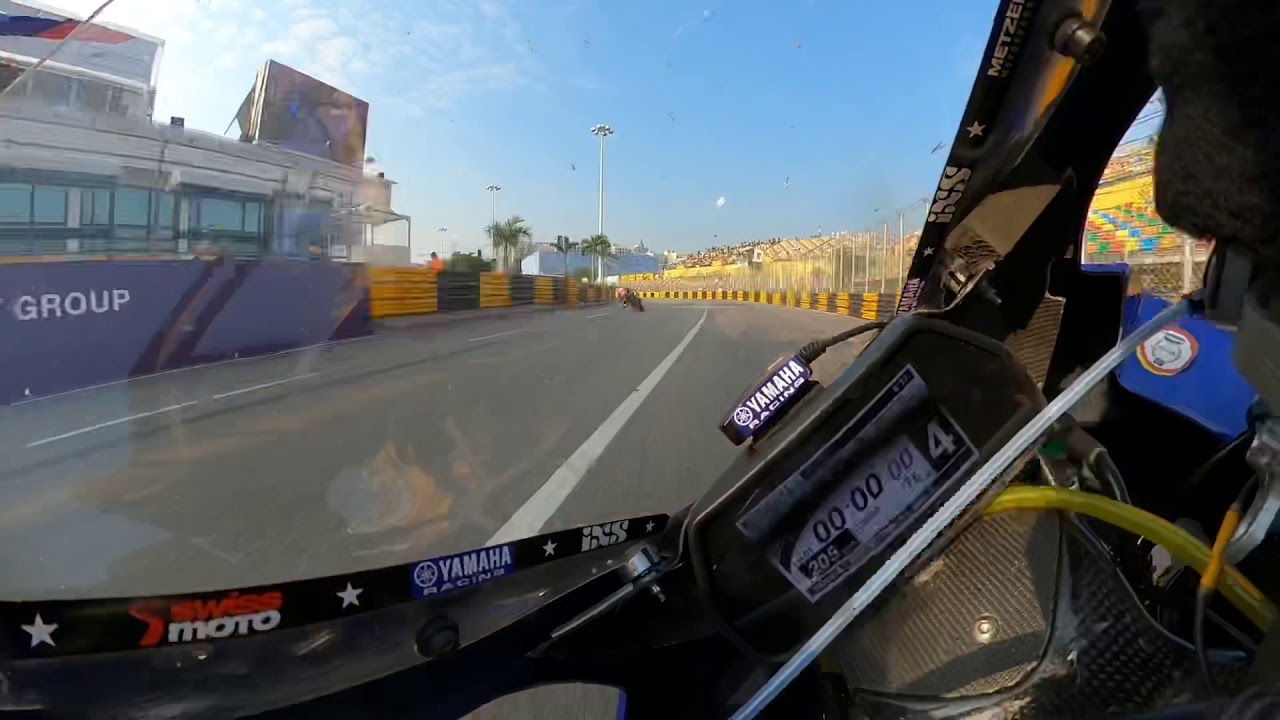
To get a view of just how mad it all is, here’s the video of Yamaha YZF-R1 rider Horst Saiger chasing multiple Isle of Man TT legend and hard man John McGuiness.

First thing you’d notice the really stomach crunching sense of speed as they blast through a claustrophobic tunnel-like track. Plus, there’s not one single run off.

Next you’d notice the 00:00.00 on the bike’s display. It meant that these guys weren’t even running at full chat yet. It’s probably just an open practice session!

Look closer at the bottom left of the TFT display and you’d pick out the bike’s road speed. There were two sections where they hit corners from 190 km/h to more than 200 km/h.

Now that you can pick out the bike’s speed, watch how hard the bike could accelerate off the corners from 80 km/h to 130 km/h and beyond within a couple of seconds.

And of course, there’s McGuiness who rode the Honda CBR1000RR Fireblade. It may not have the top end horsepower but look at how easy it was for him to leave the chasing bike behind in the complex of tighter corners.

Anyway, the race was a total fracas when it was cancelled after just three laps due to a pile-up. The race couldn’t be restarted as clean-up work had to take a long time, and would eat into the time slots for the following car races. Consequently, it was cancelled outright and no result was published.

There was talk of moving it to Sunday but the day was already packed with Formula 3, two World Touring Car races and the FIA GT World Cup’s final race.

Furthermore, the Motorcycle GP riders were out of fresh tyres since they’ve used them up through practice, qualifying and the race.

In the end, the officials decided to publish the results after consulting the rulebook which says red-flagged three-lap race is considered a completion. The race was restarted but just for one lap. Michael Rutter won from his teammate Peter Hickman was was just 0.298 second behind. David Johnson took third. McGuiness couldn’t make the restart due to refuelling problems.

  • Alex Marquez is confirmed as Marc Marquez’s part in Repsol Honda for 2020.

  • It ends speculation that the brothers will be riding in one team.

  • The seat was left vacant by retiree Jorge Lorenzo.

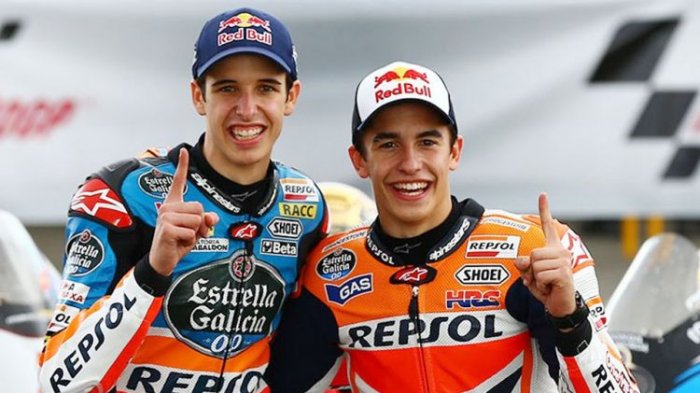
Prior “wild speculations” of Alex Marquez joining his brother Marc Marquez in the Repsol Honda team for the 2020 MotoGP season has been confirmed.

Younger brother Alex is the 2019 Moto2 champion, while Marc in the eight-time world champion (sixth in MotoGP) including this year.

Alex had long being compared to the exploits of his brother, much like how it was for the Schumacher brother in Formula 1. The younger sibling finally captured his first Moto2 title this year.

However, both Repsol Honda manager Alberto Puig and Marc denied that drafting in Alex was because of the Marquez namesake. Puig had commented earlier that it would be based on merit. Marc Marquez, on the other hand, insisted that he didn’t push Honda to take to Alex.

Speculations were rife as soon as after Jorge Lorenzo announced his retirement from racing, thereby vacating his Repsol Honda seat. There were “talks” of Johann Zarco getting the tap over LCR Honda riders Cal Crutchlow or Takaaki Nakagami but it was not to be, despite the fact that Zarco was a two-time Moto2 champion.

LCR Honda will stick to their current rider line-up for 2020. Despite being a satellite team, Crutchlow is actually under HRC (Honda Racing Corporation) contract, while Nakagami brought in Idemitmu as one of the team’s main sponsors.

That leaves poor Zarco without a seat. His only options are to join Avintia Ducati (which he already said he didn’t want to) or return to Moto2 and take up Alex Marquez’s seat at Marc VDS.

  • The long-awaited Yamaha MT-15 was spotted in Malaysia recently.

  • A photo showed the bike being ridden on the North-South Expressway.

  • The bike may be launched in January 2020.

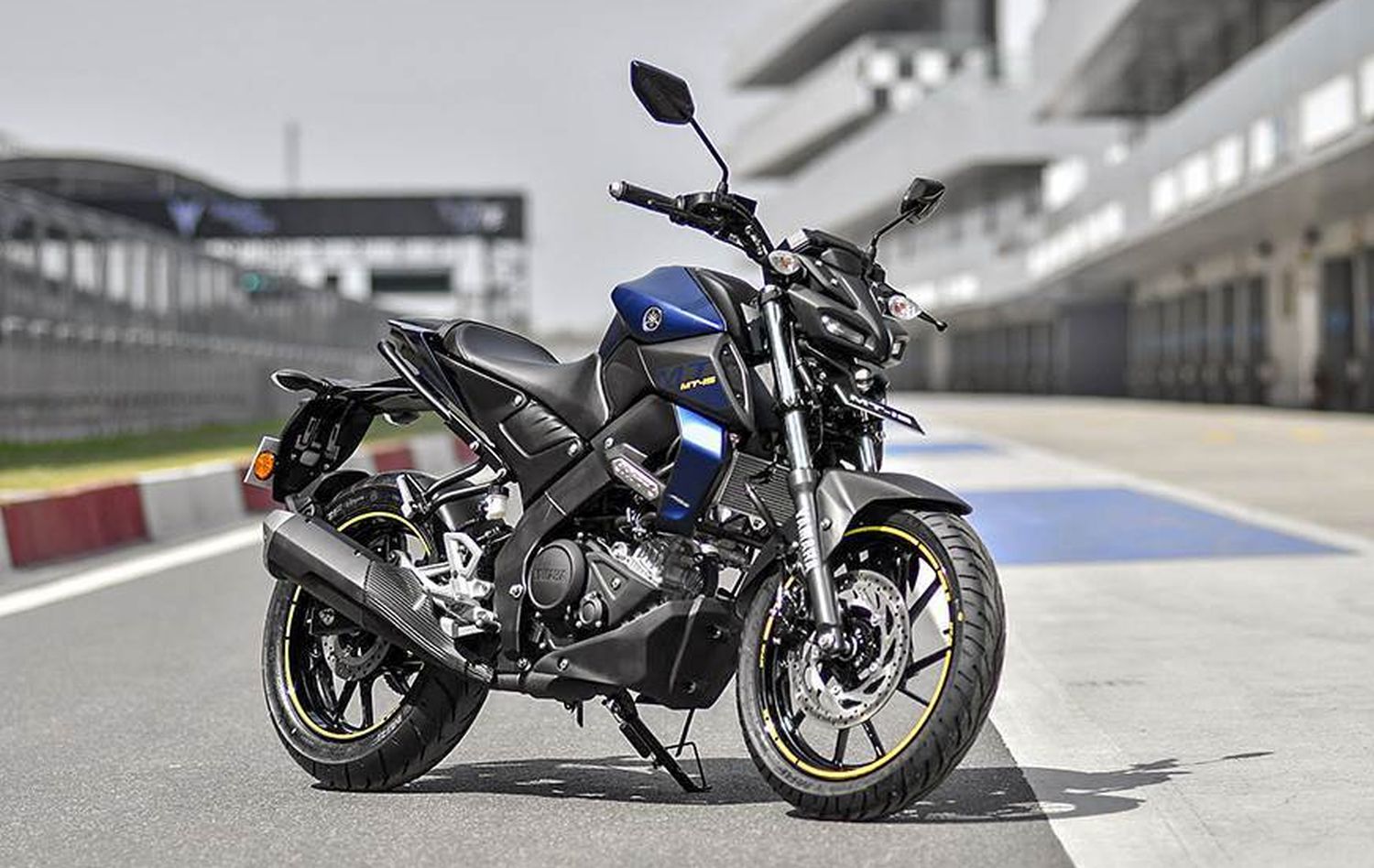
The long-awaited Yamaha MT-15 was spotted in Malaysia recently.

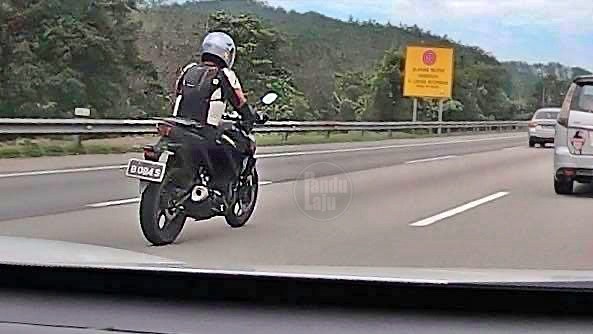
According to our friends at Pandu Laju, a reader sent in the photos of the bike being ridden on the North-South Expressway. From the picture, we could see that it bears a trade plate and wore no camouflage. It could well be tested for homologation purposes.

Although touted as the MT-25 in their website, our take is that the bike is the MT-15. The photo isn’t clear at all, but there is a piece of bodywork poking out in front of the rider’s right knee. As the MT-25 doesn’t have radiator shrouds (check out the main picture), it narrows down to the MT-15.

Photo credit pandulaju.com.my

Anyway, If it’s indeed going through homologation, it means that we’ll probably see it being launched soon, but most probably in January during the annual Hong Leong Yamaha Dealers’ Convention, usually  held at Genting Highlands.

Also evident in the photo are some elements of the bike’s styling. Its rear end and exhaust silencer are carried over from the fully-faired YZF-R15. In fact, the MT-15 is the naked version based on the popular YZF-R15 platform, thereby running the same mechanicals.

We shall see if it’s actually the MT-15 or MT-25 later, but Malaysian motorcycle fans will have something awesome to look forward to next year!

Source and photo: pandulaju.com.my

Archive

Follow us on Facebook

Follow us on YouTube