Bikesrepublic

Latest News

  • The GIVI Golden Triangle Adventure 2017 headed to GIVI’s factory in Vietnam.

  • This is the birthplace of GIVI’s rainsuits and soft luggage.

  • GIVI carried out a CSR program called “Riding for Reading”.

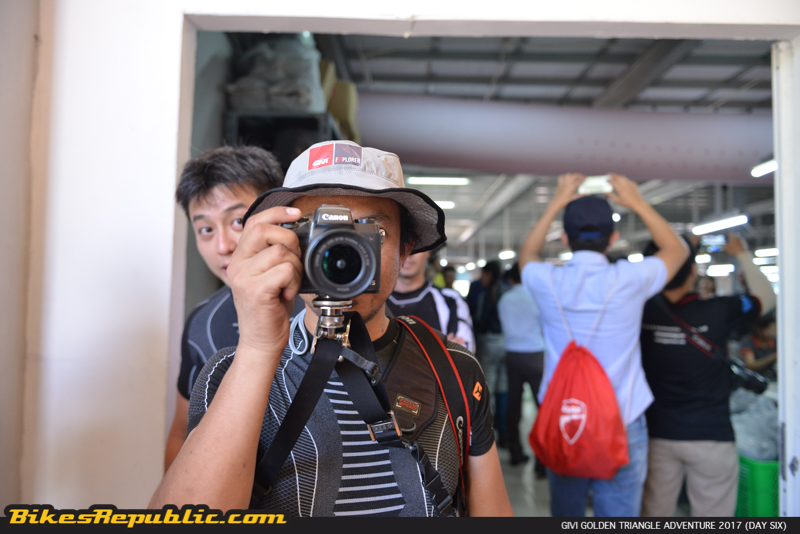
17th November 2017, Ho Chi Minh City, Vietnam – Today marked the most important day of the GIVI Golden Triangle Adventure 2017 itinerary.

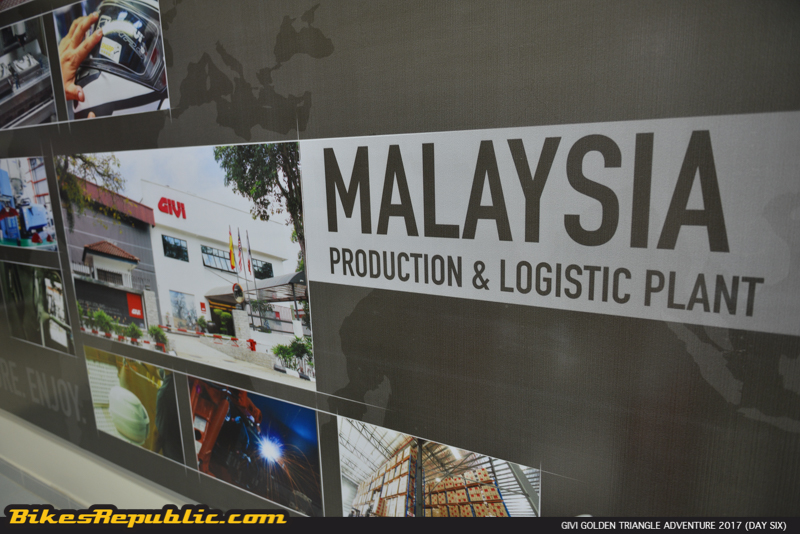
We were slated to visit GIVI’s factory in Vietnam, situated not far away from the hotel, where we were going to see not only how some of GIVI’s products were made, but more importantly, to attend a special Corporate Social Responsibility (CSR) program.

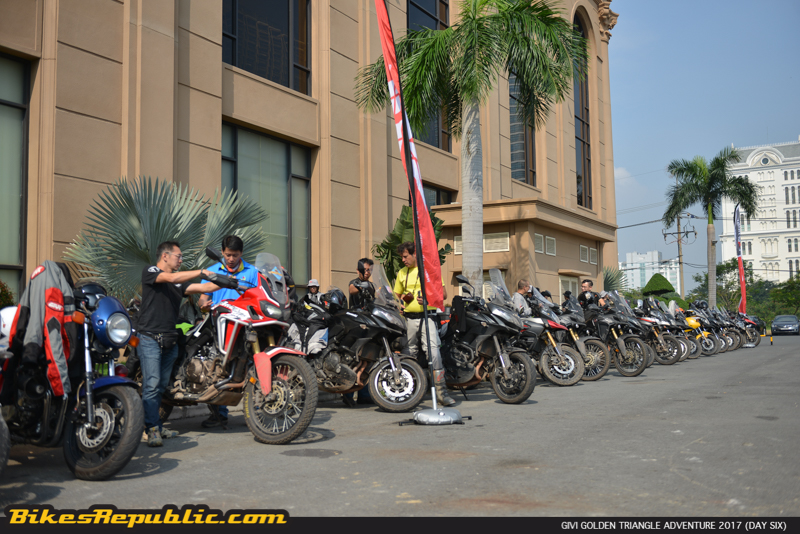
We left the Merperle Crystal Palace Hotel at little later than usual, with the sun already up and shining. The rider with CBR600RR was back and we sure hoped he knew which way we were headed. We were worried about running headlong into HCMC’s traffic, that’s for sure.


We travelled on city roads for a short distance before we started veering into a smaller road flanked on the left by one-storey houses and a river on right. The road condition was good, despite a few patches covered in gravel awaiting their asphalt cover. Hot and dry conditions meant the lead bikes throwing a thick cloud of dust into the air.

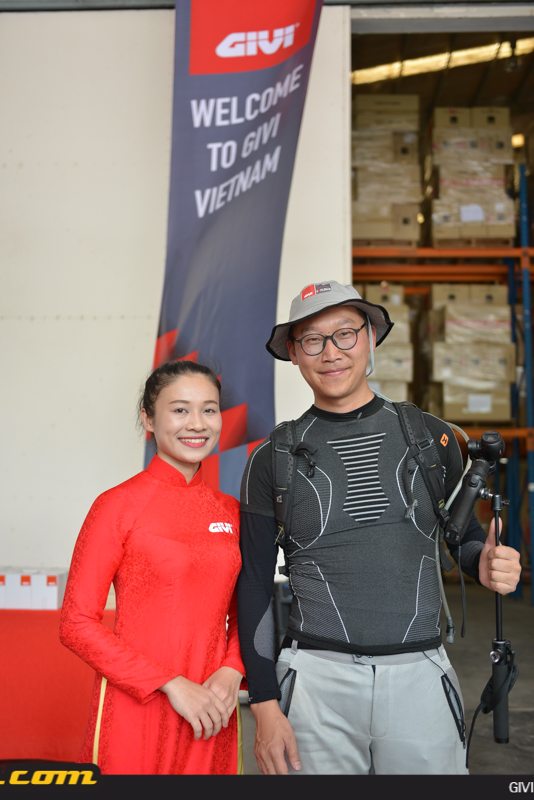
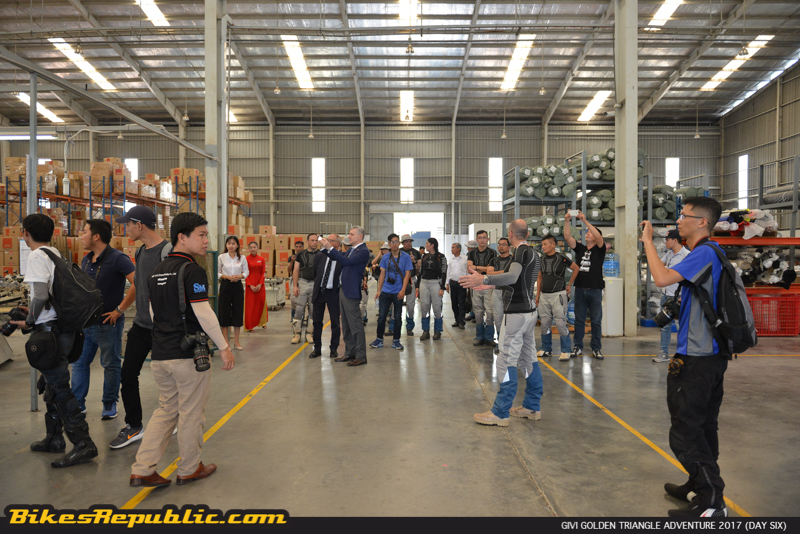
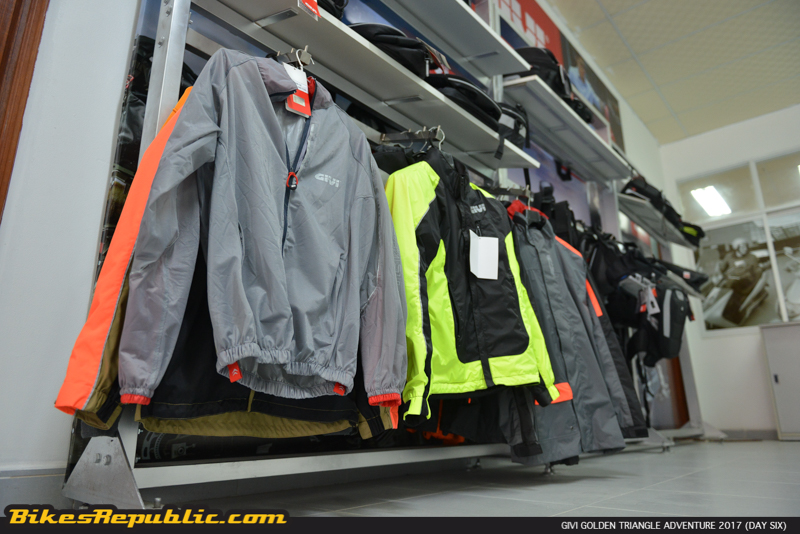
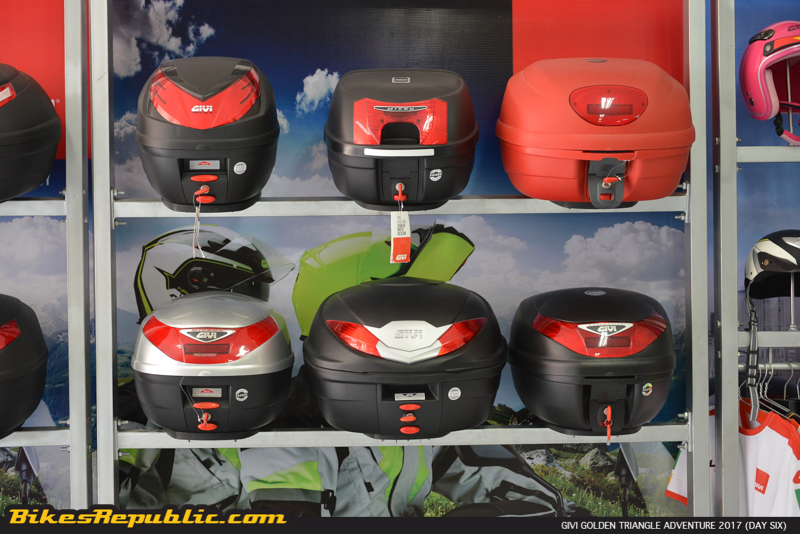
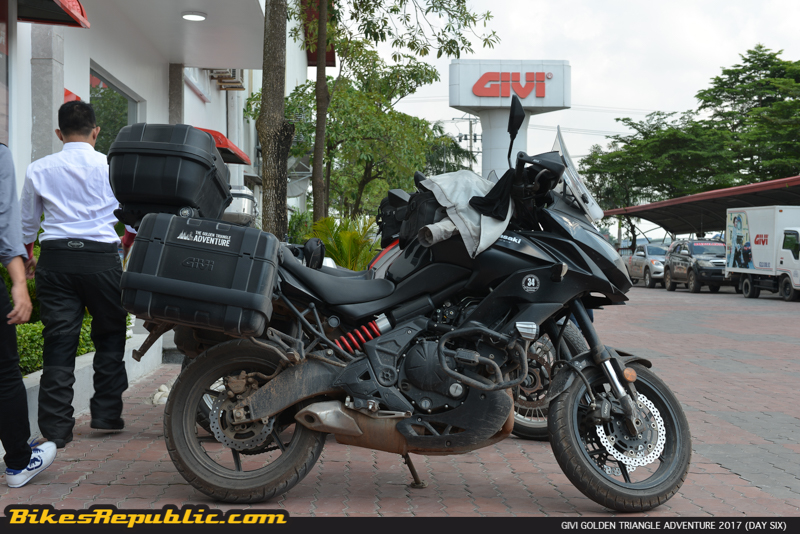
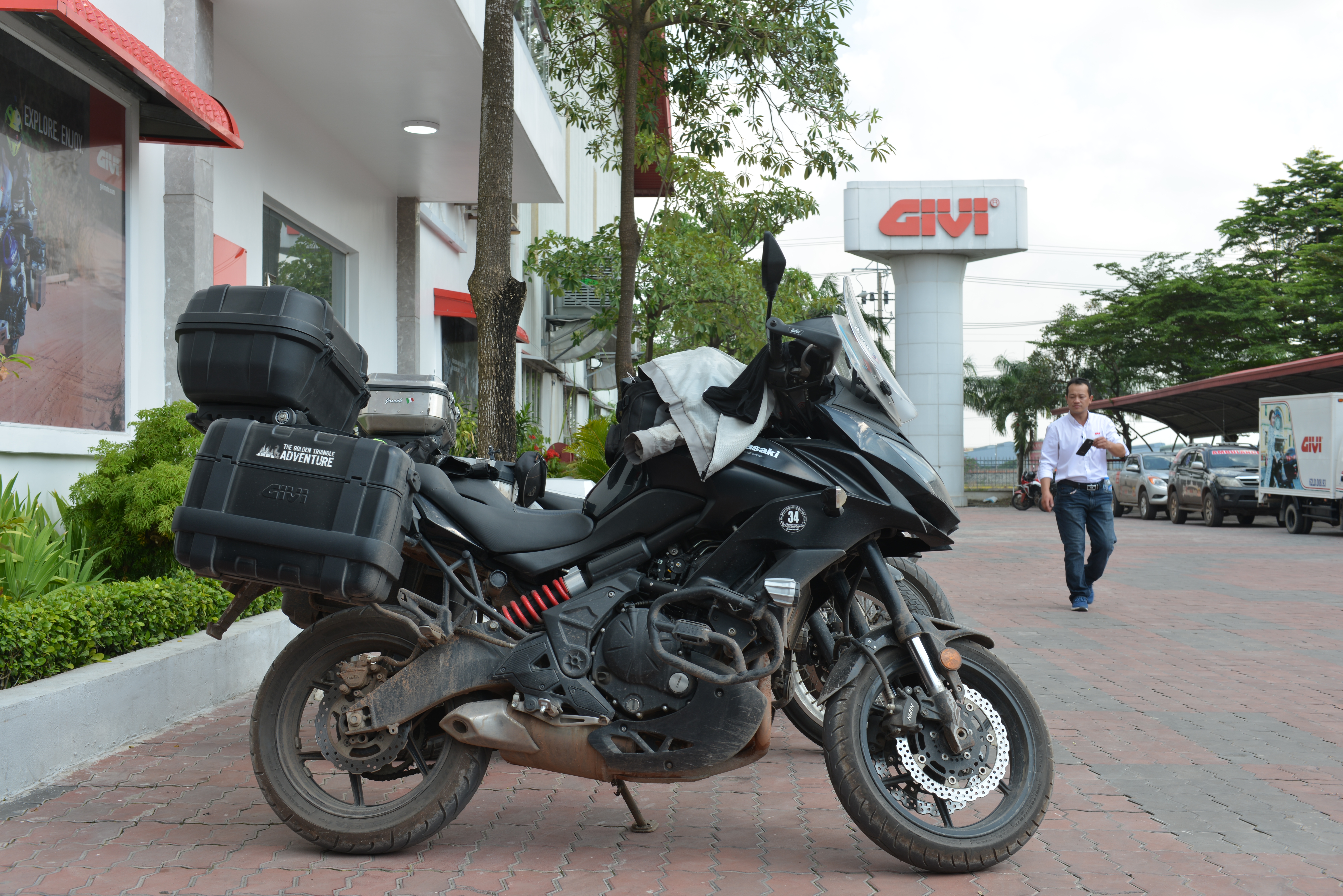
Soon we arrived at the GIVI Vietnam HQ and were welcomed by the smiling staff. We were ushered directly to the large entrance to the factory, where a reception had been prepared with light snacks and drinks. We attacked the bottles of water and Pepsi as if we had just left the desert.

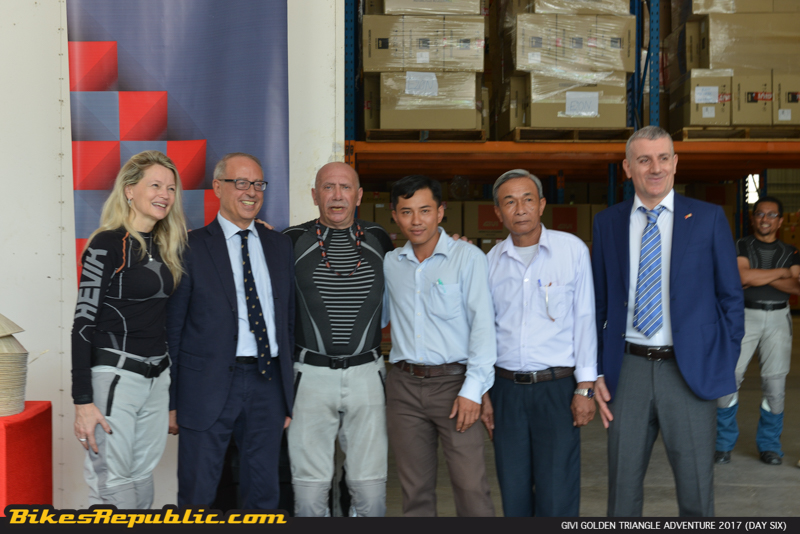
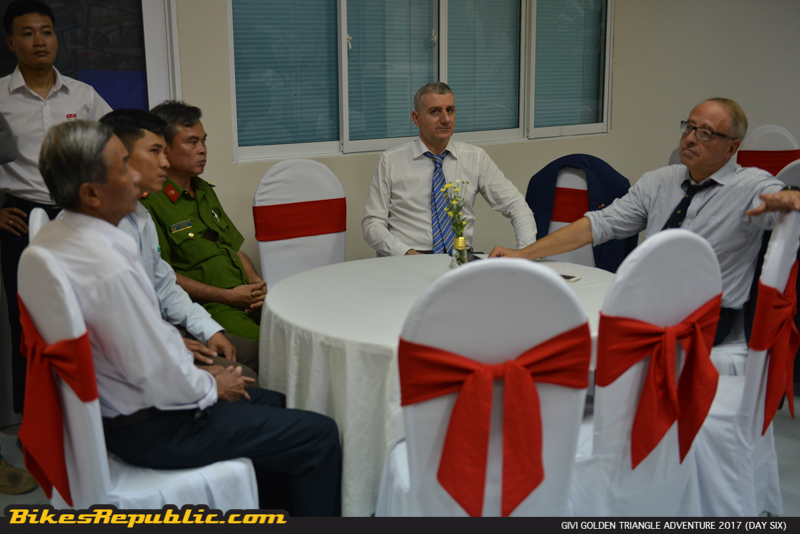
Also, there were the Italian Ambassador to Vietnam and the Head of the Italian Trade Delegation, along with Hendrika Visenzi.

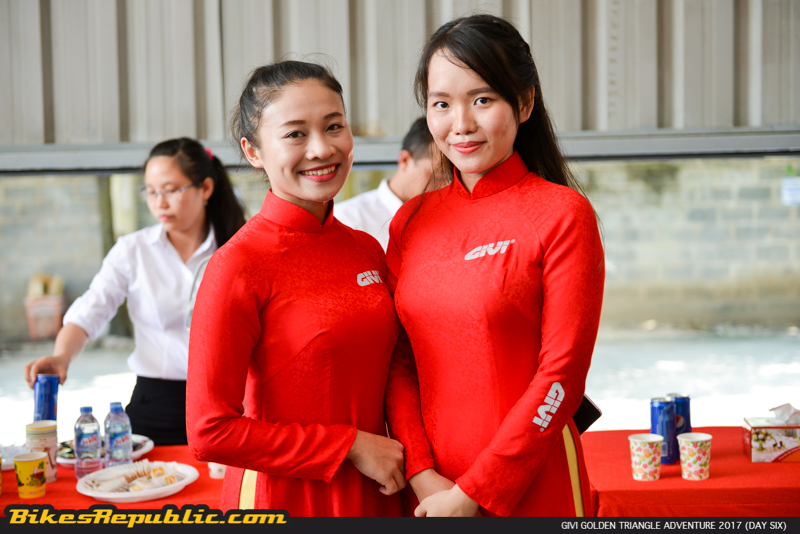
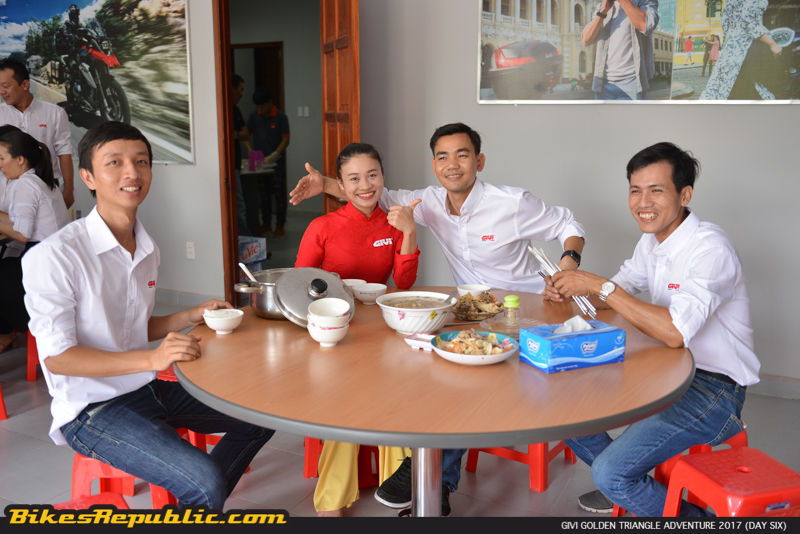
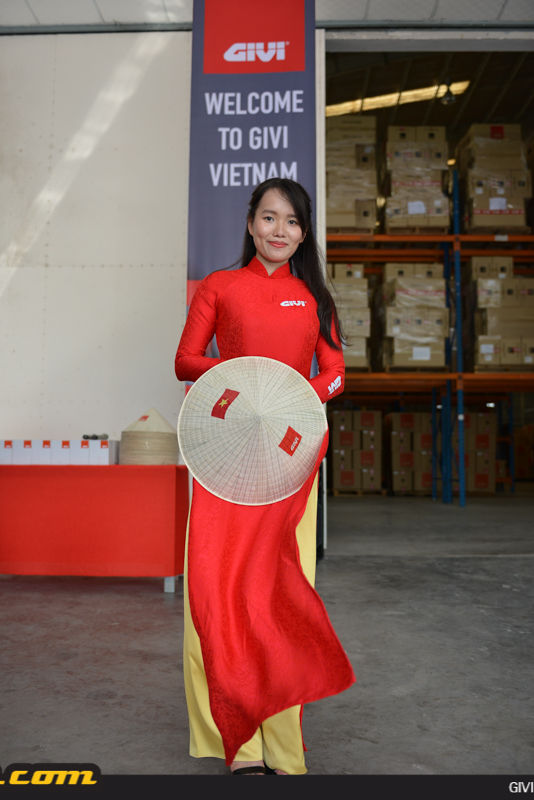
Two of the Vietnamese crew had dressed up in the traditional Vietnamese dress, called áo dài (pronounced “Ao-Yai”). Yes, they were pretty.

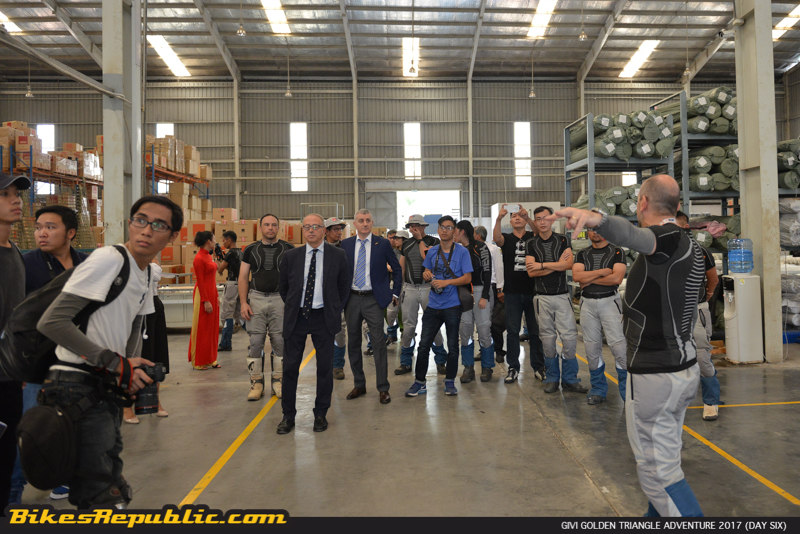
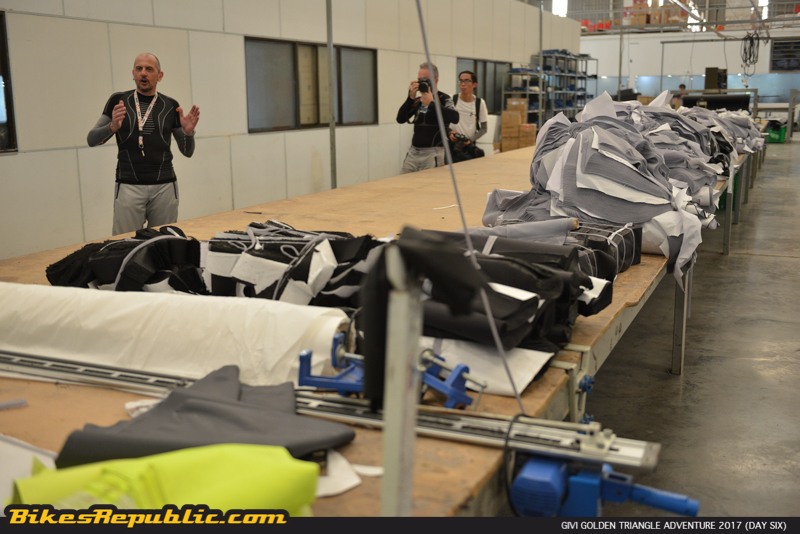
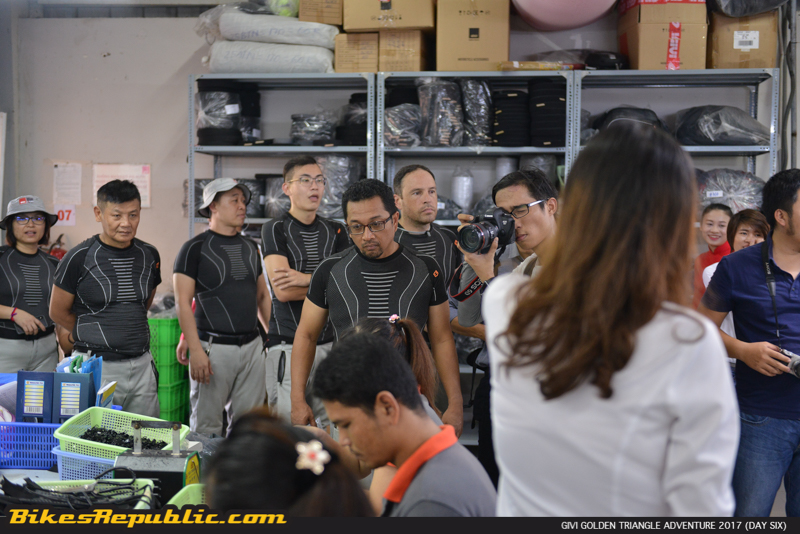
The GIVI Explorers were then separated into two groups for a grand tour of the facilities. Our group was led by Giorgio Della Rosa, the Factory Manager and designer of GIVI’s riding gear.

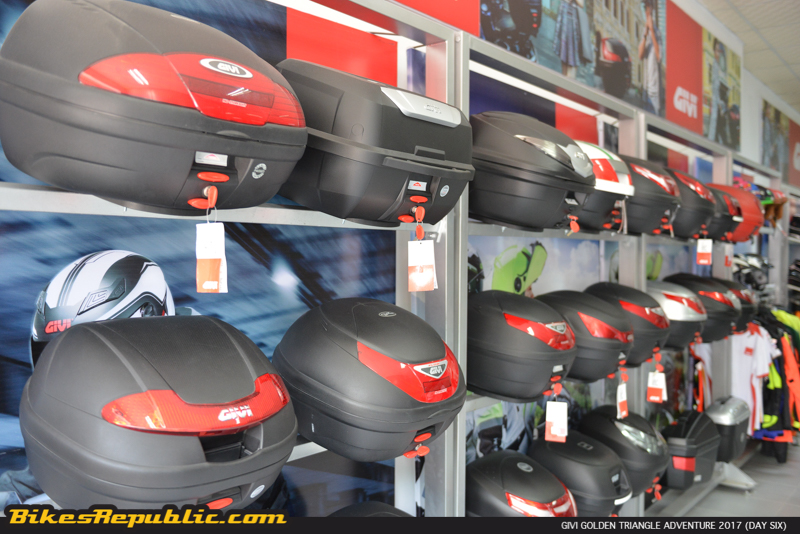
This was the birthplace of GIVI rainsuits and soft luggage.

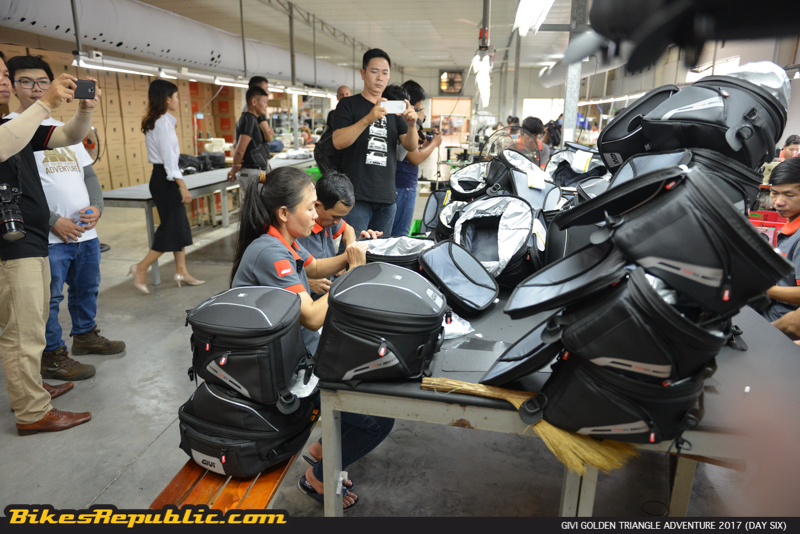
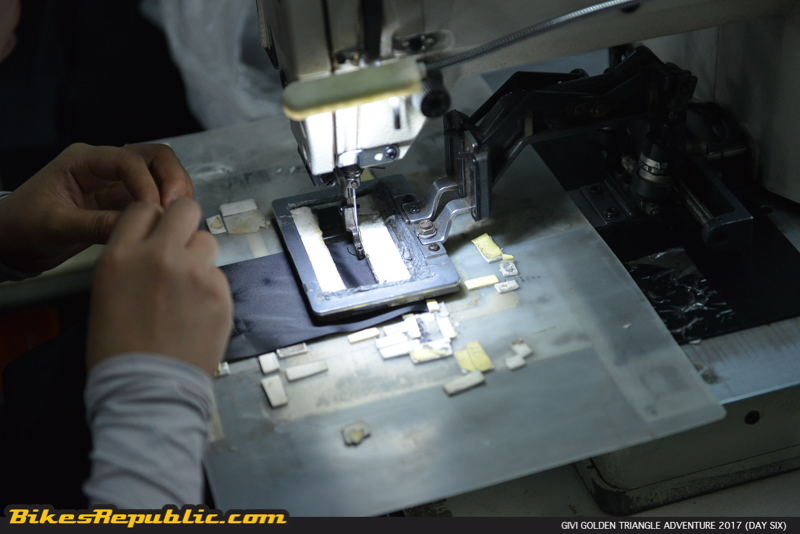
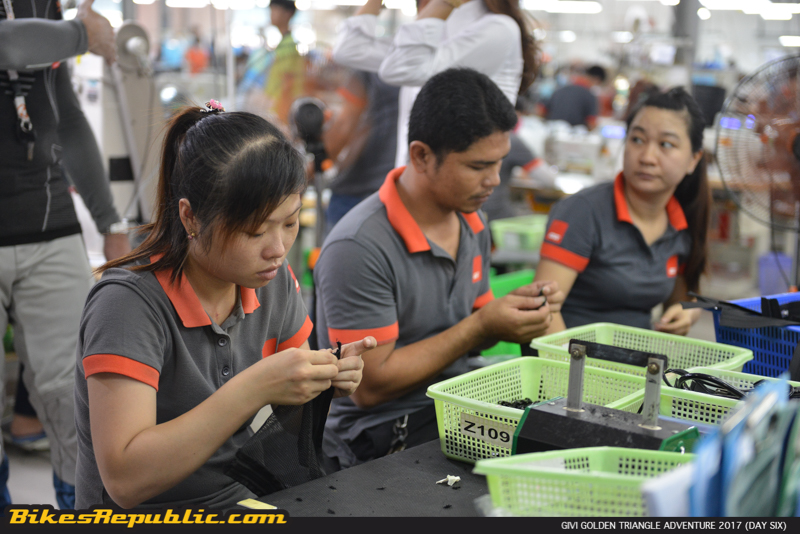
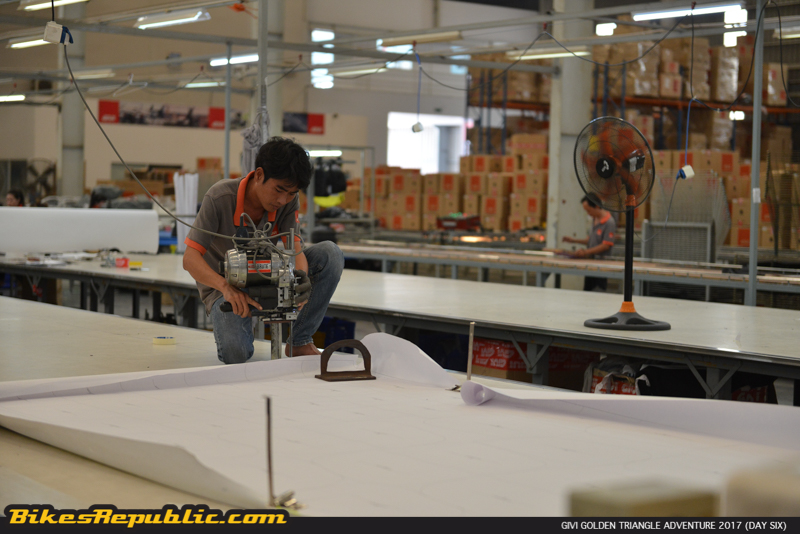
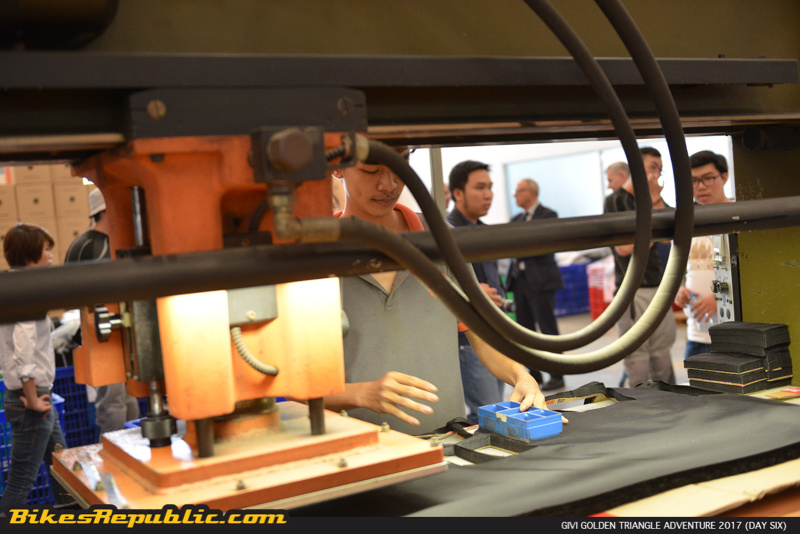
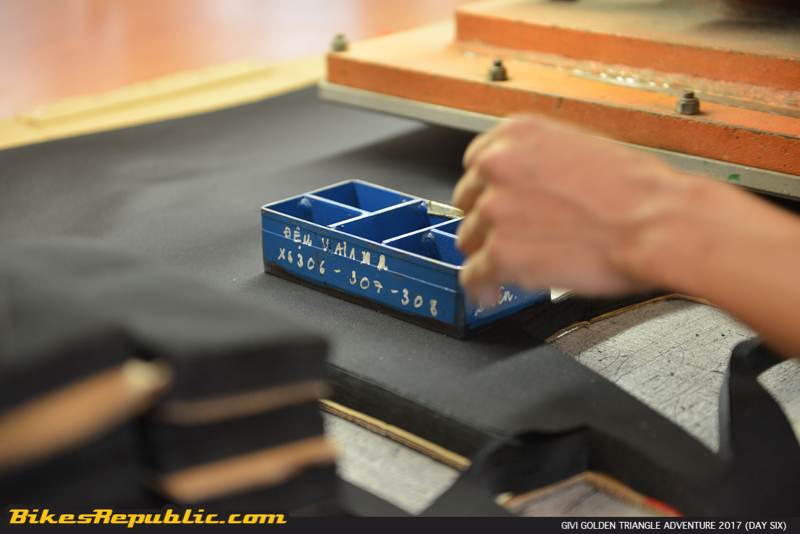
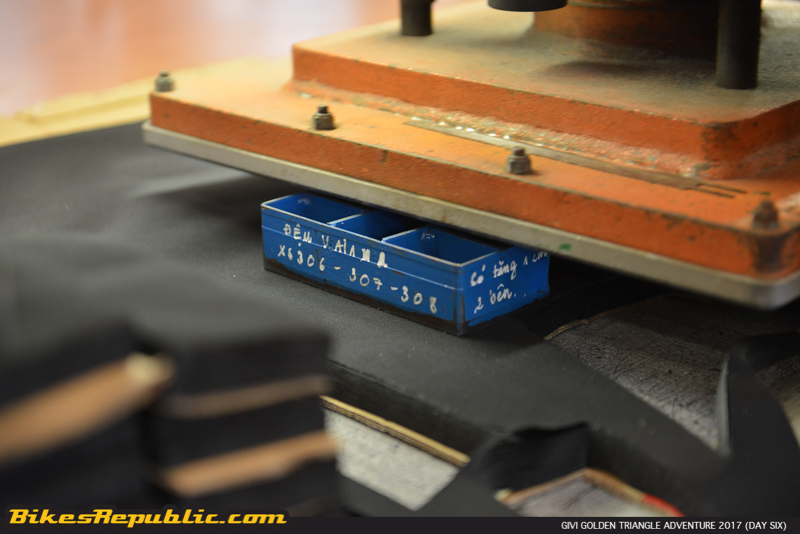
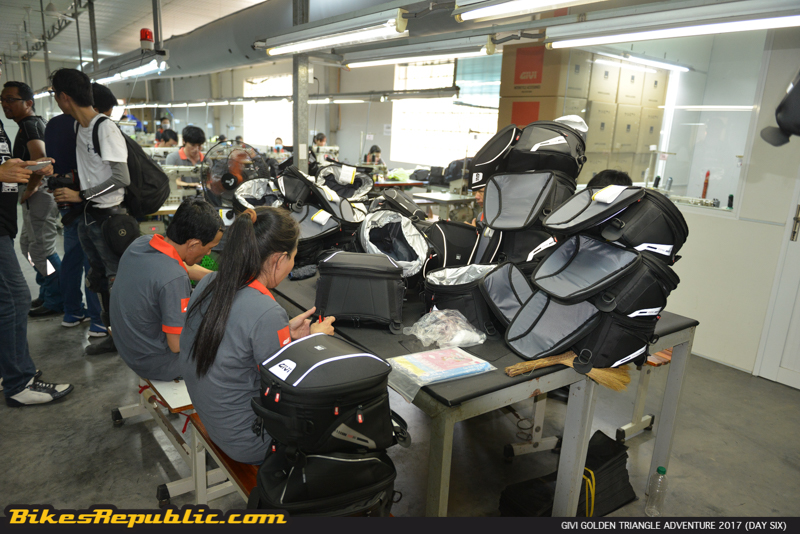
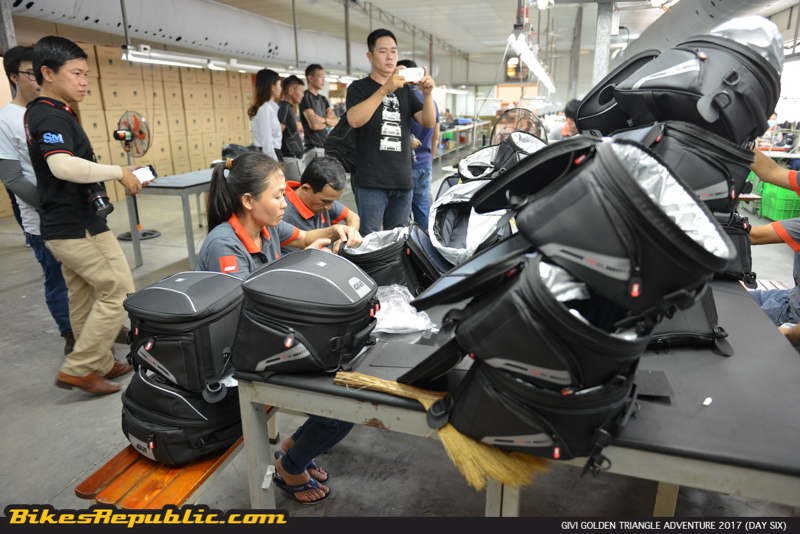
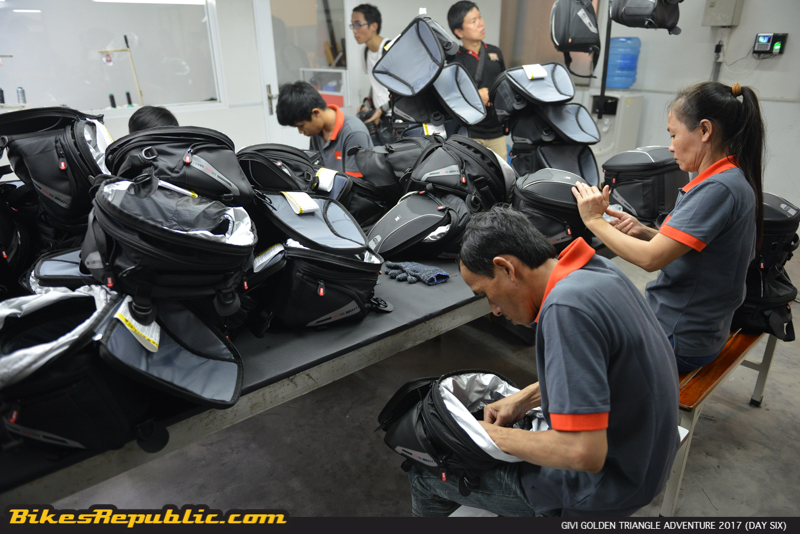
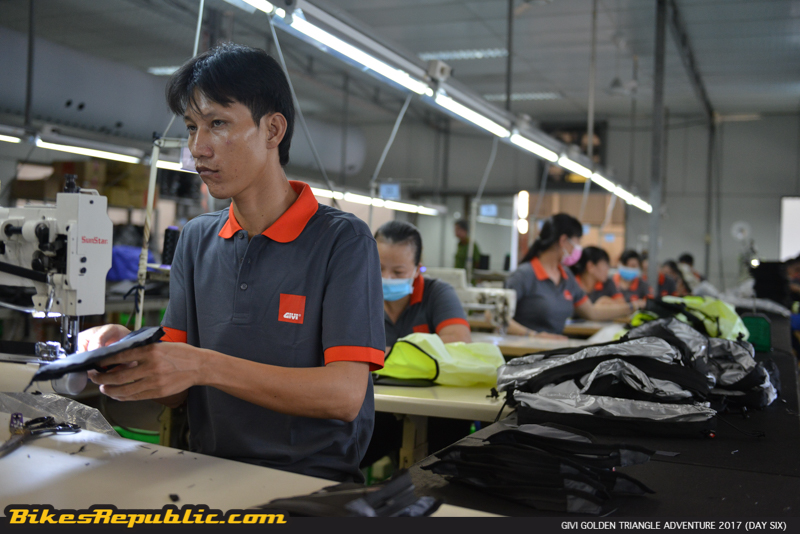
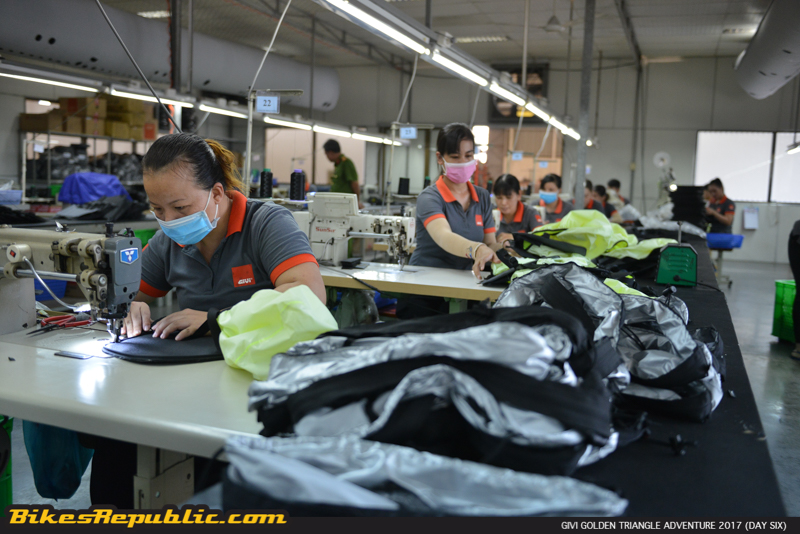
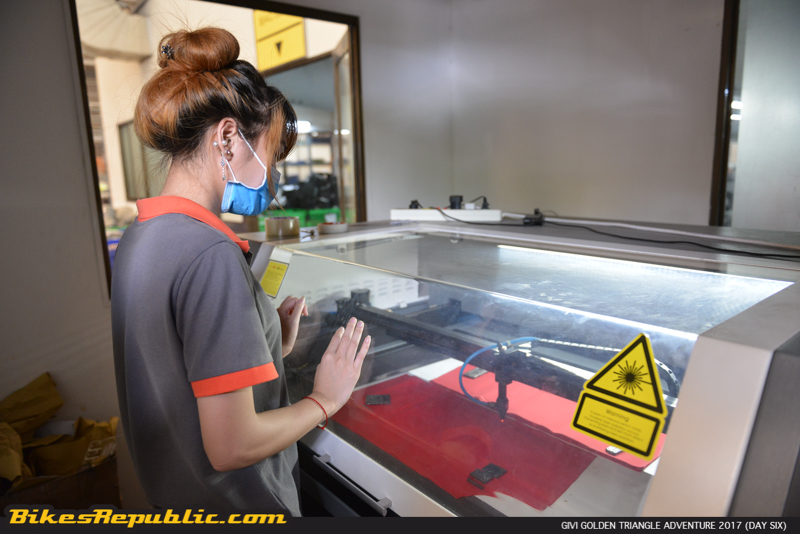
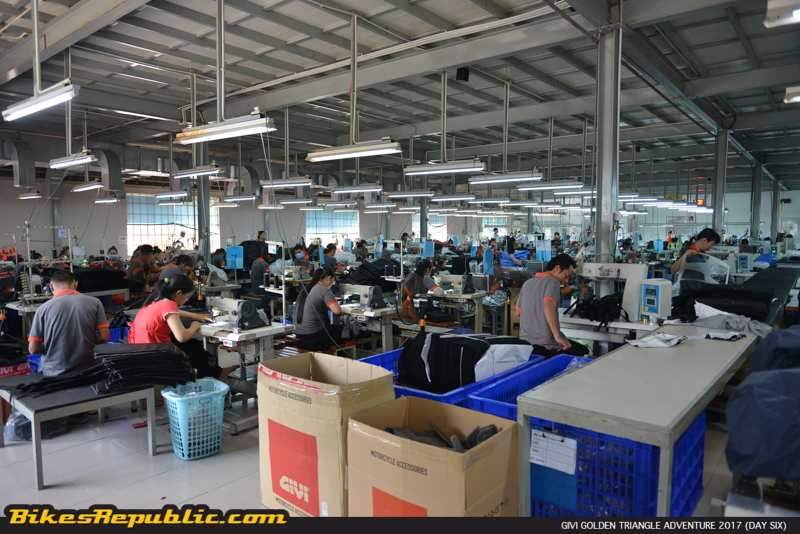
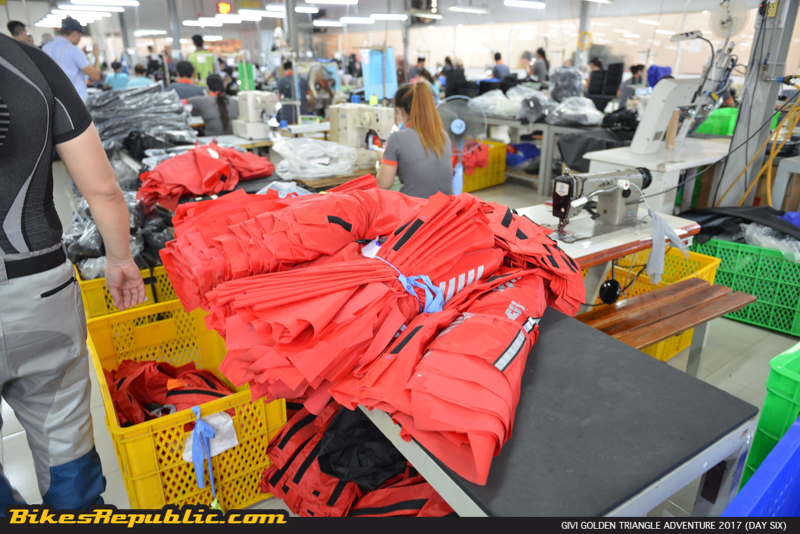
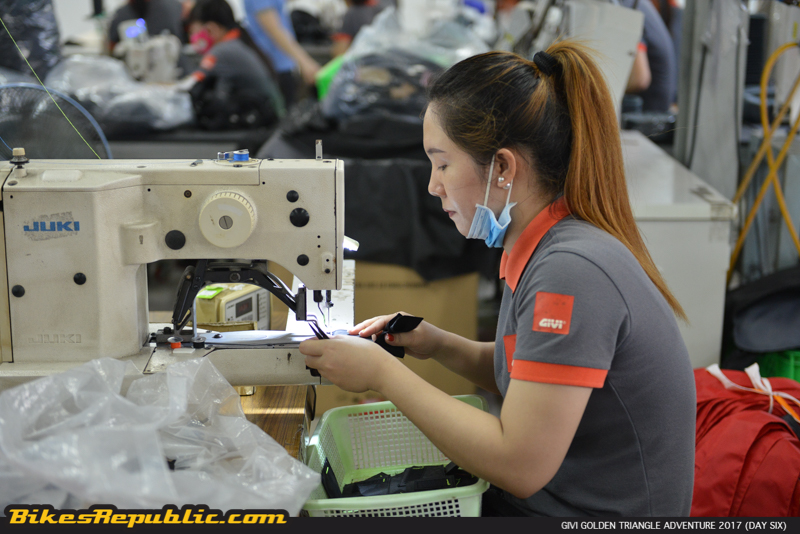
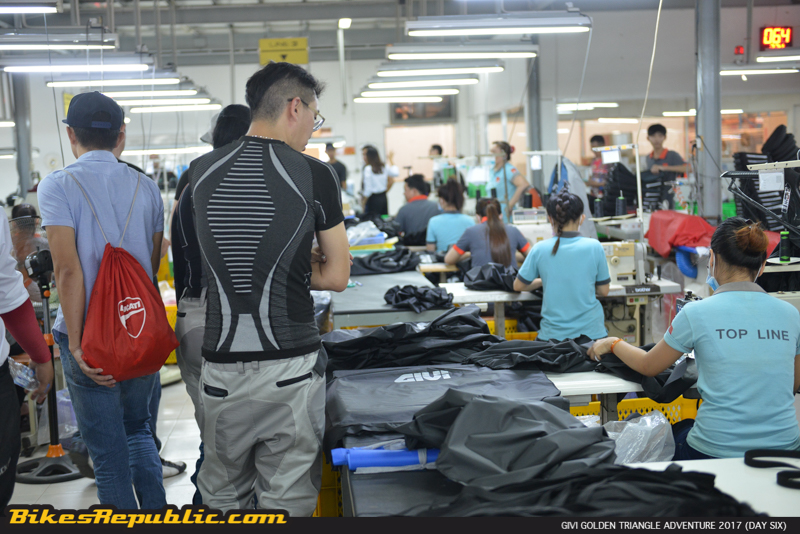
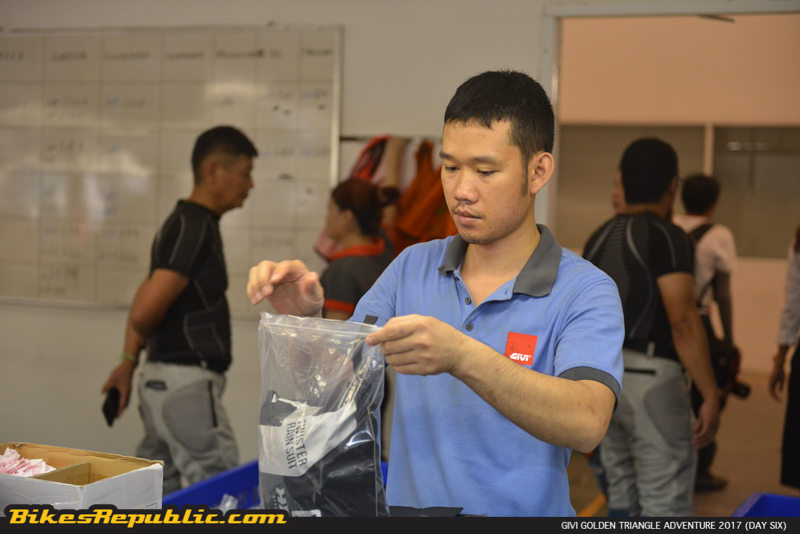
We saw how different materials came together, being cut to exact dimensions by using a hydraulic press or laser cutter, the stitched together by highly trained professionals, before being QC’ed and packed.

We saw the very same tankbags, soft luggage and waterproof we were wearing being assembled right there.

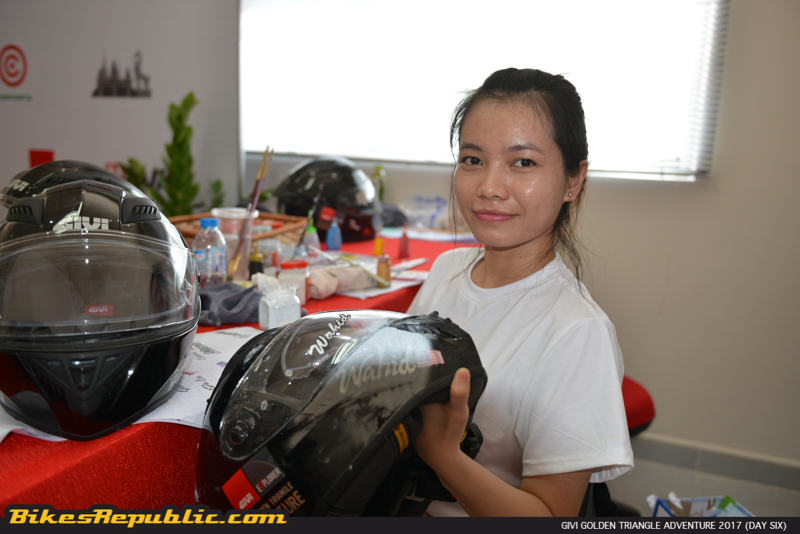
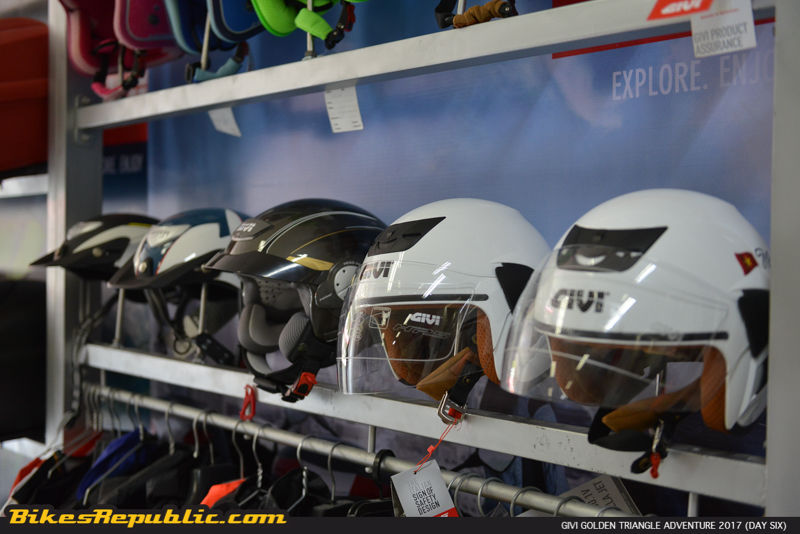
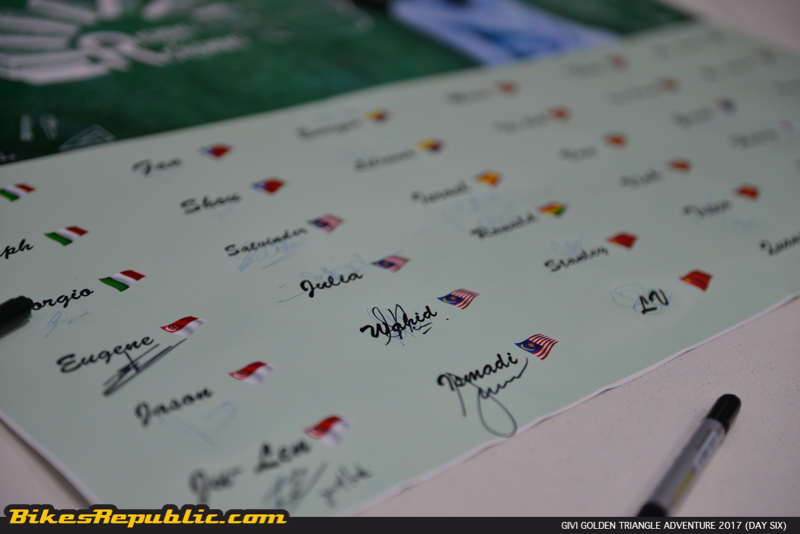
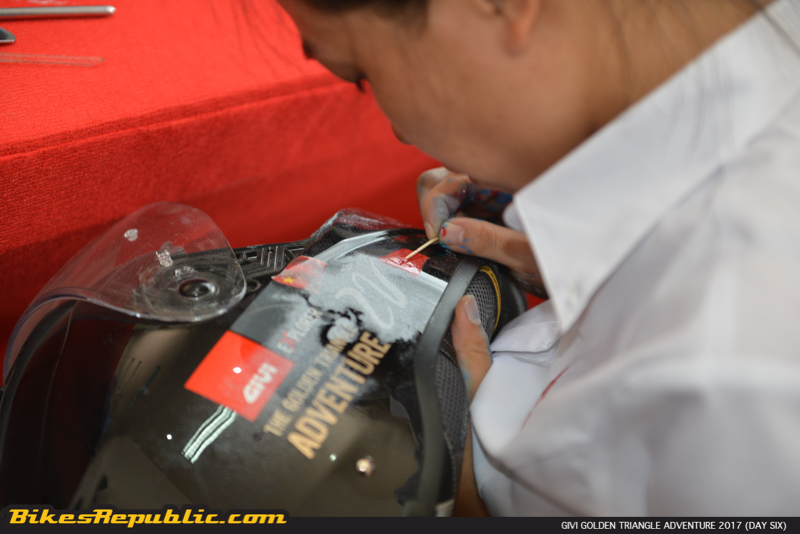
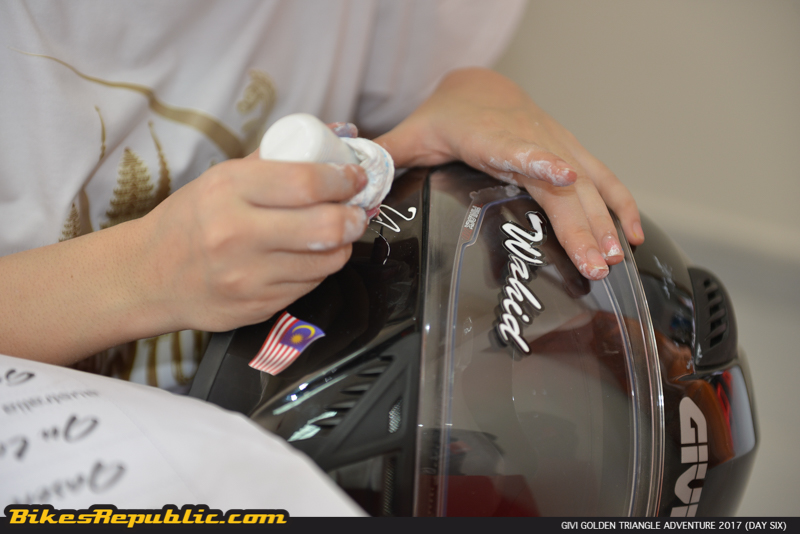
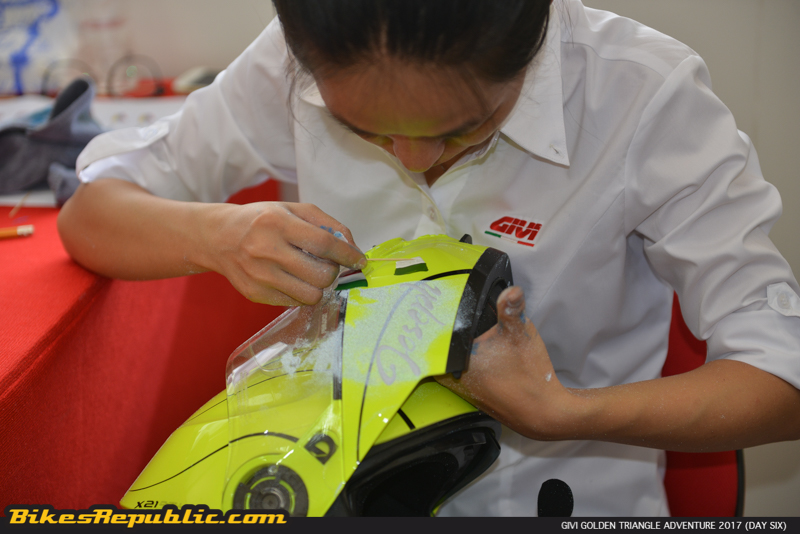
In the meantime, the GIVI crew had taken our helmets to a room in the administration building, where two ladies pinstriped on our names and national flags on one side of the chinbar.

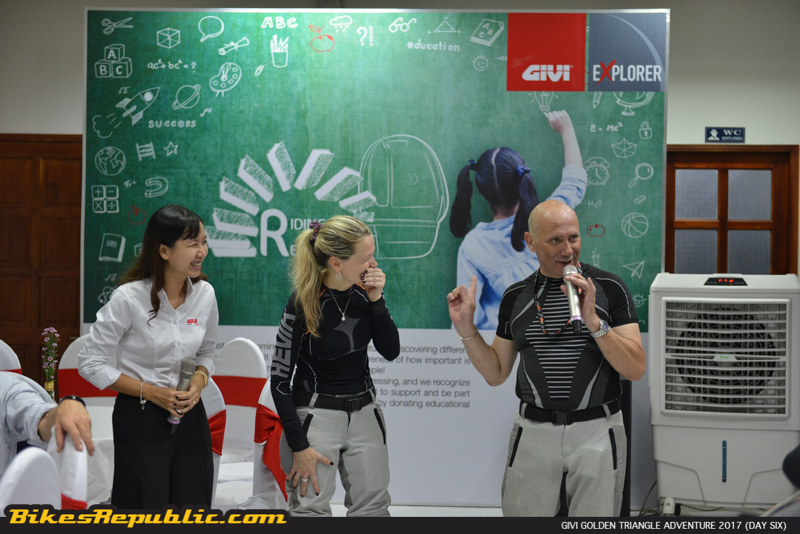
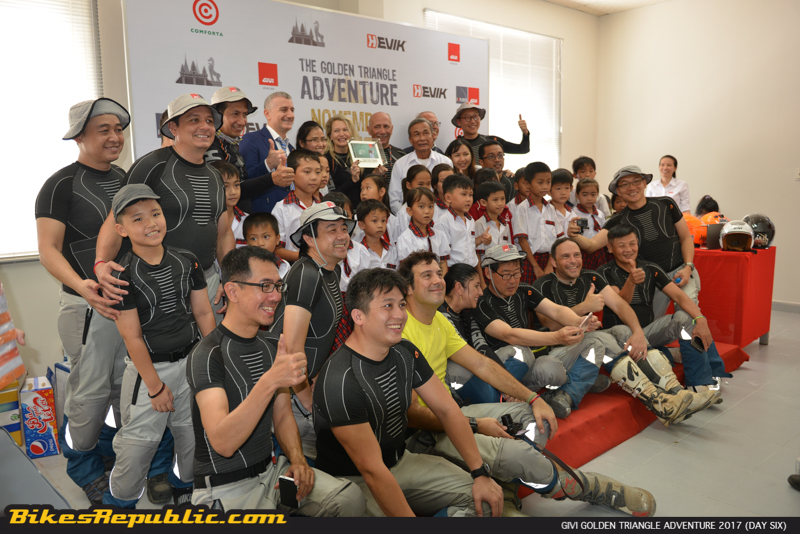
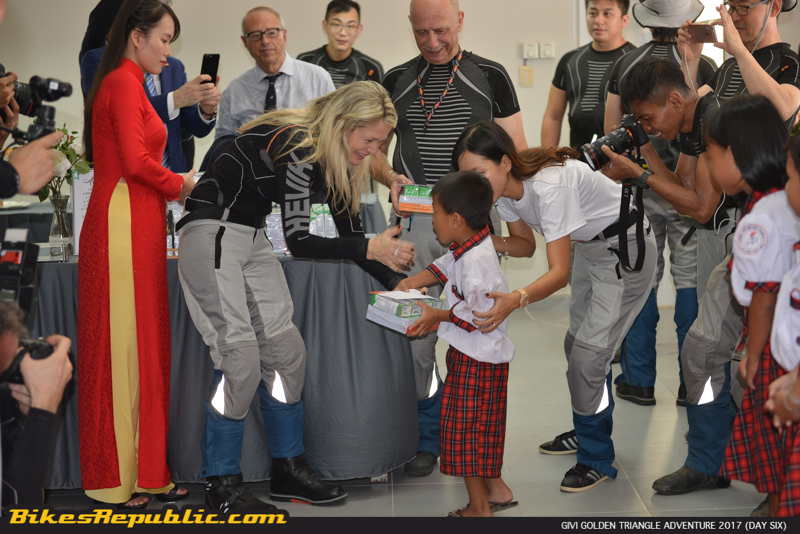
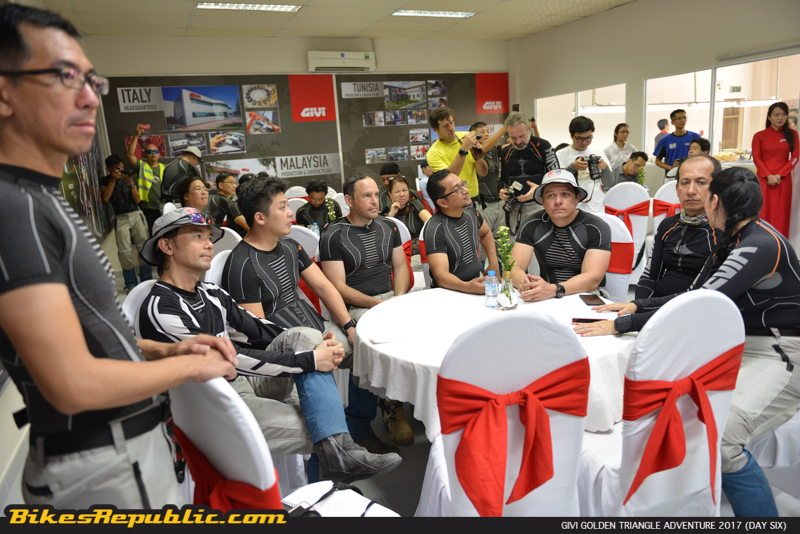
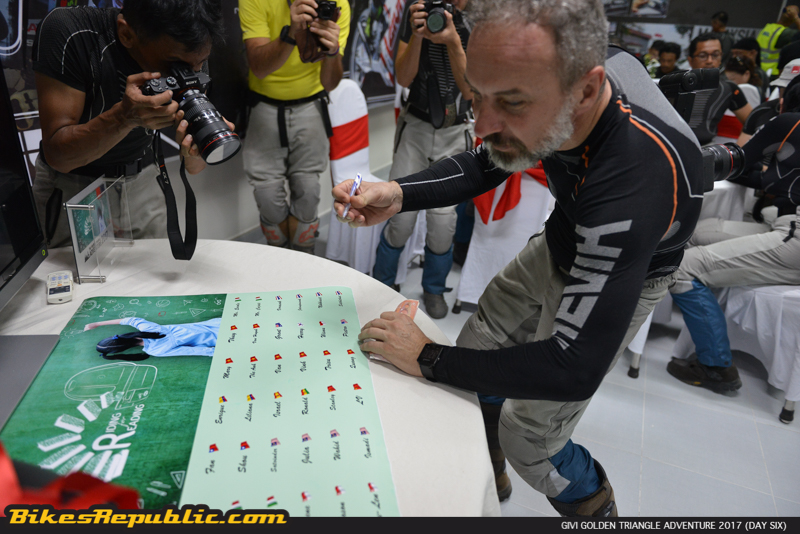
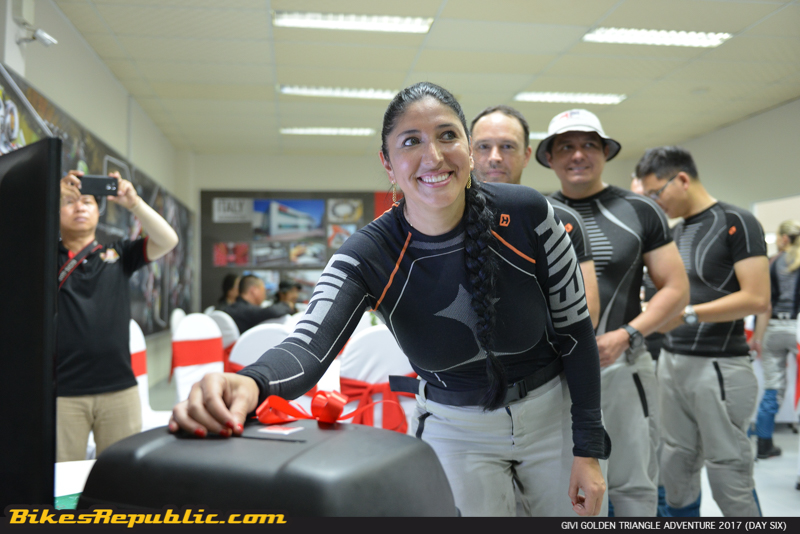
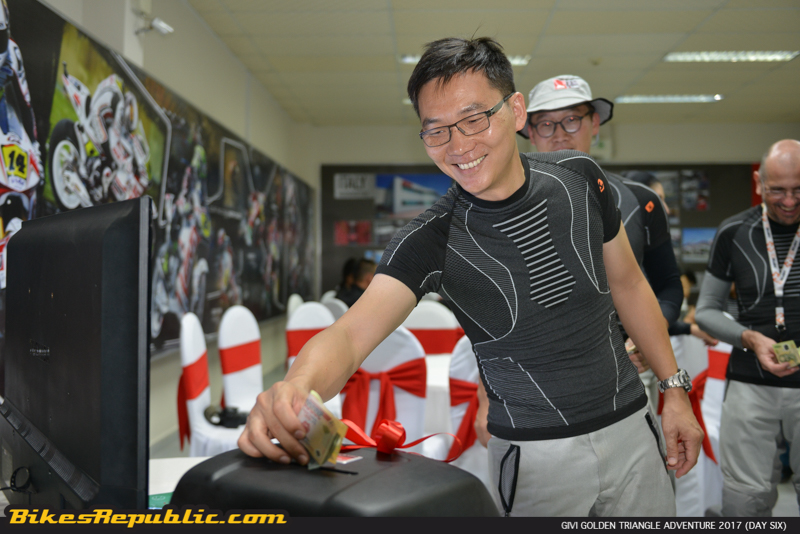
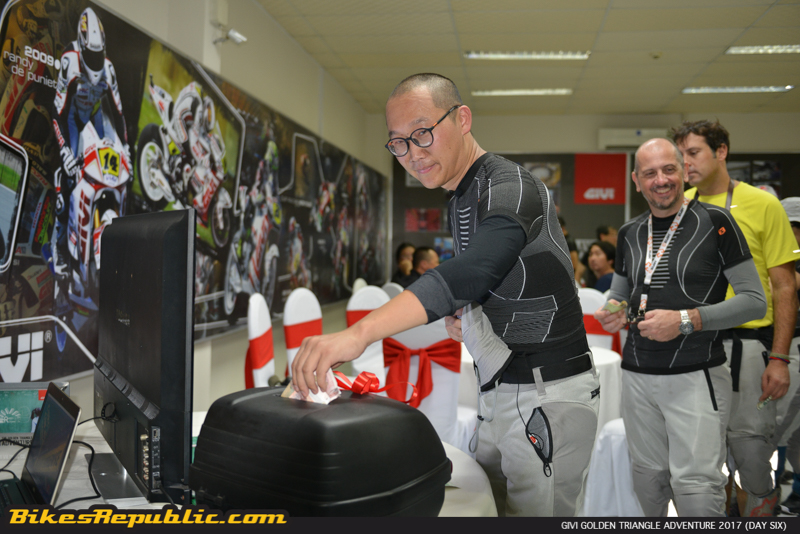
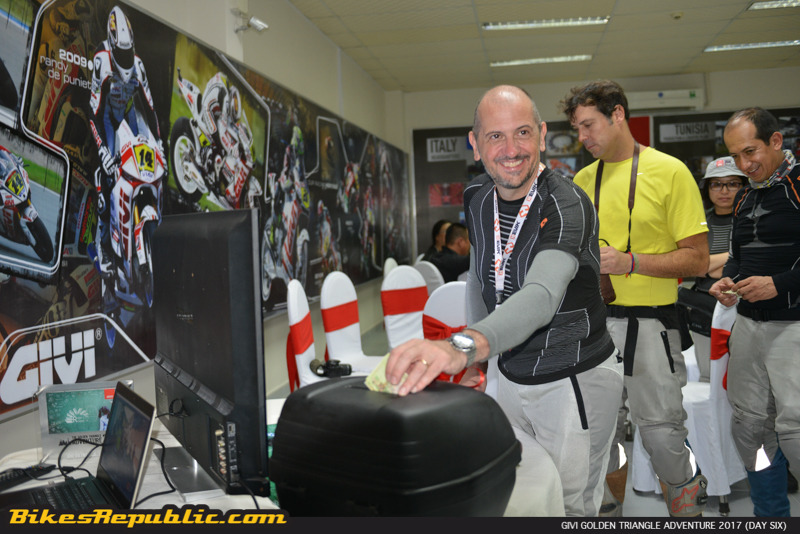
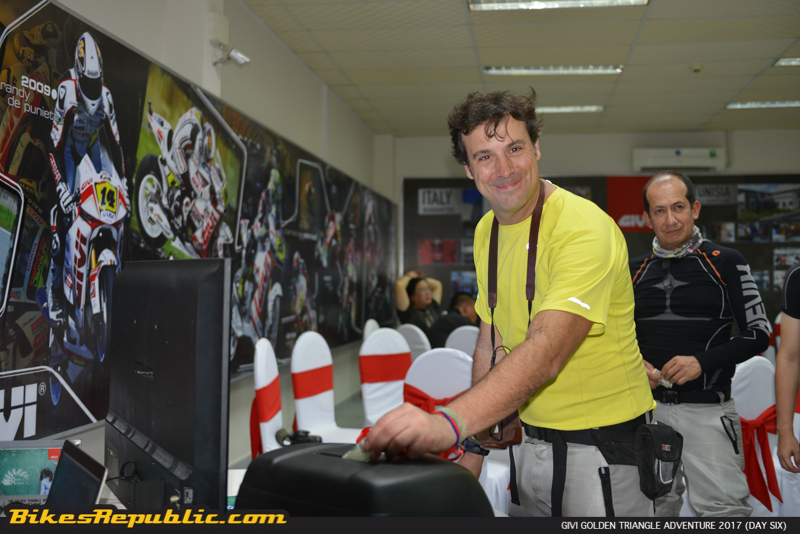
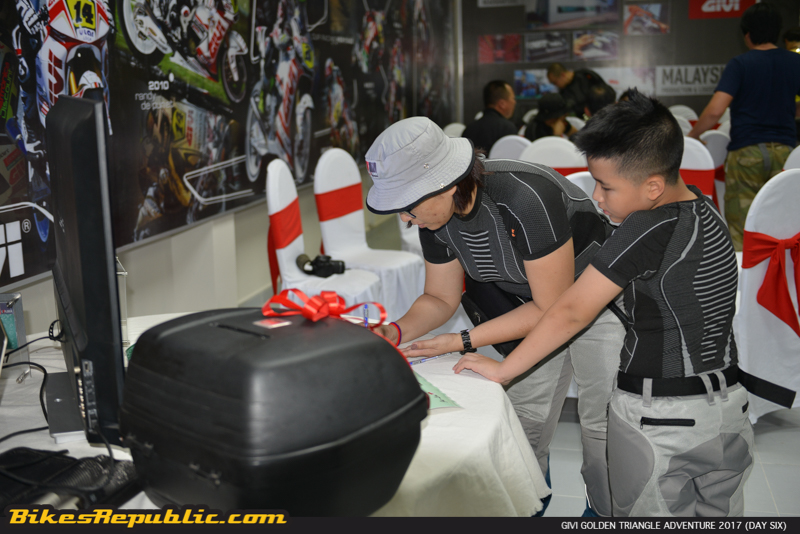
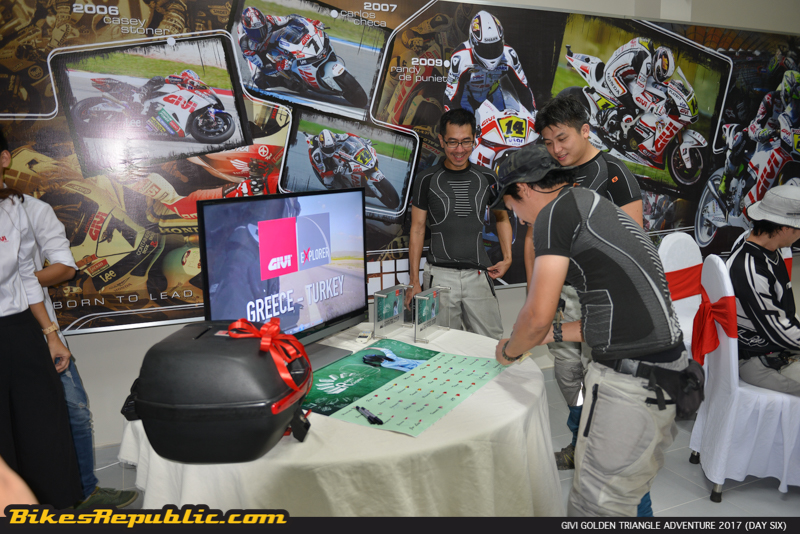
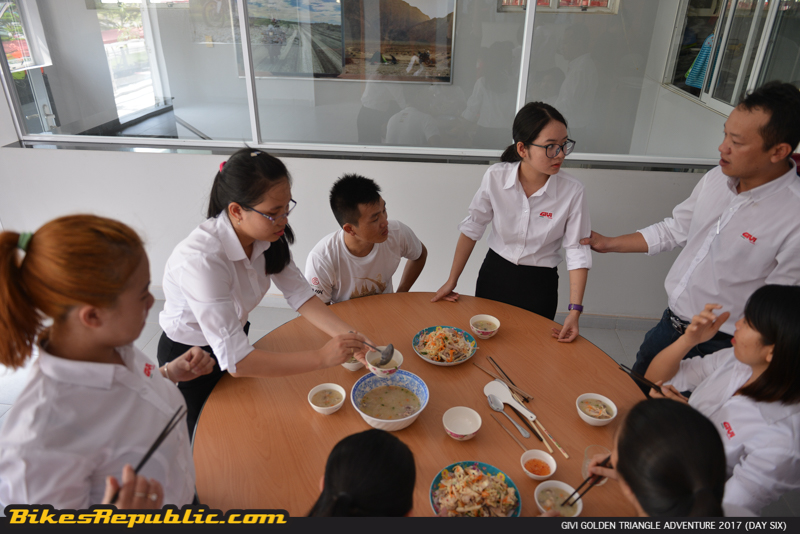
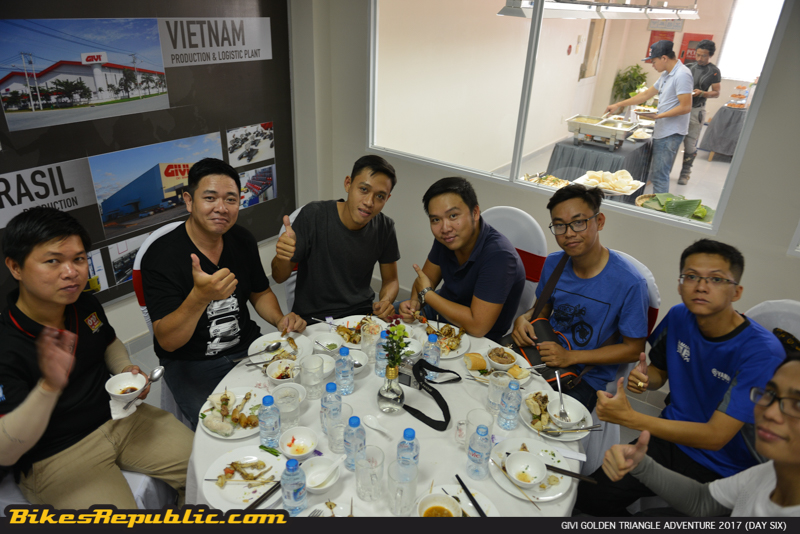
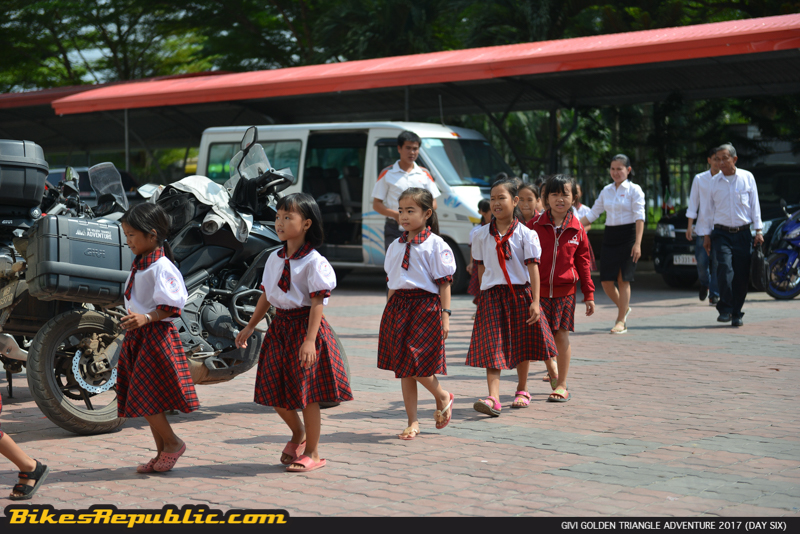
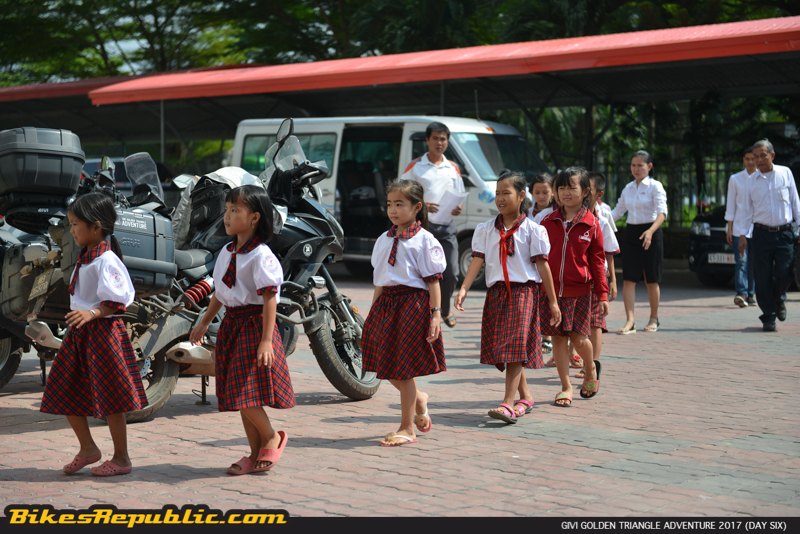
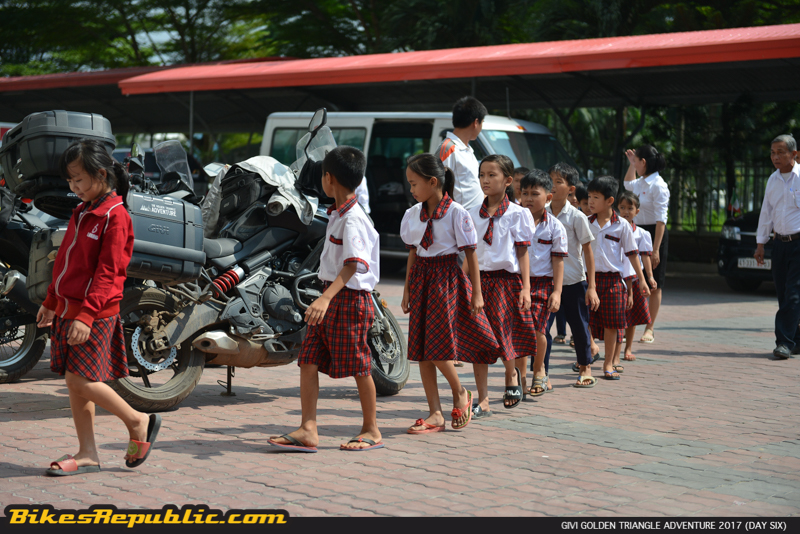
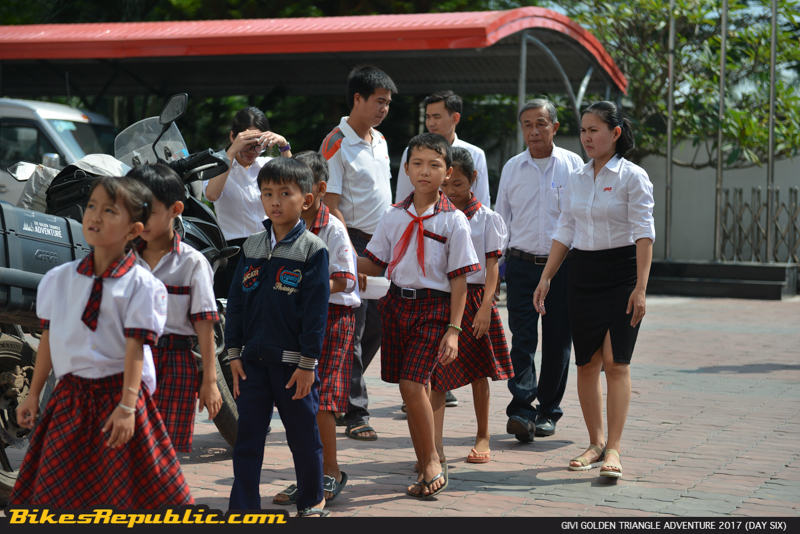
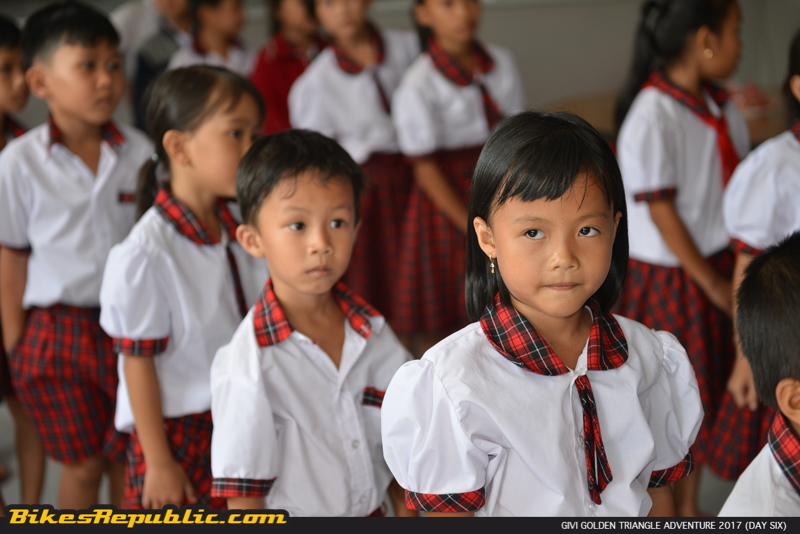
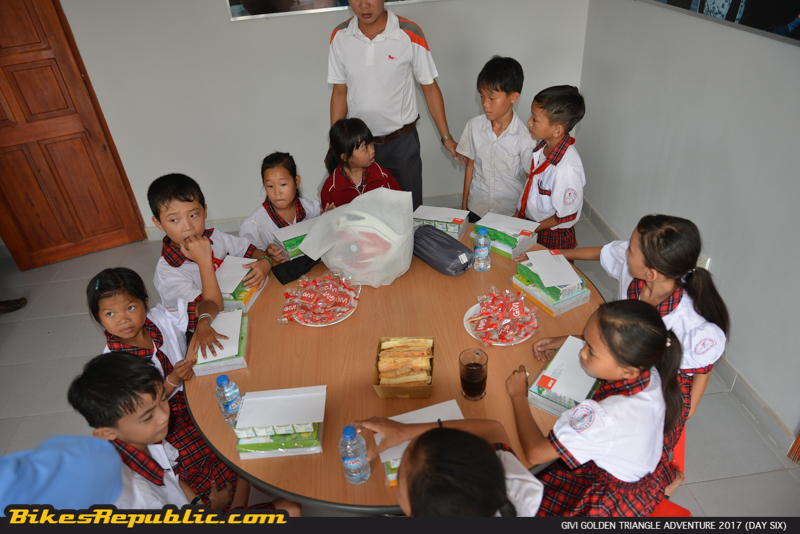
The GIVI Explorers and other guests were then ushered into the conference room for lunch and the GIVI charity event called, “Riding for Reading.” This GIVI CSR initiative aims to assist Vietnamese children in primary schools by meeting short-term and long-term needs. For the near-term, GIVI donated writing and drawing utensils; and health insurance and scholarships in the long-term.

A spontaneous fundraiser was set up among the GIVI Golden Triangle Adventure 2017 participants, to which everyone was more than happy to contribute. A total of USD 800 was raised.

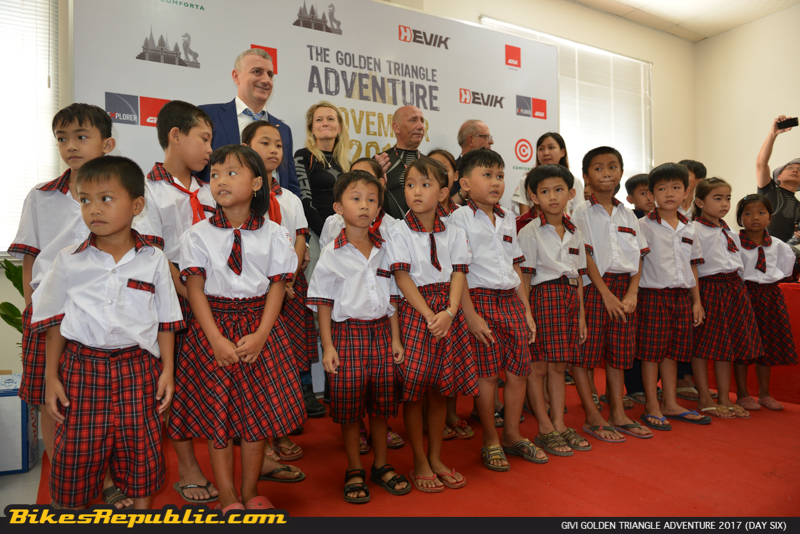
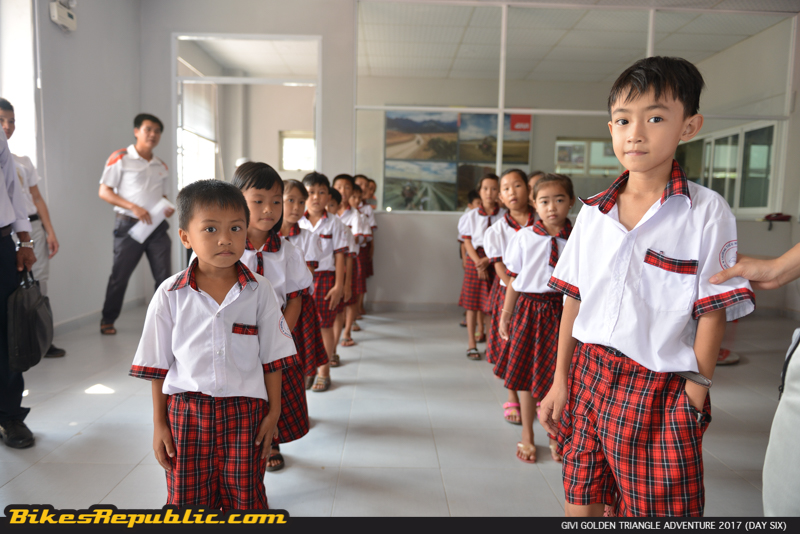
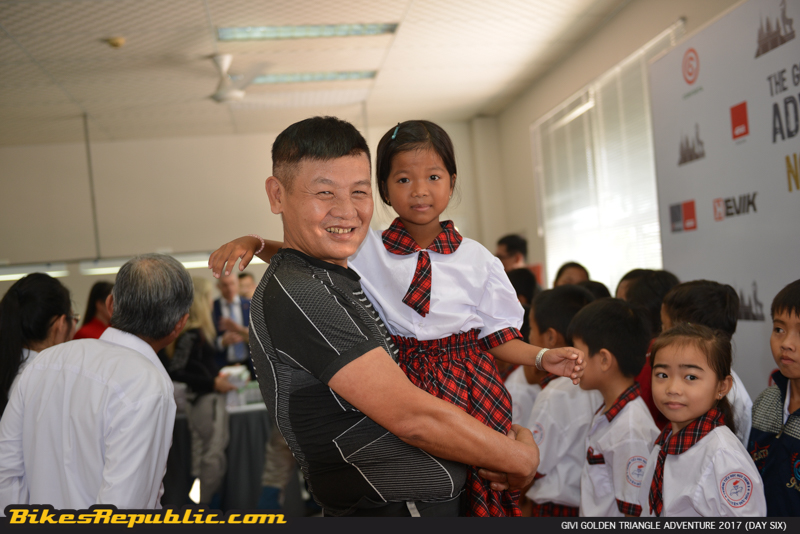
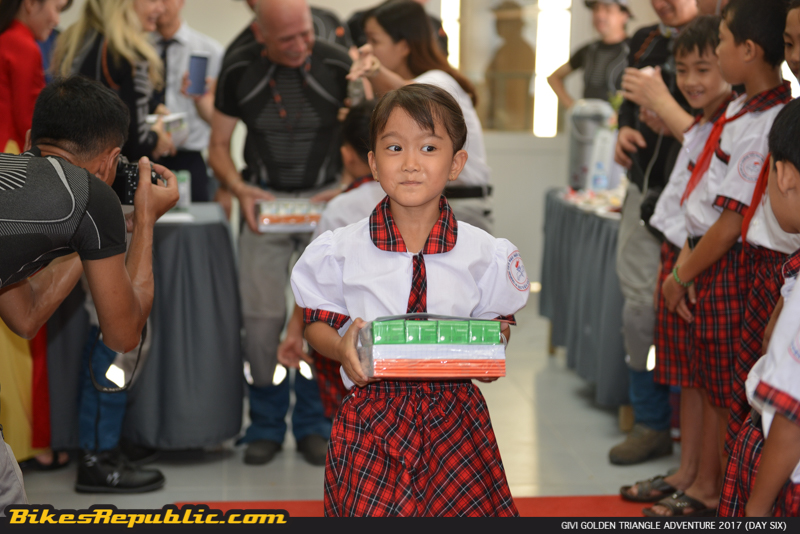
The kids came to meet us soon after, and it was a happy and emotional experience for all involved, as Ms. Visenzi and Mr. Perucca handed the items to them.

As Mr. Perucca said in his speech, the GIVI Explorer adventures have always been about learning and giving, rather than being just riding across the world.

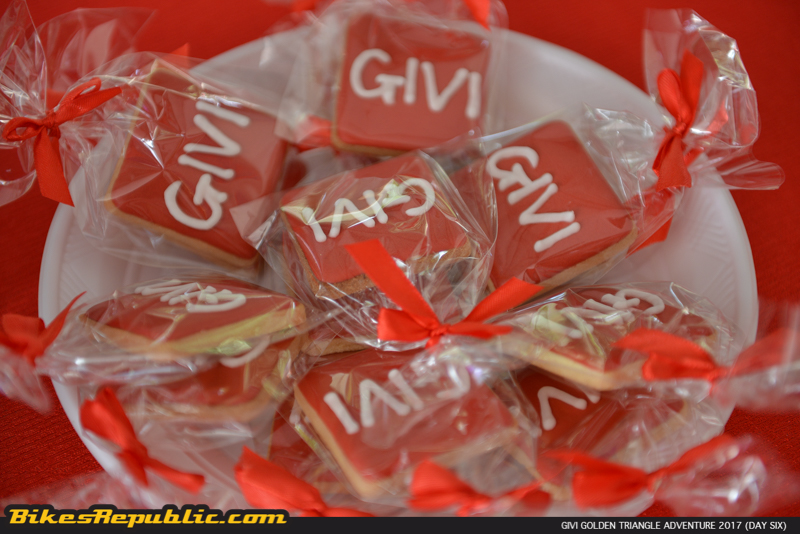
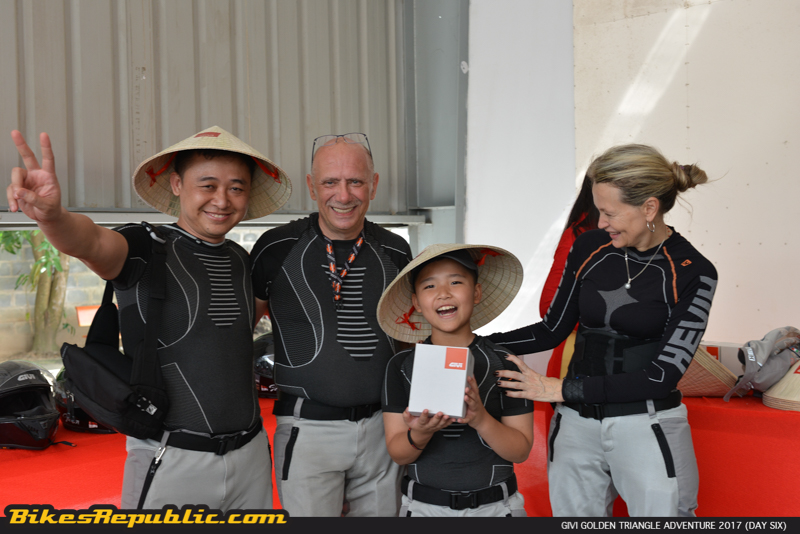
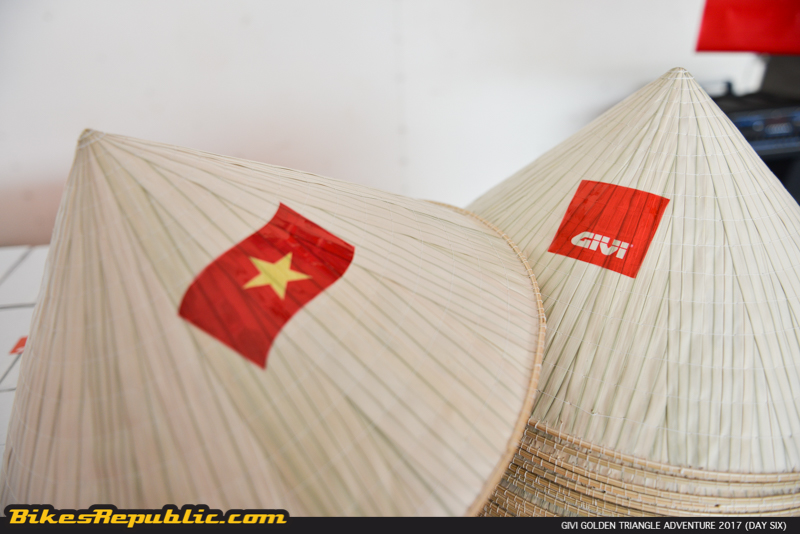
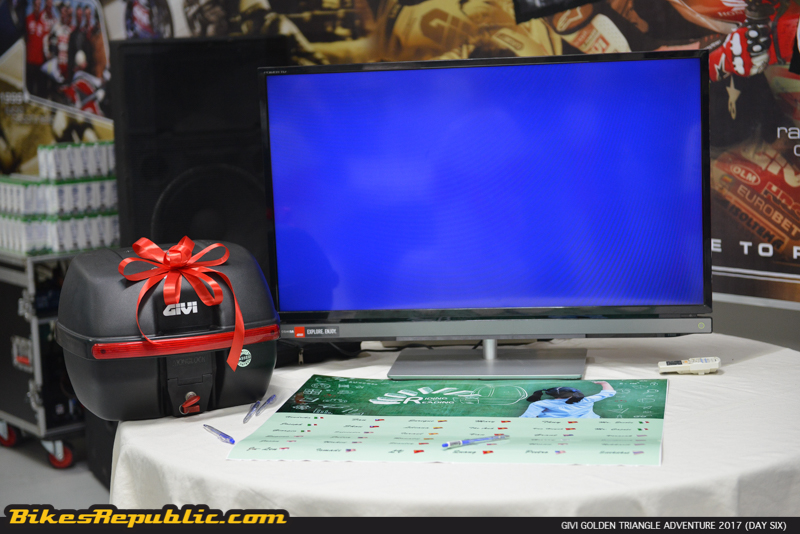
With the Riding for Reading program done, GIVI presented gifts to the Explorers. First was renowned Vietnamese coffee, packed together with a set of serving cups, and the traditional Vietnamese conical hat called nón lá (translated as left hat).

It was time to say goodbye to GIVI Vietnam and head to our stop for the day. A few of the Vietnamese crew also joined us on the ride.

We cut a south-southwesterly course toward Cần Thơ (pronounced “Kan Ter”), the main city in the Mekong Delta, where the Mekong River empties into the South China Sea. The river life figures heavily here, including a floating market.

Unfortunately, one of the bikes developed a puncture and we arrived way after dark so there was no chance of us going anywhere.

Click here for Day Five (Part Two) of the GIVI Golden Triangle Adventure 2017.

Click here for Day Five (Part One) of the GIVI Golden Triangle Adventure 2017.

Click here for Day Four of the GIVI Golden Triangle Adventure 2017.

Click here for Day Three of the GIVI Golden Triangle Adventure 2017.

Click here for Day Two of the GIVI Golden Triangle Adventure 2017.

Click here for Day One of the GIVI Golden Triangle Adventure 2017.


PICTURE GALLERY


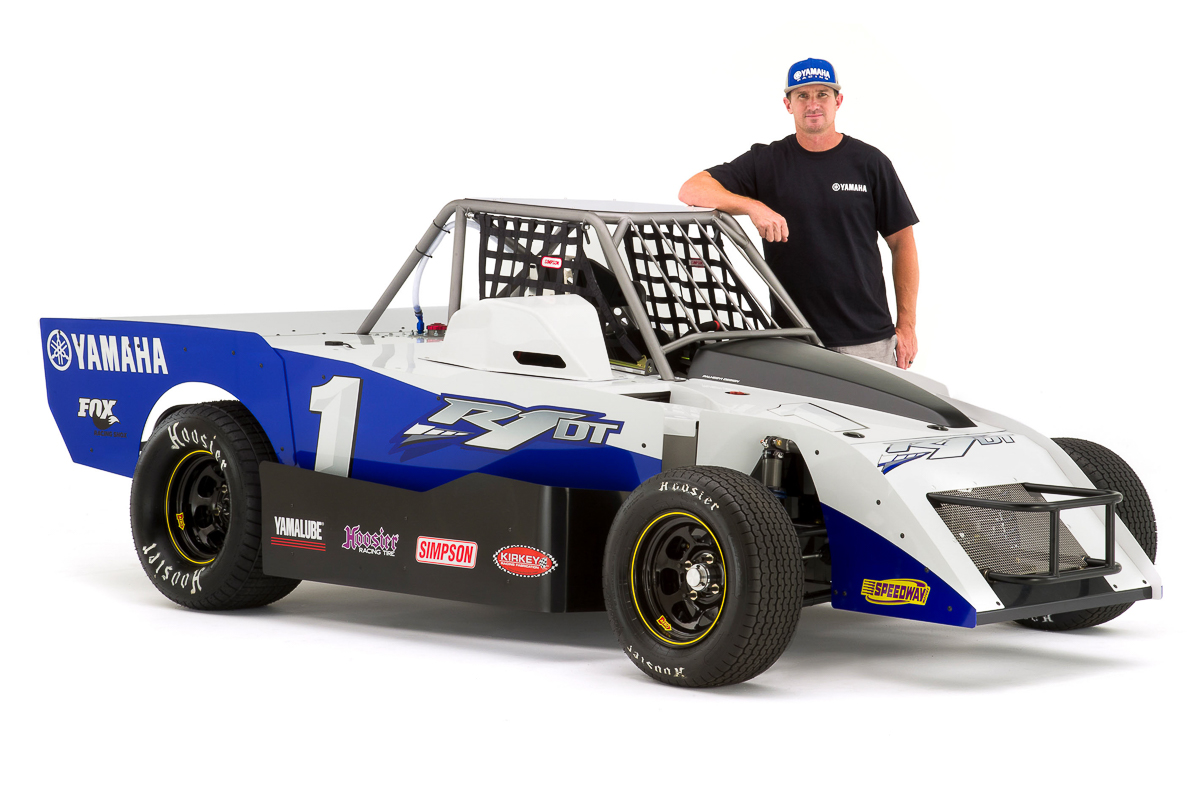
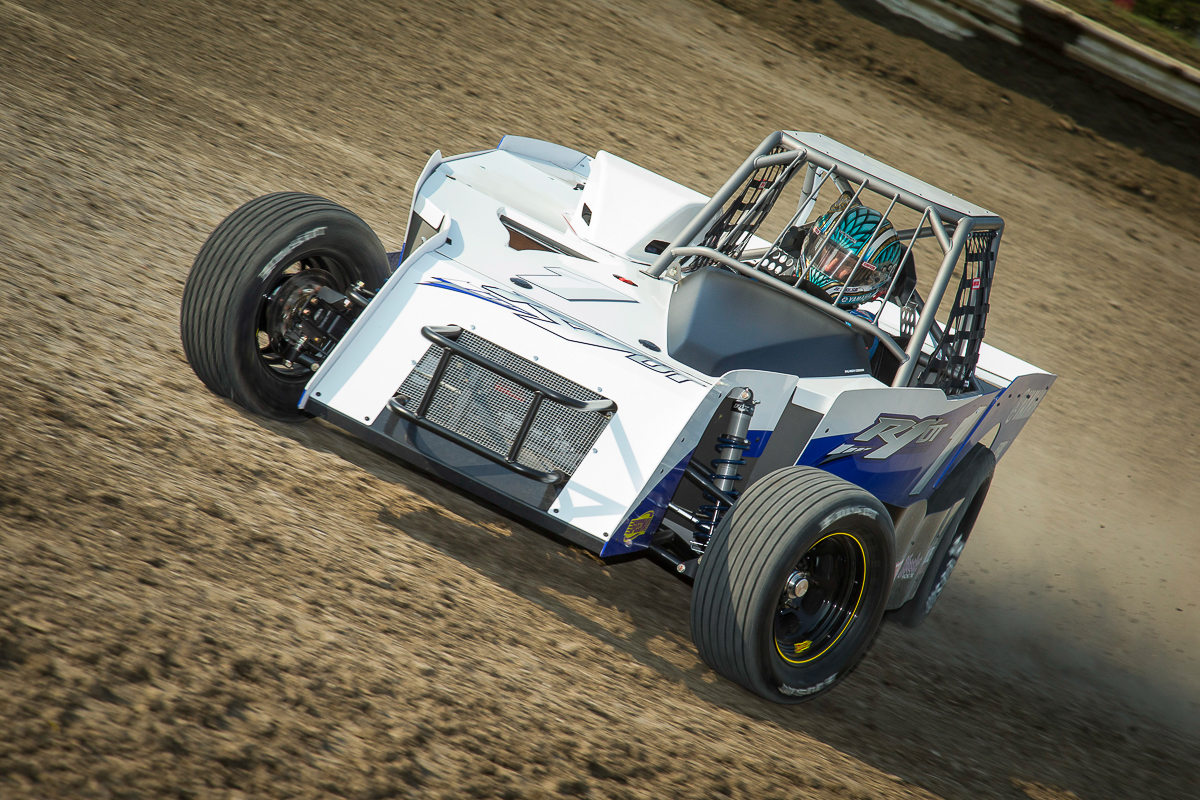
The Yamaha R1DT dirt track racer is a dirt track drifter powered by the 998cc inline-four engine taken from the Yamaha YZF-R1S.

The dirt-track racer concept was built using tube-frame technology to promote a robust and fun dirt track racer at a relatively low budget.

Design by Yamaha Motor USA, eight Yamaha R1DT race cars thundered around the Perris Auto Speedway with eight racing champions from different race disciplines.

What happens when you take the powerful Yamaha YZF-R1 998cc inline-four engine with its iconic crossplane crankshaft technology and stuff it into a dirt track racing car? You’ll get the Yamaha R1DT dirt track car and just yesterday, Yamaha build eight of these bad boys and organised an exhibition race at the 2017 Budweiser Nationals sprint-car race. (more…)

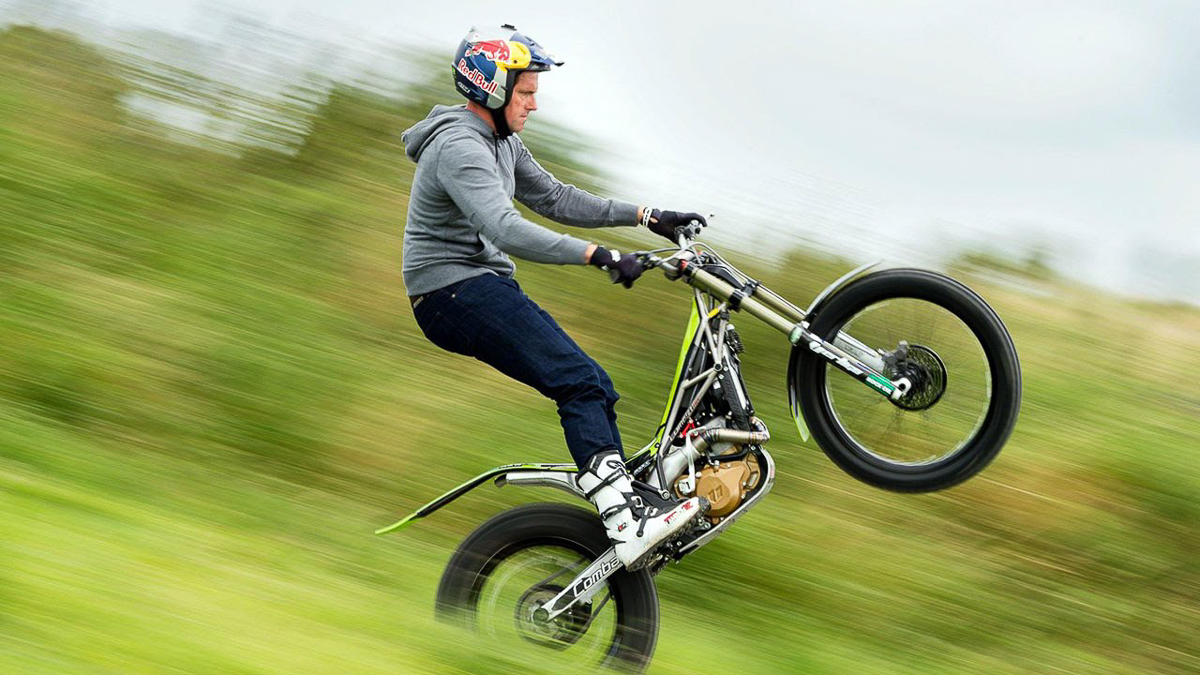
Dougie Lampkin is the first and only person who has successfully wheelied around the Isle of Man TT circuit.

The entire 60km-lap consisting of over 200 turns, elevation changes, traffic and unpredictable weather did not stop the 40-year-old 12-time motorcycle trials world champion.

It took him about an hour and 35 minutes to ride around the circuit on just one wheel using his custom Vertigo Ice Hell 300 trials bike.

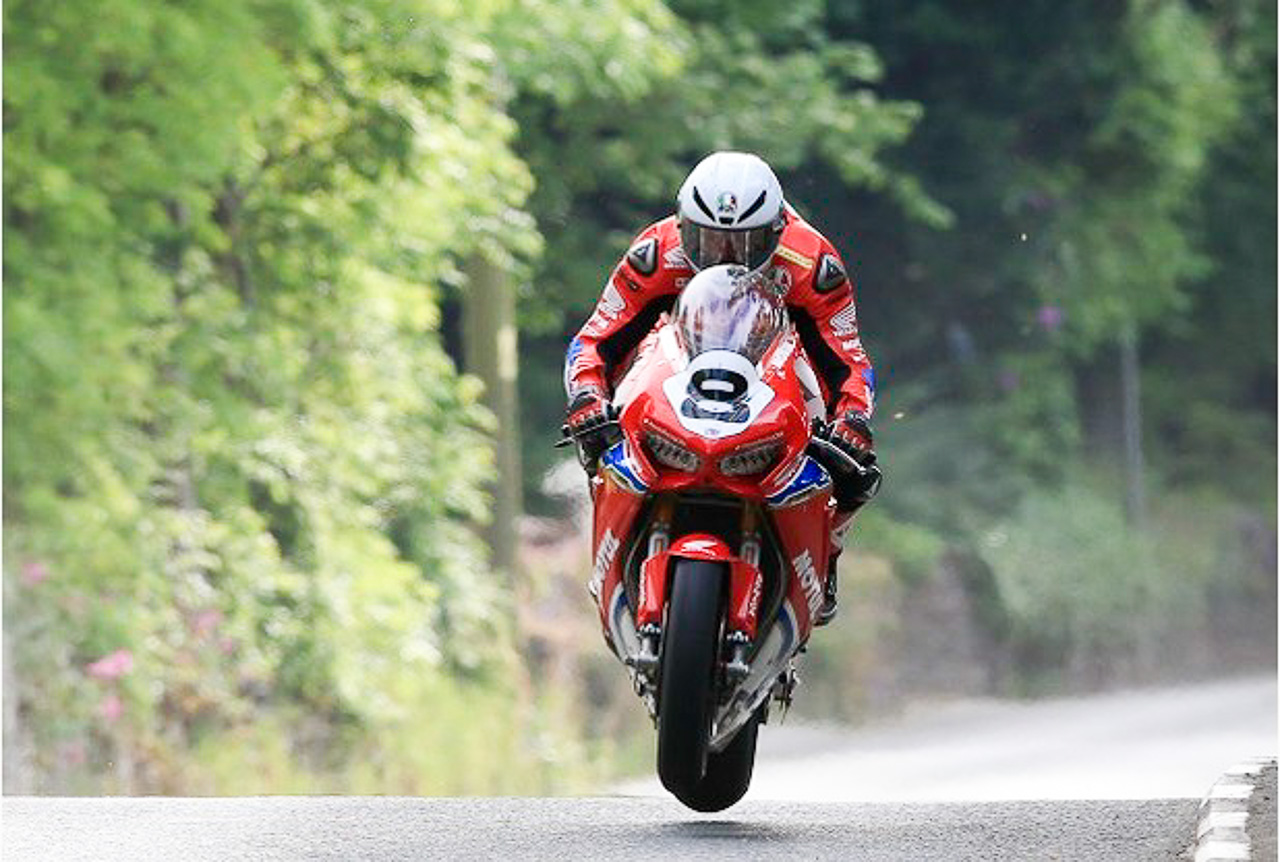
Guy Martin on the Honda CBR1000RR Fireblade SP2 (Image source: Grimsby Telegraph)

Ask any motorcycle enthusiast about the Isle of Man Tourist Trophy and the first thing you’ll get is a smile. It doesn’t matter if its nine-time MotoGP world champion Valentino Rossi or just the average guy hanging out at your local workshop, the Isle of Man located between England and Ireland hosts the world’s greatest (and deadliest) motorcycle road race of all time, the TT. (more…)

  • The new Kawasaki Ninja 650 and Z650 show much Kawasaki’s 650s have evolved.

  • They now feature new engines, styling and technologies.

  • The new models signify Kawasaki’s pursuit of excellence across their range of products.

It’s undeniable that three particular models ruled the Malaysian streets for the years between 2009 to 2015. They were the Kawasaki ER-6f, ER-6n and Versys 650 (we’ll omit the Versys 650 for the moment). Let’s see how the ER-6f and ER-6n have evolved into the Ninja 650 and Z650.
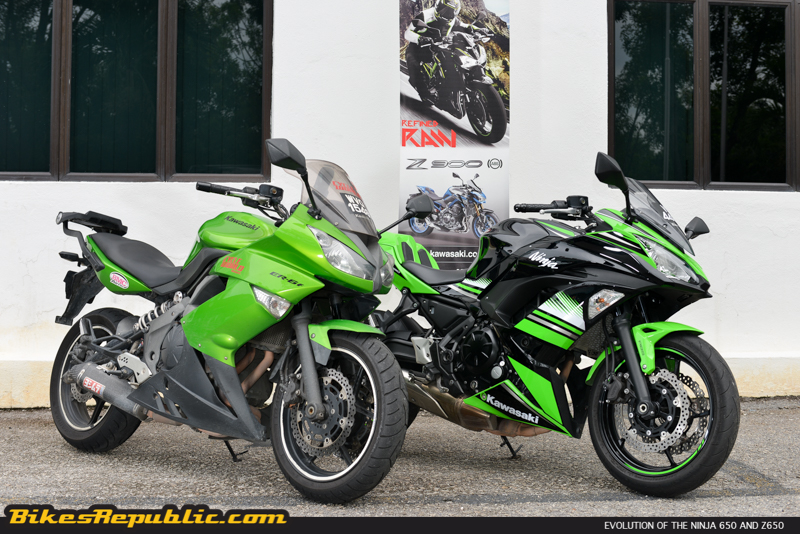
It could also be accurately said that the ER-6 models were collectively the catalyst which started the bike big boom, which consequently ushered all the other big bikes we have nowadays.

The ER-6 family began in 2006. A few of the model made their way to our shores.
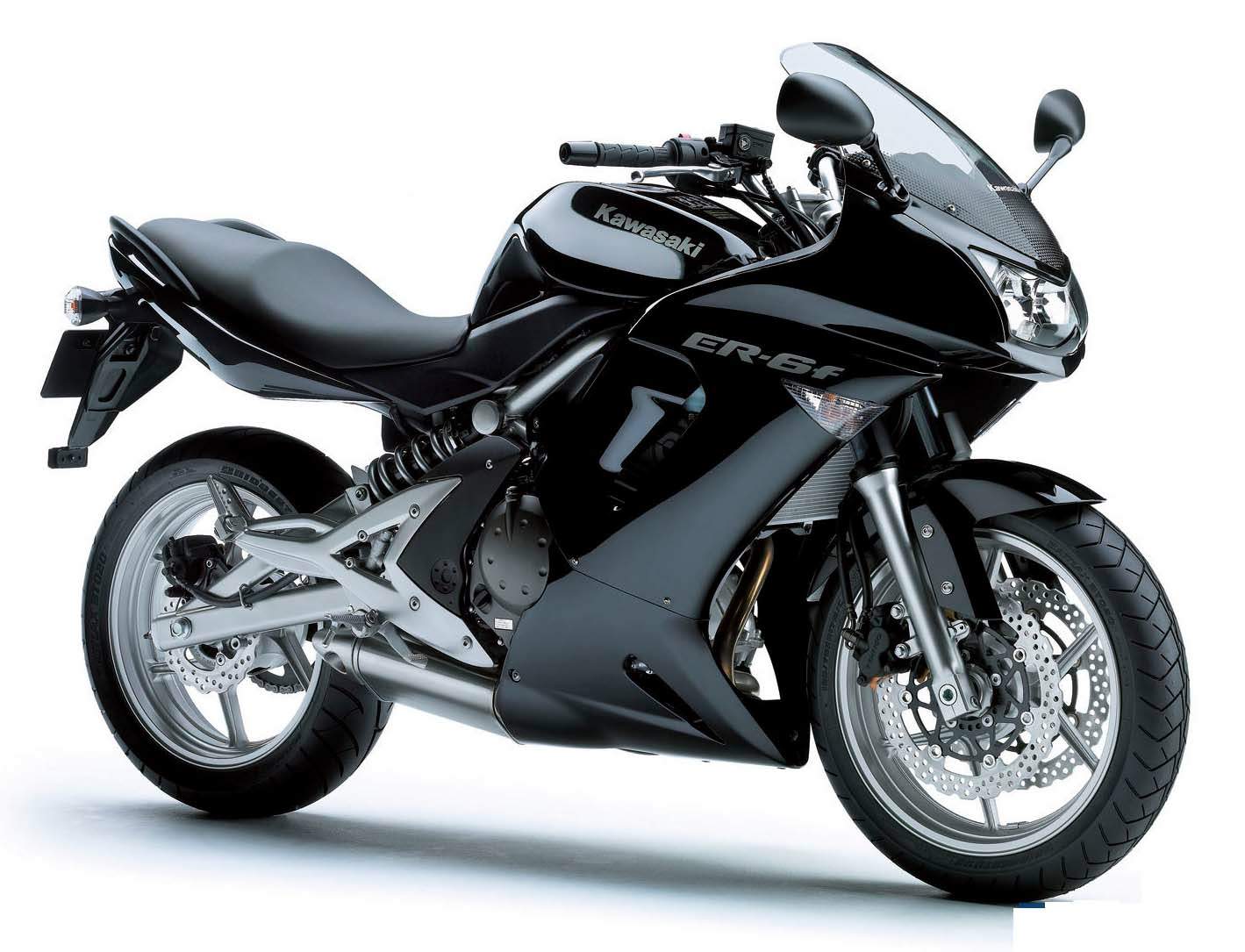
However, the ER-6’s true popularity started with the 2009 models. The ER-6f was fully-faired, while the ER-6n was a naked roadster.
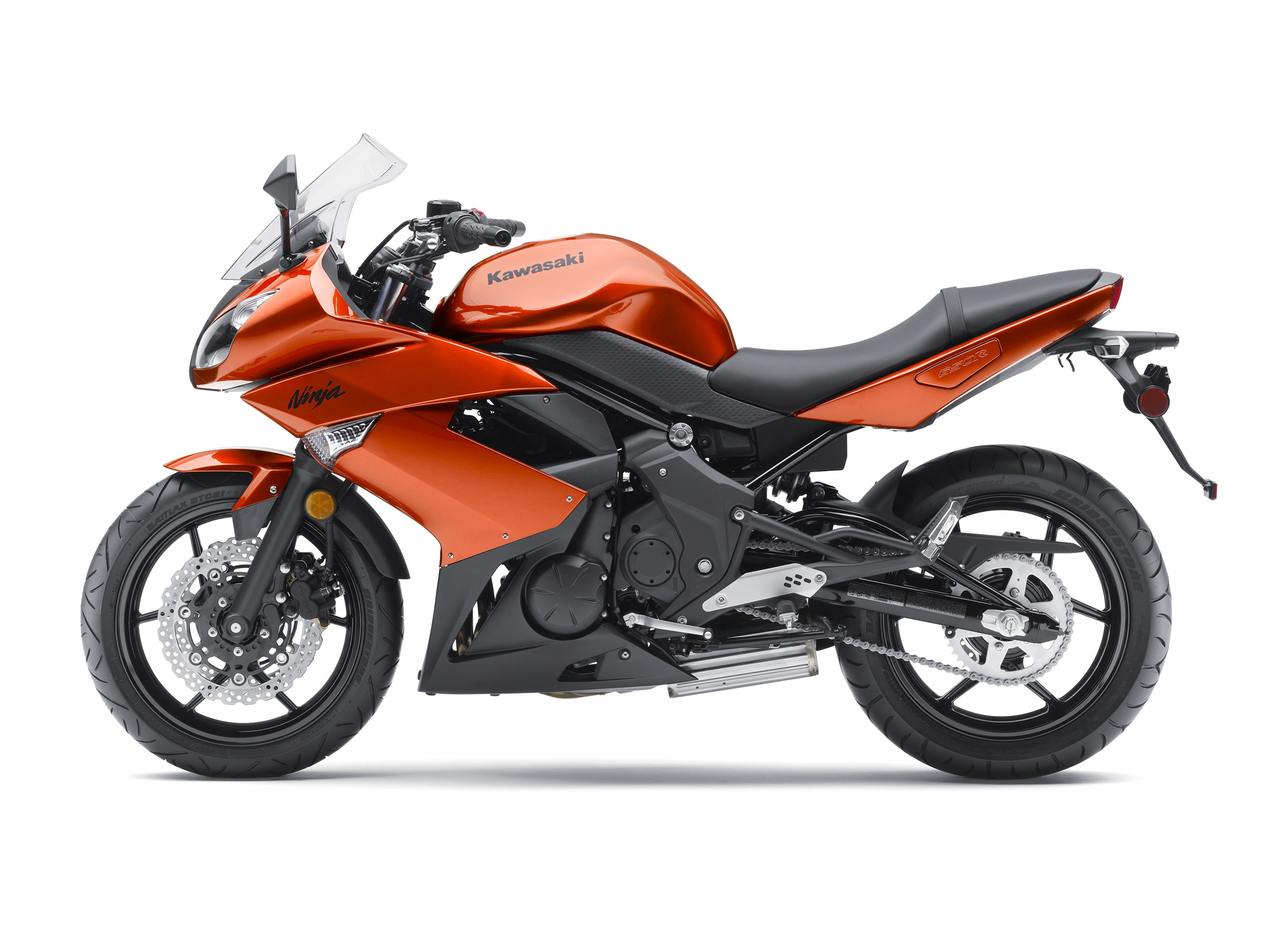
Both models were built on the same frame, chassis and engine platforms. They exhibited easy handling, good brakes, upright and and comfortable riding position, and a tractable engine with good torque and power characteristics to please newcomers, veteran and born-again riders. They were bikes that could do it all: Commuting, weekend canyon bombing, long rides, sport-touring, and track riding to some degree.
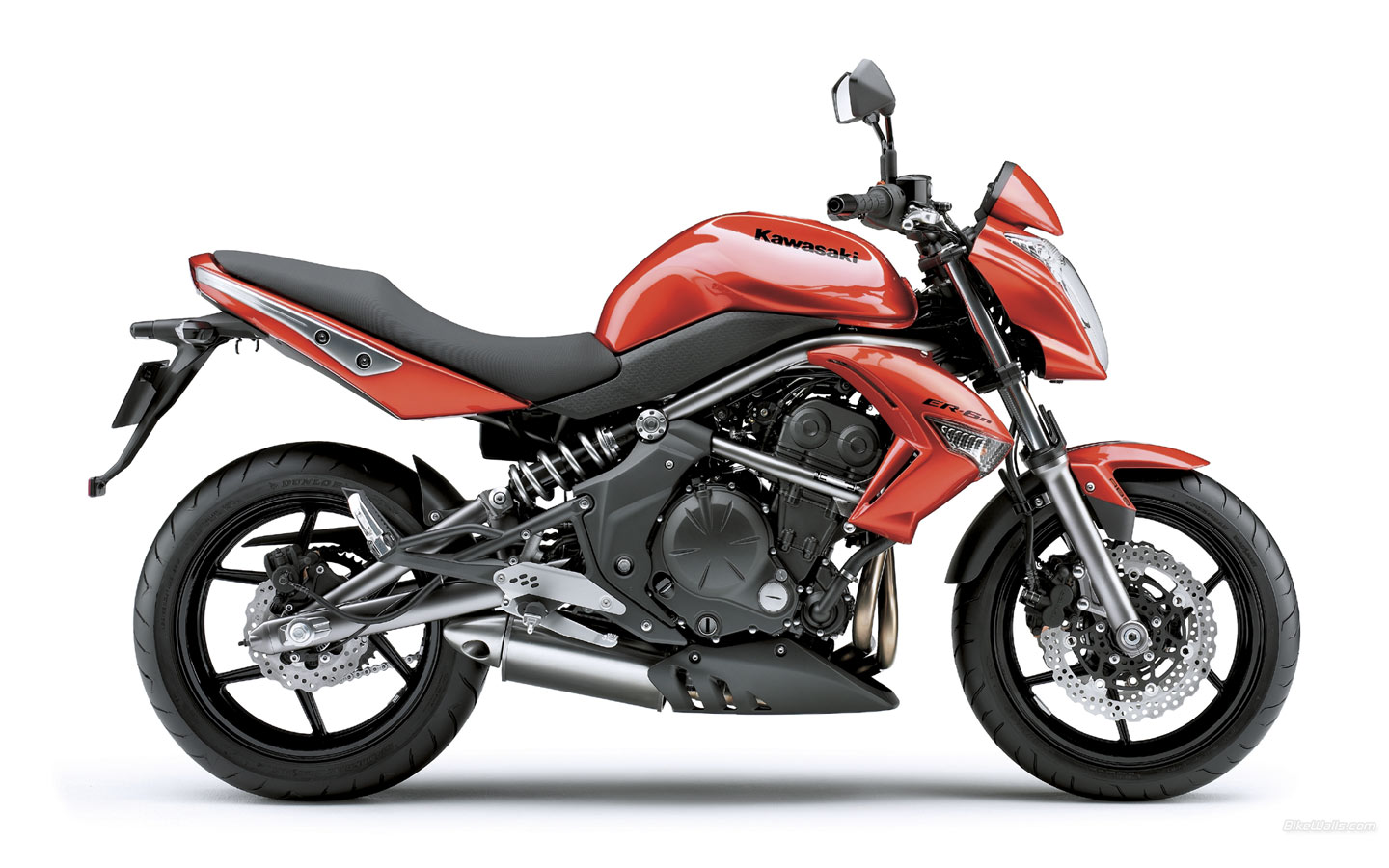
Best of all, they were the most affordable big bikes at sub-forty thousand Ringgit, since they were first to be CKD’d.

So popular was the ER series that even Malaysian riding schools started using them as bikes for newbie training and “Full B” license exams.

The engine was a simple, liquid-cooled, DOHC, eight-valves fuel-injected, 649cc, parallel-Twin. It pumped out a healthy 71 bhp and between 66 Nm (2006 to 2011) and 64 Nm (2012-2016) of torque. The distinctive thumping exhaust note results from the 180-degree crank.
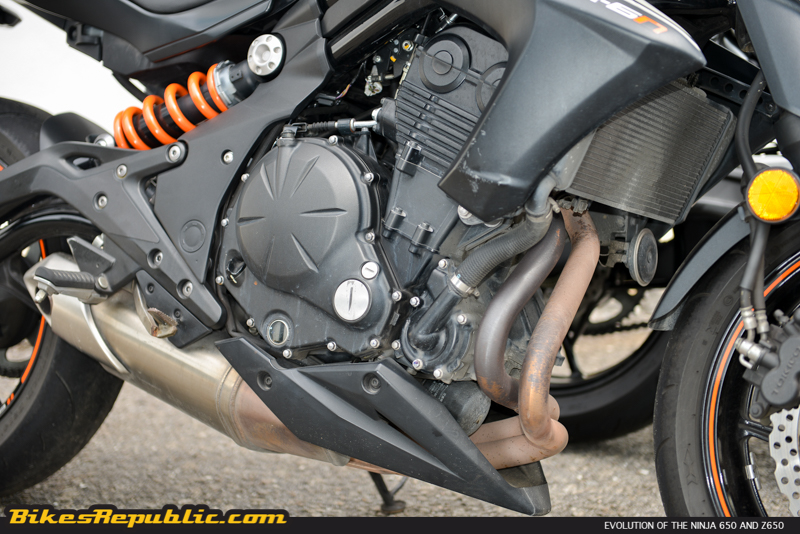
EVOLUTION

The ER-6 variants (called Ninja 650R in some countries) made their debut in 2006. The second-generation ER-6 made their appearances in 2009 to 2011, before being superseded by the third generation from 2012 to 2016.
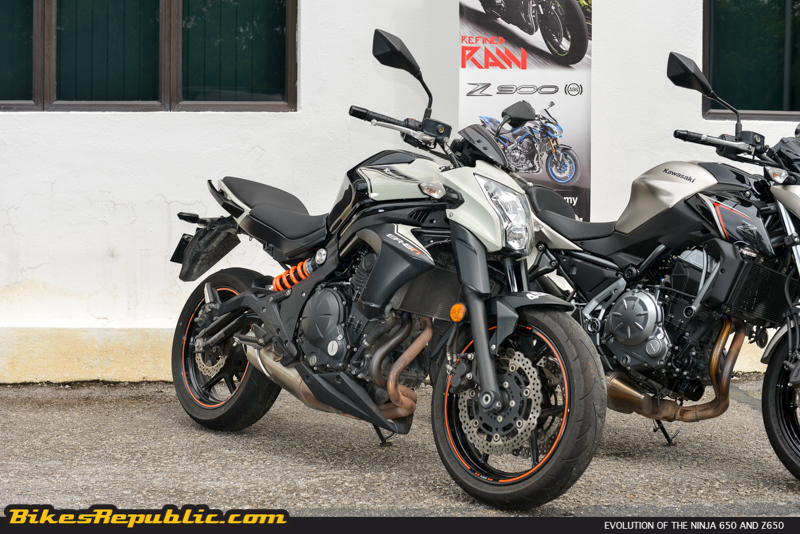
There were only minor exterior and internal mechanical changes between 2006 to 2011. On the other hand, the 2012 models had many changes including styling, stepped seats, a bigger fuel tank capacity, a new frame, and suspension with added travel. The ER-6f looked even sharper and sportier, while the ER-6n looked muscular.
The engine was left almost untouched except for a small reduction in compression ratio. Spent gasses was pumped through a revised exhaust system. A new engine management mapping was tuned to spread torque further down the engine range, which lowered the peak power slightly. Kawasaki also debuted the ECO indicator in the LCD.
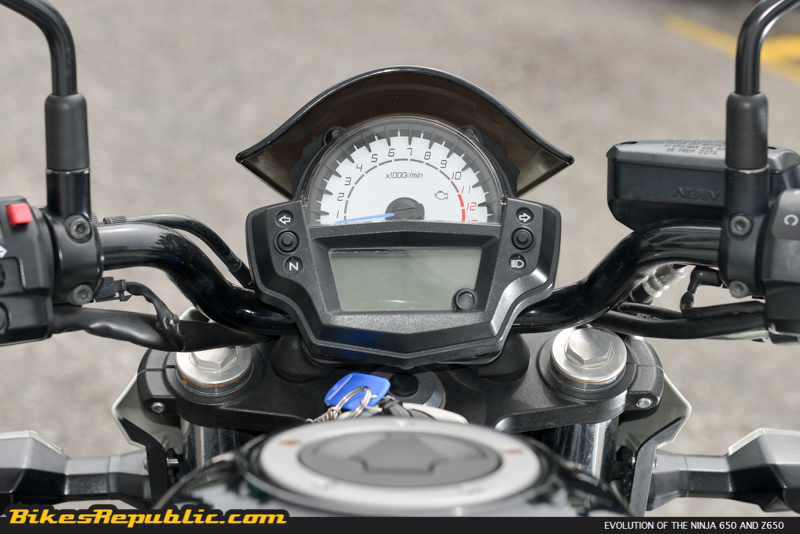
Since I own a 2011 model, I had felt that the 2012 version represented the peak of the ER-6 model evolution, when I tested both the –f and –n versions. Power was delivered smoother, the seats were comfier and most of all, it handled way better and was more stable than my own bike. It started right up every time and never once coughed through the throttle bodies.

Then Kawasaki took the covers off the 2017 models.
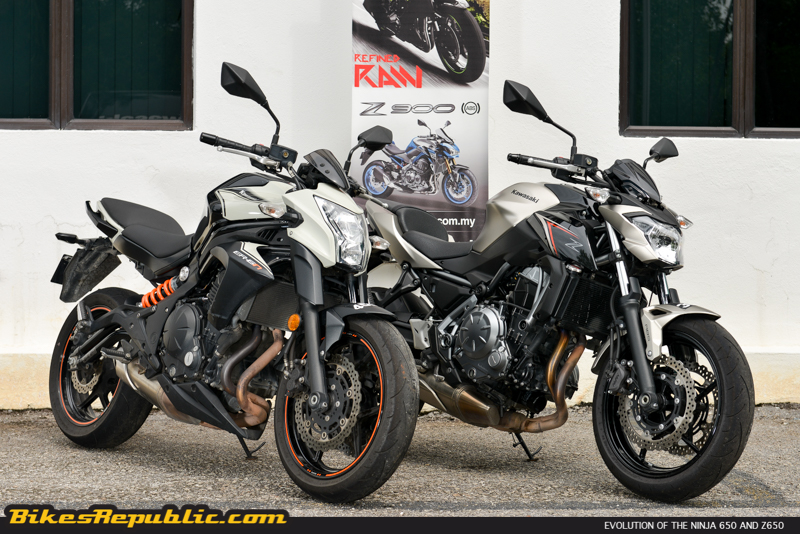
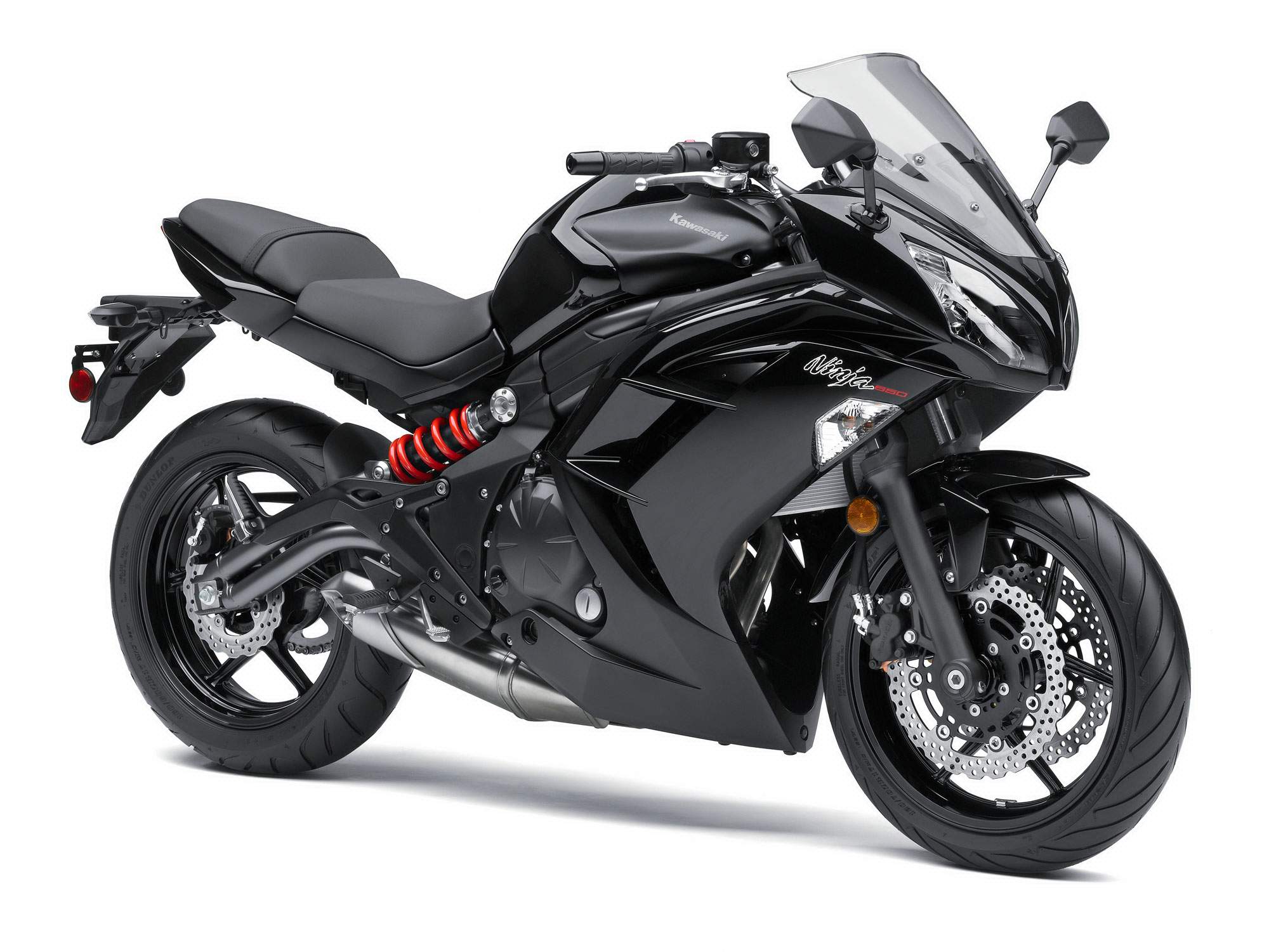
Kawasaki has now dropped the ER-6 name. The fully-faired version is now called the Ninja 650, aligning it as one universal designation. The naked version, on the other hand, is called the Z650, and inducted into Kawasaki’s family of naked bikes. Both the Ninja 650 and Z650 share the same engine and chassis components.

STYLING

The new Ninja 650 stands out prominently when viewed side-by-side with the 2011 model, showing how much the model has evolved and improved over a short period of time.

At the initial glance, the Ninja 650 now looks almost identical to Kawasaki’s multiple-race and championship-winning ZX-10R superbike, especially when decked out in the special-edition KRT colour scheme. Those headlights have gone “raptor-like” and the fairing wraps tightly around the body.
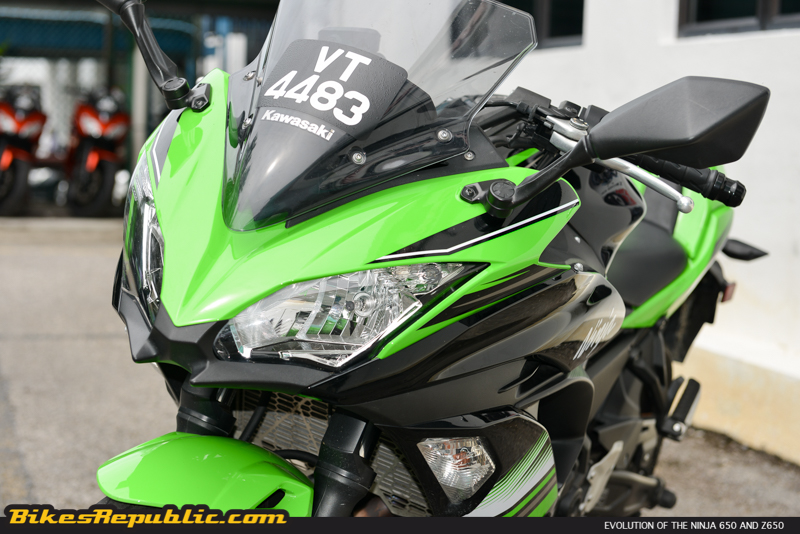
Speaking of the fairing, the new Ninja 650’s still features large side openings to vent hot air, but the rear part of the vent is enlarged and flared outwards to push hot air away from the rider’s thighs. Plus, the rear part of the fairing fits tightly to the frame, minimizing hot air from rising into the rider’s crotch.
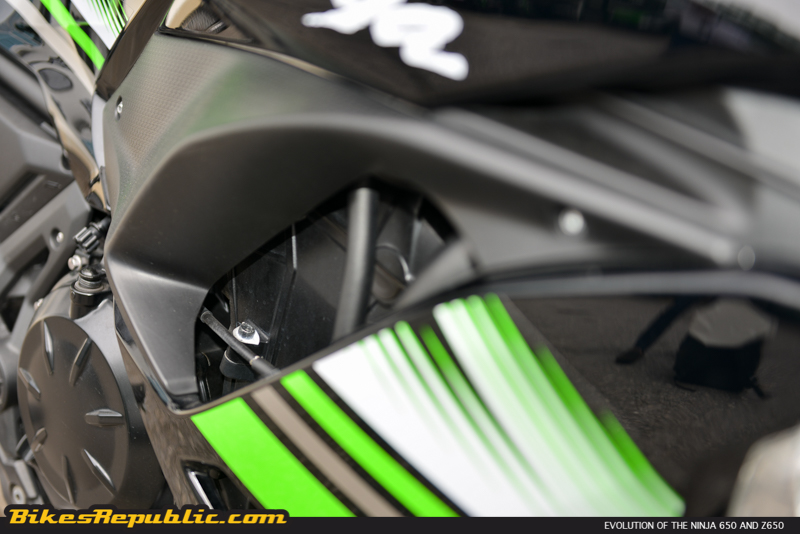
The effects are amazingly effective when compared especially to the 2011 and marked improvements over the 2012 models.
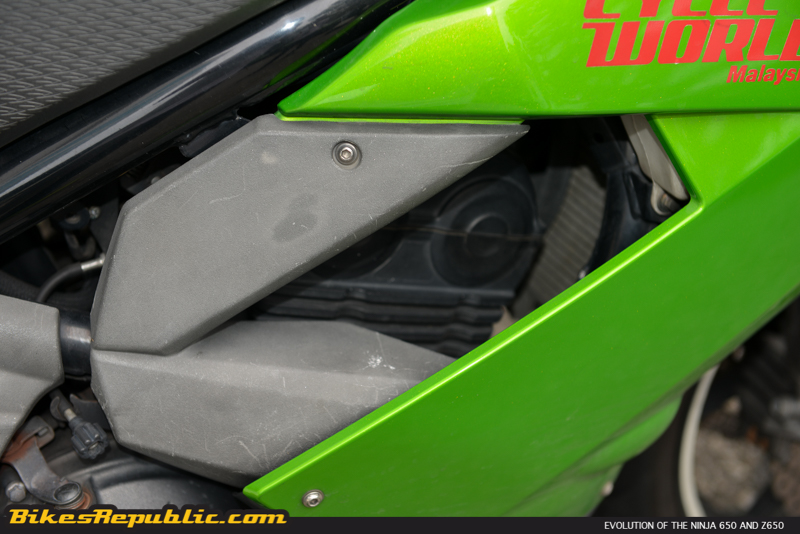
However, as sporty as the Ninja 650 may look, Kawasaki has wisely designed the ergonomics to be friendly to a broad spectrum of riders. The handlebars are set high and slightly forward, the rider’s seat is low (790mm seat height), and the levers are 5-way adjustable.

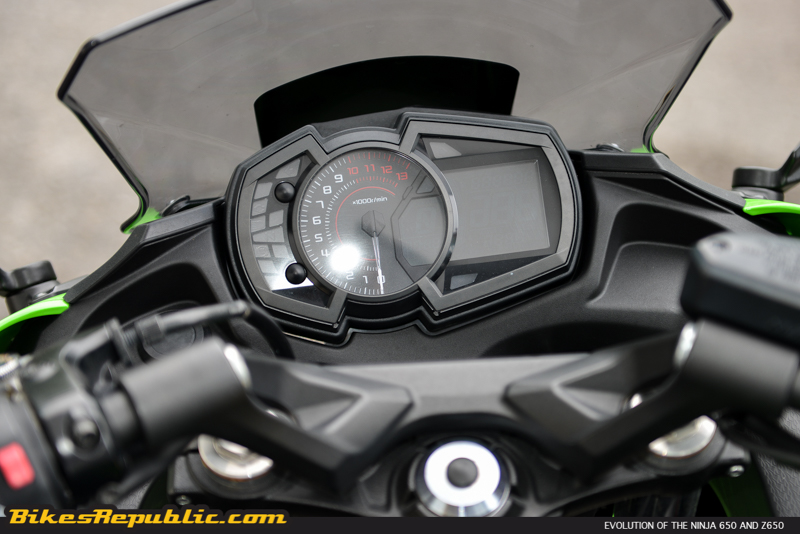
A new multifunction instrument panel is installed which includes a much-welcomed gear position indicator, shift light, and ECO indicator. The tach needle changes colour from white to pink to red as it swings up.
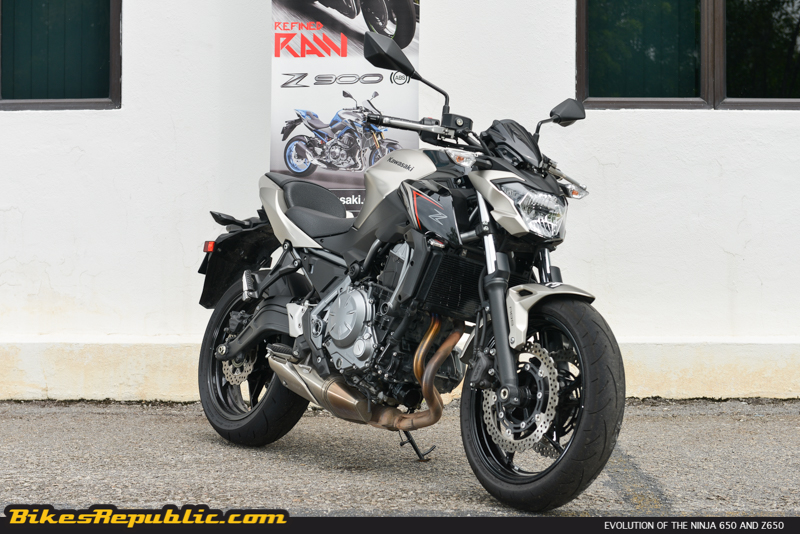
The Z650, meanwhile, has been given the Kawaski Sugomi (“sugomi” means “awesomeness” in Japanese) design treatment for a distinctively organic look. Kawasaki explained that they see the Z650’s stance as that of a black panther stalking its prey, in a crouched stance, with its head low and tail upswept.

A naked sportbike has to look fierce and that’s a great inspiration.
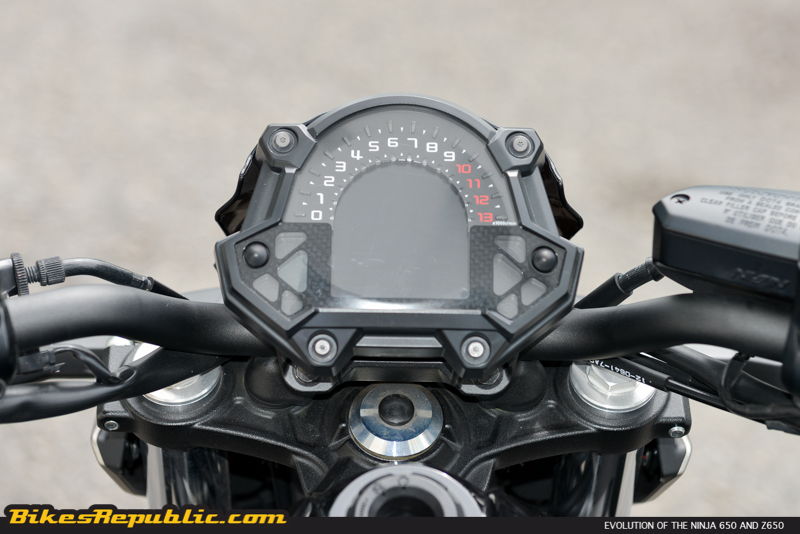
Unlike the Ninja 650, however, the instrument panel has a different design in order to fit behind that “flyscreen.” The tach is stacked on top of the LCD display, with the gear position indicator in the middle. The tach needle flashes at the rider’s preset rev limit.
The Z650 shares the same architecture as the Ninja 650 (more on this below), and as such it has the same seat height of 790 mm.

ENGINE

Kawasaki reengineered the familiar parallel-Twin engine to feature new cam profiles to reduce valve overlap duration (for better low-down and midrange torque); smaller, 36mm throttle bodies for smoother and precise throttle response; and a new exhaust system. These changes collectively result in a broader torque curve to provide the rider with power anywhere (in the rev range) at anytime it’s called upon.
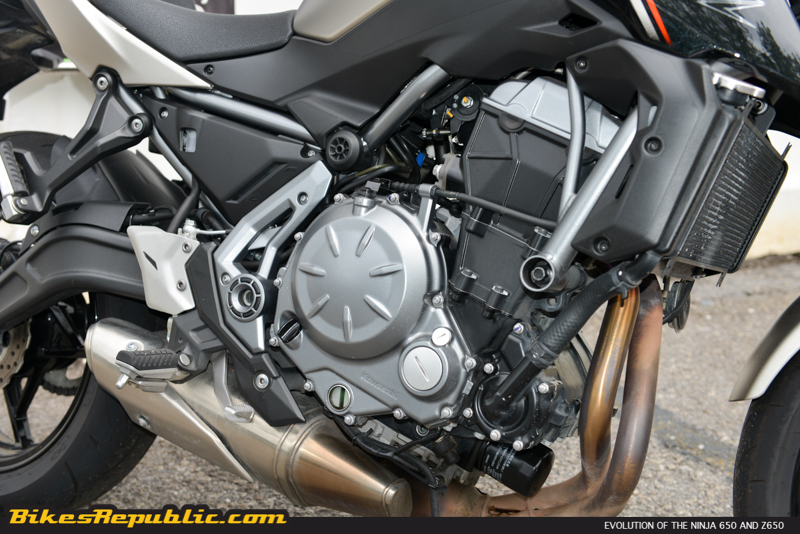
Any previous ER-6 owner, myself included, could tell you that the engine’s strong back torque (engine braking) could sometimes impede smoother cornering transitions (as you’re dragged back by heavy engine braking, which causes the bike to lose speed, followed by instability and the reluctance to turn, ultimately resulting in the rider losing confidence), besides encountering rear wheel hop (or even skid) if we downshifted too aggressively.

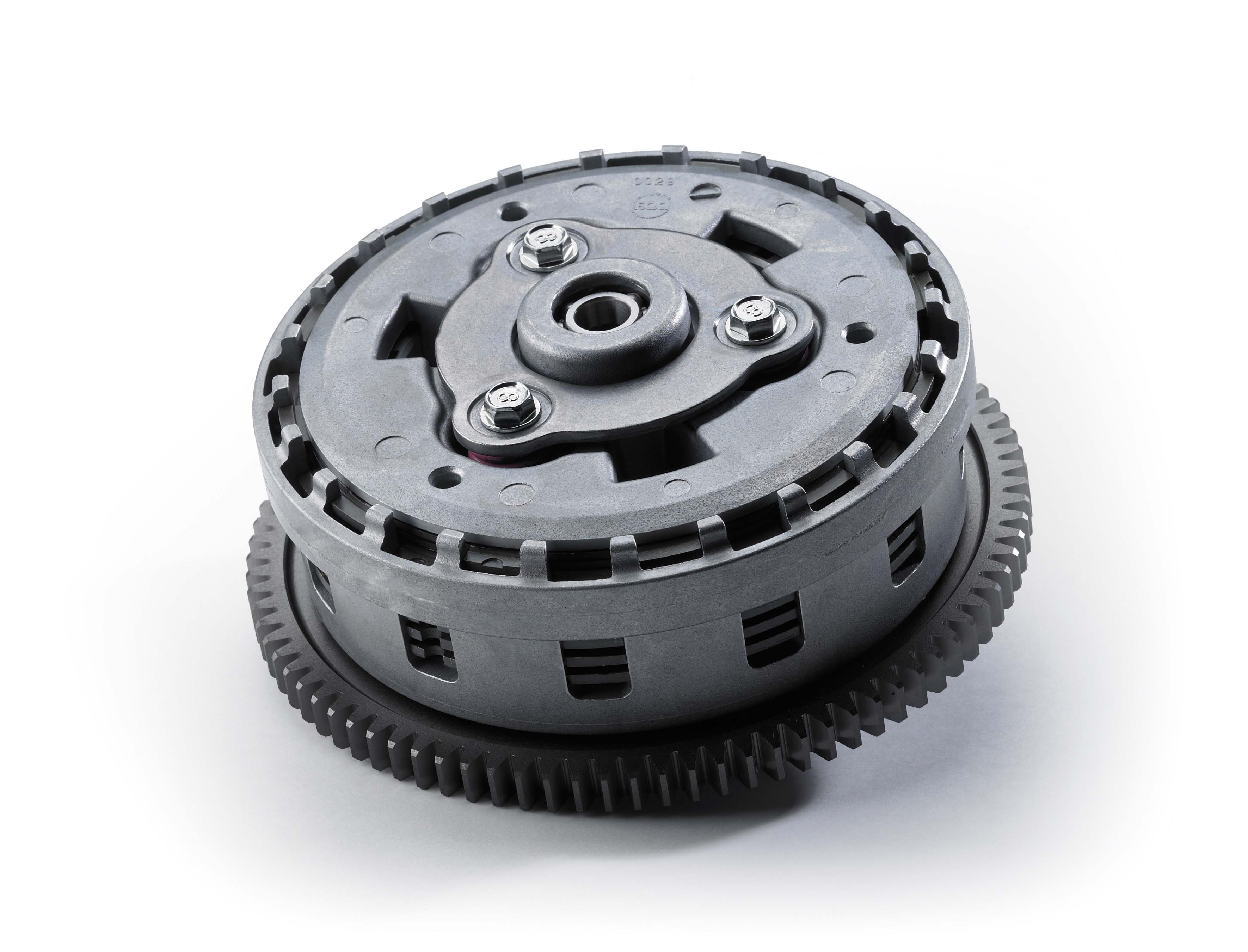
Kawasaki addressed this by adding an assist and slipper clutch. The slipper function is a nice addition, allowing for smoother corner entries and eliminating wheel hop. The assist function provides easier gear upshifting, by using cams that function as a servo mechanism which pulls on the clutch hub and operating plate together, to compress the clutch plates under acceleration.
FRAME AND CHASSIS

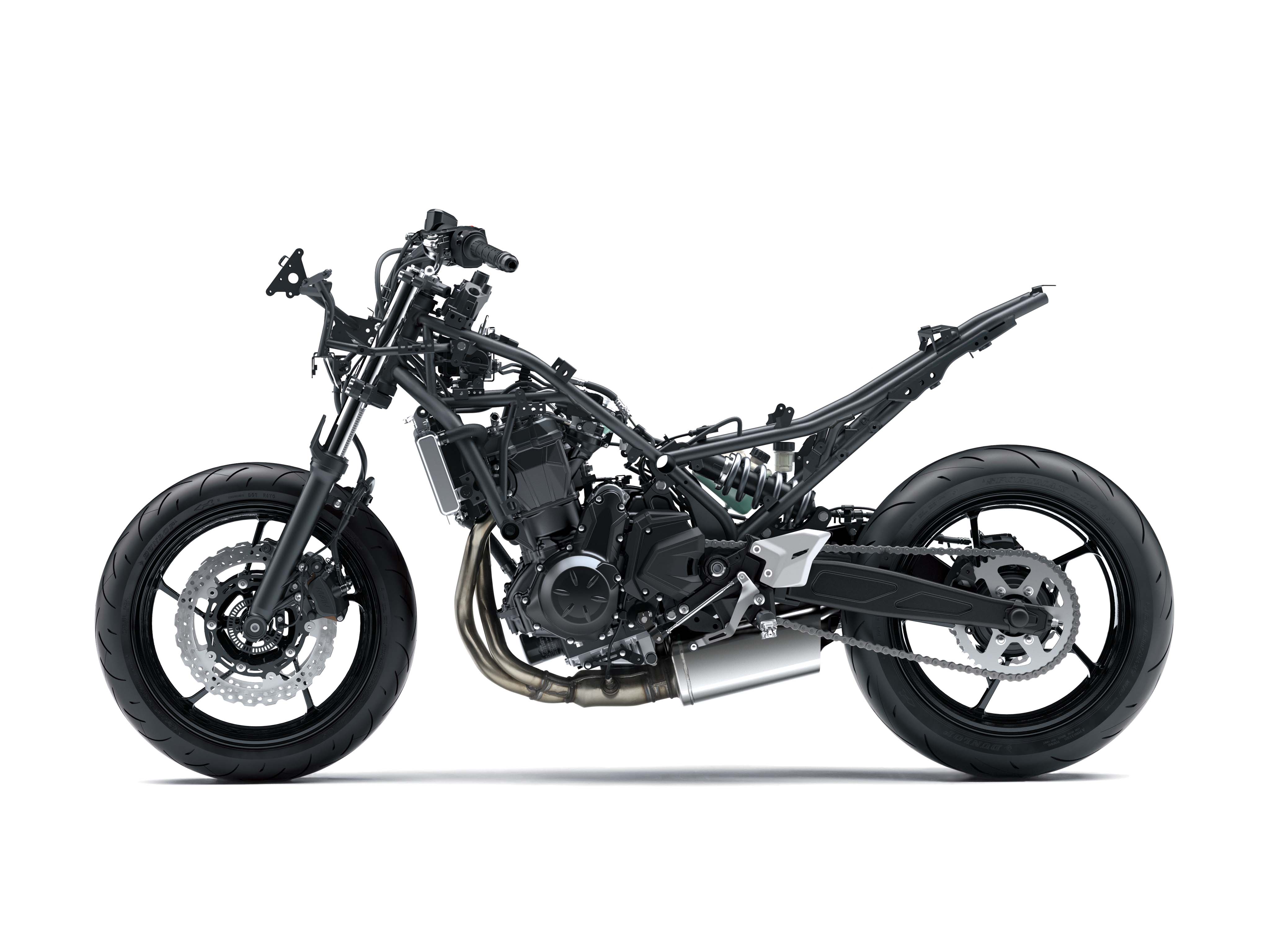
Kawasaki has also given the new 650s a new steel frame, which is 15 kg lighter than its predecessor –  contributing to a light 193 kg and 187 kg overall weight for the Ninja 650 and Z650, respectively. The sections are made as straight as possible to tune the frame for shock and load dispersion. Rake is at a sporty 24-degrees.
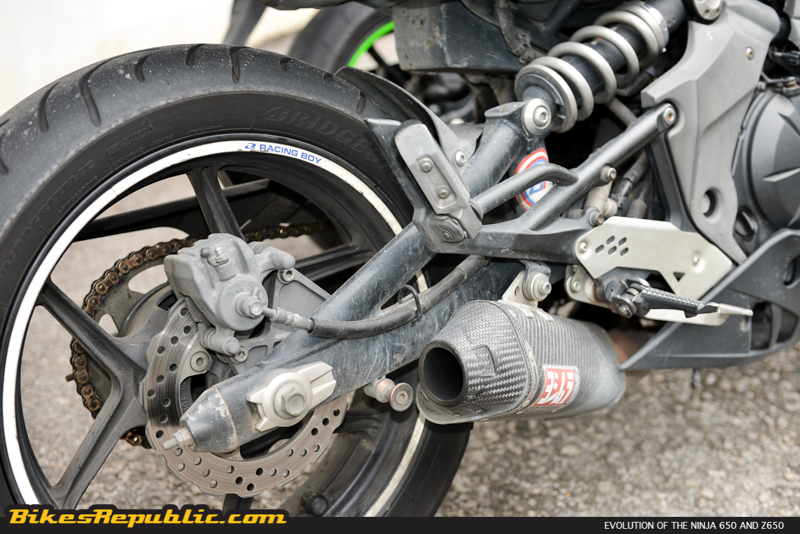
Moving downwards, the old ER-6 (and Versys) mounted their rear shocks on the right side of the motorcycle, connecting the frame and swingarm directly without a link. Adjusting the shock’s preload couldn’t be easier, but there are riders who complained of cornering imbalance (although this is subjective, as many motorcycles utilize this arrangement).
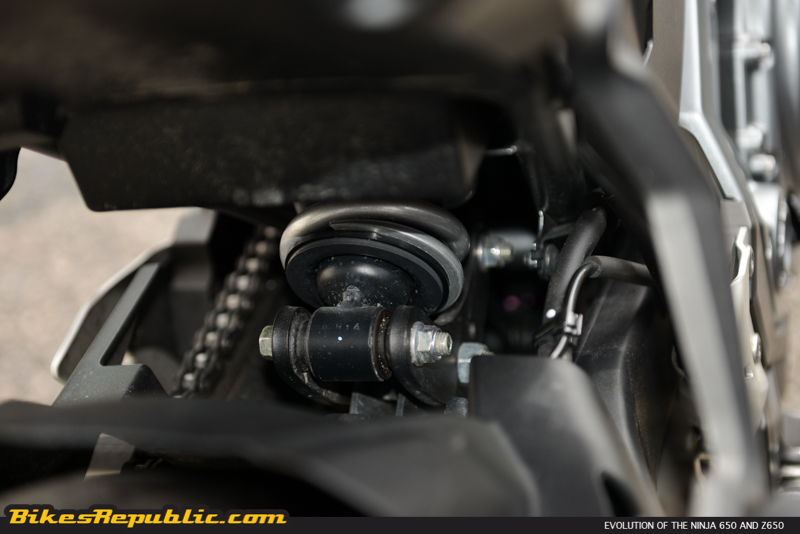
The new shock is now mounted in a horizontal back-link format for a more progressive action. But instead of installing part of the shock and linkage underneath the swingarm, they are positioned on top. This also ensures the components are moved away from the engine’s heat. The swingarm is now a curved unit (stronger while keeping the wheelbase short).
BRAKES

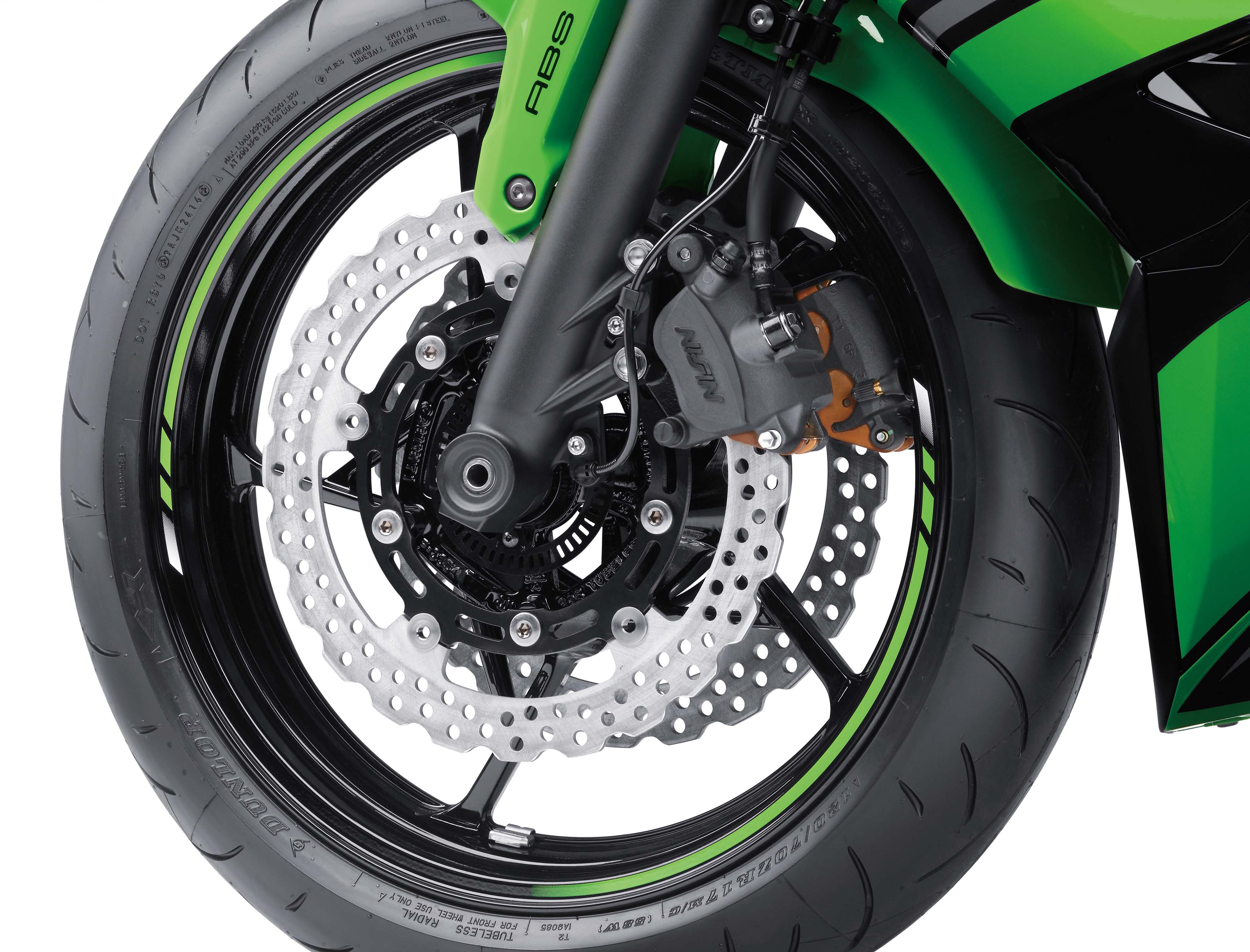
Braking is handled by a pair of dual-piston Nissin calipers gripping 300mm petal discs up front, while the rear is stopped by a single-piston caliper gripping on a 220mm petal disc. ABS is standard on both ends.
If a motorcycle is the sum of all its parts, then the it’s easy to see how the Ninja 650 and Z650 has evolved to be even better bikes. The answers are: Easy to approach, practical, economical, stylish while still being able to provide an exhilarating ride for both new and experienced riders.

Plus, the unbeatable price.
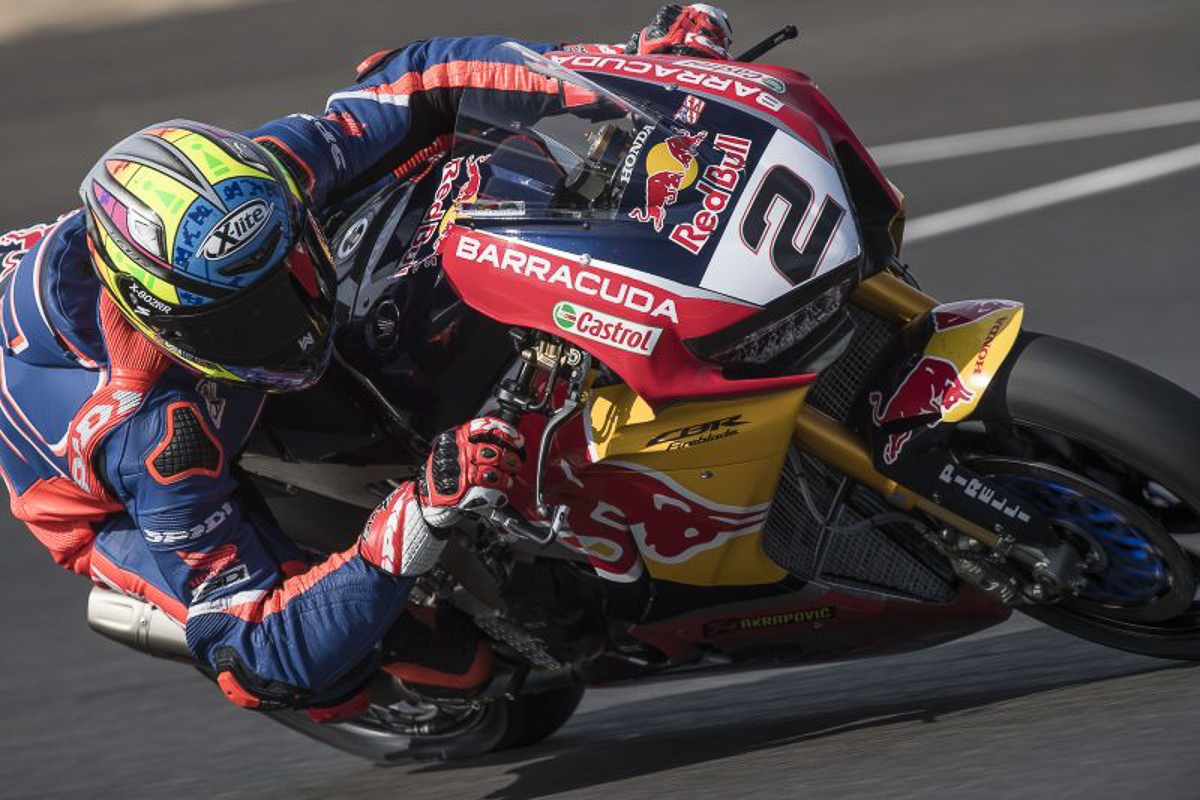
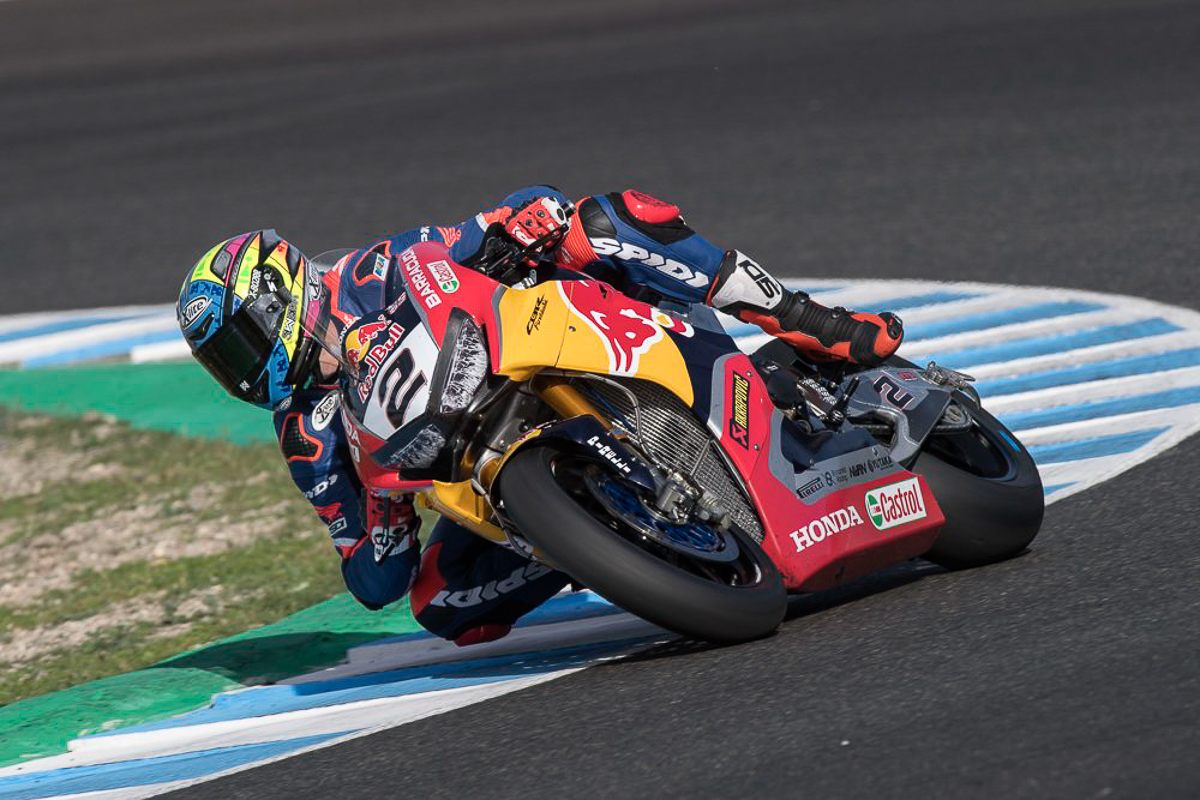
The Red Bull Honda World Superbike Team has announced that their second rider will be 25-year-old American, Jake Gagne.

Gagne stepped in a few races in this year as wildcard entries after the tragic loss of beloved rider, Nicky Hayden.

Jake Gagne will be racing together with another new Red Bull Honda rider, Leon Camier.

After several wildcard entries for the factory Honda squad in last year’s WorldSBK season, Jake Gagne has finally got his opportunity to race full time. The 25 year old from California USA will be racing for the Red Bull Honda outfit together with double British Superbike Champion, Leon Camier. (more…)

  • The Honda CRF1000L Africa Twin is a lovely machine to ride.

  • But it’s rather large and tall, especially for most Asians.

  • Honda is aware that they don’t have a middleweight adventurer.

Many fans jumped for joy when Honda announced the revival of the Africa Twin in 2015. It wasn’t only the international crowd who had loved the Africa Twin, for there were many in Malaysia during the late-90’s and early-20’s, too.

I too, fondly remember those tall machines in white, red and blue complete with handguards, metal grill protectors for the twin headlamps, massive fuel tank/radiator shroud, an also huge sump guard, and a booming exhaust note. It looked like it could bash through the jungle for breakfast right out of the box!

XRV750 Africa Twin

In fact, the XRV750T final version in 2003 looked like it ate a Honda CBR900RR Fireblade on its way to the mountains.

The first model, the XRV650 was actually built by the Honda Racing Corporation (HRC) itself. Yes, the people behind all of Honda’s racing motorcycles. Some people actually called it the “RC30 of off-road.” It was based on the Honda NXR-750 which won the Paris-Dakar Rally four times in the Eighties.

We came across this immaculate XRV650 at Motonation 2017

The 650 became the XRV750 Africa Twin, the most famous model that we saw here. But it had never been exported to the US.

When Honda stopped its production in 2003, many were heartbroken.

Now with a 1000cc, 270-degree crank (to mimic the firing order of a 90-degree V-Twin), parallel-Twin engine and Honda’s Dual Clutch Transmission (DCT) option, the new CRF1000L Africa Twin promised to be a much better, much more contemporary iteration of the famed heritage and lineage when it was launched for 2015. (Click here for our First Impressions.)


2016 Honda Africa Twin DCT

I managed to finagle a short ride on a CRF1000L in Thailand during the GIVI Golden Triangle Adventure 2017. There was a total of three Africa Twins on the ride, two of those with DCT. It was an amazing machine to ride: Its poise, balance, comfort, the torque of its engine. But it was tall and that made it rather heavy to manage in busy urban environments. It towered over the Kawasaki Versys 650 and Suzuki V-Strom 650, and it was the bike that made the 2013 BMW R 1200 GS LC look err… short and squat.

However, if you’ve the blood for adventure and insists on a smaller Honda, you could choose from the crop consisting of the CRF250L or CRF250 Rally, CB500X, NC700X and NC800X, but they are nowhere near Africa Twin territory.

Honda knows this. Kenji Morita, Large Project Leader for the Africa Twin said, “When we speak about pure adventure, we don’t have a wide line-up. And yes, we are thinking of putting a halfway model to attract younger riders.”

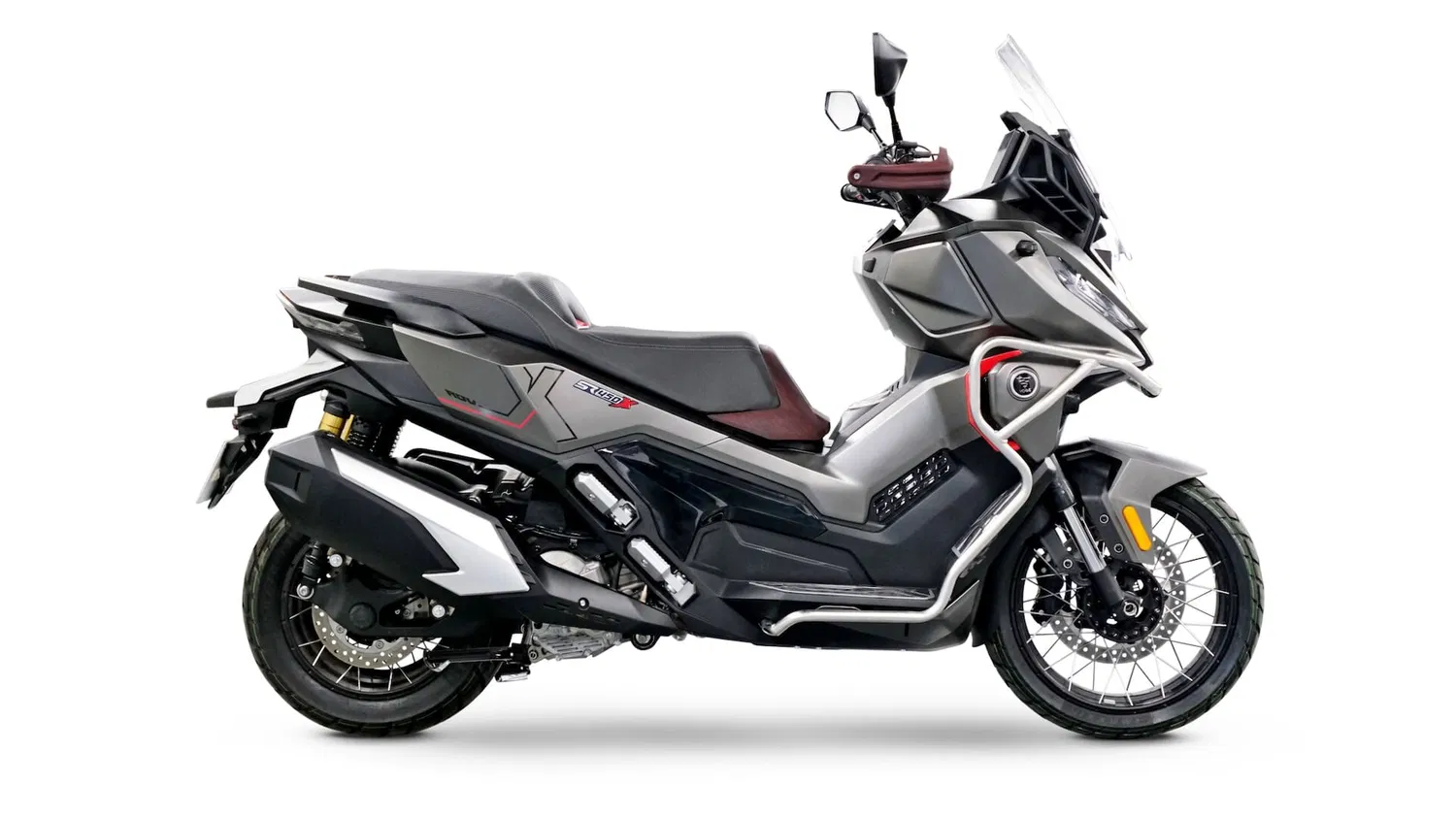
Honda already has a 750cc parallel-Twin which powers the NC750X and X-ADV (we rode this in Thailand too. It was awesome!). But that would create a product line with models too close to each other. So, how about a new 650cc engine as the direct link to the original XRV650 Africa Twin?

This is a segment in which Honda could not afford to miss out, since the middleweight adventure (750cc to 800cc) market has now become THE most contested territory. It is currently being fought over tooth-and-nail by the BMW F 850 GS, Triumph Tiger 800, KTM 790 Adventure and soon to be launched Yamaha Ténéré 700.

Honda says they aren’t working on the smaller Africa Twin as yet, but you can bet the Red Giant isn’t going to sit still, so watch this space.
Archive

Follow us on Facebook

Follow us on YouTube