Bikesrepublic

Latest News

  • The 2019 Yamaha Tracer 900 GT brings many yet subtle revisions to the line-up.

  • Yet these revisions add to one great motorcycle.

  • It’s price is really difficult to ignore.

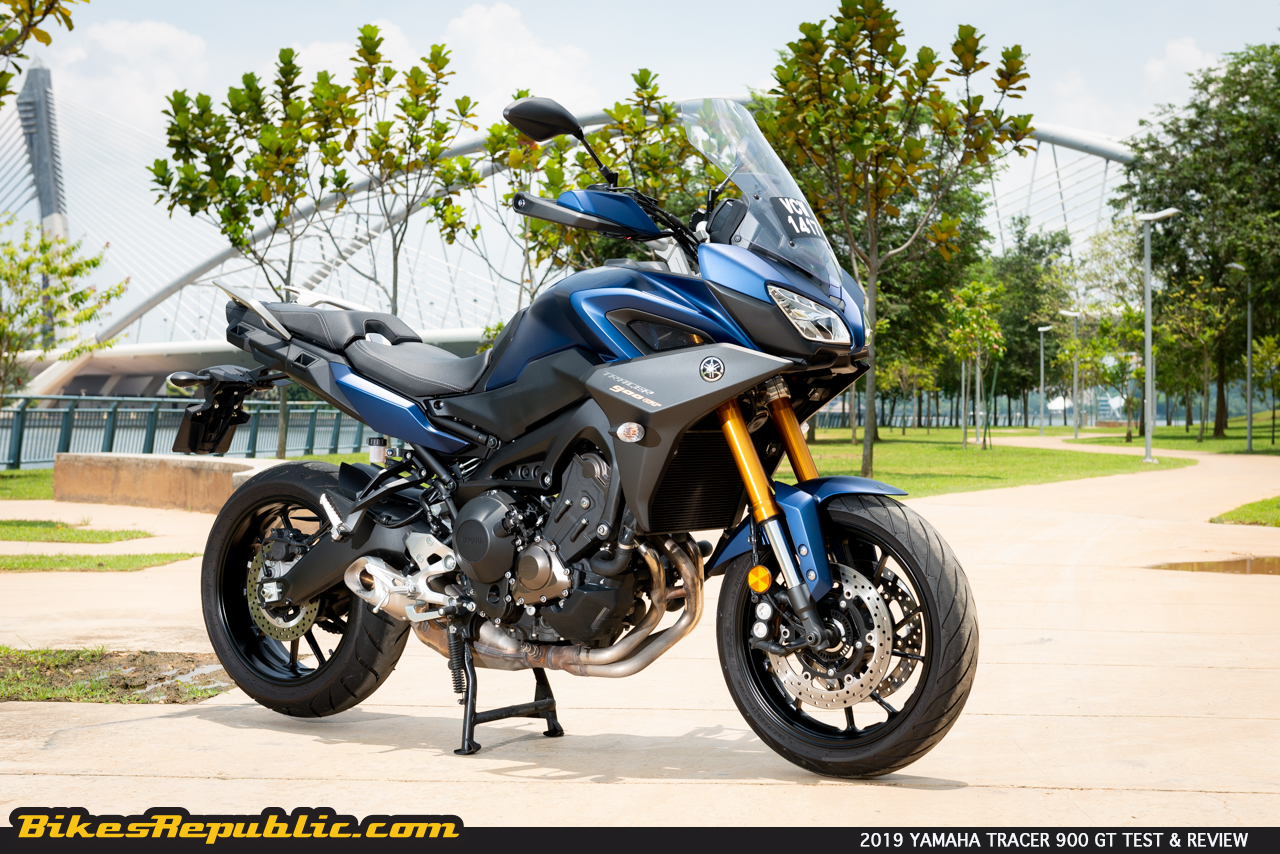
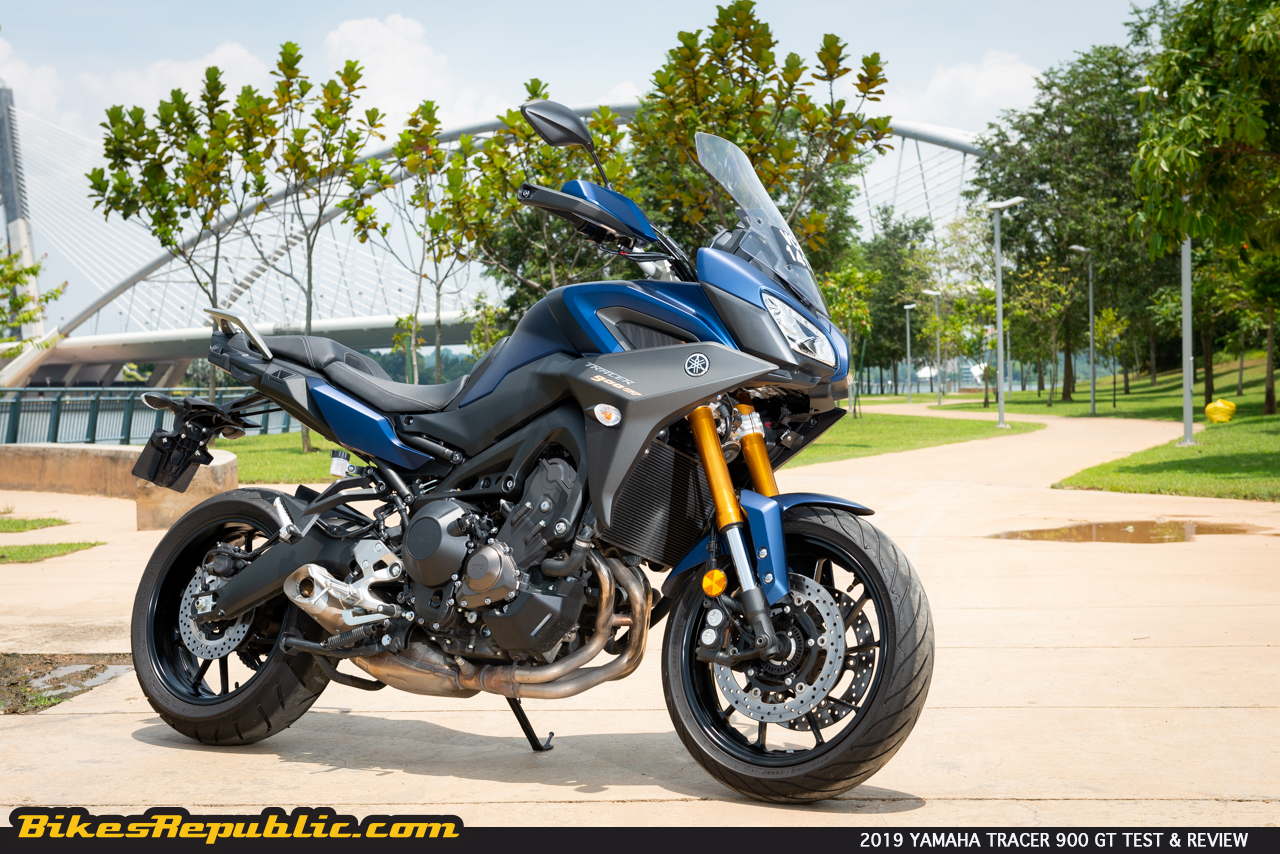
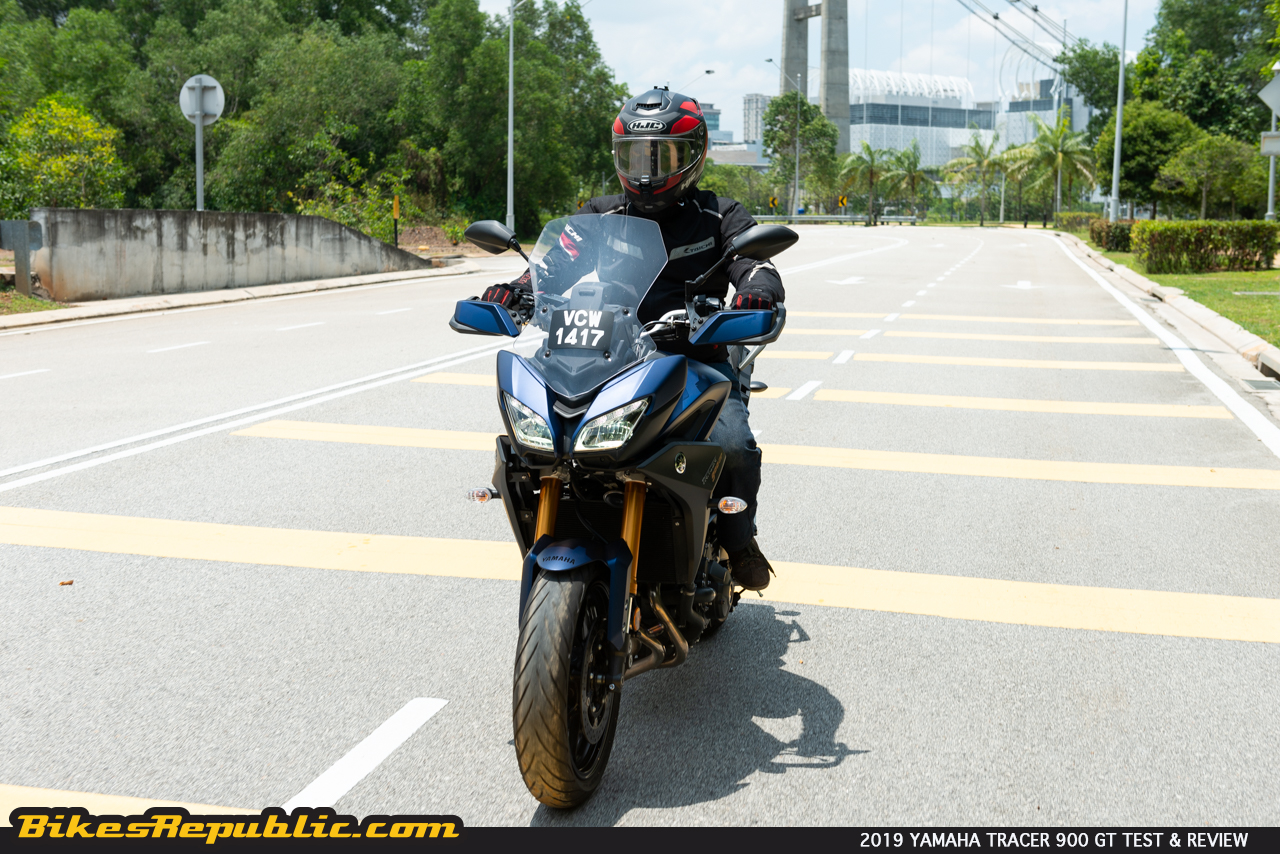
The 2019 Yamaha Tracer 900 GT now wears the hallowed “GT” moniker.

GT stands for Gran Turismo, or Grand Touring in Italian. The GT name usually alludes to a sports car that is not only fast but coddles its occupants in great comfort. Best examples of GT are the Lamborghini Avantador, Ferrari F8, Porsche Turbo and those in the same ilk.
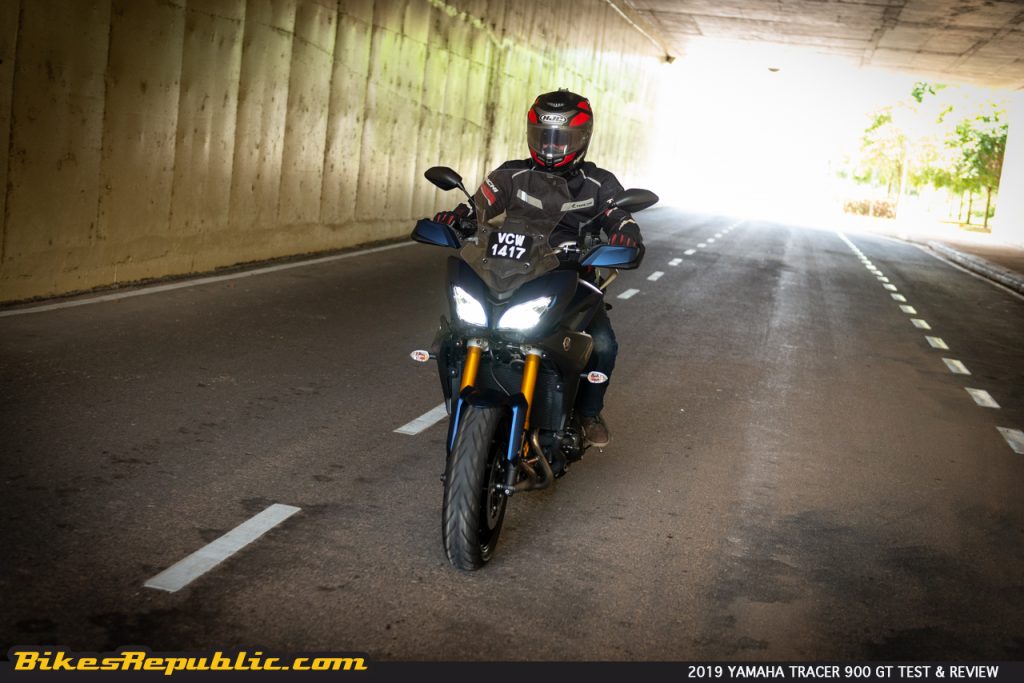
Well, looks like have to find out if the Tracer 900 GT is worthy of the designation, since Yamaha placed it as such, don’t we?

Introduction to the 2019 Yamaha Tracer 900 GT

The model was unveiled in Malaysia earlier this year and it seems like its manufacturer listened to their customers’ feedback in making the 900 GT even better than its predecessor, the MT-09 Tracer.

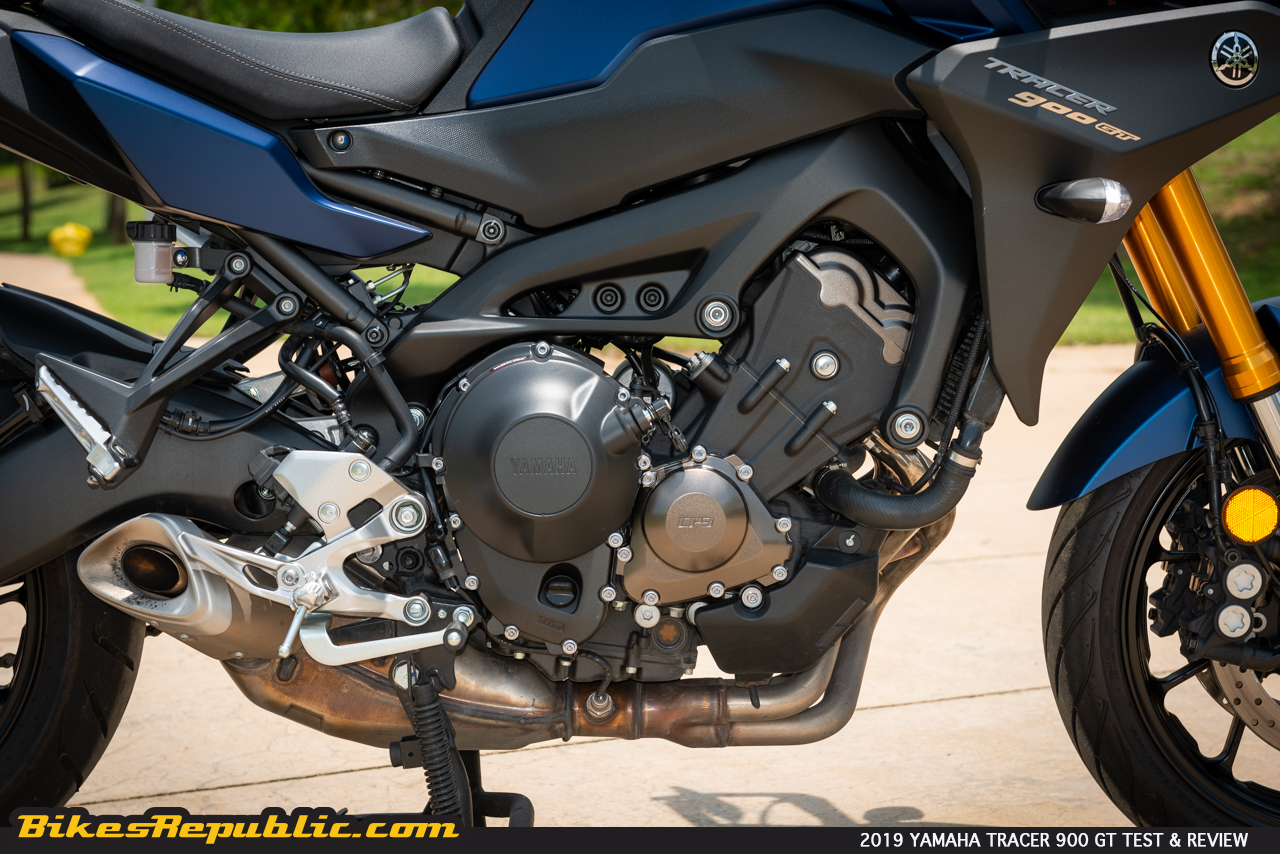
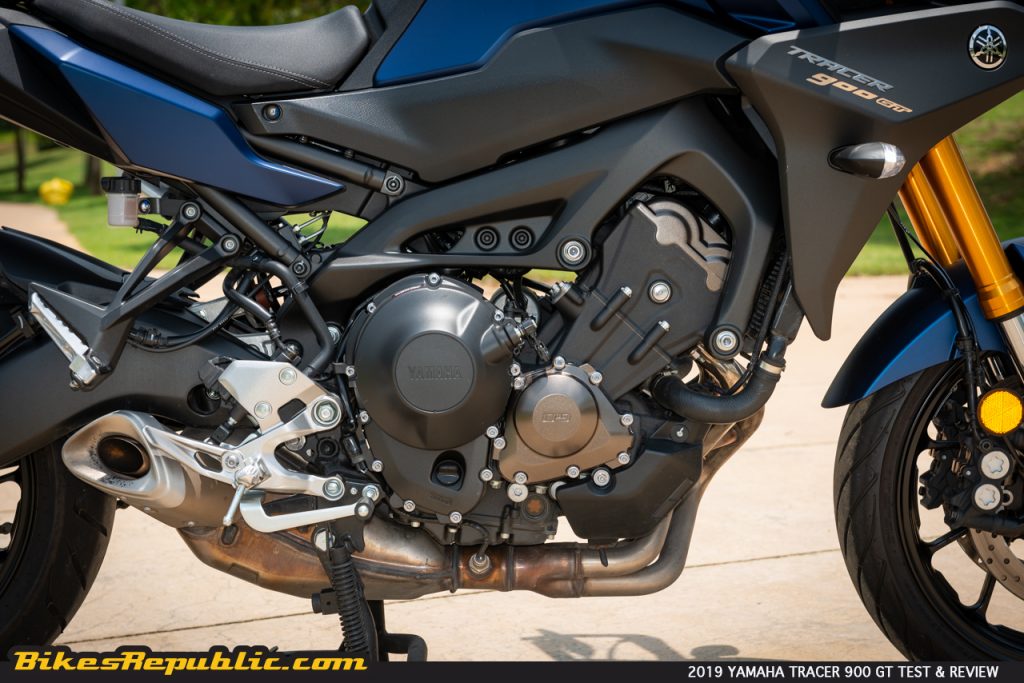
So, while both bikes are almost identical in terms of styling, there are almost worlds apart when ridden. Sure, the inline-Triple CP3 engine sourced from the MT-09 is retained along with 115 hp and 87.5 Nm, as with the frame. However, the bike is almost completely new.
Highlights and revisions

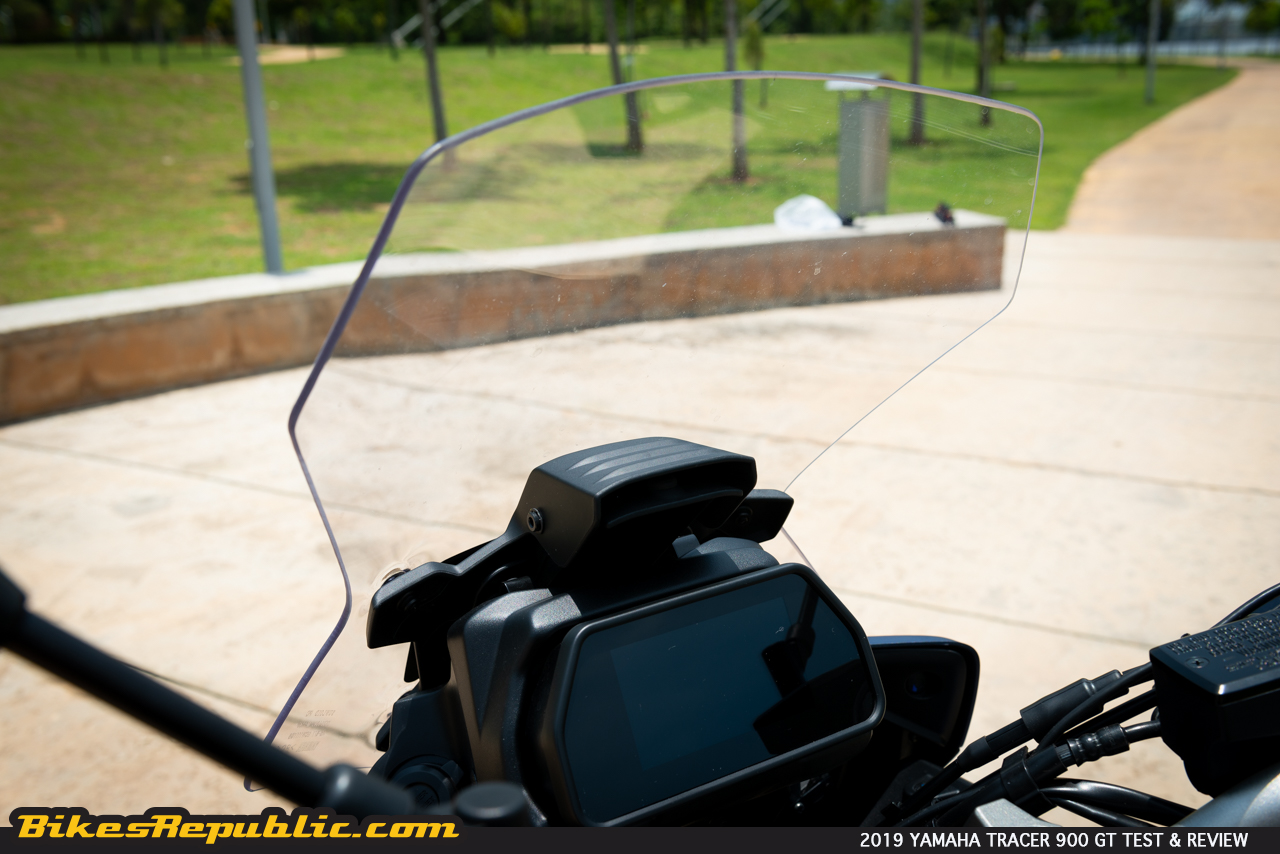
  • The larger windscreen is now adjustable.
  • Cruise control.
  • Quick Shifter (upshifts only).
  • Cruise control.
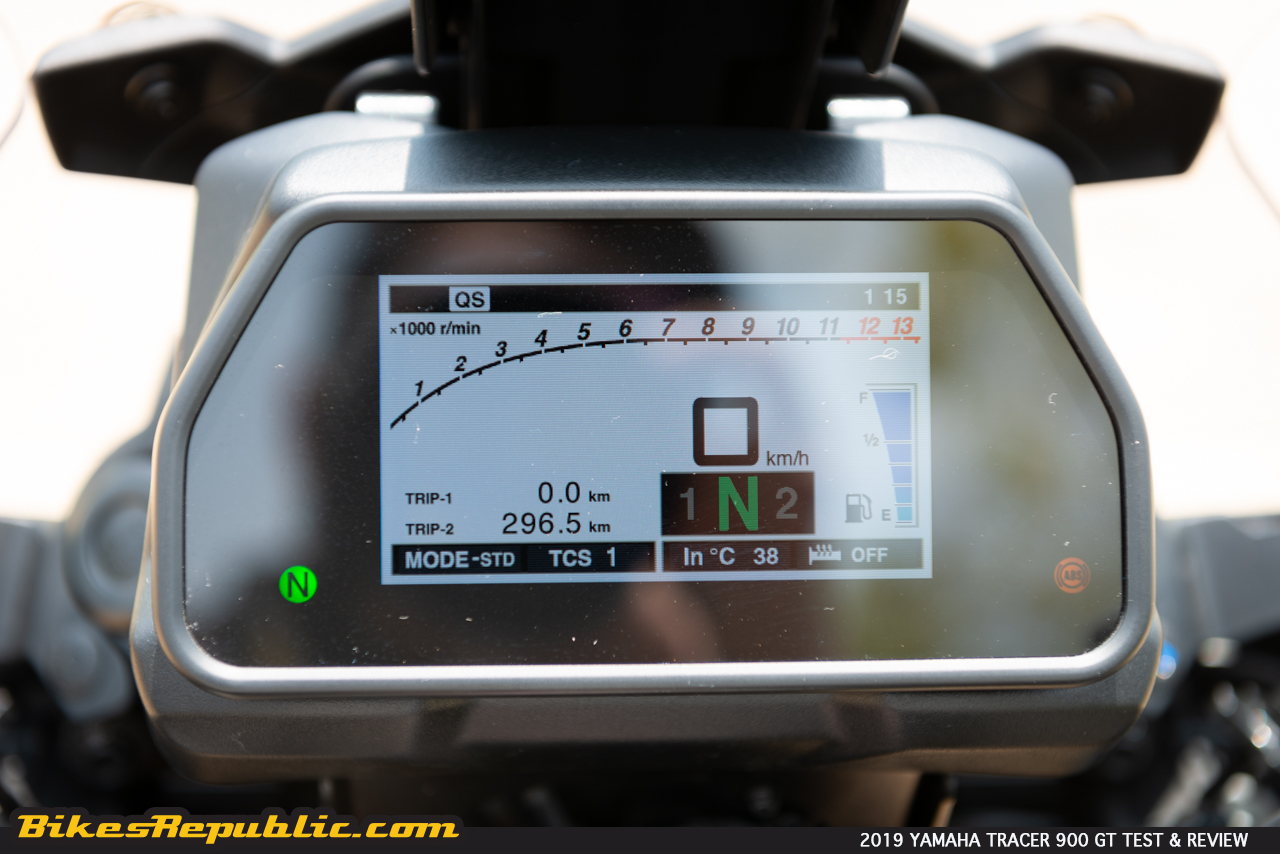
  • Thin Film Transistor (TFT) display.
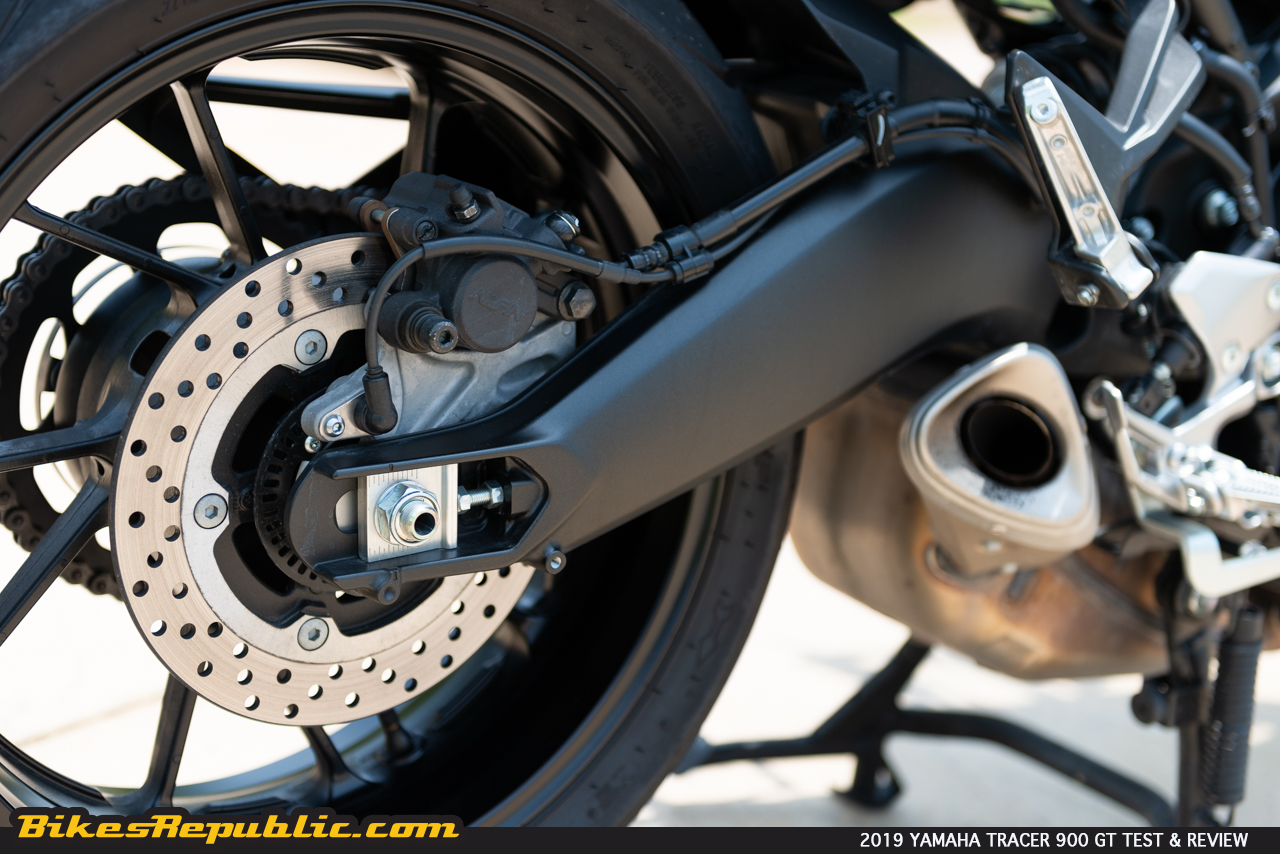
  • Swingarm extended by 60mm.
  • YCC-T ride by wire.
  • D-Mode engine power selector.
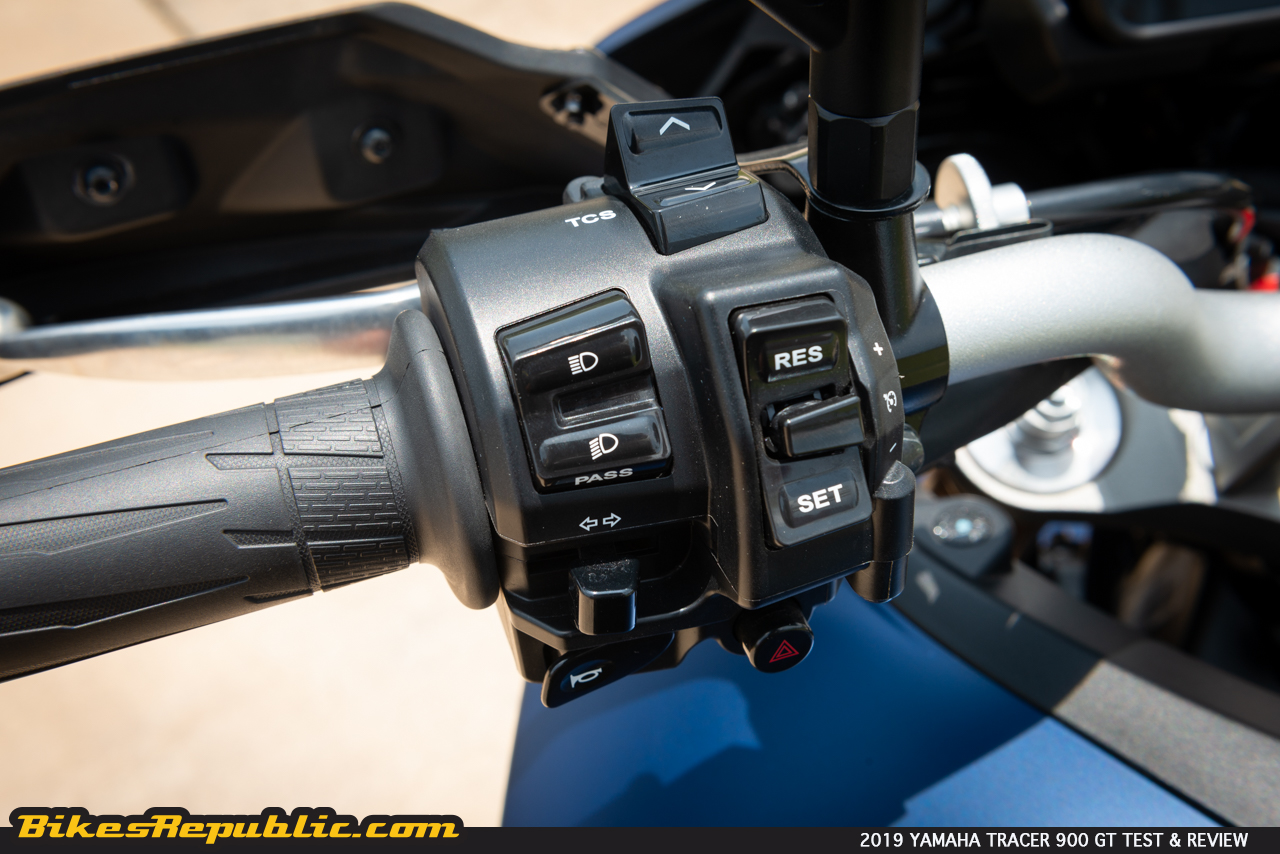
  • Switchable traction control system (TCS).
  • 60 mm longer swingarm.
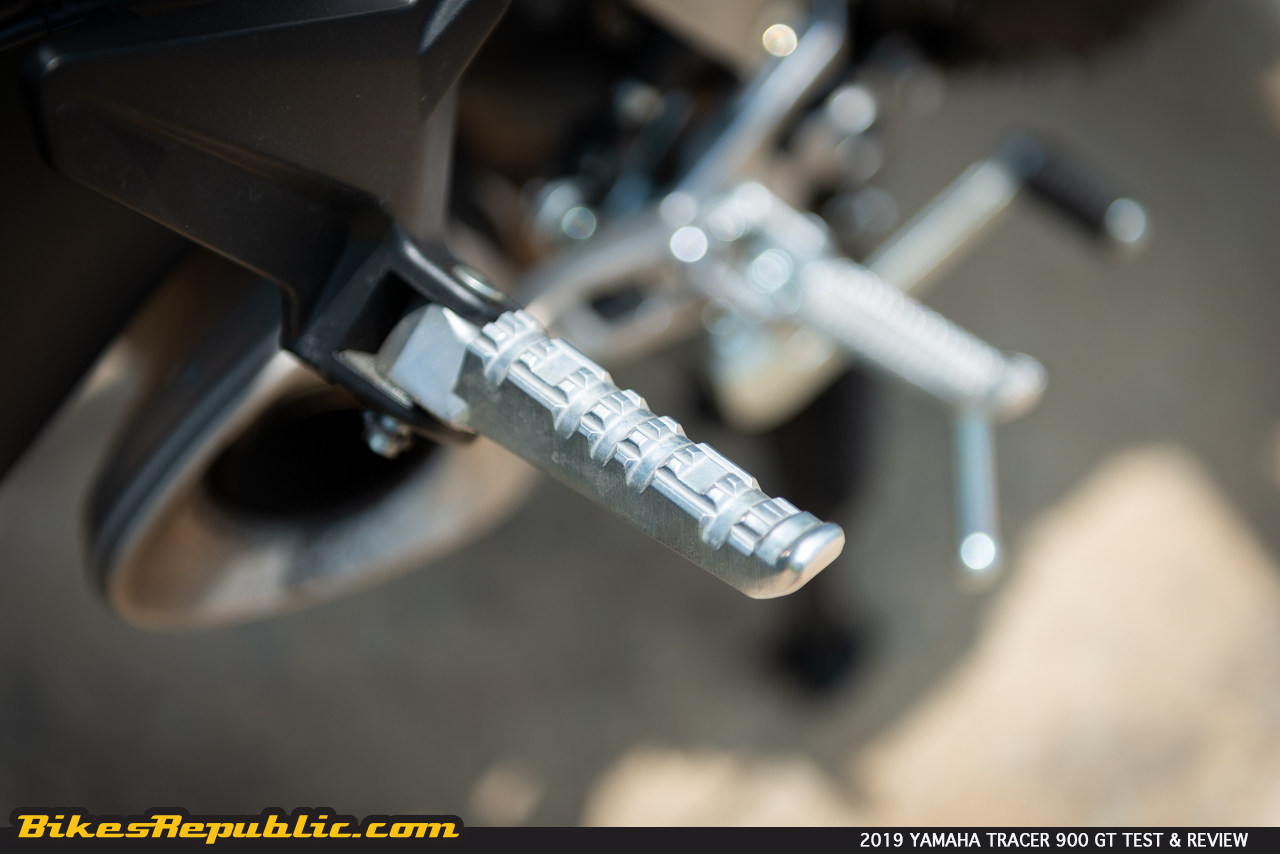
  • 30 mm longer passenger footpegs.
  • Narrower handlebar.
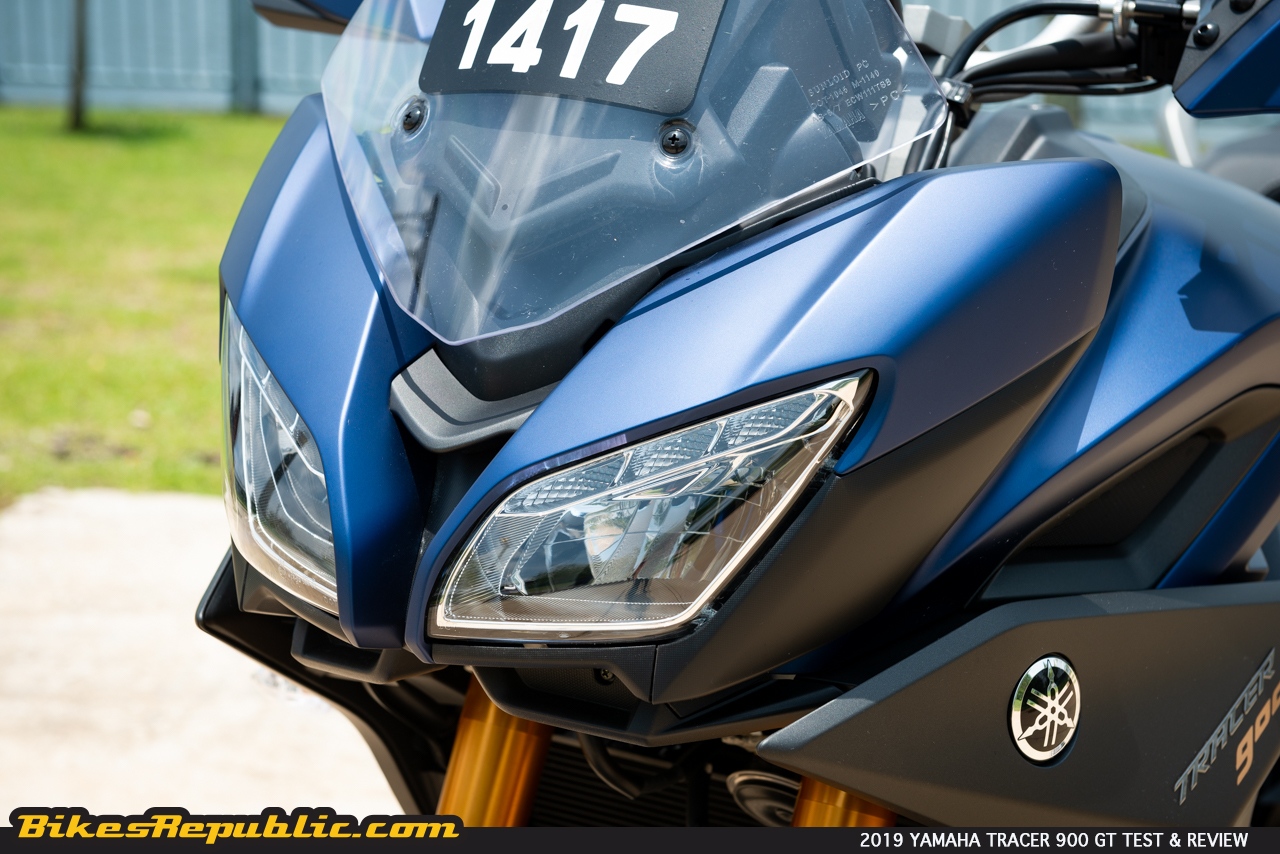
  • LED lighting (except the turn signals).
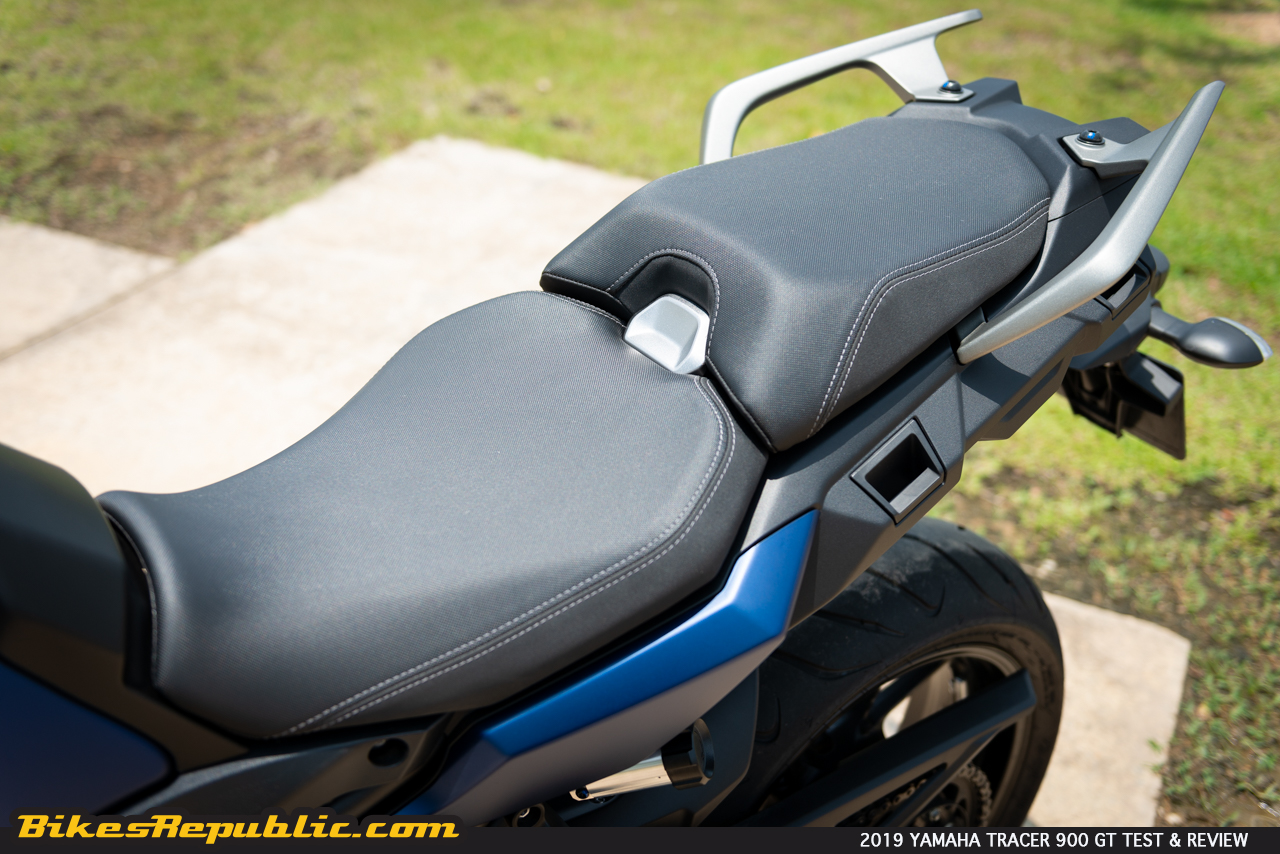
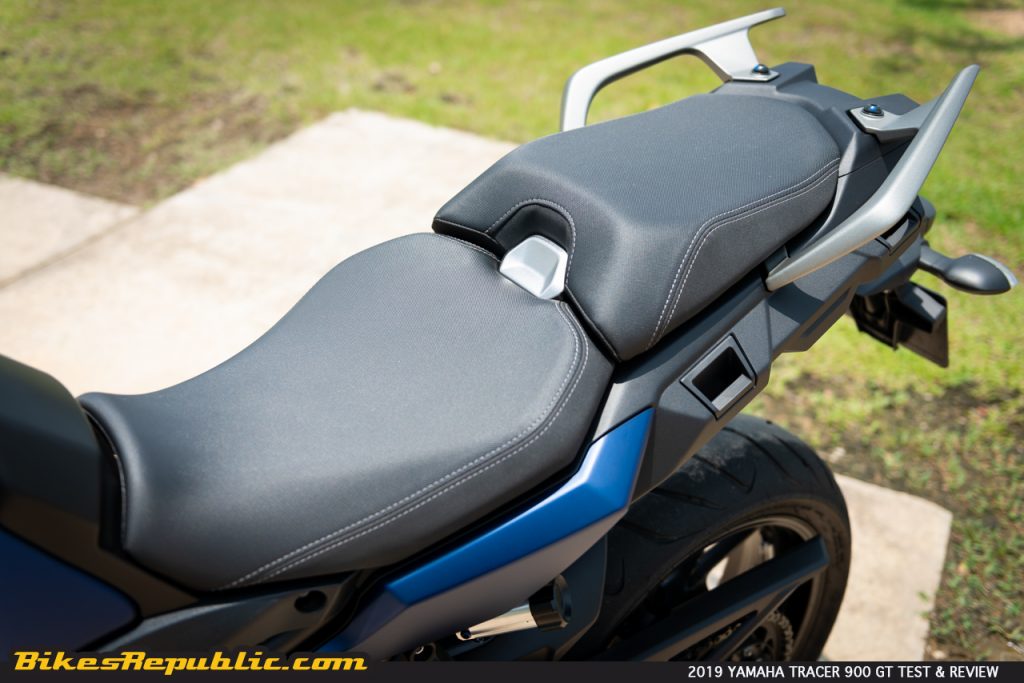
  • Comfort seats.
  • Revised rider ergonomics.
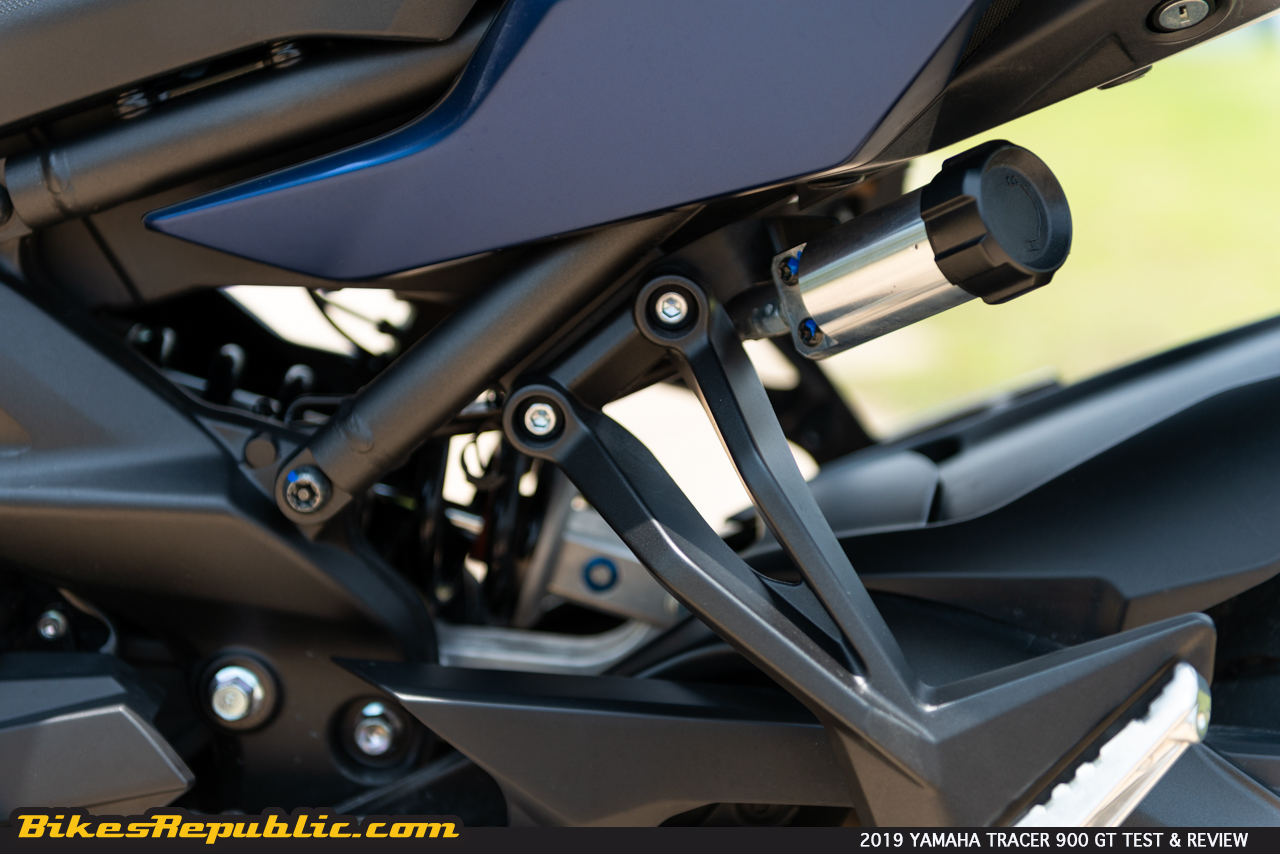
  • Larger passenger grab bars.
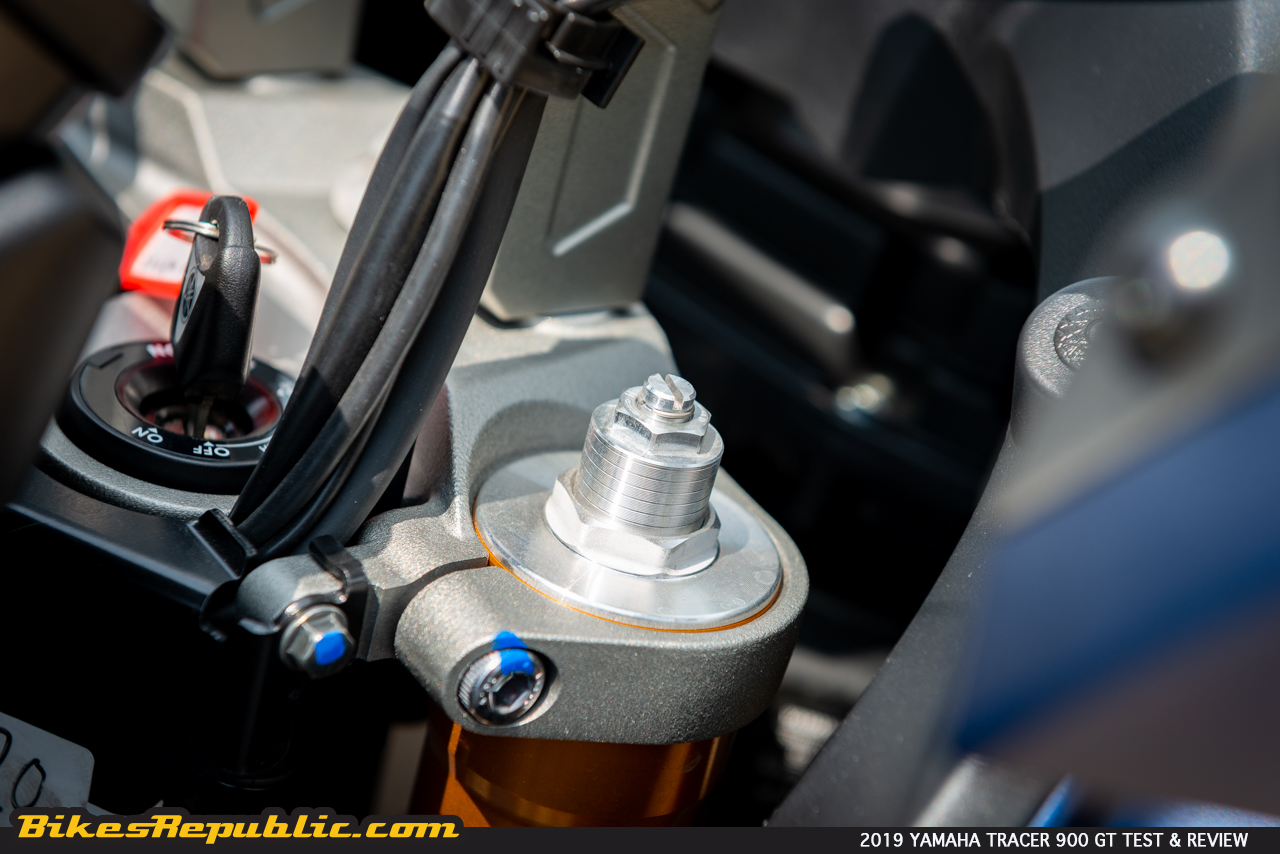
  • Fully-adjustable forks.
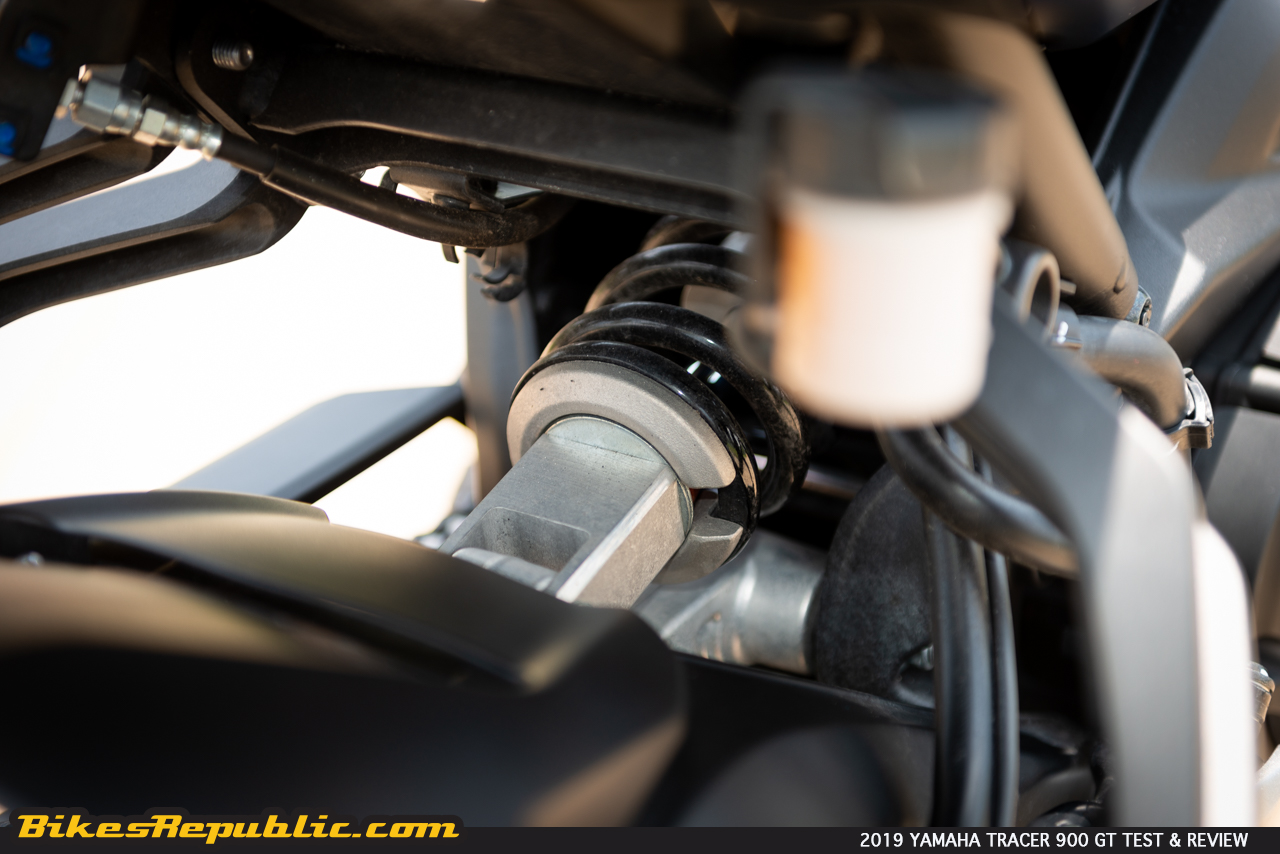
  • New rear shock with remote preload adjuster.
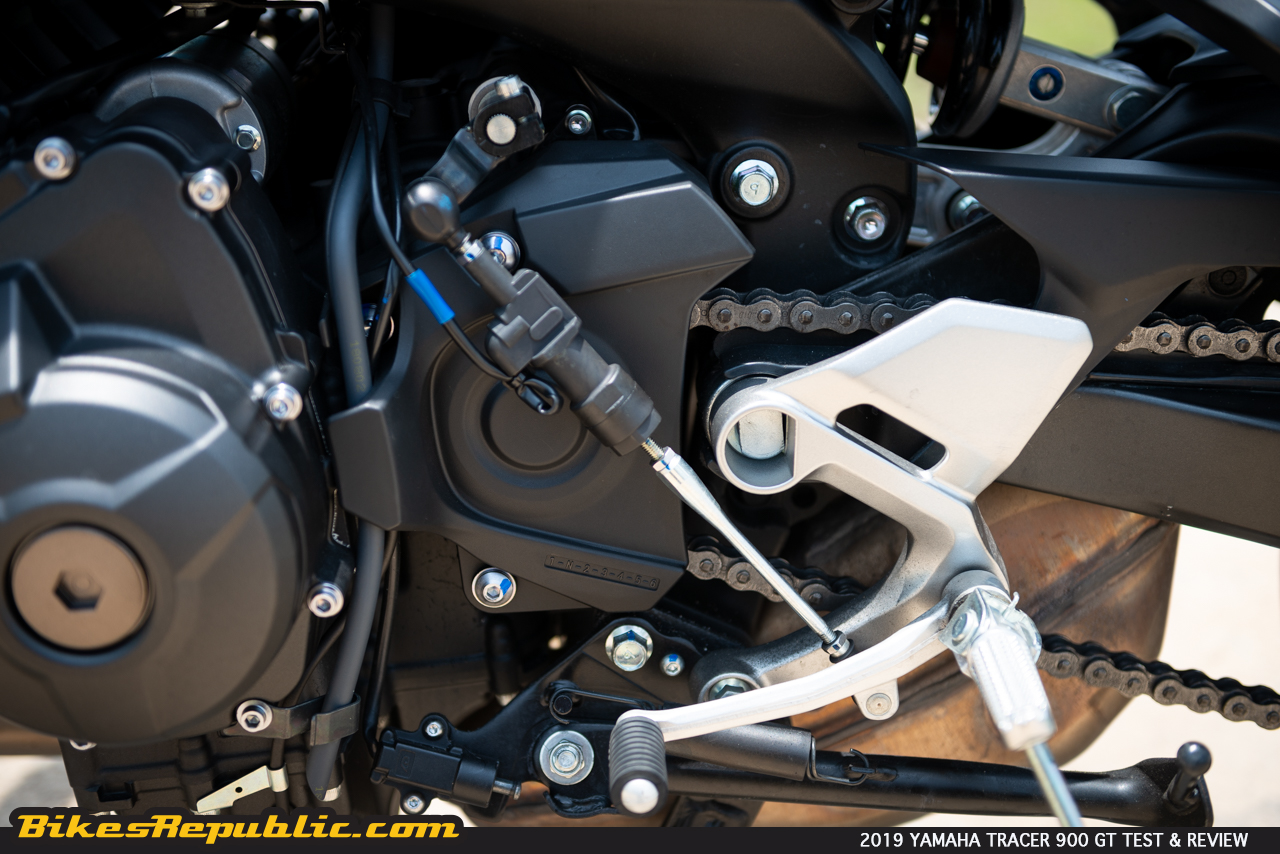
  • New centre stand.

Riding impression

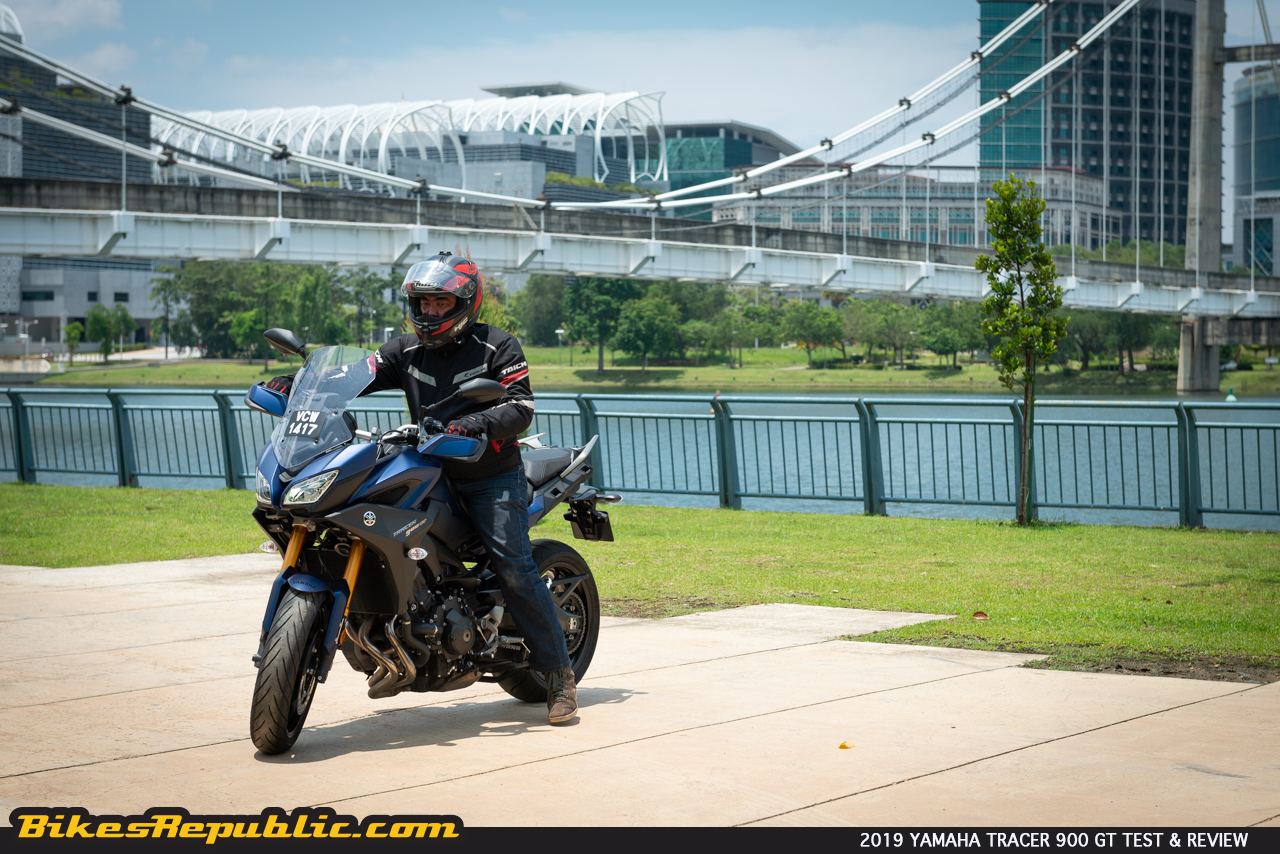
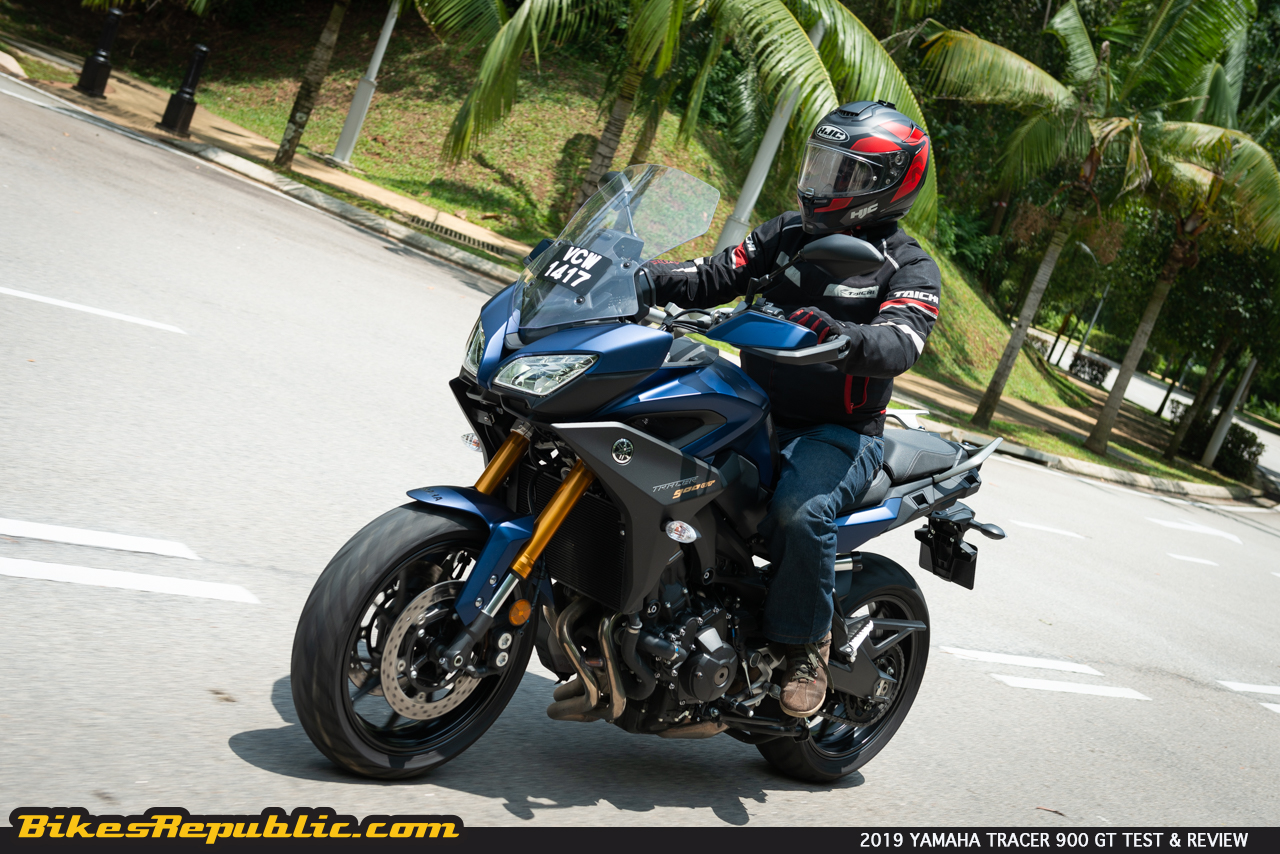
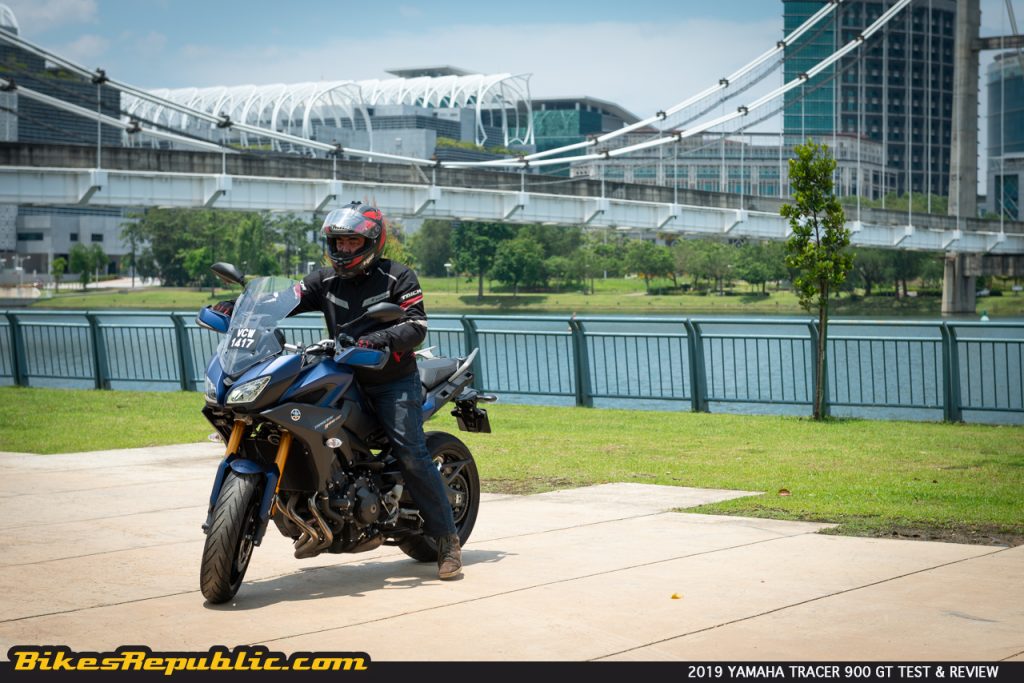
Again, the changes are subtle on paper, but they add up to a greater effect. The handlebar was first inkling of the changes when you climb on. It’s now only narrower but also moved back to meet the rider. The change gives the rider a slightly forward slant of the upper torso, putting more weight on the front end and feeling natural at the same time.
You now stare at a TFT screen instead of the previous yesteryear-looking LCD cluster. However, the size of the TFT on the Tracer 900 is rather small… especially for someone who’s getting older like me. Still, it’s a welcome change from the Super Tenere’s “TV screen.”
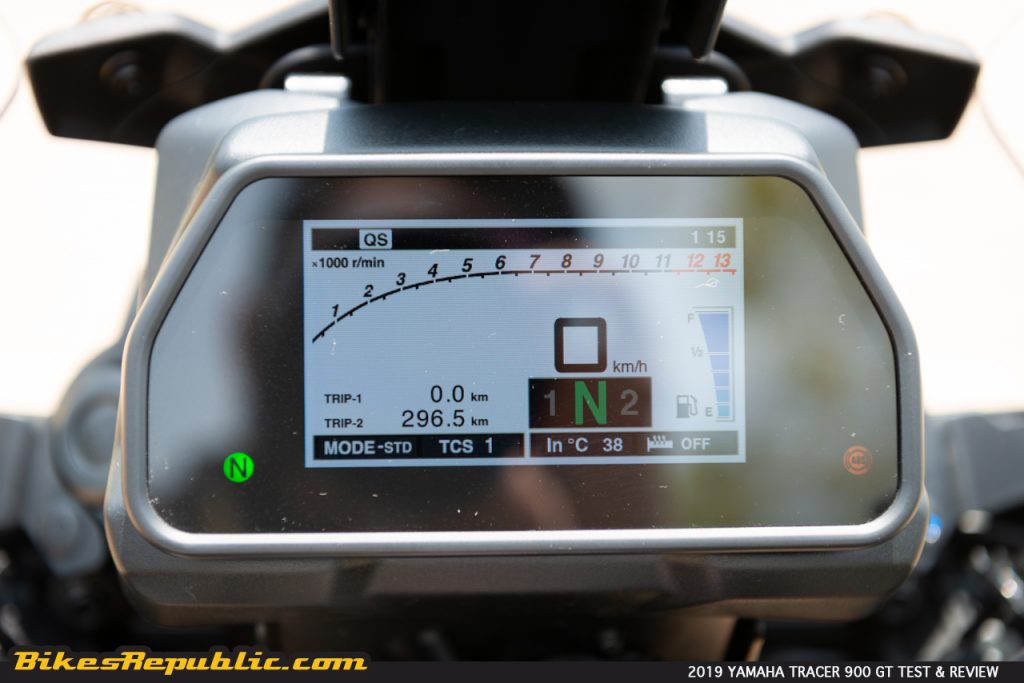
That’s because every aspect for performance, riding data and setup is carried out through the screen, through a new scroll thumb wheel on the right switch handlebar.
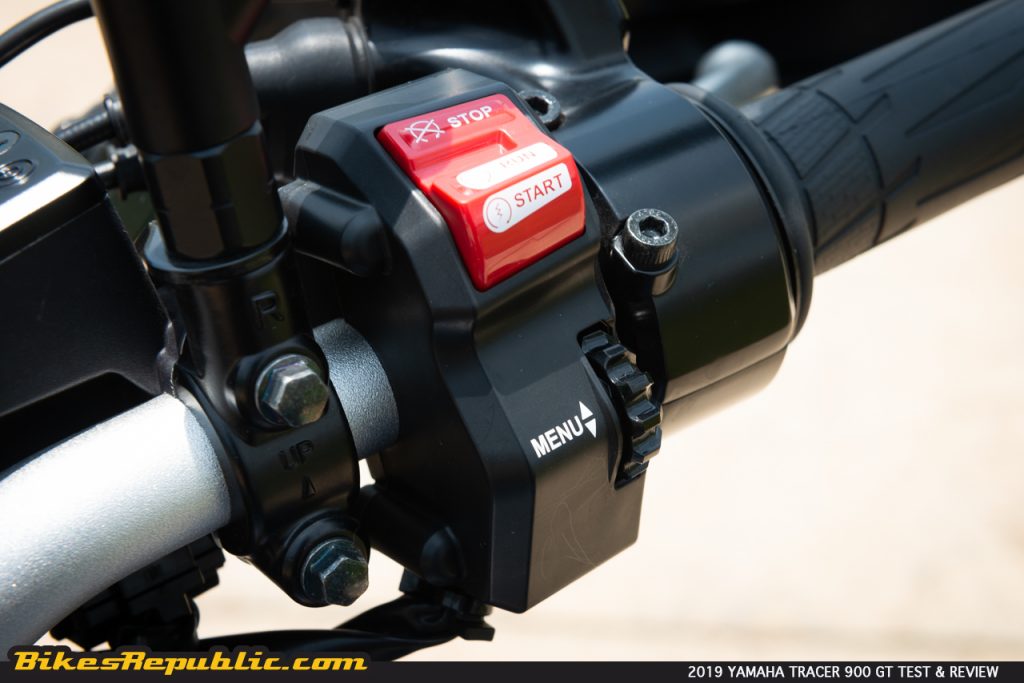
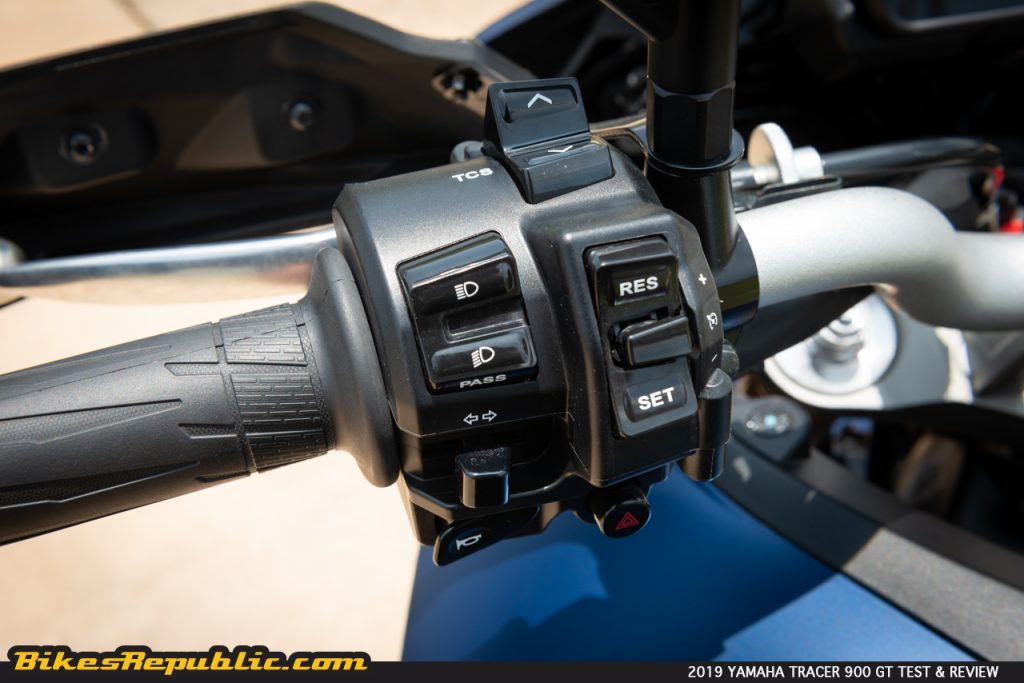
As for riding modes and TCS levels, you need to select your preferred combination before you start riding, because you can’t do so while the bike is on the fly. Instead, you have to stop the bike or coast in Neutral at low speeds to change the D-Mode. Bummer.

The three D-Modes are carried over from the MT-09 and MT-09 Tracer, providing a quick reaction to throttle movements. The acceleration was exhilarating and addicting, least to say, as you grab one gear and another using the quickshifter!
Such reactions used to be the biggest irritation for its forebears, but no longer!

The solution wasn’t in the throttle feel, but the suspension, instead. The rear shock is new and looks beefier than the old unit. It’s still adjustable for preload and rebound damping, but now it doesn’t pump and down through high-speed sweepers. Tuned correctly, the Tracer 900 GT is one of the nimblest bikes in the market.
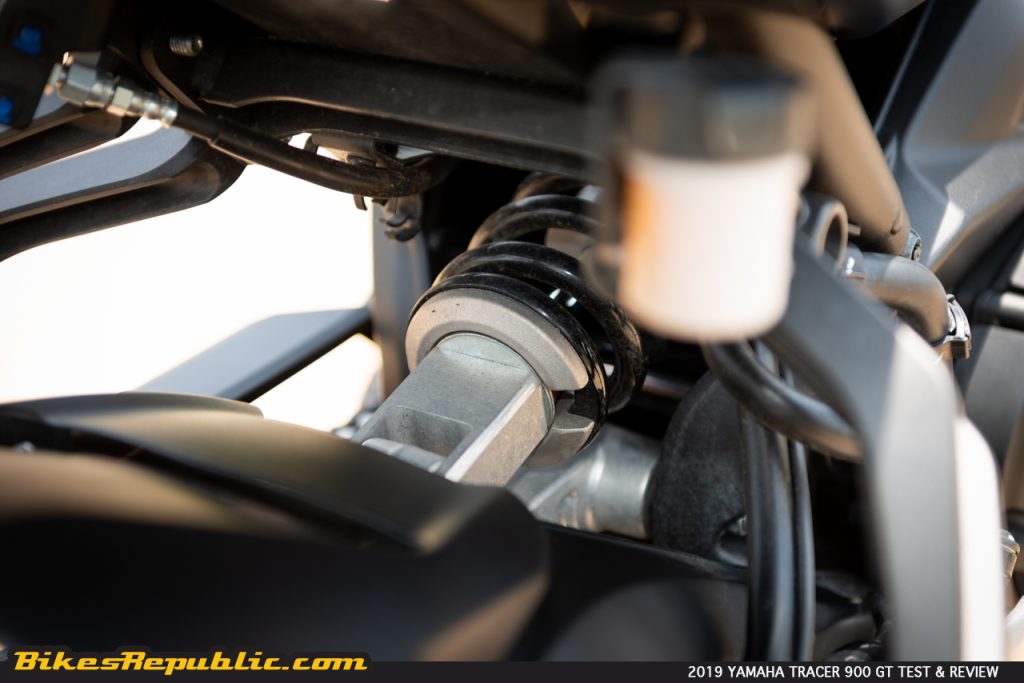
My spouse takes on the role of backseat reviewer and ranked the seat’s comfort higher up the scale, plus the better-acting new rear shock.

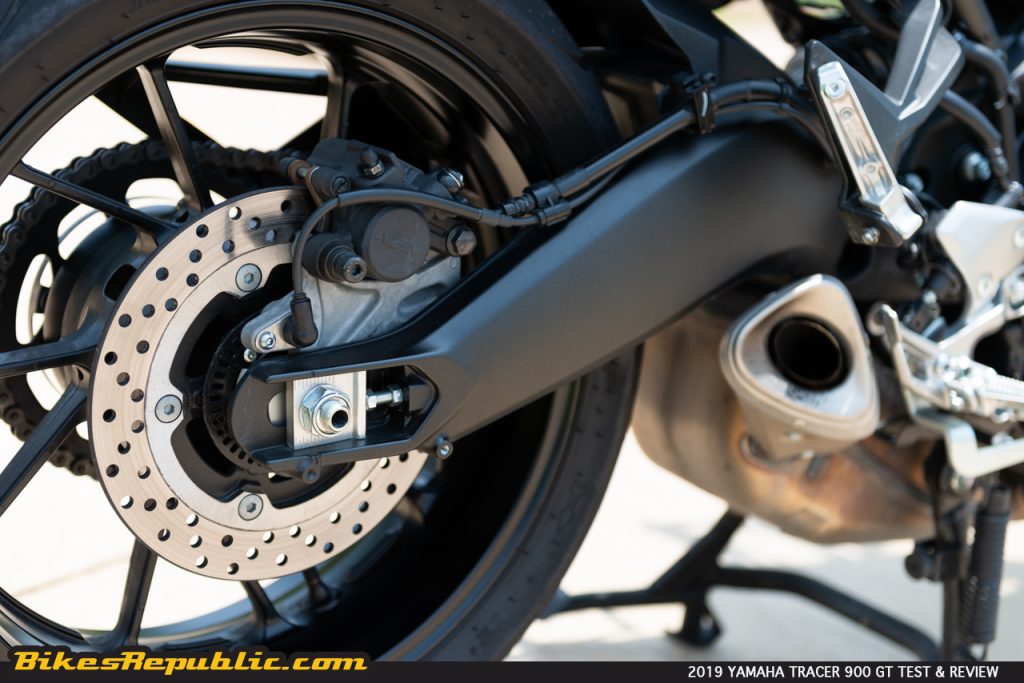
Adding to the rear shock’s performance is the longer swingarm. Yes, it looks just like the one on the previous model but it was truly discernable when you ride it – 60 mm is rather a lot to miss! It provided a whole lot more straight-line stability but perhaps more importantly was allowing the bike to “finish the corners” much better now – cracking the throttle mid-turn didn’t sent the bike wide as a longer swingarm acts to keep more weight on the front tyre when the gas comes on.
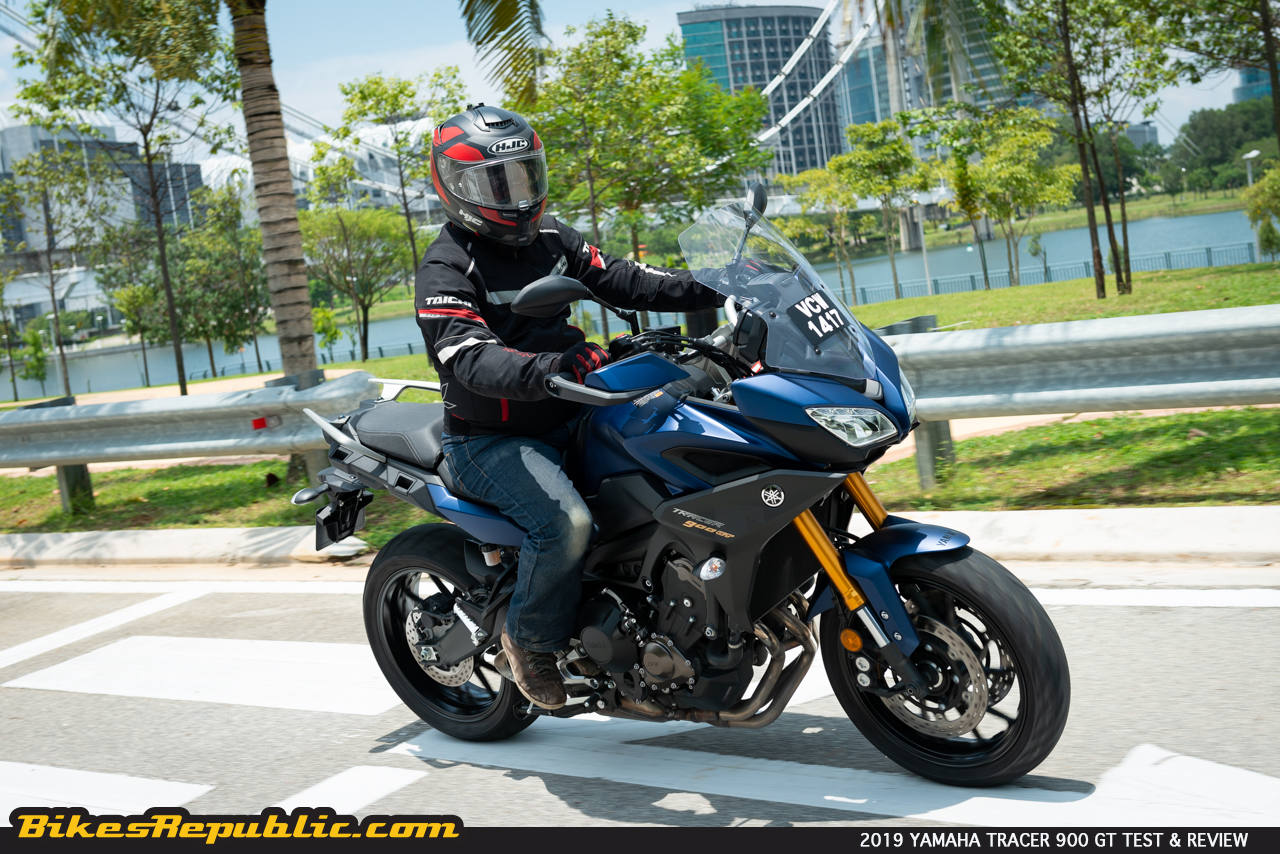
The new windscreen truly worked. The material is clearer than its predecessor’s and the sides were designed to keep windblast off the rider’s chest yet allowing enough through to keep him cool.
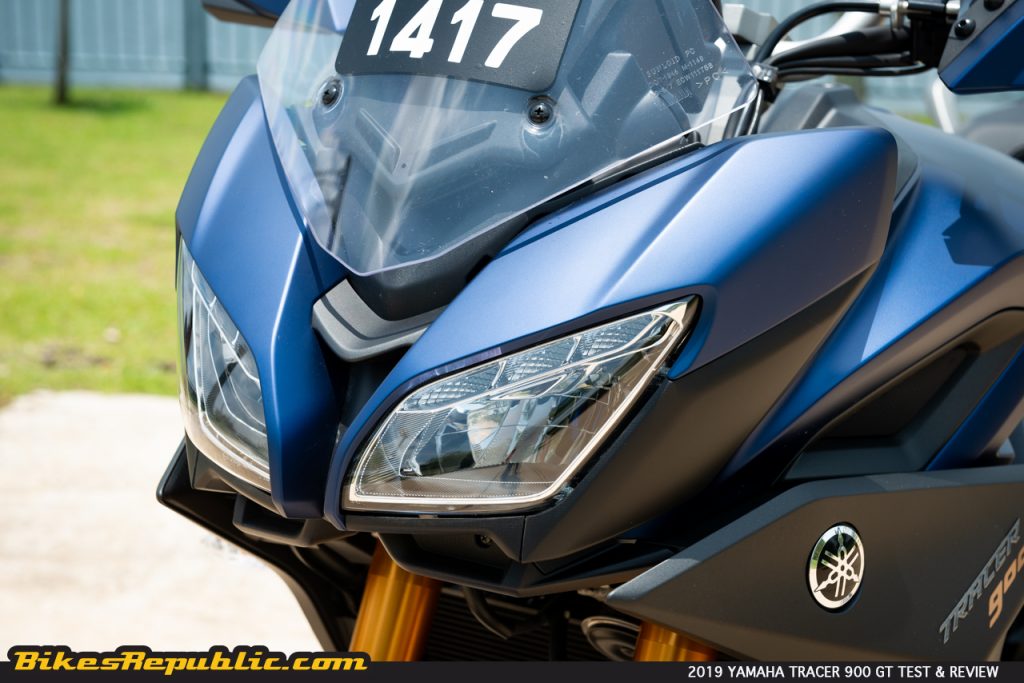
Last but not least, the centrestand is a great addition. However, it turned out to also be the one point which we didn’t like most. It’s very wide at the base and grounded very quickly even before the footpeg feelers did.

Conclusion

It’s amazing what listening to your customers can yield. The 2019 Yamaha Tracer 900 GT is the perfect embodiment of such a strategy.
At just RM 58,800 (basic selling price) the bike offers a great value for money which cannot be ignored. It’ll take you to places you want to go while looking and sounding good.

In a nutshell, yes, the bike is worthy of the “GT” name.

This test and review was brought to you by:
PICTURE GALLERY

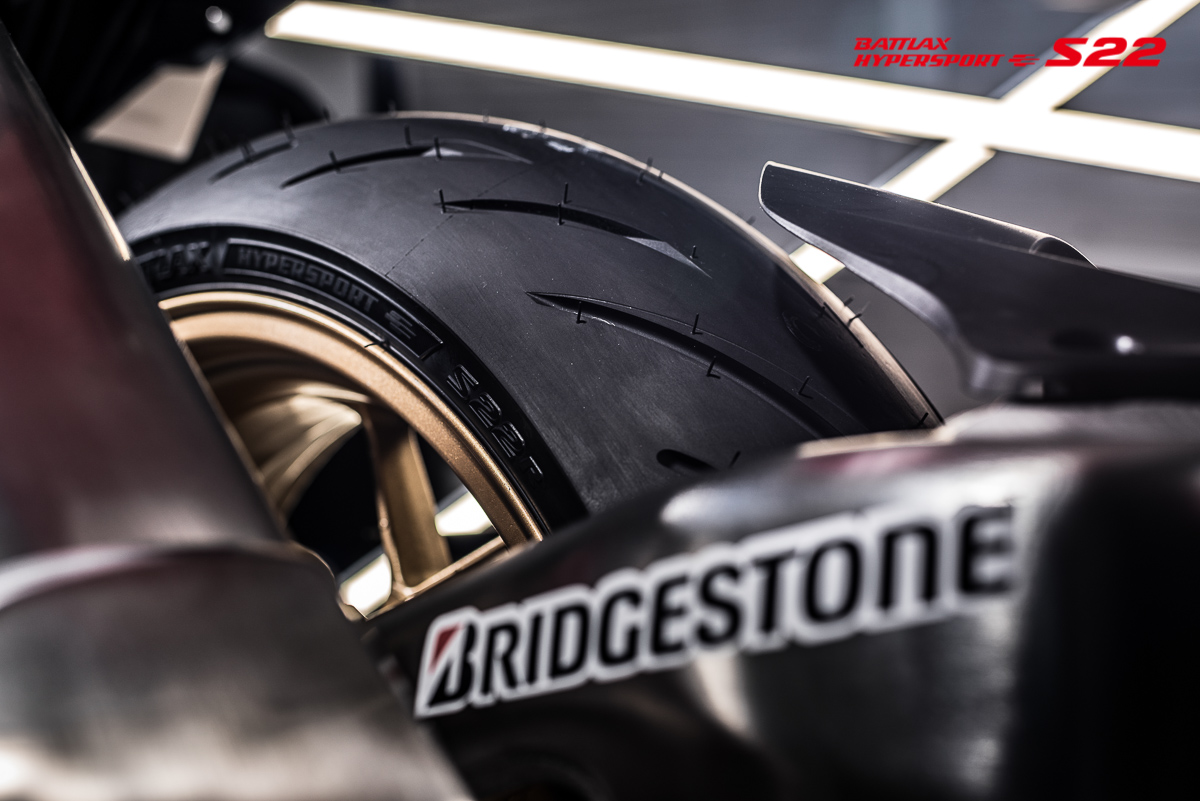
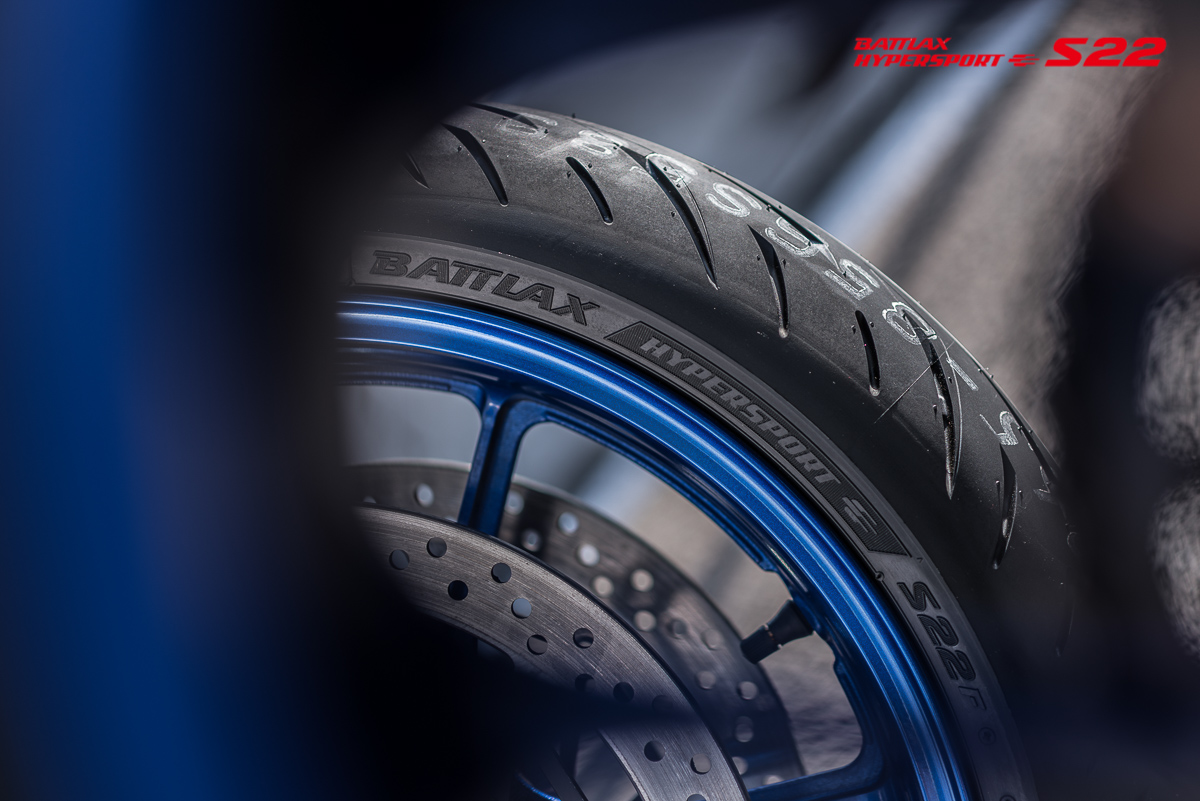
  • The Bridgestone Battlax Hypersport S22 is the latest sport street tyre to be produced by the Japanese tyre manufacturer

  • We went to Spain to test the new Hypersport S22 on some of the latest supersports and superbikes at the Circuito de Jerez

  • Dry performance and overall wet grip have been further enhanced whilst maintaining long tyre life

It was earlier this month that we flew 15,000km all the way to Jerez, Spain to test out the latest street tyre from a very famous Japanese tyre manufacturer; the Bridgestone Battlax Hypersport S22.

The S22 is a sport tyre option for street use that is the next evolution of the highly-acclaimed Battlax Hypersport S21. (more…)

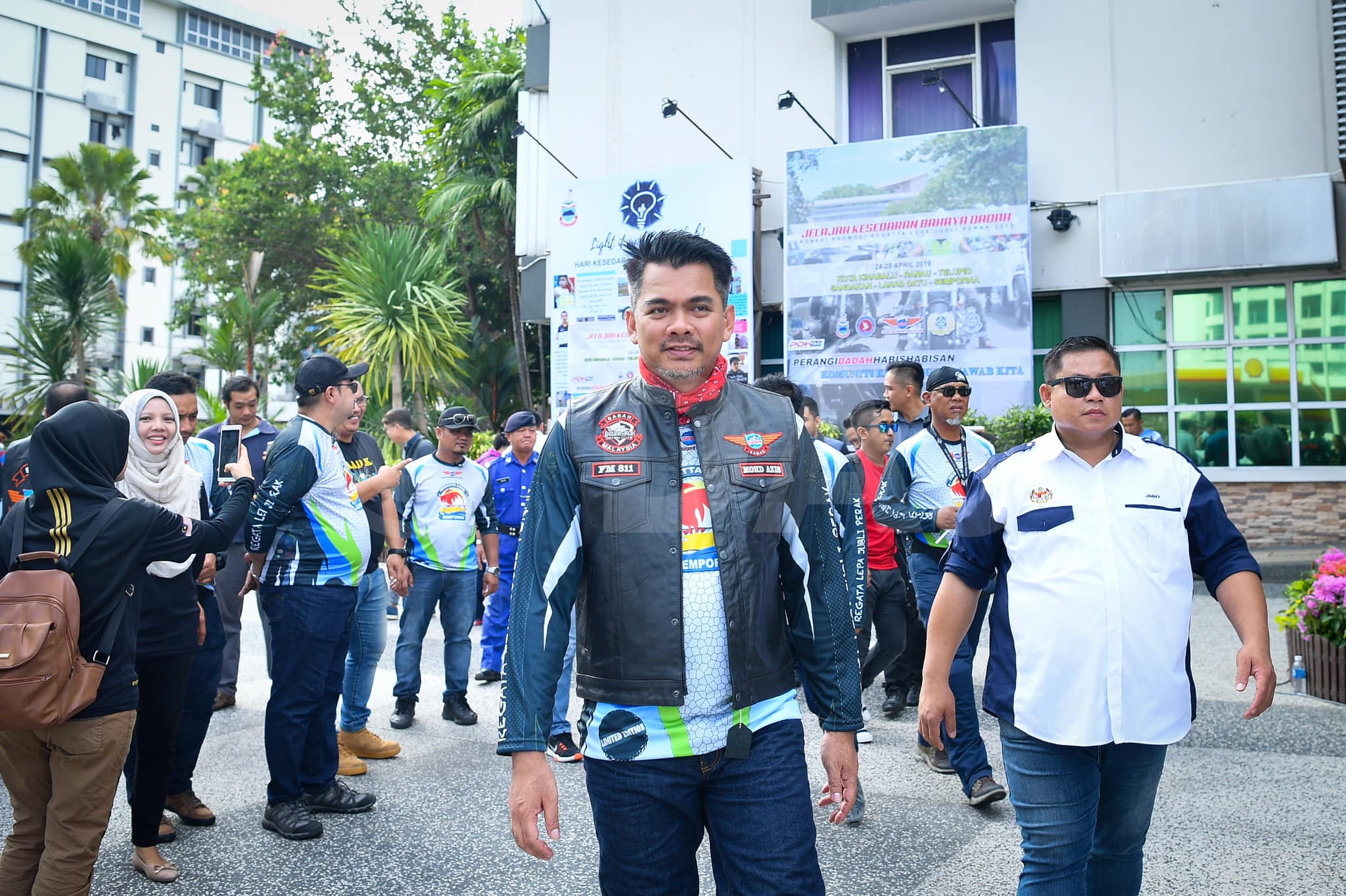
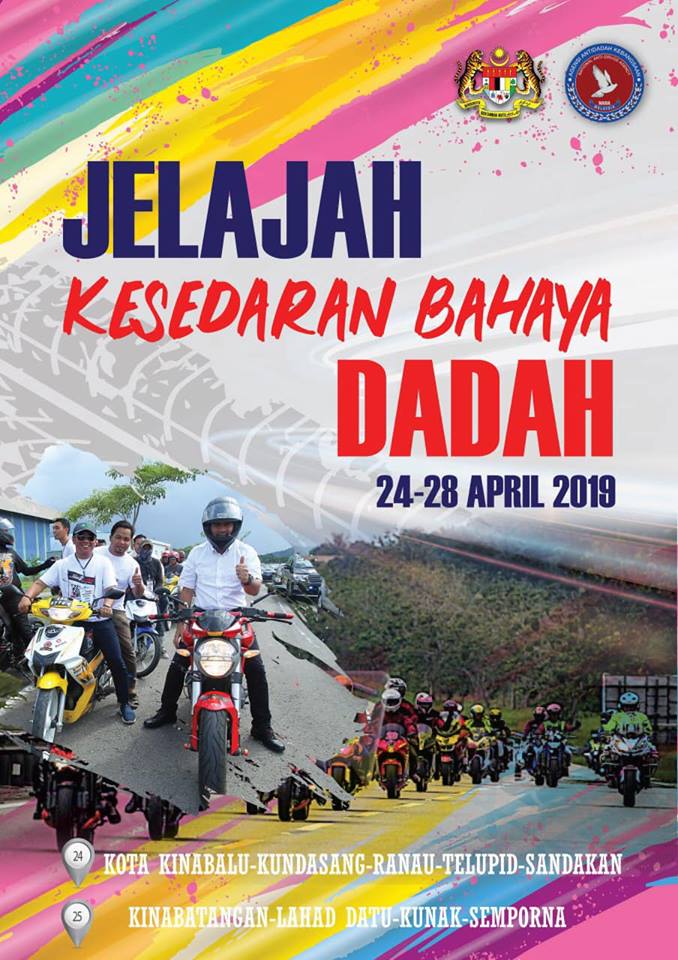
According to a report by the New Straits Times, Deputy Home Minister Datuk Mohd Azis Jamman was involved in a motorcycle accident while traveling from Kota Kinabalu to Ranau today.

He was part of a convoy aiming to raise awareness for anti-drug abuse.

According to a statement issued by his office, the accident happened near Nabalu town at about 10am.

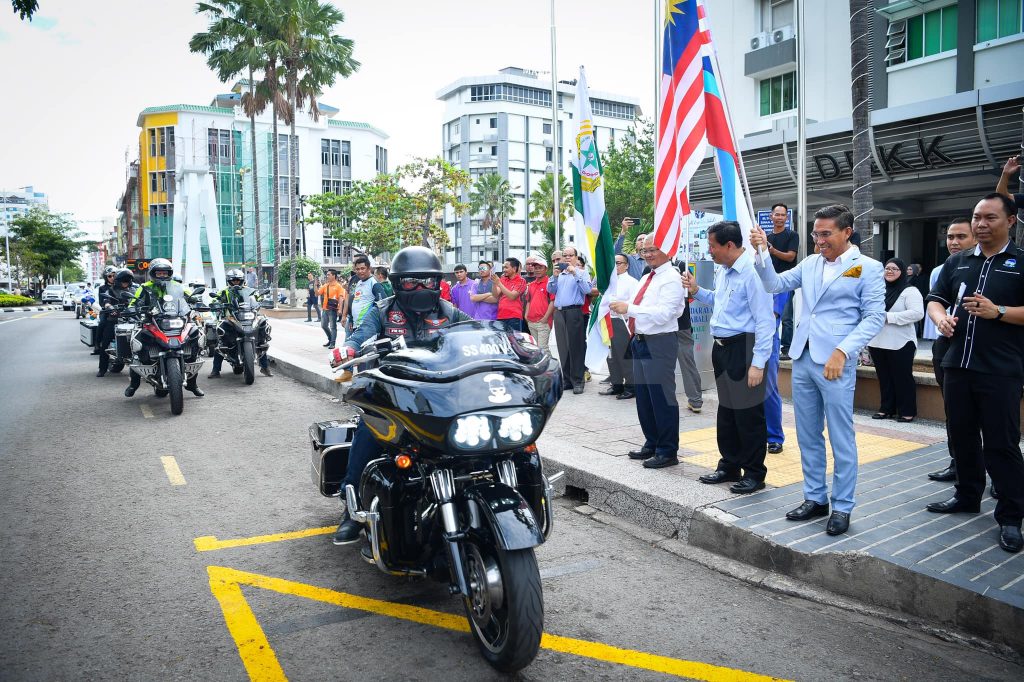
“Deputy Home Minister, Datuk Mohd Azis Jamman was in Kota Kinabalu today to launch the ‘Jelajah Kesedaran Bahaya Dadah’ convoy organised by the National Anti-Drug Agency (Nada).

“However, at about 10am, during the convoy in Nabalu town area heading to Ranau, he was involved in an accident.

“Datuk Azis suffered minor injuries. He is in stable condition and is still being treated at the moment,” said the statement.

According to NST, Datuk Azis who is the Member of Parliament of Sepanggar, was sent to Hospital Queen Elizabeth I for treatment.

Datuk Azis flagged off the motorcycle convoy at 630am today and was scheduled to launch a similar program when the convoy stopped at the Ranau Pekan Mingguan Pasar Minggu Guest House at 10am this morning and in Sandakan later tonight.

We at Bikesrepublic.com wish Datuk Azis a speedy recovery.

Photos from the Facebook page of Datuk Mohd Azis

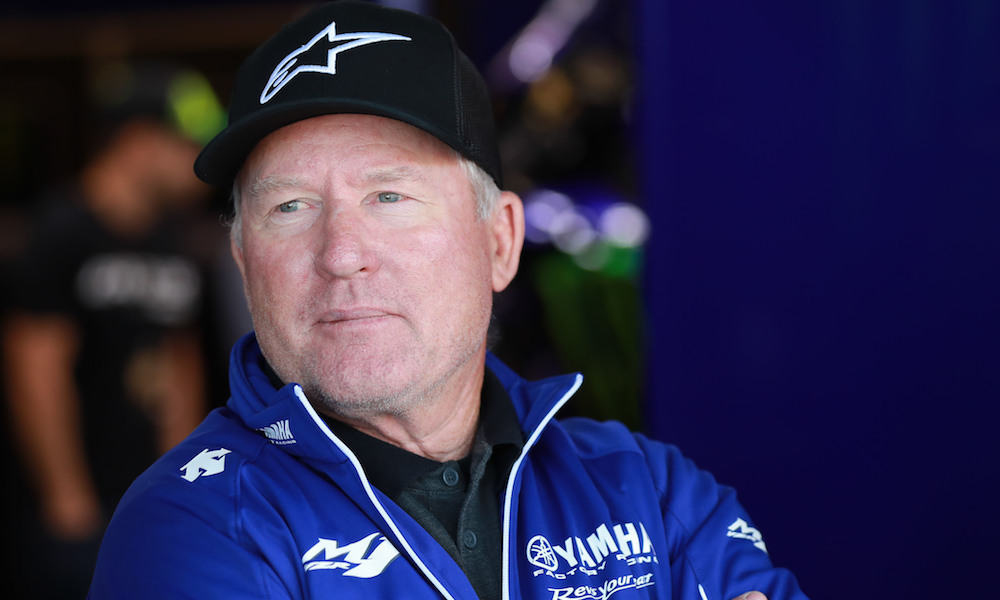
Kenny Roberts, or King Kenny, needs no introduction. The three time 500cc world champion is also the the first ever American to win a MotoGP race, and his riding style changed the way GP bikes are ridden.

In the year 2000, King Kenny was named a Grand Prix legend by the FIM.

So when King Kenny speaks, the world listens.

In a recent interview with crash.net (the excerpts of which are below) at the American MotoGP round in Circuit of the Americas, King Kenny was quoted as saying that MotoGP racing has never been better.

“Unbelievable. It’s never been better. I mean the talent of the riders, the equipment… MotoGP’s obviously the best show in the world now.”

Kenny, who turned to rider development and then team owner, is still intrigued by the technical side of MotoGP.

He says he loves the new aerodynamics packages on modern MotoGP bikes, “I was ahead of my time [with investing resources in aerodynamics] but we didn’t have enough money to make it all work.

“We had one of the three-cylinders designed by Lotus and it was ten miles an hour quicker at Barcelona down the straight, but it wouldn’t stop. And we didn’t have the budget with Lotus to find out why it wouldn’t stop.”

“It was a funny thing because you’d sit there and look at it going ‘why is the back end coming off the ground?’ No-one knew. There’s a lot to it. They’ve just scratched the surface, in my opinion.”

In the interview, Kenny also mentioned that any of the current top six bikes can be easily adapted to any riding style by a top rider.

“You can make the bike, whatever you need it to be,” he said. “It’s just work and setting the bike up.

“From the little bit I know, the Japanese could not ride my motorcycles because the steering head was too steep. They just couldn’t ride it. It would shake too much and if it shook, they didn’t like it. Eddie couldn’t ride it.

“I think that with any of the [current] motorcycles, with a little bit of work on it, you’d have the same thing. It’s a lot harder to ride. It’s a lot harder on your body. But you are faster. So I think any of them would do that.”

Kenny was legendary for his dirt-track riding style, so crash.net asked him if anyone on track reminds him of himself?

“No, you could never ride as hard as they ride now with my equipment,” he replied.

“If my ’80 bike, the first with aluminium, had the grip these bikes had it would go ‘boing’ and away it would go. Which it actually did with me a couple of times. If you had too much grip, the flex would be so much it would spring back. So with these [modern] tyres you couldn’t ride that motorcycle.

“I think, from my standpoint, Marquez probably comes closest to throwing the bike in. Making it turn. And exiting. Which is what I tried to do… I wasn’t quite as good at it!”

And does he think Marquez can be beaten?

“Yes [Marquez can be beaten] but it’s going to be him beating himself, it looks like to me. Somebody is going to have to really step up and put the pressure on him that he needs to make a mistake and right now I don’t see that happening…”

Click here to read the original interview where Kenny speaks about his surprise that Rossi is still racing at 40!

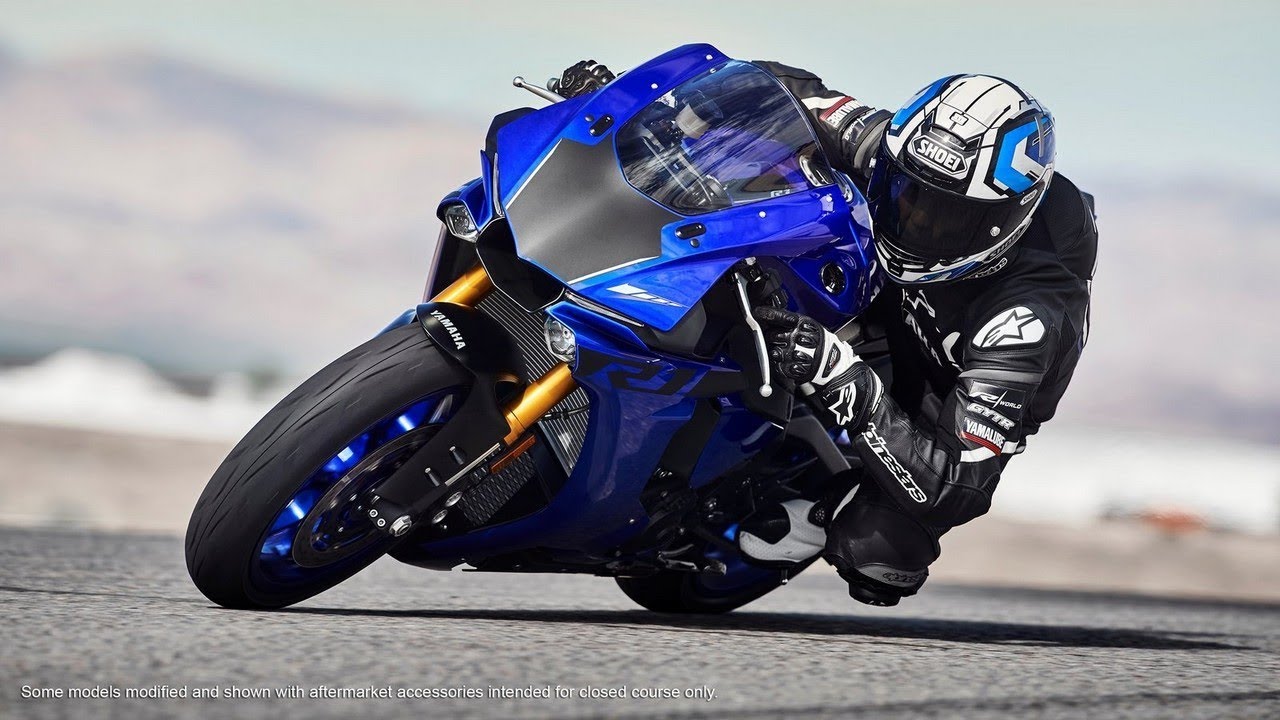
  • The next-generation Yamaha YZF-R1 is expected to feature MotoGP technology.

  • It may feature seamless transmission, VVT/L and counter-rotating crankshaft.

  • The YZF-R1 has remained unchanged for the last five years.

The current Yamaha YZF-R1 has gone pretty unchanged for the last five years since its. Introduction. But that’s about to change according to many motorcycle journalists, including us.

By contrast, all the superbikes running in the WorldSBK championship were updated within last few years, except for the Yamaha.

Could the upcoming Euro 5 emission standard be the determining factor? It might as well be, just as Honda is holding back the introduction of their next-generation CBR1000RR Fireblade. Euro 5 will cut emissions by half from the Euro 4 standard. Such reduction will no doubt rob engine power.

As such, the new YZF-R1 ought to feature variable valve timing and lift. The BMW S 1000 RR, Suzuki GSX-R1000RR are already utilizing the technology, and it’s strongly rumoured that the upcoming CBR1000RR will follow suit.

Yamaha has already employed VVT/L to their scooters as part of their Blue Core engine strategy, after all.

As for MotoGP tech, Yamaha submitted patents for a seamless transmission for the R1. The technology takes much explanation, but you can read about it here. If this comes to plan, Yamaha will be the first manufacturer to adopt it to a roadgoing bike.

Secondly, Yamaha was one of the first manufacturers to run a counter-rotating crankshaft in Grand Prix racing all the way back in the two-stroke era. It’s also employed in the in the current YZR-M1 MotoGP bike. A counter-rotating crankshaft reduces the effects of the wheels’ centrifugal force at high-speeds, making the bike easier to turn into corners. Ducati uses it in the Panigale V4 to devastating effect in WorldSBK.

This article was brought to you by:

Source: AMCN

  • The Royal Enfield Interceptor 650 and Royal Enfield Continental GT 650 were launched last night.

  • Both bikes share the same engine, chassis and running stock but with different styling.

  • The Interceptor 650 is priced from RM 45,900 while the Continental GT 650 is priced from RM 48,500.

Royal Enfield has always been known as the manufacturer who produces single-cylinder thumpers. However, the launch of the Royal Enfield Interceptor 650 and Royal Enfield Continental GT 650 last night takes them up the capacity game.

Both models are powered by the same 648cc, air- and oil-cooled, DOHC, fuel-injected, parallel-Twin engine. It produces 47 hp at 7,250 RPM and a respectable 52 Nm of torque at 5,250 RPM. Producing maximum at lower RPMs means the engine requires the rider to ride at ease and ride the torque wave, rather than having to rev the lungs out of it. Apart from that, the 2,000 RPM separation between maximum horsepower and torque provides a “flexible” engine thereby giving the rider and impression of having power anywhere in the rev range.

Royal Enfield Continental GT 650

The two models are differentiated by their respective styling. The Interceptor 650 is positioned as “standard” motorcycle. Consequently, it features a higher handlebar and flat seat for a more relaxed riding ergonomics. It also has a bigger fuel tank at 13.7 litres.

The Continental GT 650 takes on the café racer role, on the other hand. Hence, it features clip-on handlebars mounted beneath the top triple clamp, besides a subtly stepped seat. The combination provides a sportier riding position. The fuel tank is smaller at 12.5 litres.

Royal Enfield Interceptor 650

Both models also share the same chassis and rolling stock. The forks are 41 mm conventional telescopic units, while the twin rear shocks have remote reservoirs. Both front and rear wheels are spoked 18-inchers. Braking duty is handled by ByBre calipers.

The Interceptor 650 is priced from RM 45,900 while the Continental GT 650 is priced from RM 48,500 (basic selling prices excluding road tax and registration).

Archive

Follow us on Facebook

Follow us on YouTube