Bikesrepublic

Latest News

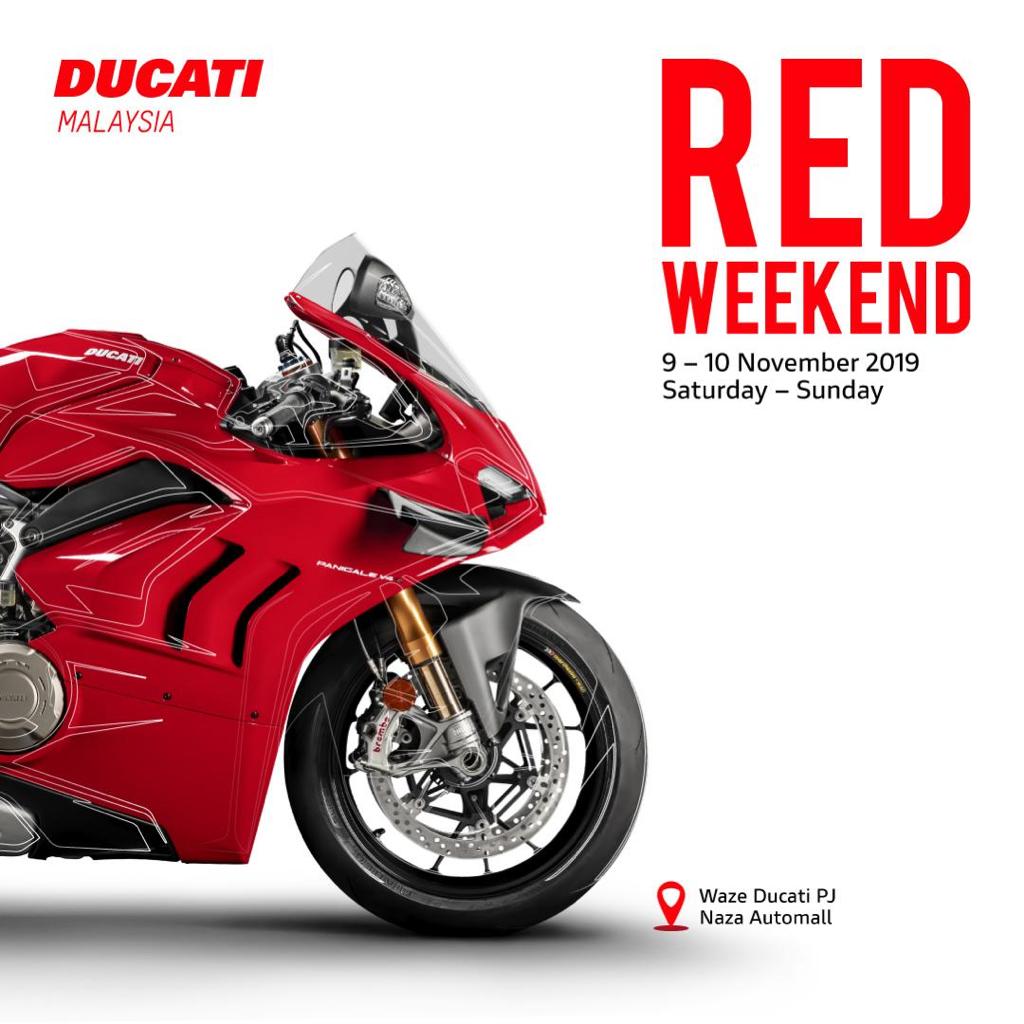
  • The Ducati Red Weekend is happening from 9th to 10th November 2019.

  • There will be special deals and promotions.

  • Visitors can also test ride the latest bikes.

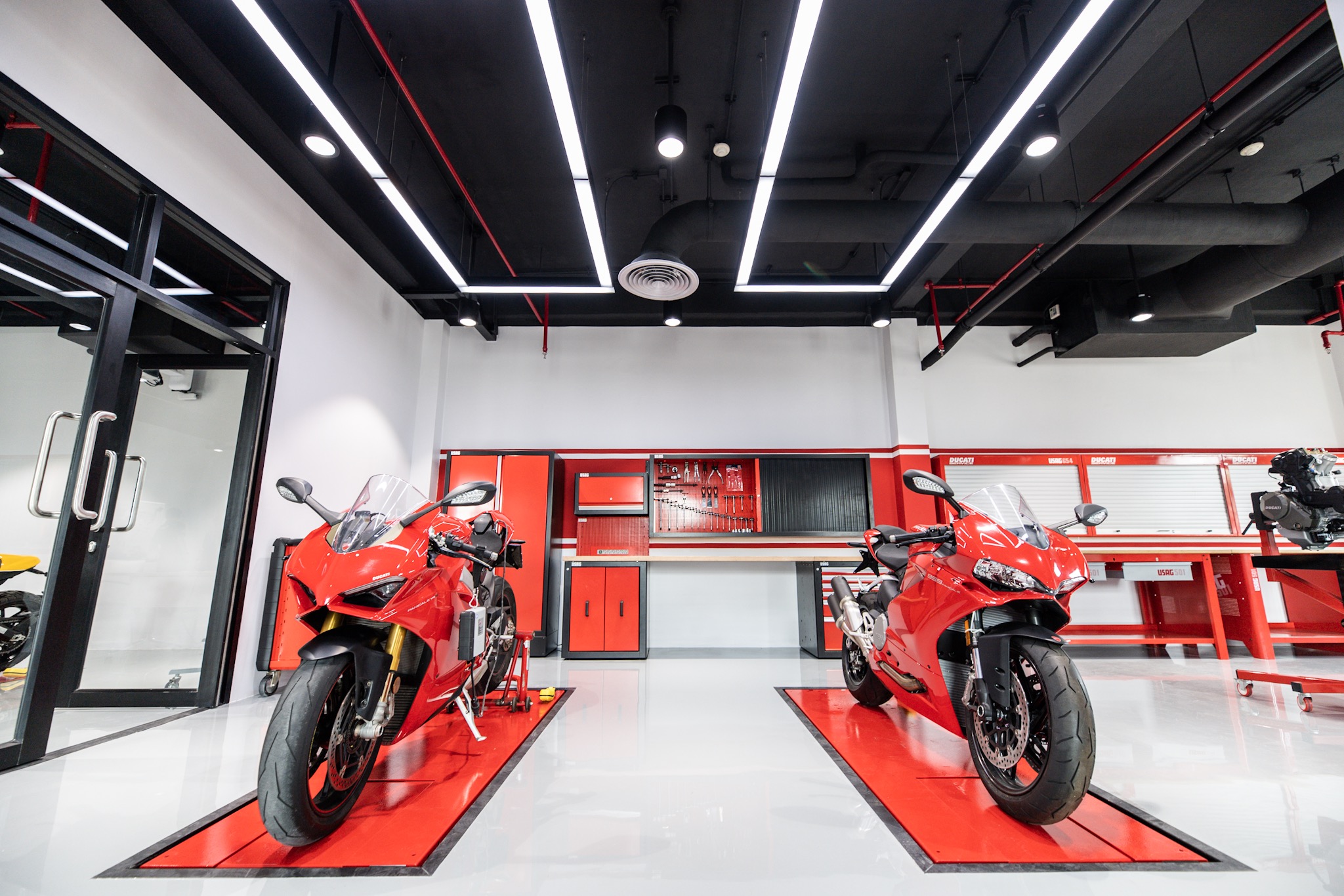
The Ducati Red Weekend is happening from 9th to 10th November 2019. It is time to paint the town red.

Open to Ducati owners and the public, the carnival promises plenty of excitement besides the obligatory special deals on products. The promotions will be even sweeter this time around as Ducati PJ is clearing their stocks in preparation to relocated to a new showroom.

Check out these awesome deals:

  • Up to RM 20,000 rebate for Ducati motorcycle purchase.
  • On top of that, get a free gift when you book a Ducati.
  • Receive 2 years’ worth of FREE SERVICE with the Ducati Smart Service Program for all Ducatis (T&C apply).
  • Up to 70% sales on Ducati apparels.
  • Take a test ride on a Ducati of your choosing.

Also do not miss out on these activities:

  • See, touch and feel the hot-blooded Ducati models.
  • Feel the joy of Ducati Scrambler models.
  • Check out the premium and stylish Ducati apparels, riding gear and merchandise.
  • Browse through the collection of snazzy Ducati Scrambler apparels, riding gear and merchandise.
  • Pimp out your Ducati with genuine accessories and performance parts.

All these are taking place at the Ducati PJ Showroom, located at Naza Automall, from 9am to 6pm, 9th to 10th November 2019.

Be there!
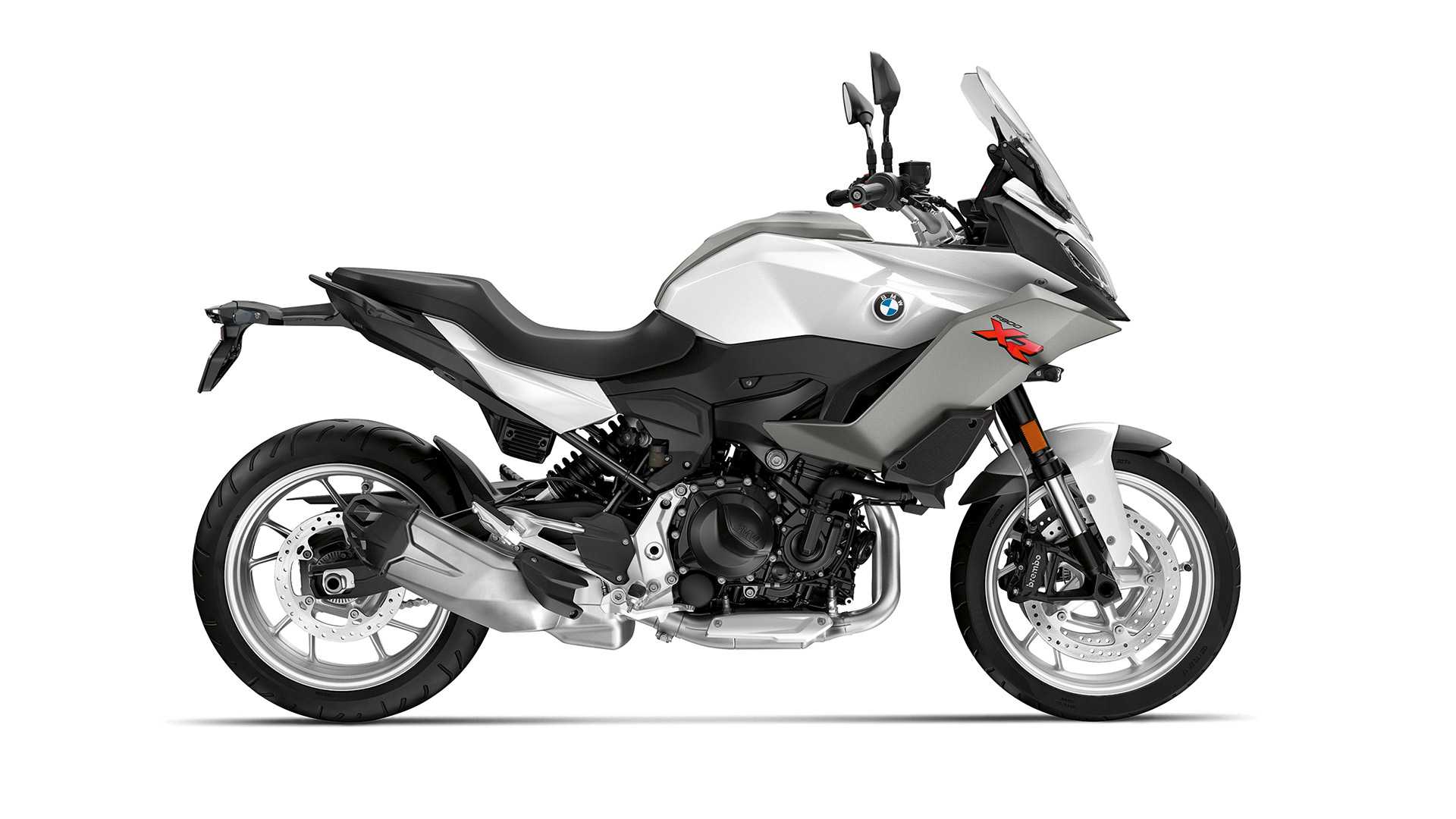
  • The 2020 BMW F 900 XR and 2020 BMW F 900 R were launched at EICMA 2019.

  • The engine was enlarged for more power.

  • Both models are comprehensively equipped.

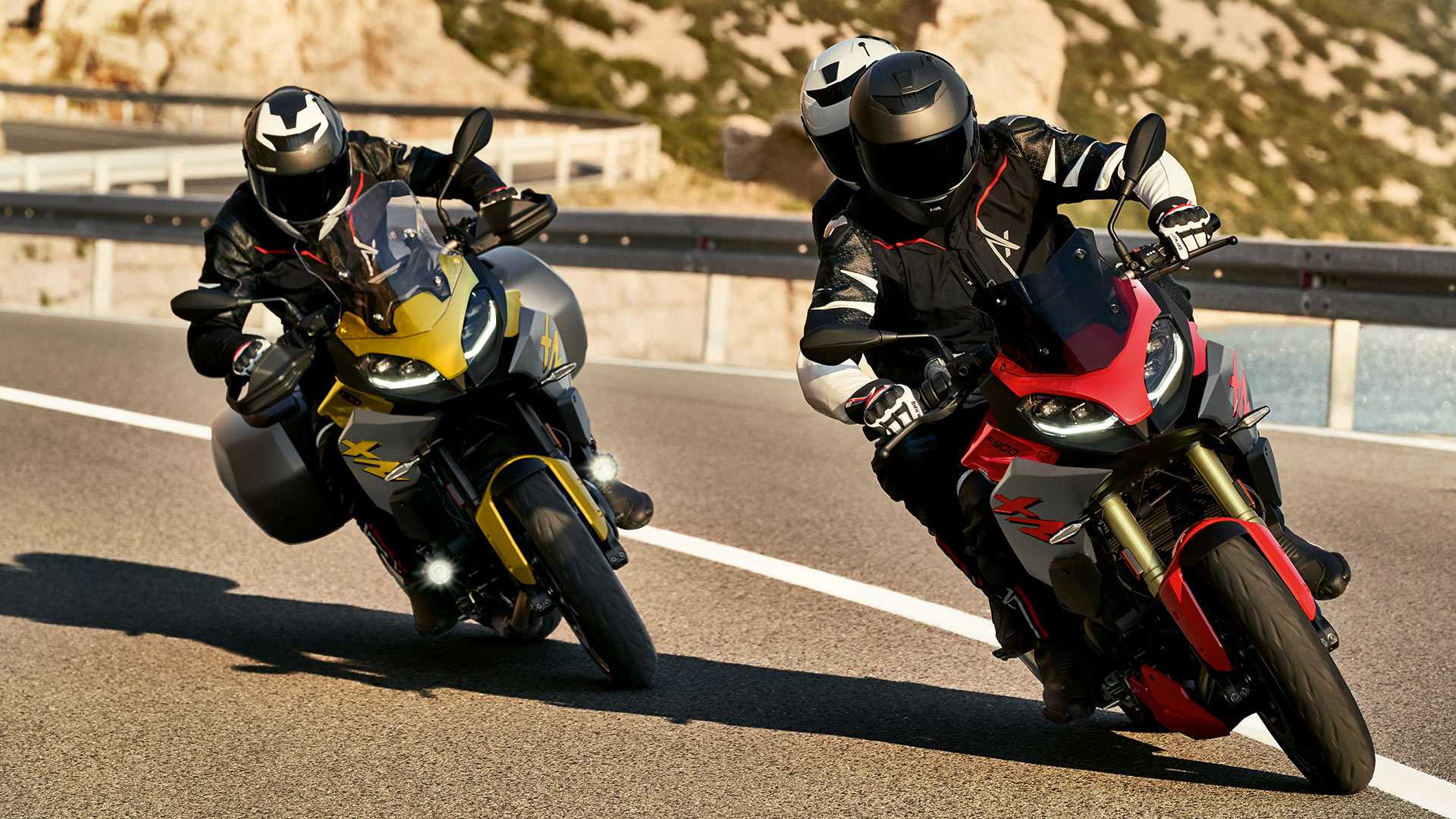
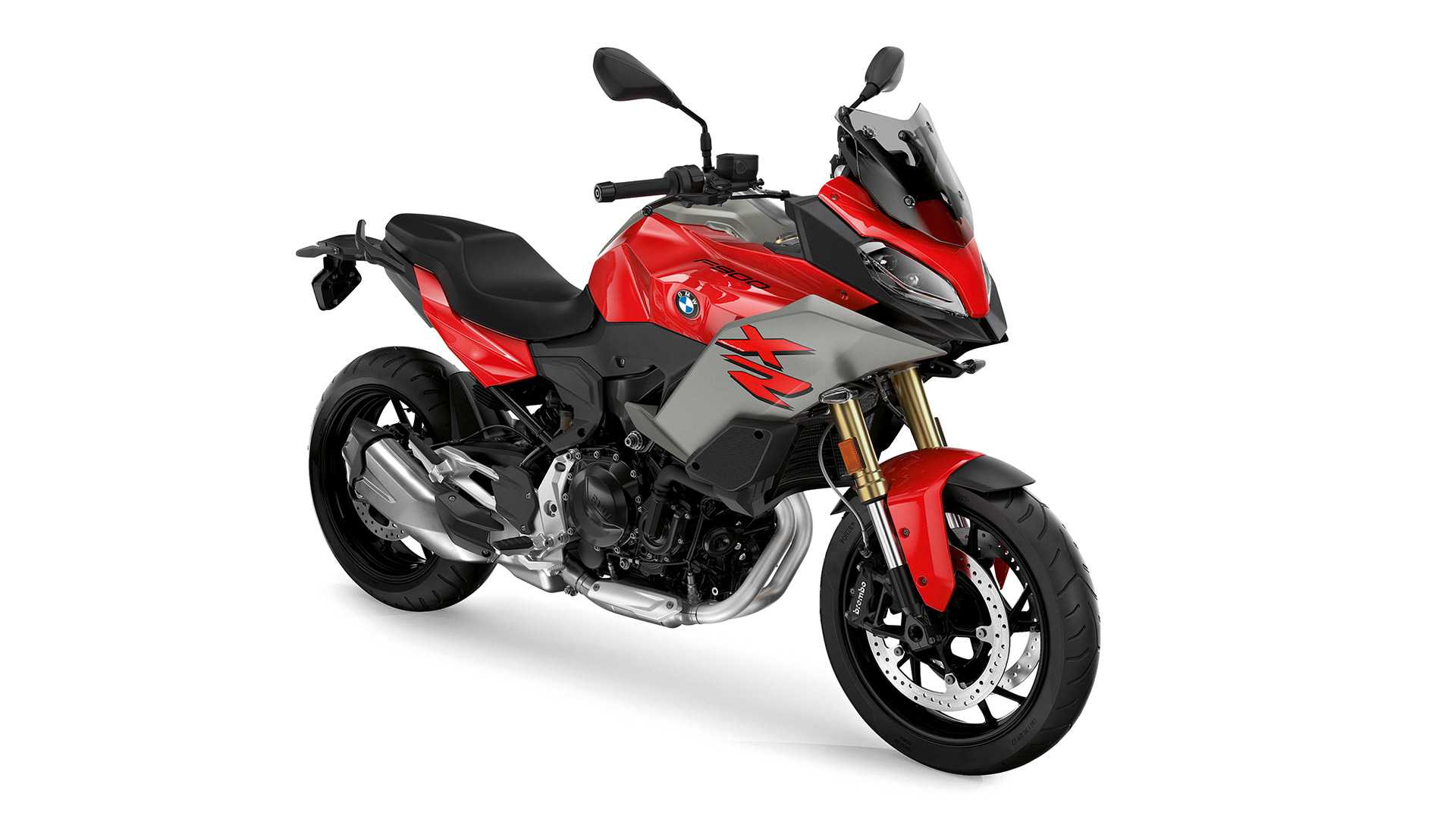
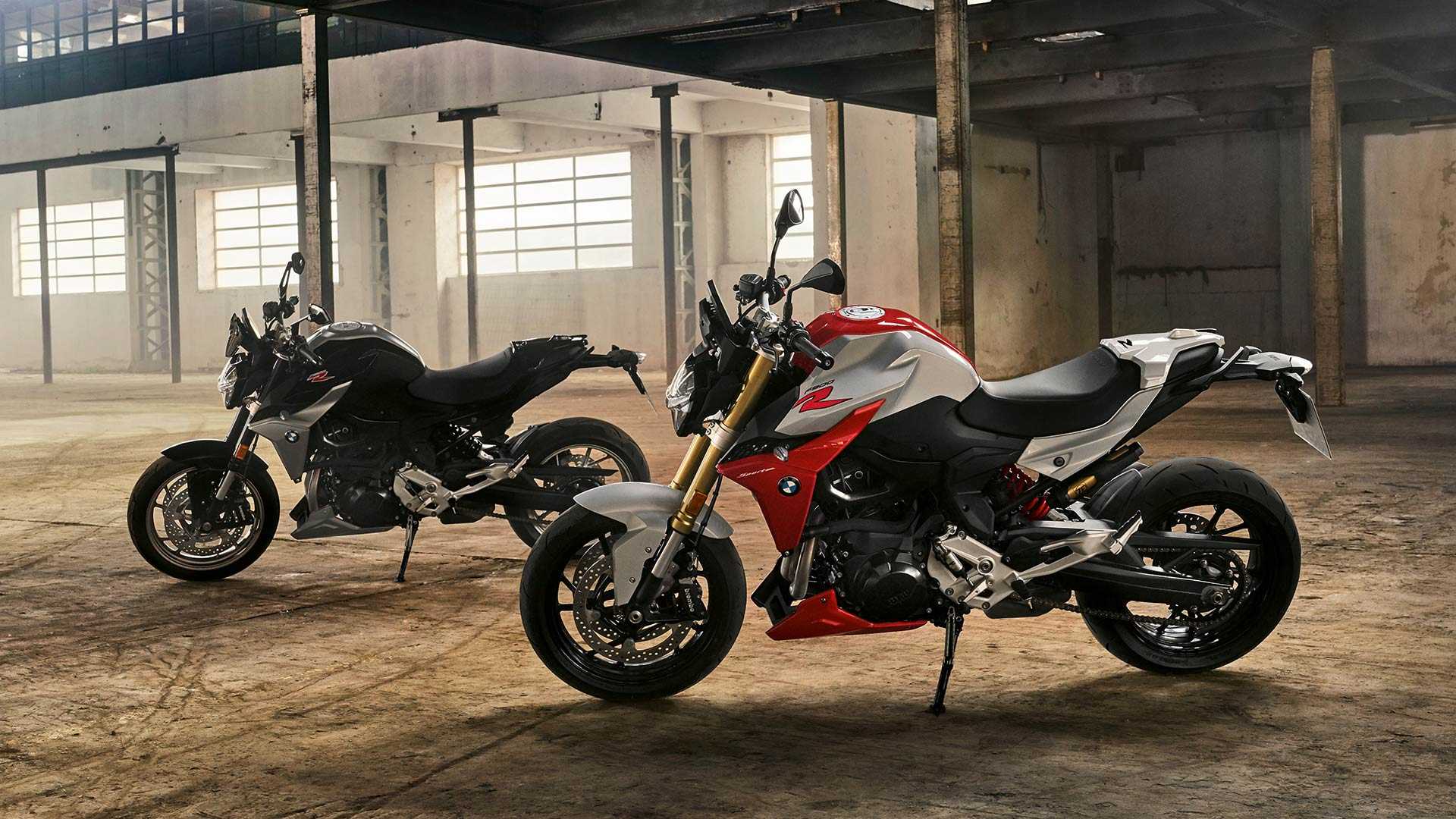
BMW Motorrad dropped a surprise by launching the 2020 BMW F 900 XR and 2020 BMW F 900 R Launched at EICMA 2019, because everyone had expected the 850 versions.

The engine started out as the 853cc parallel-Twin lump from the F 850 GS but was given a 2mm increase in bore size, resulting in 893cc. The displacement bump results in 105 bhp and 92 Nm of torque, compared to 95 bhp and 92 Nm. The 270-degree crank is retained.

The power increase puts the bike in contention in the middleweight sport-touring segment.

A new frame ties the new engine as a stressed member and everything else together. A new 15-litre plastic fuel tank is used to keep weight down.

The F 900 XR’s design closely resembles the 9Cento concept revealed a year ago. The concept’s lines were also adopted to the new S 1000 XR.

As for the F 900 R roadster/standard/naked bike, its styling resembles the R 1250 R, albeit with more aggressive lines. It’s fuel tank is also moved to the front from underneath the seat, following the change first seen on the F 850 GS.

These two may be middleweights, but they follow BMW Motorrad’s move in equipping almost all models with high-end features (even the C 400-series scooters have TFT screens and keyless ignition). Hence these models have Road and Rain ride modes, ABS, keyless ignition and TFT screen.

You can spec’ them up further by adding two Pro ride modes, electronic suspension, ABS Pro, cornering lights and quickshifter (yes!).

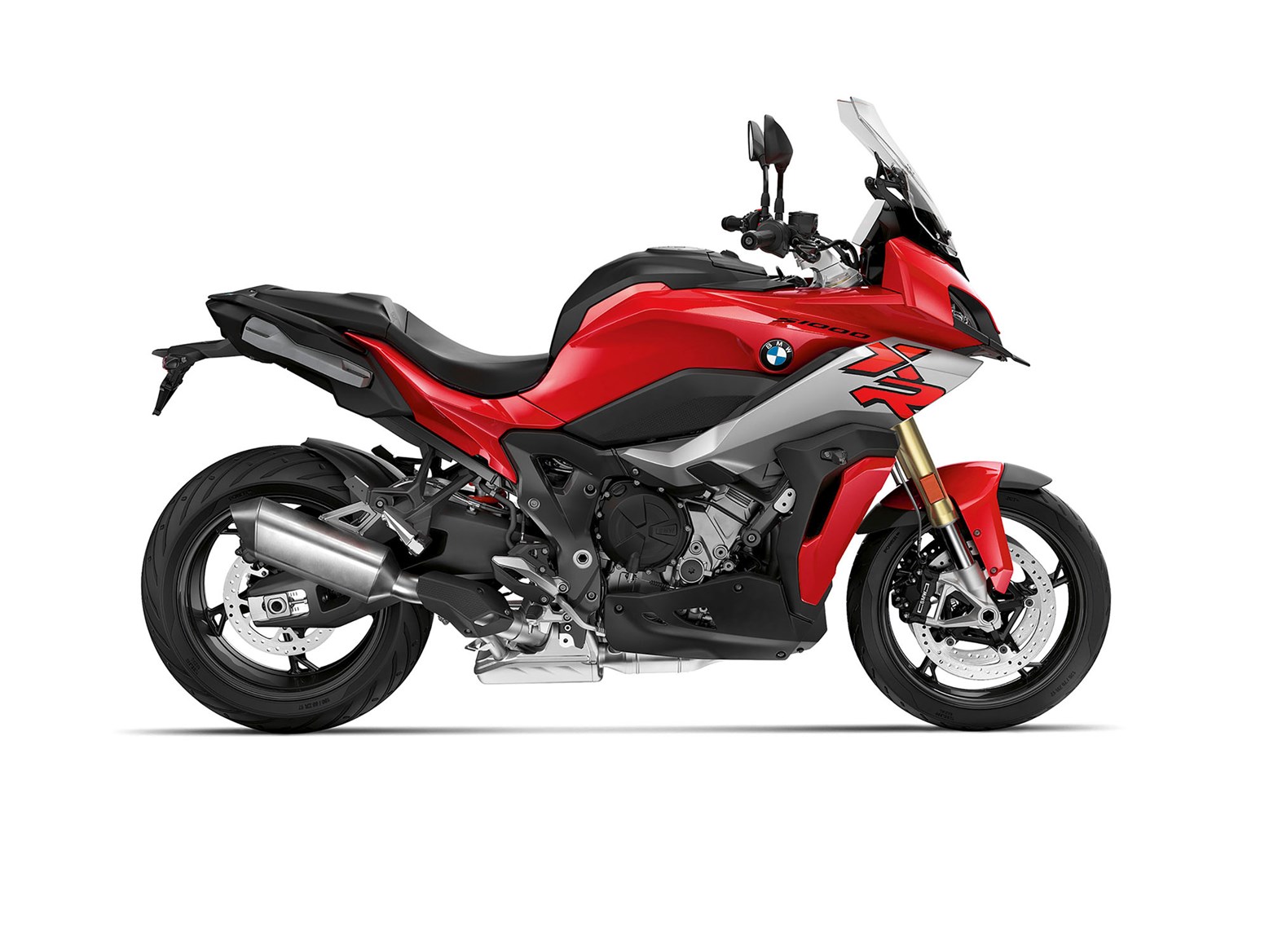
  • The 2020 BMW S 1000 XR was unveiled at EICMA 2019, as speculated.

  • The new inline-Four engine was sourced from the S 1000 RR.

  • Engine power remains the same without ShiftCam but the bike is 10 kg lighter.

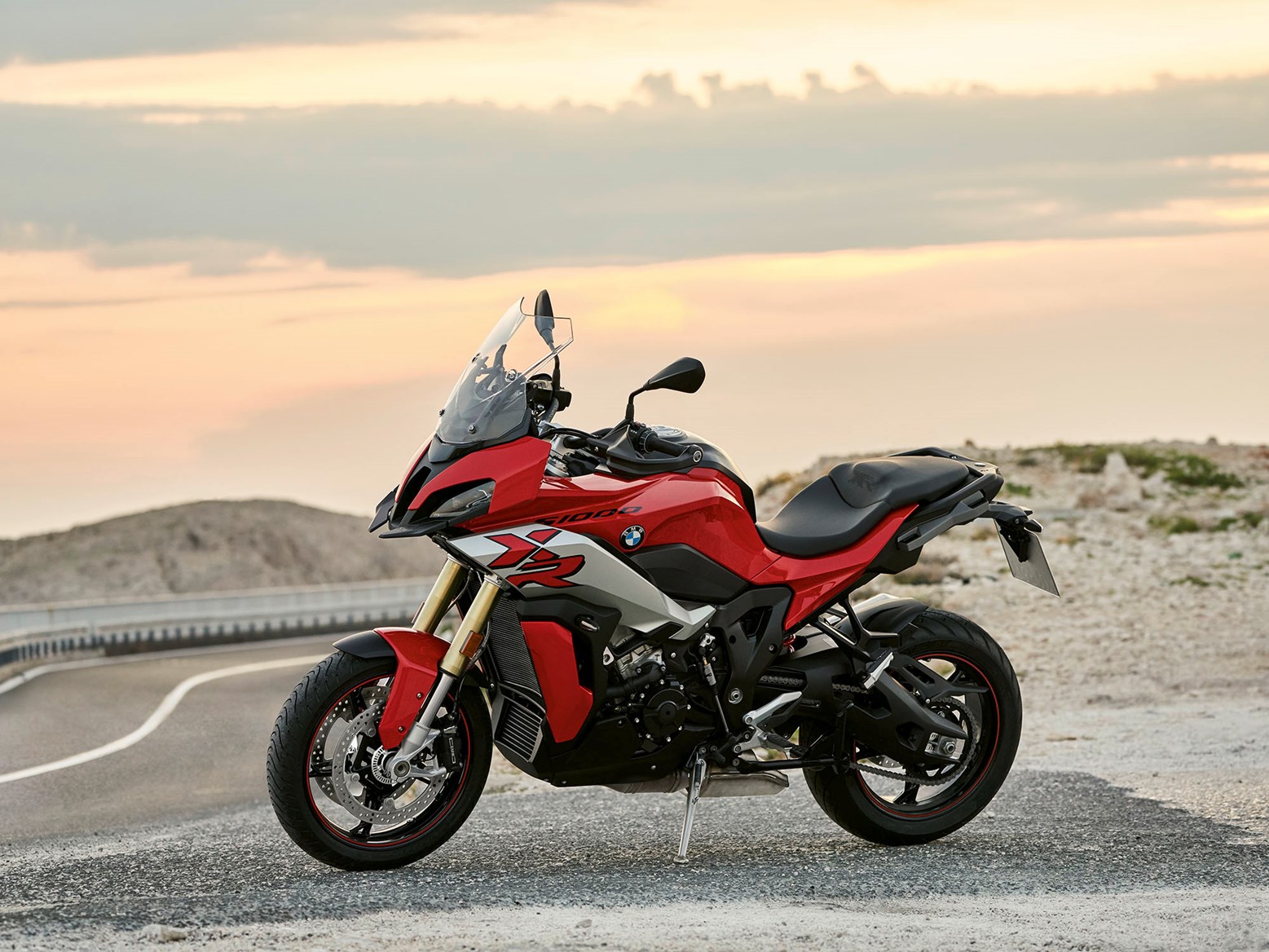
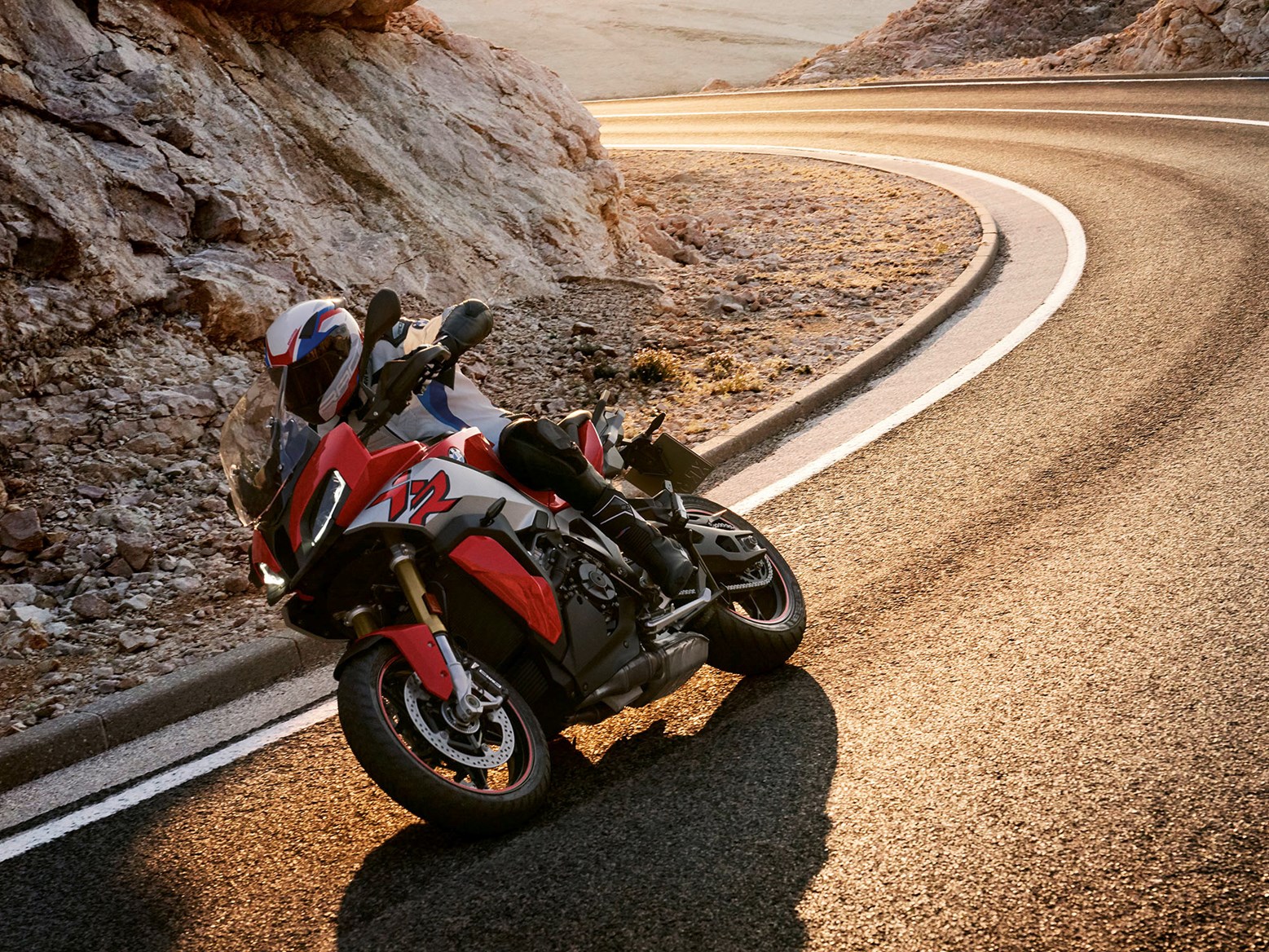
The 2020 BMW S 1000 XR was unveiled at EICMA 2019, as widely speculated.

Revised to comply with Euro5 standards, the popular bike is almost completely new.

The engine is the obvious place to start. The biggest news or disappointment, depending on how you look at it, is that it doesn’t receive the BMW ShiftCam variable valve timing and lift head like its S 1000 RR brethren. Euro5’s new regulations would’ve meant a power loss in such as case, but BMW engineers managed to retain the same 163 bhp peak power output.

However, midrange power is higher while 4th, 5th and 6th gears are taller for smooth long-distance riding and fuel economy.

Additionally, there is a new lighter action slip-and-assist clutch, along with new electronics.

Adopting the compact and light engine from the new S 1000 RR means the XR loses some weight, too.

BMW also adopted the aluminium “Flexi Frame” from the superbike to the XR, shaving 2.1 kg. The suspension and subframe are 9% lighter. Overall, the 2020 BMW S 1000 XR is 10 kg lighter than its predecessor.

The new frame allows for a revision in ergonomics. The thinner midsection allows the rider to clamp his inner thighs to the fuel tank better, while seating position is moved forward by 20 mm and the handlebars are 30 mm narrower for a natural feel.

Rider aid includes four ride modes: Dynamic, Road, Standard and Rain. There is an option for Dynamic Pro which includes rider customisable settings.

Cornering ABS is standard, as are LED lighting and the 6.5-inch TFT screen.

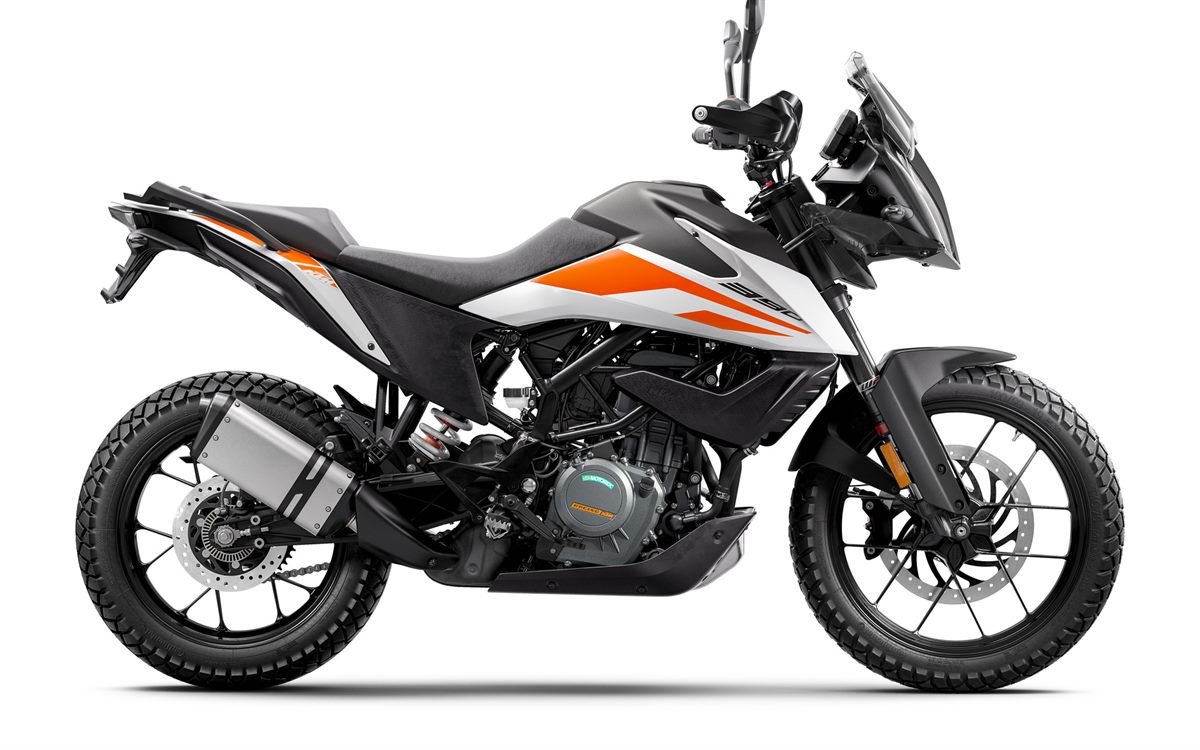
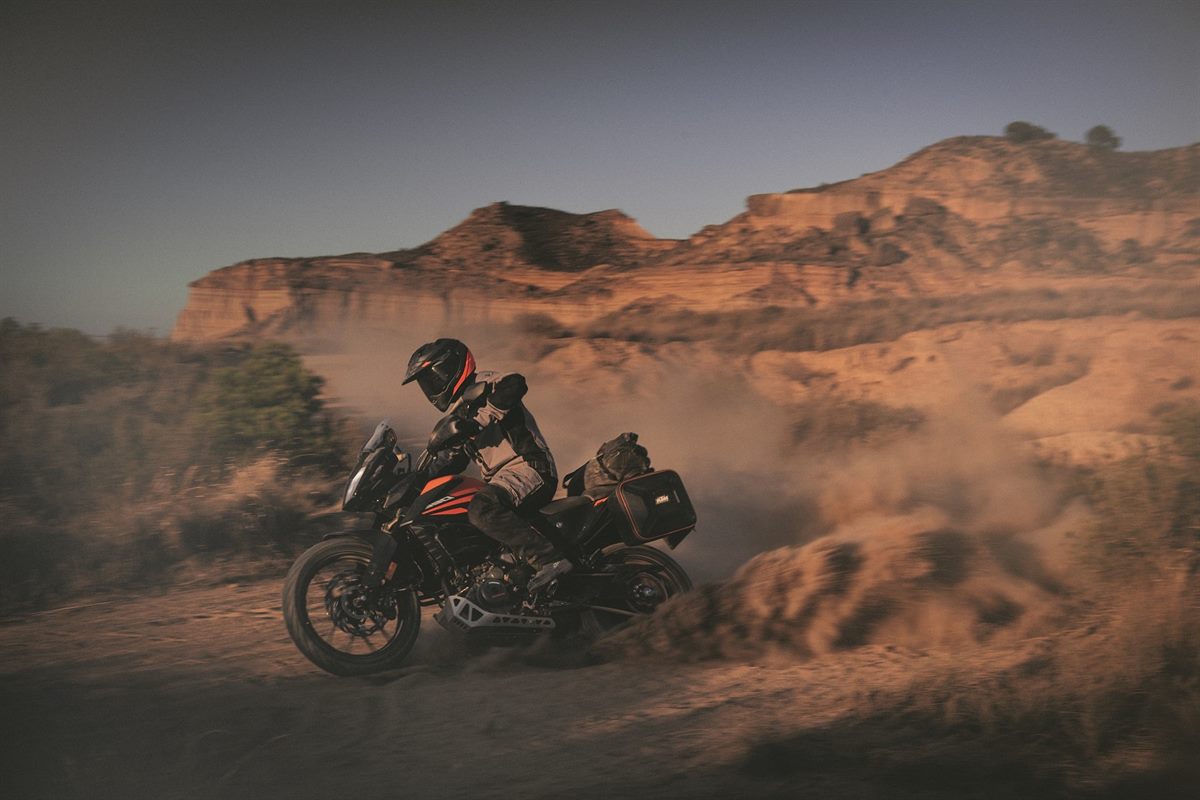
  • The 2020 KTM 390 Adventure was launched at EICMA 2019.

  • It’s been 7 years since it was planned.

  • It takes on the familial resemblance to the 790 Adventure.

The word “finally” really applies to the 2020 KTM 390 Adventure launched yesterday at EICMA 2019. It’s been 7 years since KTM CEO Stefan Pierer said that the manufacturer will produce an adventure bike based on the 390 Duke platform.

There’ve been spy shots after spy shots, rumours after rumours but the production-ready 390 Adventure never seemed to leave the factory doors. Until now, since Euro5 takes effect next year.

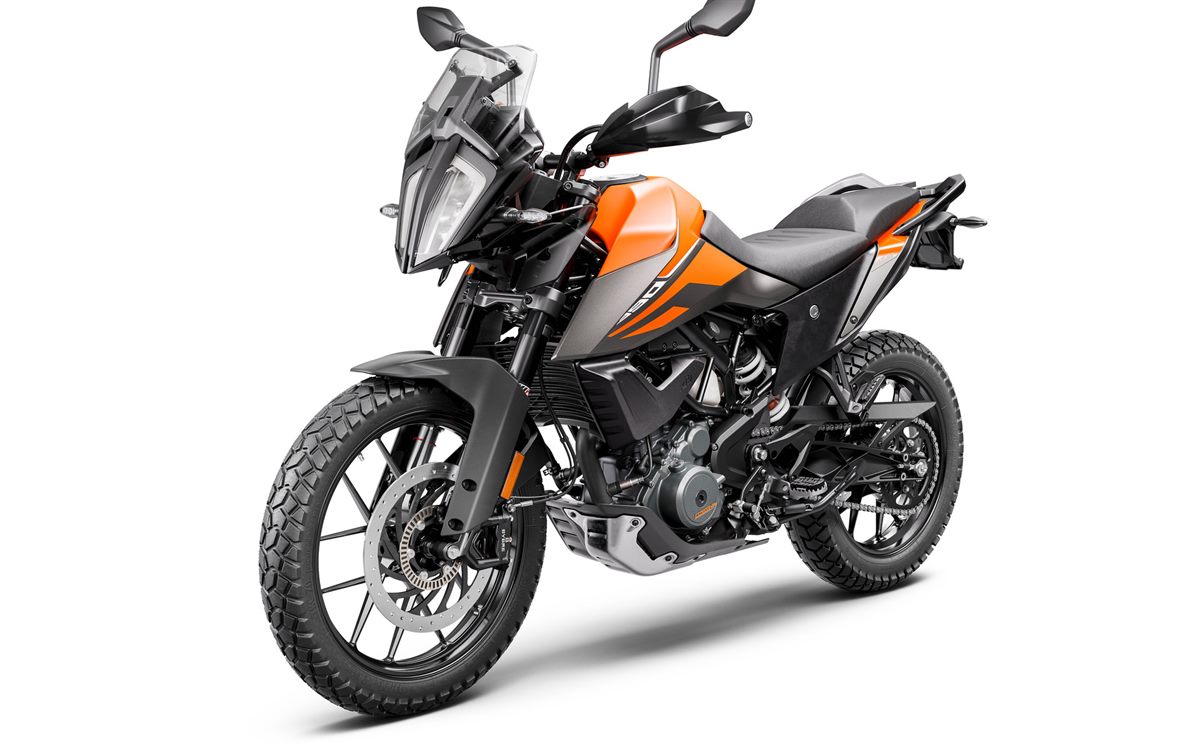
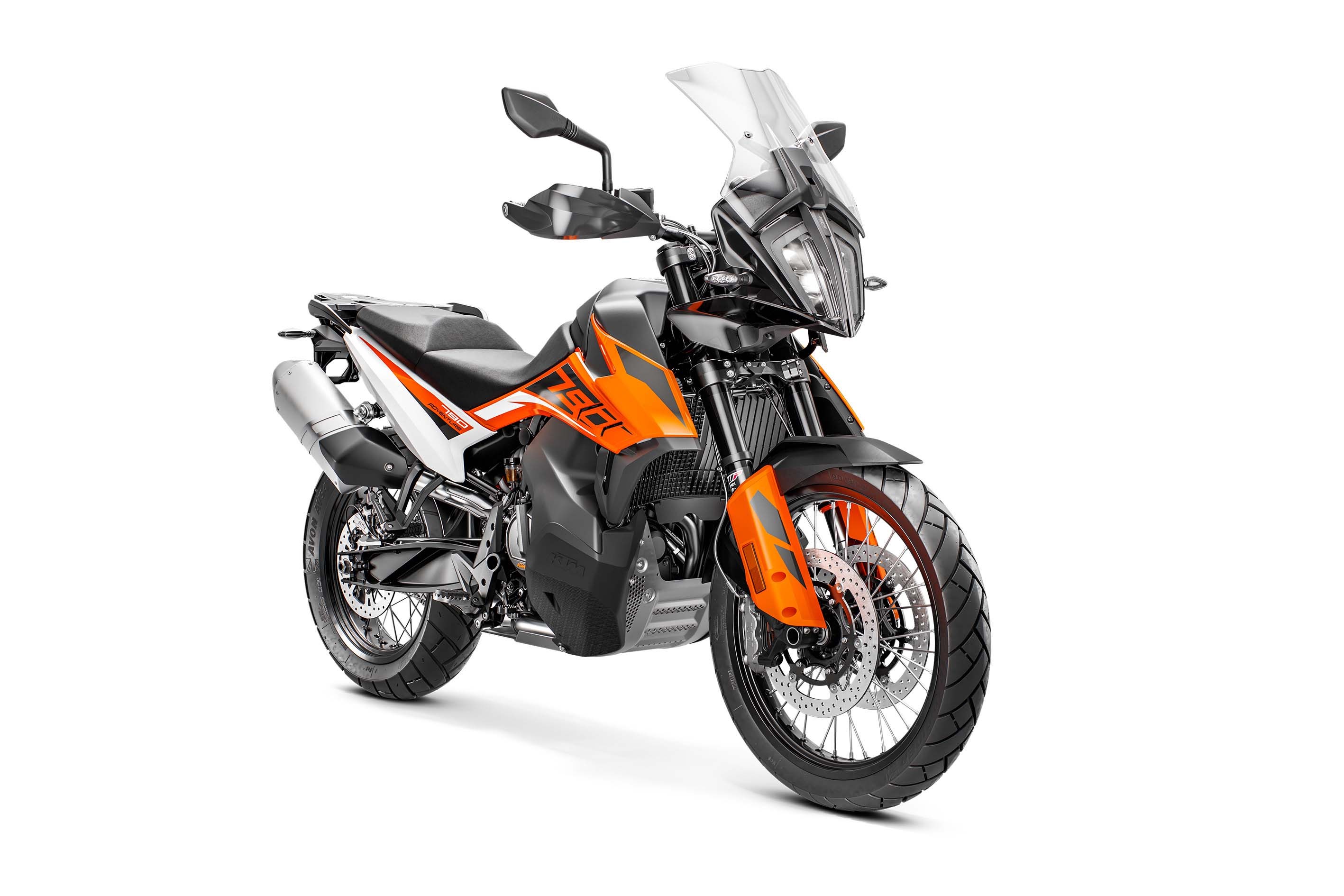
It’s immediately obvious that it’s adopted the 790 Adventure’s design. Missing however, is the 790’s bulbous underslung fuel tank. It also incorporates elements from the 450 Rally.

It’s engine remains the 372cc, liquid-cooled, four-valve, single-cylinder layout. KTM didn’t publish the power figures, but we can expect to produce in the 43 bhp ballpark like the 390 Duke’s. That doesn’t sound much to those weaned on triple digit numbers, of course but it’s now the most powerful lightweight adventure/dual-purpose bike.

Its steel trellis frame looks similar to the 390 Duke’s, but there are differences with exhaust routing, brackets, subframe, and swingarm length in order to accommodate longer suspension travel. Seat height is at a reasonable 853 mm — the same as the 1090 Adventure and 790 Adventure (base model).

Euro5 is about less polution, less noise, lower fuel consumption and the 390 Adventure delivers a frugal 3.62 litre/100 km under good riding conditions. That equates to 400 km from the 14.4-litre tank.

The bike uses WP APEX 43 mm forks and monoshock with 170 mm and 175 mm travel, respectively. Ground clearance is 198 mm. Those figures are not much for off-road but we shall see. The low clearance is contributed by 19-inch front and 17-inch rear wheels. 21-inch front and 18-inch rear wheels would raise the bike higher but the 390 Adventure is surely meant for beginners and casual adventure-touring riders.

Up top, the 5-inch TFT screen features the usual trappings these days of Bluetooth connectivity and multimedia functions. KTM’s Quickshifter+ is an option.

The 2020 KTM 390 Adventure is priced at USD 6,199 (RM 25,728.95) for the base model. We’d love to see it at Rimba Raid, too!
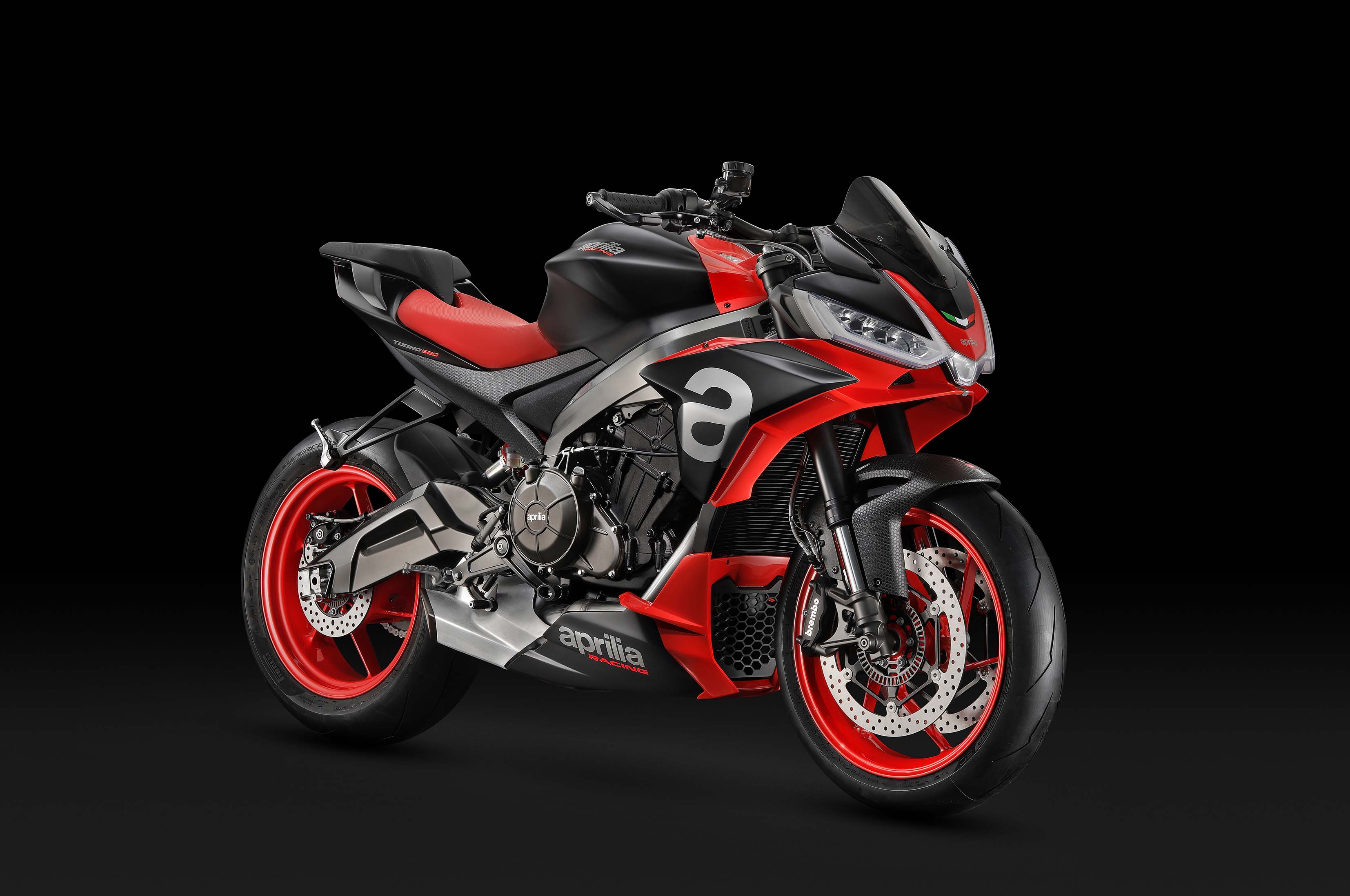
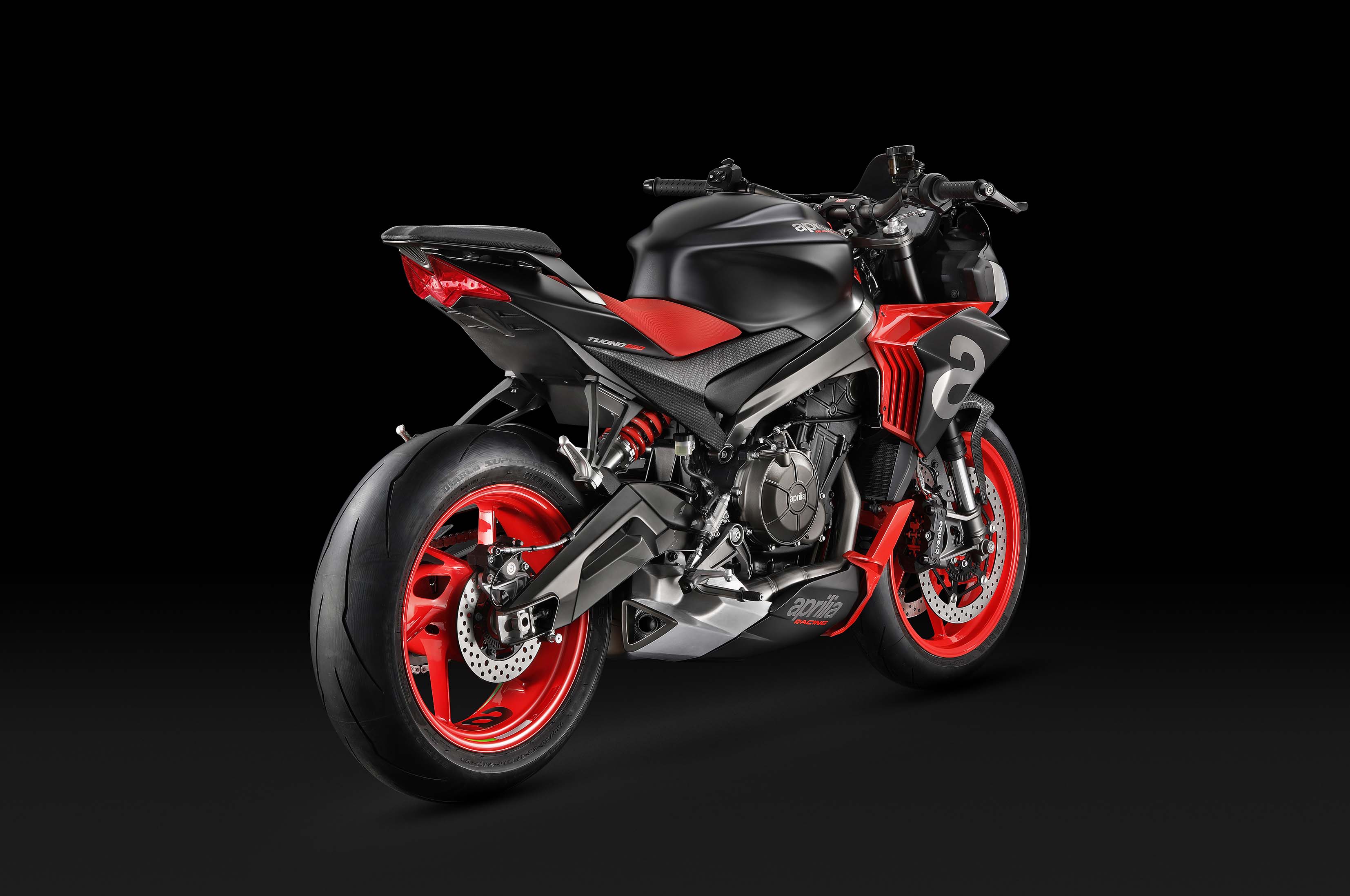
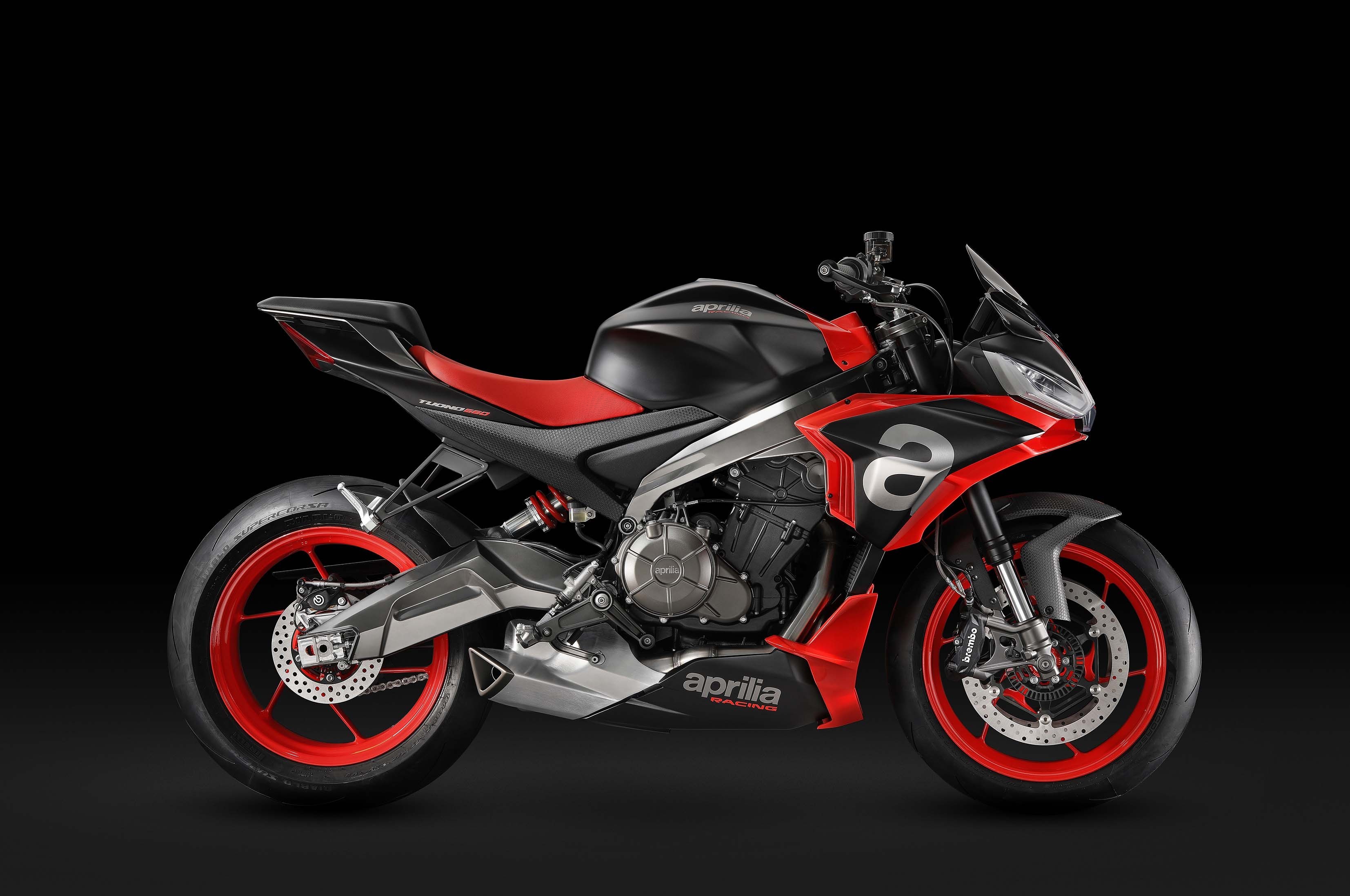
  • The 2021 Aprilia Tuono 660 concept was also unveiled at EICMA 2019.

  • It’s based on the RS 660 platform.

  • It ought to have the APRC package as well.

Just after the Aprilia RS 660 launch at EICMA 2019 got us wiping our lips, the 2021 Aprilia Tuono 660 concept had us foaming from our mouths.

The Tuono naked sportbike range has always been based on the RSV superbike’s platform. As what the manufacturer had said before, the RS 660 will be the platform for other models.

However, the Tuono V4’s engine has always been tuned for torque (make that insane torque) compared to the RSV4’s. In this case, the Tuono 660’s powerplant is expected to produce 95 bhp, 5 bhp down from the RS 660. 95 bhp doesn’t exactly make a slow bike, but its torque should make it even thrilling to ride.

The Tuono 660 will feature the APRC electronics package, as well. Just like its fully-faired brother, there’s a six-axis IMU-based traction control, ABS, engine brake control. Wheelie control? Should we want that on a Tuono?

Given that the production RS 660 looks almost identical to its concept, the Tuono 660 should look very close to the concept, too. We’re hoping that the cluster of LED-lights are carried into production.

You can also see the aerobody on the fairing’s side panel, which provides downforce, pushes wind around the rider as well as channel engine heat away from the rider’s legs.

Only problem is we have to wait until 2021.

  • The 2020 Aprilia RS 660 was officially launched at EICMA 2019.

  • The 660cc, 270-degree crank, parallel-Twin puts out 100 bhp.

  • It also features the APRC electronic package.

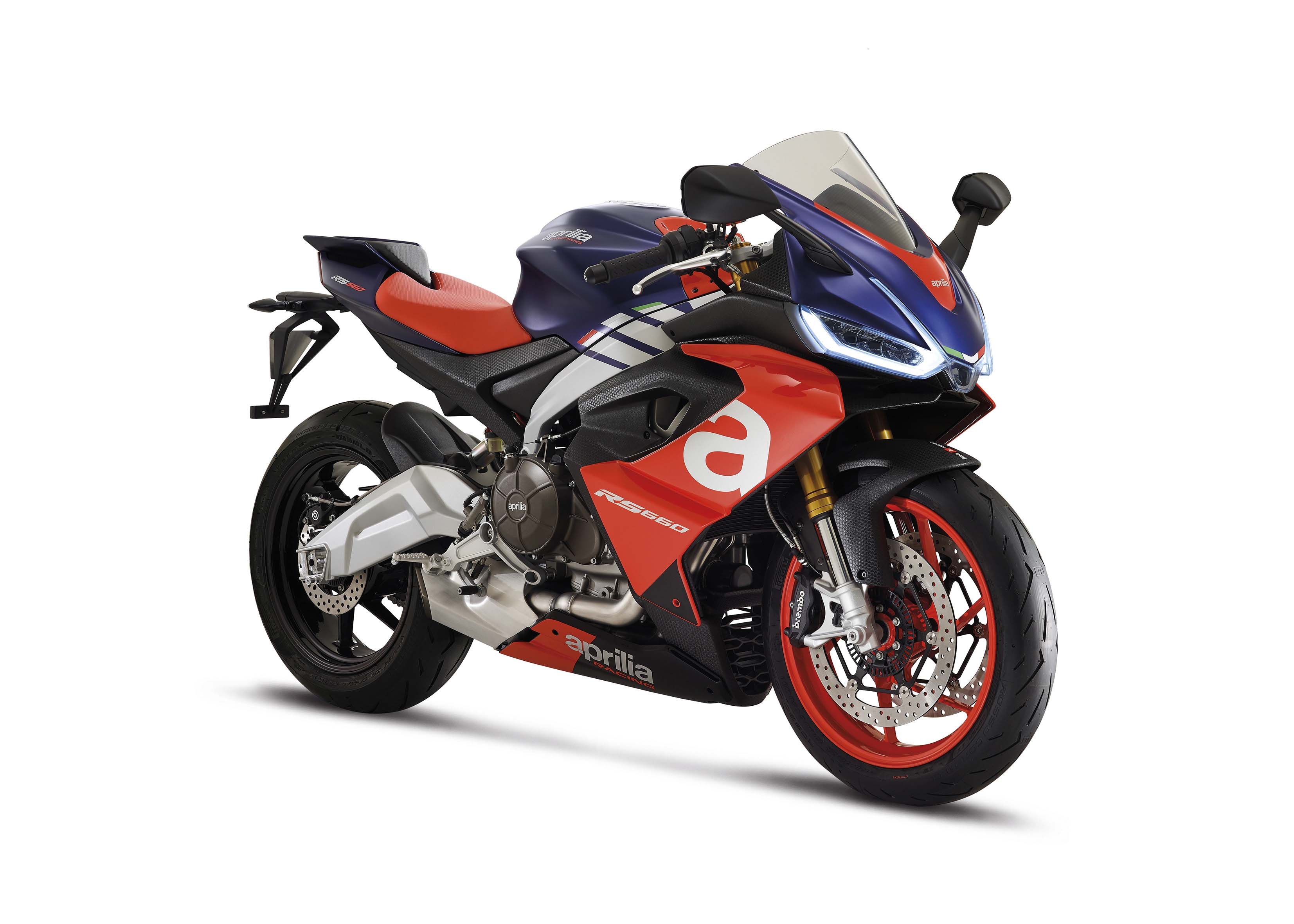
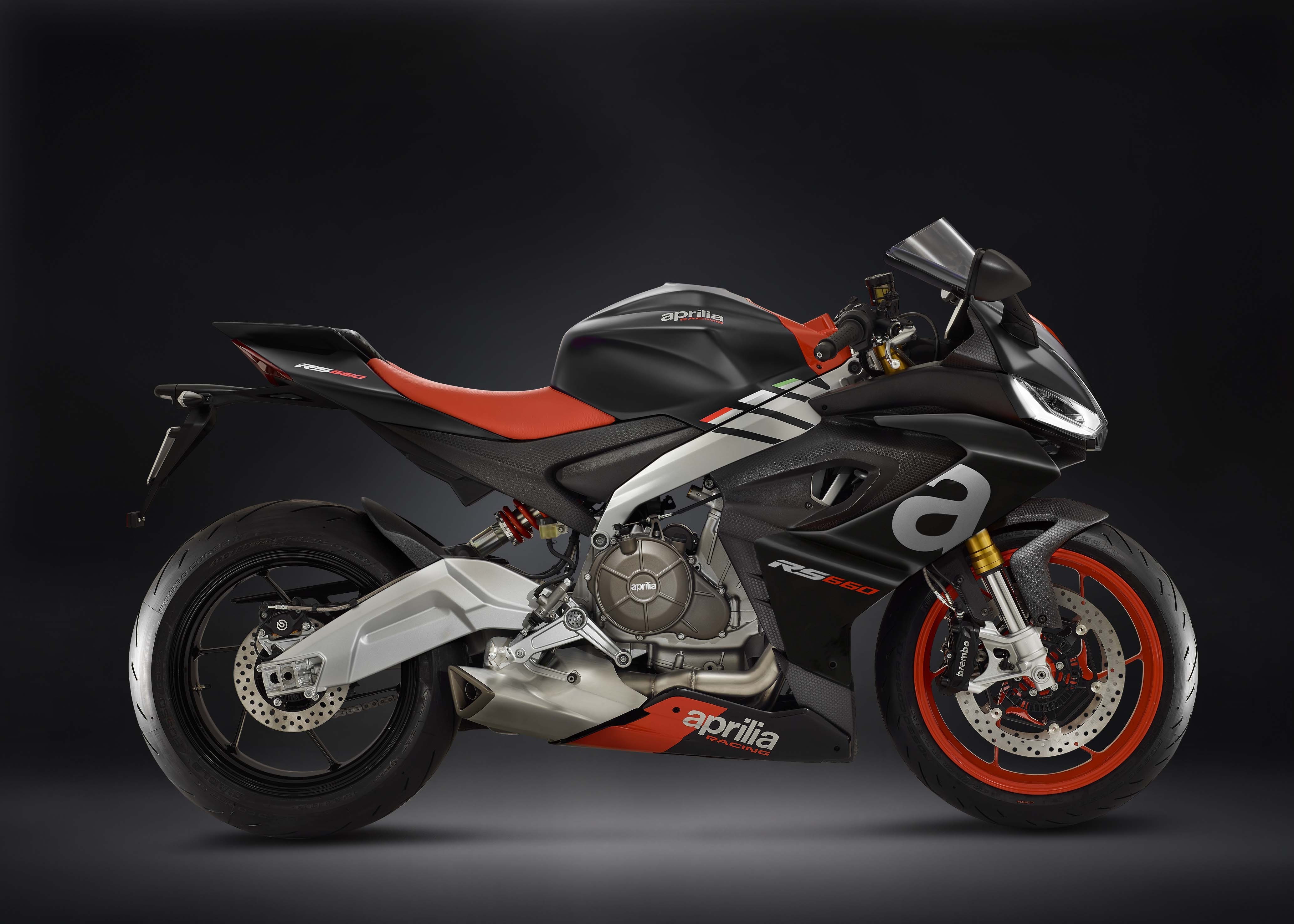
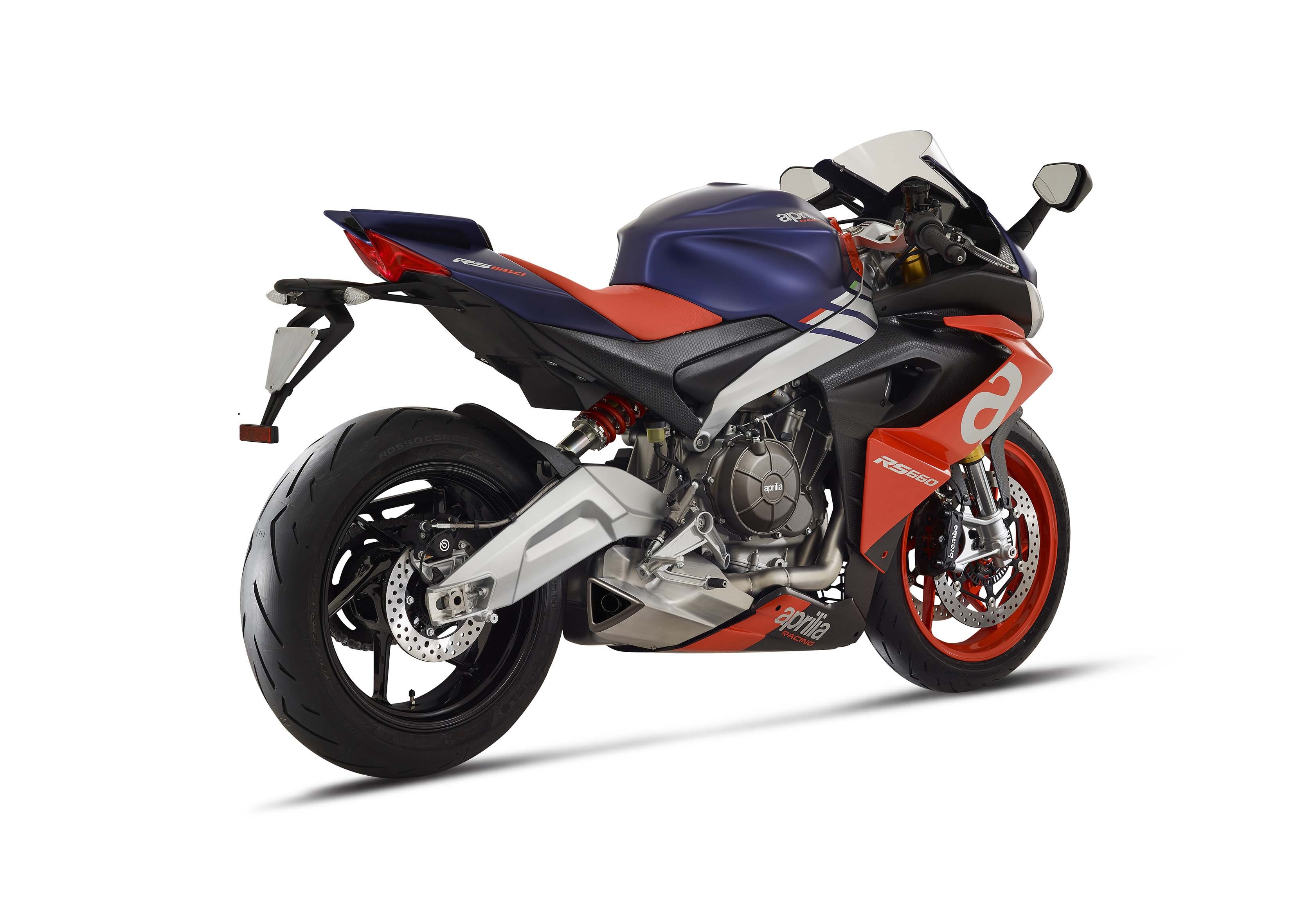
One of the most highly-anticipated bikes, the 2020 Aprilia RS 660, breaks cover at EICMA 2019.

It’s been a full year of waiting for the new middleweight to show, and we can say that it was worth it. Because it will set the class on fire, judging from the spec sheets, just as Aprilia had touted.

Let’s begin with the 660cc parallel-Twin. Based on the RSV4 superbike with only two front cylinders, it will produce 100 bhp. That’s unprecedented for a road going two-cylinder sub-700cc bike. Factor in a dry weight of only 168 kg and you have the class-leading power-to-weight ratio.

The engine shares the RSV4’s architecture, and uses a 270-degree crank to mimic the firing order of a 90-degree V-Twin. The format provides good low-end torque with linear power delivery.

But it isn’t just a powerful engine in a light bike. Aprilia also endowed the RS 660 with their signature APRC (Aprilia Performance Ride Control) electronics suite, fortified with an Inertial Measurement Unit (IMU). This gives the bike cornering ABS, lean-angle-sensitive traction control, wheelie control, among others. It’s also equipped with a bi-directional quickshifter, cruise control and power modes.

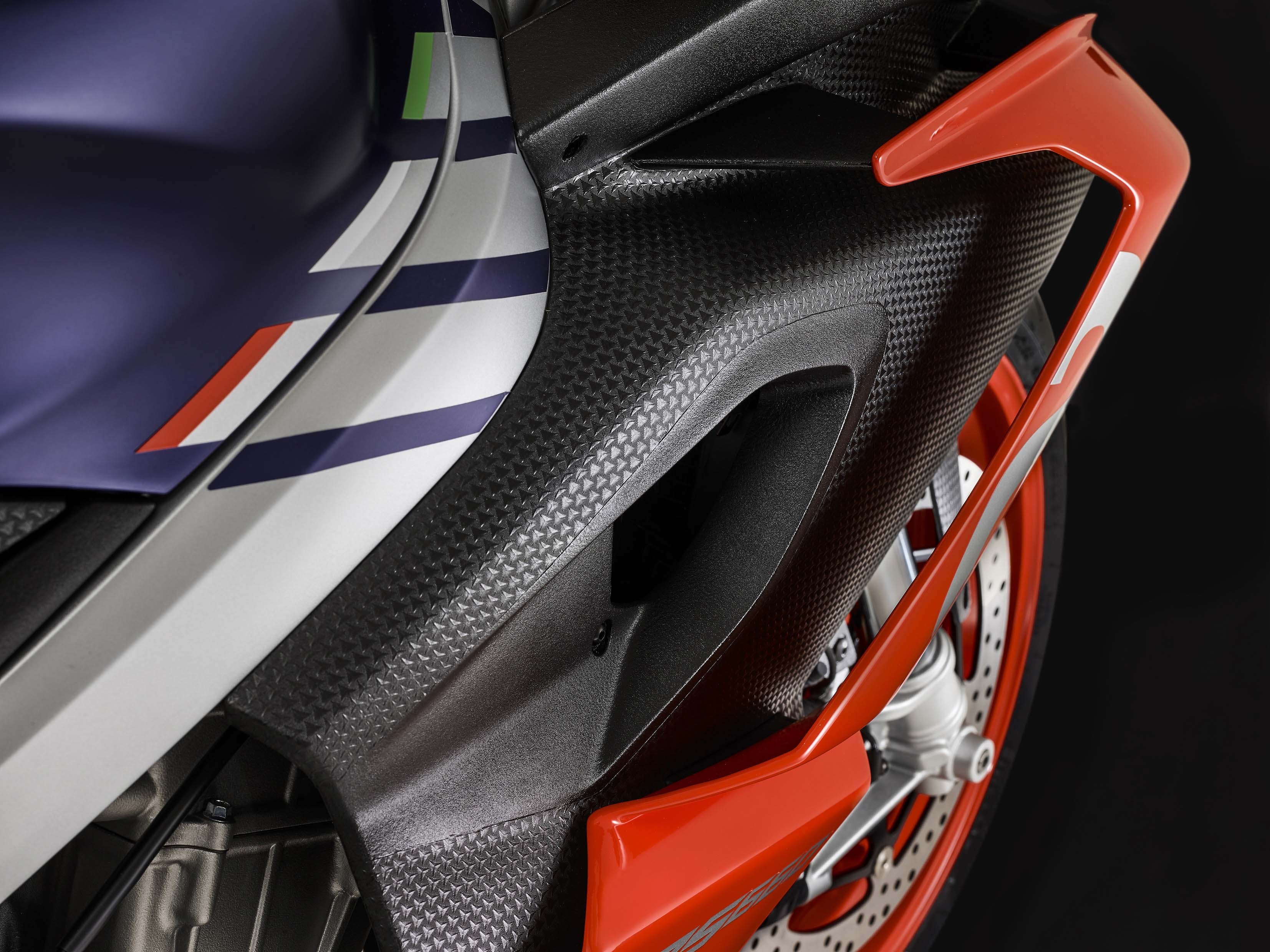
Aprilia touted that the bike will have “active aerodynamics.” Hence the RSV4 fairing design, which provides extra downforce at speed. We feel that the production bike actually looks better than the prototype revealed at last year’s EICMA.


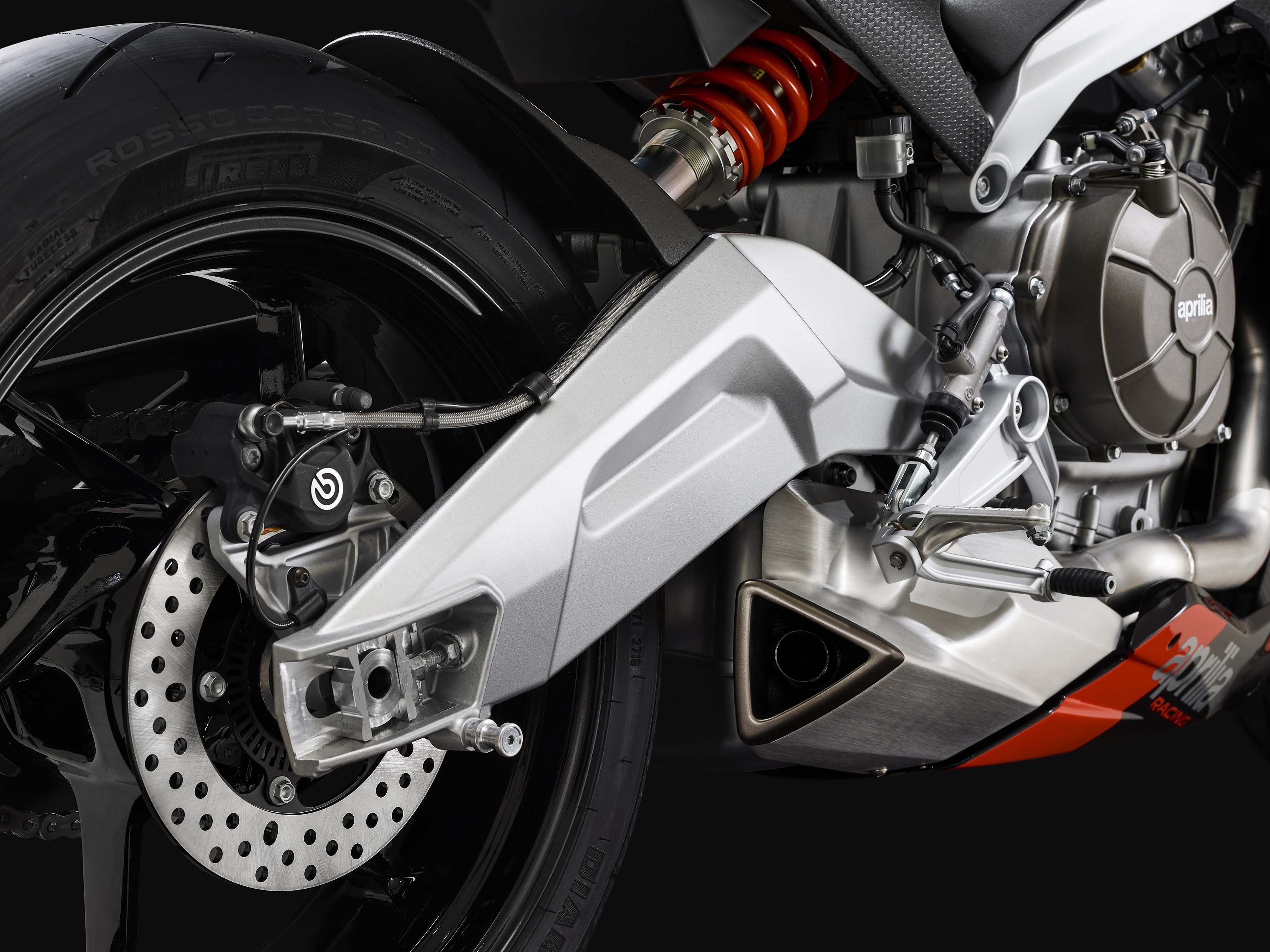
The chassis uses the engine as a fully-stressed member with the swingarm’s pivot located at the back of the crankcase. Front forks are Kayaba although there isn’t word on the rear shock. Braking duty is handled by Brembo brakes front and back.

Lighting is fully-LED including daytime running lights (DRL). A 5-inch TFT instrument panel provides multimedia connectivity.

A notable feature is the classic purple and red paint scheme.

We’ll keep you informed on when it’ll arrive and cost in Malaysia. Fingers crossed that it’s in a reasonable bracket.

Archive

Follow us on Facebook

Follow us on YouTube