Bikesrepublic

Latest News

  • Another patent for the new Suzuki Hayabusa was leaked online.

  • It shows an engine similar to the old model, but rumors say it will get a capacity boost.

  • The new bike may be introduced as a 2021 model.

Many fans of the Suzuki Hayabusa almost cried when the factory announced that they’ve stopped production of the model.

But every cloud has a silver lining and many speculated that Suzuki will debut a new Hayabusa soon. It sure seems to be headed in that direction the patents have been leaked online.

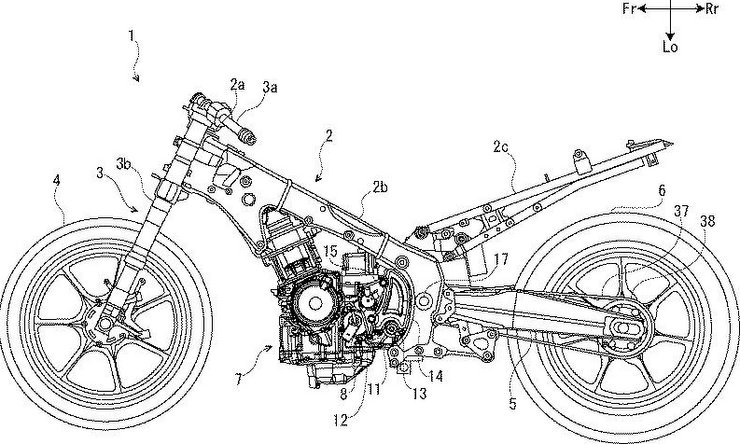
The picture shows the second patent to surface.

2021 Suzuki Hayabusa patent – Credit BikeSocial

It shows that the bike will retain the twin aluminium spar frame, albeit one which looks smaller and lighter than its predecessor.

The engine looks identical to the old 1340cc inline-Four but is rumored to receive a capacity boost and reworked cylinder head. The bottom end of the engine looks the same – possibly retained from the old bike. The drawings also revealed a new emission-friendly exhaust system.

But BikeSocial pointed out that an earlier patent described an electronically-controlled semi-automatic gearbox while this second patent mentions a clutch lever operated manual transmission, instead. Does that mean two versions of the future Hayabusa? As in one with a semi-auto and another with a manual gearbox?

The question of how the bike will look like hasn’t been answered yet. Maybe we could see the prototype later, but it should debut as a 2021 model.

Source: BikeSocial

  • 2020 Harley-Davidson modesl were revealed recently.

  • The CVO and Touring models will feature the RSDS electronic rider assistance systems.

  • 2020 marks the return of the Low Rider S.

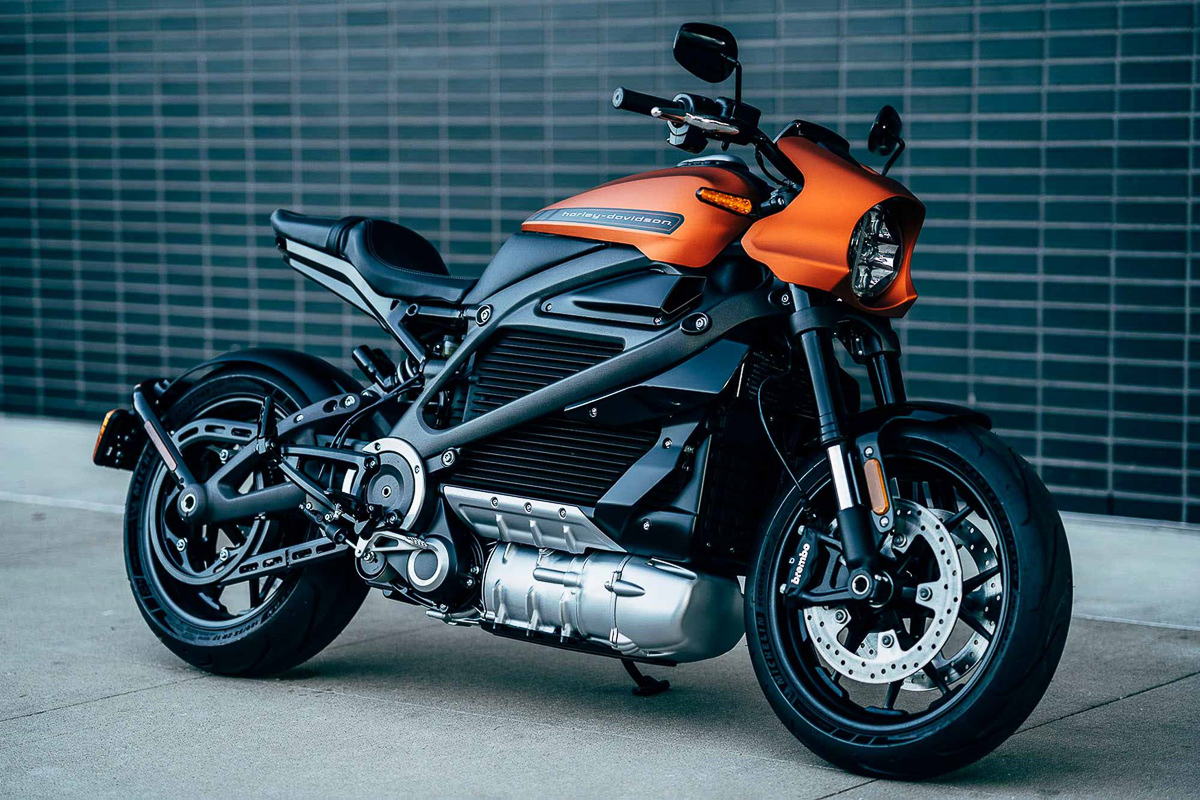
We reported yesterday that 2020 Harley-Davidson Touuring and CVO models, in addition to the LiveWire will receive rider assistance electronics. The announcement accompanies the Motor Company’s reveal of their 2020 models.

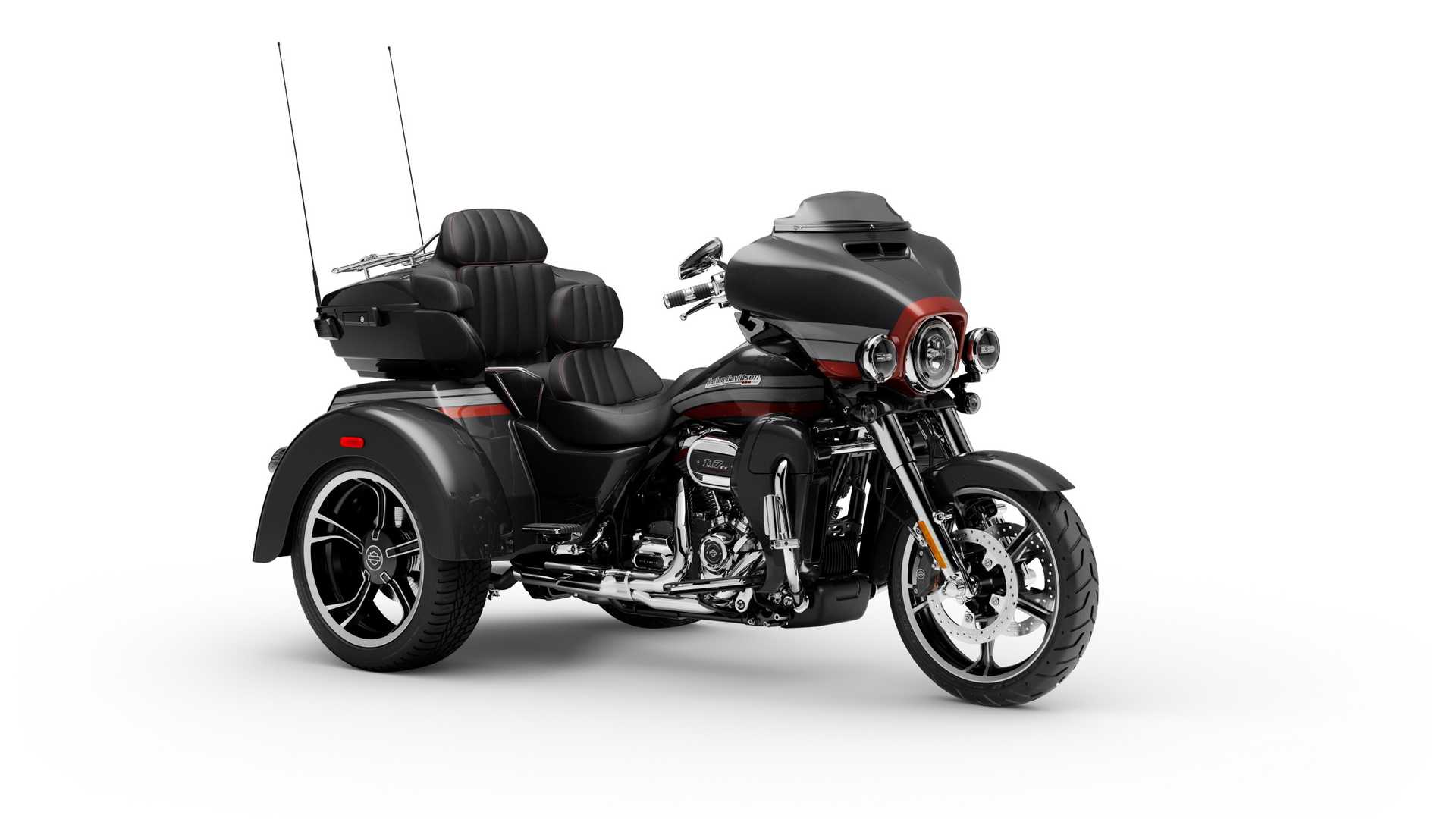
2020 Harley-Davidson CVO Tri Glide

2020 Harley-Davidson CVO Tri-Glide

The 2020 CVO Tri Glide trike features the Milwaukee-Eight 117 (1917 cc) V-Twin as all CVOs.

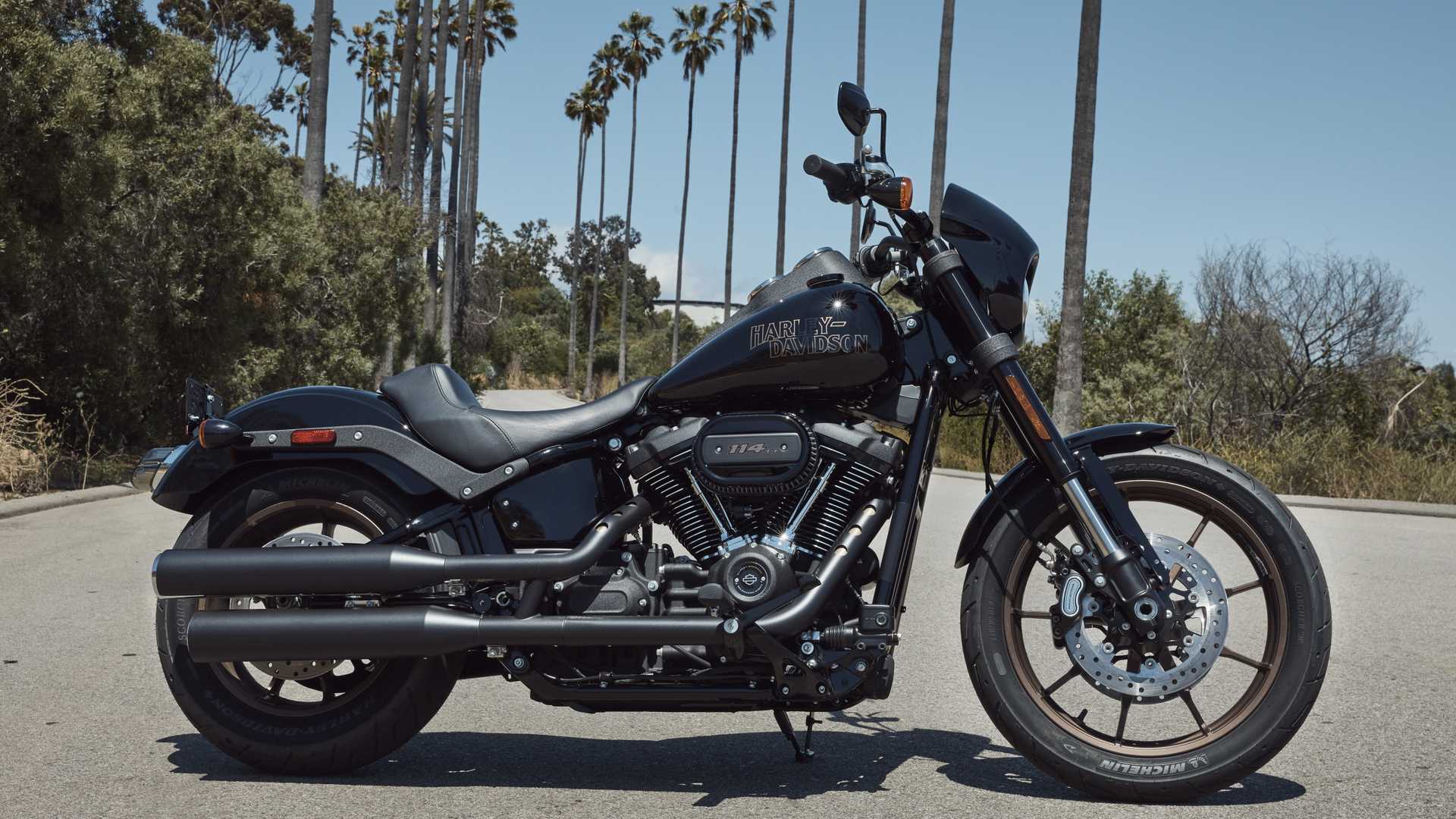
2020 Harley-Davidson Low Rider S

The Low Rider makes a return! Now called the Low Rider S, it uses the Softail instead of Dyna frame. Likewise, it’ll be equipped with the Milwaukee-Eight 114 (114 cubic inch equals 1868 cc) V-Twin. The Low Rider S is all “blacked-out” to look dark and aggressive.

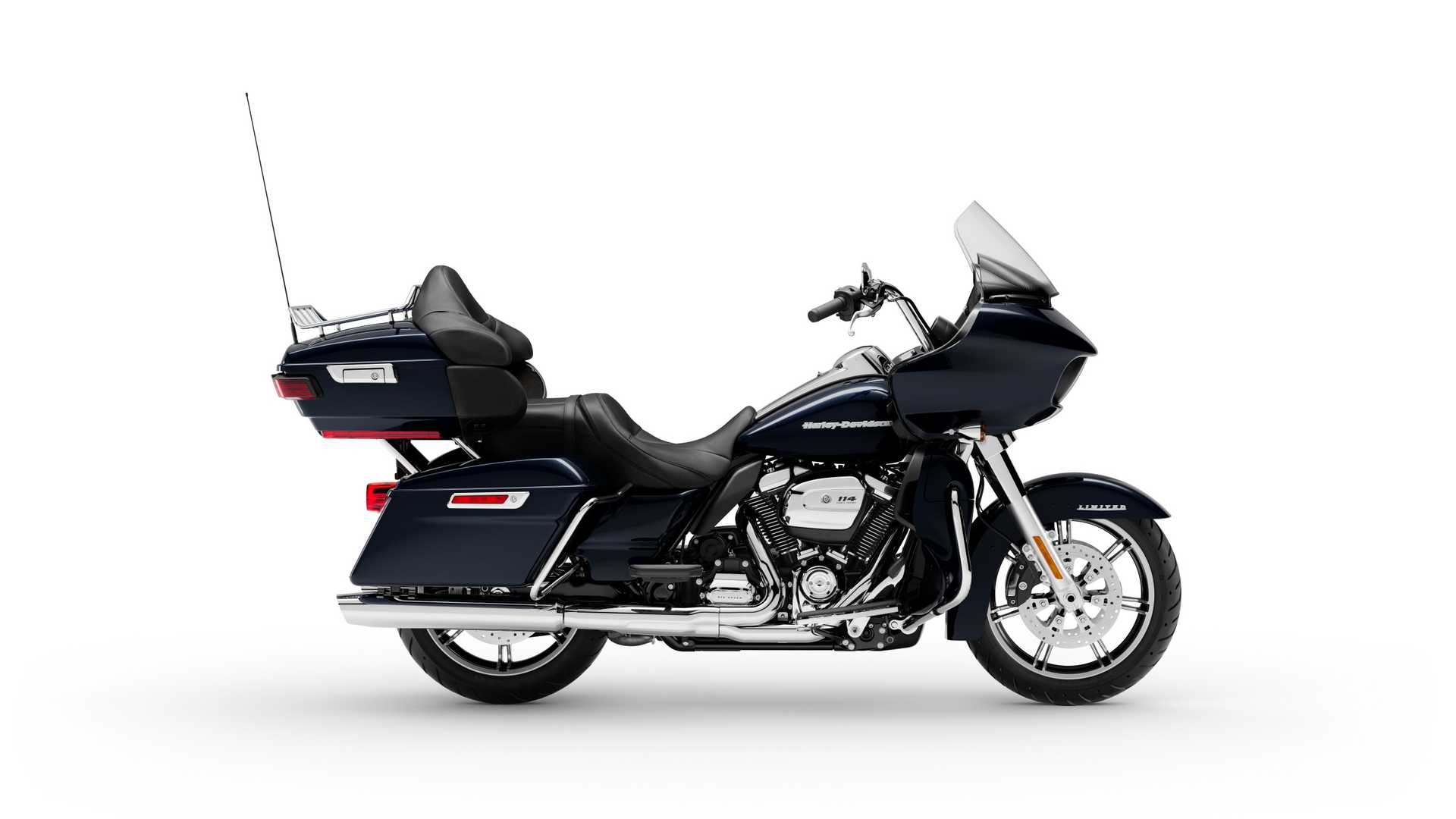
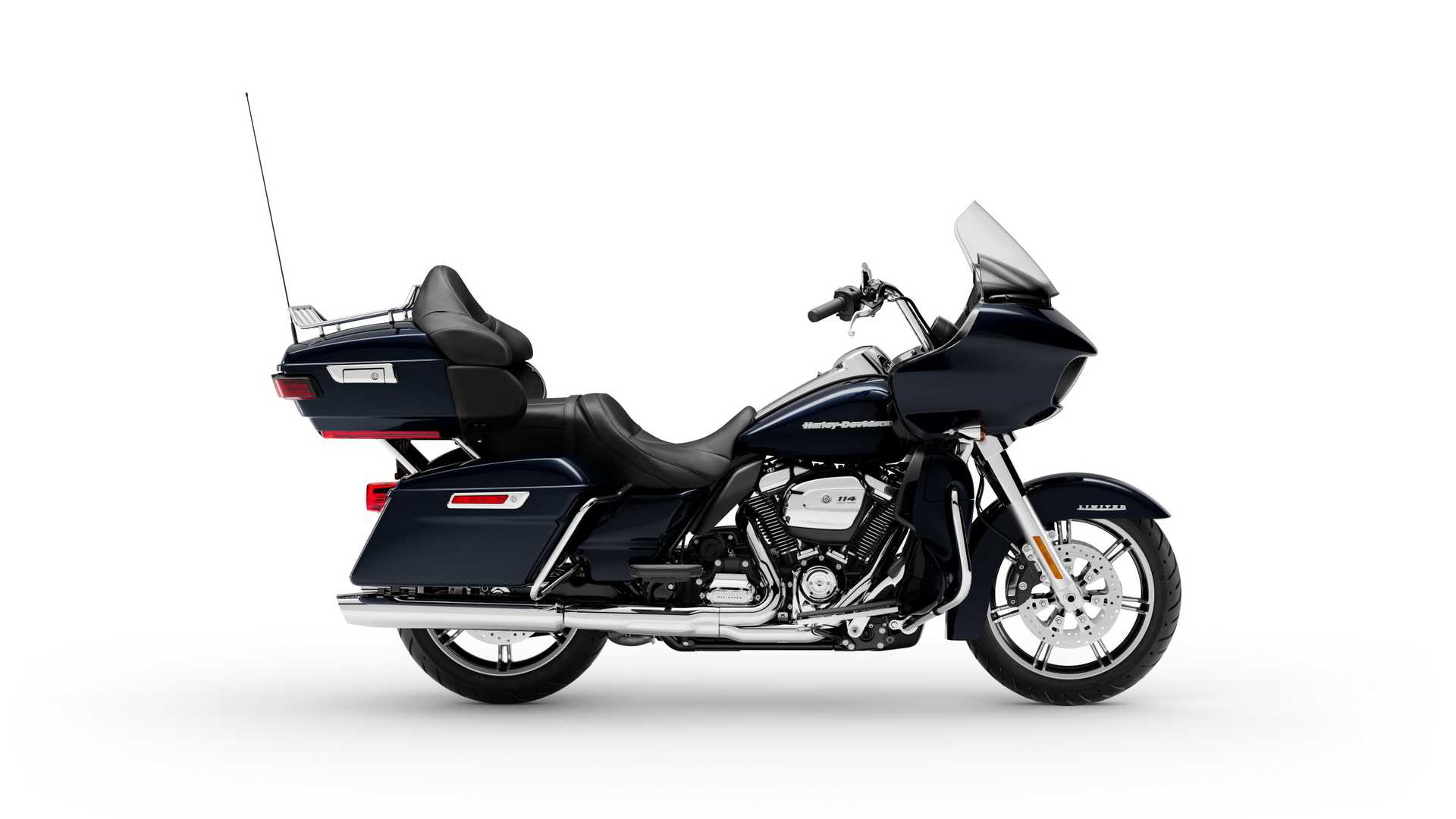
2020 Harley-Davidson Road Glide Limited


The 2020 Road Glide Limited replaces the Road Glide Ultra in the luxury touring line-up. A new Black Finish Option is added.

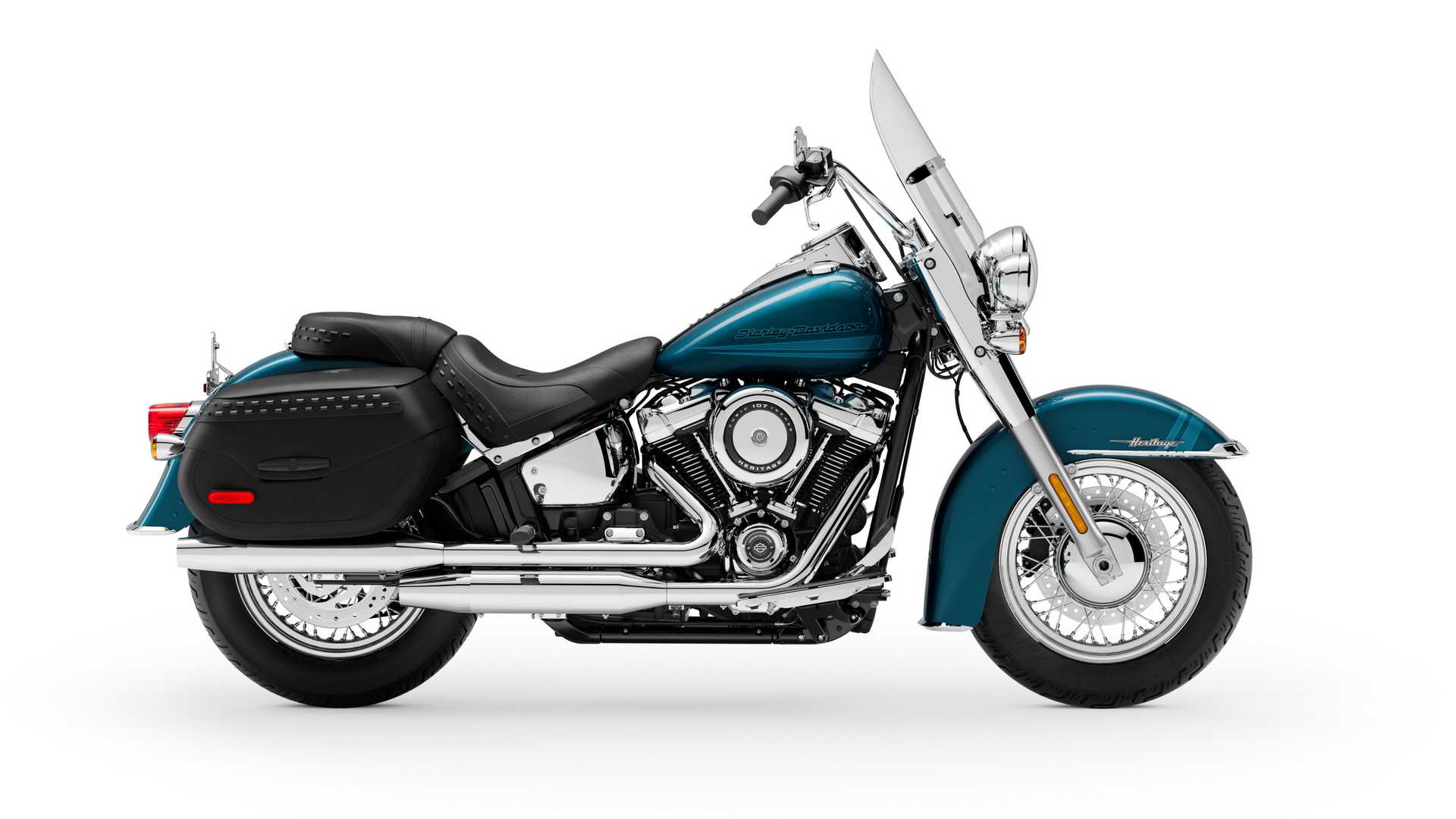
2020 Harley-Davidson Heritage Classic

The 2020 Heritage Classis is all about glimmer. As in shiny chrome as per its er… heritage. Mechanically, it remains the same as the current and outgoing model but shinier. Available in Vivid Black, Billiard Burgundy. Two-tone options include Silver Pine and Spruce, and Blliard Red with Vivid Black.

As mentioned earlier, the new Reflex Defensive Rider System (RSDS) is only available on the CVO (including the Tri Glide), Touring and LiveWire models. The system includes lean-angle sensitive traction control and ABS. We believe the Softail line-up will be equipped with it in short order.

  • 2020 Harley-Davidson CVO and touring models will feature new electronic assistance systems.

  • The electronics cover chassis, brake and powertrain control.

  • The new features were announced together with the unveiling of the 2020 models.

Harley-Davidson have long been slightly rudimentary in terms of electronic aids. That’s changing now that these features will be present in the 2020 Harley-Davidson models.

The Reflex Defensive Rider System (RDRS) is more than just traction control, however, as it encompasses aspects of chassis, brake and powertrain control. These features are found in the 2020 CVO and touring models, except for the Road King and Electra Glide Standard.

It will also be added to the electric LiveWire and may soon equip the Softail next.

While the technologies aren’t new, it’s good to see the Motor Company finally adapting them to their bikes.

Features of the RSDS:

Cornering Enhanced Electronic Linked Braking (C-ELB)

This system applies brake pressure to both wheels when the rider uses either the front or rear brake, allowing for more balanced braking on both ends. This is the linked braking function. The system is lean angle sensitive for the two-wheeled models. On the Trike, however, the system detects lateral (side to side) movements. It will apply the right amount of brake pressure on both ends of bike to let the rider hold his intended line.

Cornering Enhanced Antilock Braking System (C-ABS)

Standard ABS function prevent the wheels from locking in a straight line, but the Cornering ABS function takes lean angle into consideration and controls braking pressure, to avoid lowsiding the bike.

Cornering Enhanced Traction Control System (C-TCS)

This system also takes lean angle into consideration when regulating tyre slip.

Drag-Torque Slip Control System (DSCS) and Cornering Enhanced Drag-Torque Slip Control System (C-DSCS)

The first system avoids rear wheel hop when the rider downshifts too aggressively or decelerating too hard on slippery surfaces. It detects rear wheel slip and uses the engine’s torque to match the tyre to the rear road speed. The Cornering function does the same but is lean-angle sensitive.

2020 Harley-Davidson CVO Tri-Glide
Vehicle Hold Control (VHC)

This is Harley’s version of Hill Hold Control. It activates some brake pressure to stop the bike from rolling backwards or forwards when stopped on an incline. It is really useful when carrying a passenger and/or luggage.

Tyre Pressure Monitoring System (TPMS)

While this is useful for all bikes, it’s especially important for tourers since their rear tyres are hidden away. The pressures are displayed on the Boom! Box GTS screen, or a symbol on the Road King’s instrument cluster.

RDRS for Trike Models

Harley-Davidson Freewheeler and Tri Glide Ultra models are equipped with Trike-specific Reflex Defensive Rider Systems with Cornering Enhanced Electronic Linked Braking (C-ELB), Cornering Enhanced ABS (C-ABS), Cornering Enhanced Traction Control System (C-TCS) and Cornering Enhanced Drag-Torque Slip Control System (C-DSCS). The CVO Tri Glide model will add TPMS to the Trike-specific Reflex Defensive Rider Systems.

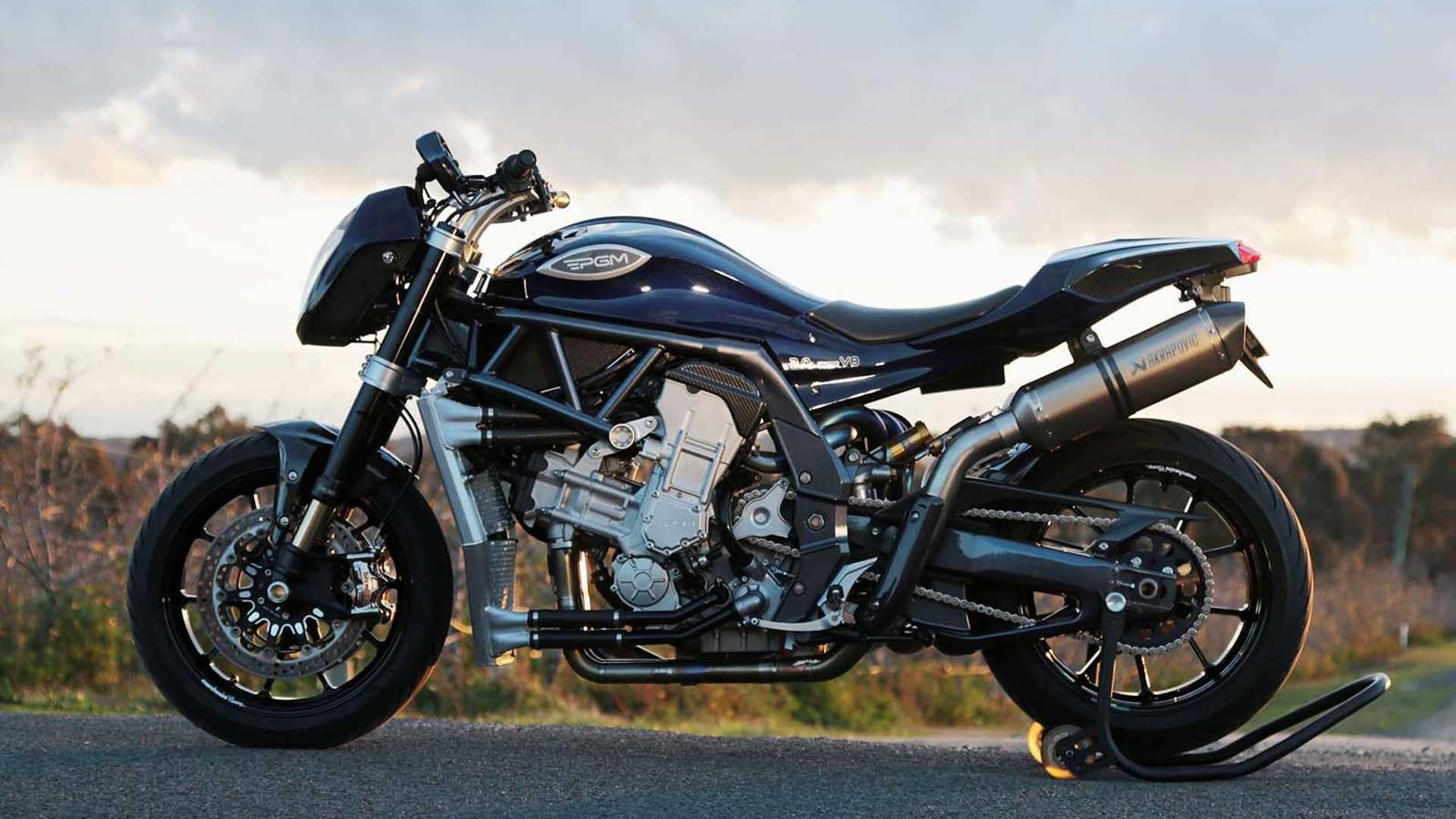
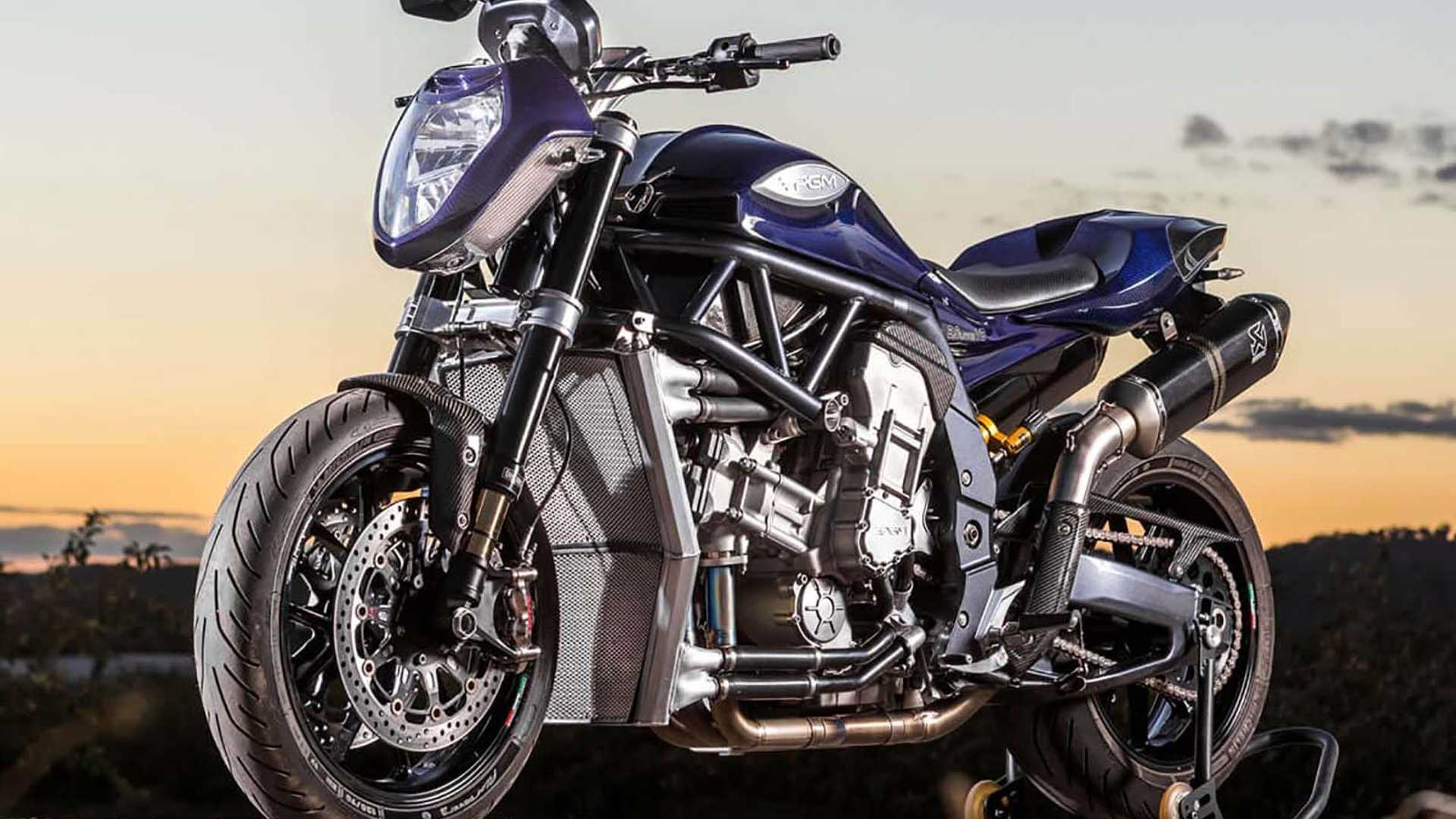
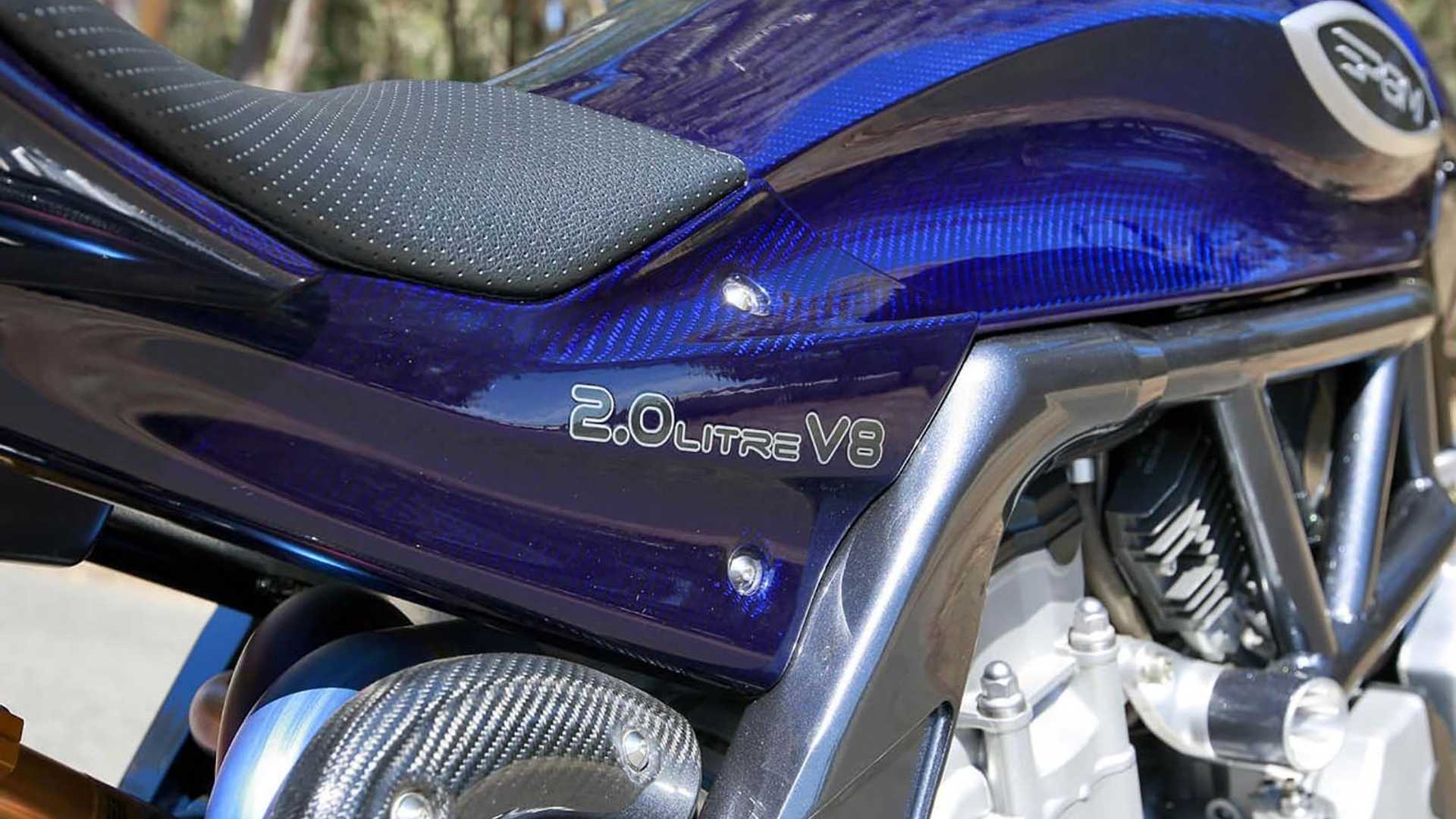
  • The PGM V8 is a 2.0-litre V8 custom-built motorcycle.

  • The engine produces 334 hp and 214 Nm.

  • It costs AUD 180,000 if you want one.

Your KTM 1290 Super Duke R not mad enough? The Kawasaki Ninja H2 too mild? The Honda Gold Wing has too many cylinders? Then try on this PGMV8 2.0-liter V8.

Paul G. Maloney (as in PGM) decided to build himself a V8 streetfighter one day. However, rather than sticking in a car engine into a frame (like what most V8 motorcycle builders did), he built the engine himself. He did so by installing two Yamaha YZF-R1 inline-Four cylinder banks to a custom-made crankcase, resulting in 2000cc. A custom-made 4-2-1 Akrapovic titanium (with the Aussies call “tit”) exhaust system vents the spent hydrobarbons and shaves some weight.

A chromoly steel trellis frame suspends the engine and a machined aluminium subframe bolts onto it. Oh, the bodywork is carbon fibre.

The package weighs a total of approximately 242 kg, wet.

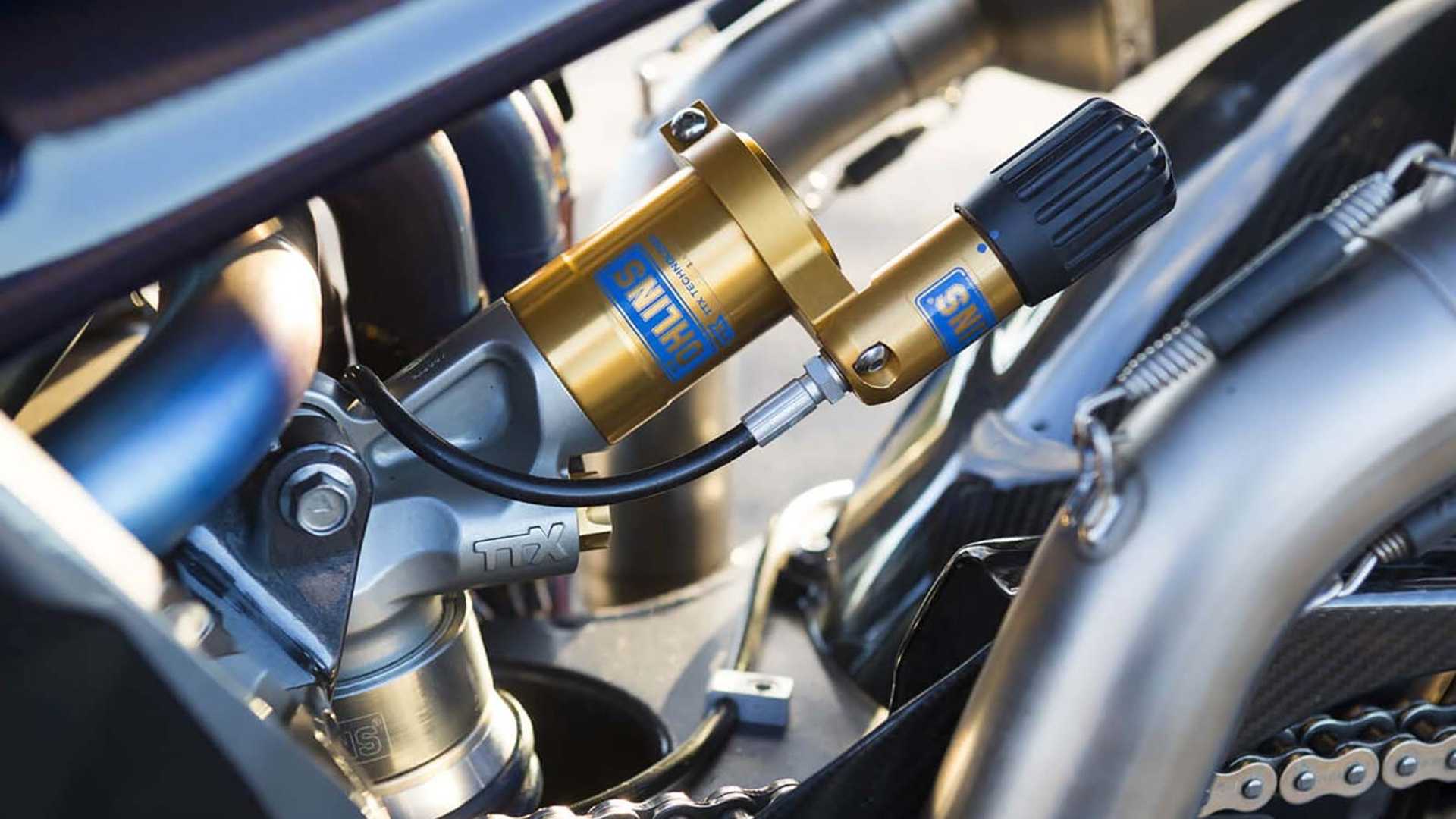
To tame this monstrosity, Öhlins FGRT301 forks and Öhlins TTX Mk2 monoshock are fitted, along with Marchesini forged aluminium wheels, Brembo GP4 front brake calipers and Brembo P4 rear brake caliper.

The bike is built for sale at a reportedly mind-blowing price of AUD 180,000 (RM 509,364).

But wait, we almost forgot to tell you about how much power the engine produces. How much? 200 hp? 250 hp? 280? Uh uh, try 334 hp peak power and 214.2 Nm of torque.

Source: RideApart, Asphalt & Rubber

  • The Moto Guzzi V85TT will form the platform for new models.

  • Piaggio have not announced their plans but a number of renders have shown up.

  • The renders used the bikes classic lines.

“The Moto Guzzi V85TT is just the beginning,” said Gianluca Fiume, Chairman and General Director of Piaggio Vietnam in the post-media ride interview. “There will be more models based on its platform.”

By platform Piaggio meant not just the 853cc transversely-mounted 90engine alone (it’s already powering the Moto Guzzi V9 range anyway) but the entire engine and chassis. However, Fiume stopped short of revealing what the future models are.

Well, looks like there are artists who wish to demonstrate their ideas what the next bike will look like.

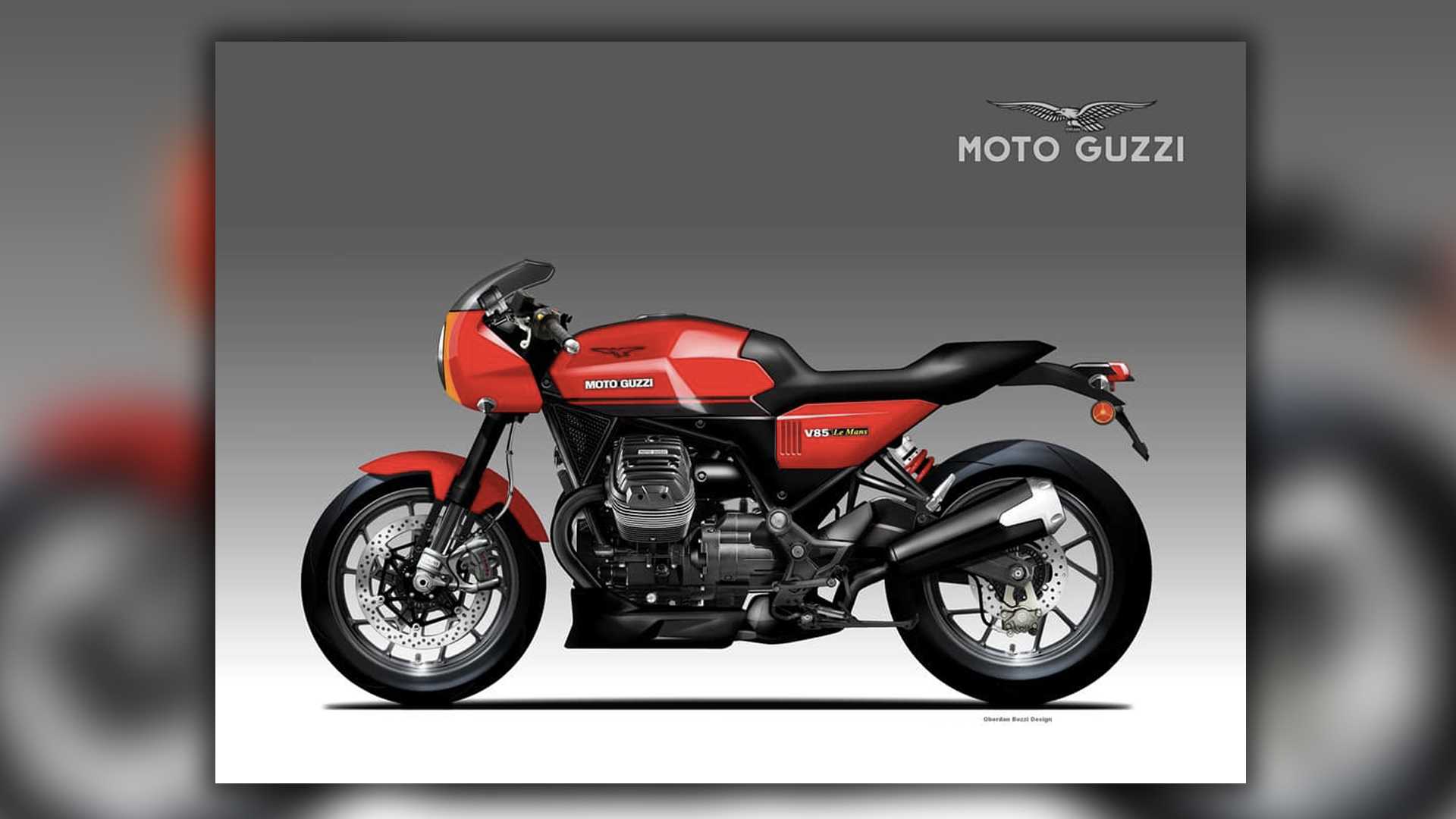
Picture credit Moto Station/RideApart

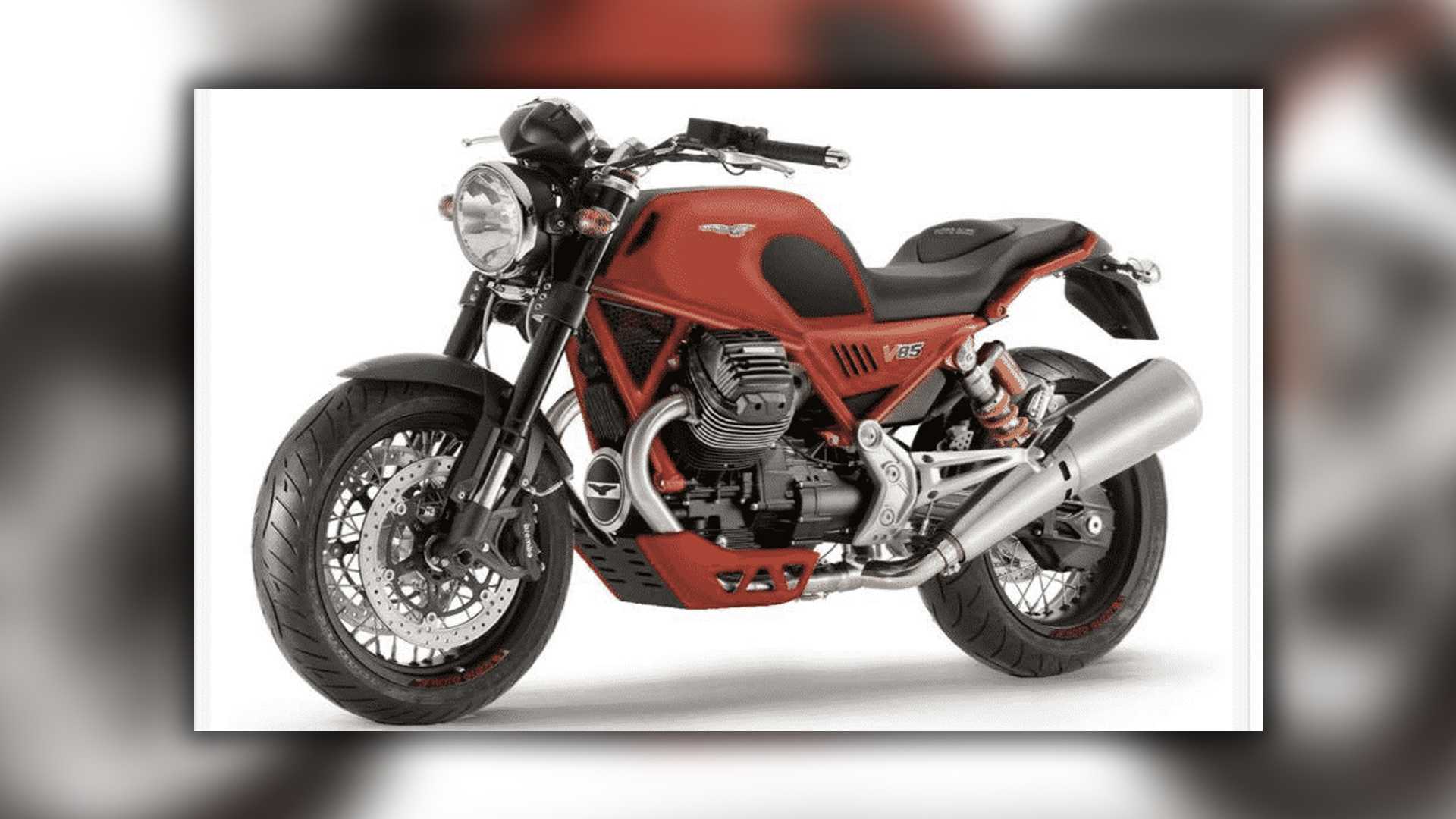
Oberdan Bezzi rendered a model which harks back to the most famous Guzzi – the Le Mans. The headlamp fairing and fuel tank are definitely distinctive, giving the bike a café/classic racer stance.

Another design turned the bike into a roadster/standard naked bike reminiscent of the V7 Racer mixed with elements of the V9 Roamer.

Picture credit Moto Station/RideApart

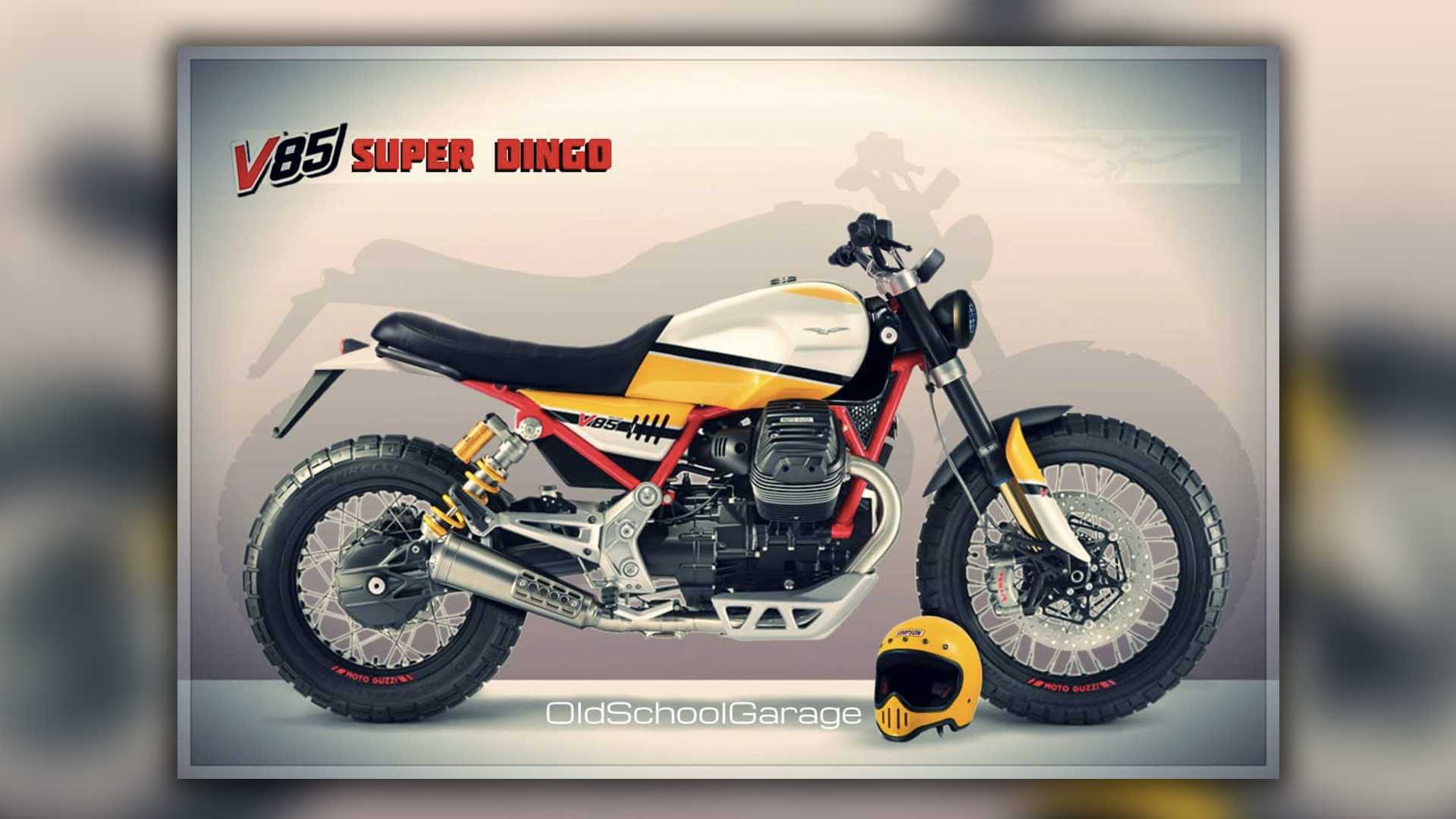
Lastly, an Old School Garage render turned the V85TT into a scrambler which they called the “85 Super Dingo,” complete with knobby-shod, large-diameter wired spoke wheels.

Picture credit Moto Station/RideApart

In our opinion, the Le Mans “replica” certainly looks delicious. What’s yours?

Piaggio have yet to announce the prototype based on the V85TT as they are probably too busy in keeping up with the orders.

Source and pictures: Moto Stationvia RideApart.com

  • The Triumph Tiger 800 XR is the entry-level Tiger 800.

  • It shares everything with the Tiger family apart from one or two components.

  • It is currently priced from just RM 56,900 and buyers will receive complimentary Triumph aluminium panniers.

Sometimes you worked hard to do everything right, but somehow, misfortune has a way of tracking you down. But then you suddenly realize that it’s just a higher power telling you that you’re mortal, and things sort themselves out once you acknowledge that. So, what’s that got to do with this Triumph Tiger 800 XR 2500-km test? Plenty, as you’ll see in a while.

The Test

It started out with the invitation to the GIVI Malaysian Adventure 2019. It was my third GIVI Adventure and this was in our very own backyard! However, places were limited, so I offered to ride my own beaten up and rotting Kawasaki ER-6f.

As the days counted down to the start of the event, I discovered that the front forks were leaking (again) and some of that oil had snaked into the brake calipers. If that’s not bad enough, the voltmeter showed that the coil was undercharging the battery again (third coil, replaced less than a year ago). Worse, there was no time to repair it.

Oh dear. I prayed that the bike would last the trip.

Then one day, I received a call from Triumph Motorcycles Malaysia. “We’ve got a Triumph Tiger 800 XR for you for the ride. It’s a brand-new unit.”
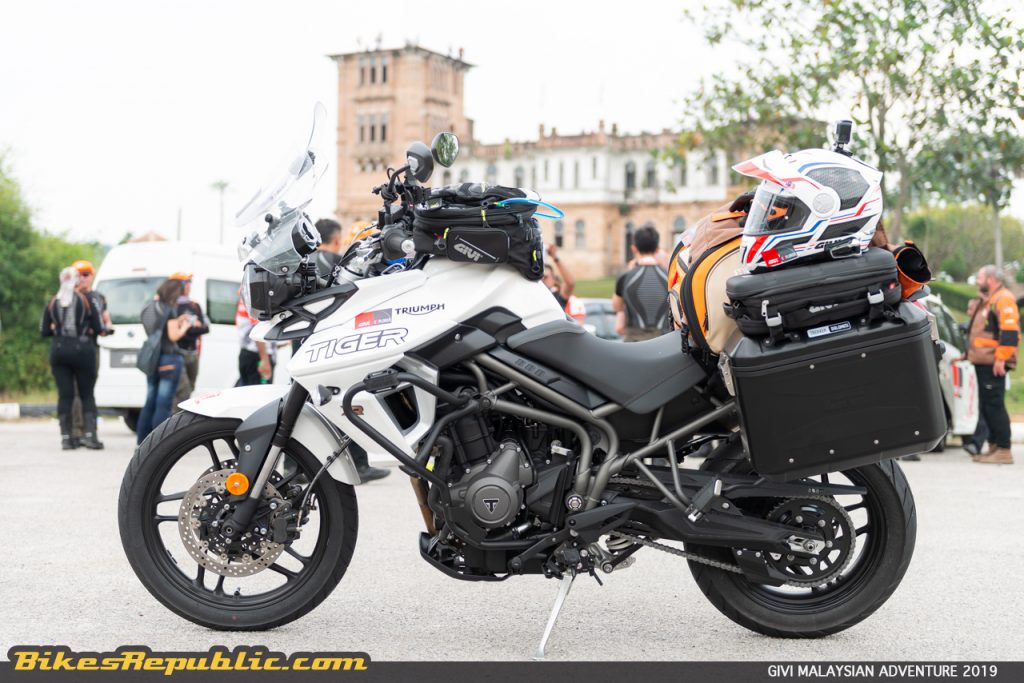
Hoooo-wheee! I would be happy to ride even the second-generation Tiger 800, let alone the brand-new third-generation XR.

That my friends, is the power of prayers.

Riding the Triumph Tiger 800 XR

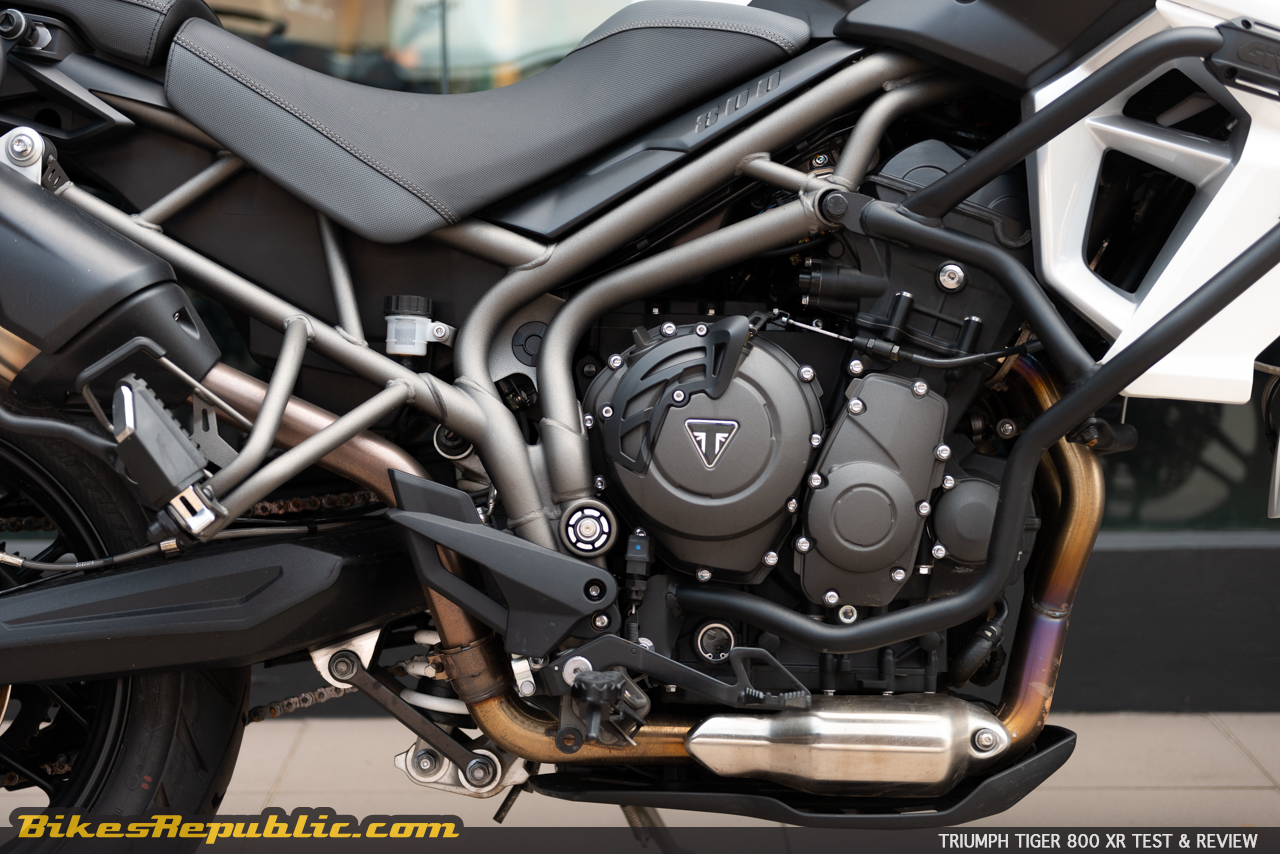
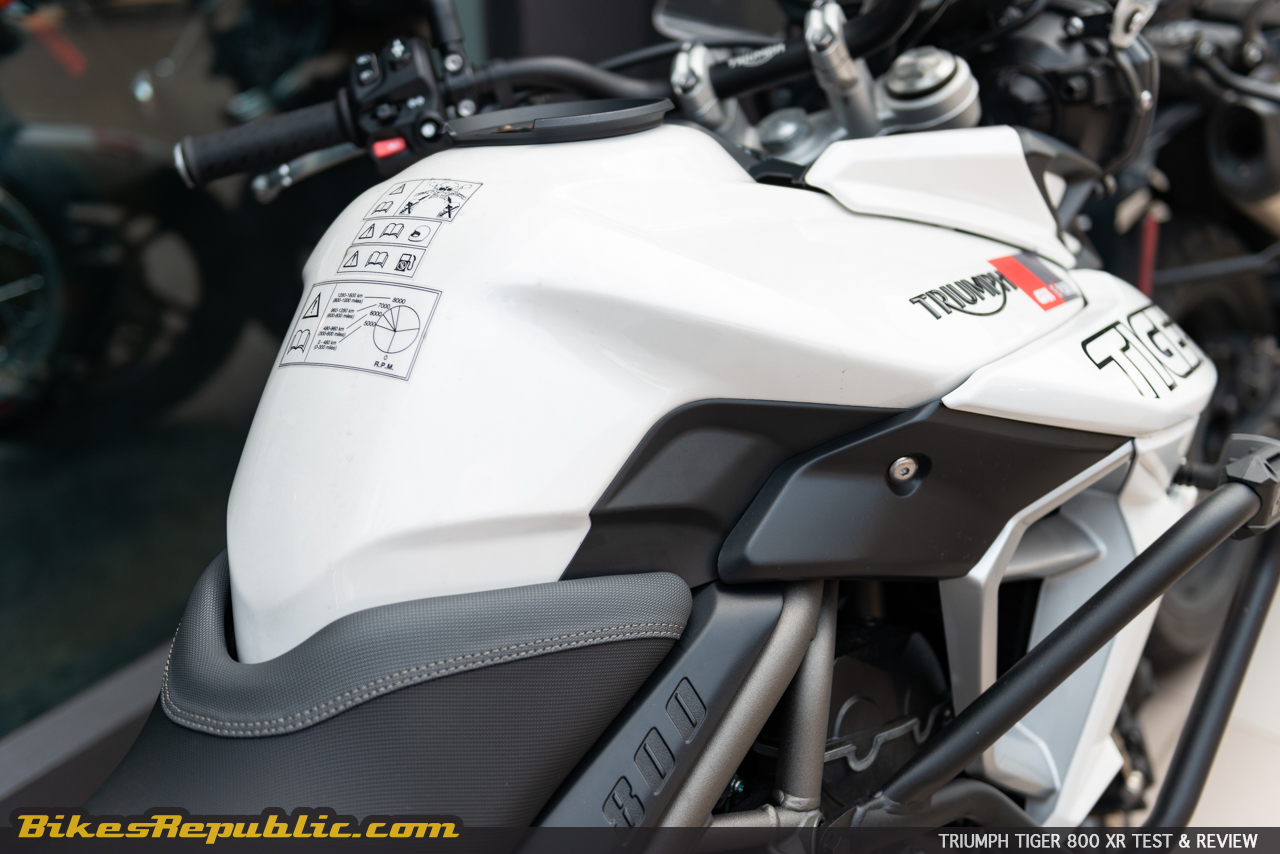
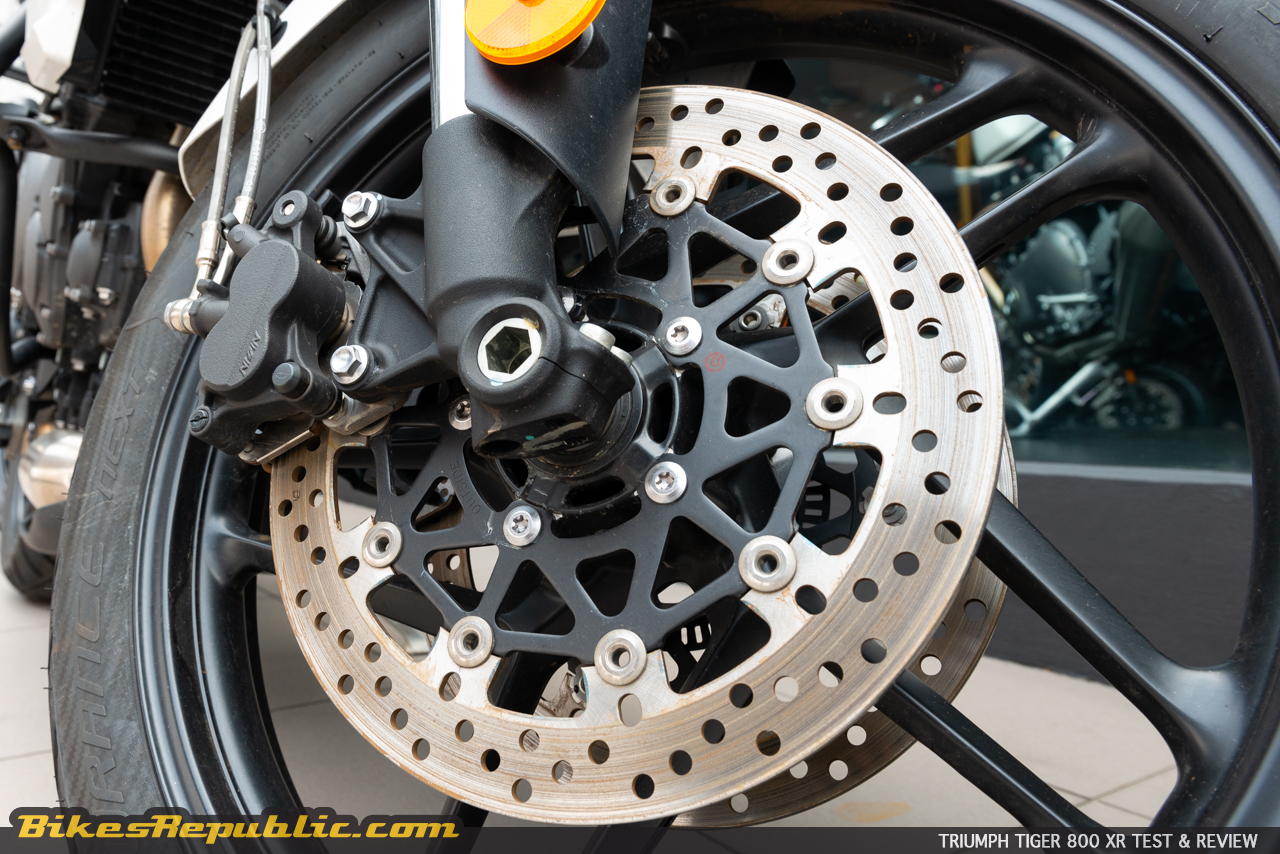
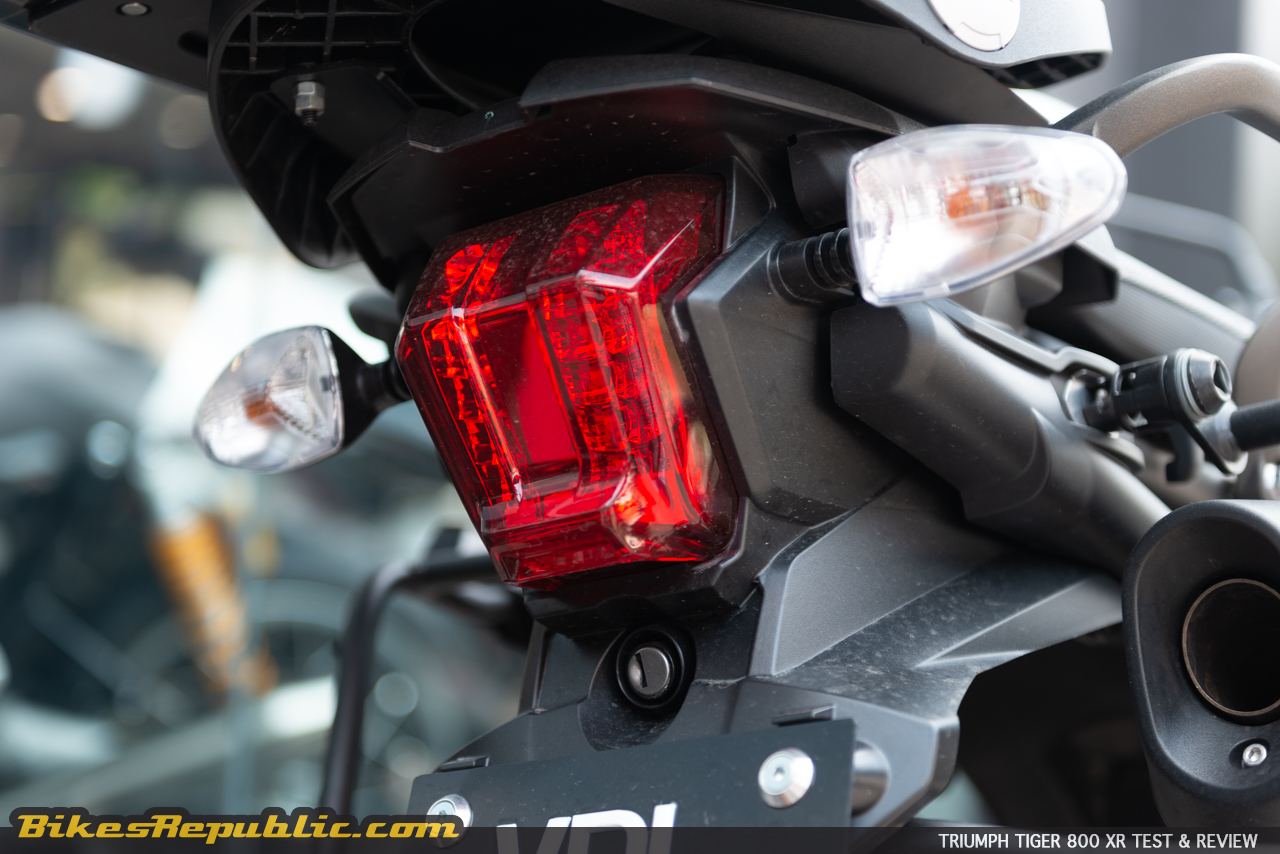
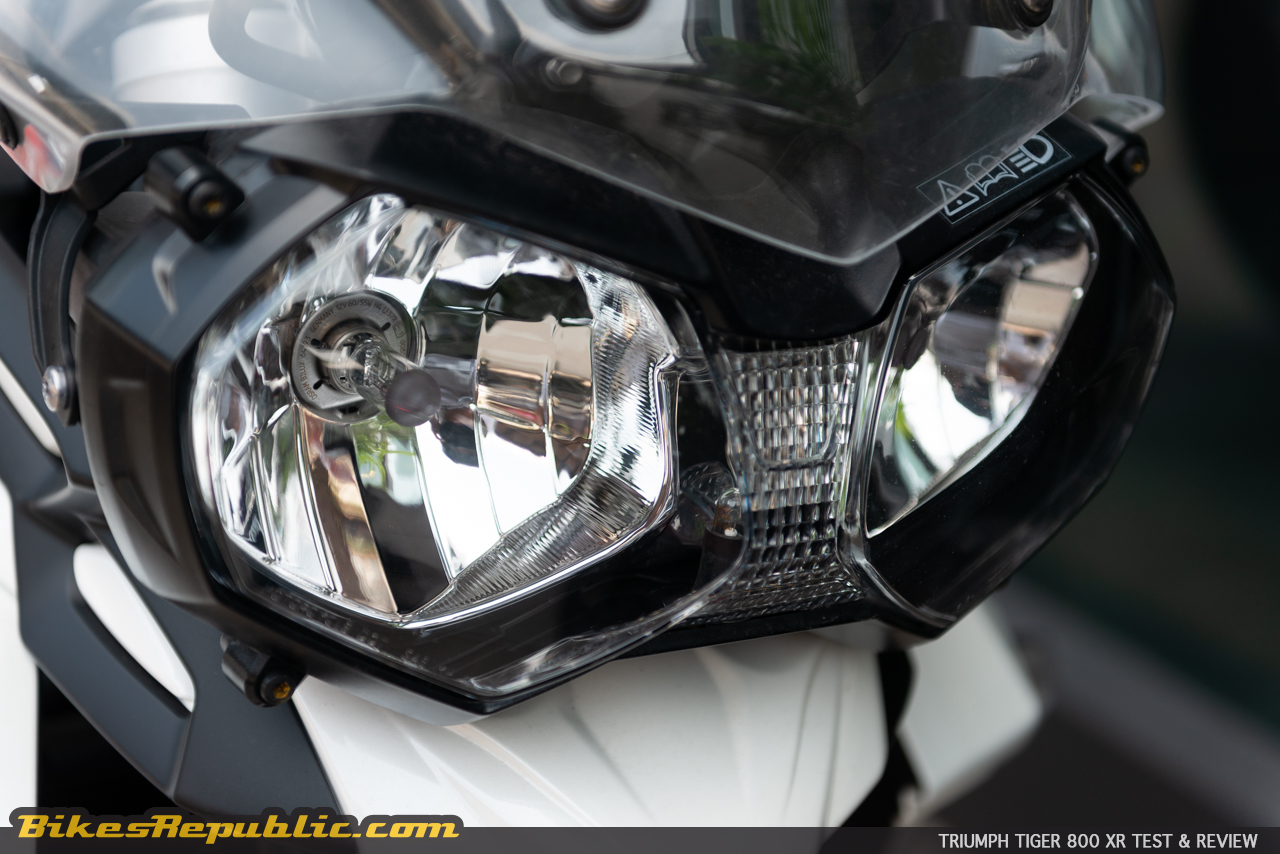
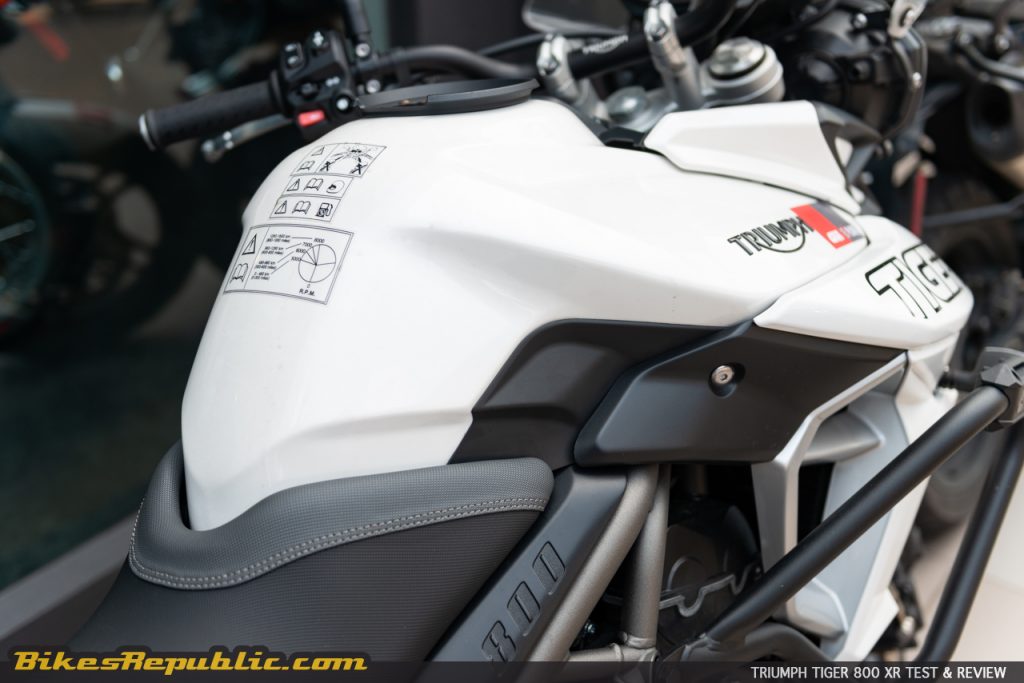
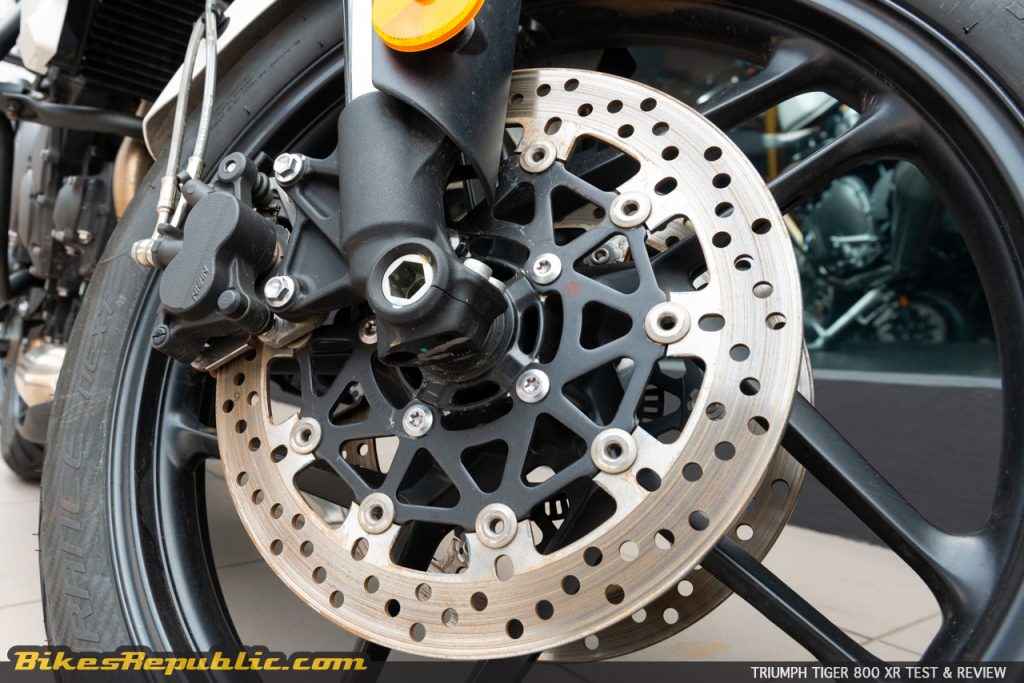
The XR is the entry level model in the Tiger 800 range. Everything on the bike including the engine, frame, suspension, brakes, bodywork is shared with the other Tigers. The main differences are the smaller windscreen and instrument cluster.
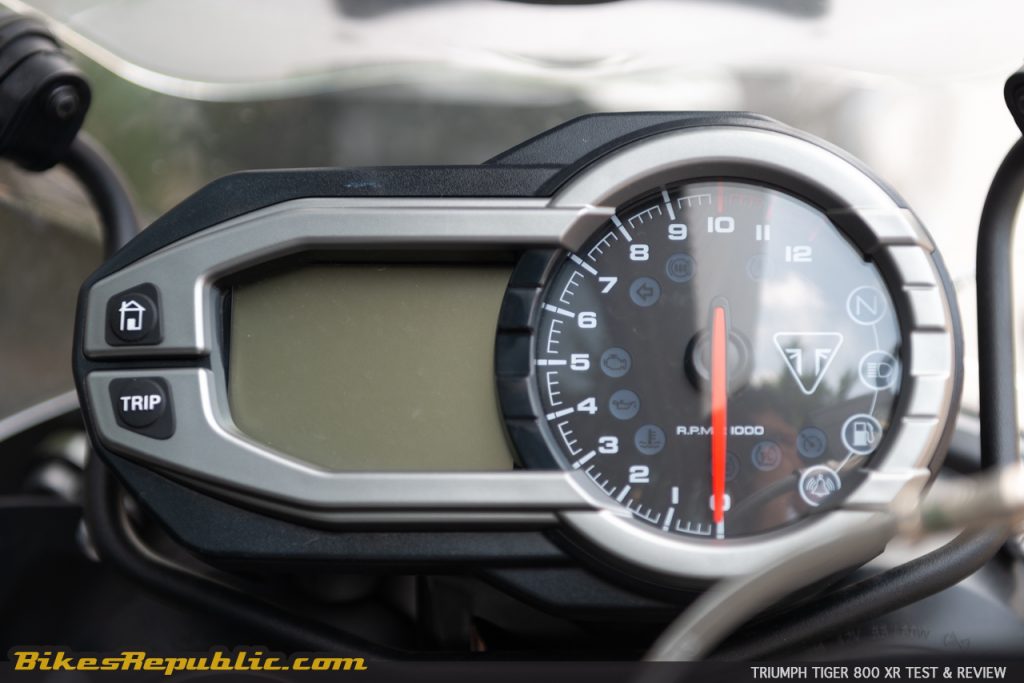
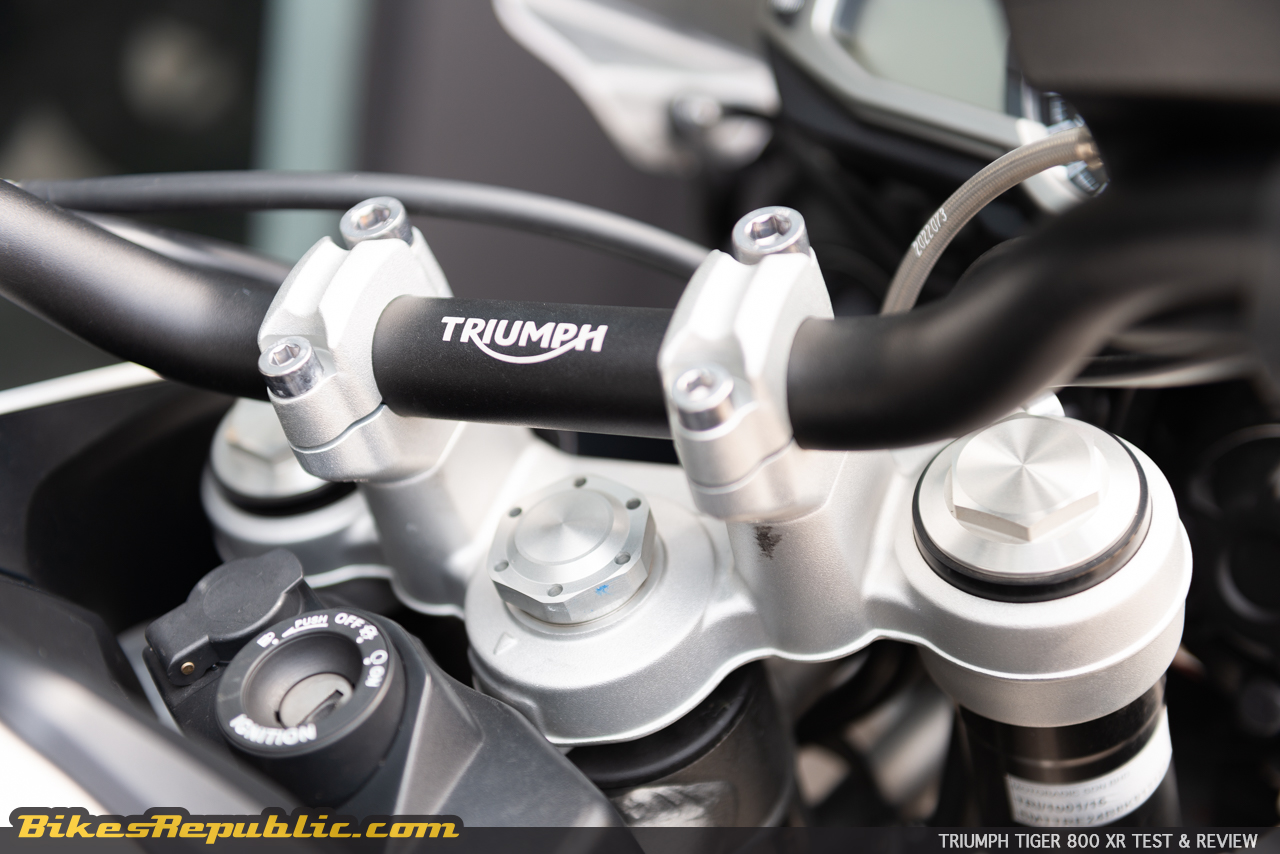
Its instrument cluster is the same unit used on the previous Tiger, Street Triple 675 and current Street Triple 765 S. As such, there is Triumph Traction Control (TTC) with the power set in the equivalent of “ROAD” mode in the XRx/XRa and XCx/XCa. ABS is standard.

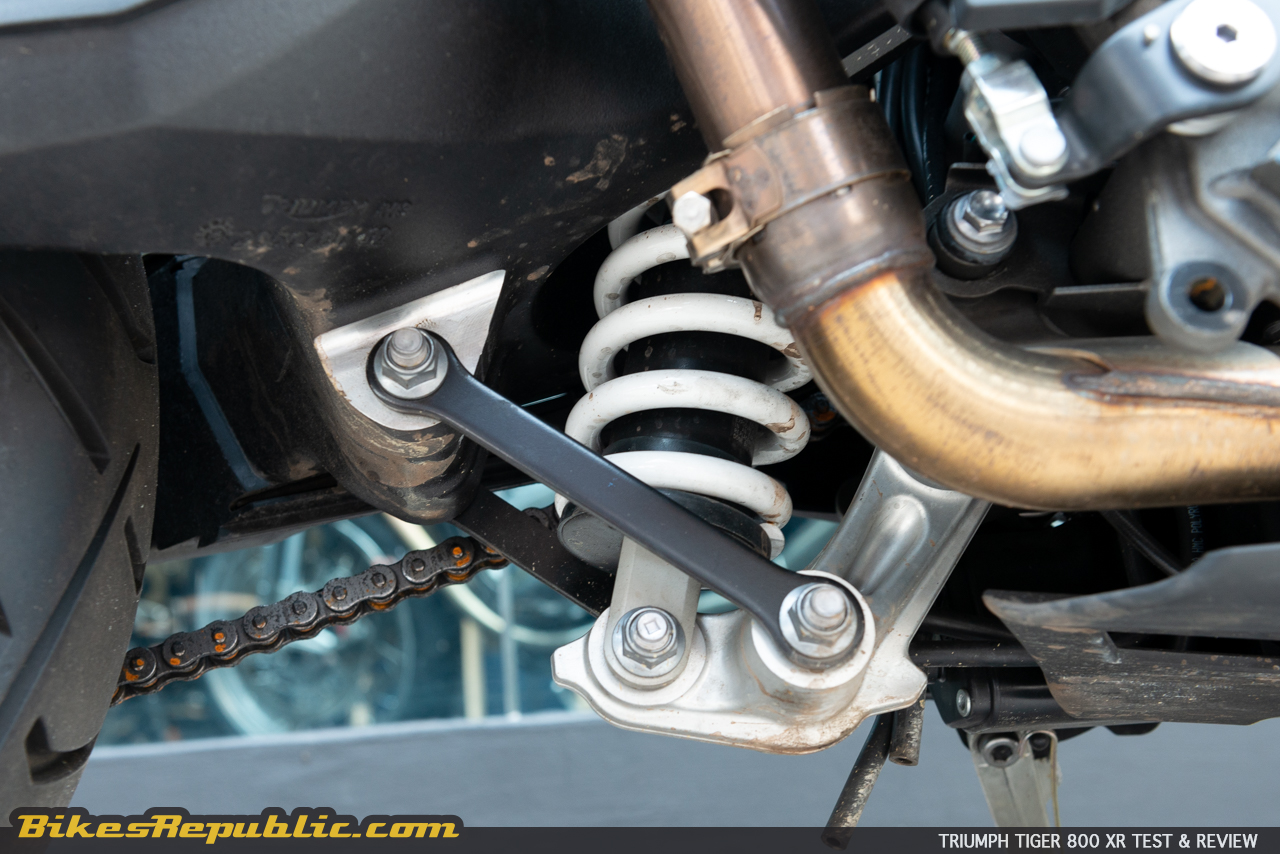
As with the XRx, the forks are non-adjustable while the rear shock is adjustable for preload.
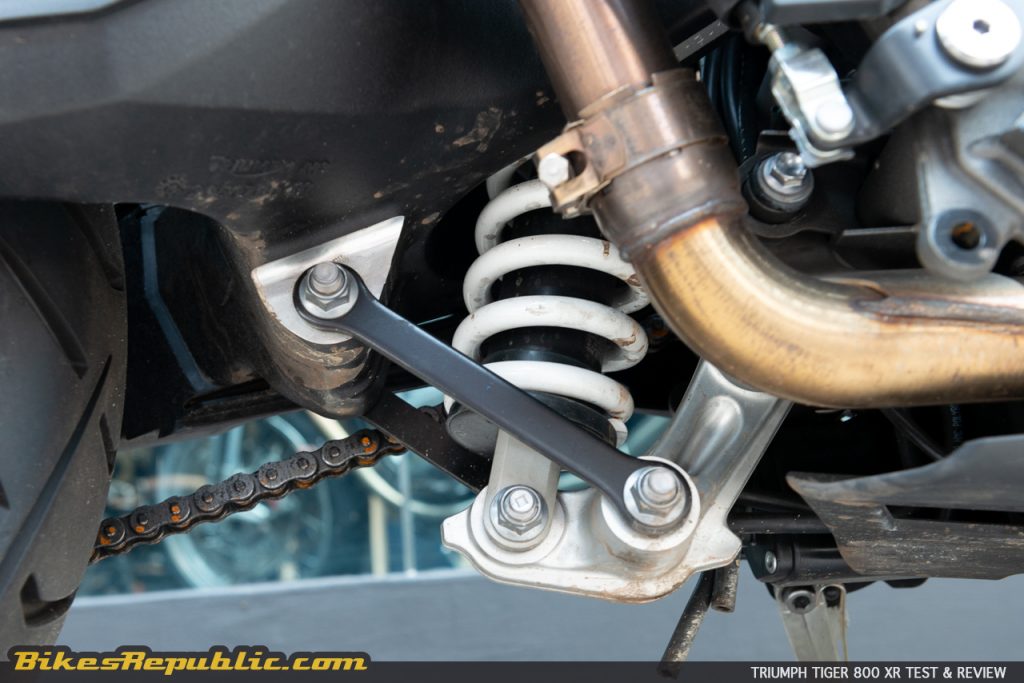
So, it’s a simple bike that doesn’t require the ride to spend 20 minutes to set up before rolling out. All you need to do is jump on and go.

I picked up the brand-new bike with just 4-km on the odometer and proceeded to break it in by riding to Ipoh to cover the build of Mizuki with Art of Speed organizers Asep and Dani.
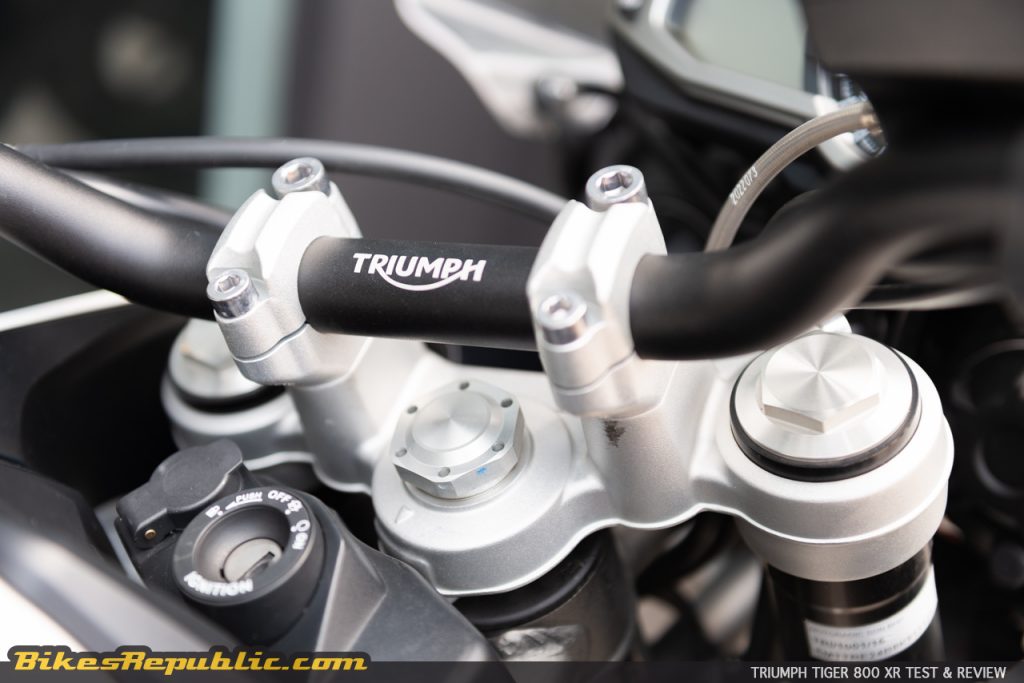
Getting on the XR the first time felt like putting on a well-worn glove. Everything was in place where it should be. The controls, seat position, footpegs… I just reached out and they were there instead of having to adjust myself back and forth to find the right position.

The engine’s torque made sure that the bike never stumbled to get going and every gear clicked into position positively. I didn’t once catch a false neutral.
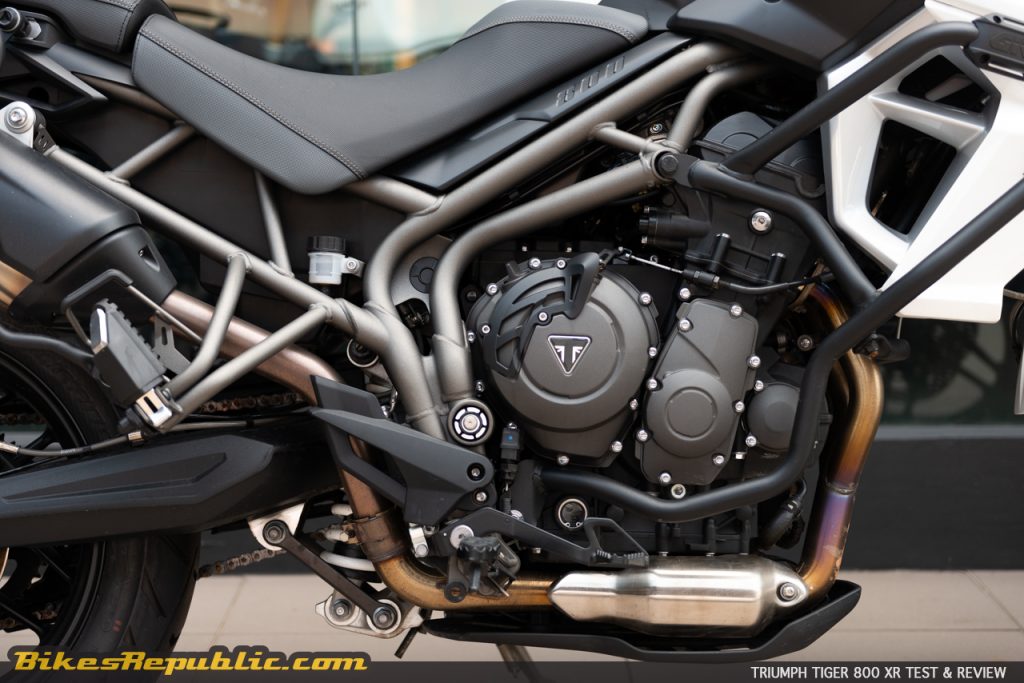
The bike already ran beautifully when it was brand new. Riding in the sun could sometimes induce sleepiness but not so with this bike. The engine made just the right amount of buzz and the exhaust had a nice booming note to it to keep you company.

I enjoyed the ride instead of spending so much energy thinking about how the bike feels and what it would do. I guess it embodies Triumph’s slogan, “For the Ride.”
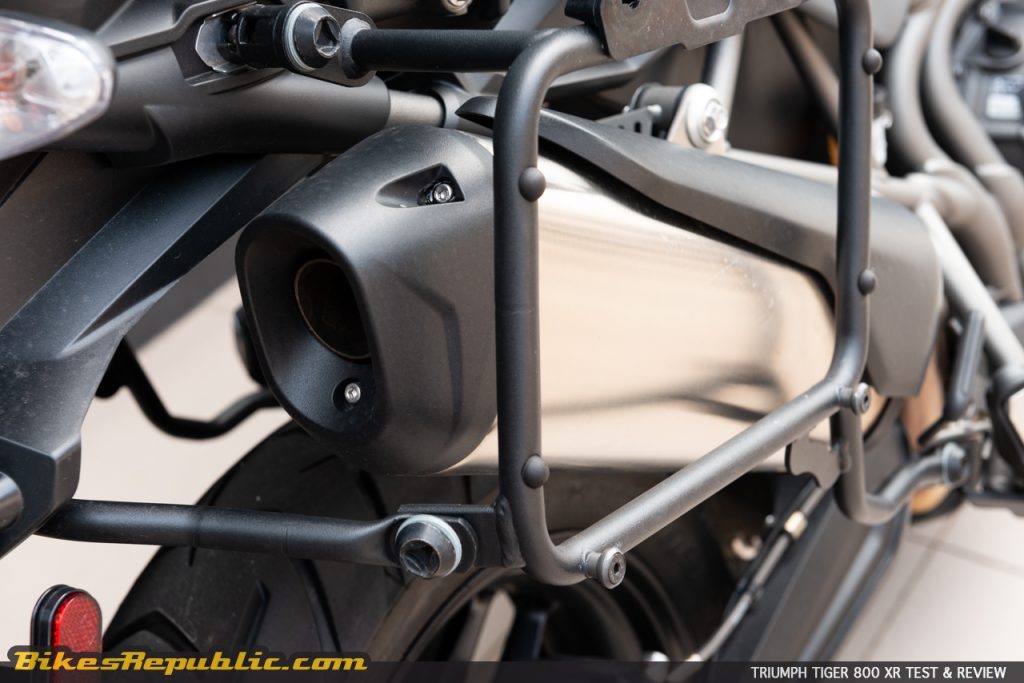
I logged just over 560 km for the trip and sent the bike back to Triumph for servicing. At the same time, the crew fitted the GIVI accessories for the adventure.

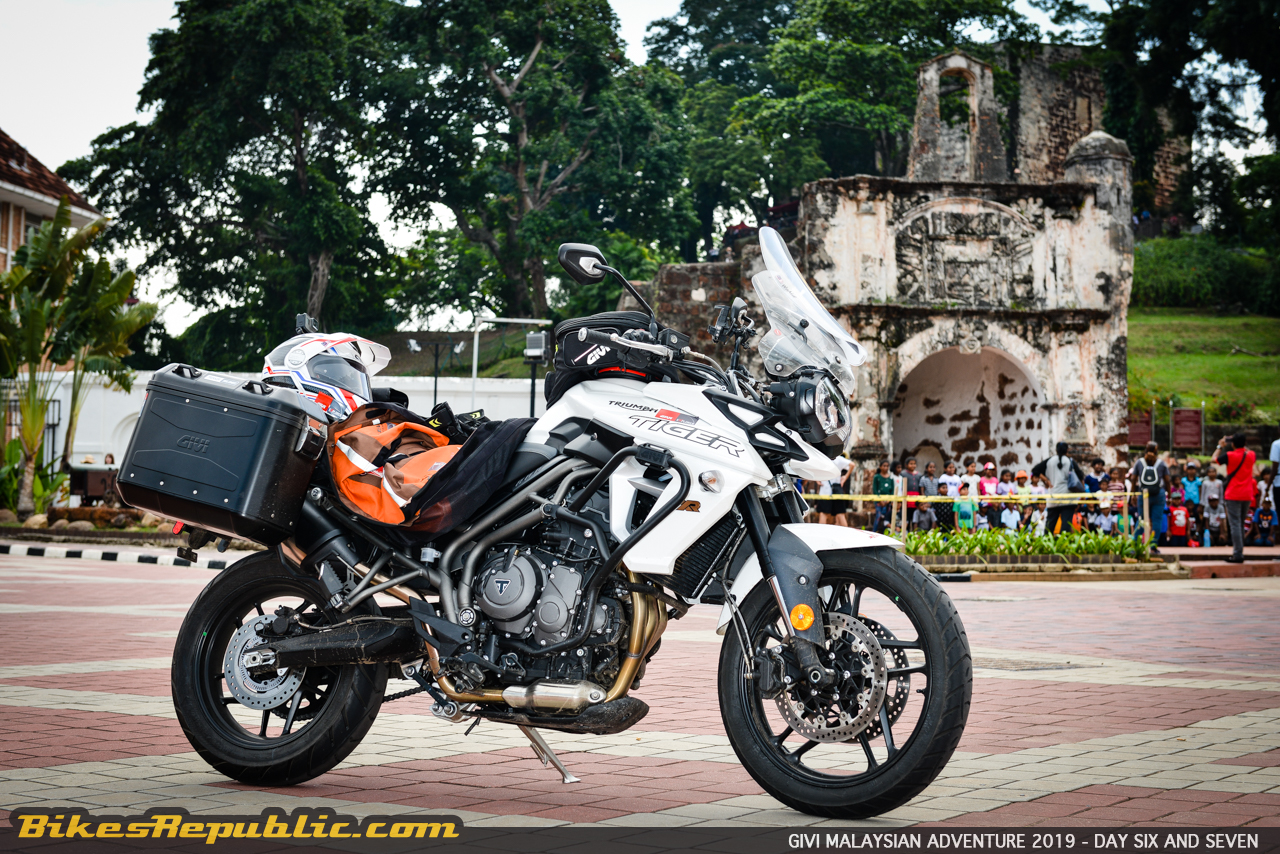
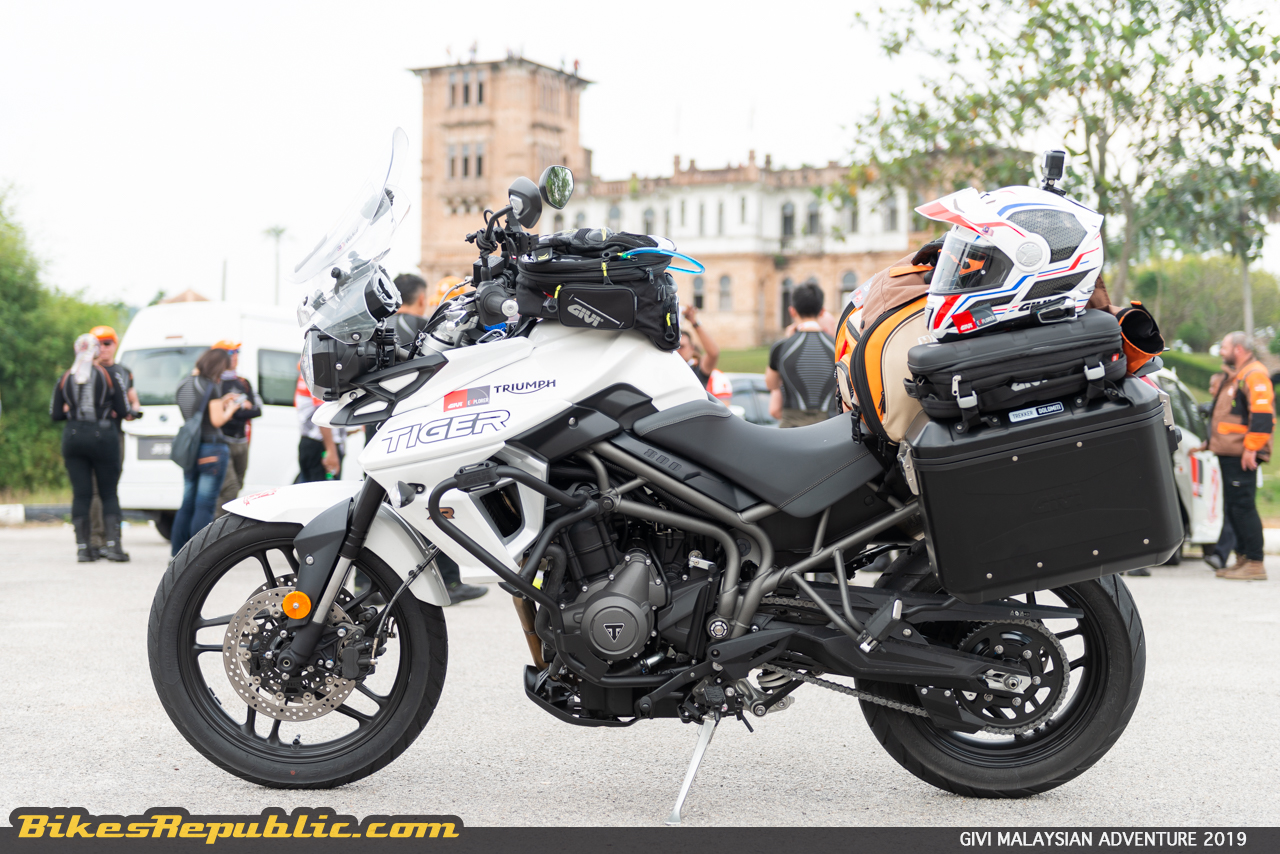
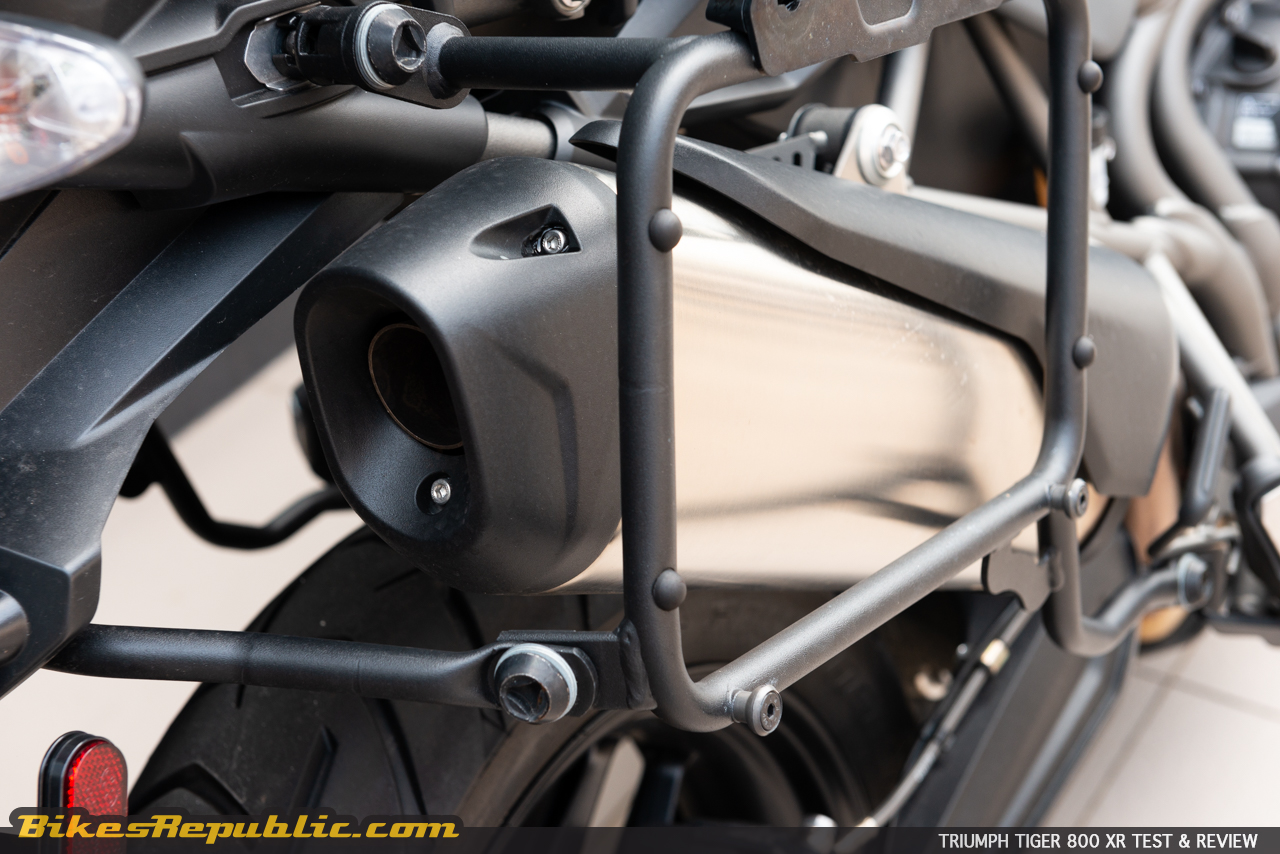
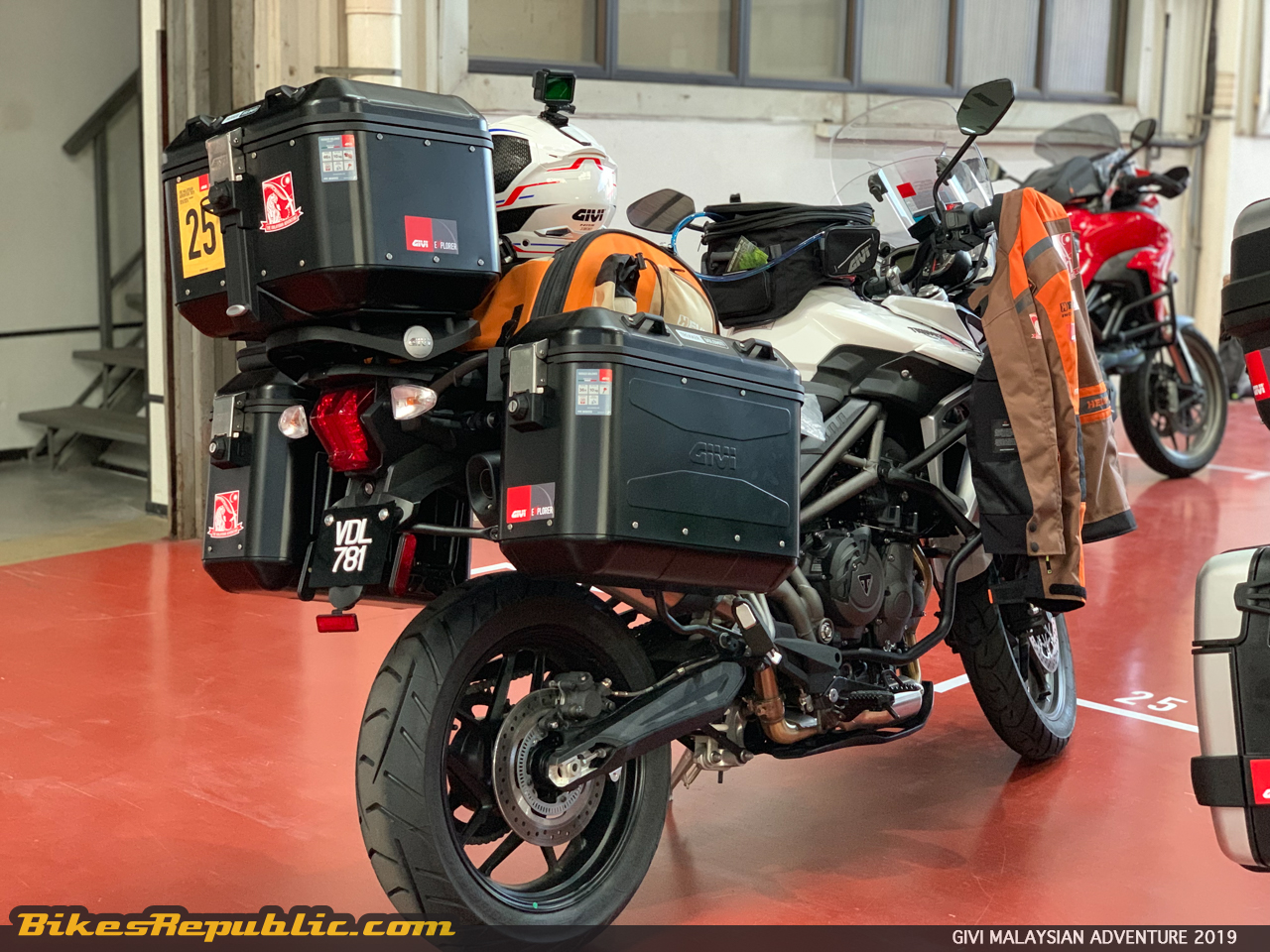
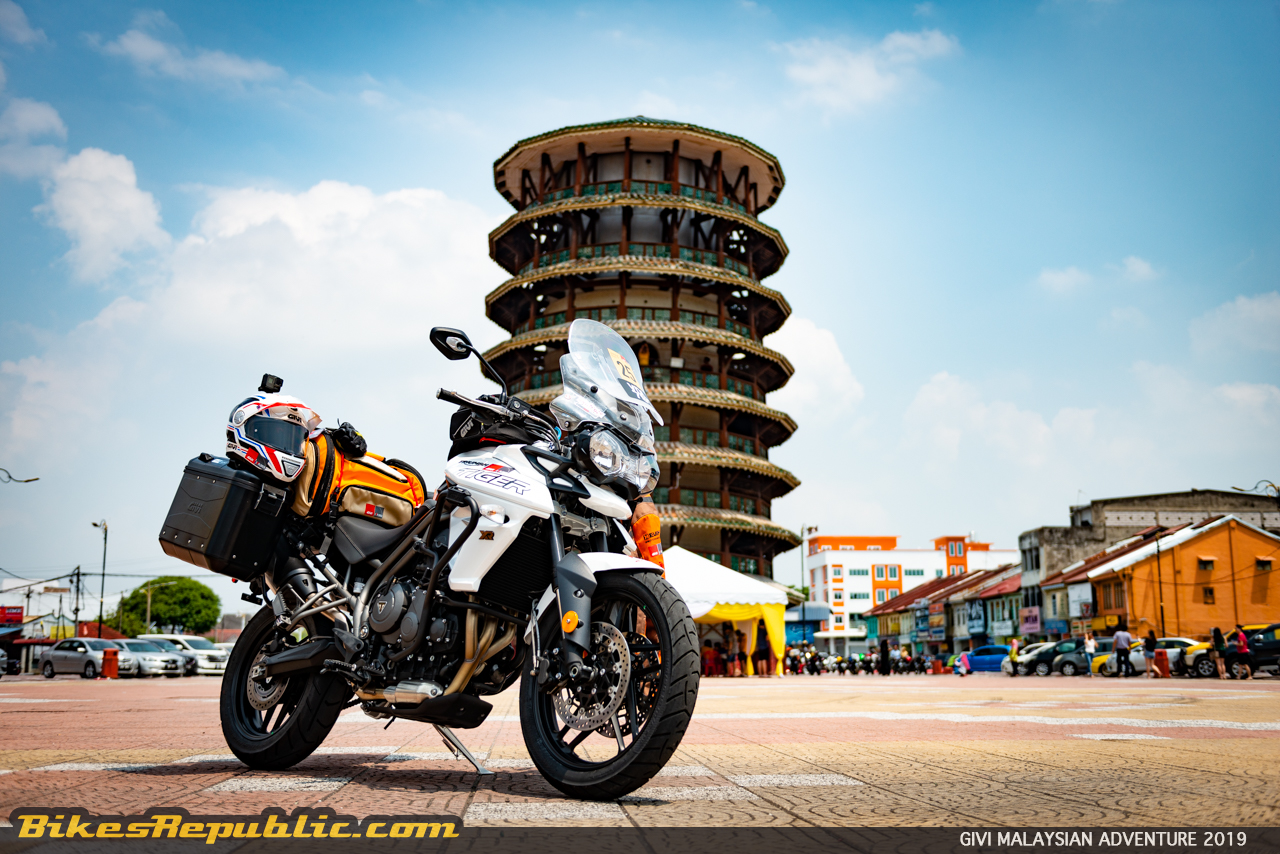
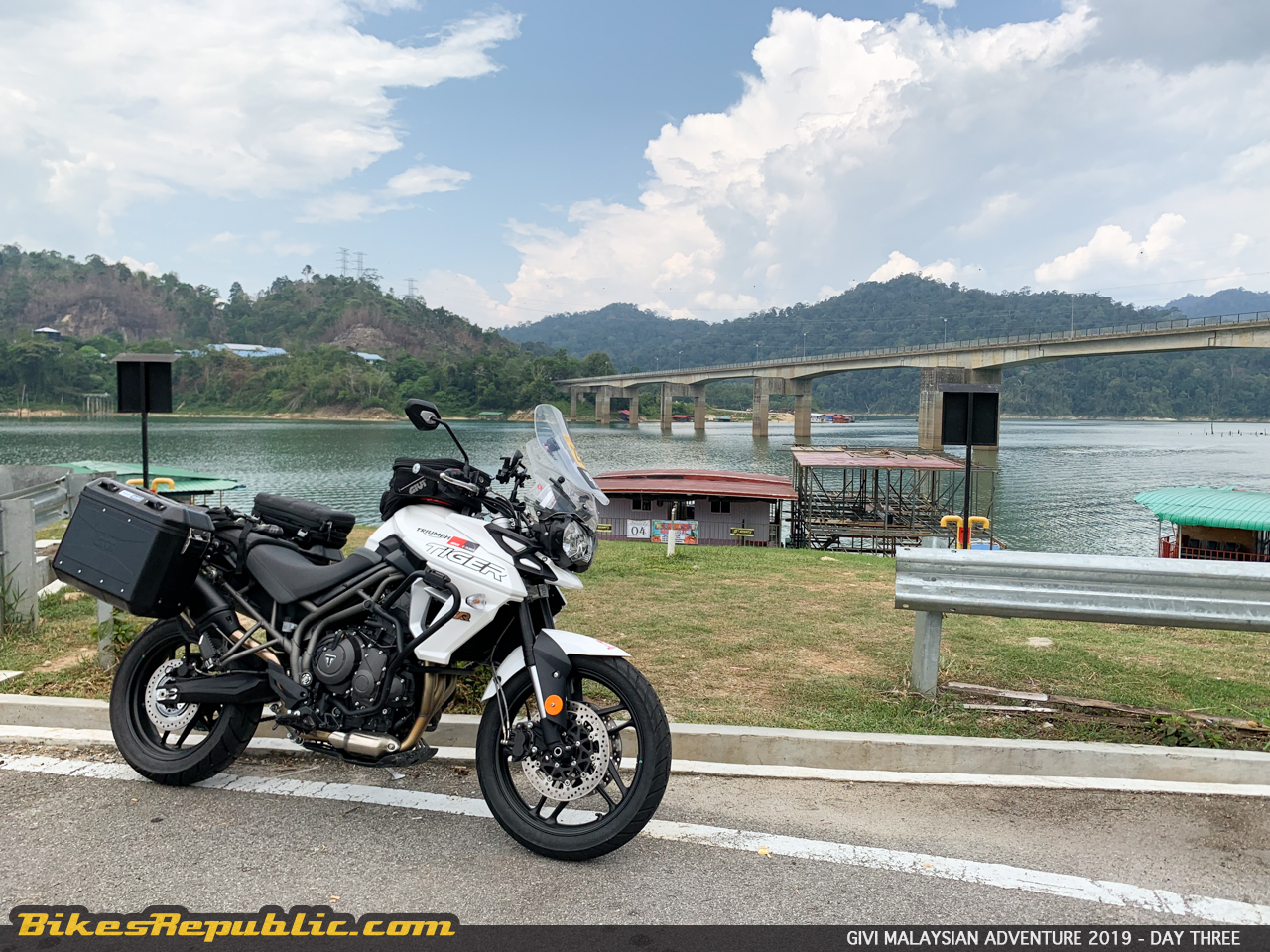
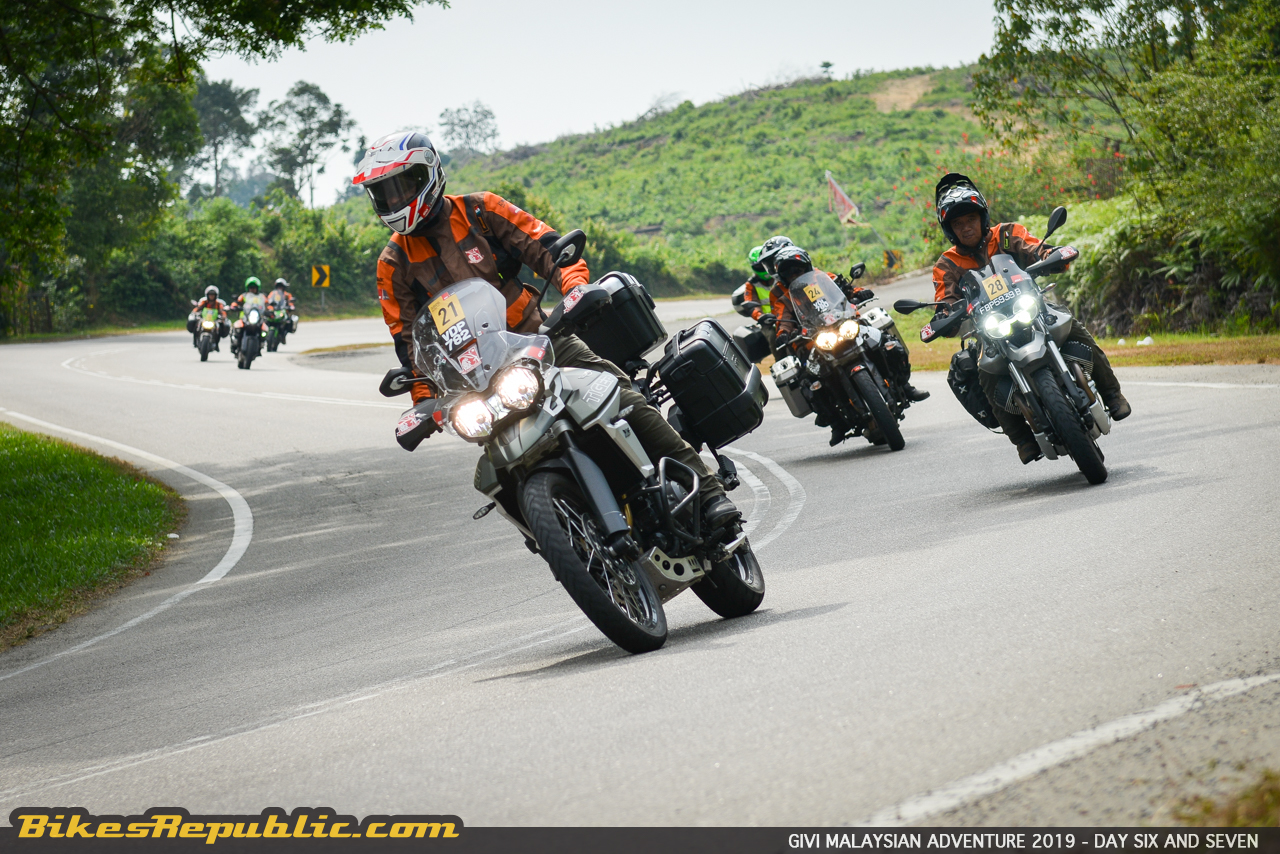
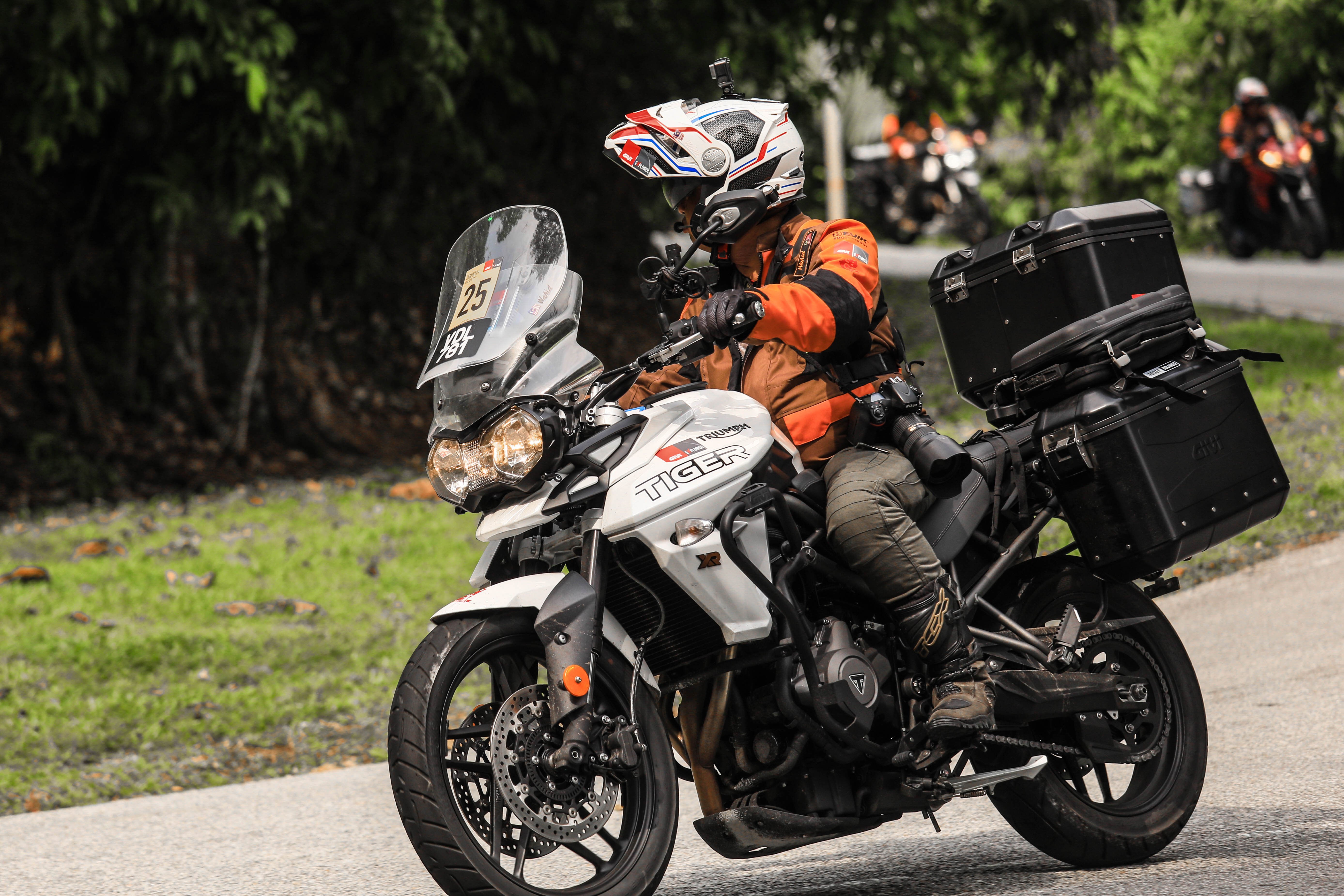
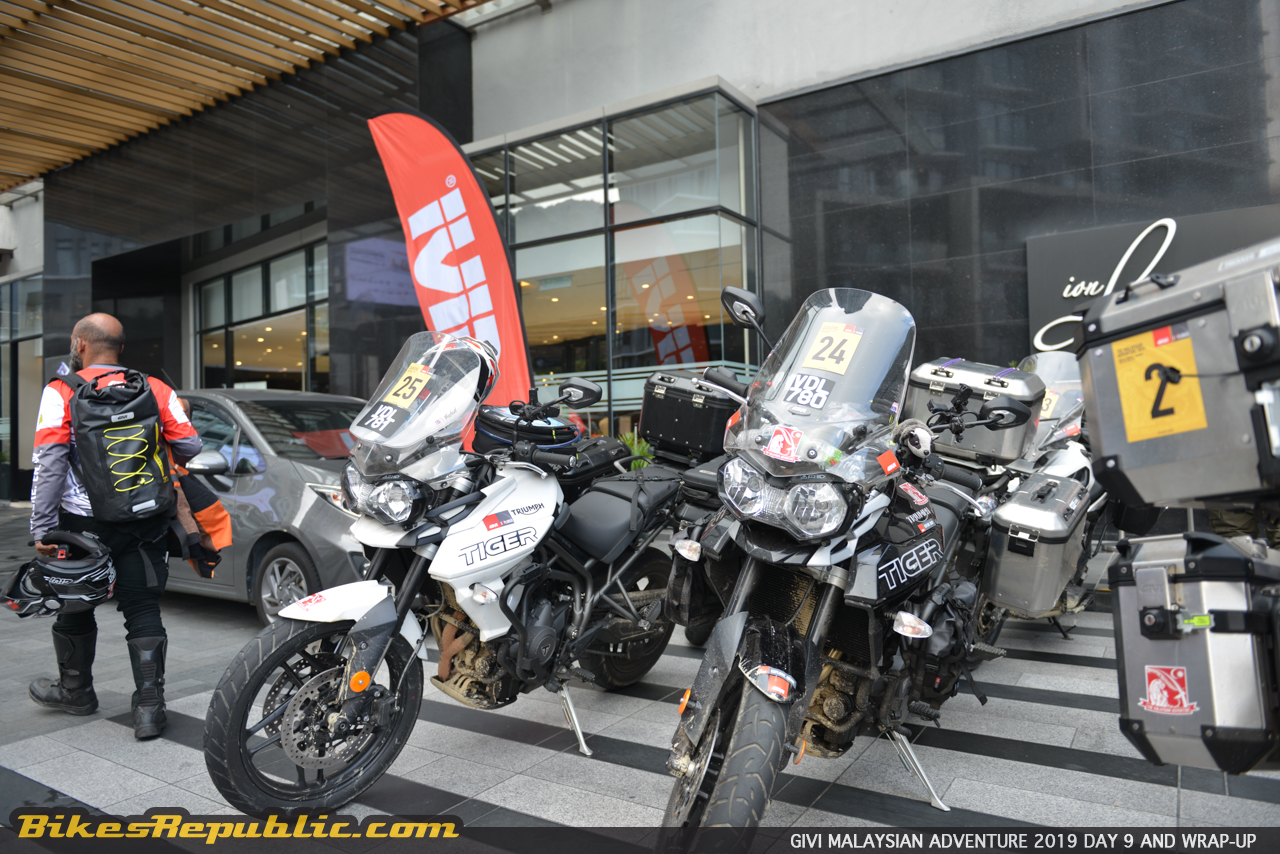
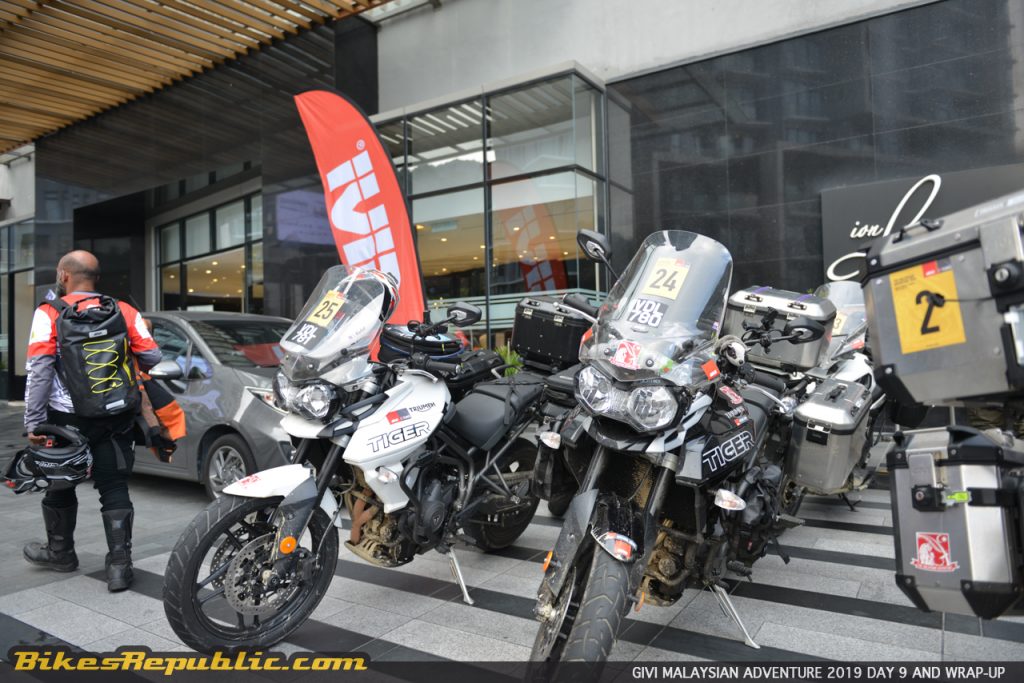
It was equipped with GIVI’s Trekker Dolomiti aluminium top and side cases, Tankloc tank bag, screen and crash bars when I picked it up again. That would’ve added at least an extra 20 kg to the bike, most of it at the back.
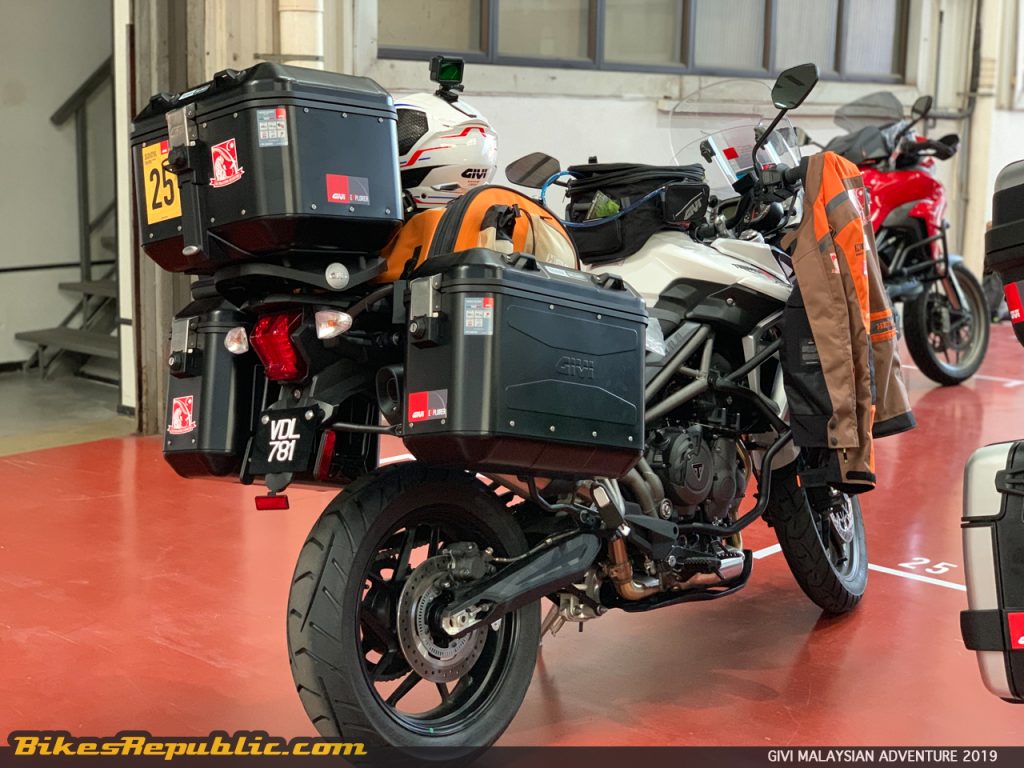
The GIVI Malaysian Adventure 2019 took 10 days to complete and covered slightly more than 2000 km. (Please click here for the article.)

The first leg of the tour took us to Ipoh, Perak through Teluk Intan. Now with the cases on, there’s more aerodynamic drag at the back and it changed the bike’s balance, somewhat. But I got used to it within the first few kilometres. Cranking up the rear shock’s preload returned the bike’s chassis balance.
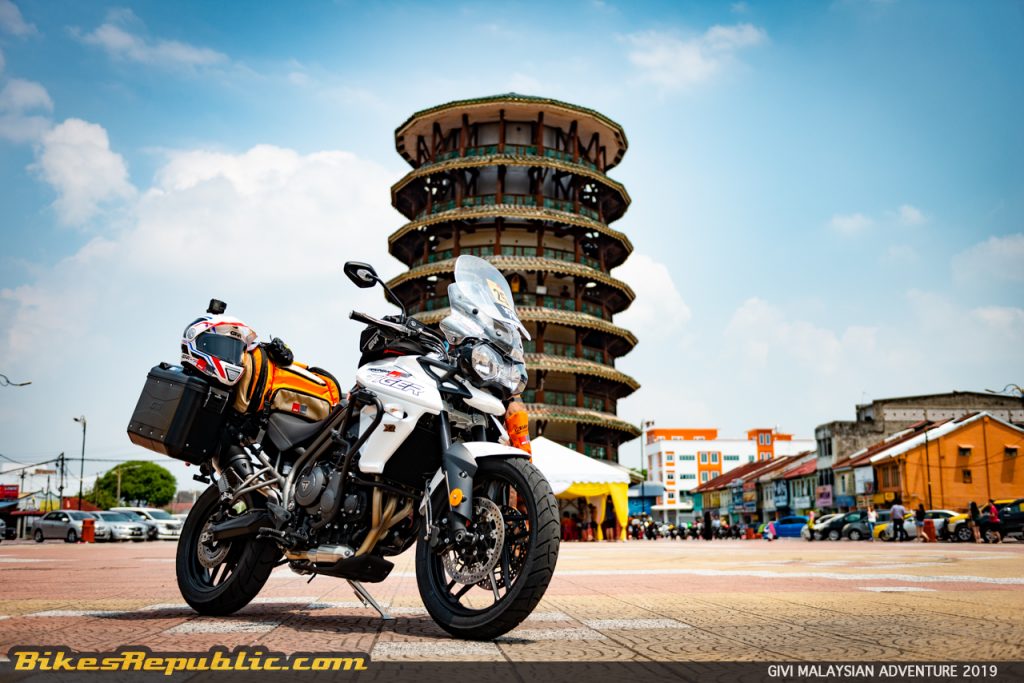
The next day was the longest leg of the ride which took us to Kuala Terengganu. Oh boy was I glad to be on the XR.

It had rained the night before and while the morning started out cooling, it soon got very hot and humid. Our Caucasian friends had faces as red as steamed lobsters by the time we reached the Belum Rainforest Resort, and we still had 300 km to go!
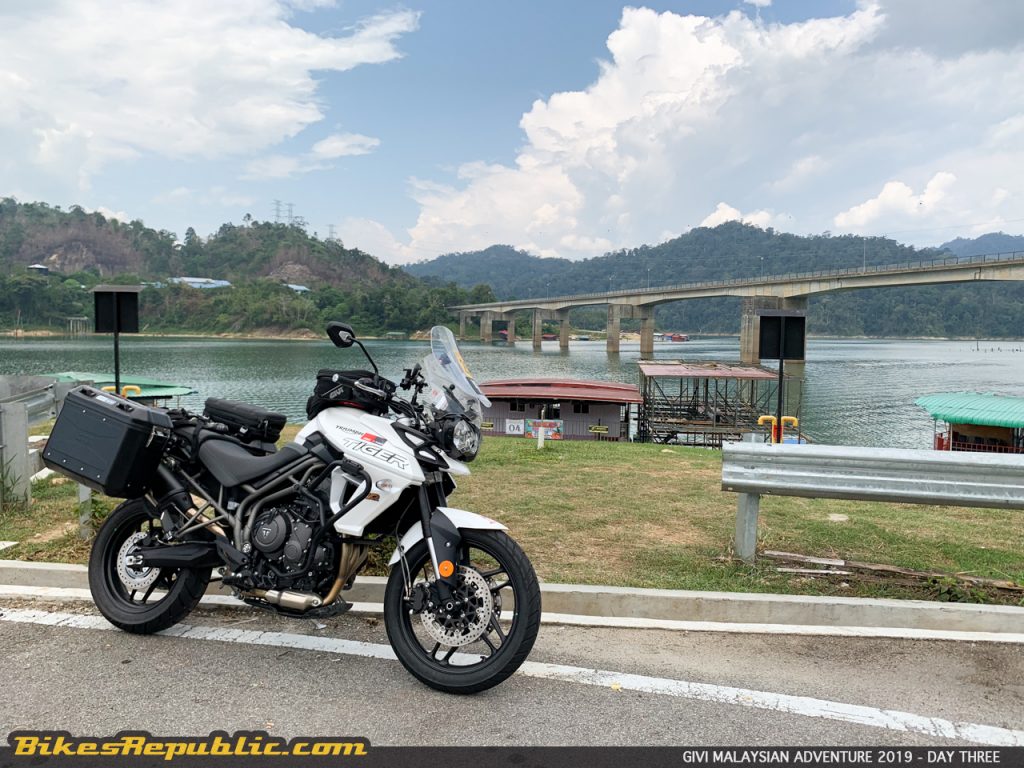
The XR’s ease of control consumed minimal energy, thankfully. The bike handled all my commands to the letter and not once decided to have a mind of its own. This meant that I could stay fresh and focused rather than feeling beat up, hence losing concentration.

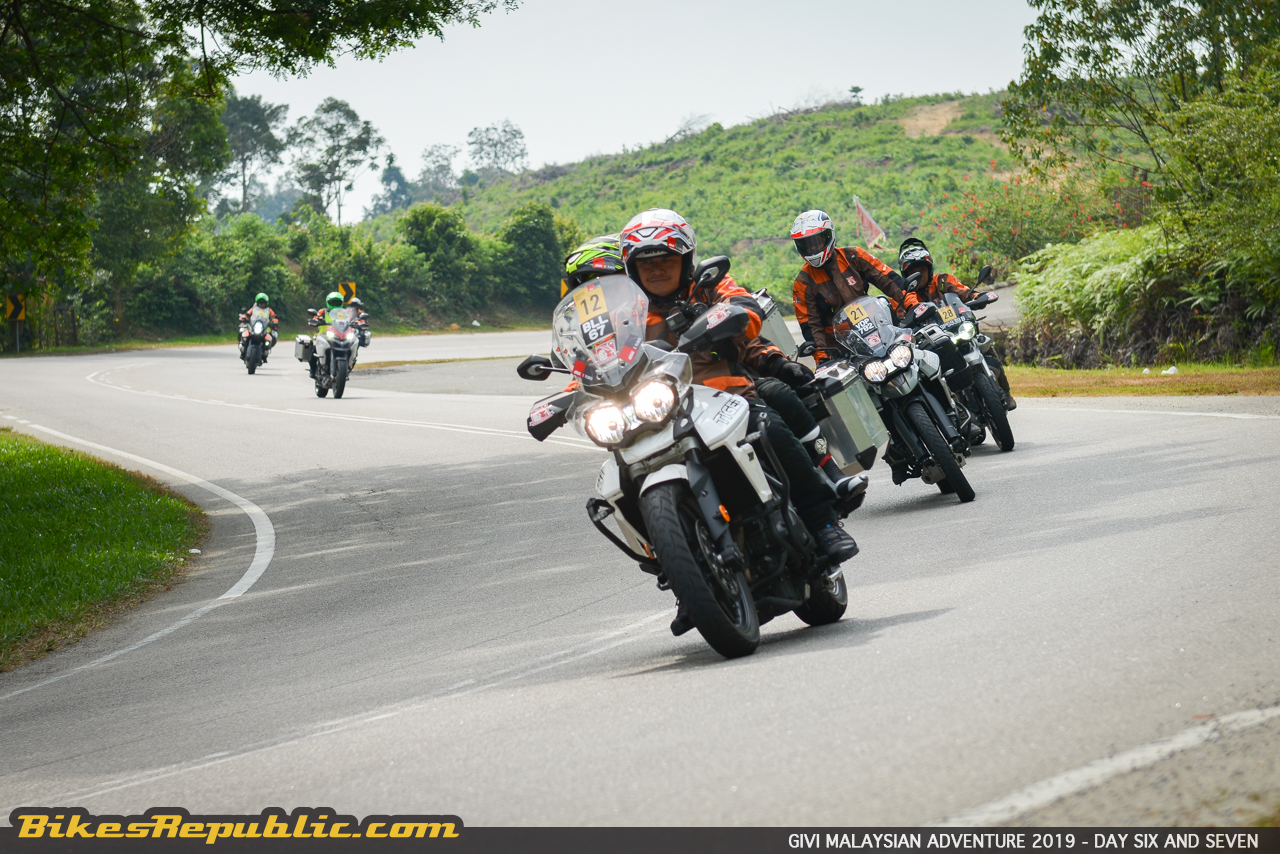
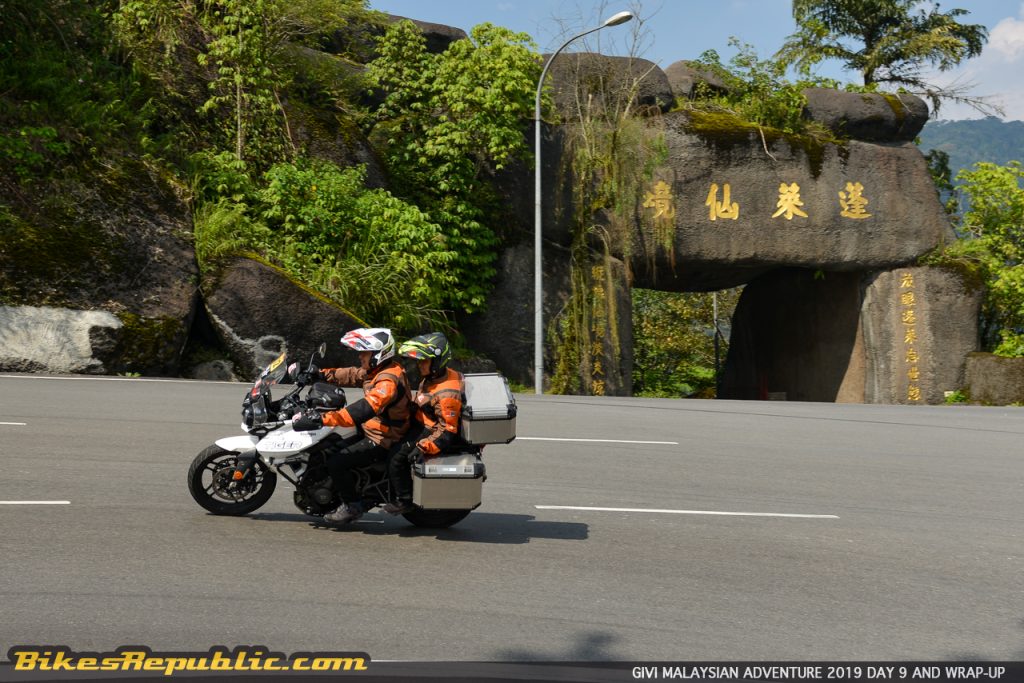
But I wasn’t the only one who felt so. Most of the riders in the adventure rode Tigers and they were thankful for it. Manuel from Mexico particularly enjoyed it, standing on the footpegs of his XCx even through high-speed corners. Some of the participants, the Australians, in particular, commented that they loved their XCx because the bikes didn’t put up any fight and just went where they were pointed. One XR LRH was ridden by a Vietnamese participant along with his son as pillion. They smiled all the way.
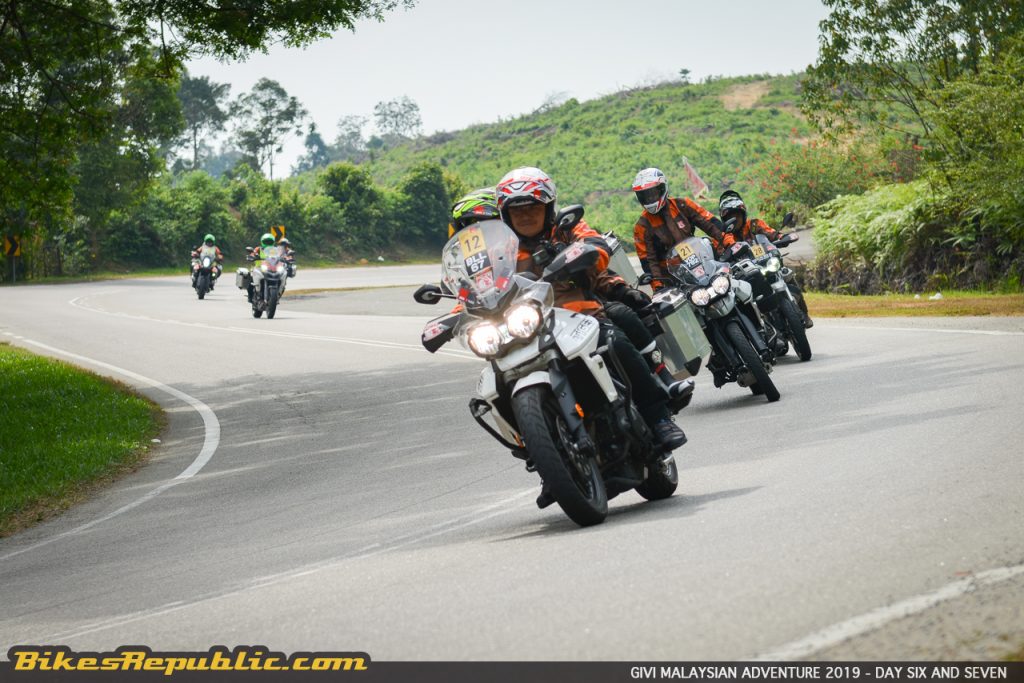
By comparison, none of the marshals rode the Tiger and they soon felt the strain.

We reached Kuala Terengganu just before Maghrib. Those riding the Tigers were joking and laughing loudly to be heard across the hotel’s parking lot. Those who didn’t checked in quietly.
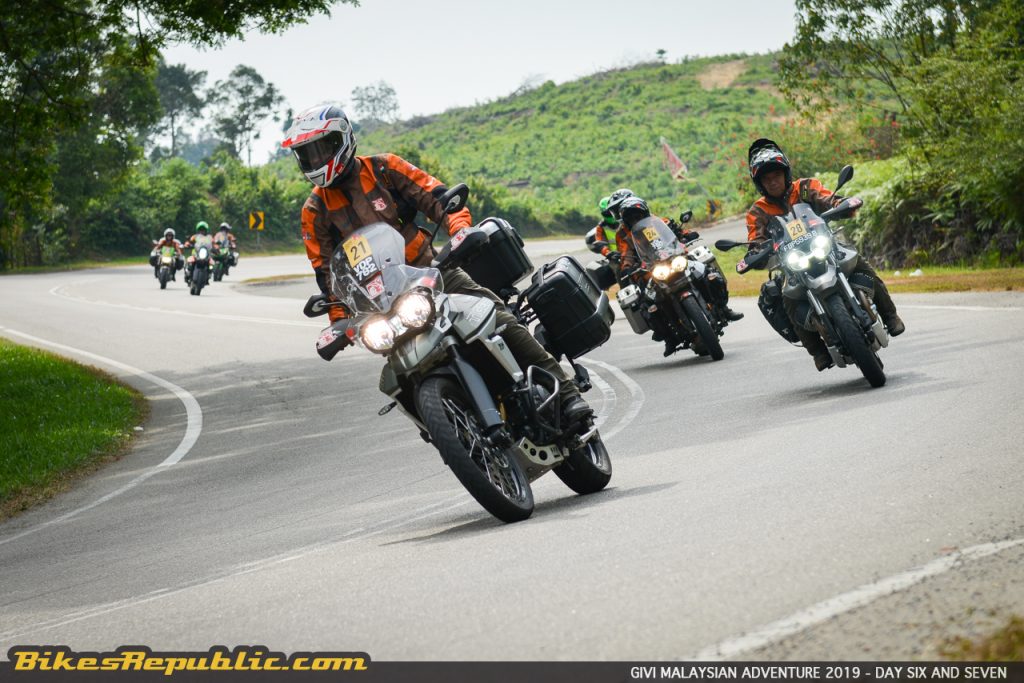
Myself, on the other hand, lingered for a few extra minutes just to look at the XR and admired at its ability to deliver me to my destination without turning me into jelly.

The days went by quickly from that point, but my workload increased. And this was when I grew to love the bike even more.
The traffic police had escorted the convoy but since I had to break away to shoot photos, I had to catch back up without escort. That meant that I had to fight through traffic and stop at intersections.


Picture this: I had to ride hard and fast to stay far ahead of the group. Finding my photography point, I stopped the bike sometimes with the engine running, get off and shoot. Once the convoy passes, I had to ride even harder and faster again to catch up.
Repeat at least three times per day for the remaining 6 days.

It got to a stage where I pitied the Tiger 800 XR, but it just kept going without once complaining i.e. hard to start or hard gear shift or rough sounding engine, etc. Apart from that, I truly appreciated the bike’s low seat height, so getting on and off was so much easier.
This leads back to why I love the Tiger 800 line-up. They instill so much confidence and keeps adding more surprises. No, not the kind of surprises that threaten to chuck you into the bushes. Instead, the bike lets you chuck it into corners anytime.

We arrived at Janda Baik on Day 8 of the adventure for GIVI Rimba Raid. There was a short ride on an off-road path strewn with large stones and mud into the Rimba Valley Motorcamp site.
As there were lots of traffic going back and forth, I decided to hand the bike to one of the marshals to ride it in. I asked him about the bike afterwards and he has impressed by the bike’s handling on the dirt. “Very easy to ride,” he replied. “The throttle was smooth, and the engine didn’t kick in suddenly.”

The bike had clocked more than 2000 km at that point. Nothing had come loose, the engine sounded sweet and the suspension performed like when they were at 4 km.
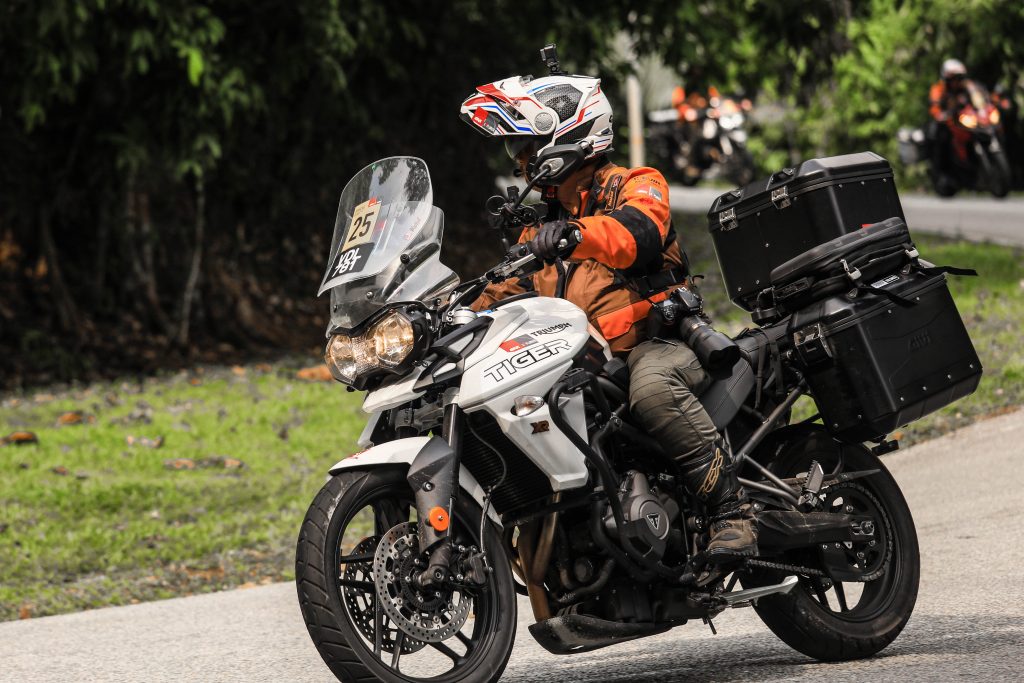
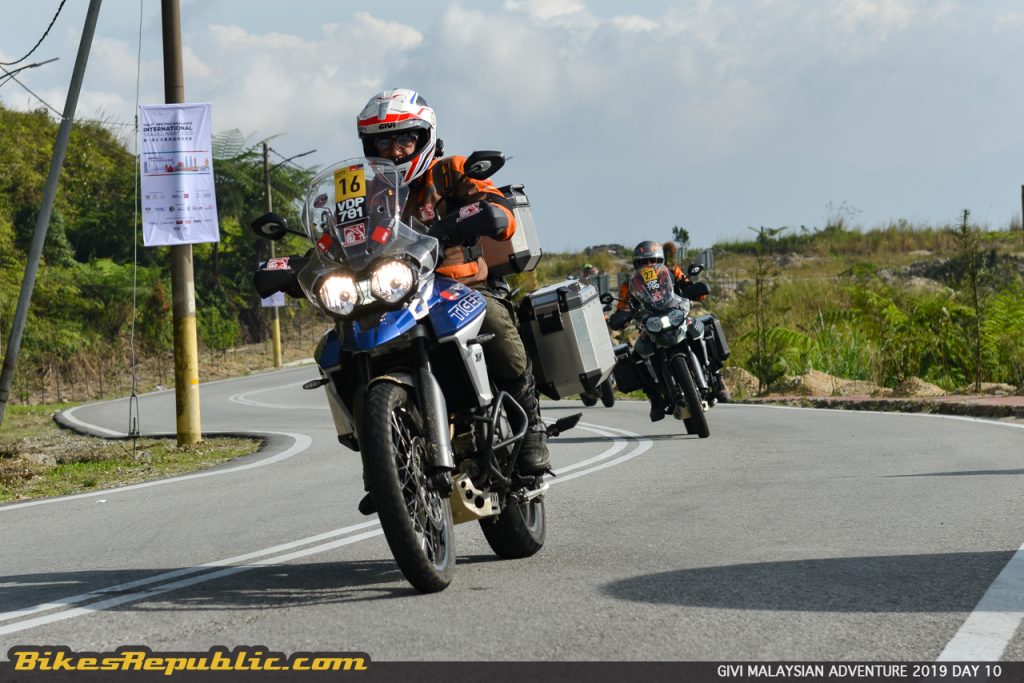
The last two days of the ride had us riding up Bukit Tinggi and Genting Highlands. This was when the ride’s organizer cut the group loose. Guess which riders ended up at the front when we climbed those mountains? That’s right, those on the Tiger 800 XR and XCx.

Why? Because confidence.
Verdict

The Triumph Tiger 800 XR may be simple and overlooked but it is still a Tiger 800 through and through. The lack of electronics was actually an advantage because everything is handled by your right wrist. It also means that you don’t have to be distracted when you “don’t feel right” and start rifling through all the options. Again, just jump on and go.

It handled beautifully and the throttle was characteristically smooth like on all Triumphs, hence accessible to all riders.
To sum it up, while other bikes are good or better at one or two aspects, the Triumph Tiger 800 XR is good everywhere.

Triumph Motorcycles Malaysia is currently having a promotion. From just RM 56,900, you will receive a complimentary set of Triumph aluminium panniers worth RM 5,800.
Please follow Triumph Motorcycle Malaysia’s Facebook page for more information.
Archive

Follow us on Facebook

Follow us on YouTube