Bikesrepublic

Latest News

BMW Motorrad recently announced that their Heritage R nineT family is now complete with five models.

This also means that there will be no more new additions to the R nineT line-up.

They also report a 7.2% worldwide sales increase for the first two months of 2018 with 18,627 unit sales.

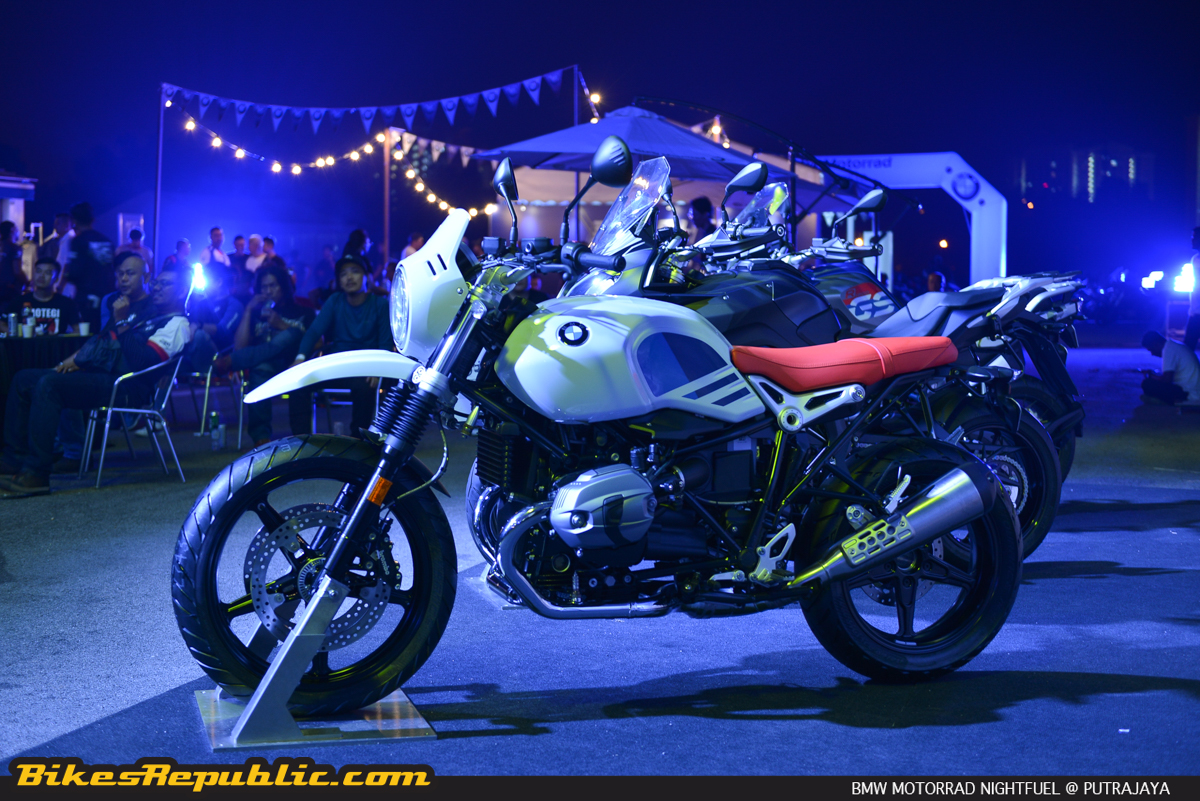
The latest BMW Motorrad annual report has stated that their Heritage line which comprises of five different R nineT models is now ‘complete’. This also means that there will be no more retro additions in that particular family which already have the standard R nineT, R nineT Pure, R nineT Racer, R nineT Scrambler, and the R nineT Urban G/S. (more…)

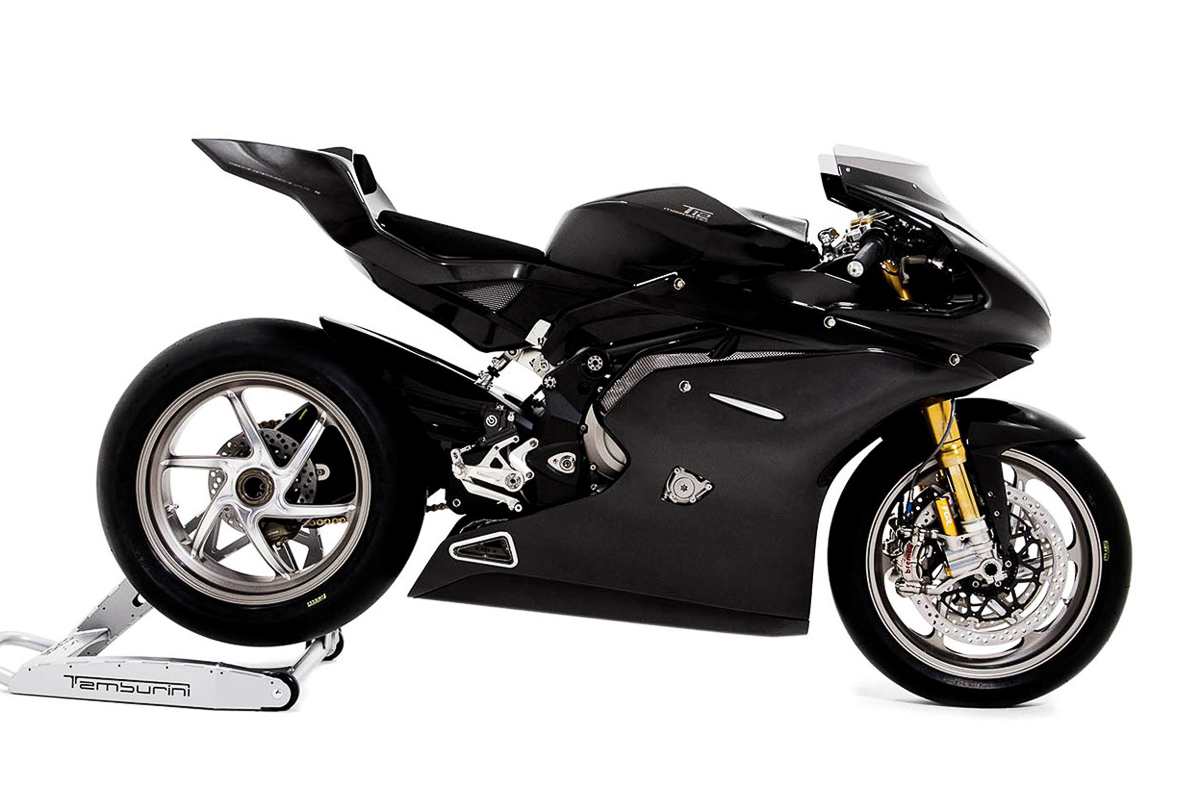
The RM4 million Tamburini T12 will finally make its public debut this week in Monaco.

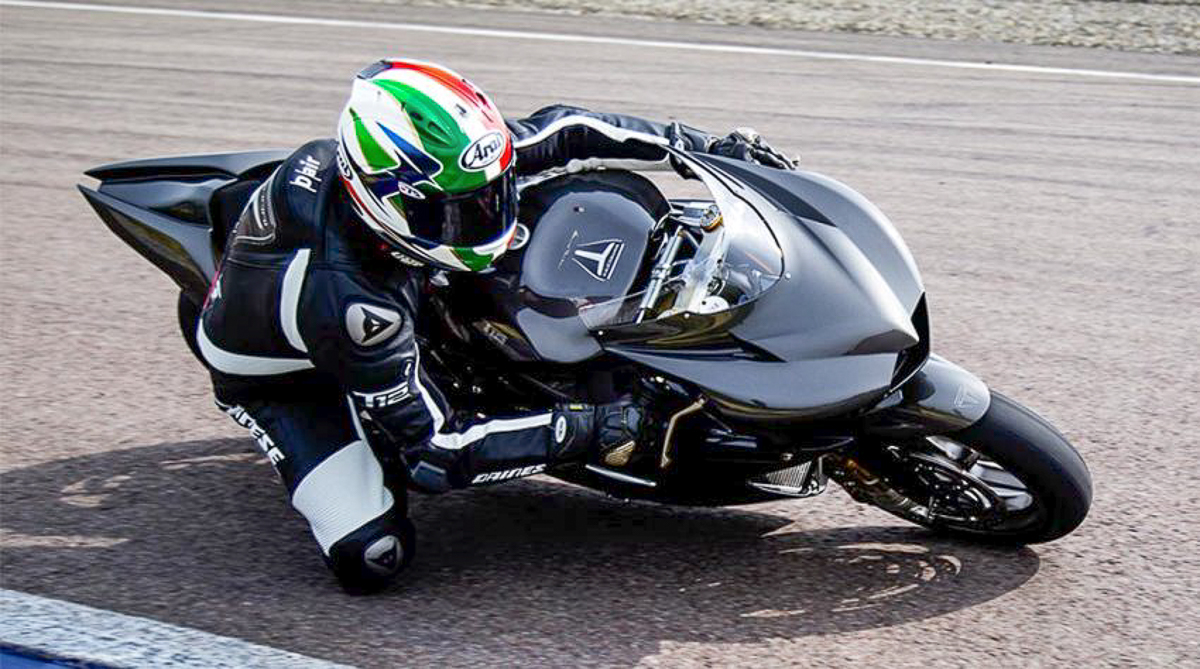
Built as the ultimate track day superbike without following any regulations, this is the product of the late Massimo Tamburini.

The T12 is powered by a 999cc inline-four engine taken from the BMW S 1000 RR which has been tuned to produce 230hp.

Ever wanted a superbike that is built without following any rules or regulations for streets or racing? Want something that’s purely the essence of motorcycle performance? If money is not an issue for you, the Tamburini T12 might be of interest for you. (more…)

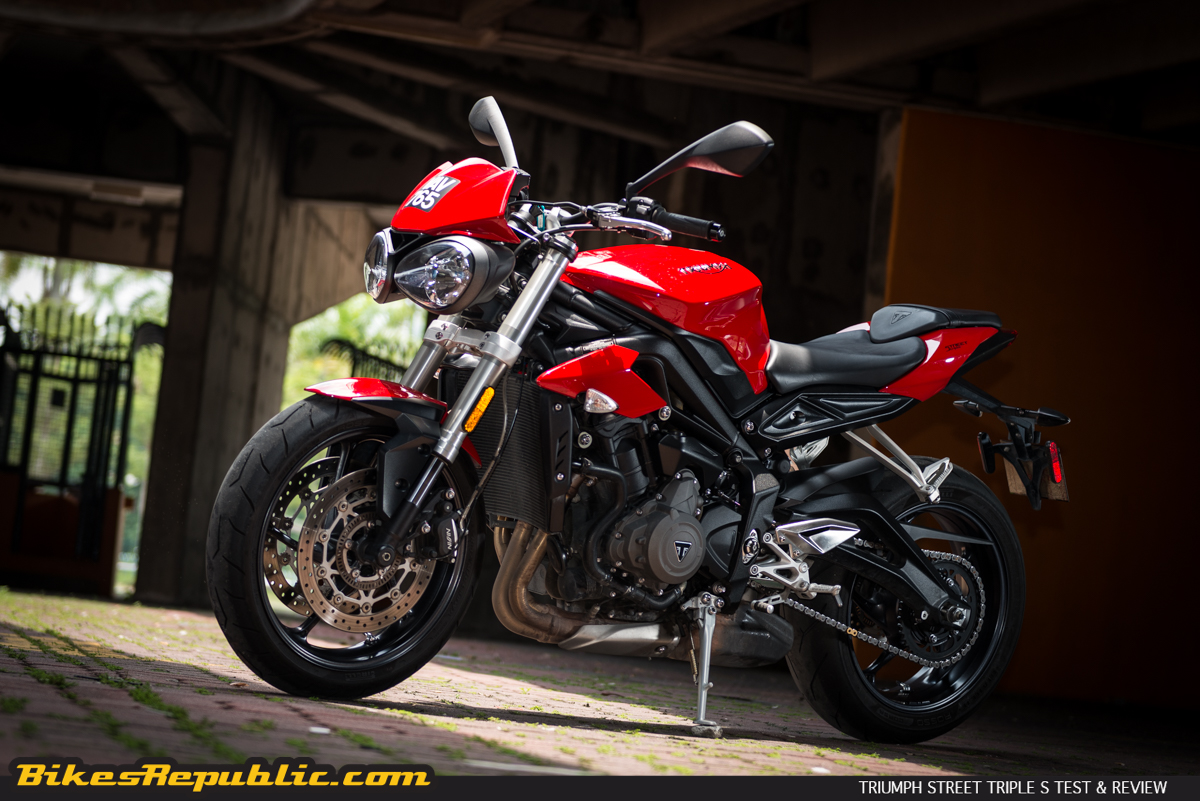
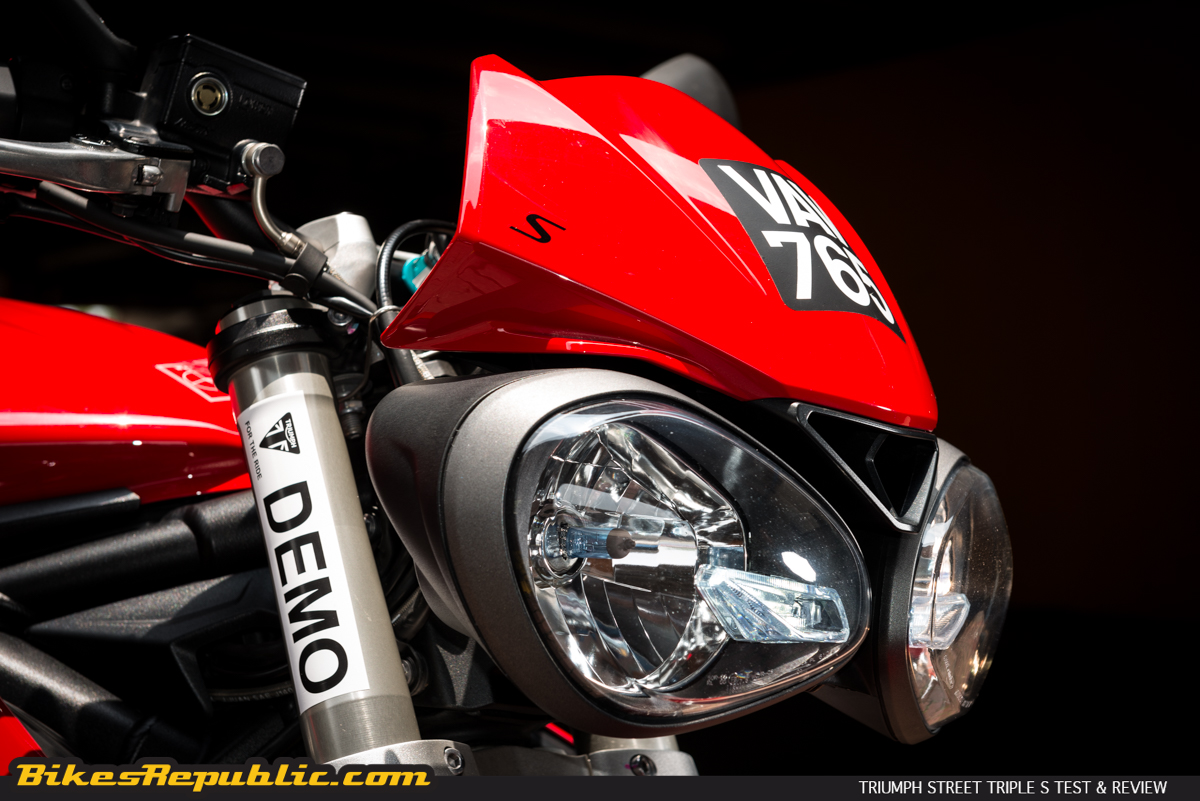
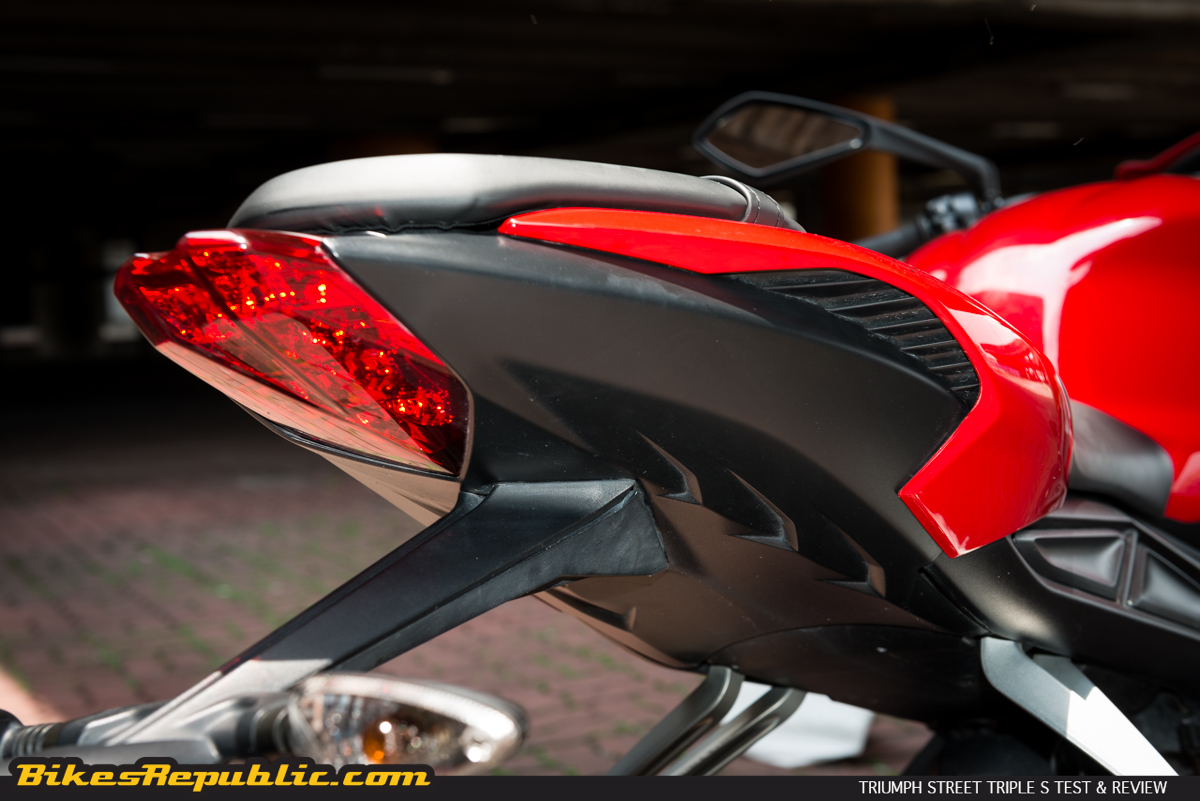
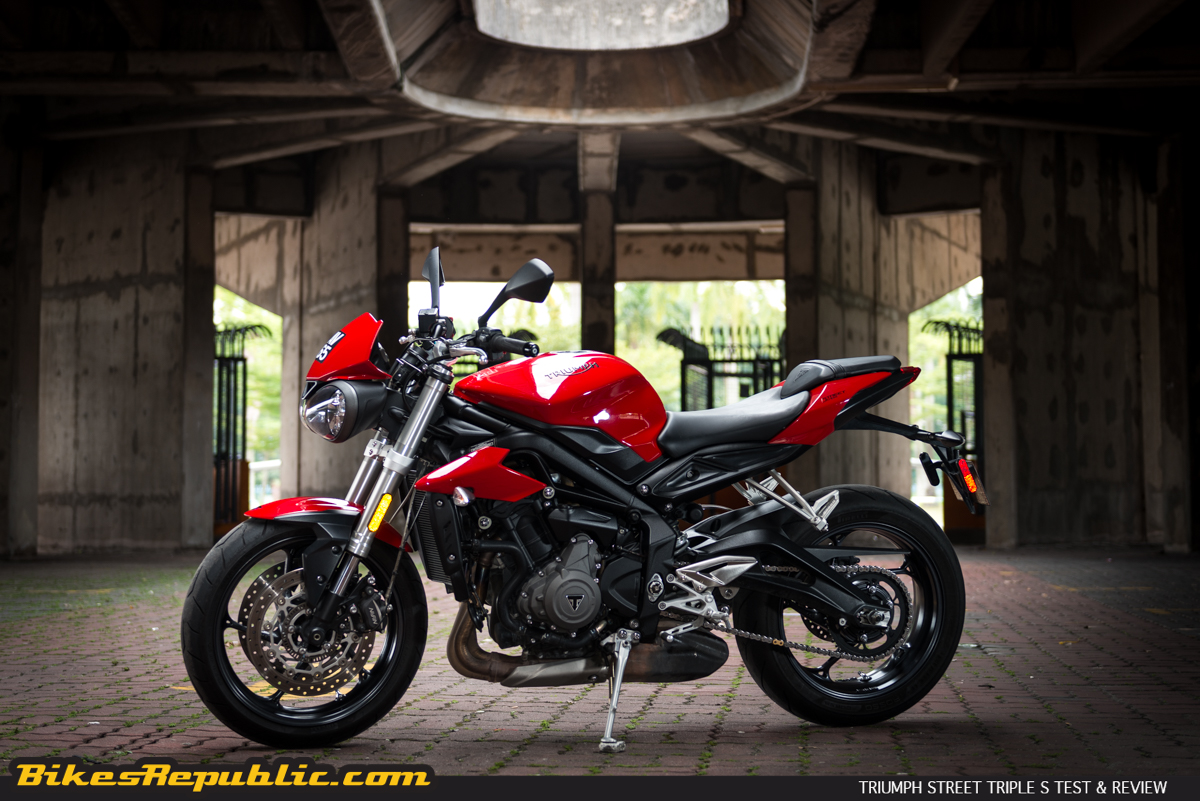
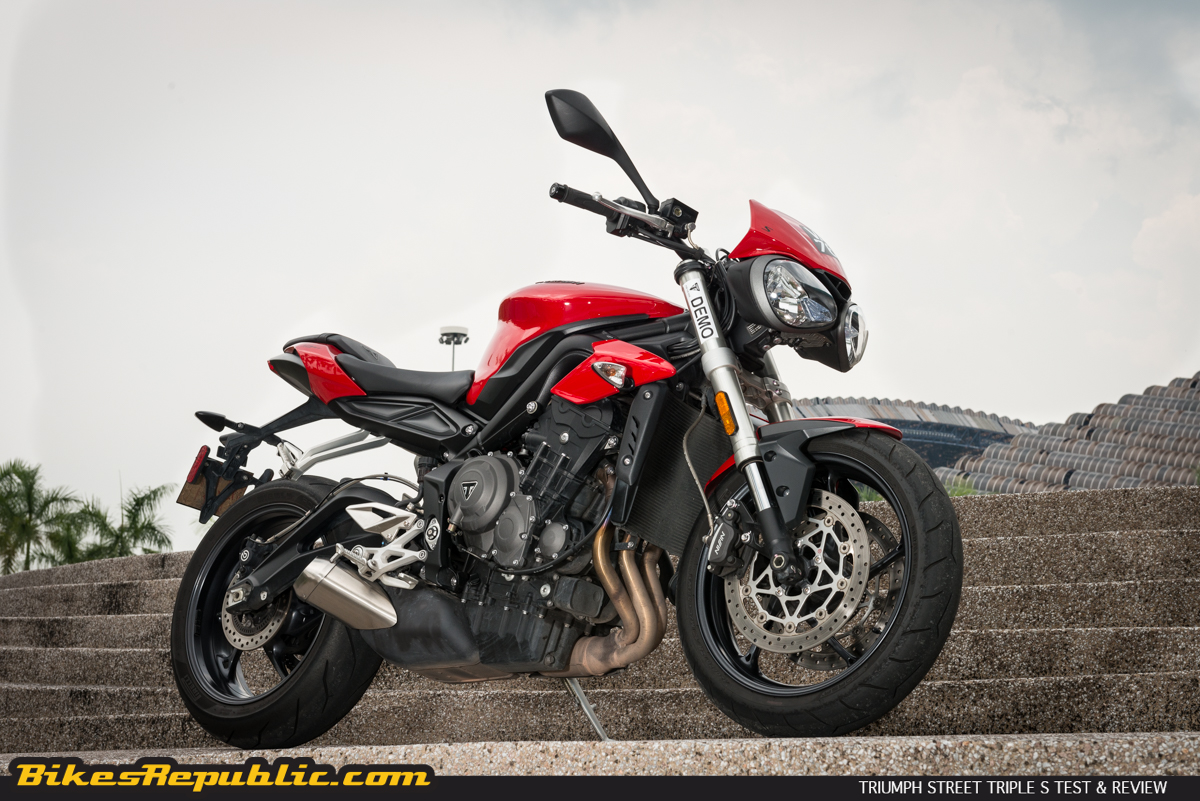
  • The Triumph Street Triple S one of three models in the new Triumph Street Triple (765) range.

  • It is meant for the daily rider who wants a simpler motorcycle.

  • Simpler does not mean less entertaining.

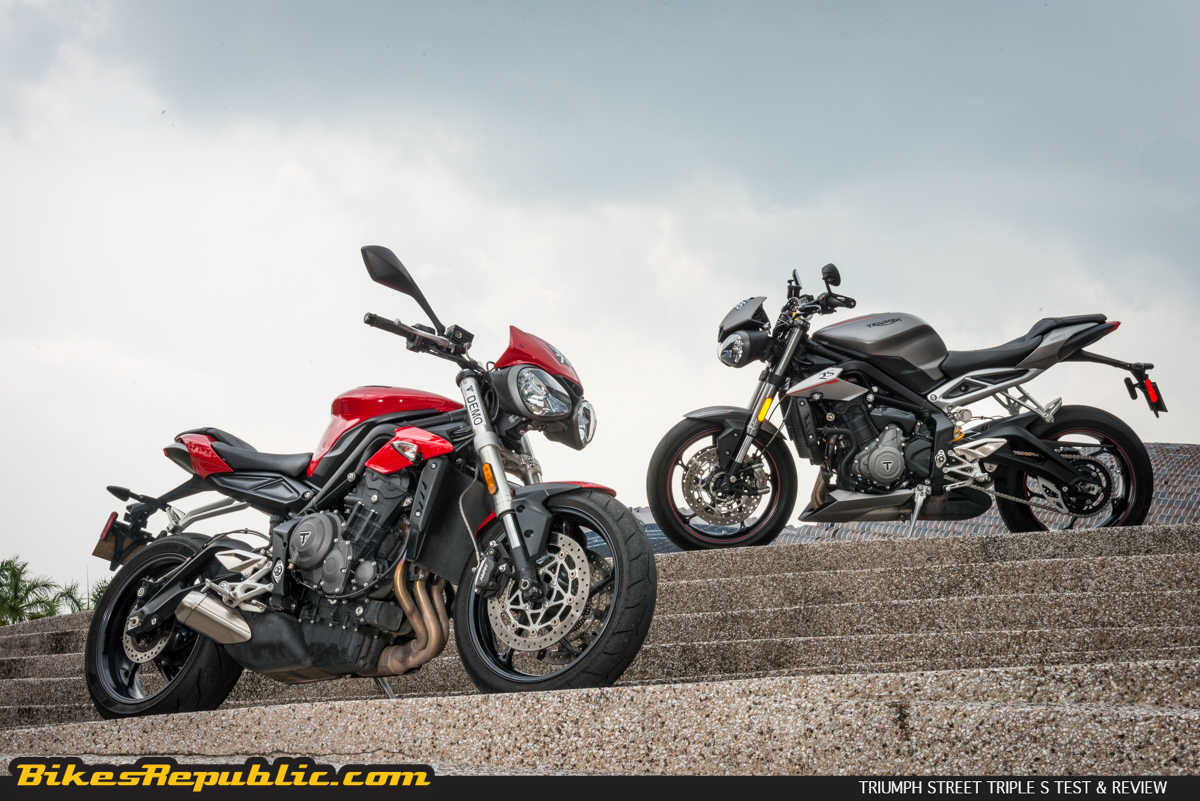
“It’s same-same but different,” said Joseph when we spoke about something which looked uncannily alike yet there’s were some differences that we couldn’t quite put a finger on.

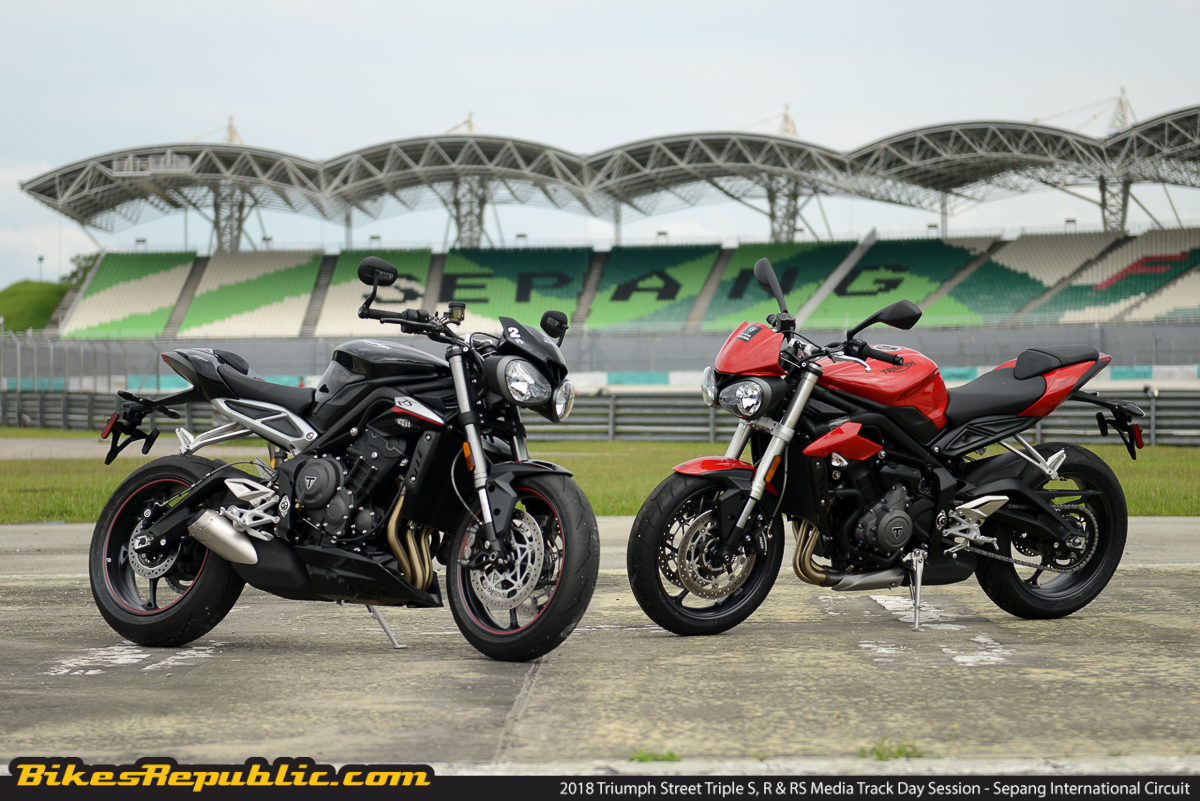
As with Triumph’s new 2018 Street Triple range launched in September last year (please click here for the launch event at the Sepang International Circuit), they do all look alike from a few metres away but each member has a distinct personality.

To recap:

  • The flagship Street Triple RS is the king of the 765cc street fighter, boasting fully-adjustable Showa forks and Ohlins monoshock, radially-mounted Brembo M50 Monobloc front brake calipers, quickshifter, 5 ride modes including TRACK Mode, lap timer and full-colour TFT display, besides 121 bhp from the engine.
  • The “middle” Street Triple R model, features fully adjustable Showa forks and monoshock, Brembo 4.32 Monobloc front brake calipers, no quickshifter. It’s equipped with the TFT display, however there is no TRACK mode and lap timer. The engine puts out 116 bhp.
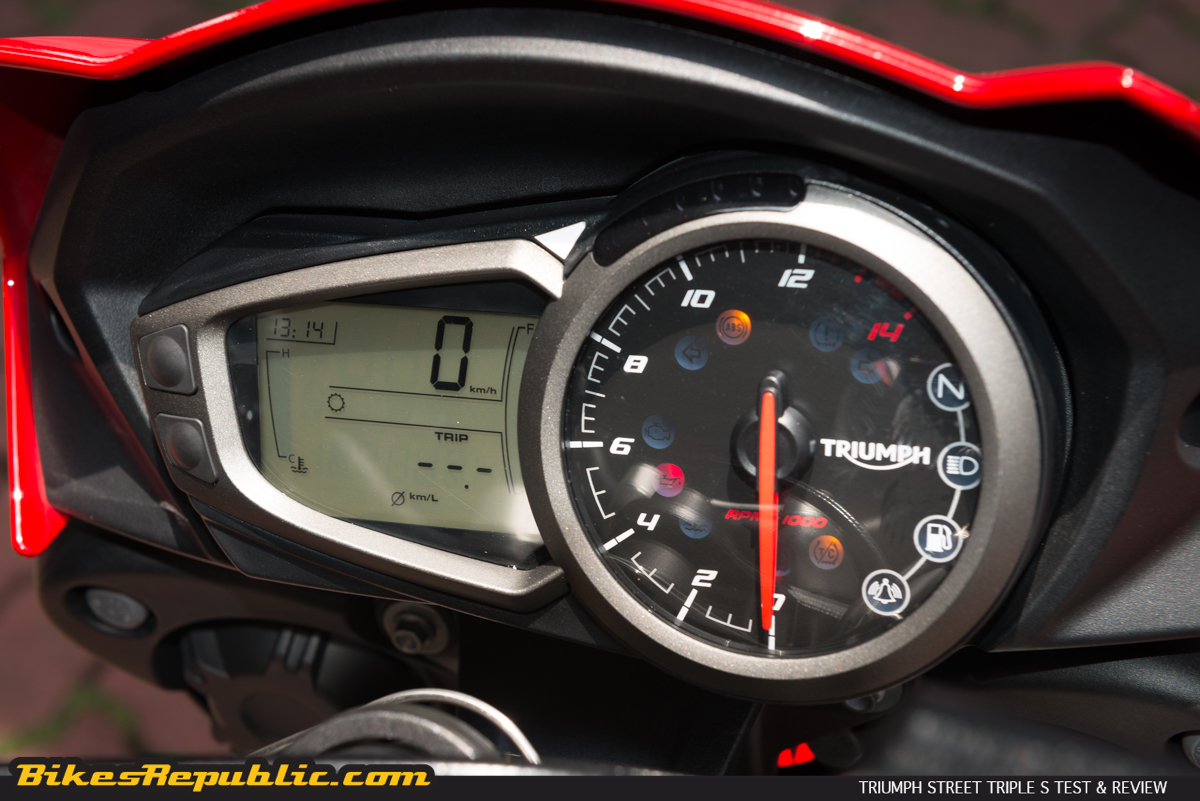
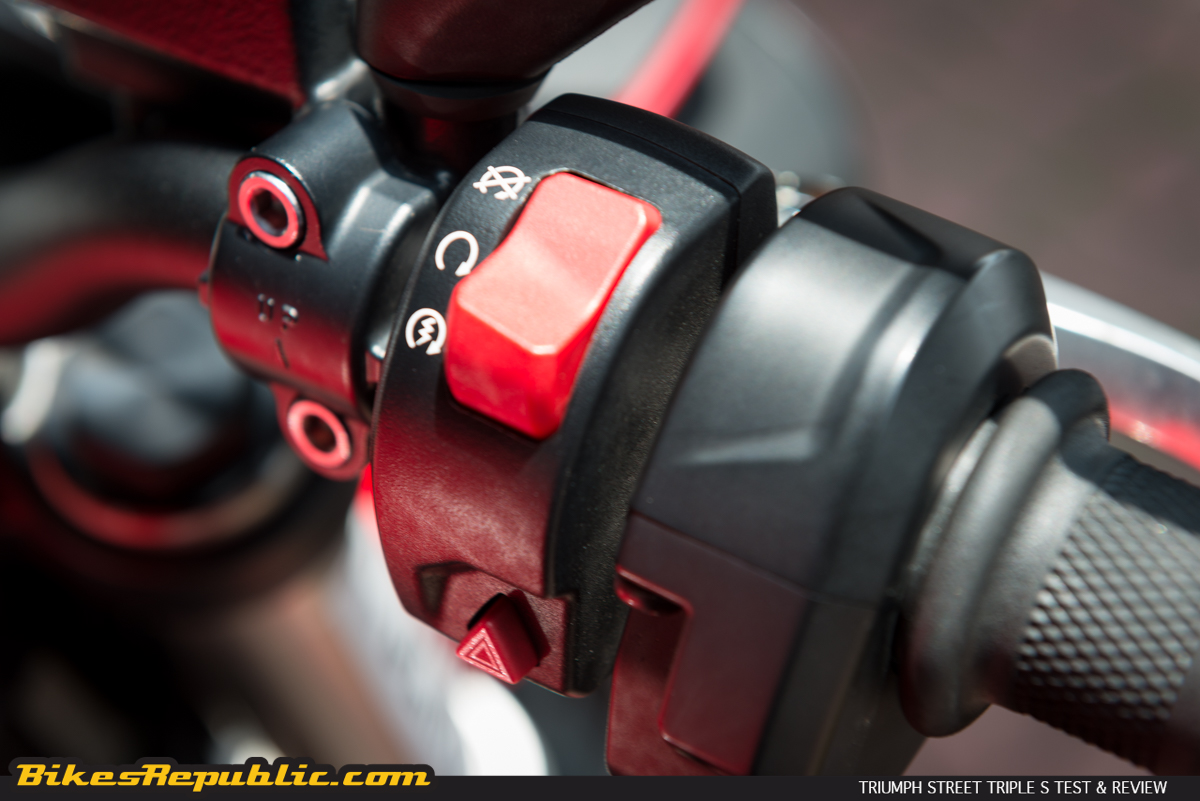
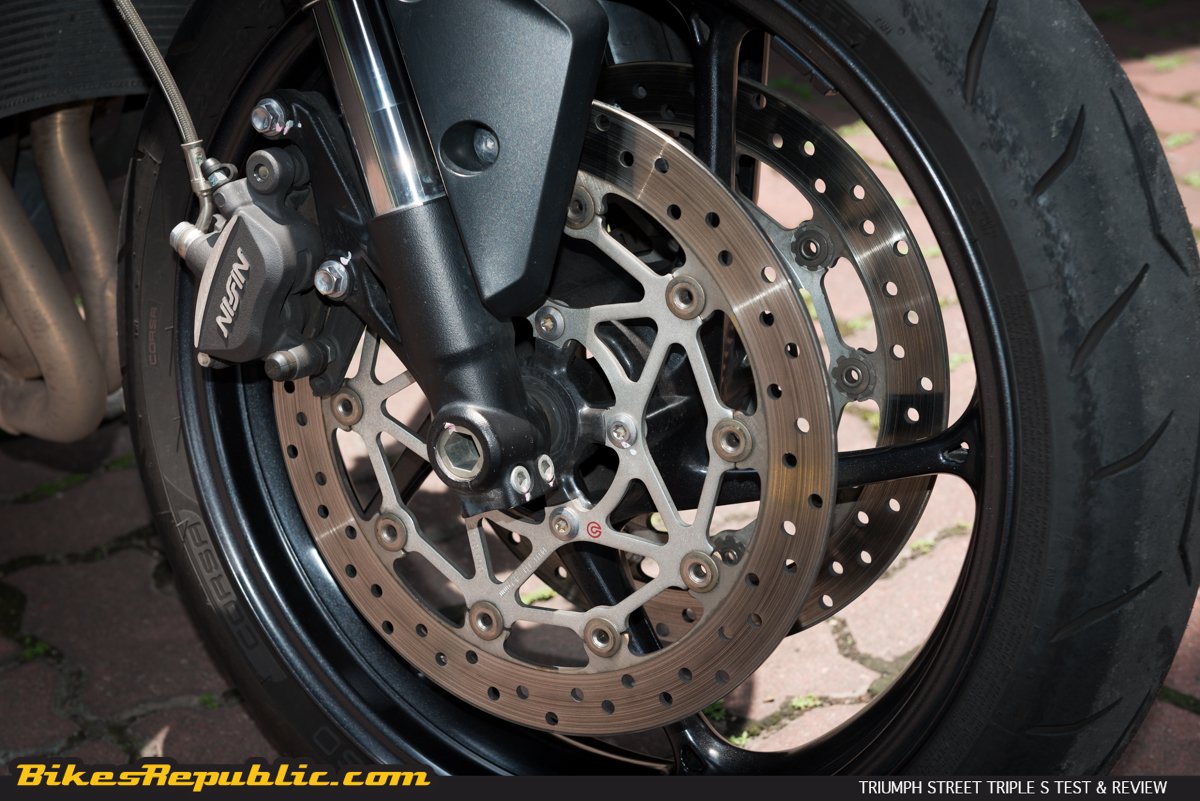
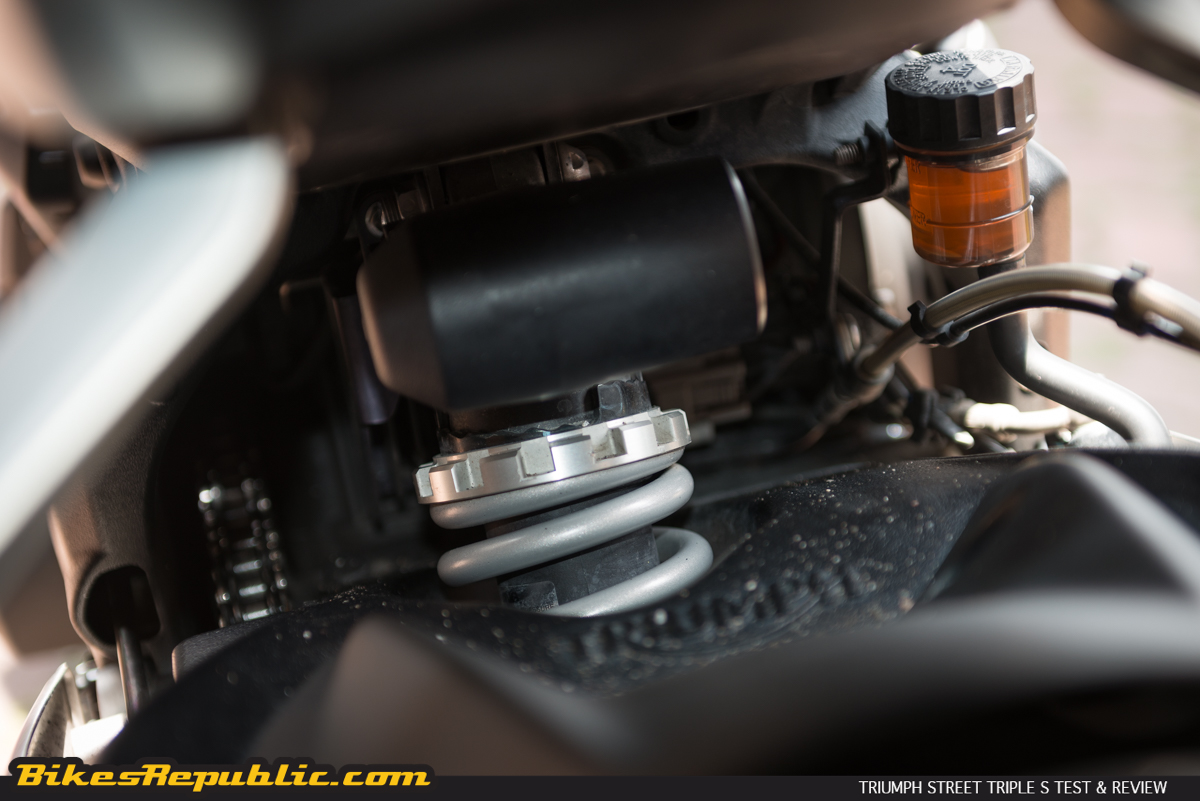
  • The Street Triple S has standard non-adjustable Showa forks, preload-adjustable only Showa monoshock, two-piston Nissin front brake calipers and an instrument cluster carried over from its Street Triple 675 predecessor. It has only two ride modes, ROAD and RAIN. The engine is tuned to produce 111 bhp.

While it’s easy to see off the S as an “entry-level” model, it’s actually meant for riders who want an everyday bike without the fancy stuff. But does it mean the bike is “compromised?”

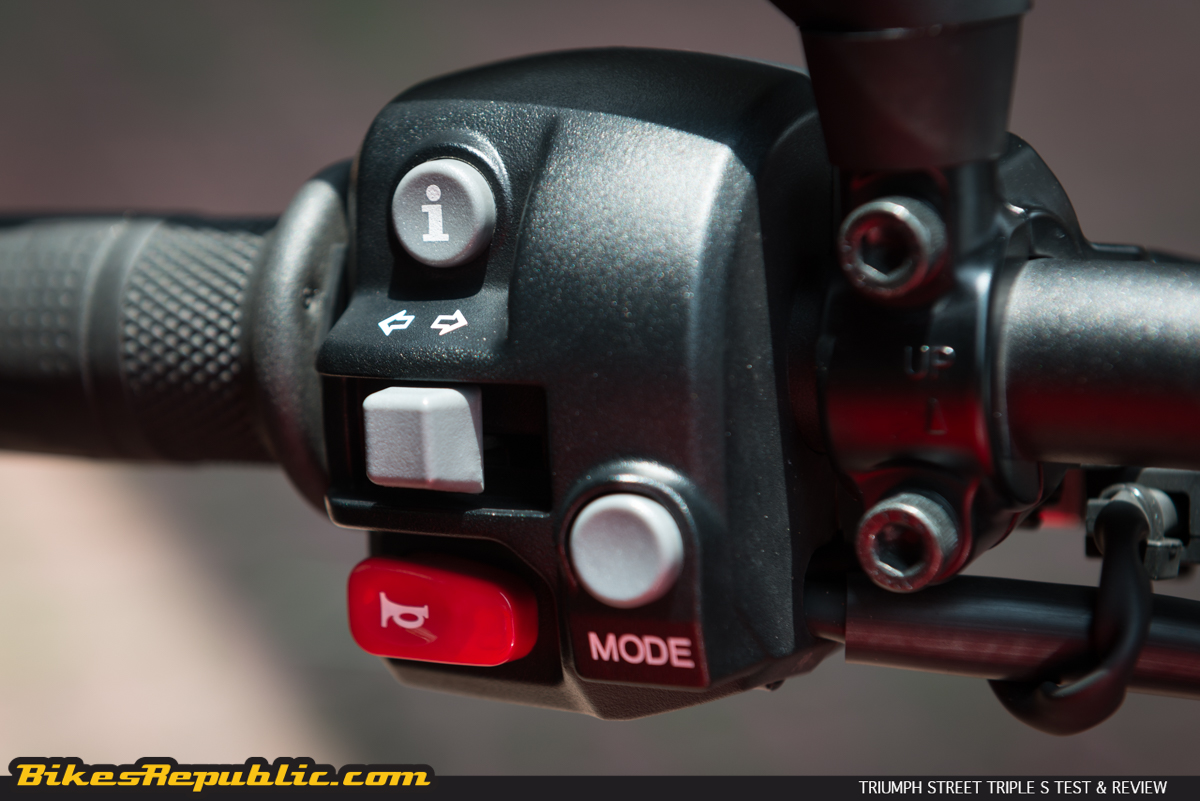
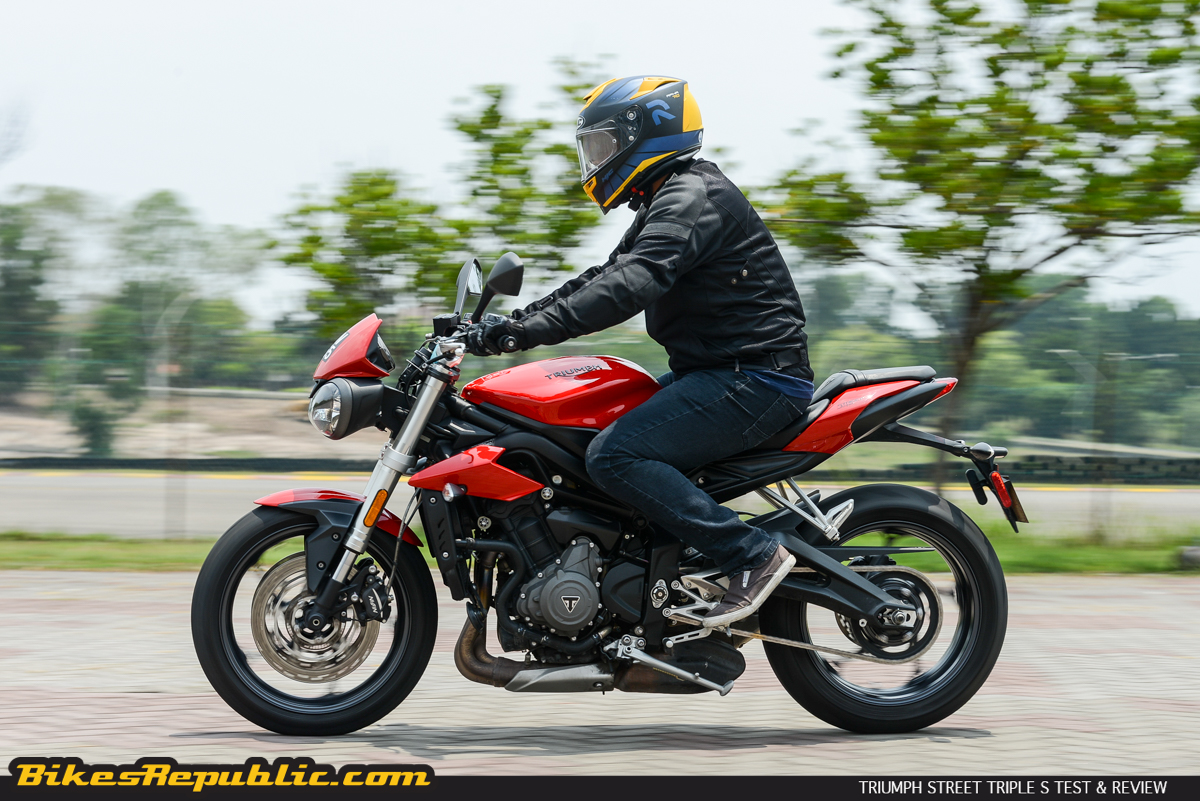
The Street Triple S’s seat height is a little lower than the RS’s, allowing me to place both feet securely on the ground without needing to move a cheek off the seat. The seating position puts you in a nice sporty crouch without being uncomfortable and all the controls are within reach of your fingers and thumbs.

Accelerating through the gears, there’s an additive warble from underneath the tank and howl from the exhaust, but it’s totally quiet when cruising at a steady throttle at any speed.

Speaking about acceleration, the Street Triple S turns out to have a much direct, rawer feel to it. Twist the throttle aggressively and you’re rewarded with an almost beast-like forward charge.

To overtake another vehicle, just roll up on the target and give the bike some throttle. The Street Triple S will howl forward without hesitation. Keep the gas on and the bright blue shift lights illuminate one after another until the fifth one comes on, all blinking unison. Time to hit another gear – blam! It goes in immediately without ponder. However, you don’t have to blast through the gears if you’re lazy. You could let the revs drop to just above 2000 RPM in sixth gear and the bike will still pull hard at the twist of the loud grip.

When it came to handling, the Street Triple S reminded us clearly beyond doubt of how the Street Triple lineup had been imbued with great handling from the very first model. The bike was composed yet ready to go anywhere you wished it to. It felt like riding a 250cc bike with three times the power. You’ll soon be entertaining yourself with picking your way around traffic, chucking the bike into sharp corners and flying through the long ones. Although shod with Pirelli Rosso Corsa tyres, it’ll be just as happy when riding through the rain – the tyres didn’t slide once – although we rode in ROAD mode.

The suspension on both ends were suppler that the RS’s, but big bumps and deep holes will produce big jolts. At the track, the standard setting had the footpeg feelers touching down early, but on the streets, it took very, very committed (read: high speed) cornering to have them sniffing the tarmac.

Last but not least, the Nissin brakes were strong although they required a harder squeeze further into the stroke.

To wrap up, the Triumph Street Triple S is a great commuter and weekend canyon blaster despite being devoid of the flashier stuff. In skilled hands, it’ll punish plenty of bikes out there when the road goes less than straight. Furthermore, the Street Triple S is rider friendly and practical for many uses, too.

So, being slightly different isn’t a bad thing.

TECHNICAL SPECIFICATIONS

ENGINE
Engine type Liquid-cooled, 4-stroke, DOHC, 4-valves-per-cylinder, inline-Triple
Compression ratio 12.65 : 1
Bore X Stroke 77.99 mm X 53.38 mm
Displacement 765 cc
Fuel system Multipoint sequential electronic fuel injection
Maximum power 111 bhp (83.1 kW) @ 11250 RPM
Maximum torque 73 Nm @ 9100 RPM
TRANSMISSION  
Clutch Wet, multi-plate
Gearbox 6-speed
CHASSIS
Front suspension Showa 41 mm upside-down separate function forks, 110 mm travel
Rear suspension Showas piggyback reservoir monoshock, adjustable for preload, 124 mm travel
Front brakes Twin 310 mm floating disc, two-piston Nissin sliding calipers
Rear brake Single 220 mm fixed disc, single-piston Brembo sliding caliper
ABS Dual-channel ABS
Front tyre 120/70-ZR17
Rear tyre 180/55-ZR17
FRAME & DIMENSIONS
Frame Front – Aluminium twin spar beam; Rear – 2-piece high pressure die cast
Trail 104.3 mm
Rake 24.8o
Wheelbase 1410 mm
Seat height 810
Kerb weight 166 kg
Fuel capacity 17.4 litres


PICTURE GALLERY

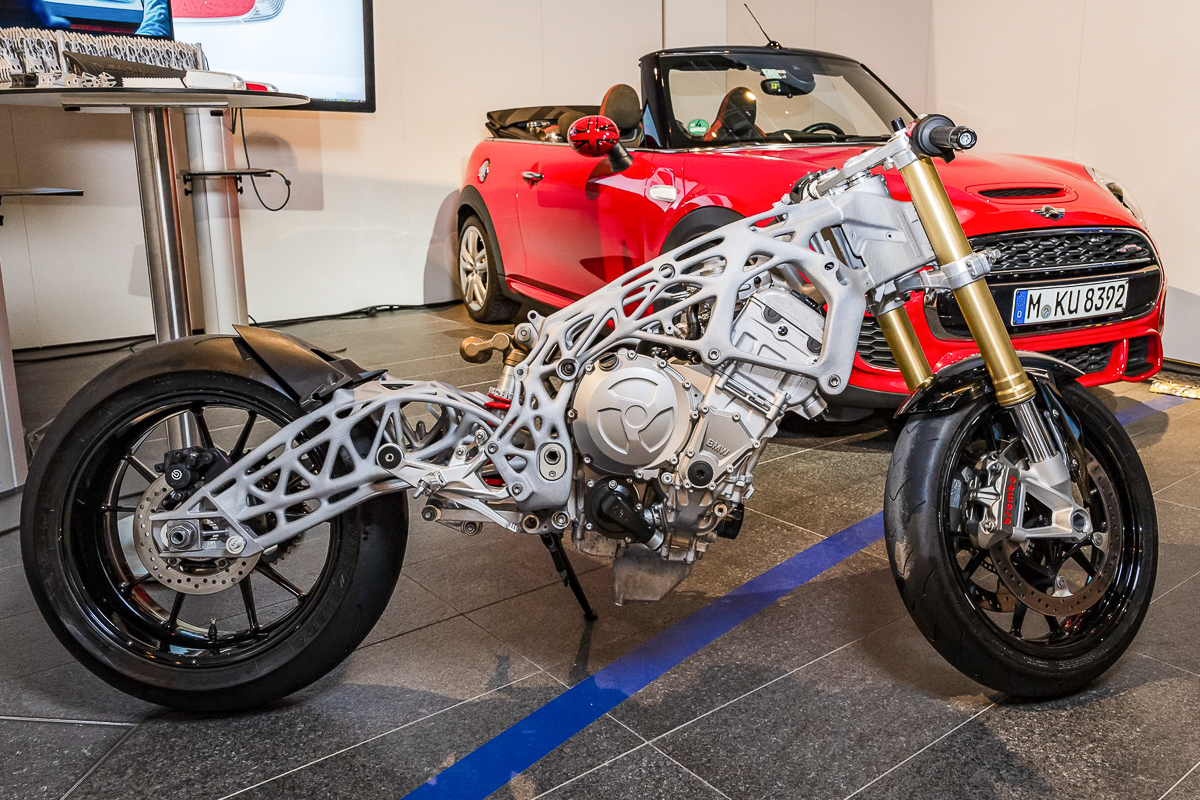
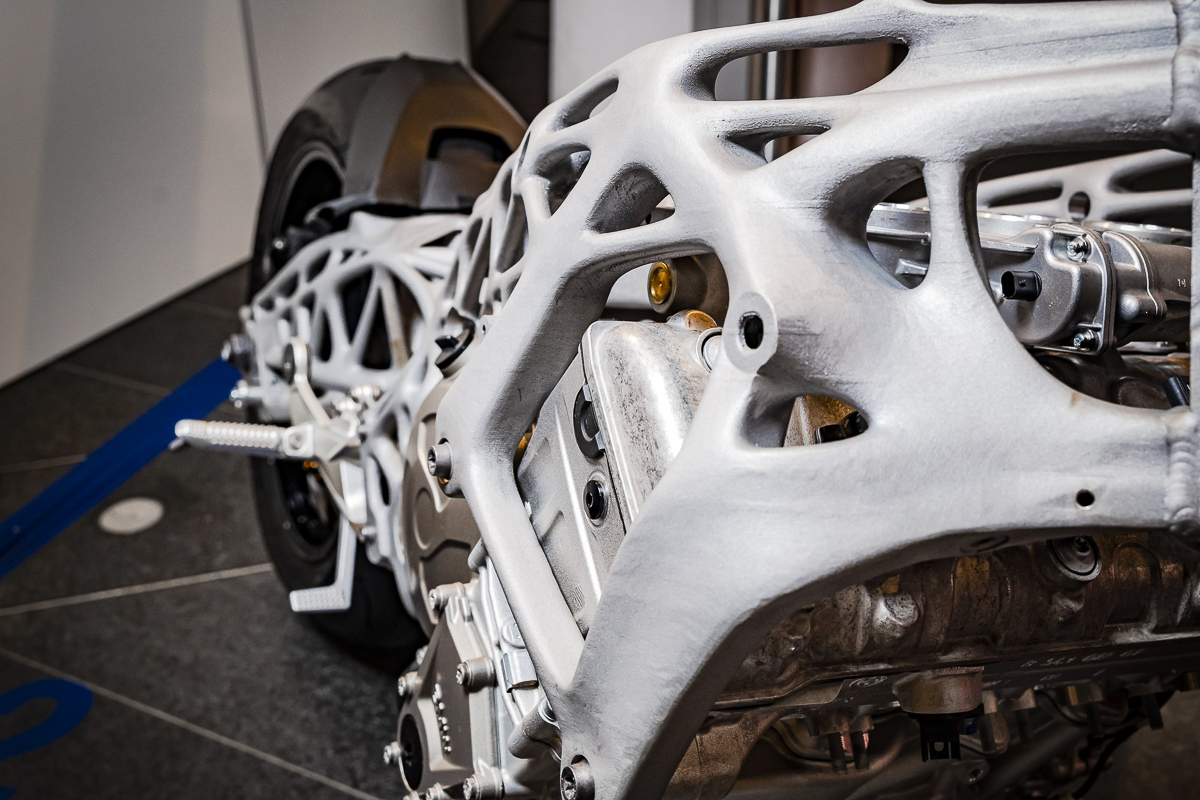
BMW Motorrad has unveiled a BMW S 1000 RR 3D-printed chassis.

The entire chassis and swingarm were manufactured using a 3D-printing technology called “Additive Manufacturing”.

Three-dimensional parts made from plastic or metal take shape layer by layer which can be manufactured quicker whilst maintaining quality.

Heading towards the future with the moving time, BMW Motorrad has embraced the movement of futuristic technology with the revolutionary step in motorcycle manufacturing. They’ve successfully made a BMW S 1000 RR chassis using a 3D printer! (more…)

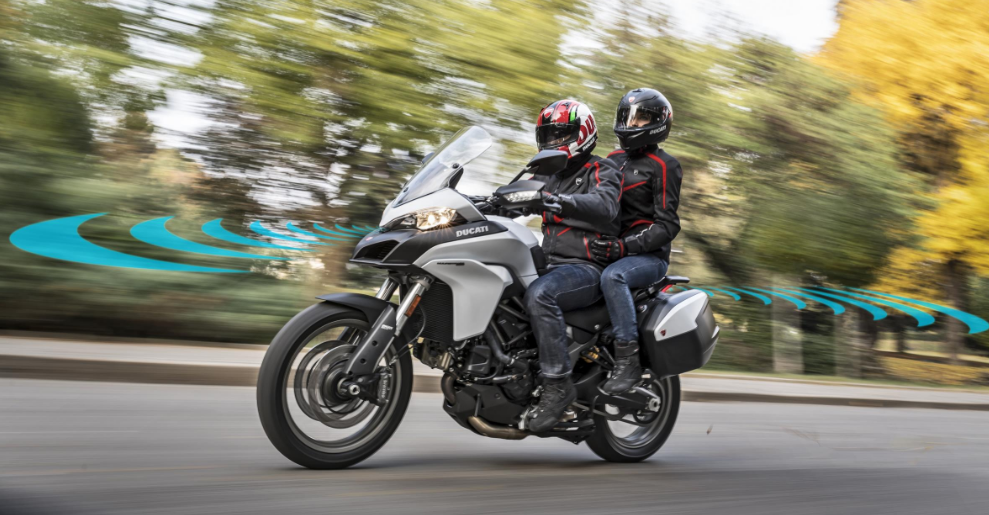
Ducati’s 2025 Safety Road Map implementation will see some of their 2020 Ducati models being fitted with radar technology.

The strategy is aimed at introducing the latest safety systems and technologies into their bikes.

Phase one has already begun with the introduction of Cornering ABS for all their models in stages.

As part of Ducati’s effort to implement the highest levels of safety and technology, the Ducati 2025 Safety Road Map campaign is already on its way. Big plans are already in the pipeline which will see some of the 2020 models being fitted with radar technology. (more…)

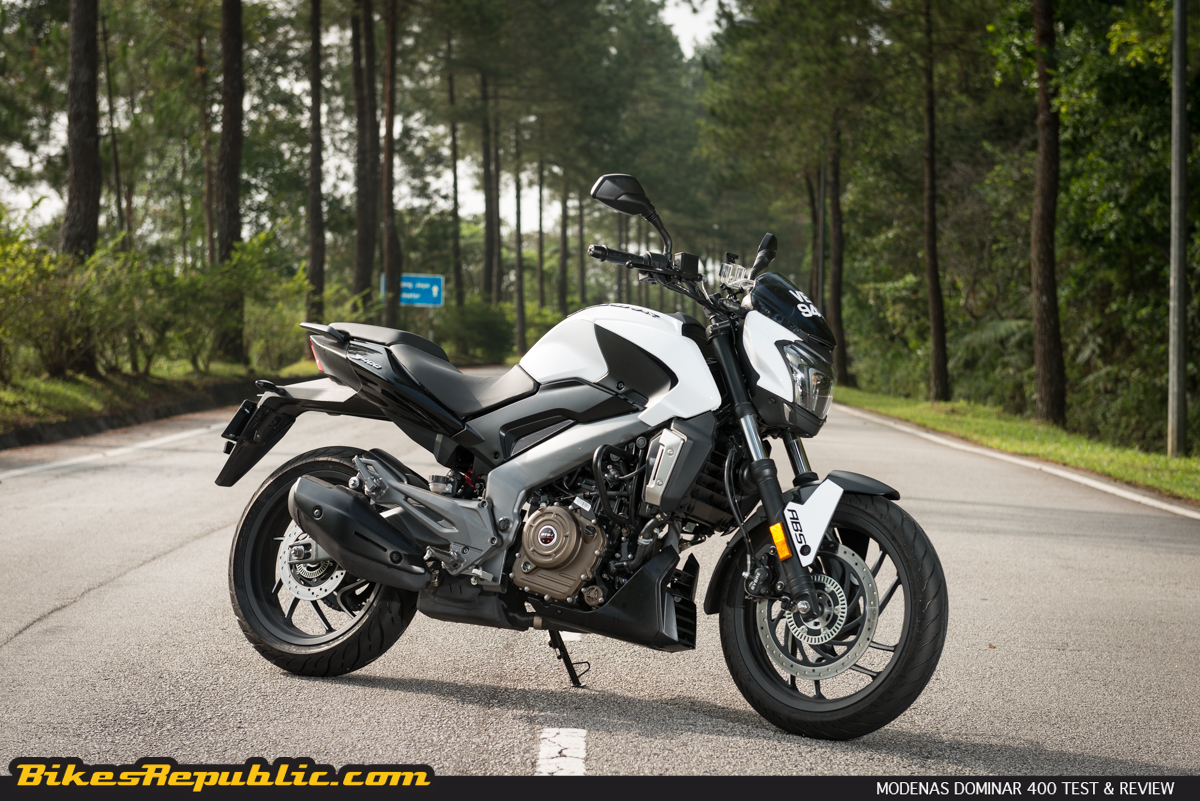
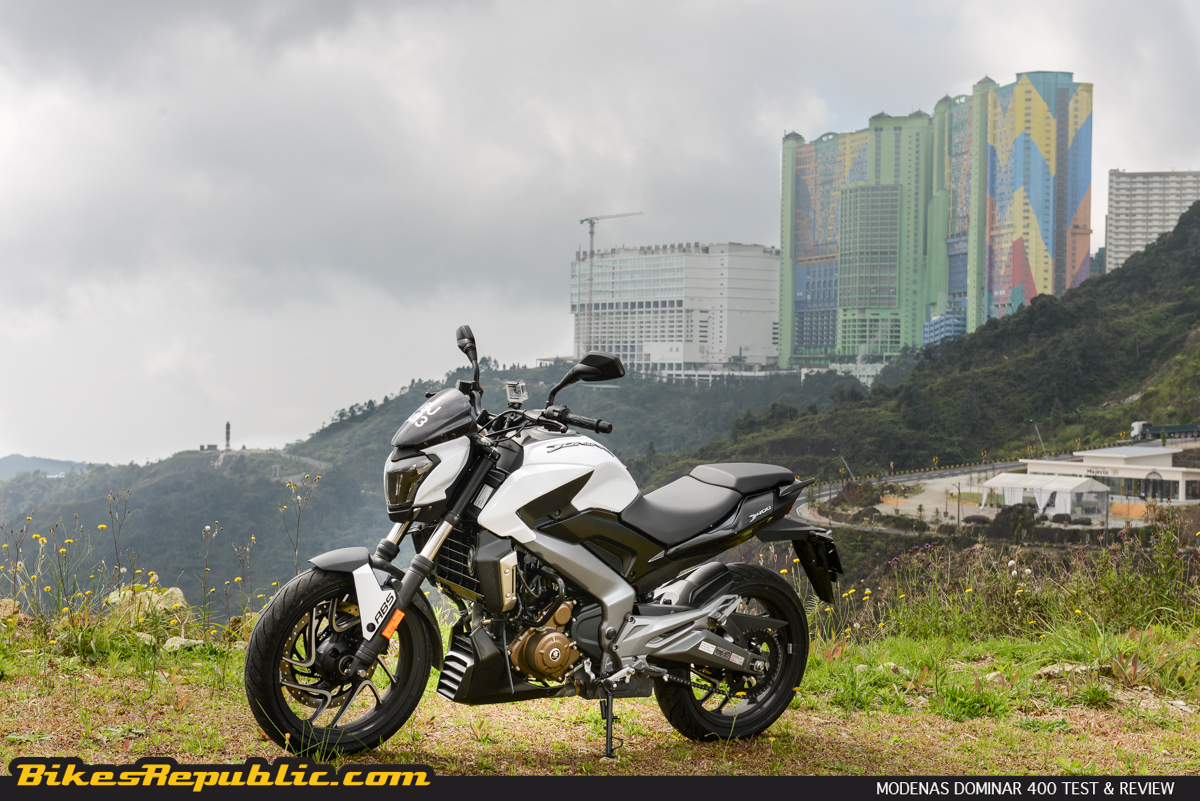
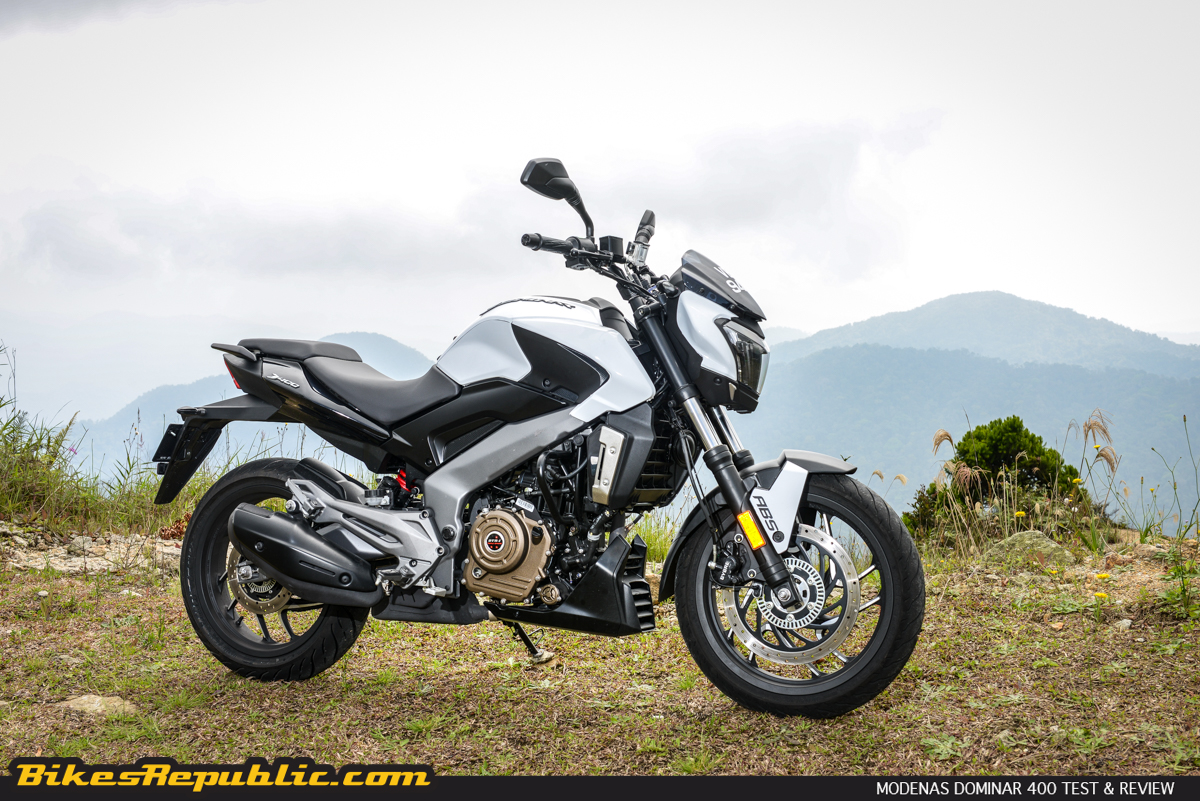
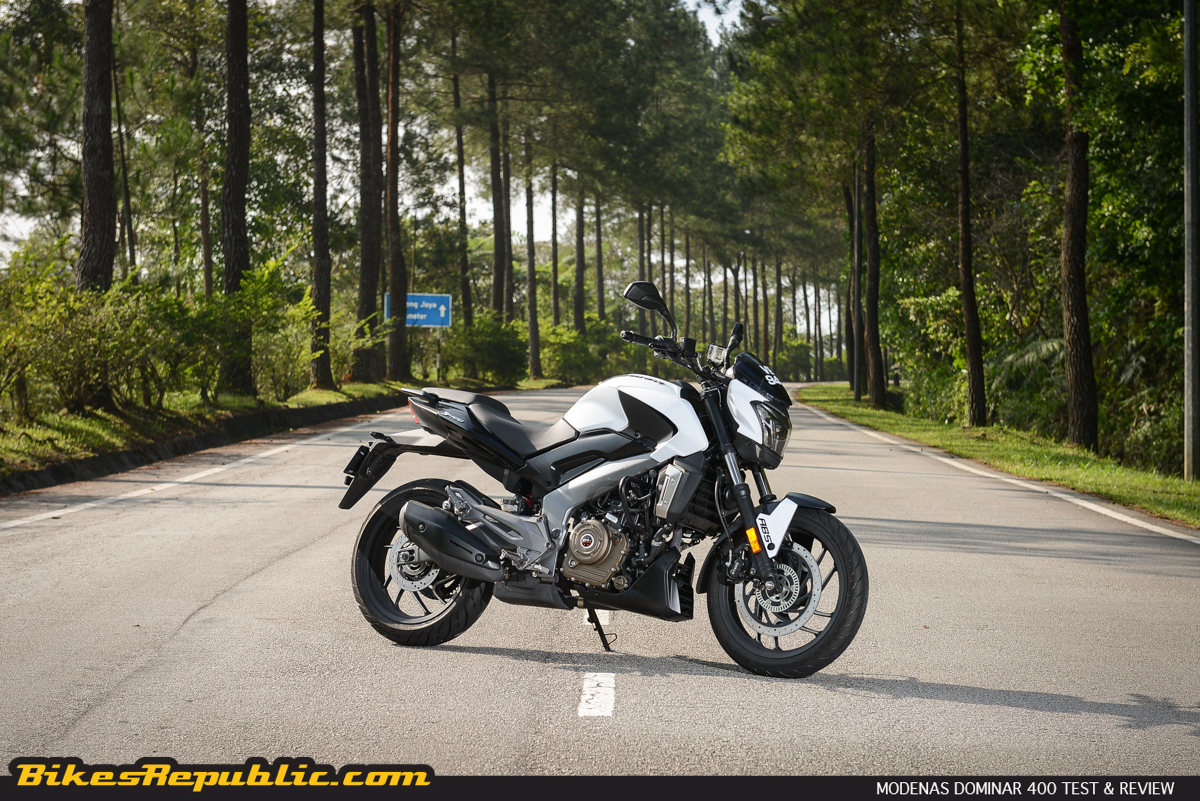
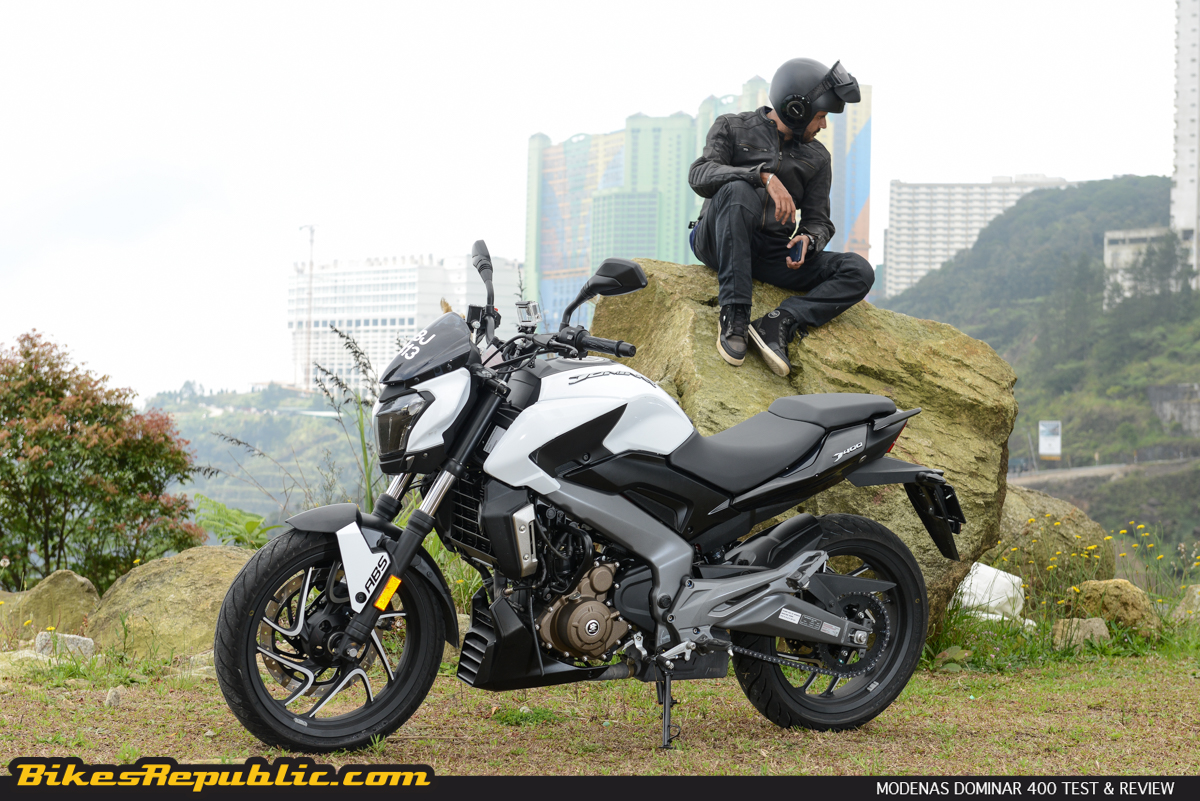
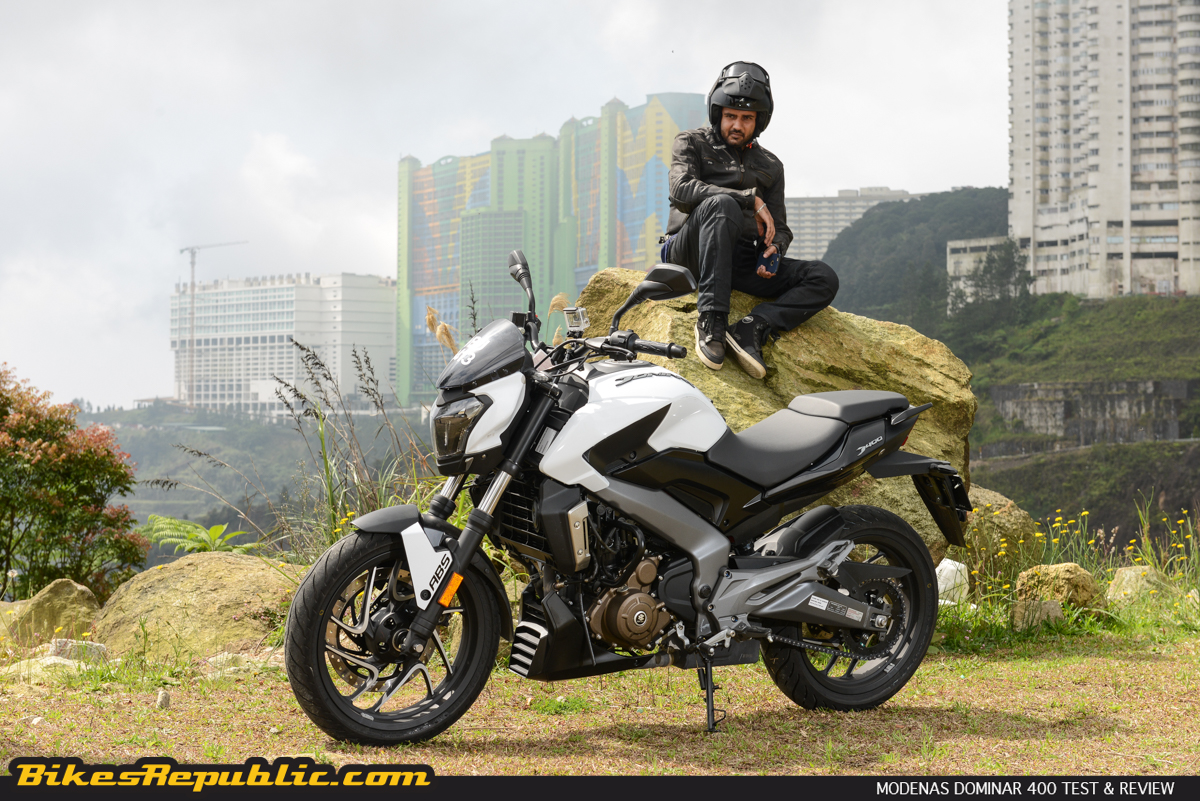
  • Modenas has launched the Dominar D400.

  • Hailed as a sport-tourer, it is comfortable and easy to ride.

  • Priced RM13,788 (basic selling price with 6% GST) for a limited time it is set to dominate that market segment.

As we’ve reported earlier (click here for the article), hot on the heels of the runaway success of the Pulsar RS200 and Pulsar NS200, Modenas felt that it was the right time to bring the Dominar D400 to our shores.
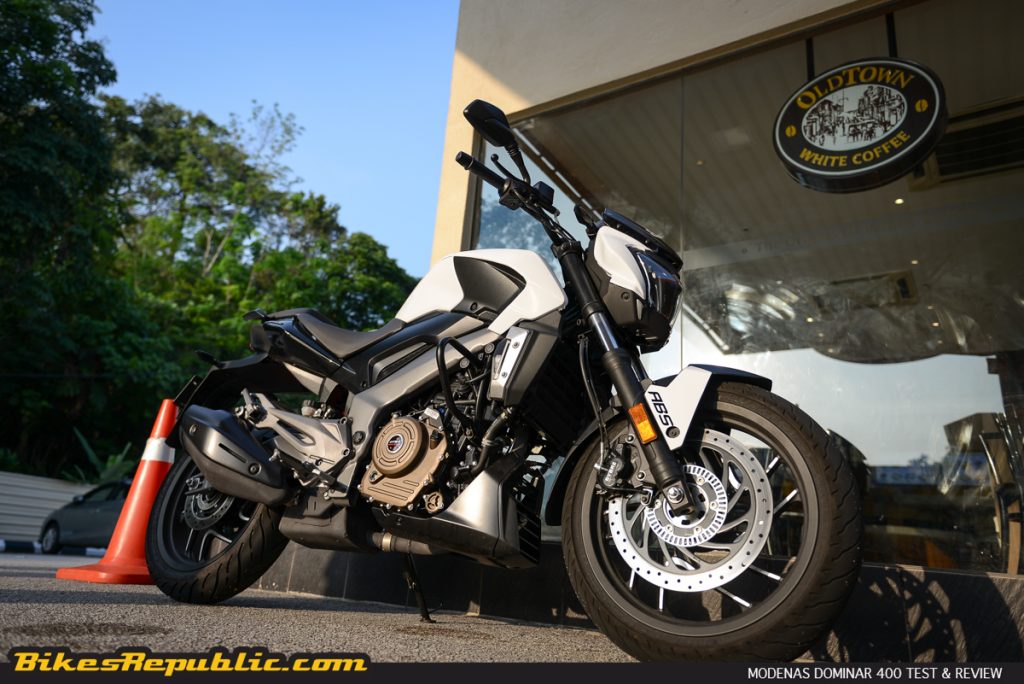
To recap, first and foremost, the bikes are built by the Indian giant, Bajaj Auto, and rebadged as Modenas. It isn’t such a bad thing, really, since Bajaj also builds the smaller KTM 200/250/390 Duke/RC range that has also taken the Malaysia and the world markets by storm. We’ve also ridden the Modenas Dominar D400 during our visit to the Bajaj Auto factory (click here for the article).
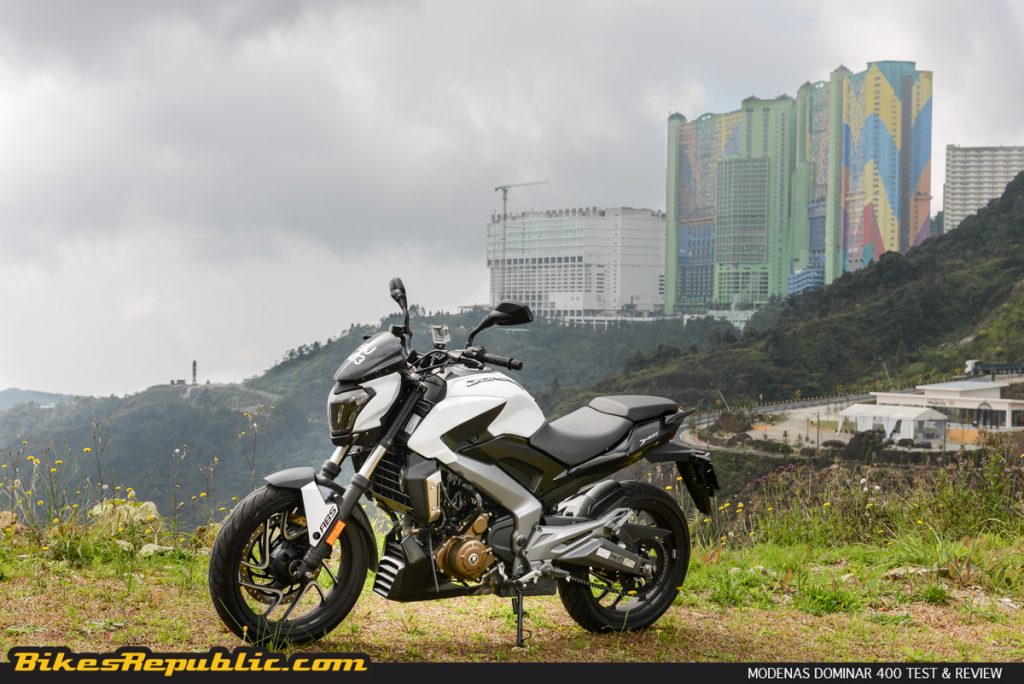
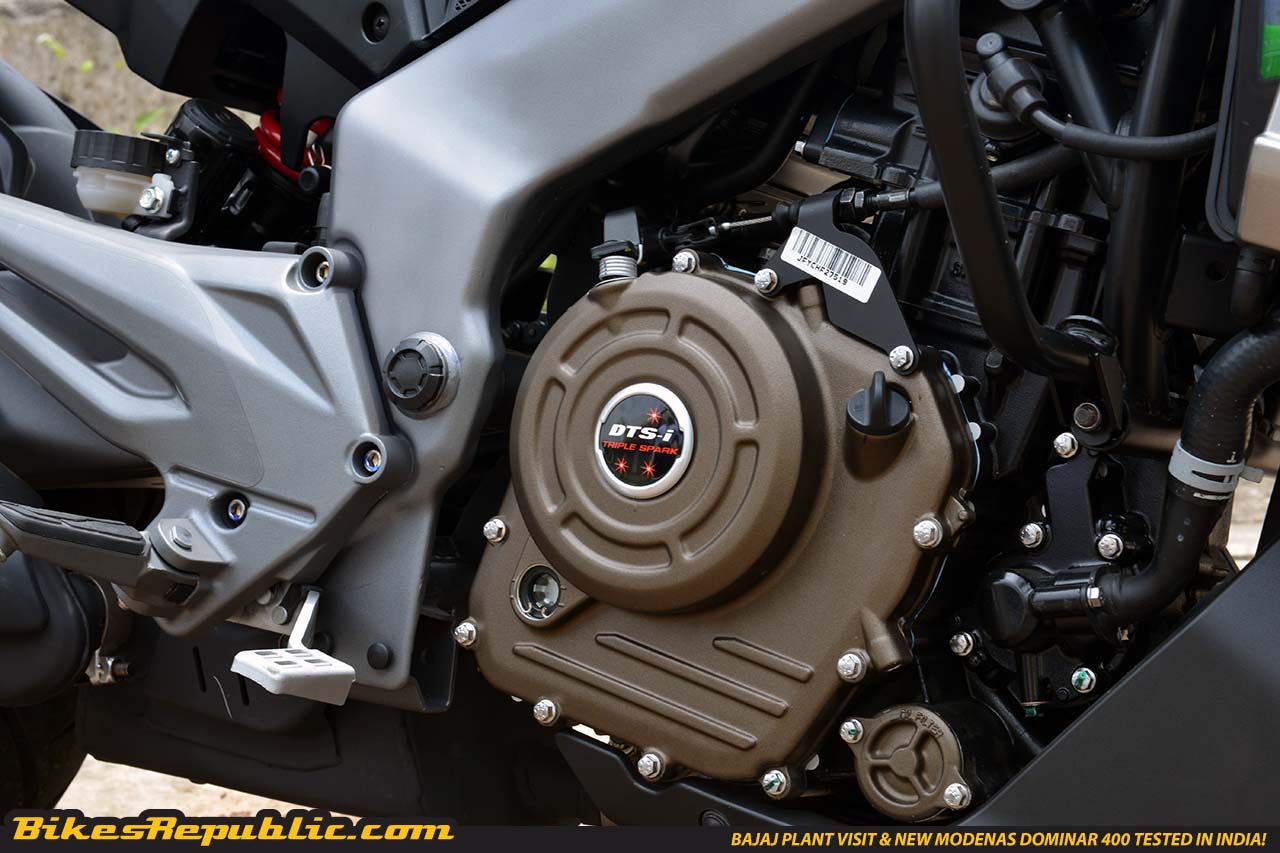
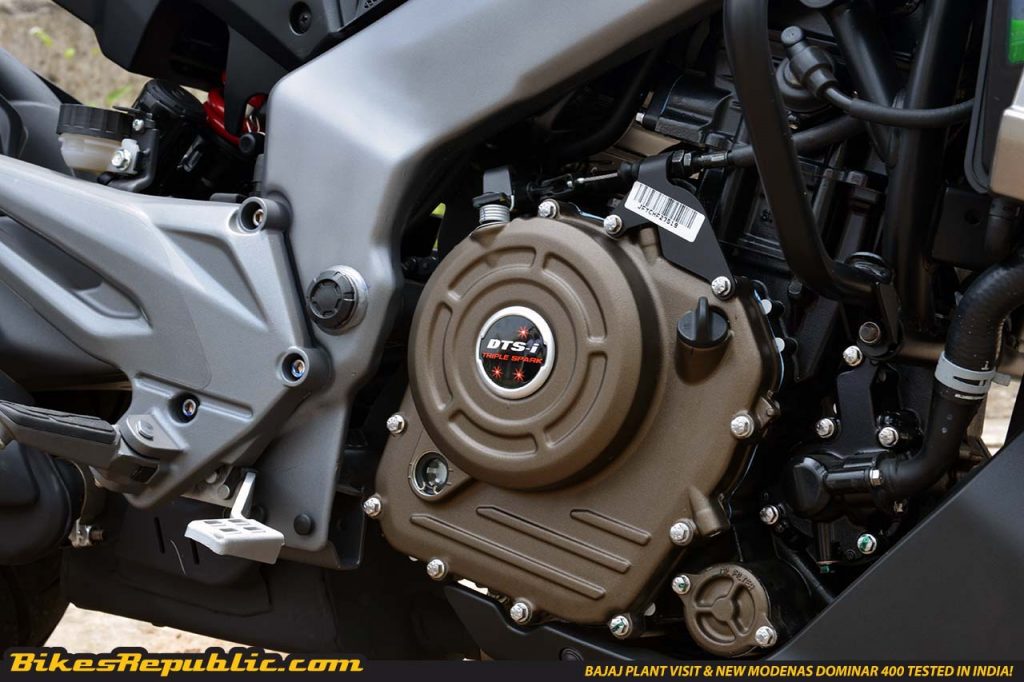
The Modenas Dominar D400 is a step up to the bigger capacity market. The electronically fuel injected, 4-valve, liquid-cooled, 373cc, single-cylinder engine has some shared architecture with the KTM 390 Duke but with a few differences such as the Digital Triple Spark (DTS-i) configuration to promote more complete combustion throughout the rev range.
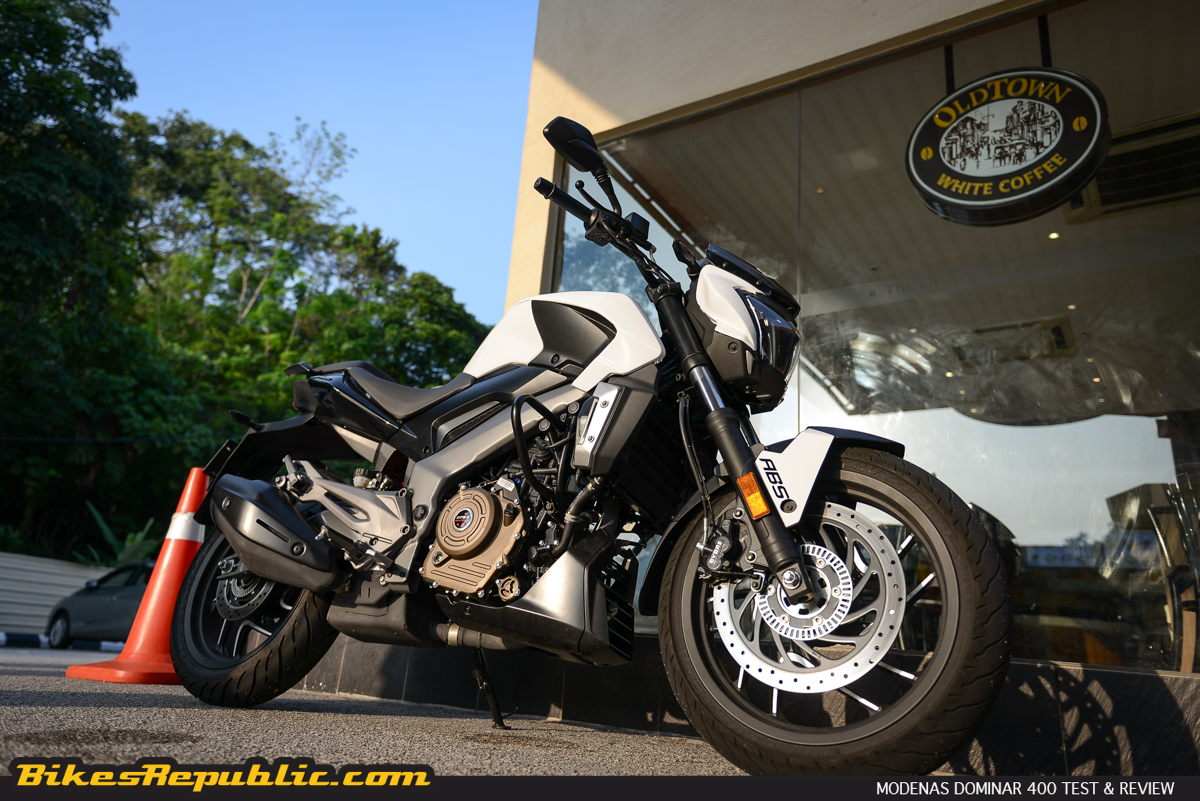
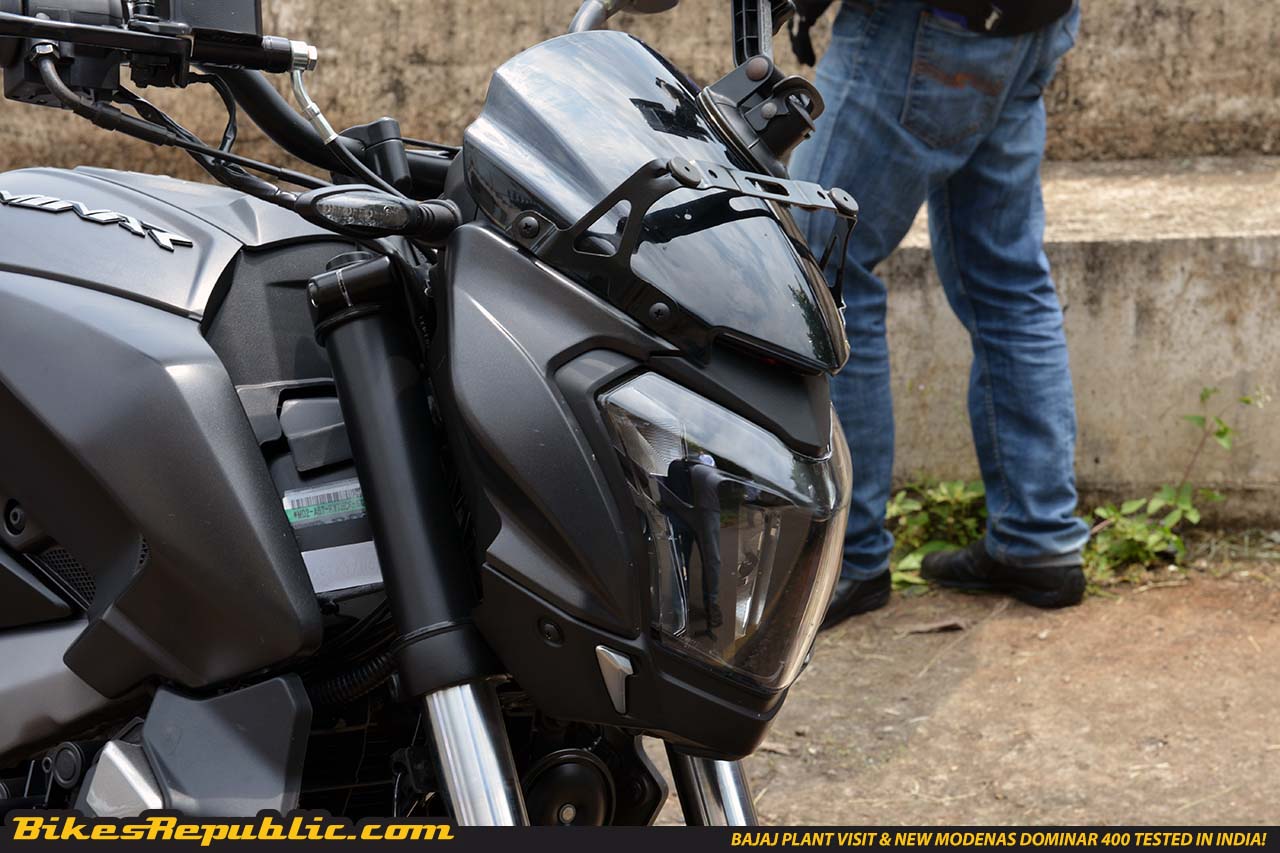
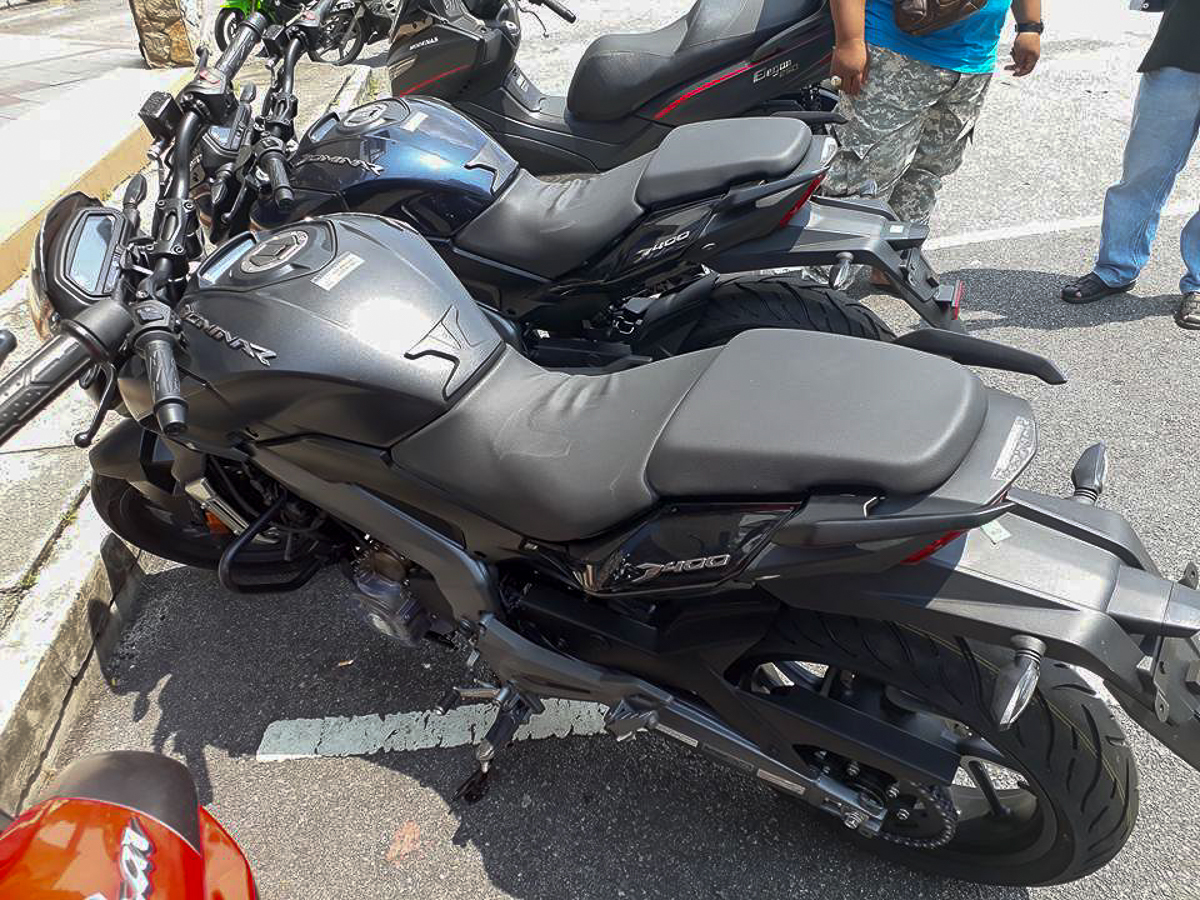
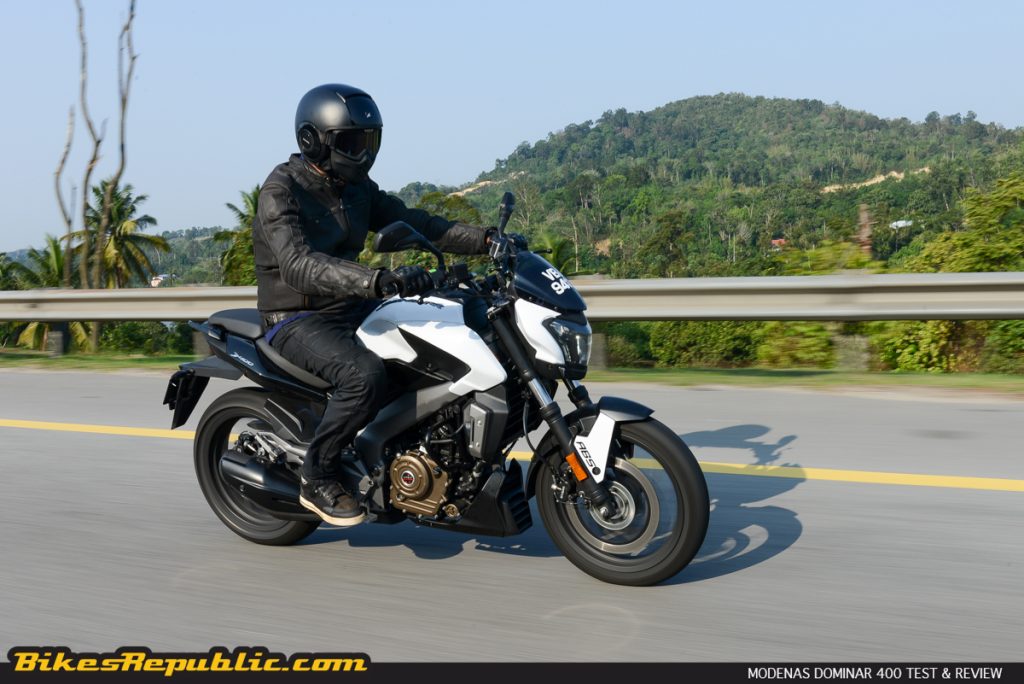
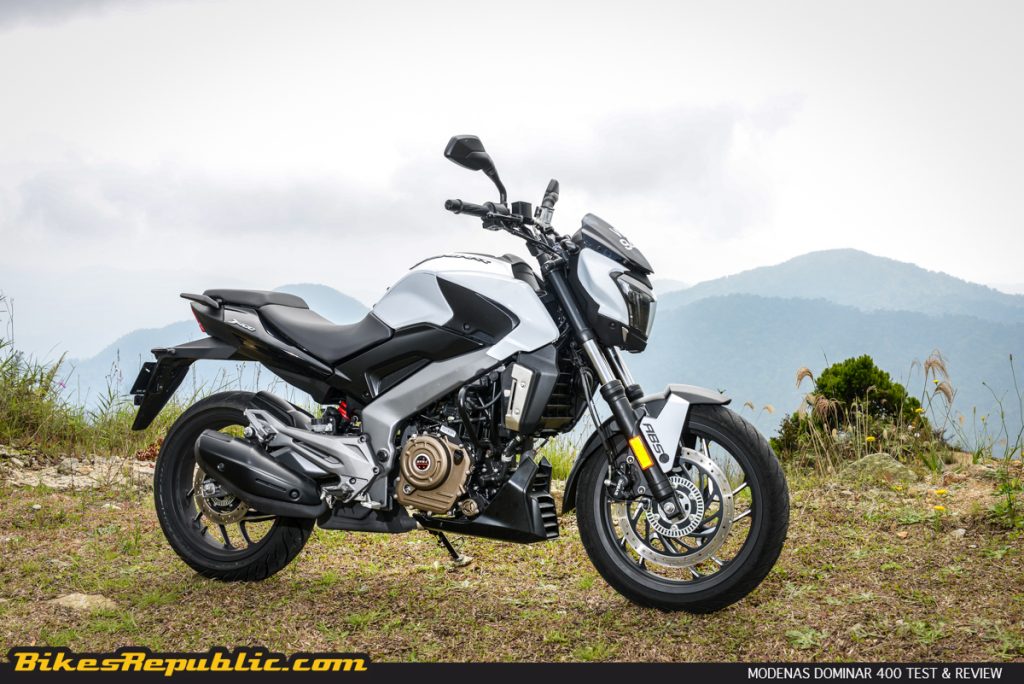
As far as styling goes, it has that big headlamp, fat fuel tank look of Indian-built bikes. The seats are thick and wide, fitting for what Modenas/Bajaj calls a sport-tourer. Build quality is, well, let’s just say you can’t expect the quality of a much more expensive motorcycle at this price.
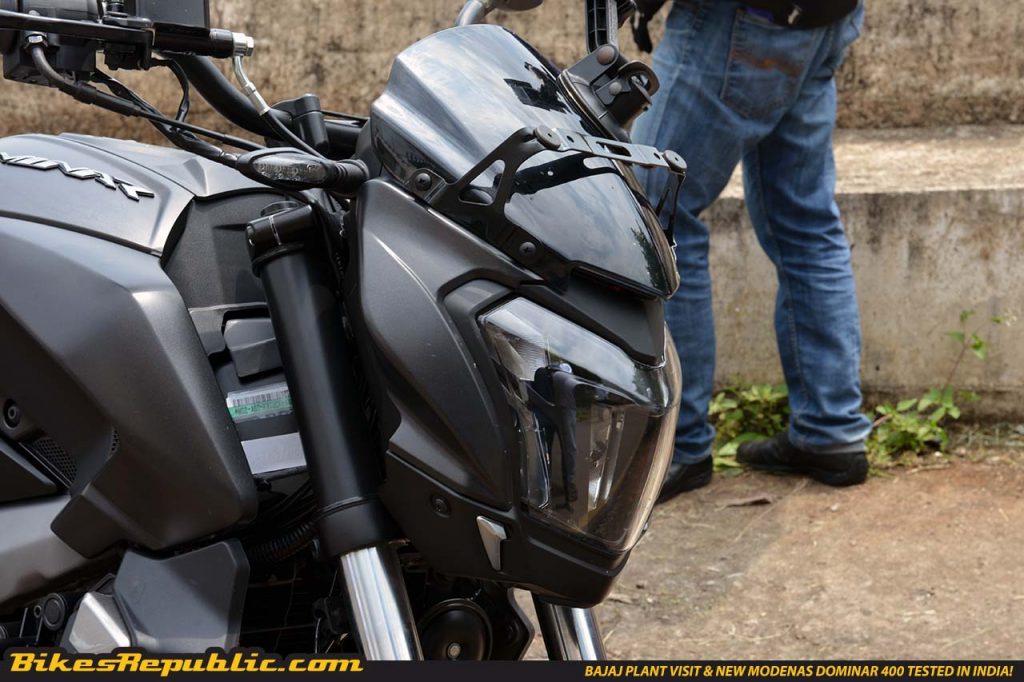
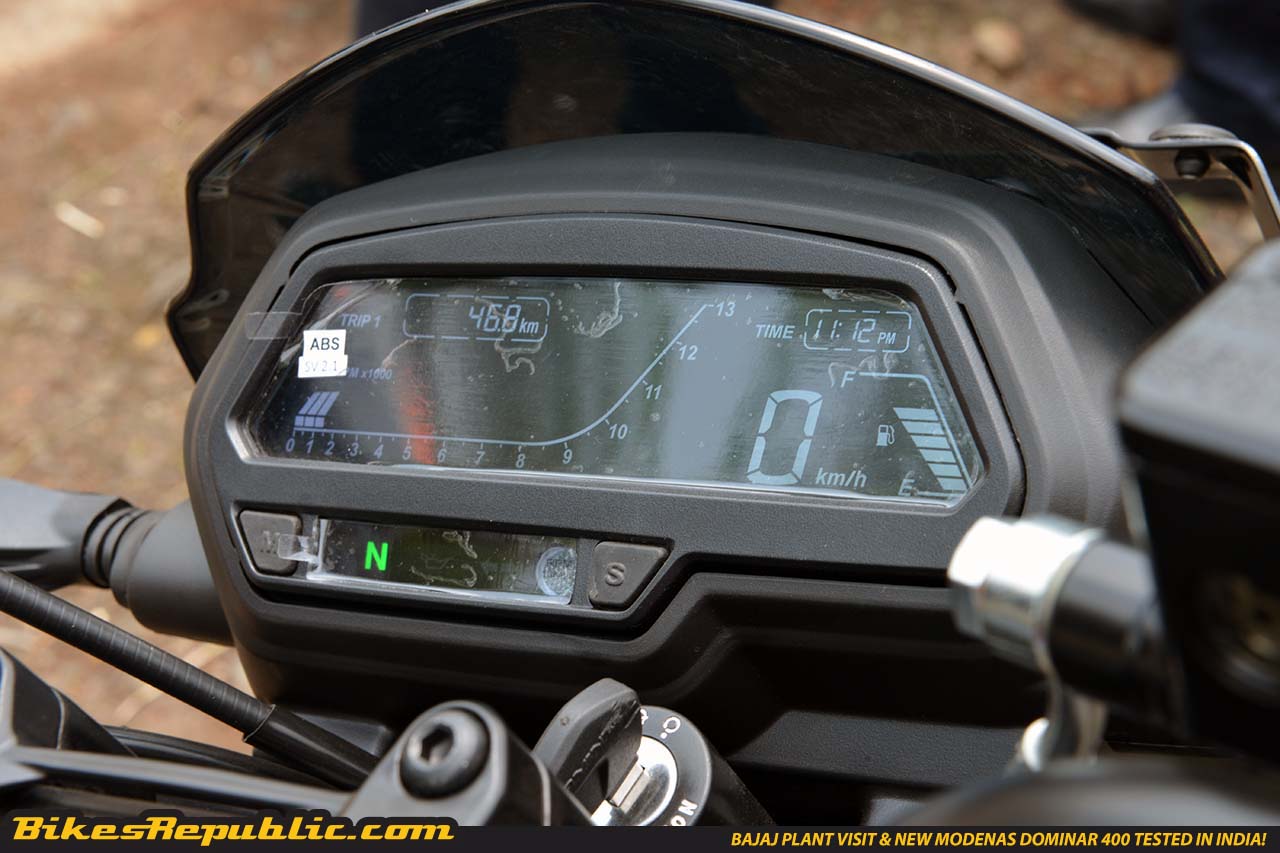
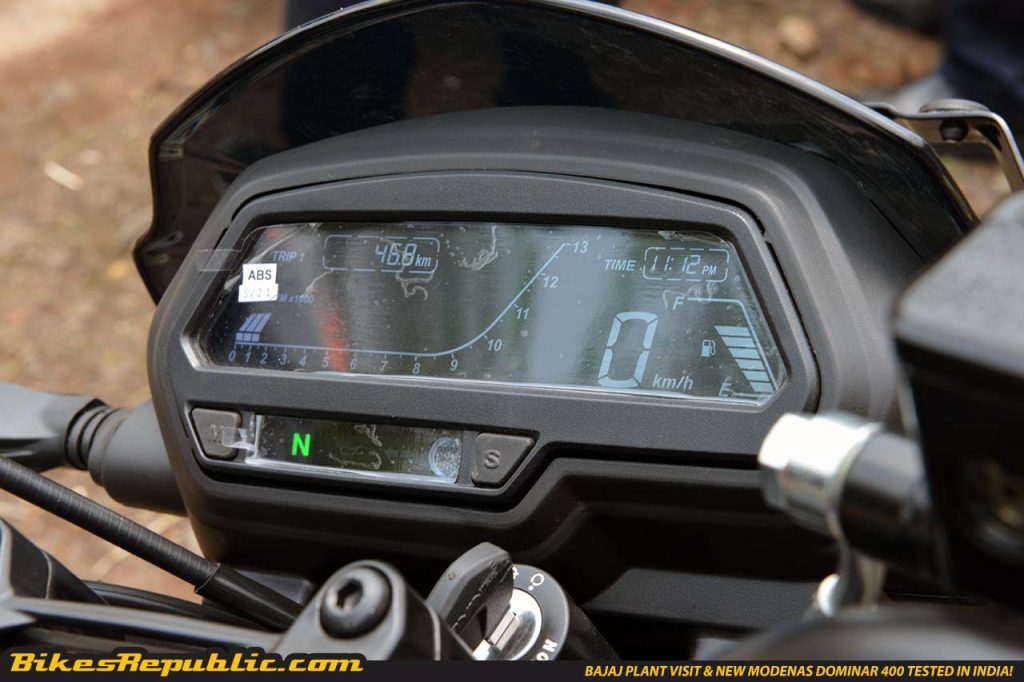
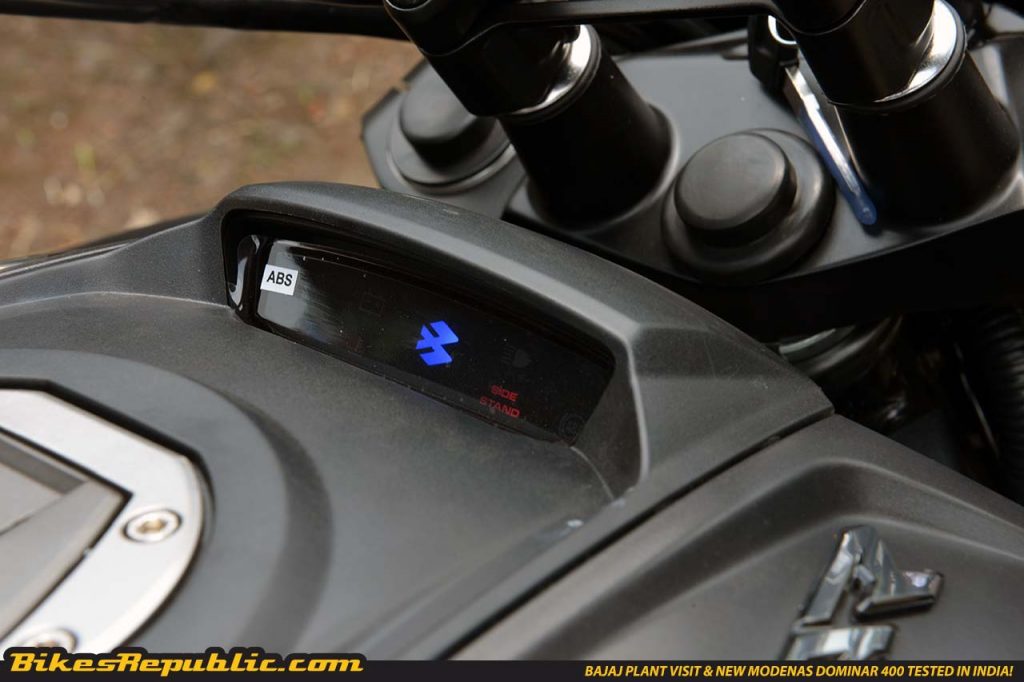
However, the headlamp is fully-LED which includes Daytime Running Light. There’s a comprehensive LCD instrument cluster, while the fuel tank has a smaller LCD screen placed into it. The main LCD was clear even in direct sunlight. The graph tachometer and speedometer were easy to fathom at a quick glance. Additionally, the switchgear symbols on both sides of the handlebar are backlit for ease of night operation.
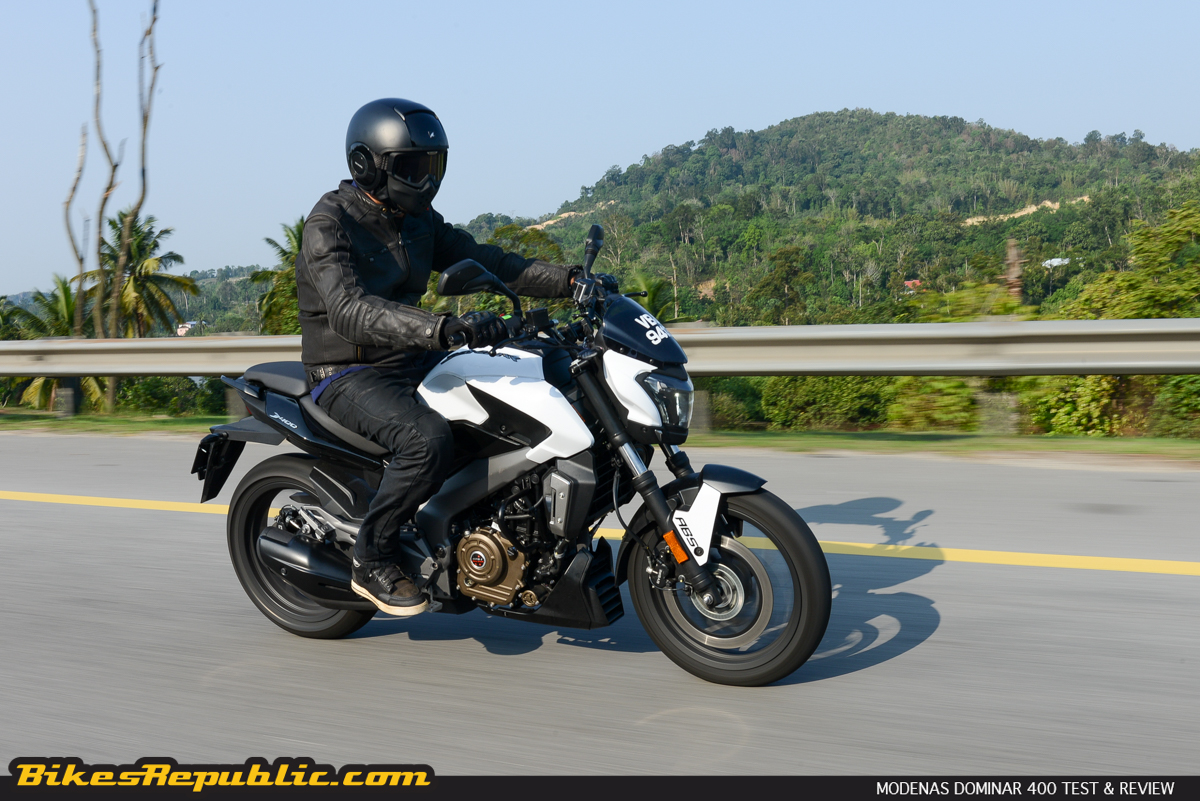
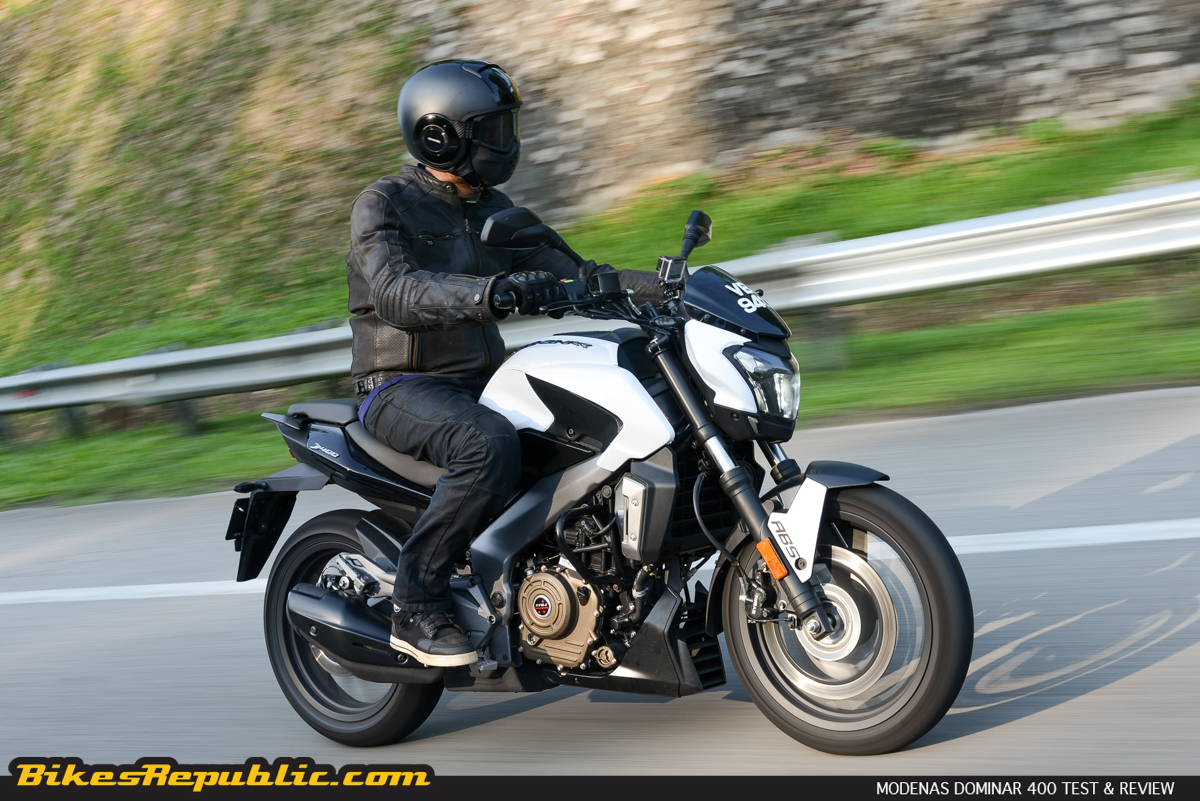
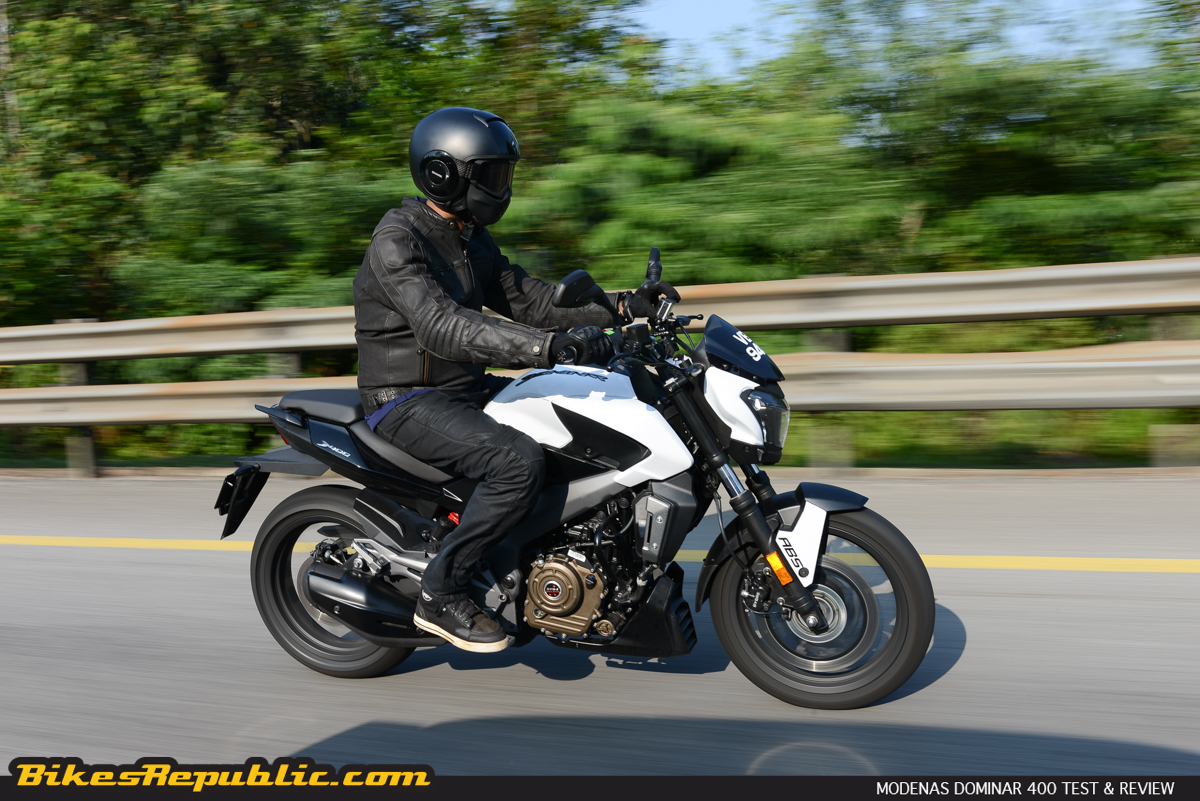
The seat height is at the correct height for most riders; I was able to place both feel on the ground comfortably at my 167cm height. The handlebar is placed high up and comes back to meet the rider for an upright seating position. As for the footpegs, they were set further toward the front and lower for comfort.

The Dominar D400 started up quickly at the tap of the button, everytime, to that familiar clatter of a single-cylinder engine.  Clutch lever pull was light. A few blips of the throttle saw the revs built up smoothly but a little slower – heavier flywheel, perhaps?
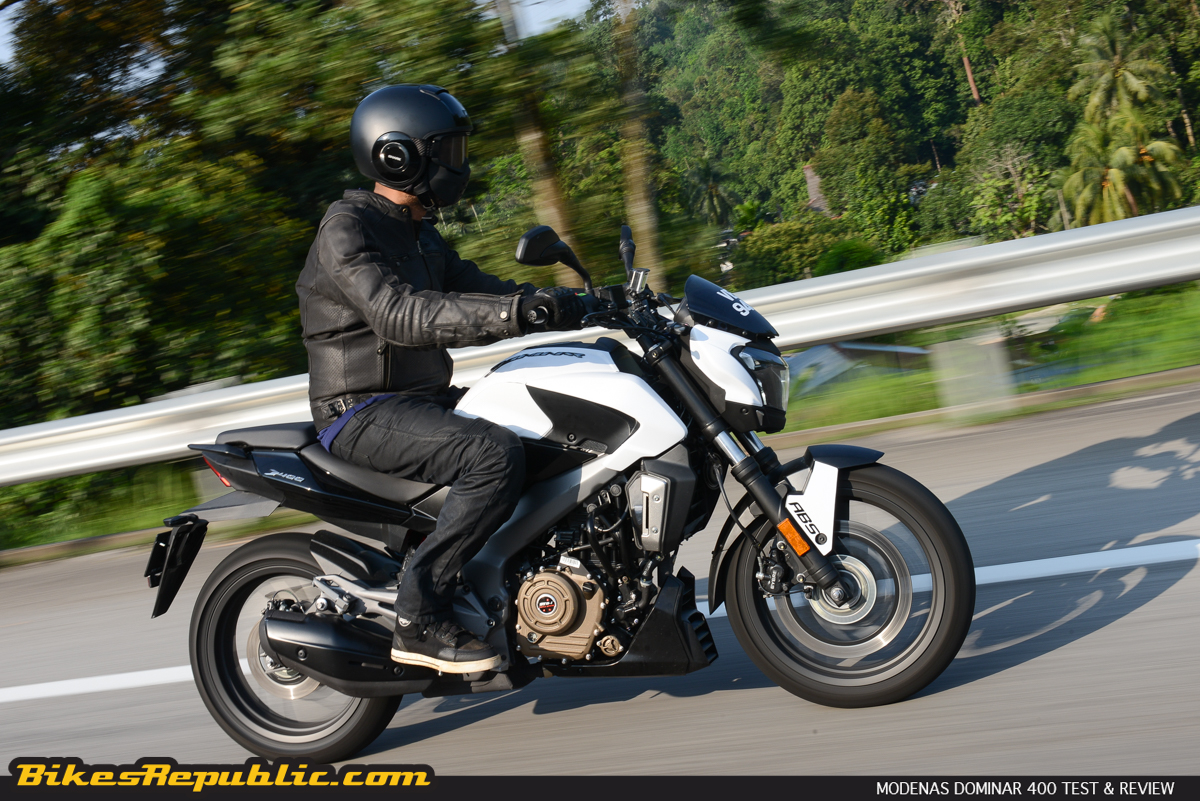
Out on the road, the bike got going easily and speed increased progressively. It slowed down smoothly when you went of the throttle too. Besides that, engine vibration was acceptable for a single-cylinder. So, it seemed to confirm our conjecture of a heavier flywheel in the engine. Anyway, the bike could hold a cruising speed from 110 to 130 km/h comfortable; it’s the rider who has to hold on above that speed due to lack of wind protection.
As for the suspension, front and rear ends were supple up to when the bike hit a large bump or deep pothole. The initial stroke was soft then hard further into the stroke.
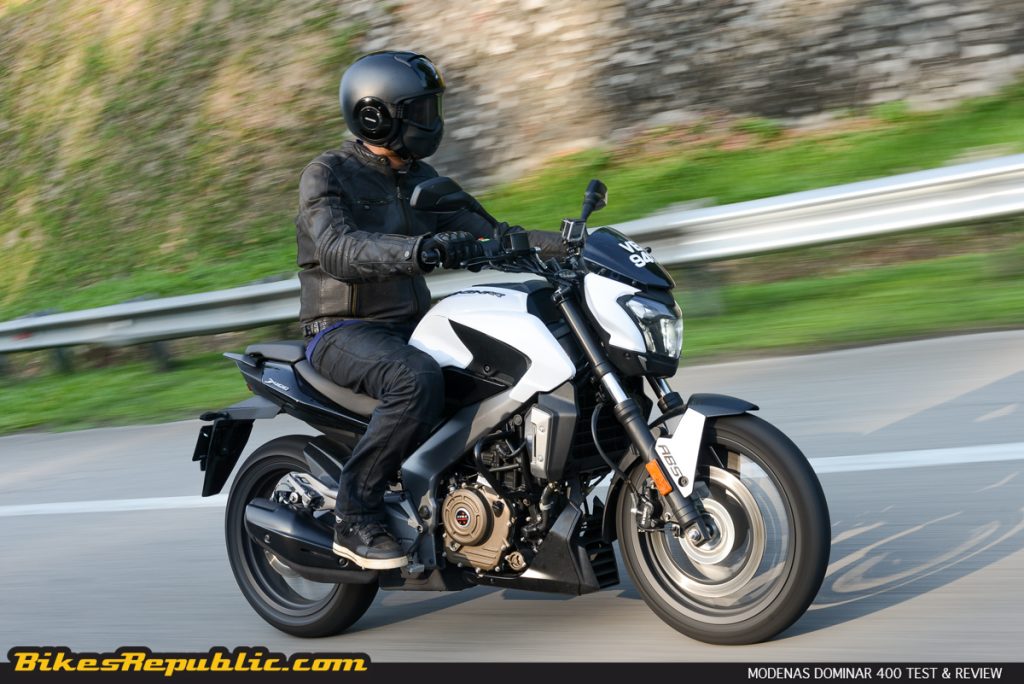
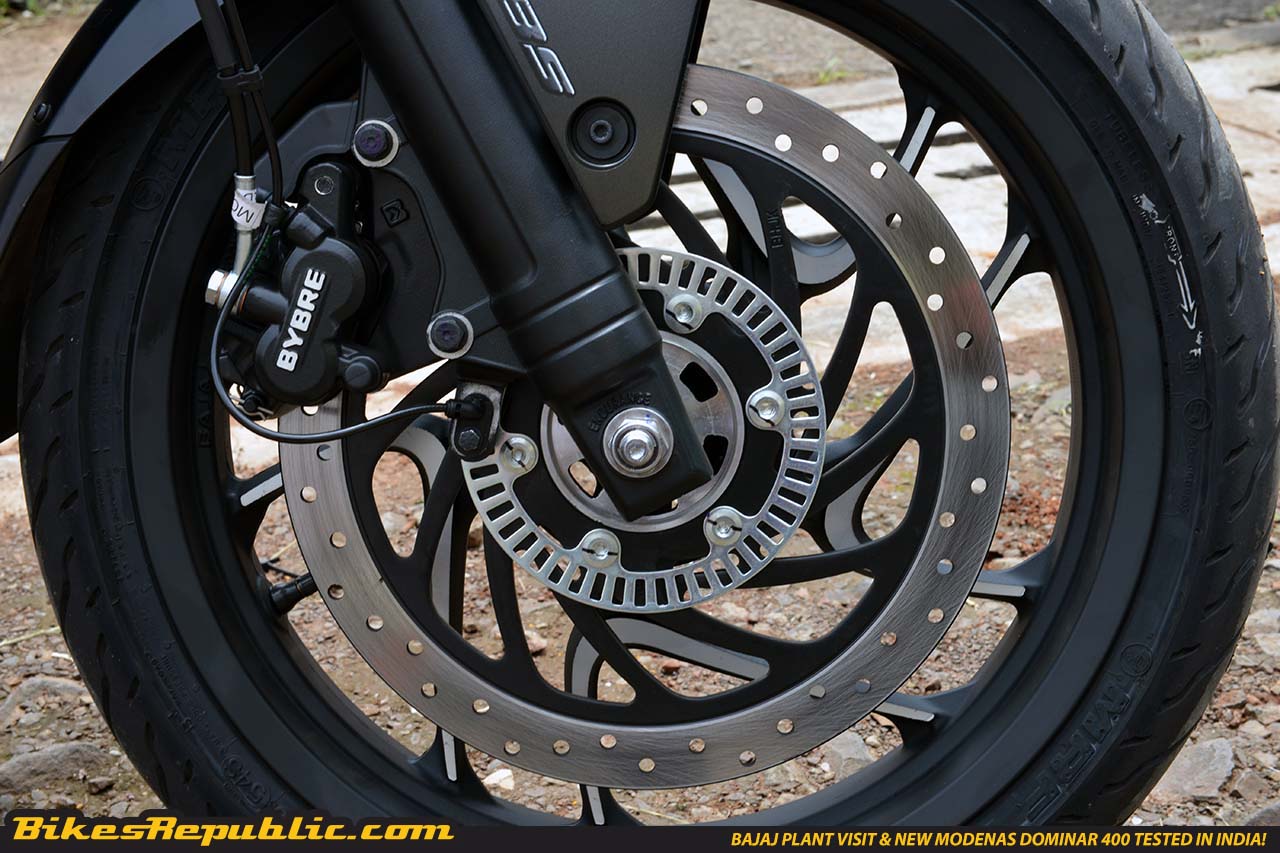
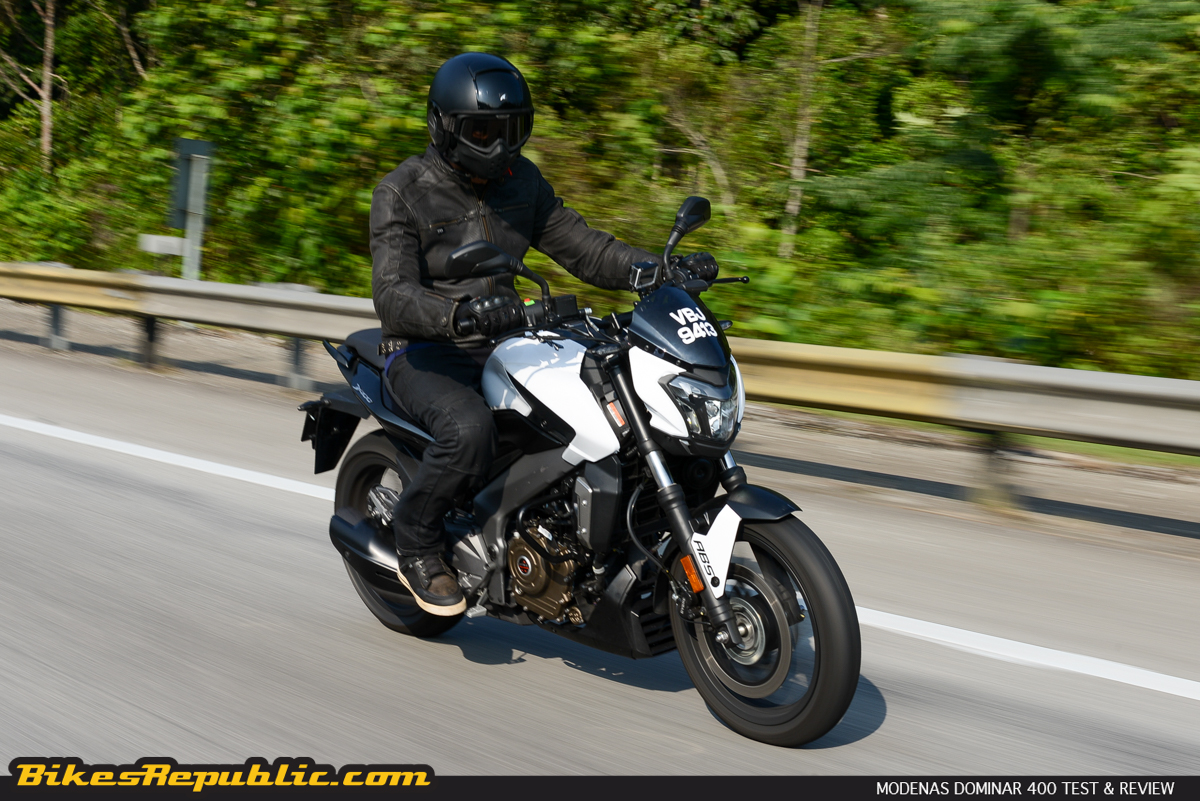
However, the Dominar D400 handled pretty well, despite the softer suspension and feedback-less MRF tyres. The wide handlebar plus the bike’s light weight allowed us to steer the bike quickly and swerve around traffic. The ByBre front brake was grabby when riding at slow speeds but somehow needed a heavier pull when things got going.
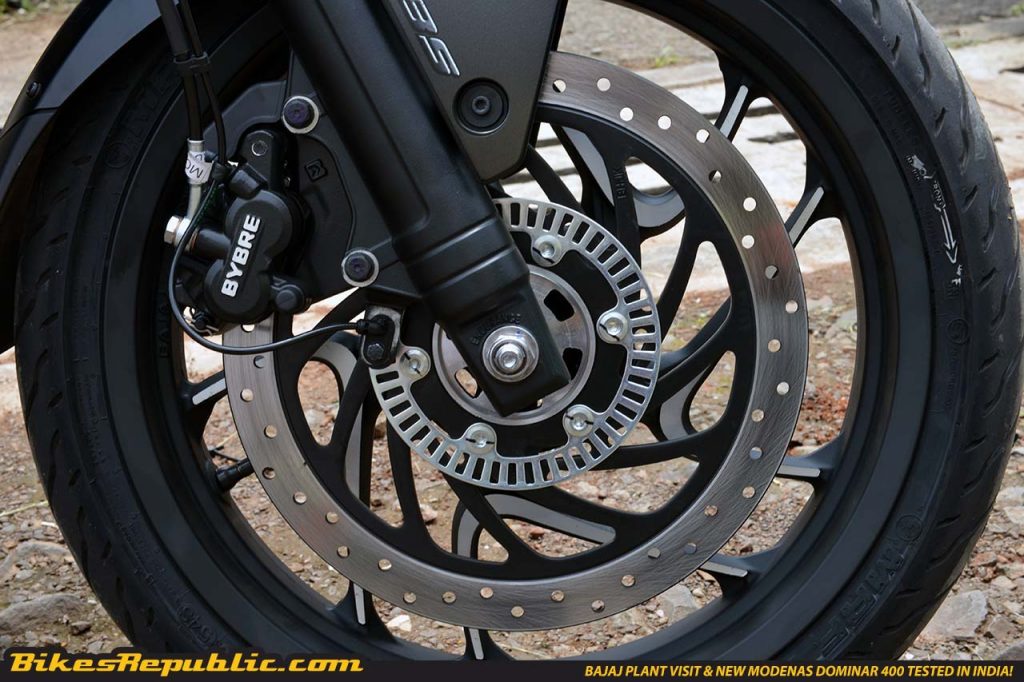
As for electronics, ABS is standard for both ends although there is no rider mode and traction control.

All in all, the Modenas Dominar D400 is a commendable motorcycle and offers a good alternative to motorcyclists who want to move up the capacity scale without having to spend tons of money on one. If we had to choose a phrase to describe it, we would say, “Very good value for your money.”
TECHNICAL SPECIFICATIONS

ENGINE
Engine type Liquid-cooled, 4-stroke, SOHC, 4 valves, single-cylinder
Compression ratio N/A
Bore X Stroke N/A
Displacement 373.3 cc
Fuel system Electronic fuel injection with Digital Triple Spark ignition (DTS-i)
Maximum power 34.5 bhp (35 PS) @ 8000 RPM
Maximum torque 35 Nm @ 6500 RPM
TRANSMISSION  
Clutch Wet, multi-plate, slipper type
Gearbox 6-speed
CHASSIS
Front suspension 43mm telescopic forks
Rear suspension Monoshock with piggyback reservoir, ramp-type preload adjustment
Front brakes Single 320 mm disc, single ByBre two-piston sliding calipers
Rear brake Single 230 mm disc, single-piston ByBre sliding caliper
ABS Dual-channel ABS
Front tyre 110/70-R17
Rear tyre 150/60-R17
FRAME & DIMENSIONS
Frame Beam type perimeter
Trail N/A
Rake N/A
Wheelbase 1453 mm
Seat height N/A
Kerb weight 182 kg
Fuel capacity 13 litres


PICTURE GALLERY
Archive

Follow us on Facebook

Follow us on YouTube