Bikesrepublic

Latest News

  • Motorcycle sales rose 7.2% in Europe, but 49% of those are electric motorcycles.

  • Many manufacturers have started to showcase their products at Intermot.

  • The top electric motorcycle maker, Energica launched a new sport model.

Motorcycle sales in Europe has risen 7.2%, but 49% of those sole are electric motorcycles.

Out of the 49%, two of three electric two-wheelers are urban-oriented electric pedal-assisted mopeds and scooters, however. Electric motorcycles, on the other hand, makes up only one in four but the trend is on the uptick.

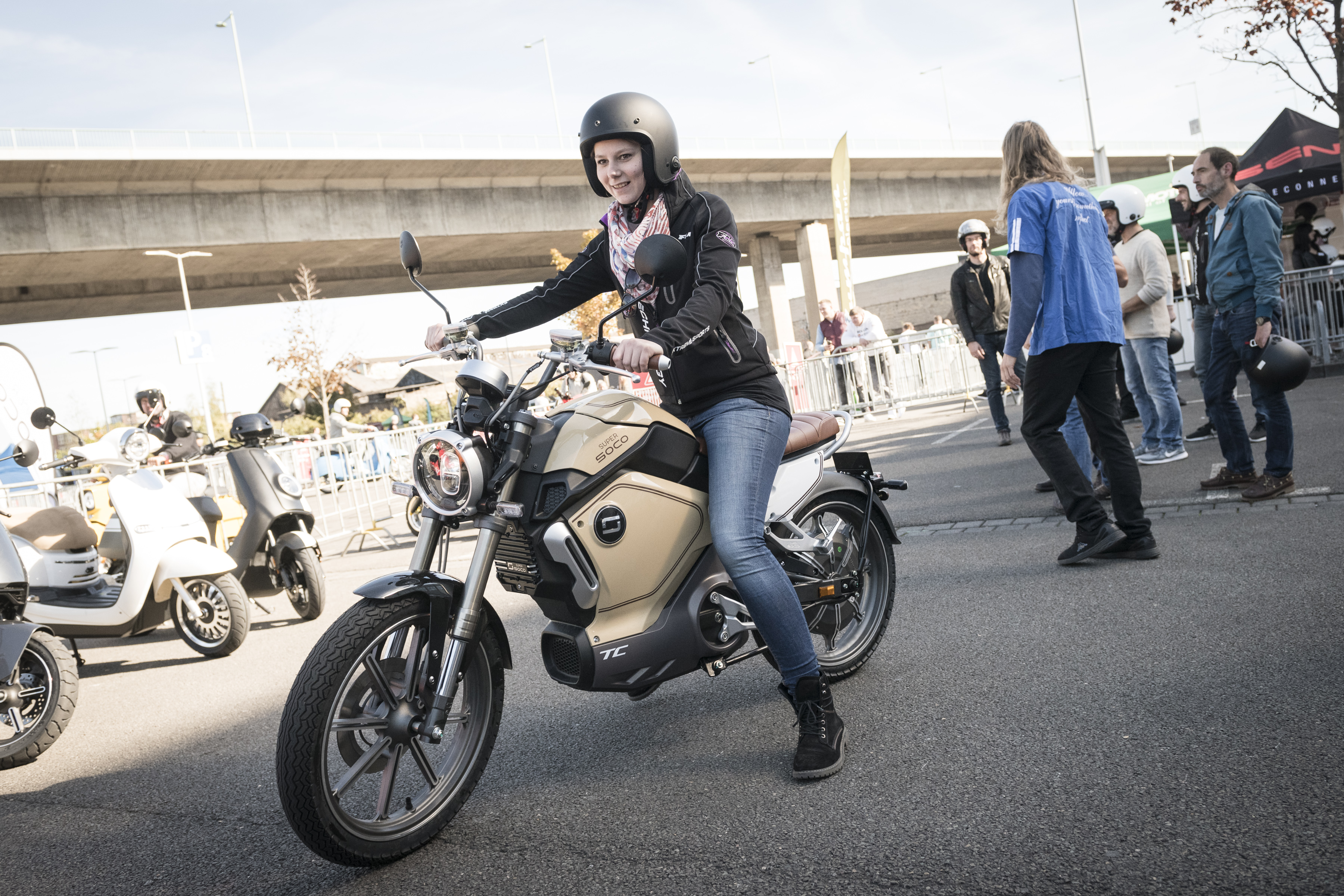
The growth is significant, and manufacturers have started to showcase many electric motorcycles at the recent Intermot motorcycle show in Cologne, Germany. They fit virtually every intended segment.

Stand: Kumpan, Halle 7

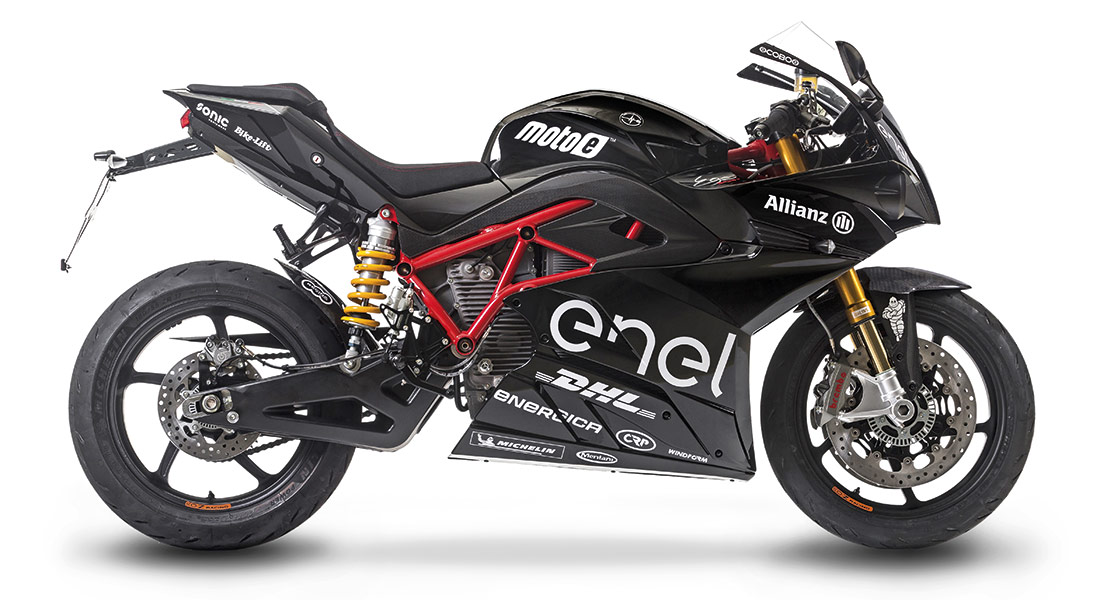
The most well-known electric motorcycle of the moment has to be Energica, who will supply eighteen Ego Corsa race bikes for the 2019 MotoE World Cup. The series will be held at selected MotoGP rounds. The Sepang International Circuit (SIC) will also take part with a team of their own.

The Energica Ego Corsa took centre stage at the show, which happens to be the Italian company’s first visit.

The Ego Corsa is powered by a synchronous oil-cooled motor, providing a continuous power of 160.8 bhp (120 kW) and a whopping 200 Nm of torque. That kind of power pushes the bike from 0 to 100 km/h in less than 2.8 seconds and a top speed of 270 km/h. (Still think electric bikes are slow?) There is no transmission and clutch, as power control is regulated by the Ride-by-Wire system.

Energica also unveiled a black version called the Ego Sport Black at the show.
So this begs the question: When will our government be serious in pushing for green tech? Many countries around the world, including those less developed than Malaysia will have the infracstructure in place within the next decade.

Where are we? Still slinging dirt and pointing fingers at each other in the Parliament.
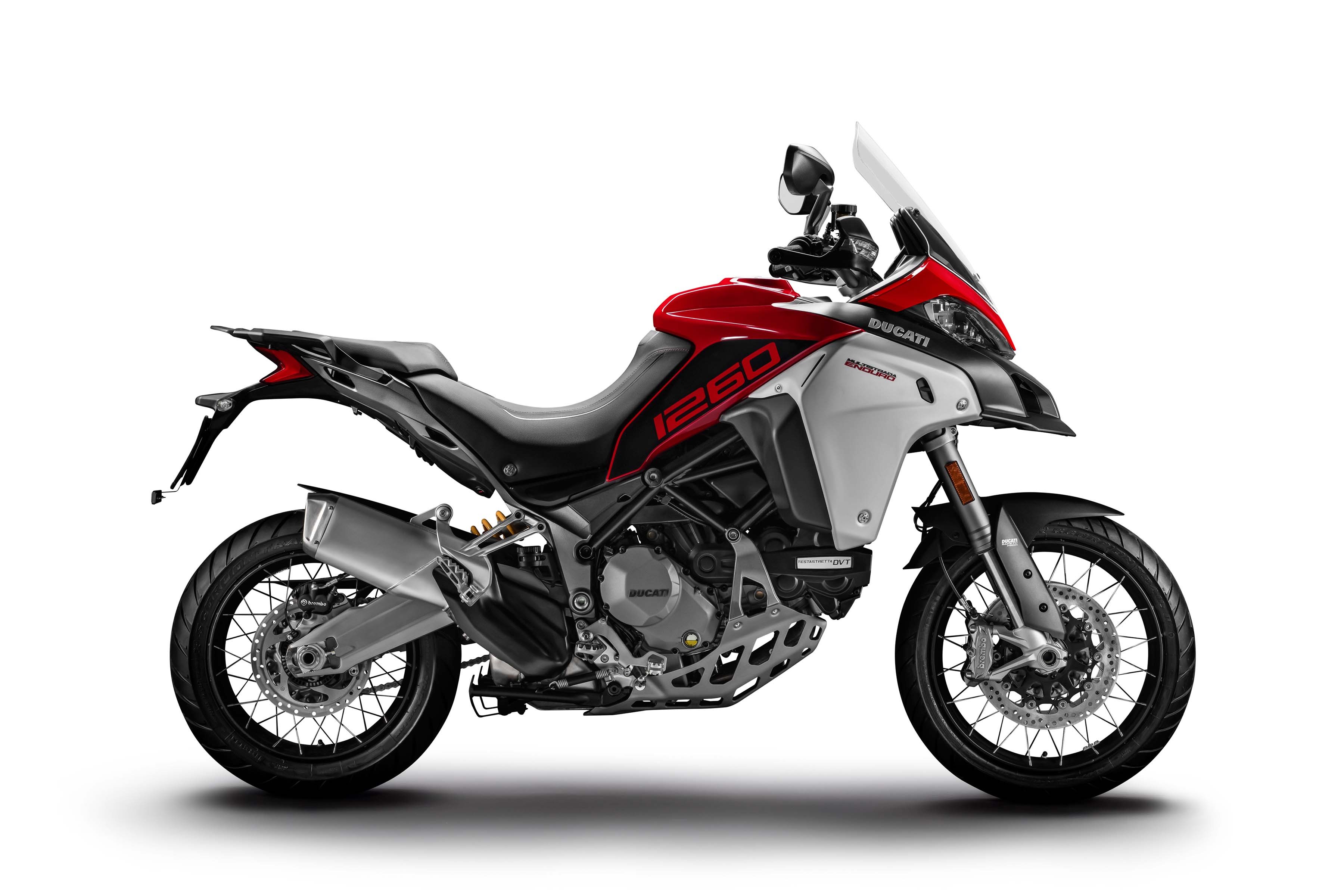
  • Ducati has unveiled the 2019 Ducati Multistrada 1260 Enduro.

  • It uses the same engine as the road-going Multistradas and XDiavel, bumping its power to 158 bhp and 127 Nm.

  • Ducati has revised the ergonomics to make it accessible to medium sized riders.

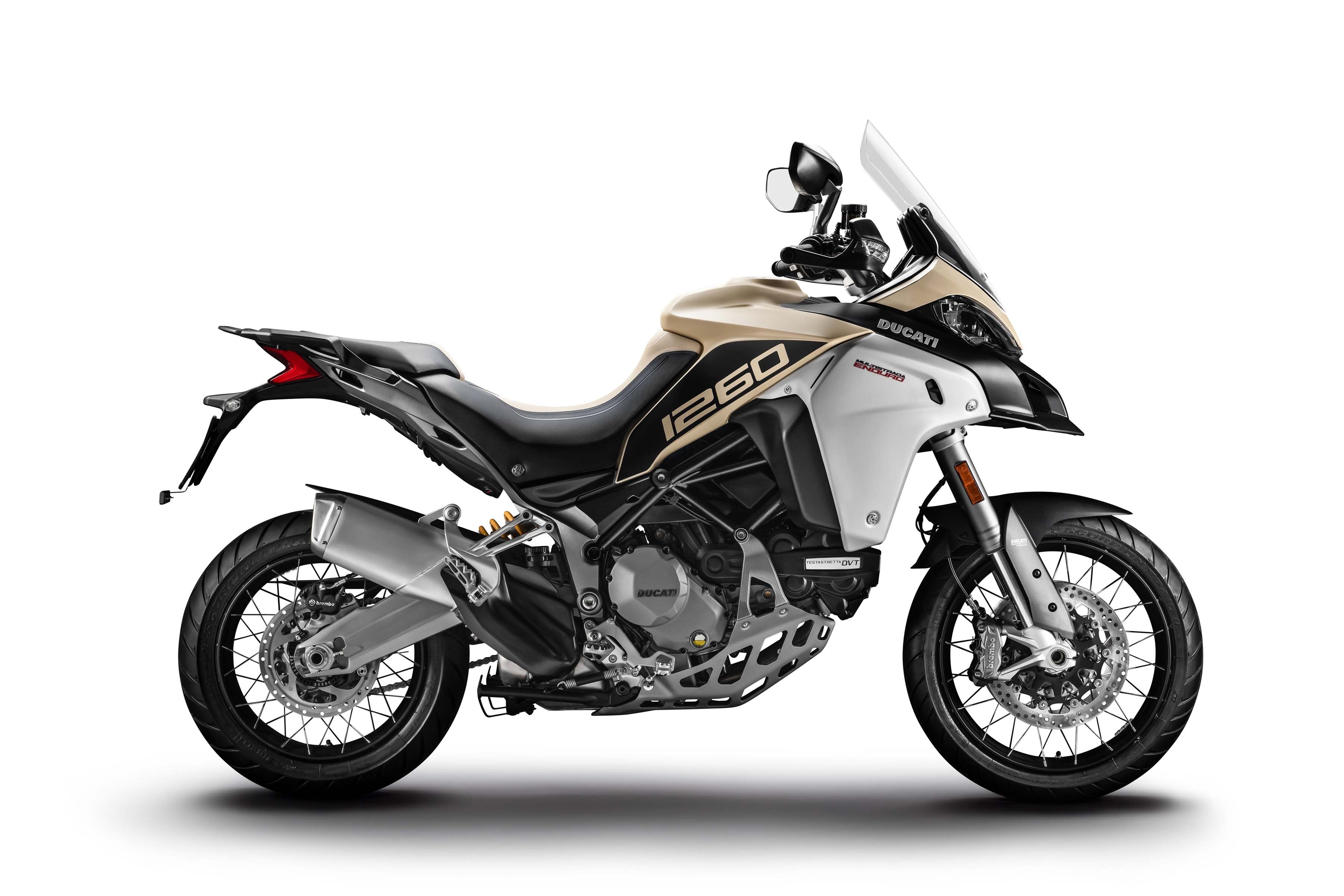
The 2019 Ducat Multistrada 1260 Enduro has been unveiled after the Italian manufacturer teased us with shots of a muddy bike.

The launch of the Multistrada 1260 Enduro followed in the footsteps of the Multistrada 1260 and Multistrada 1260 S road models.

The new Enduro’s main highlight is the new engine, of course. The 1262cc, DVT-equipped Tetastretta 11o, 90o V-Twin (Ducati calls it “L-Twin”) is a common platform among other two Multistradas and XDiavel.

The extra 64cc pushes power output to 158 bhp and an arm stretching 127 Nm of torque.  The Multistrada Enduro ought to benefit the most as 85% of the peak torque is available from below 3,500 RPM, in addition to the smoother power delivery of the DVT-equipped engine, especially in off-road conditions.

Of course, where would the Multistrada 1260 Enduro be if without Ducati’s extensive electronics suit that’s akin to a two-wheeled supercomputer.

Cornering ABS and IMU-based traction control, cornering lights, wheelie control, hill-start assist, up and down quick shifter, semi-active Sachs suspension are all standard on the Enduro. The display layout on the TFT display has also been revised to mimic that of the Ducati Panigale V4. Riders can use the Ducati Link App to adjust various riding modes, rider aid besides recording routes.

Ducati has also reworked the bike’s ergonomics, although it looks similar to the previous model’s. As a result, the 1260 Enduro has a lower centre of gravity and seat height, making it more accessible to a wider range of riders.

The massive 30-litre fuel-tank remains. So do the spoked 19” front and 17” rear wheels.

  • The 2019 World Superbike Championship (WorldSBK) will consist of three races at every stop.

  • The organizers will add a sprint race to Race 1 and Race 2.

  • The additional race ought to bring more exposure to the series.

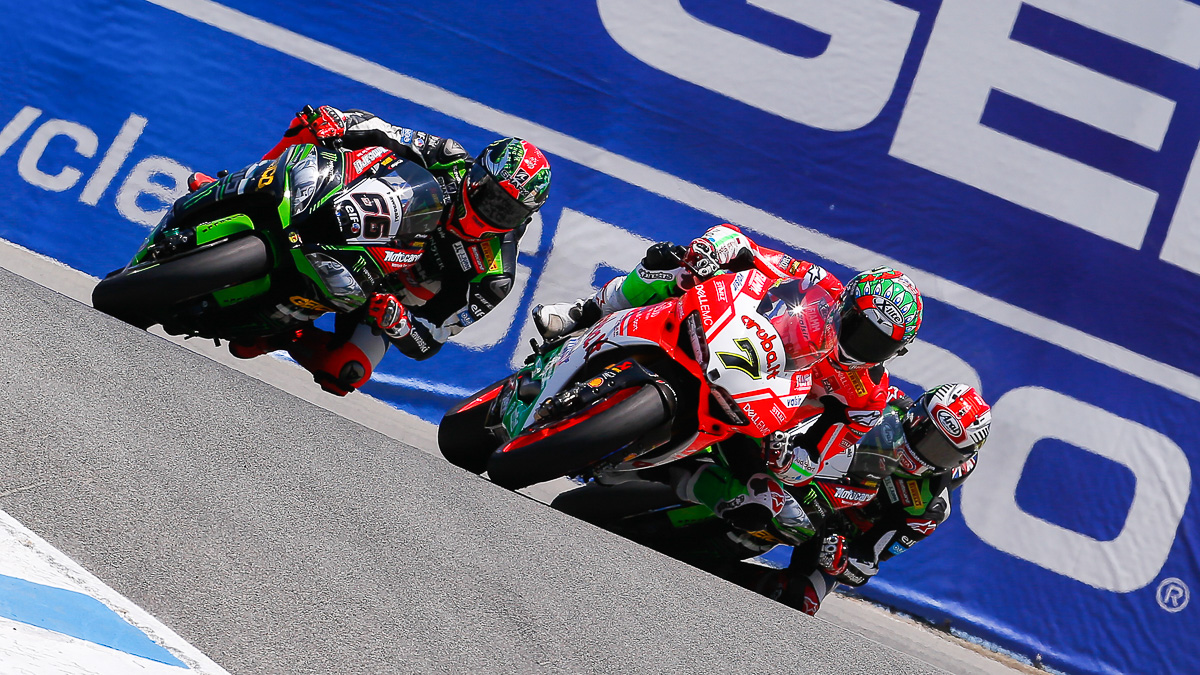
The 2019 World Superbike Championship will see three races for each round.

There is without doubt that the World Superbike Championship’s (WorldSBK) popularly has been sagging over the past few years.

However, the production-based championship remains an important platform for manufacturers to showcase their engineering abilities.

What does “production-based racing” mean? Manufacturers are required to homologate a certain number of motorcycles to be eligible for racing. In other words, if a certain race bike features specific technologies, its road-going version must also feature the same. This is how we get “homologation” models such as the ZX-10RR, Panigale R and so forth.

WorldSBK is also where fans get to watch bikes like the Kawasaki Ninja ZX-10R, Ducati Panigale, Honda CBR1000RR, BMW S 1000 RR, etc. duke it out on a world stage. MotoGP bikes are pedigree racing machines, on the other hand.

Dorna WSBK Organization (the subsidiary of the MotoGP rights holder) is aware of these facts and felt that they need to do something to bring the crowd back into watching the series, like it did during its zenith in the early and mid-90’s.

So, a sprint race will be added on Sunday morning.

Dorna WorldSBK and the FIM hope that the extra race will bring more exposure to benefit the teams, sponsors and spectators alike. Further details will be made known in time.

Daniel Carrera, WorldSBK Executive Director explains, “A third ‘sprint race” in the WorldSBK format is something we have been planning for a long time now, so we are delighted to see the plans coming together. We are committed to bringing exciting races year on year, and we think the addition of a sprint race will add to the WorldSBK experience. We are continuing to work on the final adjustments and hope to bring more details in the near future.”

Certain WorldSBK rounds also include World SuperSport (WorldSSP), SuperStock (STK1000) and World SuperSport300 (WorldSSP300) races.

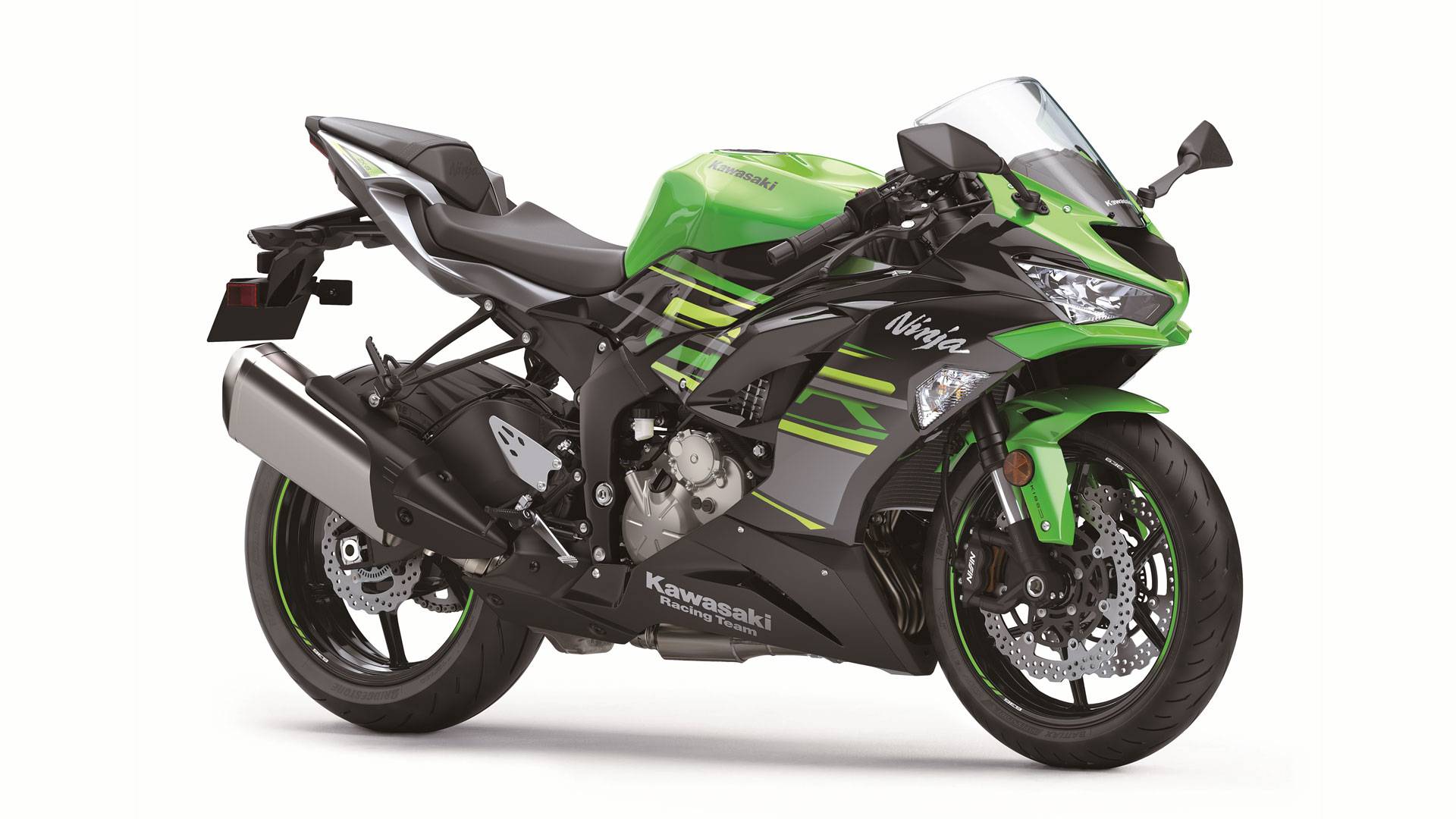
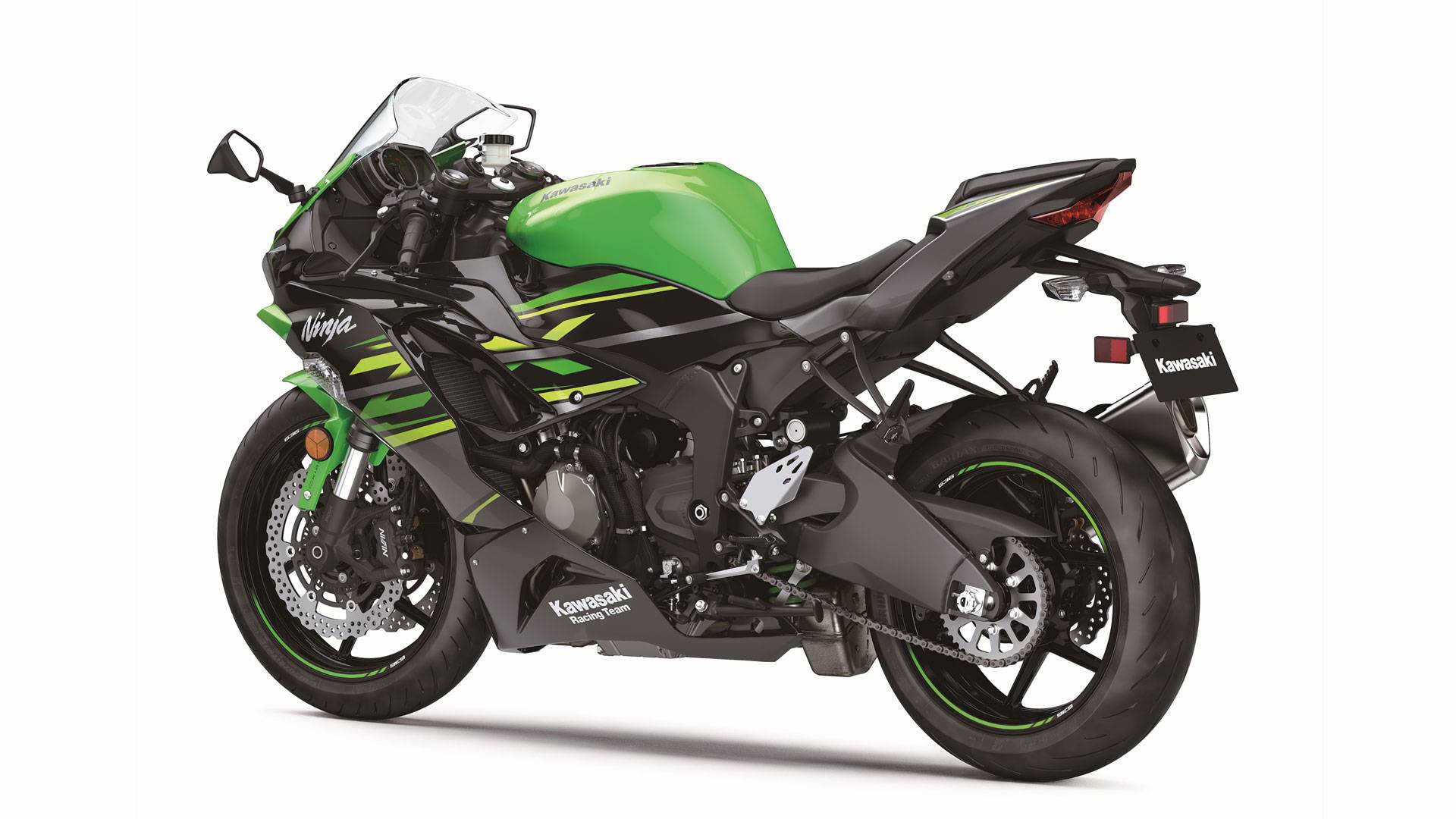
  • The 2019 Kawasaki Ninja ZX-6R has been unveiled.

  • It features a new look with revised components.

  • The engine is still the 636cc unit but tuned for Euro4.

The new 2019 Kawasaki Ninja ZX-6R has been launched at the AIMExpo in Las Vegas after rumours had been circulating for a couple of years.

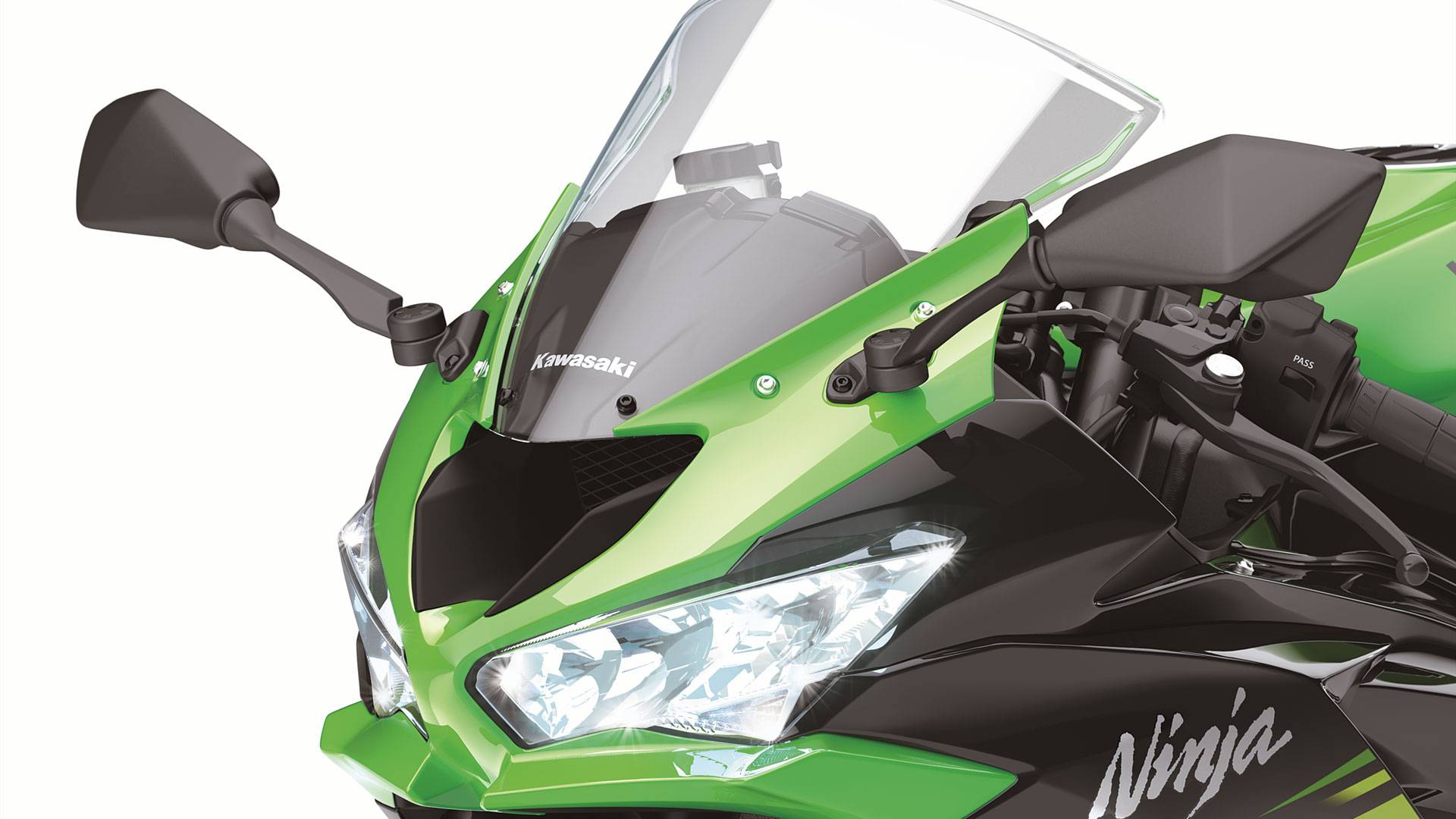
The new model features a changed styling to look sharper and aggressive (in Kawasaki’s words), besides new additions to its spec sheet such as LED lighting and more.

The highlights are:

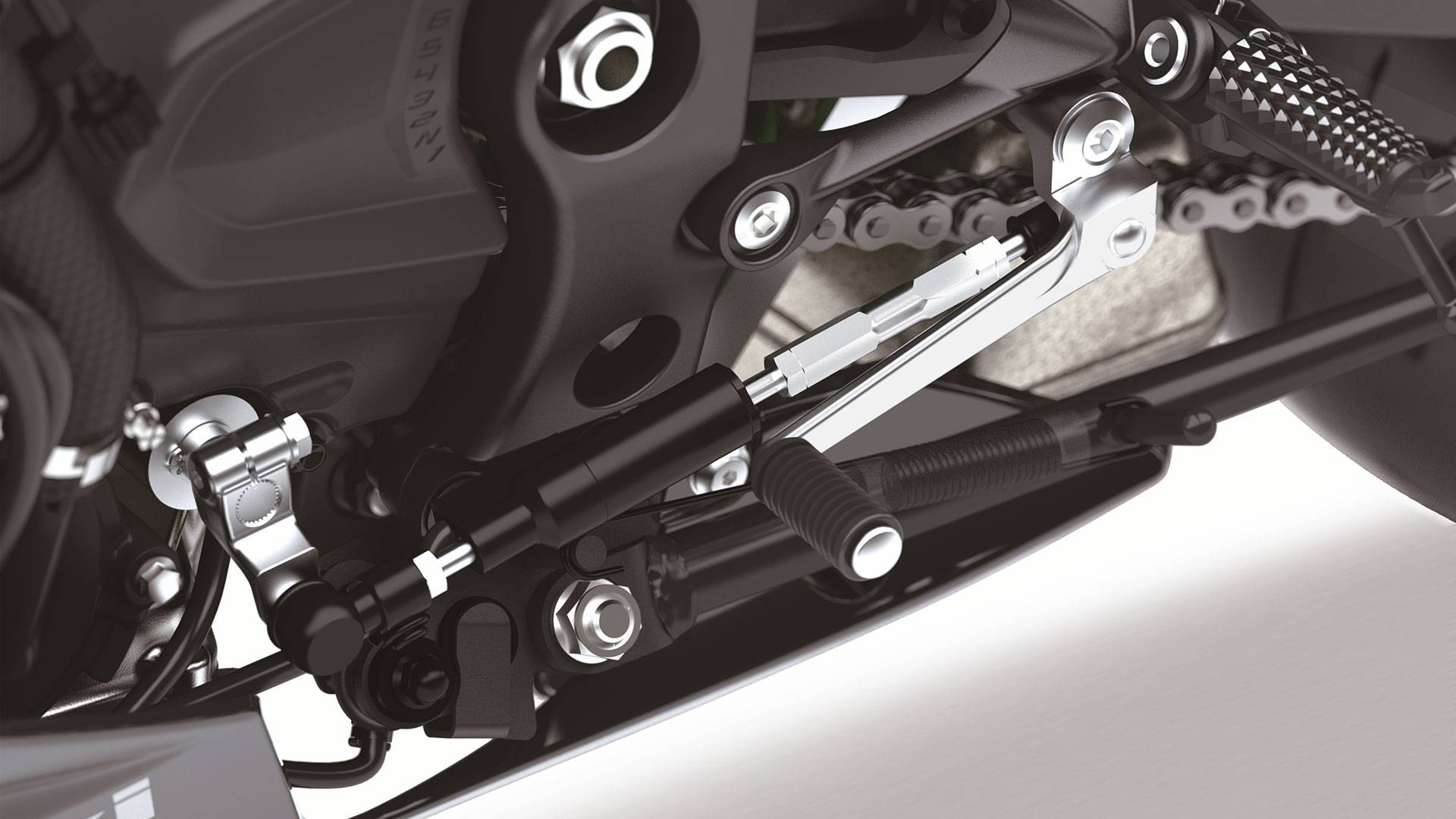
  • Kawasaki Quick Shifter (KQS) as standard although only for upshifts.
  • New styling with twin LED headlights and taillight.
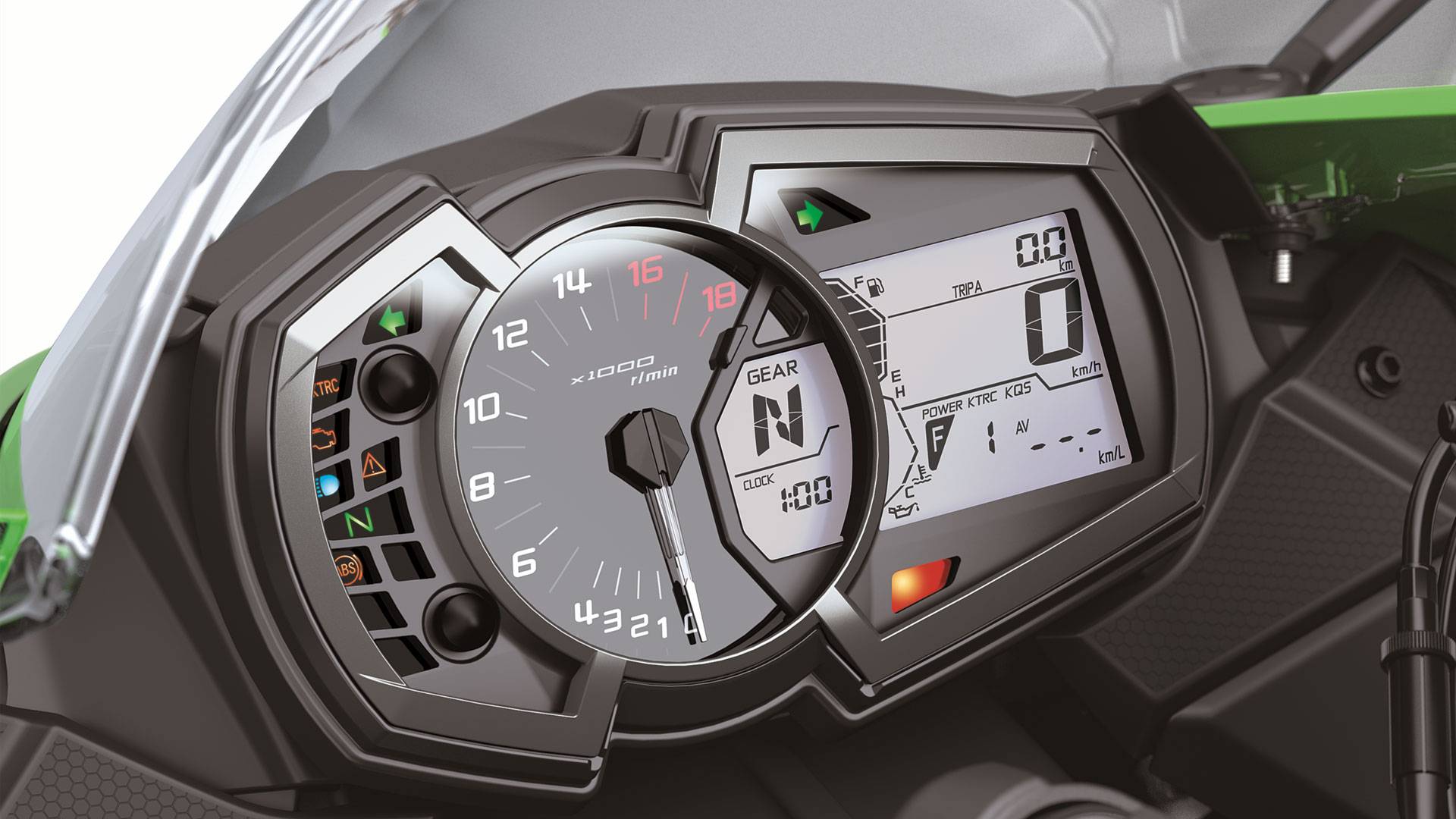
  • “High-grade” instrumentation although the design is similar to all new Kawasaki motorcycles, including the Versys-X.
  • Euro4 emissions-compliant engine tuning.
  • Optimized gear ratios to improve low-end power.
Engine

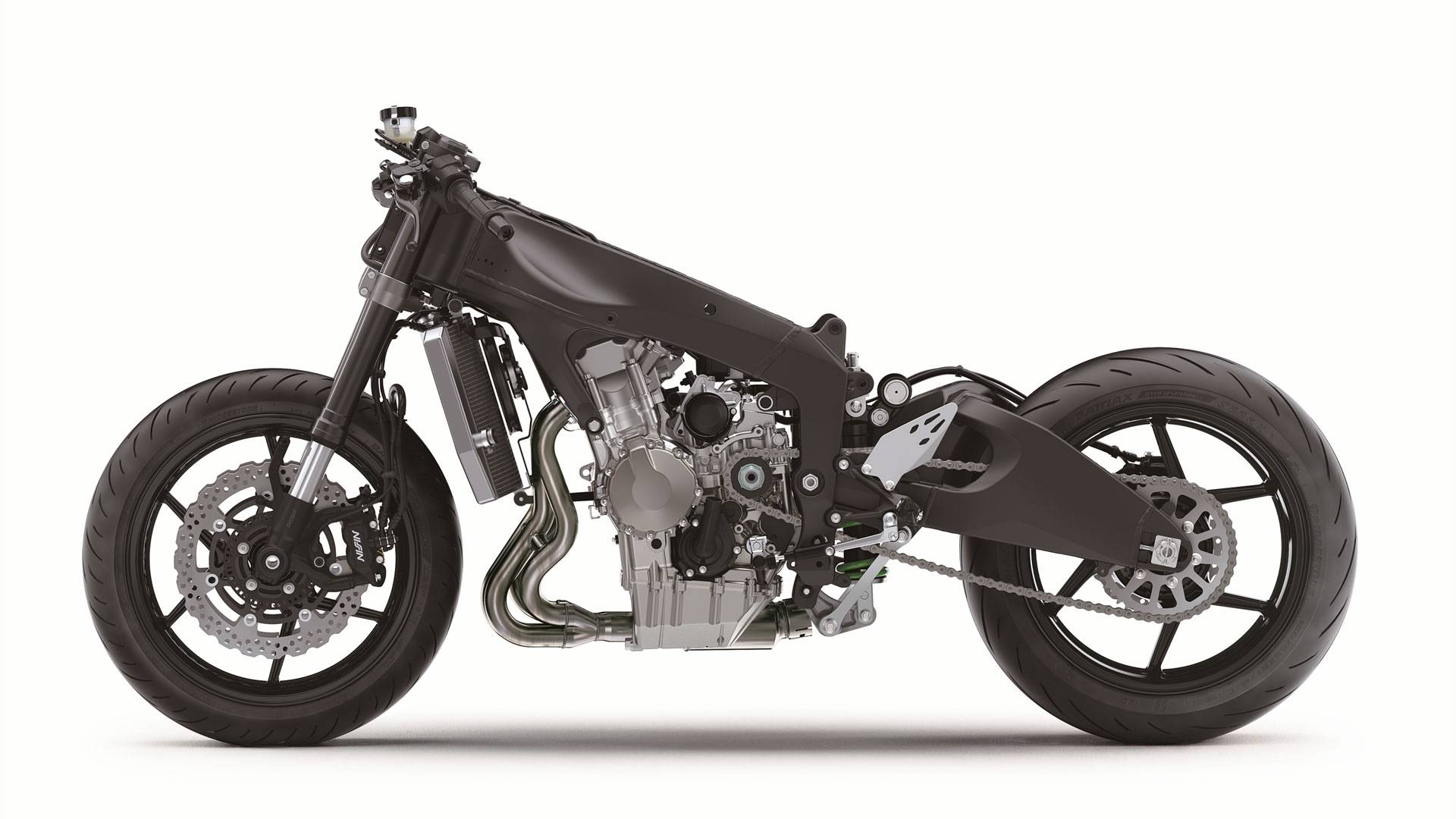
The 2019 Kawasaki Ninja ZX-6R’s engine still looks the same: 636cc, liquid-cooled, DOHC, inline-Four. However, it is now tuned to comply with Euro4 emissions standards “without compromising the engine’s performance.” No power and torque numbers were released, though.

The fuel injectors have been revised for low to midrange performance. The number one and four intake funnels are shorter while two and three are longer.

Piston skirts are molybdenum-coated to reduce friction. There are connecting passages between cylinders to reduce pumping losses.

Lastly, spent gasses exit through a redesigned exhaust system, which is again tuned for low and mid-range torque.

Transmission

Features a cassette-style gearbox for easy gearing changes. The KQS is standard although available for upshifts only.

Assist and Slipper Clutch

The assist function compresses the clutch plates together on acceleration, producing a lighter pull at the lever. The slipper function reduces back-torque and prevents rear wheel hop during deceleration.

Chassis

The 2019 Kawasaki Ninja ZX-6R uses a pressed-aluminium perimeter frame. The manufacturer claims that it is narrow and compact.

The bike will now utilize the Showa SFF-BP (Separate Function Forks – Big Piston) forks that combine the features of the SFF and BPF forks.

The Showa rear shock is fully adjustable.

Traction Control and Power Modes

KTRC traction control has 2 modes, ABS is standard and the power modes are “FULL” or “LOW”.

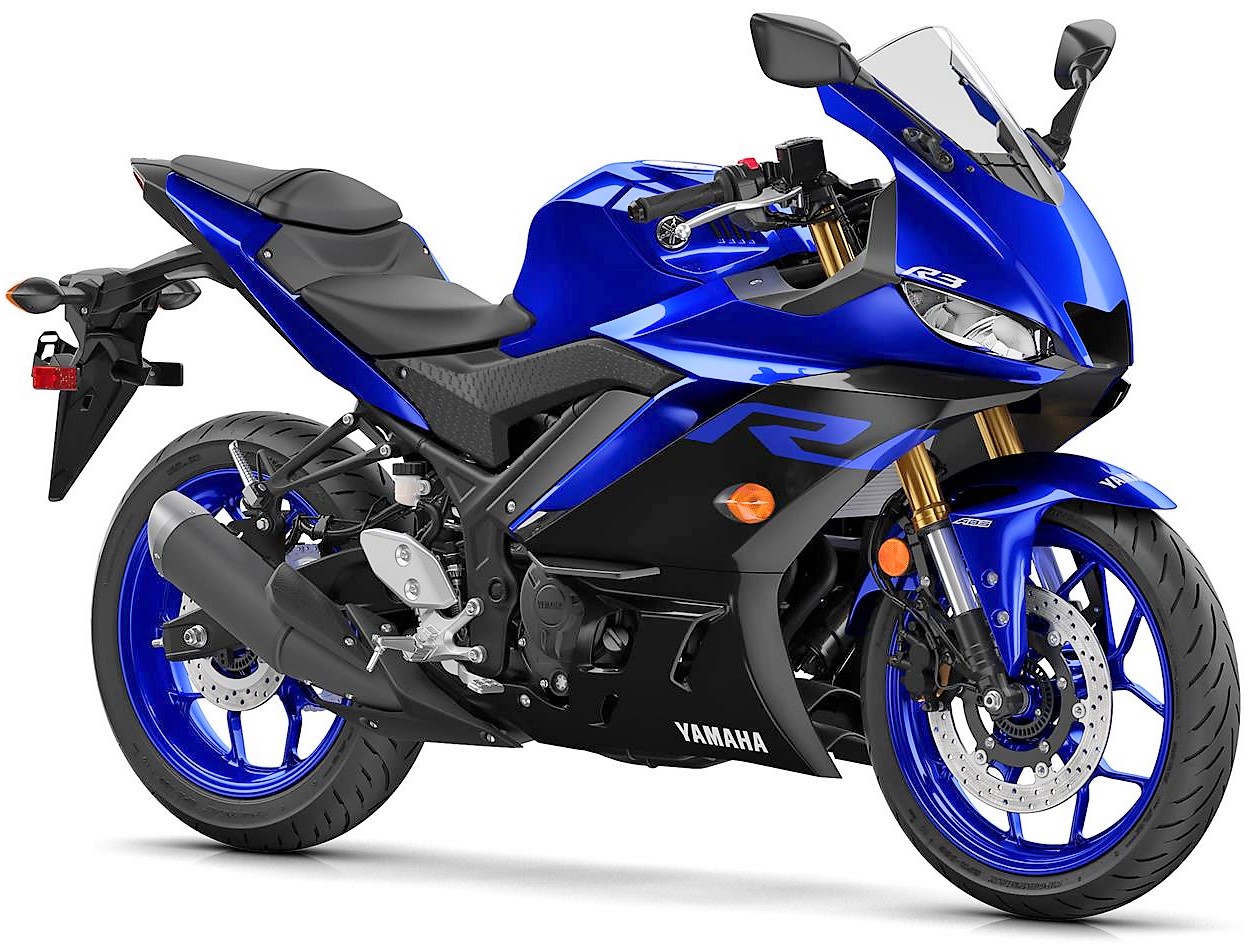
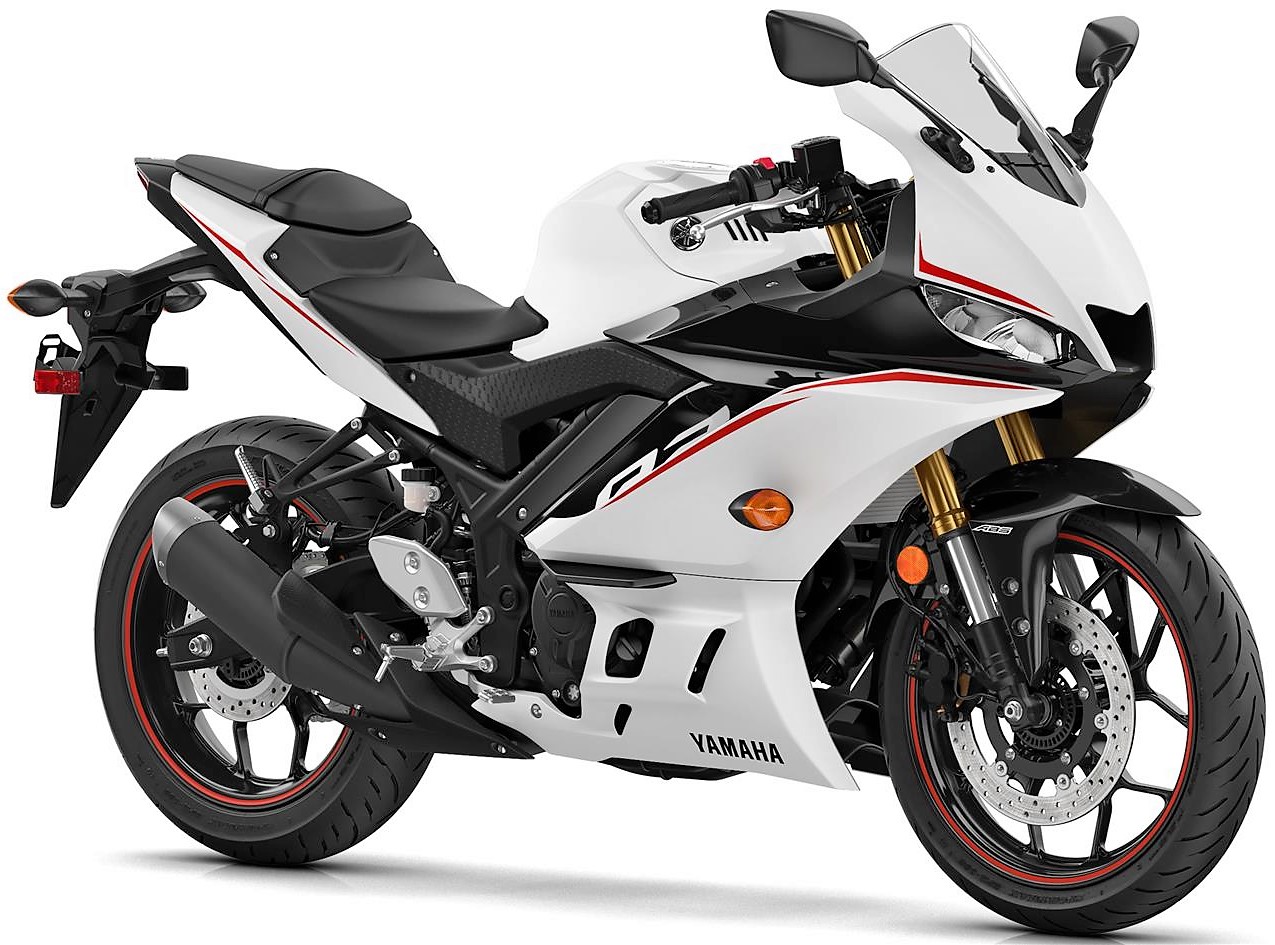
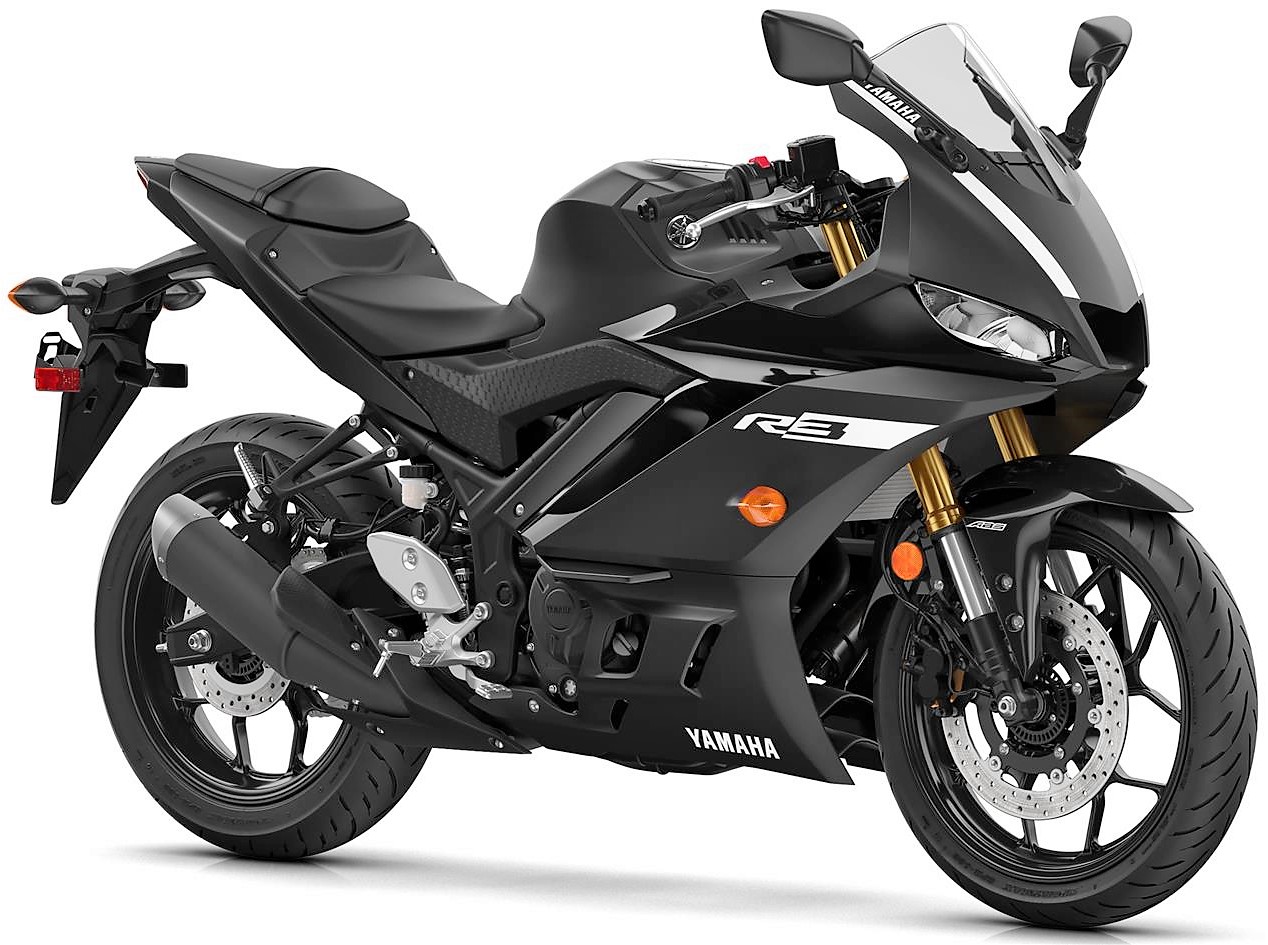
  • Yamaha has unveiled the 2019 Yamaha YZF-R3.

  • There should be word on the 2019 YZF-R25 for our market soon.

  • The new bike’s styling is directly inspired by the YZF-R1.

The 2019 Yamaha YZF-R3 has been revealed and it looks like the wars in the category are going explode.

However, before we proceed any further, we received word there is a launch of the 2019 Yamaha YZF-R25 happening in Indonesia. But no matter, the R3 and R25 will share the basic bodywork, if not componentry.

It is apparent that the YZF-R3/R25 bears uncanny resemblance to its open-class YZF-R1 brother, apart from the dual LED headlights. The central “air intake” is non-functional. However, the windscreen is now much taller and larger.


From the side, the profile is now more aggressive and looks like a proper big-cc superbike. The tailsection terminates with a sharp edge and will definitely look good with a tail tidy kit.

The forks are now upside-down for better handling (and style). There is no news if other parts of the chassis have been updated likewise.


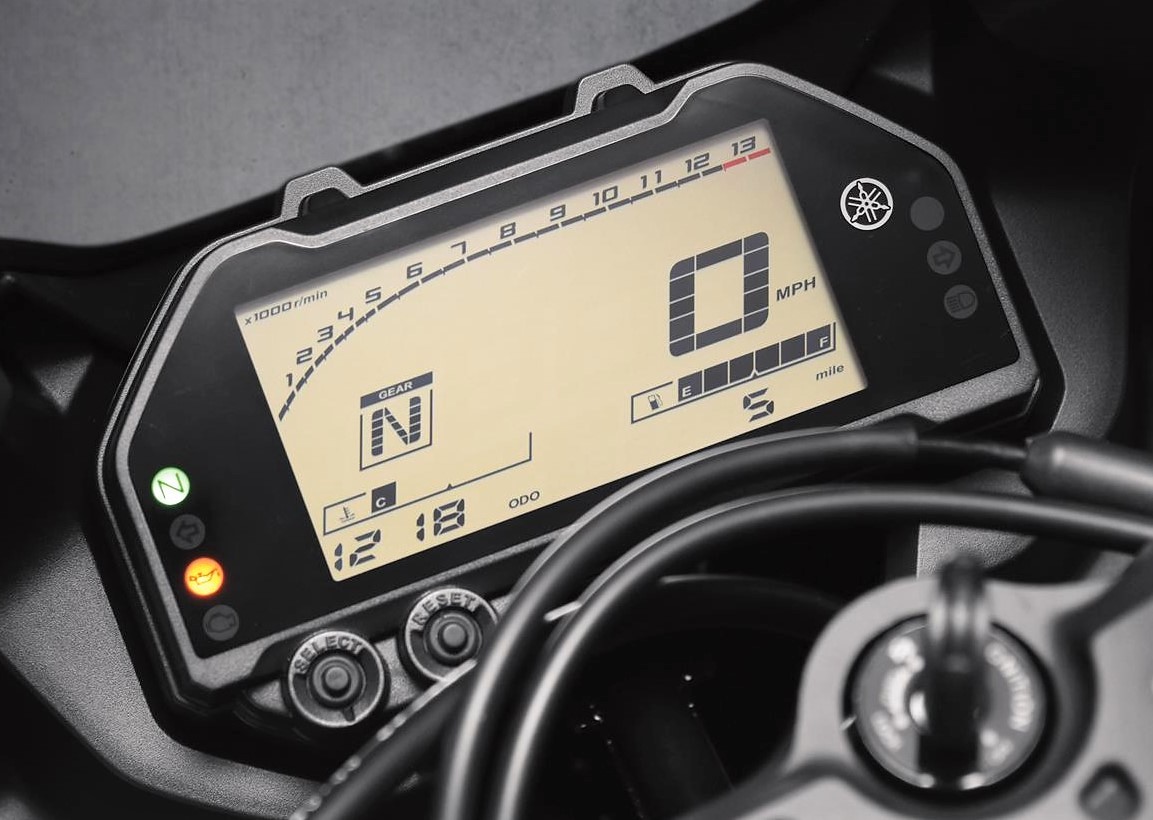
Moving upwards, the 2019 YZF-R3/R25 will receive a fully TFT display. The data displayed includes gear position. The handlebars remain as clip-ons.

No word yet on when we will receive the bike in Malaysia. Besides that, it will definitely be the 250cc instead of 321cc version. The 321cc engine produces 41 bhp and 29.6 Nm of torque. It will be interesting to see how the 2019 YZF-R25 goes up against the 38 bhp Kawasaki Ninja 250.

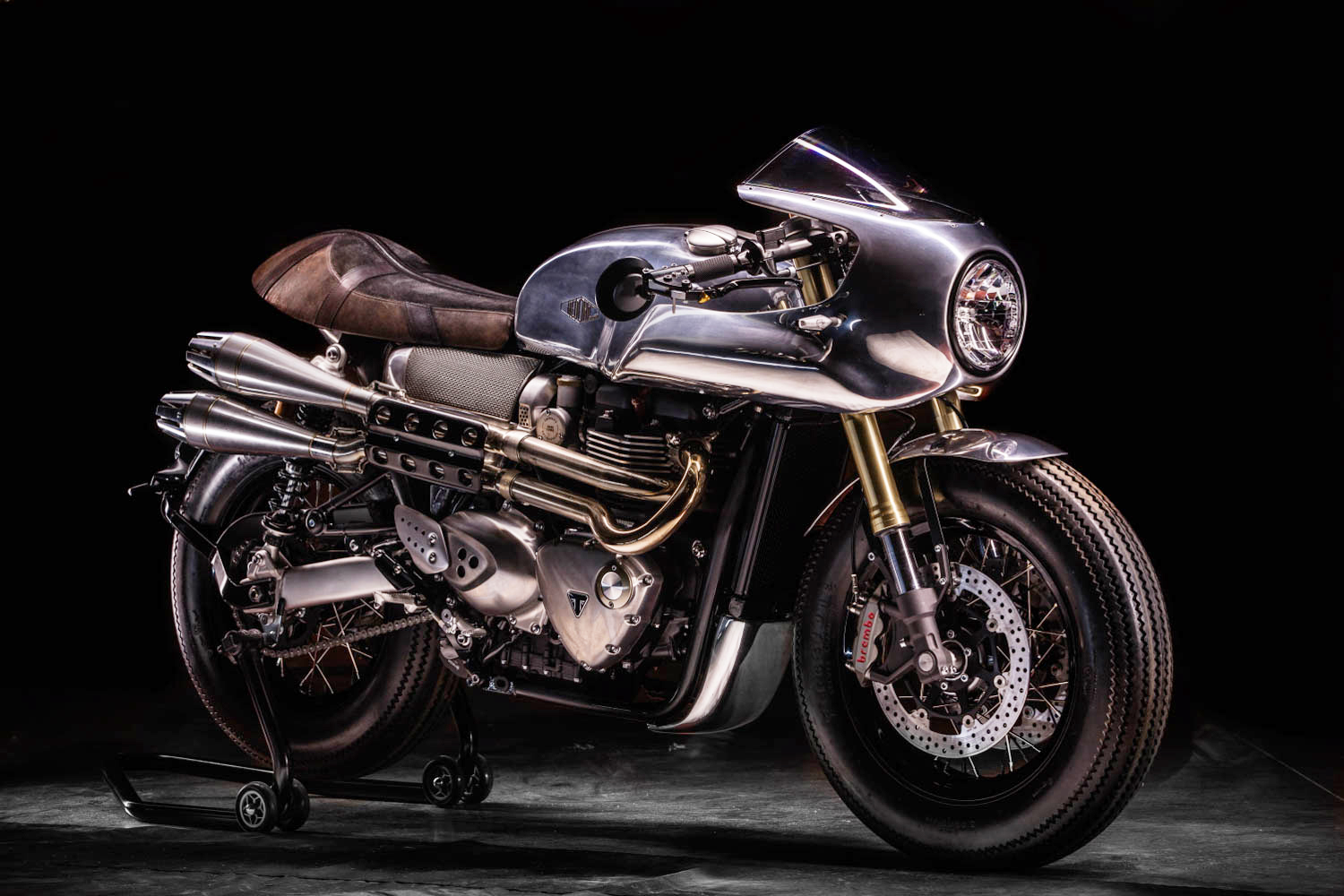
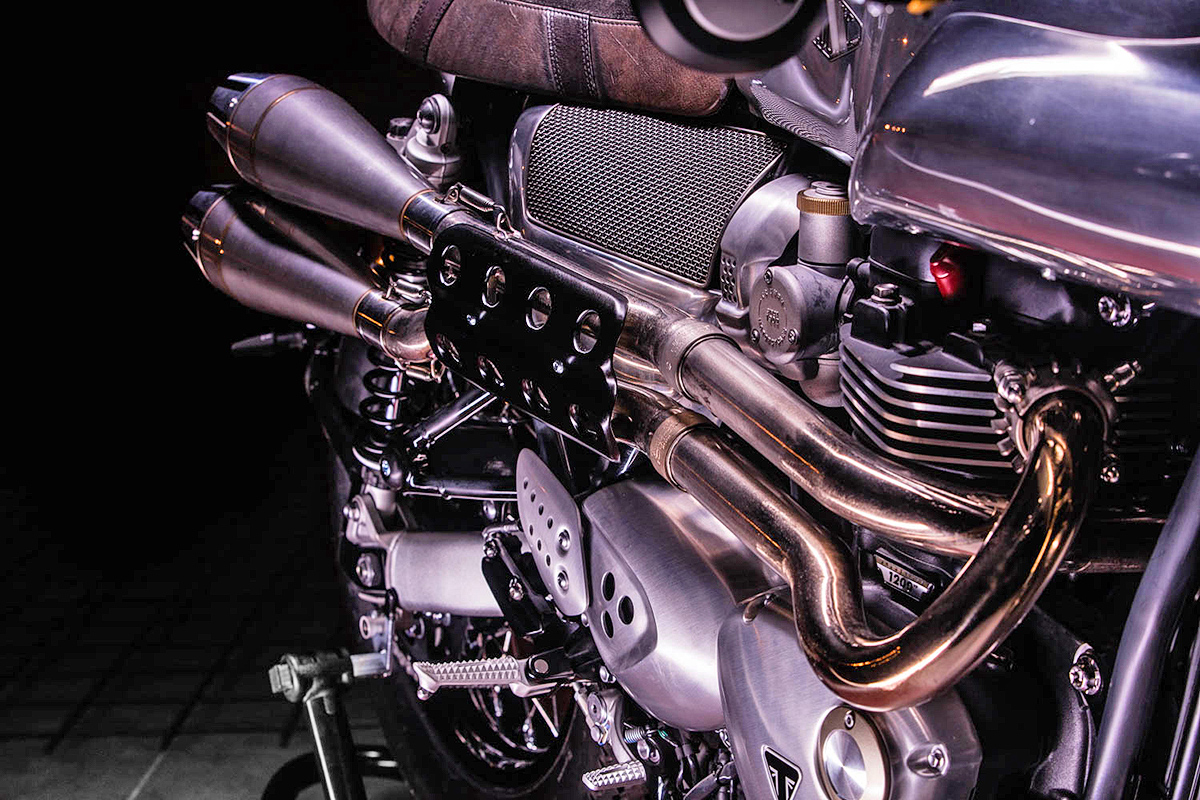
  • French customizer Hedonic built this Triumph Thruxton R called “Amazing.”

  • The bodywork and components are all hand-shaped aluminium.

  • The bike’s polished aluminium bodywork complements the engine casings.

All pictures by Return of the Cafe Racer

We concluded that the Triumph Thruxton R is the most fun factory café racer after our testing. We also said that it was beautiful especially when fitted with the optional “bullet” fairing. It’s as close as you could get to perfection. Well, Hedonic thinks it could be improved on when they built this Thruxton R.

Triumph Thruxton R Test & Review

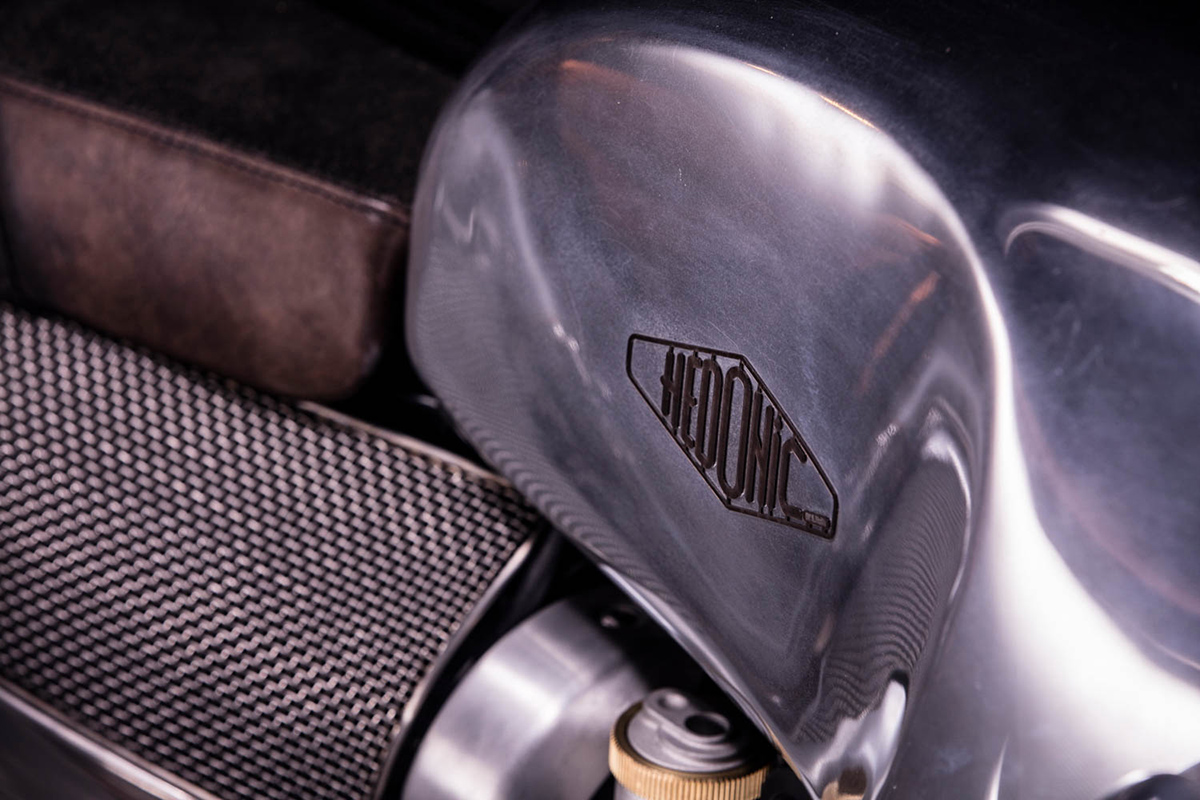
At Hedonic, Frenchman Serge Heitz and his team of craftsmen build custom bikes to order and this Spirit Racer Thruxton R demonstrates their abilities.

Hedonic is relatively new in the custom motorcycle building business. Serge set it up due his passion for cars, boats and motorcycles, although not in that particular order. But while the Spirit Racer is designed and built entirely by Hedonic, customers are treated to a hands-on designing process so they can develop unique bikes tailored to their own tastes.

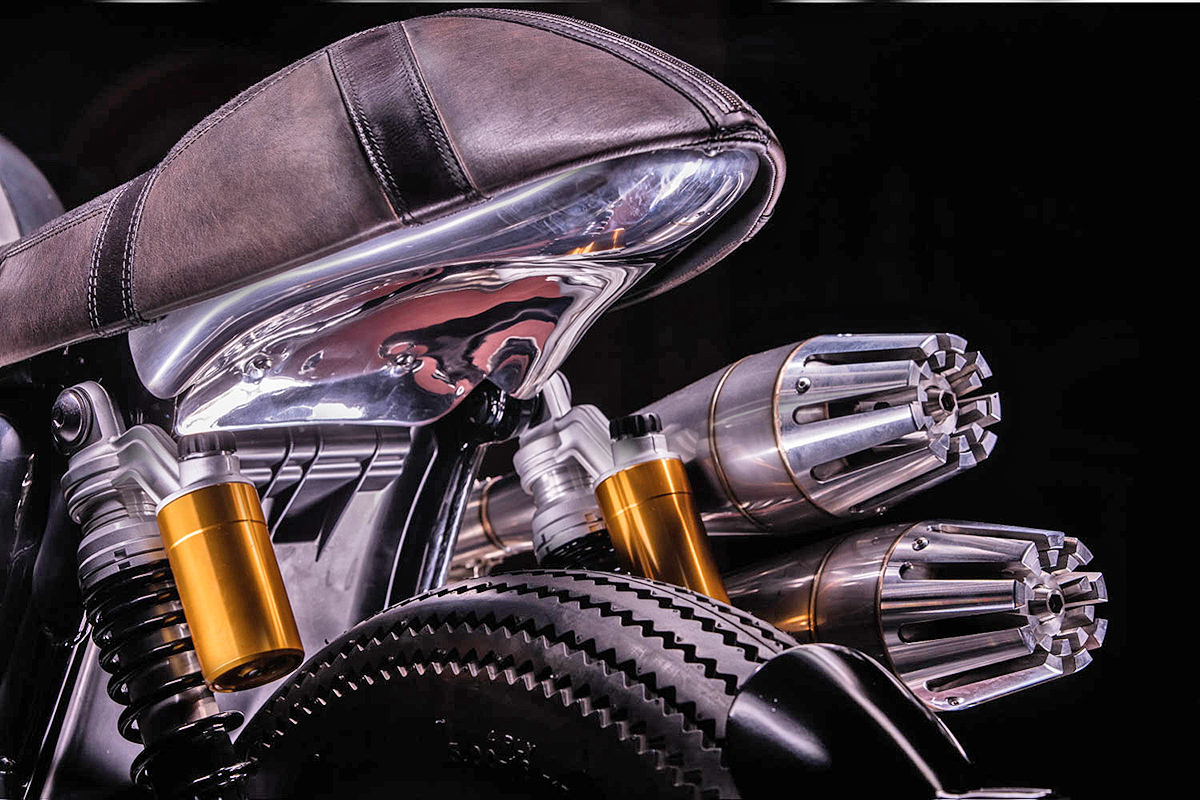
Appropriately named “Amazing,” the Hedonic Triumph Thruxton R demonstrates the builder’s skills in metal shaping. The fuel tank, fairing, fender, belly and side covers are one-off pieces to complement the lines of the bike. They spent more than 150 hours in forming the aluminium components which are then polished.

The Thruxton R is already equipped with a pair of excellent Showa BFF forks but Hedonic decided to fit Yamaha YZF-R6 forks as they are shorter. The wheels are 16-inch items and fitted with classic-looking Firestone tyres. The stock brakes are retained.

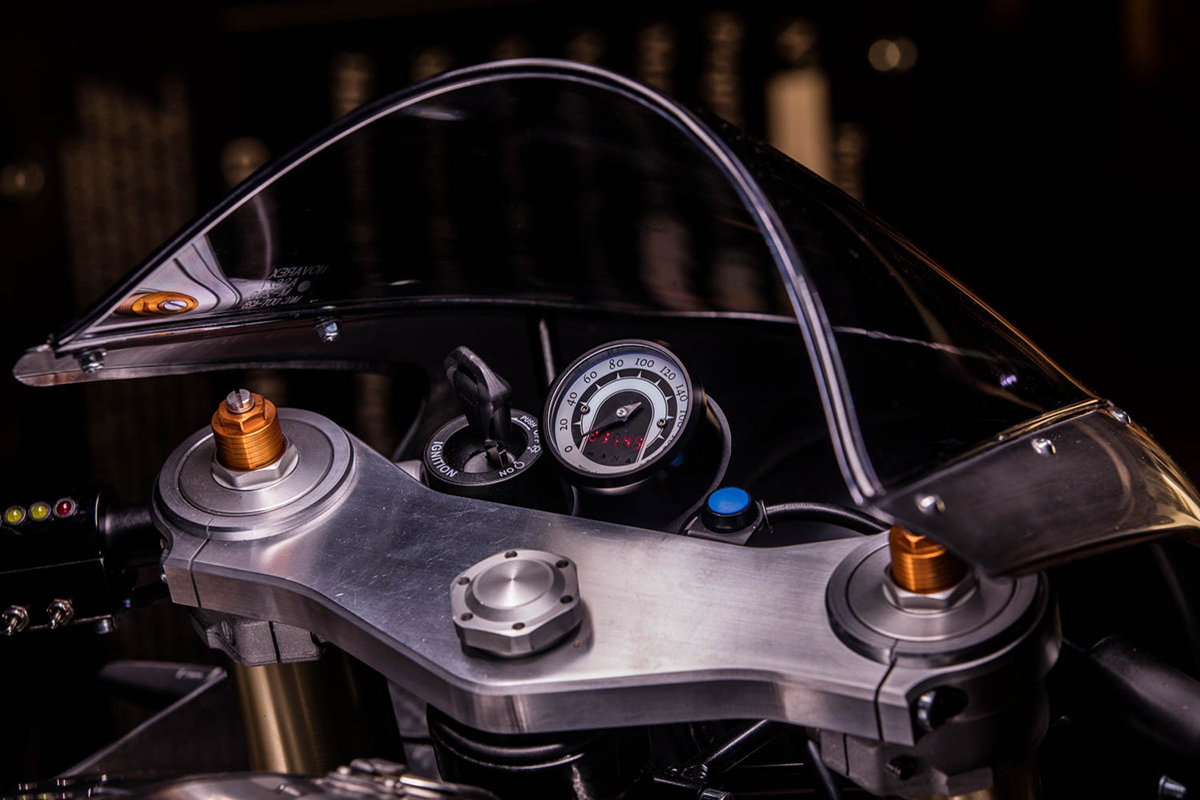
The clip-on handlebars are custom fabricated to integrate the brake master cylinder, clutch cable and inverted levers.

The cockpit consists of a single Motogadget gauge, ignition barrel and ignition button. The warning lights were relocated to the left-side switch cluster.

Hedonic finishes off the build with a fabricated custom exhaust system to improve on the Thruxton R’s grunt.
Archive

Follow us on Facebook

Follow us on YouTube