Yes, you read that right. Somewhere in America, there’s a team of engineers and designers working on a Harley-Davidson electric scooter. A bunch of patents have been published by the European Union Intellectual Property Office regarding the brand’s new direction into urban mobility. Will it be a success? (more…)
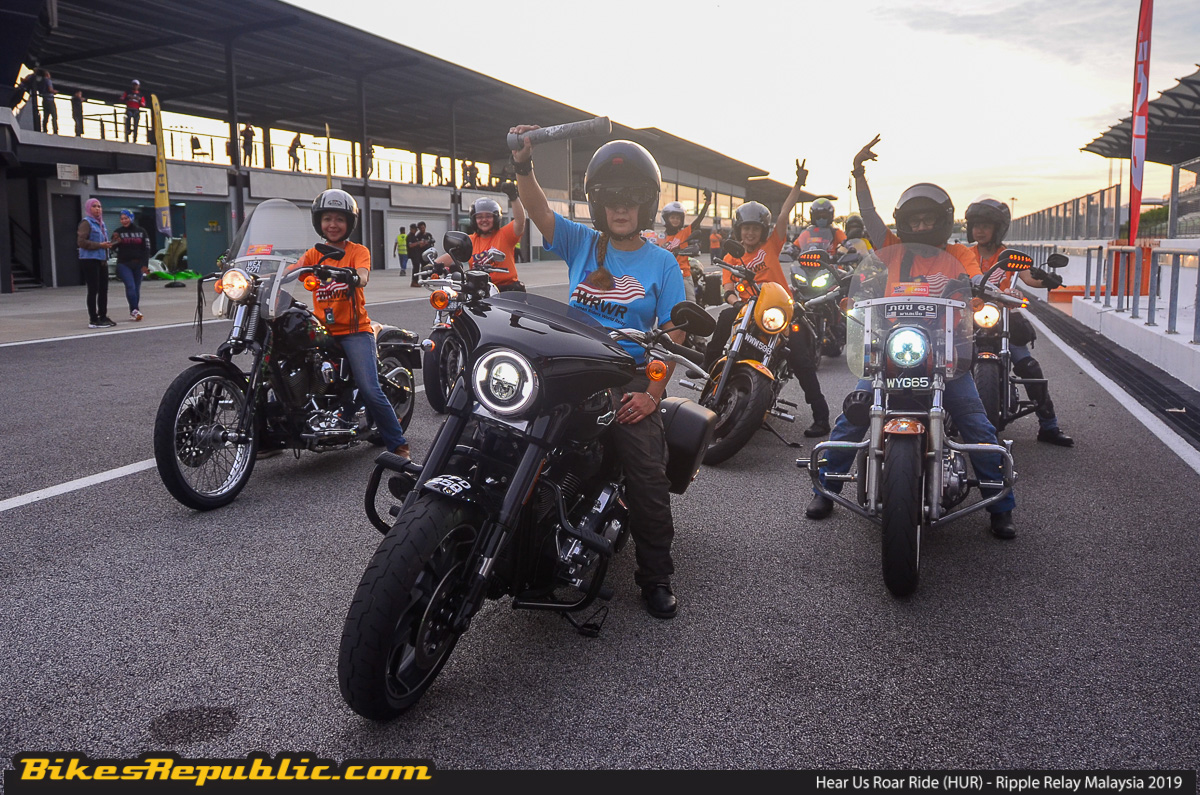
The Ripple Relay Malaysia 2019 finally concluded its massive nationwide tour where women riders of all ages and background showed their support to the ever-growing motorcycle community in the country. Supported by the Women Riders World Relay (WRWR), hundreds of women riders gathered at the Sepang International Circuit for the conclusion of the Hear Us Roar Ride (HUR 2019) in spectacular fashion. (more…)
The Dakar Rally 2020 mourned the lost of Paulo Goncalves of Hero Motosports Rally Team as he passed away after succumbing to injuries suffered in an accident in Saudi Arabia. The veteran rider who was the runner-up back in 2015 crashed his rally machine in Stage 7 at the 276km mark. The organisers of the Dakar Rally have released a statement regarding the tragic incident. (more…)
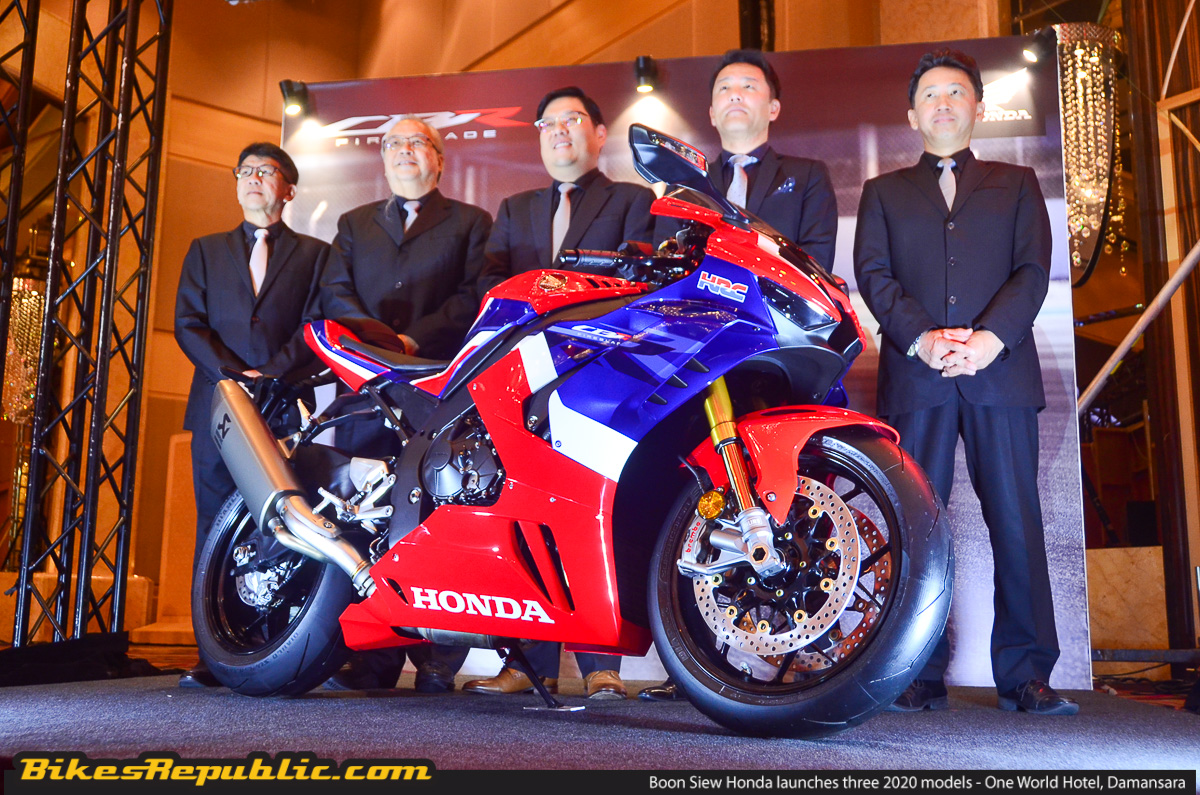
Boon Siew Honda (BSH) has kicked off the new year with the launch of three new models which are the 2020 Honda CBR1000RR-RR Fireblade SP, 2020 Honda GL1800 Gold Wing, and the 2020 Honda CRF1100L Africa Twin for the Malaysian market. What a way to strengthen a brand’s big bike segment, right? (more…)
When it comes to modern supercharged motorcycles, only one manufacturer has gone through all the phases including production and sales; Kawasaki. Other manufacturers have also presented us with some pretty cool concepts but now, Honda is looking into the supercharged scene a little bit more seriously. (more…)
A dyno chart – a graph which shows the engine’s torque and power curves – gives us an idea of how the bike performs when we open the throttle.
But how do we interpret those two lines? Do we only look at the peaks? Or just the peak horsepower?
Let’s use the chart below as an example.
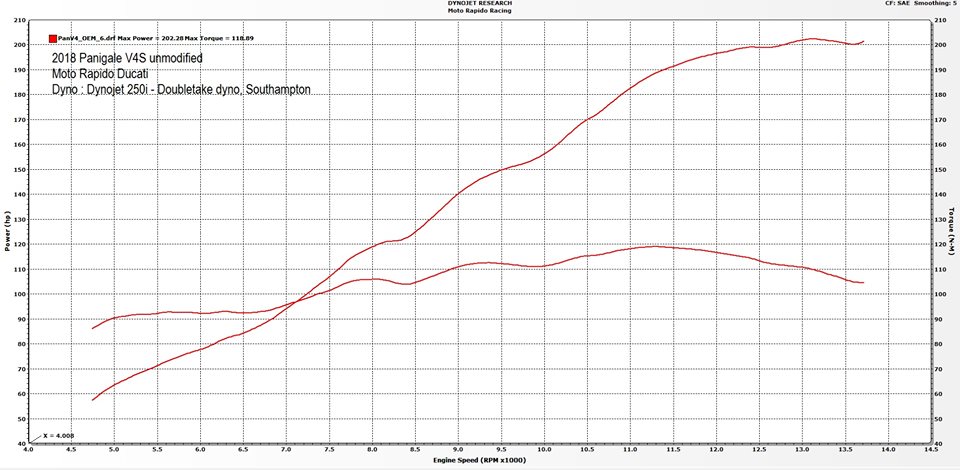
The X-axis (the horizontal line below) represents engine RPM, the left Y-axis shows the engine’s horsepower, and the Y-axis on the right represents the engine’s torque.
2018 Ducati Panigale V4 S dyno chart – Credit motorcycle.com. The little dips in the curves denote gearchange
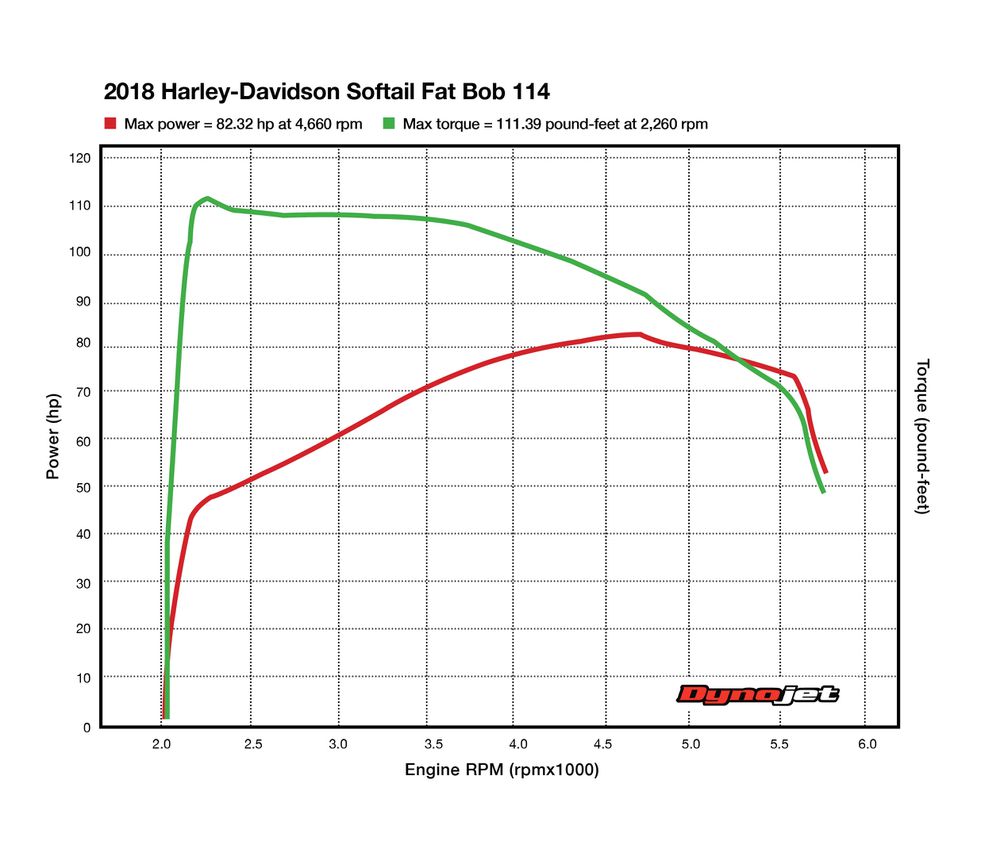
The curved line which climbs the highest is usually the horsepower, while the line below is usually the torque. Why “usually”? Because high torque engines like those big V-twins on Harley-Davidsons, Indians and other cruisers typically produce more torque than horsepower.
In any case, the torque curve is usually flatter than the horsepower curve as the latter requires the engine to be spun up and increases in a steeper curve.
Okay then, what do we look for? Or more specifically, how do we “read” an engine’s character?
Referring to the graph above, the torque curve looks like a plateau and is considered “flat.” There’s already 86 Nm of torque available at 4,750 RPM, while the peak of about 118 Nm is delivered at 11,250 RPM. Thus, the dyno shows that the engine is already producing 73% of its maximum torque at 4,750 RPM.
We can therefore deduce that this engine will give the impression of power everywhere in the engine range. In the real world, opening the throttle at any time will punch the bike forward rather than needing to be revved like crazy. An engine which allows for hard acceleration anywhere in its rev range is called “torquey” (although most people will wrongly say “powerful”). For the rider, he doesn’t have to keep shifting gears to get going.
As for the horsepower curve, you can see that’s linear in its progression and that makes for easier riding because the bike doesn’t bog and blast forward suddenly as if hit with a NOS injection.
Another thing to note is how many RPMs separate peak torque and peak horsepower. This Desmosedici Stradale V-four’s torque peaks at 11,250 RPM while horsepower does so at close to 13,250 RPM. That gives us 2,000 RPM of separation between the two. This is good as while the torque tapers off, the engine continues to produce power. This is what we call a wide powerband.
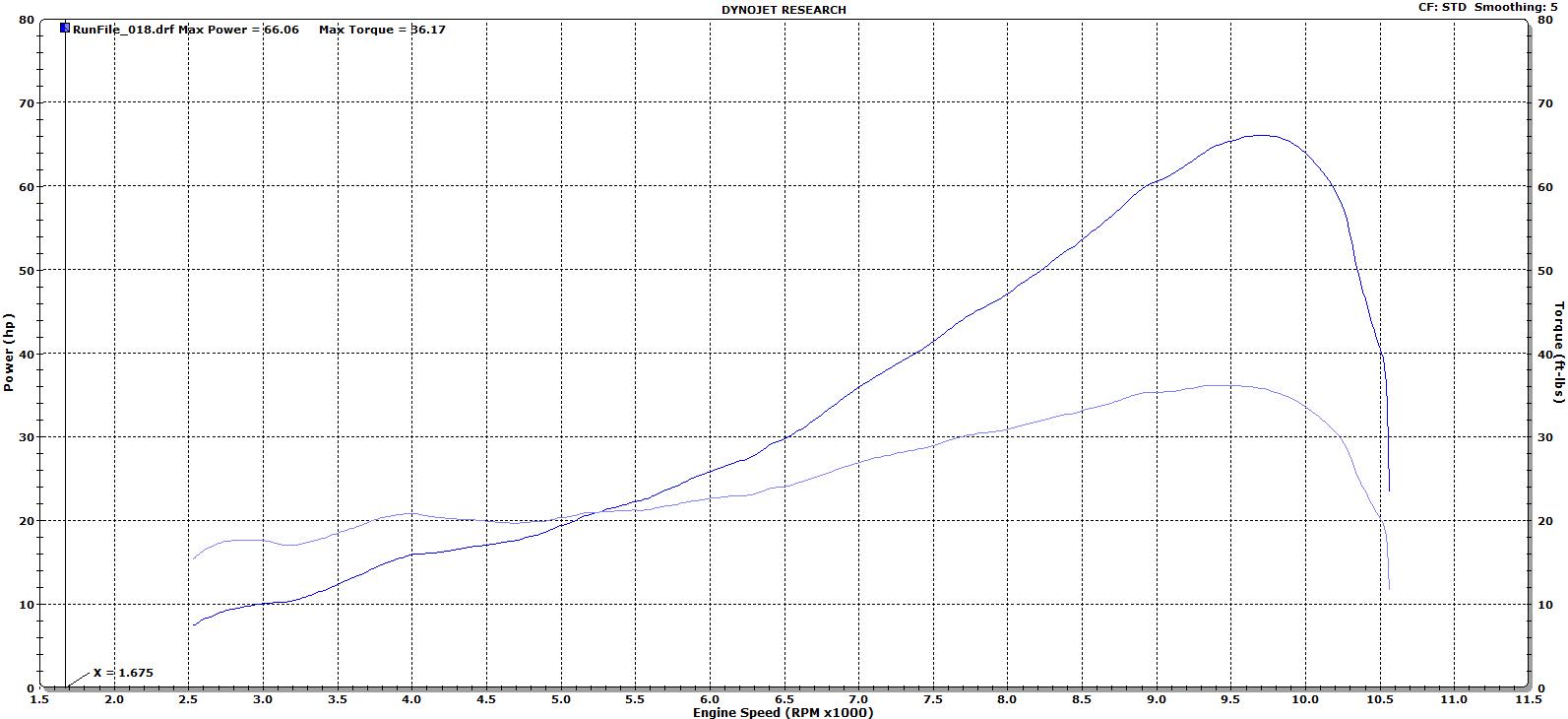
However, if the two peaks are close together like in a two-stroke (as little as 500 RPM separation), the powerband is considered “peaky” or “thin.”You need to rev the engine to high RPMs and maintain that high RPM for acceleration. Dropping out of that certain RPM range means you’re stuck with no meaningful acceleration unless you work that left foot like a Riverdance performer.
Note here that four-stroke racing engines tuned for outright power can be peaky. It’s not much of a problem at the racetrack but it’s irritating when such an engine character is present on a road bike.
This is why cruiser riders swear by their engine’s torque as the bike accelerates anytime in any gear, as well as being relaxed (turning at low RPM) when er… cruising down the highway. However, the engine begins to run out of breath as it reaches peak torque, since there’s not enough horsepower to produce higher speeds.
Harley-Davidson Fat Bob dyno chart – Credit cycleworld.com
Lastly, there’s another thing to note. Notice that the dyno’d torque and horsepower figures are lower than claimed by the manufacturer. That’s because manufacturers use bench dynos that are fitted directed to the engine’s output shaft thereby reading the crankshaft torque and horsepower. Dyno-ing a bike through its rear wheel results in approximately 15% power loss through the transmission, final drive and tyre. So, don’t panic if you see lower figures if you dyno your bike.