Bikesrepublic

Latest News

  • The Yamaha factory team is now called the Monster Energy Yamaha MotoGP.

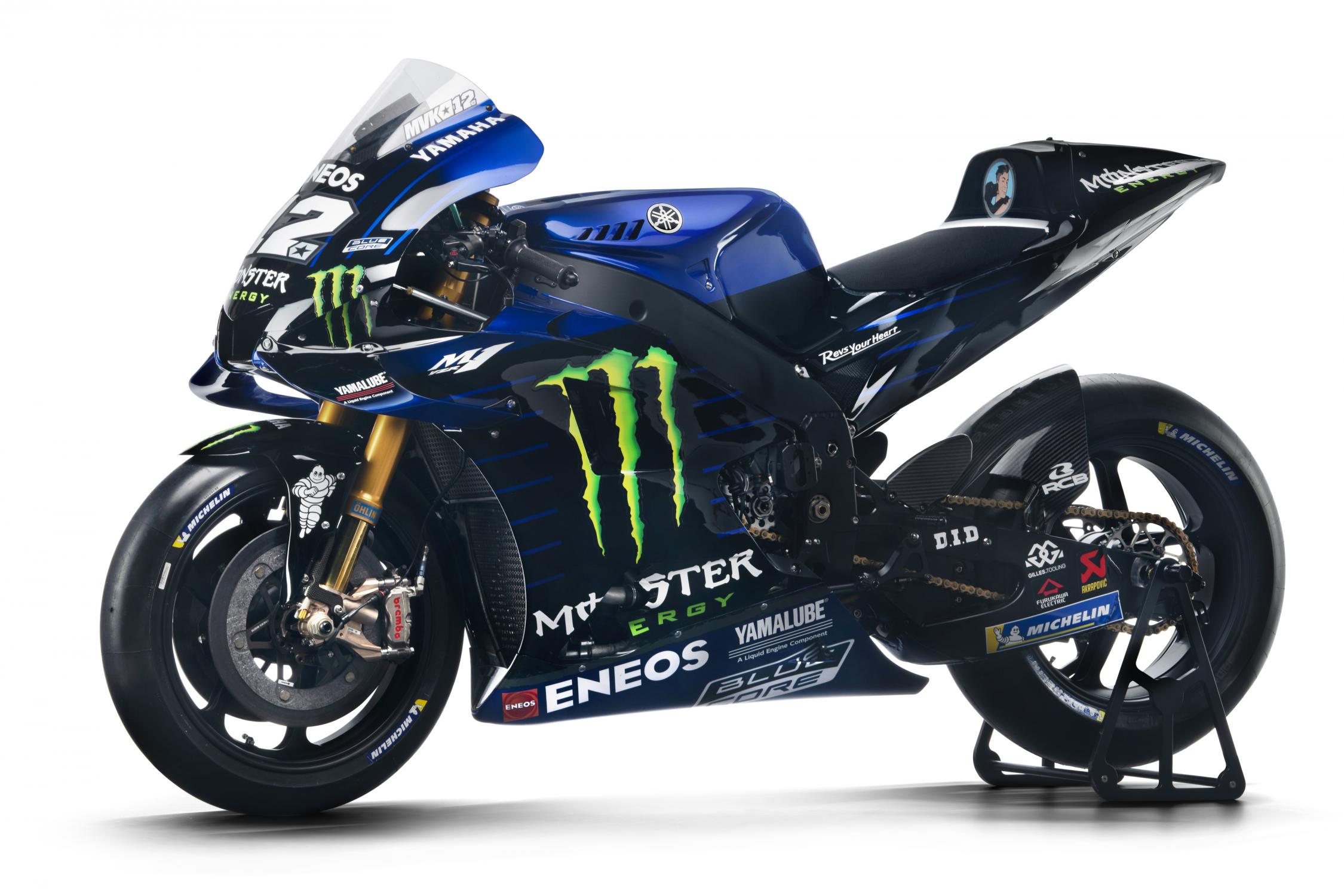
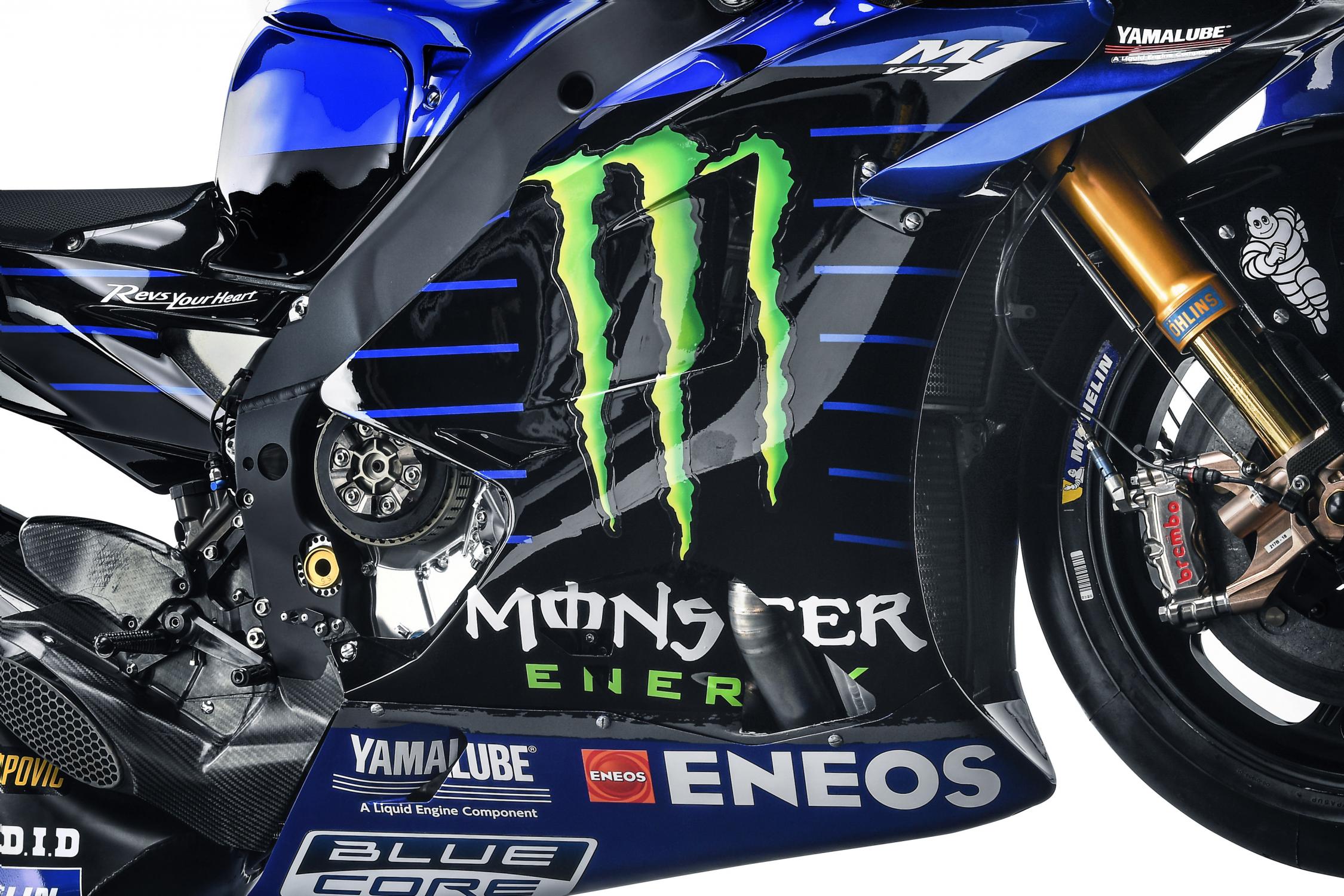
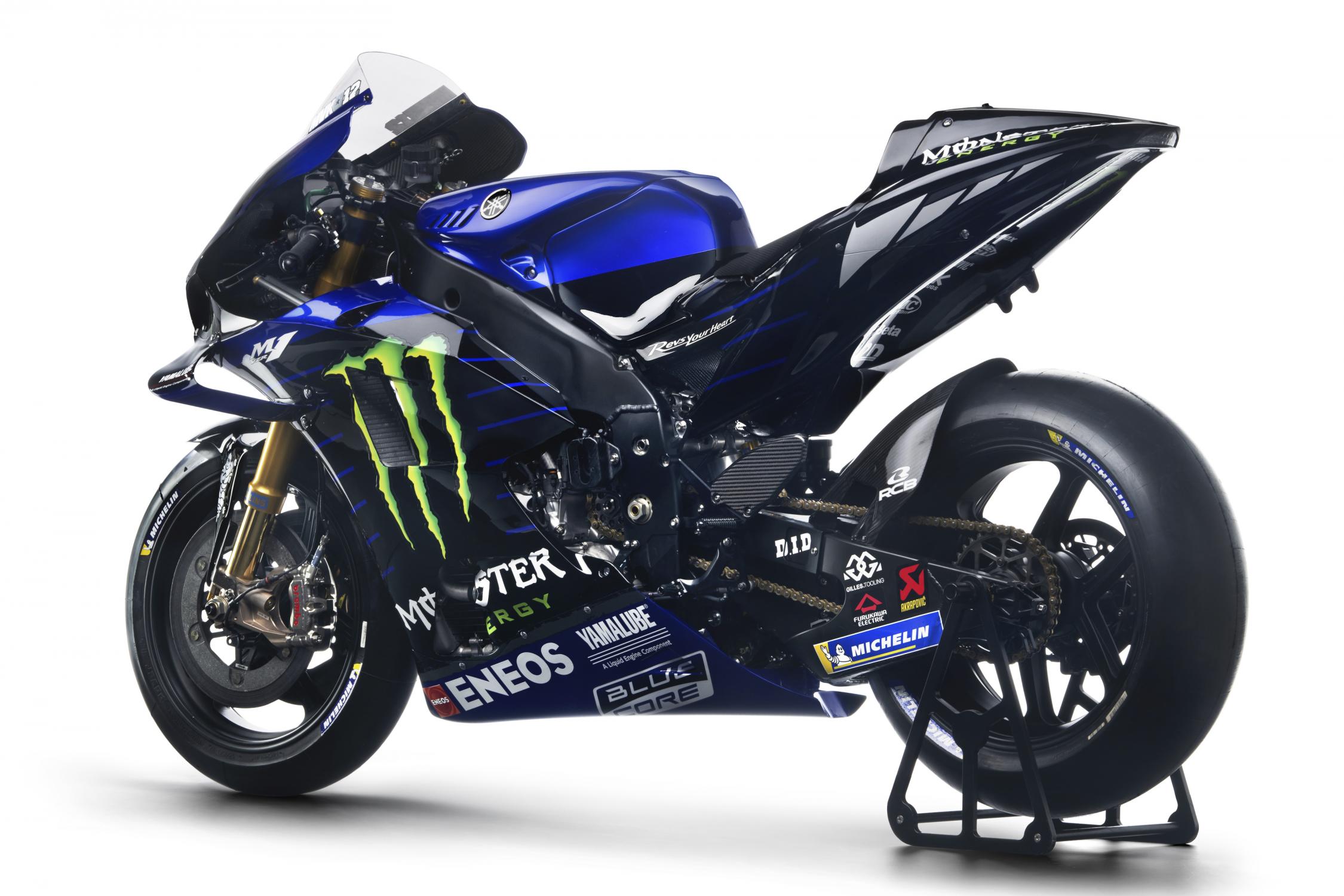
  • They also launched the new livery for the 2019 Yamaha YZR-M1 for the MotoGP 2019 season.

  • Monster Energy takes over from Movistar.

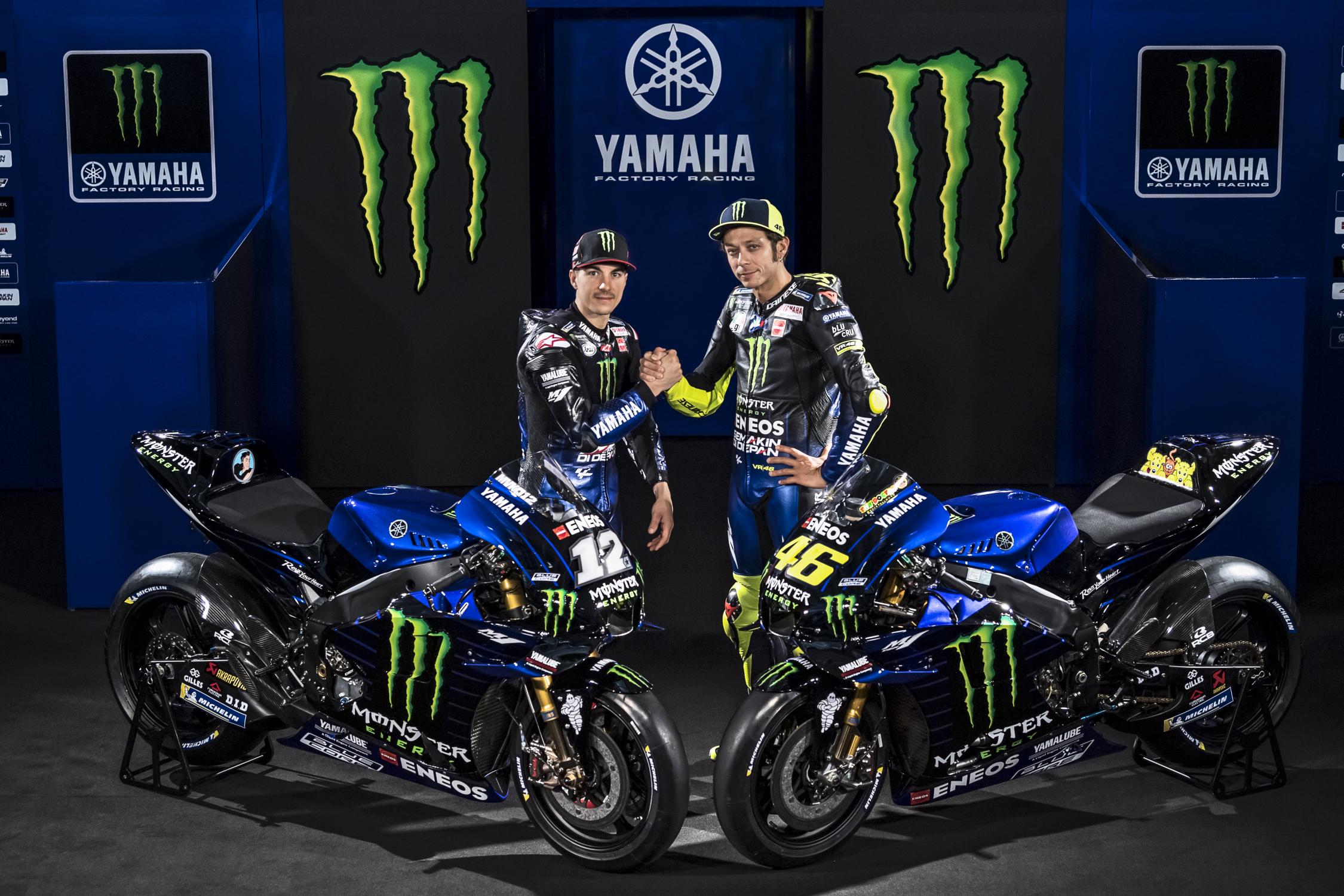
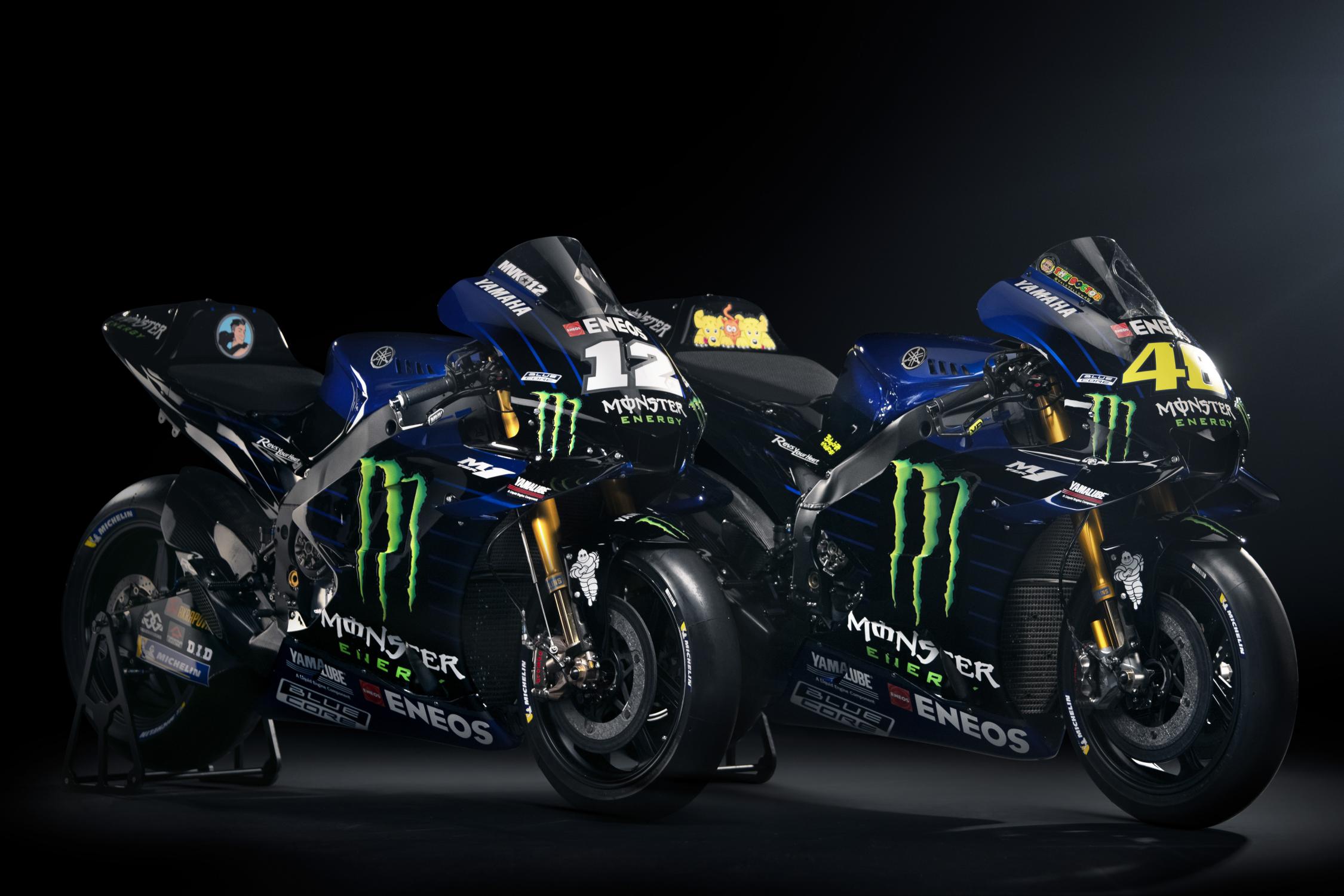
The factory Yamaha MotoGP squad unveiled their new Monster Energy Yamaha MotoGP livery and the 2019 Yamaha YZR-M1.

Monster Energy has taken over from Spanish telecommunications company Movistar as the main sponsor of the team. Hence the new livery consists of more black paint matched to the traditional Yamaha racing blue. The energy drink brand was already sponsoring both Valentino Rossi and Maverick Vinalez prior to this.

Whatever it is, the factory Yamaha team is looking forward to leaping back into contention after a dismal 2018 season. The longest losing streak in the brand’s history was thankfully broken when Vinalez won at Phillip Island.

The dearth of meaningful results even prompted Yamaha’s Project Leader Koiji Tsuya to issue a public apology to the riders, team and fans. He then stepped down last month and replaced by former head of chassis division Takahiro Sumi.

Riders Rossi and Vinalez will finally get to test the new bike during the first Pre-Season Test at the Sepang International Circuit from 6thto 8thFebruary.

Valentino Rossi

“I like it very much – Yamaha is always blue, and the blue of the Yamaha is beautiful, but I like the black of Monster because the colour of my soccer team, Inter, so I feel comfortable.”

Maverick Vinalez

“I can’t wait to start, the holidays were already too long,” Vinales said. “I would like to be on the bike. I’m really curious to see the steps forward we did and see if we can push the bike at the maximum already in the first test.”

  • Team Suzuki Ecstar has launched the 2019 Suzuki GSX-RR for the MotoGP 2019 season.

  • The riders are three-year Suzuki veteran Alex Rins and rookie Joan Mir.

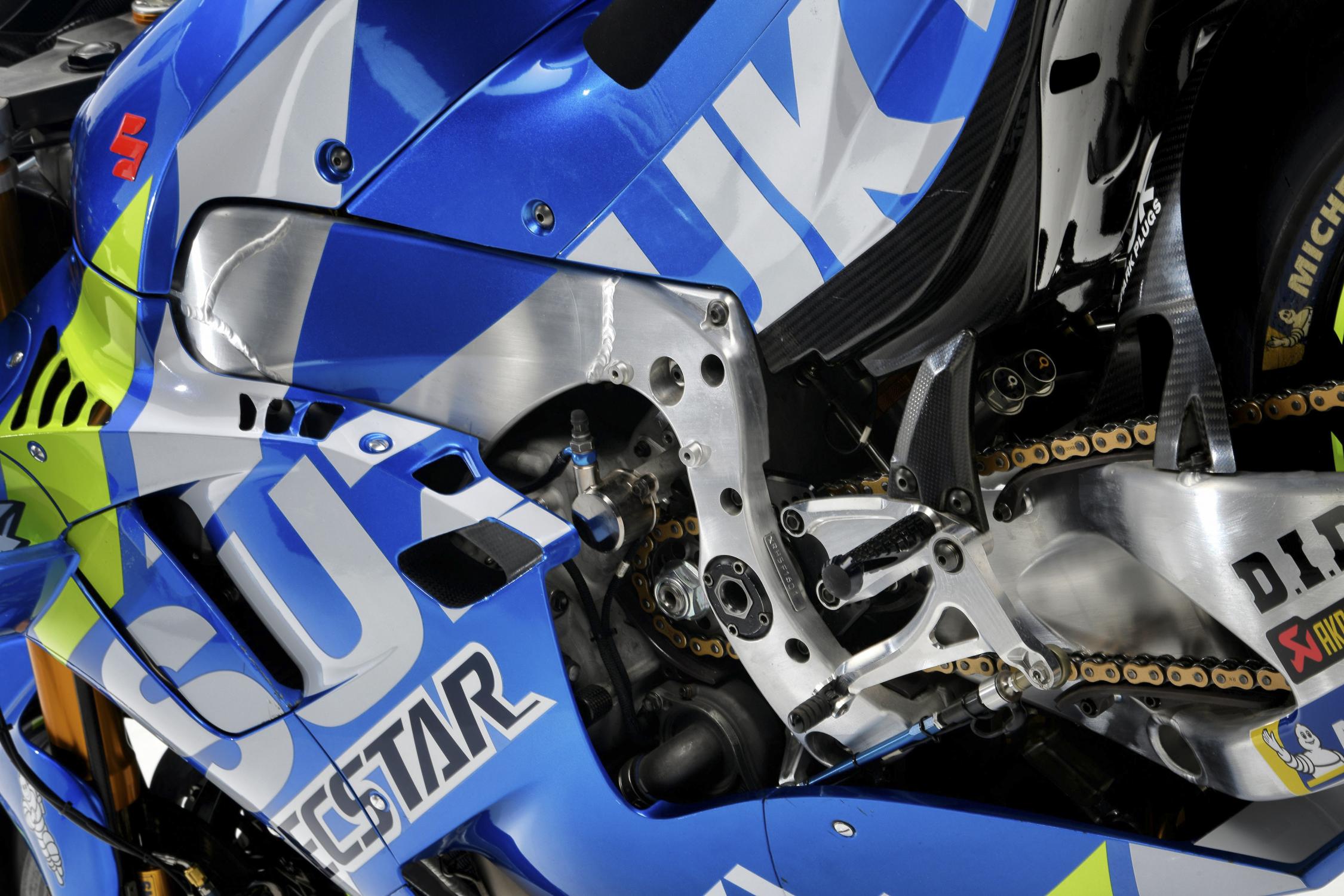
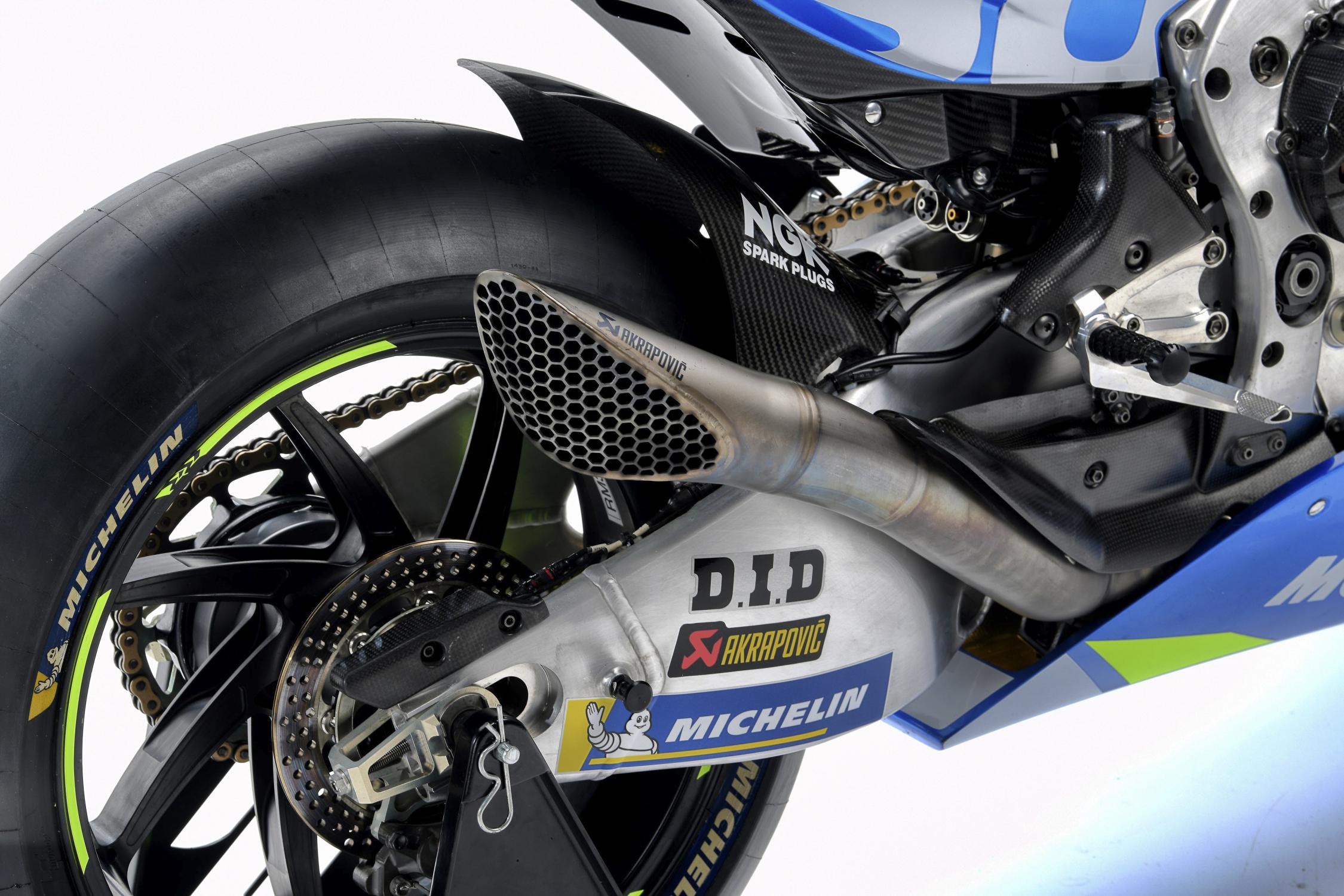
  • The 2019 GSX-RR is improved in a number of key areas without being completely new.

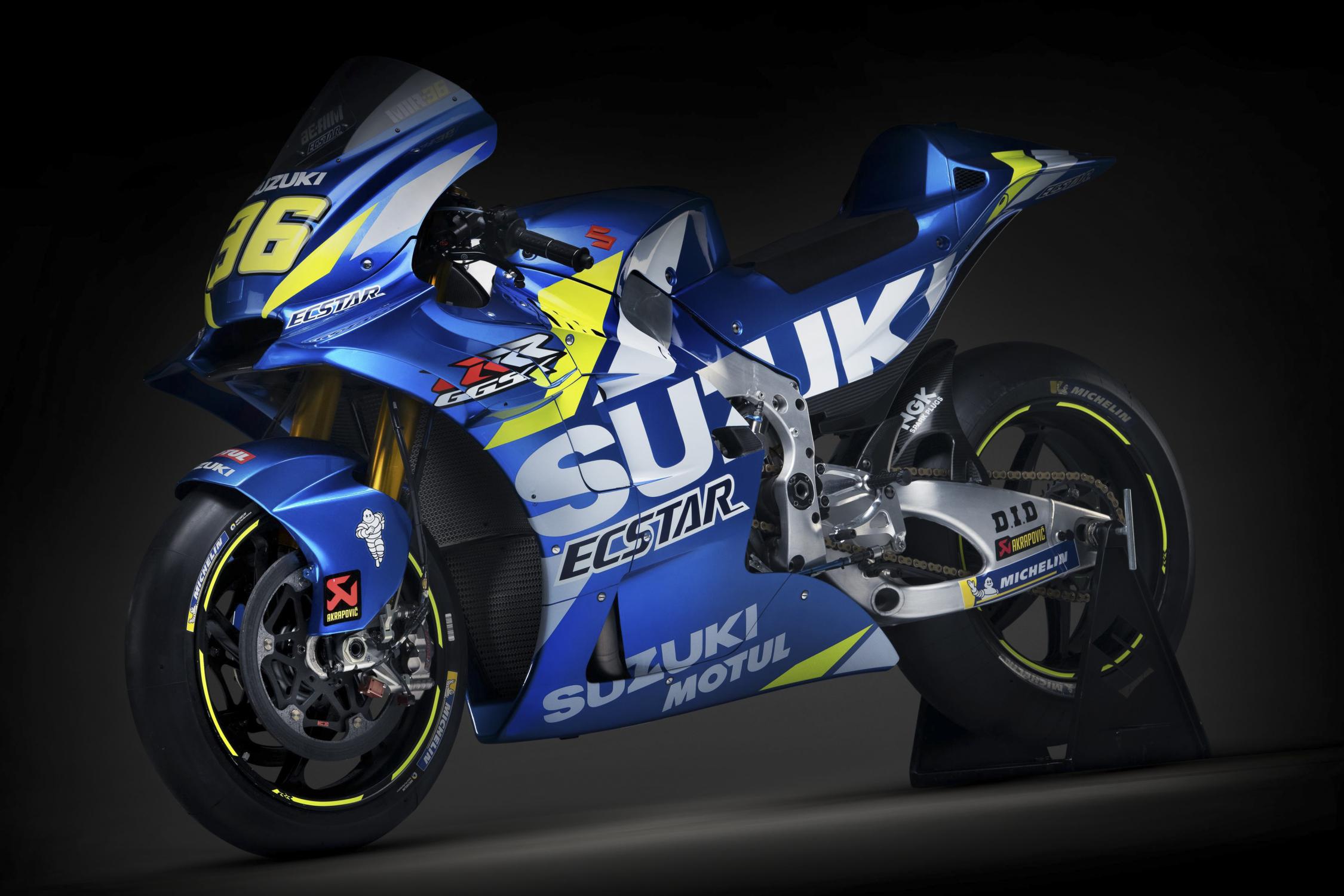
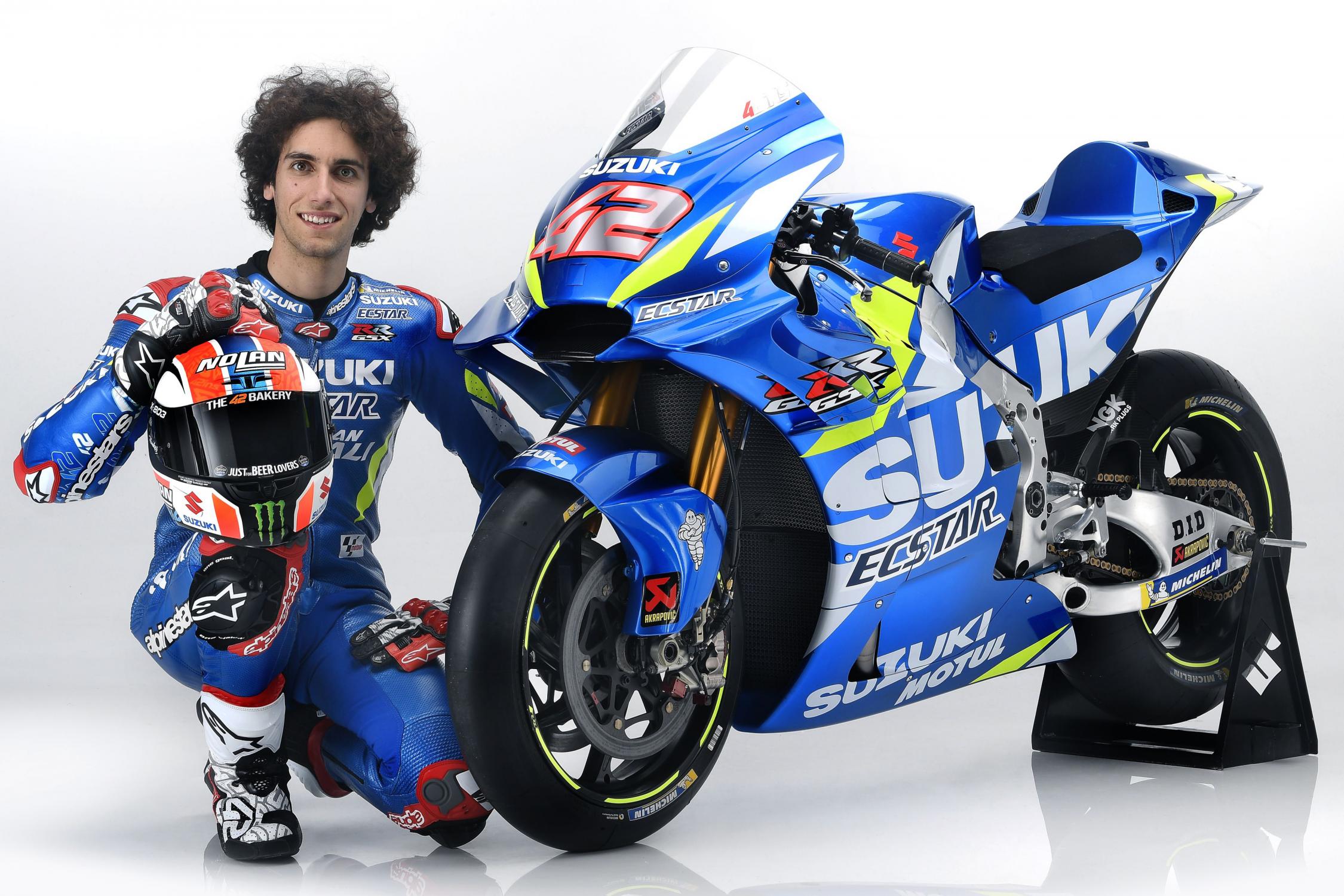
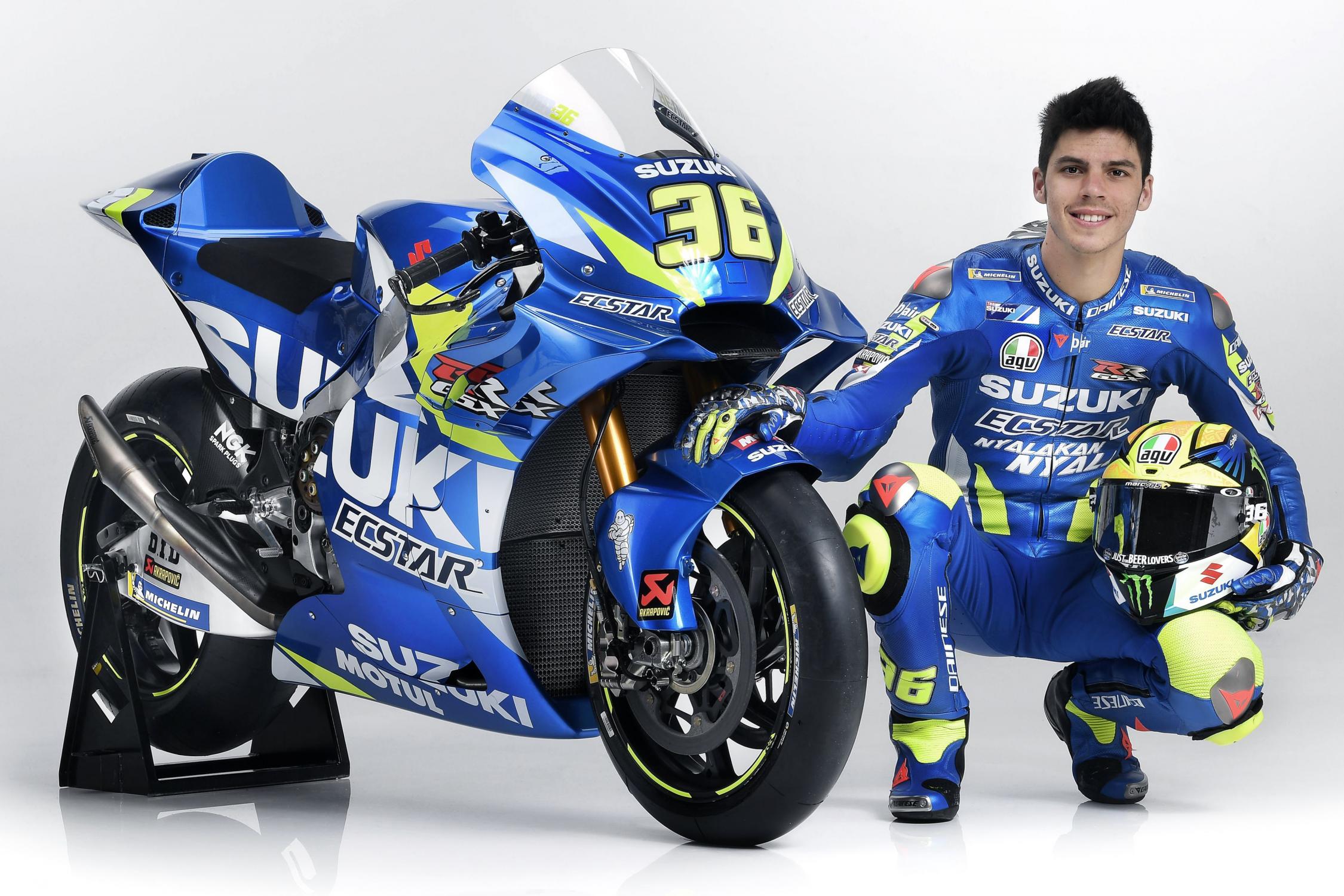
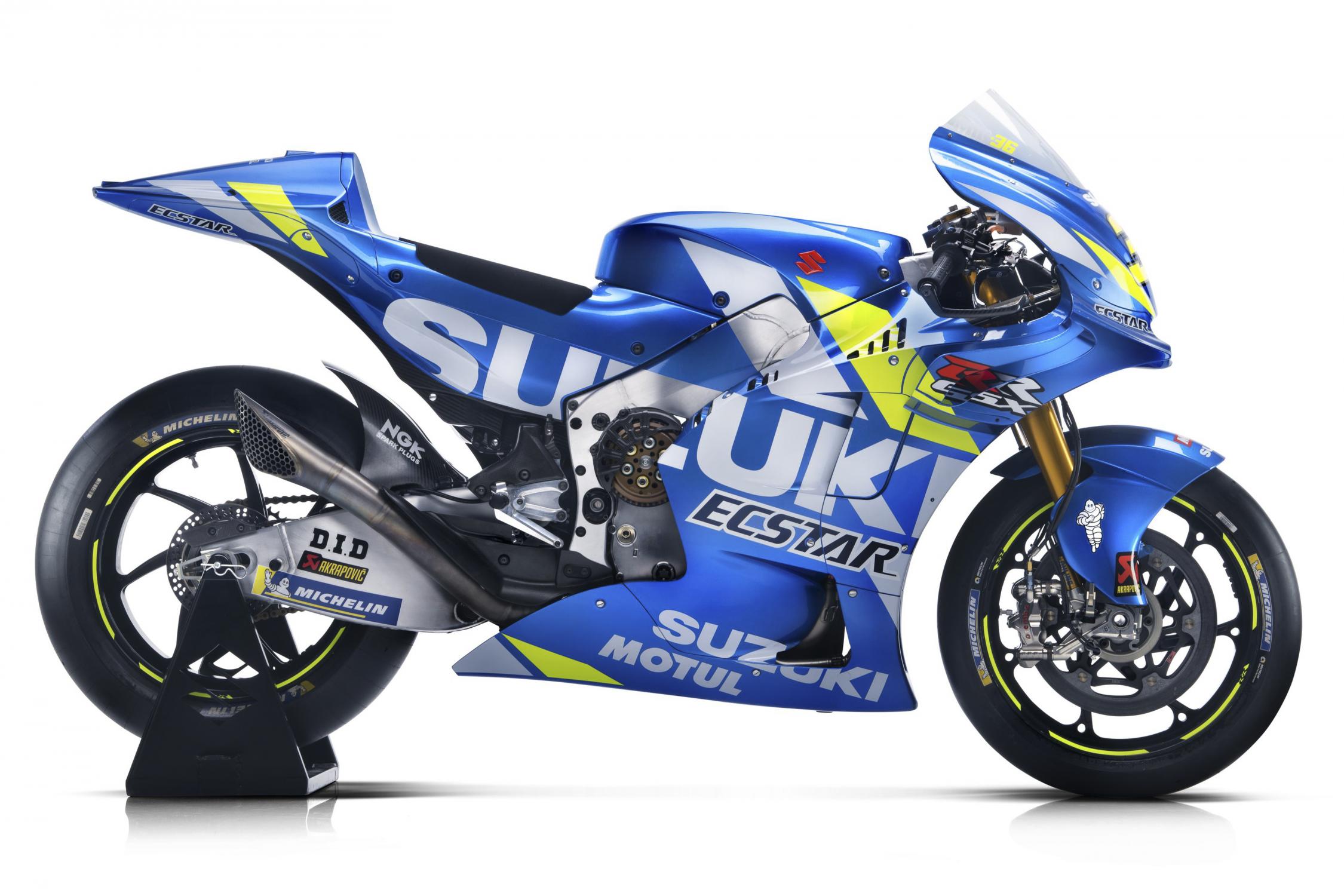
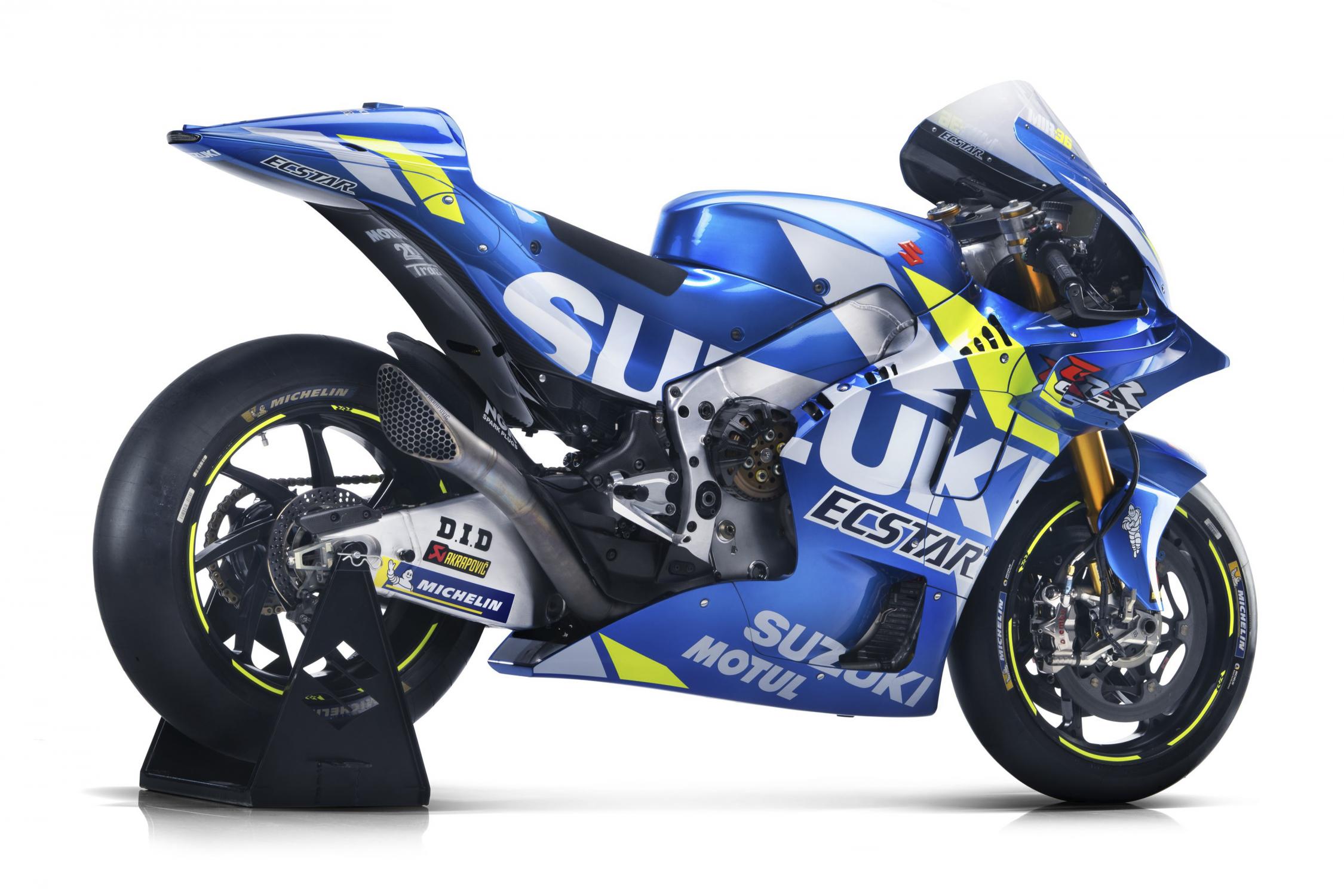
Team Suzuki Ecstar has launched the 2019 Suzuki GSX-RR for the MotoGP 2019 season.

Unlike other teams, Suzuki chose to unveil their bikes through a video on YouTube, instead of a “live” launch event. The team unveiled their all-Spanish rider line-up last season. Three-year factory veteran Alex Rins is joined by newcomer Joan Mir. The latter replaces Andrea Iannone who left for Aprilia. Sylvain Guintoli continues his role as test rider for Suzuki.

Alex Rins #42

Alex Rins finished in second place in the last three rounds of 2018 and hopes to move up to the front step in 2019. Suzuki last won a race with Maverik Vinalez in 2016.

“After the last test in November I left clear feedback for the engineers to work on, as far as I know the improvements we will try in Sepang will not be drastic but many small improvements in many areas, which is totally the Suzuki philosophy. We know what we were missing on the bike, so I believe the R&D in Japan will deliver a package which will help us to improve further,” said Rins.

Joan Mir #36

Joan Mir made his first Moto3 appearance in 2015 to replace the injured Hiroki Ono. He crashed out after making contact with John McPhee. Mir came back as a full rider in 2016 and finished 5thoverall. In 2017, he dominated the series with 10 wins and a 91 point advantage over his closest rival. Pundits felt that he could be the next Valentino Rossi or Marc Marquez.

He moved to the EG 0,0 Marc VDS team in Moto2 in 2018 where he captured 4 podiums and finished the season in 6th.

“Of course I still need many more hours on the bike, there are so many things I still need to understand to be even more effective, but I feel very supported by the team and I will rely on their wealth of experience to improve, and also to contribute my own improvements to my bike,” he said.

2019 Suzuki GSX-RR

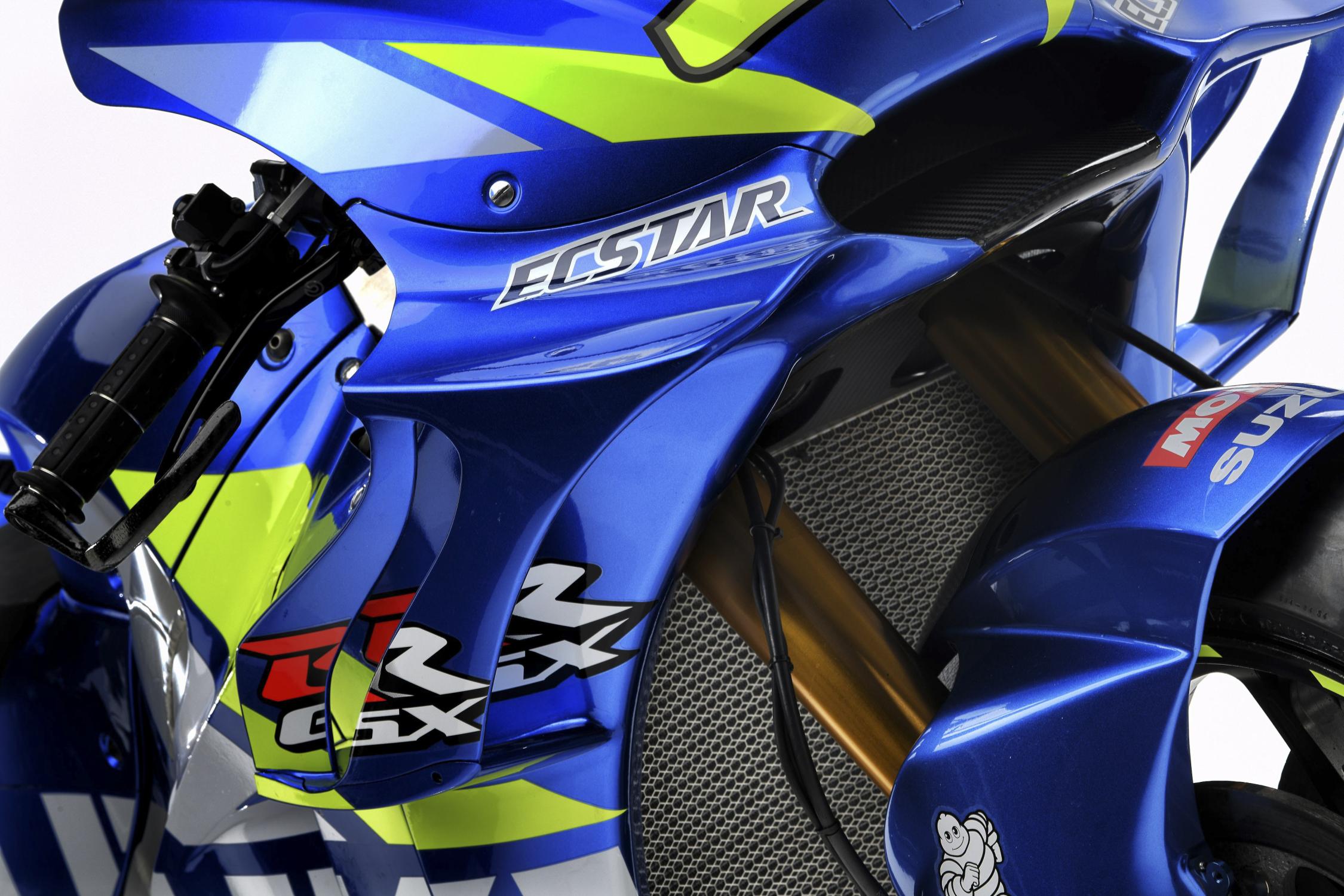
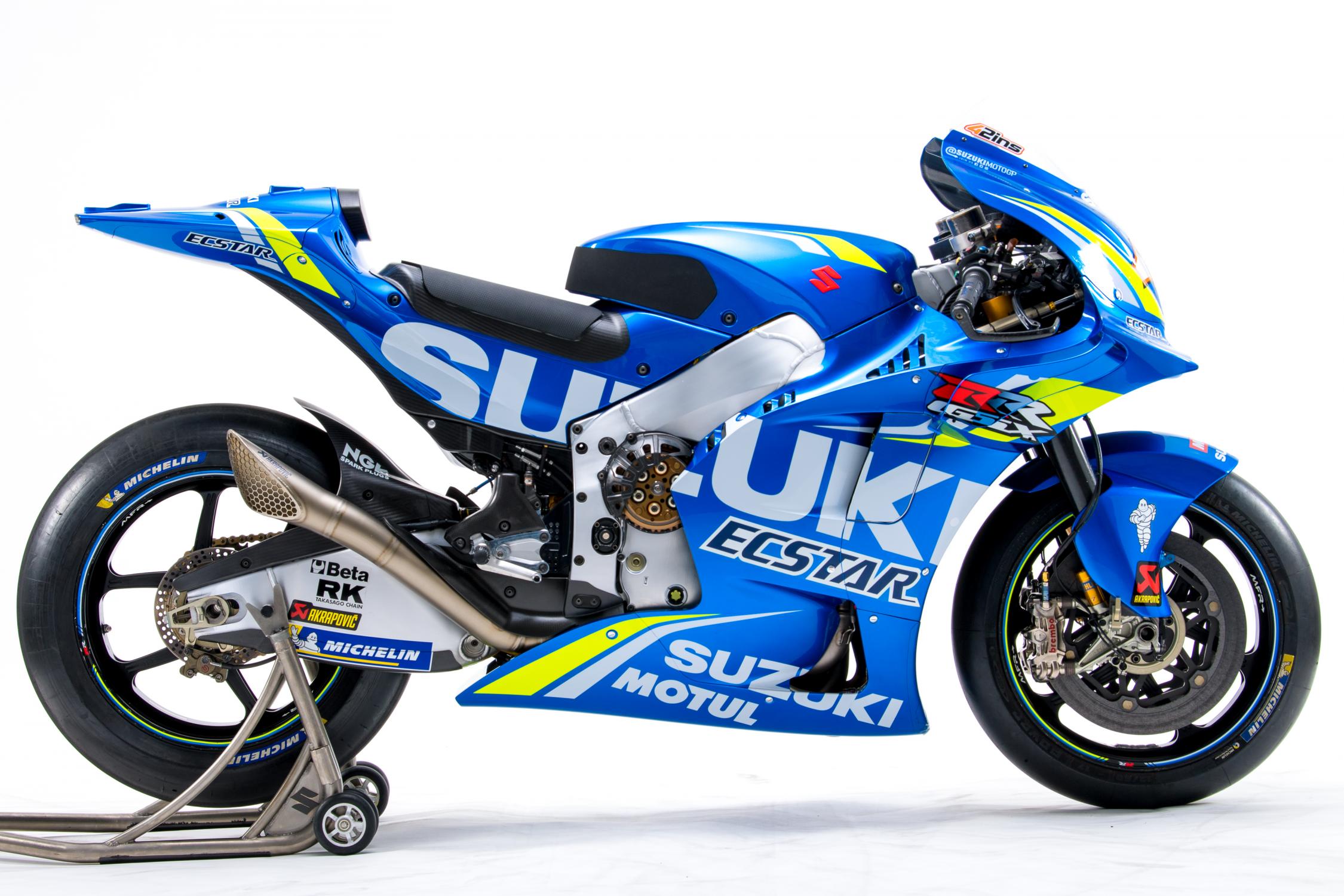
The 2019 bike follows the basic shape of the 2018 model with some visible but small modifications.

2019 Suzuki GSX-RR
  • Fatter tail section.
  • Different front brake calipers.
  • New wheels.
  • The front suspension also appears to be different.
  • The footpegs are placed higher.
  • New graphics with bolder yellow and gray stripes on the upper fairing, extending to the fuel tank.
  • The news bikes are shown in their “raw” form before being modified later to each rider’s individual preference.
2018 Suzuki GSX-RR

Those are differences we could see, but the team’s Technical Manager Ken Kawauchi said that the factory has developed a new engine, chassis, besides improvements in the electronics and fairing. He also added that Suzuki’s approach to the MotoGP project is by taking step-by-step improvements rather than redesigning something completely new all the time.

That last statement proves how important it is for the riders to start off their new season with something familiar yet improved, instead of riding something which completely alien to them. It helps the rider to familiarize himself to the bike quicker and hopefully translate to great results from the beginning.

All pictures from Suzuki and MotoGP

  • A car’s dashcam caught a number of Singaporean motorcycles with taped up number plates on the PLUS North-South Highway.

  • The motorcycles were among a large motorcycle convoy from the Republic.

  • This happened just days after the Singaporean government saying they will ban foreign vehicles with unpaid fines from entering the country.

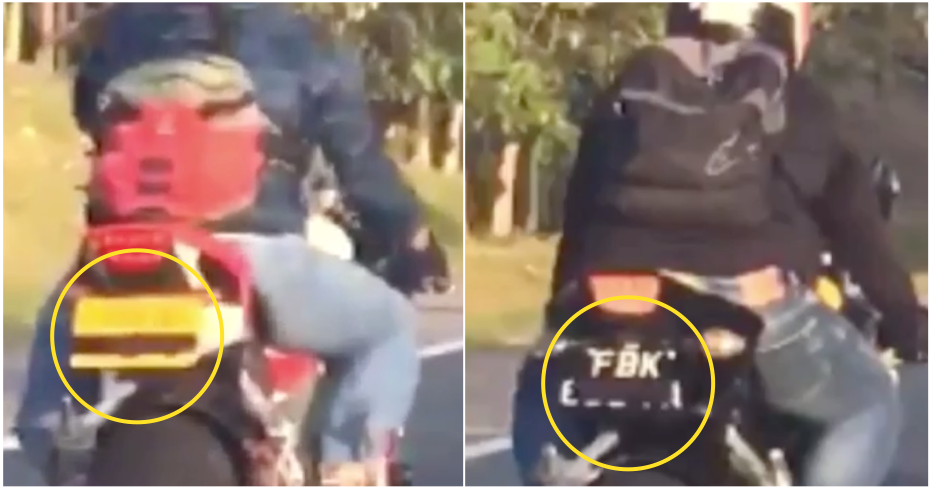
A car’s dashcam recently caught a number of Singaporean motorcycles with taped up number plates on the PLUS North-South Highway. ROADS.sg’s shared the video on their Facebook page and has now gone viral.

The footage showed a large Singaporean motorcycle convoy moving along smartly on the left lane and allowing vehicles to pass on the right. That’s good commendable convoy and road etiquette. The car occupants were initially in awe of the big bikes, but they soon started to talk excitedly when they spotted a number of bikes with tape over the rear number plates. Check out the video below (video credit “Amy” and ROAD.sg Facebook page).

So, why did they ride with covered plates? Did part of the plate fall off? Or because of the AES/AWAS/police radar cameras? The biggest suspicion points to avoid their number plates being captured when speeding to avoid fines.

This video showed up days just after the Singapore government issued a statement that they will ban some overseas vehicles to the island republic. This is response to Malaysian motorists owing the Singapore government RM 100 million in traffic fines, reports World of Buzz.

We always take a neutral stand in such matters. There are always the good, the bad and the ugly among any country’s people. So, let’s be responsible and pay up our fines in Singapore. On the other hand, if there are any Singaporean riders reading this, please tell your friends to remove the tape on their number plates. They risk a bigger fine or even having their motorcycles confiscated if caught by the Malaysian authorities.

  • The Yamaha YZF-R15 is a lightweight sportbike.

  • Its strengths are its cornering speed and agility.

  • The unit we tested surprised us with its top speed!

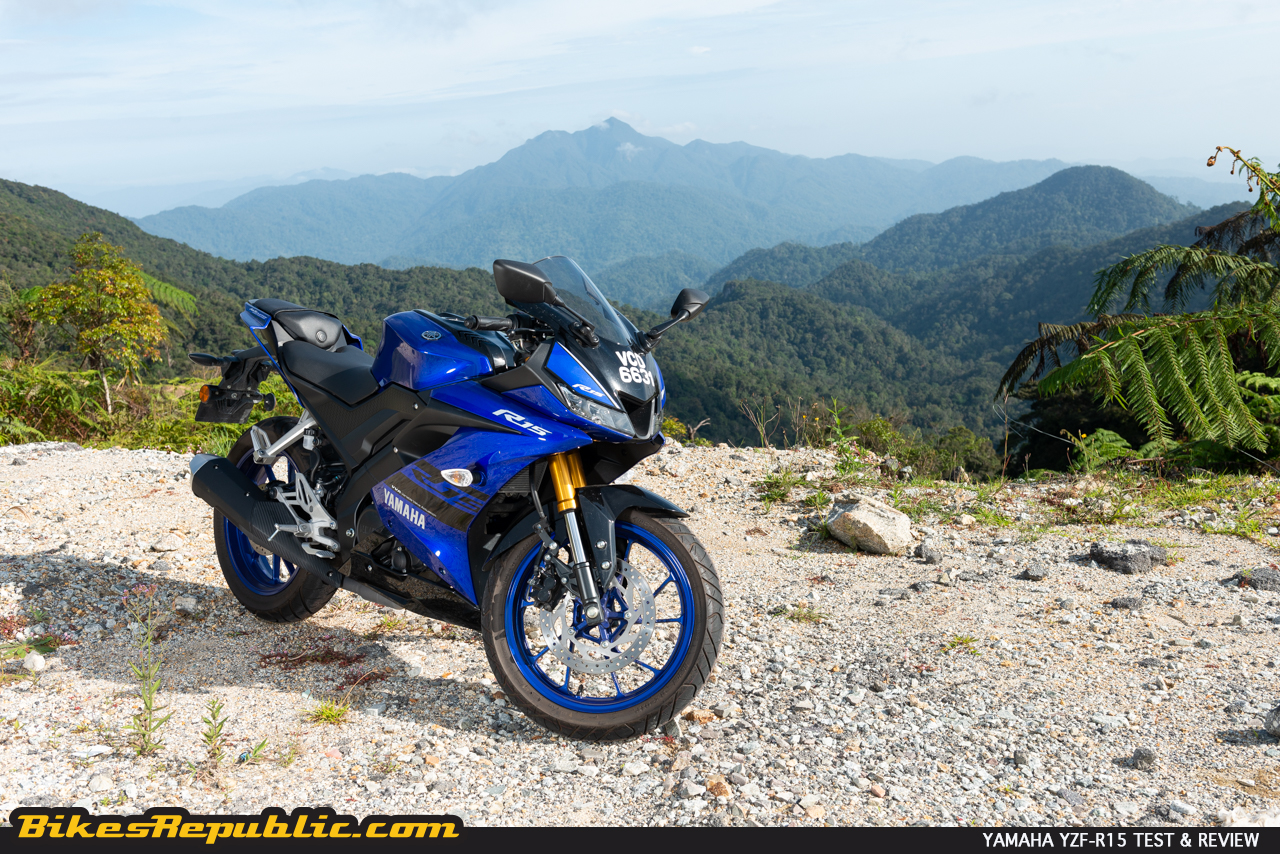
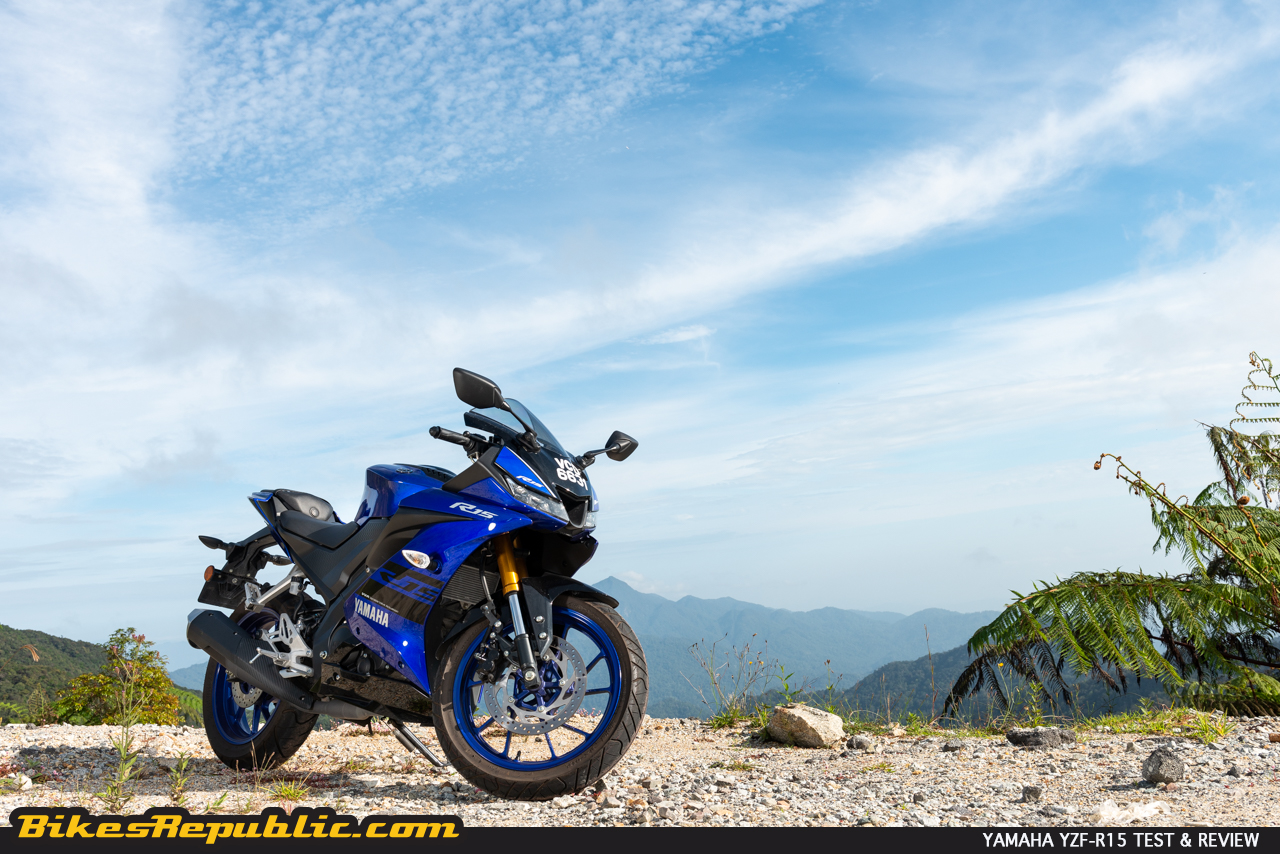
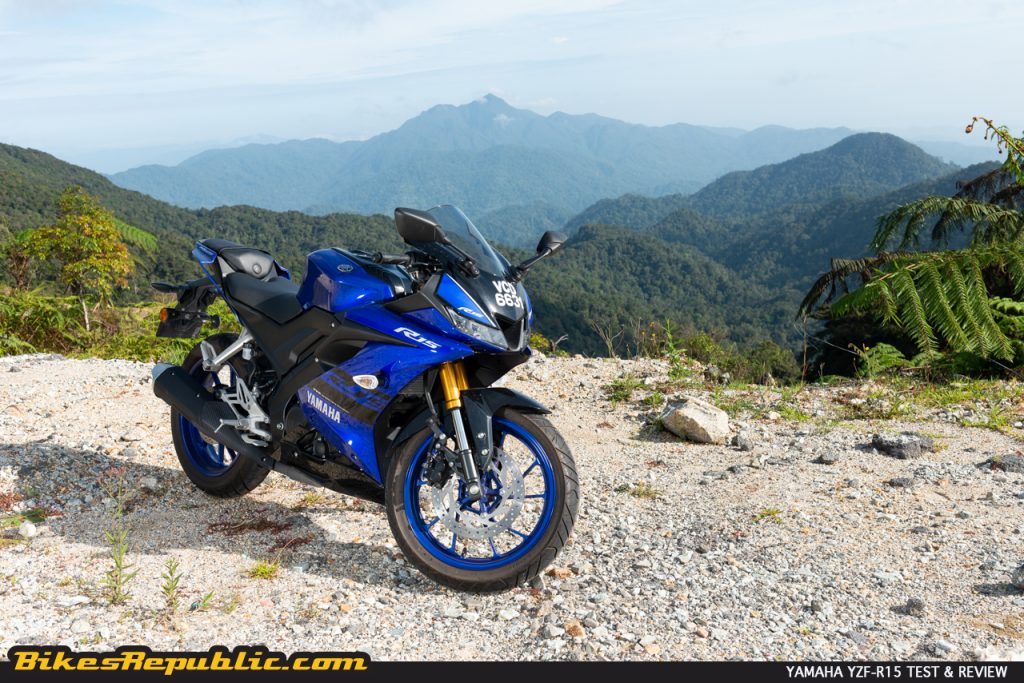
The cliché “Good things come in small packages” certainly applies to motorcycles too. We found it true after riding this Yamaha YZF-R15 for one week.

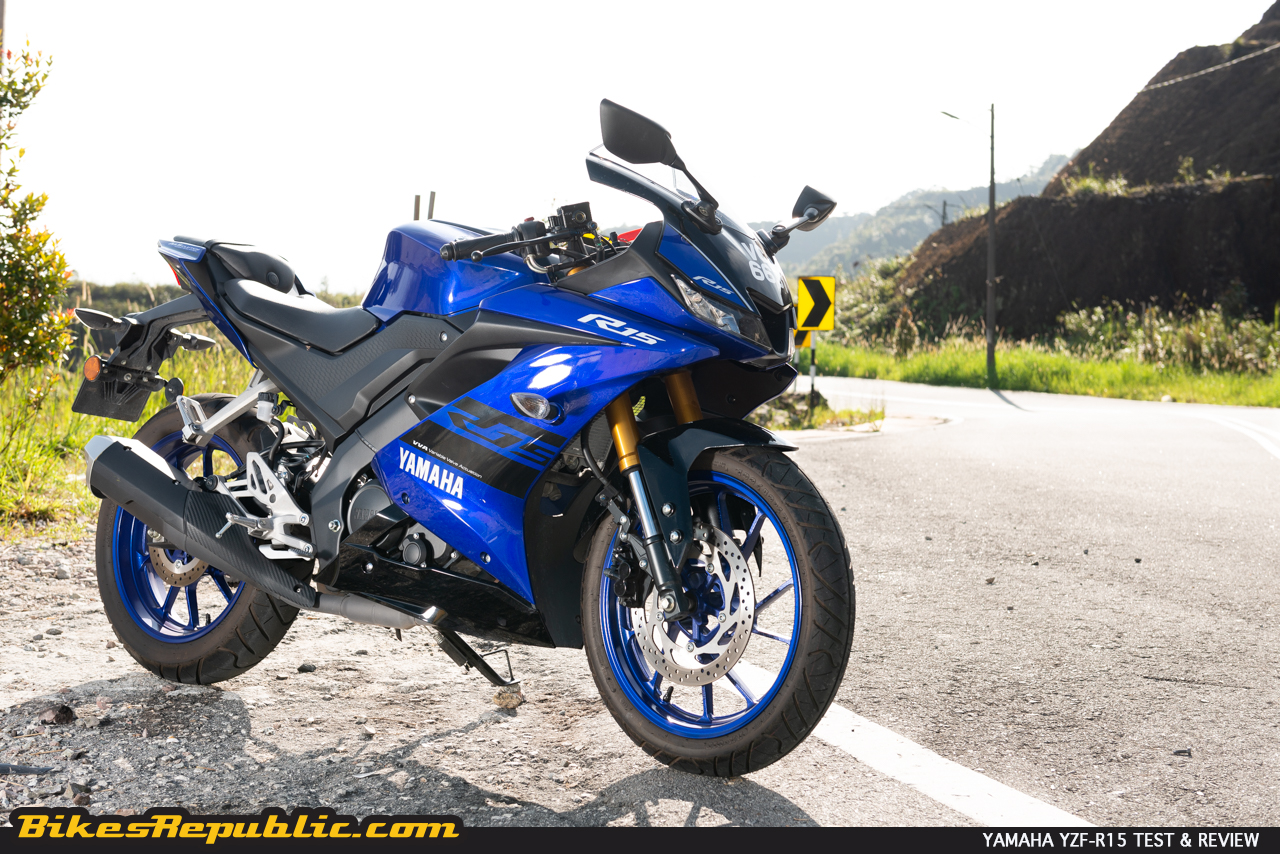
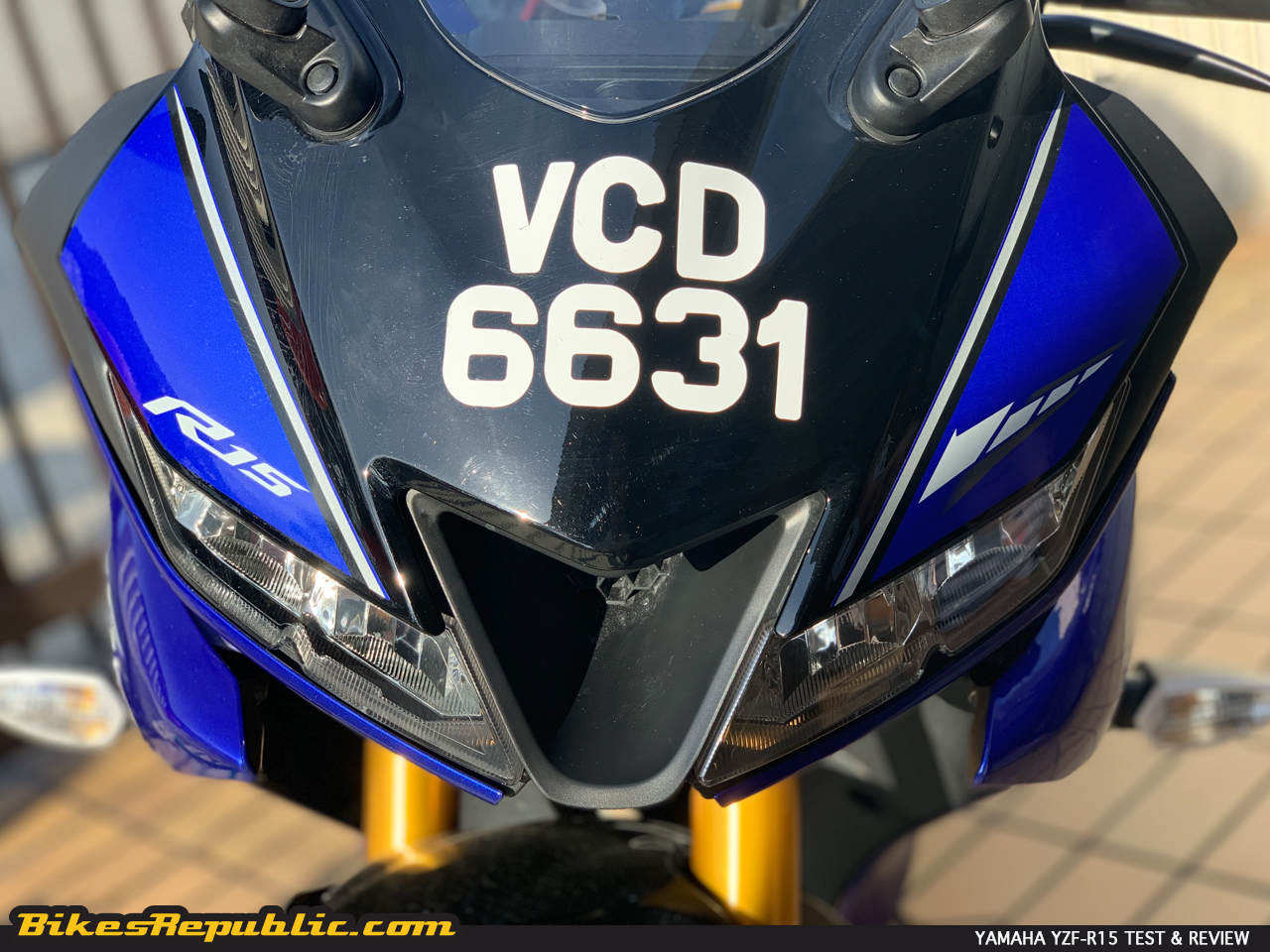
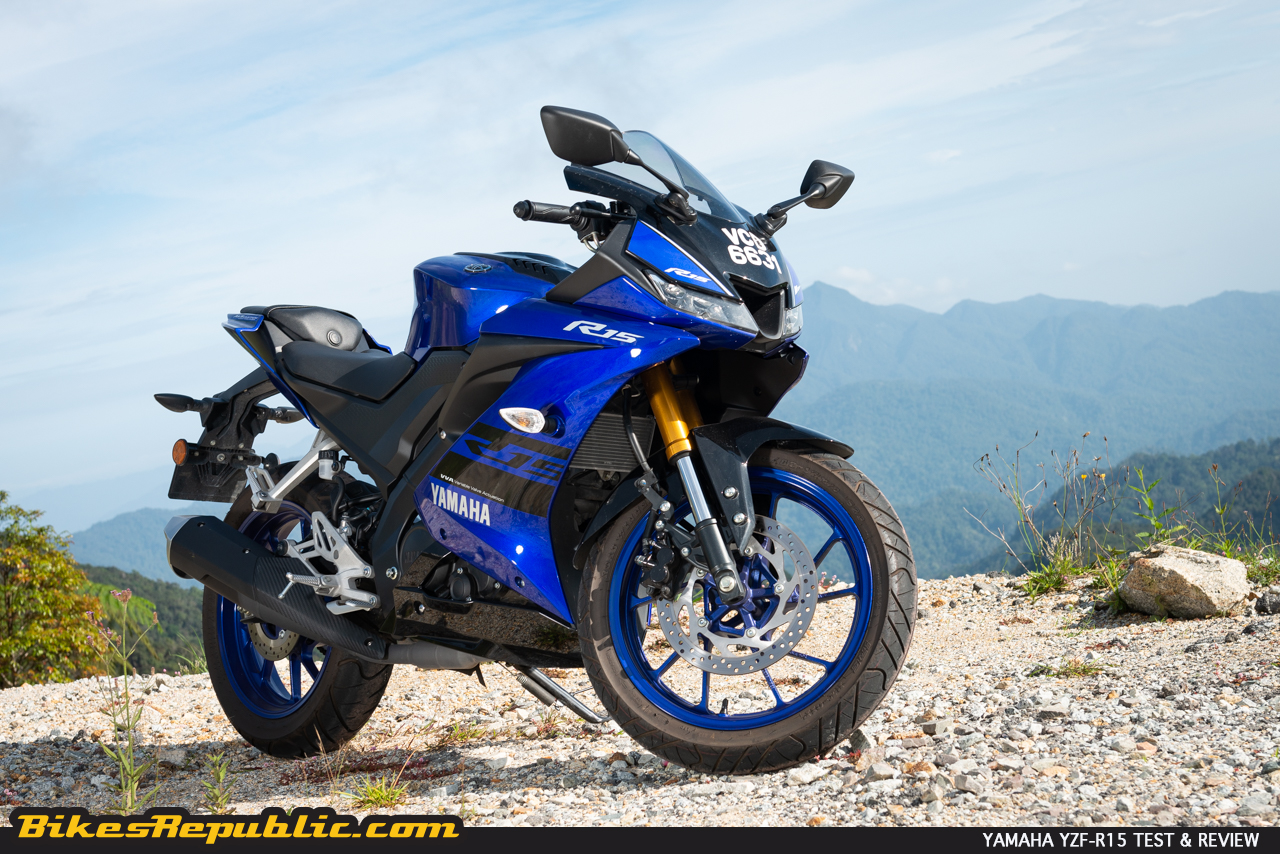
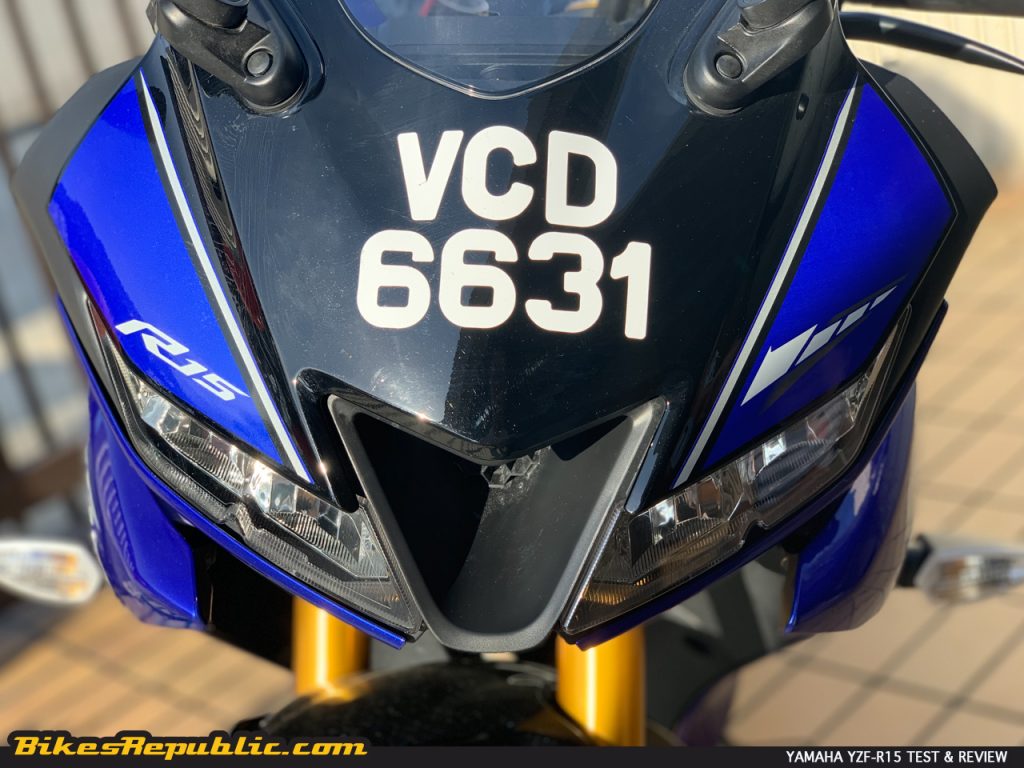
First and foremost, an introduction. This is the 3rd-generation R15, hence its “R15 V3″ nickname. It is definitely a handsome bike, having derived its styling from the YZF-R6 which in turn derived its styling from the YZF-R1.
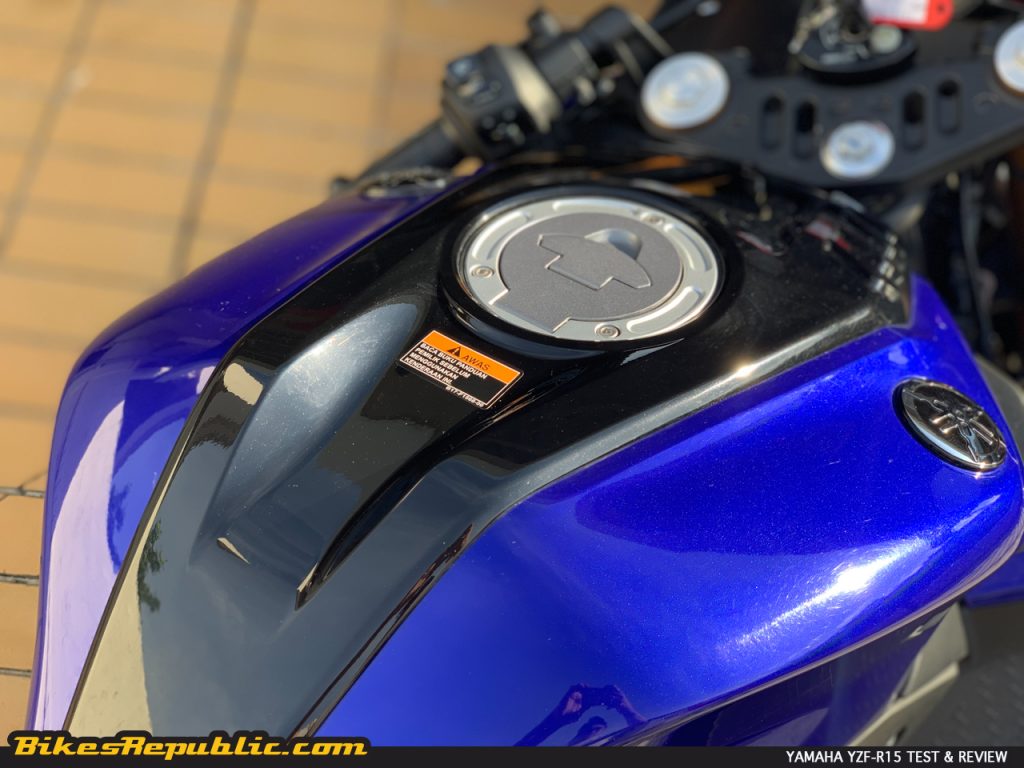
Introduction

The 155cc, liquid-cooled, SOHC, single-cylinder engine features Yamaha’s VVA (Variable Valve Actuation). At 155cc, it’s probably adopted from the NVX/Aerox scooter. While being only 155cc, the R15’s engine punches out 19 bhp at 10,0000 RPM and 14.7 Nm of torque at 8,500 RPM. 19 bhp doesn’t seem a lot, of course, but that’s good in terms of specific horsepower from 155cc.
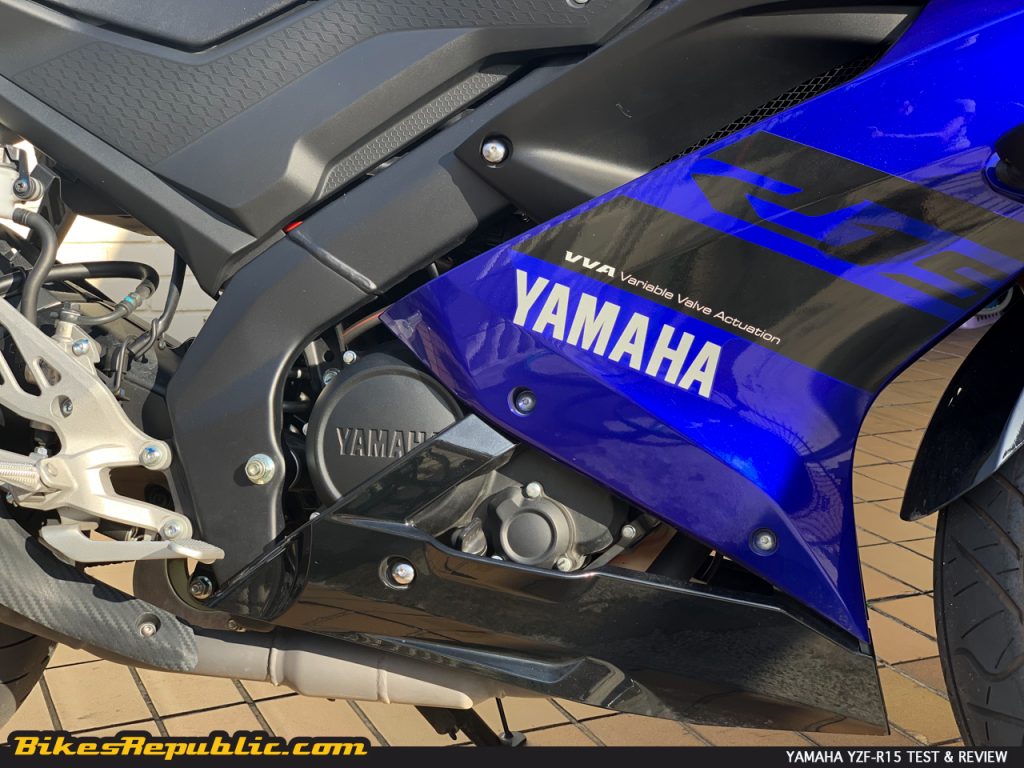
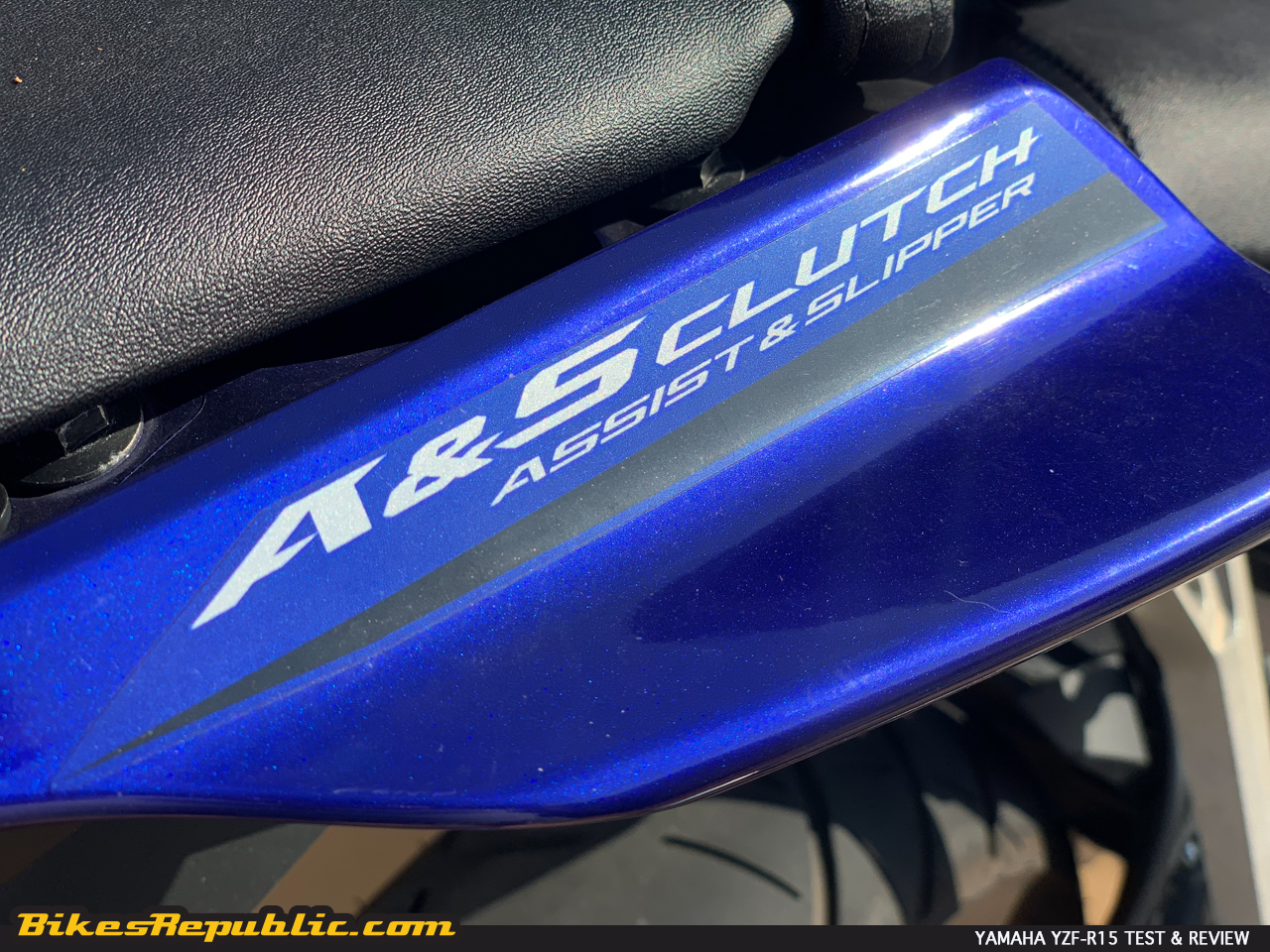
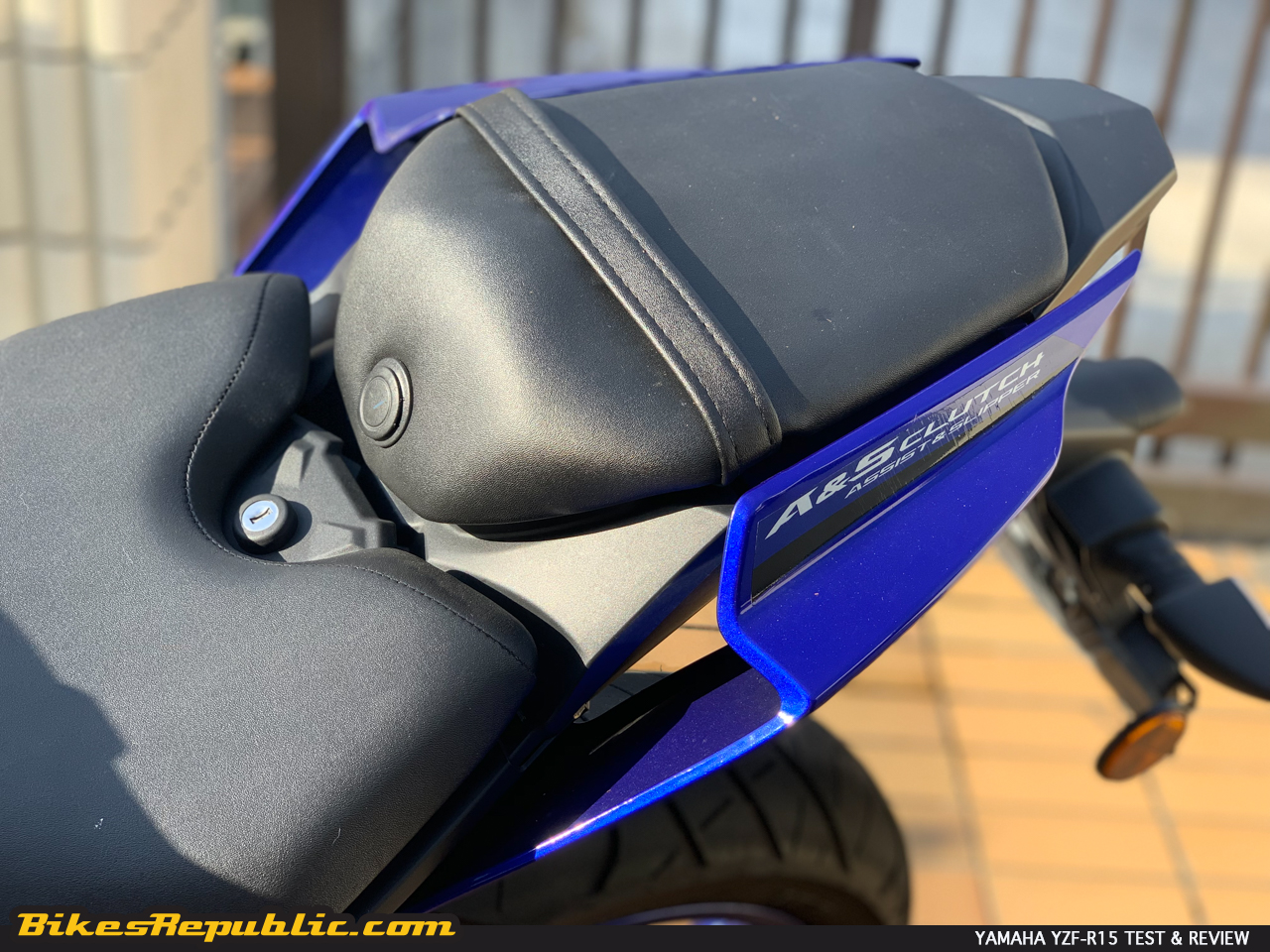
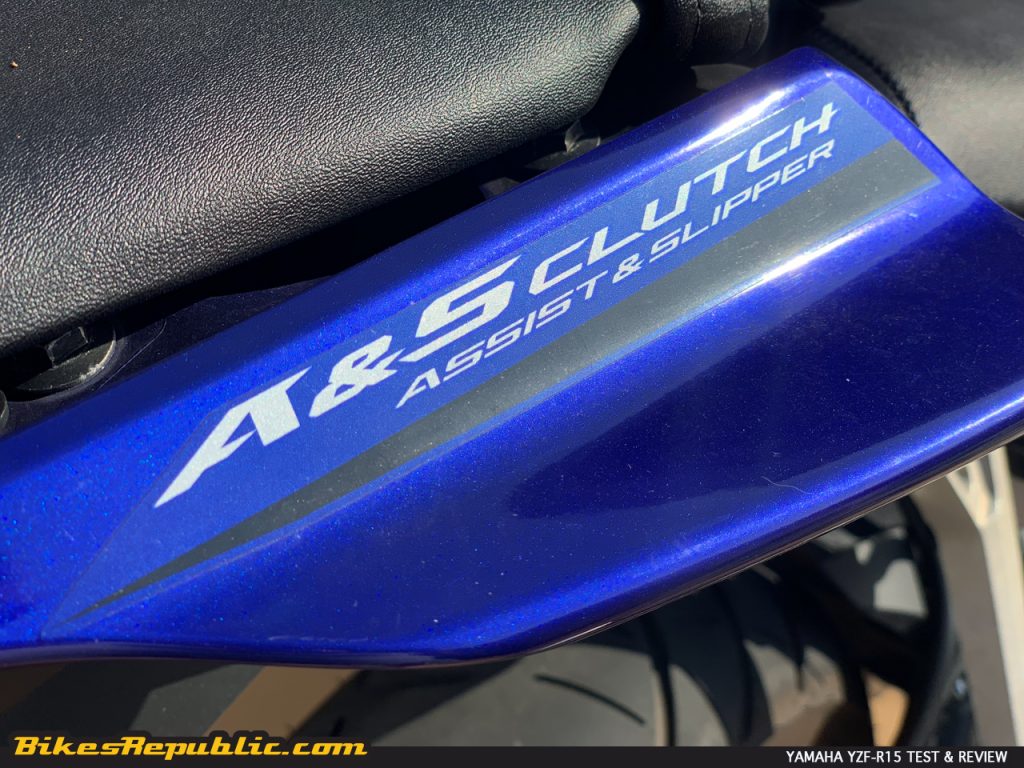
The engine’s power is fed through an Assist and Slip (A&S) clutch on its way to the 6-speed gearbox.

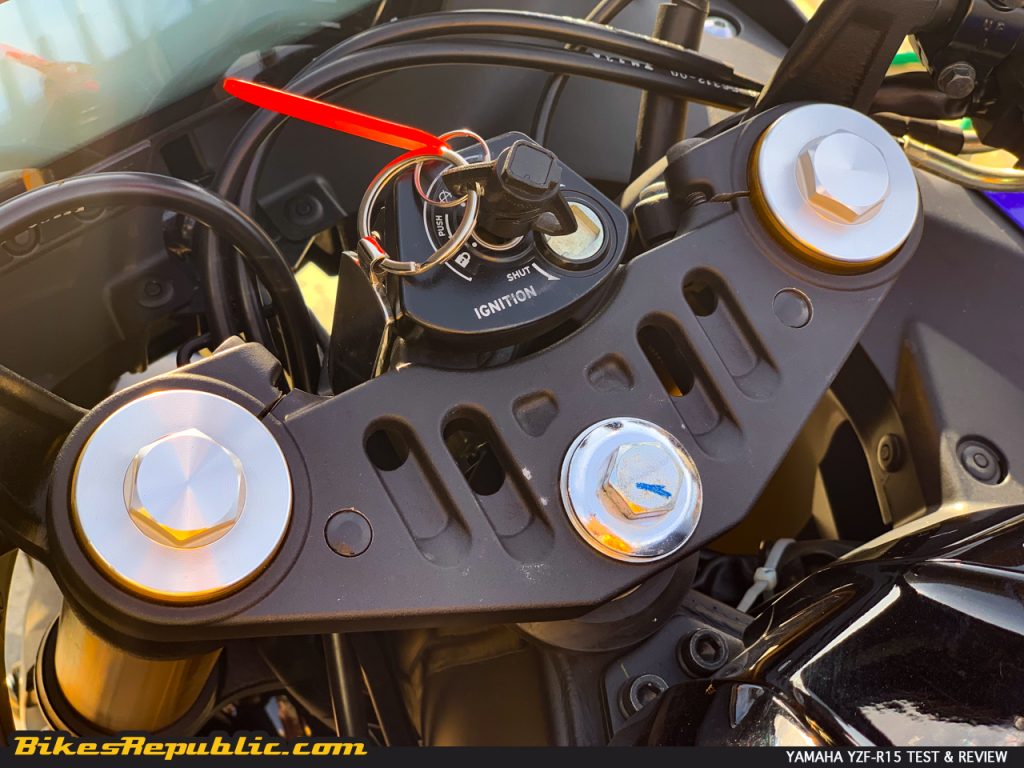
Its suspension consists of gold-coloured upside-down forks up front and a monoshock at the back. The forks and monoshock are non-adjustable. However, we noted that the shock acts through a set of rising rate linkages instead of being mounted directly to the swingarm. The frame is an updated Deltabox.

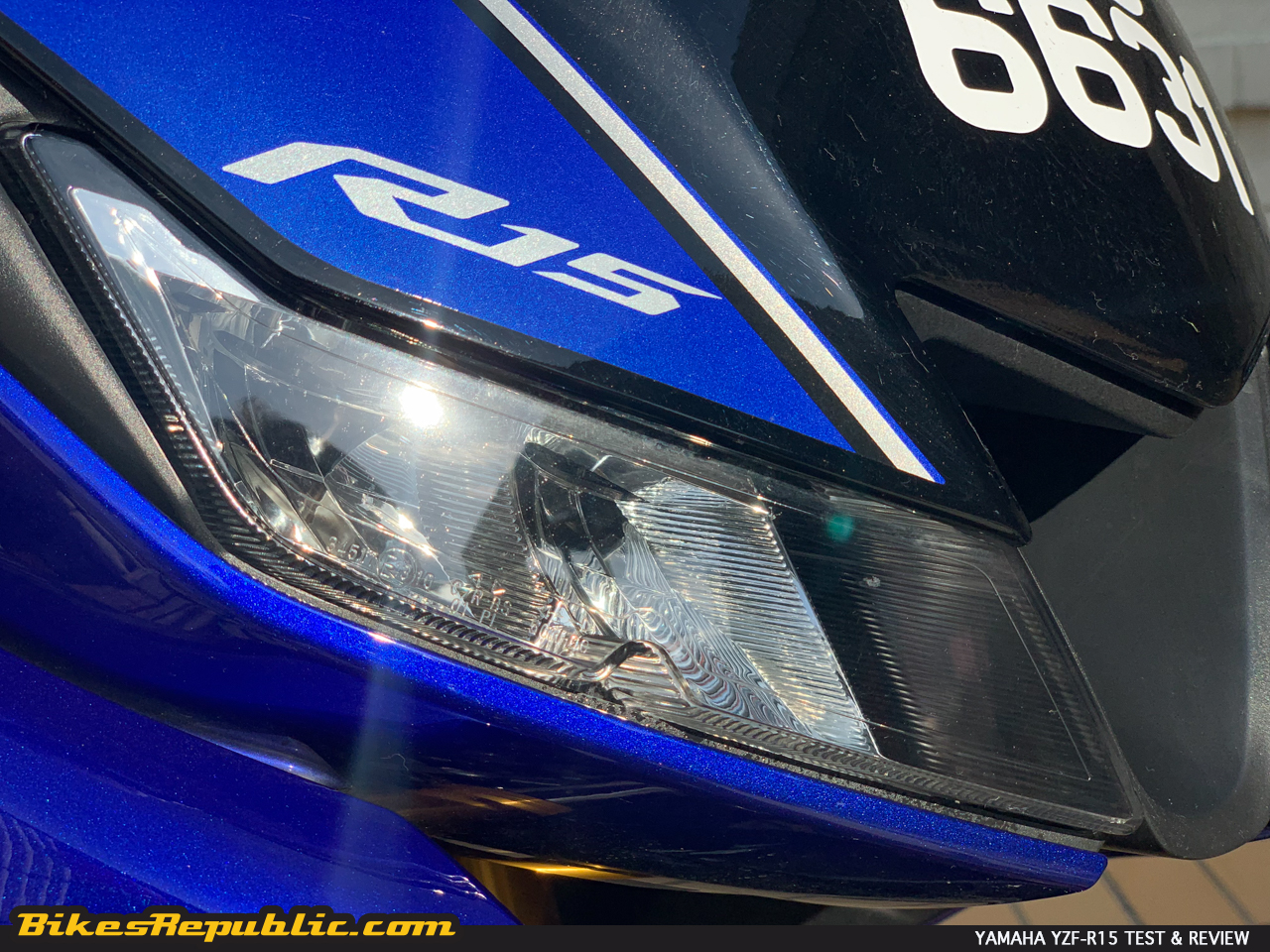
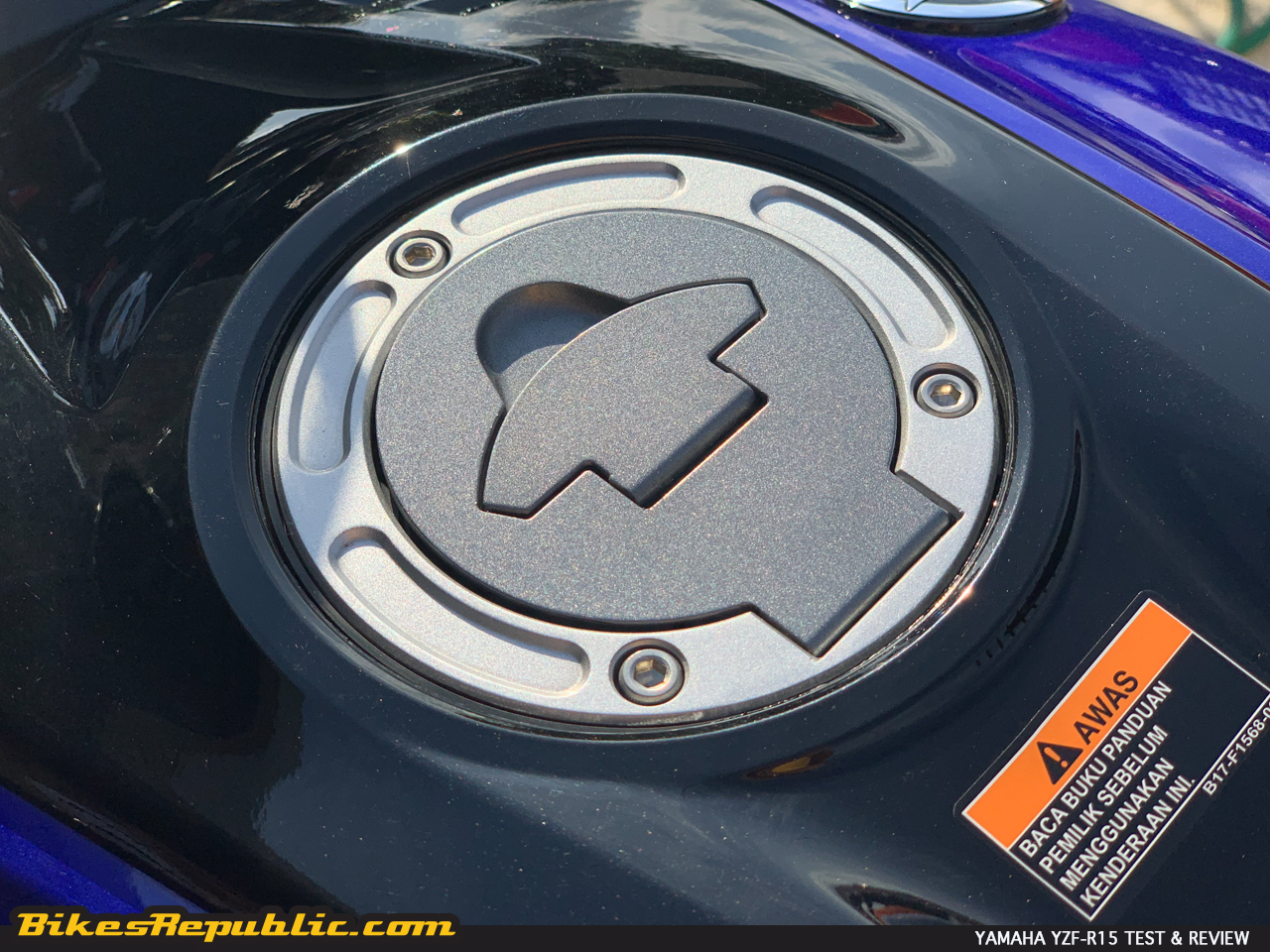
It features LED lighting and turn signals. The twin headlights flank a large (fake) air scoop. The windshield is as large as the R25’s. Apart from that, the instrument display is fully LCD.
Riding

The R15 felt front heavy at first, but it’s because we didn’t lower our upper body, causing us to push down onto the handlebars. During that moment, it felt like a steering damper that’s adjusted too tight. However, it disappeared as soon as we lowered our torso and relaxed our arms. Now the bike was very, very agile.

However, the bike became very stable at speeds above 90 km/h on the highway. It didn’t weave about even when hit by strong sidewinds. Credit goes to the well-designed aerodynamics.
The engine revved a little slowly under 5,000 RPM. You need to keep the engine RPM up to 2,000 RPM before dumping the clutch to charge off the line. However, the bike charges ahead when the VVA activates at 7,500 RPM (there’s an indicator in the instrument cluster). The engine smoothens out from 8,000 RPM, too.

The real fun of the R15 is in the corners since it’s lightweight, besides having a slipper clutch and sporty riding position.

The slipper clutch means you carry much more rolling speed into corners, even when you go off the throttle. Conversely, having too much back torque will slow you down mid-corner. On the R15, you charge into corners a gear higher than you normally do.

The lower handlebars allow you to hang off comfortably when you charge through corners. Just move your body to the inside and let the fuel tank support your out upper arm.

In fact, we kept flying through corners from 30 to 40 km/h faster than we would normally do. The R15 inspires lots of confidence when you chuck the bike in due to its low weight and quick-turning character. It holds the chosen line while you’re able to modify your line even while you’re sparking the footpegs.

Helping to realize this kind of riding is the suspension. We’ve tested all of Yamaha’s road bikes (apart from the R1 and R6) but it’s the R15’s suspension that’s the best calibrated. You may take big hits while riding slowly, because the bike is light, but the suspension becomes very well damped the faster you go. There’s no bobbing or wallowing at speed.
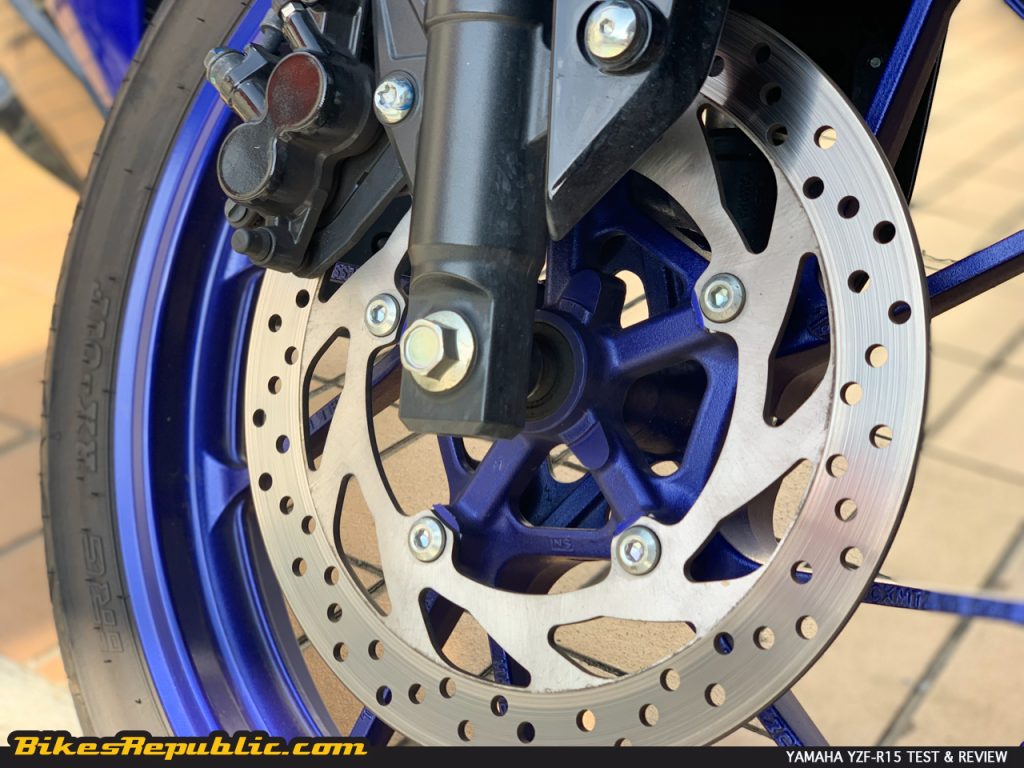
Another measure of the suspension was when the bike ran through wet patches and standing water while leaning inside corners. The stock tyres felt a little slippery on other bikes, but they felt perfect on the R15. We could only imagine how well the bike will perform on better tyres.

Yes, we know naysayers say the Yamaha YZF-R15’s riding position is uncomfortable, but that’s just because you need to know the correct technique. We’re not criticizing, just that it’s something riders have to learn.

Secondly, we know some may say it’s slow because it’s only 155cc. Yes, we admit it took time to build up speed (it’s not a 1000cc bike, so c’mon!) but the top speed we hit surprised us thoroughly. How fast? 150 km/h on flat road (right at the 12,000 RPM redline) and almost 160 km/h while charging down a slope. Slow? No way!
And no, there wasn’t any stock Y15ZR that could keep up on the straight line and in the corners.

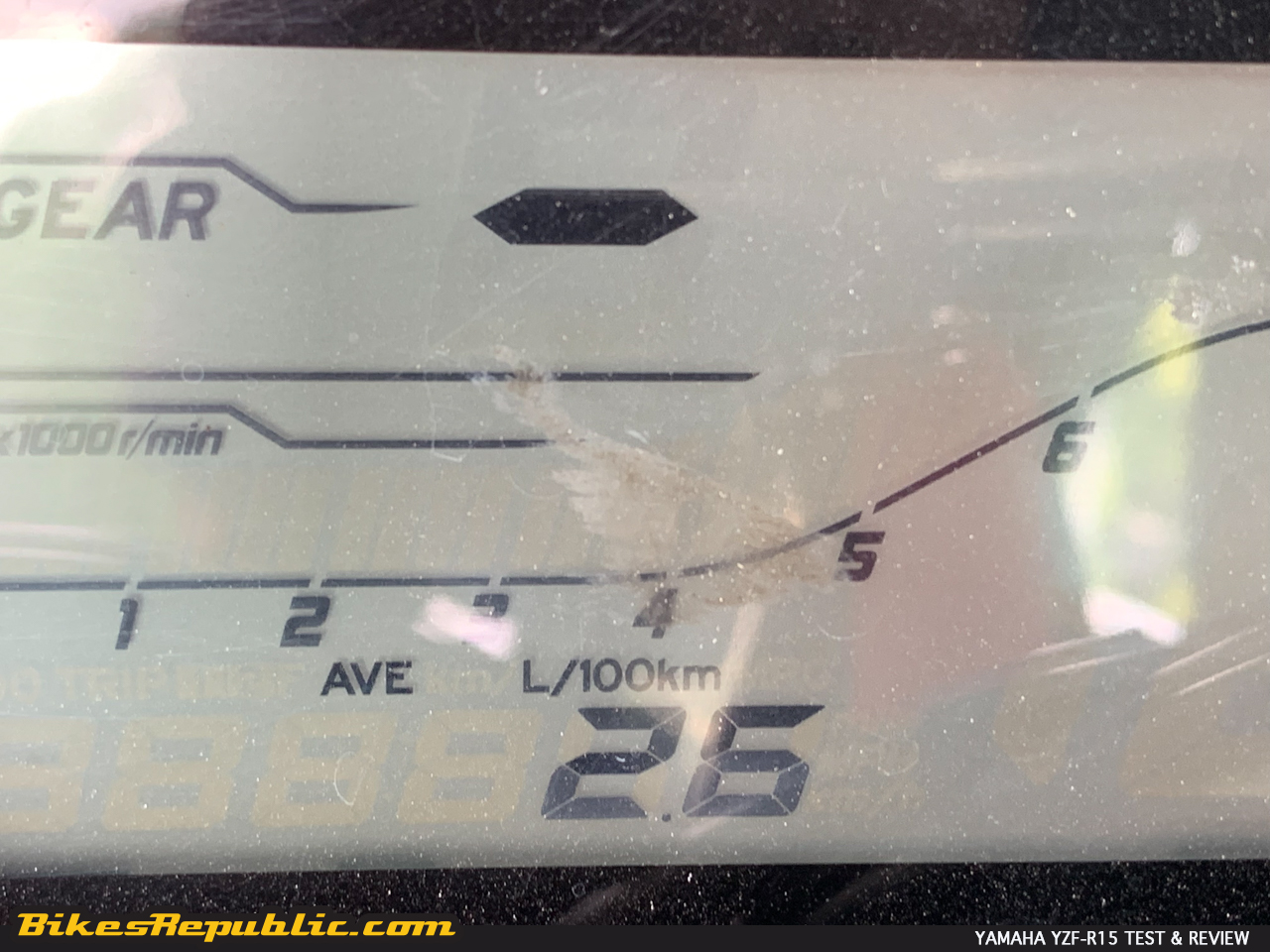
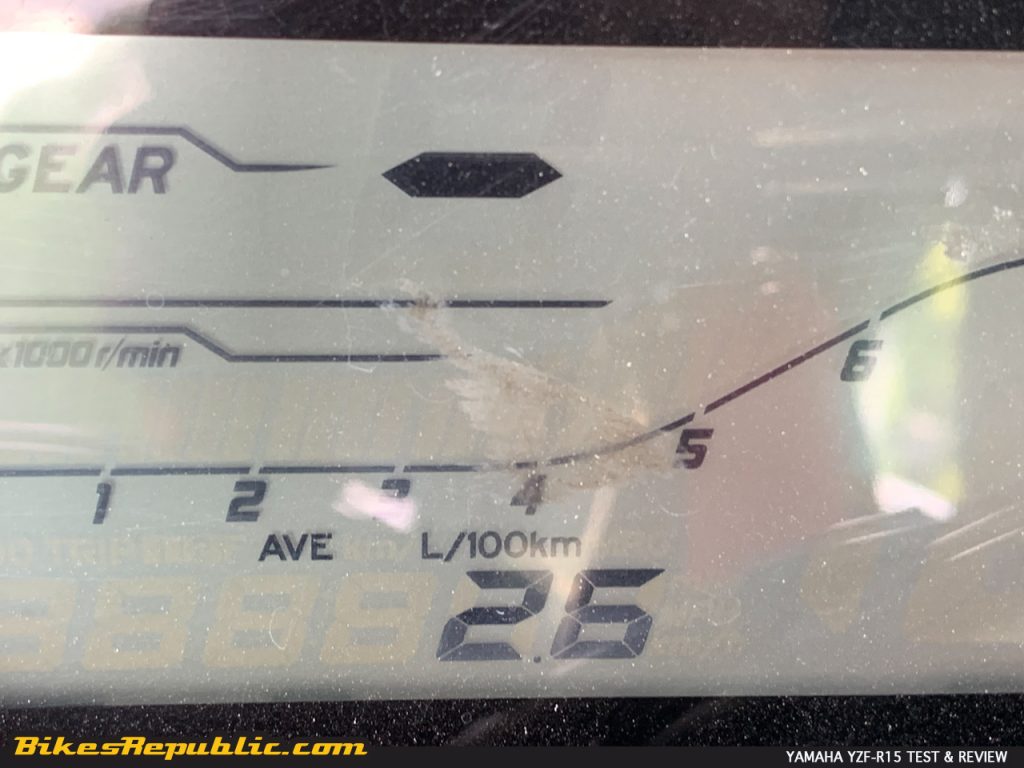
Finally, the engine was remarkably fuel efficient despite us riding at 110 to 130 km/h all the time, after charging full throttle from idle. We averaged 310 km per 11 litres, and we only refueled the bike once in the one week! The computer showed 2.6l/100km, which equates to 38.5 km/l.

By the way, we tried really, really hard to find something negative but found none…
Conclusion

The Yamaha YZF-R15 really surprised us to no end, because it demonstrated just how capable it is. This is definitely the best 150cc sportbike in the market.

It is priced from RM 11,988 (basic selling price), and offered in Blue, Yellow and Black.
PICTURE GALLERY
  • Ducati CEO Claudio Domenicali said there could be more V4 models on the way.

  • Ducati fans hope a new Streetfighter V4 is among them.

  • In the meantime, Officine GP Design built this Ducati Streetfighter V4.

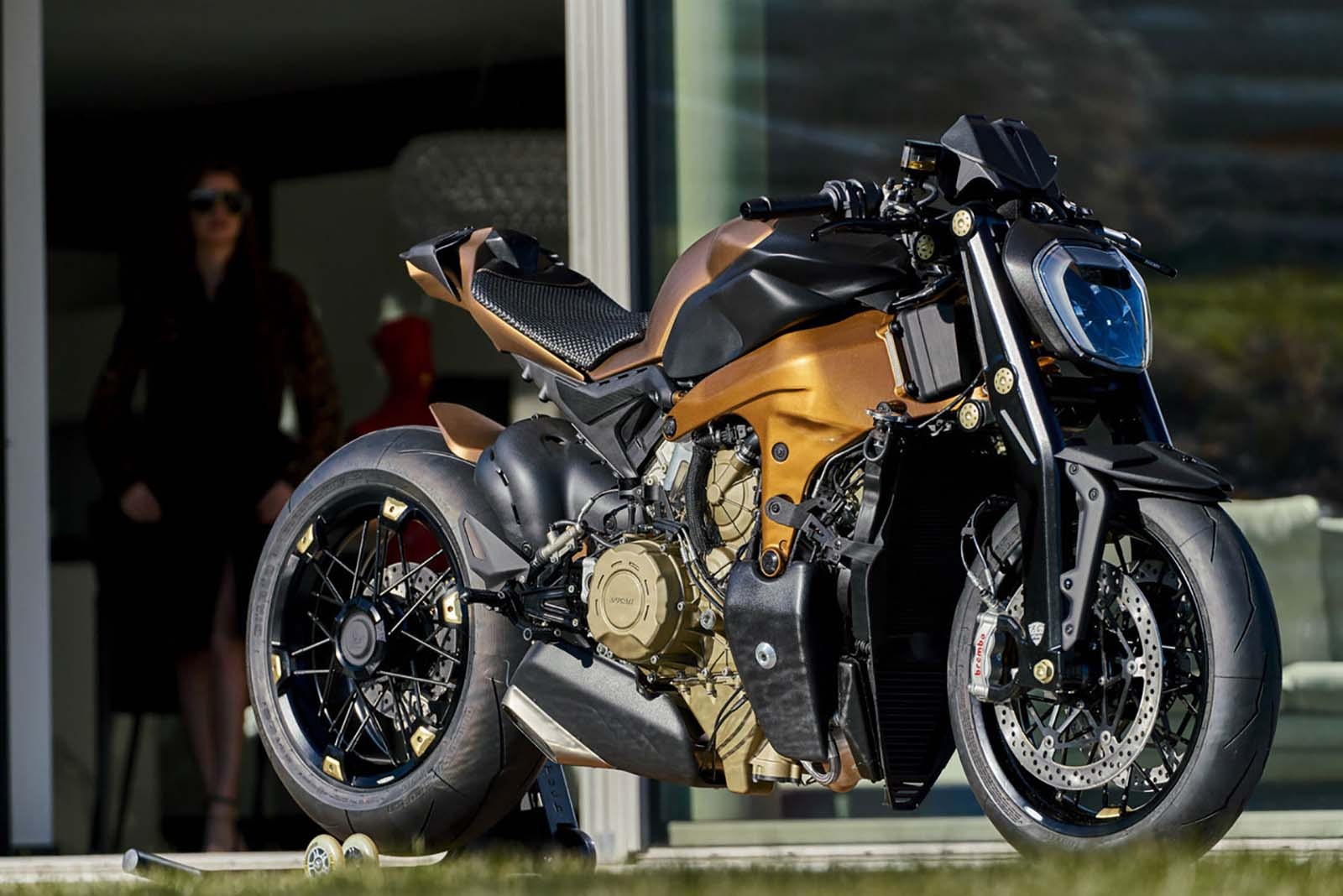
Raise your hands if you are one of many who miss the Ducati Streetfighter and looking forward to a new one. But here’s the Officine GP Design Ducati Streetfighter V4 while we wait.

The anticipation for a new V4-powered Streetfighter became a storm when Ducati CEO Claudio Domenicali said there will be more Ducati V4 models in the future. It’s a news well received because Ducati doesn’t have a true blood naked sportbike, apart from the current Monster 821.

However, Italian design house Officine GP Design went ahead and built their own Streetfighter. They will produce ten of these exquisite bikes. While it was built independently from the manufacturer, it goes to show that the V4 and frame platform have the potential to be turned into other bikes.

Besides the lack of bodywork, the most striking feature are the girder forks in place of the stock Öhlins items. The girder forks are supplied by FG racing and they are machined from solid billet. The Jonich SX wheels add even more drama to the entire package.

The tank and frame aren’t just painted, instead they are covered with a specially made textured copper. The headlight was sourced from a Ducati Diavel. The instrument display is stock but is mounted on a 3D-printed mount.

The leather seat is by Foglizzo with a V4 Penta logo. The bike’s tailsection was also redesigned. Other components are mostly from Rizoma.

Let’s hope Ducati’s V4 naked bike will look as good as this or even better.

All photos by MCN

  • We got up close with the KTM RC16 that Hafizh Syahrin rides in MotoGP 2019.

  • Most of the bike was hidden in tight-wrapping bodywork.

  • But there were a number of details that caught our eyes.

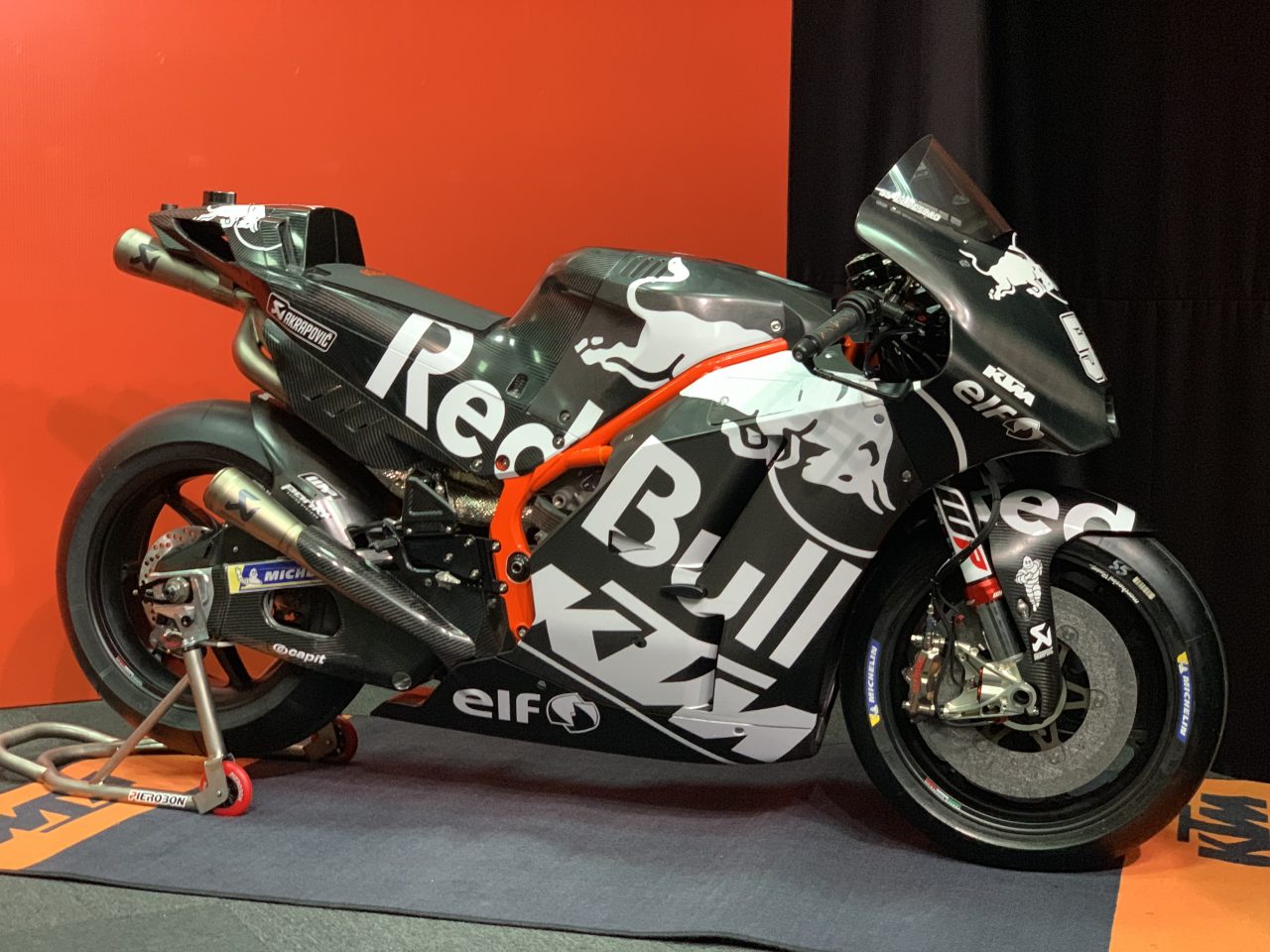
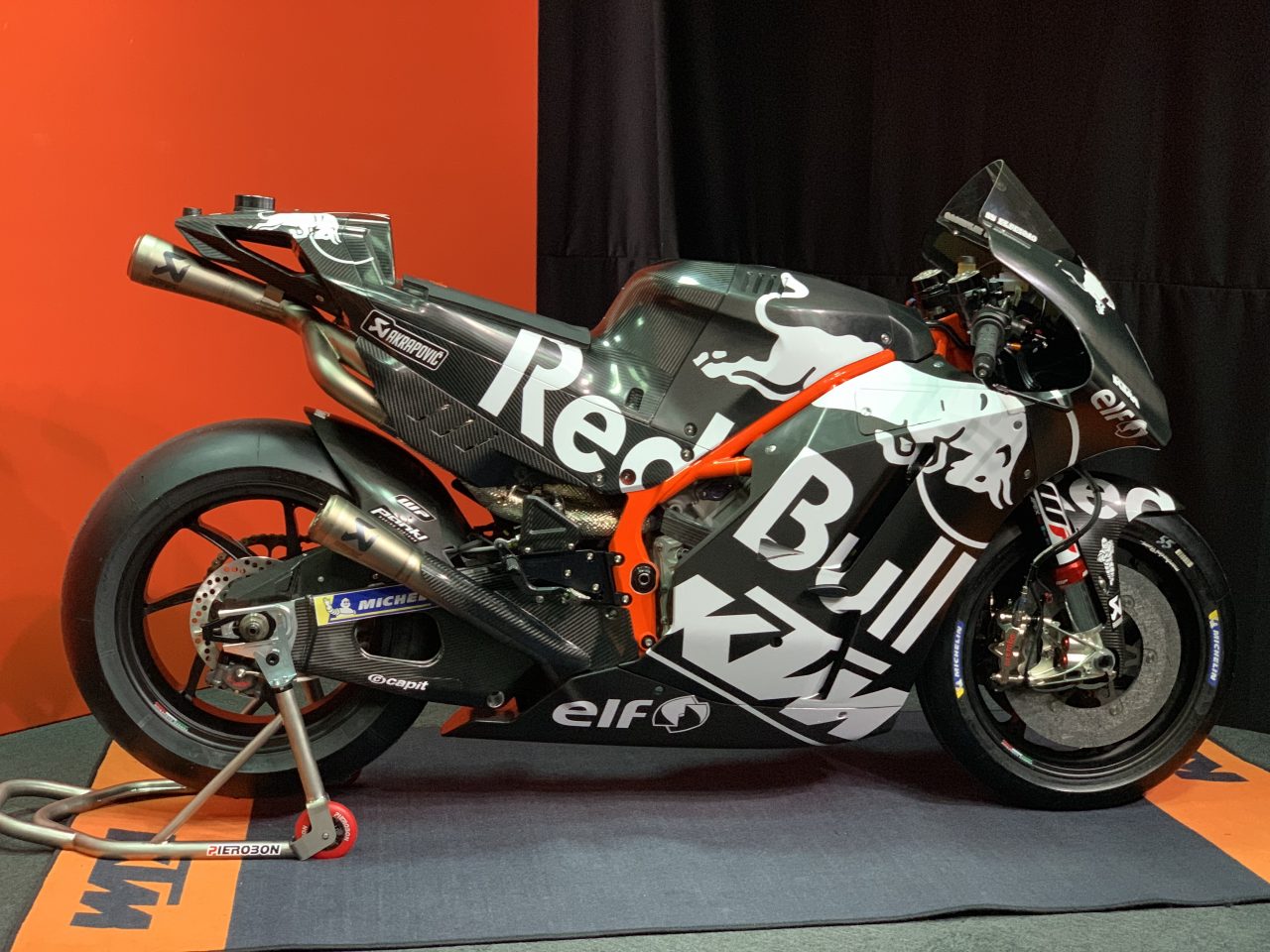
You must have noticed the KTM RC16 which Hafizh Syahrin posed on during yesterday’s press conference. Yes, it’s the bike he’ll be riding in the MotoGP 2019 season.

We’ve seen almost all the MotoGP bikes up close before and have grown used to them. However, there are a number of intriguing details on the KTM RC16 that aren’t found on other MotoGP bikes.

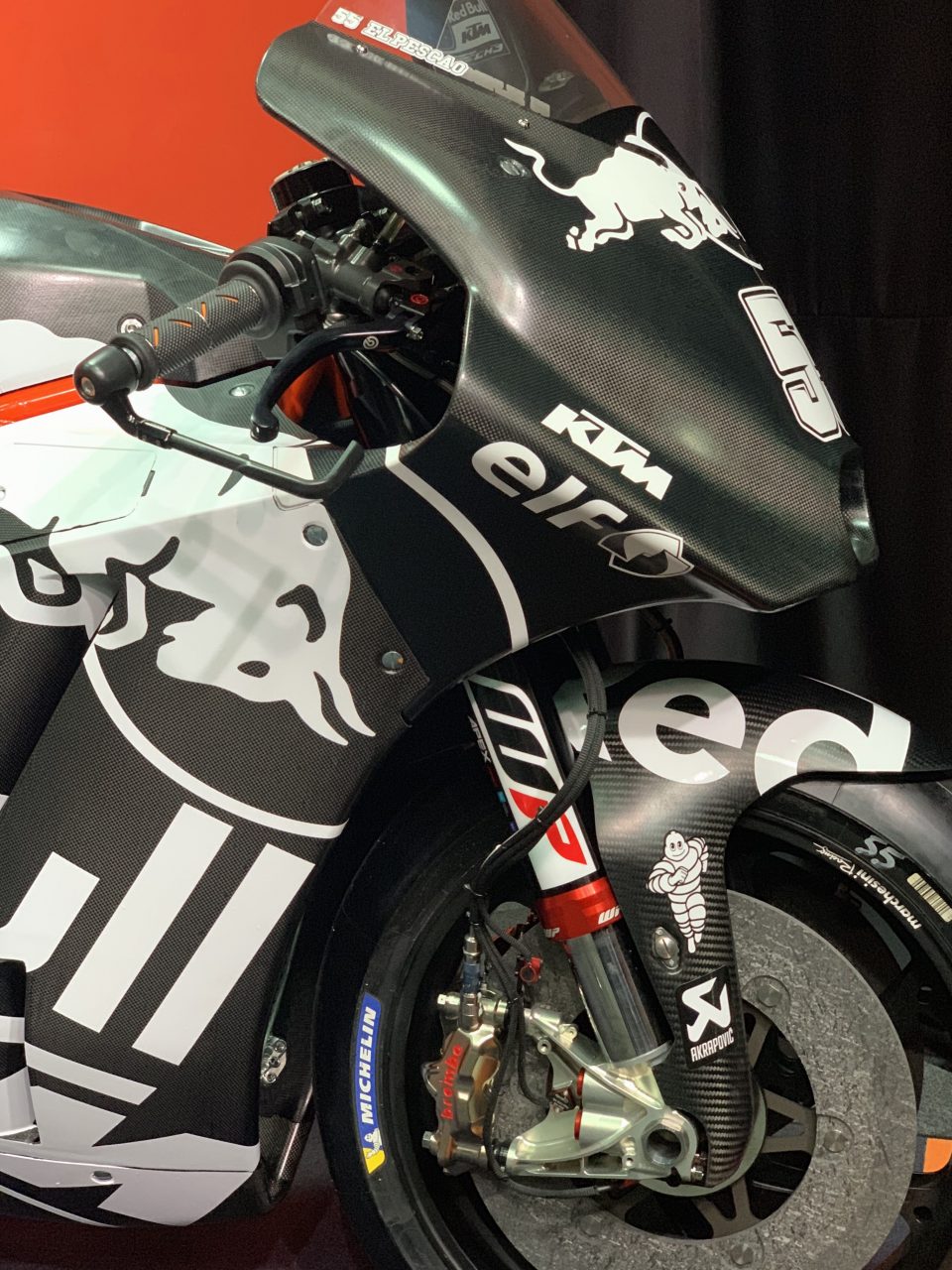
WP Suspension

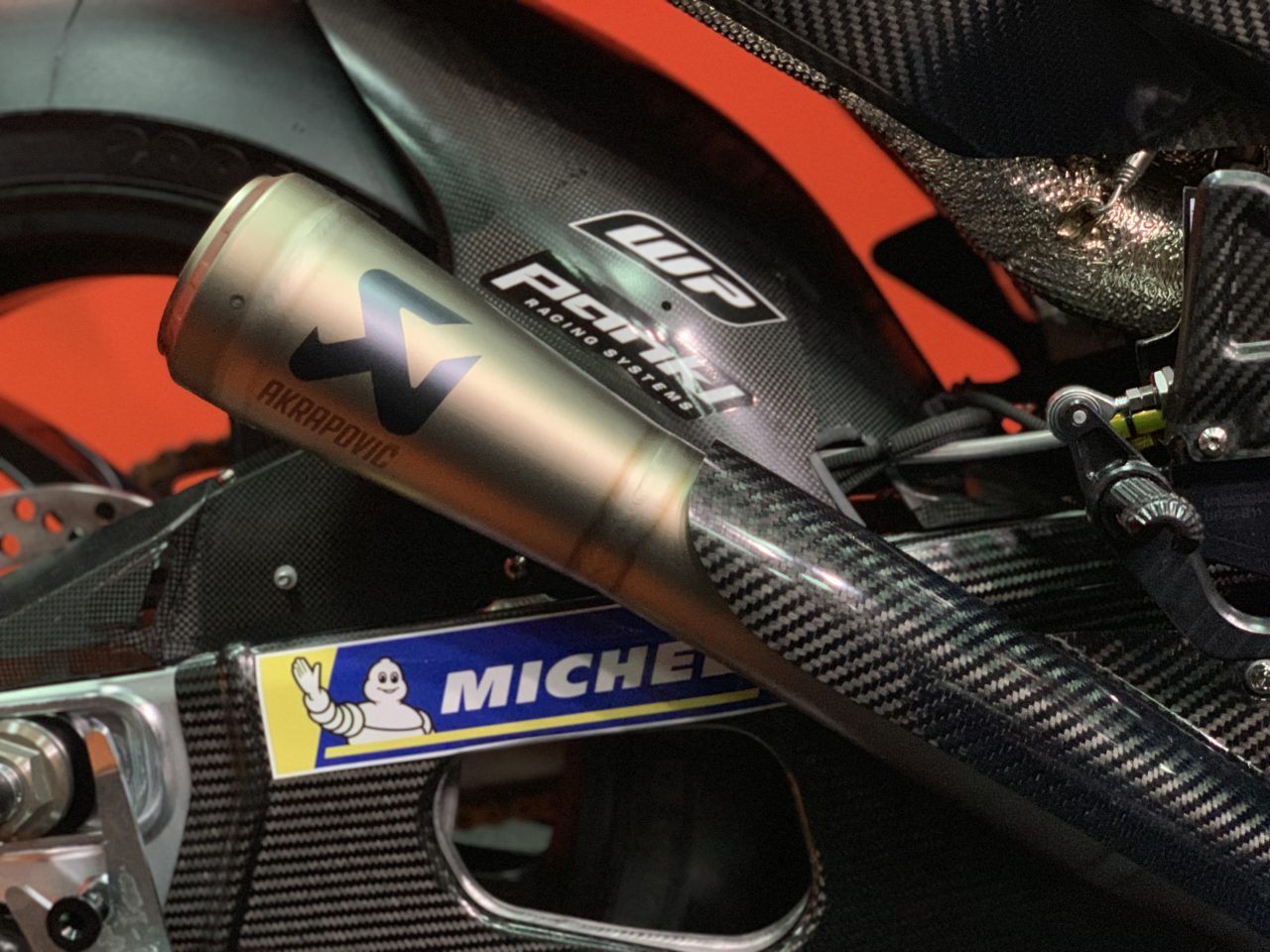
Virtually all bikes (Moto2 and Moto3 included) in the paddock run Öhlins suspension. WP Suspension is a Dutch company set up in 1978, but it currently fully-owned by KTM. That’s why all on-road and off-road production KTMs wear WP suspension.

The use of the suspension brand also extends to KTM’s factory race teams in Moto2 and Moto3, so it’s natural to use them in MotoGP.

Hafizh said during the press conference that he needs to adapt to the new suspension. That’s because he had been riding bikes with Öhlins for a long time.

Look at the size of that thing!

One of our BikesRepublic.com Instagram follower observed, “Whoa! Look at the size of those front brake discs!”

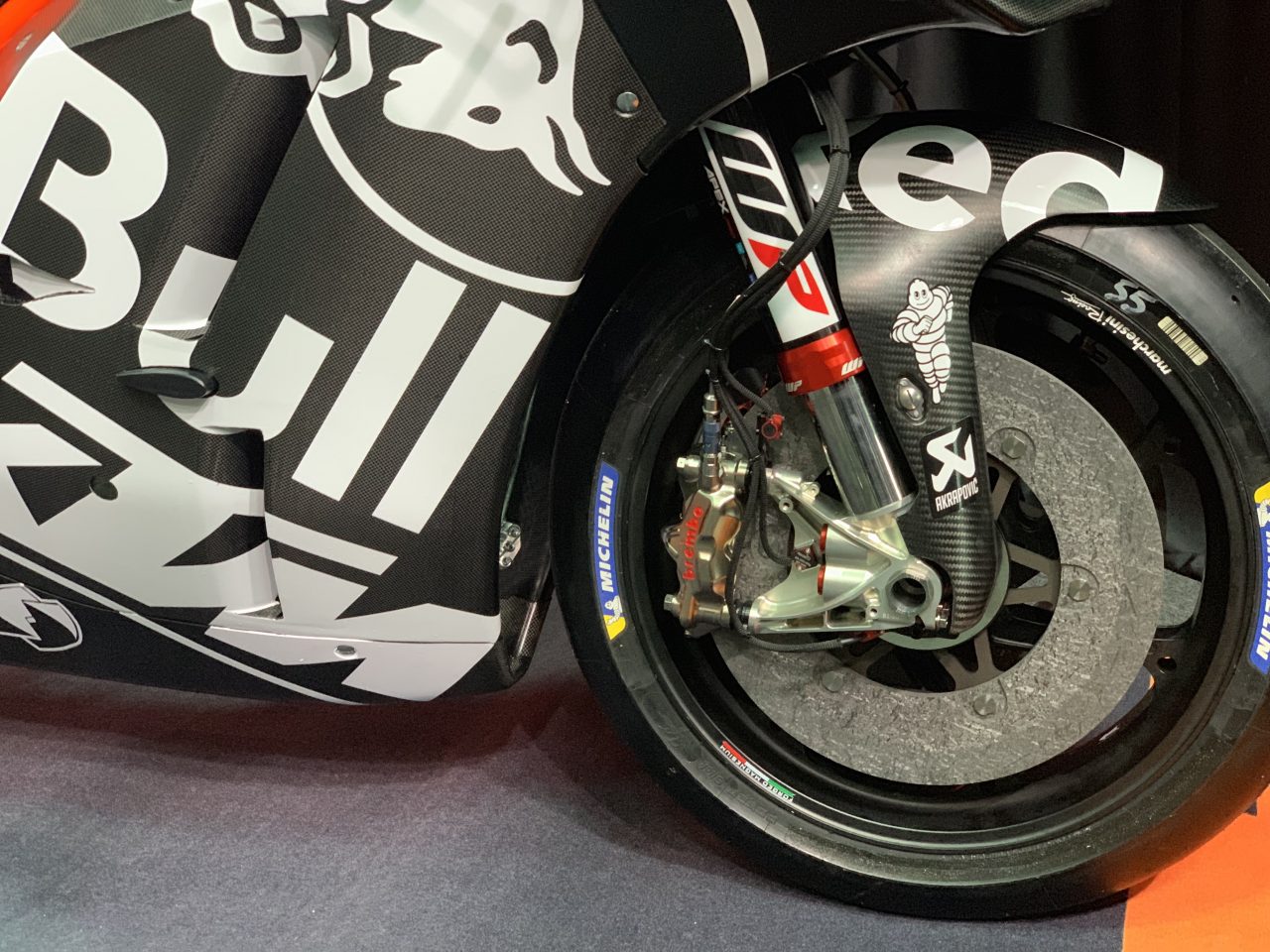
He’s right, those are the 340mm carbon discs. They are only used at a small number of racetracks on the MotoGP calendar, such as Motegi. Motegi is called a “stop-start track” where long straights precede super-hard braking zones before corners.

Increasing the size of the discs isn’t about extra braking power. That’s because the standard 320mm discs already generate enough power for the riders to lift the rear wheels off the ground.

Instead, the increased diameter is for cooling purposes, so that the discs don’t overheat.

Talk about an evolution. When carbon brakes first appeared on the grid many years ago, riders had to drag their brakes at the beginning of the race to build up and retain heat in the discs. Now, they can even overheat!

Show some backbone

All KTM road bikes utilize the steel trellis frame, so KTM decided to use what they know best in the RC16, too. In fact, KTM’s Moto2 and Moto3 bikes use the trellis layout, as well.

You can see the orange-coloured frame’s top truss just jutting out from above the fairing, besides the downtubes which anchor the swingarm.

Everything else then bolts to this frame. The seat and tail unit not only includes the rider, but also most of the fuel tank. Yes, MotoGP fuel tanks actually start from just behind the normal fuel tank and extend to underneath the rider’s seat. The front part of the “tank” includes the airbox and electronics.

In your face

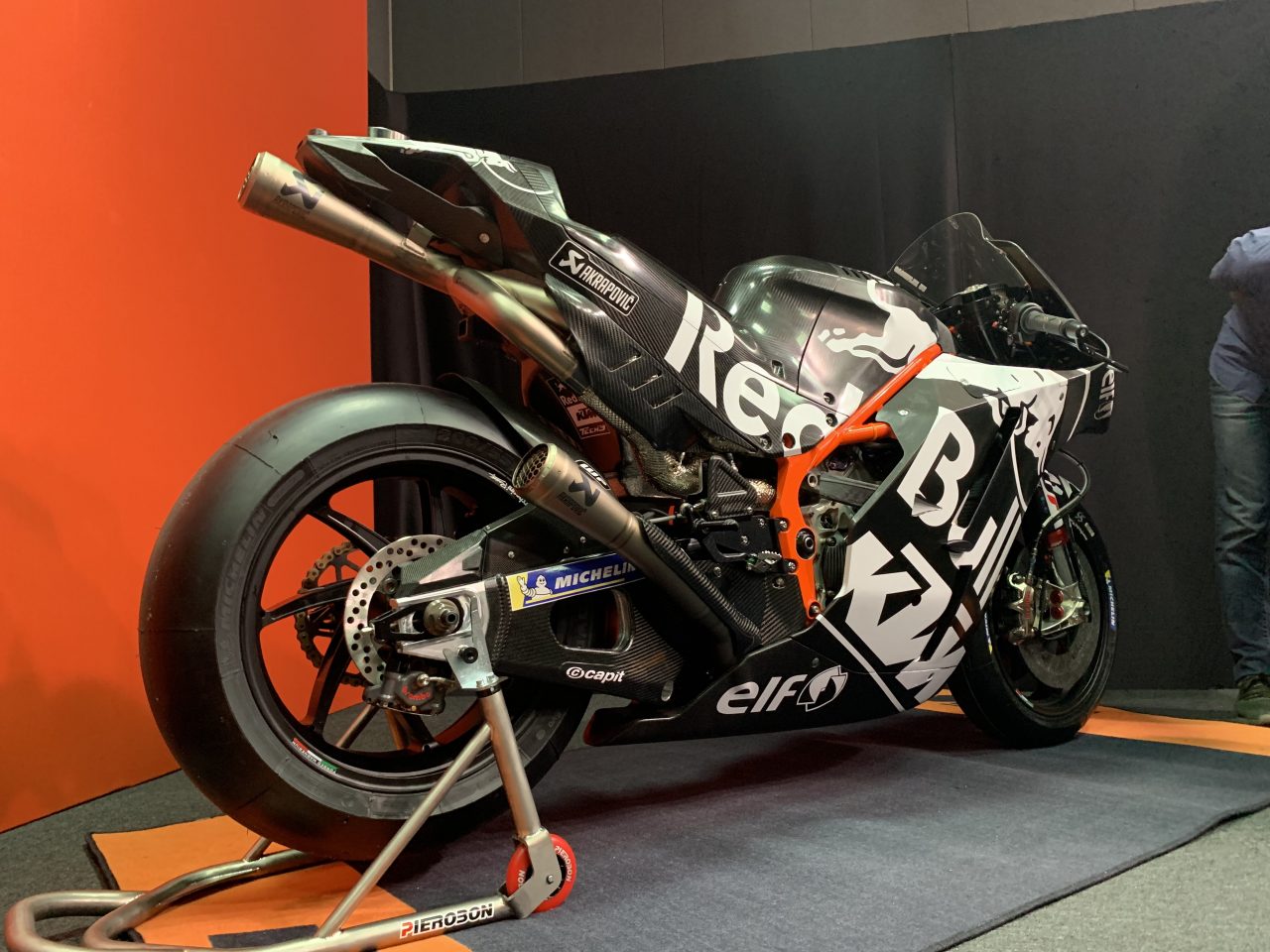
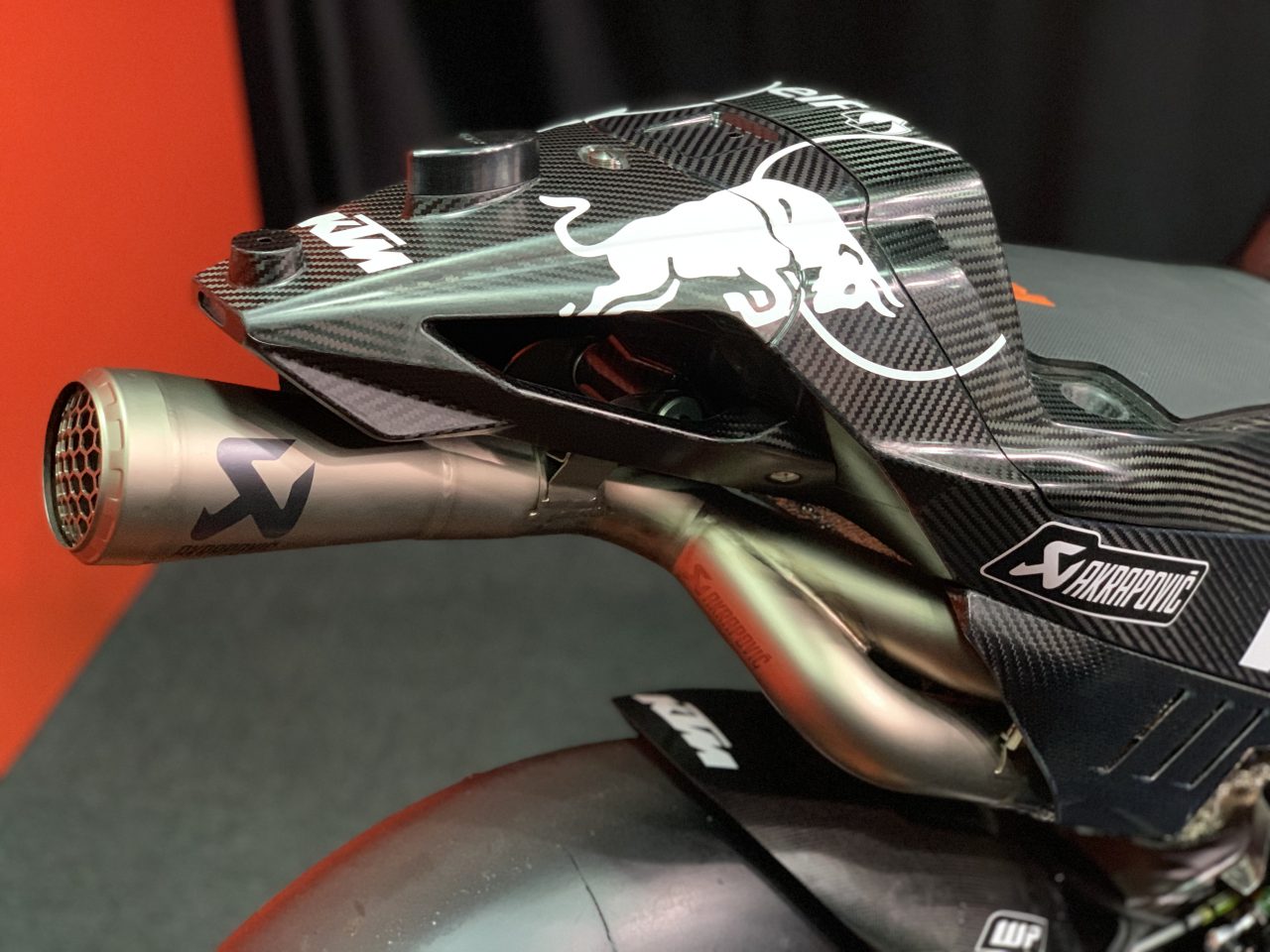
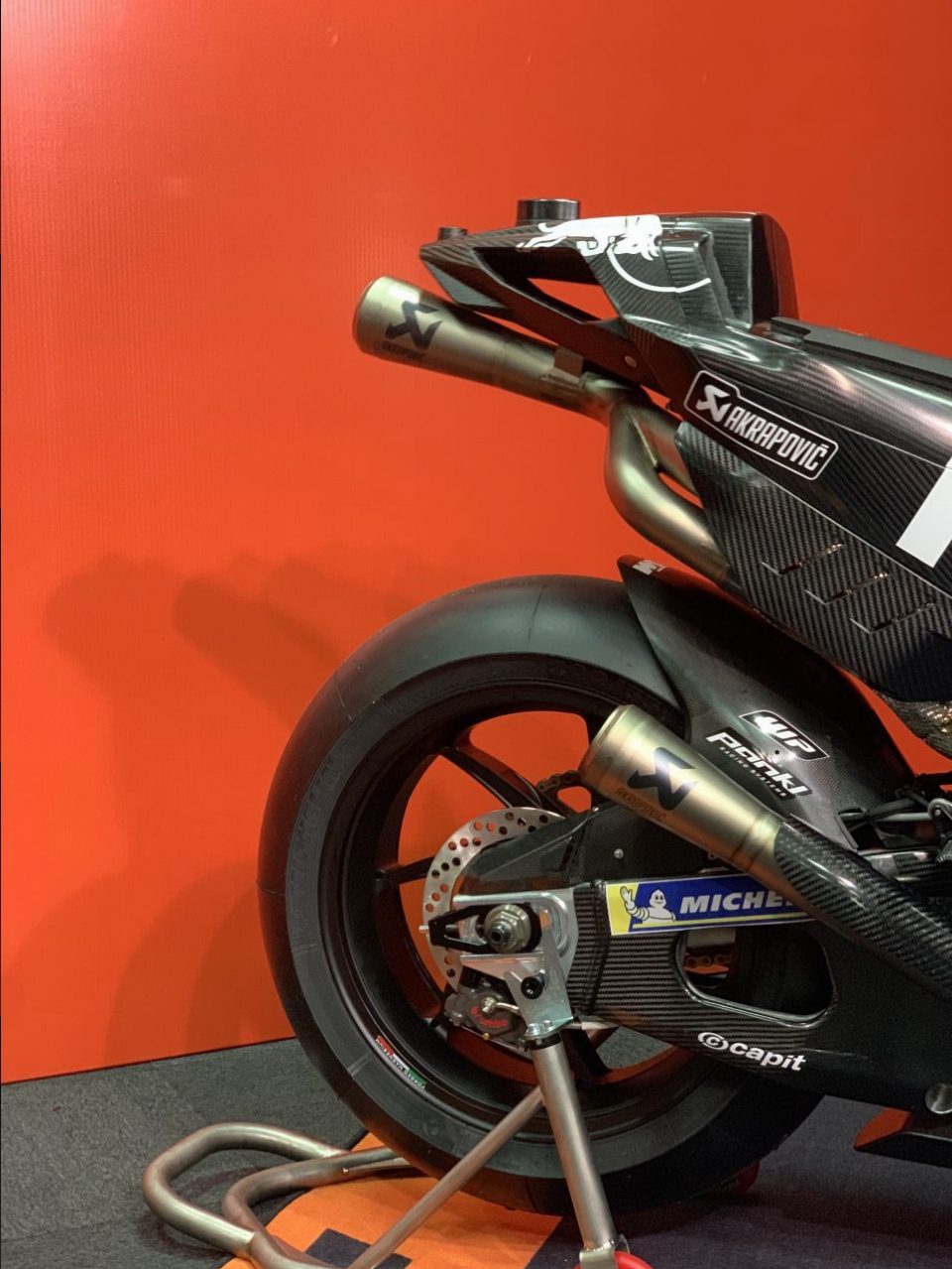
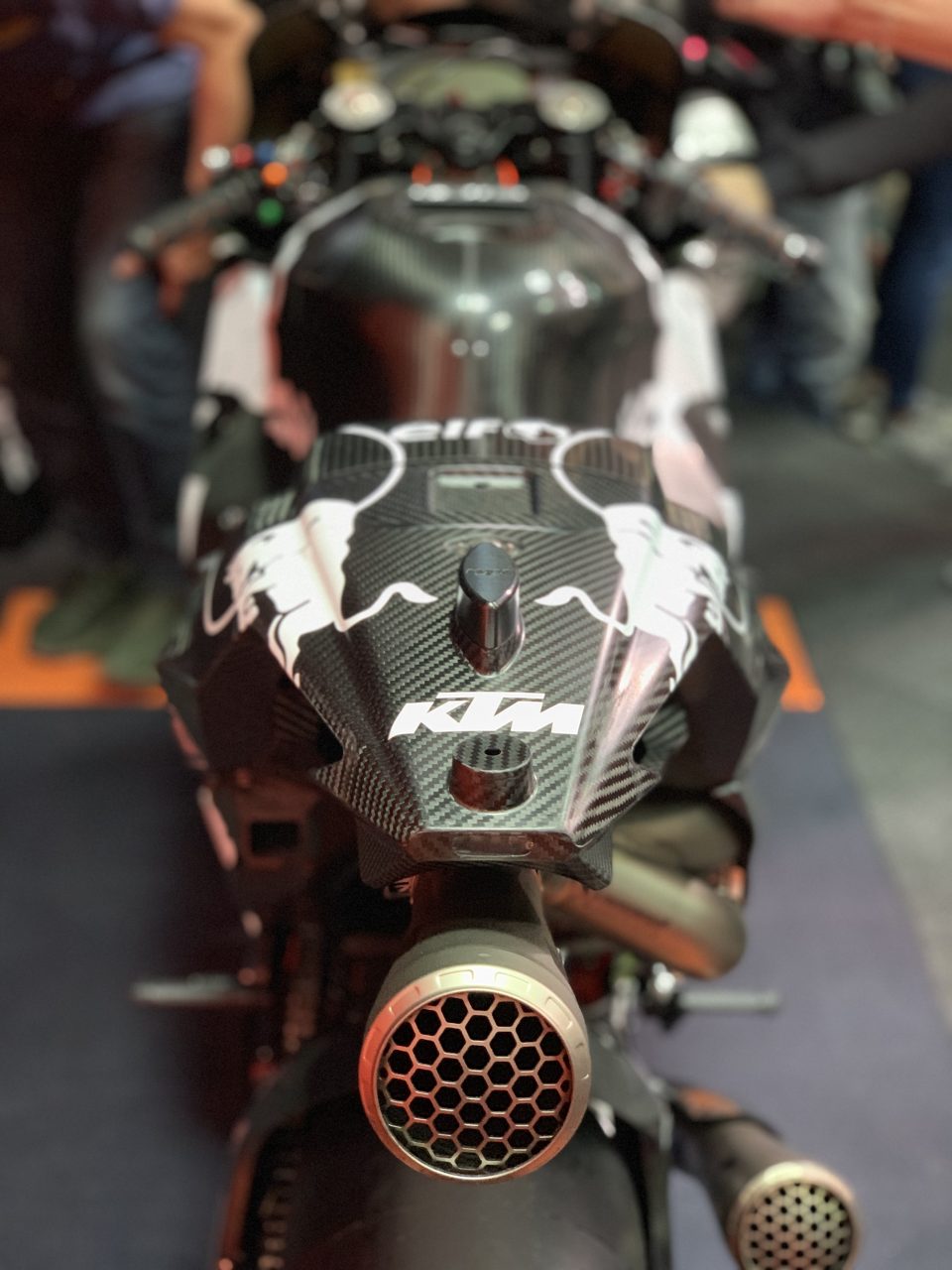
The exhausts of the RC16 looks familiar to MotoGP observers, of course. Their arrangement is similar, if not identical to those on the Honda RC213V.

The RC16 is also a V-Four. Consequently, the front pair of cylinders vent their gases through a pipe down low, while the rear pair vents through a pipe set high underneath the seat.

Hafizh’s office

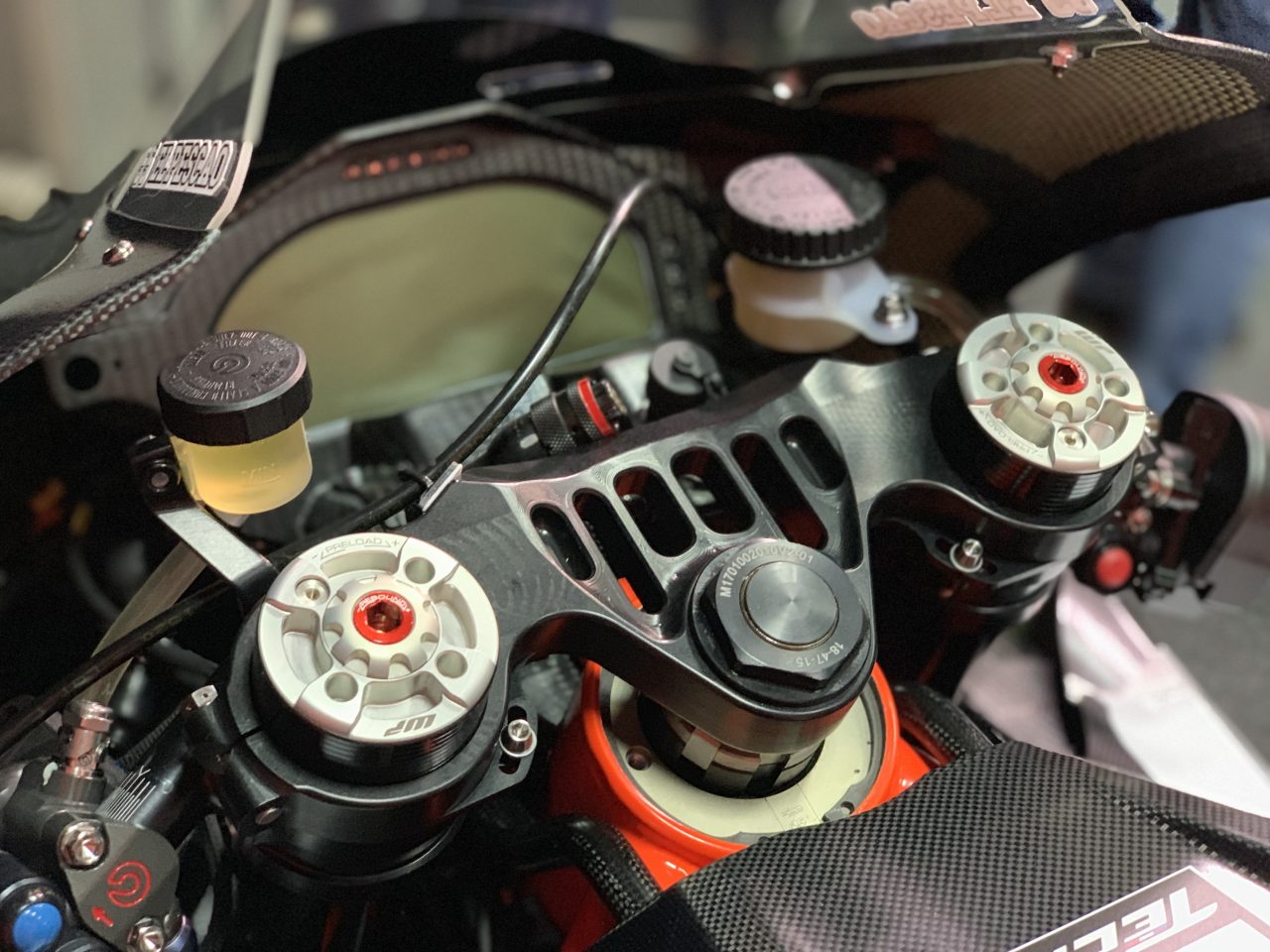
The bike’s cockpit is clear of clutter, as it should be.

Note the machined-from-billet upper triple clamp. This one turns back down at the ends to bring the centerline of the forks closer to the centerline of the headstock. Doing so reduces trail, making the bike turn into corners quicker.

There could be other triple clamps as well with different arrangements to affect the trail or even rake angle of the front end.

The KTM teams are carrying out their shakedown tests for the next three days beginning today at the Sepang International Circuit.

Archive

Follow us on Facebook

Follow us on YouTube