Bikesrepublic

English

The Ministry of Youth and Sports (KBS) will apply for special additional funding from the Ministry of Finance (MOF) to support young national racer Hakim Danish Ramli in continuing his racing program in Europe.

This step was taken after a grant application from the National Sports Trust Fund (KWASN) could not be fulfilled due to limited available funds and high demand from various parties.

Youth and Sports Minister Hannah Yeoh stated that while the ministry recognizes the country’s many sporting talents that require support, the current funds are insufficient to cover all needs—especially motorsports, which require significant investment.

“So for Hakim, we will apply to MOF for more funding,” she said.

Elaborating further, Hannah explained that KWASN’s funds are inadequate due to the overwhelming number of applications exceeding the available allocation, forcing the ministry to seek alternative solutions.

“That’s why we have applied, and we will continue following up with the Ministry of Finance to explore how we can assist Hakim.

“I know that MAM (Malaysian Motorsports Association) is also working to support Hakim,” she added.

Through his management team, ZK Racing, Hakim Danish had applied for a KWASN grant to cover his expenses in Europe, including securing the best machinery to compete in the Red Bull MotoGP Rookies Cup (RBMRC) and the FIM JuniorGP World Championship.

The young racer currently leads the overall standings with 154 points, ahead of his closest rival, Brian Uriarte, who has collected 141 points. A maximum of 100 points are still up for grabs with only four races remaining across two rounds in the 2025 Red Bull Rookies Cup.
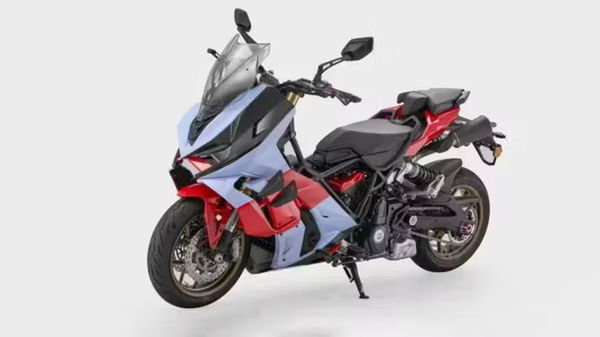
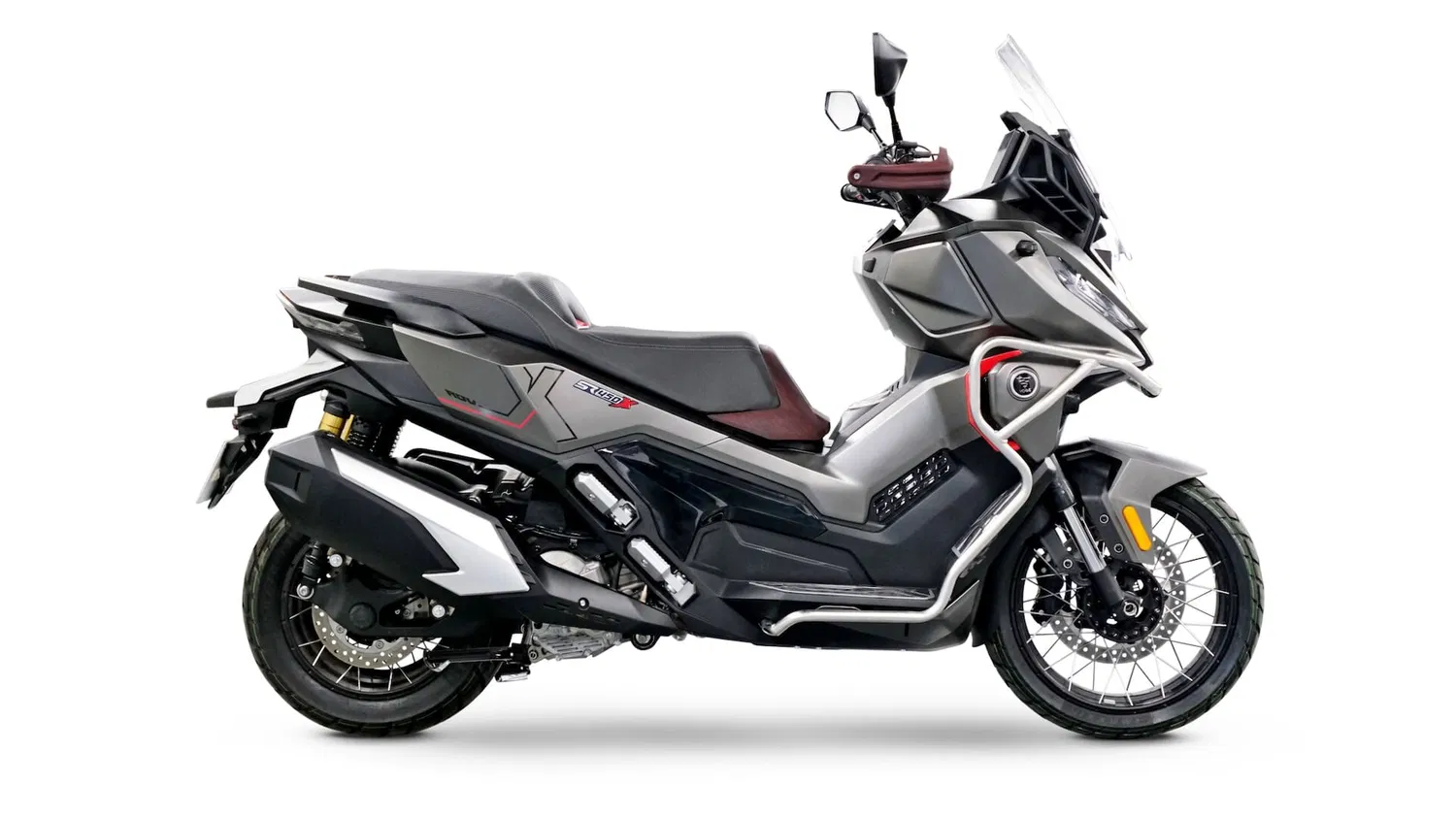
QJMotor has certainly been on the march in recent years by debuting more and more up-to-date motorcycles. Their scooter line-up has also been completely updated to include some very good products including, but limited to, the AX200s and Fort 250. Now, they are going after the big boys with the QJMotor QJ700-8K.

Before we go further, remember the Italjet Dragster 700 Twin? Well, that bike was designed in Italy and fitted with premium parts such as Brembo brakes, Ohlins suspension, Akrapovič exhaust system, manual 6-speed gearbox, and a 70hp single-cylinder engine. However, unbeknownst to many, it actually consists of many QJMotor-developed and made components. So, no, the the QJ700-8k is not a copy of the Italjet Dragster 700.

It is now QJMotor’s turn to market the bike with a design and spec sheet similar (not identical) to the Italjet machine. The manufacturer claims 75 hp, kerb weight of 205 kg, hand-operated manual clutch, 6-speed gearbox, and a top speed of around 200 km/h. Like its Italian counterpart, the QJ700-8K wears Brembo calipers, but has Marzocchi forks.

Being a QJMotor product could very well mean it will be much cheaper, too.

Oh, last but not least, while the engine performance certainly challenges the X-ADV’s, the QJMotor QJ700-8K is a fully road-biased sport scooter. And yes, it is a scooter due to its frame layout, and despite its manual gearbox.

2025 QJMotor AX200s Test & Review

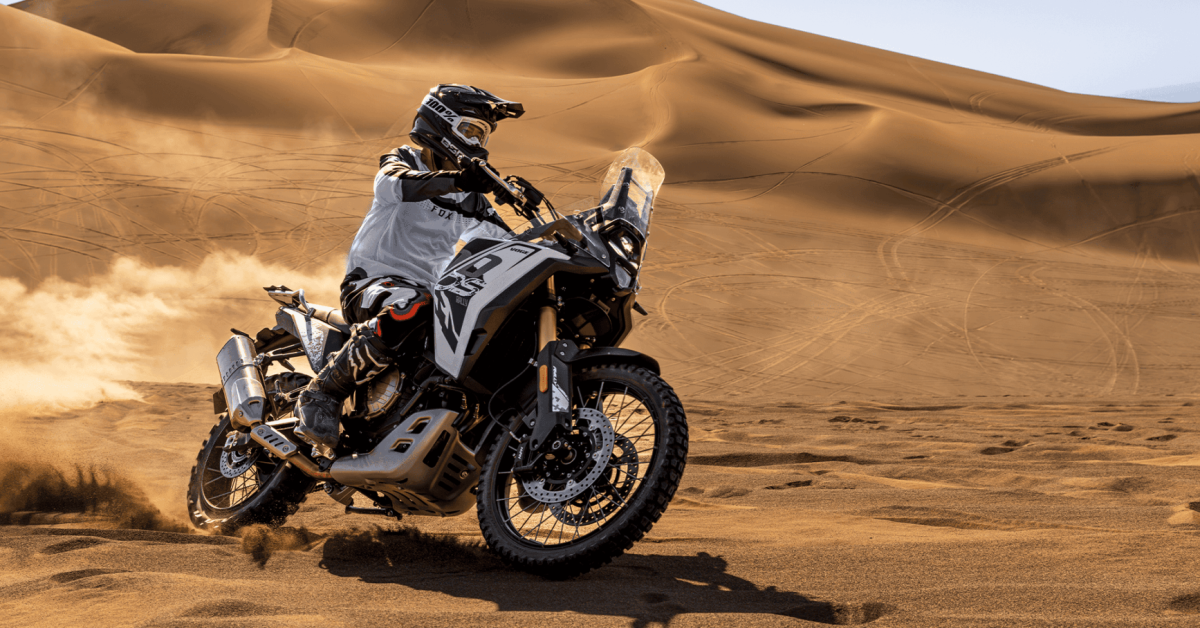
The bi-annual BMW Motorrad International GS Trophy 2026 will be held in Romania. And of course, part of the route includes the famous Count Dracula’s castle, Bran Castle.

“BMW Motorrad’s media release says, “After much sand and steppe, the event returns to the mountains.” “Dense forests, gravel roads, river crossings, and steep ascents and descents will characterise the upcoming International GS Trophy 2026 in Romania.”

The country is “deeply rooted in history and culture and is home to numerous medieval castles, fortresses and churches, including the famous Bran Castle, which is often associated with the Dracula legend,” continues the media release. “Overall, Romania offers a unique blend of natural beauty, cultural richness and adventure, making it an ideal destination for the International GS Trophy 2026 competitors.”

Taking place every two years since 2008, the GS Trophy will celebrate its tenth running in 2026, with previous locations including Namibia in 2024, Albania in 2022, New Zealand in 2020, and Mongolia in 2018.

Some 15 teams will take part in next year’s event, formed of participants from around the world. To join those teams, riders are required to perform GPS navigation exercises, off-road special stages, and technical tests. BMW says there will be nine men’s teams and six women’s teams.

The exact dates of the event have not been confirmed.

The official model this time will not be the R 1300 GS or even F 900 GS, but the R 12 G/S instead. Based on the 1170cc, air- and oil-cooled Boxer platform, the bike is an homage to the R80G/S launched in 1980. The R80G/S is the grandaddy of all modern dual-purpose/adventure tourers.

The author recently visited a waterfall in Hulu Langat and found the area and the roadside littered with trash such as water bottles, plastic cups, food wrappers, cigarette butts, disposable diapers, and more. In fact, the stench of garbage hit our noses as soon as we opened the car door. It was disgusting and shameful.

Sampah rubbish littering

However, this issue also occurs in several other countries, including Italy. As a result, the Italian government has taken steps to enforce a new law where offenders who litter from their vehicles can be fined up to €18,000 (approximately RM88,464.96).

This law applies regardless of whether the offender discards waste from a moving or stationary vehicle.

Furthermore, an offenders may also have his driver’s license revoked and/or face imprisonment if caught littering in natural reserves or other protected areas.

Italy had previously imposed fines of up to €1,188 (around RM8,843) for discarding items such as tissues, plastic bottles, and cigarette butts.

Offenders no longer need to be caught in the act or stopped by the police, as surveillance camera footage is now sufficient evidence for prosecution.

Litter is often carelessly tossed onto Italy’s roads, whether in urban areas, village streets, or highways. Even some roads in tourist hotspots end up looking like garbage dumps.

The new regulations also apply to foreign tourists.

For comparison, in Malaysia, fines ranging from RM2,000 to RM10,000 can be imposed on those caught littering. Courts may also order offenders to perform community service. However, enforcement remains weak here, compounded by the mentality of some individuals who have no qualms about littering indiscriminately.

The 2026 Suzuki GSX-R1000R M6’s recent launch garnered positive reception worldwide, with many welcoming the series back. The welcome was perhaps unsurprising since many enthusiasts had decried the manufacturer’s announcement in ending the previous Gixxer’s production since 2022.

However, there was not much technical detail accompanying the launch of the M6 apart from it commemorating the 40th anniversary of the GSX-R1000.

So let us take a deeper dive into the technical updates of the 2026 Suzuki GSX-R1000R M6.

More performance, same ease of riding
  • Suzuki maintained the same ease of riding the bike that it is famous for, and updated the engine for higher performance and Euro 5+ compliance, instead.
  • The heart of the bike is the familiar 999.8cc, liquid-cooled, inline-four engine.
  • It now produces a maximum power of 192.3 hp at 13,200 RPM  and 110.09 of maximum torque at 11,000 RPM.
  • The max power is lower than its predecessor’s but Suzuki says that it improves the engine’s durability, while opening up more tuning potential.

  • Compression ratio is higher at 13.8:1 compared to 13.2:1 due to revised piston crowns. Higher compression allows for better combustion heat efficiency.
  • The size of the exhaust valves has been enlarged to 25 mm from 24 mm.
  • The pistons are forged aluminium with cutaway skirts and DLC-coated connecting pins to reduce friction.
  • The ribs underneath the pistons had also been redesigned to shave weight by 3 g.

  • 3 g may sound small but contributes to a huge difference when the pistons are whizzing up and down 22,000 times a minute at 11,000 RPM
  • The cylinder bores are SCEM-plated to reduce friction and improve heat transfer, with internal cutaways beneath to allow trapped air to escape more efficiently between strokes and enhance ring seal with the cylinder walls.
  • The crankshaft has thicker journals at 37mm from 35mm for improved load handling.
  • Fuel delivery has likewise been revised – the injectors now have eight holes instead of ten.

  • There are also four top-speed injectors in the airbox that spray directly into the newly designed velocity stacks for better fuel atomisation at high RPMs.
  • The throttle body sizes have also been enlarged to 48mm from 46mm.
  • All these revision are for naught if gas flow remains the same.  As such, Suzuki revised the cylinder head, intake and exhaust ports, and gasket shape.
  • The cooling system is now more efficient which eliminates dead zones in the coolant jacket while using less fluid overall, contributing to further small weight savings.

  • The 4-2-1 exhaust system also gets a thorough revamp, now utilising O2 sensors both before and after the redesigned catalytic converter to feedback fuelling data to the ECU.
  • The catalyst itself has also been redesigned, now elliptical and with increased capacity, and mounted closer to the engine to speed up warm-up times.
  • With increased catalyst box volume, the silencer is made smaller than before.
  • Suzuki also tweaked the clutch action, by using an assist and slipper clutch.

  • The biggest highlight is of course the Suzuki variable valve timing system, called SR-VVT.
  • A wider cam chain reduces friction losses, and the cam sprocket shape has been revised together with a new profile.
  • As per its predecessor, the SR-VVT is a centrifugal setup integrated into the intake cam sprocket which operates dependent on engine speed alone, rather than using computer-actuated hydraulics like some other manufacturers.
  • It uses 12 steel balls and slanted grooves to rotate the sprocket and retard the intake valve timing at a pre-set rpm, boosting both low-RPM torque and delivering maximum power in higher RPMs.

The cam lobes have likewise been reworked with a refined DLC-coated finger-followers.

Closing

These revisions do sound very interesting, indeed. They should improve on the Gixxer’s ride ability even more, while providing higher maximum performance. We truly hope we could get to test the bike when it gets here!

There will be a new special edition colour for the 2026 Honda X-ADV. Honda had also announced new colours for the Forza 750, but we shall focus on the X-ADV as the Forza 750 is not available in Malaysia anymore.

The X-ADV will receive a new Matt Pearl Glare White special edition accented with red and blue graphics inspired by the Honda Africa Twin and Transalp adventure bikes. It joins the existing Graphite Black, Matt Deep Mud Gray, and Pearl Glare White in the lineup.

Mechanically, the X-ADV remains unchanged – which is not necessarily a bad thing. Keeping things the same and updating or replacing them years later allows for the model to mature in terms of parts availability, serviceability, and resale value.

The engine is the torquey 745cc parallel-twin, paired with a Dual Clutch Transmission that was updated since the MY2025 model. Suspension remains the 41mm upside-down forks up front, and a Honda Pro-Link setup at the back. Front brakes are dual discs gripped by four-piston calipers.

Honda is also promoting sustainability with the X-ADV. The bodywork (the Forza 750’s, too)  uses recycled and biomass-based plastics like Durabio, a plant-based material that doesn’t require paint thereby reducing the environmental footprint during production. It is part of Honda’s broader push to use only sustainable materials by 2050.

The promised Triumph Thruxton 400 has been launched in India, with other global markets to follow.

As the name suggests, think back to the the now-discontinued Bonneville Thruxton 1200, and we have a 400cc cafe racer complete with clip-on handlebars, sculpted tank, bullet passenger seat cowl. Interestingly, the 1200cc variant was sold without the front fairing as standard, but the it is standard on the 400cc variant. However, the Thruxton 400’s fairing is clearly inspired by the Speed Triple RR’s.

The Thruxton 400 is now the fourth variant based on the TR platform, in the footsteps of the Speed 400, Scrambler 400 XC, and Scrambler 400X. The engine is a 398cc, single-cylinder powerplant. It produces a maximum power of 39.5 hp but as with the 1200cc brethren, it has been hotted up to 41.4 hp for the Thruxton 400 to provide an “even more addictive top end” according to Triumph. Maximum torque remains the same.

Triumph did not provide the details behind the performance upgrade, but we can safely assume it is due to ECU remapping, plus airbox and exhaust revisions.

The Thruxton 400 weighs in at 183 kg, compared to the Speed 400’s 179 kg, due to the former’s extra bodywork.

Offered in four eye-catching colours: Lava Red Gloss and Aluminium Silver, Phantom Black and Aluminium Silver, Metallic Racing Yellow and Aluminium Silver, and Pearl Metallic White and Storm Grey, the Triumph Thruxton 400 sells for ₹2,74,137 (RM13,215.99) in the Indian market. By comparison, the Speed 400 retails for RM27,200, the Scrambler 400 X retails for RM30,200, and Scrambler 400 XC is priced at RM34,200.

We have tested and reviewed the Speed 400 and it was one of – if not the – best handling motorcycle we ever rode. It was full of character and sass, too, hence it won the Best Modern Classic (Below 500cc) category in the 2025 Allianz-BikesRepublic.com Motorcycle of the Year Awards.

Triumph Speed 400 – Modern Classic of the Year 2025 (Below 500cc)

Here is another product that makes us wish we were Wall Street bankers. If you love BMW motorcycles and real coffee, the BMW Big Coffee Boxer covers both bases.

The espresso machine is based on BMW’s air- and oil-cooled R 18 boxer engine, and created through the partnership between BMW Motorrad and ECM Espresso Coffee Machines Manufacture GmbH.

The front of the power unit which faces your guests is exactly like the R 18 engine, while the black gold making part is mounted behind it. There are two independent water circulation systems for simultaneous preparation of coffee and milk foam, with pipes that mimic oil lines.

BMW says that the machine includes “an extremely quiet rotary pump and a shot counter with a display of the preparation time.” As such, there is no Boxer roar and sideways “kick” when your coffee brews.

The machine is priced at €7,900 (RM38,597.82, as of today) and you can find out more about the coffee machine at exclusive ECM dealers. Only 80 will ever be built.

By the way, the R 18 powerplant is an 1802cc horizontally-opposed twin (easier to call it a Boxer) which produces 89 hp of maximum power and 163 Nm of peak torque. It is the biggest Boxer ever made.

The much-anticipated 2026 Honda CB1000F SE has been unveiled at the Suzuku 8-Hour Endurance Race over the weekend. And yes, Honda won the race.

As we published earlier, it followed the concept which was unveiled at the Tokyo Motorcycle Show back in March, but with a headlight-mounted bikini fairing.

There is not much information about the bike, but we could clearly make out that it is based on the CB1000R/CB1000 (Hornet 1000) platform. The engine, frame, subframe, and swingarm are the same, thus the main difference is its bodywork.

The engine is a 1000cc, liquid-cooled, DOHC, 16-valve, inline-four which produces 155 hp and 107 Nm. It was adopted from the 2017 Honda CBR1000RR Fireblade, albeit tuned for low- and mid-range torque.

As for the chassis, it is a steel tube frame. The CB1000F was shown with black forks and a monoshock with a black coil spring, unlike the gold forks and Öhlins TTX36 monoshock on the CB1000 (Hornet 1000) SE. Also, the CB1000 SE has Brembo Stylema brake calipers up front.

The bodywork of the CB1000F SE was unmistakably inspired by the CB900F which made its debut in 1979, 10 years after Honda introduced the groundbreaking, “first superbike” CB750 in 1969. However, its seat resembles the cut-down race seat on the race-ready CB900F ridden by Freddie Spencer in the AMA Superbike Championship. Apart from that, the CB1000F uses a 4-into-1 exhaust system which ends in a megaphone.

The pictures from Honda Japan also show a quickshifter, TFT screen, and the handlebar switchgear identical to the present CB1000 lineup.

The 2026 Honda CB1000F SE’s price was not revealed during the event. In any case, we cannot wait until it gets here!

Photo gallery

2025 Honda CB1000 SP Test & Review

The mechanism for targeted petrol subsidies for RON95 currently being studied by the Ministry of Finance (MOF) will utilize data from the Central Database Hub (PADU), according to Second Finance Minister Datuk Seri Amir Hamzah Azizan.

He, who is also carrying out the duties and functions of the Economy Minister, said that as of now, the system has compiled 30.4 million individual profiles.

These profiles, he said, include demographic information, locality, socioeconomic and employment status, income, education, vehicle ownership, poverty status, and types of assistance received by individuals.

Regarding the implementation of targeted subsidies, PADU data will be used by MOF as a reference for RON95 subsidy recipients… this is the first time PADU’s highly detailed data will be utilized (for targeted subsidies).

Currently, the government is focusing on using the latest data to improve the efficiency of service delivery. For example, verifying and validating applicant information to identify truly eligible recipients and reduce errors,” he said during a question-and-answer session in the Dewan Rakyat today.

He was responding to a question from Aminolhuda Hassan (PH-Sri Gading) regarding the Economy Ministry’s plans for the PADU system, the amount of data collected as of June 2025, and the government’s readiness to conduct periodic audits of the system through an independent body to ensure transparency and proper governance.

Amir Hamzah said that with the available data, the government can also identify intervention programs for specific target groups.

Additionally, he said that currently, 204 agencies have continuously carried out data sharing and integration with PADU, though data usage remains limited to specific government agency needs.

To encourage data-driven decision-making, PADU data-sharing guidelines were established and distributed to all government agencies on Feb 25, alongside briefing sessions for ministries, agencies, state governments, and local authorities conducted from February to June this year.

As of now, nine applications (for PADU data usage) from various agencies have been approved to enhance policy efficiency and effectiveness, as well as digital service innovation,” he said.

V-Four powered street motorcycles are rare, usually confined to the top tier machines (read: most expensive), when there used to be midrange V-Fours in the mid-80s. Looks like QJMotor will bring us there again with the debut of the QJMotor SRV600V, which has just been launched in Malaysia.

The SRV600V takes the shape of a power cruiser, complete with fat tyres and a muscular styling.

Highlights
  • V-Four cylinder, liquid cooled, DOHC, 561cc engine which produces 67 hp at 10,500 RPM and 54 Nm at 8,000 RPM.
  • Spent engine gasses exit through four exhaust pipes – two on both sides of the bike.

  • Engine power is sent through a 6-speed transmission.
  • 16-inch front and rear wheels, shod with 130/90 and 180/65 tyres.
  • The front suspension consists of Marzocchi upside down forks, while the rear is supported by twin shock absorbers.

  • There are twin 300mm disc brakes up front, with a 260mm disc at the back.
  • 16.5-litre fuel tank.
  • 720 mm seat height.

  • QJMotor lists the weight at 219 kg but did not specify if it is dry or wet.
  • TFT screen with Bluetooth connectivity to the rider’s smartphone through the Carbit Ride app.

The QJMotor SRV600V is priced at RM33,888 (not on-the-road). There are three colour options, namely Silver, Sky Black, and Night Black.

Suzuki proudly announces the return of The King of Superbikes — the iconic GSX-R1000R, now reborn as the 2026 Suzuki GSX-R1000R M6. This latest evolution not only represents the  cutting edge of motorcycle engineering but also commemorates an extraordinary milestone, the 40th anniversary of the legendary GSX-R lineage.

Since its ground-breaking debut in 2001, the GSX-R1000 has reshaped the sportbike world with performance that dominates both streets and racetracks. As the undisputed champion of production-based superbike, superstock, and endurance racing, the GSX-R1000 has captured no fewer than 15 FIM Endurance World Championship titles—a true testament to  its legacy of reliability, innovation, and victory.

The 2026 GSX-R1000R M6 continues that heritage with updates that meet the latest emissions and noise regulations while enhancing rider experience through a host of advanced electronic control systems. These include rider-assist features designed to refine performance based on individual riding preferences and road or track conditions by ensuring that the GSX-R1000 remains synonymous with “Designed to Perform, Built to Thrill.”

To mark this historic 40-year milestone, the new GSX-R1000R M6 is available in three heritage-inspired livery options, each evoking the soul of legendary GSX-R colour schemes.

These striking designs are further commemorated with exclusive 40th Anniversary insignias on the fuel tank, side fairings, key mascot, seat cowl, and muffler. All of these shall be the proud visual tribute to four decades of supremacy.

Built for the street and born from the track, the 2026 GSX-R1000R M6 is the ultimate embodiment of Suzuki’s uncompromising pursuit of performance, a machine that continues to ignite passion and deliver exhilaration with every ride.

The Legend Returns. And it’s faster, sharper, and more thrilling than ever.

Photo gallery

Archive

Follow us on Facebook

Follow us on YouTube