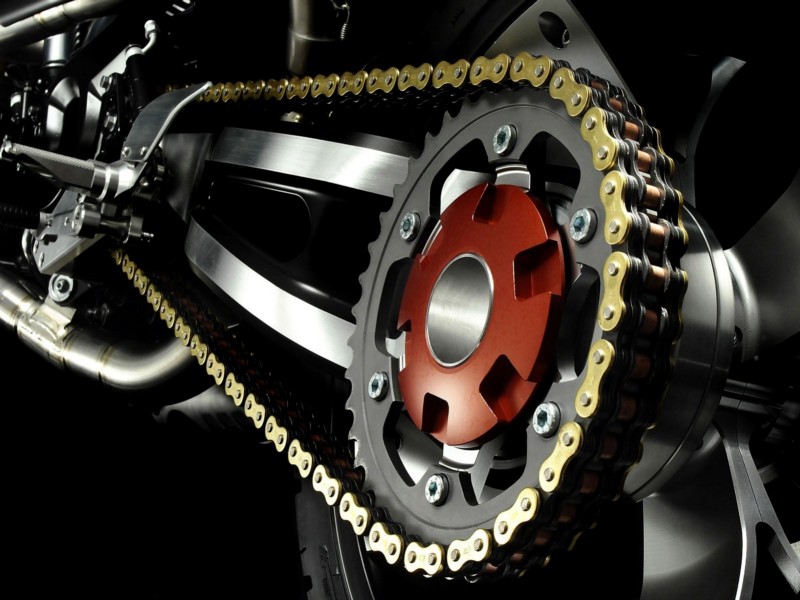
The drive chain must be lubricated to ensure optimum power transmission, smooth operation and prevention of rust.
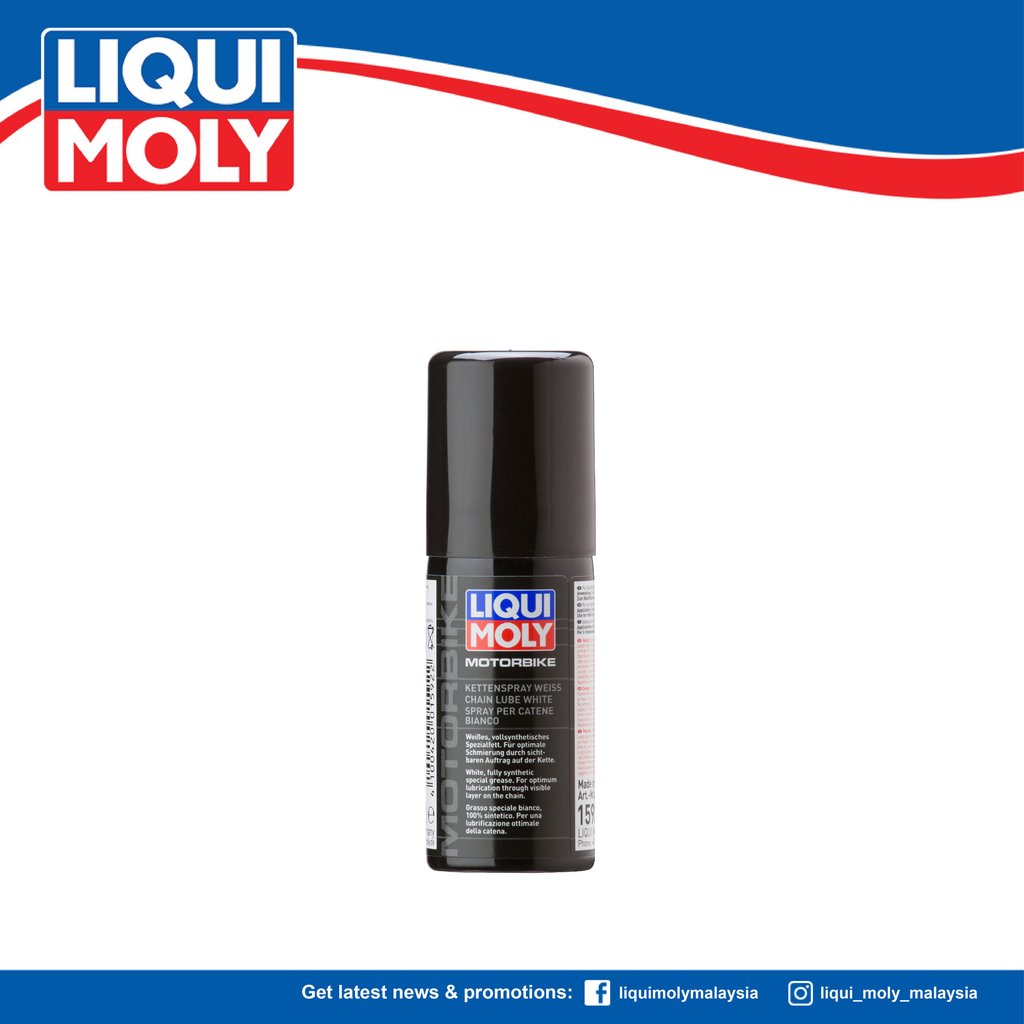
We recommend the Liqui Moly Chain Lube Spray White.
It has all the excellent properties to maintain your chain.
Apart from keeping the drive chain clean, it needs to be kept lubricated to ensure optimum power transmission, smooth operation and prevention of rust. For this, we highly recommend the Liqui Moly Chain Lube Spray White.
Not all chain lubes are the same. There may be those that are light but wear off quickly especially after riding in a rainstorm. On the other hand, the are those that are too thick, which proves too sticky for chain movement and attracts grime like a magnet.
The Liqui Moly Chain Lube Spray White, however, is a fully-synthetic formulation that is cold, hot and water spray resistant. It has very good adhesion properties and does not get thrown away by the chain’s centrifugal forces. Additionally, the product also flows well into the nooks and crannies of the chain when sprayed on. It is also has good wear protection thereby reduces chain stretch and extends the service life of the chain.
You do not need to spray a lot of the product, hence economical.
For best results, clean the chain with the Liqui Moly Chain Cleaner before applying. Also, best to apply when the chain is still warm after riding. Leave about 20 minutes for the product to settle down before riding again.
The motorcycle’s drive chain needs to be maintained.
Proper maintenance includes cleaning and lubricating it.
Use Liqui Moly Chain and Brake Cleaner for safe, effective and easy cleaning.
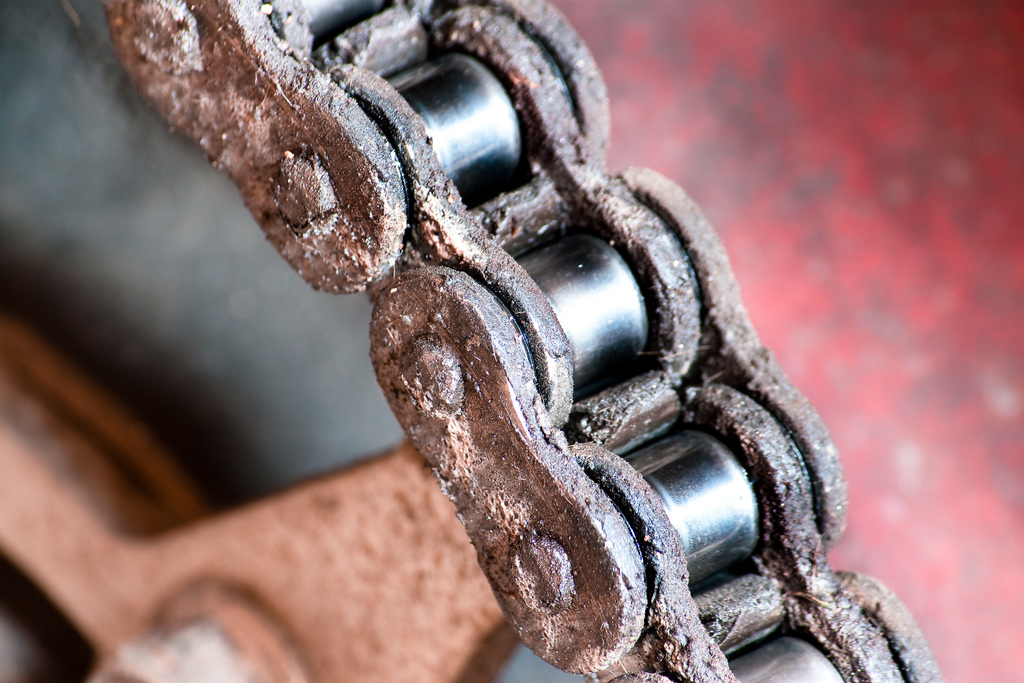
A dirty drive chain results in power loss, higher fuel consumption, and shortened chain lifespan. A badly maintained chain also eats through sprockets and provides a harsh ride.
However, cleaning the chain with wrong chemicals or solvents can also compromise the chain’s lifespan. Harsh solvents will eat through the O/X/X-W rings and wash out the grease, then leaving them exposed to outside contaminants such as water and dirt. Also, these solvents may get amongst the rollers and wash out the grease.
It is best to use products that are specifically designed to clean chains.
Liqui Moly Chain and Brake Cleaner is a specially formulated to cut through grease and grime to provide quick and easy chain cleaning. It is safe to be used on “O”- and “X”-ring chains.
You do not need to spray a lot of the product, hence economical.
Properties:
Optimum penetration.
Dissolves resin and tar-type residue.
Removes oil and grease-based contaminants.
Controlled evaporation free of residues.
High proportion of active components.
Universal application.
Absolutely free of chlorine.
Contains no acetone (thinner).
Optimizes economical use.
Applications:
Spray onto dirty chain and let run off.
Apply Liqui Moly Motorbike Chain Lube or Liqui Moly Chain Spray White after the solvents evaporate.
DO NOT soak chain in a container with the product.
NOTE: MAY NOT BE COMPATIBLE WITH PLASTICS AND PAINTED SURFACES.
The Liqui Moly Chain and Brake Cleaner (500 ml) is available from our e-commerce site.
There are many types of motorcycles in the market.
There’s lots of confusion is segmenting them.
We begin the standard motorcycle.
We are quite certain that you already know the types of bikes out there in the market. However, there are so many types these days that one may struggle to actually know how to class them all. Adding to the confusion is that modern bikes tend to cross into another segment, despite all the segmentation. So, let’s being with the simplest: The standard.
What is it?
A standard represents something that’s practical and approachable to virtually any rider with any skill level. This is why standards are often referred to as the best beginner bikes. But there are ones with higher performance, of course, and these need to be approached by experienced riders.
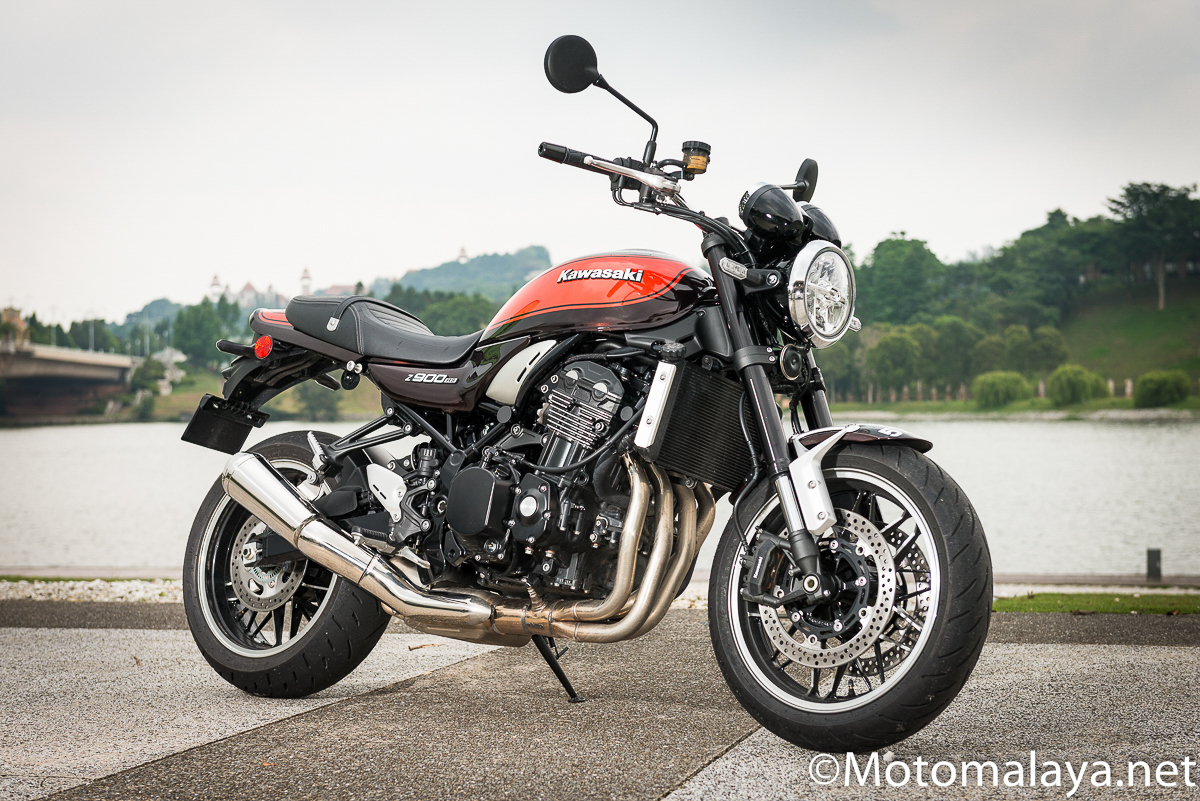
The Kawasaki Z900RS is meant for more experienced riders
You could say that a standard motorcycle is one which delivers everything yet isn’t specialized in any particular trait.
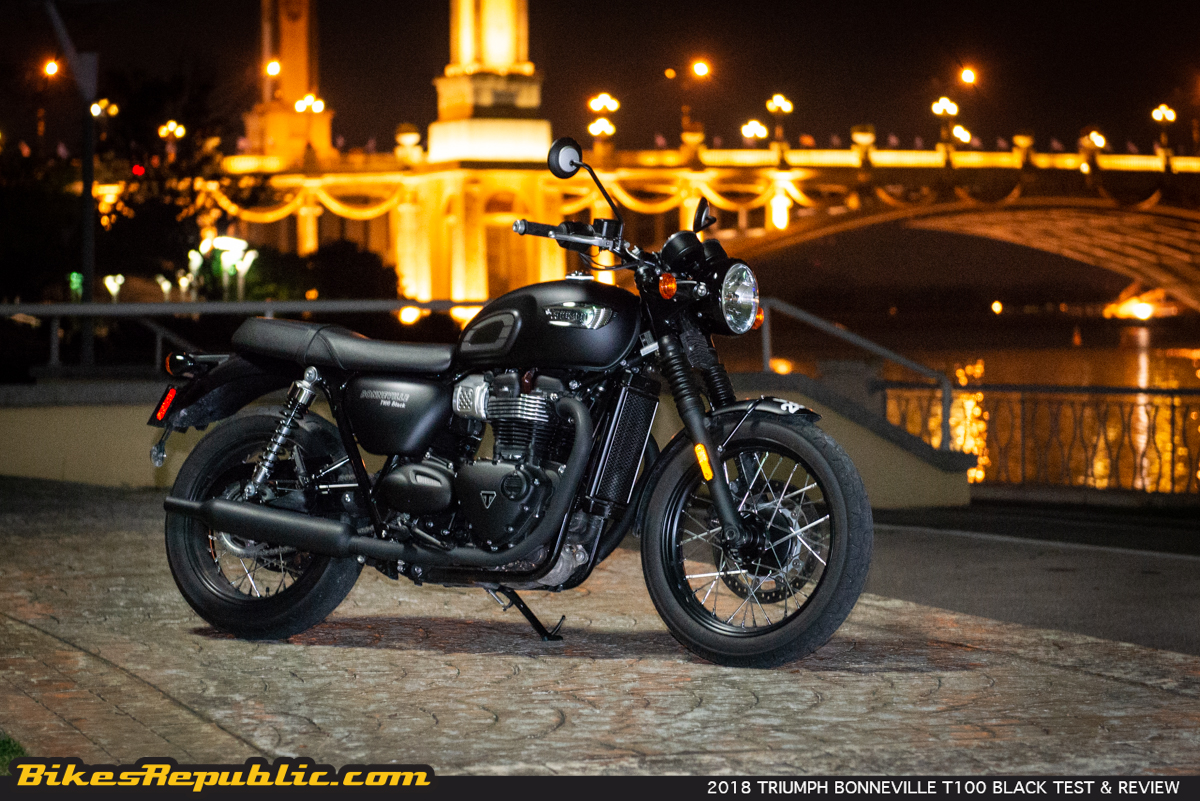
The Triumph Bonneville T100 Black is easy and fun to ride
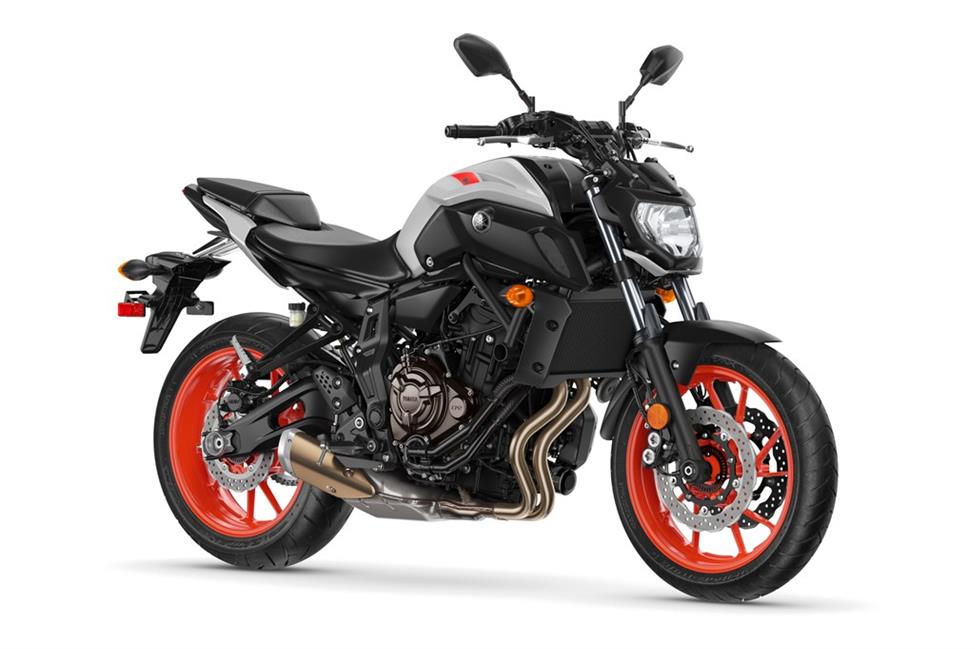
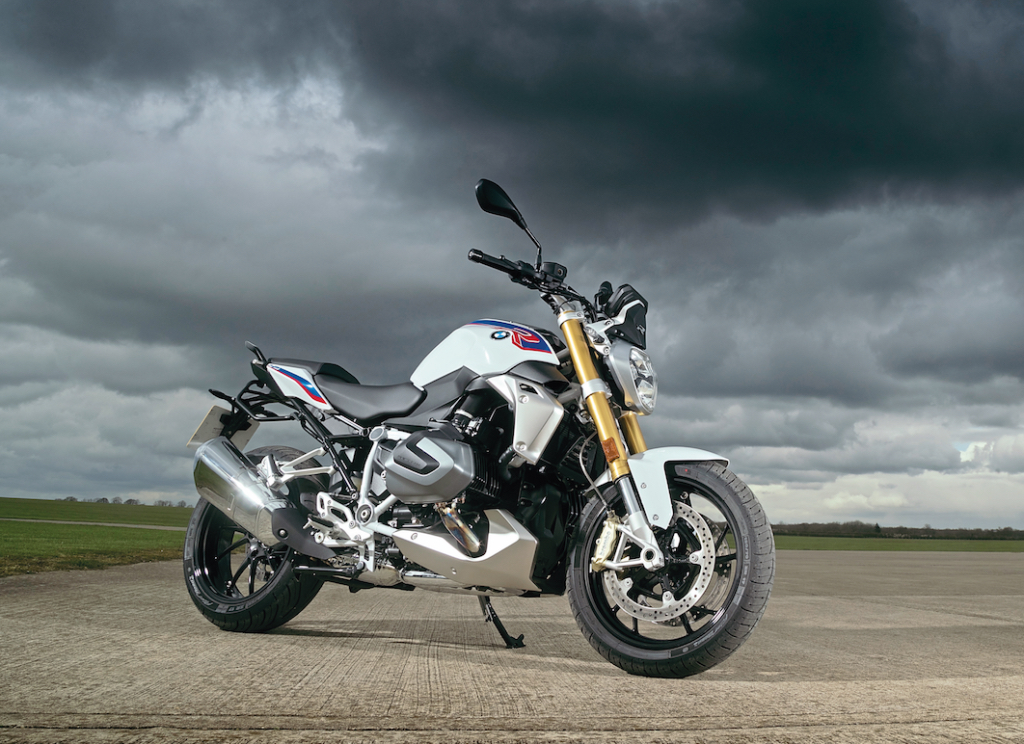
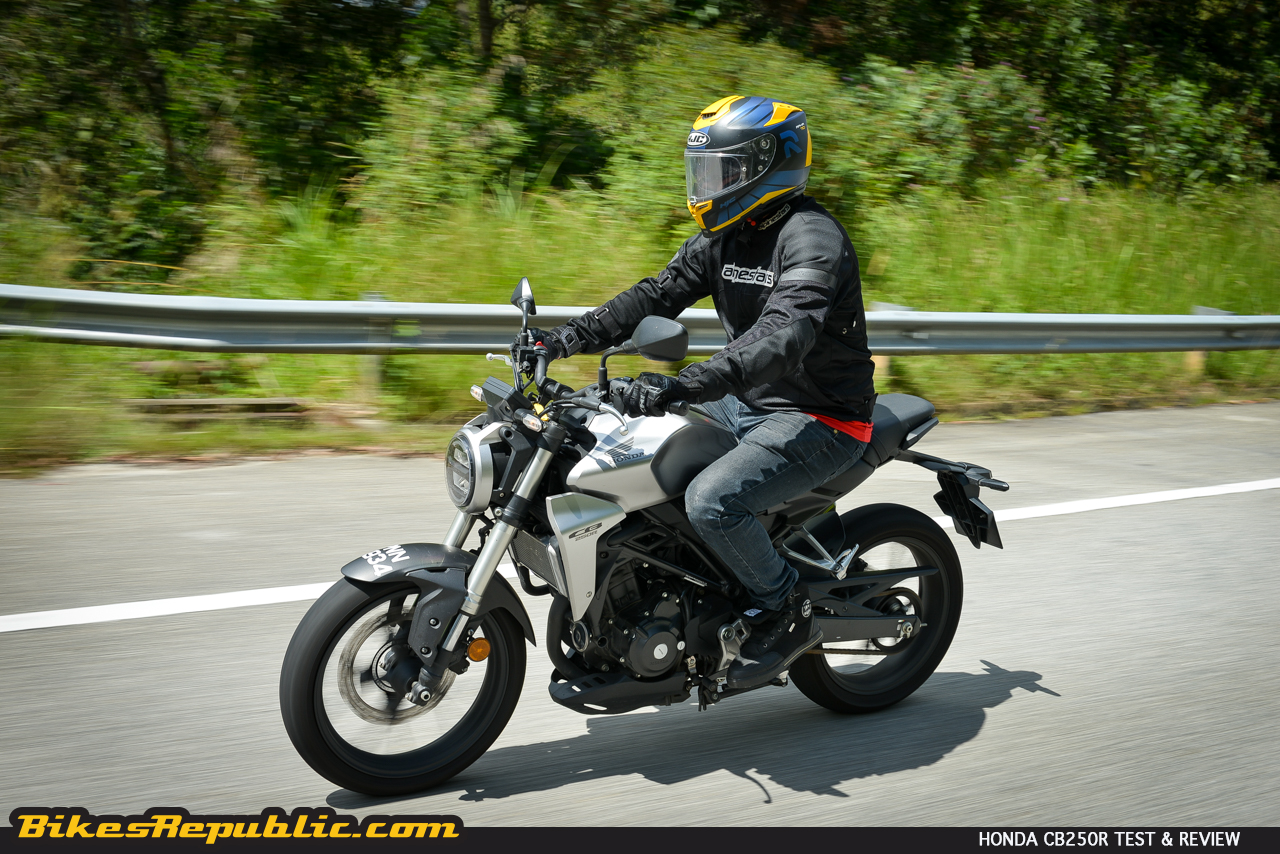
Good examples are (in no particular order) Triumph Bonneville line-up, Yamaha MT-07, Ducati Scrambler (except for the Café Racer), Suzuki GSX-S series, Honda CB family (not the CBR), Aprilia Shiver, Benelli Leoncino; BMW G 310 R, F 850 R, most of the R nine T line-up, R 1250 R; Kawasaki Z900RS, etc.
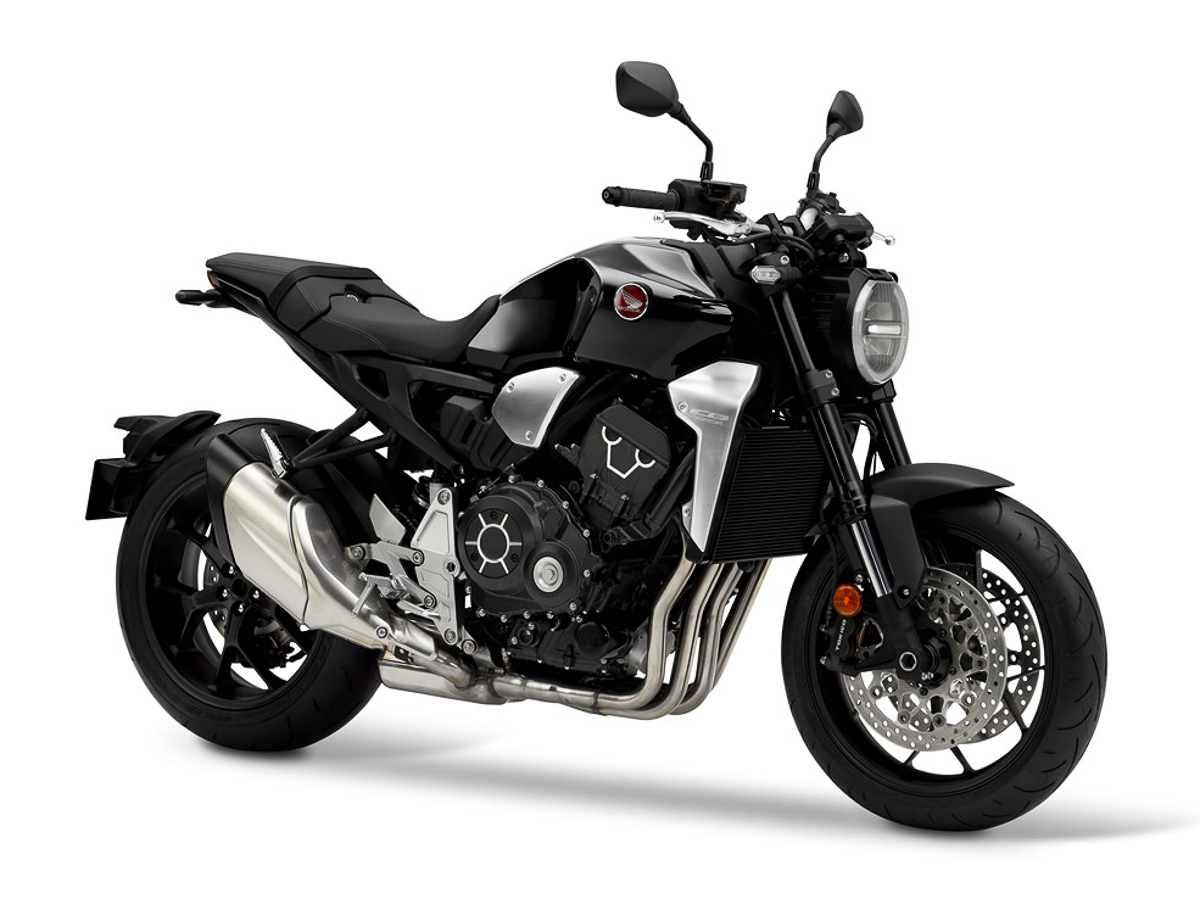
2020 HONDA CB1000R
Get the picture? Good.
Styling
Pretty much anything goes but standards are usually bereft of a fairing. Styling usually falls into two categories: Contemporary or modern classics.
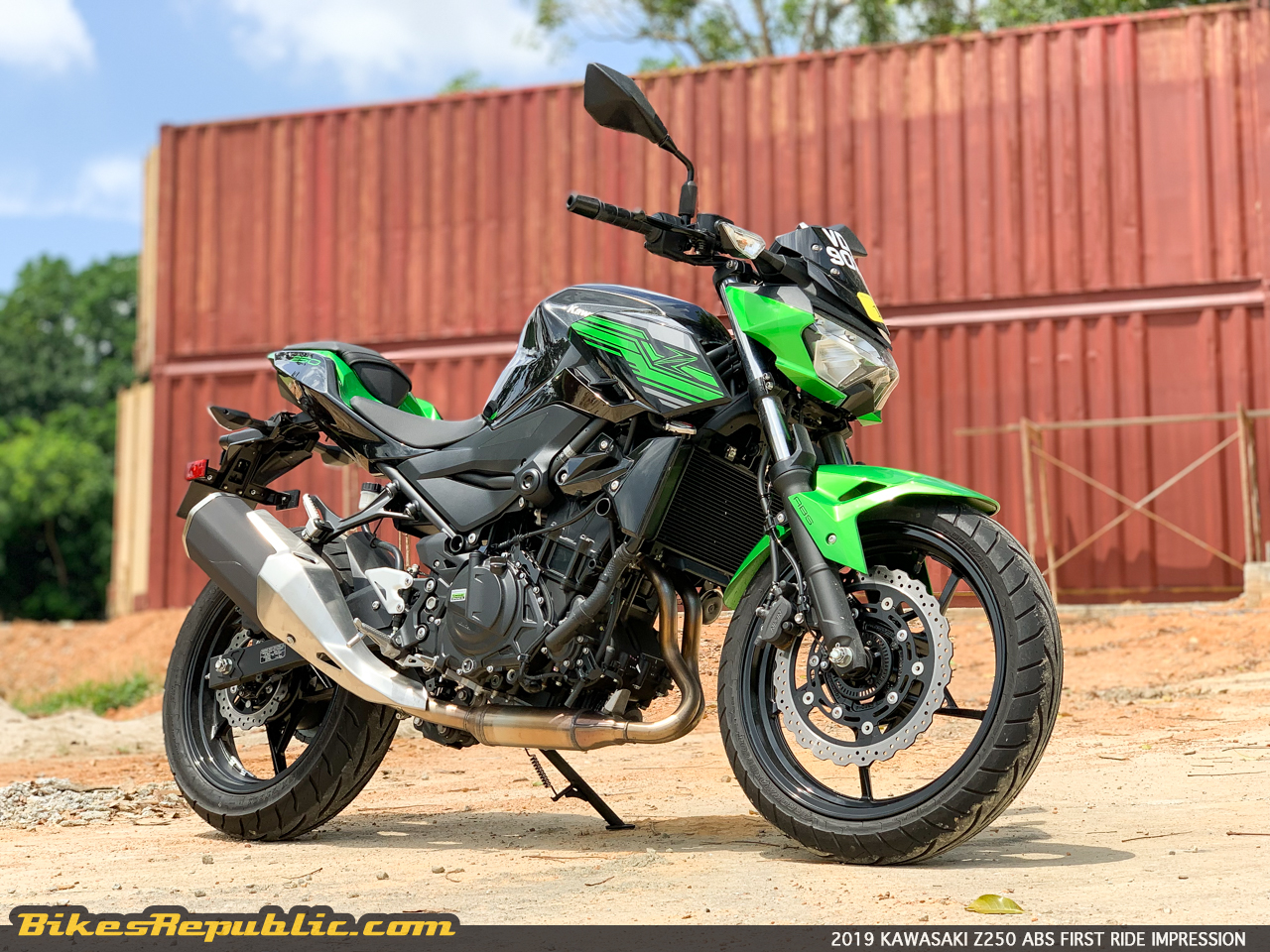
Contemporary styling covers bikes such as the Z250, Z650, MT-07, GSX-S, the Honda Neo Café CB series, G 310 R and so forth.
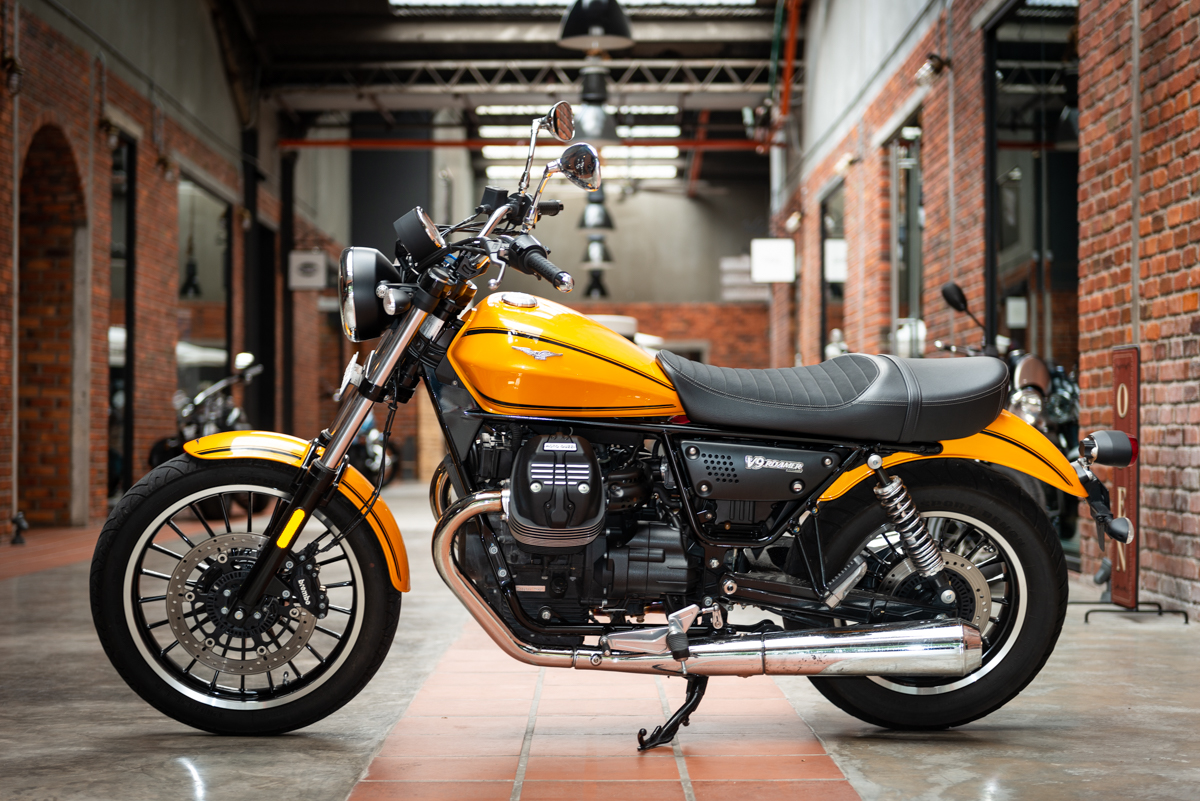
The Bonneville, R nine T, Ducati Scrambler, Moto Guzzi V7 and V9, Honda’s CB400 and CB1100, Z900RS are the best examples of the modern classic category.
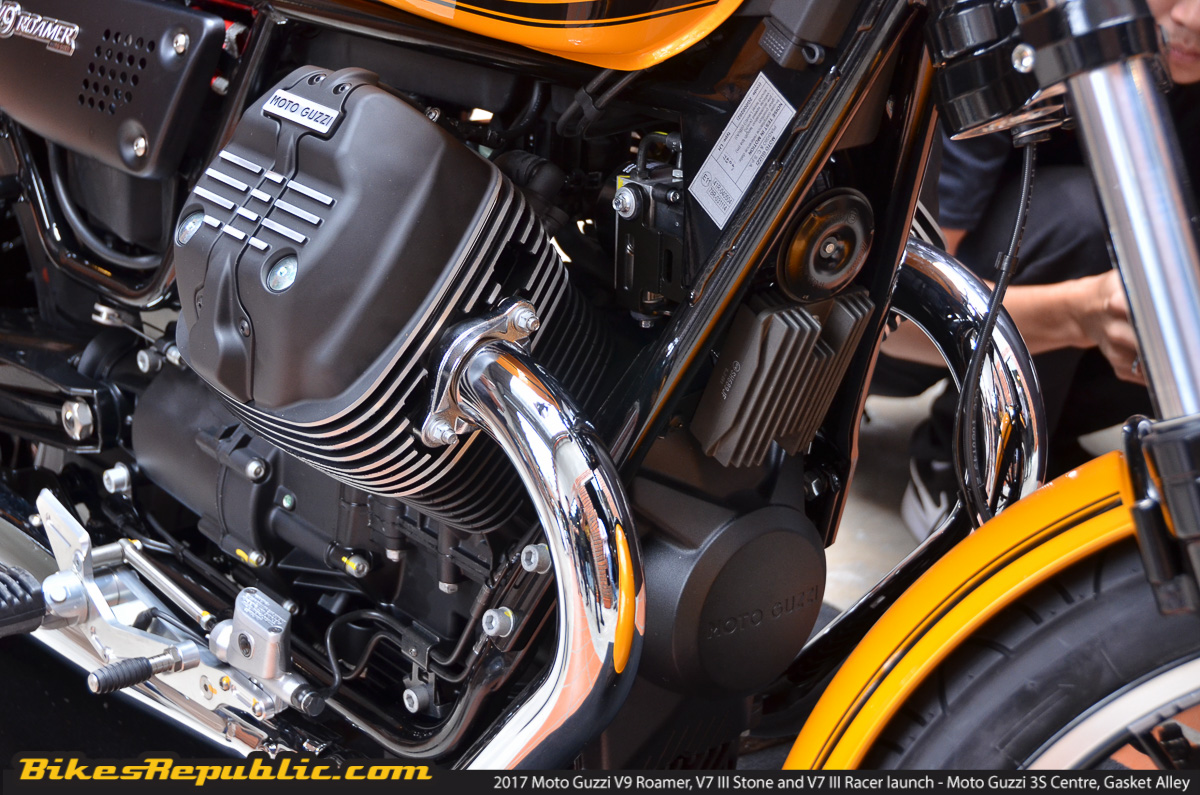
Moto Guzzi V9 Roamer
Seating position
Seating position is neutral, meaning that you don’t crouch over like on a sportbike (if you do then it’s a café racer), or fully straight up like on an adventure bike. Standards usually offer long and wide seats for both the rider and passenger.
The footpegs hence foot controls are further to the front compared to other sorts of bikes, too.
Engine size
Engine capacities range from 150cc right up to 1250cc, and sometimes beyond. The Triumph Rocket III stands out with its 2500cc triple, but this new model should be placed in the powercruiser segment.
The Kawasaki Z250 uses a parallel-Twin
There are therefore almost all types of engines in such a wide range including Singles, parallel-Twins, V-Twins, Boxers (flat-Twins), Triples, and inline-Fours.
Moto Guzzis are the only bikes that currently employ tranversely-mounted V-Twins
Performance
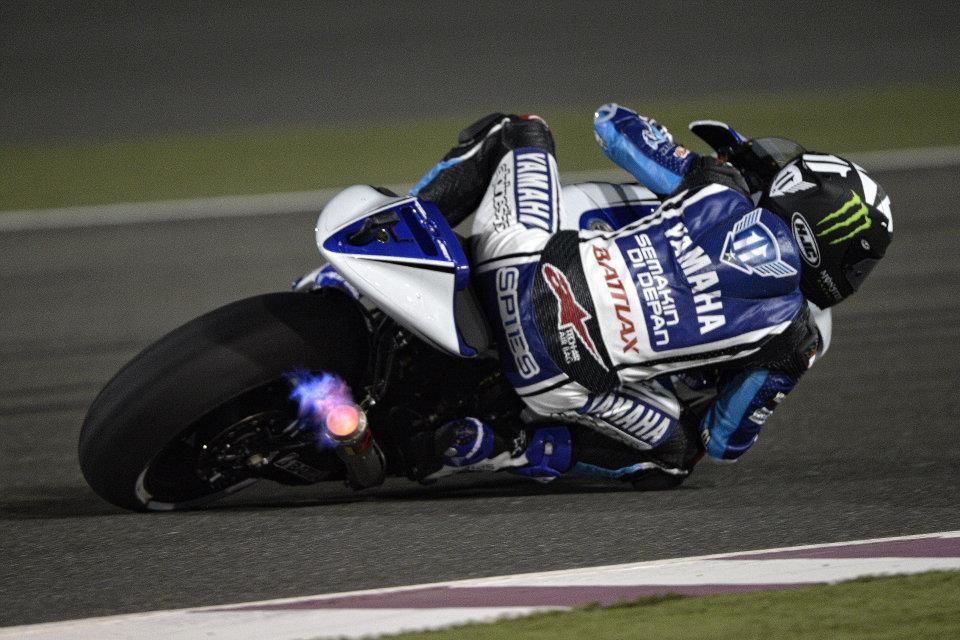
Standards are not about tearing along at 280 km/h with the rider’s helmet on fire. As such, they are more about useable power in terms of torque and horsepower. It’s about manageable torque and acceleration.
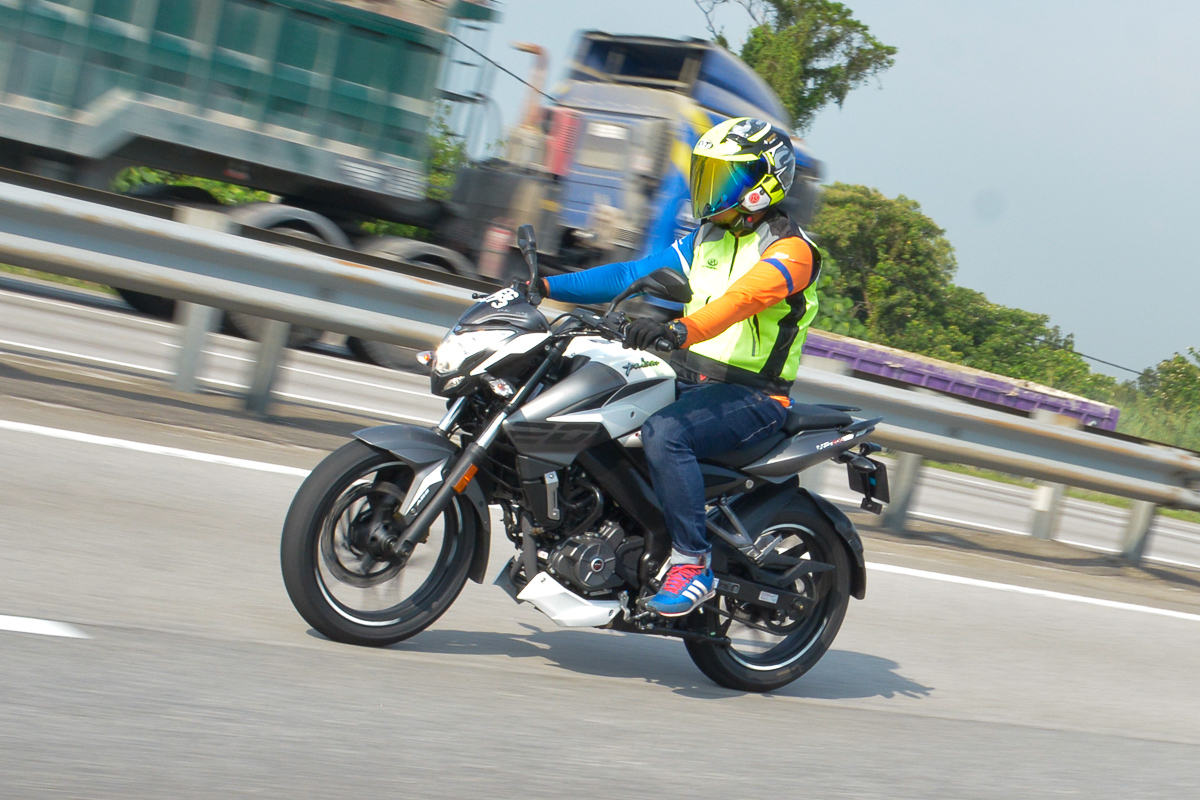
Modenas Pulsar NS200 ABS
Suspension
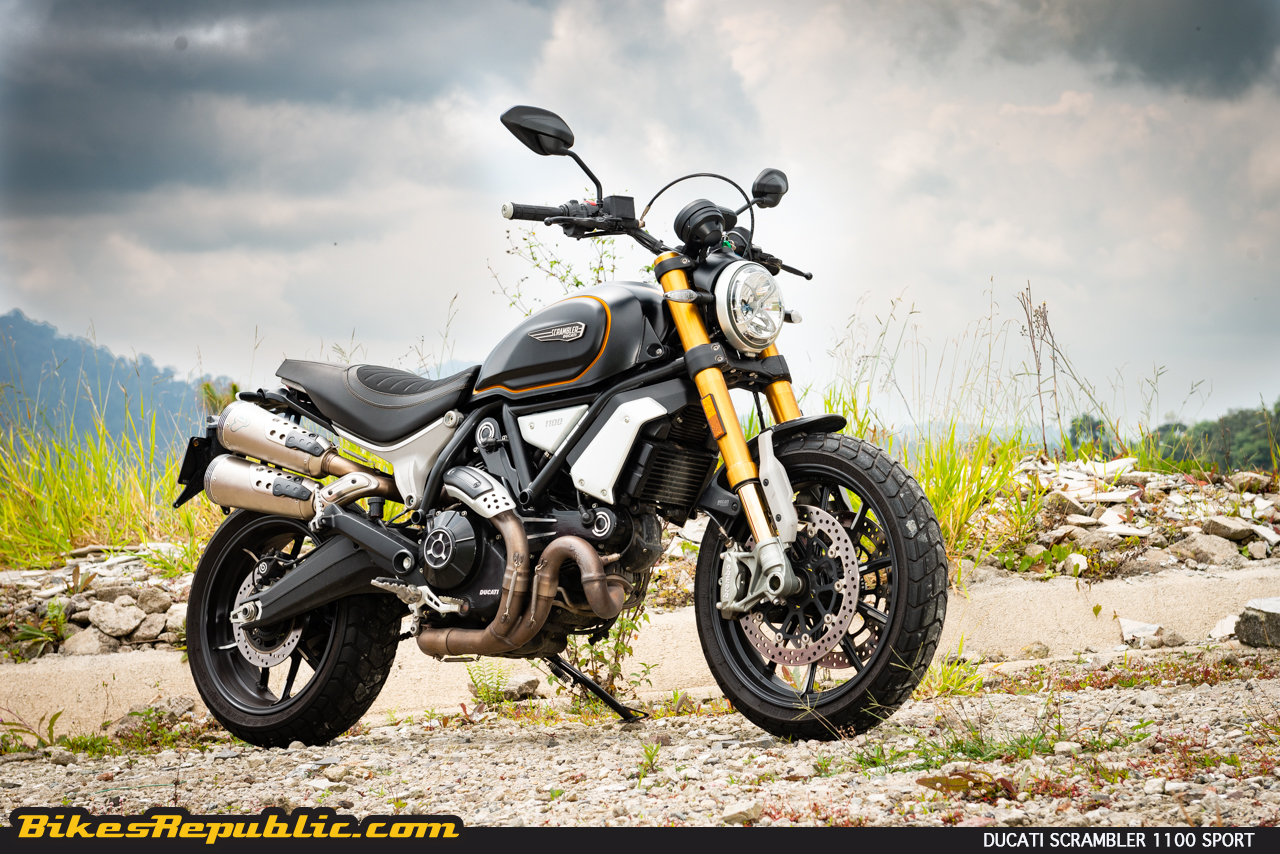
Suspension is usually basic but there are special models with some great stuff like on the Bonneville Thruxton and Scrambler 1200, and Ducati Scrambler 1100 Sport.
The Ducati Scrambler 1100 Sport uses Ohlins suspension
Fuel capacity
Fuel tank size typically ranges from 12 litres and above. It’s the overall design of the bike which limits the size of the tank. Imagine how an 18-litre tank looks out of place on a modern classic! Still, one could get approximately 250 km range from one filling.
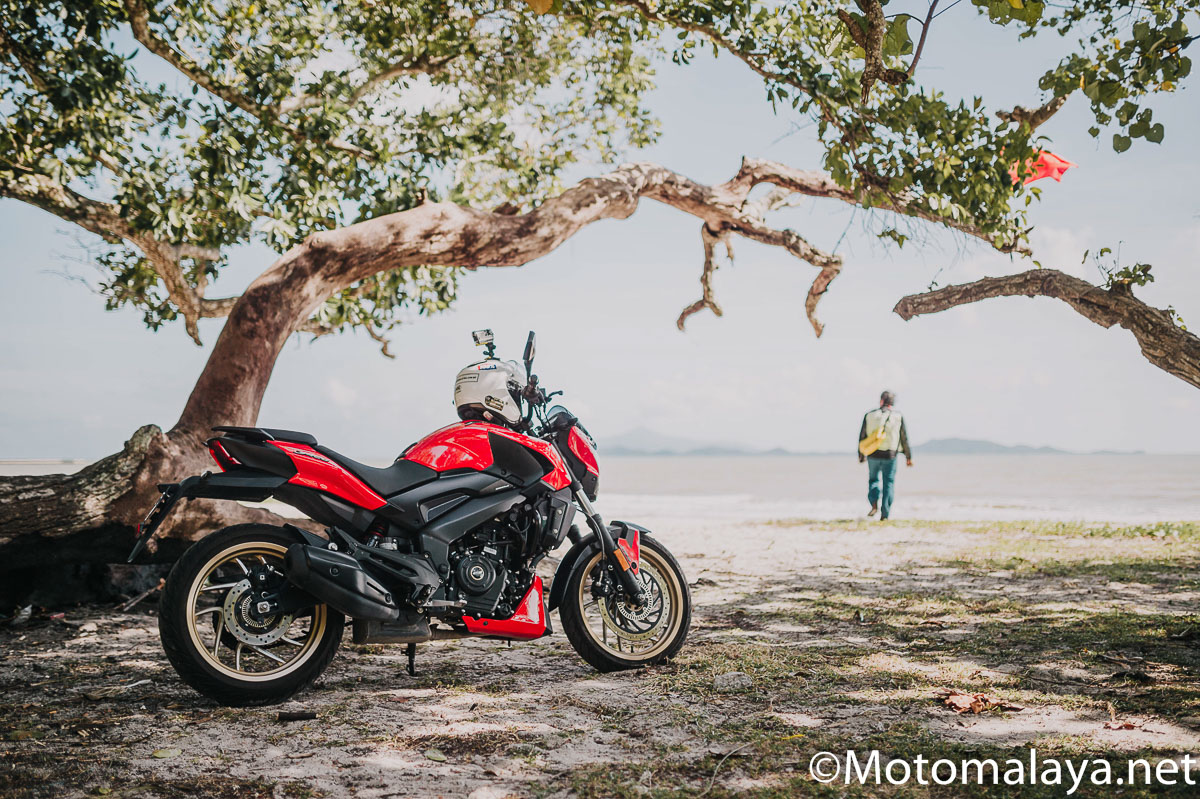
Modenas Dominar 400
Luggage options
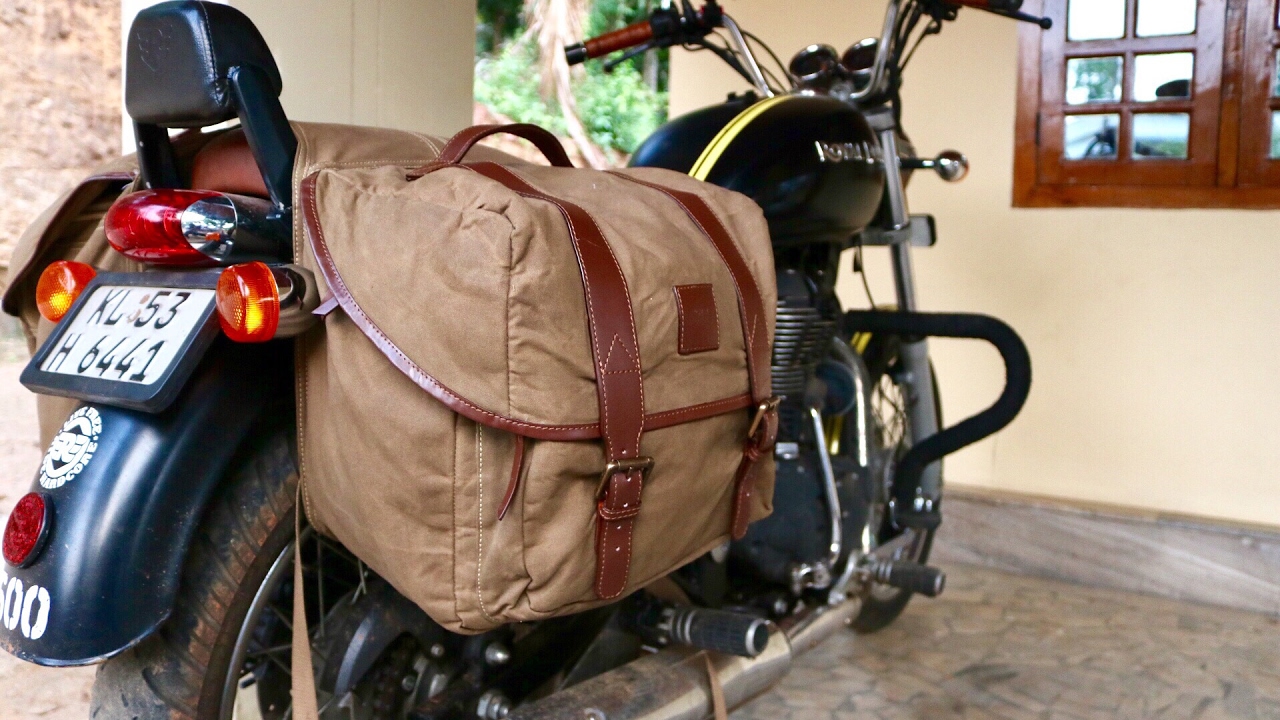
Luggage isn’t the forte of standard bikes, but the flat rear seat and tank allow the rider to tie a travel bag and attach a tankbag, respectively. Saddlebags won’t destroy the looks of the bike, either.
Royal Enfield with saddlebags
Customization options
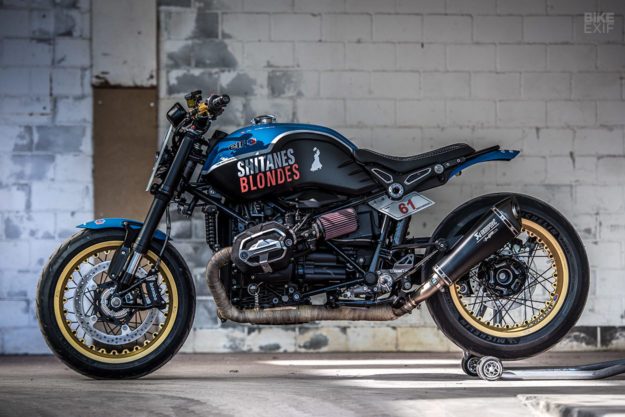
Standard bikes are the most customized, next to cruisers, due to the lack of bodywork and basic looks to begin with. Modern classics are often the most worked on and some of the results are stunning.
What about naked bikes?
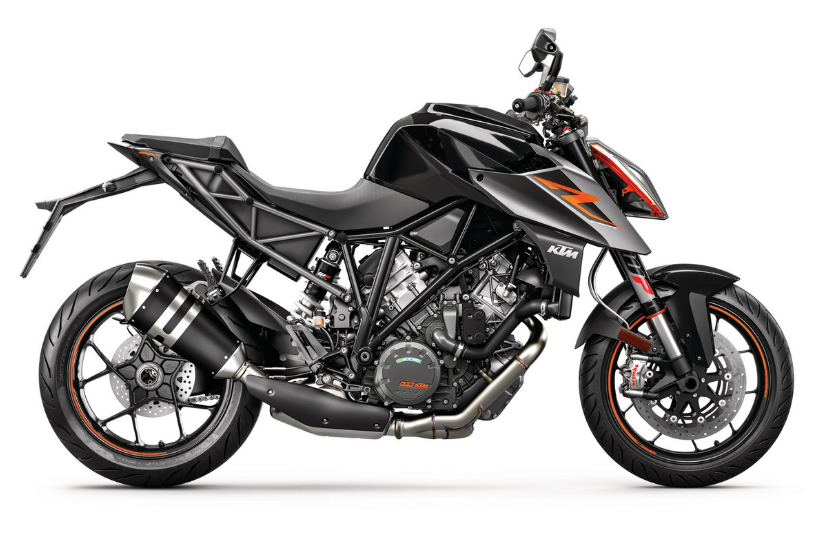
Naked bikes are actually sport-bikes or sport-tourers sans the bodywork. The bikes are more about performance while offering some practicality and comfort (cough!).
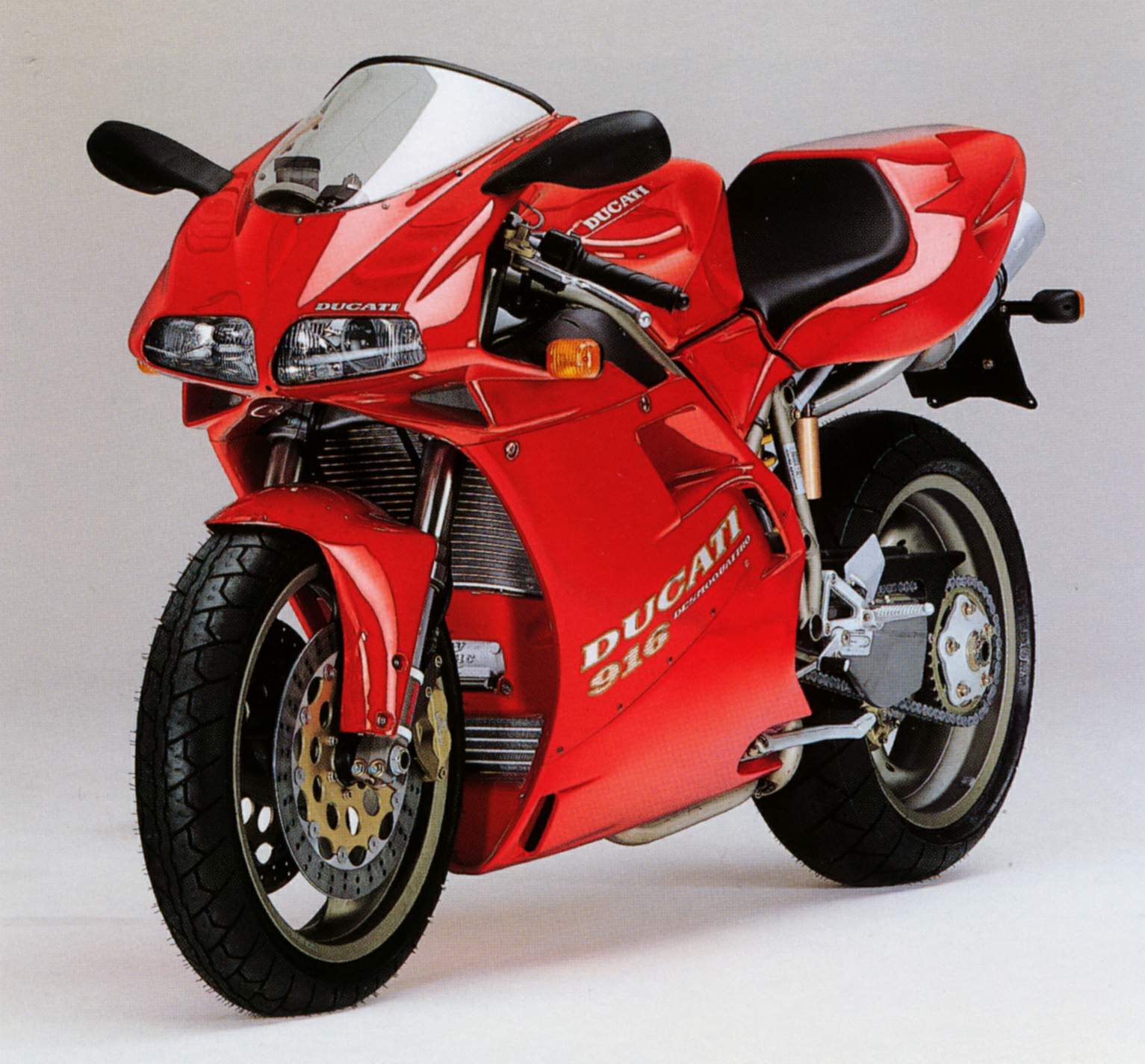
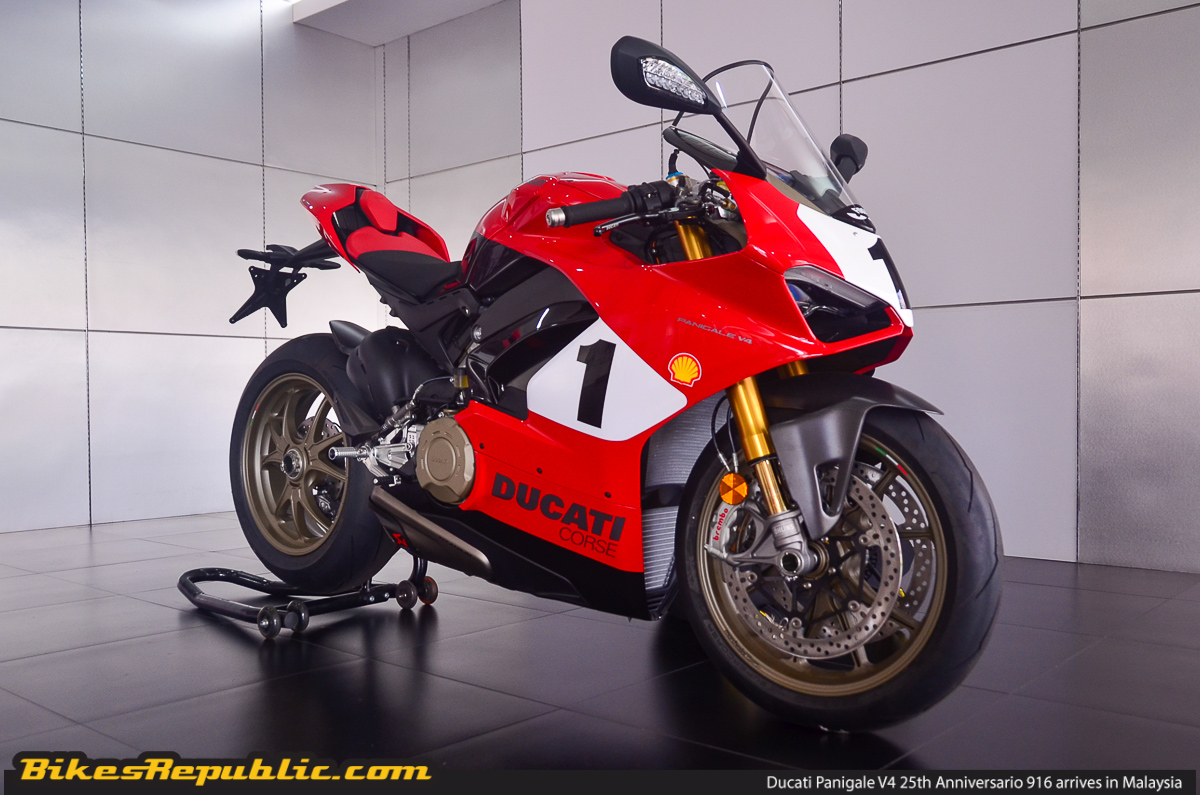
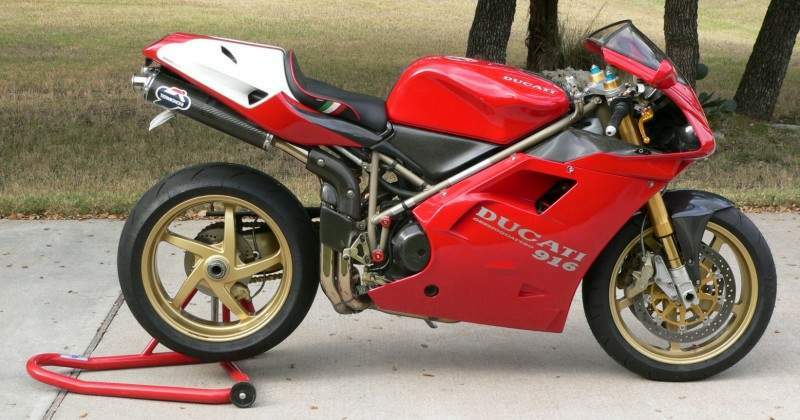
The Ducati Panigale V4 25th Anniversario 916 has just arrived on our shores.
Why did it pay tribute to the Ducati 916?
Why was the 916 so important?
The Ducati 916 was released in 1994, which makes 2020 its 26th anniversary. So why are we running this article as if it’s the bike’s 25th anniversary? Well, that’s because the Ducati Panigale V4 25th Anniversario 916 has just arrived on our shores.
Why pay tribute to the 916? What made the 916 one of the most iconic motorcycles of all time?
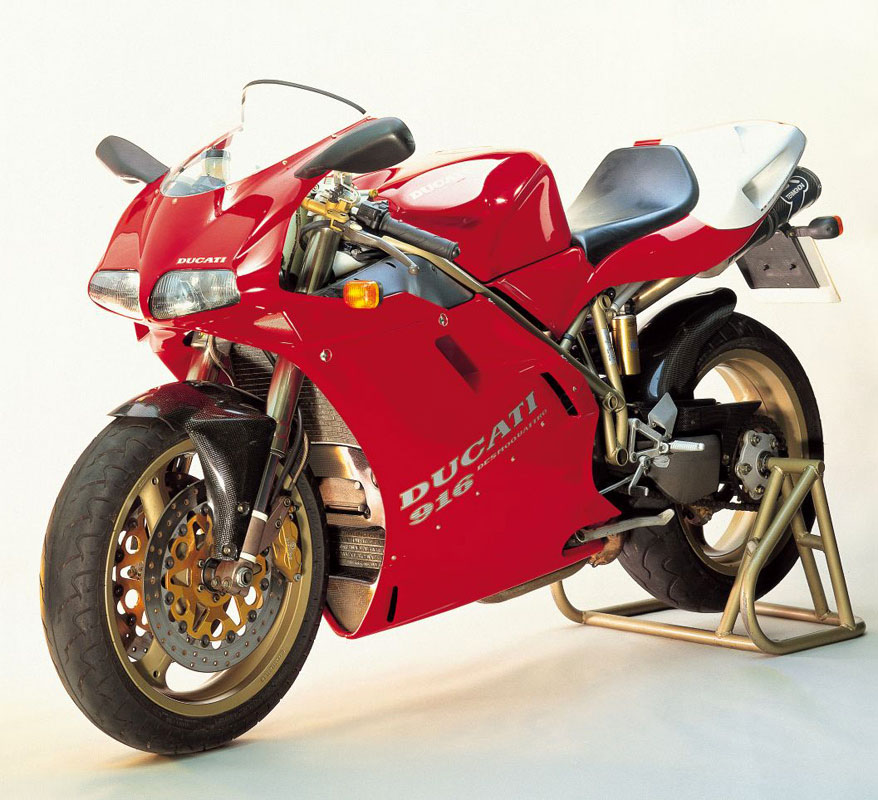
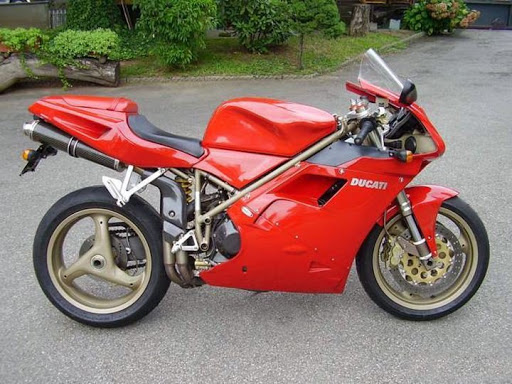
First of all was its revolutionary styling which went on to inspire how sportbikes would look until this day – including the Panigale. Sportbikes up to 1994 had either round or square headlamps, but the Ducati 916 was the first to utilize the now mandatory “squinting” headlamps. That break was due to the use of projection headlamps that had been introduce to cars in the 80s.
Part of the 916’s styling also made the bike more compact compared to its peers. The diminutive shape helped the rider in being integrated into the bike, which paid in spades in corners.
Secondly but perhaps more importantly, the 916 and its subsequent variants dominated the World Superbike Championship in the 90s. It’s considered a heroic effort for an underdog manufacturer to beat the world’s largest motorcycle makers including Honda.
The 916 wasn’t about power or low weight. Instead, it was about maximizing its strengths, which were cornering ability and hard acceleration out of corners. That 90-degree V-Twin had an irregular firing order which enhanced rear tyre grip so that riders could get on the gas sooner.
Ok, let’s look at its history.
In the beginning
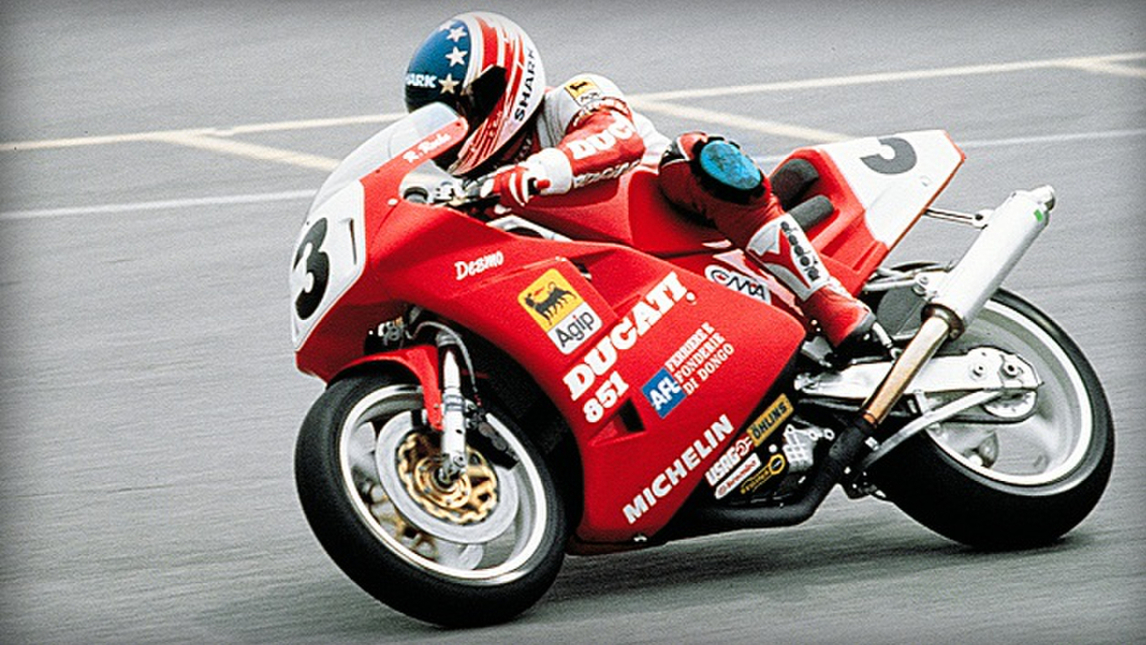
Ducati had already won three consecutive WSBK (before it became WorldSBK) titles in 1990 (Raymond Roche on the 851), 1991 and 1992 (Doug Polen on the 888). However, they were beaten by Scott Russell on the Kawasaki Ninja ZXR-750 after a close fight.
Raymond Roche on Ducati 851
The late Massimo Tamburini was given the task to design a new superbike. But this time he was not only in charge of the design but also the technical aspects, as well.
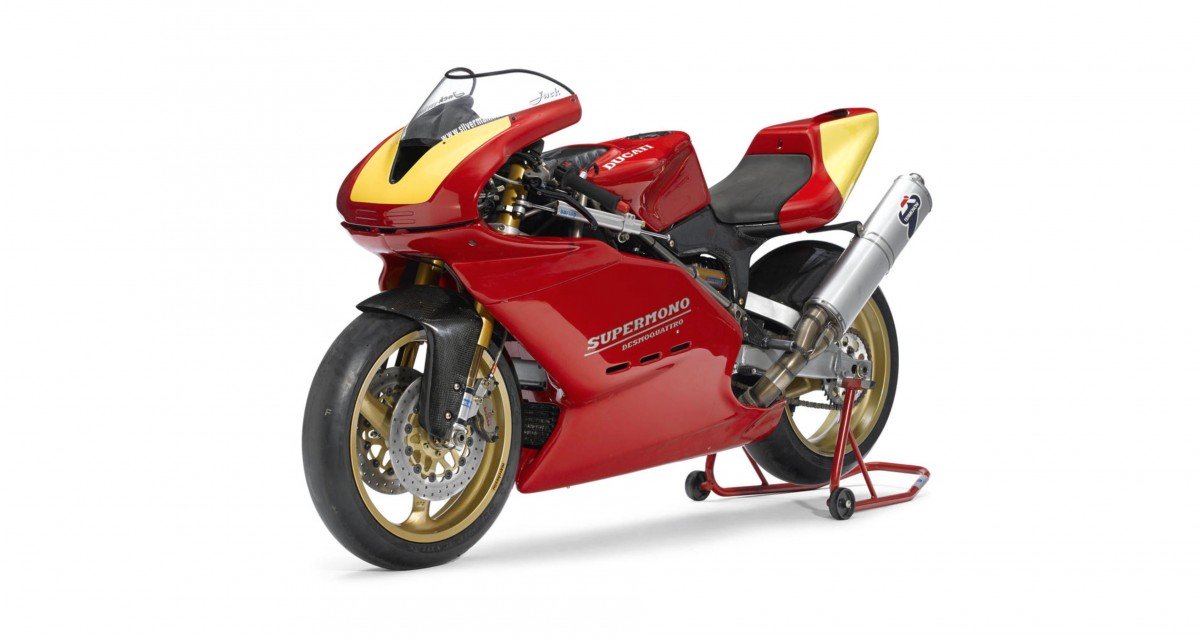
Tamburini borrowed heavily on the designs of the Ducati Supermono race bike, penned by Pierre Terblanche. The Supermono had that pointy nose, slim waist and small tail profiles.
Ducati Supermono
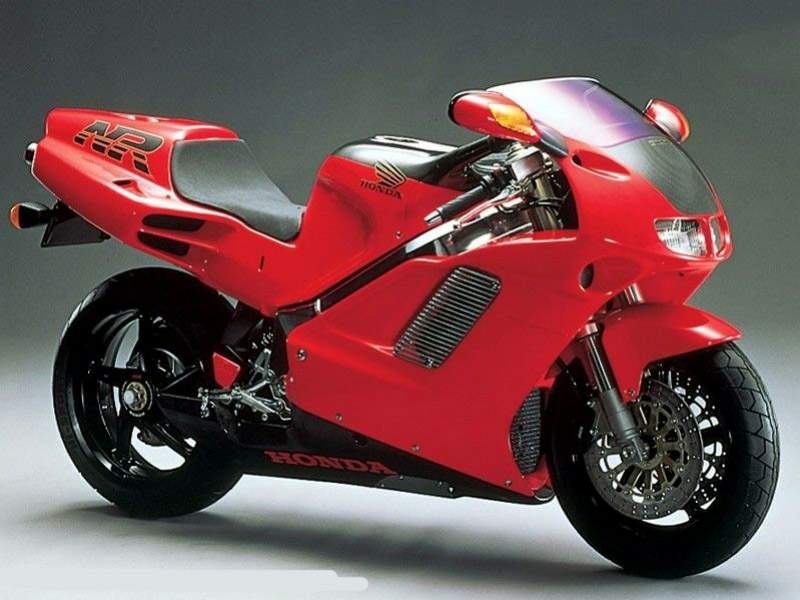
The late maestro was also inspired by the Honda NR which debuted at the 1989 Tokyo Motor Show. The V-Four bike had oval pistons and 32 valves which were derived from the NS500 racebike. It also boasted single-sided swingarm and underseat exhausts. (Before you jump on us for saying that the great Tamburini borrowed his design ideas from others, please be informed that he was the one who revealed these facts.)
Honda NR
As for the single-sided swingarm, Tamburini would say in later years that he wanted to give the impression of the rear wheel floating. But he also said that the single-sided swingarm will facilitate quick wheels changes in endurance races.
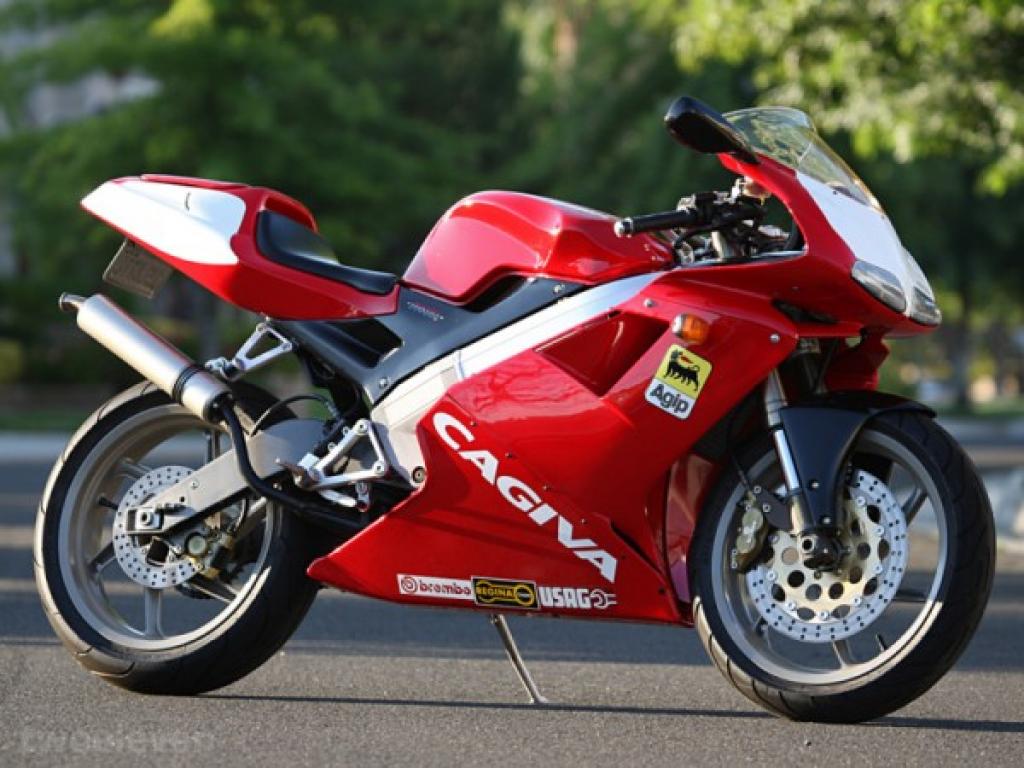
The Ducati 916’s underseat exhausts were a late addition. The original plans had a side-mounted pipe, just like the Cagiva Mito 125 EV. (The EV was penned by Tamburini before the 916 and it actually looked much more closely related to the Supermono.) The late changes also worked in tandem with quick wheel changes.
Cagiva Mito 125 EV
1994: Production began
The Ducati 916 was first revealed to the press at the 1993 Milan show but it only went into production in 1994. That’s because Ducati back then wasn’t a powerhouse like it is now.
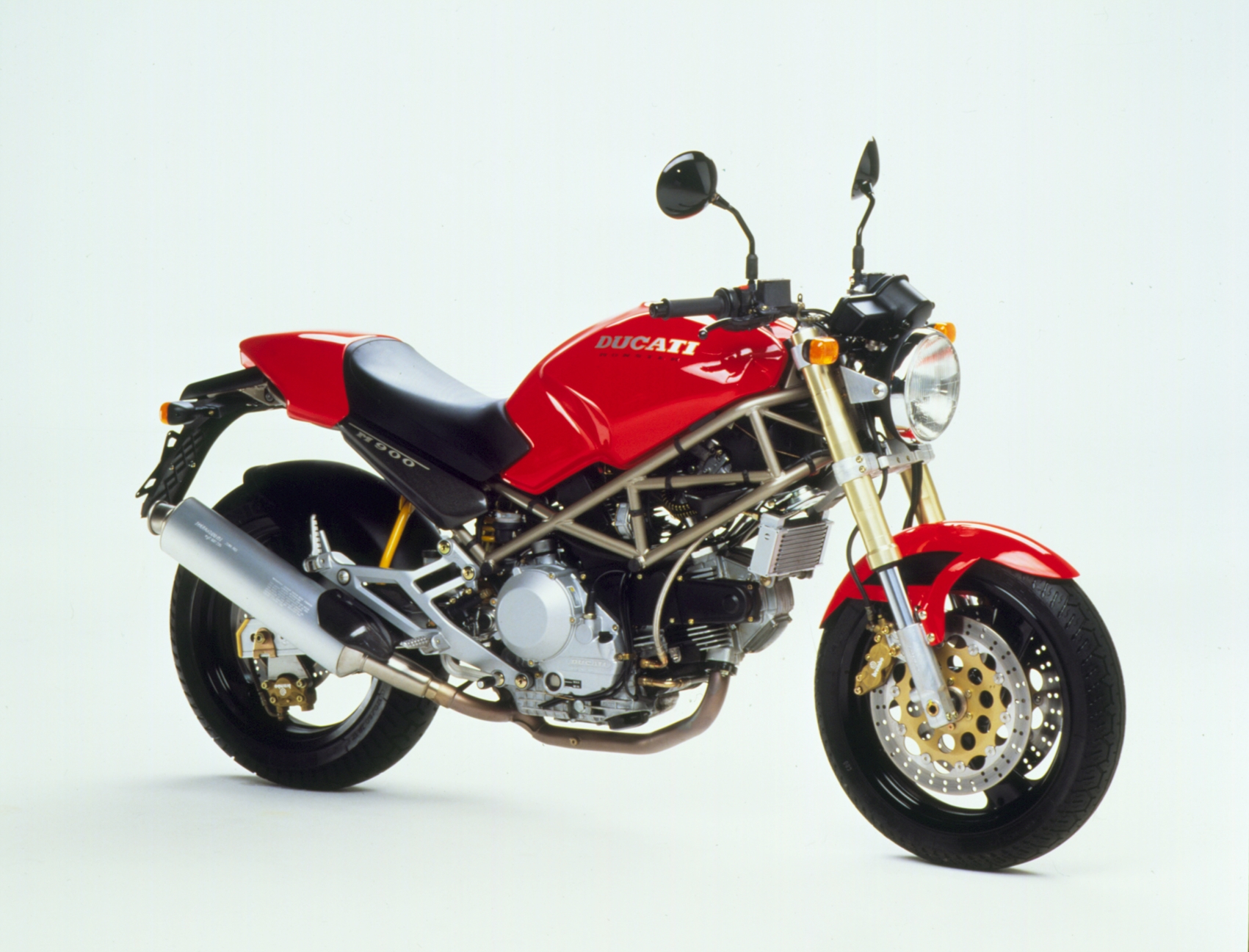
Ducati was held by the Cagiva Group under the late Claudio Castiglioni and it was always on the precipice of financial collapse. Production numbers of the 916 was low despite the new demand, hence it was the M900 Monster which actually brought in the cash!
Ducati M900
The first 916 appeared in the Strada form with a single seat. The engine produced 114 hp, which was lower than its peers at the time. And it came with Dzus quarter-turn fast-release bodywork fasteners (as did all 916).
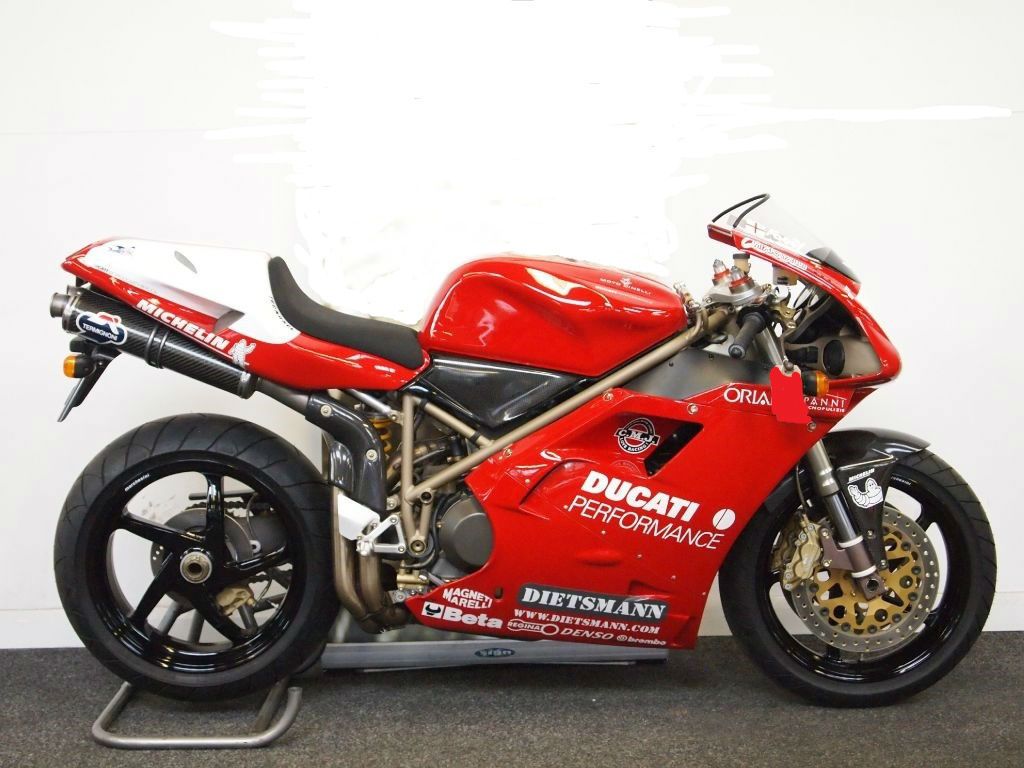
Ducati introduced the 916SP (also known as the SP1) later that year which utilized a twin-injector per cylinder set up plus race internals (titanium conrods among others), boosting the power to 126 hp. Supension was Öhlins and brakes were Brembo Gold Line with iron discs. This variant was the homologation model for superbike racing. Only 310 were built in 1994.
1994 Ducati 916SP
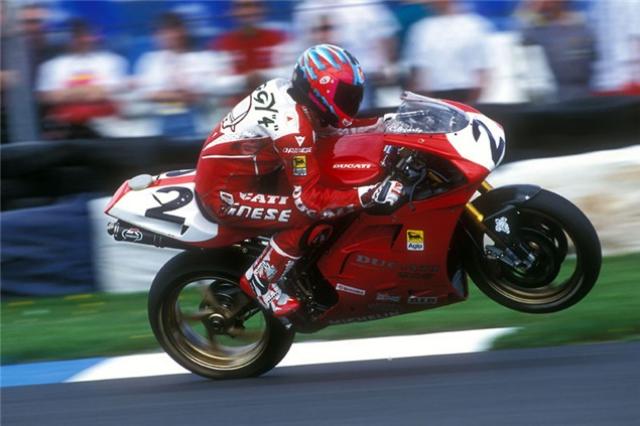
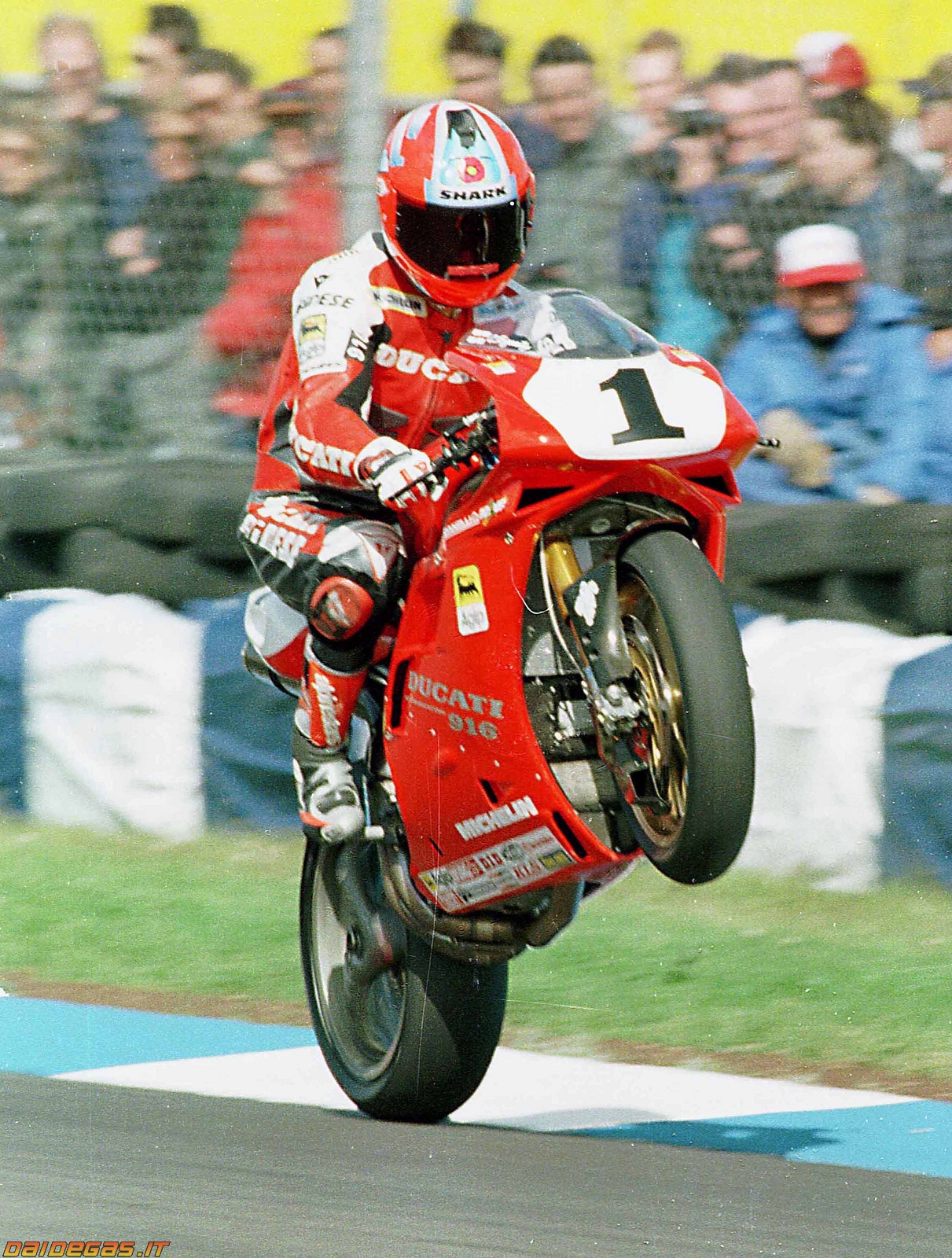
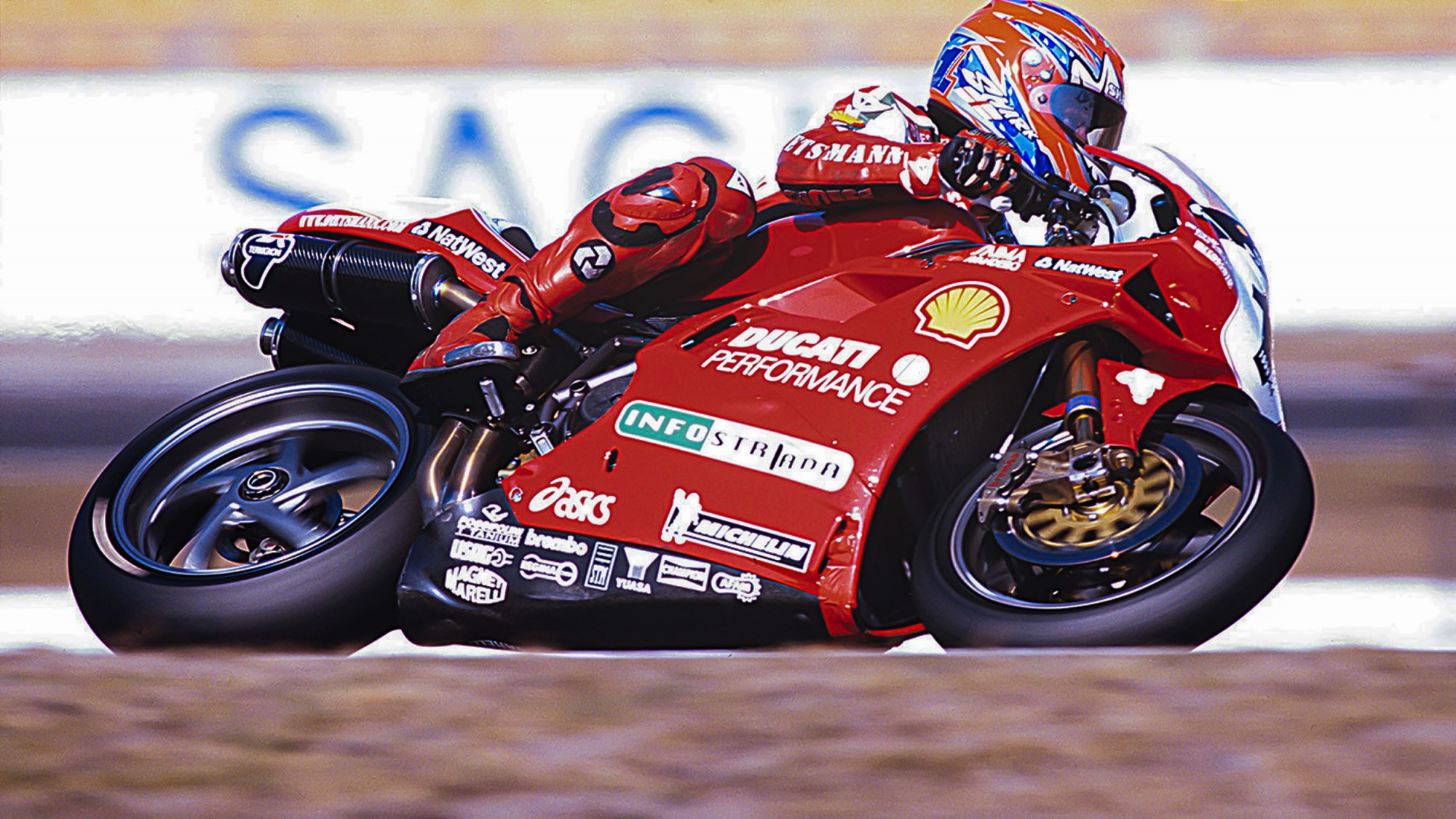
The bike was entered into WSBK straight away. Carl Fogarty won 10 races and finished second in four other races on the way to the title. This, in the bike’s first year of competition.
Carl Fogarty in 1994
1995: The Senna
The Strada was replaced by the dual-seat Biposto but the specs stayed essentially the same. The factory continued building the SP, too. Now dubbed the SP2, it shared the same specs at the SP1 but there were sources who claimed that Ducati replaced the titanium conrods with steel units. Another 401 examples were issued.
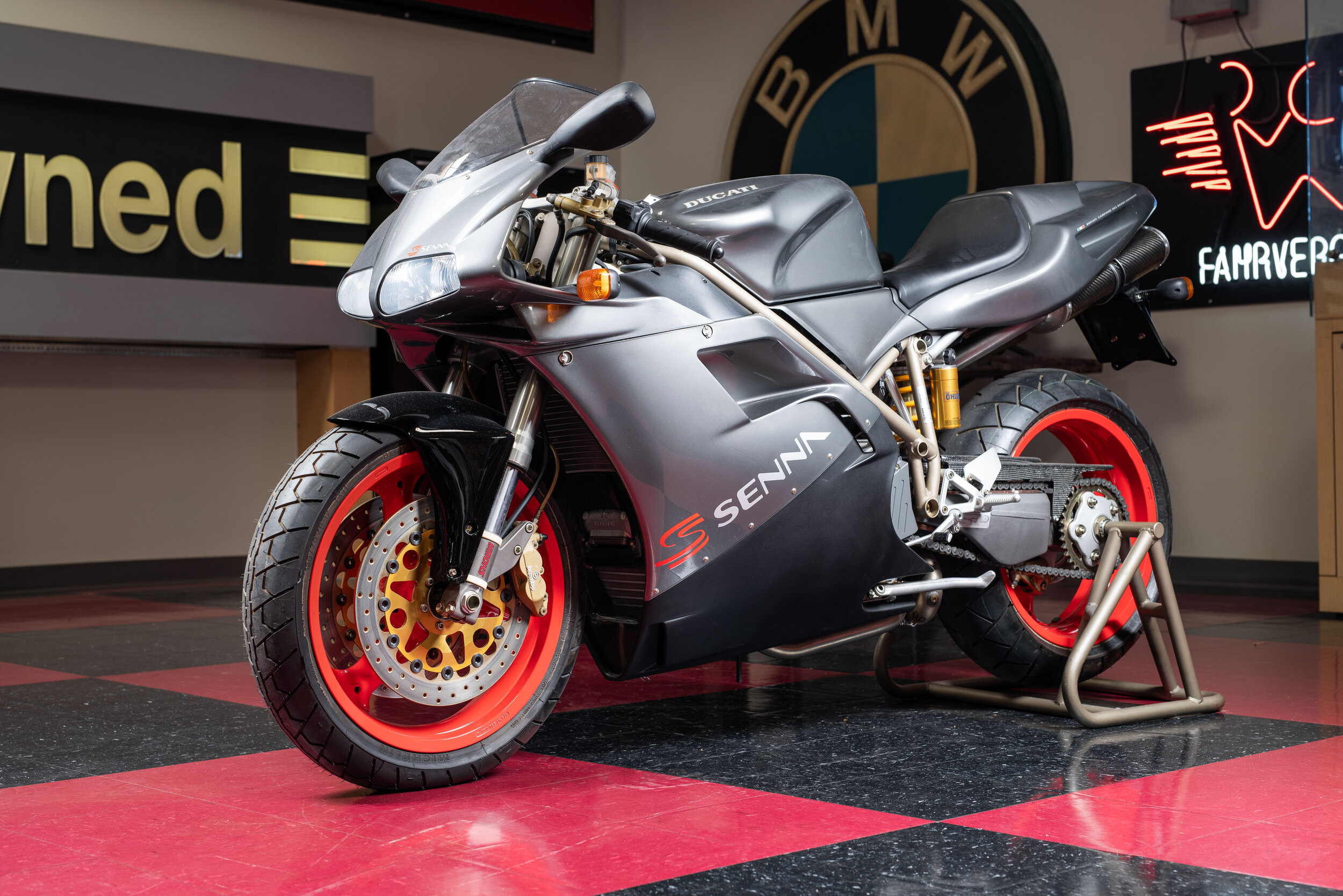
But 1995 saw one of the most famous variants, called the 916 Senna. Development began prior to the Formula 1 champion Ayrton Senna’s demise and it was intended to be higher spec’d and more powerful than the SP. However, when he was killed at the Italian GP in 1994, Ducati toned down the bike and gave it a black colour scheme with red wheels. Only 300 were built. The manufacturer continued that tradition with the Senna II and Senna III in later years.
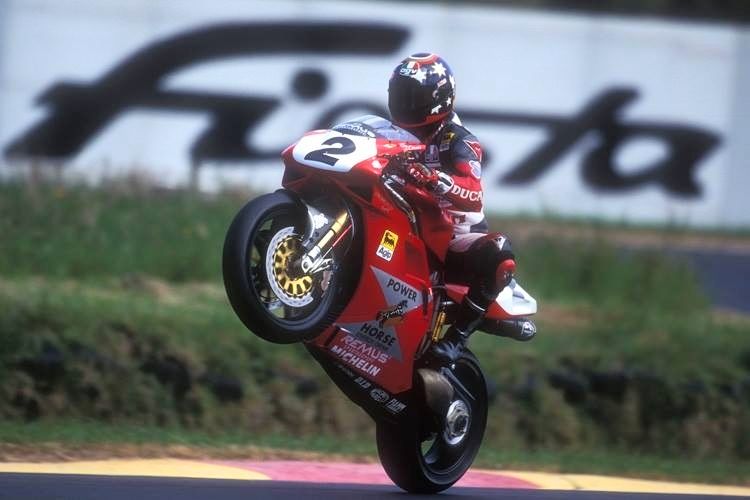
1995 saw another WSBK title, courtesy of Foggy. He decimated the field this time around by winning 13 races and finishing second in another six. The second title gave rise to mutterings that he won because of the bike. Foggy would drop the bombshell by announcing his move to Honda for the 1996 season.
Image source: daidegasforum.com
1996: The 955
The Biposto remained unchanged while Ducati kept homologating the SP with new parts for racing.
The race engine capacity had gone up to 955cc. In order to race in the AMA Superbike series in the US, they were required to homologate a certain number of bikes with that capacity. This gave rise to the little known 955SPA (also known as the 955SP). The bore was enlarged by 2mm for the capacity bump. Only 50 were ever built, making it the rarest 916 and one of the rarest Ducatis.
On the WSBK front, Troy Corser stepped up and won the 916’s third consecutive title.
1996 also saw the takeover of 51% of Ducati shares by the Texas Pacific Group (TPG). The extra cash injection saw the Cagiva Group starting to concentrate on the MV Agusta brand side-by-side with Ducati.
1997: The SPS
The SP name was dropped and the SPS was introduced. The latter was meant to homologate the new 996cc engine, which brought it closer to the 1000cc limit for V-Twins in WSBK (four-cylinder engines were limited to 750cc).
Ducati found that the original 916’s crankcases had cracks and stress fractures when they went to 955cc thus new crankcases were produced for the SPS. Bore went up to 98mm while retaining the 66mm stroke. As such, the barrels and heads were new.
The Senna II began production.
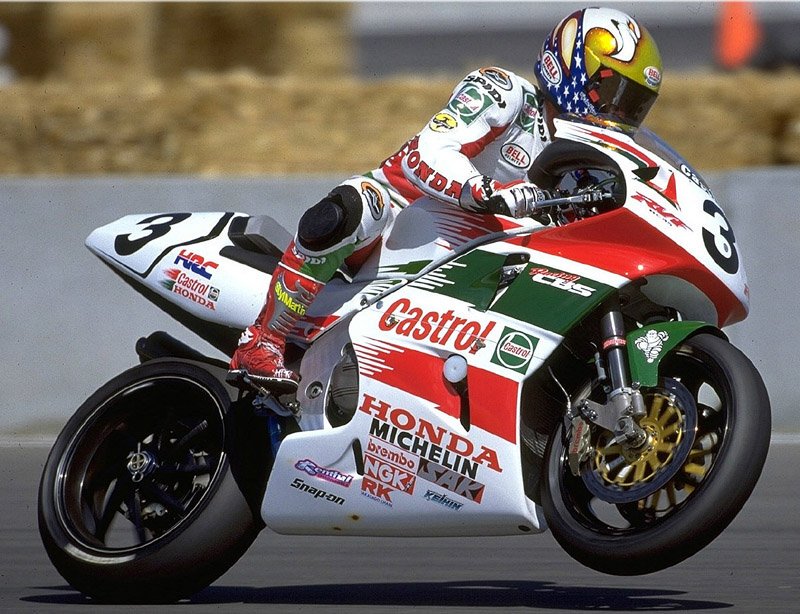
Over to WSBK, Foggy came back to the Ducati squad but he had to contend with John Kocinski who had taken over his Honda RC45 seat. The former won four races but also had four retirements, compared to Kocinski’s nine wins and just one retirement. Nevertheless, he finished second overall.
John Kocinski on the Honda RC45 in 1997
1998: The Foggy Replica
The biggest news this year was the 916SPS Foggy Replica which paid tribute to the great racer. But it was also to homologate a new frame and airbox.
Foggy had complained that the 996 was vastly different when he returned in 1997, mainly bout the snappy throttle response. Instead of building a whole new engine or suspension like what Honda would do, Ducati worked on the V-Twin’s breathing and found that a larger airbox was the key for the increased capacity. It also increased engine power.
But the frame had to be modified to fit the new airbox, besides being lighter with engineered flex. This new frame was also known as the Kyalami Frame as it debuted at the South African circuit for the 1998 WSBK season.
Only 202 were built. One went to Foggy, one was kept in the Ducati museum while the other 200 were sold to the public.
Foggy put in a much more consistent performance this time around and won the championship. It’s his third and the 916’s fourth.
1998 also saw the complete takeover of the Ducati brand by TPG. It marked a new beginning for both Ducati and the MV Agusta brands.
1999: The 996 and 996SPS
The much “forgotten” Biposto finally got a substantial upgrade and took a capacity bump straight up to 996cc. The engine was the detuned version of the SPS, more like if the 996SPS was to comply with the US EPA standards. As such, it used more conventional parts like a standard ratio transmission, and heavier crankshaft and conrods. It shared the SPS’s pistons, valves, heads and crankcase, however.
The previous 916SPS (996cc) was now known as the 996SPS.
Foggy put in a stellar performance on the new bike by winning 11 races, finishing second in another six races, and third twice to wrap up the championship. It was his fourth and the 916’s fifth. Foggy held the record as the WSBK’s rider with the most titles for 20 years until it was broken by Jonathan Rea in 2019 with his five consecutive titles.
Although the Ducati 916 has now ceased to exist, the subsequent models were still considered the 916 as they shared the bike’s DNA.
2000: The Testastretta
The homologation and racing bike’s engine took another capacity bump to 998cc. This was when Ducati introduced the “R” designation in the 996R. It also marked the debut of the Testastretta (narrow head). The head narrows the valve angles to allow the bigger bore and larger valves for power increase. The Testastrettawas later adopted to all liquid-cooled Ducati road bikes.
Honda finally threw up their arms and debuted their own V-Twin sportbike and buried their favourite V-Four format. Called the VTR1000 (SP2 or RC51 race bike), it was a weapon in the hands of Colin Edwards. He beat out Troy Bayliss on the Ducati to win the title.
Bayliss would fight back in 2001 to clinch the title on the 996R. It was the 916’s final victory.
2002: The Final Edition
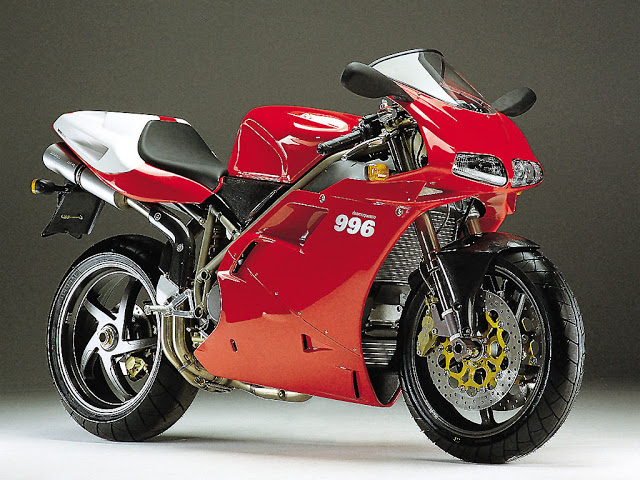
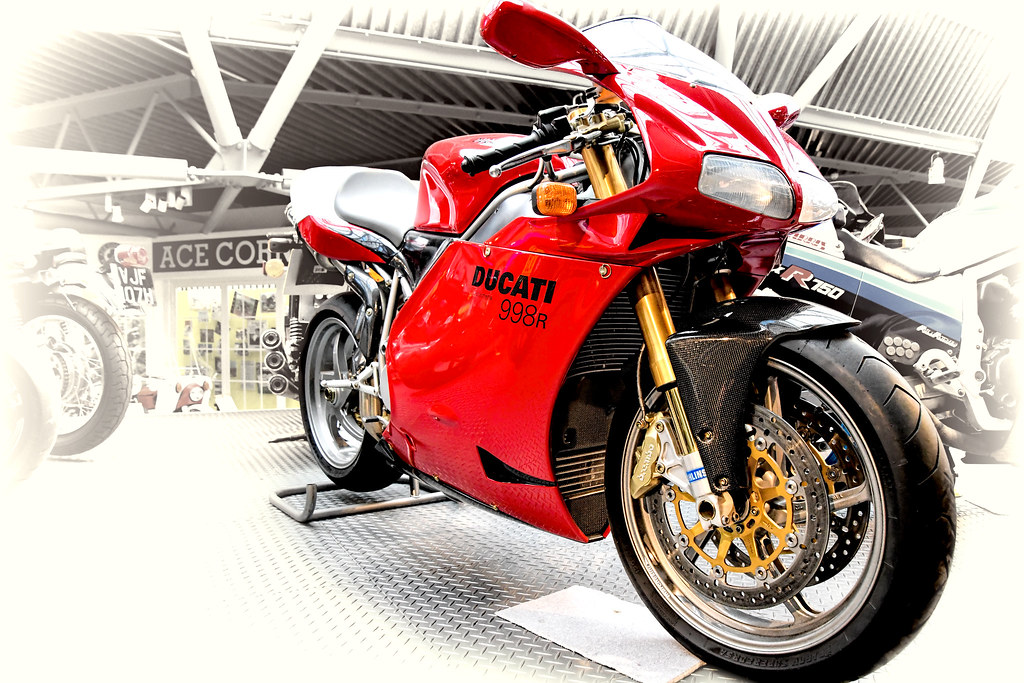
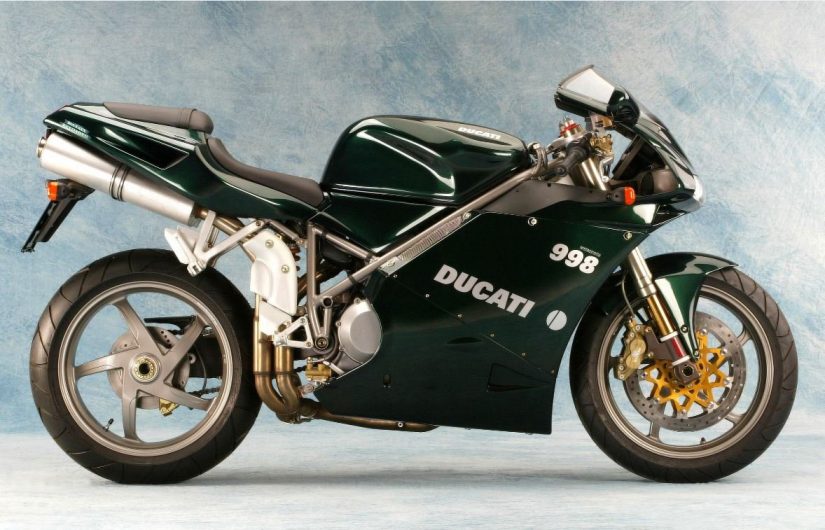
The 916’s run was coming to an end. With this, the now 998 received some design tweaks. It was also the year when the current Ducati’s model designation made its debut – the base 998, Öhlins suspended 998S, and the 998R homologation model.
There were four special editions including Ben Bostrom and Troy Bayliss replicas, green coloured 998 Matrix (actually a 996 in The Matrix Reloaded) and 998 Final Edition (in 2004).
The 916’s legacy
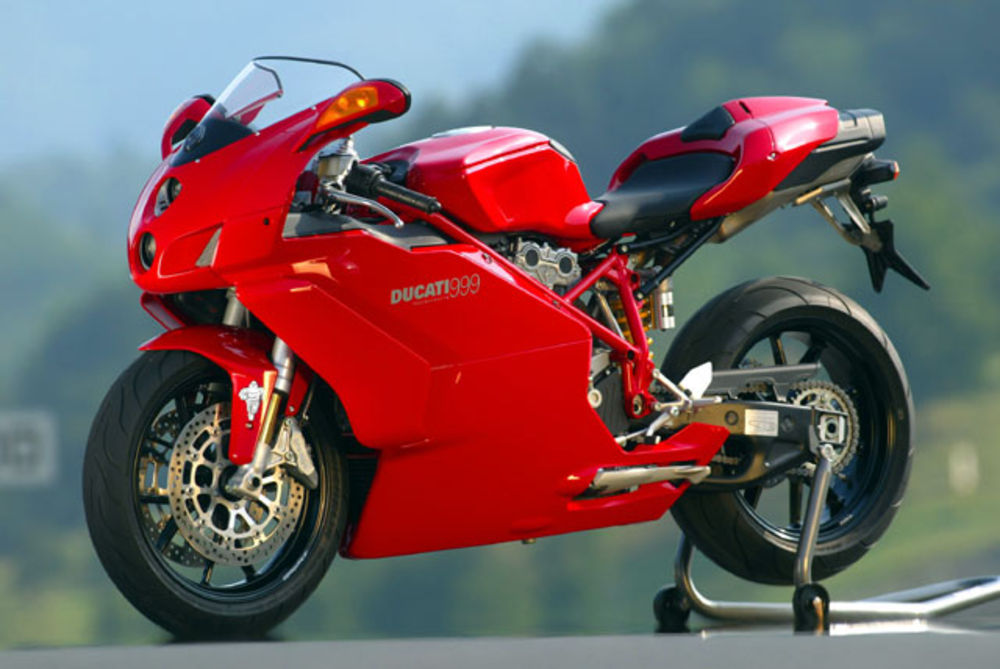
Ducati would debut the 999 in 2003, designed by Pierre Terblanche, as Tamburini had stayed with Cagiva/MV Agusta. The 999 was maligned by many when it was unveiled, despite proving to be better than the 916. Its design was just too much of a culture shock for the Ducatisti, which prompted Ducati to return to the 916’s design cue in the 1098 in 2007.
Having learned their lesson, the manufacturer continued with the 916’s design character in the Panigale in 2011 and to the current V4.
Selling your bike means you need to prepare it for the sale.
Best not to sell your bike in poor condition.
Doing so may compromise the buyer’s safety besides getting a low price.
So, you’re planning to sell your current bike. You’d like to sell it at the highest possible price, of course. As such, you need to prepare it for the sale instead of being too literal with selling it “as it is.”
Wash and wax it
A dirty bike will put off a potential buyer even if it’s well-maintained and runs like how it did when it first exited the showroom. Would you want to buy a bike that’s caked in dust or mud (unless you wish to restore a vintage)?
Washing here includes the chain and the engine.
Tune it up
Sent it to your favourite mechanic and fix a potential problem. Don’t pass off a bike with especially brake or suspension problems which may compromise the safety of the buyer.
Service the bike
Speaking of the mechanic, you may as well go ahead and perform a periodic service. Change the oil and filter, clean or replace the air filter, and put in new plugs. The buyer will appreciate it and could well settle for a higher price.
Charge up or change the battery
Would you buy a bike that can’t start? You’d probably feel suspicious if the seller says, “Oh, the battery’s just flat, that’s all.” You want to hear how the engine sounds or if electrics and electronics still work. It’s the same when you sell.
Show your maintenance record
Make sure you keep those receipts or have the workshop stamp your service booklet. Failing that, official dealer or reputable workshops do keep records of your visit. Go to them and as for the service history. Nicely, of course.
Fuel it up
Best to have at least a half tank of petrol when the buyer comes to pick it up. A full tank is best. That way, he will go away happy and you can pat yourself for a job well done.
Many GP fans still reminisce about 500cc two-stroke GP bikes.
That era is still considered the golden age of GP racing.
It was during the time when many riders fought for the title instead of just one or two.
Many motorcycle GP fans are still calling for the return of the 500cc two-stroke GP bikes.
The reasons are simple: These bikes didn’t have rider electronics, and most of all, they were scary and unpredictable. The latter reason caused spectacular high sides and crashes. But they also caused many injuries.
The two-strokes had wafer thin powerbands and required as much finesse as skill to ride. get it wrong and the bike will either high side the rider into hyperspace or seize – so choose your poison.
It was the work of one Walter Kaaden who laid the foundations for competitive two-strokes. Through the development of using the rotary disc valve and expansion chamber exhaust, he would arrive at 200 hp/litre engine in the 1961 MZ Motorrad GP racer. That bike won 13 GPs and 105 podiums between 1955 and 1976.
Four-strokes had dominated the 500cc class up to the early 70s, but it was Barry Sheene who first turned the category into a two-stroke war.
Sheene had first raced on the four-stroke TR500, but it was no match for the three-cylinder two-stroke Kawasakis. The TR500 made only 70 hp and was complex and heavy. The screaming two-strokes made more power and were lighter.
Hence, Suzuki set out to build their own two-stroke but was beaten to the punch by Yamaha. Yamaha produced the OW23 500cc two-stroke racer by drawing on their previous success in 250cc racing and especially the TZ750 beast which they raced in America. Giacomo Agostini took the bike to his last world title in 1975.
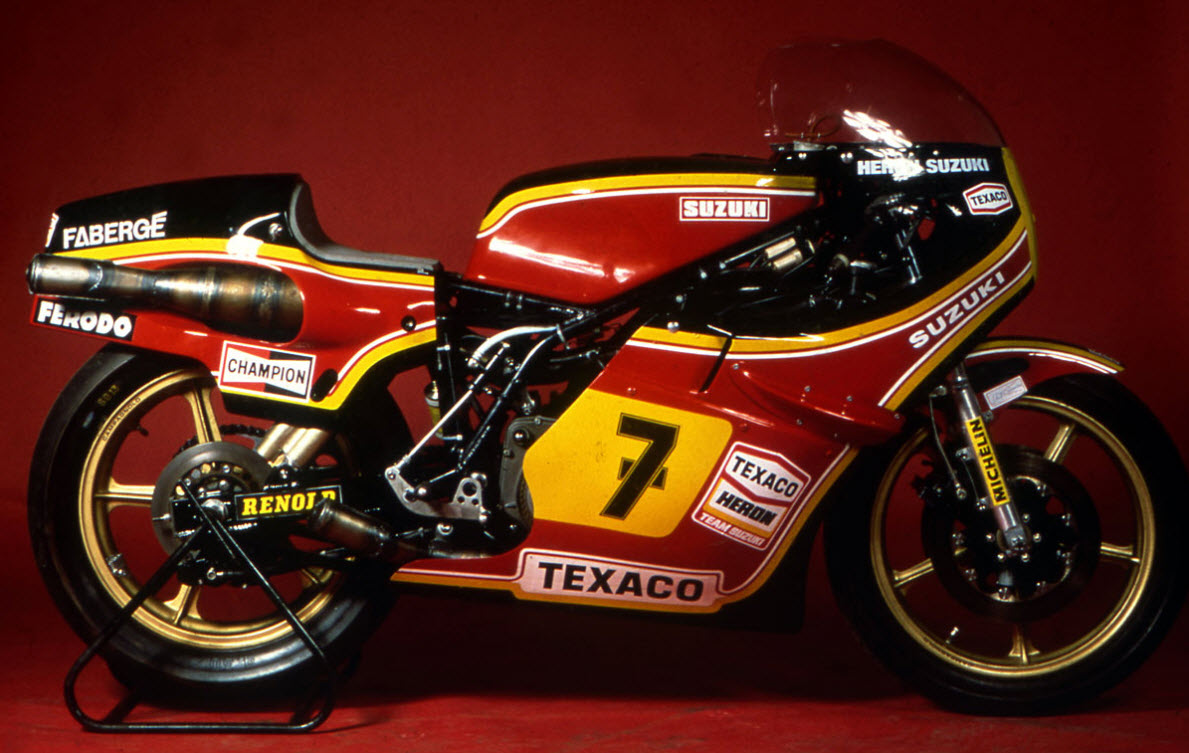
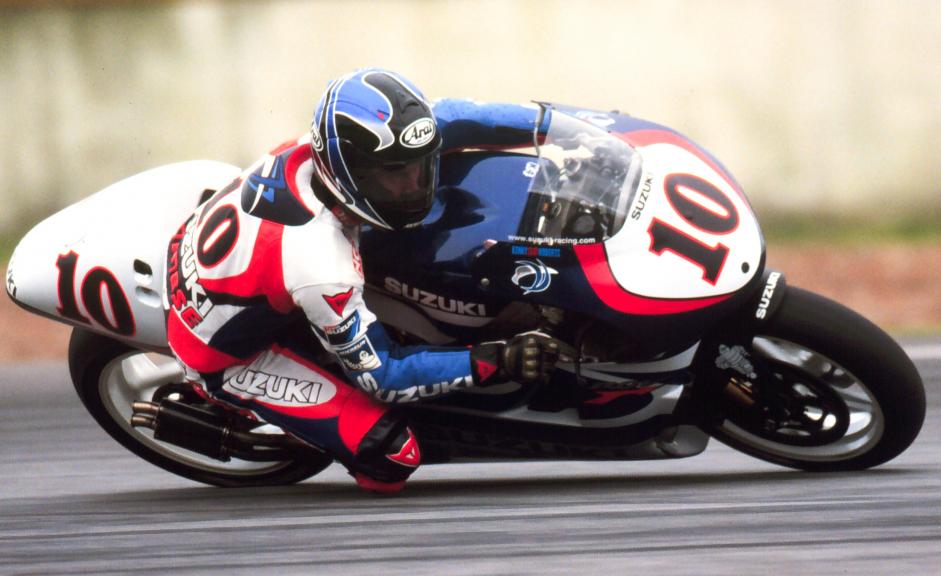
Suzuki came up with a new disc valved 500cc racer. The four-cylinders were arranged in a square configuration and the RG500 became known as the “Square Four.” Sheene converted the development into two world championships in 1976 and 1977.
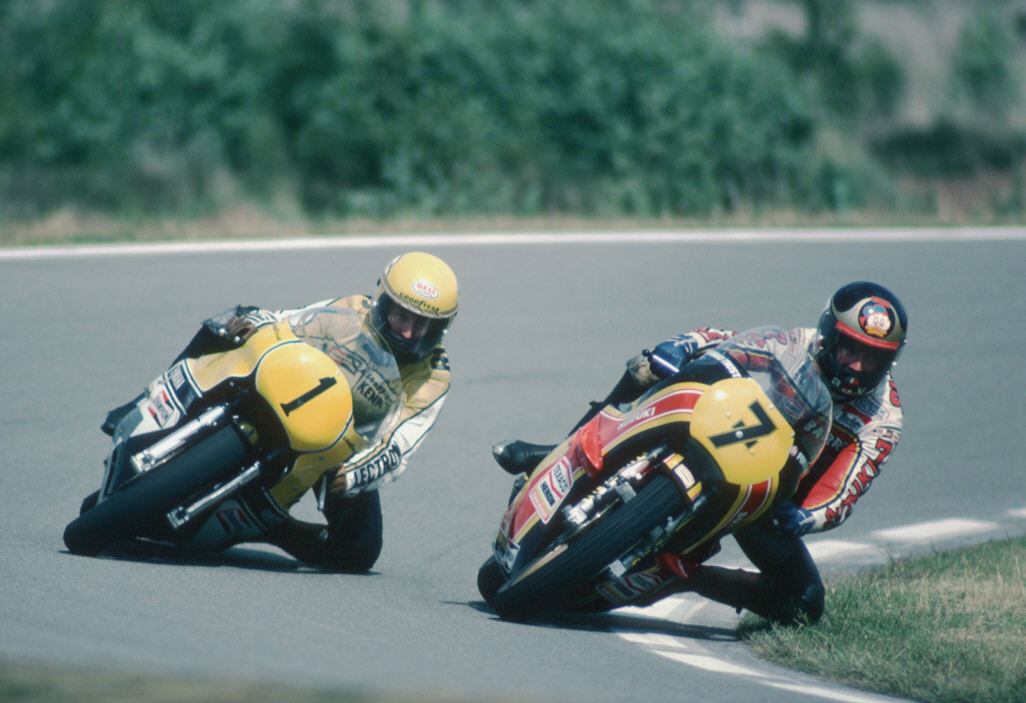
But it was Kenny Roberts Sr. who fought back on the 130hp Yamaha YZR500. The Californian was bred on dirt ovals and introduced rear wheel powerslides besides the kneedown riding technique to the world. He took three back-to-back championships in 1978, 1979 and 1980.
Image credit: motorcycleoftheday.blogspot.com
Suzuki’s Marco Lucchinelli won in 1981 after battling the entire year with Randy Mamola. It was Mamola’s second runner-up finish in two years. Barry Sheene would win one last time in Sweden that year before retiring.
Where’s Honda in all this?
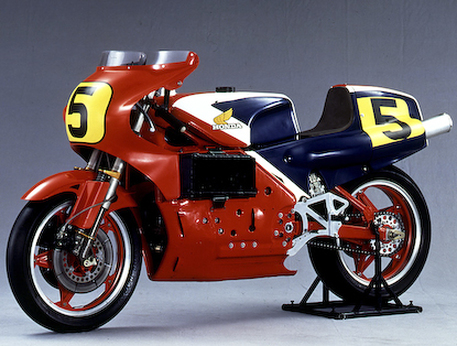
Believe or not, Honda has always been a four-stroke company. The 32-valve four-cylinder oval-pistoned NR500 was the result of this philosophy. Ridden by Freddy Spencer in his first season, it got as high as fifth place in the British Grand Prix before breaking down. in fact, the bike broke down more times than it finished any race.
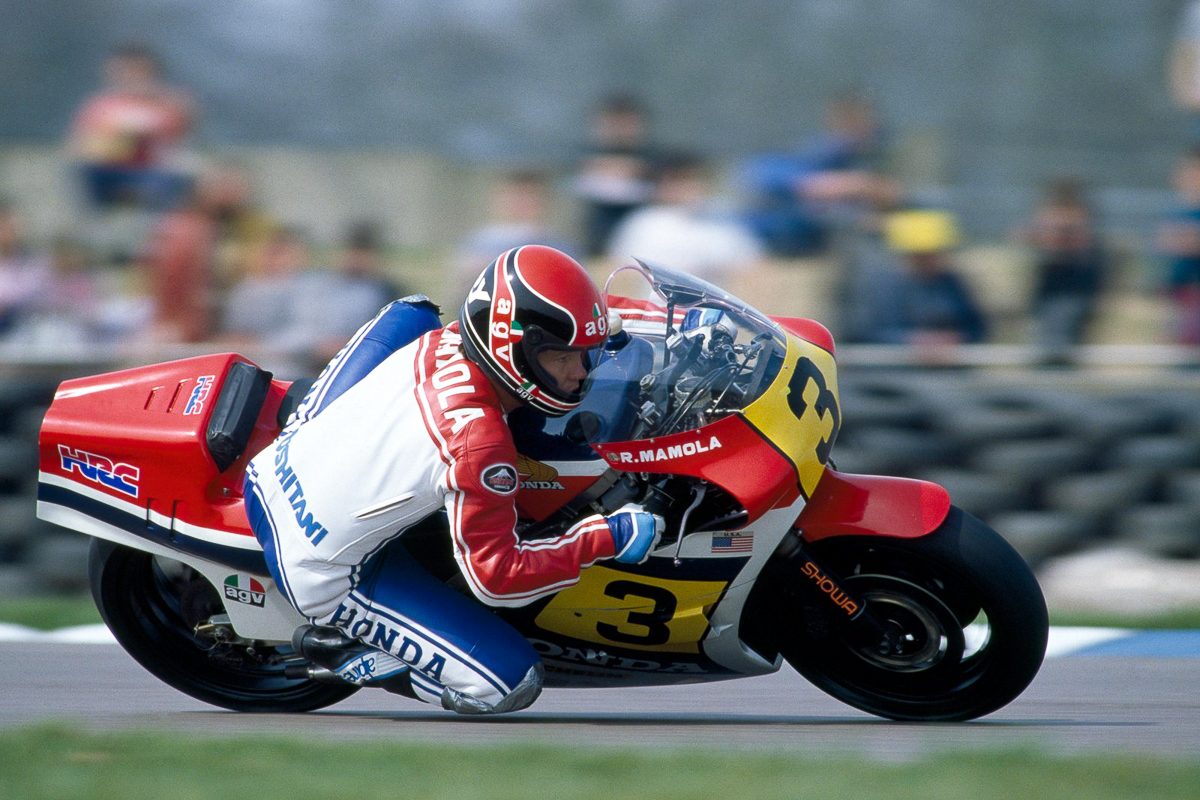
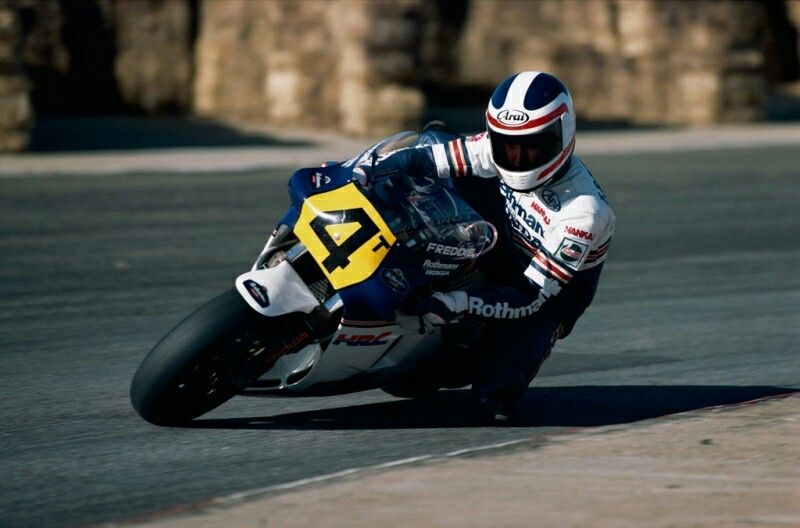
Honda never likes getting beaten so they acquiesced to building two-strokes beginning 1982. Led by a motocross engineer, the project produced the V3 NS500. It was a novel design since it had one horizontal cylinder with three vertical cylinders. Its design philosophy was to sacrifice outright power for handling. Spencer took the bike to his first world championship in 1983 against Kenny Roberts Sr. on the much more powerful but ill-handling YZR500 (OW70). Spencer beat out Roberts by just 2 points.
Randy Mamola of the USA riding a Honda NS500 during the Transatlantic Challenge Motorcycle meeting at Donington Park on 22nd April 1984. (Photo by Bob Thomas/Getty Images)
Yamaha and Suzuki had gone down the V-four route, by then and Honda debuted the NSR500 V-four in 1984. Defending champion Spencer crashed and injured himself in opening round in South Africa. He would win five races and finish second on another but had bike problems in four races and retired in one. As such, Eddie Lawson won the title on the YZR500 ahead of Randy Mamola (again).
Spencer fought back in 1985 but he also won the 250cc title in the same year. He is still the only rider who ever achieved such feat.
The Honda NSR500 was to be the legend henceforth as it would become the most dominant 500cc two-stroke bike.
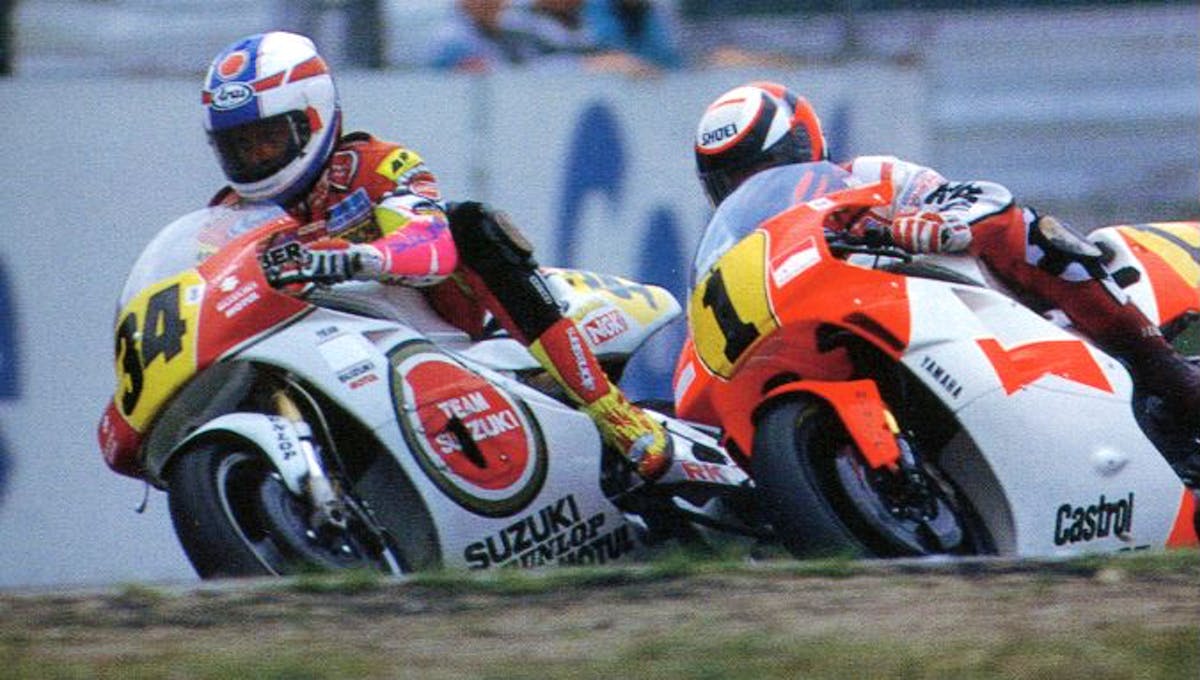
From 1986 to 1993, the battle for the 500cc world championship was a three-corner fight among Honda, Suzuki and Yamaha. But it was Honda and Yamaha who scored eight championships between them, with Wayne Rainey winning three-in-a-row on the YZR500 from 1990 to 1992.
Schwantz vs Rainey – Courtesy of drivetribe.com
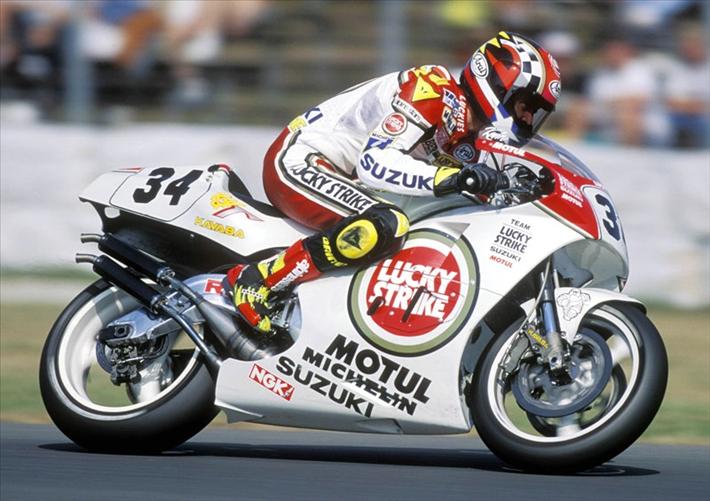
Wainey battled through those years with his arch rival Kevin Schwantz who rode the RGV500. Schwantz would finally capture the title in 1993. It was the year Rainey crashed and broke his back, paralyzing him from the chest down.
Kevin Schwantz in 1993
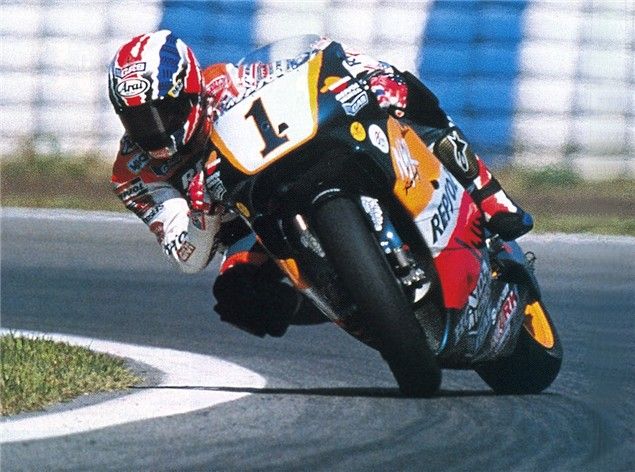
The NSR500 would then keep winning from 1994 to 1998 with Mick Doohan. Doohan suffered greatly at the hands of the NSR500 beast including almost having his right leg amputated. Losing the ability of using his right foot, he began working with a thumb-activated rear brake. Indeed, he crashed and smashed his leg to bits again during practice for the Spanish GP in 1999. He subsequently retired and his crew chief Jeremy Burgess went on to work with Valentino Rossi when he joined Honda in year 2000.
Doohan’s teammate Alex Creville won the 1999 title, with Kenny Roberts Jr. finishing second on the new RGV500. Kenny Roberts Jr. would go on to win the next year.
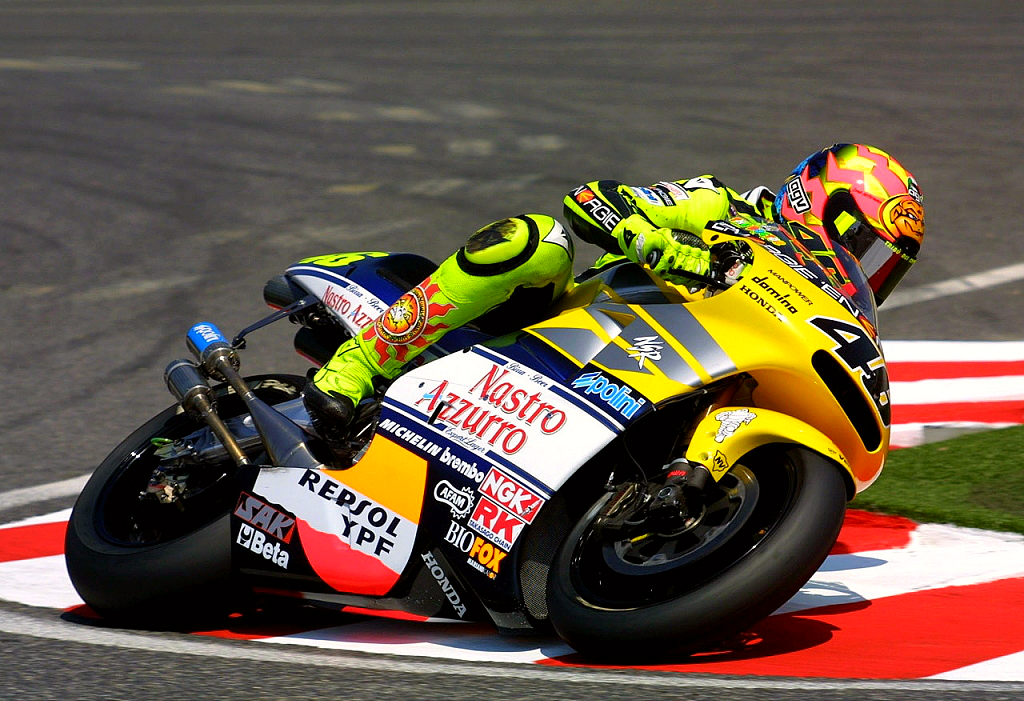
But that was also the year when Valentino Rossi joined the class. Rossi would win the 2001 and 2002 on the last NSR500. The plucky Italian was surprised by the bike’s power which had reached more than 200 hp by then. A little-known fact was that we won his first 500cc championship on a bike detuned to 168 hp.
2002 was also the first year of the four-stroke 990cc MotoGP bikes. The two-strokes were given an extra year to run alongside the four-strokes. All races were won by the four-strokes while the two-strokes only managed five podiums during the year. The four-stroke bikes also hit higher top speeds all season long.
The four-stroke formula was without criticisms. Despite his dominance, Rossi remarked that there was too much electronic control in the bikes compared to the raw two-strokes. Perhaps he said so due to what he saw as less skilled riders being able to challenge him but that was in the early days. Four-strokes may be more advanced now but they have to be so to contend with 260 to 300 hp engines.
Doohan was right when he said that the era of two-stroke GP racing was at its end after his career-ending crash in 1999. It was after this that Honda began lobbying the FIM and Dorna to switch to four-strokes.
Through the years, the two-stroke 500cc bikes had ended the careers of top riders like Wayne Gardner, Eddie Lawson, Wayne Rainey, Mick Doohan besides those down the field. It’s perhaps by morbid fascination that we wish that these beasts return.
Here are 10 countries ranked by the highest proportion of motorcycle-related deaths.
The number of fatalities is staggering, running into the millions in total.
Most countries here don’t regulate helmet standards and don’t require motorcyclists to wear helmets.
Here’s something sobering. Motorcycle-related deaths in traffic accidents still account for the highest proportion in most – if not all – countries around the world.
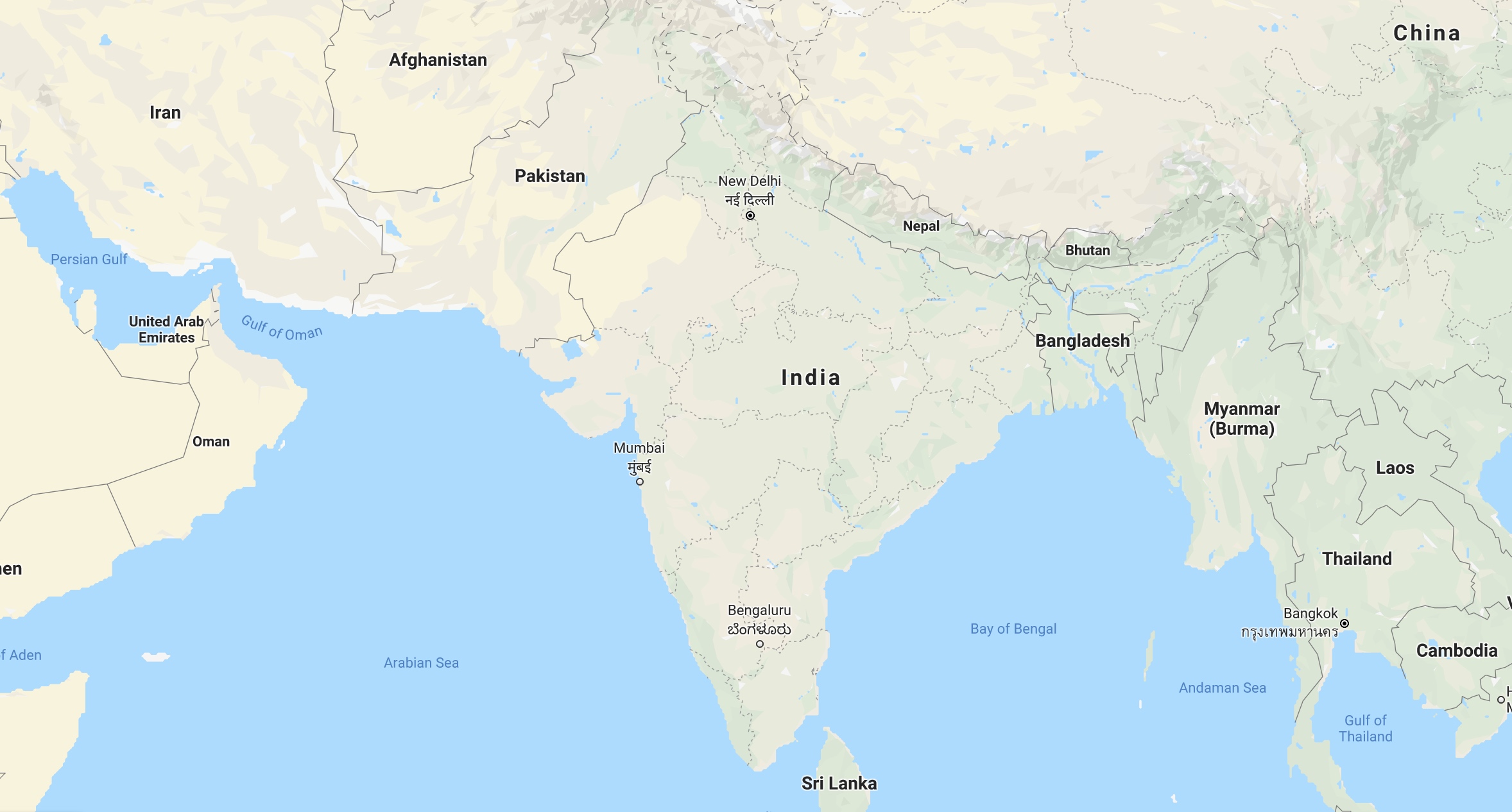
But there are a number of countries in which the proportion of motorcycle-related deaths are higher. Included in this list are a number of countries we often ride to and in.
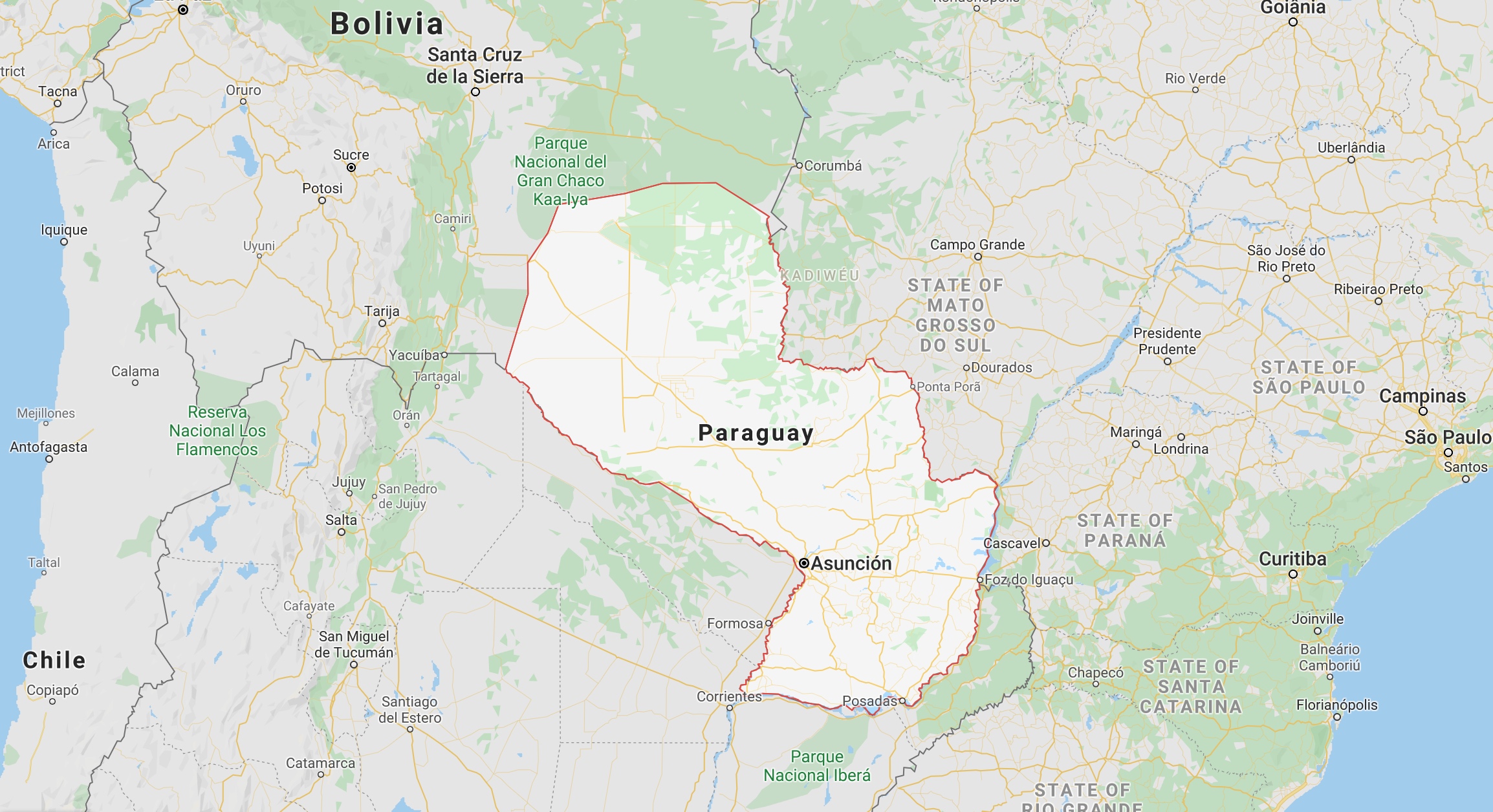
10. Paraguay – 52.2%
This landlocked South American country has 1.8 million registered vehicles, of nearly 560,000 are motorcycles. Although the proportion of motorcycles are only 30 percent, they contribute to 52.2% of total road fatalities. Ironically, the country practices strict enforcement of their highway code and motorcyclists are required to wear helmets.
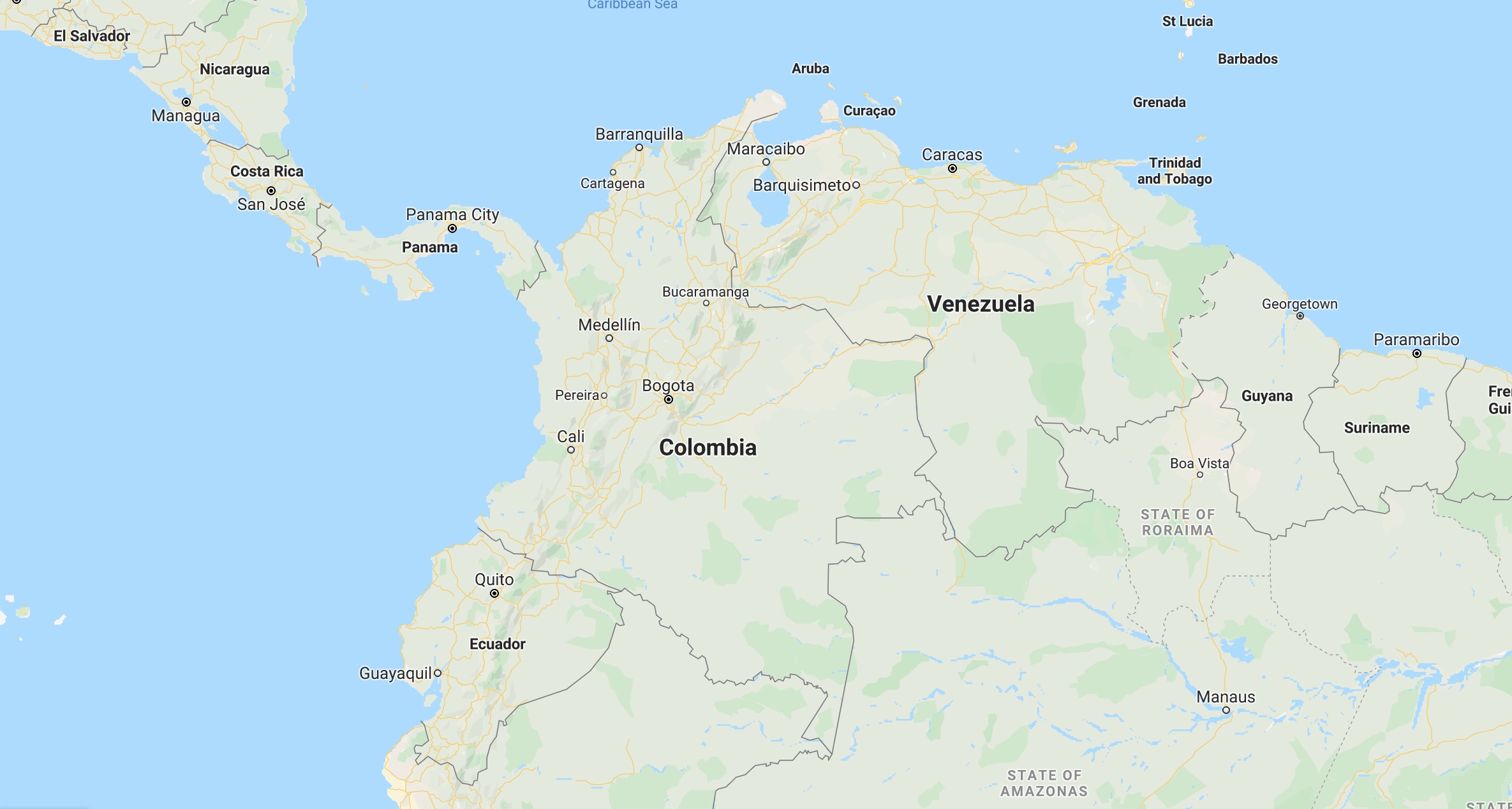
9. Colombia – 52.5%
There are more motorcycles than cars in Colombia, to the tune of 55%. While helmet law isn’t enforced, 96% of riders and 80% of their passengers wear helmets. Still, the death rate is a high 52.5% percent.
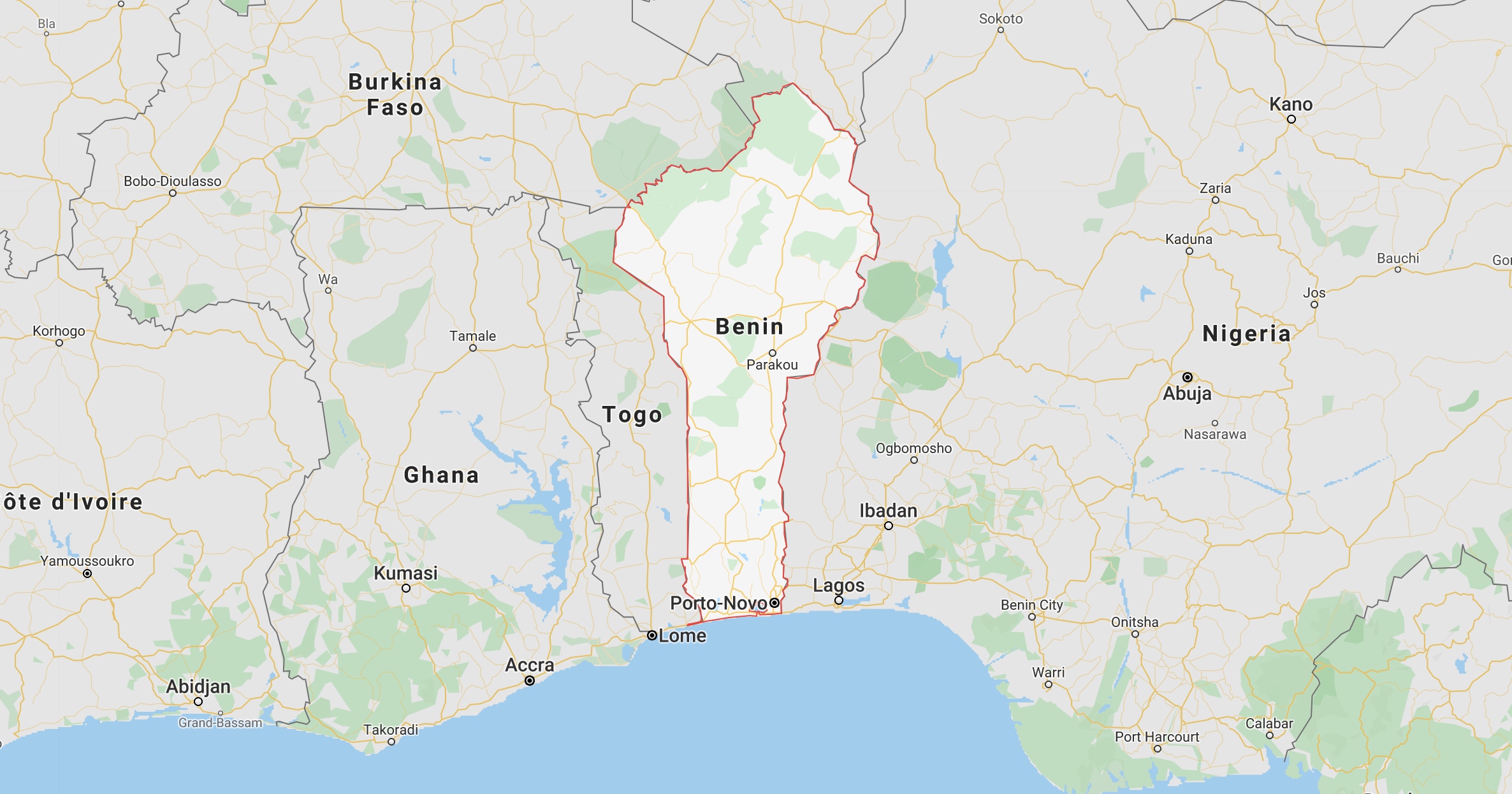
8. Republic of Benin 56.5%
Benin is located in west Africa. Here, there are no regulations for helmet standards, nor are motorcyclists required to wear helmets. There are 195,000 motorcycles compared to 470,000 cars (41%).
7. Malaysia – 60%
According to the 2016 WHO report, Malaysia has 27,613,120 registered vehicles. 46% of those are motorcycle, totaling 12,677,041. There are helmet laws and the highway code is rather extensive. Helmet quality regulations are also tight. Yet we rank high as one among the countries with the highest number of motorcycle-related deaths in the world. We’ll leave out the why. For now.
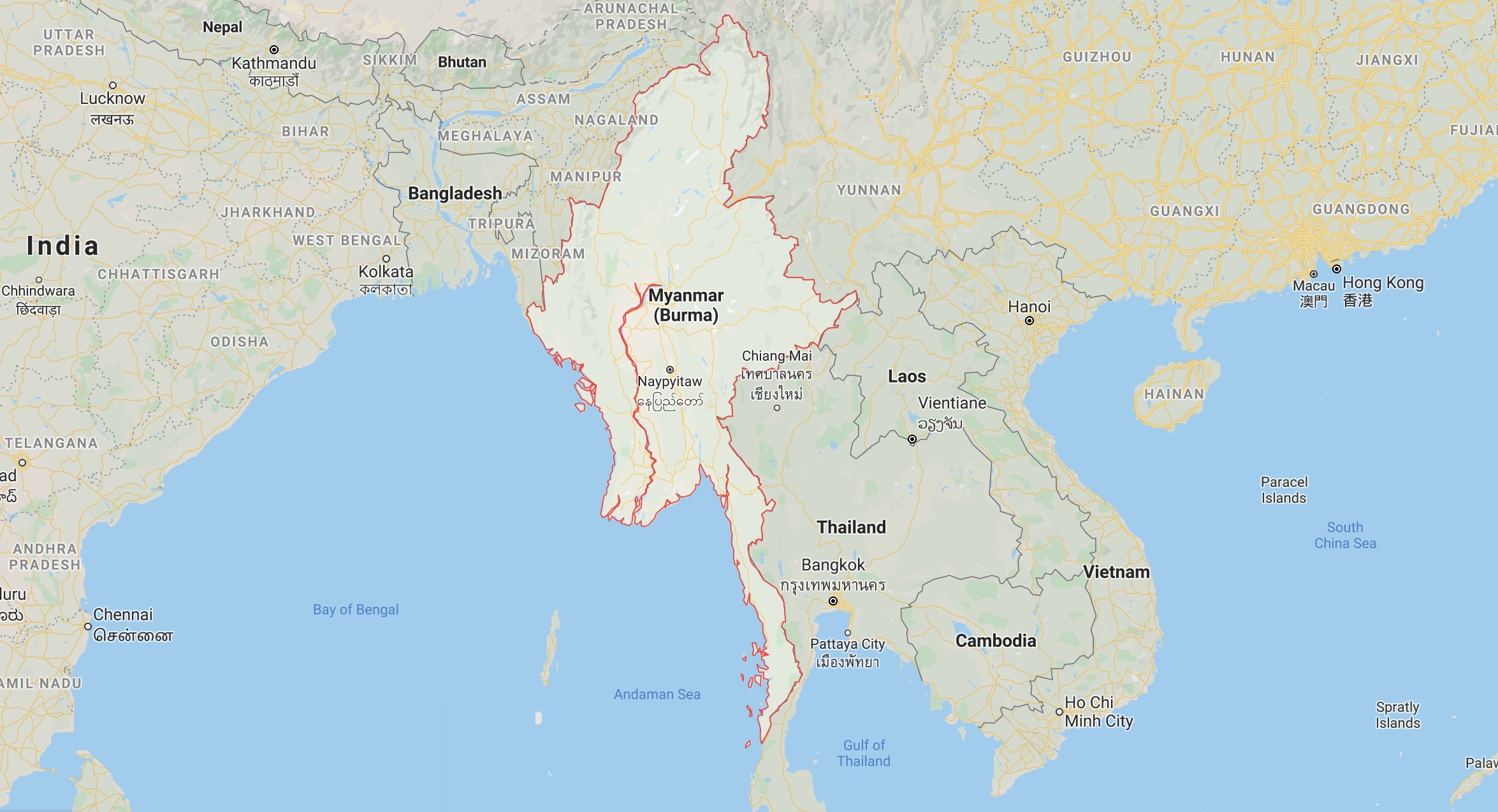
6. Myanmar – 64.8%
There are 5.4 million motorcycles among 6.4 million registered vehicles in this country. Like some of the countries in this list, there is no regulation on helmet quality despite the law requiring motorcycles to wear helmets.
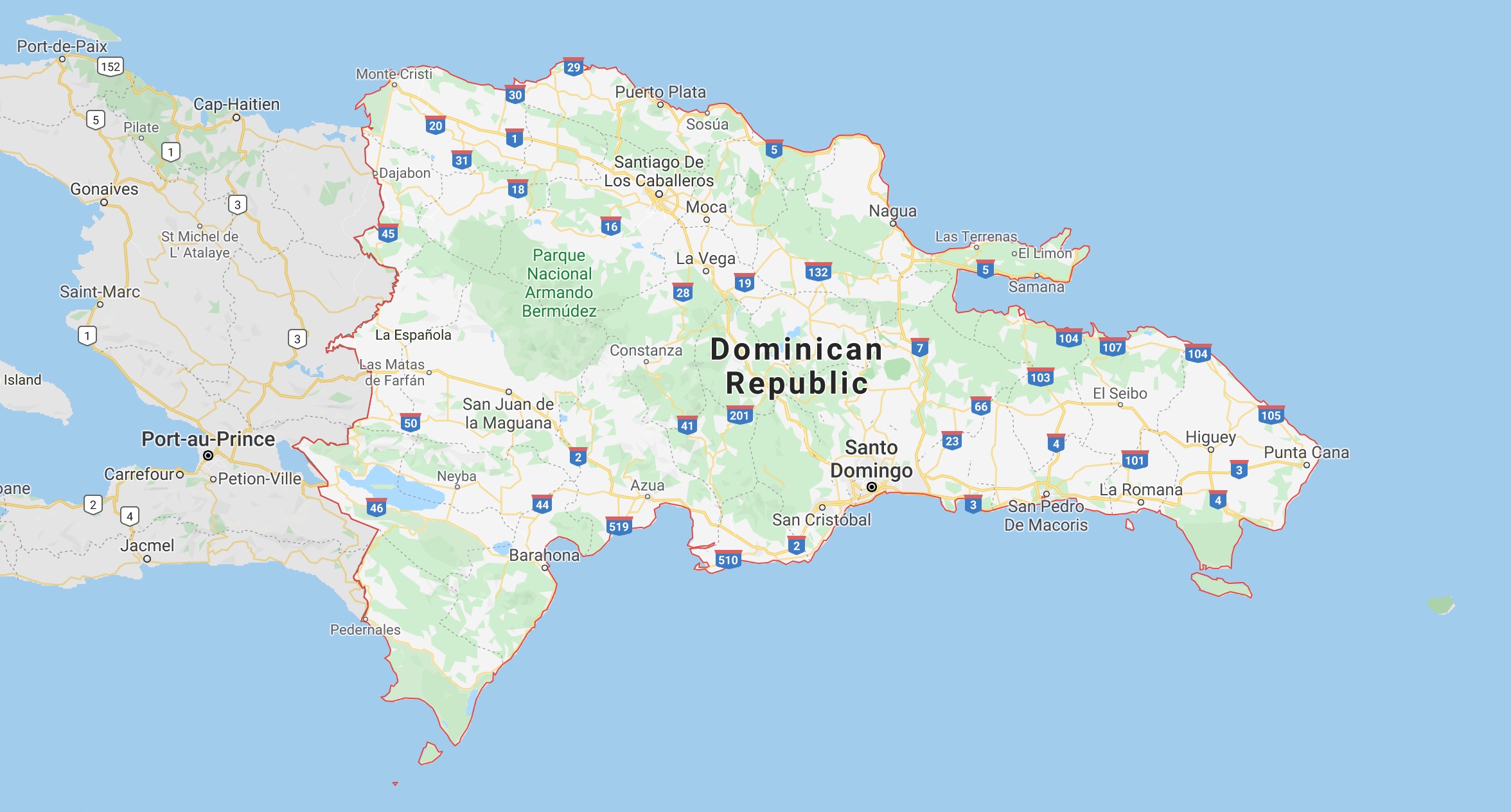
5. Dominican Republic – 67%
Motorcycles account for nearly 54% (2.1 million) of the total vehicles in this country. Helmet use isn’t mandatory, hence only some 27% of riders and 2% of passengers wear helmets. The Dominican Republic was ranked with the highest road accident fatality rate in the world in 2013.
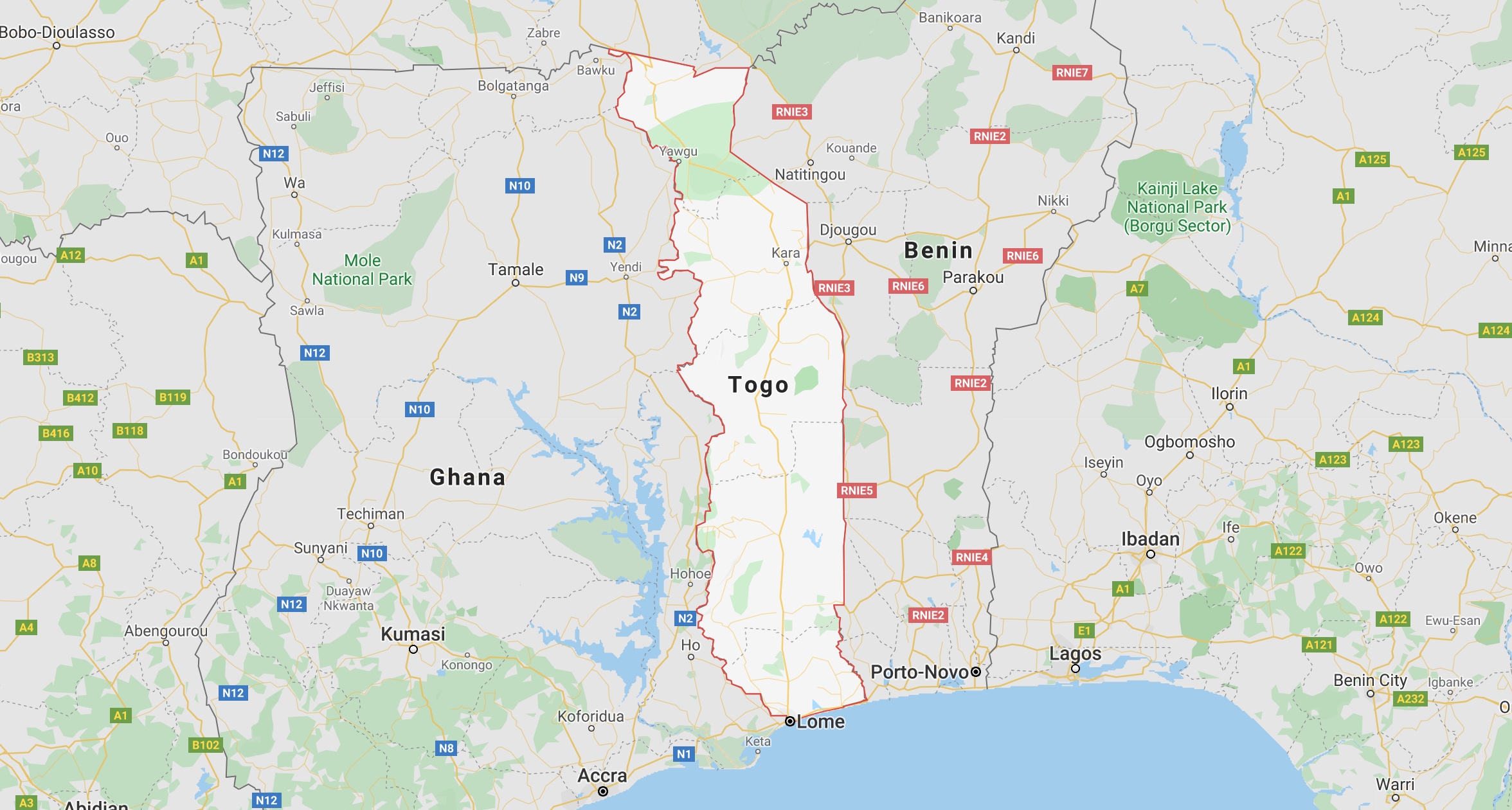
4. Republic of Togo – 71.6%
The Republic of Togo is the neighbor to the Republic of Benin. It has only 45,341 registered vehicles. The country doesn’t make helmet use mandatory and it reflects on the large number of fatalities.
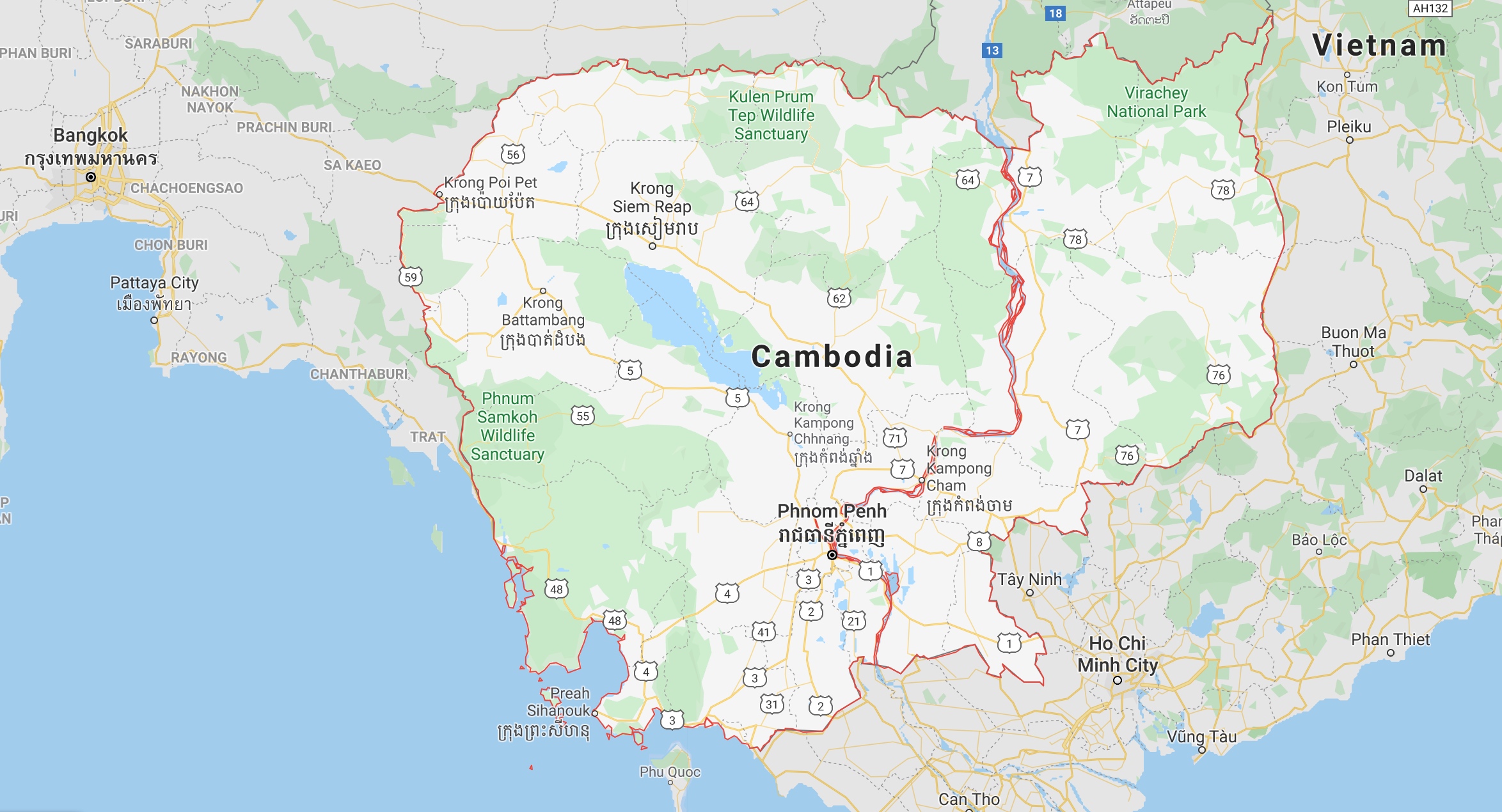
3. Cambodia – 73.5%
We’re into the top three. Cambodia has a total of 2,714,913 registered motorcycles. Helmet usage isn’t mandatory here. A survey held that 70% of riders wear helmets during the day but that percentage drops to only 43% at night. Additionally, 30% of the passengers put on helmets during the day but it drops to only 13% at night.
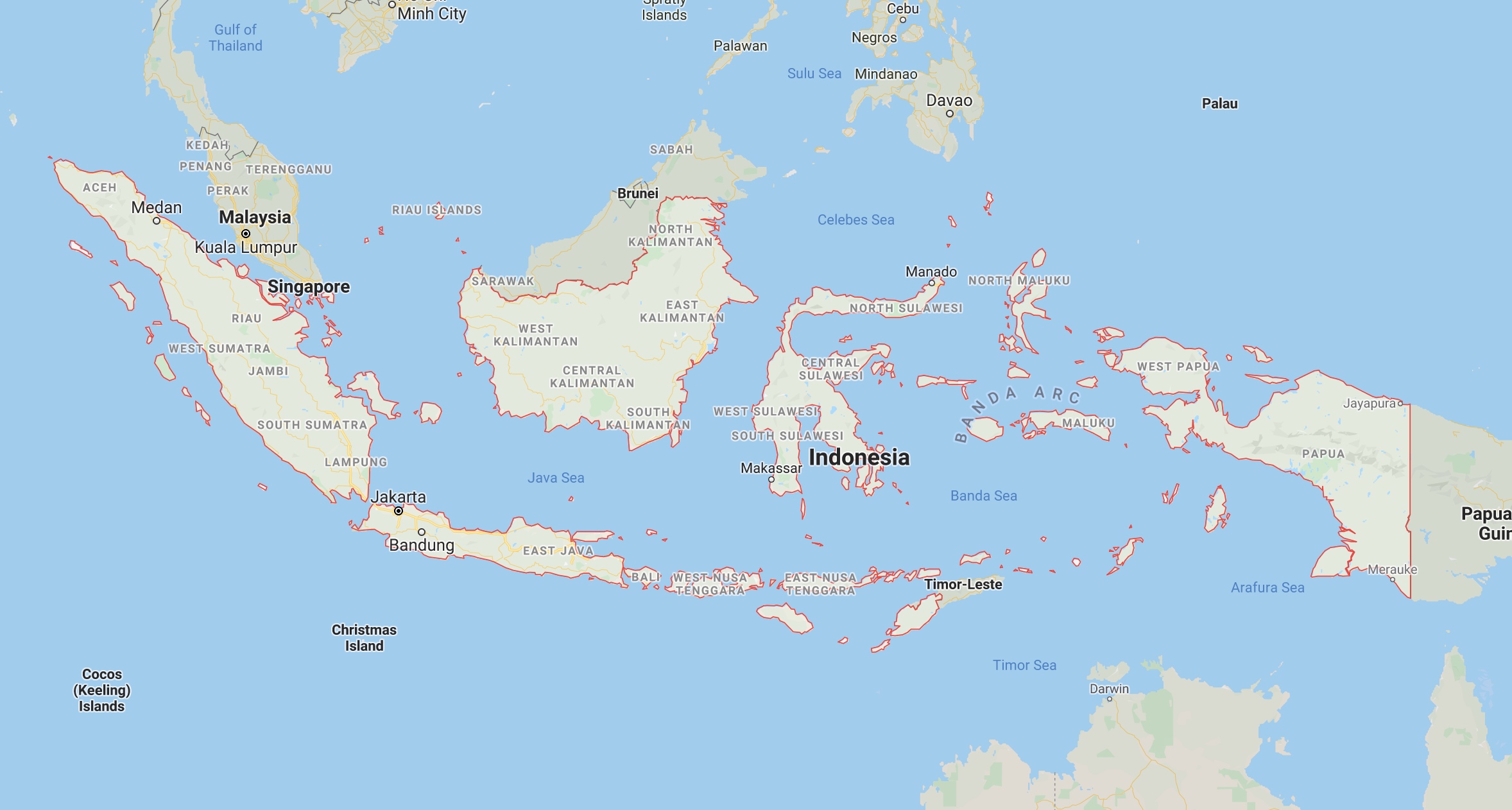
2. Indonesia – 73.6%
Indonesia is currently the biggest motorcycle market in the world. More than half of the country’s 250 million population own a vehicle, and more than half of that are motorcycles. Only 71% of riders wear helmets.
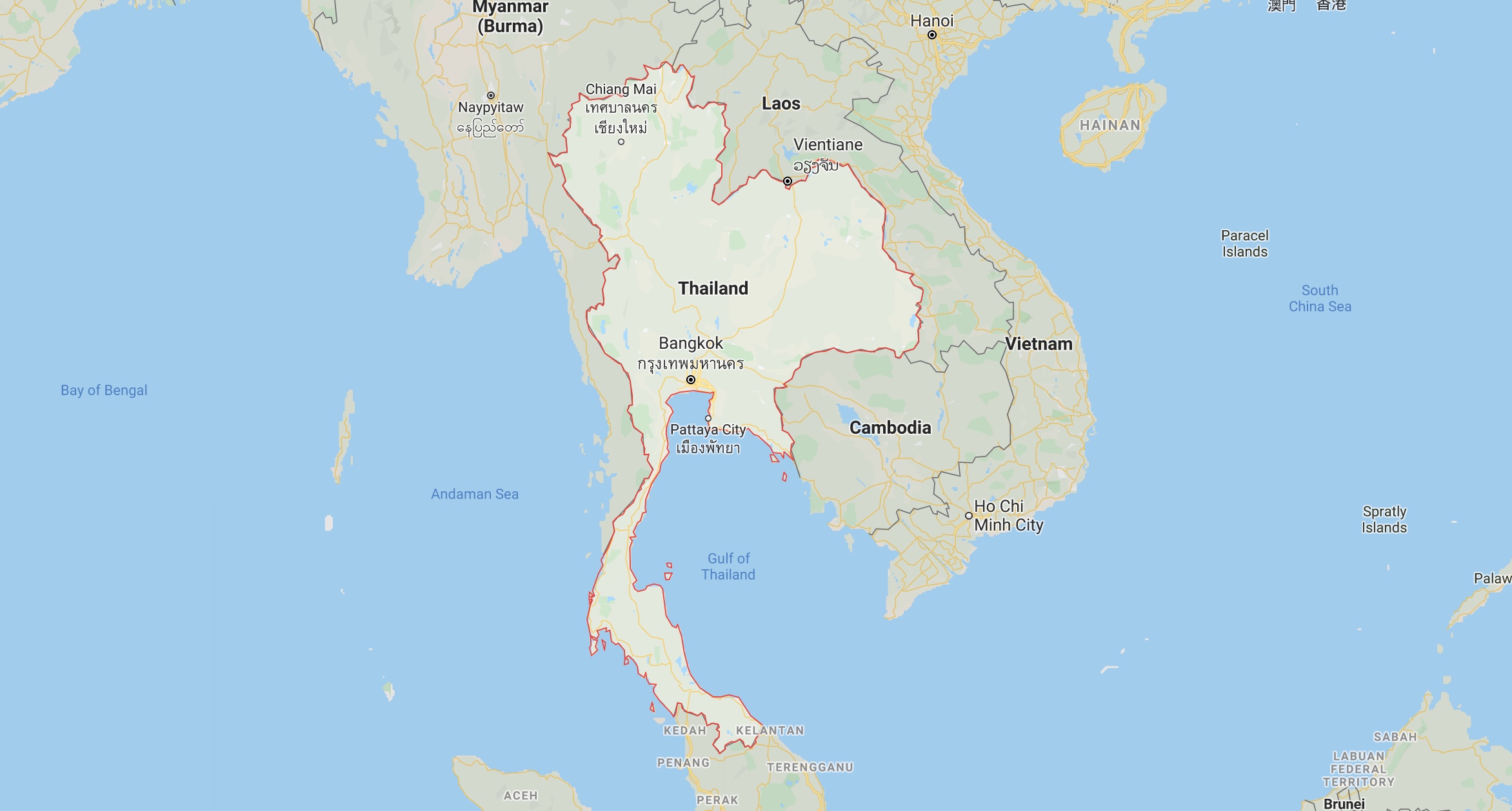
1. Thailand – 74.4%
Thailand holds the unfortunate record as having the most dangerous roads in South East Asia, Asia and additionally the most dangerous for motorcyclists. The government has encouraged motorcyclists to wear helmets, besides the passenger. There seems to be no regulations on helmet quality and standards. The percentage is staggering – almost 3 out of every four deaths were motorcycle-related.
India – 98,700 motorcycle-related fatalities
The country with the highest number of motorcycle-related deaths is India. The WHO estimates that there were 299,091 total traffic-related deaths in subcontinent, 33% of those attributed to motorcycles. While the percentage is low, it is the highest in terms of pure numbers, totaling 98,700 fatalities. The total death rate is so high that it tops the African, Americas, Eastern Mediterranean and European regions. China was second with 256,180 total deaths.
The primary job of the exhaust system is for burned gasses to exit.
But it can be tuned for engine character.
Exhaust design influences torque and power production.
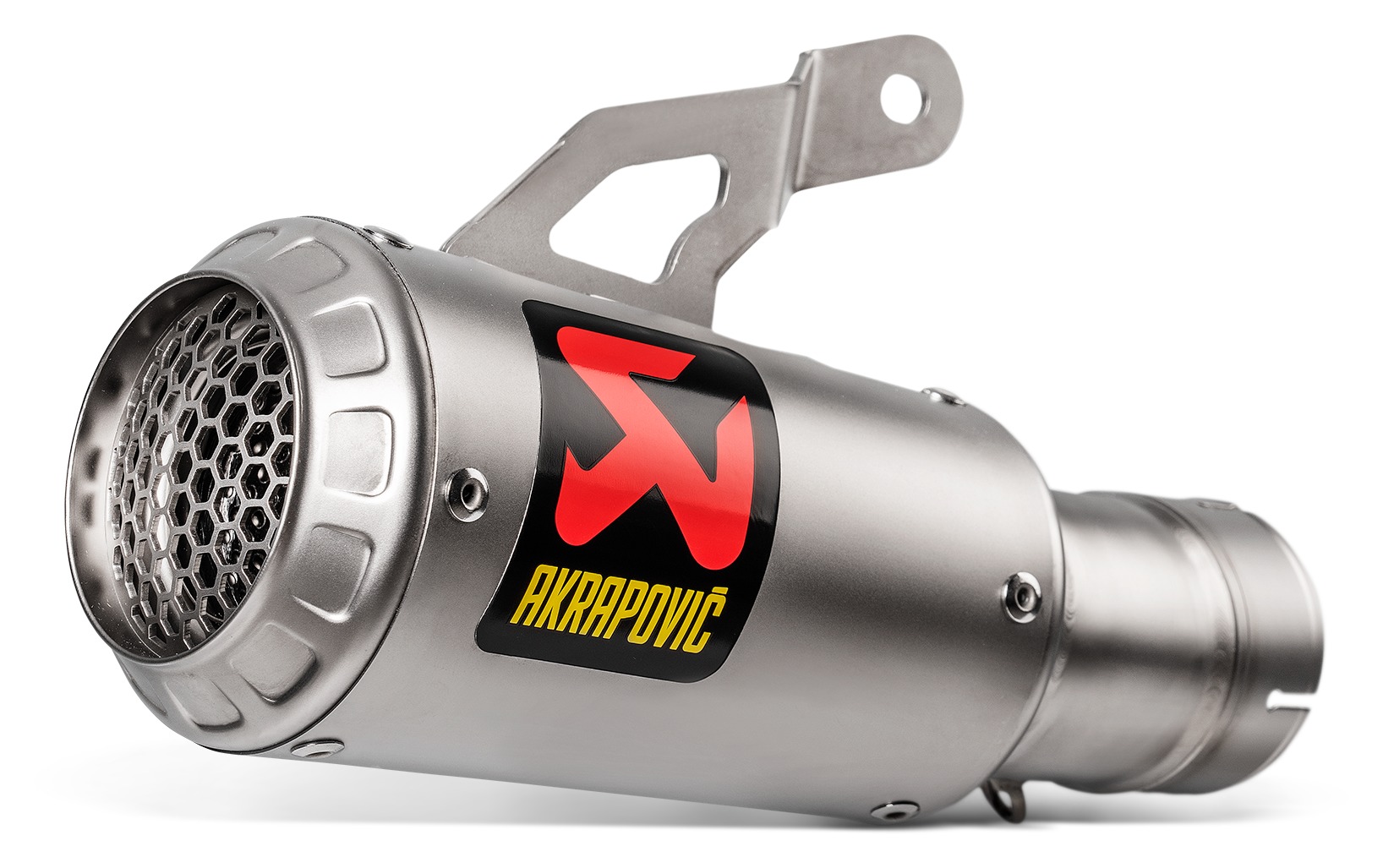
If someone asks me what an exhaust system does, the simple answer is to extract exhaust gasses from the combustion process. But truth is, exhaust systems play an immense role in an internal combustion engine’s power production.
No surprise there again, am sure but how is that done? Do we go for the shortest or longest pipe length? The smallest or largest diameter? The “softest” or “loudest” silencer? Silenced or straight flow?
What does the exhaust system do?
The exhaust system is part of a sum which gives and engine its character in terms of throttle response and power curve. An exhaust could be tuned for peak horsepower thereby sacrificing low and midrange torque, or vice versa.
The combustion process produces pressure waves. Positive waves are pressure while negative waves are suction. These waves move at the speed of sound and behaves like sound waves.
A negative wave results when the exhaust wave opens and the hot exhaust gas exits the combustion chamber. When the gas encounters a wider space, it expands. This expand products suction, in effect.
During the exhaust stroke, this suction continues to function, and the negative wave will assist in pulling in fresh charge (fuel-air mixture) into the combustion chamber. This function is called scavenging. Scavenging boosts torque as it prevents exhaust and fresh charge from mixing and pulling in fresh charge early (even when the piston is still rising at the end of the exhaust stroke) for better cylinder filling.
A proportion of these waves can be reflected back as positive waves (partly by the reverse cone on the silencer). The pressure then stuffs some of the escaping fresh charge into the combustion chamber just as the exhaust valve starts to close.
This is why pipe length and diameter are crucial. Changing the length or diameter will affect positive and negative waves, hence the engine’s character. As such, all exhaust pipes are compromises because they can only be tuned to a specific RPM range to work with whatever engine design you may have for example, VVT/VVL. Exhaust pipe tuning was even more crucial for two strokes since they have no poppet valves thereby scavenging at the wrong time means sucking out unburned gasses resulting in power loss.
Enter the powervalve
Yamaha was the first manufacturer to introduce the powervalve in their two-stroke engines. It sits just after the exhaust port and its job was to reflect pressure waves (to push or keep unburned mixture in) corresponding to different RPMs.
What has this got to do with four-stroke engines? Yamaha discovered that the same principle could be applied to four-stroke engines as well. Enter the EXUP (Exhaust Ultimate Powervalve) in the 1990 FZR1000.
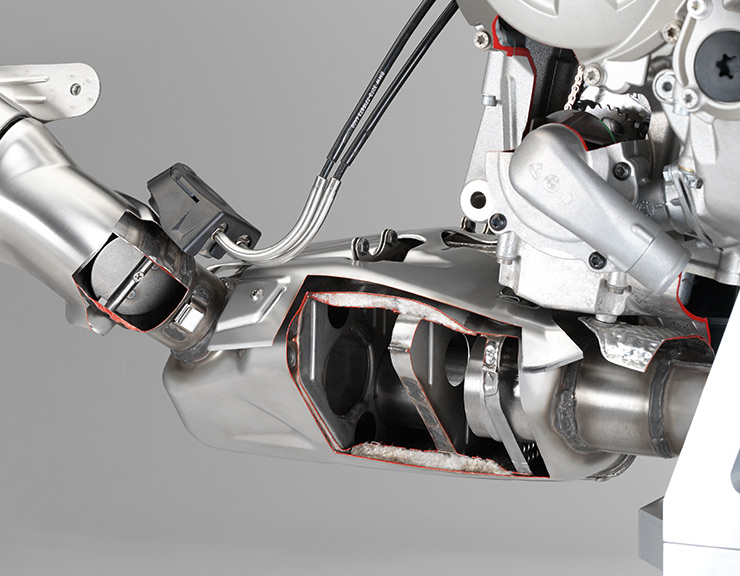
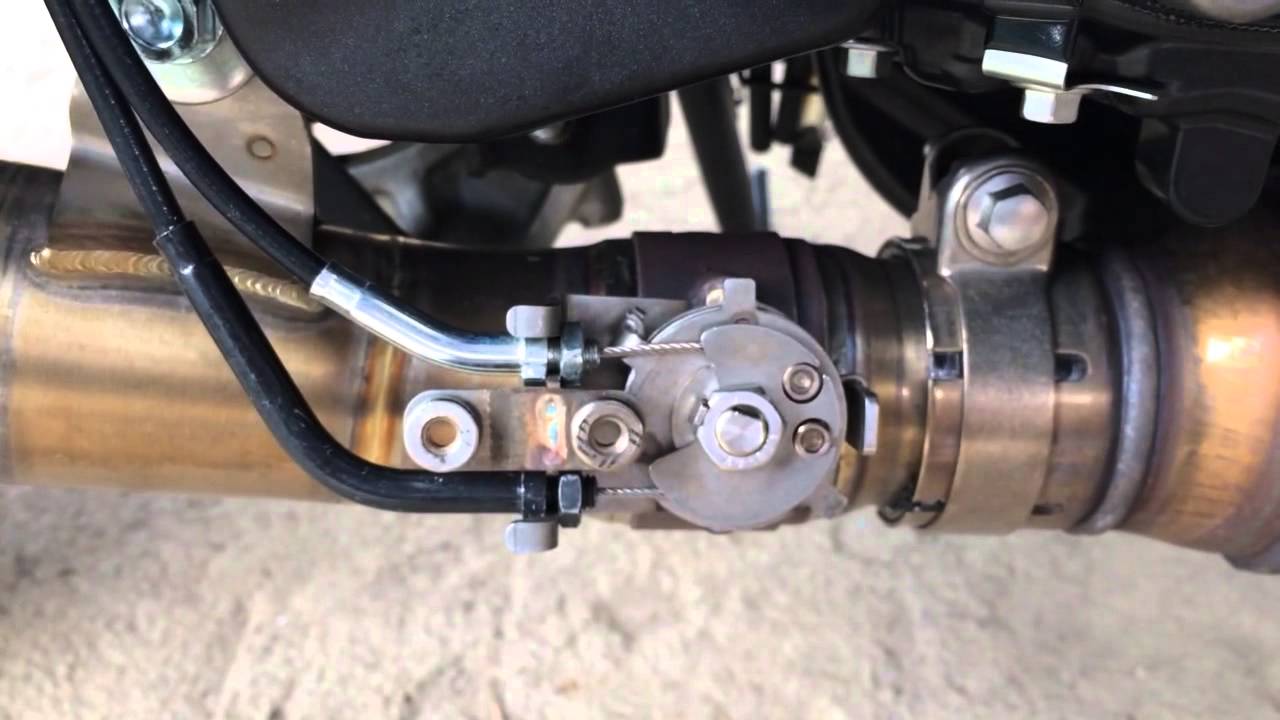
The EXUP is fitted in the exhaust downpipe after the collector (the part which combines all four exhaust headers) and catalytic converter. It’s a butterfly valve controlled by a servo and opens and closes according to engine RPM and load.
Soon, all manufacturers followed in Yamaha’s footsteps and installed their own “EXUP” in their four-stroke superbikes – just like how they developed their own powervalves in their two-stroke engines.
Note that replacing an entire exhaust system without regarding the exhaust powervalve will change the engine’s characteristics.
In fact, replacing the exhaust system needs a retuning to optimize the exhaust waves. This was why carburetors needed to be rejetted. As for modern fuel injected bikes, replacing the exhaust will change the bike’s character but will not result in extra torque and horsepower (apart from making more noise). To do so, one needs to fit a power commander and retune the engine on the dyno.
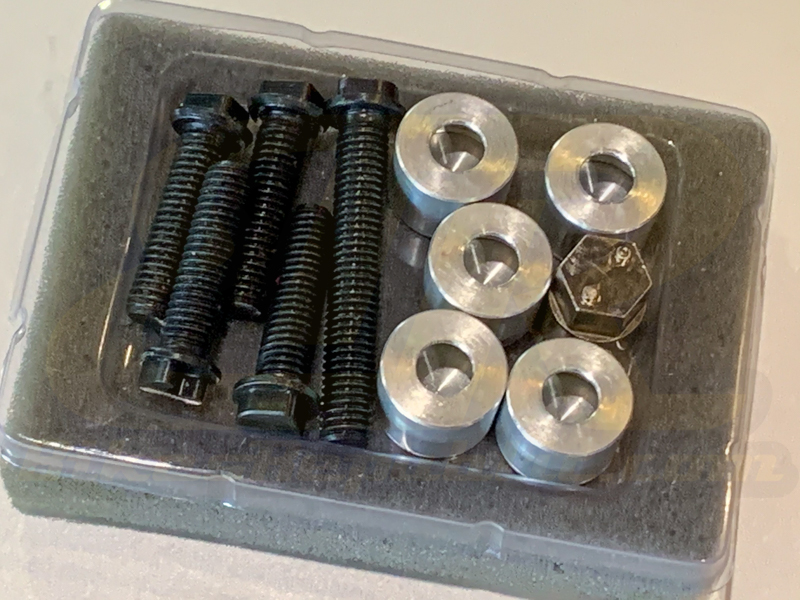
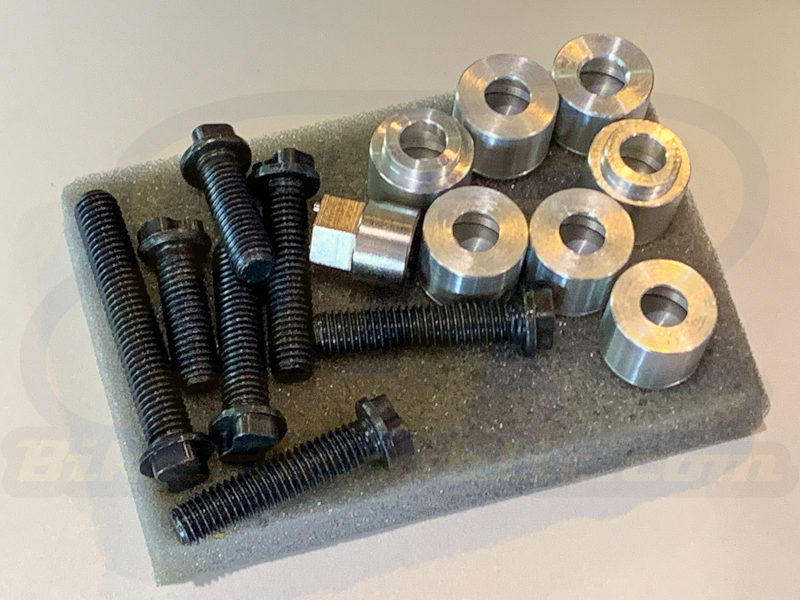
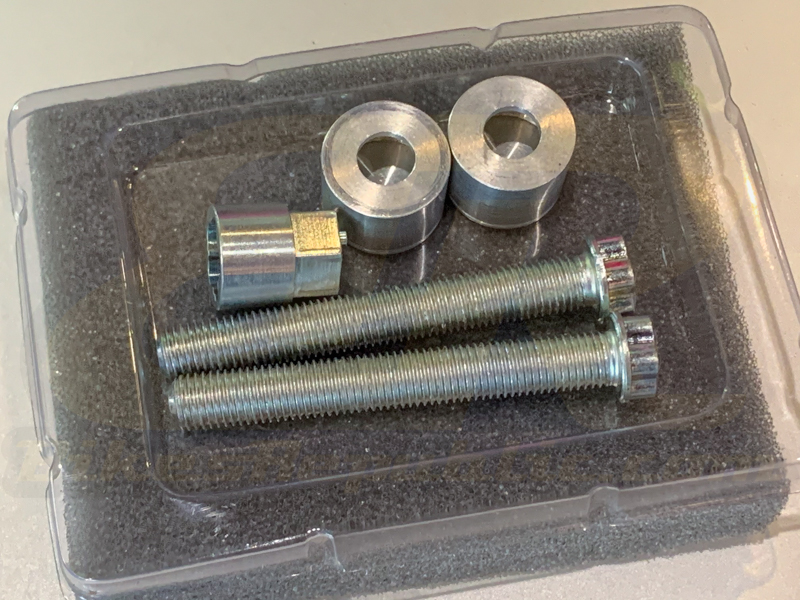
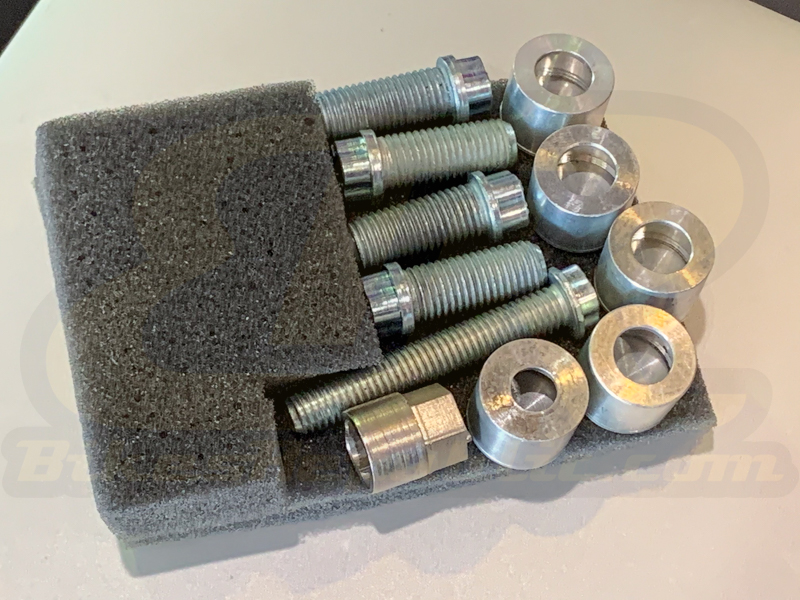
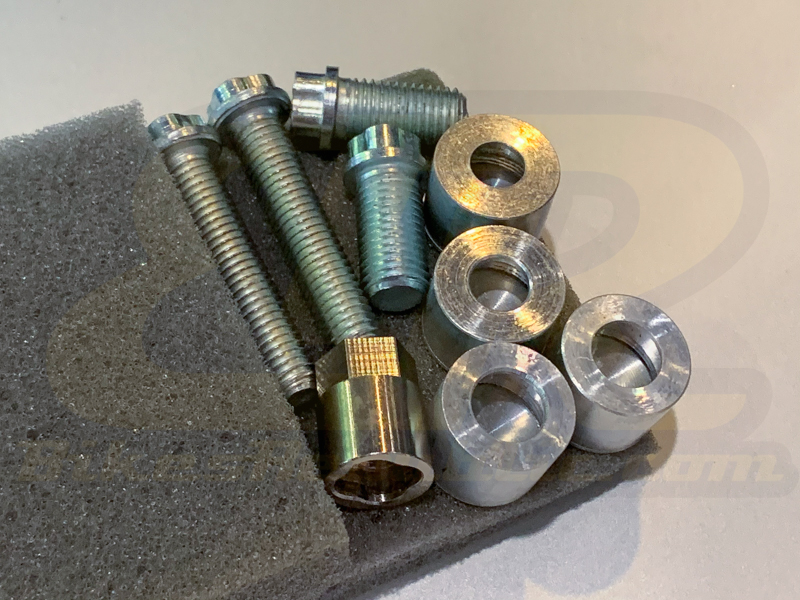
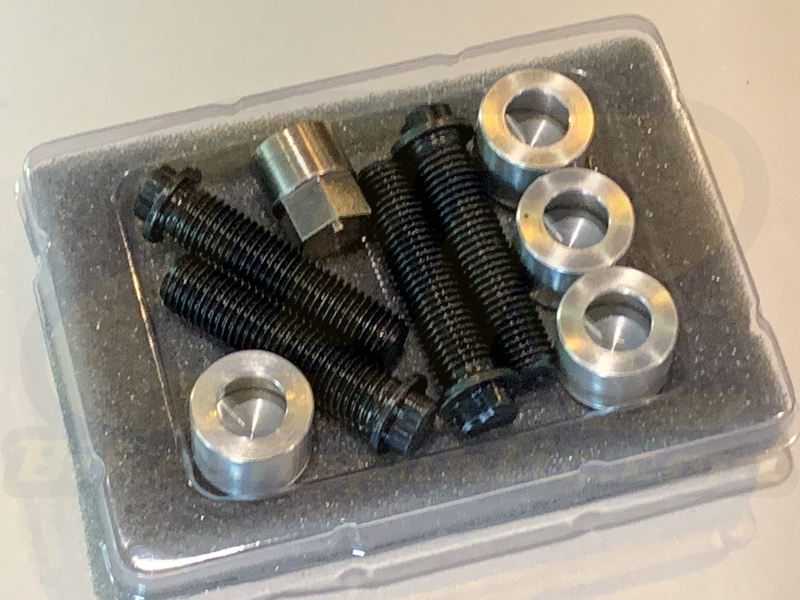
Brake caliper lock bolts is one way to secure your brake calipers from theft.
Brake caliper and brake master pump thefts are still happening.
You can purchase them right here from our e-commerce site.
It goes without saying that brake caliper theft is an epidemic in Malaysia. One way to secure them is by using brake caliper lock bolts.
No brand of front brake caliper is seemingly safe from the lowlifes as they target anything which is not found on kapchais. While any Brembo caliper is their favourite, Nissin, Tokico and even ByBre calipers get the stolen. Some thieves don’t even stop at just the brake calipers as they steal the brake master pumps, too!
We’re not trying to scare you, but the disease is so bad that even the brake calipers of police motorcycles aren’t spared.
We’ve run an article on how to secure your brake calipers and have been inundated with questions on where to purchase the lock bolts since then. Well, fret no more because we have them right here in our e-commerce platform.
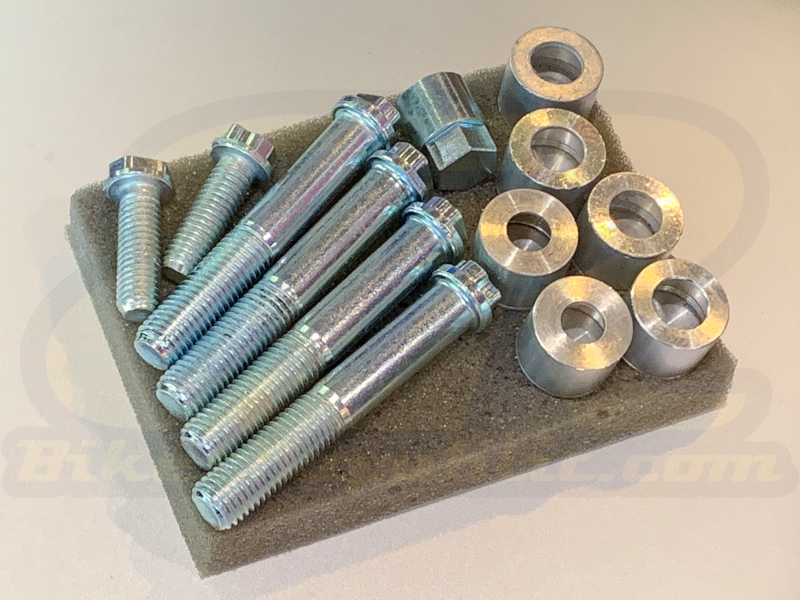
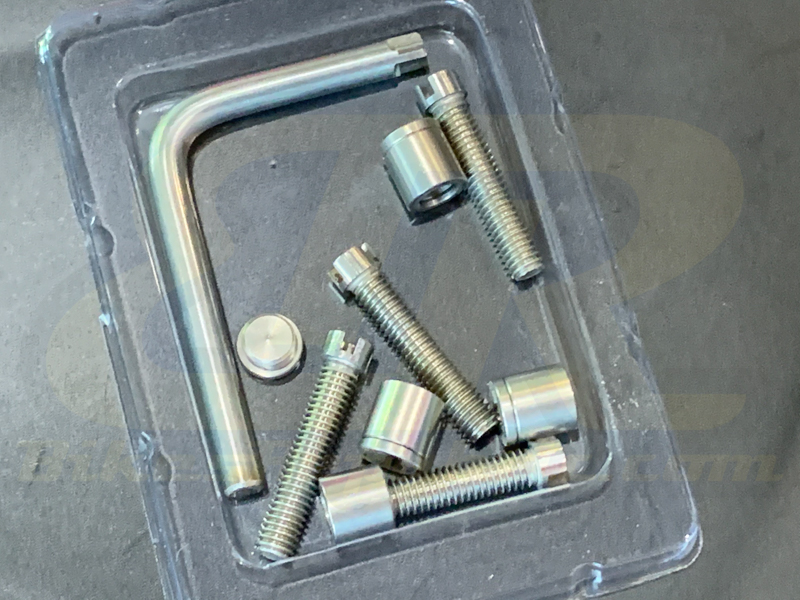
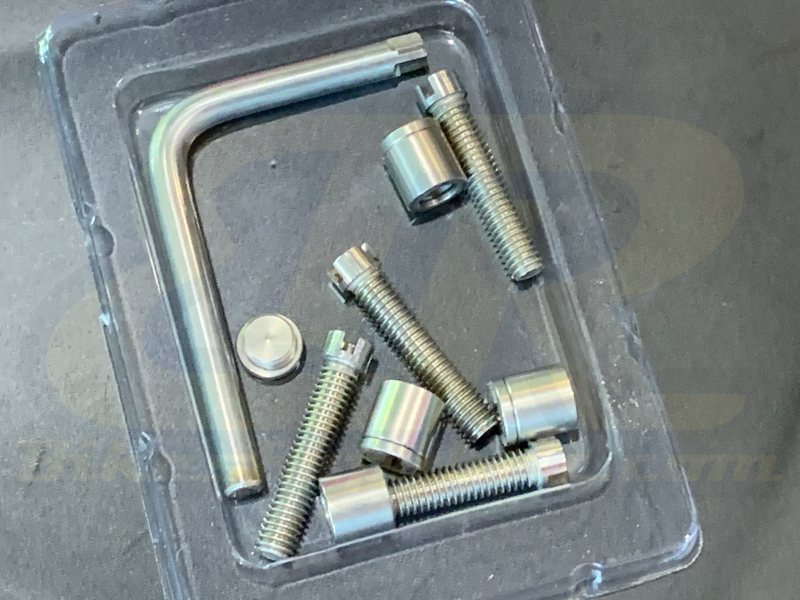
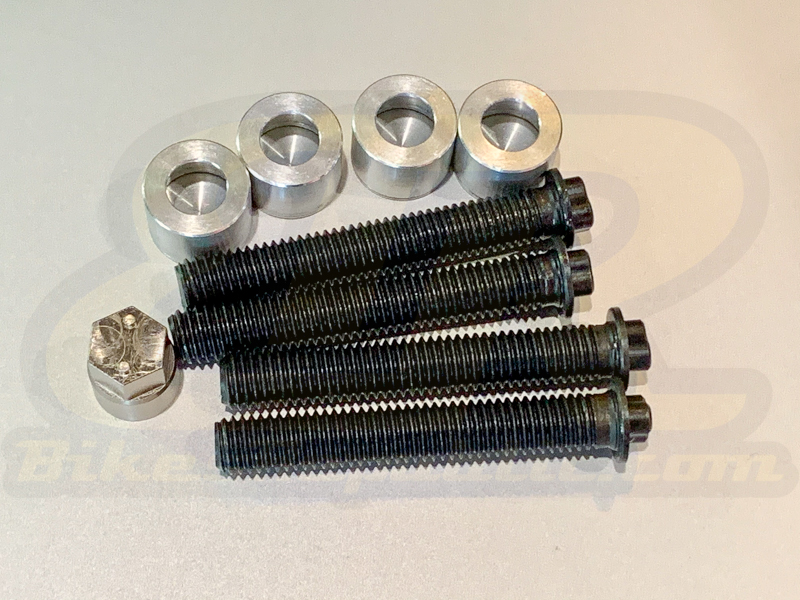
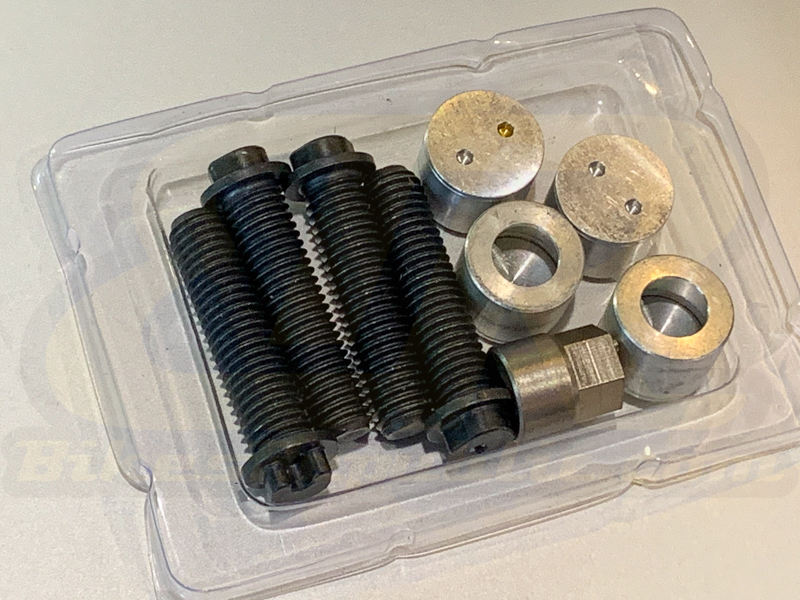
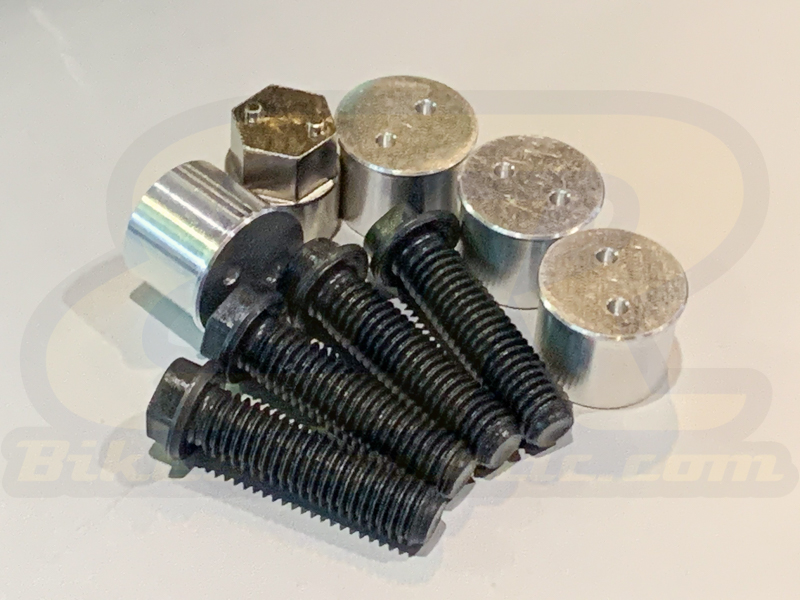
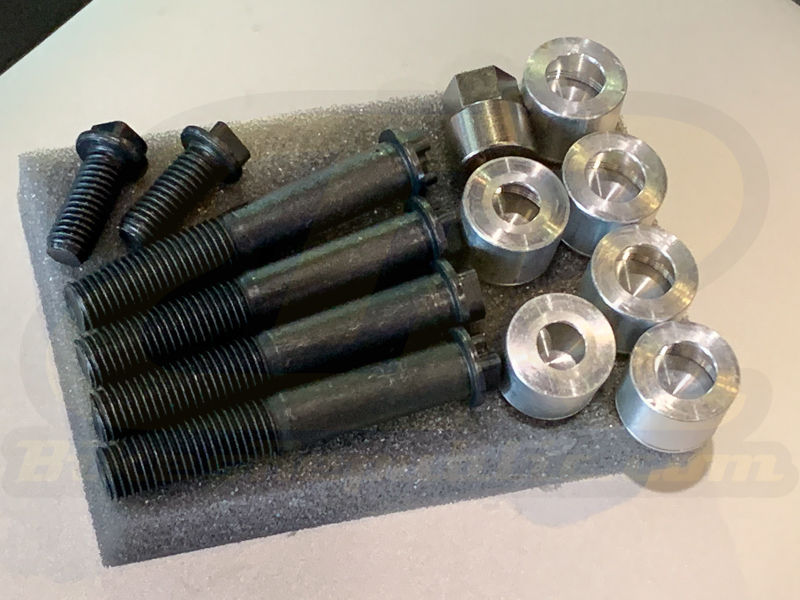
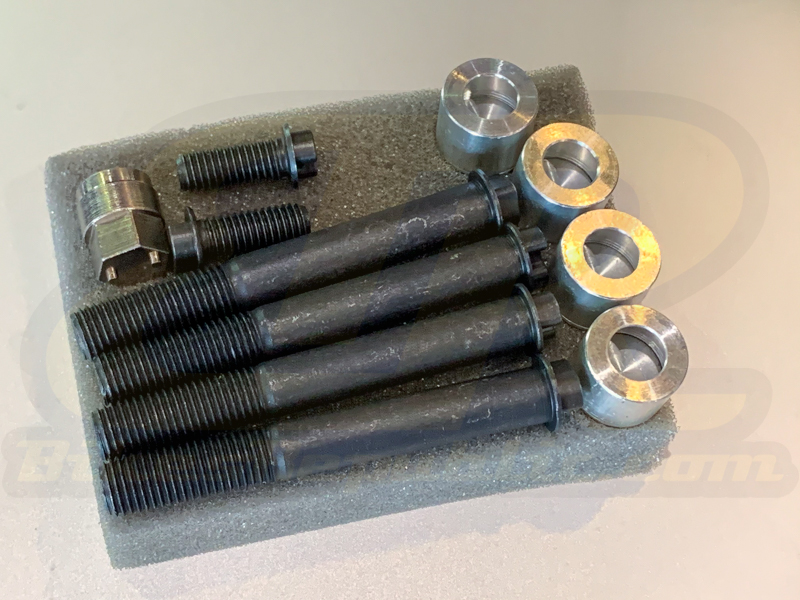
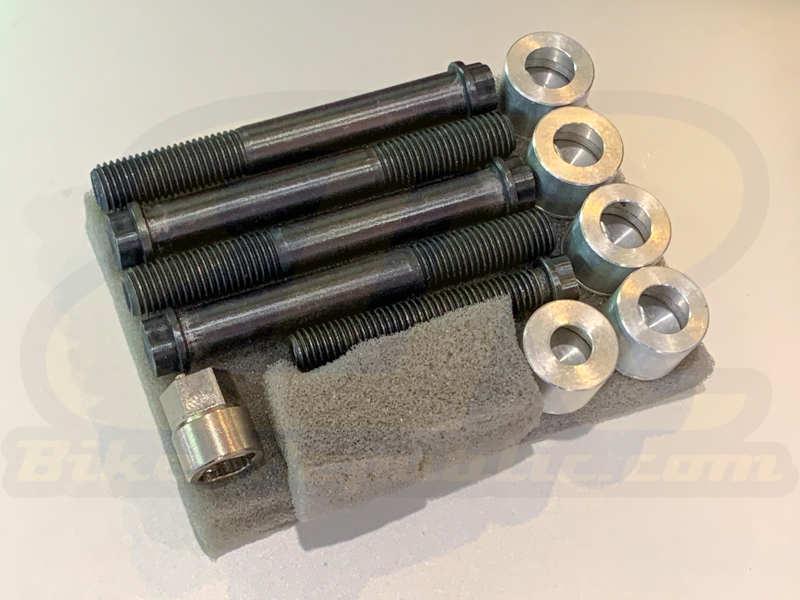
The lock bolts
These lock bolts require a special “key” to install and remove them. Sturdy caps are included in the package to hide them away to avoid the heads being tampered with.
Each bolt is made of high-quality high tensile steel to ensure reliable usage and strong platform for the brakes.
The range
Please get in touch with us if your bike isn’t listed below.
High noise levels lead to permanent hearing damage.
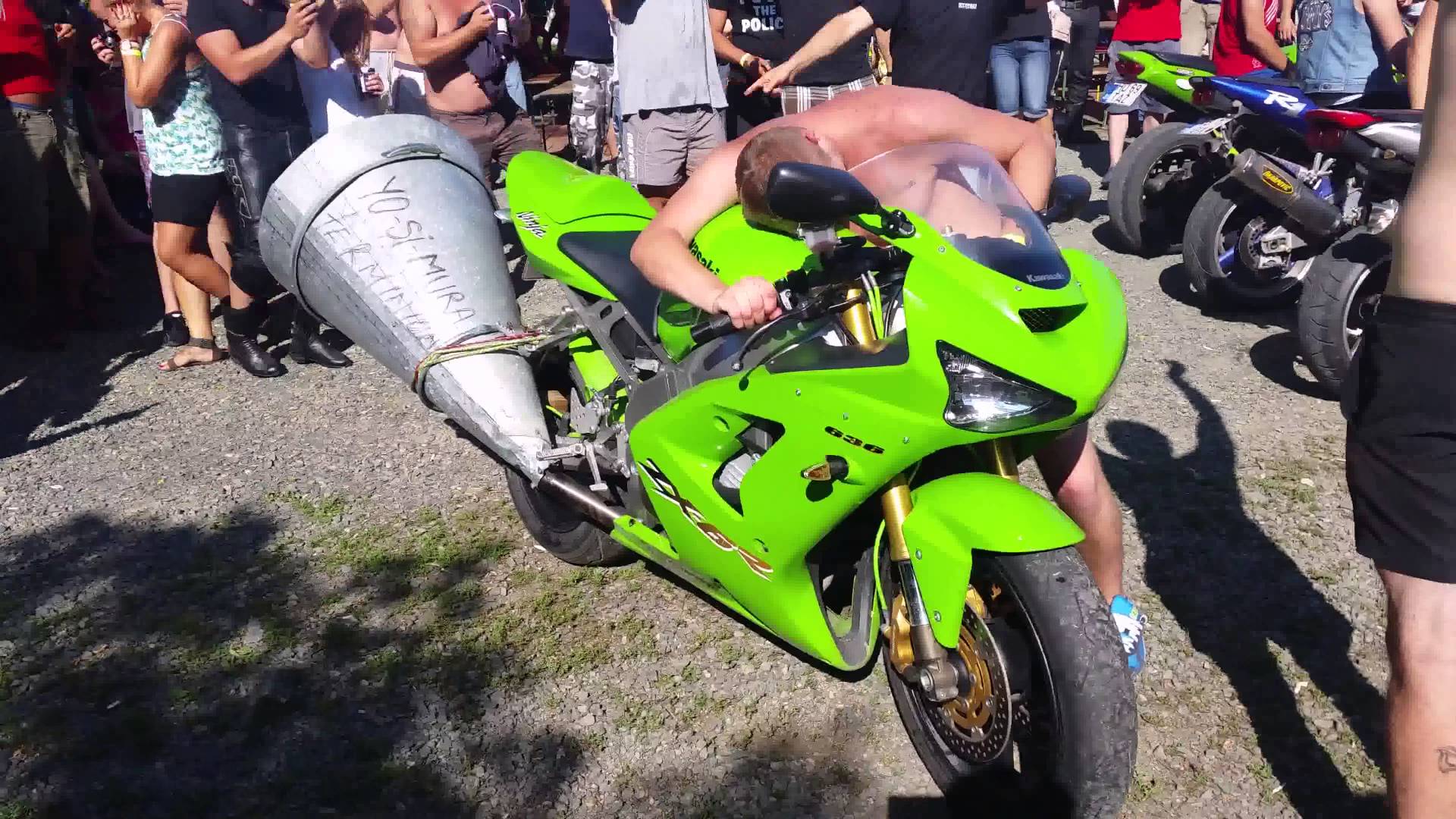
Motorcycle-related hearing damage and loss is something which many riders around the world are still not taking seriously. We know this because we hardly see any rider wearing earplugs when they ride, be it when commuting, weekend canyon bombing or even sometimes at the track(!).
Problem is, hearing damage’s progressive and it’s probably too late when one notices it. A constant ringing in the ears is called tinnitus it’s irreversible. Notice how some otai riders talk very loud? Apart from ebullient personality it could well point to hearing damage. Hearing damage also leads to irritability and depression.
What causes it?
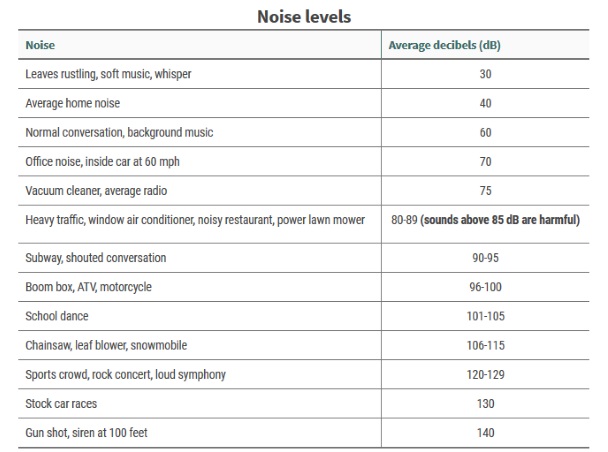
The simple answer is noise. Noise levels rise considerably when the speed rises. Noise levels are usually around 85 dB (decibel) when idling in traffic, but that number could hit as high as 115 dB and more when on the move.
The National Institute for Occupational Safety and Health (NIOSH) published that any sound level above 89 dB can damage one’s hearing. As such, workers should not be exposed to sound levels above 85 dB in an eight-hour workday. Besides that, continuous exposure to 100 dB for 15 minutes will damage hearing.
Let’s compare:
City riding between 40 km/h to 80 km/h can produce between 80 to 85 dB.
Noise goes up to 100 dB when riding at 100 km/h.
It’ll hit 110 dB when riding at 150 km/h.
Of course, the numbers differ according to the type of helmet you wear and your bike’s wind protection, but they are still high no matter what.
What earplugs should I use?
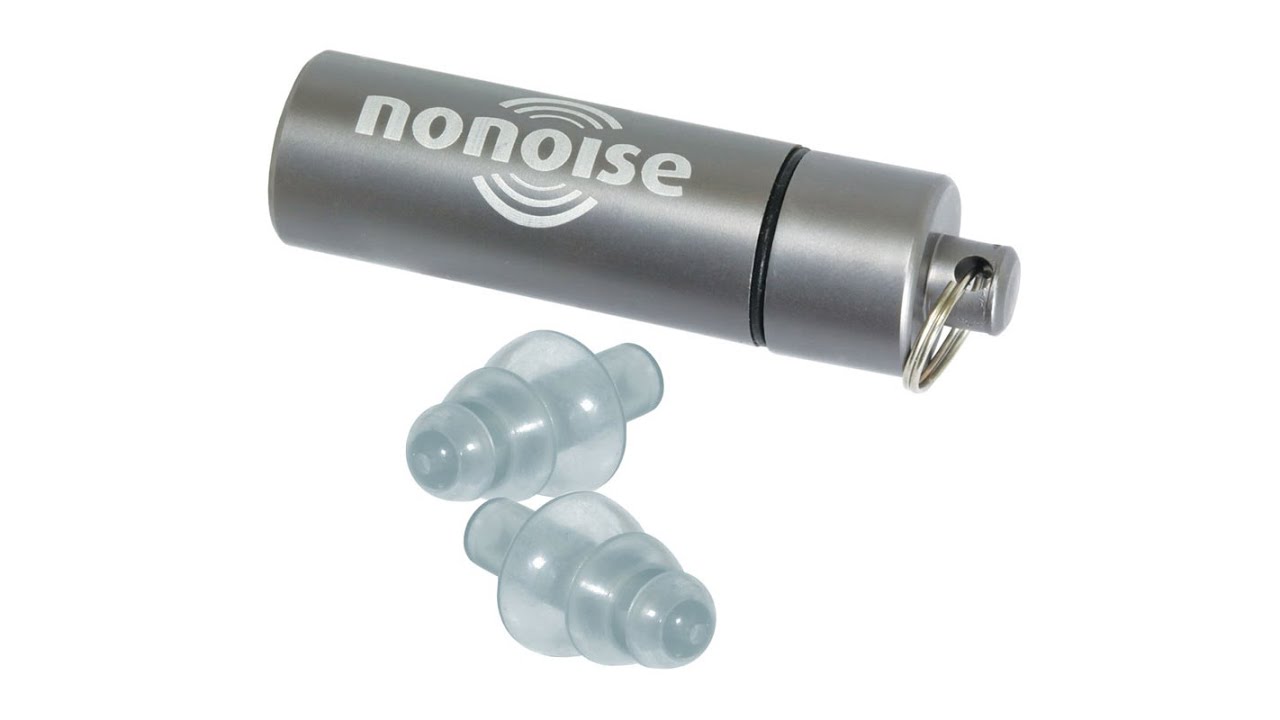
The best we’ve tried are “smart” earplugs that filter out certain frequencies. For example, NoNoise and Pinlock (yes, Pinlock) earplugs maintain the noise level at 85 dB, while you can still hear the traffic, your bike’s engine note and speech. These characteristics are useful for every riding scenario as you can wear them when commuting or during high speed blasts. But these are usually expensive.
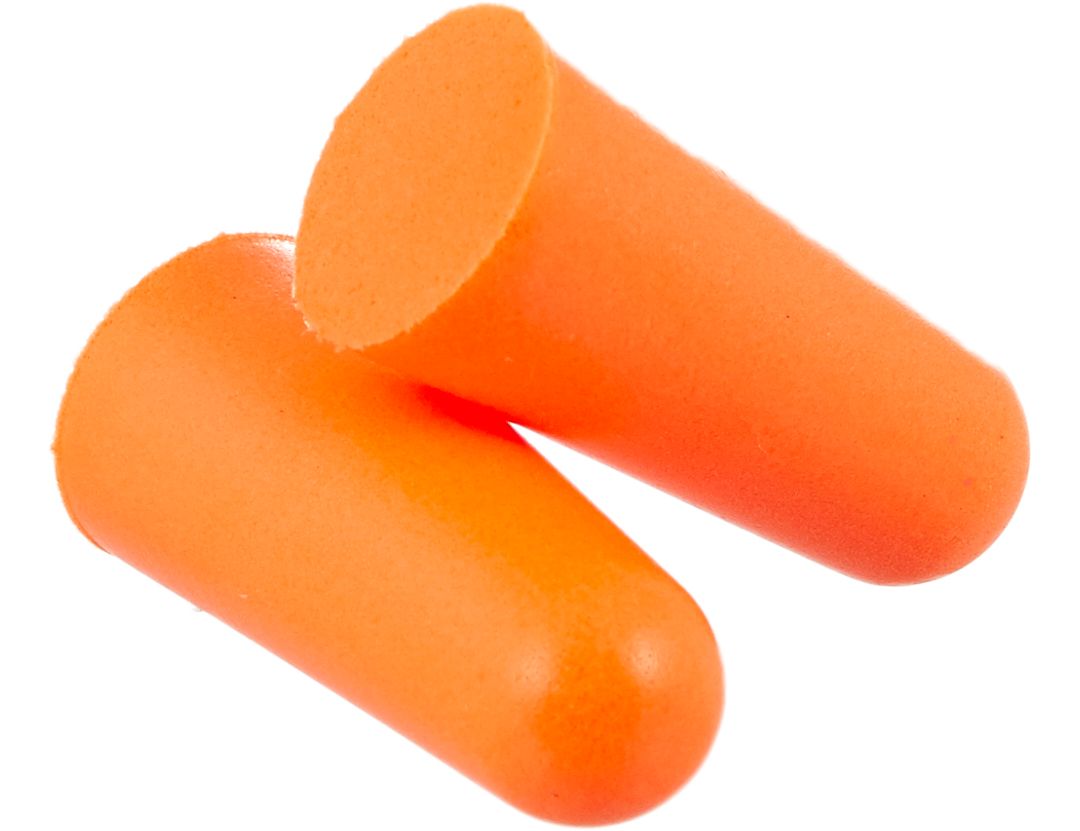
There are inexpensive foam earplugs in the market but they tend to filter out too much.
The choice is yours but never, ever ride without earplugs.
The 2020 Honda CBR1000RR-R Fireblade shows the makers determination in winning the WorldSBK title.
Here are some photos of the bike courtesy of WorldSBK.com.
They show a complete departure from the old bike.
Here’s some bike porn courtesy of the 2020 Honda CBR1000RR-R Fireblade WorldSBK bike. Pictures are courtesy of WorldSBK.com.
The CBR1000RR-R signals Honda’s determination in recapturing the WorldSBK Championship title, after winning it only 6 times in 30 years. The previous CBR1000RR may be an easy bike to ride but it’s outgunned on the tracks.
Here we go.
Frontal shape
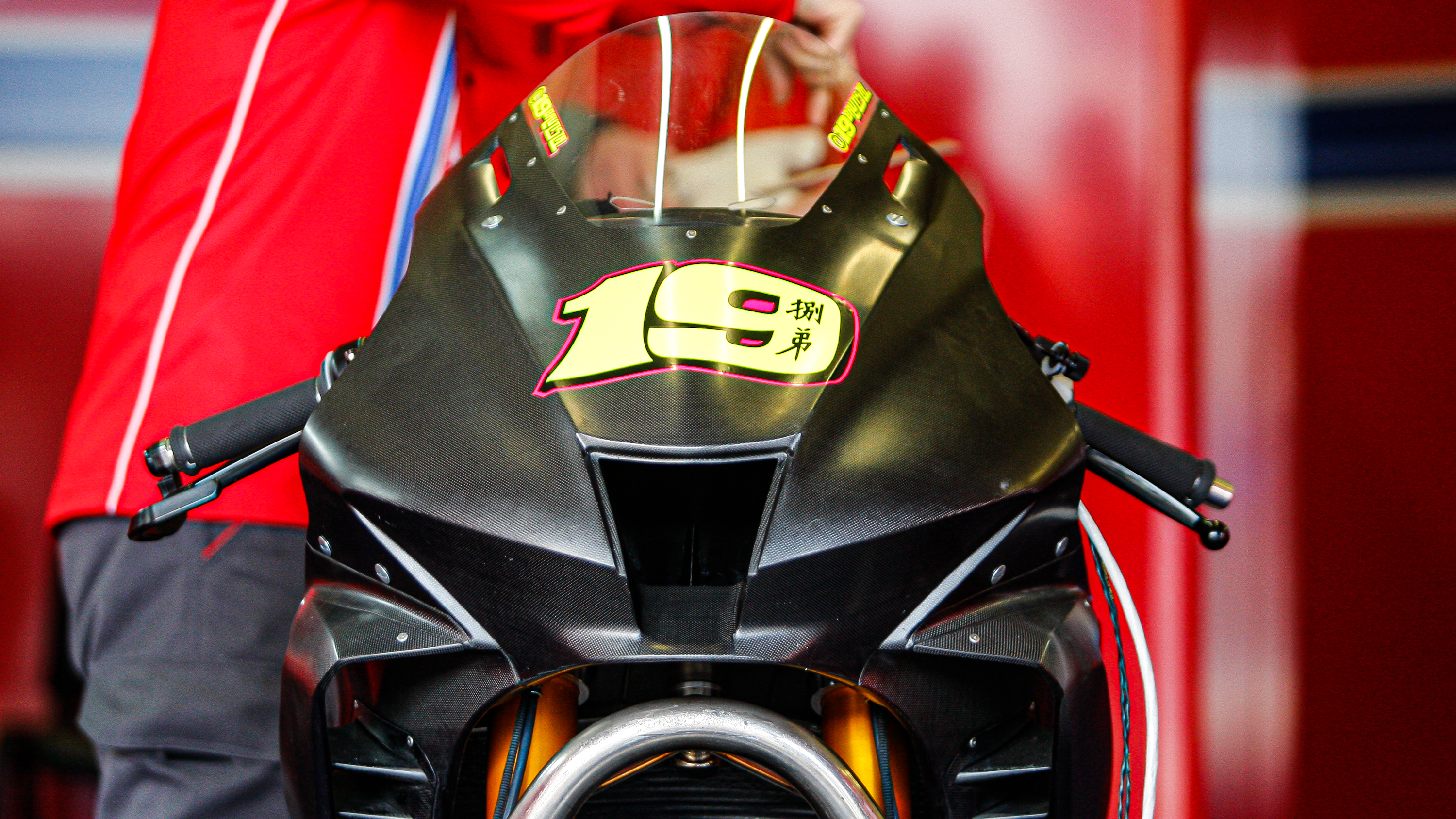
The first picture here is Alvaro Bautista’s bike. The Spanish rider will ride the bike after severing ties with Ducati. His teammate is Leon Haslam who was dropped by the Kawasaki works team. Both riders are astride the factory CBR1000RR-RW while Takumi Takahasi rides the semi-factory CBR1000RR-R.
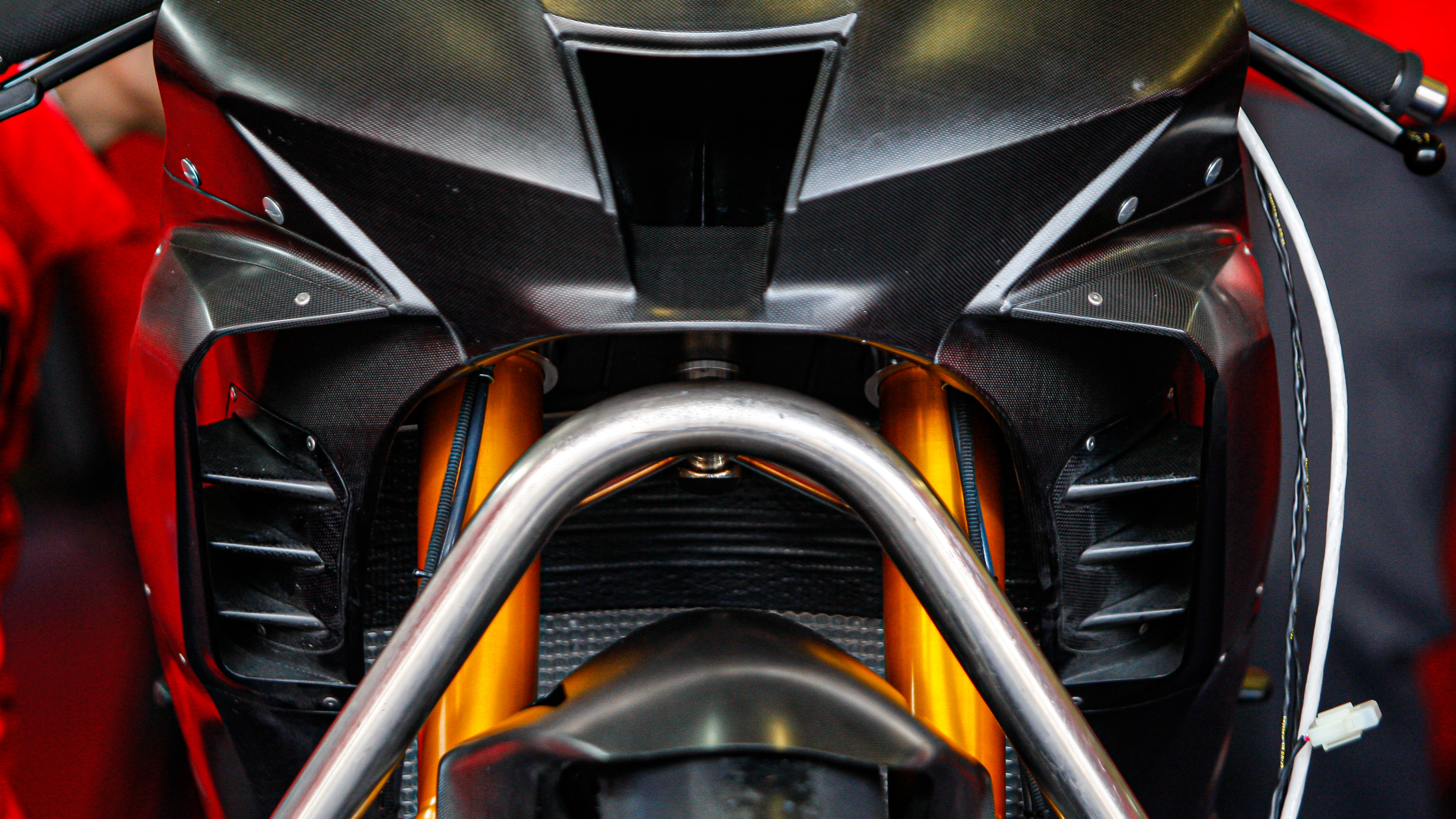
From this angle, you could see how the bodywork was formed to channel air to give it a small frontal area. The air intake now resides front and centre in the top fairing for a straight Ram Air shot into the airbox.
Aerodynamics
WorldSBK rules allow aerobodies as long as 1) They are present on the road bike; and 2) They are not active aerodynamics (non-movable). Notice how the “lip” just in front of the intake blends into the lower bodywork.
Honda didn’t publish data on how much downforce the spoilers will provide.
Tailsection
The tailsection of the bike is also made from carbon fibre. You can see here that it follows the shape of the item on the roadgoing 2020 Honda CBR1000RR-R Fireblade as stipulated by WorldSBK rules. Anyway, the tail terminates at a sharp point to reduce wake (turbulence) behind the bike. A large wake (like behind a boat or ship) means the bike isn’t aerodynamically efficient and causes drag. The airflow must not only move efficiently around the bike and rider but needs to be so when it leaves the bike, too.
Forks, brakes and wheels
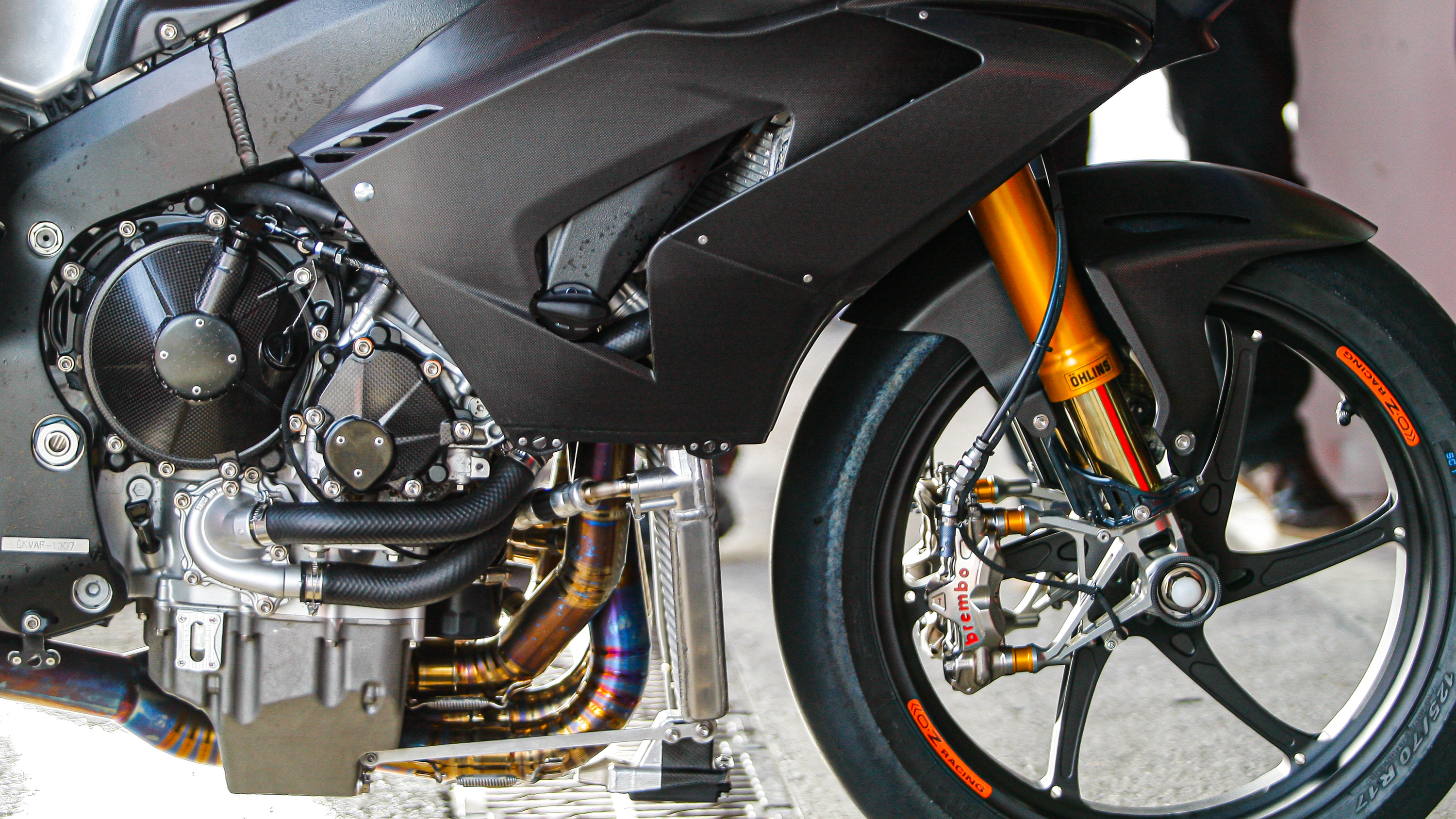
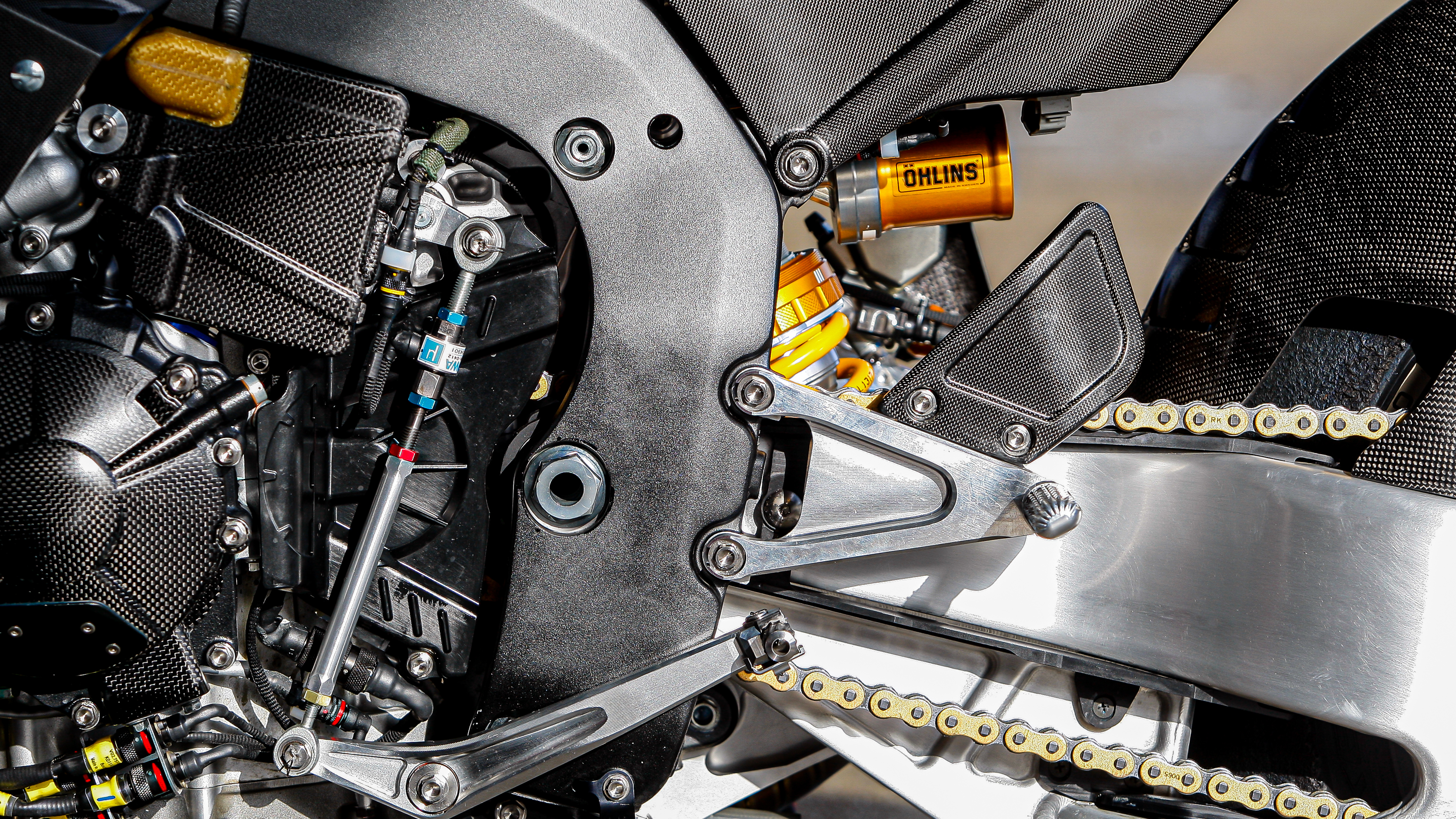
Check out the spindly brake caliper mounts on the fork legs – these are obviously machined from billet. The calipers are Brembo GP4-RX, also CNC-milled. The wheel is an OZ Racing magnesium item.
Besides those, notice the “radiator.” All these racebikes have extended radiators plus an oil cooler to deal with the extra heat. The top radiator (hidden by the fairing) is the same as the road bikes, the centre portion is the oil cooler, while the bottommost is the extra radiator.
Exhaust system
Here’s a better view of the titanium exhaust system. Notice that the header for cylinders 1 (at the far side) and 4 (closest to us) is bent further in as opposed to the other Numbers 2 and 3 in the interest of equal pipe length leading to the collector.
Also note the oxygen sensors on all headers. The sensors detect the amount of oxygen in the exhaust gas. Too little oxygen means the engine is burning rich (too much fuel, too little air); too much oxygen means the engine is burning lean (too much air, too little fuel). Data from the sensors will be referred to the engine’s mapping in the ECU, which will then determine the right amount of fuel and injection timing. The system works in tandem with the power settings chosen by the rider (more power, fuel conservation, etc.).
Rear shock
Look at the rear shock, especially those sensors and cables. Electronic suspension isn’t allowed in WorldSBK (and MotoGP) so those sensors and cables monitor the shock’s performance in terms of its movements and damping characteristics. The data can then be used for setting up the bike together with the rider’s input.
Upper triple clamp
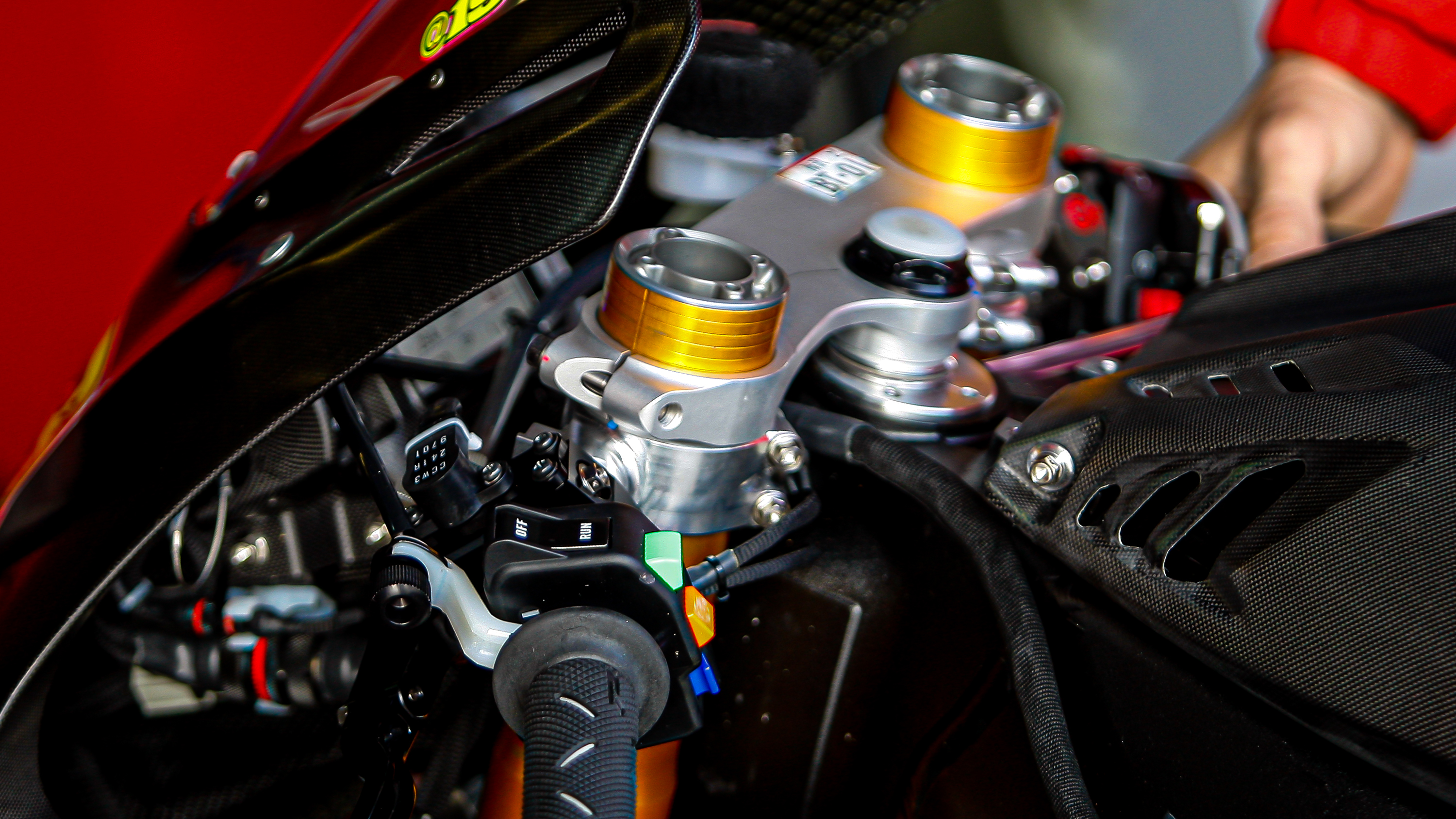
There’s almost nothing to look at here but this picture does tell a big story. Notice how thin is that top triple clamp and that’s just the edge! No, it’s not so for saving weight. Honda had recently done this to the 2019 RC213 MotoGP bike too. A thinner triple clamps allows more “play” and provides better front-end feedback to the rider.
The forks are also moved up the triple clamps since Jerez is a circuit which has plenty of corners that need late turn-ins, thus putting more emphasis on front tyre grip. Moving the forks up shifts more weight to the front tyre.
Conclusion
When this went to print, Leon Haslam put the 2020 CBR1000RR-R Fireblade in the top spot during the pre-season tests at Jerez. The session was held on a wet track and the rain is an equalizer, so we shall see if the bike continues to perform well.
We often see the terms SOHC or DOHC in motorcycle spec sheets.
What do they mean?
And how do they influence engine performance?
The terms SOHC and DOHC are usually seen on spec sheets. Some car owners even stick large “DOHC” vinyl on their vehicles.
What’s a camshaft?
But before we go further, let’s understand the function of a camshaft.
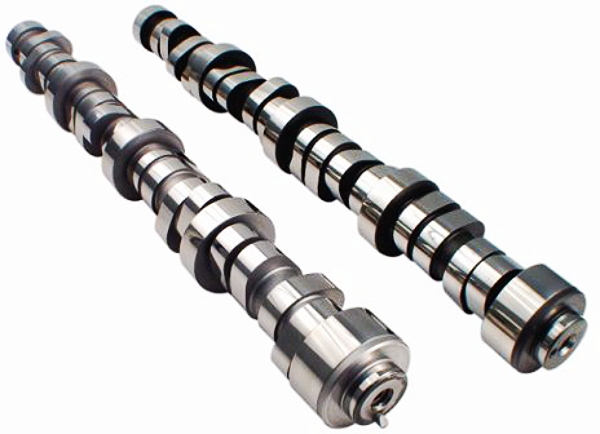
Camshafts are cylindrical shafts that carry oblong-shaped cam lobes in four-stroke engines. The lobes push on the poppet valves to open them in time with the engine’s intake and exhaust strokes. The valves are then closed by the valve springs when the taller cam lobes turn away. (NOTE: Desmodromic valve actuation don’t have return springs on the valves.)
Camshaft assembly – Credit depositphotos.com
The camshaft’s rotation is driven off the engine’s crankshaft via a chain, belt or gears. Road motorcycle engines usually employ the chain which is kept inside the engine block as it’s lubricated by the engine oil and quiet. Certain Ducati models still employ the belt cam drive (also called timing belt like in cars). Gear driven cams are usually used in racing motorcycles for their exactness in executing their timing, reliability in a high stress environment and being too loud for road bikes.
What are SOHC and DOHC?
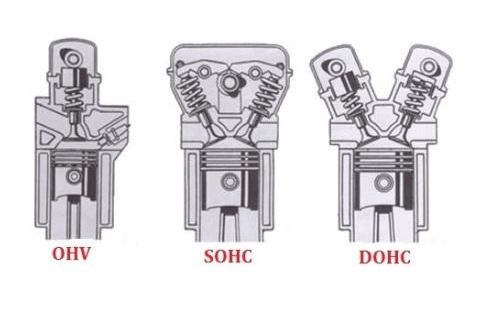
SOHC stands for “single overhead camshaft” while DOHC represents “double overhead camshaft.”
As the names suggest, an SOHC engine is served by a single camshaft which carries the intake and exhaust cam lobes. A DOHC engine, on the other hand, has one camshaft dedicated to intake and one for exhaust.
“Overhead” here means that the camshaft is located on top of the valves and certainly on top of the engine block.
Pros and Cons of SOHC
Since one camshaft carries all the lobes for intake and exhaust. However, do remember that the combustion chamber is round thus valve placement will be compromised. The best valve configuration keeps the valves closer together, but having four valves per cylinder with from one camshaft would mean spacing any two valves much further apart.
As such, an SOHC engine usually carries a maximum of three valves per cylinder (although there are four-valves-per-cylinder SOHC engines), but is usually limited to two valves.
An SOHC setup is much simpler and lighter as there are fewer parts. However, spark plug placement is compromised as the space directly on top of the combustion chamber has already been taken up by the valves. Therefore, the spark plug needs to be placed at the side of the combustion chamber. This puts a limit on high RPMs as the flame front could only reach so far before the piston moves down and the expanding gas losses its pressure. At higher RPMs, the piston is moving so fast that some of the air-fuel mixture isn’t fully burned and kicked out. Consequently, an SOHC engine could not produce higher horsepower due to lower engine revs.
As such, an SOHC engine is usually tuned for low-RPM and midrange torque.
Pros and Cons of DOHC
The intake and exhaust camshafts are placed further apart. All the valves could be kept closer together as the cam lobes can be placed closer to each other. It also means that the camshafts can be made shorter for a more compact engine block.
Since the two camshafts are spaced further apart, the spark plug can be placed between them and directly in the centre of the combustion chamber. As opposed to placing it at the side, a centrally located plug has the better chance of burning most if not all of the air-fuel mixture.
Consequently, DOHC engines can be revved higher and produce more horsepower in the process.
The two camshafts also give engineers more flexibility in spacing them to angle the valves for optimum combustion chamber shape, besides intake- and exhaust-tract designs.
But perhaps more importantly these days are variable valve timing (VVT) and variable valve lift (VVL) technologies. Utilizing them is easier, therefore virtually exclusive, to DOHC valvetrains (apart from SOHC VTEC).
The cons of a DOHC engine include higher maintenance as there are more parts involved.
Last note: OHV
There are also OHV (overhead valve) engines where the valves are on top of the combustion chamber, but the cams reside in the crankcase. The cam lobes push on thin cylindrical shafts called pushrods which in turn push on a rocker arms that actuate the valves.
This type of setup is usually used on low-revving engines due to the inertia of many moving parts. Also, it’s difficult to have more than one valve each for intake and exhaust, unless more cams are installed on the other side of the engine.
Therefore, the OHV setup usually resides in cruisers such as Harley-Davidsons and Indian Motorcycles.