Bikesrepublic

Agusta

Ah, MV Agusta. The name alone sounds like a Shakespearean tragedy or a particularly fancy pasta dish. But no, it’s one of the most iconic motorcycle brands in history—a brand that combines speed, style, and a healthy dose of Italian flair.

If motorcycles could talk, MV Agusta (as in Meccanica Verghera Agusta) would be the one wearing a leather jacket, sipping espresso, and dramatically gesturing about the meaning of life. Let’s dive into the history of this legendary marque, where passion, performance, and a touch of chaos collide.

Act 1: The Birth of a Legend (1945)

Our story begins in the aftermath of World War II, a time when Italy was rebuilding itself and Count Domenico Agusta was looking for something to do. You see, the Agusta family had been in the airplane business, but post-war regulations said, “Hey, maybe let’s not build warplanes anymore?” So, Domenico did what any sensible Italian aristocrat would do: he pivoted to motorcycles. Because nothing says “rebuilding a nation” like two wheels and a screaming engine.

On January 19, 1945, in the town of Cascina Costa (near the Malpensa airport near Milan), a private company, Meccanica Verghera S.r.l., was registered.

The first MV Agusta bikes were humble, utilitarian machines designed to get Italians from point A to point B without breaking the bank.
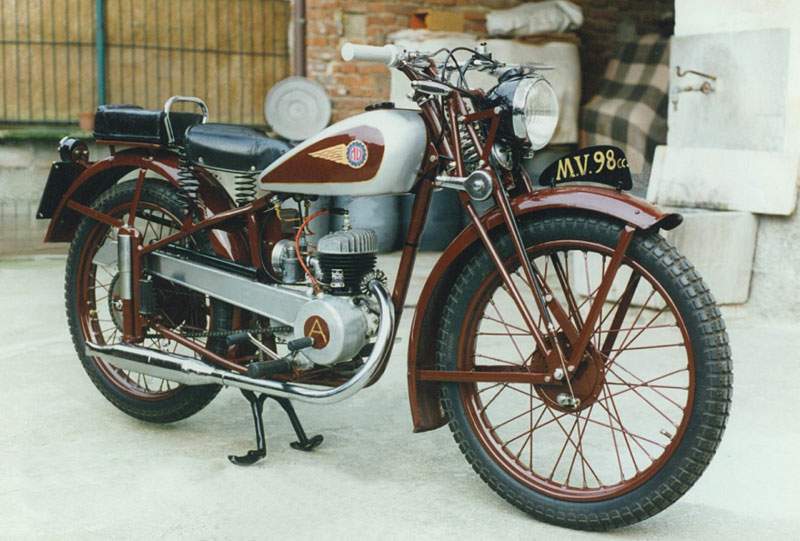
Using an engine that had been prepared by August 1943 which was a 98 cc single-cylinder two-stroke with a two-stage gear box, and spare parts obtained from the black market to bypass shortages, a prototype motorcycle was constructed. The prototype was exhibited to the press in late October 1945 at a dealership on Via Piatti in Milan. It was light motorcycle with a steel tube rigid frame, a girder fork, 19-inch wheels, and a gas tank marked with a large M and V. It was initially called “Vespa 98” before being renamed to “MV 98” to avoid confusion with the Vespa scooter produced by Piaggio.

The MV 98 was first produced en masse in 1946. Two versions were sold to consimers: Economica, based on the prototype presented a year earlier, and Turismo, distinguished by the presence of a three-speed gearbox and a rear suspension. The Turismo proved to be so overwhelmingly popular that before long, the Economica was discontinued. In 1946, about 50 units were produced.

But Domenico had bigger dreams. He wanted to race. And not just race – he wanted to win. Thus began MV Agusta’s love affair with motorsport, a relationship that would define the brand for decades.

Act 2: The Golden Era (1950s–1970s)

Count Domenico was likened to Enzo Ferrari. The Agusta family produced and sold motorcycles almost exclusively to fund their racing efforts. So soon after the start of production of its first model MV 98, the company launched its own factory racing program.

But here’s the thing: MV Agusta didn’t just win races—they did it with style. Their bikes were works of art, with sleek lines, vibrant red paint, and that iconic “MV” logo that looked like it belonged on a Renaissance painting. Even their engines sounded like opera singers hitting high notes. It was as if every bike came with a built-in soundtrack of Ennio Morricone music.
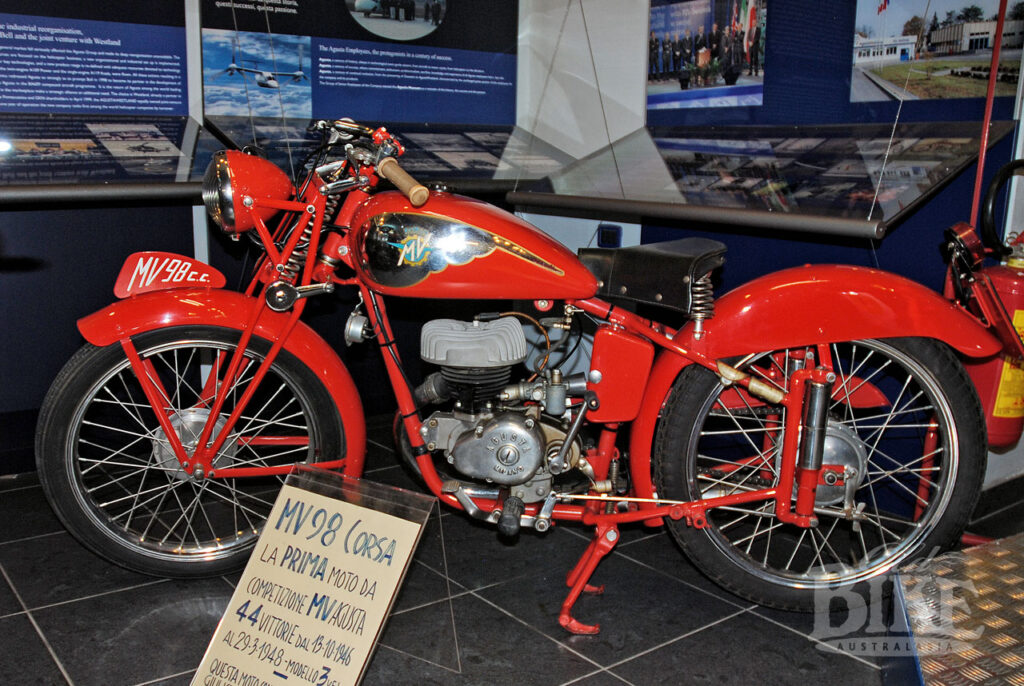
Vicenzo Nincioni delivered the brands’s first victory when he won the La Spezia road race on October 6, 1946. Just a week later, he took the third place in Valenza, where the first place was also taken by the MV racer Mario Cornalea. On November 3, in Monza, MV racers Vicenzo Ninconi, Mario Cornalea and Mario Paleari occupied the entire podium for the first time in MV racing history. It was the start of the MV Agusta dominance.

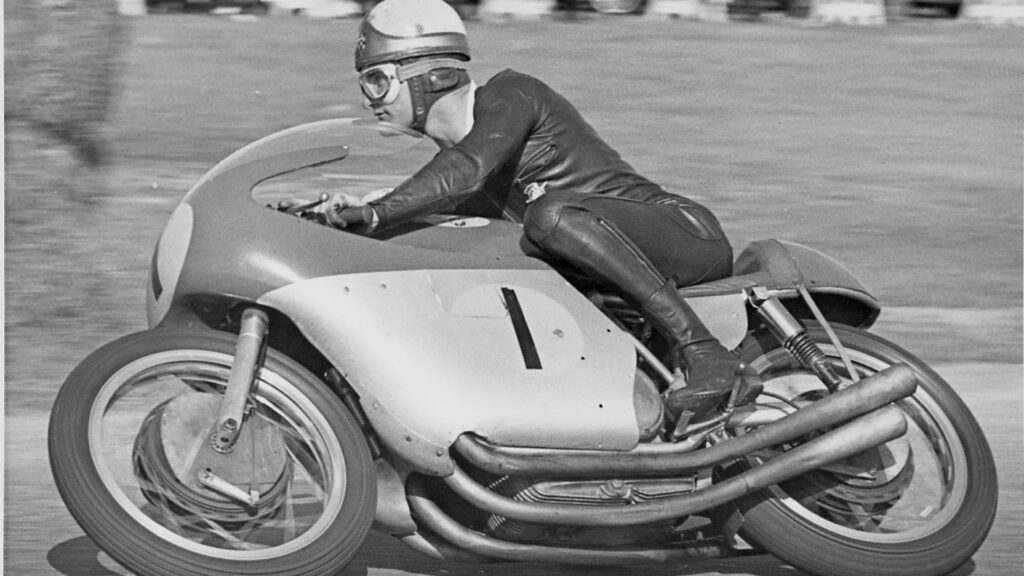
In 1961, British racer, Mike ‘The Bike’ Hailwood joined the Italian team. He also won the rode the 500cc four-cylinder MV Agusta racebike in its signature red and silver paint to several wins including the 1965 Tourist Trophy (TT).
And then, in 1965, an Italian racer by the name of Giacomo Agostini signed up to ride the factory’s three cylinder race bikes. He went on to win 311 races, 18 Italian championships, and 13 world championships, thereby cementing both his and MV Agusta’s names as legends.
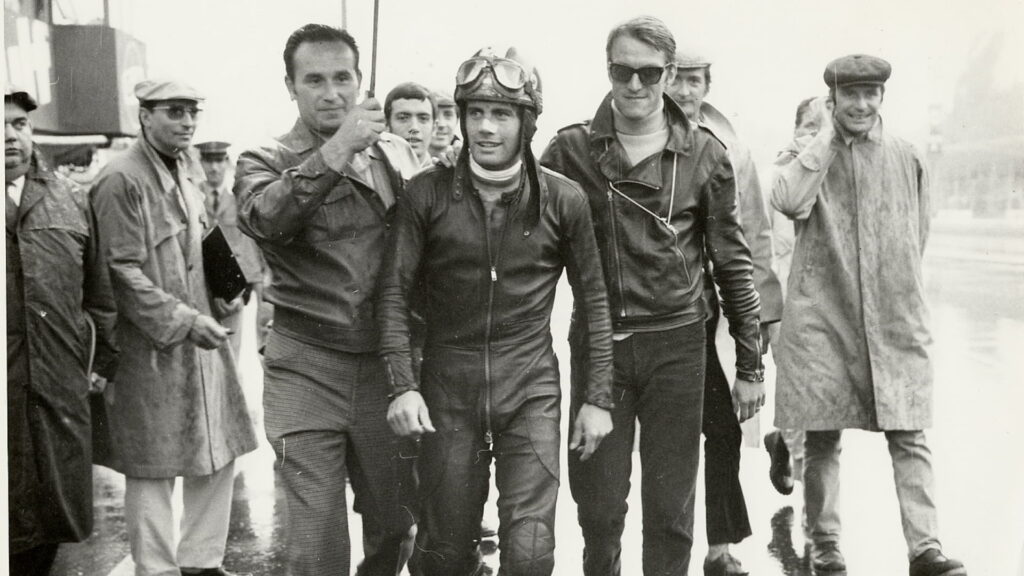
So, if MV Agusta were a movie, this would be the montage where they win everything and look impossibly cool doing it. They won 37 World Championships, 270 Grand Prix races, and basically every trophy they could get their hands on.

End of Part 1

We shall look at the 70s and through to modern day in Part 1, so stay tuned!
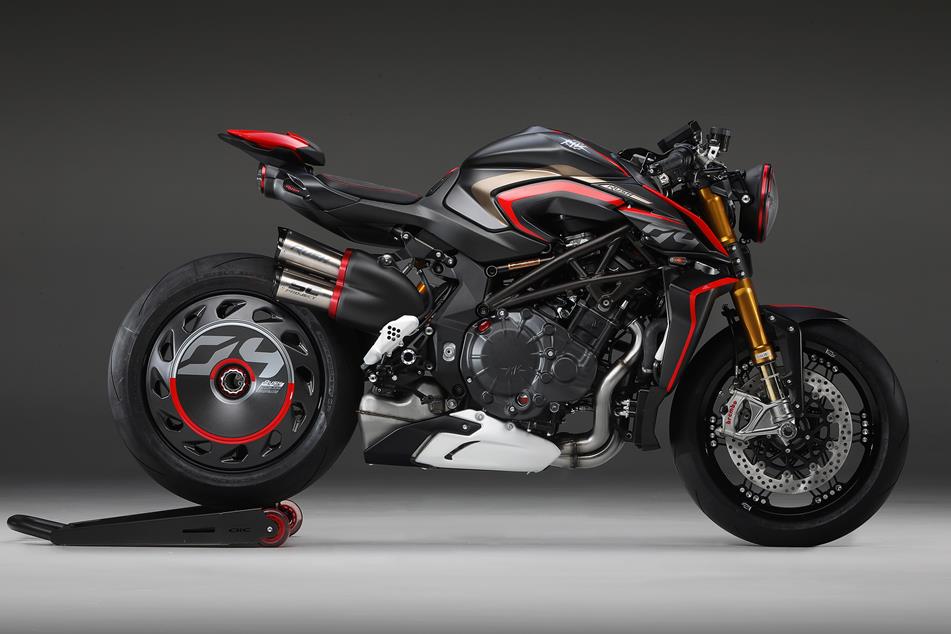
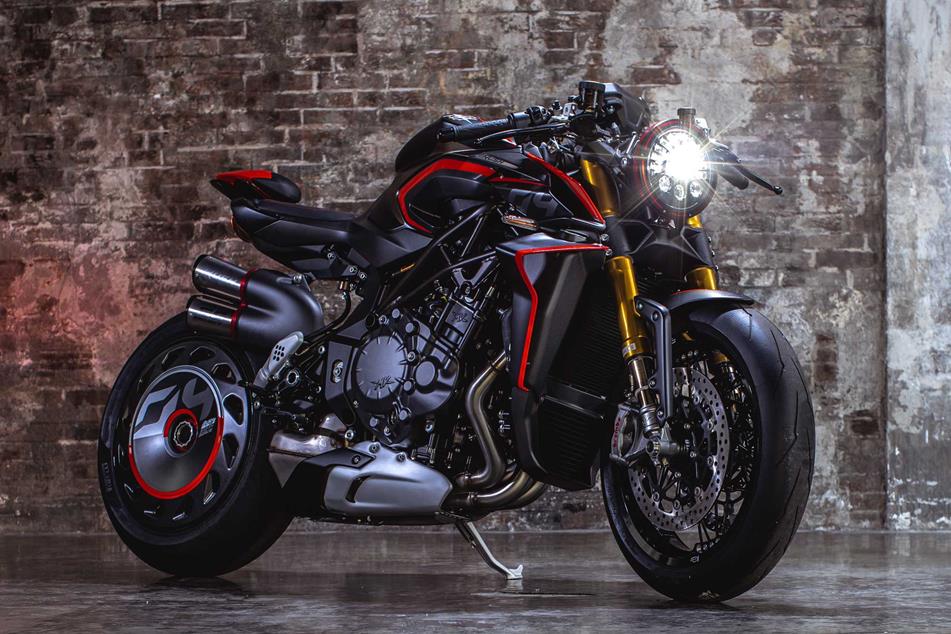
  • The MV Agusta Rush 1000 was launched at EICMA 2019.

  • It features an outrageous styling.

  • Besides that, the engine produces 208 hp.

While the motorcycling world was closely watching the launch of the Ducati Streetfighter V4 and Kawasaki Z H2, the MV Agusta Rush 1000 was akin to a bomb dropped on all of them.

It started out as just a styling exercise for the Italian firm. However, they decided to turn it into production – albeit a limited run.

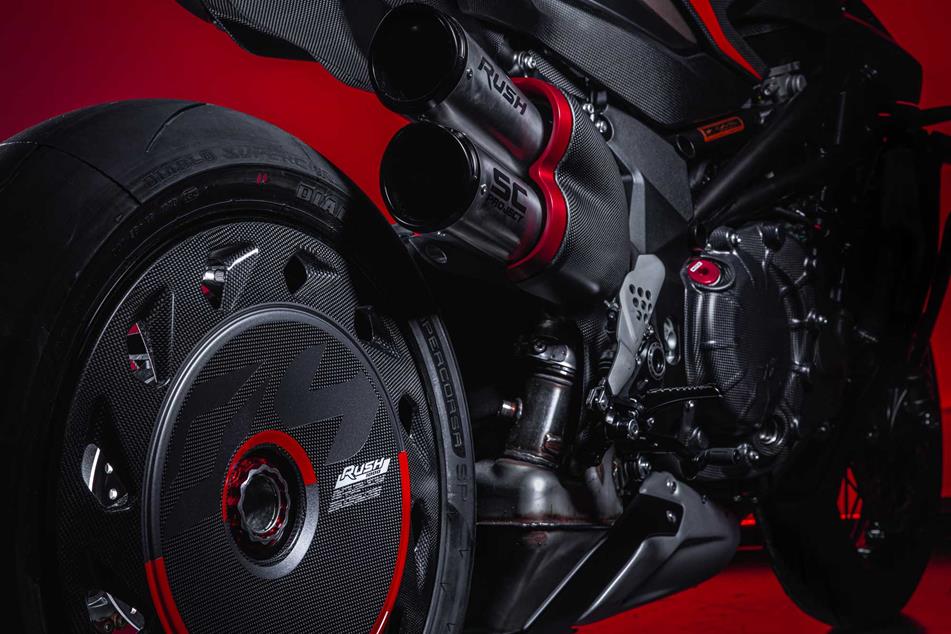
The bike will feature both MotoGP and Formula 1 technology, including a 1000cc, inline-Four engine with radial valve arrangement (they are set all around the head, rather than pairing them in different locations). This boosts engine power to 208 hp. Not enough for you? Then you should purchase the Rush Racing Kit to bump it up to 212 hp.

The kit also includes a titanium exhaust system, a carbon fibre passenger seat cover and obviously, a remapped engine ECU. The use of carbon fibre parts drops the wet weight from 186 kg to 184 kg.

The MV Agusta Rush 1000 is already equipped with 8-level traction control, launch control, anti-wheelie electronics, electronic Öhlins suspension and Brembo Stylema front brake calipers. The manufacturer claims a top speed of “over 300 km/h.”

Customers in the UK and Europe are set to receive their orders beginning June 2020. Only 300 will be made.

  • MV Agusta partners with the Loncin Motor Company.

  • They will launch a four-model lineup, ranging between 350cc to 500cc.

  • The bikes will be designed in Italy and built in China.

MV Agusta partners with the Loncin Motor Company to launch a four-model lineup, ranging between 350cc to 500cc. The bikes will be designed in Italy and built in China,and expected to hit dealer showrooms by 2021.

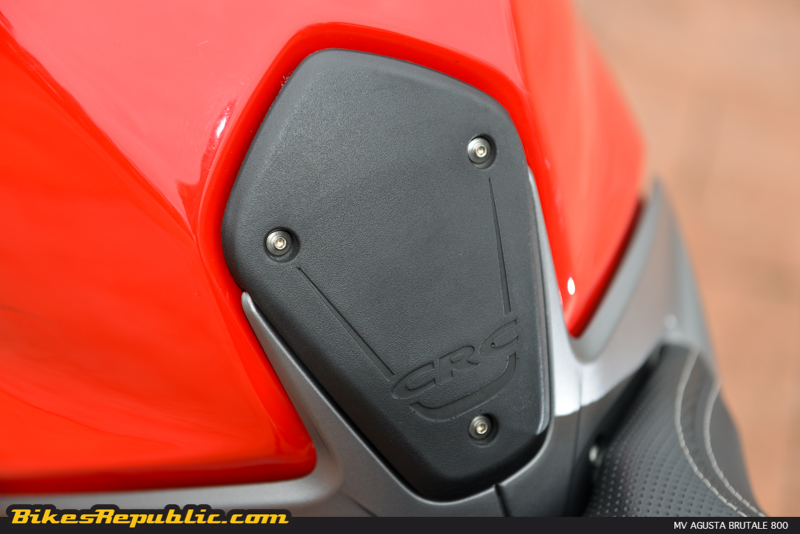
The partnership will go further than small capacity bikes. MV’s Castiglioni Research Centre (CRC) will design 800cc bikes for Loncin’s high-end brand called Voge.

Partnerships of Western and Chinese manufacturers are becoming the norm lately, but it’s still a bit of a surprise to learn that MV Agusta is doing so, too. The move is surprising because MV Agusta has always been the – if not one of – Italy’s premium motorcycle manufacturers. We can probably hear current owners screaming sacrilegio (sacrilege) or infamia (infamy).

But think about this: Some Chinese manufacturers unabashedly knock off the designs of famous motorcycles, then build them with the quality of rice paper. We’ve seen copies of BMWs, Ducatis, even the Honda Gold Wing!
Suing the manufacturers who copy the designs take long periods of time and cost lots of money. For example, the case of Lambretta versus a Chinese manufacturer who copied the former’s bikes. Even then, Chinese makers seem to be immune from such intellectual property laws in their country.

Therefore, it may be easier for Western makers to join forces with their Chinese counterparts.


Artikel oleh: Wahid Ooi Abdullah

  • MV Agusta Brutale 800 yang baru kini telah lebih diperhalusi.
  • Kualitinya juga telah dipertingkatkan, begitu juga dengan kebolehtunggangannya.
  • Motosikal Brutale 800 terbaru ini kini lebih mudah untuk diselenggara dan dinikmati.

(more…)

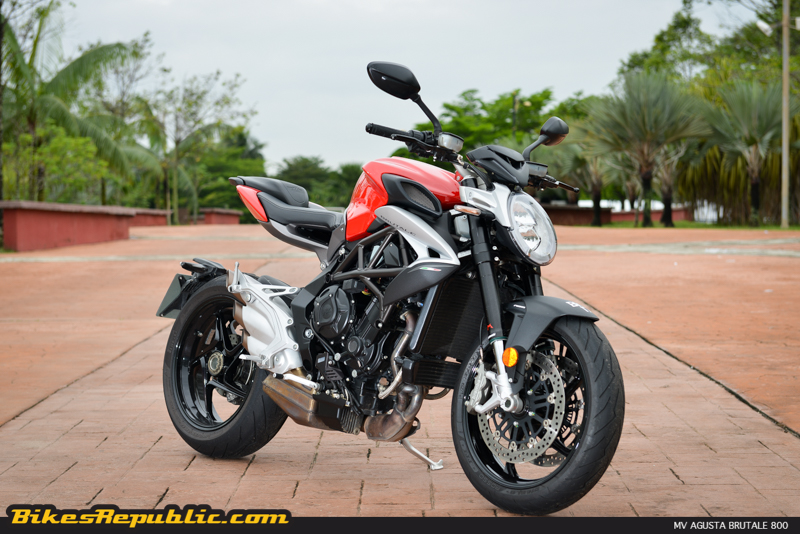
  • The new MV Agusta Brutale 800 is now much more refined.

  • Quality has also improved, along with driveability.

  • The new Brutale 800 is much easier to live with and enjoyed.

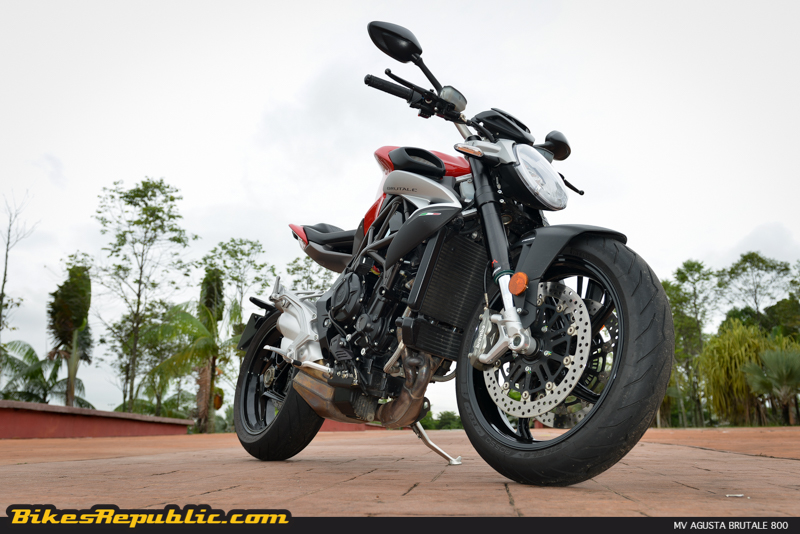
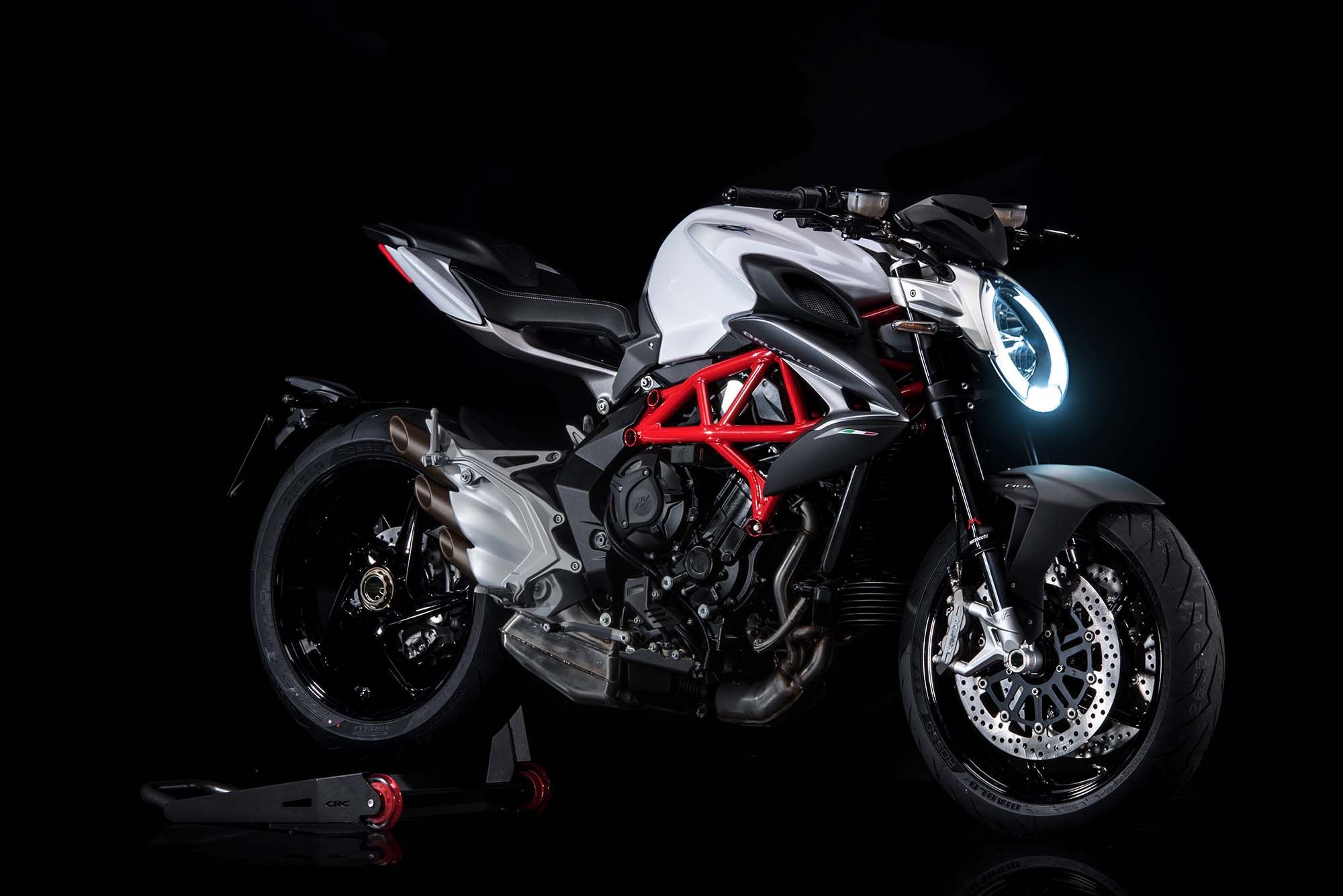
MV Agusta’s Brutale lineup has always represented the Italian company’s vision of naked sportbikes. According to MV’s philosophy, the Brutale should be uncompromising yet beautiful at the same time.

As such, most, if not all, Brutales, needed a high level of skill and no less amount of bravery to be ridden well. And for them to work well, they needed to be ridden fast and hard. But I’ve always loved how MV Agustas look (examples: Brutale 800 Dragster RR, Veloce Turismo, F4 Tamburini). Almost no other manufacturer could design something so bold.

With that experience in mind, I approached this new MV Agusta Brutale 800 with some mixed expectations. I had a sense of trepidation intermingled with excitement.

Like that bad girl your mother warned you about.

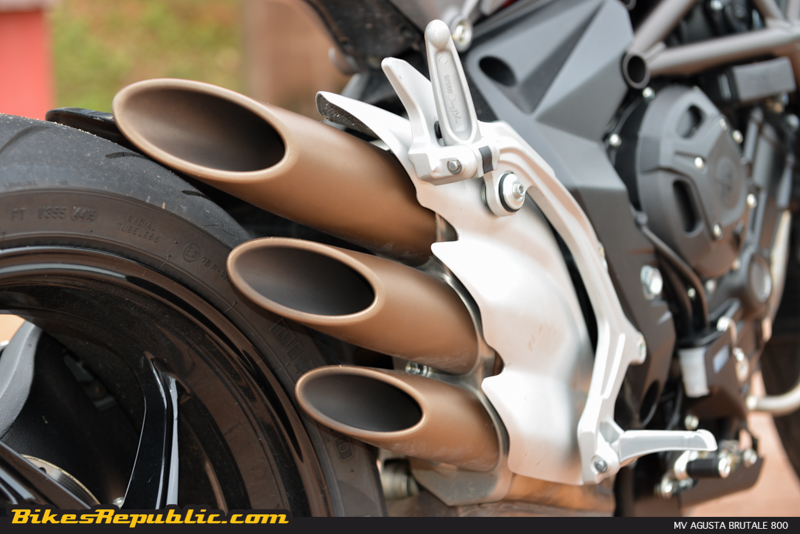
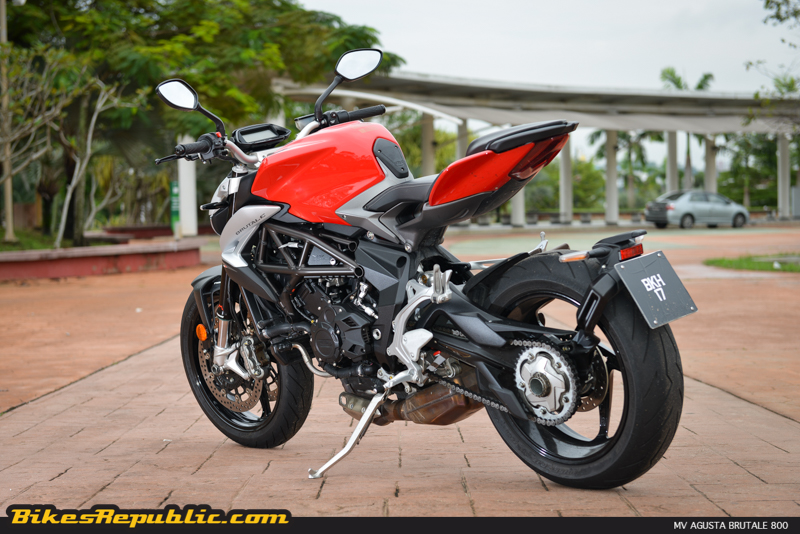
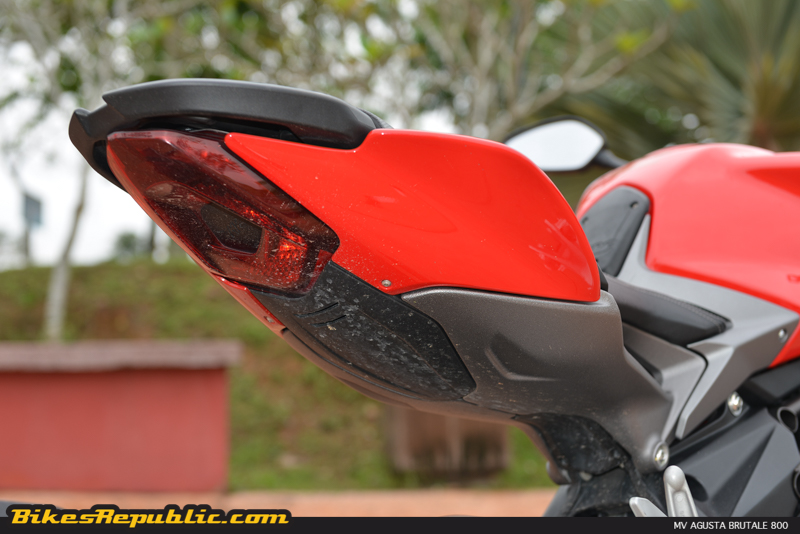
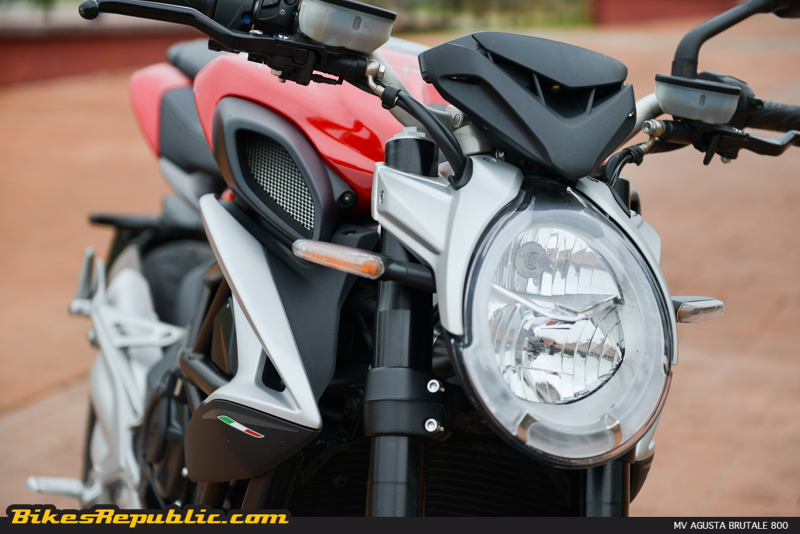
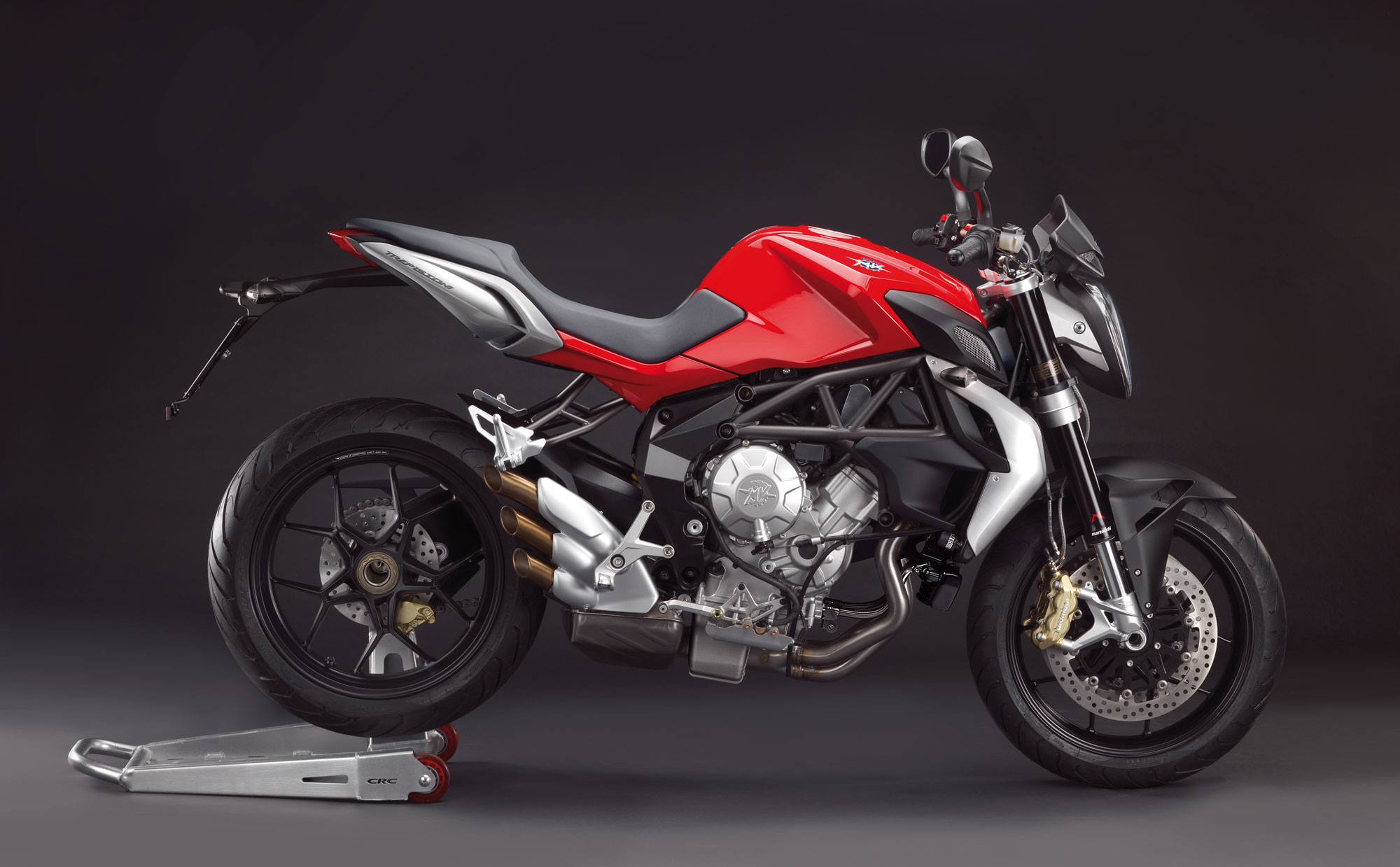
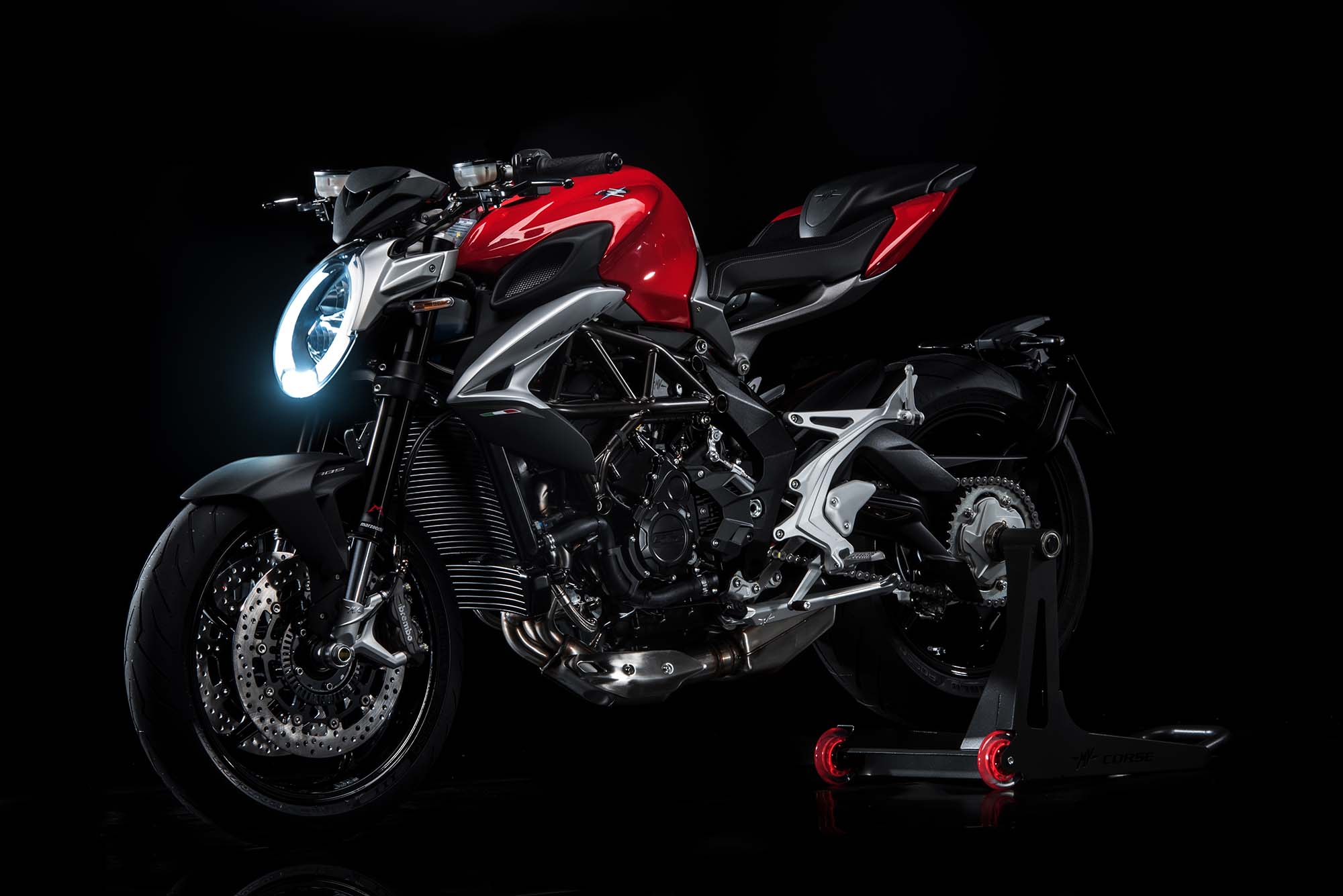
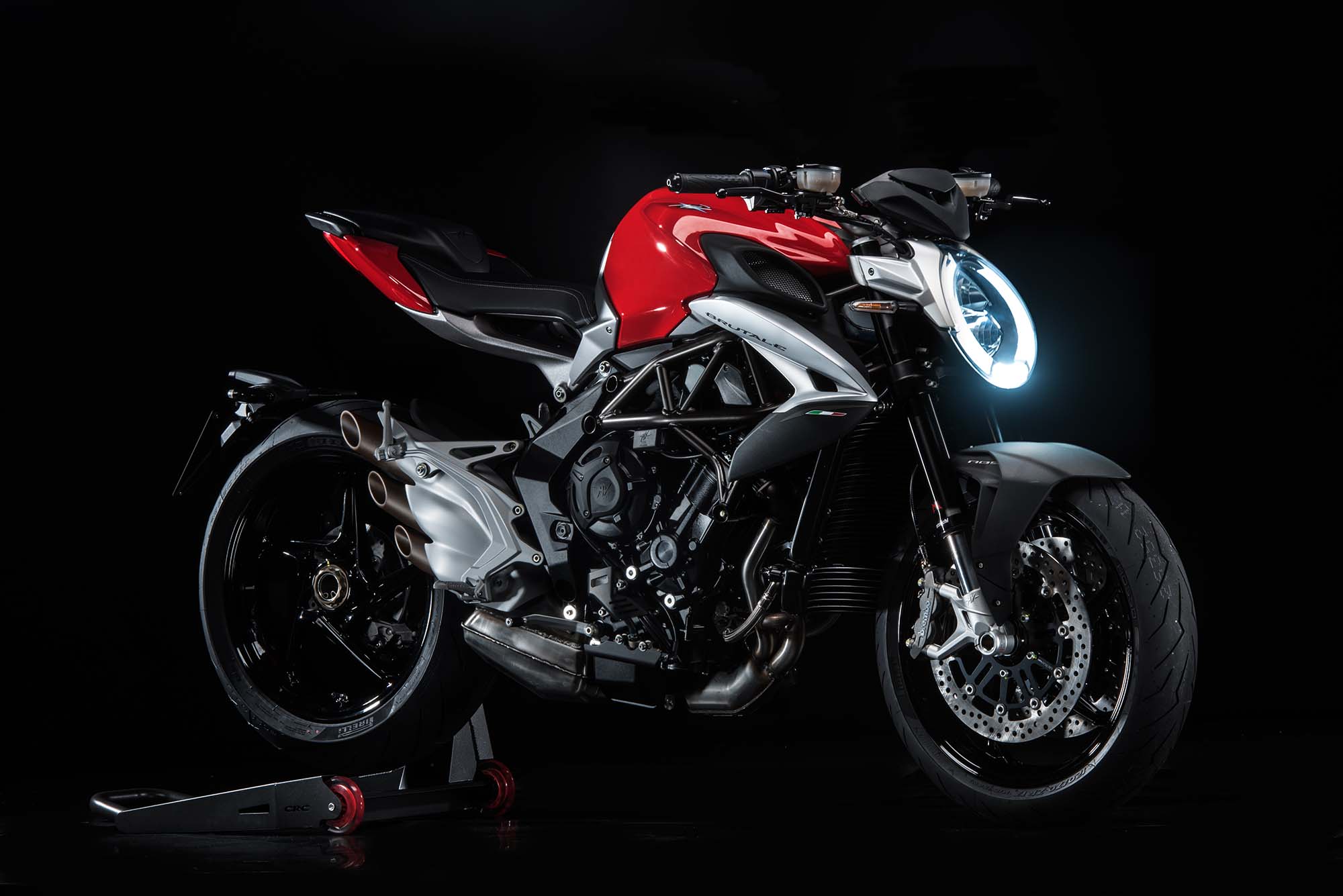
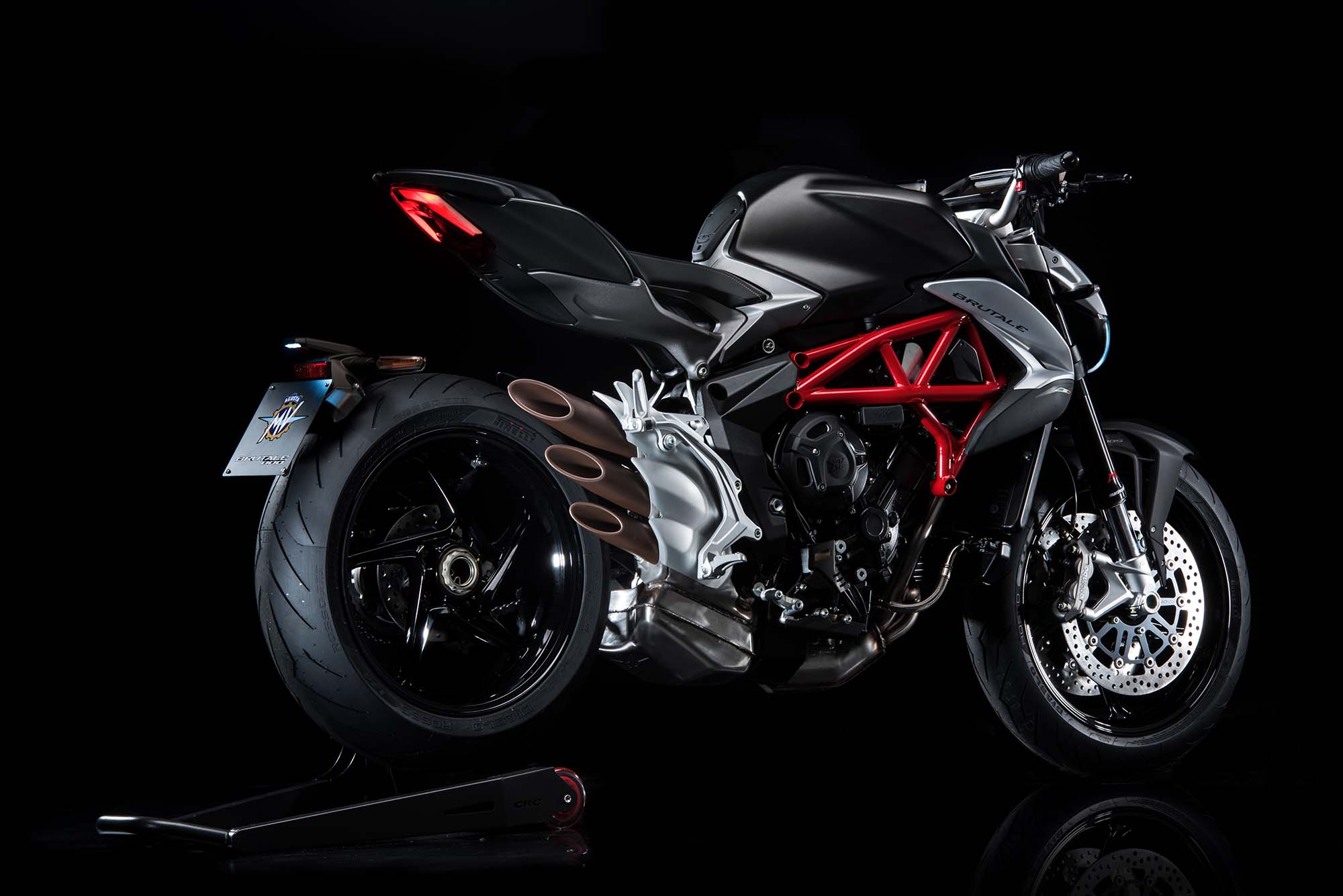
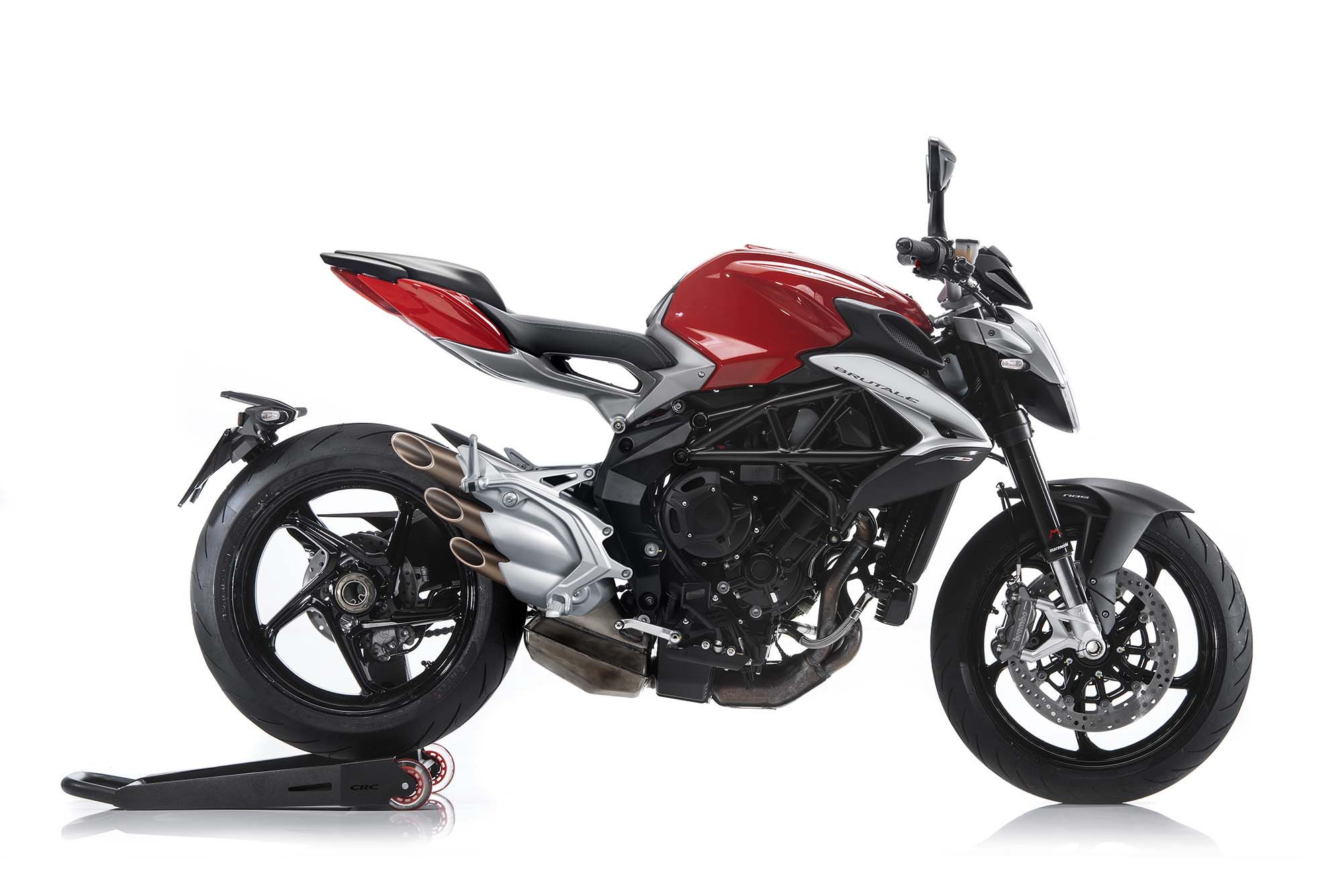
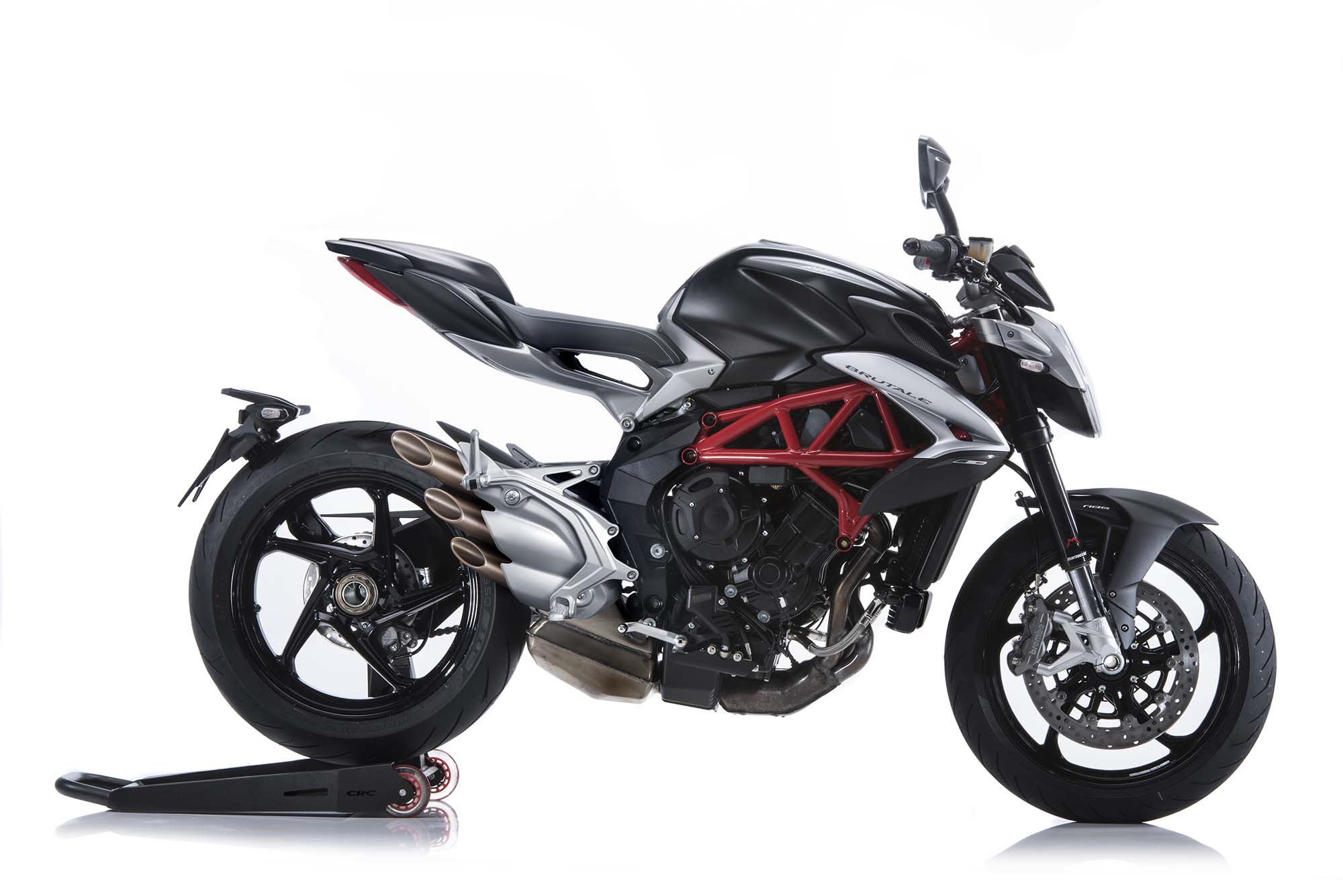
This new Brutale 800 sure looked awesome, the voluptuous tank in fire engine red, with a diminutive waist which had a hole in it, just like the Veloce Turismo. From the rear three quarters, it looked like wasp – ready to sting. MV Agusta calls it, “The big chest, small waist profile.” Sounds good to any man.

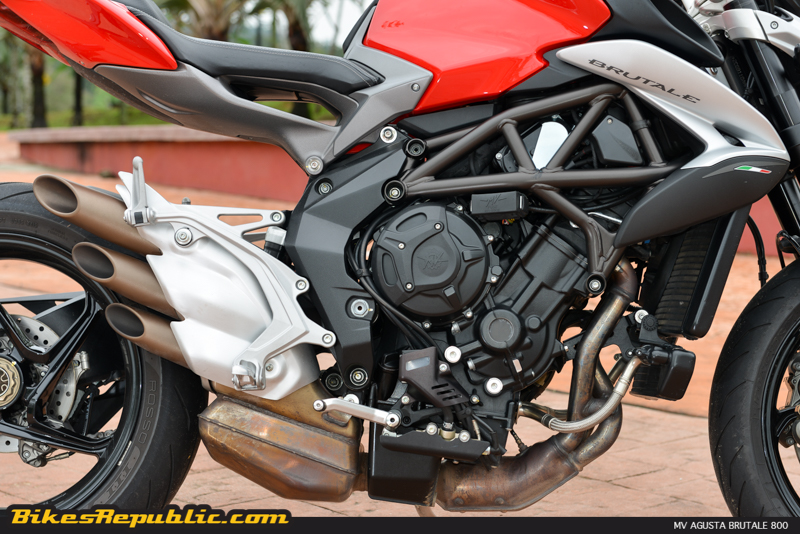
The engine dangled under the tank with everything tightly packed around it, looking like the guts of a monster. But I couldn’t locate the battery. There is a reason for this, though, in the interest of mass centralization.

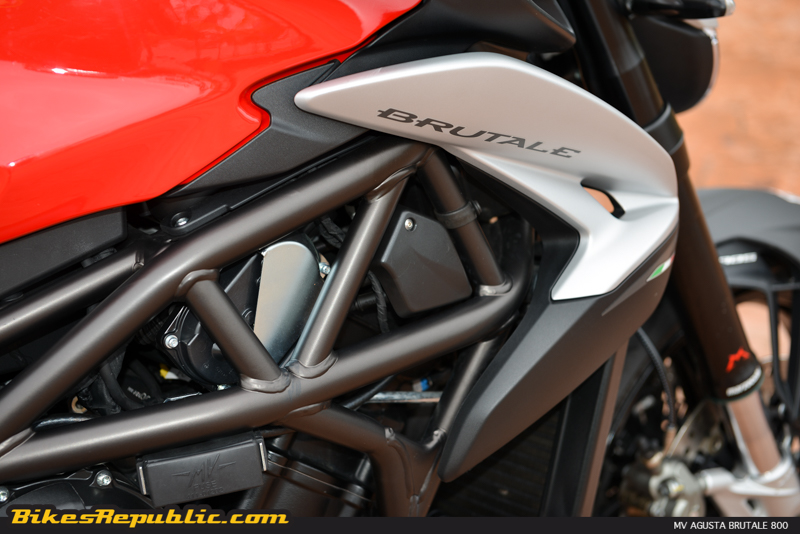
But something caught my attention the first time I laid eyes on it. The panels, quality of the finish, fitment and components looked way better than MV Agustas of past.

The 800cc, DOHC, 12-valve, Triple still took a bit of cranking to get it fired up. But once it does, it sounded guttural, slightly primitive even. It lets you know it’s alive.

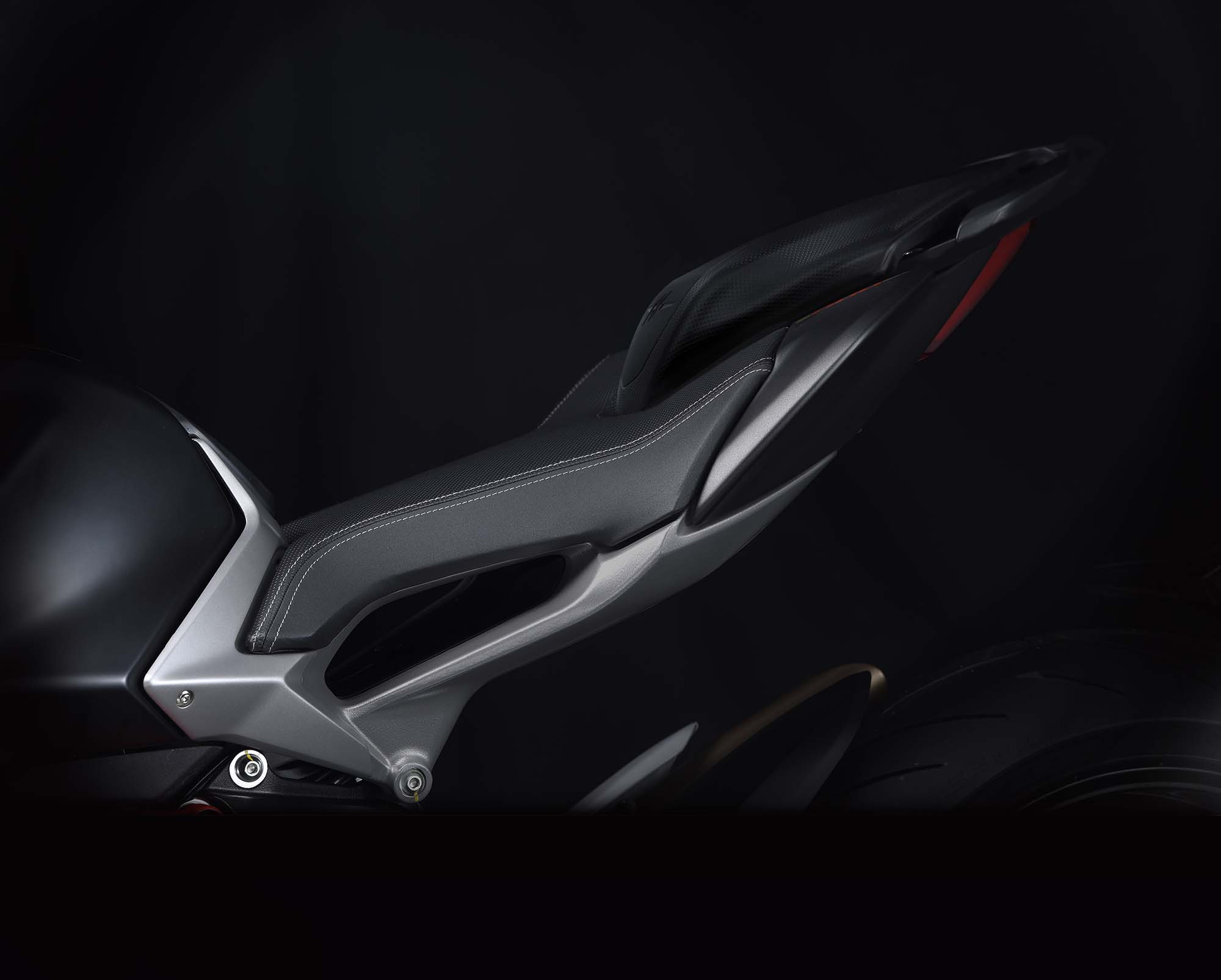
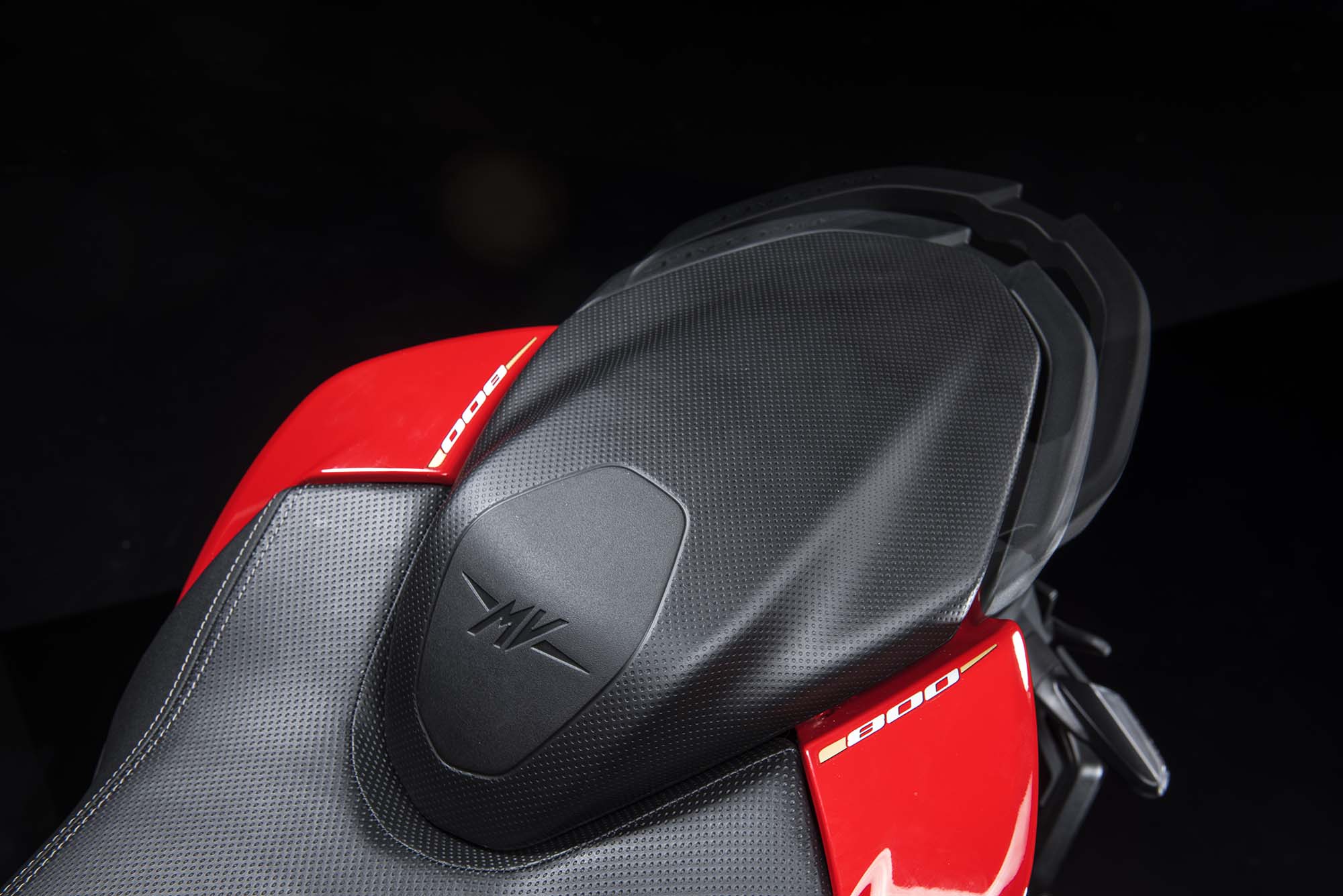
The seat is much taller now, as the top part of the subframe had to be designed taller to produce that hole. However, I was surprised that the seat was actually rather comfy, instead of feeling like I was sitting on a leather-covered plank. The waist where the subframe joined the tank was really slim, allowing my short legs easier reach to the ground.

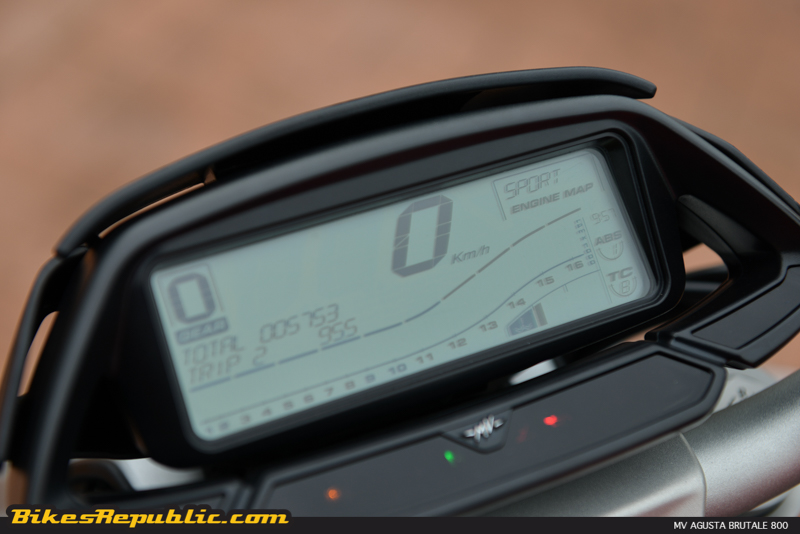
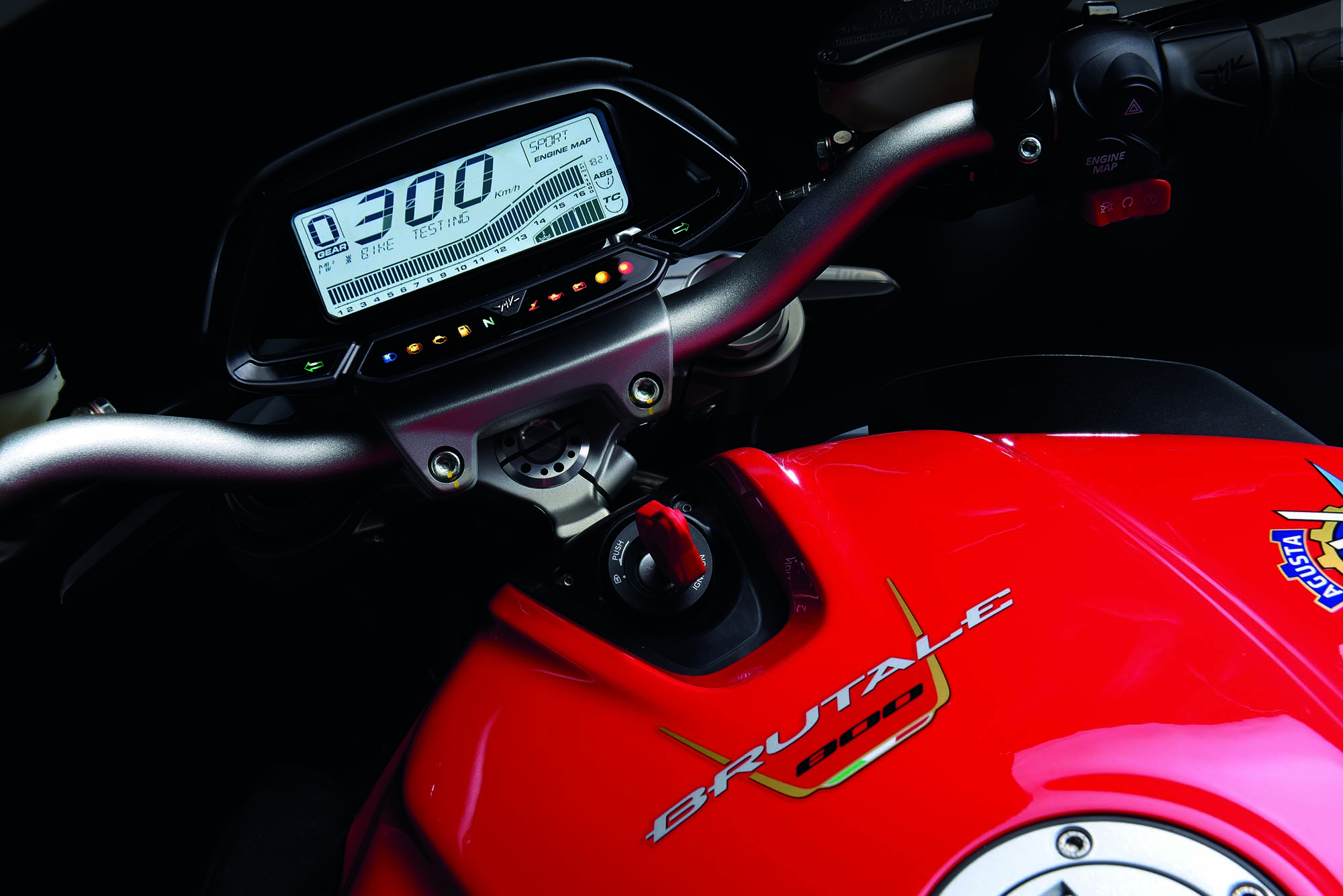
The fully LCD display was crammed with every information you need, except surprise, a fuel gauge, although you could ride about 60 km more when the low fuel amber light comes on. There’s also a large gear indicator, but my only hope is that MV Agusta will place the tachometer bar on the top, rather than below everything else. On the other hand, I really do liked the fact that MV Agusta’s LCD screens hardly reflect direct sunlight.

There are four riding modes: SPORT, NORMAL, RAIN and CUSTOM. SPORT gives you full power and torque; NORMAL cuts power to 100 bhp (good for long distance riding), RAIN cuts power and torque further; and CUSTOM means you could set your own preferences. There are 8 levels of traction control which you could dial and the ABS is switchable.

Starting in NORMAL, a bit of throttle and slip of the clutch got the show going. Give it more throttle and the Brutale 800 took off and it didn’t stop pulling. The rush of speed was accompanied by a soundtrack that could only come from an MV Agusta Triple.

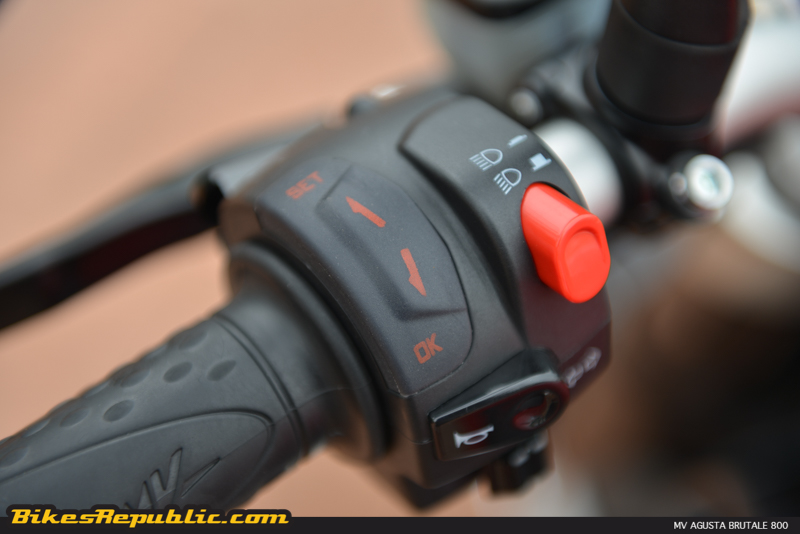
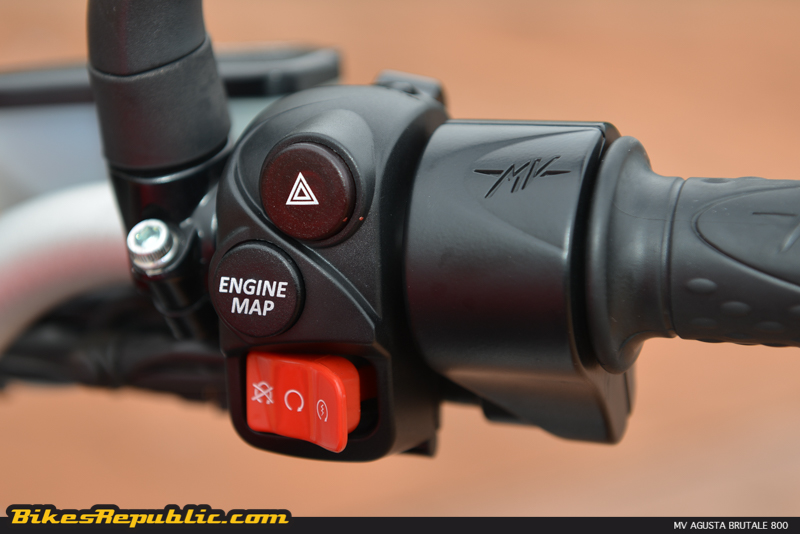
The switch for the riding modes was via a large button on the right handlebar. All you need to do is hold it down until the indicator blinks in the LCD and you can start selecting the mode you desire, without needing to shut off the throttle. That said, the placement of the button on the right side needed some getting used to, but you’ll get it soon enough without needing to relocate your right thumb.

But SPORT mode is where the bike truly shines. The new generation MVICS 2.0 ECU’s fuelling is crisp and accurate, while the throttle isn’t abrupt anymore. Along with the newly mapped ECU, the quickshifter is one of the best on any bike I’ve sampled.

It kicks in the next gear immediately without feeling like you’ve chopped the throttle, nor did it lag. Every gear was hammered home without delay, plus it works on the downshift too, with the throttle being blipped just the right amount. There was no wheel hop even when I experimented with downshifting right down to first without the clutch.

However, the quickshifter works on the upshift and downshift only in SPORT, while only upshifts are available in the other modes.

The next thing I liked about this new Brutale 800 was the suspension. Sure, it’s still stiff but it isn’t harsh anymore. Previously, a bump in the middle of a corner was sufficient to kick the wheels into the air and cause you to lose your line. Now, you could still feel the road but you don’t get displaced off your chosen line.

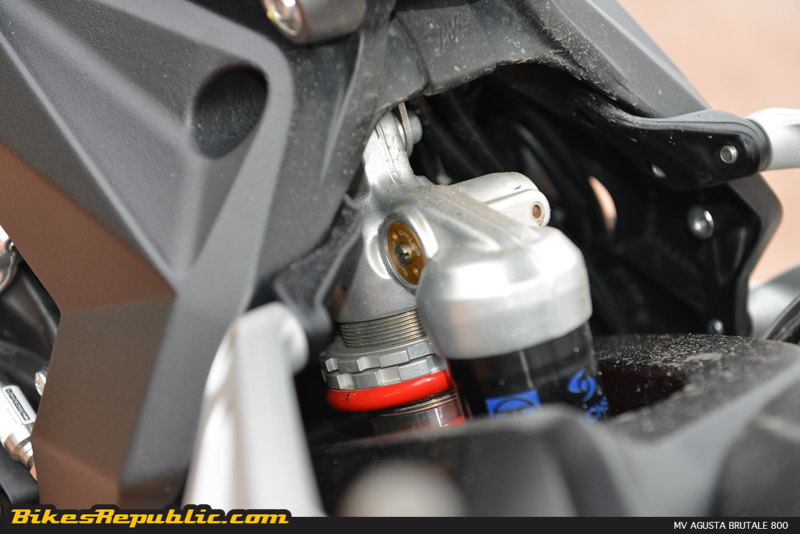
Besides that, while the previous suspension didn’t seem to respond to any adjustment, decreasing compression damping by three turns and increasing rebound damping in the rear by two turns did wonders for my 80kg weight.

With the suspension sorted, it was time to turn and burn.

The handlebar was placed higher than previous Brutales and was wide. That meant plenty of leverage from your arms to steer the bike quickly in any direction. Adding to the quick steer character was the rake of 24.5 degrees. But the Brutale 800 wasn’t nervous at all especially when accelerating hard, courtesy of the 103.5mm trail.

Combined with the engine’s serious punch and the bike’s light weight, and you’ve a bike that gets away from it all in the blink of an eye.

All in all, I’m glad to see that MV Agusta is still going and the Brutale 800’s big steps in refinement is definitely reassuring.

In closing, the MV Agusta Brutale 800 does make you feel good about yourself.

TECHNICAL SPECIFICATIONS

ENGINE
Engine type Liquid-cooled, 4-stroke, DOHC, 4-valves, inline-Triple
Compression ratio 12.3 : 1
Bore X Stroke 79.0 mm X 54.3 mm
Displacement 798 cc
Fuel system Eldor EM2.0 electronic fuel injection
Maximum power 109 bhp (81 kW) @ 11,500 RPM
Maximum torque 83 Nm @ 7600 RPM
TRANSMISSION  
Clutch Hydraulically activated with slipper clutch
Gearbox 6-speed with quickshifter
CHASSIS
Front suspension Marzocchi 43mm USD forks, adjustable for preload, compression damping and rebound damping, 125 mm travel
Rear suspension Sachs single progressive shock, adjustable for preload, compression damping and rebound damping, 124 mm travel
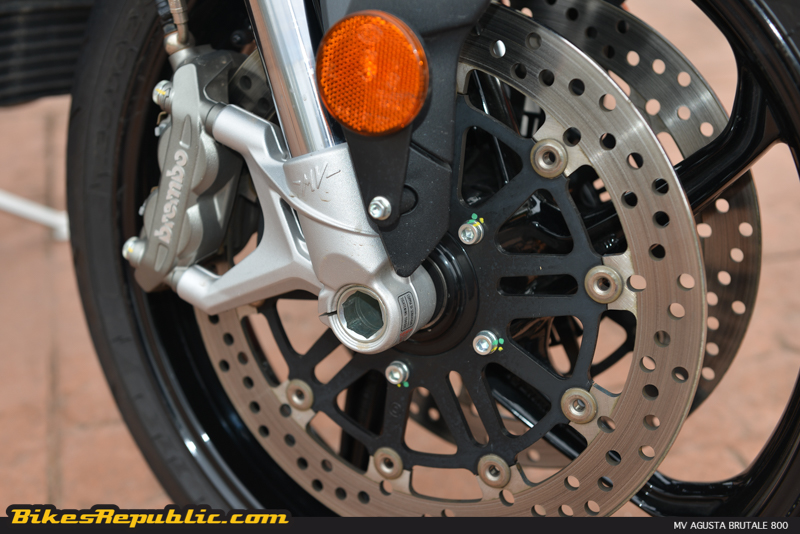
Front brakes Dual 320 mm floating discs, dual four-piston radially mounted Brembo caliper
Rear brake Single 220 mm disc, two-piston Brembo caliper
ABS Bosch 9 Plus with Rear Lift-up Mitigation (RLM), swtichable on/off
Front tyre 120/70-ZR17
Rear tyre 180/55-ZR17
FRAME & DIMENSIONS
Frame ALS steel tube trellis, aluminium swingarm pivot
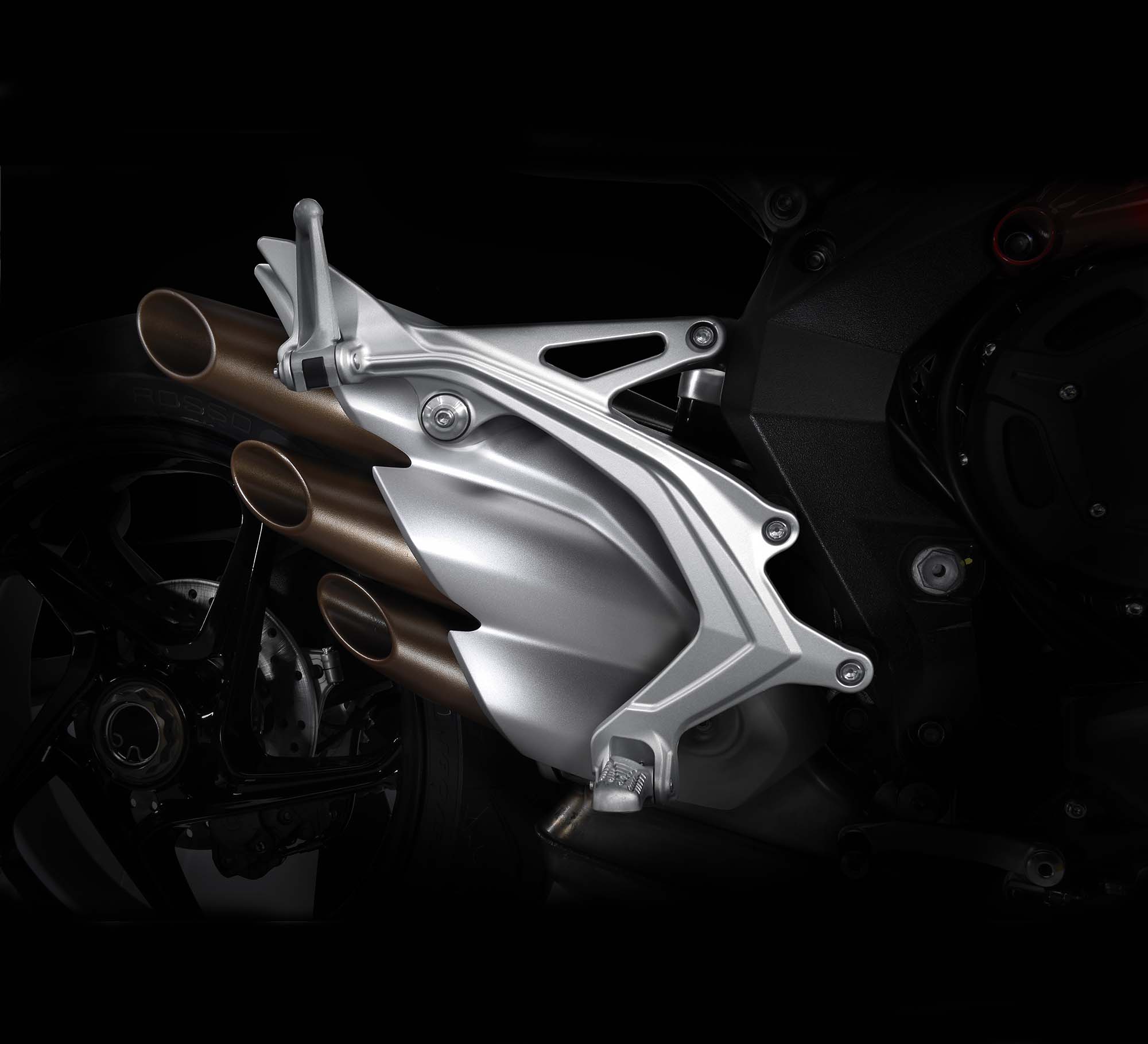
Swingarm Single-sided, aluminium alloy
Trail 103.5 mm
Rake 24.5 degrees
Wheelbase 1400 mm
Seat height 830 mm
Dry weight 175 kg
Fuel capacity 16.5 litres

New MV Agusta Brutale 675 slated for debut sometime in the second quarter of this year. (more…)

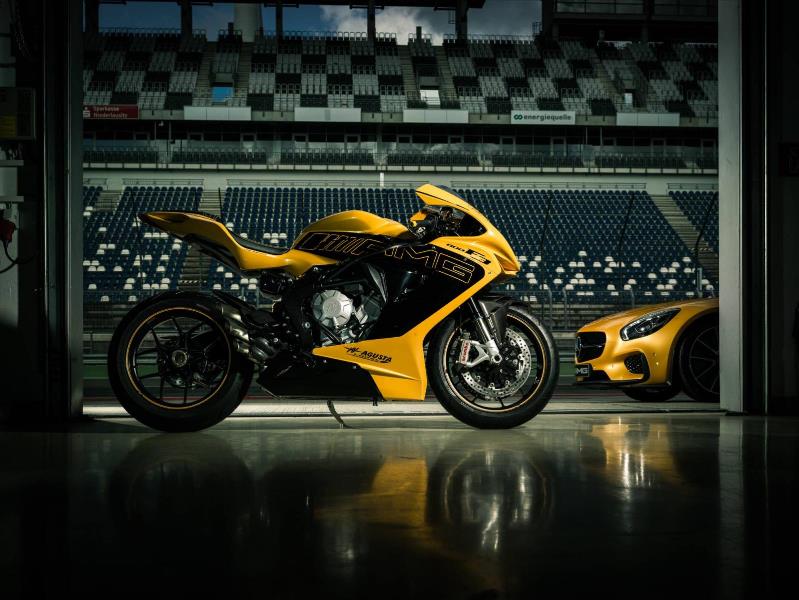
It seems that the cash flow injection by new shareholders Mercedes-AMG have done wonders for the MV Agusta brand. MV Agusta looks set to end the year on a high note after it recorded a 30% increase of its sales for 2015.

The firm reportedly sold up to 9,000 units worldwide this year, with much of the brand’s growth recorded outside of its Italian home market. The brand’s performance in its home market remain rather flat with a0.1% decrease this year compared to 2014, but elsewhere, the MV brand is thriving to say the least. One key market for the brand is the UK where it recorded a staggering 140% increase compared to 2014.

2104-MV-Agusta-Turismo-Veloce-Lusso-800-04
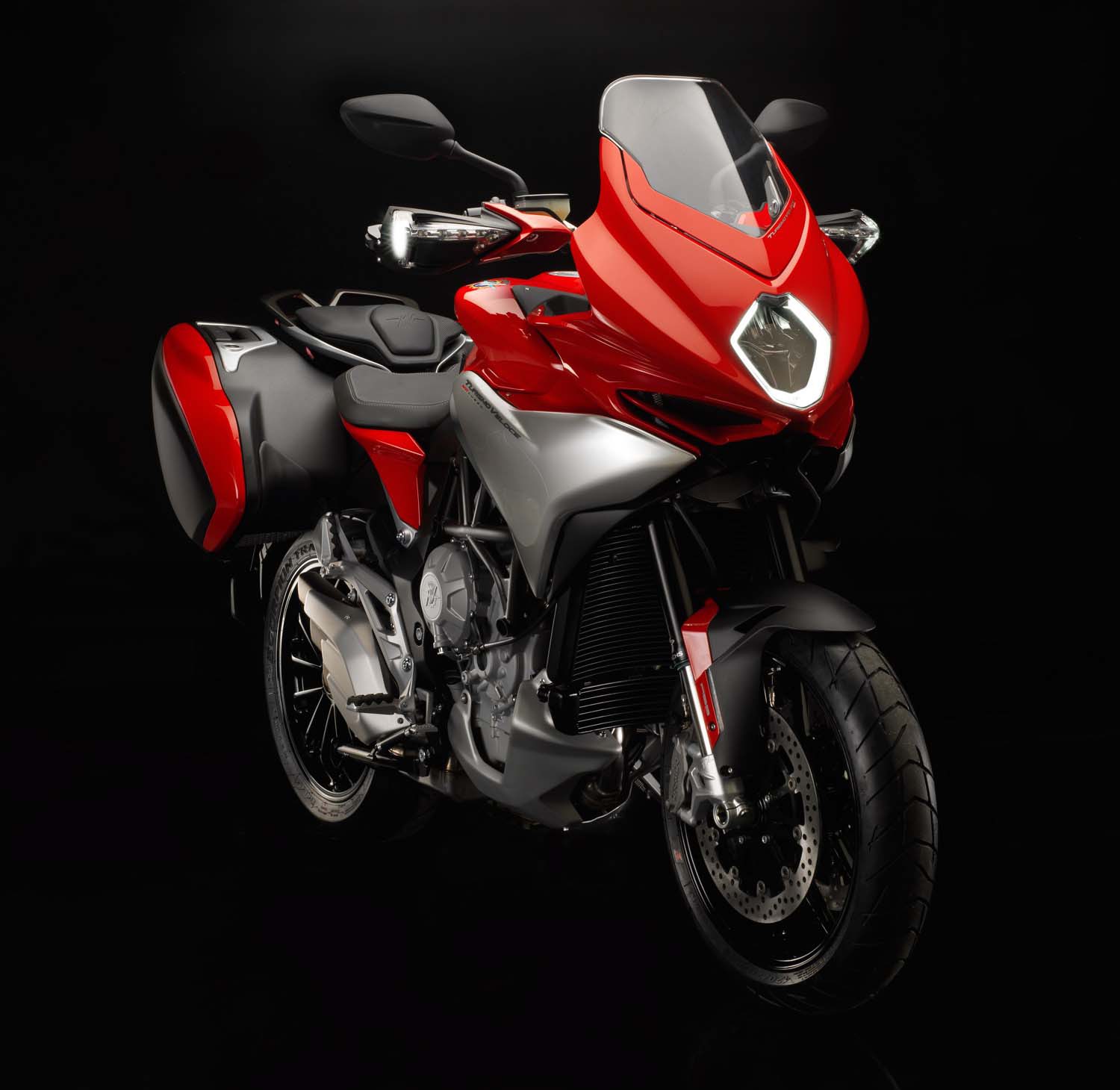
MV Agusta Turismo Veloce Lusso 800

The firm states that revenue is up by 30% for 2015, which means it is enjoying larger-than-average contribution margin of 40%. Much of this is contributed by strong sales performance of several premium models, notably the likes of the Tursimo Veloce and Dragster RR.

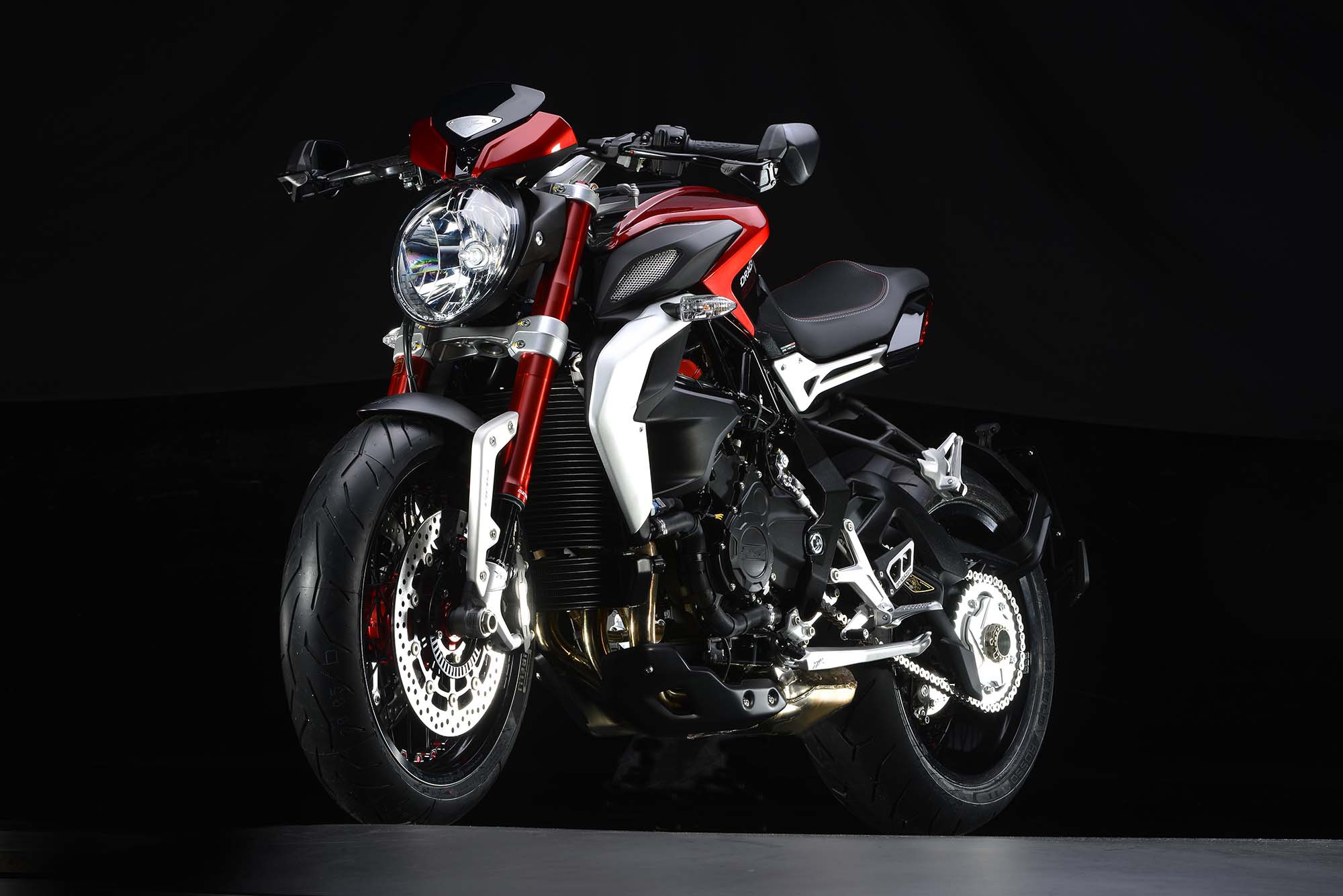
MV Agusta Brutale Dragster 800 RR

However, it is worth noting that MV Agusta did not unveil a new-for-2016 model during the recent EICMA 2015 show. Whether the brand is able to retain this momentum next year without a substantially new model remains to be seen.

Sources: Asphaltandrubber and Visordown

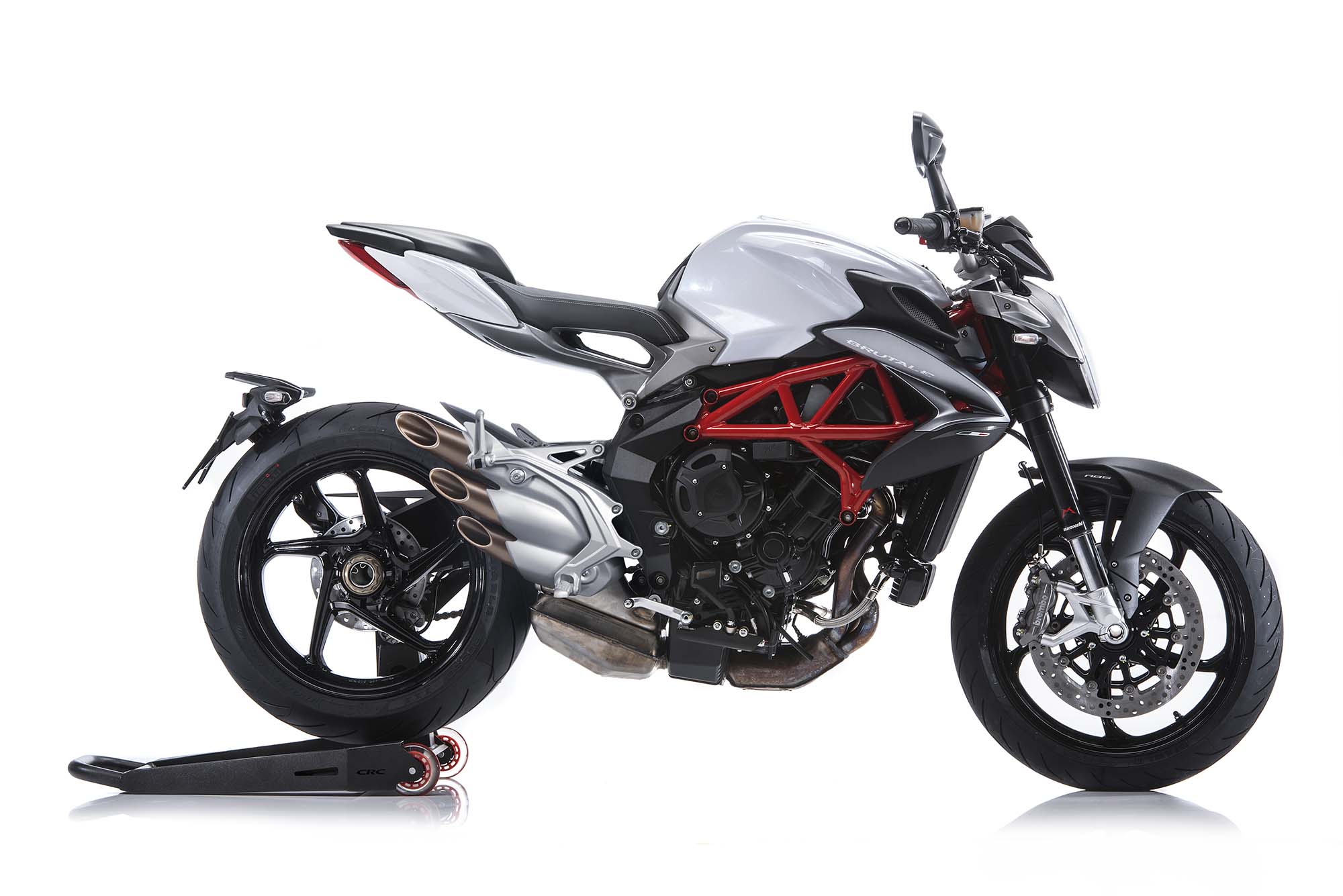
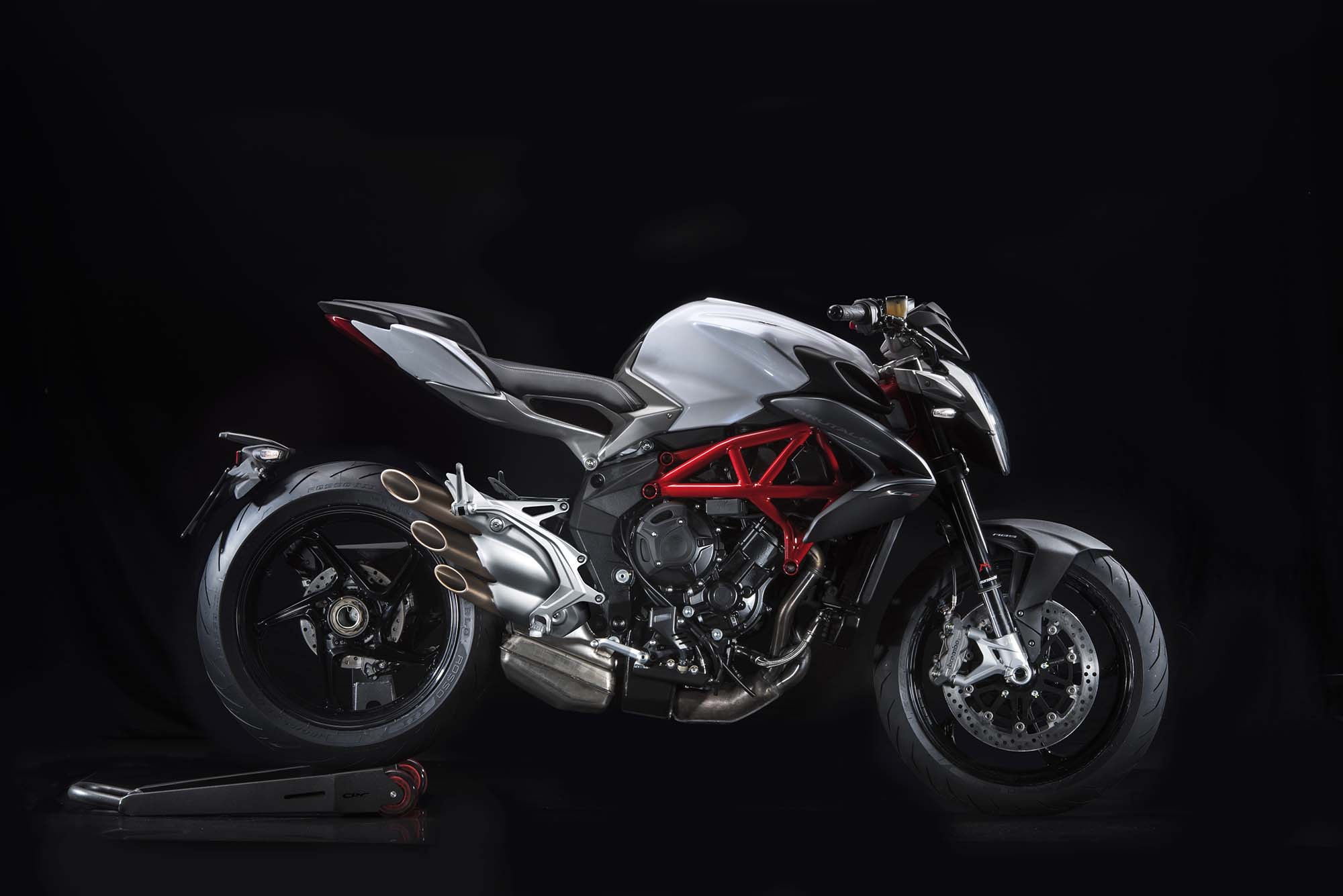
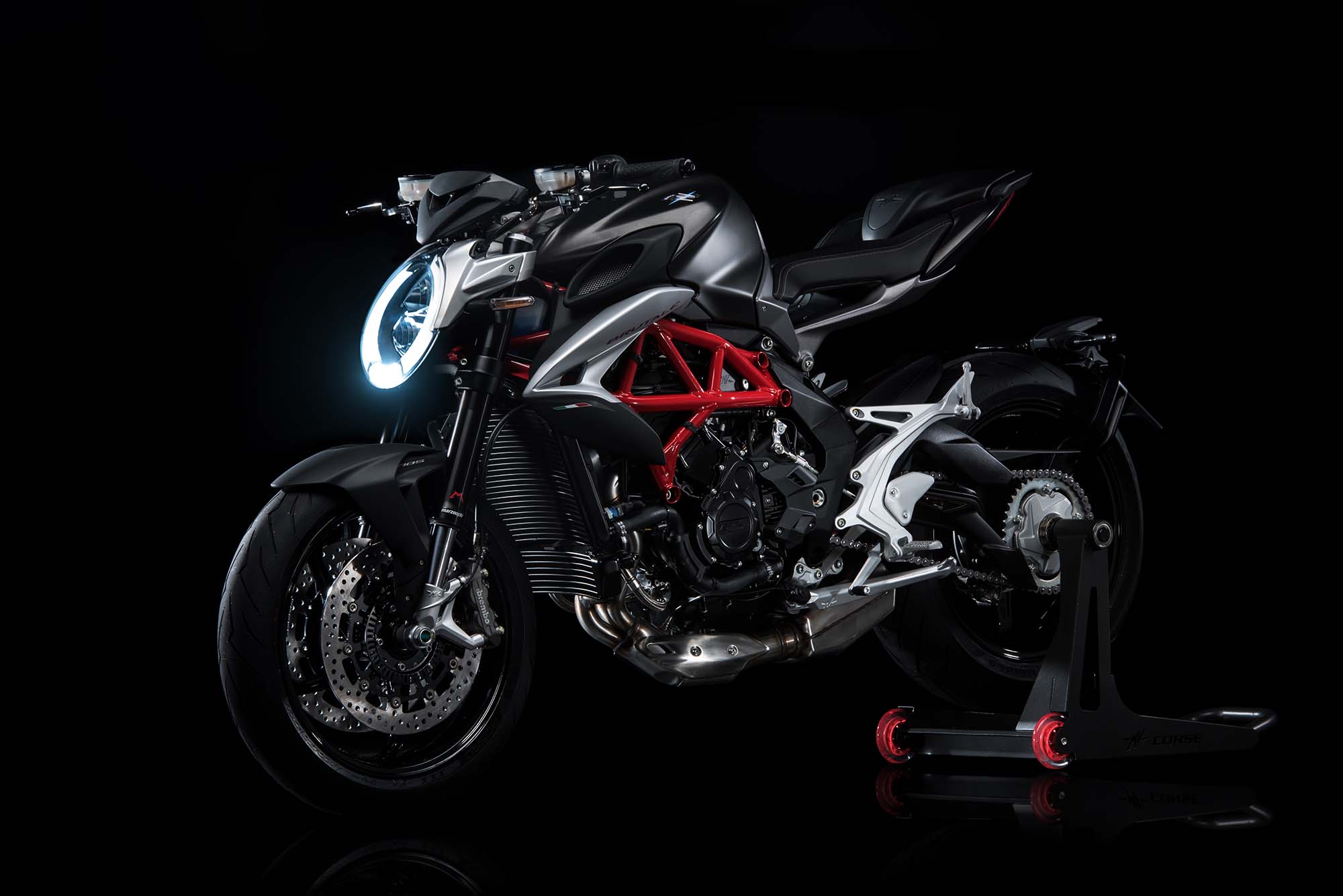
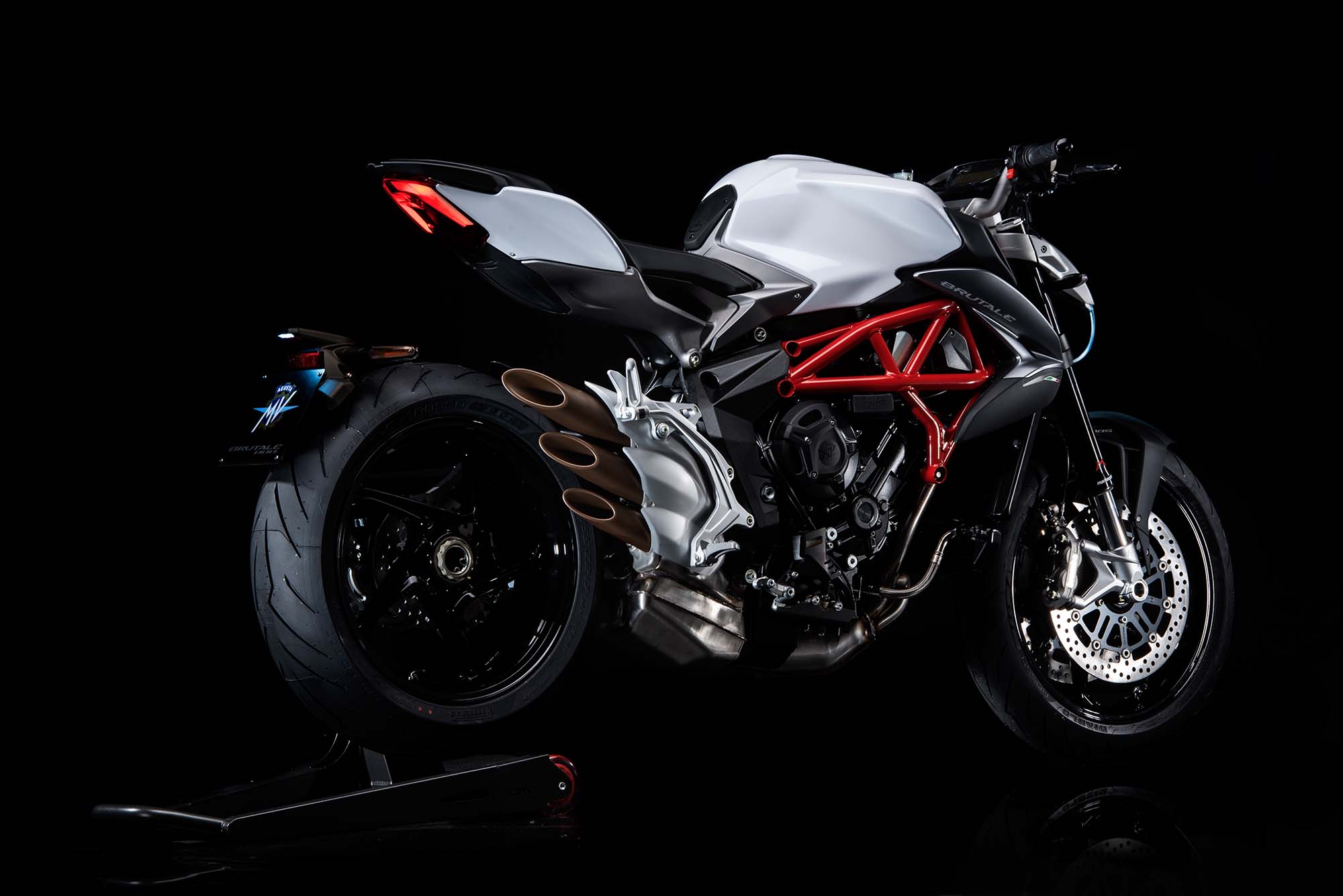
MV Agusta has officially presented the updated MV Agusta Brutale 800 at the recent EICMA 2015 show in Milan, Italy.

Though it was revealed fully in a ‘teaser’ video not too long ago, MV did not release much facts and details surrounding its refreshed naked bike until its official presentation in the show.

2016-MV-Agusta-Brutale-800-09

Firstly, the newly updated and Euro4-compliant engine now churns out 116hp at 11,500rpm whilst peak torque has risen by 25% as well to 82.6Nm at 7,600rpm. Besides that, the Brutale 800’s slipper clutch has been updated with a new hydraulically-operated unit whilst gearshifts are now handled by MV’s electronic quick-shifter that works in both up- and down-shifts.

2016-MV-Agusta-Brutale-800-19

The bike still uses MV’s MVICS electronics package that includes a ride-by-wire throttle and eight setting traction control system.

2016-MV-Agusta-Brutale-800-17

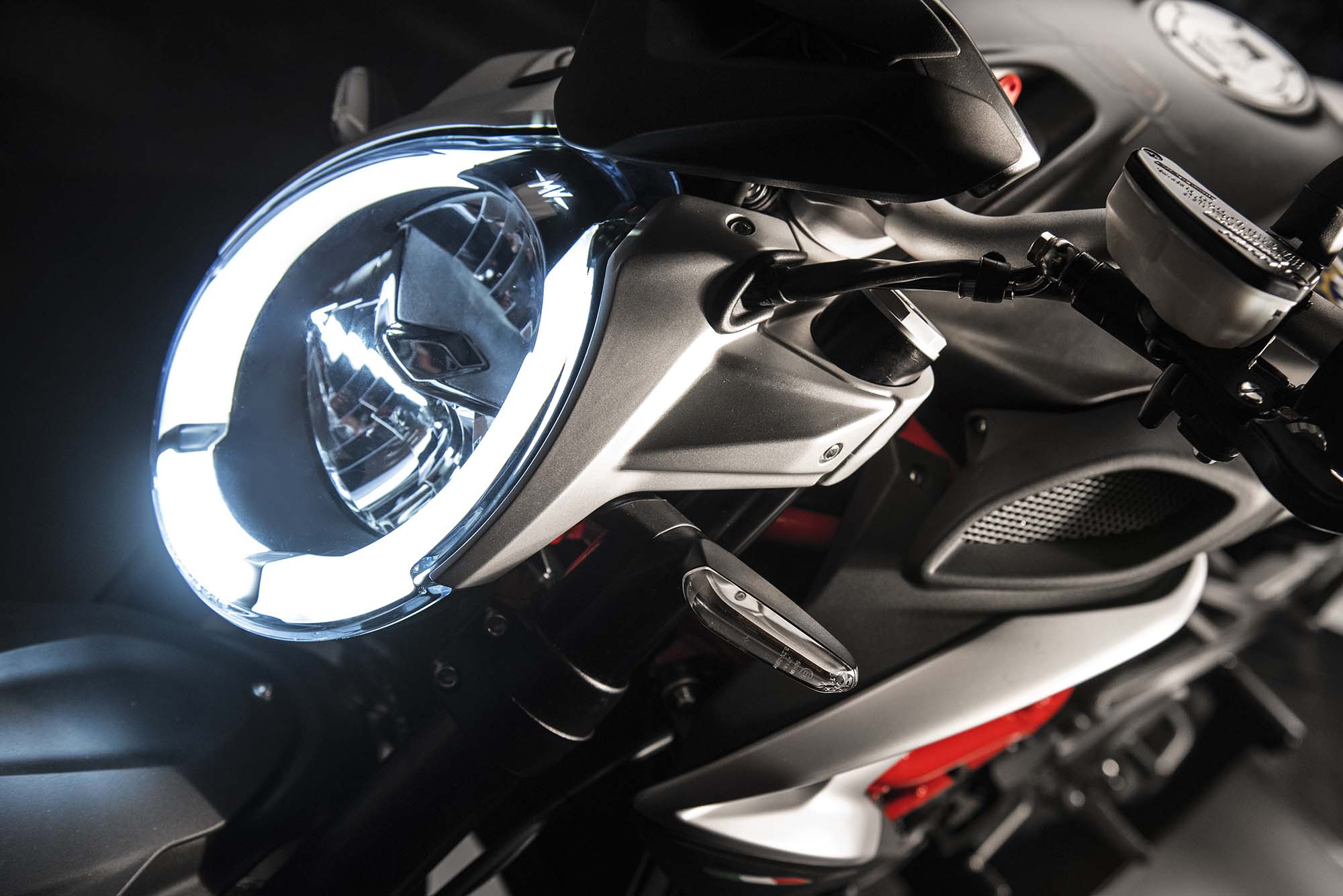
Calling the new Brutale 800 ‘the most beautiful Brutale ever’, MV says it is ‘more muscular and streamlined’ when explaining the naked bike’s lightly refreshed styling. Highlights here include the sculpted tank and seat unit, as well as the restyled plastic panels at the side of the radiator.

2016-MV-Agusta-Brutale-800-12

Check our more photos of the refreshed MV Agusta Brutale 800 in the gallery we’ve prepared below.

2016 MV Agusta Brutale 800

Sources: Asphaltandrubber / Visordown

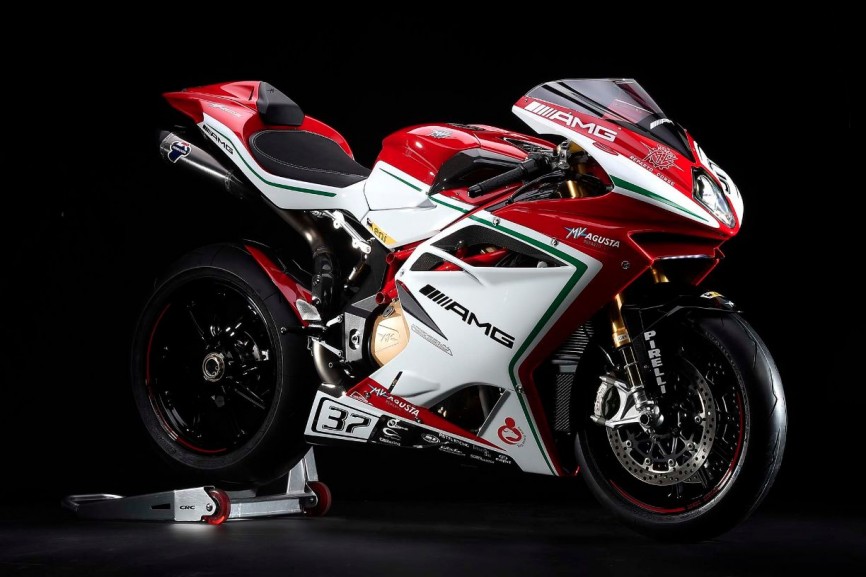
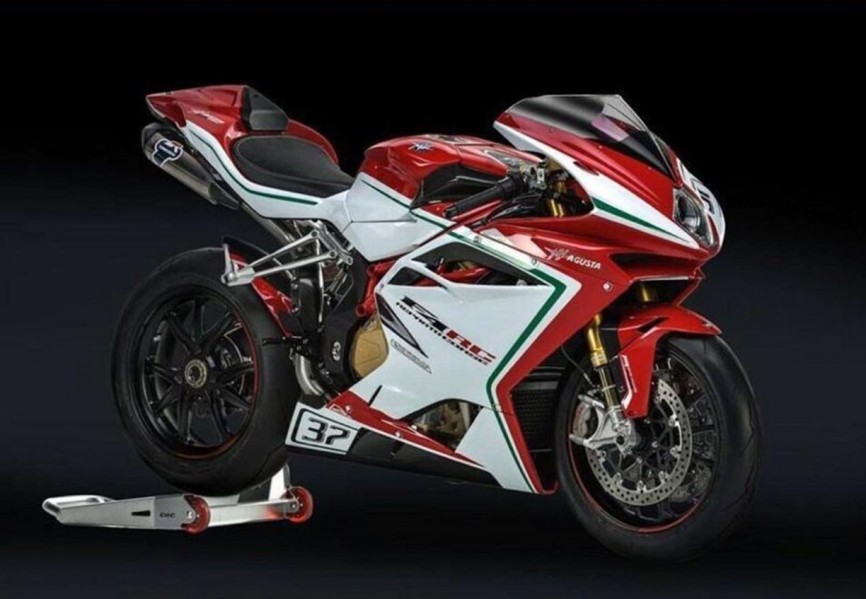
The new and limited 2015 MV Agusta F4 RC homologation special officially and fully revealed.

(more…)

Alleged photos of new and more potent MV Agusta F4 RC surfaces at an online forum.

(more…)

MV-Agusta-F3-800-Ago-Giacomo-Agostini-17

Its been a long time coming, but MV Agusta have finally released the limited edition version of its F3 800 supersports called the F3 800 Ago. (more…)

mv-agusta-brutale-dragster-800-31

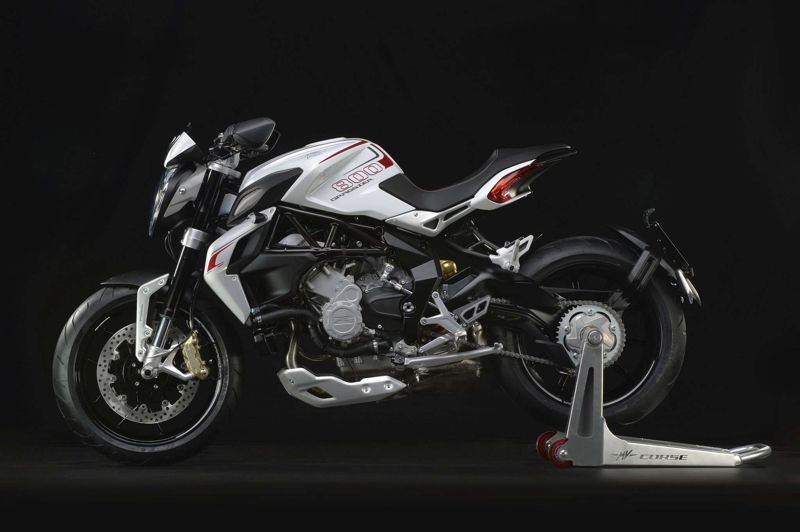
After much teasing and numerous spyshots online this past few weeks, Italian bikesmaker MV Agusta has finally let the cat out of the bag, debuting its new Brutale 800 Dragster model. (more…)

Archive

Follow us on Facebook

Follow us on YouTube