Bikesrepublic

Latest News

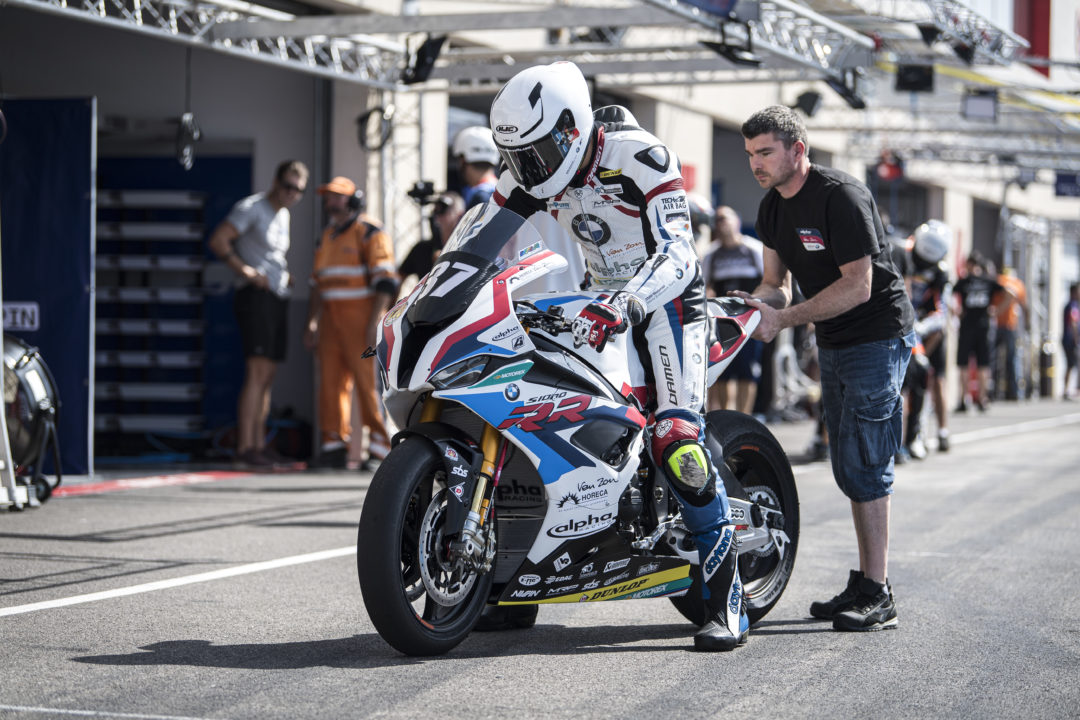
  • We were given access to the BMW Motorrad FIM Endurance World Championship Team’s pit.

  • There we saw the BMW S 1000 RR endurance racer.

  • The 8 Hours of Sepang FEWC race is happening this weekend.

BMW Motorrad announced that the new BMW S 1000 RR will be entered in the FIM Endurance World Championship last year, just prior to the start of the 2019-2020 season.

The decision seemed to have justified itself when the team finished third overall in the season opener at the 24-hour Bol D’or race in France.

We’ve published an article on some of the technical rules for the FEWC, but of course, who wouldn’t want to see the bikes up close? Well, we were given access to the team’s pits and bikes, thanks to BMW Motorrad Malaysia.

Read: 10 Points About the FIM Endurance World Championship and 8 Hours of Sepang

First of all, we were surprised how “open” all the teams were in FEWC. There was no giant separators to hide the insides of the pits, bike parts were in the open, riders walked about nonchalantly without being mobbed.
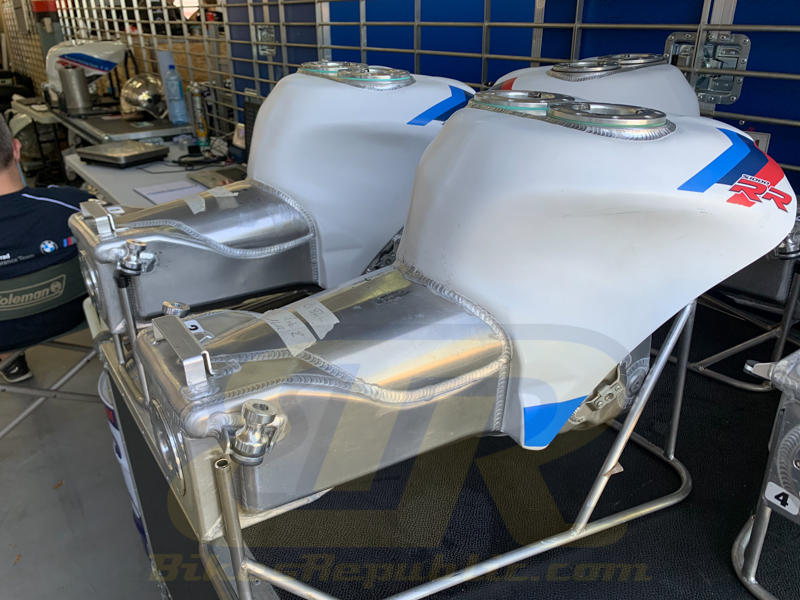
Walking into the BMW pit, there were fuel tanks on top of a transport case. These tanks feature extensions underneath and to the rear. The rear portion is placed under the rider’s seat. A 24-litre capacity is allowed in FEWC so the teams need extra space to store all that fuel.
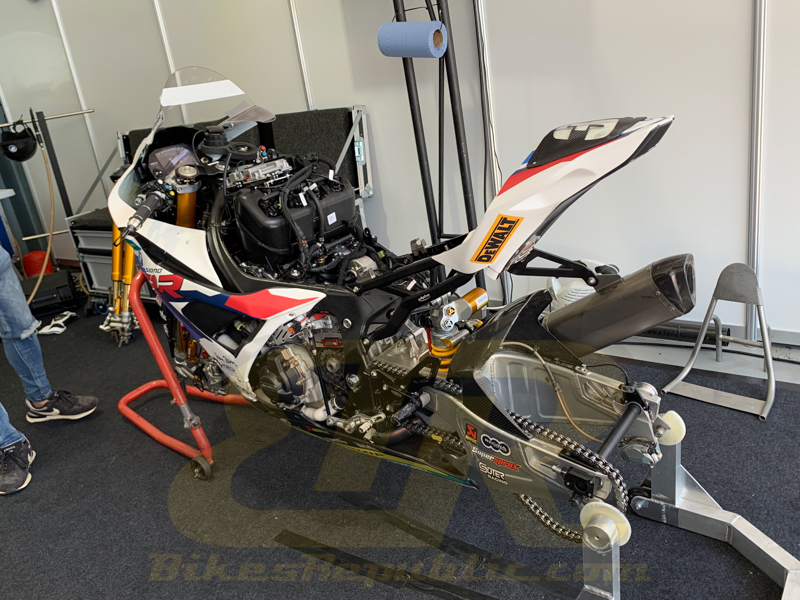
But sitting right there in the middle was a stripped out 2019 BMW S 1000 RR. It was sitting on paddock stands without its wheels, seat cover and fuel tank.
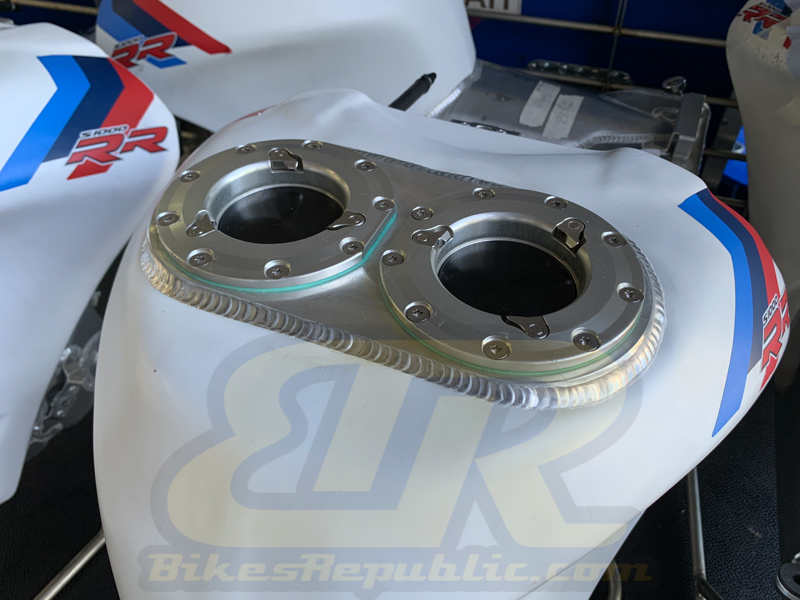
Since refuelling need to be lightning quick, all teams use the dry break refuelling system. There are those with two couplings, the rest are with single couplings. Why two holes? Air from the tank exits through one hole while fuel flows through another. Doing this speeds up  the fueling process.
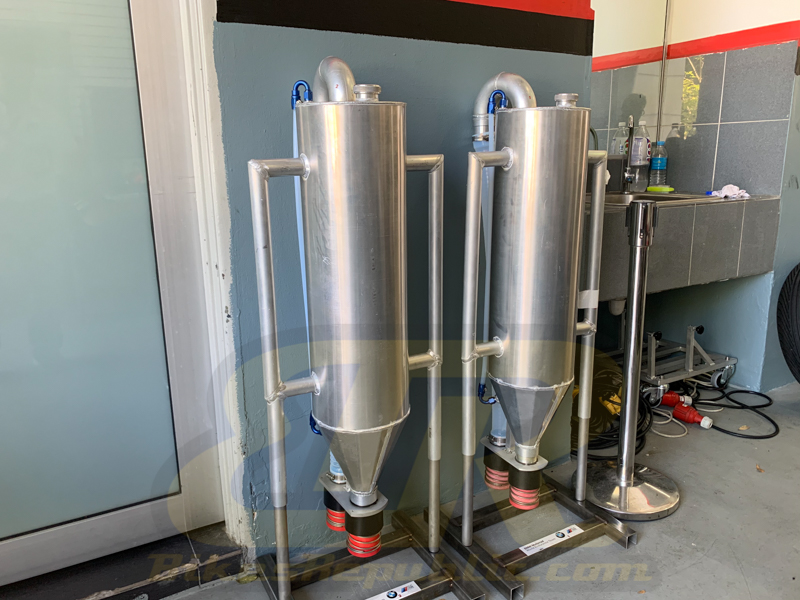
Team manager Werner Daemen greeted us and went on to explain about the bike. (Greeted by a team boss? Never happened in MotoGP.)

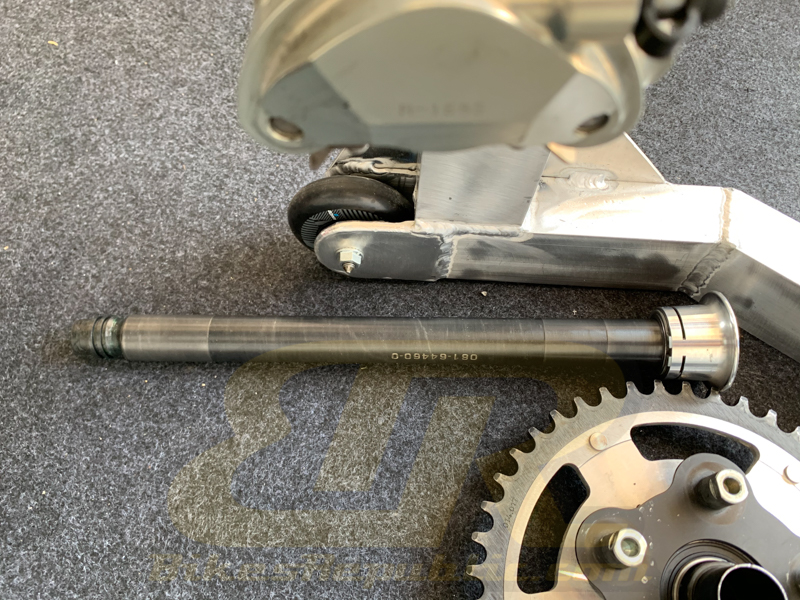
There are pitstops for fuel, tyres and rider change (and also crashes). As such, every attachment on the bike is made for quick release. Both wheel axles/spindles needed only three turns to be extracted. Consequently, tyre swaps take only 3 seconds!
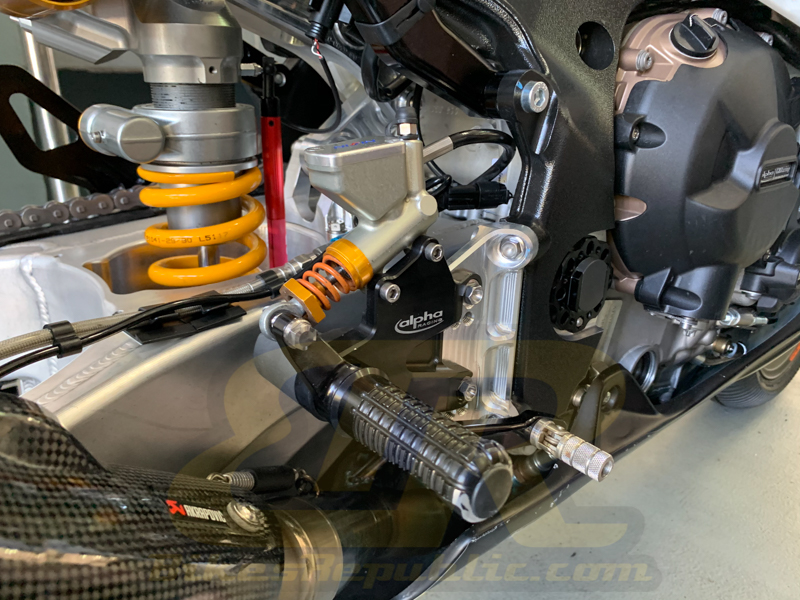
The footrests, foot pedals, clip-ons and levers are also quick release systems. Their cable and hose attachments have quick-release couplings that can be twisted on and off.
Looking at the handlebar, there’s a button which says “START.” Yes, the bike’s starter is in place. That’s because riders will line their bikes on one side of the track, then run over from the opposite side. They then have to start their bikes and get going. This endurance tradition lives one.
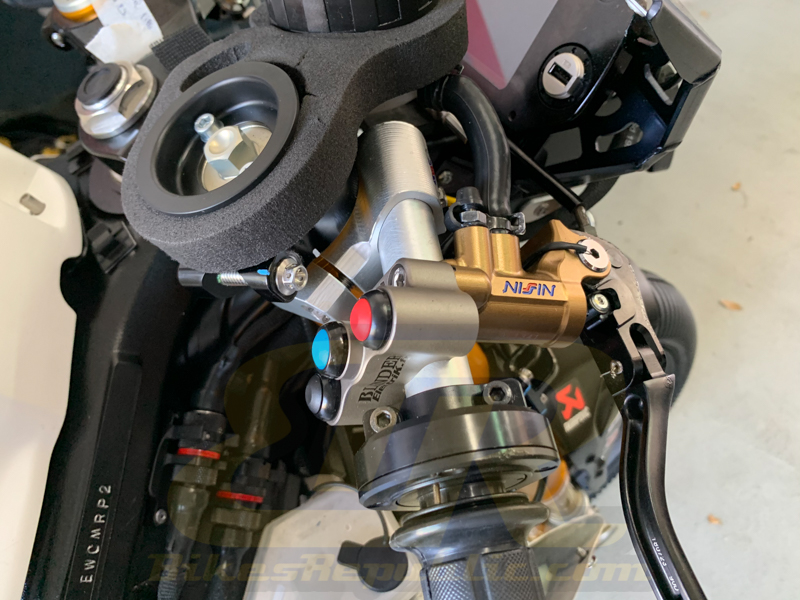
Daemen pointed out the brakes. The team uses Nissin brakes instead of the usual Brembo. We’ll leave the good/bad arguments to the riders but it shows that there’s room for other manufacturers to shine in the FEWC.
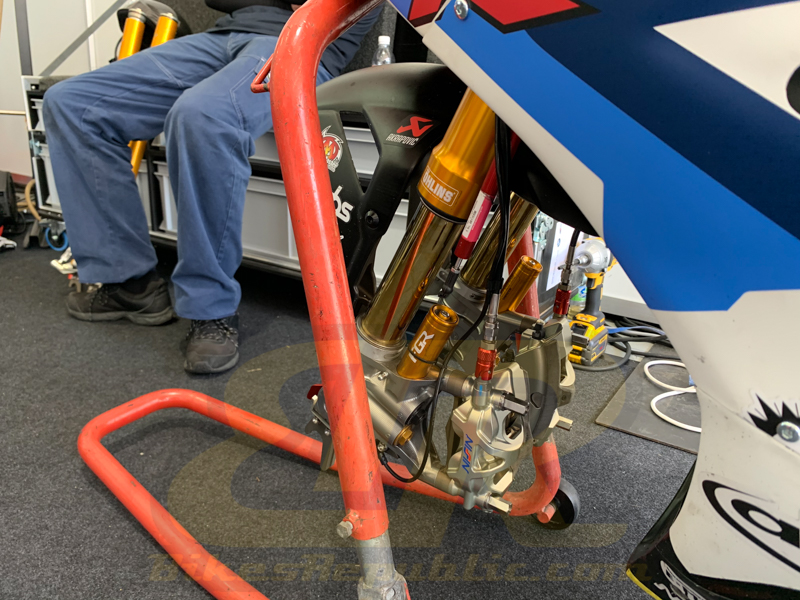
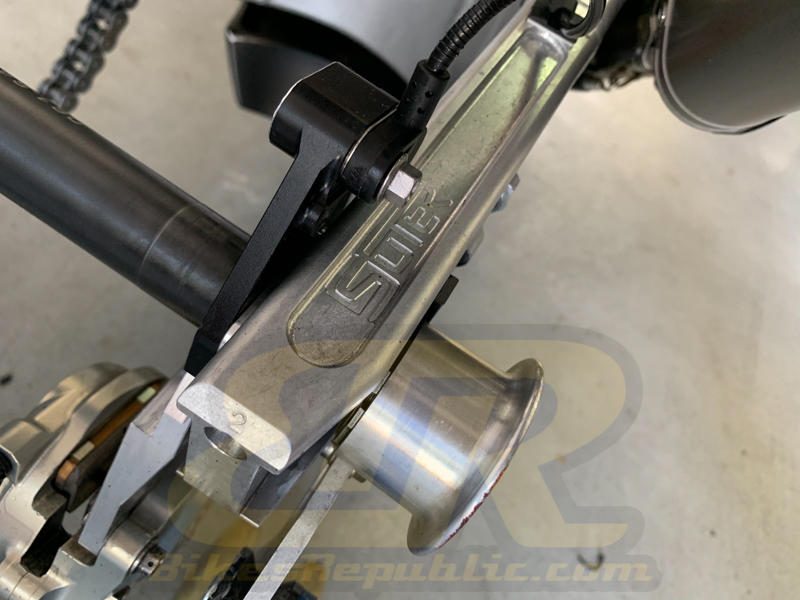
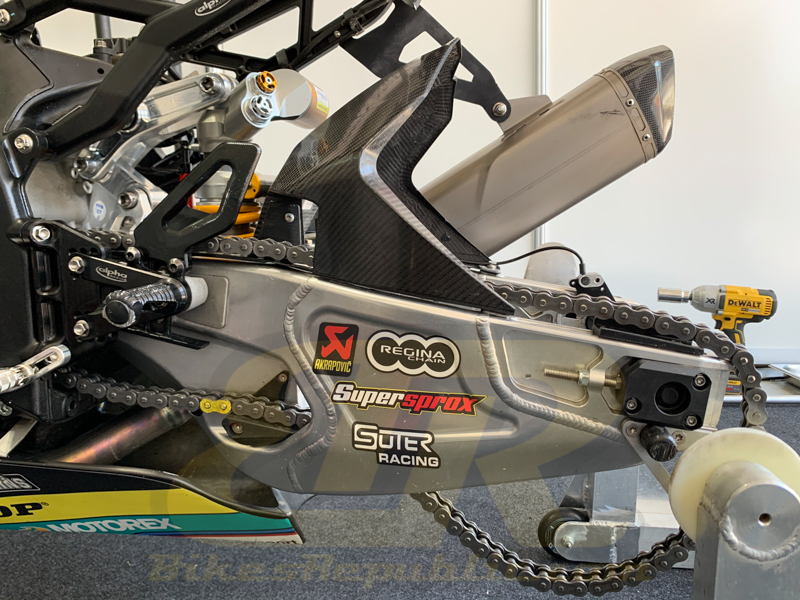
We noticed the gorgeous swingarm. A closer inspection showed that it’s made by Suter, who were once involved in Moto2 racing.
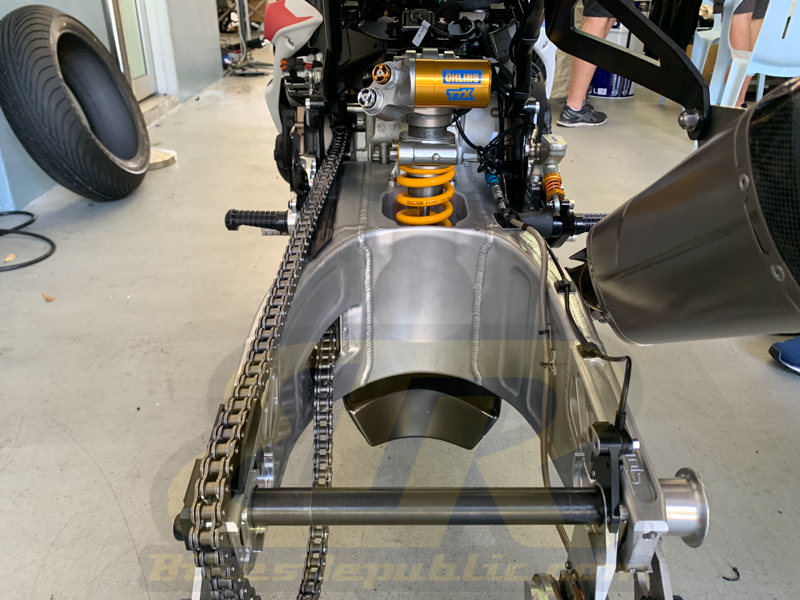
Suter also makes the swingarm for the BMW S 1000 RR HP4 Race, but the swingarms on these race bikes were custom made.
We walked over to the other two bikes. One was crashed yesterday and the rider suffered some shoulder injuries.
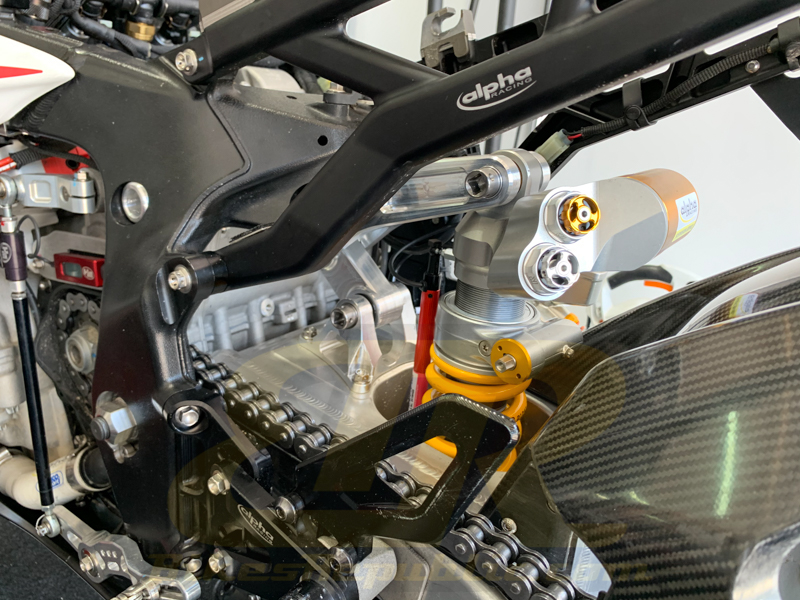
Here, we could look right into the engine compartment. The huge airbox was still attached and the ECU sits atop it. The ECU is available to BMW customers who wish to race in endurance. However, instead of unlocking more of the engine’s power, it’s programmed to provide better fuel efficiency and engine reliability. Endurance racing is about strategy and who can be the fastest on a consistent basis, rather than an all-out horsepower battle like in MotoGP.

The rep explained that the riders love the new BMW S 1000 RR engine as it produces a lot of midrange torque. He says that this is due to the BMW ShiftCam variable valve timing/lift system.

It’s this midrange grunt that propels the bike and rider out of corners, not top-end horsepower. If you look at SIC’s layout, there are only two areas that require high horsepower i.e. the rear and front straights, while the rest are made up of short “chutes” leading into other corners. In fact, the torque helps the bike to build speed much quicker when exiting corners, translating to higher speeds down the straights. Remember our article?
Read: Torque vs. Horsepower: What’s the Difference

It has to be said here that the FEWC is a production-based series. That means the racebike must be essentially be the same as the homologation street bike. It also means that the engine architecture and capacity; frame design and material must be exactly be the same.

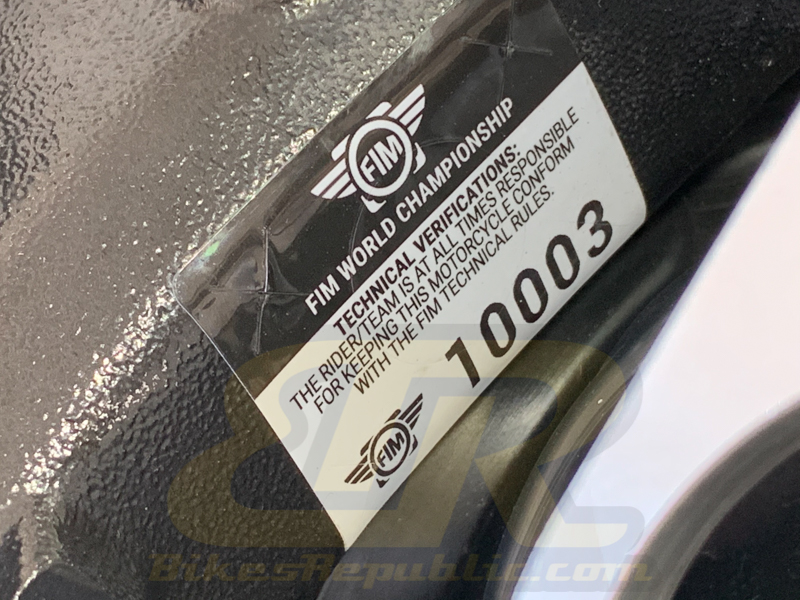
The FIM scrutineered the bikes and stamped the parts such as the frame.
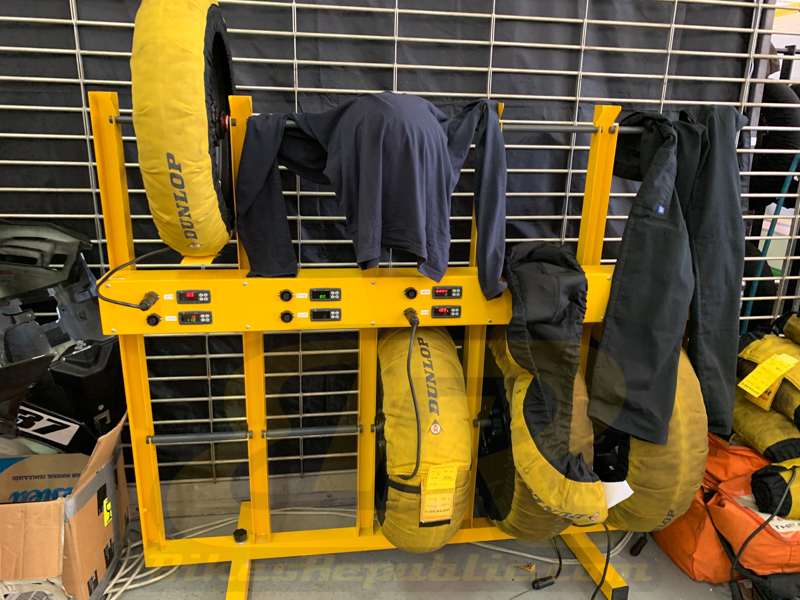
As we mentioned before, the FEWC is where a proper tyre war takes place. This is where Dunlop, Bridgestone and Pirelli duke it out to produce the best tyres in terms of grip and durability.
The overall objective of all these rules is to encourage manufacturers to produce bikes and products that the buying public can benefit from.

The second round of the season is now in Malaysia at the Sepang International Circuit. Called the 8 Hours of Sepang, the race will play the role as the qualifier for the Suzuka 8 Hour season-finale for “part-time” teams. It means that these teams will compete alongside the regular teams of the FEWC.

So do make your way over to the Sepang International Circuit for this grand event. More details on the SIC webpage.
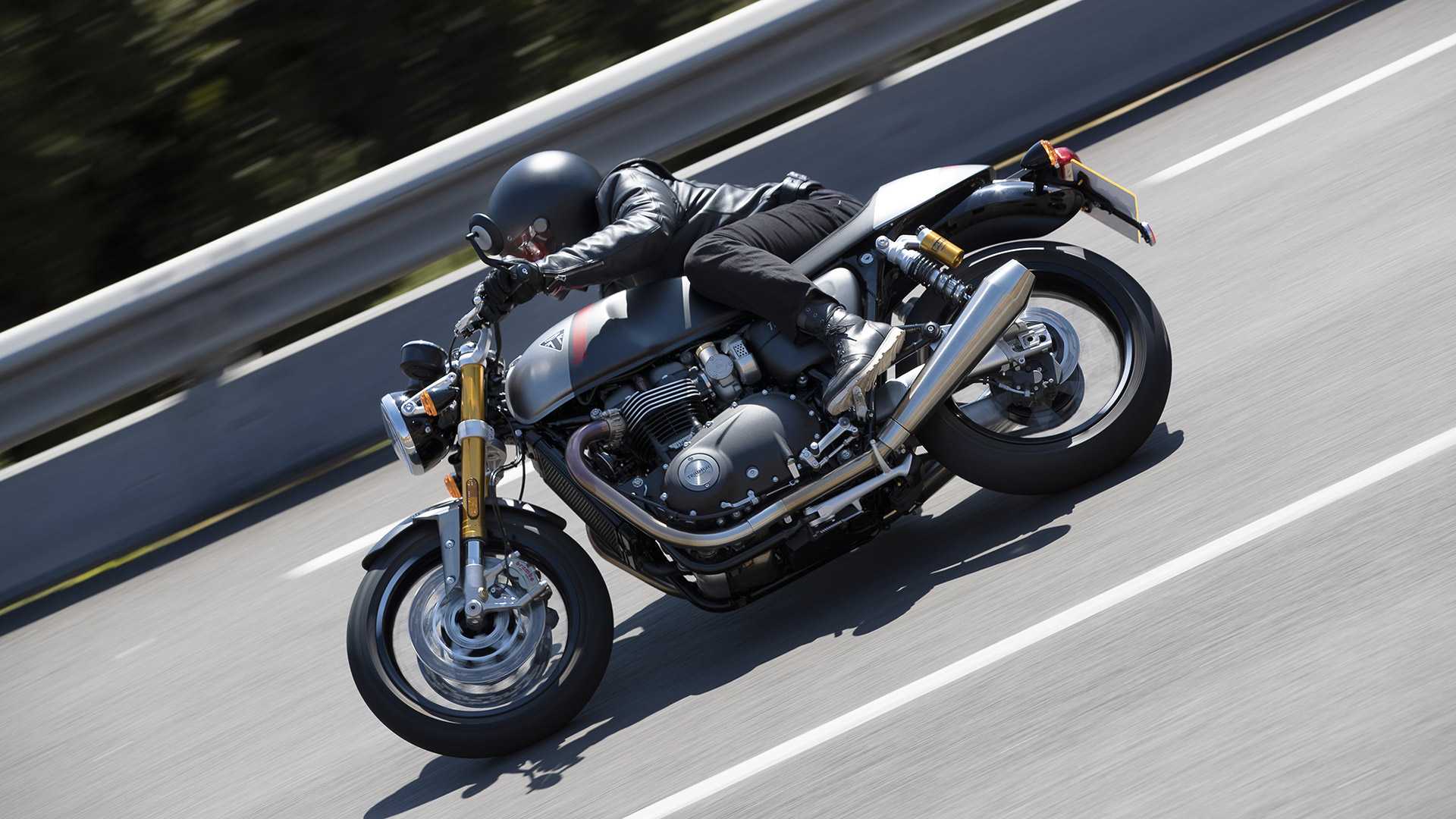
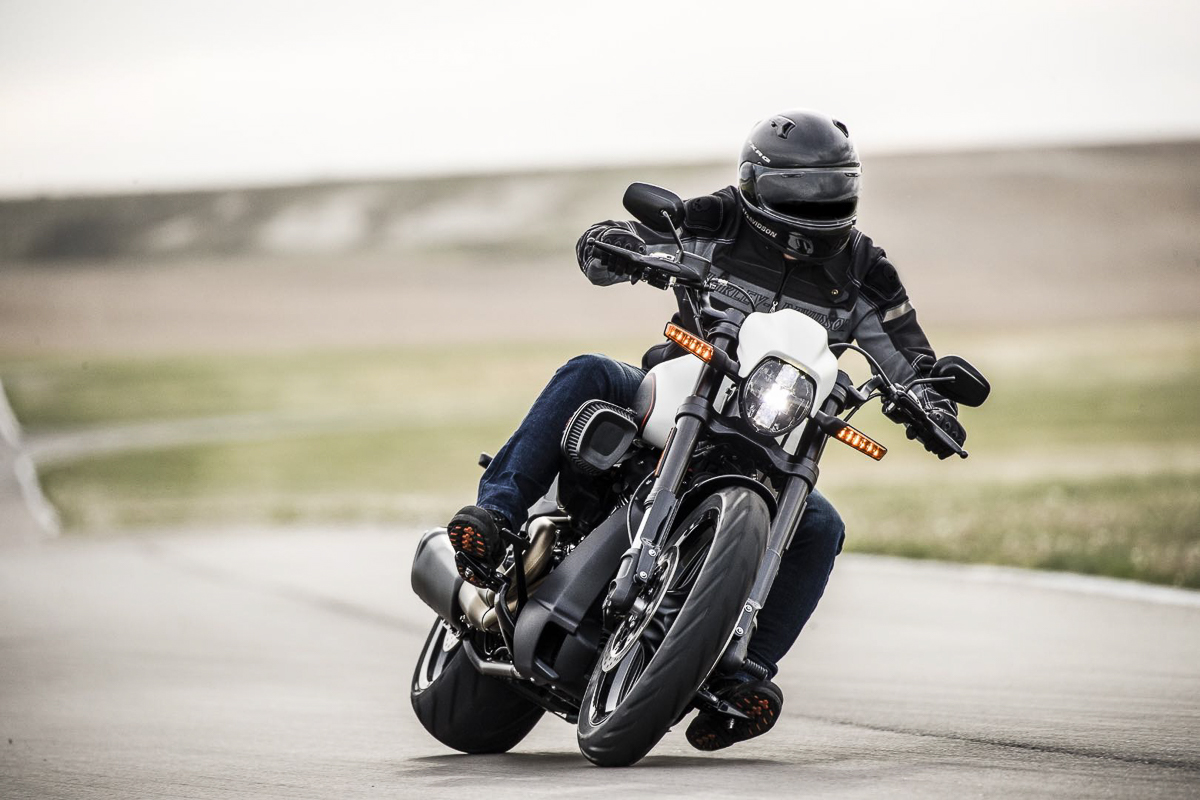
  • Here’s your chance to test ride the latest Harley-Davidson, Moto Guzzi and Triumph motorcycles.

  • It’s happening during the 8 Hours of Sepang weekend.

  • The test rides will be conducted on Saturday and Sunday.

Here’s your chance to test ride the latest Harley-Davidson, Moto Guzzi and Triumph motorcycles, and it’s happening during the 8 Hours of Sepang weekend. You can test ride them on both Saturday and Sunday.

We know and understand that motorcycle test rides are difficult to come by so this is the best opportunity for you.

In fact, you’d experience why Harley-Davidsons are the premier cruisers. Harley is the longest-running motorcycle manufacturer, renowned for building bikes that break conventions, and fully embodying the spirit of individuality.

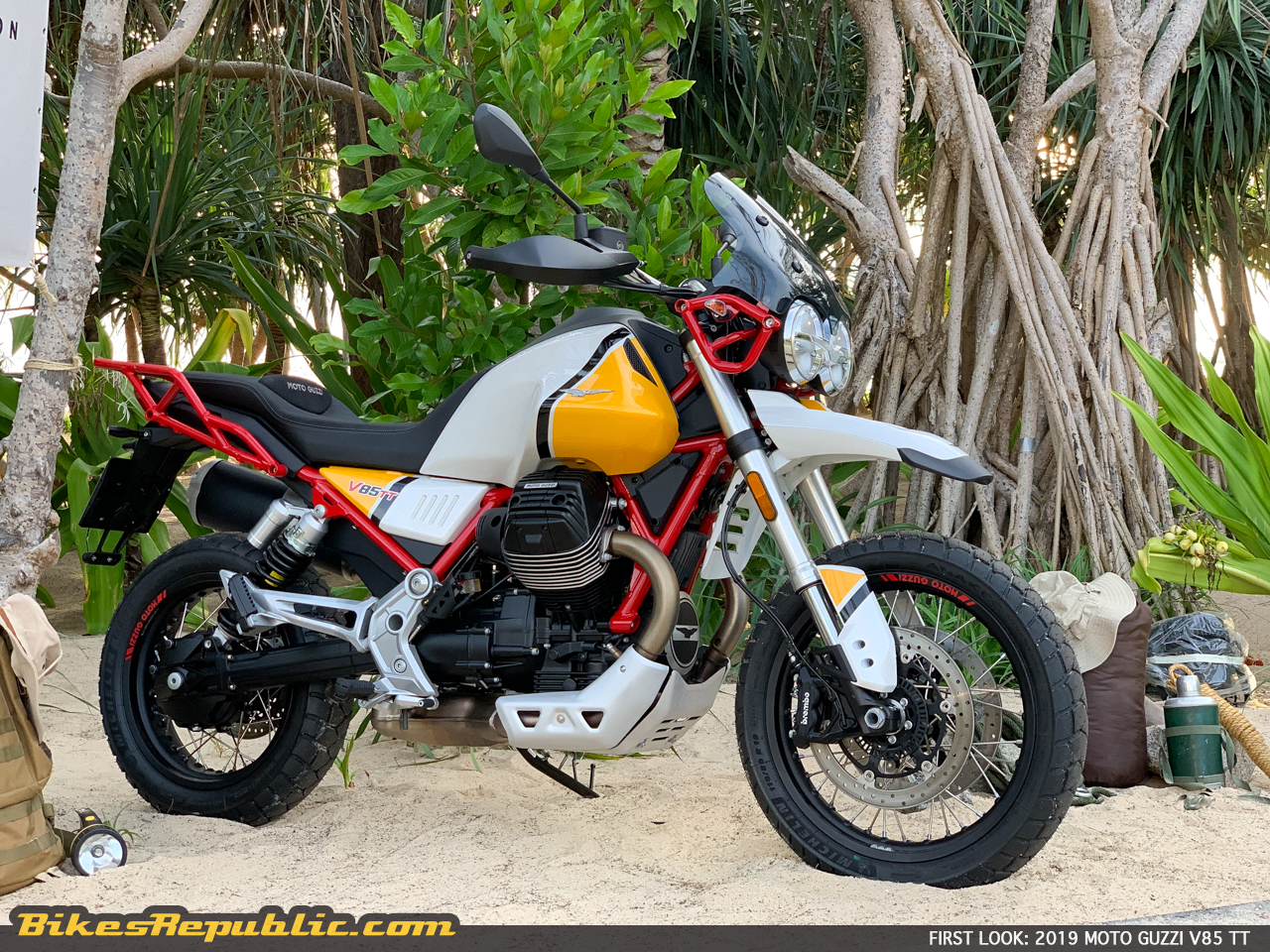
Should Moto Guzzi Malaysia bring along the the new Moto Guzzi V85TT, you’ll see why it’s now one of the best-selling dual-sport motorcycles. It had endeared itself into the hearts of many around the world for its character, accessibility and practicality. Besides that model, the modern classic Guzzis are renowned for their character.

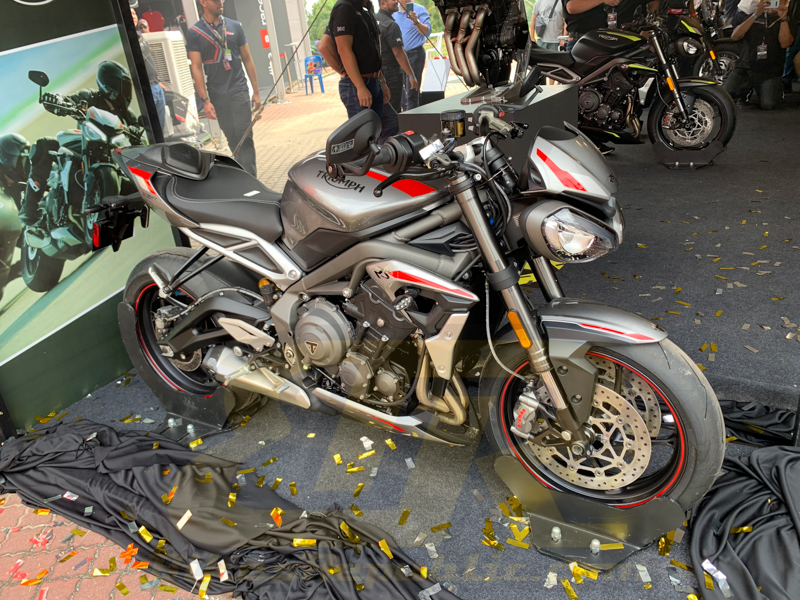
Over at Triumph, you’d find out why the worldwide fans commend the bikes as being supremely rideable, characterful and fun. The Bonneville line-up may look classic, but their engine and handling traits make them a joy to ride. The Street Triple shows how a light, nimble and powerful bike is unadulterated pleasure; while the Tiger 800 set the standard on how dual-sport and adventure bikes should be built.

As we mentioned earlier, the test rides are happening during the 8 Hours of Sepang this weekend.

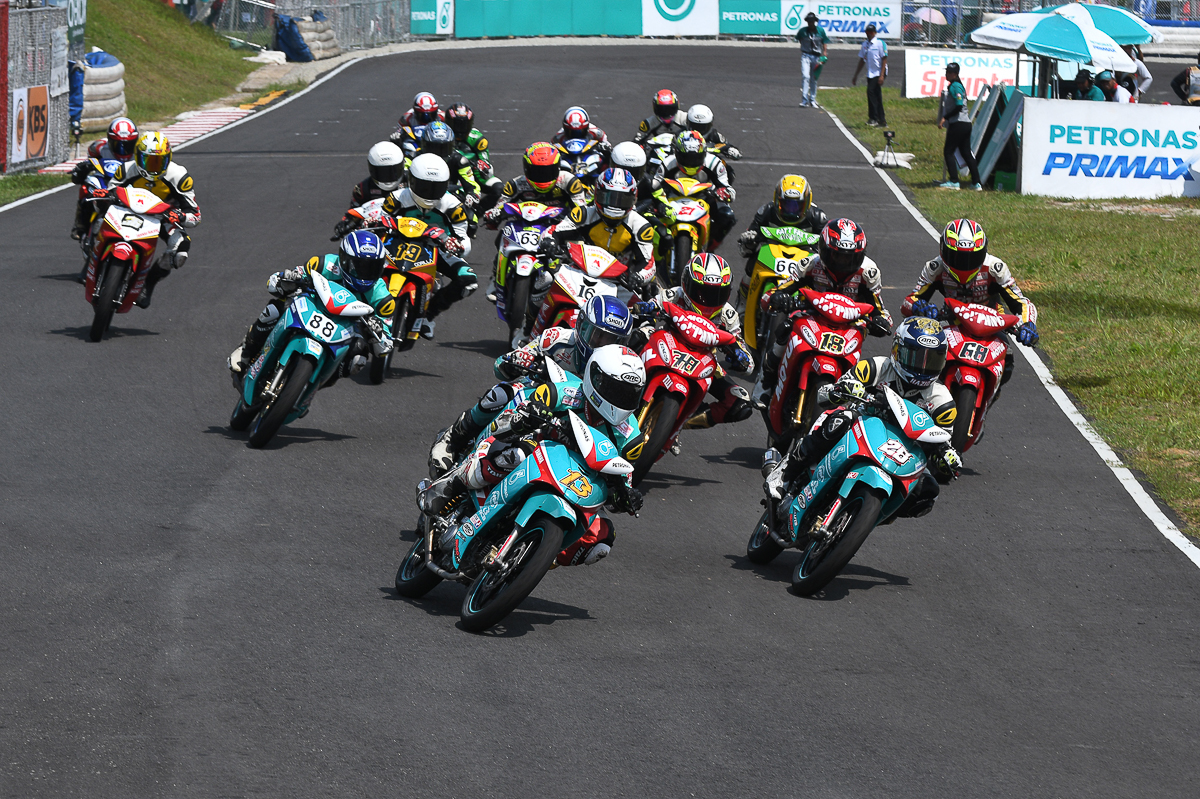
The event is the inaugural installment of the FIM Endurance World Championship to be held in Malaysia. Featuring the world’s top endurance teams and riders, it’ll be one massive race event that all Malaysian motorcycle enthusiasts and the family will enjoy.

Read: 10 Points about the FIM Endurance World Championship (FEWC) and 8 Hours of Sepang

In fact, it gets better than that because it’s a double-header which includes the World Touring Car Races (WTCR).

*Motorcycles available for test rides are subject to weather conditions and may change.
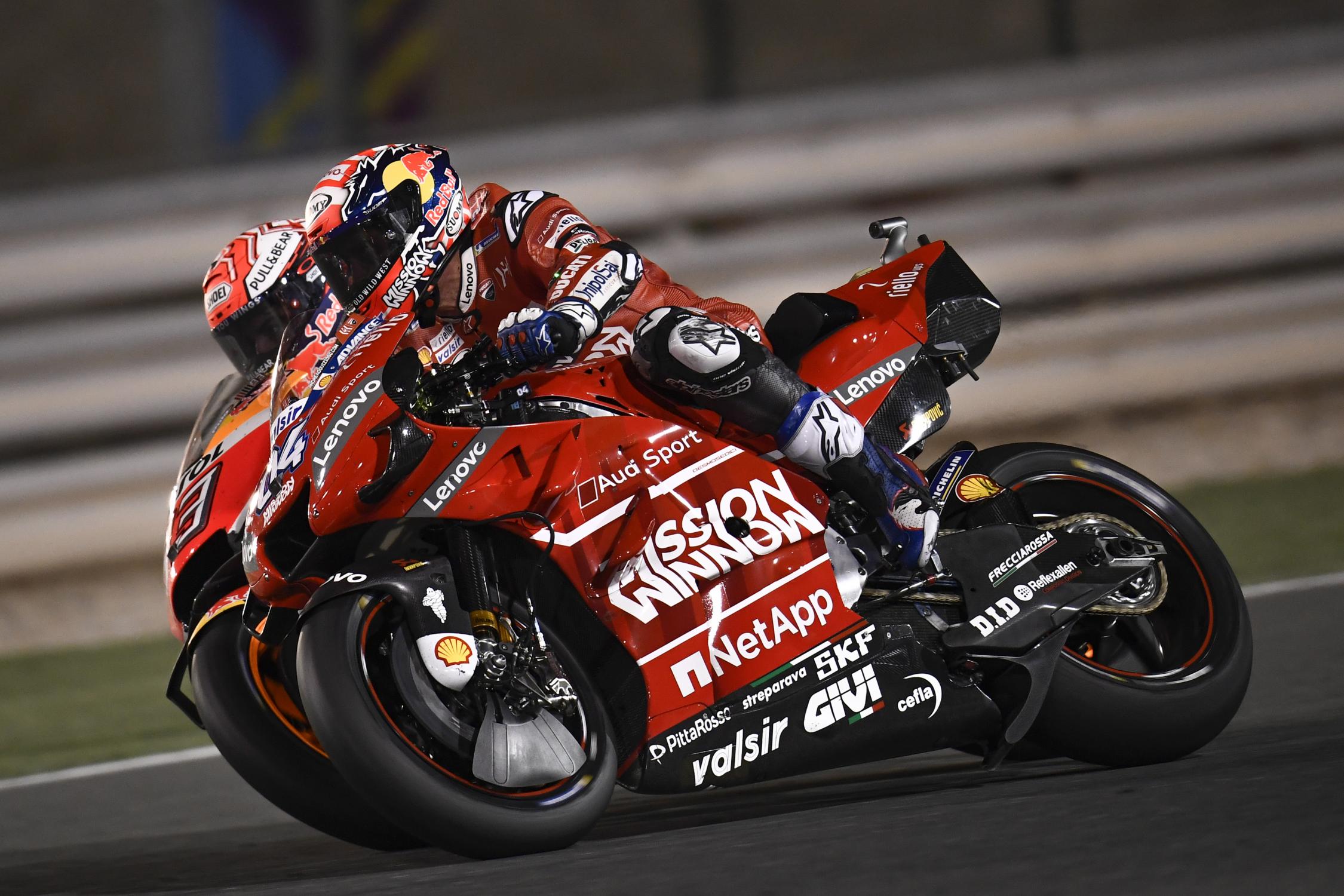
  • Valentino Rossi and Lewis Hamilton completed the long-awaited MotoGP and F1 swap.

  • Rossi drove Hamilton’s Mercedes F1 car, while the latter rode Rossi’s Yamaha YZR-M1.

  • Both spun their respective vehicle.
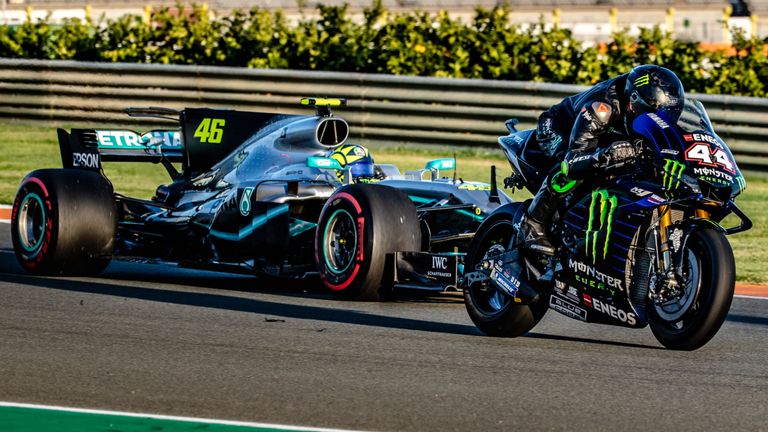
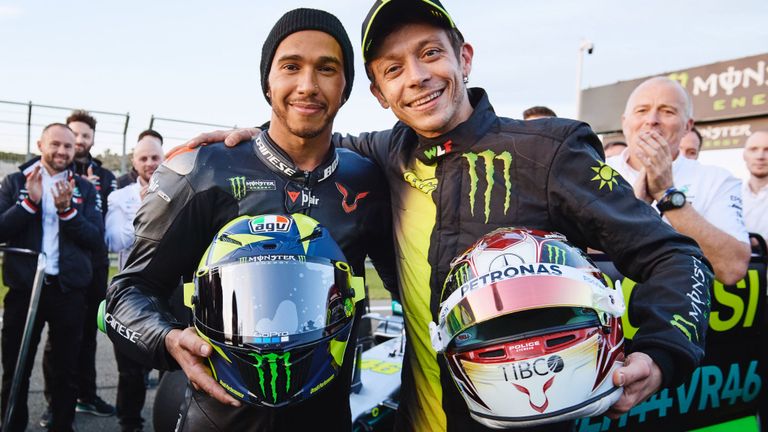
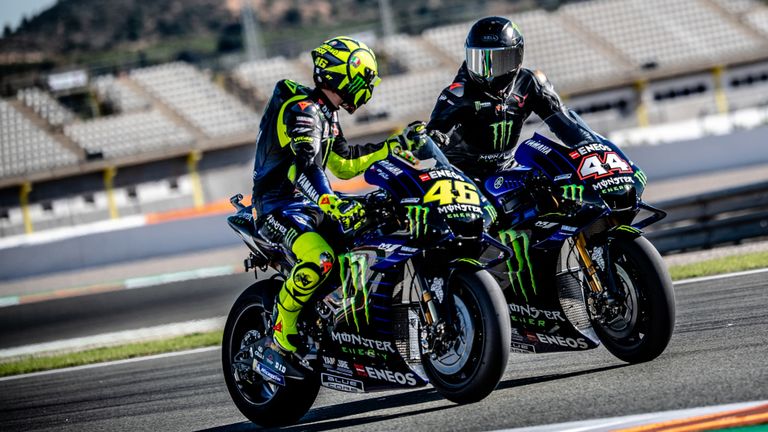
Valentino Rossi and Lewis Hamilton completed the long-awaited MotoGP and F1 swap at the Valencia Circuit in Spain.
Rossi, who is the 9-time world champion on two wheels, swapped his Yamaha YZR-M1 for the PETRONAS Mercedes F1 car. On the other hand, Hamilton is the 6-time world champion on four wheels; swapped over to Rossi’s bike.

Photo credit SkySports.com

“Honestly this has been the best year and this has just topped off,” said Hamilton who captured his sixth F1 drivers’ championship this year.

The question on everyone’s mind was how he felt on the bike. “The bike is so hard to ride. I had one little spin with it but otherwise brought it back in one piece. It was just step by step learning but it’s a very steep learning curve,” explained Hamilton.

Hamilton had tested the PATA Yamaha YZF-R1 WorldSBK superbike previously.

Photo credit SkySports.com

It wasn’t the first time Rossi drove an F1 car, as he did so in a Ferrari in 2006. He so impressed Michael Schumacher that he was offered to be a driver.

As such, he seemed to have an easier time in the car, although he also spun the car.

In the end, Rossi was only 1.5 seconds off Hamilton’s record at the track, while the latter was 4 seconds off Rossi’s lap.

Source and photos: SkySports.com

  • The 2019 Honda CBR650R is the successor to the CBR650F.

  • The new bike is sportier, yet more comfortable.

  • As it stands, it’s the most powerful bike in its class.

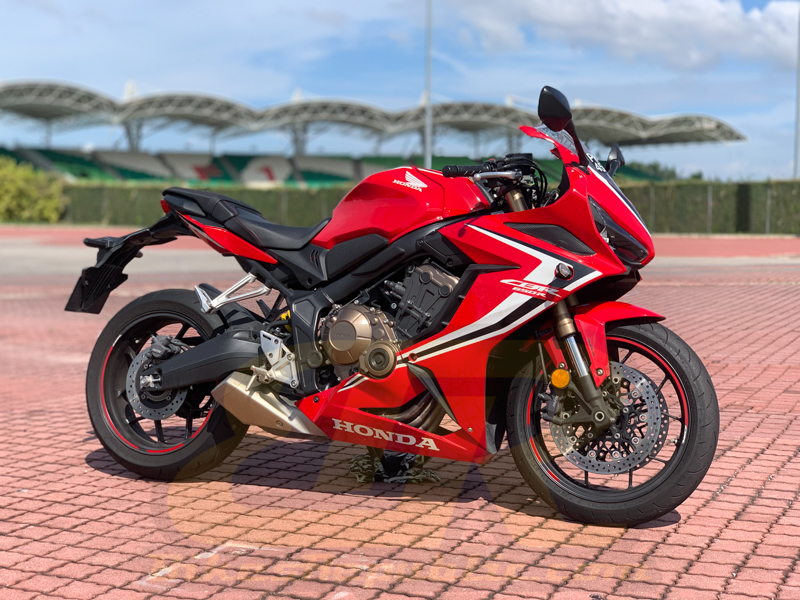
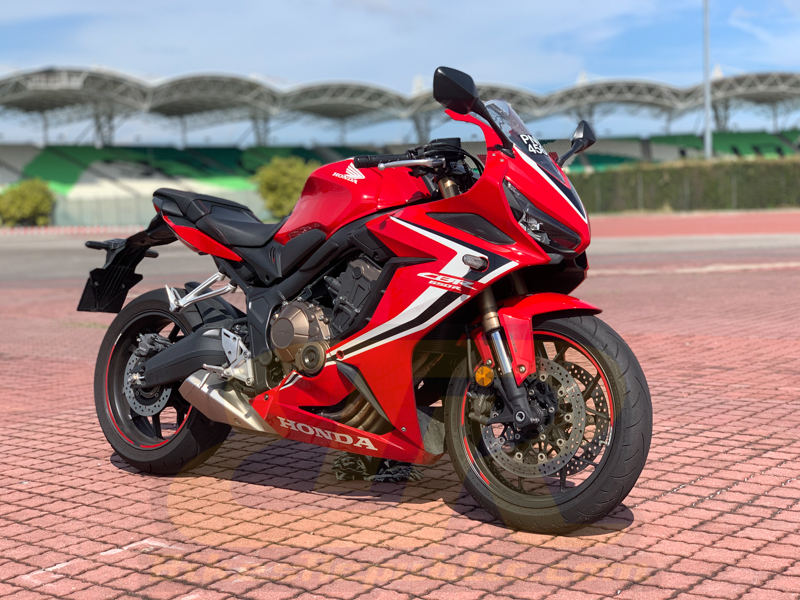
The 2019 Honda CBR650R raised a lot of eyebrows when its concept was shown off at EICMA 2018.

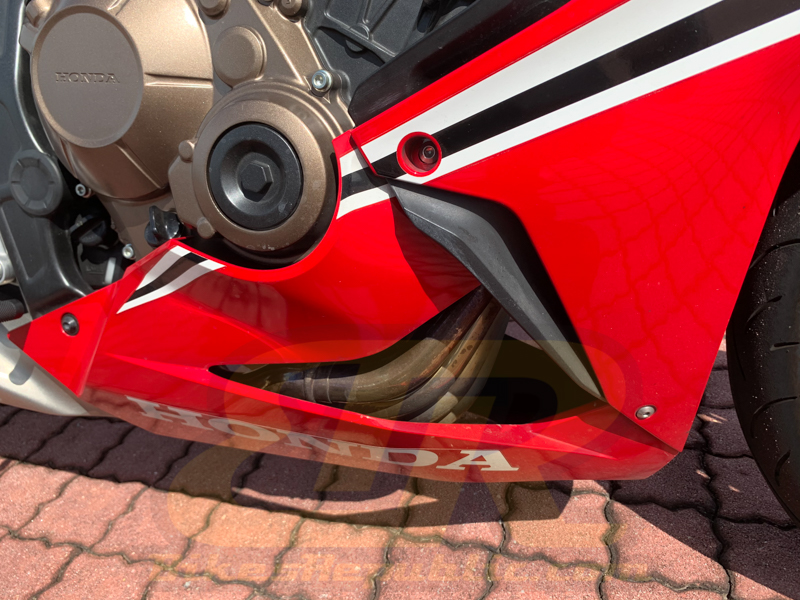
The 2018 Honda CBR650F it replaced was already a good bike, of course, but the 2019 model has something else going for it, namely the 2019 Honda CBR1000RR styling.

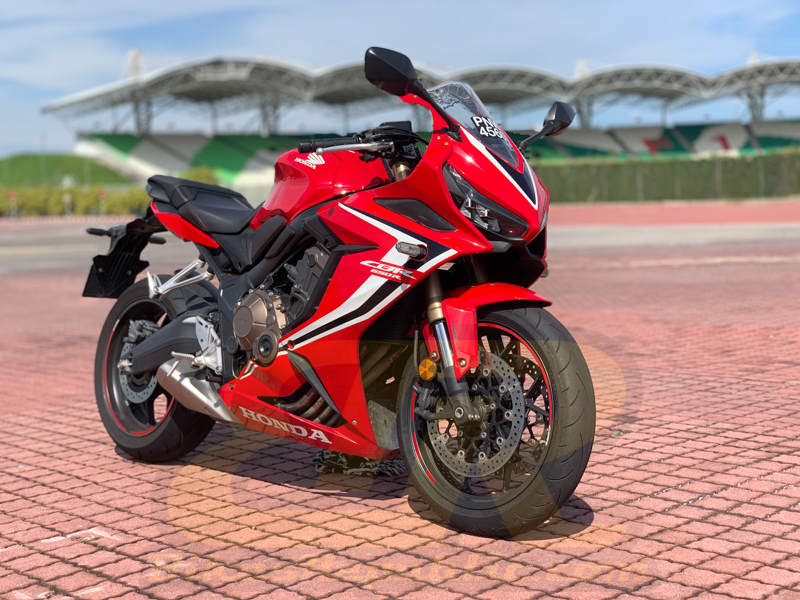
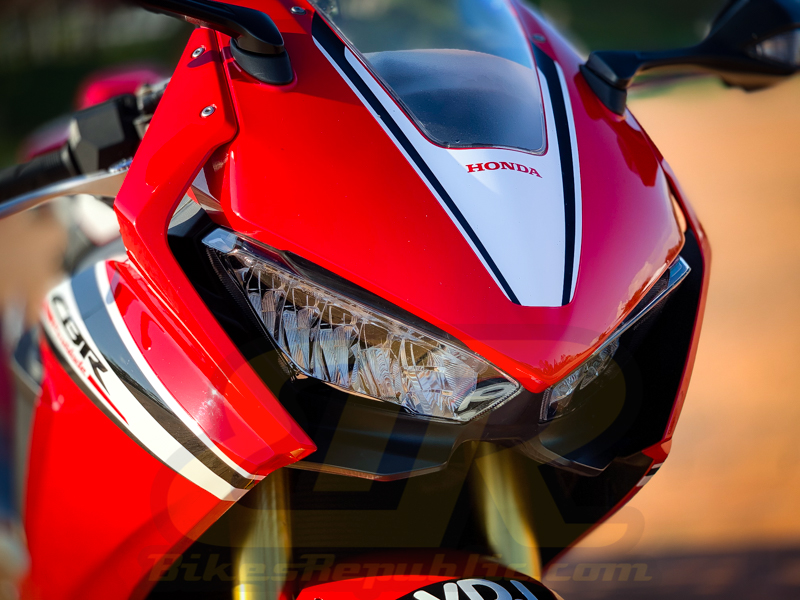
Gone is the “diamond” shaped headlight, replaced by a pair of super-bright LED headlamps and an upper cowl which gives the bike an unmistakable shape. In fact, even we thought we were looking at the 1000cc model when the CBR650R rolled toward us.

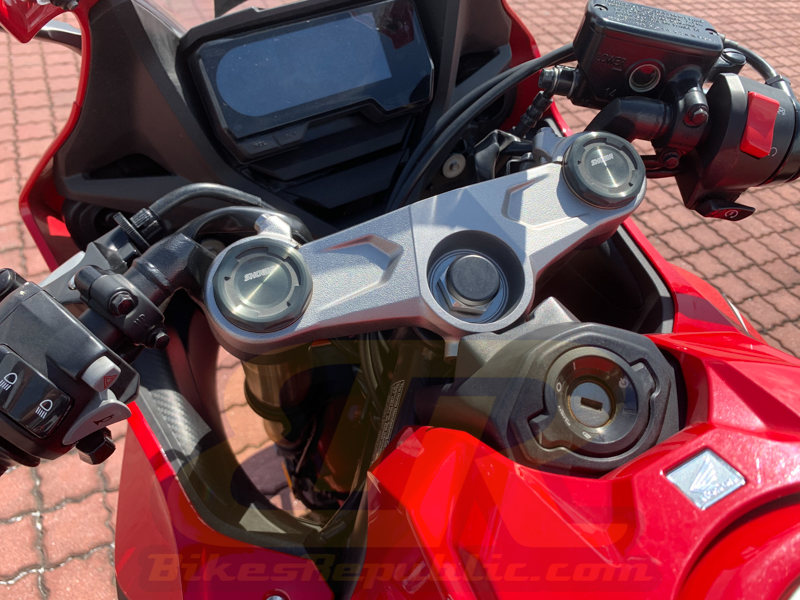
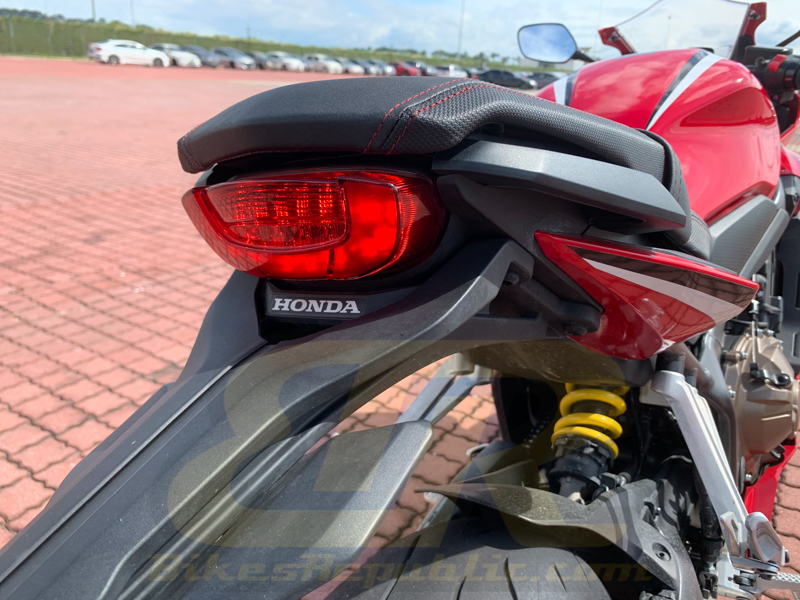
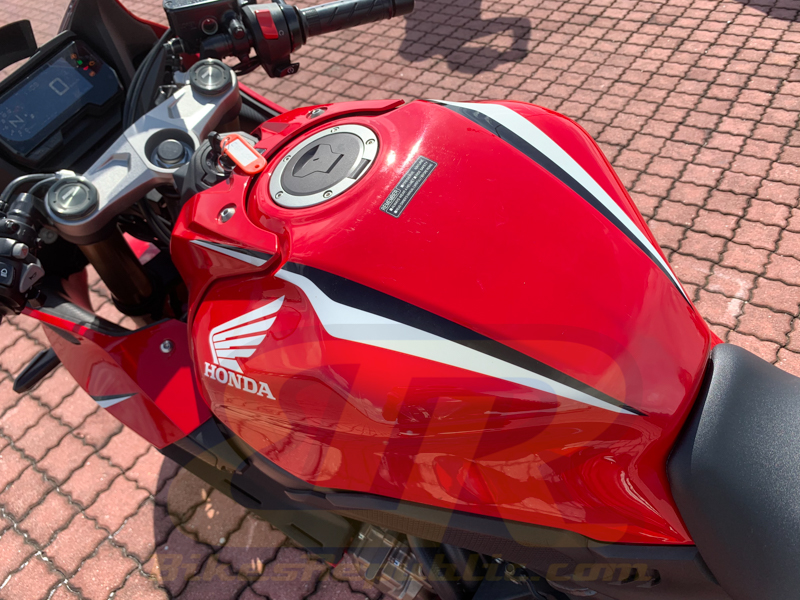
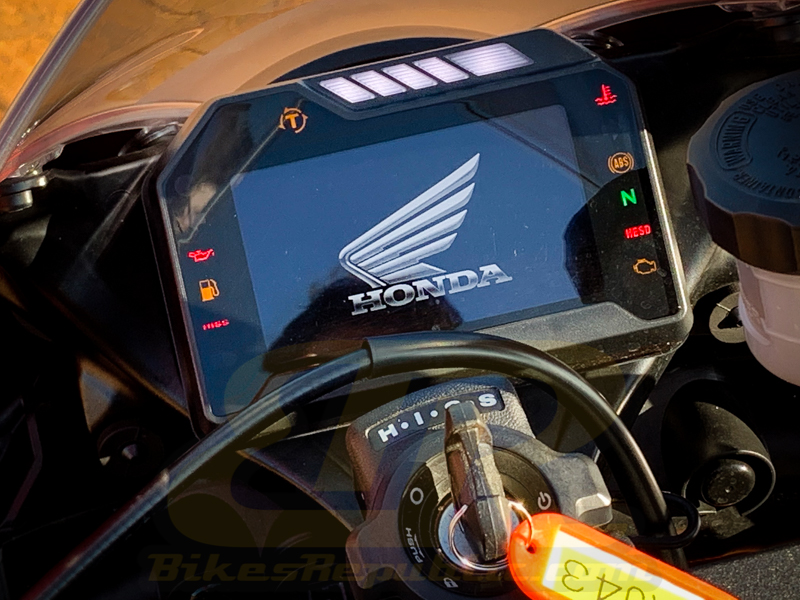
There are a number of updates, as well. The new bike now has upside down Showa Dual Bending Valve (SDBV) forks; revised rear suspension, an LCD screen which resembles the one from the CB1000R, new wheels, seats, taillight. The new bike is also 5 kg lighter than its predecessor.

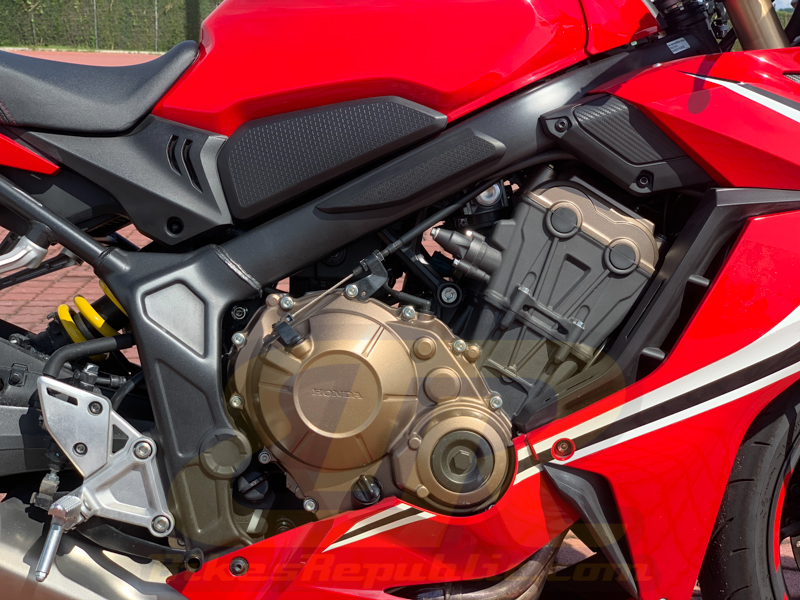
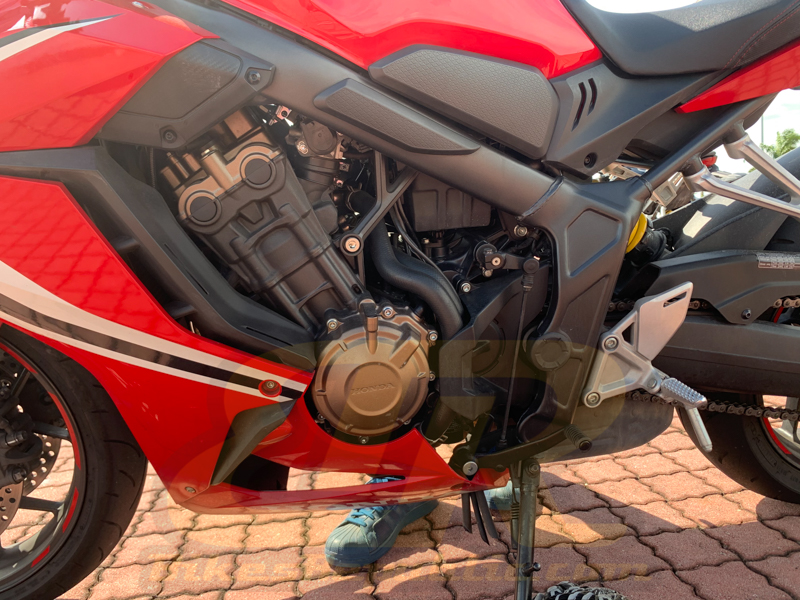
The engine was also reworked. The 650cc, DOHC, inline-Four has a new ECU and higher rev ceiling, among other things, bumping power up to 95 hp from 90 hp.

All that aside, the revised ergonomics was perhaps the best news. Honda moved the clip-ons forward by 30 mm and dropped them slightly. The rider’s footpegs were relocated by 3mm rearward and 6mm higher. Standard seat height was kept at an accessible 810 mm.

The new ergonomics was immediately apparent as soon as we got on. It gave us a riding position that had us “embracing” the bike rather than being perched on it. It felt a whole lot more “normal” than the weird position of the old bike. The old bike placed us low in the seat while the handlebars were somewhere between neither sporty nor comfortable. The new seating position is sportier but gave a more natural reach to the handlebars, so that your palms are not pressed onto them.

The new ECU kicks the engine into life with a deep VROOM. The engine was pretty silent without much mechanical noises, too.

There is traction control albeit a basic type without different modes. ABS is standard.

The clutch needed some getting used to as it engages very near the end of the lever’s travel. Some adjustments later gave the lever plenty of freeplay, instead.

Let out the clutch, add some gas and the bike pulls away hard from idle and all the way through its rev range. The exhaust note starts with a roar rather than a howl. These aspects surprised us as they were the opposites of 600-650cc inline-Four bikes. In fact, the engine felt a whole more like a three-cylinder engine, given its urgent torque. The way it punched forward and that roar and subsequent howl from the exhaust made us think of the CBR1000RR.

The 600cc inline-Fours we tested in the past needed to revved past 5,000 RPM for any meaningful acceleration. It’s this point that 600cc inline-Fours received a bad reputation in other countries as being gutless. That’s why other manufacturers such as Kawasaki and Yamaha went to the two-cylinder format, instead.

Not so the CBR650R. It had plenty of pulling power in its midrange, as well. As such, we found ourselves riding through heavy traffic in fourth or fifth gear, without needing to downshift often. Just crack the throttle open and the bike takes off.

Well done, Honda.

As for the handling, whereas the previous bike’s was “okay” the new bike’s would slay plenty of other bikes when maneuvering and cornering. The revised ergonomics makes the bike feel like a 250cc bike between the legs and arms, letting you chuck the bike around with abandon.

Coupled with its light weight, the bike absolutely flew through corners.

But! That was after we adjusted the rear suspension. Remember, the CBR650R may have a number of “R” but it isn’t an out-and-out sportbike like the CBR600RR. Instead, it’s a daily “sporty bike.” In its standard setting (or that some previous tester had adjusted it), the rear shock’s preload had the rear end of the bike squatting too much. In fact, it looked like the rear part of the belly pan was near the ground.

In this setting, too much weight was shifted to the rear and the handlebars wiggled as we neared maximum lean. Cranking up the preload (by 4 positions on the ramped adjuster collar) of the shifted some weight to the front, allowing the bike to steer much quicker and become more stable at deep lean angles.

Again, being an everyday bike meant that the suspension was a little soft in terms of compression damping. Consequently, it felt harsh when contacting large bumps as there was too much rebound damping, instead.

The lack of compression damping in the forks made them dive like crazy during hard braking, which had the rear of the bike wriggling about. It’s exciting if you’re bred on MX or supermoto, but scary if you’re a new rider.

It may not be a big deal for prospective owners, but it needs to be reworked by a suspension specialist if you intend to ride it at the track. (This writer is considering to buy one for track use.)

One last note before we end this review. That engine is super frugal on petrol! 12 litres of RON 95 usually returned around 250 km despite our hamfisted riding i.e. hard acceleration and high running speeds (140 to 170 km/h) on a consistent basis.

Conclusion

The 2019 Honda CBR650R is as good as it gets for a bike of this category and price point. Don’t compare it to the supersports bikes like the Kawasaki ZX-6R or Yamaha YZF-R6, or the upcoming Aprilia RS 660 as those are pure sportbikes. The CBR650R is an everyday bike, on the other hand.

As per the RM 45,000 sub-700cc category, it’s the best handling and powerful bike. It’s worth the money, hence why we call it the Baby Fireblade.

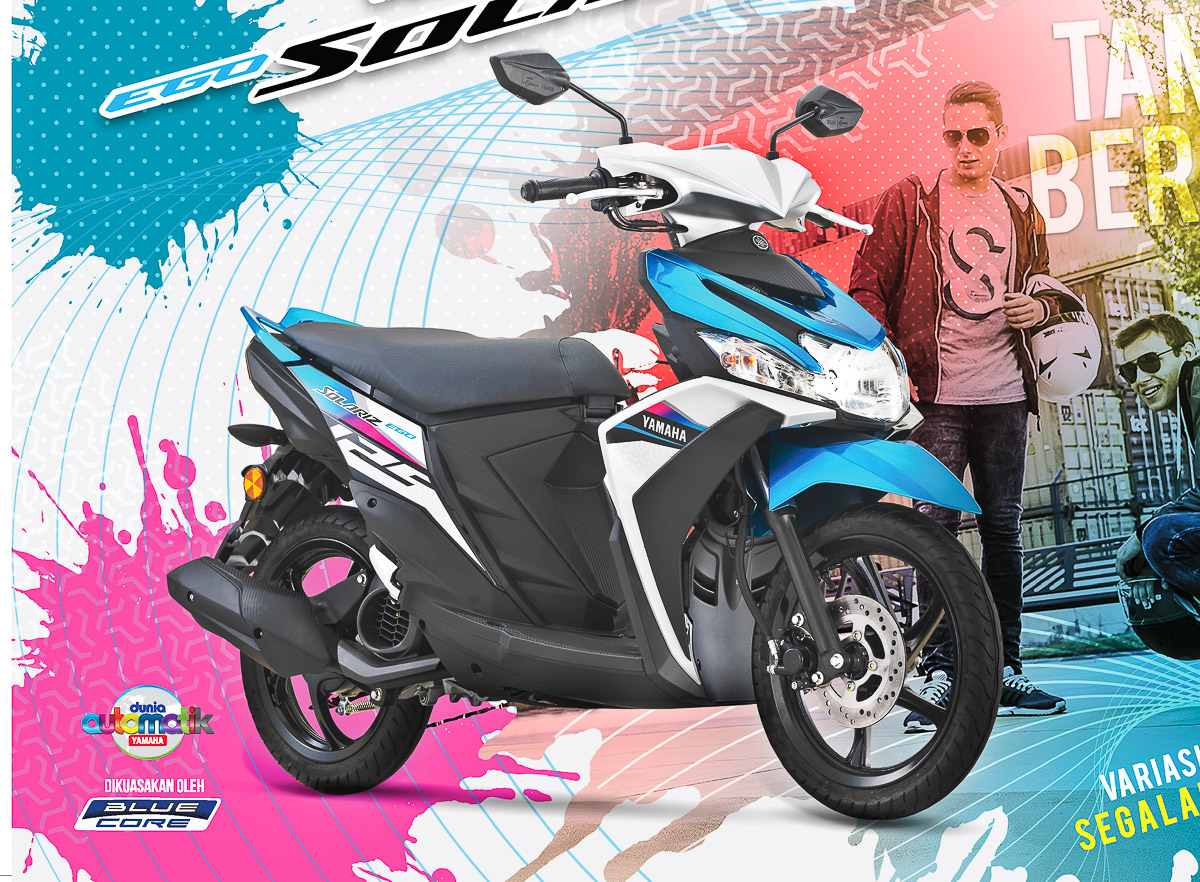
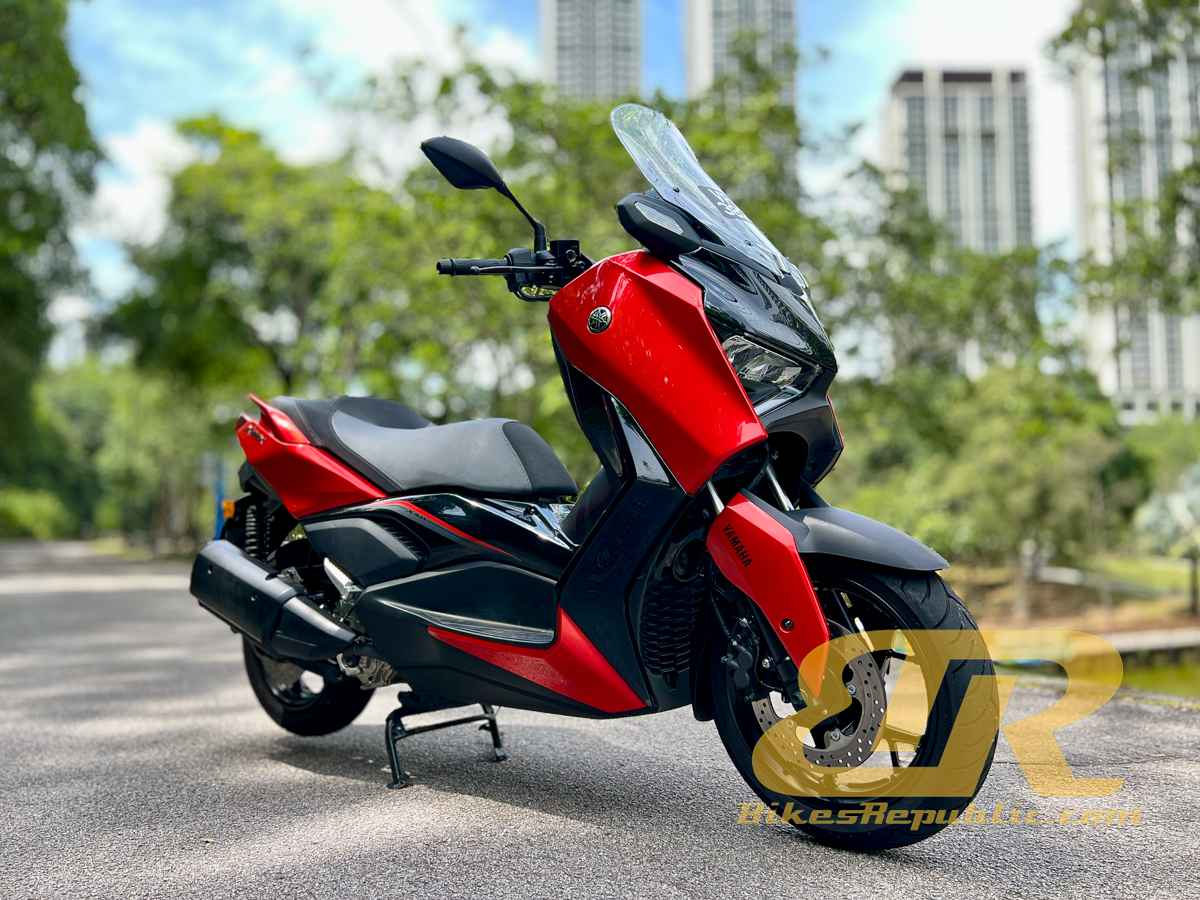
Hong Leong Yamaha Motor (HLYM) has announced that their 2019 Yamaha Ego Solariz will now be available in four new exciting colours. These new colour options are Red, Blue, Cyan, and Gold. Those who are looking for their very first scooter to roll around right after getting your license can consider the Ego Solariz for its styling as well as rider-friendly qualities. (more…)

  • The 2019 Honda CBR1000RR Fireblade is designed to be the everyday superbike.

  • It’s easy to ride and live with on a daily basis.

  • It’s fast and far from being slow.

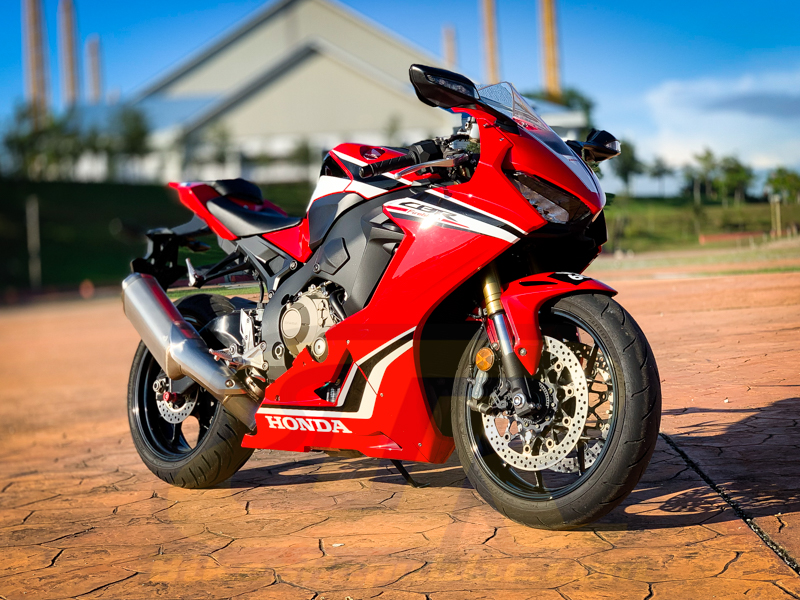
It may be that Honda has shown off the 2020 Honda CBR1000RR-R Fireblade, but there’s still lots of significance to the 2019 Honda CBR1000RR Fireblade.

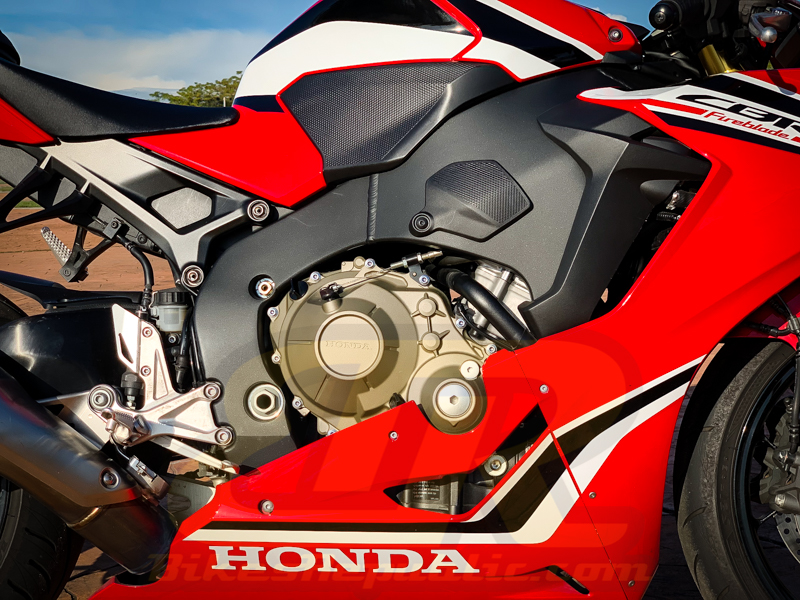
First and foremost, it’s the base model for the SP which we tested earlier. Of course, the SP was all spec’ed-out including Öhlins electronic suspension with OBTi user interface, Brembo monobloc calipers, Brembo brake discs, quickshifter and a single seat. The fuel tank was titanium, so was the exhaust system. The SP was cosmetically different, too, with gold wheels, polished aluminium frame spars and HRC tri-colour racing scheme.

Read: 2019 Honda CBR1000RR Fireblade SP Test & Review

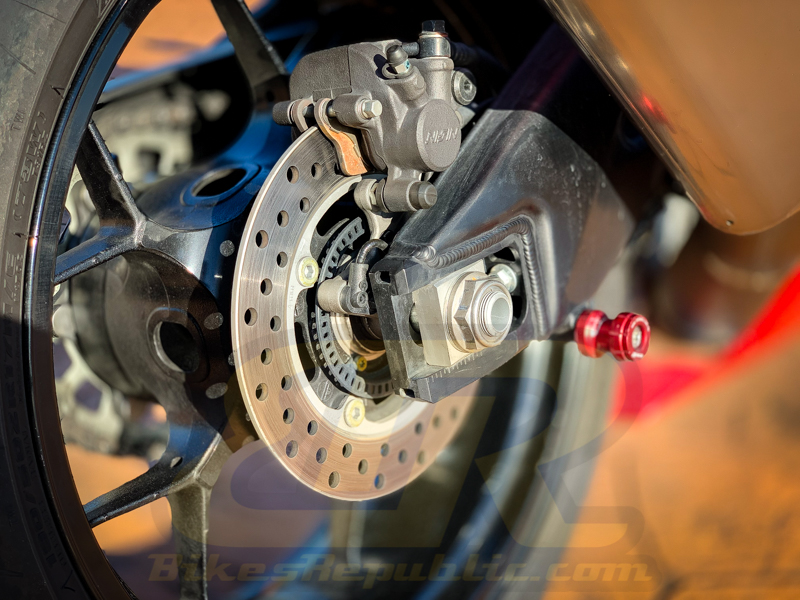
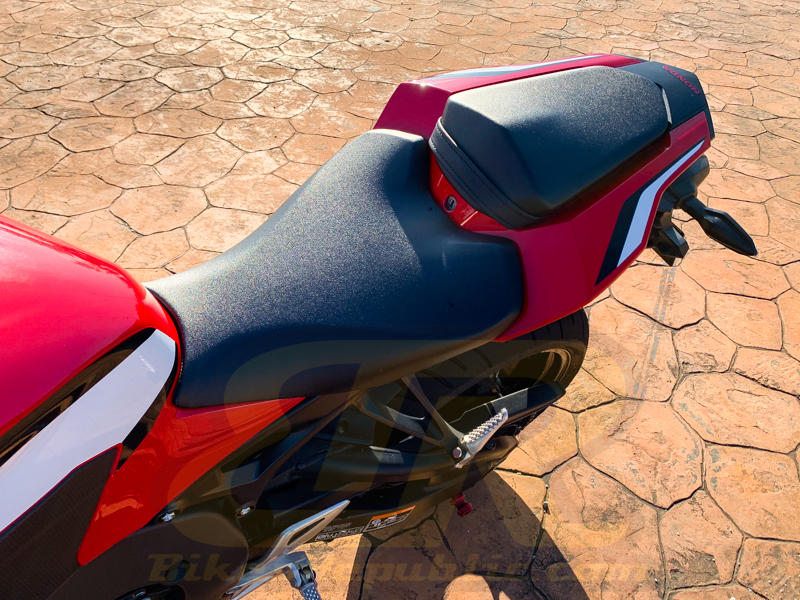
On the other hand, this base model makes do with Showa Big Piston Forks and rear shock, Tokico monobloc front brake calipers, anodized black frame and wheels, dual seats. Electronics wise, it doesn’t have the OBTi suspension controls since the suspension is manual. Most tellingly, it doesn’t include a quickshifter.

Does that make the bike less “better”?

Ergonomics is exactly the same, as with the engine power and performance.

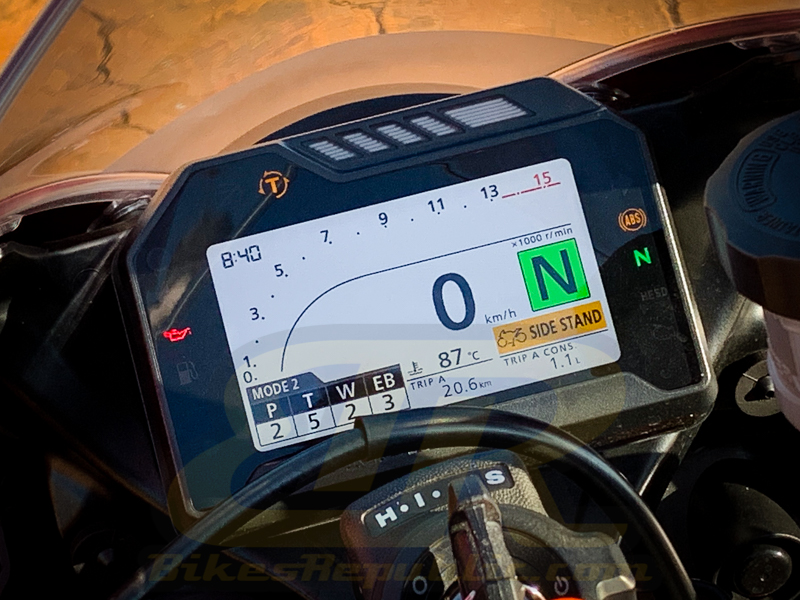
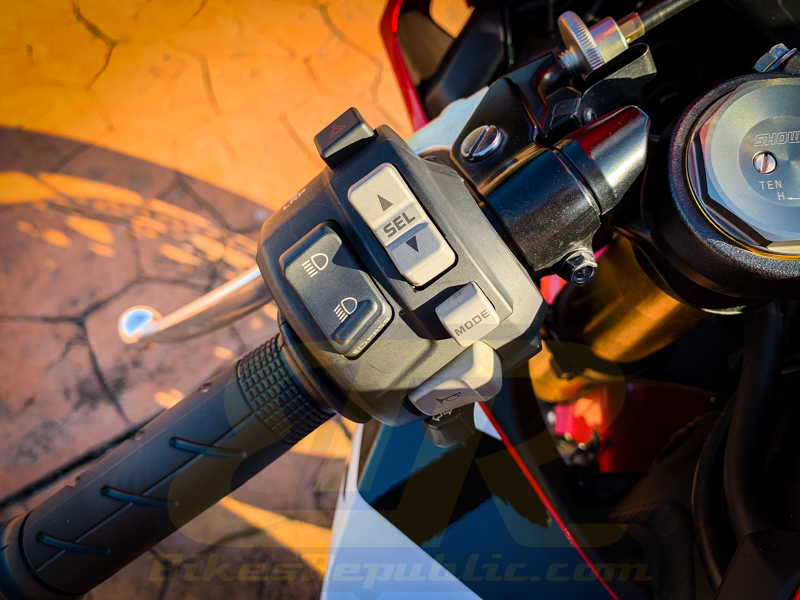
Firing it up exuded that soul-stirring deep vroom from the exhaust, telling you that it’s ready to ride. Setting the electronics was easy-peasy, given three preset modes and two user-customizable modes. From left to right, there’s P for power (1 highest, 5 lowest); T for traction control (1 the least intervention, 8 the most); W for wheelie control (1 for highest intervention, 3 for the least); EB for engine braking (1 the least, 3 the highest). That’s it. One look and you know how the bike will respond.

Each setting returns really perceptible changes. For example, the bike takes off as soon as the throttle was twisted in Level 1, whereas you need to turn the throttle more in Level 5. But if anything, engine braking (EB) showed the biggest change. In level 1, the bike almost freewheeled (great for attacking corners) while the bike slowed a lot off the throttle in level 3.

Although not electronic, the factory suspension settings were already in the ballpark. No, wait. They were superb. We found that we didn’t need to adjust anything at all. Only once did it get of shape as I had to brake hard when keeled way over in a corner, because a car cut into my lane. The forks dived hard, causing the bike to wobble. However, adding just two turns of compression and rebound damping solved the issue.

Compared to the electronic suspension, the biggest difference was that the manual suspension felt soft in its initial stroke but was stiffer when you hit larger bumps. It’s the true opposite for the electronic set up. Yet, the CBR1000RR’s suspension was the most compliant on the street as opposed to all other superbikes we’ve ridden.

The bike isn’t slow, not at all. It’ll own everything thrown against it because it’s so easy to ride on the street. While you need more effort on other bikes, the CBR took all steering efforts in its stride. Think it, turn in.

In corners, the softer suspension settings let the tyres bite into the road surface and hook up early just as you add balancing throttle. That confidence goads you into opening the gas sooner without the risk of pushing the bike wide. I found myself adding too little throttle many times during the initial two days of testing, but I was punching in plenty of throttle soon enough.

There’s a corner on MEX Highway which I’ve never ridden through faster than 160 km/h (on the KTM 1290 Super Duke GT). One day, I hammered the CBR through it to see how far I could lean the bike. I looked down and saw 188 km/h and the knee was still far away from the road!

But it isn’t all about aggression. Feel the need to cruise? Just raise your body, switch to MODE 3 and putt along in sixth gear. The bike happily obliged even when we rode it at 80 km/h in sixth. Not only it didn’t stutter but it pulled hard as soon as I opened the throttle. From there it would blow through 100 km/h, 150 km/h, 200 km/h and all the way.

That inline-Four has gobs of low-down and midrange torque unlike its contemporaries. It punched hard from the standing start and acceleration only slowed down a little (just a little) past 8,000 RPM. Hard acceleration was accompanied by a mix of warble and whoosh from the intake with a howling and roaring exhaust, as if it was a small V-Four. The stock exhaust was loud enough – all the better for such a distinctive tone that’s totally different from all other inline-Four superbikes.

But it wasn’t all about aggression.

It’s so easy to ride in any circumstance, including in heavy traffic. Whereas I found it difficult to maneuver other sportbikes in really slow traffic, I could cilok (swerve around) on the CBR1000RR like a Honda CB250R. I’m not kidding! Even U-turns were easy because there was plenty of steering lock. Carrying a passenger wasn’t much of a bother, either.

Watch: Video review of the 2019 Honda CBR1000RR Fireblade

That’s the central theme to the Honda CBR1000RR Fireblade. The CBR1000RR team wants to give the rider Total Control. Total control breeds confidence, and confidence turns to enjoyment. Total control also means that the bike is forgiving.

You’re always in control with those clip-ons positioned just right in relation to the seat. While other superbikes have their handlebars placed on the same level as the seat, the Fireblade’s are about 2.5 cm (1 inch) higher. In doing so, it gives the rider more leverage on the bars as well as better comfort, without sacrificing sportiness.

The more I rode the bike, the more I discovered that it’s Honda’s obsession with the little details. For example, like the previously mentioned abundance of steering lock and ergonomics. Going further, the design of the fuel tank made it easy to hook your upper arms and knees to it when you’re leaning into a corner. Apart from that, the seat height was at a comfortable level, yet the footrests didn’t touch down at all.

Honda also showed their obsession with quality and finish. Look down into the space between the TFT screen and handlebar and all you’d see is the clutch cable. No wayward cables and parts. Even the steering damper’s hidden away underneath the fuel tank’s cover.

Was there anything we didn’t like? Not really, but we know that detractors will bash the lack of a quickshifter. What? You’ve forgotten how to shift gears? Just joking. But trust us: You won’t miss it. The first two gears and downshifting may require the clutch lever but hooking up the next gears without the clutch was almost as good as using a quickshifter. It felt more rewarding too. The clutch pull was very light anyway, requiring on the middle finger to work it.

Another point excuse we always heard is the lack of top end power. The CBR1000RR has the lowest in the class at 189 hp. But unless you want to race the bike in MSBK or MSF, why does it bother you? What’s more important is the bike’s ability to accelerate faster from idle and while rolling compared to the others.

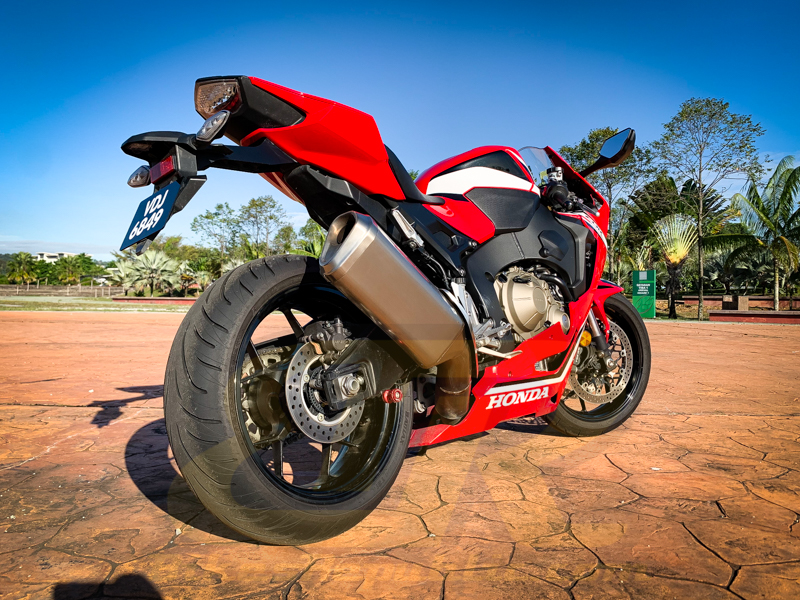
Let’s also not forget that the bike looks great from every angle.

Conclusion

It’s apparent that the Honda CBR1000RR Fireblade was designed to do almost everything as a sportbike. By that we meant that you could ride it everyday while carrying a pillion, head into the mountains on weekends or convoy, and still be able to turn and burn at the track.

And it’s surprisingly cheap as well (in relation to other 1000cc sportbikes, not our bank accounts) from RM 91,999 making it a superb value for money. (The CBR1000RR Fireblade SP is priced from RM 114,999.)

So, if you can only own one 1000cc sportbike that you have to use for everything, this is the bike.

Archive

Follow us on Facebook

Follow us on YouTube