Bikesrepublic

Latest News

Malaysia’s Prime Minister Tun Dr Mahathir has announced that the new SST or Sales and Services Tax will start on 1 September 2018.

From now until the end of August, the 0% GST rates will be implemented which will see prices drop for bikes, cars, and more.

Manufacturers have already begun promoting the new prices plus Hari Raya Aidilfitri promotions.

Gather around folks as this is big news for all Malaysians. Our beloved Prime Minister, Tun Dr Mahathir Mohamad has just announced that the new Sales and Services Tax or SST will be implemented on 1 September 2018. (more…)

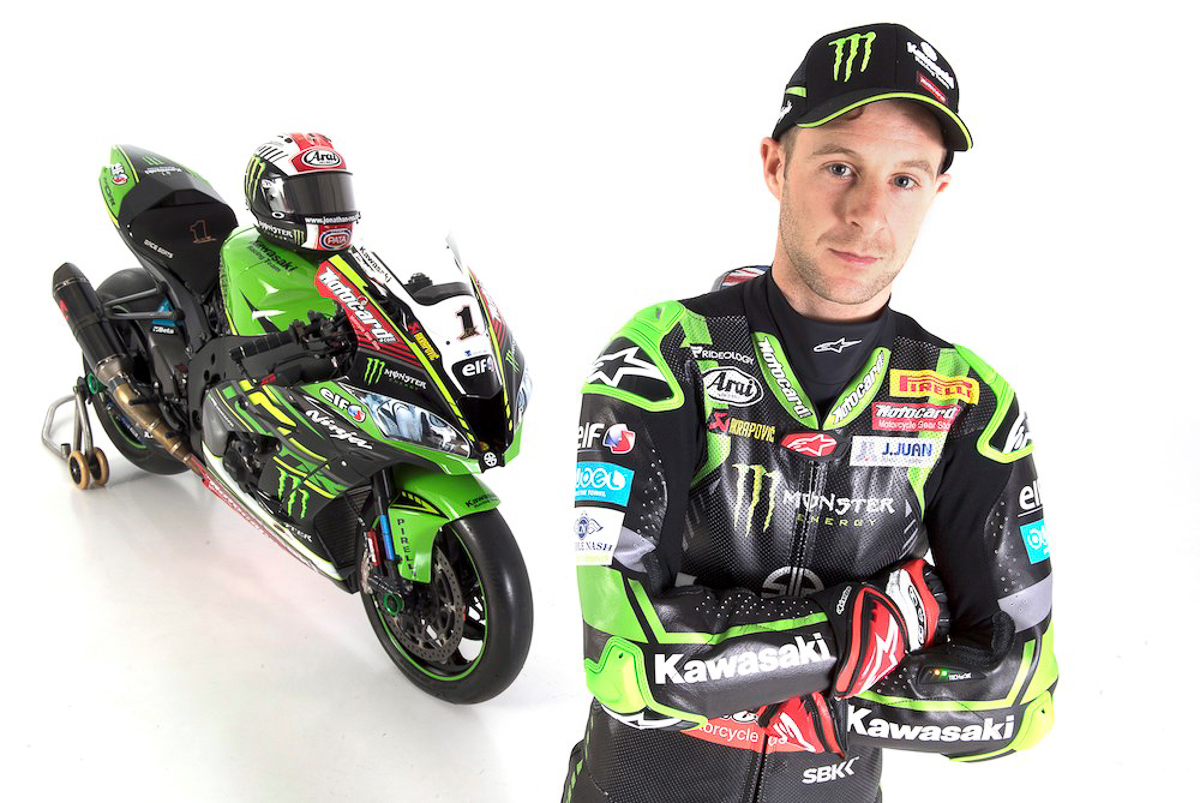
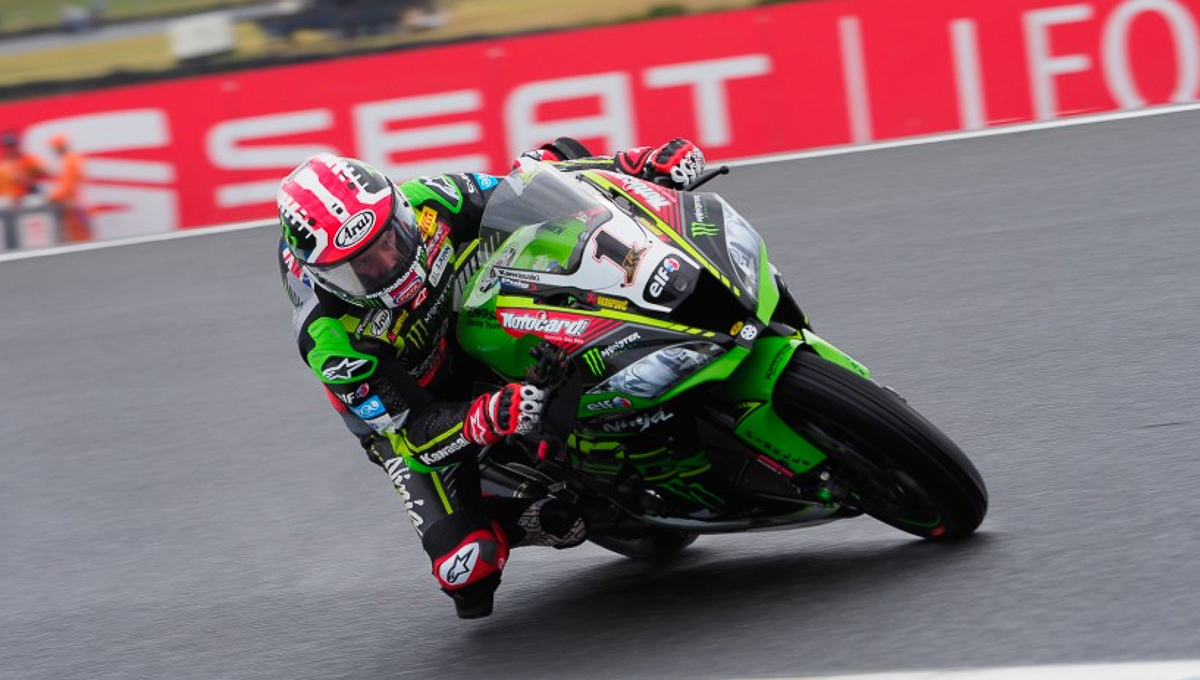
Multiple WorldSBK world champion Jonathan Rea is currently in talks to join MotoGP in 2019.

Several factory teams have extended their offers towards the 31-year-old rider.

Rea is also in talks with his current Kawasaki Racing Team WorldSBK as his contract ends at the end of the season.

The world of MotoGP is getting a huge buzz of gossips this time around with the possibility of multiple WorldSBK world champion Jonathan Rea finally ready to jump ships over to MotoGP. It seems that his side is already in talks with a few factory teams as we speak. (more…)

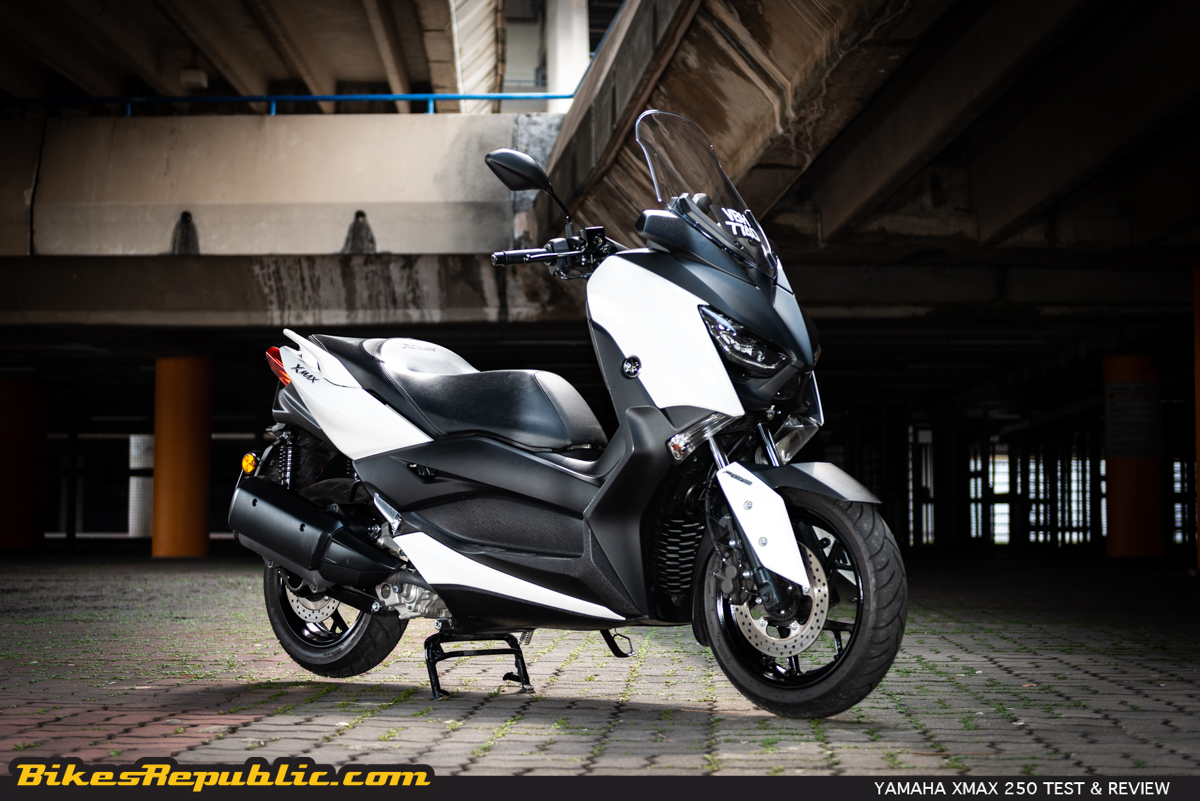
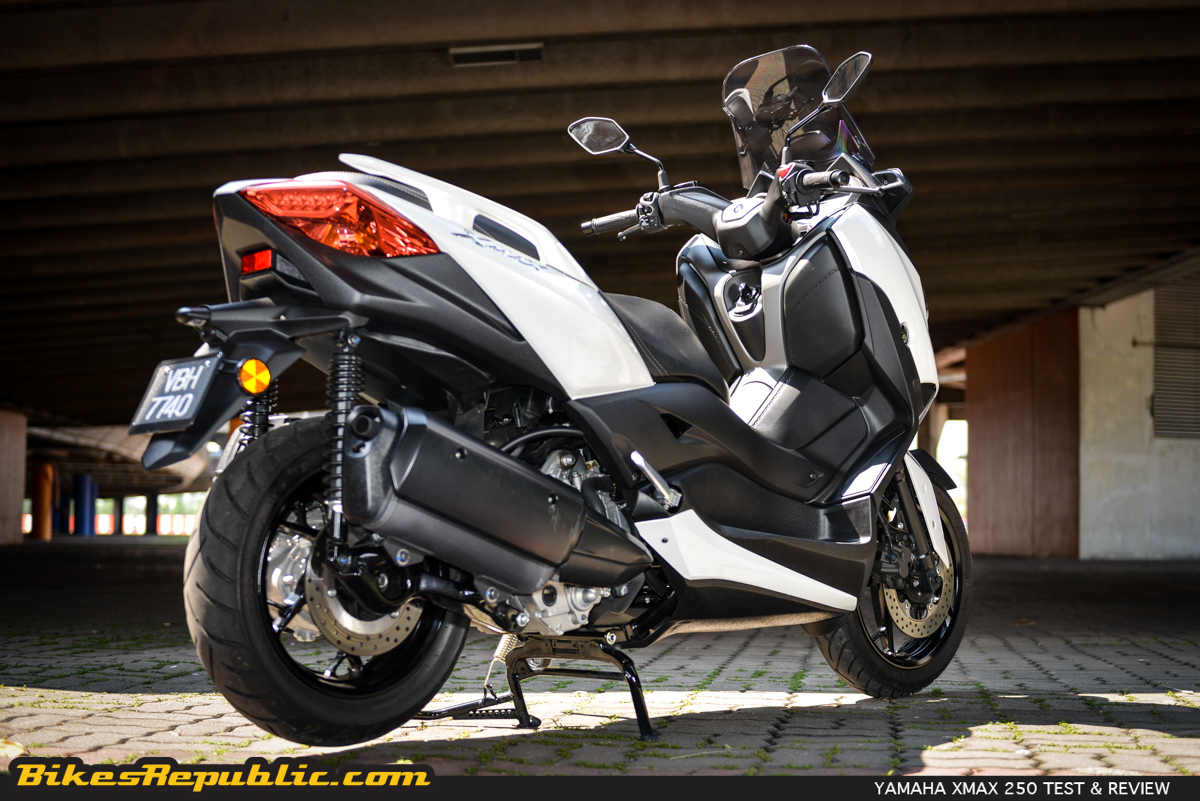
  • The Yamaha XMAX 250 is the biggest scooter officially sold by Hong Leong Yamaha.

  • It is more of a GT scooter compared to the NMAX and NVX.

  • The new basic selling price is at RM 21,225.00 with 0% GST.

Sure, scooters are the embodiment of convenient motorcycling, to the stage of being lazy – nothing else you need to do but to fill up, twist and go. Besides that, I don’t need to worry about slinging a backpack hence neckaches and backaches, since I could throw everything into the storage space under the seat.
But, I’ve never actually considered owning a scooter prior to this; due to the fact that their suspension gets hammered followed by my spleen over sharp bumps or potholes. If that’s not bad enough, their front tyres weave about when cornering. Those two factors alone had always put a damper on my enthusiasm.
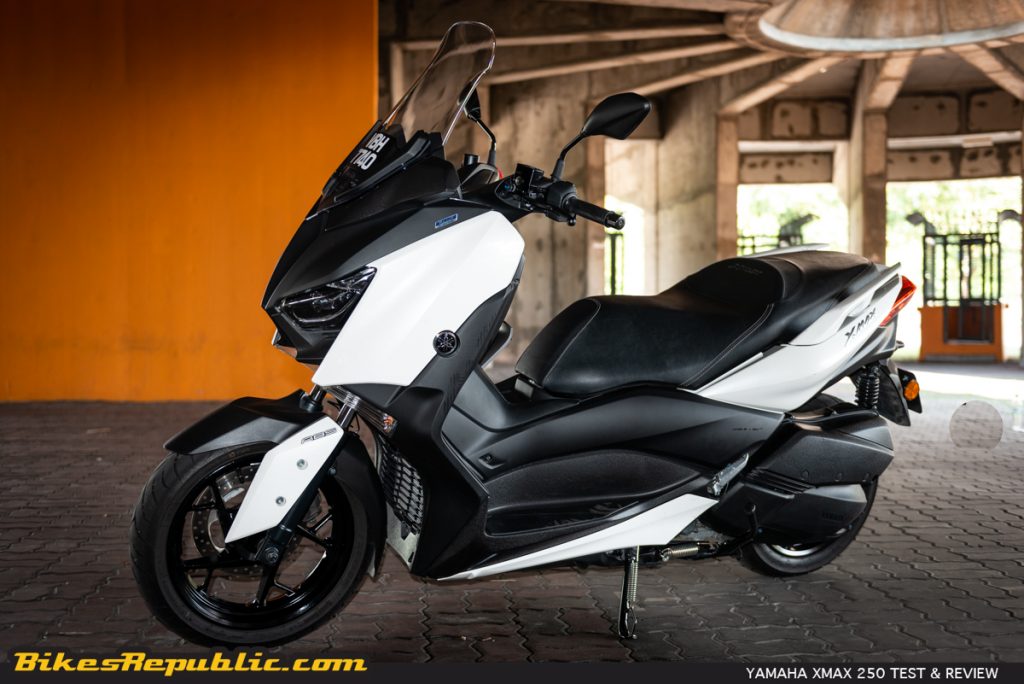
But what about this new Yamaha XMAX 250? I was looking forward to testing the new MT-09 and was a little smitten when Hong Leong Yamaha Motor only had this XMAX available during the time. Well okay, for the benefit of our readers who do like scooters, I acquiesced to the offer.

WHAT IS IT?

Hong Leong Yamaha Motor is the one manufacturer who offers a wide selection of scooters in the Malaysian motorcycle market.

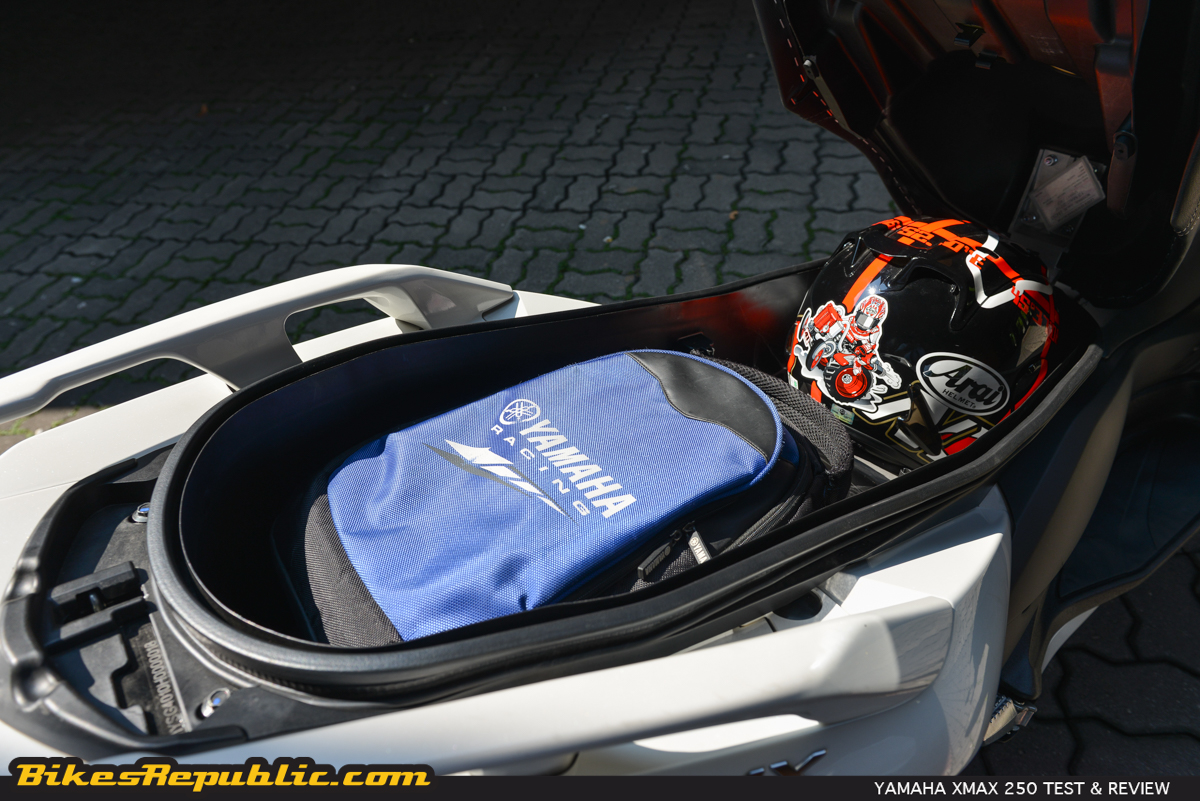
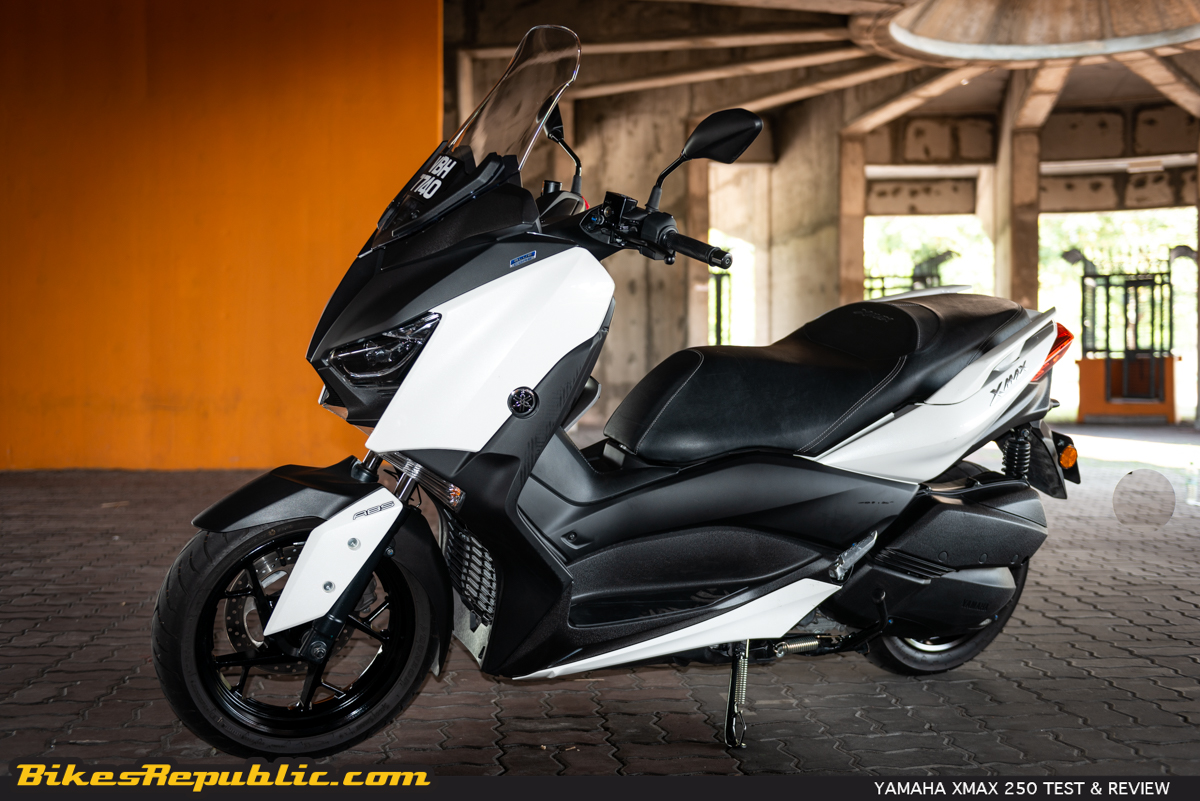
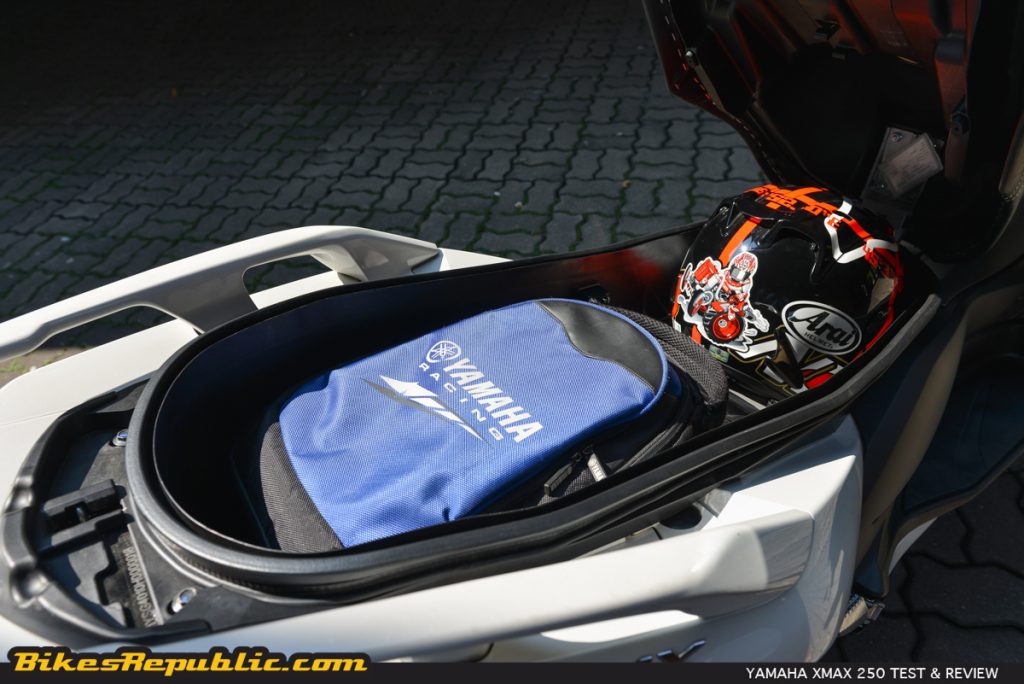
The XMAX 250 on the other hand, is powered by a 250cc, single-cylinder engine, making it the biggest scooter officially offered by HLYM. While the rest could be considered “city” scooters, the XMAX is of the maxi/GT type. As such, the XMAX is much larger in size, complete with a large windscreen and bigger fuel tank. The underseat trunk is also much bigger and you could fit a couple of helmets, or a helmet and a backpack filled with a 15” laptop.
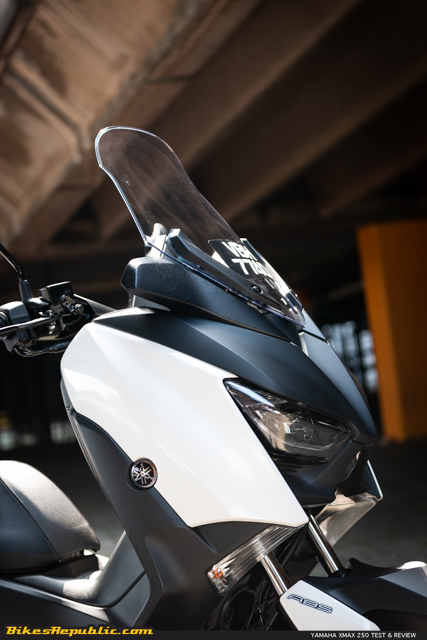
WHAT FEATURES DOES IT HAVE?

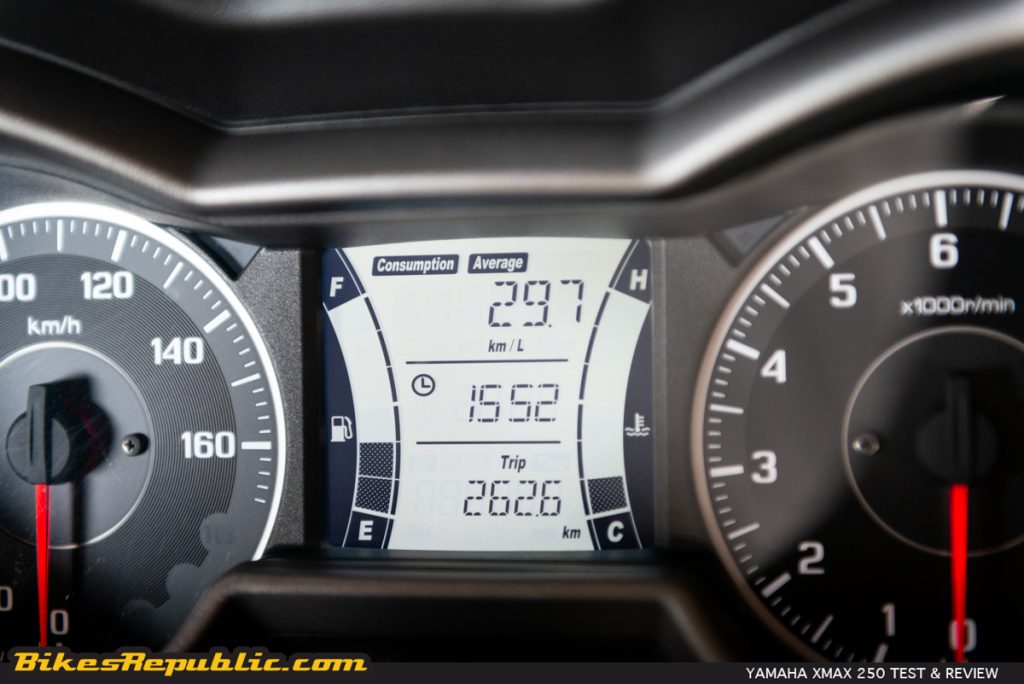
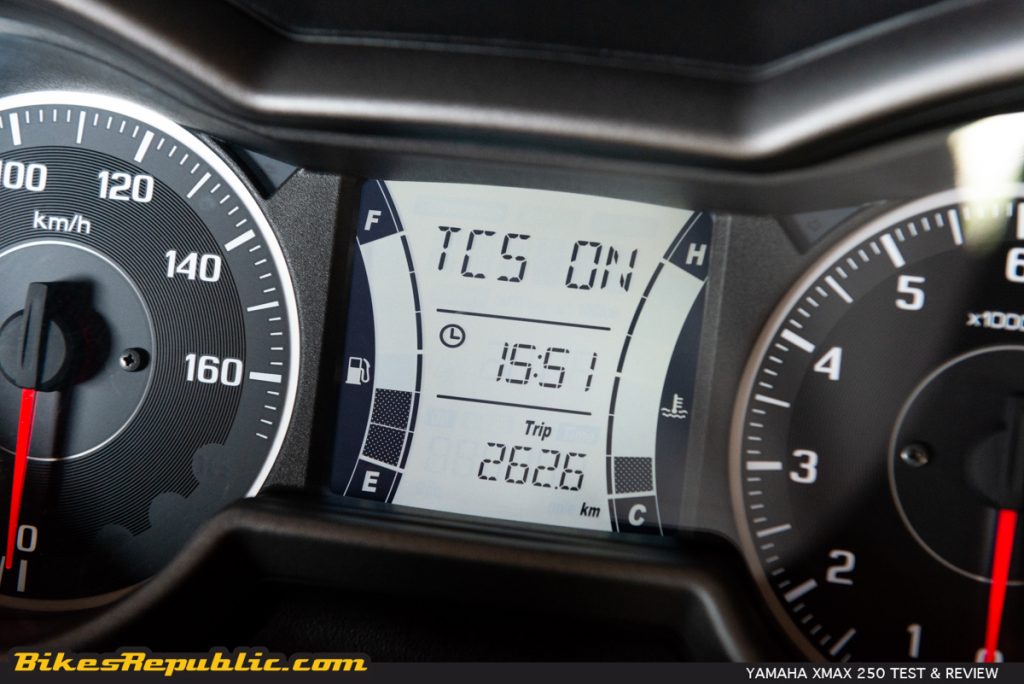
There instrument panel is also large in size, dominated by a large speedometer and tachometer, flanking an LCD multi-display in between.
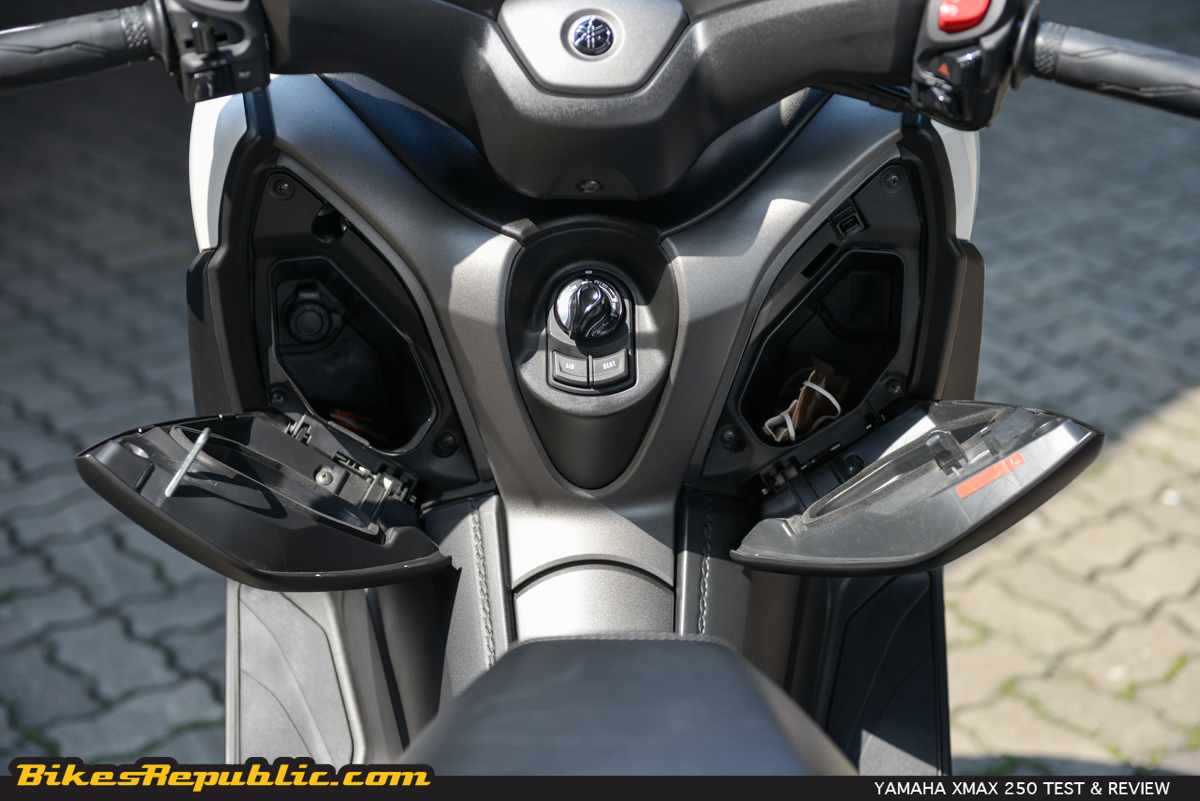
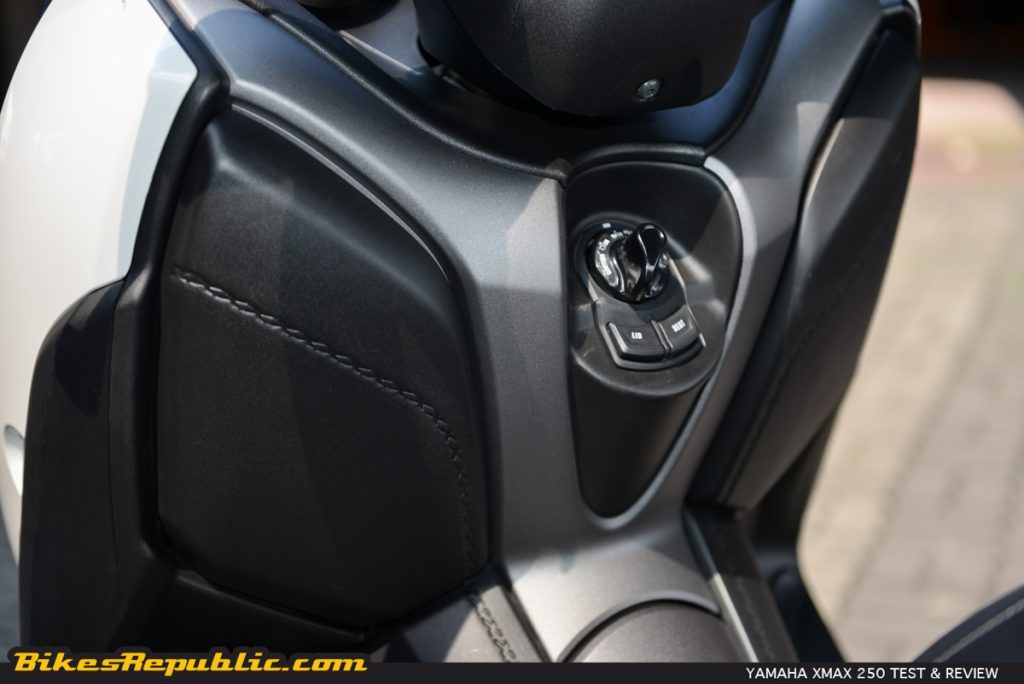
There are storage compartments on each side of the front panel – the left is locked with the ignition while the one on the right is unlockable. A 12V cigarette lighter type outlet is on the left, enabling you to charge your phone on the go.
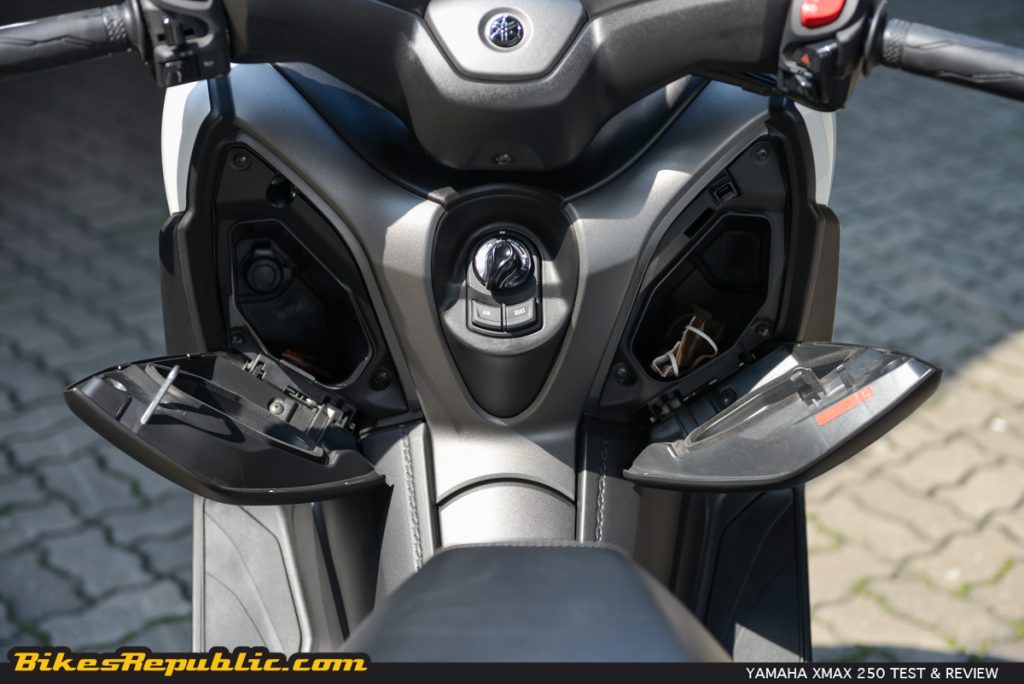
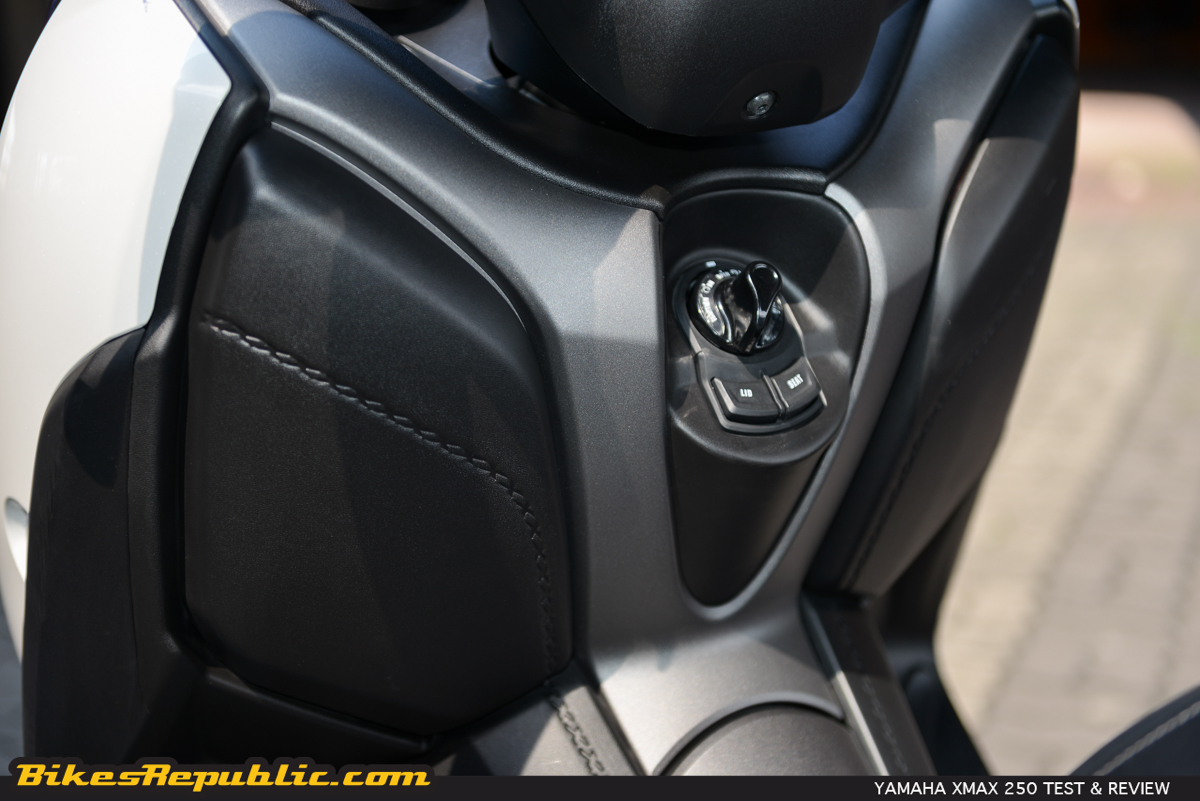
The XMAX also features the SMART Key system first seen on the NVX. It needed a little figuring out at first, but it becomes second nature soon enough. Once you’re used to it, you’d swear that it’s the best motorcycle locking system. For example, it’ll warn you if you’ve forgotten to arm it.
The XMAX is one of the best-selling scooters in Europe, therefore it’s equipped with ABS and TCS (traction control) as standard equipment.
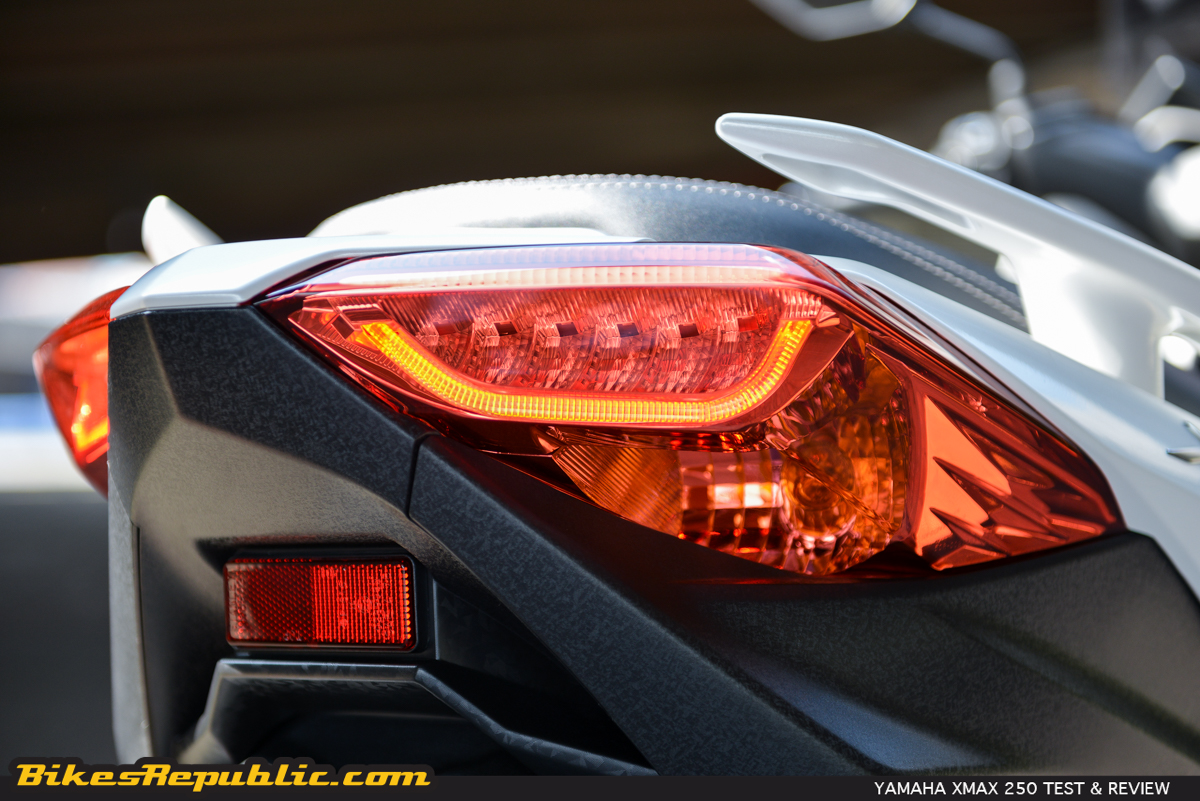
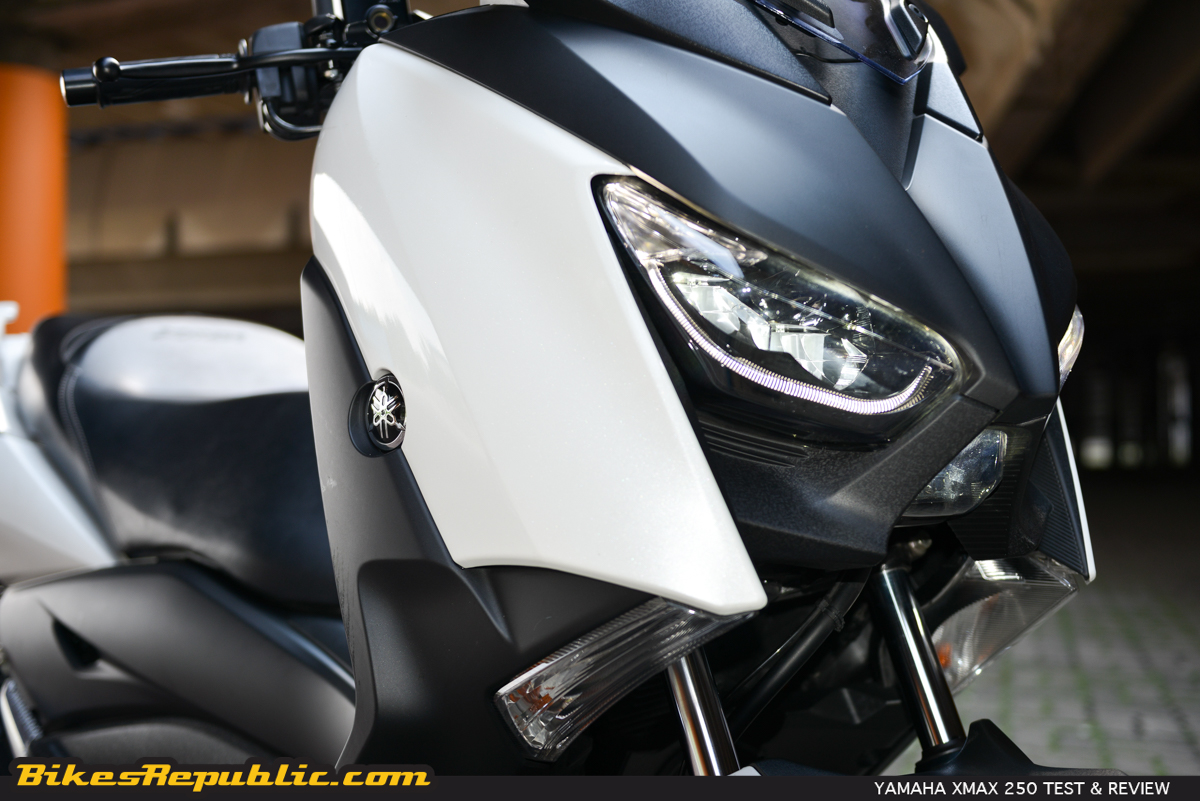
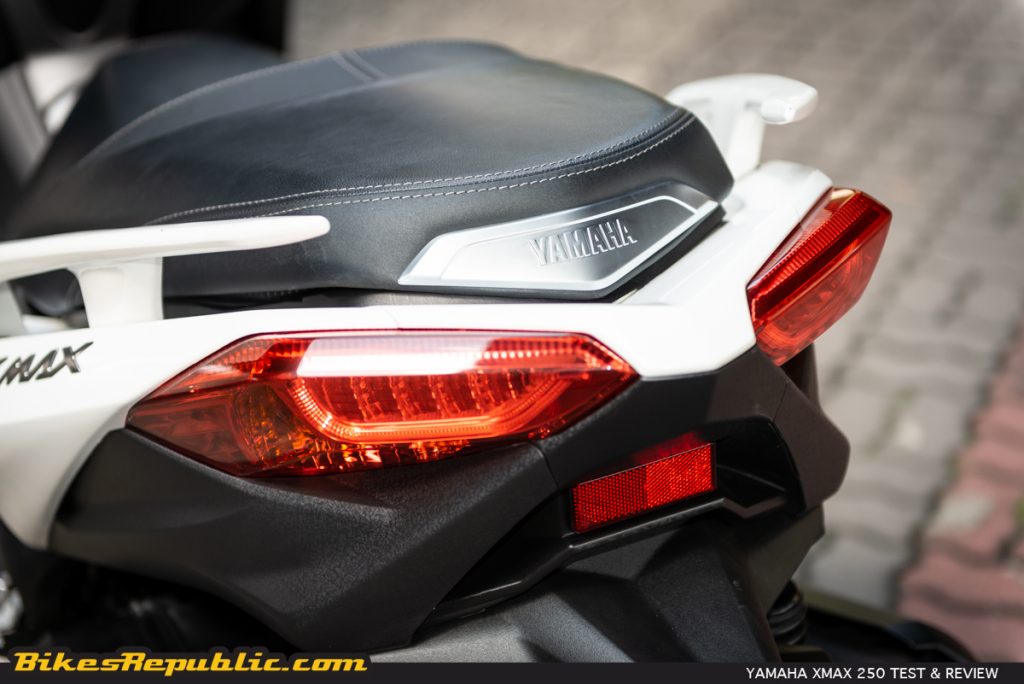
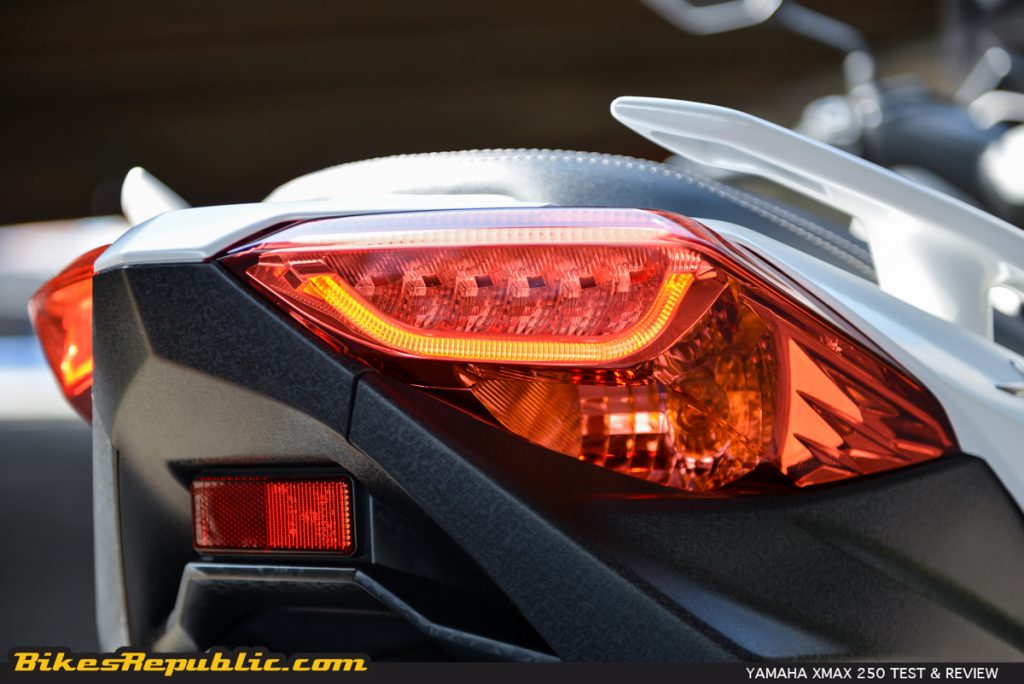
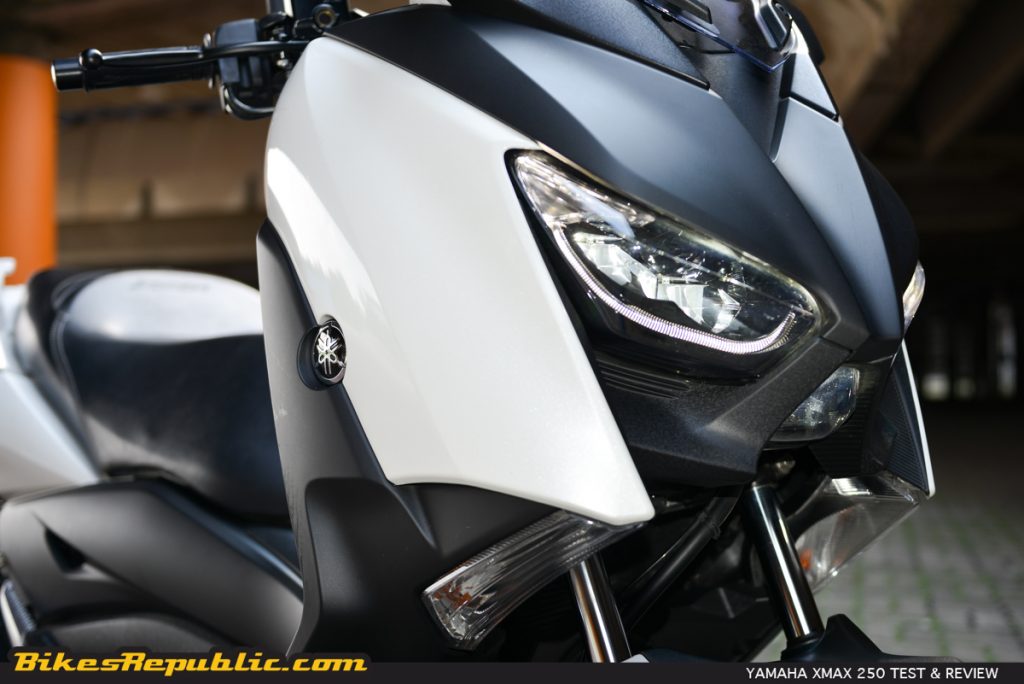
Those beautifully designed headlamps are fully LED with LED “positioning lights” (other manufactures call them daylight running lights). The taillights were equally good-looking and they were LED too. The turn signals remain as normal bulbs, though.
WHAT WAS THE FIRST IMPRESSION?

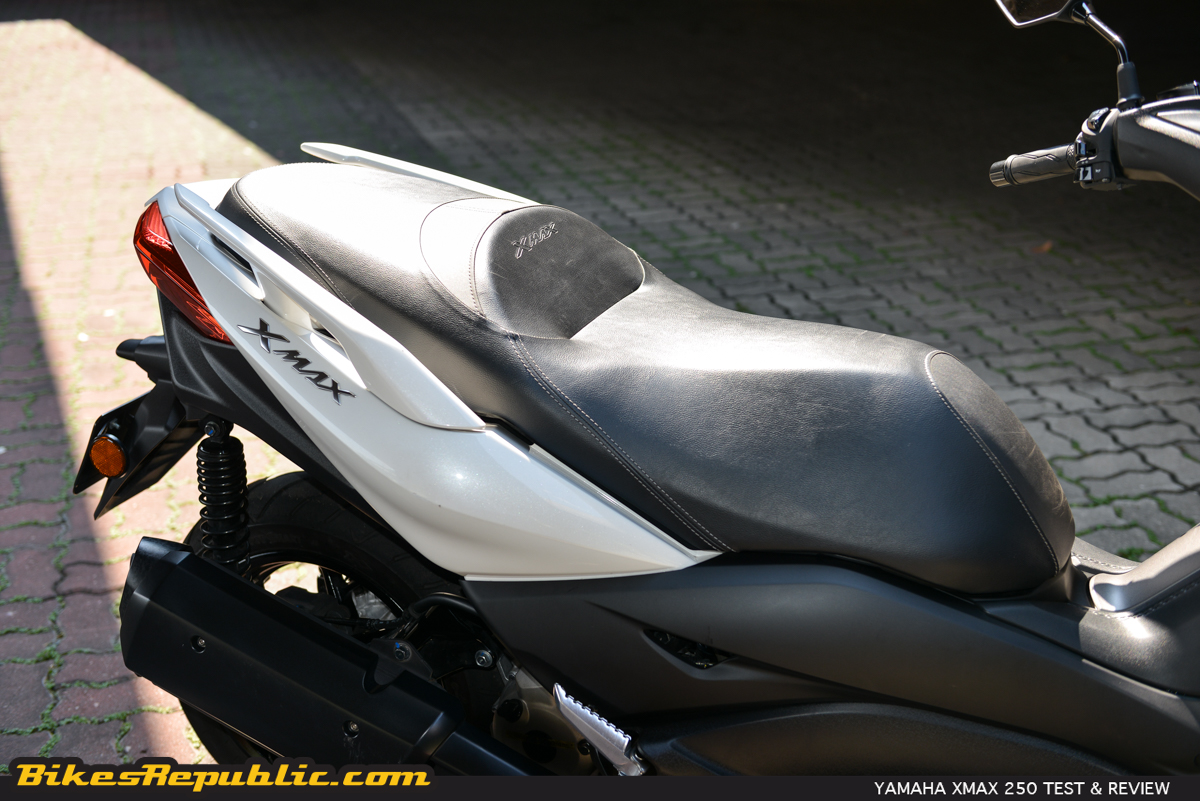
The seat was taller than it looked. Although the spec sheet described the seat height at a low 795mm, I had to move one cheek off the seat just to tip toe on one foot like I was on an adventure bike. The wide portion under the seat was the cause. And surely enough, the test bike had been dropped on one side.
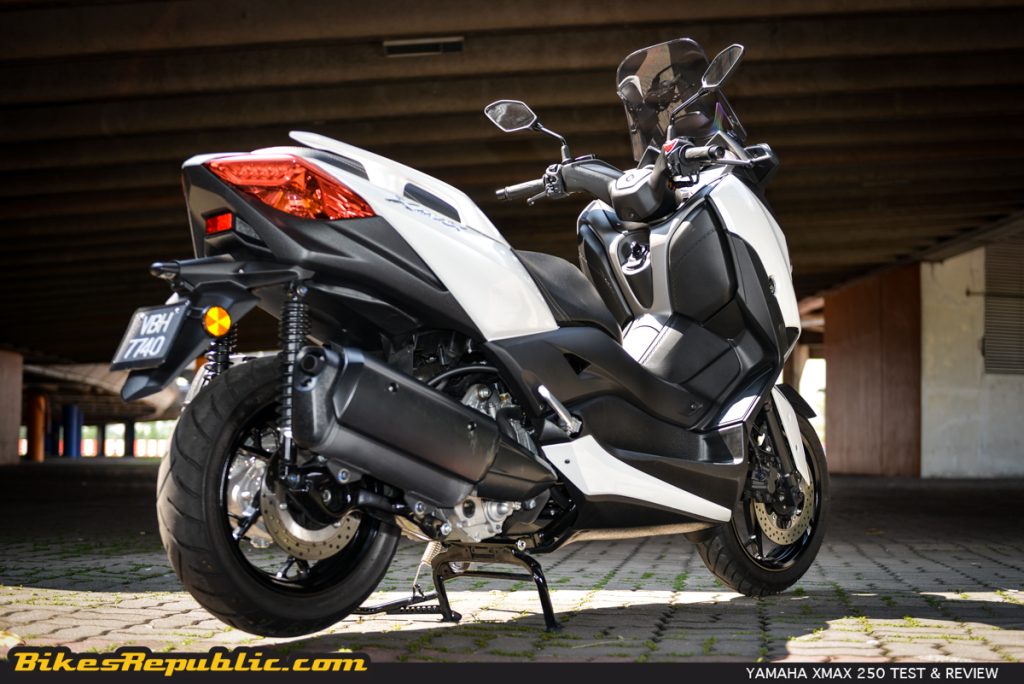
The handlebar is placed lower than on most scooters and it felt sporty. That placement also meant that my view of the instrument panel wasn’t blocked at all.

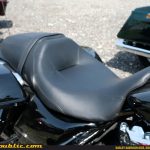
The seats were definitely comfortable and supportive.

HOW DID IT PERFORM?

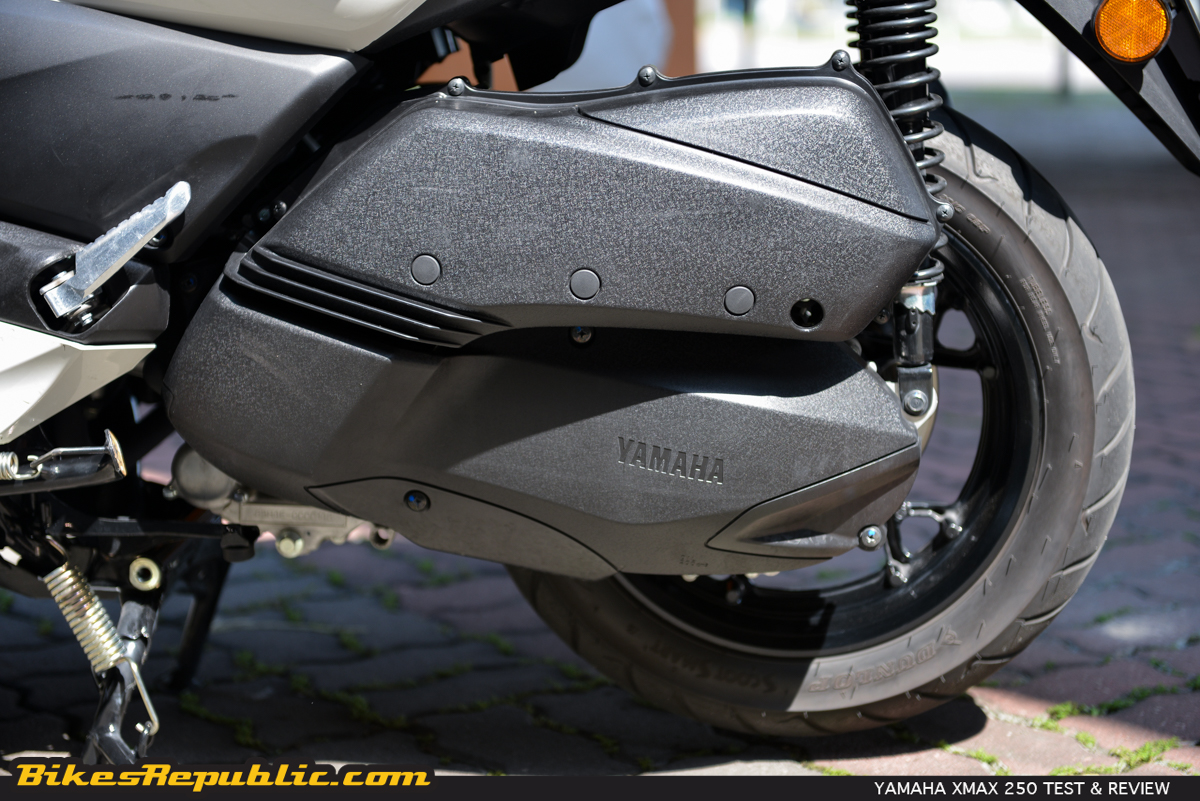
The 250cc, fuel-injected, single-cylinder engine features Blue Core enhancements, including variable valve timing (VVT). It started up quickly every time and there was very little vibration for a scooter.
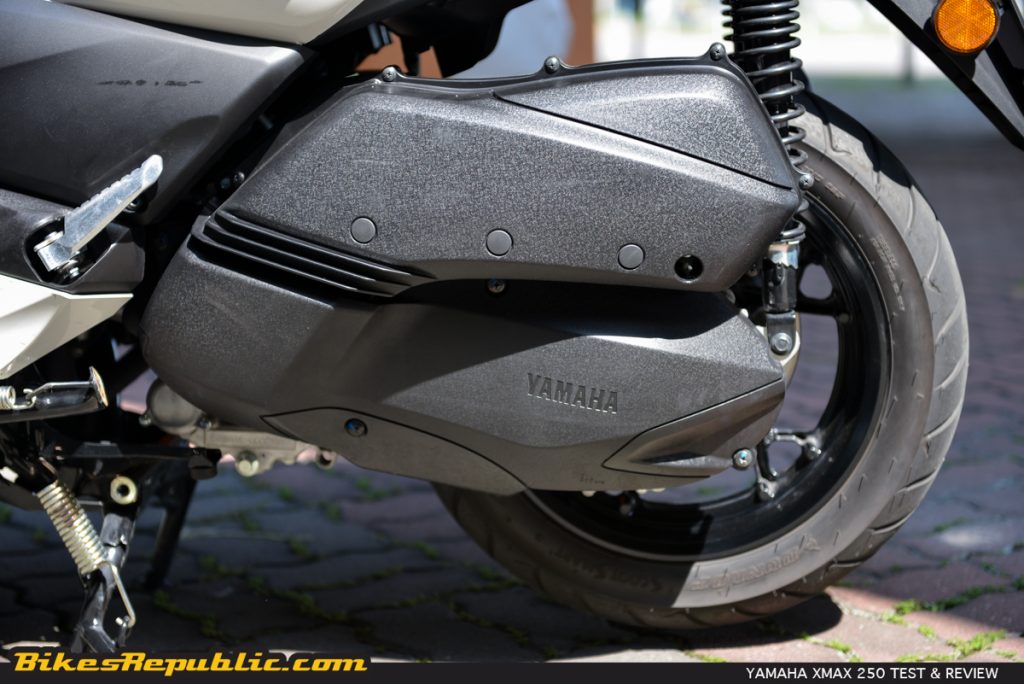
The fun of a twist ‘n’ go is of course the acceleration and the XMAX accelerated very quickly all the way to its redline. Hold on to it and you’ll hit a little more than 140 km/h. However, the bike was very economical. We managed to obtain 324 km from 11 litres of fuel despite our heavy-handed testing and we had to fill it up only once in the nine days that we had the bike.
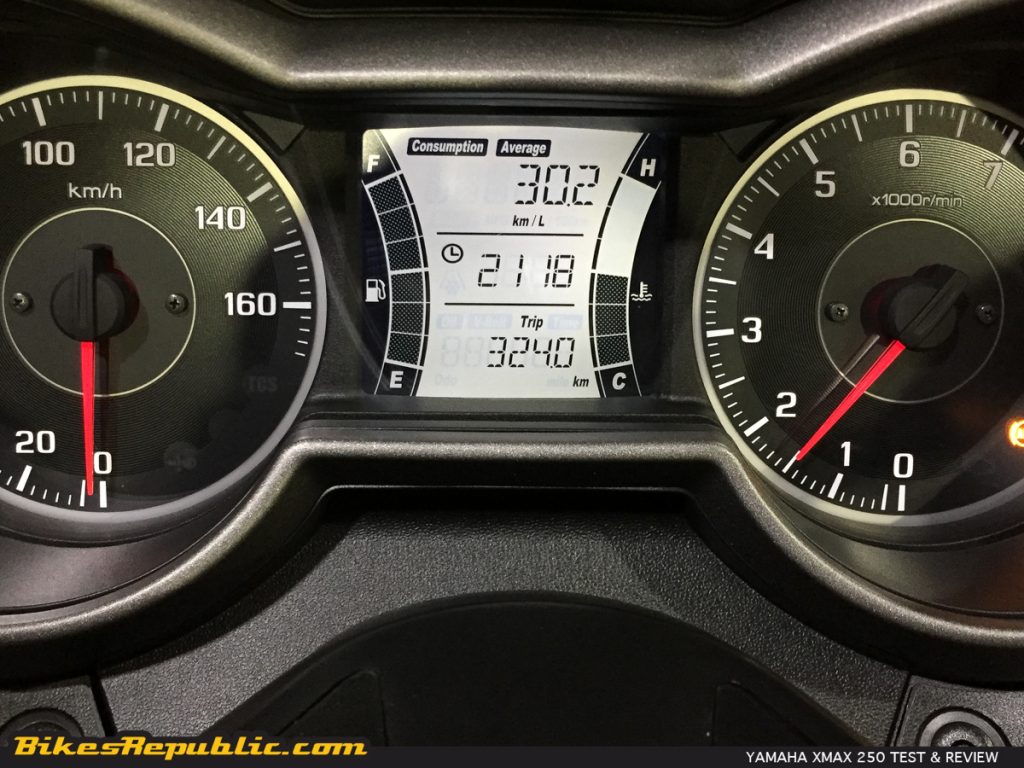
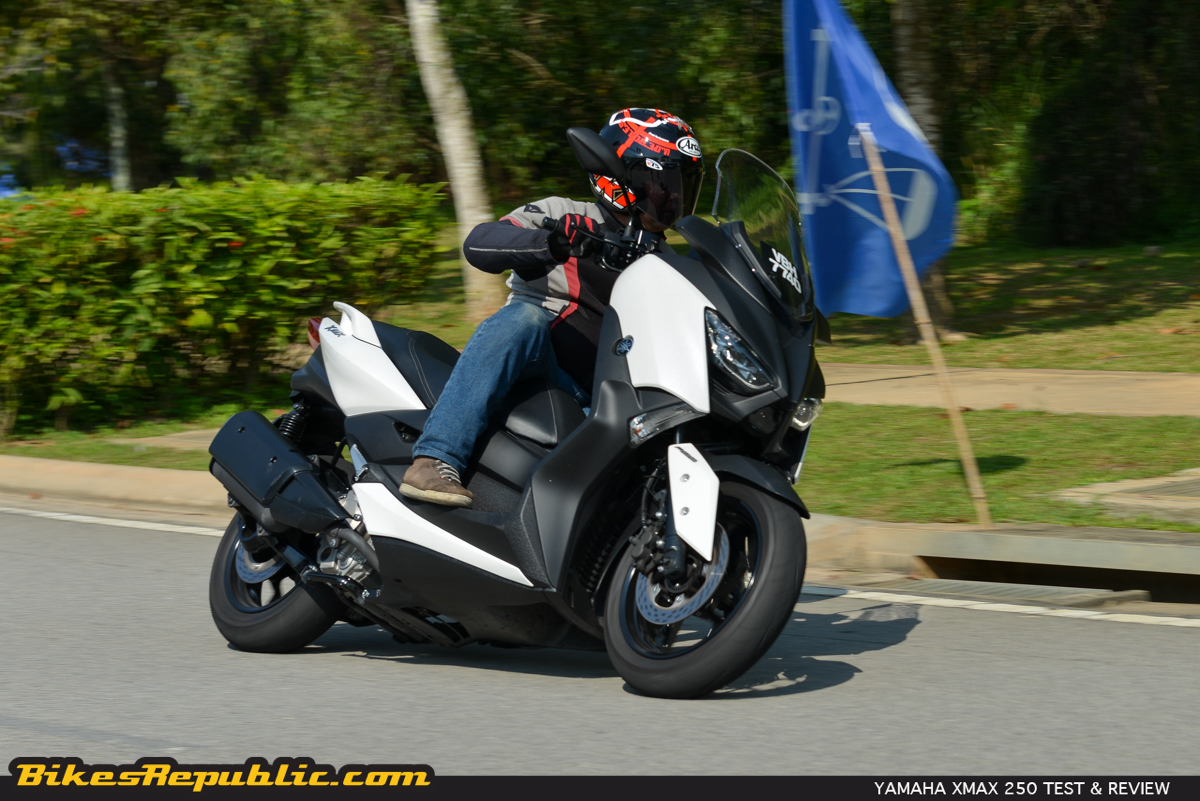
But best of all, the XMAX 250 never once shook its handlebar when we blasted it through fast, sweeping corners unlike other scooters.
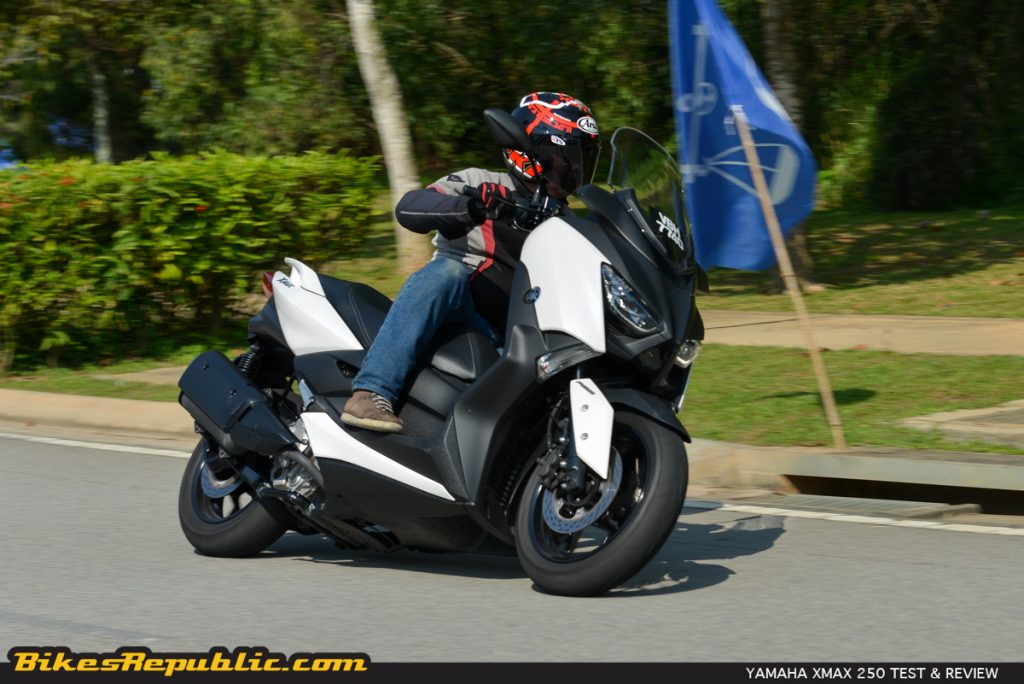
The handling was confidence-inspiring, and I didn’t hesitate in taking up to Genting Highlands. At night. On these roads, it was a joy to ride the XMAX as I could just swing it into the corners. It had plenty of cornering clearance and took lots of lean angle to scrape the centrestand. Even then, it never once threatened to chuck itself down the road (or off the mountainside) at full lean.
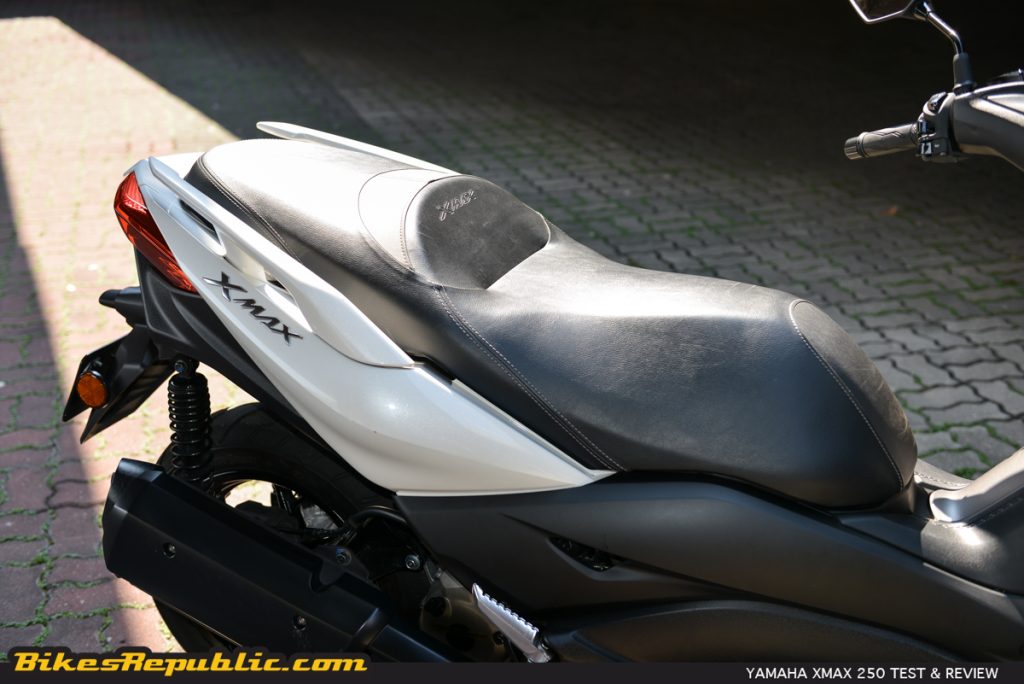
The brakes were superbly strong although they felt a little vague at full pressure, possibly due to the rubber hoses. However, that’s just a personal preference as I’m sure owners will find them pretty strong in standard trim. Another thing I noticed was the brake levers didn’t pulsate when ABS was triggered. Instead, the levers actually extended slightly to the front when that happened, allowing me to maintain maximum brake pressure.
The headlights were bright as a much-welcomed feature in the fog.

Down Karak Highway, I could ride the XMAX almost as if it was a normal bike, surprising a few car drivers along the way.
As for the suspension, it was a good balance between comfort and performance. Big potholes still translated to big hits but they were a lot more damped out than other scooters and mopeds.

CONCLUSION

The Yamaha XMAX 250 is a great scooter for the daily commute and also some touring. Its great looks is matched by its great performance, especially because it doesn’t wobble in corners, but also due to its practicality and economy.


So I guess I’ve found the scooter that I’ve been looking for.
 

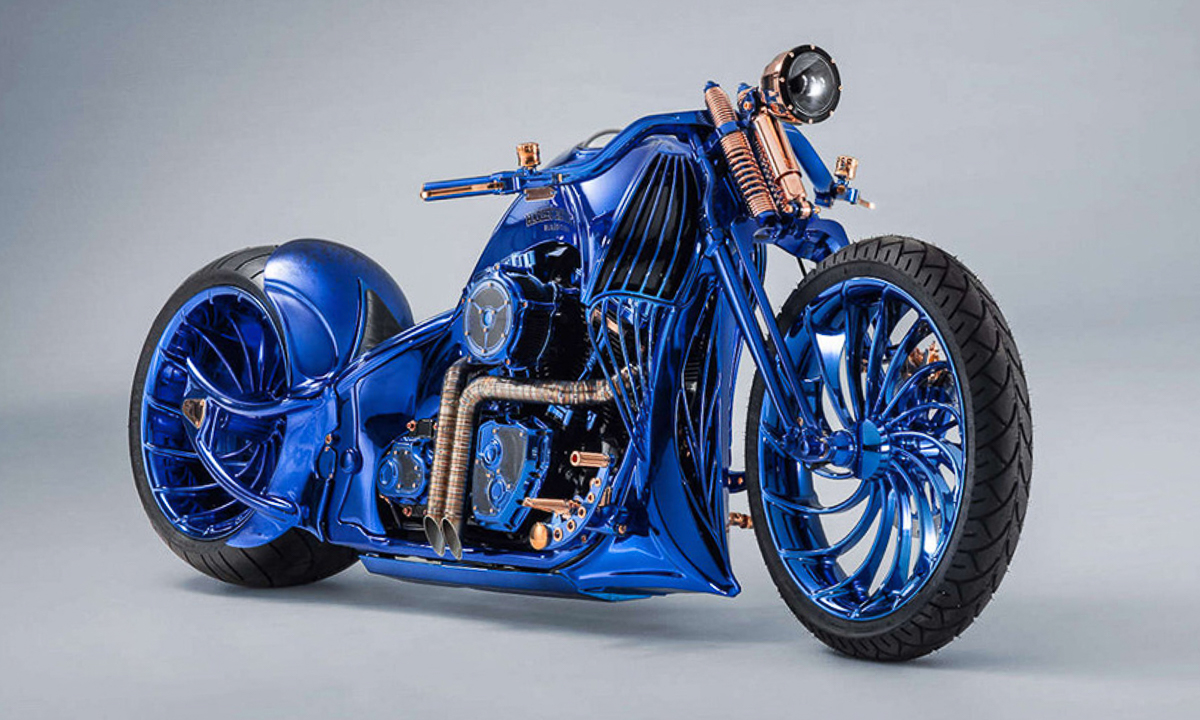
H-D expert Bündnerbike together with Swiss watchmaker Carl F. Bucherer has probably created the most expensive Harley-Davidson in the world.

The Harley-Davidson Softail Slim S Blue Edition comes with over 360 diamonds, custom watches, and jewellery.

Those who are interested in the Blue Edition can get it for a cool £1.4 million (around RM7.42 million).

We’ve seen, witness, and ridden some of the world’s most expensive bikes in the world. The most expensive one that has graciously received our behinds would be the Honda RC213V-S which is a cool RM1 million each but one look at this particular custom Harley-Davidson and it takes the whole lot. (more…)

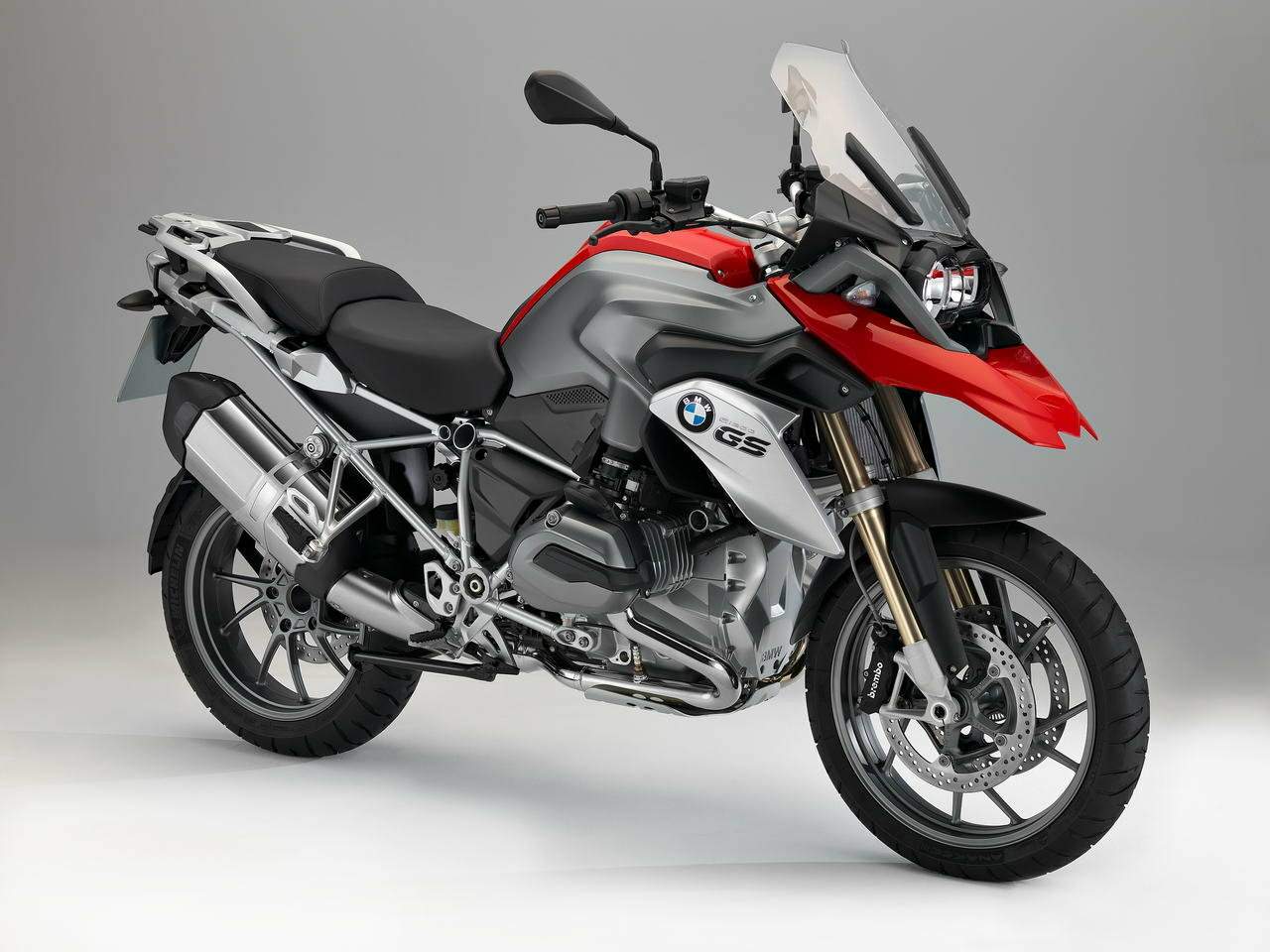
  • The BMW R 1200 GS uses the trademark BMW Telelever front suspension.

  • The system separates suspension forces from steering forces.

  • In doing so it provides superb manoeuvrability and comfort.

A newfound friend and I were chatting about bikes and more, of course but let’s keep it to bikes here since this is Bikes Republic and not the Sarawak Report.

He owns a 2016 BMW R 1200 GS Adventure, on which he had toured all the way to the Mae Hong Son loop and back a few times on it besides many other places.

2016 BMW R 1200 GS Adventure LC

Now, although I don’t own a GS, I’ve ridden one over quite some distance too. If you could recall the GIVI Golden Triangle Adventure in November last year, I had ridden a 2013 BMW R 1200 GS LC from KL to Pattaya and back, covering around 3200 km.

2013 BMW R 1200 GS LC

That trip firmly convinced me why BMW owners swear by it. It’s when you have to ride through treacherous conditions, or when your mind and body are exhausted, the R 1200 GS just keeps going. And going. And going.

A large part of that character is due to the bike’s Dynamic ESA /ESA II electronic suspension. It controls the damping electronically, removing bumps that would otherwise tire out the rider in a hurry.

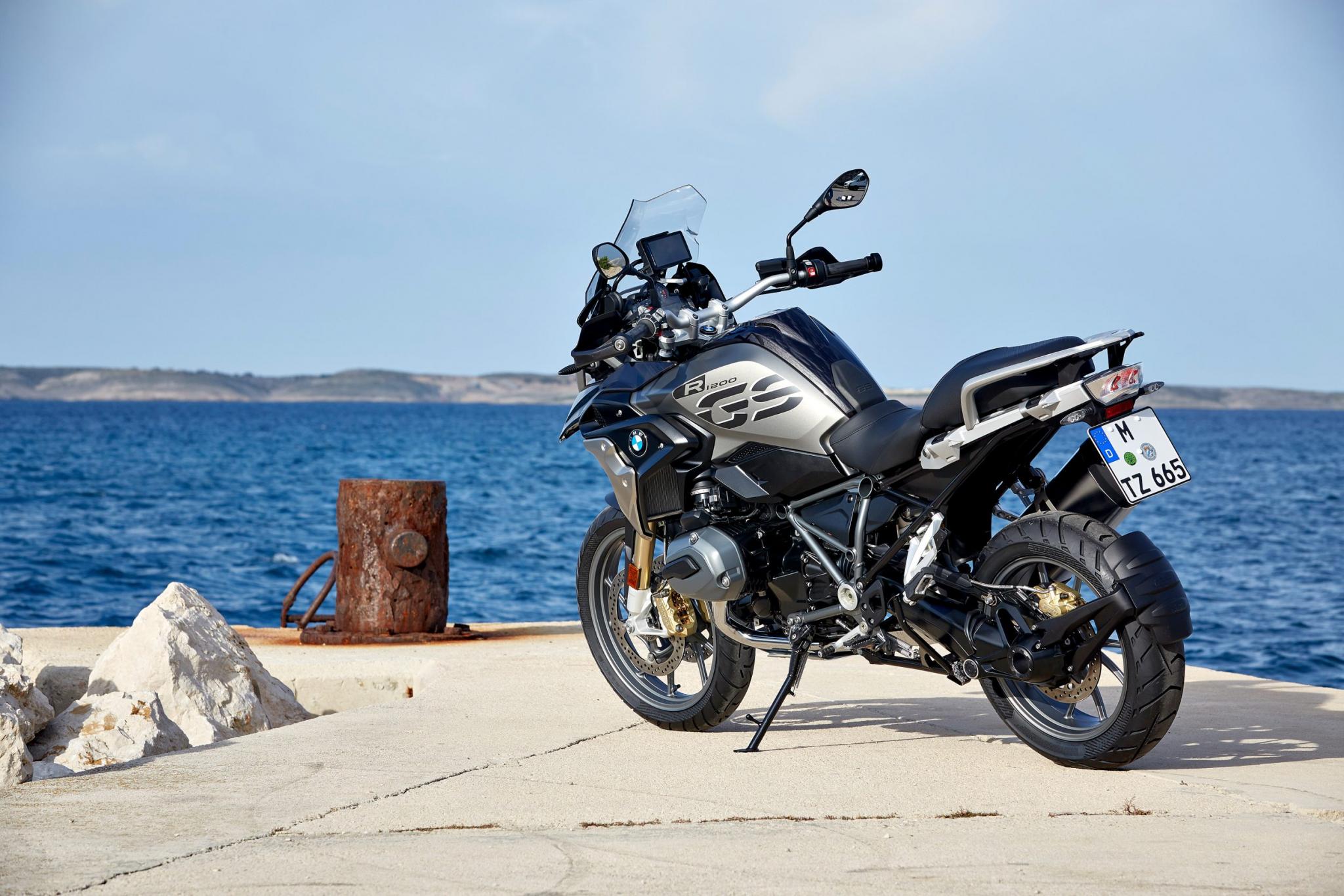
2017 BMW R 1200 GS

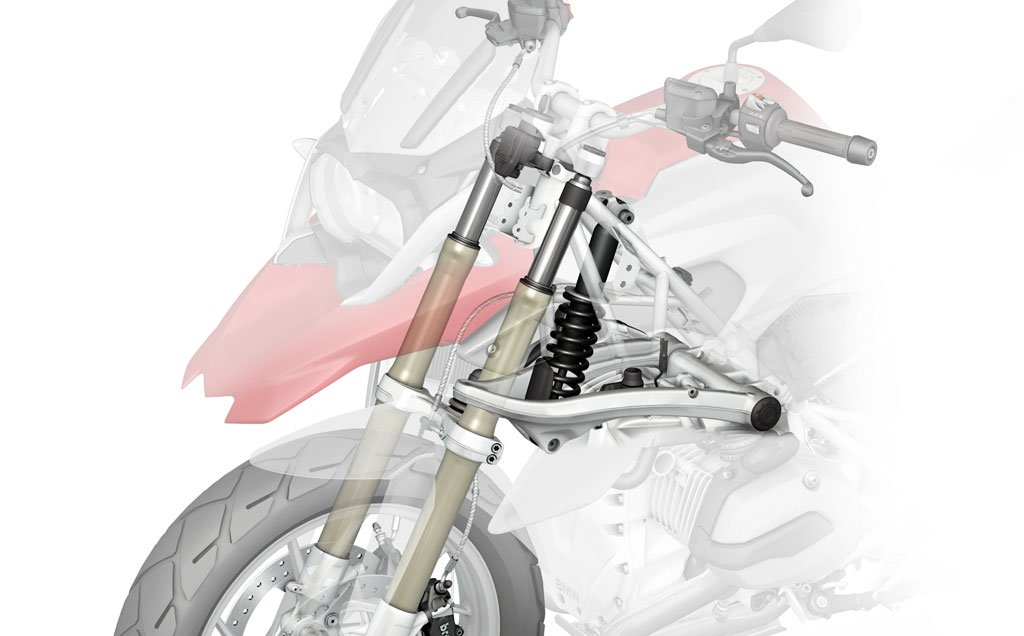
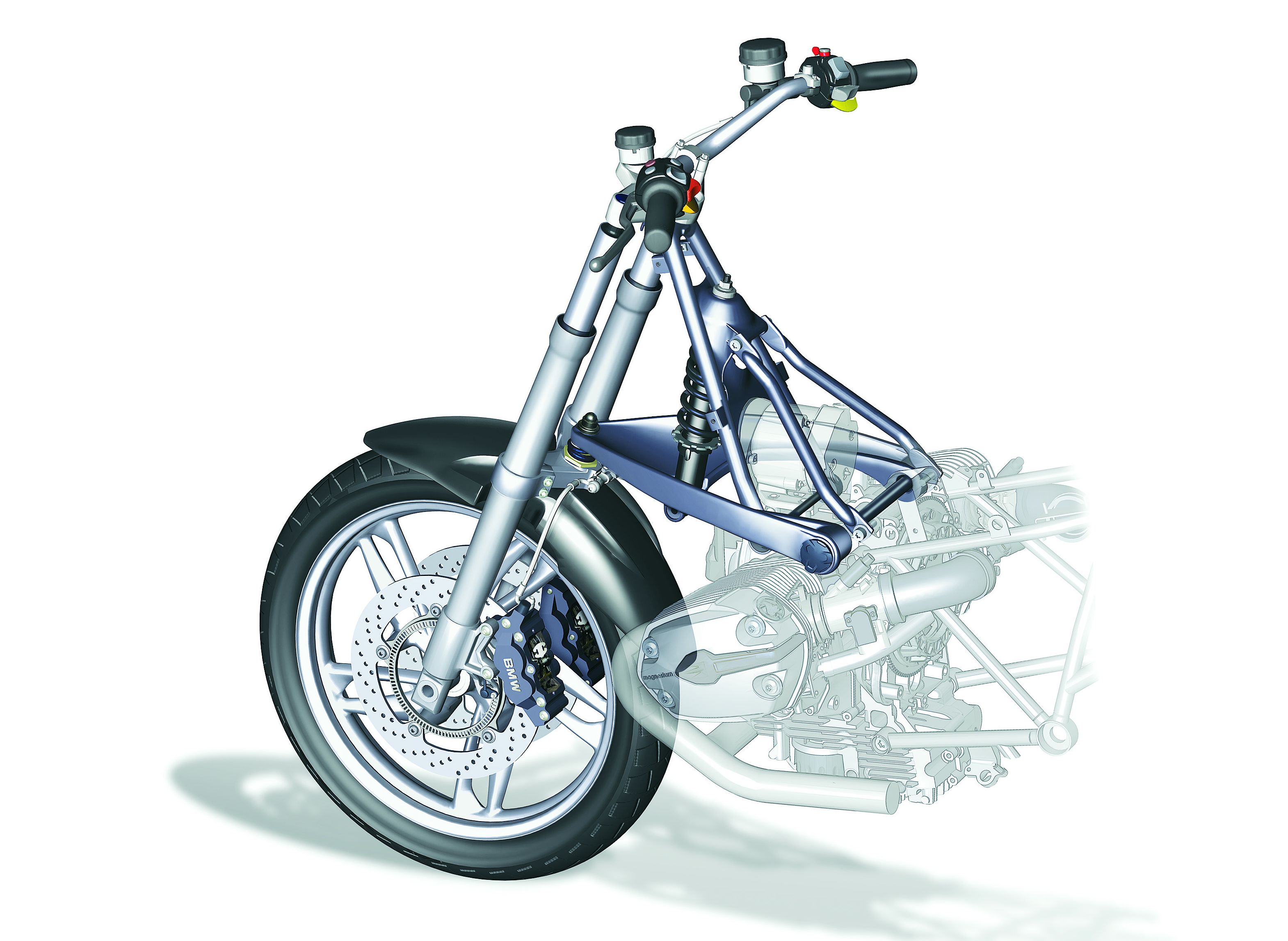
However, as much as having a “smart” suspension, there’s no going around the Telelever’s basic setup at the front. The spring and damper are moved out of the fork tubes and placed at a separate location. The spring and fork tubes are then connected via an A-arm, also known as a wishbone to the frame. BMW did this to separate the damping forces from the steering. We wondered why the set up isn’t used in performance bikes. A little research revealed some interesting answers.

BMW R 1200 GS Telelever set up

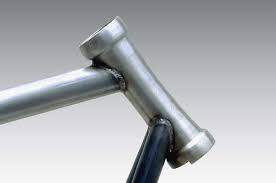
The traditional telescopic forks, whether “normal” or upside-down, suspend and also steer the bike. Let’s take a look at the picture below.

The forks connect to the frame via the headstock and forms a triangle. This makes the headstock as the weakest point in this connection, yet the forks and frame transmit loads into it.

Motorcycle frame headstock. This belongs to a custom bike and is very simple

Imagine the forces pushing up into the headstock from the rear tyre when accelerating, and the forces pushing up the fork under heavy breaking. At the same time, consider the bike’s and rider’s weights squashing down from above. All these forces threaten to split the fork-frame triangle like Jean-Claude Van Damme right at the headstock. This is why the front fork and wheel assembly comes off in some heavy accidents.

While this is happening, the rider steers the bike using the exact same components that are transmitting the forces to the headstock, frame, etc. Yes, those very same forces that threaten to tear the forks off the frame.

BMW S 1000 RR frame

What that means is the forces you feel at the handlebar are the total, the sum, of all these forces acting in unison, plus the cornering forces such as camber thrust, weight, rolling drag torques, etc. That’s not necessarily a bad thing since that’s what riders call “front-end feedback.” The darker side, on the other hand, is when the rider lets off the throttle or applies the front brake abruptly in mid-corner, consequently transferring weight to the front and pushing the bike wide. That self-righting torque (the bike standing up) usually panics riders, causing them to think that they’ve run out of grip hence not forcing the bike back down to make the turn. This is why one overshoots a corner.
2016 BMW S 1000 RR

The Telelever and Duolever remove those forces from the steering; although the former still leaves some load through to the headstock and frame, while the latter completely isolates steering from suspension duties. The Telelever is the reason why the R 1200 GS is so easy to manoeuvre even extremely slow speeds, as exhibited by the tests in the GS Trophy. The Duolever system fitted to the K 1600 full-dress tourer line-up gives the bikes surprisingly light steering, despite their heft.
Duolever on K 1200

By if the Telelever is that good, why isn’t it used on performance bikes, much less in competition, say MotoGP? Part of the feedback is missing at full lean. It may be okay for road riding where speeds and tyre loads are much lower but not in racing where the rider needs to listen to the tyres.

  • The Street Glide is the most popular of the Harley-Davidson touring models.
  • It is popular for its classic good-looks, especially that “bat wing” fairing.
  • Other than the design, the Street Glide is almost identical to the Road Glide.
  • But it seems to handle better than the Road Glide in corners.

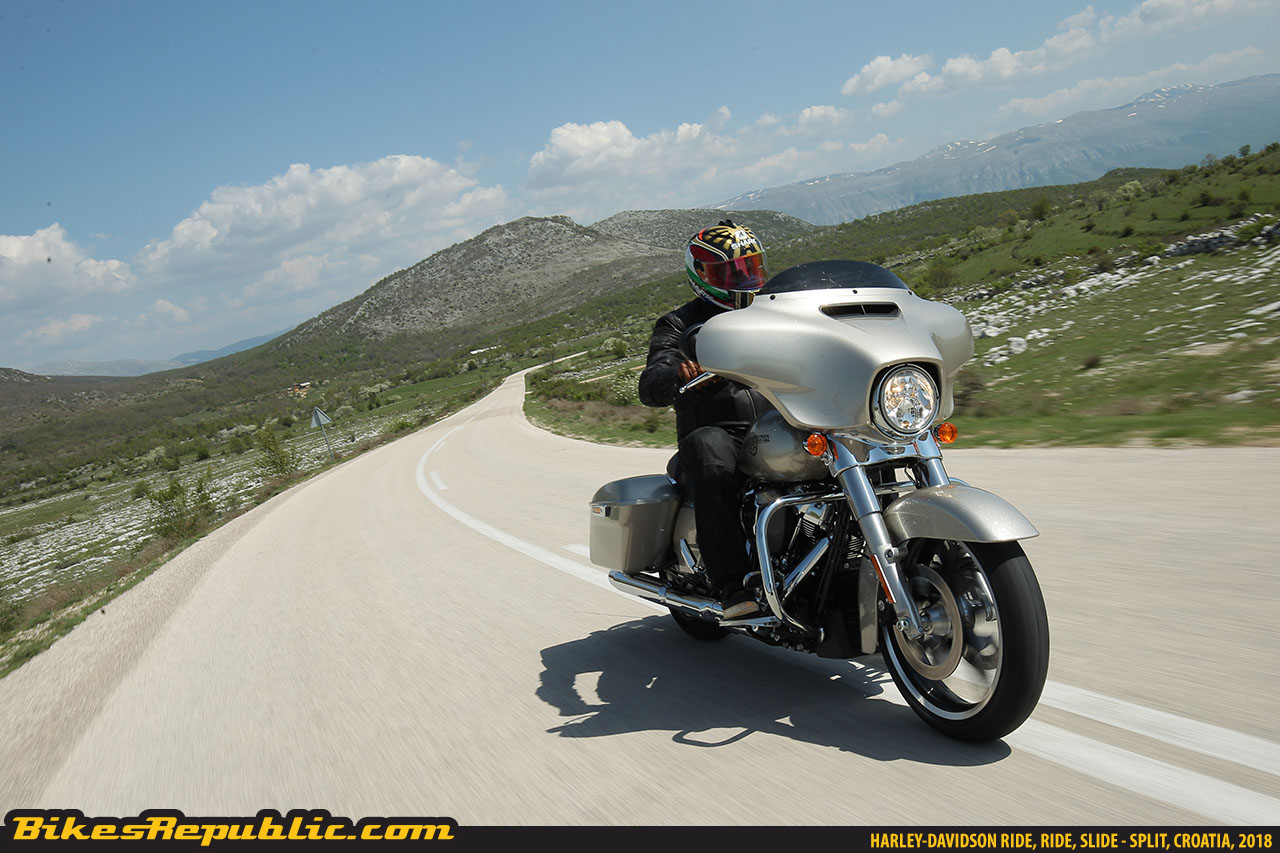
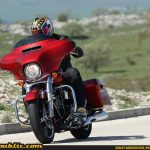
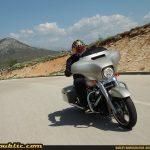
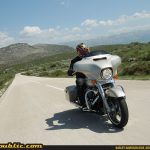
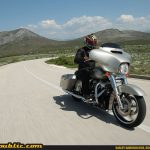
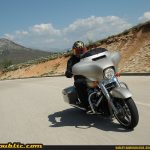
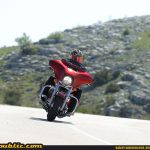
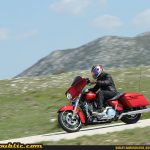
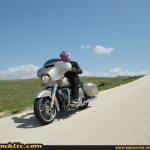
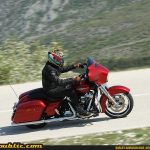
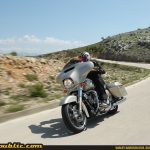
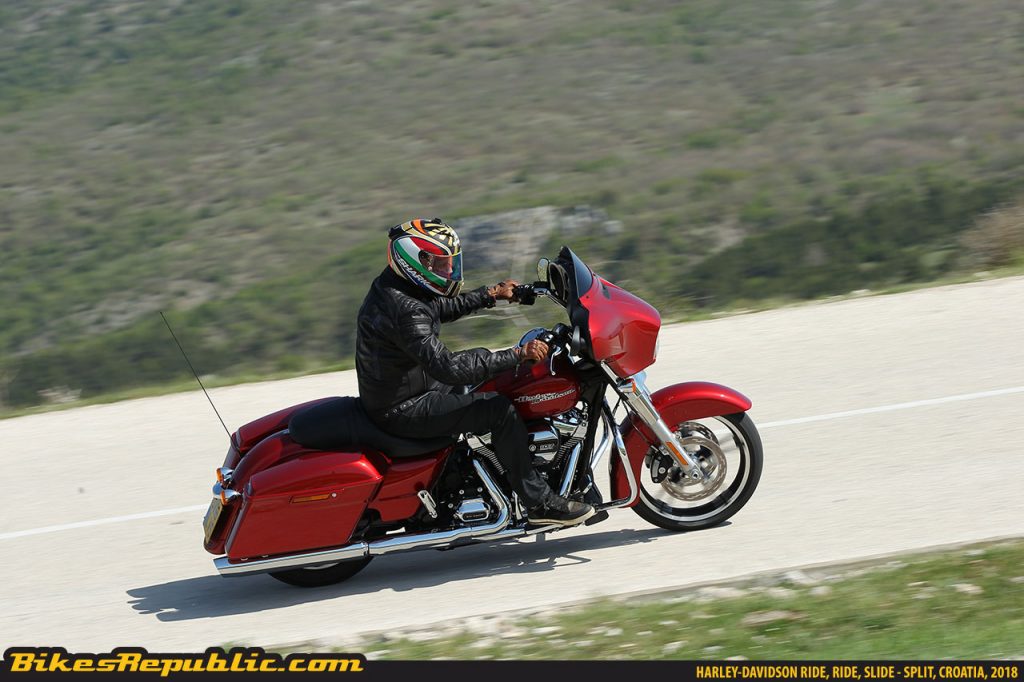
Jumping from the Road Glide to the Street Glide was a revelation of sorts. I have never been a fan of the latter, but have to admit that it rides pretty damn good. But before going forward, below is a video review of the bike.

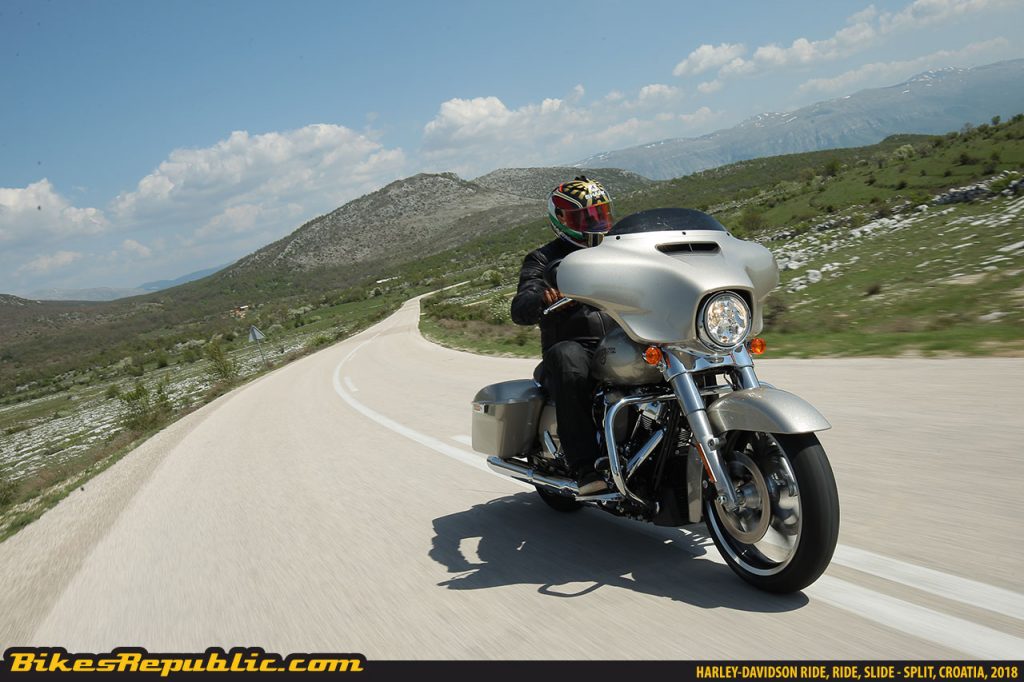
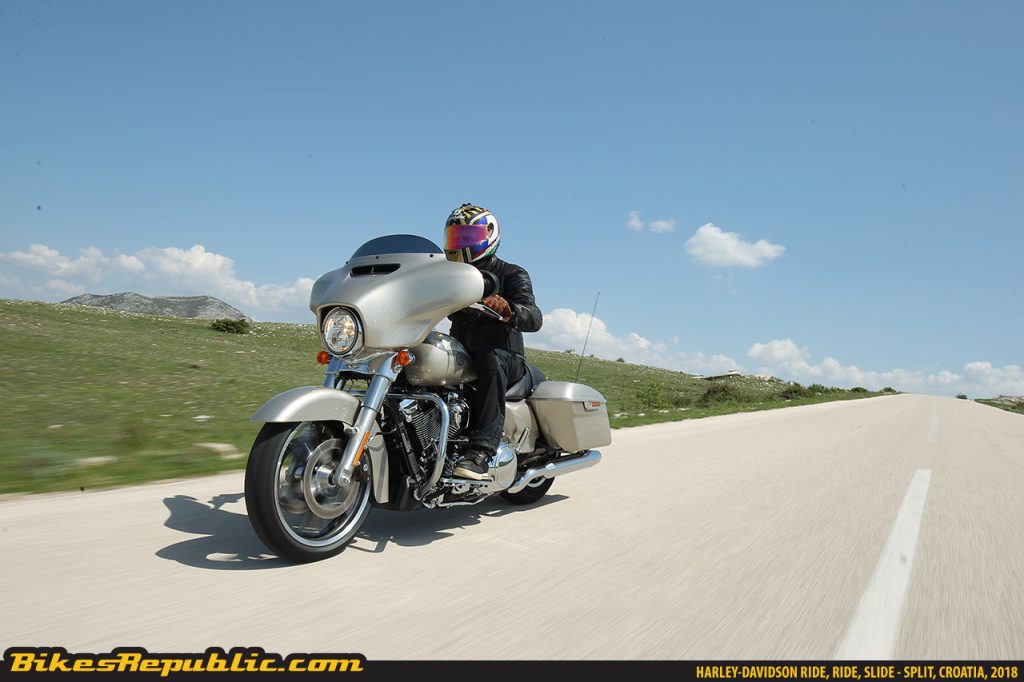
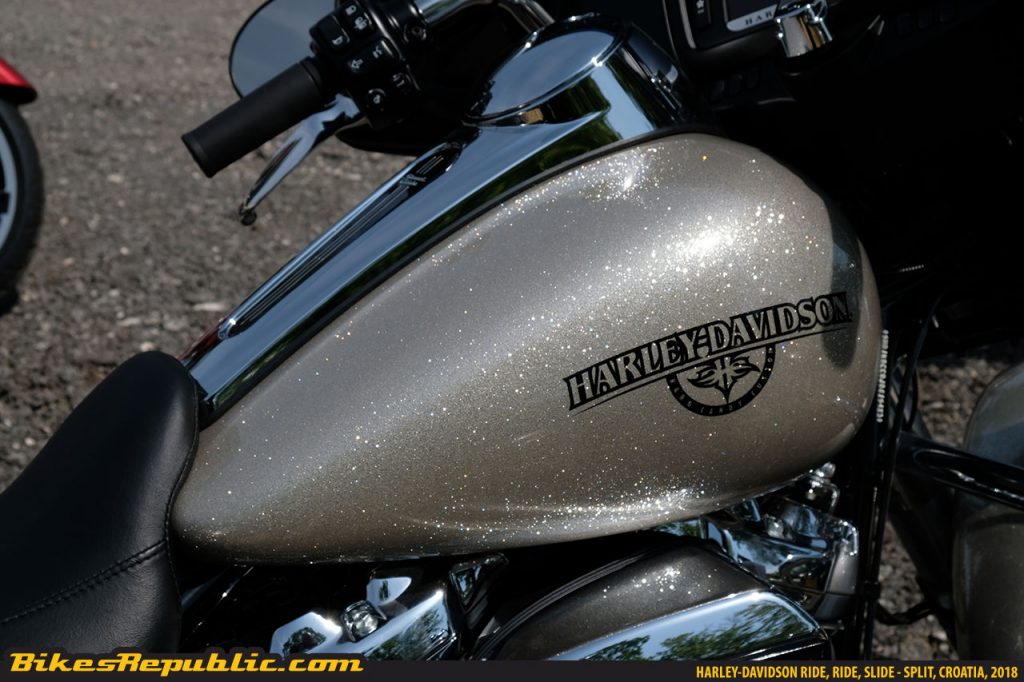
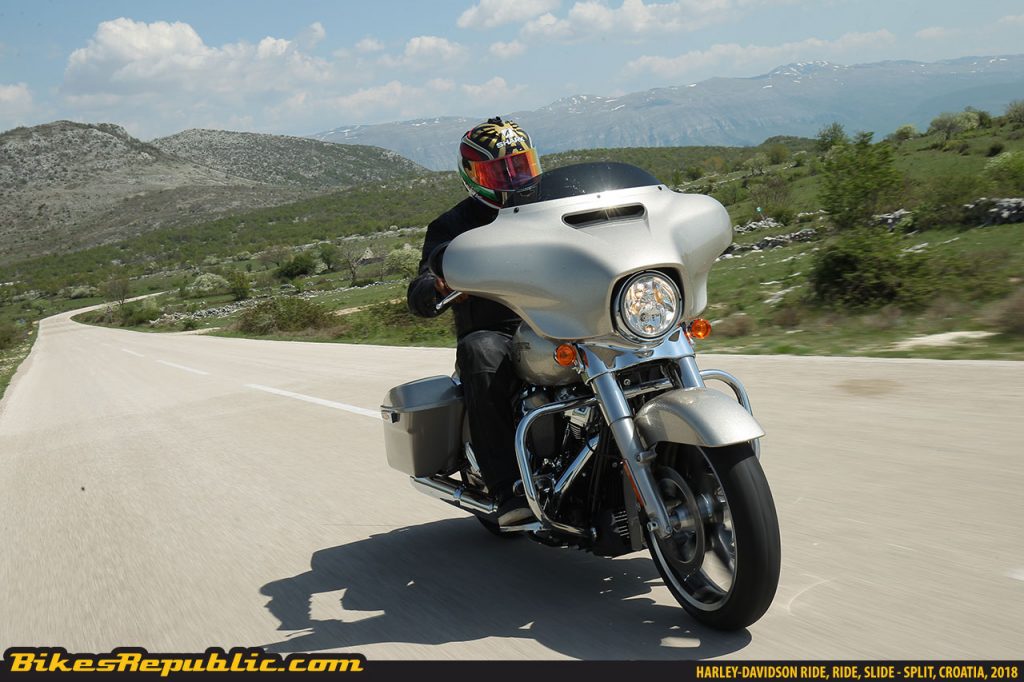
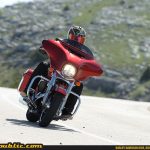
The classic rounded headlight together with the fork mounted fairings are almost unchanged since it was first introduced back in 1969. The fairing was and is still known as the “batwing”.

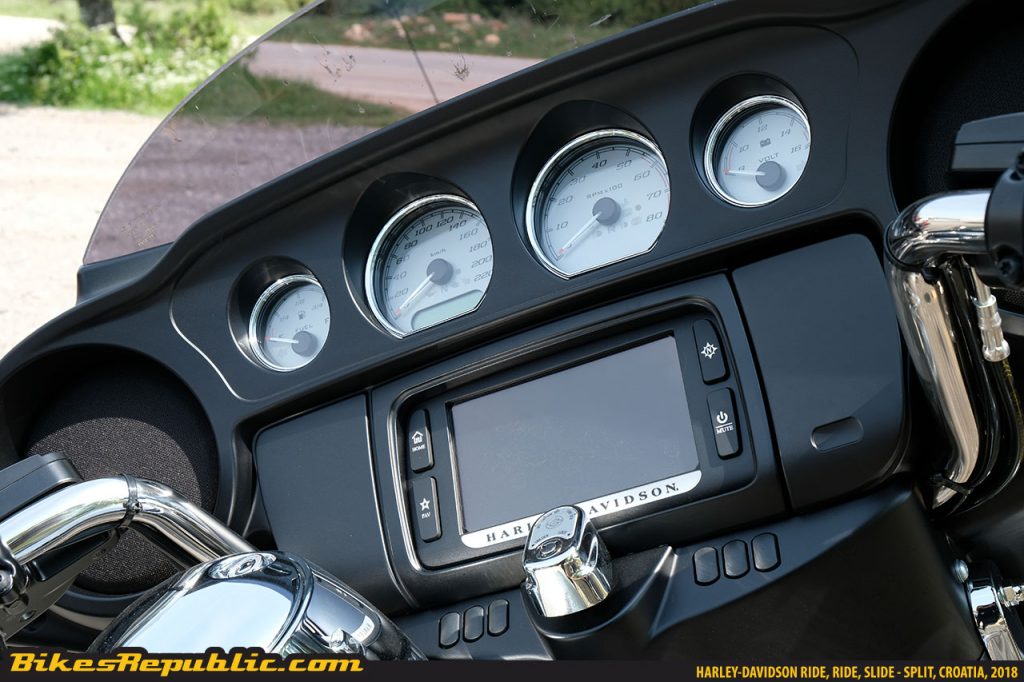
That fairing soon became iconic, and while earlier models were removeable, later versions were not as the all the necessary meters were moved onto the fairing, which is still the way it is now.

Good looks are subjective, “beauty in things exists merely in the mind which contemplates them” said someone smart named David. So even though I may prefer the Road Glide, it is the Street Glide that won the opinion of the day.

“It looks great and handles great as well,” were some of the opinions over dinner. Comments about the sitting position as well as the front end feel were shared during lunch and dinner. If you read part 1 of this review (you can read it here), you may remember that I have been a fan of the Road Glide.

And when it comes to appreciating the two Glides, there seems to be an accord of sorts that suggests you must choose either model, you may not like them both. Don’t believe me? Try looking up a forum on HD’s.

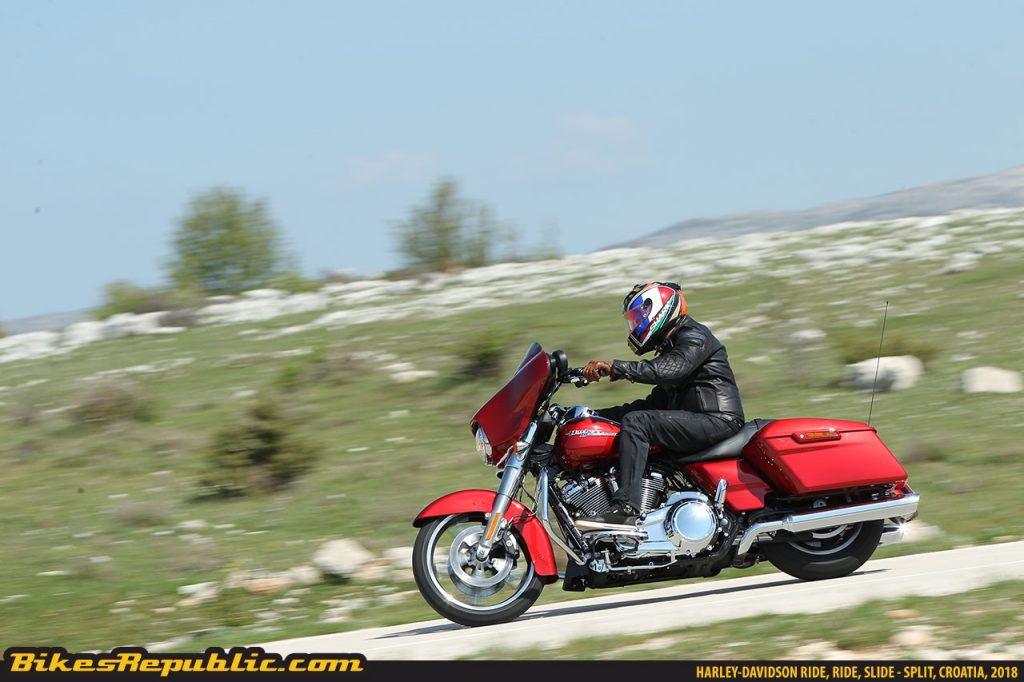
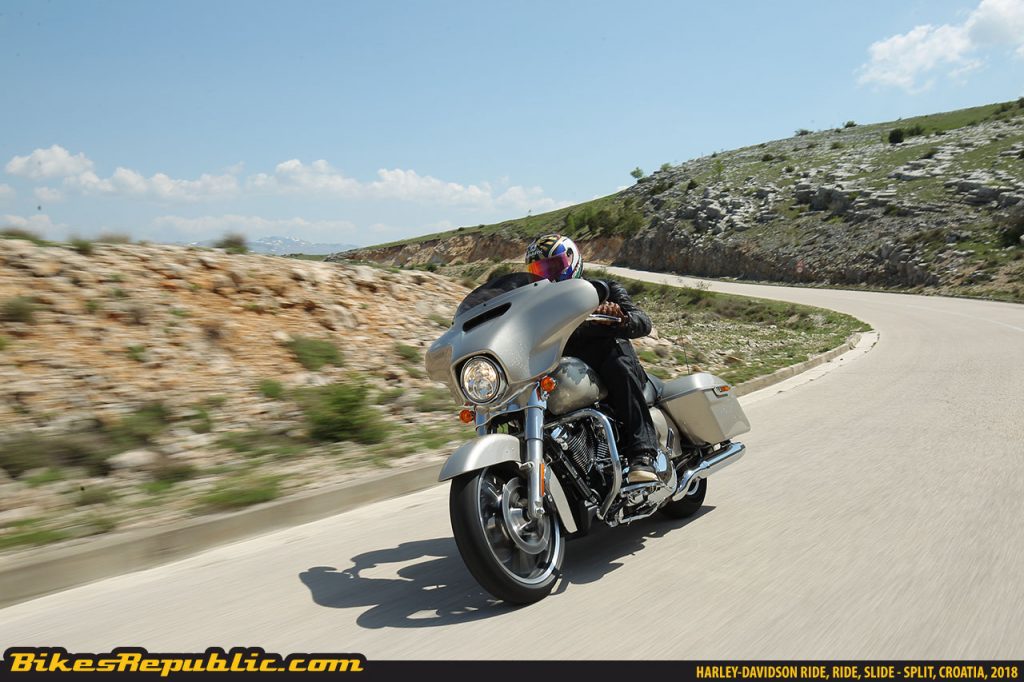
But I have a problem, I may be a fan of the RG, admittedly the Street Glide was a lot more confident in the corners. You sit more upright as compared to the RG, and your legs are closer to you. You’re generally in a more commanding sitting position than the Road Glide, which is more laidback and relaxed.

Another significant difference between the SG and the RG other than the sitting position is the fairing and the way it is mounted.

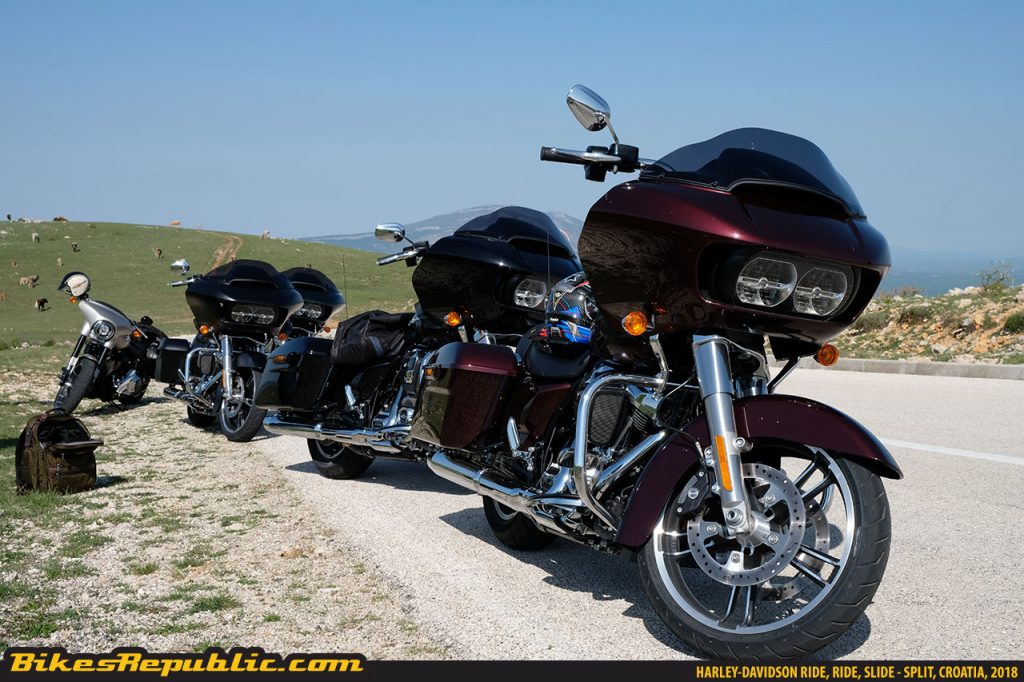
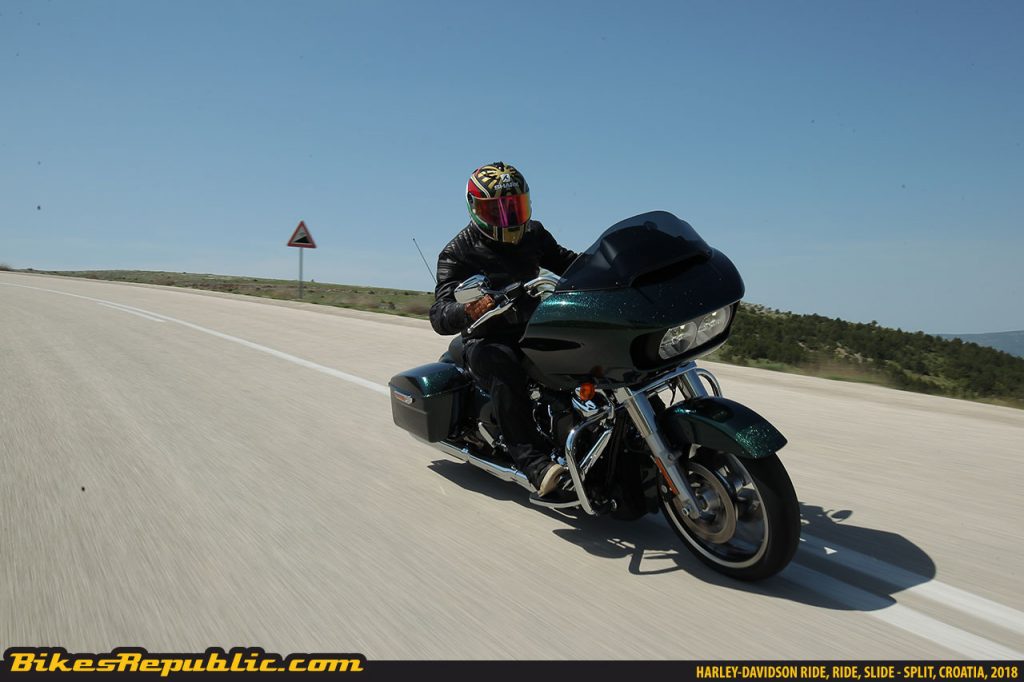
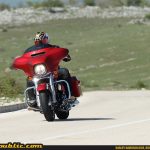
The RG has its fairing mounted onto the frame of the bike which then frees up the front end from additional weight, giving the front end a lighter feel, note how the lights point straight ahead though the wheel is turned (above).

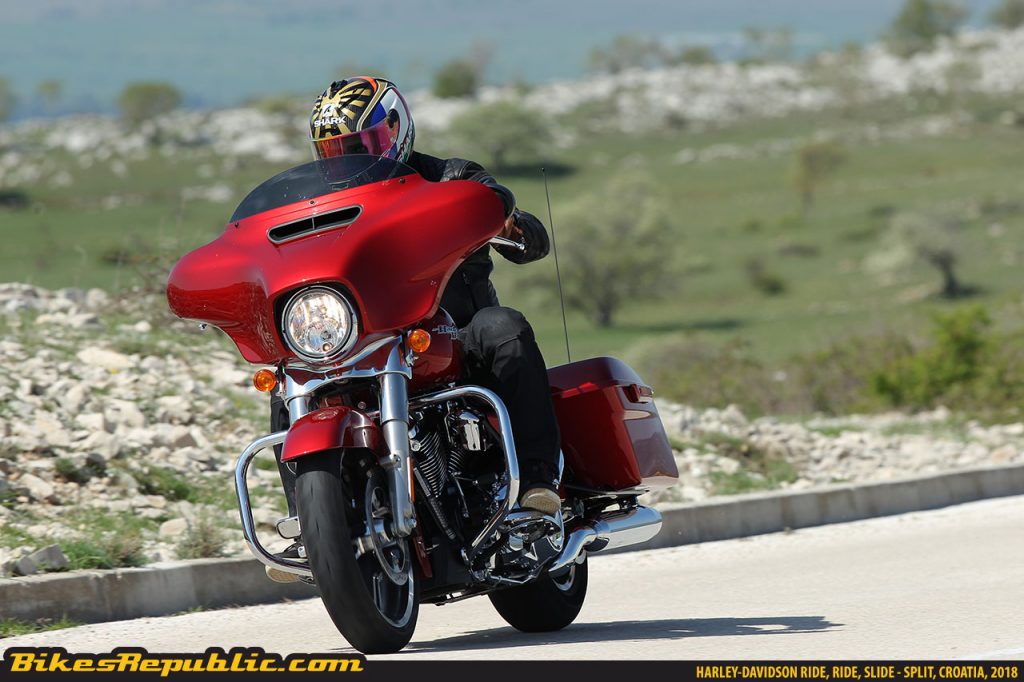
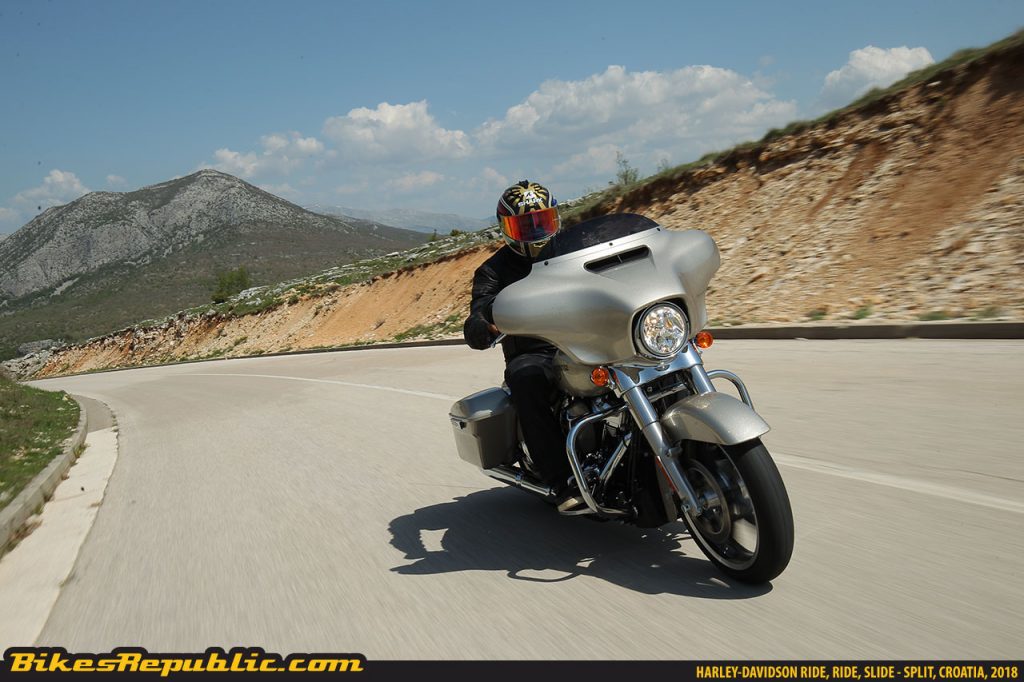
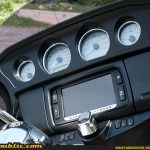
The SG on the other hand has its fairings mounted onto the forks. The weight of the fairings together with everything else like the meter panels and the entertainment system then bogs down the front end (above). Somehow, that works to the SG’s advantage as the front end feels more planted when throwing it into a corner.

But truth be told, I did not spend as much time with the SG as I would have liked to. Before the ride, we were told that we could switch bikes at the first photo stop, but by then everyone had become so used to the bikes they started off with; phones synced to the entertainment system and their stuff comfortably in the boxes that the only time I ever rode the SG was for the photoshoot. I spent a few hours riding the RG but just a few minutes riding the SG, unfortunately.

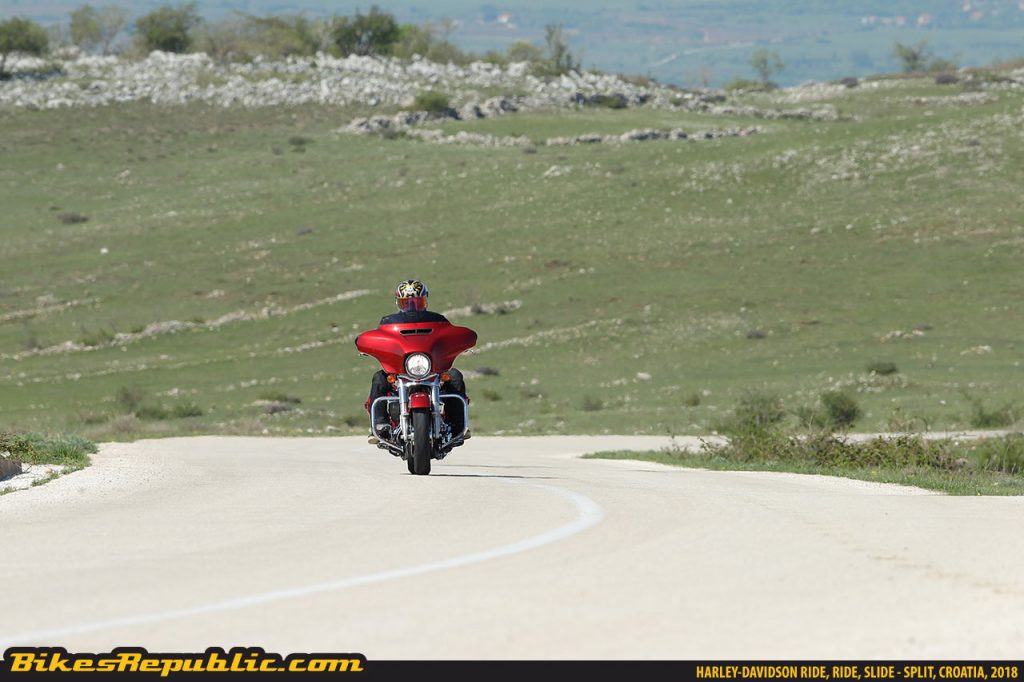
However, the purposeful handling of the SG is apparent from the moment you take off. And because our shoot location was riddled with corner after corner, fast and slow, it was perfect testing grounds for the SG.

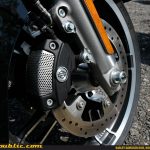
It took just a few corners to tell that it is more obliging in corners, eager to lean in and braking felt better too. That is probably because the SG is lighter, but just by about 11kg. The handlebars are slightly different as well, but not enough to make a big difference in overall handling of the bike.

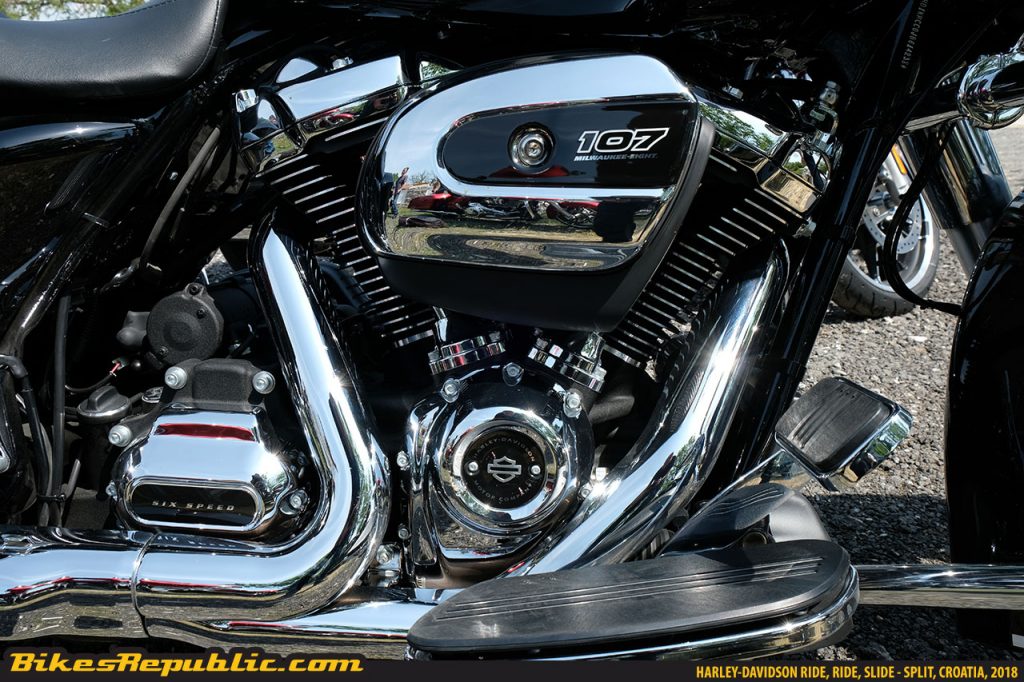
Even in the power department both bikes are the same. The SG too is powered by the same 1745cc Milwaukee-8 engine that produces the same 150Nm of torque from 3250rpm. And is mated to the same 6-speed gearbox.

So when it comes to picking one over another, the biggest difference is of course the design of the bikes. The handling is of course different, and that is because of the seating position and the way the fairings are mounted. Other than that, both are perfectly identical bikes (watch our video review of the Road Glide, above).

The RG feels a lot more planted and confident on the highways, and the bigger fairing does a better job at keeping the wind away from you as well. The SG feels better in the corners. Both have massive power. As for the overall feel, some people prefer the compact feeling which the SG provides, while others like me prefer a roomier feel with the meters placed further away, as is the case with the RG.

The roads we were riding on in Croatia seemed to be better suited to the SG, and there were moments where the RG was struggling to keep up. But if I had to choose, it would be the RG. If I wanted something fast and nimble in corners, I would get something better suited to corner carving, the Harley-Davidson touring models are suited for leisurely, comfortable riding and it is in that aspect that the Road Glide outshines the Street Glide.

The Street Glide is now available in Malaysia at RM174,700, which is the same price as the Road Glide.

Watch the highlights from our ride in Croatia in the video below:

Archive

Follow us on Facebook

Follow us on YouTube