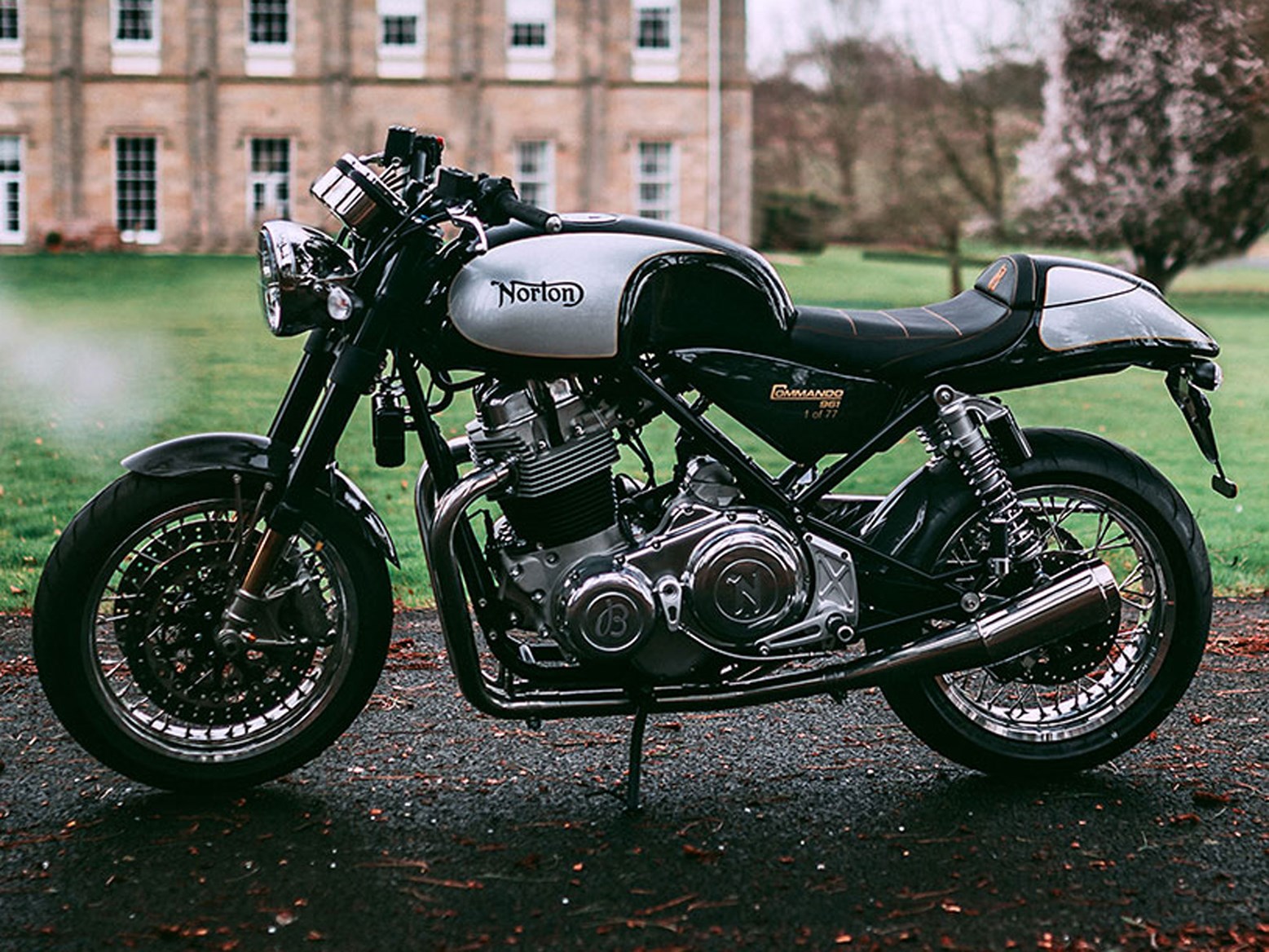
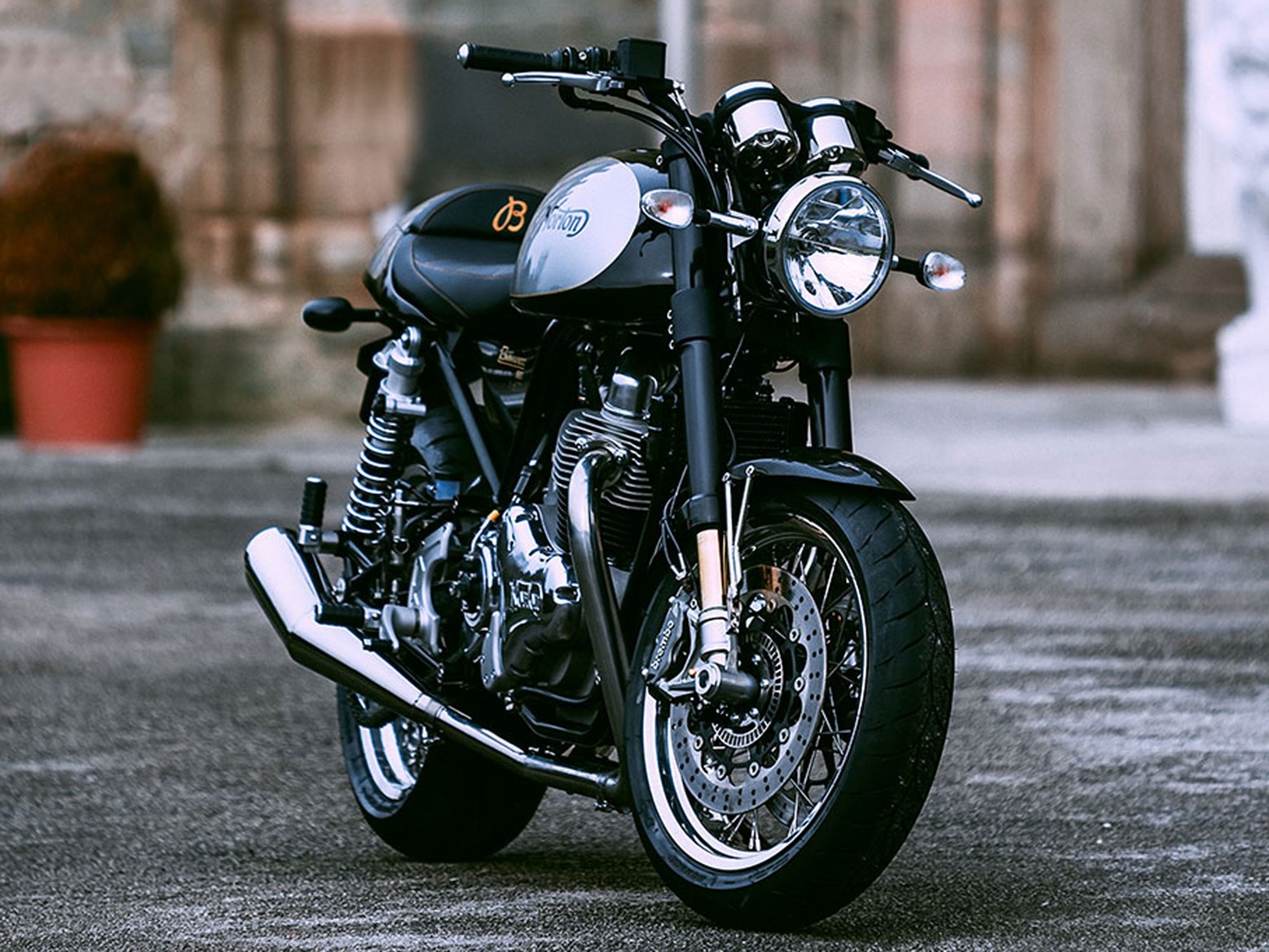
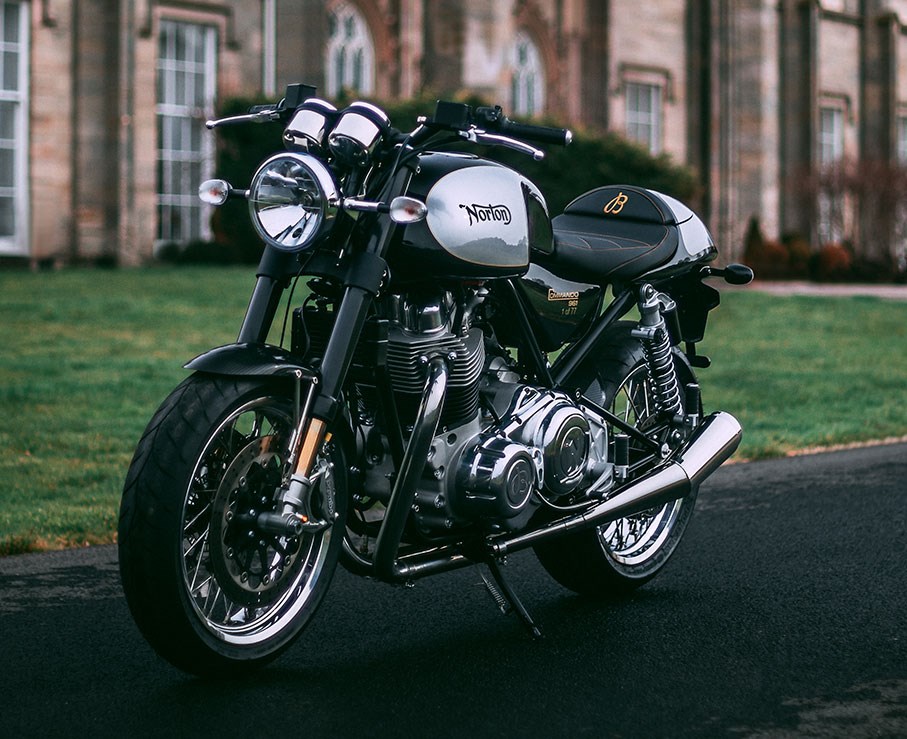
Norton teams up with Breitling to create the limited production Norton Breitling Sport.
Only 77 will be built.
Both companies have long heritage in their respective fields.
Norton is the offensive as the owners seek to bring the brand up to glory. They have just collaborated with luxury watchmaker Breitling to produce the Norton Breitling Sport.
The model is based on the Commando 961. Only 77 examples will be built, so each bike will be numbered. The Breitling Sport will er… sport a different seat, paint and trim.
Since Breitling is a timepiece maker, we can expect a line of watches to match the special model. Both brands have strong heritage: Norton started building bike parts in 1898 before venturing into building complete motorcycles in 1902. Breitling, on the other hand, was founded in 1884 by Léon Breitling.
Norton boss Stuart Garner said of the partnership: “I’ve always said that the key to a company’s success is to let the brand be the brand. This has been essential both at Norton Motorcycles and Breitling. We haven’t tried to change the nature of our brands or deny their histories. In fact, we revel in those histories and take inspiration from them while focusing on the future.”
Georges Kern, Breitling’s CEO says that his brand’s parallels with Norton Motorcycles are striking. “Both companies are innovative, entrepreneurial and have powerful legacies.” he says. “At the same time, we are looking ahead toward what we at Breitling call ‘our legendary future’.”
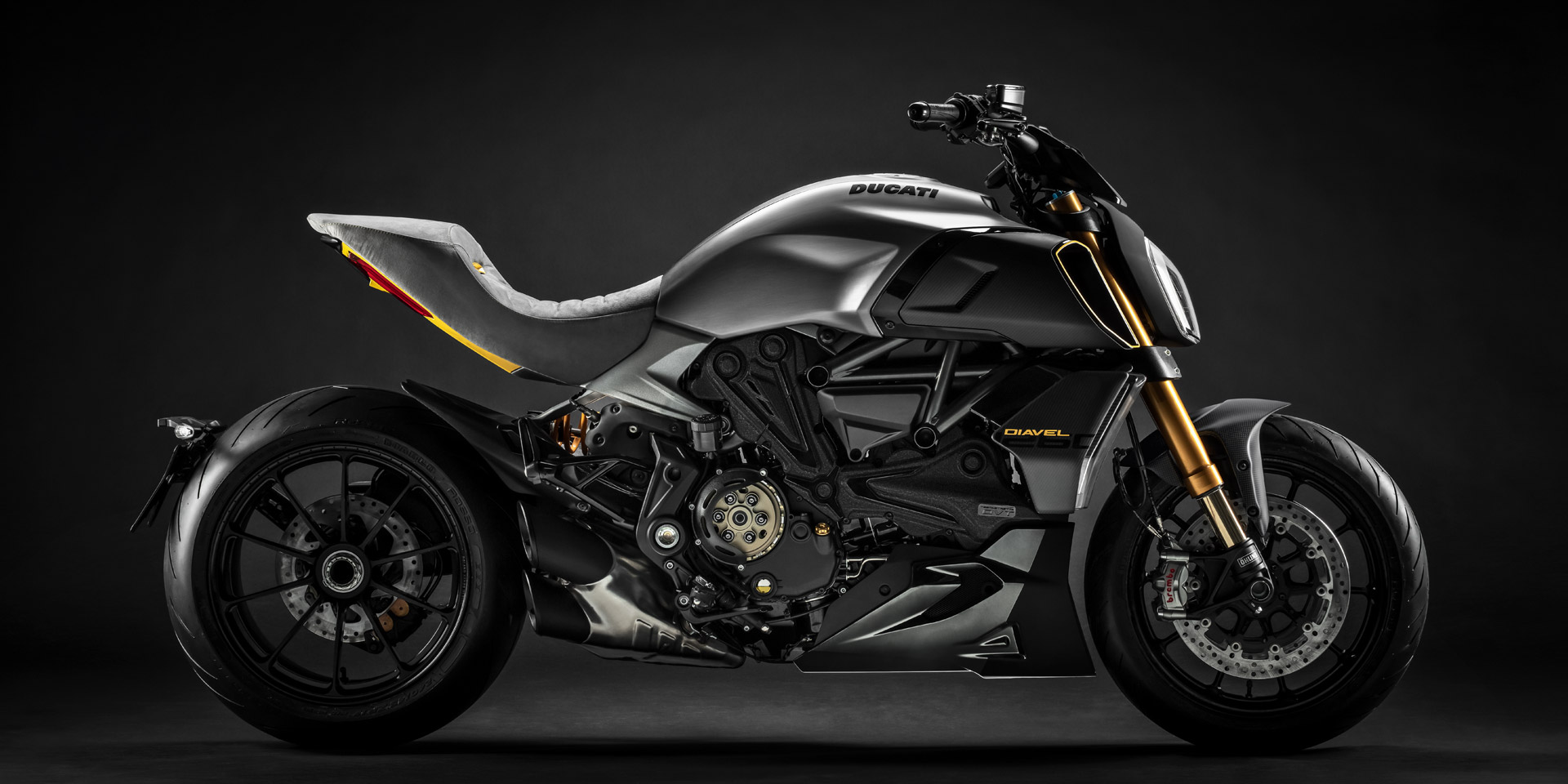
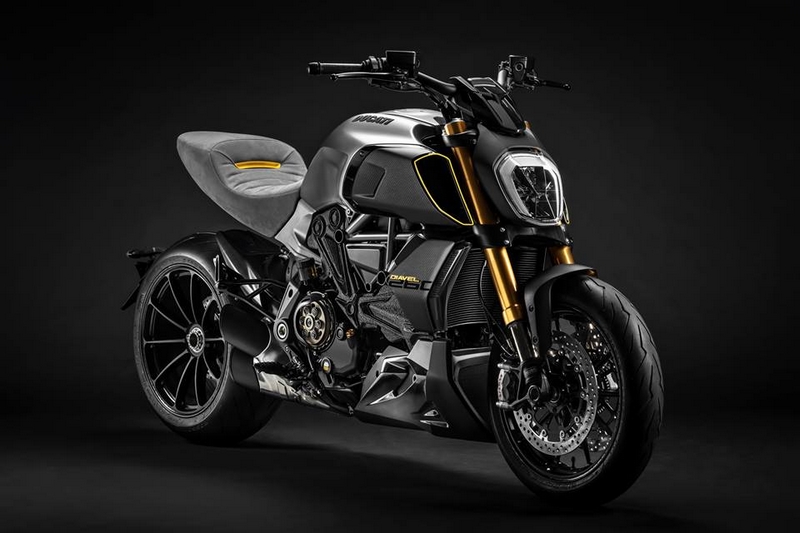
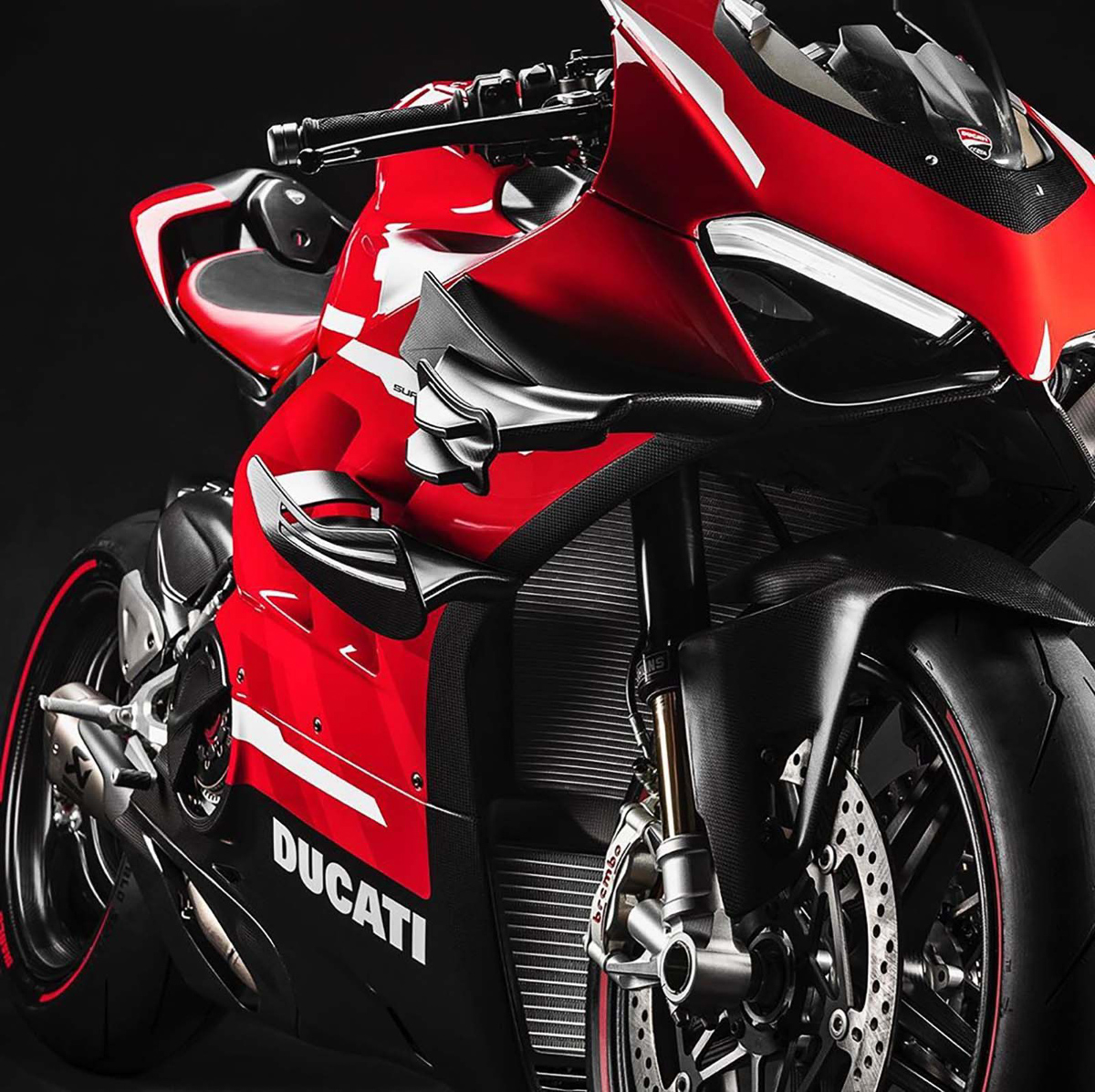
The Ducati Diavel 1260 S Materico is a design concept in conjunction with the Milan Design Week.
It was born from the meeting of designers Tom Dixon and from Ducati, Lamborghini, Pirelli and VW.
It is a one-off special and is displayed in designer Tom Dixon’s restaurant.
The Ducati Diavel 1260 S Materico is a design concept in conjunction with the Milan Design Week.
Instead of focusing on performance upgrades, the Materico highlights textures and materials. As such, the side panels are made from carbon fibre and lined with yellow trim; the seat cover is suede with yellow trim; black exhausts and new 10-spoke wheels.
The bike is a one-off creation. It is on display at The Manzoni in Milan. The establishment is a restaurant and showroom created by British designer Tom Dixon. The bike was born after a meeting between Dixon and designers including Ducati’s Andrea Ferraresi, Lamborghini’s Mitja Borket, Pirelli R&D Director Piero Misani and former VW design department head Walter de Silva.
Ferraresi said: “We wanted to pay homage to the incredibly artistic and creative Milan Design Week by making our Diavel 1260 more audacious and original than ever. The Diavel 1260 Materico brings out all the vividness of the used material and the painstaking attention to detail that, together with high-tech components, makes this bike such an effective blend of form and function.”
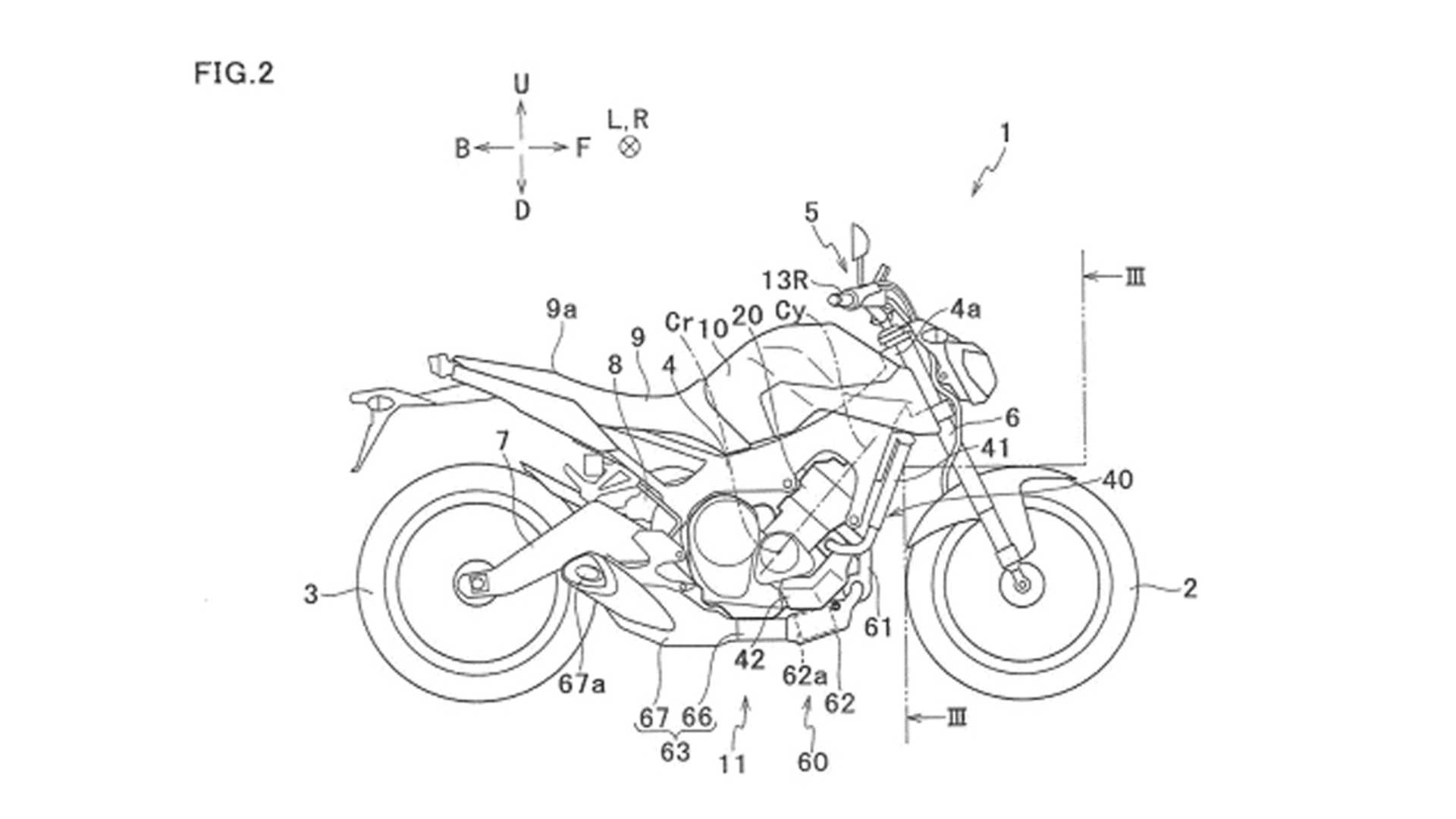
Patent filings show that Yamaha is working on producing a turbocharged twin.
Yamaha seeks to lower exhaust emissions by utilizing a turbo.
A turbo increases intake efficiency by forcing in more air.
Patent filings show that Yamaha is working on producing a turbocharged twin.
However, Yamaha’s turbocharging idea is to beat the Euro 5 emissions standard. To that end, the manufacturer seeks to use a smaller engine to reduce fuel consumption, while the turbo ups the power. Forced induction increases intake efficiency i.e. forces in more air.
The patent also shows that Yamaha is concentrating their effort in the turbo’s wastegate. The wastegate is a device which vents access pressure in the turbo’s compressor. In the patent, Yamaha aims to optimize the wastegate’s actuator to increase the “degree of freedom in the layout of the catalyst.” In layman terms, it means they can fit a bigger catalytic converter.
Turbocharging is not a new to the world of motorcycling. All Big Four manufacturers flirted with forced induction in the 80s. However, they were interested in coaxing more horsepower from smaller engines instead of being concerned with emissions. In the end, issues with turbo lag and cooling killed the turbo bikes.
Yet, we have the supercharged Kawasaki H2 30 years later.
Almost all diesel vehicles use turbocharging to force in more air and clean up exhaust emissions. The bonus is of course, more power and torque from the engine. The manufacturers overcome turbo lag by either utilizing dual turbochargers are turbochargers with variable geometry vanes (VGT). That is why Kawasaki opted for a supercharger instead. Let’s hope Yamaha can address the issue in their own way, too.
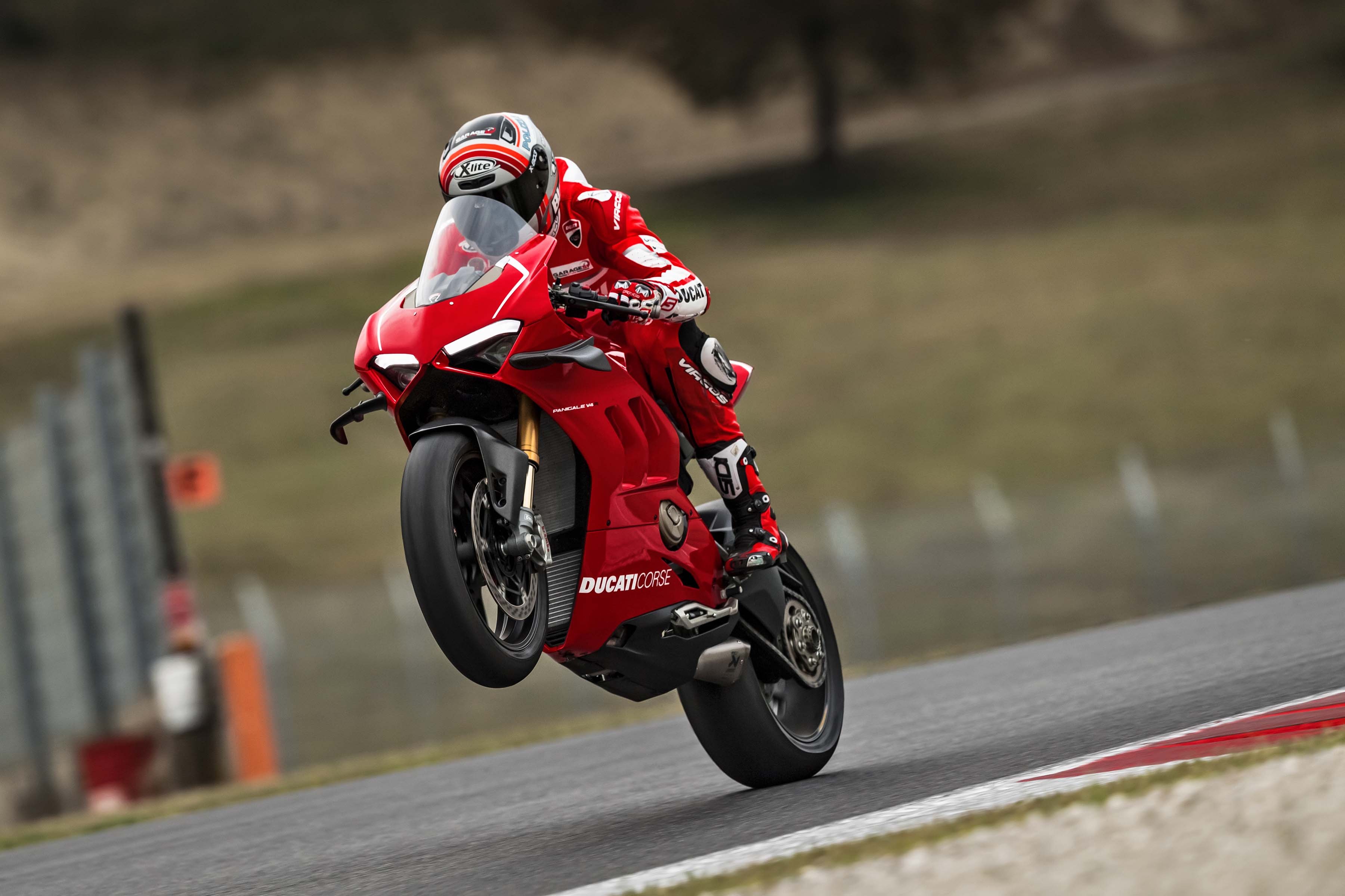
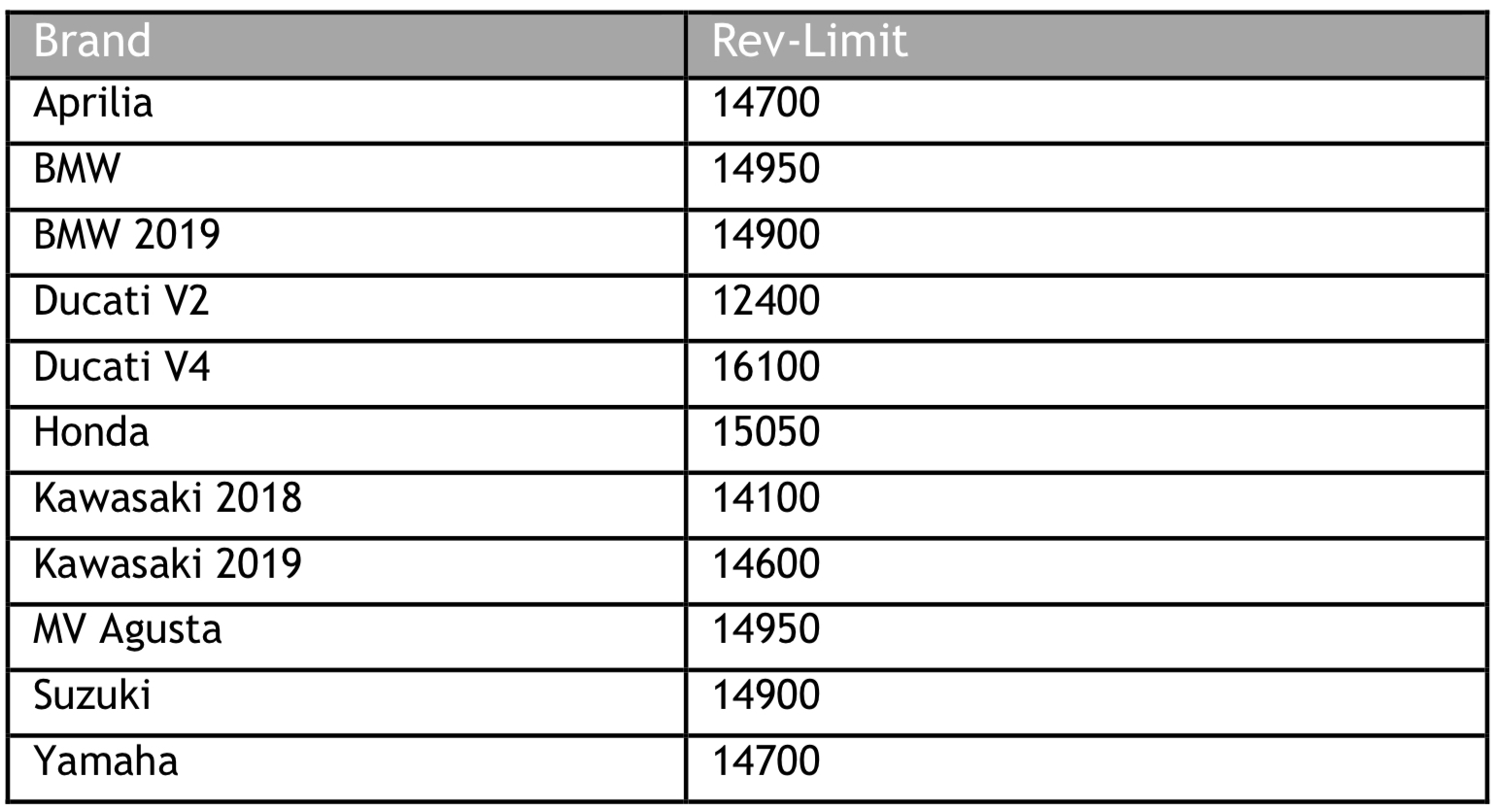
The Ducati Panigale V4 R will lose 250 RPM in WorldSBK 2019.
While the Honda CBR1000RR will gain 500 RPM.
Ducati and Kawasaki are also not allowed to bring engine upgrades to their bikes.
It’s bound to happen as per Dorna and FIM’s rules. The Ducati Panigale V4 R is set to lose 250 RPM off its peak from the next round in Assen.
The decision was made after Alvaro Bautista won the first six races and three Superpoles of the season on the Panigale V4 R. Besides docking its peak RPM (to reduce peak horsepower), Ducati will also lose their concession to bring further engine upgrades for the rest of the year. Consequently, Bautista and teammate Chaz Davies, as well as Eugene Laverty will have to compete on a bike with the same specs as it started the season.
A reduction of 250 RPM will not make a difference to Bautista. In fact, his Aruba.it Ducati team had tested a bike with 250 RPM less in Aragon earlier.
On the other hand, the Kawasaki Ninja ZX-10RR will not have its revs cut but they are also not allowed the concession to upgrade their engine, since the gap between Ducati and Kawasaki are only 7 points (below the 9-point threshold).
Other manufacturers are allowed concessions, including BMW and Yamaha (who are racing), as well as Aprilia, Suzuki and MV Agusta (who are not racing).
As for Honda, the CBR1000RR will receive a 500 RPM upgrade. The increase will take effect over two rounds i.e. 250 RPM at Assen and another 250 RPM at Imola, Italy.
Such “revisions” is not new. Kawasaki had their ZX-10RR’s rev limit cut last year after Jonathan Rea’s dominance. The idea is to keep the field competitive for close-in racing.
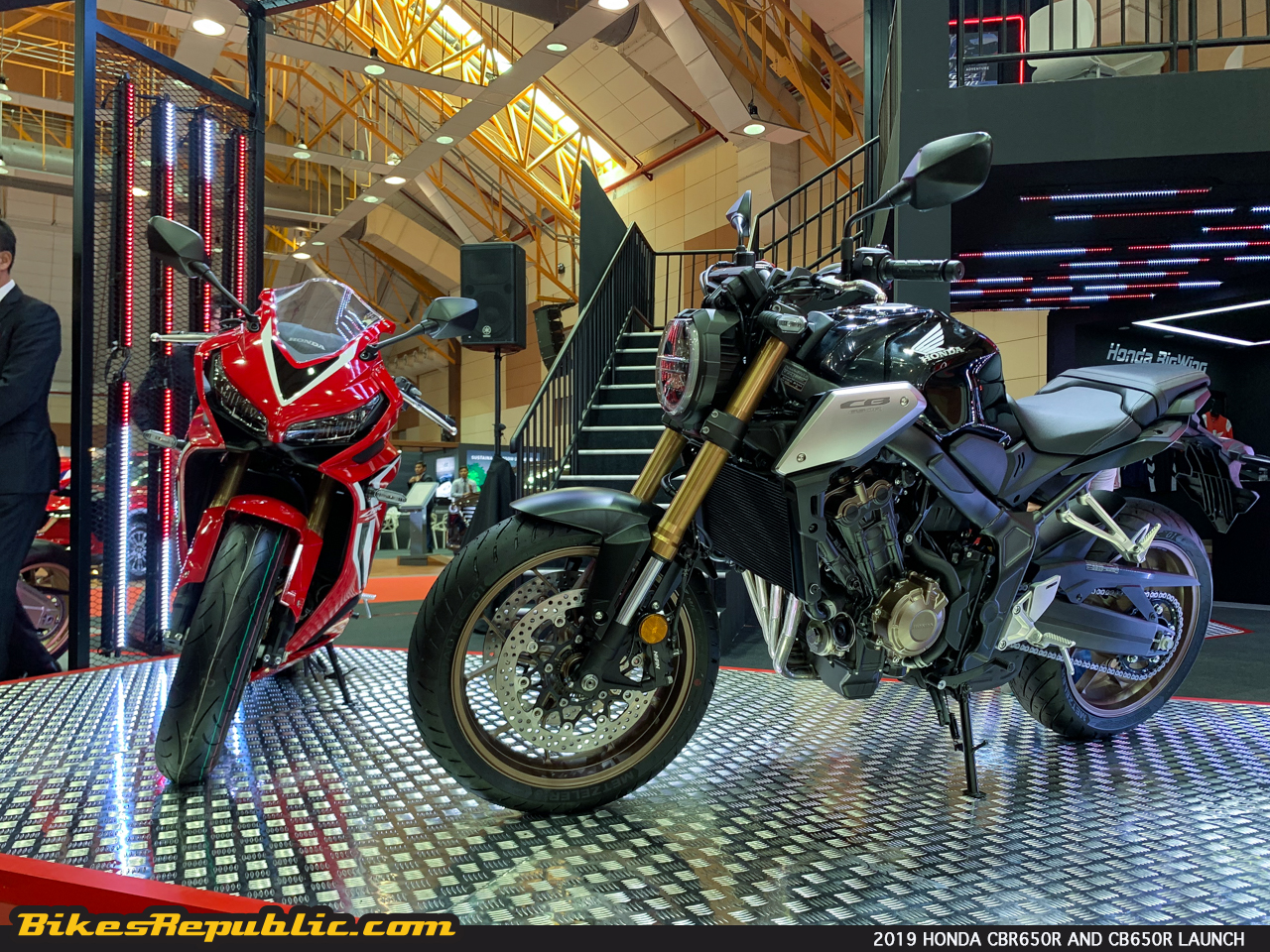
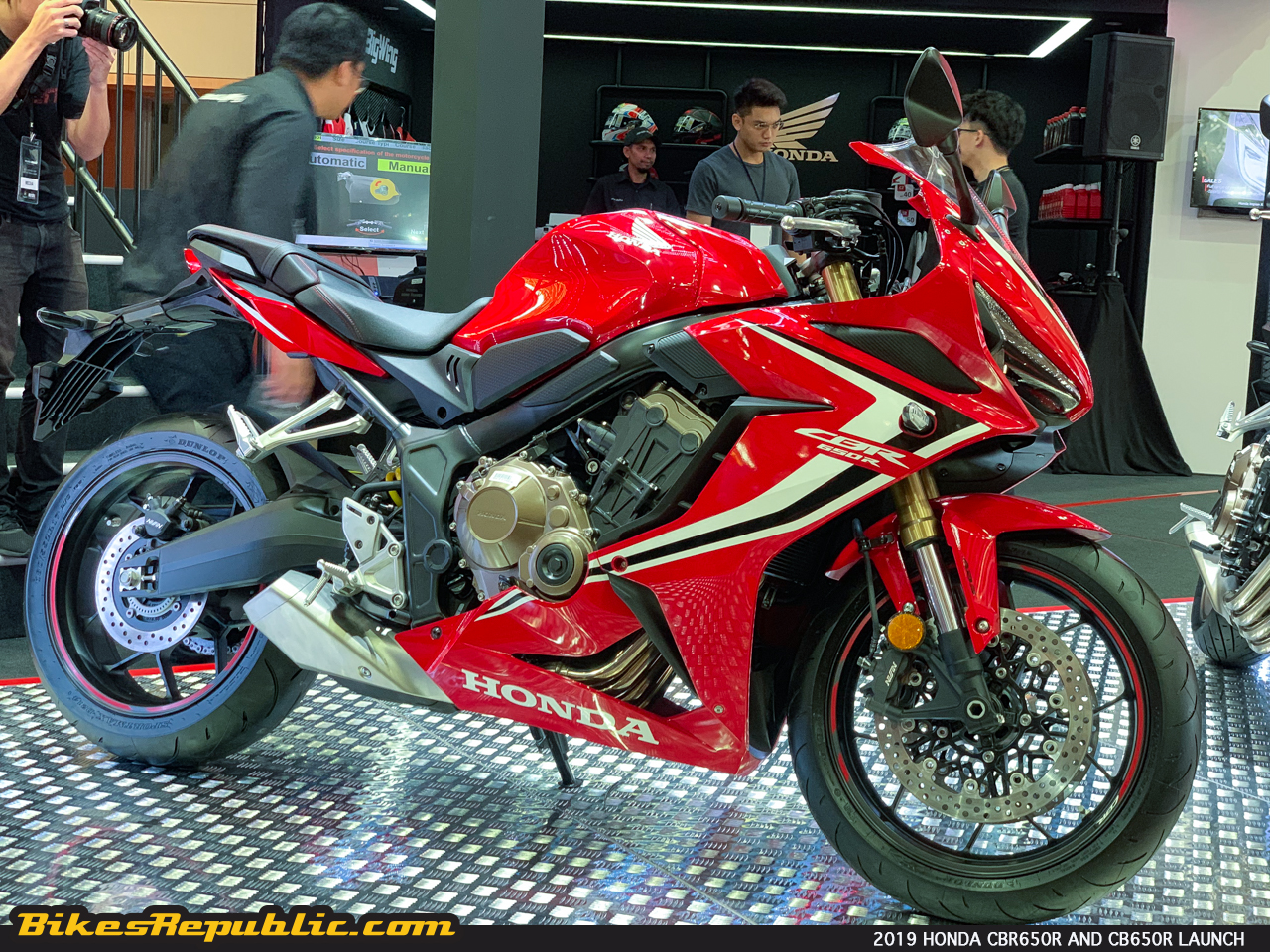
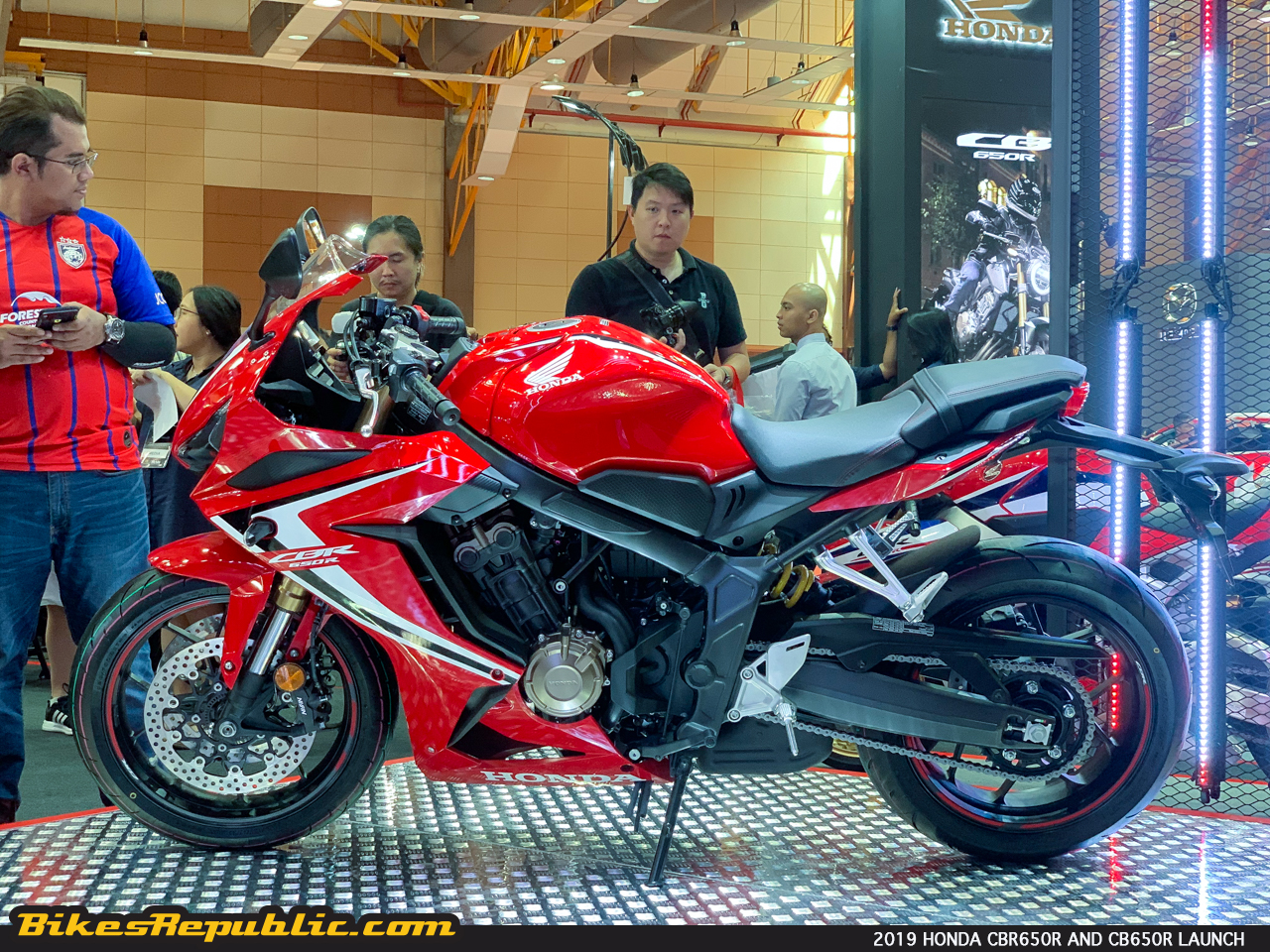
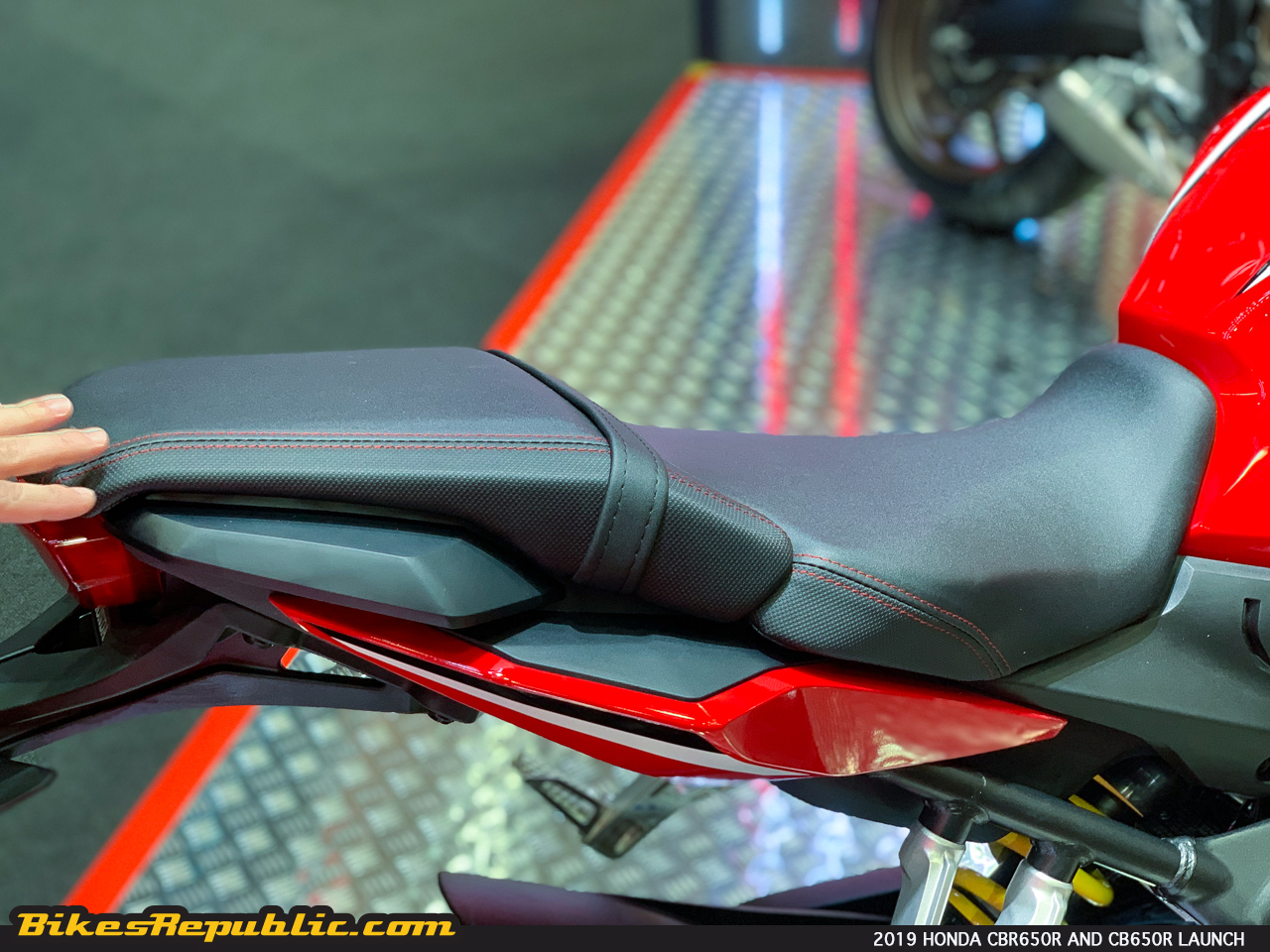
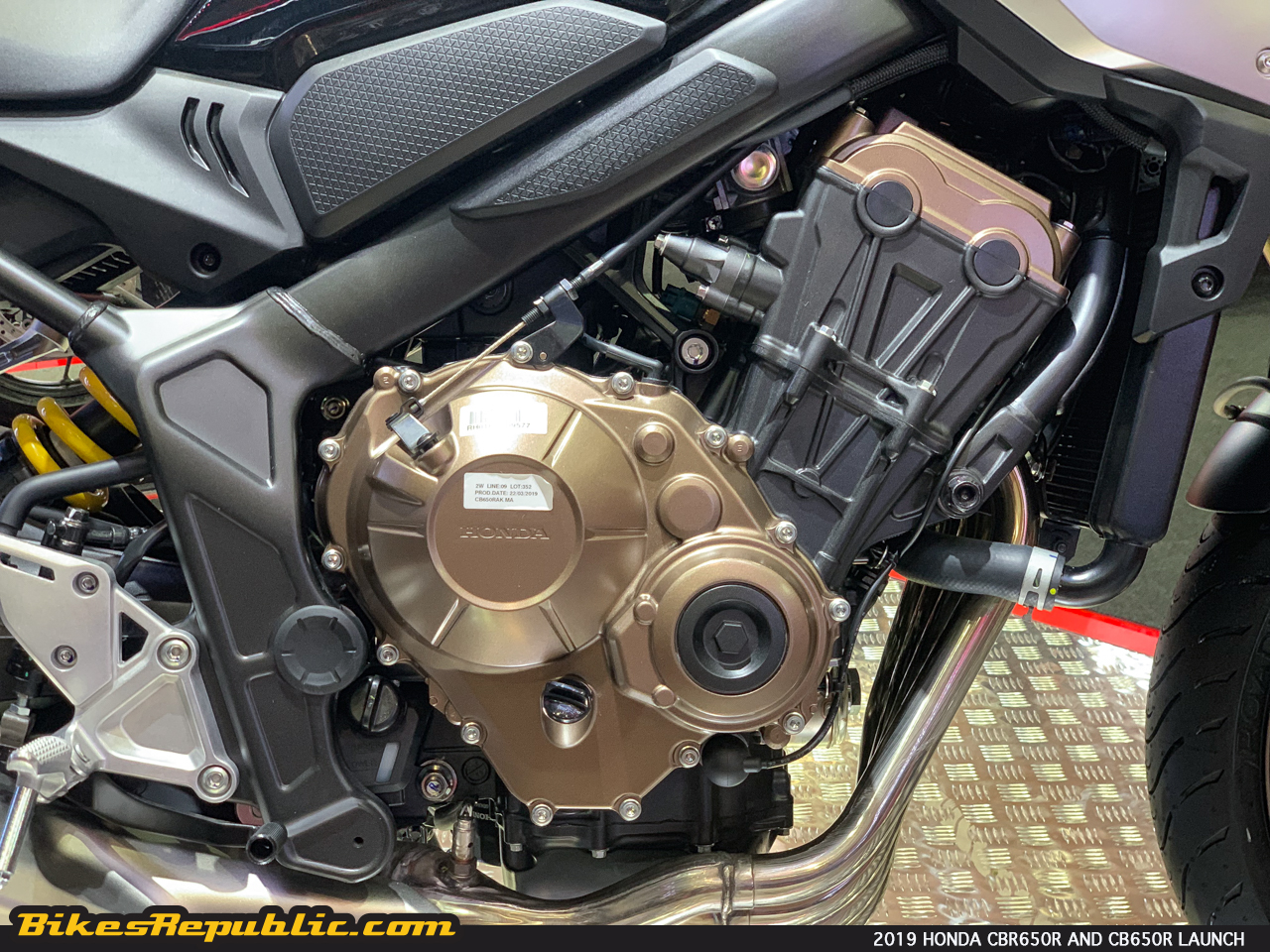
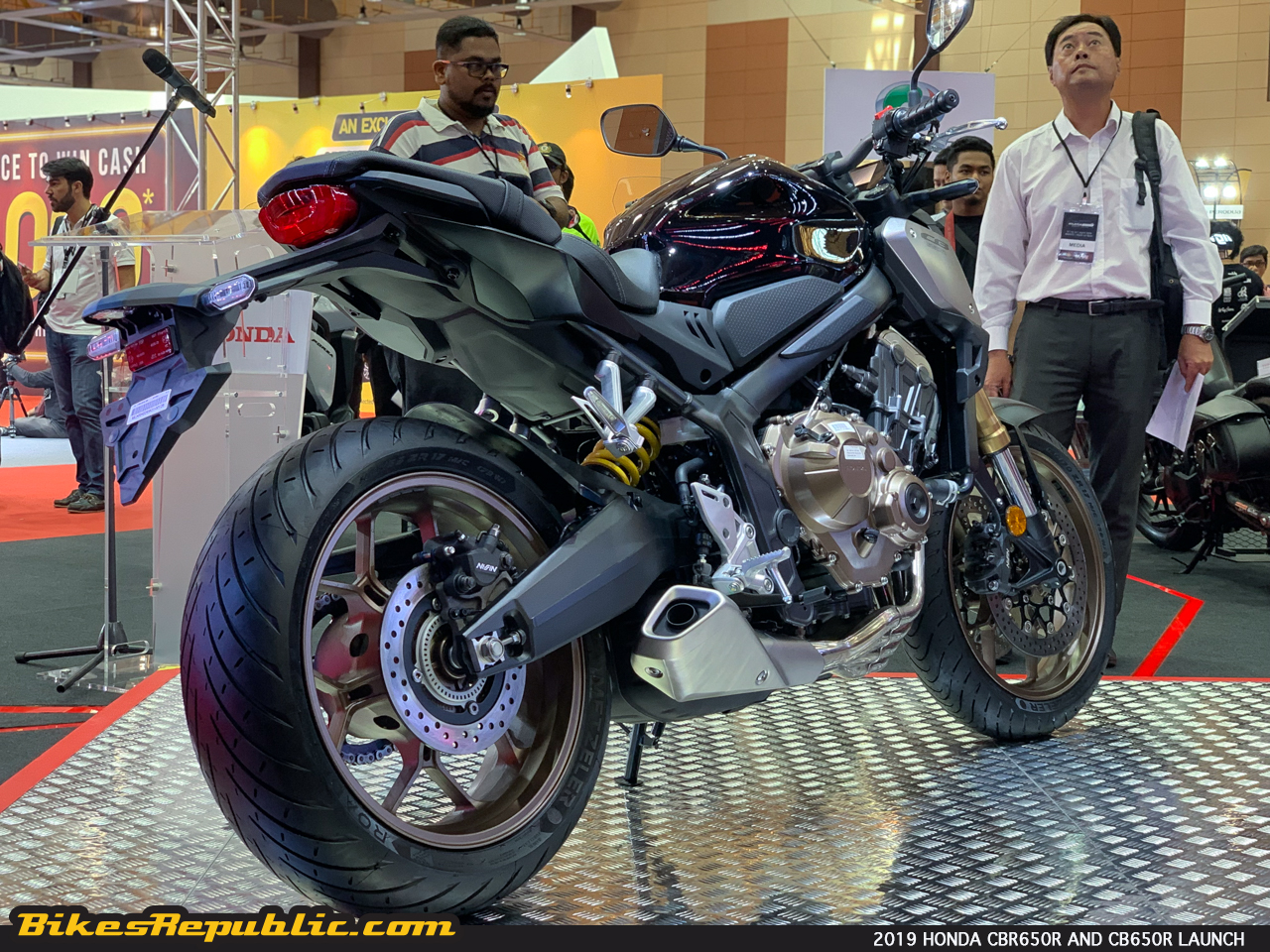
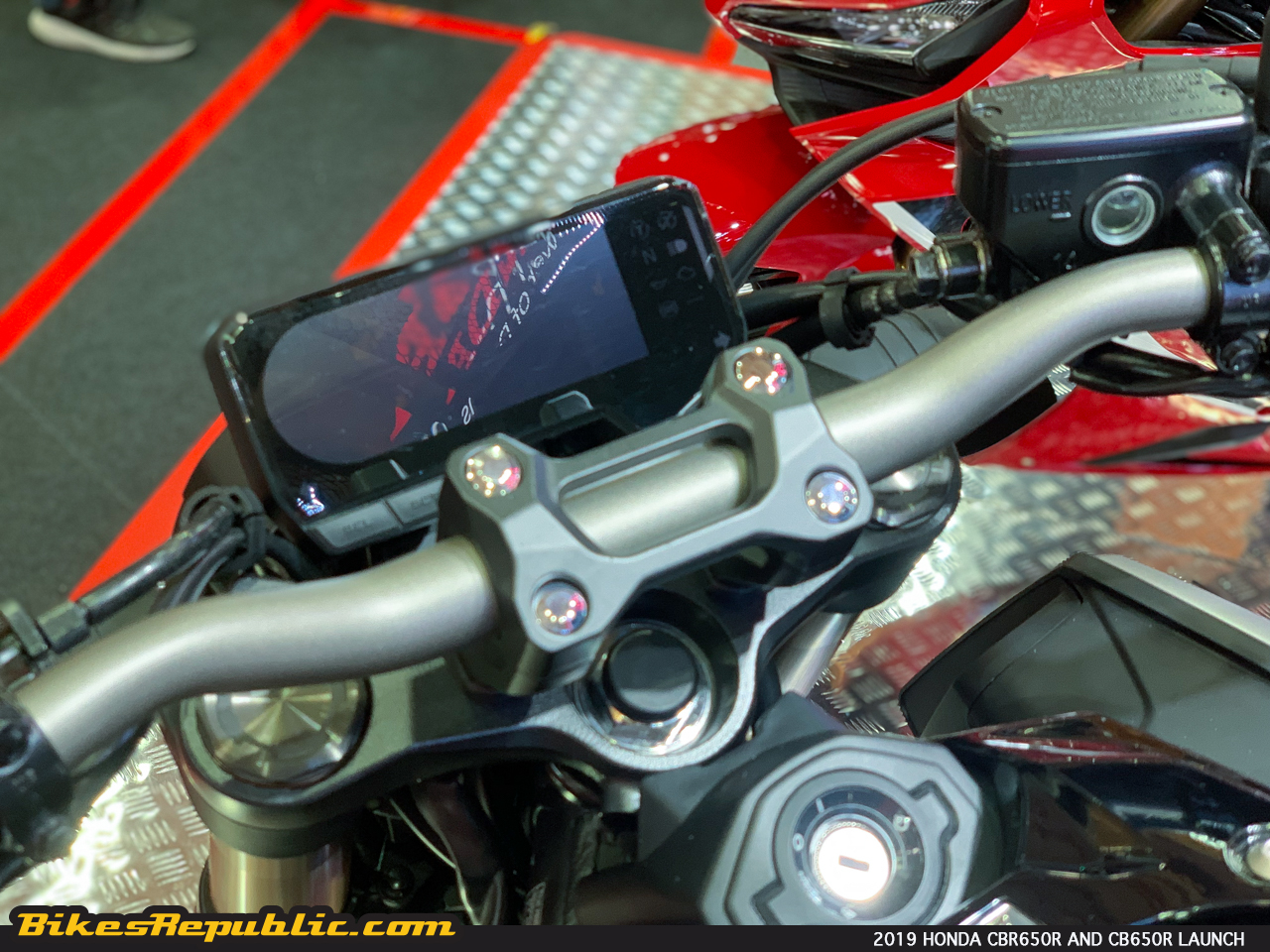
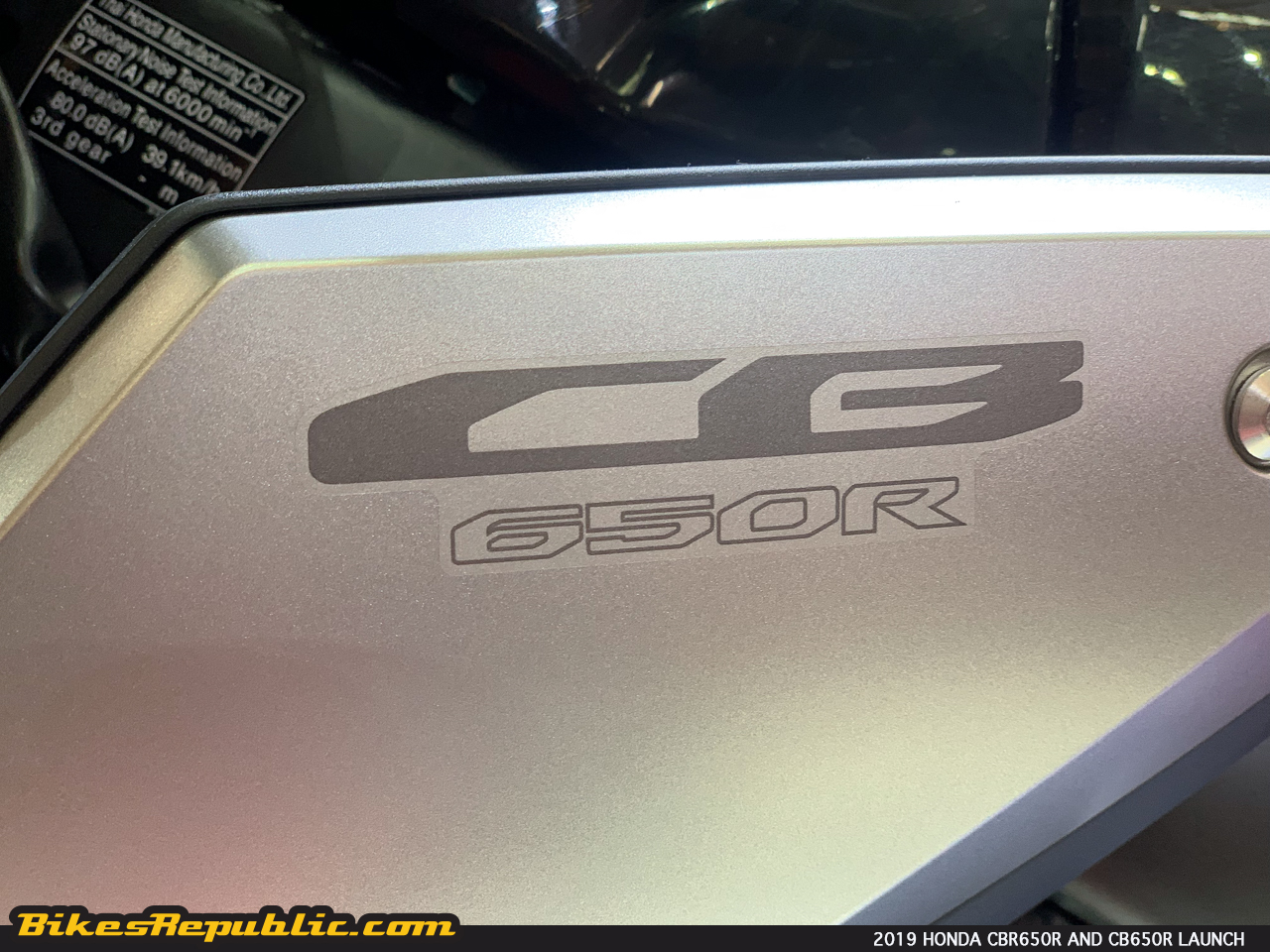
The 2019 Honda CBR650R and 2019 Honda CB650R were launched today.
Both bikes were first unveiled at EICMA 2018.
Both models have been extensively upgraded yet priced close to their predecessors.
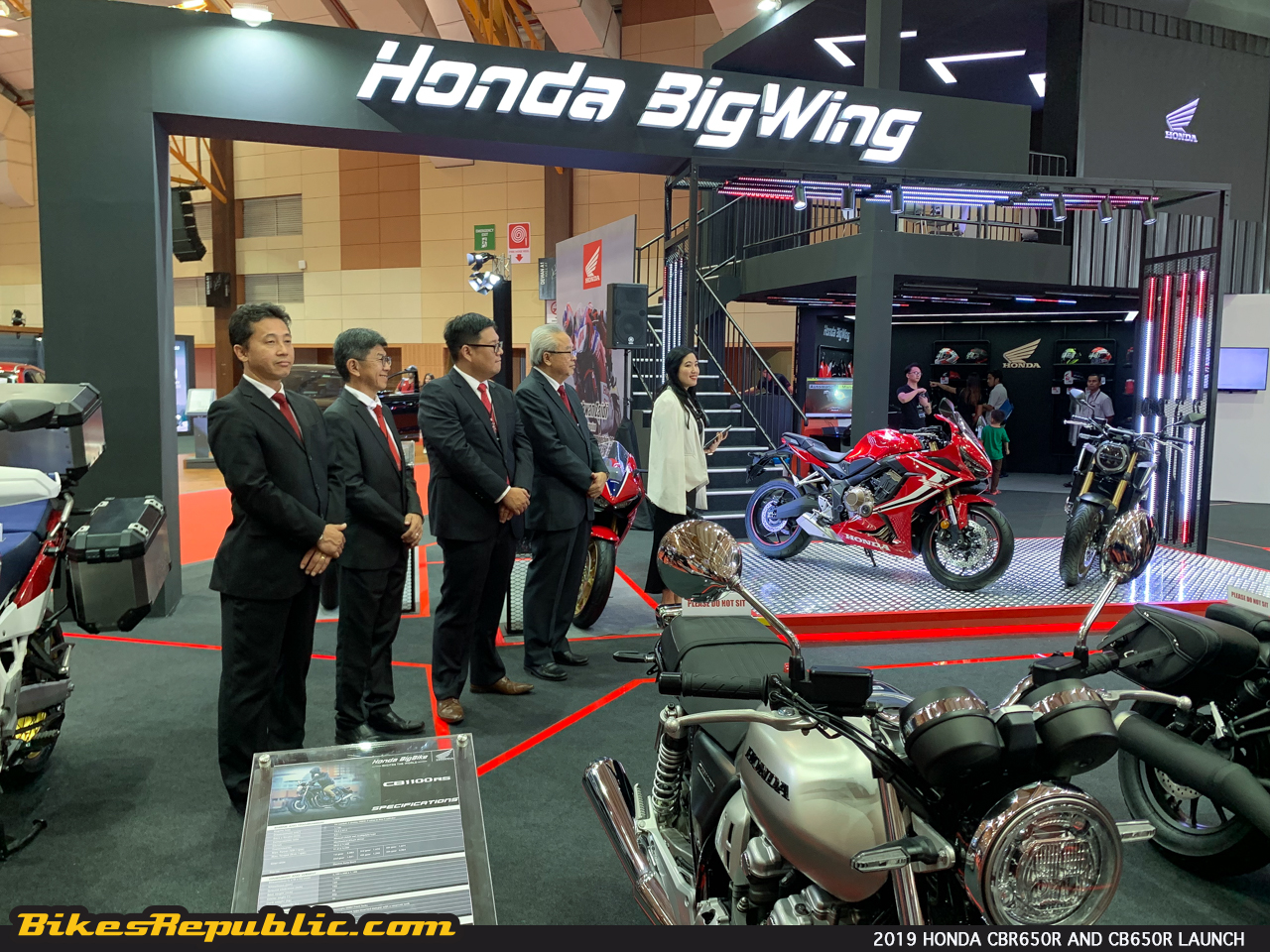
The eagerly awaited 2019 Honda CBR650R and 2019 Honda CB650R were launched today (watch video below).
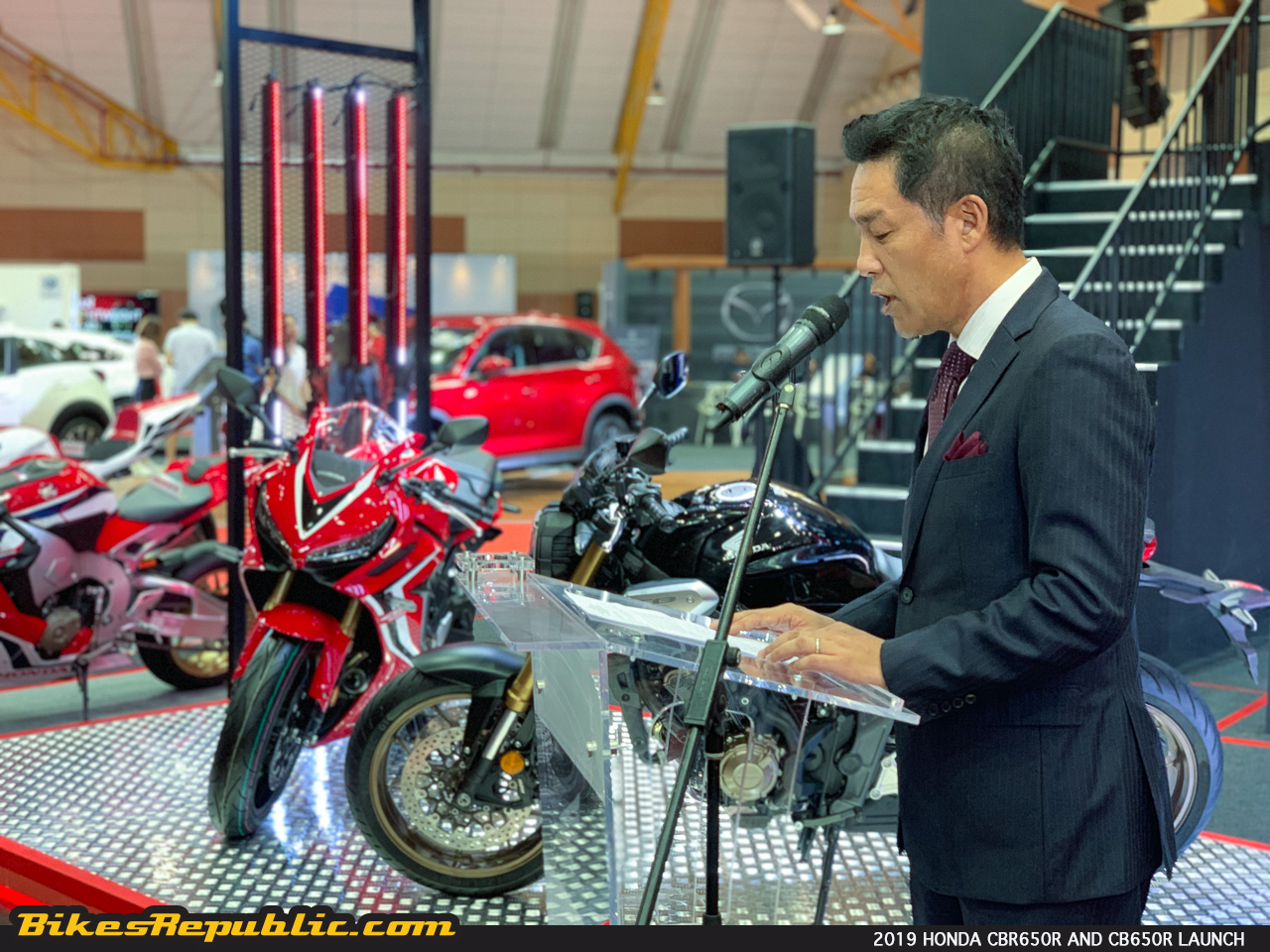
The bikes were launched by Boon Siew Honda Malaysia (BSH) at the Malaysia Autoshow 2019, at MAEPS Serdang. Fans and enthusiasts can view the new bikes between 11thto 13thApril 2019.
Mr. Keiichi Yasuda, Managing Director and Chief Executive Officer of BSH launched the bikes. In his speech, Mr. Yasuda said, “In 2018, Boon Siew Honda successfully launched 7 models of high performance big bikes in Malaysia. We are happy to have received overwhelming response from the market. And, we shall also look into the middleweight segment demand. Therefore, today we launched the all-new CBR650R and CB650R.”
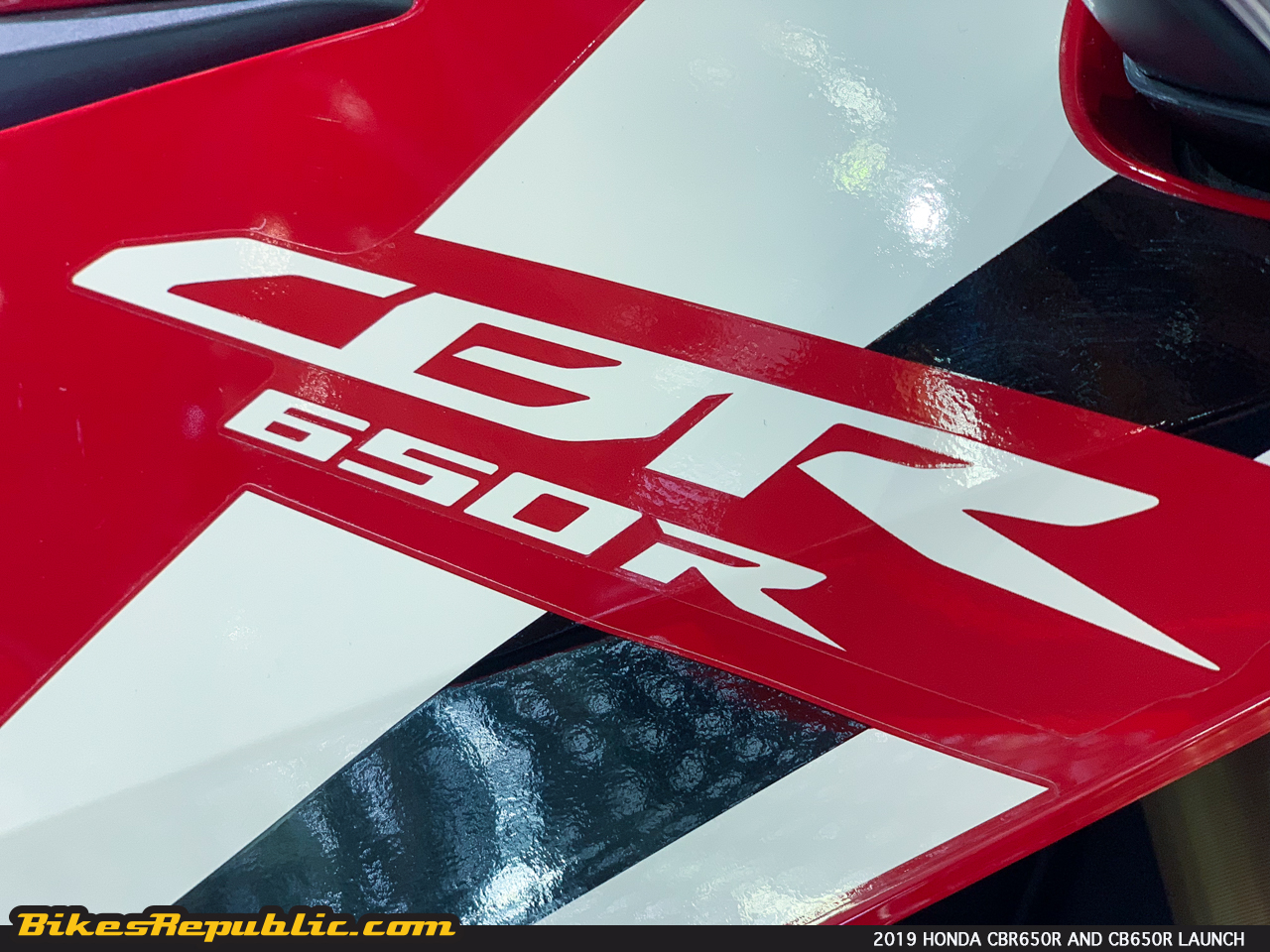
2019 Honda CBR650R (from RM 45,499)
For the last time, the CBR650RR is NOT from the CBR600RR’s lineage. Clear? Good. And who said it was going to cost in the vicinity of RM 75,000 to RM 80,000?!
The CBR650R replaces the pervious CBR650F as Honda’s middleweight sportbike.
In line with the “CBR” designation, the 2019 model is made sportier to distance itself from its naked brethren, the naked CB650R. So, the CB650R is no longer a CBR650F without clothes.
Highlights:
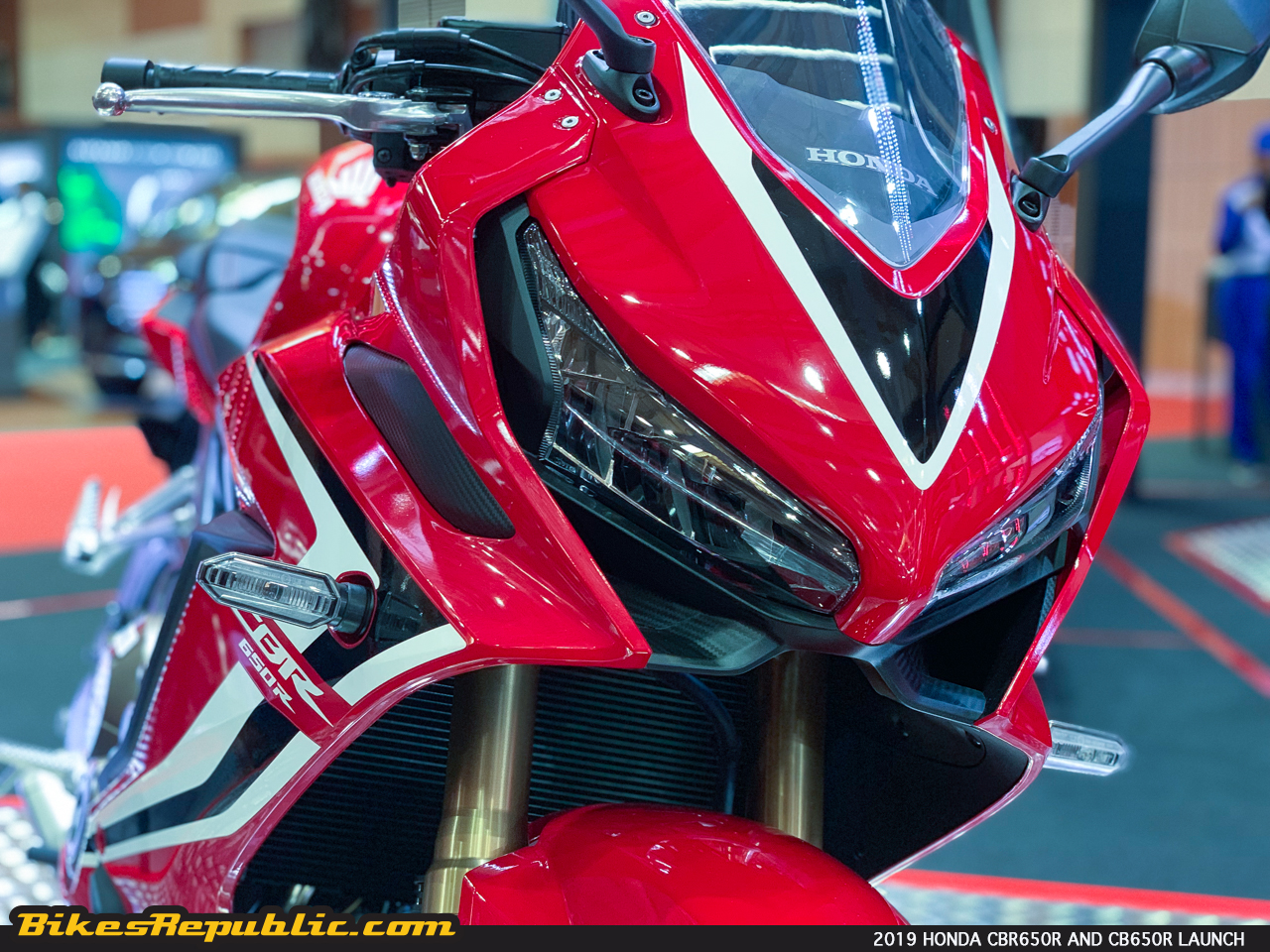
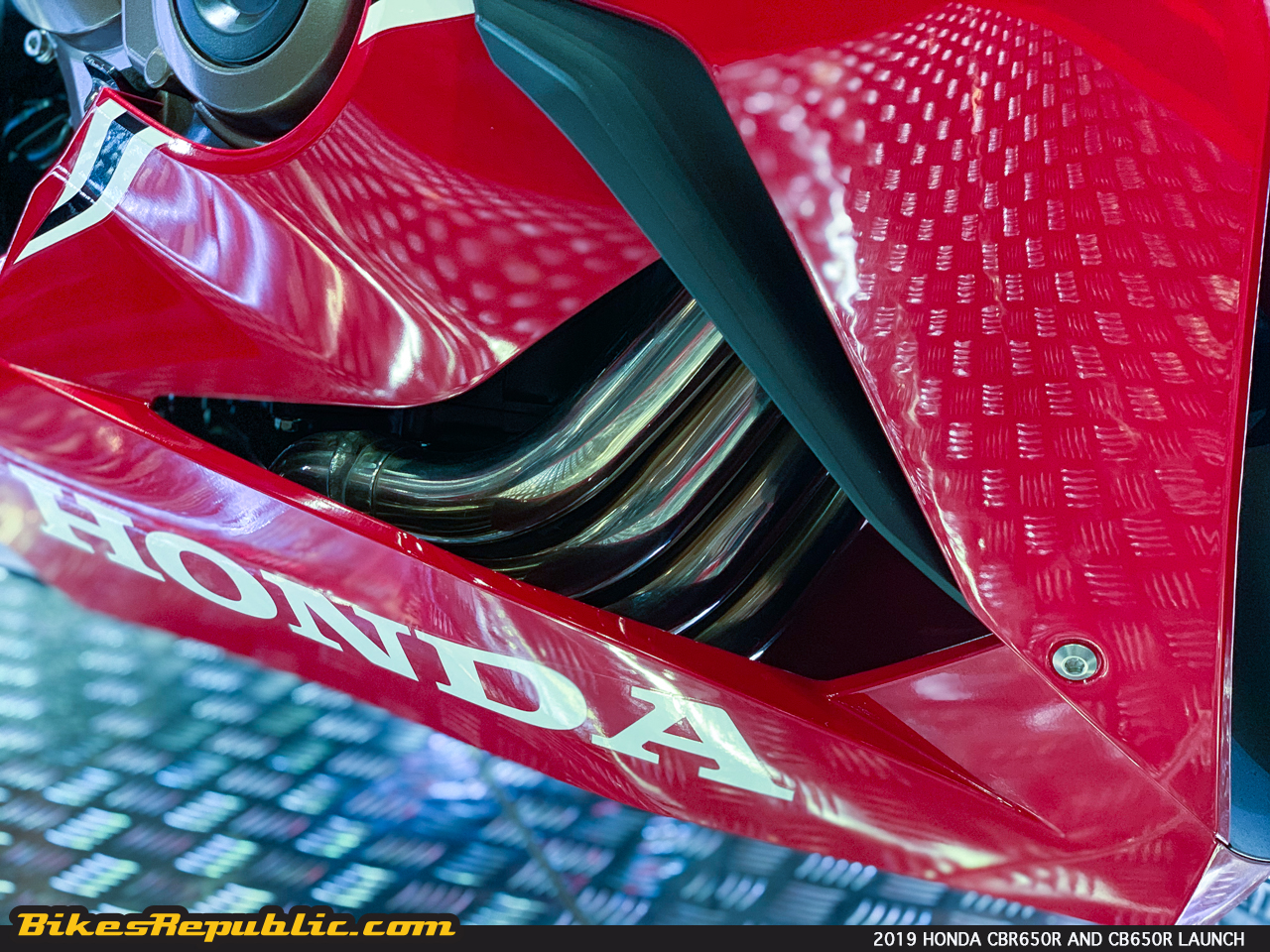
New styling inspired by the CBR1000RR Fireblade superbike. The single “diamond” headlamp makes way for twin aggressive LED headlamps; and the fairing’s rear part is extended further back.
Revised rider ergonomics. The handlebars are repositioned 30mm forward to put more weight on the front wheel plus for a sportier riding position. Similarly, the footpegs were moved 3mm back and 6mm higher. Yet, seat height remains at an accessible 810mm.
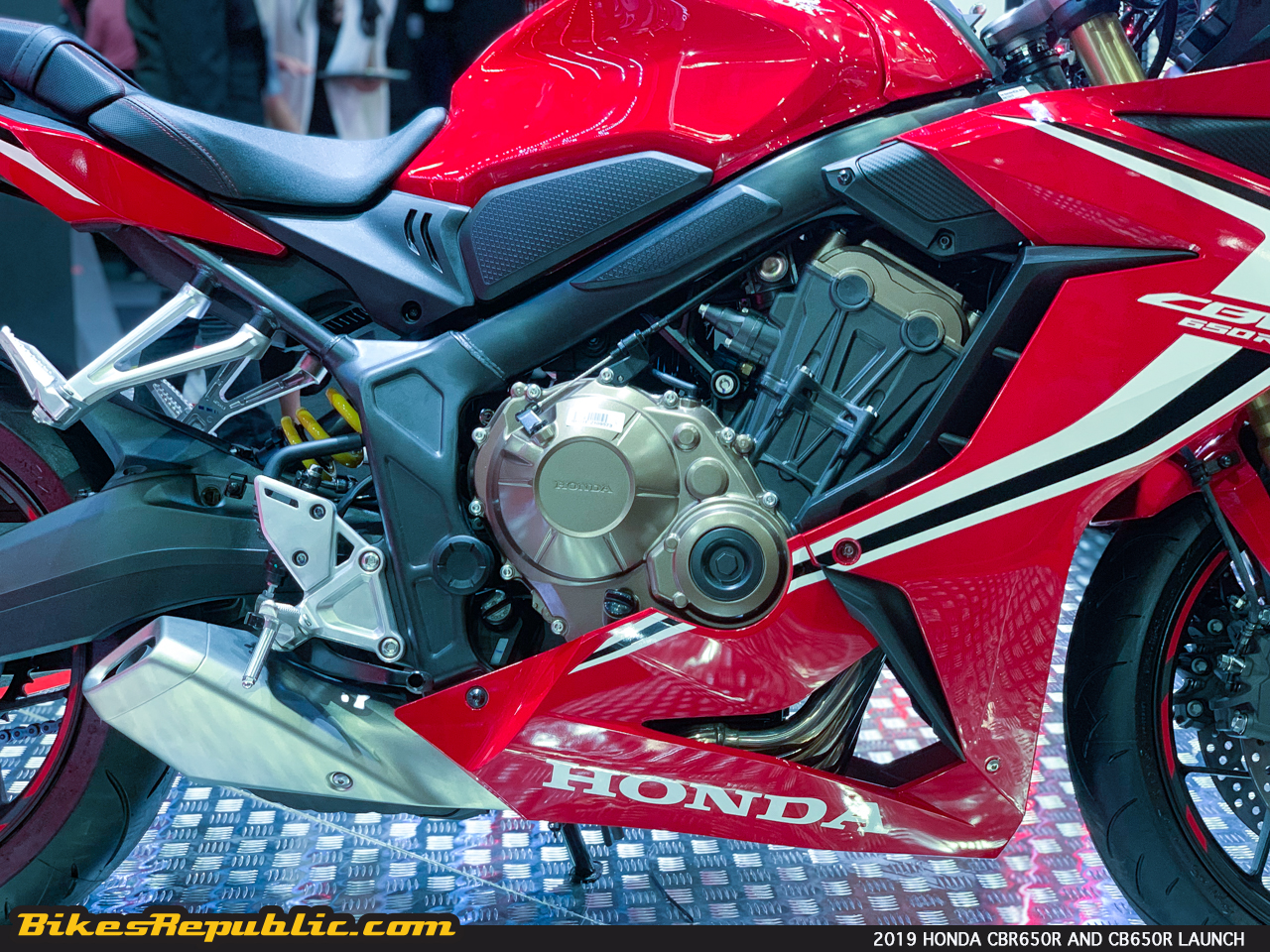
Higher engine power. The inline-Four now revs to 1,000 RPM higher. Consequently, there is a 5% percent gain in maximum power from 90 to 94 HP at 12,000 RPM.
Assist and slipper clutch. The assist function allows lighter clutch lever operation. The slipper function, on the other hand, minimizes rear tyre hop when downshifting aggressively.
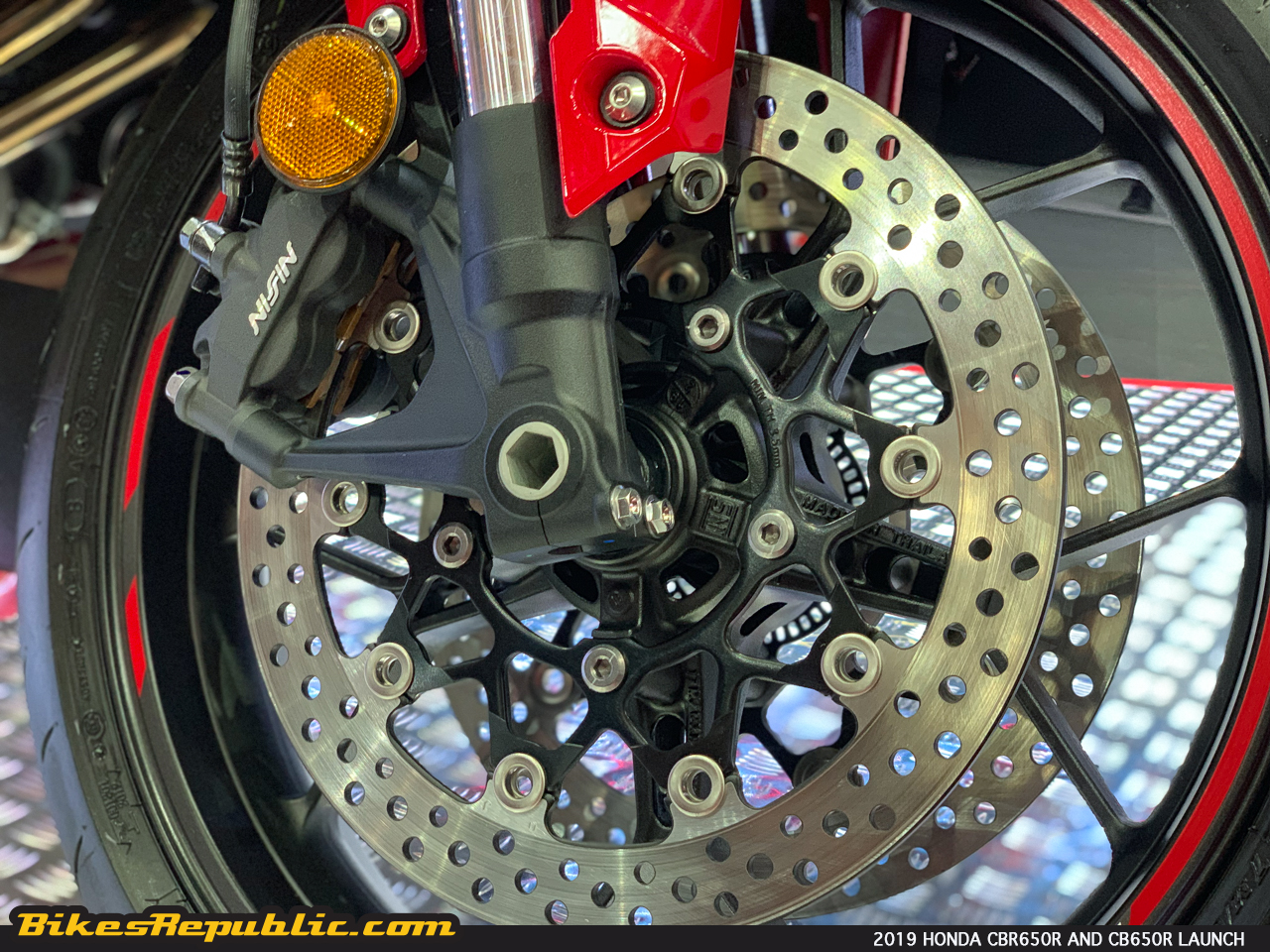
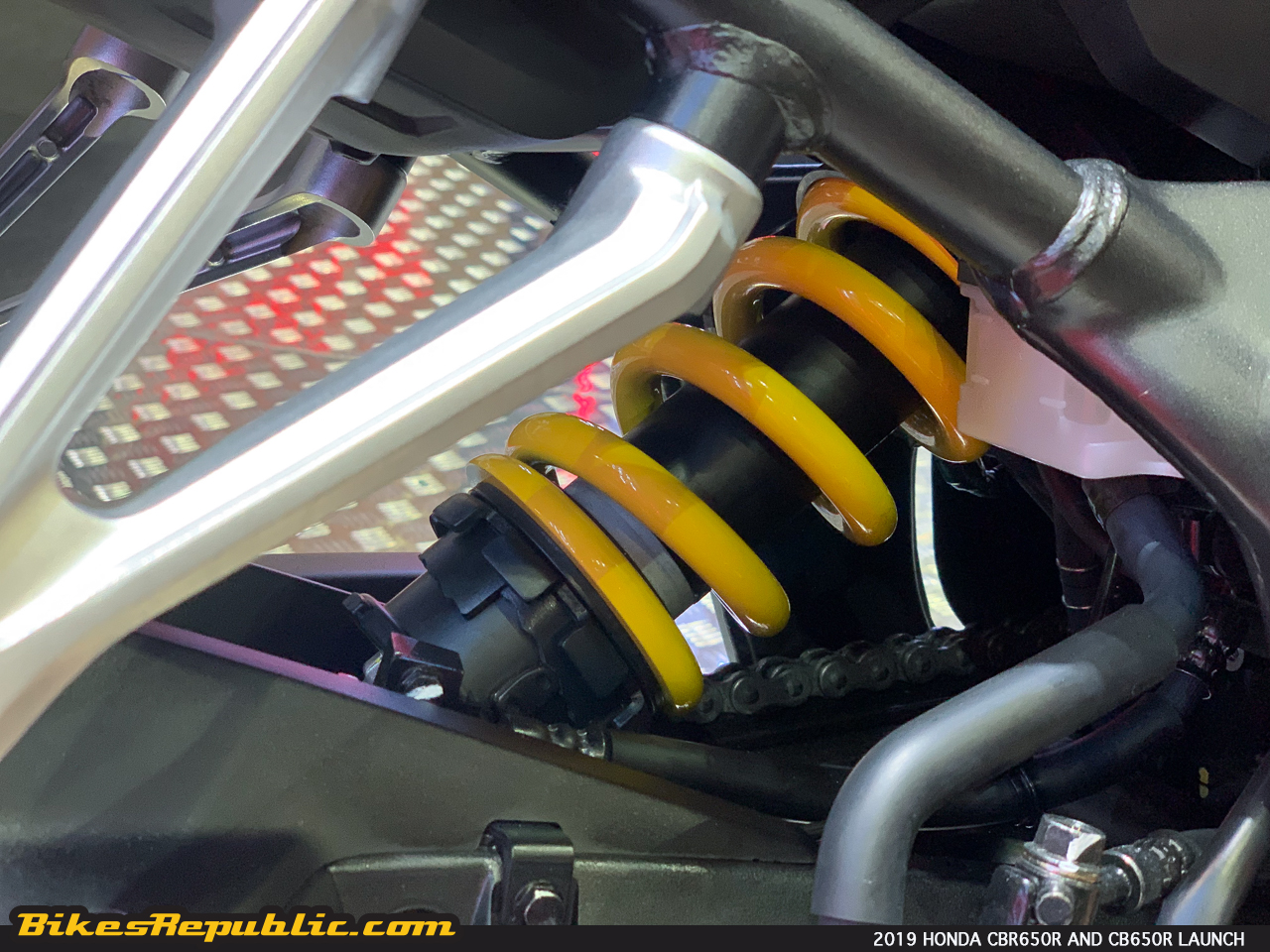
New running stock. The forks are now 41mm upside-down Showa SFF (Separate Function Forks). Braking duty is handled by a pair of Nissin 4-piston calipers that are radial-mounted.
Lower weight. The new bike is 6kg lighter.
New features. Such as full LED lighting; A new LCD instrument panel which includes gear position and shift indicator.
Traction control. The Honda Selectable Torque Control (HSTC) traction control strategy finally makes its way into the model.
Two colours. Grand Prix Red and Matt Gun Powder Black Metallic.
Priced from RM 45,499 (basic selling price).
2019 Honda CB650R (from RM 43,499)
The 2019 CB650R replaced the CB650F as the middleweight naked sportbike. Besides that, the new CB650R completes Honda’s Neo Sports Café line-up, which already consists of the CB250R and CB1000R.
Highlights:
Modern and minimalist design. As part of the Neo Sports Café family, the bike’s styling mixes classic and modern elements. Honda calls it the “compact, trapezoid” effect.
The round headlight and sculpted tank form the front and “backbone,” respectively while the engine hangs below in full view.
Higher engine power. The engine is shared with the CBR650R. Revisions to the intake, cam timing, compression and exhaust yielded a 5% increase in power to 94 HP.
Relaxed ergonomics. The riding stance is more relaxed compared to the CBR650R’s.
Shared specs with CBR650R. Suspension, brakes, assist and slipper clutch, LED lighting, HSTC traction control are shared with the CBR650R.
Two colours. Candy Chromosphere Red and Graphite Black.
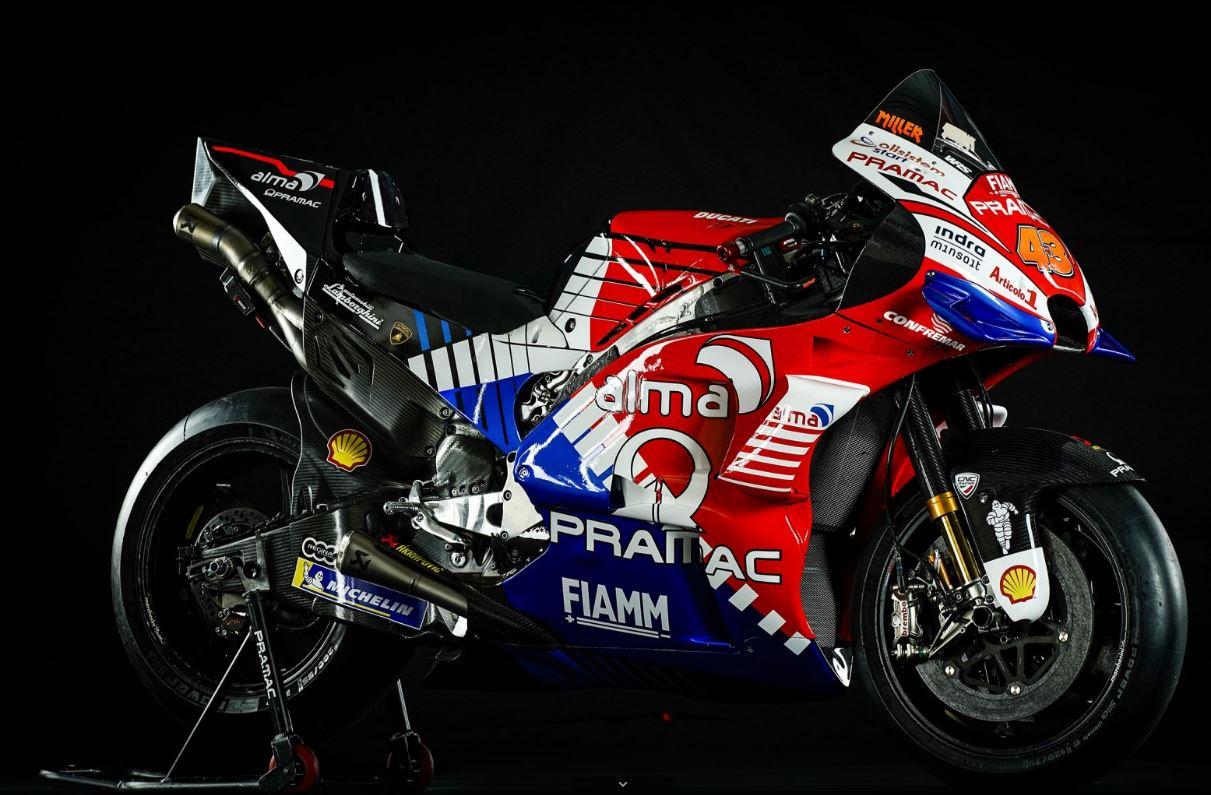
Pramac Ducati gets Automobili Lamborghini as their title sponsor.
The move follows the departure of Alma.
The riders and team staff get to use Lamborghinis over the MotoGP weekend in Texas.
Alma may be no more, but Pramac Ducati now has a new title sponsor with Automobili Lamborghini stepping in. The announcement was made ahead of this weekend’s MotoGP round at Austin, Texas.
Alma’s name and livery was removed in Argentina due to the tax allegations against the company.
The team members ought to enjoy the fruits of the sponsorship, too. Riders Jack Miller and Francesco Bagnaia will each receive a Huracán, while the team staff gets to use three Urus SUVs in America. All the vehicles will be personalized with Pramac Racing’s logos.
“Running a Grand Prix as important as the United States, with the Lamborghini logo next to the Pramac one on our fairing, is a source of great satisfaction for us,” said team principal Paolo Campinoti.
“We are proud to have Automobili Lamborghini as title sponsor of the Grand Prix of the Americas and this underlines that the relationship between Lamborghini and Pramac goes beyond the feeling of deep friendship that binds me to Stefano Domenicali”
Stefano Domenicali (not related to Ducati CEO Claudio Domenicali), Chairman and CEO of Automobili Lamborghini, added: “What better occasion than the Austin GP to confirm the important collaboration between Automobili Lamborghini and Pramac Racing.”
Pramac and Lamborghini have previously collaborated on a team launch at the Manifattura Lamborghini, a special livery for the 2018 Italian Grand Prix and the livery for the 2019 season designed by Mitja Borkert, director of the Lamborghini Centro Stile.
The famed sportscar marque had a stillborn motorcycle project before, but don’t worry, it’s just sponsorship and not their own bikes.