Bikesrepublic

Latest News

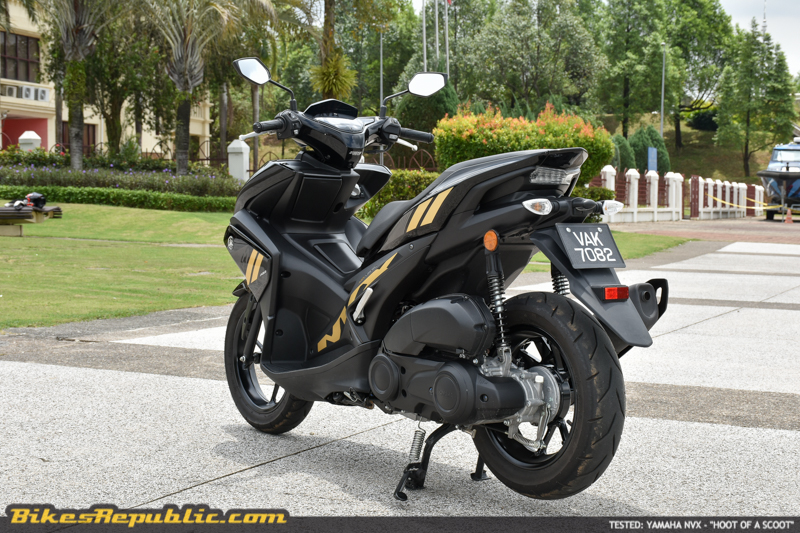
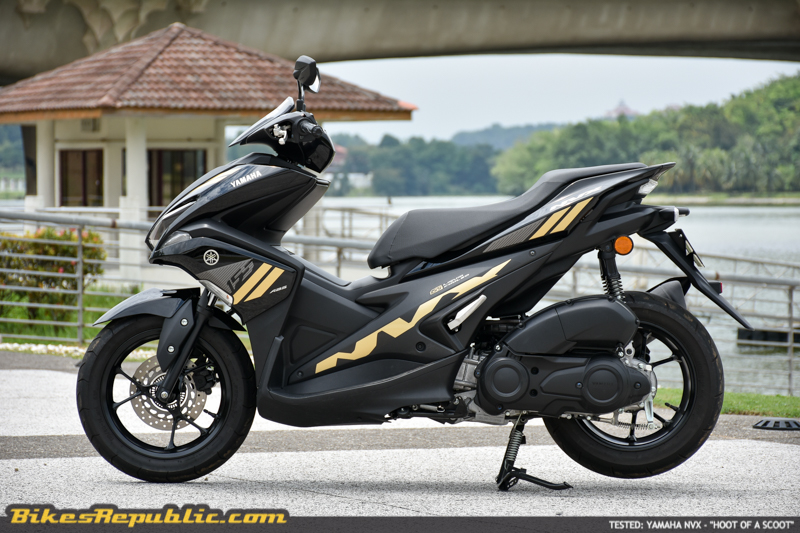
Yamaha positions the NVX as a premium scooter.

The NVX offers a sportier ride.

The NVX’s engine is based on the NMAX’s.
We motorcycle reviewers should have an extra title tagged to our designation. Part-time Sales Executive should be apt.

The very first person I met after picking up the NVX from Sg. Buloh asked a set of of questions that would go on to form the template throughout the time the bike was with me.
“What is it?”, “How does it compare to the NMAX?”, “How is it to ride?”, “What’s the top speed?”, “How much?”. Not necessarily in that order, but they were the same queries, nonetheless.

I answered at least one person, sometimes even three separate ones per day. I bet I would’ve sold a few and use the commission to buy myself that astronomical telescope I’ve been lusting after. One thing is clear, there’s lots of interest for the Yamaha NVX.
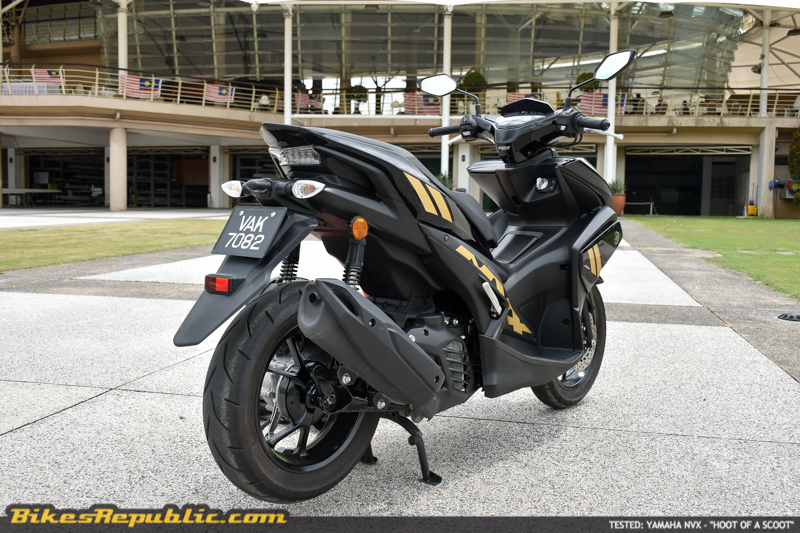
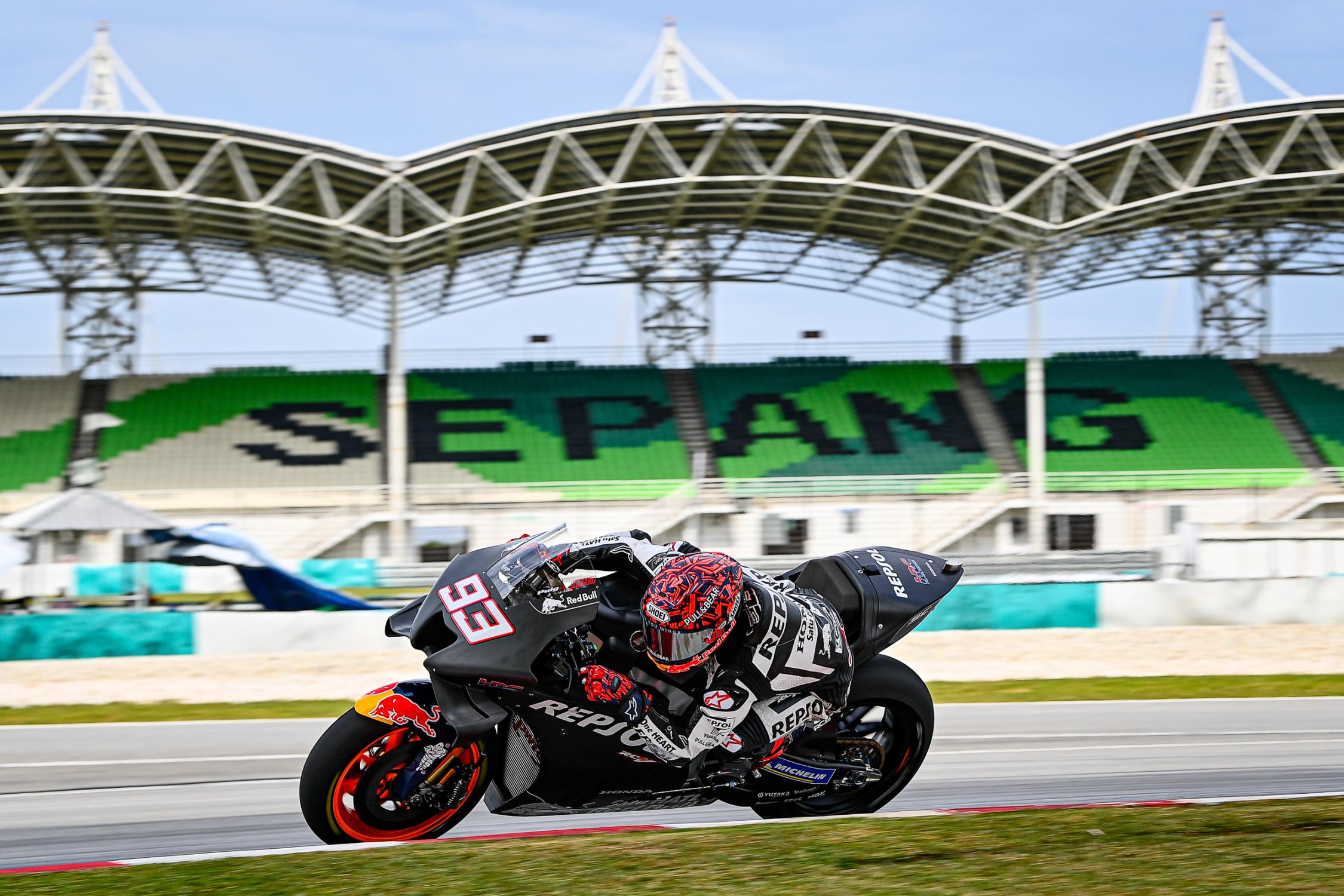
The Yamaha NVX first was unveiled by “The Doctor” Valentino Rossi himself during the 2016 Malaysian MotoGP. Also known as the Aerox in certain countries, Malaysian netizens went wild as soon as the news and pictures hit social media.
But we had to wait for another agonizing nine months before it was officially launched in July 2017 (click here for the launch event). We soon discovered that the “delay” was because firstly, Hong Leong Yamaha Motors (HLYM) had wanted to see how the model performed in other markets in terms of reliability. Secondly, HLYM had invested in the ABS machine in order to equip the NVX and future models with the system. Thirdly, HLYM wanted to ensure their technical department and dealers are fully trained on the NVX. Fourthly, HLYM needed to build up their spares inventory – nothing worse than for customer to own a bike without the necessary parts, would it?
Well, the NVX is here and judging by how good the NMAX was, we and many prospective buyers were eager to find out more about the NVX.

Seeing a bike on stage during a launch was always somehow different from being up close to it in the real world.

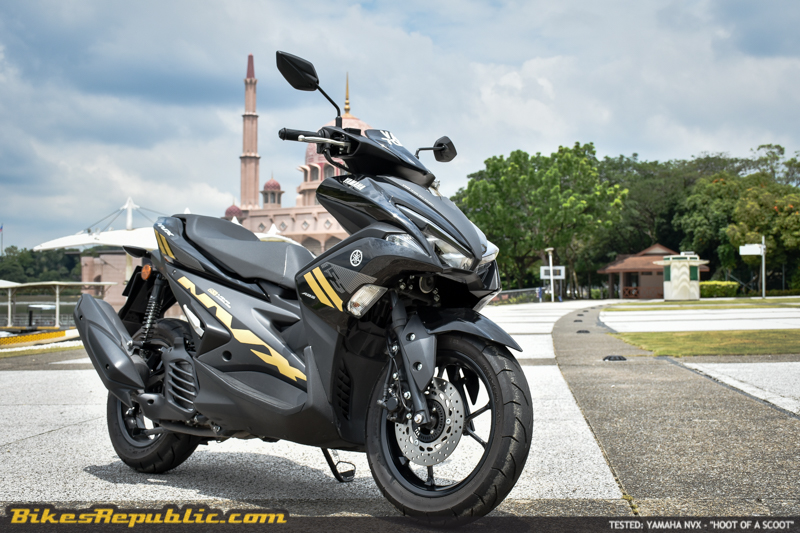
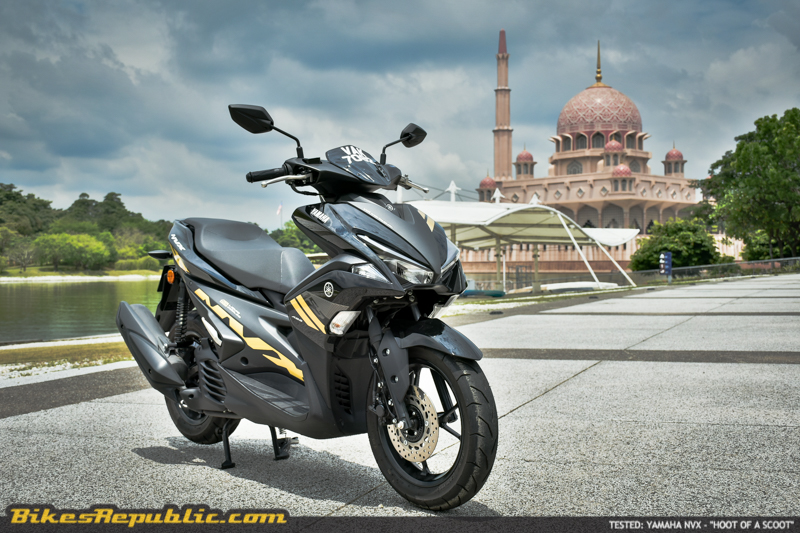
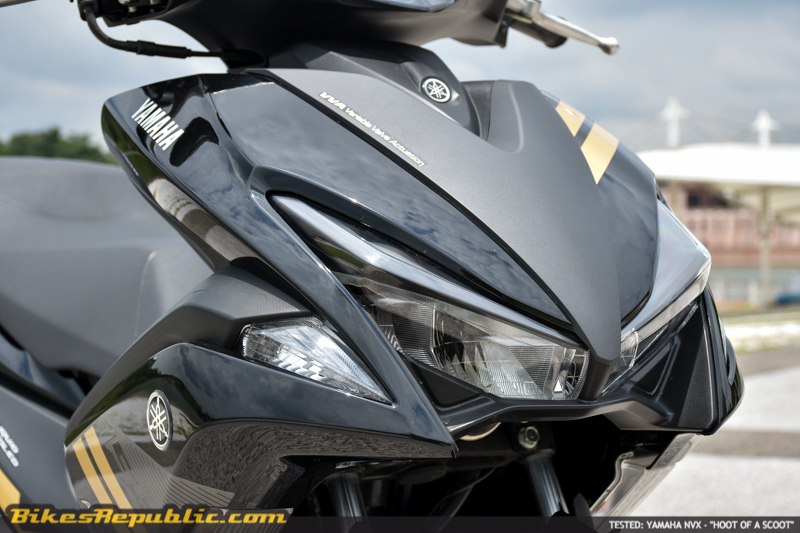
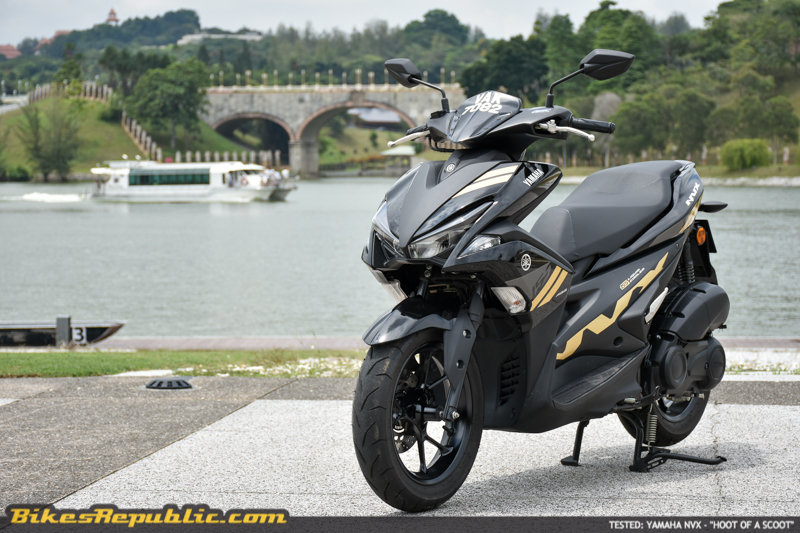
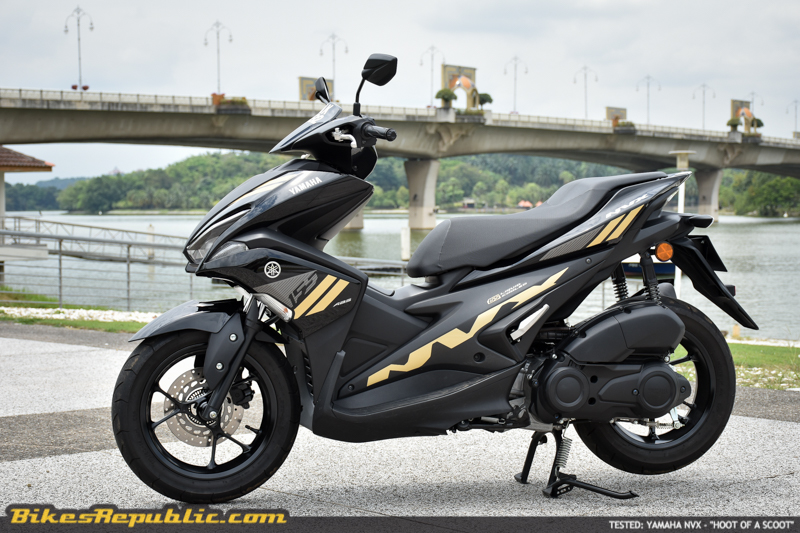
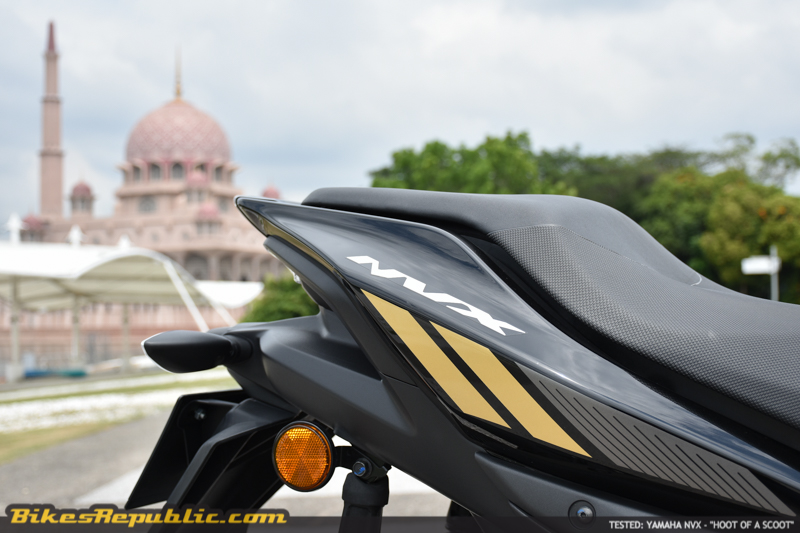
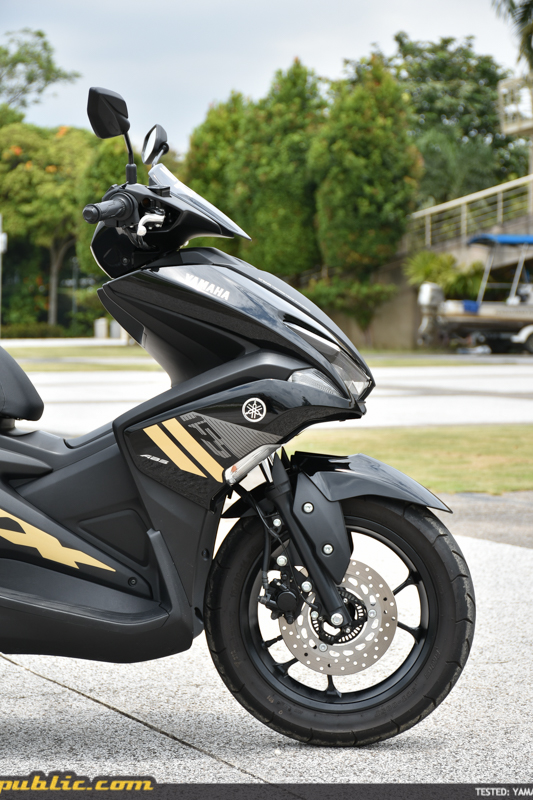
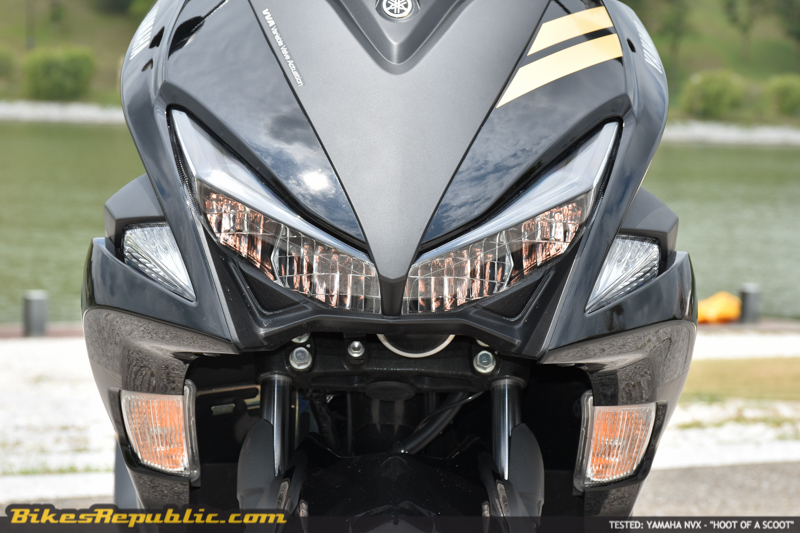
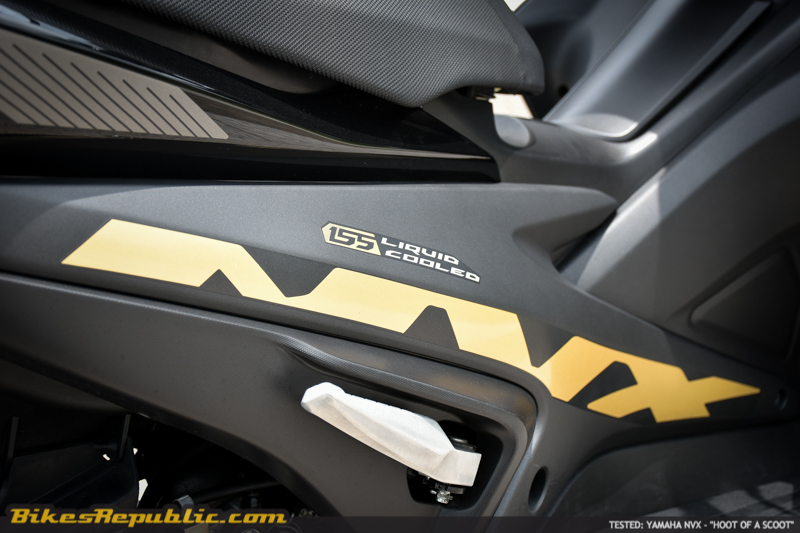
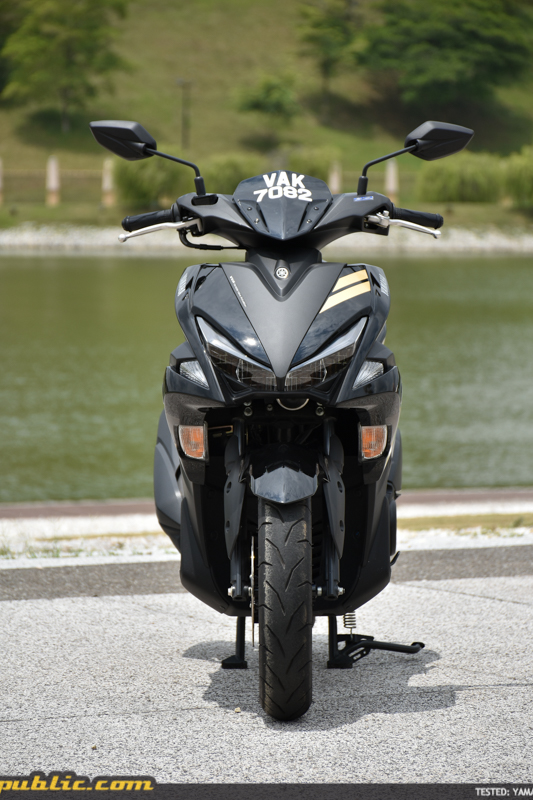
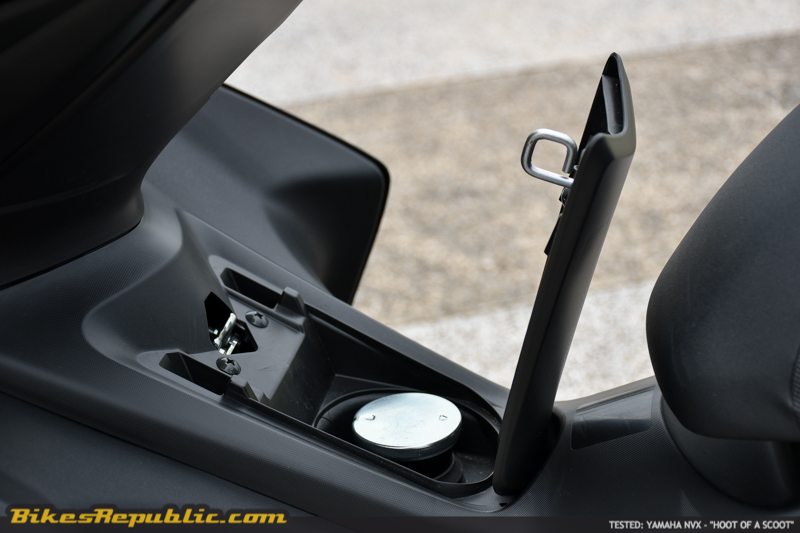
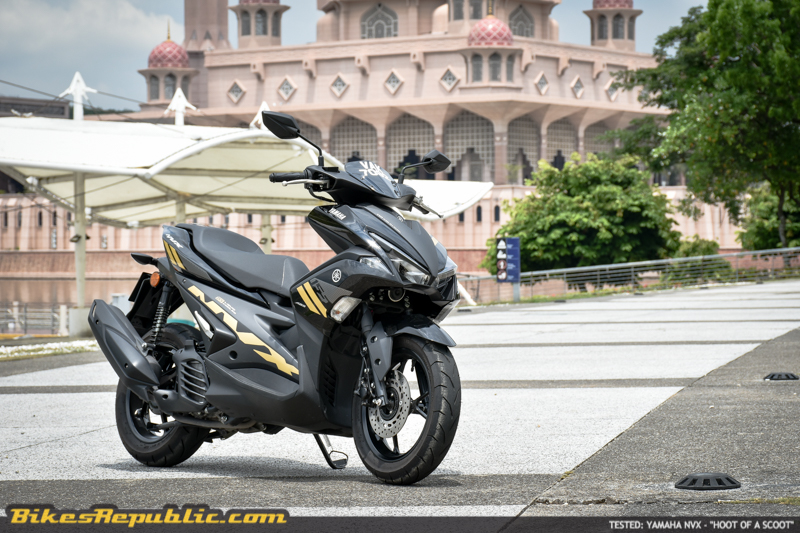
The NVX is bigger than the other models in HLYM’s family of scooters, and definitely more aggressively styled and high tech. The design consists of sharply angled lines and panels, starting from the front, all the way to the rear. It has bigger wheels and beefy tyres. The central “spine” where the fuel filler resides is taller. The LED headlights has that “scowl” of the R25. In fact, the front end of the NVX shares the same character as Yamaha’s current crop of sportbikes, led by the YZF-R1.
Climbing on the first time confirmed that the seat was taller than the NMAX’s, courtesy of the 14-inch wheels. (vs. 13-inches on the NMAX). The ergonomics of the NVX is more compact, like a kapchai with floorboards. There’s no space to extend your feet up front.
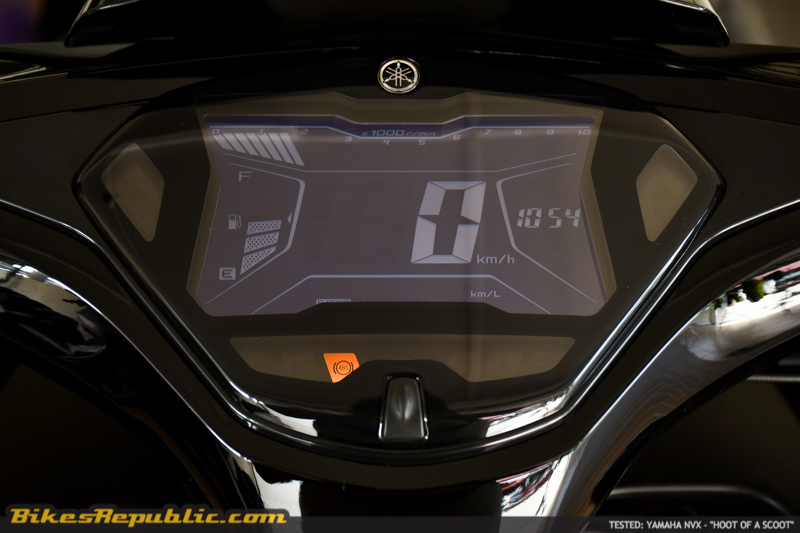
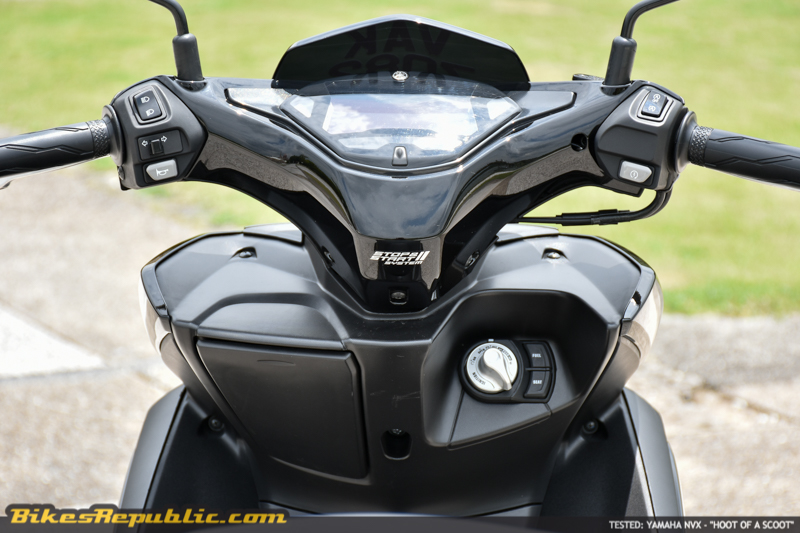
From the seat, you’re greeted by the 5.8-inch fully-digital LCD screen and a new ignition and locking system. The NVX uses the new Smart Key System, which is essentially a keyless-go setup. But it goes beyond that.
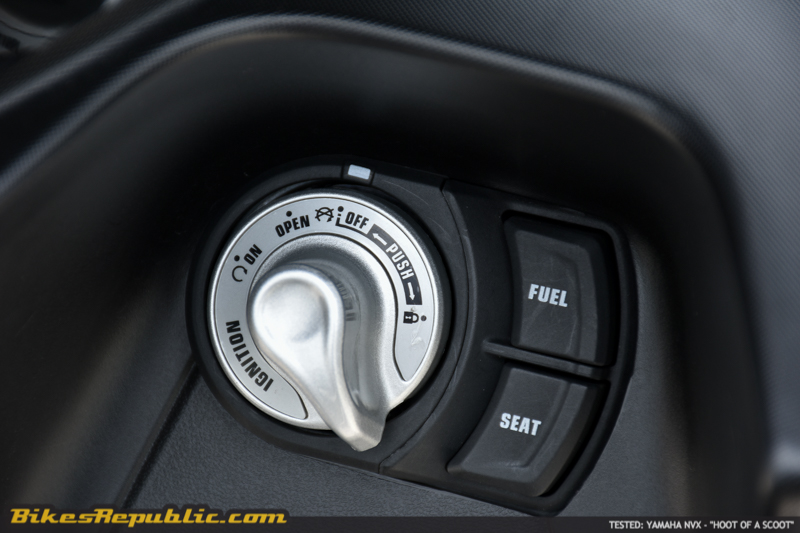
The rider needs to is disarm the immobilizer, then press and turn the “dial” to the desired function i.e. opening the seat/fuel filler flap/ignition on. Similarly, the dial will be locked in the LOCK or OFF position if the immobilizer hasn’t been disarmed. There is no way to start the engine, should the dial on the bike has somehow been left in the ON position, as long as the immobilizer isn’t disarmed via the Smart Key. We also discovered that the bike will emit very loud blips should the dial be left in the OPEN (to open the seat or fuel flap) position to remind us to turn it to OFF or LOCK. If left ignored, the immobilizer will eventually self-activate, disabling the engine from being started. We love this feature.
Starting up the engine exuded a muted but slightly sporty exhaust note. Twist the throttle and it was go time.

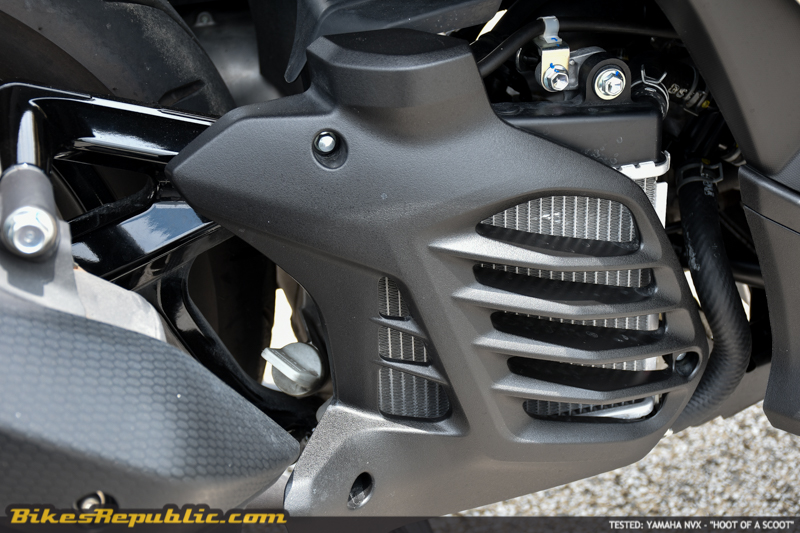
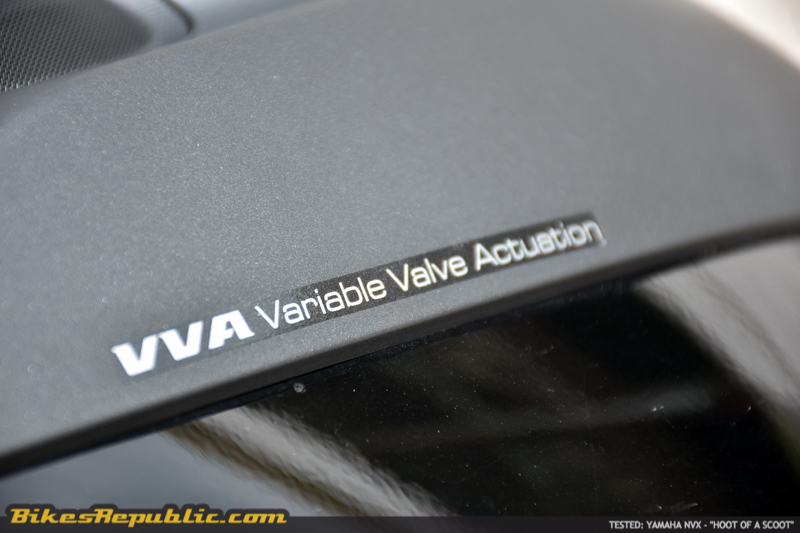
Speaking about the powerplant, the NVX’s engine shares the same Blue Core approach as found on the NMAX, including the Variable Valve Actuation (VVA) feature. However, the NVX is rated as an Energy Efficient Vehicle (EEV). Yamaha claims a scrooge-like best fuel consumption figure of 2.2 litres/100 km. Helping to achieve that efficiency is the “Start and Stop” function.
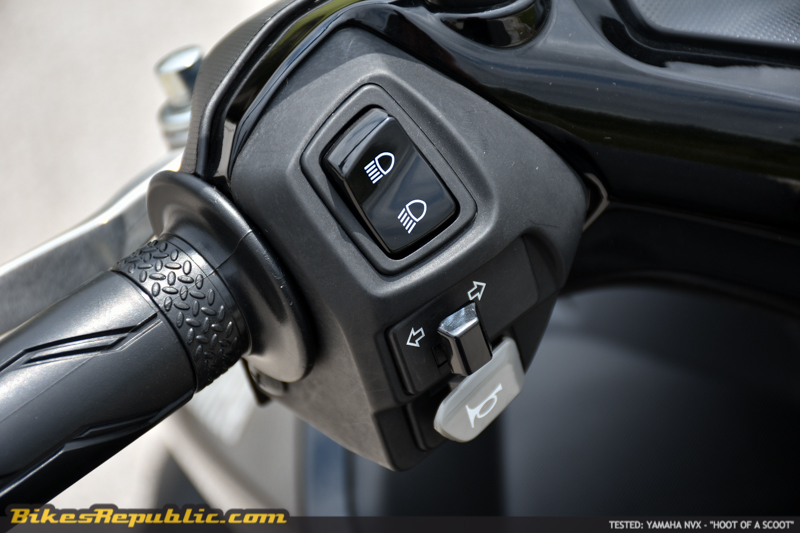
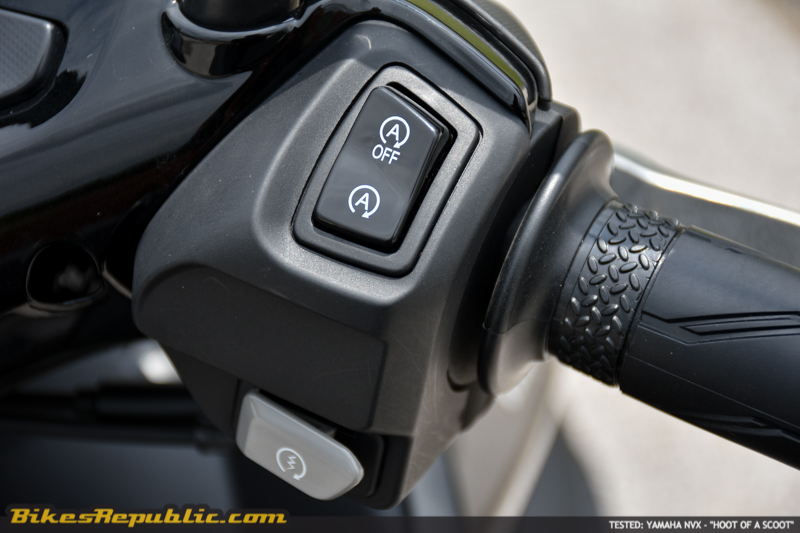
The Start and Stop system is toggled by the switch on top of the engine start button. With the system on, riding above 40 km/h to trigger it; the engine will then stop with the ignition and lights on when reach a full stop. A twist of the throttle will start the engine back up. Conversely, if you toggled the system off, the engine will continue to idle when you stop. Simple.
Although the engine shares the same architecture with the NMAX, it felt livelier on the NVX. Throttle response and fueling was spot on, there’s power as soon as you turn the twist grip. There’s still enough grunt left even when you’re riding at 110 km/h.
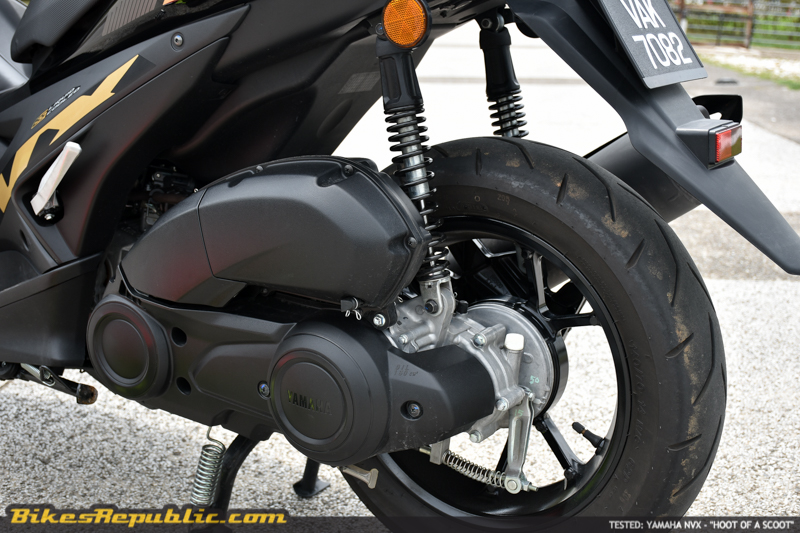
Right away, the NVX demonstrated how light it was on its feet, but with an added bonus. The suspension and fat tyres provided a high level of confidence to sling through corners and swerve through traffic with conviction. Scooters would normally feel “flighty” at the front due to their smaller wheels, yet there was no indication the NVX was going to lowside as you flick it around.
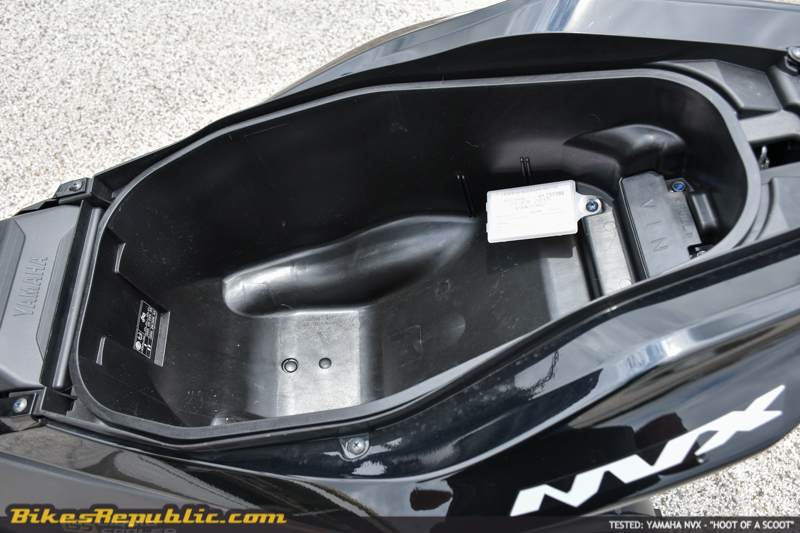
I got into a heavy shower right after taking delivery. The tyres may look semi-slick but they gripped very well over the wet road. Apart from that, I was really thankful for the 25-litre underseat storage space, as I had transferred my rainsuit over from my personal bike’s topbox, besides stowing my laptop bag in it. So now I stayed dry with the rainsuit on and my laptop stayed dry under the seat. There is also a compartment up front, underneath the left handlebar. It has a cigarette lighter socket for you to plug in an adapter and charge your phone.
Out on the highway, the NVX took no effort in reaching 110 km/h. It had no trouble climbing to my preferred cruising speed of 120 km/h from a standing start either. The tachometer showed 9000 RPM at that speed, so there’s another 1000 RPM to go. The engine never once felt like it was going to disembowel itself at high speeds. The larger wheels and tyres have in effect given the bike taller gearing, therefore cruising was smooth.
But where the NVX truly shone was commuting in the city. Riding an agile motorcycle with controlled aggression in Kuala Lumpur equals living for another day. It felt like I was riding a (fast) bicycle as I swerved in and out of traffic, squeezing between lanes and shooting through sharp corners. There was lots of feedback from the front tyre, and it had never threatened to let go as you flick the bike from side to side. As a matter of fact, the NVX didn’t mind taking sweepers with the throttle pinned open, either. It was very stable for a small-sized scooter.
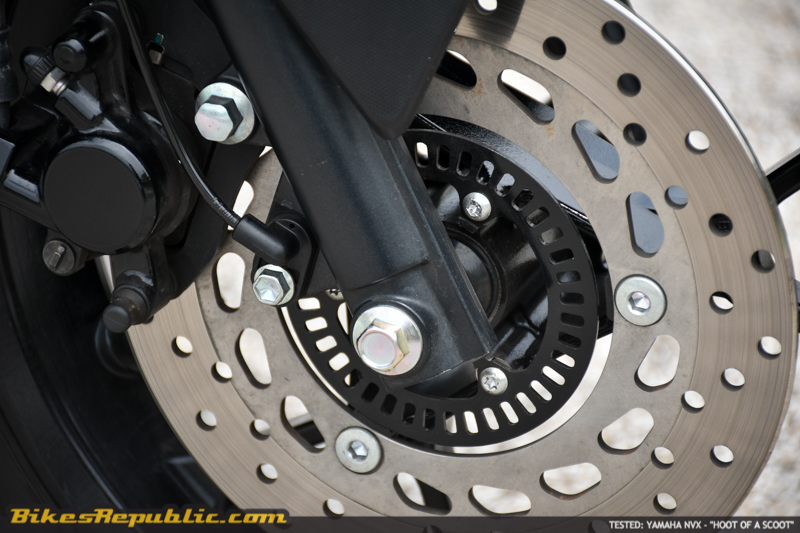
The brakes were strong a definitely helped a lot, too. The ABS worked as it’s supposed to when I had to brake hard in the rain to avoid a car that had cut me off.

Truth is, I used to question why scooter and kapchai riders like to swerve around, climbing onto sidewalks to park, slipping by obstructions, and committing just about any general buffoonery. The answer is: Riding a lightweight motorcycle is just pure fun!
I didn’t have to worry about the clutch and correct gear selection; I didn’t have to stop as much when lane splitting as the NVX was narrow enough; and I can sure as heck outmaneuver anything; plus the freedom of not needing to shoulder my heavy backpack.
Additionally, the NVX was truly fuel efficient. I didn’t manage to obtain the 2.2-litre figure due to aggressive riding, but I once saw 2.8 litres/100 km. I had only filled up twice in the one week with the bike, the second time being when I returned the bike (I didn’t want to return a test bike on empty).
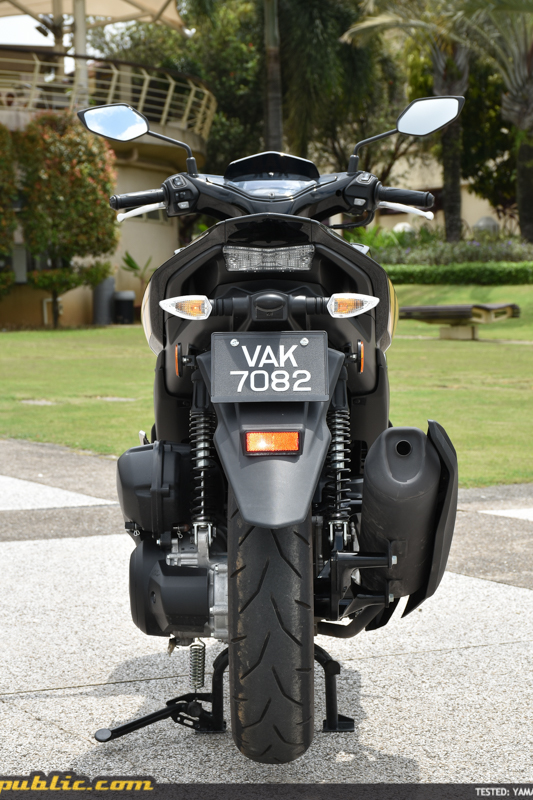
Shortcomings? Well, just like any scooter, the NVX’s main enemies are potholes and sharp bumps. The NVX is surprisingly well-sprung as it is, but the road conditions in KL are nothing less than embarrassing. Deep potholes caused the rear struts to hit their bump stops when I rode two-up with my wife, but bear in mind that we weigh a total of 150 kg. Lighter riders shouldn’t worry.
So there you have it. The answers to all your questions pertaining to the Yamaha NVX. On a personal note, I loved it, and I don’t mind having one to complement my other bike. I looks great, works great and went great, that’s why it’s a hoot of a scoot.

The Yamaha NVX is priced from an attractive RM 10,500, inclusive of 6% GST, but not on-the-road.
TECHNICAL SPECIFICATIONS

ENGINE
Engine type Liquid-cooled, 4-stroke, SOHC, single-cylinder with VVA
Compression ratio 10.5 : 1
Bore X Stroke 58.0 mm X 58.7 mm
Displacement 155 cc
Fuel system Electronic fuel injection
Maximum power 14.7 bhp (11.0 kW) @ 8000 RPM
Maximum torque 13.8 Nm @ 6250 RPM
TRANSMISSION  
Clutch Dry, centrifugal
Gearbox CVT (constantly variable transmission)
CHASSIS
Front suspension Telescopic forks
Rear suspension Twin shocks
Front brakes Single disc, ABS
Rear brake Drum brake
Front tyre 110/80-14
Rear tyre 140/70-14
FRAME & DIMENSIONS
Frame Underbone
Wheelbase 1350 mm
Seat height 791 mm
Dry weight 118 kg
Fuel capacity 4.8 litres


PICTURE GALLERY
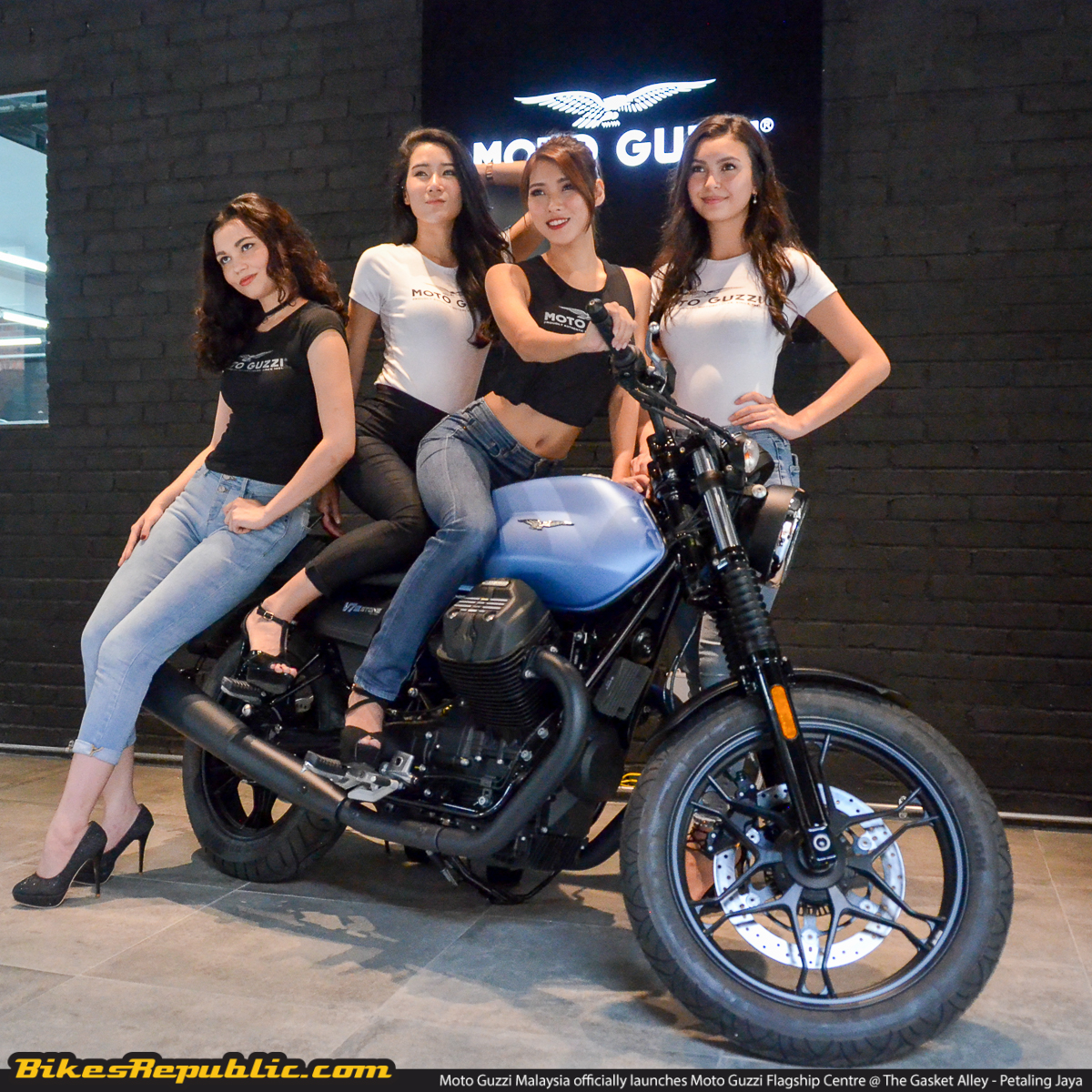
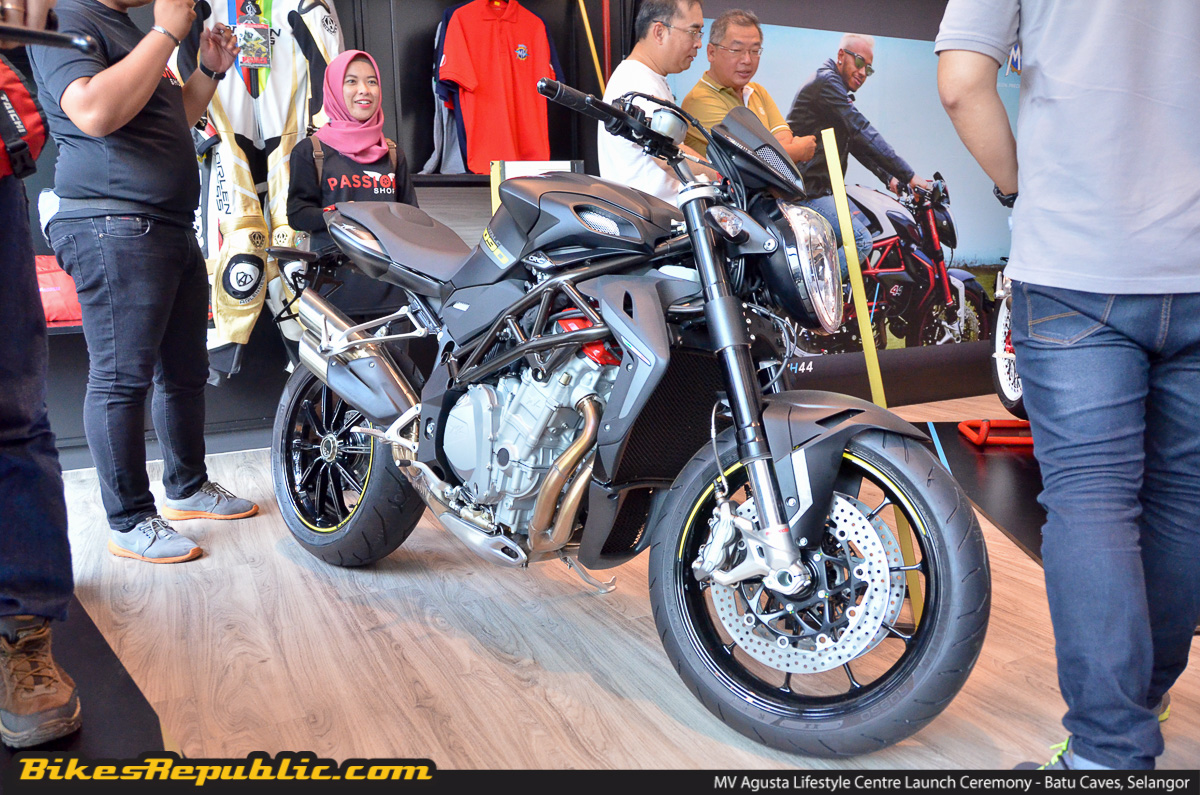
Didi Resources (Moto Guzzi Malaysia) has finally launched the Moto Guzzi Flagship Centre which is located at the Gasket Alley, Petaling Jaya.

The new 3S Centre will house the manufacturer’s showroom as well as provide the best after sales services to all Moto Guzzi owners.

The latest 2017 Moto Guzzi V7 III Anniversario was also launched in conjunction with the introduction of the new 3S Centre.

Moto Guzzi Malaysia has finally launched their latest Moto Guzzi Flagship Centre earlier today. The newly launched Moto Guzzi hub here in the country is located at the Gasket Alley, Petaling Jaya. (more…)

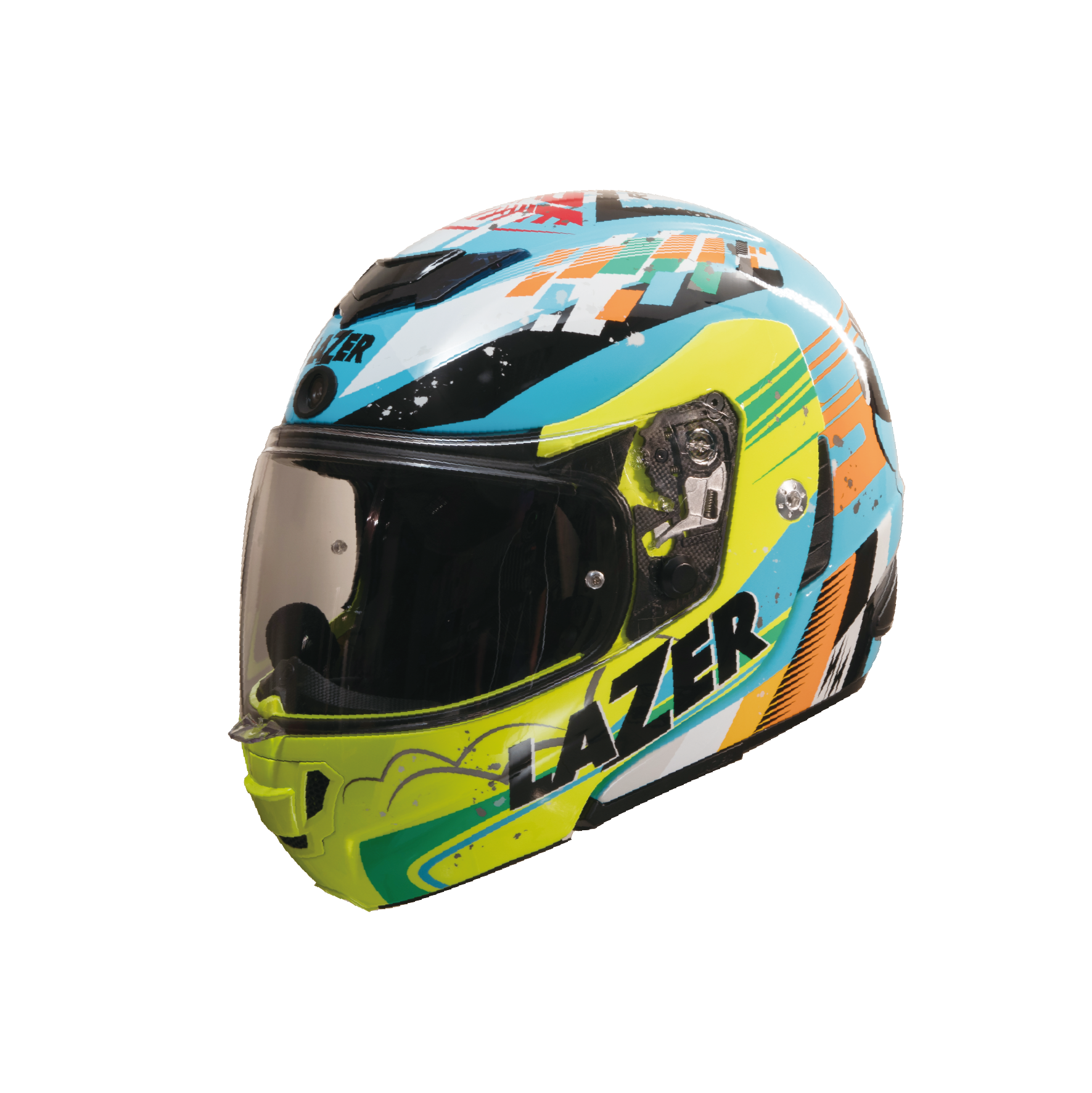
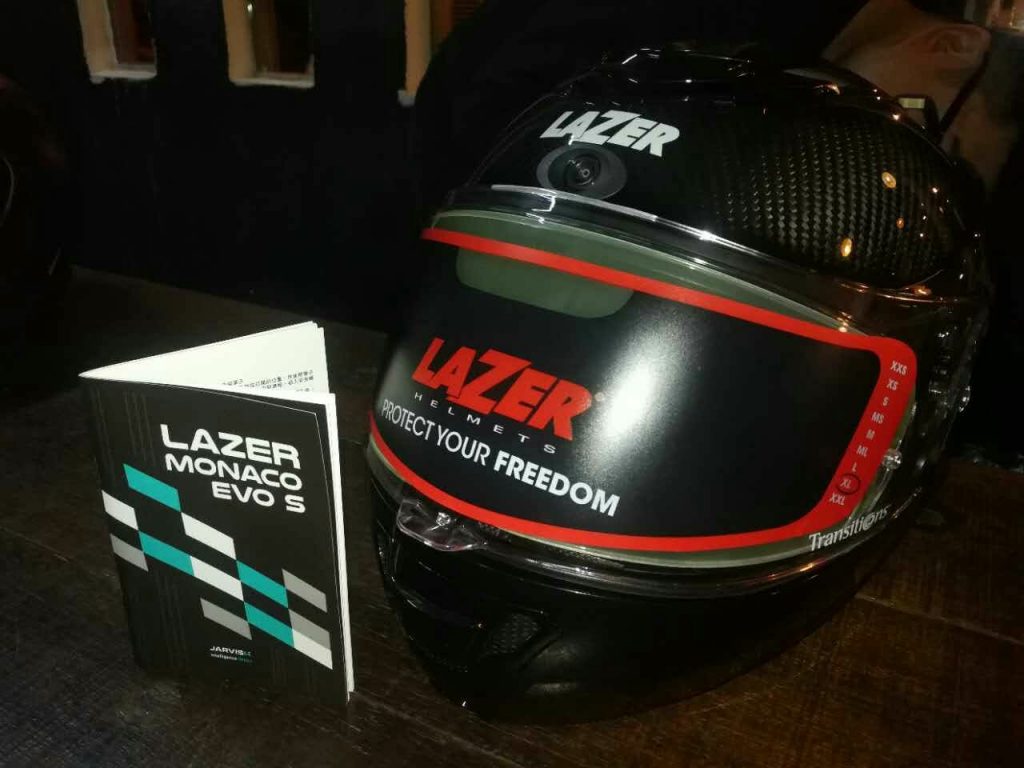
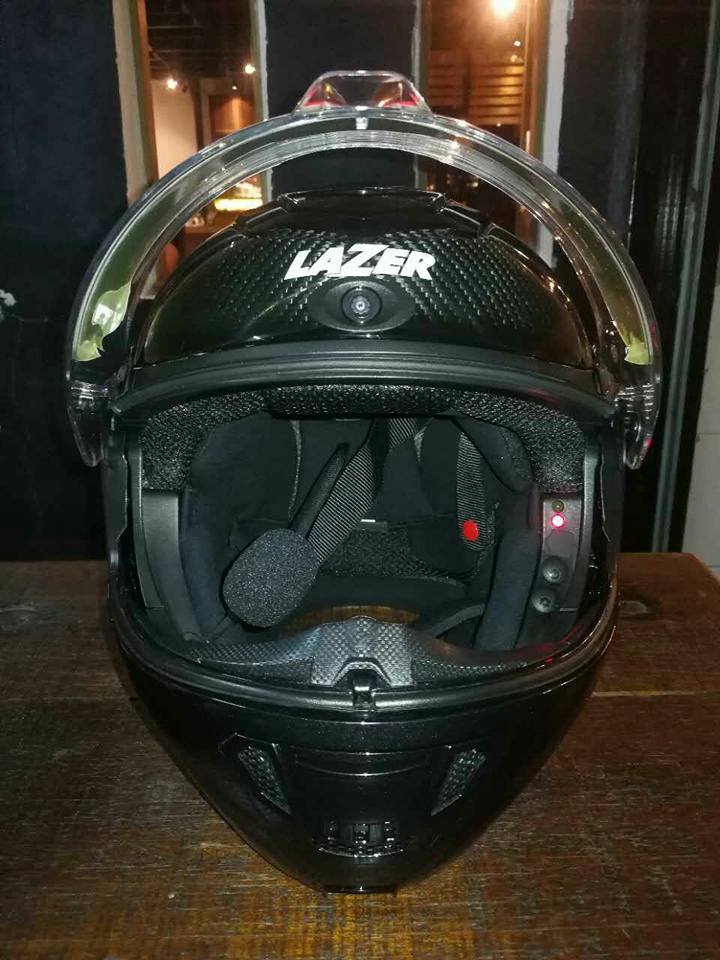
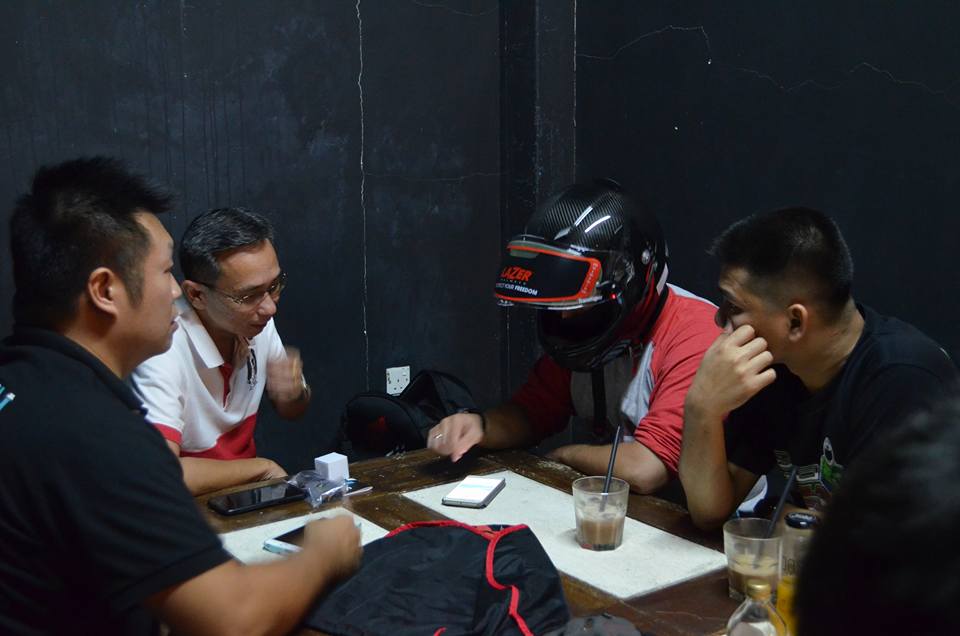
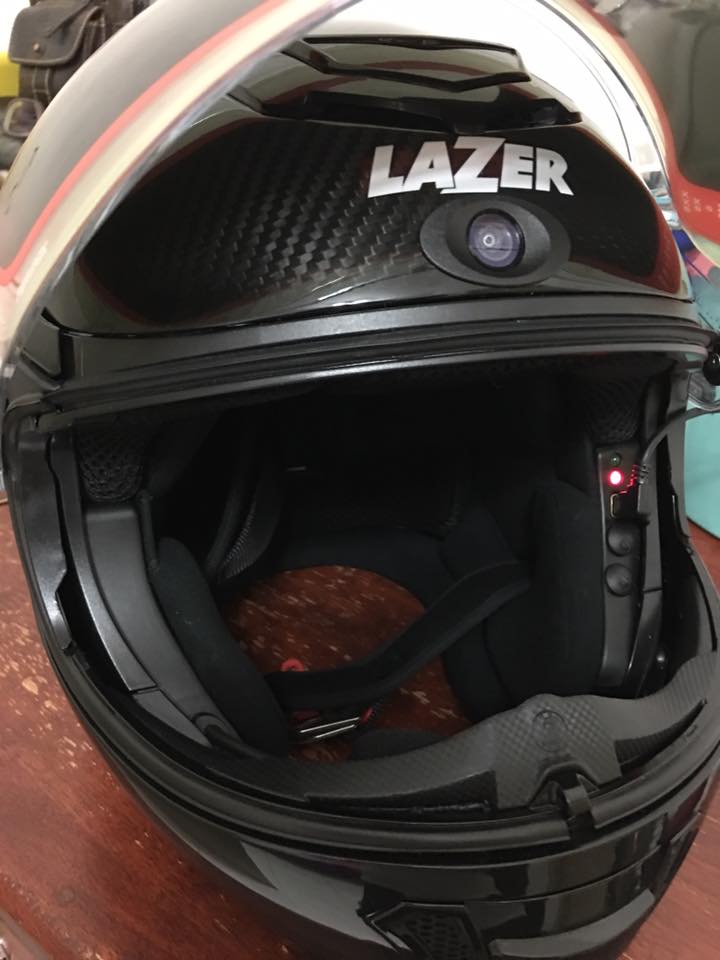
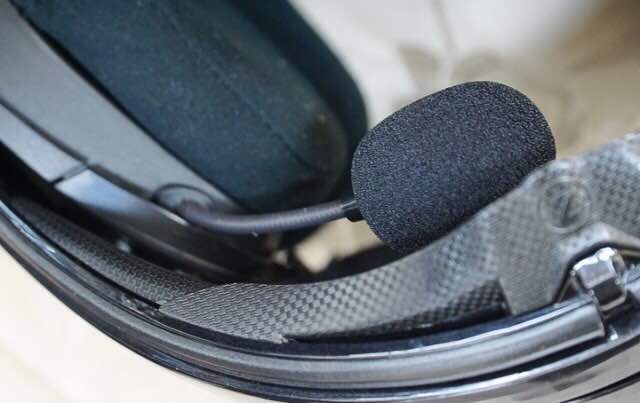
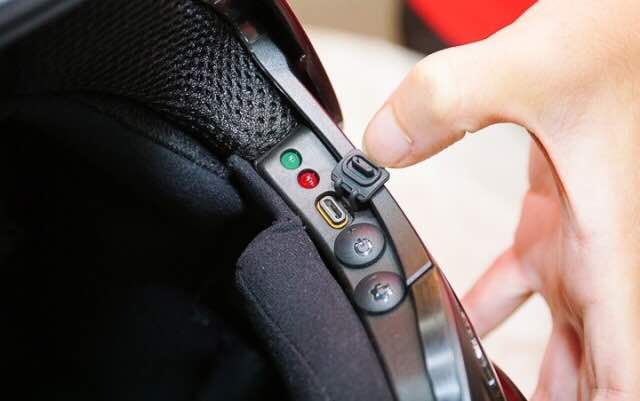
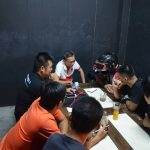
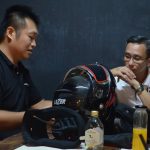
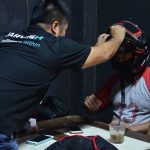
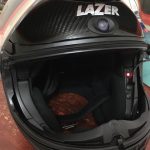
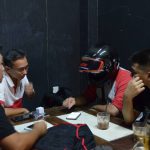
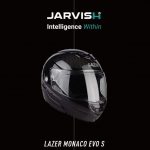
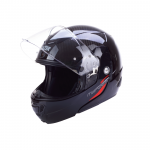
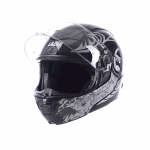
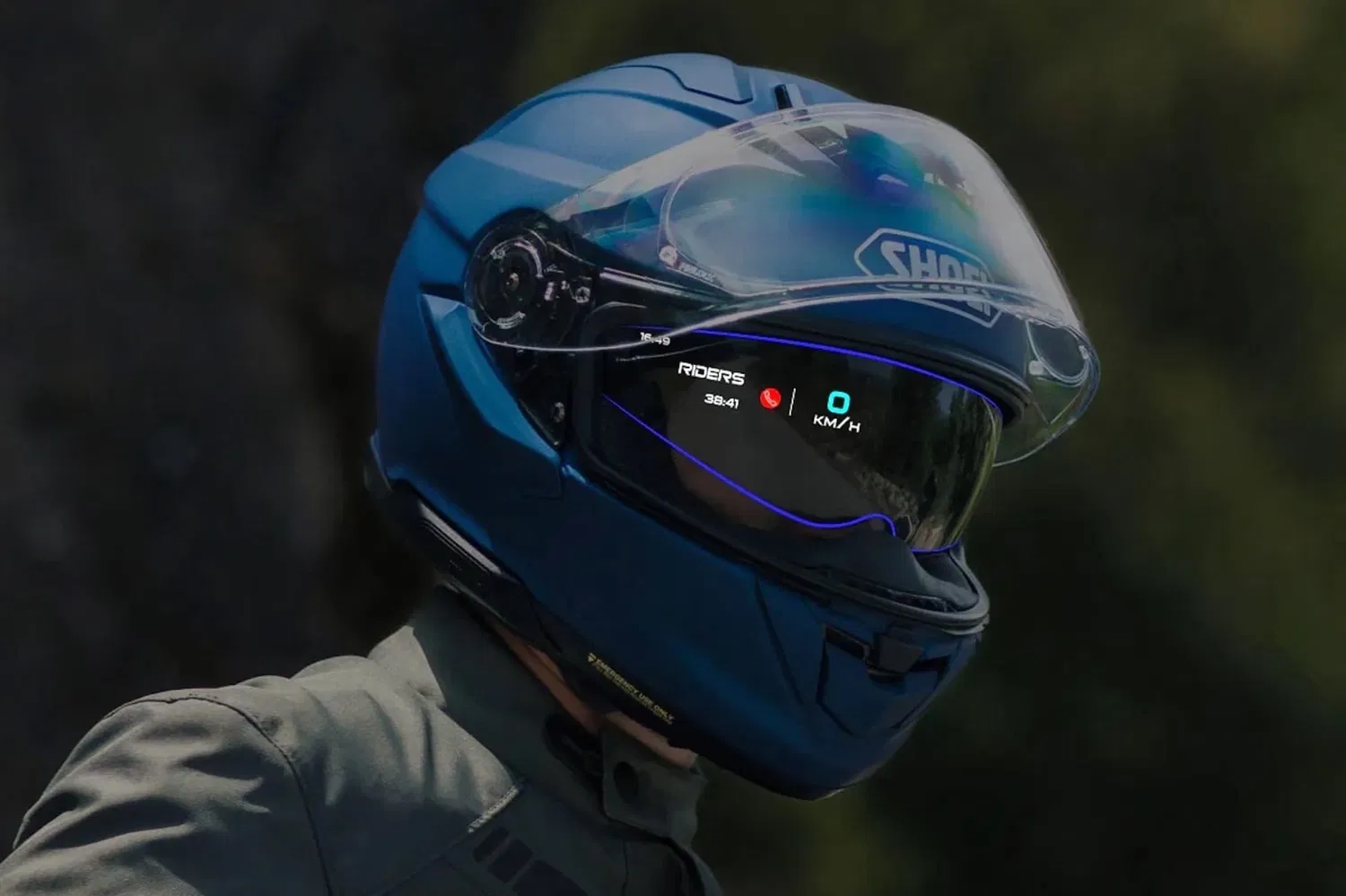
The world’s first “smart helmet’ has been officially launched in Malaysia. The Jarvish Smart Helmet is distributed by RT Ride Tech Motorsport, which is the sole distributor for Malaysia, Singapore and Brunei.

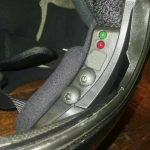
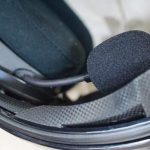
The Jarvish Smart Helmet features a built in 2k 120 degree wide angle video recorder, voice activation command, ability to receive and to reject phone calls, and it is compatible with Apple Siri and Android’s Google Go. This feature allows riders to check on the weather, location of nearby petrol stations and location of food stalls, all through voice commands. This allows the rider to keep both hands on the handle bars.

The helmet even has its own applications, which needs to be downloaded to a smart phone. This app enables the rider to download a video to his phone via wifi, or to a computer via a USB cable. It is said that the application will soon be able to offer live streaming to the riders Facebook account.

The device is operated by battery which can last up to 5.5 hours with continuous recording. Jarvish says that the battery is made of a solid state lithium ceramic military grade material and is thus an anti-explosion battery, even under extreme conditions such as piercing, collision, rupture and such, the battery stays stable, and will not leak, smoke, or burn.

The smart helmet even has its own crash sensor, and will automatically save a video recording into a “black box” when the sensor detects an impact. The helmet supports SD memory card with up to 256GB memory, which roughly sums up to about 3 days of recording.

Future plans includes a crash sensor that will be able to call out a specific phone number during emergencies, and in Europe, the helmet will be able to link up to rescue units and also insurance companies.

Jarvish Smart Helmet Specification:

  • Waterproof level: IPX5
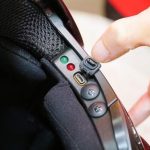
  • Voice command: After the mobile phone Bluetooth is connected to the intelligent helmet, voice commands can be used to control the functions including camera recording, telephone answering, volume adjustment, music playing, etc.
  • Recording function: 1920 X 1080P, traveling dynamic status can be recorded via the recording function.
  • Safety certificate: ECE R22.05 (Regional), DOT(Regional), CNS 2396, CNS 13438, CNS 13439, NCC-CCAM17LP0170T2.
  • APP: Wi-Fi connection, videos can be downloaded and the system status of the intelligent helmet can be viewed. The navigation function allows the input of destination address before each trip and voice commands for navigation can be transmitted to the earphones of the intelligent helmet via Bluetooth connection. (Satellite navigation may have errors and it is recommended for reference usage only).
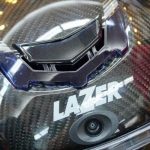
  • Helmet shell material: The helmet shell uses a carbon fiber composite material characterized by high stiffness, high stength and light weight.
  • Battery features: Use a solid state lithium ceramic military grade material anti-explosion battery. Under extreme conditions, such as piercing, collision, rupture etc., the battery is maintained to be safe without the occurrence of battery solution leakage, smoke or burning, etc.
  • Ventilation features: The mouth portion and forehead portion are equipped with two-stage adjustable air inlets in conjuction with the design of additional three air outlets in order to ensure air ventilation inside the helmet. The two areas of the lower rear portion are provided with heat sinks.
  • Quick-removal inner lining: The inner lining is of a removable design along with anti-bacterial and mite-proof treatments; the inner lining is also washable.
  • Model: MONACO EVO S
  • Importer: JARVISH Inc.
  • Materials, net weight, quantity: Carbon fiber composite material, Styrofoam, metal buckle, fabric inner lining
  • Rated voltage (V) and rated frequency (Hz): Rated voltage 3.8 ~4.4 v, 60 Hz
  • Rated total power consumption or rated input current: 0.65A
  • Certifications: ECE R22.05 、 DOT、 CNS 2396、CNS 13438、CNS 13439、NCC
  • Product name: Enhanced flip-up protective helmet for motorcycle riding (applicable for use in non-competition motorcycles above 125C.C.)
  • Product type: Enhanced type, applicable to light or heavy motorcycles and large heavy-duty motorcycles.
  • Main materials: Composite carbon fiber helmet shell, EPS, Styrofoam, metal buckle, fabric inner lining.

MV Agusta has finally announced that all their three-cylinder motorcycles to comply with the strict Euro4 regulations.

The MV Agusta F3 675, F3 800 and Dragster 800 models have gone through evolutions to their engines, electronics, engine noise and exhaust gas emissions making them quieter and cleaner.

The move to make their bikes comply with the Euro4 regulations means that they can continue selling their bikes in European countries in 2018 and beyond.

MV Agusta has finally of their three-cylinder motorcycles to comply with the even more strict Euro4 regulations. (more…)

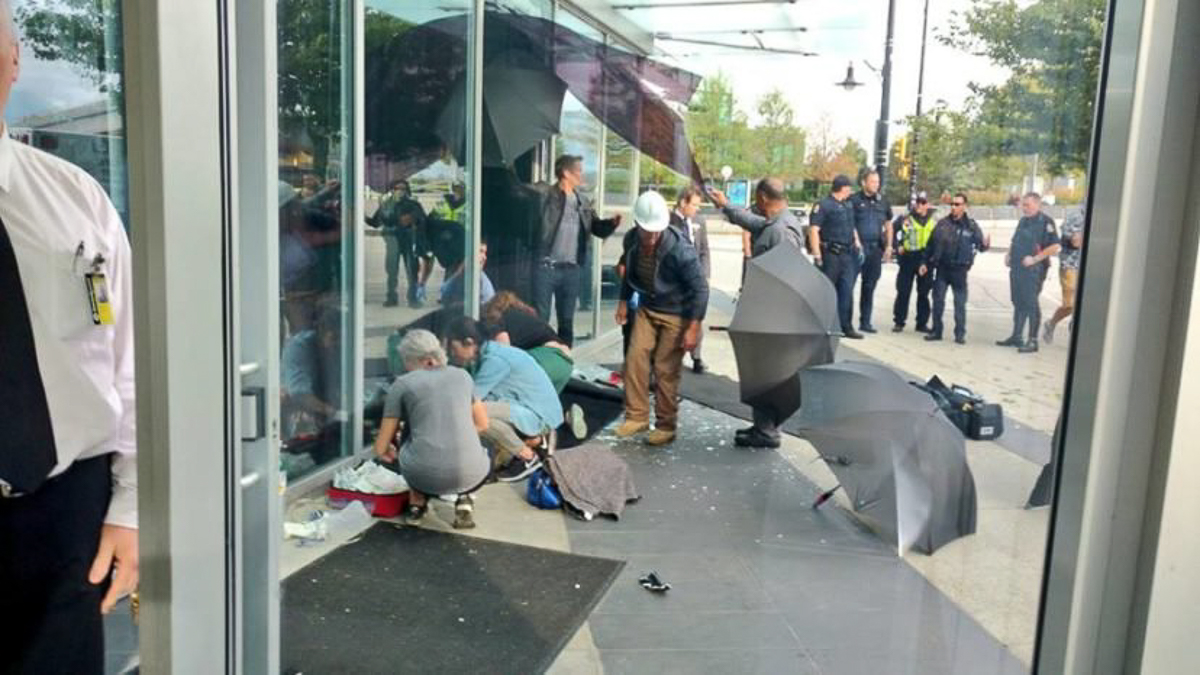
A stuntwoman has recently passed away in an unfortunate incident while filming motorcycle stunt scene for the new upcoming Marvel movie, Deadpool 2.

The stuntwoman was seen losing control of her Ducati stunt bike before going airborne and crashing through a window panel at the ground floor of the Shaw Tower in Vancouver, Canada.

No official news has been released yet by the team but the unfortunate incident is probably going to delay the release of blockbuster movie in June of 2018.

Image source: TMZ

A stuntwoman has died in a freak accident while performing a stunt using a high-powered motorcycle earlier today while filming the new Marvel superhero movie “Deadpool 2”. (more…)

TEN WORST MISTAKES IN THE MOTORCYCLING INDUSTRY
We brought you Part 1 (click here) of our collection of the biggest mistakes in the motorcycle industry previously. These bungles went on to cost entire companies and claim the livelihoods of employees, but mistakes are also the catalysts for improvements. Here’s Part 2.

6. HELL-MET

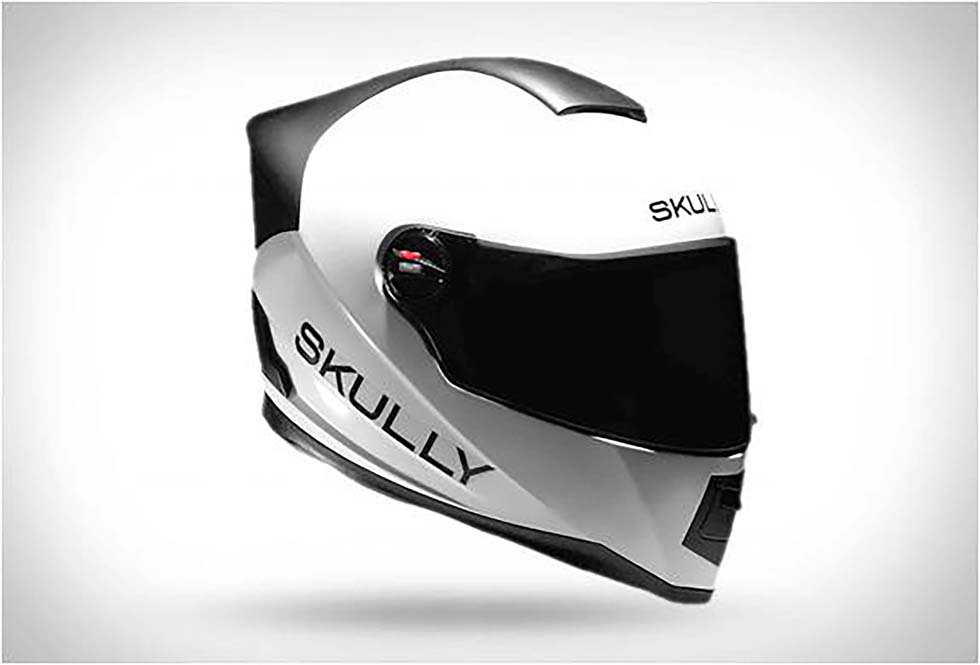
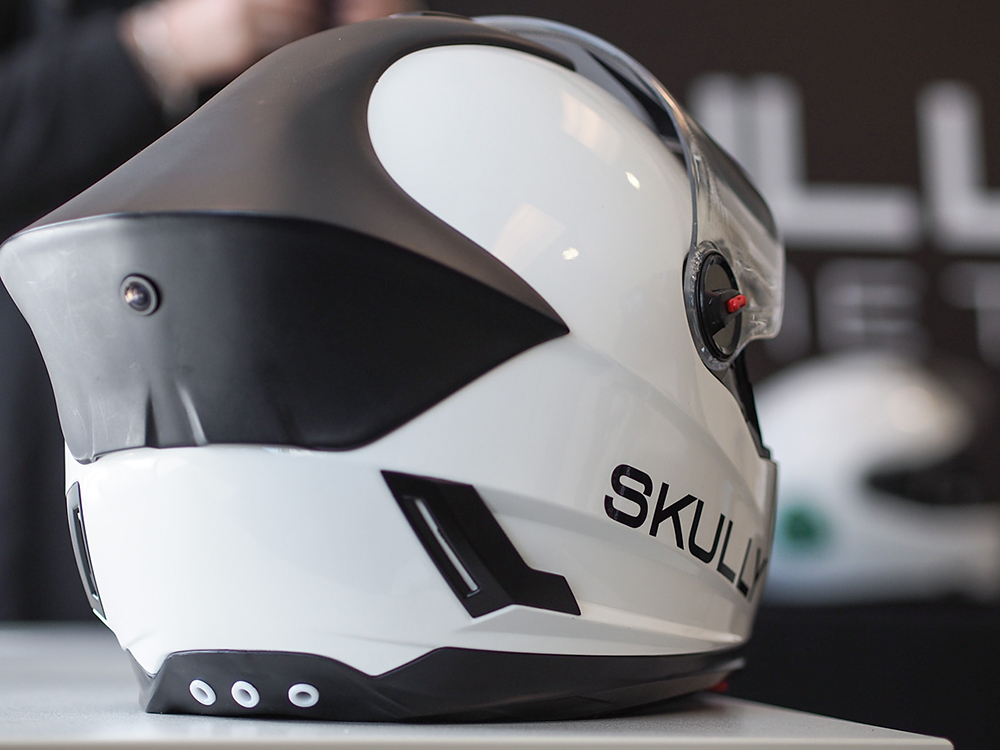
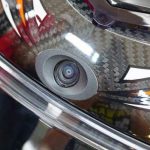
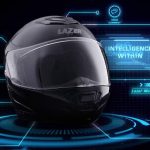
Anyone remembers Skully helmets? Hopefully none of you reading this got burned.

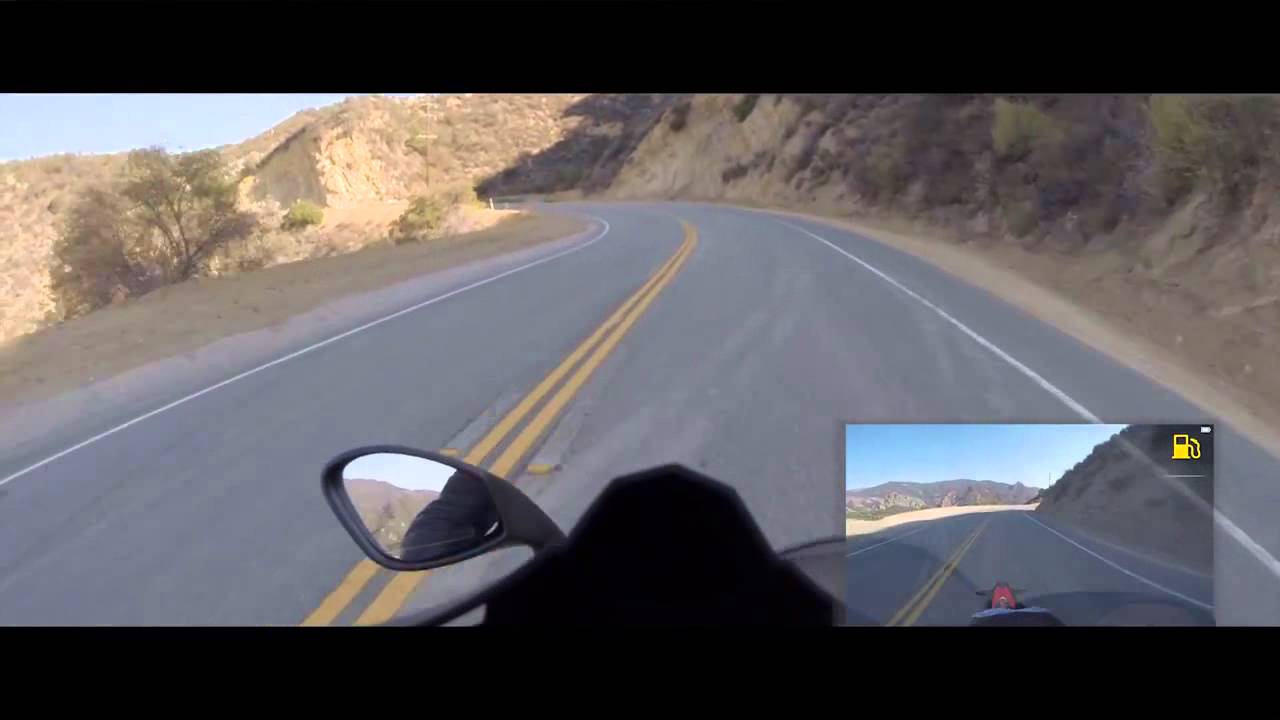
Skully’s helmet featured a rear-facing camera, built-in Bluetooth connectivity, and a heads-up display.


Invented by CEO Marcus Weller, Skully started taking preorders in 2014 through Indiegogo crowd funding, raising US$1.1 million in record time. However, insider accounts revealed that only 20 to 100 units have been shipped as of July 12, 2016, due to production delays.

It was during the same date that Weller was removed as CEO and replaced by Martin Fischer. Despite having already raised a total of $2.5 million through the Indiegogo crowd funding program and another $11 million in venture capital from Intel and others, Weller had failed in his attempts to obtain further capital at the time.

Then, former executive assistant Isabelle Faithhaur sued Skully founders Marcus and Mitch Weller, for misappropriating company funds for vacations, sports cars and a strip club, then claiming those as company expenses. Getting wind of the lawsuit, Skully shut its doors and filed for bankruptcy.

It didn’t end there. Electronics manufacturer and Skully supplier, Flextronics had also sued Skully for reimbursements. Flextronics says Skully owes $505,703 in past-due bills, $514,409 in unpaid billes and another $1.5 million for what they spent on materials and inventory related to the Skully helmet.

Skully left behind a gawd-awful mess in its wake. More than 3,000 customers who preordered the helmets may never receive theirs, and at least 50 employees out of a job.

7. CAMS BY CADBURY(?)
The American Motorcycle Association had decreed that four-cylinder 1000cc superbikes to be downsized to 750cc beginning for the 1983 superbike racing season and that the motorcycles must be production based. (These regulations became the core of the World Superbike Championship which started in 1988.)

Being “production based” means road-legal versions must be homologated – in other words, made for the public – in contrast to the fully-prototype machines that race in the world GP championships.

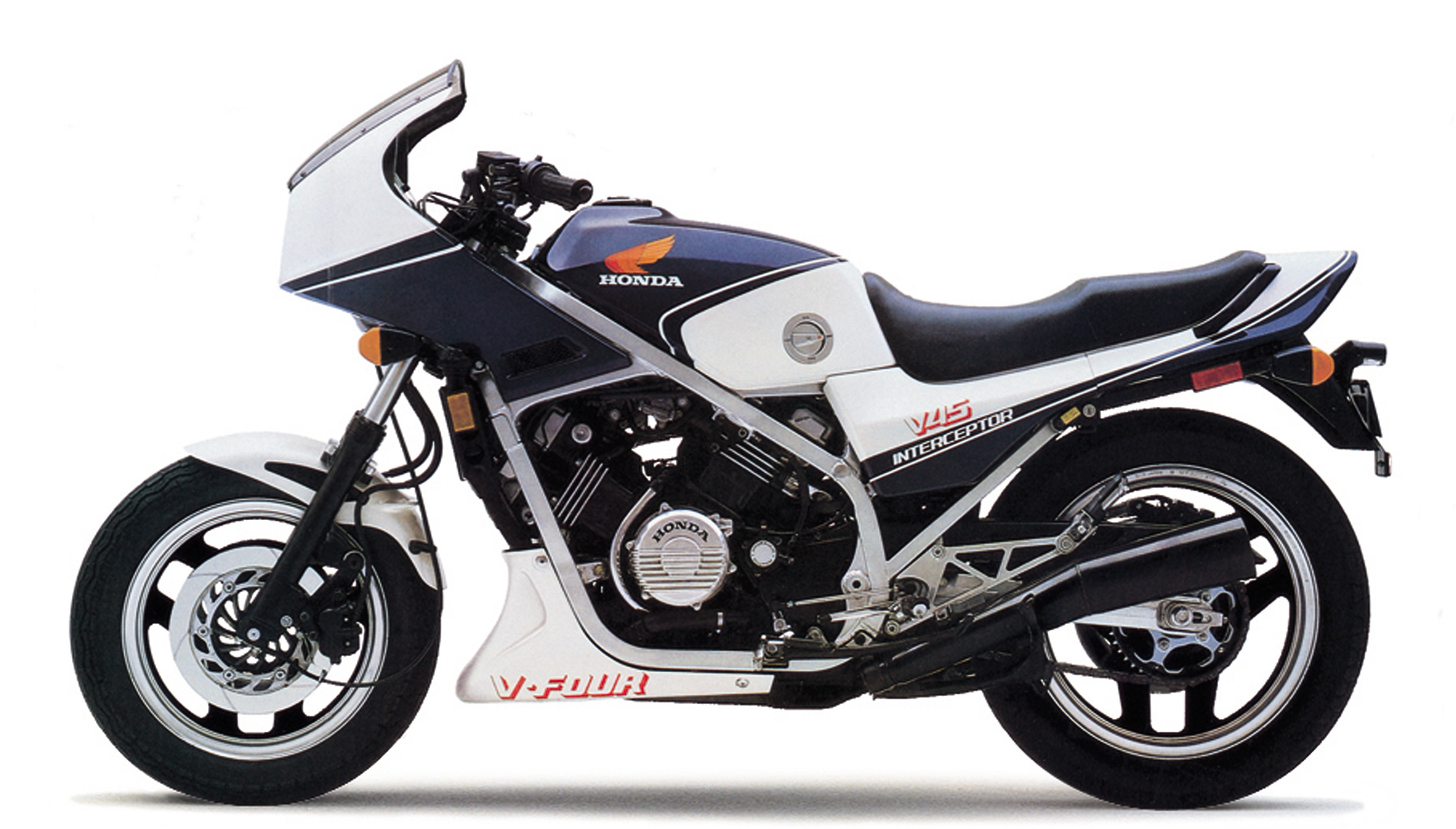
These regulations created the very first Japanese superbike repli-racer, the Honda Interceptor VF750F. Honda had wanted to win the AMA Superbike Championship and threw everything into the Interceptor make it (almost) race ready. It was the company’s founder Soichiro Honda who uttered the famous quote, “Racing improves the breed,” after all.

Consequently, the Interceptor boasted features that were once the domain of race bikes.

The 748cc, liquid-cooled, DOHC, V-Four engine produced an impressive (for the time) 86 bhp, 62.8 Nm of torque and propelled the bike to a top speed of 222 km/h, courtesy of a new airbox which forced air into the cylinder heads. Two radiators kept things cool. It was reported that the race engines produced a whopping 132 bhp.

The world’s press was impressed by the Interceptor’s handling too, as it was suspended by Showa suspension on both ends, with the 39mm front forks featuring Honda’s TRAC (Torque Reative Anti-Dive Control) system which limited fork dive, resulting in a more stable ride. Honda’s Pro-Link single shock suspended the sand cast swingarm. A rectangular steel perimeter frame was used. A section could be unbolted should engine removal was required

And while the slipper clutch is now available on virtually all modern superbikes, it made its street bike debut in the Interceptor.

Apart from the engine and chassis, Honda also worked on aerodynamics and the final styling became the shape of future sportbikes (well, at least until Suzuki unveiled the GSX-R750 “Slingshot” in 1988).

The new fairing was designed to push airflow over the top of the rider’s helmet, the lower cowl provided downforce and the fuel tank had cutouts for the rider to tuck his knees in. Honda also offered a rear seat cowl to make the bike look like its track cousin.

It looked like Honda had created the Godzilla of superbikes. The Interceptor was a sales success. But we’re talking about screw-ups, aren’t we?

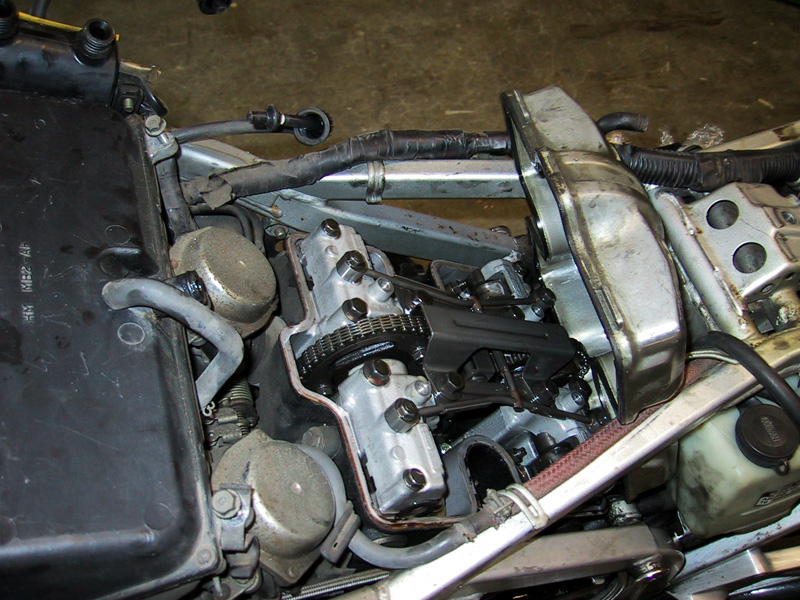
Customers started to complain about erratic engine behavior and rattling, which was traced to problems in the valvetrain, or more specifically abnormal camshaft wear. Honda didn’t want to admit to the problem initially, but they concluded that it was likely due to oil starvation, besides possible valve clearance issues. Honda issued a recall and drilled holes into the cam lobes apart from closing off the cams’ ends. They also fitted kink-free oil lines and banjo bolts.

Didn’t work.

Afterwards, Honda first assumed the problem was caused by heat, only to discover there was too much clearance in the camshaft bearings. Honda responded by replacing the camshafts with a new type.

But it’s apparent that Honda had bungled on the cam lobes that were too soft, causing them to pit and wobble in the bearings. Dissatisfied customers started calling them “Chocolate Cams,” and the pejorative stuck for every motorcycle with cam problems ever since.

The Interceptor VF750F was discontinued after 1986. It had almost singlehandedly destroyed Honda’s image of quality and engineering.

Which is a shame, because the Interceptor is still one good-looking bike, 34 years on.

8. STRIKE!

I like bowling. It’s satisfying to throw 12kgs of spherical rocks down a lane and watch the hapless bottle-shaped wooden pieces scatter. There are many companies who produce bowling alley equipment these days, but one name always gets my attention.

AMF – acronym for American Machine Foundry. Although its name contains the word “machine” and “foundry” it was a sporting equipment giant.

Harley-Davidson was in  dire straits in the late-60’s due to the competition of foreign motorcycles, especially from Japan in the form of a little upstart called Honda.

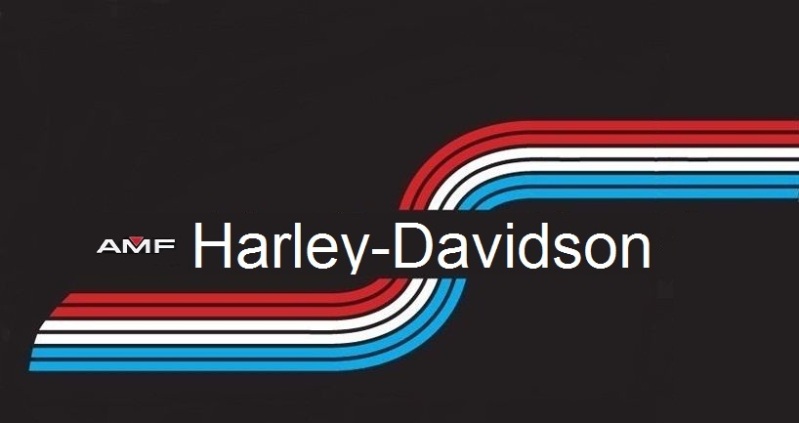
AMF threw H-D a lifeline by acquiring the Motor Company in 1969. It would’ve meant taking back H-D’s lost ground and credibility, only for it to go further south.

AMF restructured H-D by laying off a great number of employees, leading to strikes (as in labor strikes). As a consequence, workmanship and quality started to suffer. AMF operated under the “make more, sell more” principle, instead of producing motorcycles to compete in terms of price, performance and quality.

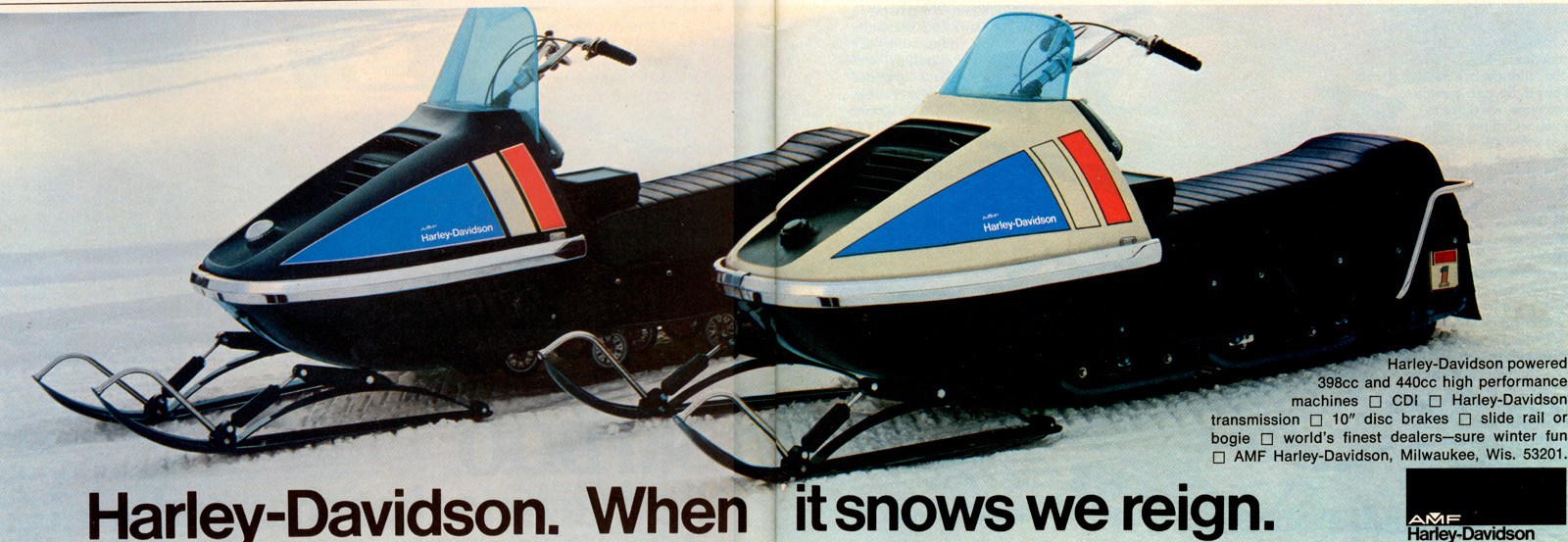
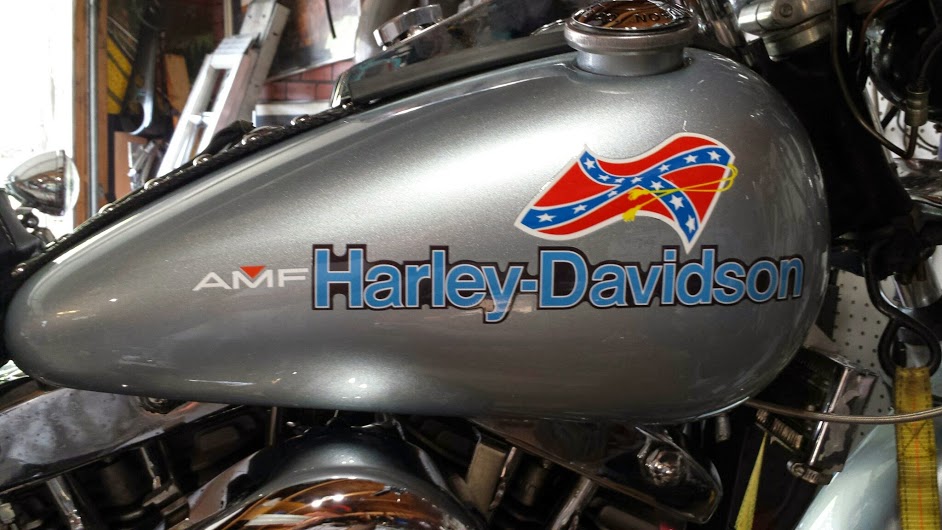
Bizarrely, Harley-Davidson even produced snowmobiles from 1971 to 1975. Then in 1976 Harley produced the “Confederate Edition” series of bikes to commemorate the United States of America’s bicentennial. These bikes had Confederate flag painted on them, sparking civil rights complaints.

A quality continued to suffer, new bikes from the factory leaked oil onto the dealers’ showroom floors. There were rumors of dealers having to using sanitary napkins on the crankcases to soak up the oil.

It was at this time that Harley-Davidson earned mockery such as, “Hardly-Ableson,” “Hardly Driveable,” and “Hogly Ferguson.” The word “hog” became a pejorative ever since.

A group of 13 investors, led by Willie G. Davidson and Vaughn Beals bought back the now-struggling company for $80 million in 1981.

Well, at least AMF kept the Harley-Davidson name from tanking in 1969 and produced models whose styling became the Motor Company’s hallmarks. And thankfully, they didn’t sound like a bowling ball rumbling down the lane.

9. RED PAINT BY DuPONT

The USA entered World War I on April 6th, 1917, joining its allies Britain, France and Russia against Germany.

It was during this time that the Indian Motorcycle Manufacturing Company sold the bulk of its Powerplus line to the US military, resulting in a dearth of availability to customers. Their dealers weren’t happy and turned their backs on Indian, as a result. Consequently, Indian lost its number one position to Harley-Davidson, by the 1920s after the war.

As business suffered further, Indian merged with DuPont Motors in 1930. DuPont’s founder, E. Paul DuPont ceased production on all DuPont automobiles and concentrated all resources on Indian. DuPont was also a giant in the paint industry and there were 24 color options in 1934.

With DuPont’s backing, Indian had sold as many bikes as Harley-Davidson by 1940. One little known fact: Indian also made other products such as aircraft engines, bicycles, boat engines and air-conditioners during this time.

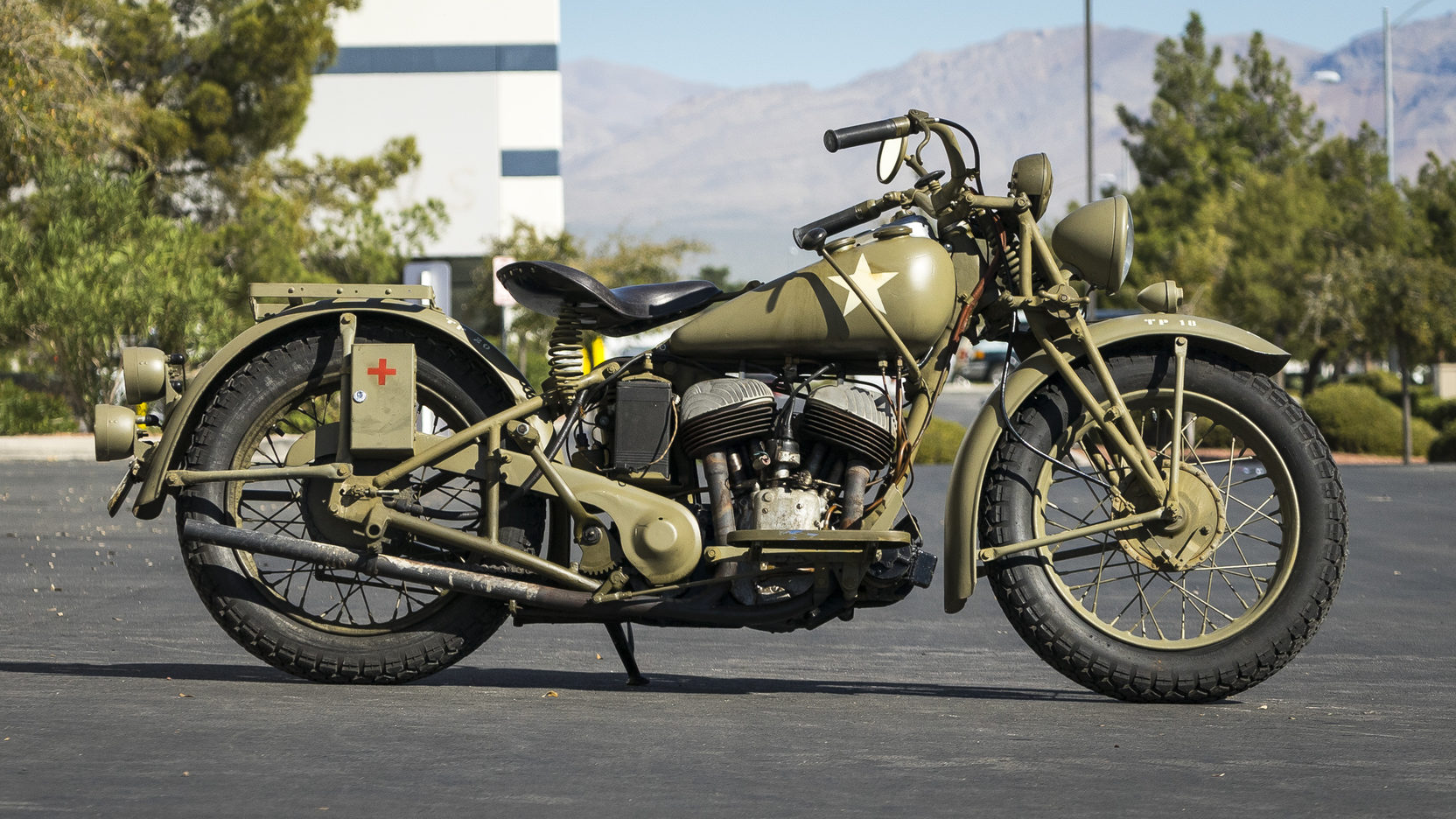
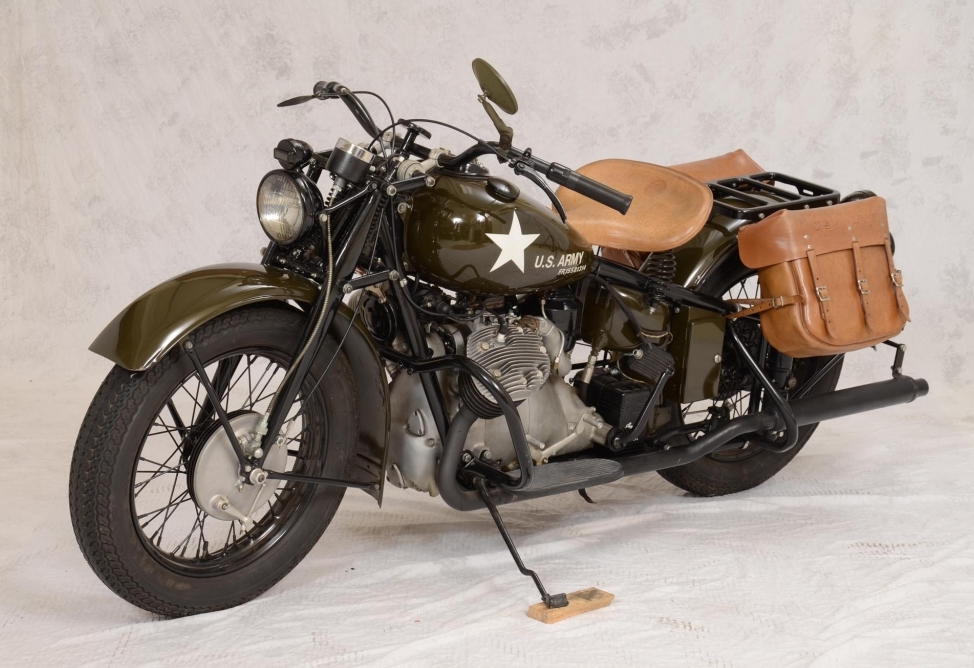
When World War II started, Indian Chiefs, Scouts and Scout Juniors were used in small numbers for different roles in the United States Army, while the British and Commonwealth militaries used them extensively under Lend Lease programs. Despite being so, the Indian models could not compete against Harley-Davidson’s WLA model in the US military.

An earlier design was based on the 750cc Scout 640 was often compared to the WLA. It was deemed both too expensive and heavy. Indian later offered the 500cc 741B but was could not secure the US Military contract. Indian even made a 1200cc 344 Chief.

However, the US Army did request for an experimental motorcycle for desert warfare and Indian responded with the 841, which mounted its V-Twin engine across the frame like Moto Guzzi. Some 1,056 units were built.

Harley also joined the fray with their model XA, but both bikes were outshone by the Jeep for the intended roles and missions

Without a military contract and lack of domestic demand, Indian found itself in trouble again.

In 1945, a group headed by Ralph B. Rogers bought a controlling stake in the company, and DuPont turned over its Indian operations to Rogers in November 1945.

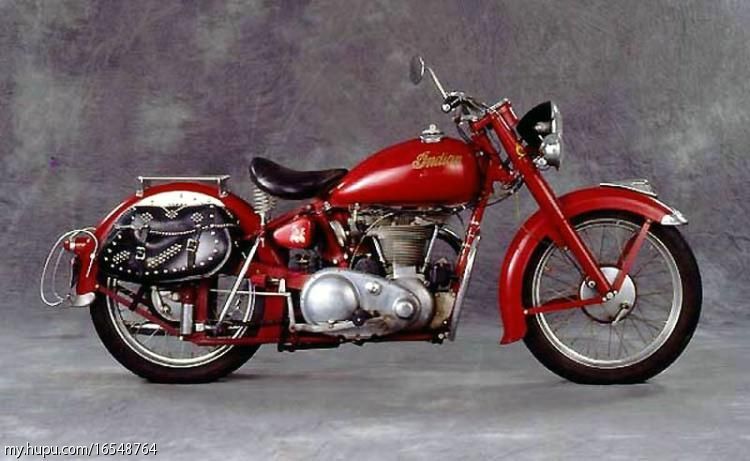
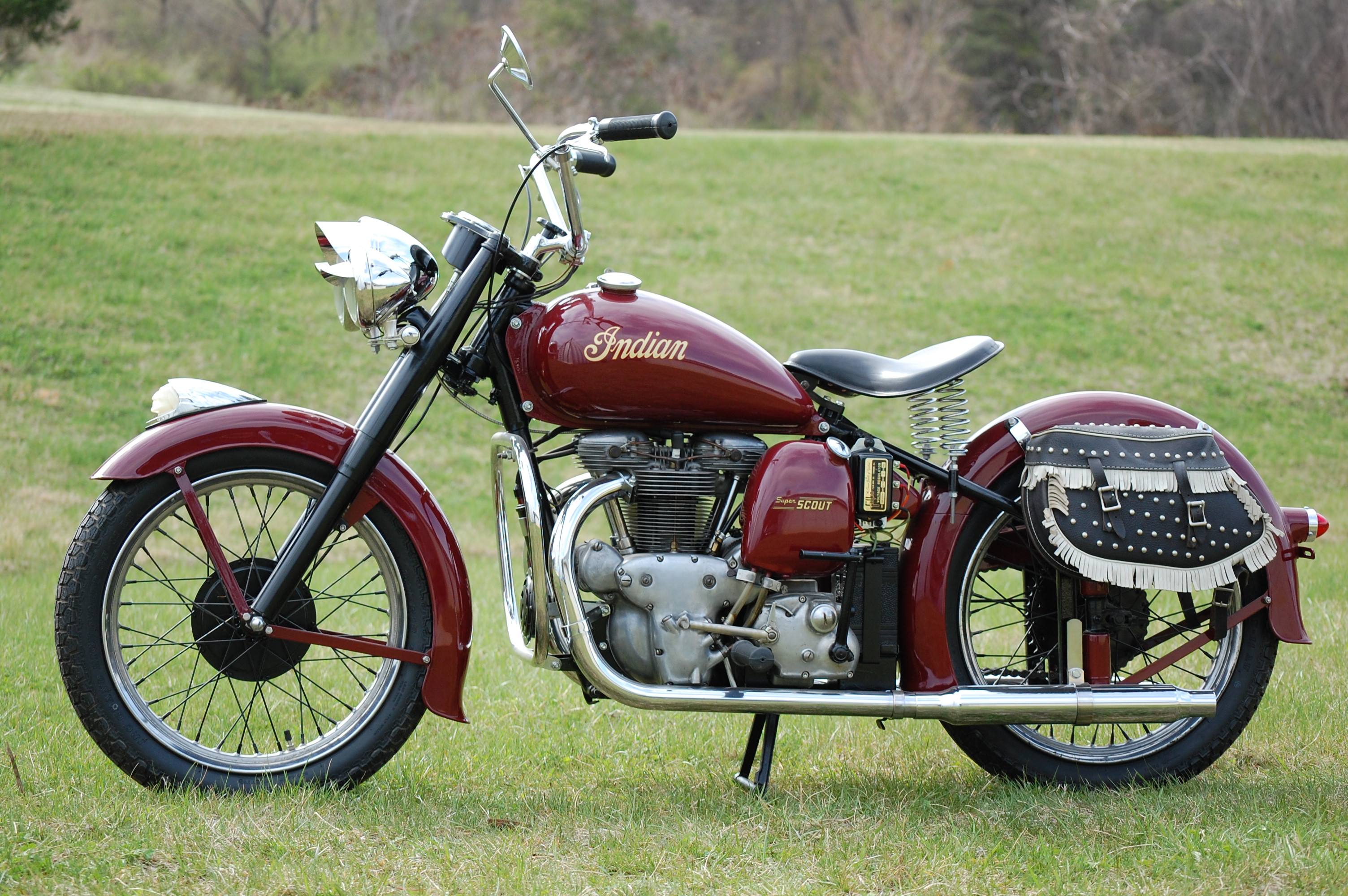
Rogers went on to discontinue production of the all-important Scout and began manufacturing lightweight models such as the 149 Arrow and Super Scout 249 in 1949, and the 250 Warrior in 1950; while their arch-rival Harley-Davidson stayed the course of producing heavyweight motorcycles.

The new models found little support and Indian Motorcycles wrapped up in 1953.

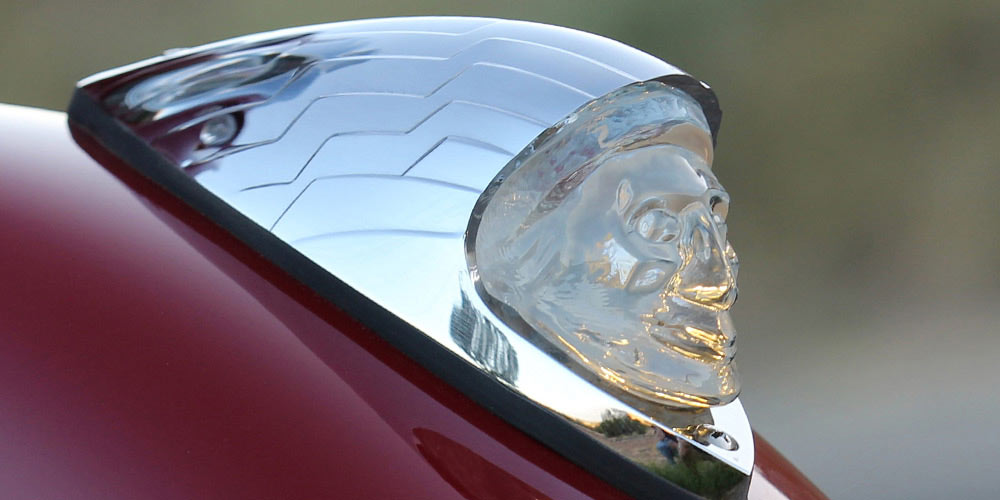
There was one positive contribution during Rogers ownership however. The Indian chief head fender light called the “war bonnet” was introduced in 1947. The war bonnet is mounted on every modern Indian motorcycle under Polaris.

10. BSA

Who was the world’s largest motorcycle manufacturer from the mid-30’s to the early 60’s?

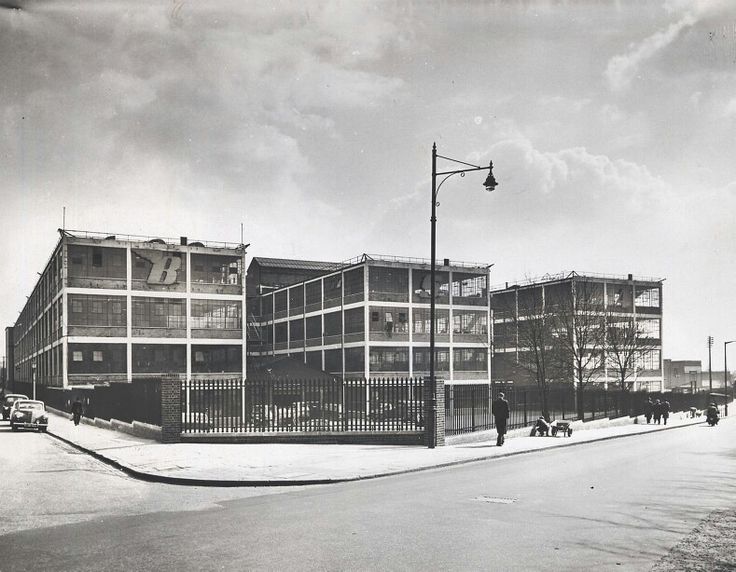
BSA – an acronym for Birmingham Small Arms. In fact, BSA was one of the world’s business juggernauts at its peak.

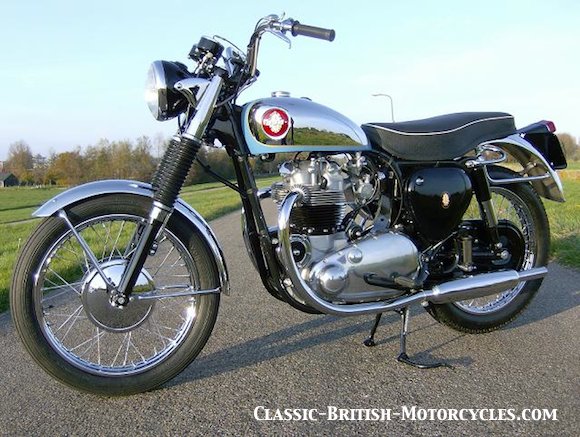
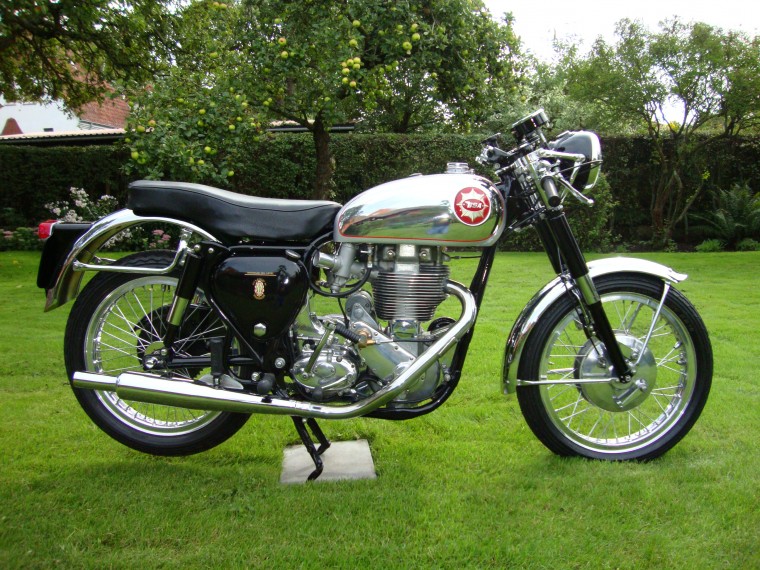
At the end of the 50’s, BSA Motorcycle ruled the world. The Gold Star dominated the tracks and showroom sales, while the A7 and A10 sold well, too. BSA owned Triumph, Ariel, Sunbeam and New Hudson. However, the motorcycle division was only a small portion of the empire, as BSA also produced cars, busses, steel, heavy construction equipment, agriculture and industrial powerplants, machine tools, weapons, ammunition, military equipment, bicycles.

In World War II, the company produced Lee-Enfield rifles, Thompson submachine guns, .303 RAF Browning aircraft machine guns (fitted to Spitfires, among others), Oerlikon 20mm anti-aircraft cannons, Sten submachine guns, Boys anti-tank rifles, and many more.

BSA was flush with cash. Which was probably why it drove BSA’s Managing Director during the 1950s, Sir Bernard Docker and Lady Docker to complacency and hedonism, instead of re-investing in new technologies and tooling.

The pair lavished vast amounts of BSA’s profits on gold-plated Daimlers complete with mink, zebra and leopard skin upholstery, and luxury yachts. He was removed in 1956 and the pair went on to live as tax exiles in Jersey.

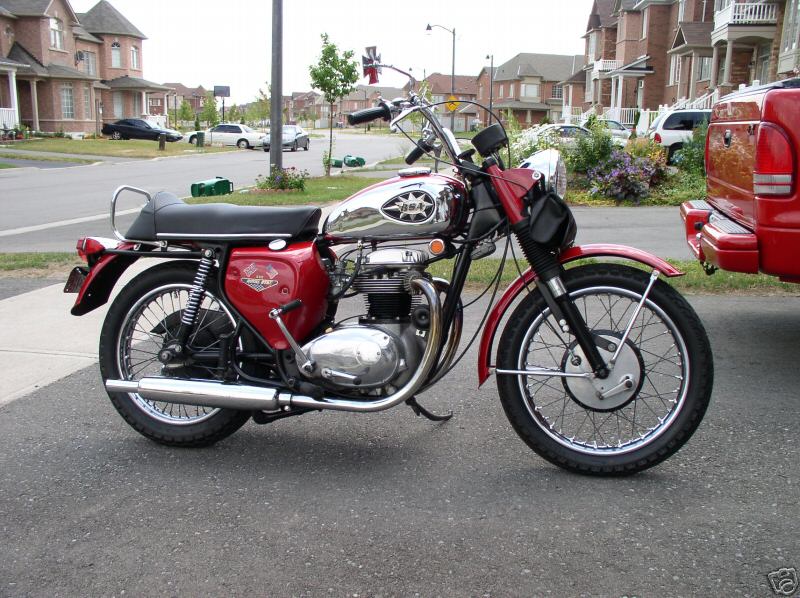
Seeing the success of the A7 and A10 vertical twins, BSA decided on a complete redesign of the engine into the new unit construction mold, just like what Triumph had done with 500 twin in 1959. The redesign resulted in the all-new A50 and A65.

No one cared. They were ugly, vibrated hard hence didn’t sell well.

But instead of improving matters, BSA inexplicitly stopped producing the Gold Star 1963, their best-seller.

By 1965, competition from Japanese manufacturers such as Honda, Yamaha and Suzuki, besides Jawa/CZ, Bultaco and Husqvarna from Europe were starting to eat into BSA’s market share. BSA and Triumph’s models were suddenly out-of-touch. It’s apparent that BSA needed to invest in new technologies and tooling, but poor marketing decisions and expensive projects that led nowhere muddied things even further.

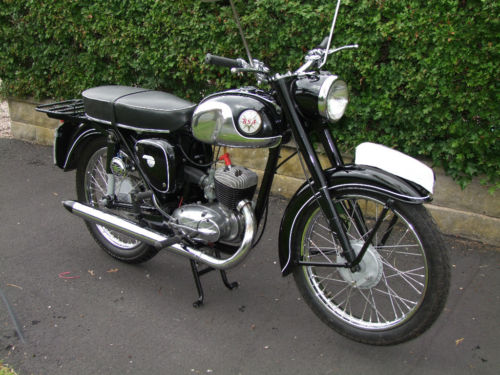
1968 saw BSA announcing big changes to its singles, twins and triple called “Rocket Three” for the 1969 model year. However, despite featuring more accessories and different A65 models for the domestic and export markets, they had little impact on sales. It was also the year when BSA debuted the 175cc, 4-stroke, D14/4 Bantam, blindingly believing that it could compete with the Yamaha, Kawasaki and Suzuki two-strokes.

Motorcycle production was moved to Triumph’s site at Meridien in 1971, while engines and components were produced at Small Heath. There were many redundancies by now and BSA was forced to sell their assets. Only four models were offered: Gold Star 500, 650 Thunderbolt/Lightning and Rocket Three.

With bankruptcy looming, BSA merged its motorcycle businesses with the Bronze Manganese subsidiary, Norton-Villiers to become NVT, in 1972.

New head, Dennis Poore, had intended to produce Norton and Triumph motorcycles in England and overseas but his restructuring caused redundancies in two-thirds of the workforce and proposed to close the Meridien plant. Angered by the decision, Triumph workers at Meridien held the plant hostage for one-and-half years before brokering a deal to buy Triumph Motorcycles as the employee-owned Meridien Co-Operative. But it was too late to save Triumph and it struggled along until 1983, ultimately sold to a new Triumph Motorcycles Ltd. company based in Hinckley, Leicestershire.

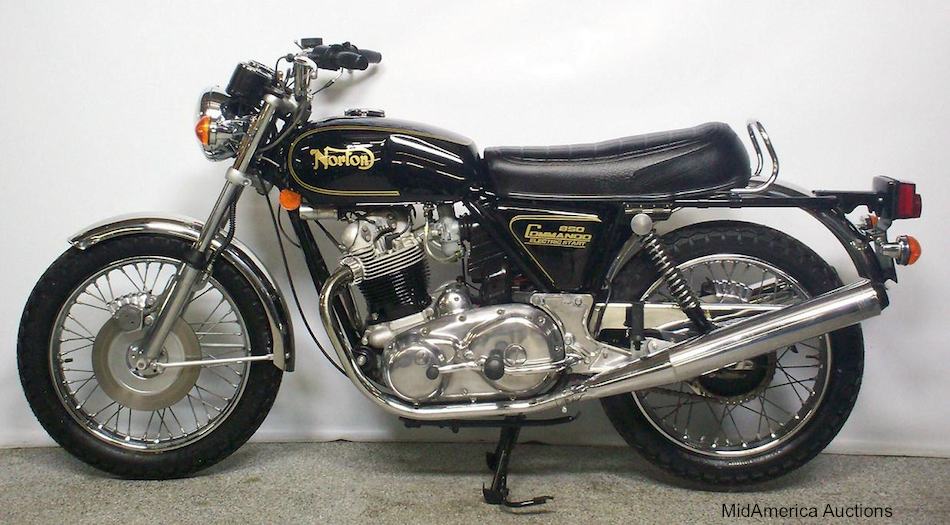
Poore was left with neither BSA or Triumph as a consequence. The only NVT model was the Norton Commando. It indeed became a legend but all NVT could do was enlarging the capacity from the original 500cc, to 650cc, then 750cc and finally 850cc. The engine became over-stressed and vibrated like crazy. There’s no hiding from the fact that the Commando was an old design, being a pushrod operated parallel-twin.

As with the merger, Manganese Bronze had received Carbodies in exchange for NVT, and the plan called for the elimination of a few brands, large labor redundancies and consolidation of production at two sites. It failed due to worker resistance.

NVT was liquidated in 1978.


Archive

Follow us on Facebook

Follow us on YouTube