Bikesrepublic

Latest News

  • Riding into Thailand is painless but do prepare the necessary documents beforehand.

  • Failure to provide the necessary documents means refusal of entry.

  • There’s no such thing as trying to kaotim.

During the GIVI Golden Triangle Adventure ride in 2017, I rode to Pattaya, Thailand from Kuala Lumpur with a buddy.
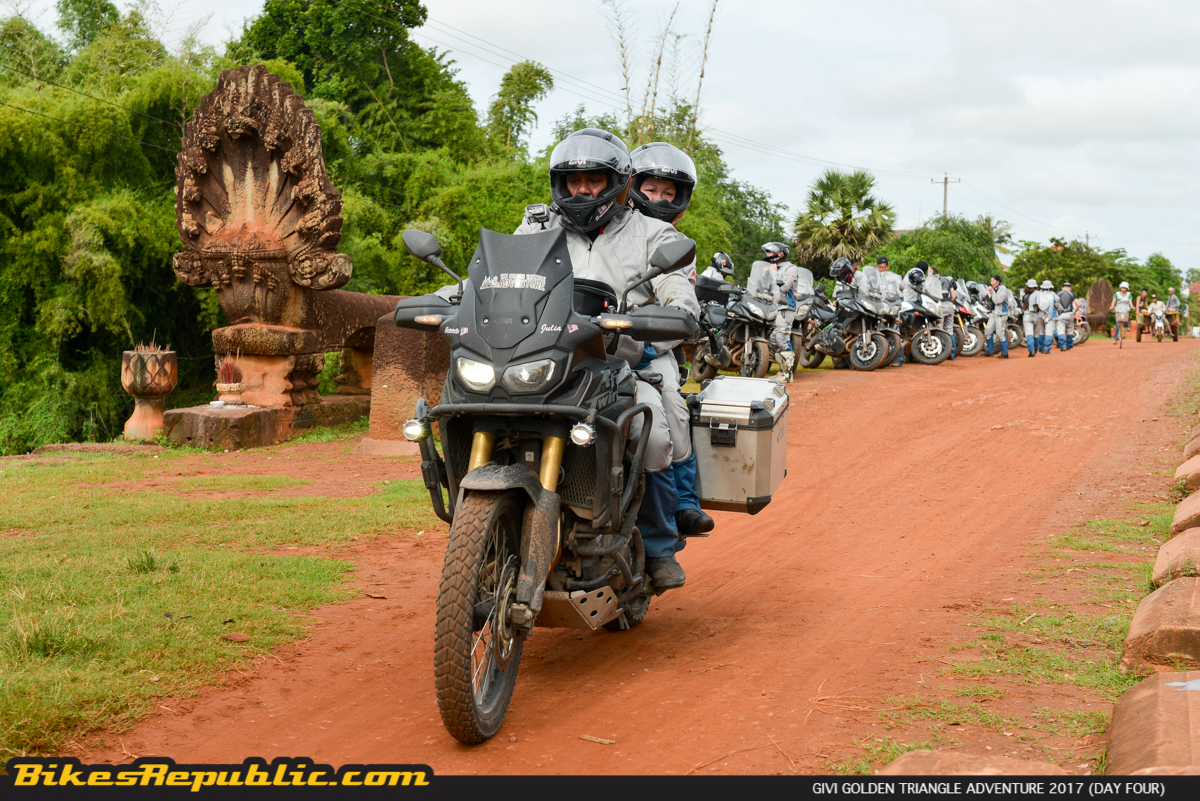
We were excited for sure. Since I’ve ridden to Thailand many times, it’s a great opportunity to experience what those two other countries had to offer. As for my buddy, it was the first time he’d be riding to Thailand, let alone Cambodia and Vietnam.

As we approached the Malaysian-Thai border at Bukit Kayu Hitam, we pulled into a stop area to purchase the third-party Thai insurance and prepare other necessary paperwork. I obtained the insurance in no time at all, but my buddy was stuck.

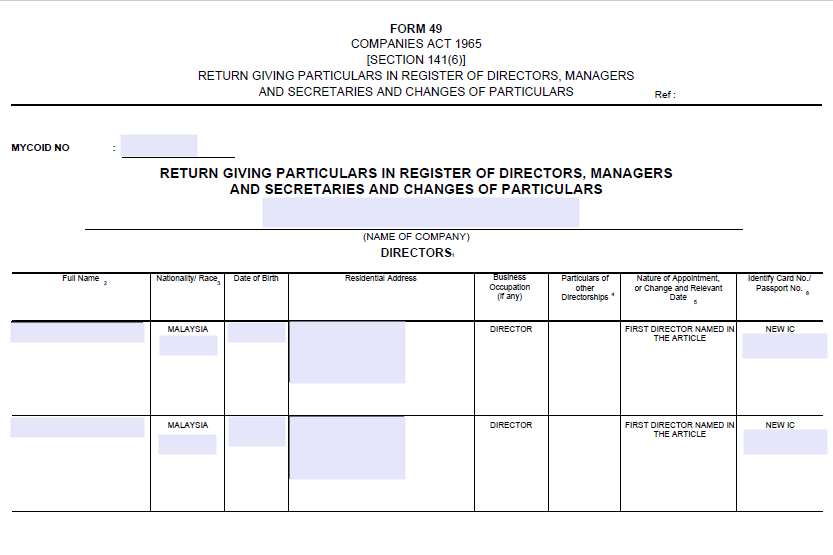
It turned out that the manufacturer had balked in providing him with just one document – the Form 49 – and that meant the insurance could not be processed and issued.
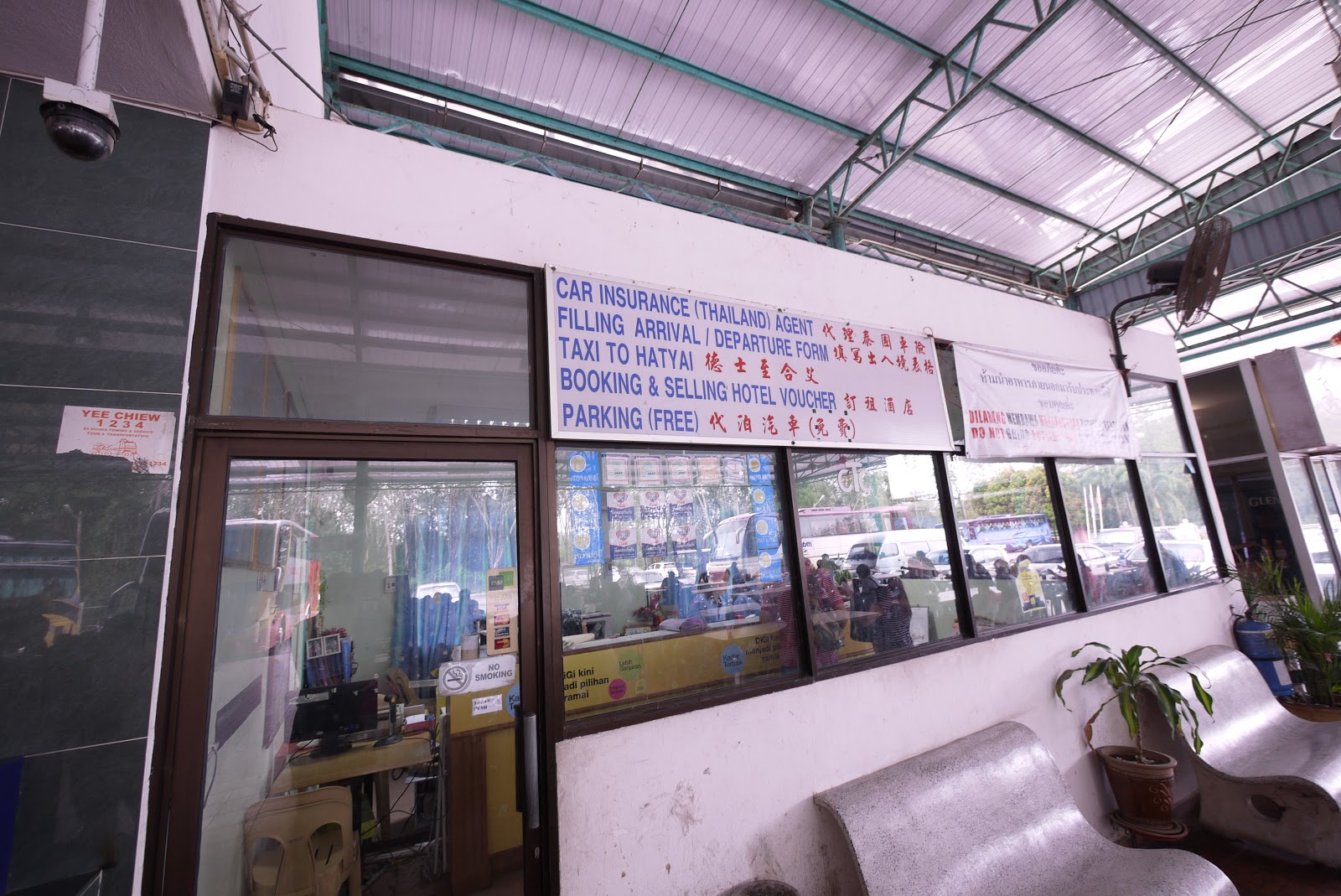
He made a flurry of calls to the manufacturer and they insisted that he could actually cross the border with what he had in hand. The clerk at the layover suggested that we tried speaking to the Thai authorities at Sadao.

The Thai authorities had none of it and it was either that he submitted that one missing document or he had to turn back. Pisang. Does it mean that we’ve ridden for nearly 500 km only to be refused entry?


Another flurry of calls had the form Whatsapped to him. He got it printed, submitted the documents again and we were finally on our merry way, after almost three hours.


So, to avoid any such thing from happening to you, these are the necessary documents if you wish to ride into Thailand.

1. Malaysian International Passport, valid for at least another six months from your date of entry into Thailand. Malaysians are not required to apply for visa for entry into Thailand.
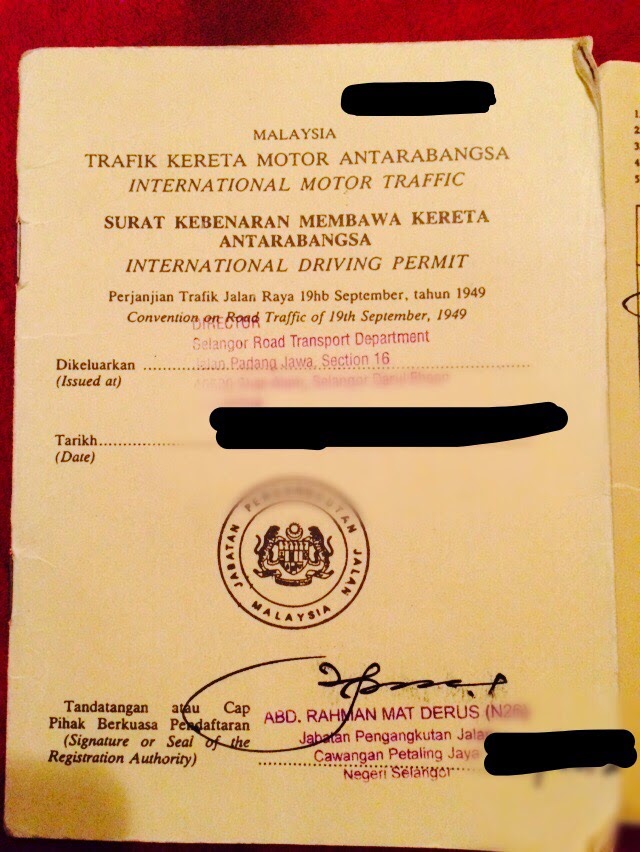
2. Driving license recognized in Thailand. It’s best to obtain the International Driving Permit (IDP) from JPJ or AAM.

3. Bike’s road tax (photocopy is fine), make sure it’s valid and not expired.
4. Vehicle registration card/geran (photocopy is okay), even if it’s held by the financial institution you’re servicing your loan with.

This is where it gets a little “interesting” in terms of the vehicle grant. If it does not specify your name on the card while you’re servicing your loan, you will need two additional documents:

5. Authorising letter from the financial institution authorizing you to ride the bike into Thailand. The letter must include his/her full name and NRIC number, in addition to your full name and NRIC number/passport number (I usually choose passport number thus I don’t have to dig out my NRIC).
6. Form 49 if it’s your financial institution that authorized you, which details the company’s register of directors, managers and secretaries.
With the documents in hand, look out for any shop displaying “THAI INSURANCE” or “INSURANS THAILAND” anywhere from north of Gurun to Changlun to Bukit Kayu Hitam.
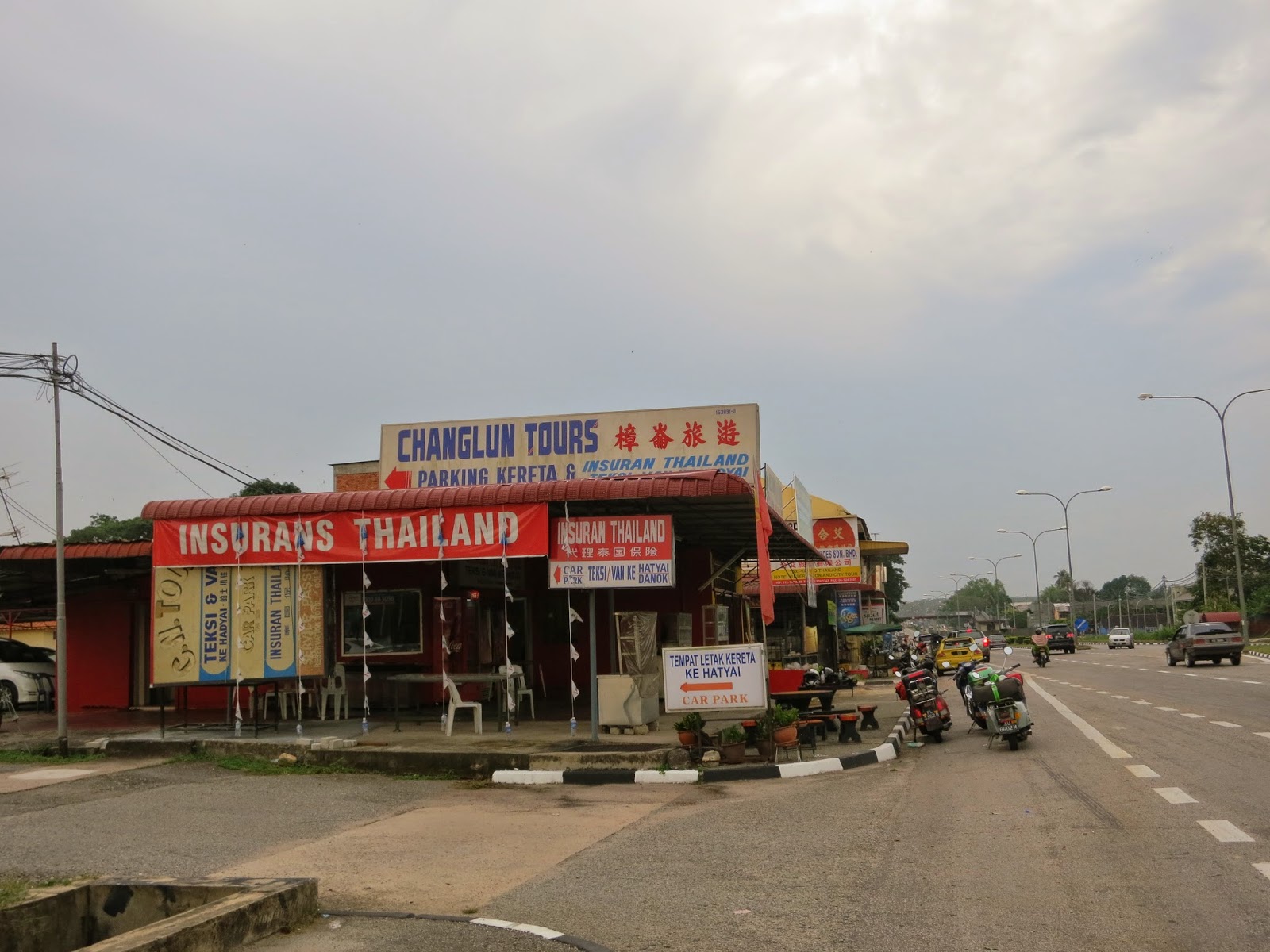
Hand all the documents to the clerk and he/she will provide and fill in the necessary Thai forms such as:

7. TM.2 Information of Conveyance. There will be 2 copies of this.
8. TM.3 Passenger List. Also 2 copies but only if you’re riding in with a passenger, otherwise it’s unnecessary.
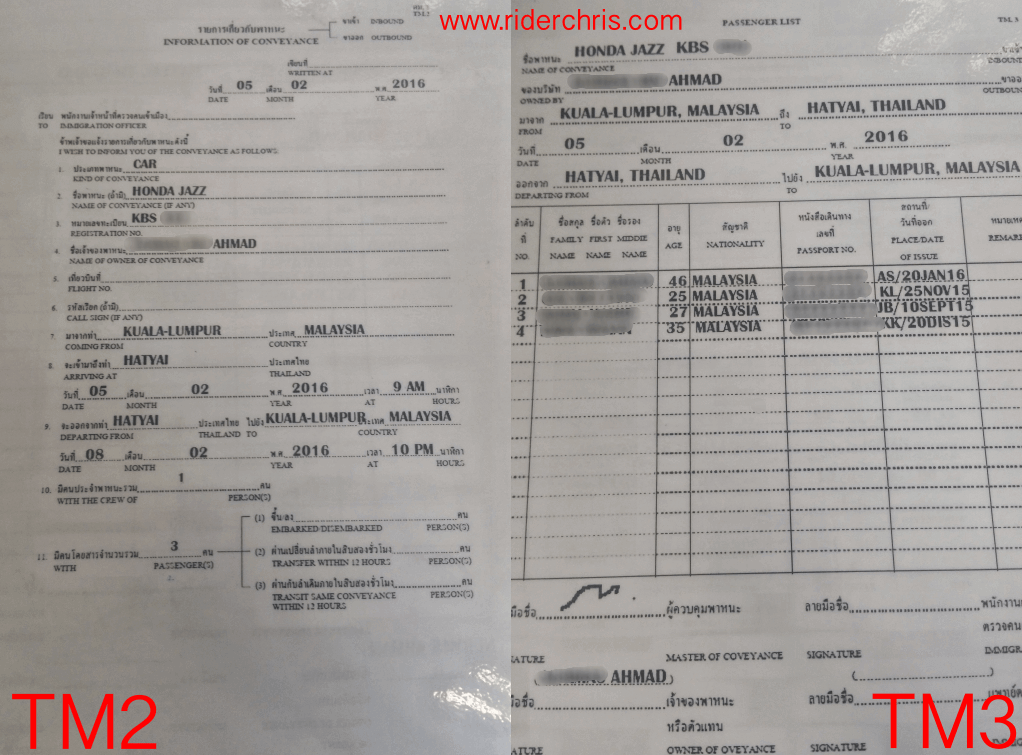
Courtesy of ridechris.com

9. TM.6 Arrival/Departure Card. Also known as the “White Card.” You will need to sign the card, and best to provide the name of the hotel you’ll be staying in (the clerks will usually fill in Grand Plaza Hotel or Lee Garden Hotel).
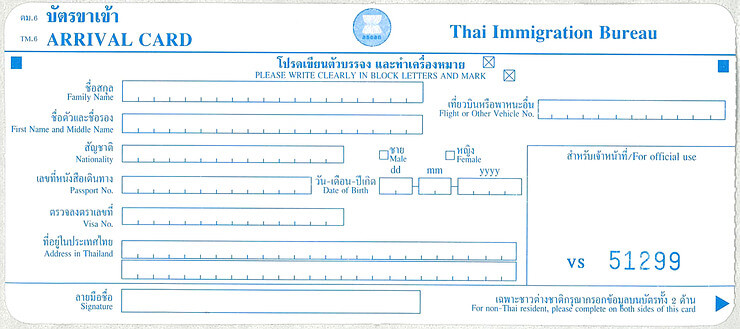

10. Third party Thai vehicle insurance. It’s not expensive, usually less than RM20 for 9 days.

Please check and double-check if all the documents are in place and filled before heading to the border checkpoint.

Malaysia has constructed a new border checkpoint complex. Follow the sign for motorcycles and hand your passport over the counter to the Immigration Officer.
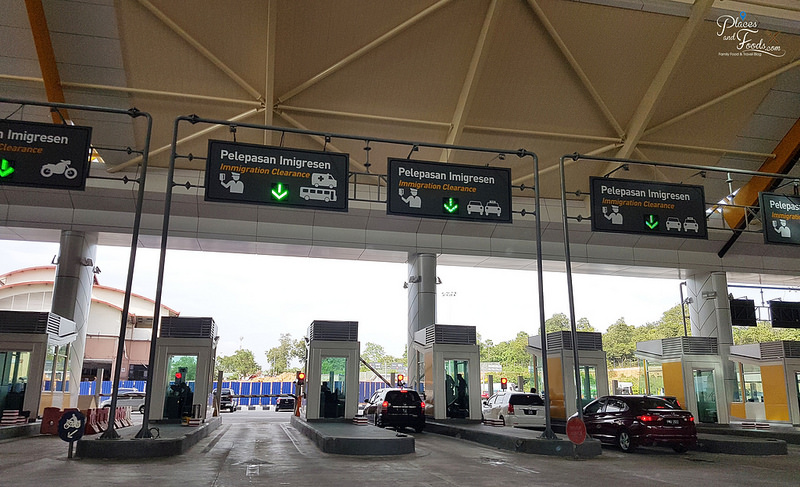
Further up the road, the Thais have also constructed a new immigration centre to stamp passports, so park your bike and head over. There is (usually) no charge during office hours. The officer will retain the arrival part of the TM6 card, stamp the return portion and hand it back to you together with your passport.
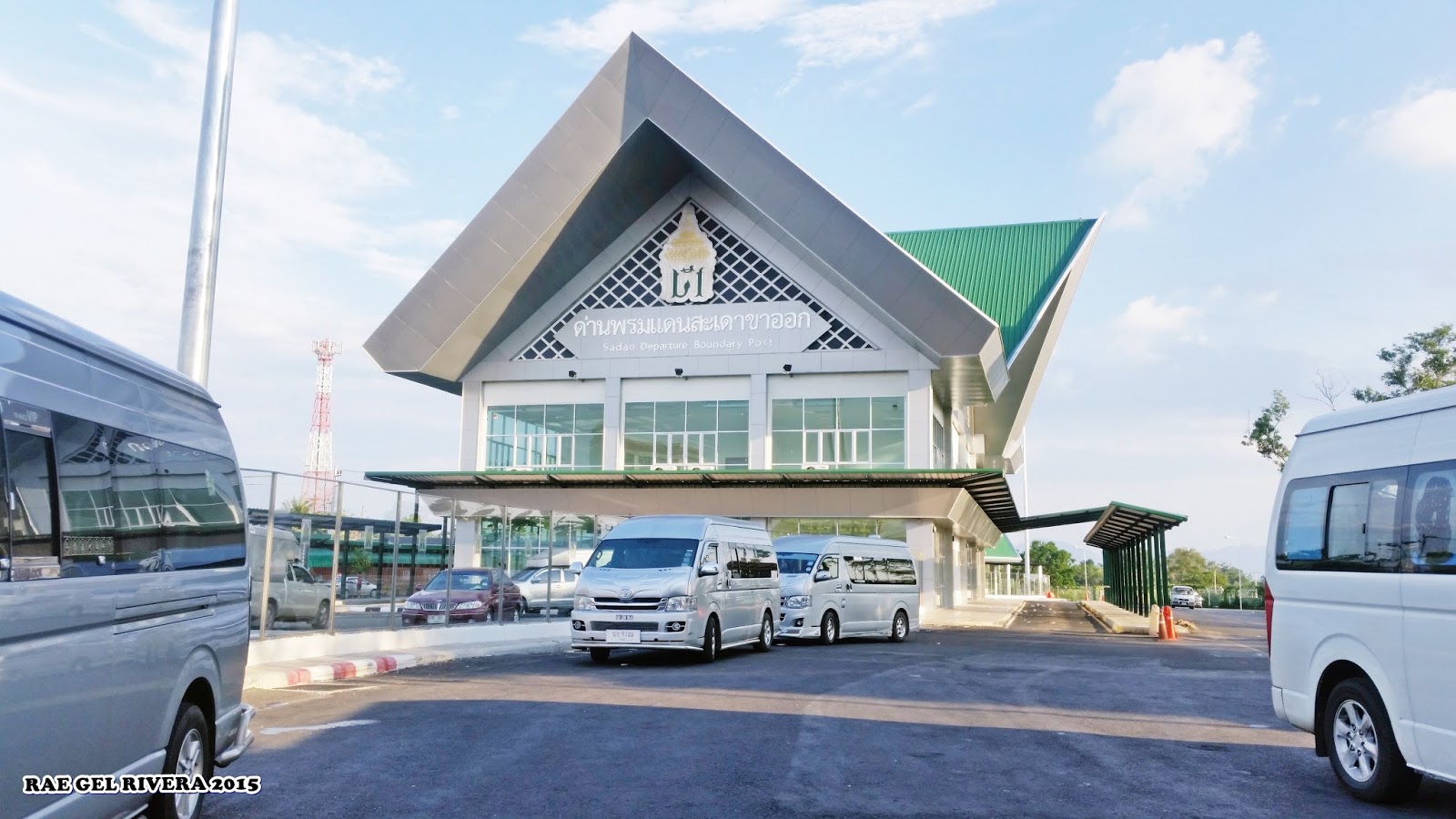
Having stamped your passport (do check!), head over to the booths where you see vehicles heading through. Look for the correct counter (ask the Thai guards, they’ll be more than happy to help), wish the person inside Sawadeekahp and hand over the documents.

He/she will ask for a small fee (again less than RM20) and point you to the counter in front. Queue or wait here until called, where you will be given the Thai Temporary Import/Export form. You’re required to write down your vehicle’s registration number and sign your name in a large book.
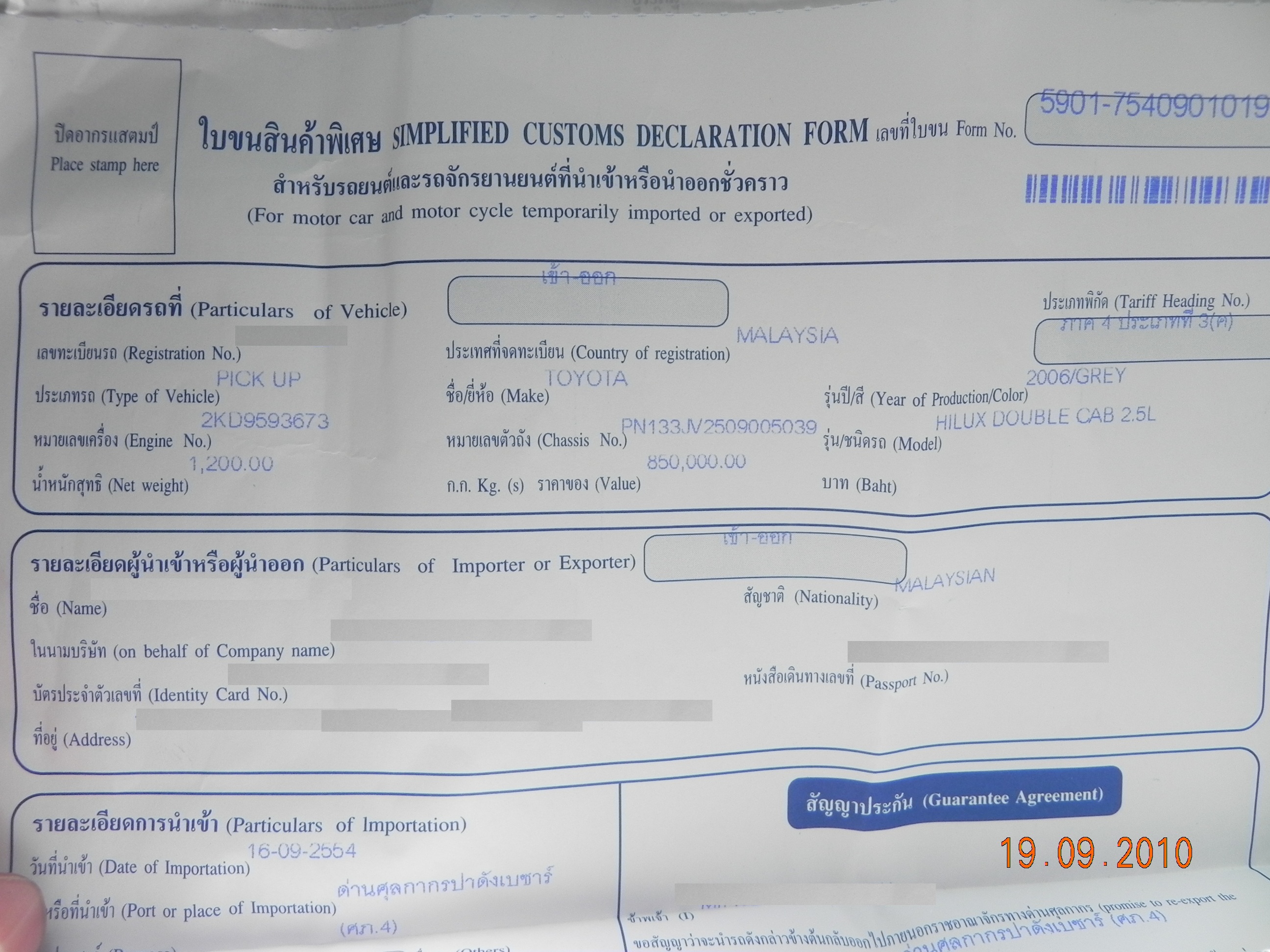
Done! You can head into Thailand to experience the Land of Smiles.

But, for the live of you, DO NOT lose the copies of the TM2, TM3, TM6 and Import/Export forms as these need to be returned when you cross back to Malaysia. Failure to return the Import/Export form will see the vehicle being levied a THB 1,000 fine per day to a maximum of THB 10,000, which needs to be paid when you ride it to Thailand again in the future.

So, that’s it. It’s a very simple process for Malaysians to enter the Kingdom, but remember to adhere to traffic laws at all times and BE HUMBLE. And oh, don’t stop traffic for your friends to pass.
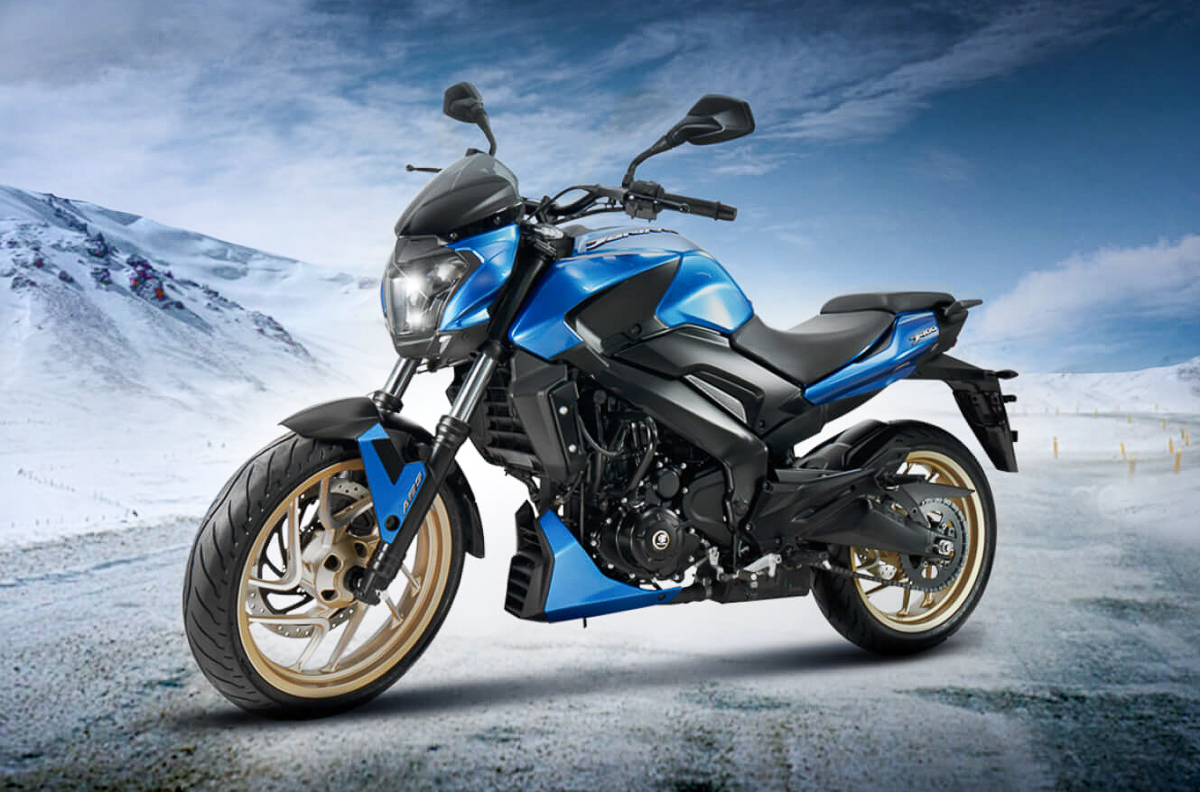
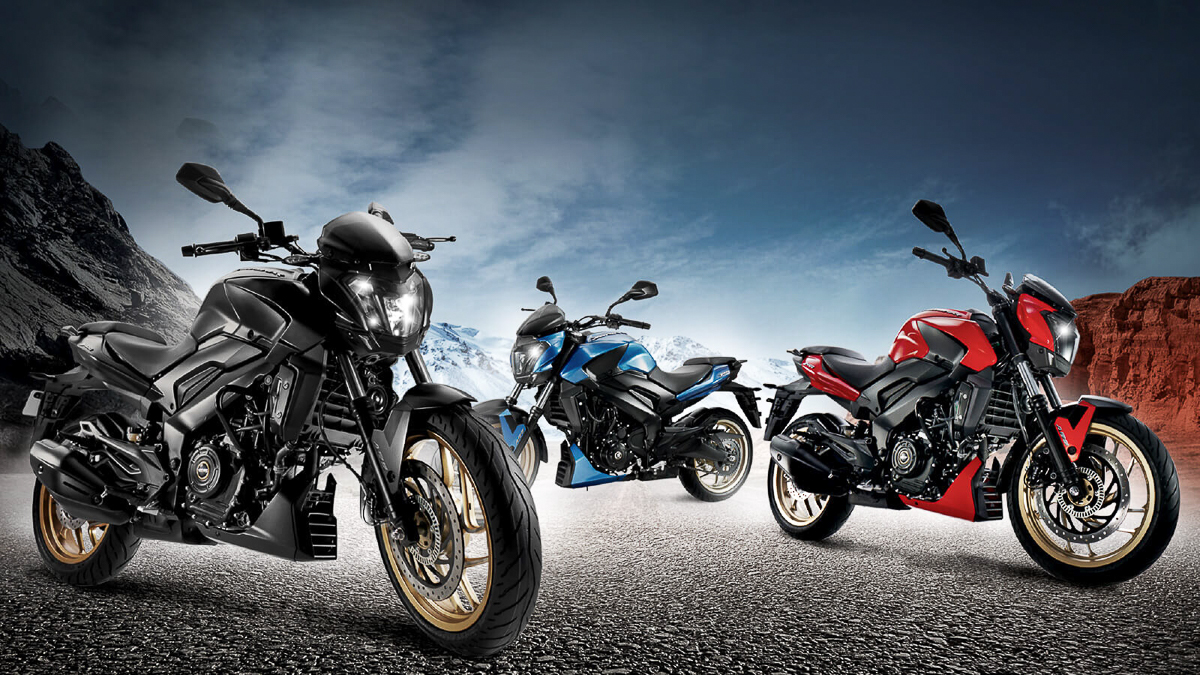
Bajaj Auto has revealed the 2018 Bajaj Dominar 400 in India which comes in two new colours; Canyon Red and Glacier Blue.

The Dominar 400 which is powered by 373cc single-cylinder engine is expected to arrive in Malaysia sometime in the first quarter of 2018.

Bajaj also introduced an updated 2018 Bajaj V15 with a brand new rear seat and back rest.

Bajaj Auto has just launched their latest 2018 Bajaj Dominar 400 yesterday in India. Their top of the range flagship model now comes in two new colour schemes which are Canyon Red and Glacier Blue. Bajaj Dominar 400 fans can still get the bike in Matte Black option although the other colourways have been dropped out. (more…)

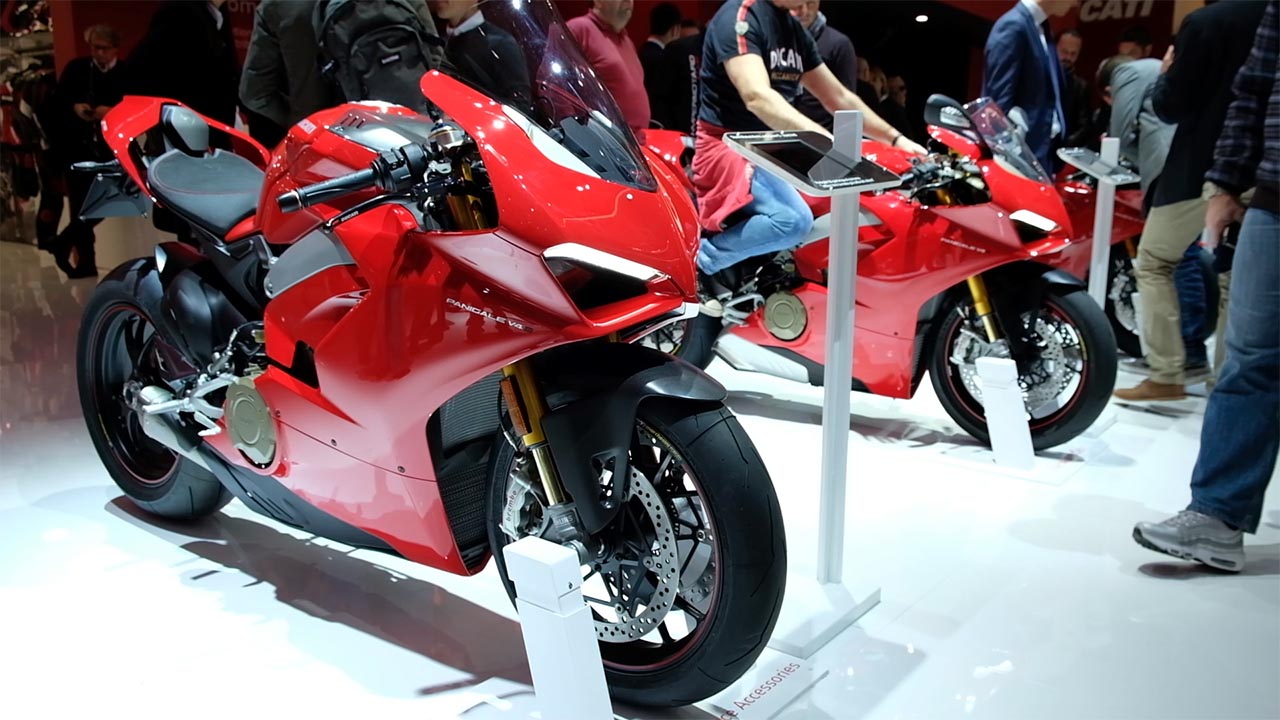
The 2018 Ducati Panigale V4 is expected to arrive on Malaysian shores as early as March 2018.

Bookings are already open for all three variants from the base Panigale V4, Panigale V4 S up to the limited edition Panigale V4 Speciale.

Ducati Petaling Jaya is also organising its first Ducati Red Weekend on 13 and 14 January 2018 where you can know more about the V4 or any other models on sale.

According to some news that has been travelling in the World Wide Web, folks are getting super excited on the arrival of the 2018 Ducati Panigale V4. Based on reliable sources, the Italian manufacturer’s first full production four-cylinder superbike is expected to arrive in Malaysia as early as March 2018. (more…)

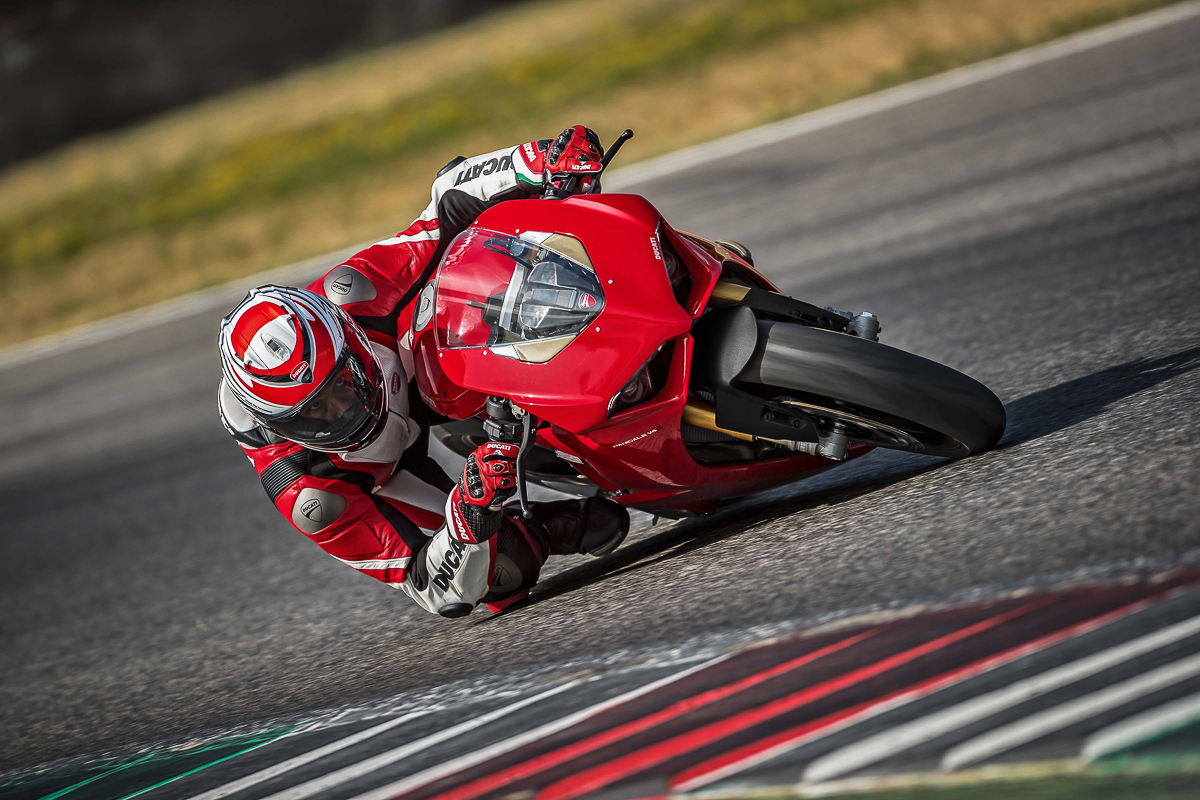
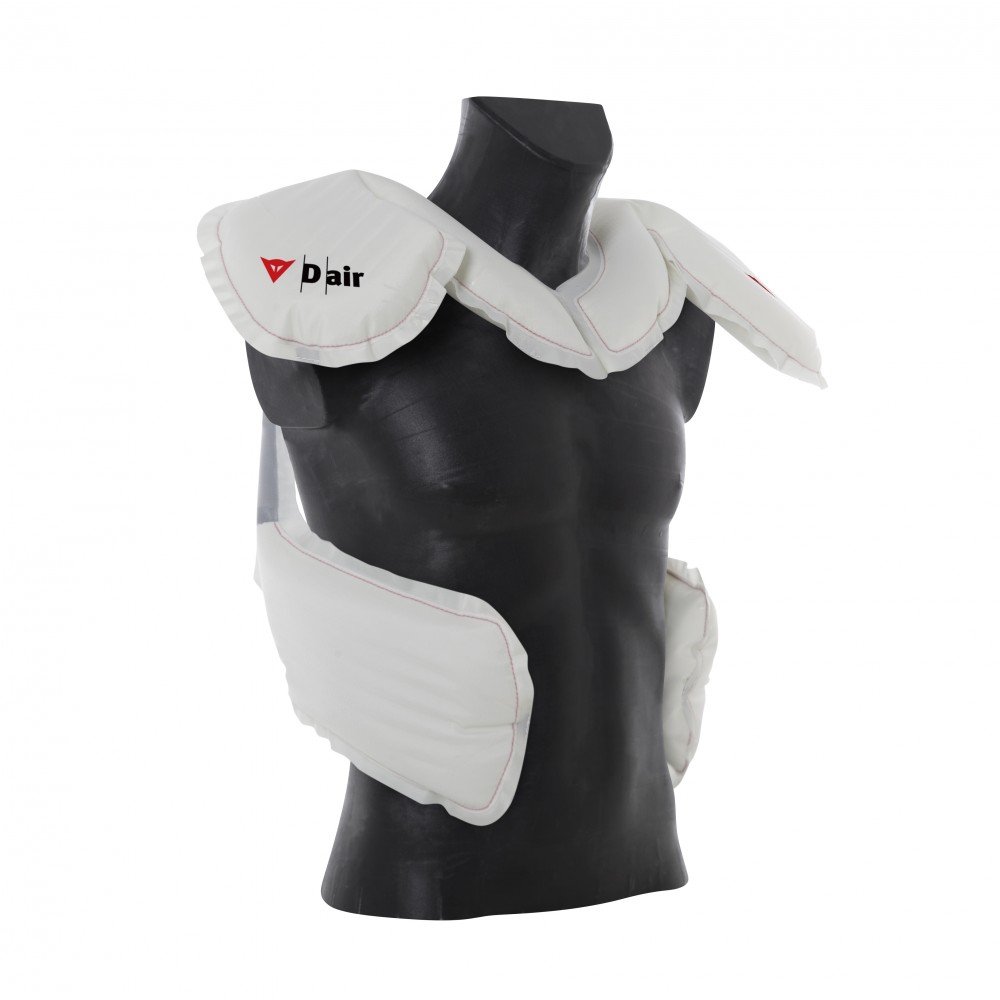
The MotoGP 2018 season will see all permanent riders wearing an airbag racing suit if they wish to compete in the race categories.

All racing suits must be fitted with an airbag system that will provide protection for the shoulders and collarbone.

This is a good move considering the manufacturers will invest more on airbag system which in turn will be made more available for consumers.

A very interesting update has just been confirmed by the folks over at MotoGP where beginning of the 2018 season, all riders must wear a racing suit equipped with airbag systems. The rule applies to each and every rider across all three categories (MotoGP, Moto2 and Moto3) except for wildcard riders. (more…)

  • An internal combustion engine needs to combust air and fuel to produce mechanical power.

  • The air/fuel mixture needs to be inducted, compressed, combusted and extracted.

  • Here’s the basics on how a four-stroke engine works.

Recently while testing the Triumph Street Triple RS, I had someone ask me if the bike was a three-stroke. There was another occasion when I had a small argument with another person who insisted that the KTM 1290 Super Duke GT was a two-stroke. I wouldn’t give a second thought if those guys were motorcycle neophytes, but they were riders, and it happened many times over many years. What happens if it’s a BMW K 1600 or Honda Gold Wing? Do they have six-stroke engines?

It seemed like this phenomenon has been rampant for the last twenty years in our country. OMG.

There are two common types of power cycles for gasoline engines: Four-stroke and two-stroke. Let’s see how a four-stroke works. There’s also the rotary engine and Atkinson cycle engine, but they’re uncommon.

First and foremost, an internal combustion engine needs to combust fuel and air. The force from this combustion is transferred to mechanical energy. Hence, a four-stroke engine takes four distinct strokes to produce the power to move a vehicle.

Let’s take a look at the basics.

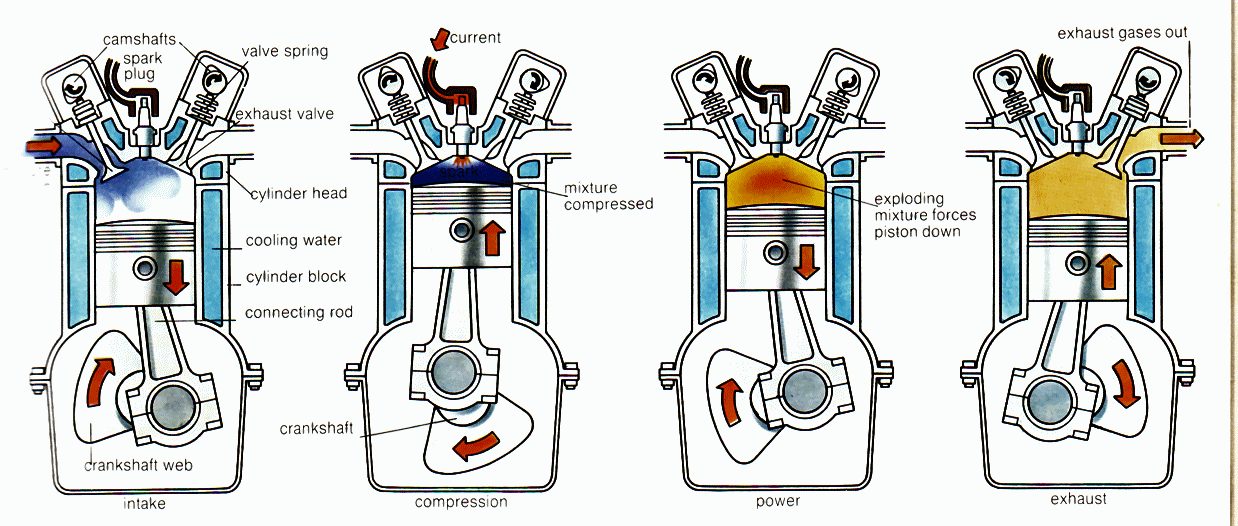
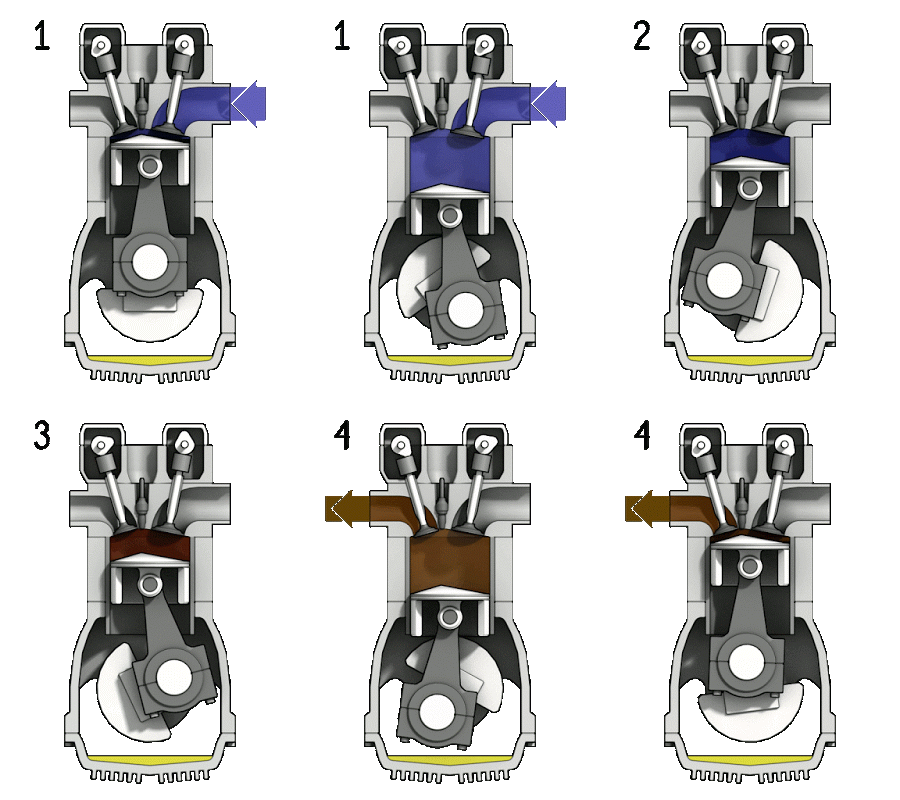
1: INTAKE

Also called suction, this stroke begins with the piston at top dead centre (TDC), as it travels downwards toward bottom dead centre (BDC). The intake valve opens and the piston travelling downwards causes a negative pressure (vacuum) in the cylinder, sucking in the fuel/air mixture and filling the cylinder.

2: COMPRESSION

As the piston travels back up from BDC to TDC, the intake valve closes and traps the fuel/air mixture inside the cylinder. The piston compresses the mixture in preparation for combustion.

The crankshaft will have travelled 1 full, 360o revolution (1 RPM) when the piston reaches TDC.

3: COMBUSTION

Also known as ignition or power stroke. The sparkplug (or sparkplugs) fire, igniting the compressed fuel/air mixture. The pressure raises by 3200 to 5000 kPa (32 to 50 bars), and the temperature by 600o Celcius.

The compression pressure forces the piston back downwards to BDC, creating the mechanical work (kinetic energy) to turn the crankshaft.

4: EXHAUST

Also known as outlet stroke. The exhaust opens as the upward movement of the piston pushes the burned gasses out past the exhaust valve, into the exhaust port and exhaust pipe.

The crankshaft completes two full revolutions when the piston fully reaches TDC. A four-stroke engine needs two RPM to produce mechanical power. Thus if you hold 10,000 RPM for one minute on the tachometer, there are 5000 power strokes in that one minute. Yes, that’s how hard the engine is actually working.

As we mentioned above, this are the basics of how a four-stroke engine works. There are other little details that we will discuss in the future, such as ignition timing which actually emits the spark before the piston fully reaches TDC, so forth.

Back to the opening story, no, there is no three-stroke or six-stroke engine. The answer I commonly use is, “It’s a one/two/three/four/six piston, four-stroke engine.” Or just show them this article.

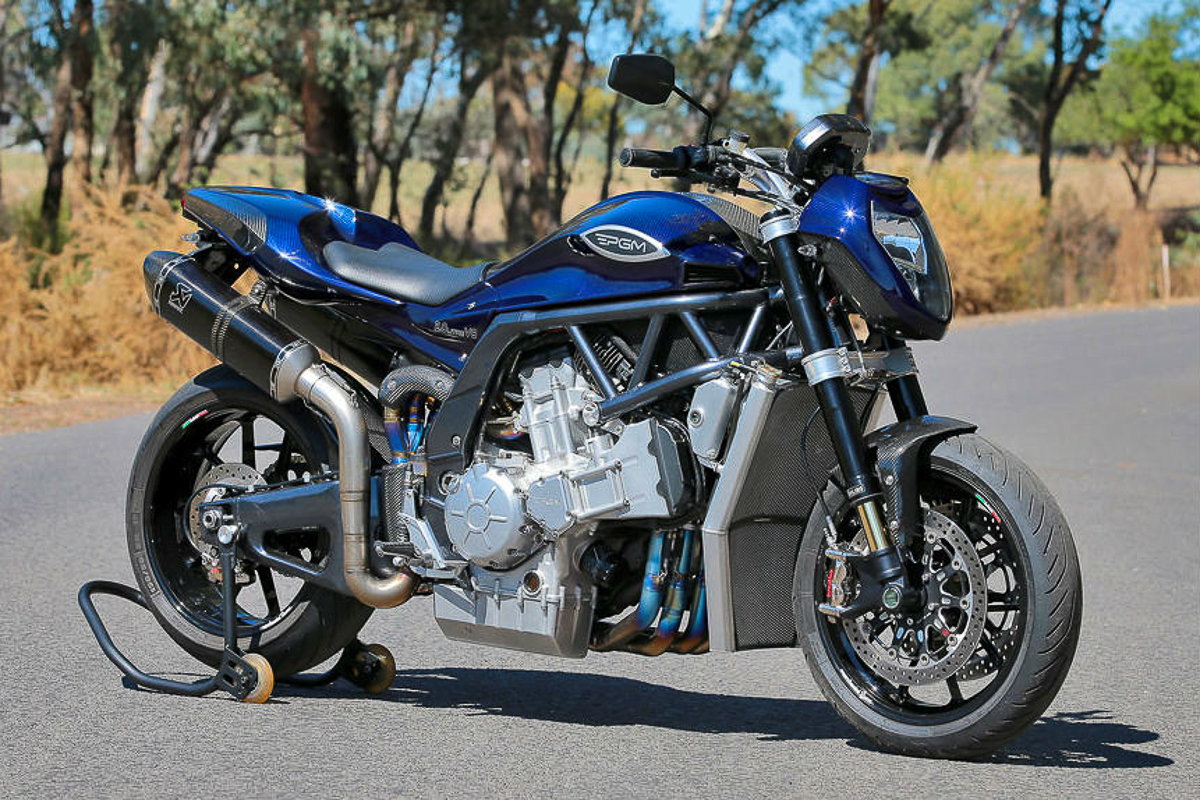
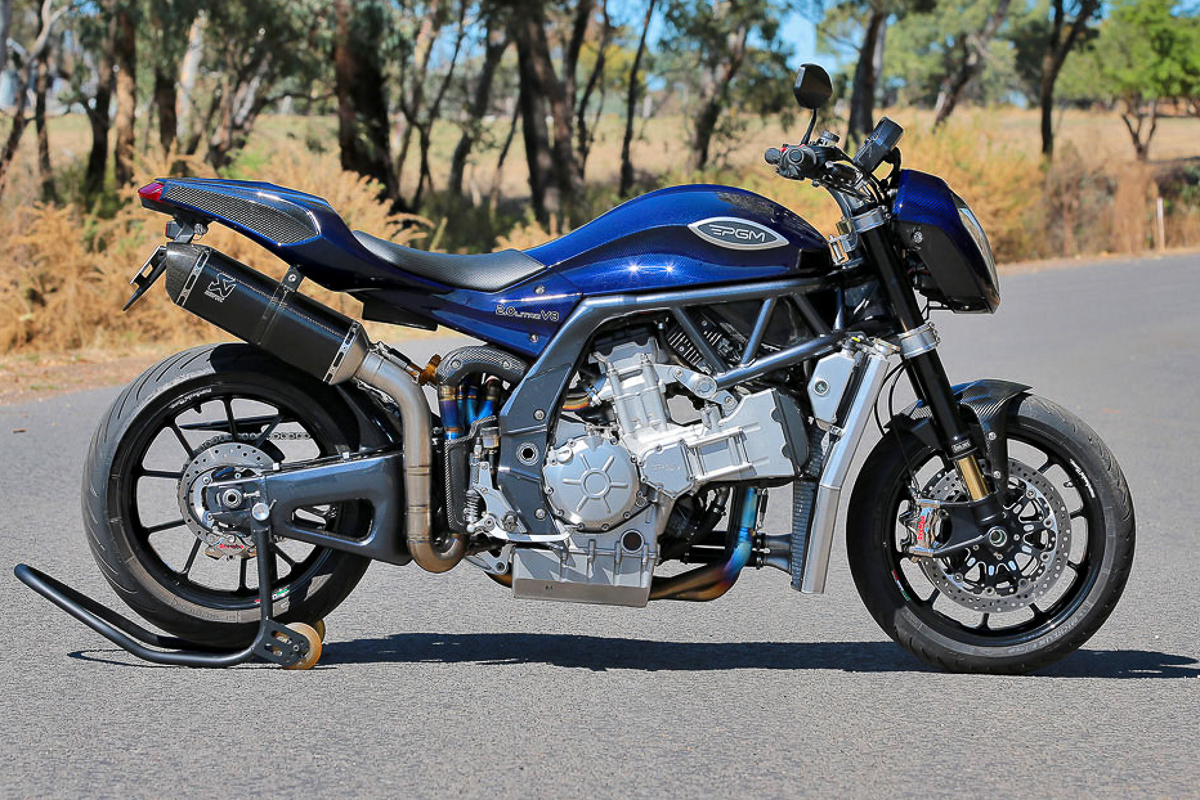
The PGM V8 is the latest 2000cc V8 monster naked bike that has been created in the land obsessed with V8 power, Australia.

Pat Maloney created the PGM V8 after retiring from a successful life in Superbike World Championship and Formula 1.

The engine is created by joining two Yamaha YZF-R1 engines together which generates a powerful 334hp and 214Nm of maximum torque.

In a place where the general population and motorheads are almost obsessed with the V8 engine configuration, it’s not a surprise when someone decides to stuff it into a motorcycle chassis. That’s exactly what happened a couple of years back when Pat Maloney created the PGM V8 which is arguably one of the world’s most powerful production motorcycles. (more…)

Archive

Follow us on Facebook

Follow us on YouTube