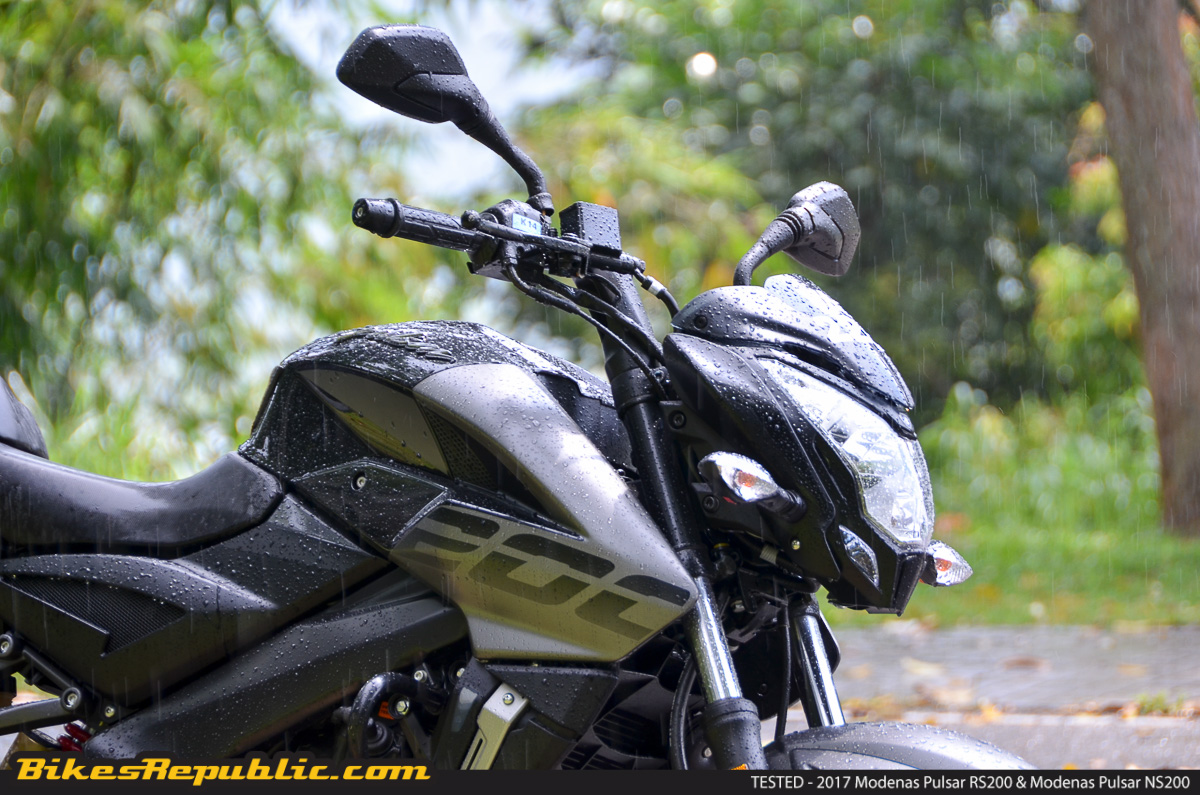
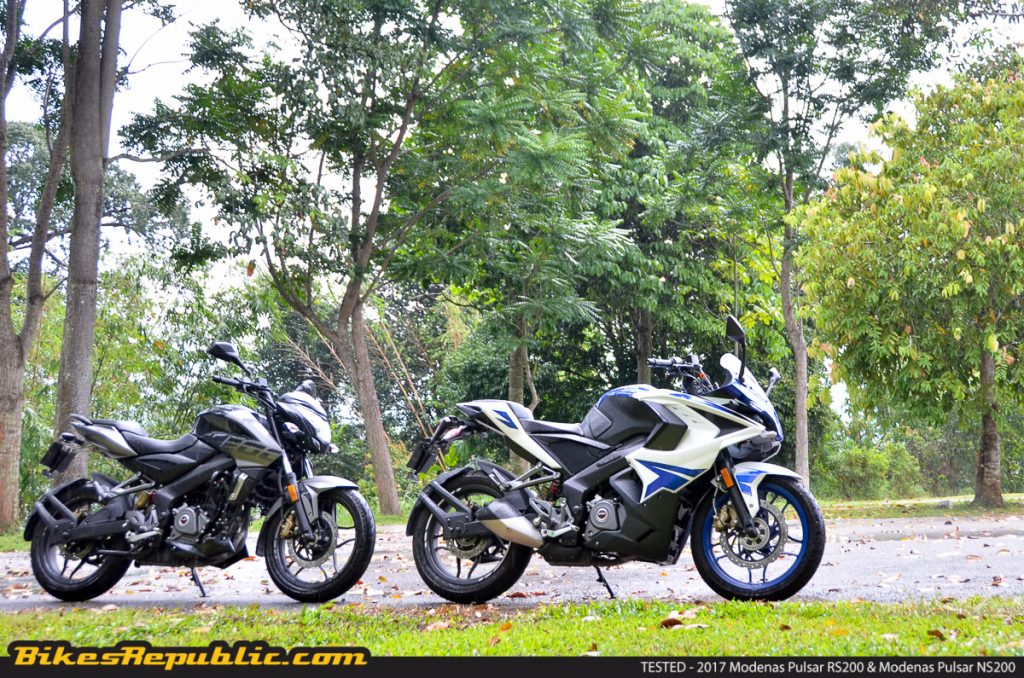
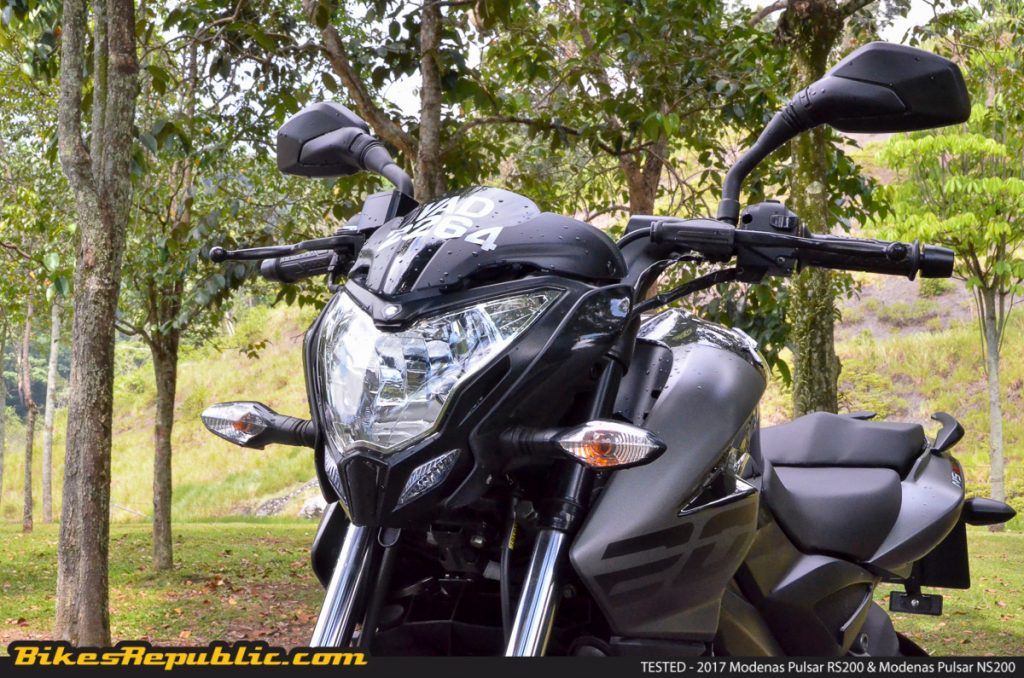
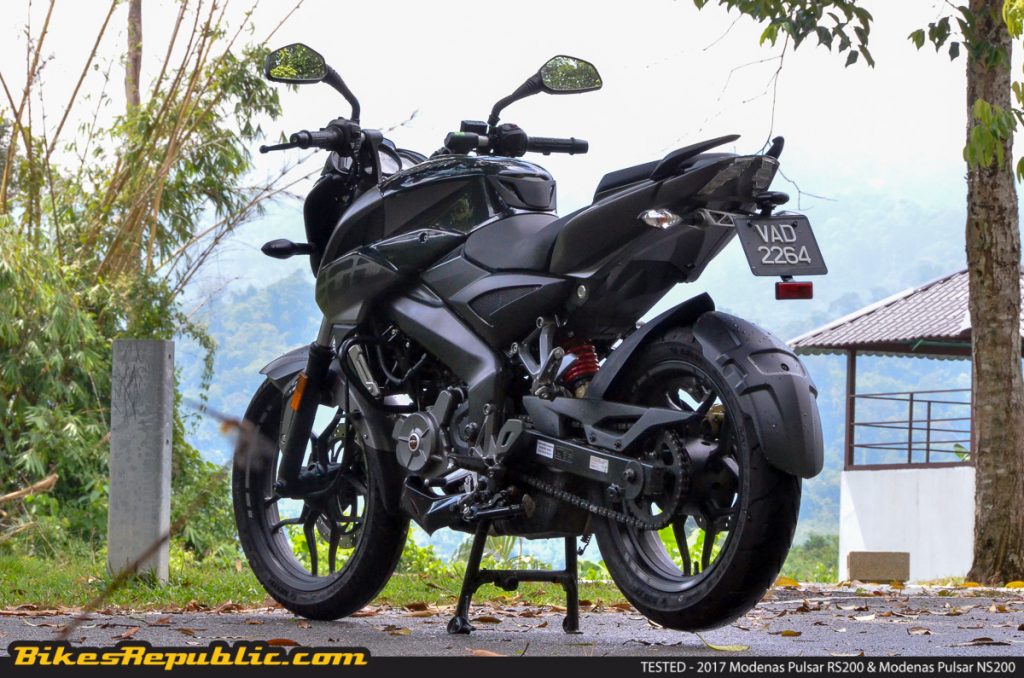
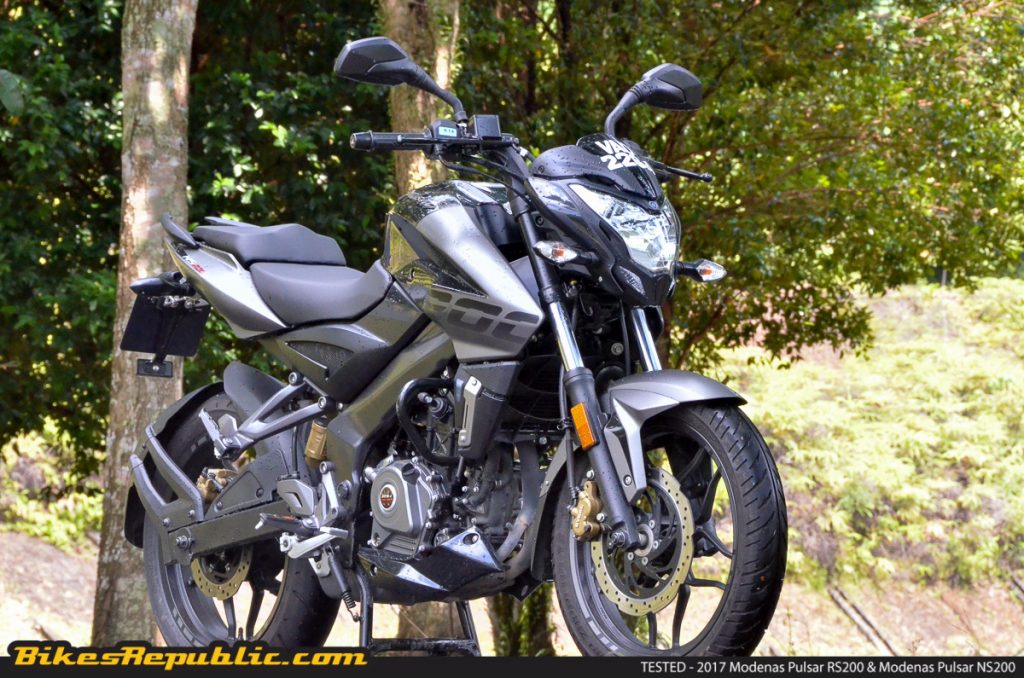
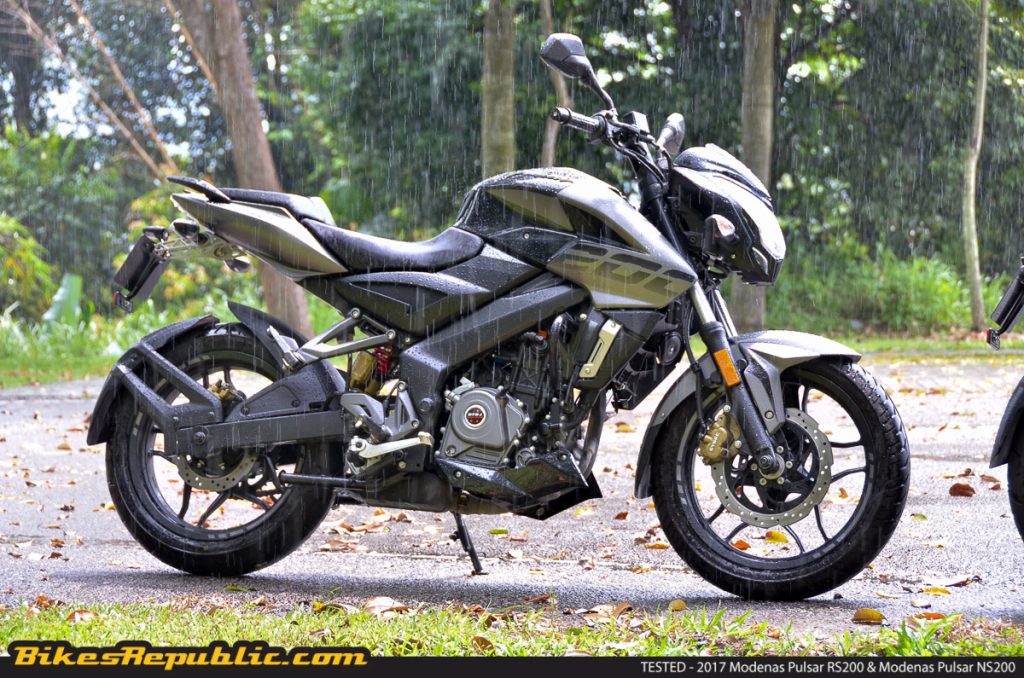
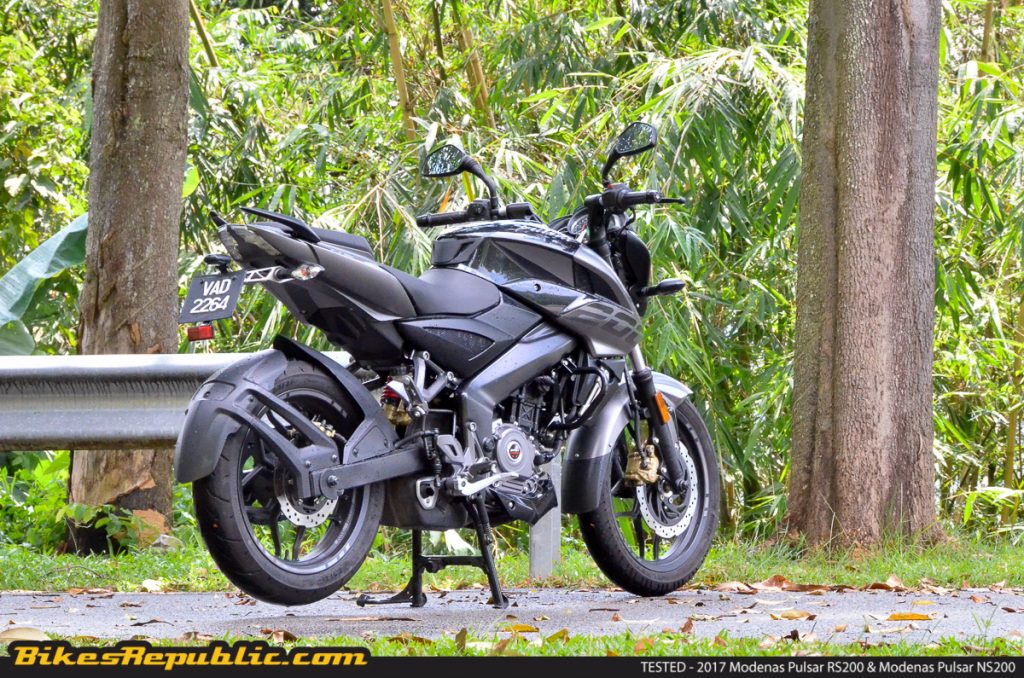
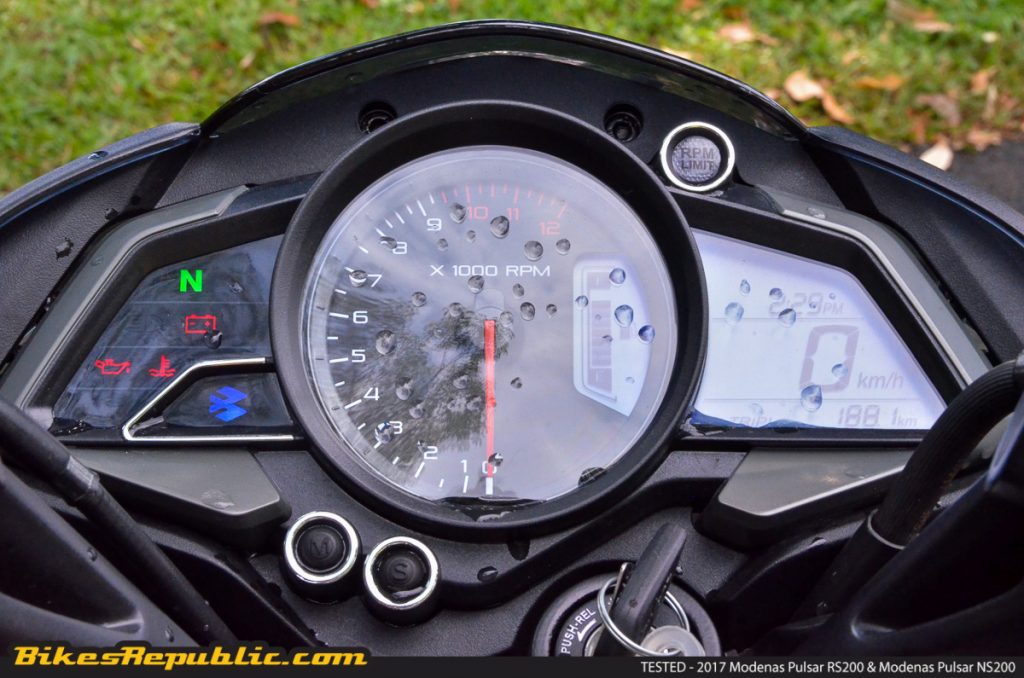
We’ve featured the review of the Modenas Pulsar NS200 and Pulsar RS200 recently (click here to read the story), and came away impressed with both bikes.
However, aside from the official tests, we at Bikes Republic would voice our opinions to one another about certain bikes we’ve tested.
All of us love the Pulsar RS200 for its contemporary racy looks and presence, but truth is, our hearts are torn between both bikes. This writer however, fancied the naked Pulsar NS200 (stands for Naked Sports).
Sure, it looks Plain Jane next to the RS200, but that doesn’t mean it didn’t ooze its own appeal. On its own, the Pulsar NS200’s looks does hold its ground, especially when we looked at the riding shots.
Firstly, the rider figures more prominently on the naked bike. Strange as that sounds, but personally, a bike ought to emphasize that the rider and bike both make up as one entity when riding. You couldn’t have one or the other. Naked bikes, standards, streetfighters and classics have always appealed to me because of that.
Mid-life crisis? I don’t think so, as I’ve always loved the unadulterated looks of bikes that expose their mechanical parts since I was a kid.
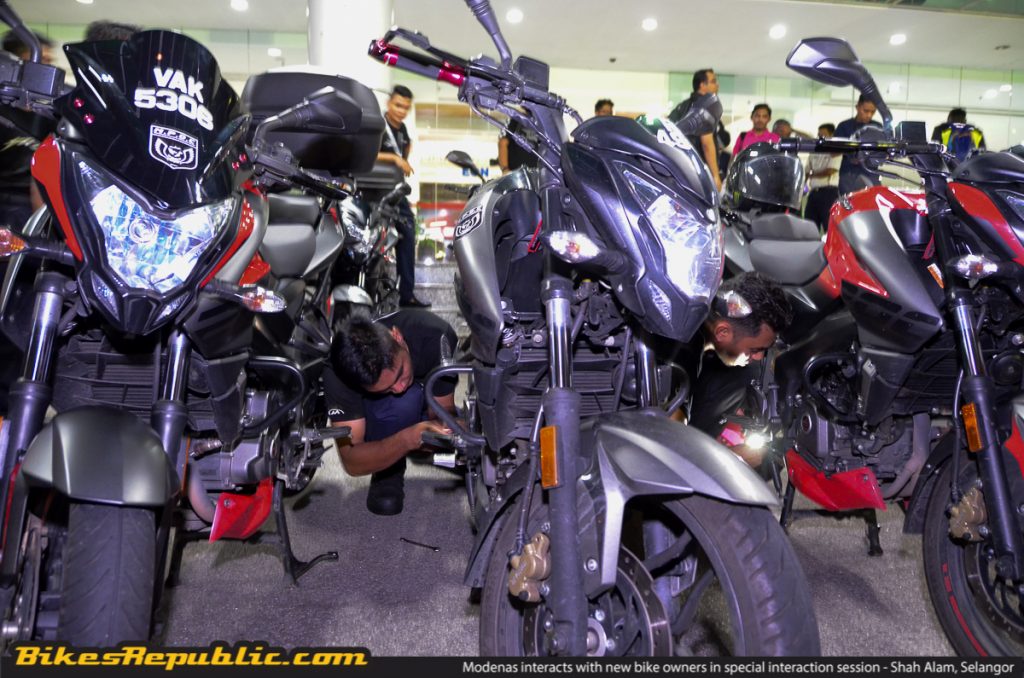
Secondly, I personally figured that performing maintenance on the Pulsar NS200 is easier. I could get to the sparkplugs, oil filter, oil sump, front final drive sprocket, etc. so much easier because I don’t have to get around the bodywork of the Pulsar RS200.
Thirdly, and this is really my personal opinion, I’ve found out through time that motorcycles that don’t appeal to me on the basis of love at first look tend to have me liking them for a much longer period of time. The Pulsar RS200 truly looks great, make no mistake, however, the Pulsar NS200 has kept my attention longer, for some reason. It’s more like liking someone’s personality over looks.
Fourthly, there’s less cosmetic damage to concern about when you own a naked bike. That applies to either a crash or the accumulated abuse by careless mechanics when they removed and reinstalled the fairing. Not one fully-faired bike of mine has lasted its lifetime without missing fairing fasteners, causing them to flare open or even dropped a panel.
Fifthly, the naked Pulsar NS200 lends itself better to customization. It’s already a naked bike, so you don’t have to feel the pinch about having to store the fairings somewhere. A set of clip-on handlebars with bar-end mirrors, racing rearsets would make the bike look the proper streetfighter. Or go beyond conventions by stripping everything down and turning it into a bobber or a scrambler or a classic.
Sixthly, the Pulsar NS200 has a slimmer cross-section, which means it’s much easier to scythe through KL’s crazy traffic.
But, but, but! What about wind protection? Ah, that’s an easy fix. Just install a windscreen and you’re done!
So there you go, my own opinion on why I prefer the naked Modenas Pulsar NS200.
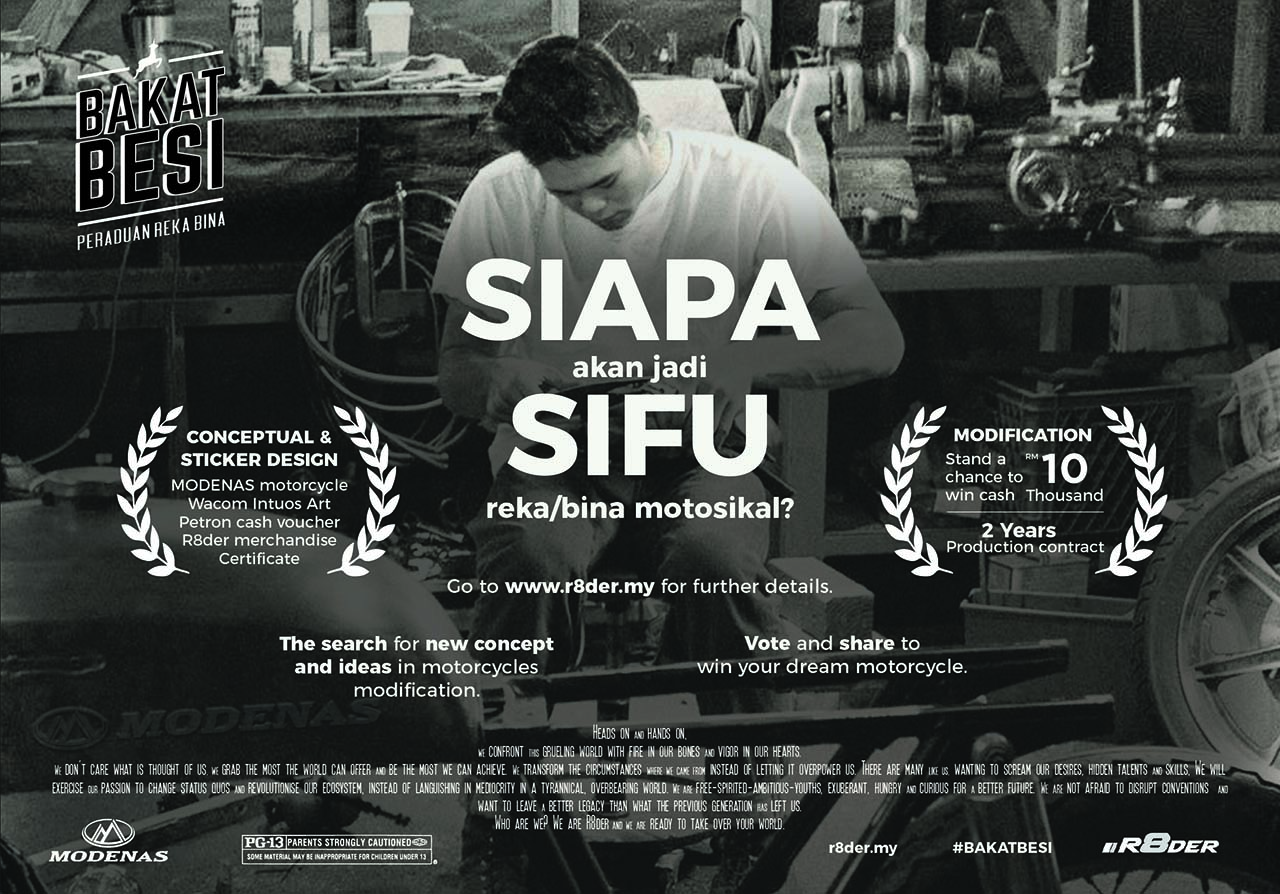
Oh and have you heard? Modenas is giving away free motorcycles for the Bakat Besi design contest. Stand a chance to win that and other amazing prizes, more information here.
Modenas Malaysia had recently launched the Bakat Besi: Peraduan Reka Bina contest (translated vis-a-vis as Metal Talent), Malaysia’s inaugural talent search program for motorcycle design and engineering. (No, it’s not a talent show for heavy metal bands, sorry guys.)
Motorcycle builders, mechanics, students and enthusiasts standa chance to build a career out of their passion for designing and building motorcycles. The first instalment of the program is Bakat Besi: Peraduan Reka Bina (Metal Talent: Design and Build) which seeks to unearth the appropriate talents.
There has never been a lack of creative talents here in Malaysia. Instead, they are hidden from mainstream view due to either lack of continuous exposure or mainly just because these builders are driven by their passion alone.
But what Bakat Besi: Peraduan Reka Bina aims to do is to bring these talents to the fore, with the opportunity to put their motorcycle design and engineering skills on the table, and to ultimately build a source of income for themselves and seeding the creativity of the Malaysian motorcycle industry.
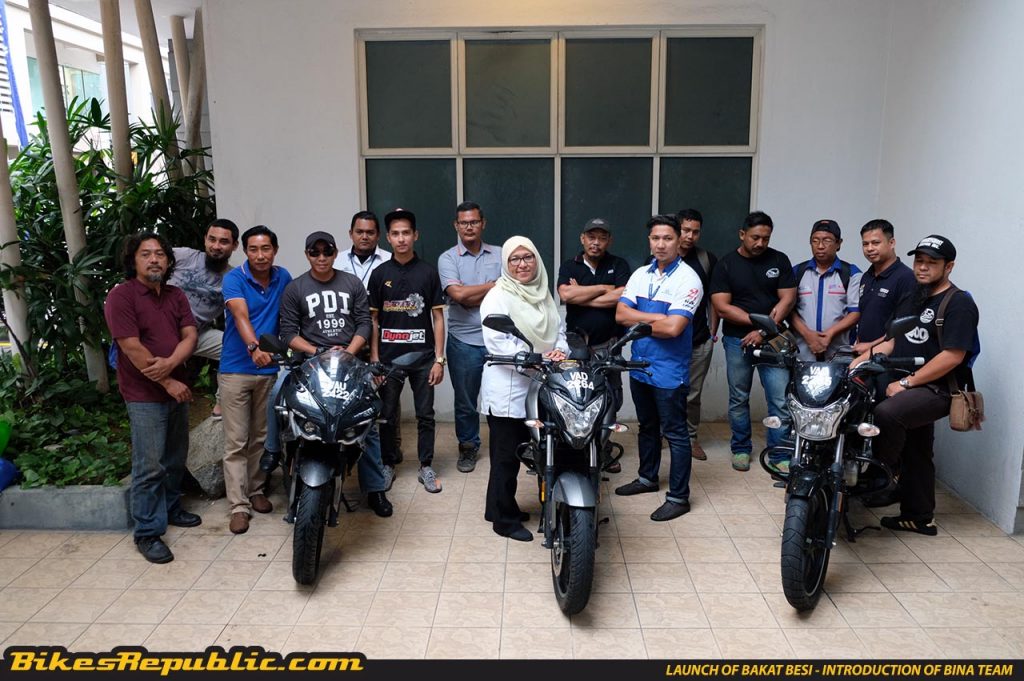
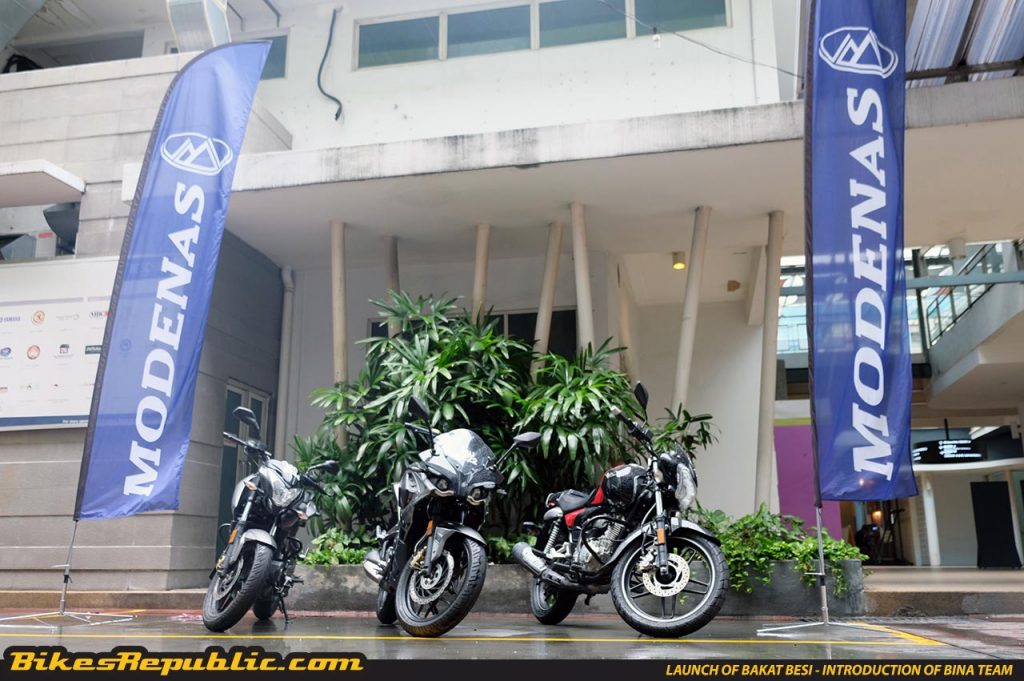
The contest is divided into two categories. The first, called Bina Sifu, groups of 12 top builders (shown above) in Malaysia to customise the latest Modenas V15, Pulsar RS200 and Pulsar NS200. Modenas is the main sponsor of the Bakat Besi: Peraduan Reka Bina and they are sponsoring those bikes.
The 12 participants will be divided into six teams, consisting of a builder and constructor in each, and an RM10,000 budget is allocated to each team for the build. Entries will be judged on the grounds of aesthetics, performance and commercial value. The winner will receive a cash prize, a new Modenas motorcycle, and perhaps most importantly a production contract.
In the second category called Reka Sifu, contestants will submit their conceptual designs of a Modenas motorcycle or sticker designs. The entries will be judged by a panel, besides the public on social media.
The panel of judges will score 60% of the total points, while the remainder will be determined by the public.
As the Bina contest will be filmed, the public will gain exclusive insights to the design and build processes. The series consists of nine episodes and will be aired on Modenas’ official YouTube channel.
For more information on the contest, please log on to www.r8der.my and follow Bakat Besi: Peraduan Reka Bina on R8DER’s Facebook page.
Watch the video below for more information regarding Bakat Besi!
The Kawasaki Test Ride Roadshow will visit Sungai Petani, Kedah from 1st to 3rd December 2017.
The location is at the Amanjaya Mall, Sungai Petani, from 10am to 6pm.
There are many activities besides the test rides to look forward to.
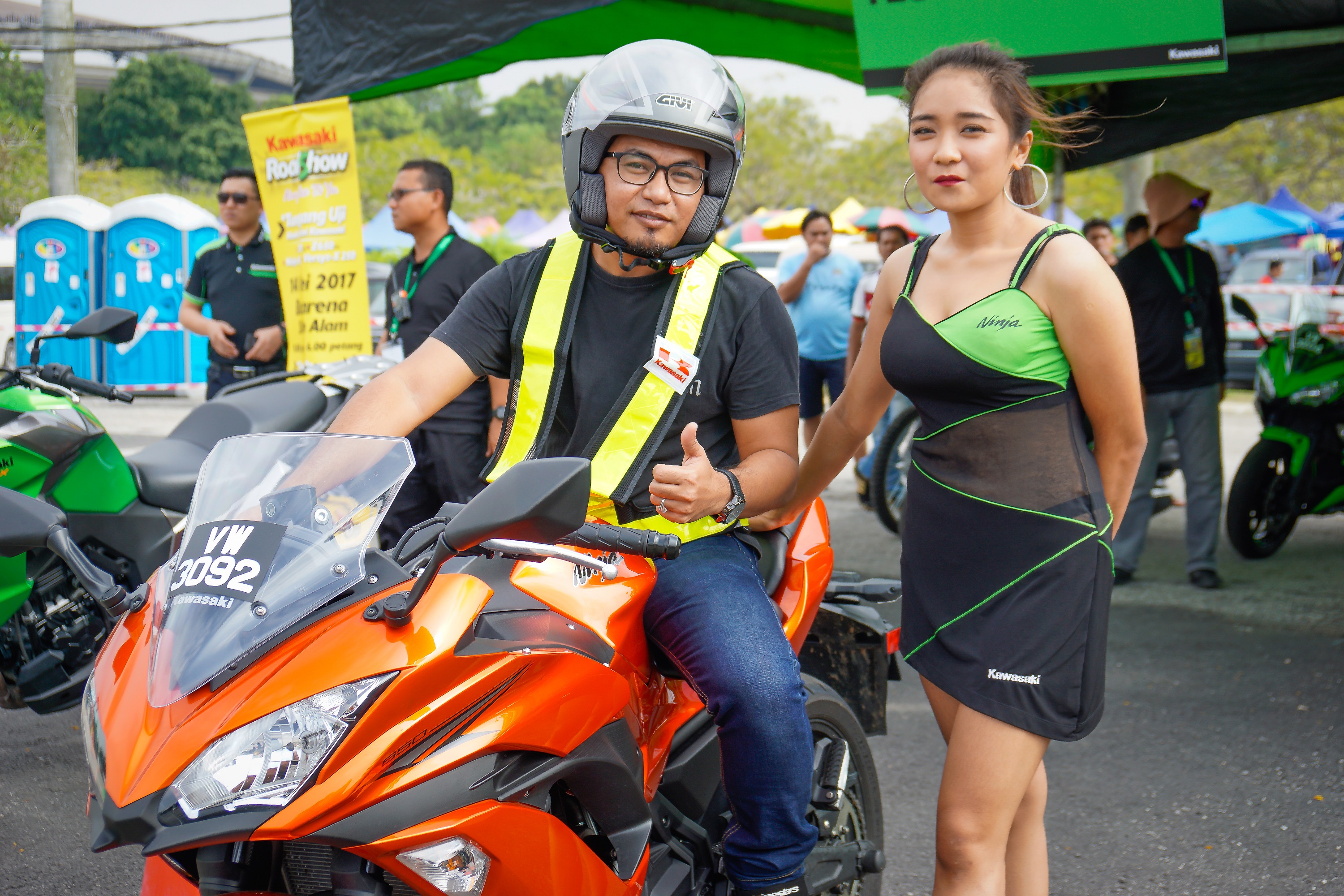
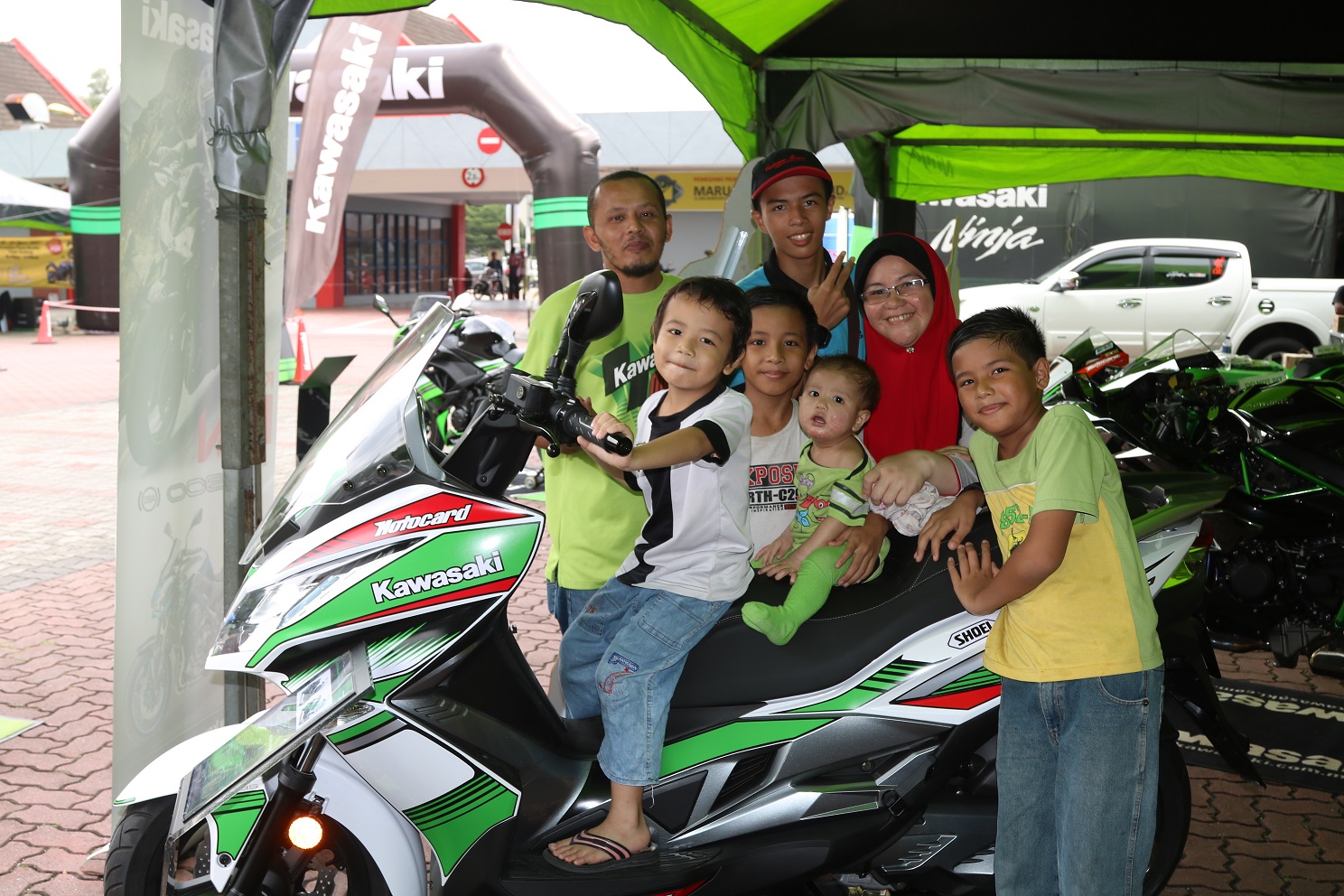
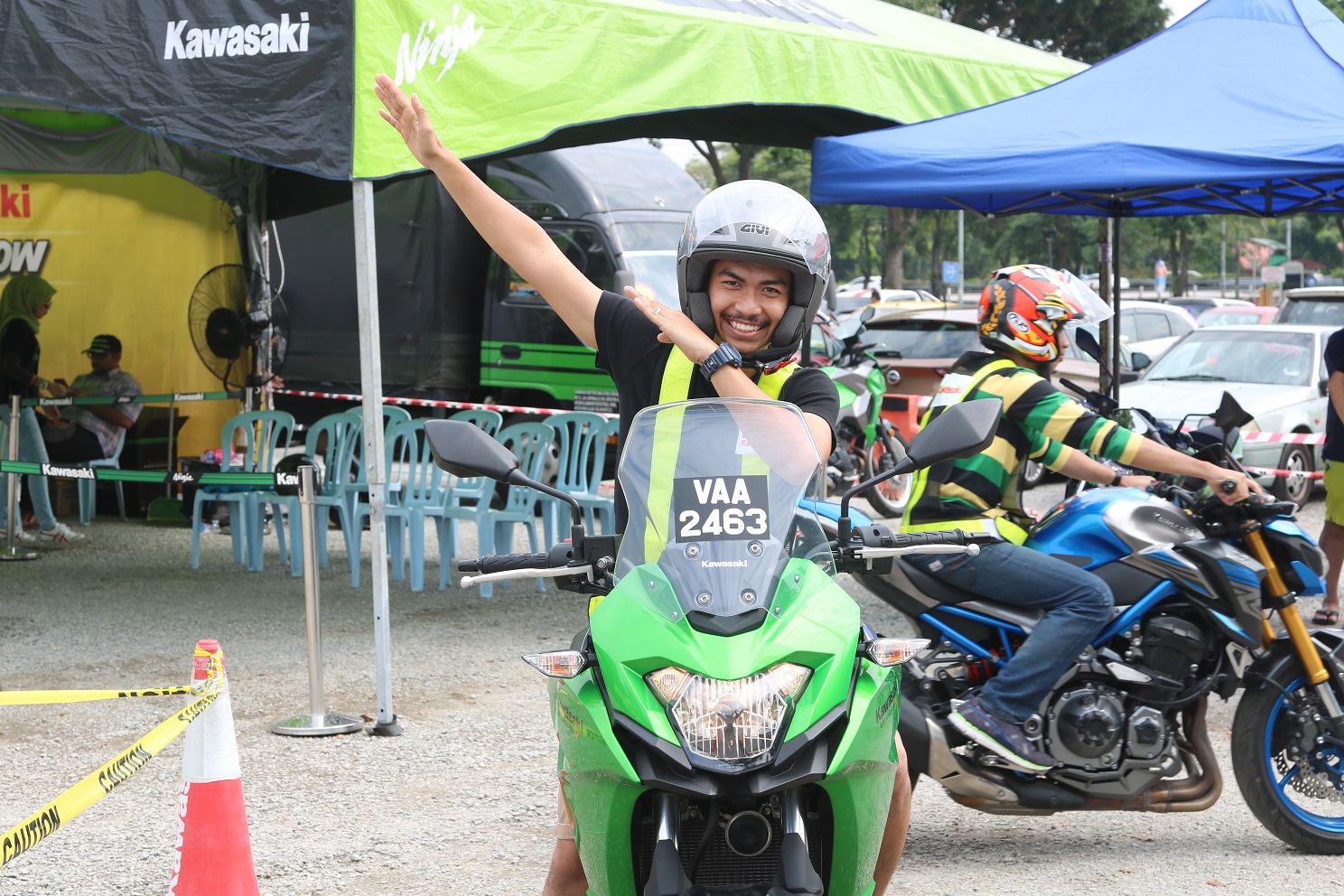
Fancy test riding your dream Kawasaki? The Kawasaki Test Ride Roadshow, dubbed Close to You, will visit Kedah from 1st December 2017 (Friday) until 3rd December 2017 (Sunday). The event will be held at the parking lot of Amanjaya Mall, Sungai Petani, from 10am to 6pm.
This is your best opportunity to test ride the wide range of Kawasaki’s superbike models, which include the fun and go-anywhere Versys-X 250, the high performance and fierce-looking Z900 Special Edition ABS, the revolutionary-styles Z650 ABS and the quick yet rider-friendly Ninja 650 ABS. The Kawasaki Test Ride Roadshow aims to share the unique experience of the performance, comfort and versatility of Kawasaki’s motorcycles firsthand with the general public. Who knows, you may discover a bike that best fits your style and be amazed by its performance.
As with all Kawasaki Motors Malaysia’s (KMBS) programs, safety is the highest priority. Hence, riders must be aged 18 years and above, holds a valid motorcycle license. Please be dressed in long pants and closed shoes (slippers and sandals are not allowed) should you wish to test ride the bikes.
Each rider who test rode the bikes will also receive a lucky draw coupon (valid only for the corresponding day of the event) for a chance to win exciting prizes.
Apart from the test rides, KMSB has lined up many activities that will surely appeal to every visitor.
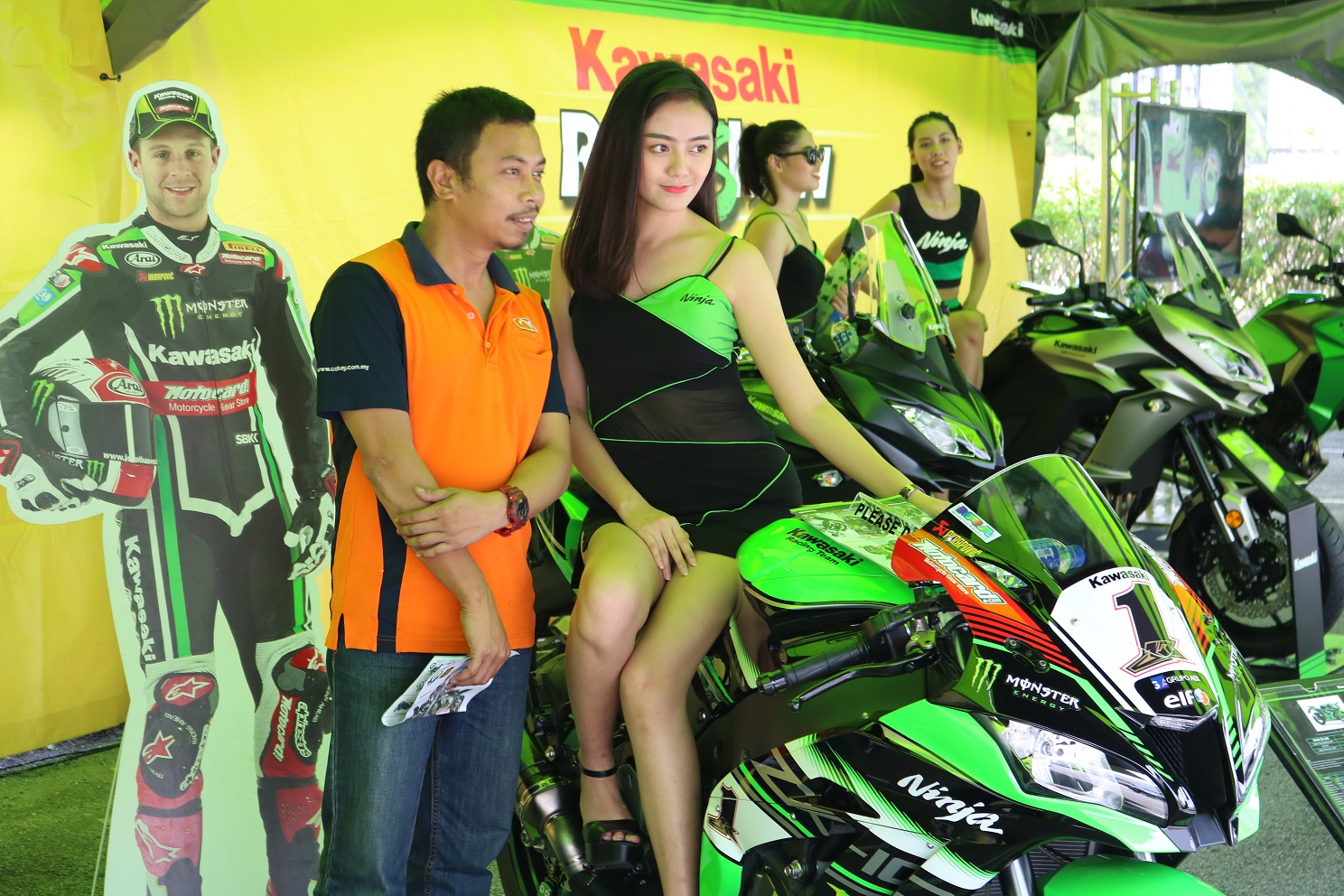
KMSB will also display a number of Kawasaki superbikes including a replica of the World Superbike Championship (WSBK) winning ZX-10R. It’s racing sister ZX-10R had won the WSBK in 2013, 2015 and 2016. (Kawasaki had also won the 2017 WSBK title but the replica is not present yet.) KMSB will also display the world’s fastest production motorcycle – the supercharged Kawasaki H2 – which has hit 400 km/h.
Besides that, Kawasaki superbike owners will enjoy the luxury of having their pride and joy inspected and services during the event. Highly trained Kawasaki Exclusive Service Centre (KESC) personnel will provide free consultation and advice.
Additionally, Bikers Gallery will be displaying and selling their latest range of products at great offers and packages during the event.
The Kawasaki Test Ride Roadshow is part of KMSB’s program ito reach out to Kawasaki’s new and existing customers, and the public at large. Visit the KMSB website and Facebook page for more information. Mark your calendar and let the good times roll!
It now obtains real-time information from other motorcycles, rather than automobiles.
The developer has said the app will be able to send motorcycles through smaller roads that are inaccessible to cars.
Community-based navigation and traffic app, Waze, has just introduced a motorcycle feature.
Waze is the favourite navigation app among the majority of drivers the world over. It sources real-time data from other drivers before being processed and relayed to other users. For example, if the route you are travelling on experiences a slowdown, the crawling speeds affecting other Waze users will be construed as a traffic jam. The app will then attempt to reroute you through another faster route.
Waze was created as a social navigation tool, after all.
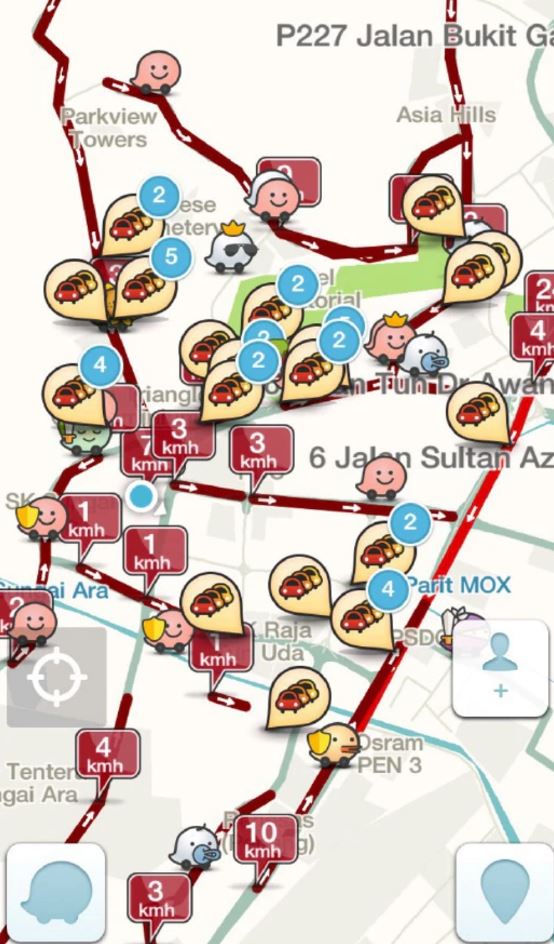
Traffic jam in Penang. Notice the 1 km/h speed!
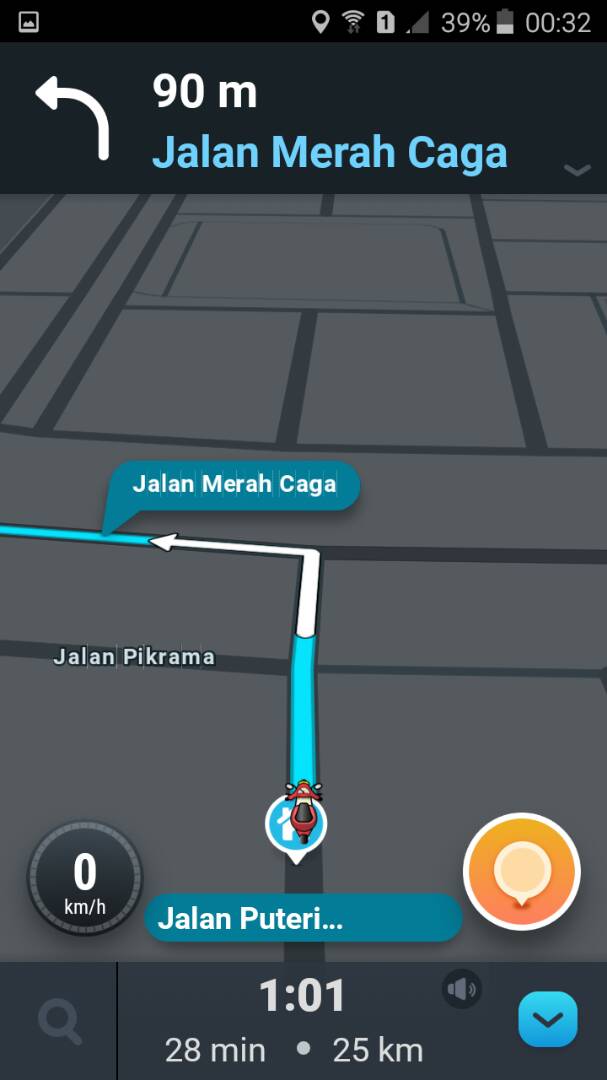
However, the app has always been based on automobile data since its inception. This creates some problems for bikers as we are able to squeeze through traffic, for instance. Consequently, the estimated time of arrival (ETA) presented to us bikers are virtually incorrect.
Also, motorcycles are able to get through smaller streets and lanes as opposed to automobiles. The new feature should be able to guide us through these shortcuts. We hope it covers motorcycle lanes, too.
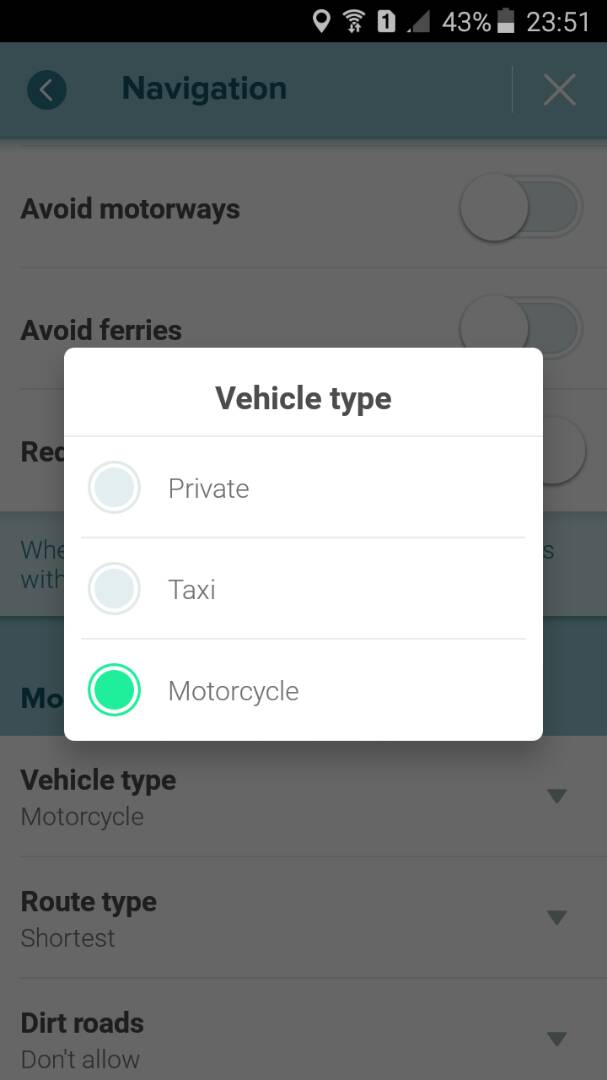
To activate the motorcycle feature in, go to Settings, followed by Navigation, the click on Vehicle Type and select “Motorcycle.”
Settings -> Navigation -> Vehicle type -> Motorcycle
We will put it to the test soon and see if it works, and hopeful that it does not send us into a “Waze Daze.”
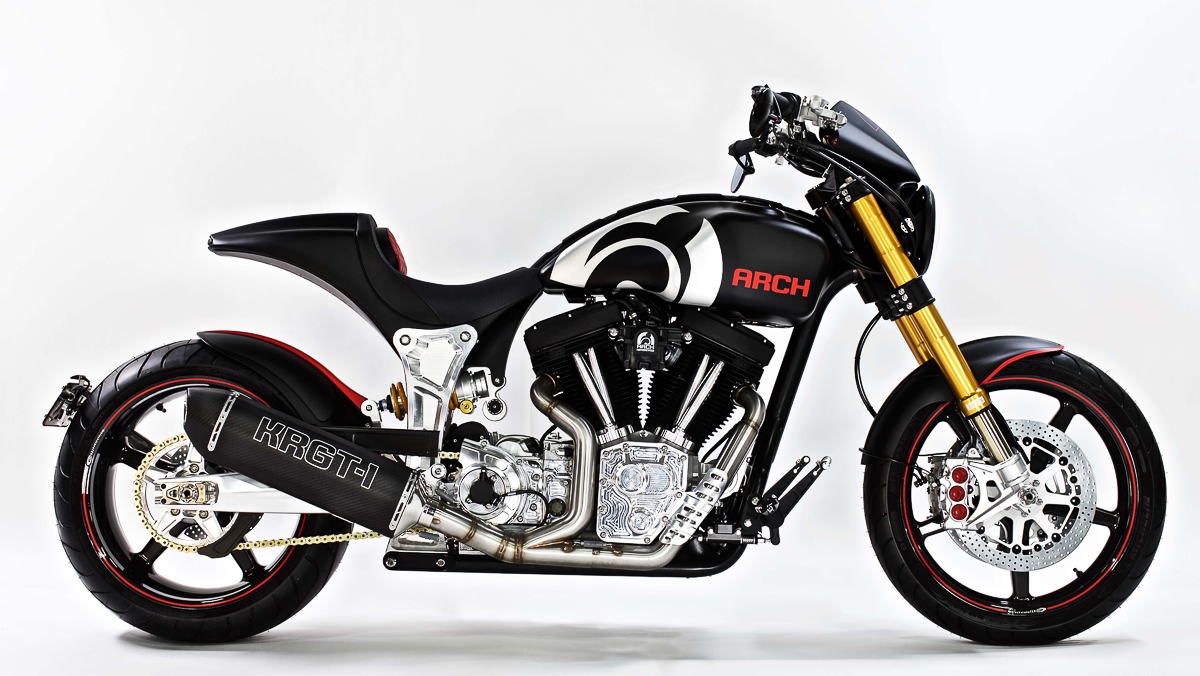
The latest 2018 Arch KRGT-1 was introduced during EICMA 2017 with a host of upgrades.
Updates include ergonomic and bodywork refinements, Ohlins front forks, ISR brakes and many more.
Arch Motorcycles is founded by two individuals and one of them happened to be Hollywood superstar, Keanu Reeves.
If you read our article’s title and somehow got intrigued and clicked the link to this particular area of the World Wide Web, we are happy to confirm the authenticity of that statement. Arch Motorcycle is a US-based motorcycle company founded by Keanu Reeves aka “Neo” from one of the greatest movie franchises in the world, The Matrix. (more…)
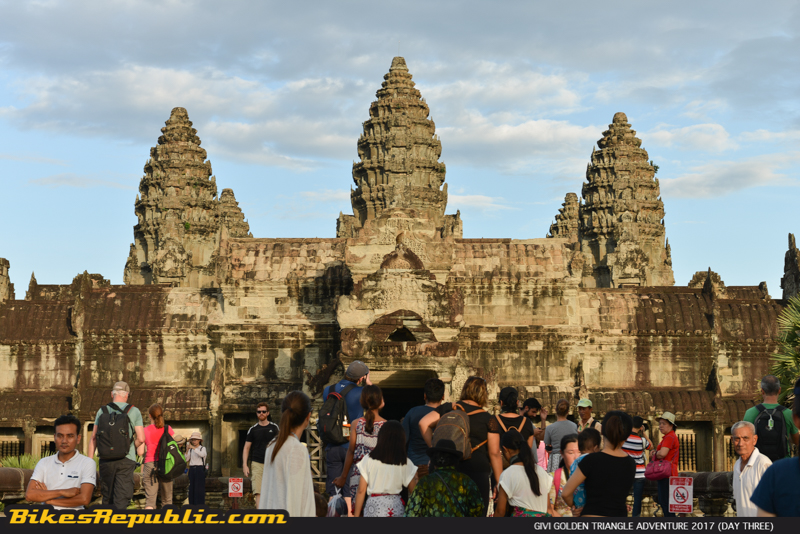
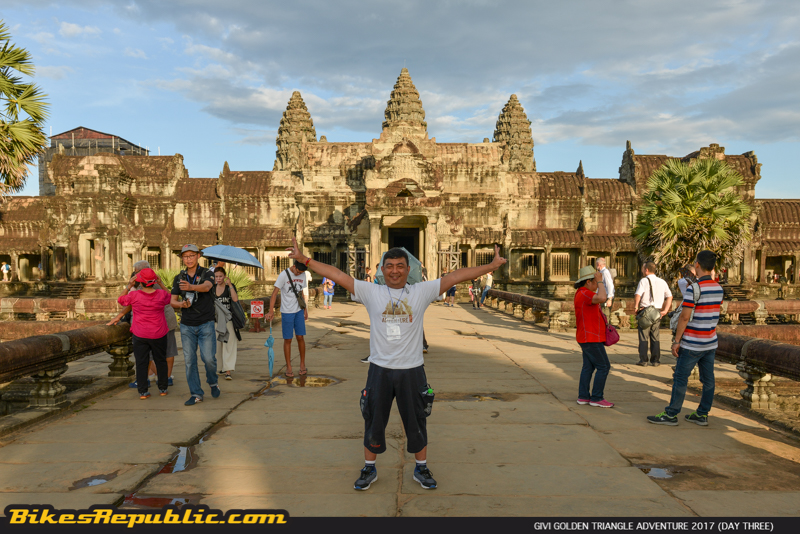
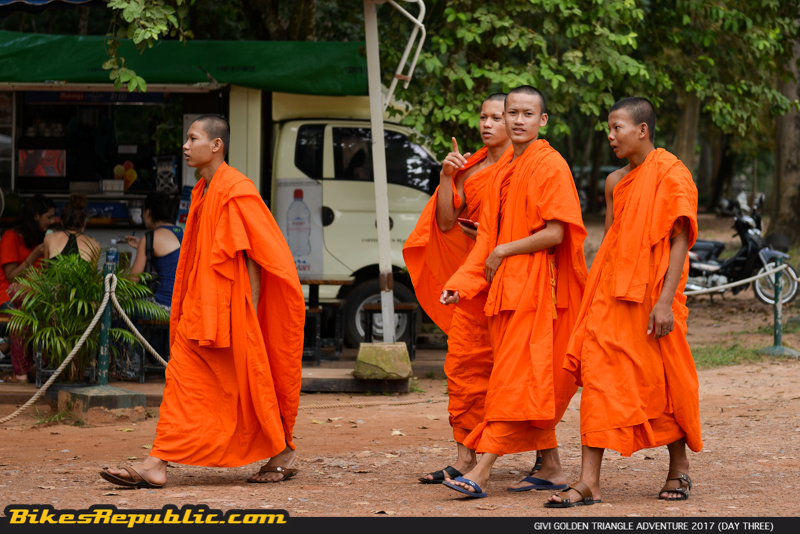
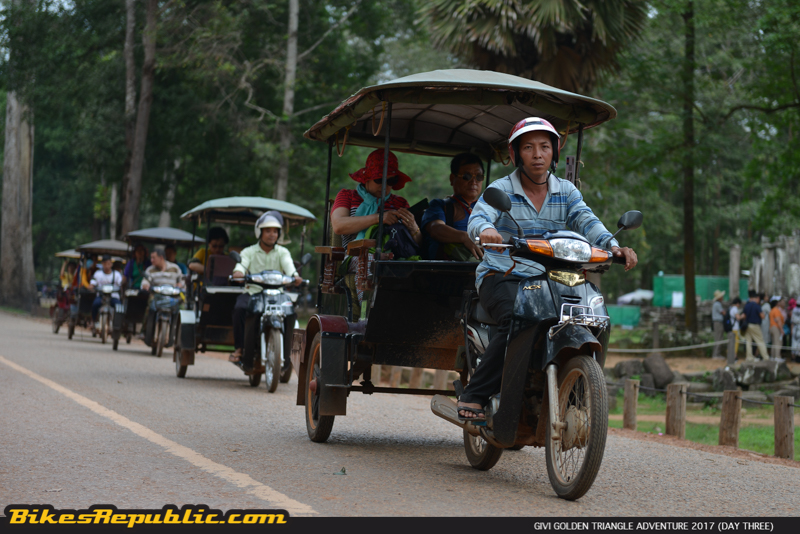
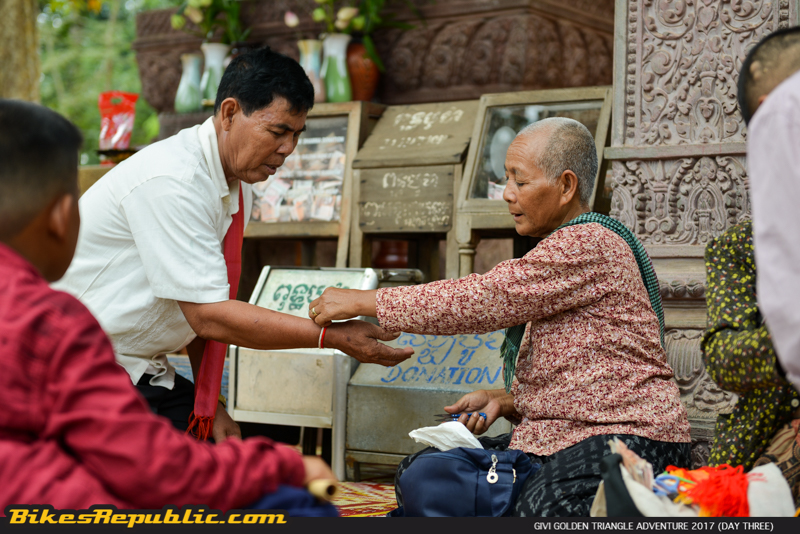
The GIVI Golden Triangle Adventure 2017 visited Angkor Wat on Day Three.
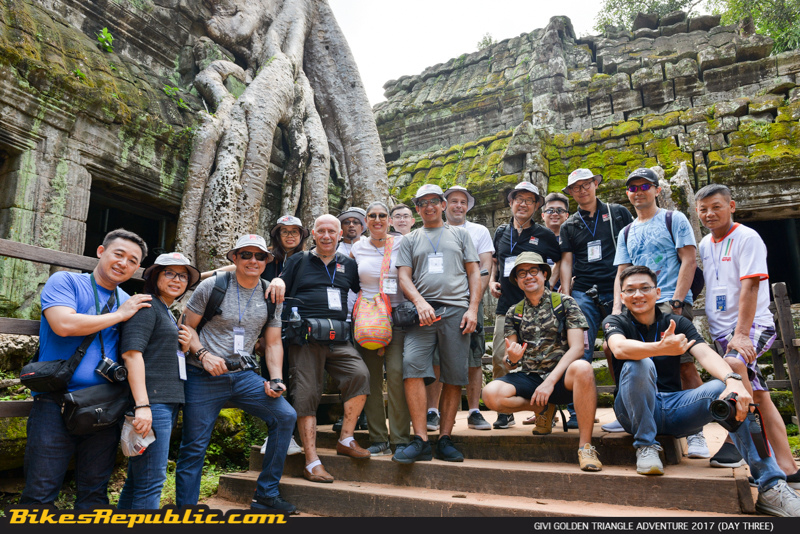
The Explorers visited the Tomb Raider Temple (Ta Prohm), Bayon and Angkor Wat.
We discovered the history, culture and unfortunate violence which enveloped Cambodia.
Siem Reap, Cambodia, 14th November 2017 – The GIVI Explorers (participants) took a break from riding today. As with every edition of the GIVI Adventure, there is one day allocated for an excursion to the main highlight of the ride. It was the Kruger National Park in 2015, when I last rode with the group, but for today, it was one of the Wonders of the World – Angkor Wat.
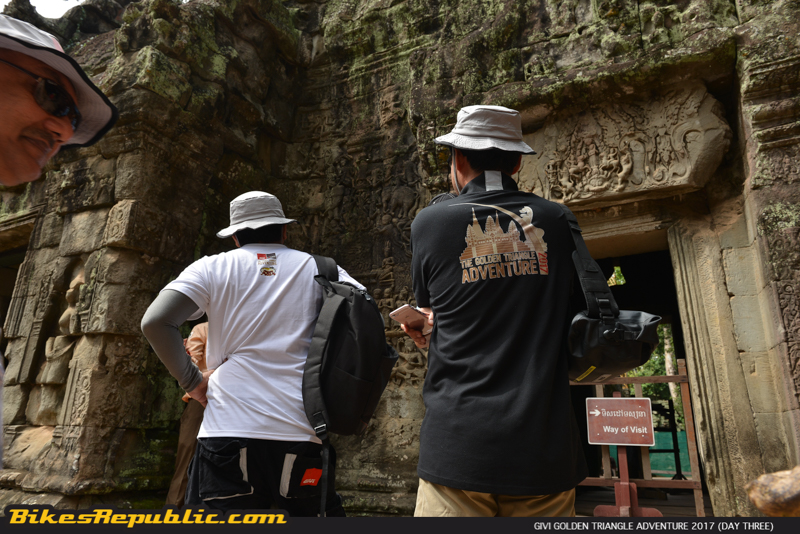
Angkor Wat and the surrounding temple ruins in the Angkor region have been one of the main highlights in this year’s GIVI Golden Triangle Adventure 2017, underlining Joseph Perucca, GIVI’s Overseas Operational Director’s philosophy about the GIVI Explorer’s spirit of adventure, exploration, discovery and learning about new histories, peoples and cultures. In fact, all the logos on our GIVI and Hevik riding gear and motorcycle equipment featured the pictogram of Angkor Wat prominently (among other famous structures).
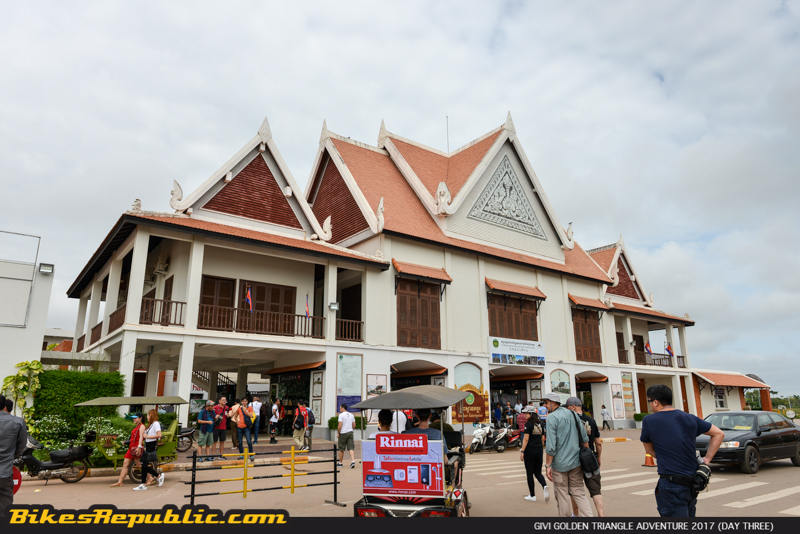
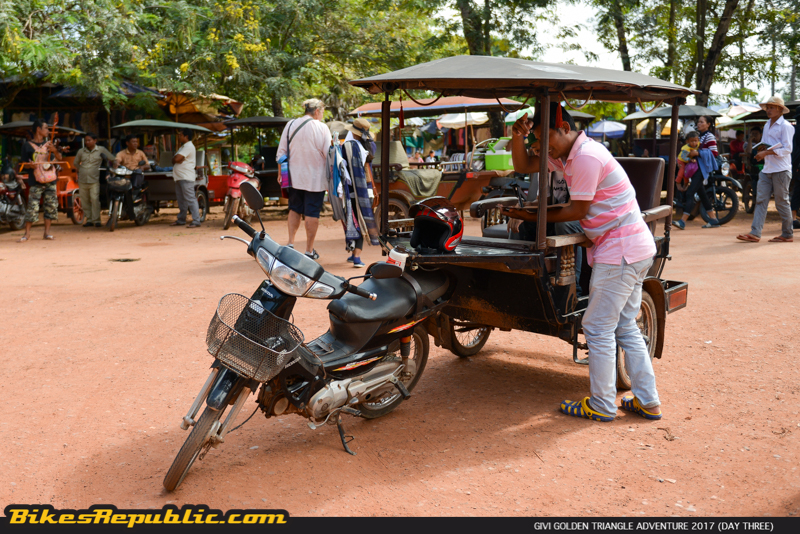
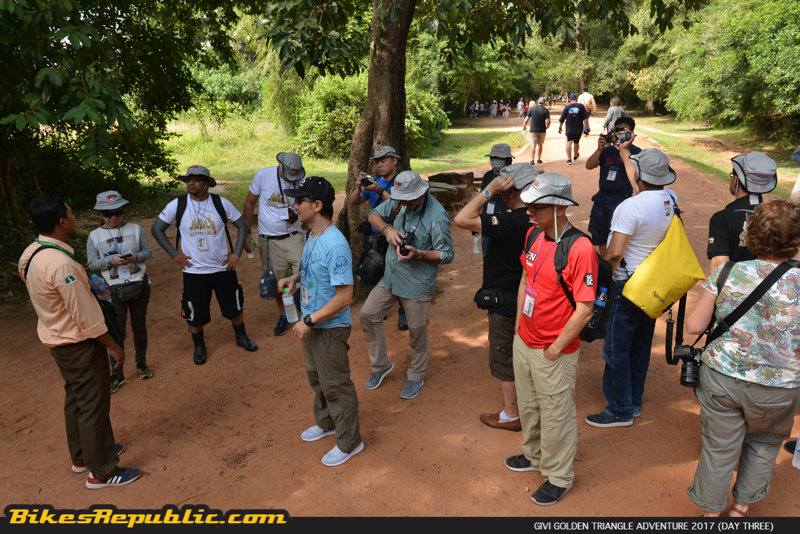
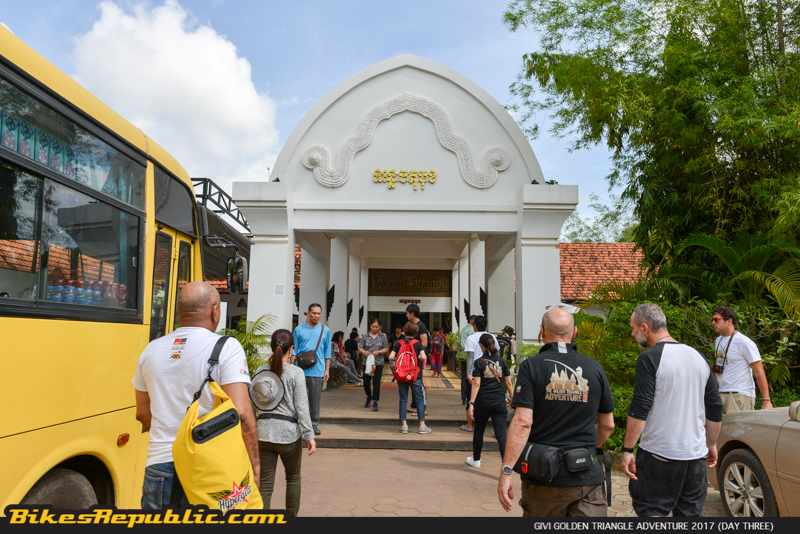
GIVI had contracted a local tour operator to assist and guide us through the day. We boarded two mini busses after breakfast for the ticketing centre, not far from our hotel in Siem Reap (pronounced See-em Re-ap).
The guide on the bus presented some quick facts about Cambodia, and he was unambiguously affected by the Khmer Civil War between 1970 to 1975 and the subsequent Khmer Rouge (Red Khmers as in Communist Khmers) regime’s reign of terror between 1975 to 1979.
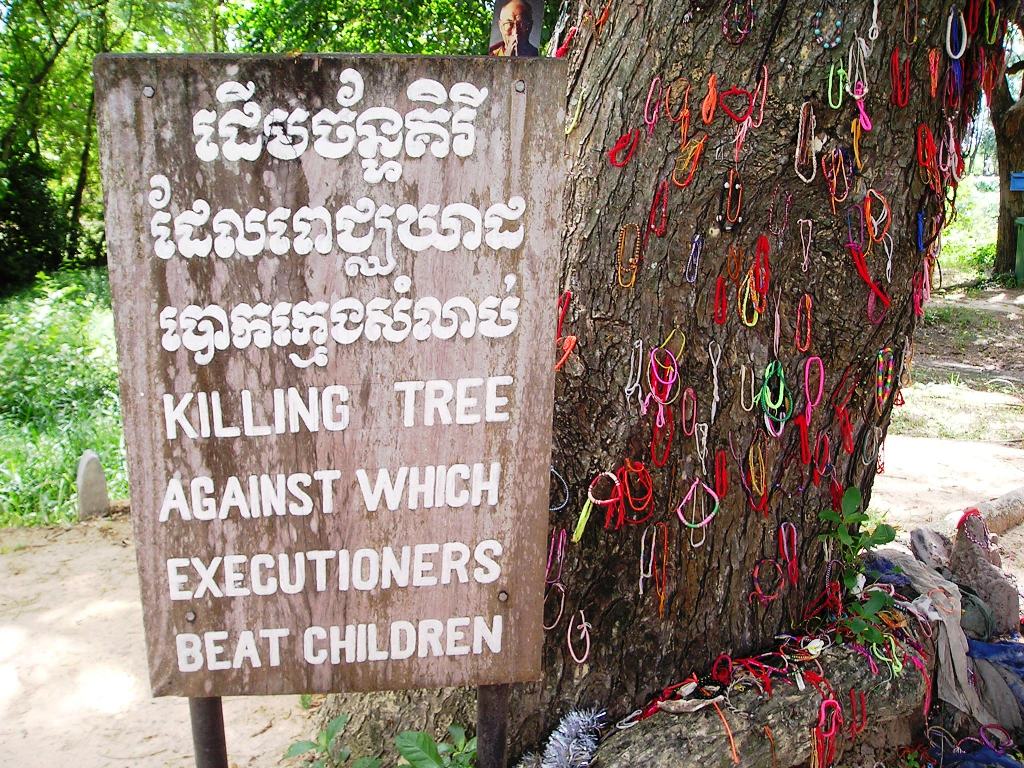
When the Khmer Rouge came to power in 1975, the regime’s leader Pol Pot called it Year Zero. Teachers, merchants, artists, intellectuals, professionals or anyone who wore glasses were purged, and all culture and traditions were erased to be replaced from ground up with an agrarian society. Schools, factories, banks, currency and even hospitals were closed. All religions were outlawed – the minority Cham Muslims were fiercely exterminated and as many as 25,000 Buddhist monks were executed. The atrocities escaped any form of humanity and even infants were not spared. Official figures of the genocides vary but it is estimated that as many as 3 million Cambodians were killed or missing (from a population of 8 million at the time).
For many, it was the end of the world as if Satan had come up from Hell.
The sign says it all. Good thing we didn’t visit the “Killing Fields”
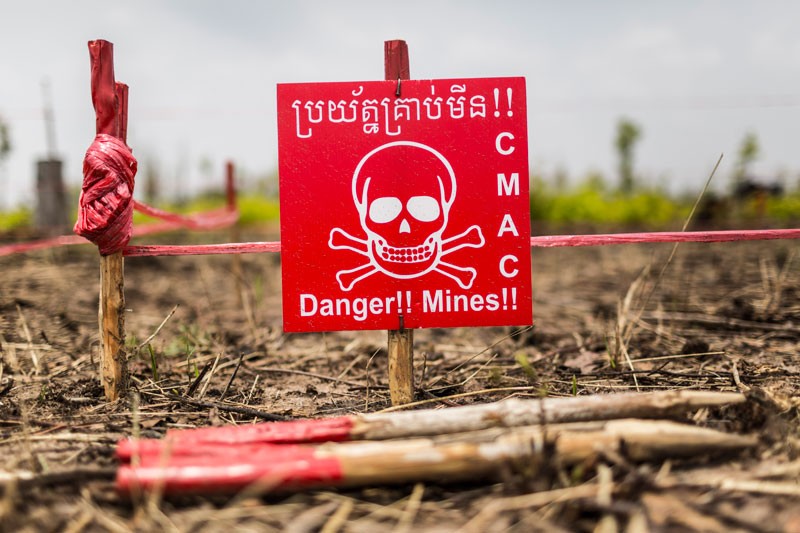
The Khmer Rouge was deposed when their former allies Vietnam invaded Cambodia in 1979, but the collapse of society, and loss of educators and guidance had taken the country back many decades, making the country one of the world’s poorest. There are still millions of landmines and unexploded ordnance uncleared in Cambodia.
There are still many mines and unexploded ordnance to be cleared in Cambodia but the efforts are ongoing
But! There’s a ray of hope.
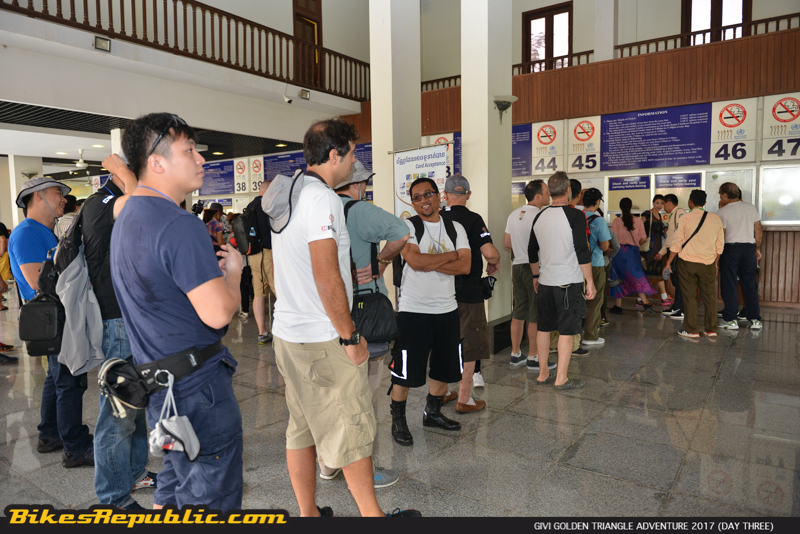
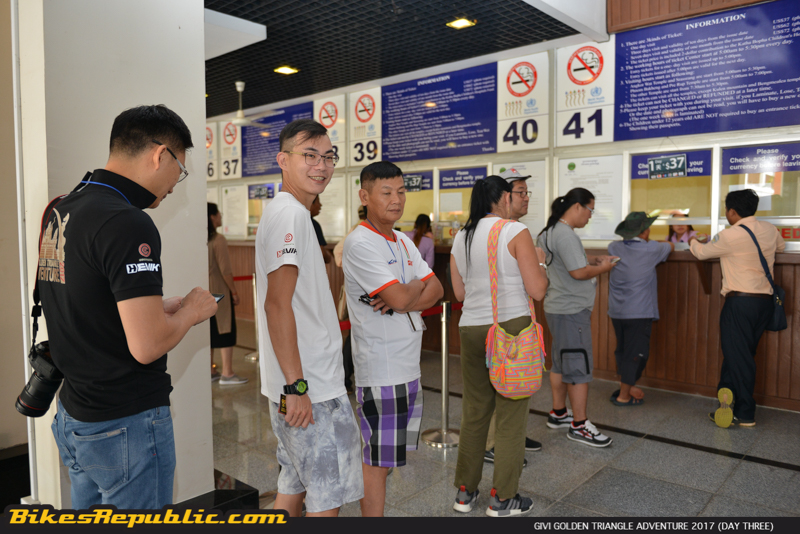
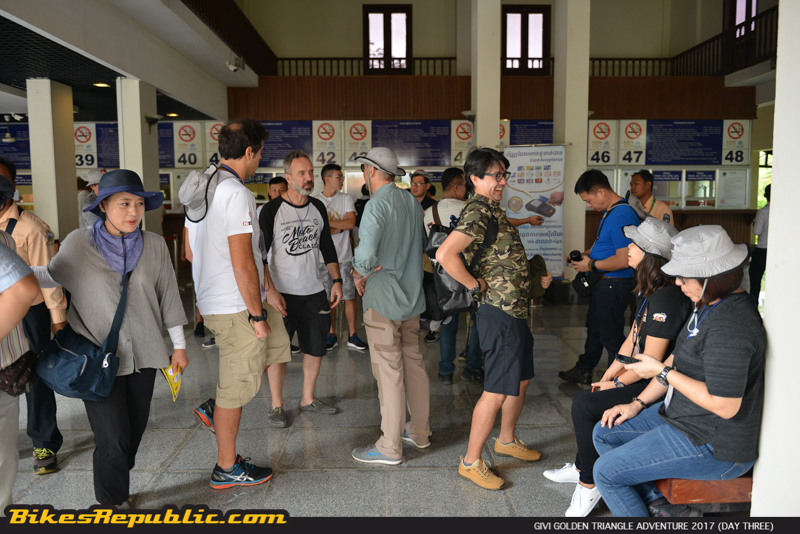
It’s not even 10am and there was already a large crowd at the ticketing counter. The tourism industry is picking up in Cambodia and the government has plans to replace the current airport in Siem Reap to a larger one, 60km outside the city.
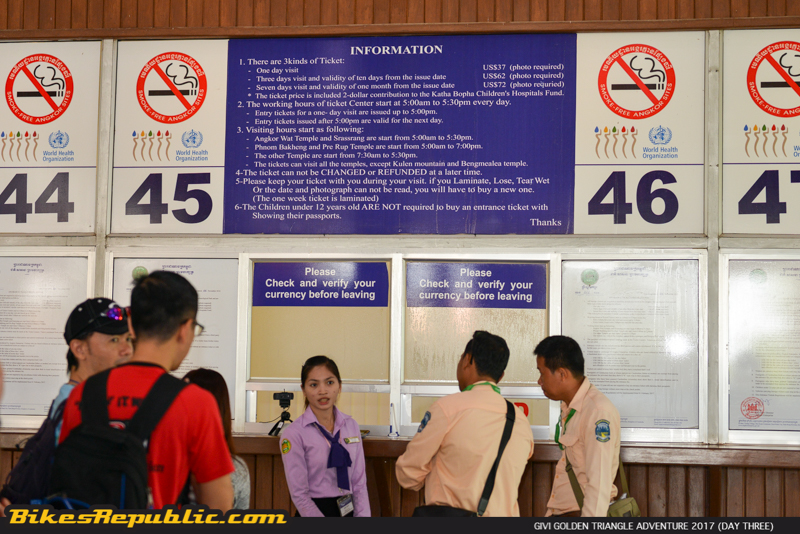
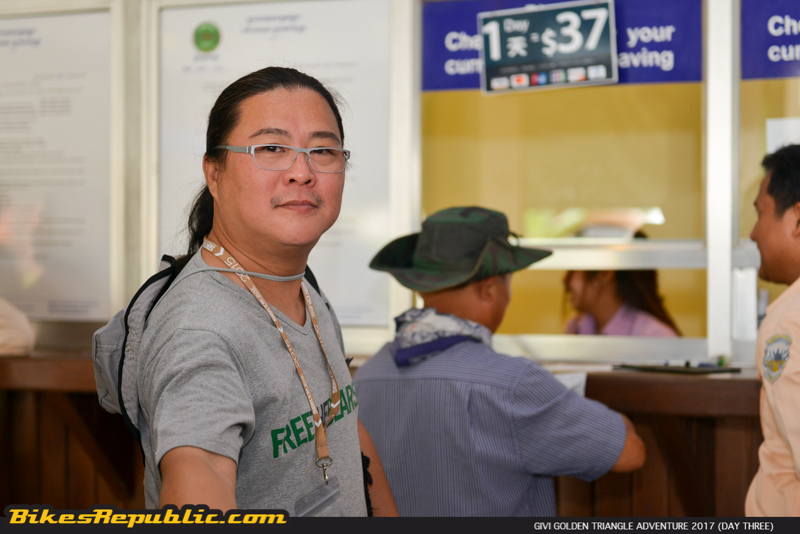
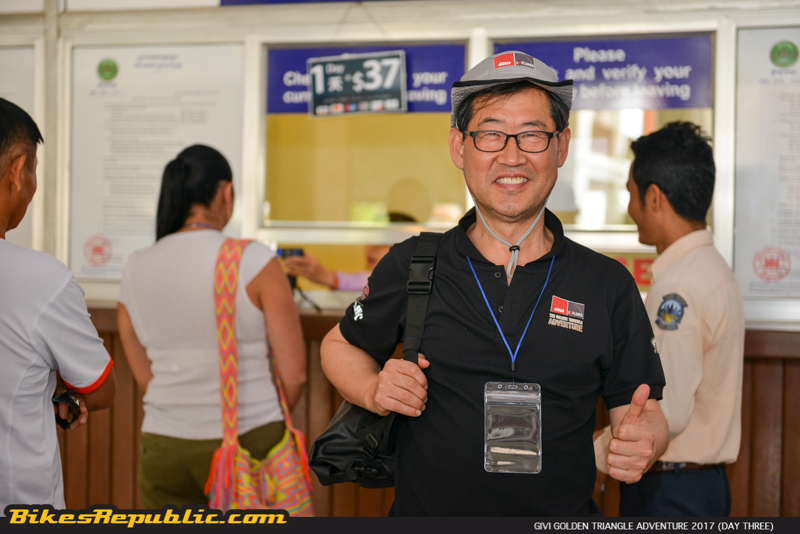
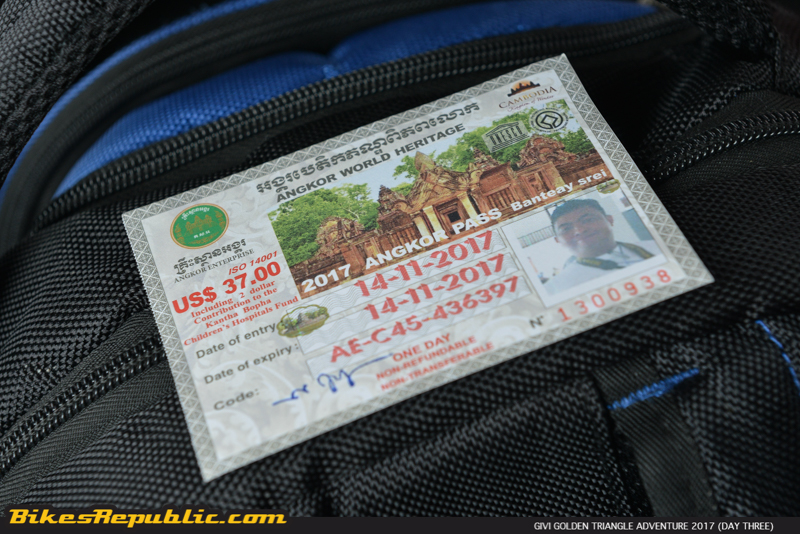
There were a few options for the number of days allowed to visit he sites, each with different pricing. For a one-day excursion, the price was USD 37. Yes, it’s expensive to us Malaysians due to our weak currency, while the GIVI Explorers from other nations happily paid up.
Check out the prices. But the funds go to the restoration and conservation of the ancient ruins
There isn’t just one large temple complex in Angkor i.e. Angkor Wat, instead there were tens of them scattered around an area collectively called Angkor Thom.
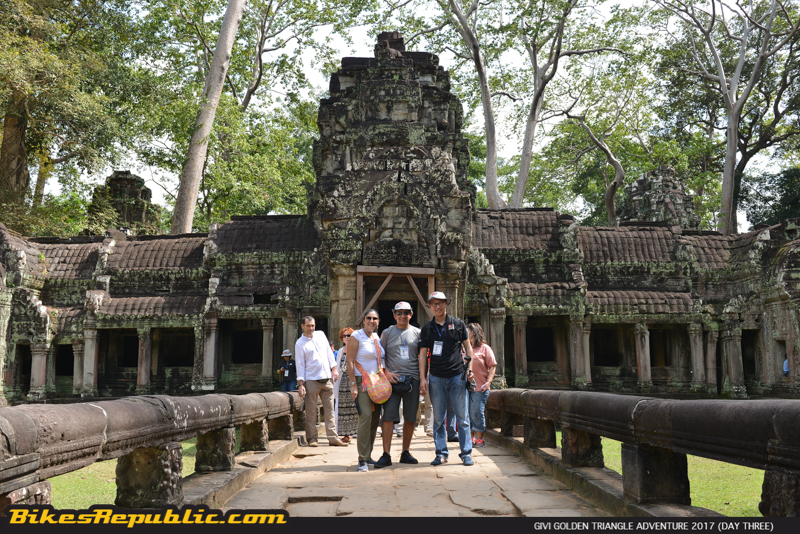
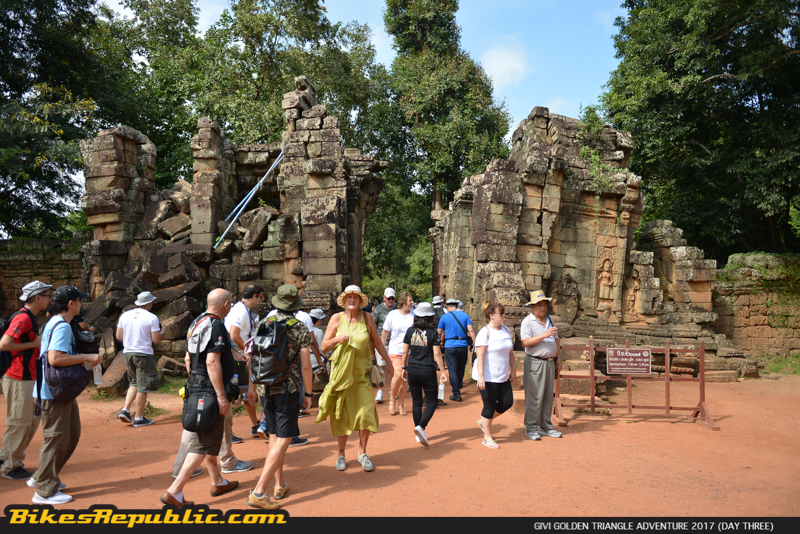
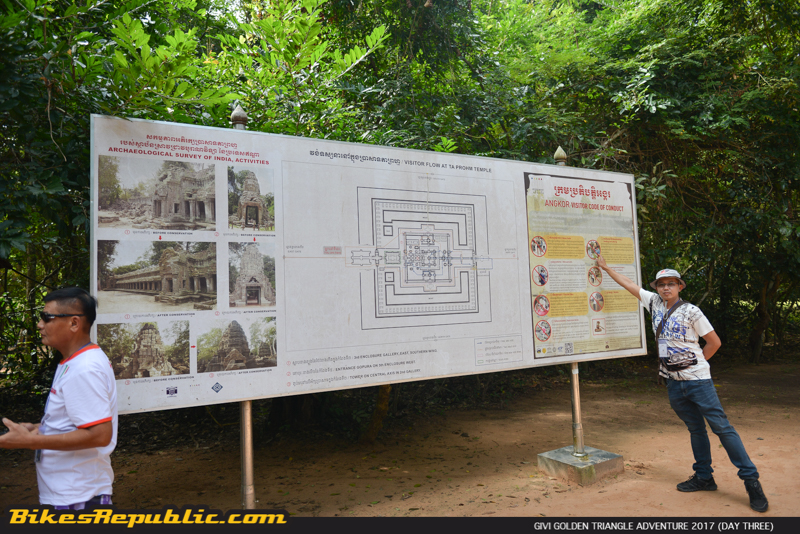
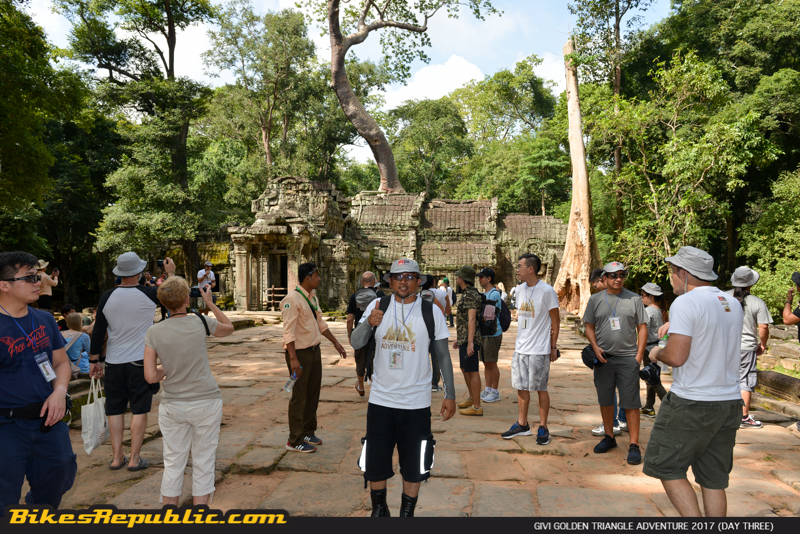
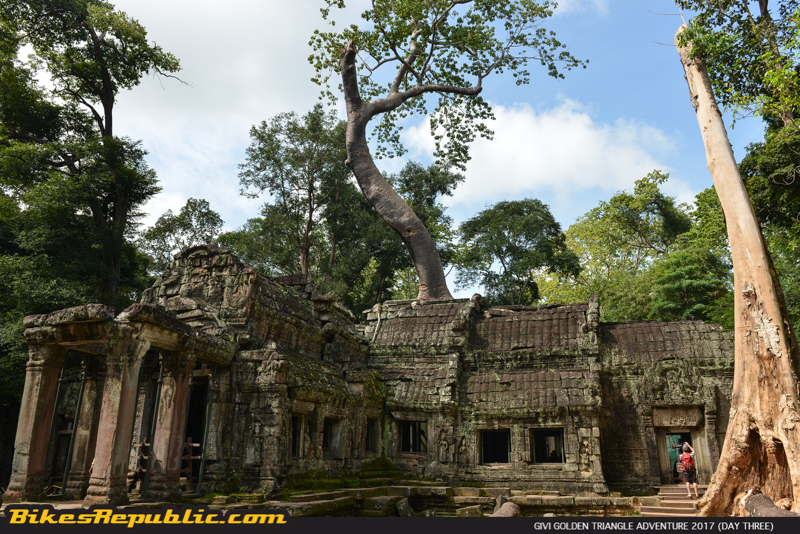
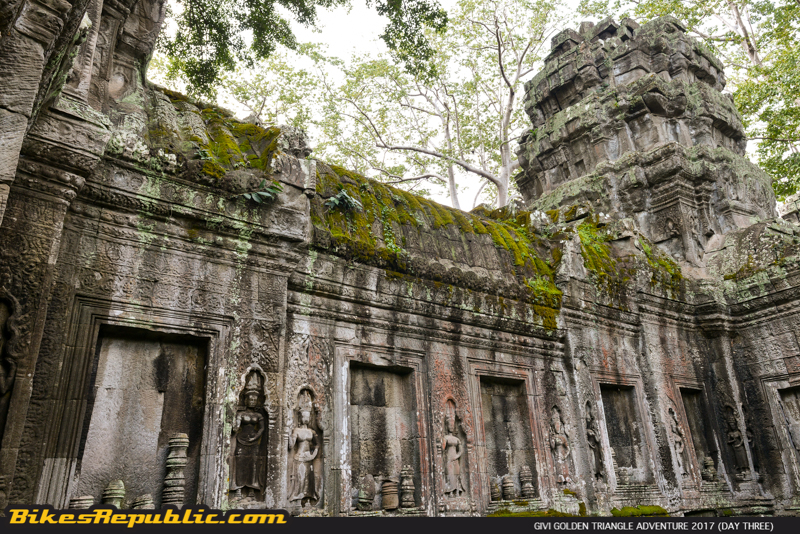
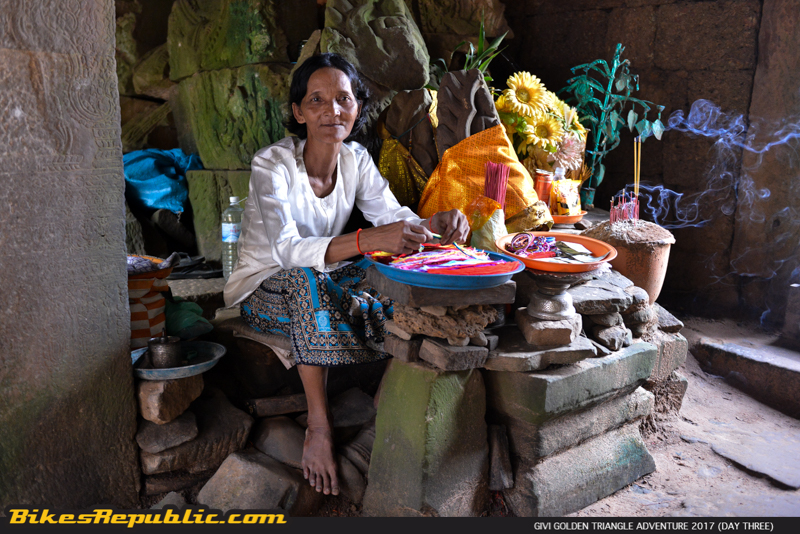
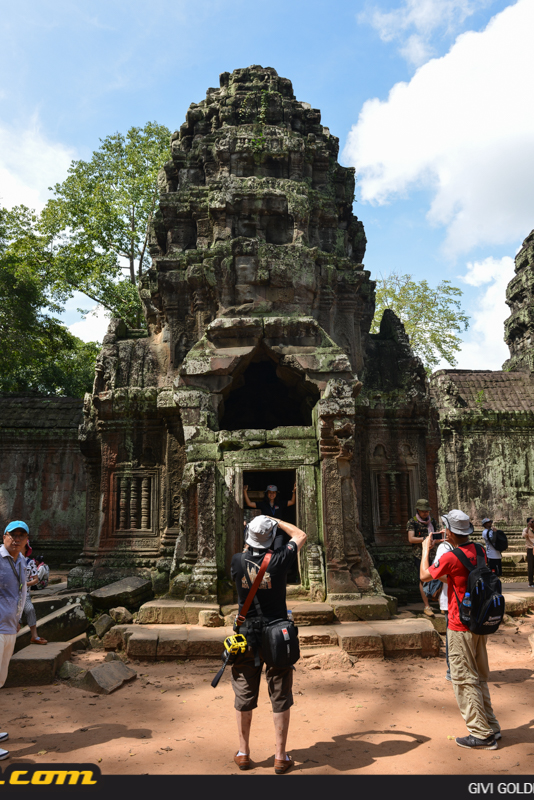
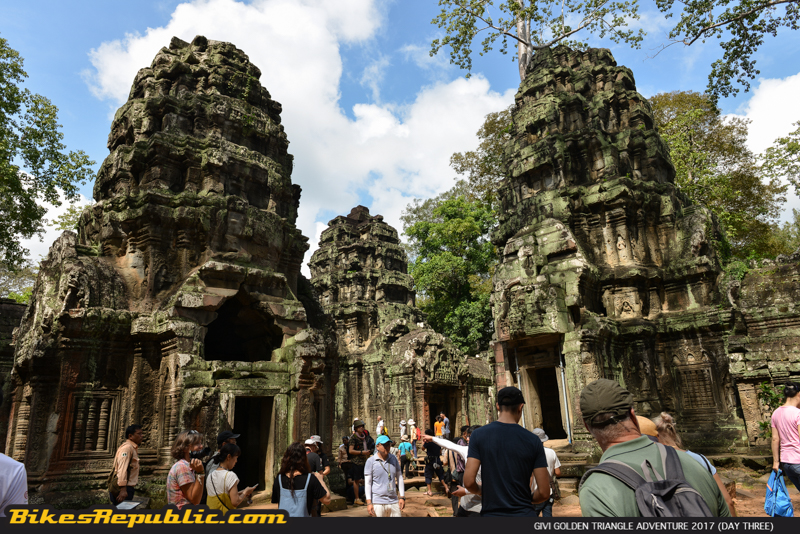
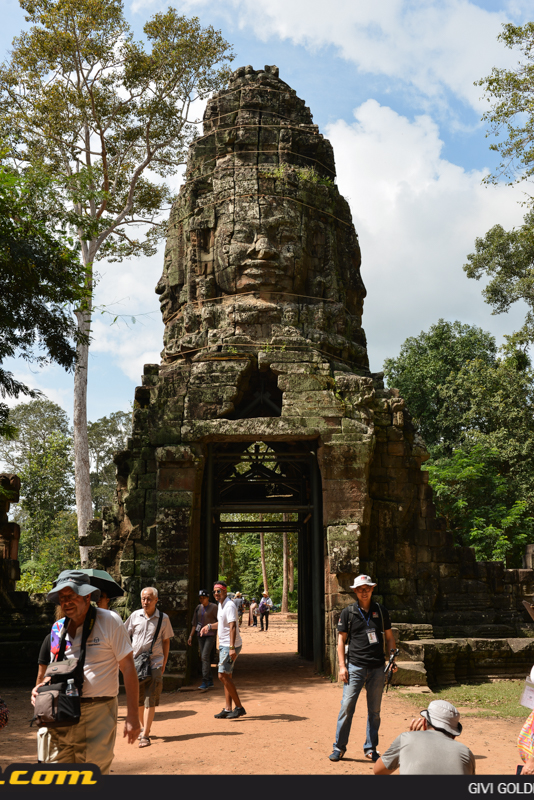
We boarded the buses again and headed to Ta Phrom, or better known as the Tomb Raider Temple, being the location for the movie. Built in circa 1186 CE, as part of King Jayavarman VII’s program of construction and public works, it was constructed for his mother and served as a Mahayana Buddhist monastery and university.
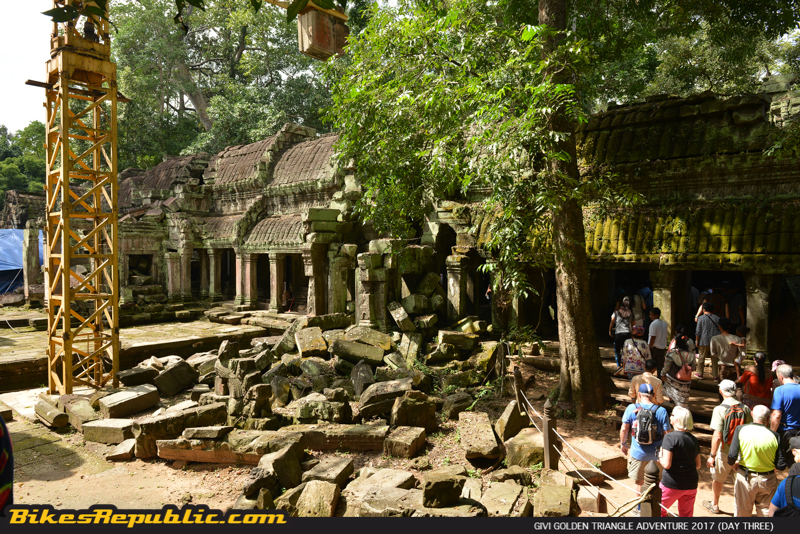
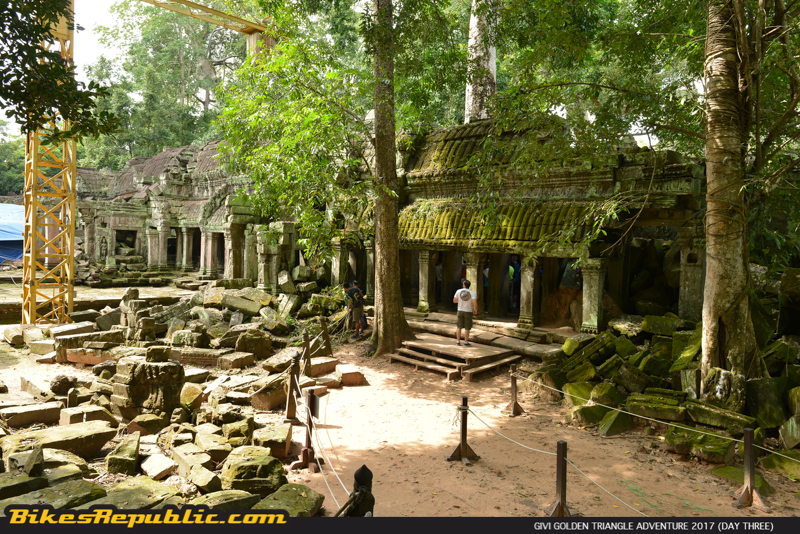
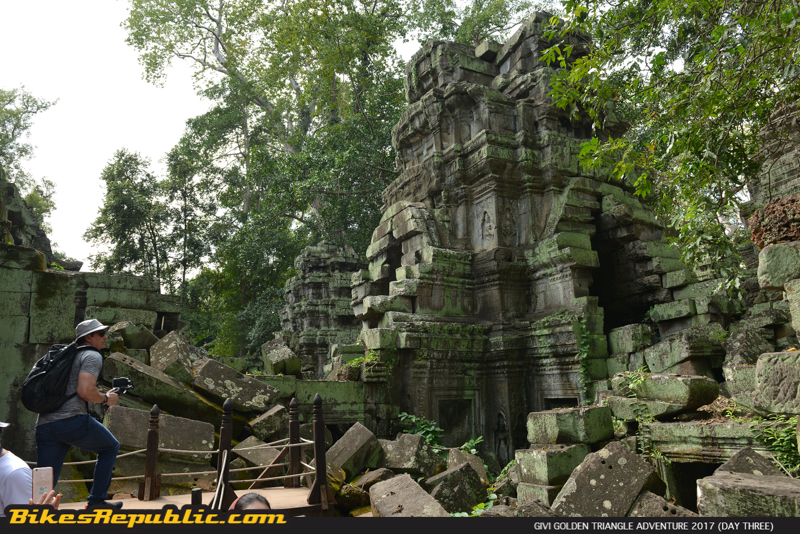
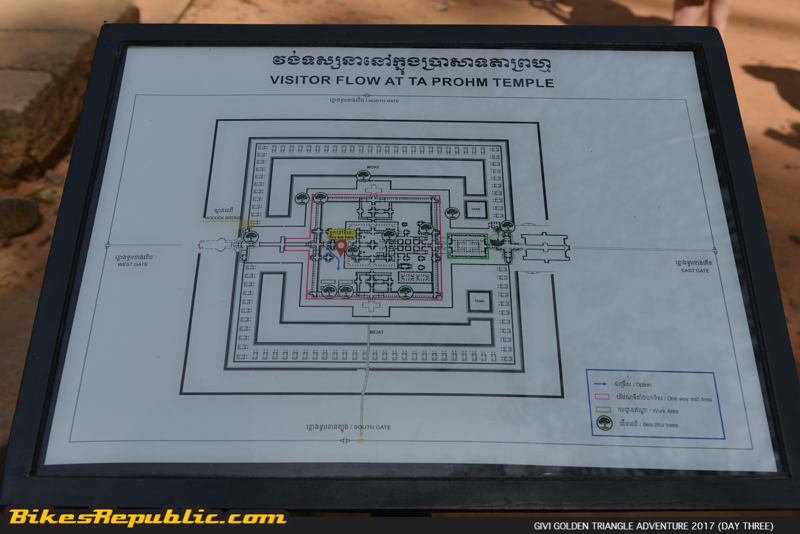
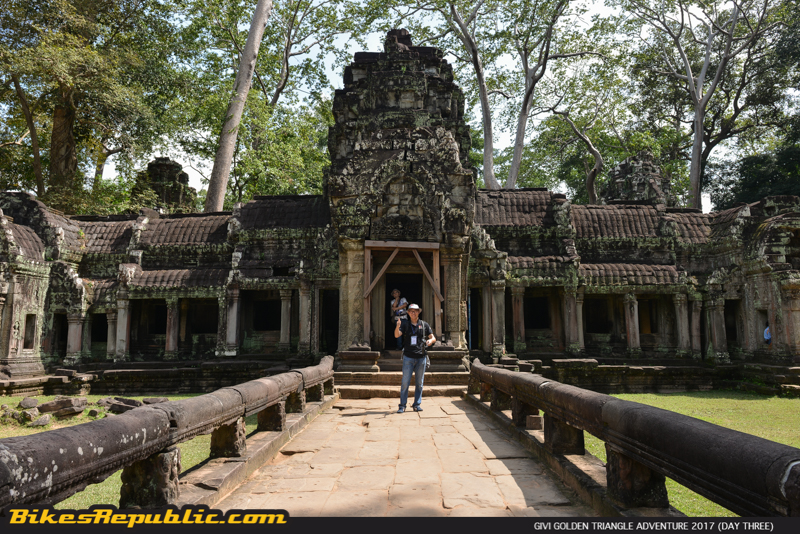
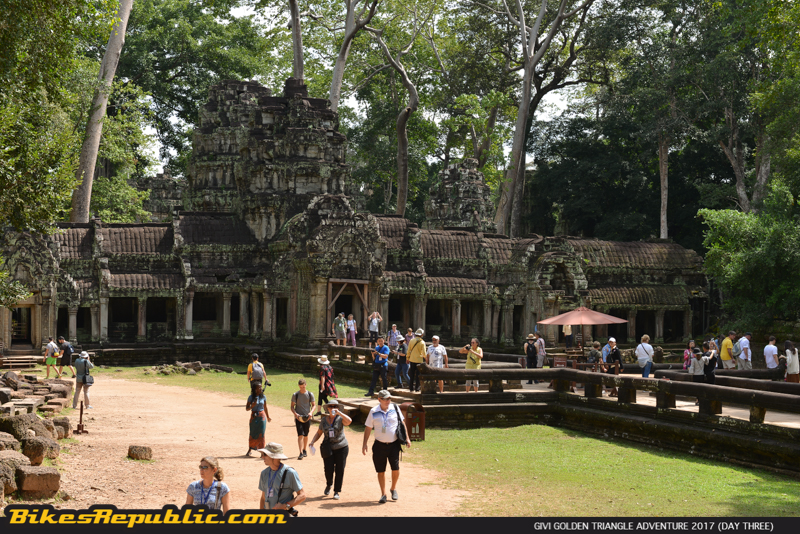
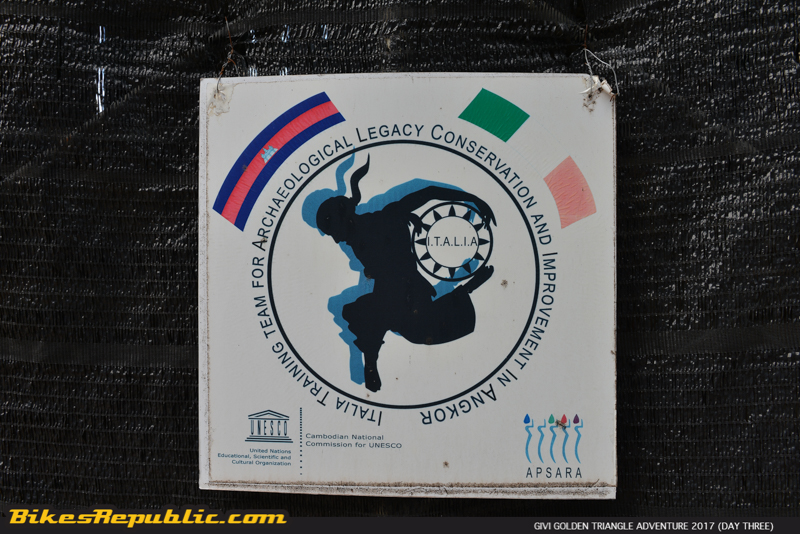
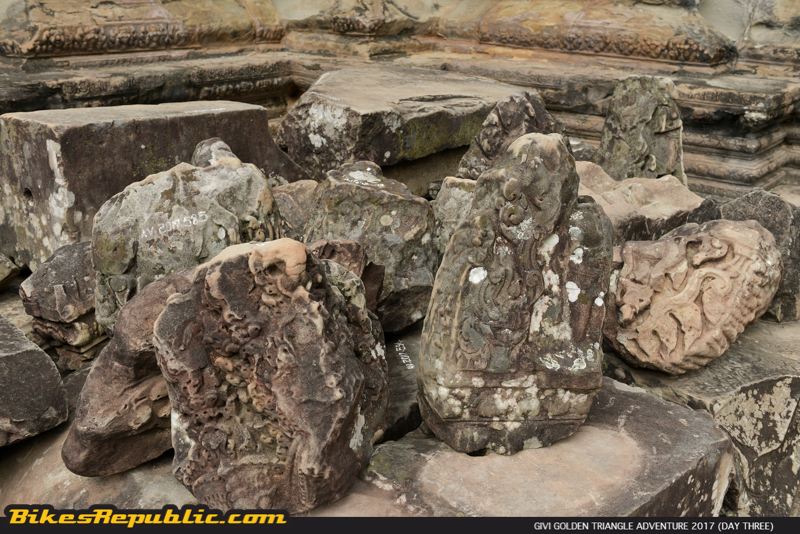
UNESCO has included Ta Prohm (and the other sites) on the World Heritage list since 1992. Conservationists came to the consensus that Ta Prohm should be left largely in the state that it was discovered. Still, much work have been done to stabilize the complex and provide access to the influx of tourists. As such, wooden walkways, platforms and roped railings have been built to avoid further damage.
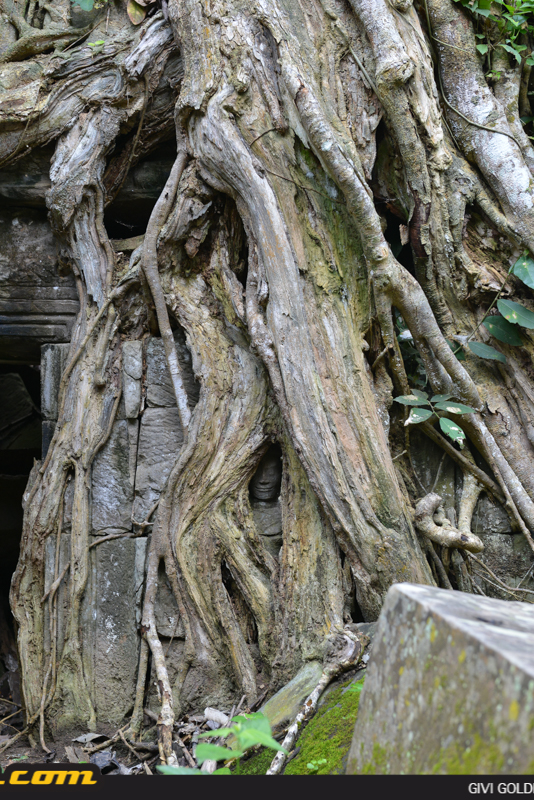
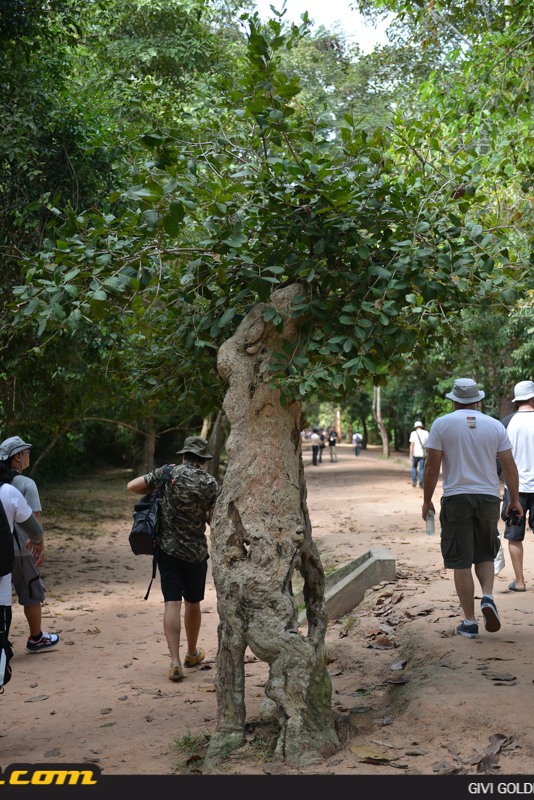
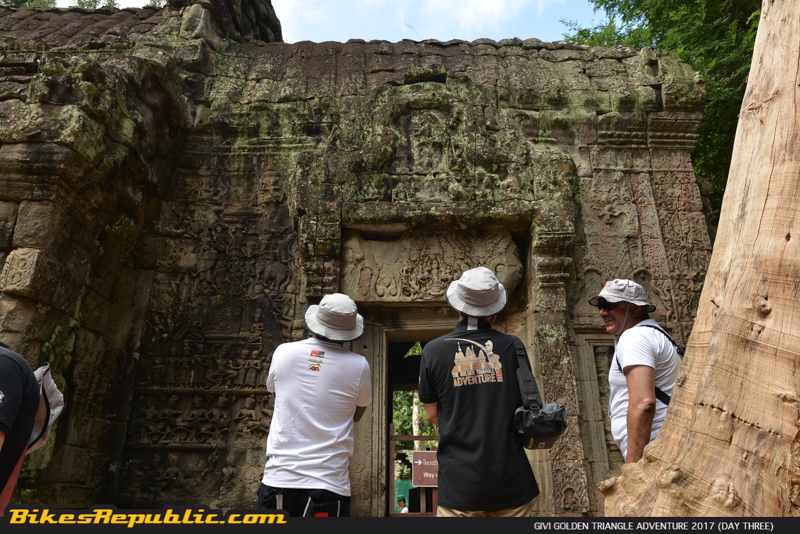
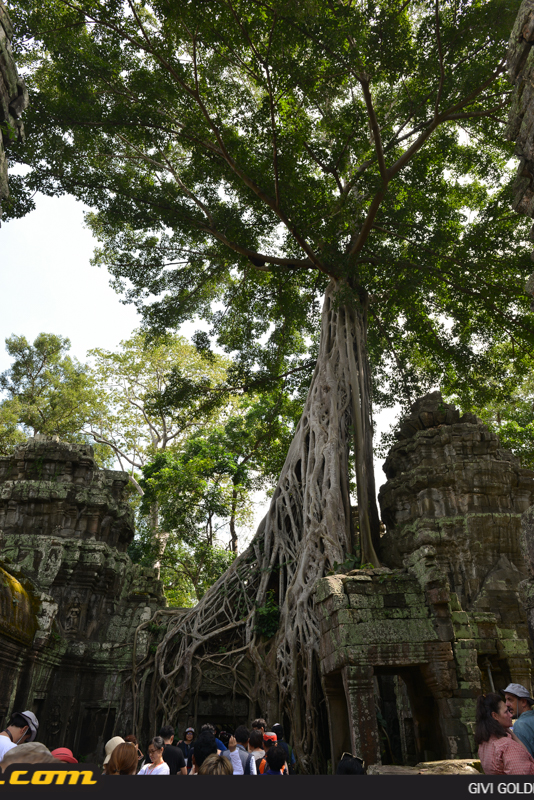
The most distinctive feature of Ta Prohm is by far the trees growing out of the ruins, their roots coiling over the stones like reptiles.
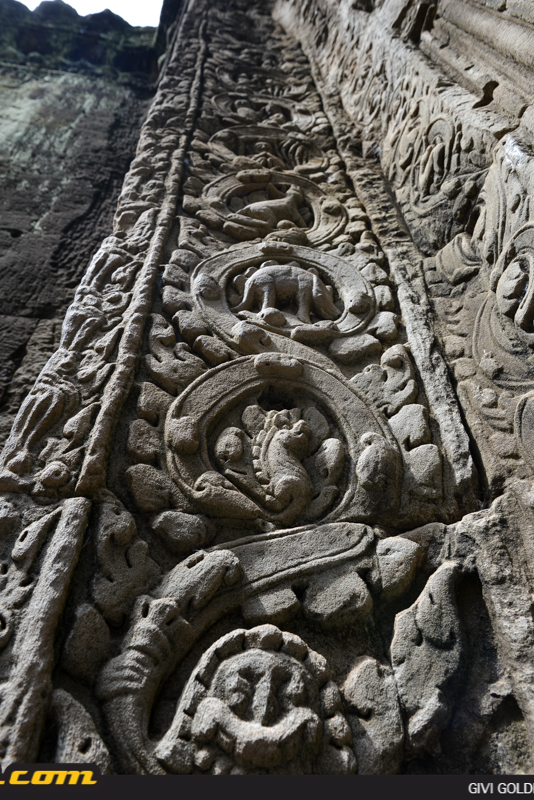
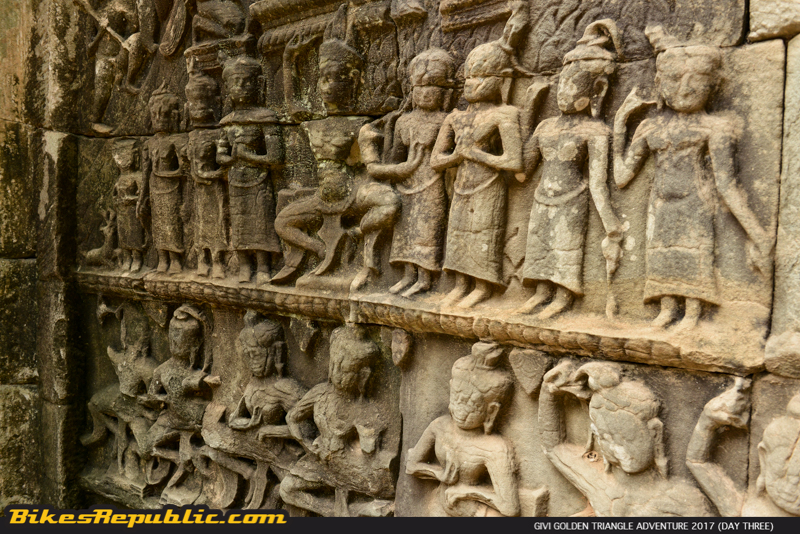
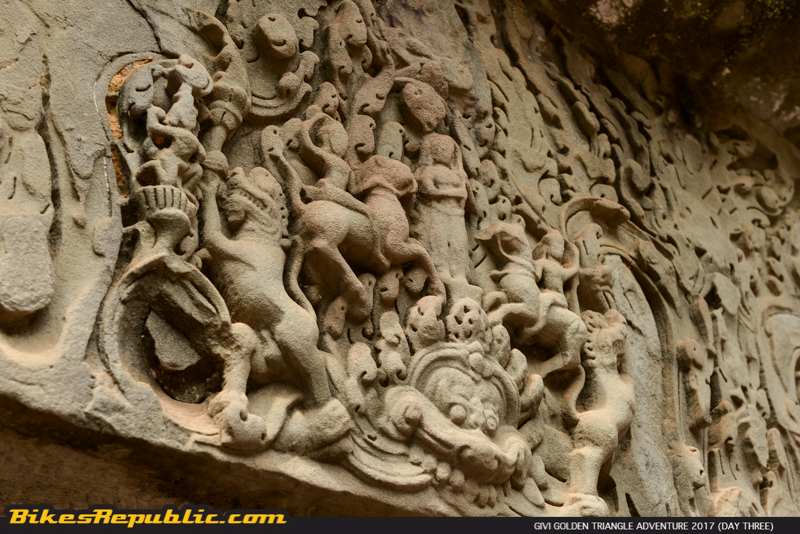
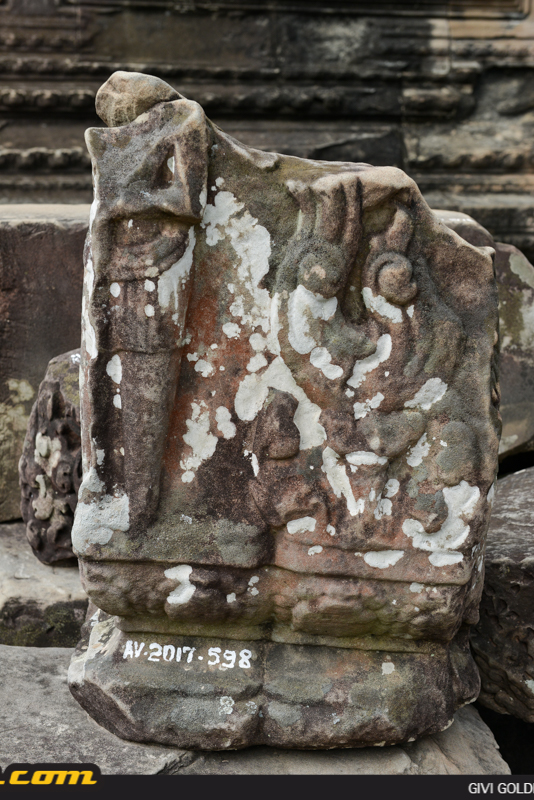
Also, there’s an intriguing carvings here which seemed to resemble dinosaurs. Yes, dinosaurs. Experts say otherwise.
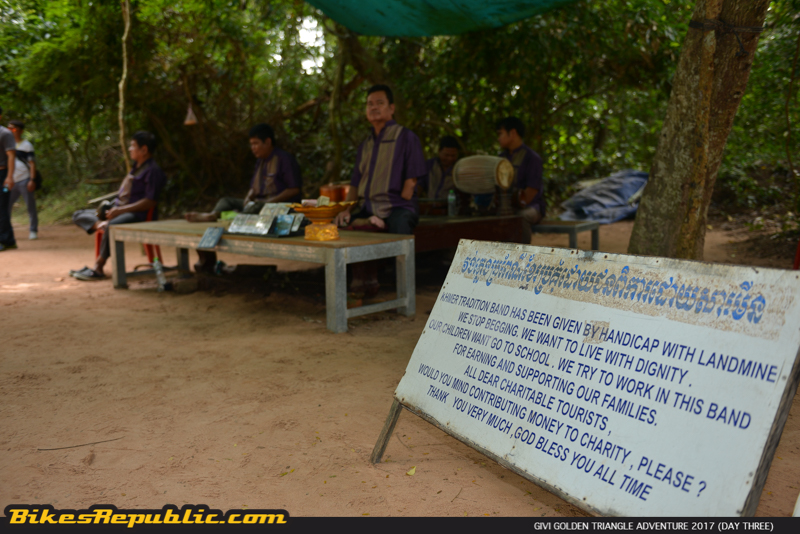
Remember I mentioned landmines? There was a band playing traditional Khmer music outside and the ensemble were the victims of those weapons.
As we alighted the buses for the next location, it suddenly dawned on me how lucky we Malaysians are. We battled the communist insurgents from the end of World War 2 all the way into the late 80’s, but we didn’t have a major civil war which wiped out everything. Let’s keep it that way, shall we?
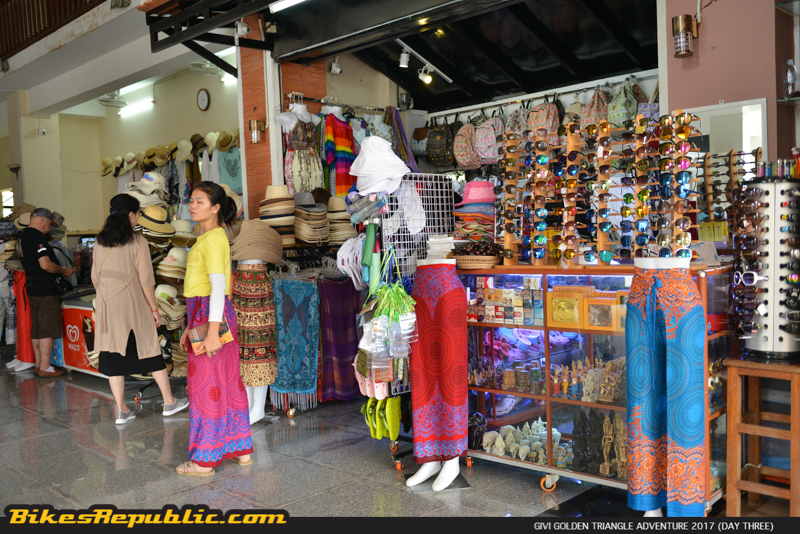
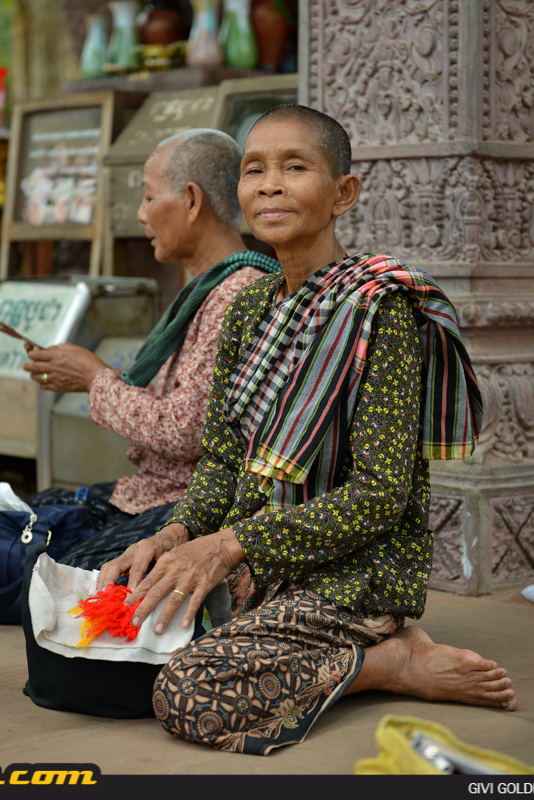
Some of the peddlers here followed us around trying to sell their goods, and they even dropped the prices from US Dollars all the way down to Thai Baht, just so that they could make at least one sale. They weren’t trying to get rich, instead it was just for that one evening’s dinner for their families.
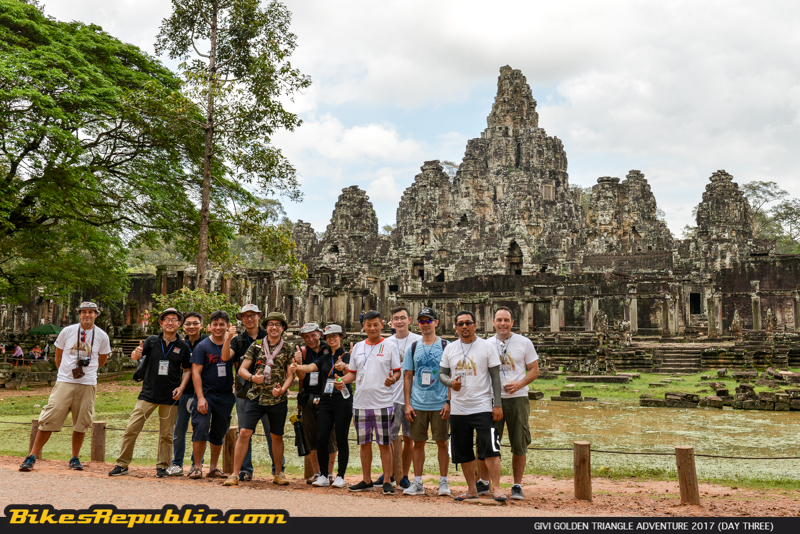
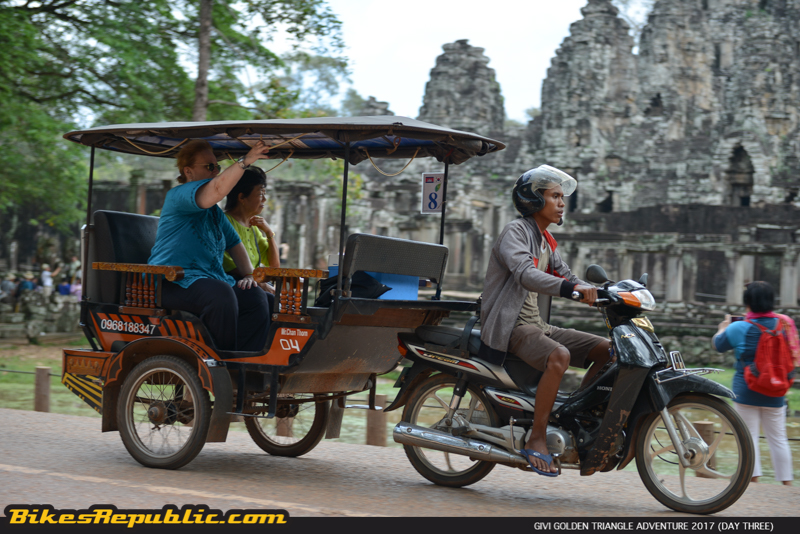
We drove a short distance to Bayon Temple.
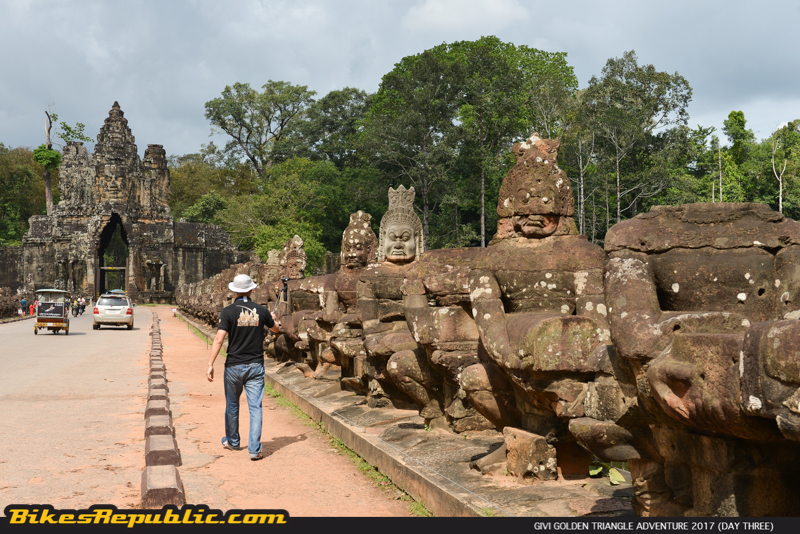
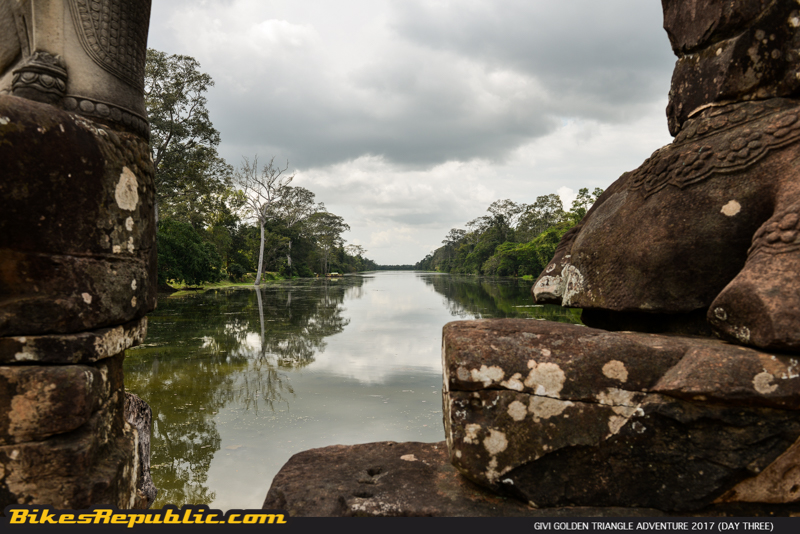
We were blown away even before we entered the walls as we crossed the Siem Reap River on the ornately decorated bridge leading to the Victory Gate.
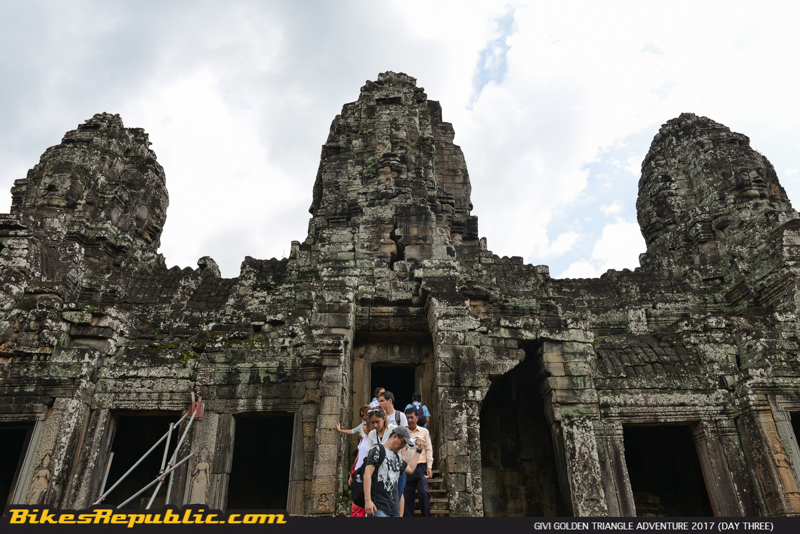
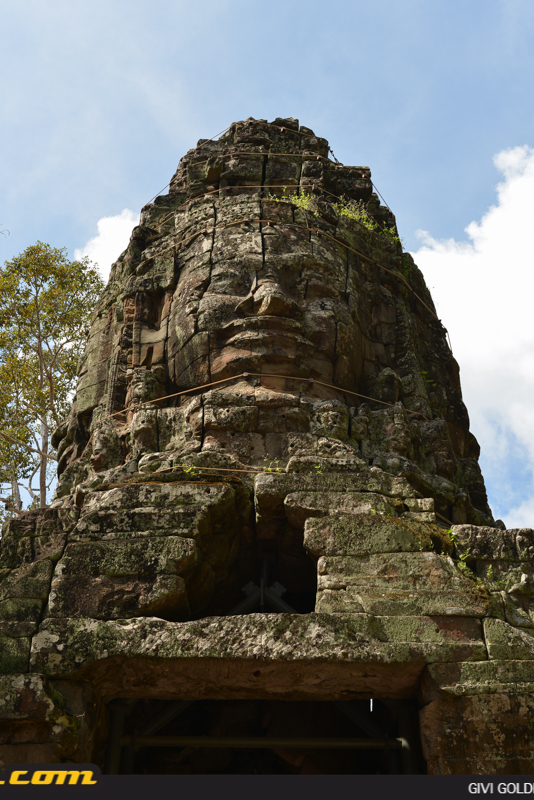
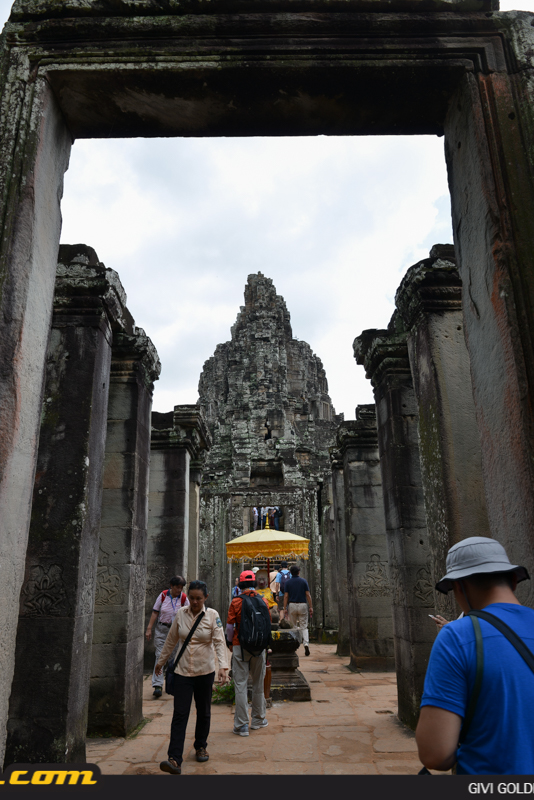
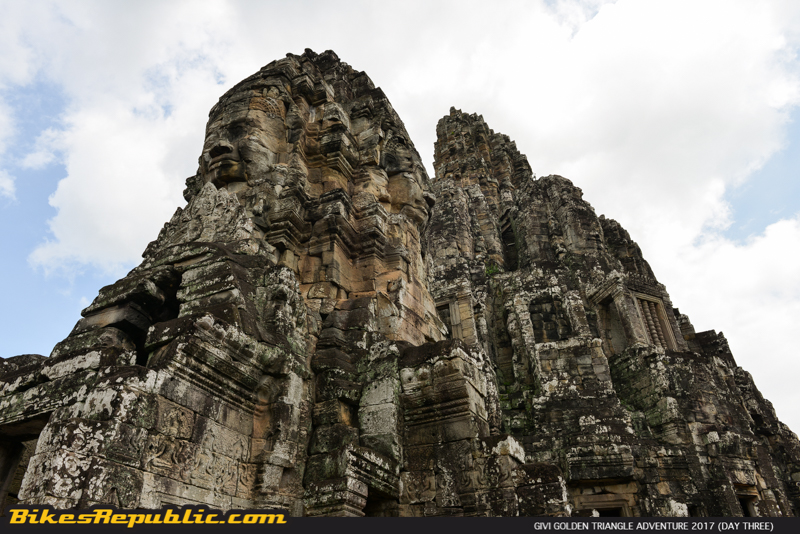
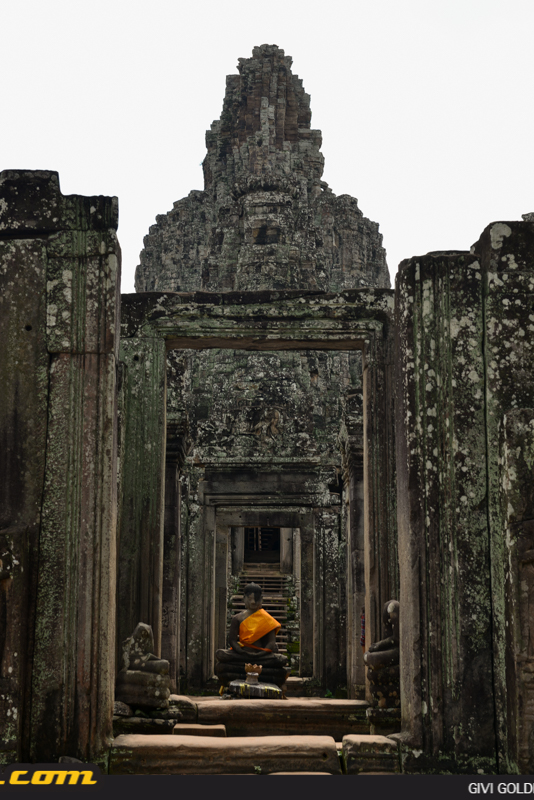
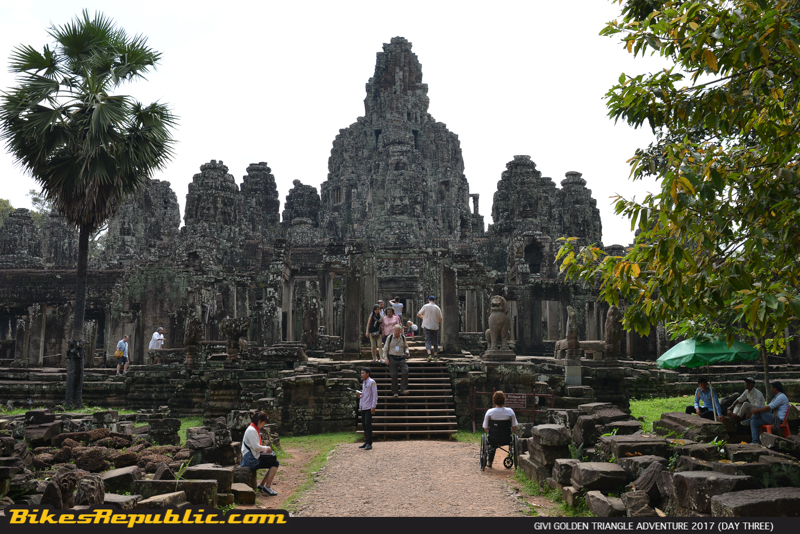
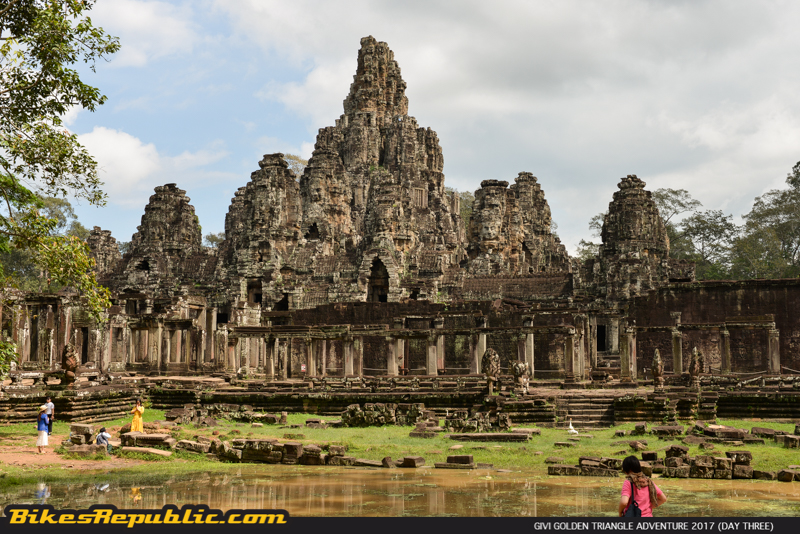
Bayon was a contrast to Ta Prohm. While the latter was almost overgrown by large trees, Bayon sits out in the clear and its rich decorations were apparent even from a distance. Known as the state temple for King Jayavarman VII, there were multitudes of serene and smiling faces on the towers that jut out from the upper terrace and cluster around the central peak.
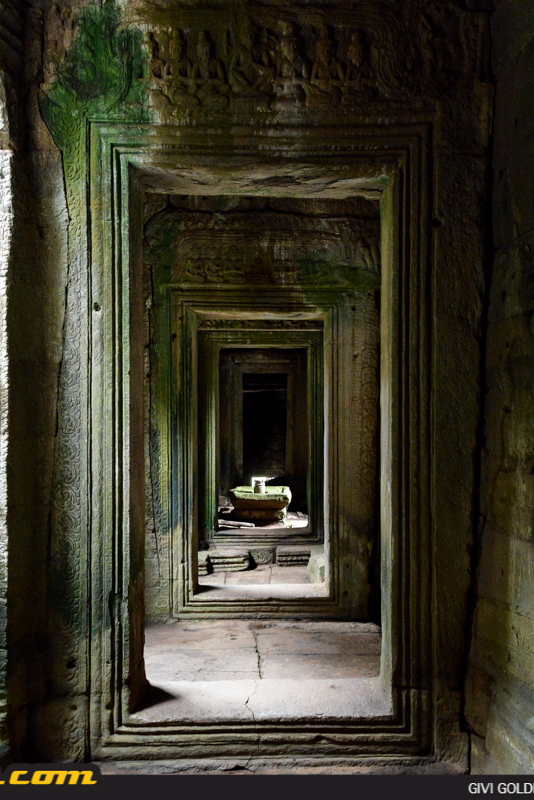
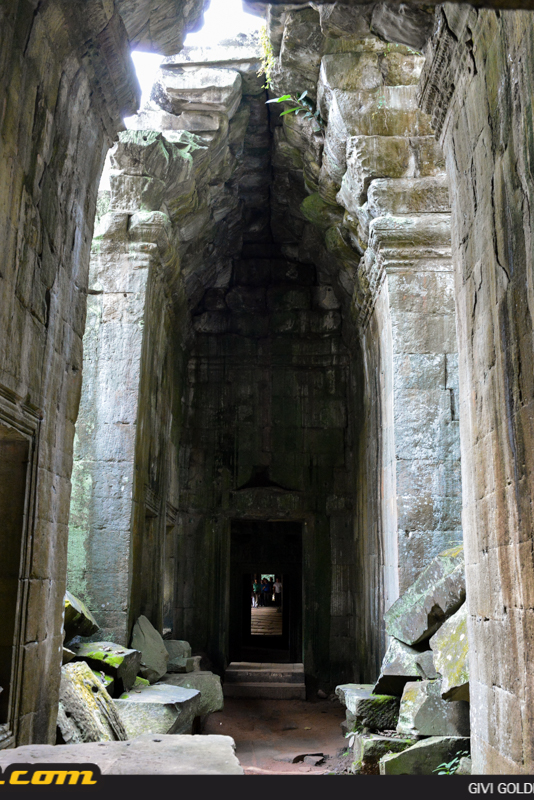
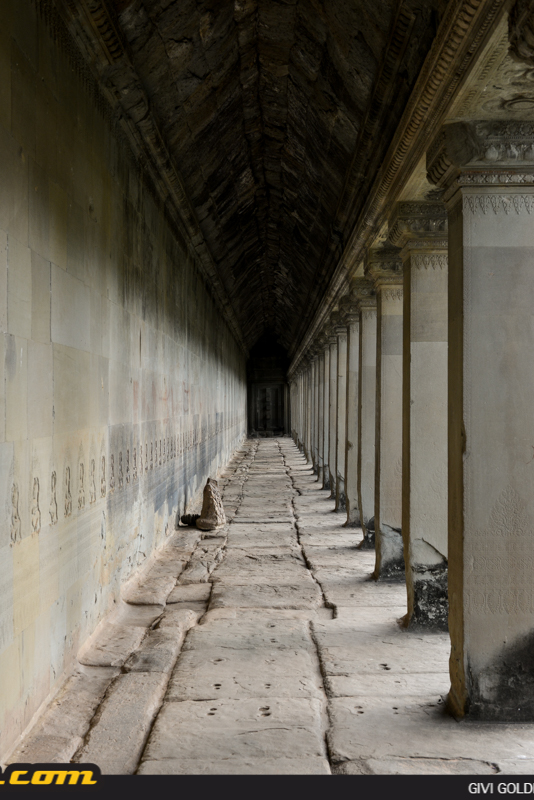
We noticed a great number of corridors throughout the complex.
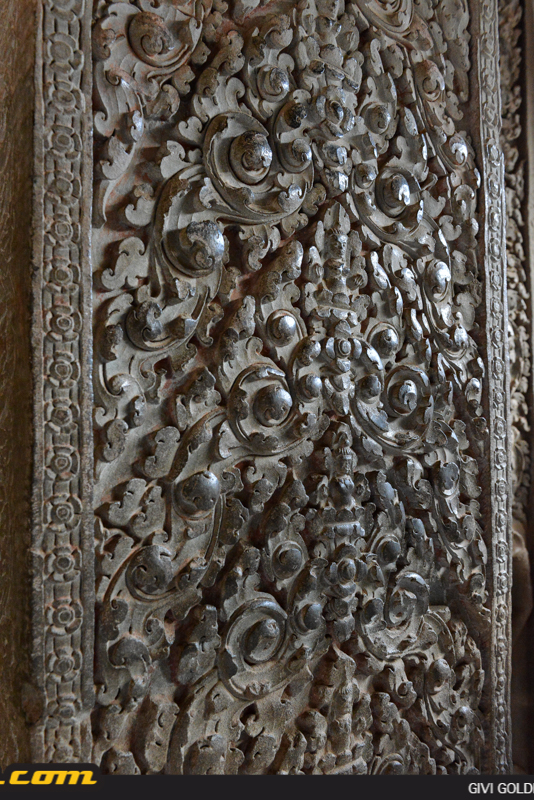
Bas-reliefs were a combination of mythological, historical and everyday scenes. There were depictions of the once-proud Khmer Army marching out to battle. Khmer was once an empire, (known officially as the Angkor Empire) encompassing modern-day Laos, Thailand and parts of Vietnam and Myanmar. And where was the capital of this empire? You got it, Angkor.
The weather was turning very humid and wore many of us down, so we headed back to the busses ahead of time. It was time for lunch.
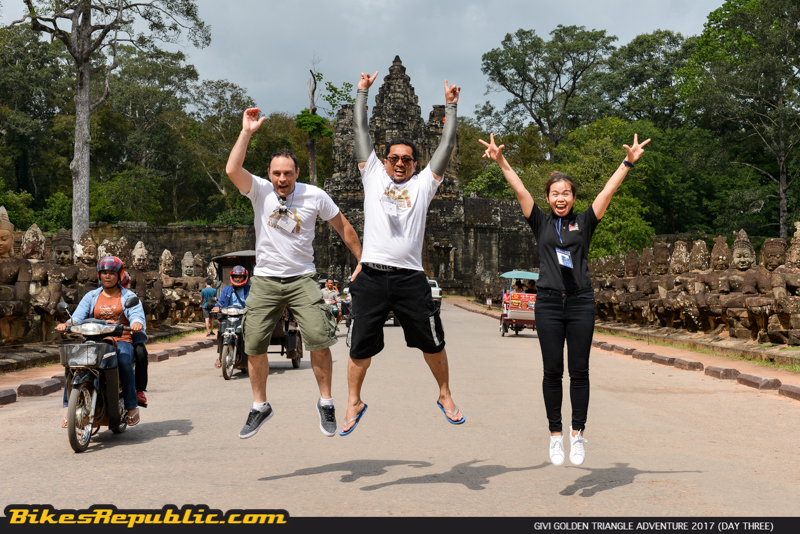
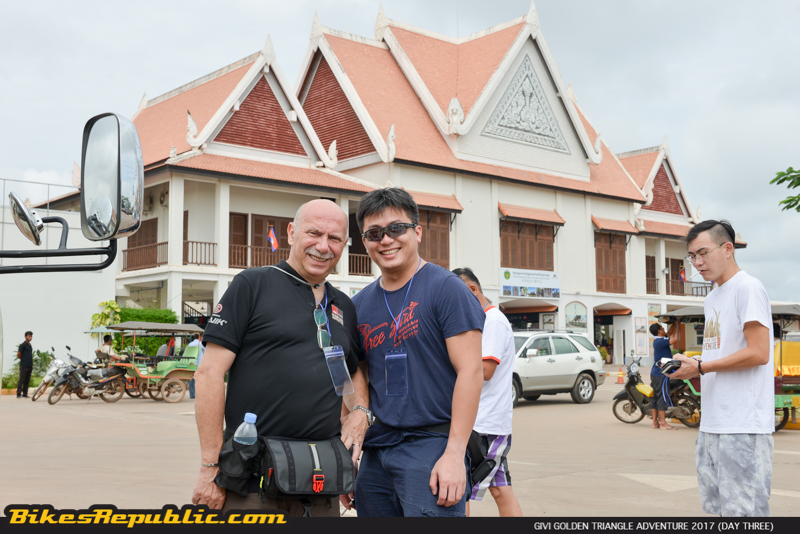
We exited via the West Gate and decided to stop for pictures.
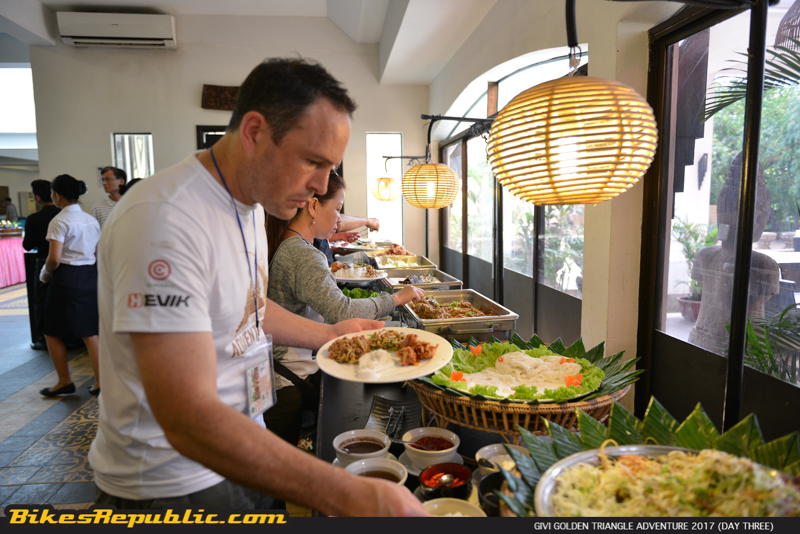
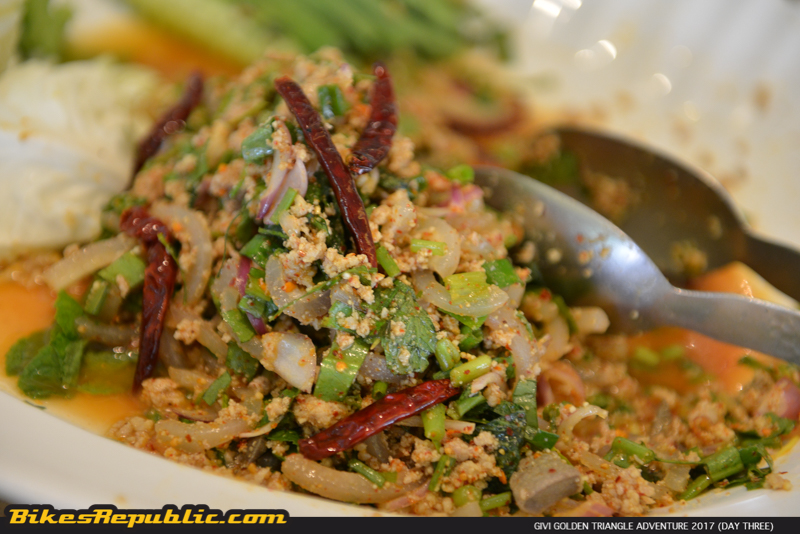
Most of the large restaurants in Siem Reap contain the name “Tonlé” or “Tonlé Sap” after the Tonlé Sap River and annually inundated Tonlé Sap Lake. Food items invariably include steamed rice, freshwater fish, fresh tropical fruits and morning glory (kangkong), although these major restaurants also offer foods from other countries at separate stalls.
It was a quick lunch as we rushed back to the main attraction: Angkor Wat.
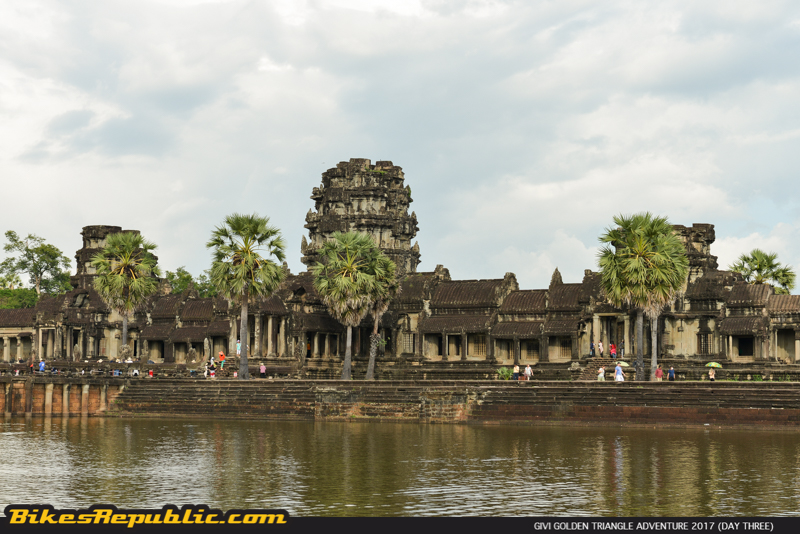
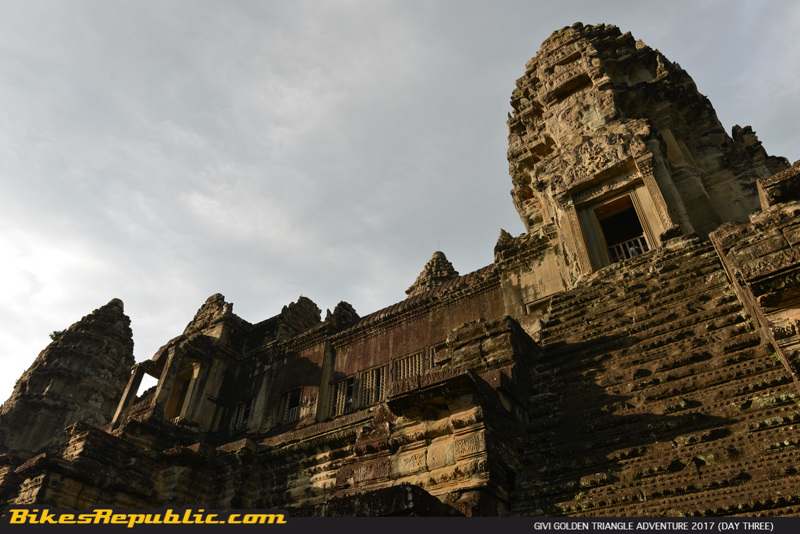
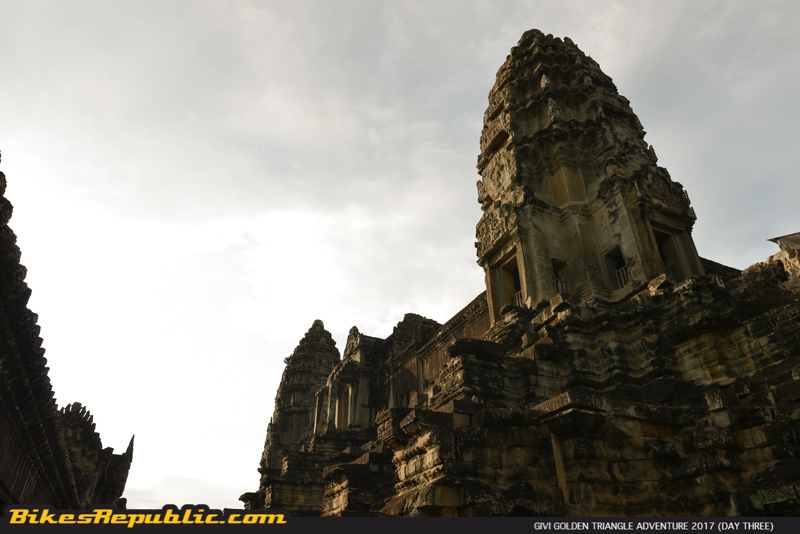
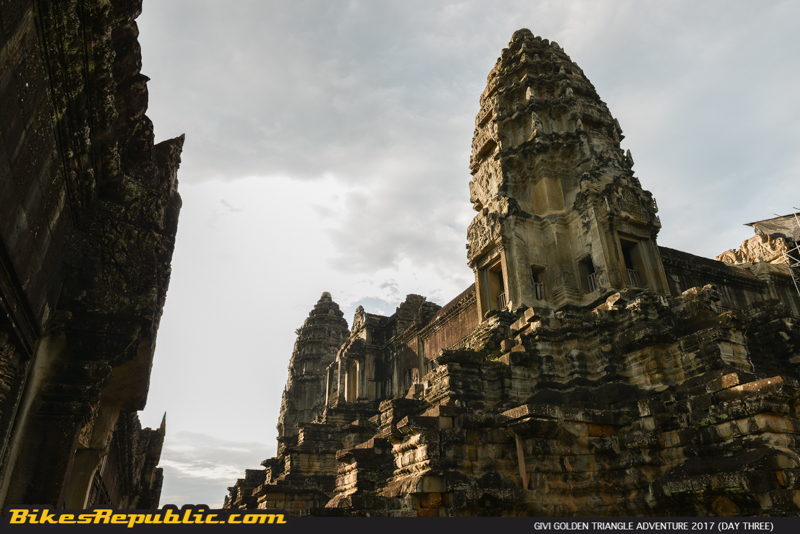
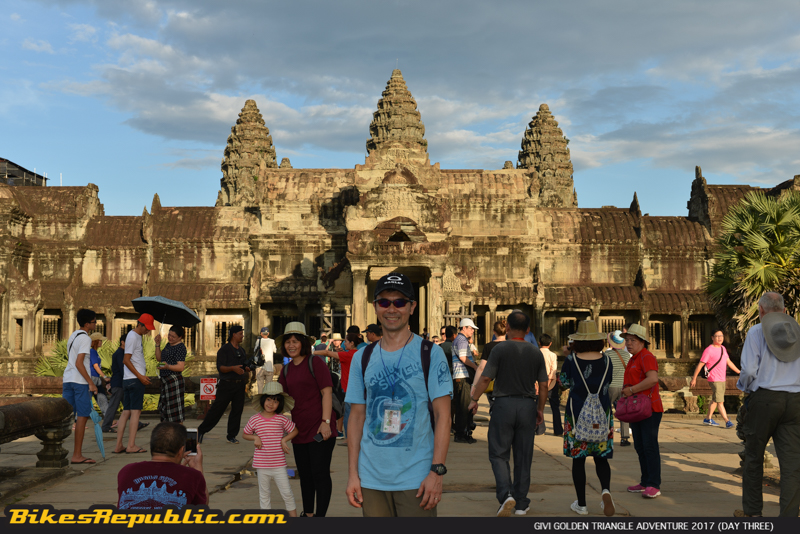
Angkor Wat was built in the early 12th century, predating Ta Prohm and Bayon, by King Suryavarman II and completed by Jayavarman VII. It’s the symbol of Cambodia, featured prominently on the nation’s flag. Angkor Wat is actually its modern name, meaning “temple city” in Khmer. It is in fact the largest religious monument in the world, covering 1.6 million sq. m.
Other little-known facts:
It was constructed out of up to 10 million sandstone blocks.
Each block weighed up to 1.5 tonnes.
The entire city of Angkor used more stones than all the Egyptian pyramids combined.
Angkor occupies an area much larger than modern-day Paris.
Unlike the pyramids whose rocks were quarried 0.5 km nearby, those for the Angkor complex came from 40 km away at Mount Kulen.
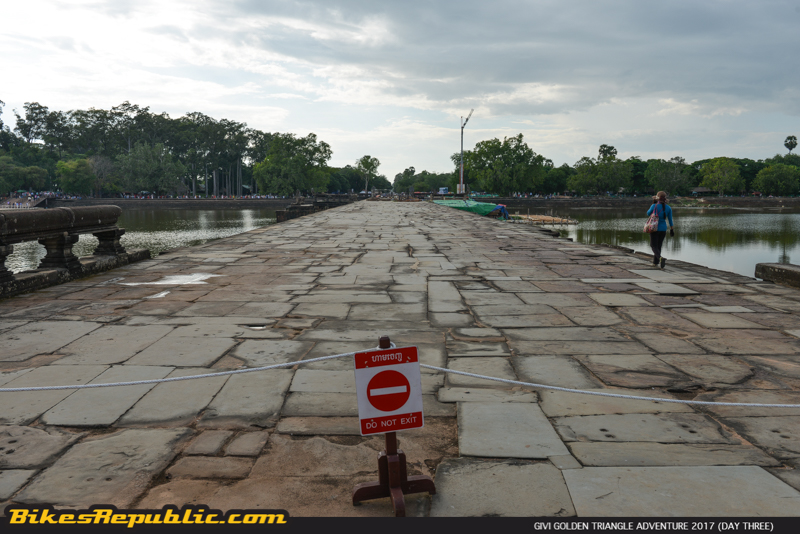
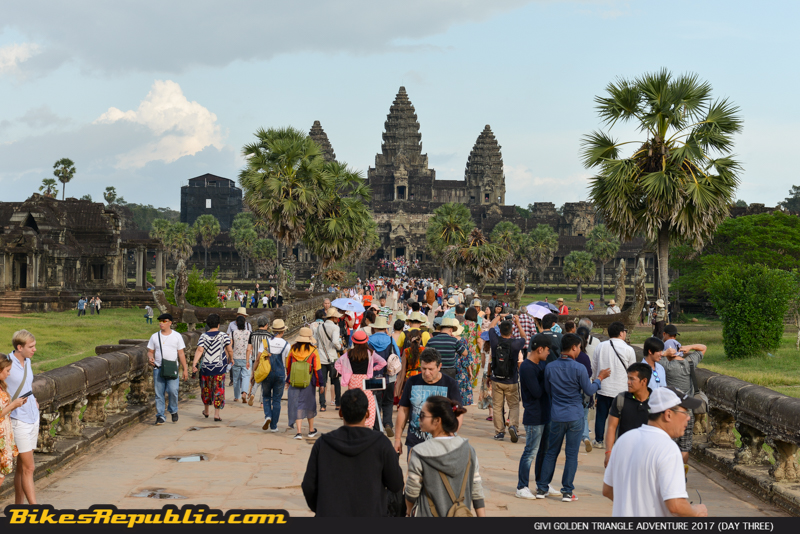
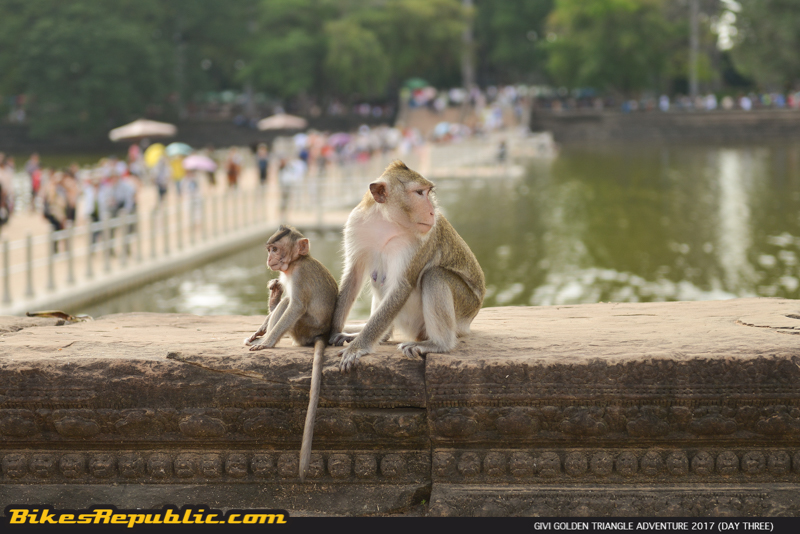
The original stone causeway leading into the complex was closed for restoration works, so visitors had to cross the 190m moat on a pontoon (floating) bridge. The whole area was teeming with thousands of tourists.
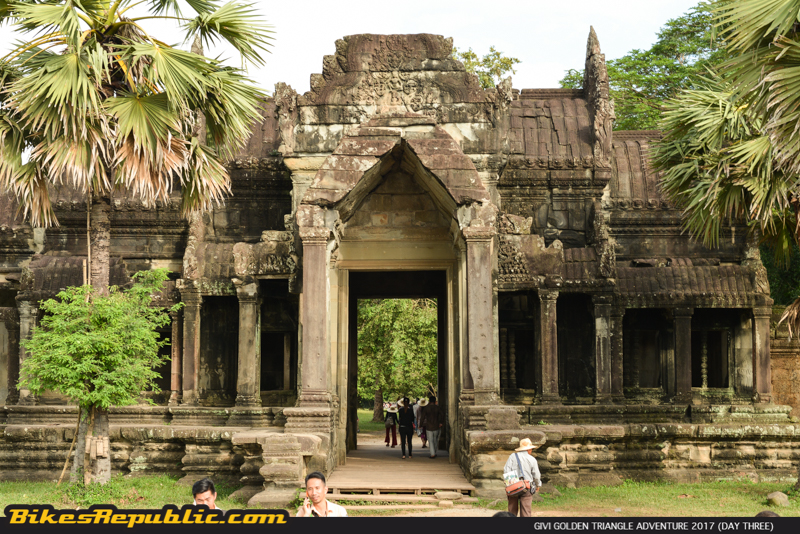
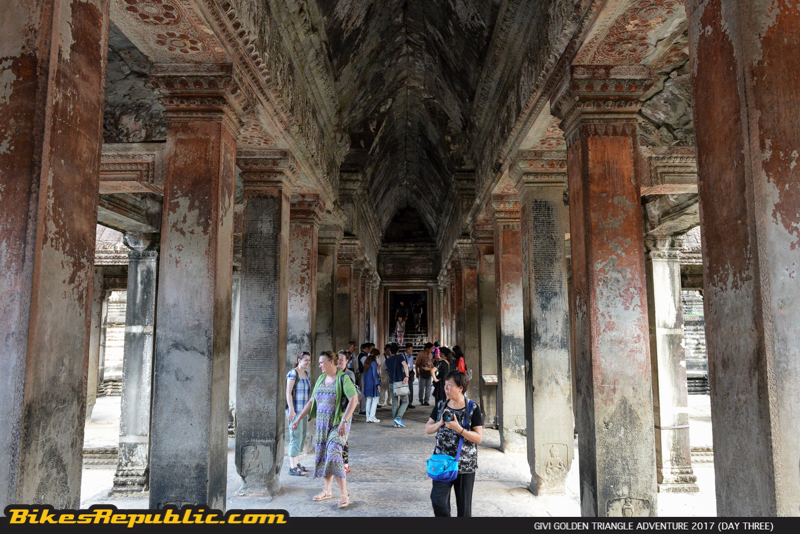
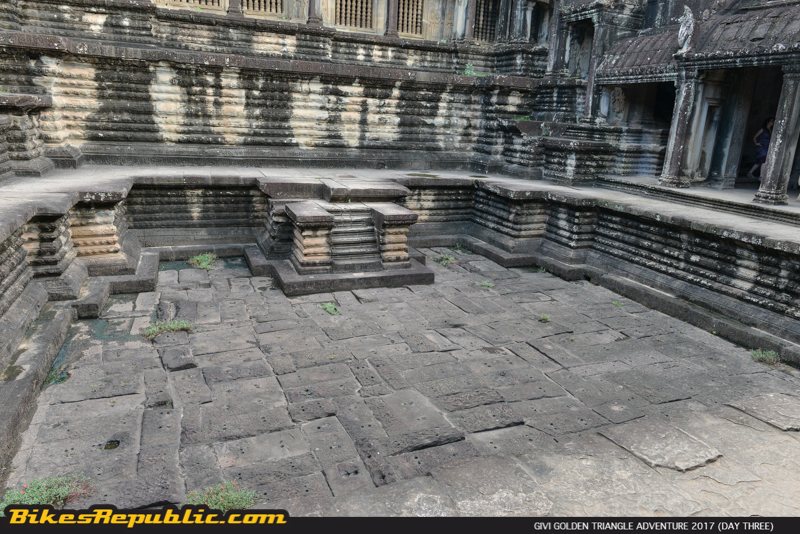
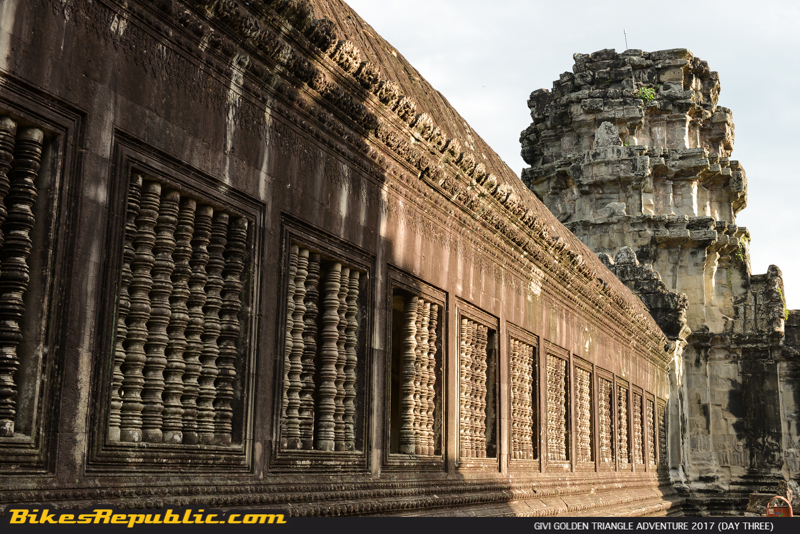
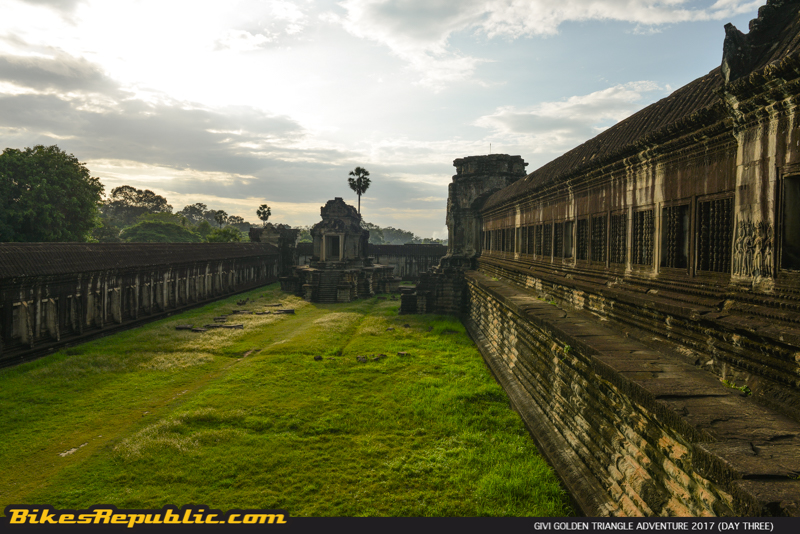
As we approached the outer wall, it became clear just how impressive was the feat of putting this monument together. Those were huge stone blocks and they were somehow lifted into place. There were galleries that ran the length of this outer enclosure, supported by square pillars. The spaces between them were decorated with lotus rossettes.
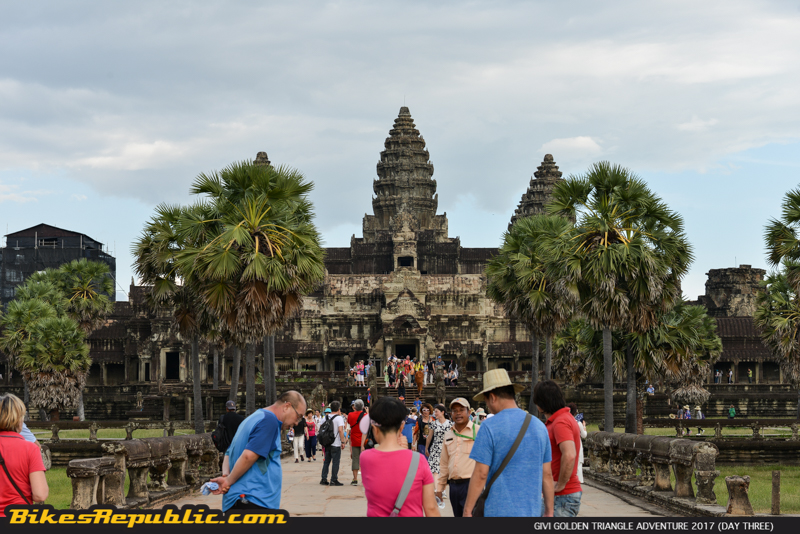
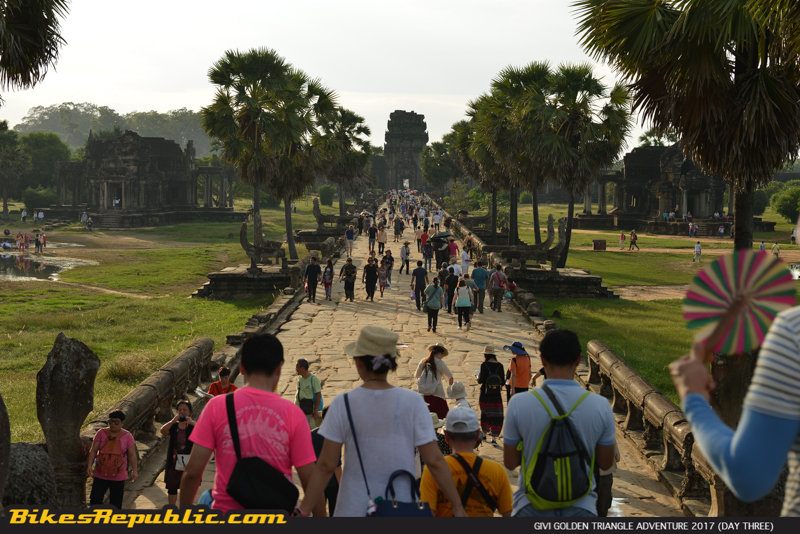
Going past the wall brought us face-to-face with the long stone walkway to the central structure.
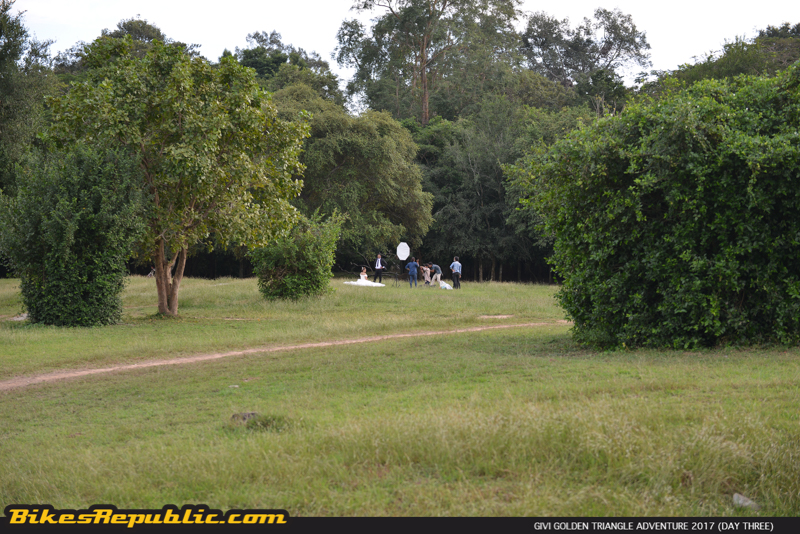
There were libraries on each side, a large pond, lush gardens (where a couple was having their pre-wedding shoot), although most places were under heavy vegetation.
From this walkway, the towers and overall form of Angkor Wat was starting to take shape as those we see in pictures, except that the palms on either side have since grown taller, obstructing some of the view.
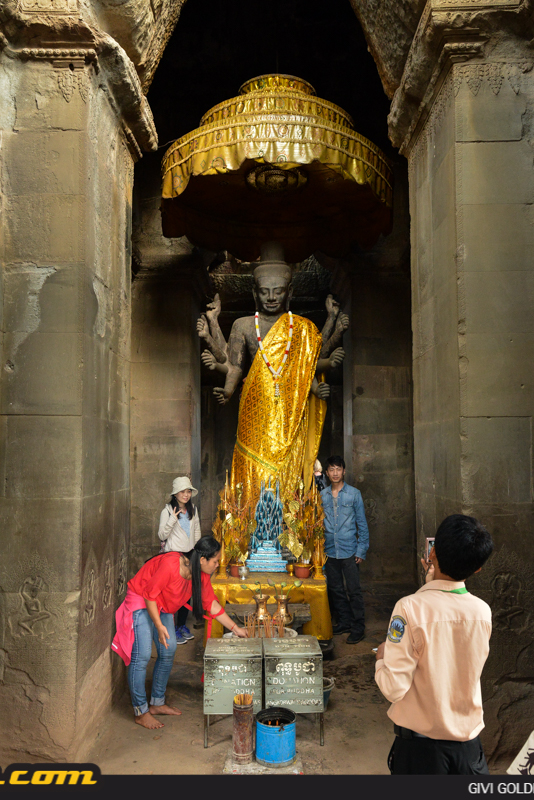
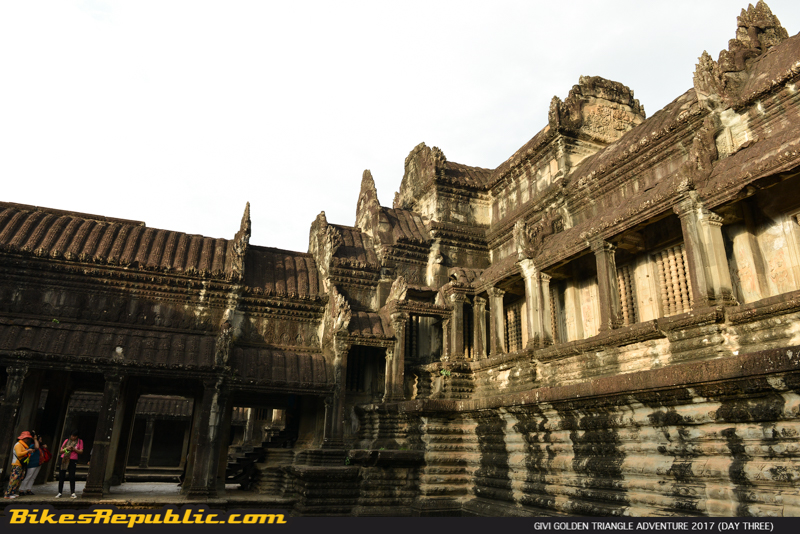
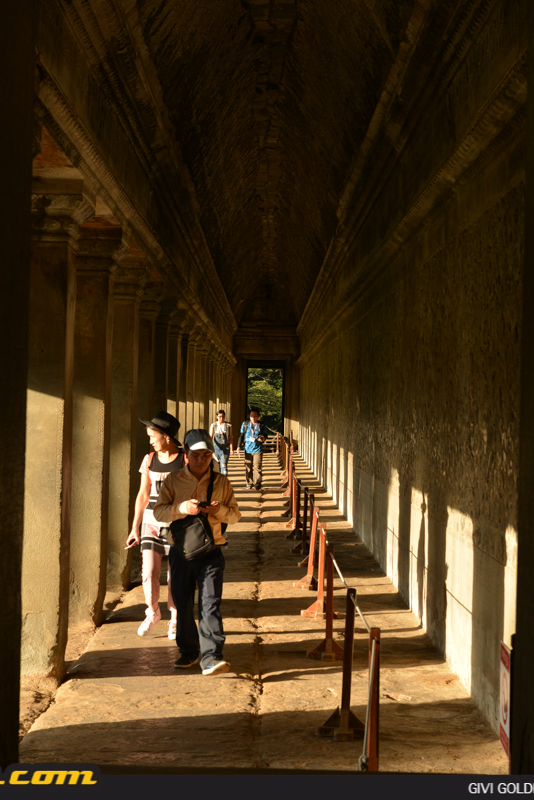
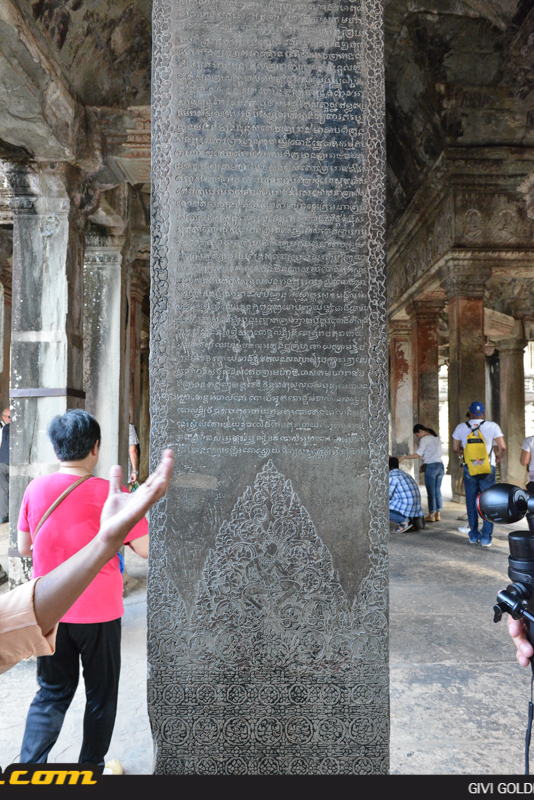
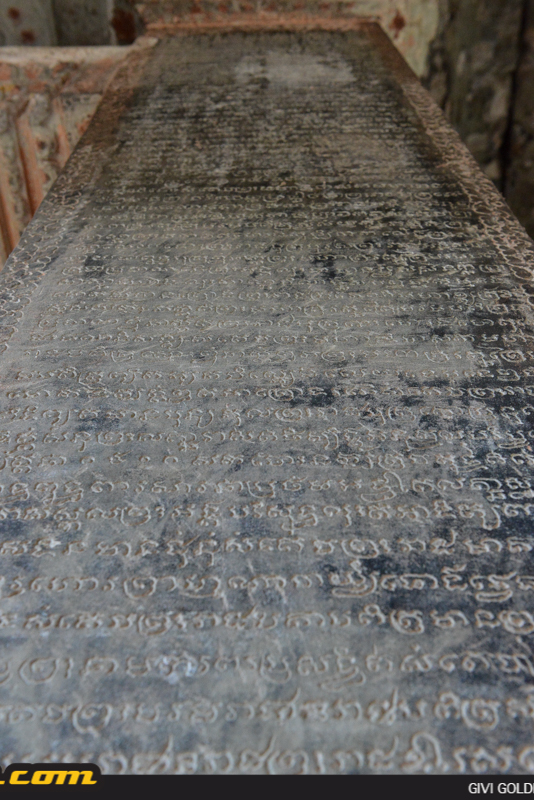
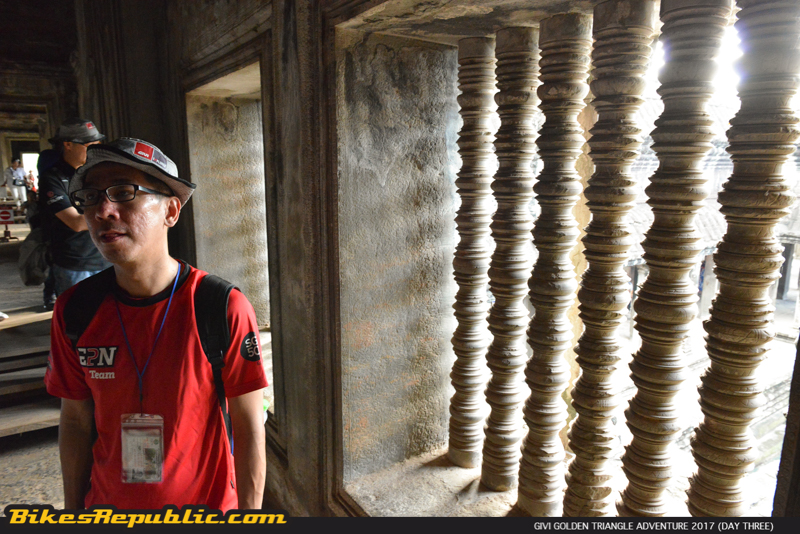
But before seeing those towers up close, one has to go through a huge complex of galleries. In here, the remnants of artwork painted on the ceilings showed how beautiful this place would have been at its zenith. There were inscriptions and bas-reliefs on almost every column, but they reflected different scenes on each separate wing.
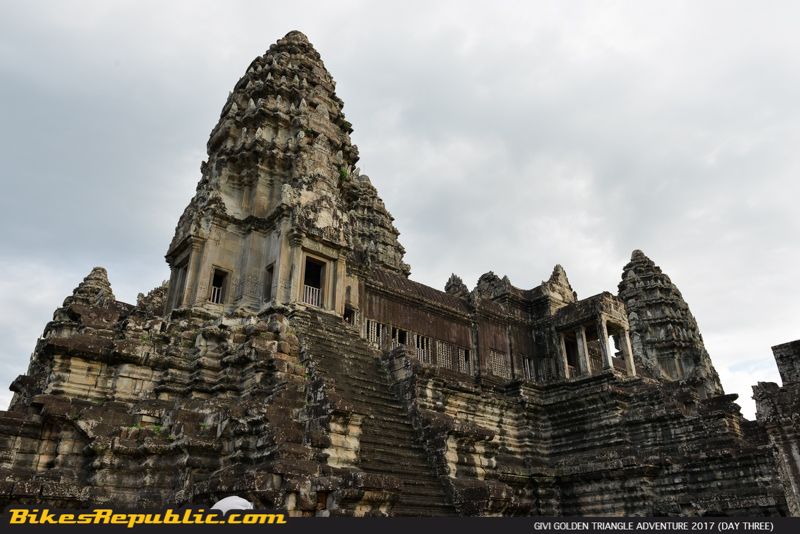
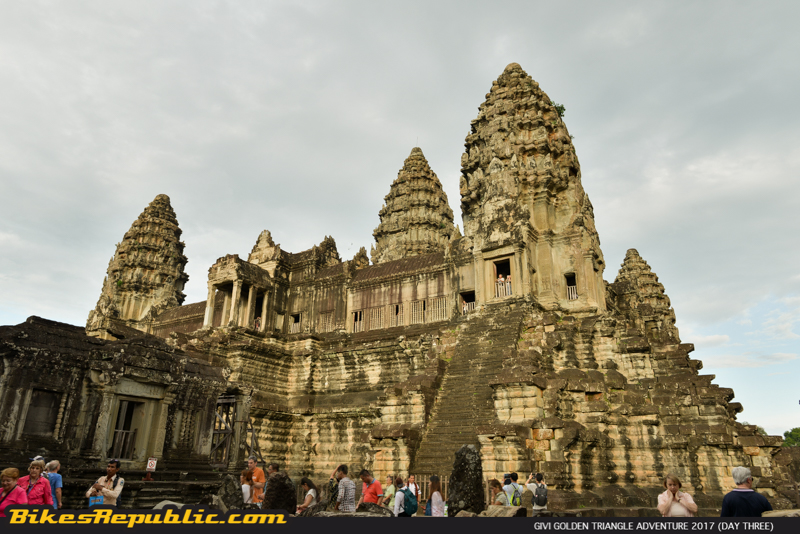
The central tower represents Mount Meru, the home of the gods. The flanking towers symbolizes the peaks of the mountain, while the wall and moat represents the mountain range and ocean respectively.
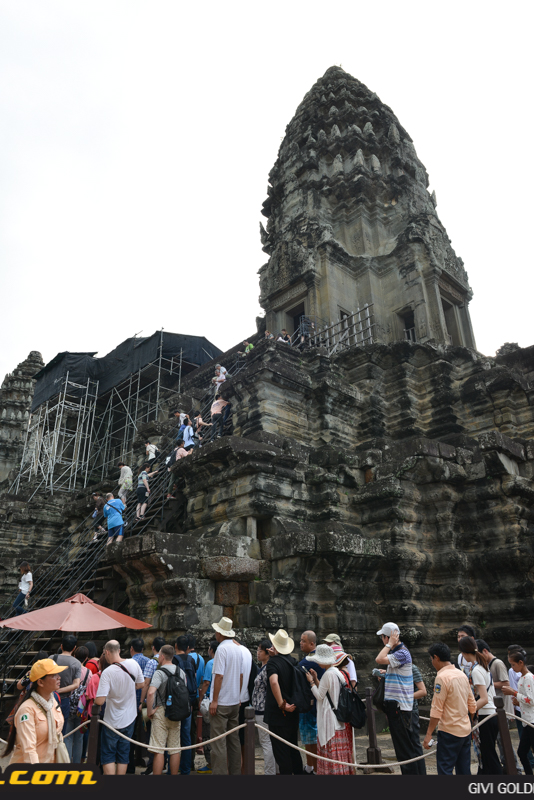
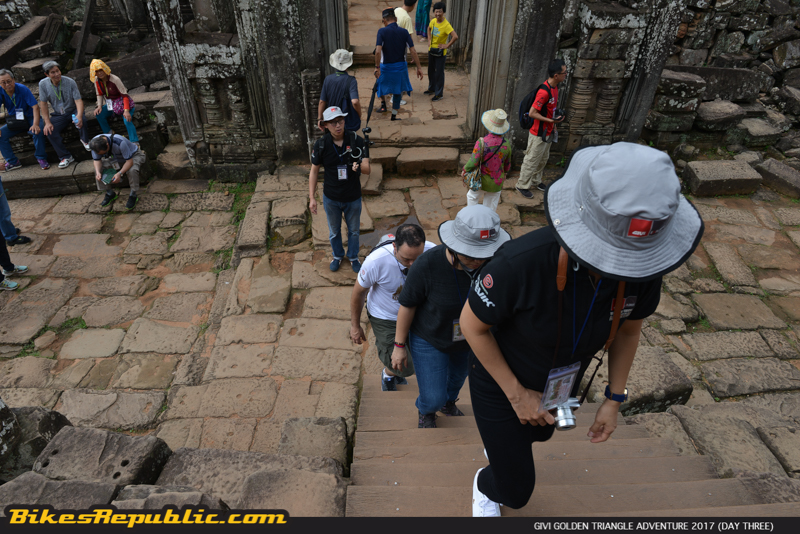
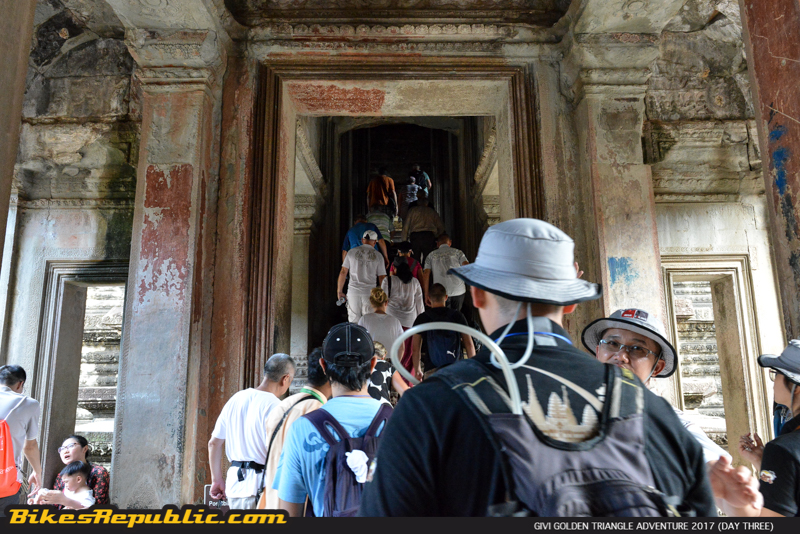
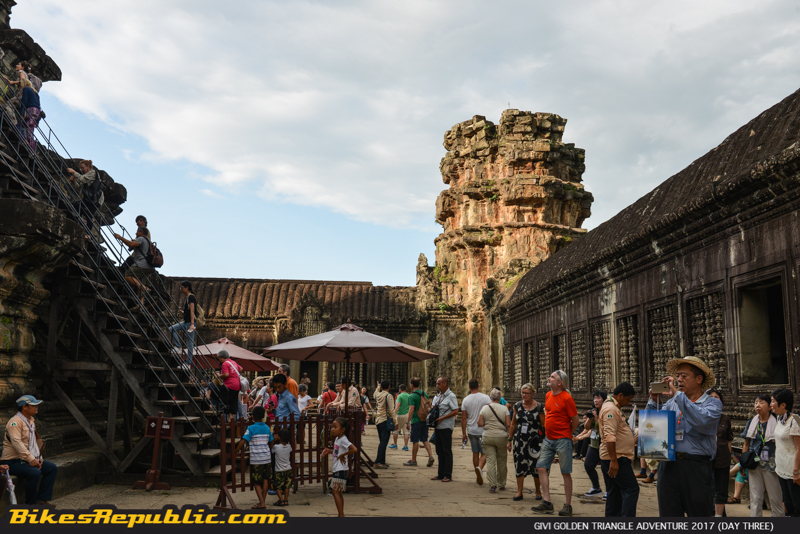
As we walked up the staircase into the central structure, we noticed that it was steel. We peeked underneath and discovered that the conservationists or authorities had installed these steps over the ancient stone steps to protect them. Good move!
A few Explorers queued up to climb the central spire but the line was so long, most of us decided to explore the temple by ourselves.
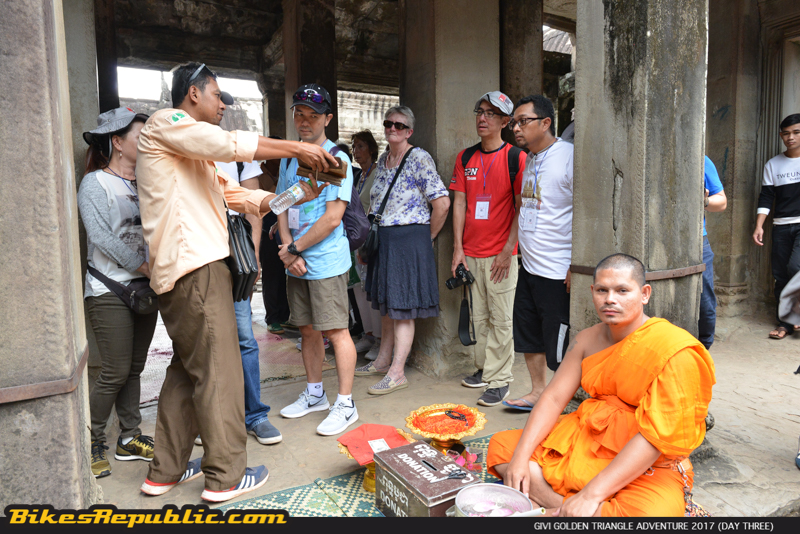
The GIVI Golden Triangle Adventure 2017 Explorers tried to take in a much as they could but it soon became apparent to us that there was just too much to absorb from this single visit, what more when other tourists keep walking past us while we were trying to study something or photograph them!
The guide advised us that the best way to study these structures is to visit early in the morning. Angkor Wat is open from 5am, while the others are from 7.30am. Good tip!
We didn’t have much time to discover more since we were short of time and the humidity was difficult to bear. We exited Angkor Wat, feeling that there’s still much to see and experienced at this magnificent location.
We looked behind to see the evening sun shining across the whole main façade of the monument, turning it gold! (Angkor Wat differs from other structures as it faces west.)
We left with heavy hearts, yet we were thankful that the GIVI Golden Triangle Adventure Ride 2017 had actually brought us to one of the Seven Wonders of the World.
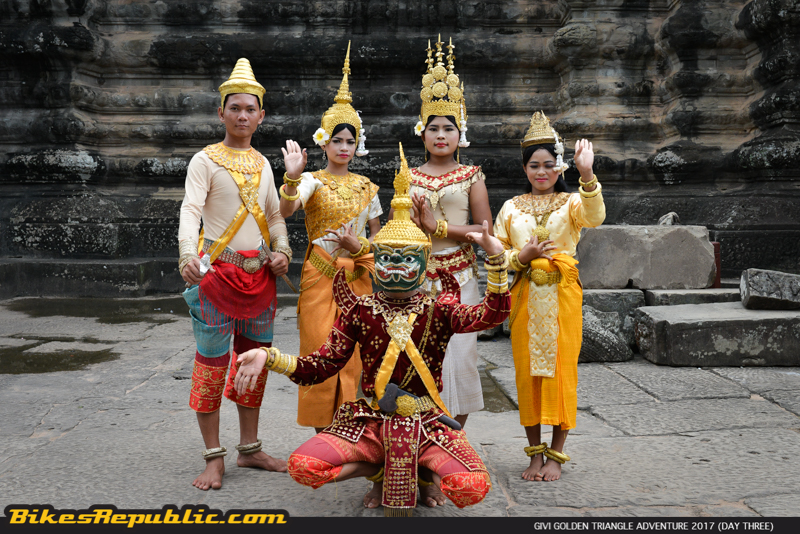
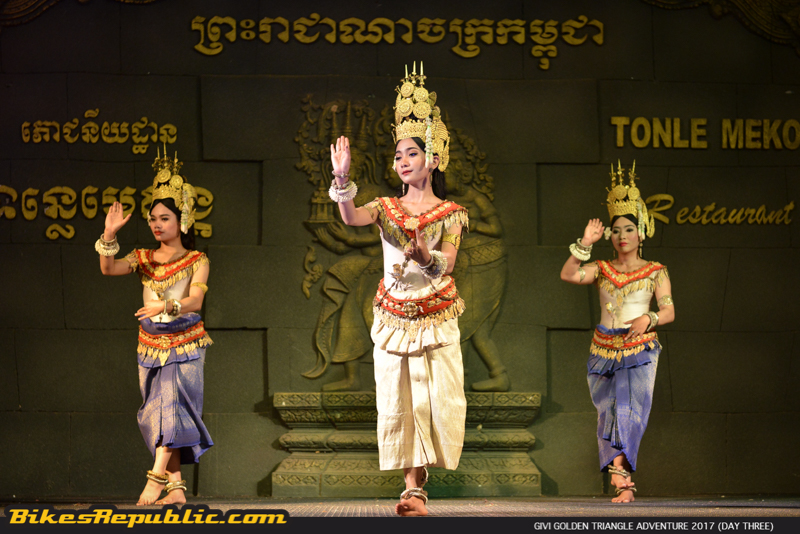
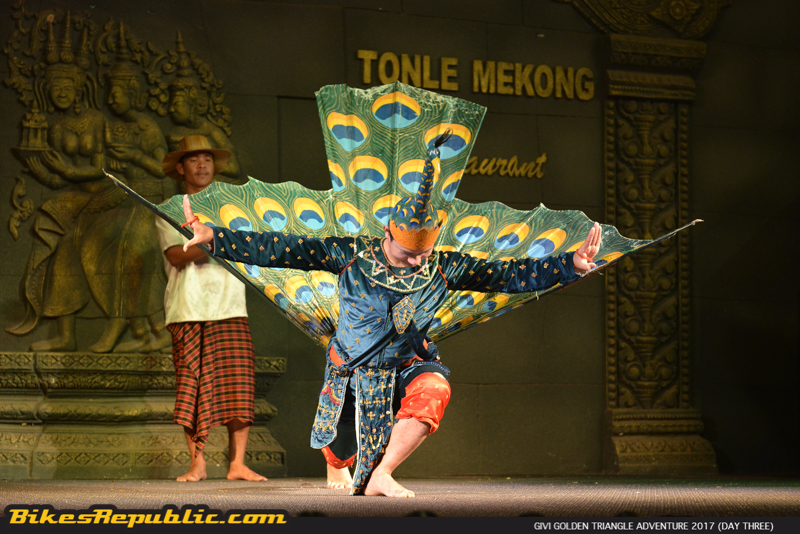
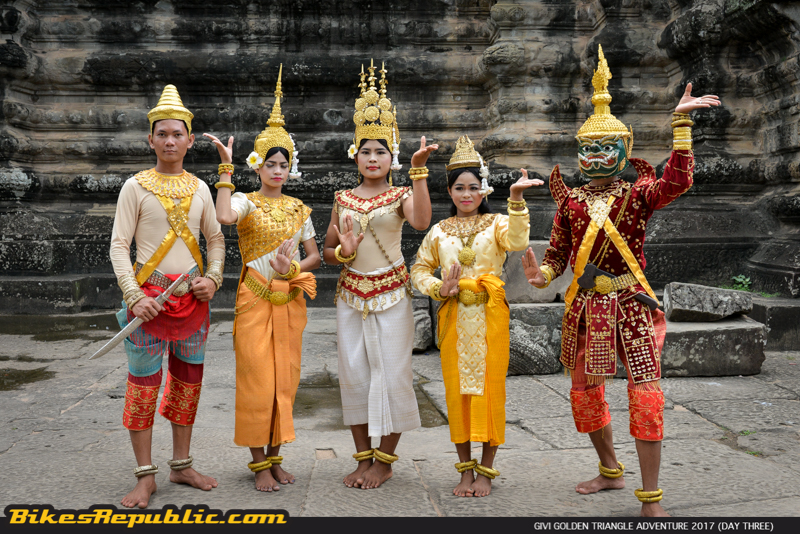
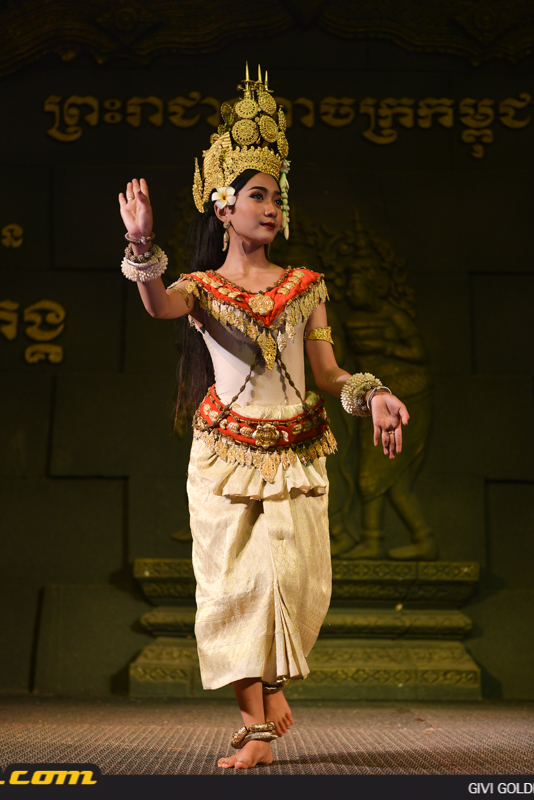
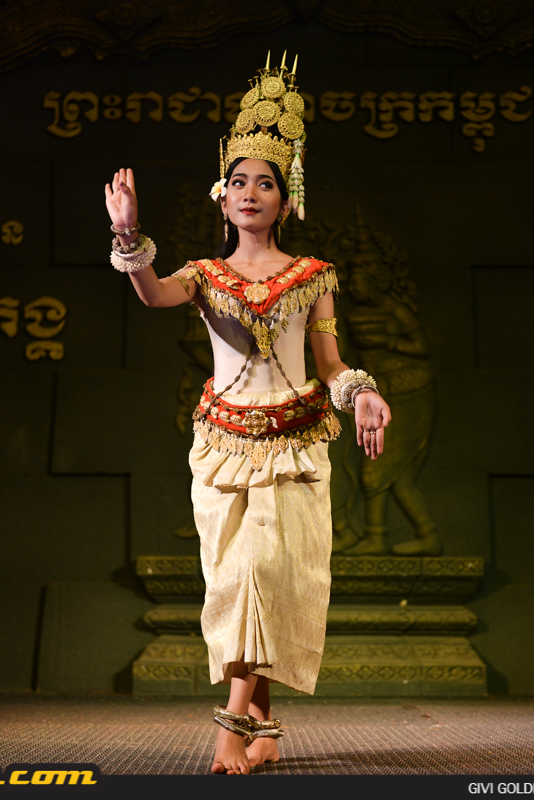
Dinner that night was at another large restaurant and we didn’t miss the traditional Apsara dance show this time! One could see that it was heavily influenced by Hinduism, which predated Buddhism.
We called an early night as we’re riding to Cambodia’s capital, Phnom Penh, tomorrow.