Bikesrepublic

Wahid Ooi

  • The Sepang International Circuit (SIC) have Malaysia’s very own MotoGP team.

  • Yamaha had also been looking for someone to run their satellite team.

  • The rumours have been confirmed earlier today.

It is official: Yamaha will have a satellite team from next year, sponsored by Sepang International Circuit (SIC) and run by the Angel Nieto Team from next year.

Following the loss of the Tech 3 team to KTM in 2019, Yamaha would have been without a second team. A satellite team is always important as it serves to provide extra data to the factory team.

Rumours began to circulate in early May that SIC or Petronas will step in to sponsor a Yamaha satellite team, along with the hopes of signing Hafizh Syahrin as one of the riders in due time.

Malaysian MotoGP team in 2019?

But Syahrin was adamant to follow the Tech 3 route, while there were also buzzes that Jorge Lorenzo might return to Yamaha. However, since the seats at the Movistar Yamaha MotoGP factory had been secured by Valentino Rossi and Maverick Vinalez for the next season or two, the only route for Lorenzo would be the SIC team.

But Lorenzo went ahead to join Repsol Honda instead, after Dani Pedrosa announced his departure from Honda after 18 years.

Officially official: Lorenzo joins Honda for 2019 and 2020 MotoGP seasons

Then, earlier today, the Angel Nieto Team announced that SIC will take over their MotoGP effort from the next season, with Jorge Martinez “Aspar” assuming the Sporting Advisor position in the team.

Another announcement followed afterwards, in which Yamaha Motor Co., Ltd. has signed a memorandum of understanding (MoU) with SIC to lease the Yamaha YZR-M1 to the latter for the 2019, 2020 and 2021 seasons.

No rider line-up has been announced at the this was published. There were hopes of Dani Pedrosa joining the team. He is set to announce his future plans at the German Grand Prix next week (12th to 15th July).

Meanwhile, the move by SIC should boost the Malaysian MotoGP’s popularity even further, now that we have a rider and team in MotoGP.

  • The KTM 790 Duke “The Scalpel” has been officially launched in Malaysia.

  • KTM Malaysia is excited as they now have a bike to fill the gap between the 690 Duke and 1290 Super Duke R.

  • The first batch of bikes have been sold out.

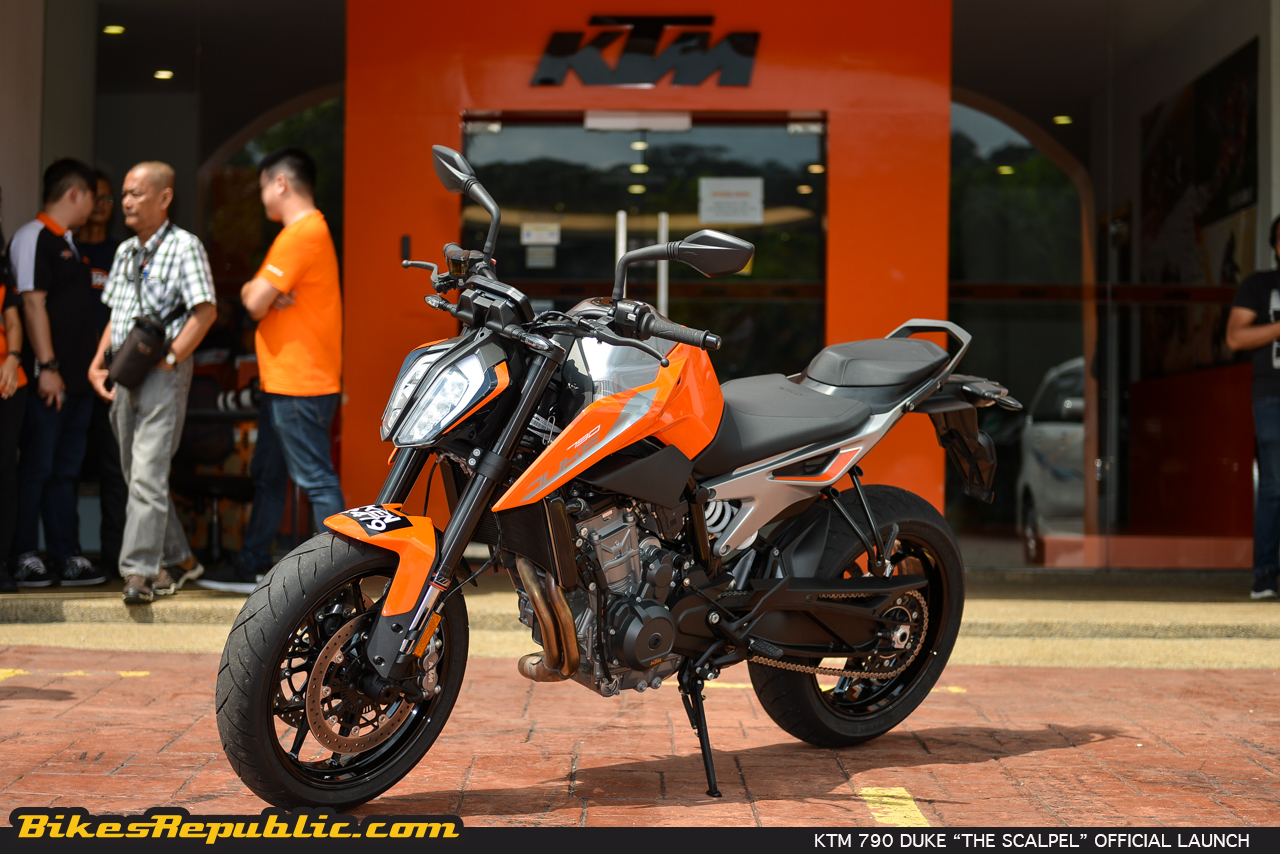
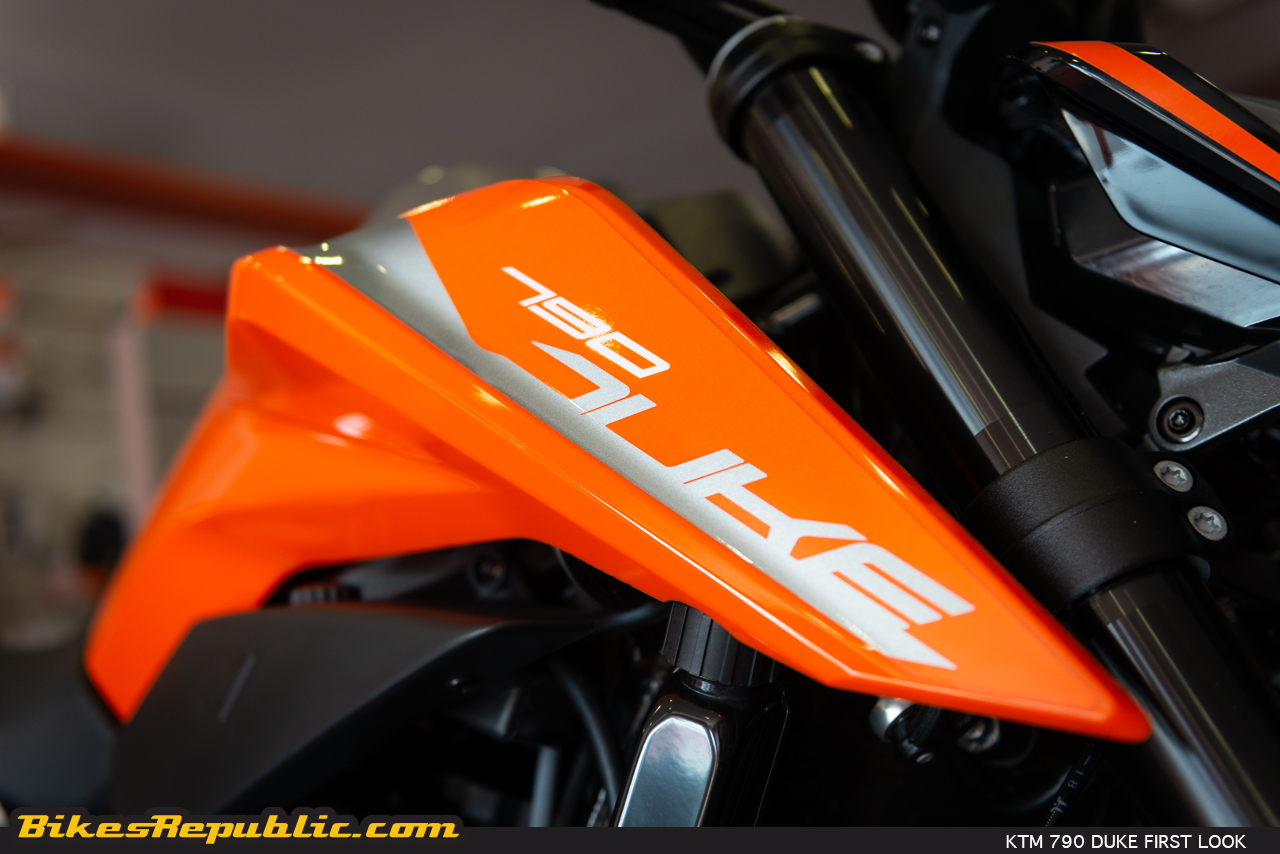
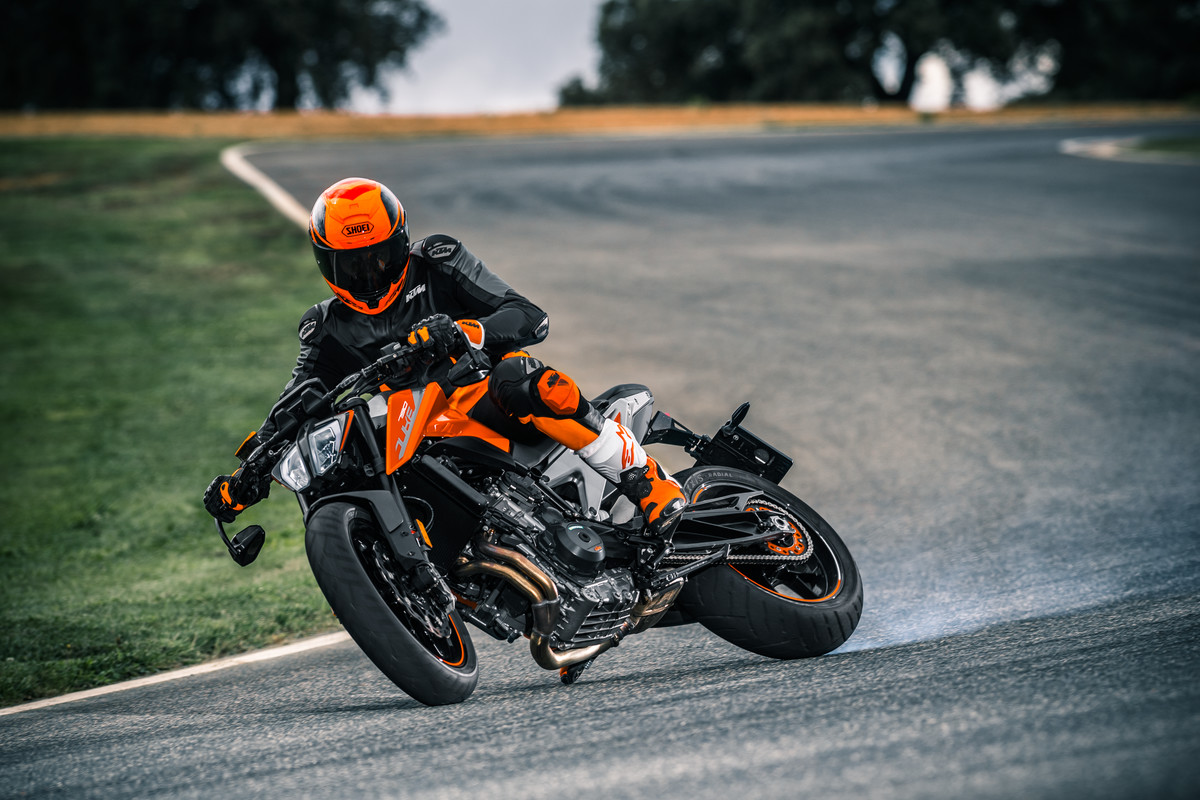
After much waiting and anticipation, KTM Malaysia has launched the KTM 790 Duke, nicknamed “The Scalpel” today (4th July 2018) to the motoring media at their Lifestyle Showroom in Kota Damansara.

We have since published the sneak preview prior to this launch. Please click on the link below for more information.

2018 KTM 790 Duke: “The Scalpel” First Look

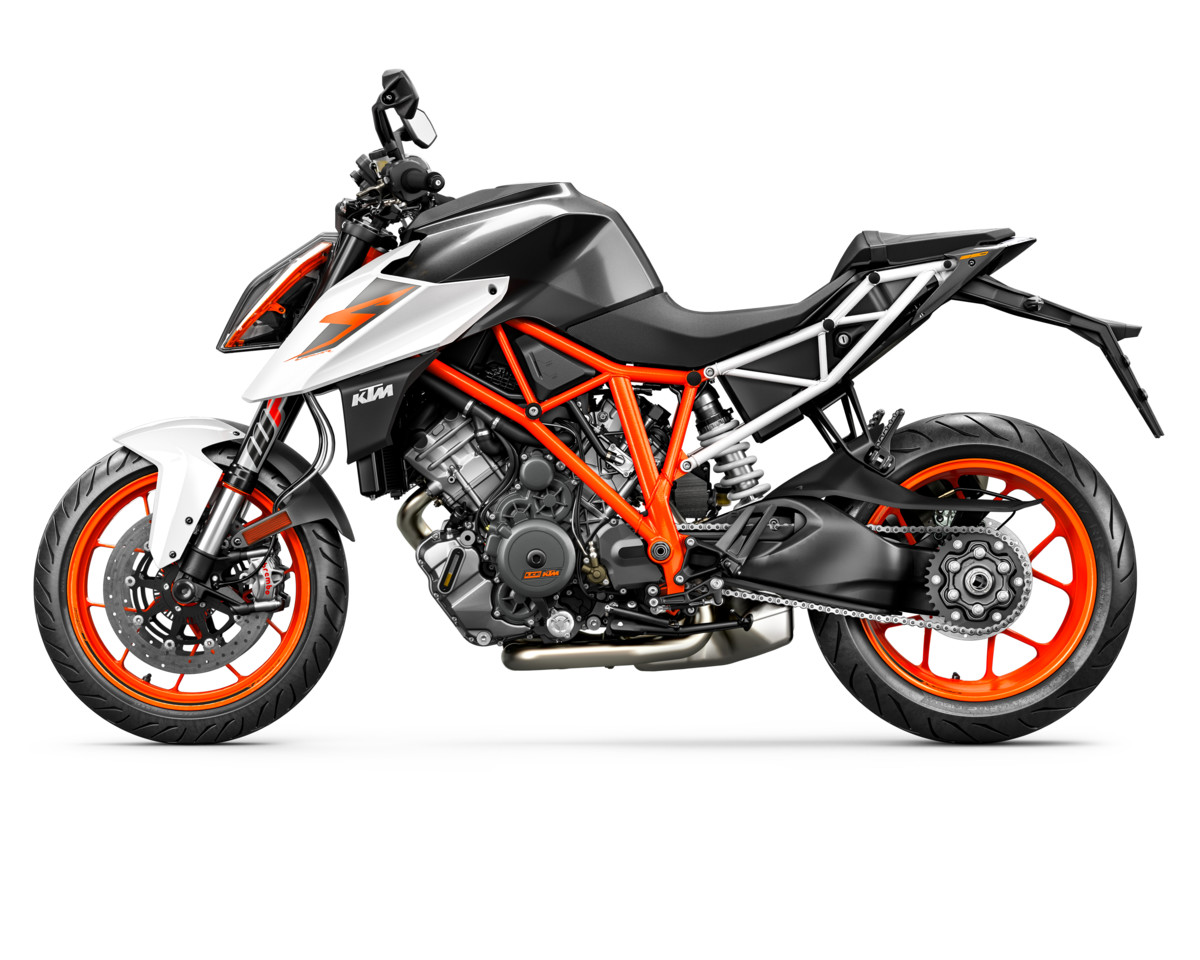
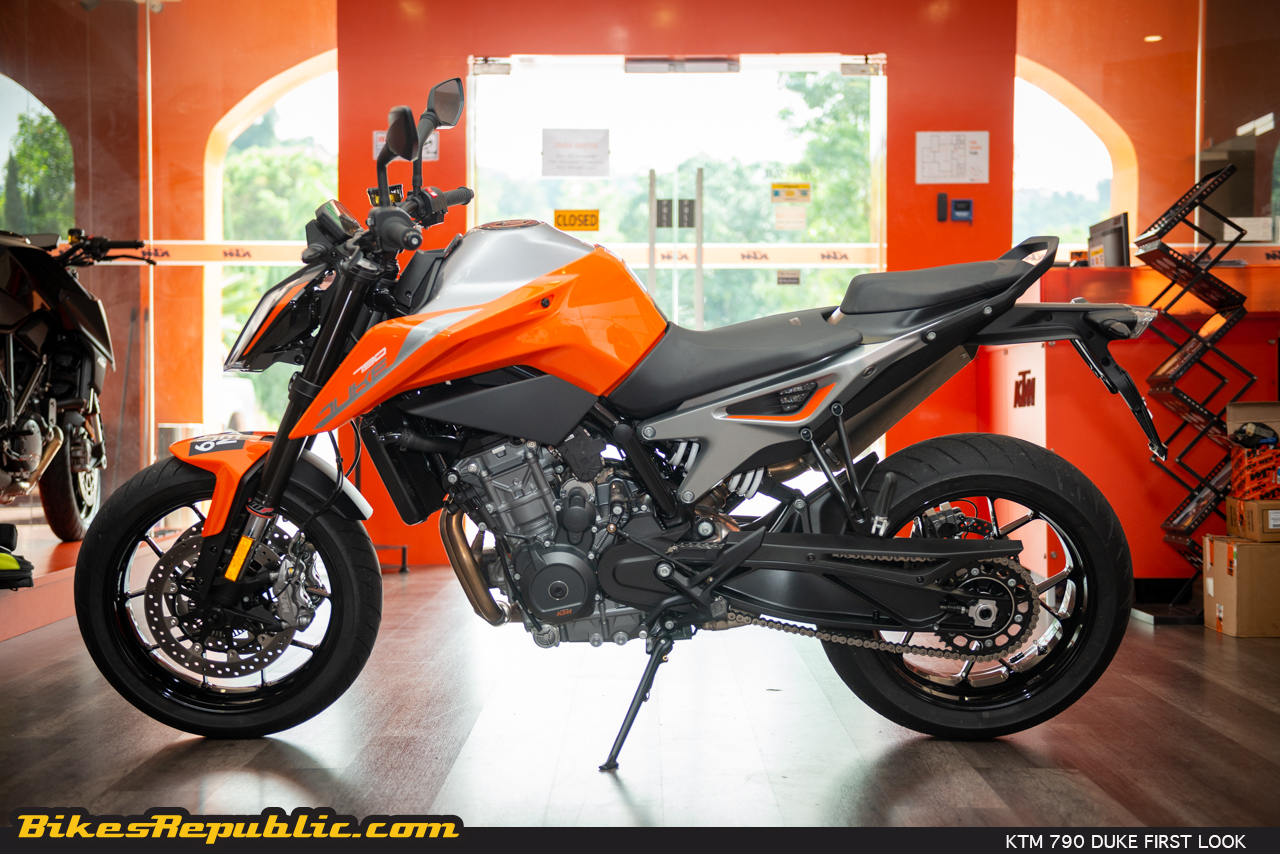
The KTM 790 Duke is slated to plug the gap between the 690 Duke and the “supernaked” 1290 Super Duke R in the Duke naked bike lineup, which starts from the 125 Duke (not available in Malaysia).

KTM 1290 Super Duke R

As we reported previously, the 790 Duke is the result of extensive research, as KTM wanted to build a motorcycle that is as close to perfect as possible. In fact, the 790 Duke’s R&D included 250 people, 111,111 manhours, 604,800 km of dyno endurance testing, 900,000 km of road endurance testing, 18 prototypes and test mules, and a total of 3 years.

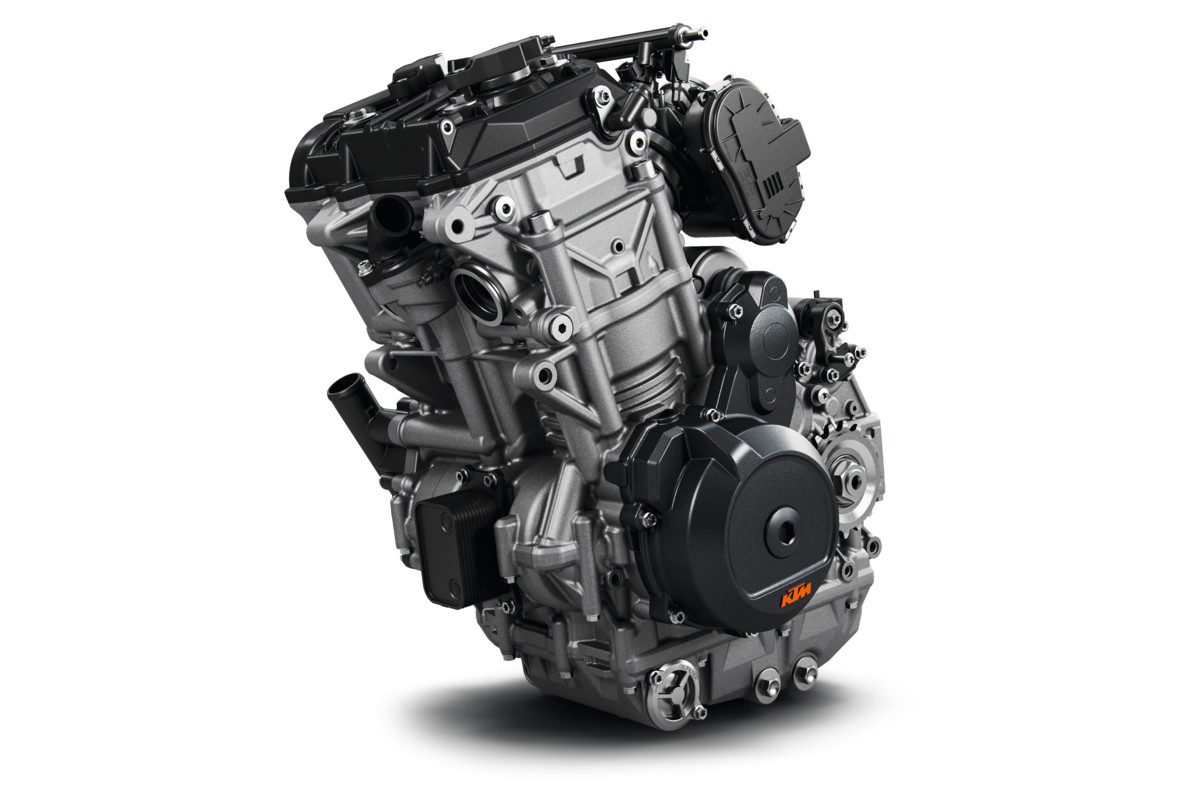
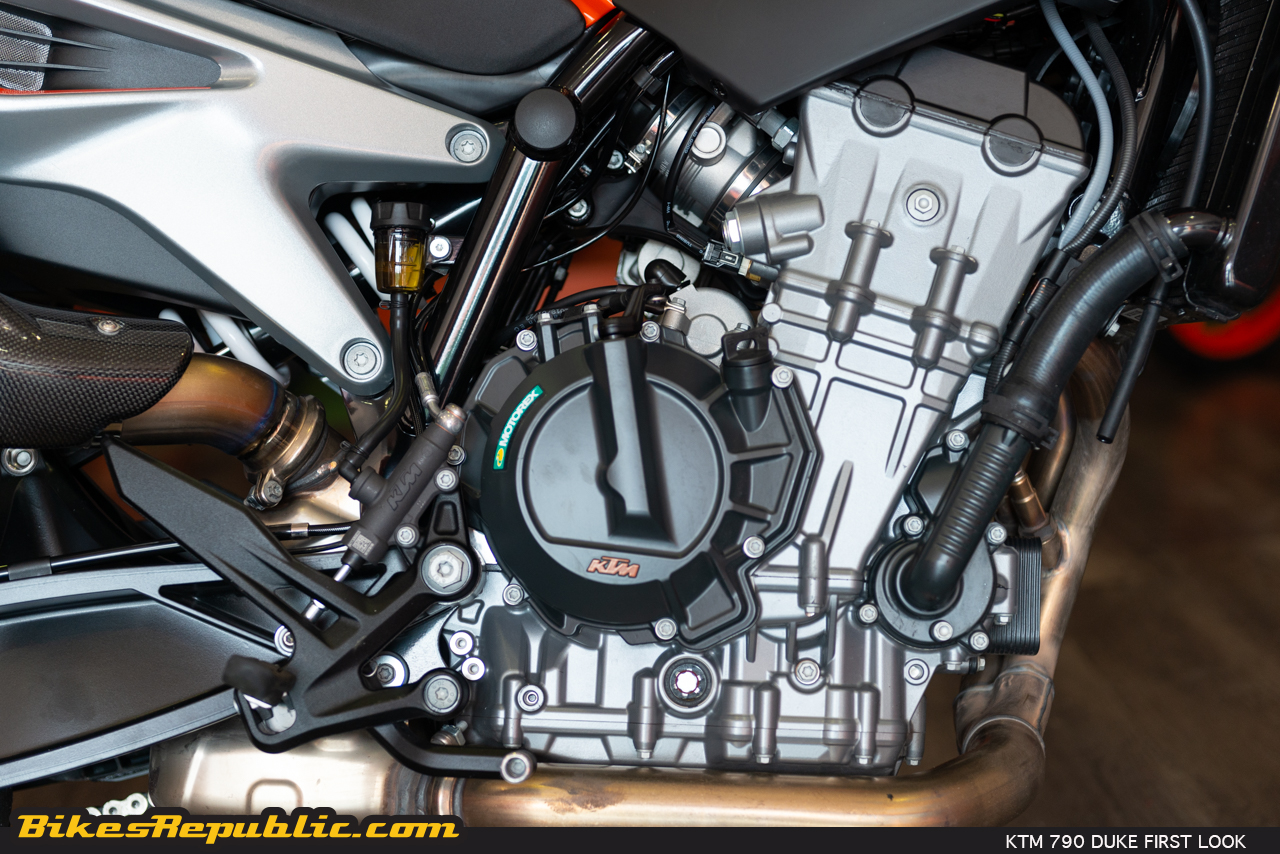
The heart of the 790 Duke is the all-new LC8c 799cc, DOHC, 8-valve, liquid-cooled parallel-Twin. The use of the parallel-Twin engine is unprecedented for KTM. KTM had wanted a compact, lightweight motorcycle yet powerful, hence settling on the LC8c, rather than overboring the present 690 Duke or sleeving down the 75o V-Twin from the 1050 Adventure.

As a result, the new engine is only taller by the cylinder head cover compared to the KTM 390 Duke. To illustrate this fact, KTM Malaysia showed us slide of the engine silhouetted against the engines of other motorcycles of the same class. In fact, no one could believe their eyes when we saw just how compact the new engine is in the motorcycle!

LC8c engine

The LC8c produced 105 bhp @ 9000 RPM and 87 Nm of torque at 8000 RPM. 70 Nm of that torque is already available from as low as 3250 RPM.

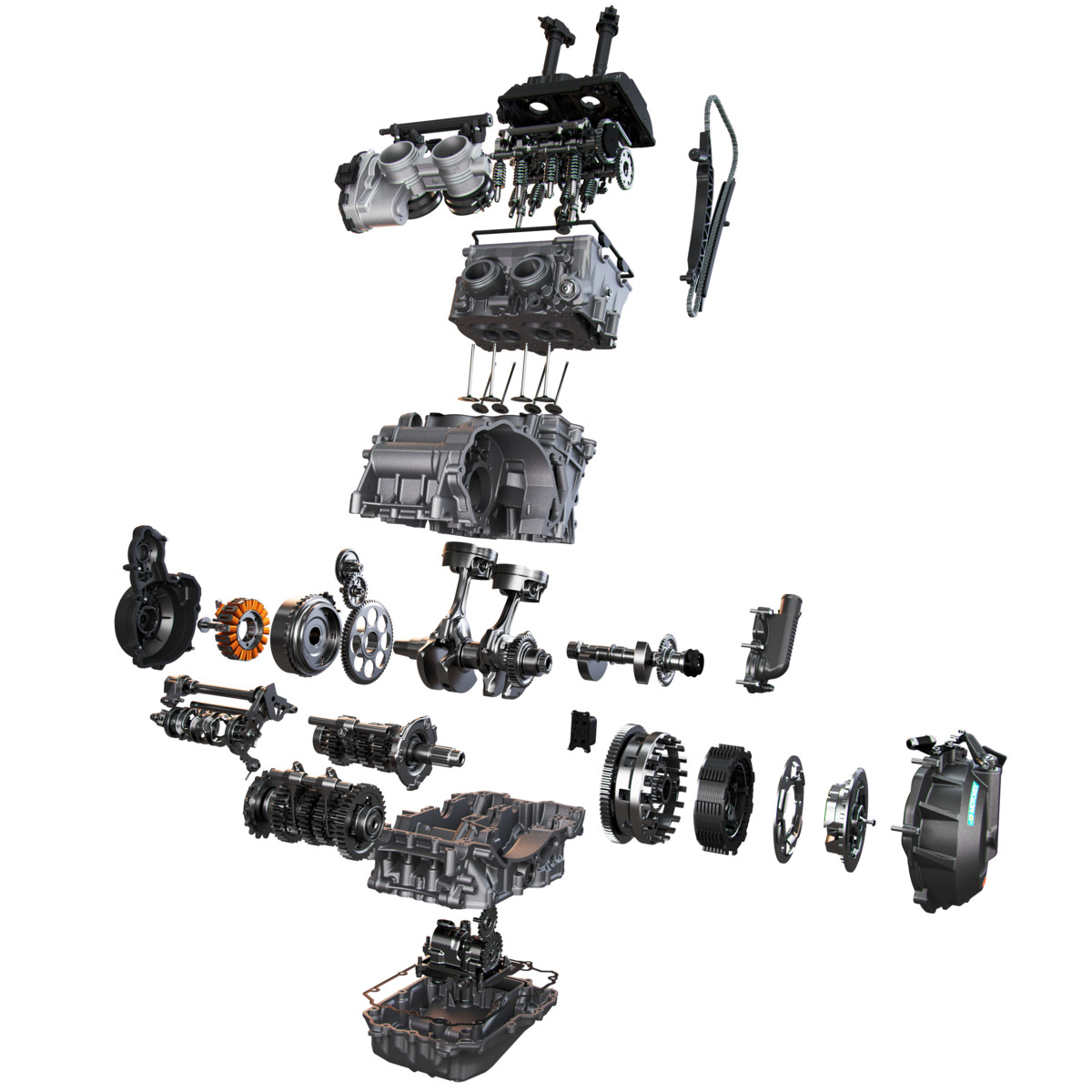
The engine also features a host of new philosophy for KTM’s engines, especially the split cylinder, crankcase and transmission, in the name of simplicity besides ease of maintenance and repair.


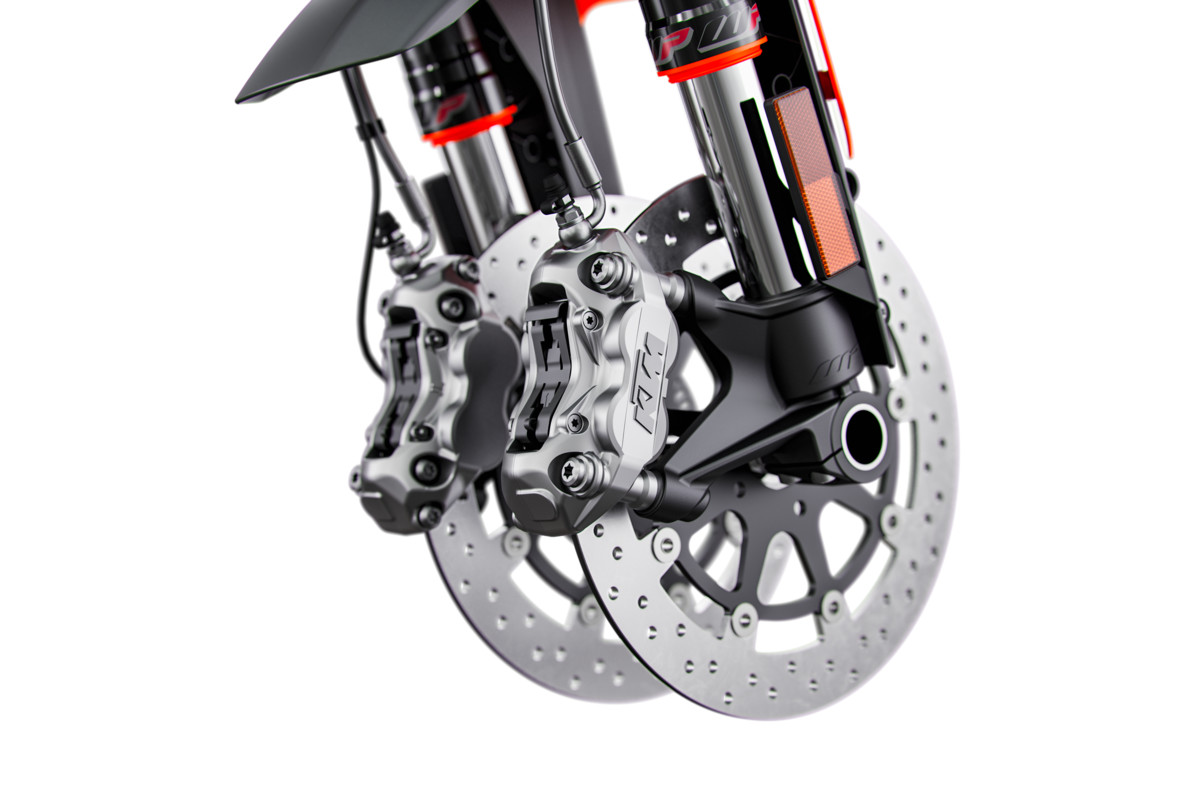
The media briefing also highlighted the new brakes, made by Spanish brake specialist J.Juan. KTM AG had wanted brakes that suited the 790 Duke’s characteristics perfectly but they could only obtain off-the-shelve products from Brembo, hence the joint development with J.Juan. J.Juan is a smaller company and are able to customize the brakes to KTM’s specific requirements.


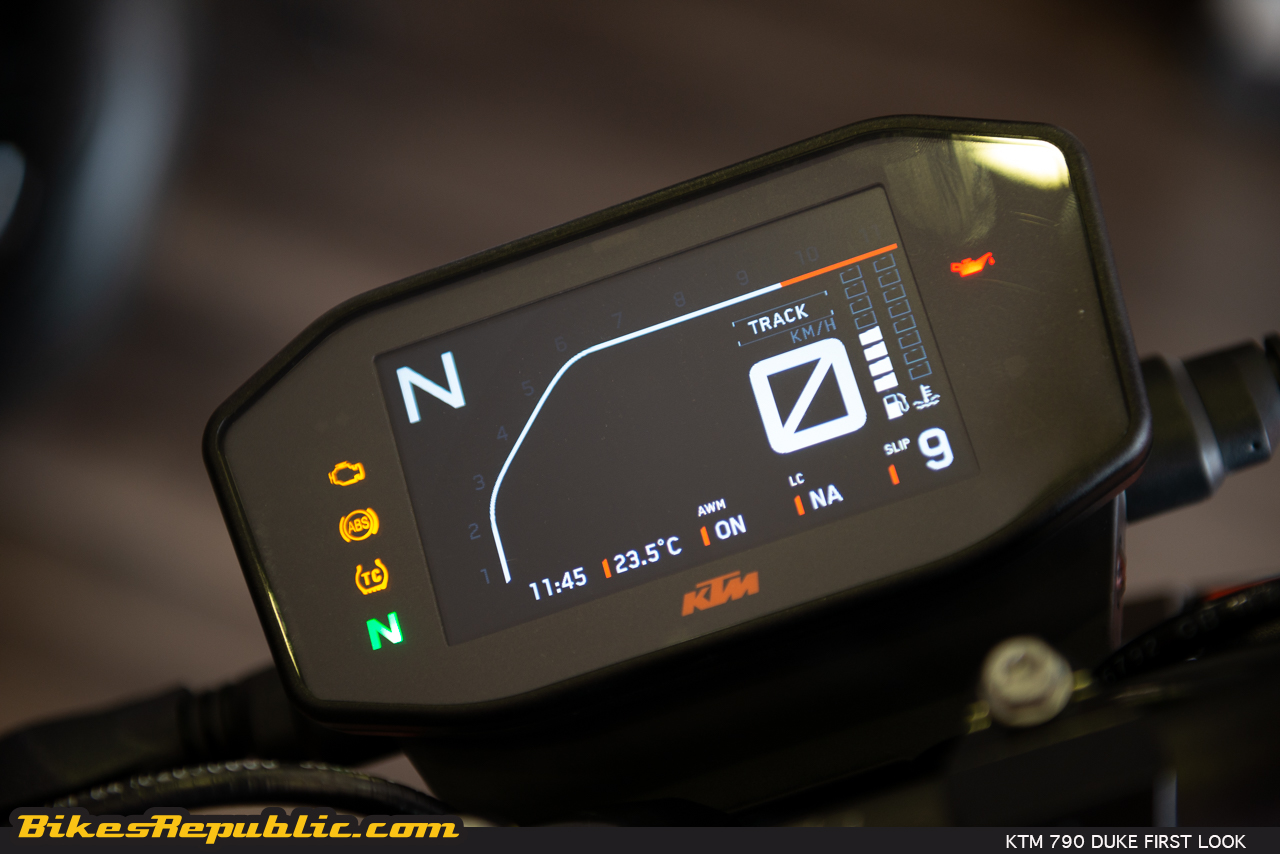
Also to rehash, the bike features an entire collection of KTM’s rider aid and electronics package, including the new TFT screen, Quickshifter+, Motor Slip Regulation (MSR), Motorcycle Traction Control (MTC), Motorcycle Stability Control (MSC) with Cornering ABS. Ride modes are RAIN, STREET, SPORT, TRACK.

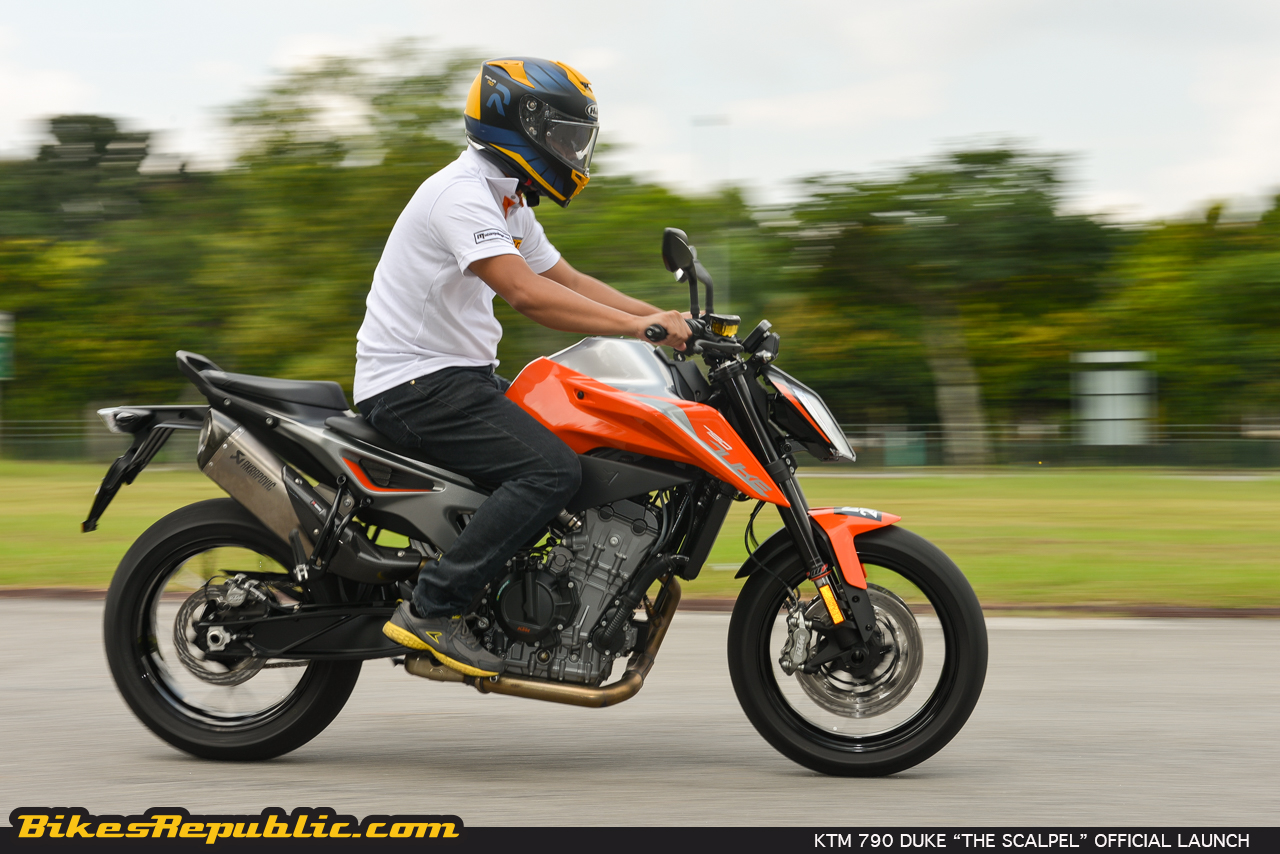
KTM Malaysia allowed the assembled media the opportunity for a short test ride around the compound.

The KTM 790 Duke is sleek, narrow and the lack of weight was immediately noticeable. In fact, it felt a lot like riding the 390 Duke, with more power and awesomely powerful brakes. The quickshifter worked quickly, auto-blipping the throttle on the downshift even at low RPM to eliminate real wheel chatter or lock up. Speed picked up quickly and the suspension was in the right zone without the need for extra adjustments.

We hope to test ride the bike for a full review soon, so stay tuned! In the meantime, please click on the link below to witness Chris Fillimore riding the KTM 790 Duke “The Scalpel” to win and setting a new record at the punishing and dangerous Pikes Peak International Hill Climb event on its first trip out.

  • The KTM 790 Duke, nicknamed as “The Scalpel” has arrived in Malaysia.

  • It is engineered for daily riding, daily canyon blasting and/or track carving.

  • The bike is compact and light!

KTM had hit pay dirt with 690 Duke since its introduction in 2012. But since the middleweight market had grown to sub-800cc engine capacities, it is time KTM continue that legacy with the 790 Duke.

KTM had pumped in large resources into developing the 2018 KTM 790 Duke. Hence, it took four years and some 18 prototypes to get it right.

But here it is, “The Scalpel” has arrived on our shores and Bikes Republic were able to have a first look. Also, please click on the link below for pricing and other details of the bike.

New KTM 790 Duke now in Malaysia – Priced at RM64,800!

In creating the bike, the giant Austrian manufacturer looked long and hard at a number of criteria. The new bike has to do well as an everyday commuter, a weekend canyon carver and must embody KTM’s READY TO RACE spirit hence be track-ready. Not an easy task.

As such, it has to combine the lightness and agility of a single-cylinder (i.e. 690 Duke) and the immediate punch of a Twin.

Their solution was groundbreaking in their history. In order to achieve the above brief, KTM created an all-new parallel-Twin which they call the LC8c (liquid-cooled, 8-valve, compact). A parallel-Twin (or all inline engines for that matter) is the best compromise between weight-savings, compactness and power.

Please indulge us: A single-cylinder engine is fast-revving but will be too high-strung and vibey if its performance is pushed to the edge of its envelope. On the other hand, a V-Twin like KTM’s 1290 flagship models are powerful but the Vee-angle of the cylinders needs more space fore-to-aft, heavier and are more complex. The 1301cc 75-degree V-Twins are fine in the big bikes as those bikes are meant to be graced with 160 to 180 bhp. Additionally, since a “wide” V-Twin engine is longer, the swingarm had be to made shorter in order to compensate for the quest to achieve an overall short wheelbase. Remember, a shorter wheelbase promotes agility.

Therefore, the LC8c is one of the most compact engines around. The compactness allows for an overall lighter bike, optimal engine placement in the frame for likewise optimal weight distribution, and the swingarm could be made longer (for better road-holding and stability) while still achieving a shorter wheelbase.

The 799cc, DOHC LC8c puts out 105 bhp at 9000 RPM and 87 Nm at 8000 RPM. While it is not the highest figure among its peers in the sub-800cc segment, the KTM 790 Duke has a lithe dry weight of only 169 kg. That equals a weight-to-power ratio of 1.61 kg/1 bhp.

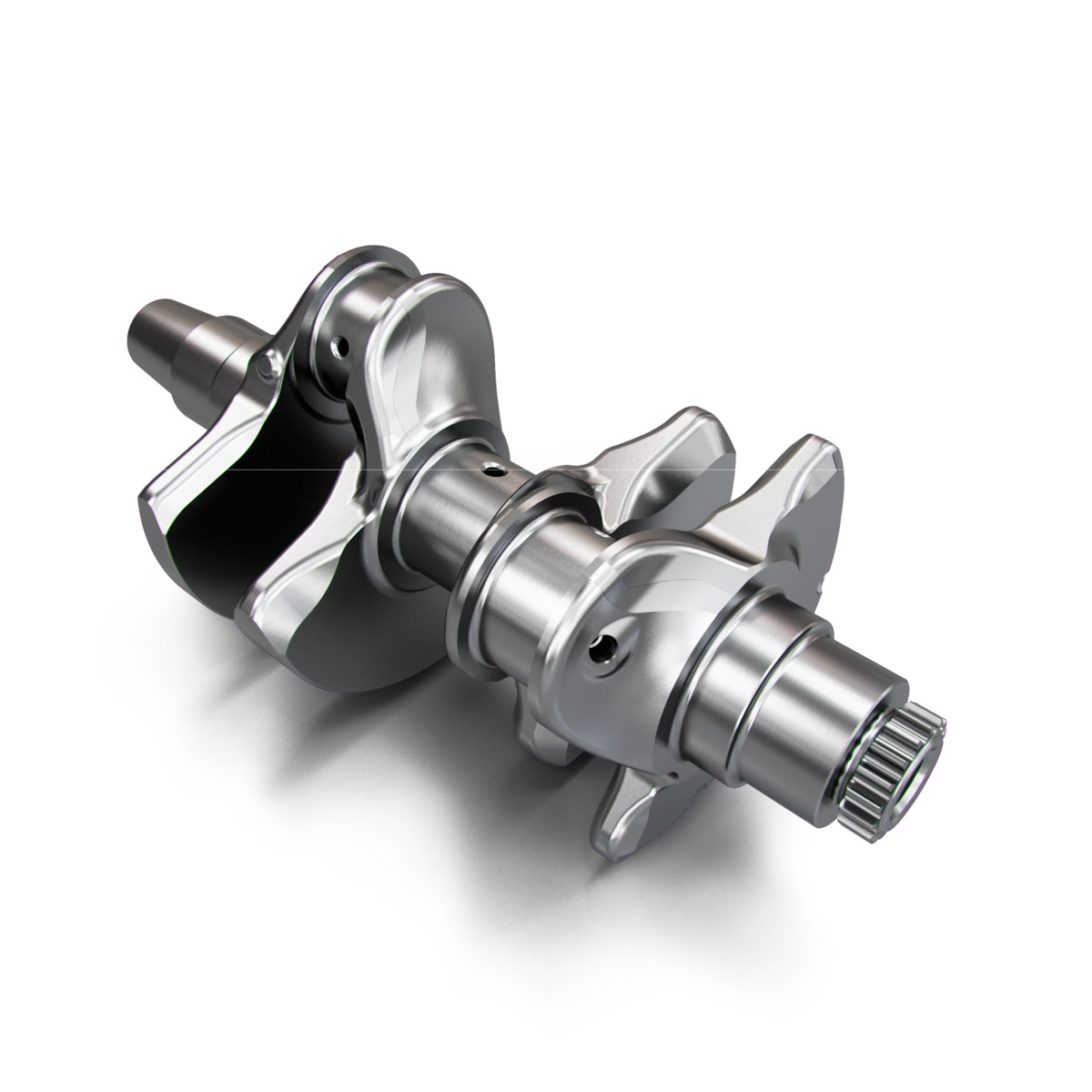
To quell engine vibrations, KTM engineers gave the LC8c two counterbalancers: One in its customary position front of the crankshaft and the other between the cams.

Speaking of cams, they are assembled instead of one-piece forged units for more weight savings. The lifters’ finger followers are coated with DLC (diamond-like coating) for longevity.

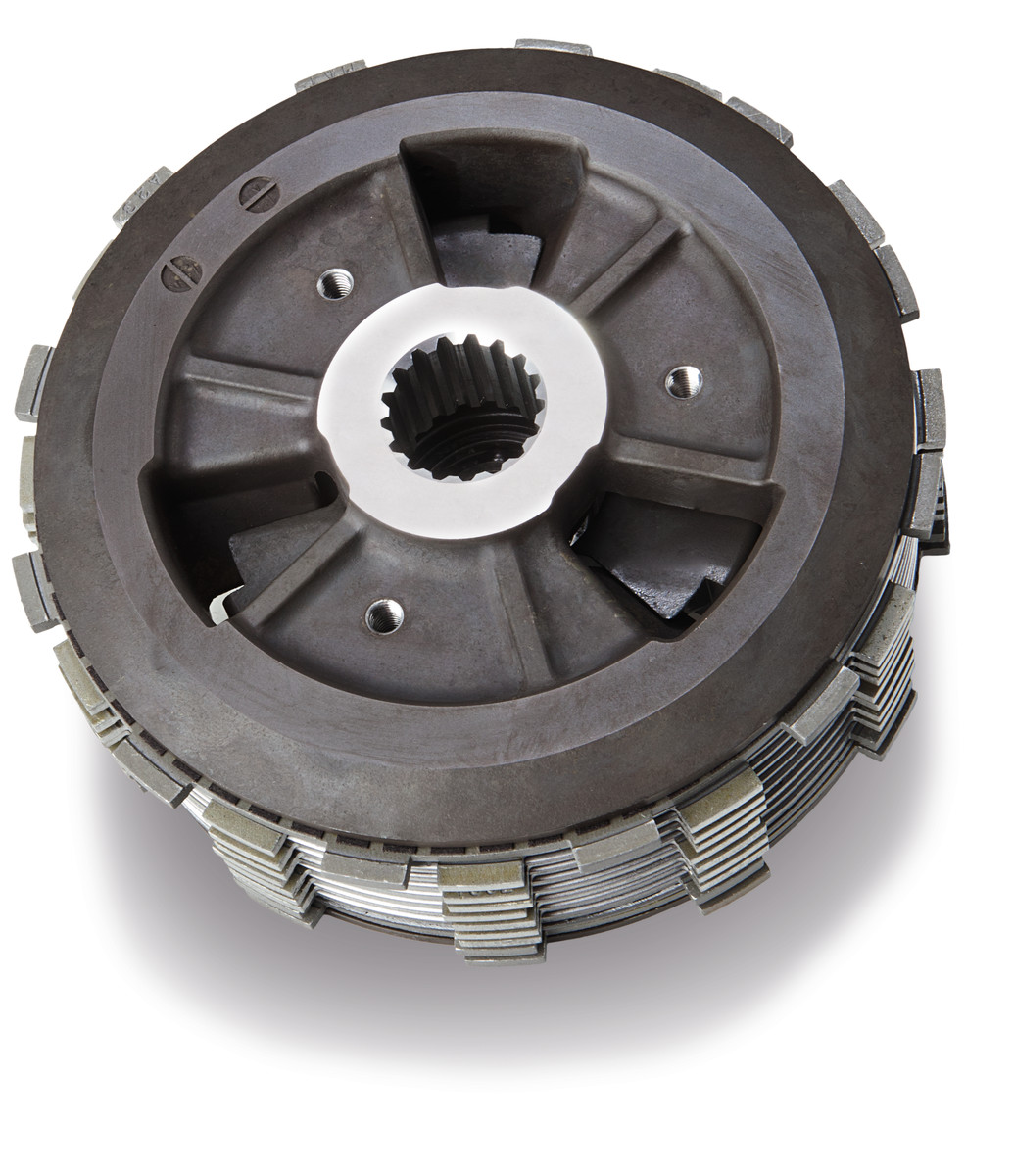
Making our way down, the clutch system uses KTM’s signature PASC (Power and Assist Slipper Clutch). As the name suggests, the clutch plates are forced together harder during acceleration allowing the rider to operate the lever with just one finger, while the slipper function separate the plates under hard deceleration of overly excited (or panicky) downshifting to eliminate rear wheel hop or locking up.

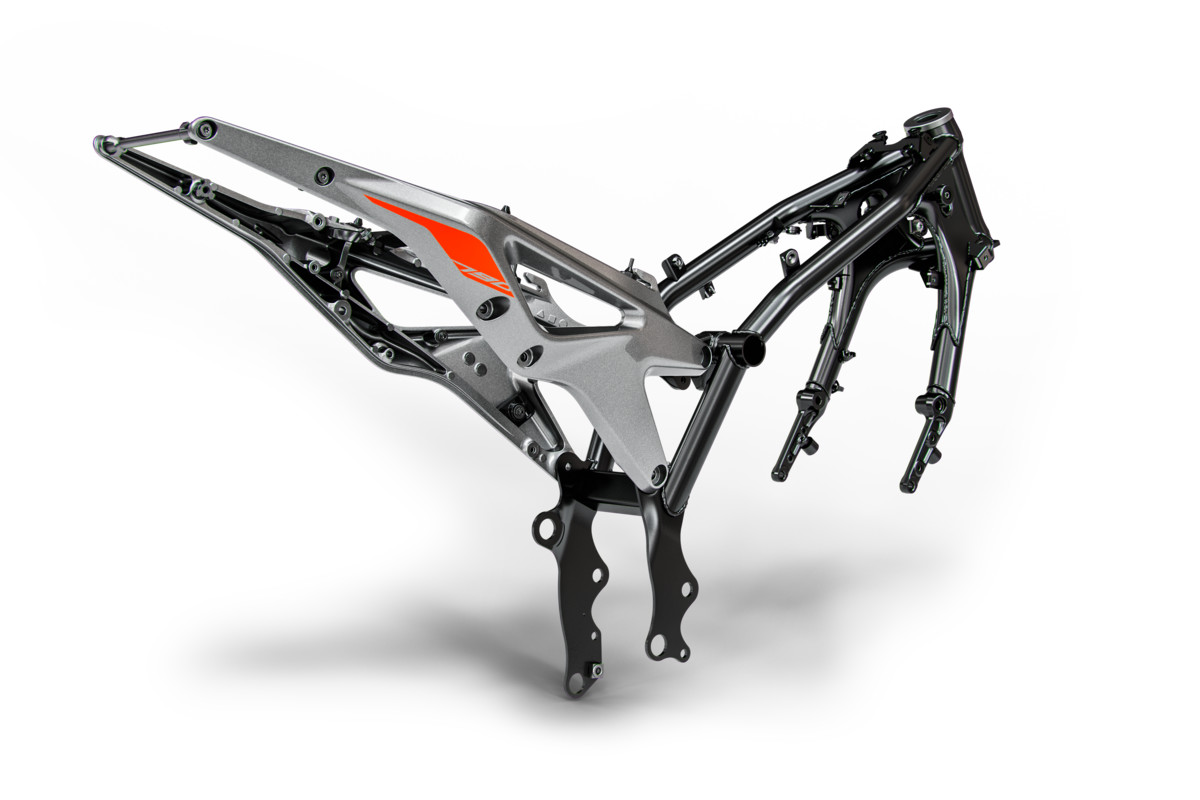
In the chassis department, the all-new chrome-molybdenum tube frame is laser-cut and robot-welded for close tolerances. Unlike the steel ladder frames of other KTMs, the 790 Duke’s frame features a beam on either side on top of the engine, while another two extends downwards to hold the front of the engine. This design is strong, simple and lightweight; in fact, this new frame is the among the lightest of all current production motorcycles of the same class. The steering geometry is kept at an aggressive 24 degrees.

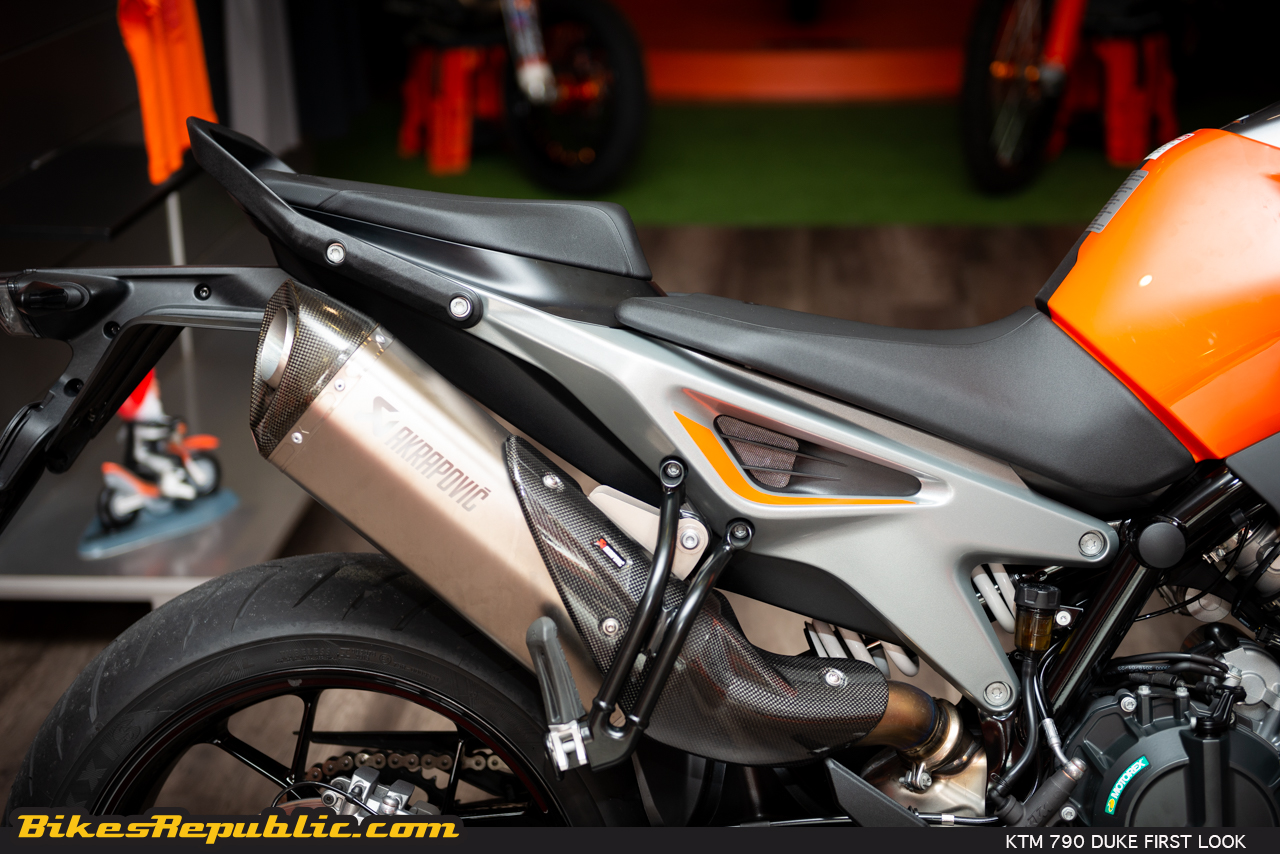
The subframe is a single piece cast aluminium unit. This is where the airbox is located, akin to KTM’s dirtbikes. Positioning the airbox here has two benefits: 1) Intake air is removed from engine heat, and 2) The fuel tank is lower for better centre of gravity. KTM have also designed this subframe to allow for a lower seat height of only 825 mm.

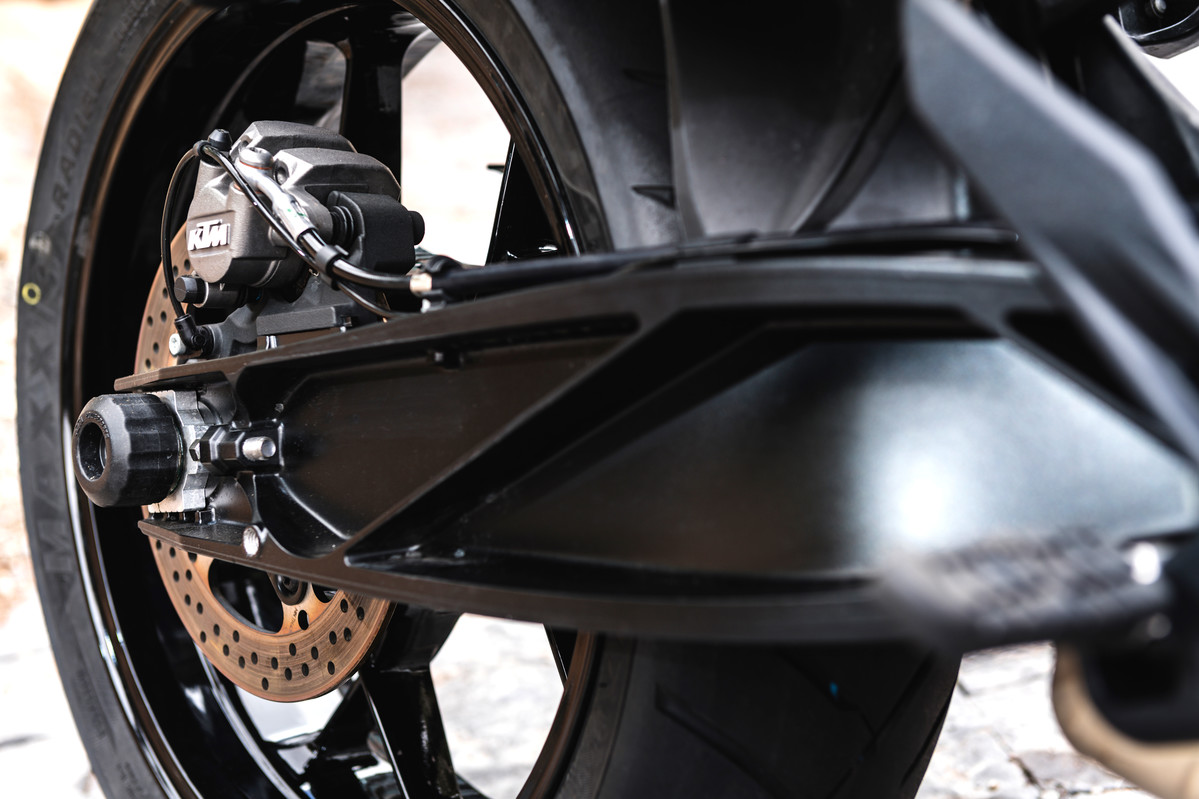
As we mentioned earlier, the swingarm is much longer. However, it is still a die-cast, open-lattice design we have grown accustomed to on other KTMs.

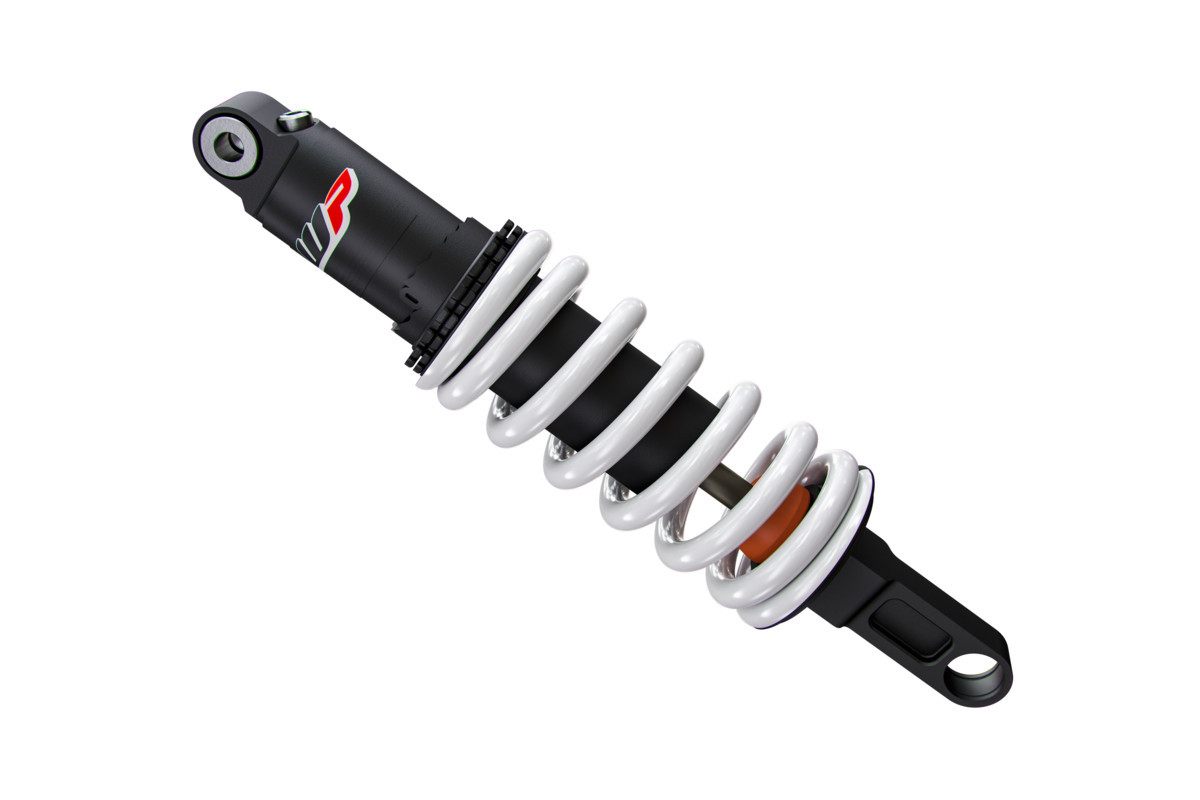
Moving on to the suspension, the forks are 43 mm open-cartridge WP Suspension. The compression and rebound damping duties are performed by separate fork legs, while the springs are progressive. The rear shock absorber is also by WP and is gas-assisted.

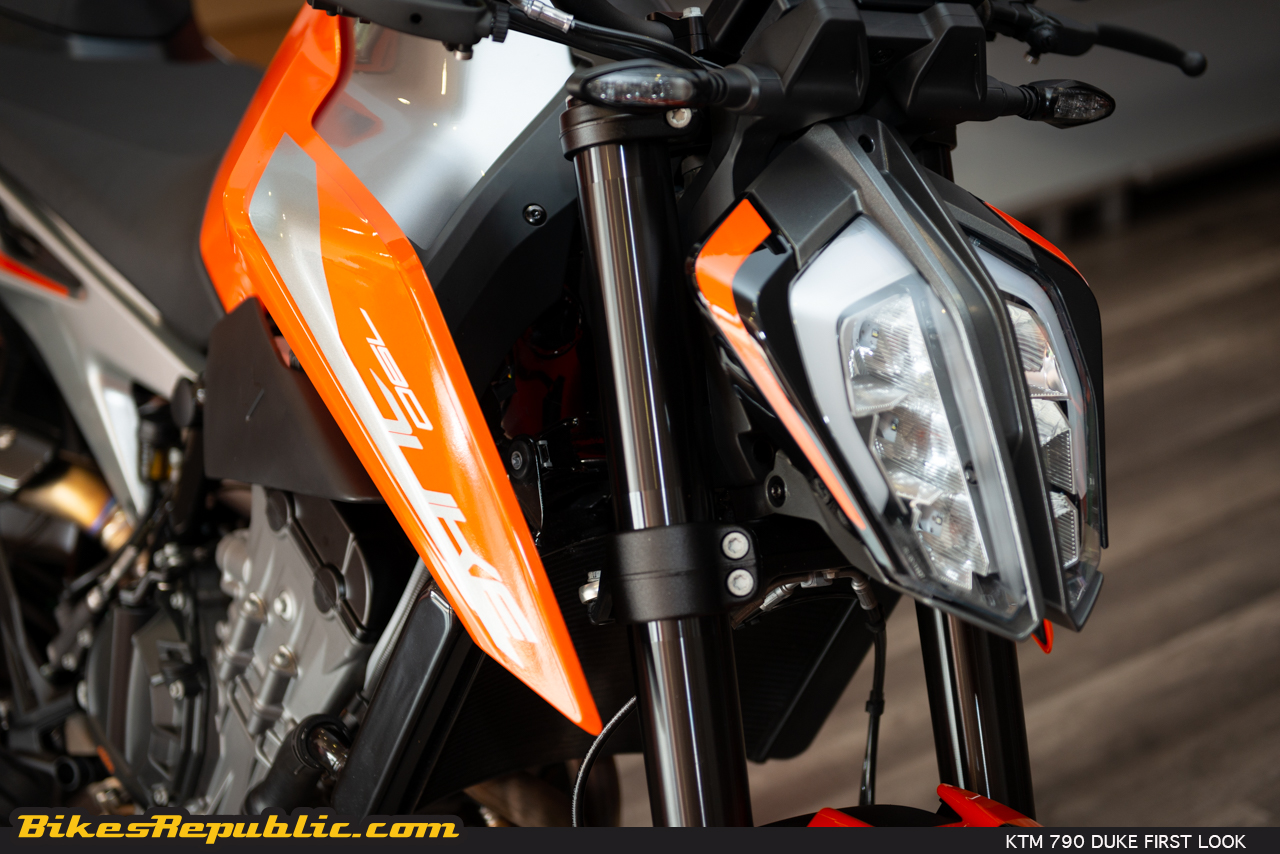
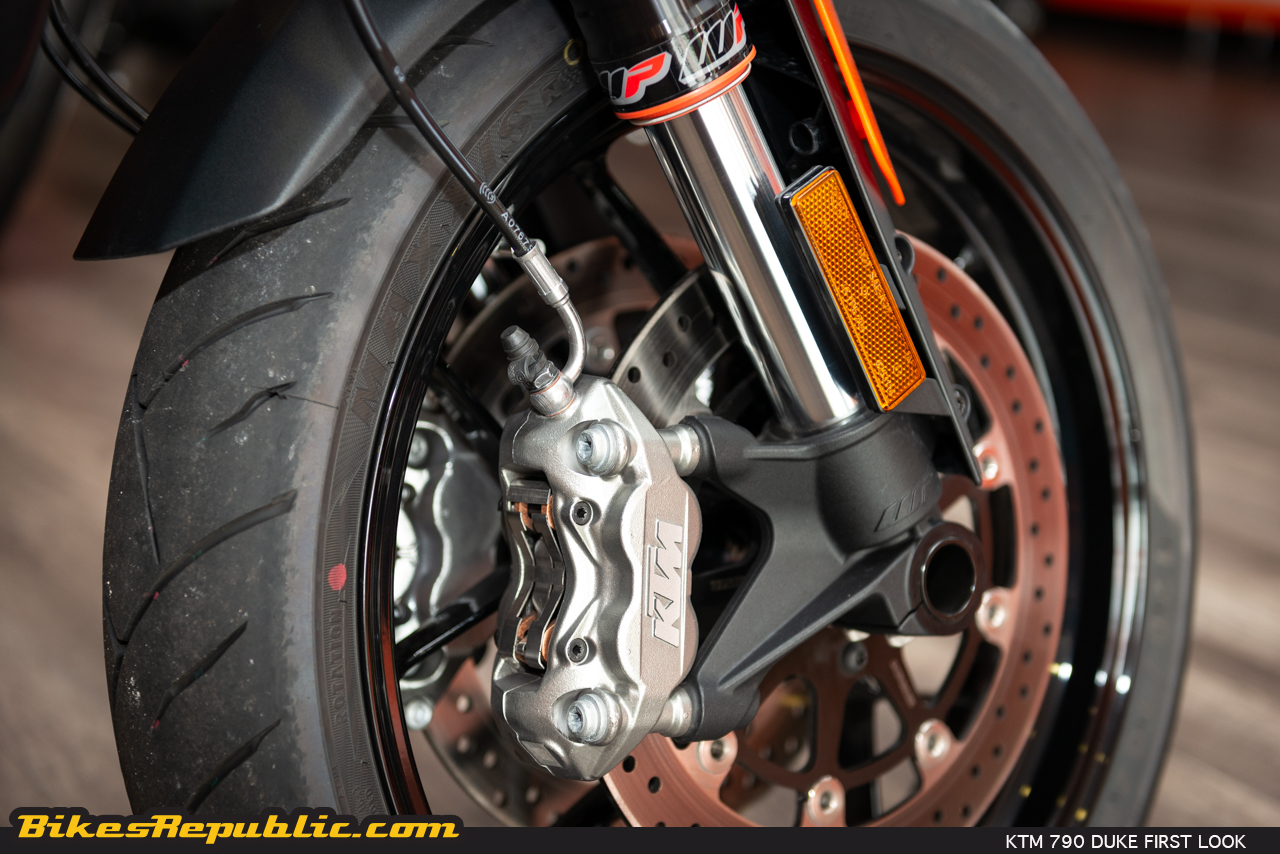
The front brakes are two 300 mm discs clamped by 4-piston radially-mounted calipers. These calipers were specifically developed for the 790 Duke.

As for the electronics, the 790 Duke boasts a full complement of rider aids. Along with the Ride-by-Wire throttle, the bike has four ride modes i.e. RAIN, STREET, SPORT and TRACK. In TRACK mode, the rider could adjust his preferred level of throttle response among STREET, SPORT, TRACK; turn anti-wheelie and launch control ON/OFF; and traction control level.

Other rider electronic rider assistance include Motor Slip Regulation (MSR) which complements the slipper clutch to deliver controllable hard deceleration; Motorcycle Stability Control (MSC) with Cornering ABS; Supermoto mode which turns off the rear wheel’s ABS to allow drifting; and Quick Shifter+ which works for both upshifts and downshifts with auto-blip function. All these functions are equipped as standard and only the KTM MY RIDE function is optional.

Judging from the list of impressive features, the 800cc middleweight segment is about to heat up. Stay tuned for our full review!

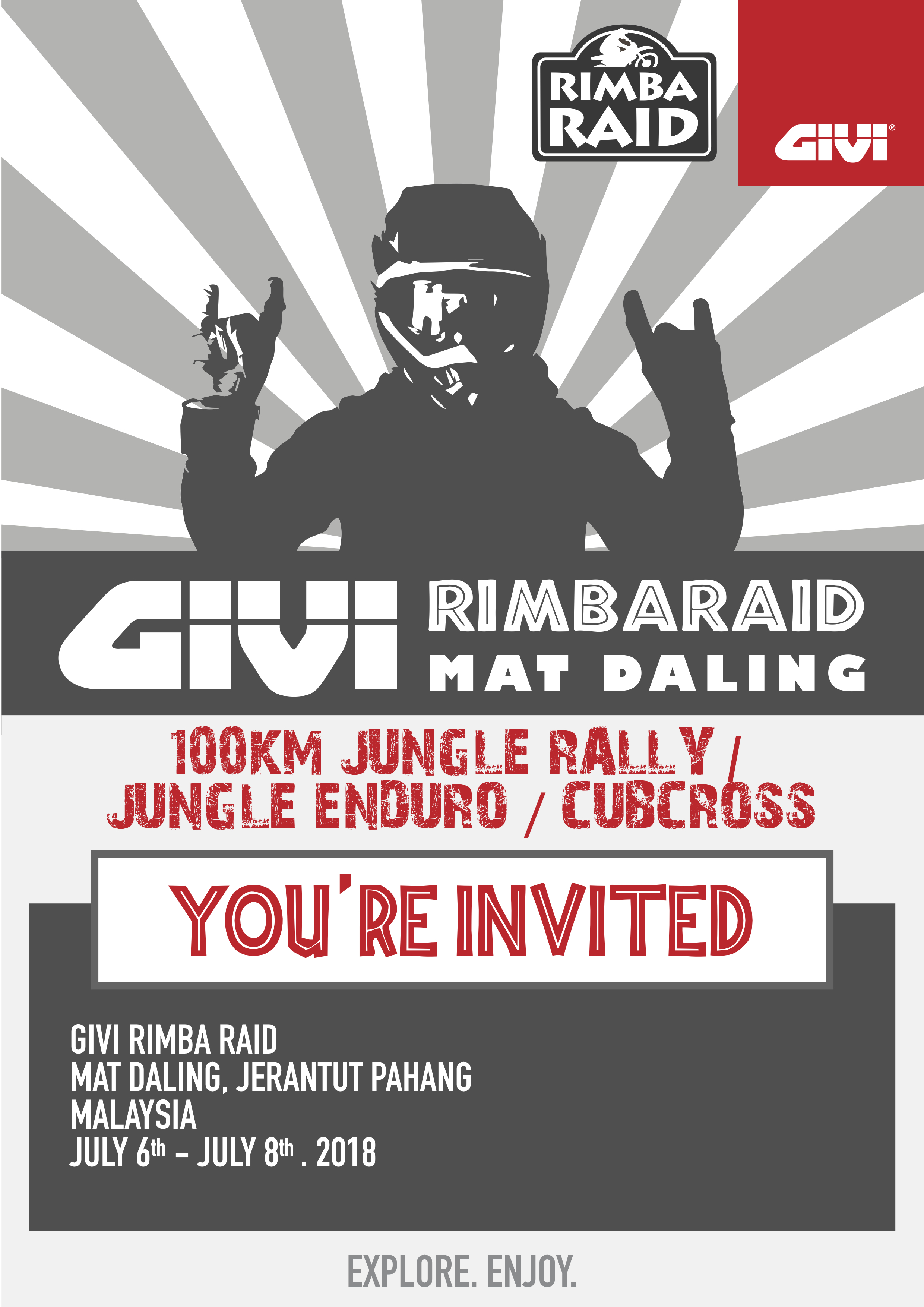
  • Rimba Raid returns to Mat Daling from 6th to 8th July 2018.

  • There currently 200 registered participants representing 13 countries.

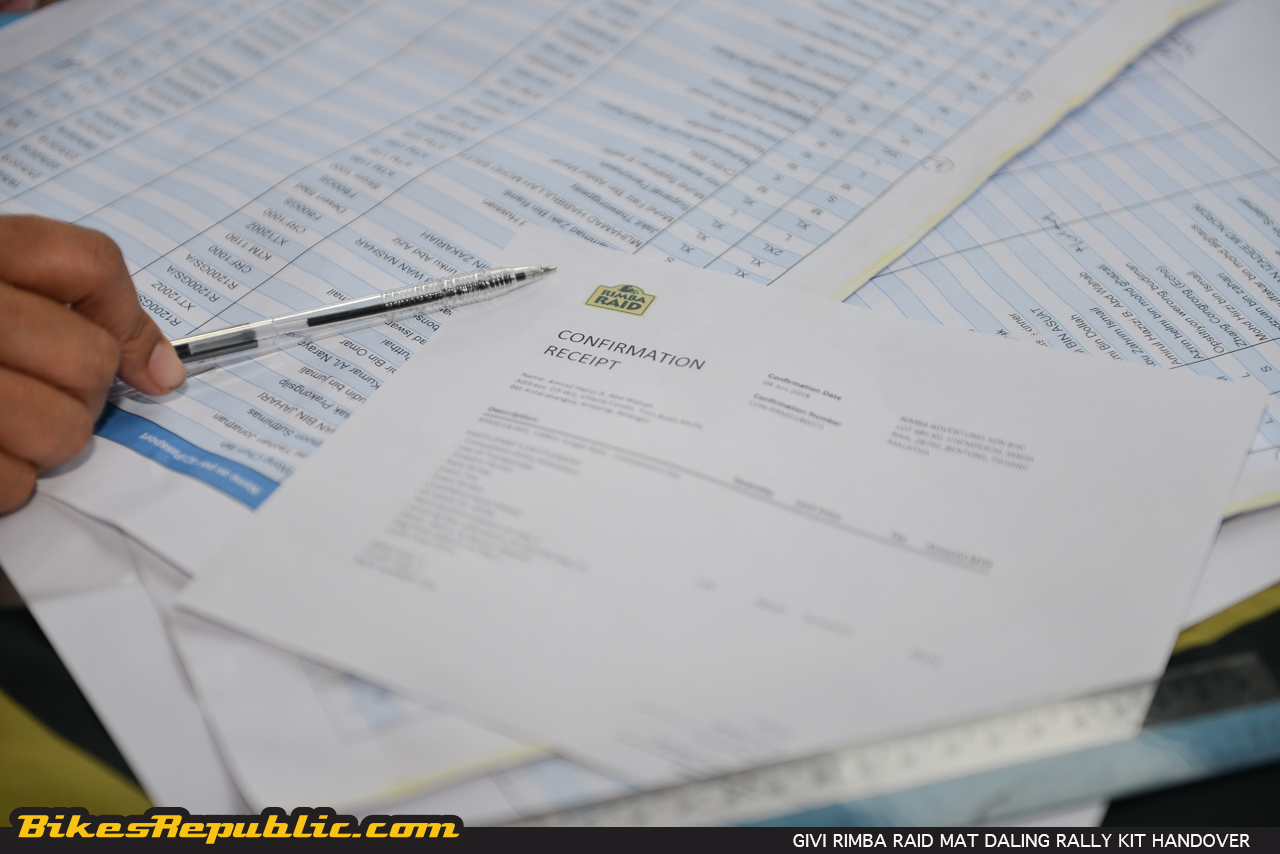
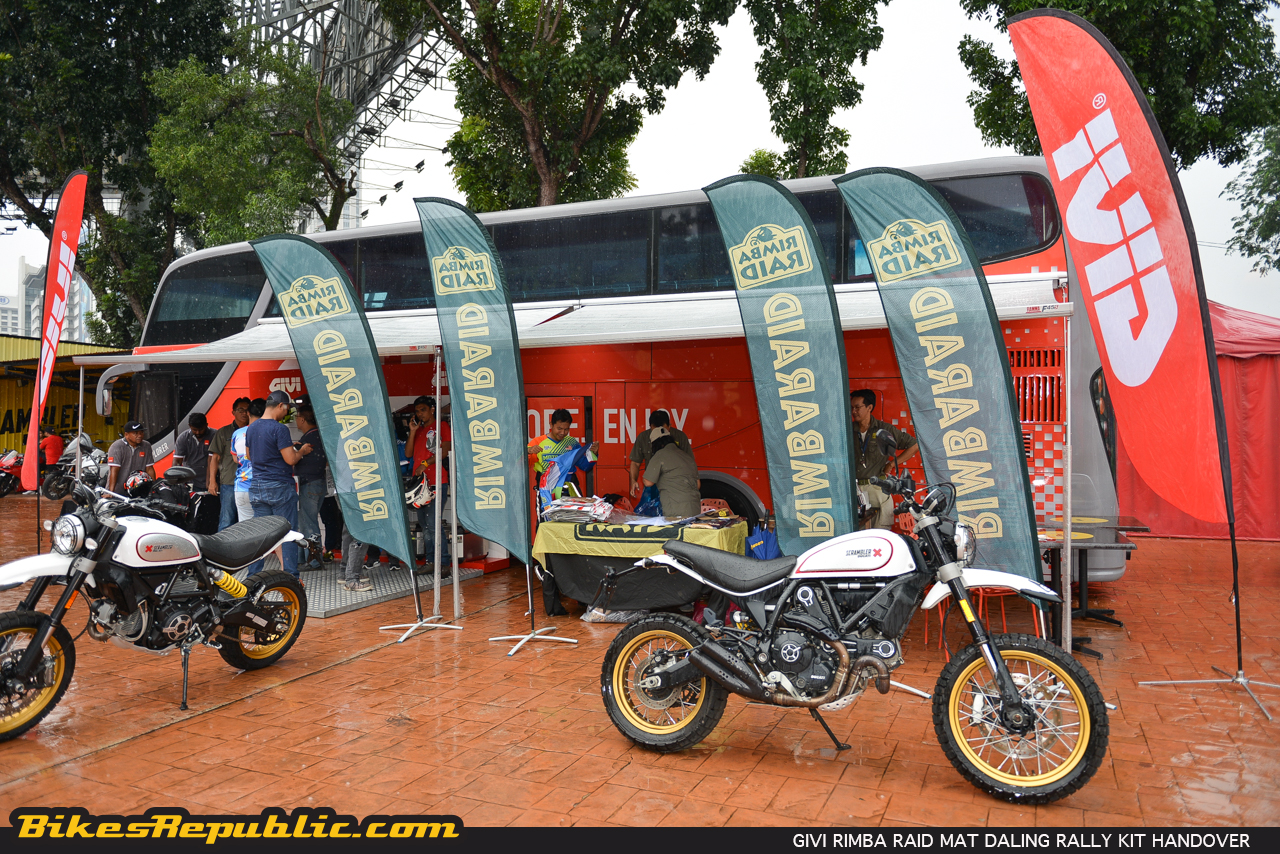
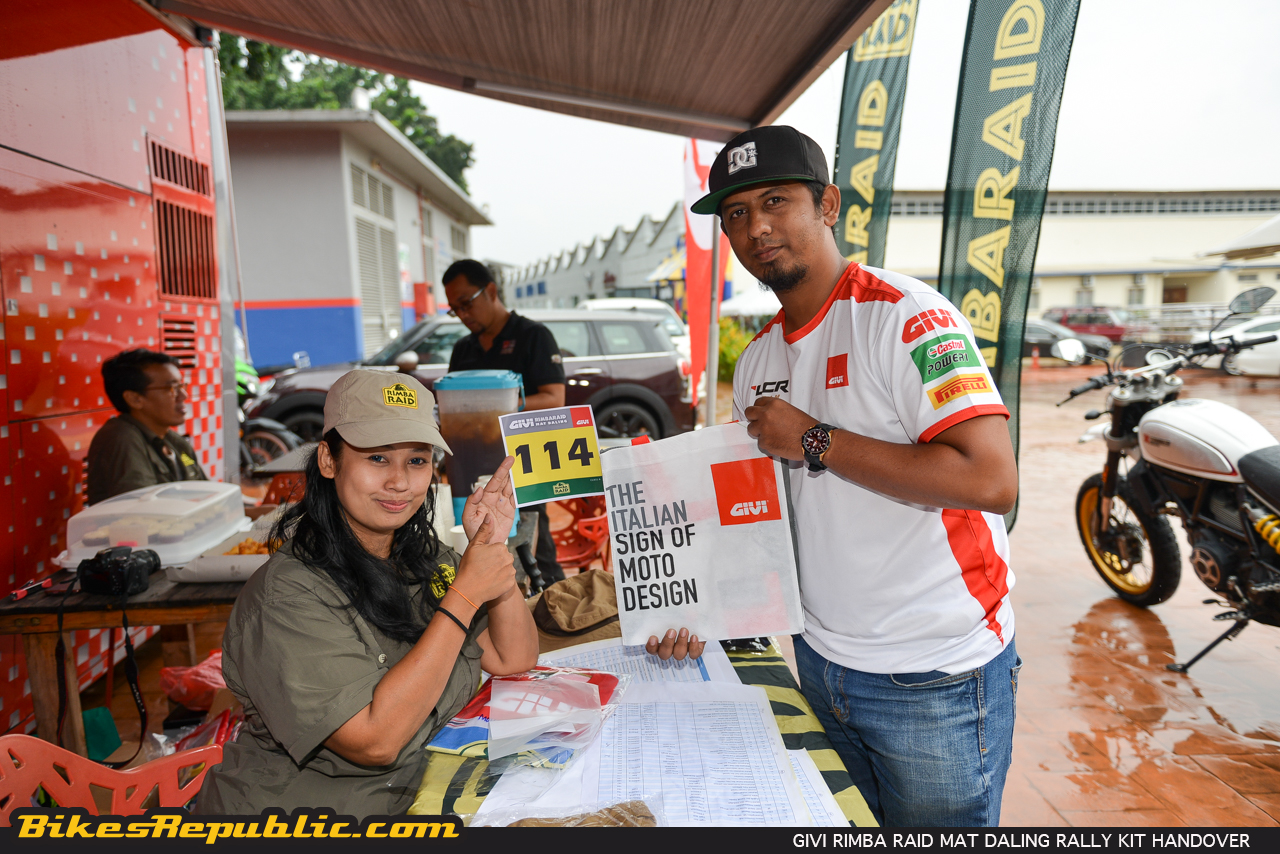
  • A rally kit handover was held together with GIVI Asia and Ducati Malaysia on 23rd June 2018.

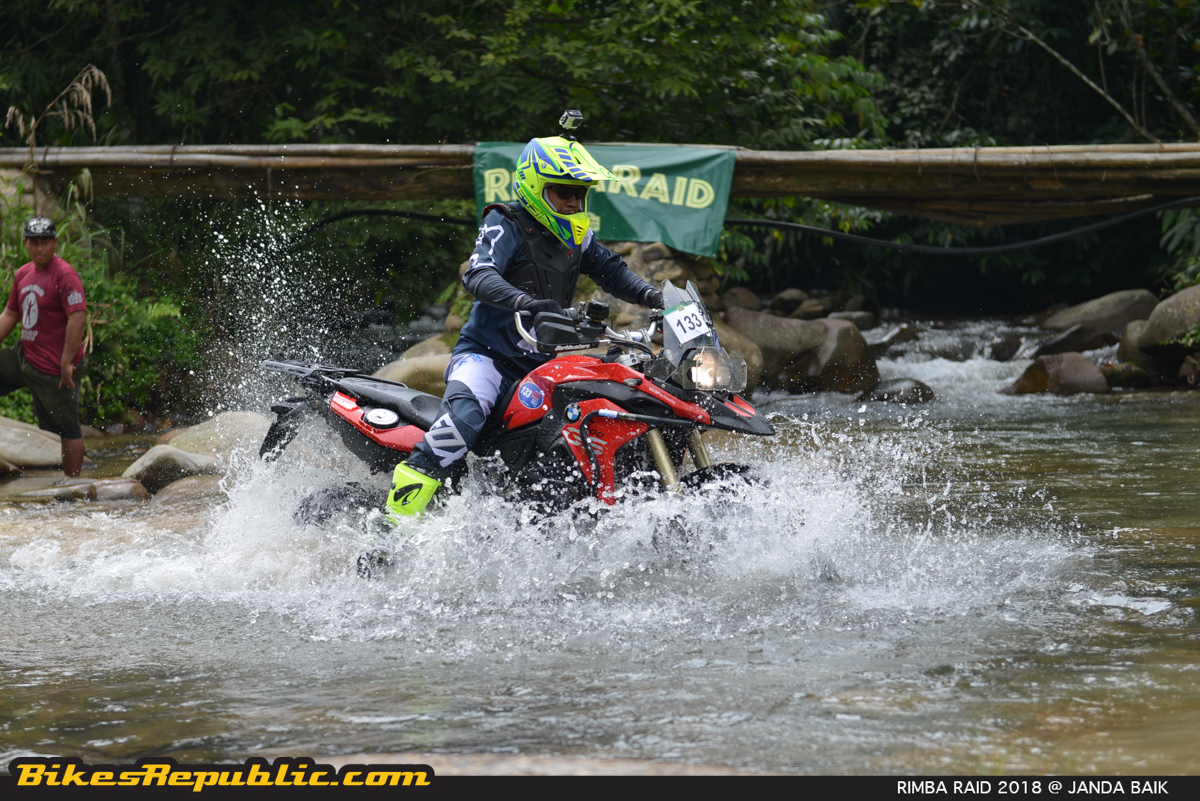
If the previous editions of Rimba Raid were exciting, the latest iteration called GIVI Rimba Raid Mat Daling will be mind-blowing. Please click on the link below for our coverage of Rimba Raid at Janda Baik, Pahang earlier this year.

Rimba Raid @ Janda Baik 2018 a Rousing Success

Rimba Raid could probably regard Mat Daling as their spiritual home as it was here that the series began, hence would be incomplete without a return to the heart of Taman Negara (National Forest). The event takes place from 6th to 8th July 2018.

As Rimba Raid’s popularity grows over the years, this edition at Mat Daling will be the most ambitious yet, consisting of a 125-km rally spanning 3 days through some of the most beautiful environment Malaysia has to offer. There are currently 200 registered participants from 13 countries.

As such, the organizers provided the opportunity to competitors to collect their rally kit in advance prior to 6th July.

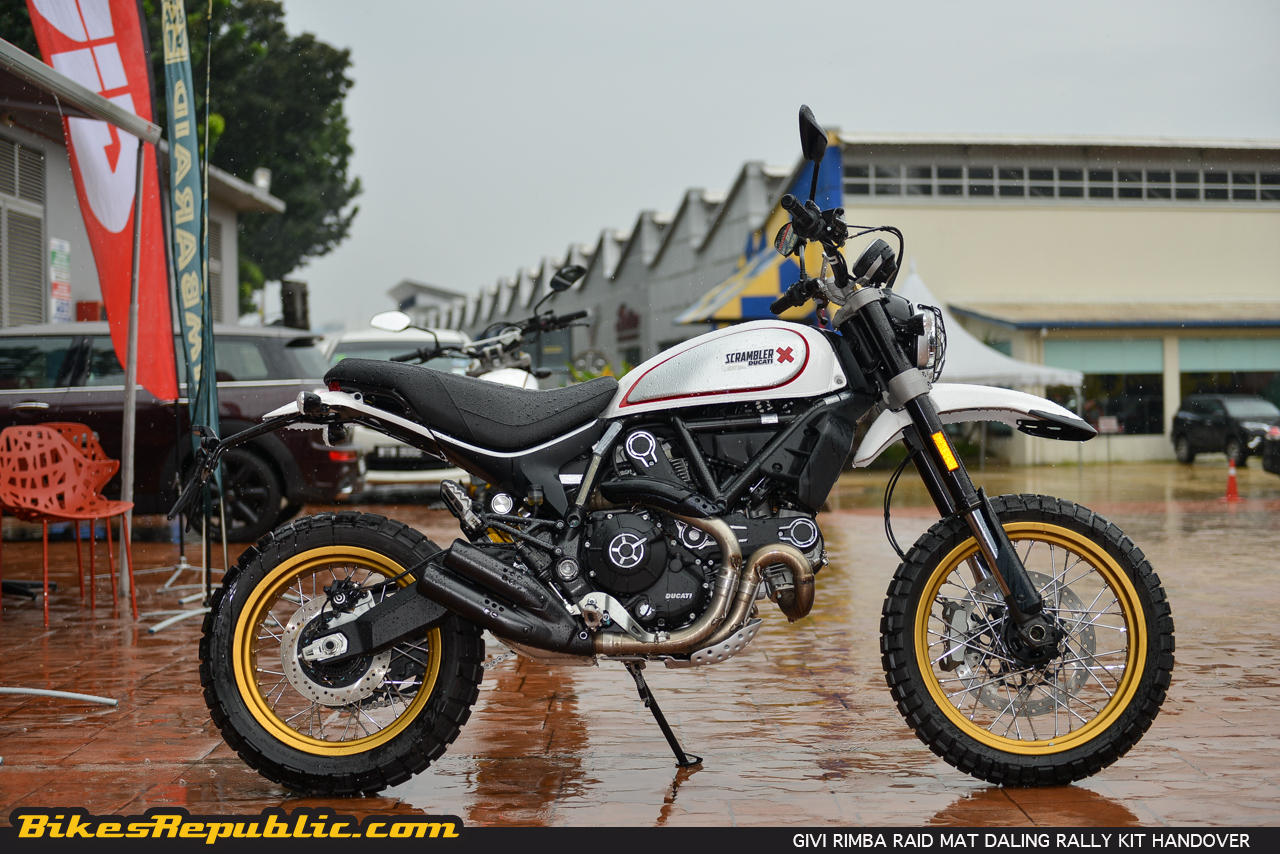
The event was held at Ducati Malaysia’s compound in Naza Auto Mall together with GIVI Asia as both Ducati is one of the sponsors and GIVI Asia is the main sponsor.

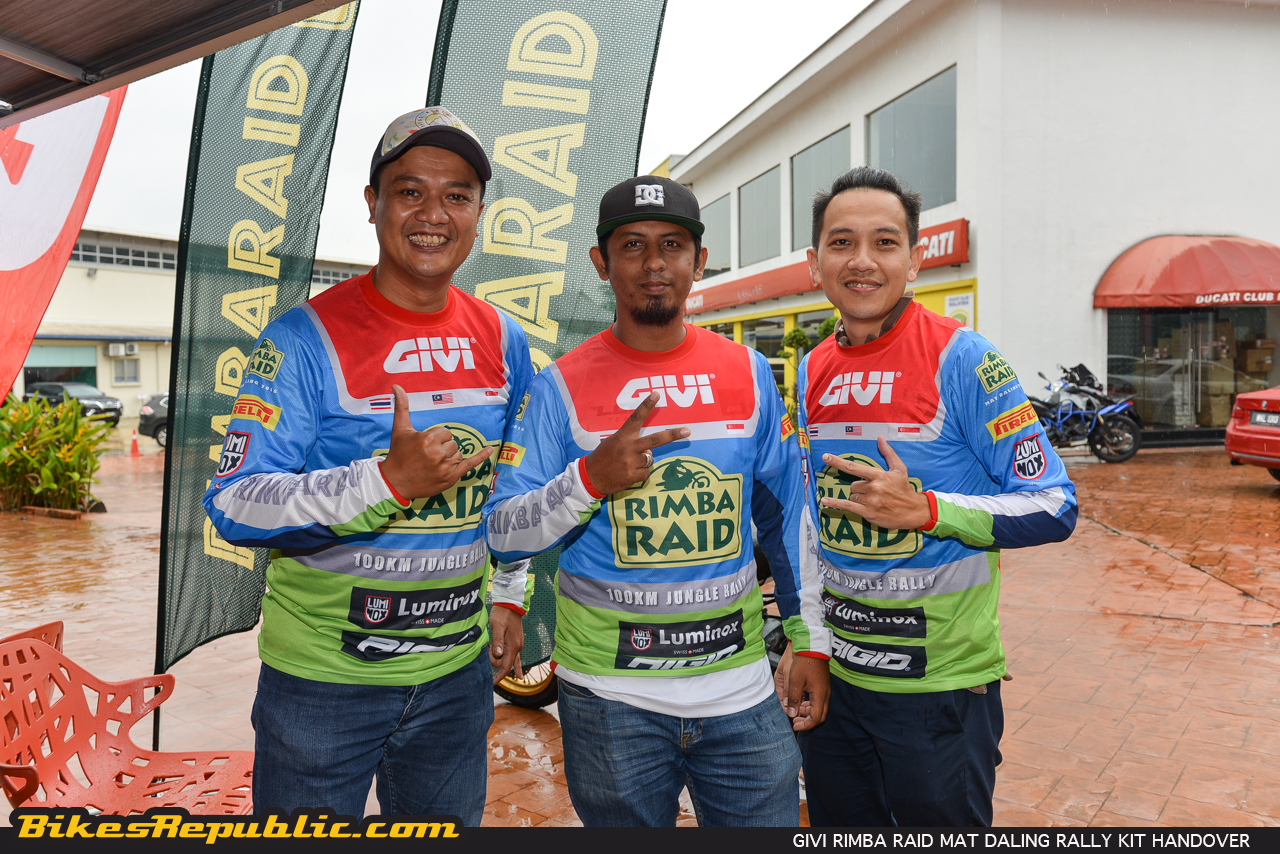
Each rally kit included a personalized rally jersey, official event shirt, numbered stickers for the participant’s motorcycle and extras provided by GIVI Asia.

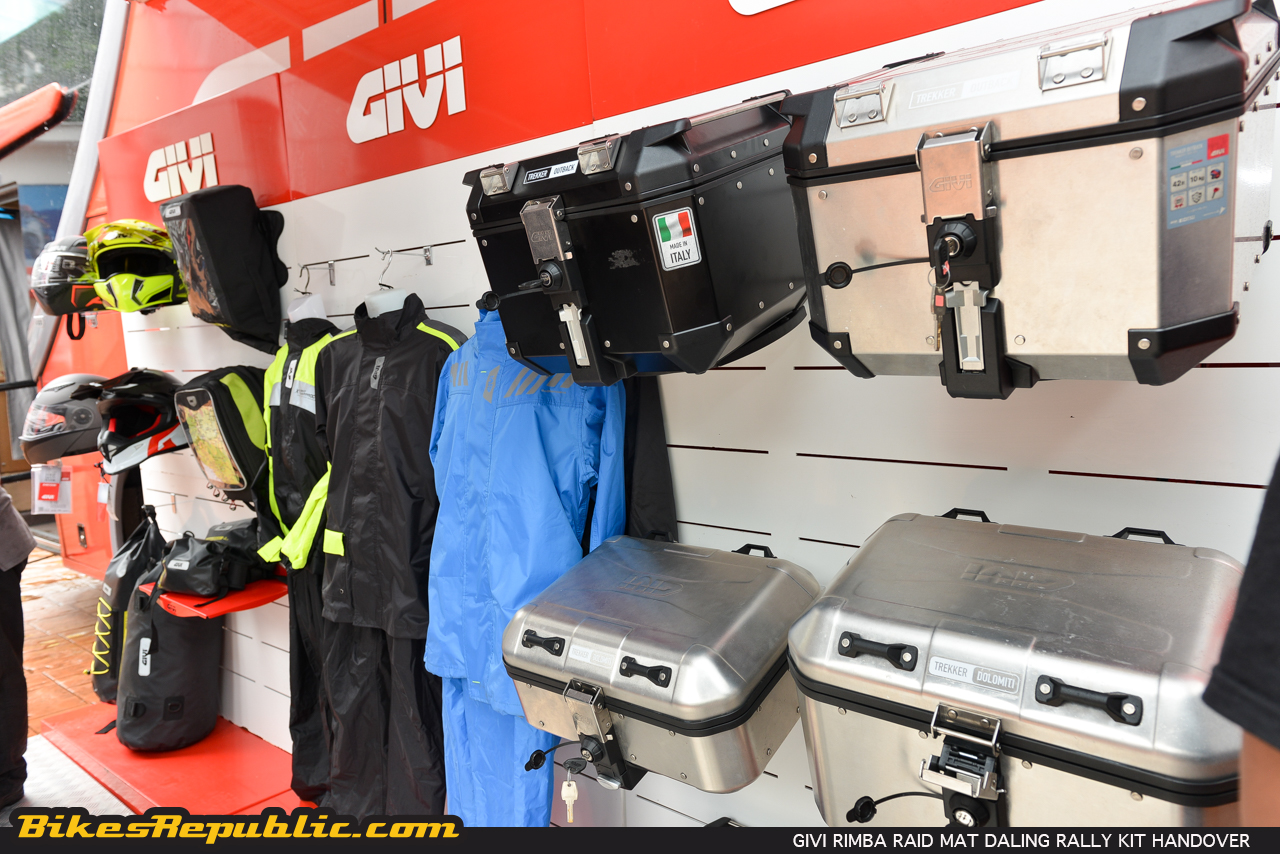
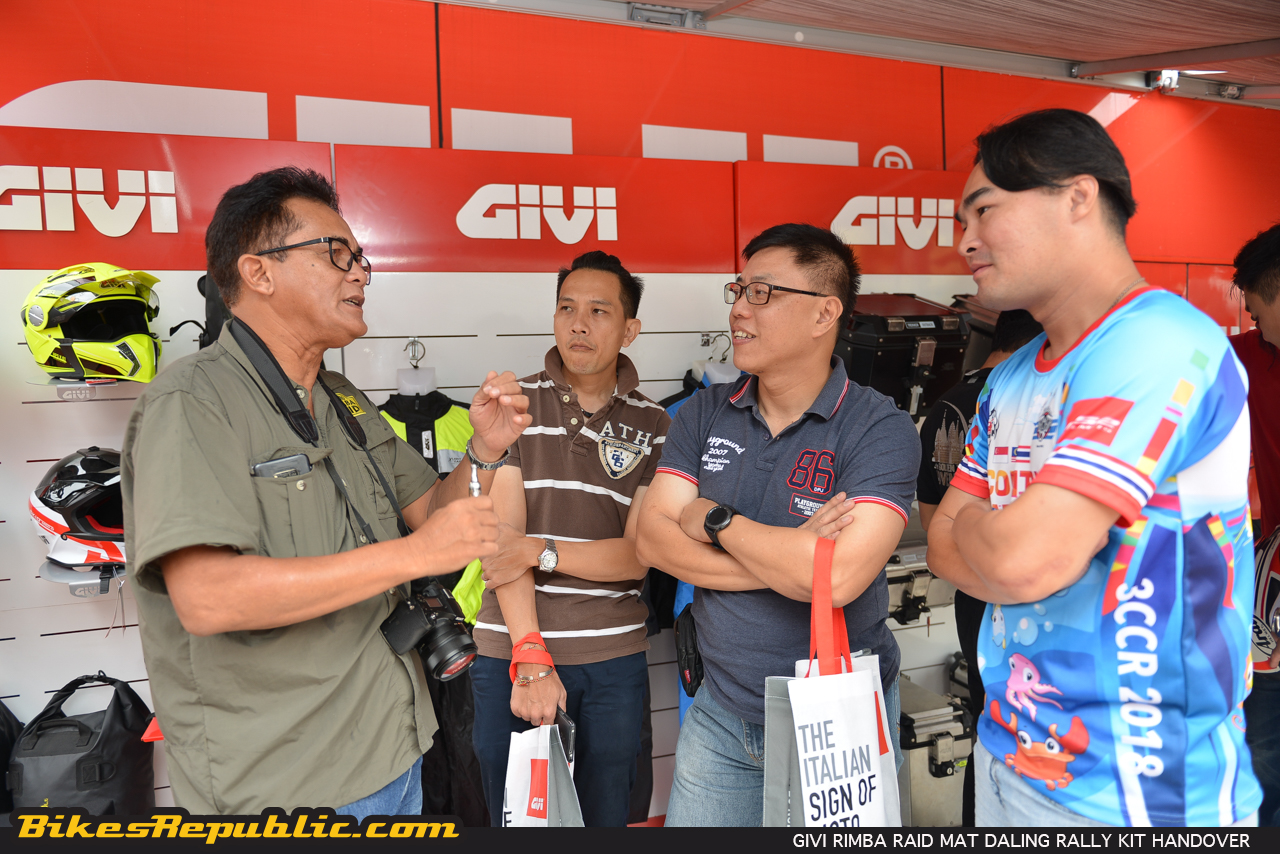
These participants were also able to view and buy some of GIVI’s latest products (at special promotions) such as aluminium cases, waterproof luggage and helmets.

Some 130 participants showed up to collect their kits by the end of the day, allowing for a smoother registration process during the rally weekend.

The event will begin from Xscape Resort Taman Negara on 6th July 2018.

About Rimba Raid

Rimba Raid started off as a group of friends organizing off-road rides into out-of-the-way places in 2015. Now boasting events biannually in Janda Baik and Mat Daling, the Rimba Raid ride/camp events promote sustainable usage of Malaysia’s rainforest treasures and aim to develop a supportive community of like-minded dual sport enthusiasts in the region.

For more information about the Givi Rimba Raid Mat Daling event, please visit the Rimba Raid Facebook page or contact Dato’ Capt. Nik Huzlan at 019 231 0005.

Contact Info

Rimba Adventures Sdn Bhd
Ph: +6013 3357334
Email: info.rimbaraid@gmail.com
Facebook: https://www.facebook.com/RimbaRaidAdv/

  • TuneBoss engine ECUs are for tuning fuel-injected motorcycle engines.

  • It is used to unlock your motorcycle engine’s true potential.

  • Now a lucky customer will walk away with a newYamaha Y15ZR.

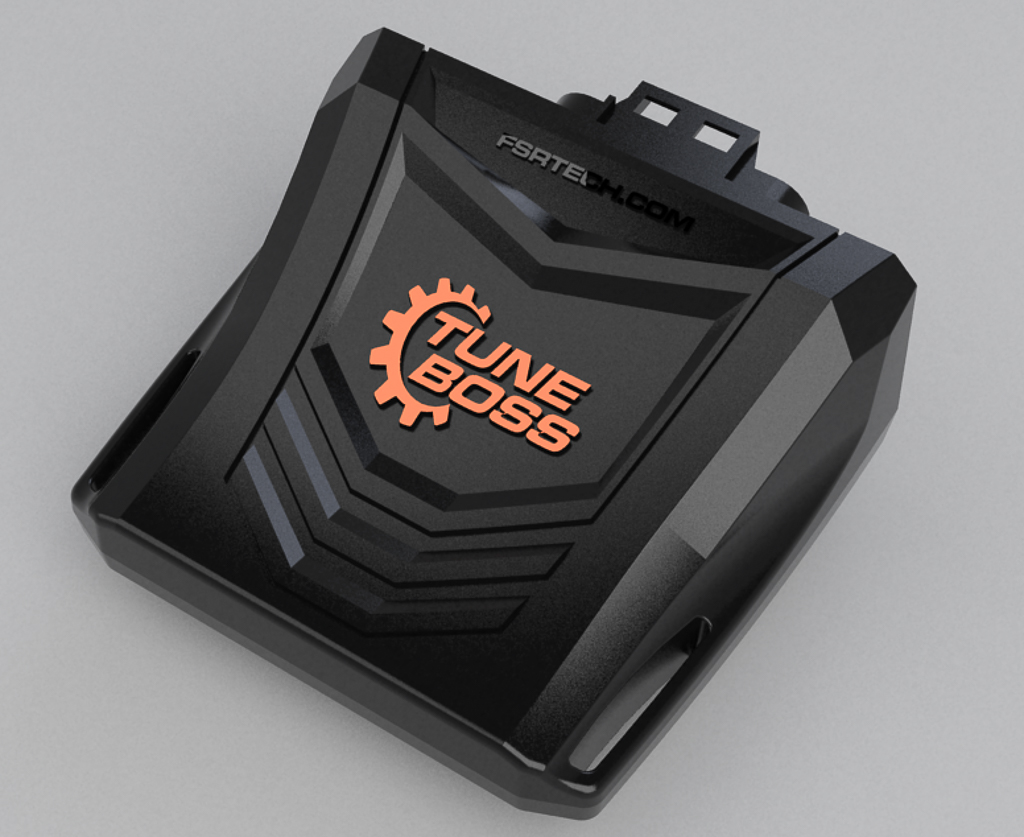
TuneBoss provides ECUs to enhance the performance of your motorcycle’s engine.

The fuel injection timing and amount, besides ignition spark timing and advance are controlled by the engine electronic control unit (ECU). While it is electronic, the tuning or more accurately, mapping has been pre-set by the manufacturer to provide compromises between outright power, fuel economy, emissions, engine longevity and other factors. It could be said that only a fraction of the engine’s full capability is utilized due to those compromises.

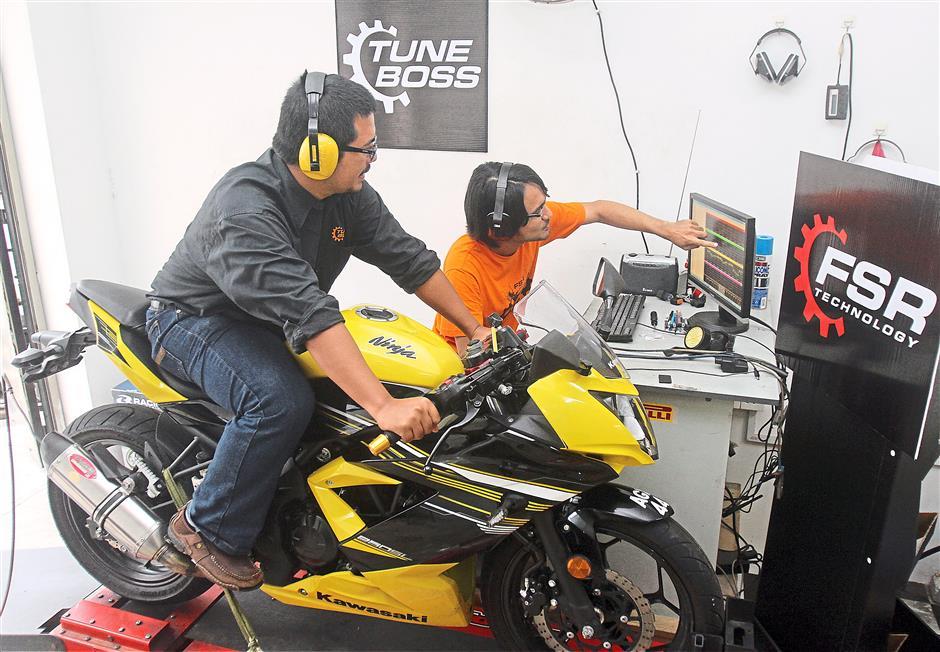
Tuning a bike – pic from thestar.com.my

In order to retune the engine, you could use performance ECUs like those from TuneBoss.

And now its creator, FSR Technology wants to giveaway a brand new Yamaha Y15ZR.

The lucky draw will be held in conjunction with the 2018 Yamaha YZF-R25 Gathering at the Speedway Plus Circuit on 7th July 2018.

All customers stand a chance to win the grand prize. To complete the entry, you only need to follow the instructions in the “TuneBoss Bike Giveaway” post on Facebook.

The winner will be randomly picked via Facebook “Live” according to the ECU’s serial number. Proof of ownership is required by providing the receipt, ECU, warranty card and the product box to prevent entry by using stolen units.

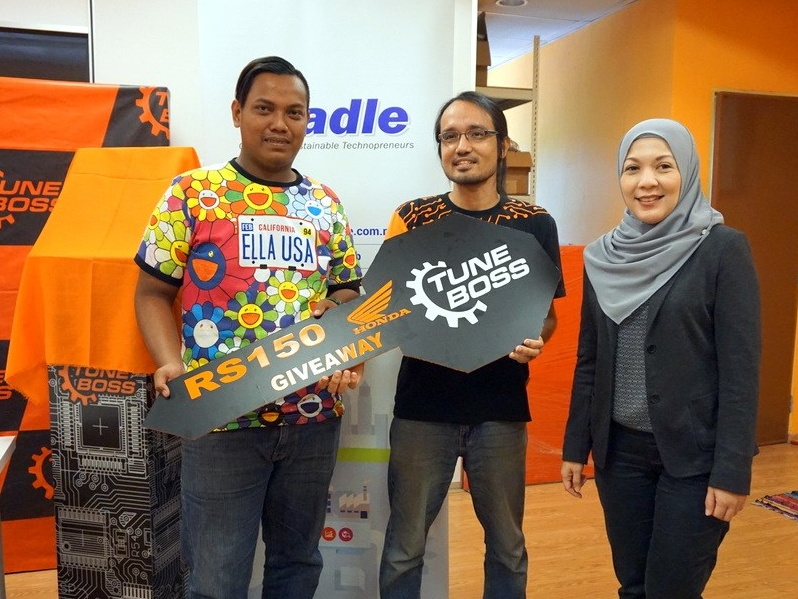
This is not the first time FSR Technology has given away a motorcycle. Last year, Muhammad Zulhanif Hamidon won a TuneBoss-equipped Honda RS150R in a competition organised by the tech company.

FSR Technology was founded in 2011 by Farhan and Sufian, both electronic engineers. Their vision is to build a company based on “Research & Development” for leading product design.

It took them three years for the R&D work to produce TuneBoss ECU which was made possible through self-financing and also supported by a development grant from the Cradle Fund Sdn Bhd, an agency under the Ministry of Finance.

For more information please visit tuneboss.co or call + 603-78315041 or drop a “Private Message” on the Facebook page. https://www.facebook.com/TuneBoss.Malaysia/

Direct link to competition post https://www.facebook.com/TuneBoss.Malaysia/posts/914116125439658

Please visit the link below for more information on the launch of their new products.

TuneBoss Launches Three new ECUs for Yamaha R25, Lagenda 115z and Honda RS150R

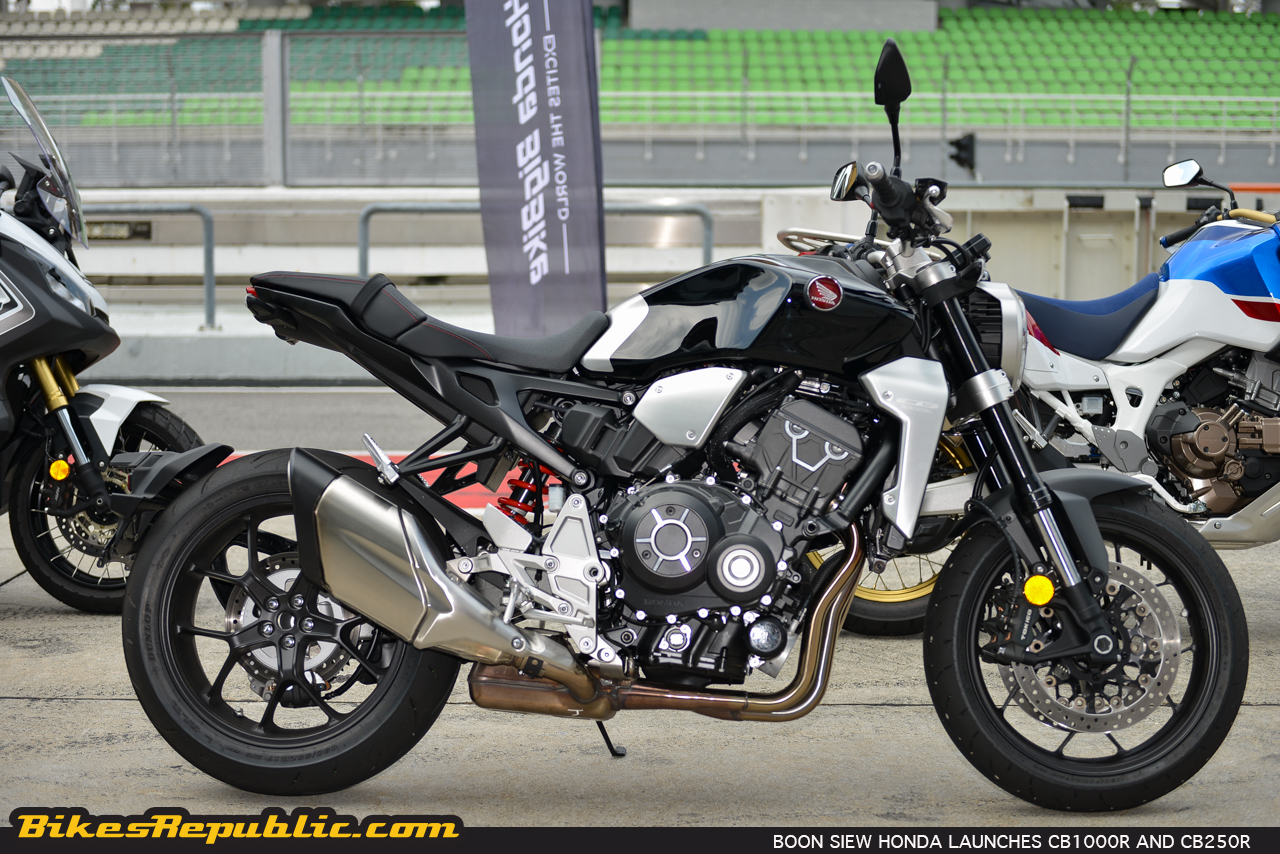
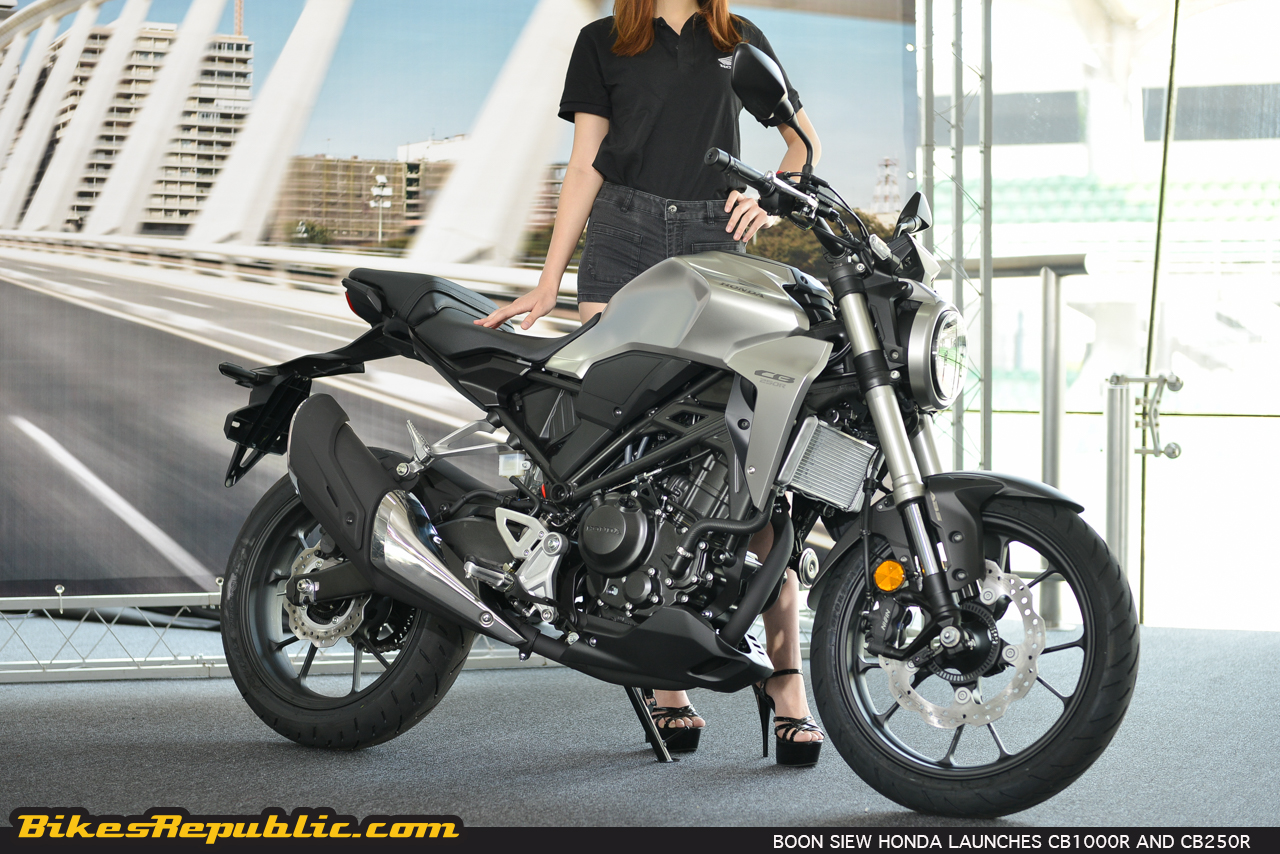
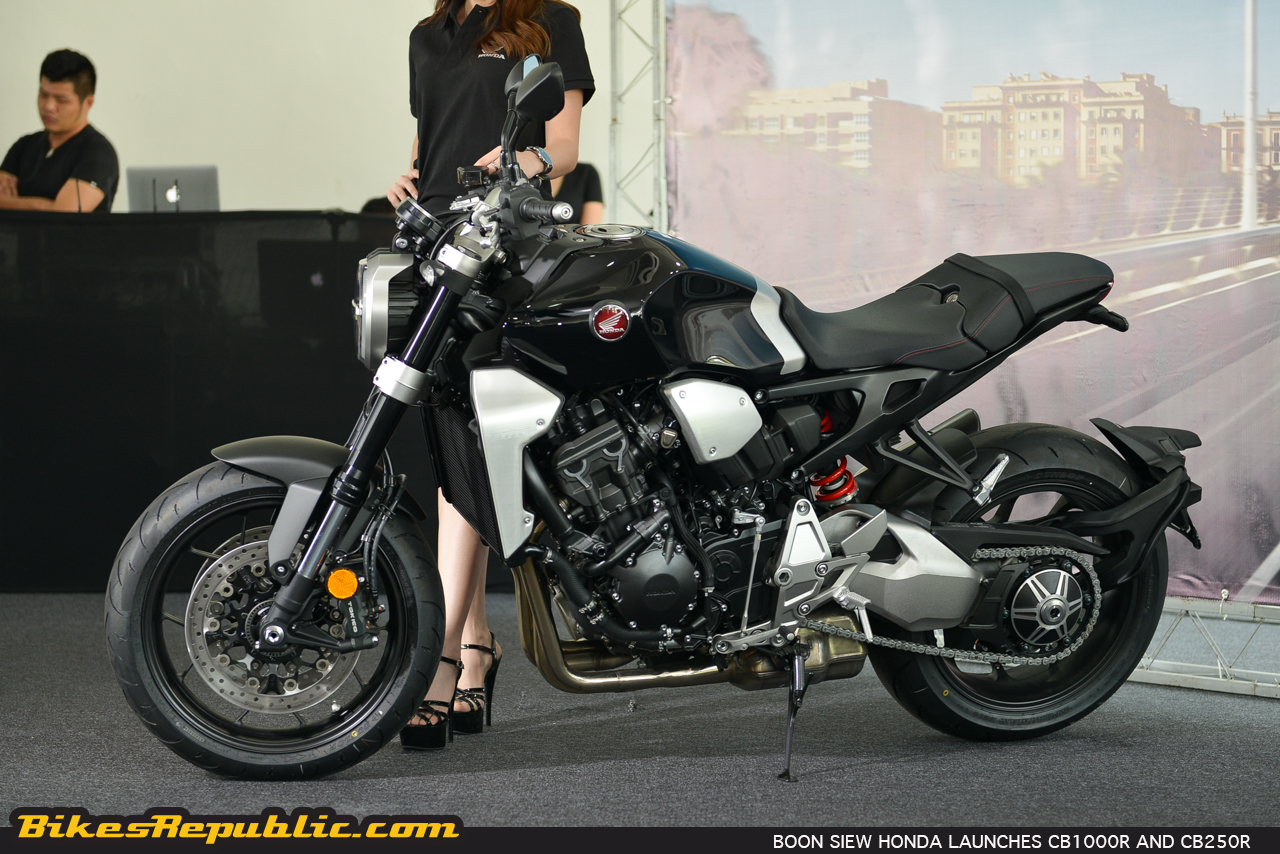
  • Boon Siew Honda has launched the CB1000R and CB250R as part of their Neo Sports Café lineup.

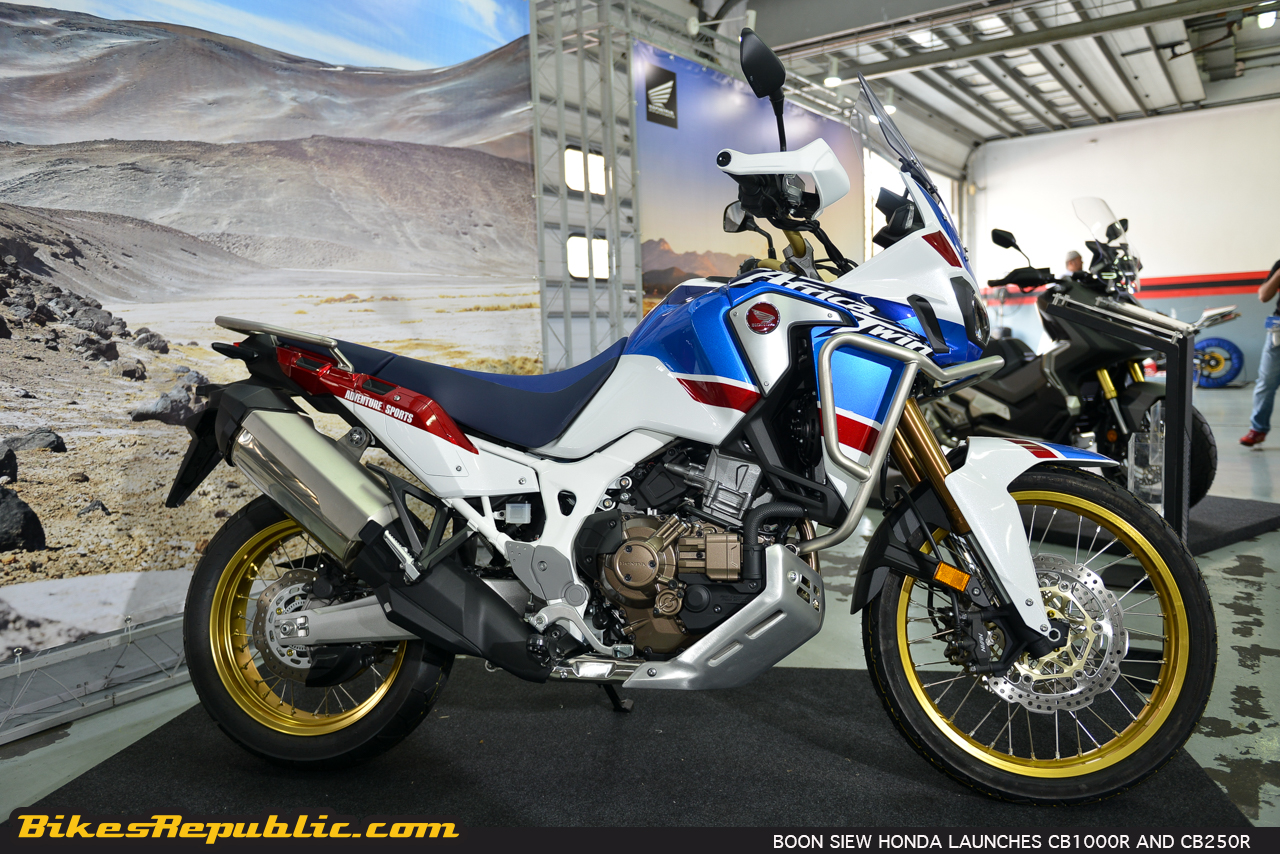
  • The two new bikes augment the X-ADV and Africa Twin as part of Boon Siew Honda’s Big Bike offerings.

  • The CB1000R is priced from RM 74,999 and CB250R from RM 22,999 (basic selling price with 0% GST).

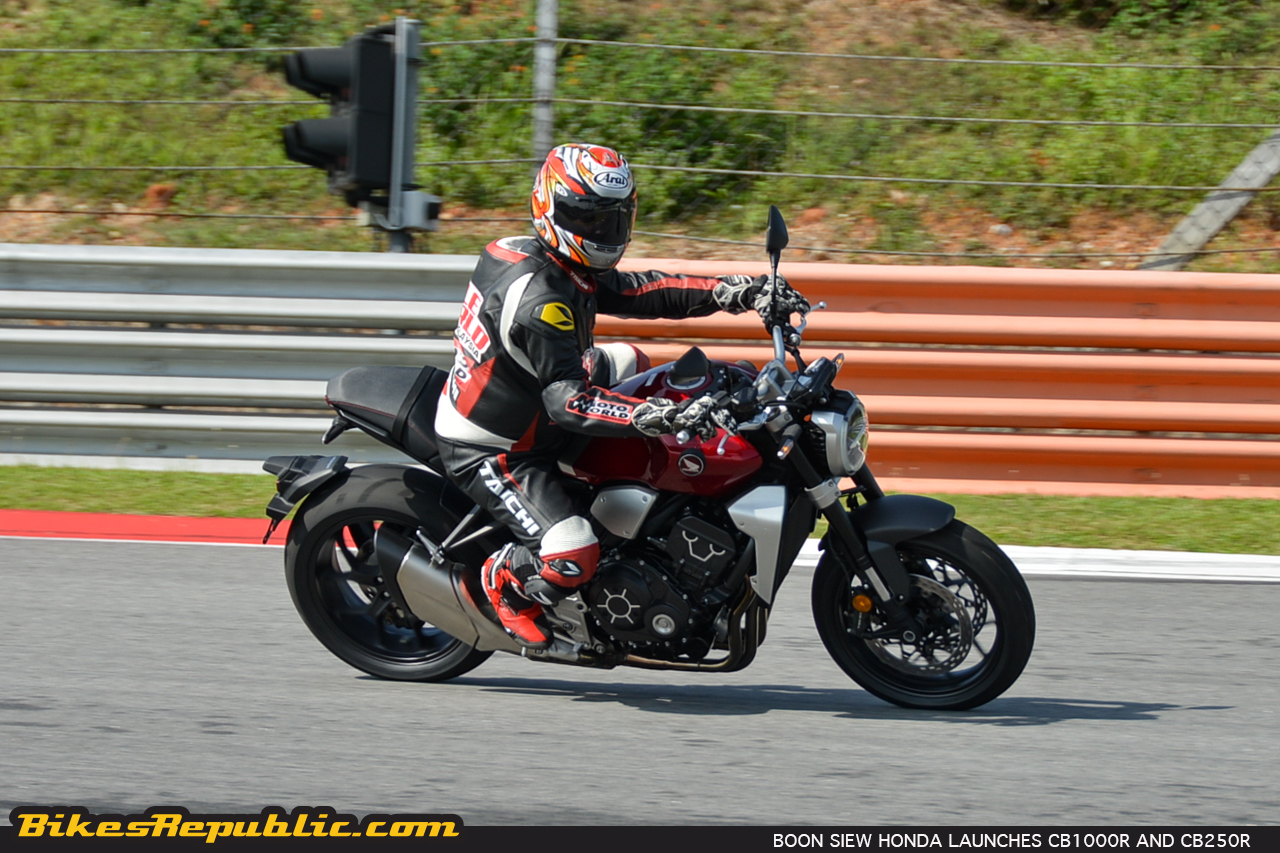
Malaysian Honda motorcycles distributor, Boon Siew Honda, has just launched the Neo Sports Café lineup – the CB1000R and CB250R.
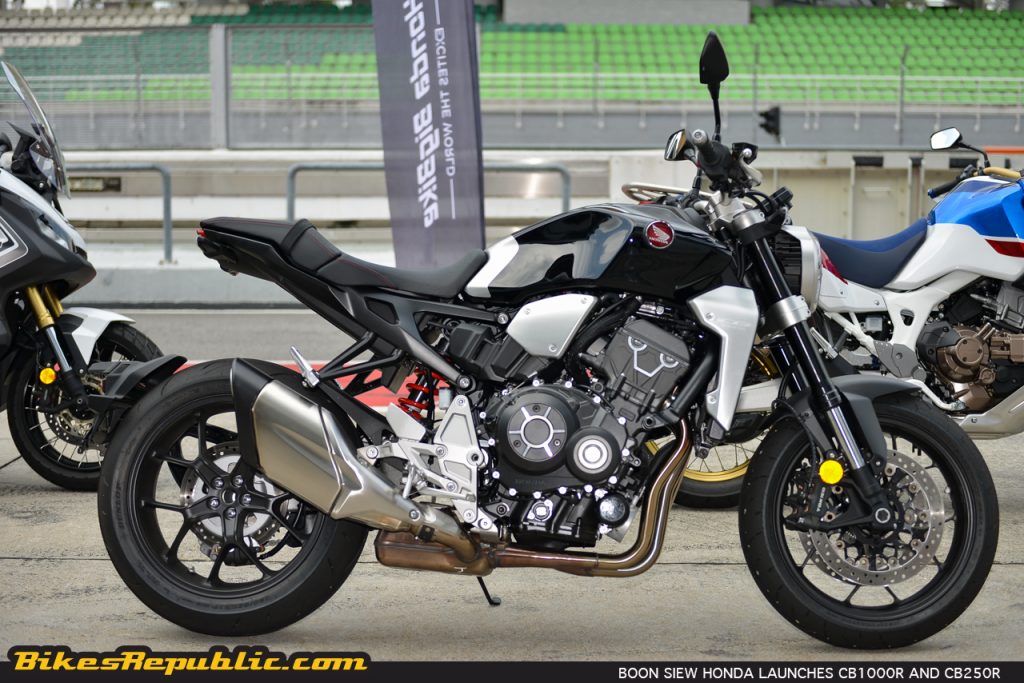
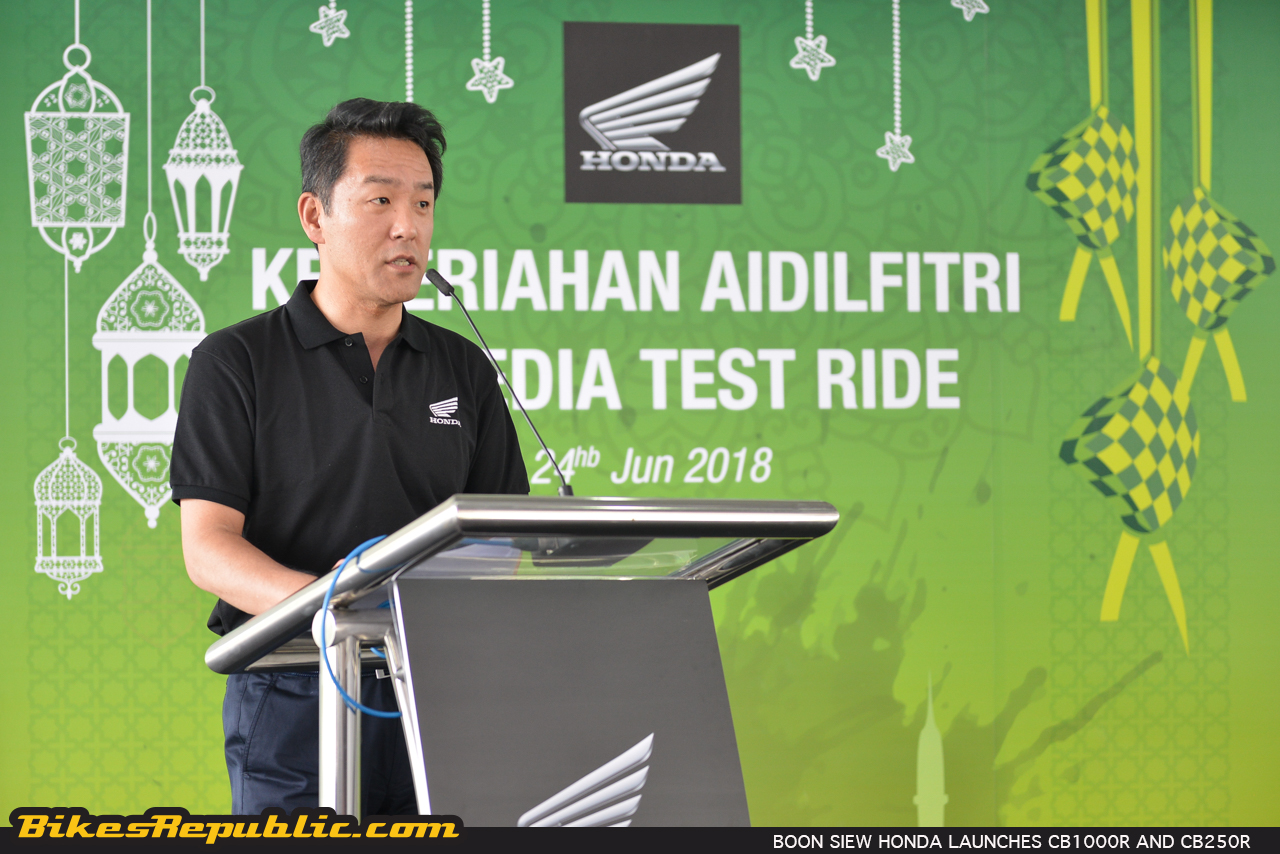
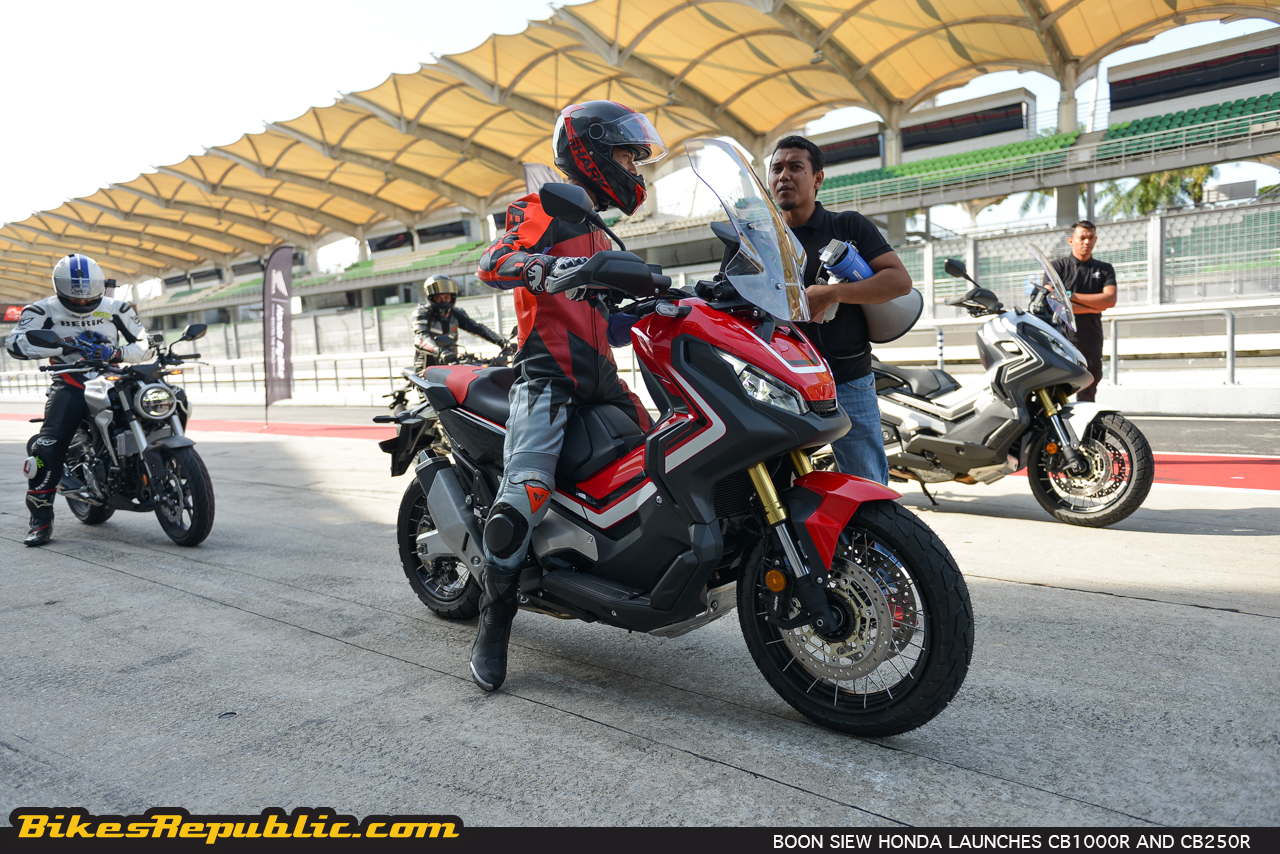
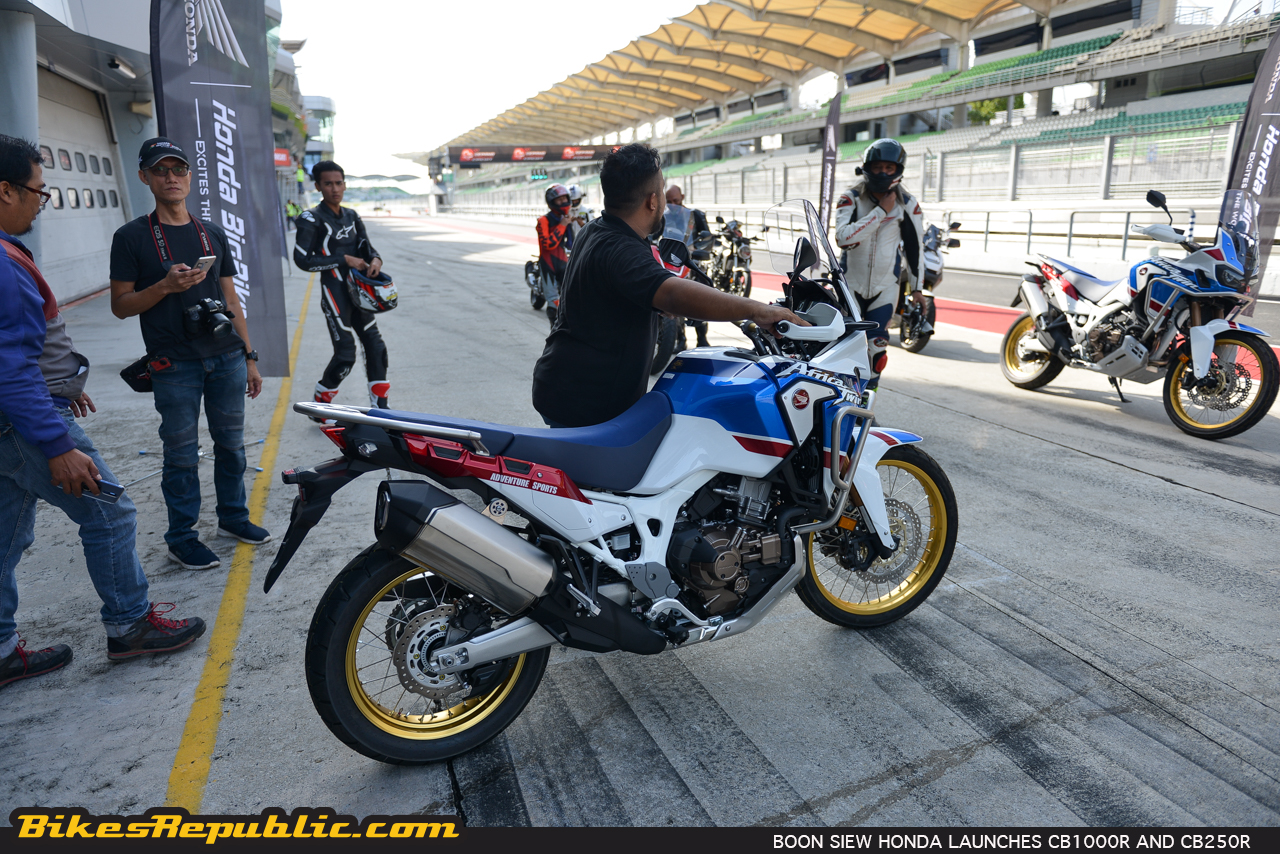
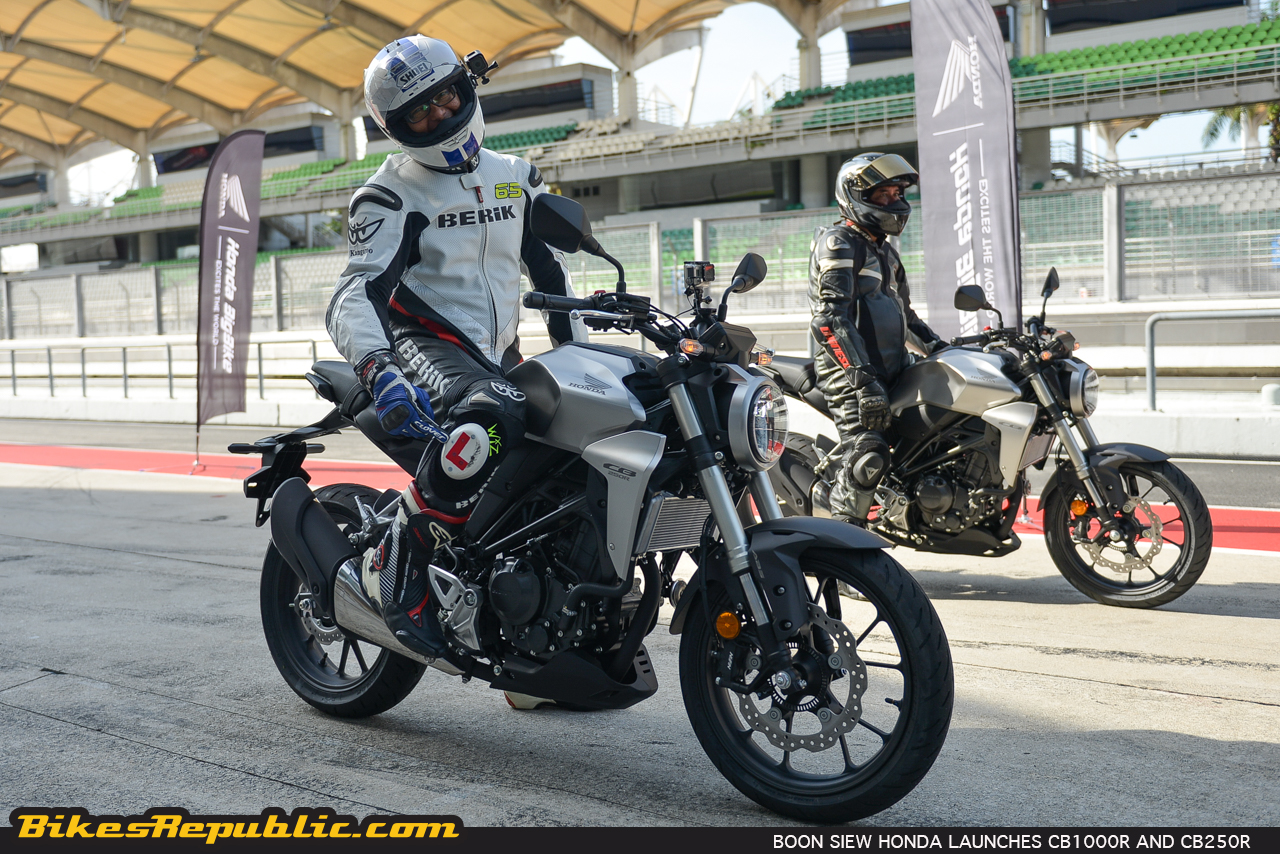
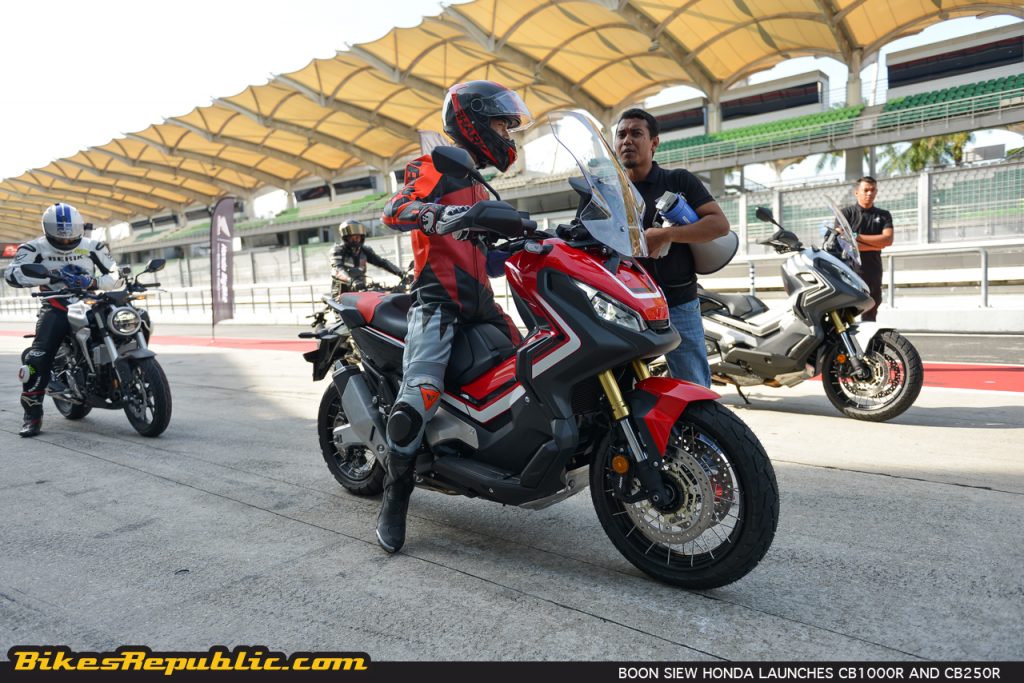
The launch event also served as an occasion for BSH to celebrate Hari Raya Aidilfitri with members of the media. It is a tradition that BSH has observed throughout the years and to spice things up even further, the media was treated to riding the CB1000R, CB250R, X-ADV and CRF1000L Africa Twin at the Sepang International Circuit.
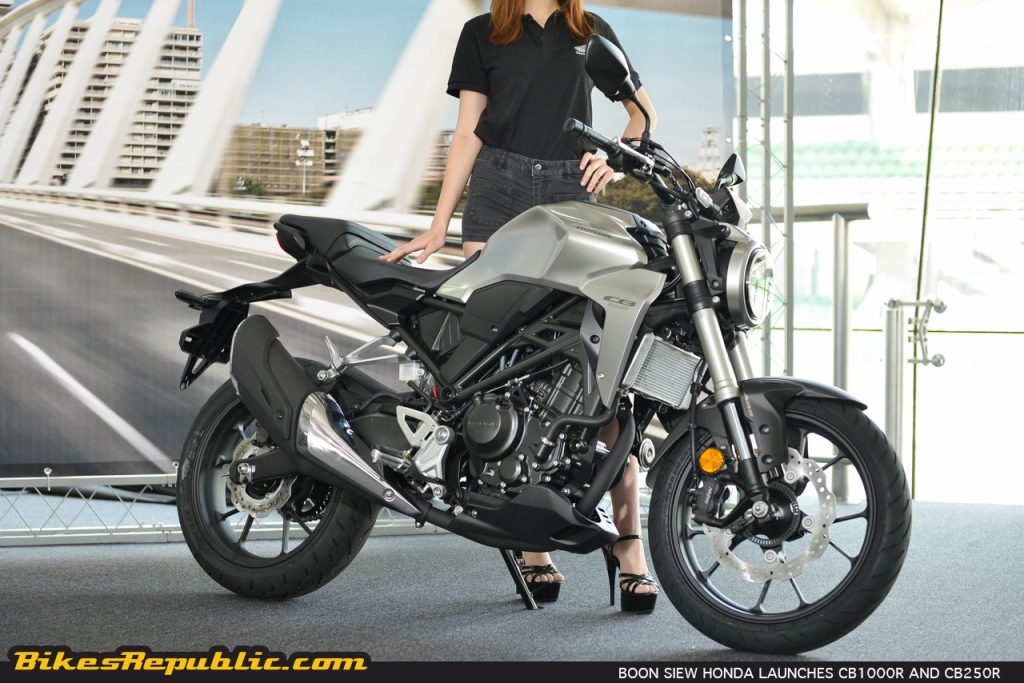
In his speech, Mr. Keiichi Yasuda, Managing Director and Chief Executive Officer of Boon Siew Honda revealed that the company had received overwhelming response for the Africa Twin and X-ADV – which became the catalyst to introduce the Neo Sports Café bikes.
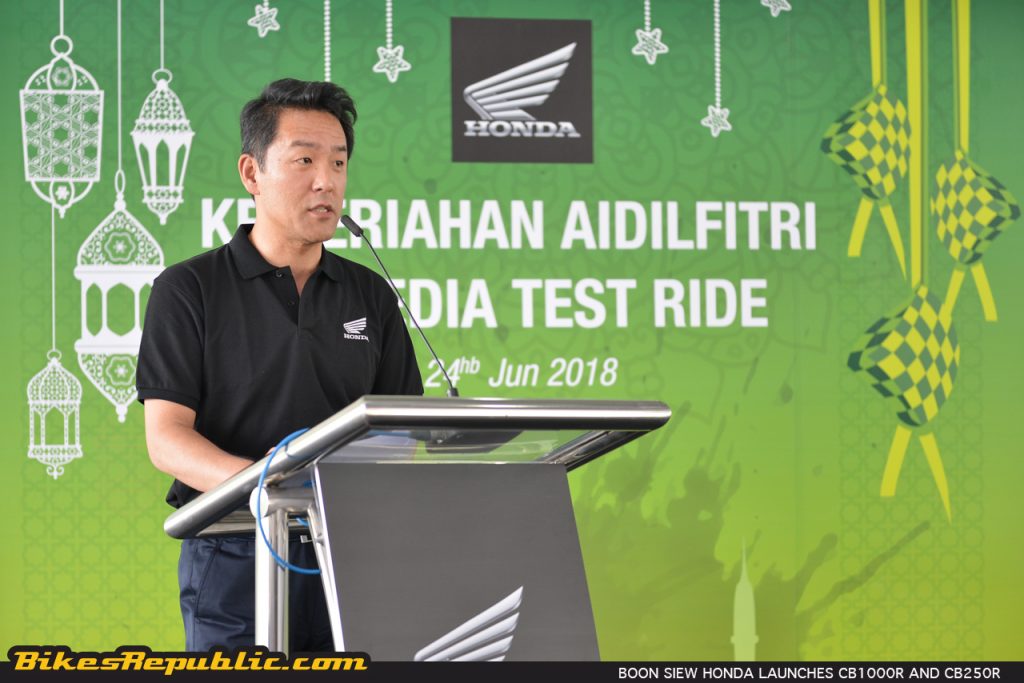
Safety briefings from both BSH’s riding instructor and SIC’s clerk of course followed Mr. Yasuda’s speech and we were then ushered to the paddock downstairs for a short product introduction and briefing.
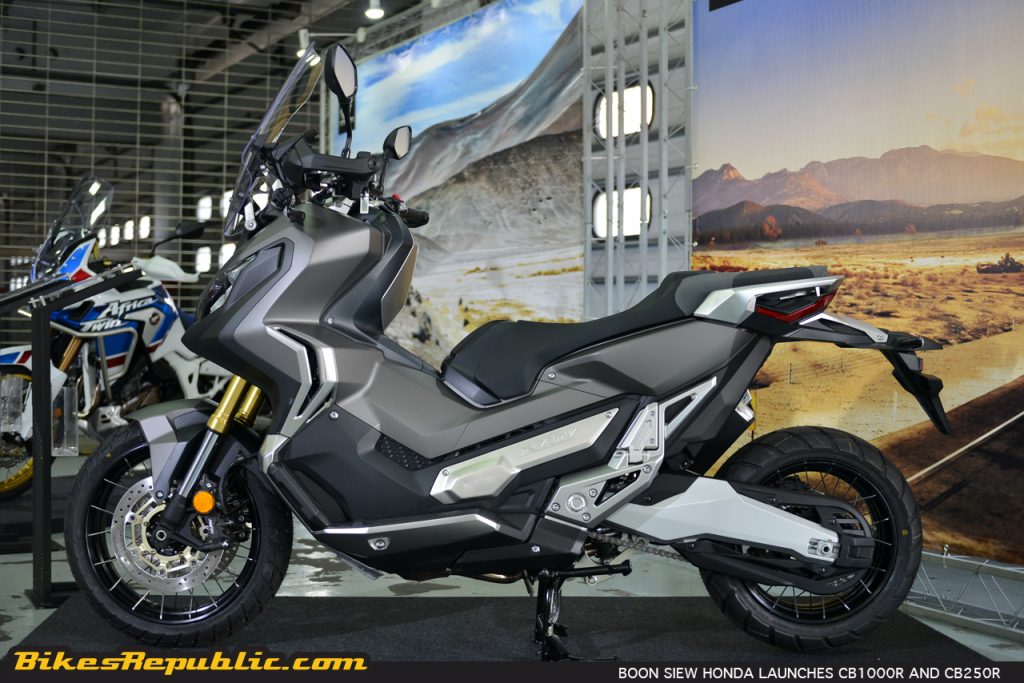
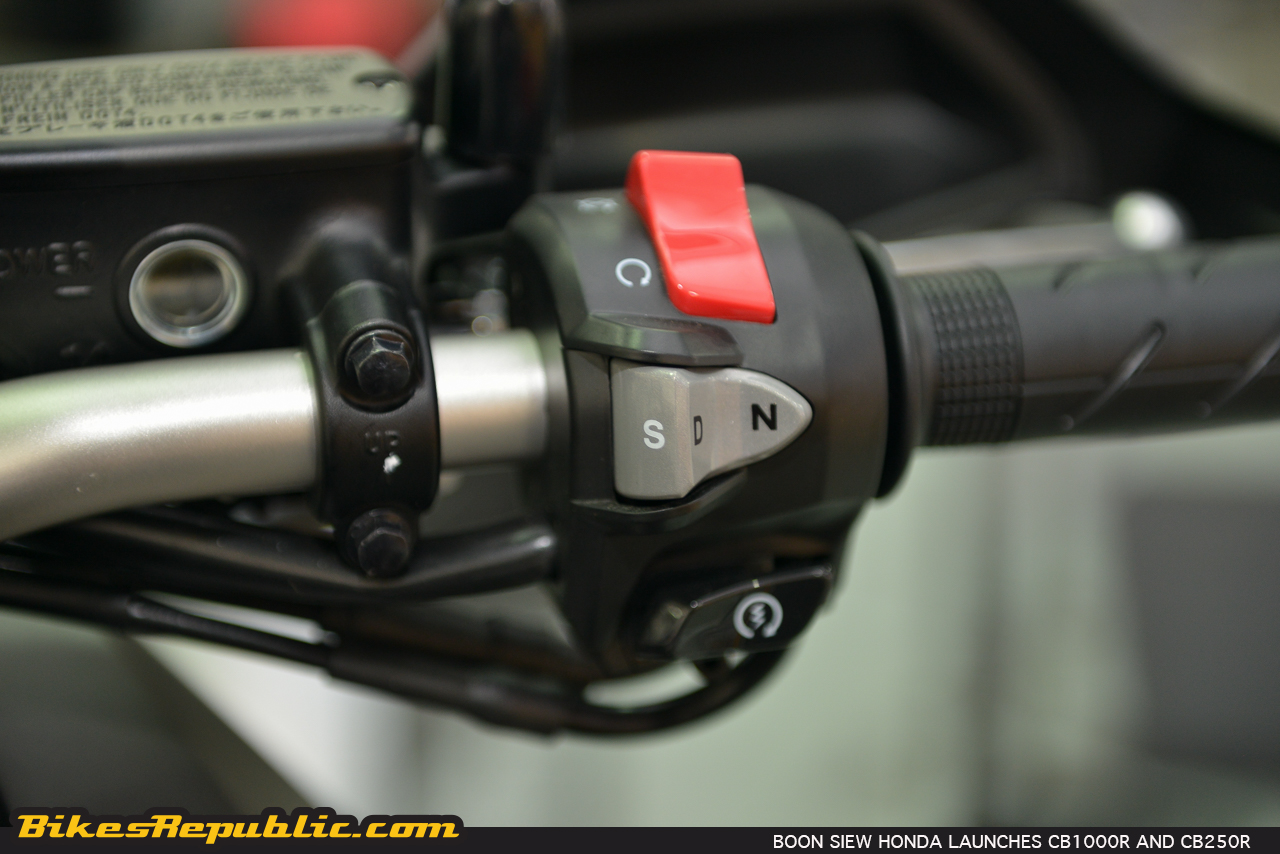
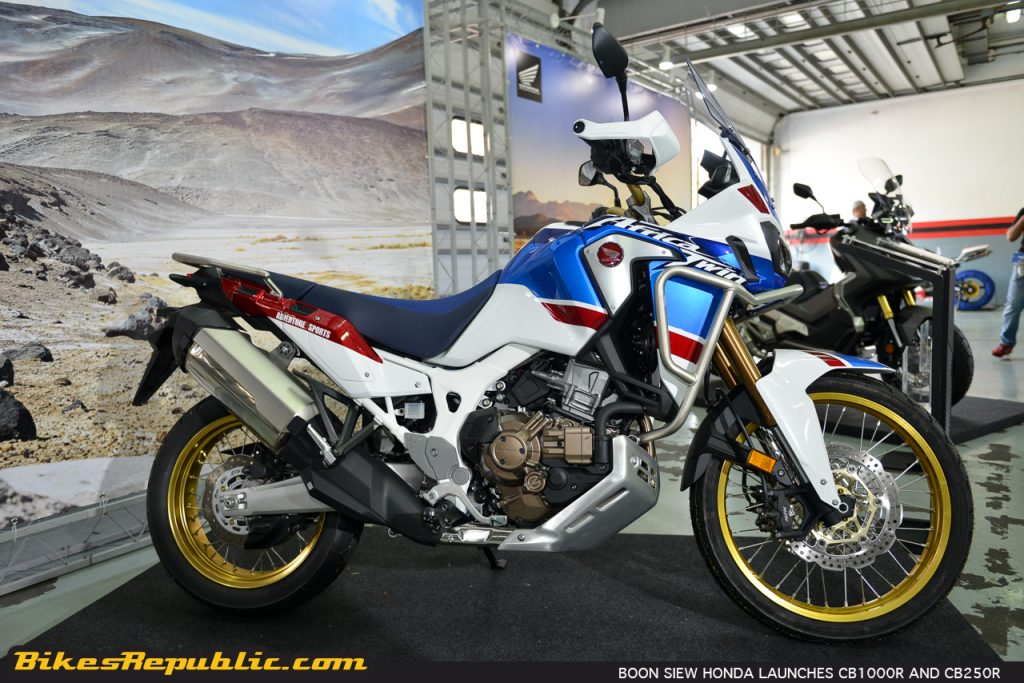
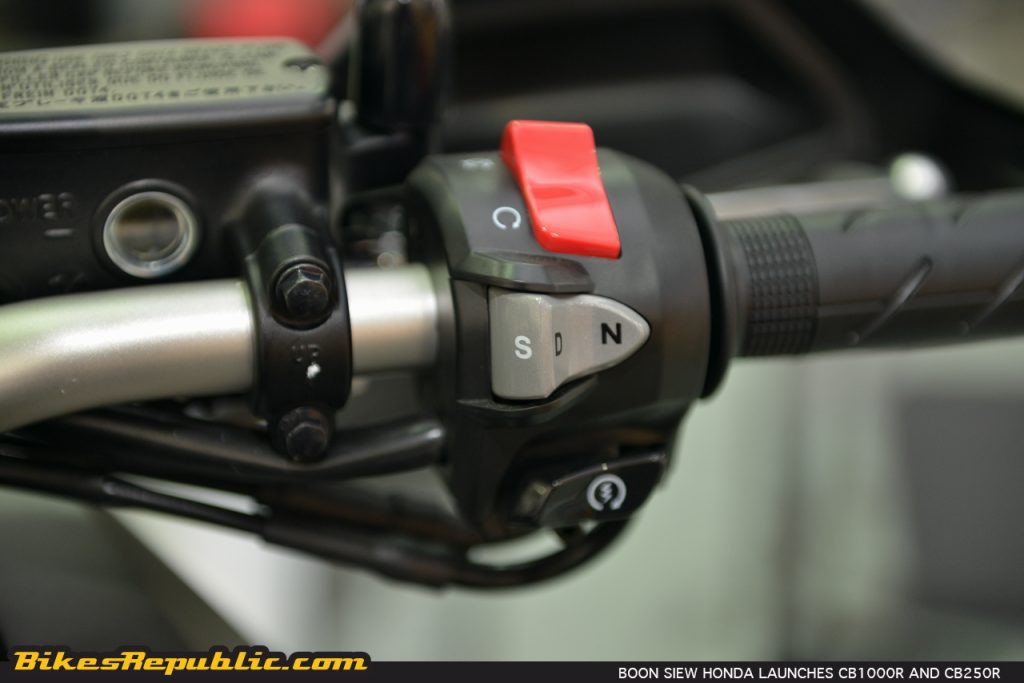
The briefing centred primarily around the Africa Twin and X-ADV as they were both with Honda’s proprietary Dual-Clutch Transmission (DCT). The DCT on both bikes could perform as fully automatic, more “aggressive” SPORT auto and manual by way of push buttons on the left handlebar.
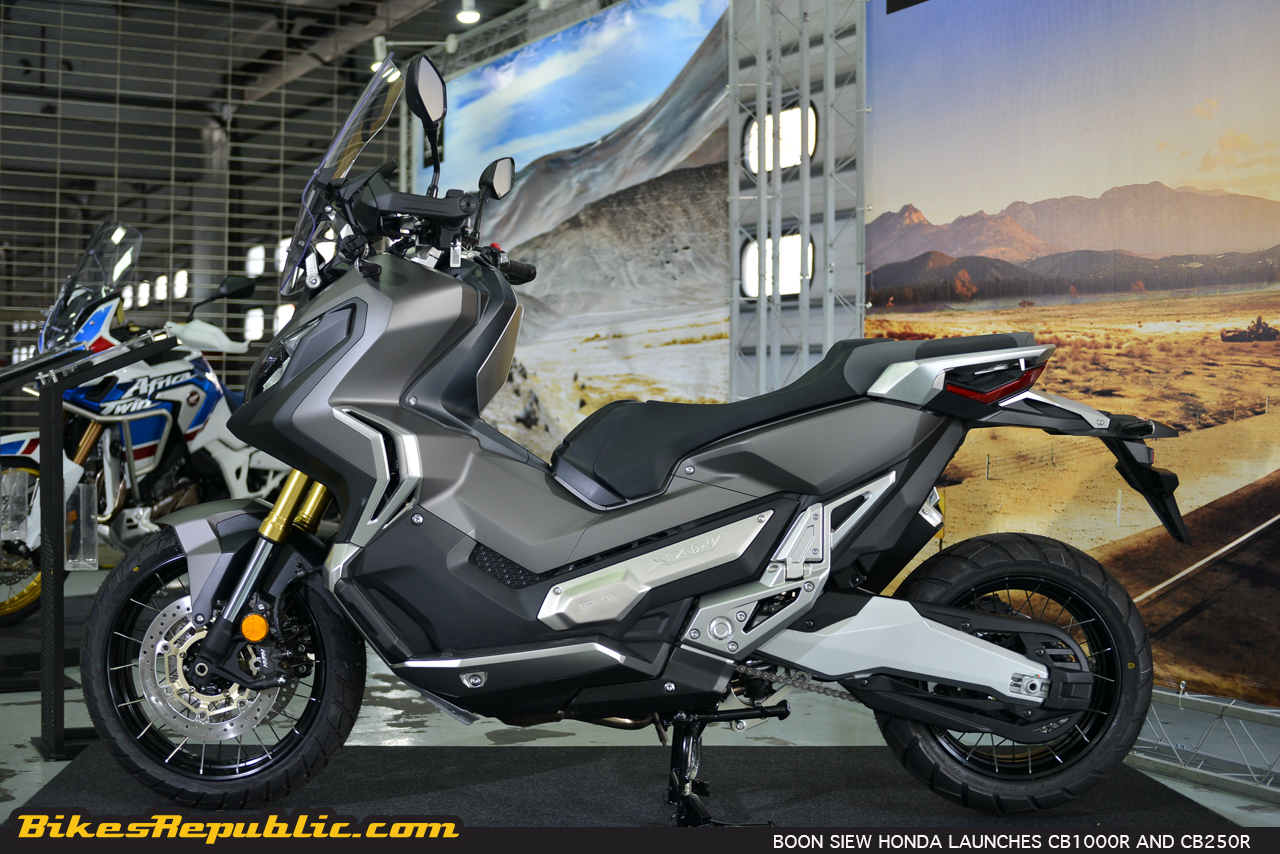
X-ADV

I drew the X-ADV on our first trip out. I had ridden this bike around in Pattaya, Thailand and found it to be superb around the congested city. I left the transmission in “D” (for “DRIVE” as in fully automatic just like in a car) while I concentrated on navigating through heavy traffic and throngs of tourists.
Of course, it looks like scooter with some offroad capability thrown in, but truth is, the X-ADV is a motorcycle of a different concept. It’s a bike that’s meant to go anywhere and does it in seamless fashion. Honda’s copywriting blurb says that it’s “A motorcycle that thinks it’s an SUV.”
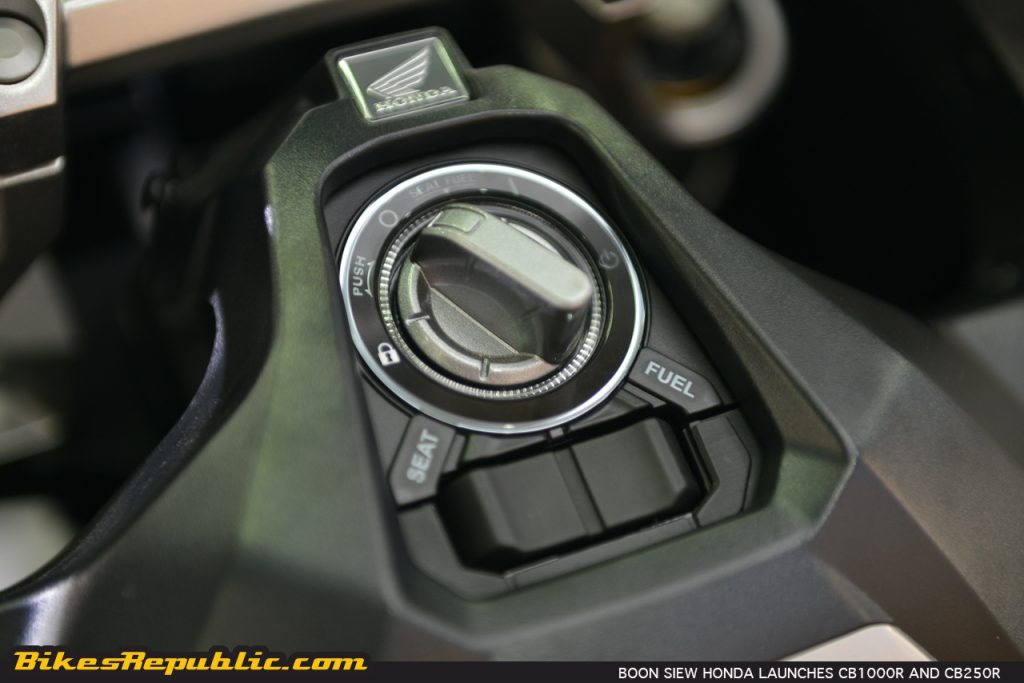
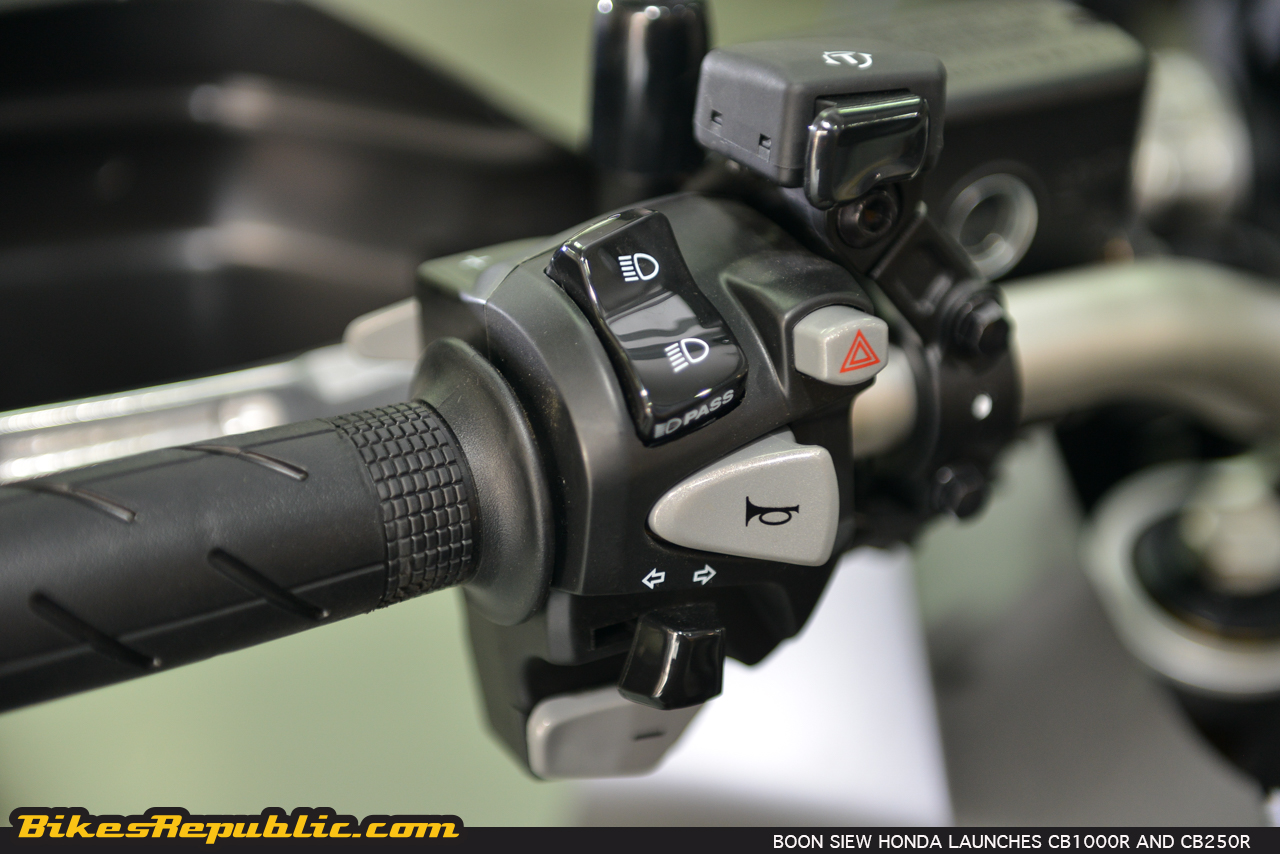
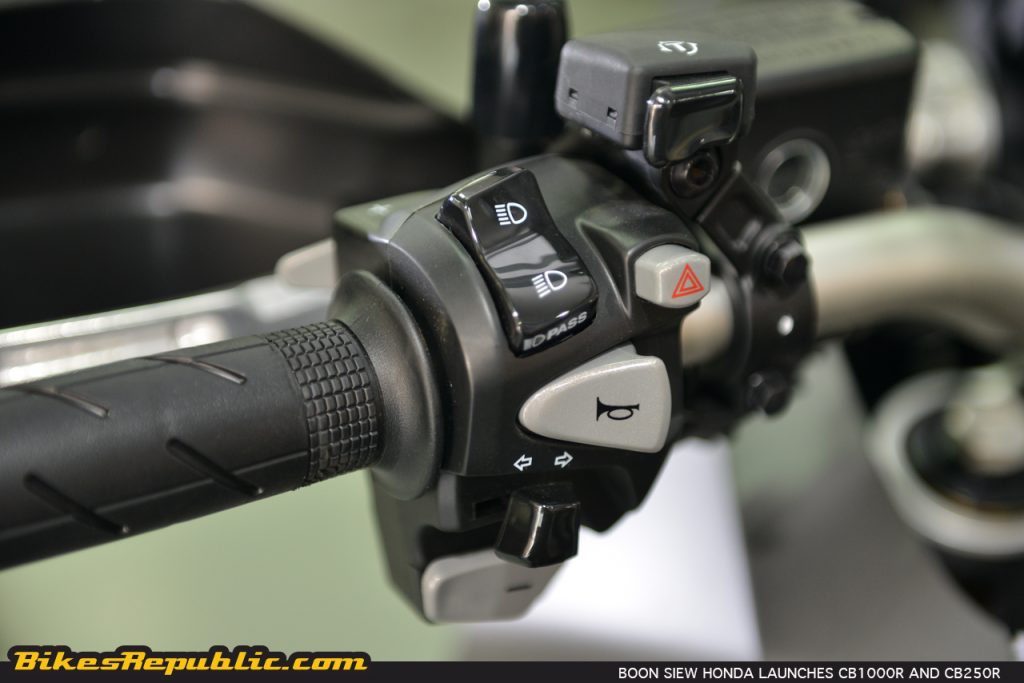
Since we were given only three laps per bike here at SIC, I decided to just keep in “D,” too. Well, it was also because I kept finding the horn button through my race gloves, instead.

Out of the pits and into Turn One, the X-ADV felt strange initially. It turned out that I was trying to trail brake into the corner.
Anyhow, it didn’t take long to learn the bike and I was already speeding into Turn Five with the throttle held open. But when I let of the gas to set up for Turn Six, the transmission downshifted almost imperceptibly, and I had the right amount of power at the exit.
It was just a seamless piece of cloth as I blasted down the front straight (it’s a 750cc bike, by the way). The brakes were superbly strong as I braked for Turn One. It was as easy as that. The X-ADV touched down its centrestand through Turn Two but there was lots of cornering clearance, overall.
And it’s NOT a scooter!

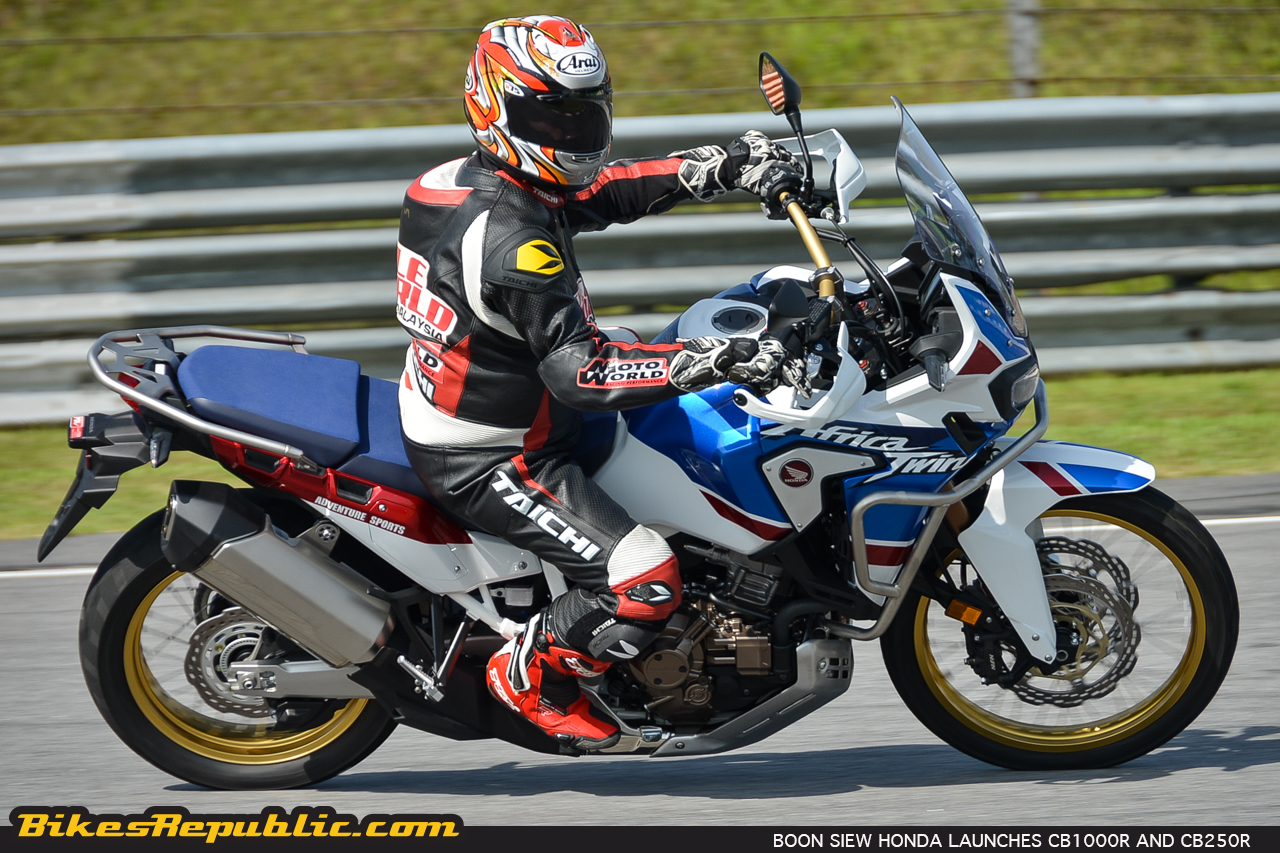
CRF1000L AFRICA TWIN

Just like the X-ADV, I’ve also ridden the ‘Twin before but that one had a “normal” gearbox. The first thing I noticed about this one was the low seat height which took me by surprise.

Then I did a noob thing: I tried to grab the “clutch lever” but it was waaay further than the reach of my fingers. The group was about to leave the pits, so I waved my arms around like one of Caesar’s friends (as in Caesar in Planet of the Apes). The Honda guys ran over and stifled their laughter as they told me, “That’s the parking brake for uphill.” Ooooh-kaaay.
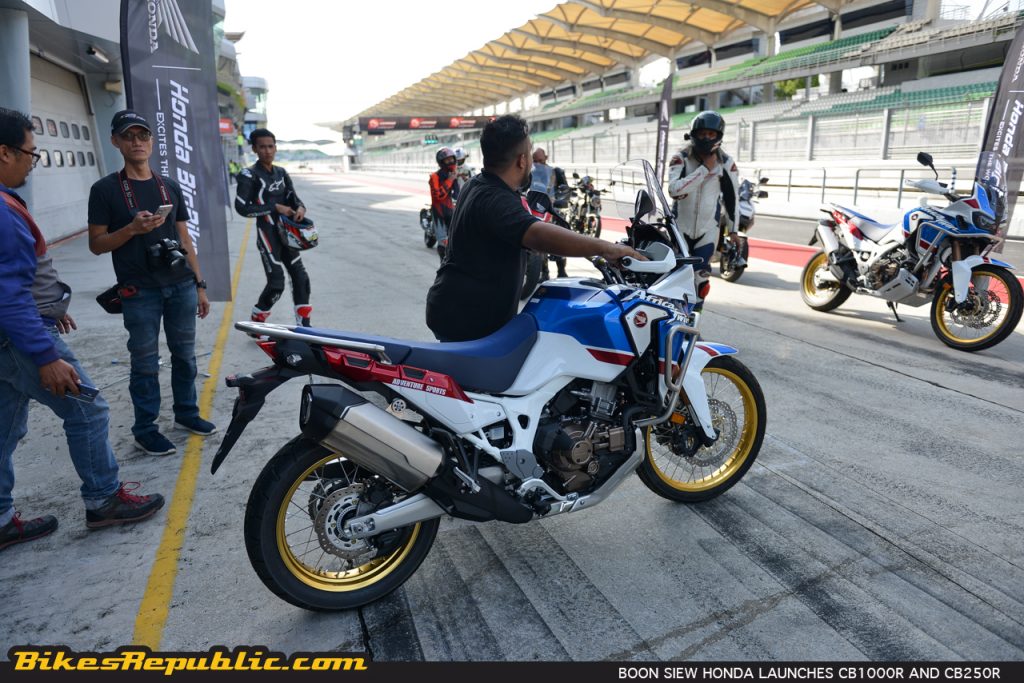
Now, a noob thing #2. I started searching for the gear pedal. The same guy saw it and told me to shift using the up and down buttons on the left switch cluster. I tried dabbing at them with my stiff gloves and found the horn again. So, yes, I decided to leave it in D.

The Africa Twin may have more cc’s than the X-ADV but it got going a lot smoother. The suspension was also much softly damped and I could feel that as I started braking for Turn One. However, while I could feel the rear swingarm moving up and down to cope with the cornering forces, the good news was the bike didn’t wallow like an old KL taxi.
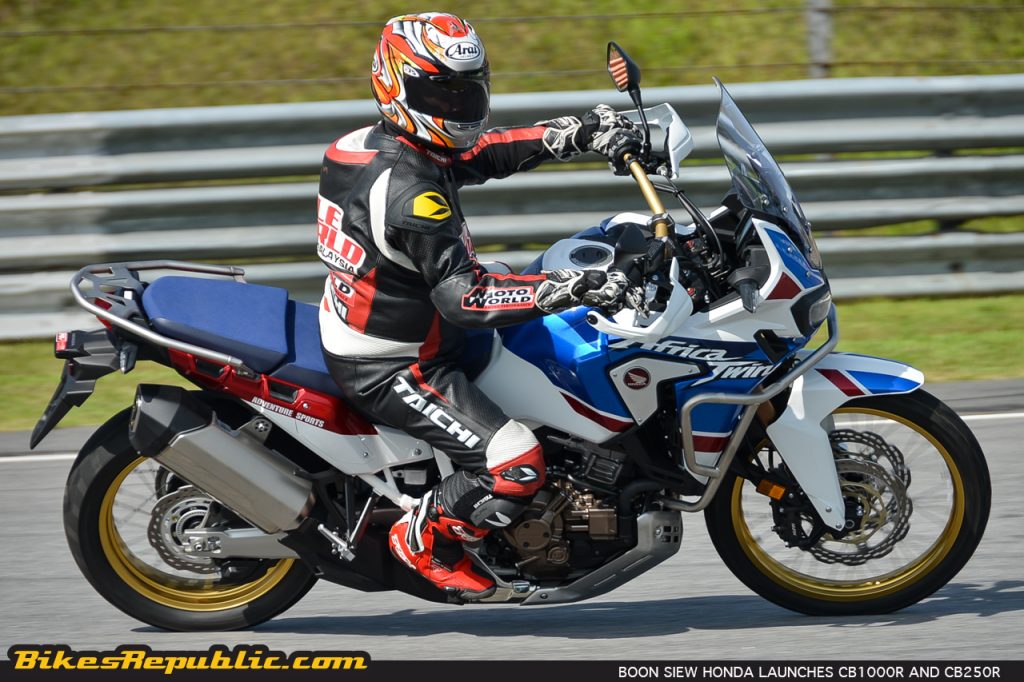
Riding the Africa Twin with DCT was so easy perhaps anyone could do it. Accelerate, brake, turn, repeat.

Through this first experience, I could safety assume that the bike was geared mainly for the dirt, hence the soft suspension. Its power character was also on the softer and smoother side. Not that you couldn’t push it on tarmac, but it kind of defeats the bike’s real mission in life. As for the DCT, it should take the workload off the rider while he concentrates on negotiating the trail.

Please click on the link below for the prices of the X-ADV and Africa Twin.

2018 Honda X-ADV & Africa Twin prices announced! From RM57,999

CB1000R

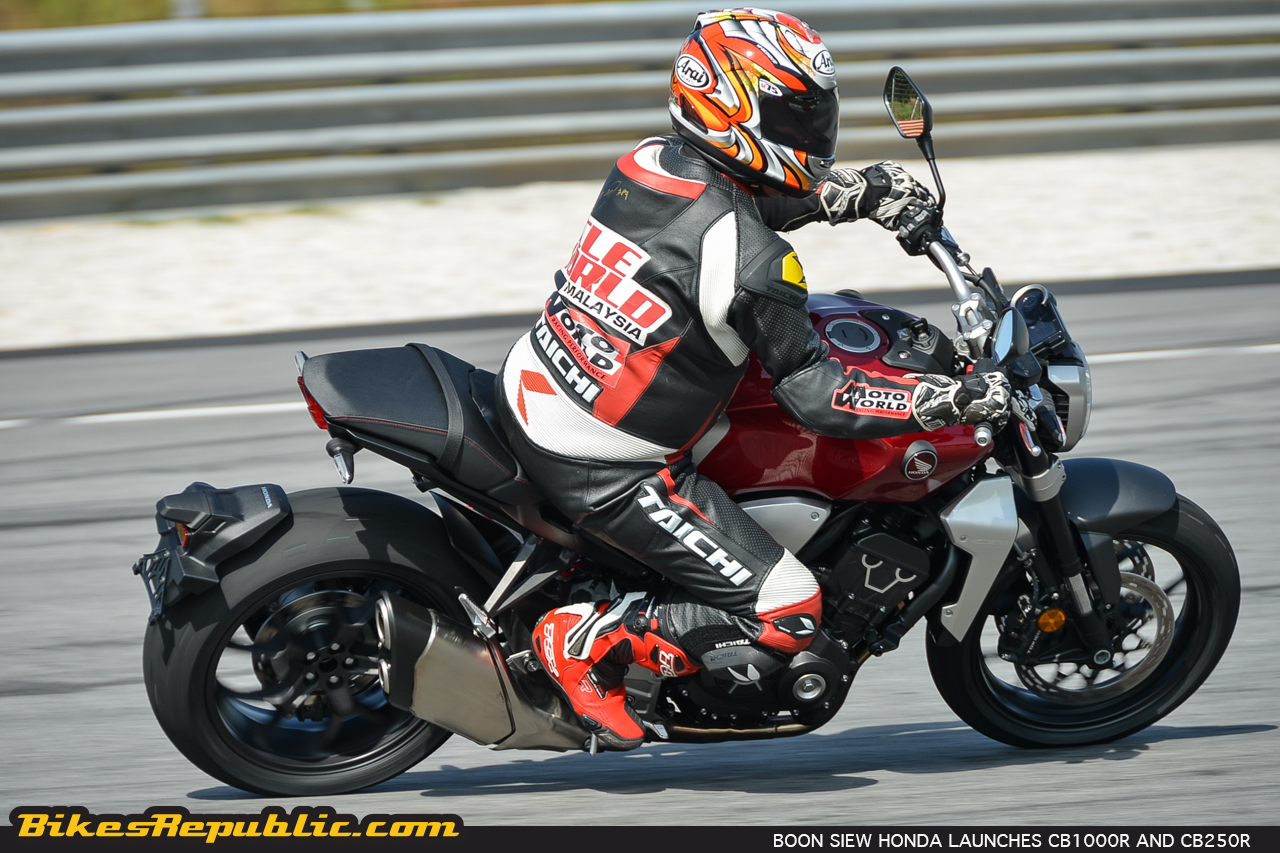
Now, we’re talking! VROOOM! VROOOOM! Yeah, heh heh. The exhaust note was raunchy enough it could be heard through my Arai and racing earplugs. It’s probably one of the few bikes which the owner doesn’t have to bin the stock exhaust.

The styling was definitely a funky mix of new and old elements, hence Neo Sports.
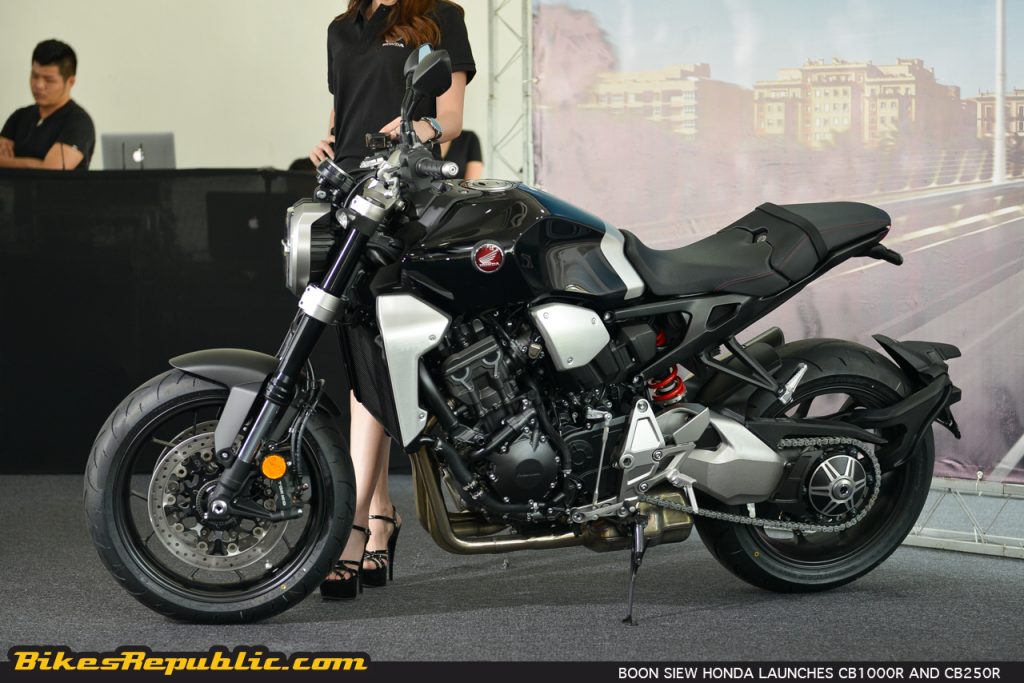
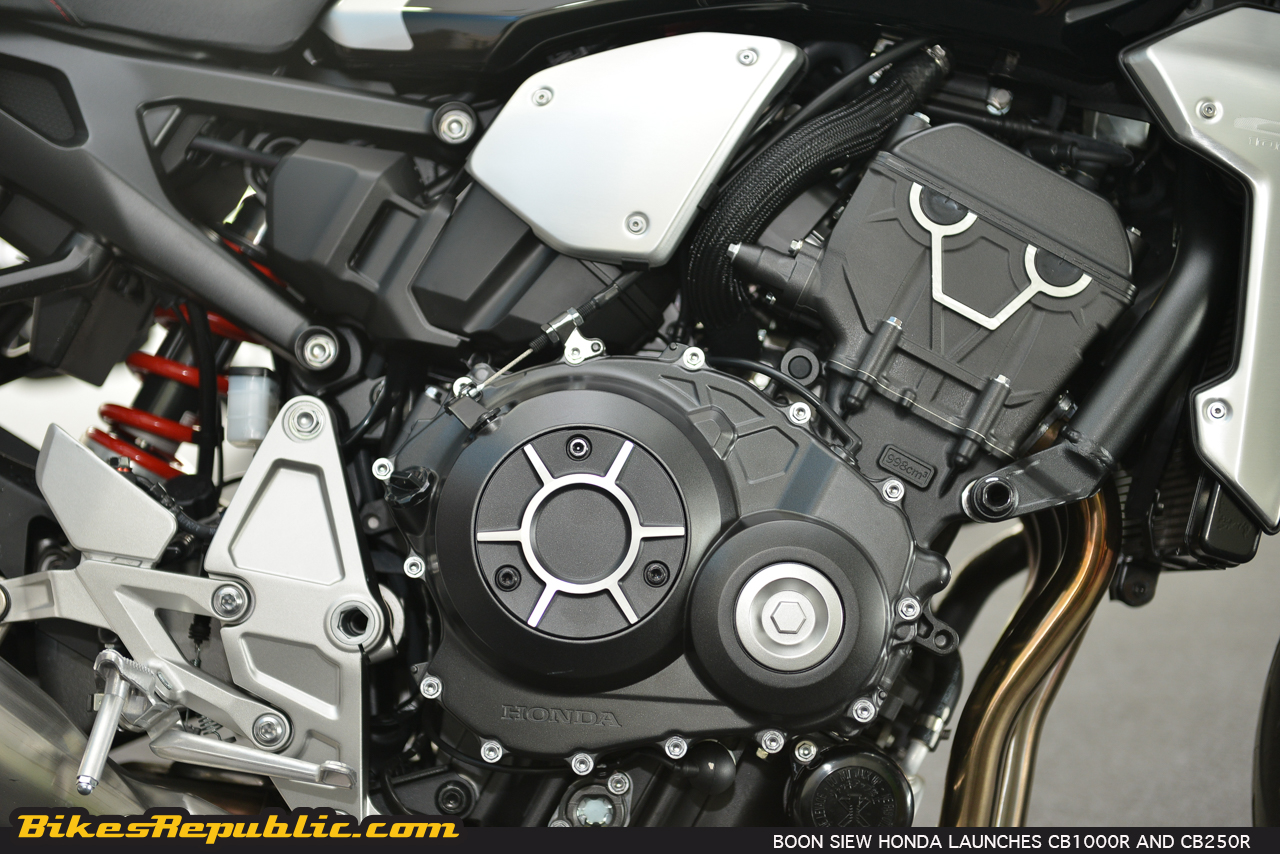
The engine is derived from an old CBR1000RR Fireblade and has a longer stroke. It produces 143 bhp at 7500 RPM and 104 Nm of torque at 8250 RPM.
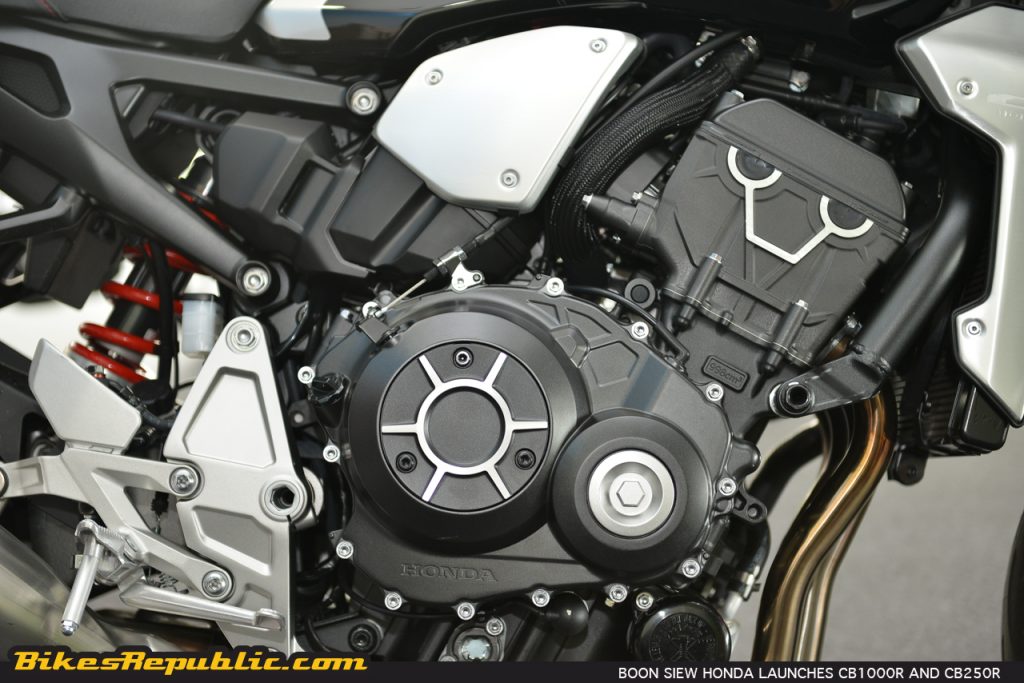
In SPORT mode, the bike charged ahead but it did so very smoothly. Its engine braking was equally as smooth without robbing you of corner rolling speed. The suspension and seat were equally comfortable.
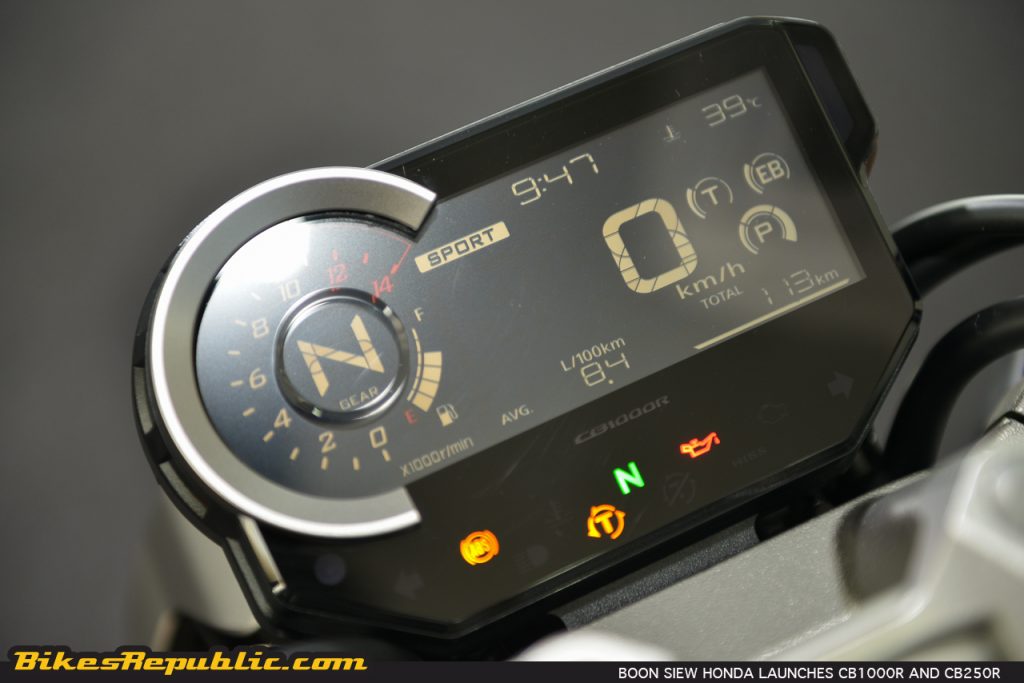
Despite being comfy, the CB1000R could be hustled through corners with ease, even at the narrow Turns Two and Four. It flicked over with hardly any steering input.
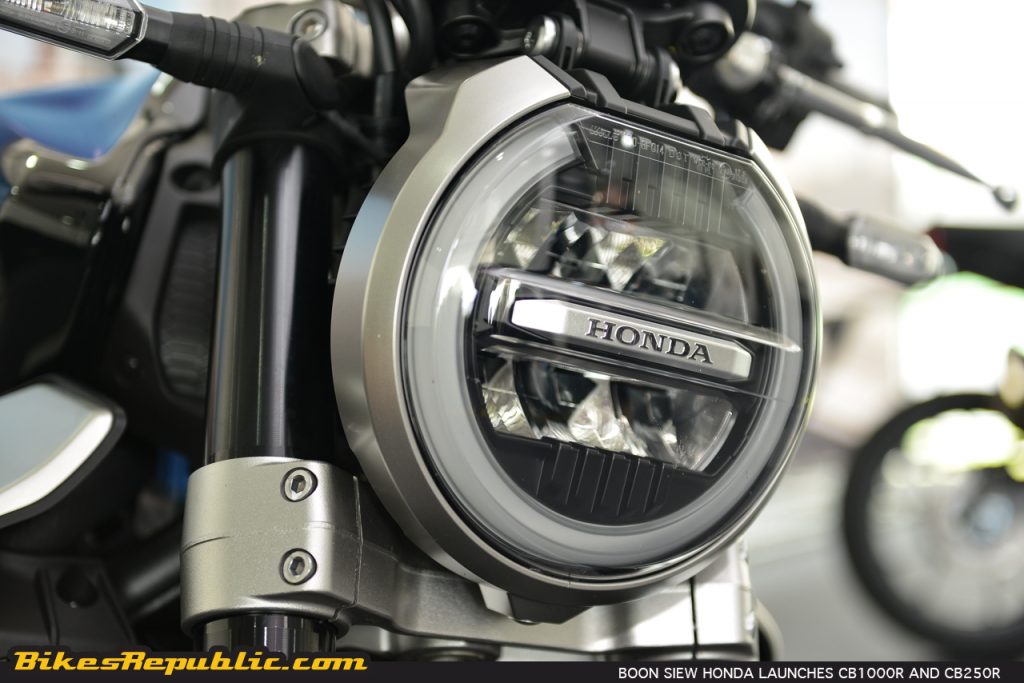
But it did fly down the straight. Braking hard for Turn One, I was surprised to find a lack of fork dive. I only found out later that the forks are Showa’s new Separate Function Fork – Big Piston (SFF-BP).
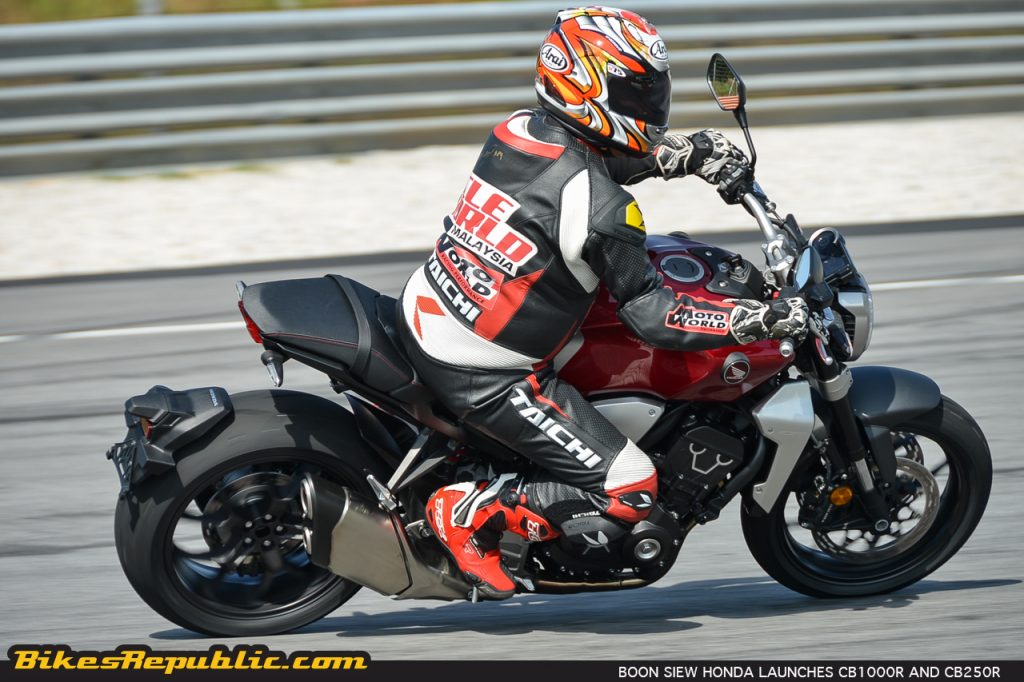
I was just starting to have fun when Ahmad Zakhwan, our lead marshal waved us into the pits. Sheesh.

CB250R

This is gonna be awkward, I thought. I should’ve started on this one instead of the progressively bigger bikes.
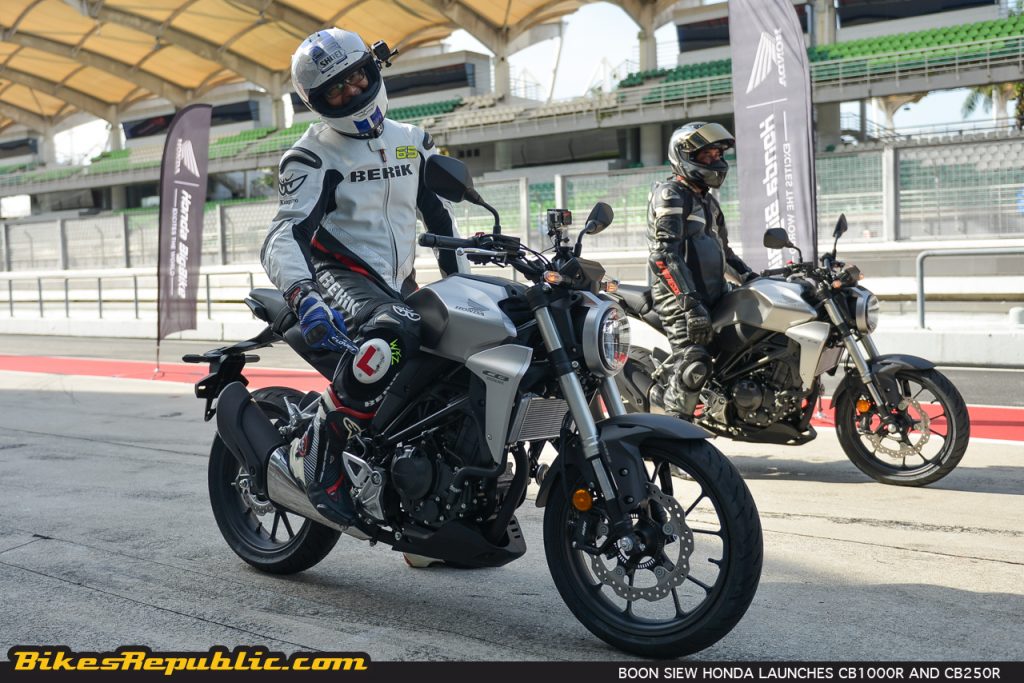
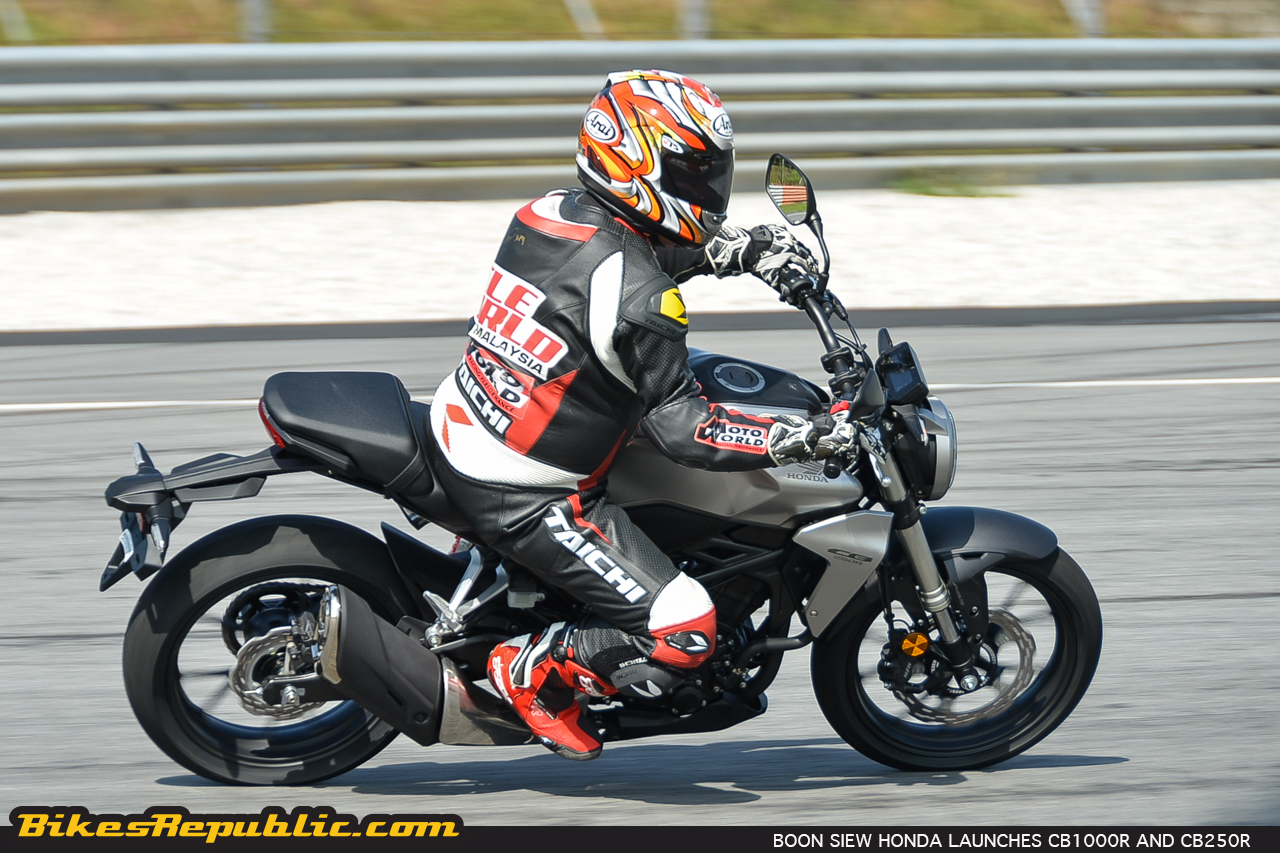
But it felt so good to ride a lightweight bike as soon as the clutch went out. The single-cylinder engine revved very quickly without much vibration. Just as the rest I’ve tested earlier, the suspension may be on the softer side but it didn’t mean the bike was going to squirm around.
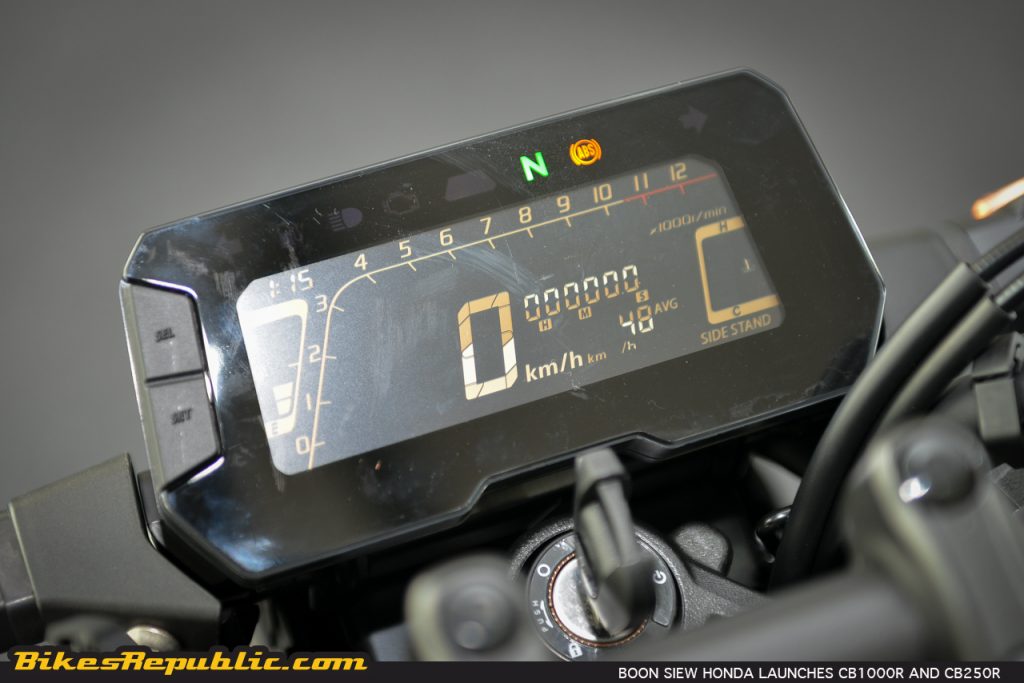
And since it was so light, I just chucked it into all the corners in a gear too high. The engine was also super smooth for a single and didn’t feel like it was being revved to destruction despite hitting the rev limiter a few times. I had so much fun I actually missed the checkered flag and had to circulate for one extra lap.
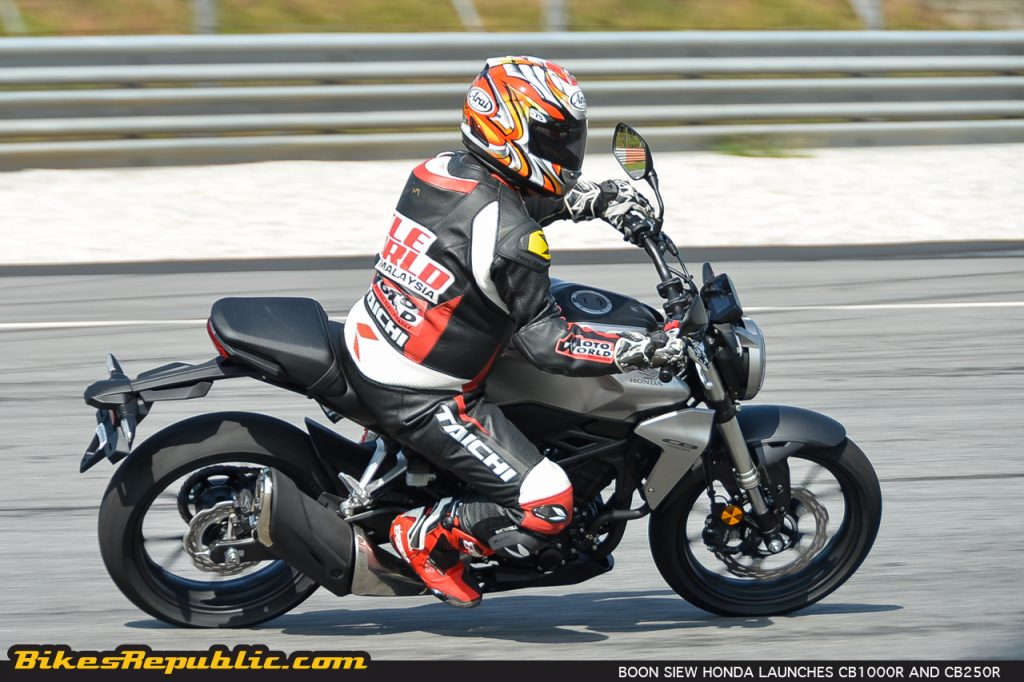
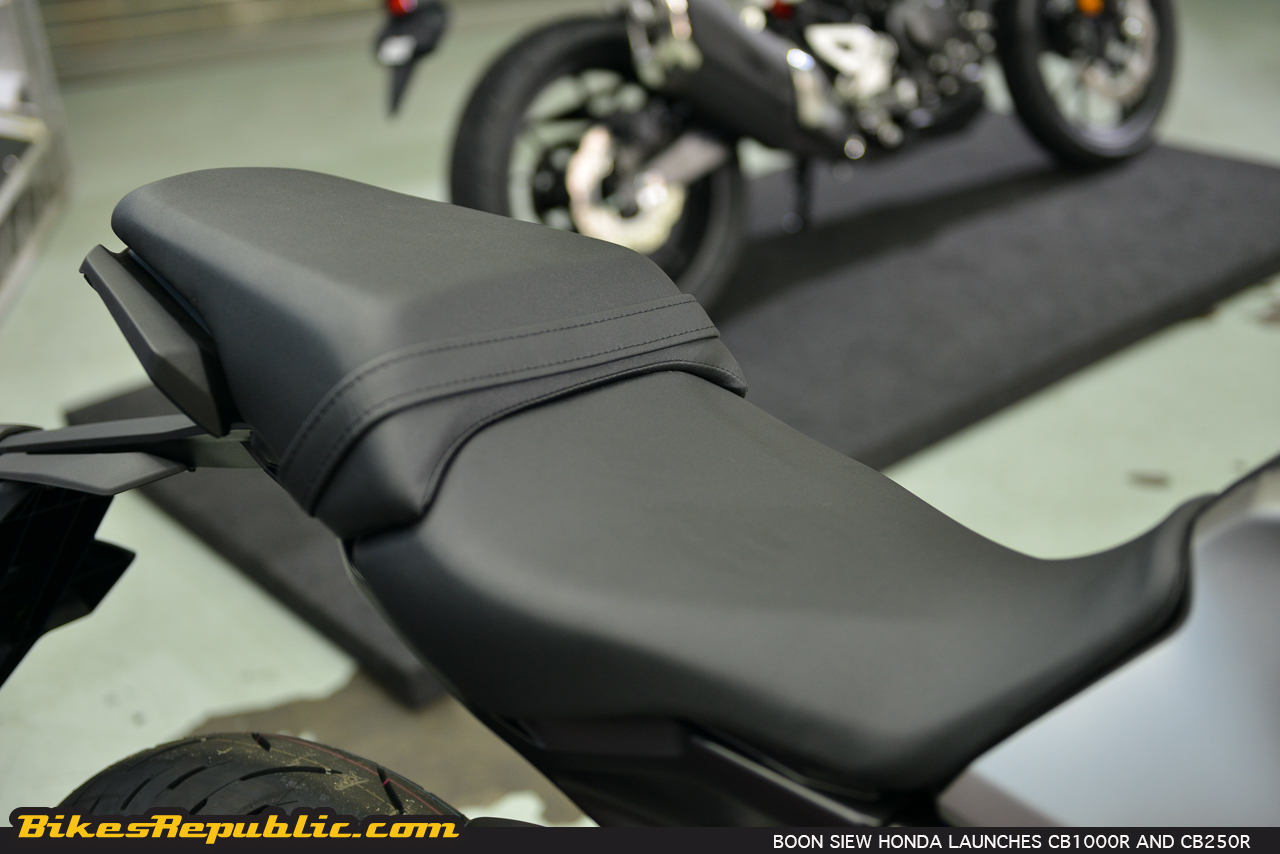
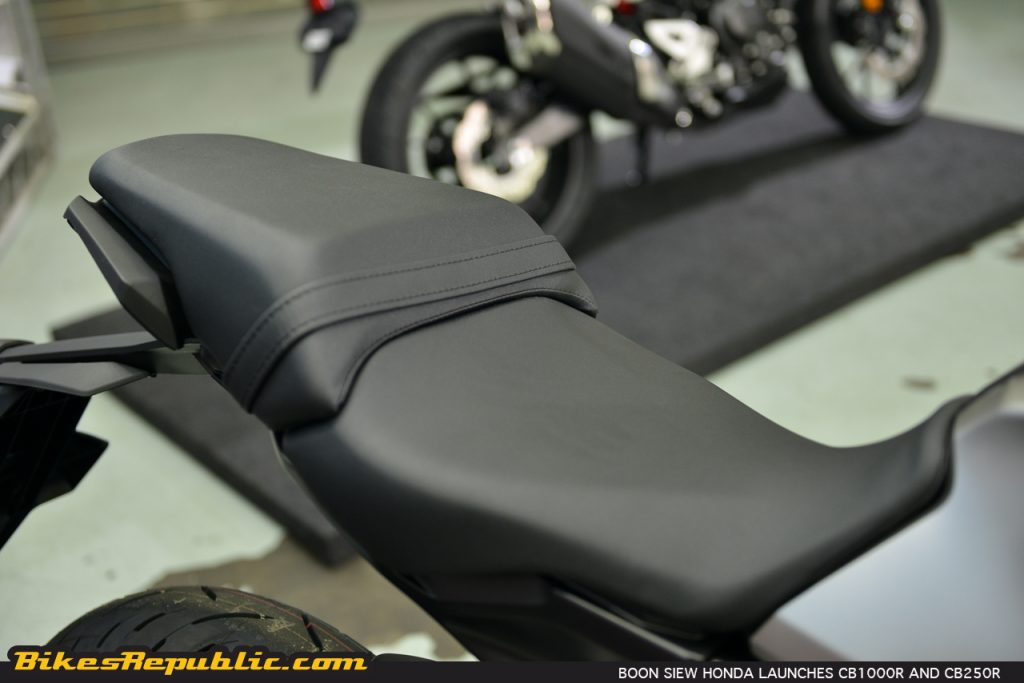
But the best thing about it was just amazingly easy it was to ride. Coupled with the low seat height, beginners will find it easily accessible.
In closing, all four bikes were great and showcased Honda’s attention to detail and quality. All panels joined uniformly, the paint quality was consistently good for all four bikes.
But I couldn’t wait to fully review the CB1000R at a later date.
  • Moto Guzzi unveiled the V85 concept during EICMA 2017.

  • The V85 takes the form of a dual-sport motorcycle.

  • Patent filings for the bike has been leaked online.

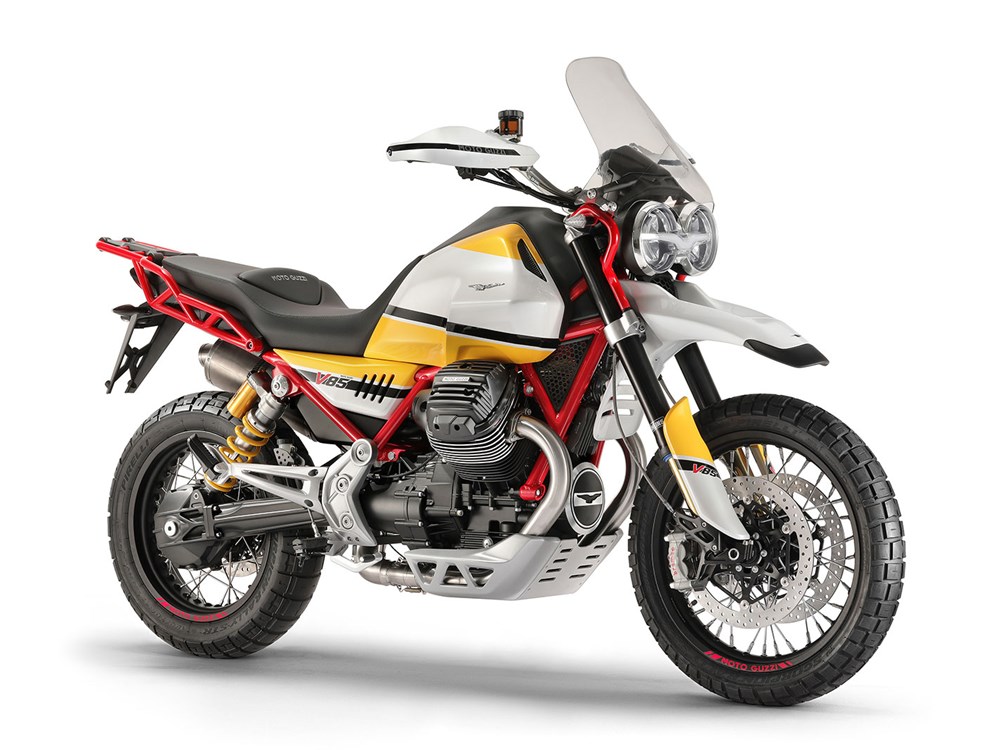
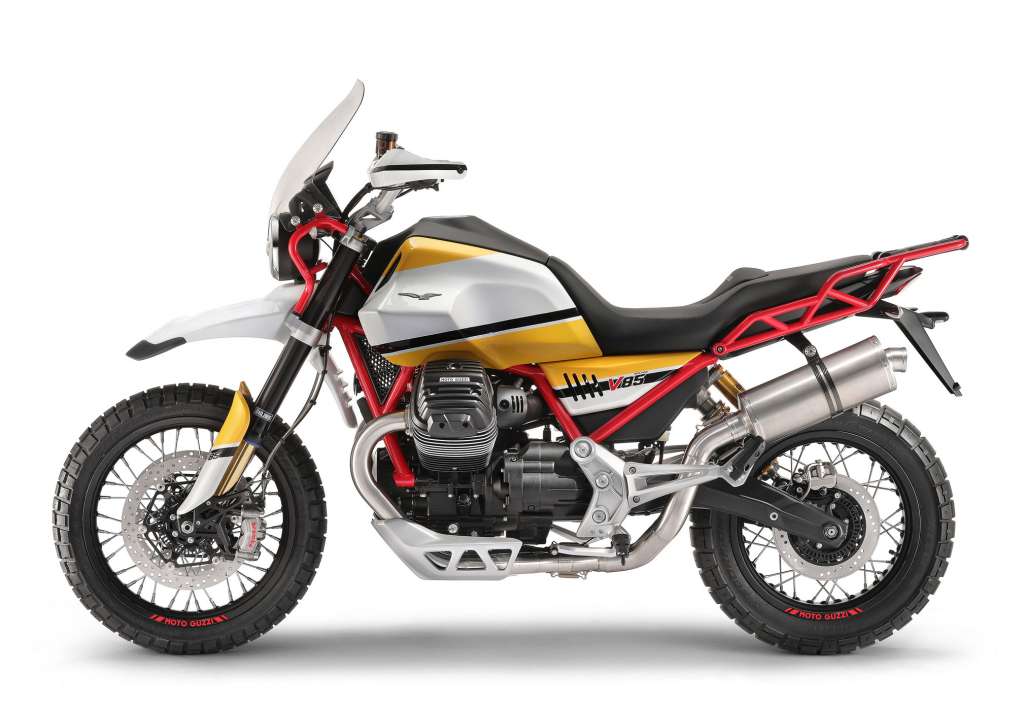
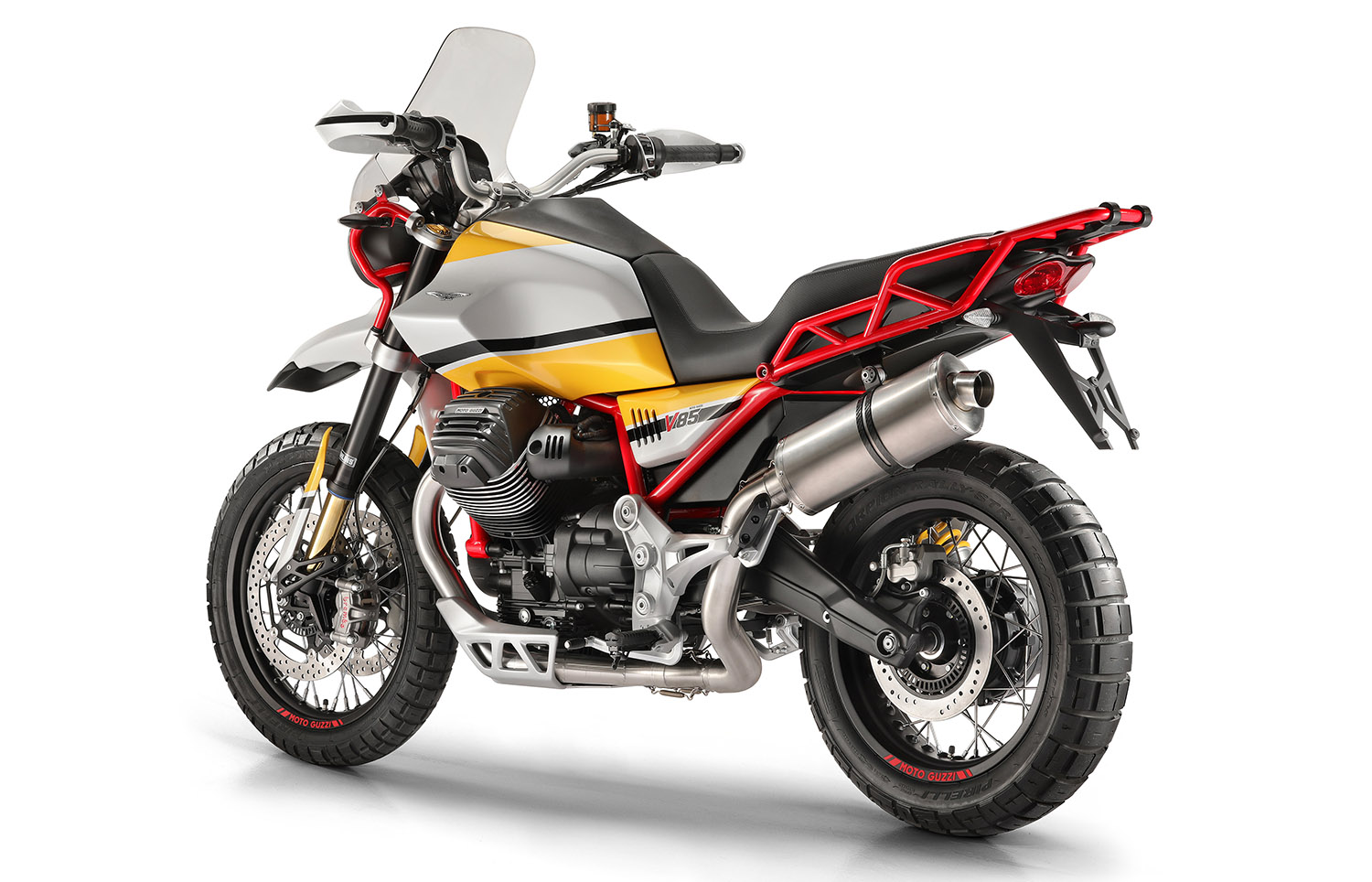
There’s been plenty of positive buzz since Moto Guzzi unveiled their V85 dual-sport concept during EICMA 2017 in November.

Piaggio has plans for a new dual-sport ever since the Stelvio 1200 NTX was discontinued as it isn’t Euro 4 compliant.

The V85’s mini-site is fully running (please click here to visit the site) and provides some insights into the concept. The design speaks of rally raid bikes from the 1980s – namely the Paris-Dakar Rally.

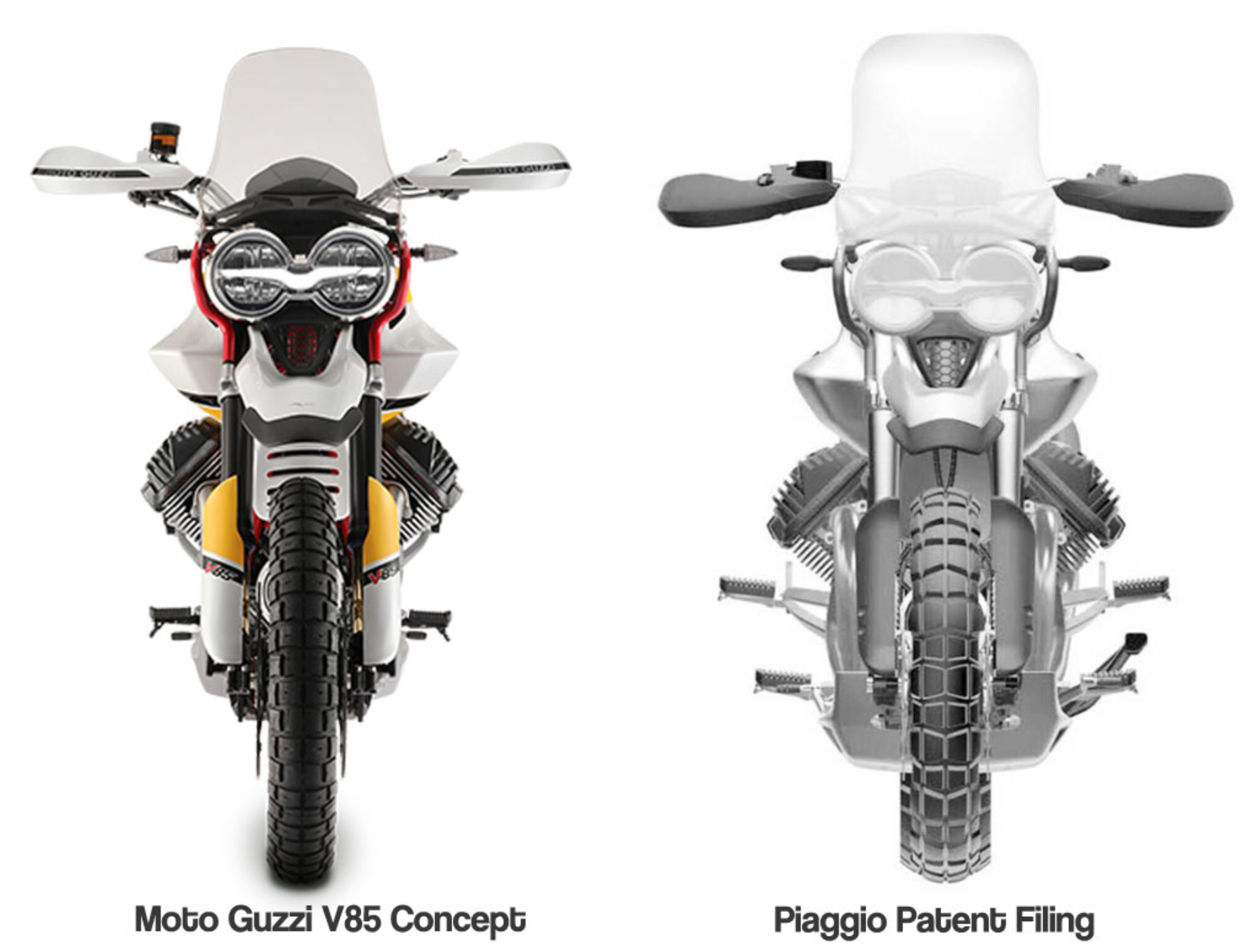
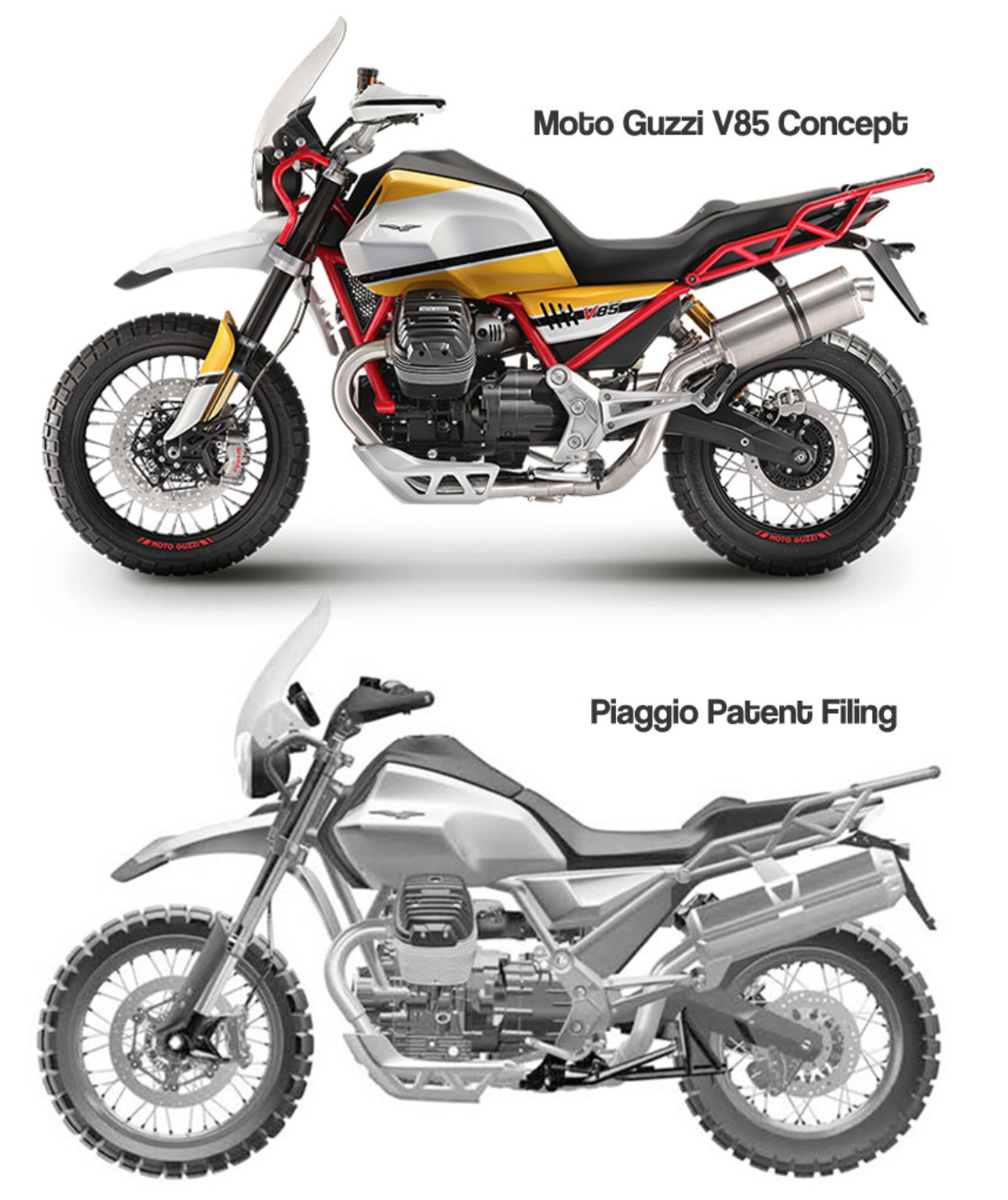
But while the site conclude with the “Stay tuned!” message, Motorcycle.com has sighted and published the patent filing for the bike in Australia. A patent filing is good news as it means there’s a great possibility for a product to go into production.

Comparison of concept vs. patent filing (front) – from Motorcycle.com

Referring to the pictures provided by Motorcycle.com, it seems that many design elements of the concept are retained. That’s a welcomed relief as bikes usually lose so much of the stunning details of the concept once they go into production. A good example is the KTM 790 Duke.

Comparison of concept vs. patent filing (side) – from Motorcycle.com

The V85 certainly looks great, with many details constituting a (welcomed?) departure from contemporary Moto Guzzi norms. Check out the rear monoshock which sits out in the open to mimic traditional dual shocks, the minimalist bodywork and steel tube frame, and retro paint scheme. The official site has also described the powerplant as an 850cc air-cooled 90o transverse V-Twin, which produces 80 bhp. That means it should be the engine that powers the V9 line-up.

Moto Guzzi has yet confirmed the V85’s full name, leaving it to fans to “vote” among Terra, Explorer, Bluster, Rover, Desert, Pathinder, Stelvio, NTX.

in the meantime, you may visit Moto Guzzi Malaysia’s Facebook page or head over to the location below.

  • Ducati has unveiled new colour schemes for the Supersport range.

  • The standard version will get the new Titanium Grey.

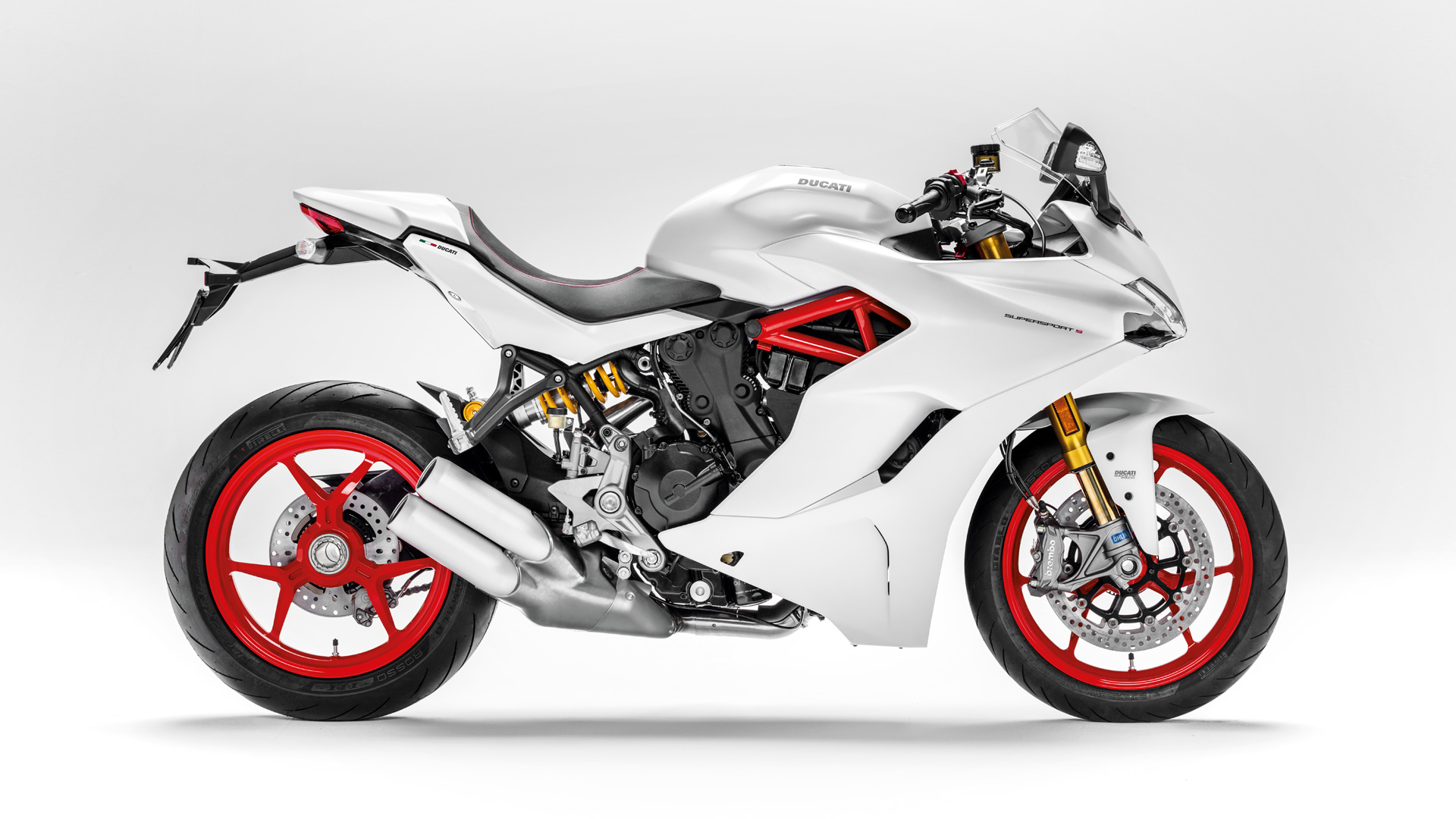
  • The S version will still be sold in Ducati Red and Star Silk Whilte.

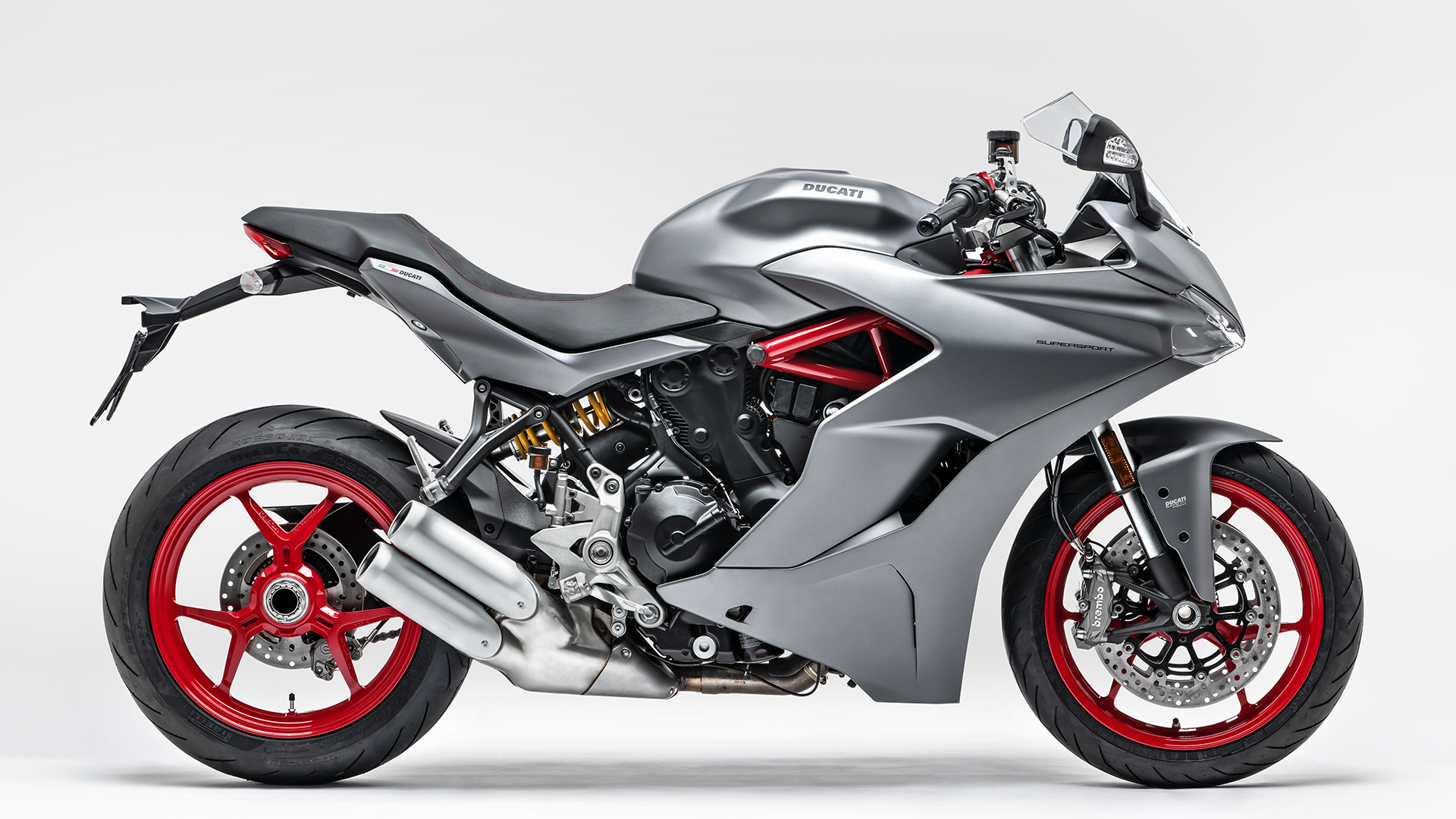
The best-selling Supersport gets a new colour. (Please click on the link below for our preview when the Supersport was launched.)

Ducati 900 SuperSport – Ten Things You Should Know

Possibly in a bid to differentiate between the “standard” Supersport and high-spec’ed Supersport S, the former will see the discontinuation of Ducati Red.

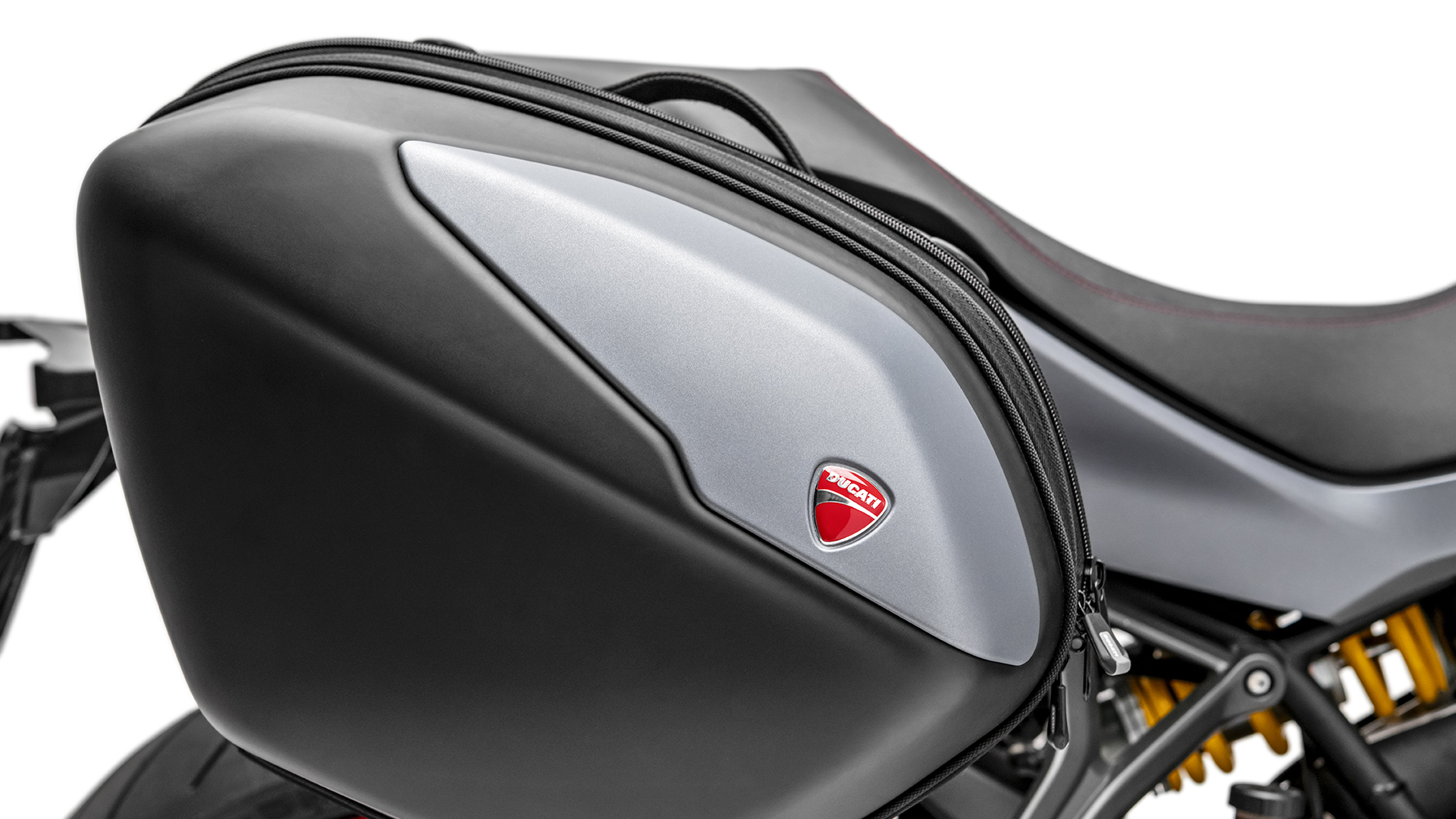
In its place is Titanium Grey with red wheels (previously black) and frame. The new colour scheme is reminiscent of the 916 Senna in the mid-1990s. According to a website which published the story, the manufacturer says that the rear seat cover will also be available in Titanium Grey. The new colour will also be available for the plastic inserts for the panniers.

The standard version features fully adjustable 43mm Marzocchi forks and a Sach shock. Owners could add on accessories such as Ducati Quick Shift later, later on.

As for the S-version range, the present Red and Star White Silk paintwork are continued. Standard features are fully-adjustable 48mm Öhlins forks with TiN-coated slider tubes, fully-adjustable Öhlins monoshock with remote reservoir, quickshifter and passenger seat cover.

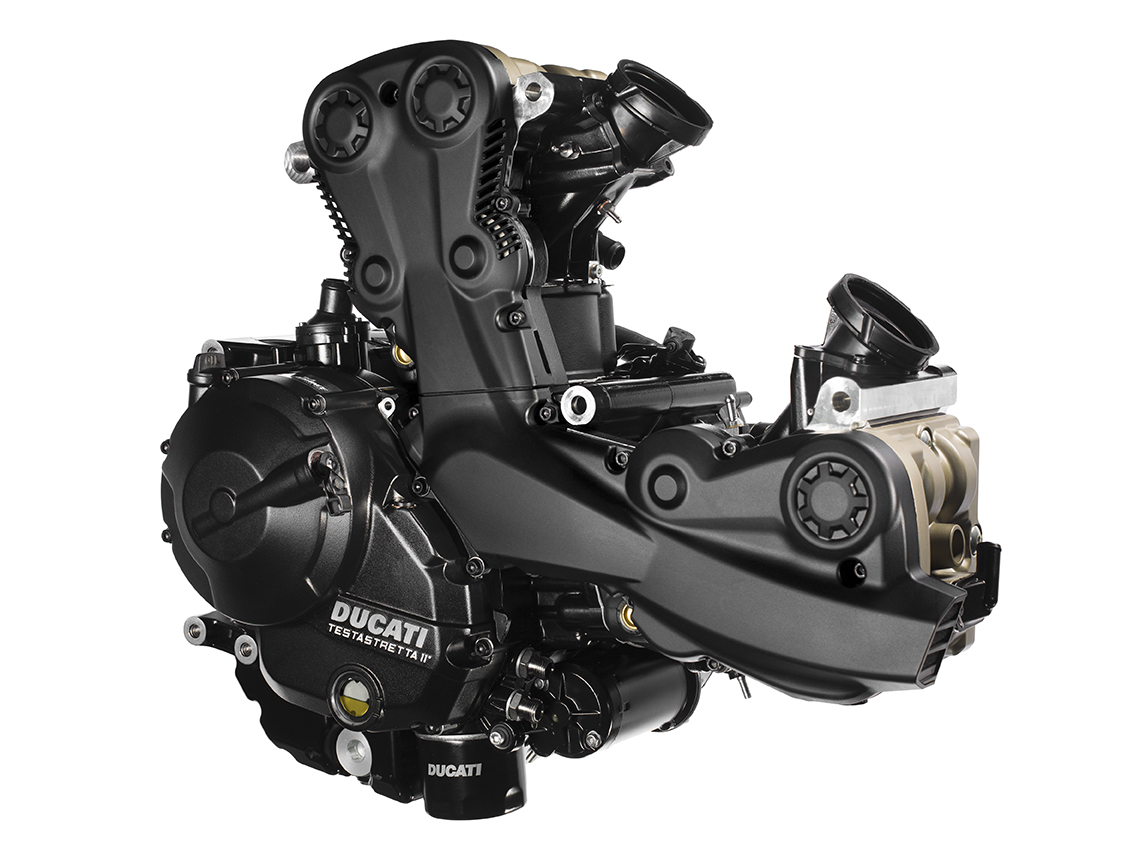
The engine remains the same 937cc, Testastretta 11o, 90o V-Twin (Ducati insists on calling it “L-Twin”) which produces 110 bhp @ 9000 RPM and 93.2 Nm of torque @ 6500 RPM.

Price has also remained unchanged.

  • Lubrication systems in modern engines provides sufficient lubrication.

  • However, most engine damage occurs during start up.

  • Castrol Activ aims to provide lubrication during all stages of engine operation.

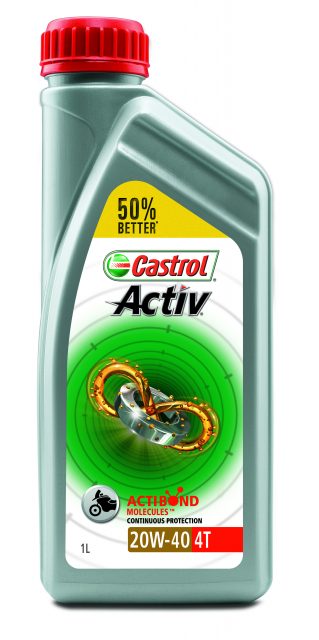
Car drivers should be familiar with a Castrol product called Magnetec. The engine lubricant is infused with a formulation that clings to engine parts (hence “magnet”) even after you turn off the engine, thus protecting it when restarted. But Magnetec is for cars and lubricants for cars and motorcycle engines are different (click here to find out why they are different). Castrol aims to achieve the same for motorcycle engines with the new Castrol Activ lubricant.

Lubrication systems in modern engines do provide sufficient lubrication while running, but the oil will drain back down into the sump a few minutes after stopping the engine (that’s why we check the oil level with the engine off after running it for a few minutes). Therefore, there’s hardly any oil when we restart the engine, although almost all good lubricants will leave a layer a micron thick on the surfaces it lubricated before. But it depends if that layer breaks down at engine start. Besides that, most new engines have parts with coatings that trap some oil – usually the piston rings, piston skirts and cylinder bores – while other parts do not.

That is why, contrary to popular belief, most engine damage actually occurs during start up, not when fully running.

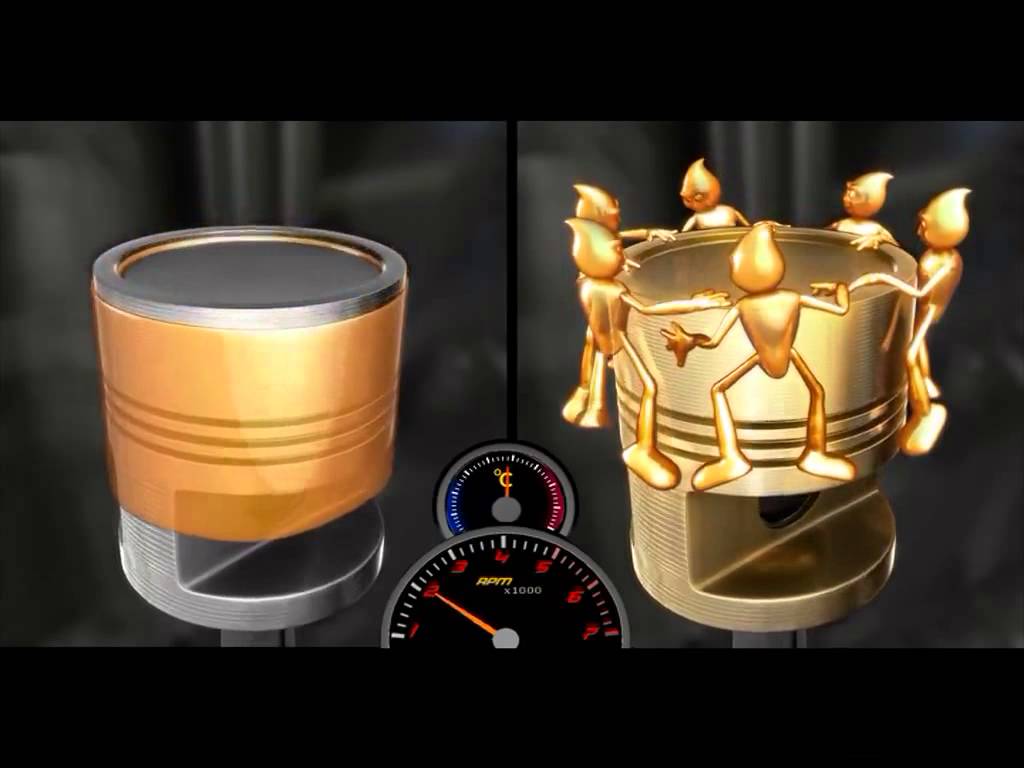
The new lubricant is fortified with improved Actibond molecules, that cling to critical engine parts through all stages of riding.

Keow Mei-Shan, Marketing Director for Castrol Malaysia and Singapore explained, “Modern riding conditions demand a lot from riders and their motorcycles. There can be at least 10 million instances per month where a motorcycle engine could get damaged simply whilst running. In fact, a motorcycle requires continuous protection not just whilst riding but also during start up and even when the engine is off. The new formulation of Castrol Activ has Improved Actibonds that provide continuous protection during start up, riding and even when the engine is switched off. Overall, new Castrol Activ promises Castrol’s Best Continuous Protection ever for motorcycles.”

Castrol Activ is able to protect your motorcycle’s engine through all three stages of operation:

  • During start up – Most engine wear occurs during warm up, just after start. The improved Actibond molecules reduces warm up wear by 75 thereby reducing wear and tear of vital engine parts.
  • During riding – The improved Actibond molecules fights deposits and provides superior engine cleanliness, to help ensure smooth running and reduce piston wear.
  • During engine switch off – By clinging on to engine parts even when the engine is switched off, Castrol Activ provides excellent protection against corrosion which may occur due to humidity.

We came across this Castrol Activ TVC from India, so please take a peek.

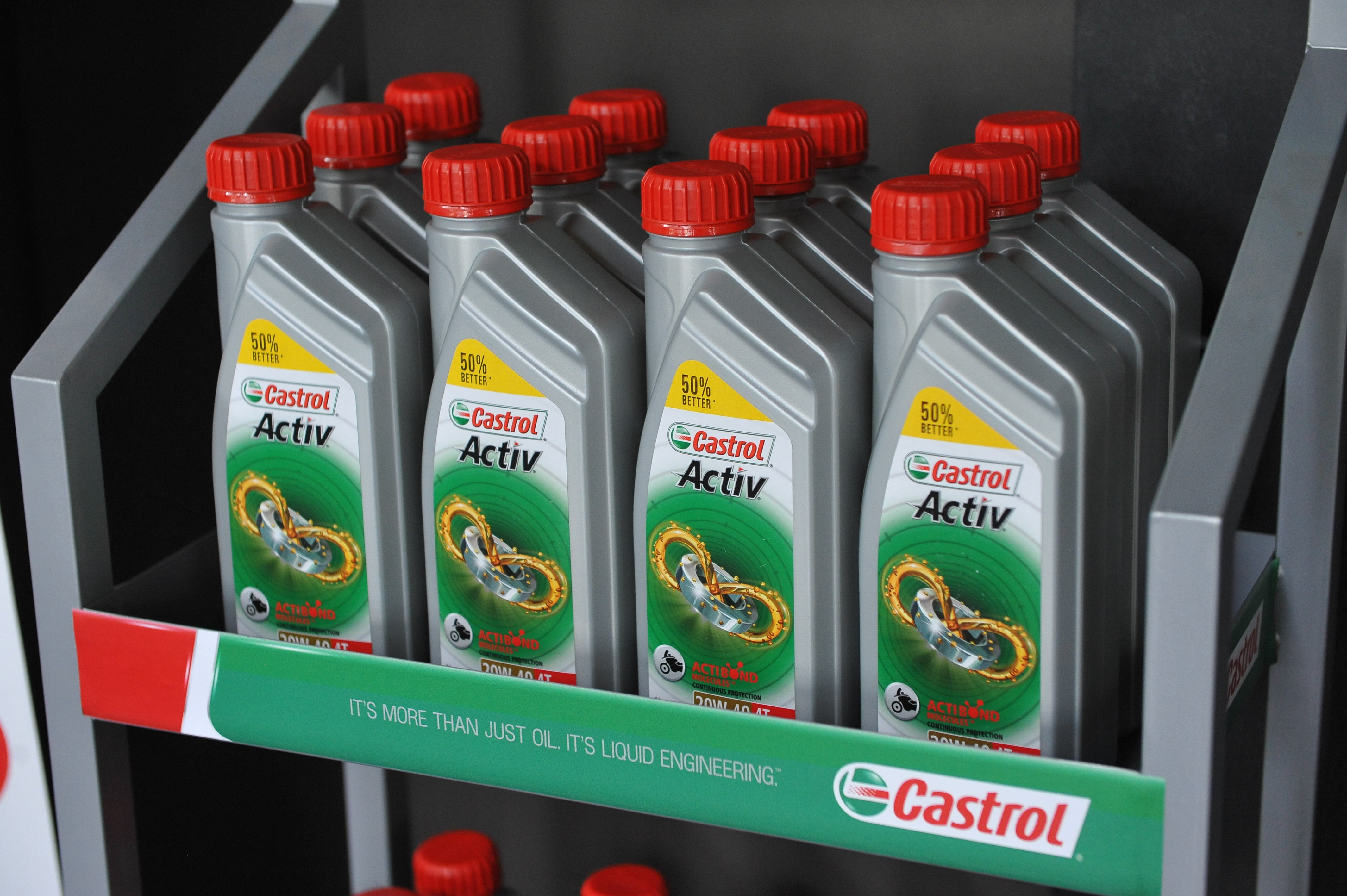
Castrol Activ meets API SL and JASO MA2 specifications. It is available in 1 litre bottles at Castrol Bike Points, motorcycle workshops and retailers throughout Malaysia at the price of RM23.50 for Peninsular Malaysia and RM24.20 for East Malaysia.

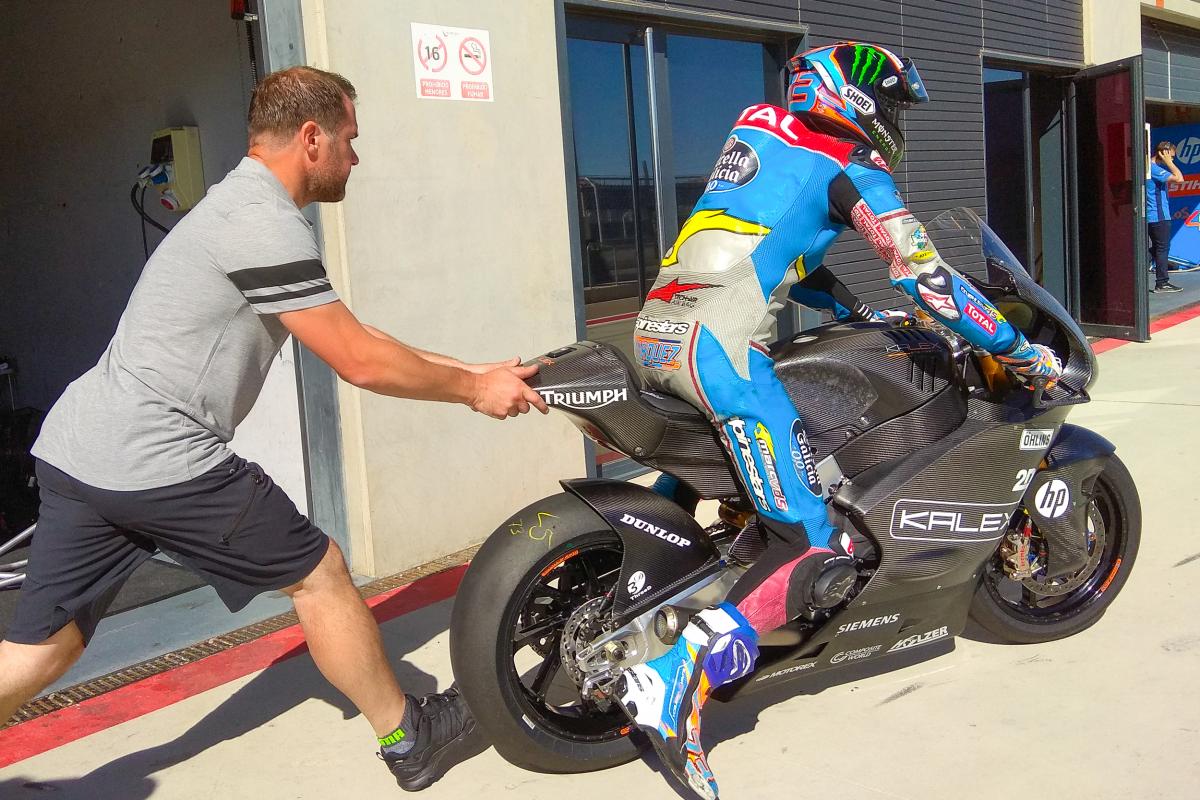
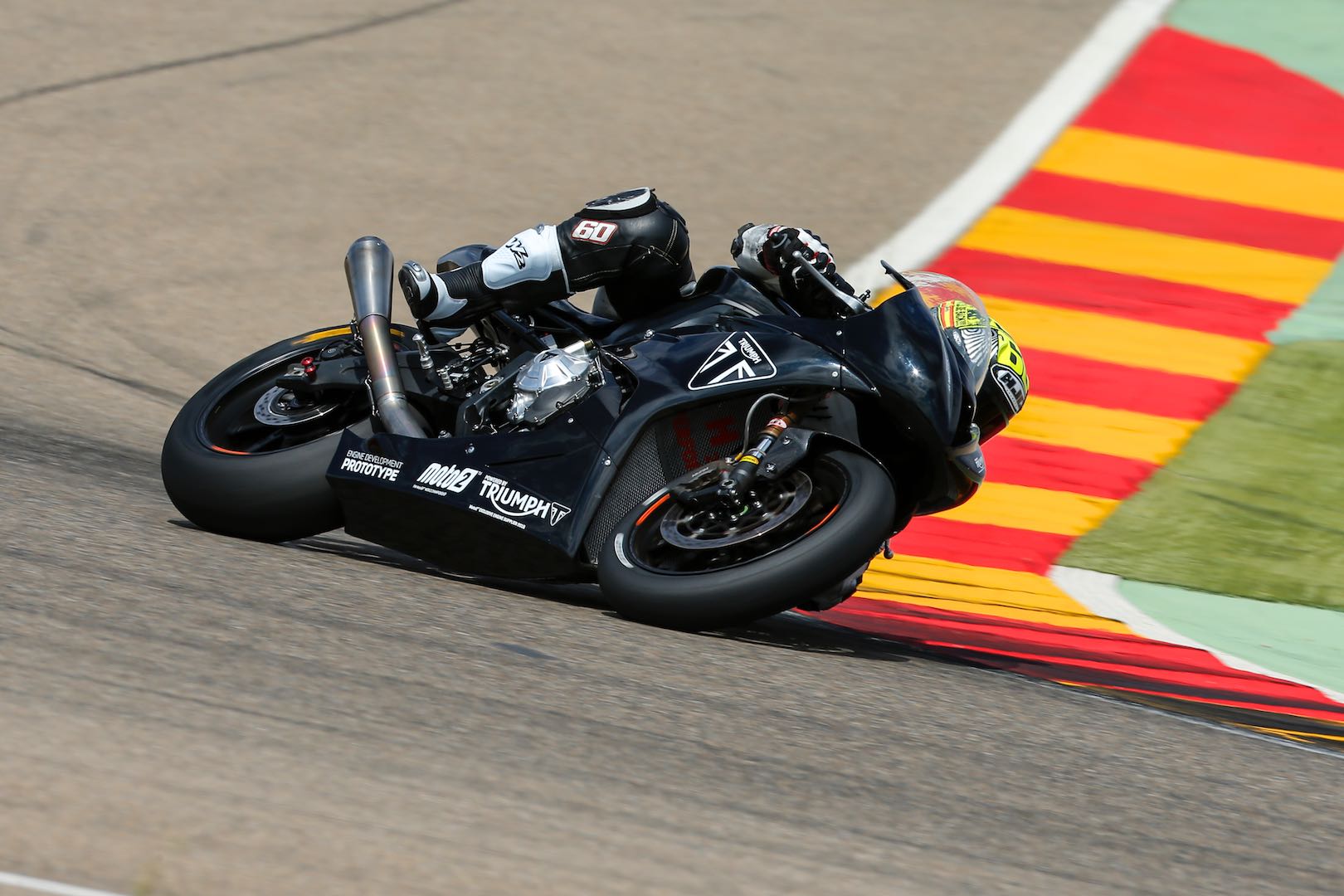
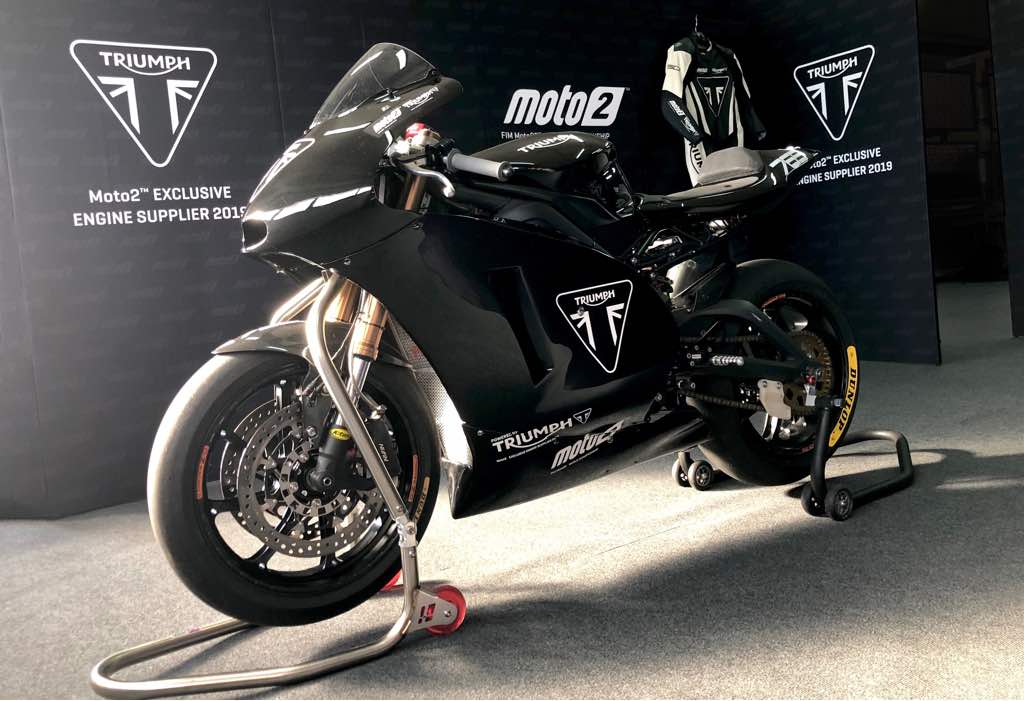
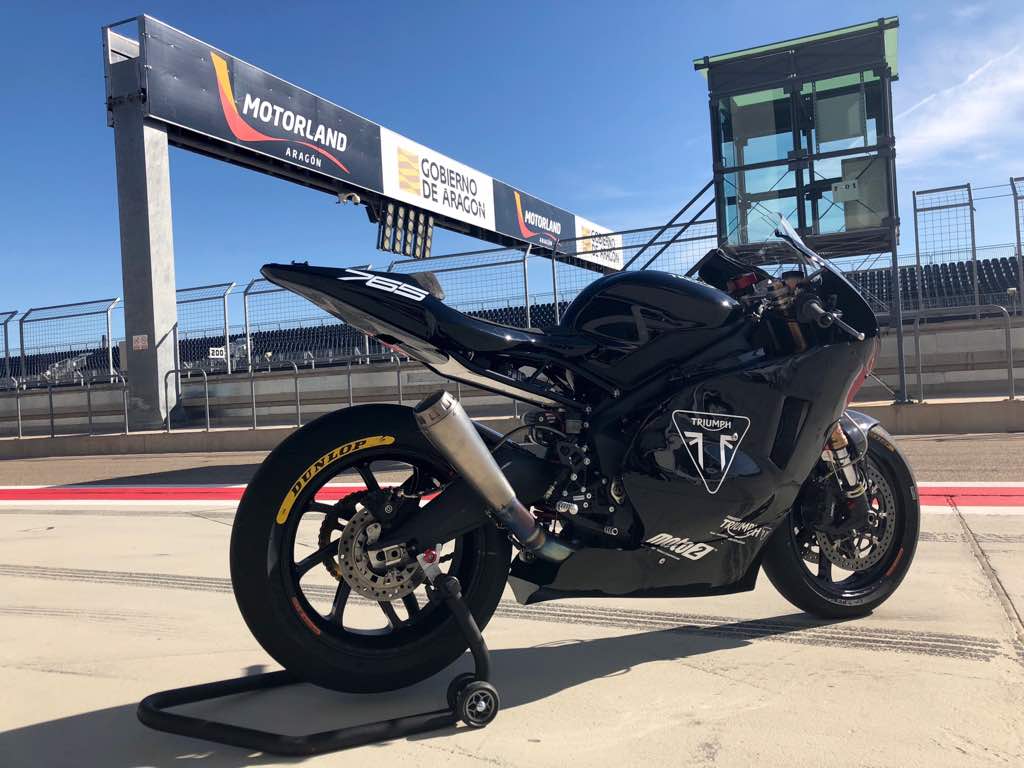
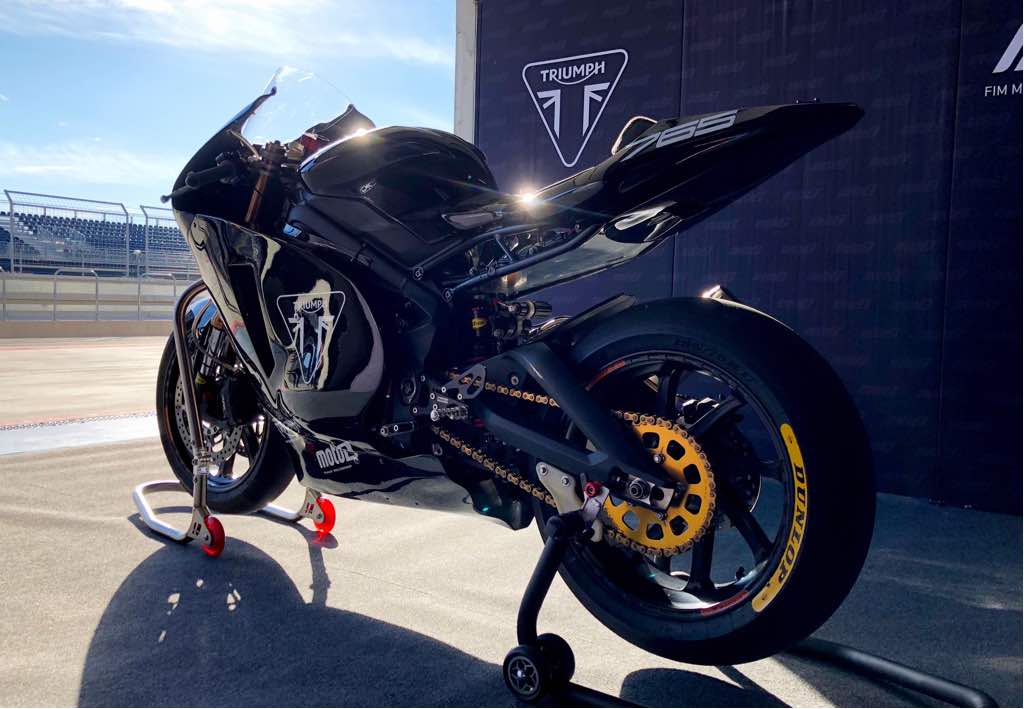
  • Triumph is the exclusive engine supplier for the Moto2 class in 2019.

  • Moto2 teams are beginning to test the new engine.

  • The engine is based on the 765cc, inline-Triple based from the Street Triple RS.

Triumph Motorcycles is slated to supply the standard engine to Moto2 teams beginning next year (2019) as Honda’s current contract ends at the end of the 2018 season. Please click on the link below for our coverage.

Check out this 2019 Triumph-powered Kalex Moto2 bike!

As such, Moto2 teams have begun testing the engine this year in preparation for the new season. Do note that Moto2 teams consist of frame builders such as Kalex, Speed Up, NTS and KTM (including Suter and Moriwaki at one point) who build frames and chassis around the spec engine which was based on Honda’s CBR600RR from 2010.

Triumph Moto2 engine being tested about a Triumph Daytona – courtesy of Ultimate Motorcycling

With the advent of a new engine supplier, these teams would have to build frames and chassis to suit the new engine’s mounting points and power characteristics. This should mean close competition in the season ahead as the teams obtain new data on handling and tyre wear.

The latest rider to test the 765cc, inline-Triple based on the new Street Triple (please click here for our review) was Alex Marquez, multiple MotoGP champion Marc Marquez’s younger brother, on the EG 0,0 Marc VDS Kalex – Triumph.

Alex tested the new engine in the new Kalex at Motorland Aragon yesterday, following Julian Simon and Ricky Cardus’s tests aboard the KTM on the previous day. Jesko Raffin had also tested for Kalex, while Alex De Angelis tested the engine for NTS.

During testing at Valencia earlier this year, Jesko Raffin posted a time that was 1.3 seconds faster than the lap record set by 2016 Moto2 champion, Johann Zarco – using a standard 765cc triple engine from the Street Triple RS! Raffin commented that he encountered “zero problem” with the powerplant. Another rider had commented about the engine’s abundance of low-down and mid-range torque.

  • The EU will levy heavy tariffs against U.S.-made products.

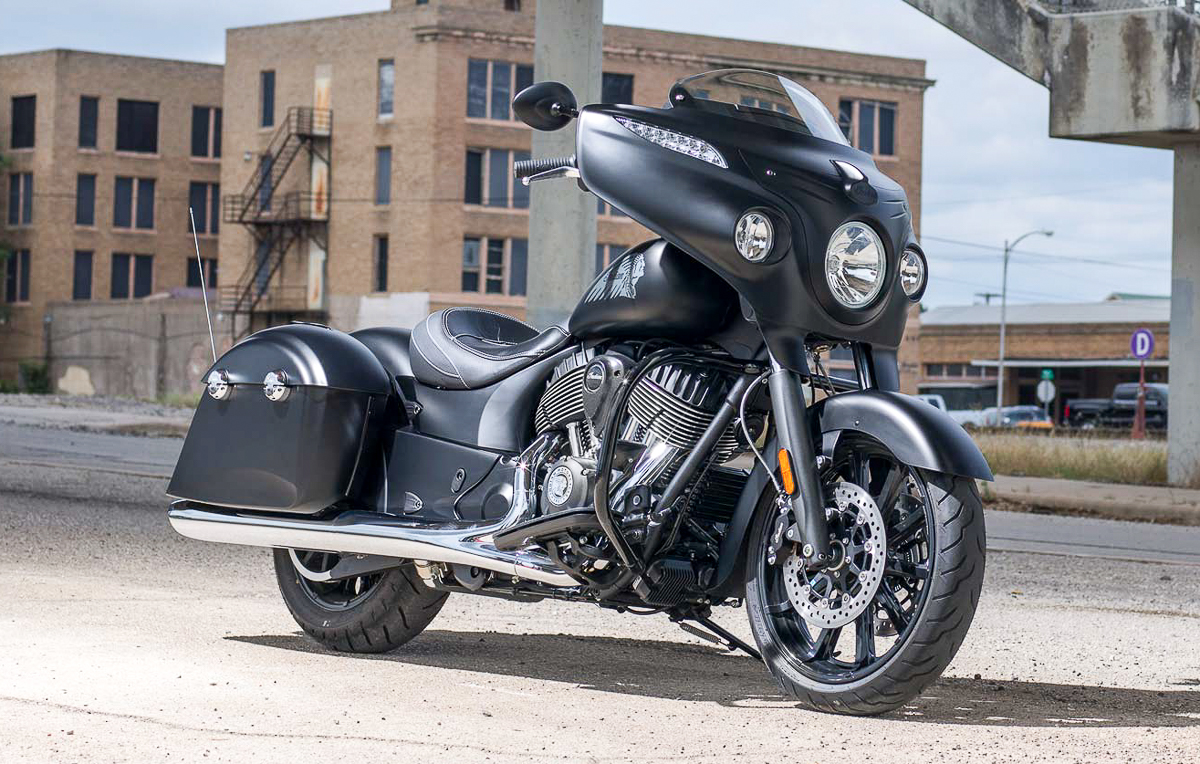
  • The victims include Harley-Davidson and Indian Motorcycles.

  • The tariffs are a retaliation against the U.S. adding tariffs on imported steel by 25%.

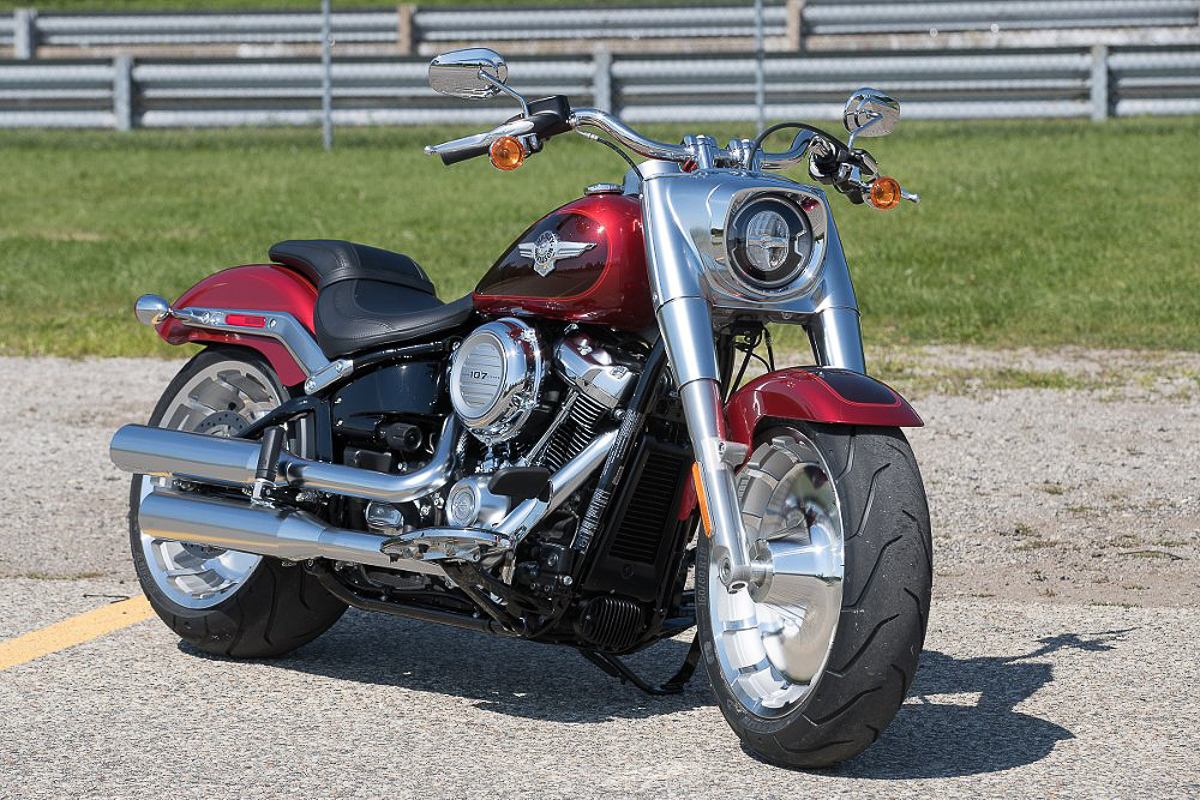
In the latest trade wars with the U.S., the European Union (EU) has just retaliated against American President Donald Trump’s decision to levy new import taxes on steel and aluminium from Europe. A hefty 25% tariff will be put in place for the American-made bikes, including a whole list of other American-made products.

The EU had threatened reprisals against the U.S., who adopted the new tariffs earlier this month by adding a 25% tariff on imported steel and 10% on imported aluminium.

The European nations unanimously supported the plan last week. The European Commission is due to meet later today. They have so far listed 10 pages full of American products. As for motorcycles, the tariff is worded as:

  • Motorcycles and cycles fitted with an auxiliary motor, with or without sidecar. With reciprocating internal combustion piston engine of a cylinder capacity exceeding 500cc but not exceeding 800cc.
  • Motorcycles and cycles fitted with an auxiliary motor, with or without sidecar. With reciprocating internal combustion engine of a cylinder capacity exceeding 800cc.

Which means any bike from the US that’s bigger than 500cc will be subject to the new tax.

This does not bode well especially for Harley-Davidson who are being hit hard by low sales in America and has been depending on international sales. Indian Motorcycles, on the other hand, had been performing well on all counts but this ruling will no doubt hit them hard, also.

But it isn’t only bad news from Europe, as India had also slammed US motorcycles above 800cc with a 50% duty, as a retaliation against the U.S. who had also levied a 25% tariff on Indian steel

The U.S. tariffs are part of President Donald Trump’s “Make America Great Again” campaign which seeks to protect the country’s industries.

Yes, you can say it in Trump’s voice: “This YUGE!”

  • The UCLEAR AMP GO helmet audio system connects via Bluetooth.

  • It worked seamlessly throughout our initial testing.

  • It is also very attractively priced at just RM 600.

Being used to having a Bluetooth in-helmet headset for three years, I could never ride comfortably without one. Having one makes riding a whole lot more entertaining and relaxing, if not the convenience while on-the-go.

Of course, there are many “Bluetooth helmet audio system” maker these days, so choosing the right one saves you money and aggravation.

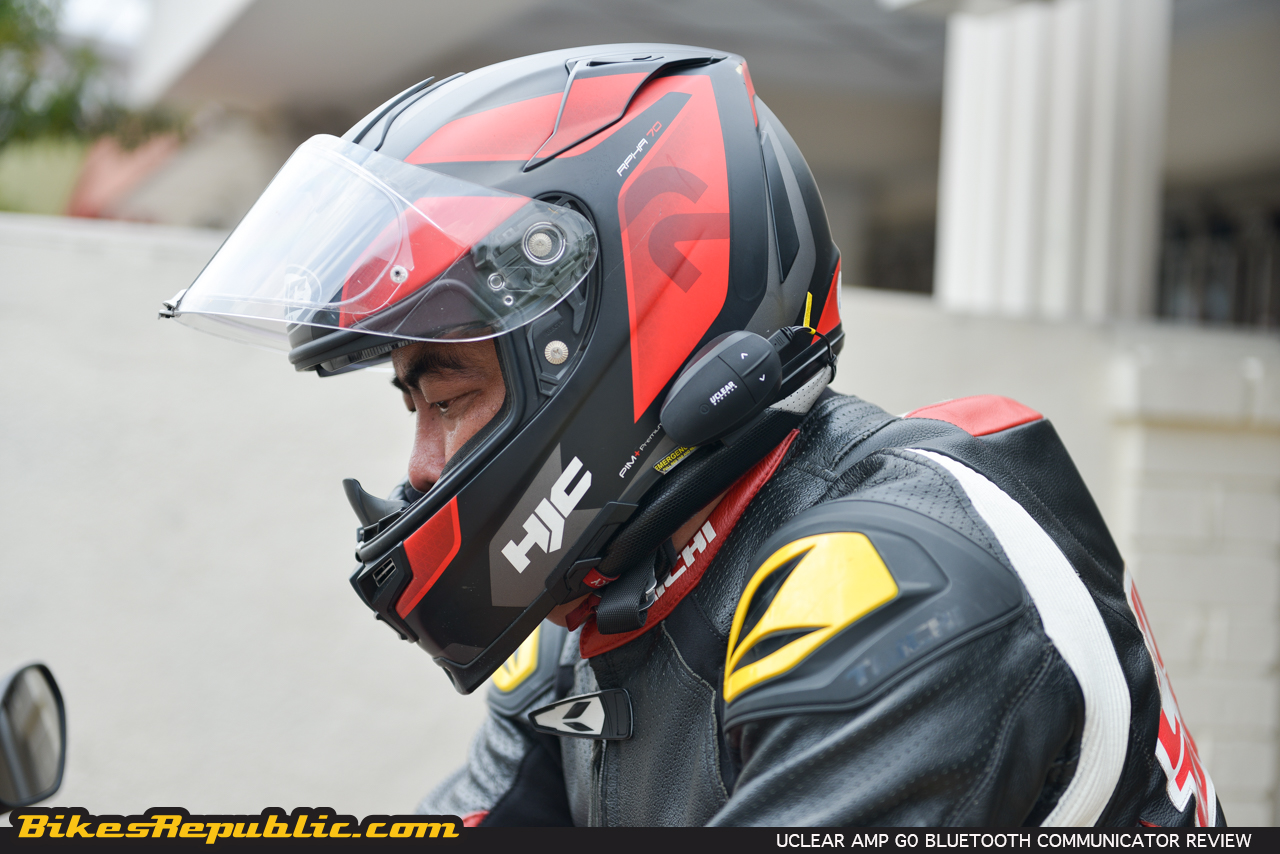
From our neighbours in Singapore is UCLEAR Digital. The Malaysian and Singaporean distributor, Hodaka Motoworld provided a couple of sets of the flagship AMP GO system to try out.

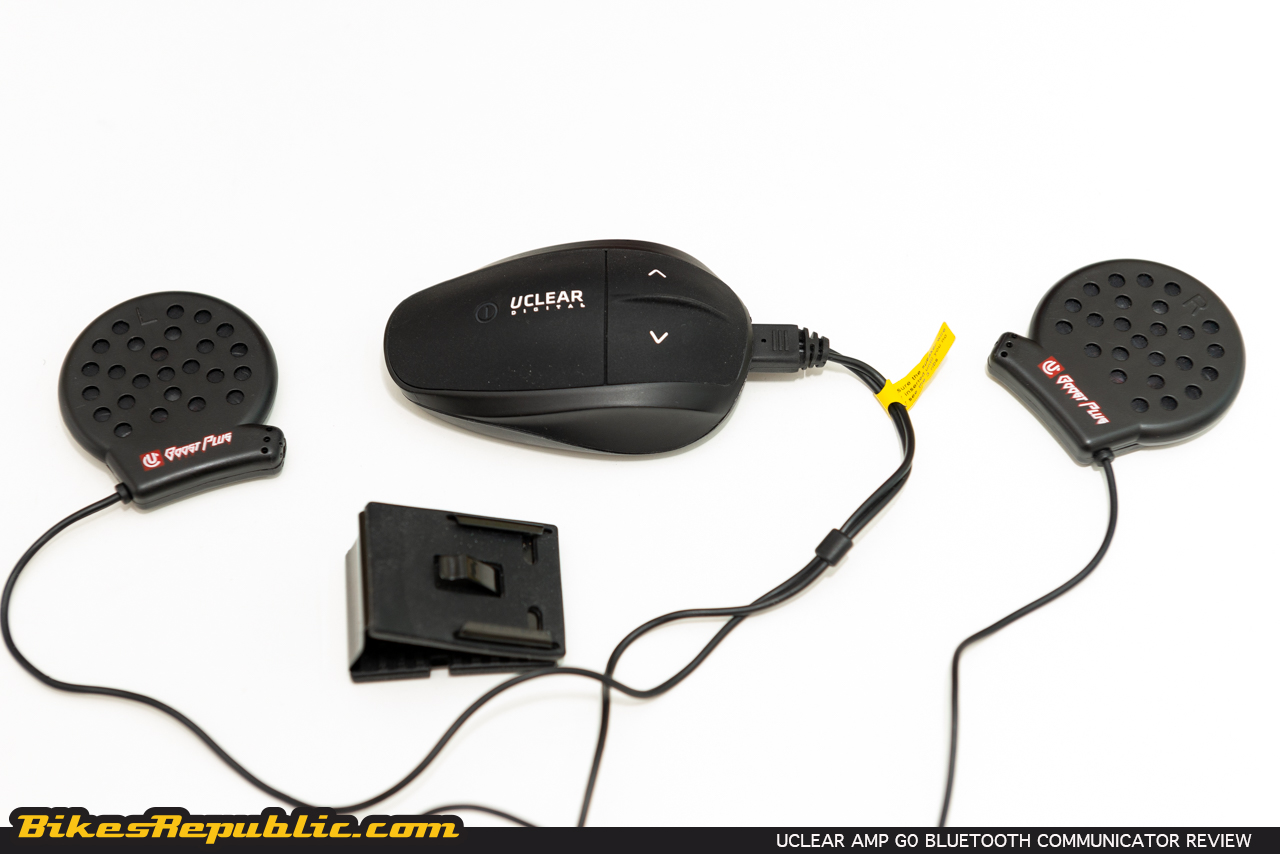
First and foremost, it was apparent that the UCLEAR had simplified the AMP GO. A set consists of:

  • Control unit.
  • Pair of Boost Plus stereo speakers.
  • Permanent helmet mount.
  • Temporary helmet mount.
  • Two Velcro pads.
  • USB charging cable.
  • Quick Start Guide.

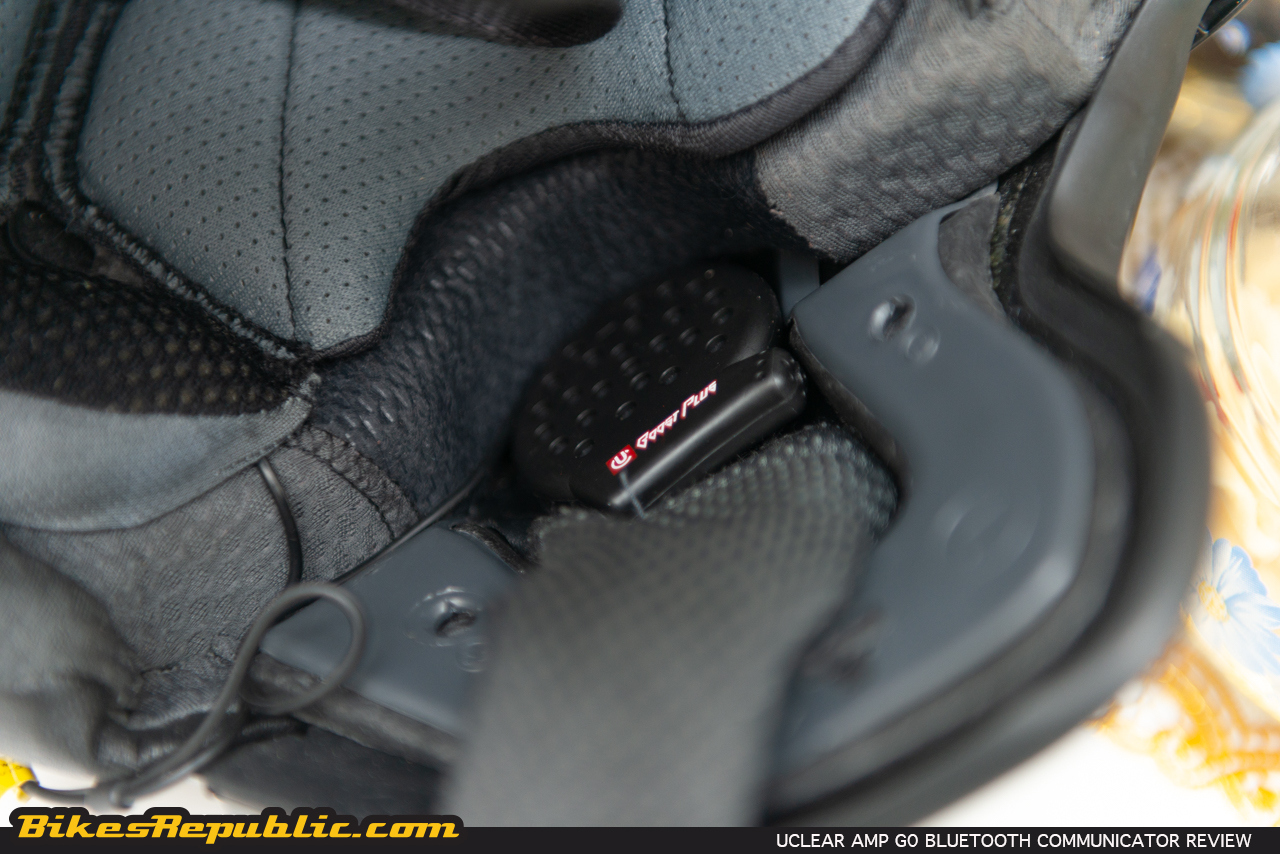
However, there is no microphone boom nor “button” microphone, as they are stereo and built into the speakers.

The sets were provided to us at the right time, as we rode the three variants of the four-cylinder BMW S-Series bikes to Cherating for a company getaway.

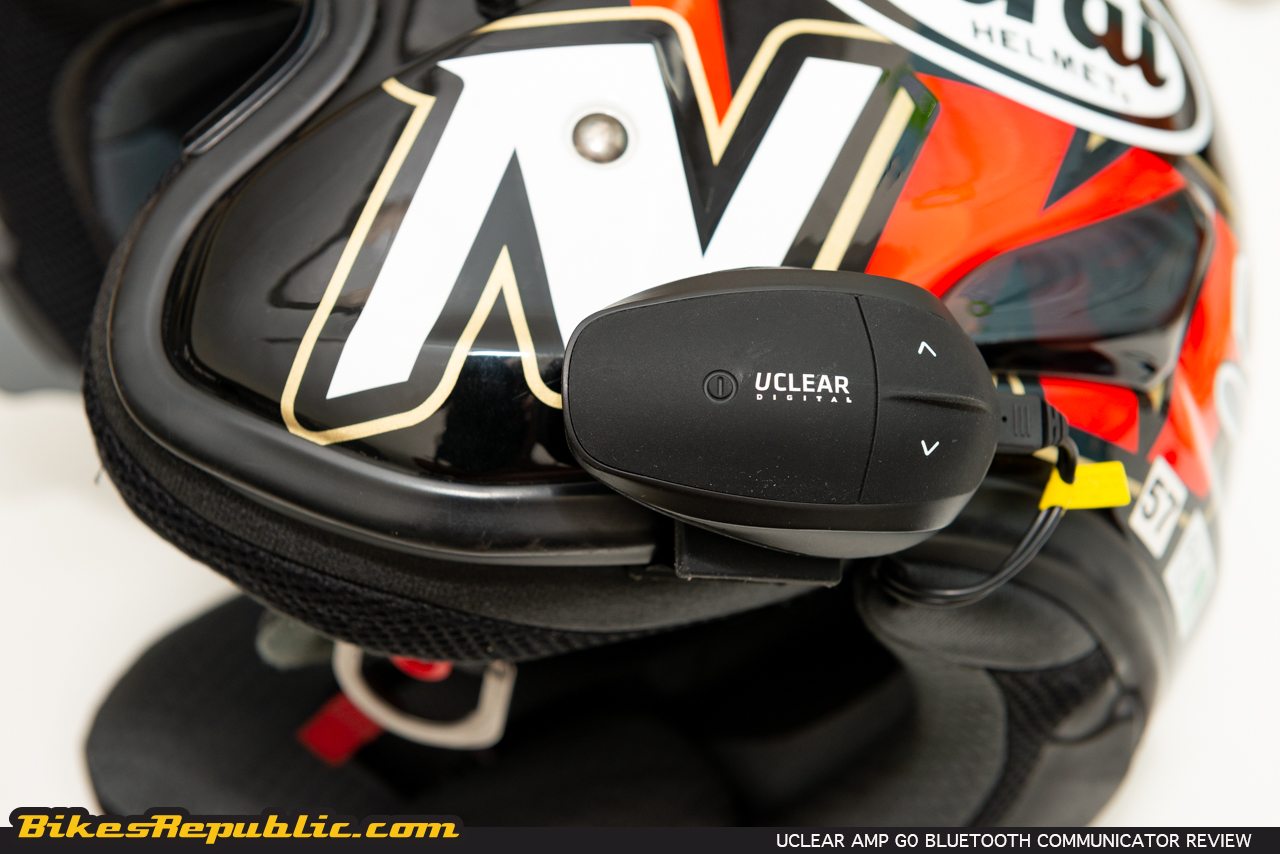
Installation was very easy and straightforward, even for first-time users, as there were fewer parts to fuss about. The control unit was equally easy to mount as it was just a clip.

Pairing via Bluetooth to our phones was easy and especially fast, considering that the iPhone’s iOS is finicky about connecting to non-Apple devices. Pairing the two control units for intercom communication was also fast and easy.

The speakers were loud(!) as soon as we streamed music from our phones. But it’s not just about being loud, there was plenty of bass, treble and clarity – we could hear each word and each note with the helmet on the table.  This is important especially when riding at speed and with earplugs in.

With the BMW S 1000 R at hand, I tested the UCLEAR AMP GO from slow city speeds to (crazy) high speeds right away. The sound level stayed consistent throughout, as the volume is controlled seamlessly according to ambient sounds i.e. it increases when your speed rises and decreases when you slow down.

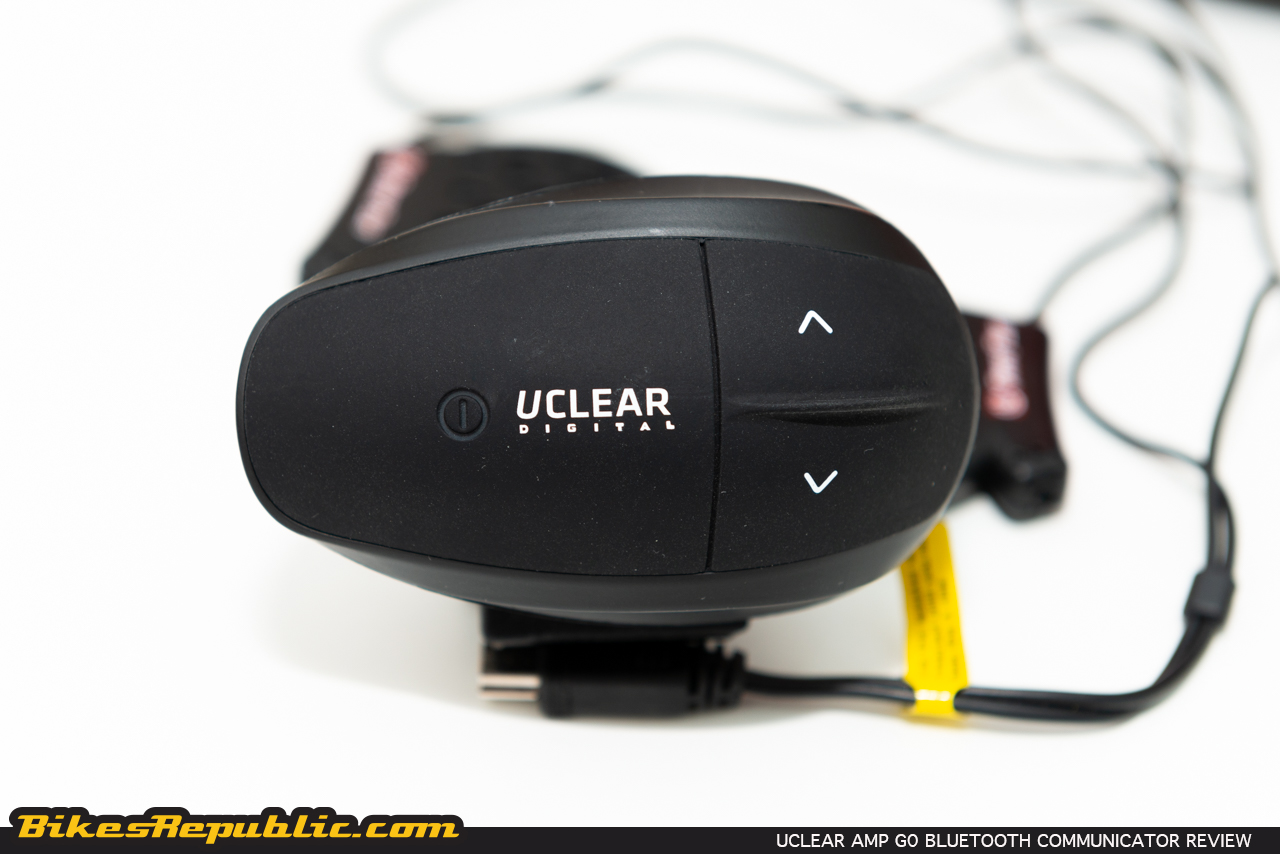
The three buttons on the control unit were also easy to feel through our gloves. I’ve tried doing so through thin summer gloves and thick full-leather racing gloves.

During our ride, Keshy was about 200 metres ahead of me on the S 1000 XR, when one of us mistakenly activated the intercom function while travelling at nearly 200 km/h. Although there was wind noise (there’s bound to be at this speed!), we could still hear each other’s voices clearly, showing that the unit’s auto noise-cancelling feature worked. Besides that, our concerns about not having a boom microphone were allayed, as the AMP GO triangulates our voices’ sweet spots to deliver clear speech.

UCLEAR advertised that the AMP GO has a maximum range of 200 m, so I let Keshy ride further and further ahead. We only broke contact when he was a dot on the horizon, but we were conversing again almost as soon as we were back in range. The intercom function can connect up to four units.

Apart from that, I could hear the music clearly at all times, even through the Alpine MotoSafe Tour earplugs (also available from Hodaka Motoworld). These special earplugs filter out harmful noises such as roaring and whistling wind noises but allows conversations, traffic and your motorcycle’s engine sound through.

We thought we had escaped from the rain during our ride, but a wall of rain awaited us as soon as we passed the Gombak Toll Plaza. It was so heavy that it overwhelmed my helmet’s anti-fog insert within minutes, rendering me almost sightless. However, the UCLEAR AMP GO kept going and not a drop of water got inside through the cable connector port.

We’ve since ridden around with the UCLEAR AMP GO without fail and it dawned on us that its battery lasts a long time. I only had to charge my unit after we had ridden to and returned from Cherating, plus another four days of commuting and riding. Even then, there was still 5% to go.

Any shortcomings?

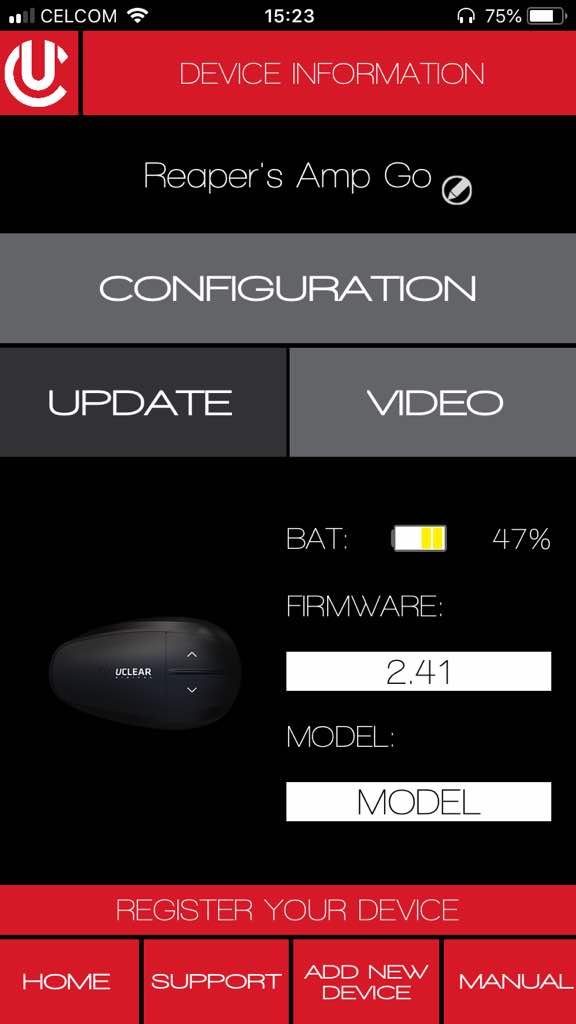
The audio kept cutting in and out while riding in the city after the initial installation (perhaps due to interference). However, I discovered that the unit required a firmware update after I downloaded the app (called CLEARLink). It has never cut off again after the update.
Speaking of the app, while you do not need it for music streaming and phone call functions, it is best that you download and install it in your phone. The app allows you to check for the latest firmware and provides total control over the configurations of the unit, such as auto volume, bass boost, voice answering, and more. You can also find the full owner’s manual there.
In conclusion, we love the UCLEAR AMP GO. It’s easy to install, simple to use, has great audio, connects to our devices quickly, the intercom works as claimed, weatherproof, and long-lasting power.
But there’s one important advantage of the UCLEAR AMP GO. With all its great features and functionality, it is attractively priced at just RM 600. That is unbeatable for a top-of-the-line Bluetooth helmet audio system.

Visit Hodaka Motoworld to get yourself a set. You may also visit Hodaka Motoworld’s Facebook page see more products.

UCLEAR AMP GO TECHINCAL SPECIFICATIONS

Bluetooth: V4.2 (BR/EDR/BLE), Class 1
Profiles: HSP, HFP, A2DP, AVRCP, Intercom
Group Intercom: Full duplex up to 4 users
Range: Up to 200 metres per user
Battery: 3.7V lithium-ion
Talk Time: Up to 10 hours
Standby Time: Up to 400 hours

Archive

Follow us on Facebook

Follow us on YouTube