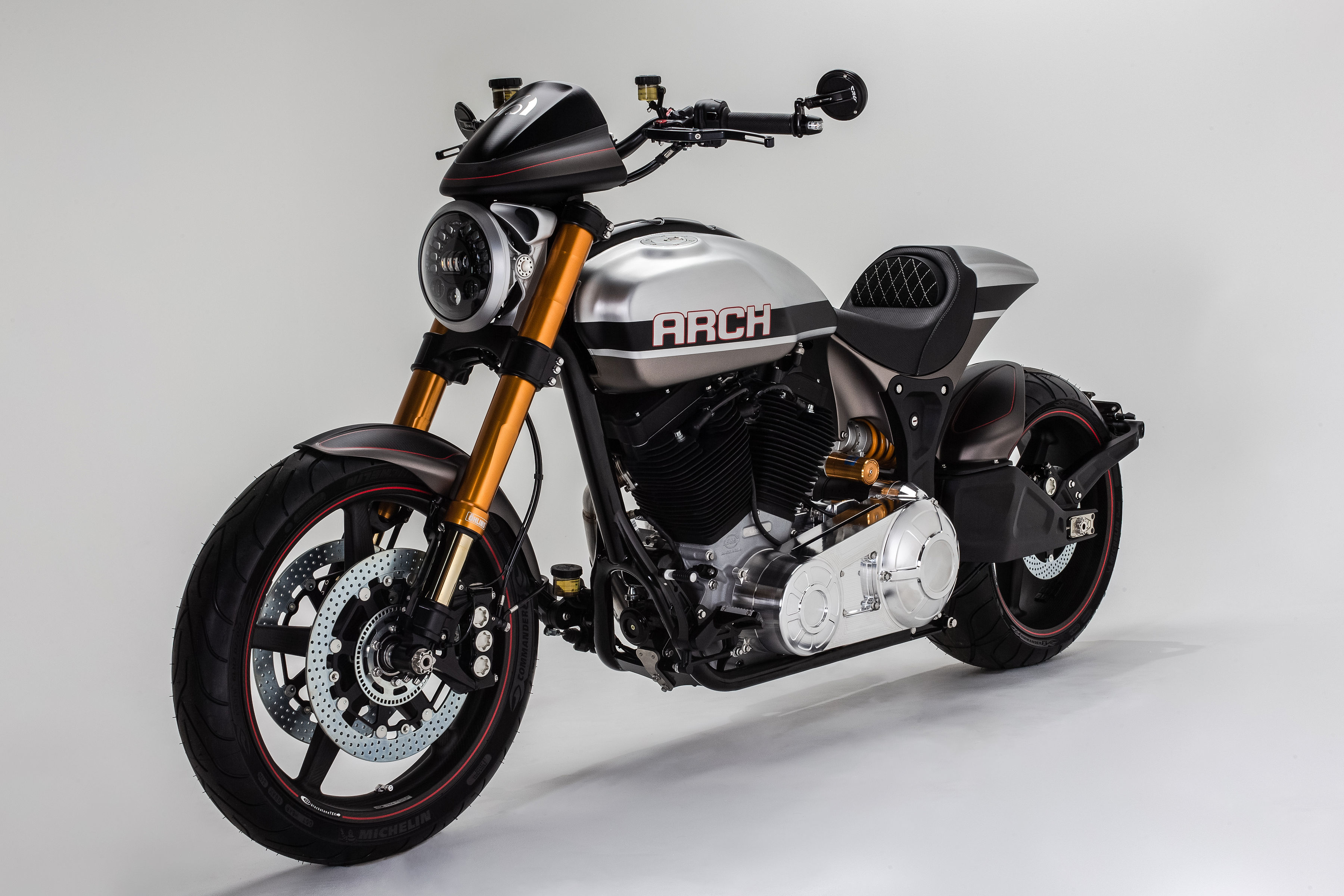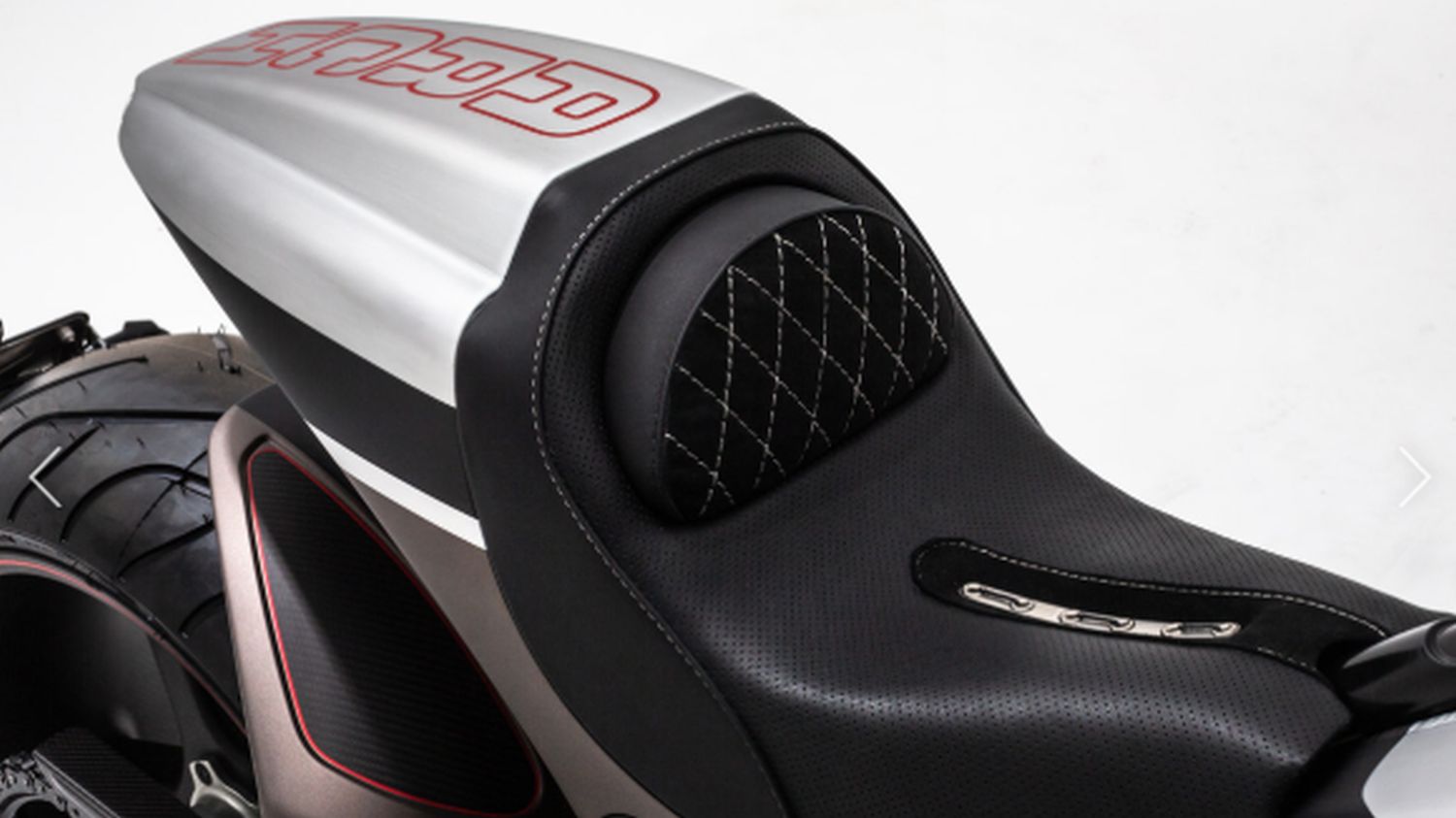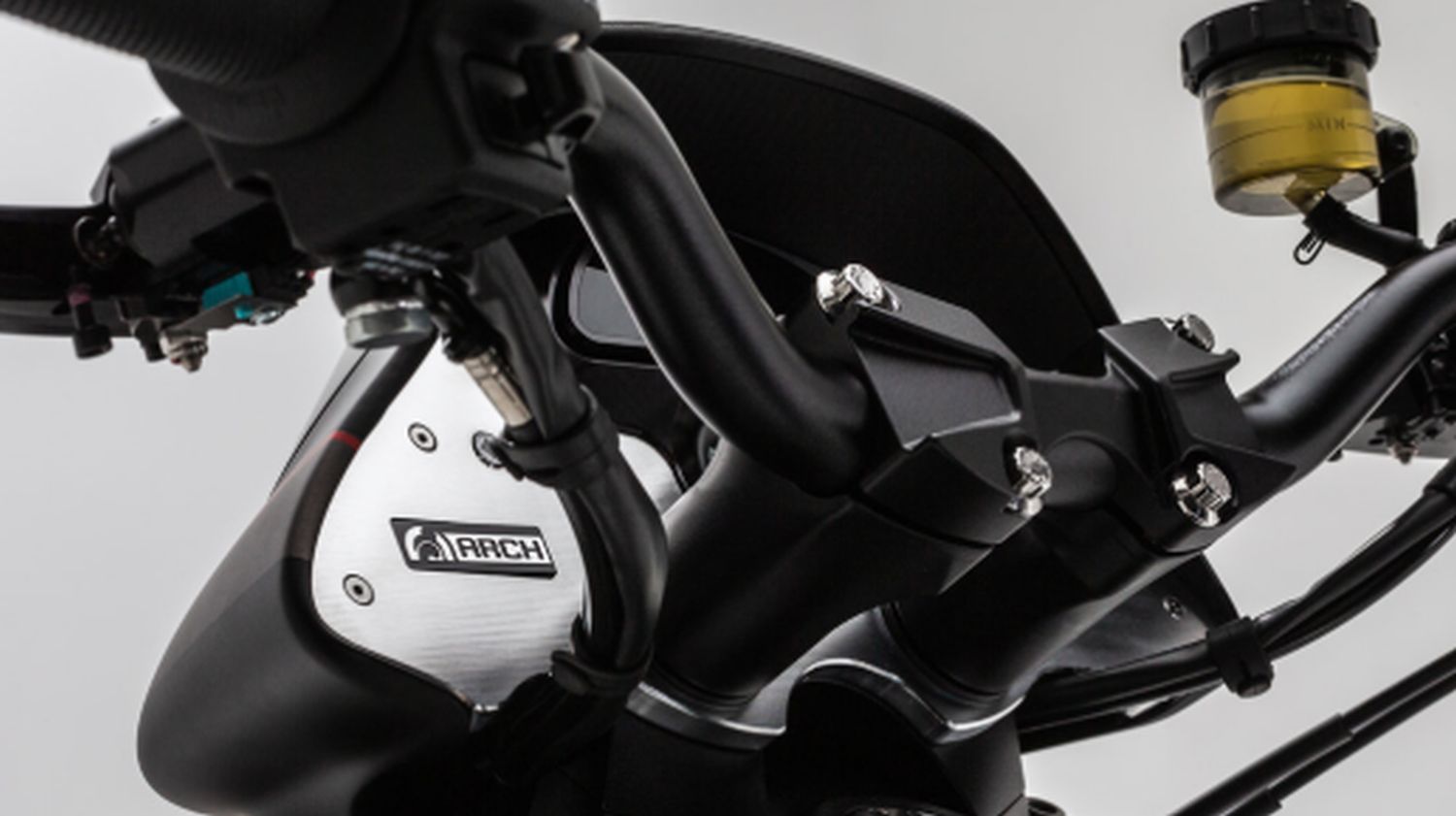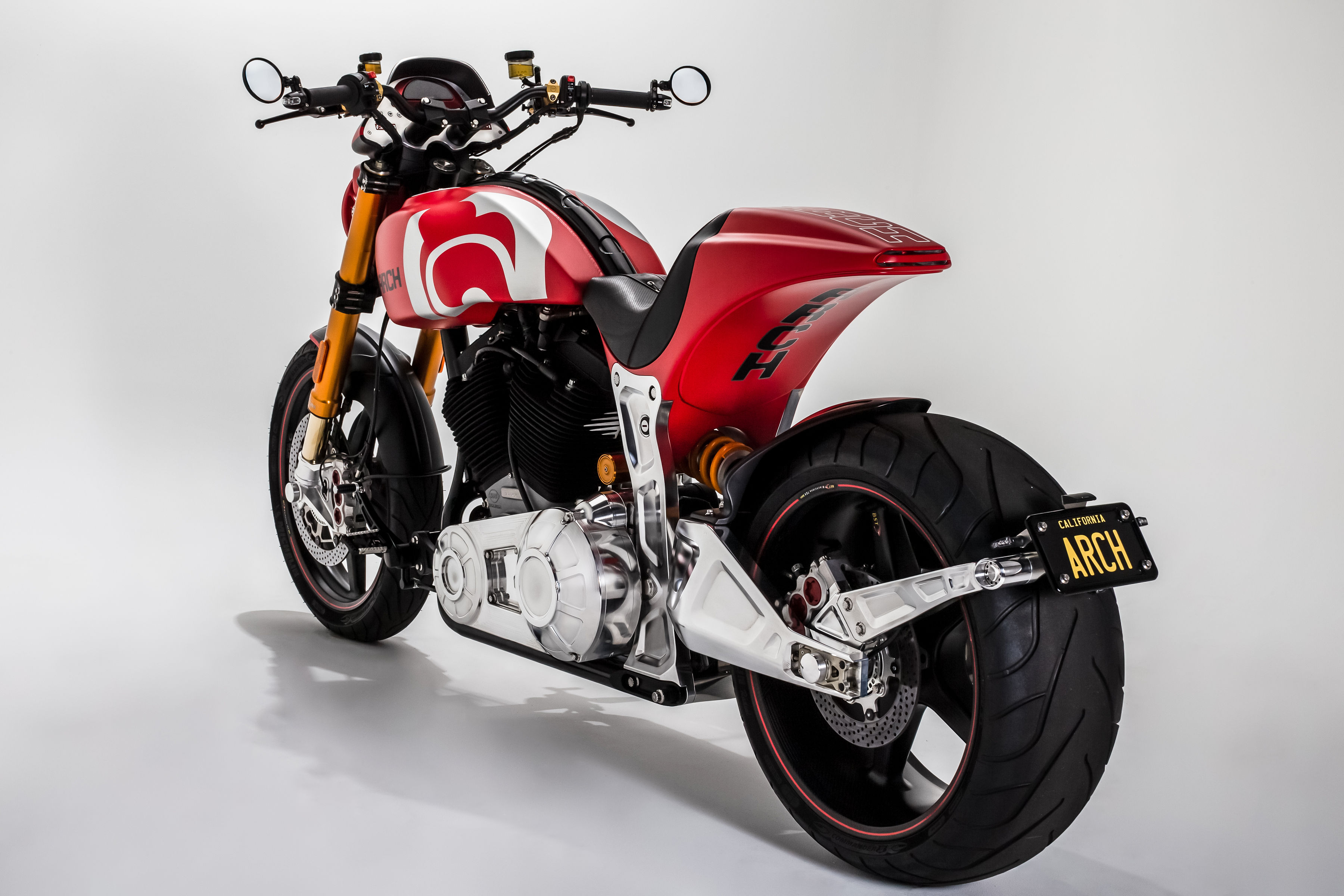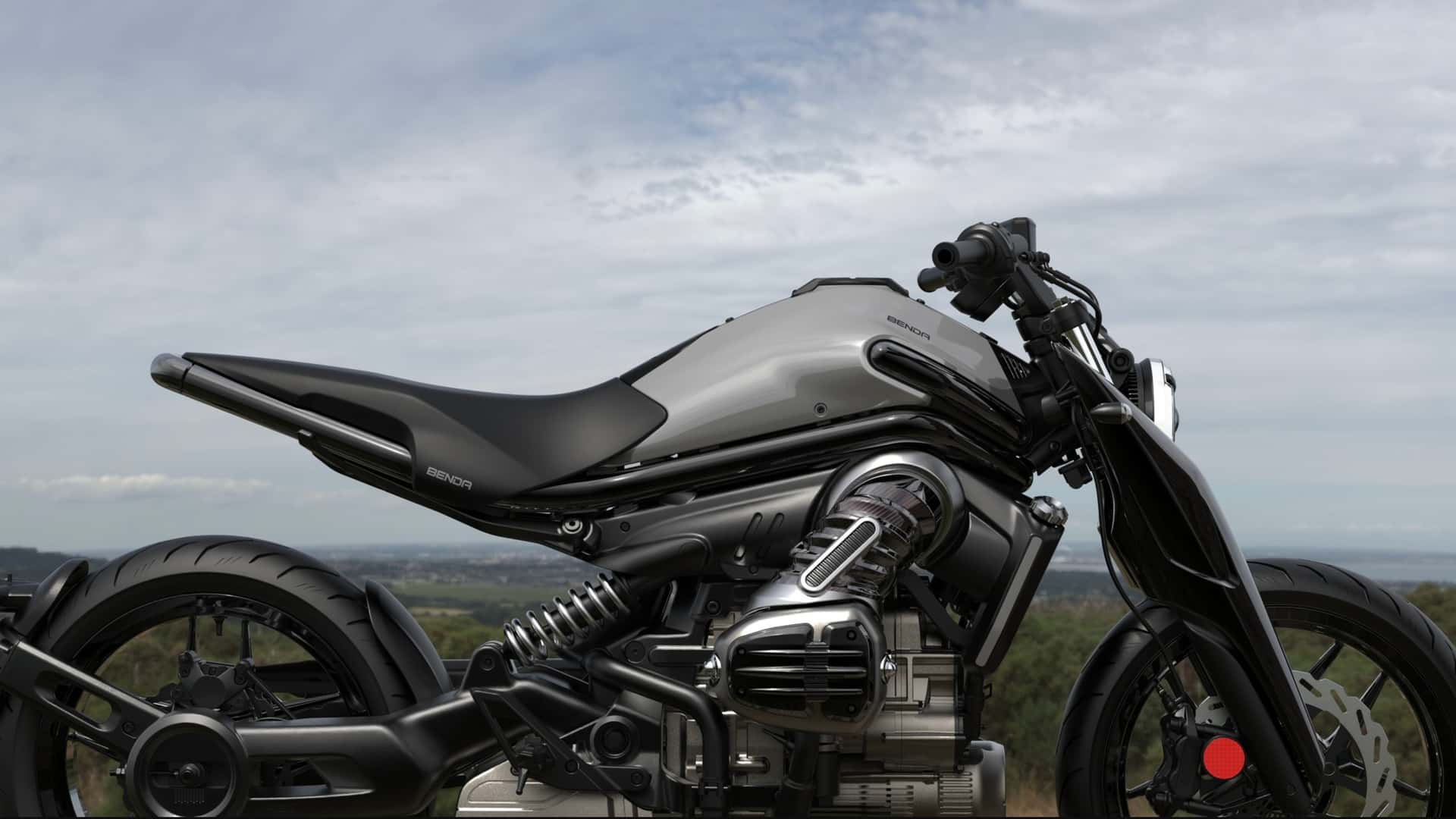
The 2020 Italjet Dragster is making a return and will debut at EICMA 2019.
It will be offered with 125cc, 150cc and 200cc engines.
The bike looks aggressive and striking.
The 2020 Italjet Dragster is making a return and will debut at EICMA 2019.
The new Dragster features the DNA of the original Dragster which was introduced in 1998. That includes the hub-centre steering setup instead of conventional forks and exposed steel trellis frame.
But the new model looks even more aggressive and arresting. The sharply-faceted bodywork and those circular hubs look like Lego Technic pieces. Overall, it looks stripped down and ready to do battle on the streets.
The manufacturer’s website listed the bike as having new four-stroke, Euro 4-compliant engines ranging from 125cc, 150cc and 200cc. All are liquid-cooled.
Italjet is a small Italian scooter and motorcycle manufacturer. Their Italjet 125 scooter was last sold in Malaysia in 2016. Since then they’ve introduced other bikes such as the Buccaneer 250.
Anyhow, the original Dragster were widely received and garnered a cult status in Europe since its introduction until production stopped in 2004. The manufacture knows this and used the tagline “We’re not joking!” In their website.
There’s no further word on its specs and prices. We should know after EICMA begins on 5th November 2019. We shall then see if it reaches our shores.
Valentino Rossi revealed that Johann Zarco rejected a test rider role for Yamaha.
Yamaha had been trying to bring him in.
Rumours now say the Frenchman might be eyeing a role for Honda, instead.
Although Johann Zarco was highly expected to land a test role with the Yamaha factory, Valentino Rossi said revealed that the Frenchman has decided otherwise. There are rumours that Zarco may be eyeing a position in Honda instead.
The situation seemed to have changed since Zarco’s been called to replace LCR Honda rider Takaaki Nakagami for the last three races of the season.
“It’s a shame,” Rossi told the media in Motegi, Japan. “It’s no secret that Yamaha was looking at Zarco for ten rider and he would have been important for us.”
“Now he’s close to Honda and we need to see what he decides to do for 2020, but it looks to me like we will have to find another fast test rider. It will be difficult to find someone like Johann.”
Indeed, Zarco has great experience in the Yamaha YZR-M1. He achieved six podium finishes and three pole positions in 2017 and 2018, while his ex-team Tech 3 Racing were tied to Yamaha. When Tech 3 moved to KTM, Zarco was promoted to the factory KTM team while his ex-teammate Hafizh Syahrin stayed behind in the Tech 3 KTM team.
But now rumours are starting that the French rider could be eyeing a position in Honda.
It is all due to Jorge Lorenzo’s lacklustre form in the Repsol Honda factory team. Honda had great hopes on the five-time world champion but the best he could achieve was 11th this year. There are also rumours that the manufacturer is not happy with the rider.
Lorenzo has said that he is not concerned about Zarco riding for LCR Honda beginning the Australian round, stressing that it is the satellite and not the factory team. Lorenzo’s contract runs through 2020.
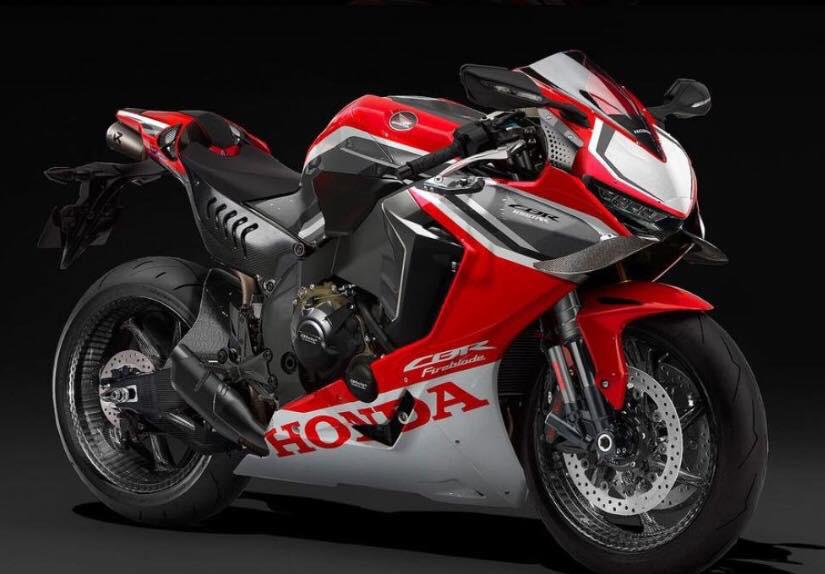
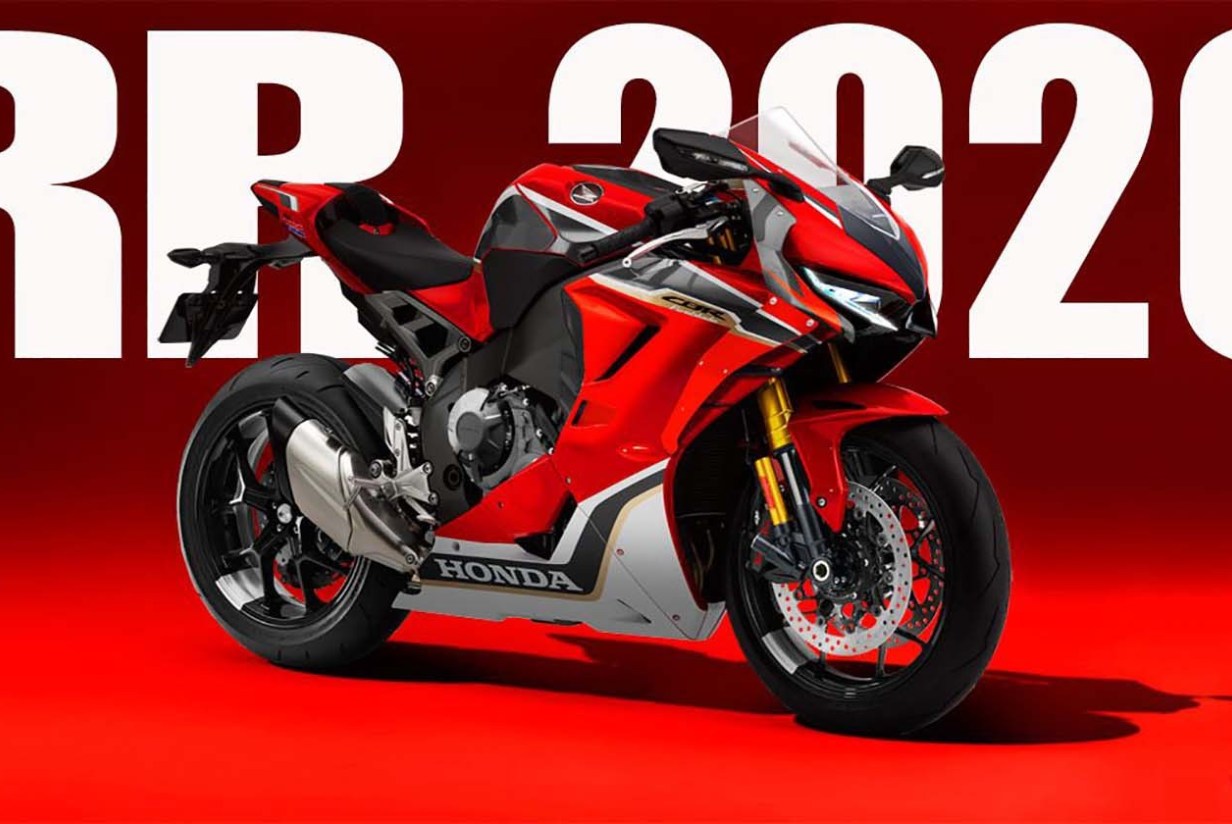
It is without doubt that Zarco’s ride for LCR Honda will be considered an audition. Honda could extend a test role for Zarco next year, replacing Stefan Bradl. Bradl is reportedly working on the new CBR1000RR Fireblade which will contending for the WorldSBK title in 2020.
Art of Speed has opened the application to the AOS 2020 Invitational Build-Off.
The winner from AOS 2020 will be entered in the 29th Annual Yokohama Hot Rod Custom Show.
Interested parties are to submit their plans before 31 October 2019.
In order to support the growing quality of participants in the Art of Speed (AOS), the application for the organisers have opened the application to the Art of Speed 2020 Invitational Build-Off.
AOS intends to submit the winner from AOS 2020 to the 29th Annual Yokohama Hot Rod Custom Show 2020, in Japan.
The motorcycle category is divided into two classes under the FreeStyle category, for motorcycles 250cc and below, and motorcycles 251cc and above.
Interested parties such as individuals or workshops are required to submit their plan to AOS before 31st October 2019.
Please refer to the Press Release below:
For #AOS2020, the current format of Invitational Build-off has been changed. To support the growing quality of participants, we intent to submit entry from #AOS2020 to The 29th Annual Yokohama Hot Rod Custom Show 2020, Japan.
For this reason, we are opening applications for #AOS2020 Invitational Build Off.
The category as below
i) Motorcycles FreeStyle :
a ) 250cc and Below
b ) 251cc and Above
ii) Automobiles :
Open to all model, make, year and freestyle class.
Winner of each category will have their vehicle transported and entered as participant at The 29th Annual Yokohama Hot Rod Custom Show 2020. Winner will also receive a package trip for ONE (1) to attend the show.
To all interested individuals or workshops, please submit design, briefing and build up planning to us for screening processing before
31st October 2019.
Please get in touch with Art of Speed through the contact details below:
The Ministry of Transport expects to establish a legal framework and the terms for motorcycle e-hailing by the end of the year.
The Cabinet had agreed in principle to go ahead with the service.
There is no specific date on when the services will begin again.
The Ministry of Transport expects to establish a legal framework and the terms for motorcycle e-hailing by the end of the year.
“The ministry will update the legal framework and terms of service once the review process has been finalised and approved by the Cabinet,” the ministry said in a written response posted on Parliament’s website today.
The Cabinet had agreed in principal to green light the service in August this year. The decision was made after Youth and Sports Minister Syed Saddiq met with Go-Jek’s founder who had travelled from Indonesia.
It was an about turn for the Ministry of Transport and Cabinet who had carried on with the decision to ban motorcycle-hailing by the previous Barisan Nasional government.
That decision hit Dego Ride, the service which was started by a Malaysian company. The Ministry of Transport under the new government even issued a stern warning to Dego Ride to stop immediately.
However, Dego Ride proceeded to restart the service in August when the Cabinet agreed to go ahead with motorcycle e-hailing, but was told to cease their services again as the government had not set up a legal framework.
The CFMoto 650GT ABS that was launched in Australia.
It’s among the cheapest 650cc bikes in the market.
CFMoto is benefitting from their tie-up with KTM.
Talk about bikes that should come to Malaysia. Check out this CFMoto 650GT ABS that was launched in Australia.
The third model in the 650 range, the 650GT is the “grand tourer” of the family. Reports state that it costs just AUD 8,490 compared to the 650NK at AUD 6,490 and 650MT at AUD 7,490. CFMoto in that country even throws in a set of hard side cases at that price.
The next cheapest model in the 650 range is the Royal Enfield Interceptor 650, priced from AUD 8,440.
For that price, owners receive receive a large-sized TFT with auto-dimming function, adjustable windscreen, plus USB and 12-volt charging sockets for the rider and passenger.
The parallel-Twin engine produces 55.6 hp. That looks low for a 650cc engine but that’s because it’s limited by the authorities in Australia. Called “LAMS” for “Learner Approved Motorcycle Scheme,” power output is limited for certain motorcycles deemed suitable to new riders.
On the chassis side, the CFMoto 650GT ABS is equipped with KYB telescopic forks and a cantilever shock. Like the KTM 790 Duke, the front brake calipers are made by Spanish brake manufacturer J. Juan.
The bike may look large but the seat is only 795 mm tall, making it accessible to all riders.
As we’ve written before, CFMoto is definitely benefitting from their tie-up with KTM. The deal also brought along long-time KTM stylist KISKA to design their bikes.
Recipients of Bantuan Sara Hidup (BSH) who are eligible for fuel subsidies can check their status online.
Recipients may also update their status in the website.
Non-BSH recipients but who are eligible for the subsidy are not listed in the website.
Owners of motorcycles 150cc and below are eligible, subject to certain conditions.
Recipients of Bantuan Sara Hidup (BSH) who are eligible for fuel subsidies can check their status online.
The Domestic Trade and Consumer Affairs Ministry has set up a website for such purpose. You may follow this link to do so at psp.kpdnhep.gov.my.
Minister Datuk Seri Saifuddin Nasution Ismail said the recipients’ data were based on the information provided during application for the BSH aid scheme. “We also cross-checked vehicle ownership information with the Road Transport Department’s database and the ministry has identified 2.9 million individuals from the B40 group who are eligible for the fuel subsidy,” he said.
However, he admitted that the data needs further improvement and urged those in the B40 group to check their status. Those who could not find or wish to update their information may do so by filling out the appeal section in the website.
He also added that those in the B40 group who have just bought a vehicle that is eligible for the subsidy to apply with the Road Transport Department (JPJ).
The website does not list people who not BSH recipients but are eligible for fuel subsidy. The process to submit their application will be announced later.
Under the fuel subsidy scheme, eligible motorcycles must be 150cc and below. Those above 150cc must be at least seven years old.
As for cars, they must be 1600cc and below, or more than 10 years old for cars above 1600cc.
The subsidy will be deposited in the recipients’ bank accounts every four months. Motorcycle owners will receive RM 12 per month, while car owners will receive RM 30 per month.
Non-BSH recipients who are eligible will also receive a Kad95. The card allows for a discount of 30 sens per litre of RON 95 petrol; up to 40 litres per month for motorcycles and 100 litres for cars.
The public may also contact the ministry via 1-800-886-800, or email psp@kpdnhep.gov.my or WhatsApp 019-2786356.
Another teaser, but it’s for the 2020 Triumph Thruxton RS this time.
The Thruxton R was one of the best bikes we’ve tested.
But it was the best factory café racer of all.
Here comes another teaser video. But oh dear, it’s for the 2020 Triumph Thruxton RS.
It’s a very short video, showing the Thruxton RS badge on a side panel and telling us to that it’ll be launched on 5th November. That’s the second day of EICMA 2019. No other detail was presented.
If there’s any indication of what’s new, the previous bike was called the Thruxton and Thruxton R. But the “R” was so good, so entertaining, so satisfying to ride that we don’t know what to expect of the “RS.”
The previous model had super smooth fuelling, predictable and linear throttle, and a punchy 1200cc liquid-cooled, 270-degree crank, parallel-Twin engine. The power plant is marked as “HP” for “High Power,” instead of the Bonneville T120 and T100’s “HT” (High Torque) variety.
And as with all Triumph’s the handling was superb right out of the box. The “R” version we tested had Öhlins shocks at the back and Showa BPF forks up front.
We wrapped up our tests by pronouncing the Thruxton R as the best factory café racer, bar none.
Triumph then followed up with the limited edition Thruxton R TFC. Clad in carbon fibre, only 750 were made.
Patent submissions of the 2020 BMW F 850 R were leaked in Brazil.
It may be one of the four bikes to be launched at EICMA 2019.
The rendering shows a bike evolved from the F 800 R, rather than a complete makeover.
A few days ago, we ran a story about BMW Motorrad being ready to launch four new bikes at EICMA 2019, which may include the 2020 BMW F 850 R.
Well, looks like it may be true after all, since the bike’s patent filings in Brazil was leaked.
While some may be waiting for the 9Cento concept inspired 850 roadster, these renderings show something else. The new bike looks more of an evolution of the outgoing F 800 R, instead of a revolution. But who knows that the 9Cento’s design may be adopted to an F 850 RS or XR?
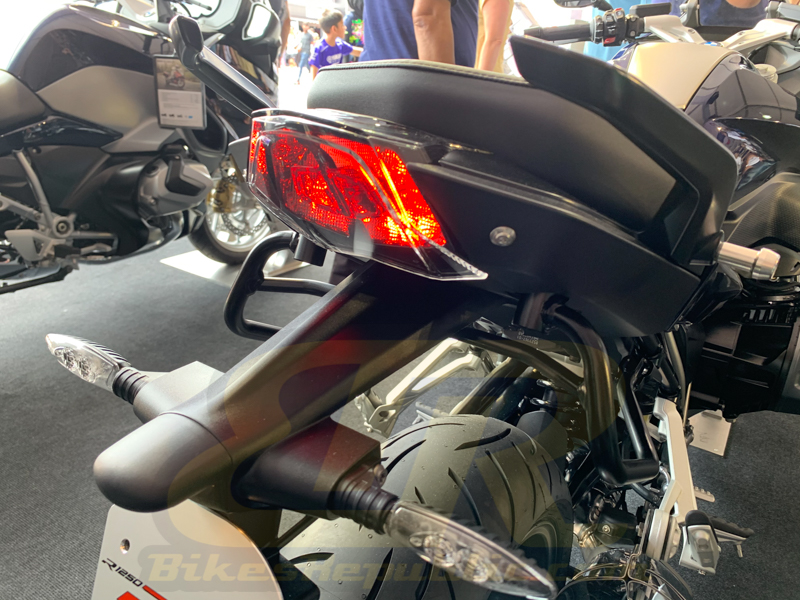
Anyhow, the F 850 R will share the same engine as the F 850 GS/GS Adventure. Overall, the new bike has a similar profile to the F 800 R, but we spotted a number of differences.
The tail section looks much tidier as the exhaust was moved to the right side and is lower. Secondly, the passenger’s seat is much lower and there are new radiator shrouds. Besides that, the entire headlamp unit looks smaller and we can expect the new large-sized TFT screen which is fitted even to the C 400 series scooters.
Will the F 850 R finally be popular in Malaysia? We certainly hope so.
Motorcycles get faster and faster as manufacturer’s compete to be the best.
Some of them ended up being the fastest production motorcycles.
Here are just 15 of the fastest ever.
Aaah… where would motorcycling be if manufacturers don’t push for the title of the world’s fastest production motorcycle, eh?
Bikes have gotten amazingly fast but it all started from somewhere. While we say that there’s no point of building faster and faster motorcycles, manufacturers want to have the fastest bike to show off their engineering capabilities. The bigger horsepower looks good on brochures, too. So much so that consumers have taken to comparing bikes by how much power a bike has over the other.
But anyhow, before we begin the countdown proper, let’s talk about the so-called gentlemen’s agreement.
Gentlemen’s agreement
It was the Honda CBR1000XX Super Blackbird which started the top speed war when it came out in 1996. Yes, other bikes were also “the fastest” but the Super Blackbird was designed specifically for speed, rather than attaining high a top speed as a by-product of power.
Suzuki had been sitting on the sidelines watching Honda and Kawasaki duke it out. Then in 1999, they jumped everyone with the GSX-1300R Hayabusa. With a monster 173 hp engine, the ‘Busa was clocked at 212 km/h.
Kawasaki predictably fought back and their next generation speedster, the Ninja ZX-12R, was reputed to break the ‘Busa’s record.
By now, European regulators were worried about public safety and that upcoming hyperbikes may influence illegal races at straighter speeds. So, they threatened to ban sportbike imports into the EU if something wasn’t done.
The prospect of not selling in Europe was too scary to bear, so European and Japanese manufacturers sat down and agreed to cap the top speeds of future production bikes to 300 km/h beginning year 2000.
The Ninja ZX-12R was thus limited by this agreement and had a 4 km/h slower top speed.
It is also why all new bikes, no matter how powerful, or how they were designed to cut through the air, could only list their top speeds as 299 to 300 km/h.
Except for two bikes, as we’ll see later.
The exclusion of certain bikes
This list will also exclude certain famous bikes, for example, the 1972 Kawasaki Z1. The bike was certainly fast, but it was the fastest bike of its era, instead of being the fastest outright.
As such, this list may surprise you.
1. Williamson Flat Twin (1912)
Williamson Flat Twin in the British Motorcycle Museum
Hey, why include such an antiquity? Well, it’s a great way to see how far we’ve come.
The bike had a 964cc water-cool flat-twin (hence the name). Launched in 1912, it had a 2-speed transmission and foot clutch. It sold for only £82. 1913 saw an air-cooled engine and 1914 saw the addition of a kickstarter. Production then continued with a 980cc version after WWI but only 20 were built as the founder Billy Williamson succumbed to a heart attack.
2. Pope Model L (1914)
Pope Model L
As you an see, 1000cc and V-Twin engines are not new. But it turned the Model L produced by the Pope Manufacturing Company into the world’s fastest production motorcycle.
The bike featured many new technologies that have become the staple of modern motorcycles, such as chain final drive, overhead valves, multi-speed transmission, and Bosch magneto.
These new tech pushed the bike to 110 km/h (70 mph). That’s a great feat considering that motorcycle frames, wheels and tyres of the time were developed from bicycles.
3. Cyclone V-Twin (1916)
Cyclone V-Twin
It’s been a mere two years since the Pope Model L.
Production of the Cyclone V-Twin began in 1912, but it was the 1916 model which broke records and became a legend.
The Joerns Motor Manufacturing Company gave the Cyclone a 996cc, 45-degree, SOHC V-Twin which produced 45 hp, compared to the Pope’s 12. The cams were driven by bevel gears instead of pushrods and the cylinders had hemispherical combustion chambers (like the later “Hemi” muscle cars).
Although official records stated that the bike reached 137 km/h, there were accounts of racing Cyclones that hit 185 km/h. At least.
If you think that’s not peanuts, sit on a classic Raleigh bicycle and have your buddy ride a motorcycle and push you to just the official 137 km/h top speed.
This is why the Cyclone V-Twin was the most expensive motorcycle ever auctioned at USD 852,000.
4. Brough Superior SS100 (1925)
Brough Superior SS100
The Cyclone V-Twin held the record for 9 years until the advent of the SS100.
Listed as a 100 mph (160 km/h) model, the company also unveiled the Brough Superior SS100 Pendine in the same year (see below).
5. Brough Superior SS100 Pendine (1925)
Brough Superior SS100 Pendine
The SS100 Pendine was named after Pendine Sands where Sir Malcolm Campbell set a number of world speed records. (Do Google the name Malcolm Campbell.)
it was developed further for competition and ended with holding seven world records. Founder George Brough himself rode the bike to 210.2 km/h in 1928, breaking his previous record.
But perhaps the Brough Superior SS100 became better known due to the movie “Lawrence of Arabia.”
6. Vincent Black Lightning (1949)
Vincent Black Lightning
Enter Vincent. The Brough Superior SS100 Pendine would hold the record for 22 years.
The Black Lightning is the factory competition model developed from the Black Shadow (which was already fast in its own right), not unlike the current Kawasaki Ninja H2R. Unlike the H2R, however, the Black Lightning could be registered as a road bike.
Rollie Free would take the bike to 241.905 km/h during a record-breaking run at the Bonneville Salt Flats. The picture of him lying prone on the bike (Superman style) while clad in nothing but his swim cap, swim trunks and sandals had become as legendary as the bike itself.
Free would actually record an even faster 251.99 km/h during later trials but he crashed during the actual run.
Vincent-HRD produced the most advanced motorcycles of their time but many of those technologies would find their way into modern motorcycles. Among them are the technique of using the engine as a stressed member of the frame, and the cantilevered rear monoshock.
The Black Lightning is the most sought-after Vincent and fetches hefty prices at auctions.
7. Kawasaki GPZ900R Ninja (1984)
1984 GPz900R Ninja
Could you believe that the Vincent Black held the record for 35 years?!
The bike to break it was the GPZ900R Ninja. Yes, the “Top Gun” bike. It was also the first Kawasaki to use the “Ninja” name.
The Ninja became the precursor to modern sportbikes. It’s the first to incorporate a 16-valve, DOHC, liquid-cooled, inline-Four engine. The 908cc engine produced 115 hp and pushed the bike to over 243 km/h, making it the first production bike to surpass 240 km/h.
A slightly modified bike hit 262 km/h, and blasted through the quarter mile at 10.976 seconds.
So successful was the bike that Kawasaki continued producing it for the Japanese market until 2004, although worldwide production ended in 1996.
8. Kawasaki Ninja ZZ-R1000 (ZX-10) (1988)
1988 Kawasaki Tomcat ZX-10
Also called the Tomcat in certain countries (as an homage to Top Gun?), it continues Kawasaki’s brief of producing the most powerful and fastest sportbikes.
Building off the GPZ1000RX (which evolved from the GPZ900R), the ZX-10 had lighter pistons and higher compression ratio. But the real groundbreaker for Kawasaki was the aluminium perimeter frame.
The 997cc, 16-valve, DOHC, liquid-cooled inline-Four produced 135 hp and pushed the bike to 269 km/h.
9. Bimota YB6 EXUP
Bimota YB6
Ah, Bimota the boutique motorcycle manufacturer.
Bimota took the engine from the Yamaha FZR1000 EXUP (hence the “Y” in front of “B”) and fettled it to produce 147 hp. The maker also removed as much as 23 kg from the donor bike and added all the high end stuff, besides a much better chassis.
The work resulted in a 270 km/h top speed.
10. Kawasaki Ninja ZZ-R1100 (ZX-11) (1990)
1990 ZZR1100 (ZX-11)
You knew Kawasaki had to return the favour. So in 1990, they unleashed the Ninja ZZ-R1100.
Capacity was upped to 1052cc, which also increased power to 145 hp, and the fairing was made to be more aerodynamic. It was also the first production bike to feature ram air intake to boost top end horsepower.
As such, the bike reached 283 km/h.
11. Honda CBR1100XX Super Blackbird (1996)
Honda CBR1100XX Super Blackbird
After years of watching Kawasaki dominate since the GPZ900R in 1984, Honda had to act.
The answer was the CBR1100XX Super Blackbird, the name an homage to the Lockheed SR-71 reconnaissance aircraft which could hit Mach 3.8 (4691 km/h).
Honda didn’t just produce a bike with “slippery” aerodynamics, however. The bike featured plenty of new developments such as PGM FI fuel injection.
The engine produced 132 hp initially, and was then revised to make 136.7 hp and finally 137 hp in 1999. Hence the 1999 model was the fastest with a top speed of 290 km/h, but still shy of the magic 300.
12. Suzuki GSX-1300R Hayabusa (1998)
Here we are. The Hayabusa. Featuring a bodywork designed in the windtunnel, its sole purpose was to break the 300 km/h mark the first time for a production motorcycle.
The monster engine made 173 hp, hammering the bike to 312 km/h.
As we wrote in the beginning, regulators had decided to step in by now, consequently leading to the gentlemen’s agreement. That left the Hayabusa as the fastest ever production motorcycle.
Until 2013.
13. Ducati Panigale R (2013)
Ducati Panigale R
The Panigale R is actually the homologation model for WorldSBK racing, hence its engine capacity was limited to 1198 cc as per rules for two-cylinder motorcycles.
Even then, it already made 195 hp. Power was increased to 202 hp by using the racing exhaust.
Road & Track magazine tested the bike with the race exhaust and hit 325 km/h. It could’ve gone faster if not for the street gearing!
14. Kawasaki Ninja H2 (2015)
The road legal H2
We reach the H2, finally. The H2 is the road-going version of the competition-only H2R, and both are supercharged.
Being for the road, the H2’s horsepower was lowered to 200 hp (in 2015. The 2019 version has 231 hp). Besides that, the top was described as “over 300 km/h.)
James Hiller then rode the H2 as a demonstration at the 2017 Isle of Man TT. Equipped with slick tyres, the bike hit 332 km/h. It was the fastest speed ever recorded at the TT.
15. Kawasaki Ninja H2R (2015)
With the full 310 hp on tap, the H2’s top speed was listed as 337.06 km/h.
But supersport racer Kenan Sofuoglu decided to do better. Using a stock H2R, it was fitted with specially-developed Pirelli slick tyres and the tank filled with race gasoline.
He charged down the Osman Gazi bridge in Turkey (the fourth longest in the world at 2.41 km), Sofuoglu managed 380 km/h during a trial run. After four months of preparation, he attempted the run in earnest and hit 400 km/h.
Thus the Kawasaki Ninja H2R is the world’s fastest production bike.
Production of the Harley-Davidson LiveWire electric motorcycle has halted.
The company says that its due to a “non-standard condition.”
But a media report suggests that it could be to the charging mechanism.
Production of the Harley-Davidson LiveWire electric motorcycle has halted.
Harley-Davidson did not provide the specifics of the decision, instead they mentioned only a “non-standard condition.” They also mentioned that investigations are underway to provide customers with products of the best quality.
However, according to The Wall Street Journal, the problem could well be the bike’s charging mechanism. The Motor Company recommended the use of professional DC fast-chargers instead of normal home chargers.
Units of LiveWire were already sent to select dealers in September this year but no sales number was released as yet. A recall has not been issued at this time also.
The LiveWire is supposed to kick start Harley’s flagging sales especially in the United States where millennials are shunning motorcycles. The design of the bike and being electric demonstrates the manufacturers keenest in harnessing this group. Its electric motor produces the equivalent of 105 hp and there is no clutch lever or gear shifter. It’s all twist and go.
But many overseas media reported lately that the model is finding few buyers, what not given its USD 29,799 price tag.
But CEO Matt Levatich defends the company’s decision saying that, “We made a deliberate decision to launch a halo product to demonstrate what’s possible in electric — a no-excuses Harley-Davidson electric — and we feel very good that we’ve already done that.” Levatich produced that statement in July.
Harley-Davidson didn’t state when production of the LiveWire will continue.
The Modenas Service Plus workshop in Kota Damansara is seeking a motorcycle technician.
It is a full-time position and training will be provided.
An attractive salary package awaits.
You are also in luck: The Modenas Service Plus workshop in Kota Damansara is looking for a technician.
If you derive satisfaction of hearing the engine sounding smooth after an oil change, pleasure from seeing a motorcycling running after righting a wrong, and thrill from troubleshooting, then you have what it takes to be a motorcycle technician.
The position is for a full-time technician. A salary between RM 1,500 to RM 2,500 per month can be expected, depending on experience.
Since it is an official Modenas service centre, you can expect to receive formal training in working with Modenas motorcycles. But of course, the majority consist of the newly-launched Modenas NS160, Modenas NS200, Modenas RS200 and Modenas Dominar D400.
The service centre is fully-equipped with all the necessary tools and equipment.
So, if you love motorcycles and seeing how they tick, please call or message the number below:
The 2020 Ducati Streetfighter V4 teaser video is now on Twitter.
It shows the headlamp’s profile while flashing through features and specs.
The bike will have 208 hp and weighs only 178 kg.
The Italian manufacturer has uploaded a 2020 Ducati Streetfighter V4 teaser video on Twitter.
The video shows the bike’s headlamp profile and flashes through the features and some specifications.
First of all, the V-four engine will be known as the Desmosedici Stradale, just like the Panigale V4’s. “Desmosedici” means “desmodromic V-four” while “Stradale” means road, all in Italian.
Next, the video says “biplane wings.” These are the winglets similar to the Panigale V4 R’s.
This is The Fight Formula.
See you at Ducati World Première 2020: October 23rd, 11.30 am CEST.
Follow the unveil of the 2020 Ducati range in live streaming on our website and on our social media channels.#DWP2020pic.twitter.com/57UF2VLVfr
It also says “Panigle V4 electronic suite.” It means the Streetfighter V4 will have IMU-based lean-angle sensitive ABS and traction control. Additionally, it should also have wheelie control, rear tyre slide control, engine braking levels, rear wheel lift mitigation, among others. There is no mention of whether there will be an “S” model complete with electronically controlled suspension, however.
Now for the interesting bits.
Ducati claims the weight at 178 kg. This is presumably the dry weight, since the Panigale V4 S weights 195 kg, ready to ride. Still that is really light!
Moving on, the next test is “high handlebar.” This is given, since the bike takes on a naked form.
And here it is, the most awaited spec: “208 hp at 12,750.” That is 18 hp over the expected 190. The current king of supernakeds – KTM 1290 Super Duke R – boasts 187 hp. The prospect of riding a naked bike which has more than 200 hp sounds oddly enticing and scary at the same time.
The video ends with the message “See you at Ducati World Premiere on October 23, 11.30 am CEST.” That’s Central European Summer Time which converts to 5.30 pm.