Bikesrepublic

Latest News

  • BMW rnineT Review – You Have the Power

  • The BMW R nineT is meant as a base for customizing

  • But the BMW rnineT Pure is a “whiter” canvas

I’ve loved liked rock and heavy metal music since I was in school.

“Trendy” schoolmates were more or less divided into two camps. In one corner, were the Canto-Poppers who adored Anita Mui, Leslie Cheung, Alan Tam, et al. They were easily distinguishable in their baggy Ali Baba pants and shirts.

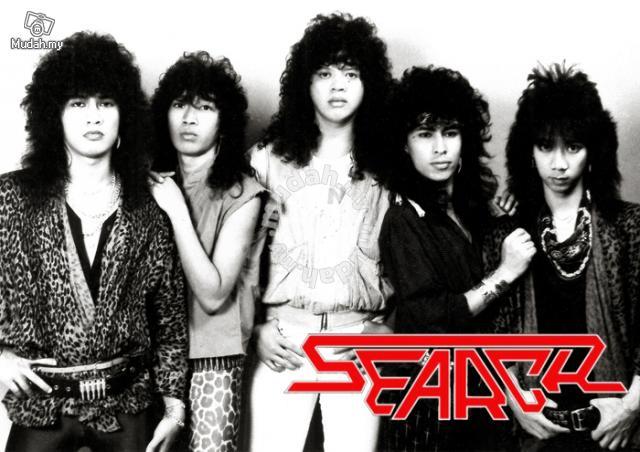
In the other corner were the Mat Rock (rockers) who headbanged to Search, Lefthanded, BPR, Wings, Iron Maiden, Metallica, Megadeth, Bon Jovi, Guns ‘N’ Roses. Their hairs were “slightly” longer (or thicker if they can’t keep it long), high-top shoes, tight shirts, and especially low-cut pants so tight they couldn’t bend their knees more than 10 degrees.

Yes, I was definitely in the second group.
Then in 1991, Nirvana released their revolutionary record: Nevermind. Rock music was suddenly turned on its head. Gone were complex arrangements and guitar solos of rock gods such, replaced by the basic, guttural, rebellious sound of grunge.

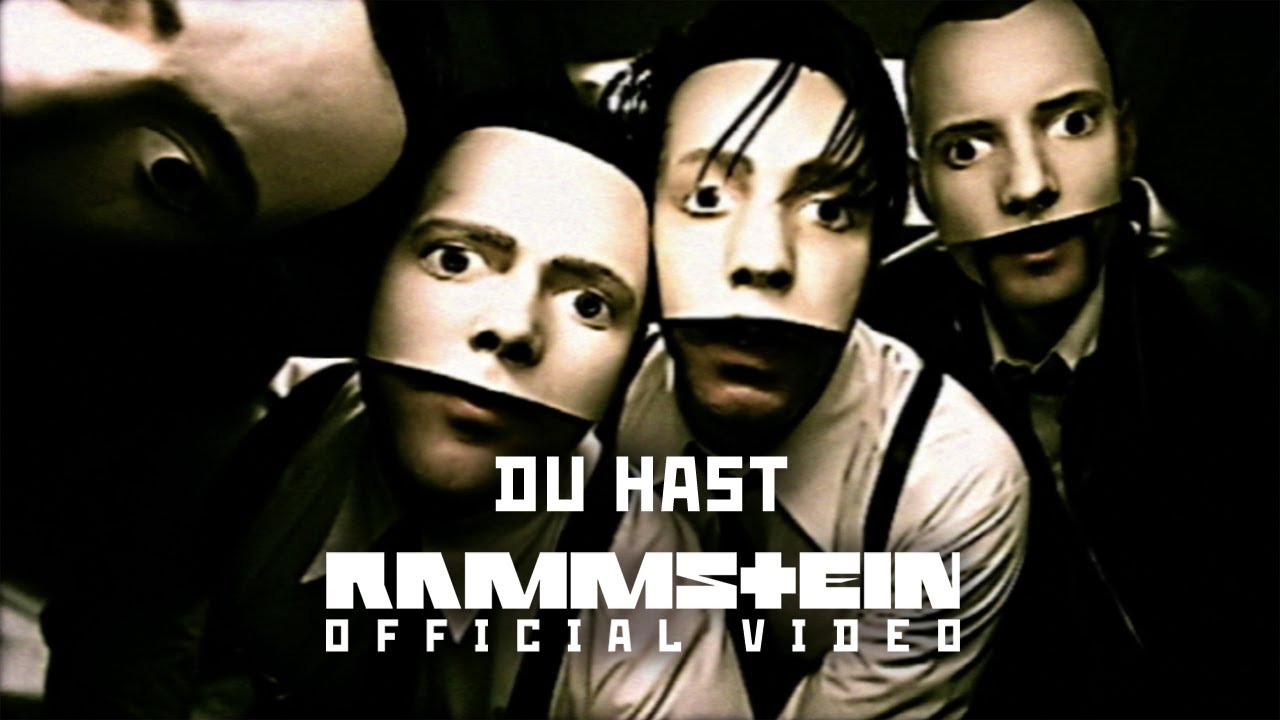
Grunge soon led to NuMetal and all other sub-genres such as Industrial Metal were born. The German band called Rammstein is the leader in Industrial Metal, popularized through their song Du Hast (You Have).
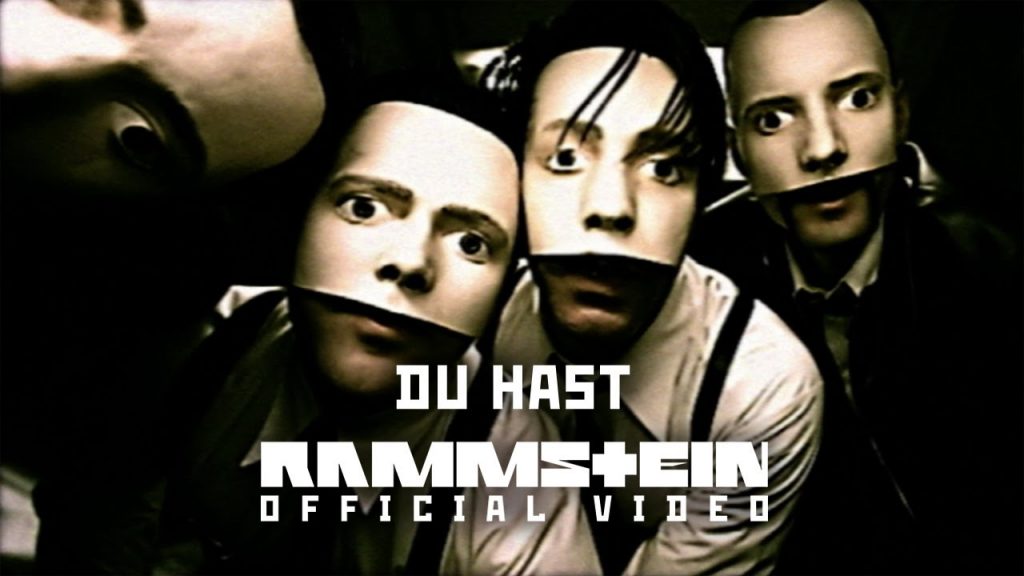
But I could never get the song. No, I’m not referring to my illiteracy of Deutsch but the whole arrangement and direction of it.

I guess I’m firmly locked into old school (like in the movie School of Rock).
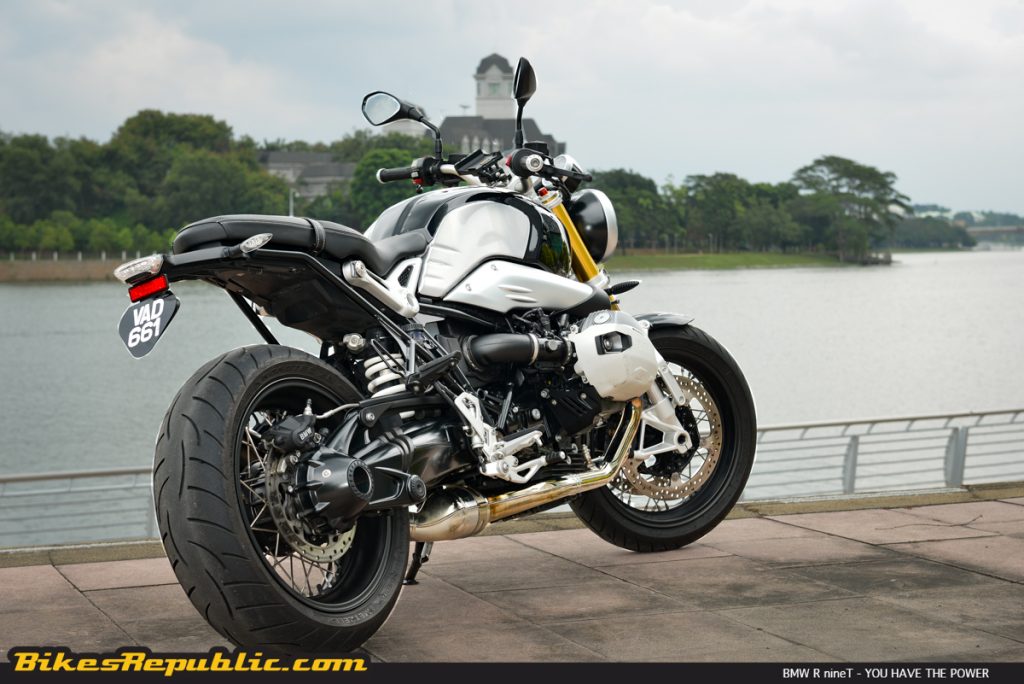
BMW Motorrad have long attempted to capture a solid foothold in the retro market, not from lack of heritage since BMW Motorrad had many iconic motorcycles in past years. There were so many, in fact! The modern BMW R nineT, however, harks back to the 1973 R90S. The R90S was the bike which won the inaugural AMA Superbike Championship in 1976, ridden by Reg Pridmore.
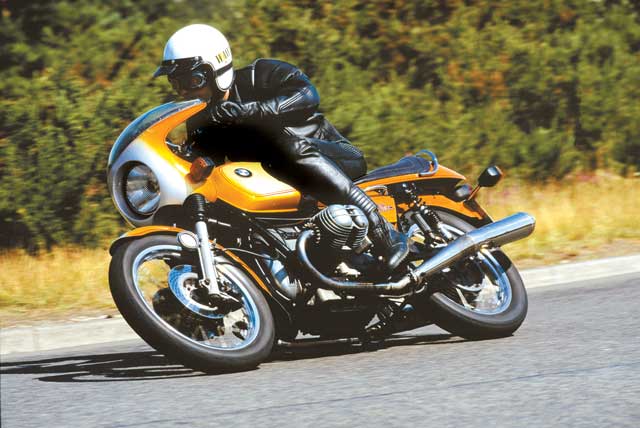
With BMW Motorrad’s 90th anniversary looming 2013, the German firm needed a motorcycle to commemorate this important milestone, and they wanted an old-school, air/oil-cooled boxer-twin engine, housed in a roadster form.
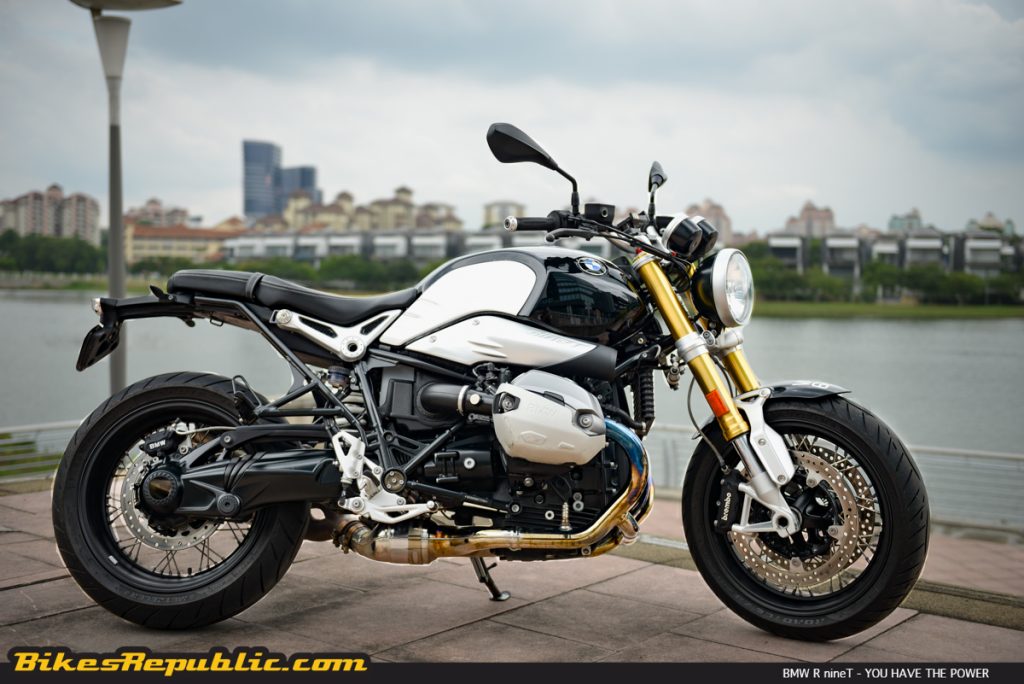
The BMW R nineT was designed by the current BMW Motorrad Chief Designer, Ola Stenegard and his team. Stenegard had penned the basic looks of the model and then spoke to renowned motorcycle designer Roland Sands (he of RSD) to fine tune the final design.

In fact, Stenegard is a classics, customs and café racer enthusiat through and through, although he also penned the S 1000 RR.
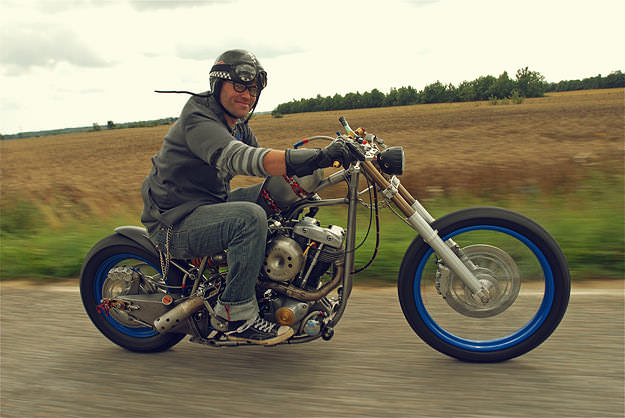
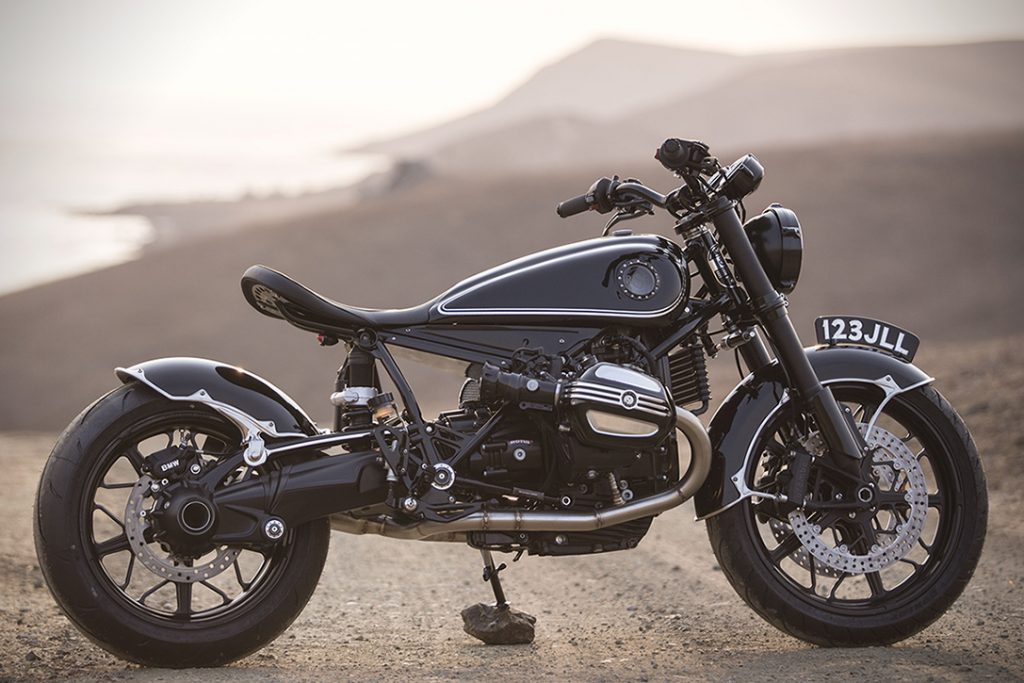
So, the resulting BMW R nineT was not only a homage to past icons but also became a blank canvas for further customization.
However, BMW Motorrad had released the R nineT Pure some months ago and it has since been the whitest canvas for customization. (Click here for our report.)
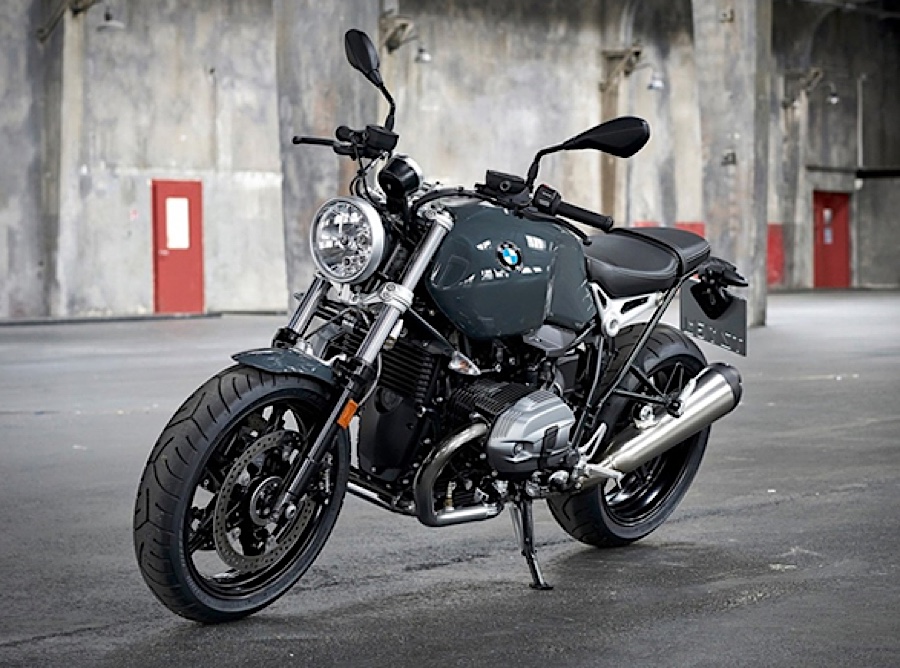
Which begs the question: What is the R nineT we tested here?

Well, I’d personally like to call it a ol’ skool roadster with a modern twist.
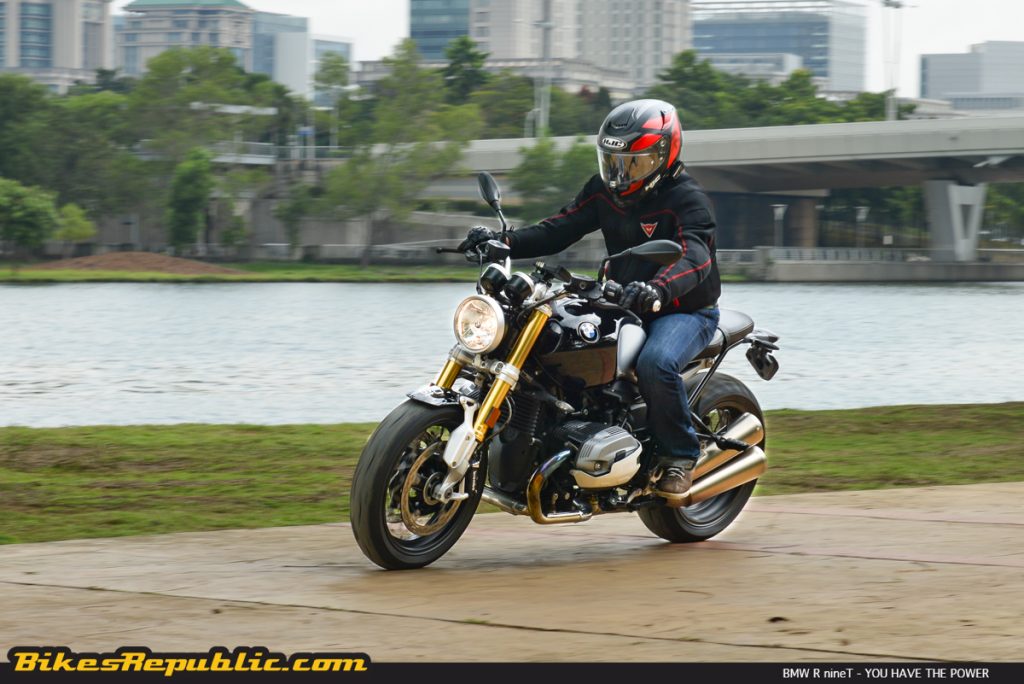
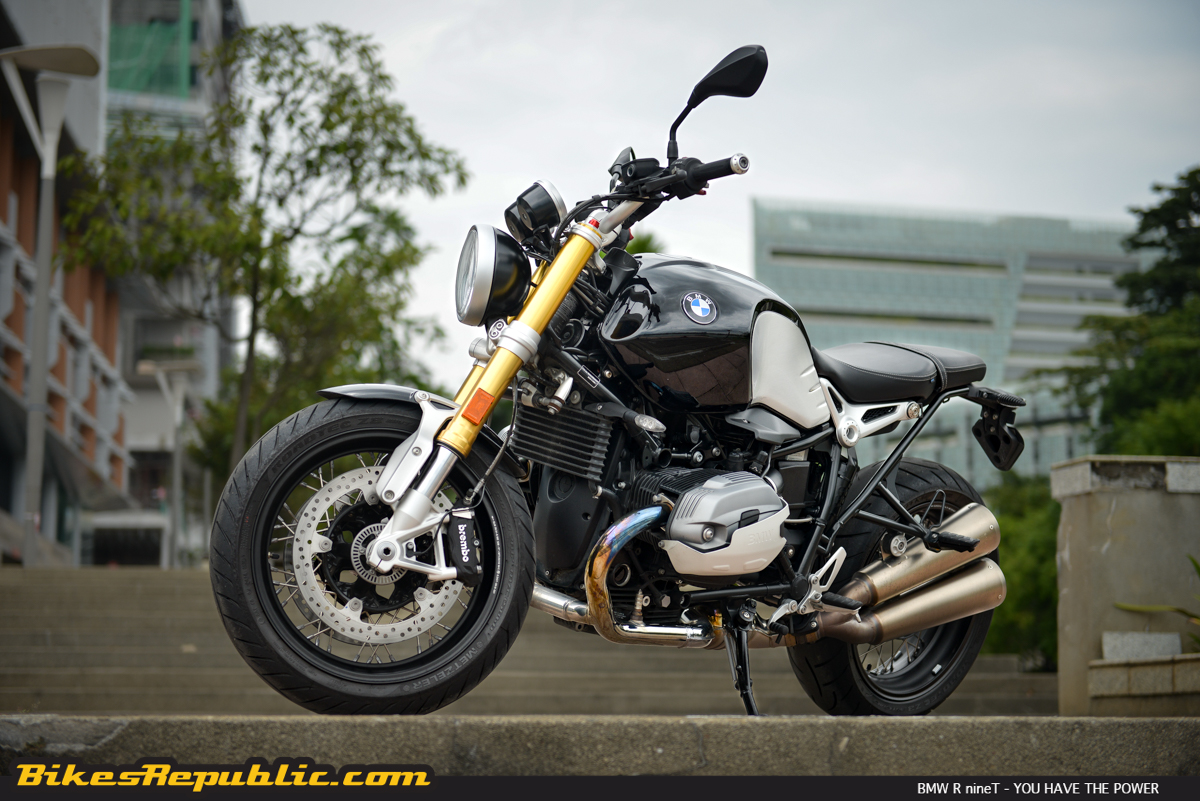
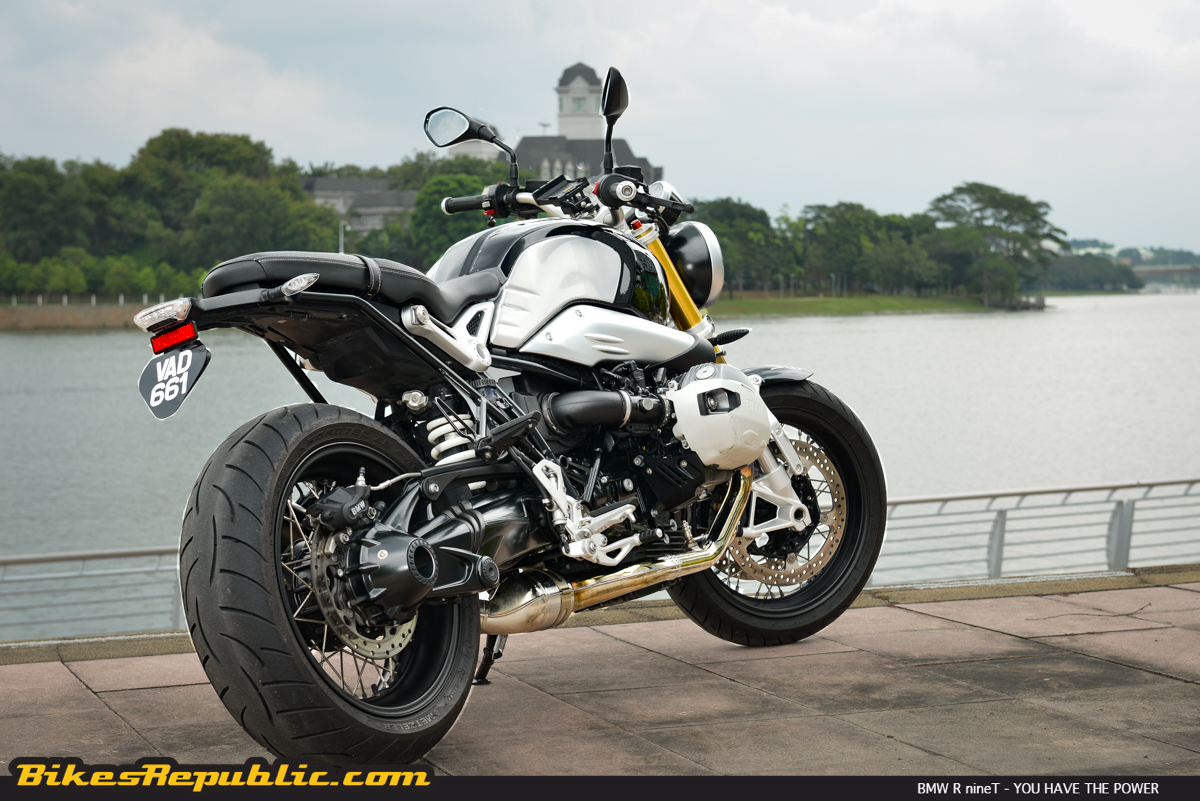
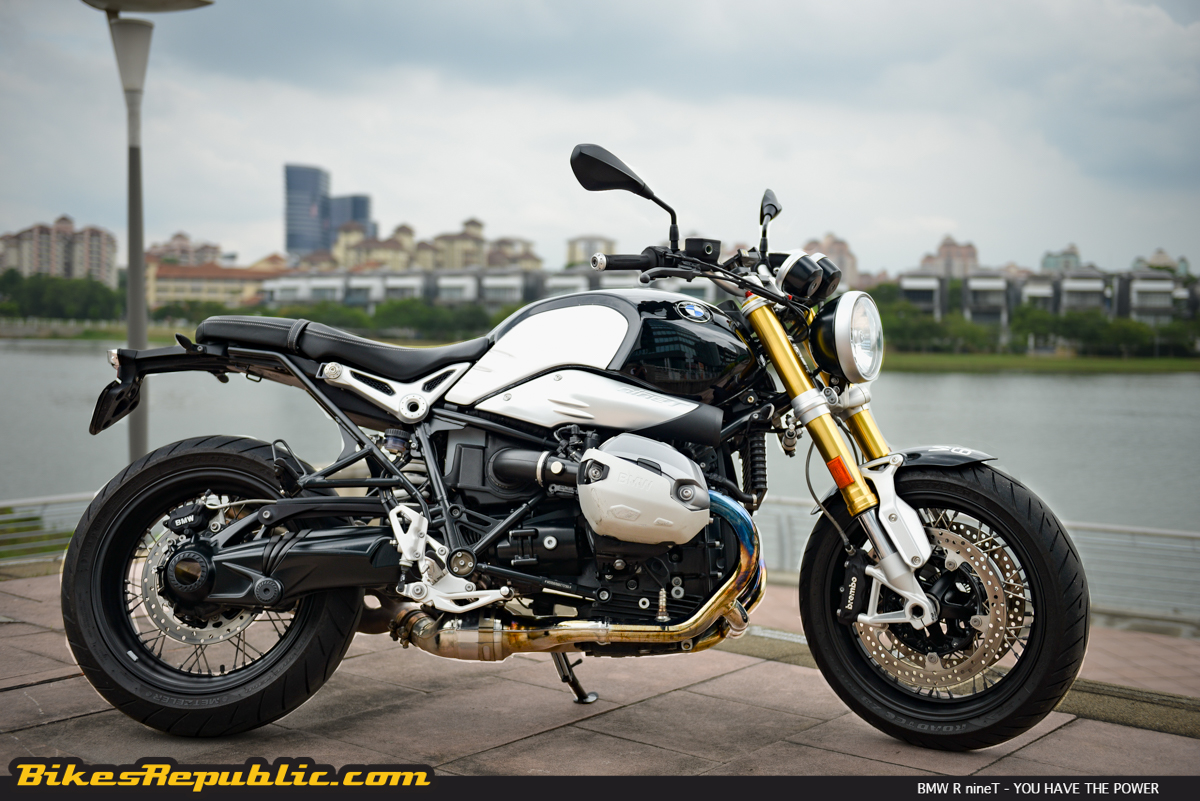
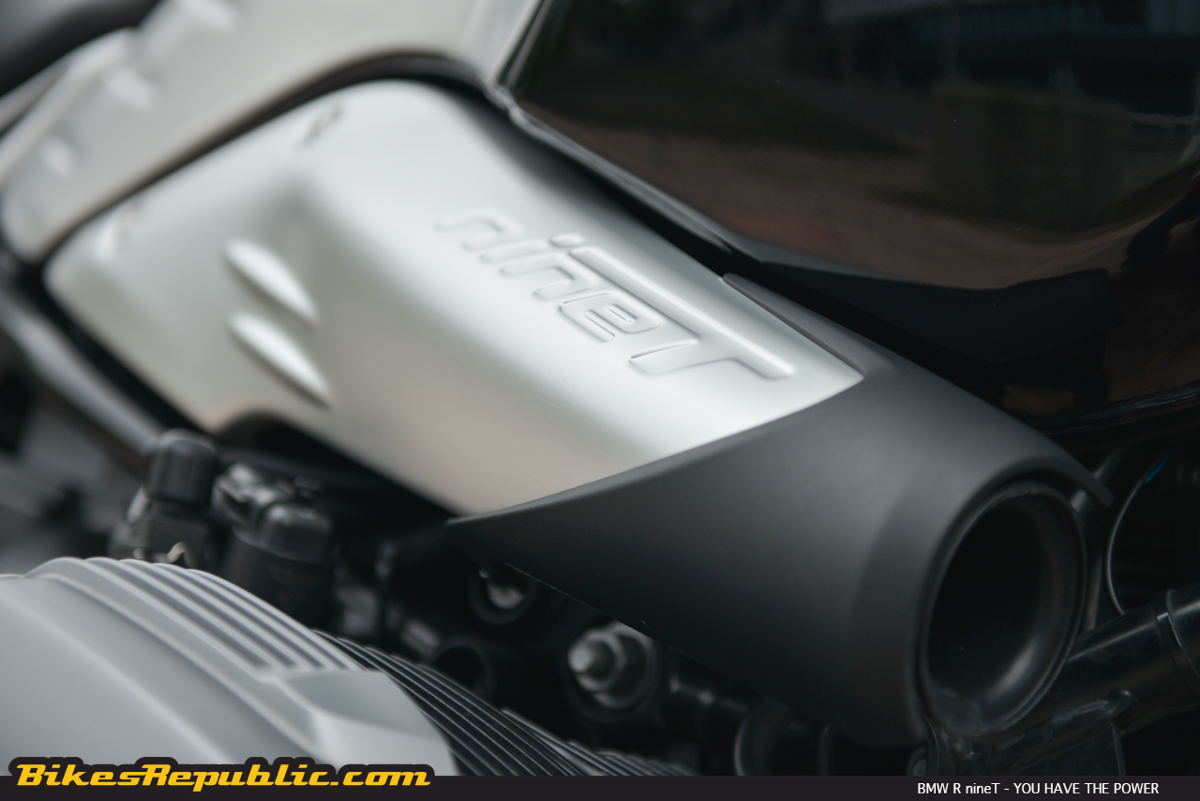
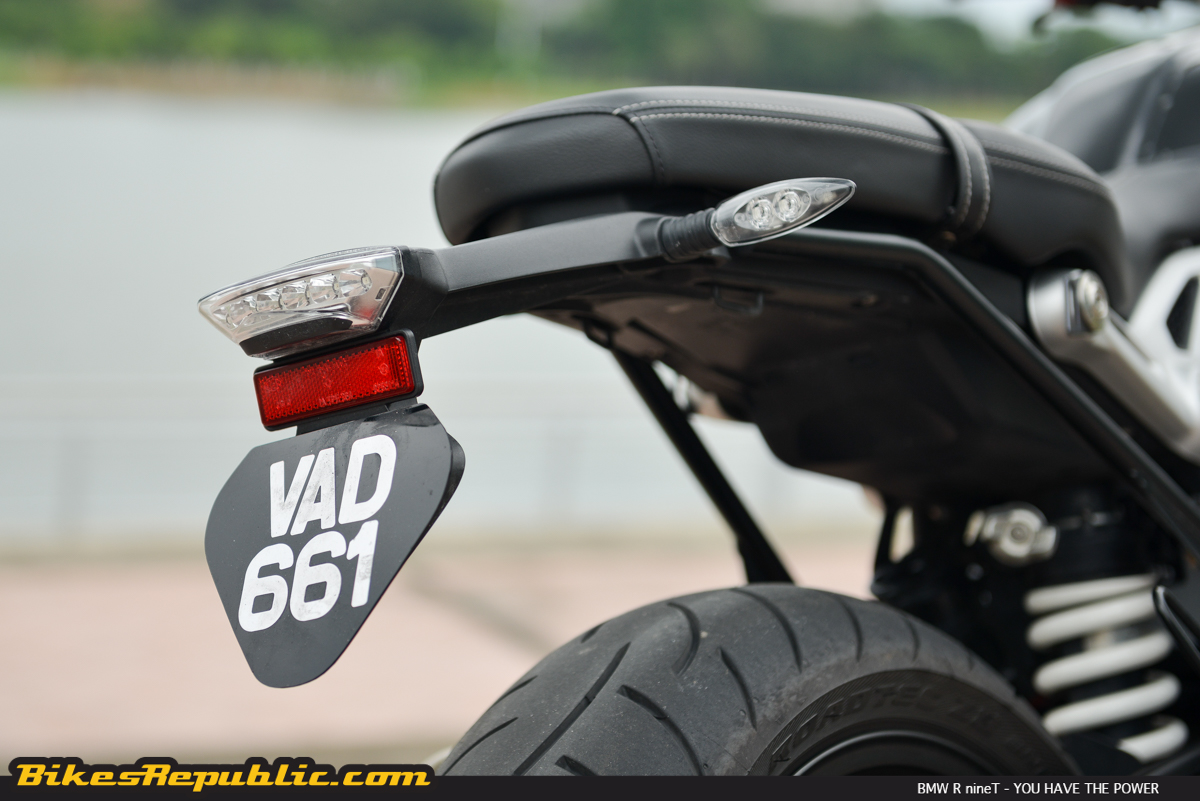
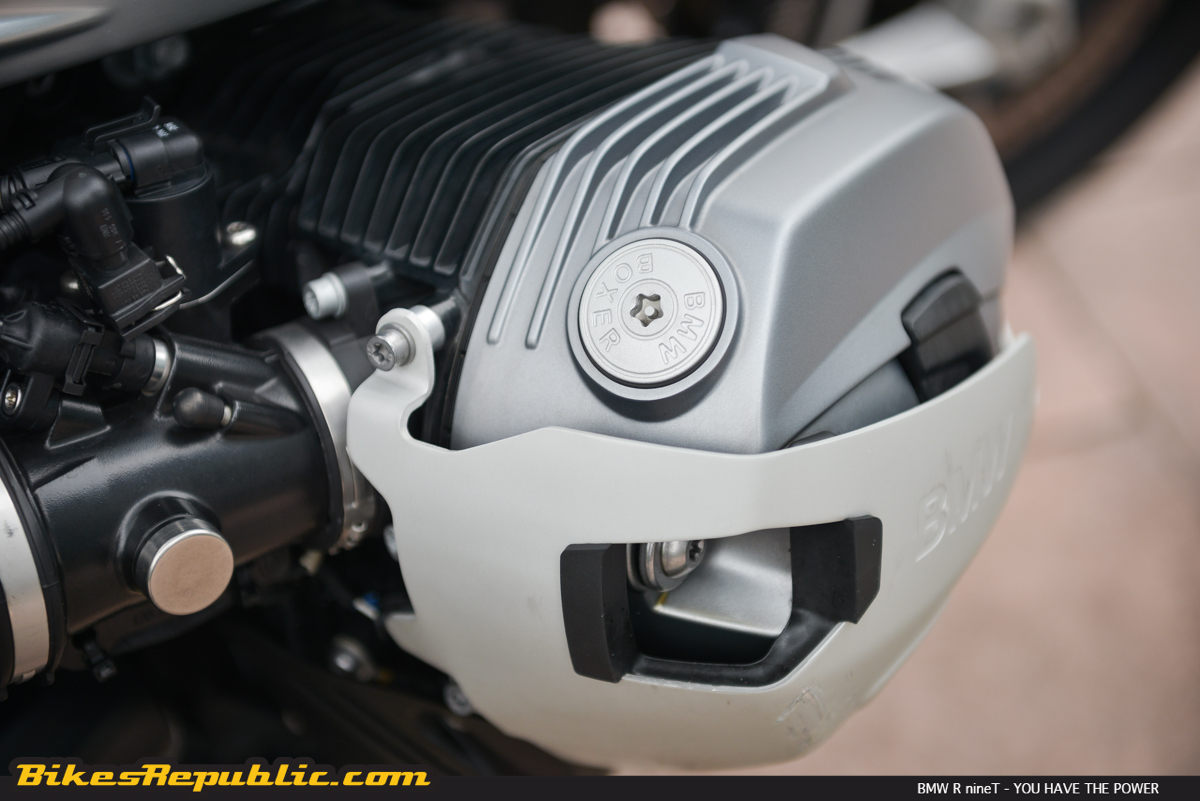
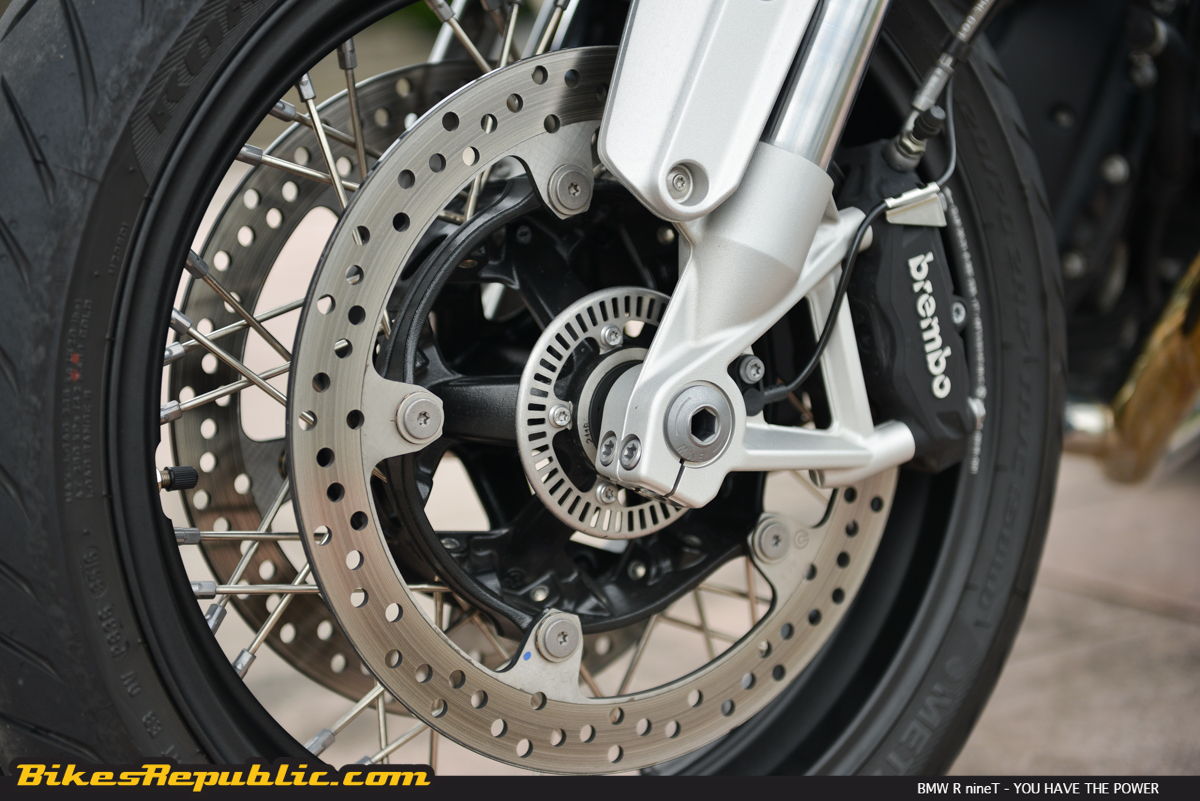
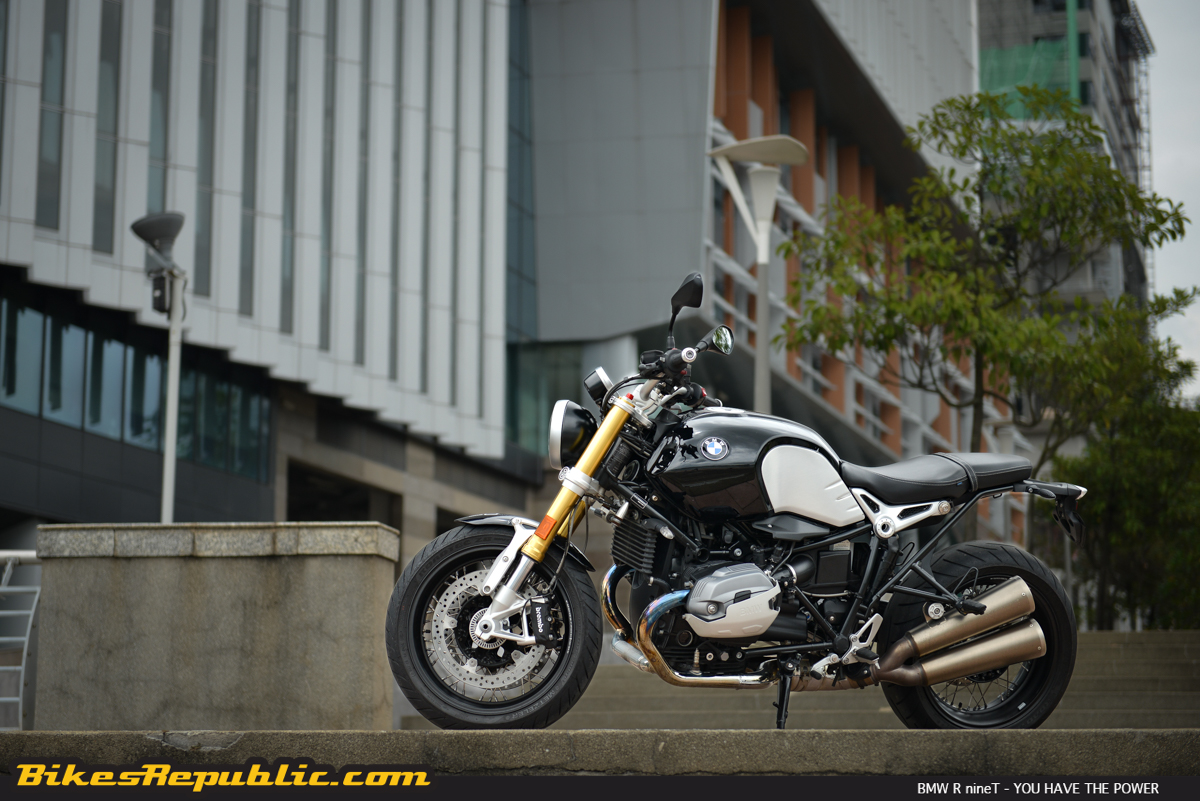
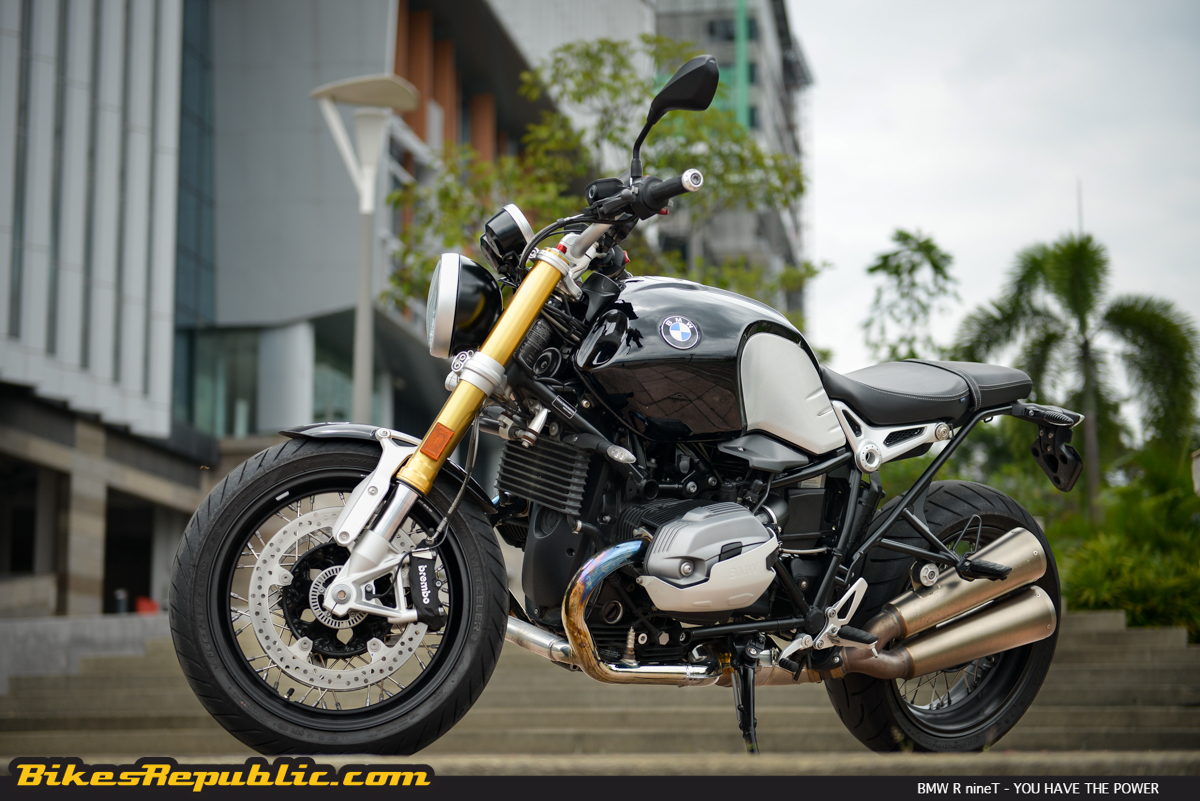
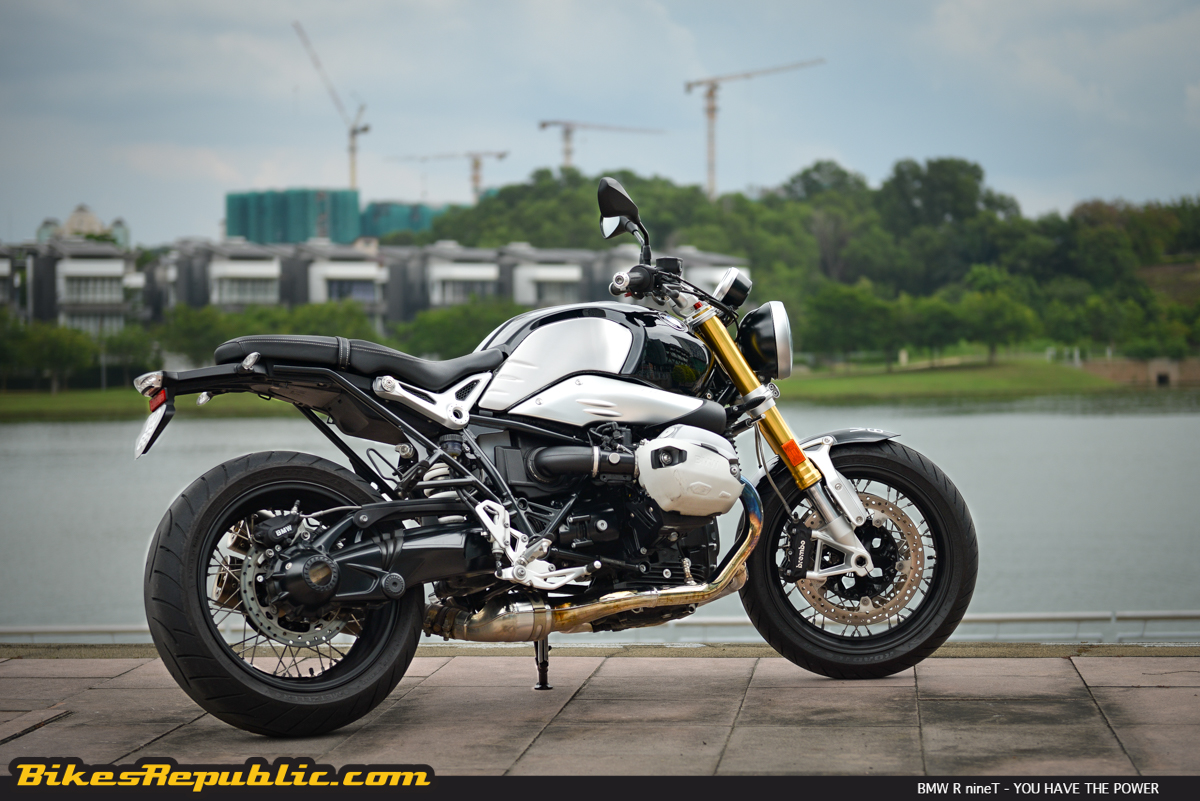
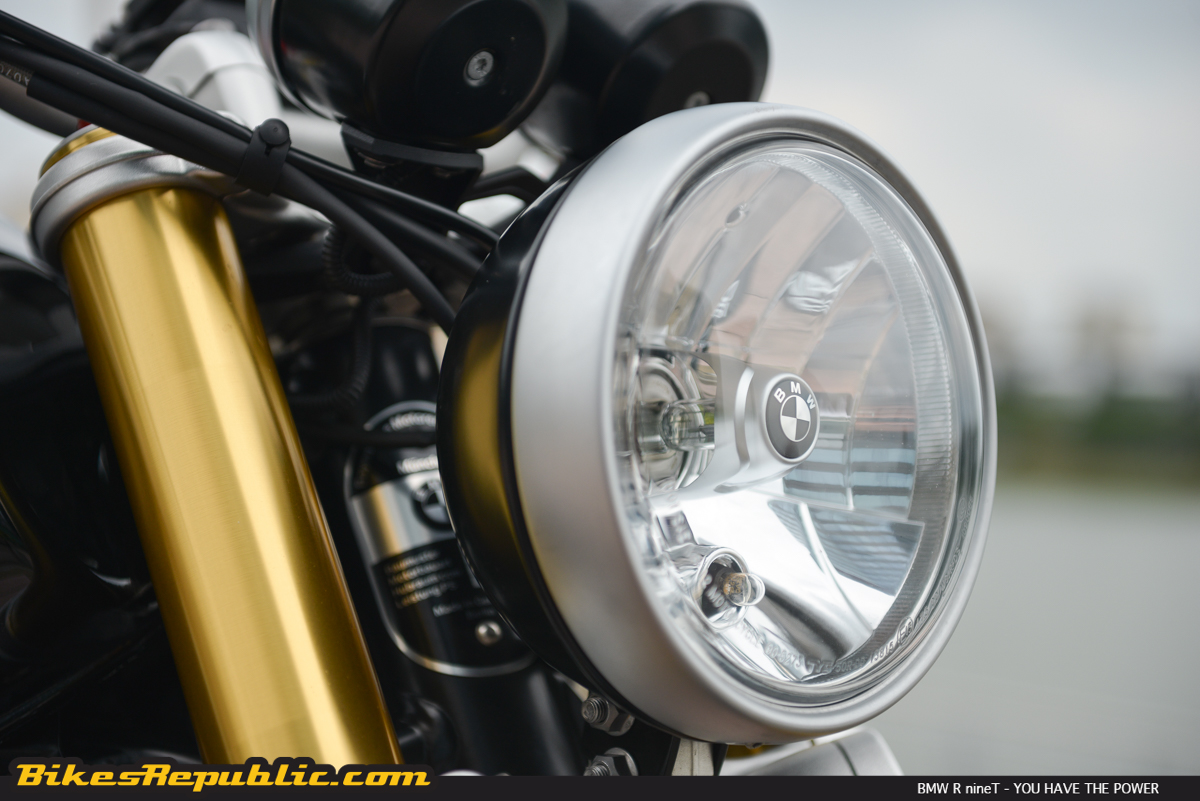
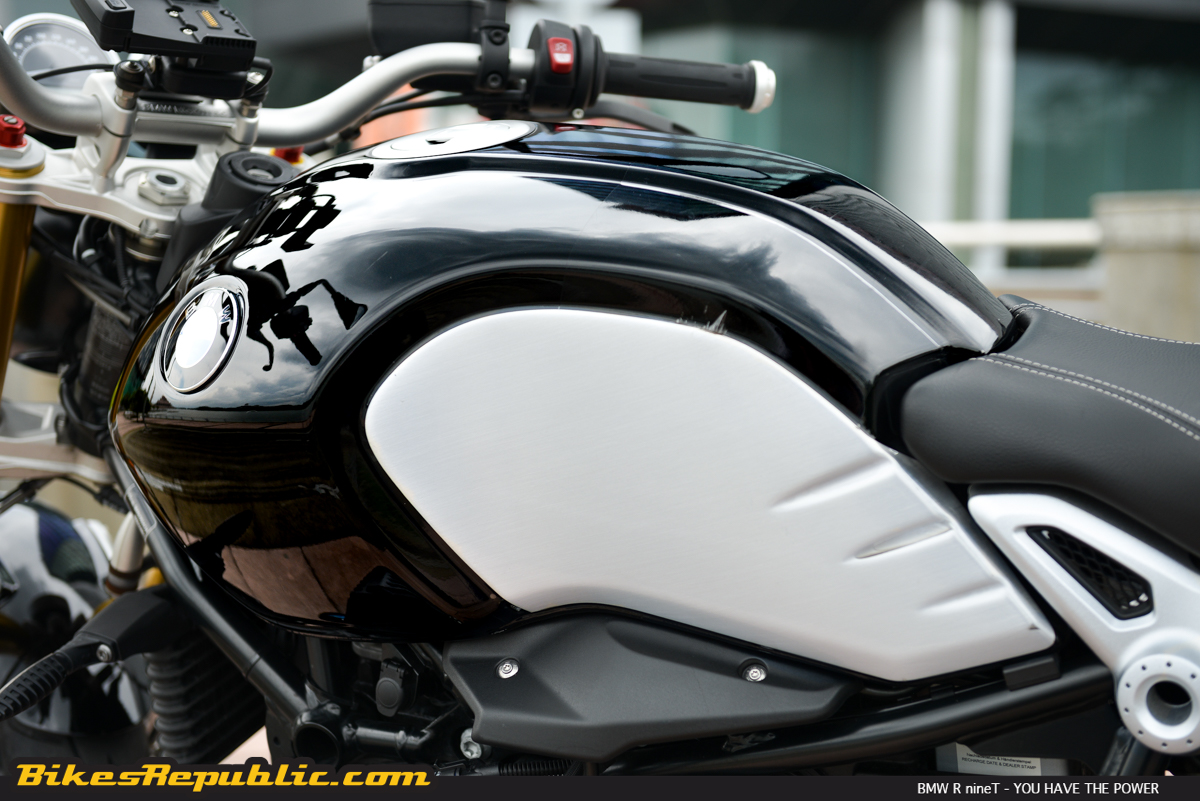
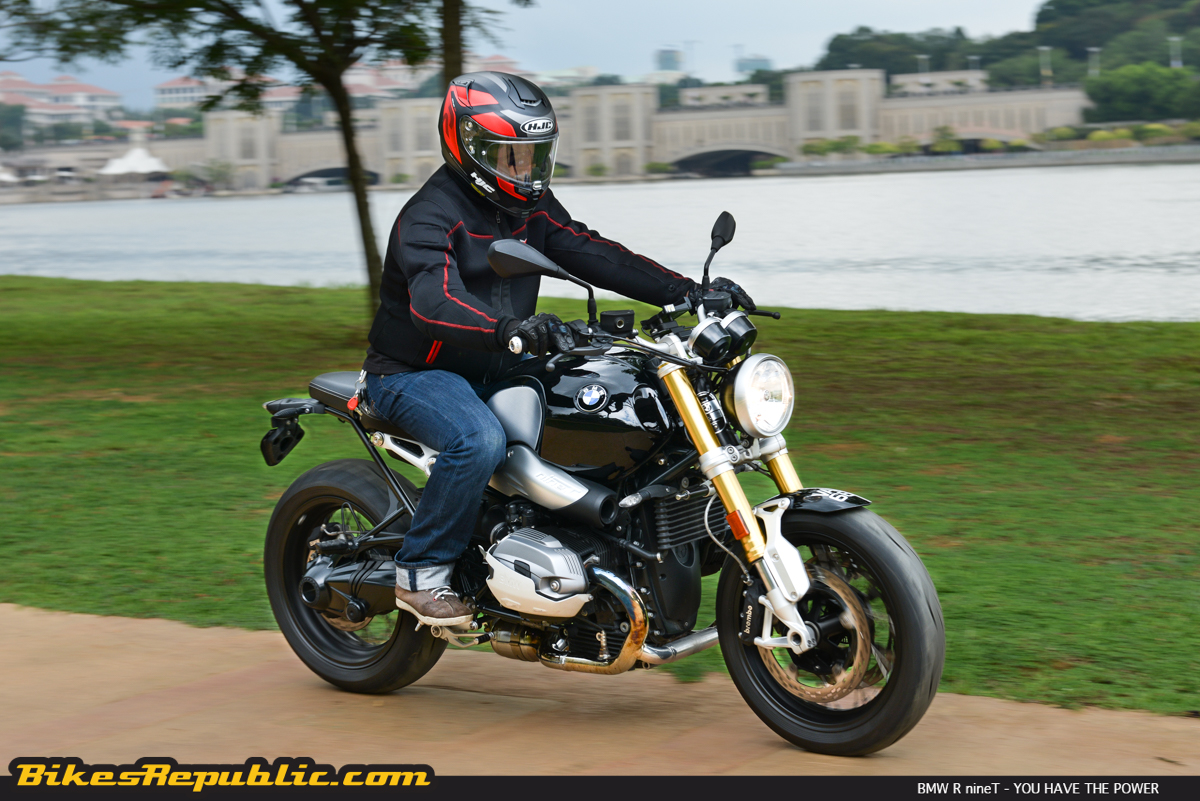
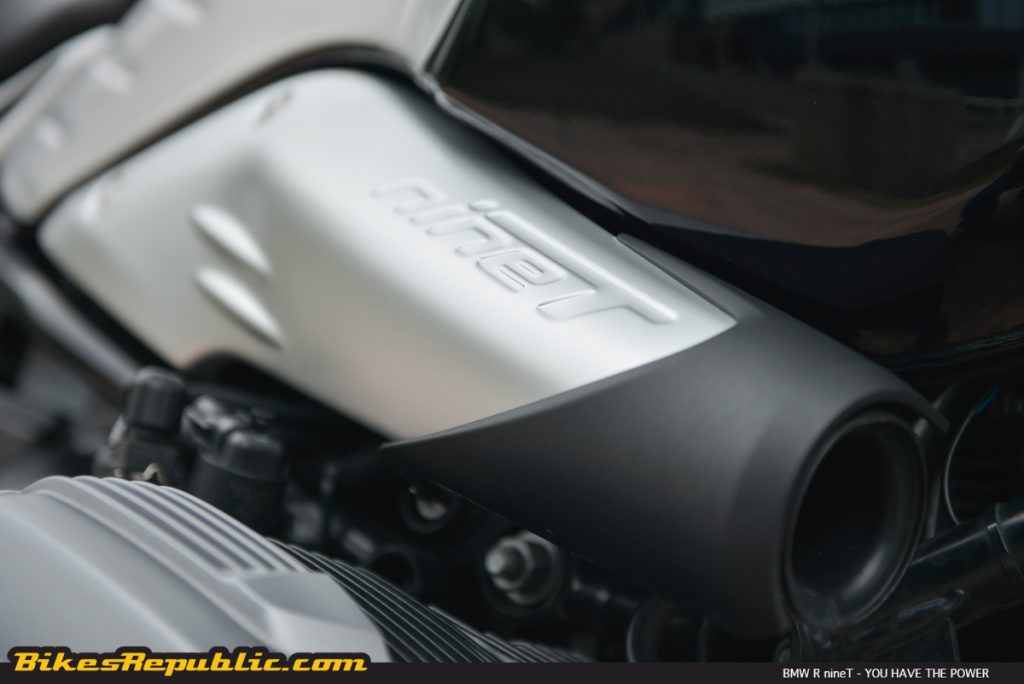
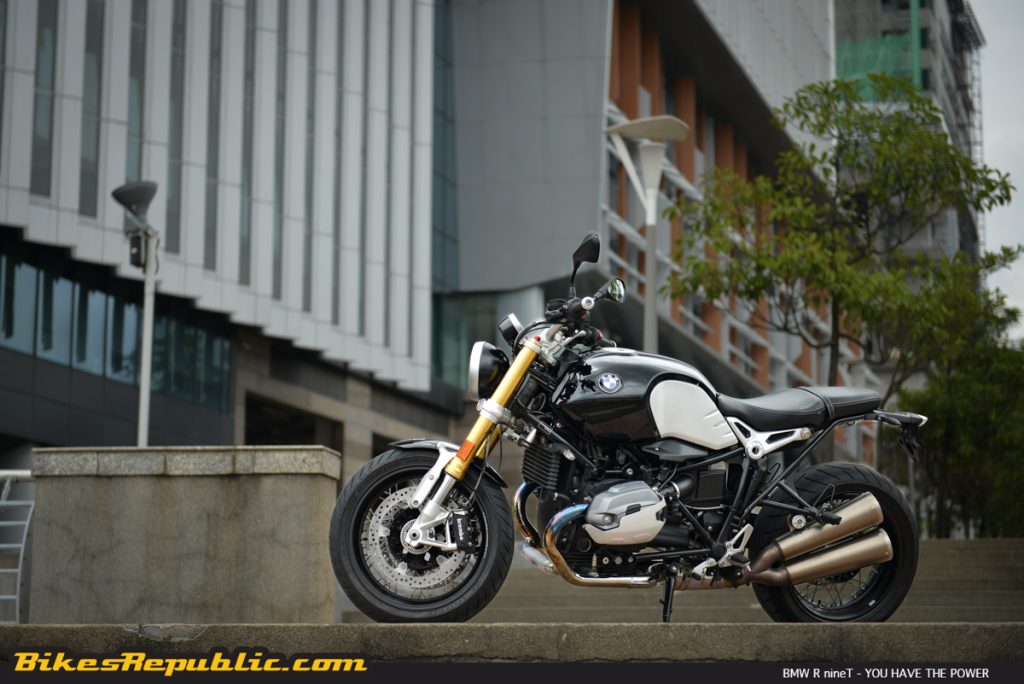
It hads the lines of a classic in the tank and short seat, but it also had all modern details such as the intake snout, adjustable forks, radially mounted Brembo calipers, ABS and Paralever rear suspension set up.
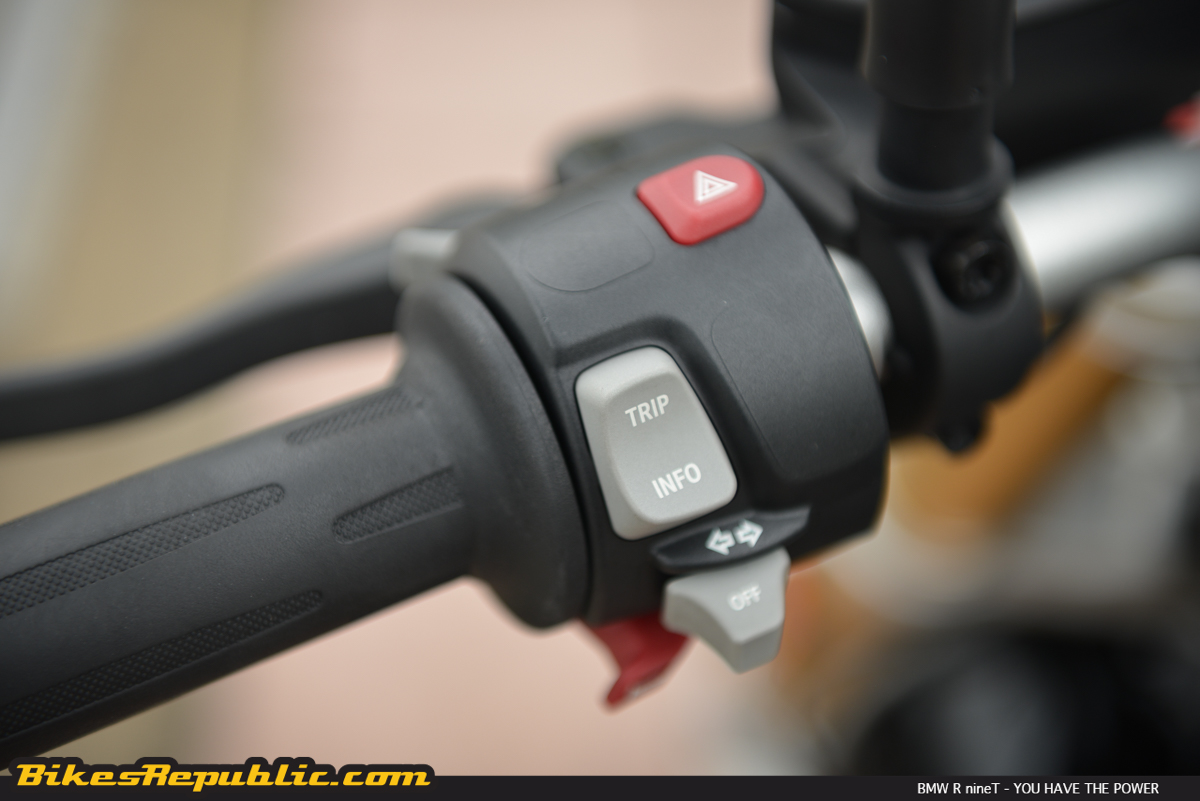
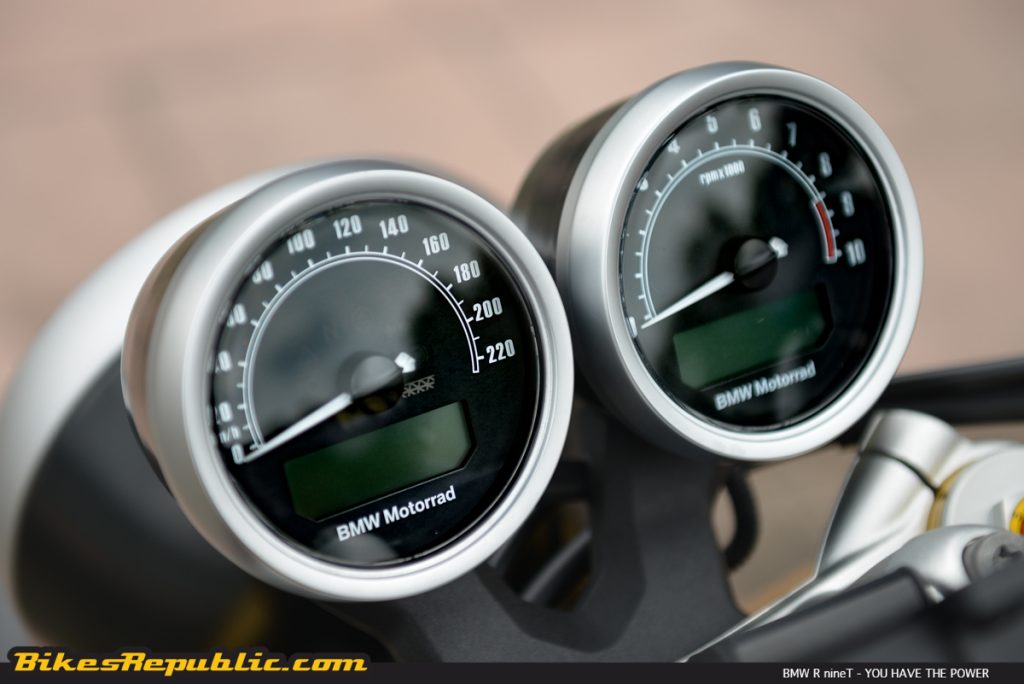
From the seat, you come face-to-face with the dual analog dials set in handsome polished aluminium bezels. There is a small LCD screen at the bottom of each dial. Controls on the handlebars are minimal, consisting of just one extra INFO button besides the customary ones. There is no RIDE or POWER mode, although ABS is standard and non-switchable.
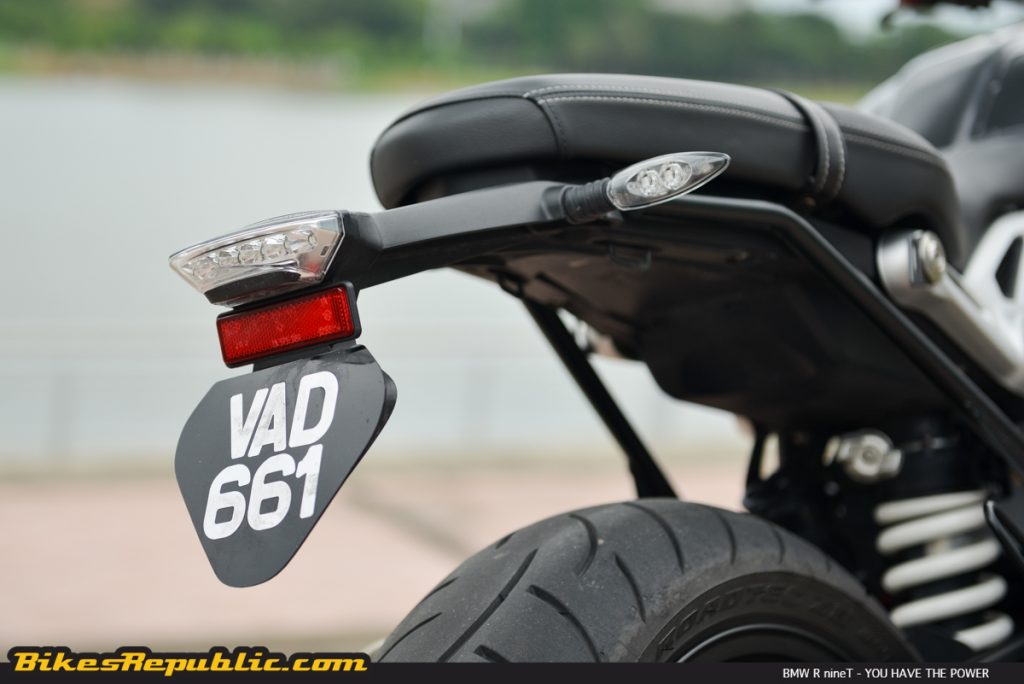
The handlebar is really wide, almost like that of the R 1200 GS, but set further ahead of the long fuel tank. The relatively short seat has a novel feature. the subframe underneath it supports it completely, while the bars attached to its bottom part from behind the swingarm pivot acts to carry the passenger’s footpegs can be fully removed. This is surely a feature for customization.
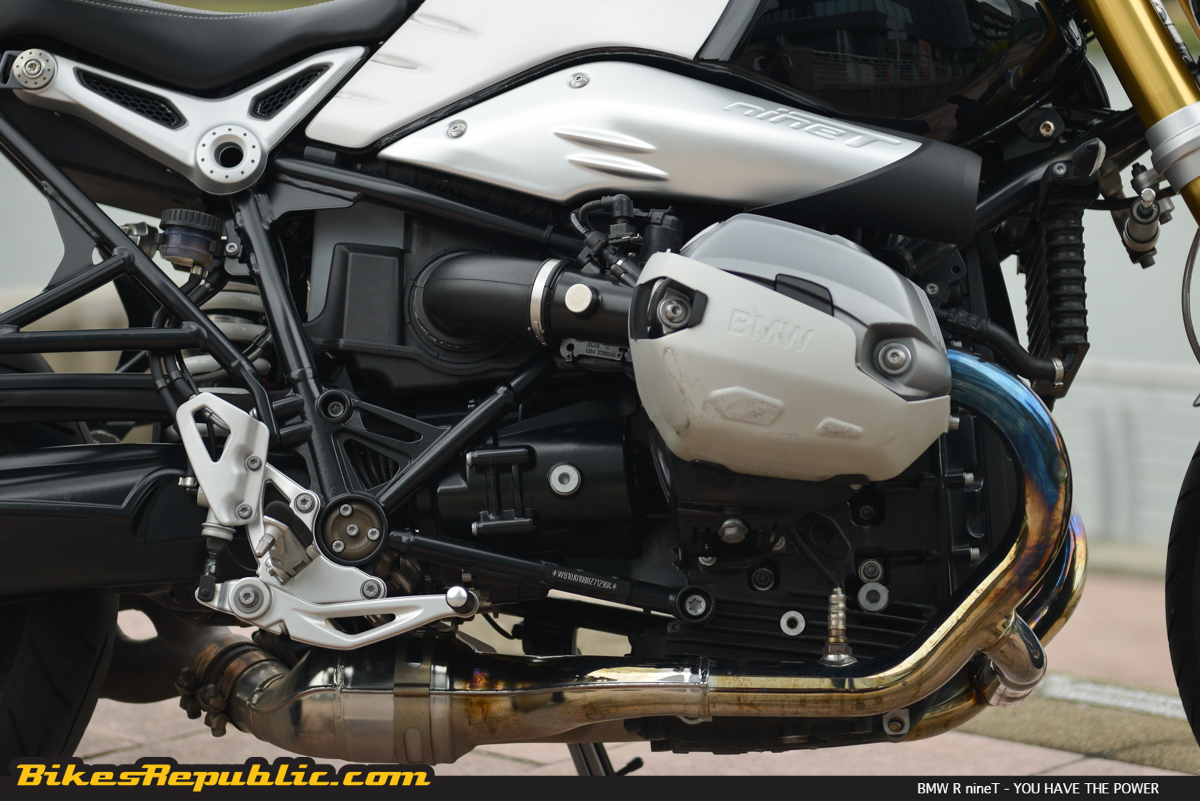
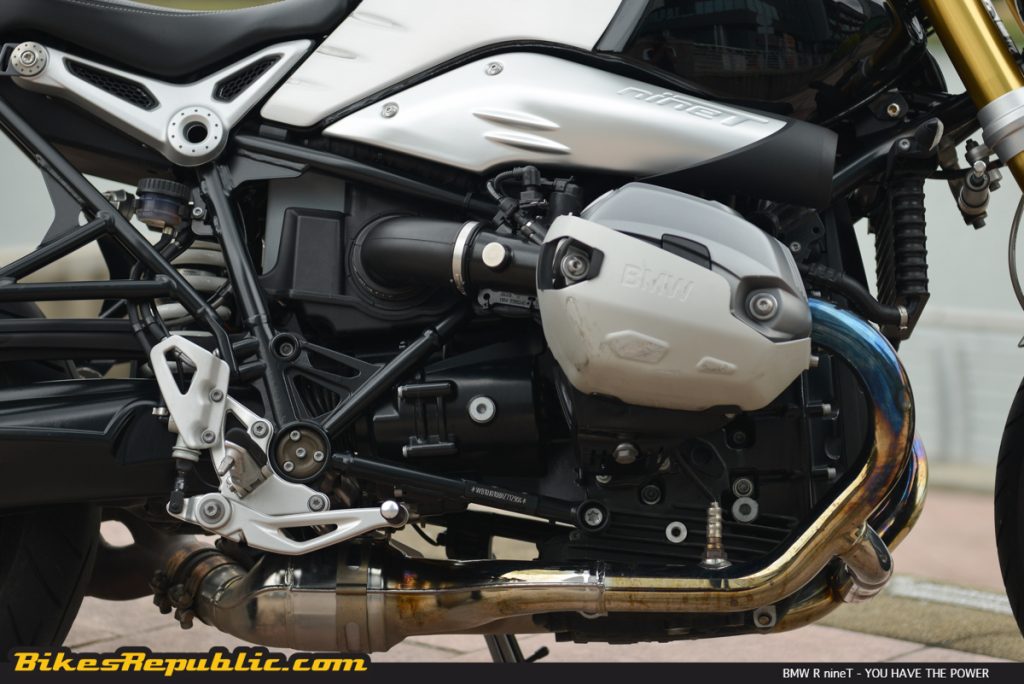
Seated firmly on the bike, the engine comes on in loud BRRAOOM! while kicking to the right as if someone had knocked into the left side of the bike. It’s the same when you rev the engine at standstill – the bike kicks to the right, courtesy of the 11170cc, Boxer-Twin “oilhead” engine’s torque. It was disconcerting at first, but it soon charmed its way in as part of the bike’s character.
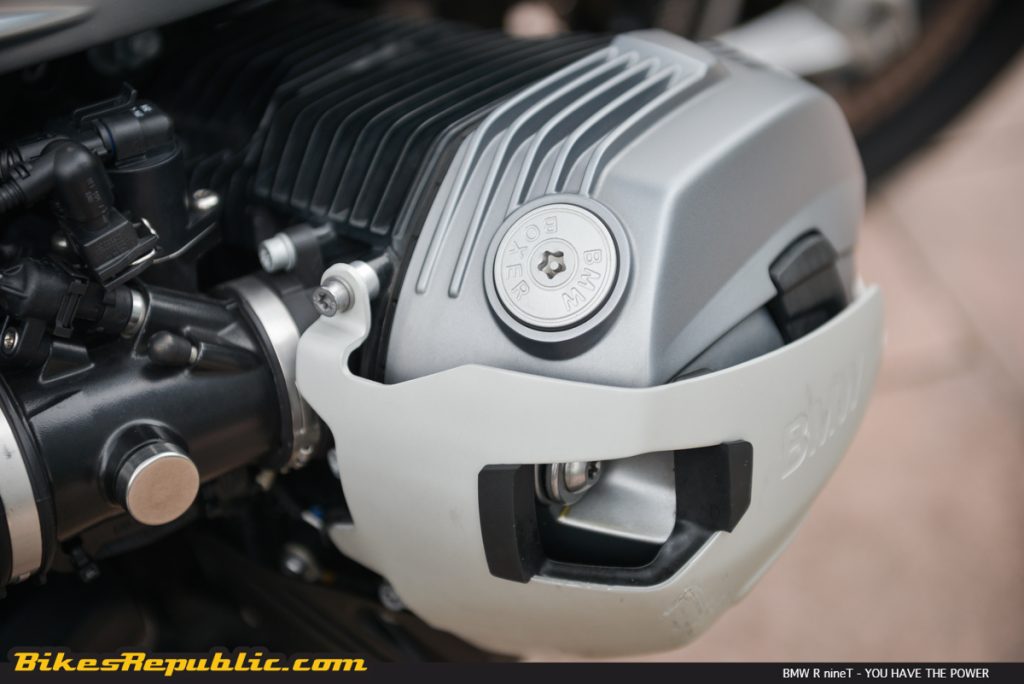
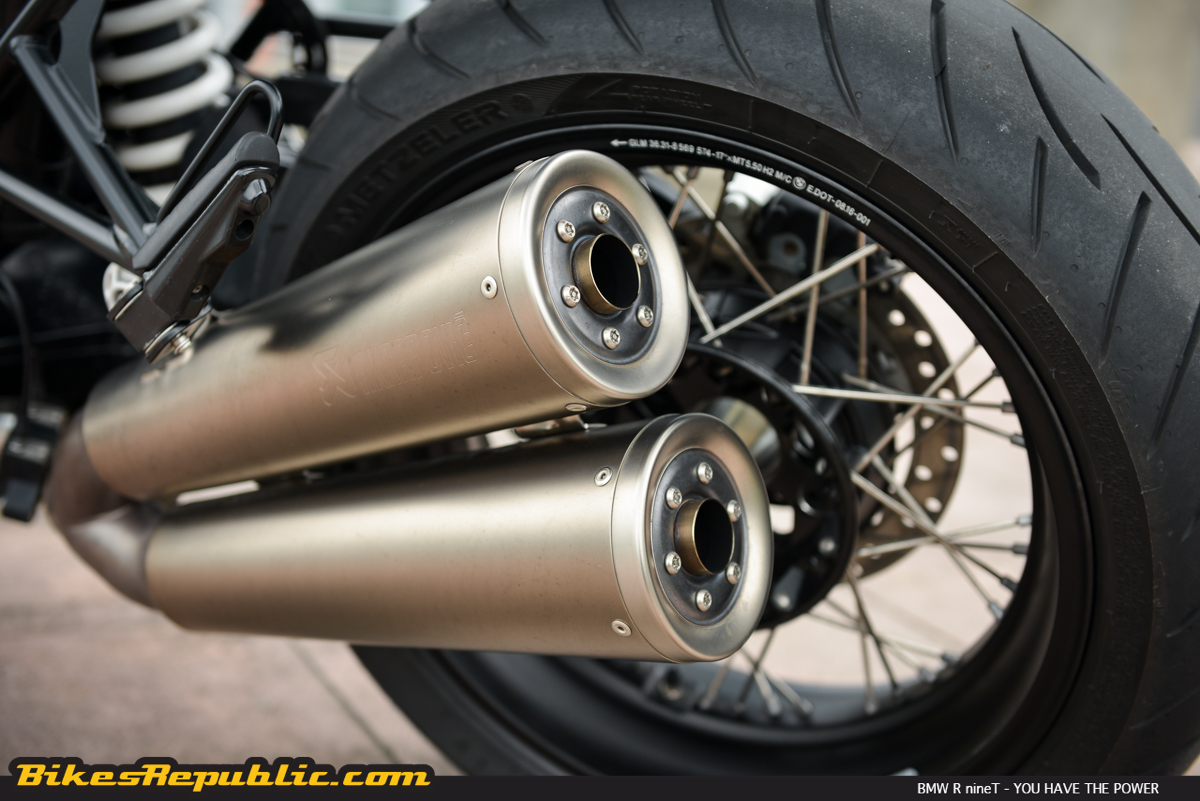
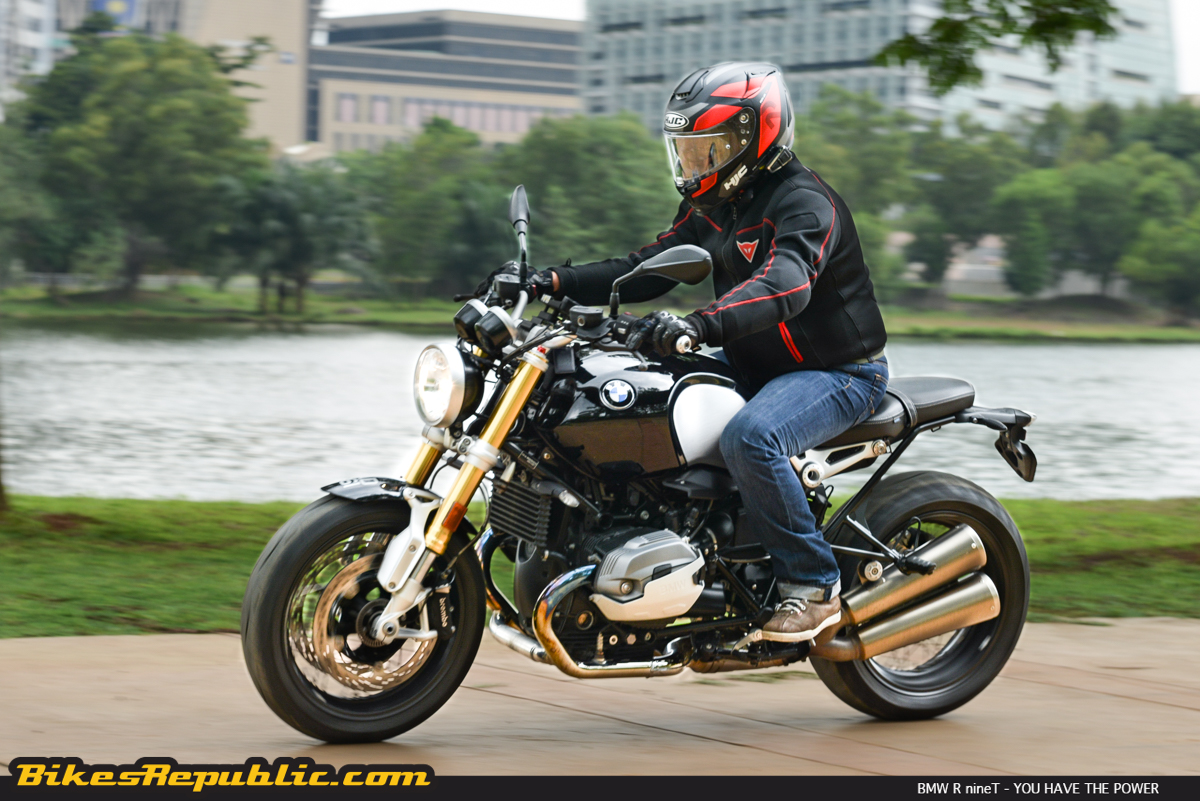
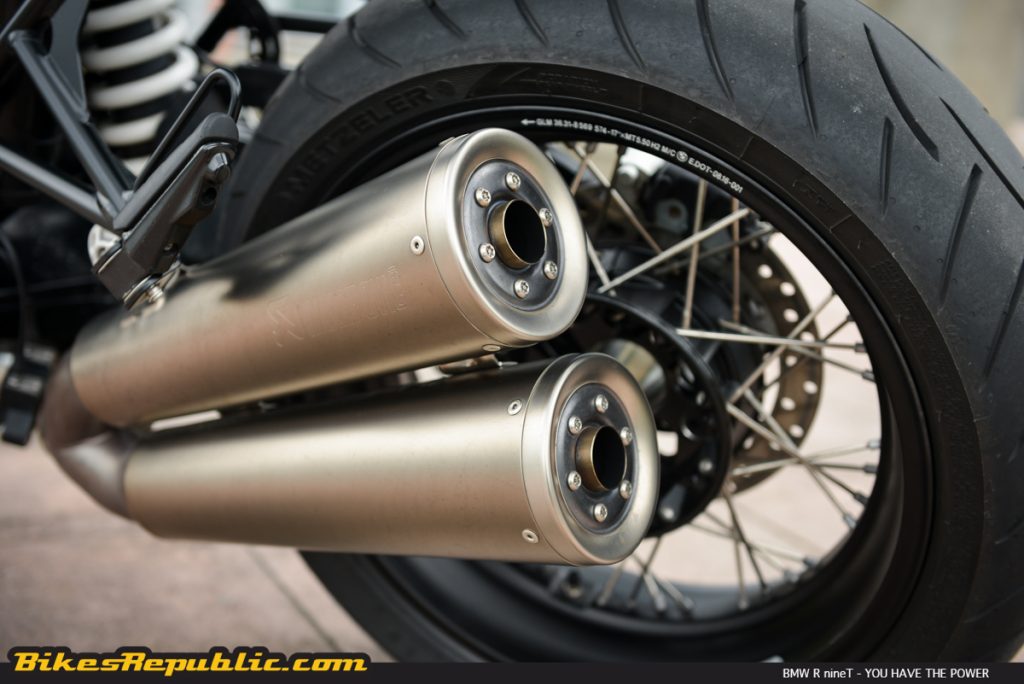
Dumping the clutch had the bike taking off to the tune of the characteristic Boxer engine roar and boom of the dual megaphone-style Akrapovic exhausts. The stock exhausts are already quite loud and soulful by BMW’s standards. I always found myself grinning when I grabbed big fistfuls of throttle, just to hear them sing like Anthrax’s rhythm section. They gave the bike a distinctive and more importantly a fierce presence in traffic, surprising road users into giving you way.
Keep twisting the throttle and the 110 Bavarian horses kick out 119 Nm of torque to the ground, giving the rider’s body a full taste of what it means by heavy-metal torque. The engine kept pulling and pulling, all the way to the redline.
But the time it hits 6000 RPM, you’re doing 140km/h and you got to hold on tight as speed picks up quickly , lest it’s like being blasted off the stage by the sound system at Manowar’s concerts.

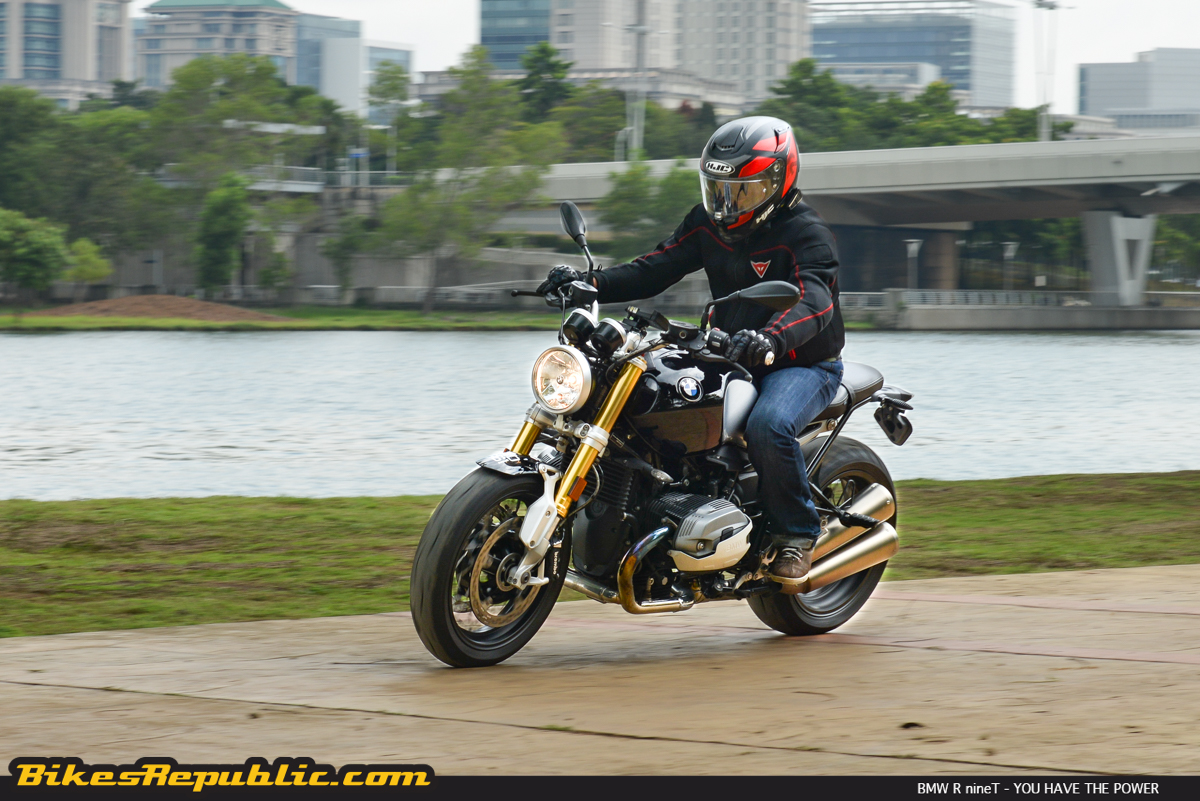
In the handling department, the R nineT is relatively agile (despite its big rake and trail, and long wheelbase) but also stable in long, high-speed corners. The beefy upside down forks are the traditional set up without BMW’s signature Telelever . That equates to feeling every signal the front tyre sends your way in terms of grip level, lean angle, road surface character, braking pressure.
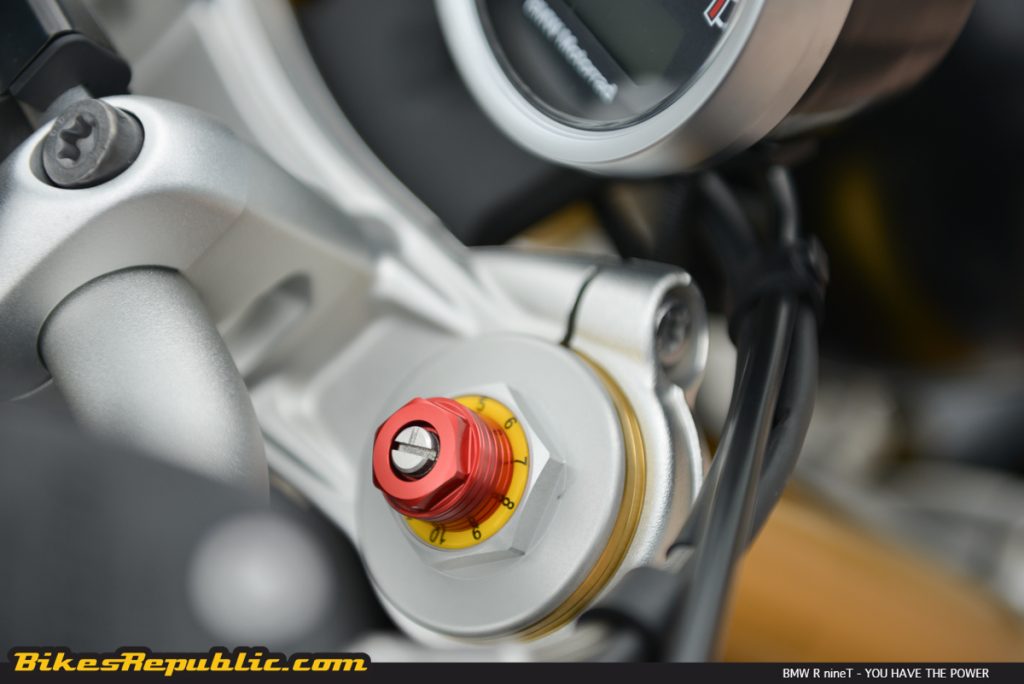
The rear suspension uses BMW’s ubiquitous Paralever single-sided swingarm to tame the Boxer-Twin’s torque through the shaft. The rear shock is adjustable for preload and rebound damping but there isn’t a need to do so, as the stock settings are already well-calibrated.
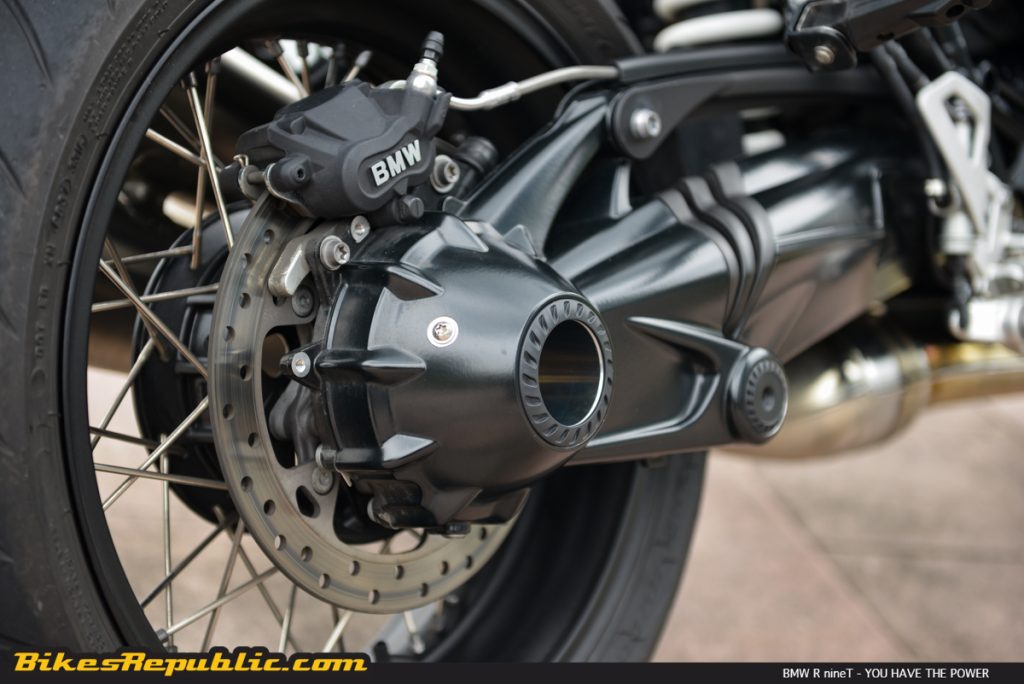
The front brakes are strong and a two-fingered pull usually put too much retarding force, causing the bike to pitch forward hard. Rolling off the throttle calls up a good deal of back-torque to assist in emergency braking, too.
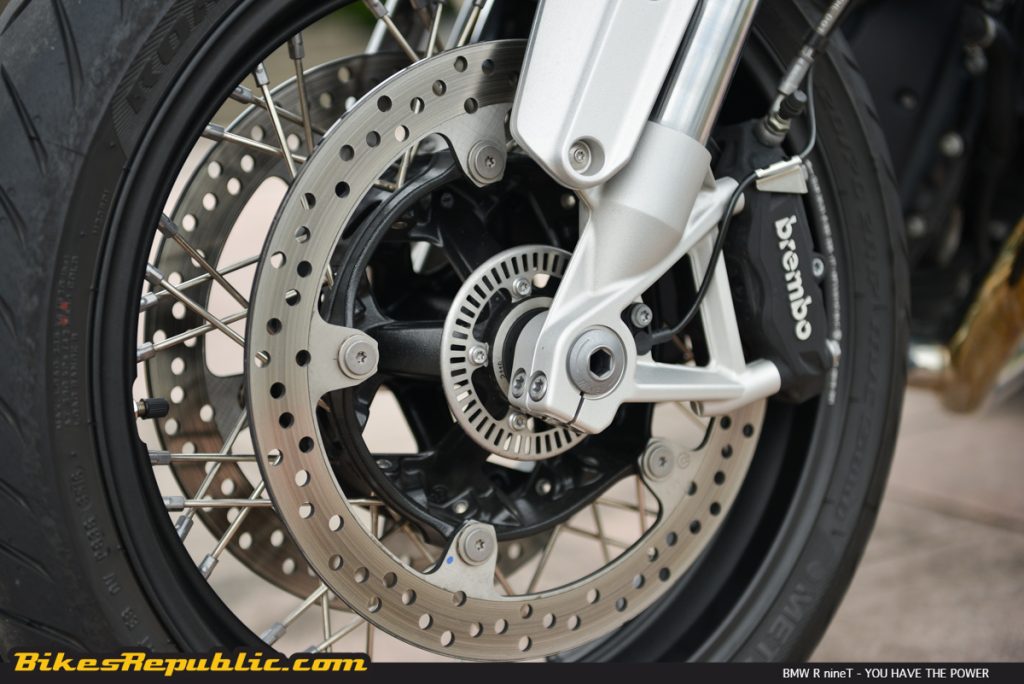
Combining the engine’s character and handling traits equals an experience like Ritchie Blackmore’s orgasmic guitar solo in Highway Star.

Charging through traffic was all a matter of utilizing the engine’s torque, brakes and wide handlebar. Overtaking a long row of cars was just a twist of the wrist away. Steering was just a small tap on the handlebar. Stopping was a finger pull ahead. It was like listening to Paradise City: Calm one moment, before everything bursts into exhilaration.
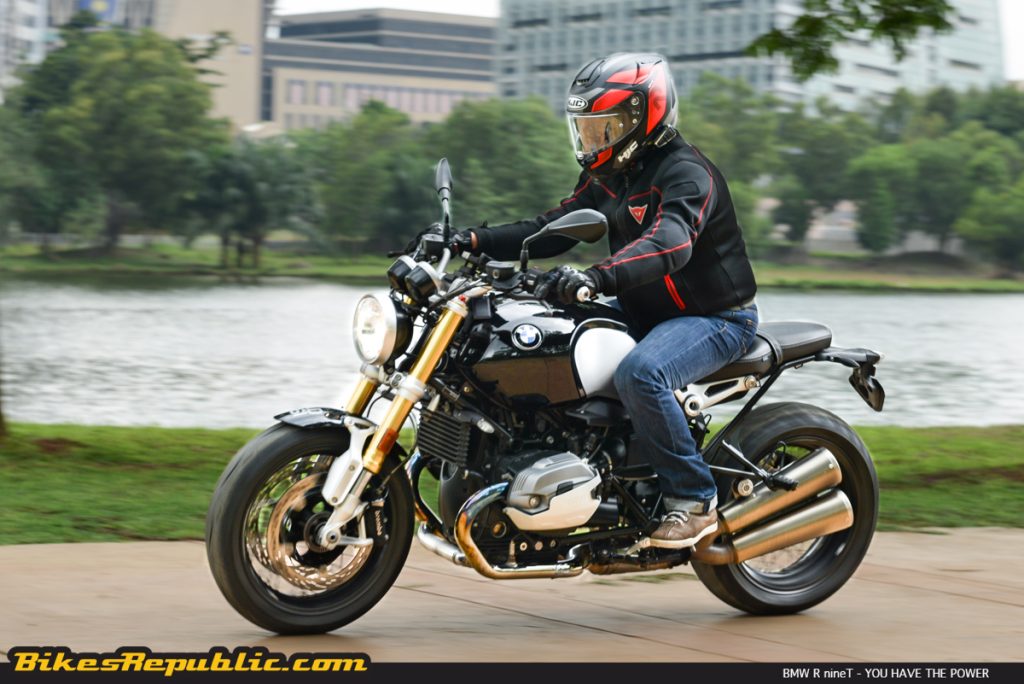
Besides functionality, the R nineT has already given a set of good looks. It looks beefier hence more aggressive. That, the white and blue badge and its distinctive voice had people staring at it everytime. I could only imagine how a customized R nineT would have people flocking over in droves.

So, what is the R nineT?

It’s a standard bike which rides like a naked sportbike, but charming as an old school sportbike like the R90S (how I wish I could ride one!). In musical analogy, it’s like old school rock mixed with new rock for a different experience. To be frank, as I’ve mentioned earlier, I’ve never liked Rammstein’s Du Hast. But I came to appreciate it after testing the BMW R nineT, because like the song, it has a rebellious edge. It could well be BMW’s hooligan bike. Yes, it does, even for a BMW.

Perhaps it’s best to sum up the BMW R nineT in German.

Du hast die leistung (You have the power).
 

TECHNICAL SPECIFICATIONS

ENGINE
Engine type Air/Oil-cooled, 4-stroke, DOHC, 4 valves per cylinder, horizontally-opposed (Boxer) Twin
Compression ratio 12.0 : 1
Bore X Stroke 101 mm X 73 mm
Displacement 1170 cc
Fuel system Electronic intake pipe injection
Maximum power 110 bhp (81 kW) @ 7550 RPM
Maximum torque 119 Nm @ 6000 RPM
TRANSMISSION  
Clutch Single dry plate clutch, hydraulically actuated
Gearbox Constant mesh, 6-speed, shaft drive
CHASSIS
Front suspension 46mm upside down fork, 120mm travel
Rear suspension Single central shock absorber adjustable for preload and rebound damping. 120mm travel
Front brakes Two 320mm floating discs, Brembo four-piston radially-mounted calipers ABS
Rear brake Single 255 mm disc, Brembo two-piston floating caliper
ABS BMW Motorrad ABS, front and rear
Front tyre 120/70-ZR17
Rear tyre 180/55-R17
FRAME & DIMENSIONS
Frame Four-section frame consisting of one front and three rear sections; load-bearing engine and transmission; removable pillion frame for single rider
Swingarm Cast aluminium single-sided swingarm with BMW Motorrad Paralevel
Trail 102.5 mm
Rake 25.5 degrees
Wheelbase 1470 mm
Seat height 785 mm
Dry weight 208 kg
Fuel capacity 18 litres


PICTURE GALLERY

  • Royal Enfield’s twin-cylinder engine and motorcycles slated for EICMA 2017 debut

  • Widely speculated to be a 750cc engine

  • May even go above 800cc

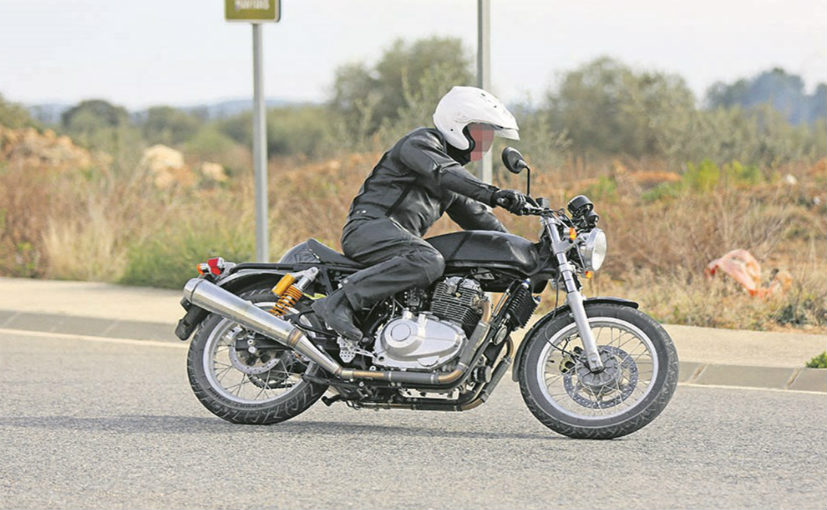
Spyshots of the Royal Enfield twin-cylinder motorcycles have been circulating around the internet for some time now, more or less confirming the manufacturer’s claim of working on a twin-cylinder engine, Autocar India reported.

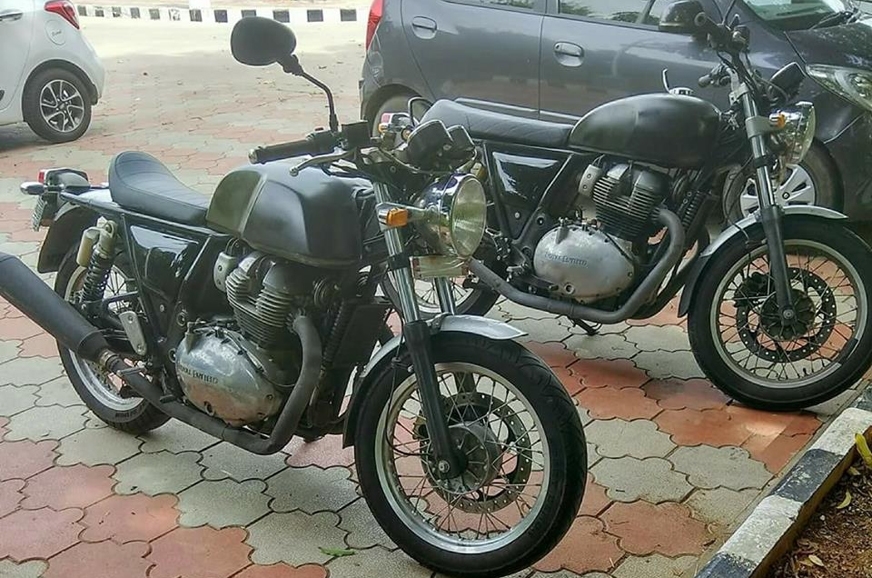
It’s also obvious that Royal Enfield are also working on different models around that twin-cylinder engine, as evidenced by the photo above. The model in the foreground appears to be a cafe racer-styled model, while the one on the right looks to be a standard model.

The cafe racer has a rounded fuel tank with deep knee recesses, and a single seat. The standard model has a bench seat, which is offered as an option to the current Continental GT 535 buyers.

Apart from those features, both bikes are mechanically identical. The engines of bikes appear to be the same air- and oil-cooled parallel-Twin. The suspension and brake components looked to be identical, too.

Building many different models based on one engine or chassis platform saves development and production cost, while customers enjoy lower maintenance costs as most parts are shared amongst a few models.

Although widely speculated as 750cc, Royal Enfield has not officially confirmed it to be so. But, the mule has been testing extensively in Europe before being tested in India. Royal Enfield sold 651,107 bikes in India alone, compared to 15,383 exported last year. However, the current 500cc and 535cc variants made up less than 10% of the domestic number; the bulk of the sales were the 350cc models.

That has lent fuel to the speculation that the new bikes may even feature a capacity higher than 750cc, possibly even going above 800cc to rival Triumph’s best-selling 900cc Bonneville Street Twin lineup.

These new parallel-twin motorcycles are to make their international debut at the EICMA show in Milan this November, with an India launch slated for early 2018.

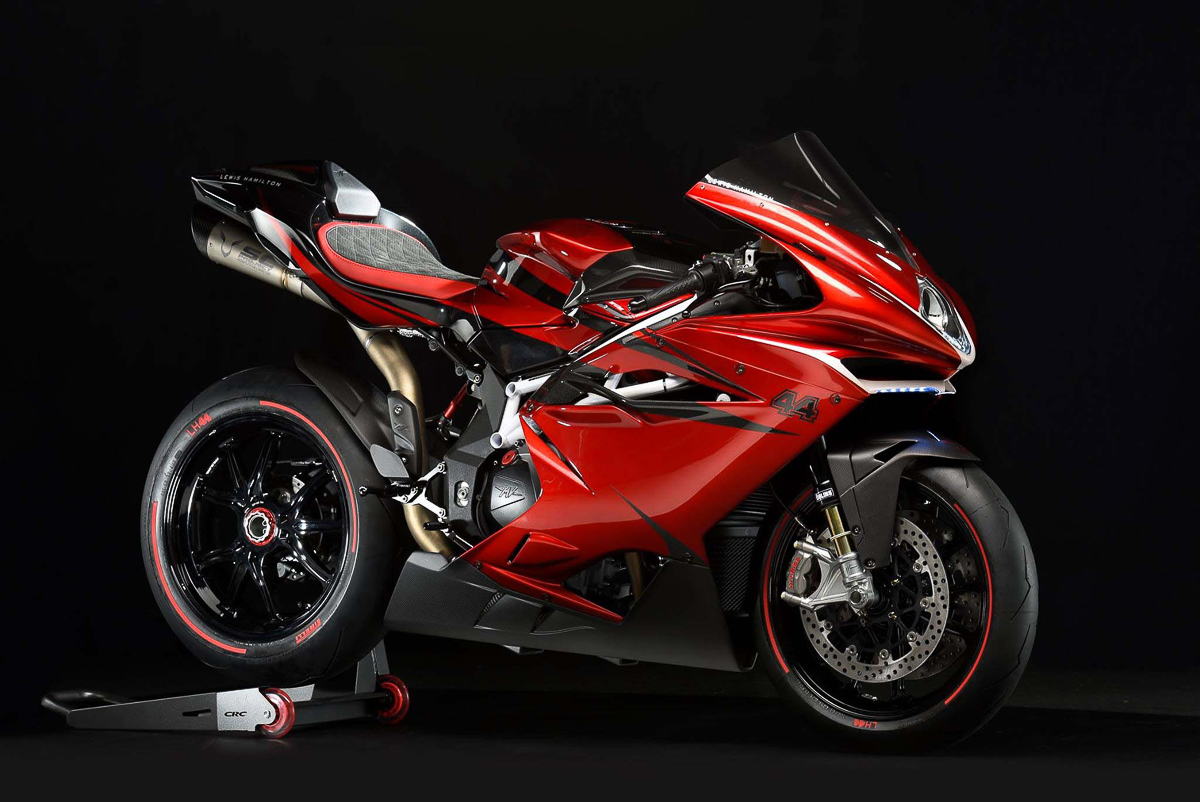
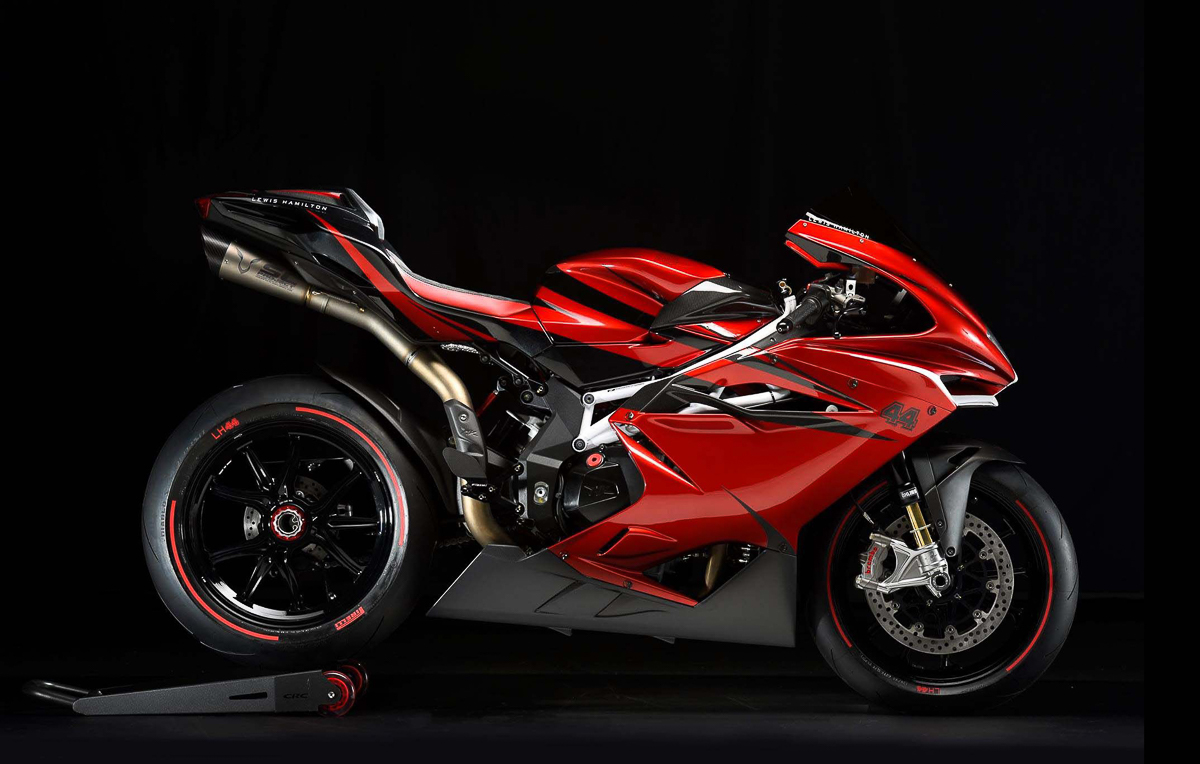
Formula 1 champion Lewis Hamilton has renewed his contract with MV Agusta and has confirmed it with the release of the limited edition MV Agusta F4 LH44.

Inspired heavily by Lewis Hamilton’s taste and preference in terms of design and performance, the super limited F4 LH44 comes with a host of enticing upgrades.

Only 44 models will be manufactured and the price is said to be around the RM200,000 mark.

After the recent news regarding F1 star Lewis Hamilton renewing his contract with Italian premium bike manufacturer MV Agusta, they’ve have confirmed it with the release of the new and very limited MV Agusta F4 LH44 superbike. (more…)

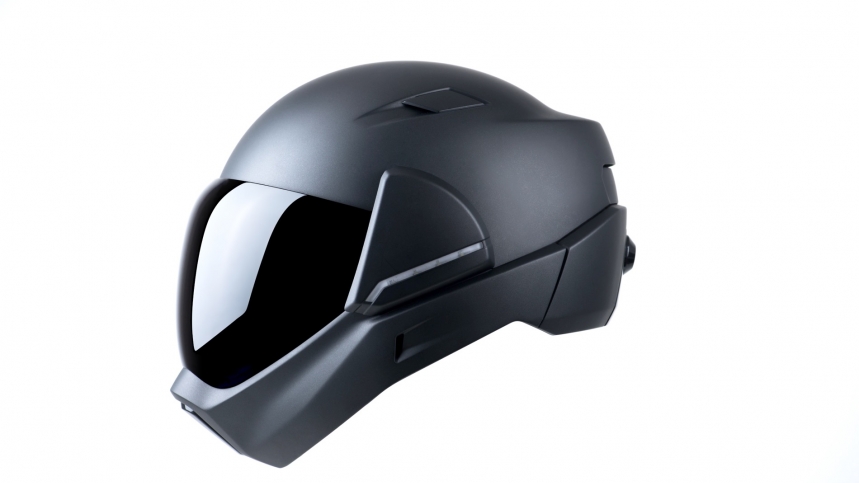
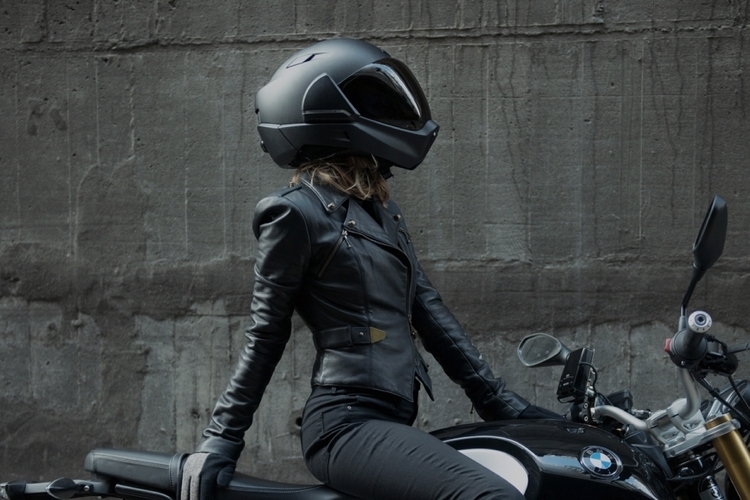
  • CrossHelmet X1 claims to be how future helmets will come to be

  • CrossHelmet X1 features built-in HUD, Bluetooth, rearview camera, ambient noise processing

  • CrossHelmet X1 project is crowd funded on Kickstarter

While traditional helmet companies stick to producing helmets in the tried and true sense in terms of design and features, that focus has given room for “independents” to produce helmets with features that are eschewed by the traditionalists. That statement doesn’t mean we’re insinuating that these new helmets are bad, instead, we meant that these helmets feature out-of-the-square thinking.

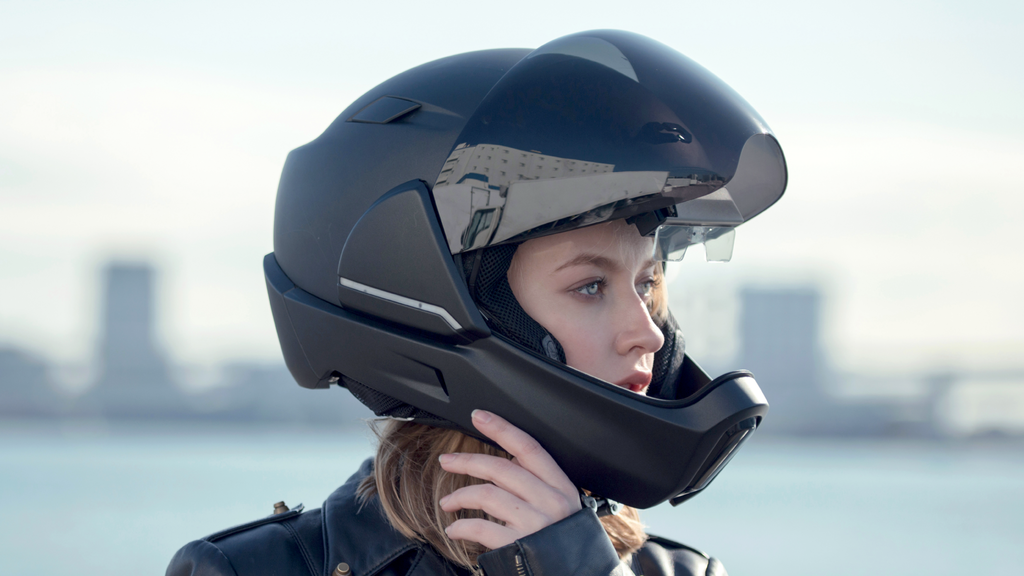
A Tokyo-based company called Borderless Inc. has just launched a Kickstarter campaign for its CrossHelmet X1 smart helmet. So, what are inside this Alien/spaceman-looking helmet? It features not only integrated Bluetooth connectivity, but also ambient sound control and a heads-up display (HUD) which provides a claimed 360-degree view.

The features may sound similar to the Skully AR-1 (now in the hands of new investors – click here to read more), but the CrossHelmet X1 has a few extra notable features.

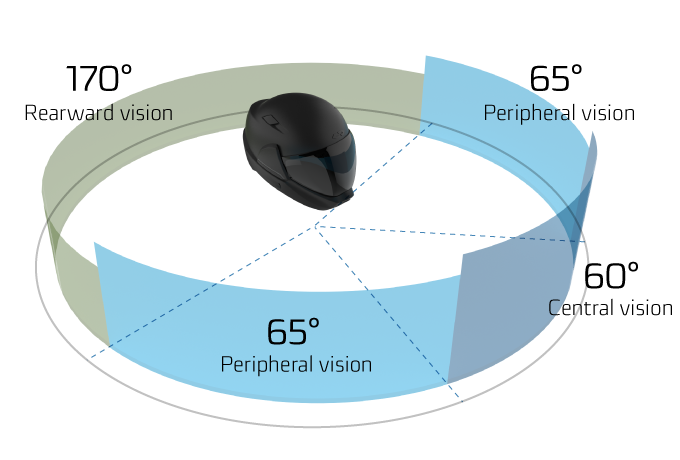
The HUD isn’t a plug-in item, instead is integrates all the technologies of the helmet. The rearview camera offers a 170-degree view which is paired to the front faceshield to provide 30 degrees more peripheral vision for a 360-degree view. Additionally, the HUD presents information such as speed, compass direction, weather, time and navigation on the foldable bifocal lens.

The CrossHelmet X1’s smartphone app provides access to the helmet’s features. You can listen to music, make/receive phone calls, and Group Talk just like if you’ve attached a Bluetooth communication device.

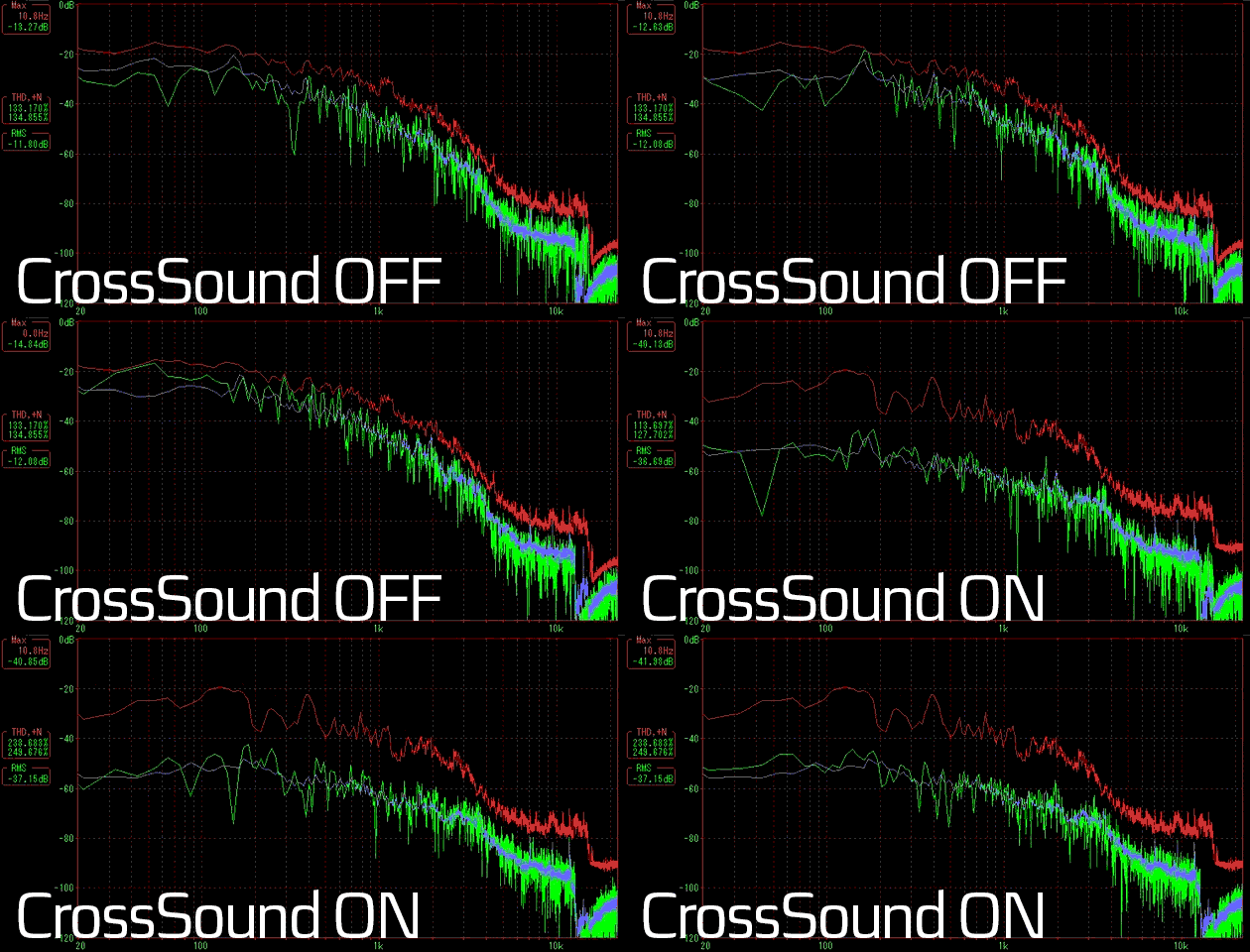
Unique to the CrossHelmet X1 at this moment is the CrossSound Control – the patented noise control system. It’s designed to reduce or enhance environmental sounds, depending on the rider’s needs via the smartphone app. Its algorithm is claimed to filter out road, engine and windnoise, while allowing through critical sounds such as screeching brakes and emergency sirens. Although SENA had been developing their Momentum INC (Intelligent Noise-Control) Pro helmet, the CrossHelmet is the first to make it to production with the noise control technology.

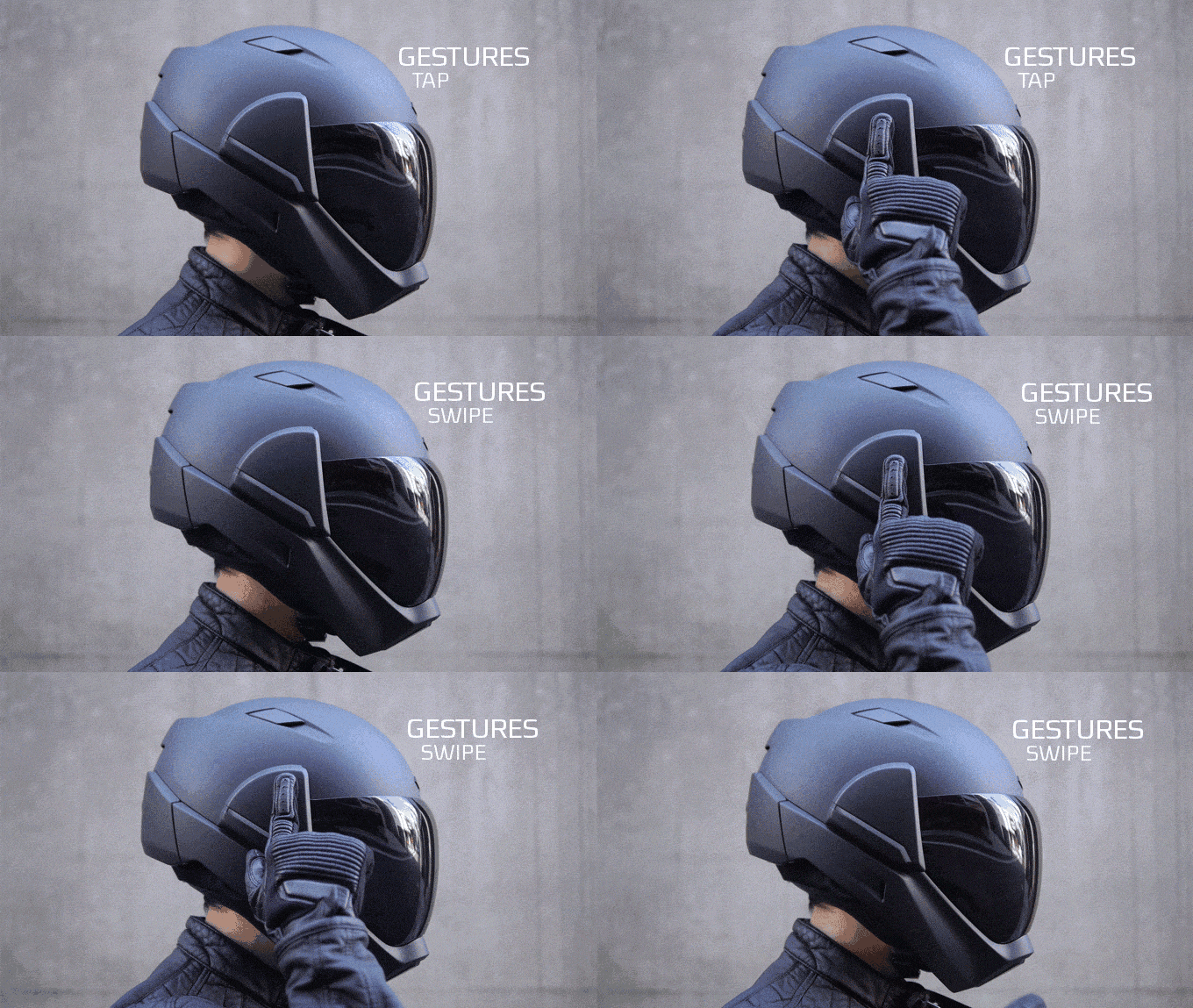
That’s not all, the helmet’s “sidepod” has a capacitive sticker which doubles up as a touch panel. Specific gestures will activate certain functions, just like smartphone.

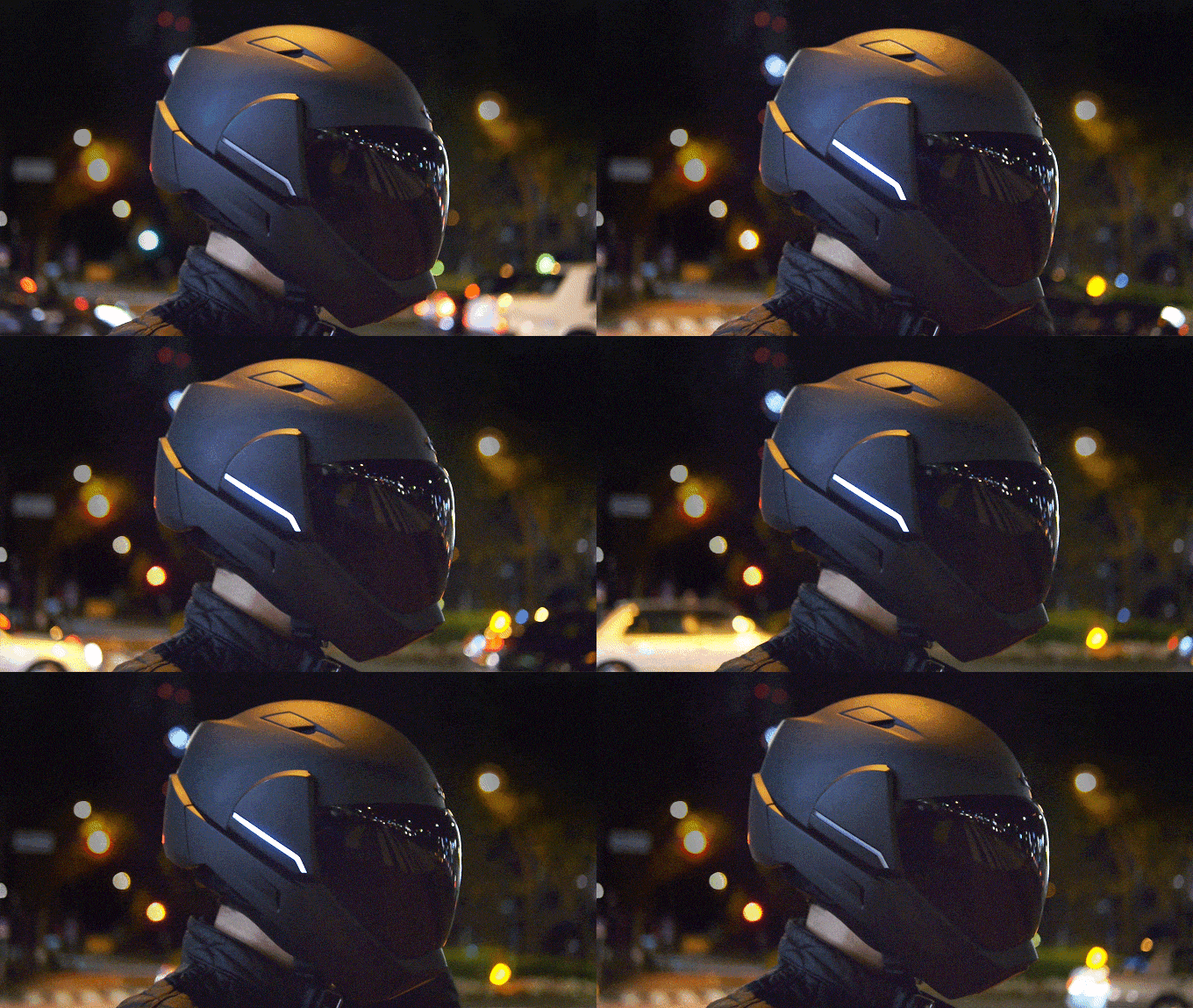
There are also LED lightstrips on the sidepods, functioning as position lights for safety.

All these technologies are processed by a 1.2 GHz Dual Core Cortex A9 processor, powered by a safe solid-state lithium-ceramic battery.


As it is, the CrossHelmet X1 isn’t cheap, costing USD 1,799. Click here to head over to CrossHelmet site or click here for the Kickstarter site, in case you’d like to invest in one. The first units are expected to delivered in the autumn or winter of 2018.

The CrossHelmet X1 has passed the ECE, DOT and JIS standards.

  • Shell Advance Ultra with PurePlus Technology is a fully-synthetic motor oil

  • The lubricant is formulated to last up to 12,000 kilometres

  • Engine is now smoother, faster-revving and has gained extra RPMs

We’ve covered Shell Advance Ultra with Pureplus’ origins in a previous article (click here to read more). I’ve been using this lubricant in my 2011 Kawasaki ER-6f since May of this year.

There were two grades to choose from at that particular time: 10W-40 and 10W-50. The former grade is recommended by Kawasaki as the primary choice, while the second is recommended by the manufacturer for countries with high ambient temperatures.

While the second grade would’ve been perfect, I decided to go ahead with the 10W-40 choice just to test how it would fare, since it’s the primary choice.

During the pour, the oil was a very clear, almost golden yellow. That’s due to the PurePlus Technology. Shell’s PurePlus Technology results from Shell’s gas-to-liquid crystal-clear base oil which is virtually free from impurities such as sulfur, mercaptans, mecury, nitrogen, aromatics (click here to read more).

The real difference, of course, was what happened when the engine was started and running. The Shell Advance Ultra’s effect was immediate. The ER-6 range is well-known for its loud ticking sound emanating from the cylinder head, but with the Shell lubricant, the sound was reduced significantly at idle. The sound totally disappeared when the helmet went on and riding.

Engine response was quick, even when the oil was new. (A new oil is still more viscous or “thicker,” compared to older oil.) More importantly, the engine didn’t feel stressed when accelerating hard through the gears and had no qualms about holding high RPMs for extended periods.

Additionally, there’s a 300 RPM drop when cruising at all speeds. Lower revs equate to lower fuel consumption.

The oil has since covered 3000km. I’ll be honest here: The biggest complaint heard in the market about most, if not all oils, is their inability to hold its grade and performance throughout its lifespan. Most bikers change their oils every 5000km, regardless if they used fully-synthetic or semi-synthetic lubricants. In their opinion, lubricants would experience a performance drop by the time it hits the 2500km to 3000km mark.

Now, I’ve used almost every oil available in the market, even some that aren’t; and I can happily report that the Shell Advance Ultra with PurePlus has not a dropped in its performance thus far. The ticking in my bike’s valvetrain is still soft, the engine still revs willingly, and the 300 RPM reduction is still present. That has made riding a hoot especially in the city as overtaking is easy – a quick blast of the throttle is all that’s needed.

Of course, the oil has changed colour, but extracting some of it out of the engine revealed that it is still reddish brown instead of being totally black or worse, grayish black. I’m positive that should be credited to the PurePlus technology, since it started out free from impurities (click here for more info).

Shell has iterated that the Advance Ultra with PurePlus technology is formulated to be long-lasting. Because of that, its official service life is at 12000km for Ducatis. While different engines “use” their lubricants differently, if so, it means the oil in my engine has covered only at 25% of its lifespan.

A further report at 6000km is forthcoming from our test and I shall push it to the 12000km cycle. But at this moment, the Shell Advance Ultra with PurePlus has already surpassed my expectations.

Chinese bike manufacturer Loncin has introduced their new middleweight adventure bike dubbed the 2018 Loncin DS8.

Judging by the overall package, the DS8 carries a lot of similarities when. compared to the discontinued BMW G 650 GS.

Powered by the same 651cc, twin cylinder engine, the DS8 is said to produce 50hp and 50Nm of torque.

During the 2017 China International Motorcycle Trade Exhibition (CIMA Motor Show), Chinese bike manufacturer showcased yet another very familiar bike which goes by the name of the 2018 Loncin DS8. We are of course referring to how to bike looks eerily similar to the previous BMW G 650 GS adventure bike. (more…)

Archive

Follow us on Facebook

Follow us on YouTube