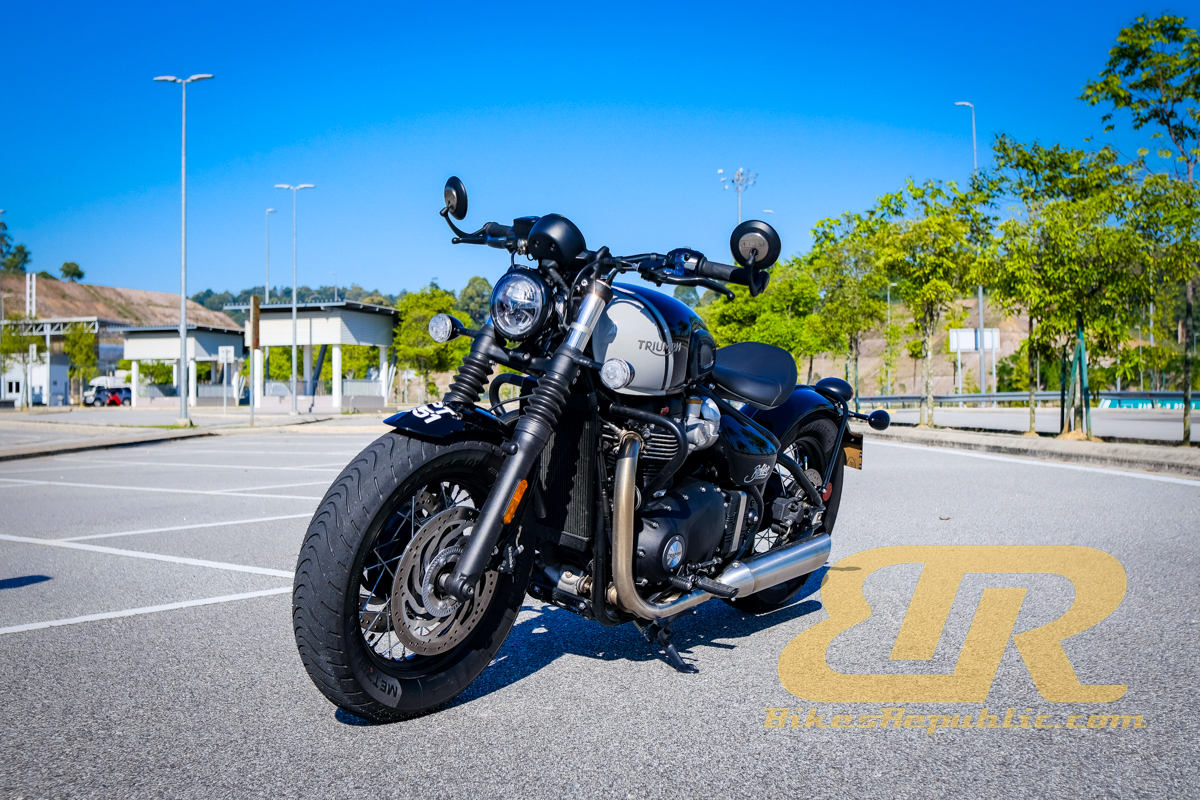
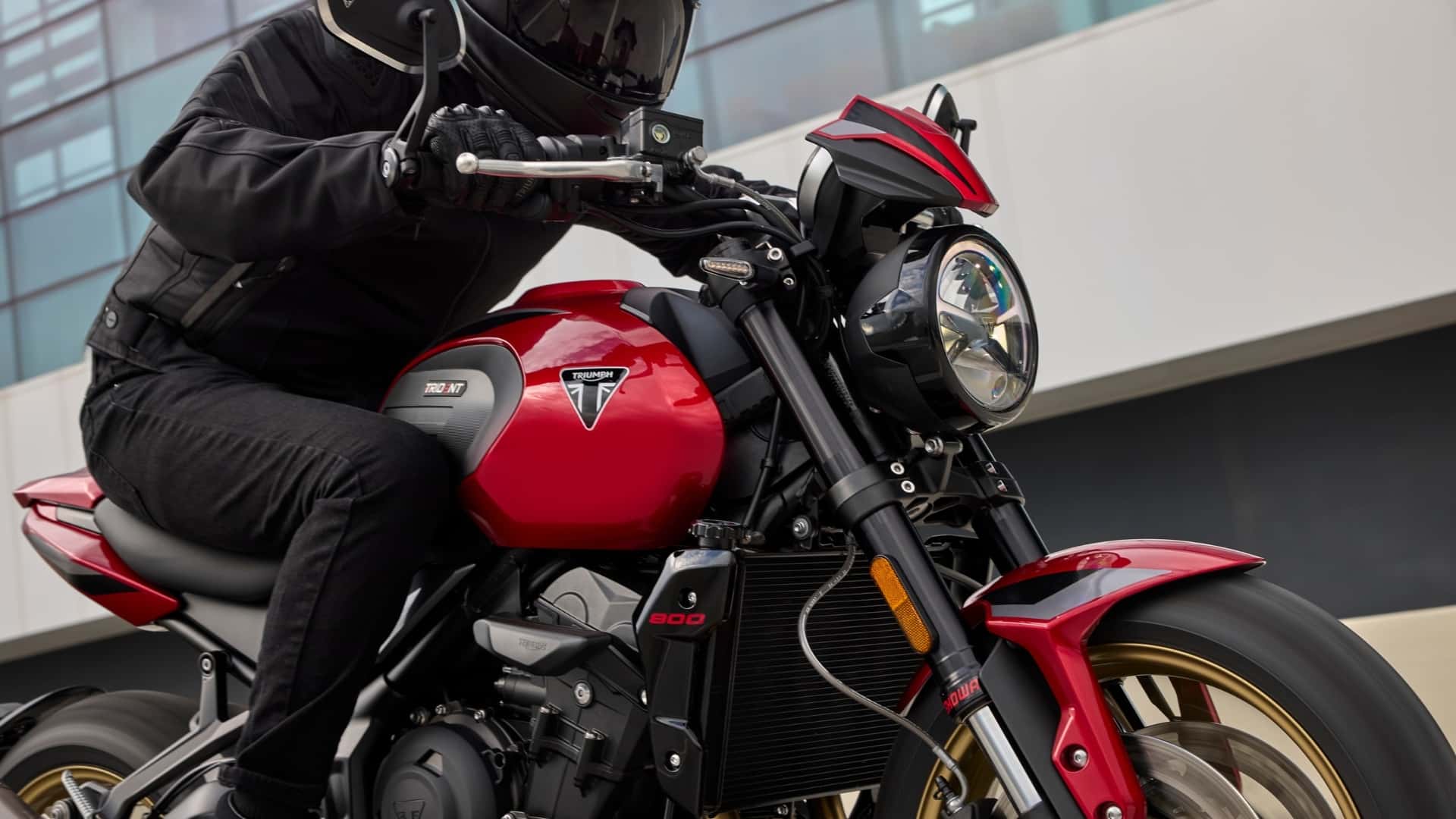
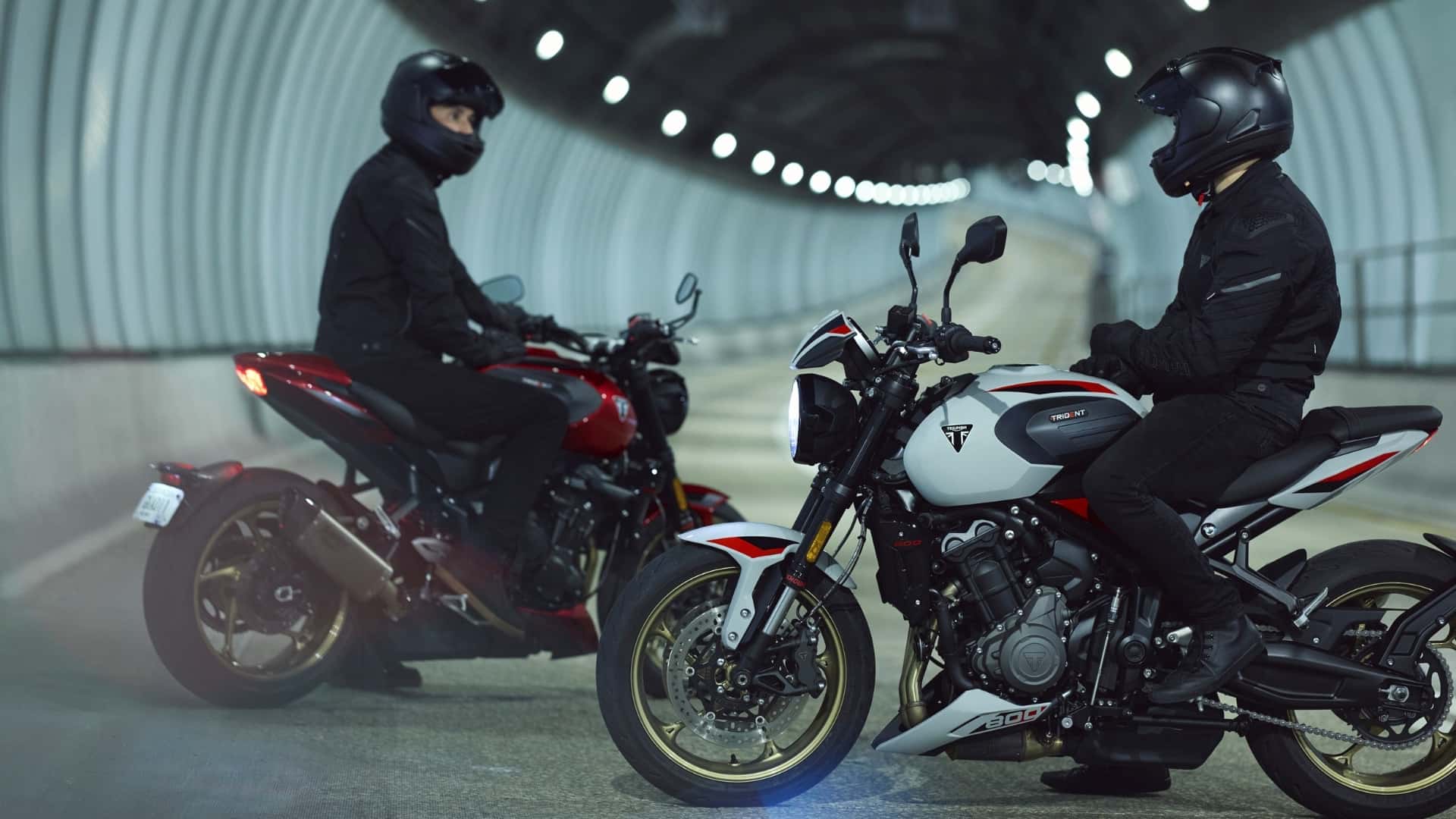
The 2025 Triumph Bonneville Bobber reminded us why some bikers get on the wrong side of the law. Not because we wanted to, but because the bike made us do it.
And no, not as power bad body, but a REAL bad boy. Wish we could use that as a defence in court, “But Your Honour, the motorcycle made me do it!”
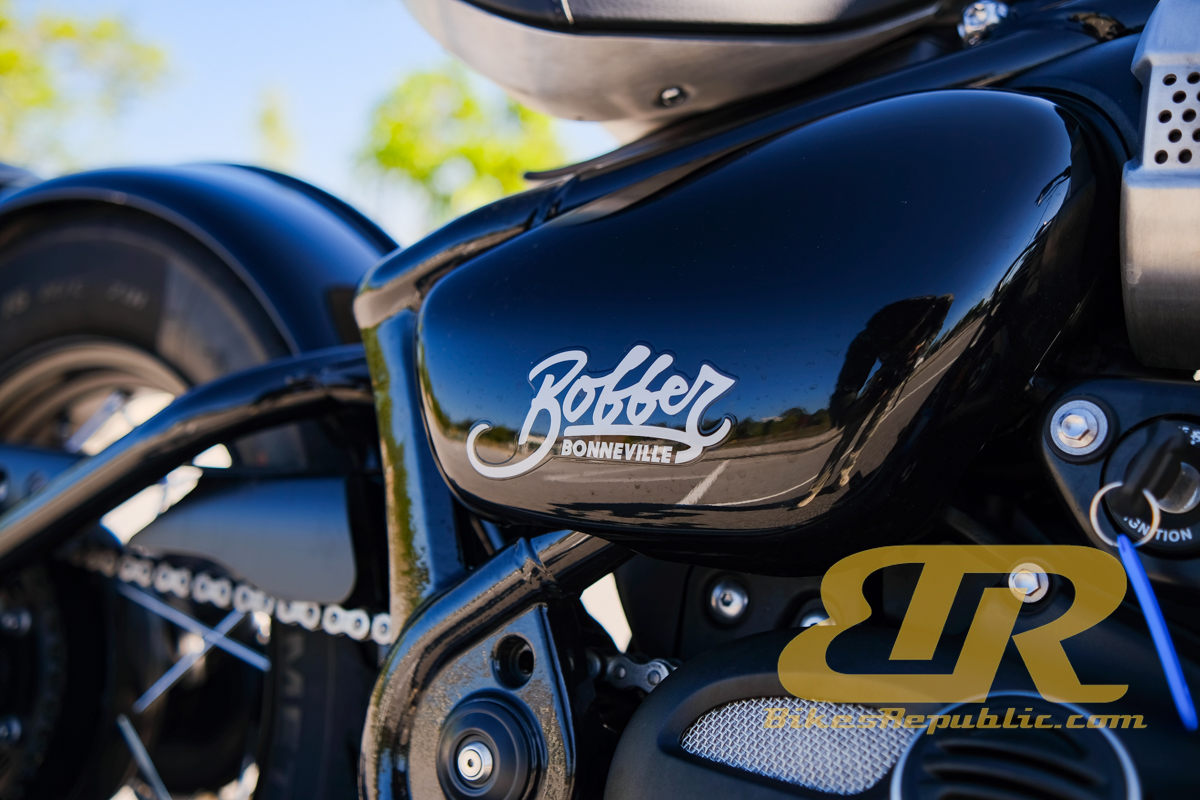
What is the 2025 Triumph Bonneville Bobber?
A review of any model in the Triumph Bonneville line-up needs to begin with a history brief, as the manufacturer imbues their bikes with spirit of where they came from.
The bobber style of motorcycles originated in the late 1920s and 1930s when riders modified their bikes to reduce weight and increase speed by “bobbing” excess parts, especially the front and rear fenders. This post-World War II trend, which became a symbol of rebellion and freedom, was born from soldiers who missed the lightweight European bikes and customised their bulky American motorcycles to be stripped-down, minimal versions of themselves.
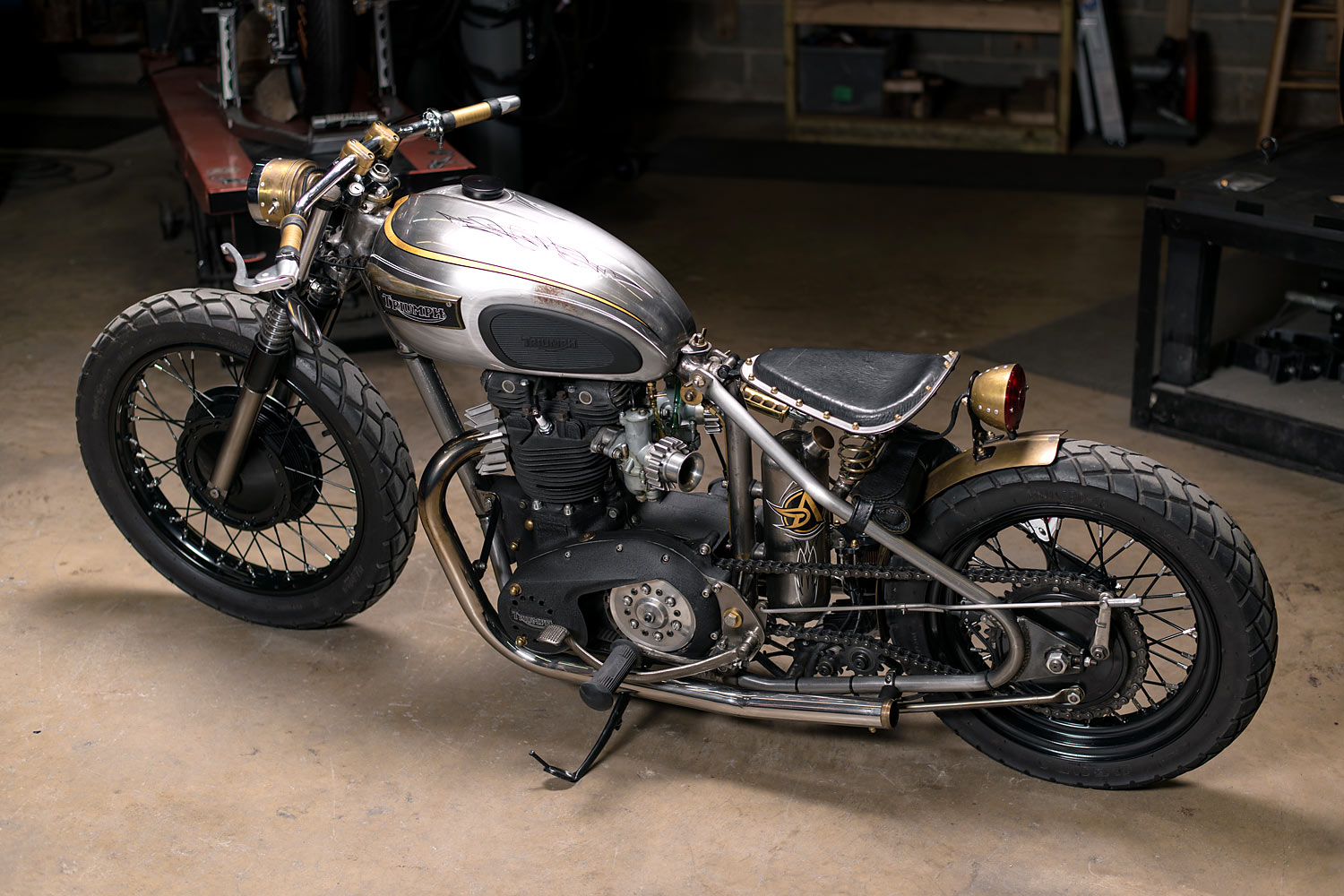
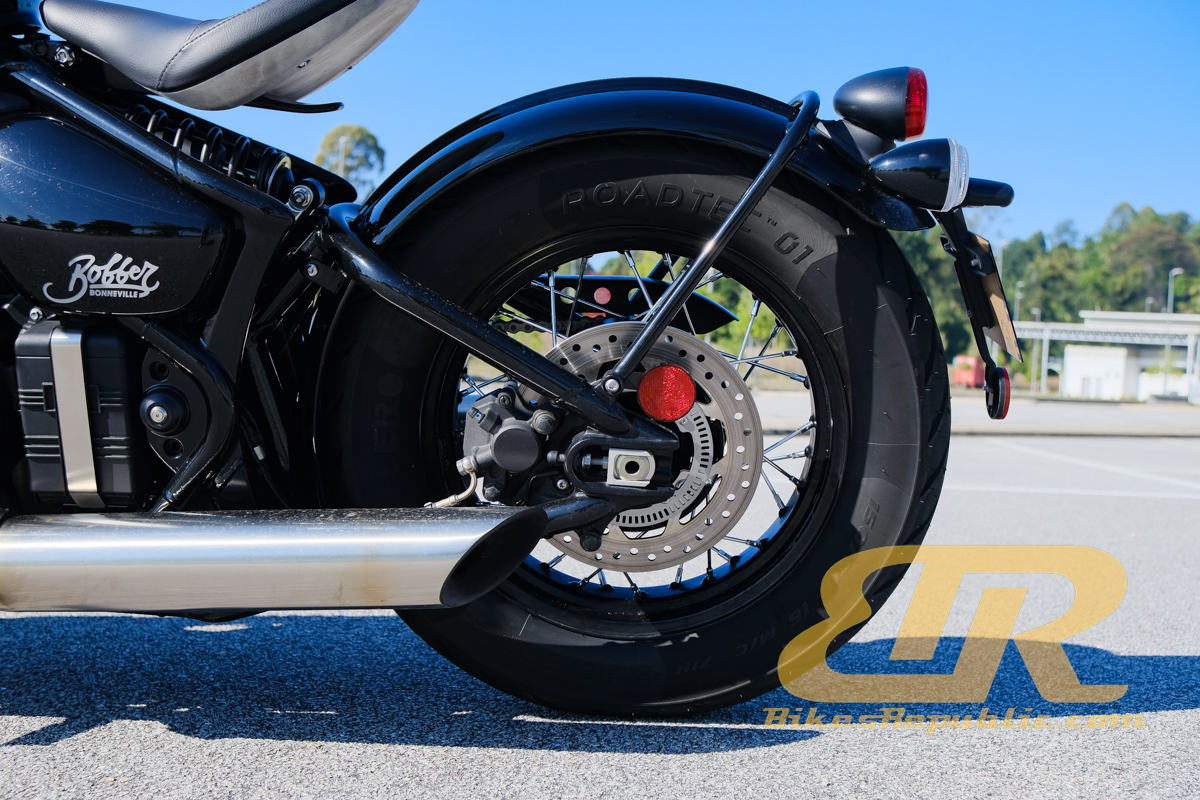
Riders removed or shortened the front and rear fenders, leading to the name “bobber” from the “bobbed” rear fender. Other common modifications included removing luggage racks, large seats, and other unnecessary components. (The rear brake stayed on for this bike, thankfully.)
Why do so you ask? To win traffic light GPs.
The style has since evolved, with several modern manufacturers creating factory-built bobbers with the same classic aesthetics, but with modern features. Also, extreme weight reduction may not be the main emphasis anymore in the interest of safety and comfort.
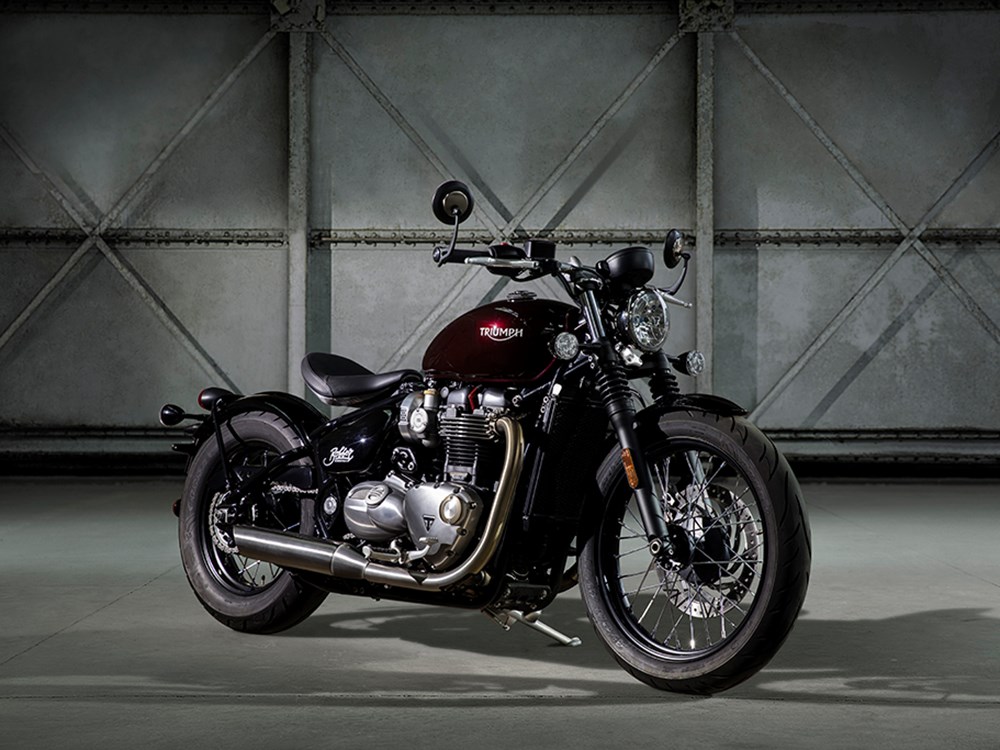
Coming back to the Triumph Bobber, it follows the same cut-down, minimalist styling of the early bobbers. The pictures of some of these early bobbers grace the walls of Ace Café in London.
When Triumph introduced the Bonneville Bobber in 2016, and it immediately became the company’s best-seller in its entire history.
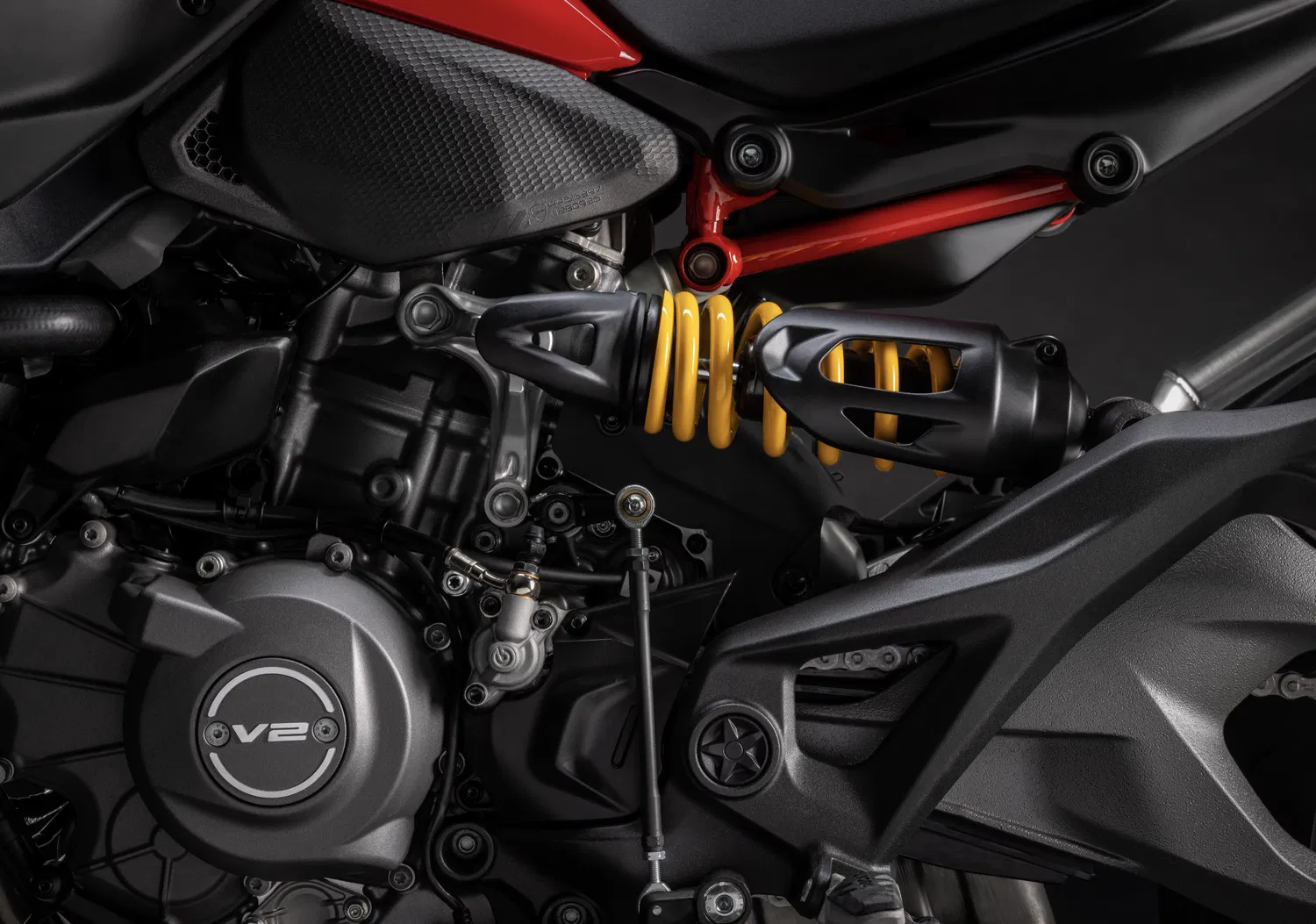
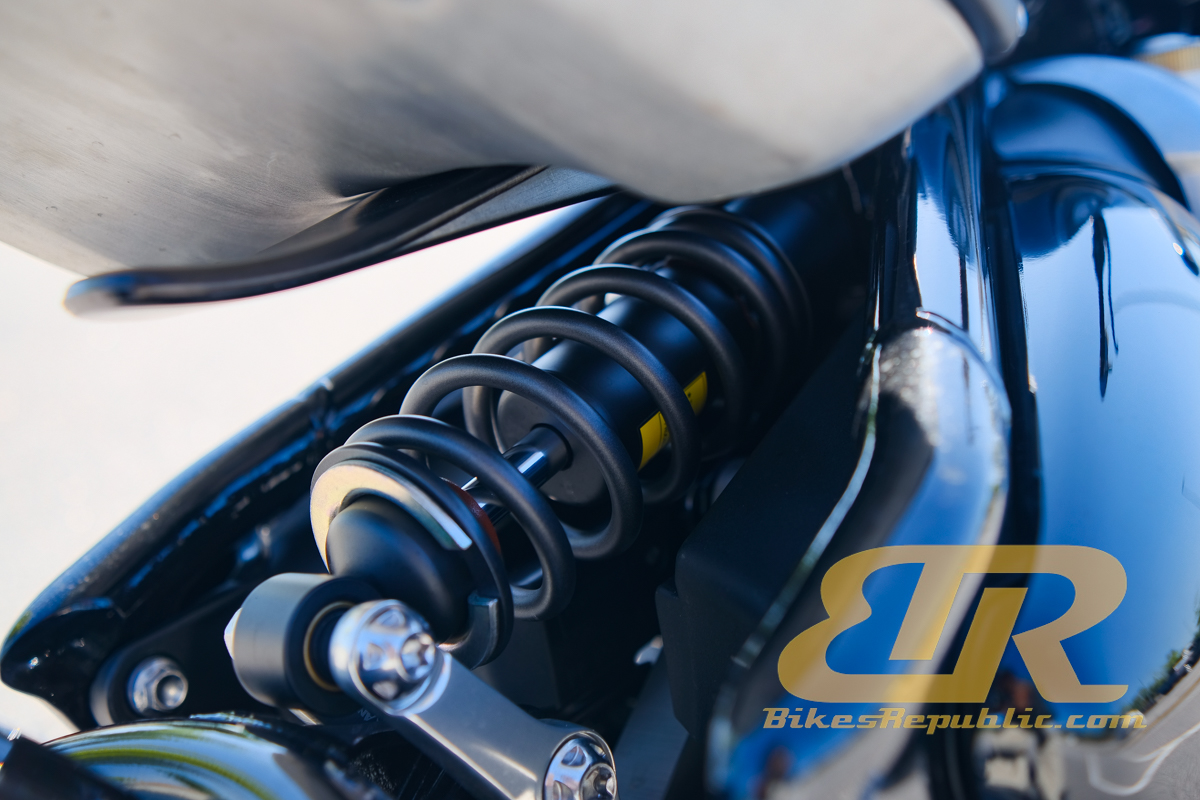
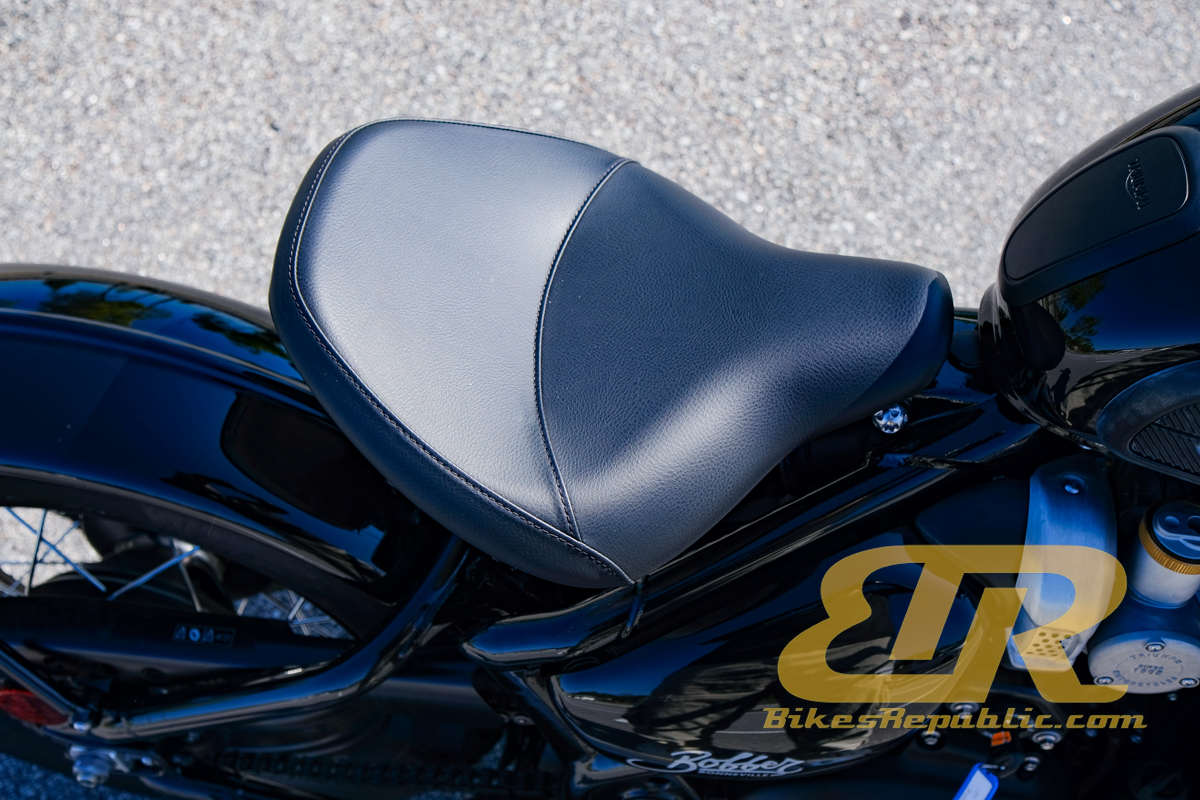
Back then, it came with a skinny front tyre, while the later Bobber Black version was introduced with a fat front tyre. It was fitted the 1200cc ‘High Torque’ parallel-twin engine instead of the ‘High Power’ variant found in the Speed Twin and the awesome Thruxton RS. It also boasted a solo seat which made rider appear to sit on air, concealed rear shock to give the frame a ‘hardtail’ look, and modern electronics.
We managed to review these back then and came away impressed, noting that it had a very smooth, linear powerband.
Highlights:
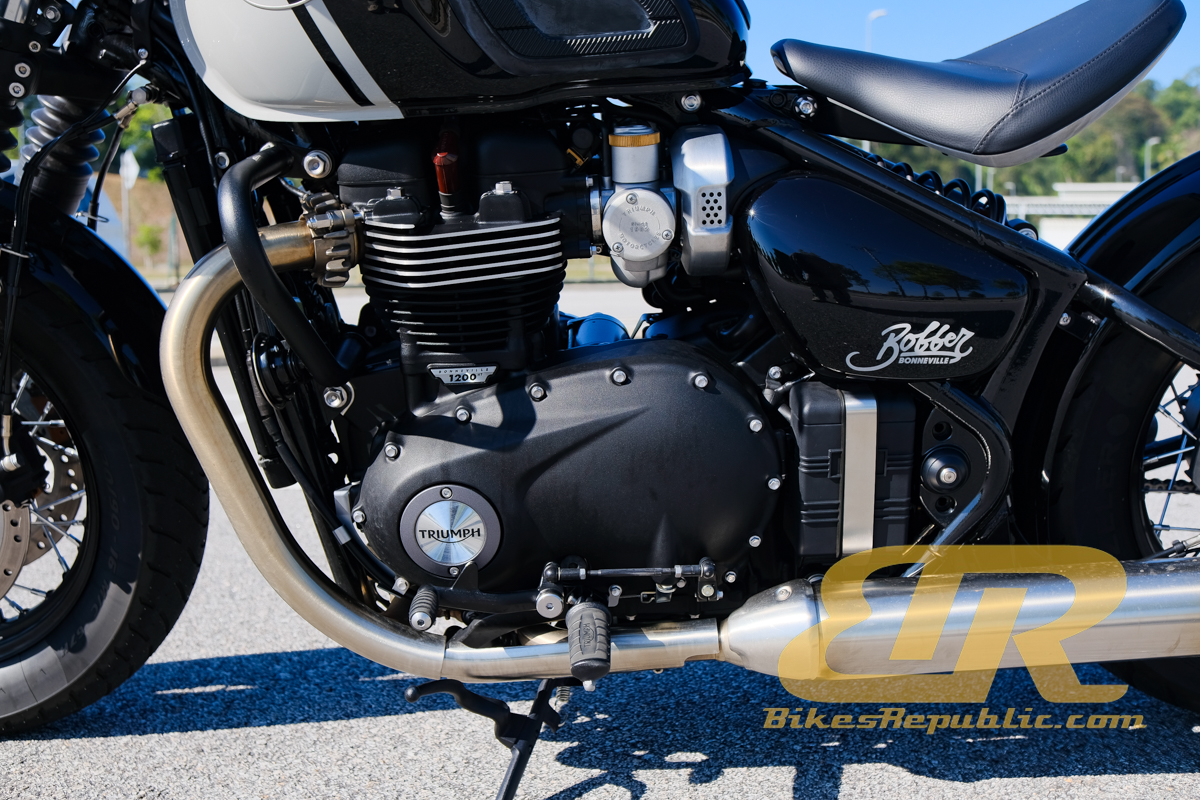
- 1200cc, liquid-cooled, 8-valve, SOHC, parallel-twin, with 270° crank angle specifically tuned for this bike.
- The engine produces 76.9 hp (57.5 kW) @ 6,100 RPM, and 106 Nm @ 4,000 RPM.
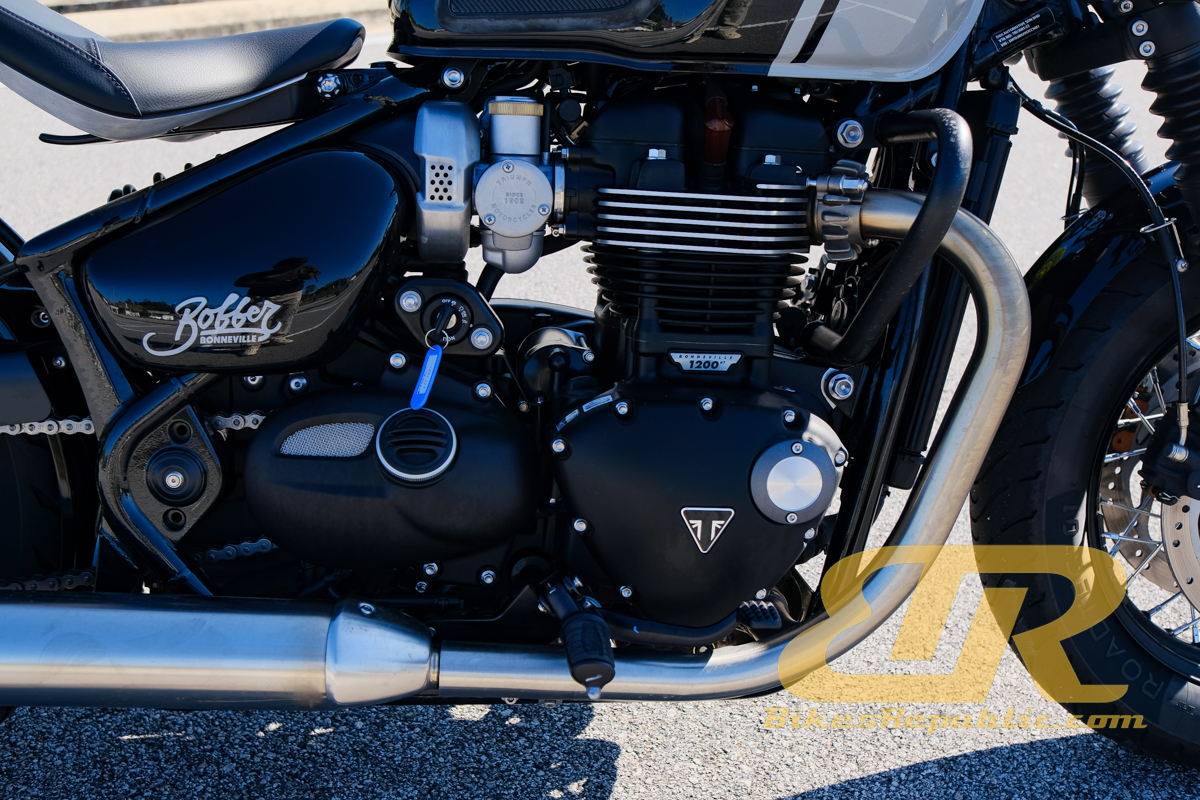
- Wet, multi-plate torque assist clutch and chain final drive.
- 47 mm Showa cartridge forks (non-adjustable), RSU monoshock with linkage.
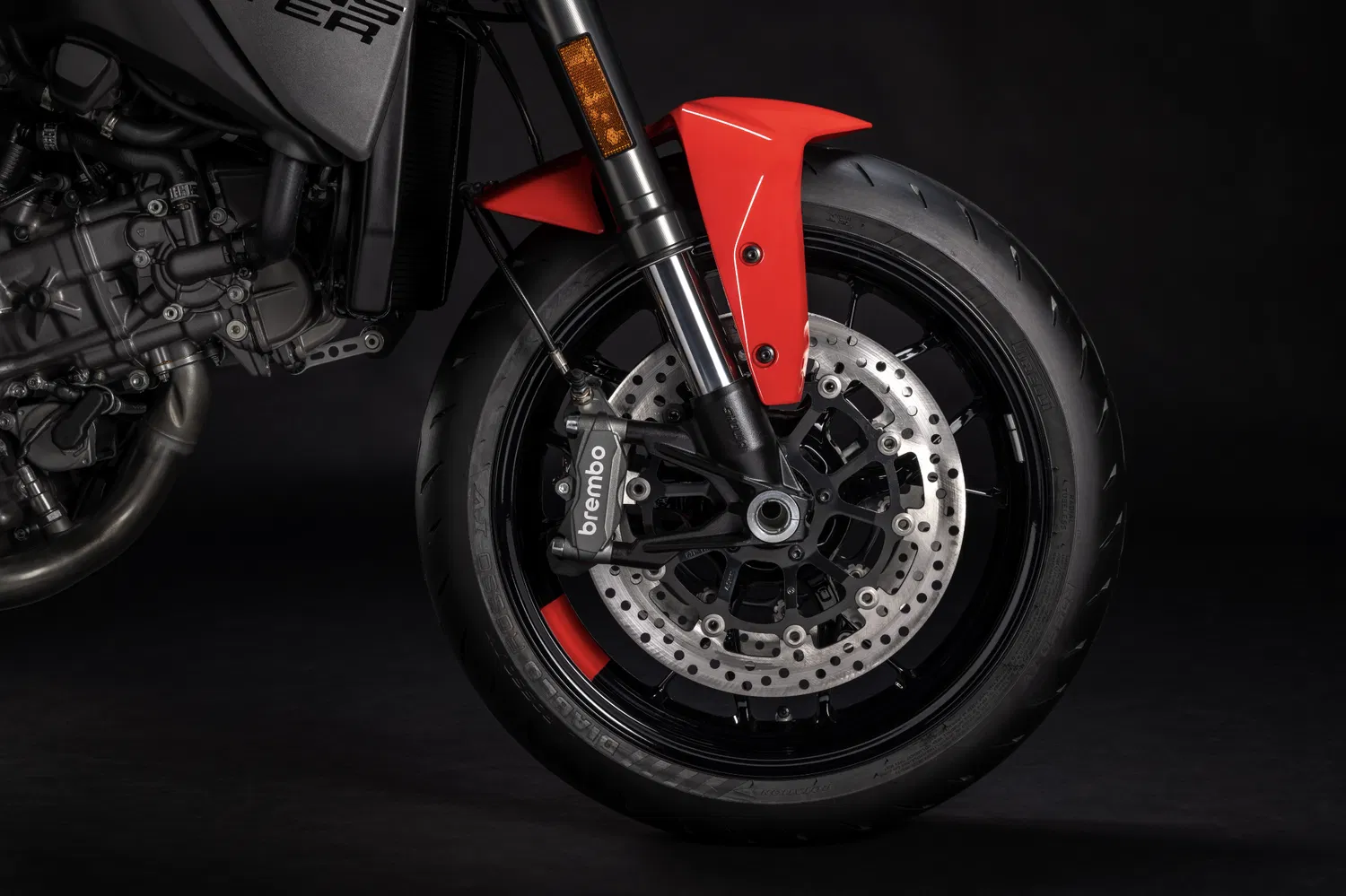
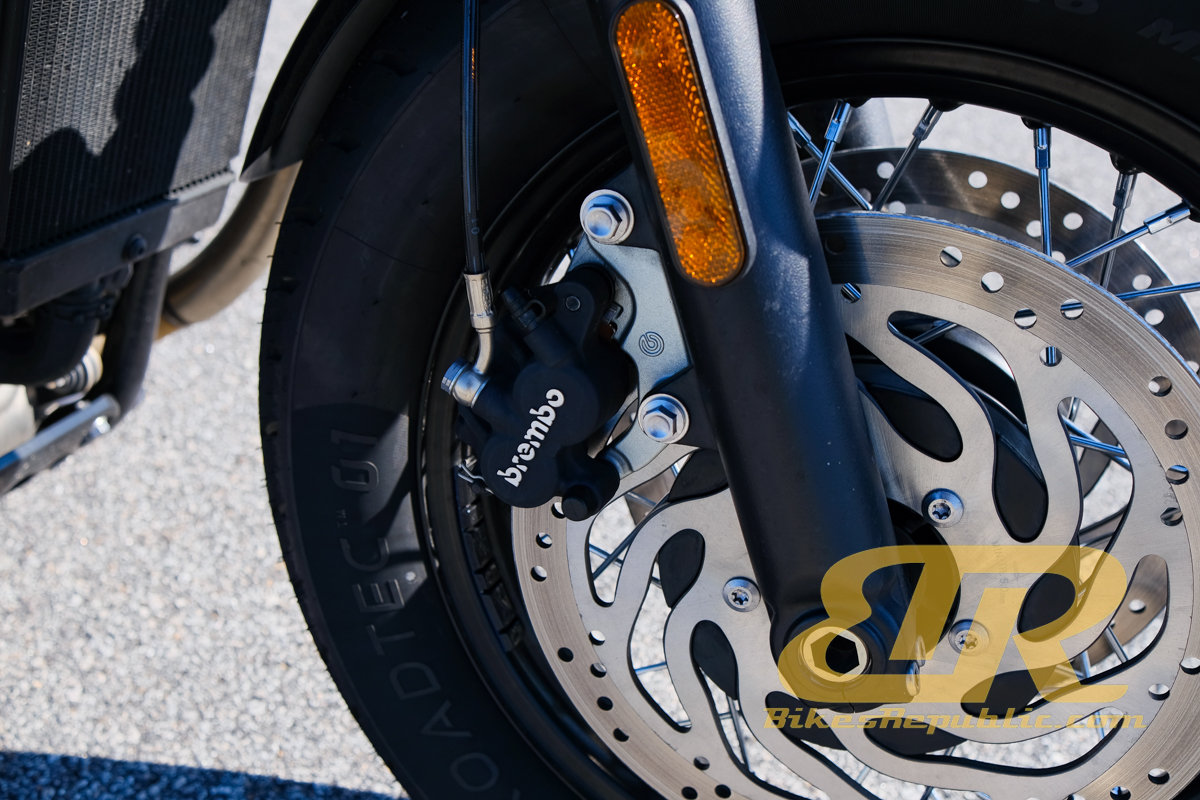
- Twin 310mm discs, Brembo 2-piston sliding calipers up front, Single Ø255mm disc, Nissin single piston sliding caliper at the back.
- Seat height is adjustable between 690 – 700 mm.
- Steering rake angle of 25.4º.
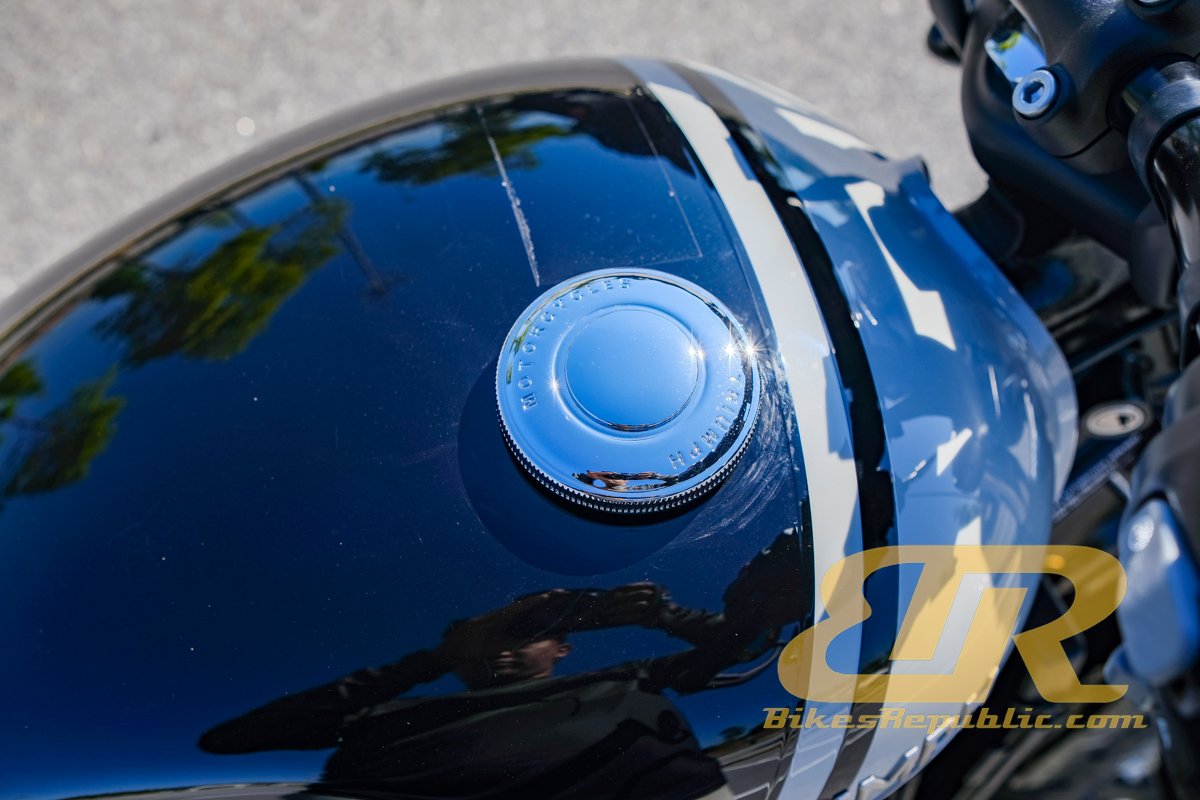
- The fuel tank now holds 12 litres of unleaded.
- Triumph claims a wet weight of 251 kg.
Riding the Triumph Bonneville Bobber
Pre-ride
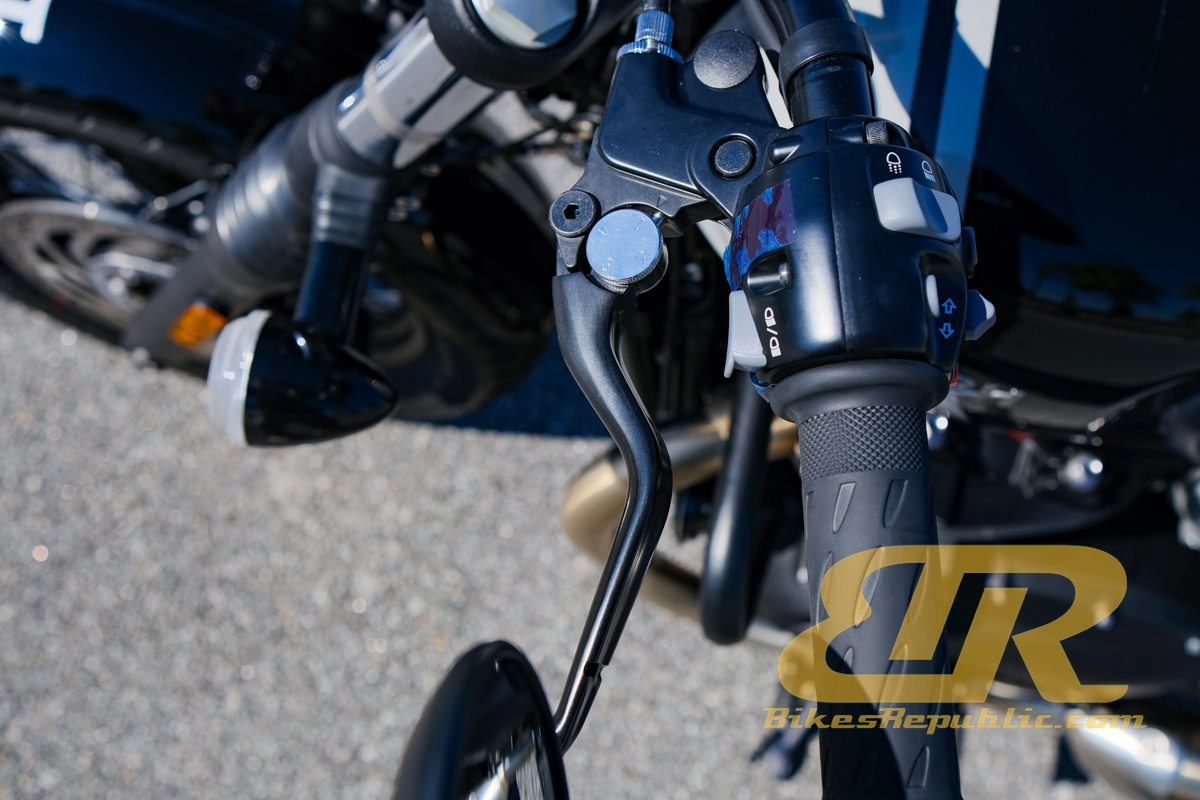
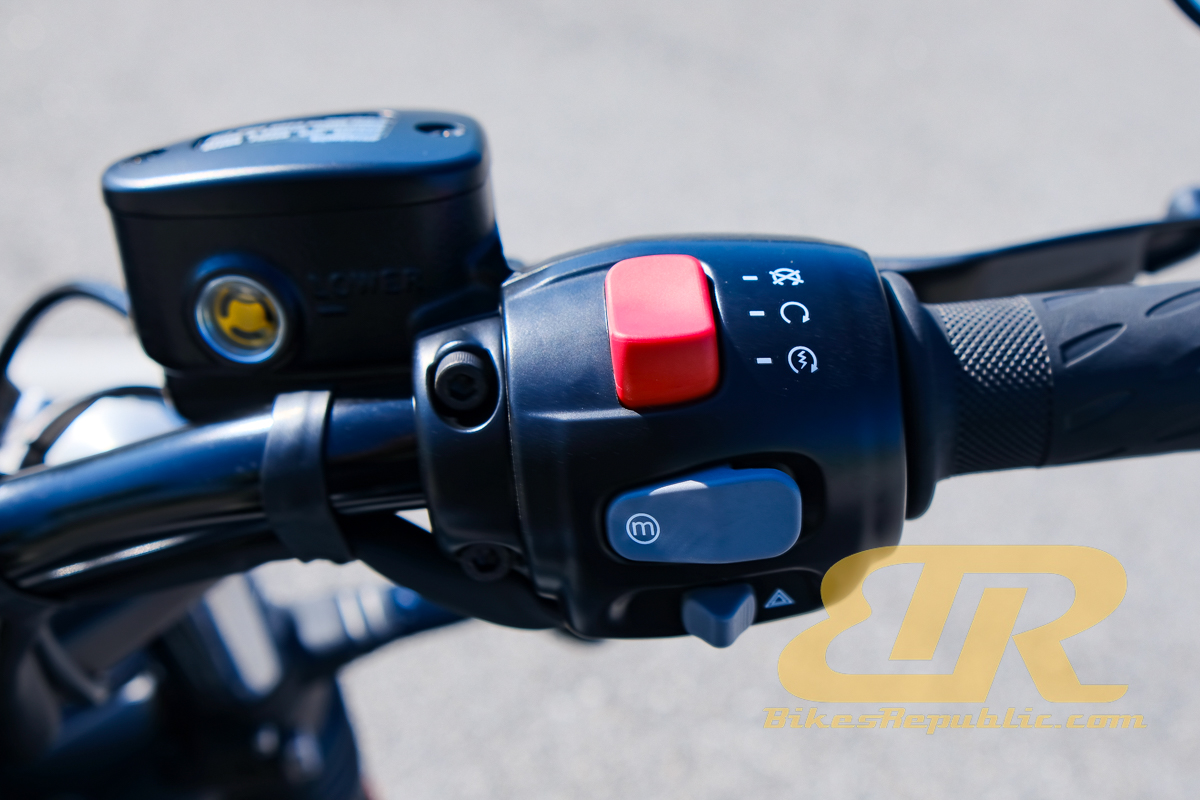
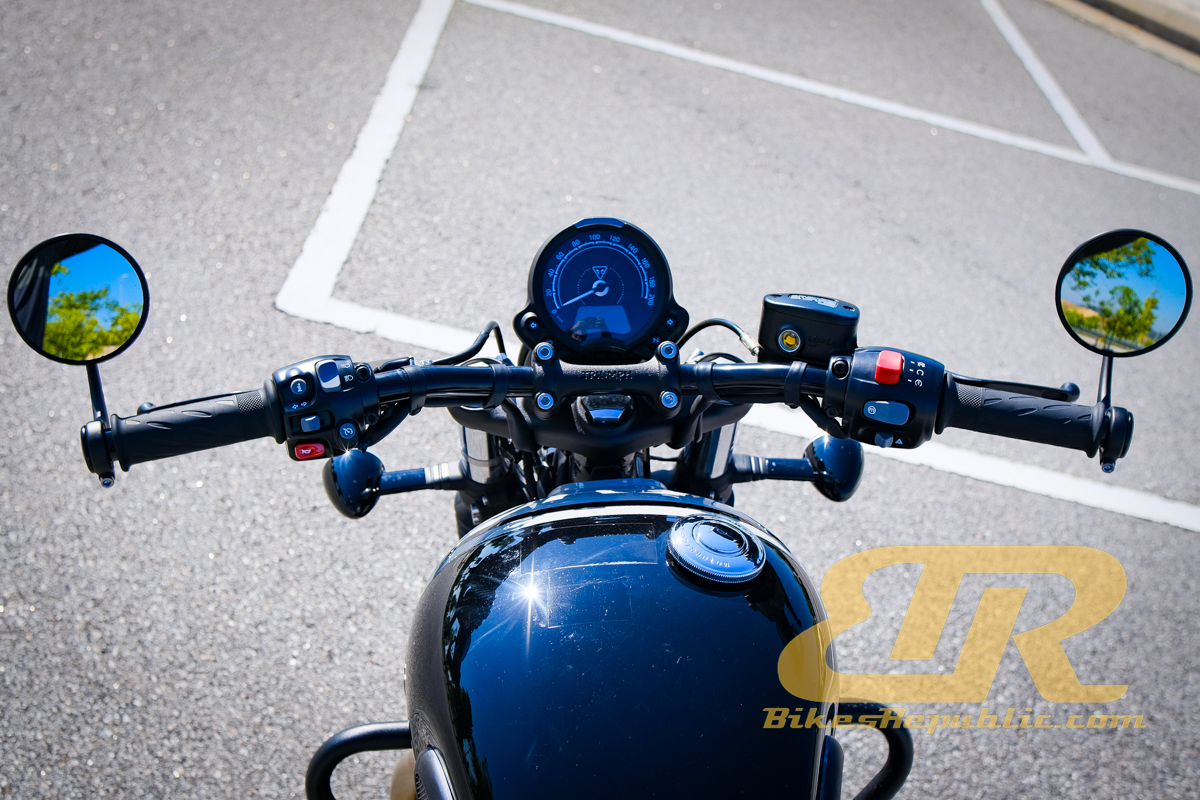
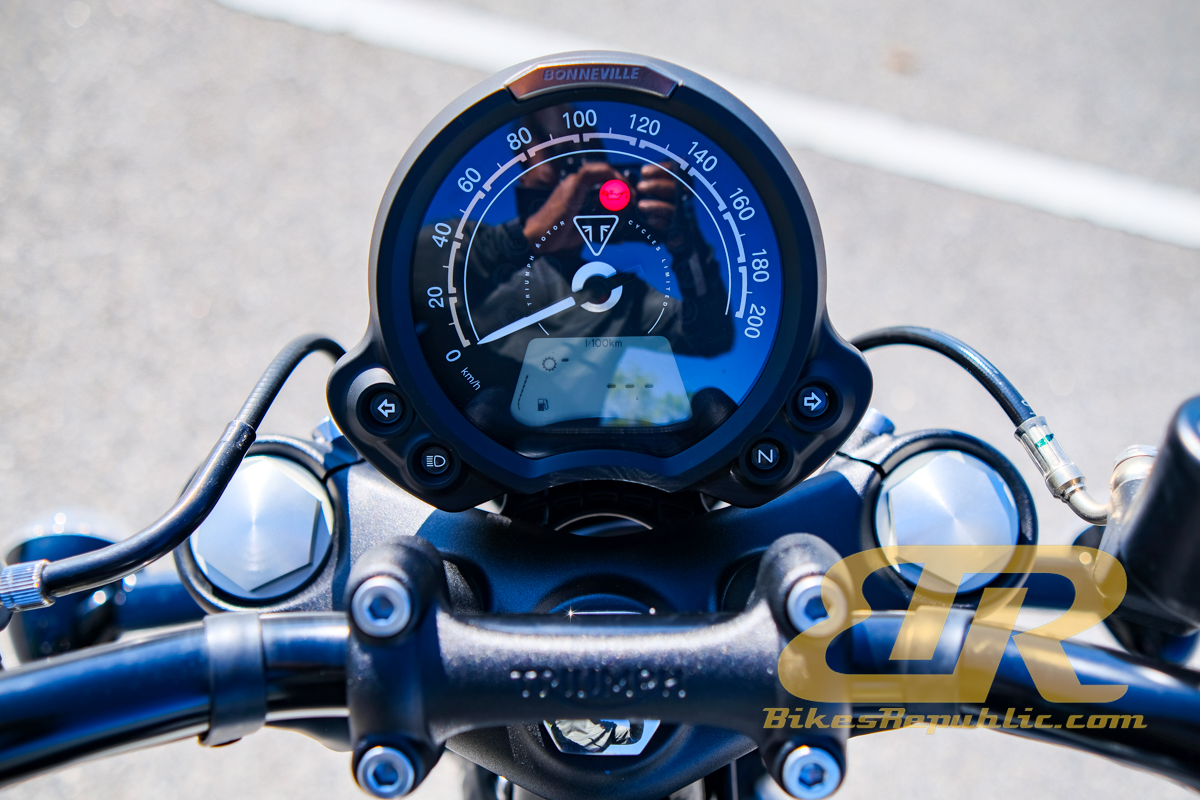
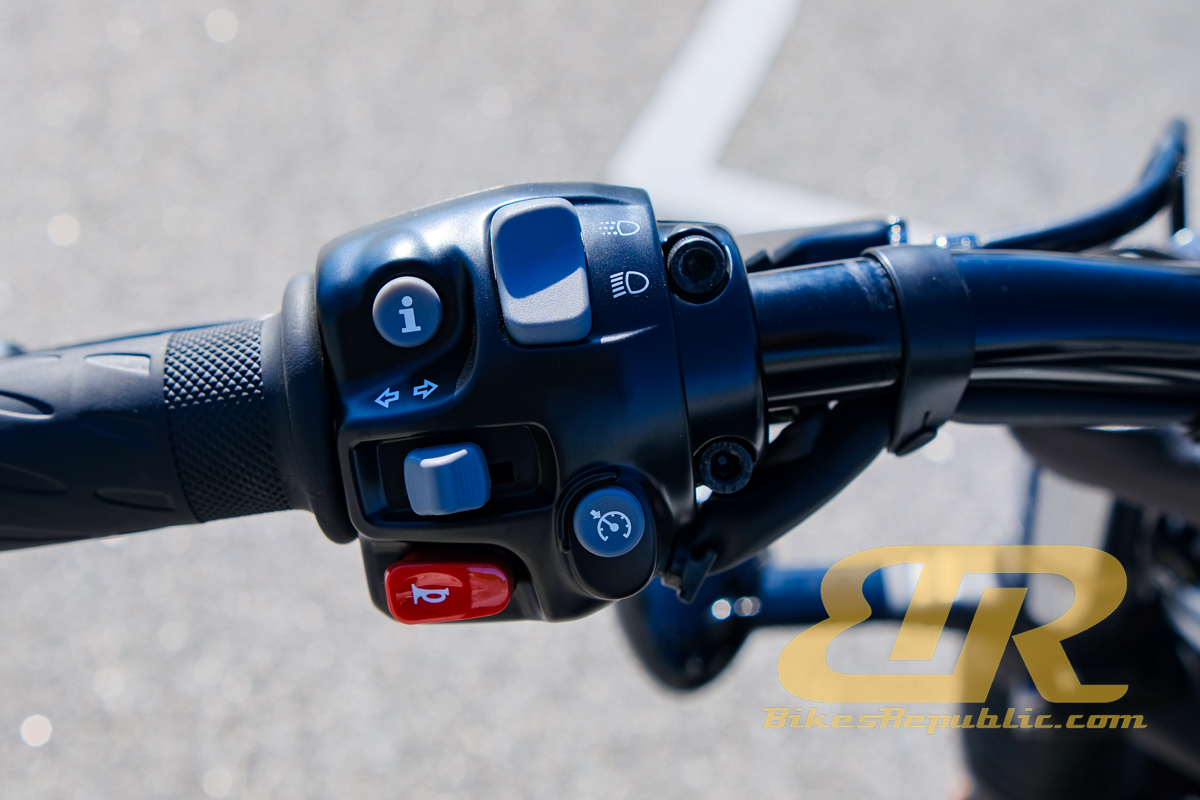
Triumph truly wants the bike to adhere to the original bobber spirit, thus it is uncluttered in almost every department, including the pre-ride setup. There was no navigation, music streaming, or phone call settings to play with. The throttle was ride-by-wire, therefore allowing for a grand total of two ride modes: ROAD and RAIN. There was cruise control, which was a nice touch.
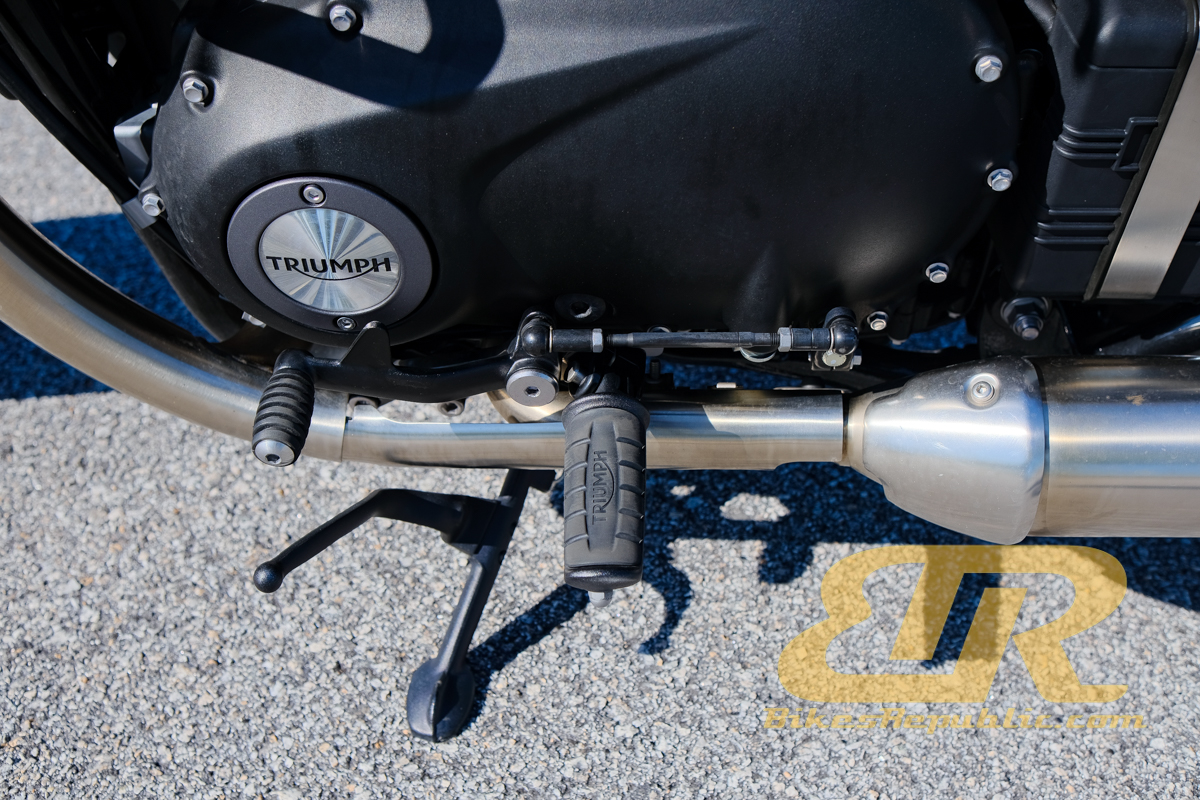
The seat had been set to the lower position, which also brought it further back from the tank. In this position, our arms were stretched straighter when gripping the handlebar, for the ‘proper’ drag bike upper body ergonomics. However, the footpegs are set in the middle position compared to fully up front placement like the first Bobber. A set of er… rearset footpegs would be nice for true drag-racing (more on this later).
Riding experience
Traction control and ABS could be turned on or off. But it so happened that it invariably rains when we pick up Triumph motorcycles for review. So, we set the ride mode to RAIN, left the traction control and ABS on, and went riding.
We then discovered it was perhaps the universe’s way to let us fully test the bike’s traction control, tyres, suspension, throttle response, and handling in bad weather. Come to think of it, what is the point of a bike that handles superbly in good weather only to have the rider gripping the handlebar for dear life when it rains? Given our country’s climate where rain is never an outside possibility (like 60% chance), any motorcycle should be able to handle wet roads.
Throttle response was ultra smooth in this mode, although, we noticed a slightly stronger ‘kick’ compared to the first generation Bobber. Make no mistake, the engine was able to punch hard when we snapped open the throttle, but there is a slight ‘lag’ before it engine torque came full on, again in a very linear fashion in this mode.
We have said many times previously and we say it again: Triumphs are some – if not the best – handling motorcycles one could buy. As such, the Bobber came away with spades in terms of wet handling. We had no fear of steering it through corners with smooth entry and mid-corner rolling speed, instead of having to tip toe around corners with huge amounts of engine braking like noobs.
Thankfully, the weather cleared up later in the afternoon and it was time to switch to ROAD mode and let ‘er rip.
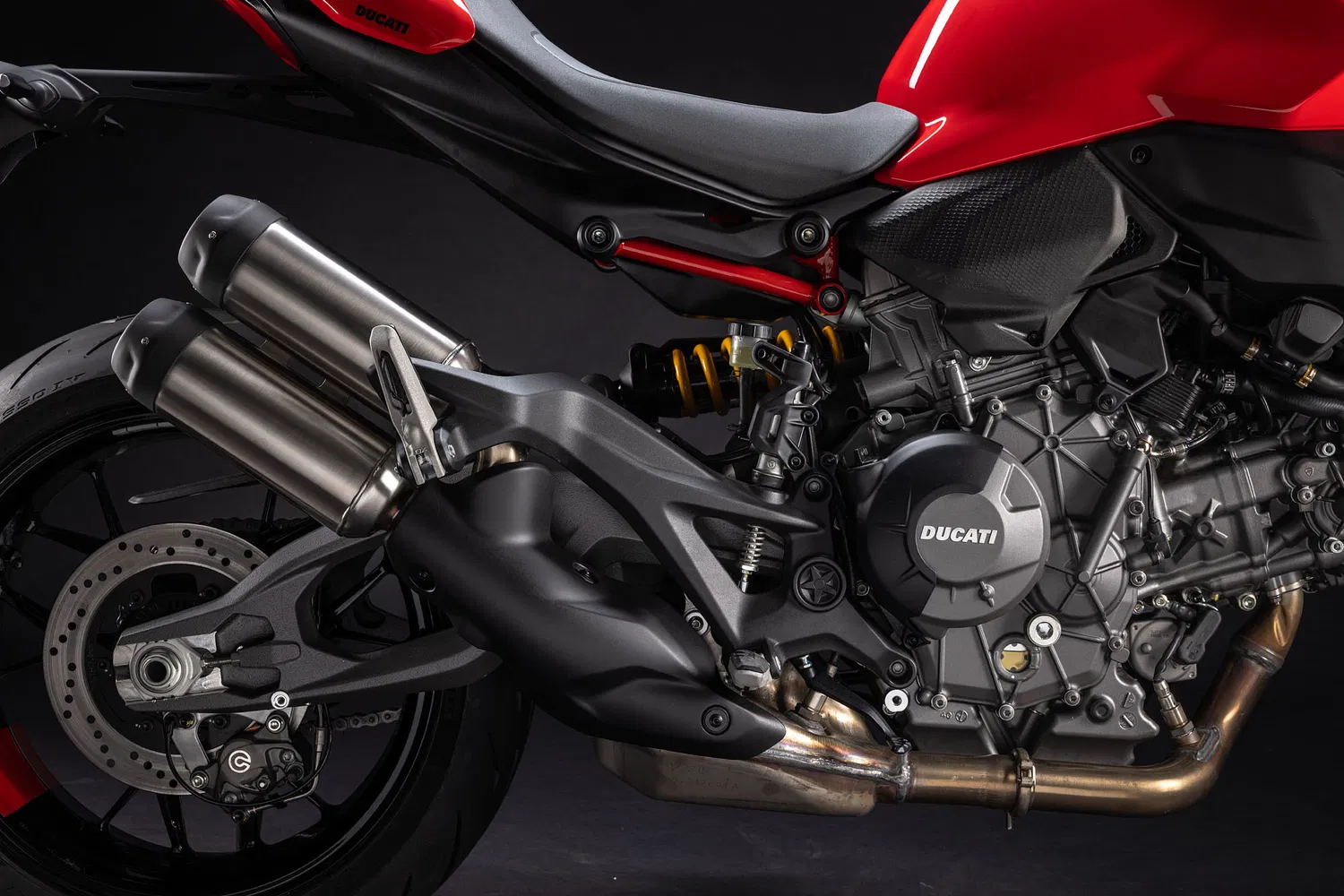
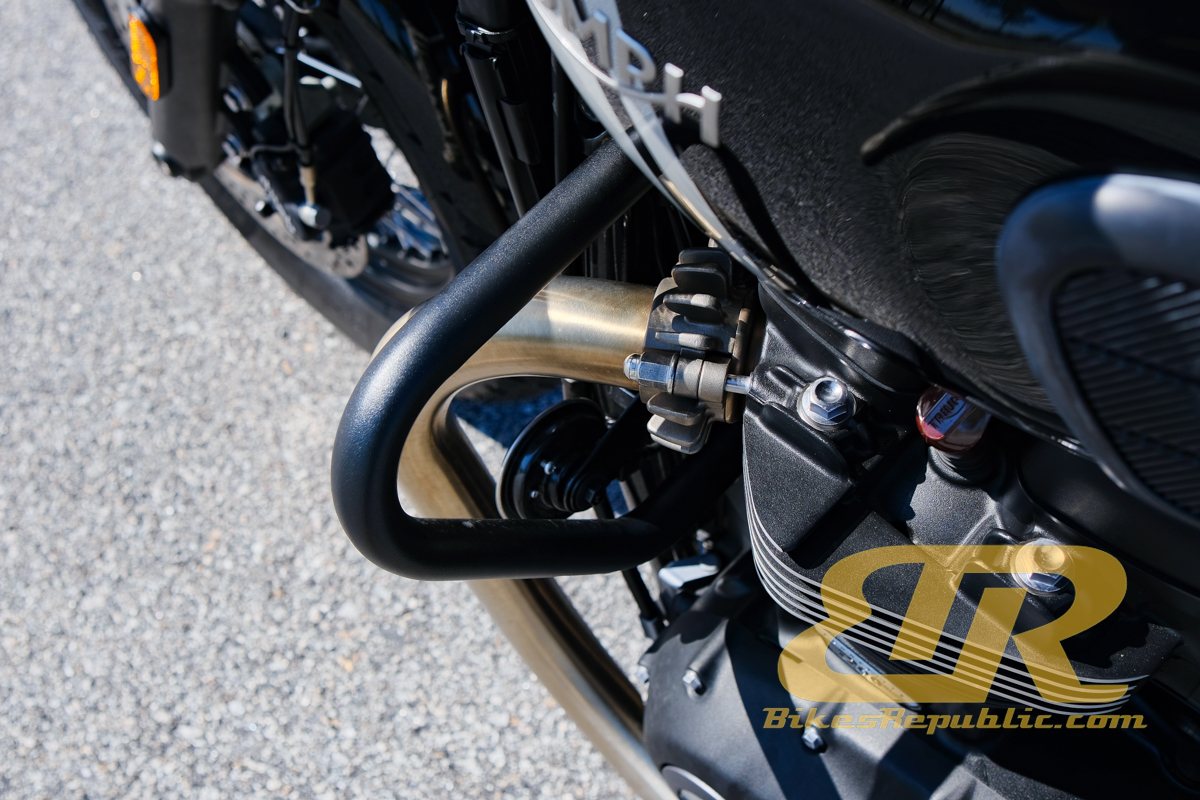
Switching to this mode did not have the engine taking on a different character. The engine continued to idle smoothly to a low, rumbling note. The twin exhausts also stayed quiet during this time.
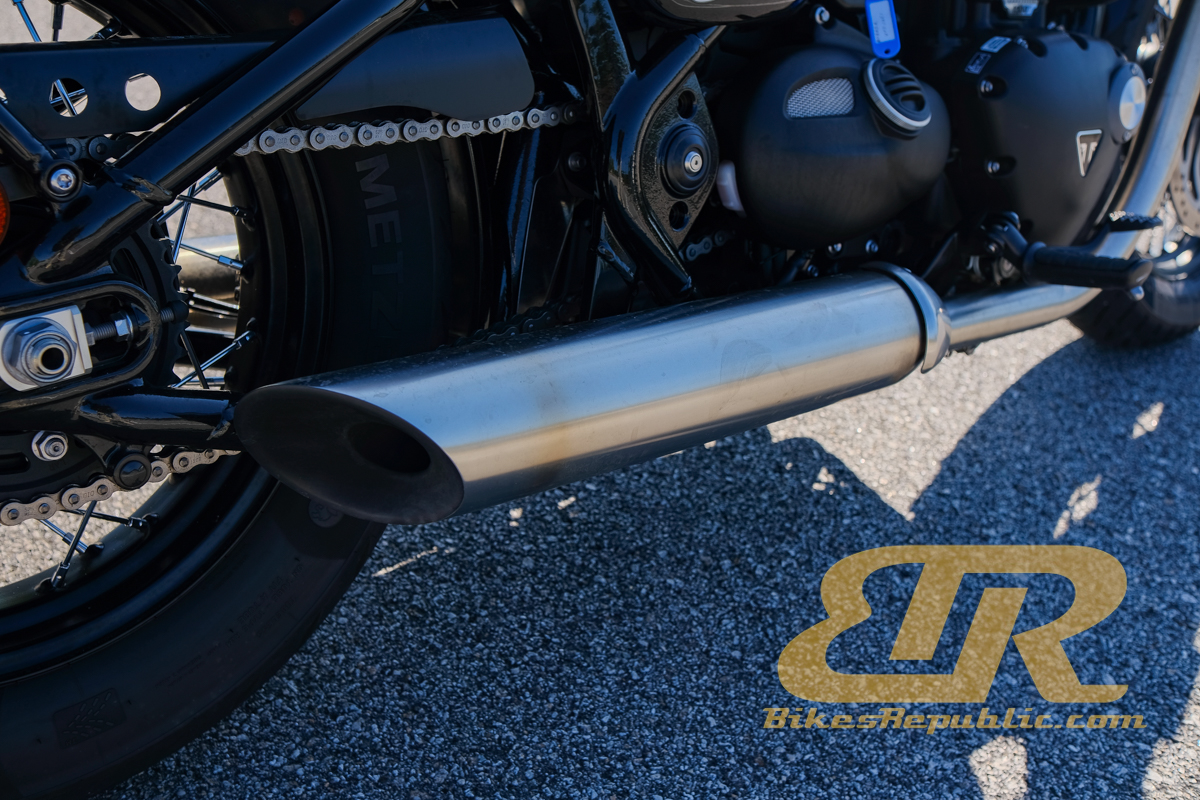
Remembering the old Bobber, we gave it a little more throttle than we should, and this time, the bike surprised us by launching off the line without hesitation. It was from here that the twin exhausts let out a wonderful, soul stirring booming roar as the world flew by. We repeated the same thing at the next set of traffic lights, then the next, and the next.
Red lights are normally frowned upon by any road user (us included) because it breaks up your riding rhythm. Instead it soon became an addiction to cruise up to traffic lights, hoping that they will turn red. This was what the purveyors of the bobber genre intended for and the Bonneville Bobber made its intentions crystal clear.
And as we mentioned above, rearset footpegs would fit nicely into this kind of tomfoolery, as placing your feet at the back would help to put more bodyweight onto the front tyre for full control while the bike jumps forward like a rocket. We could not help ourselves, giggling away as we took off from every green light, glancing in the rear view mirror as we left everyone else sitting at the lights. Oh, how we wished the exhausts would spit blue flames as we did so! Well, this was what a tuner in the UK did by fitting a NOX system to a Bobber.
But the engine’s torque was not limited to charging off in the lower gears. There was still plenty of hard acceleration to access in any gear, at any speed. Evidence to this is the small rear sprocket which gave the bike a smooth cruising attitude, while not compromising acceleration. That very sprocket also allowed for smooth transitions when shutting the throttle, without resulting in abrupt deceleration, especially in corners. There was so much torque that we never once ran into the rev limited although maximum power occurred at only 6,500 RPM as the gear ratios were nicely spread out.
Speaking of corners, the Bobber was not exactly built for that purpose. It does corner, mind you, but long, flowing corners were its thing, compared to sharp ones. The fat front tyre needed some effort to get the bike to turn hence requiring a little more careful planning. But once leaned over, it will track through corners easily while grinding the footpegs with some maintenance throttle. From there, it was back on the gas early, letting the bike roar its way out.
Another sense of enjoyment was seeing the look of surprise on the faces of some other motorcyclists who thought the Bobber was an anaemic, wannabe classic bike. And again, the Bobber is not a poser.
With that out of the way, let us look at some of the eccentricities of the bike.
The suspension is slammed low to allow for the maximum possible hard acceleration (and poise, of course), which resulted in a harsher ride over bumpy roads. We lowered the tyre pressures slightly to compensate.
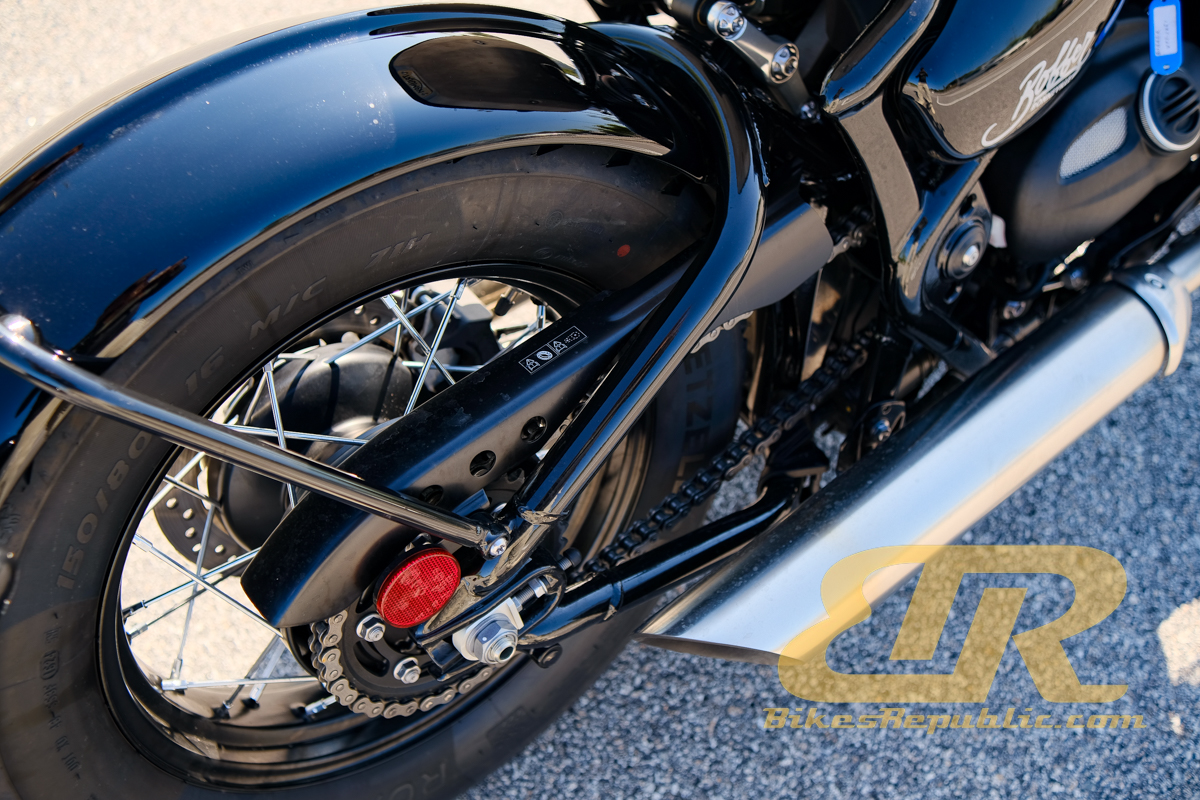
Being low and low-slung, with the rider’s weight placed further back, weight was biased toward the back. Jumping hard onto the front brakes will have the bike weaving. But notice that the rear brake disc is quite large? The proper braking technic on this particular bike is to first apply the rear brake hard, followed by the front.
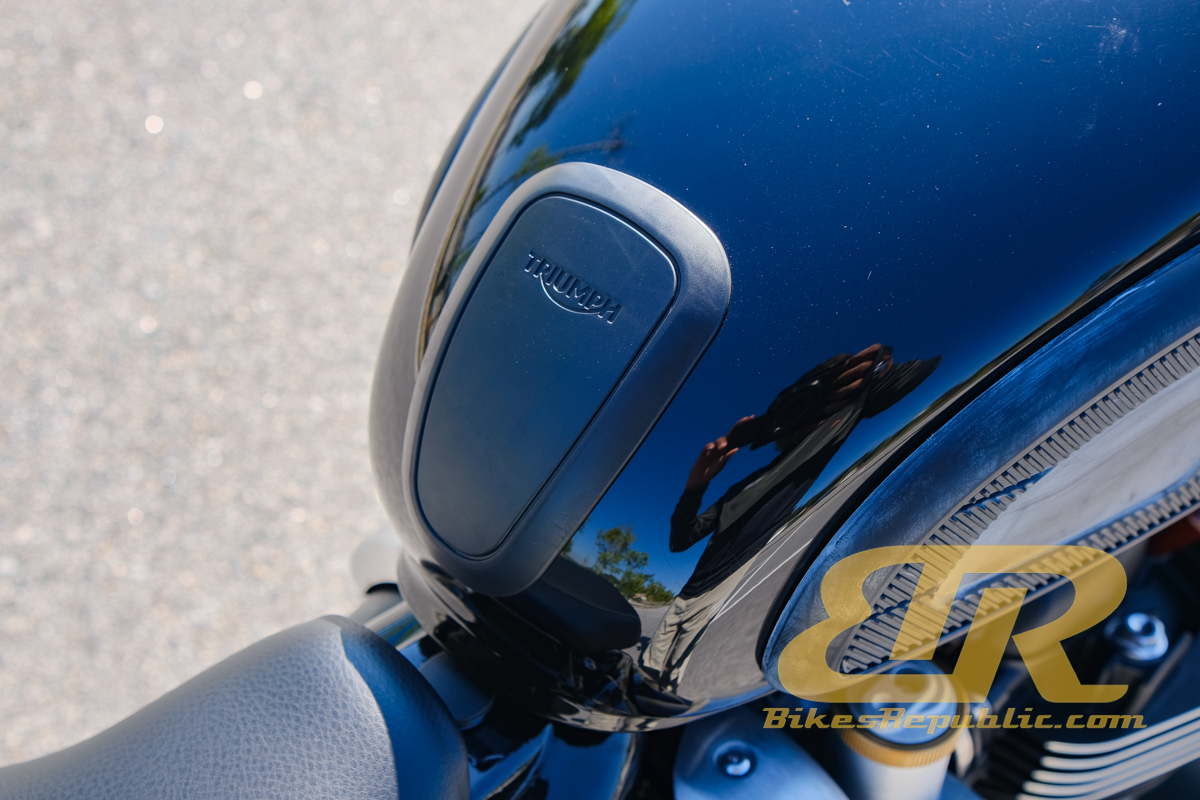
If you are the type of rider who loves twisties, we recommend moving the seat forward, which in turn raises it. That will put more weight on the front suspension and tyre to make the bike turn faster. Unfortunately, although a simple process, moving the seat position requires the rider to reach the bolt below the rear part of the fuel tank. So make sure you have your tools with you when you ride.
Conclusion
We loved this new 2025 Triumph Bonneville Bobber as the maker has turned it into a real bobber, compared to the original which had a much “softer” power delivery. This writer is not a cruiser guy but has fallen head over heels for the Bobber due to its torque delivery. Sending the bike back to Triumph Motorcycles Malaysia was like being forced to sit in the front row while watching the girl of his dreams marry another guy.
Someone please loan us RM88,900!
Photo gallery