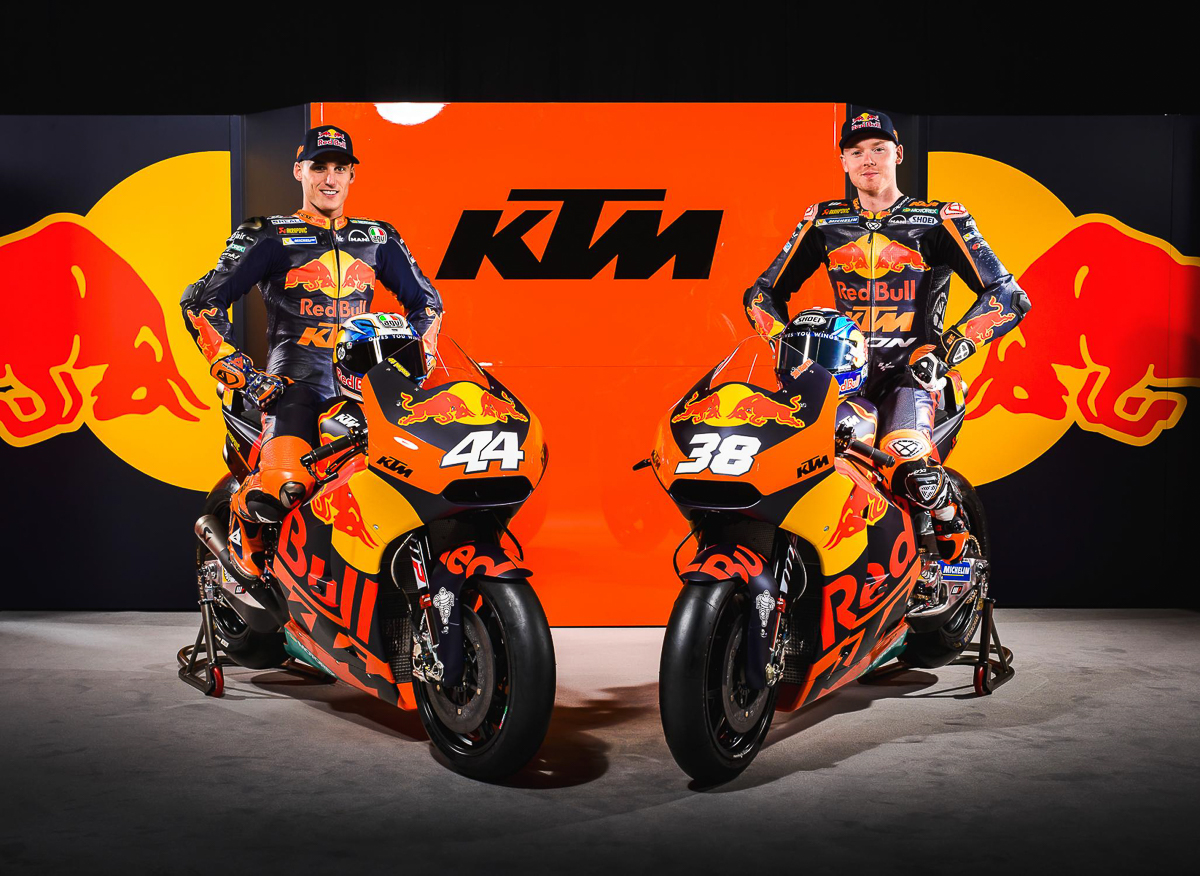
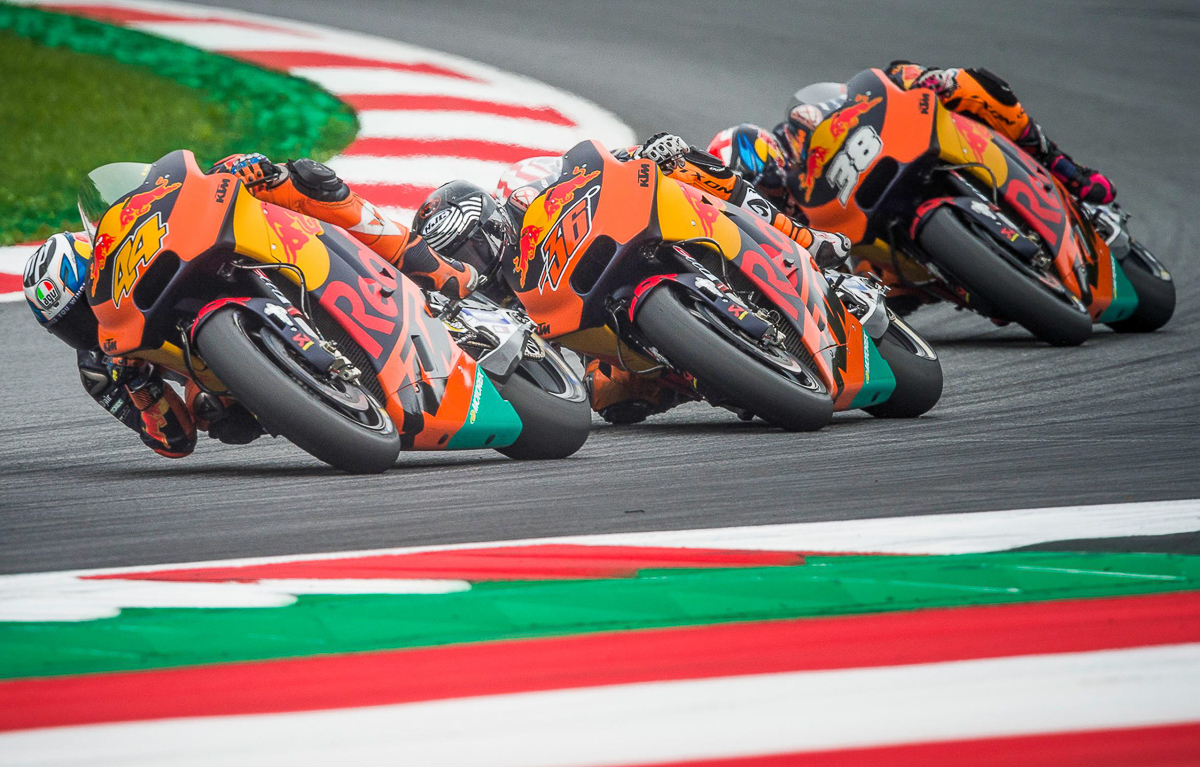
The Red Bull KTM Factory Racing team has confirmed that both their current riders Bradley Smith and Pol Espargaro will continue their MotoGP efforts in 2018.
Both riders including their test rider Mika Kallio will continue to develop their KTM RC16 MotoGP machinery to be more competitive come next season.
The best result that they had so far was with Mika Kallio as a wildcard entry during the Austrian GP where he finished in the top ten.
KTM has released a press release regarding the future of their current MotoGP riders Bradley Smith and Pol Espargaro. They have confirmed that both riders will continue their MotoGP efforts with the Austrian factory squad for another season in 2018. (more…)
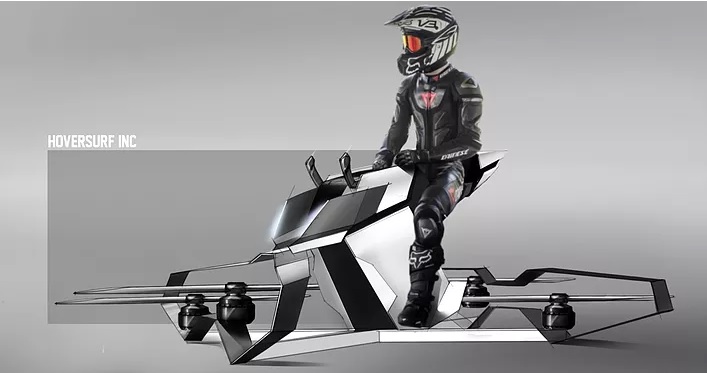
Some say that the Dubai Police will soon employ the assistance of hoverbikes as part of their task force in the near future.
According to Russian company Hoversurf International, their specially-made hoverbike has passed extreme tests when it comes to heat and dust.
The electric-powered single-seat machine uses four mini helicopter propellers that is able to carry around 300kg while going at 40km/h for over 25 minutes at a time.
The future is now, ladies and gentlemen. According to the folks over at Hoversurf International, they will soon provide a few of their groundbreaking hoverbikes to the Dubai Police task force. This particular model will be based on their very successful Scorpion (S-3) concept. (more…)
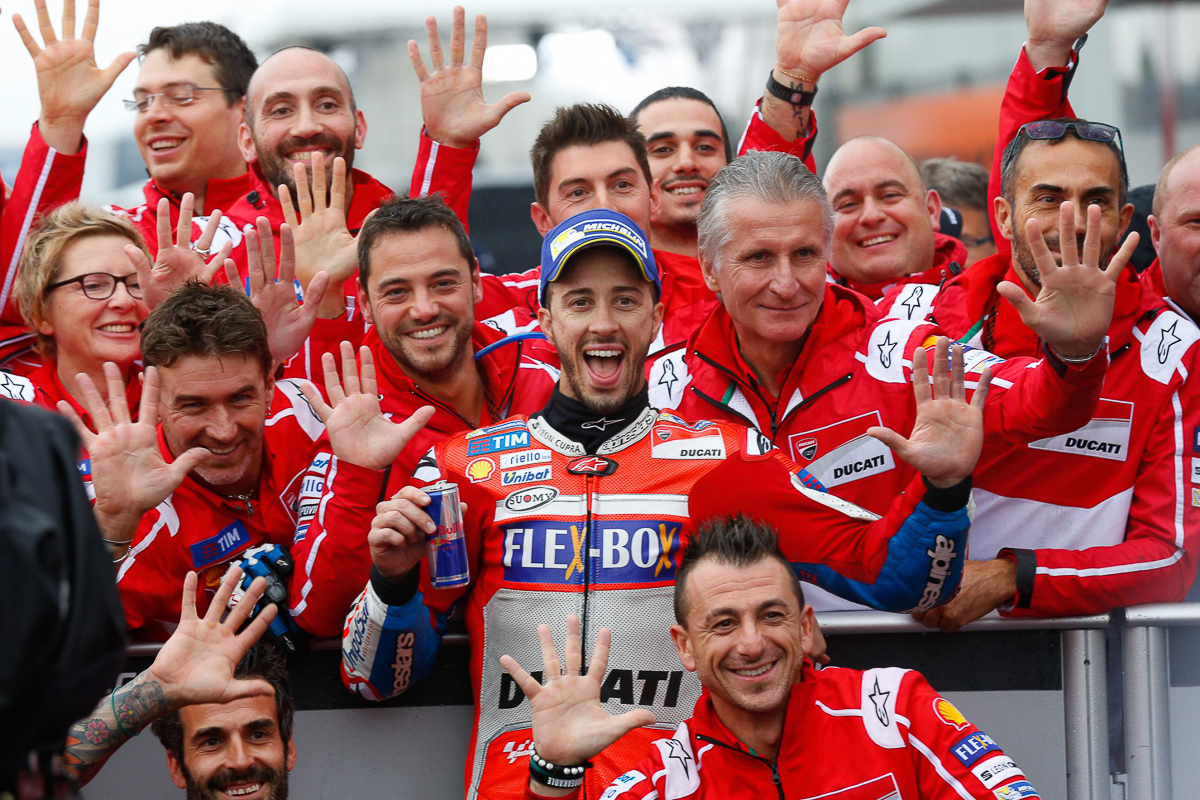
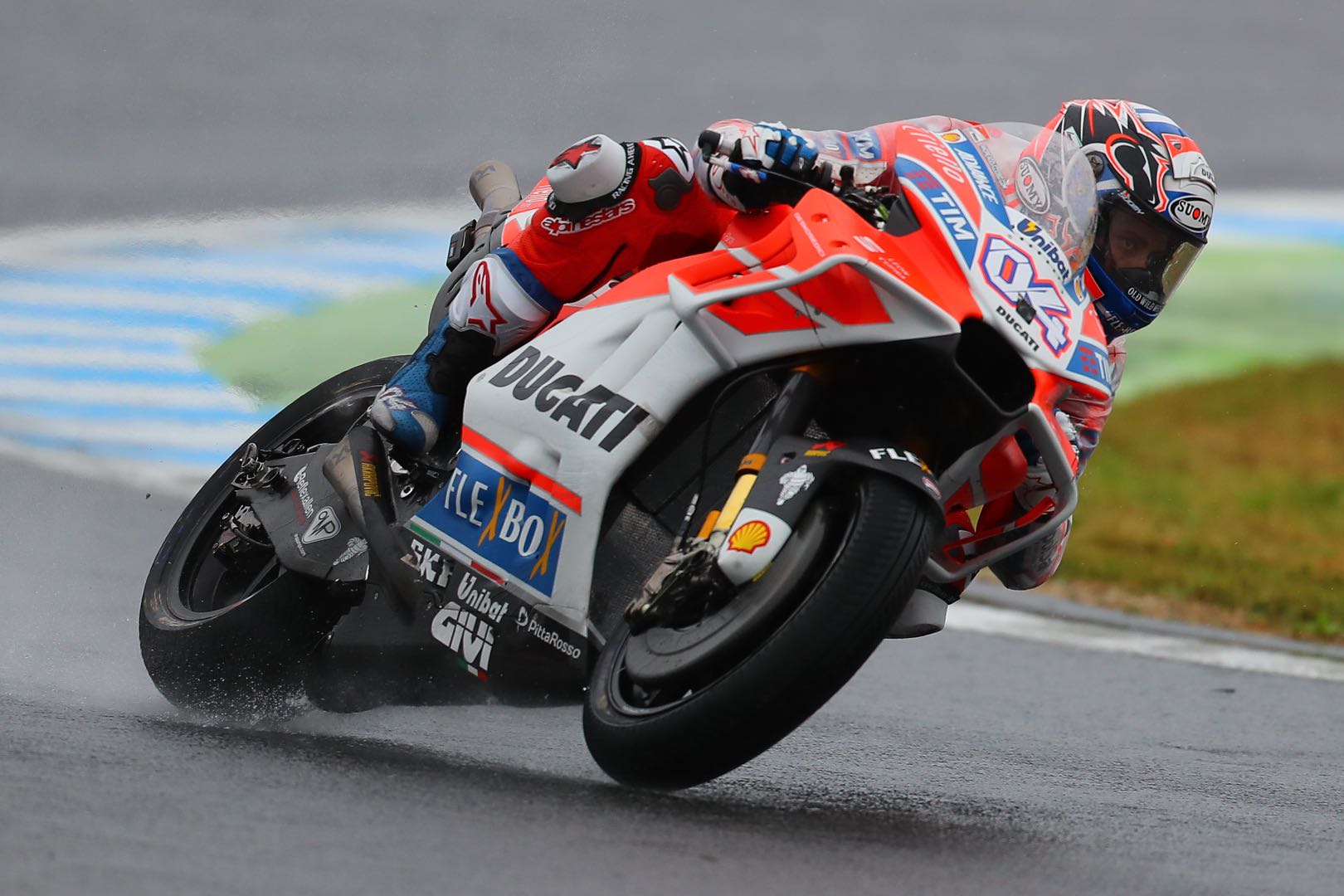
It was yet another exciting race delivered by MotoGP heroes Andrea Dovizioso (Ducati Team) and current championship leader Marc Marquez (Repsol Honda). At a very, VERY wet Twin Ring Motegi, these boys delivered quite a performance in front of their Japanese fans. (more…)
Malaysia’s own Moto2 rider Hafizh Syahrin (Petronas Raceline Malaysia) scored yet another brilliant finish making it his second podium finish in the past three races.
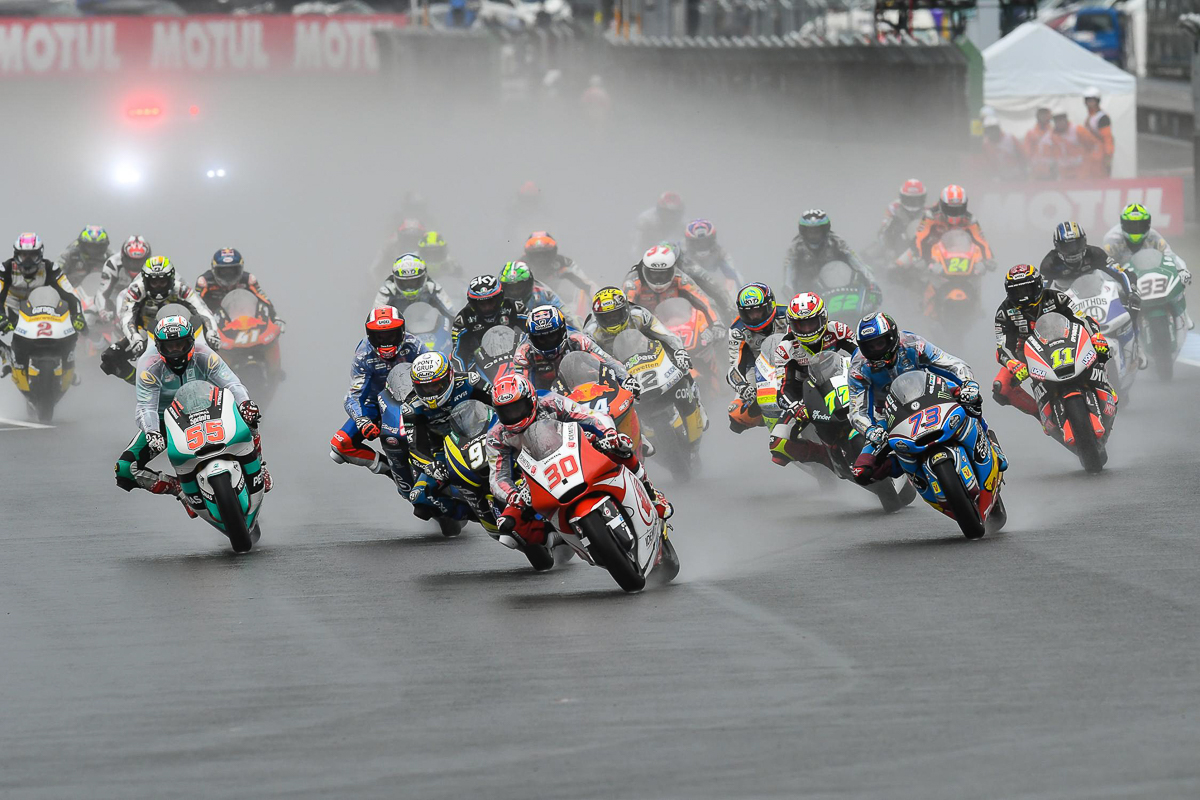
It was Alex Marquez (EG 0,0 Marc VDS) who finished the Motul Grand Prix of Japan in top spot at a very wet Twin Ring Motegi followed by Xavi Vierge (Tech 3 Racing).
Franco Morbidelli (EG 0,0 Marc VDS) still leads the championship as they move to Phillip Island next weekend to continue his Moto2 championship battle.
It was Alex Marquez (EG 0,0 Marc VDS) who came up on top at a very, VERY wet MotoGP race at the Twin Ring Motegi. Second spot went to Xavi Vierge (Tech 3 Racing) but the highlight of the race for all Malaysians was our very own Hafizh Syahrin (Petronas Raceline Malaysia) who scored yet another podium finish in the last three rounds. (more…)
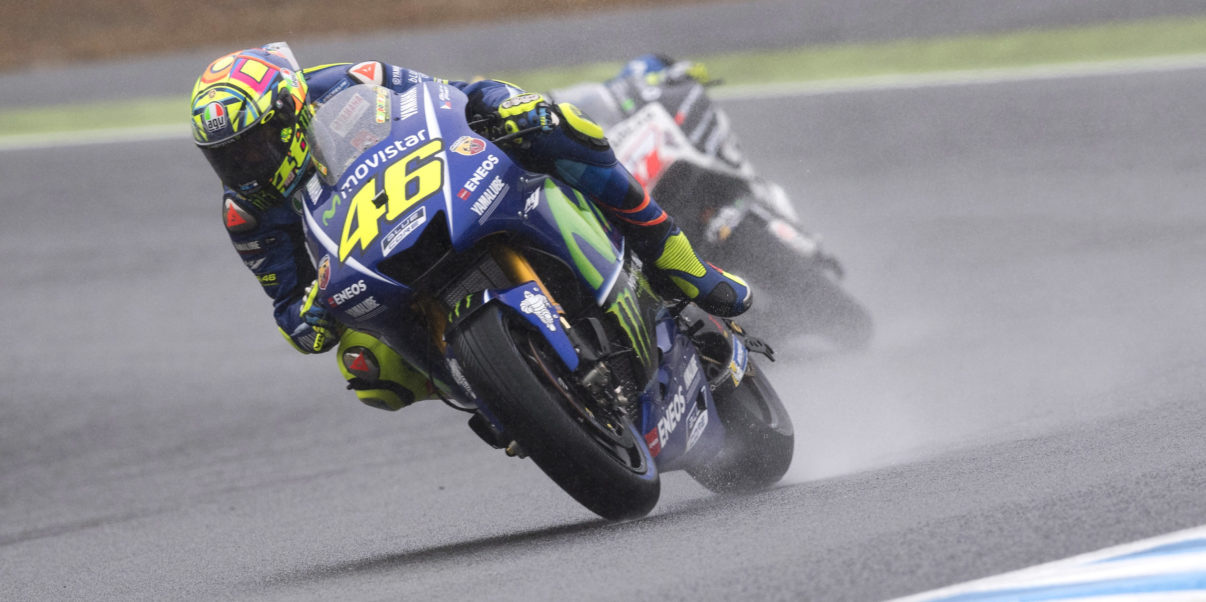
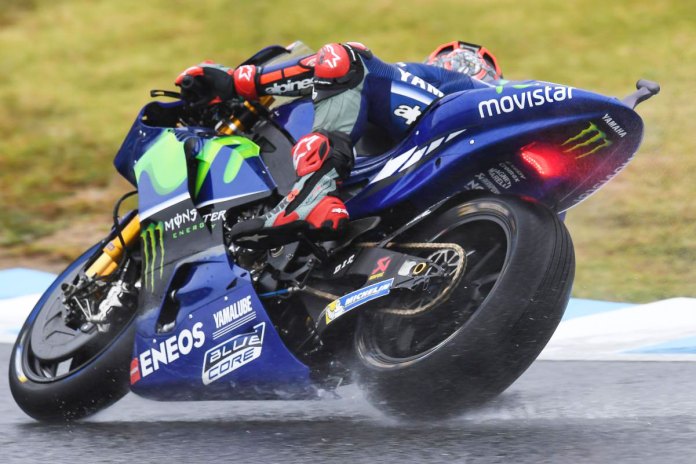
Valentino Rossi reckons he and teammate Maverick Vinalez are “in trouble and don’t know why,” in worried about their chances at the Japanese GP, should the rain continue. The pair has been struggling with lack of rear grip on their Yamaha YZF-M1 through the entire season.
Riders may be able to ride around the problem in the dry, but the rain amplifies the problem.
The factory team seemed to make some headway in previous races, without doubt also attributed to riders’ skill and determination, however yesterday’s free practice sessions at Motegi saw both riders 11th and 12th fastest.
Rossi said, “We’re in trouble and we don’t understand why. Last year I was very competitive in the wet and had a good feeling with the old bike, but this year we’re struggling. We’ve tried to modify the bike, but in the end we’re far from the top. It’s the same as the problem in the dry – we don’t have rear grip.”
While Valentino Rossi knows he’s out of contention for his 10th title as a result of a broken leg, Maverick Vinalez saw first his lead, and now his chances for his first MotoGP tltle slip further and further away.
At the time this article went “live,” Andrea Dovizioso of Ducati Team continued to be the fastest man after FP3 on combined free practice times, ahead of Marc Marquez, Aleix Espargaro and Jorge Lorenzo.
Valentino Rossi dug deep and found some pace to first make it into the top ten before finally going up to fifth fastest. Vinalez is in 14th, meaning that he will need to fight through Q1. The Top 12 combined times qualify automatically to Q2.
In this Suspension Explained series, we will unravel the “mysteries” of your bike’s suspension
Although the suspension is now very advanced, the basics remain the same
As the prologue, we touch on preload, compression damping and rebound damping
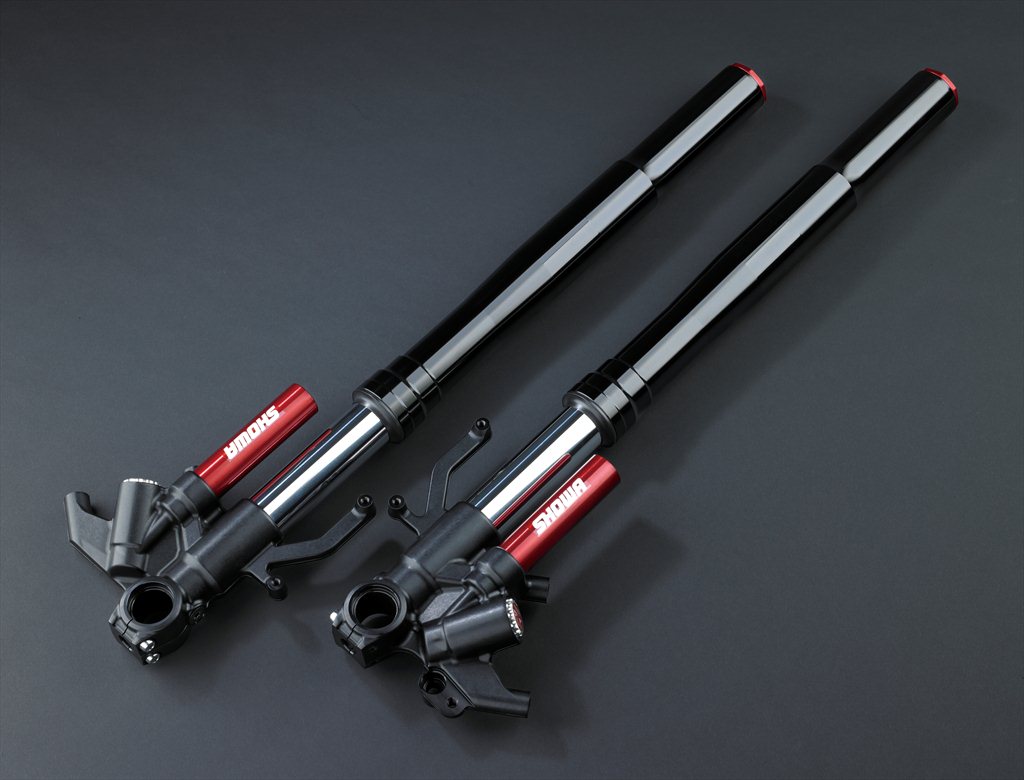
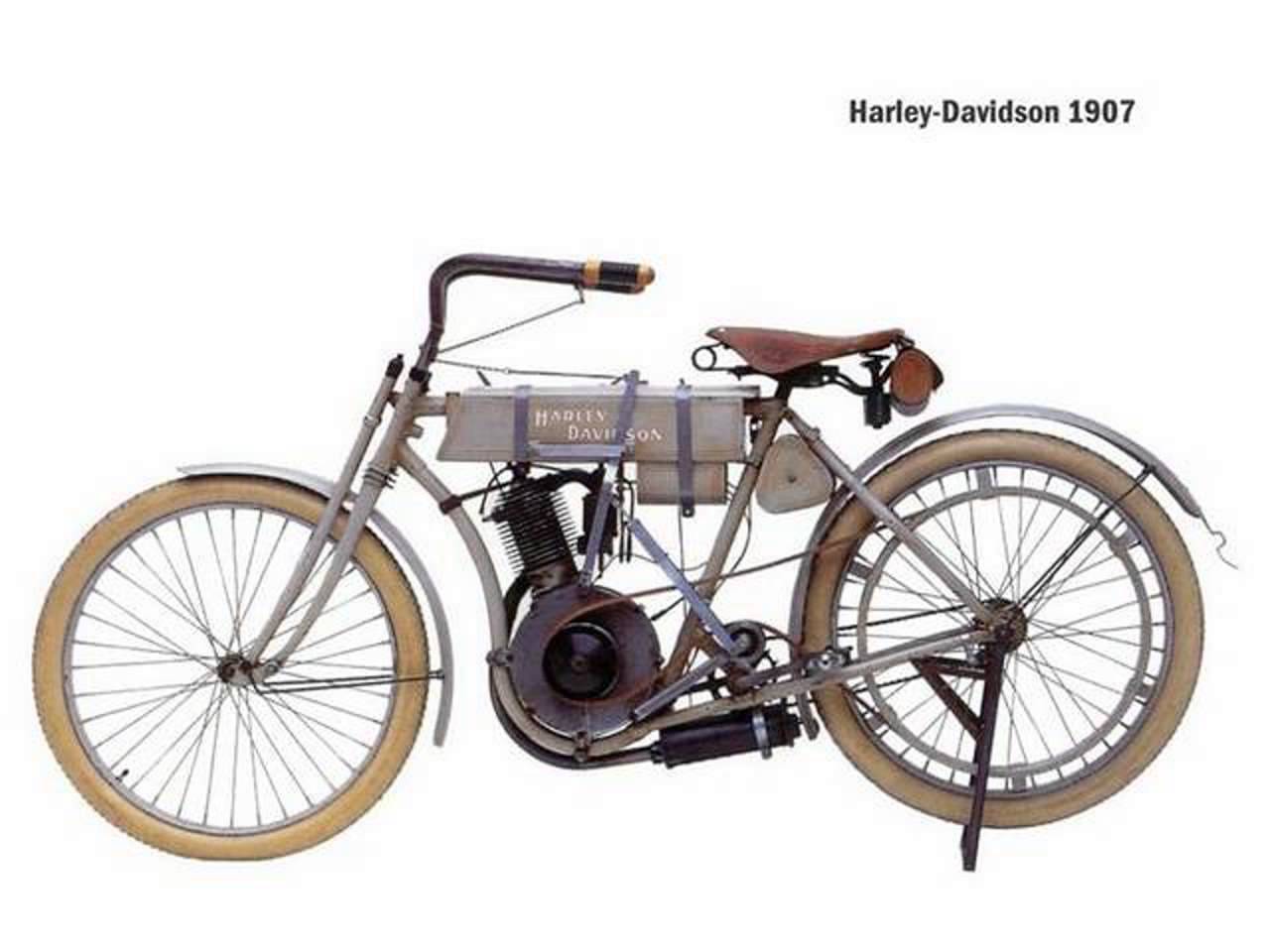
Suspension technology has progressed by leaps and bounds over the years. The motorcycle started out as a little more than an engine stuffed into a bicycle frame, hence the only suspension was the rider’s bum and his resolve to withstand the hammering.
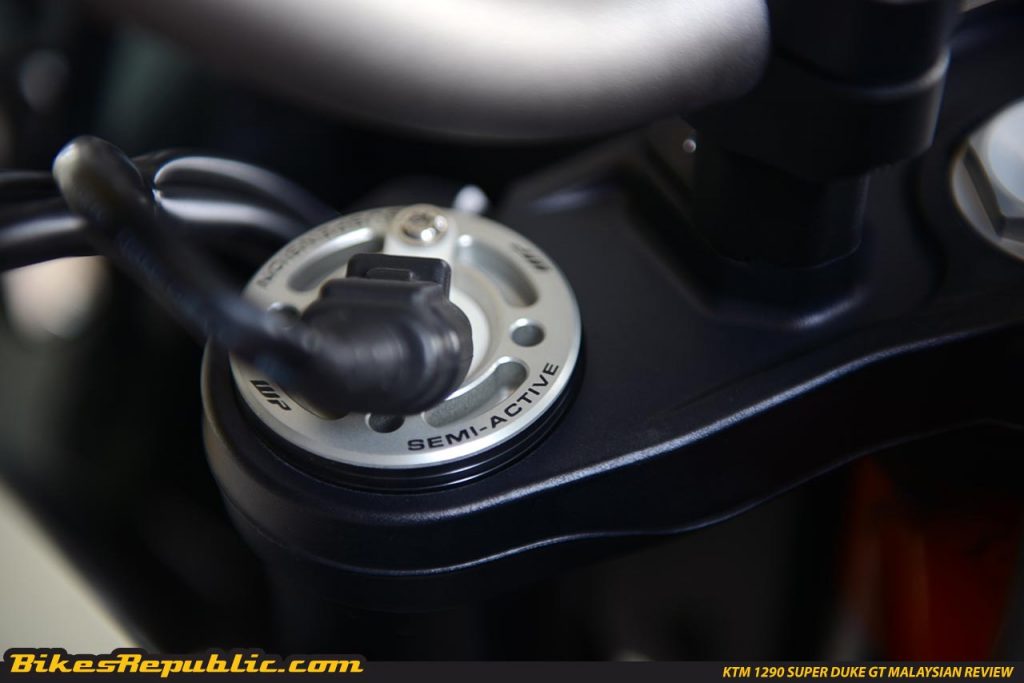
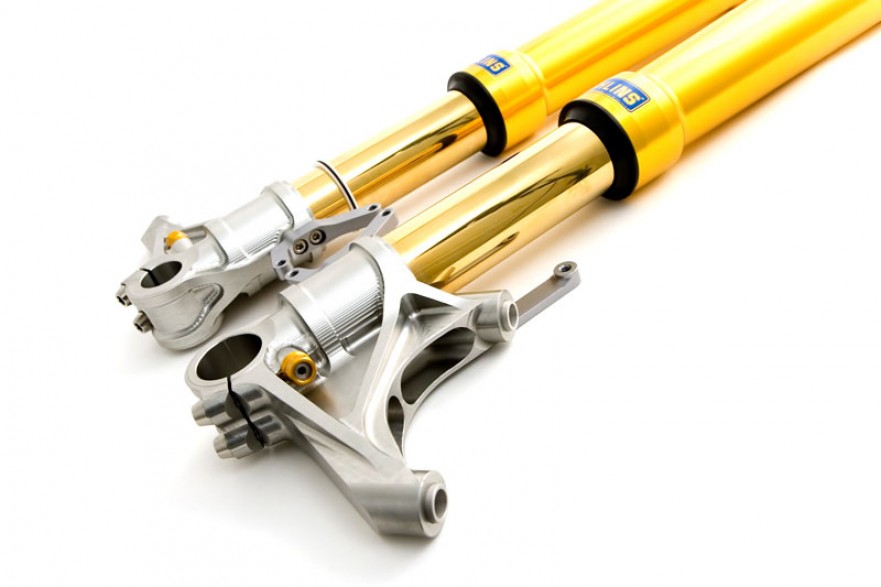
Since then, motorcycle suspension evolved into simple underseat springs to sprung struts to hydraulic and gas damping to electronic self-adjusting marvels.
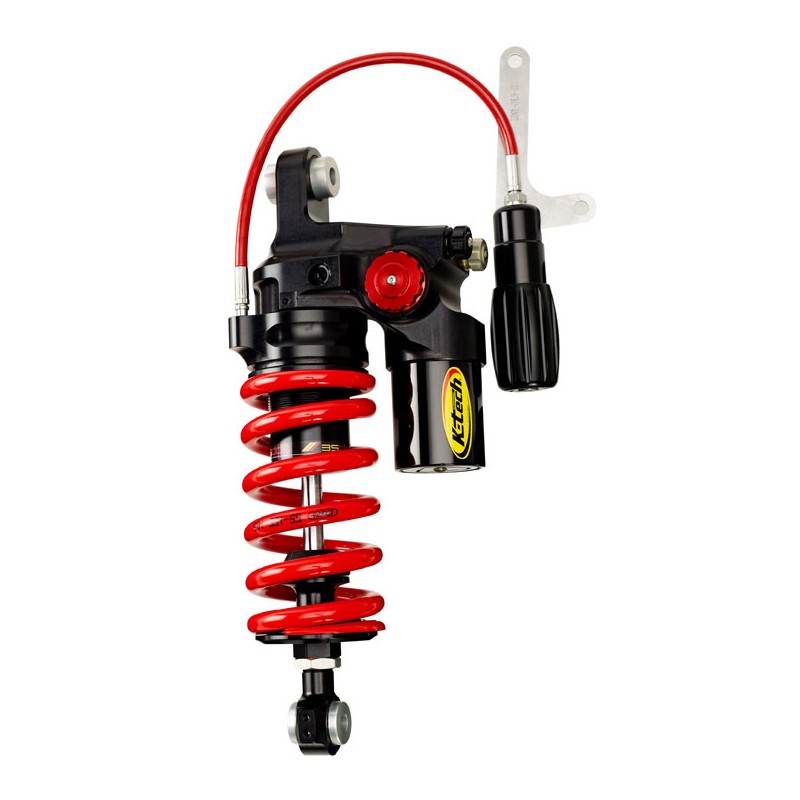
Regardless, the principles of the suspension remain the same. There are a number of parameters that govern how your bike behaves whether on the road, track or off-road. However, only three parameters are adjustable on a motorcycle (without further modification), namely preload, compression damping and rebound damping.
Adjusting the suspension best requires a bit of background knowledge, because whatever adjustments that may have you feeling right may not be exactly right for the bike’s dynamics. A wrong adjustment may mask itself as another problem, causing you to go around in circles. Oh yes, we’ve been there.
We’ll discuss one topic per week. We’ll also speak to the experts on aspects of suspension technology, adjustments and modifications, while dispelling some myths along the way.
Hope this series will be beneficial to all our readers.
PRELOAD
Any discussion about suspension has to start with preload. Preload is of course related to spring rate, but since most riders don’t change the springs in their suspensions, we’ll just stick to preload.
To put it in simple terms, preload means the amount the springs are compressed when the suspension is fully extended.
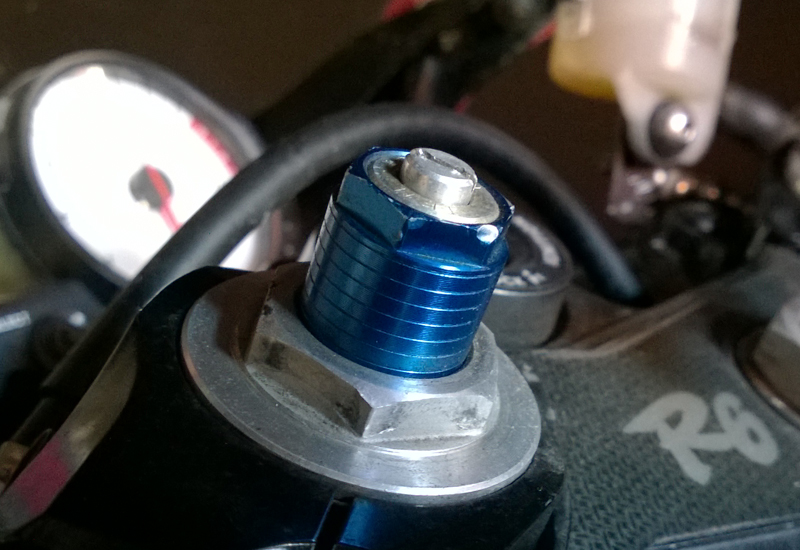
Front preload adjuster – the blue bolt
For illustration purposes, take a valve spring and stand it on your desk. Now add some weight to the top so that it compresses a little. That’s preloading the spring. Adding more weight means adding more preload, while taking some off means reducing preload.
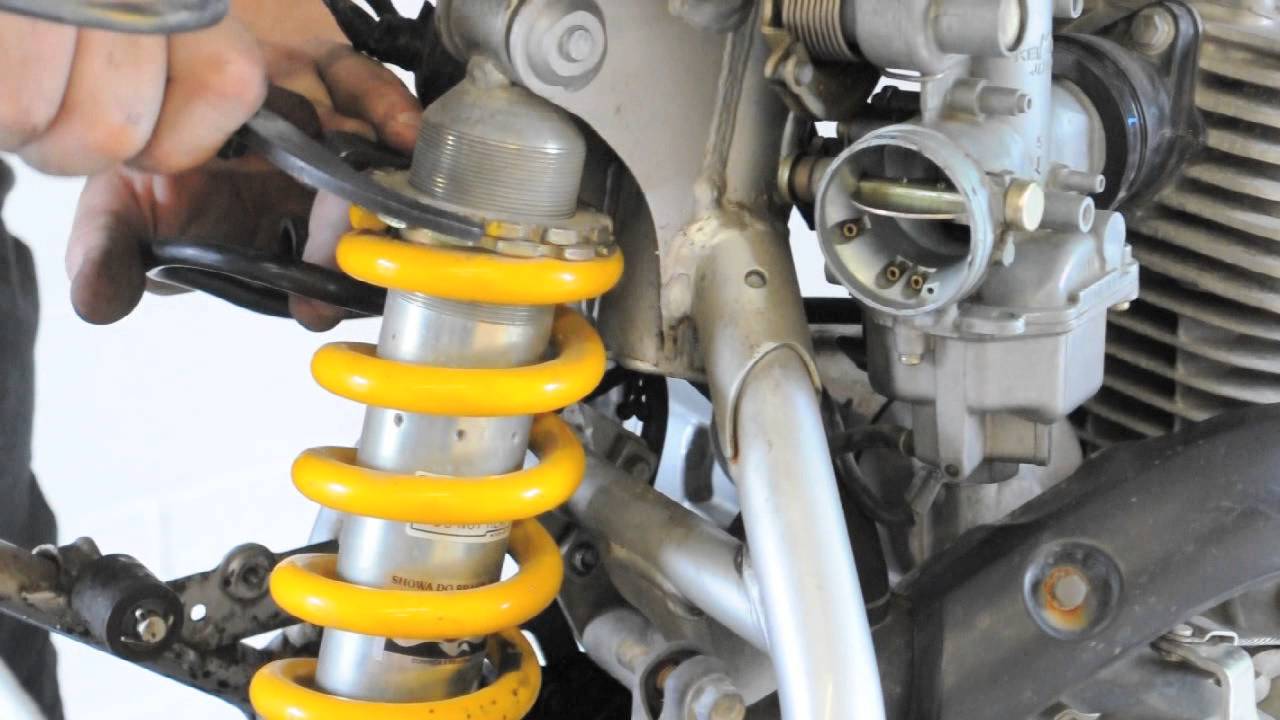
When you increase the preload by turning on the preload adjuster on the forks, or collar on the rear shock, suspension sag is reduced; and vice-versa. The spring pushes back against the adjuster collar, lifting that end of the bike up. So, if you increase (by turning clockwise) your rear suspension’s preload, the seat goes up higher, and similarly for the front.
Rear preload adjuster
Therefore, adjusting the preload DOES NOT change your spring rate. If someone comes up to me and say I’d make the spring stiffer by adjusting the preload… well, I’d tell him to go fly a kite. But that’s just me.
We’ll leave this subject here. More on this in latter instalments.
DAMPING
If a bike’s suspension depends on the spring along, it can leave itself prone to oscillations. A compressed spring stores kinetic energy. When it’s released, it may extend to more than its resting length. The load on top of the spring has now received this kinetic energy and unleashes it back downwards, compressing the spring. This goes back and forth until that kinetic energy is transformed to heat (absorbed in the shock absorber’s oil).
Courtesy of motorcycle.com
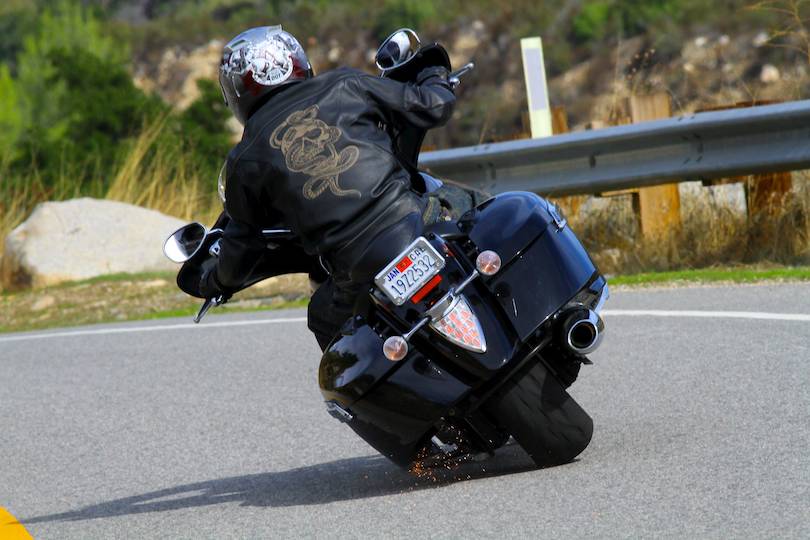
Have you ridden on a bike that “pumped” up and down or wallowed like a sampan in stormy seas? (My bike does that.) Yes, it’s due to the lack of damping.
Damping is divided into two: Compression damping and rebound damping.
COMPRESSION DAMPING
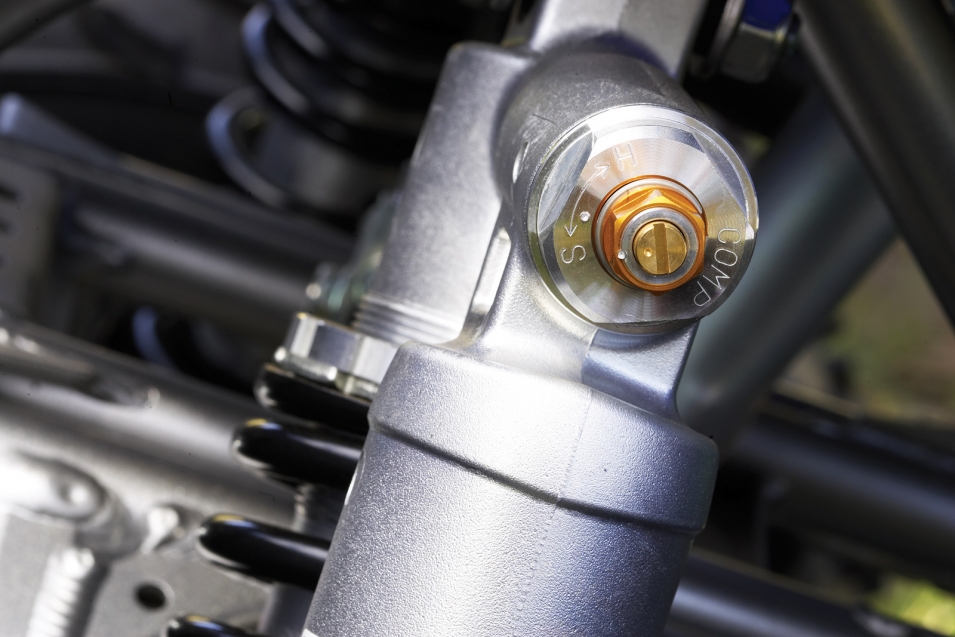
Compression damping (or just compression) determines how fast the wheel move upwards when it contacts a bump. Correct compression damping will allow the suspension to absorb bumps and road irregularities better.
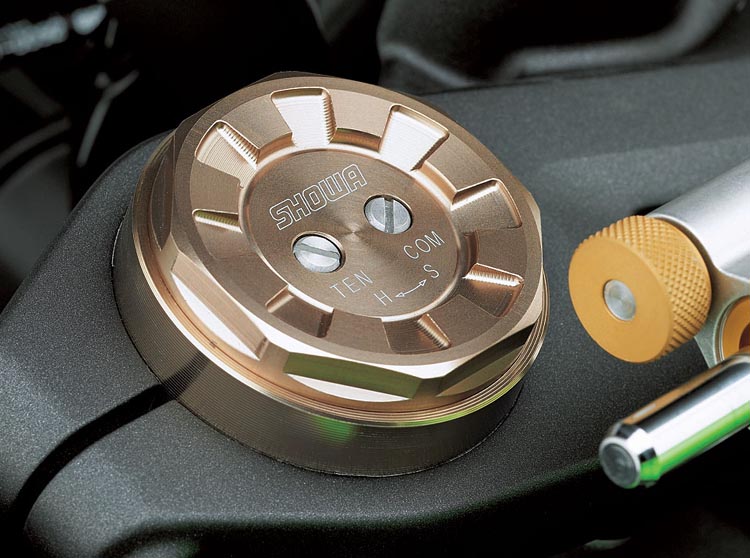
The damping adjusters on the BPF fork are all on top. Compression is marked as COM
With more compression dialed in, the suspension, hence the wheel, is more resistant to moving upwards and vice-versa. Dialing in the correct amount will also deal with fork dive to a certain amount during hard braking, although that depends more on the spring rate and preload.
Compression damping is adjusted by the screw in the middle
Too much compression damping will cause the shock of the bump to be transferred directly to the chassis and rider. (That “BLAM” feeling when you hit a bump.) Consequently, the wheel will skip across the bumps, or cause the brakes to lock up easily as the suspension resists being compressed.
On the other hand, too little will have the wheel kicked up quickly, which will also cause it to lose touch with the road. Hitting corners at high speeds will cause the suspension to “squash” down, reducing ground clearance.
REBOUND DAMPING
Rebound damping is the opposite of compression damping. Rebound determines how smoothly and controlled the suspension re-extends to its proper state, after it has been compressed.
Rebound damping is marked at TEN (for spring tension)
Without or too little rebound damping will cause the spring to re-extend quickly, or in simple terms, bounce back. The rider will feel as if he’s being kicked out of the seat after the initial bump has been absorbed. It’s like squeezing a spring between your fingers and letting it go abruptly, or like a Jack-in-a-Box.
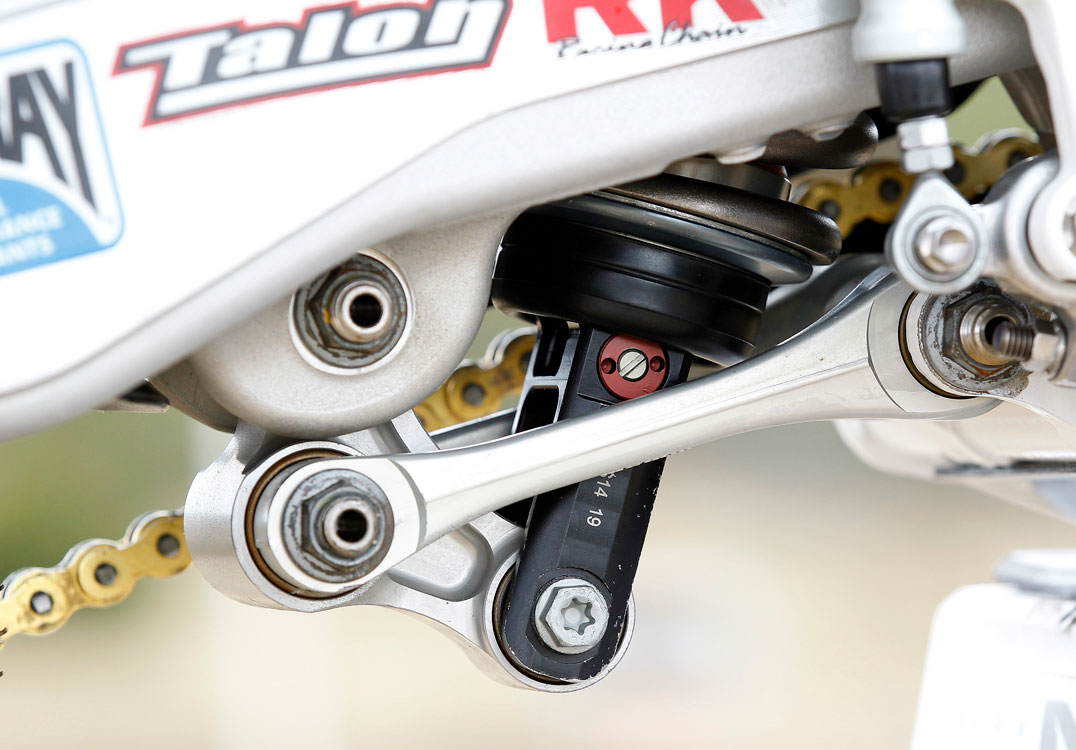
Rebound adjuster on the rear shock is usually underneath the shock body. Here it is the screw surrounded by the red collar
Too much rebound damping will cause the wheel to “pack up.” That means the wheel will only come back down too slowly, causing the bike to feel “loose.”
CONCLUSION
That’s it for this week. This is just basic knowledge. We’ll touch on more next week, so stay tuned!