Bikesrepublic

Latest News

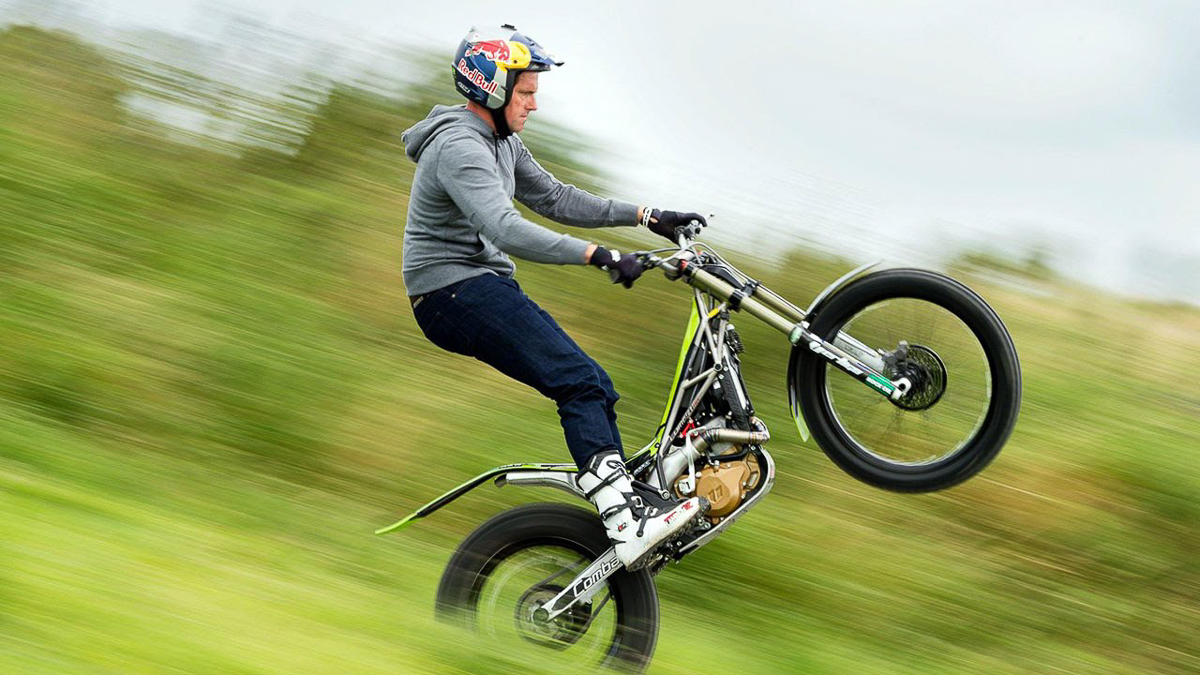
Dougie Lampkin is the first and only person who has successfully wheelied around the Isle of Man TT circuit.

The entire 60km-lap consisting of over 200 turns, elevation changes, traffic and unpredictable weather did not stop the 40-year-old 12-time motorcycle trials world champion.

It took him about an hour and 35 minutes to ride around the circuit on just one wheel using his custom Vertigo Ice Hell 300 trials bike.

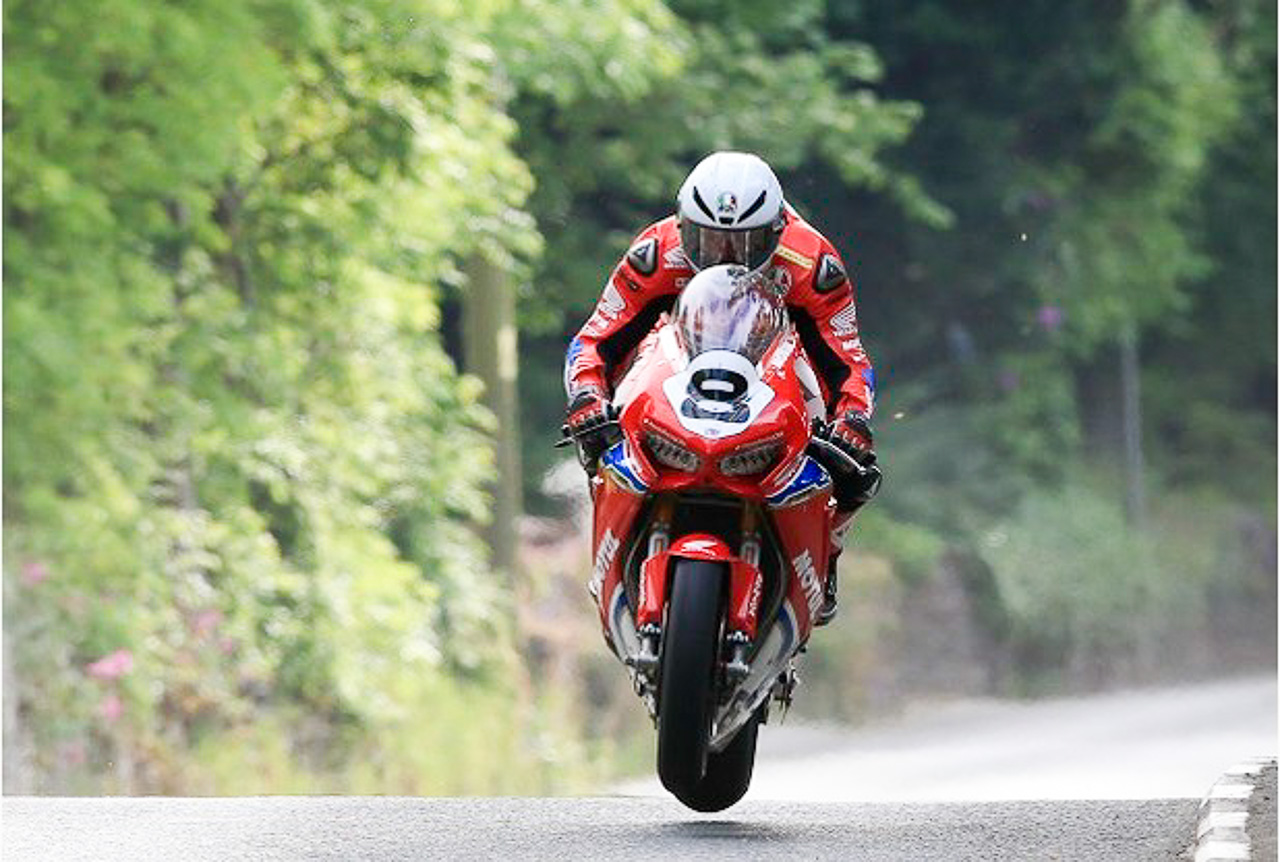
Guy Martin on the Honda CBR1000RR Fireblade SP2 (Image source: Grimsby Telegraph)

Ask any motorcycle enthusiast about the Isle of Man Tourist Trophy and the first thing you’ll get is a smile. It doesn’t matter if its nine-time MotoGP world champion Valentino Rossi or just the average guy hanging out at your local workshop, the Isle of Man located between England and Ireland hosts the world’s greatest (and deadliest) motorcycle road race of all time, the TT. (more…)

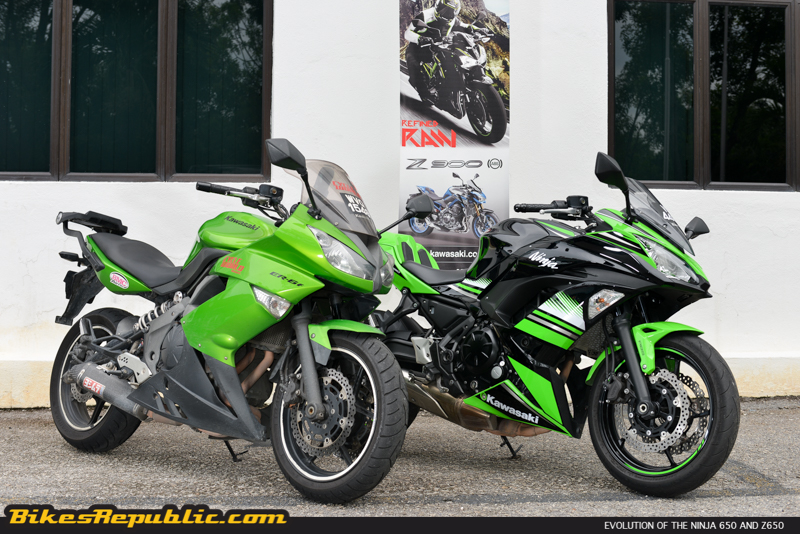
  • The new Kawasaki Ninja 650 and Z650 show much Kawasaki’s 650s have evolved.

  • They now feature new engines, styling and technologies.

  • The new models signify Kawasaki’s pursuit of excellence across their range of products.

It’s undeniable that three particular models ruled the Malaysian streets for the years between 2009 to 2015. They were the Kawasaki ER-6f, ER-6n and Versys 650 (we’ll omit the Versys 650 for the moment). Let’s see how the ER-6f and ER-6n have evolved into the Ninja 650 and Z650.
It could also be accurately said that the ER-6 models were collectively the catalyst which started the bike big boom, which consequently ushered all the other big bikes we have nowadays.

The ER-6 family began in 2006. A few of the model made their way to our shores.
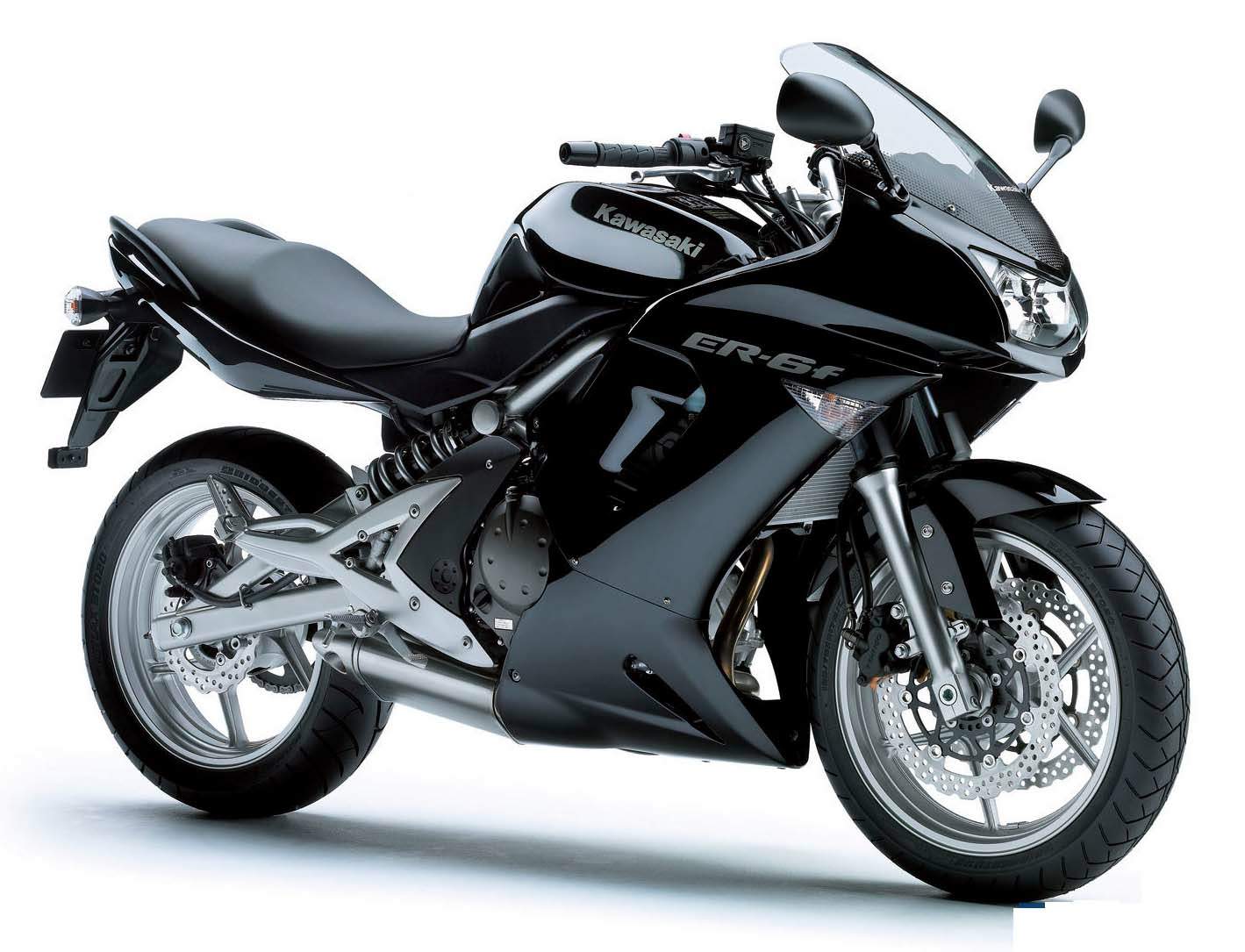
However, the ER-6’s true popularity started with the 2009 models. The ER-6f was fully-faired, while the ER-6n was a naked roadster.
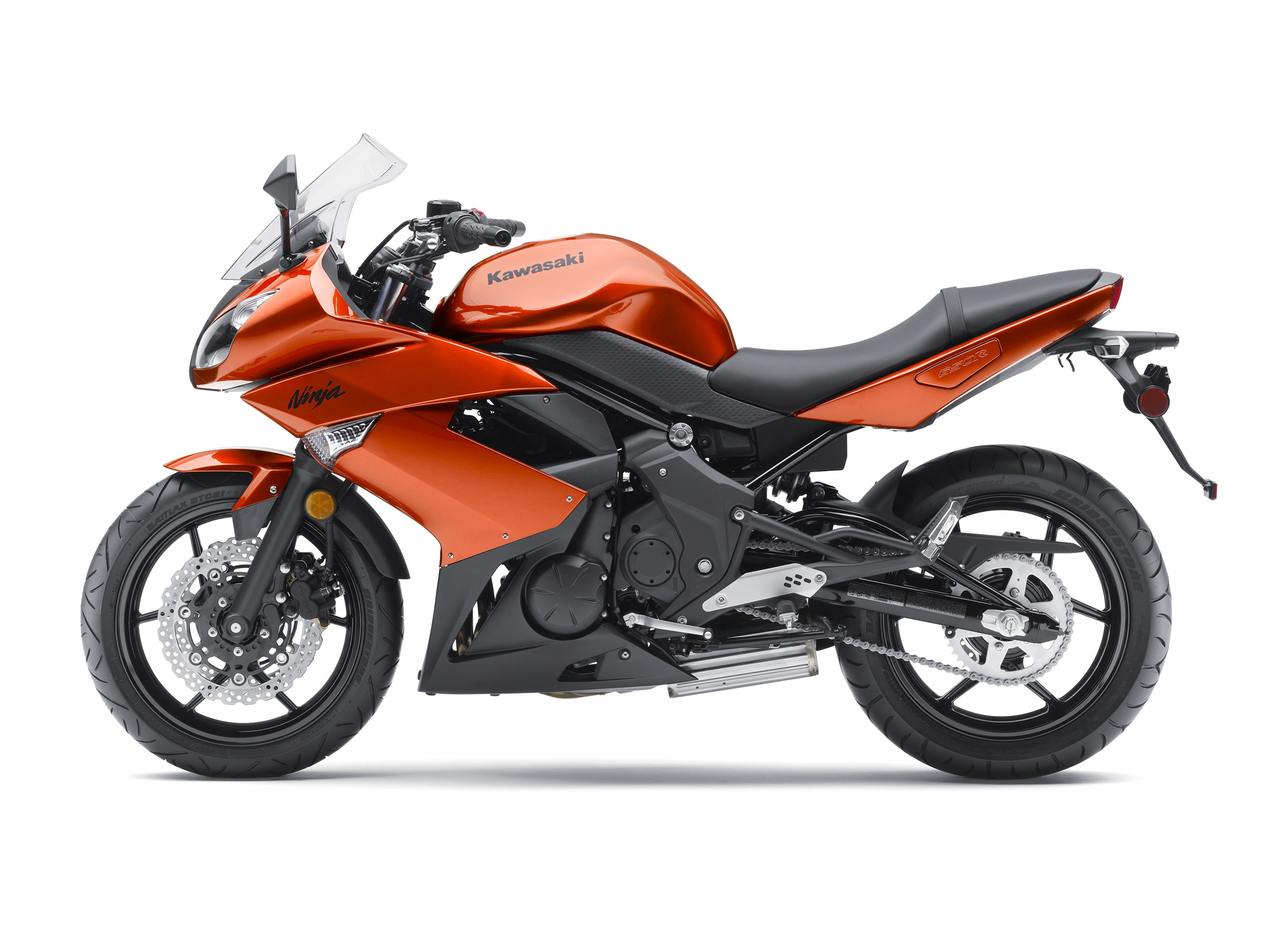
Both models were built on the same frame, chassis and engine platforms. They exhibited easy handling, good brakes, upright and and comfortable riding position, and a tractable engine with good torque and power characteristics to please newcomers, veteran and born-again riders. They were bikes that could do it all: Commuting, weekend canyon bombing, long rides, sport-touring, and track riding to some degree.
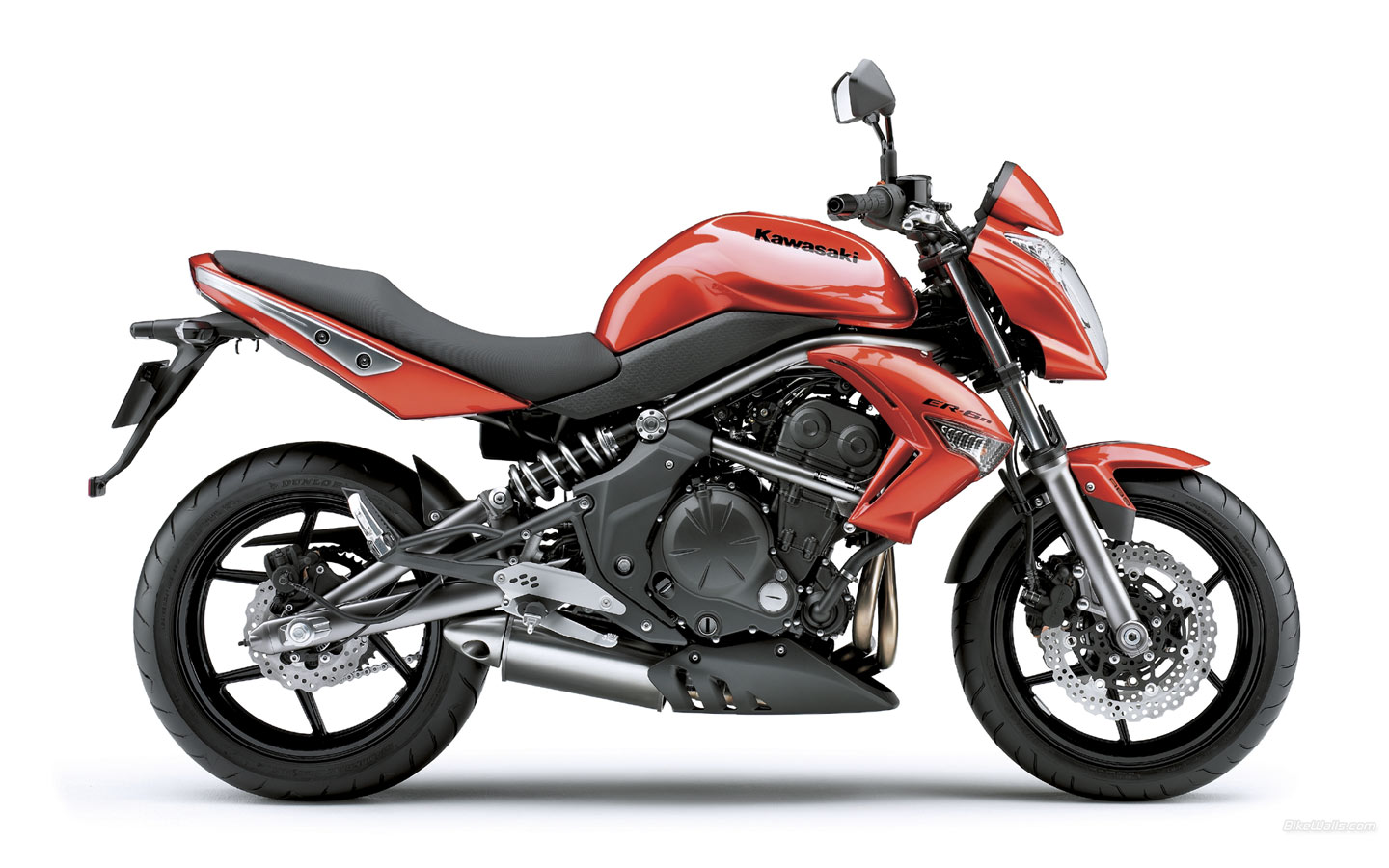
Best of all, they were the most affordable big bikes at sub-forty thousand Ringgit, since they were first to be CKD’d.

So popular was the ER series that even Malaysian riding schools started using them as bikes for newbie training and “Full B” license exams.

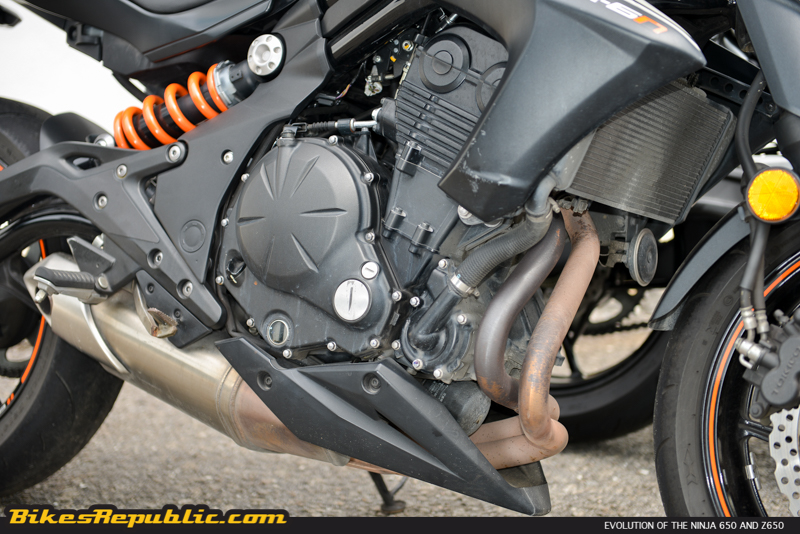
The engine was a simple, liquid-cooled, DOHC, eight-valves fuel-injected, 649cc, parallel-Twin. It pumped out a healthy 71 bhp and between 66 Nm (2006 to 2011) and 64 Nm (2012-2016) of torque. The distinctive thumping exhaust note results from the 180-degree crank.
EVOLUTION

The ER-6 variants (called Ninja 650R in some countries) made their debut in 2006. The second-generation ER-6 made their appearances in 2009 to 2011, before being superseded by the third generation from 2012 to 2016.
There were only minor exterior and internal mechanical changes between 2006 to 2011. On the other hand, the 2012 models had many changes including styling, stepped seats, a bigger fuel tank capacity, a new frame, and suspension with added travel. The ER-6f looked even sharper and sportier, while the ER-6n looked muscular.
The engine was left almost untouched except for a small reduction in compression ratio. Spent gasses was pumped through a revised exhaust system. A new engine management mapping was tuned to spread torque further down the engine range, which lowered the peak power slightly. Kawasaki also debuted the ECO indicator in the LCD.
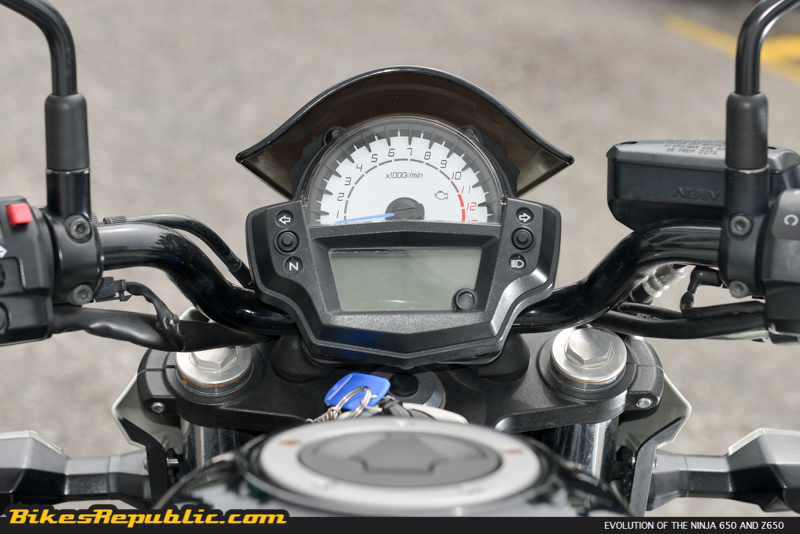
Since I own a 2011 model, I had felt that the 2012 version represented the peak of the ER-6 model evolution, when I tested both the –f and –n versions. Power was delivered smoother, the seats were comfier and most of all, it handled way better and was more stable than my own bike. It started right up every time and never once coughed through the throttle bodies.

Then Kawasaki took the covers off the 2017 models.
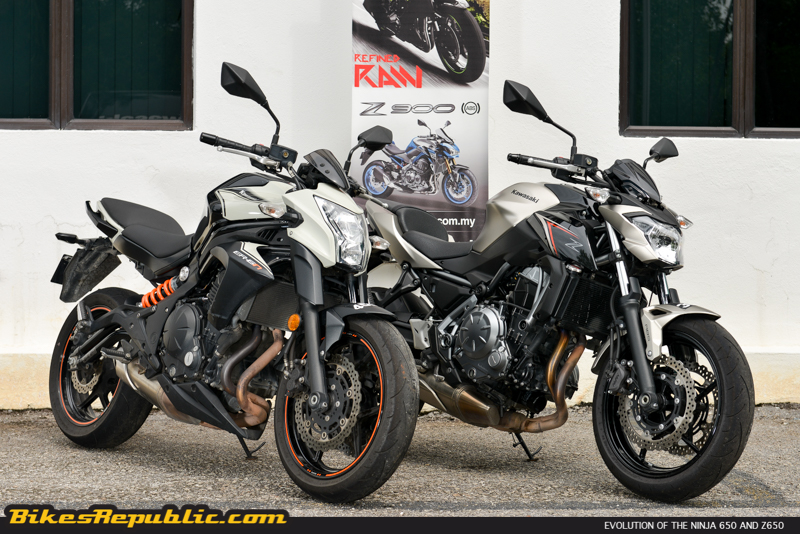
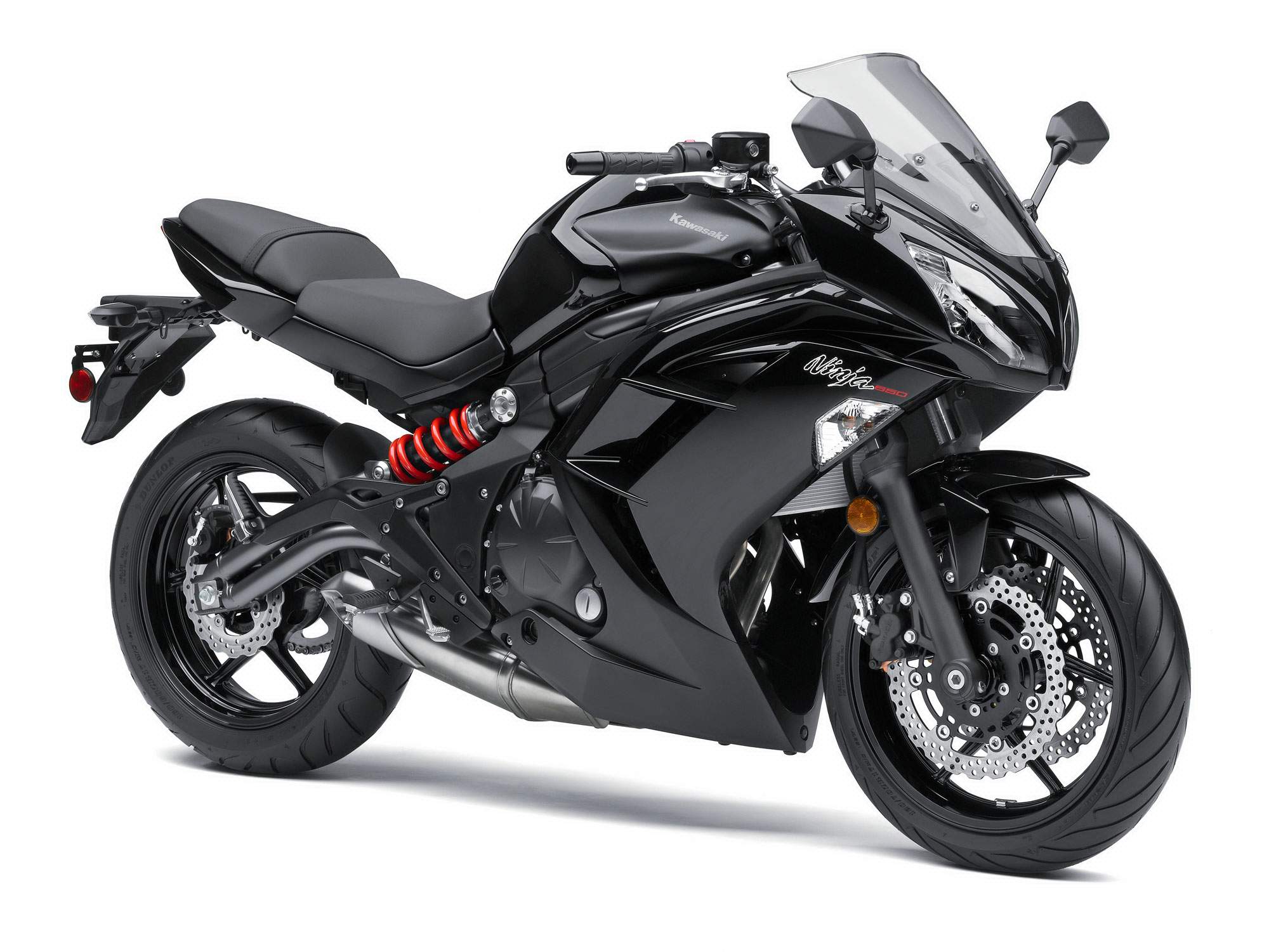
Kawasaki has now dropped the ER-6 name. The fully-faired version is now called the Ninja 650, aligning it as one universal designation. The naked version, on the other hand, is called the Z650, and inducted into Kawasaki’s family of naked bikes. Both the Ninja 650 and Z650 share the same engine and chassis components.

STYLING

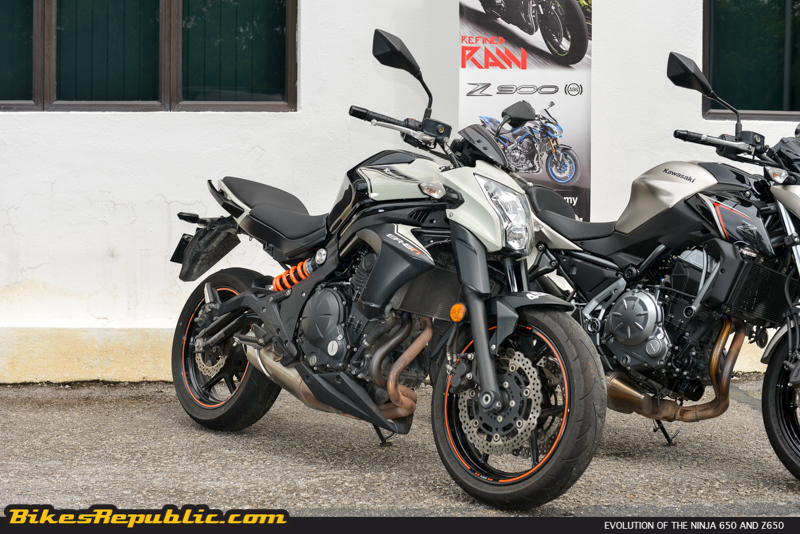
The new Ninja 650 stands out prominently when viewed side-by-side with the 2011 model, showing how much the model has evolved and improved over a short period of time.

At the initial glance, the Ninja 650 now looks almost identical to Kawasaki’s multiple-race and championship-winning ZX-10R superbike, especially when decked out in the special-edition KRT colour scheme. Those headlights have gone “raptor-like” and the fairing wraps tightly around the body.
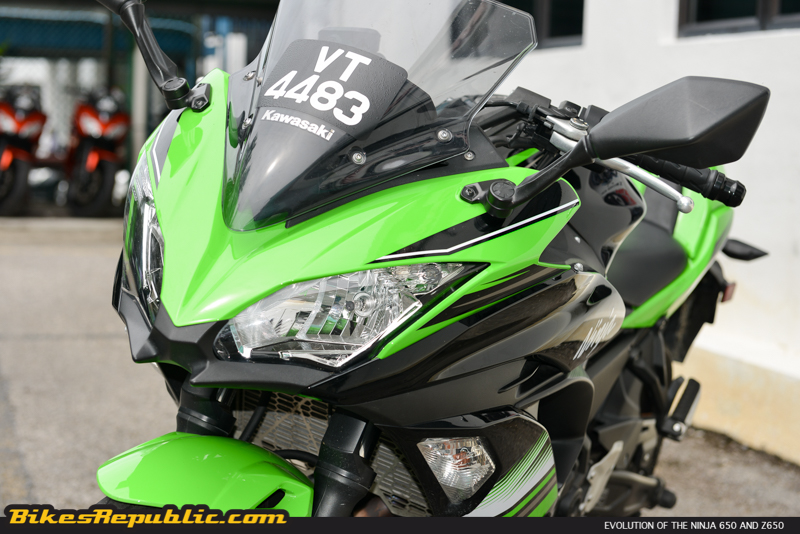
Speaking of the fairing, the new Ninja 650’s still features large side openings to vent hot air, but the rear part of the vent is enlarged and flared outwards to push hot air away from the rider’s thighs. Plus, the rear part of the fairing fits tightly to the frame, minimizing hot air from rising into the rider’s crotch.
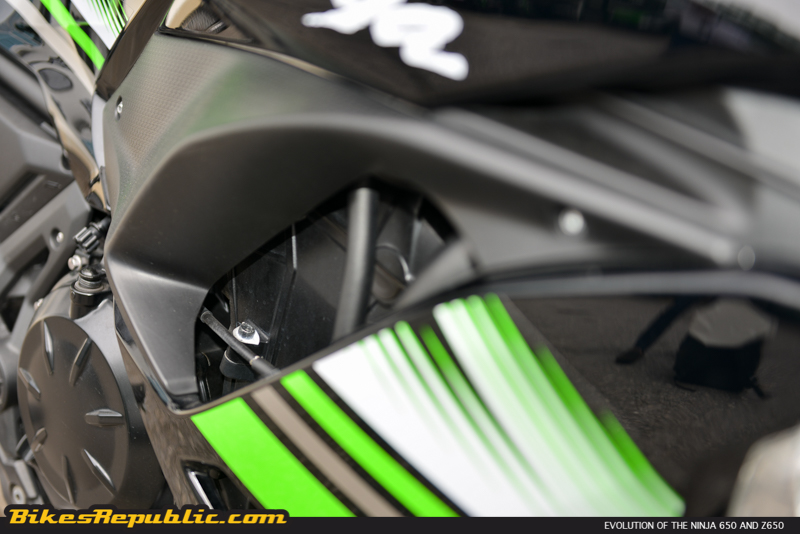
The effects are amazingly effective when compared especially to the 2011 and marked improvements over the 2012 models.
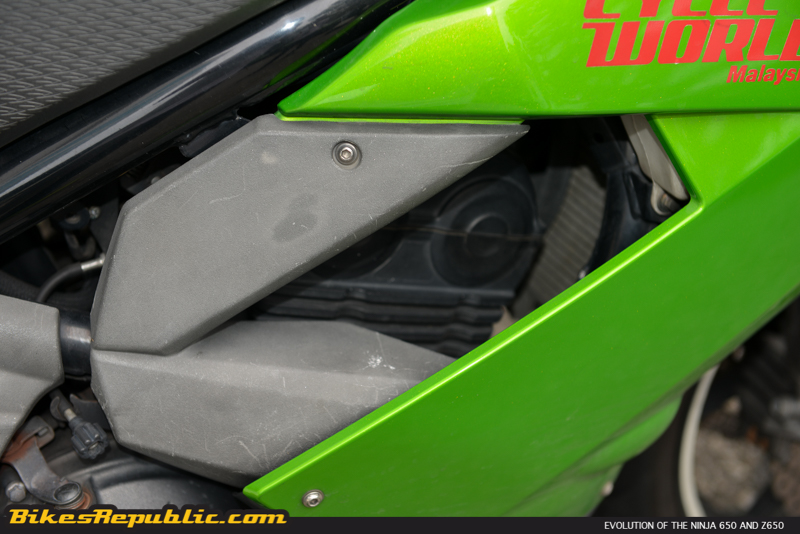
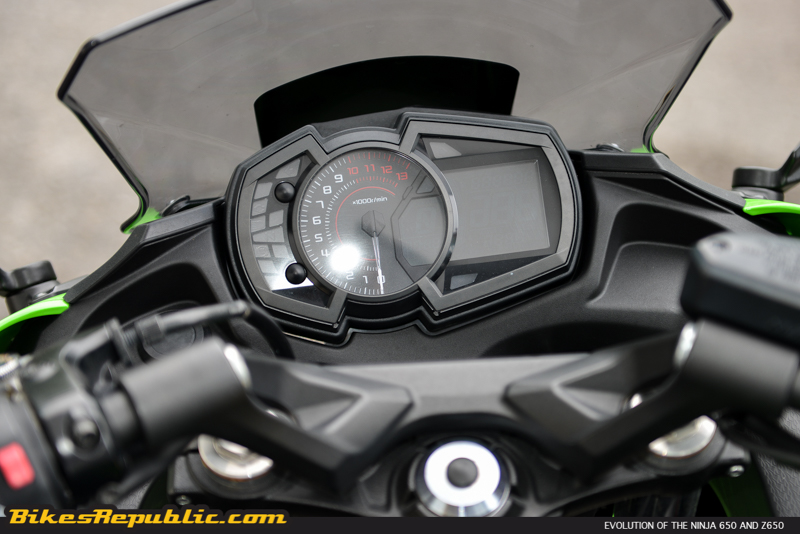
However, as sporty as the Ninja 650 may look, Kawasaki has wisely designed the ergonomics to be friendly to a broad spectrum of riders. The handlebars are set high and slightly forward, the rider’s seat is low (790mm seat height), and the levers are 5-way adjustable.

A new multifunction instrument panel is installed which includes a much-welcomed gear position indicator, shift light, and ECO indicator. The tach needle changes colour from white to pink to red as it swings up.
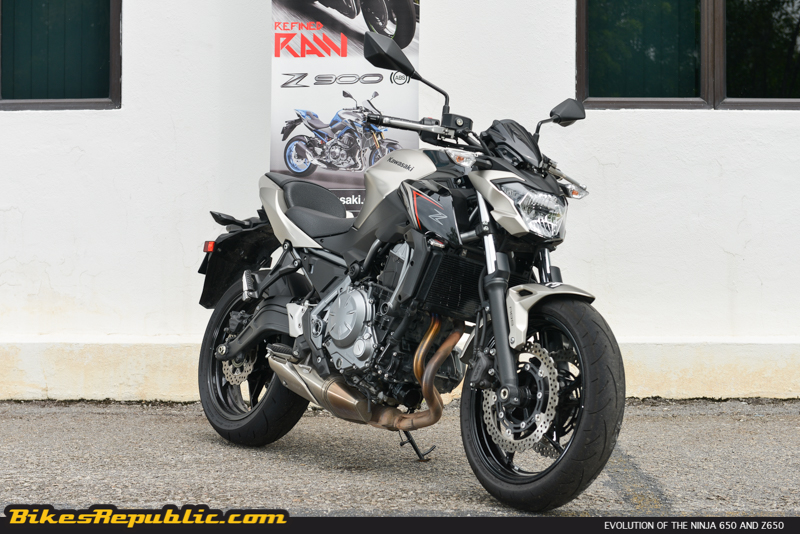
The Z650, meanwhile, has been given the Kawaski Sugomi (“sugomi” means “awesomeness” in Japanese) design treatment for a distinctively organic look. Kawasaki explained that they see the Z650’s stance as that of a black panther stalking its prey, in a crouched stance, with its head low and tail upswept.

A naked sportbike has to look fierce and that’s a great inspiration.
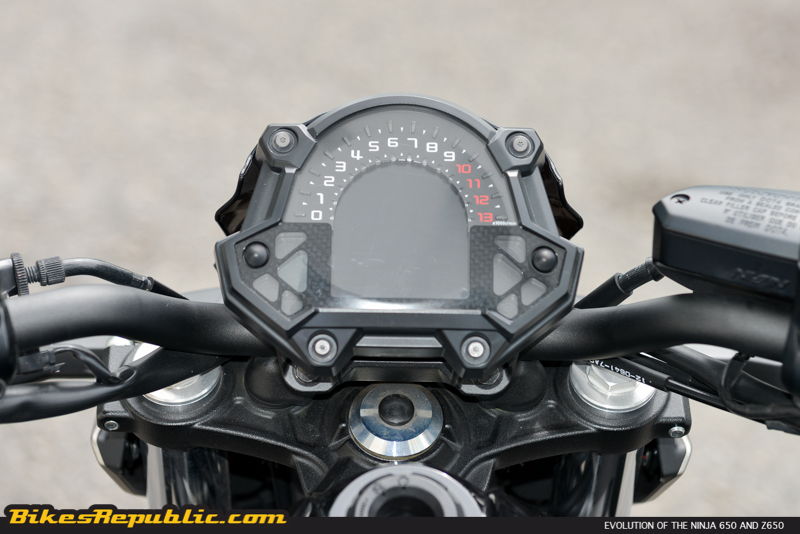
Unlike the Ninja 650, however, the instrument panel has a different design in order to fit behind that “flyscreen.” The tach is stacked on top of the LCD display, with the gear position indicator in the middle. The tach needle flashes at the rider’s preset rev limit.
The Z650 shares the same architecture as the Ninja 650 (more on this below), and as such it has the same seat height of 790 mm.

ENGINE

Kawasaki reengineered the familiar parallel-Twin engine to feature new cam profiles to reduce valve overlap duration (for better low-down and midrange torque); smaller, 36mm throttle bodies for smoother and precise throttle response; and a new exhaust system. These changes collectively result in a broader torque curve to provide the rider with power anywhere (in the rev range) at anytime it’s called upon.
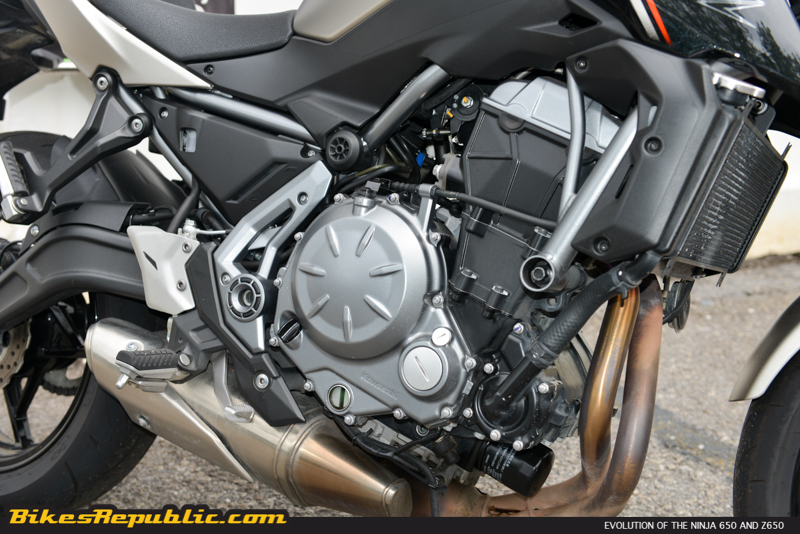
Any previous ER-6 owner, myself included, could tell you that the engine’s strong back torque (engine braking) could sometimes impede smoother cornering transitions (as you’re dragged back by heavy engine braking, which causes the bike to lose speed, followed by instability and the reluctance to turn, ultimately resulting in the rider losing confidence), besides encountering rear wheel hop (or even skid) if we downshifted too aggressively.

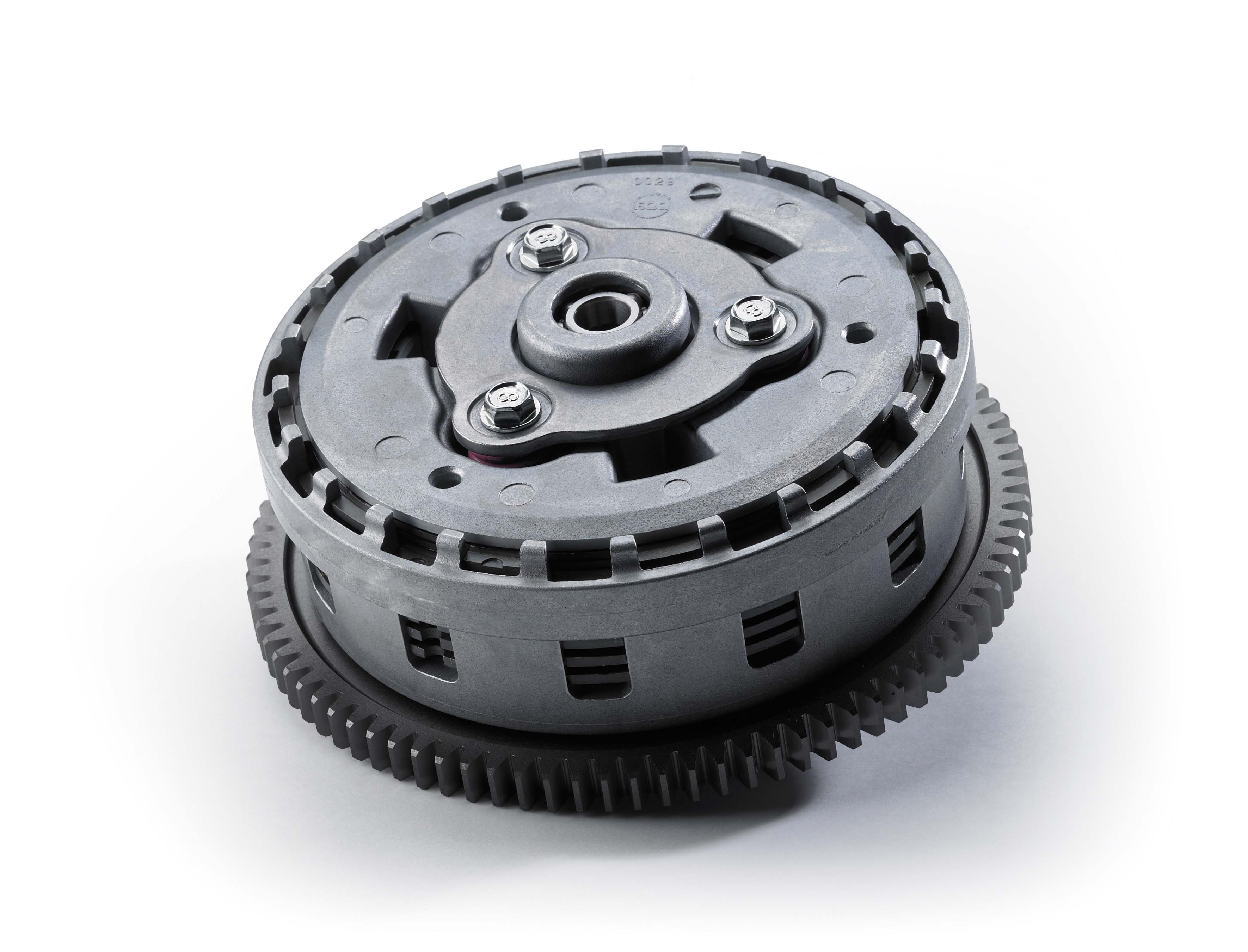
Kawasaki addressed this by adding an assist and slipper clutch. The slipper function is a nice addition, allowing for smoother corner entries and eliminating wheel hop. The assist function provides easier gear upshifting, by using cams that function as a servo mechanism which pulls on the clutch hub and operating plate together, to compress the clutch plates under acceleration.
FRAME AND CHASSIS

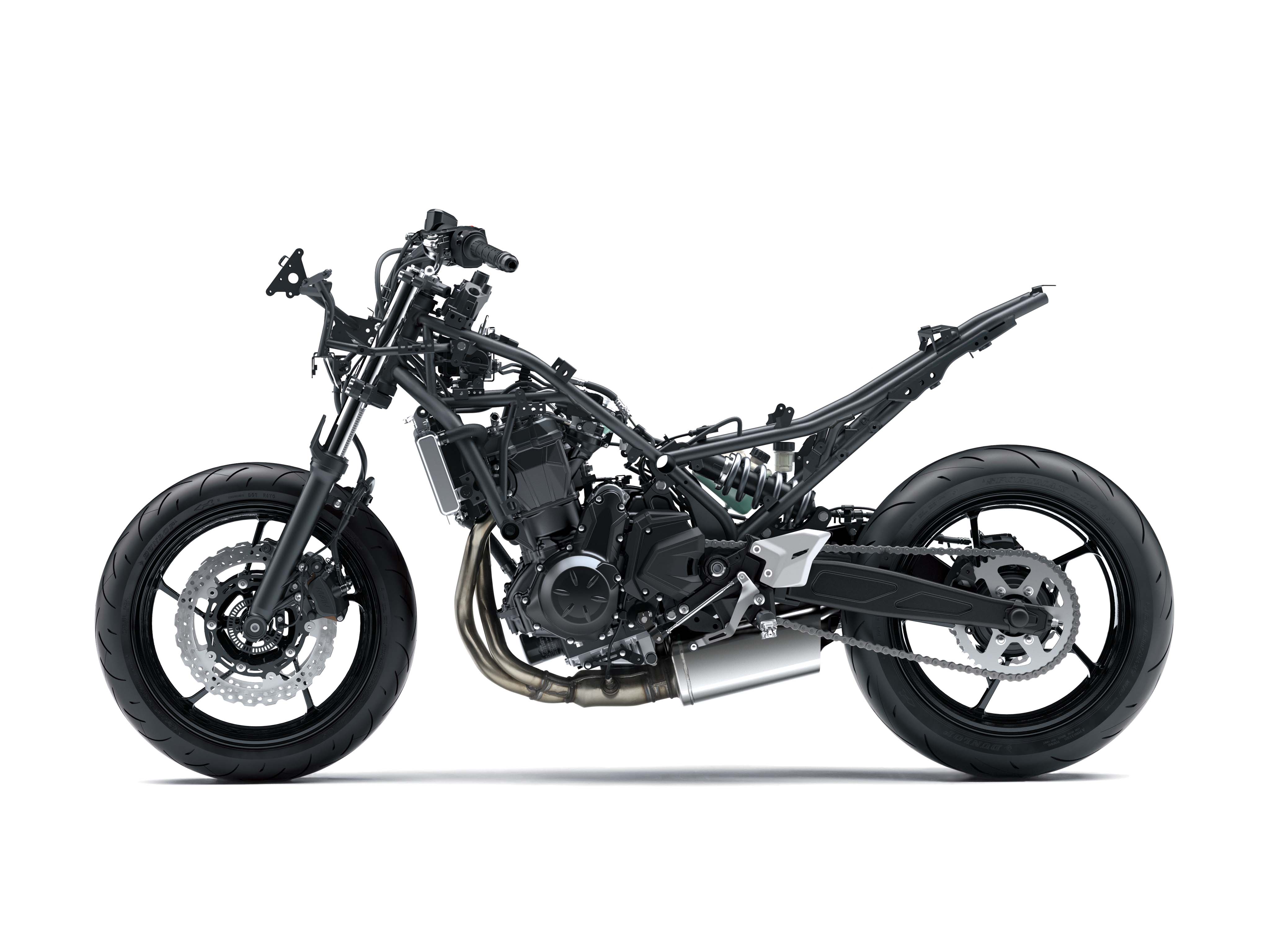
Kawasaki has also given the new 650s a new steel frame, which is 15 kg lighter than its predecessor –  contributing to a light 193 kg and 187 kg overall weight for the Ninja 650 and Z650, respectively. The sections are made as straight as possible to tune the frame for shock and load dispersion. Rake is at a sporty 24-degrees.
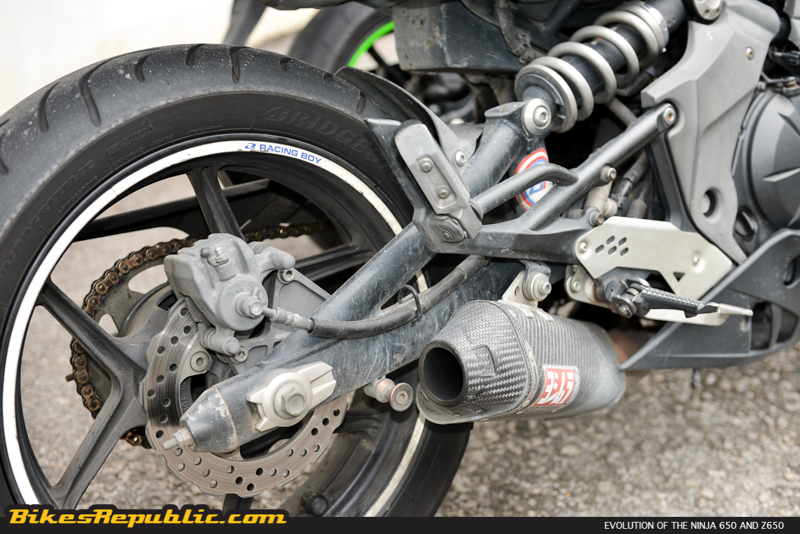
Moving downwards, the old ER-6 (and Versys) mounted their rear shocks on the right side of the motorcycle, connecting the frame and swingarm directly without a link. Adjusting the shock’s preload couldn’t be easier, but there are riders who complained of cornering imbalance (although this is subjective, as many motorcycles utilize this arrangement).
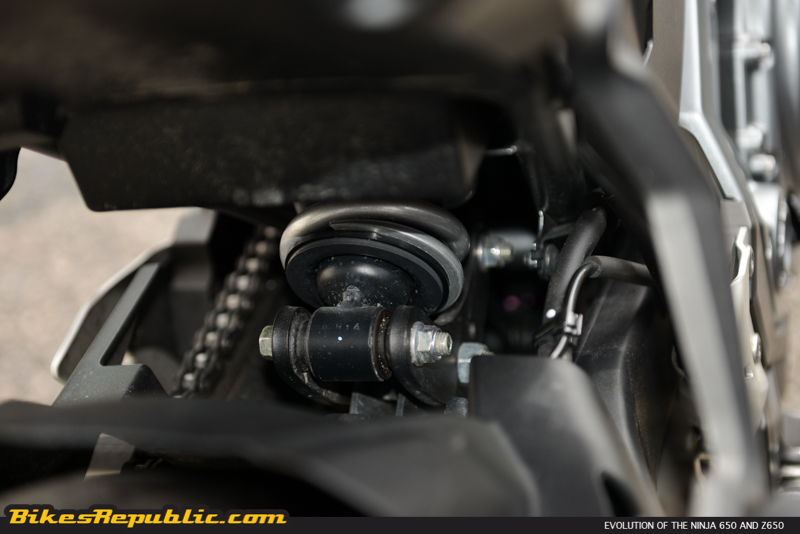
The new shock is now mounted in a horizontal back-link format for a more progressive action. But instead of installing part of the shock and linkage underneath the swingarm, they are positioned on top. This also ensures the components are moved away from the engine’s heat. The swingarm is now a curved unit (stronger while keeping the wheelbase short).
BRAKES

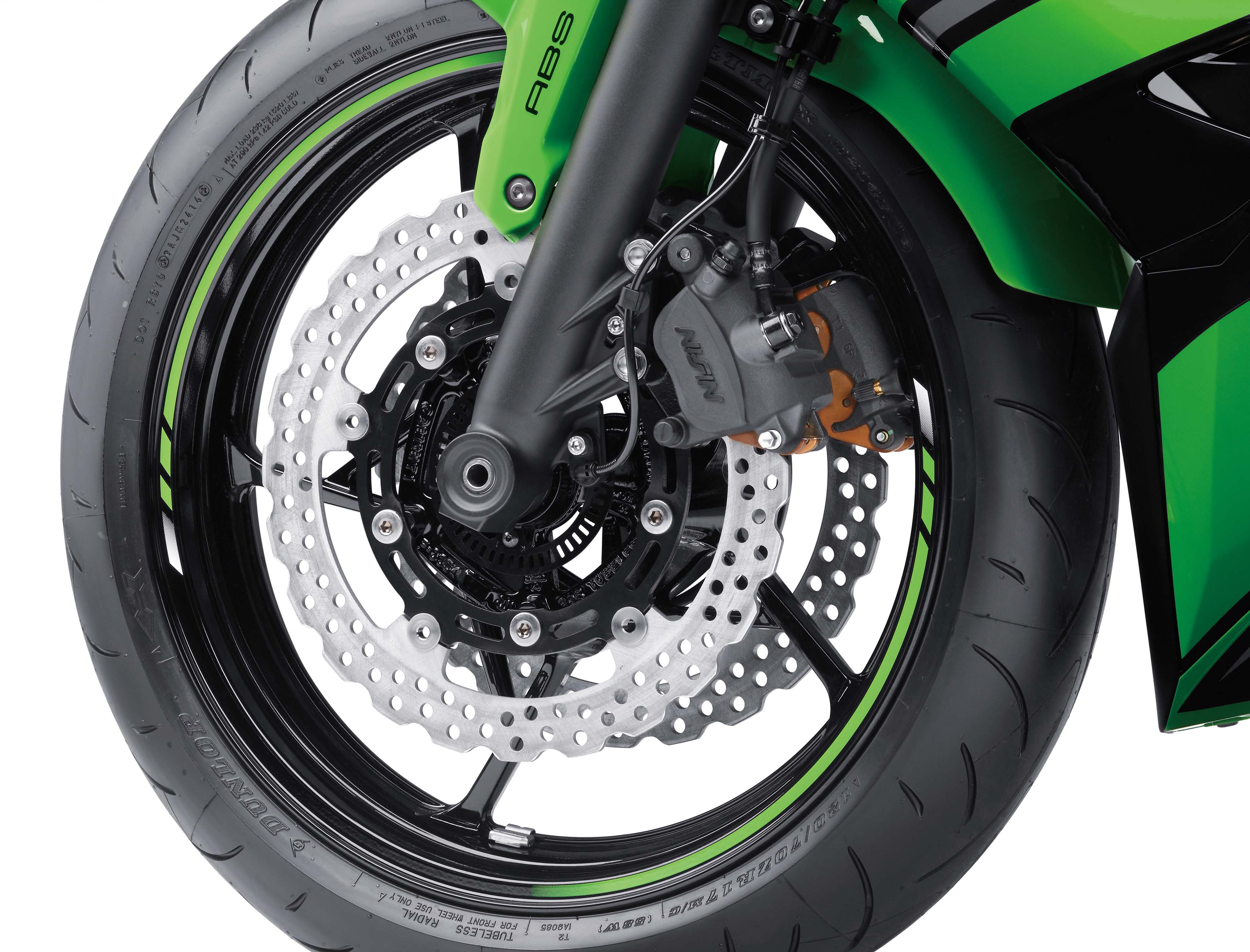
Braking is handled by a pair of dual-piston Nissin calipers gripping 300mm petal discs up front, while the rear is stopped by a single-piston caliper gripping on a 220mm petal disc. ABS is standard on both ends.
If a motorcycle is the sum of all its parts, then the it’s easy to see how the Ninja 650 and Z650 has evolved to be even better bikes. The answers are: Easy to approach, practical, economical, stylish while still being able to provide an exhilarating ride for both new and experienced riders.

Plus, the unbeatable price.
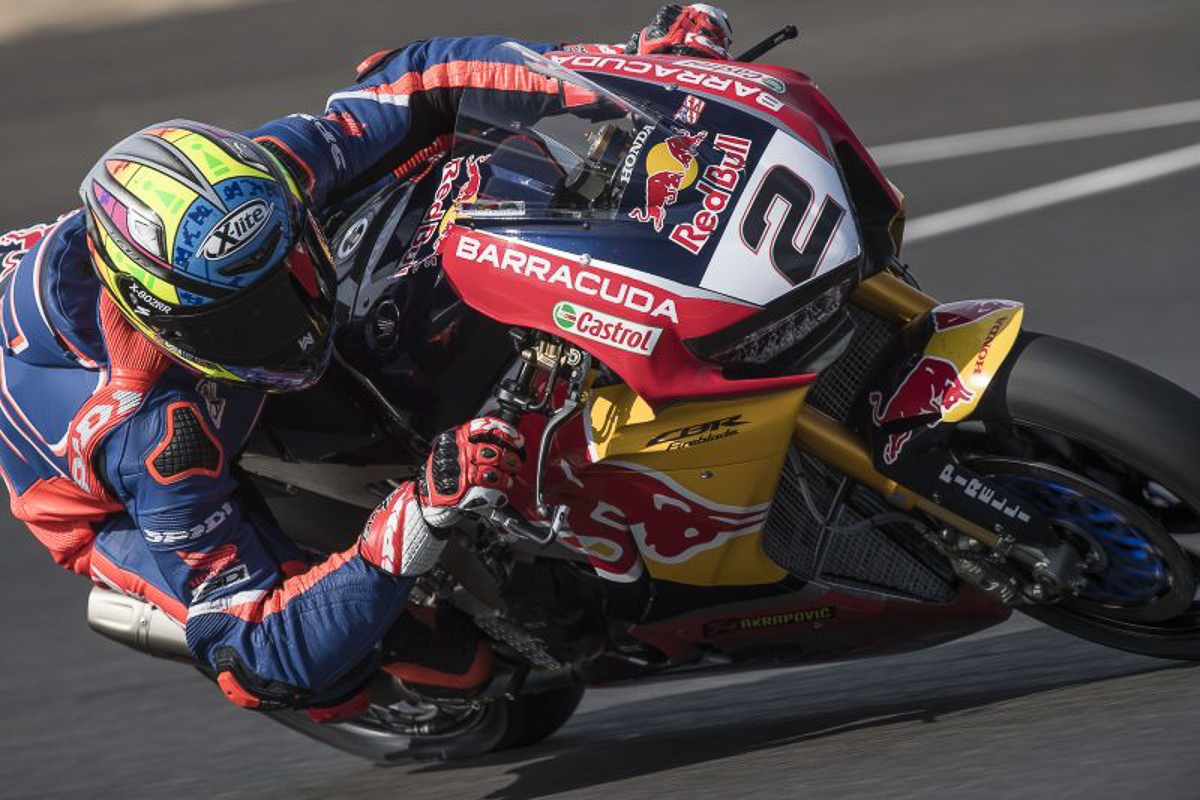
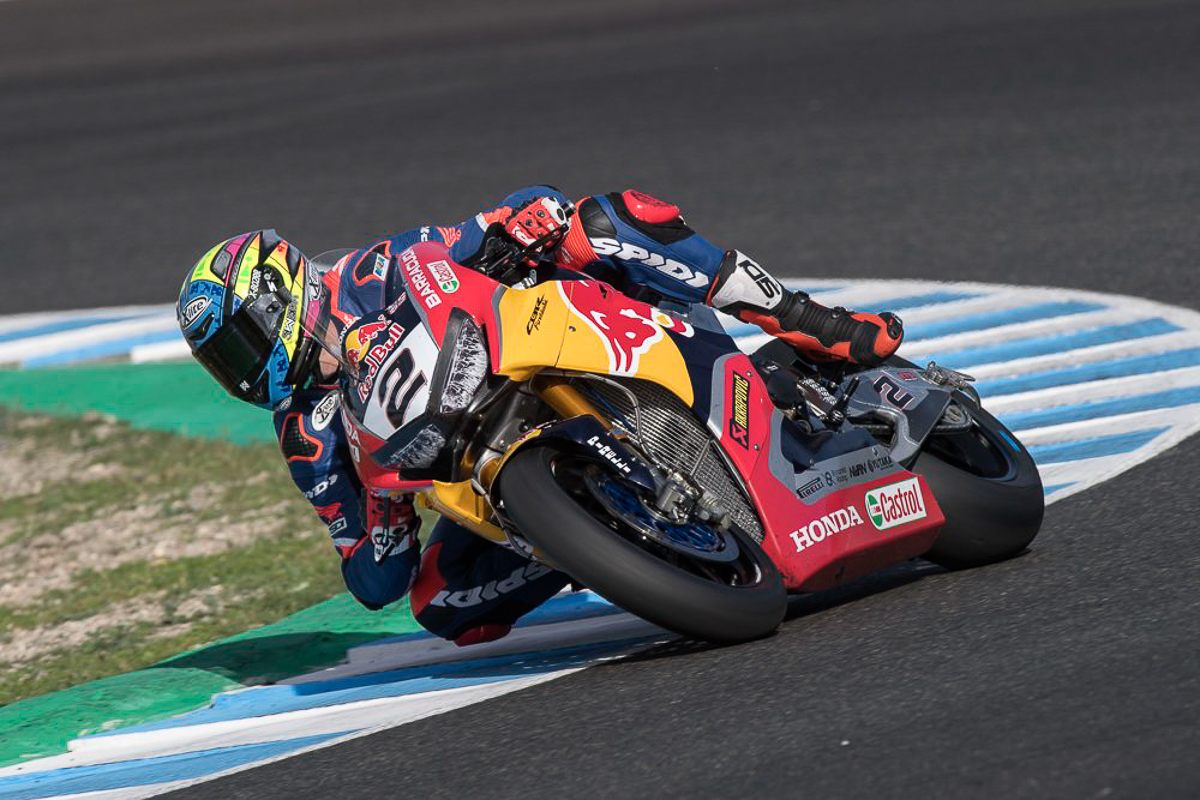
The Red Bull Honda World Superbike Team has announced that their second rider will be 25-year-old American, Jake Gagne.

Gagne stepped in a few races in this year as wildcard entries after the tragic loss of beloved rider, Nicky Hayden.

Jake Gagne will be racing together with another new Red Bull Honda rider, Leon Camier.

After several wildcard entries for the factory Honda squad in last year’s WorldSBK season, Jake Gagne has finally got his opportunity to race full time. The 25 year old from California USA will be racing for the Red Bull Honda outfit together with double British Superbike Champion, Leon Camier. (more…)

  • The Honda CRF1000L Africa Twin is a lovely machine to ride.

  • But it’s rather large and tall, especially for most Asians.

  • Honda is aware that they don’t have a middleweight adventurer.

Many fans jumped for joy when Honda announced the revival of the Africa Twin in 2015. It wasn’t only the international crowd who had loved the Africa Twin, for there were many in Malaysia during the late-90’s and early-20’s, too.

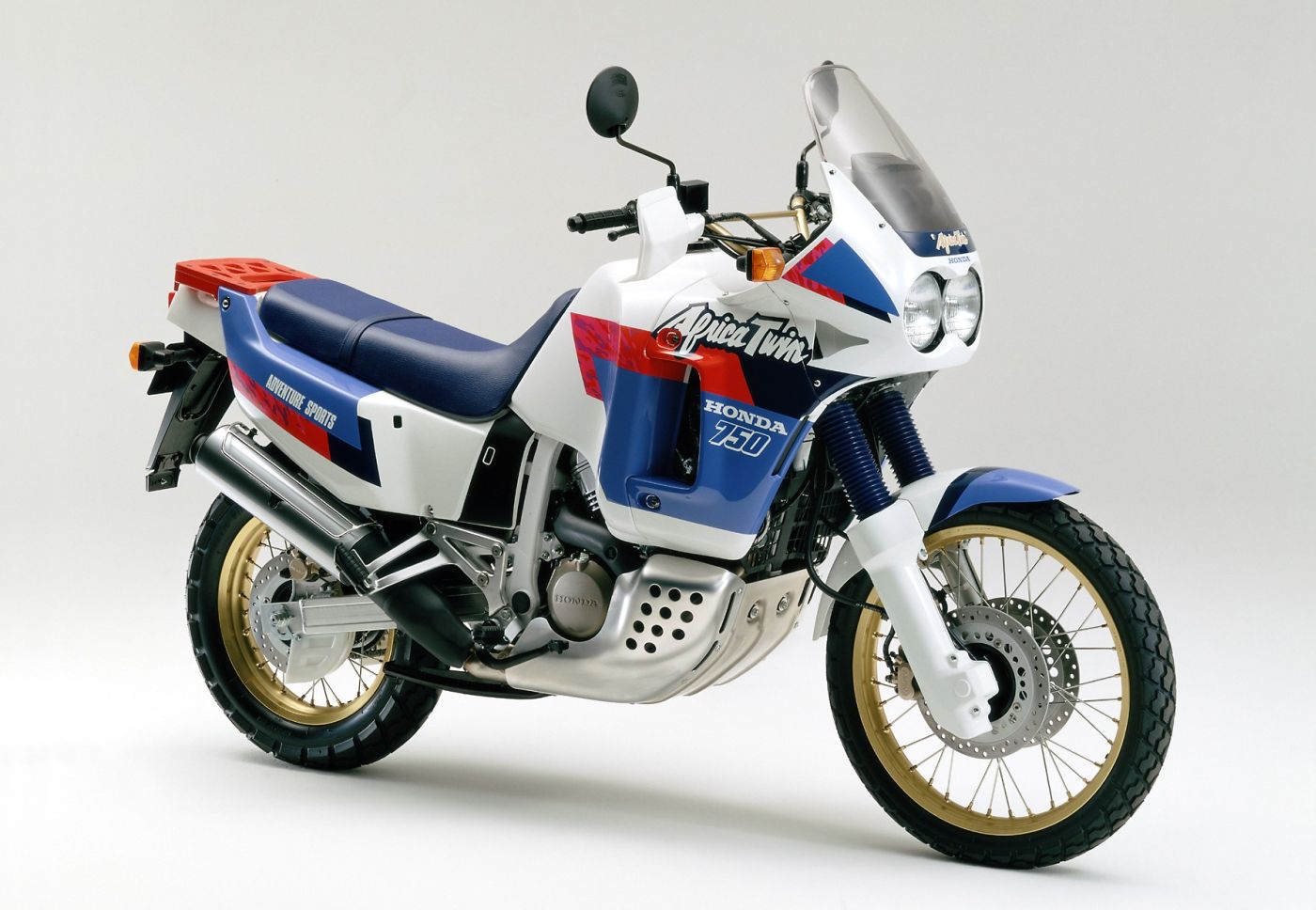
I too, fondly remember those tall machines in white, red and blue complete with handguards, metal grill protectors for the twin headlamps, massive fuel tank/radiator shroud, an also huge sump guard, and a booming exhaust note. It looked like it could bash through the jungle for breakfast right out of the box!

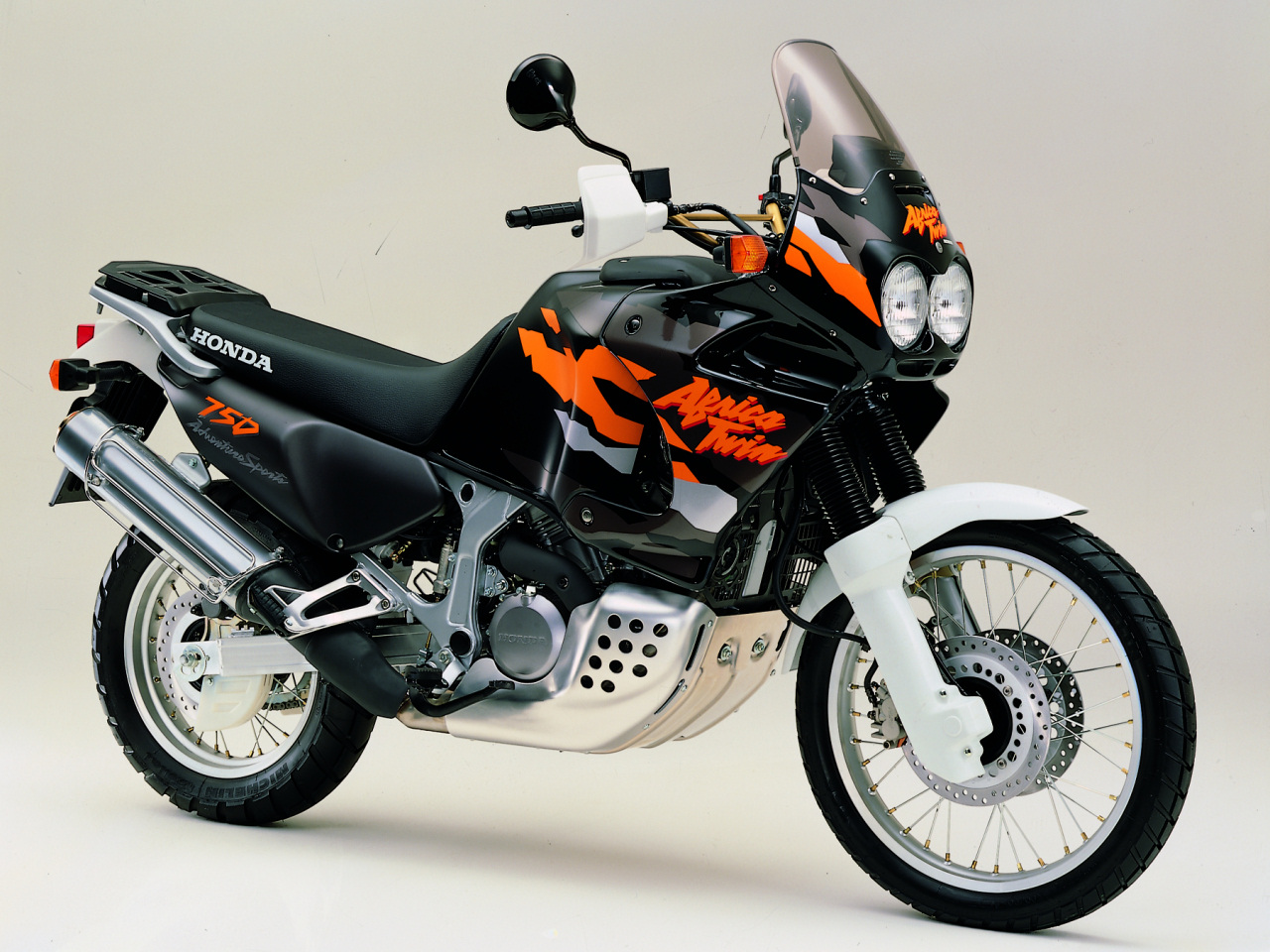
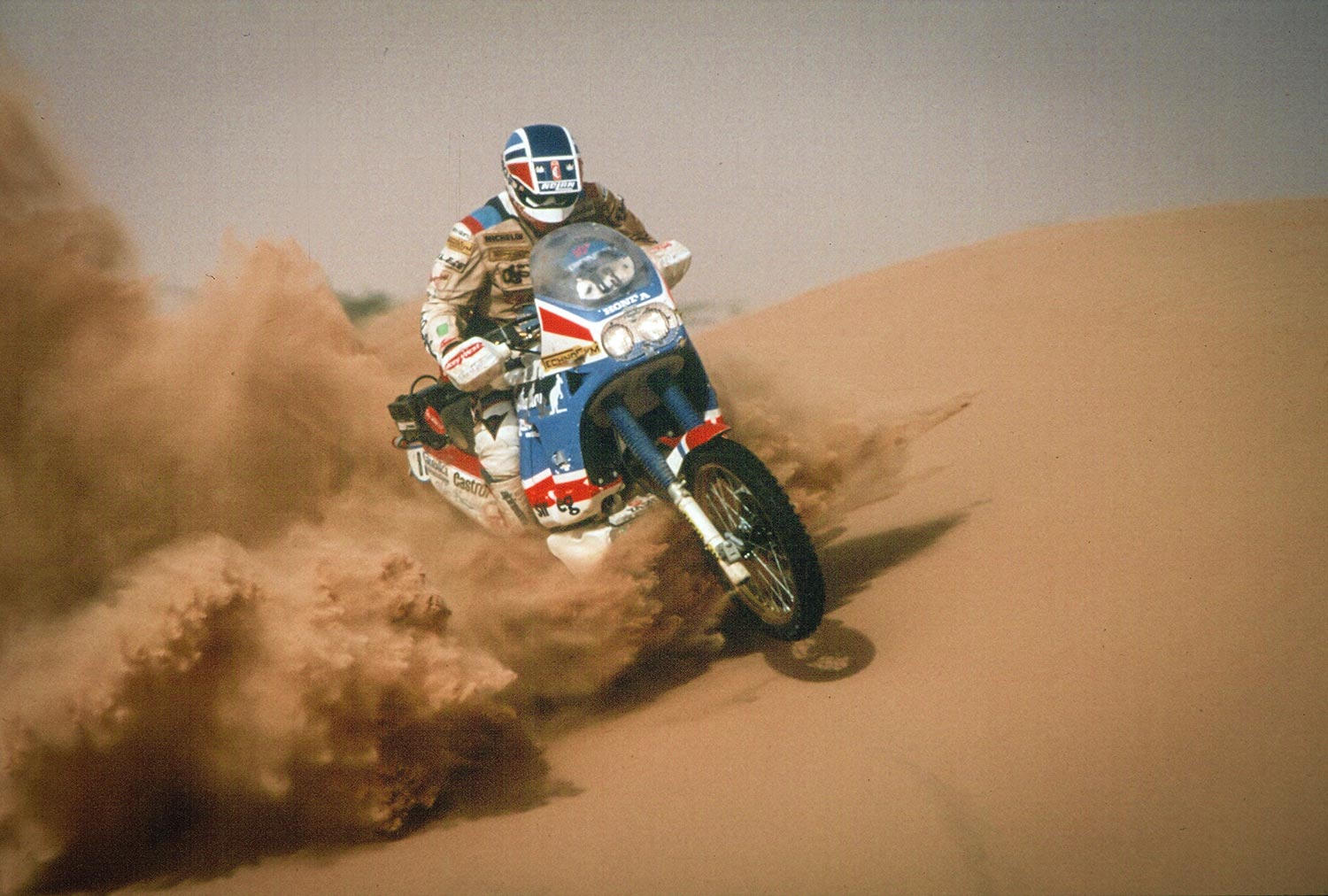
XRV750 Africa Twin

In fact, the XRV750T final version in 2003 looked like it ate a Honda CBR900RR Fireblade on its way to the mountains.

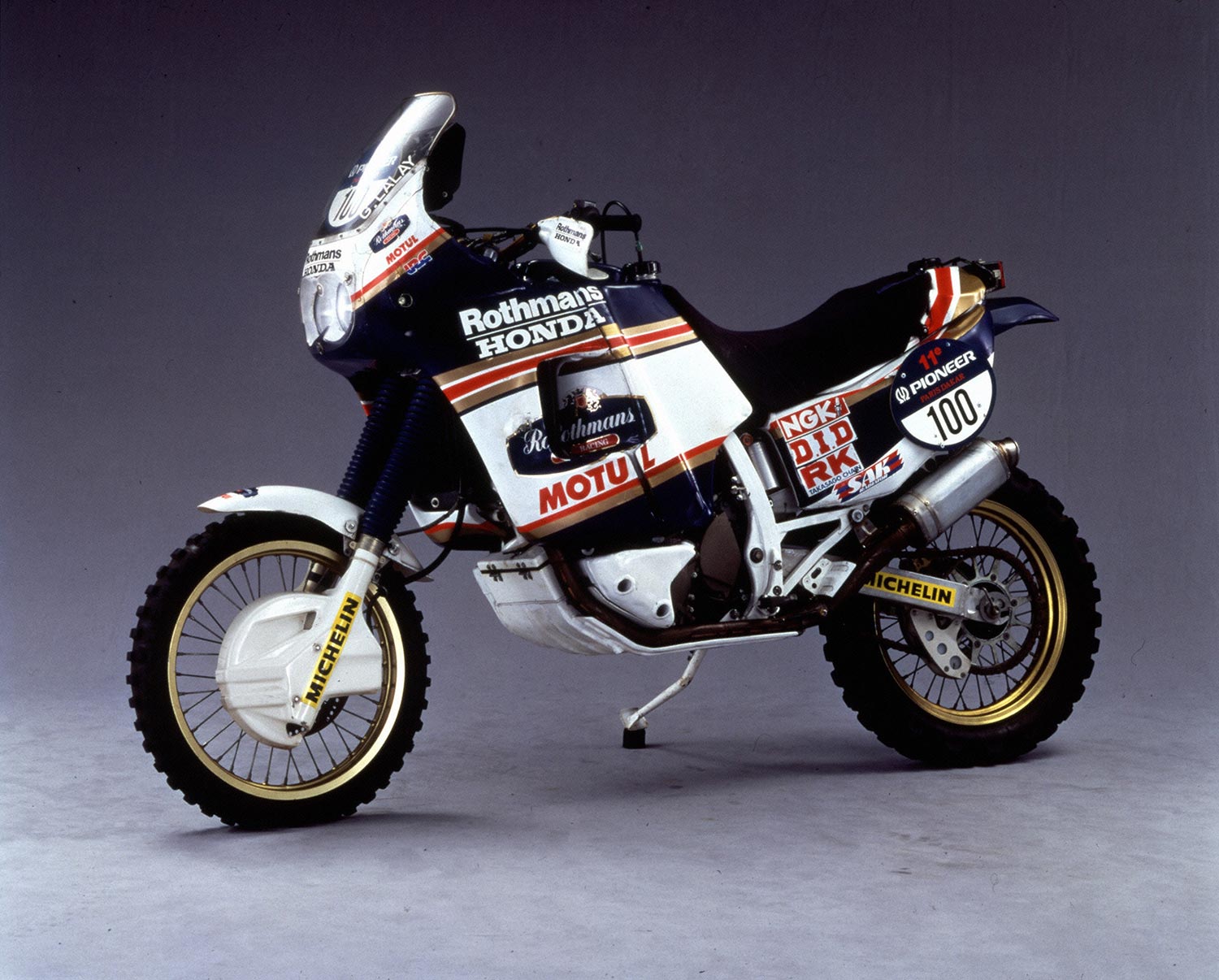
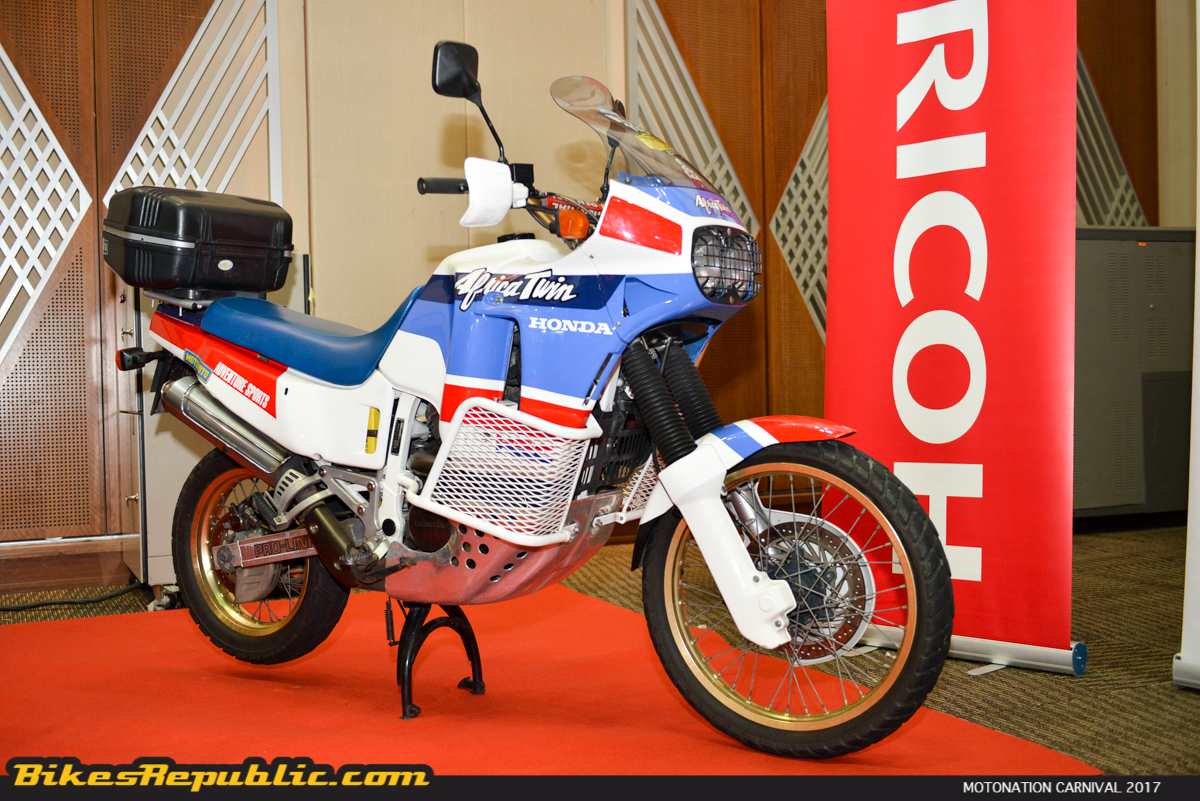
The first model, the XRV650 was actually built by the Honda Racing Corporation (HRC) itself. Yes, the people behind all of Honda’s racing motorcycles. Some people actually called it the “RC30 of off-road.” It was based on the Honda NXR-750 which won the Paris-Dakar Rally four times in the Eighties.

We came across this immaculate XRV650 at Motonation 2017

The 650 became the XRV750 Africa Twin, the most famous model that we saw here. But it had never been exported to the US.

When Honda stopped its production in 2003, many were heartbroken.

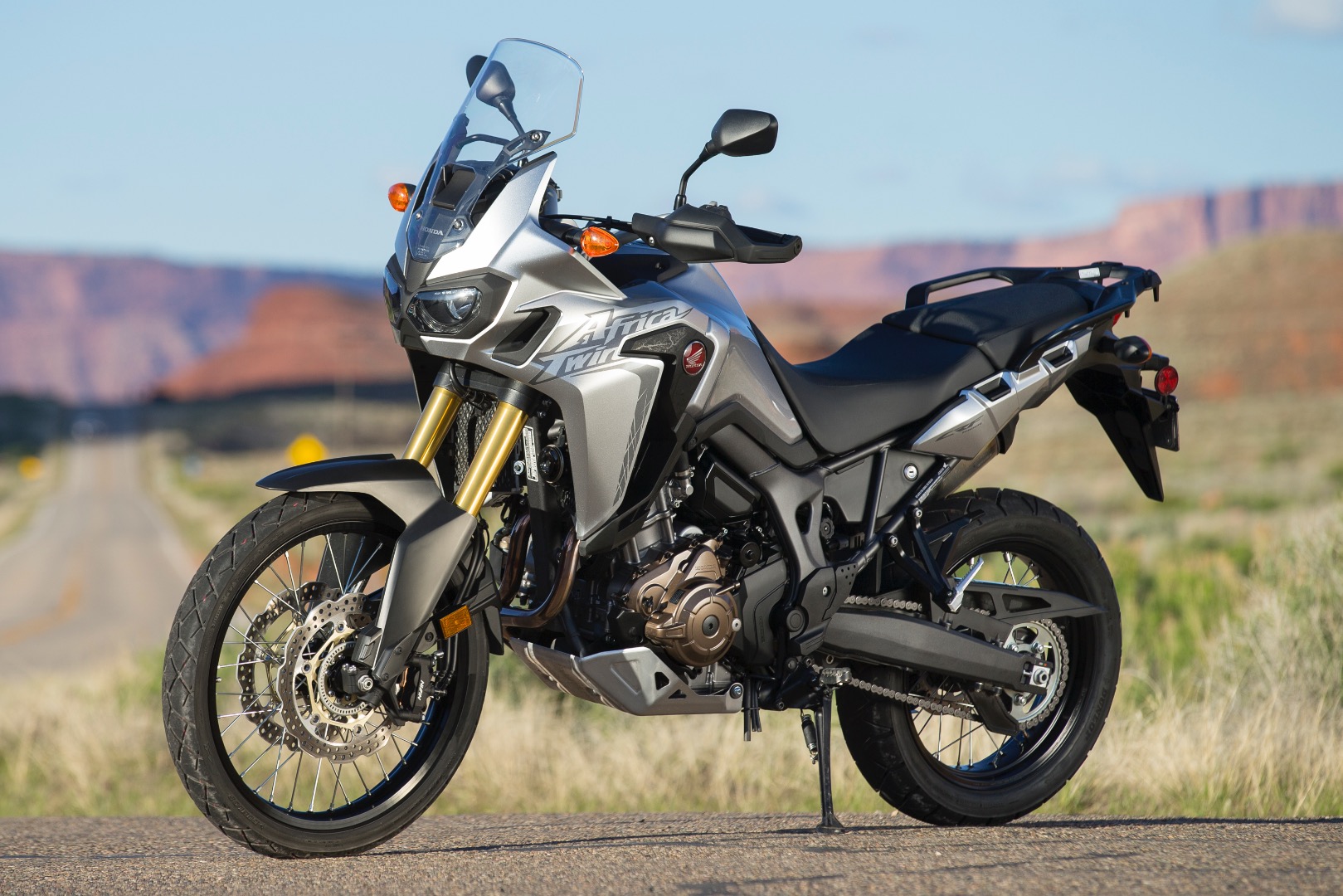
Now with a 1000cc, 270-degree crank (to mimic the firing order of a 90-degree V-Twin), parallel-Twin engine and Honda’s Dual Clutch Transmission (DCT) option, the new CRF1000L Africa Twin promised to be a much better, much more contemporary iteration of the famed heritage and lineage when it was launched for 2015. (Click here for our First Impressions.)


2016 Honda Africa Twin DCT

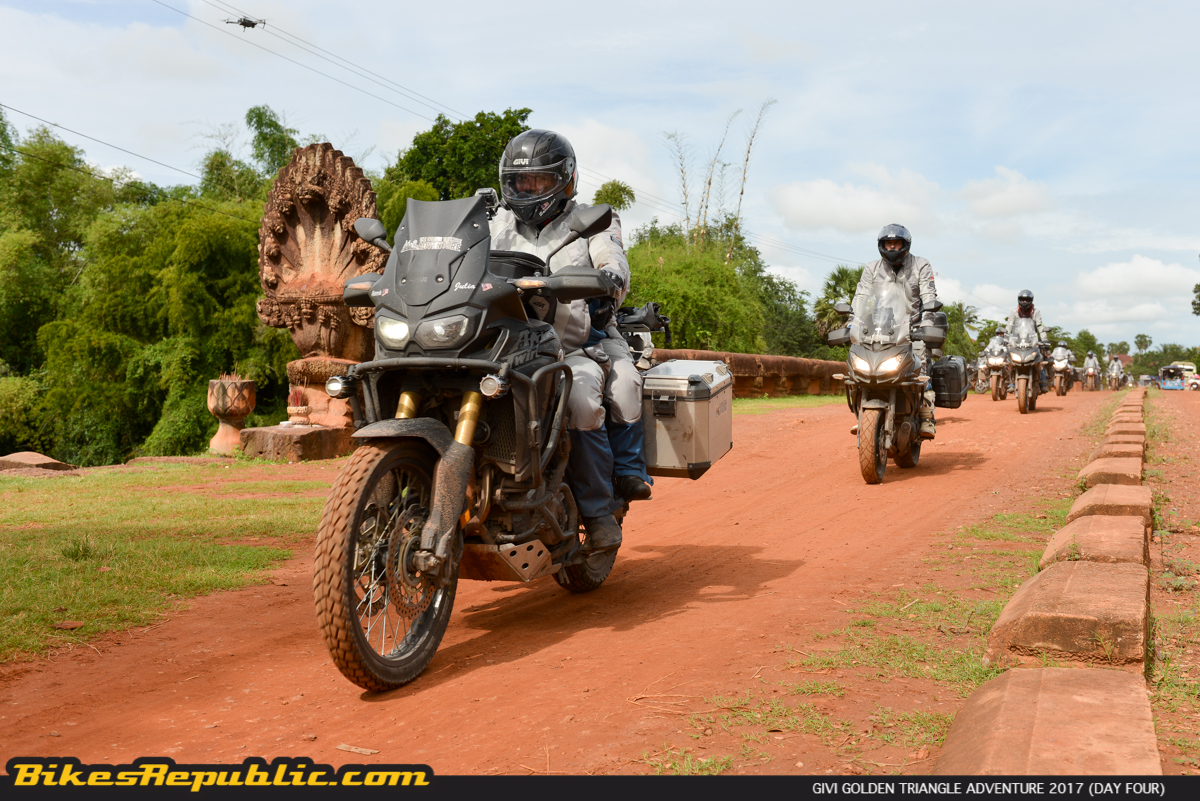
I managed to finagle a short ride on a CRF1000L in Thailand during the GIVI Golden Triangle Adventure 2017. There was a total of three Africa Twins on the ride, two of those with DCT. It was an amazing machine to ride: Its poise, balance, comfort, the torque of its engine. But it was tall and that made it rather heavy to manage in busy urban environments. It towered over the Kawasaki Versys 650 and Suzuki V-Strom 650, and it was the bike that made the 2013 BMW R 1200 GS LC look err… short and squat.

However, if you’ve the blood for adventure and insists on a smaller Honda, you could choose from the crop consisting of the CRF250L or CRF250 Rally, CB500X, NC700X and NC800X, but they are nowhere near Africa Twin territory.

Honda knows this. Kenji Morita, Large Project Leader for the Africa Twin said, “When we speak about pure adventure, we don’t have a wide line-up. And yes, we are thinking of putting a halfway model to attract younger riders.”

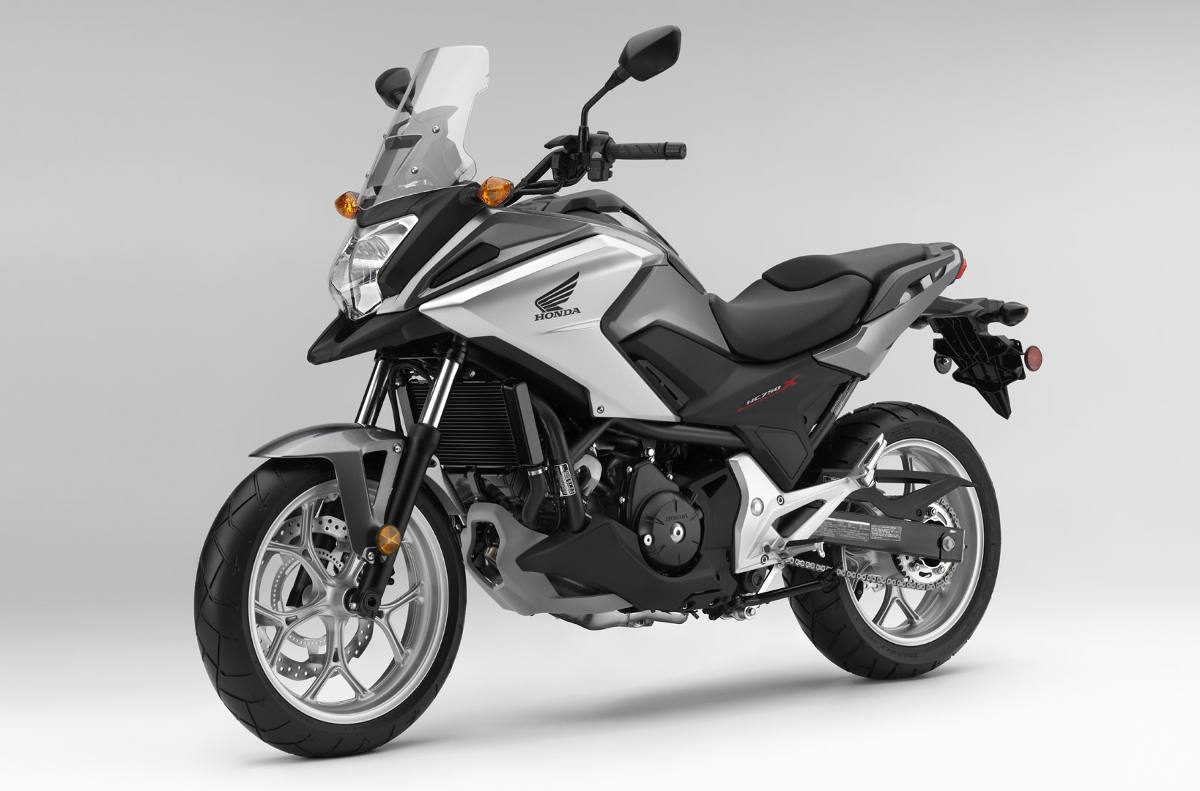
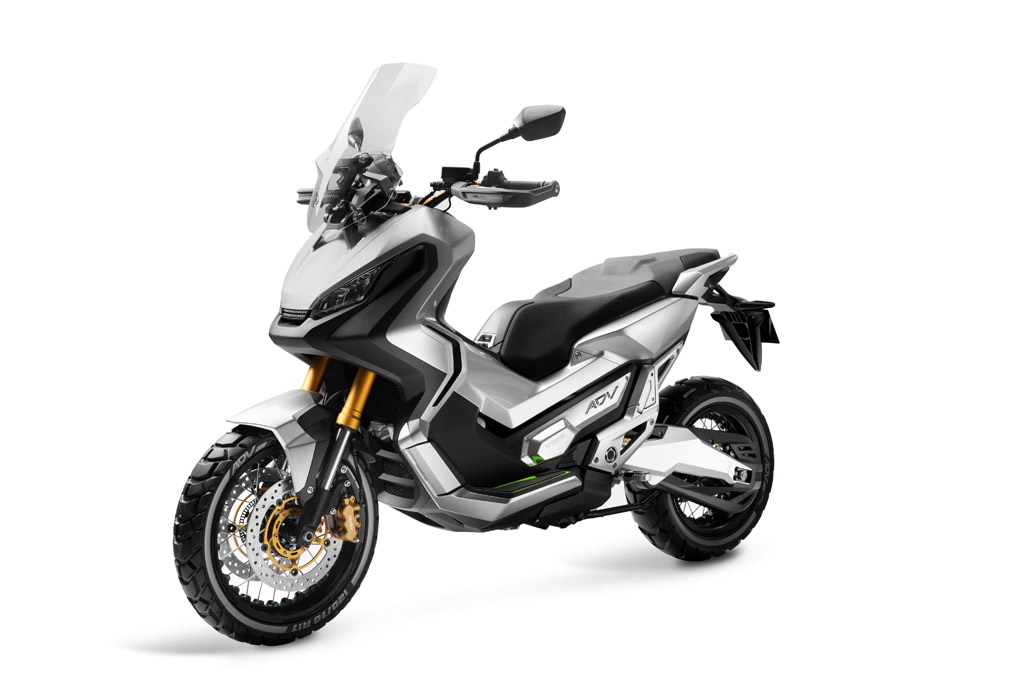
Honda already has a 750cc parallel-Twin which powers the NC750X and X-ADV (we rode this in Thailand too. It was awesome!). But that would create a product line with models too close to each other. So, how about a new 650cc engine as the direct link to the original XRV650 Africa Twin?

This is a segment in which Honda could not afford to miss out, since the middleweight adventure (750cc to 800cc) market has now become THE most contested territory. It is currently being fought over tooth-and-nail by the BMW F 850 GS, Triumph Tiger 800, KTM 790 Adventure and soon to be launched Yamaha Ténéré 700.

Honda says they aren’t working on the smaller Africa Twin as yet, but you can bet the Red Giant isn’t going to sit still, so watch this space.
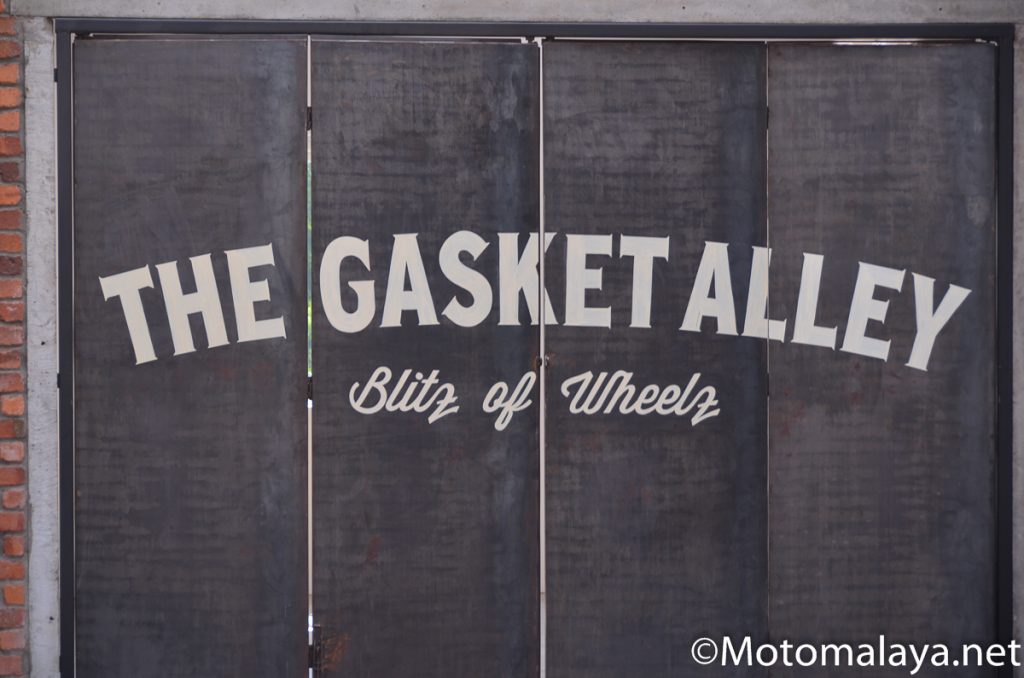
Great news for all Harley-Davidson owners in Malaysia! The official Harley-Davidson service centre at The Gasket Alley will officially open its doors tomorrow (Saturday 8th of December).

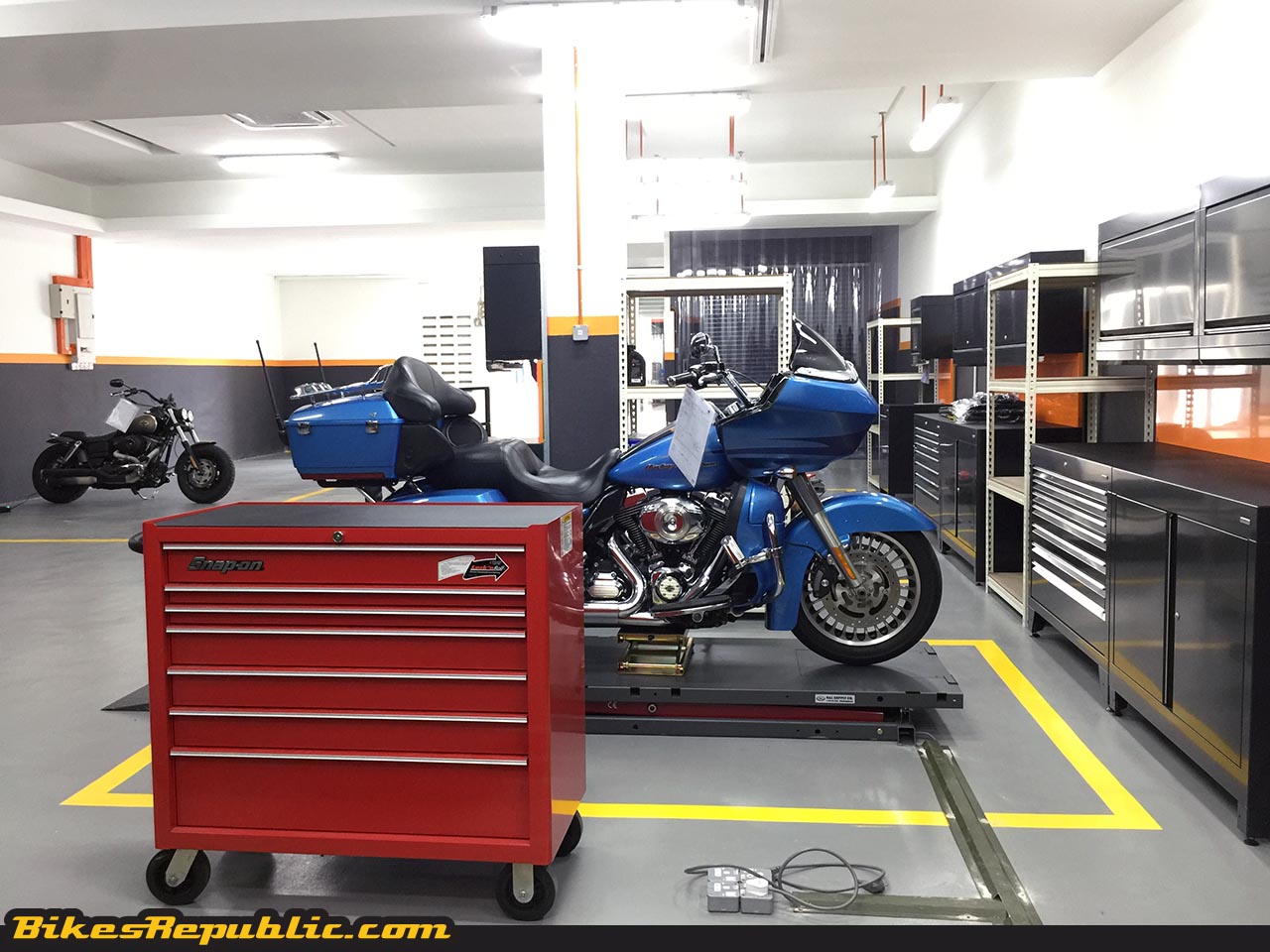
Built with an investment of RM1.5 million, the new service centre features unique tools and even hydraulic jacks that have been specially flown in from either Europe or the United States. These are unique equipment specially designed for Harley-Davidson motorcycles.

The technicians including the management team have all been trained at the Harley-Davidson University in Bangkok, and are certified to service any type of Harley-Davidson.

The service centre is open to ALL Harley-Davidson’s regardless of whether they were bought from the official dealer, or second hand, or from the grey market. The new service centre does not charge a “localisation” or “initilisation” fee, and will service all Harley-Davidson motorcycles.

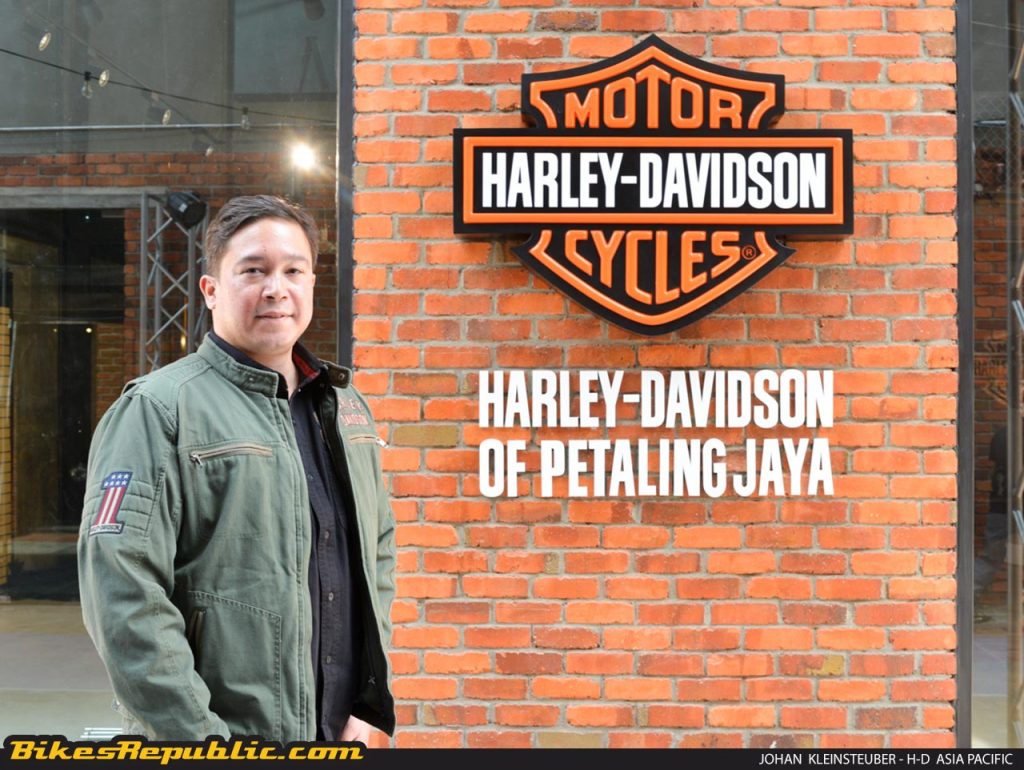
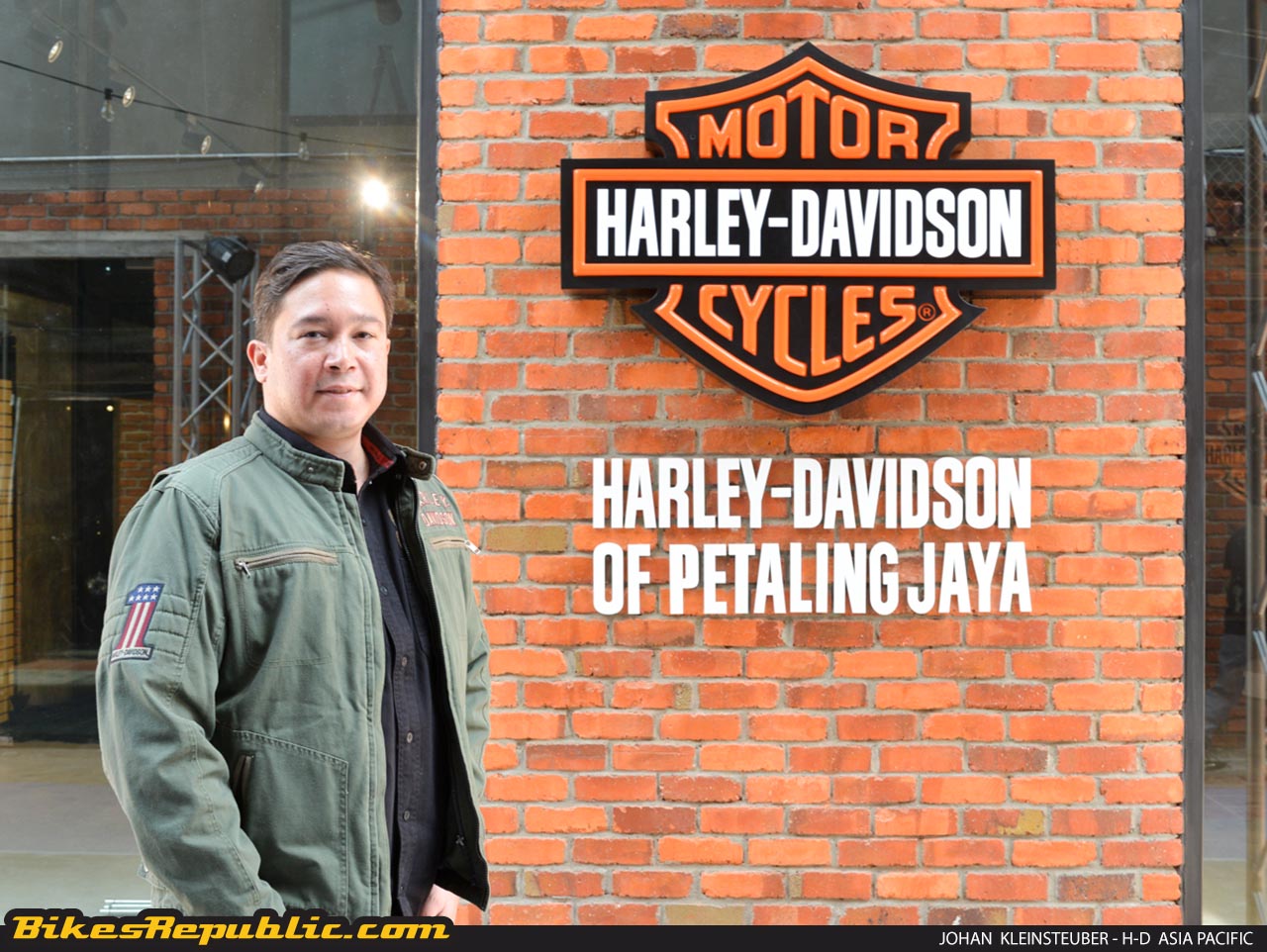
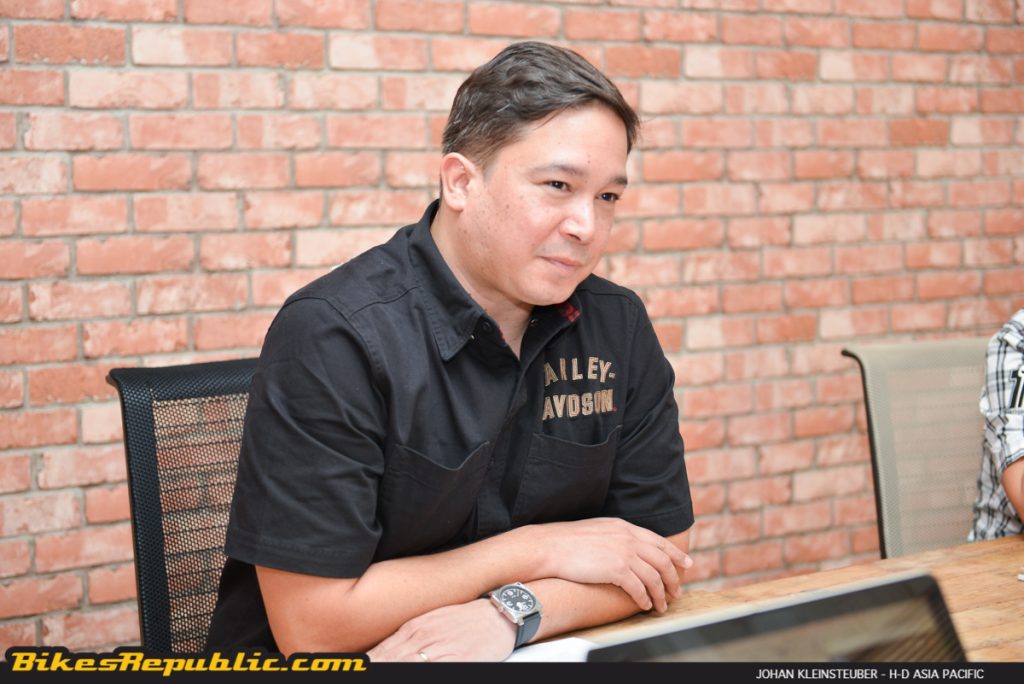
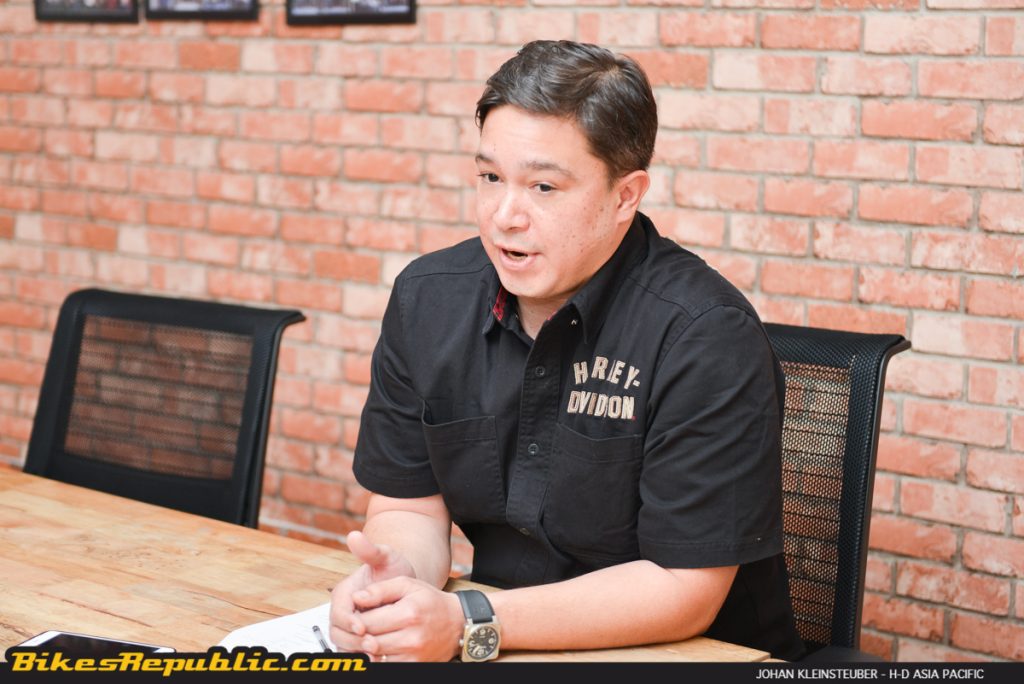
In a recent interview with Johan Kleinsteuber (pictured above), the Managing-Director of Harley-Davidson Asia Emerging Markets, the question of aftersales service cropped up, to which Johan replied, “Personally I will encourage grey market owners to visit authorised workshops. I am a rider myself and I will always want my bike to be in the best condition possible because at the end of the day it is also about safety. Our dealership staff are all fully trained. They have gone through the whole training process and attended the Harley-Davidson university in Bangkok, so they can be assured of the highest level of service quality. Ultimately this is what we want to bring to our customers, to be part of the whole ownership experience.” (You can click here to read the full interview)

The opening of the official service centre will be followed by the launch of the all-new Harley-Davidson showroom at The Gasket Alley which is scheduled to take place next month.

For more information, visit The Gasket Alley’s Facebook page here.


Harley-Davidson has been in the Malaysian news quite frequently lately. The legendary American brand sent a wave of shock throughout the industry when it announced its departure from long time partner Naza Prestige Bikes Sdn Bhd, in search of a new partner moving forward.
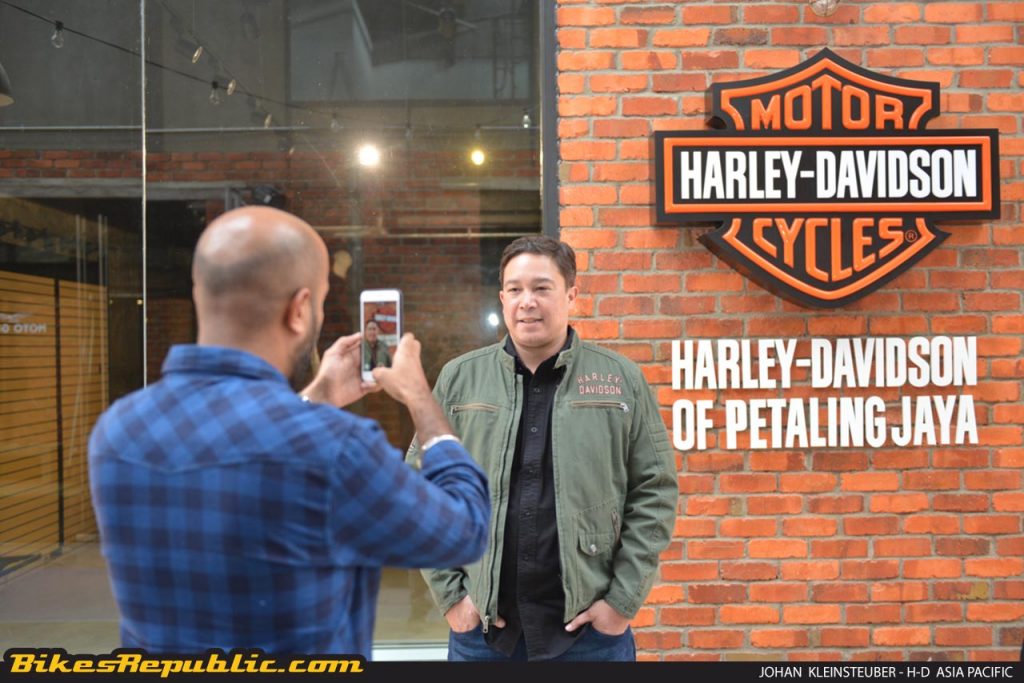
Rebranding itself from Harley-Davidson of Kuala Lumpur to Harley-Davidson of Petaling Jaya, the brand has since found a new partner and will be based at ‘The Gasket Alley’, opposite of Jaya One.

Exciting times lay ahead for the brand with a brand spanking new showroom due to be officially opened in January, a RM1.5 million service facility capable of servicing up to six bikes at one time, and with a new team of talented industry insiders with decades of industry experience.

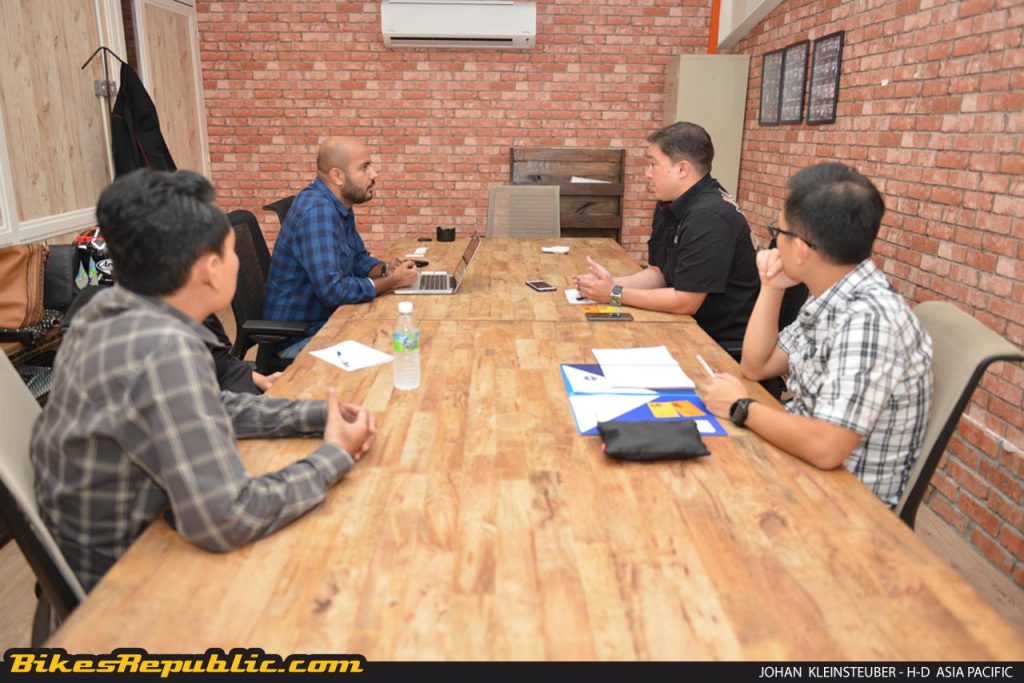
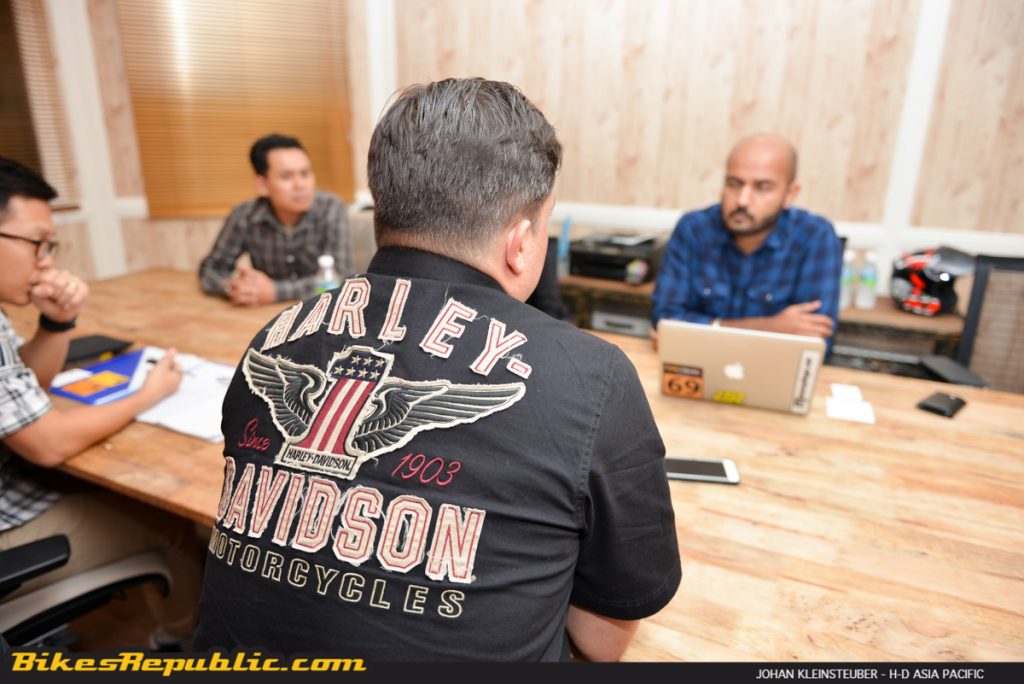
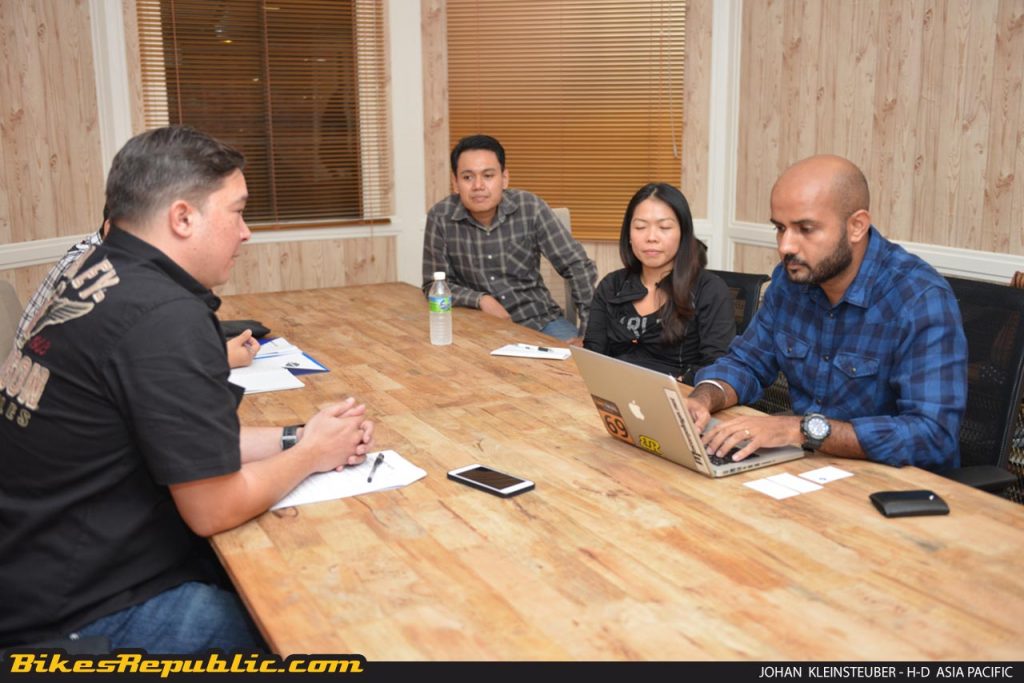
We were recently invited to a chat with Johan Kleinsteuber (pictured above), the Singapore-based Managing Director of Harley-Davidson of Asia Emerging Markets. Not ones to turn down a good conversation about bikes, we found ourselves in a meeting room at The Gasket Alley with Johan and his colleagues from Singapore.

We had 10 questions for Johan and he answered them all, and was eager to share his plans for Malaysia, on engaging owners of grey market bikes which has always been a neglected segment of Harley owners for many years, and even on whether or not we will ever see a new Harley-Davidson for below RM50,000. Below are some excerpts from the conversation:

On why a new dealership was needed for Malaysia:
“We made a decision to take a new approach in Malaysia, driven by Harley Davidson’s strategy to grow ridership primarily through our existing customer base as well as reaching out to new customer segments. And we decided to refresh the network and appoint independently owned dealerships throughout the country, to enable us to serve our customers and to make our brand available to a wider segment. That is the idea behind it and is the way we operate in multiple countries, which means either single dealerships or potentially multiple dealerships are owned by separate dealerships.”

How will things change for Harley-Davidson in Malaysia?
“If you have read our 10 year strategy we have big plans rolling out in the next 10 years. We will be launching 100 new products throughout the world. We are planning to grow our international volume by 50%. As such we need to look into network expansion in order to make the brand more accessible and to go to the customers where we think they are. Malaysia, in the Asian context, plays an important part in this equation for Harley-Davidson.”

“We have been in Malaysia since 2008, we have built a very dedicated following of Harley-Davidson riders, and the brand is extremely popular in Malaysia and from what I see, the brand is one of the most popular ones in the region, and we want to capitalise on this by reaching out to our customers and giving them access to the brand and the lifestyle that is associated with the brand and its products.”

On what Harley-Davidson owners can look forward to in the next 2-3 years?
“It is obviously a very exciting time in Malaysia as we grow the network. You know the new facility in Petaling Jaya. We will start service operations in Malaysia this weekend. Harley-Davidson owners will be able to service their bikes here (at the service centre at The Gasket Alley) beginning this weekend. There are trained and dedicated service staff here to address any concerns or any issues that customers may have with their bikes. So we are looking forward to that, and our plans are to grow the network next year, so we are looking at two additional dealerships, one in Penang and one in Malacca. We will continue to assess where there are opportunities in order to reach out to customers. Not to speak of any specific locations, but there is ongoing business case work and as and when we see there is an opportunity, we will then start work. And coupled with the new products we are launching, the MY18 Softail and the CVO’s, I can only recommend the new range of Softail’s, it is a fantastic range of products and extremely well received. I just came from the Bangkok Motor Expo and we had a successful launch there too, we are very excited about that. As and when we offer new products, new locations, we will reach out to as many people as we can and introduce them to the lifestyle, the HOG community, participate in events and that will all happen soon.”

Will Malaysians get the full range of Harley-Davidson models?
“We are looking into bringing in the full range of models beginning with the MY18 Softails and CVO bikes. The plan is to make the full product range accessible to the market. I believe from a model specific perspective it is more about customer demand, we will give the customers what they want.”

On how aftersales service will be improved and engaging owners of grey import and second hand bikes:
“What I can say is that the owners (of grey market bikes) should approach the dealership to see whether there is an opportunity for them to service their bikes here. Personally I will encourage grey market owners to visit authorised workshops. I am a rider myself and I will always want my bike to be in the best condition possible because at the end of the day it is also about safety. Our dealership staff are all fully trained. They have gone through the whole training process and attended the Harley-Davidson university in Bangkok, so they can be assured of the highest level of service quality. Ultimately this is what we want to bring to our customers, to be part of the whole ownership experience.”

On customisation of Harley-Davidson and whether the full range of options will be available:
“We have a catalogue of 10,000 different parts and accessories for our bikes. Our intention is to give the customers the full range of products. I believe the best thing is for the customers to approach the dealer to get any specific part and be able to customise the bike as they want to. At the end of the day a Harley is a reflection of your personality and that is something we obviously encourage.”

Supporting the Harley Owners Group and what will be different from the past:
“Since Sept 22 of this year all HOG chapters in Malaysia are supported by the brand out of HQ. As we open more dealerships we will tackle and address these issues and see how we can reach a proper agreement on chapters. That is on going work.”

Will we ever see a sub-RM50,000 Harley-Davidson in the near future?
“We are in the process of building an assembly facility in Rayong, Thailand and will be operational by the end of 2018. A plant such as that gives us the opportunity to make the brand more accessible throughout the Asian region and to a wider range of customers. Asia in general has a burgeoning middle class with disposable income, it is a good opportunity for Harley-Davidson.”

“Specifically for a sub-RM50,000 bike or what model range it is, we are still working through the demand plans and looking at all scenarios. So at this stage it is still too early to tell. However, the Street 750 and the Street Rod will continue to be assembled in India.”

What is the one thing that will change for Harley-Davidson in Malaysia?
“We had a 10 year partnership with Naza and we thank them for the commitment to making Harley Davidson brand accessible in Malaysia. Going forward we believe we have an opportunity to make the brand even more accessible to consumers in Malaysia. And really carry the brand lifestyle into more segments that are currently not associated with Harley Davidson. Ultimately the key goal is to make the brand more accessible and increase ridership. We want to welcome everyone who want to be part of the lifestyle. Whether it is through events or general merchandise or whether it is through motorcycles. In that sense, Harley Davidson has a lot to offer to everyone. We want that to be accessible. If there is one thing that will change for Harley-Davidson in Malaysia, it is accessibility and a high level of engagement towards Malaysian customers.”

A message for Harley-Davidson owners in Malaysia:
“To Harley Davidson owners and future owners, stay tuned we have great plans for Malaysia and we hope to see you all in our dealerships and in upcoming dealerships. Hope to welcome you there.”

Archive

Follow us on Facebook

Follow us on YouTube