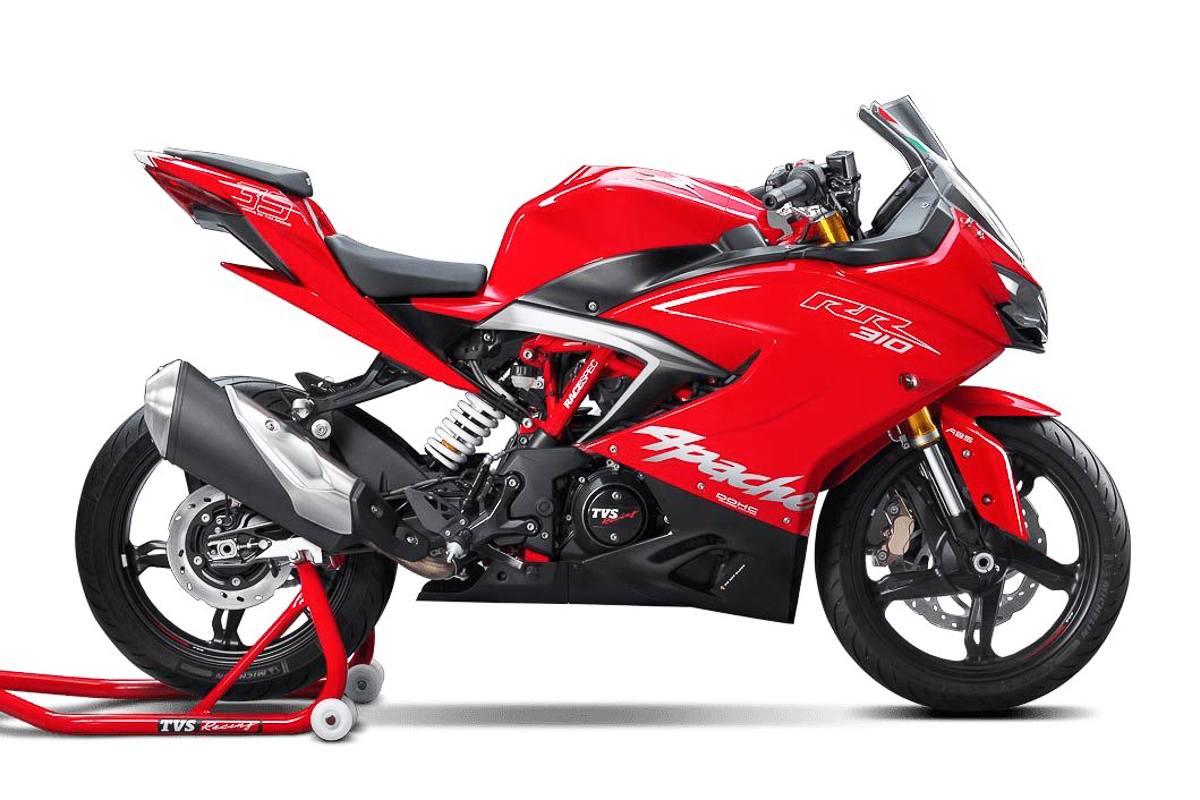
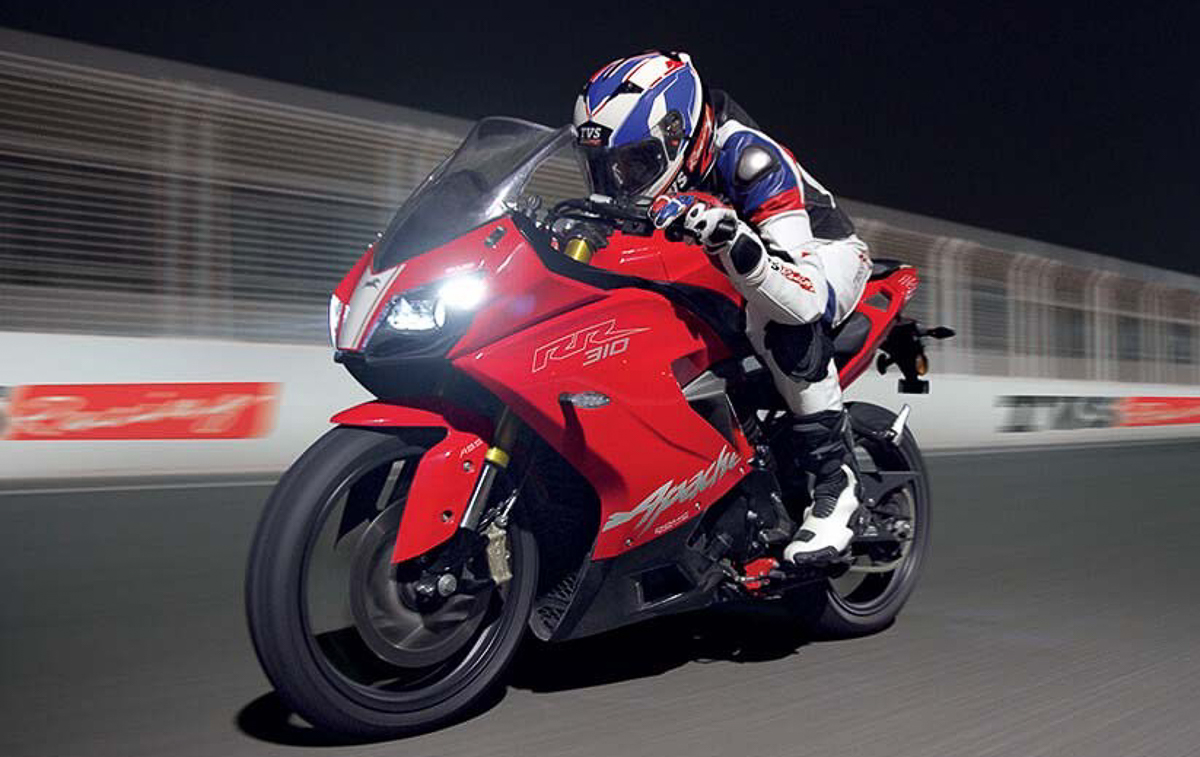
The highly-awaited 2018 TVS Apache RR 310 has been launched yesterday which thanks to a joint-partnership between TVS Motor Company and BMW Motorrad.
Using the same 313cc single-cylinder engine and chassis as the 2017 BMW G 310 R and BMW G 310 GS, the Apache RR 310 punches out 34hp and 28Nm of torque.
The 2018 TVS Apache RR 310 is priced at INR205,000 which is around RM19,975 (direct conversion)
After almost one year filled with setbacks and delays, the 2018 TVS Apache RR 310 has finally been launched yesterday in India. The joint partnership between BMW Motorrad and India’s TVS has resulted in the birth of what some say the next generation entry-level sports bike. (more…)
Not all engines look alike and a few are truly beautiful.
They not only belong to legendary bikes but they made the bikes legends.
Yes, the engine is the heart of the motorcycle. But while non-bikers are confused by how a lump of metal could do stir up so much emotions in us, to us they’re mechanical porn. Here are the best-looking motorcycle engines, in no particular order.
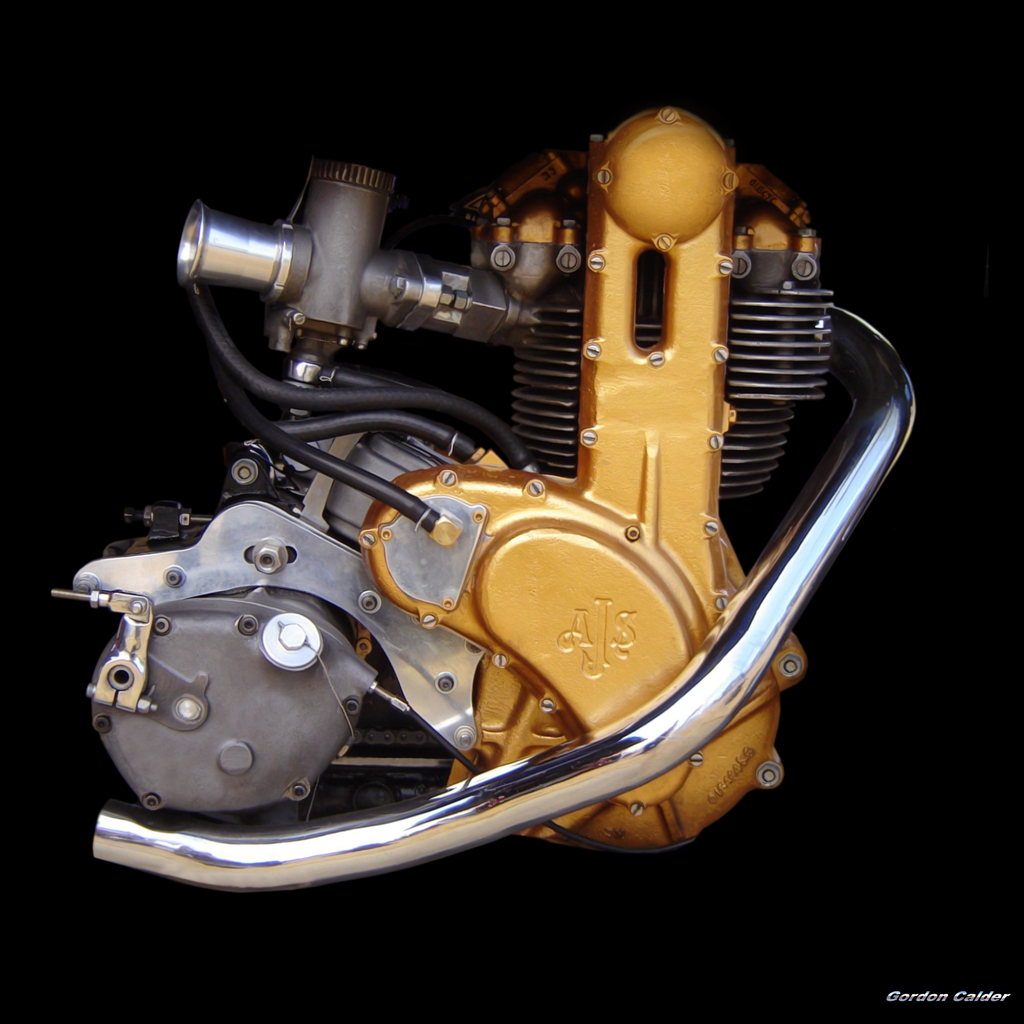
1. AJS 7R
The AJS 7R was a 350cc race bike built from 1948 to 1963. Commonly known as the “Boy Racer,” it won victories for both the factory and privateers from its inception.
Designed by Phil Walker, the single overhead camshaft (SOHC) was driven by a chain from the outside of the engine block, hence the “tower cover.” That cover and cylinder head cover were painted gold contrasting against the gray and black parts of the engine.
AJS 7R engine – Courtesy of over-blog.com
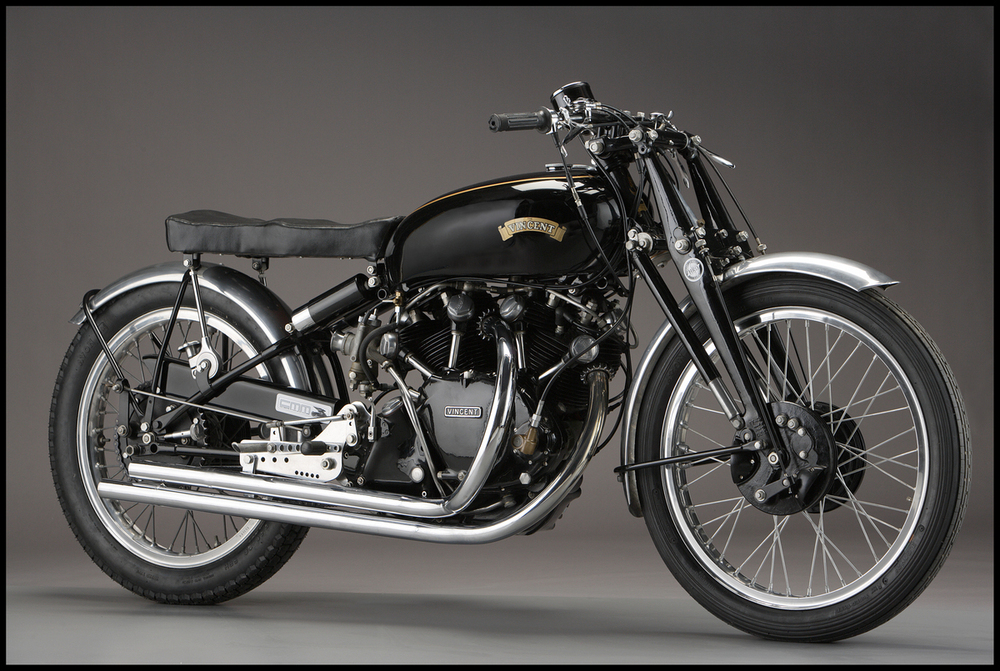
2. HRD Vincent Black Shadow/Black Lightning
The 1948 HRD Vincent Black Lightning was the race bike spawned from the Black Shadow.
It was the fastest production bike of its time, and widely acknowledged as the first superbike.
HRD Vincent Black Lightning – Courtesy of singout.org
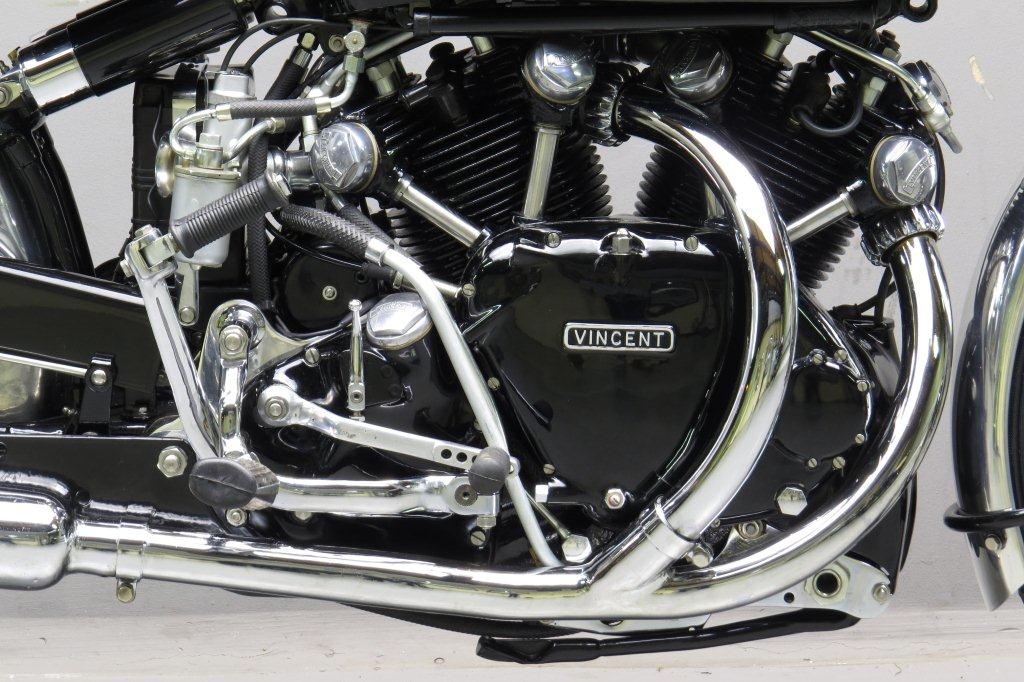
The Black Lightning was stripped down and its 998cc, air-cooled, pushrod, overhead valve (OHV), 47.5-degree V-Twin on the Black Lightning had stronger connecting rods, larger intake ports, polished rocker gear, steel idler gears, racing carbs and manual-advance magneto, pushing it to a top speed of 240 km/h.
HRD Vincent Black LIghtning engine – Courtesy of yesterdays.nl
Yes, yes, 240 km/h is attainable by most middleweight bike these days, but look at those skinny tyres the Vincent rolled on!
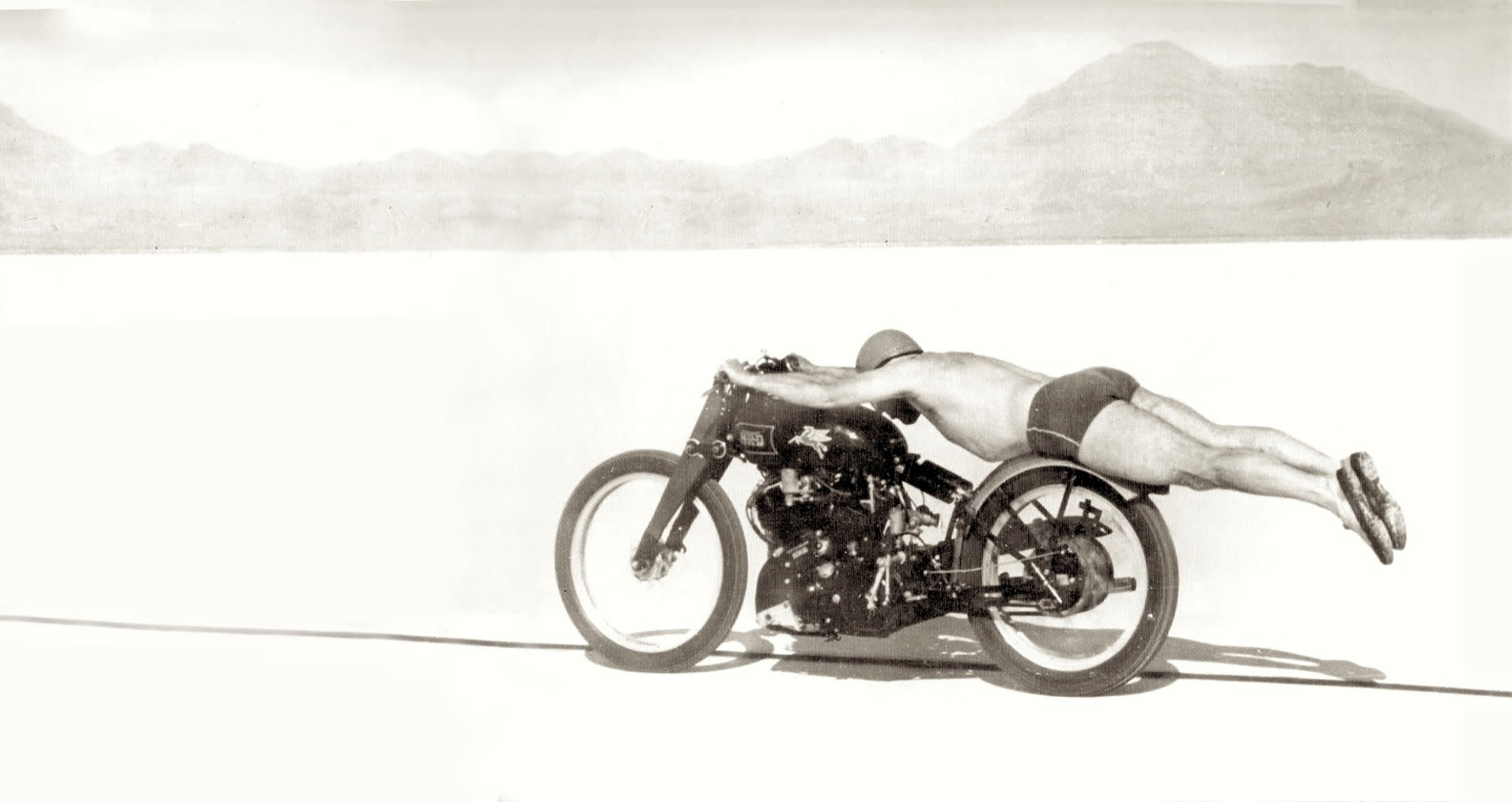
In September 1948, Rollie Free attempted to break US national motorcycle speed record at the Bonneville Salt Flats. He could only reach 239.1 km/h during practice so he stripped down to his swimming shorts, rubber cap and sneakers for the final run and hit an average of 241.905 km/h (regulations required two runs). That bike became known as the “Bathing Suit Bike.”
Rollie Free – Courtesy of americanmotorcyclist.com
But it’s the level of attentiveness to detail and quality that made Vincents’ engines true works of art. Sadly, it was that kind of passion which made them time- and cost-consuming to produce.
Only 31 Black Lightnings were ever built.
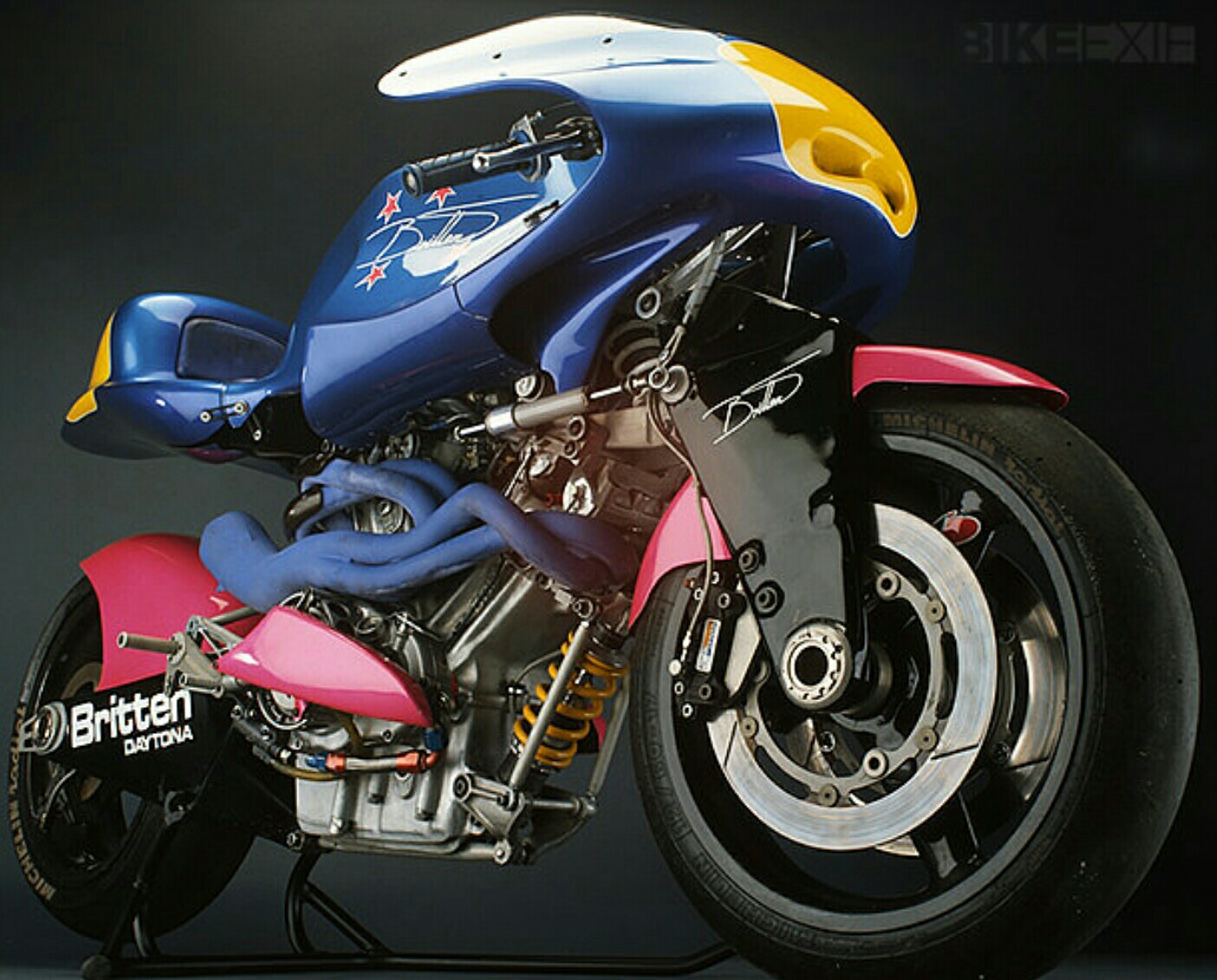
3. Britten V1000
Frustrated with the lack of parts and reliability of stock engines, New Zealander John Britten decided to do the impossible: Building his own bike and engine.
Working from his home shed with a few buddies, he came up with a creation in 1991 that not only looks radical, but went on to dominate the Battle of the Twins championship over the factory bikes.
John Britten passed away in 1995 and only ten plus the one initial bike were made.
Britten V1000 – Courtesy of pinimg.com
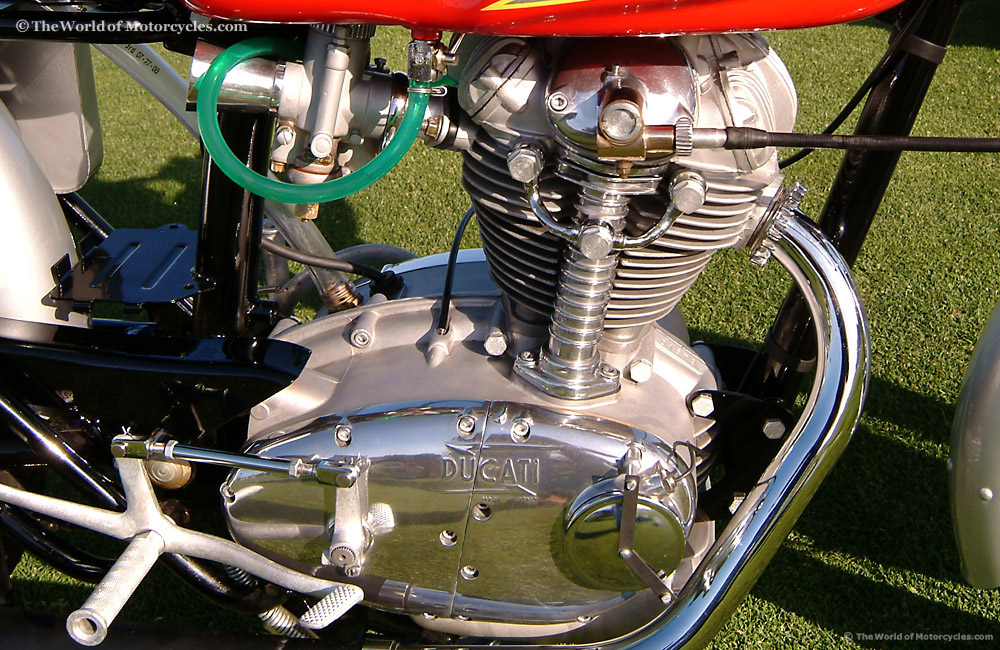
4. Ducati Singles
Fabio Taglioni adapted the desmodromic valve drive to Ducatis to combat valve float (the valves staying open, thereby causing loss of compression and peak performance) at high RPM. To turn the camshaft, a vertical shaft (also called a tower shaft) on the right side of the engine sent drive up to the camshaft’s idler gears through a bevel gear.
The resulting engine design together with typical Italian attention was the purest testament in the “form follows function” sense, and the “Desmo” became the trademark of Ducati.
Ducati 250 Single – Courtesy of Vintage Motorcycle Photographs
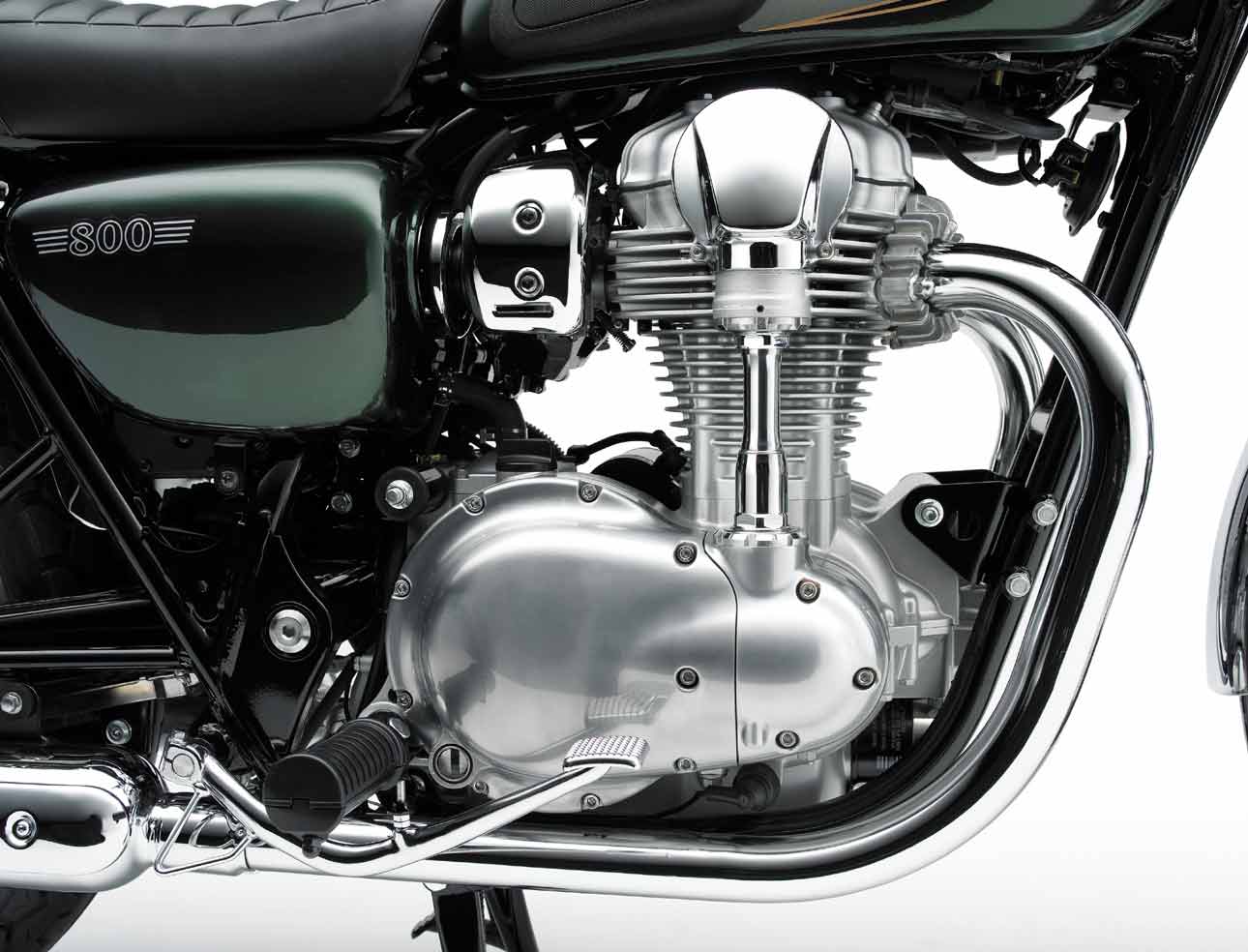
5. Kawasaki W650/W800
The bevel gear lives! Well, for a while.
Ducati’s bevel drive was soon replaced by belt and finally chain drive in the interest of simplicity and weight savings, which saw the disappearance of the tower shaft and knuckle-like bevel gear cover next to the cylinder block.
But hang on, here comes the retro Kawasaki W650 and the later W800. Such beautiful bikes deserve beautiful engines, don’t they?
Then Kawasaki announced earlier this year that the W800 will be discontinued as will not meet future emissions requirements!
NOOOO!!!
W800 engine – Courtesy of kawamotor.de
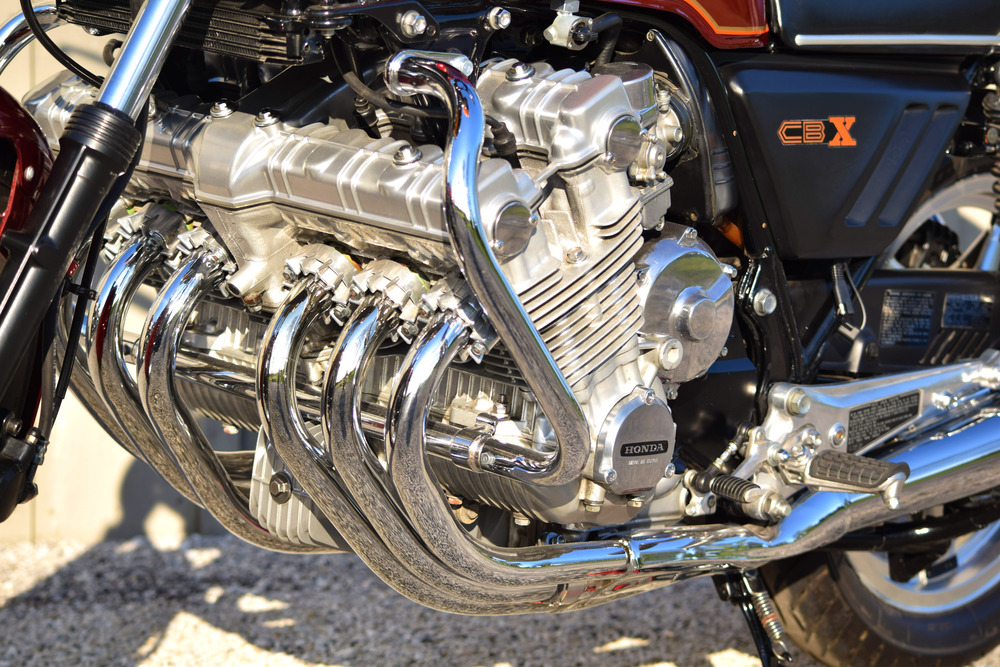
6. Honda CBX
Speaking of Kawasaki, the 1978 Honda CBX was Honda’s weapon in the titanic arms race between the two Japanese companies. Honda’s wants to reclaim the world’s fastest production bike crown which it lost to the Kawasaki Z1.
Featuring a 105 bhp, 1047cc, air-cooled, DOHC, 24-valve, inline-Six, with six carburetors, it hit a top speed 216 km/h. But that’s just part of the story. The 1979 CBX blew through the ¼-mile run in 11.36 seconds, at 189.82 km/h.
The engine looks large and ungainly in the bike, but it’s only big at the top. The lower parts of the engine were made narrower but moving the alternator and final drive away to other locations to provide more ground clearance for spirited cornerning.
Honda CBX engine – Courtesy of squarespace.com
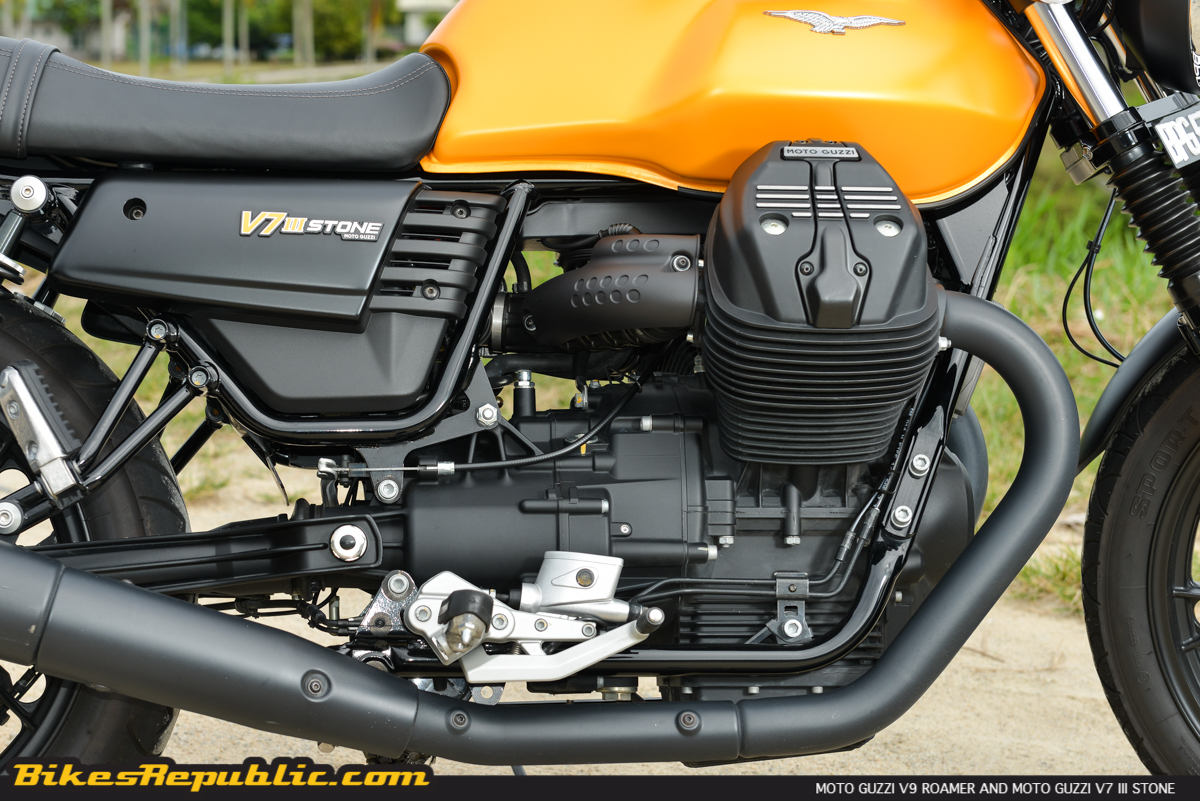
7. Moto Guzzi V-Twin
There’s no mistaking the Moto Guzzi V-Twin, with both cylinders sticking out the side. This transverse mounting uses the airflow to help cool cylinders and their alloy rocker covers, learned from aircraft experience, instead of having both cylinders stuffed longitudinally along the frame.
The deep, finned oil sump design has also survived to this day.
The newer engines such as the 843cc unit powering the V9 series and 744cc unit powering the V7 series are now fully Euro4 compliant, and are much smoother and easier to live with.
Moto Guzzi V-Twin
8. Triumph Twin
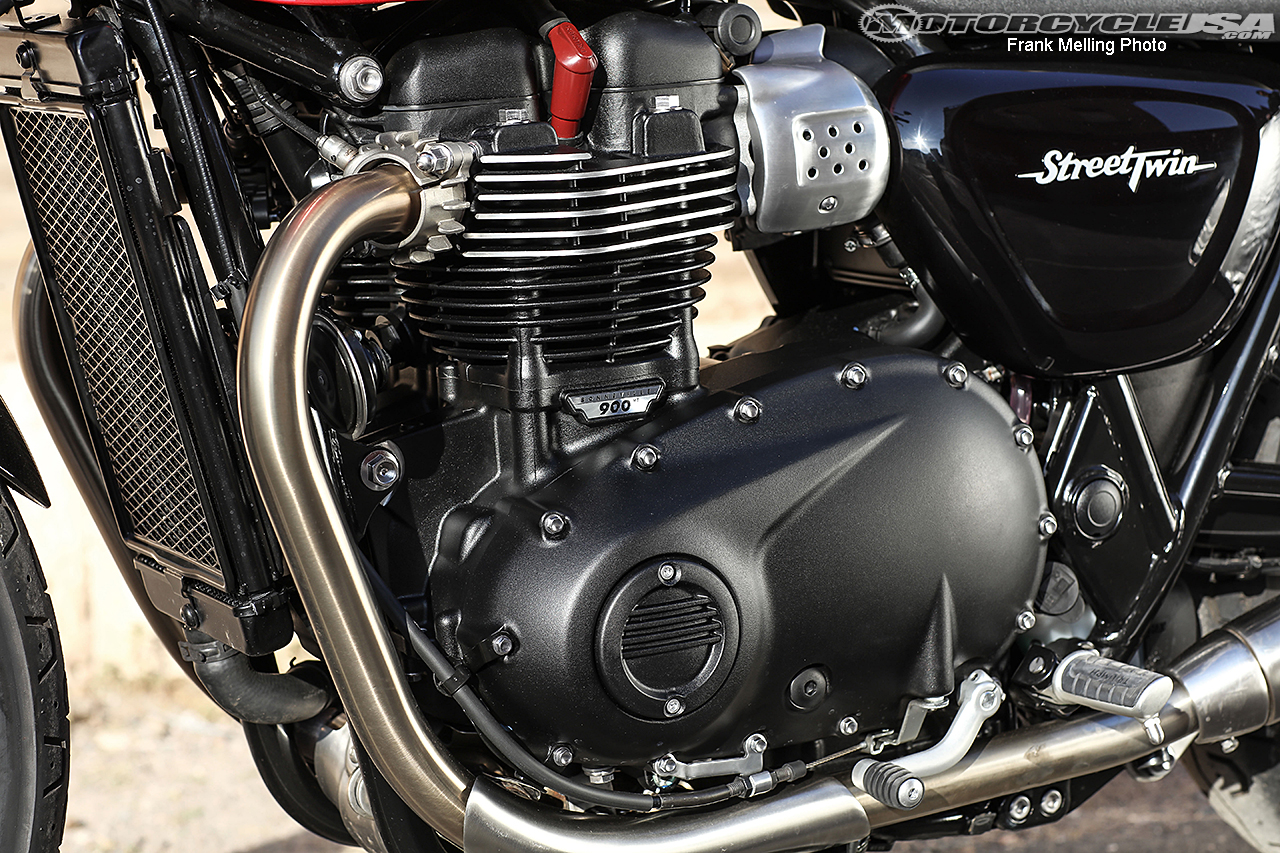
Whether in pre-unit form or the later iterations, Edward Turner’s created an icon. From the timing cases to the angular cylinder and finning around the cylinder block, the Triumph Twin is a distinctively beautiful power unit.
The essential design has been carried forward to the current crop of Triumph modern classics, never losing its trademark and appeal in spite of liquid-cooling.
Triumph Twin – Courtesy of motorcycle-usa.com
9. Harley-Davidson V-Twin
How does one argue with something that has become an icon over so many decades?
Sure, one could argue that there isn’t much innovation or substantial power gain in the Motor Company’s V-Twins, but that’s not the point.
In any way you look at it, H-D’s 45-degree V-Twins (both the Big Twin and Sportster Evolution) form the focal point of all Harleys (except for the V-Rod) and that’s why so many customizers still prefer the Harley V-Twin (along with the aftermarket engines from S&S) as the starting point of their creations.
10. Suzuki “Square Four”
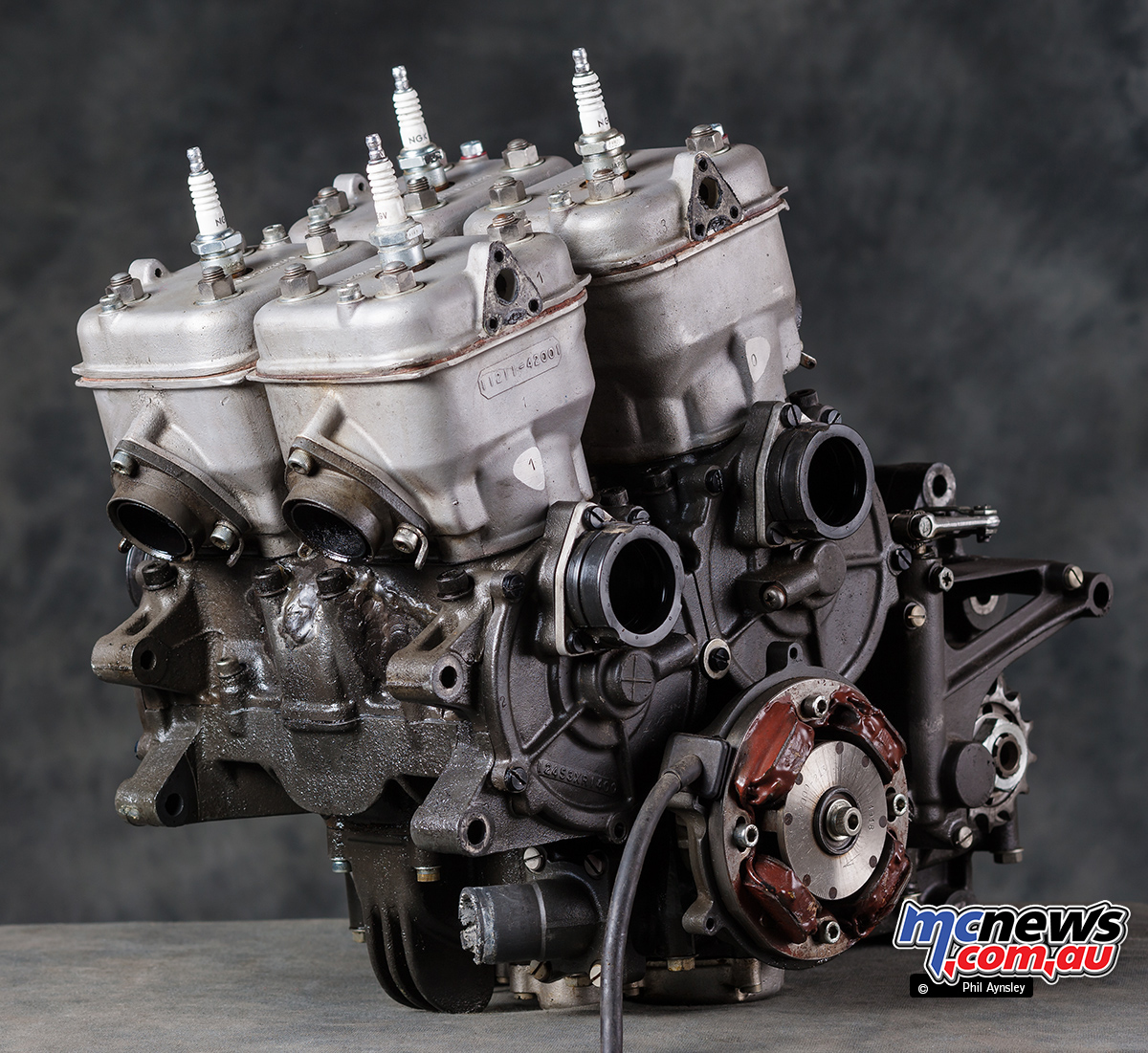
The Suzuki RG500 “Gamma” was built between 1985 and 1987, directly inspired by the RGB500 Grand Prix machine which won 7 consecutive constructors titles in the 500cc class with riders such as Barry Sheene.
The 498cc, liquid-cooled, two-stroke, twin-crank, rotary valved, four-cylinder engine had its cylinders arranged in a square configuration, hence the common pet name of “Square Four.” All four cylinders were arranged on the same plane in the earlier versions, while the later versions saw the front two and rear two staggered for better placement in the frame and weight distribution.
It was also the last 500cc two-stroke race replica ever built (the Bimota V-Due didn’t work).
The 2018 TVS Apache RR310S is just a few hours from its grand debut which is about to be launched in India.
TVS together with BMW Motorrad collaborated to build the latest entry-level sports bike.
This is why the latest TVS Apache RR310S will be using the same 313cc single-cylinder engine found in the 2017 BMW G 310 R and BMW G 310 GS.
With only a few hours remaining until the official debut of the highly-awaited 2018 TVS Apache RR310S in India, the latest entry-level sports bike into the market is said to bring some serious heat to other manufacturers in the category. (more…)
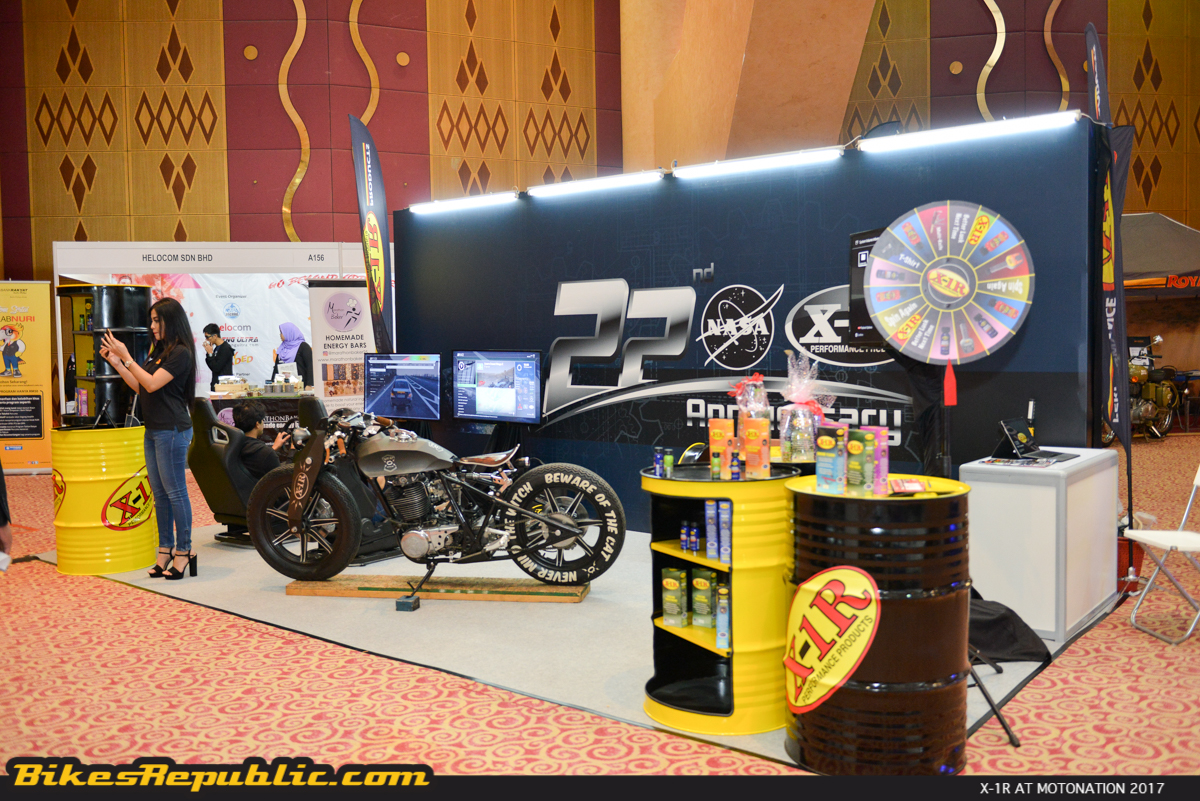
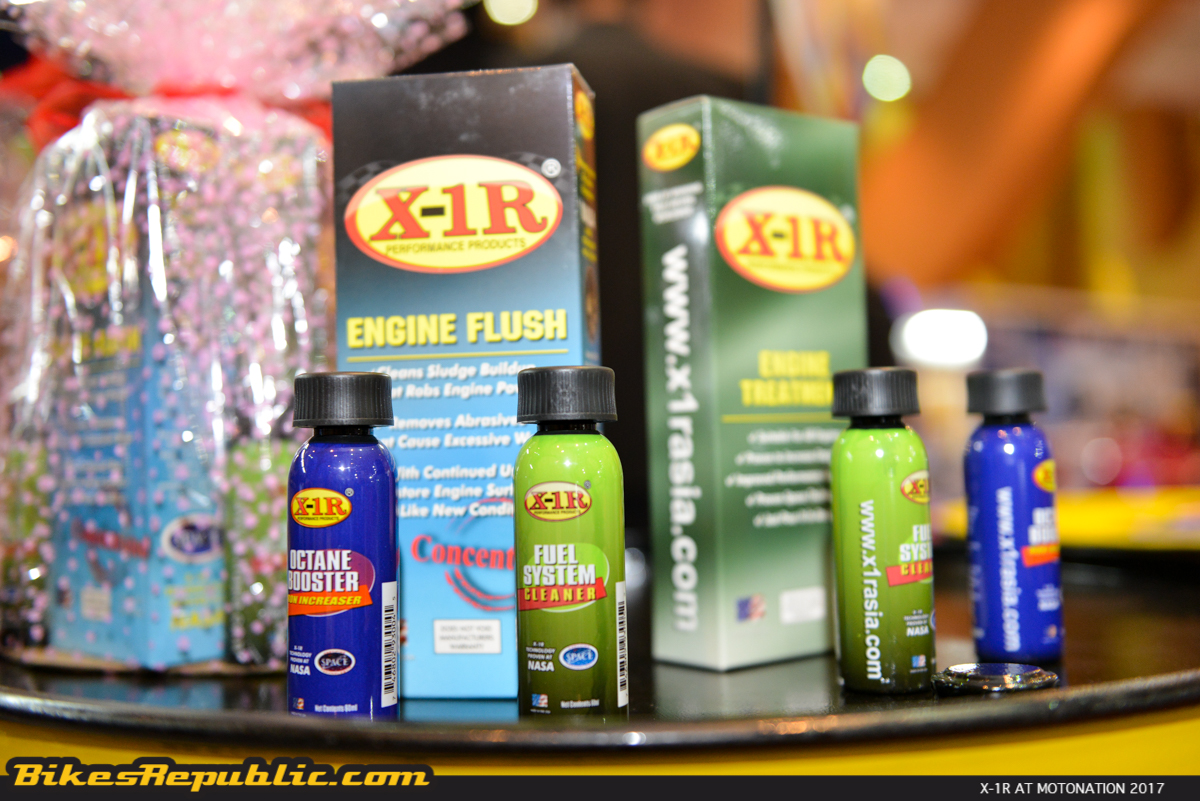
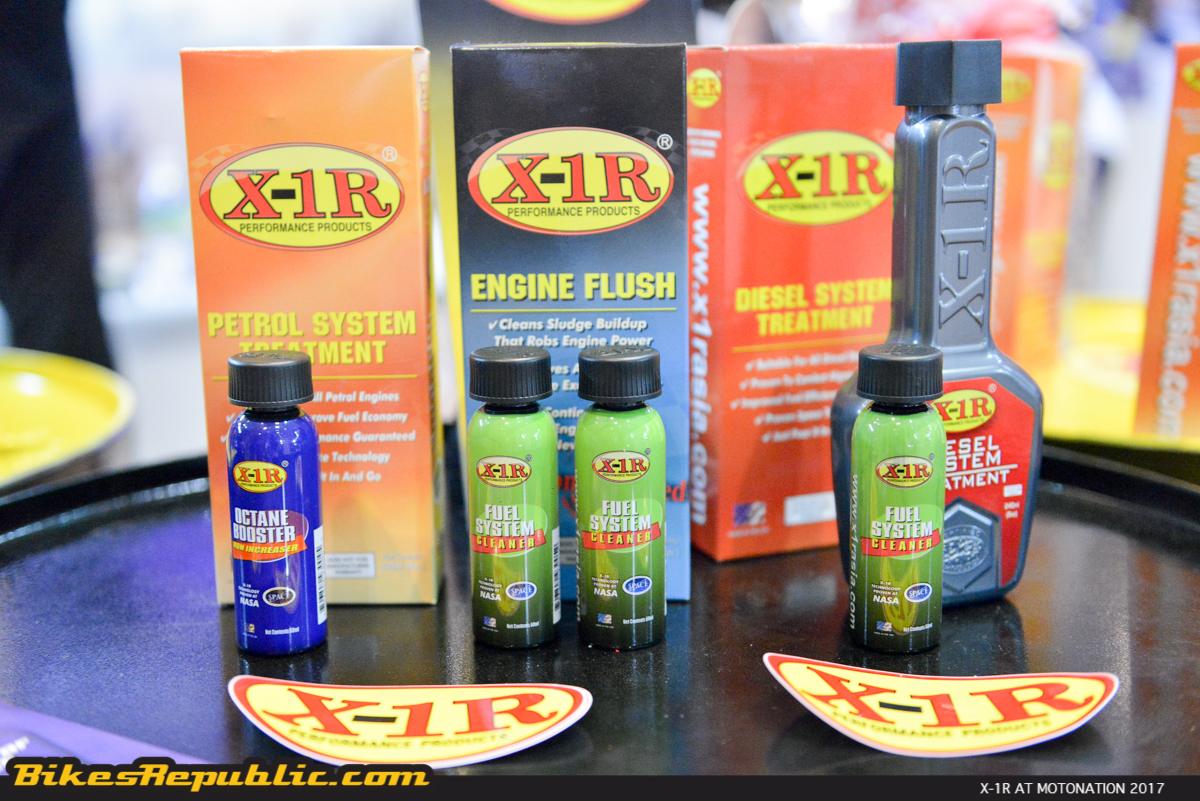
X-1R’s appearance at Motonation 2017 was good to highlight the benefits of supplementary products to your bike and car.
All the products were highlighted during the event.
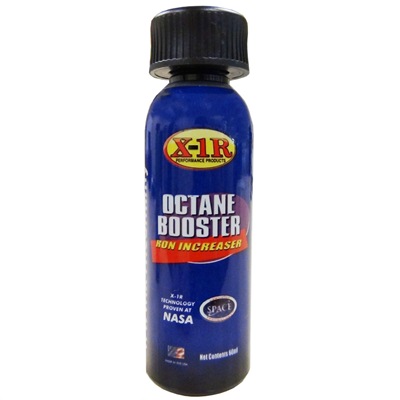
Most of the products can be safely used in motorcycles.
X-1R has been anonymous with automotive engine protection products and what better way to highlight them than at the recent Motonation 2017 grand finale at PICC.
X-1R has been working together with the American National Aeronautics and Space Administration (NASA) for the past 22 years, and such, their products are “Space Certified.” Their lubricant is especially used in “The Crawler,” the vehicle which transports the assembled space vehicles such as the Space Shutter and other rockets from their assembly buildings to the launchpad.
The know-how gained from this venture is what gives this company the edge in engine and mechanical protection in the gruelling real-world driving scenarios.
During Motonation, X-1R Asia had displayed and sold their world-famous products, headed by the Engine Treatment.
This product is formulated as a supplement to whatever engine oil you have in your engine and works to further reduce friction amongst the working parts. From reduced friction, benefits include increased engine life, improved fuel economy, reduced operating temperature, reduced mechanical noises and of course, increases overall efficiency and performance.
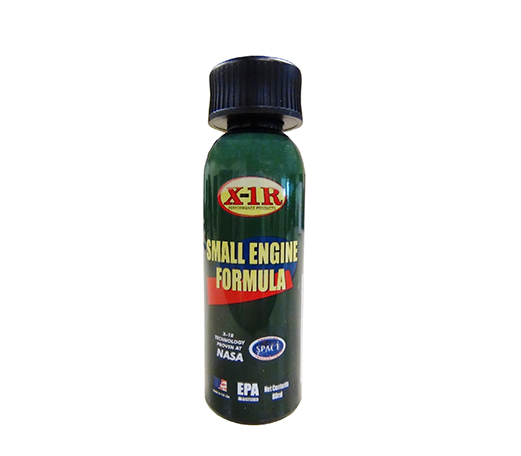
A variant of this Engine Treatment is available for motorcycles, called the X-1R Small Engine Treatment. It works to perform the same tasks.
It has long been an indispensible companion for this writer on his long-distance touring trips, especially to neighbouring countries. The product came into play during his recent trip into Cambodia and counteracted the negative effect of using fuel of suspect quality. (Click here for the report.)
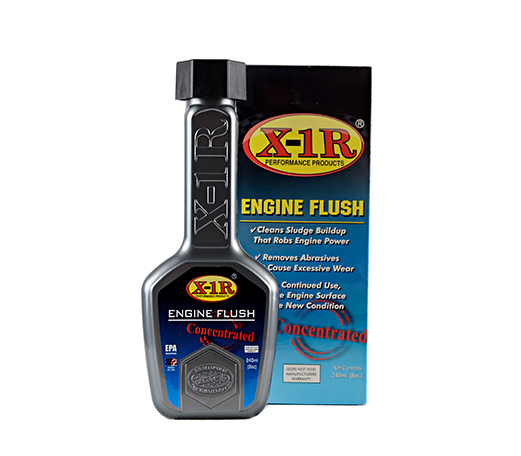
Other products included the X-1R Engine Flush, which is useful when your bike is due for an oil change. Changing the engine oil without first flushing the old oil may leave behind some residue and possibly sludge in older engines, and end up corrupting the new oil.
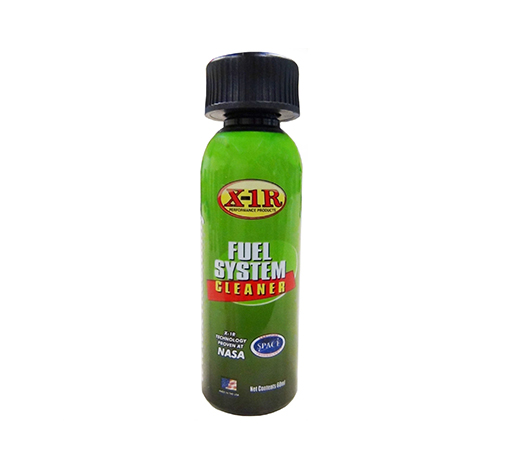
This writer has also used the X-1R Fuel System Cleaner on a few occasions, especially after letting his personal bike sit at home for many days and weeks. The compound in the product removes the gum and varnish residues left over by evaporated petrol in the tank, fuel lines, fuel pump, parts of the throttle bodies and fuel injectors.
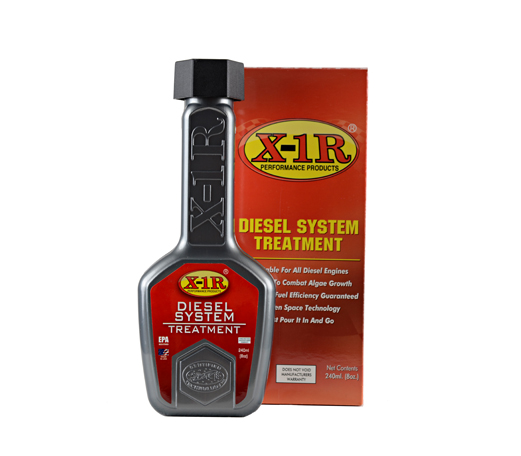
Also showcased was their Diesel System Treatment. There’s no diesel-powered bikes yet, but this product should be used for the pickups used by those who use them to transport their bikes.
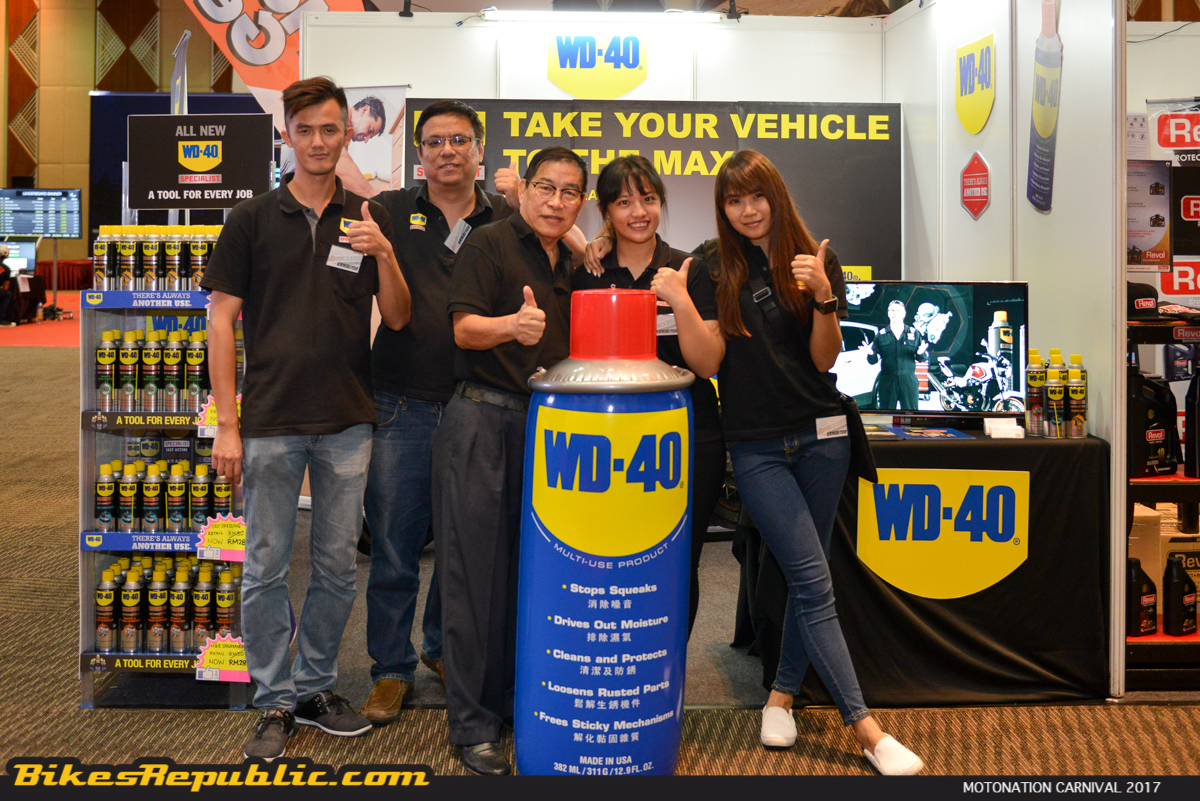
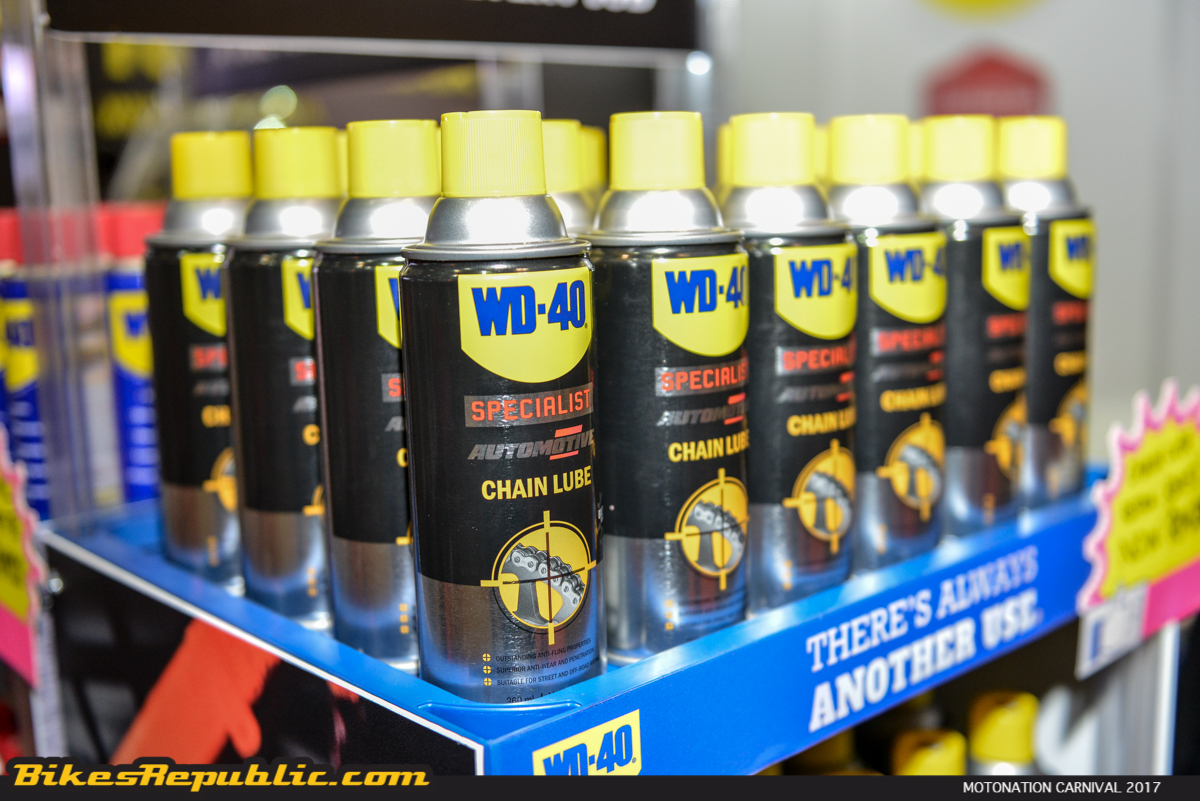
During the three-day Motonation 2017 festival held at PICC Putrajaya, WD-40® showcased all of their amazing products on offer.
The WD-40® Specialist™ Automotive range was highlighted through demonstrations performed on a KTM 1290 Super Adventure T.
The range includes Chain Lube, Belt Dressing, Machine & Engine Degrease, Throttle Body, Carb & Choke Cleaner and finally Brake & Parts Cleaner.
During the recent Motonation 2017 festival held at the Putrajaya International Convention Centre (PICC), there were many established companies who showcased all their goods and services to all those who attend. Mixed in with all the big names and manufacturers was WD-40® and their line-up of amazing products and lubricants. (more…)
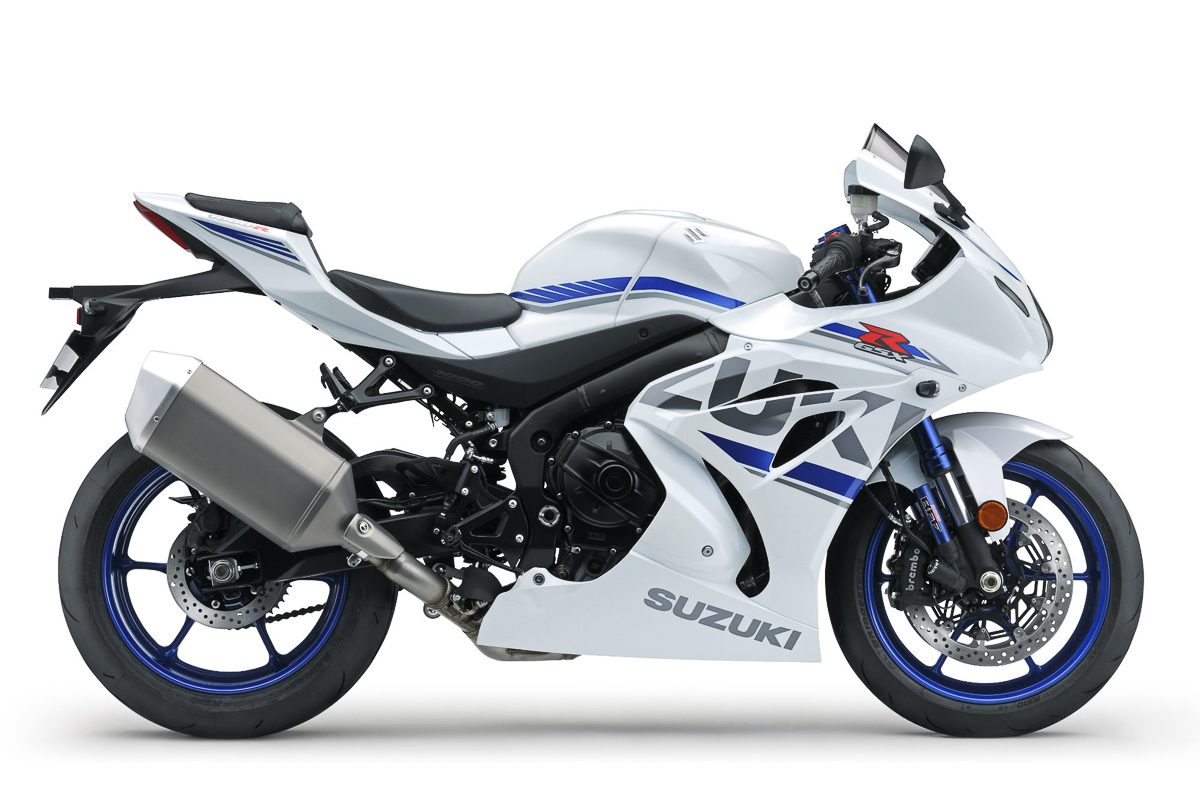
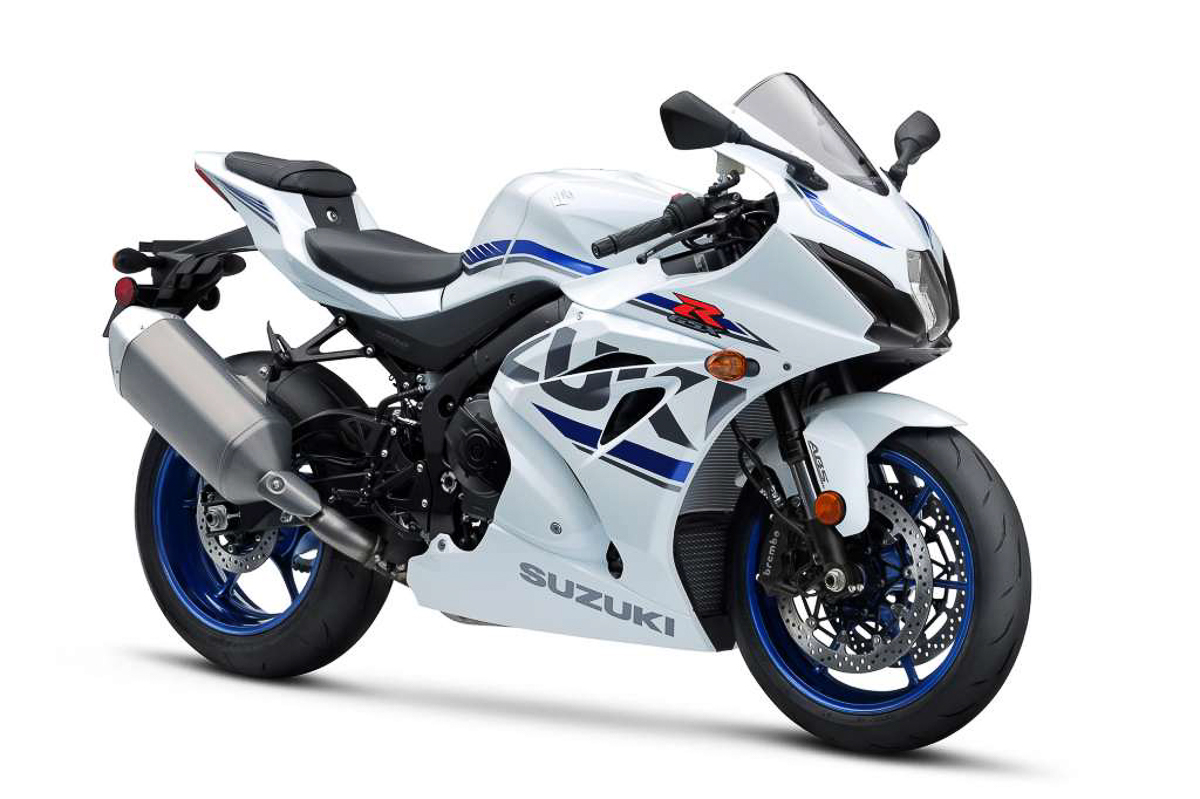
Suzuki has announced that their 2018 Suzuki GSX-R1000 and GSX-R1000R will be available in new colours for next year.
The all-new white colour scheme with blue stripes is available for both models.
Those who prefer the GSX-R1000R has another colour option which comes in a sinister black colour scheme with grey stripes.
While Suzuki’s top of the line premier superbike remains virtually unchanged for 2018, they have announced that both the 2018 Suzuki GSX-R1000 and GSX-R1000R will be available in brand new colour schemes for the upcoming year. (more…)