Bikesrepublic

Latest News

IN an age where fuel efficiency and low carbon emissions dictate the way carmakers make their cars, it comes to no surprise that hybrids have seemingly found their foothold in today’s market trends. But for most hybrids, the apparent lack of performance is what has kept it away from most of the world’s supercar owners, until very recently that is.
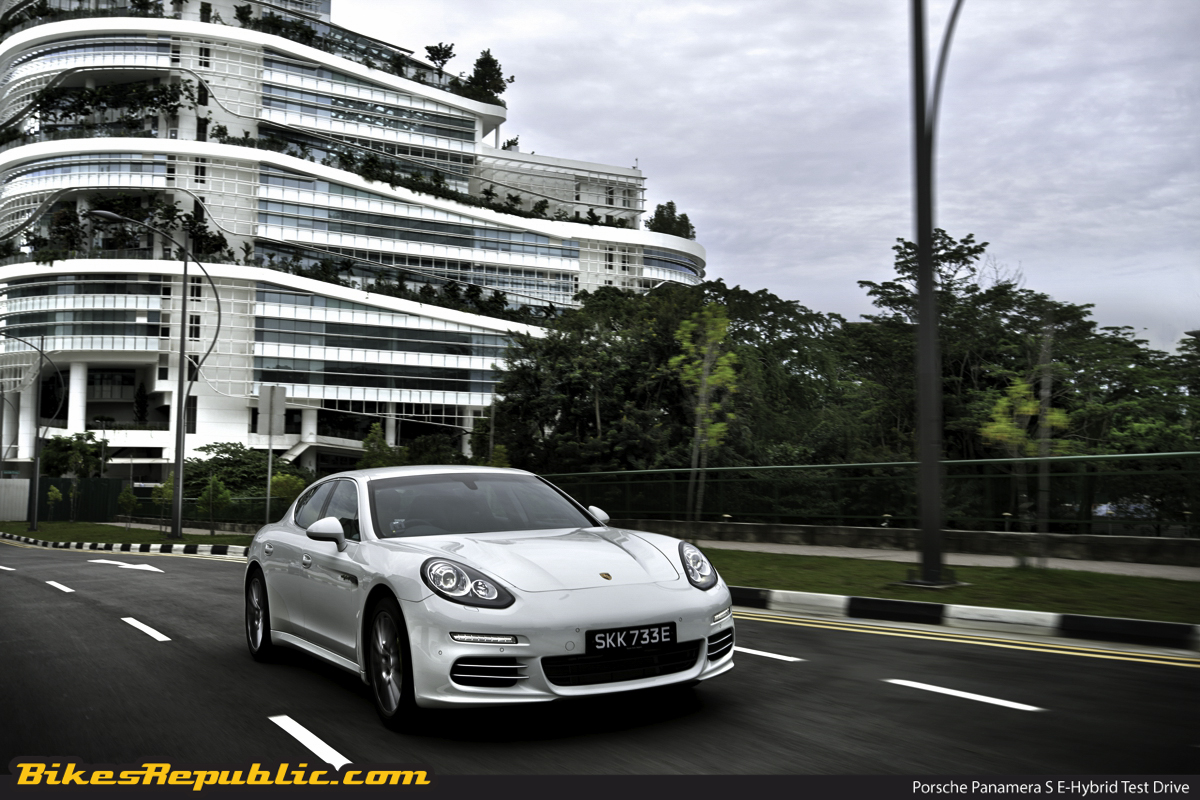
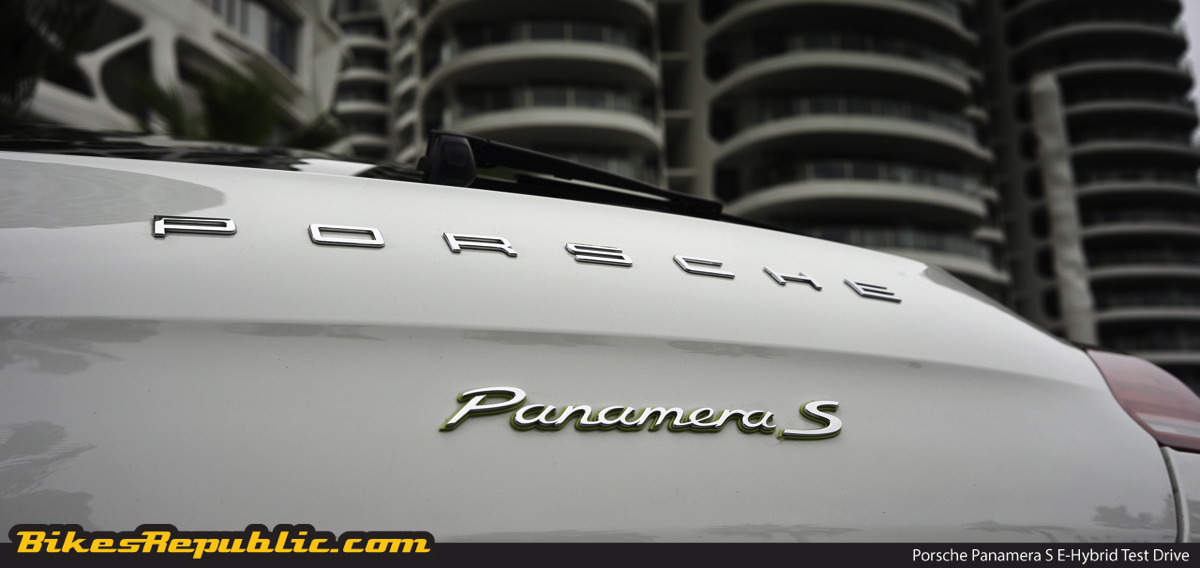
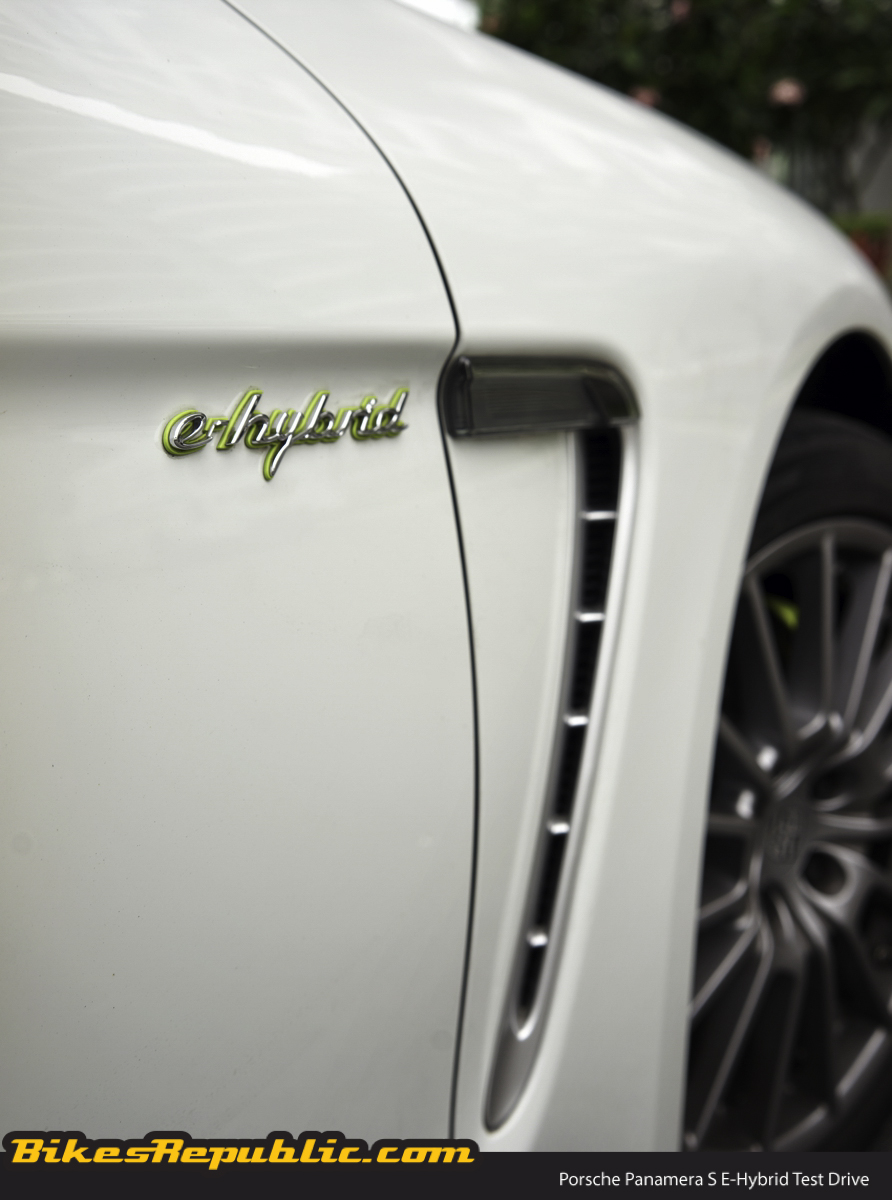
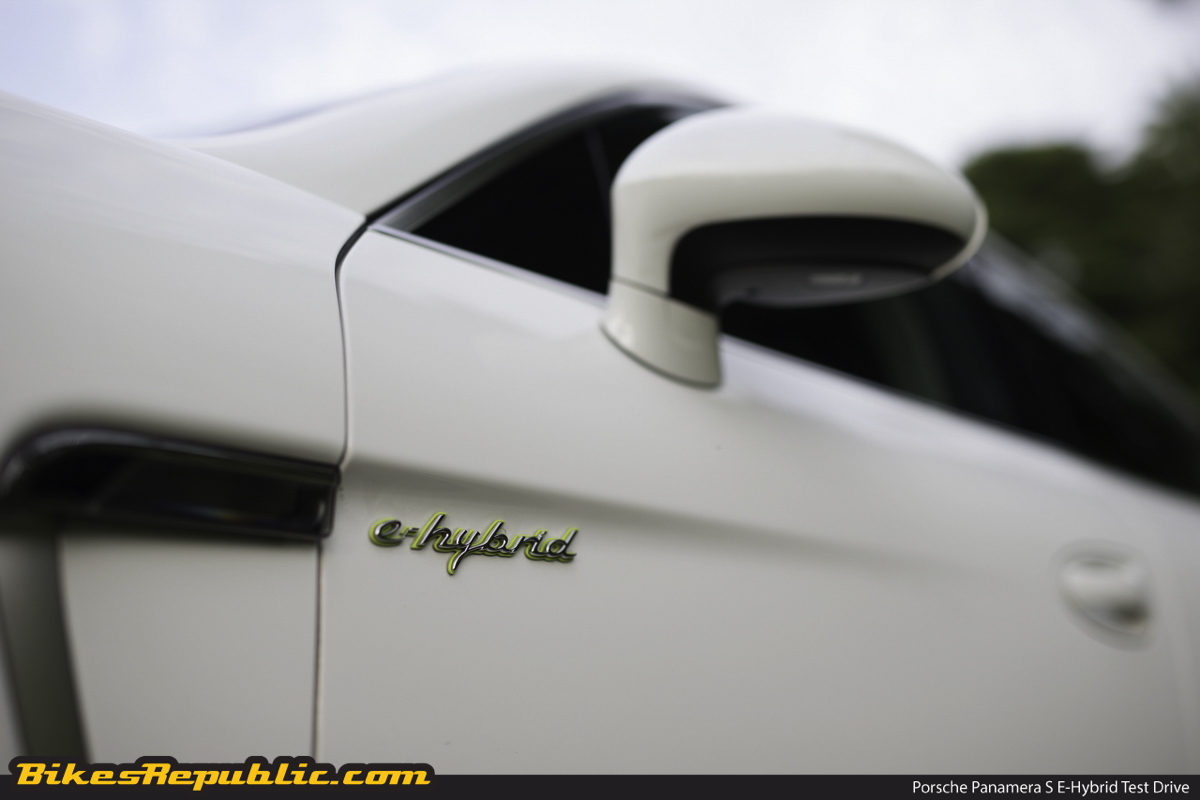
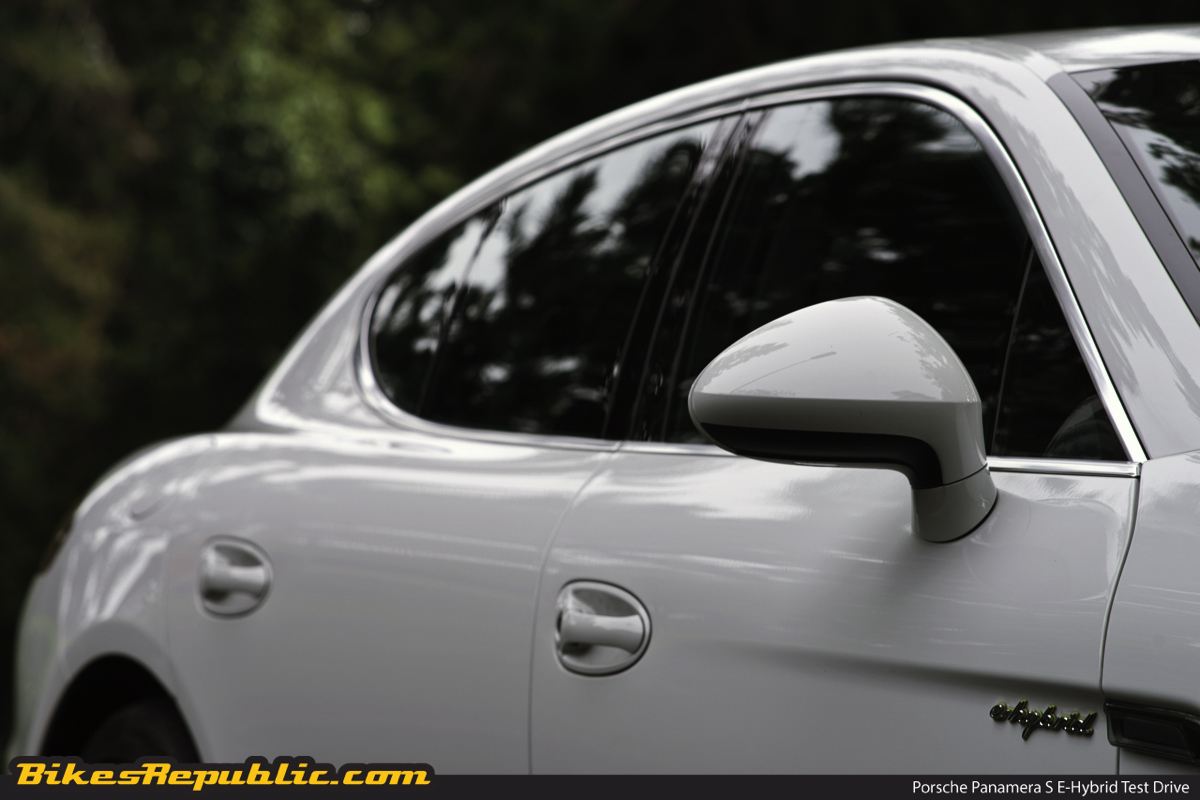
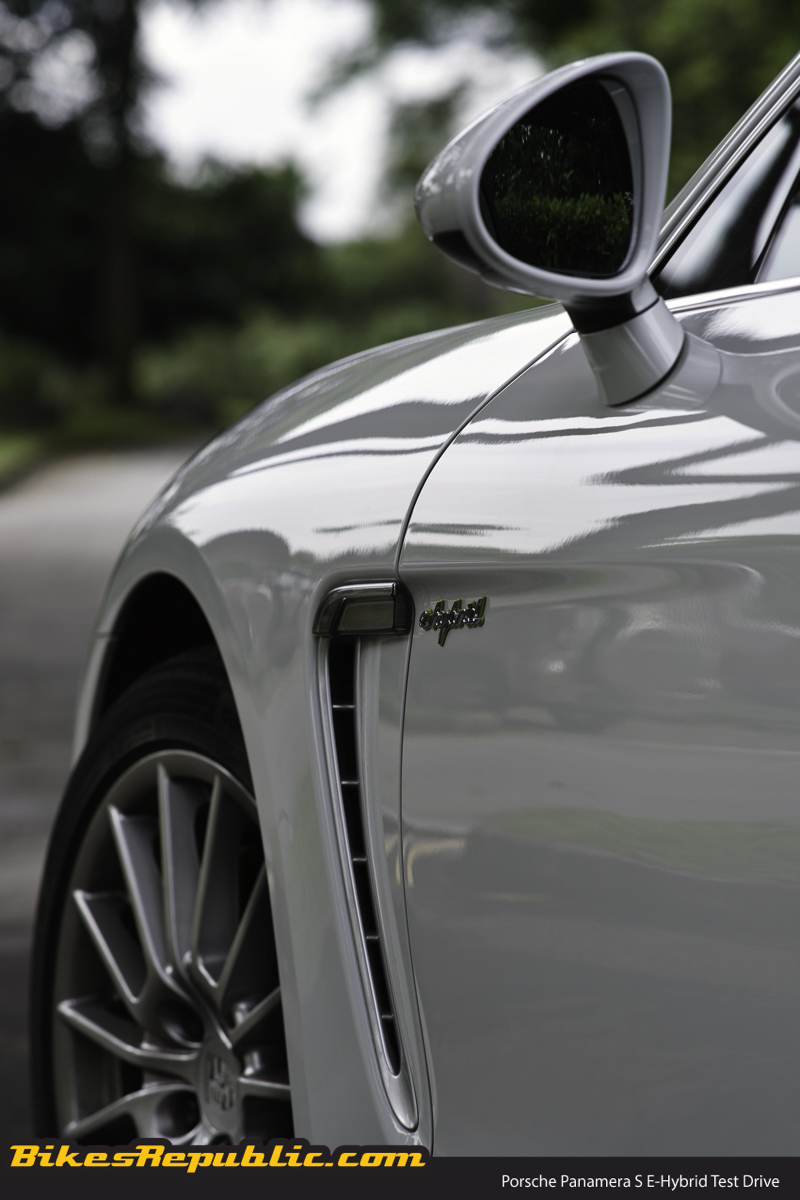
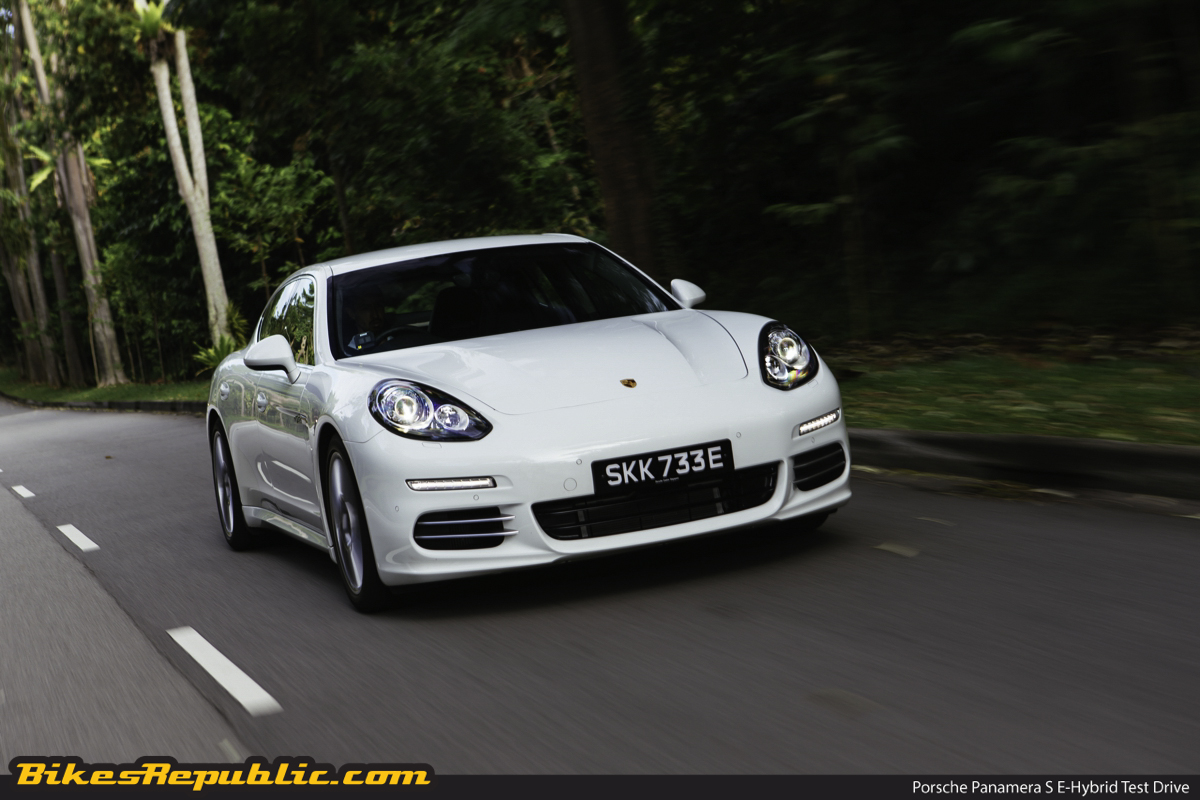
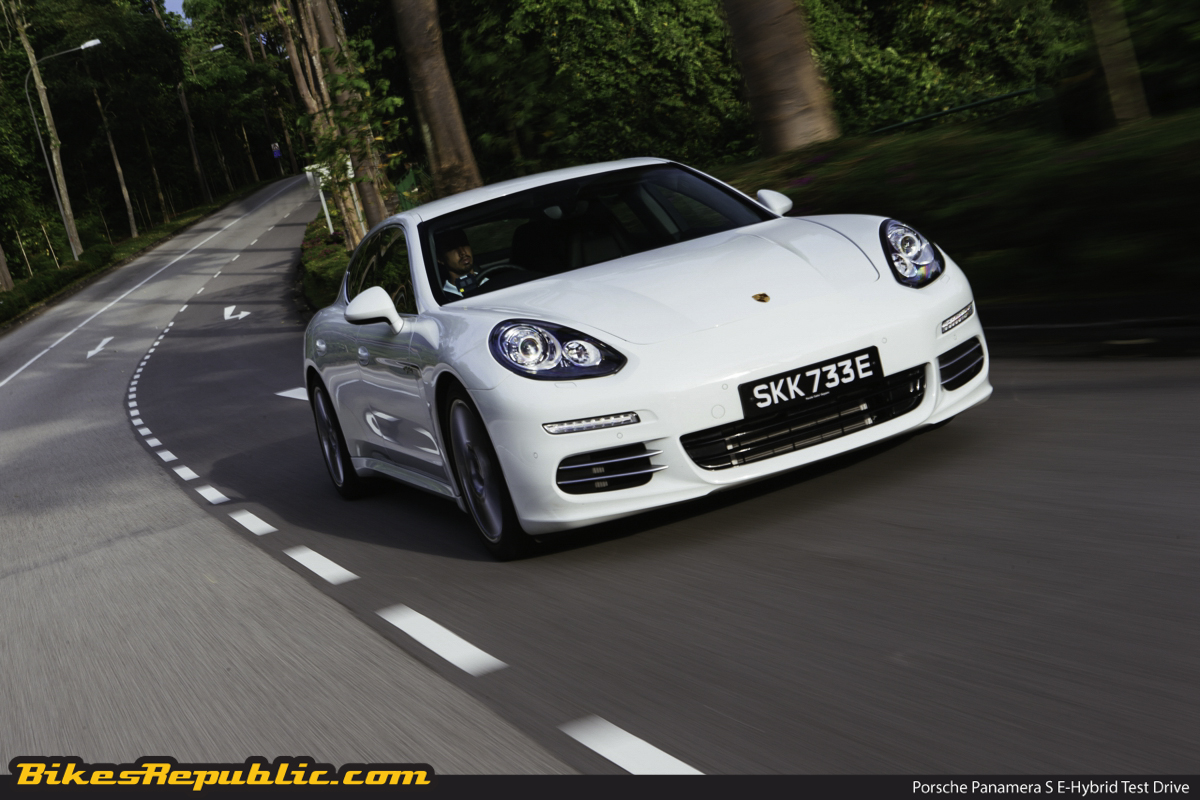
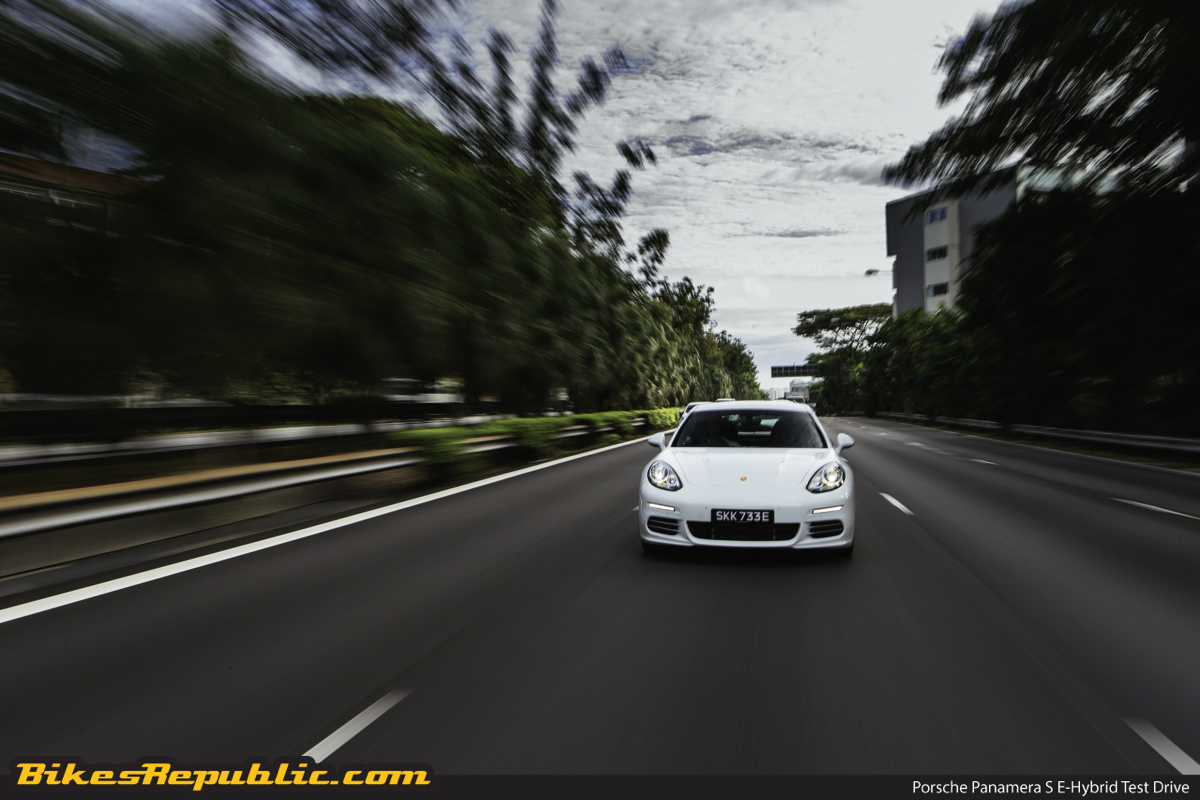
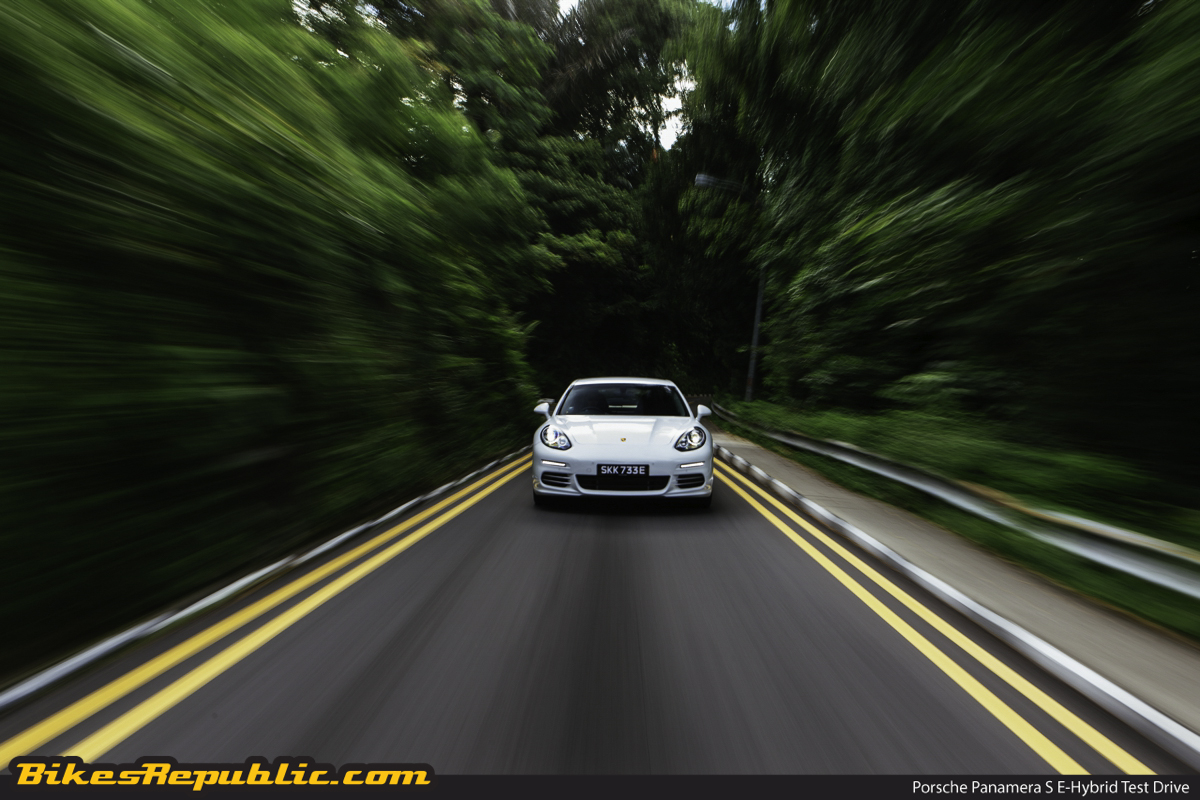
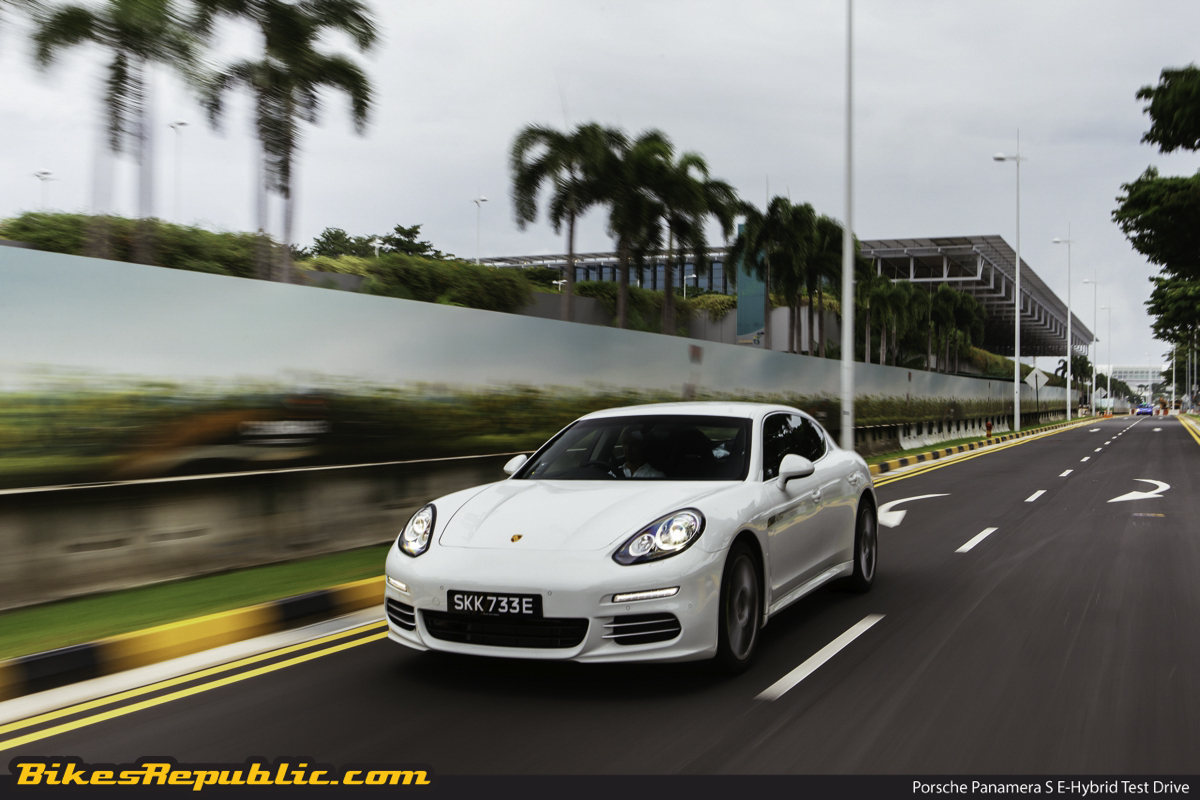
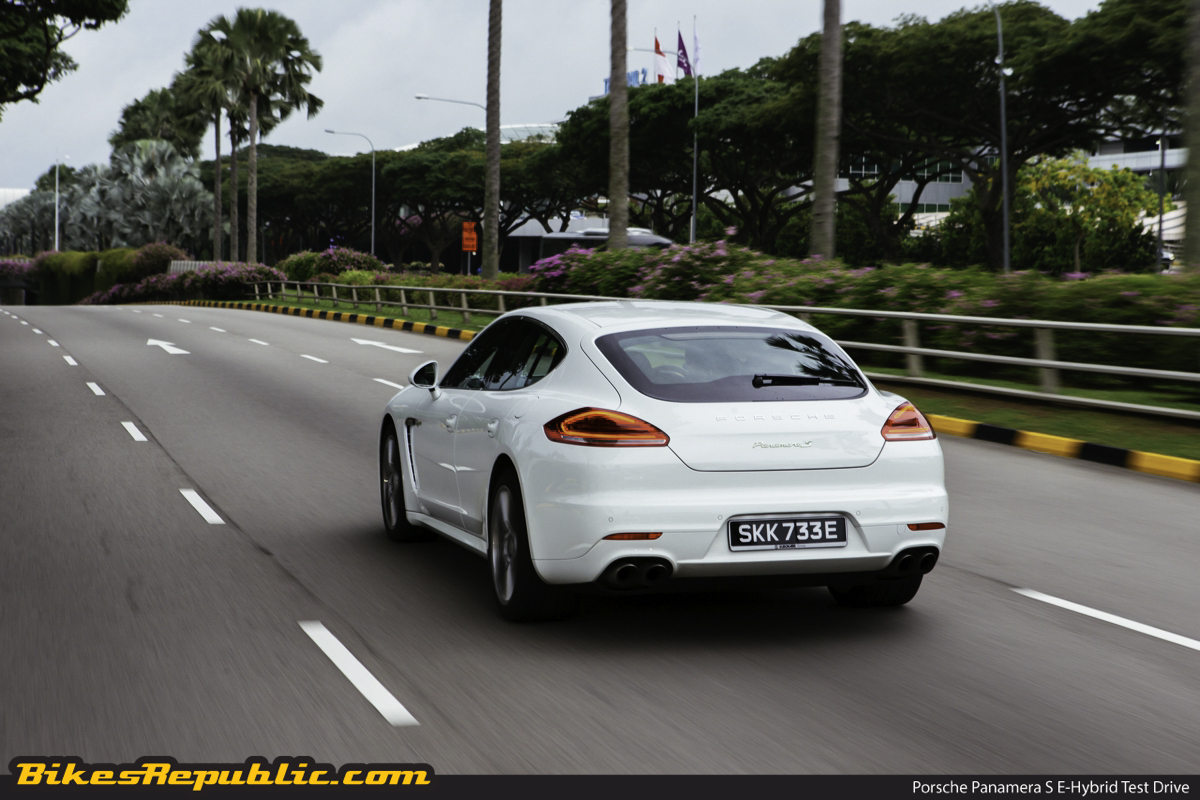
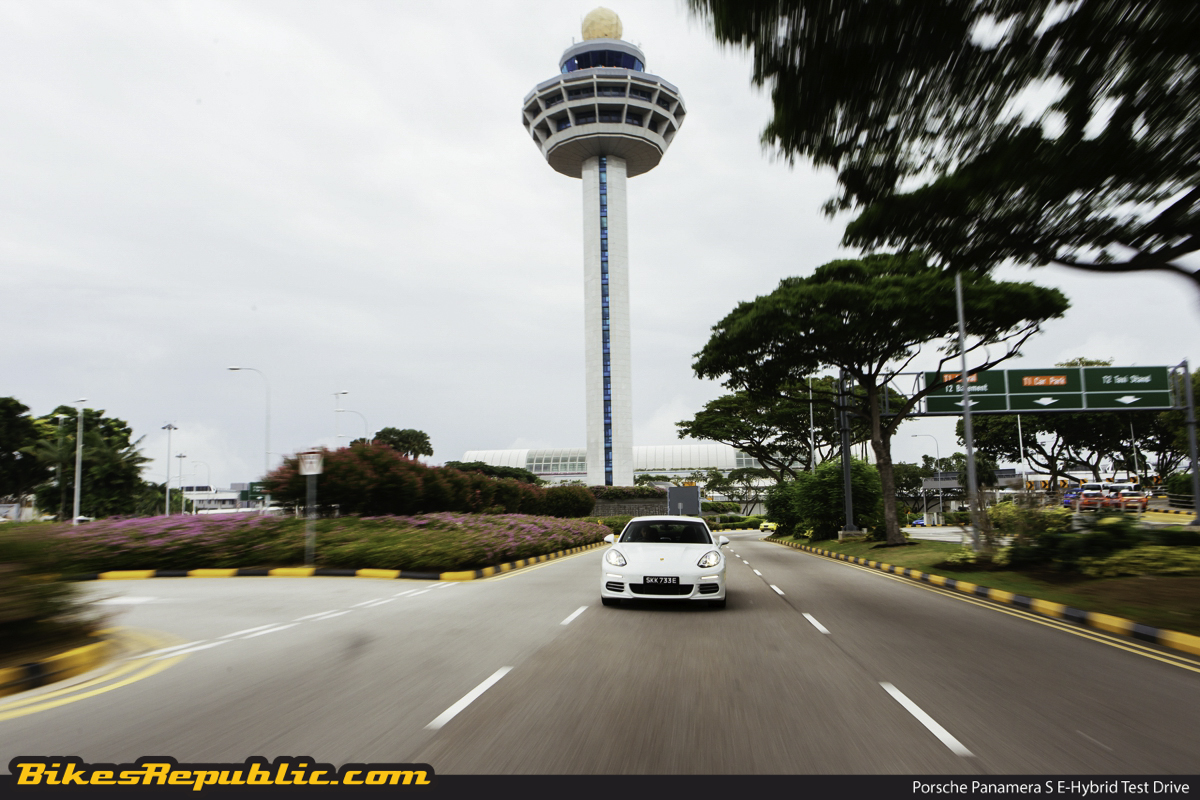
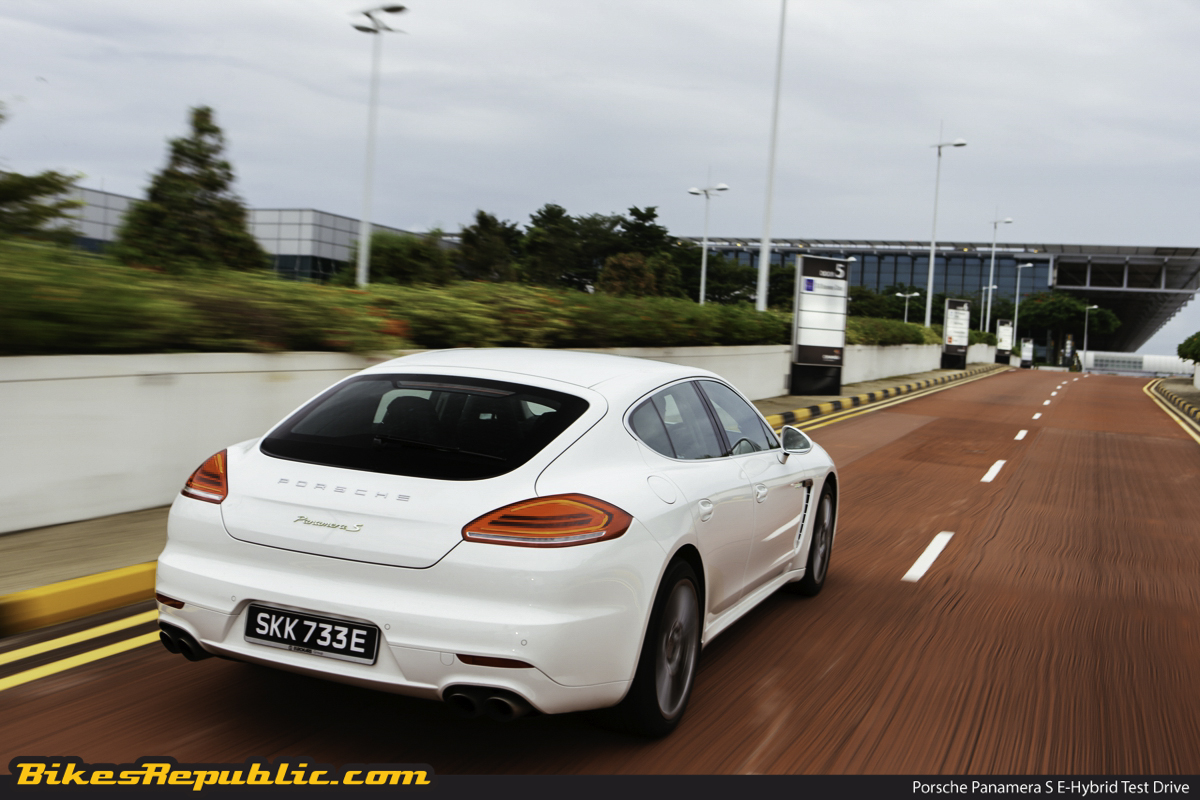
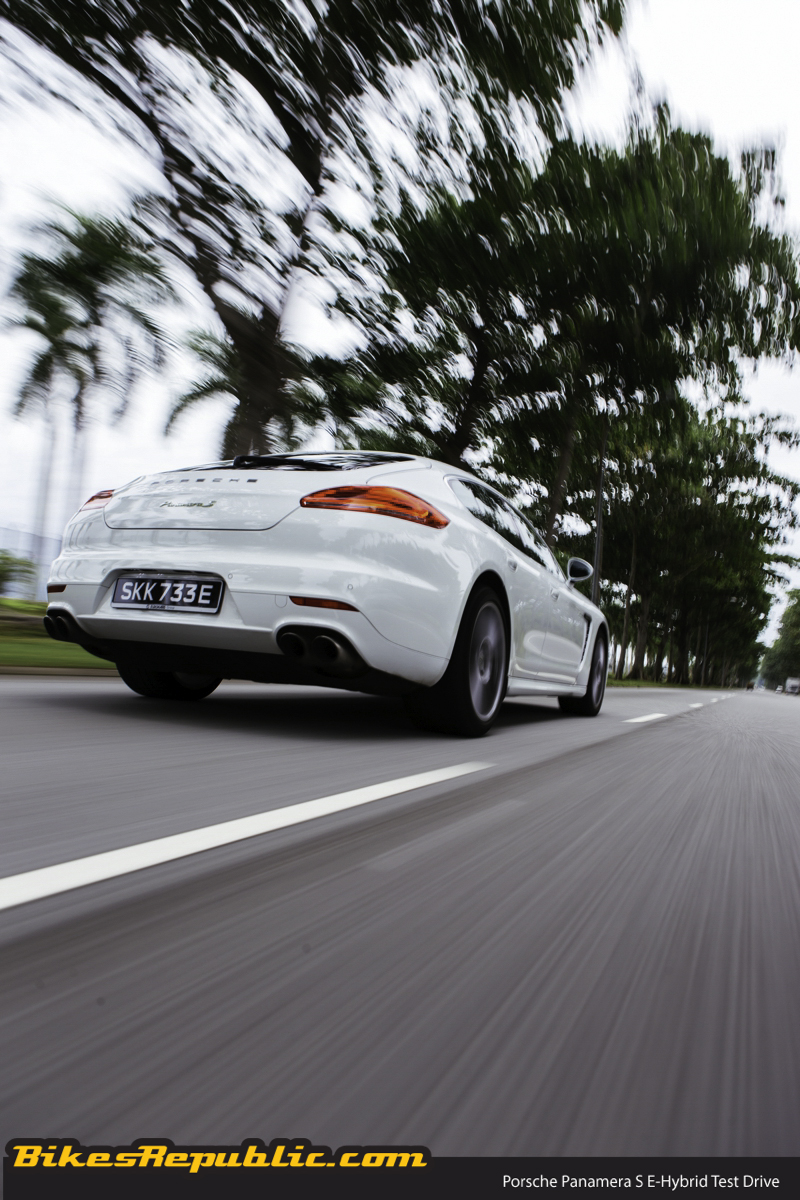
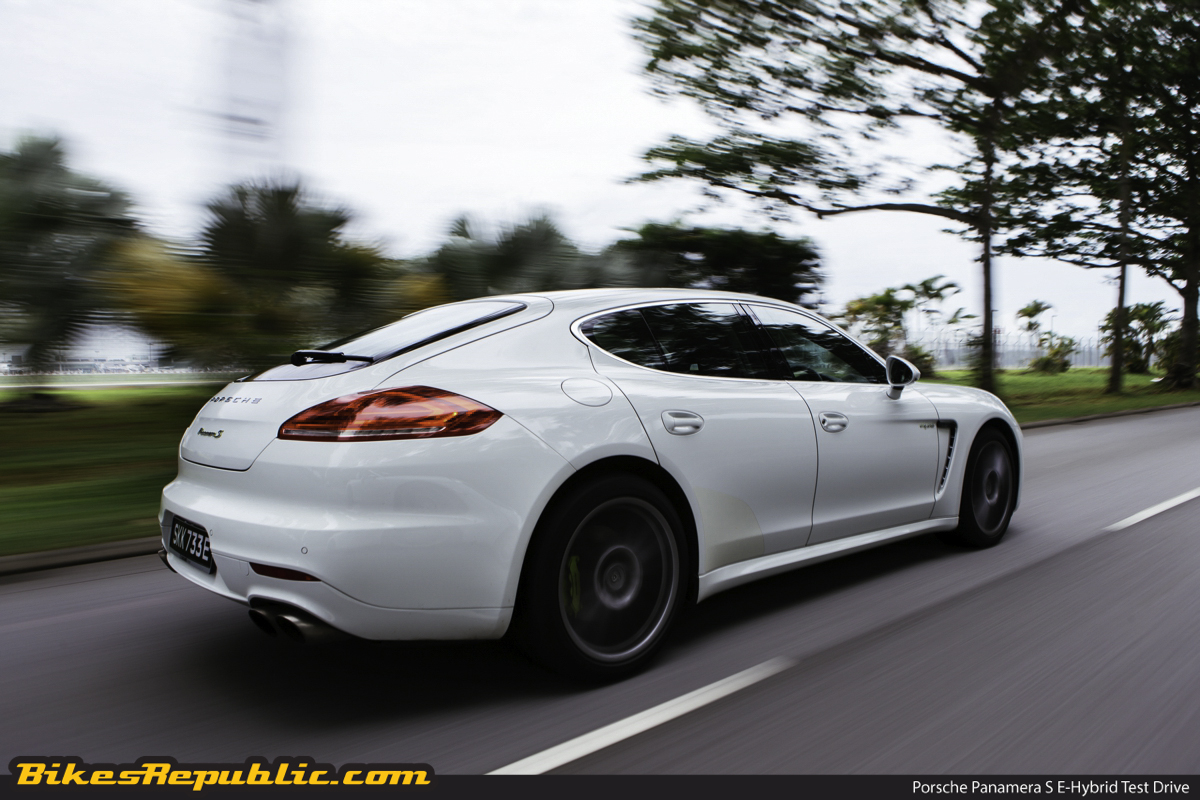
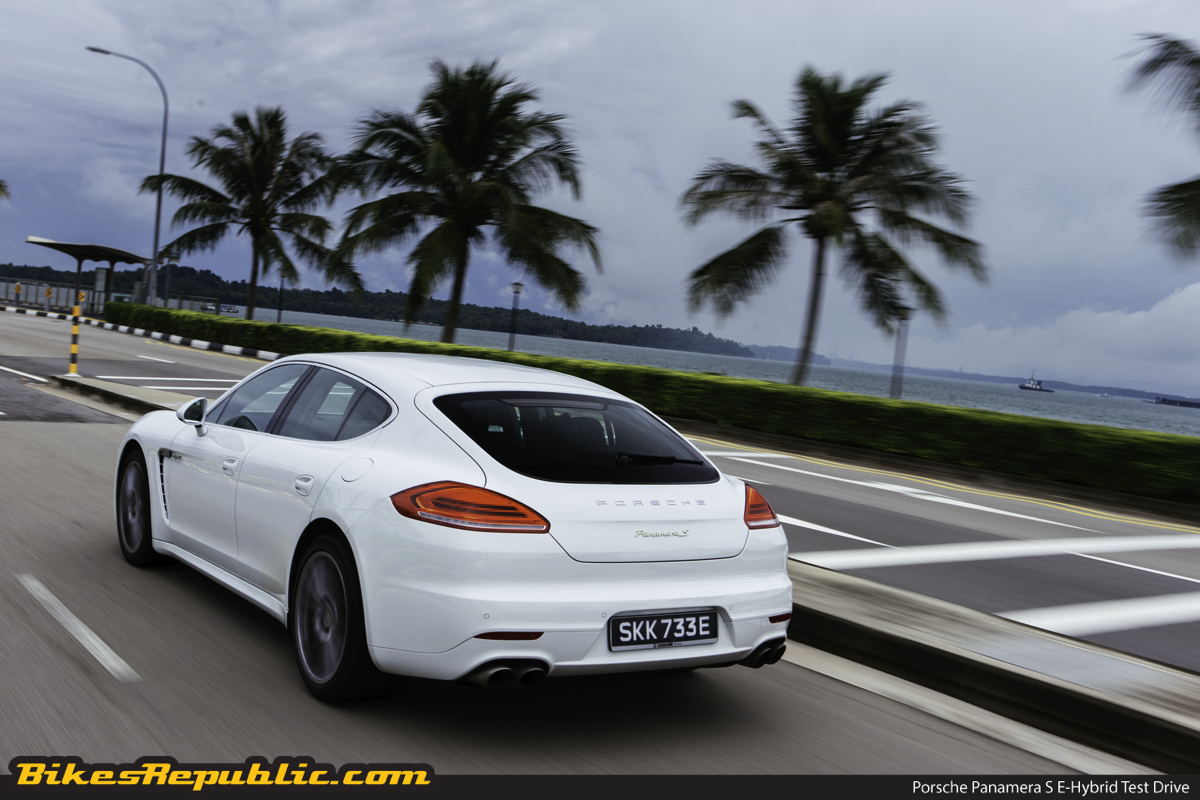
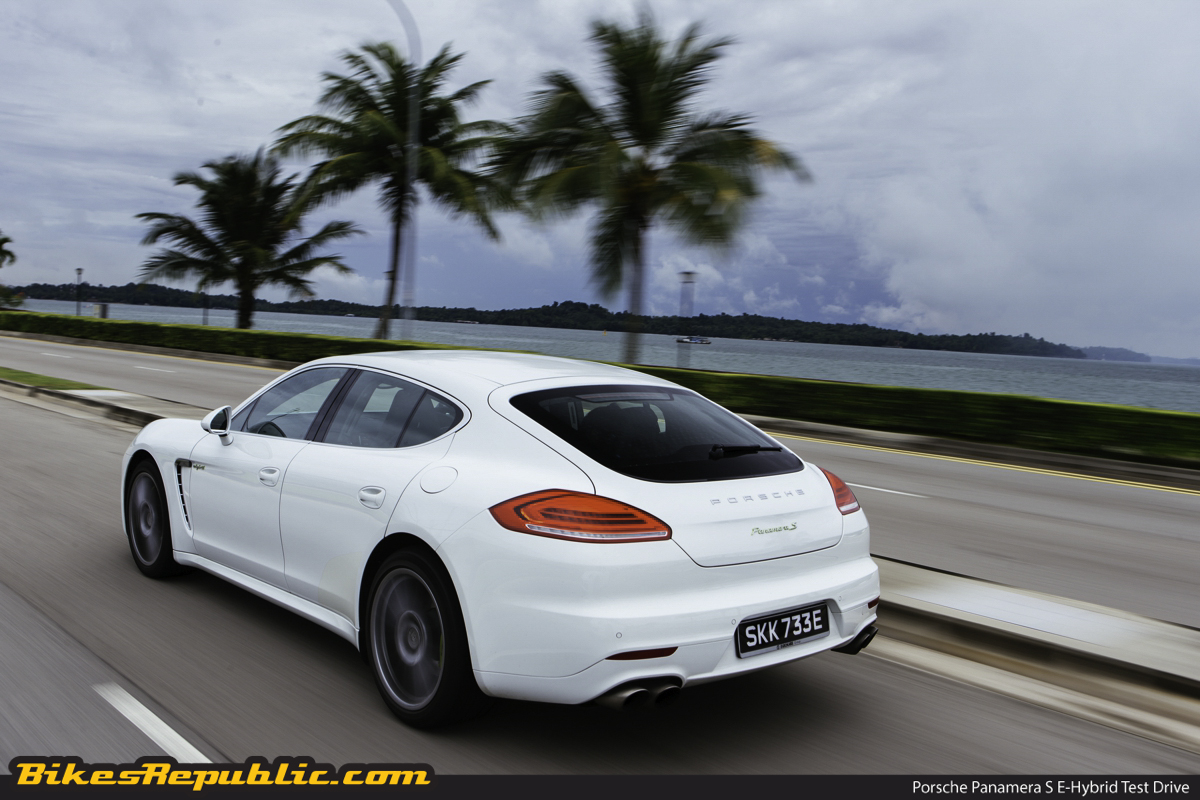
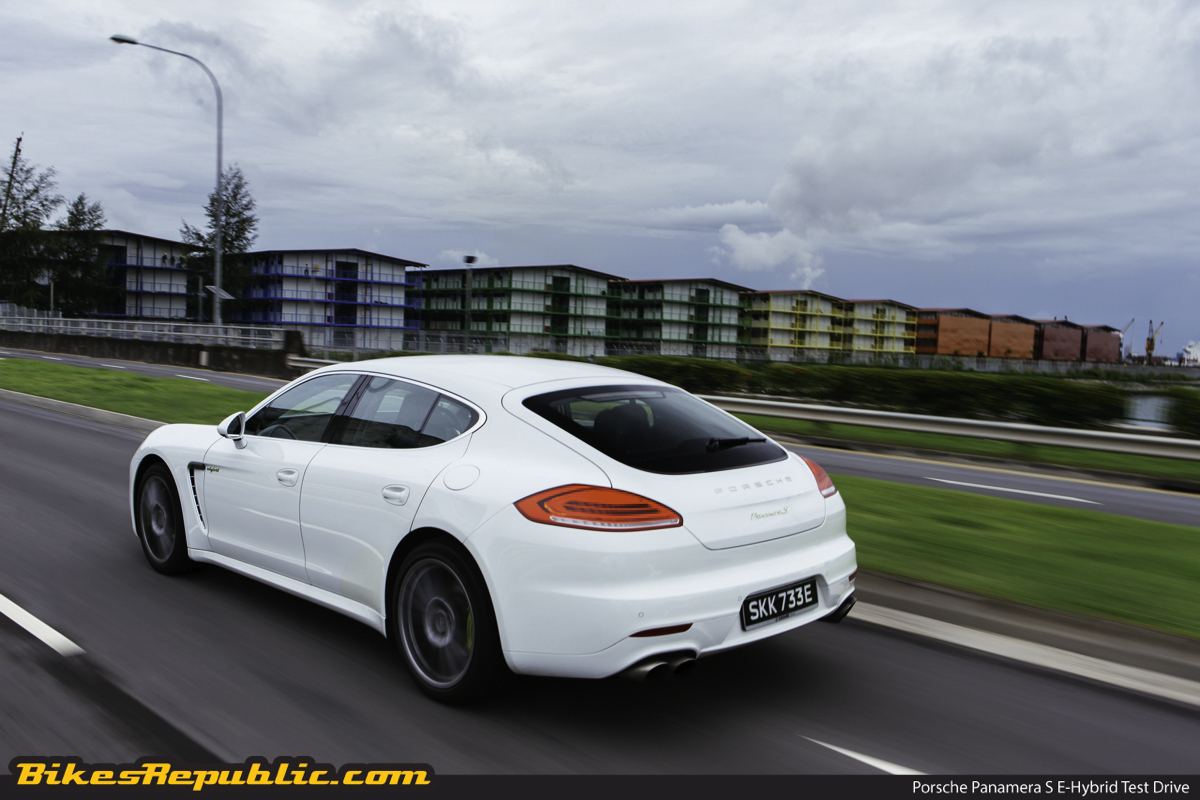
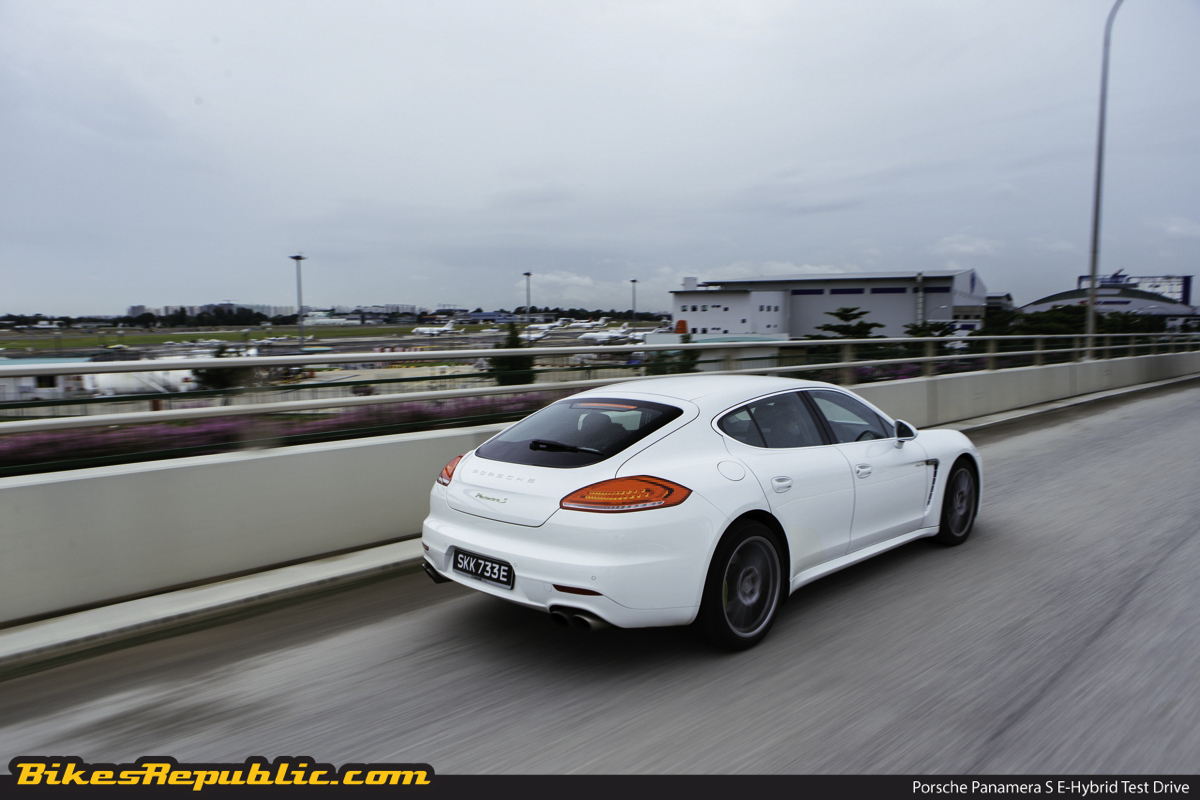
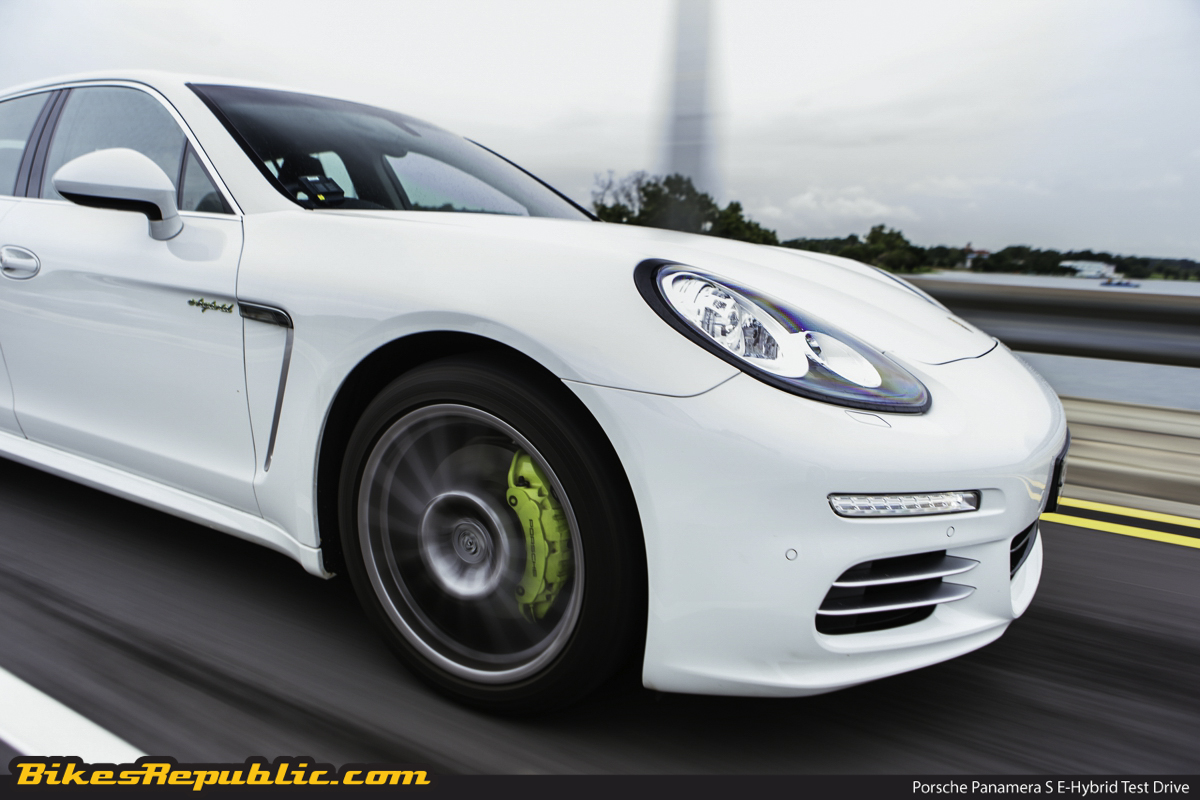
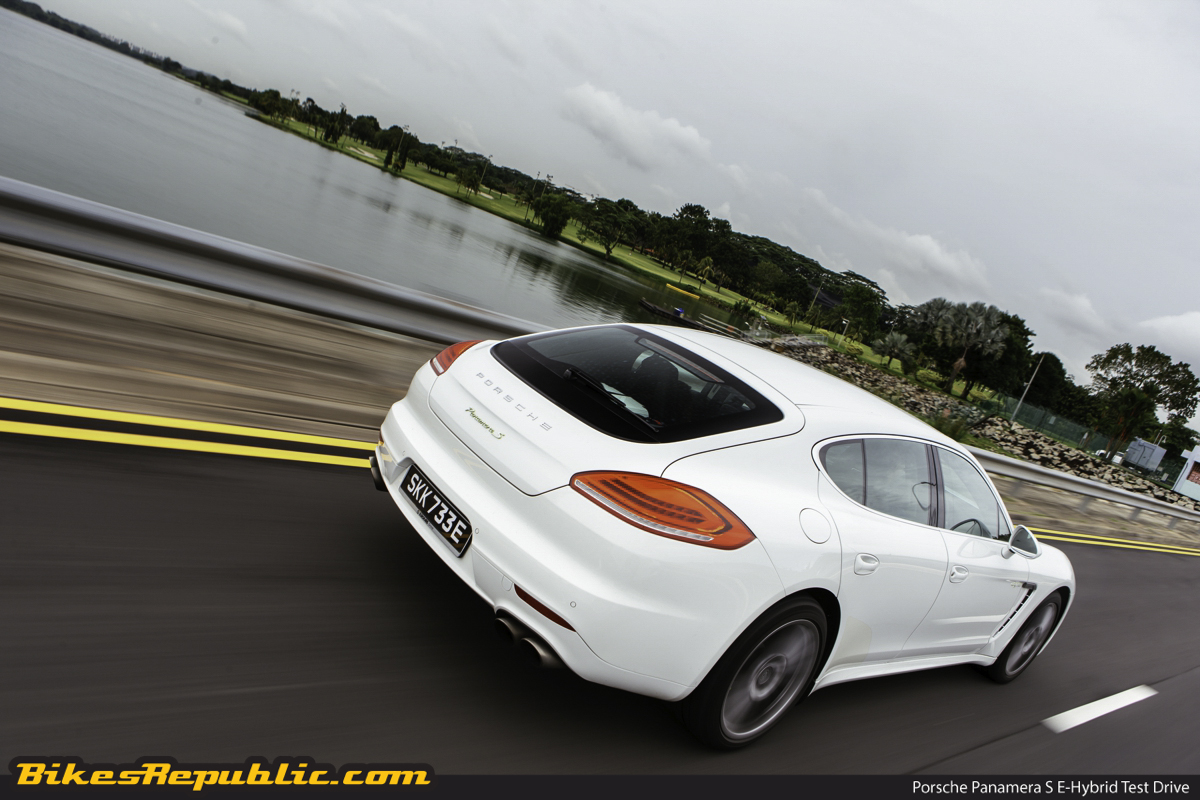
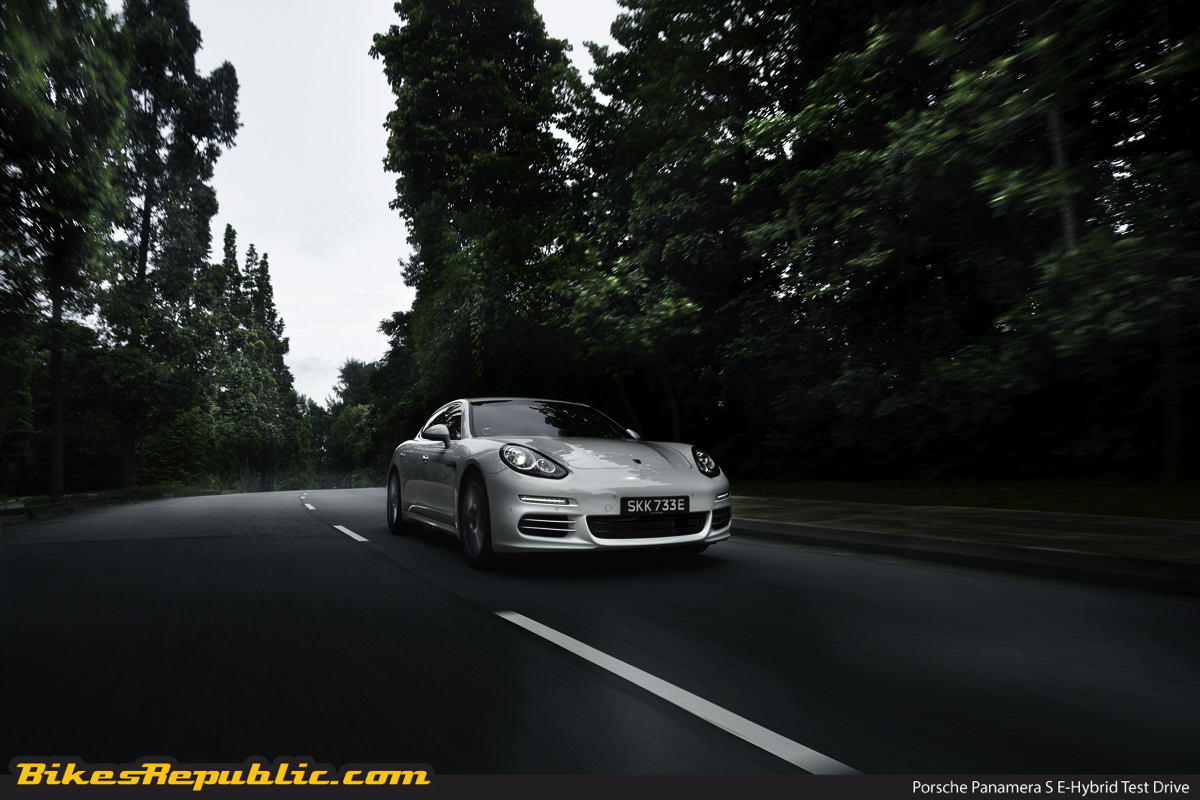
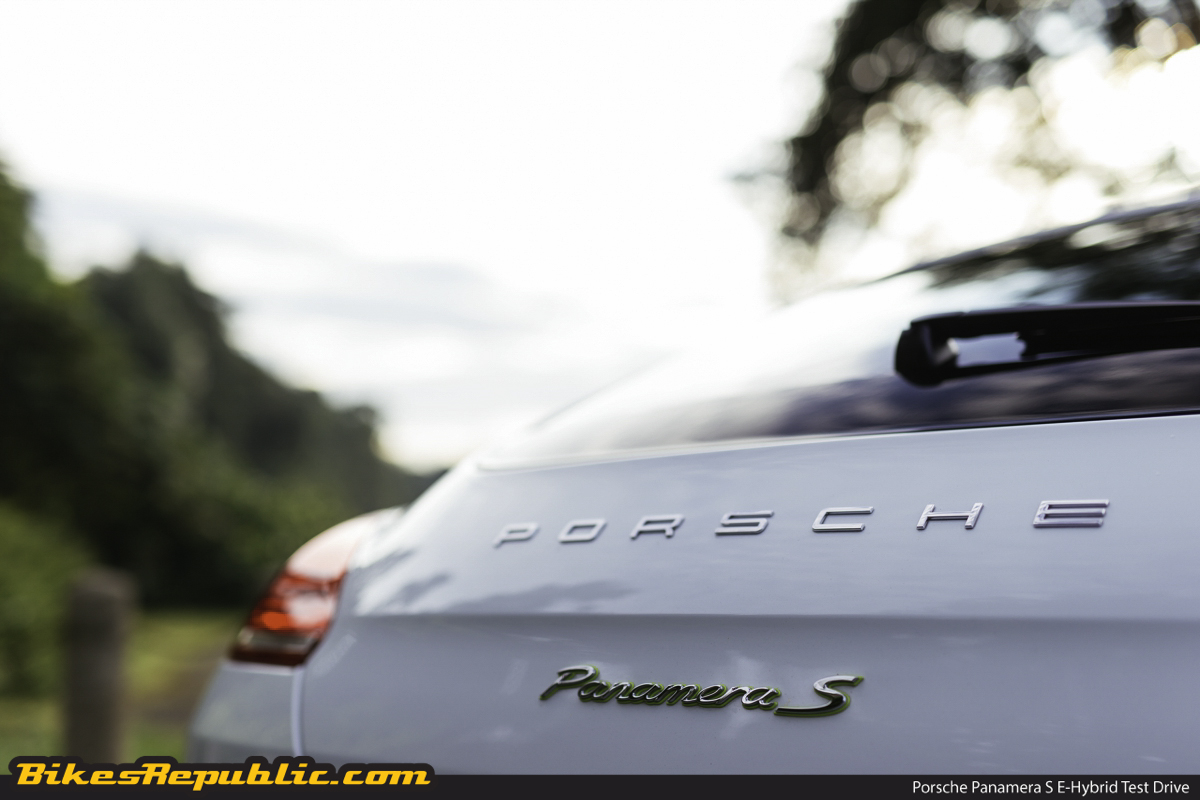
TMC_9993Enter the Panamera S E-Hybrid, Porsche’s answer on how to make one of the world’s fastest yet most efficient hybrid vehicle of its kind. It joins in Porsche’s latest generation E-Hybrid range alongside the Cayenne S E-Hybrid and the mighty 918 Spyder hybrid hypercar. Effectively, this makes Porsche the world’s only manufacturer to have three high performance plug-in hybrid vehicle (PHEV) models of their respective kinds in its current range of offerings.

In the Panamera’s case, it has set out to become the only PHEV in the grand touring saloon segment, offering unrivalled levels of performance and efficiency whilst at it too. The recipe is fairly simple, and frankly speaking, quite German. By infusing a lot of the high-tech and advanced technologies spearheaded by the 919 Spyder and Porsche’s 919 Hybrid Le Mans prototype racer, the Panamera S E-Hybrid stand out as a technological tour-de-force in its own right.
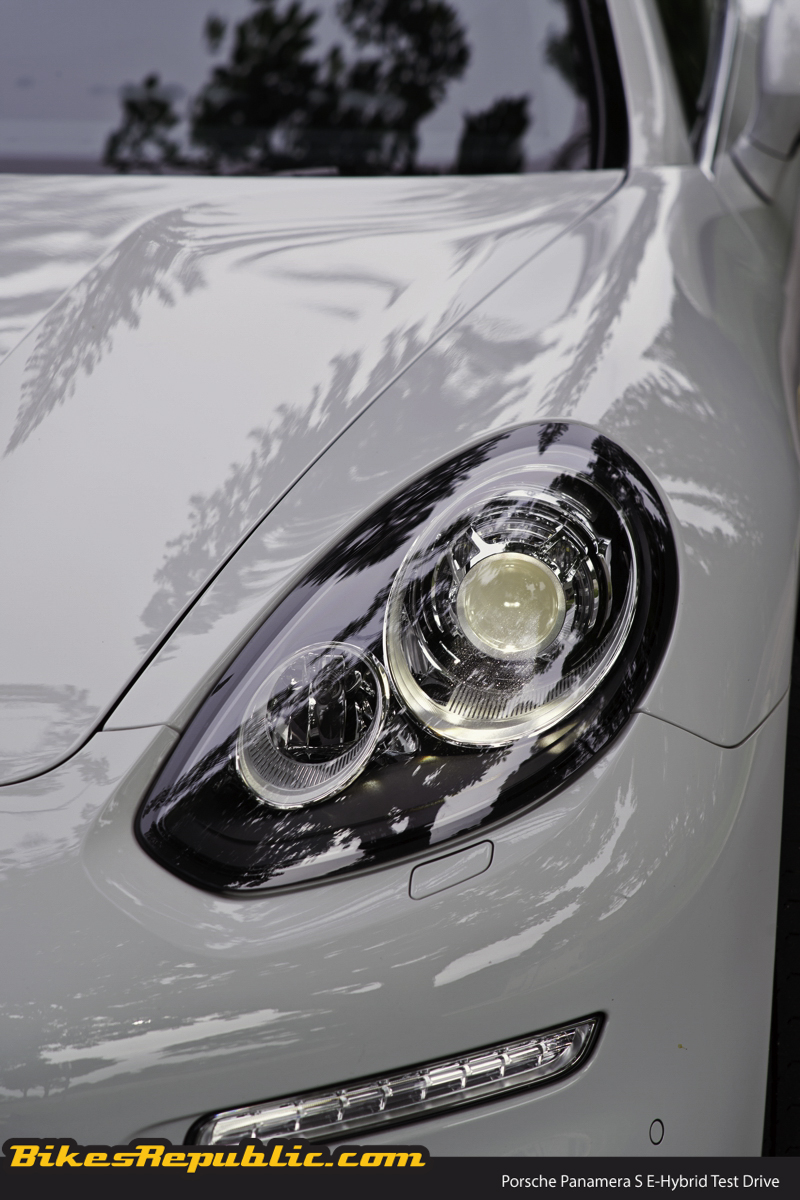
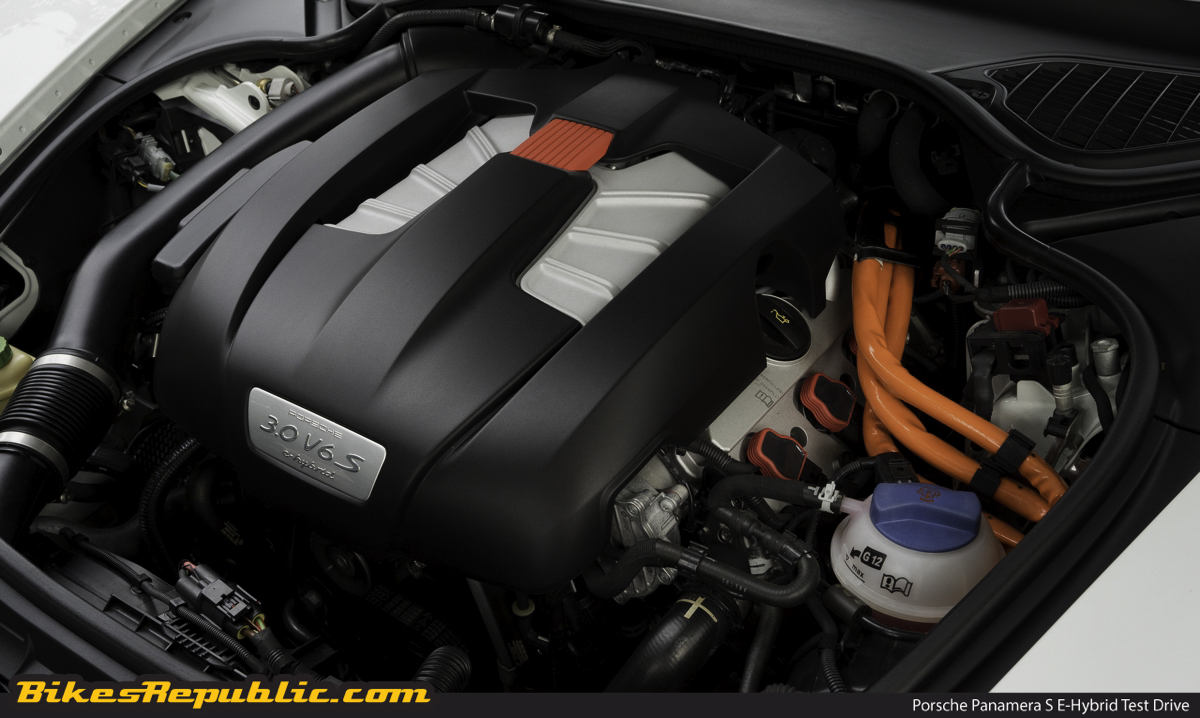
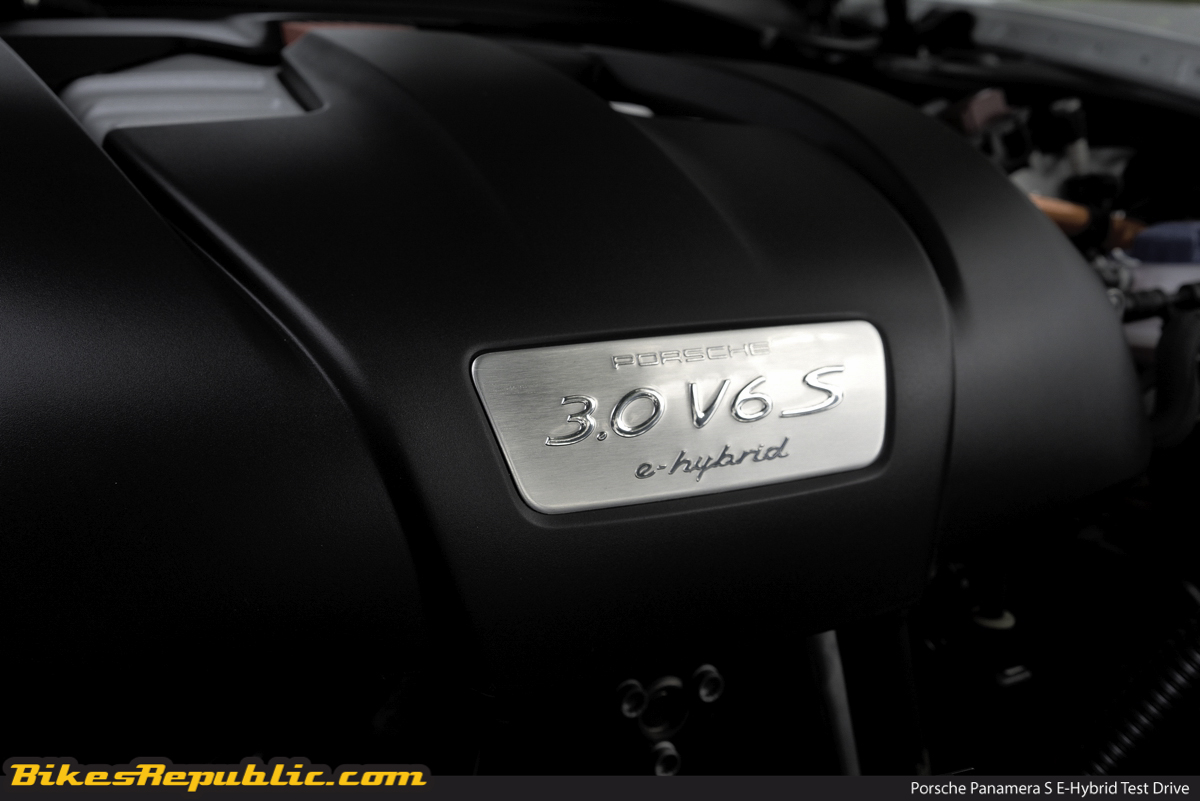
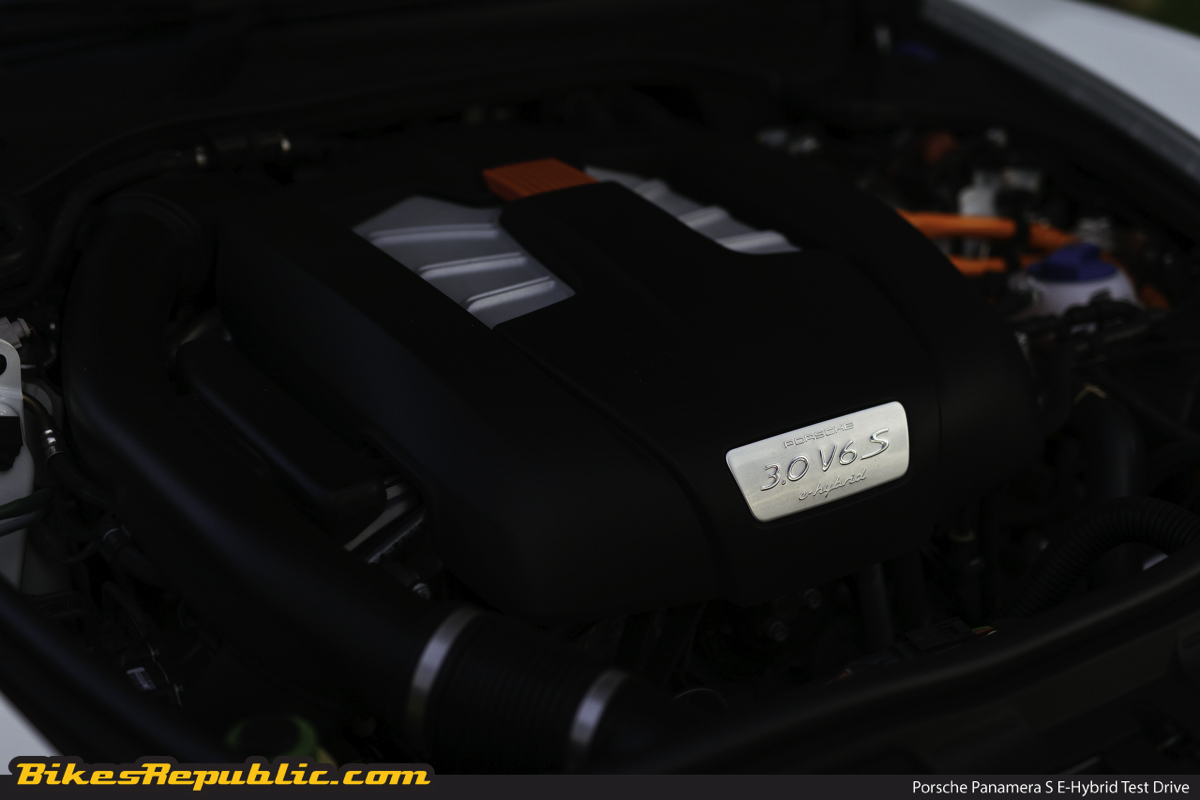
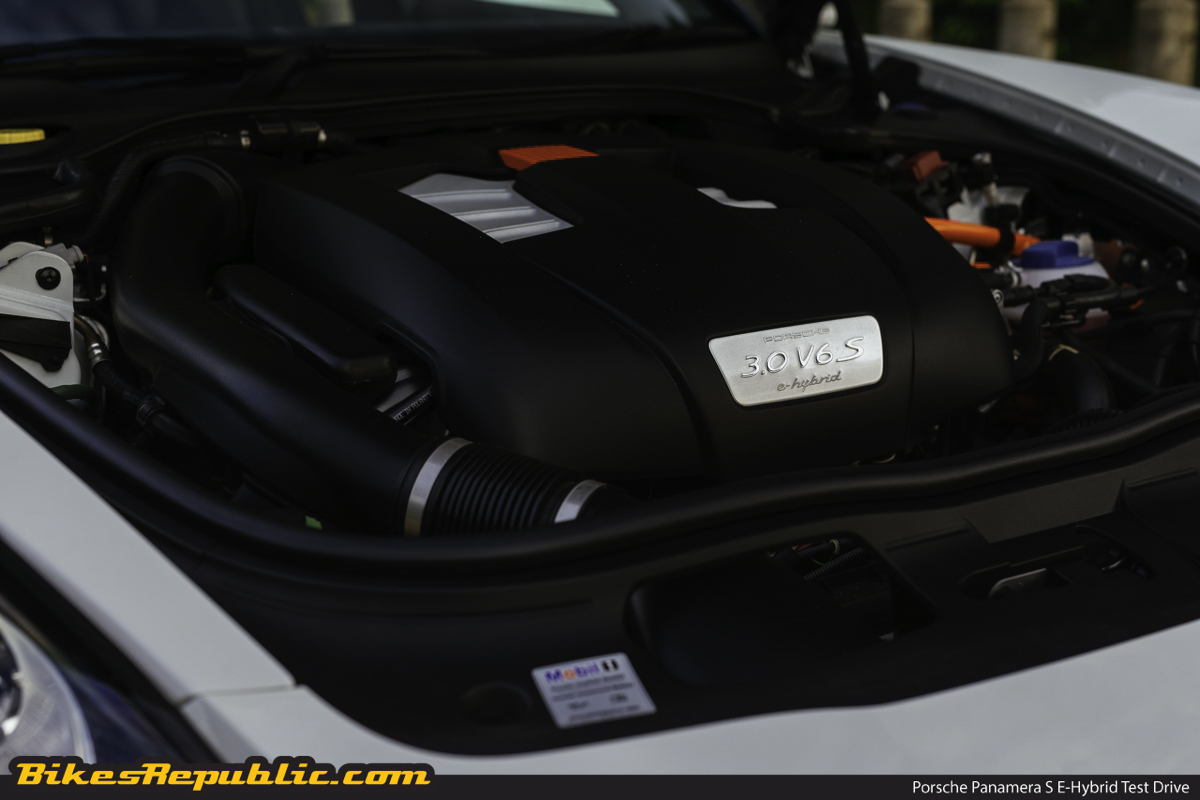
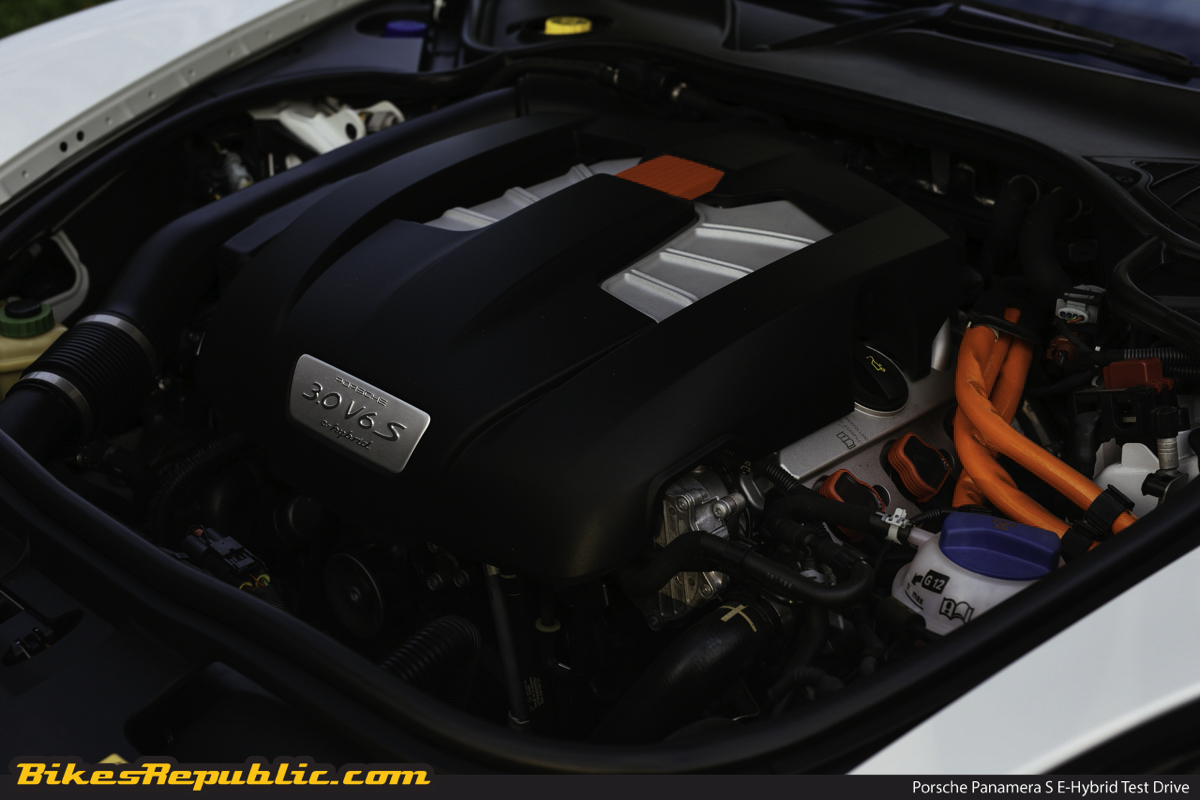
TMC_9957Unlike the regular Panamera, this S E-Hybrid variant utilises a highly intelligent plug-in hybrid powertrain system. The package is comprised firstly with a supercharged DOHC 3.0-litre V6 petrol engine that sits up front, generating 333hp on its own. It works in conjunction with Porsche’s unique E-hybrid system that pairs the supercharged petrol V6 mill with Porsche’s ‘Permanently Excited Synchronous Motor’ electric motor system. The motor draws power from a series of new and large 9.4kWh Lithium-Ion batteries placed under the boot, allowing the E-Hybrid system to offer an additional 95hp and 310Nm of torque on its own.

As a result, this Panamera boasts a combined output and peak torque rated of 416hp and 440Nm respectively. And, true to its form at being a sports car, all power is sent to the rear wheels via Porsche’s own slick eight-speed Tiptronic S automatic transmission unit. These figures are indeed exciting, especially after considering the fact that this Panamera is a plug-in hybrid capable of full-electric drive as well.
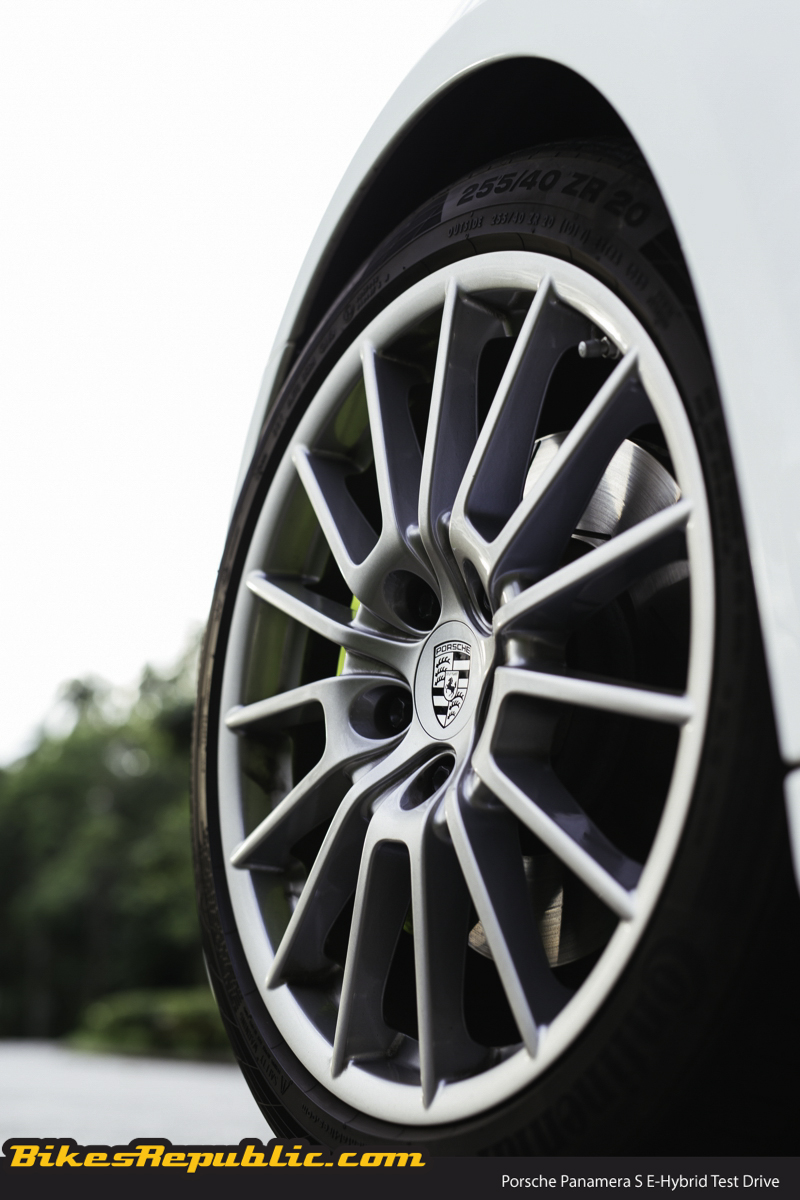
IMG_0726This then should explain how the Panamera S E-Hybrid could offer sportscar-like performance, specifically the 5.5-second zero to 100km/h sprint and the ability to hit 270km/h, with eco-car fuel economy and carbon emissions claims of 3.1 litres/100km (combined) and 71g/km respectively. Again much of these abilities is made possible thank to the aforementioned intelligent E-Hybrid system primed on board, which is unlike any other hybrid system the world has ever seen.

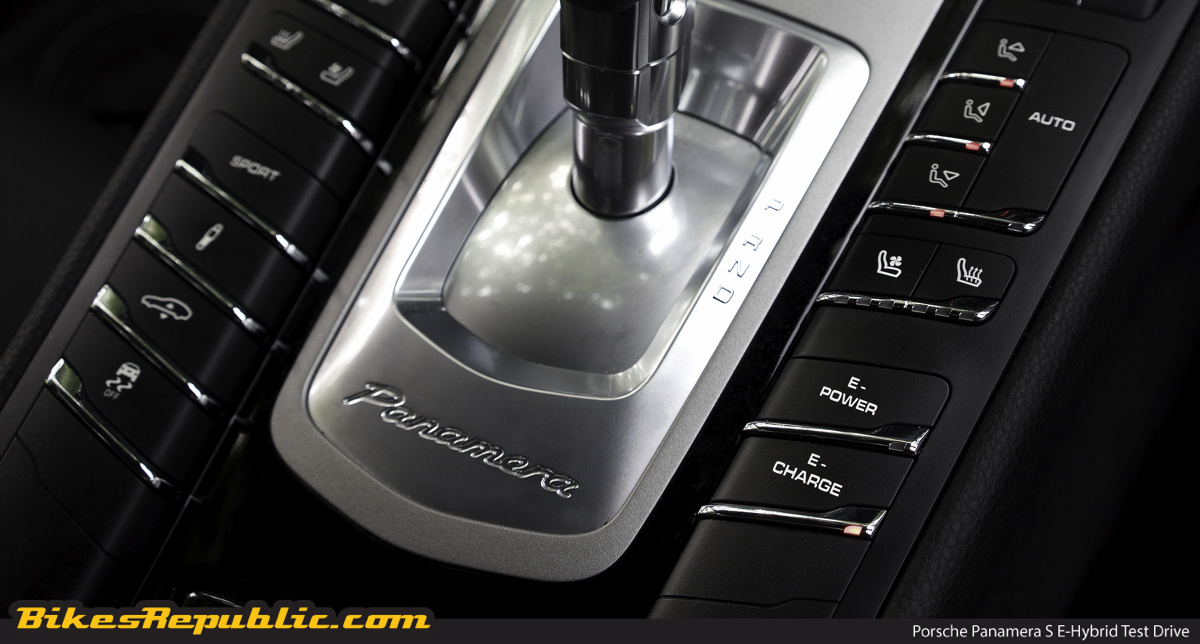
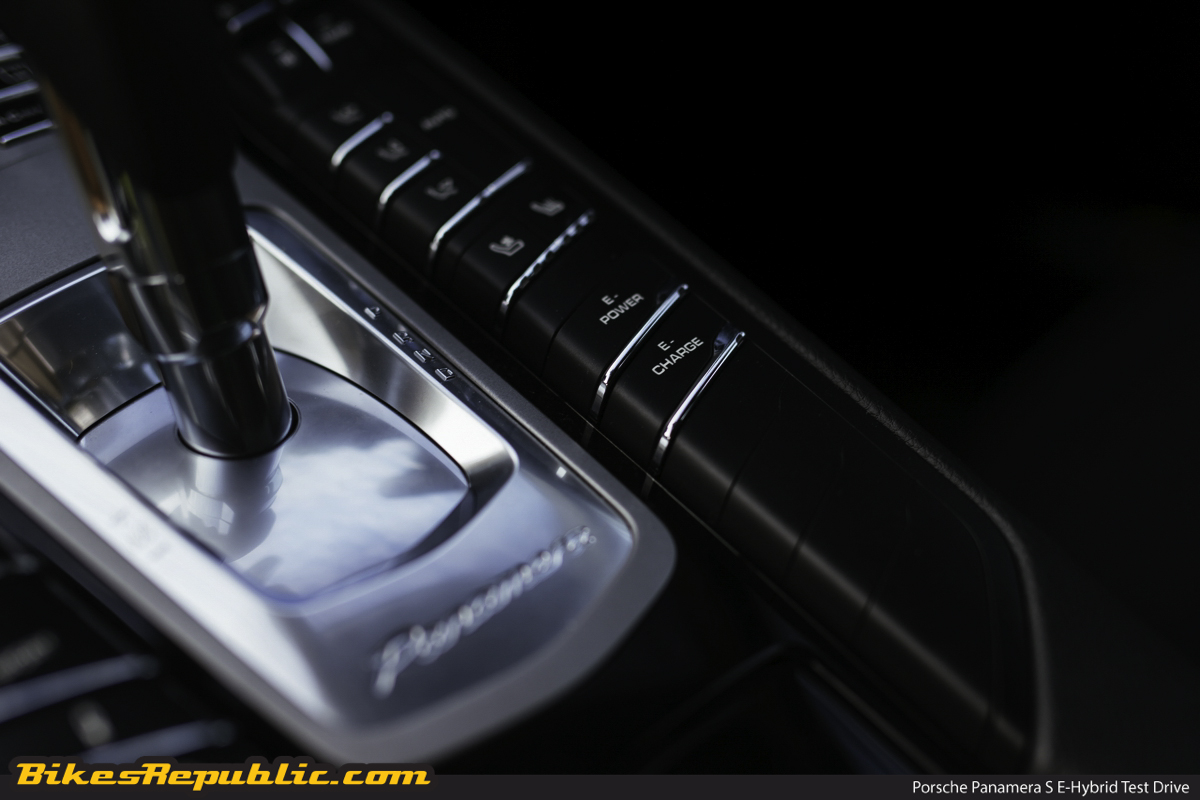
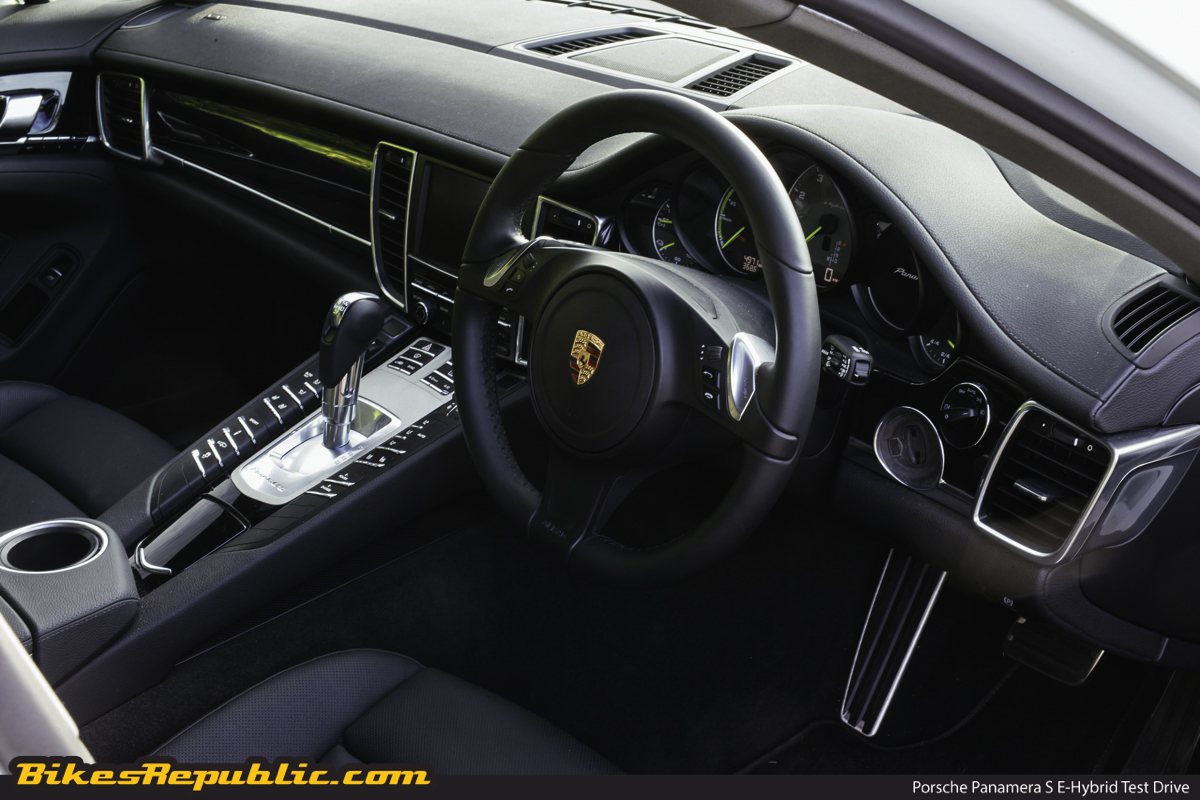
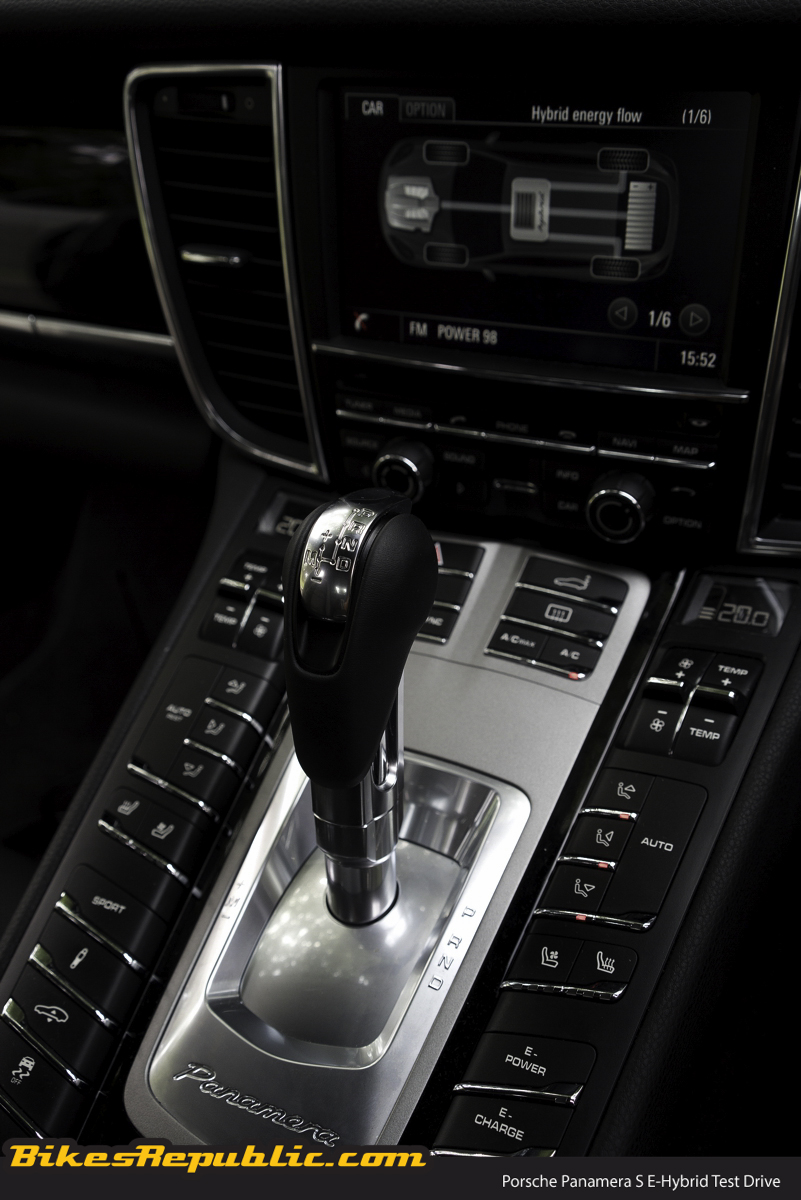
Uniquely, this Panamera offers four selectable driving modes in total, those being ‘Hybrid’, ‘E-Mode’, ‘E-Charge’, and ‘Sport’. All of which can be changed at any time via three buttons located in the Panamera’s transmission console. As you turn the ignition keys at start-up, the onboard systems engages into its default E-Mode program first, granting full electric drive, and making it unmistakable as a PHEV at the same time. What is quite impressive here is the electric motor’s ability to hit high speeds up to 135km/h on electric power alone, feeling very brisk thanks to its silent and linear delivery.
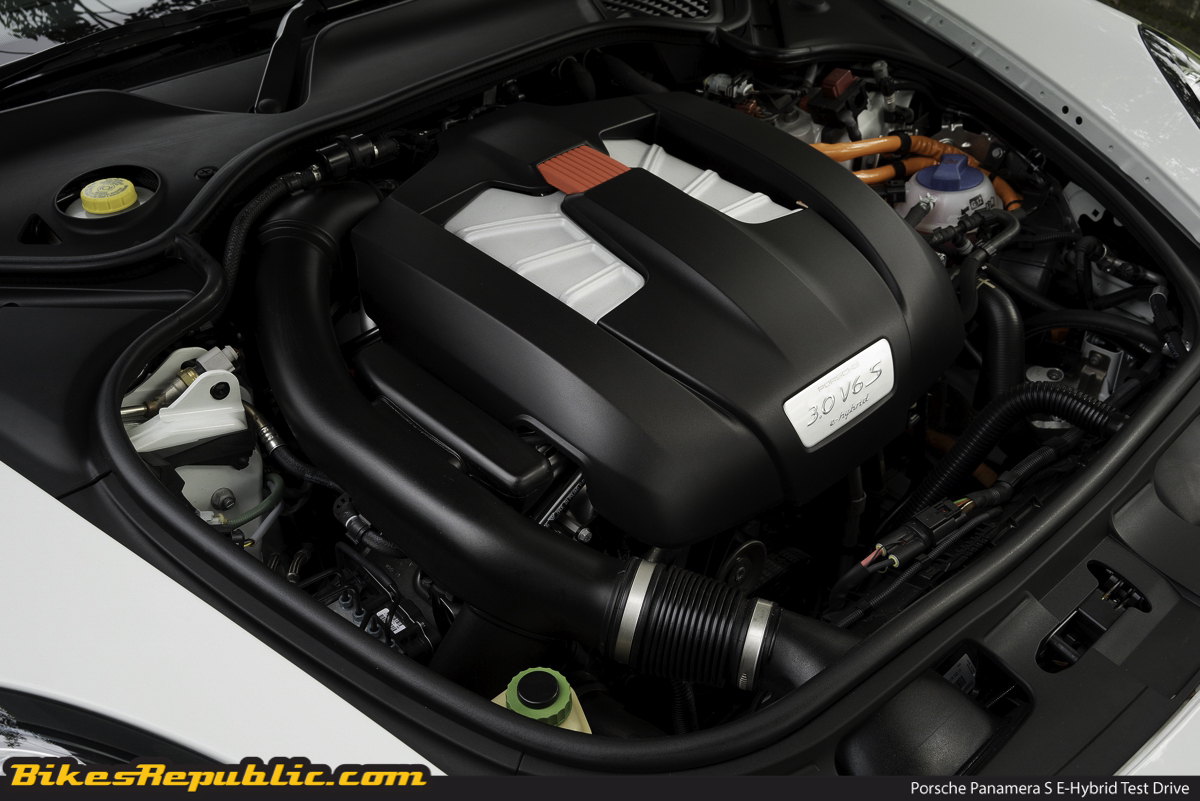
DSC06403In E-Mode, the petrol engine only fires up into life if you apply more than 80% input in the throttle pedal, calling for a more frugal and light-footed approach to driving – something unheard of in a Porsche. Although Porsche claims this Panamera has a maximum electric-only travel range of 36km, driving under our hot and humid climate conditions, with the air conditioning typically set to  high settings saw us cover just 22km to 26km when we drove it recently.

Next comes the ‘Hybrid’ mode that automatically engages when the batteries depletes to a pre-determined level. This mode sees the system employing the electric drive more often at any given opportunity, which in turn allows the car to ‘coast’ when at travelling steady speeds, and demanding conventional power only when deemed necessary. This mode also sees the E-Hybrid system working in tandem with the petrol mill towards maintaining the batteries’ charge levels. What was surprising here was the transitions between the petrol engine and the electric motor felt smooth and effortless.
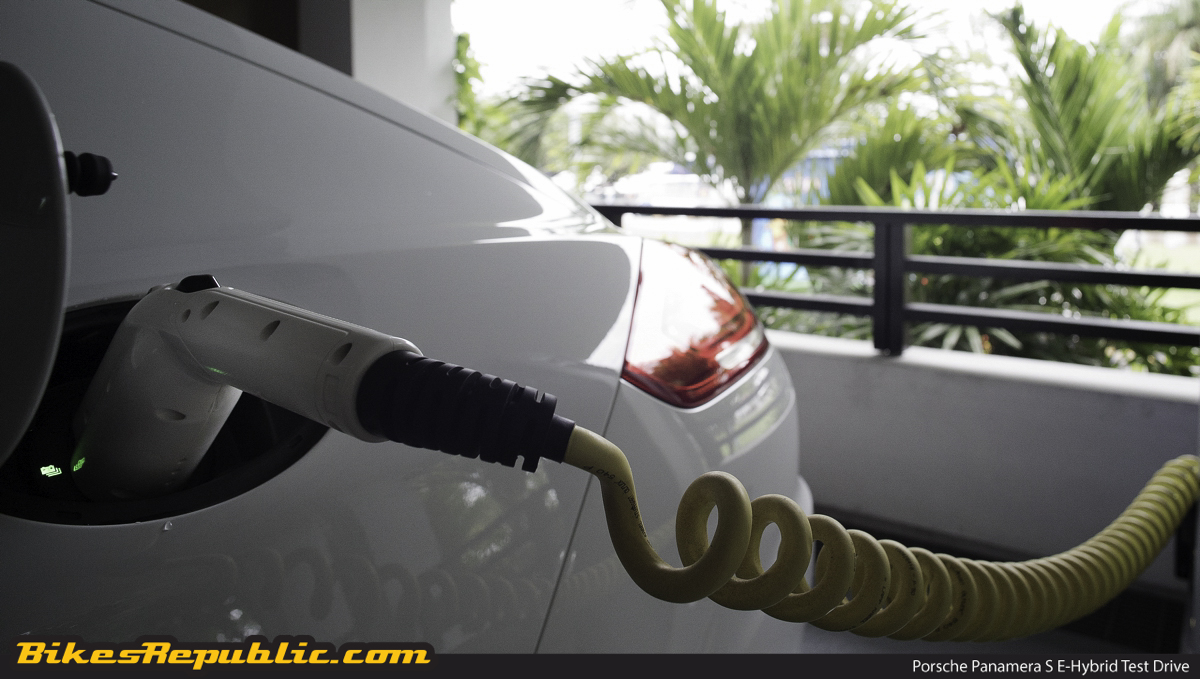
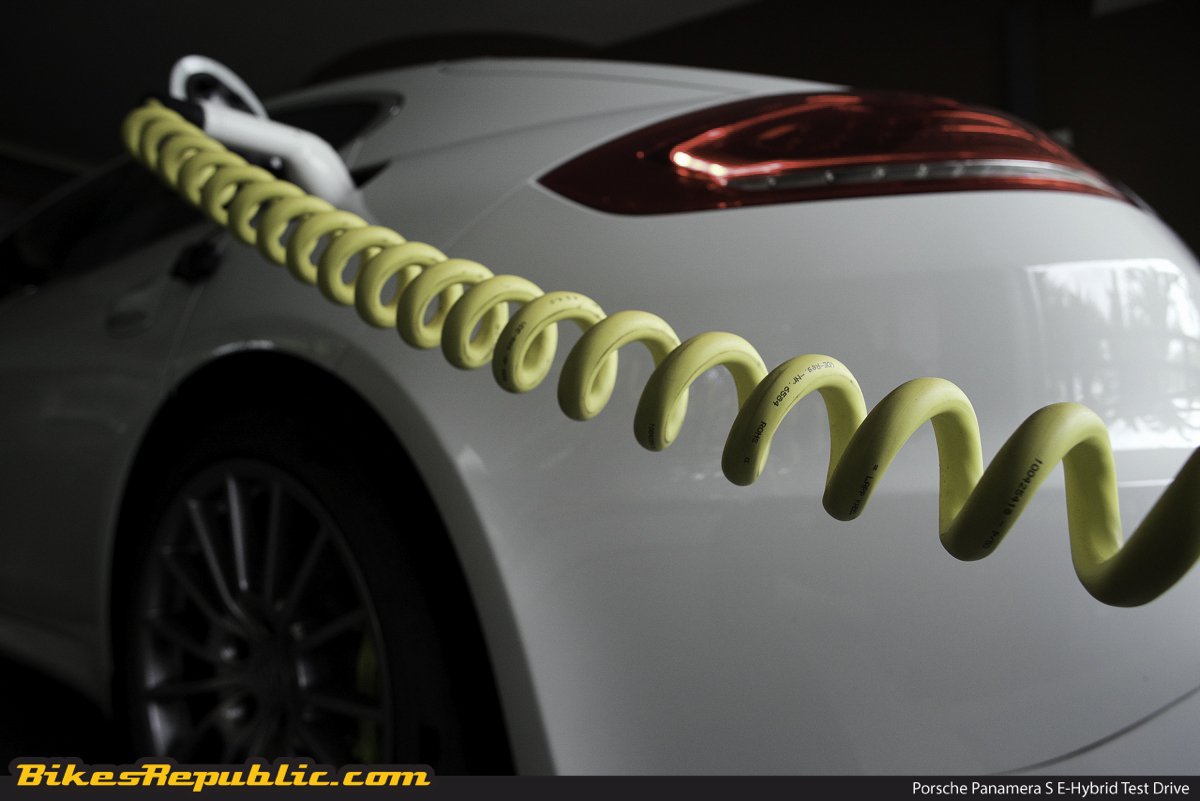
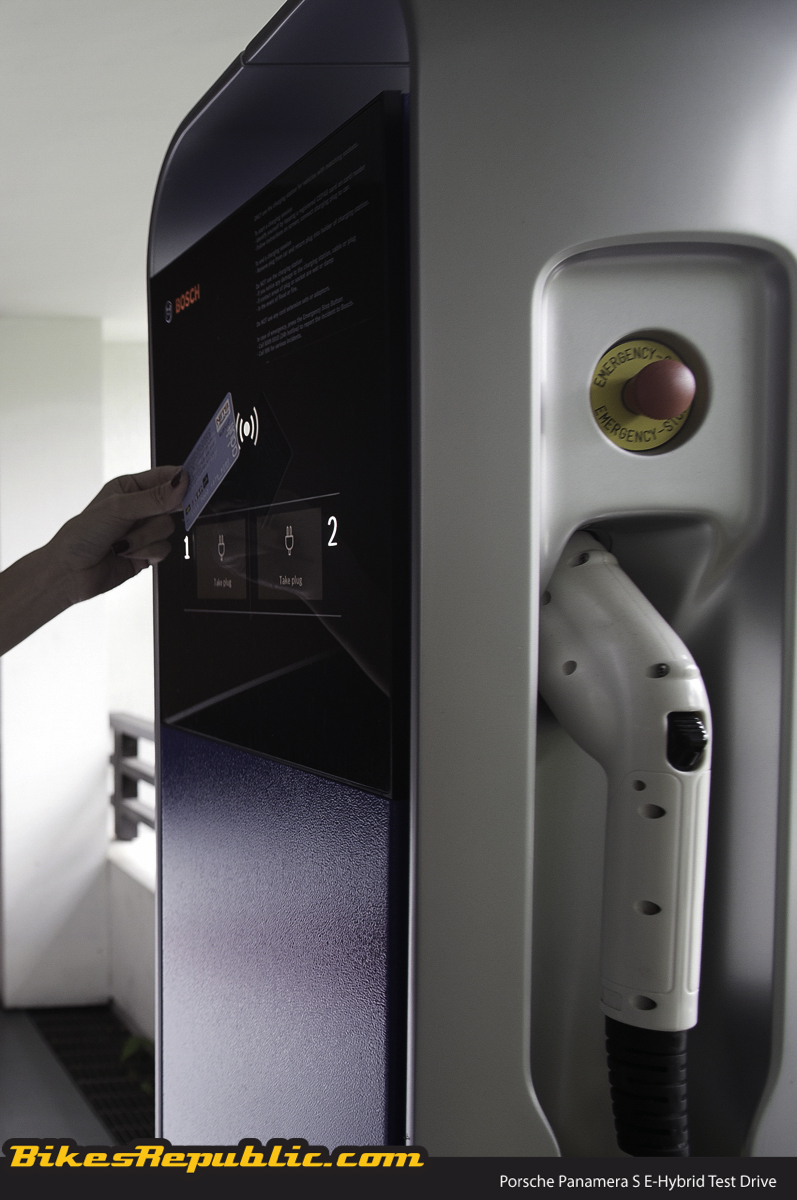
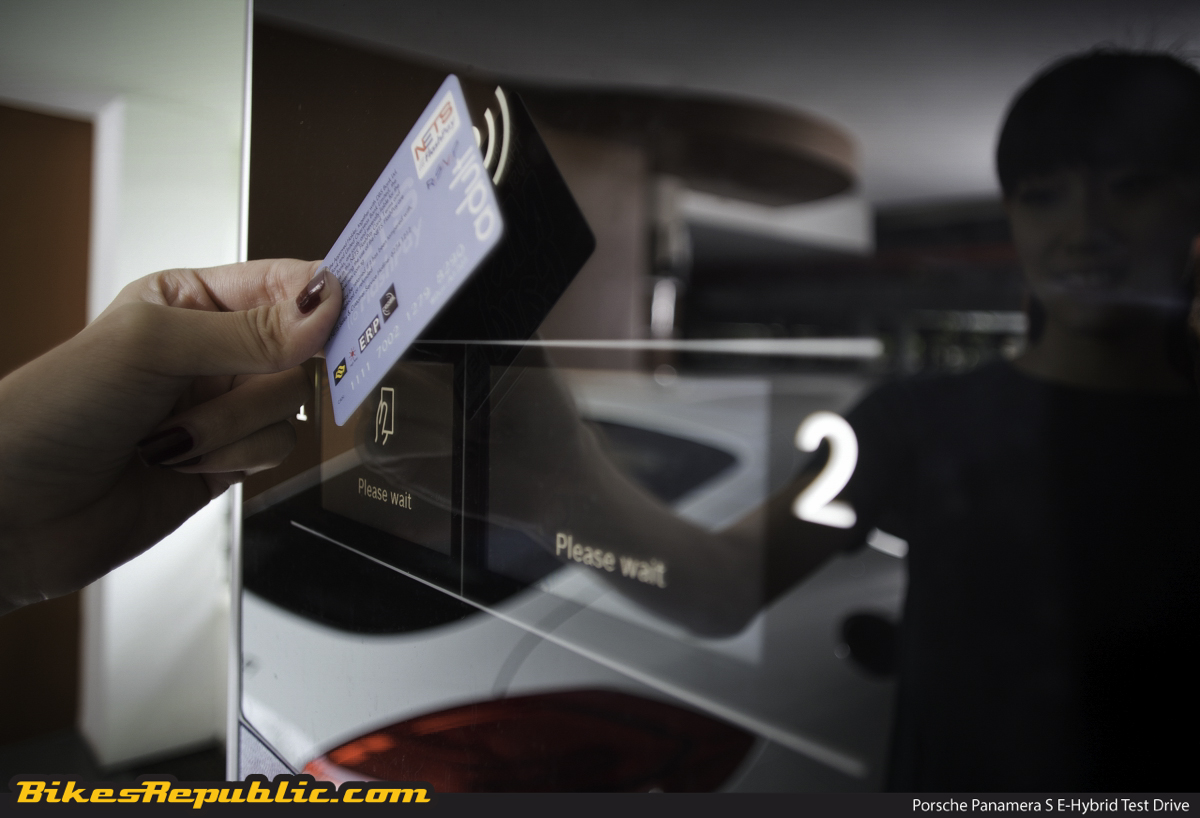
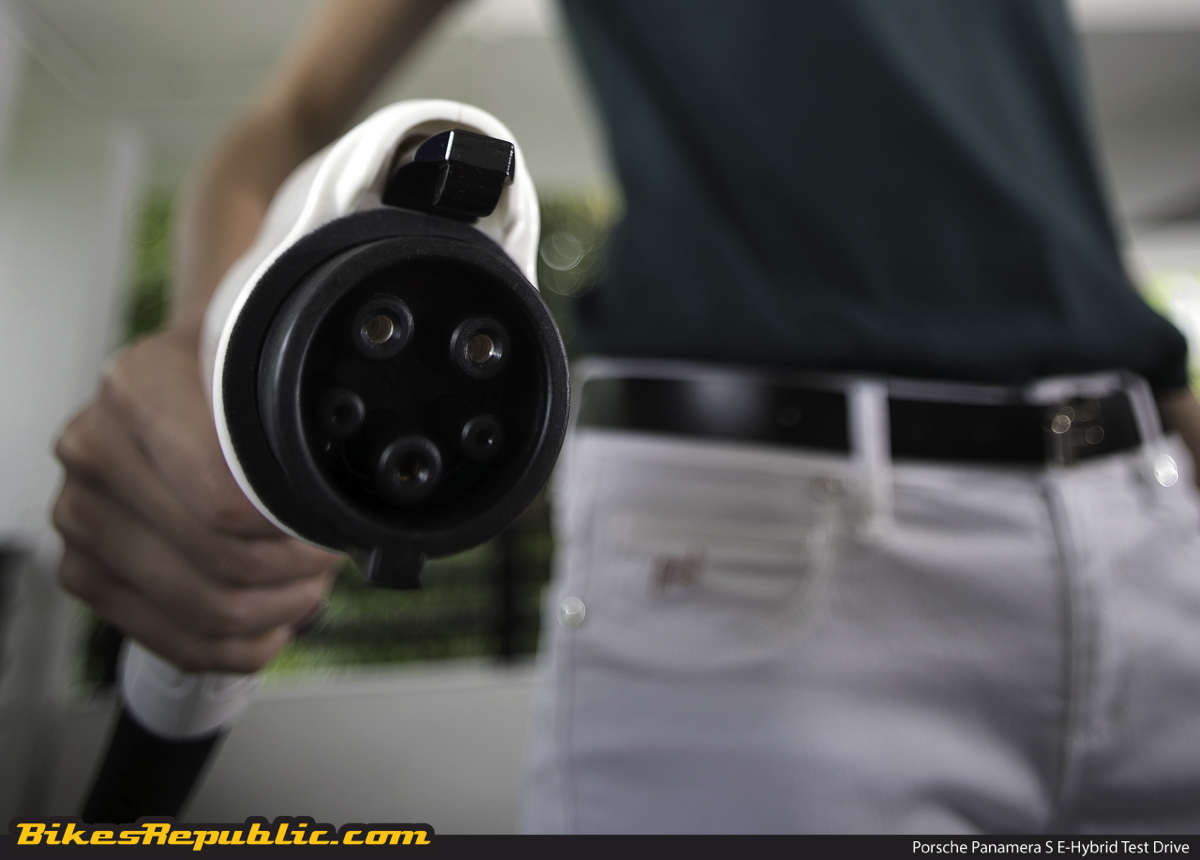
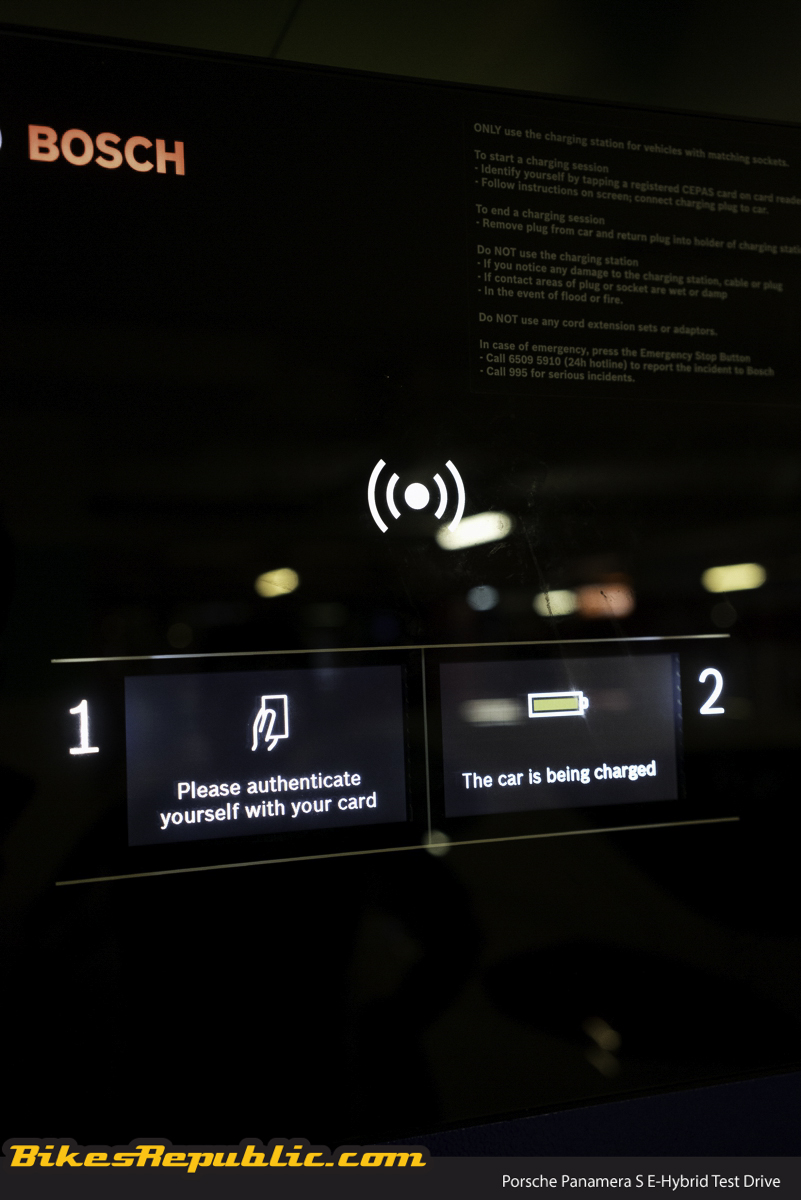
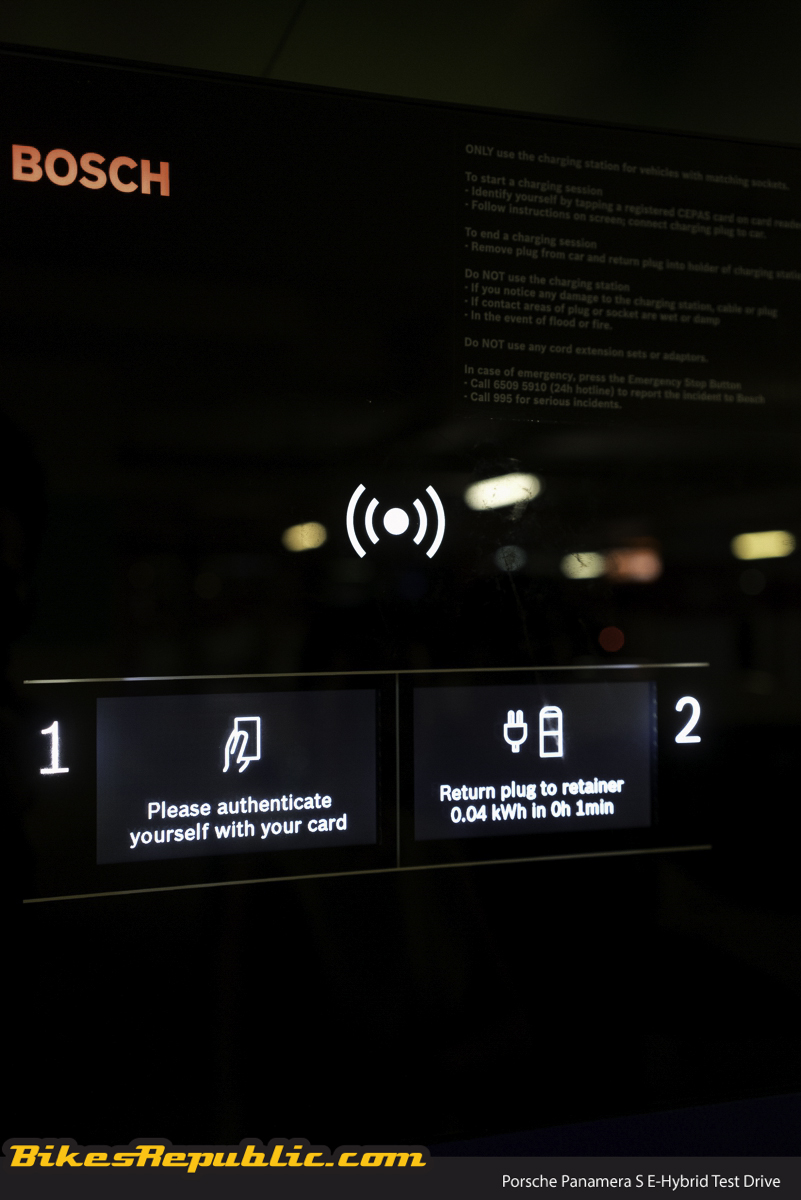
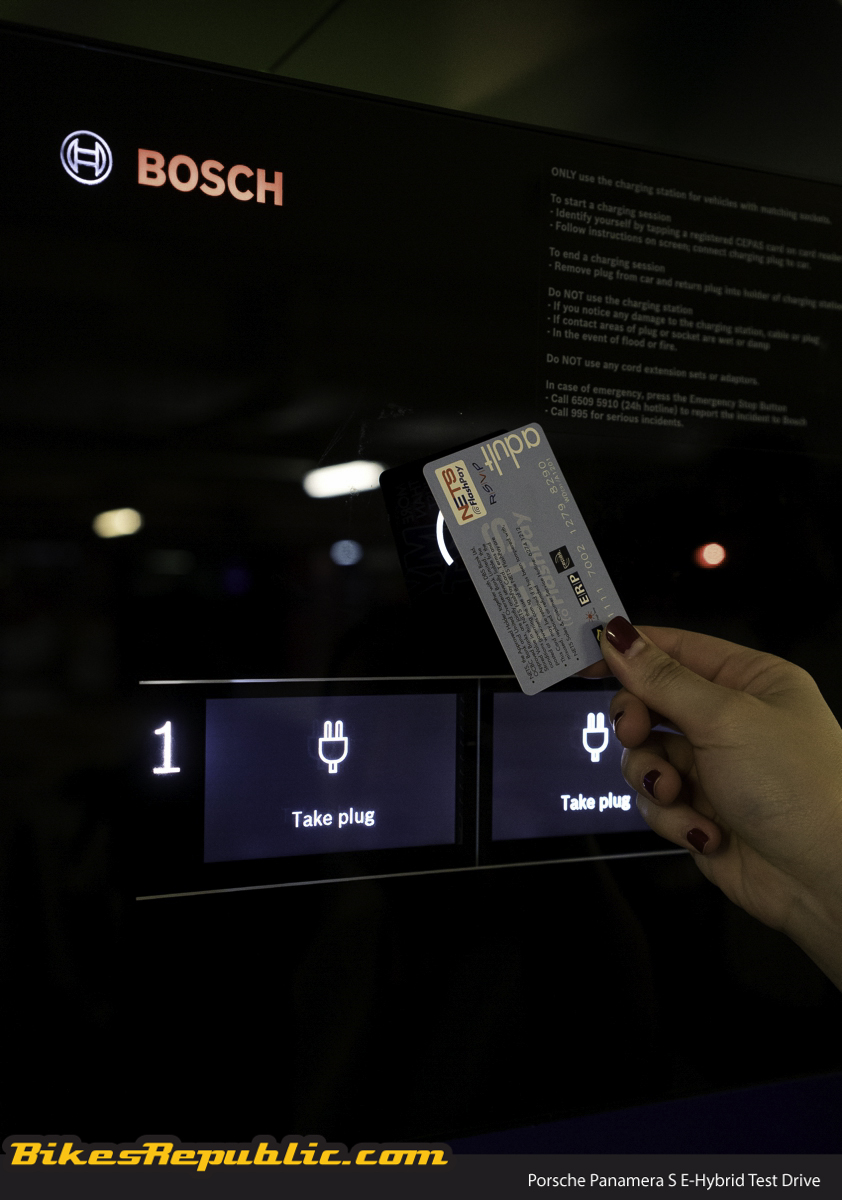
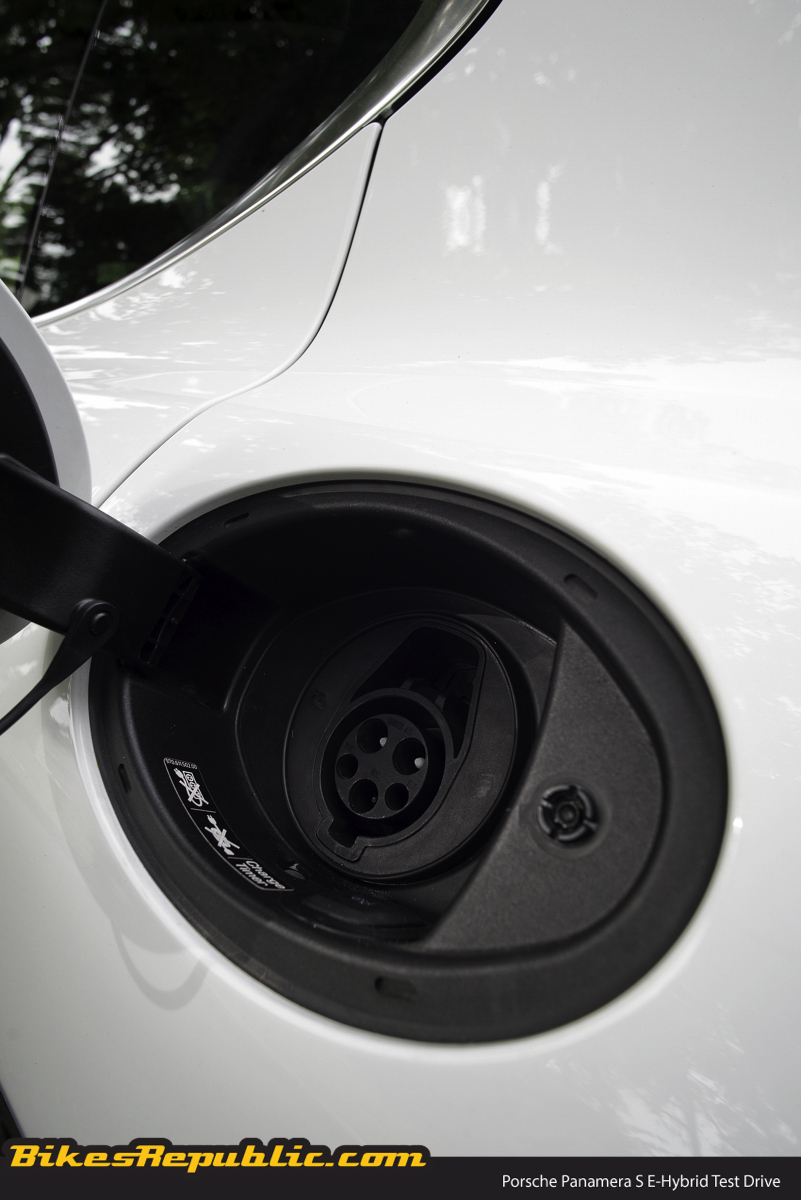
DSC06394However, amongst the four driving modes, the ‘E-Charge’ mode is perhaps what defines the Panamera S E-Hybrid the most. Designed specifically to charge the battery on the move, this mode proved to be rather convenient should a fast-charging station be out of your reach, or you simply don’t have the luxury of two and a half hours to charge the system from a wall socket.

How it works is fairly simple. At the price of fuel economy, this mode engages the petrol engine more frequently, running it at slightly higher speeds than usual to propel itself about, and simultaneously recharge the batteries. A full charge can be achieved with just 50km of light cruising, which of course does not take long with a high-speed grand tourer such as the Panamera.
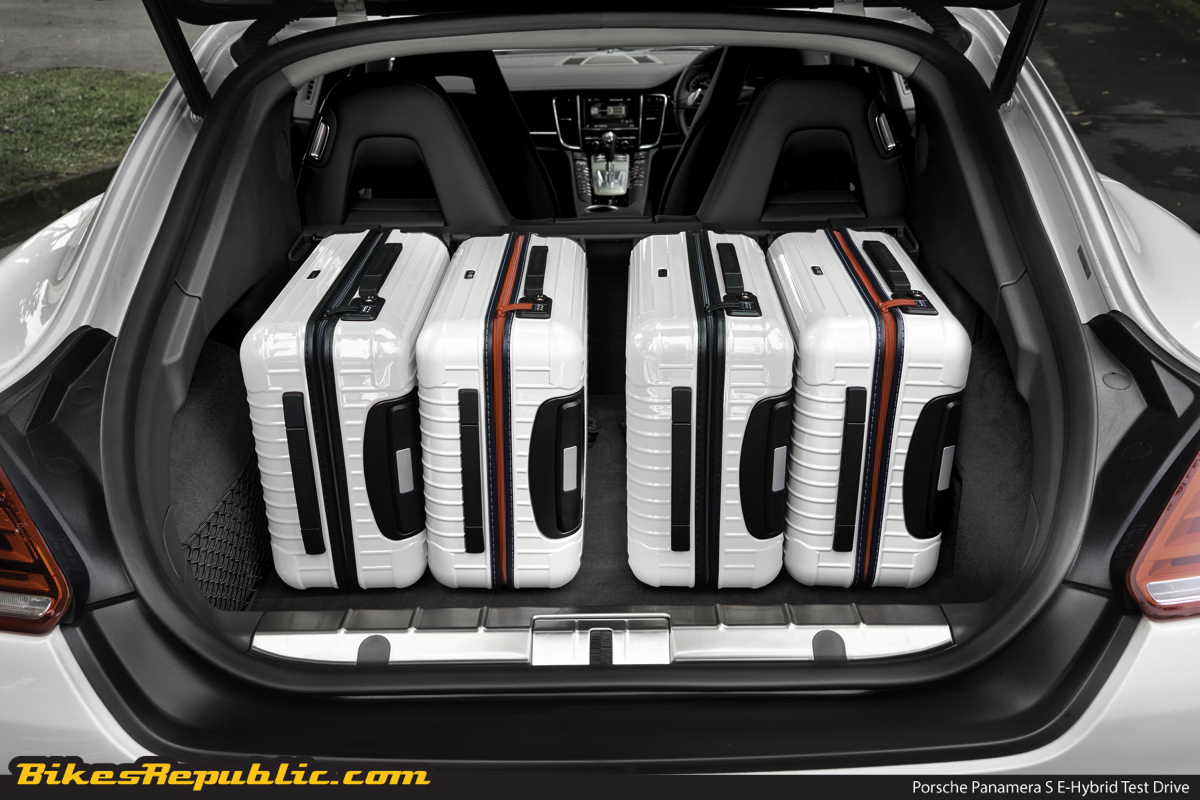
DSC05672_VOf course, no Porsche is complete without its customary ‘Sport’ driving mode, and the Panamera S E-Hybrid does not disappoint here. Besides granting a crisper and more precise throttle response, as well as a more inspiring engine soundtrack, this mode fully exploits the performance advantages offered by this hybrid petrol-electric system, merging the best of what the supercharged petrol engine can muster with the silent yet direct assistance of the electric motor. Here, the petrol engine only deactivates when you come to an idling stop, but fires back to life in a more dramatic manner at even the slightest touch of the throttle pedal.

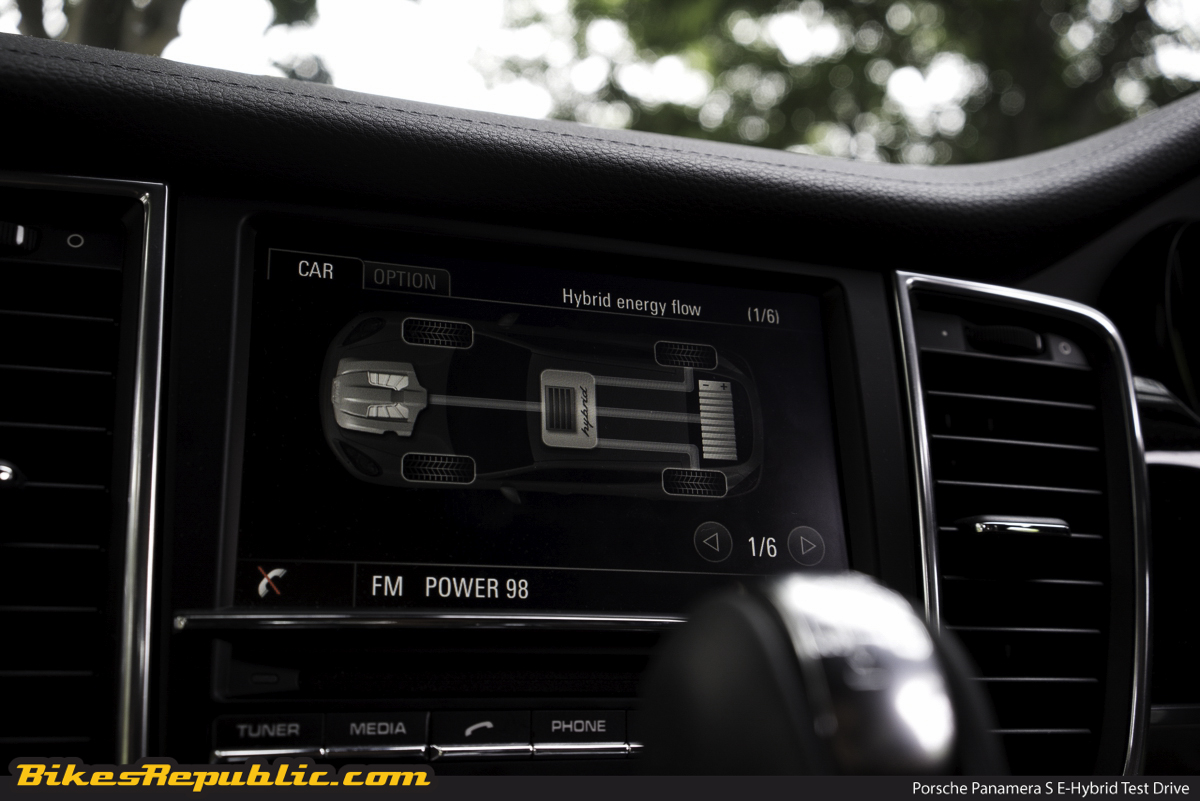
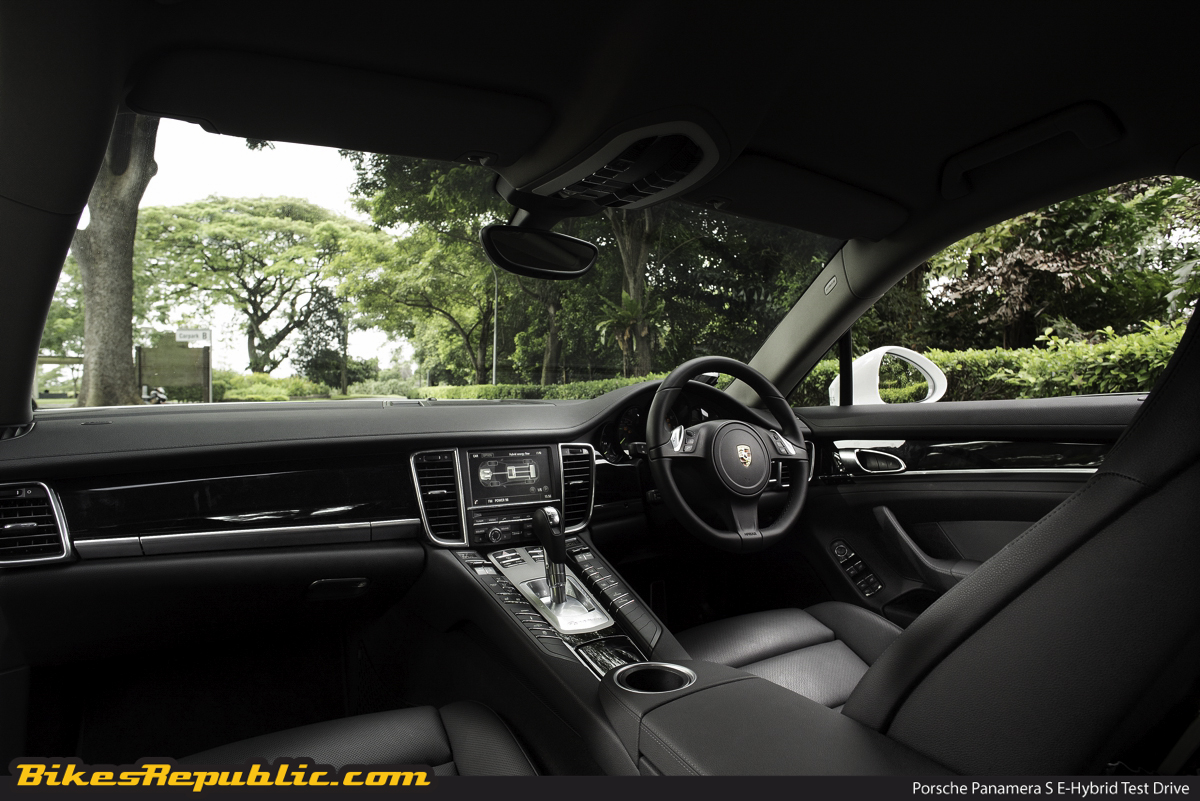
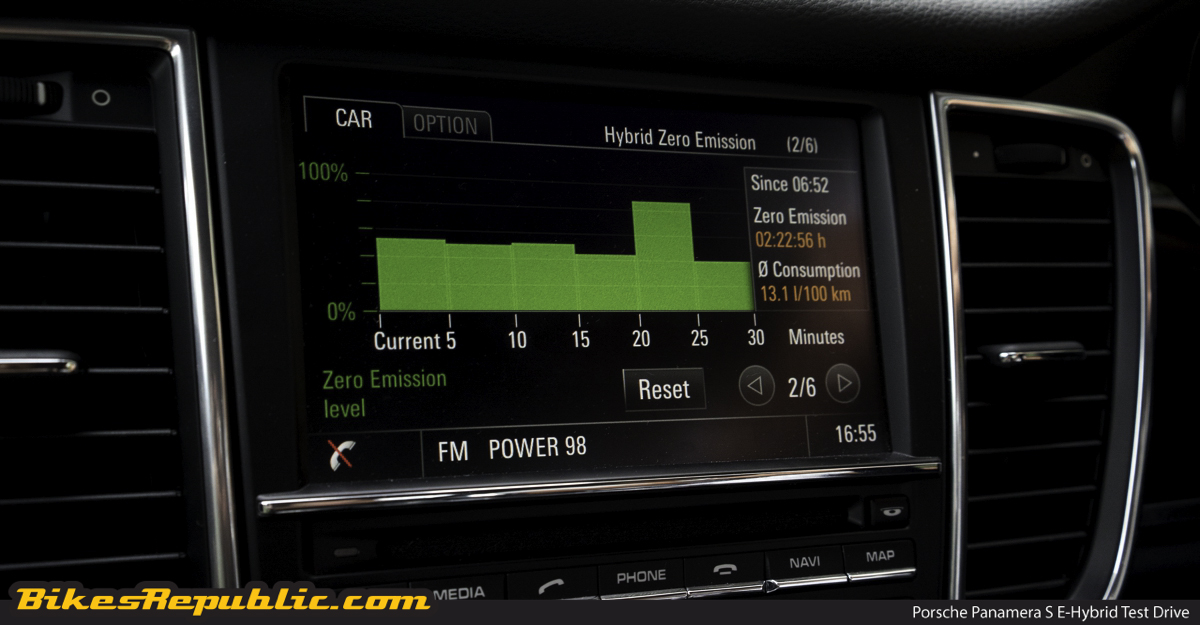
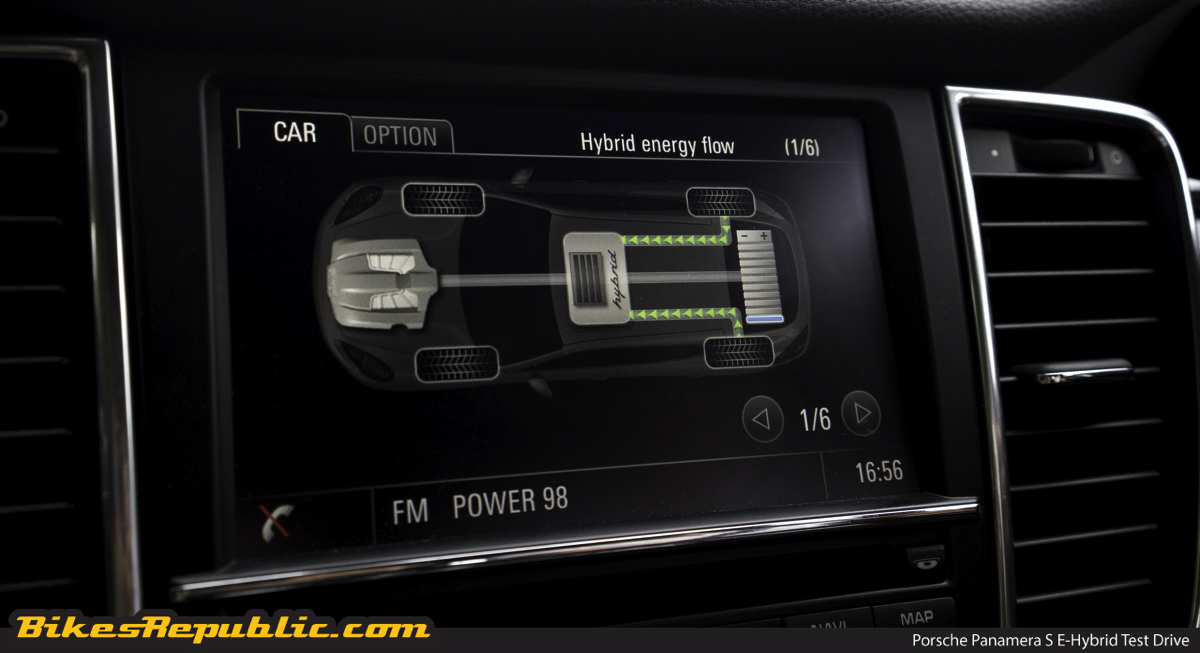
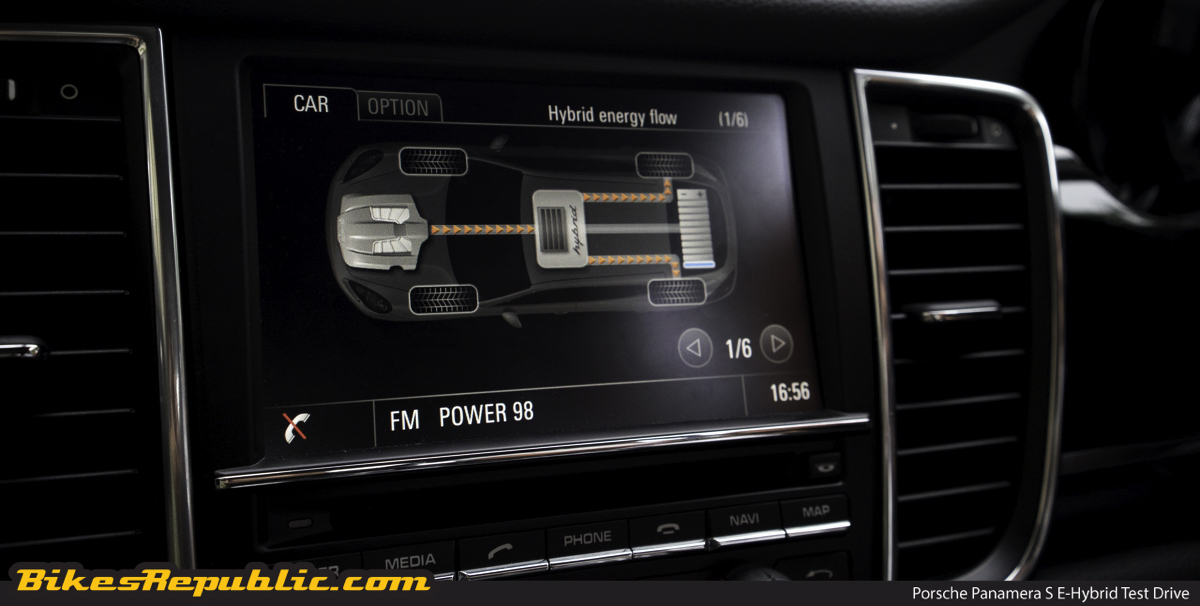
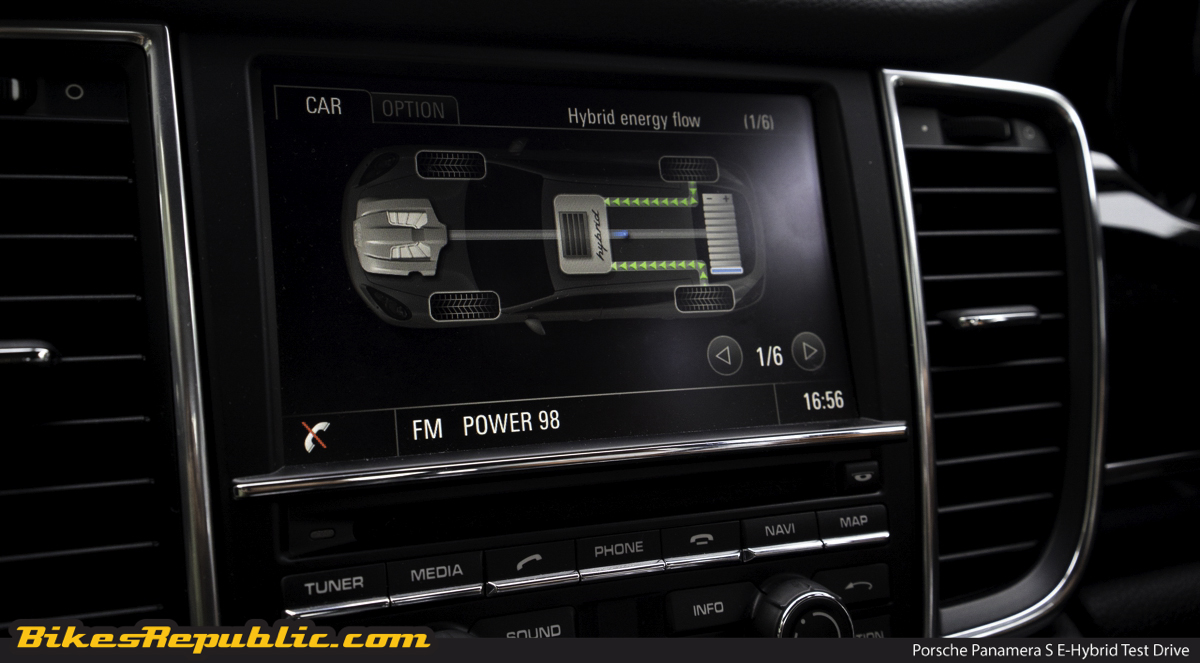
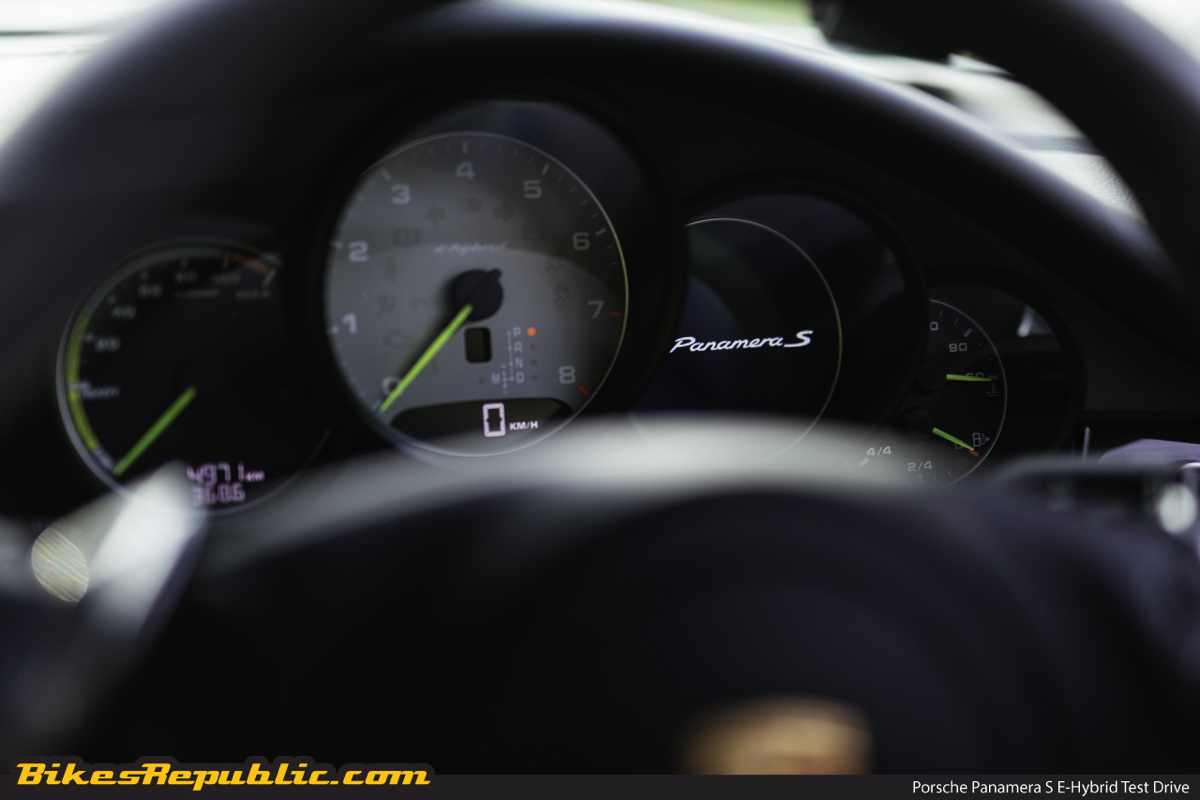
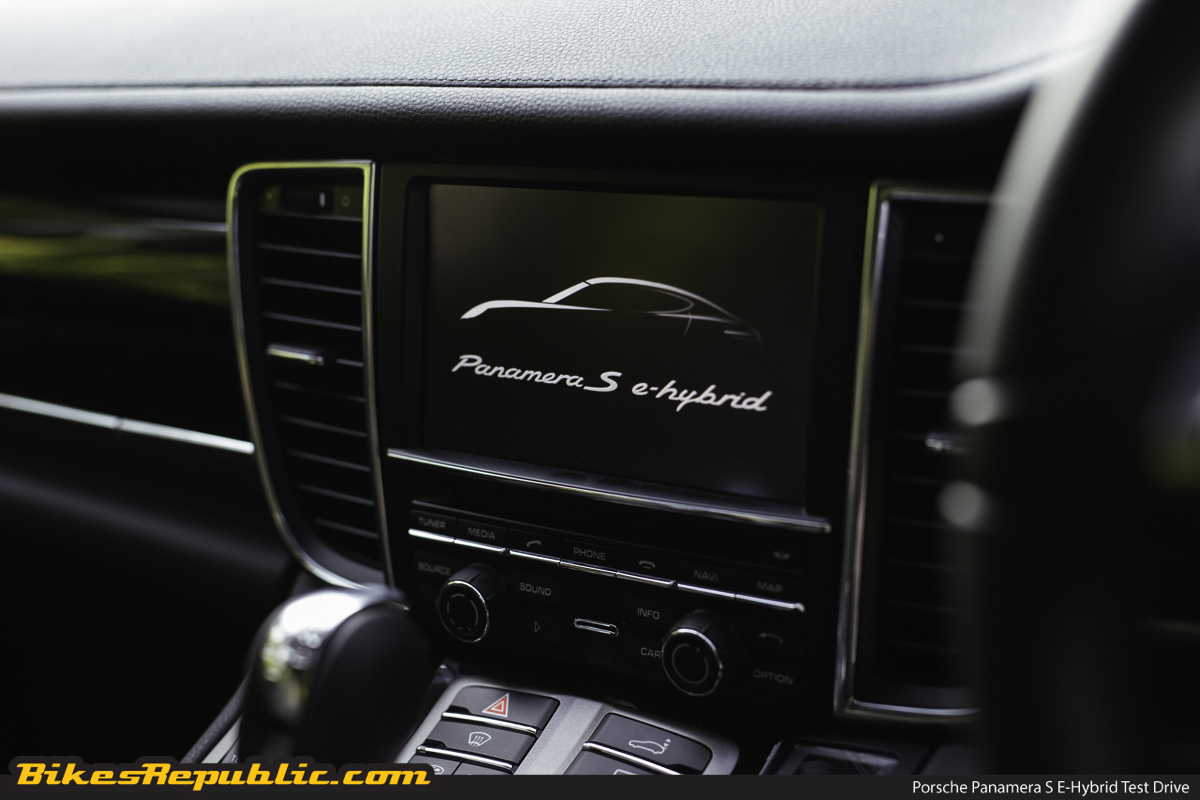
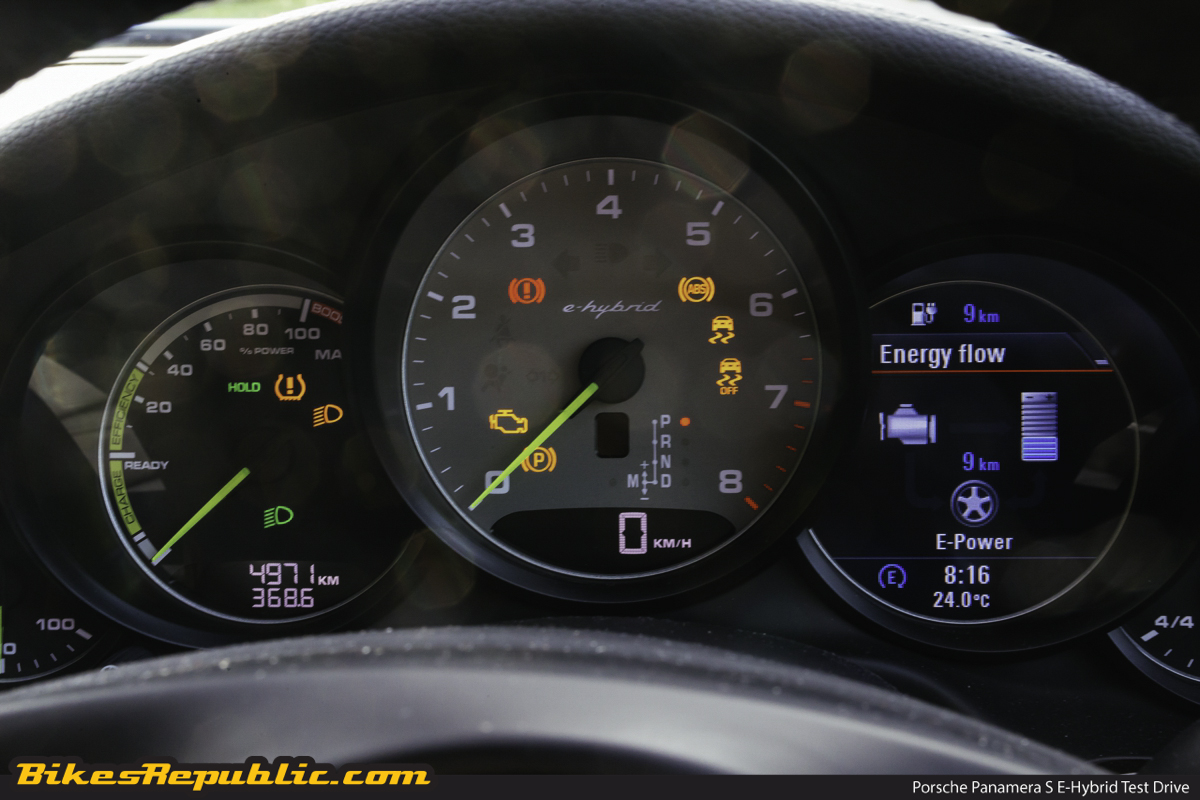
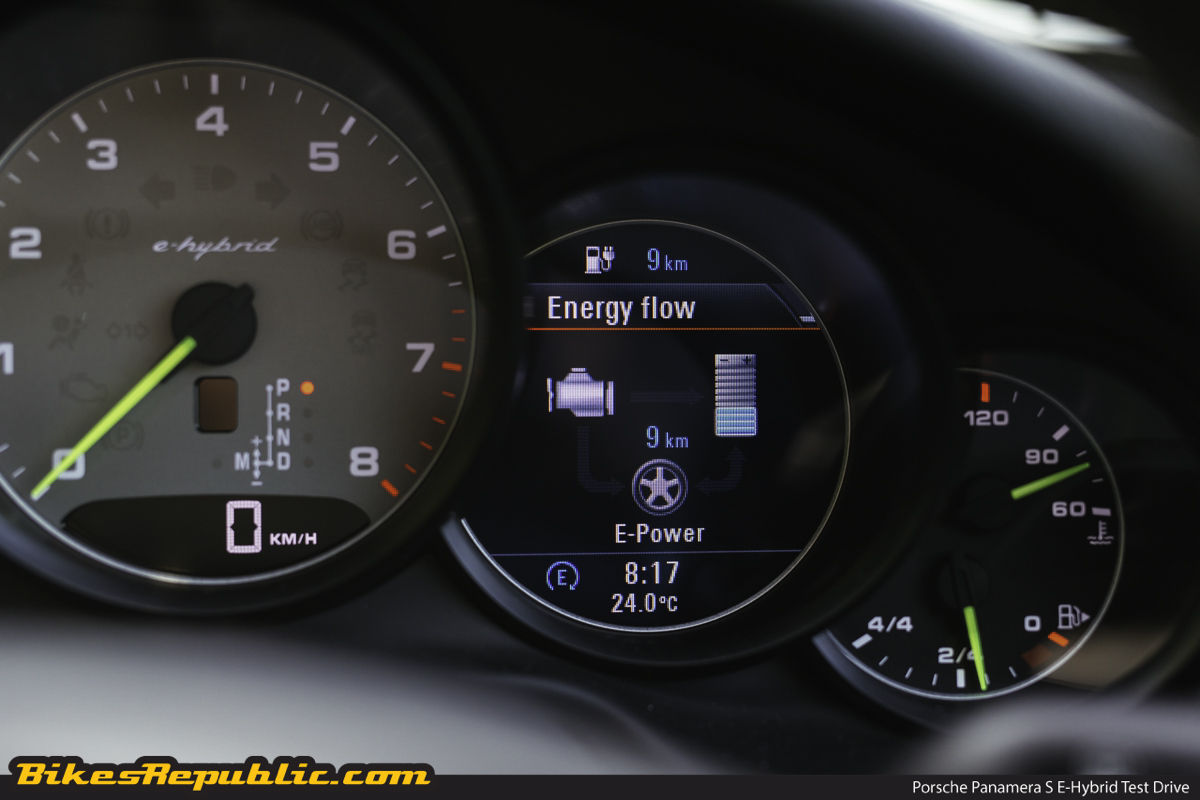
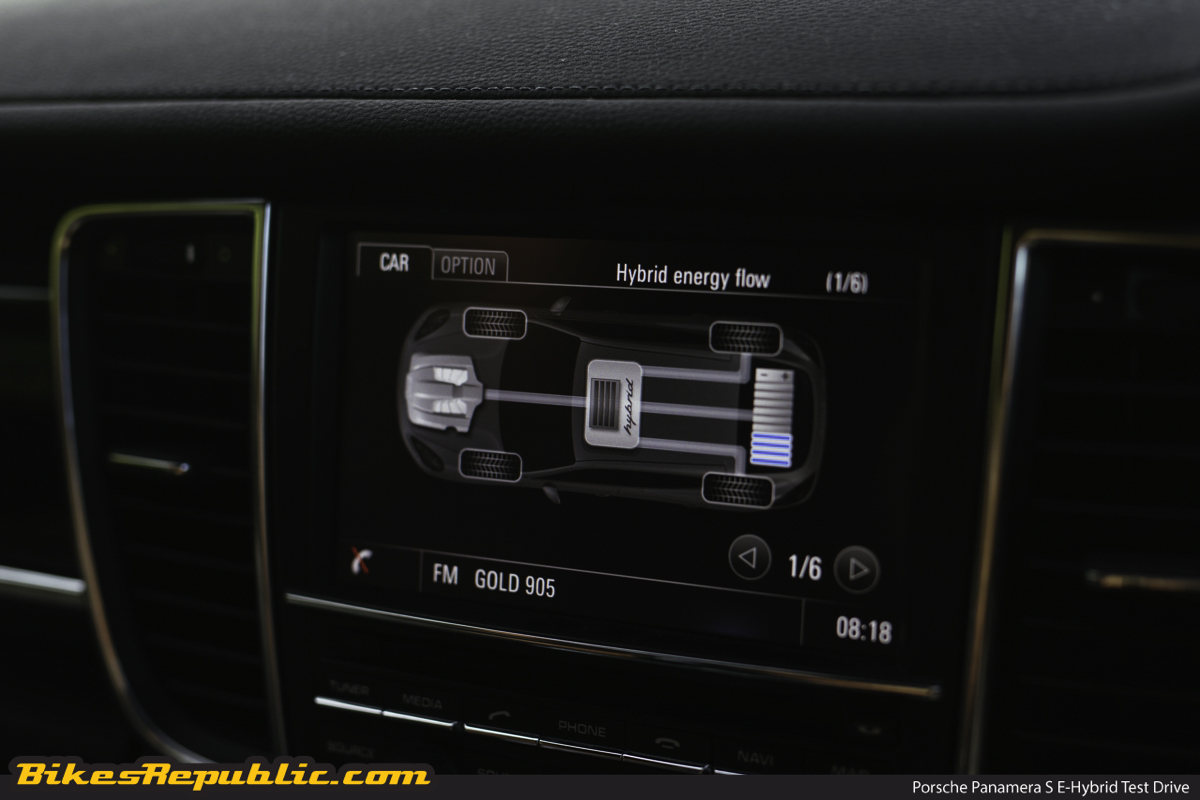
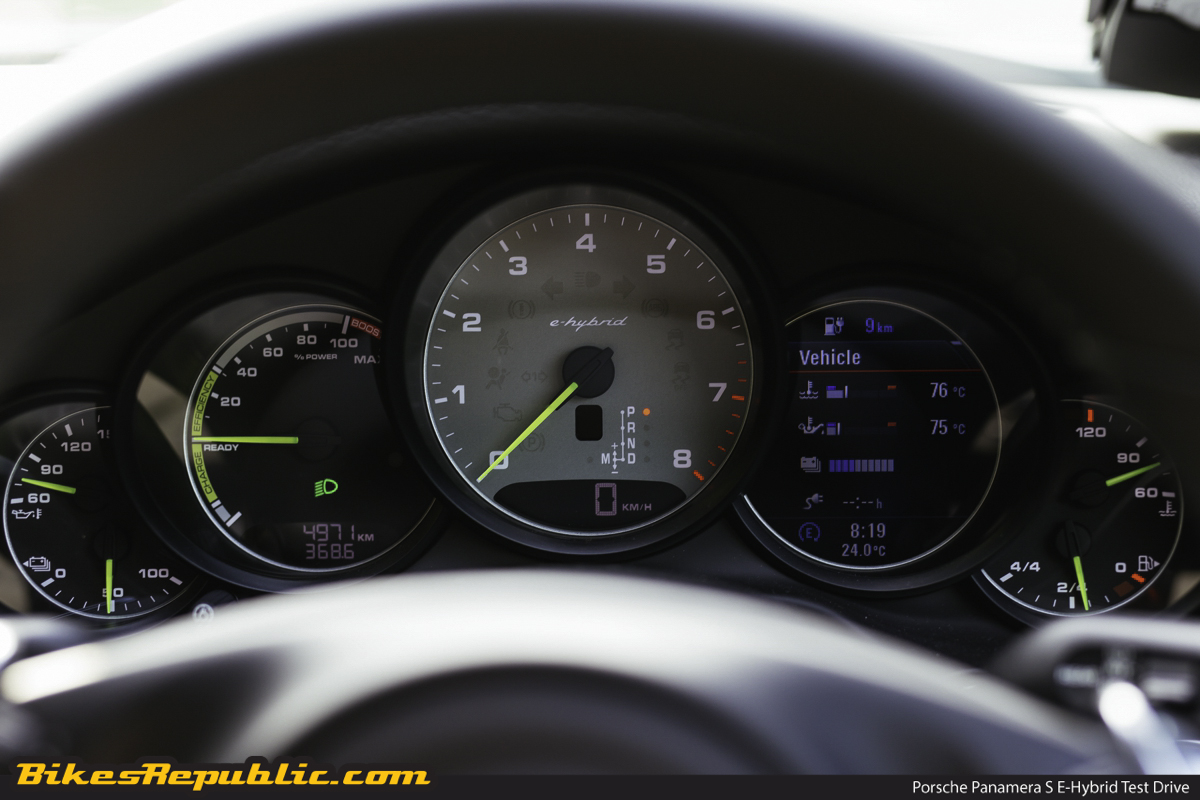
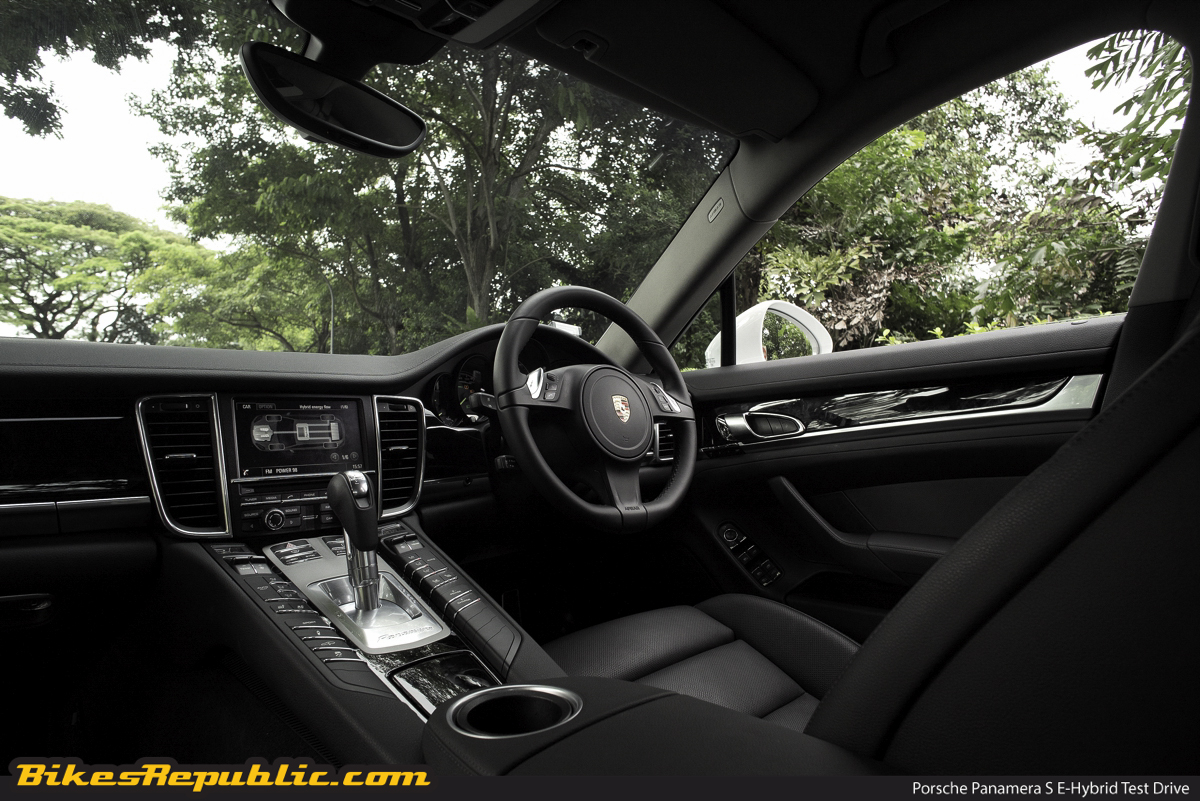
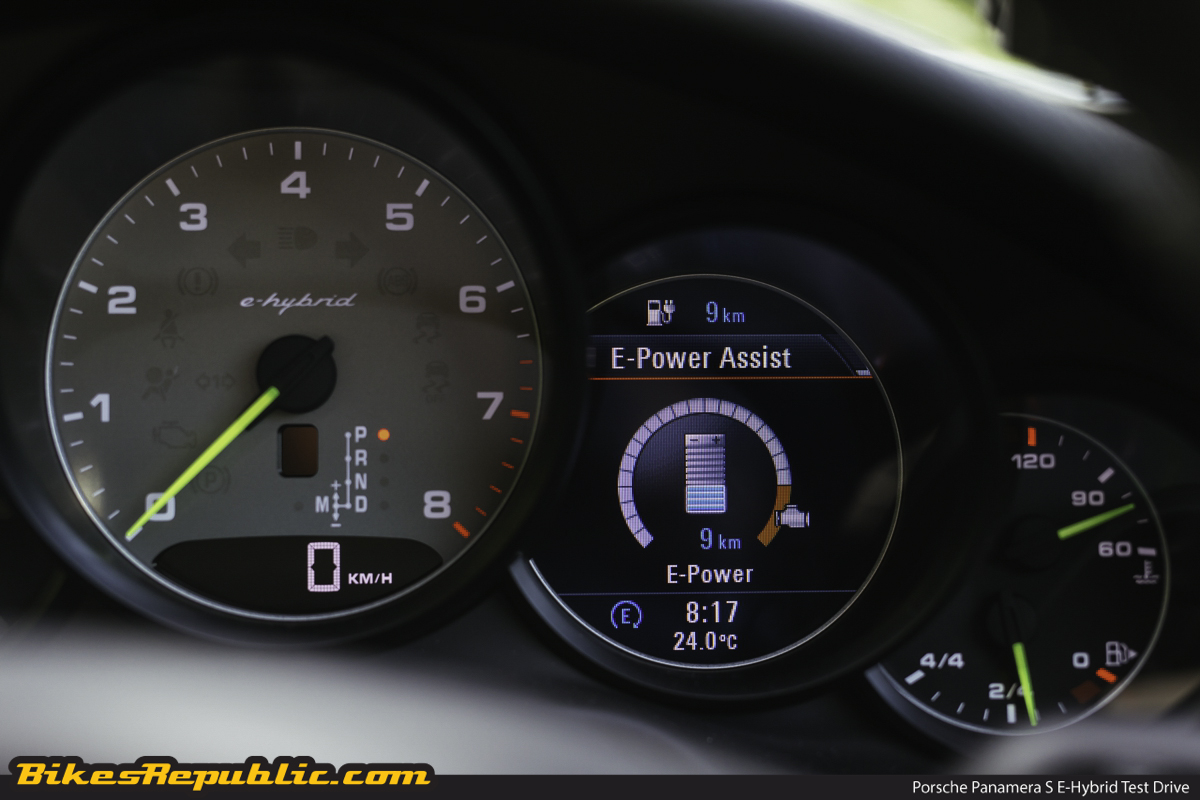
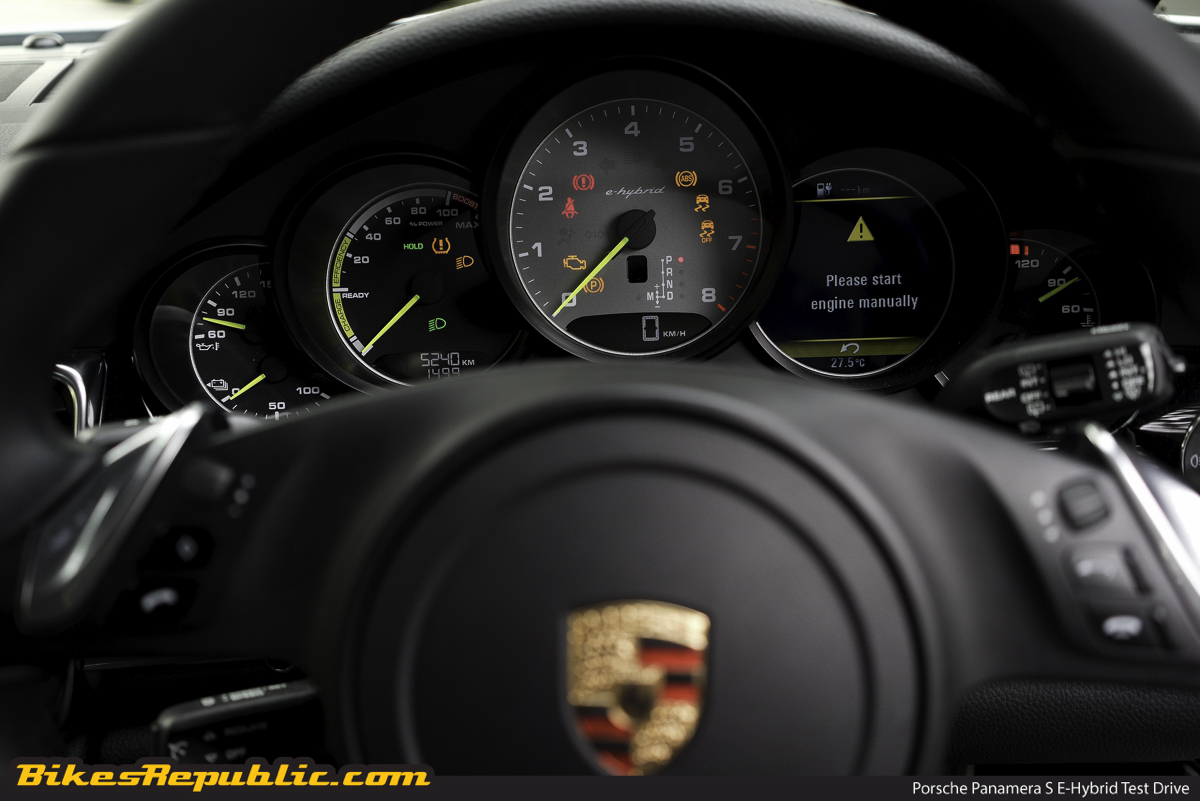
Again, unlike its other siblings within the Panamera range, this S E-Hybrid variant features a slightly different instrument panel. All the most vital information are displayed in rich detail as how most of Porshce’s system typically do, with the exception of the centrally-mounted rev counter that also indicates the amount of boost offered by the electric motor. And the same rich amount of data can also be displayed with the Panamera’s central touchscreen infotainment screen, giving both driver and passenger a clear indication that not only is this no ordinary Panamera, it also grants with a higher sense of purpose over its other non-hybrid siblings.
DSC06386Perhaps our only niggle with the E-Hybrid system is its regenerative braking system primed on board. While it does not feel as numb as most similar two-step systems found in most hybrids, what need some getting used to is the long and pedal travel, as well as one’s foot input modulation in order to get the best balance between charging and braking.

Of course, the Panamera S E-Hybrid is an unquestionably refined driver’s car as it will easily meet and surpass all expectation levels all Porsches typically get. And, despite the E-Hybrid system’s added bulk to the Panamera’s slightly awkward long and wide dimensions, this 2.1-tonne saloon felt surprisingly agile and precise without needing much effort when tackling corners or a windy stretch of B-road.
IMG_0767Though it did not set out to be the quickest or the most agile within the Panamera range, this S E-Hybrid’s offer of the same hybrid performance technology found in the 918 Spyder and 919 Le Mans racer is a very unique and enticing offer indeed. Effectively, Porsche has proven that you can package both efficiency and performance at the same time.

Furthermore, it truly stands out at being the only one of its kind to offer a guilt-free eco-friendly motoring experience. This is one German-engineered hybrid petrol-electric dream that we believe will garner plenty of fans.

Porsche Panamera S E-Hybrid

ENGINE

  • 3.0-litre DOHC V6
  • supercharged petrol
  • plus electric motor

TRANSMISSION

8-speed automatic

POWER

  • 333hp@5,500 – 6500rpm (petrol)
  • 416hp @ 5,500rpm (combined)

TORQUE

  • 440Nm @ 3,000 – 5,250rpm (combined)
  • 590Nm @ 1,250 – 4,000rpm (total)

PERFORMANCE

  • 0-100km/h : 5.5 seconds
  • Top Speed : 270km/h

ELECTRIC SYSTEM

  • Top Speed : 135km/h (electric only)
  • Max Range : 18 – 36km (approx)

FUEL ECONOMY/CO2

  • 3.1 litres/100km (combined)*
  • 71g/km (*claimed)

Gallery
IN many ways than one, the Jeep Cherokee nameplate is something many in Malaysia are familiar with. The second-generation model, the Cherokee XJ, became quite a popular item on our roads sometime in the late 1990s. While its squared design and outlooks were nothing to shout about, it was its ability at being both a desirable on-road SUV and a highly capable off-roader that sealed its deal amongst many.

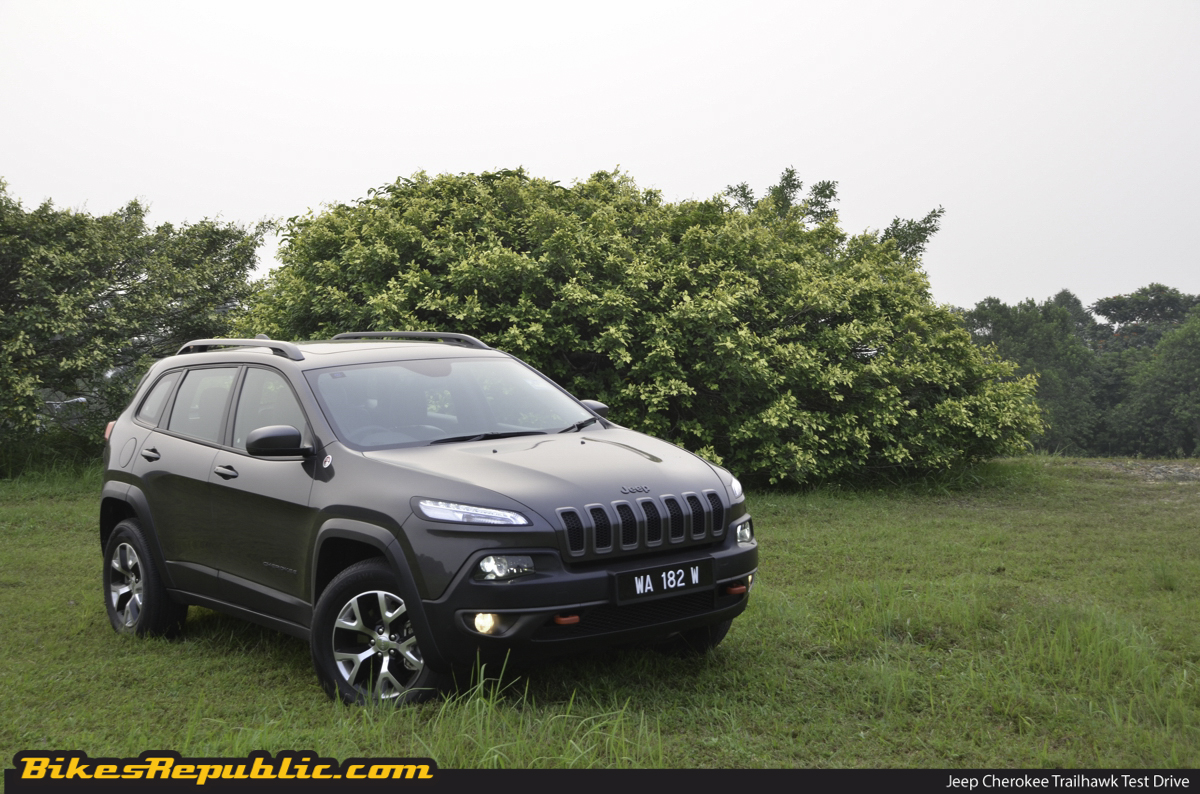
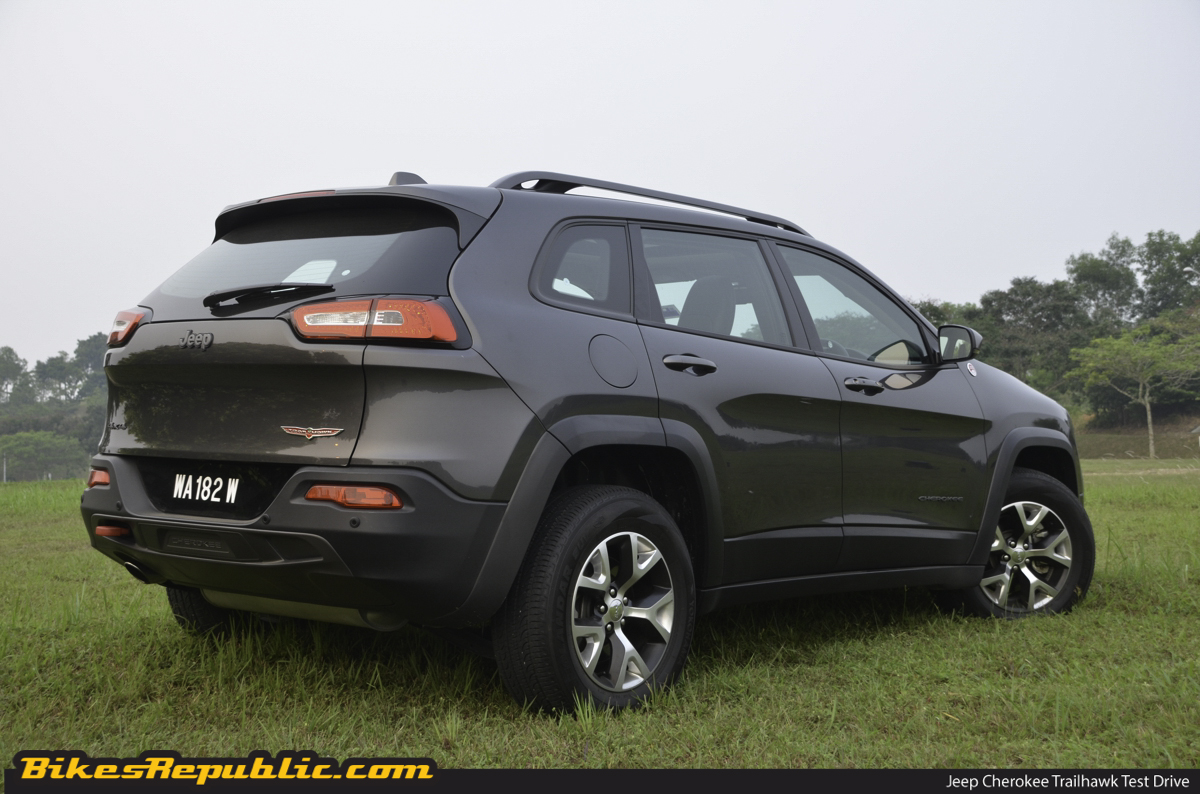
DSC_0016Fast-forward to the present day and things have taken a much different yet somewhat better path for the Cherokee model. The fifth generation Cherokee model as we come to know now has been in production since 2013. Unlike the XJ, this newer ‘KL’ model can be had in either Longitude or Trailhawk variants, with the former being better honed as an urban crossover SUV whilst the latter, which is featured on this page, stands as the more off-road focused variant of the two.

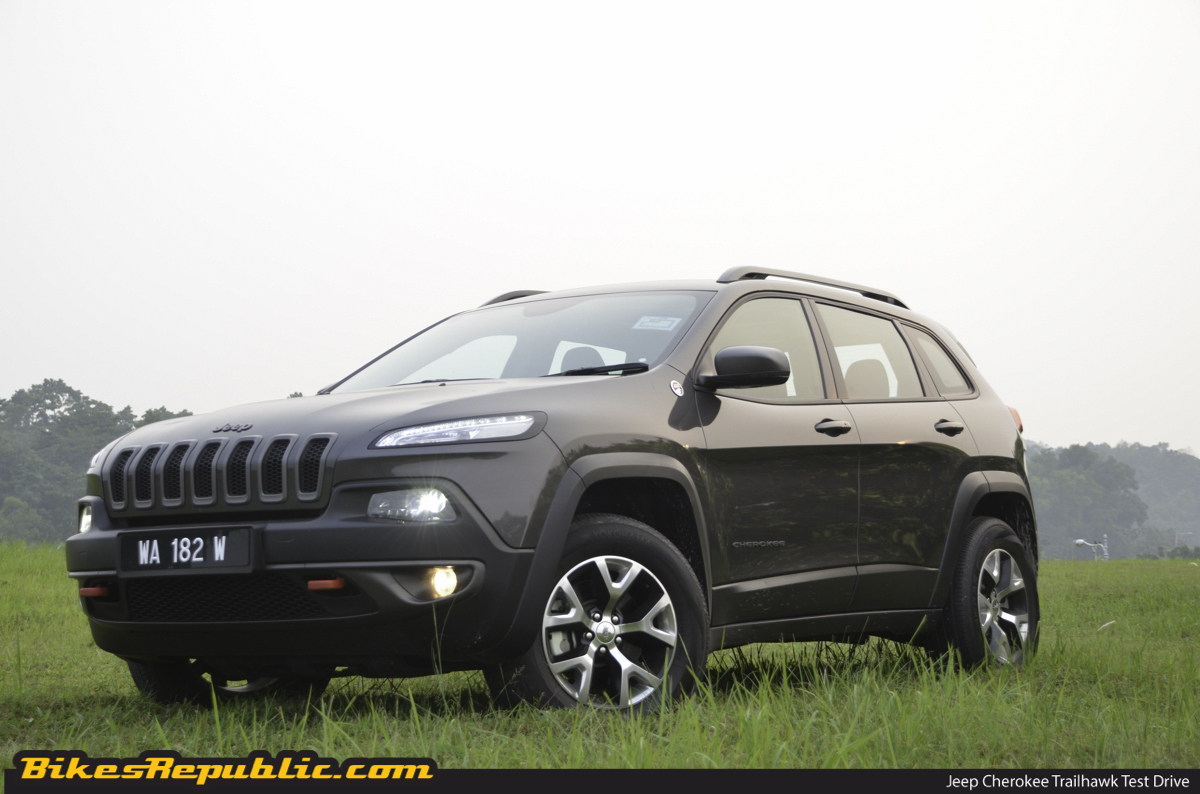
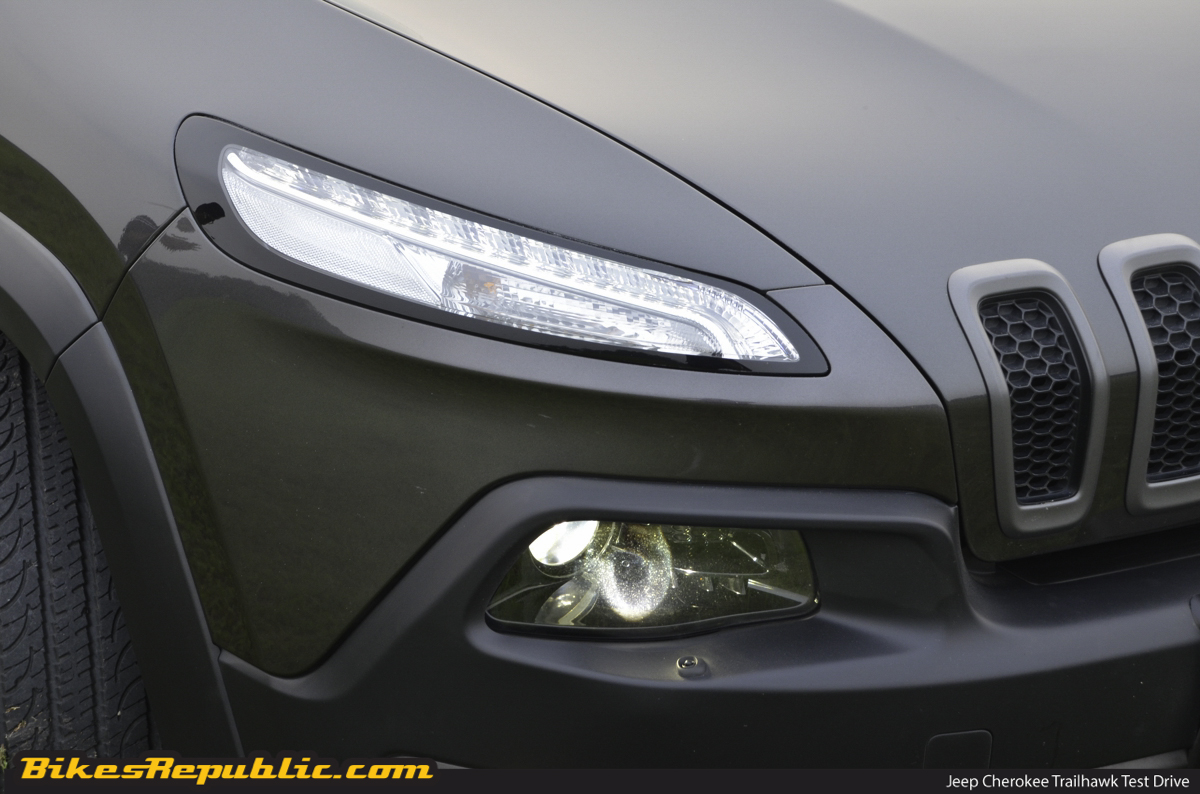
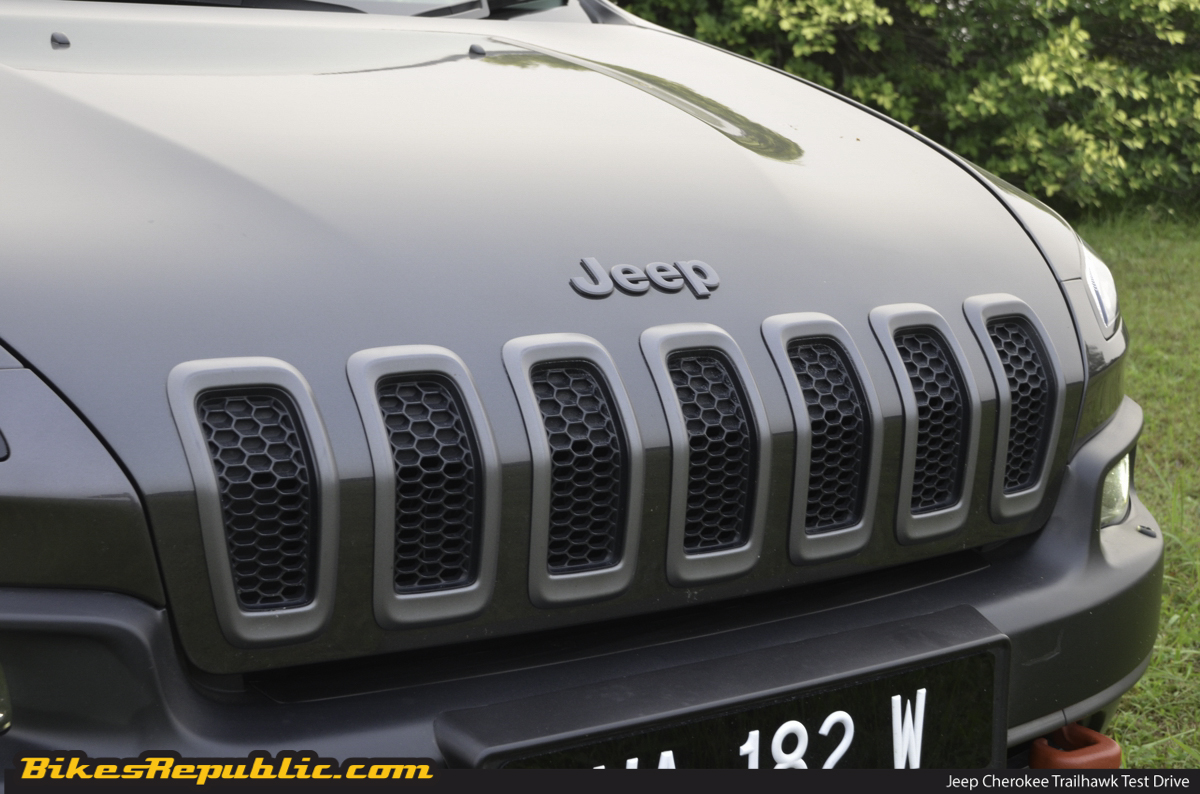
As far as looks go, this new generation Cherokee model does not look too bad overall. Whilst the basic and typically squared SUV shape is rather obvious, Jeep’s designers have given this new model smoother with lines and curves all round. Complementing that are modern touches, namely the distinctive quad-split headlights arrangement that flank the Jeep brand’s signature grille design that feature both LED daytime running lights and Bi-Xenon HID projectors. 
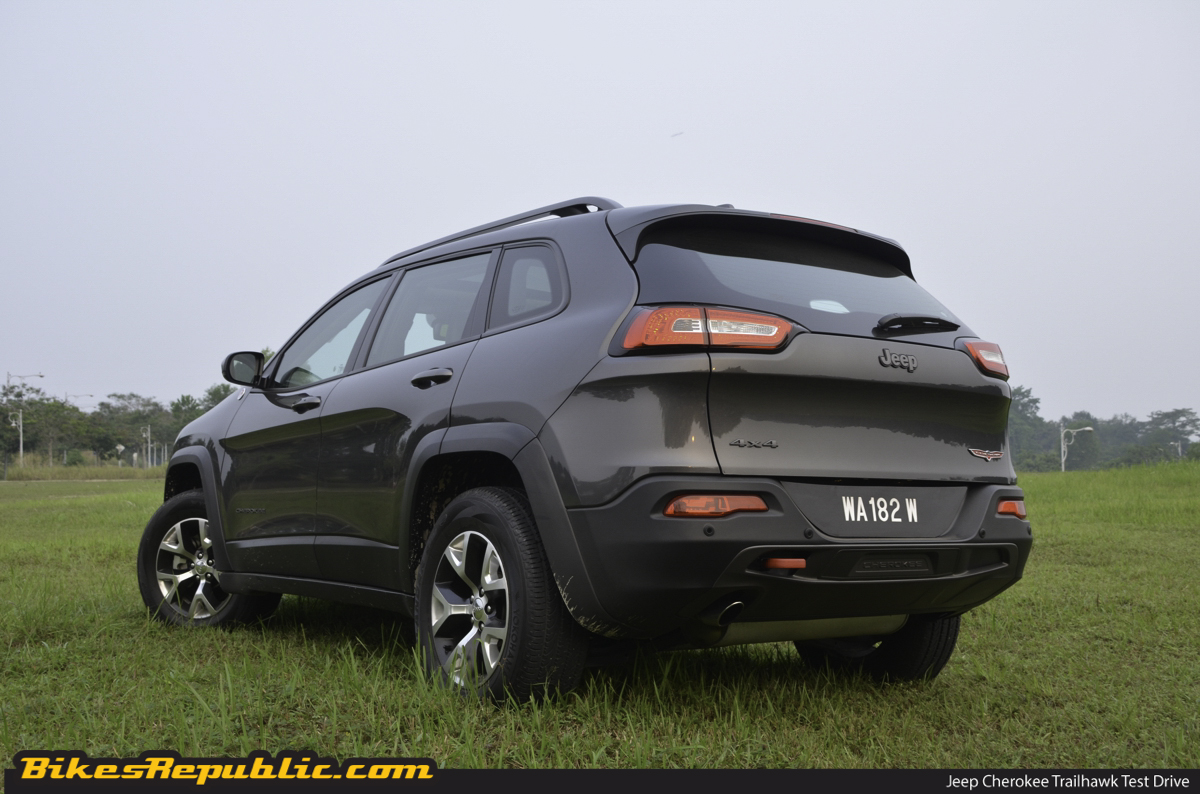
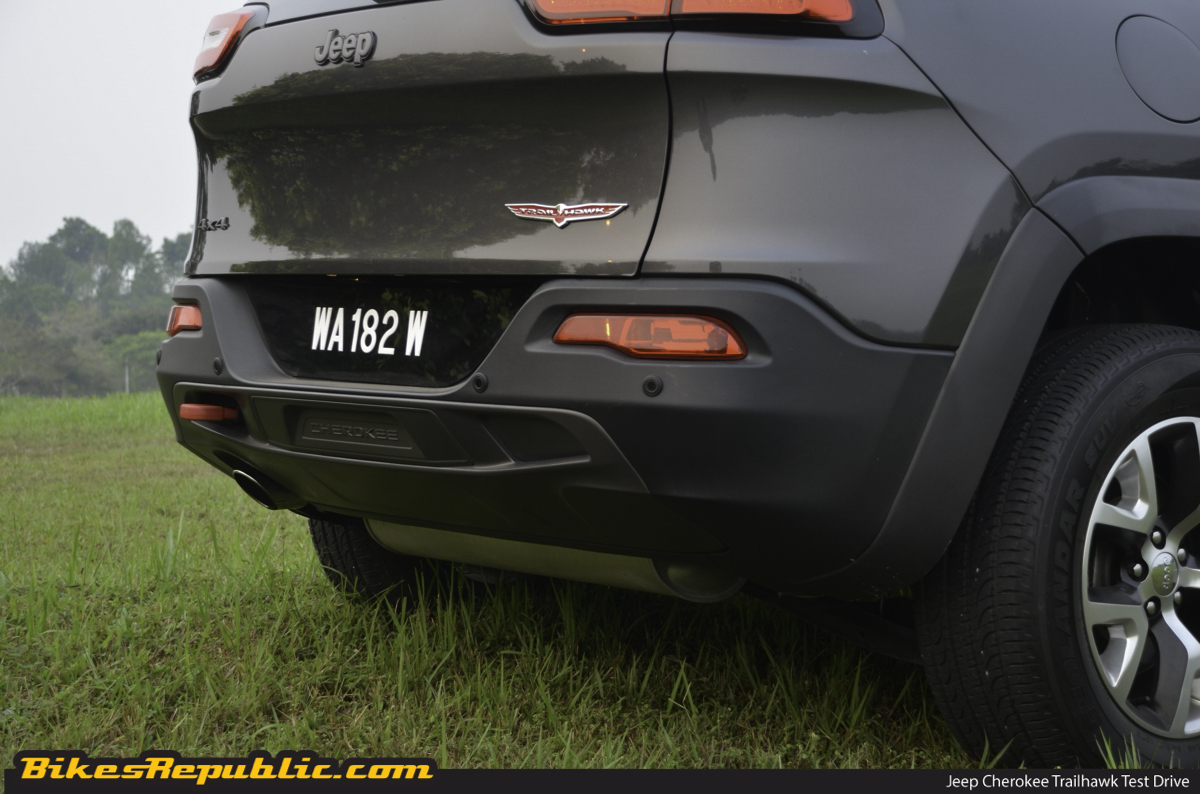
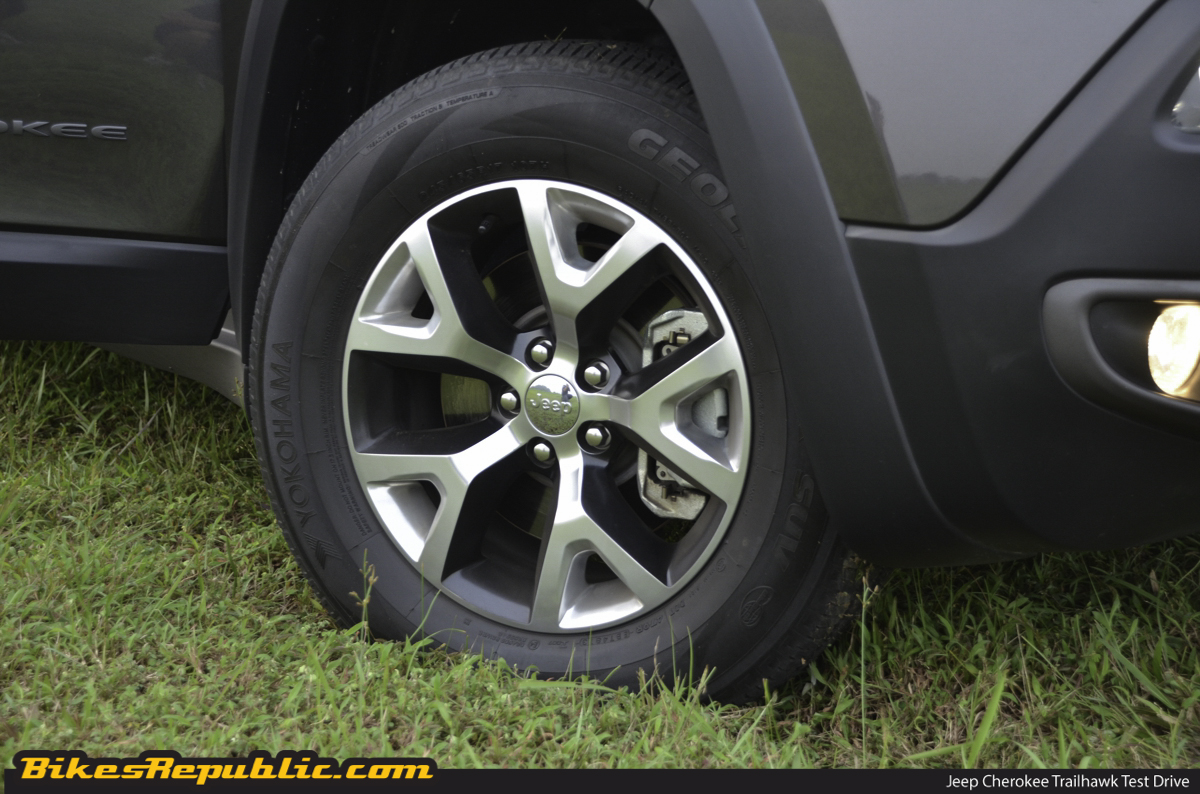
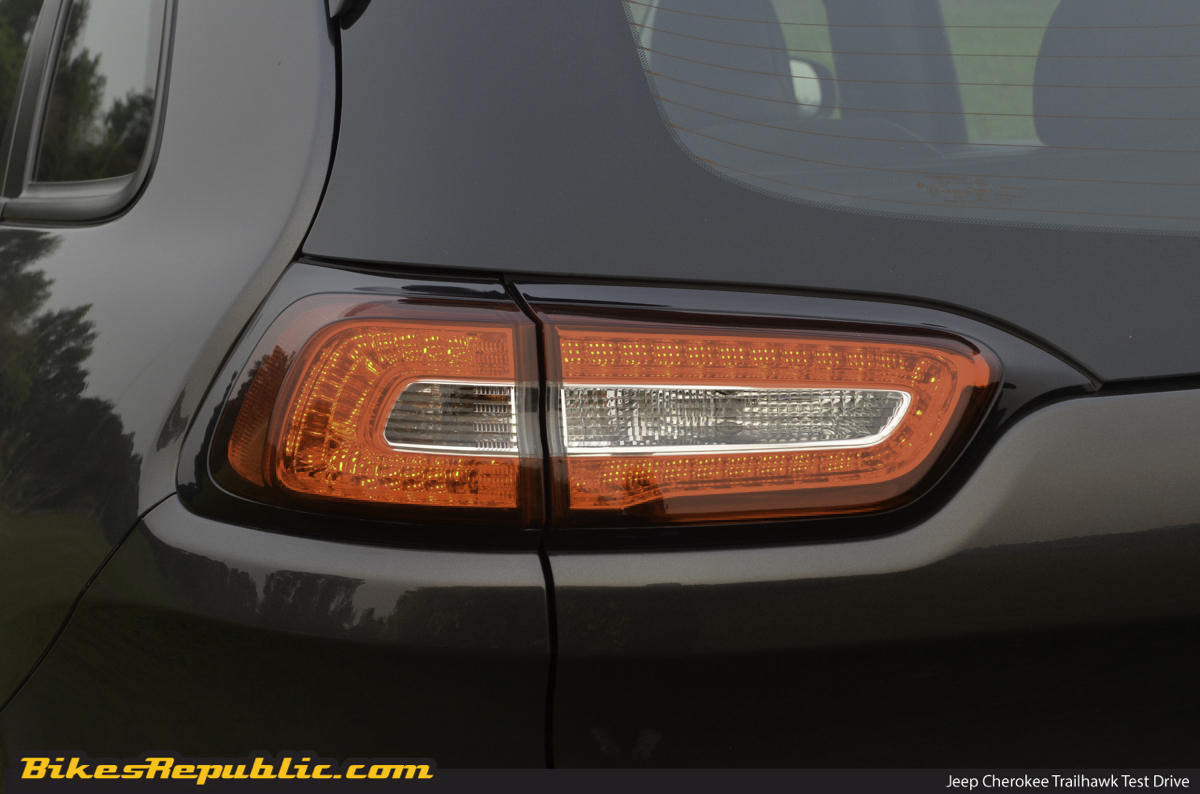
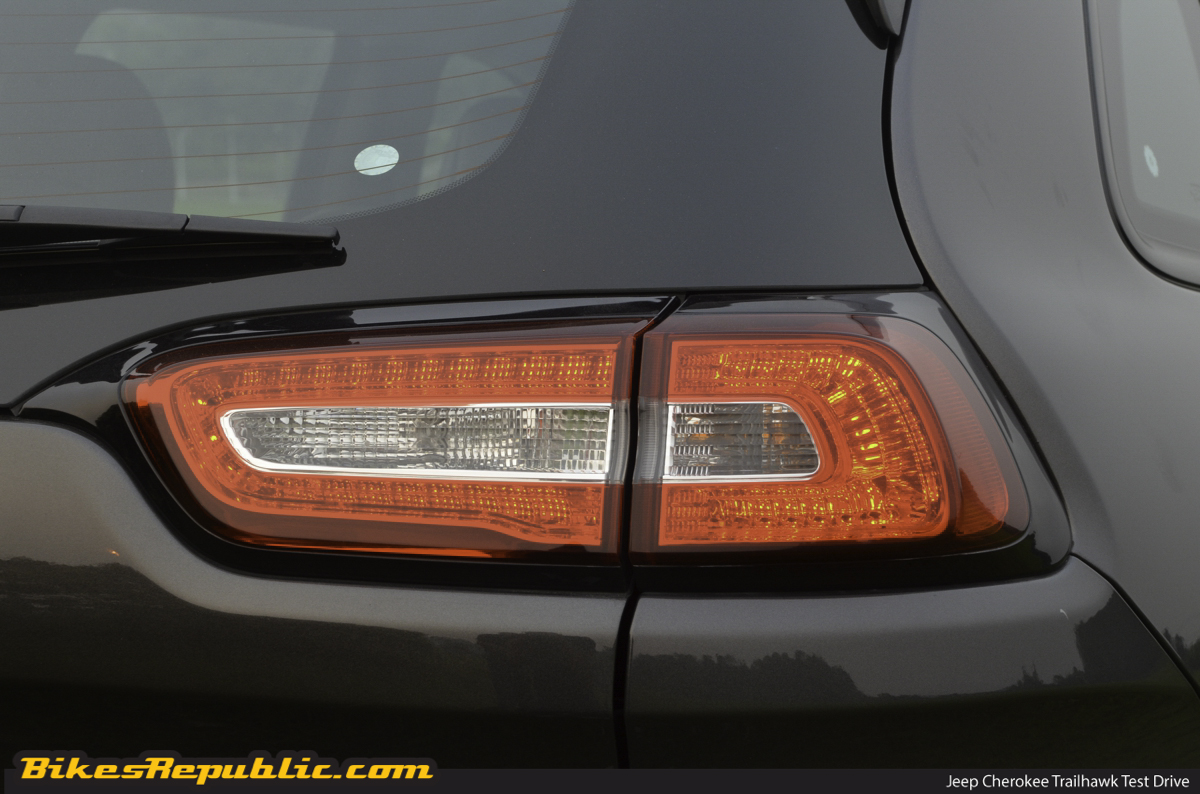
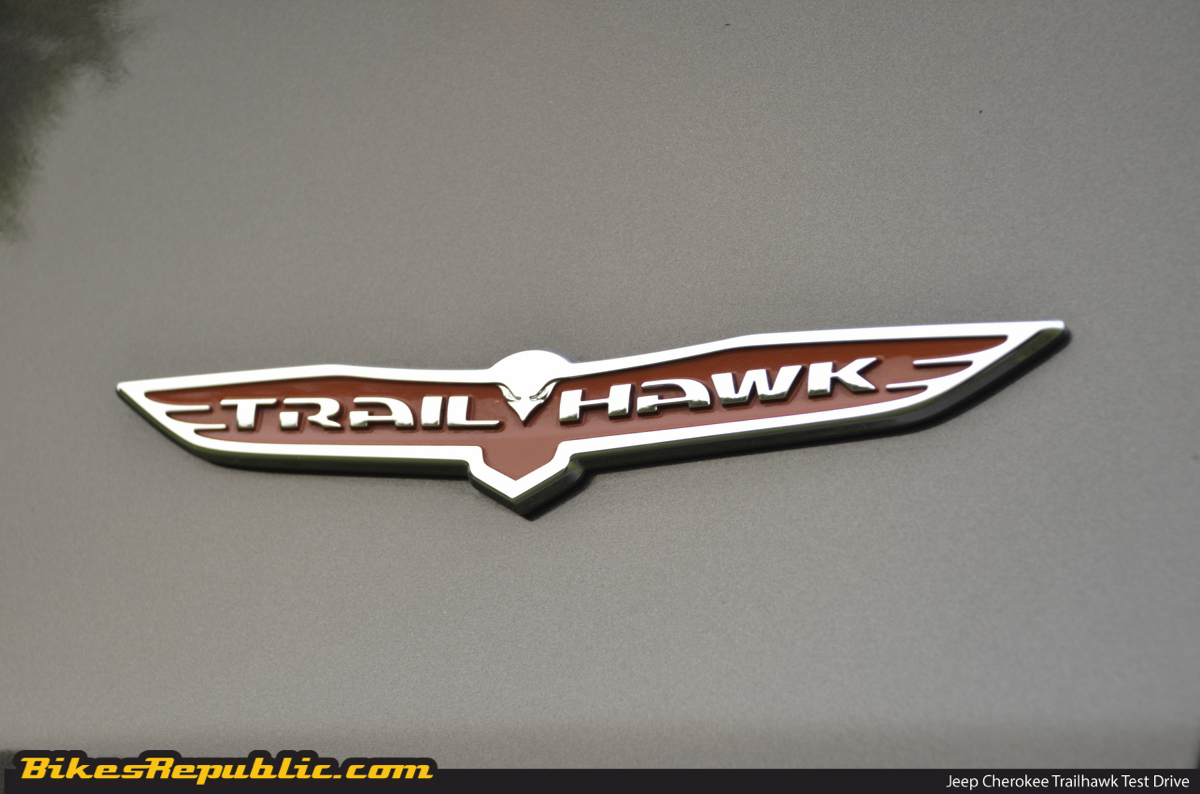
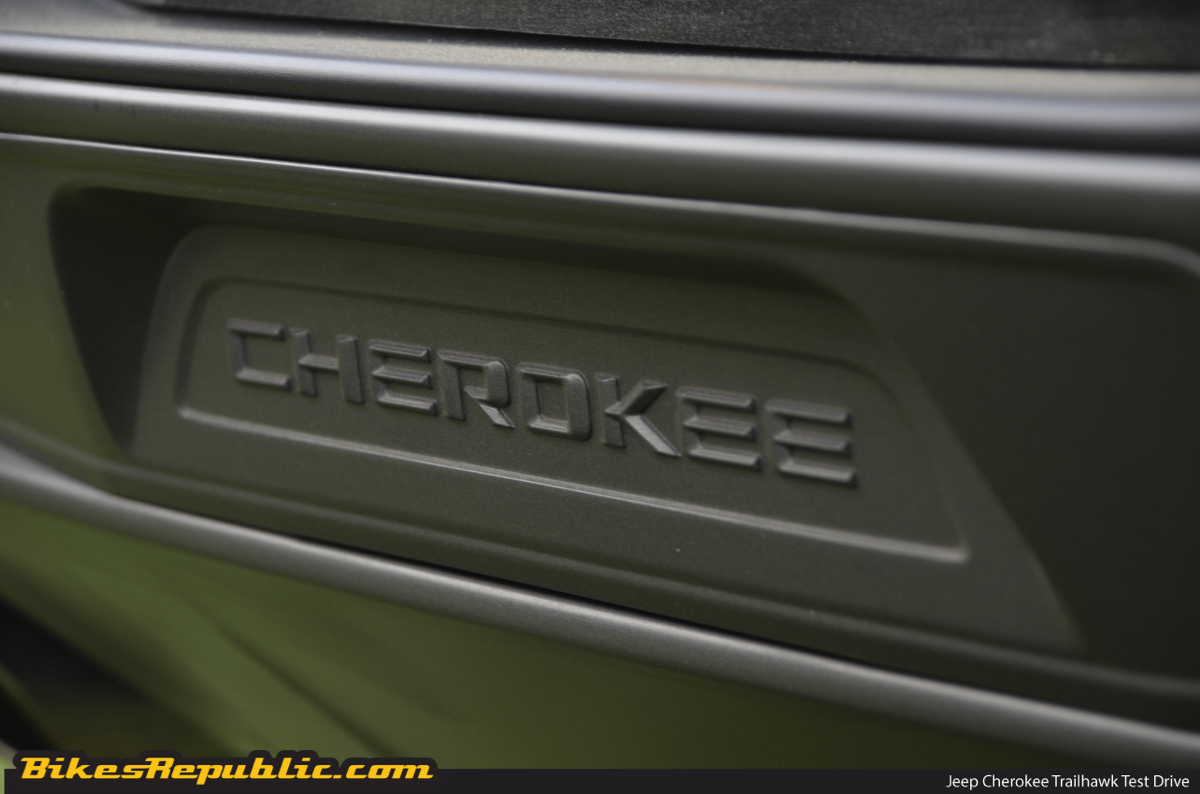
DSC_0020Unique to the Trailhawk though are the contrasting black-finished front and rear bumpers that offer better off-road clearance, not forgetting 17-inch alloy wheels that are wrapped in knobby all-terrain tyres, as well as the special ‘Trailhawk’ badges adorned on the front quarter panels and rear hatch. In short, the Cherokee Trailhawk’s looks are best described as tough and rugged, which is indeed amatch for the capabilities it has in store.

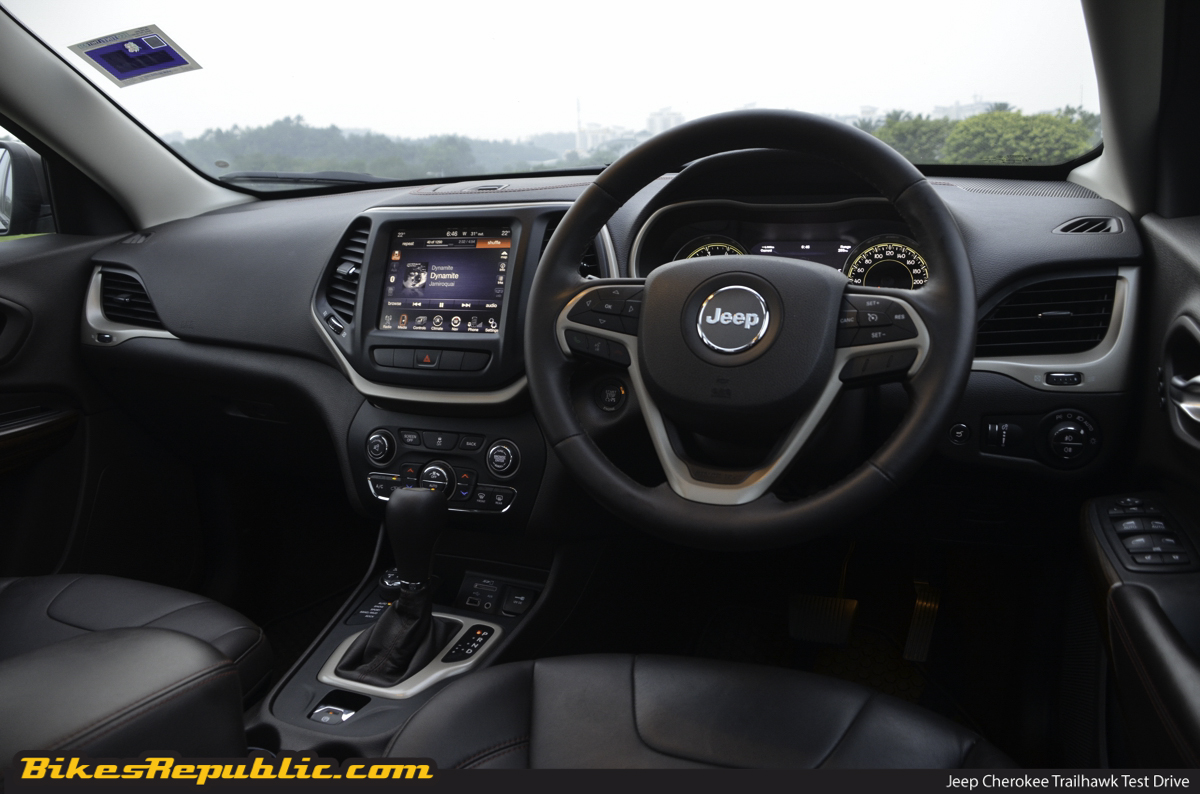
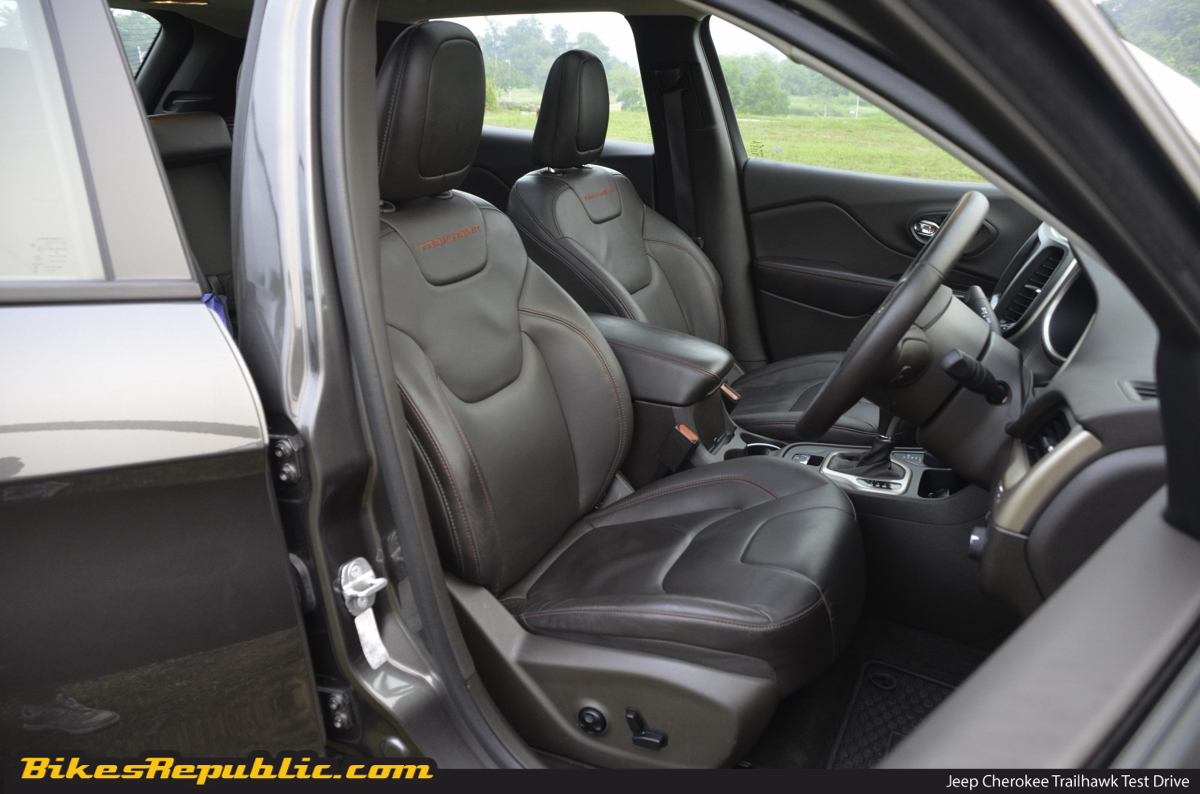
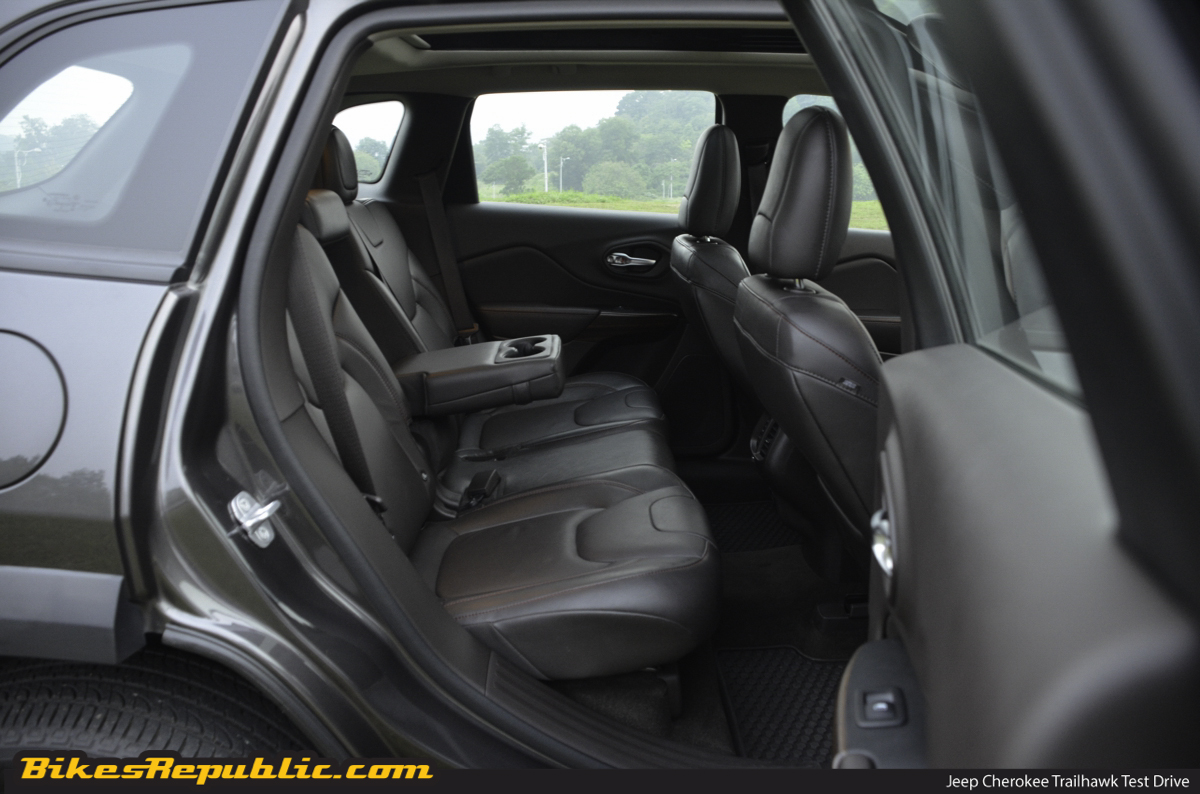
Climb aboard into the cabin and it the first thing that surprises many first-timers is the abundance of space all-round. While it looks small at first glance, the Cherokee is indeed a sizable competitor in the mid-sized SUV game, offering plenty of leg- and headroom in its cabin. Other than the somewhat medium-level fit and finish quality, the cabin is actually a decent place to be in.

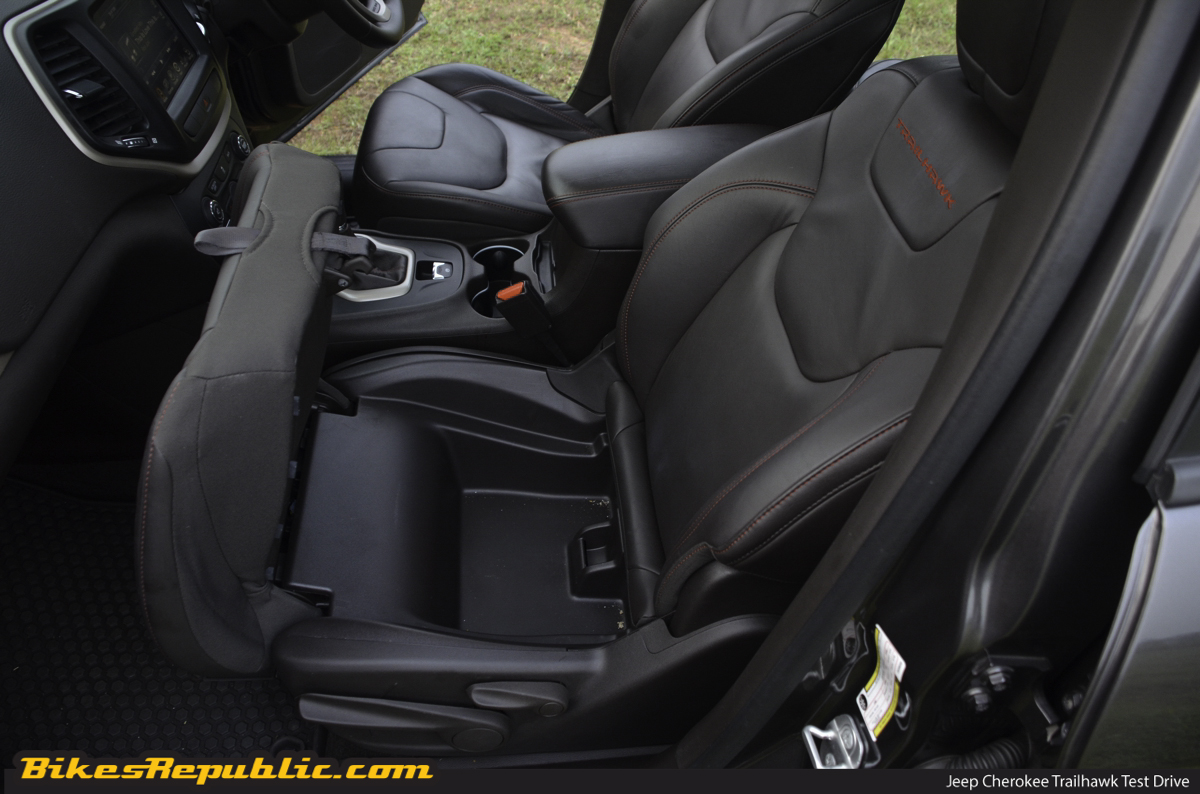
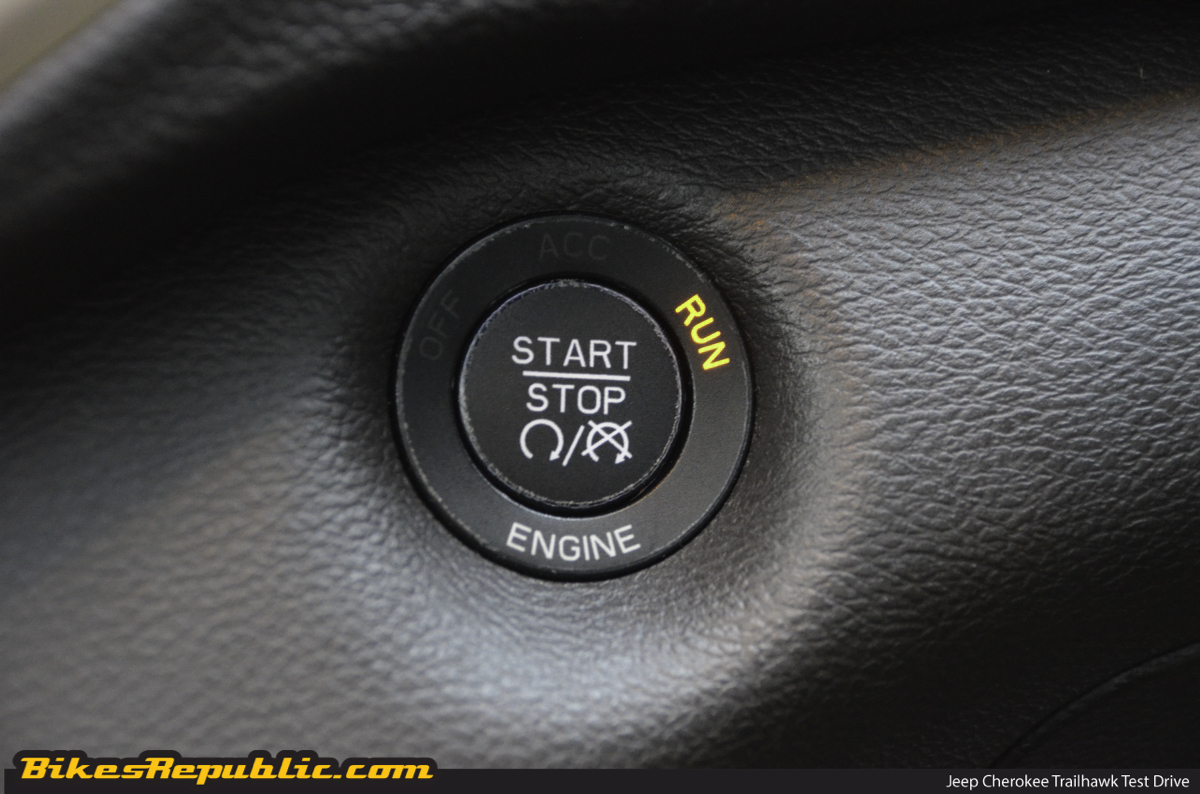
DSC_0107Some the things we loved here were the quirky American-styled practicality features, namely the high amount of cup holders all-round that would fit just about all cup sizes from major fast food chains, as well as the under-seat cubby in the front passenger seat. Another distinctively novel American feature here was the remote engine start feature too, which allowed one to easily warm up the car and cool the cabin first before entering.

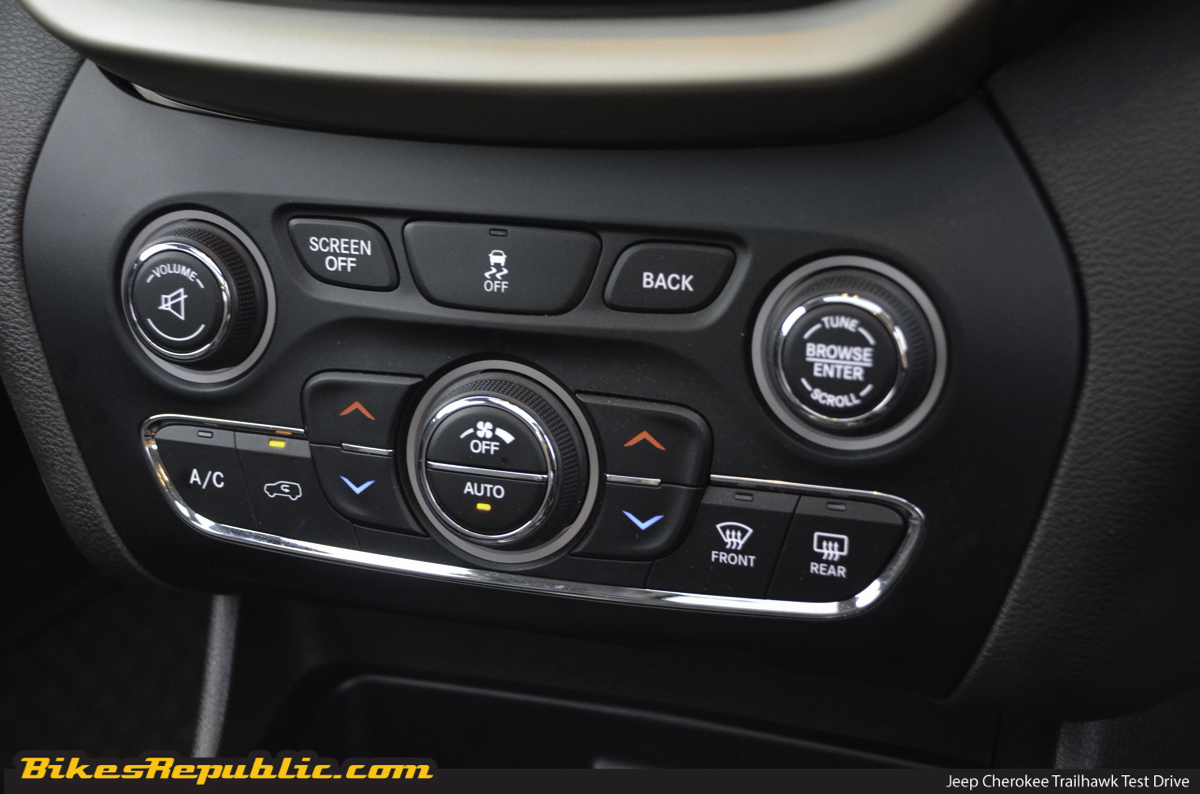
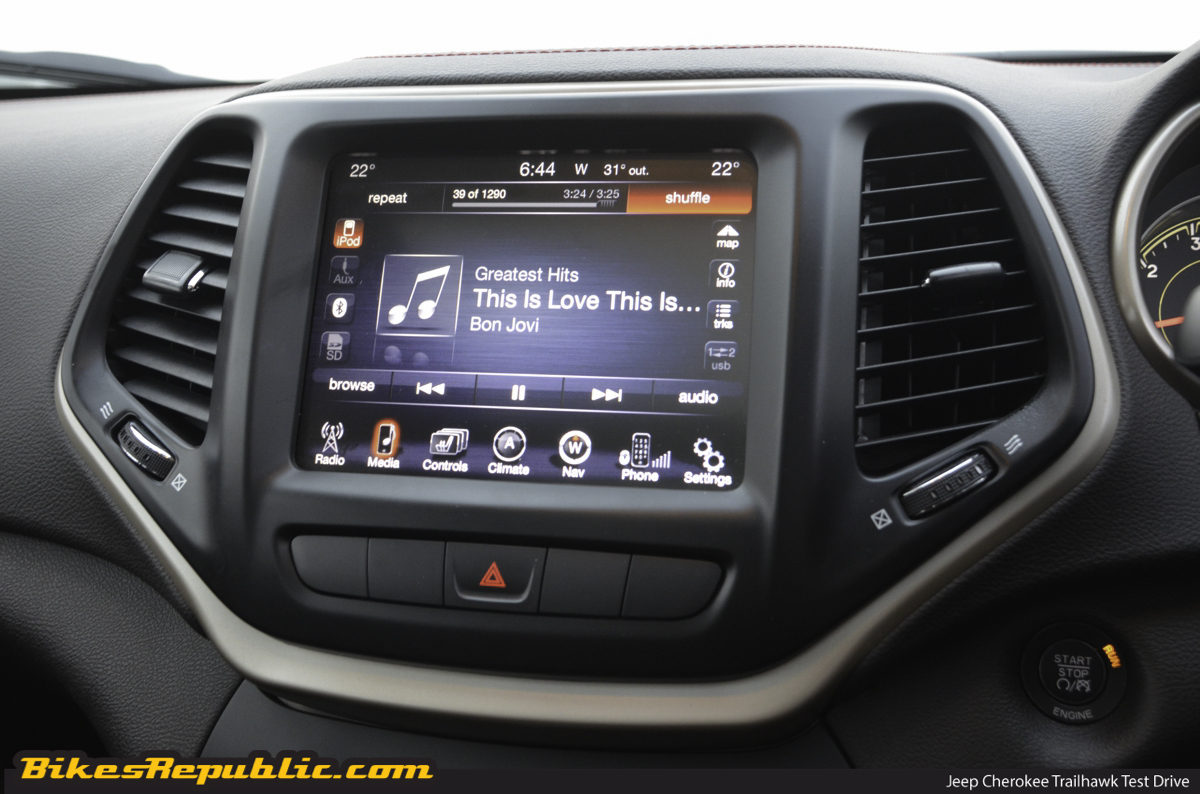
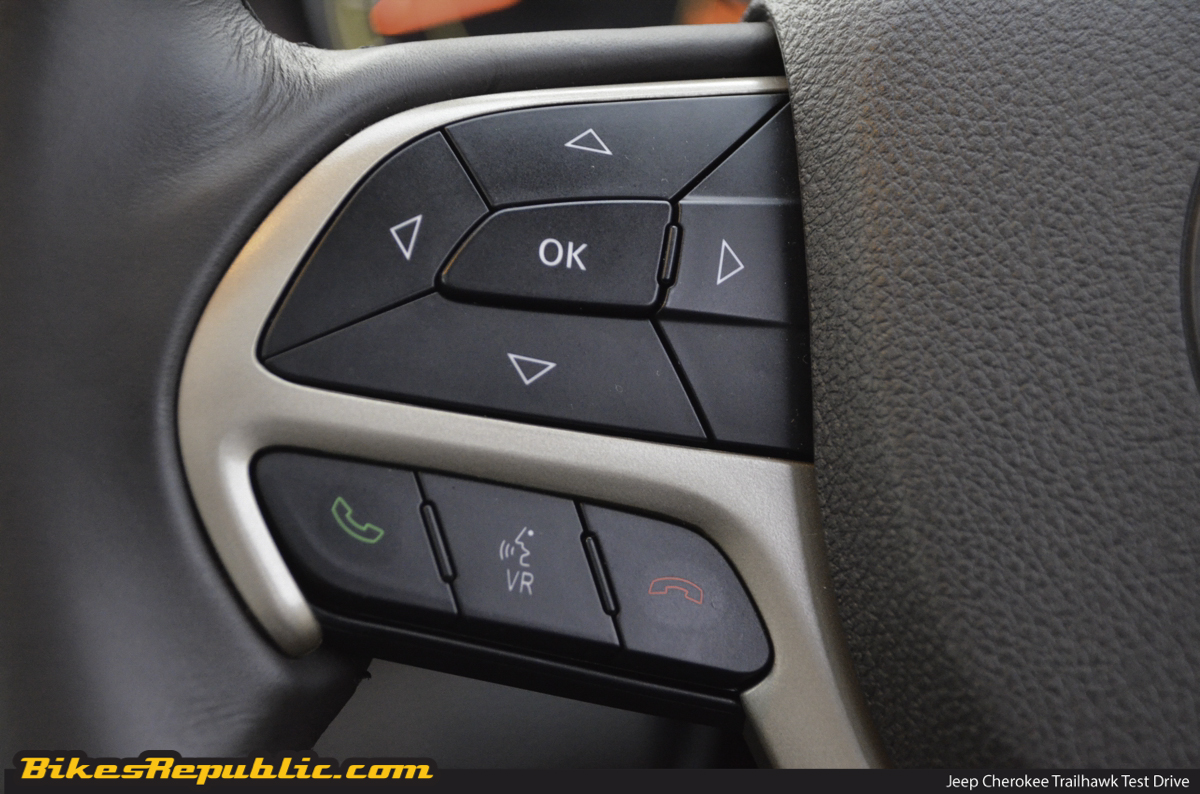
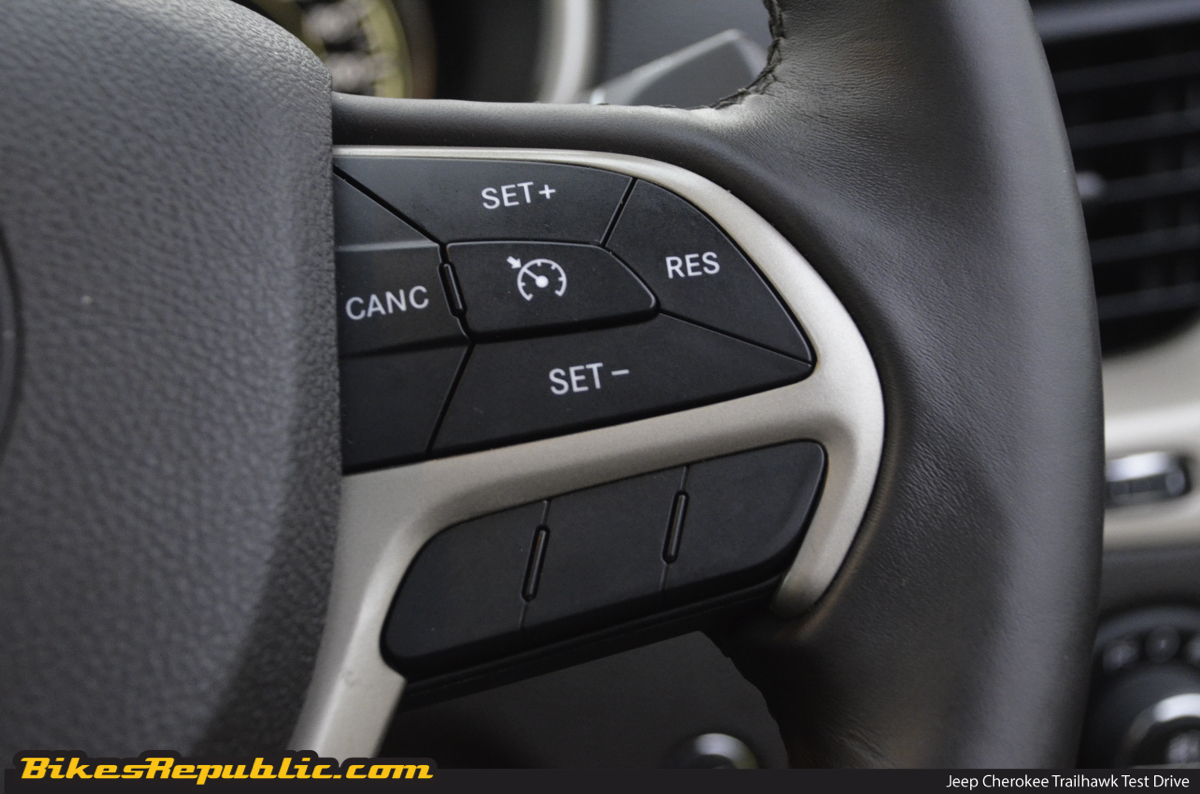
Notable creature comforts here include a neat wireless charging pad for compatible smartphones in the centre console, adaptive cruise control, keyless entry, an 8.4-inch touchscreen infotainment unit with a nine-speaker and a subwoofer setup, not forgetting the all-important dual-zone automatic air-conditioning with rear cabin blowers as well. Without any doubts, the Cherokee Trailhawk’s brilliant offer of an unrivalled creature comforts list is indeed enticing, making journeys across long hours or across the unbeaten path a lot more comfortable a bearable.

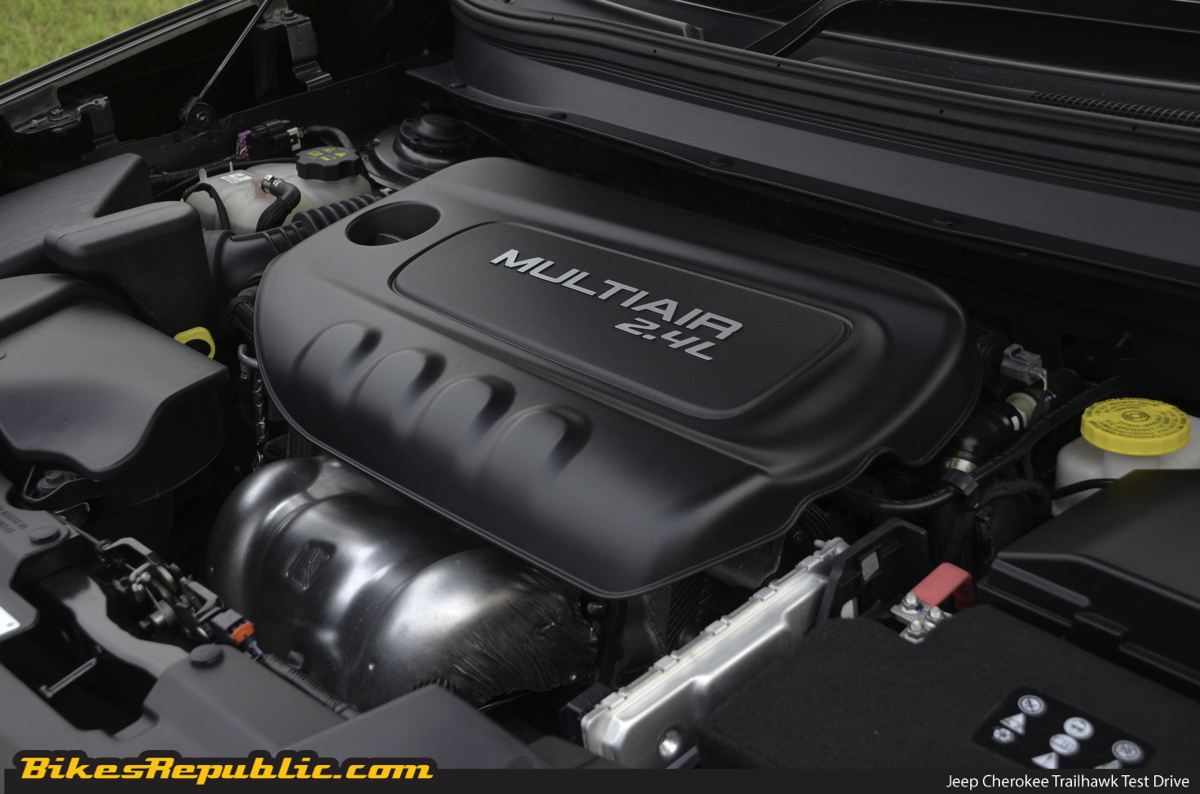
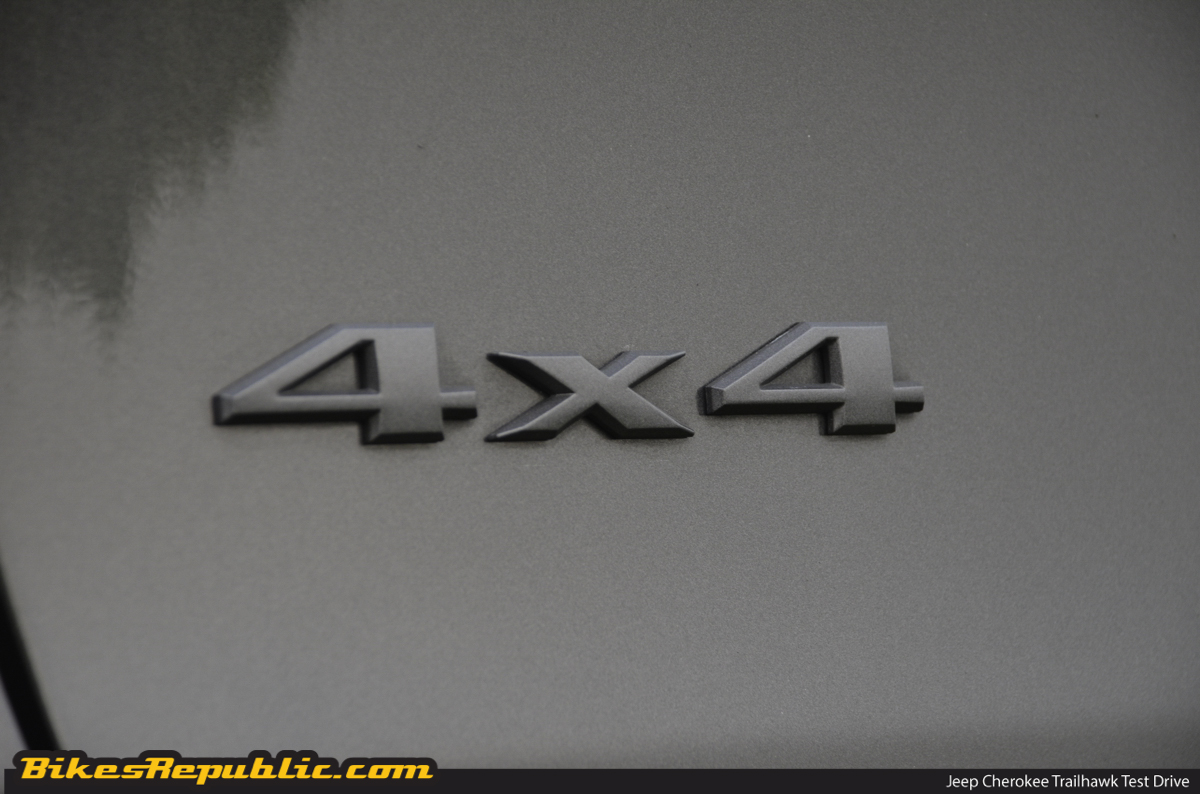
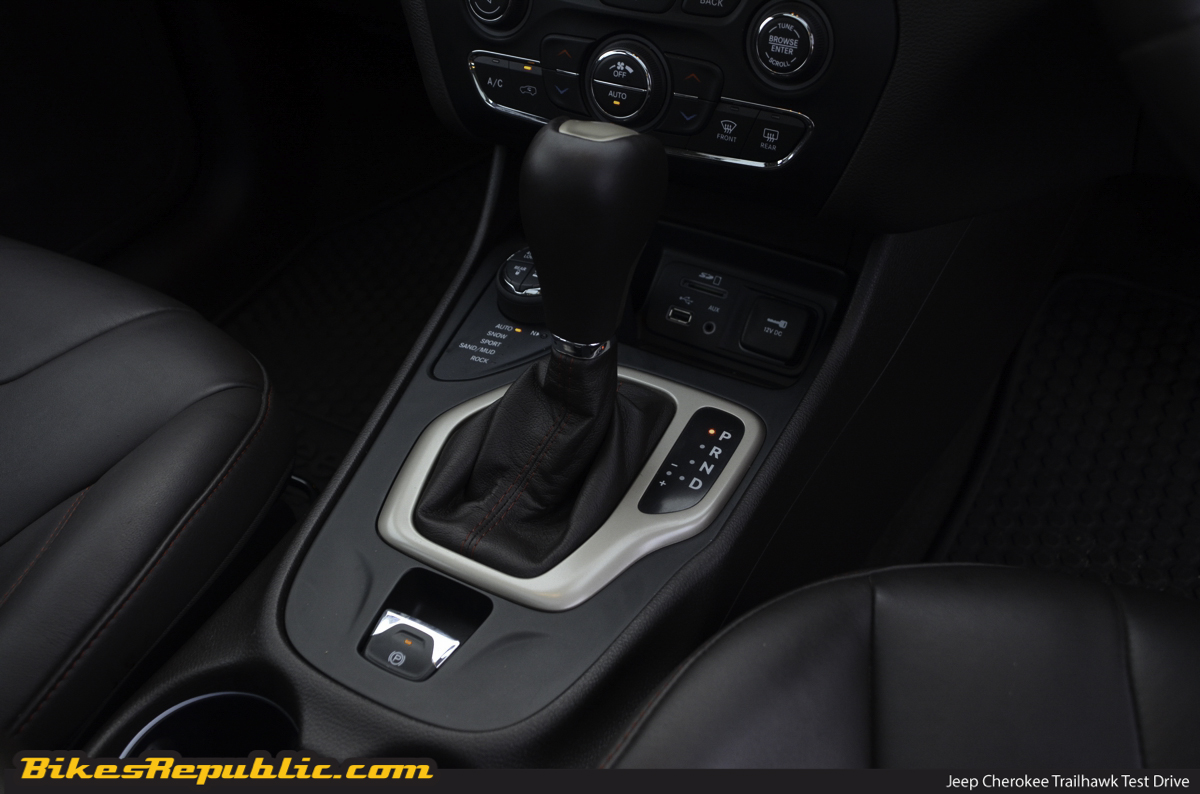
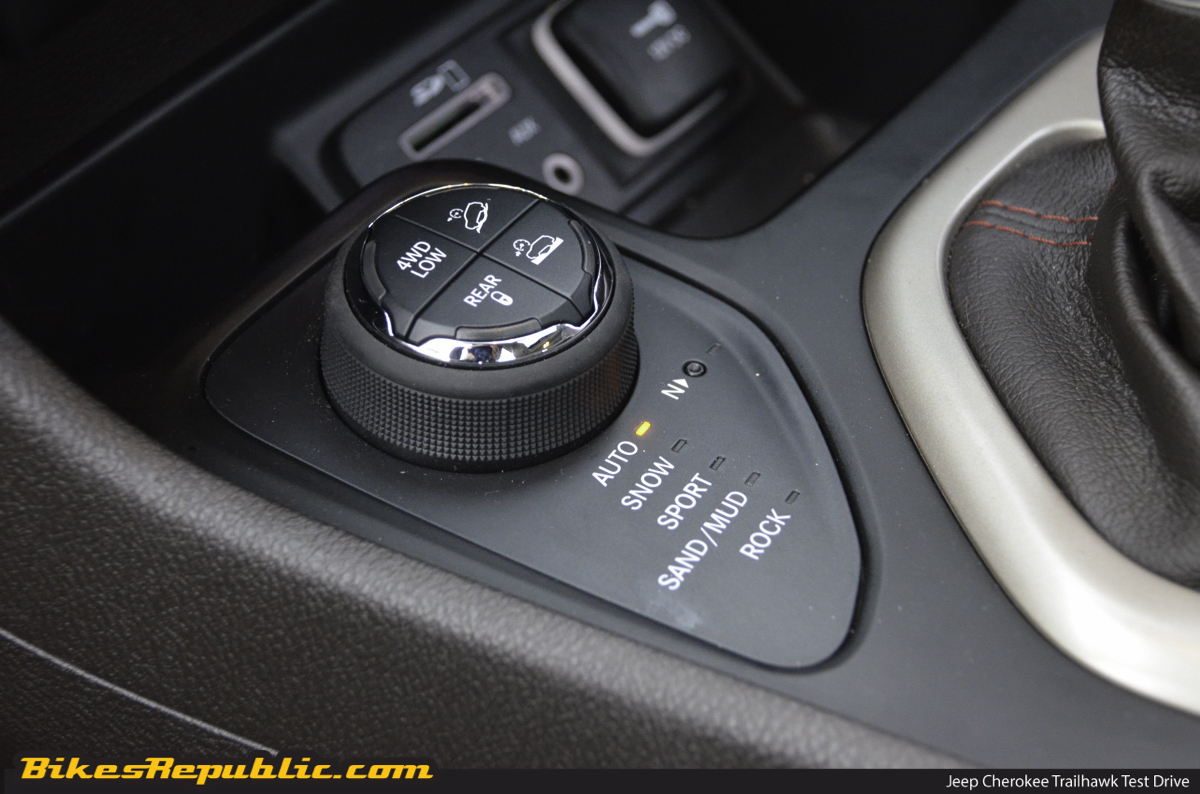
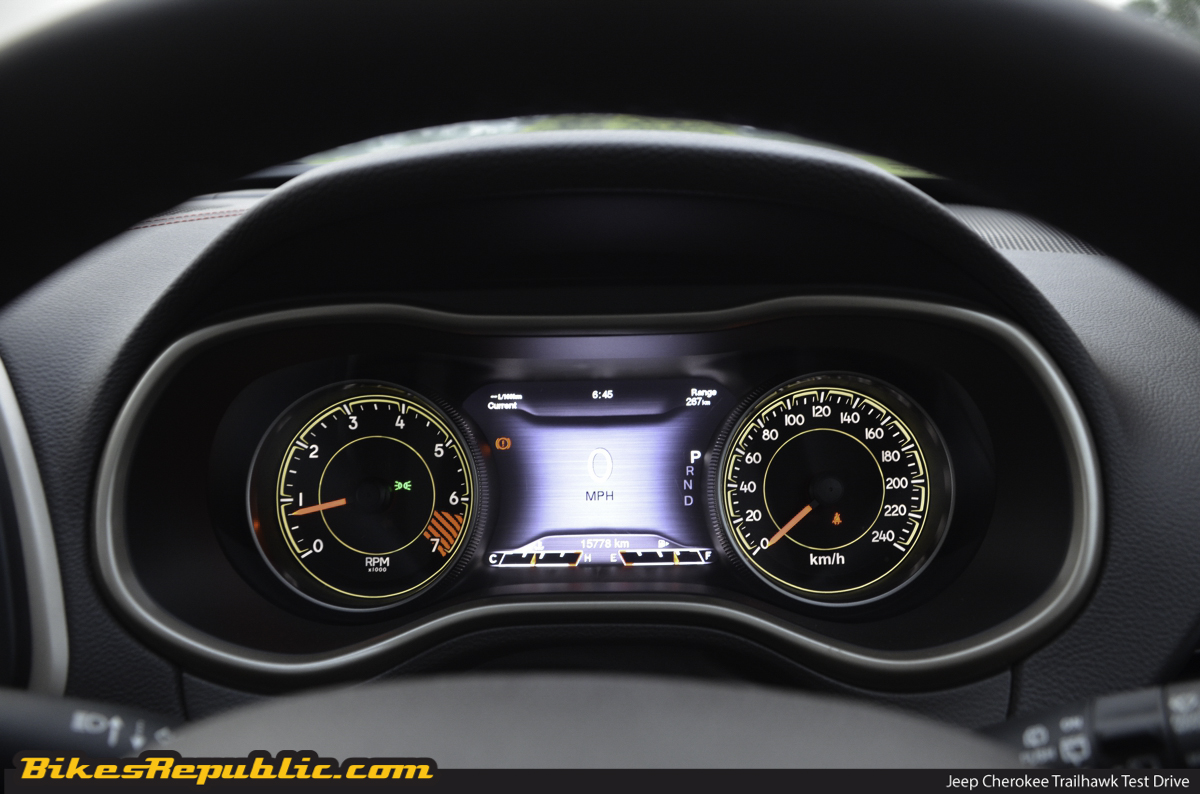
DSC_0287Next up comes the Cherokee Trailhawk’s powertrain package. Tasked at propelling the Cherokee is a 2.4-litre Tigershark Multijet in-line four-cylinder petrol engine from the Fiat Chrysler Automobiles (FCA) group’s vast arsenal, developing 174hp and 229Nm of peak torque. All that is transmitted to all four wheels via a nine-speed automatic transmission with this Trailhawk variant offering the added versatility of Jeep’s multi-mode Selec-Terrain 4×4 system.

Whilst it does sound rather decent on paper, the performance of the engine and transmission were not what we expected initially. The engine favours mid- to high-end torque and high-end power generation, which meant that fuel economy was not its strongest suit when the accelerator is floored. The other thing we loathed was the nine-speed automatic’s performance, which felt as if had mismatched ratios with the tendency to up- or downshift a little too often.

Nevertheless, despite the powertrain’s quirks, it is sufficient at propelling this Cherokee Trailahwk’s somewhat hefty mass about up to speeds. And should you master both the engine’s and transmission’s sweet spots, you would be able to meet Jeep’s claimed highway fuel economy rating of 13.18km/litre or a maximum travel range of up to 789km.

DSC_0251For the Cherokee Trailhawk, its best party trick has to be its ability to conquer all terrain types when you demand it to. The aforementioned Selec-Terrain feature offers plenty of 4×4 modes based on weather or surface types including mud and snow. Complementing that are hill ascent and descent controls, as well as the presence of rear differential lock controls, all of which makes the Jeep Cherokee Trailhawk an extremely capable off roader indeed.

And, despite having the off-road-focused wizardries plus and knobby 245/64-sized all-terrain tyres, the most surprising aspect about the Cherokee Trailhawk was its rather refined on-road manners. The long suspension travel and soft dampers are not only well-suited with high comforts levels when off the beaten path, it felt equally good even when performing the regular urban commute and long-haul highway journeys.

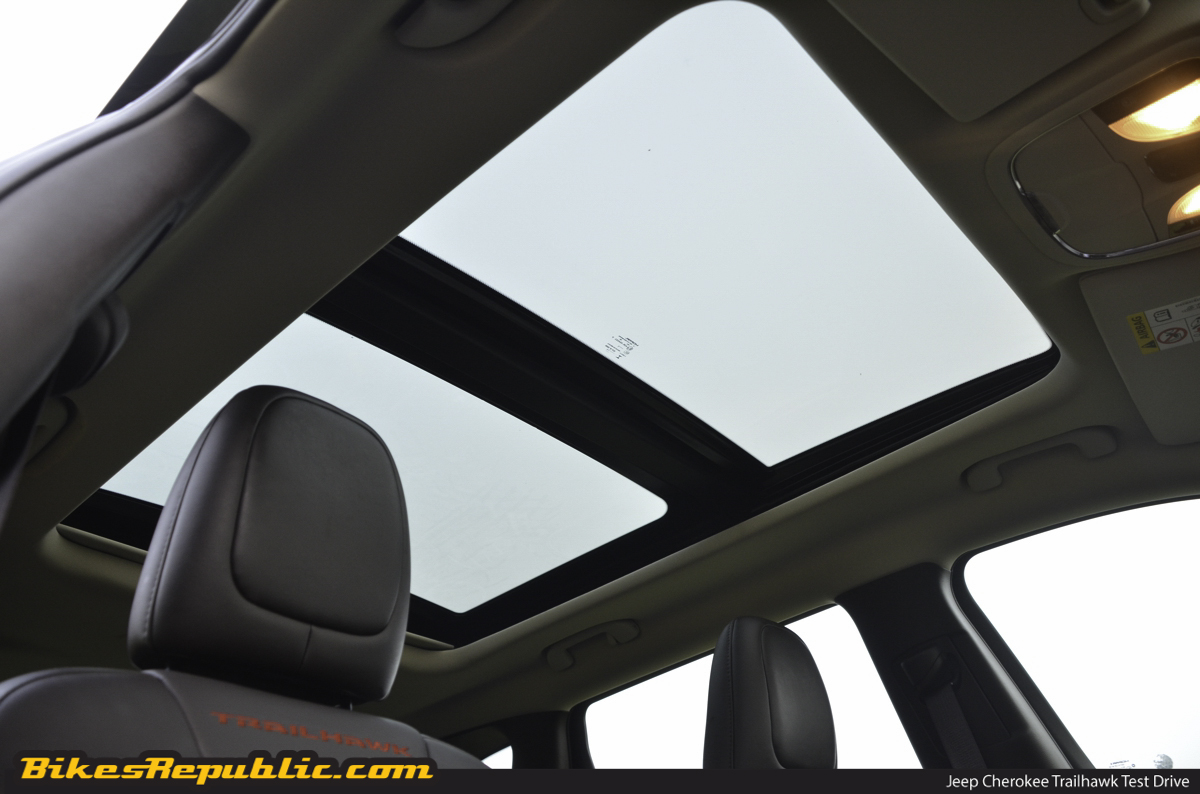
What adds to that further are the Cherokee Trailhawk’s roomy and plush cabin, as well as the aforementioned creature comforts plus several other premium features, most notable of which being the panoramic glass roof. Added peace of mind zlso comes from knowing that the Cherokee Trailhawk is covered with a full spectrum of safety features that includes seven airbags lining the cabin, a rear cross-traffic alert integrated with the reverse camera unit, along with the all-important anti-lock brakes and electronic stability control suites too.

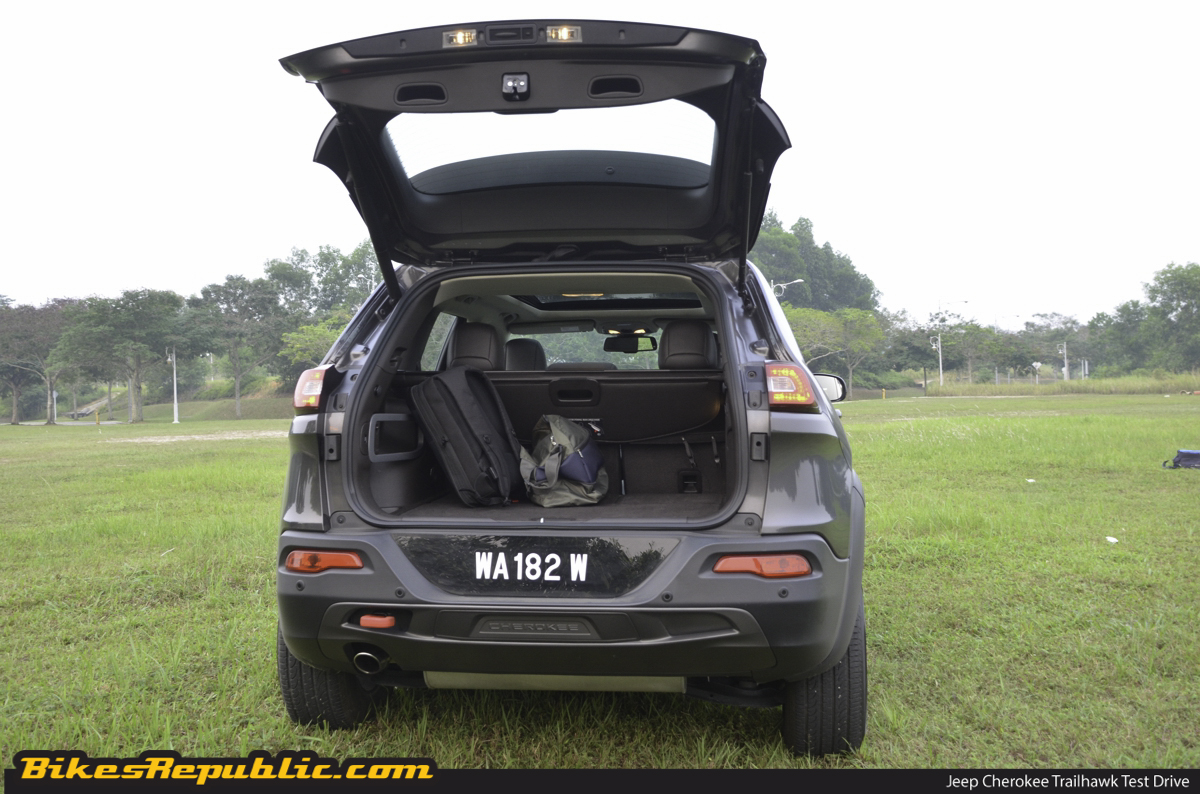
DSC_0210The Cherokee Trailahawk’s other brilliance lies in its talent for maximum utility and practicality that perfectly matches up with its go anywhere nature. Key in this specific aspect has to be the Cherokee Trailhawk’s standard boot space of 506 litres, which can be extended further up to its maximum of 1.3 cubic metres with the 60:40 split rear seats folded down. On top of that is the presence of a 12-volt socket in the boot to power a variety of appliances like a mini cooler, as well as the motorised rear hatch with remote key operation that makes loading and unloading so much easier.

To sum things up, the Jeep Cherokee Trailhawk in one of the most highly capable and well-equipped SUVs presently available in the market. Despite the powertrain’s quirks, the Cherokee Trailhawk’s overall brilliance through its fully loaded features list, impressive off-road abilities and maximum utility are somewhat unrivalled. The only hurdle left is whether is one willing to shell out the steep RM378,889 starting price it commands as a fully imported (CBU) model that comes straight from America.

DSC_0296If you are a fan of Jeeps to begin with, then the asking price is of little consequence. If not, perhaps then you are better off with a comparable European or Japanese rival of the same size. However, said rivals do not offer what the Jeep marque stands for, that being the promise of going just about anywhere without sacrificing too much on comfort levels. As it is, the Jeep Cherokee Trailhawk is indeed second to none in the maximum utility SUVs game.

Gallery

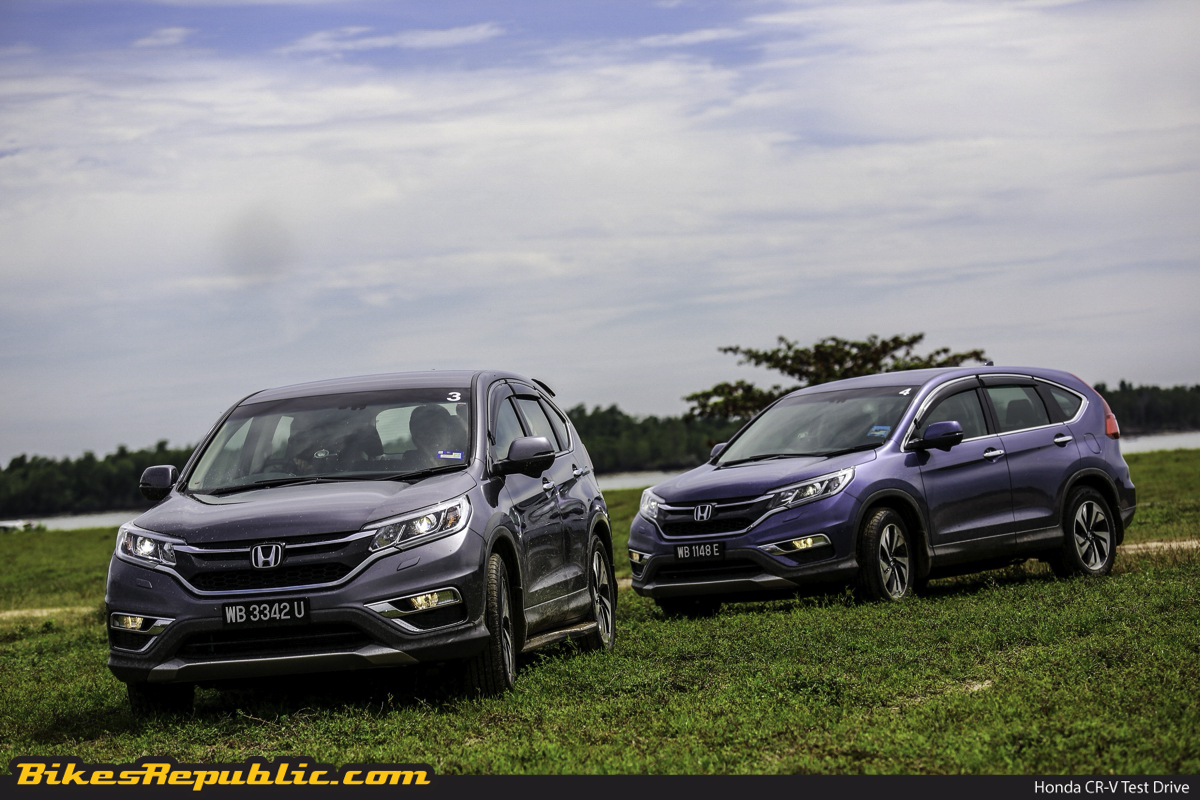
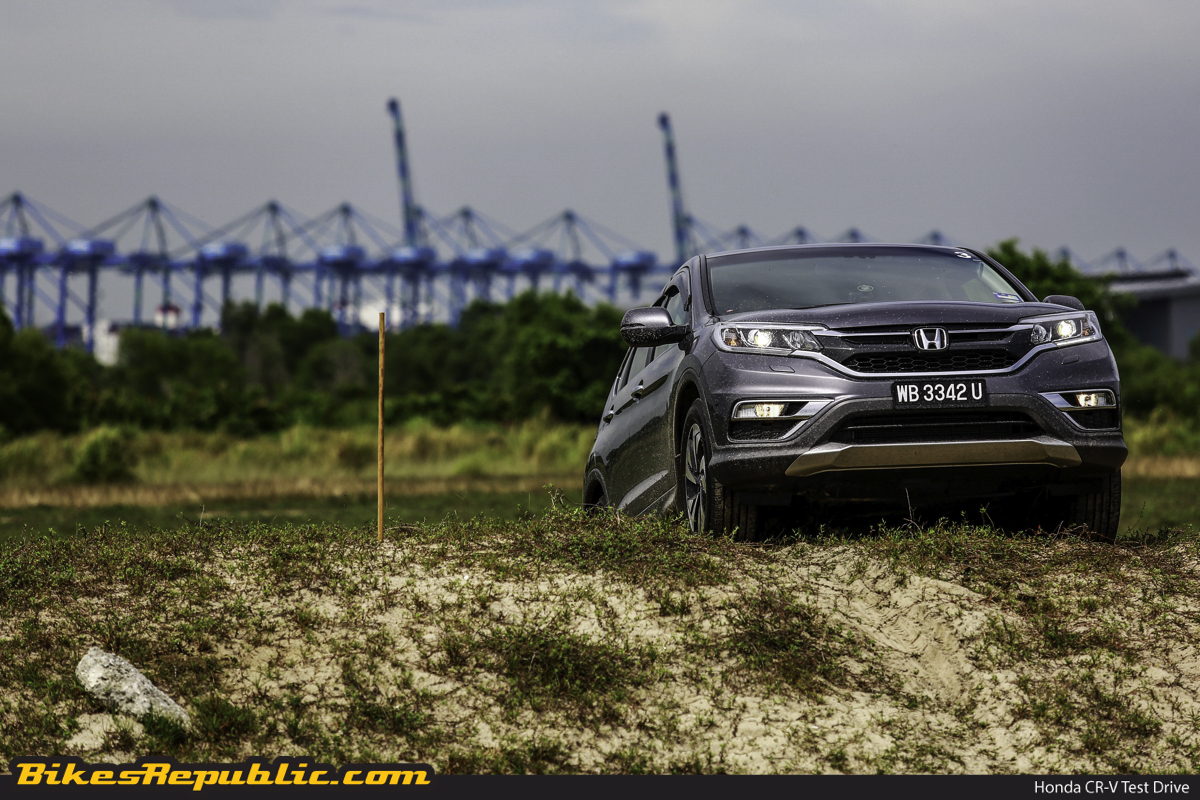
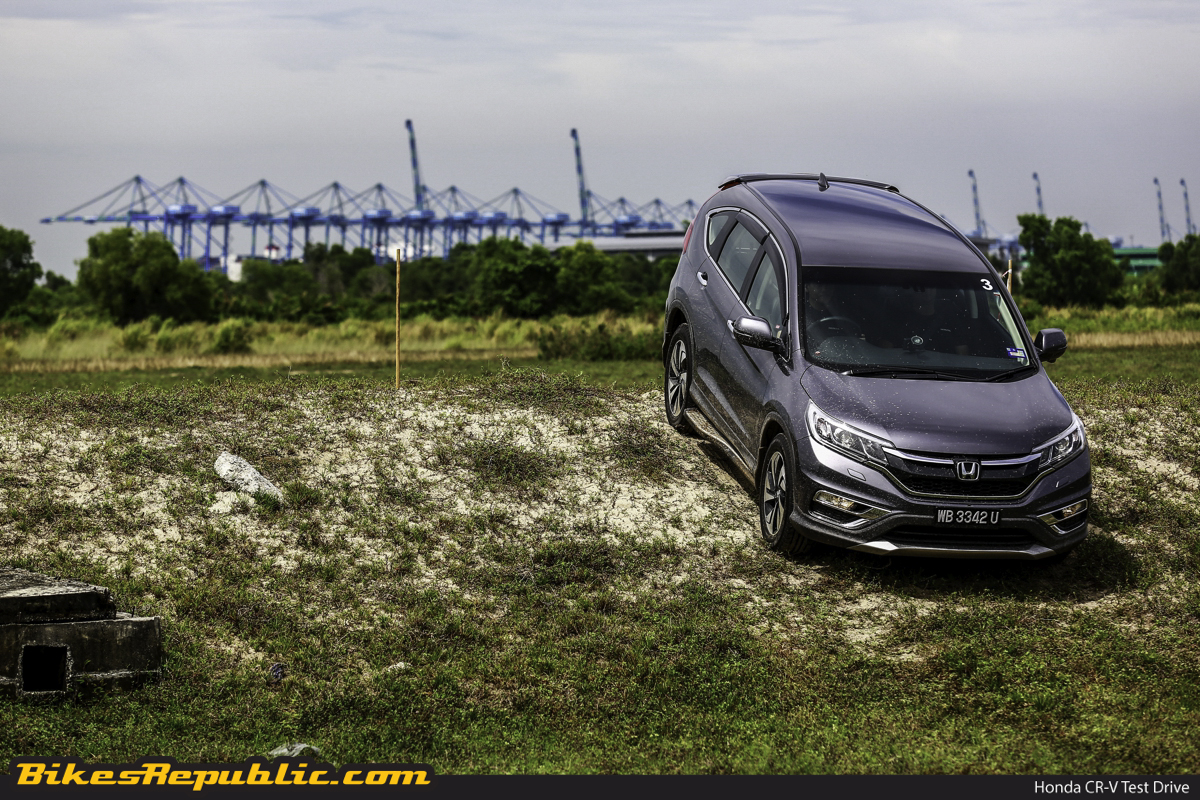
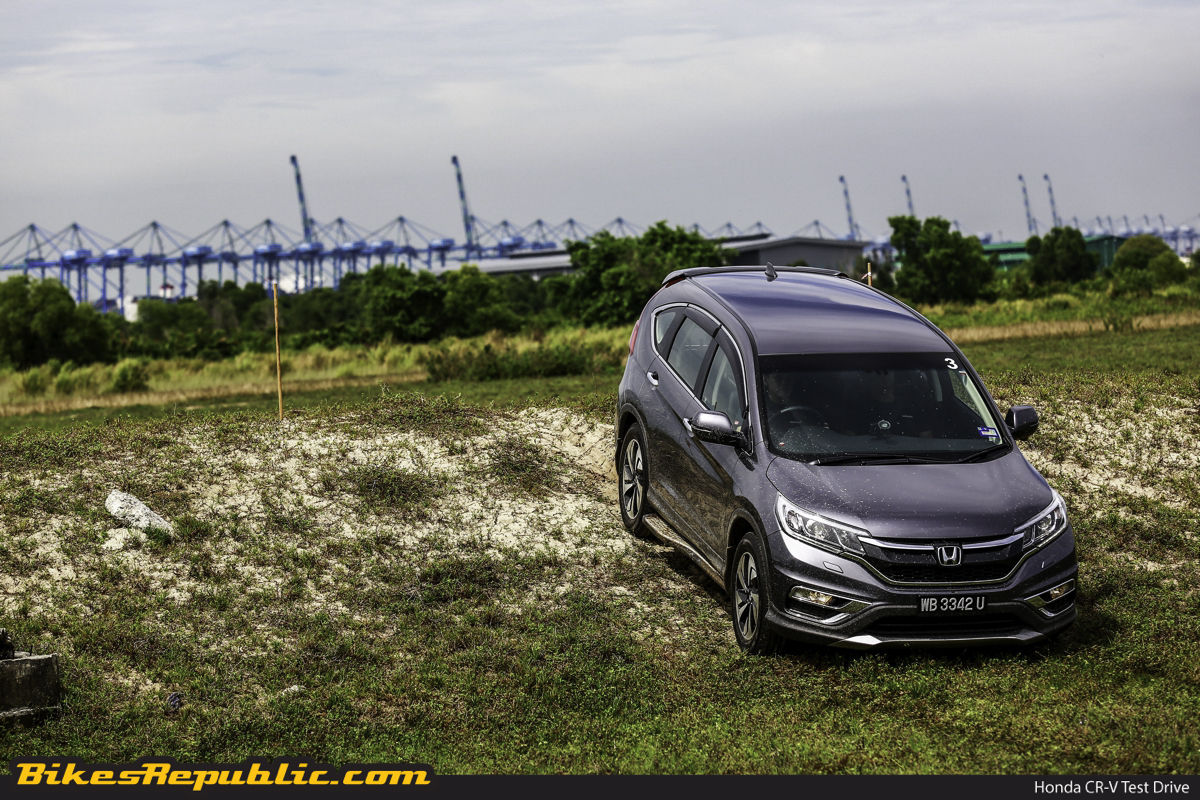
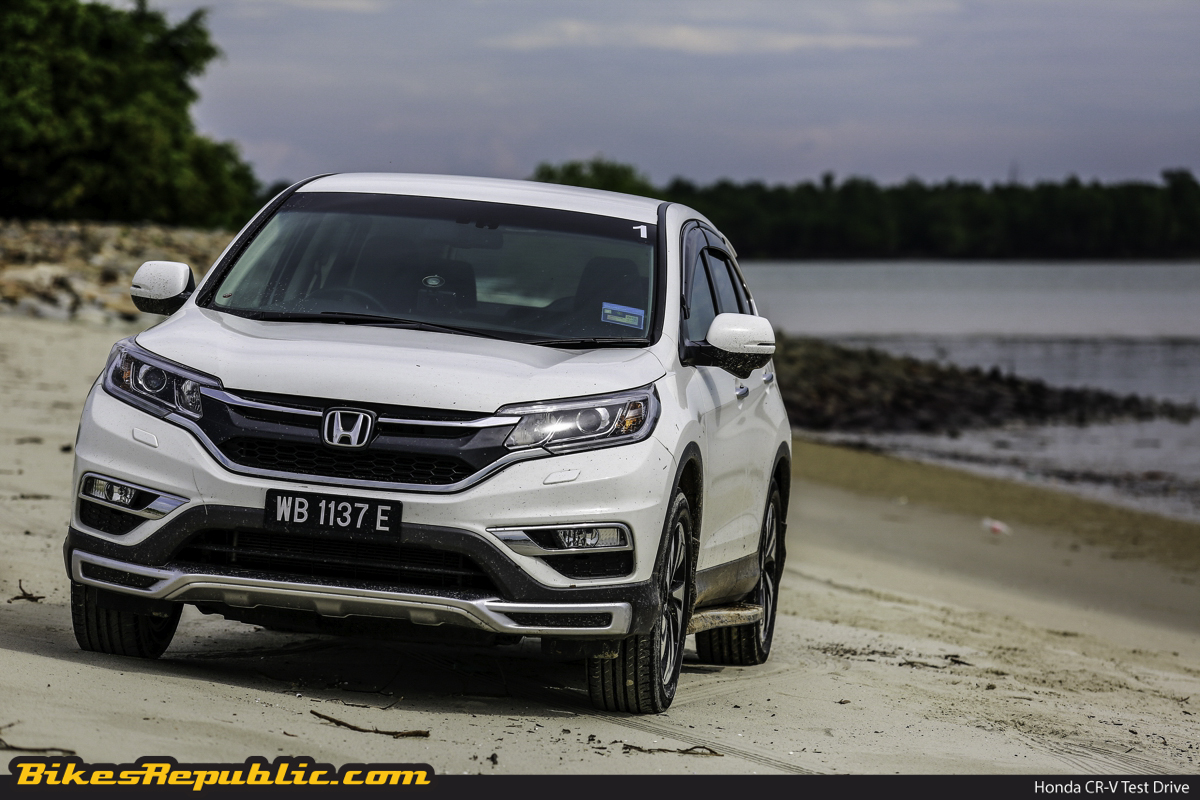
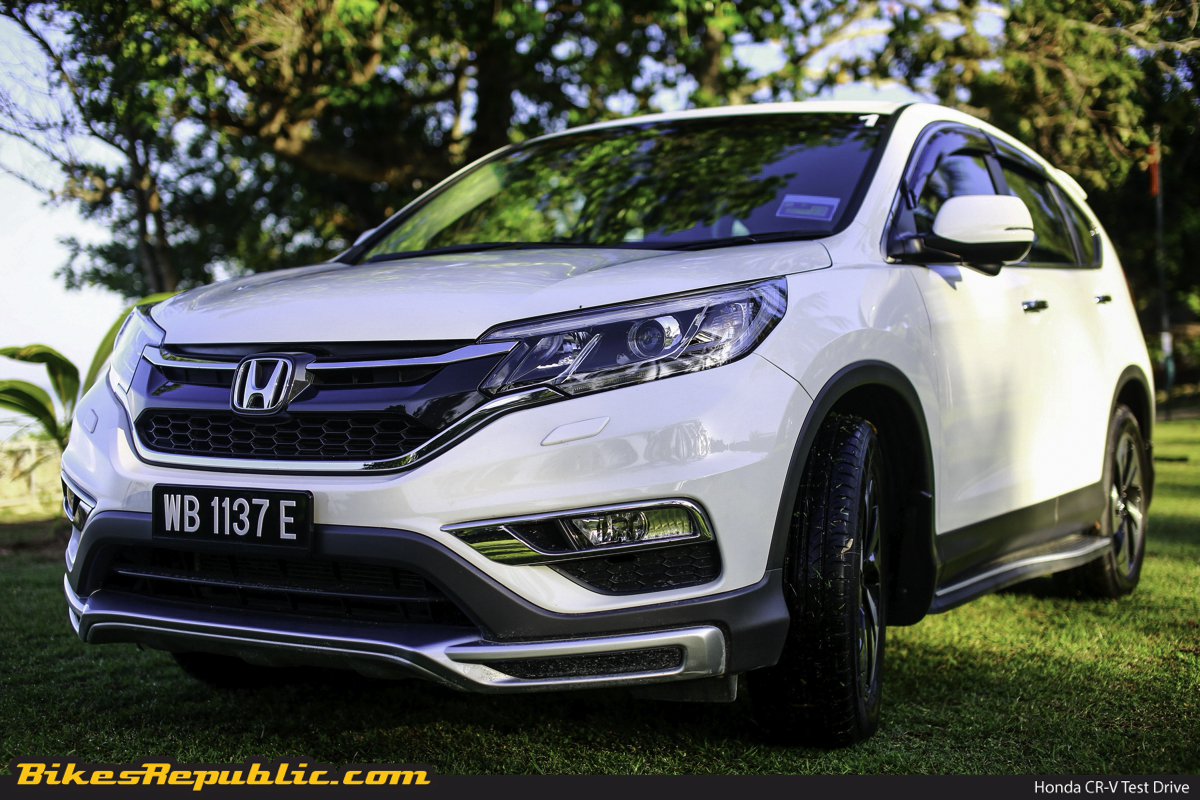
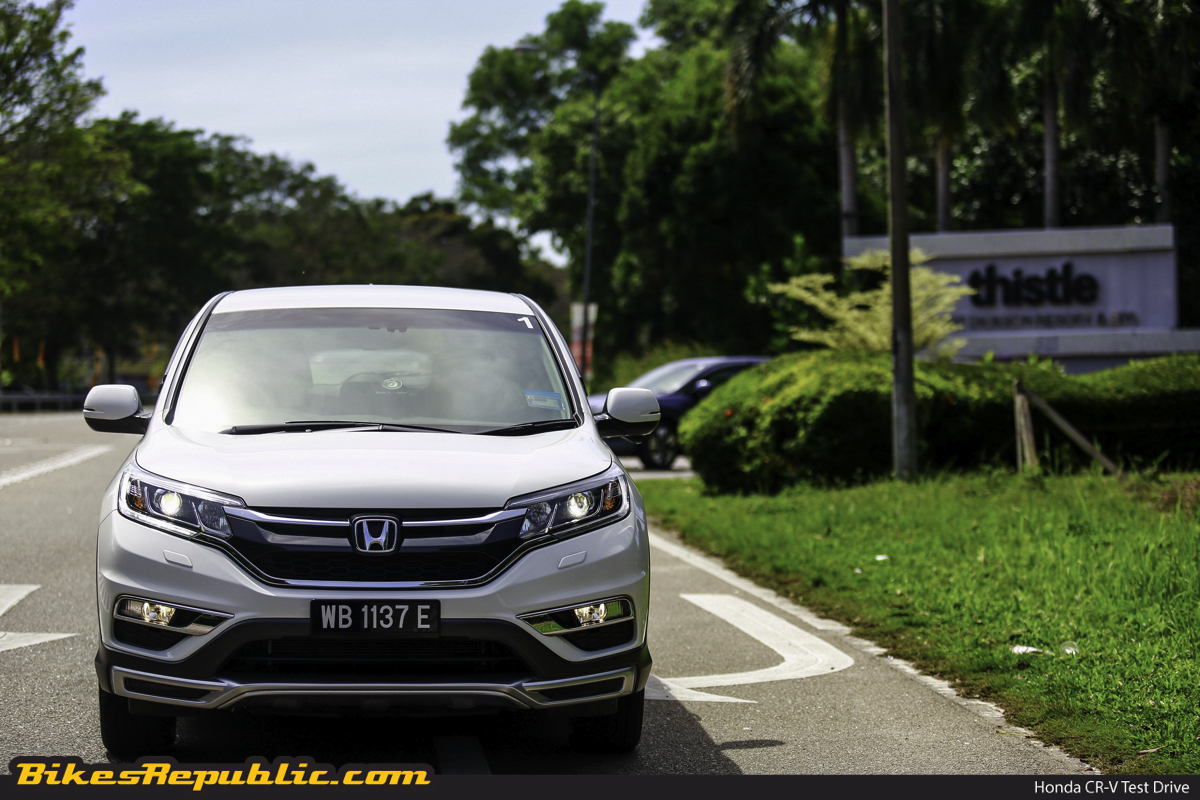
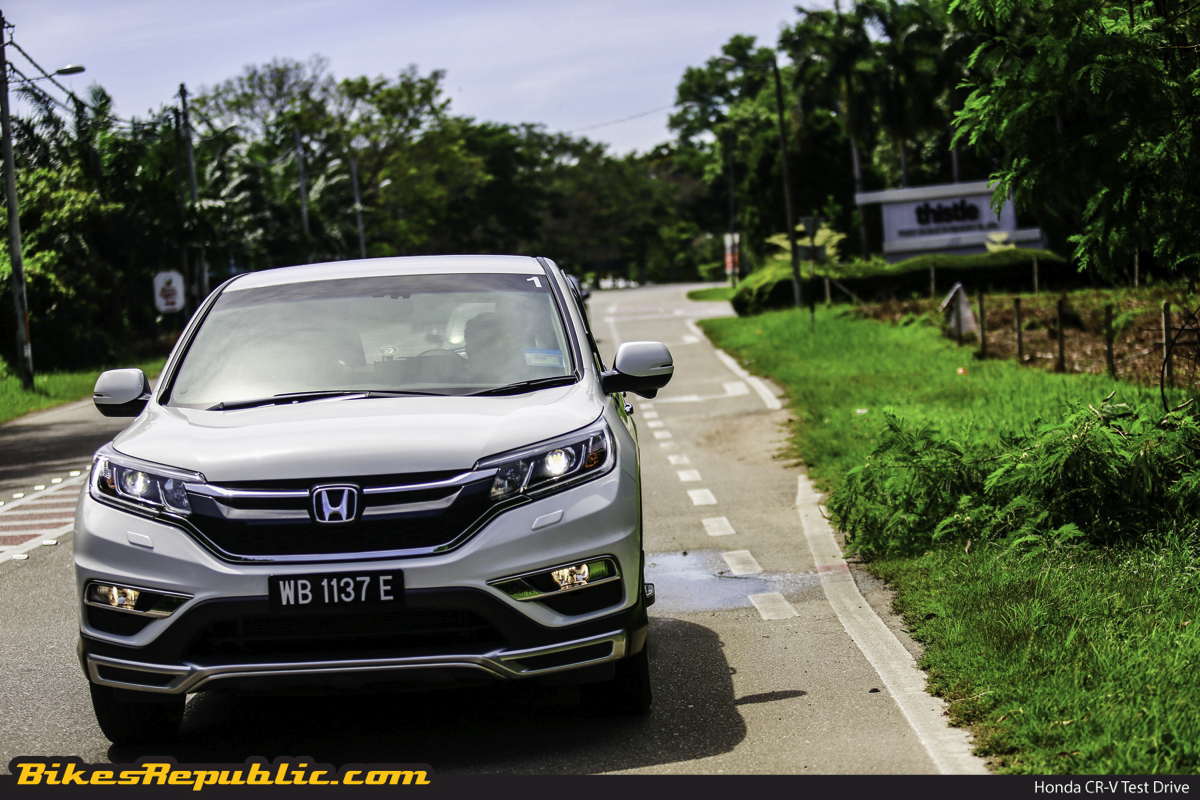
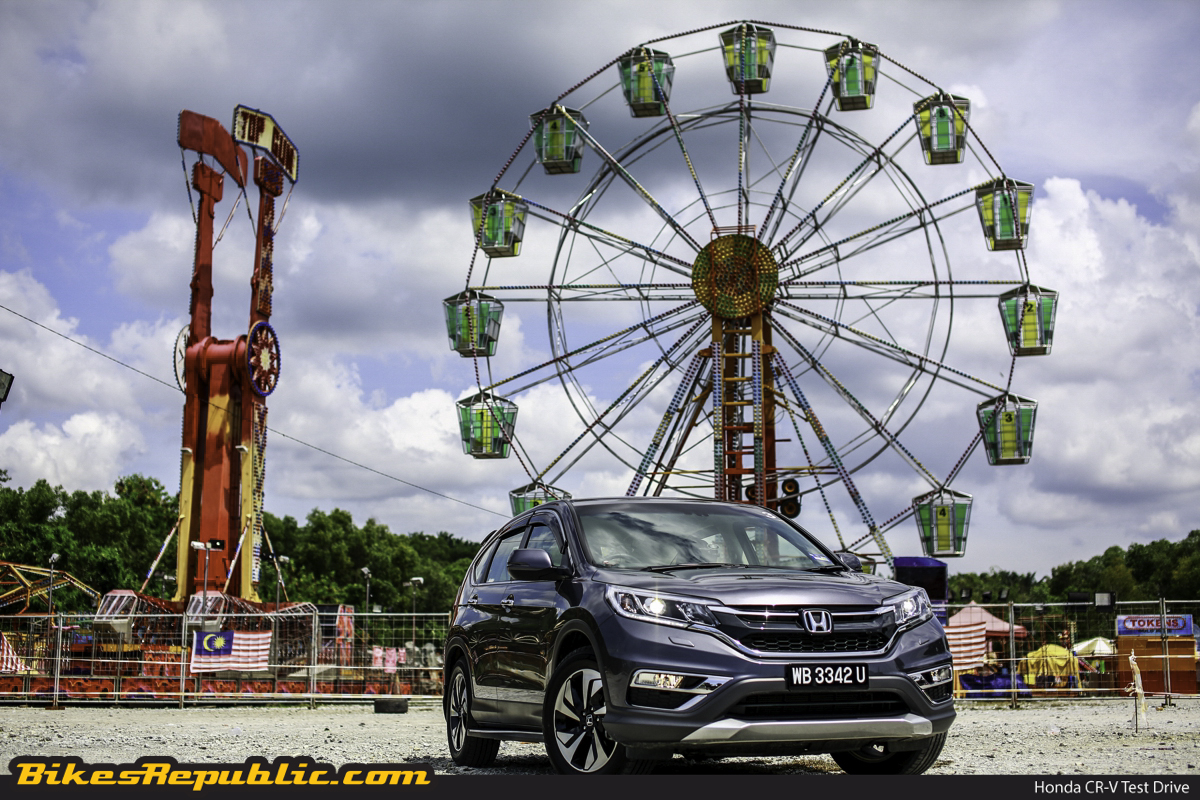
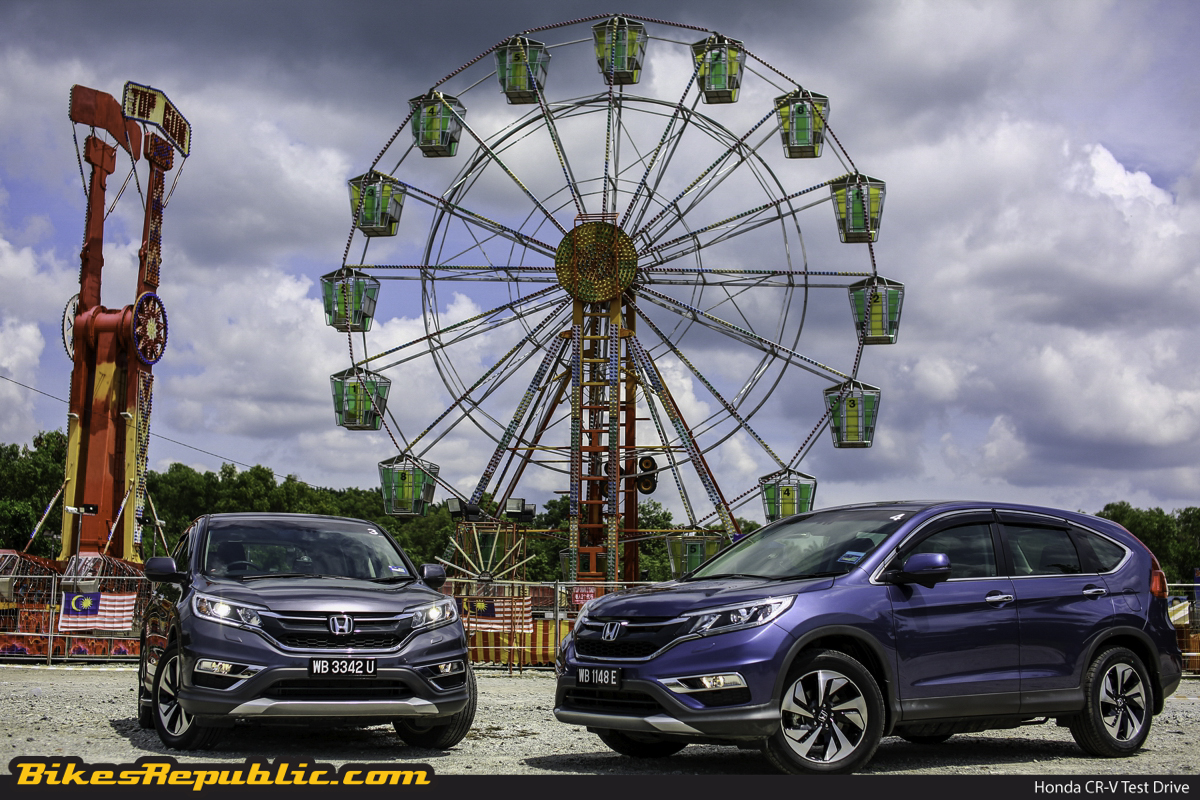
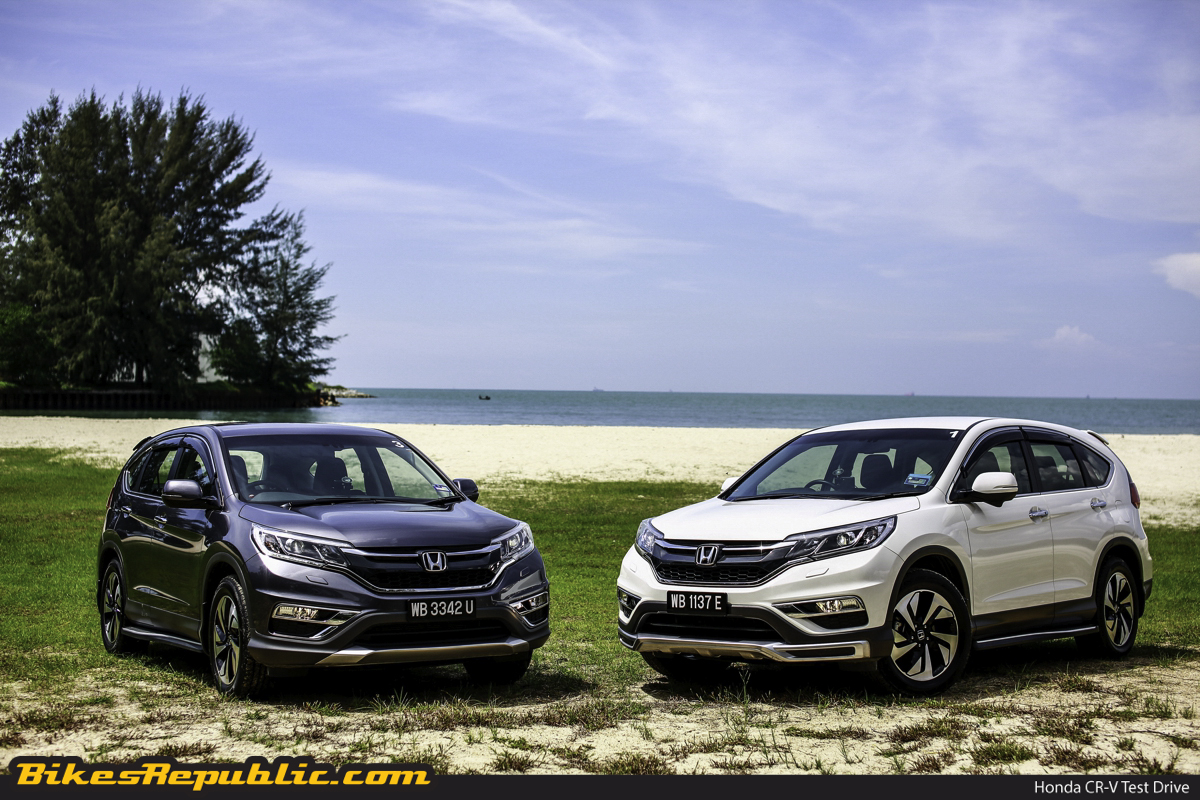
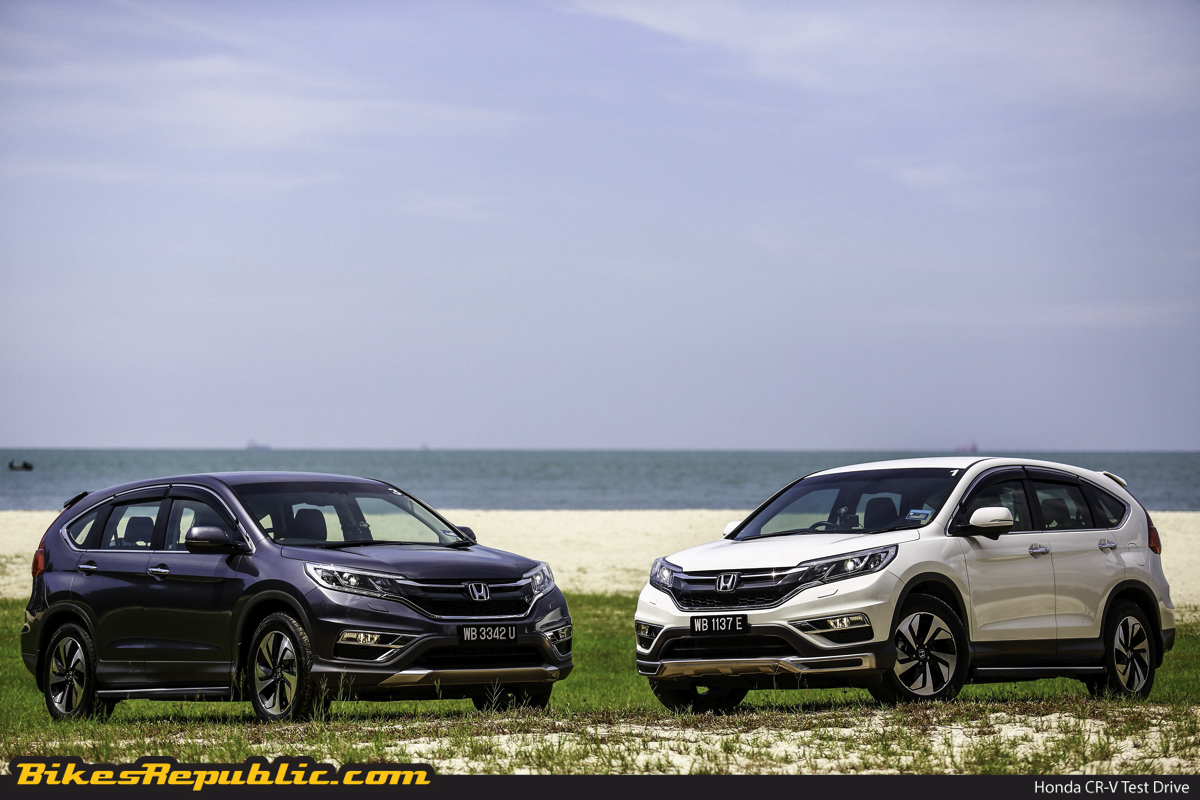
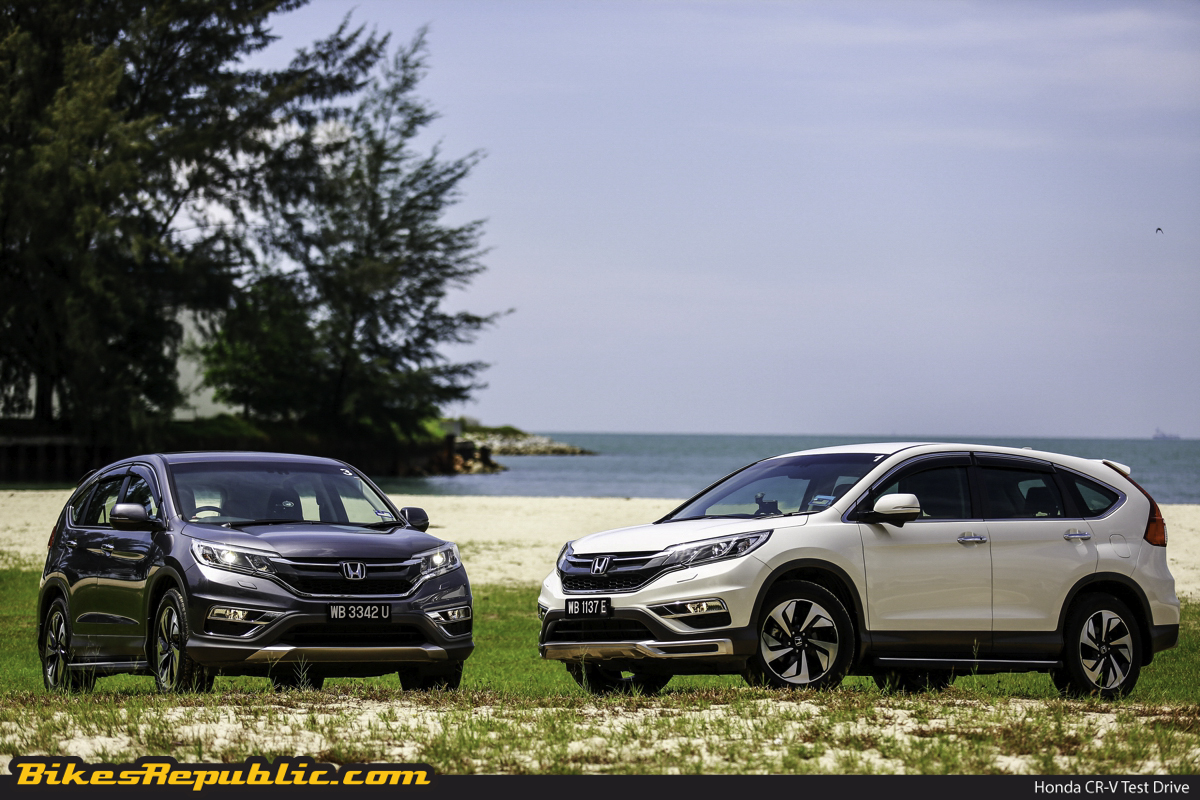
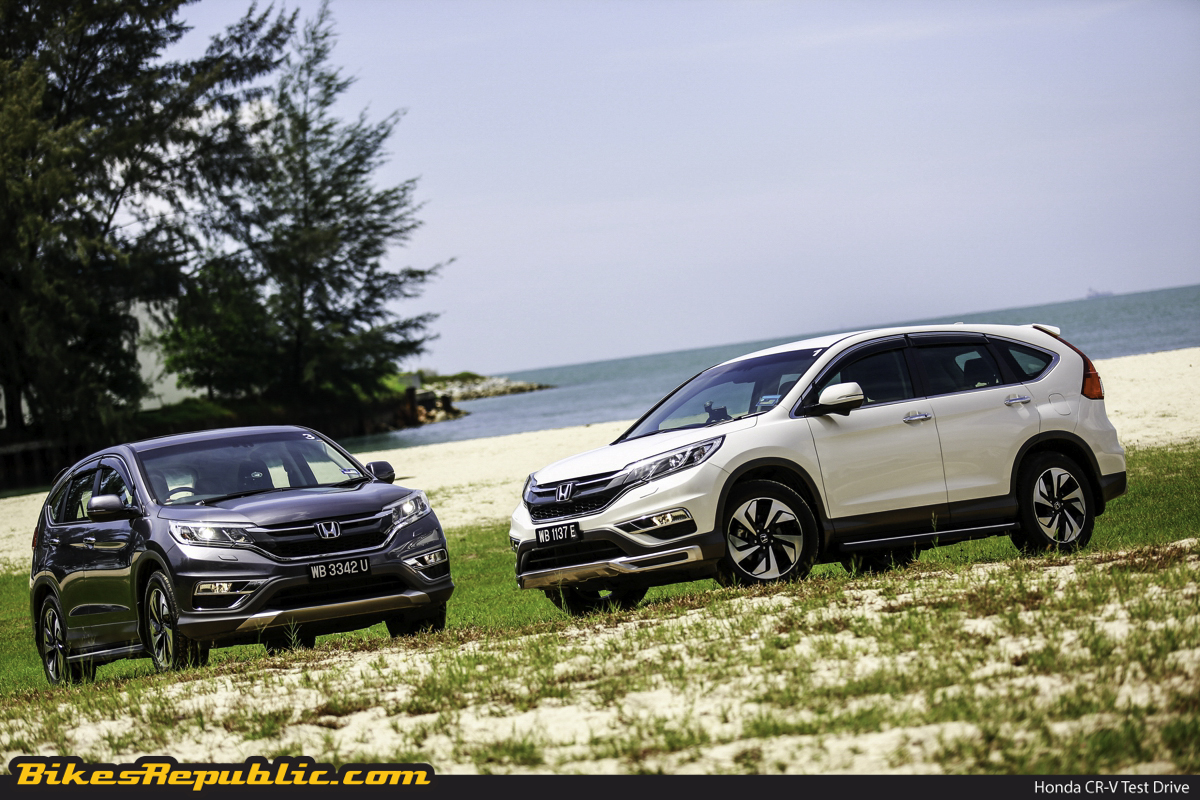
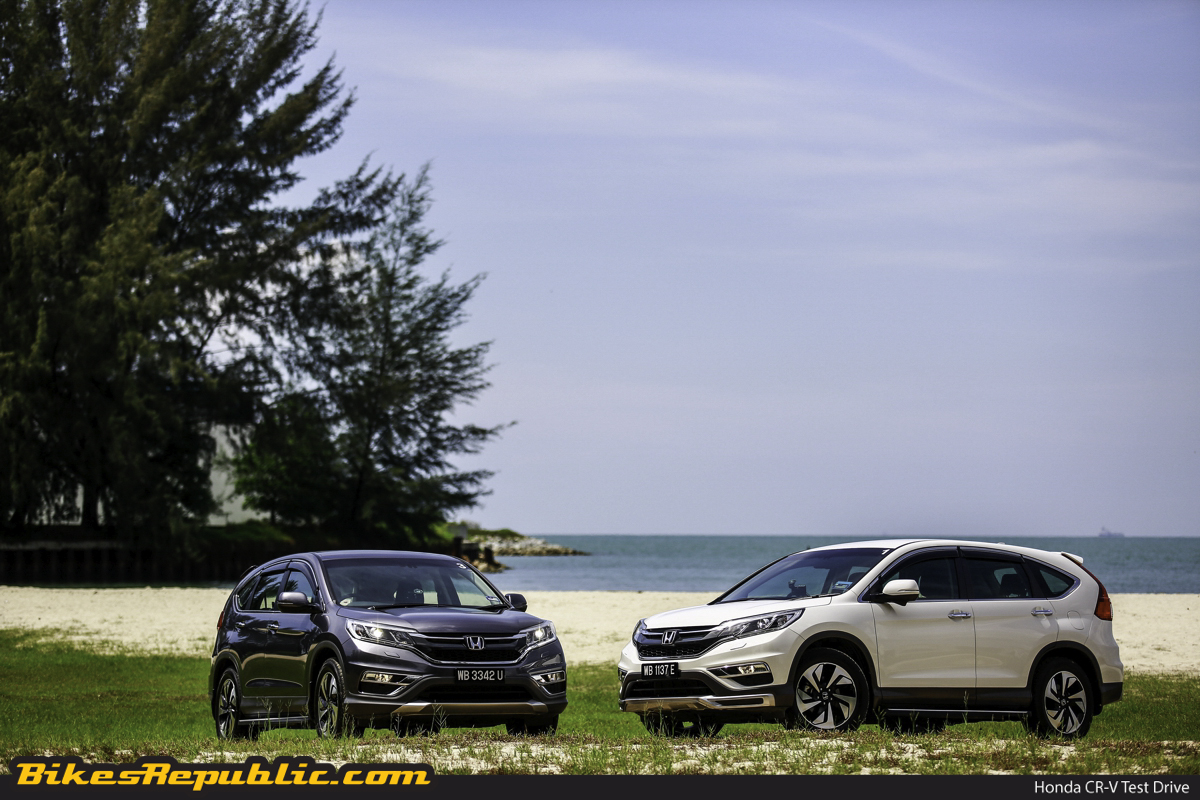
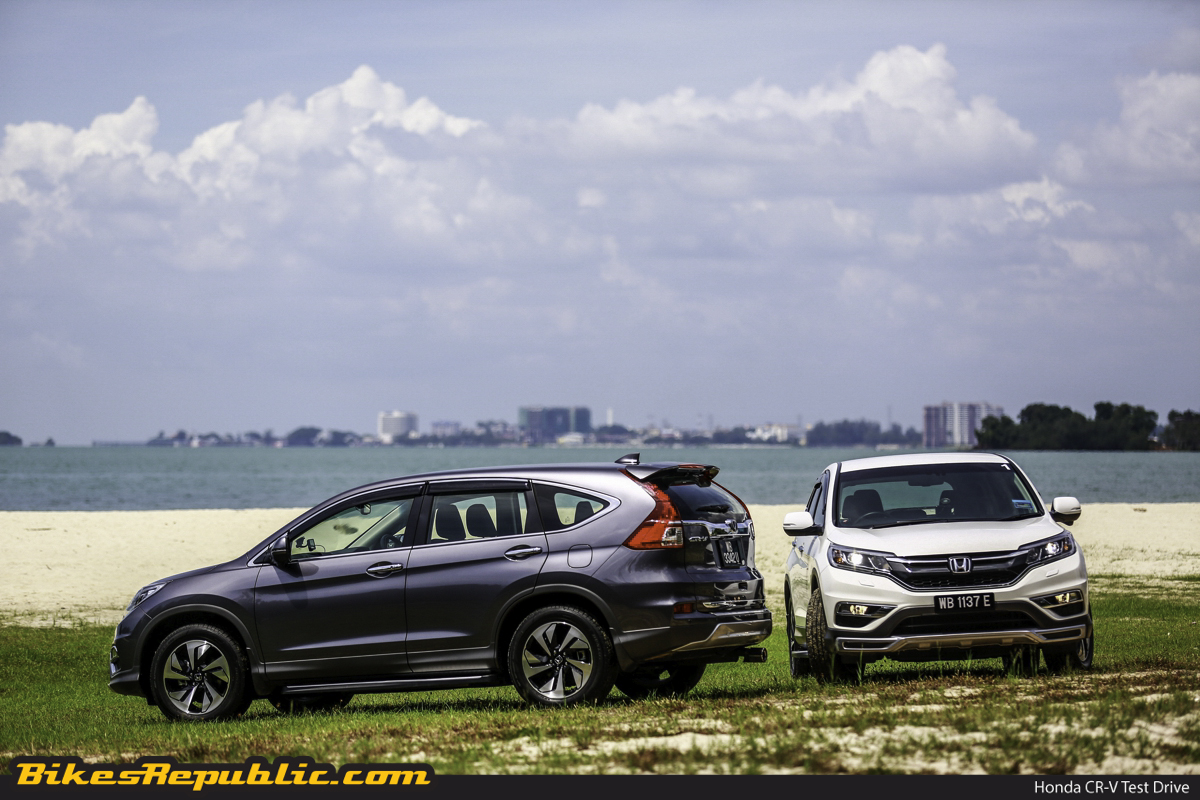
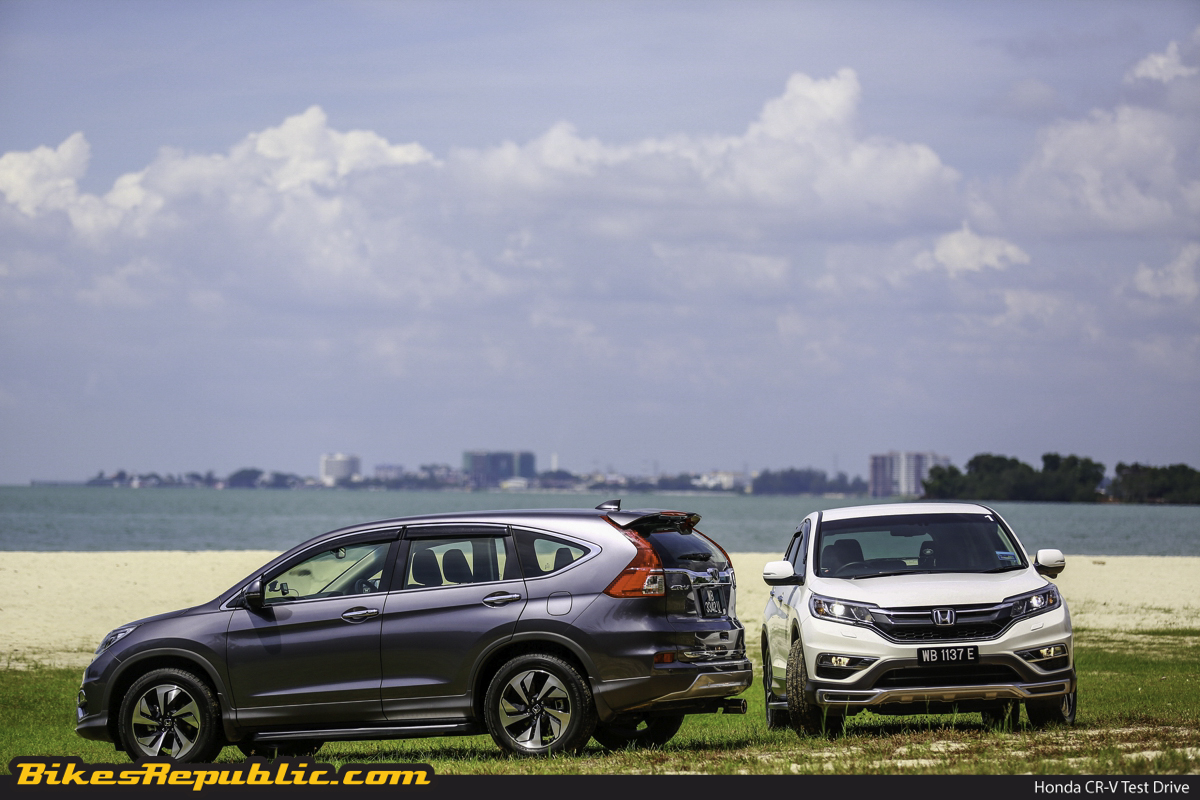
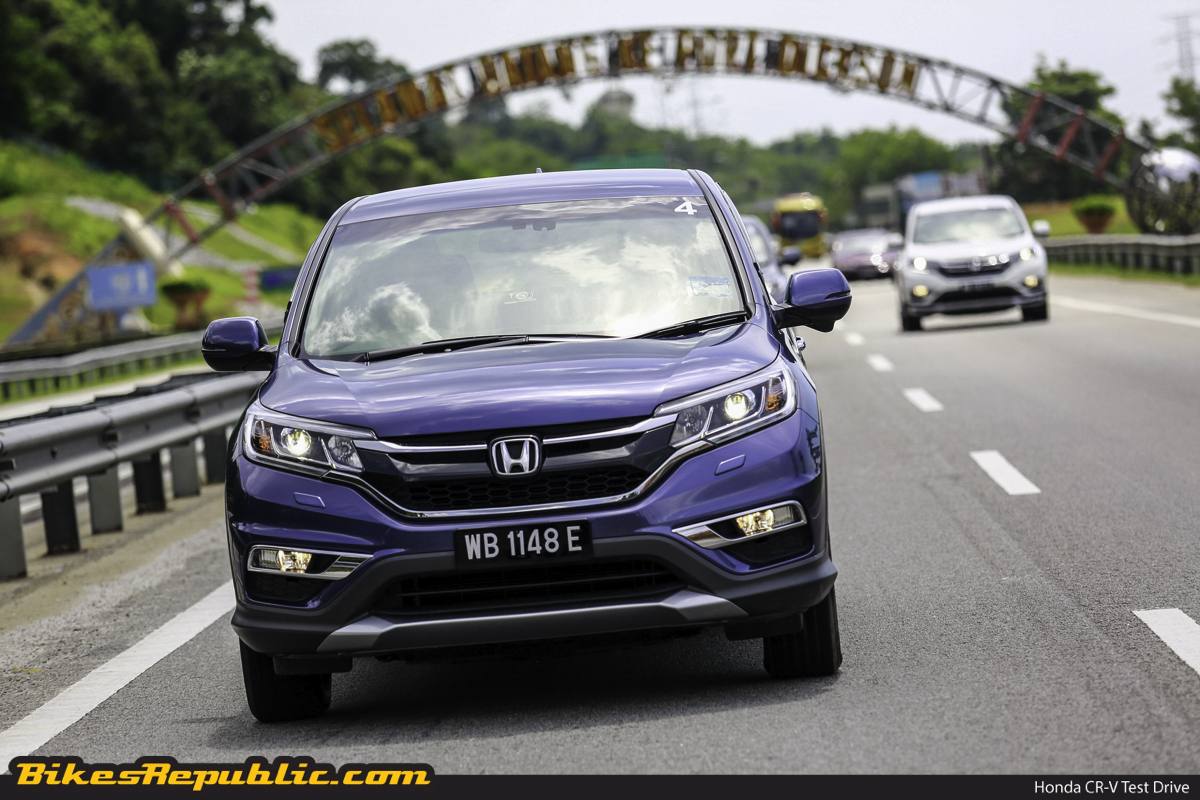
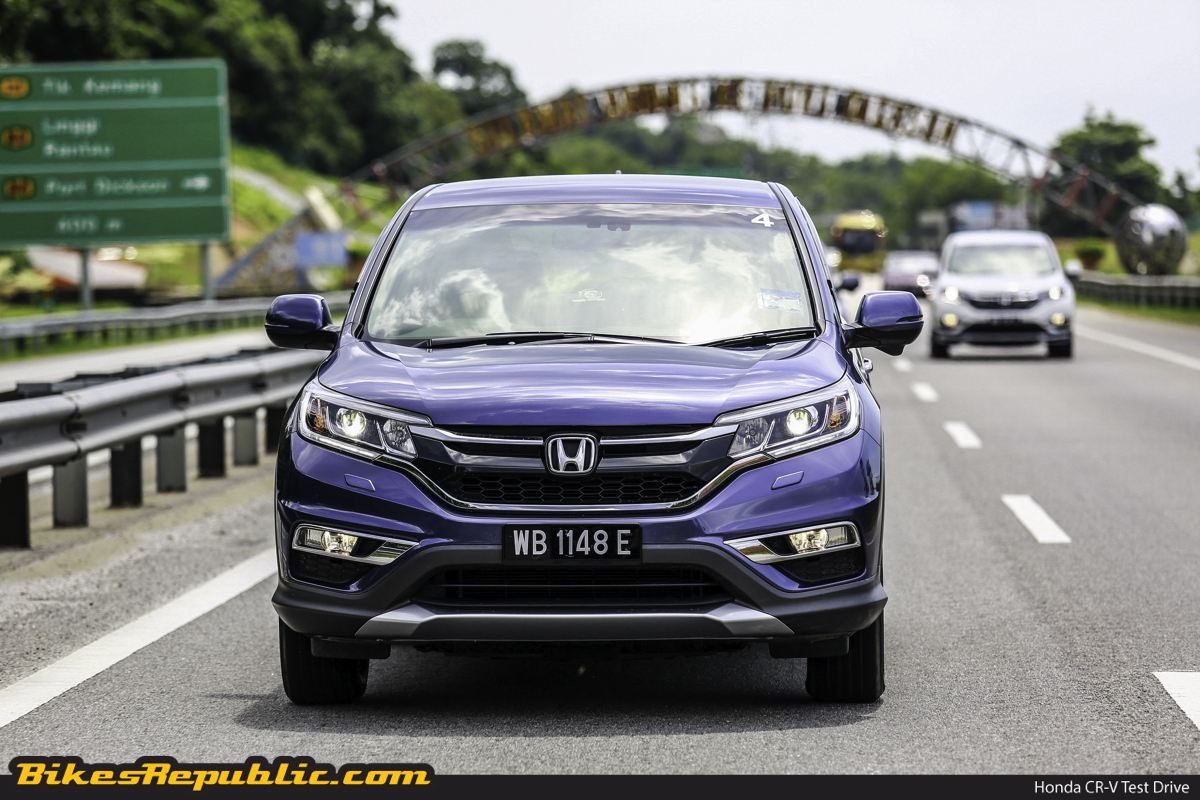
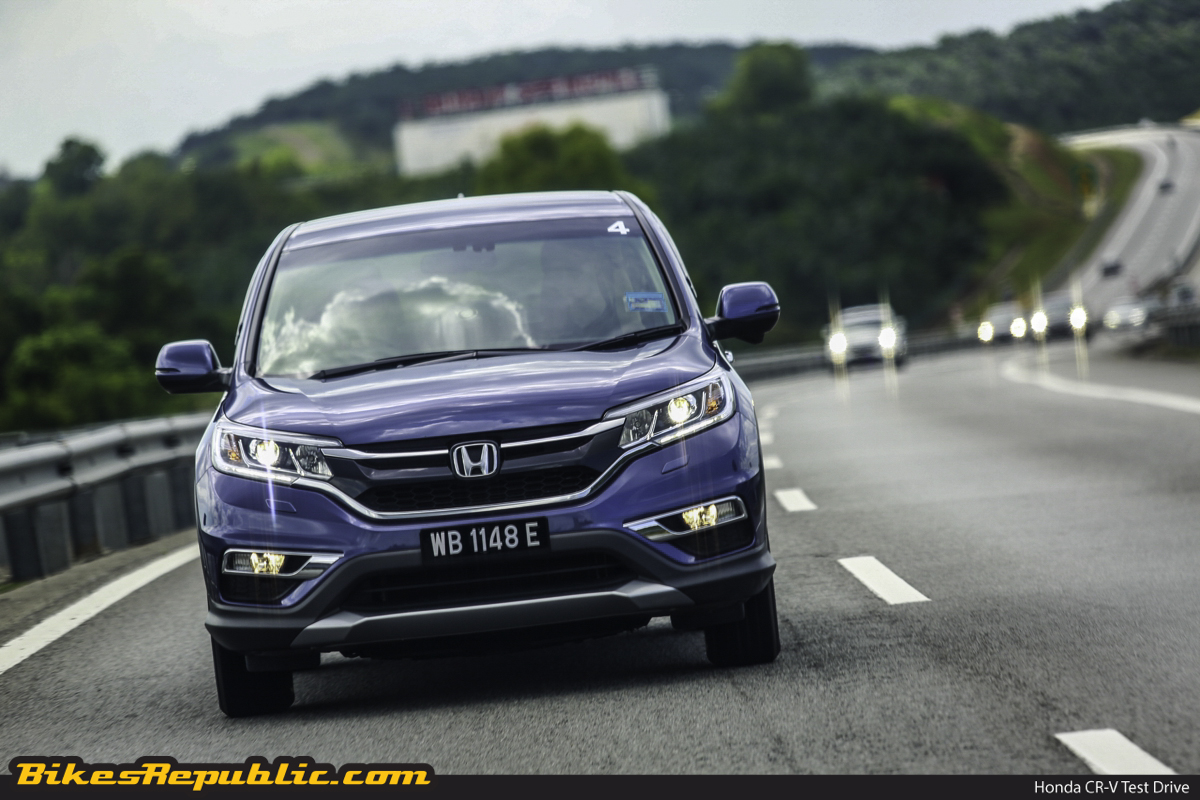
SEASONED readers would know by know that we are no strangers with the Honda CR-V crossover. Having driven both the pre-facelift and face-lifted model since its introduction, we found very little wrong with the fourth generation Honda CR-V, and it stands as one of our top favourites in the mid-sized crossover SUV segment.
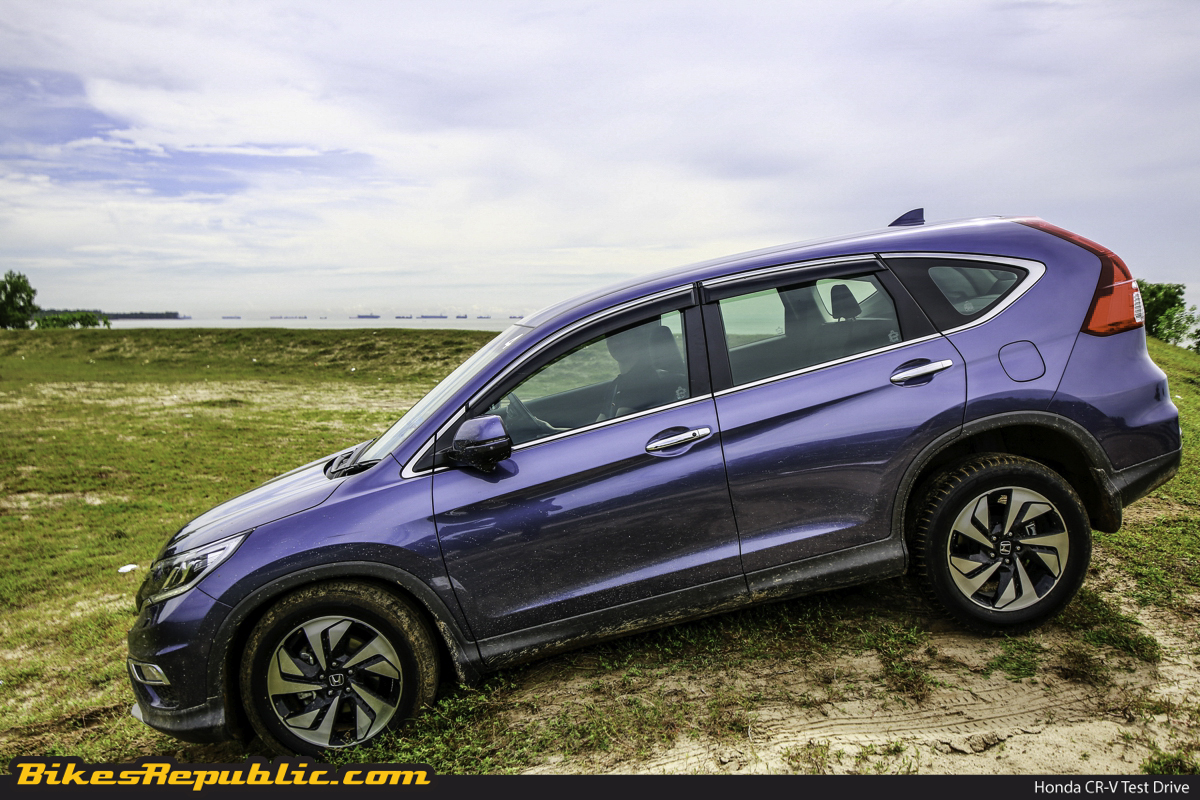
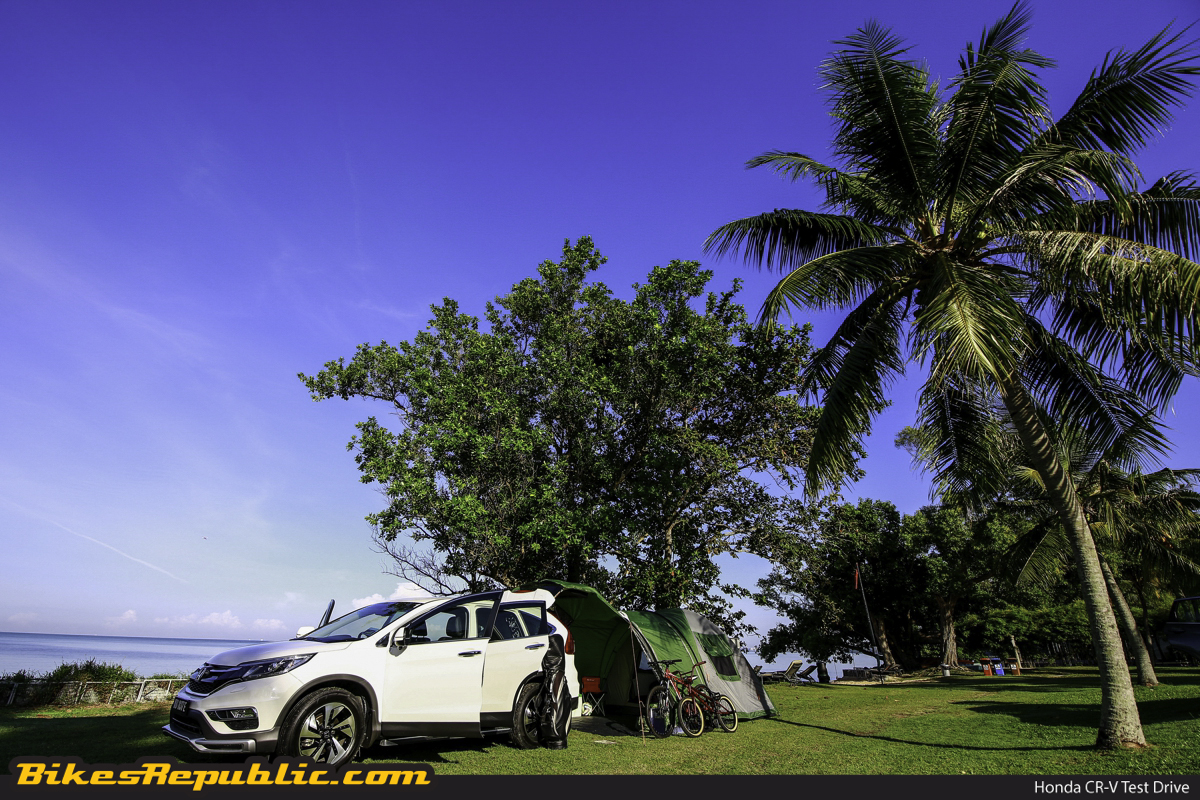
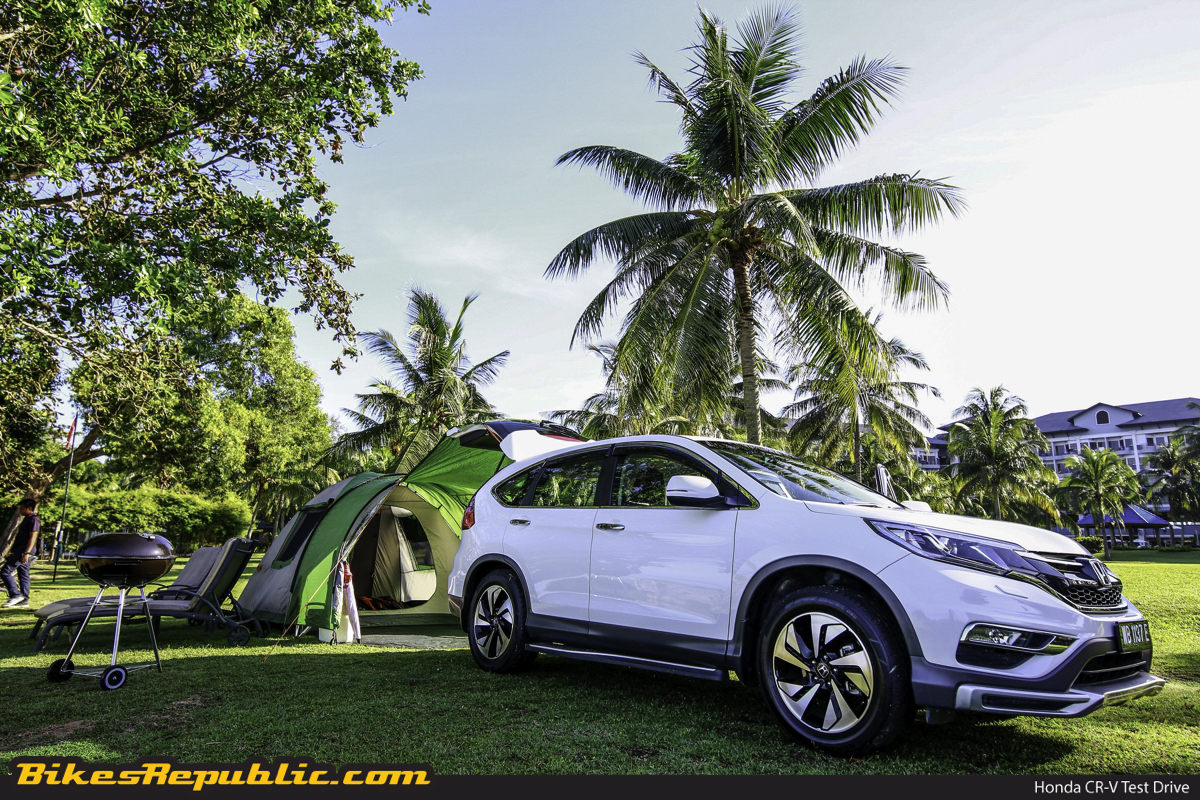
20151202_0296But of course, the folks at Honda Malaysia knew this well, but the firm saw that there was more to the CR-V that meets the eyes of many, especially when presented to a different sort of buyer. Times have changed and besides the traditional soccer moms and working parents, the CR-V’s crowd of buyers now include a new set of non-traditional buyers – slightly younger folks with active and adventurous lifestyles.

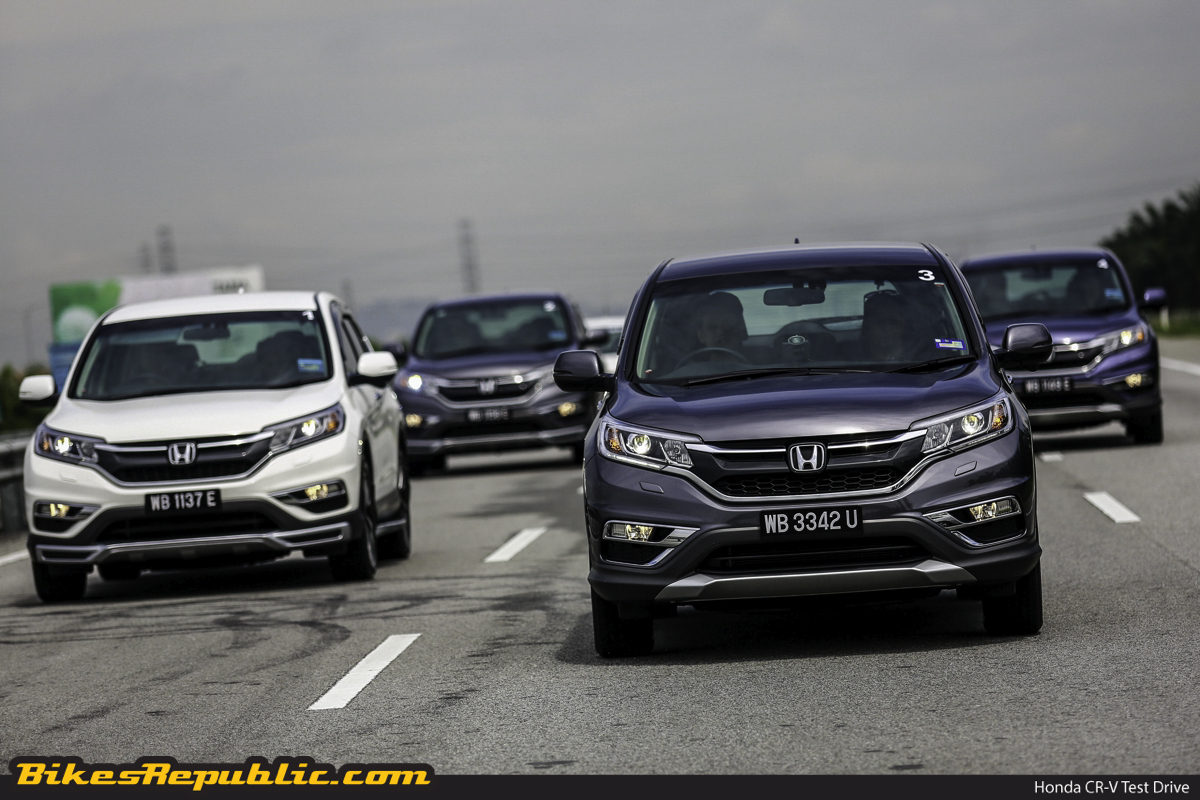
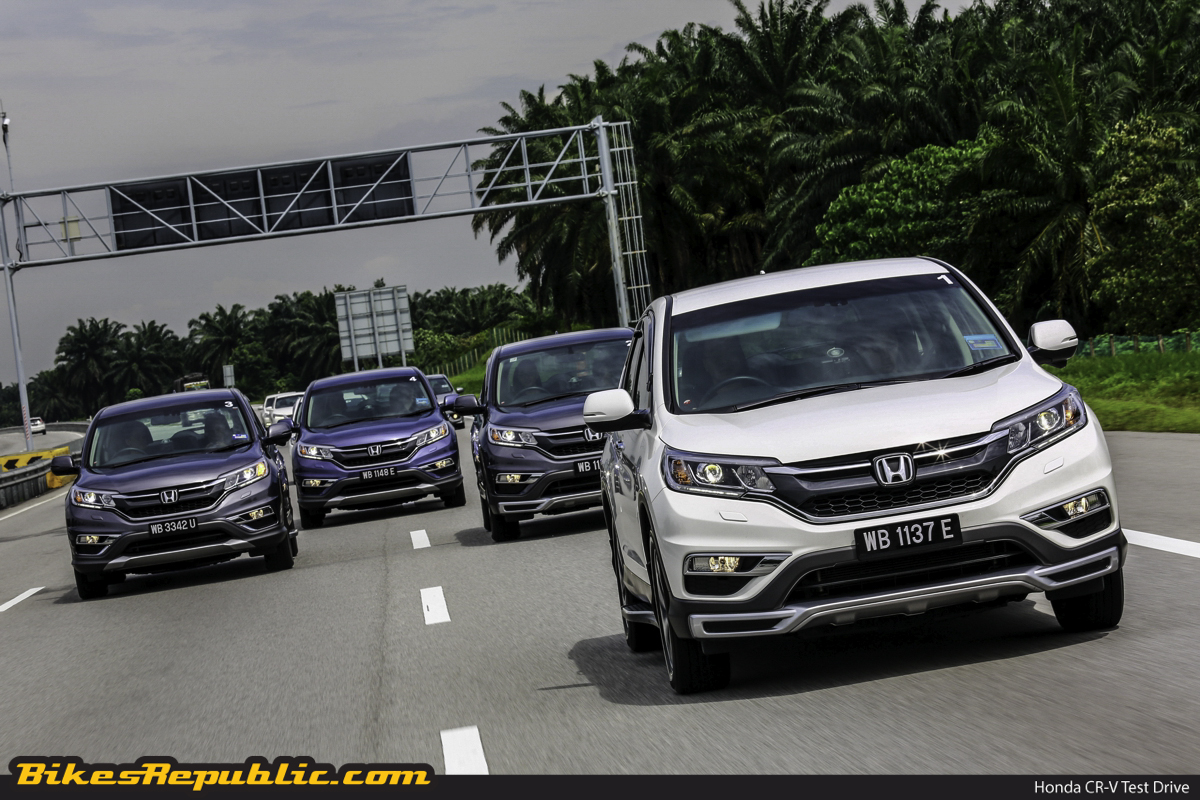
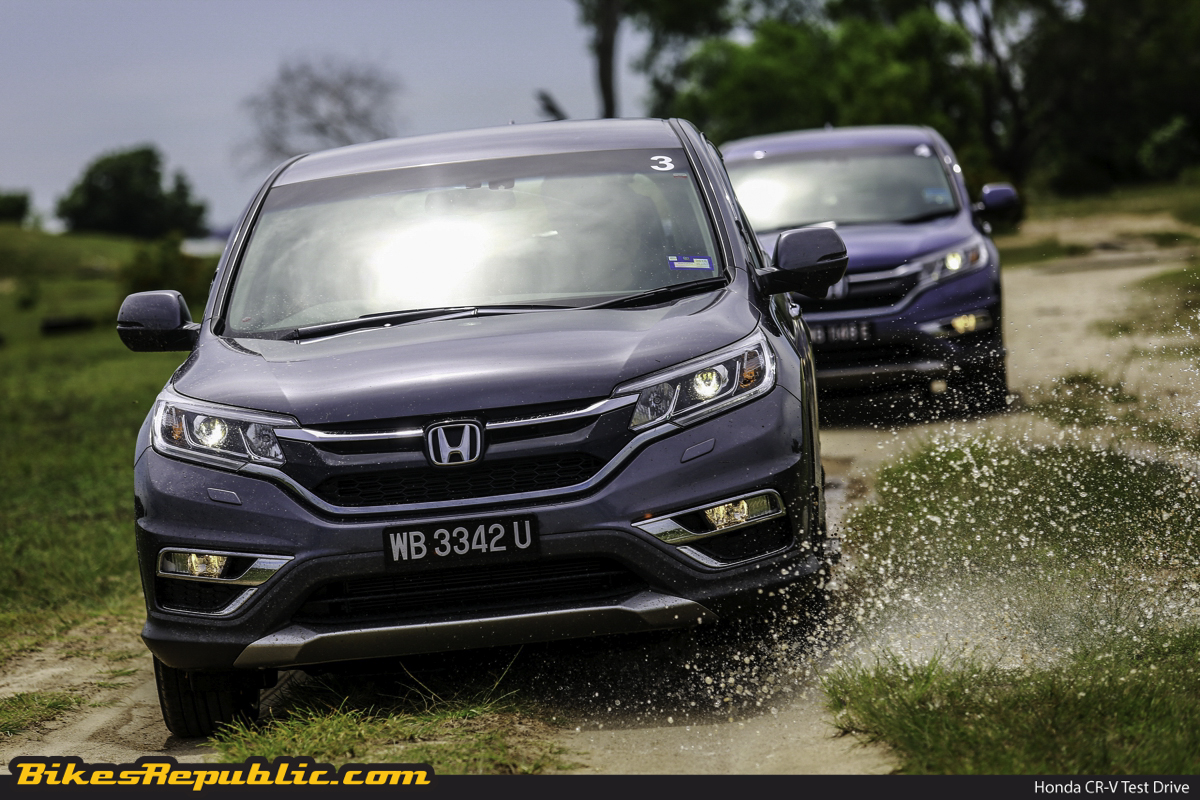
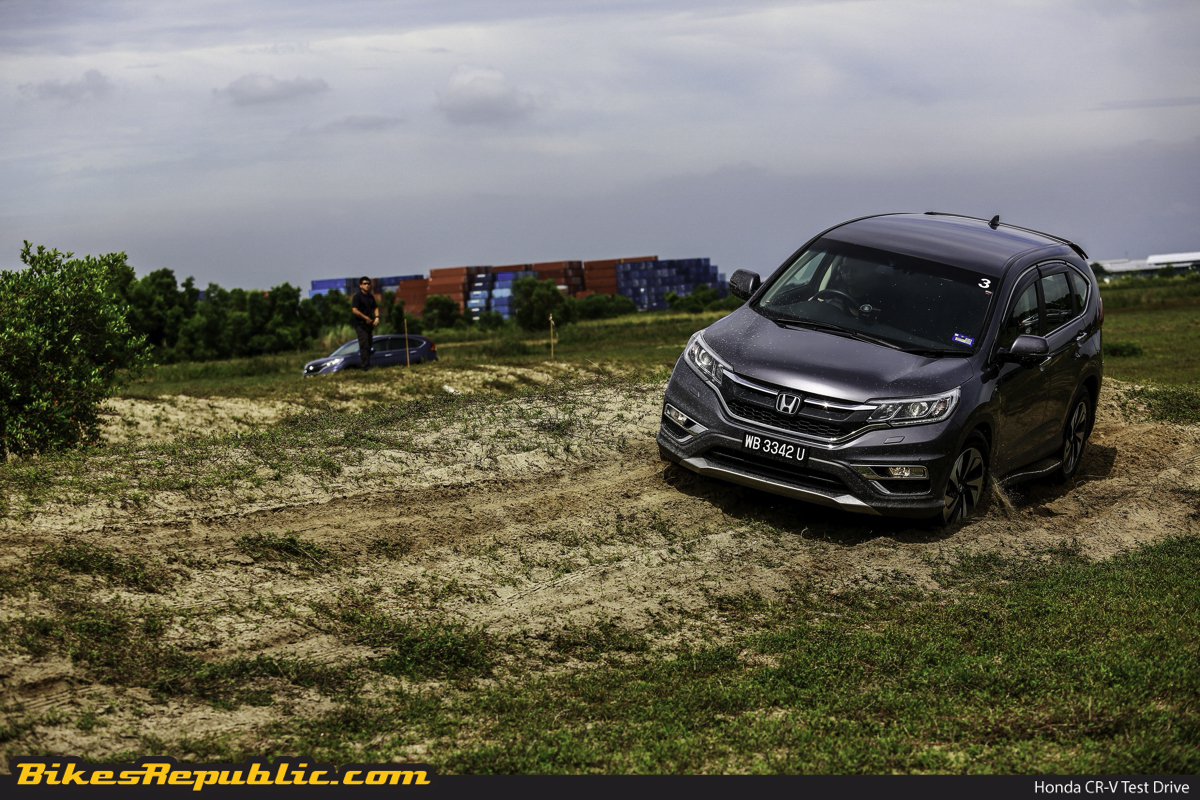
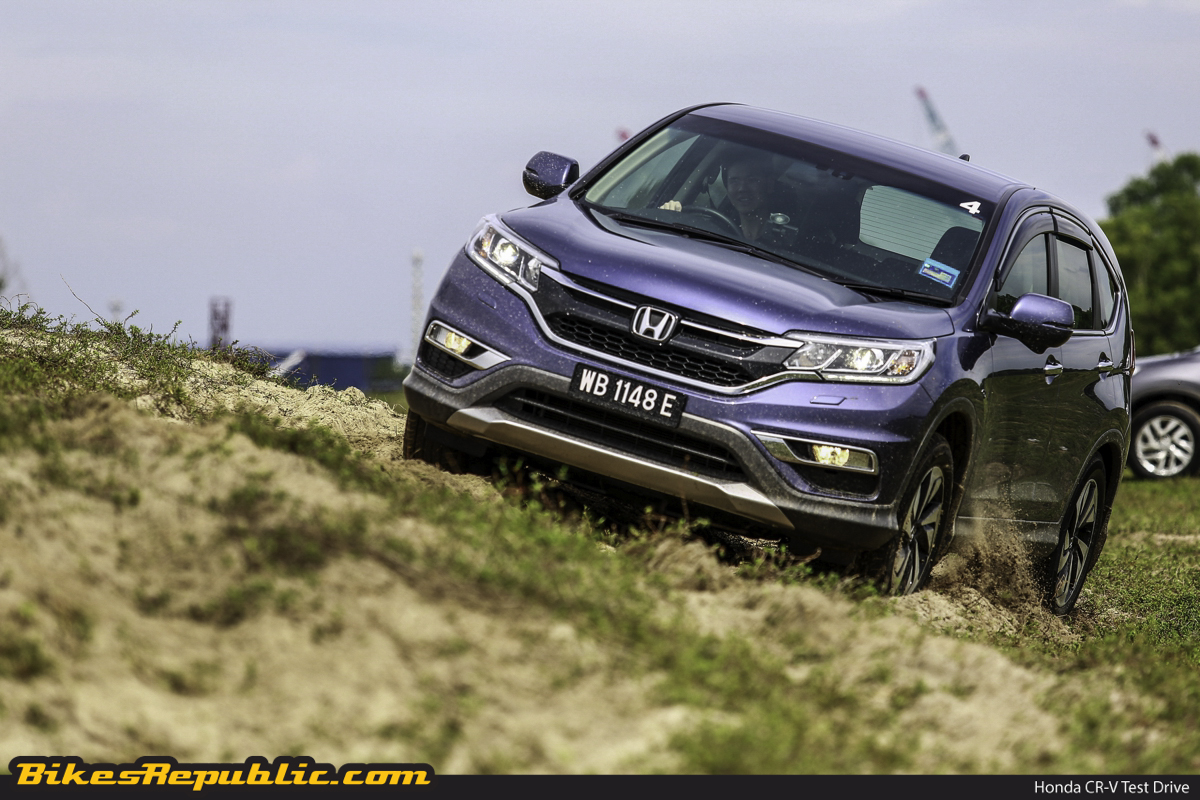
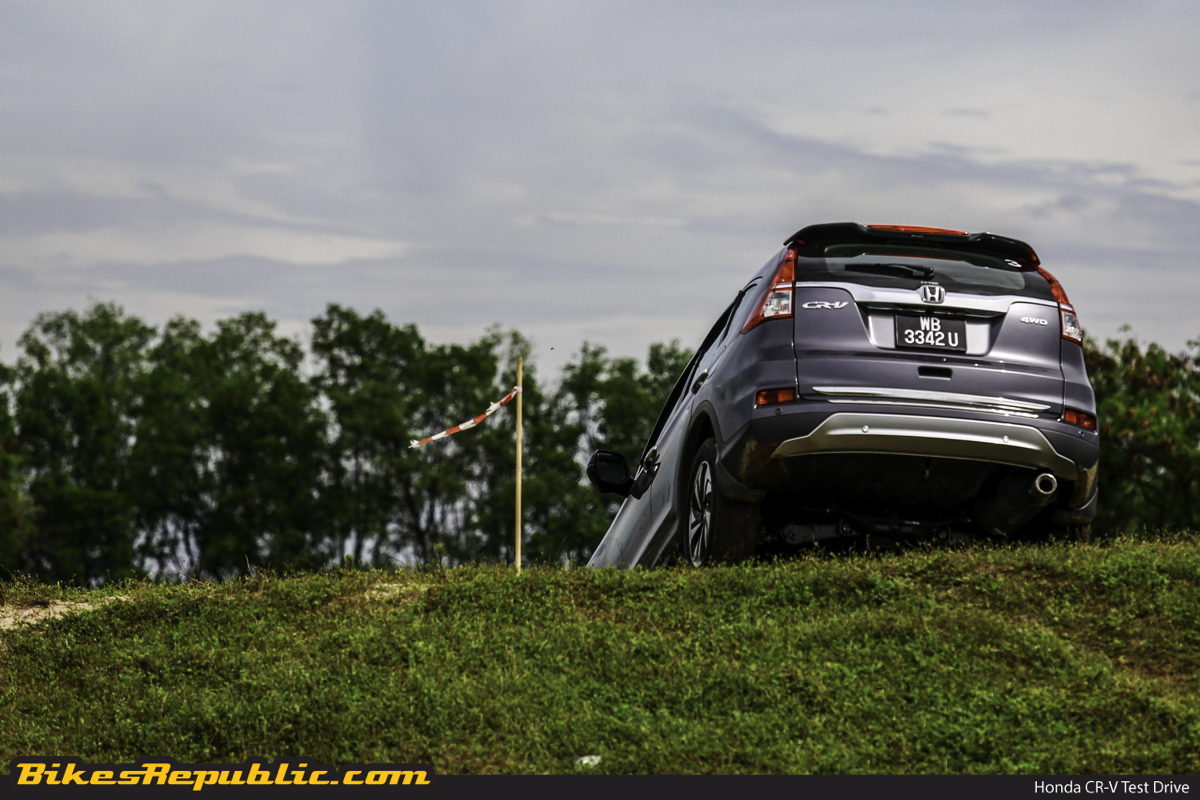
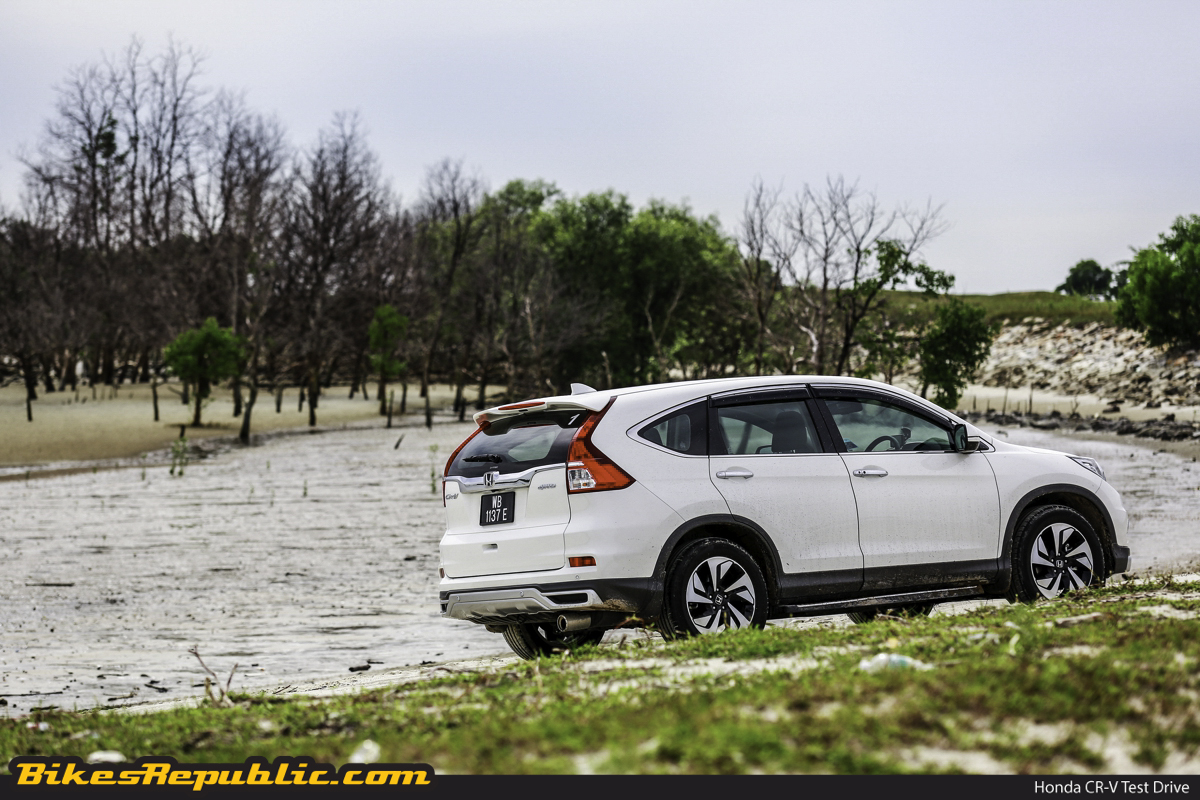
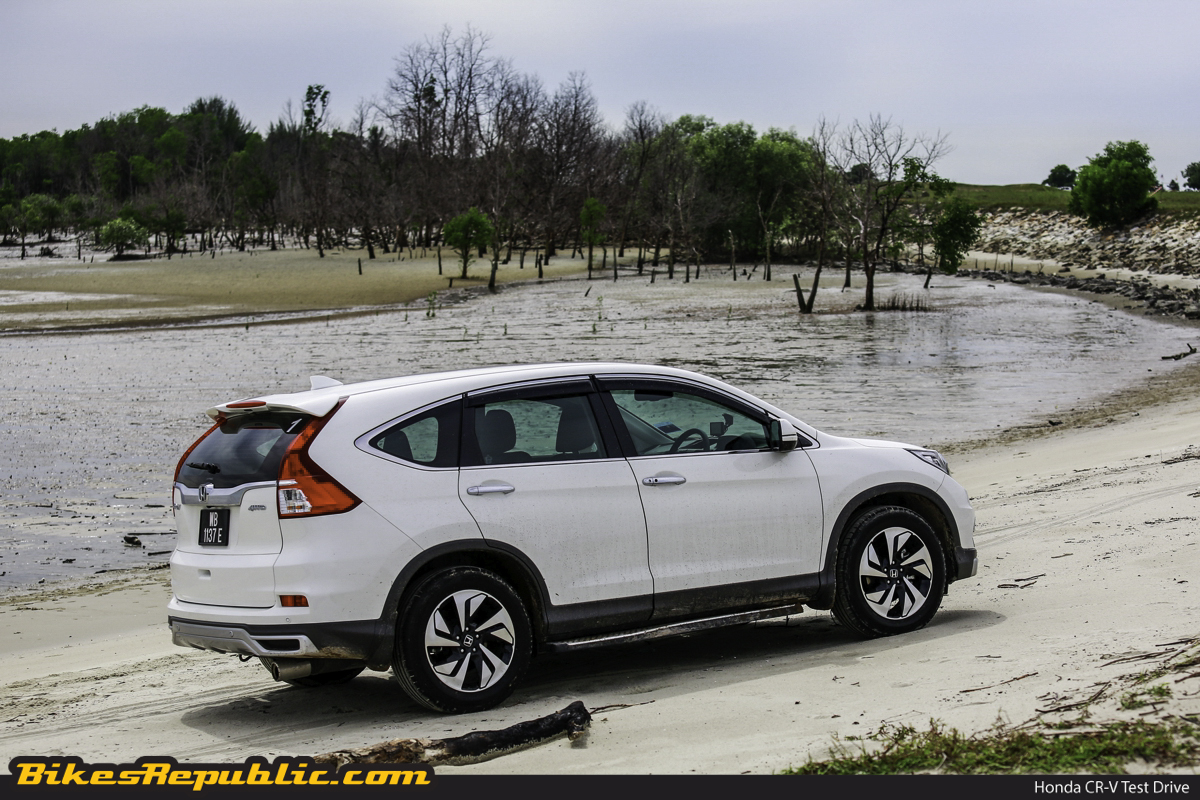
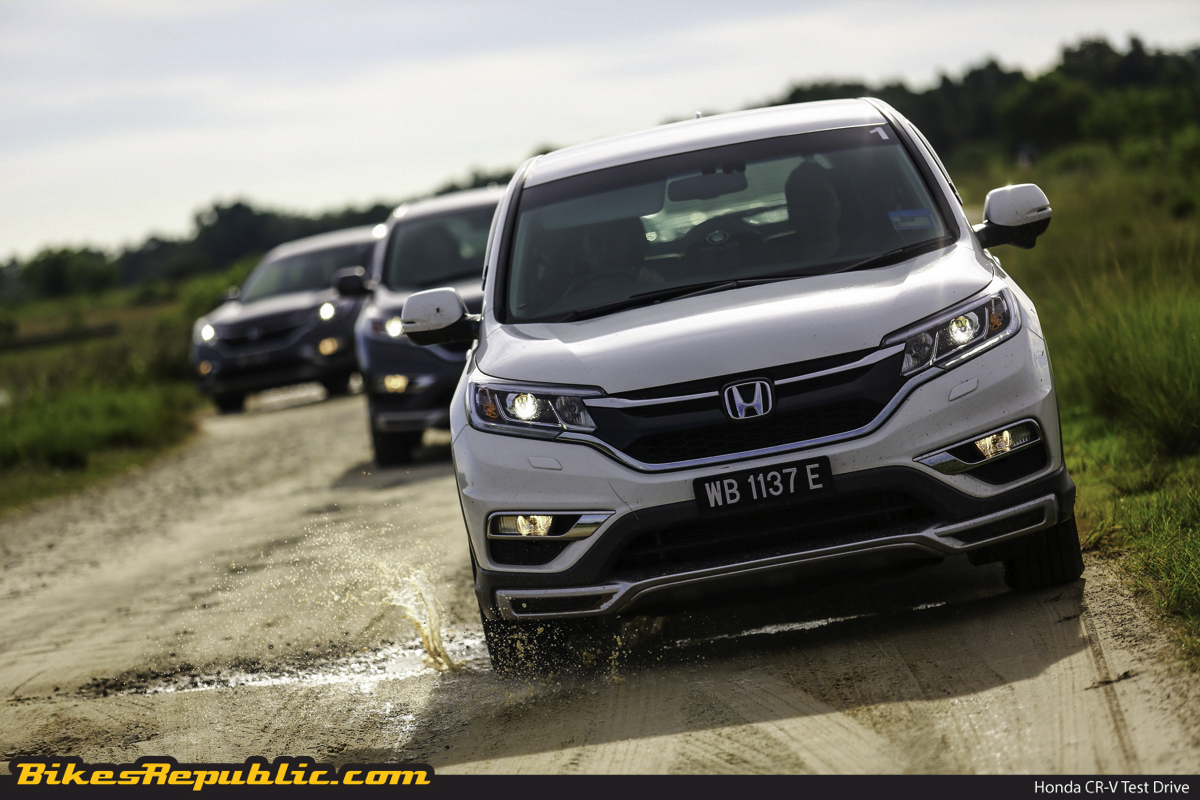
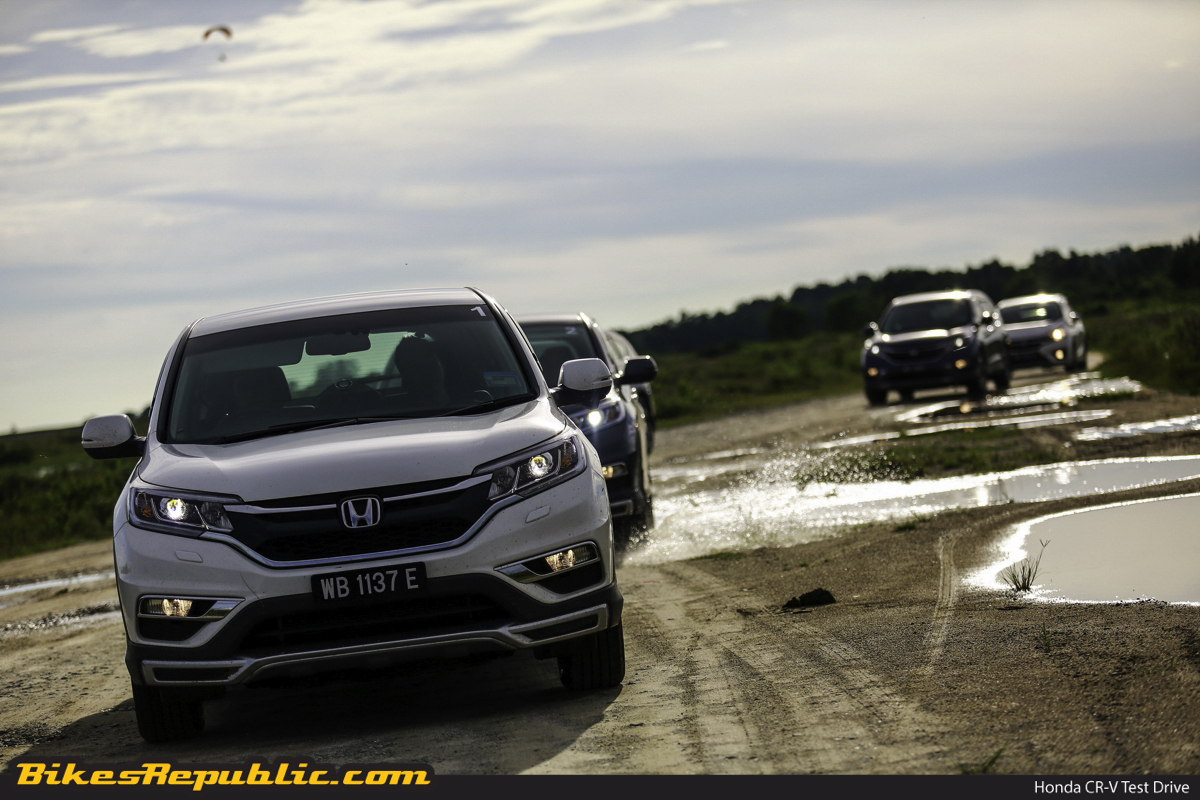
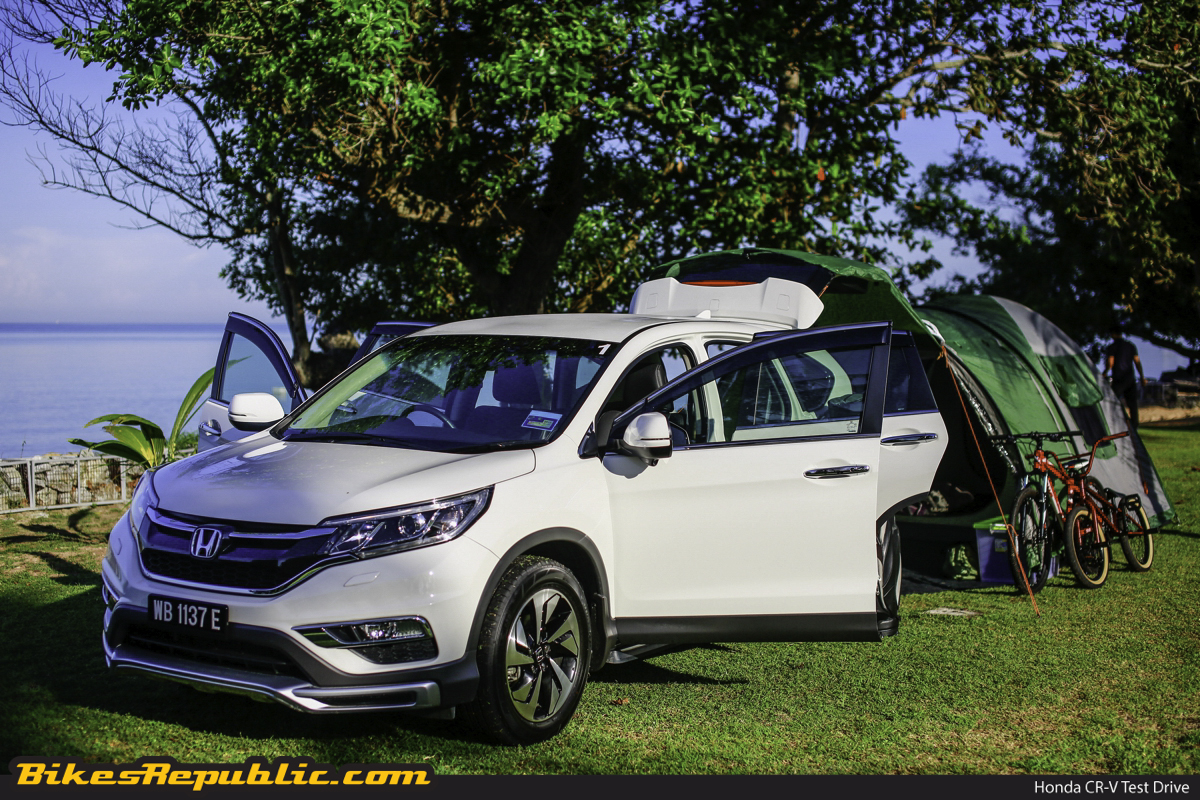
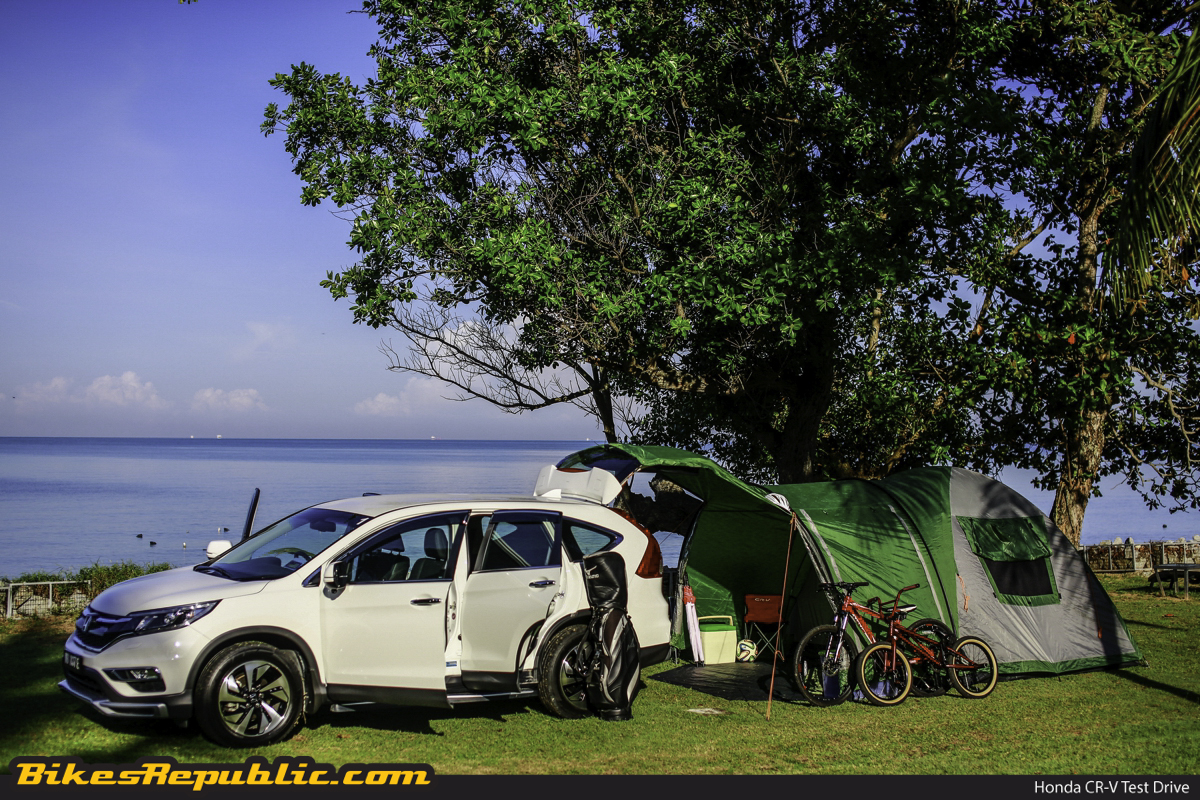
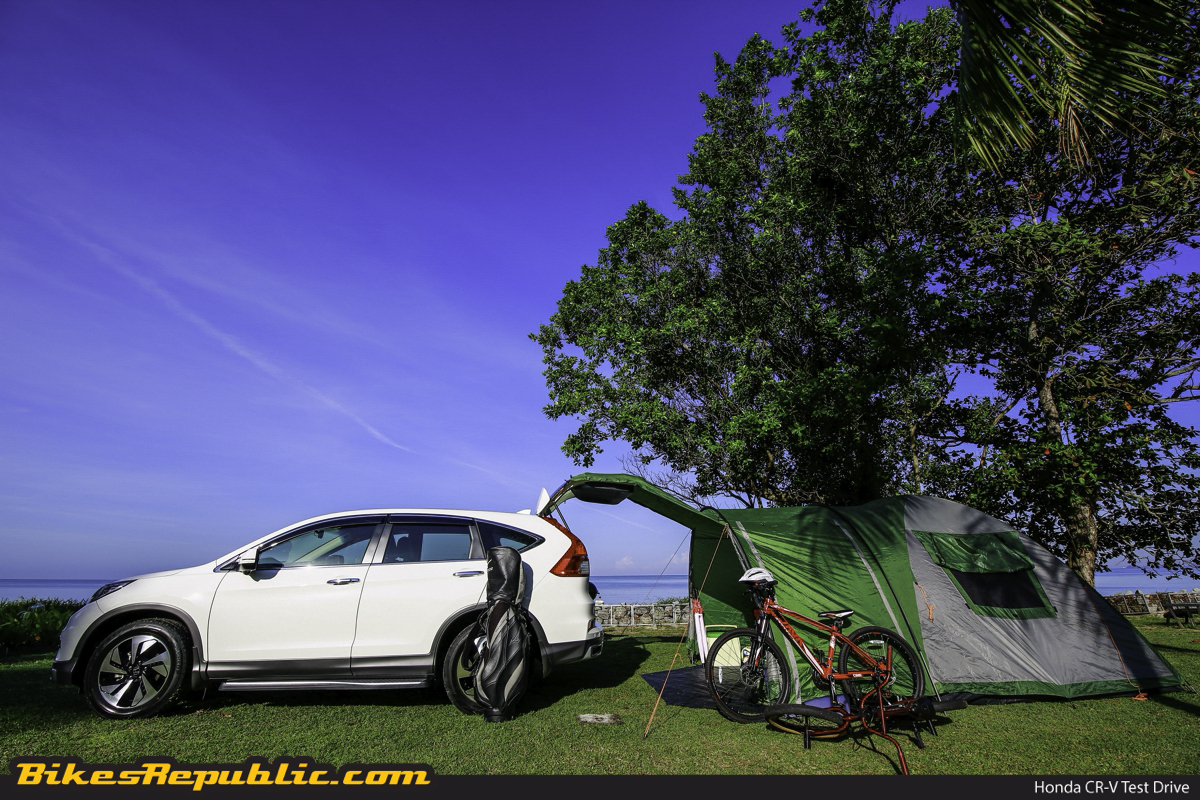
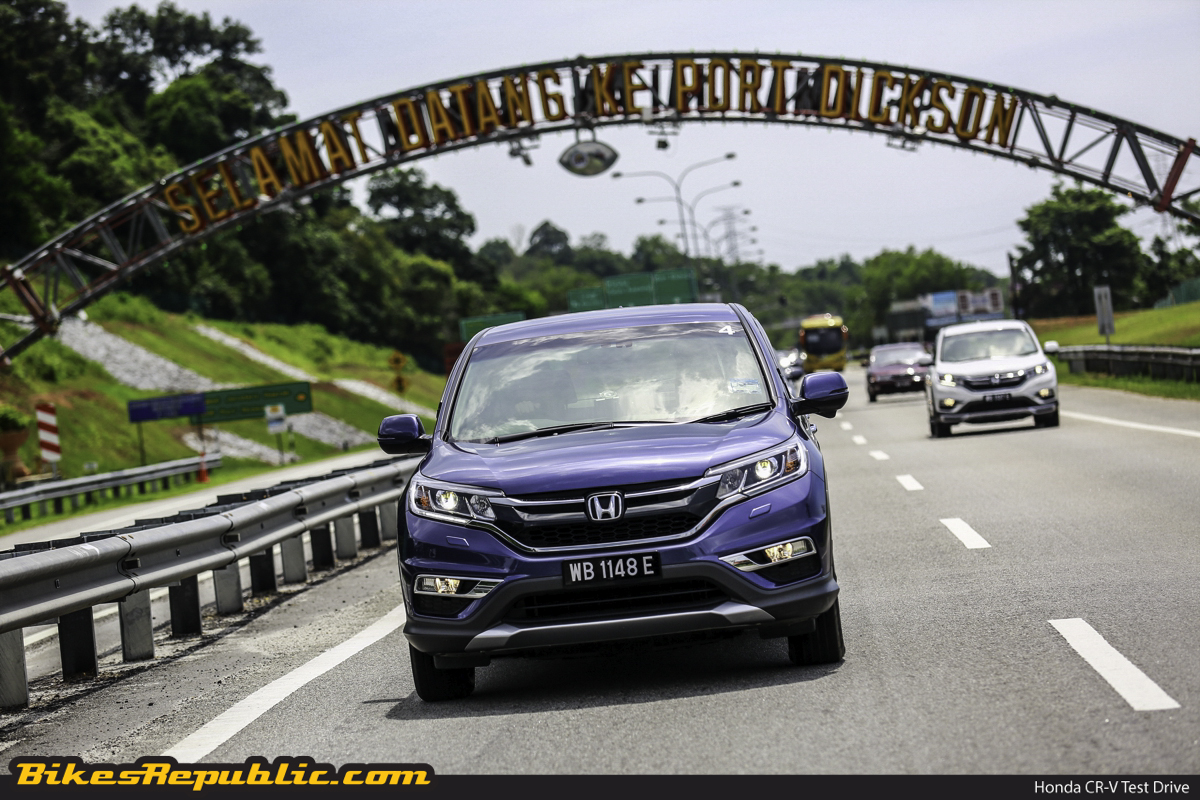
All it takes to understand this sort of buyer is a two-day roadtrip from Damansara to Port Dickson and back that covered not just the usual urban and highway roads, but also a series of twisty back roads and several stints of the beaten path. Honda’s rationale behind this was the fact that many of these individuals spend their weekends indulging in adventurous hobbies like watersports by the beach or a night out with nature in a campsite. Whilst this may sound like a job for a proper 4×4 SUV, the refreshed and all-wheel-drive-equipped variants of the CR-V we piloted in this seemingly rigorous two-day drive yielded some surprising results.

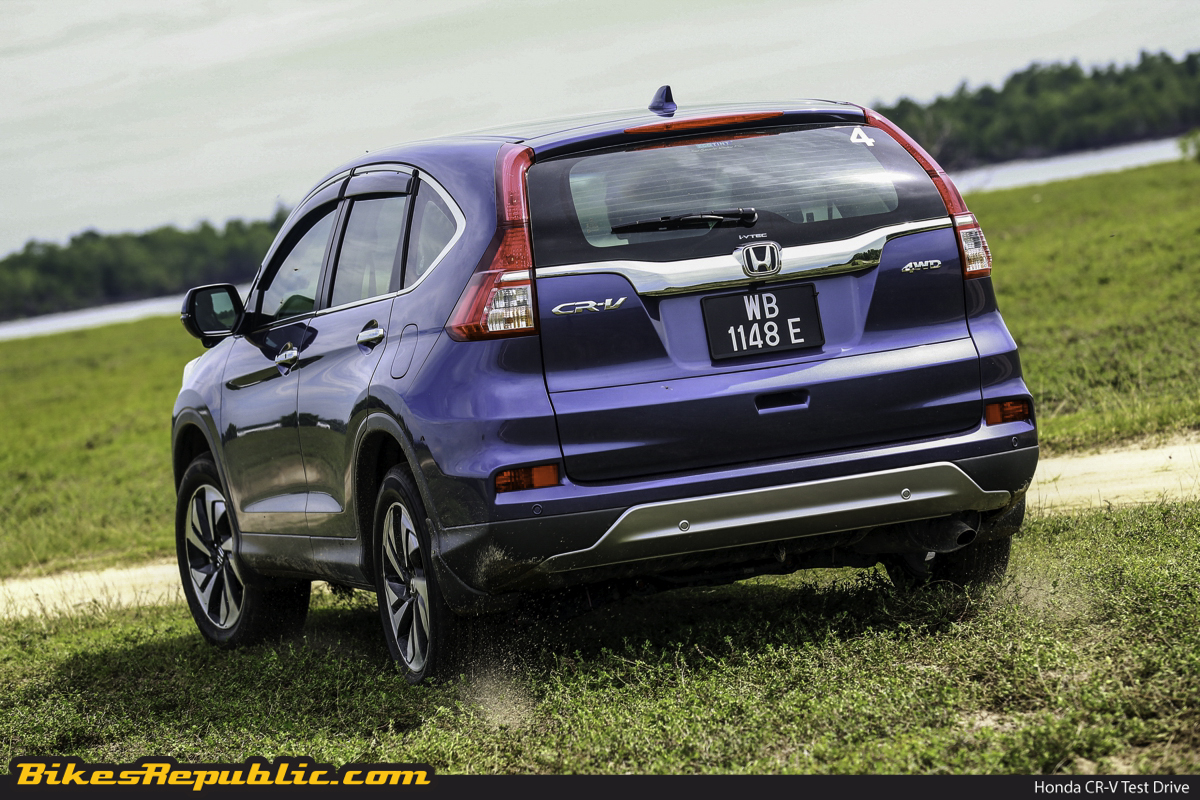
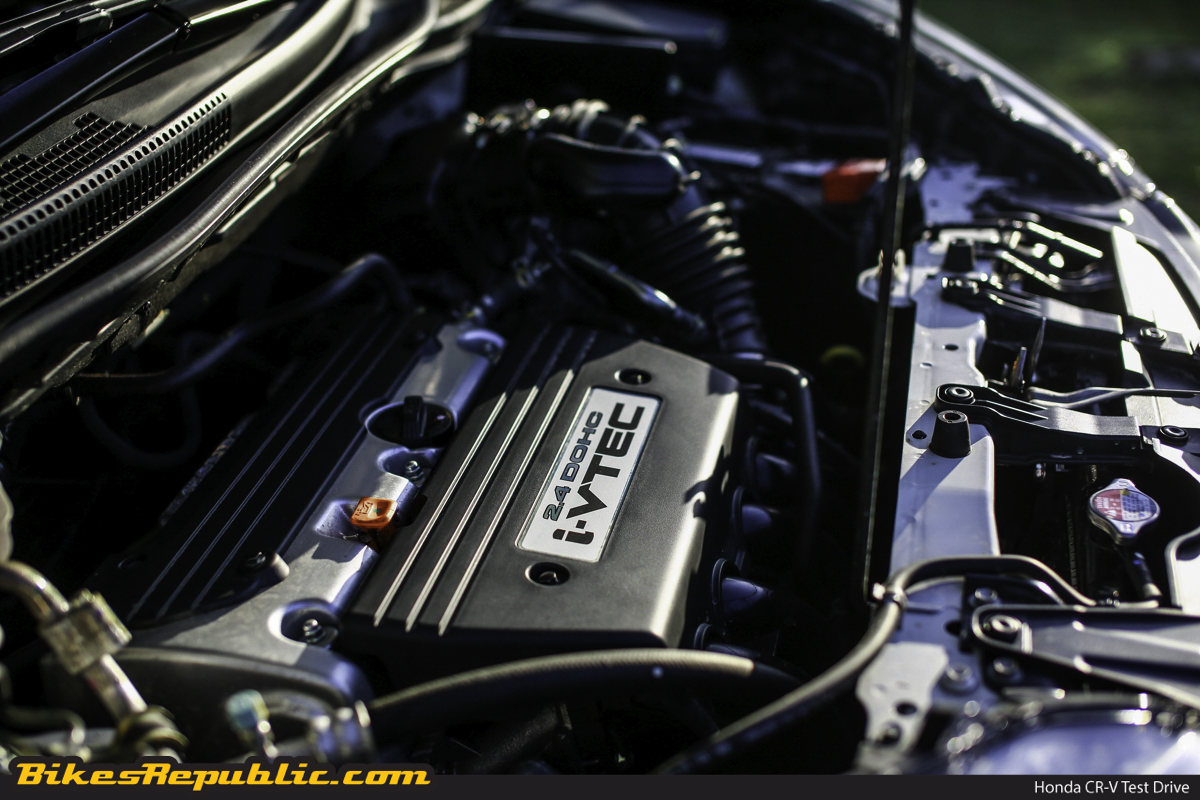
20151202_0369When the refreshed model was introduced last year, Honda rolled out two all-wheel-drive (AWD) variants – the mid-range 2.0-litre and the range-topping 2.4-litre. Both featured Honda’s acclaimed i-VTEC four-cylinder petrol engines paired with five-speed automatic transmissions that have proven time and time again to be one of the segment’s best mills in terms of performance and efficiency.

Though the base 2.0-litre front-wheel-drive model is the most frugal in the CR-V’s three-variant range at 7.7 litres/100km, the mid-spec’s 8.2 litres/100km and high-spec’s 8.5 litres/100km claimed fuel economy figures are respectable for a crossover of this size to say the least, meaning you’d still be able to cover a lot of miles at a lower costs with any of the three. But if we had to choose one, our top pick was of course the mid-range 2.0-litre AWD model as it offered the best compromise between base and range-topping model.

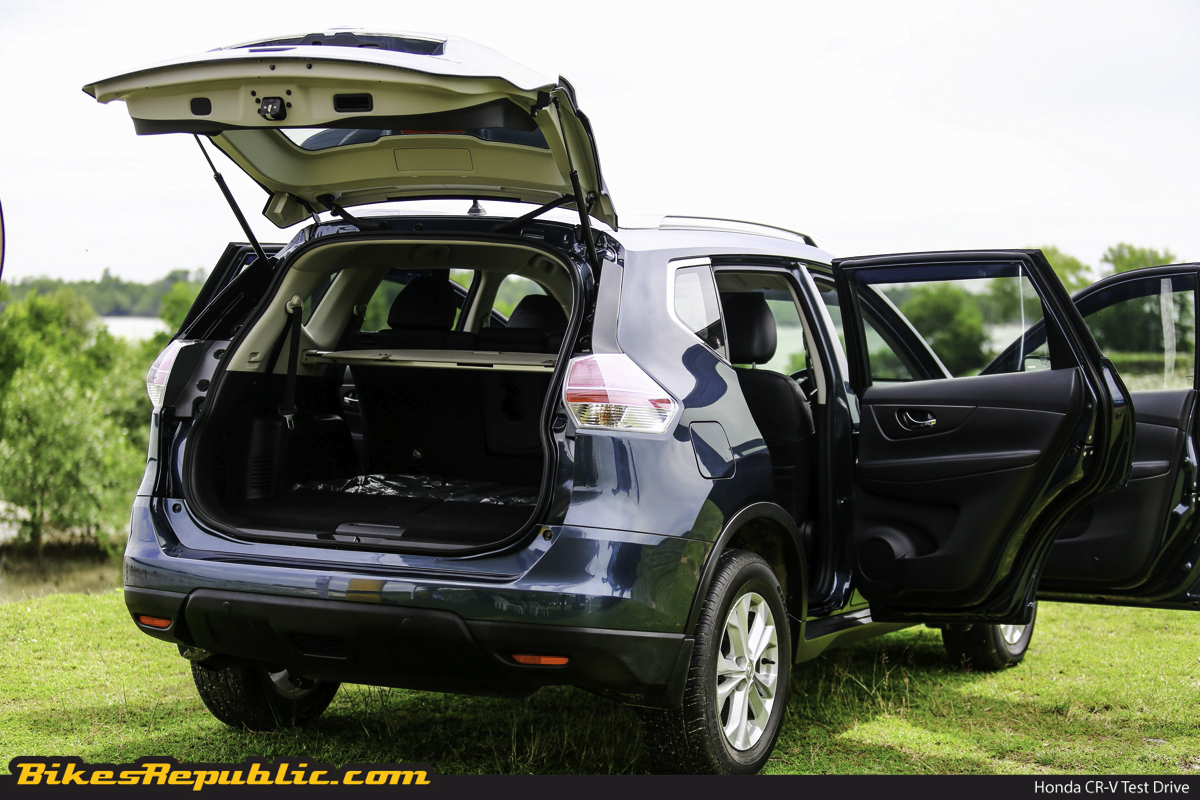
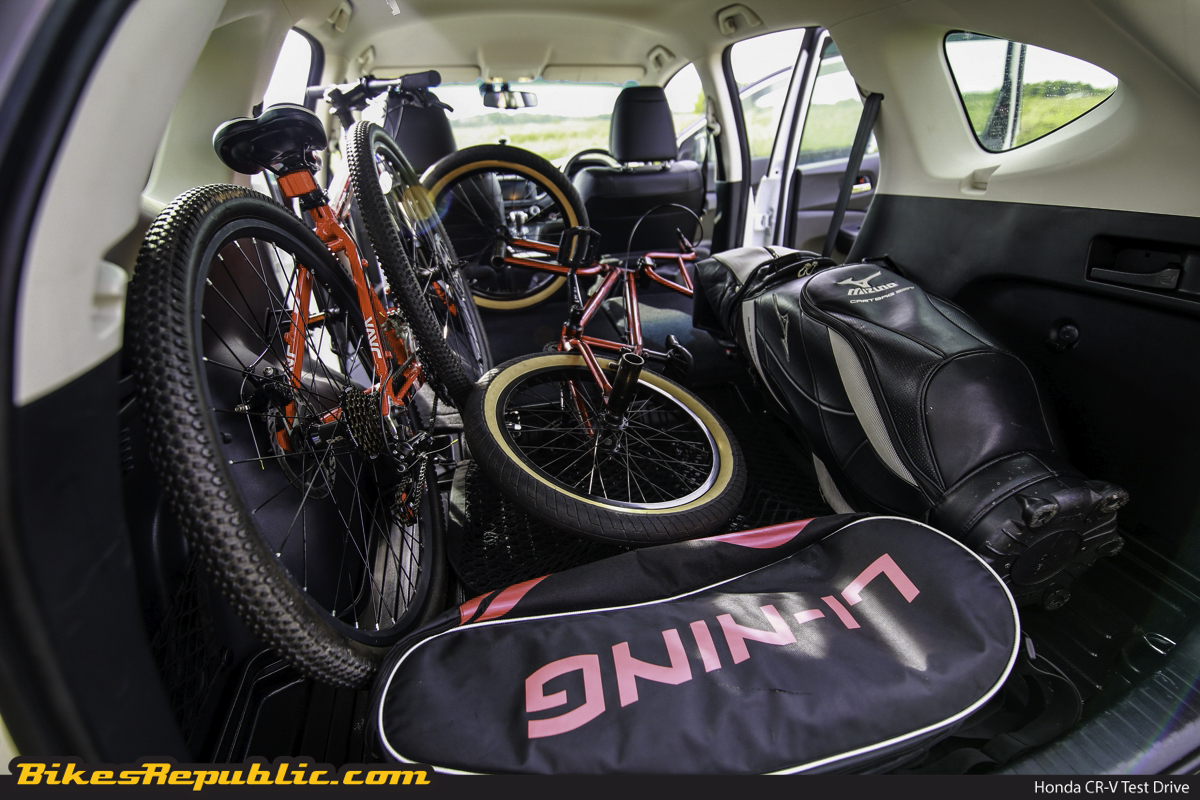
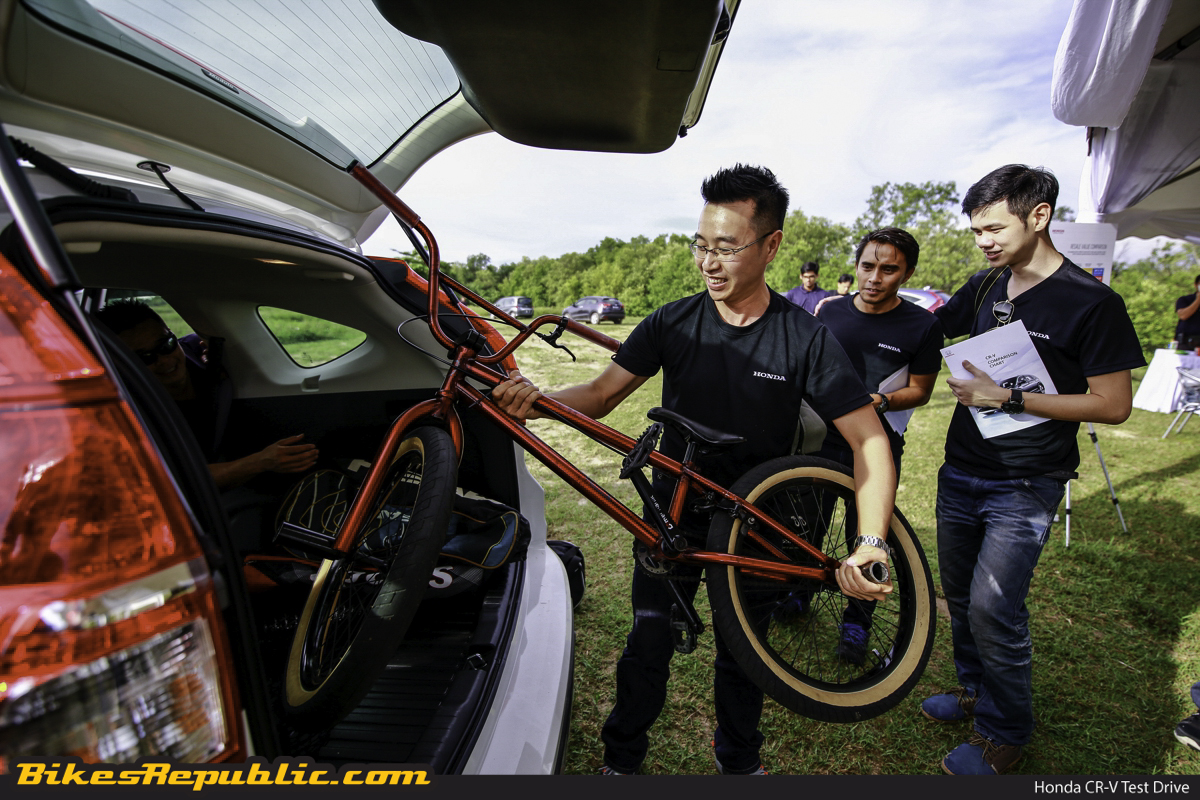
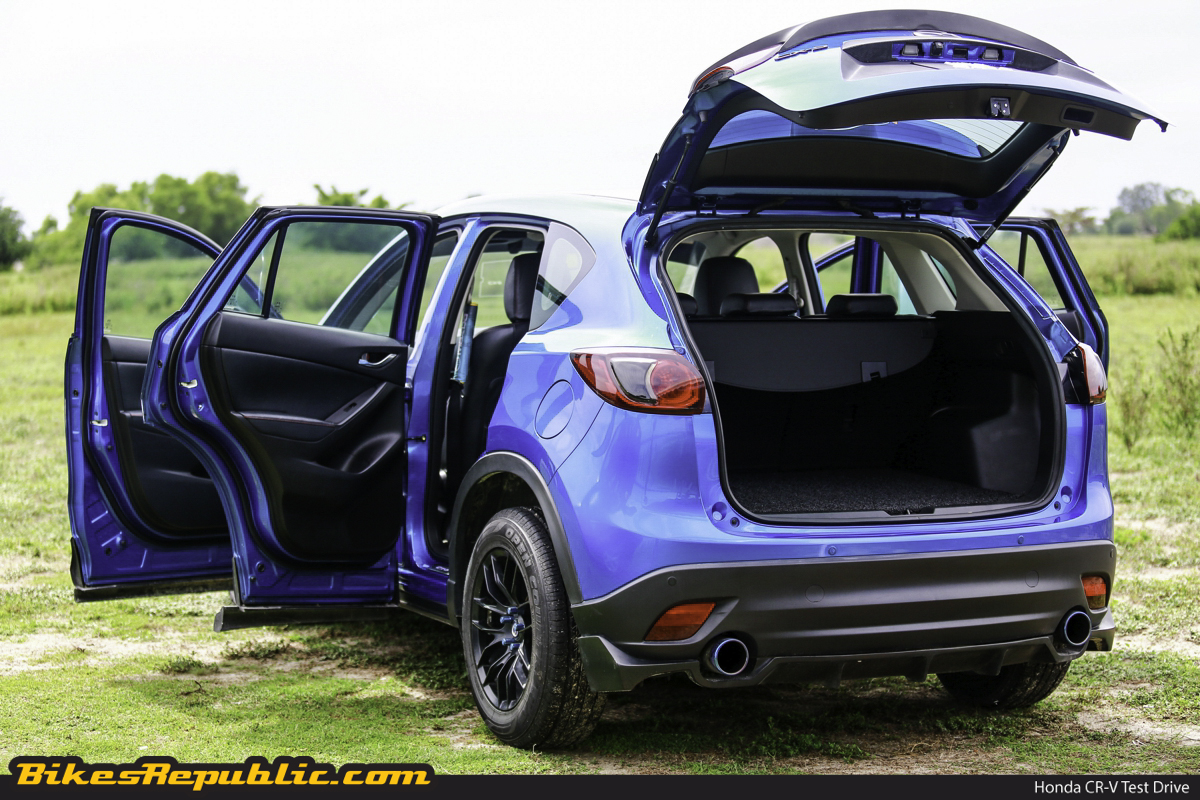
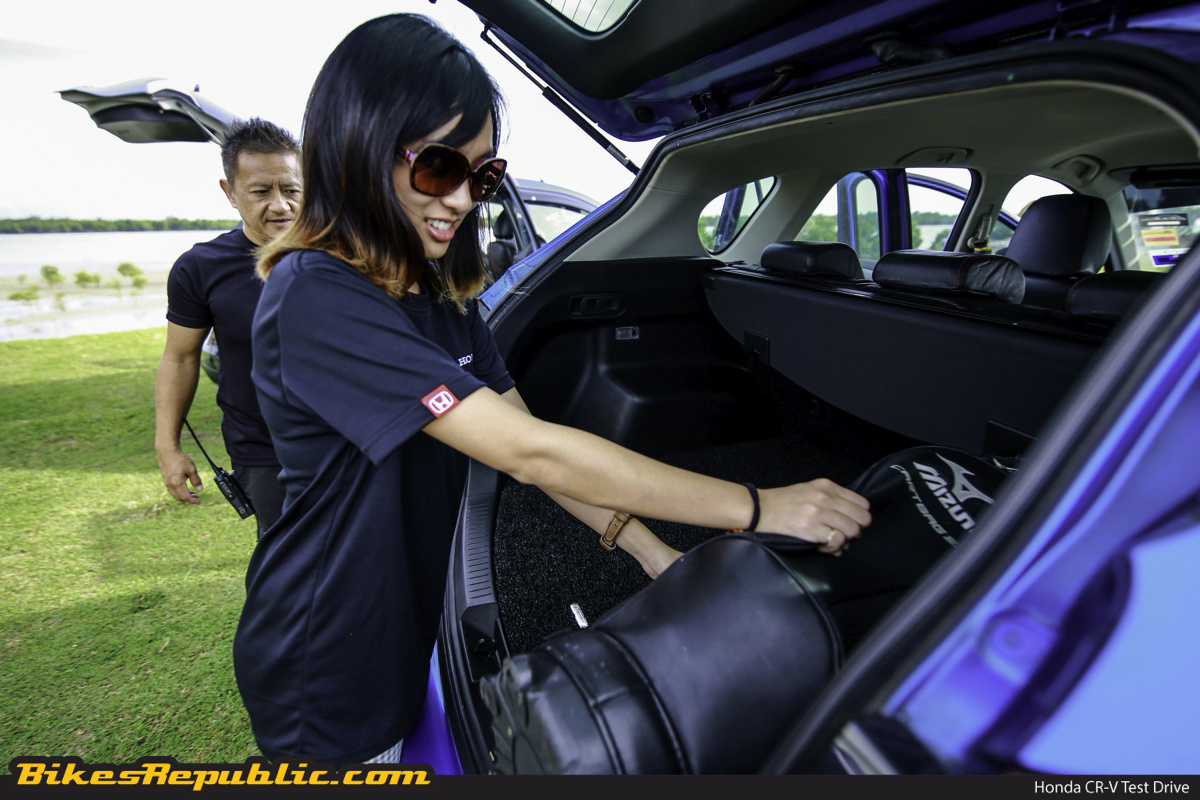
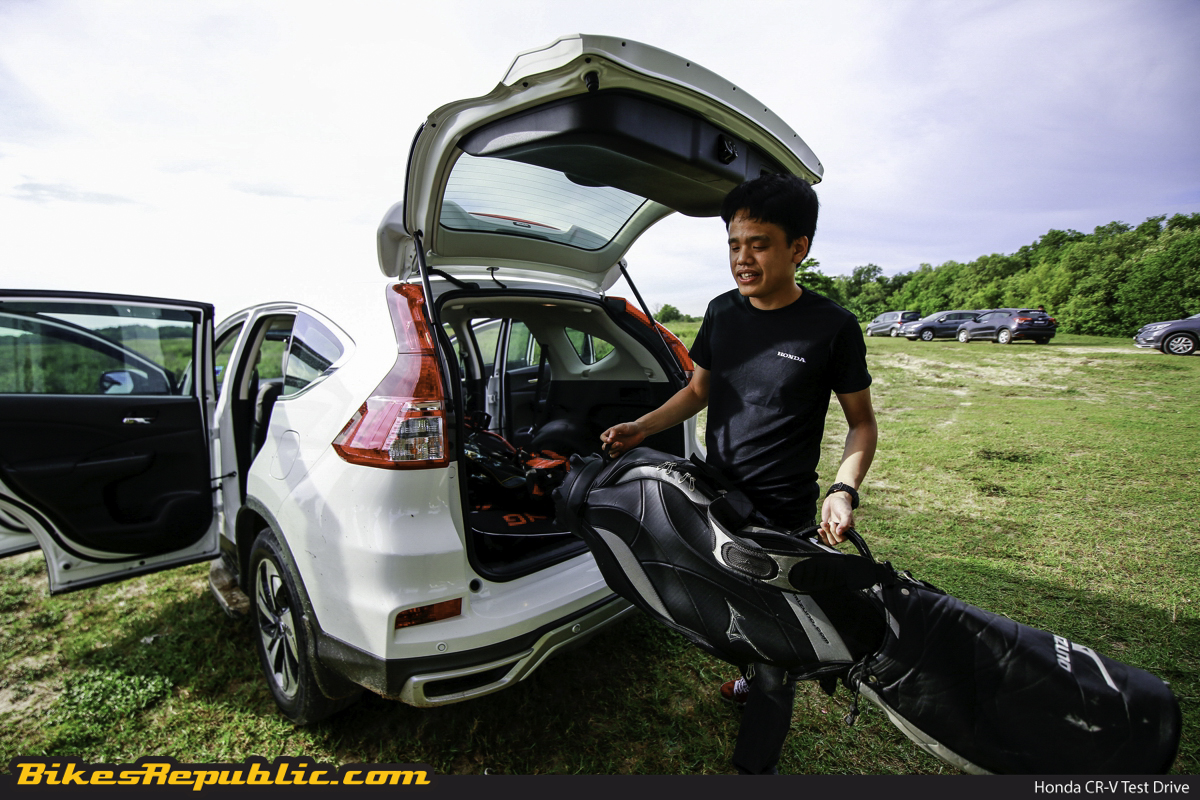
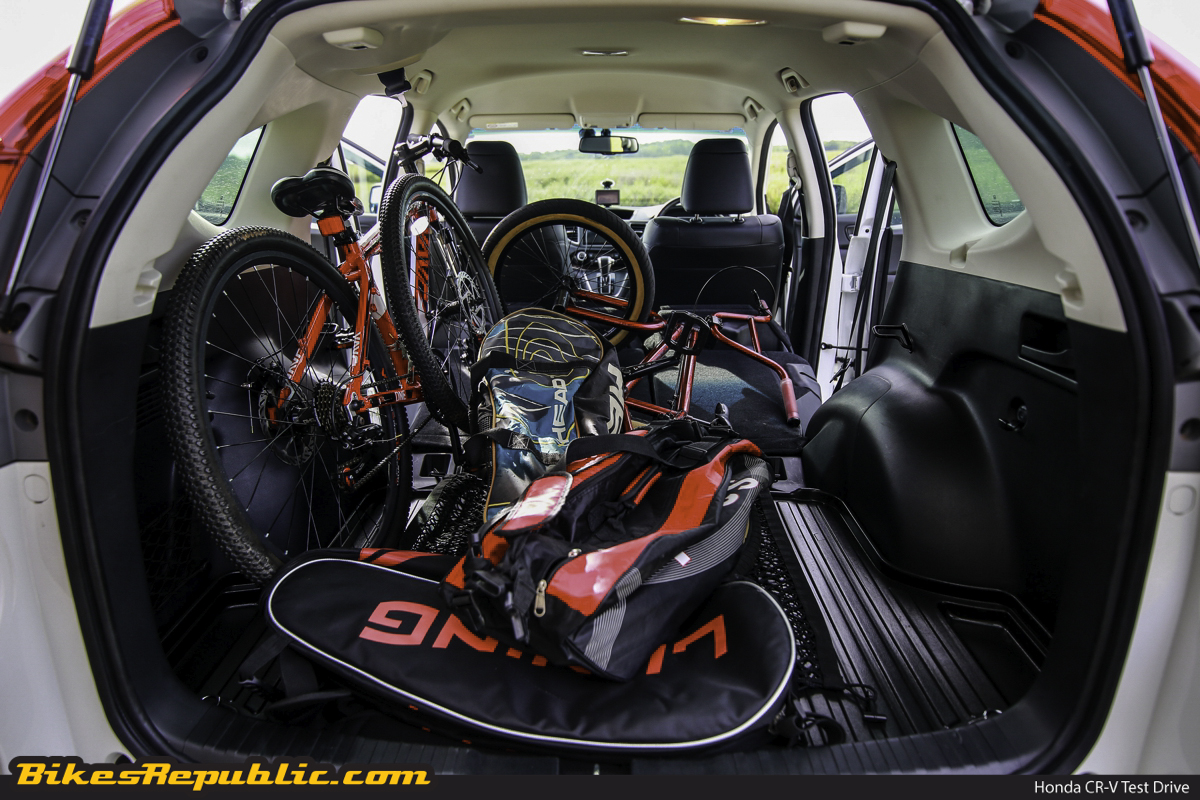
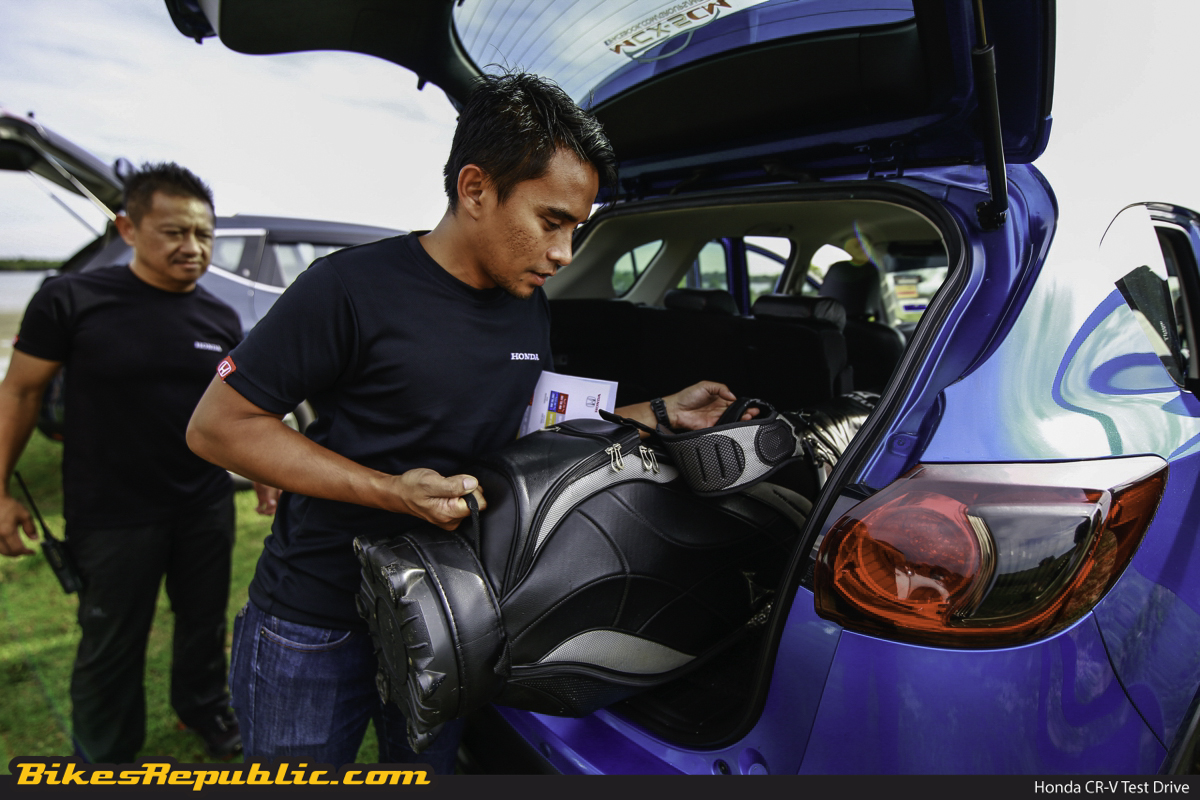
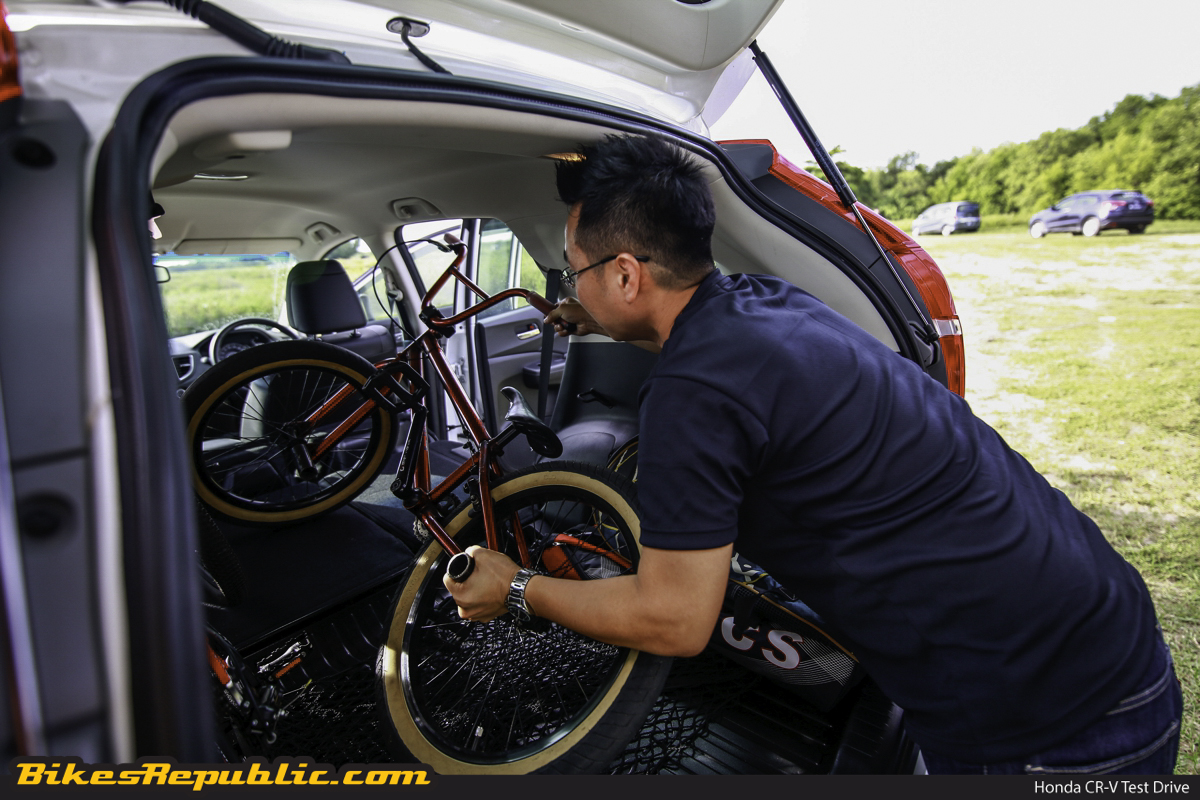
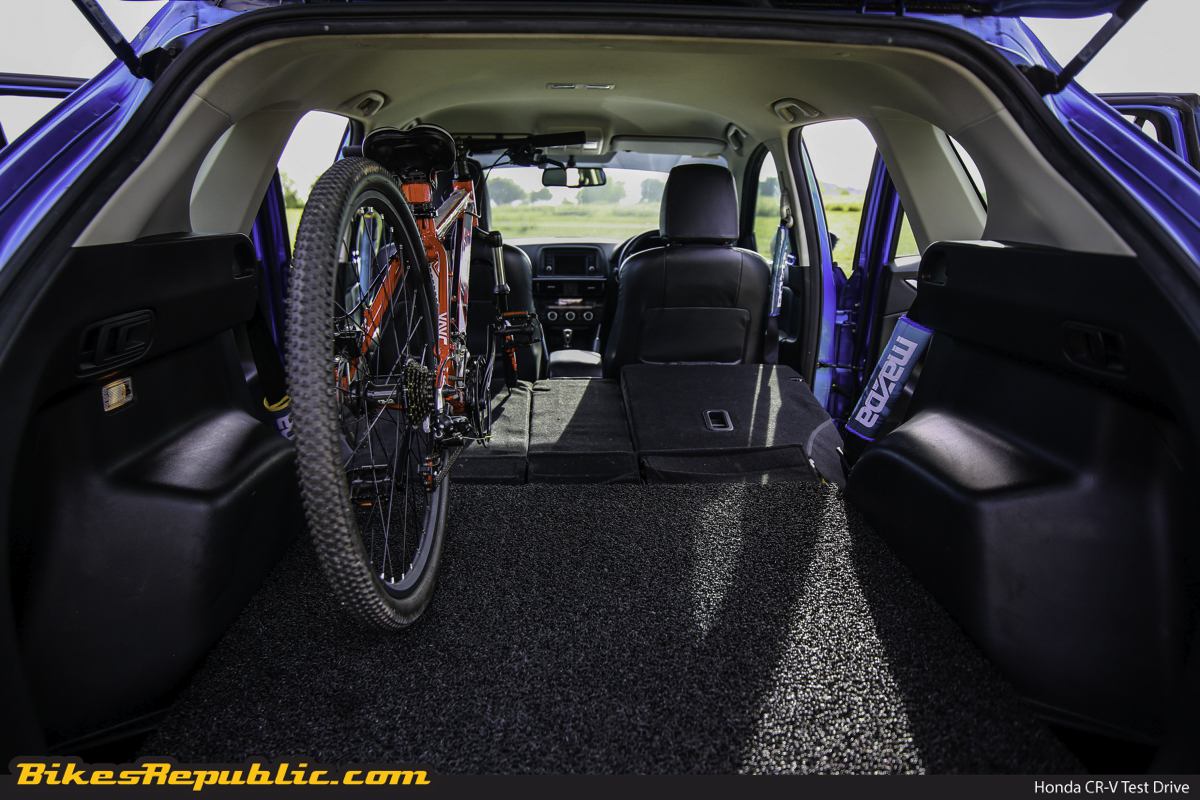
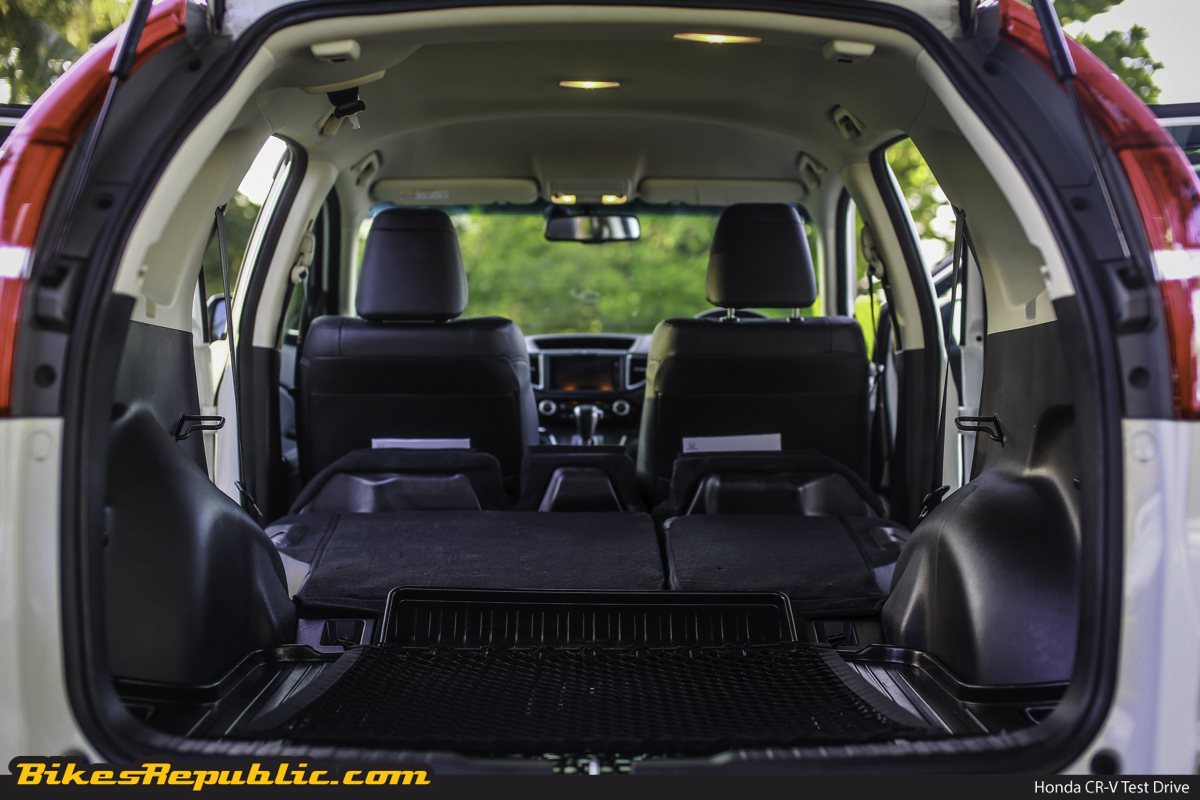
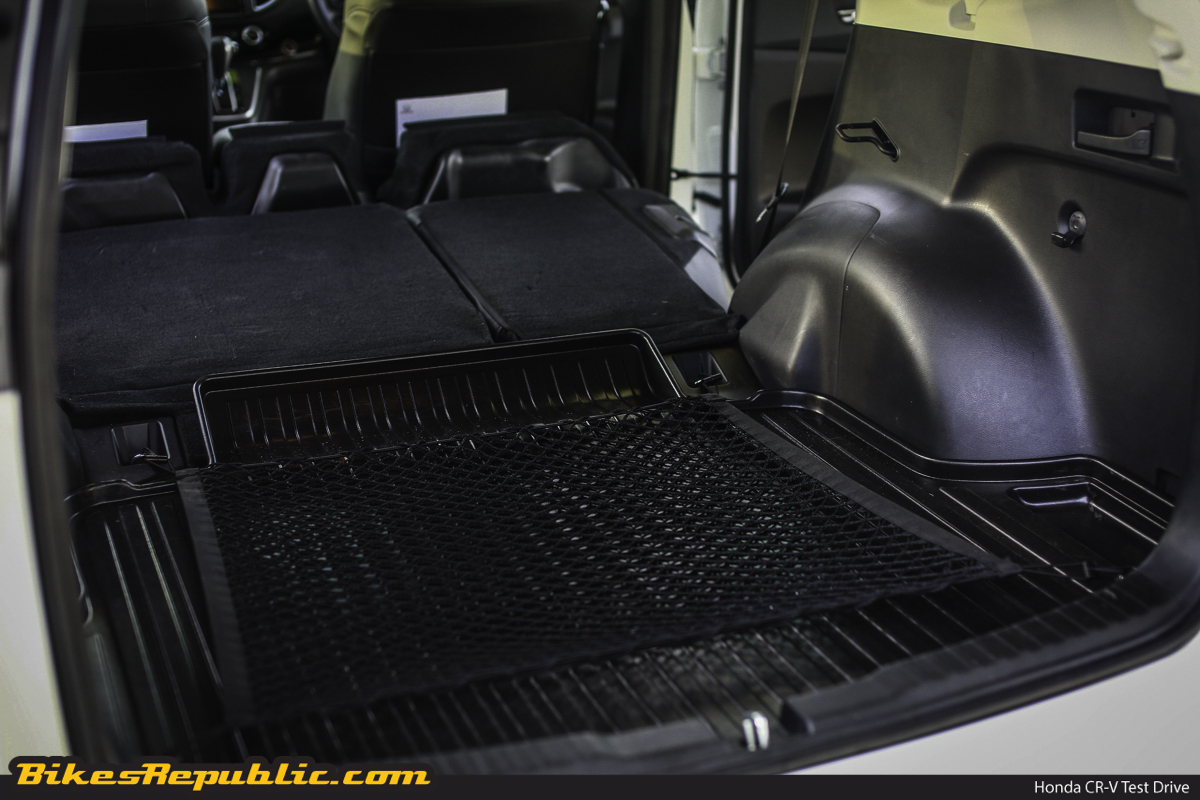
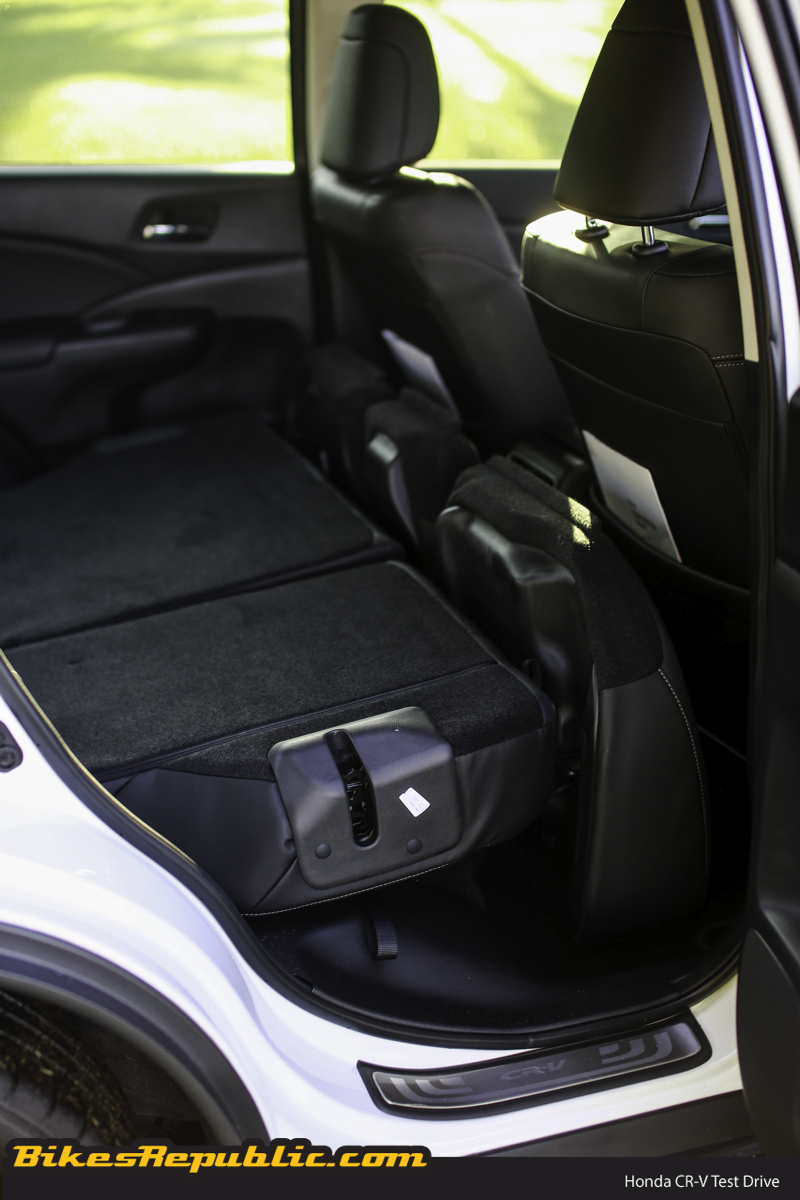
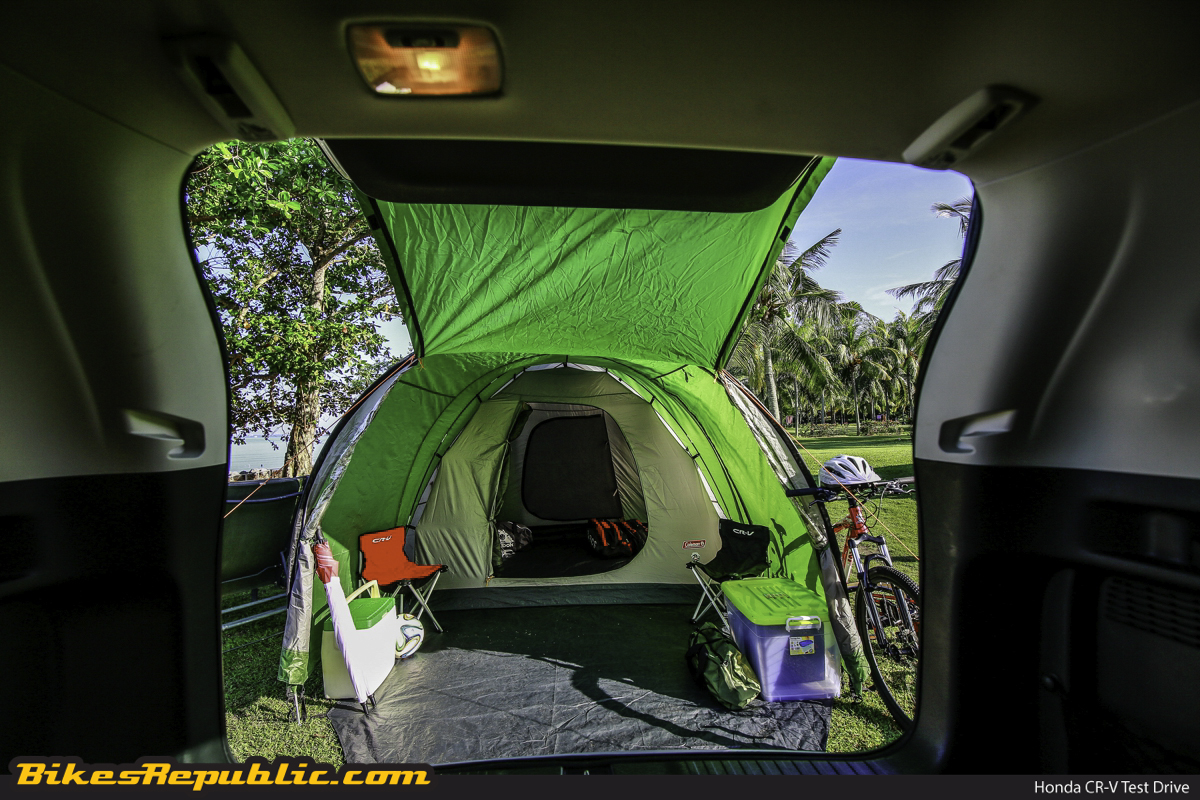
20151202_0427But of course, the biggest draw here is the CR-V’s abundance of space. The rear seats can be easily folded down by just pulling two small levers in the boot, expanding the standard capacity of 589 litres to a whopping maximum of 1,146 litres – both are larger than any of its nearest rivals in fact. Loading an assortment of large-sized weekend gear ranging from mountain bikes to golf bags or even camping gear is made easier as well thanks to the low load lid. Furthermore, this abundance real estate also negates the need to purchase expensive external roof-mounted racks or cargo boxes too.

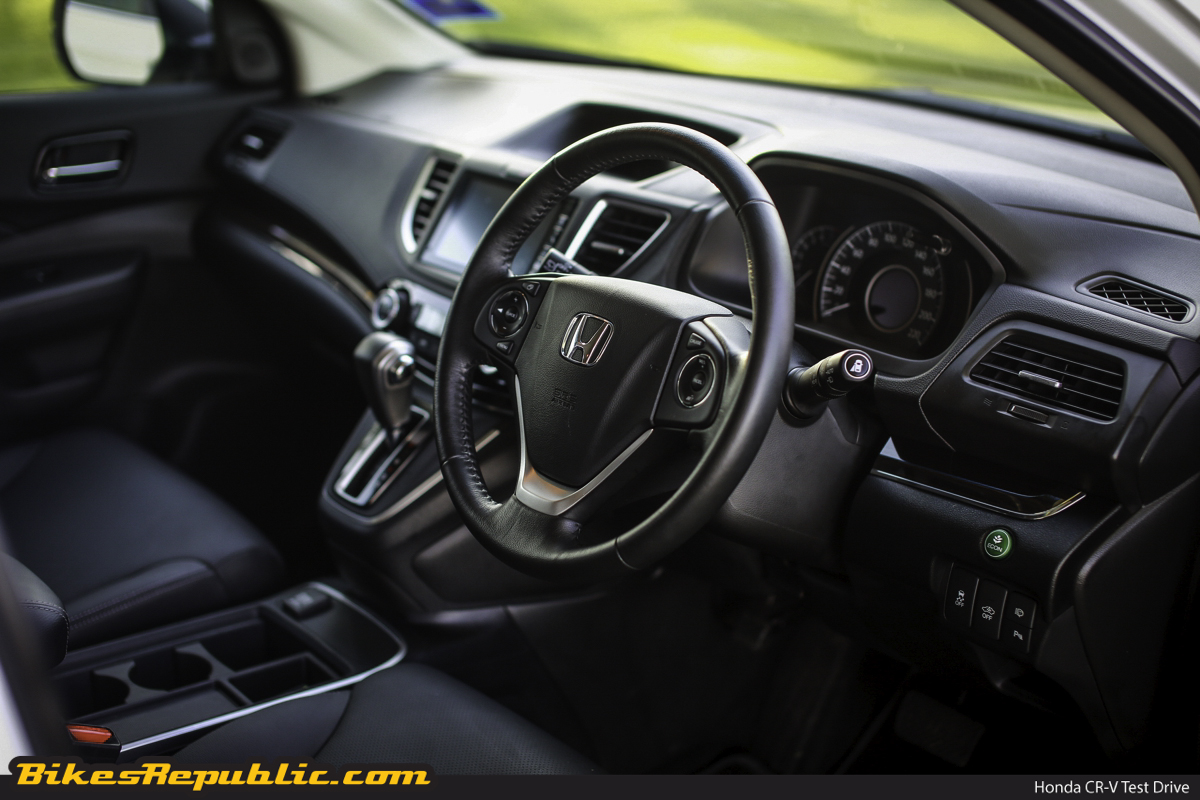
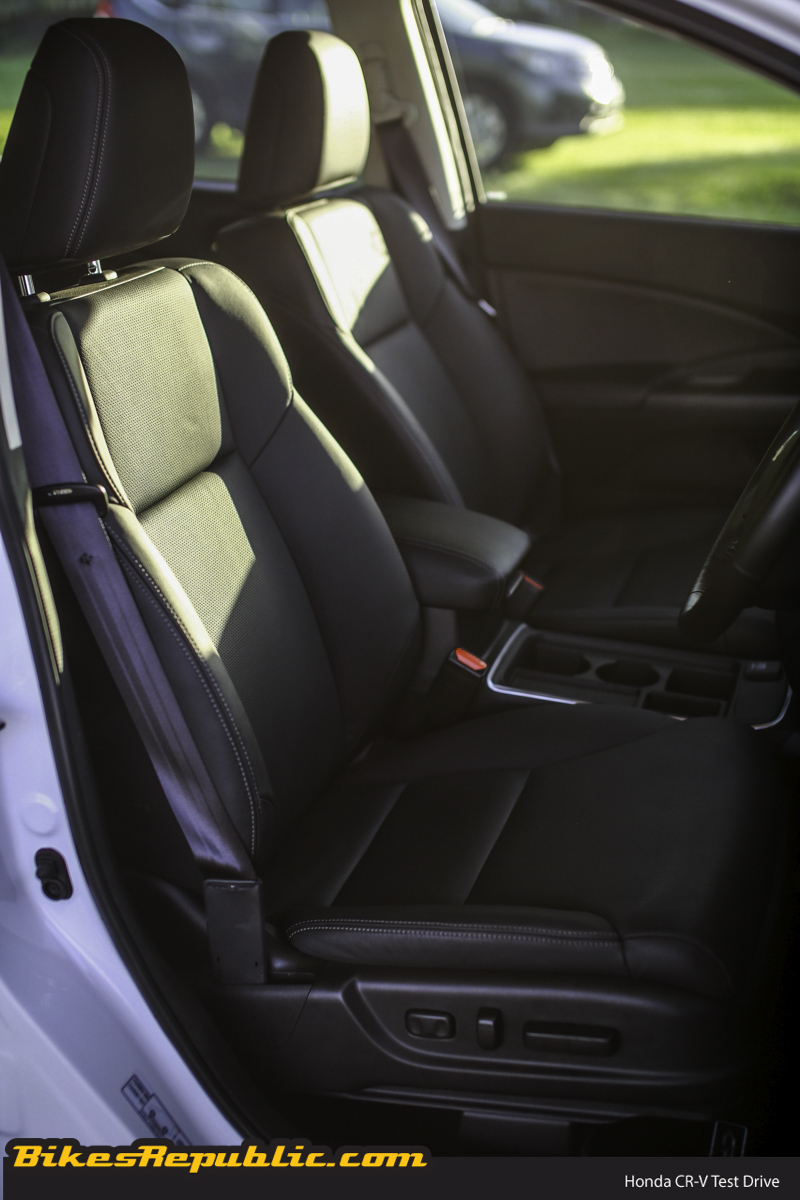
Despite these utilitarian abilities, the CR-V is still an excellent passenger car as well. Space all-round in the cabin is equally abundant too as it offers decent amounts of head, leg and movement rooms for just about anyone. For us though, we loved the signature and intuitive dashboard design and layout, not to mention the rich array of creature comforts primed here too.

20151202_0439All variants comes equipped with the 5-inch multi-info display mounted top-centre, dual-zone automatic air-conditioning with rear air vents, steering-mounted audio and Bluetooth handsfree controls, as well as eight-way powered driver seat adjustments. But opt for the range-topping 2.4-litre variant and the package added with a HDMI socket to mirror-link your iOS device, as well as steering-mounted paddle-shifters for the transmission. Regardless of which variant you opt for, there’s little wrong with the creature comfort package in all of them, which should complement even the most active or the most rugged weekend activities you could possibly indulge in.

Then comes the way the CR-V drives, which is one of this crossover model’s top hallmarks. For a mid-sized crossover, the Honda CR-V felt decently agile when tackling a set of twisty back-roads leading up to Port Dickson via Sepang in our drive – perhaps a typical situation many active lifestyle individuals would face. While it is no Civic or Accord here, the crossover’s high-riding suspension and dampers felt well balanced whilst the electric power steering means that even ladies would have no trouble mastering it.

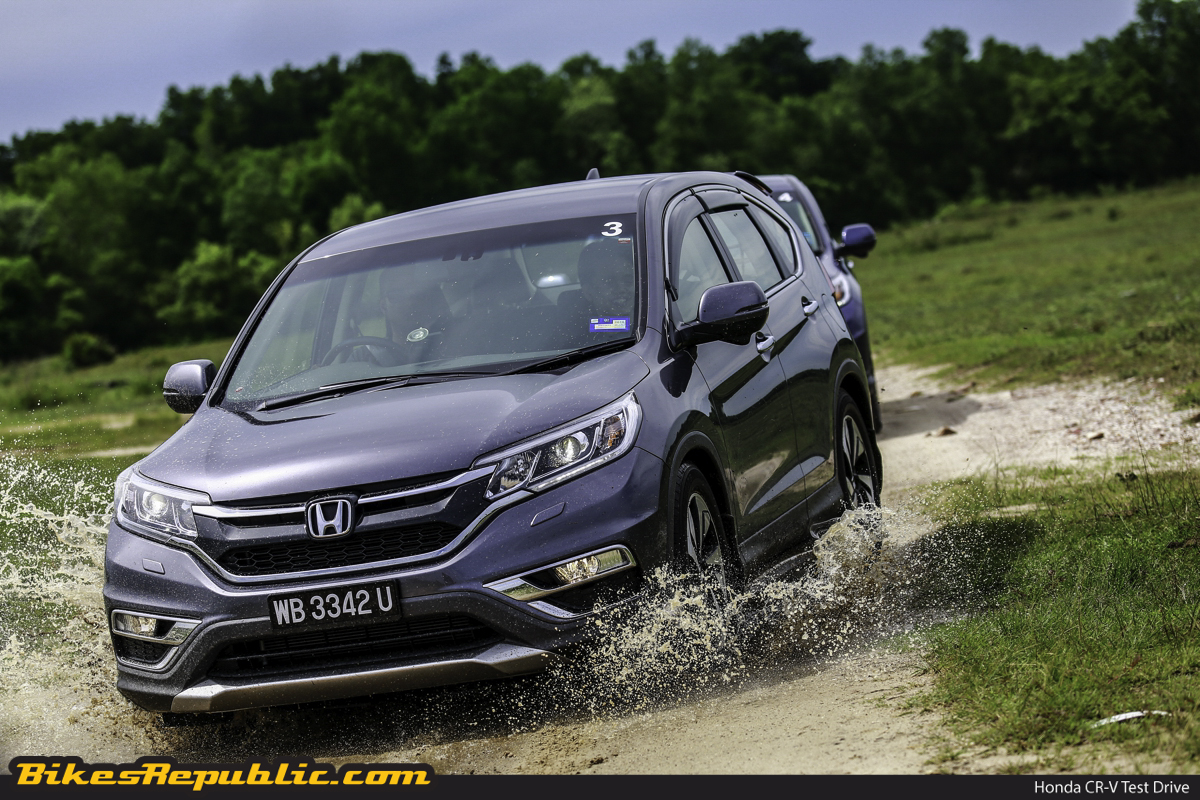
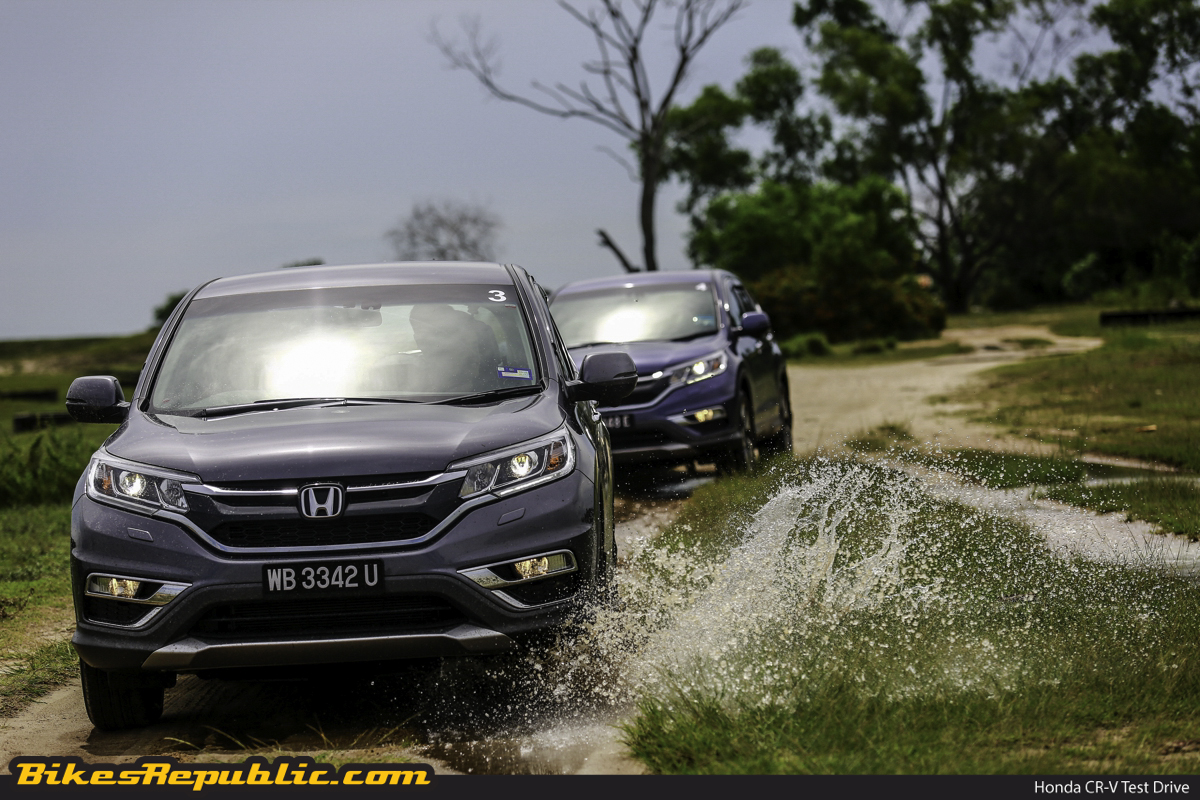
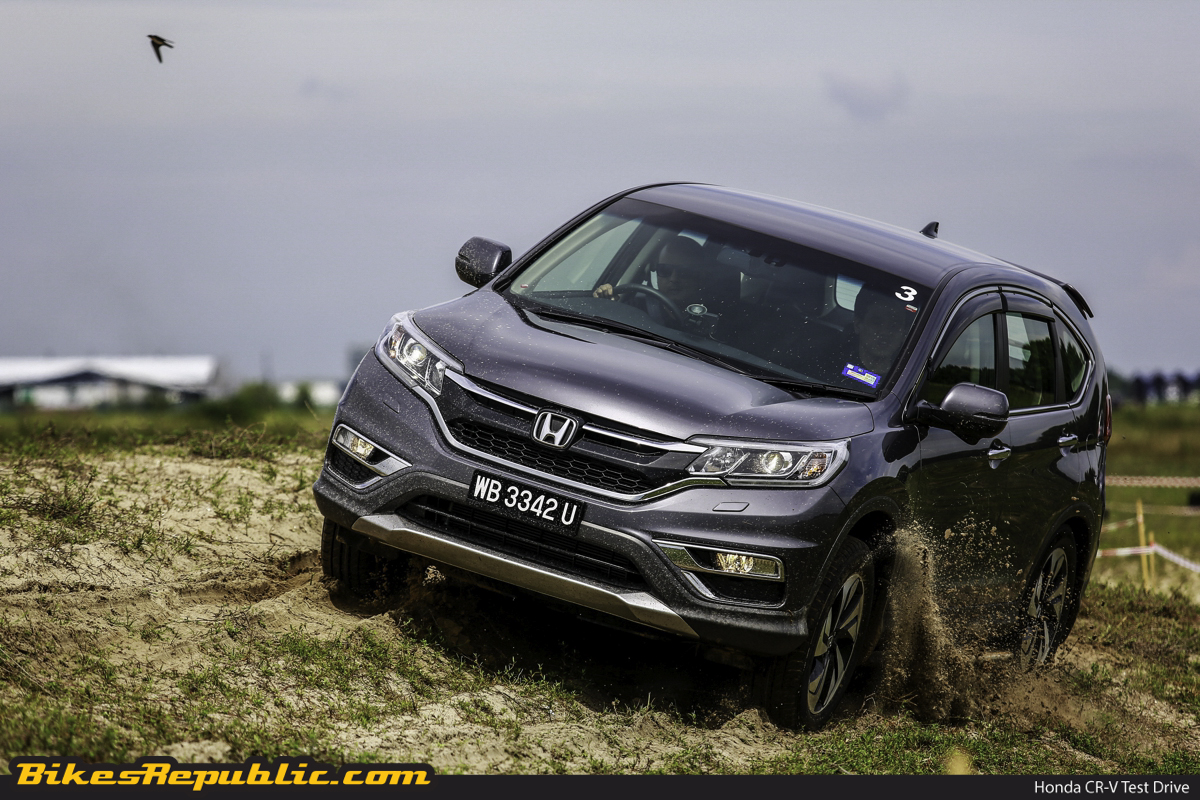
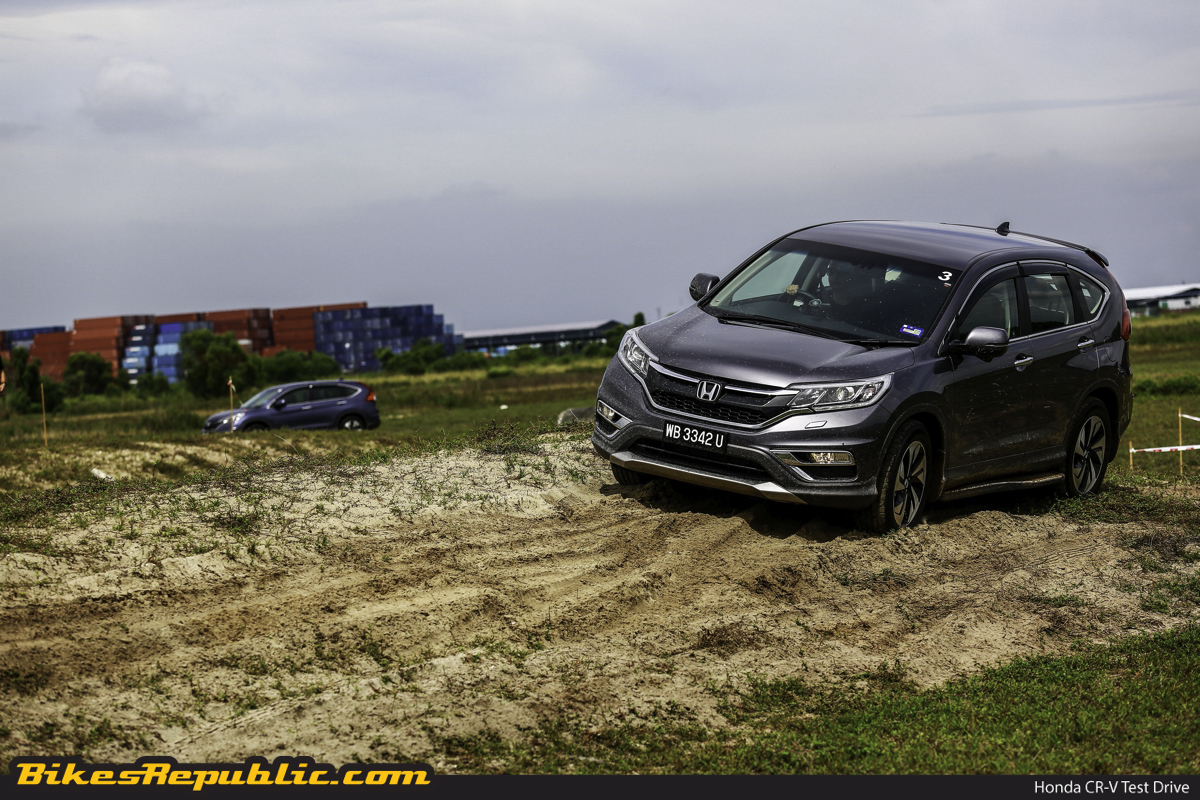
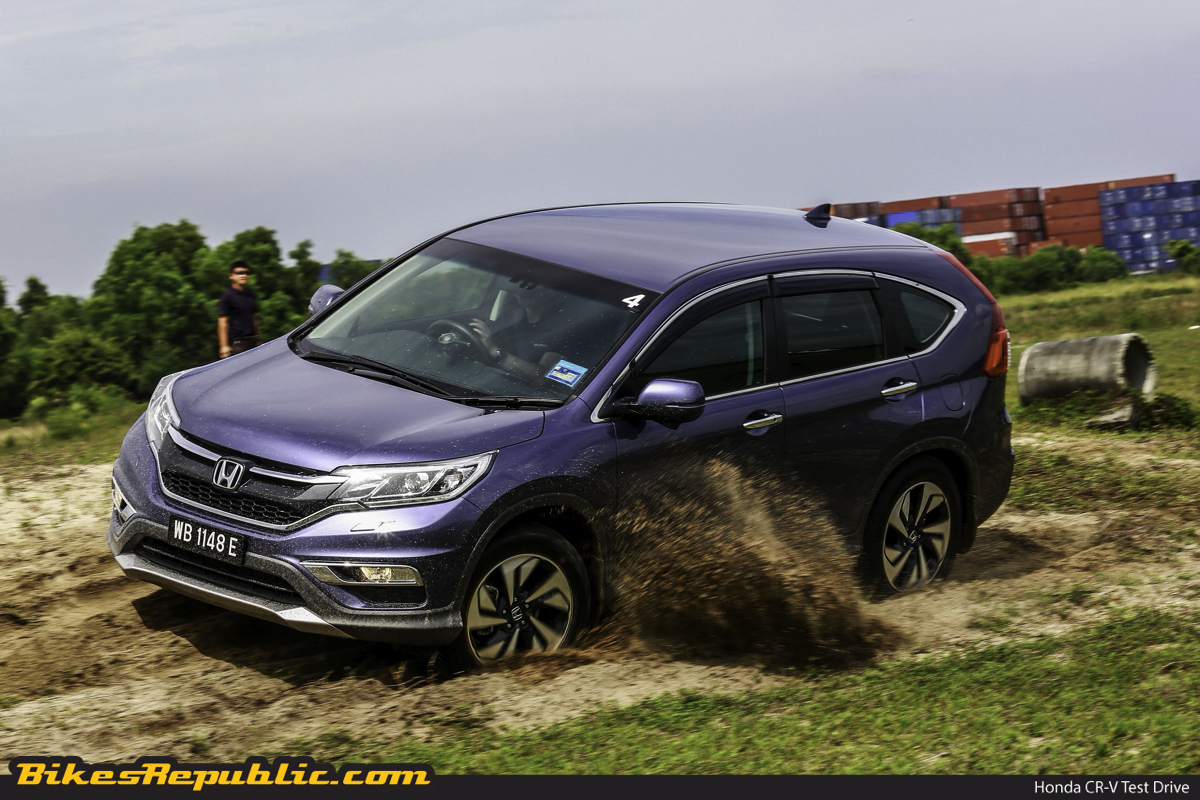
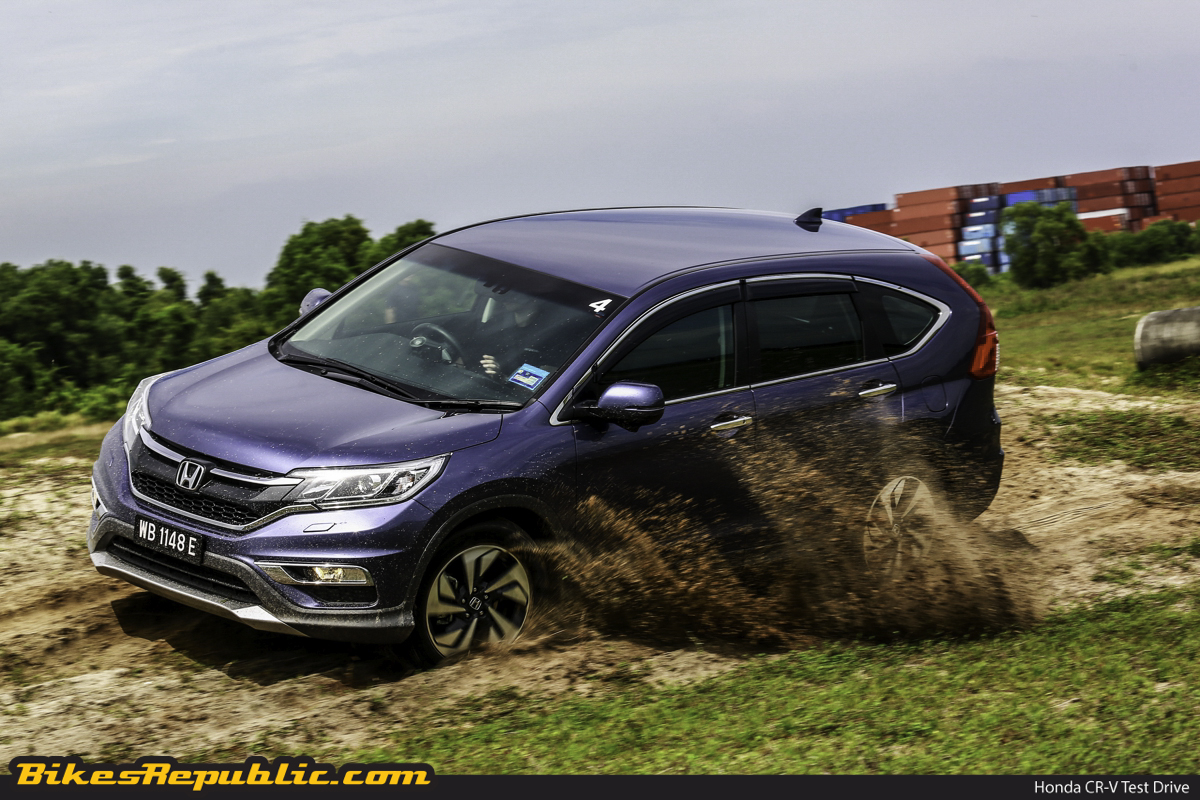
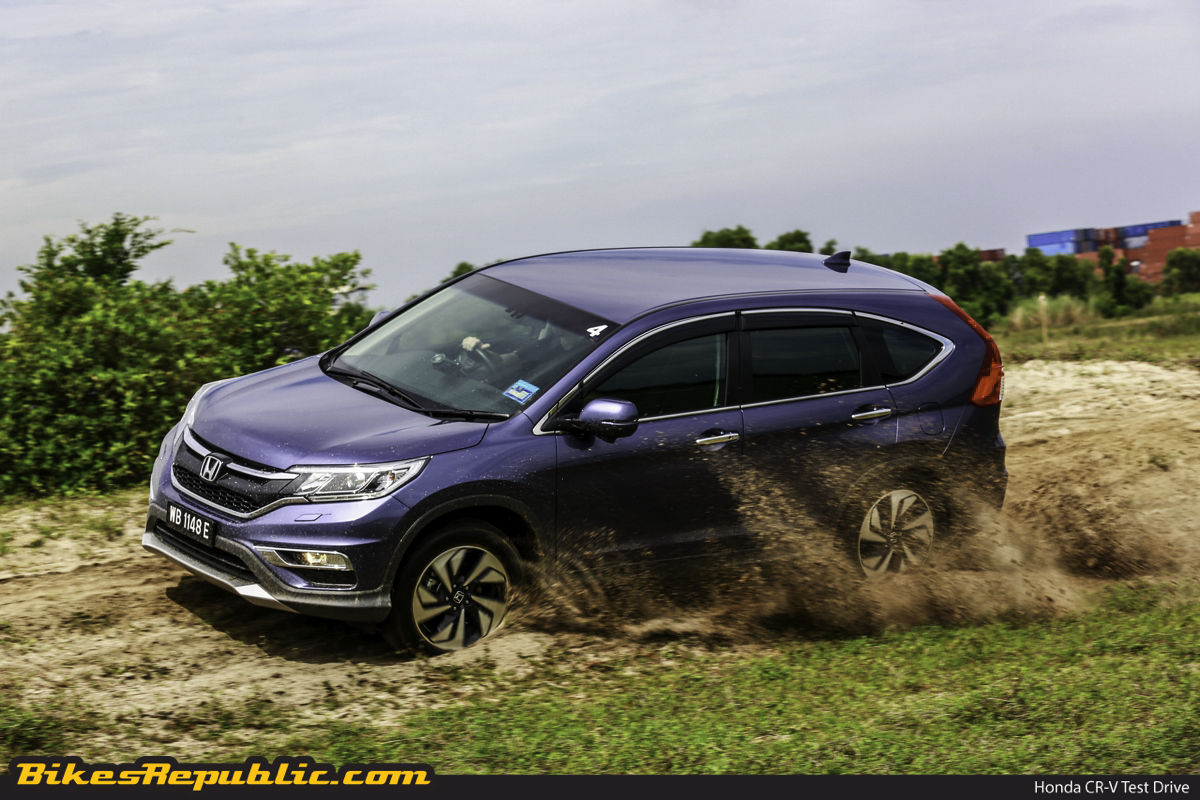
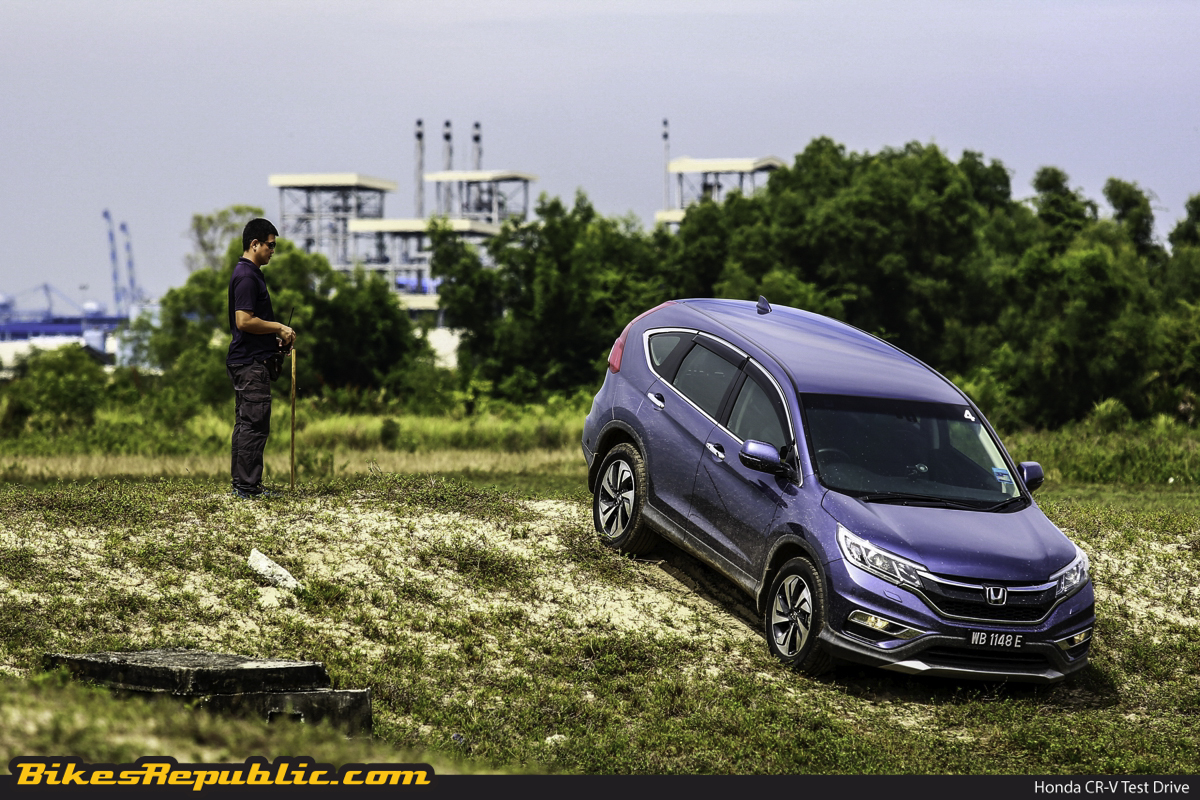
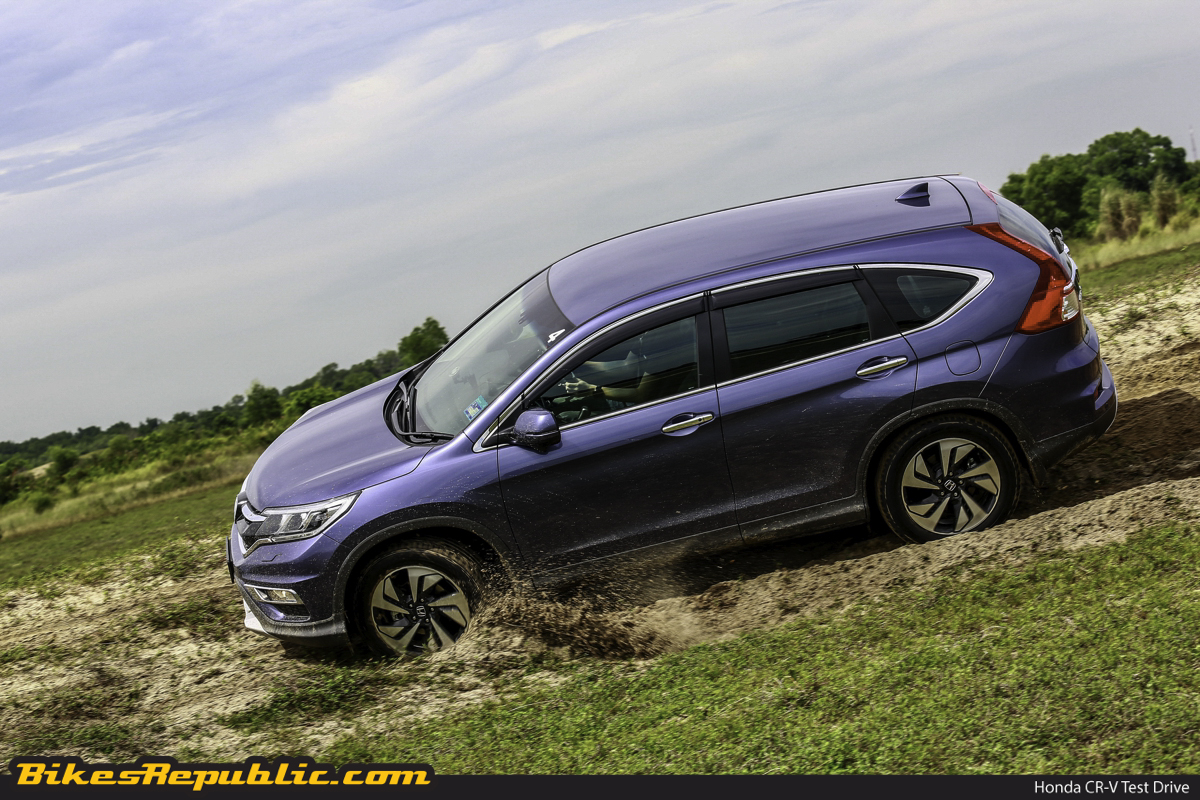
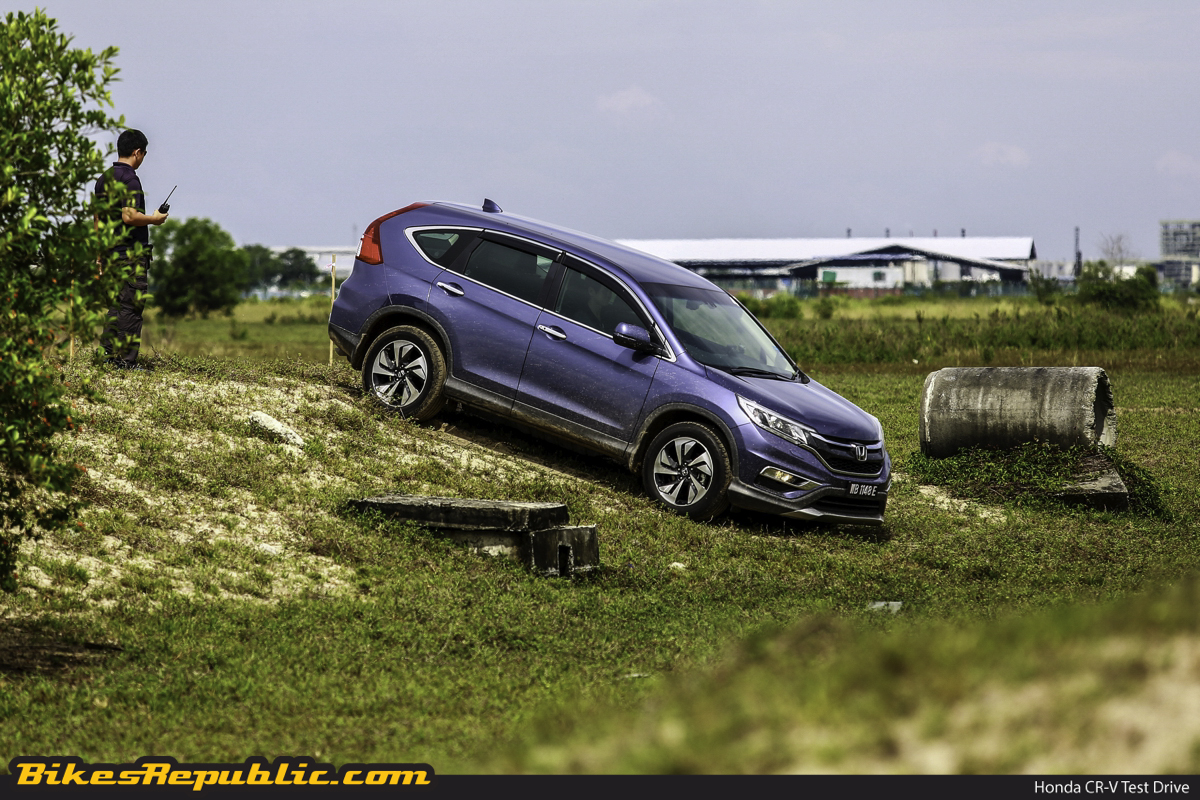
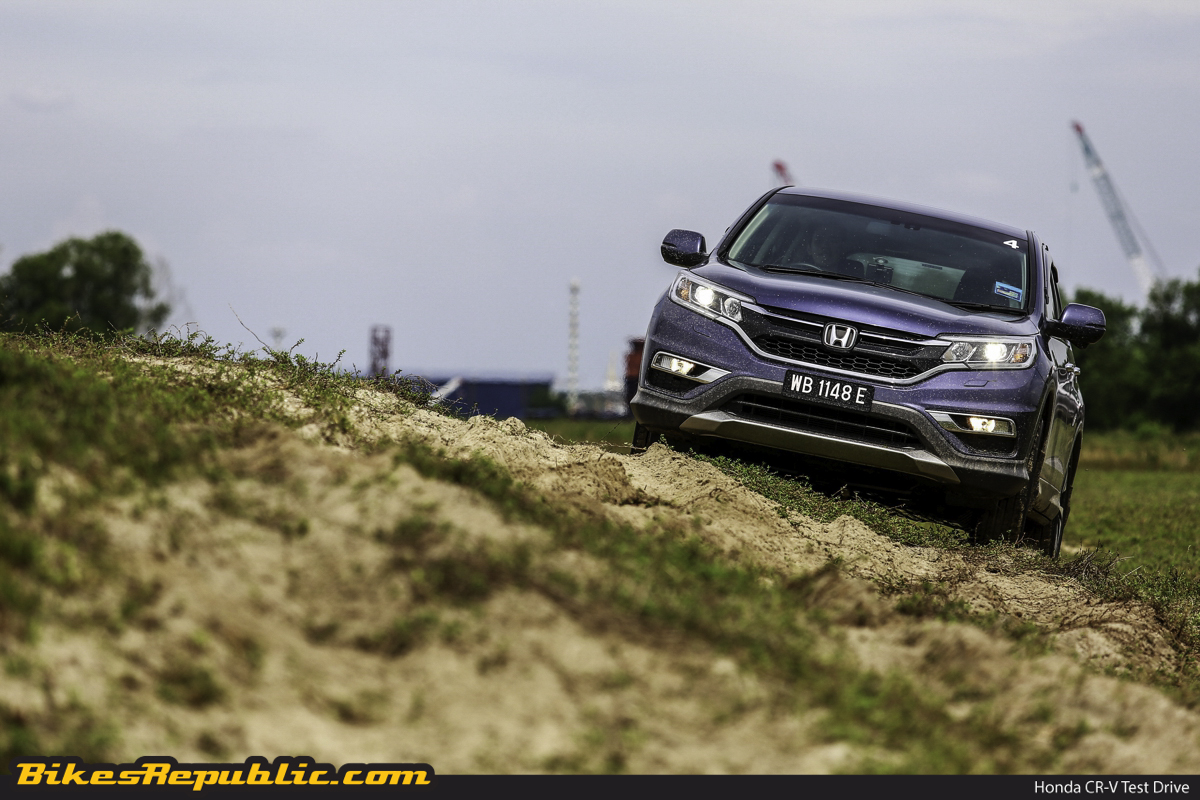
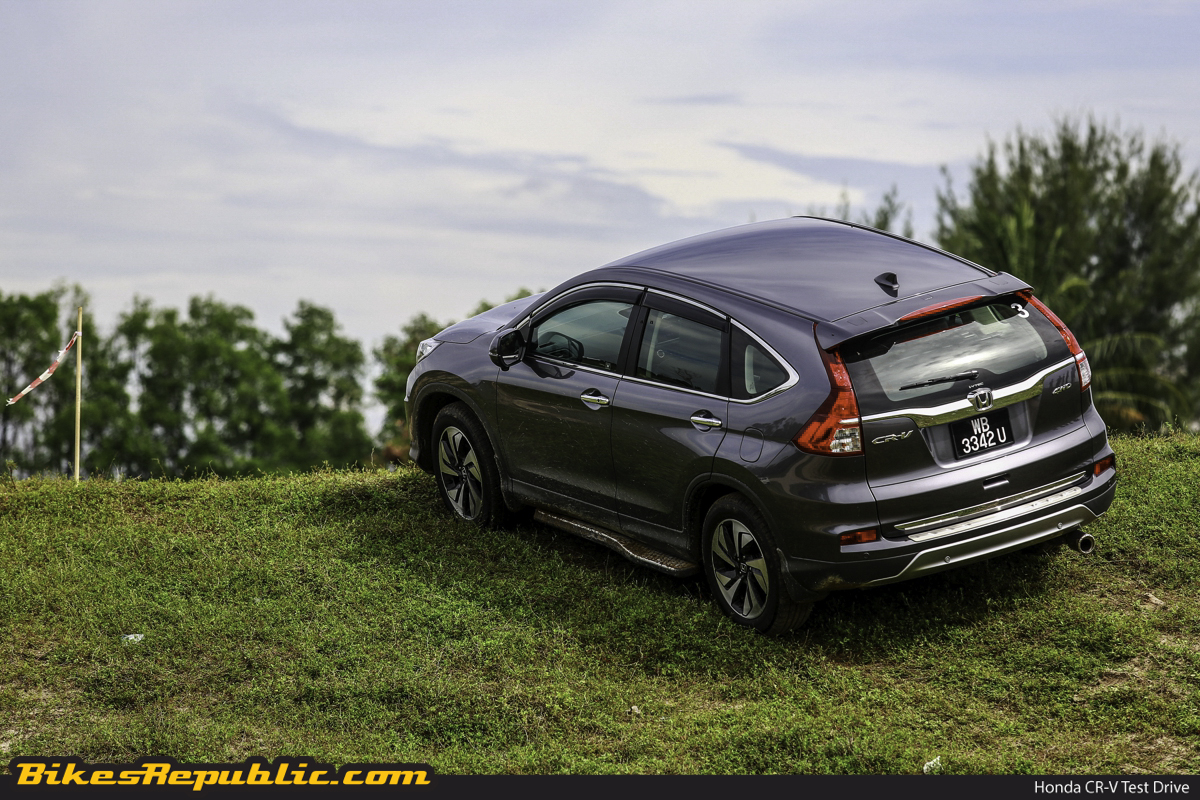
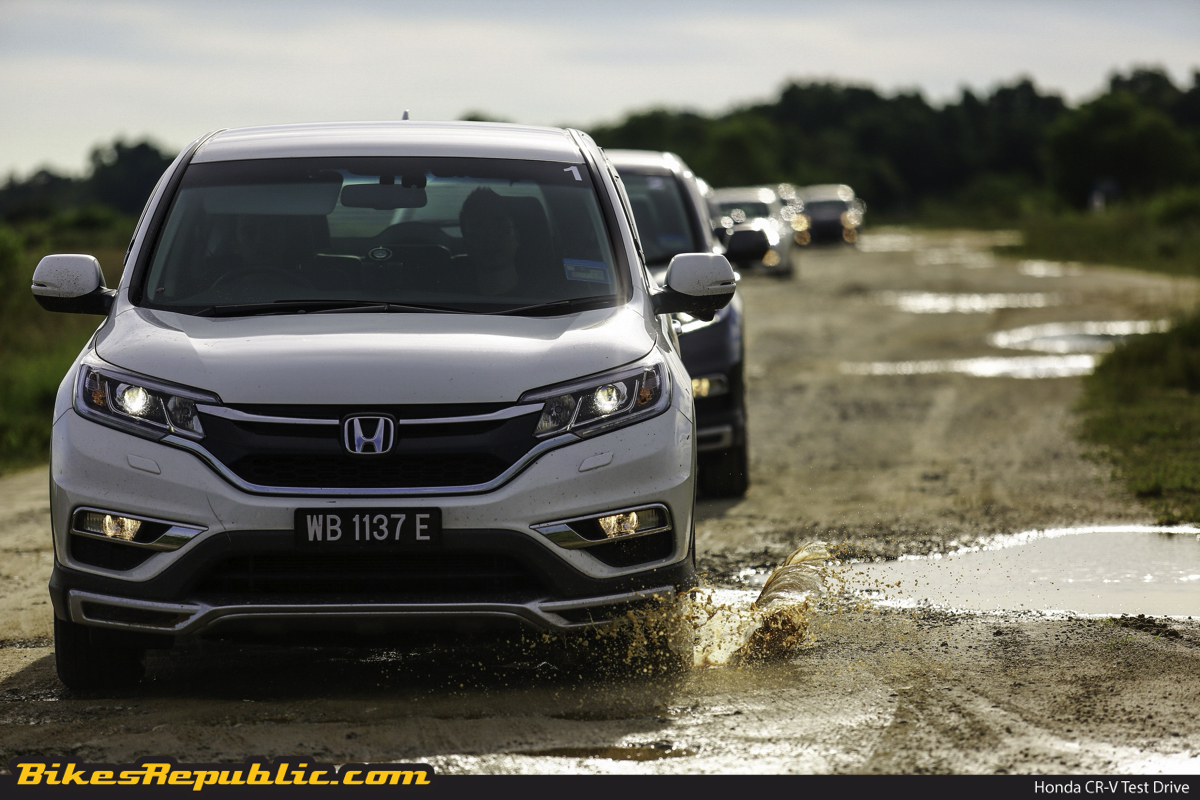
20151202_0503As an on-road car, the CR-V is nothing short of excellent, but when taken off the beaten path, things get pretty interesting to say the least. The semi-active AWD system means power is sent to the rear wheels only when deemed necessary. The typical soccer mom or working parent will likely never utilise this feature fully but weekend adventurers will, especially for those trips across some dirt trail roads towards that favourite beachfront of yours.

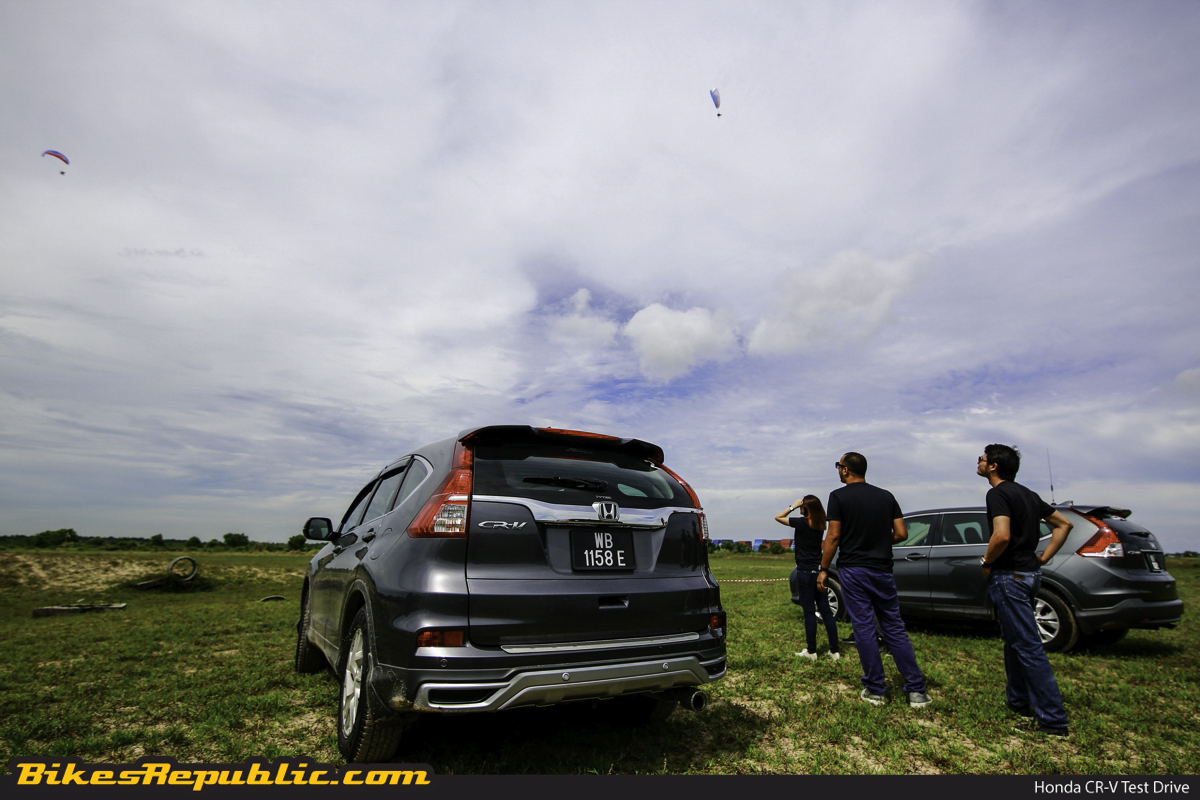
Truth be told, the CR-V wasn’t built to conquer serious off-road obstacles like steep gullies and deep ditches. But even when we charted across some soft beach sands and rough unpaved gravel roads like the ones leading in and out of Pulau Indah, Klang – apparently a hotspot for paramotor flights – the CR-V took them with great stride. The high-travel suspension meant that you could conquer these in high levels of comfort, and the only limiting factor here were the grip levels offered by the standard on-road tyres wrapped around its stylish 17-inch alloy wheels (18-inches for the range-topping 2.4-litre instead).

20151202_1111Perhaps the ultimate silver lining in the CR-V’s package for weekend adventurers lies in its unrivalled offer of safety. Typically of any Honda, all variants offer ABS + EBD, stability control and ISOFIX childseat points as standard. Whilst the mid-range 2.0-litre variant makes do with just four airbags lining the cabin, the range-topping 2.4-litre variant gets six in total instead. The latter’s package is enhanced even further thanks to the addition of a neat camera-based blind-spot info system as well that’s lifted straight out of the range-topping Accord saloon.

Practical, safe and surprisingly very capable, the Honda CR-V is not your average soft-roader indeed. Even for non-traditional buyers, this crossover’s ability to meet and exceed their demands is impressive to say the least. All that’s left is the question of whether one is willing to invest the money the AWD-equipped CR-V variants rightfully commands on-the-road – RM153,300 for the 2.0-litre and RM172,600 for the 2.4-litre.

20151202_1134Steep as they may be, the inclusion of an enticing after-sales program – an area many of Honda’s rivals fail to match up to – offsets that. It includes a five-year unlimited mileage warranty plan plus Honda’s six free alternating services package up to 100,000km.

CRV Comparison click here

C-RV ResaleValue click here

Gallery

For a number of years it was an open secret that BMW was going to build smaller bikes for the lucrative entry-level market but engineers and company executives either kept mum about it or avoided it altogether.

EICMA2015_8123

So when BMW finally did confirm the rumour, it was more of a “I told you so” moment rather than a more celebration-worthy “wow, that’s brilliant” kind of moment.

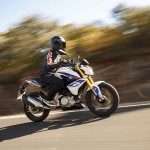
Whatever it is, the end product is going to be brilliant. I say brilliant because upon meeting it at it’s debut last year (read about it here) it felt good, high quality, and had the all important BMW-esque-ness to Motorrad motorcycles. I’m talking about the BMW G310R, that small naked bike that BMW is building in India in collaboration with Indian motorcycle manufacturer, TVS.

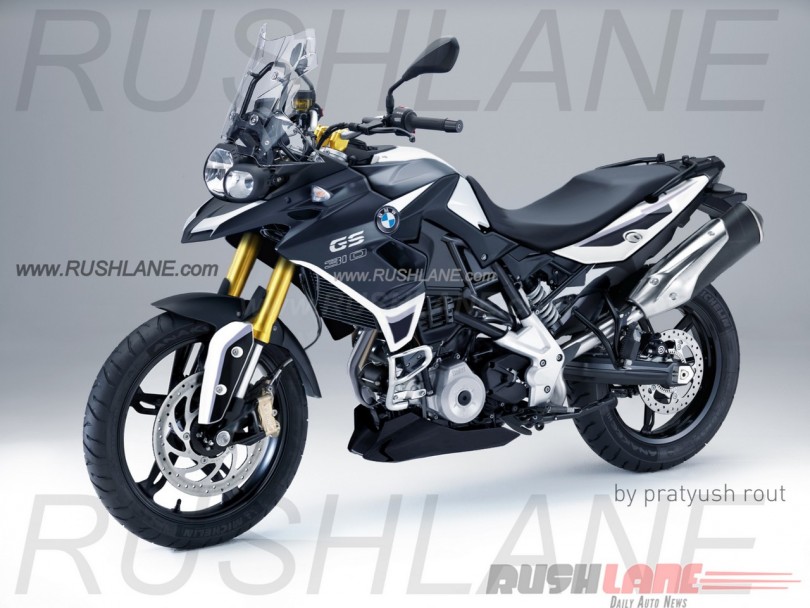
And while the G310R is yet to make it’s debut, it is already spawning its own variants – an Adventure model and a sports model with full fairings. And things are already begin to get into a roll with this rendering on how the upcoming F310GS could possibly look like.

BMW-F310GS-Adventure-810x608

Indian automotive portal Rush Lane posted this exclusive rendering of the upcoming baby-Adventure bike created by Pratyush Rout, described as the “guy behind the renderings” at topspeed.com.

The new bike will almost definitely be powered by the same 313cc single-cylinder liquid-cooled engine as the 310R. Mated to a 6-speed transmission, it produces 31hp and 28Nm of torque. You can expect this figure to change with the engine and gearbox tweaked to better suit tour riding.

What will be different though is an increase in ground clearance, tyre and rim size, handle bar width and the seat.

Looking a lot like the current F700GS, this rendering may not be too far off the mark.

It is reportedly expected to be called either the F310GS or the GS310R.

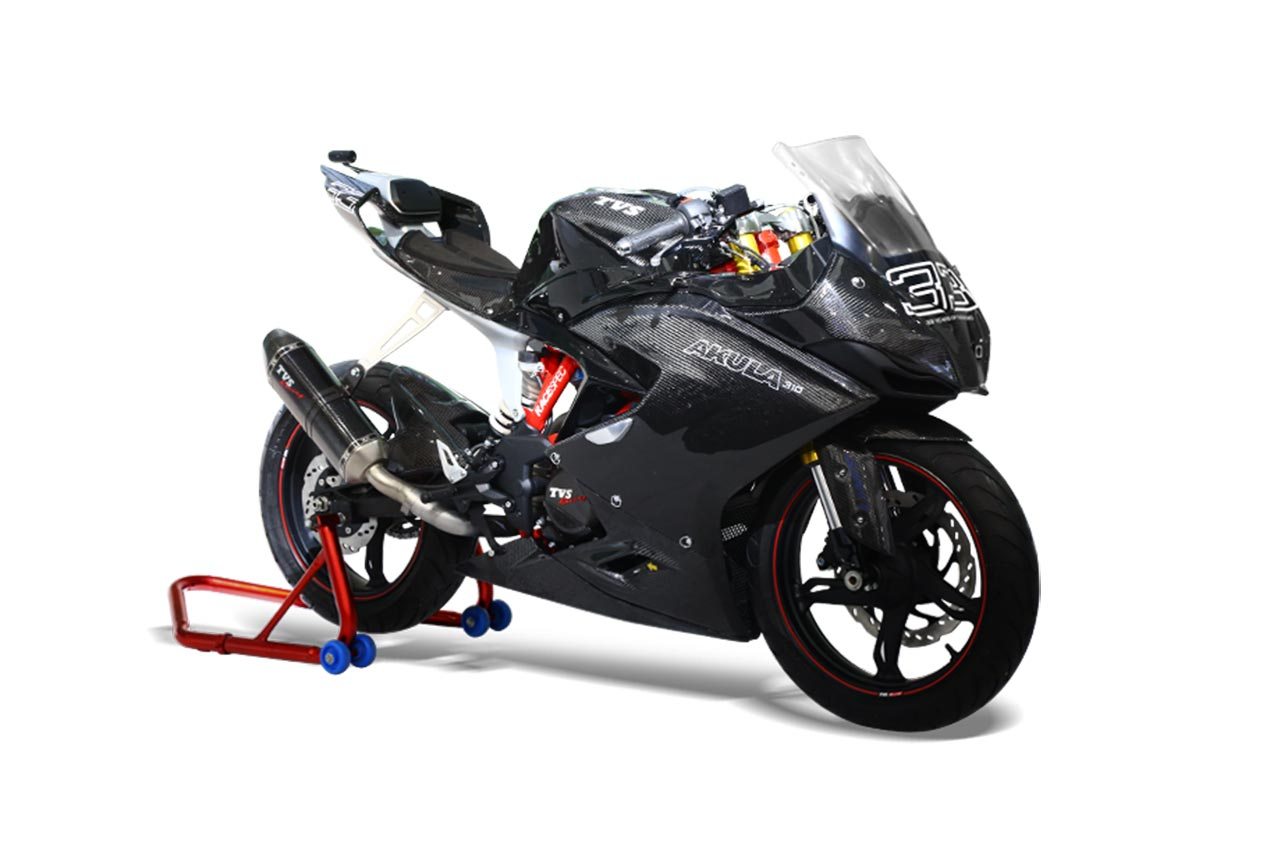
The upcoming BMW 313cc baby sports bike is based on this, the TVS Akula 310

The sports model is also said to be quite a looker with power to match, read about it here or check out the G310R promo video below.

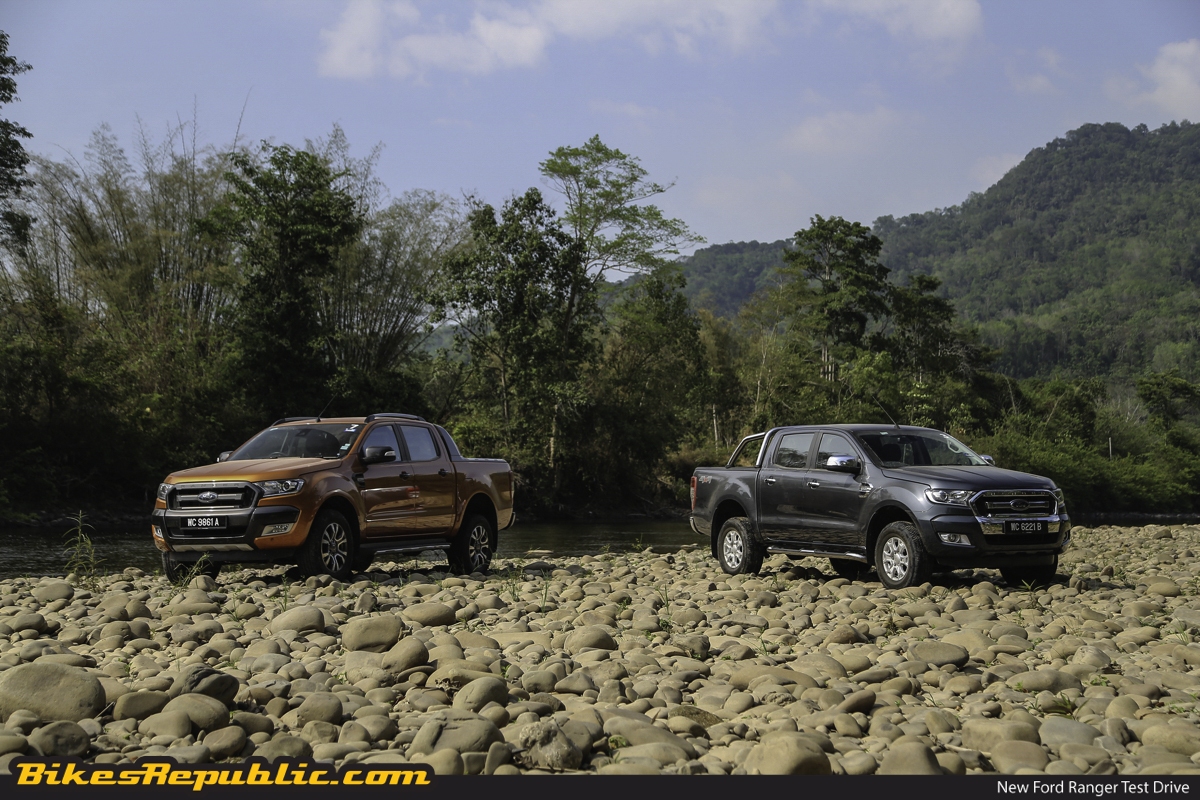
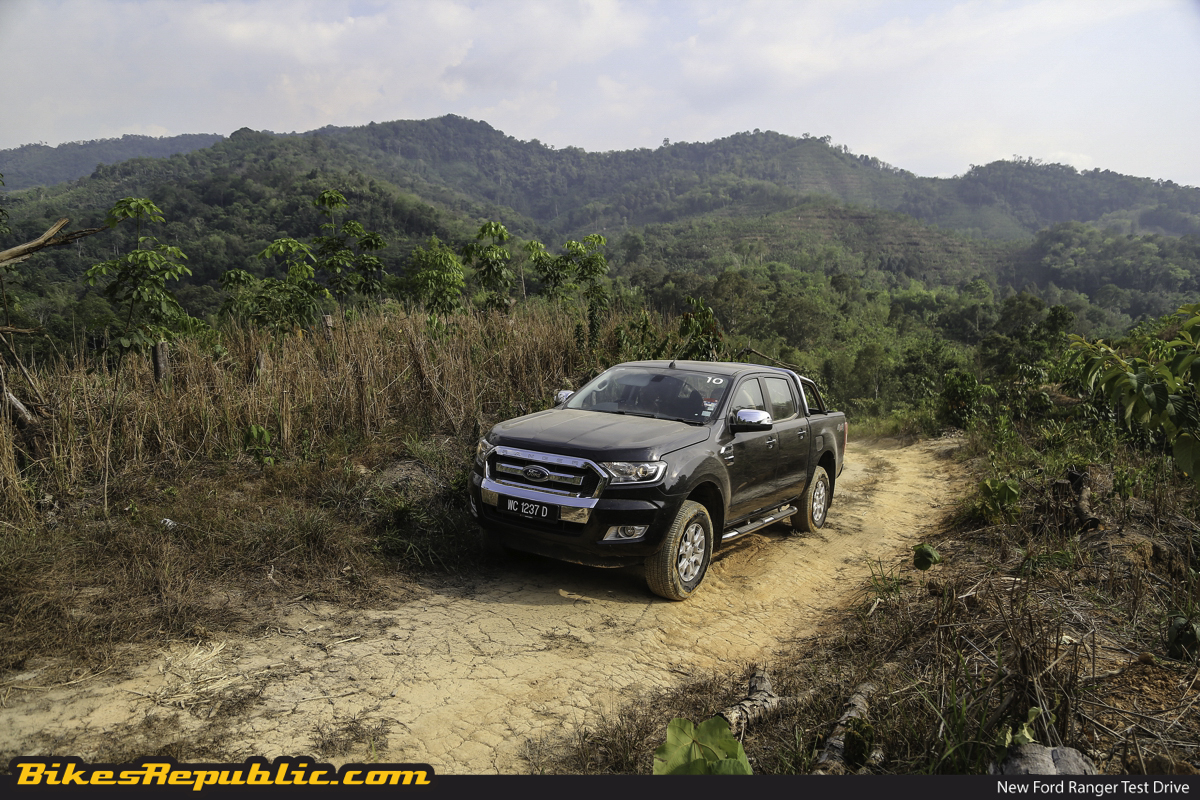
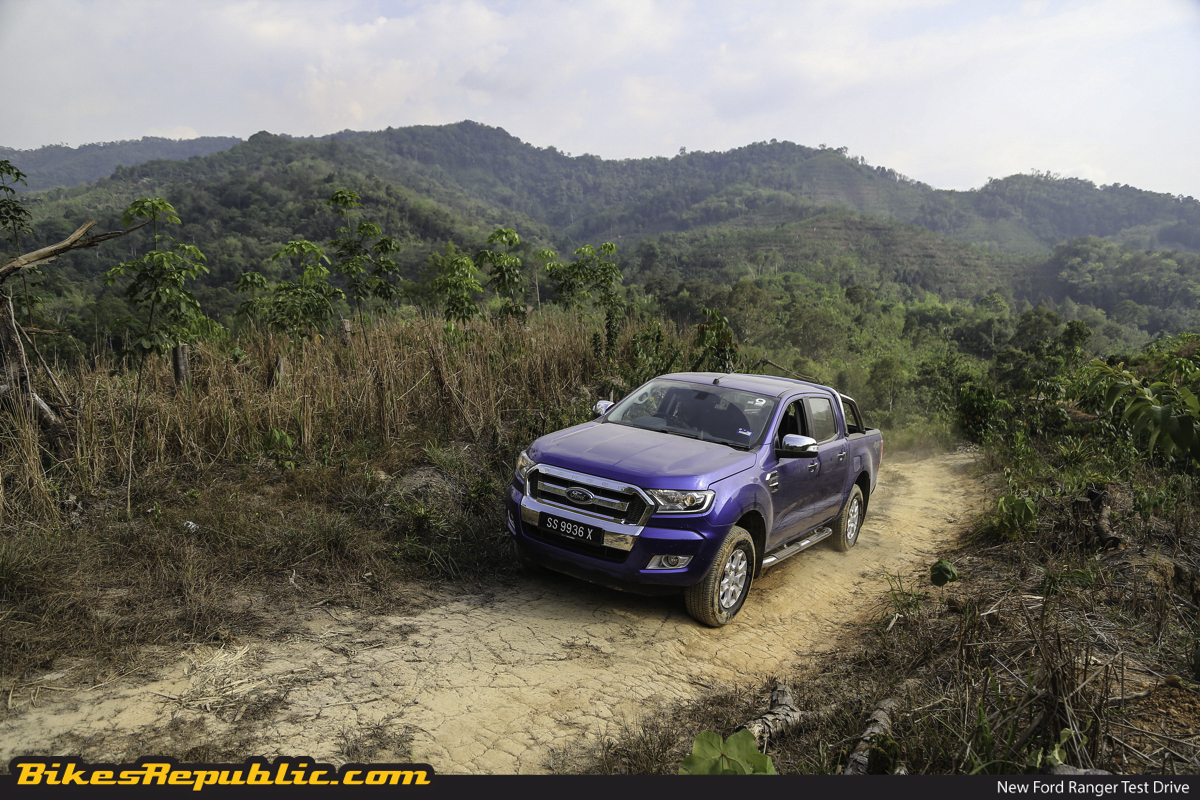
WHEN it comes to the pickup truck segment, very few come close to the pre-facelift Ford Ranger T6 model in terms of performance, capability and desirability. But of course, it did not take long before the mighty Japanese brigade caught up with the blue oval marque, leading to the launch of two new rivals for the Ranger in our market last year.

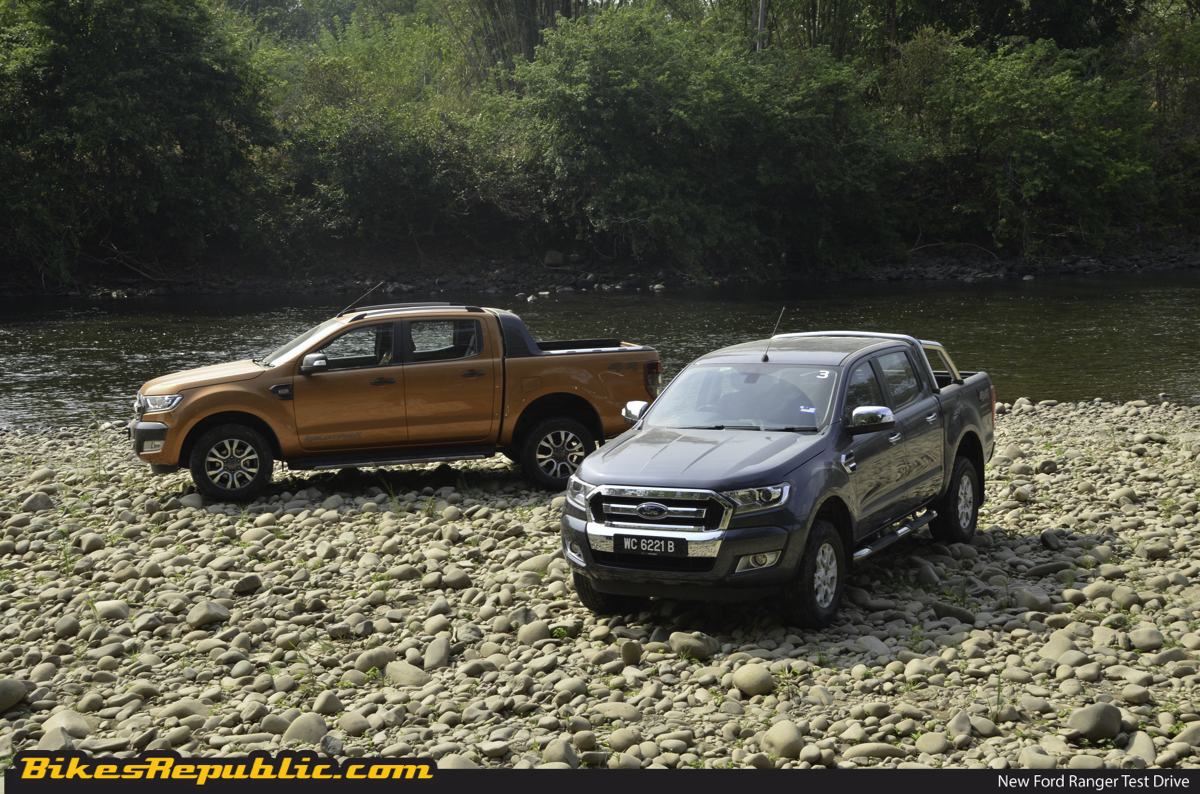
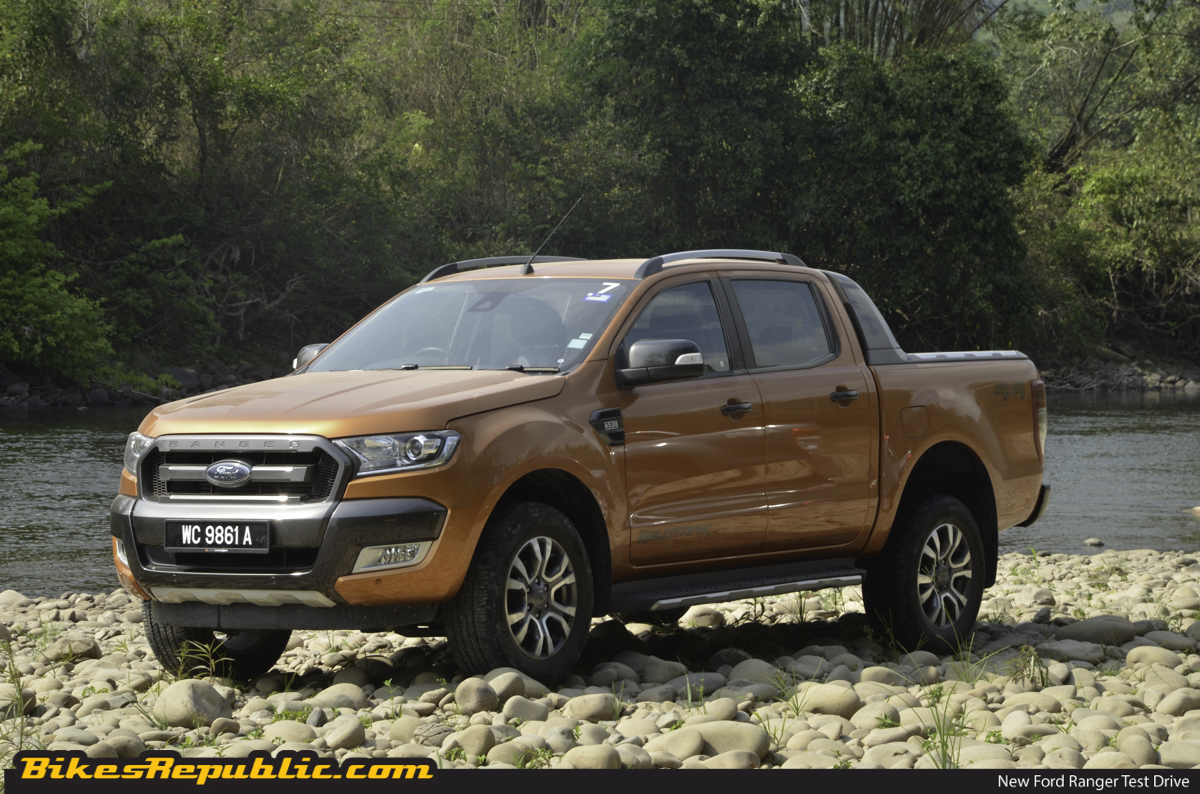
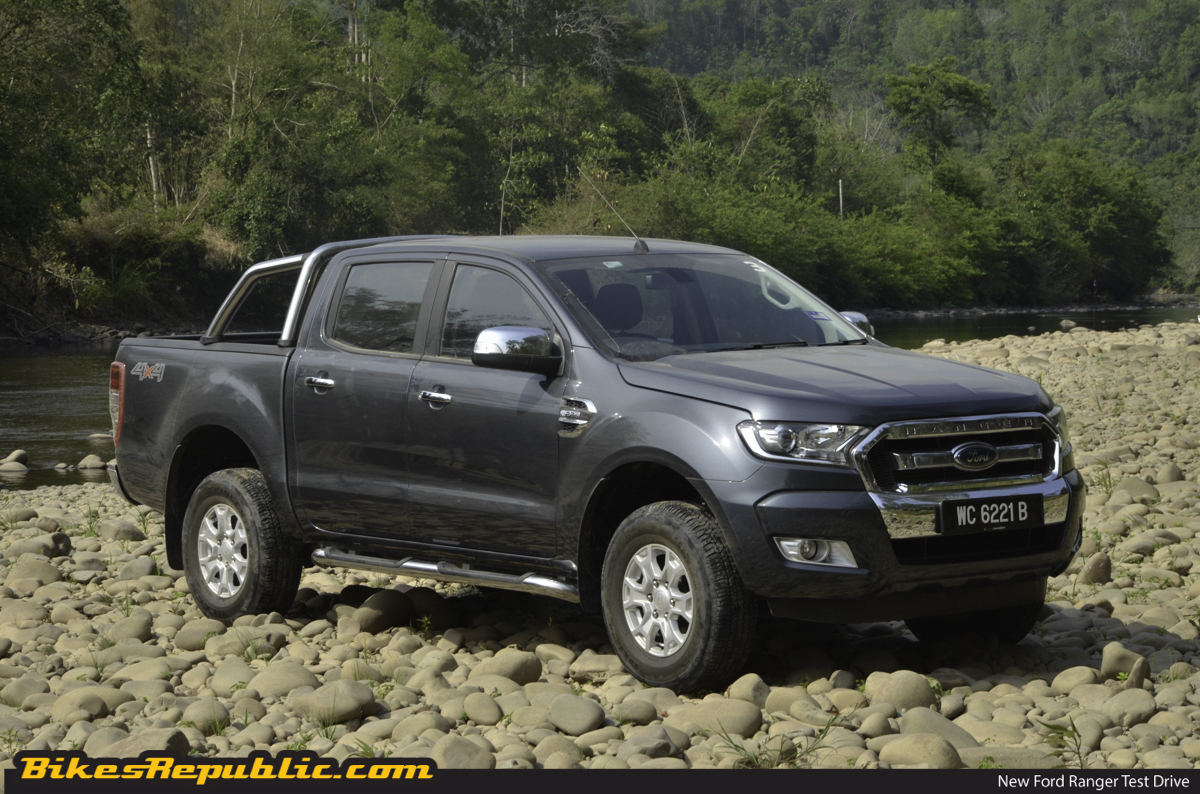
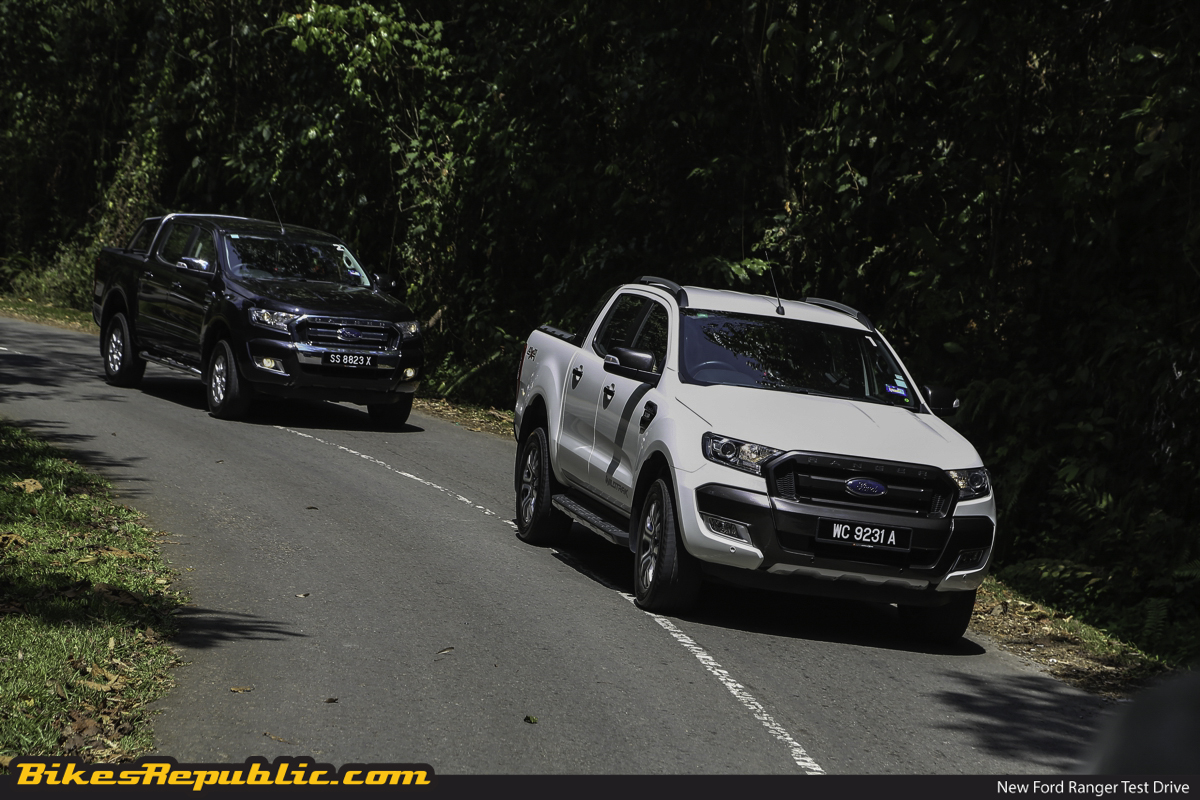
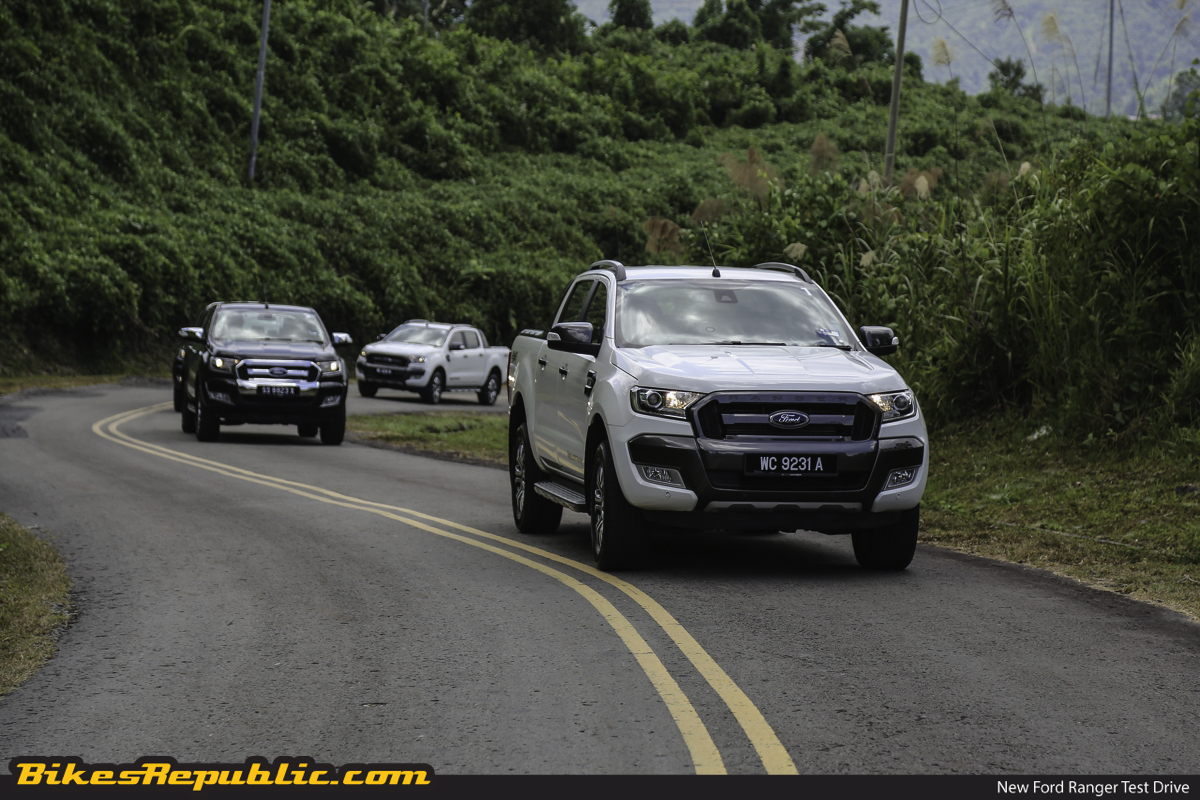
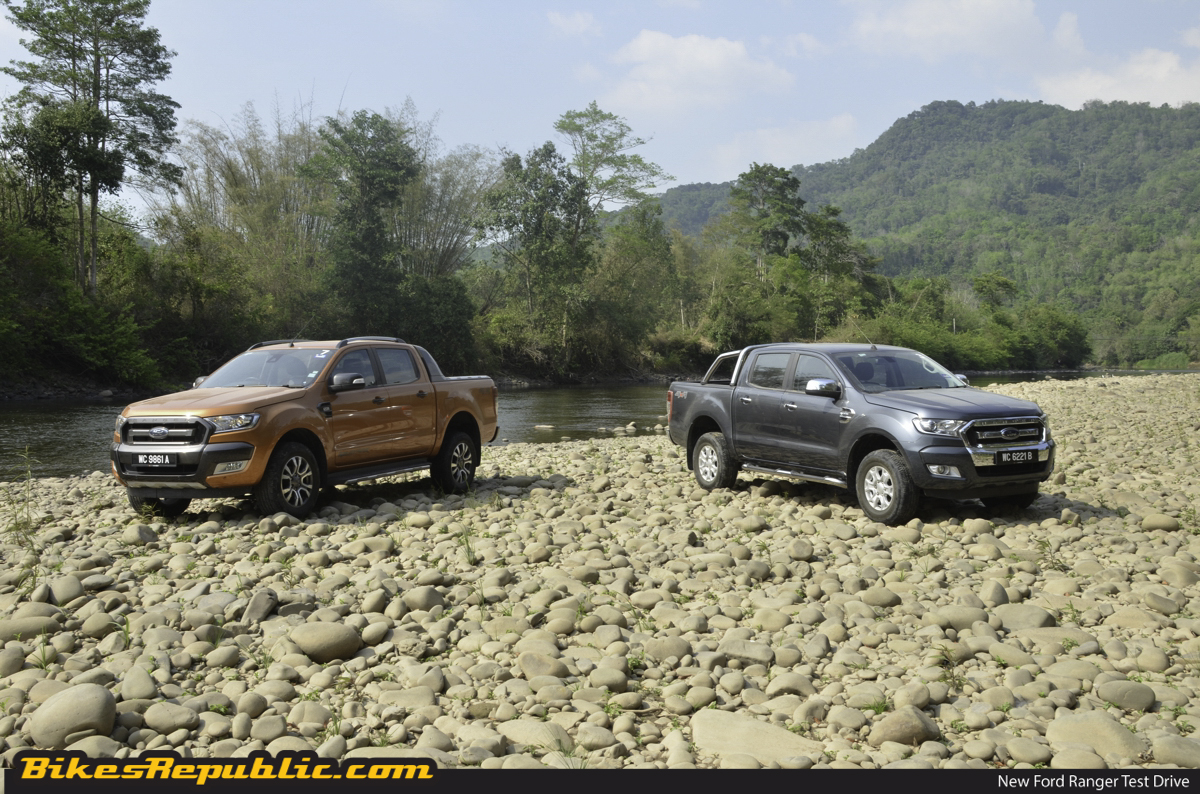
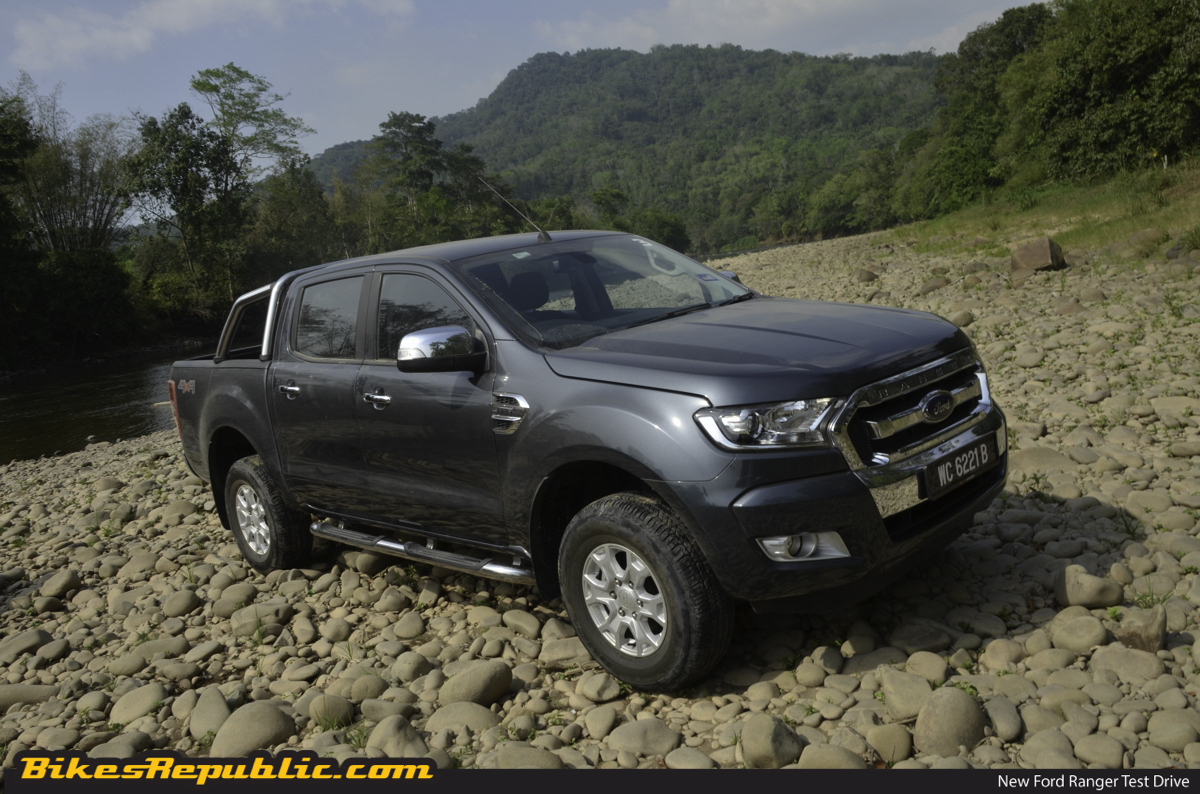
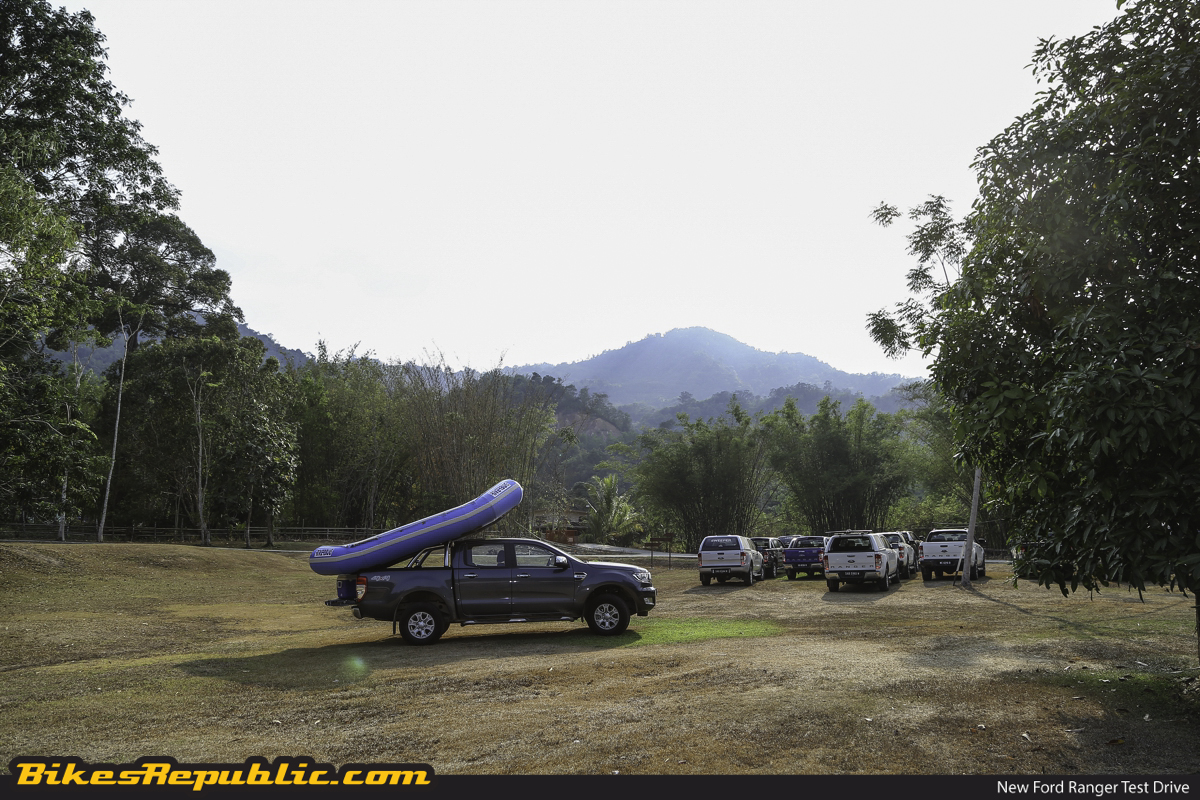
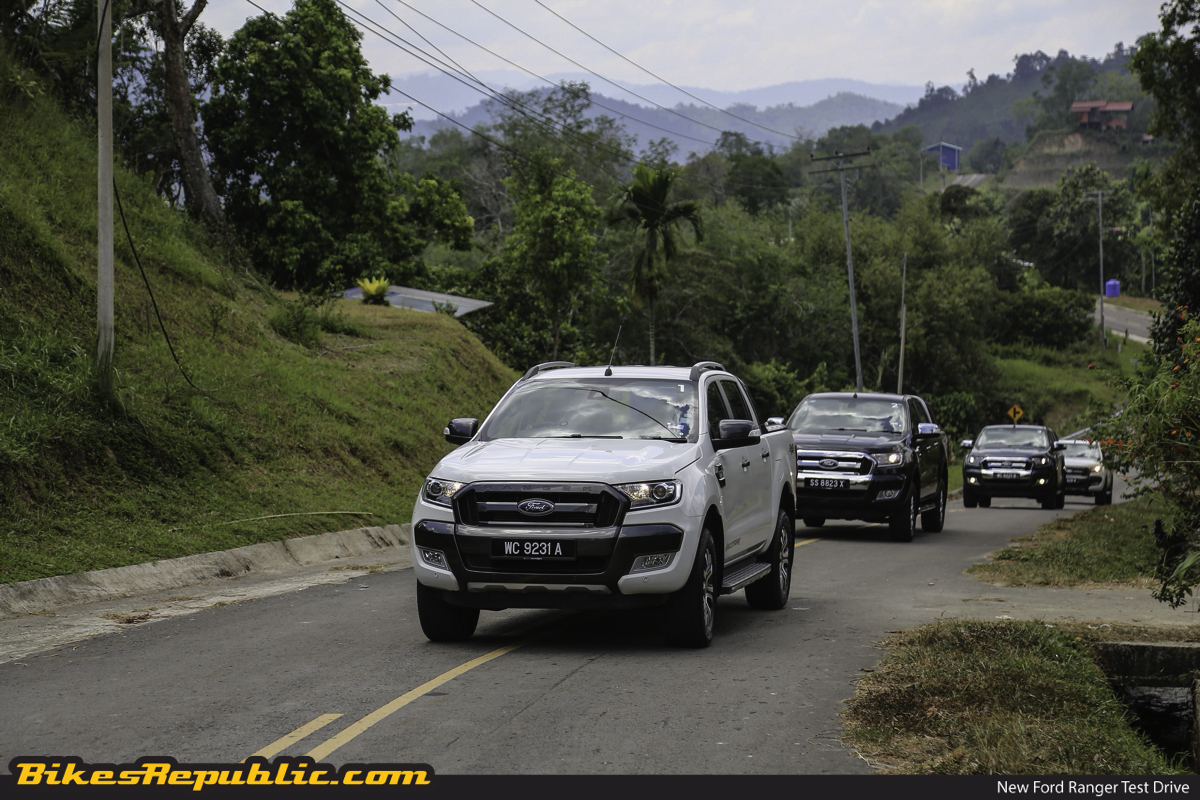
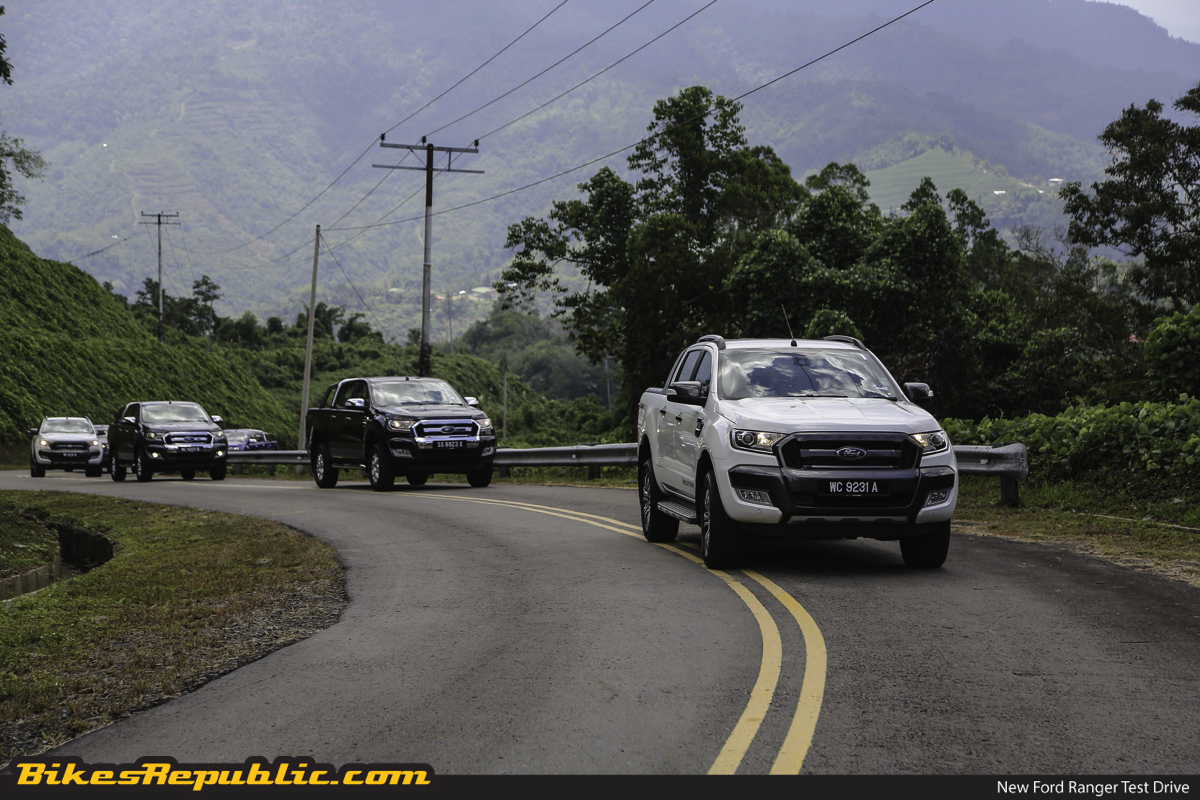
DSC_0004Ford rightfully answered back in October by launching its new and refreshed Ford Ranger range, and quickly becoming the hot favourite amongst the segment’s buyers once again. We got to experience the new Ranger’s full capabilities first hand recently in a specially organised two-day press drive across Sabah. Having cycled through several variants including the range-topping Ranger 3.2 Wildtrak, it was easy to see how this pickup truck won its place as a top favourite with many Malaysians.

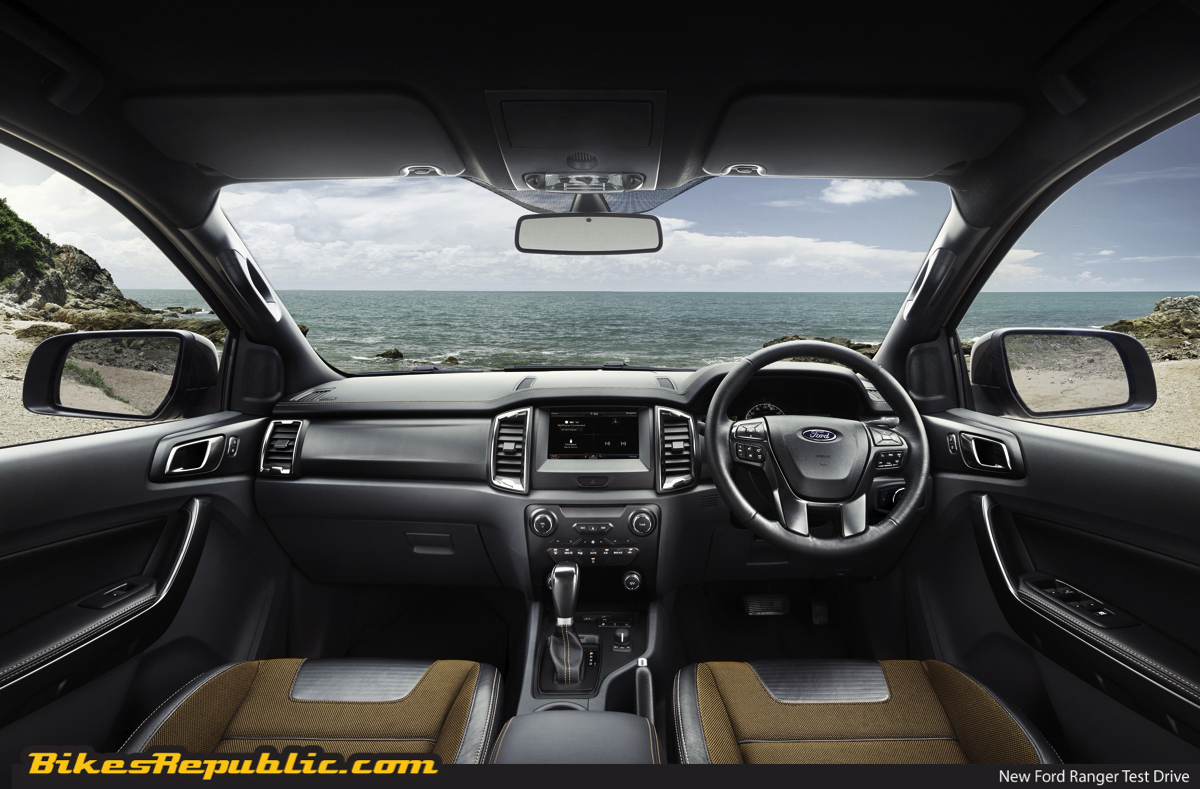
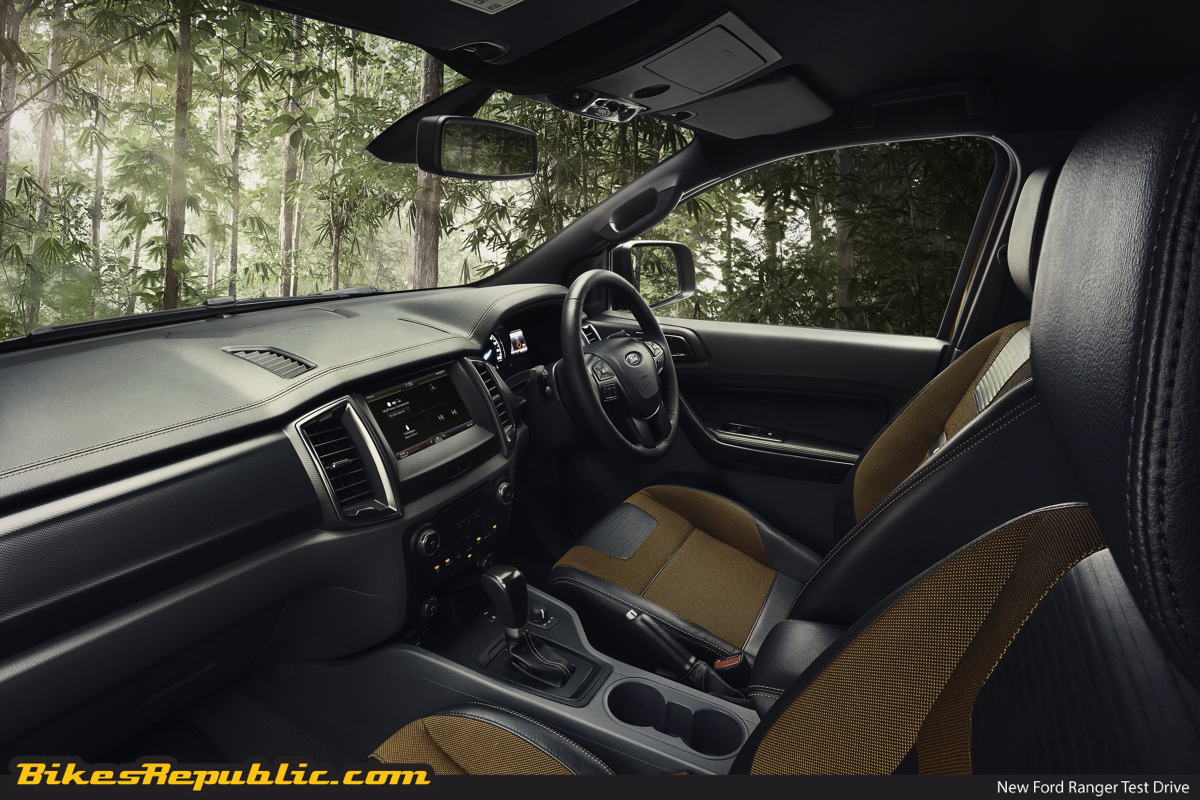
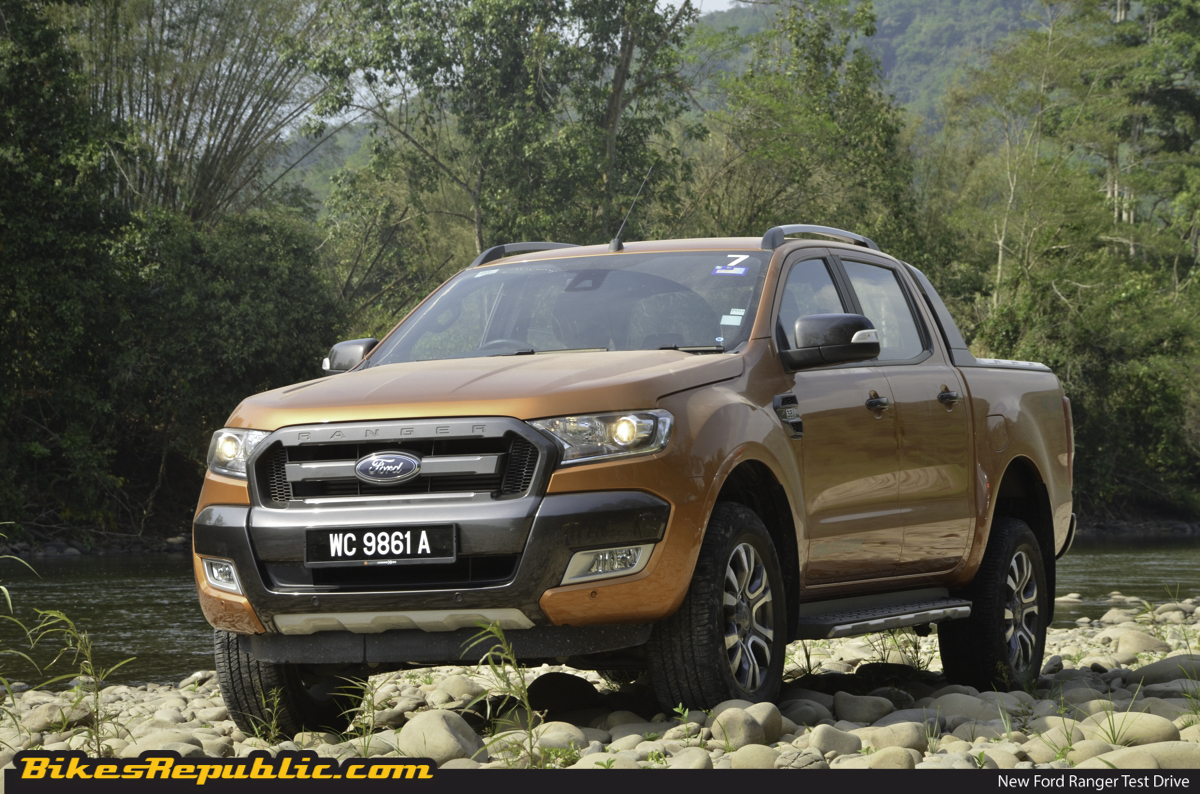
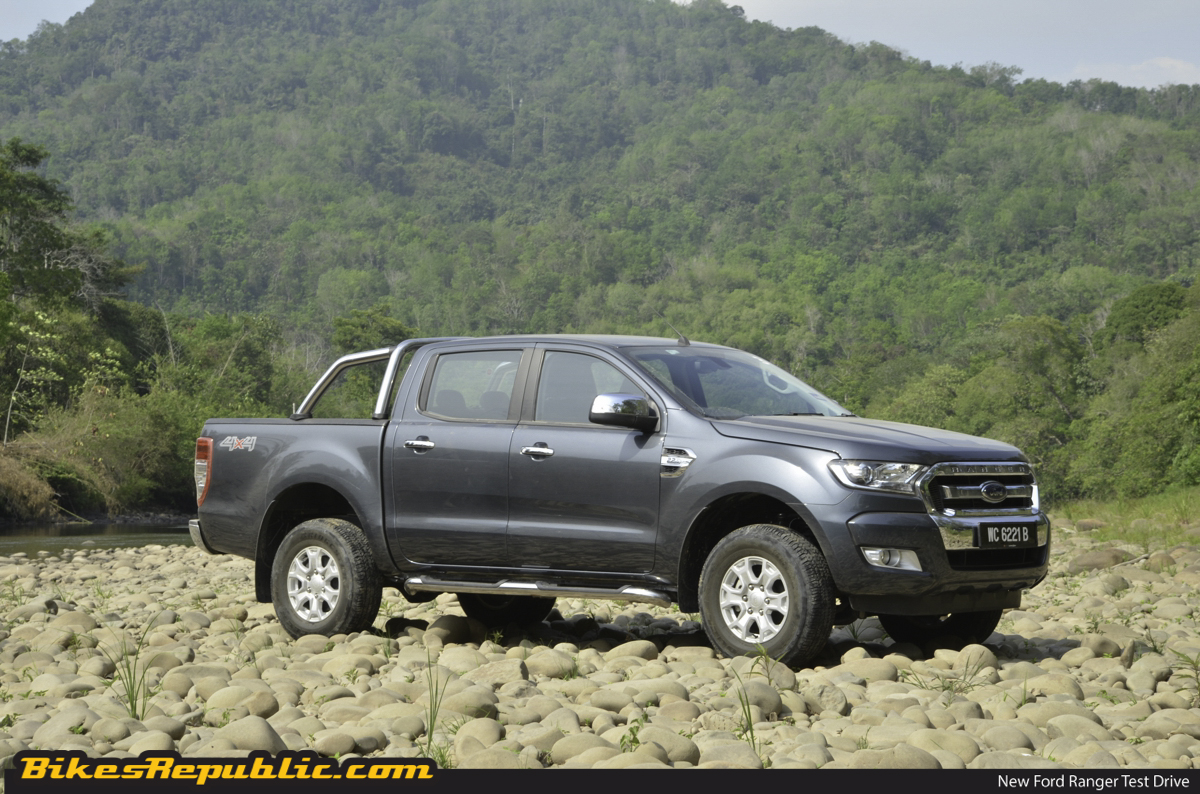
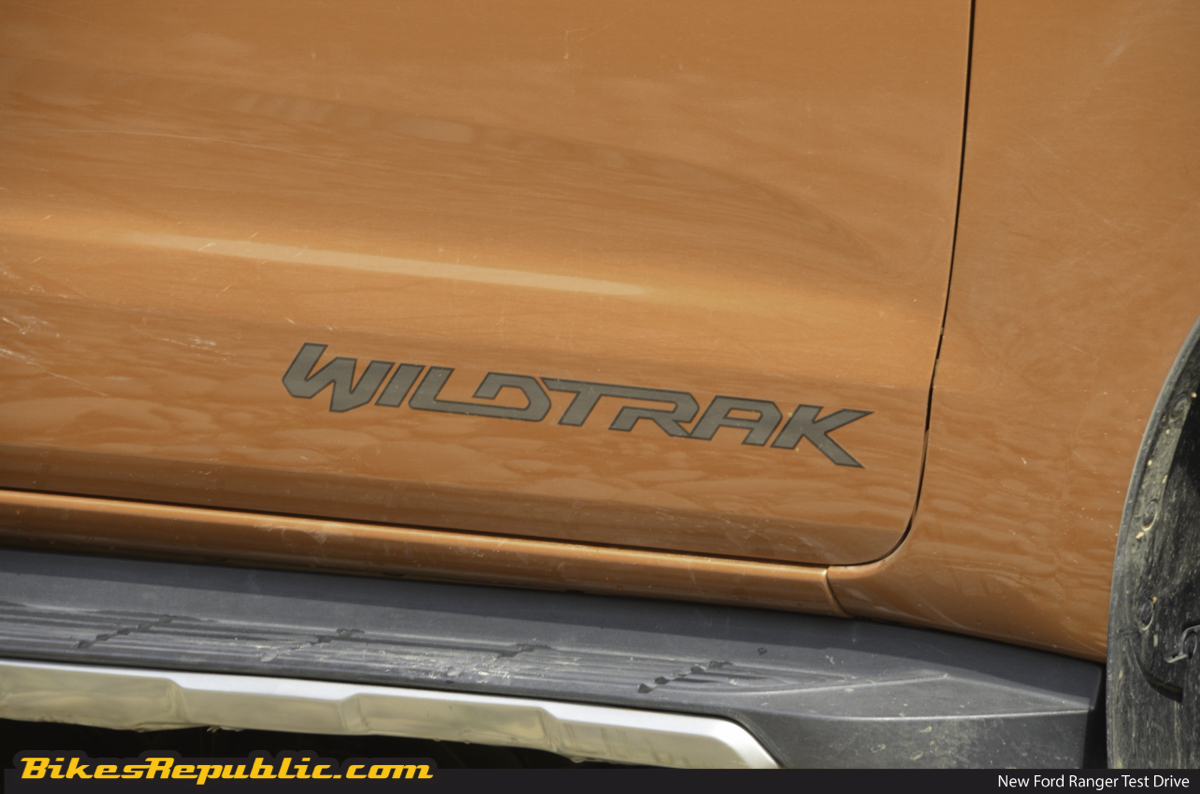
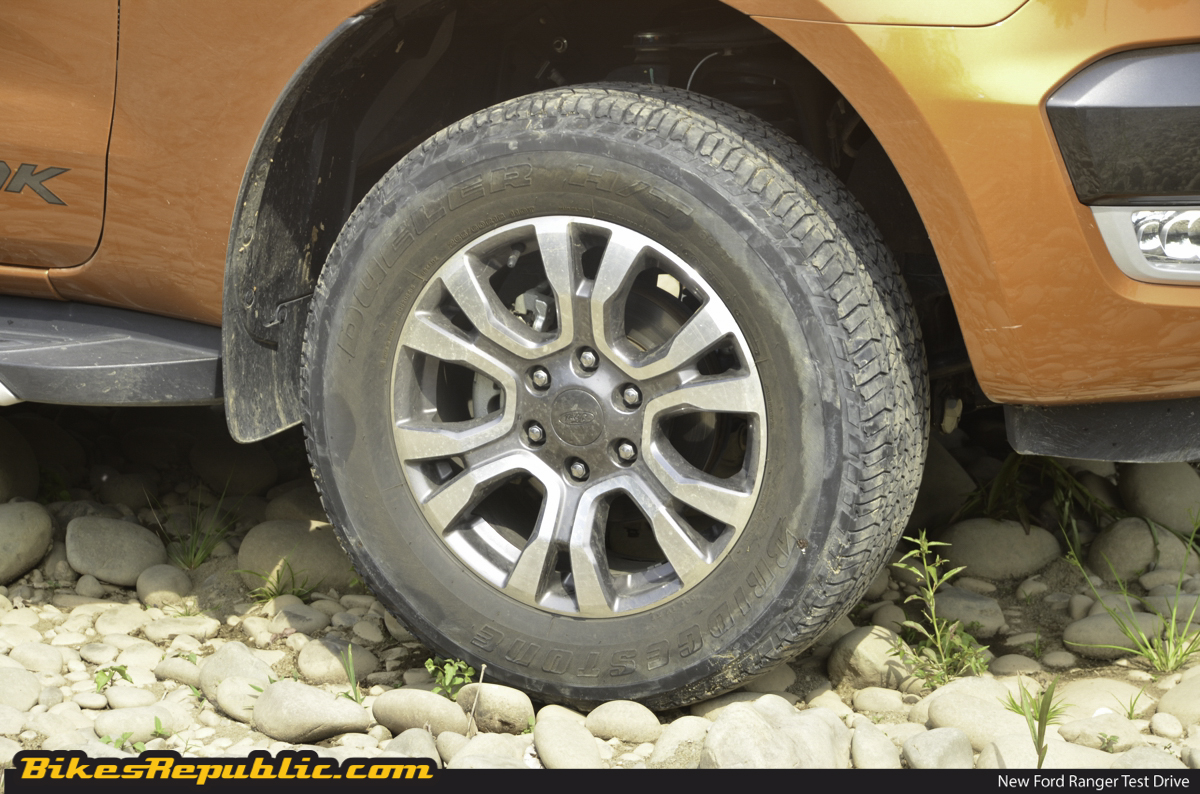
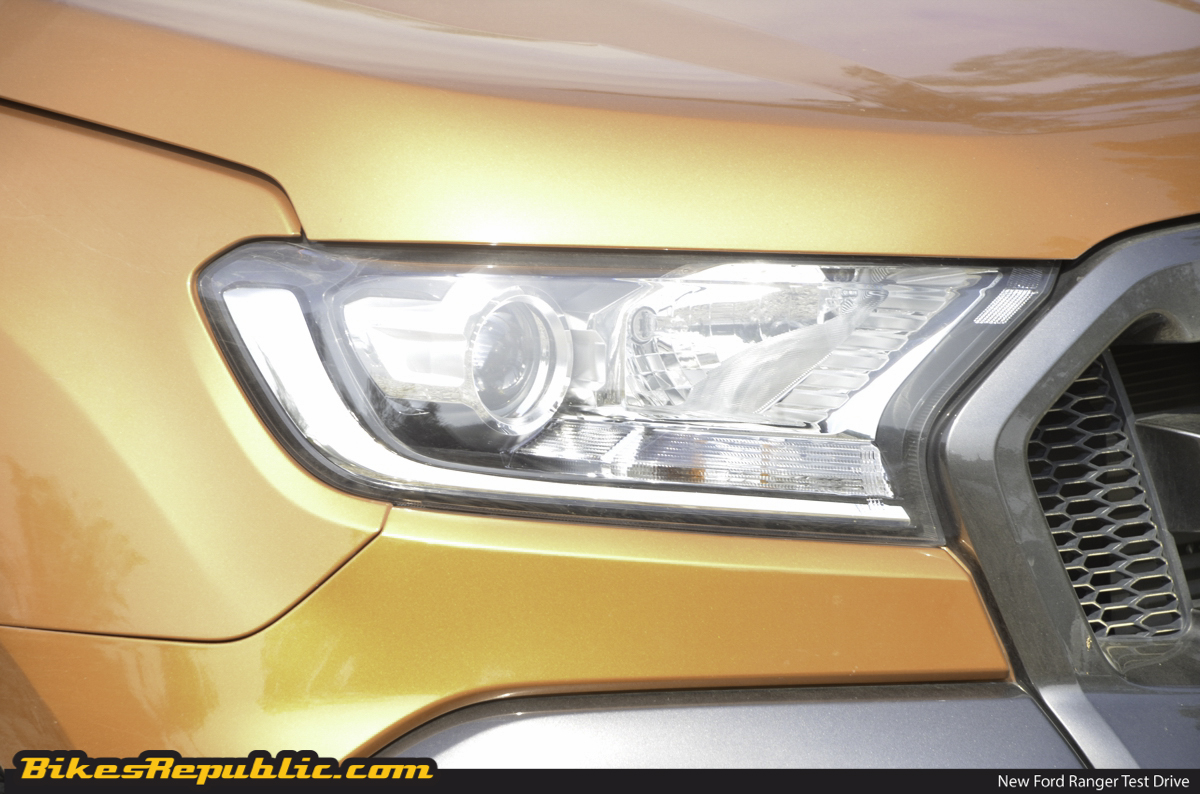
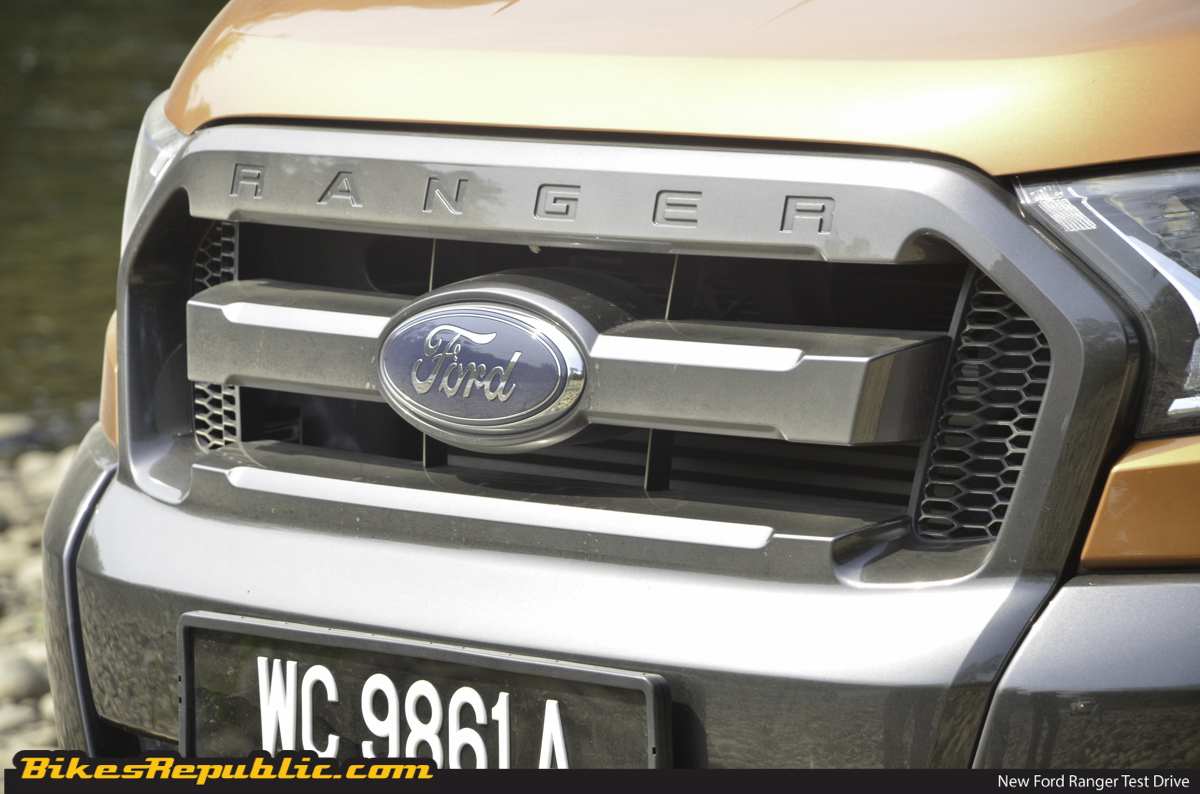
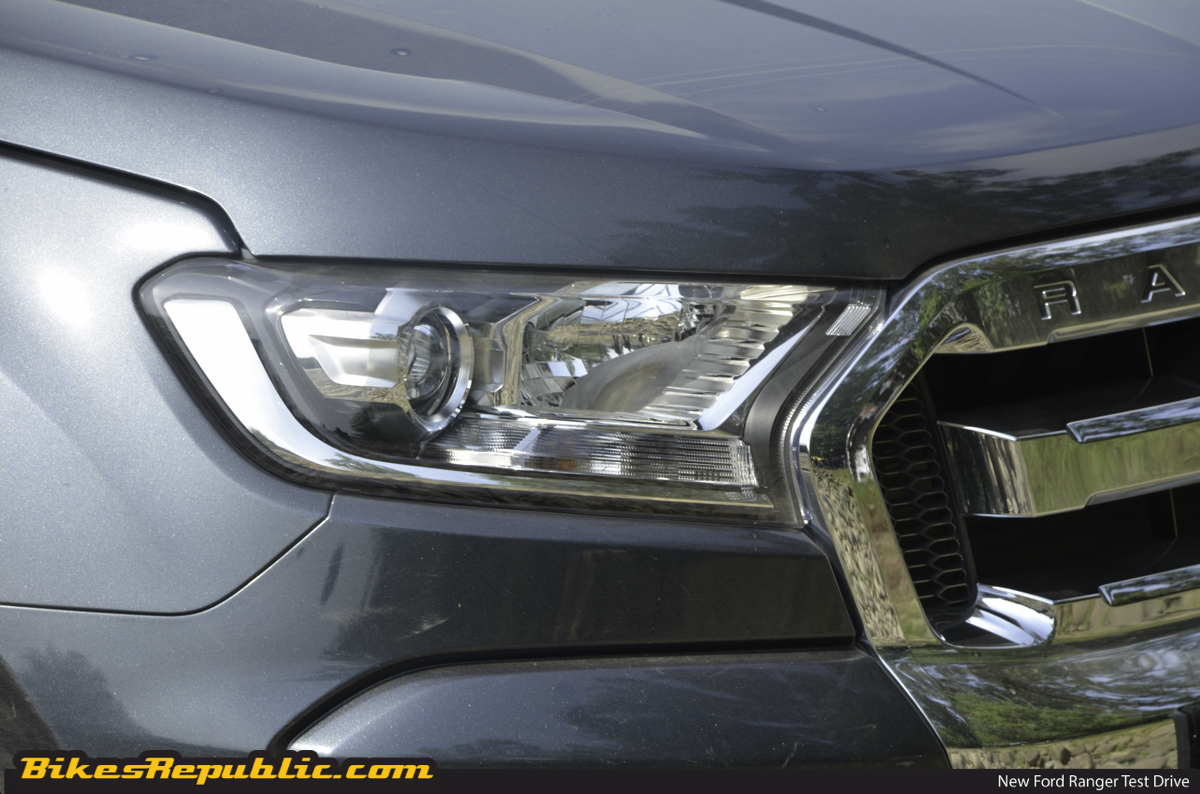
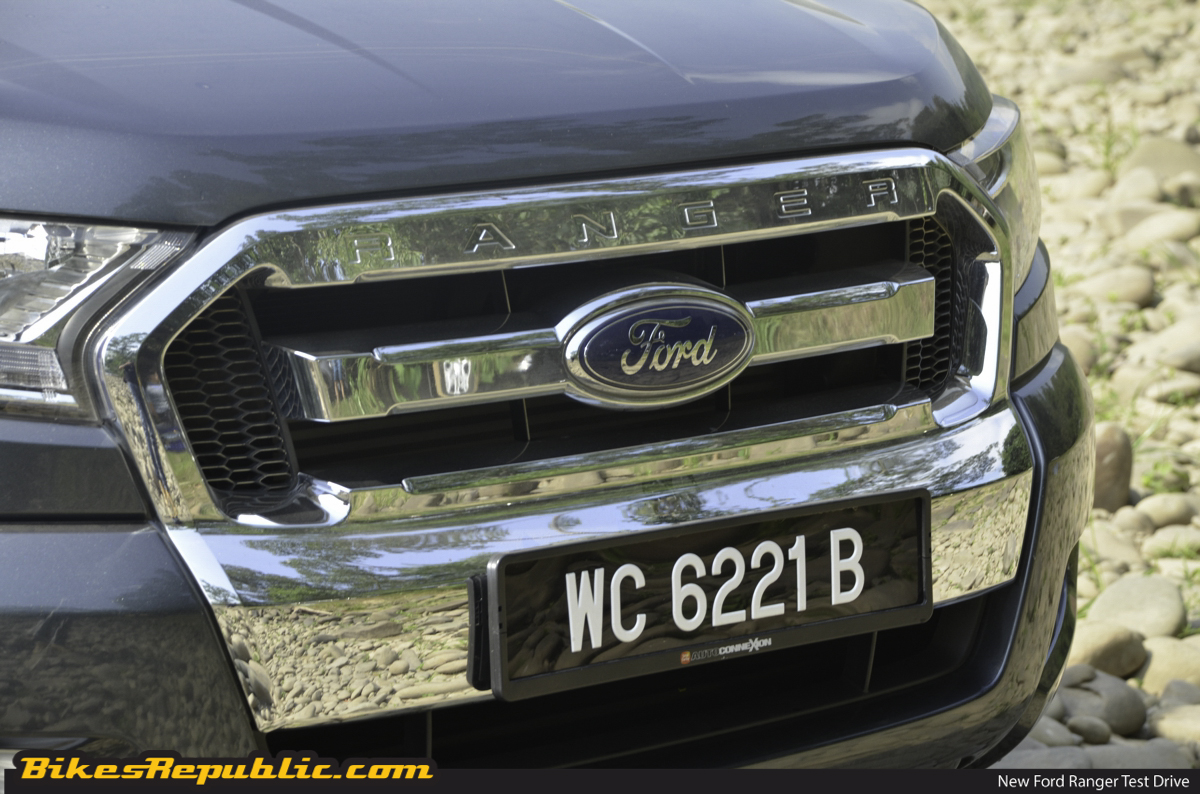
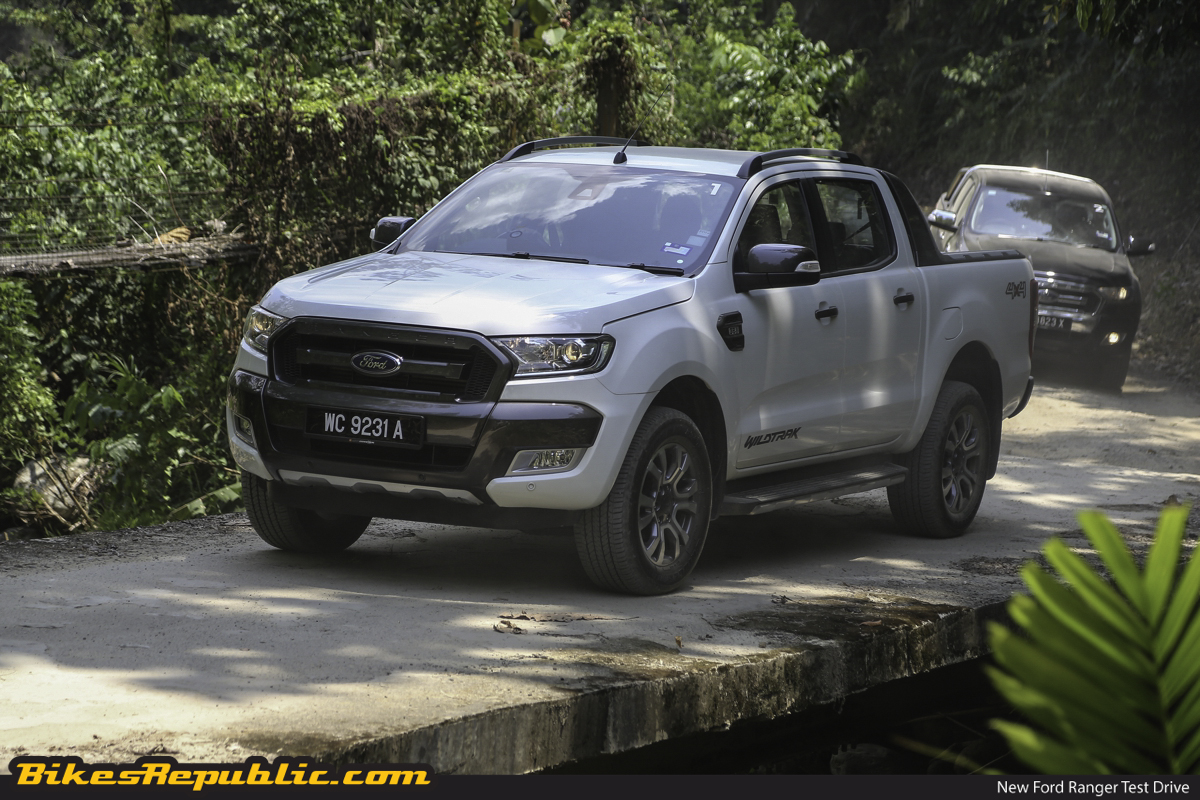
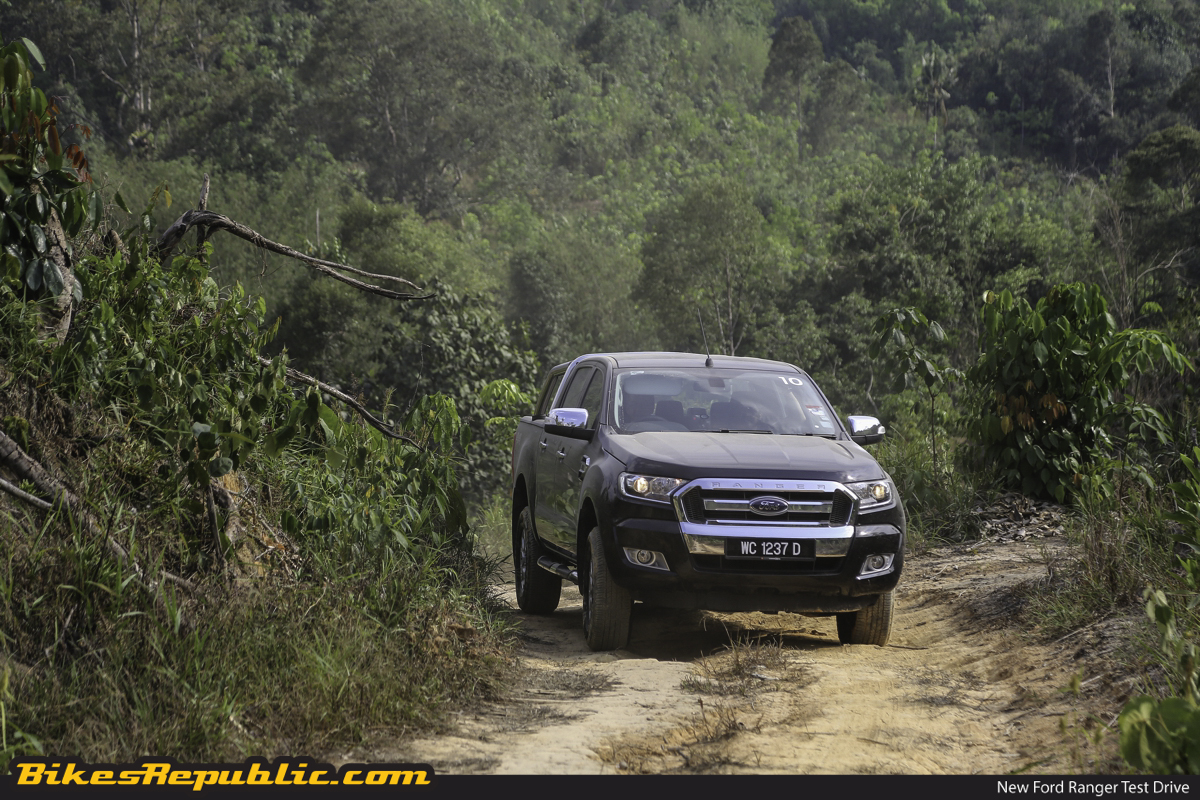
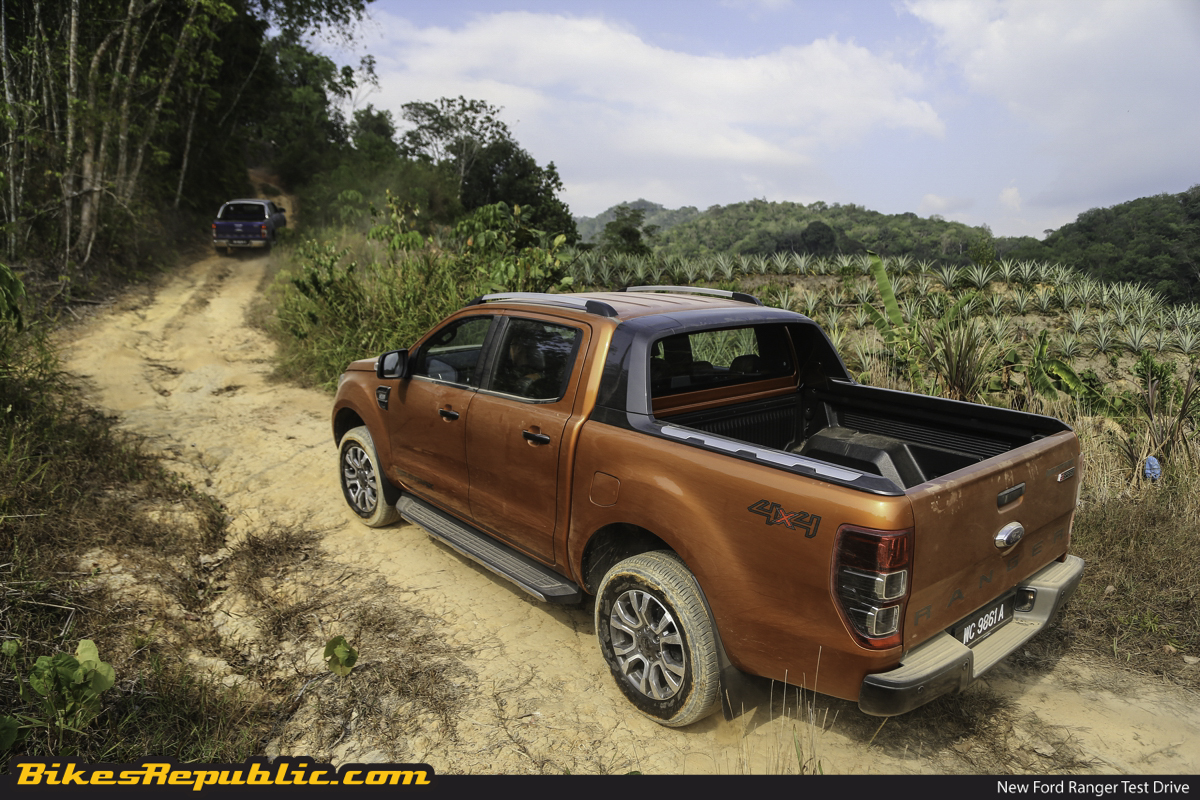
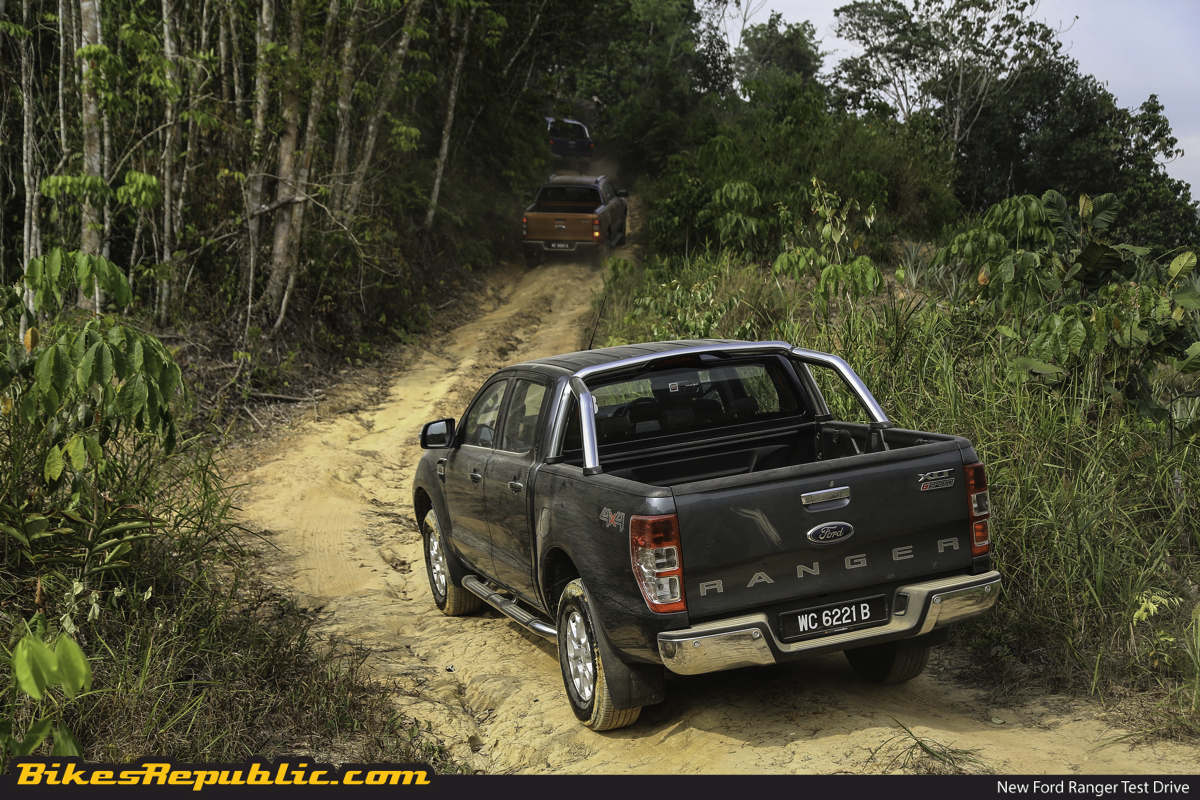
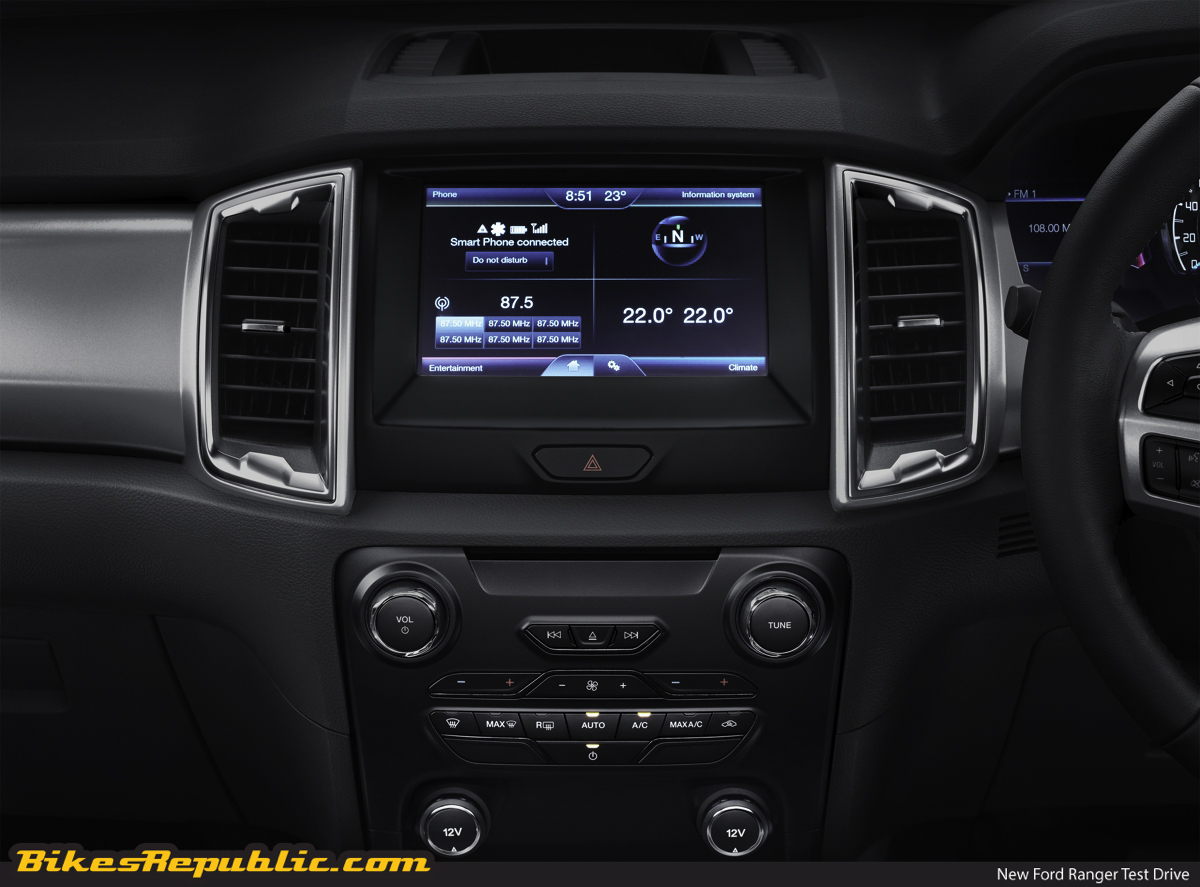
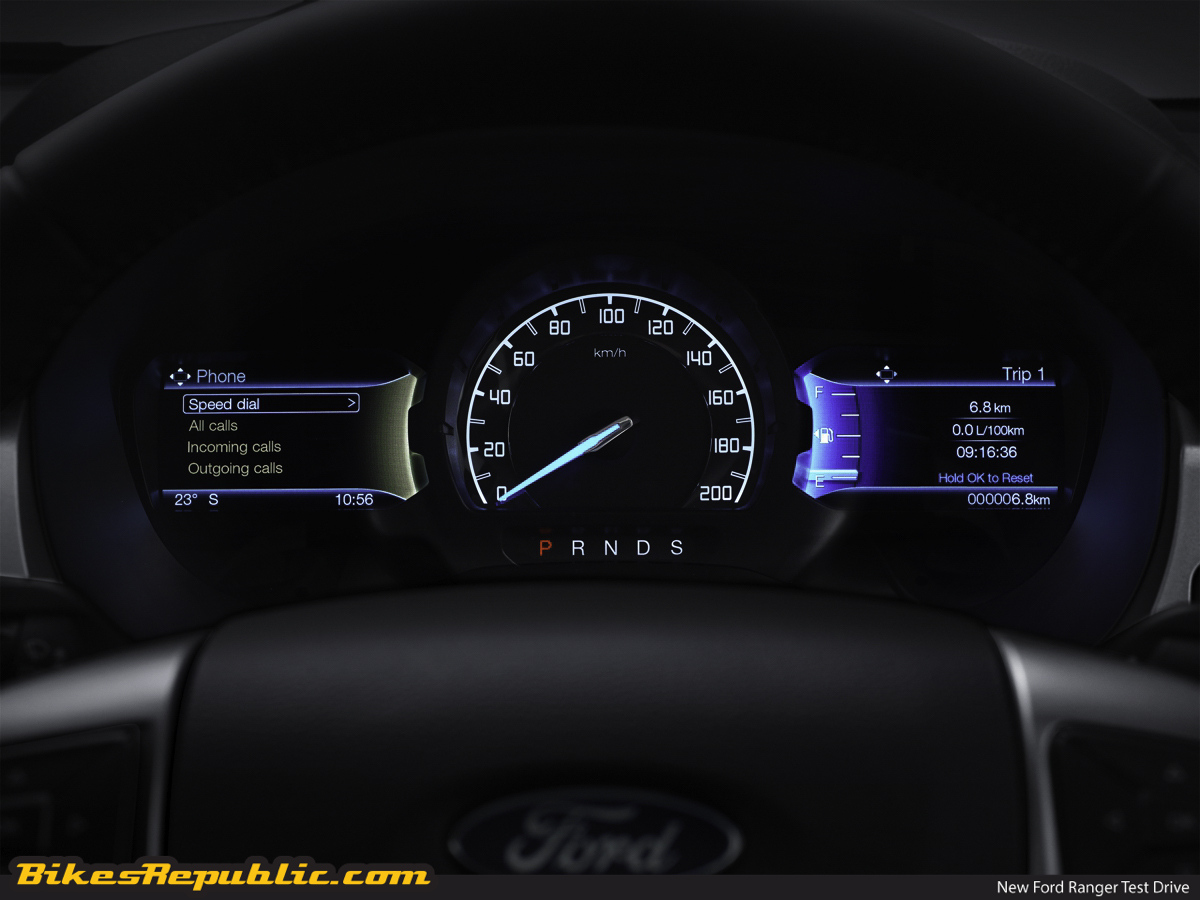
DSC_0005The most obvious visual change with this facelift model is its front fascia. Ford’s designers have extensively redesigned its headlamps, grills, bumper and bonnet, resulting in the Ranger’s bold new look that is both modern and tough. In either 2.2-litre or 3.2-litre trims, the facelift is boosted further thanks to use of shiny chrome in the grille, rear roll bar and rear bumper. Opt for the range-topping 3.2 Wildtrak instead and you get one tougher looking truck thanks to this variant’s adoption of darker accents instead of chrome.DSC_0016The most crucial of changes has been done inside, and this new Ranger’s innards looks and feels just as good as it looks on the outside. Having spent most of our time in the range-topping Wildtrak variant, its offer of premium amenities makes it a true class winner here. Notable highlights here include the plush partial leather seats with driver side electric seat adjustment, not forgetting the new and intelligent 8-inch touchscreen infotainment unit featuring Ford’s novel new SYNC II voice-enabled commands as well.

Things don’t feel too bad either in the mid-range 2.2XLT variant despite the deletion of plush leather seat covers and the neat touchscreen. However, one aspect all variants particularly shine in is in the very low noise, vibration and harshness levels. Complementing that is the fact that Ford has also covered all the other basics perfectly in the lower-spec variants by having soft-touch materials lining the cabin in all the right places followed by the presence of a number of practical storage bins and cubbies.

FordRangerEastMsiaMediaDrive_Day2-1More importantly, this new Ranger drives just as good as it looks, with this face-lifted model’s improved powertrain feeling a lot better than its predecessor. Ford claims a 12% improvement in fuel efficiency, but the important bit here is the increased power and torque figures both the 2.2-litre four-cylinder and 3.2-litre five-cylinder turbodiesel units. The same can be said about the six-speed automatic transmissions paired with either mills, feeling a lot smother in its operation than before as well.

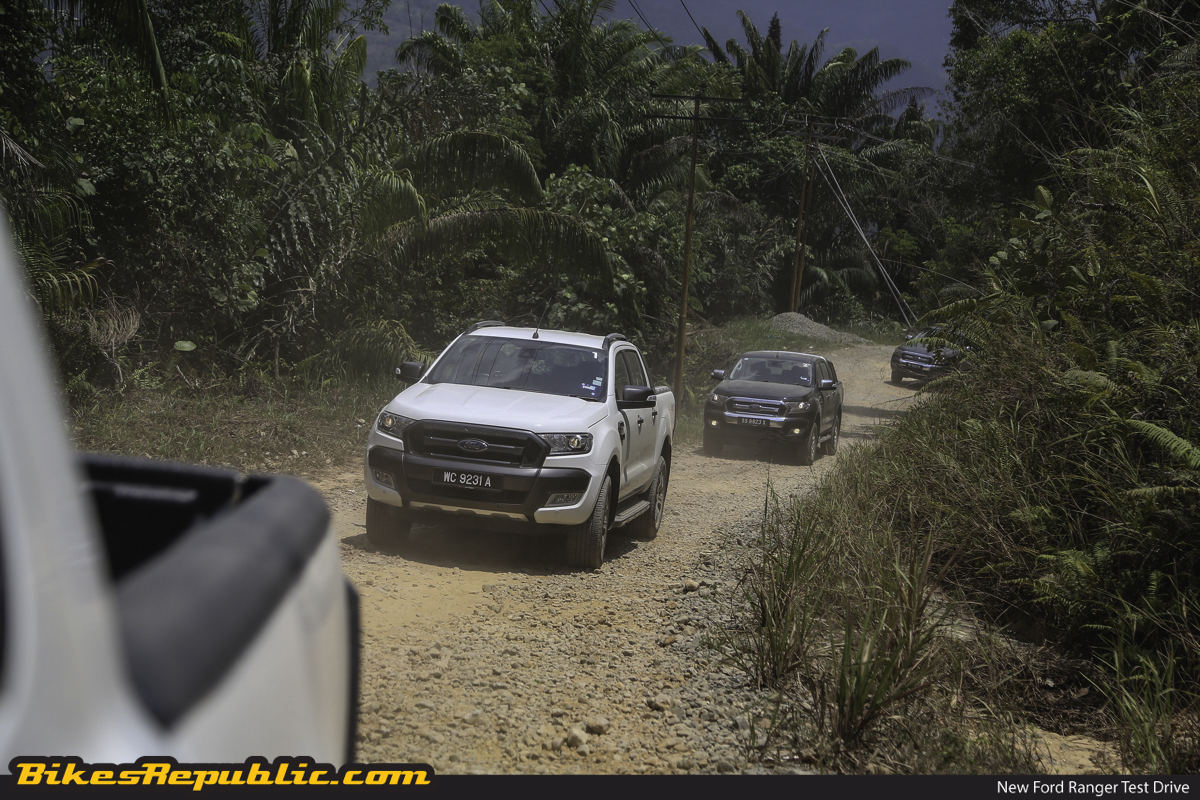
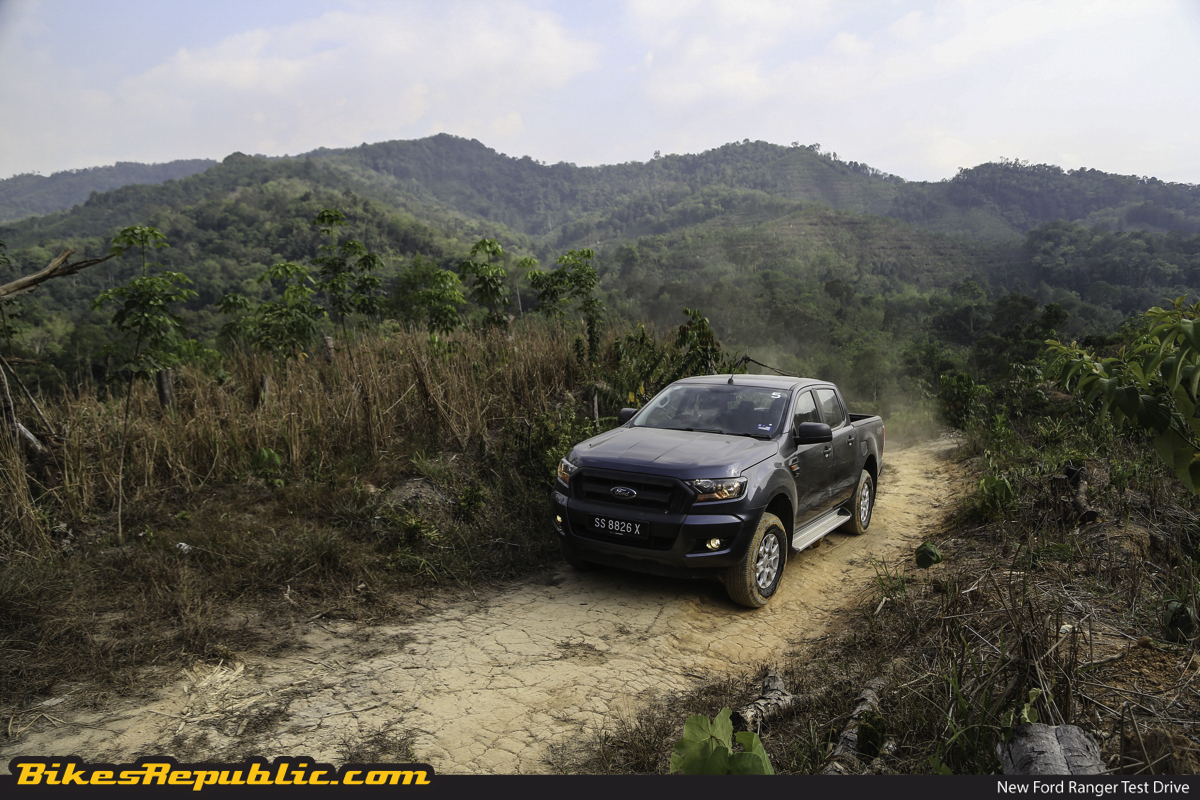
What felt equally brilliant here was the Ranger’s ride and handling. The new electric power steering has made the Ranger much easier to drive on road and on a daily basis as it is both lighter and more precise than the previous model’s system. The icing on the cake here though lies in the suspension and damper setup. Though it is the typical pickup truck setup of high-travel double wishbones up front and leaf springs in the rear, the dampers felt sublimely soft as it soaks up bumps and road imperfections effortlessly. And that comes without compromising too much on the Ranger’s off-road usability – a trait we discovered whilst enroute towards the Kinabalu National Park across both gravel paths and asphalt roads.

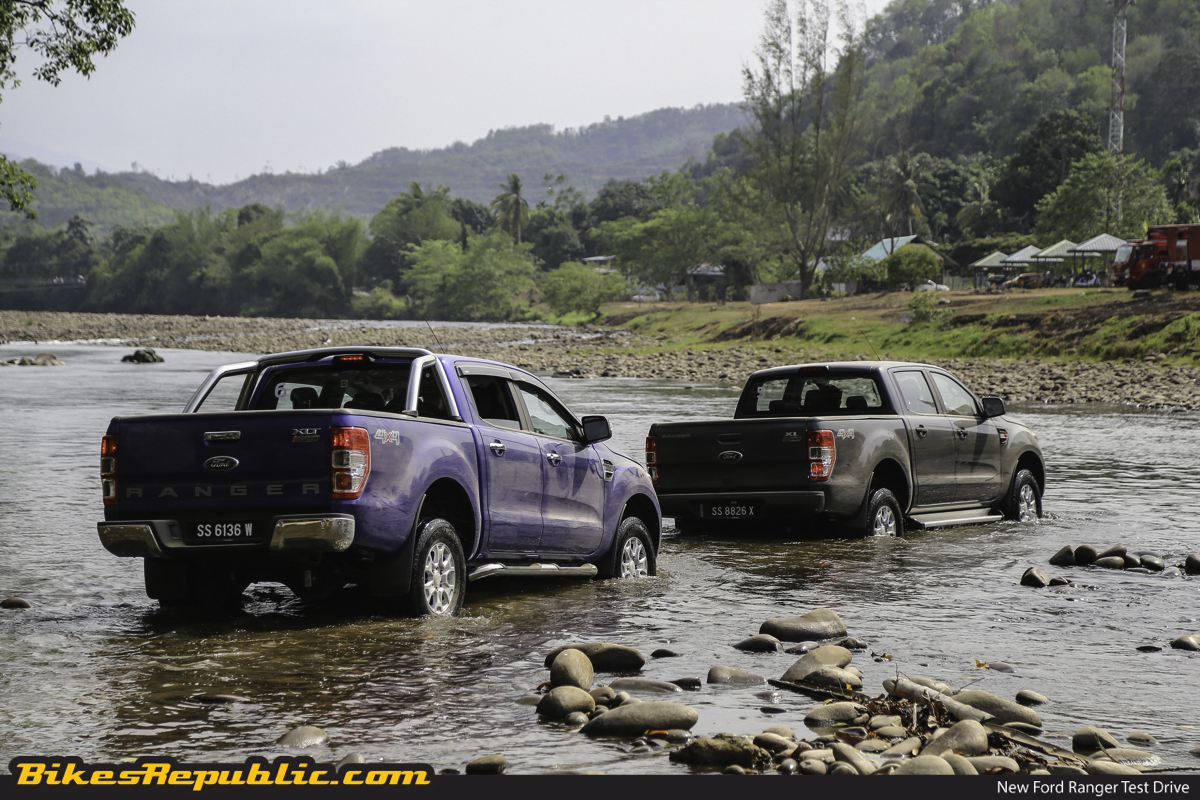
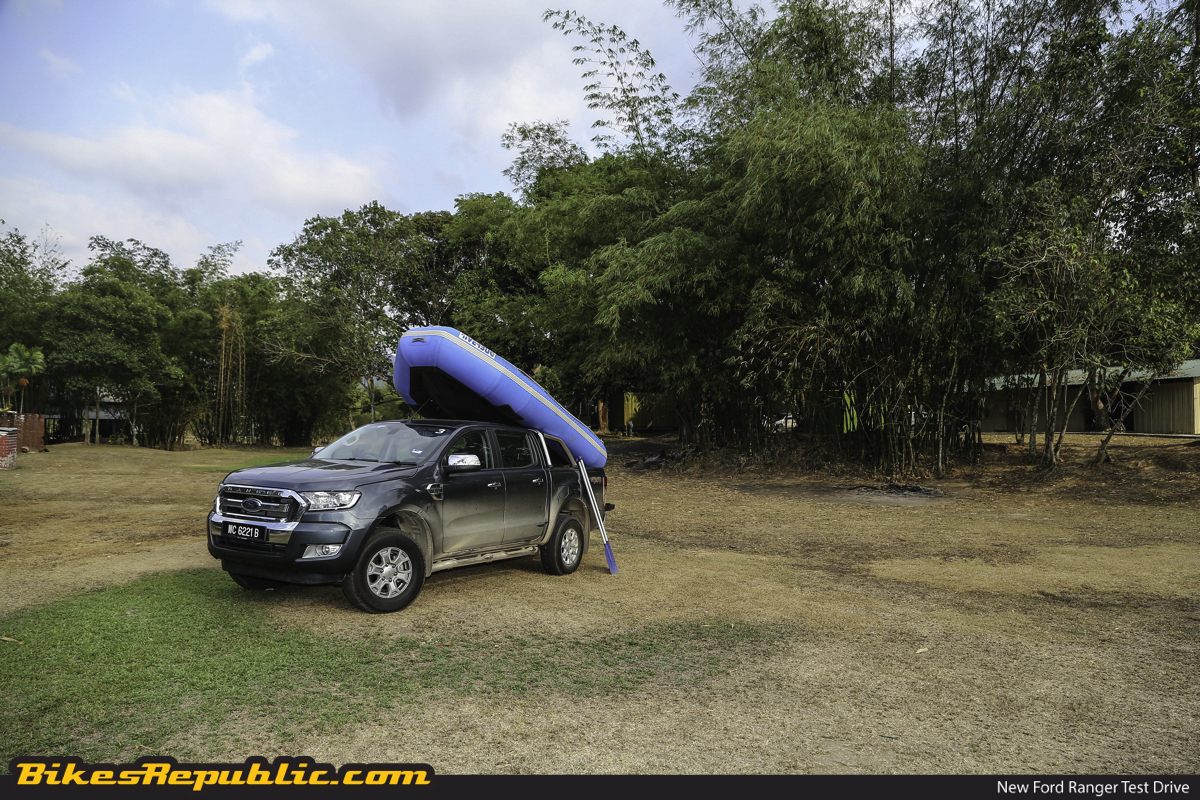
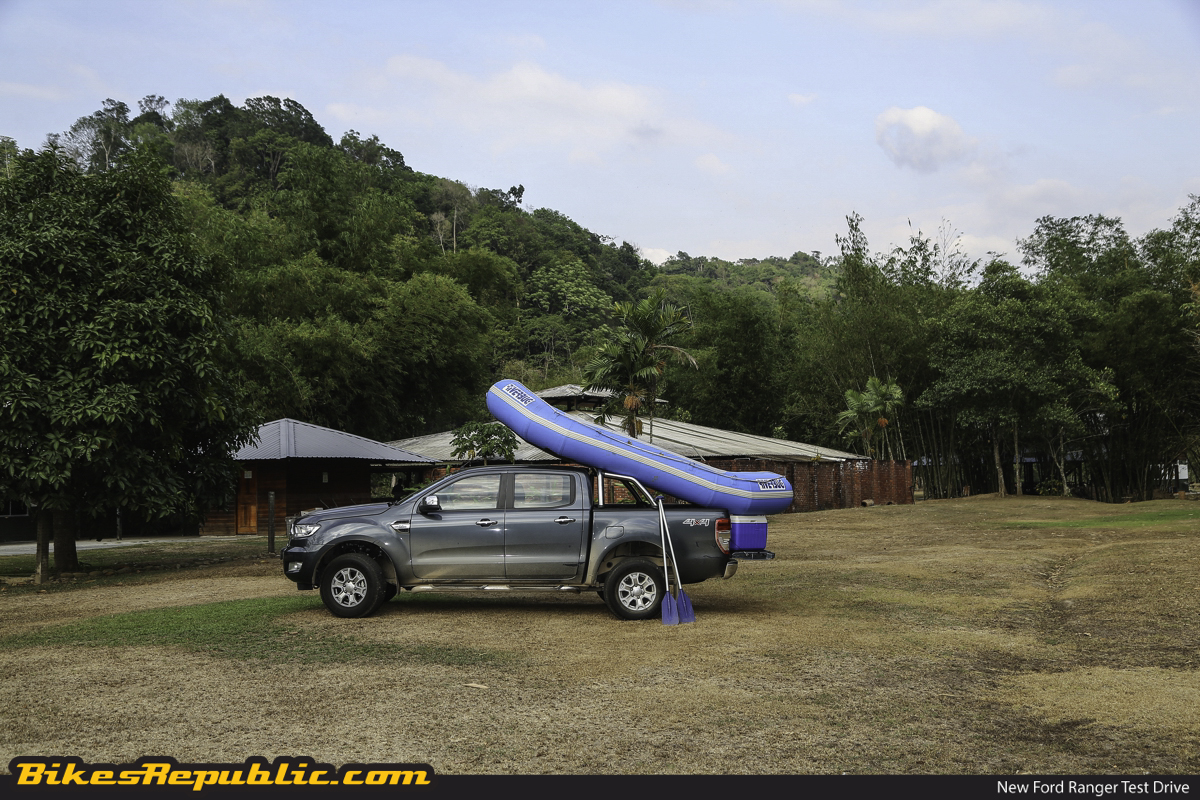
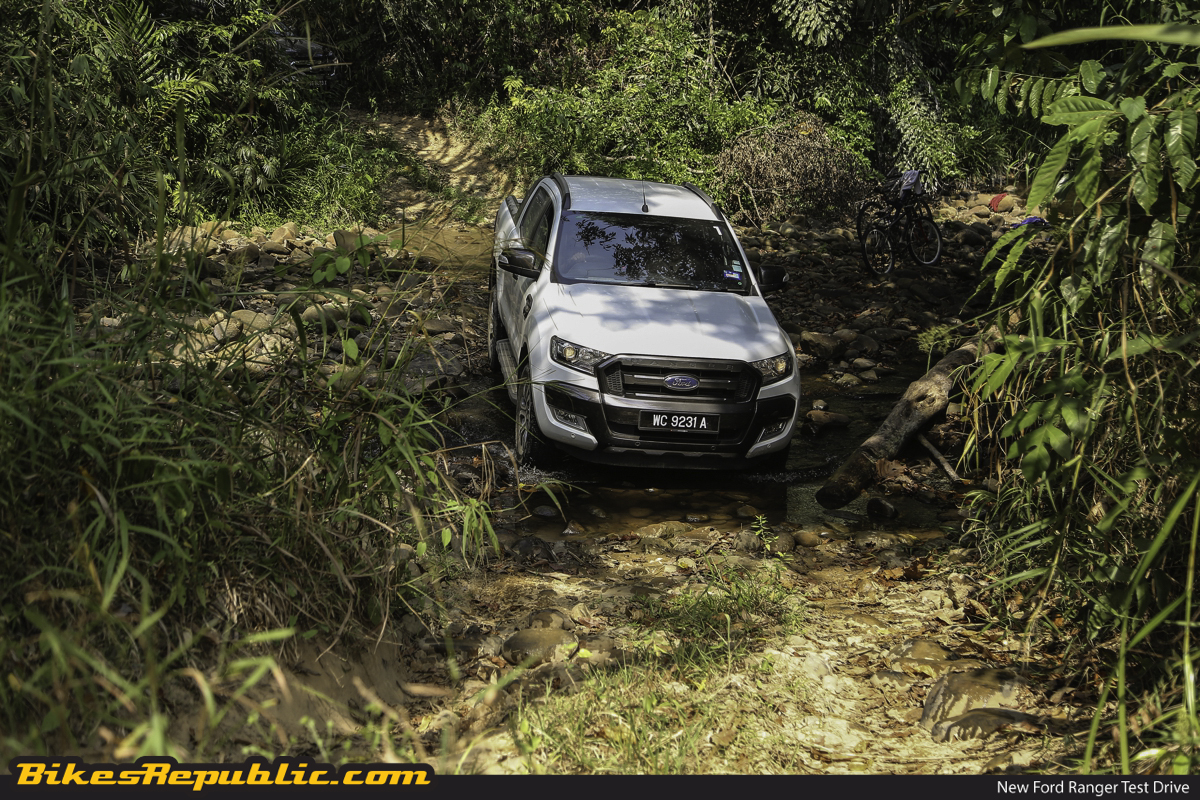
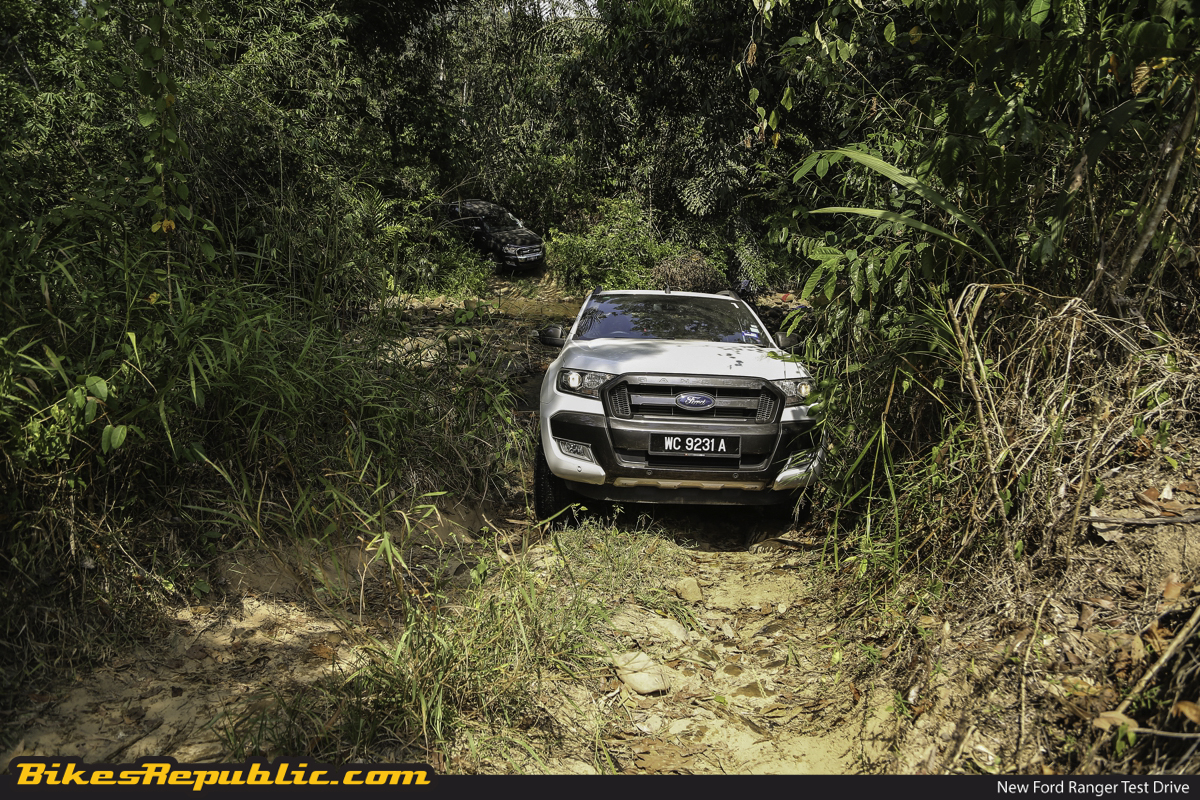
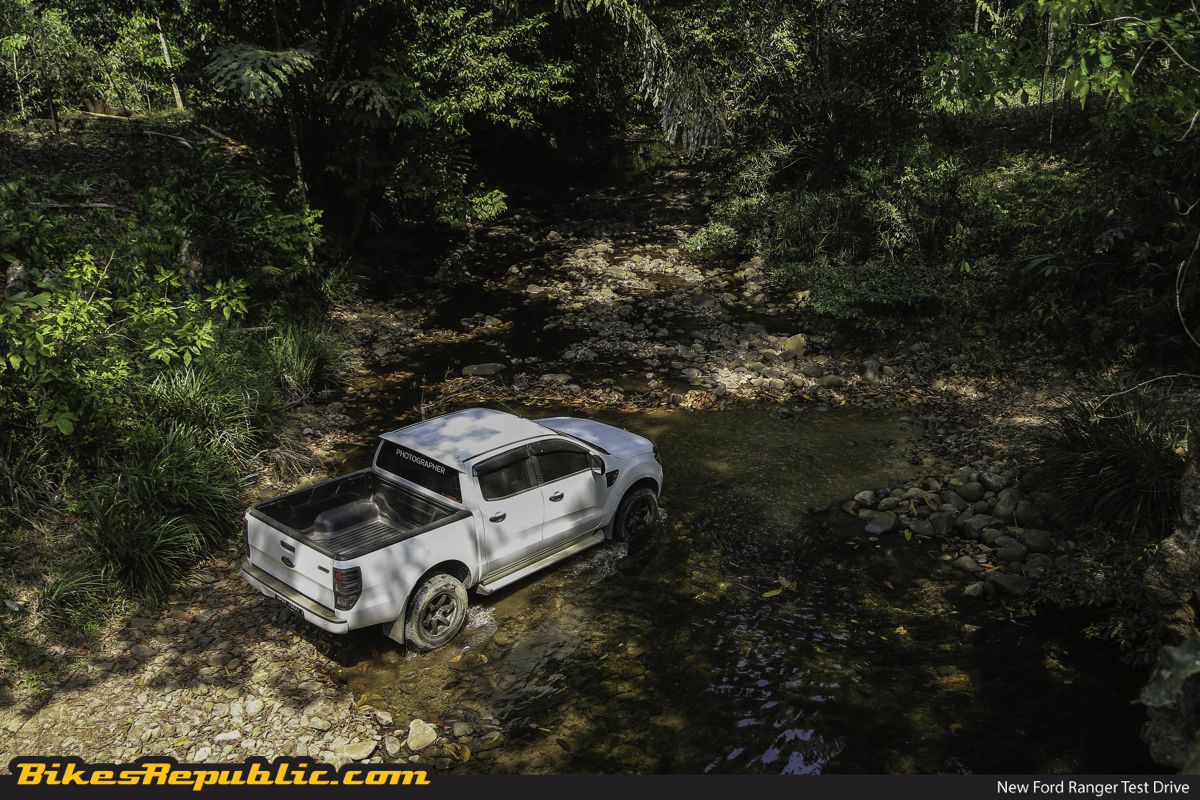
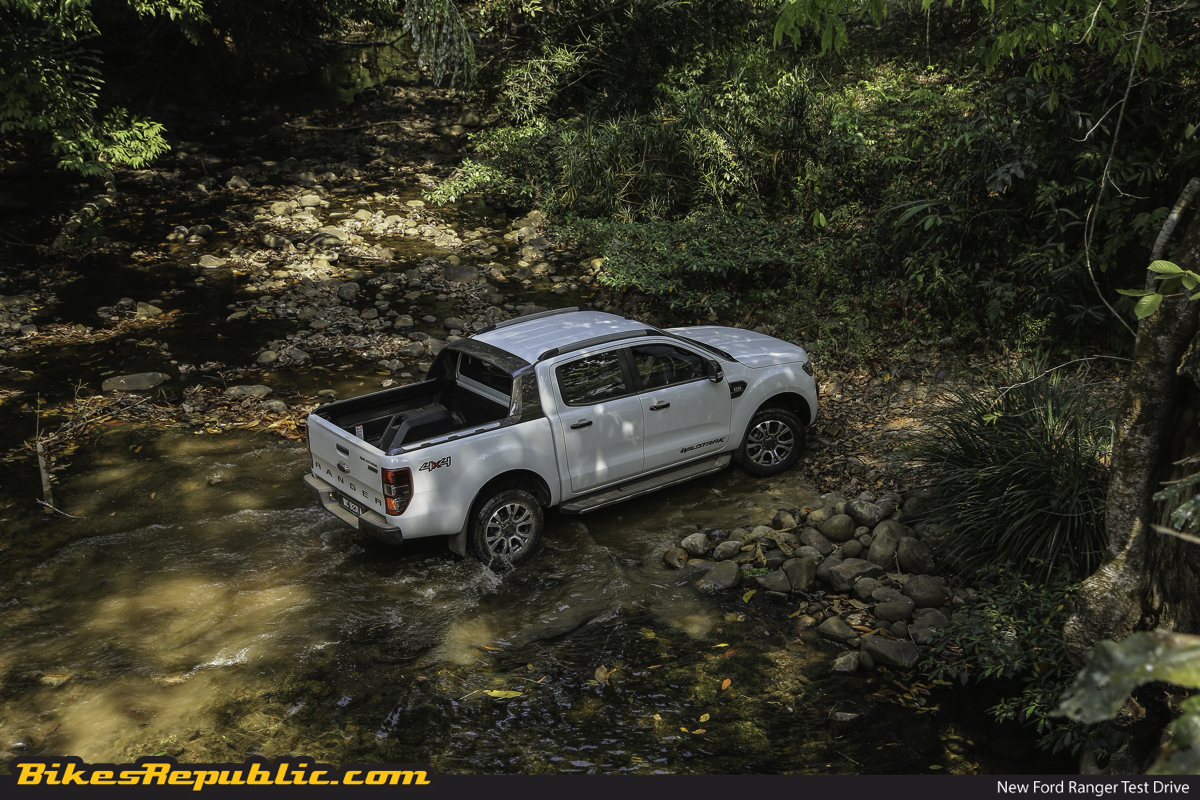
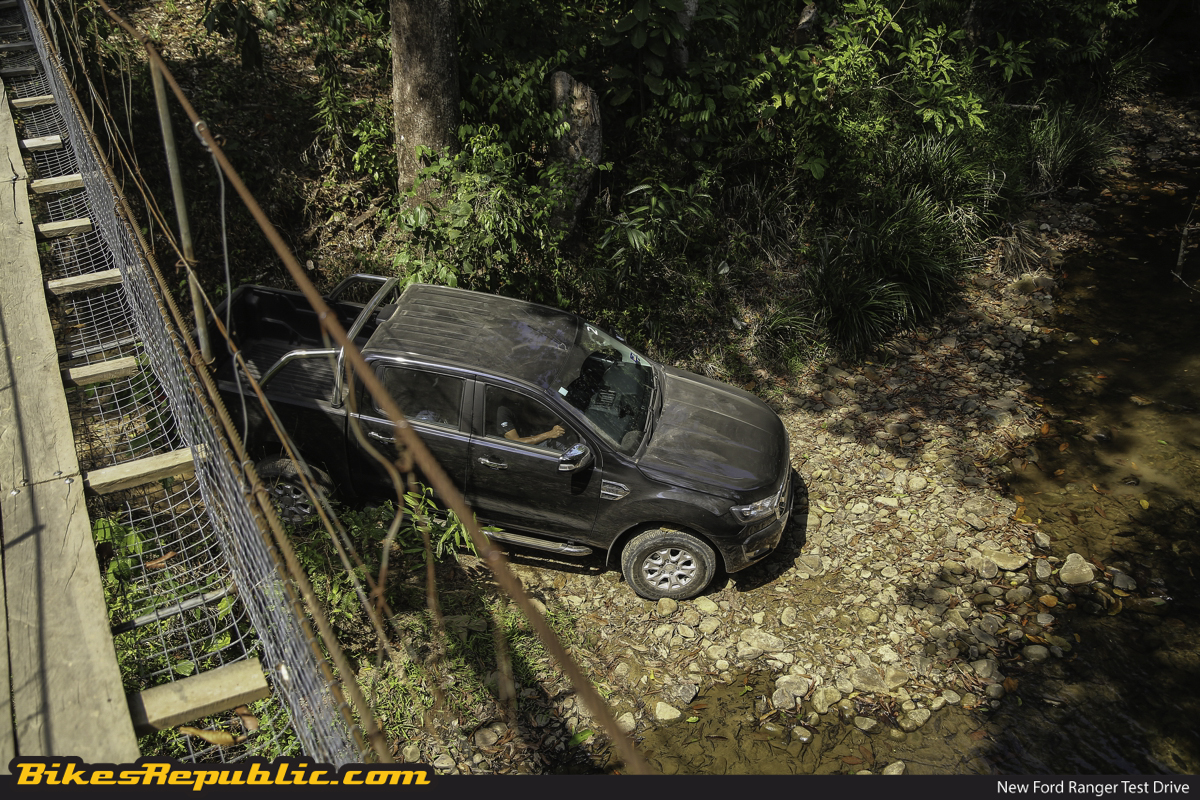
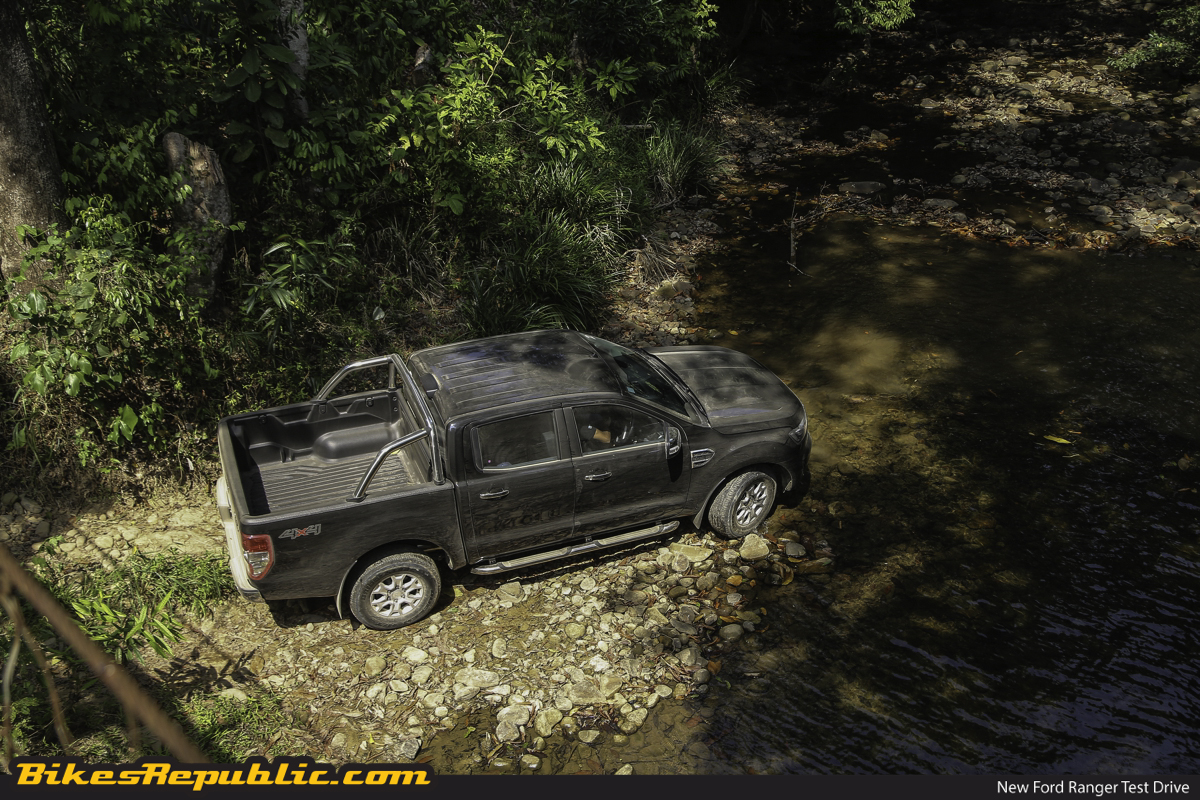
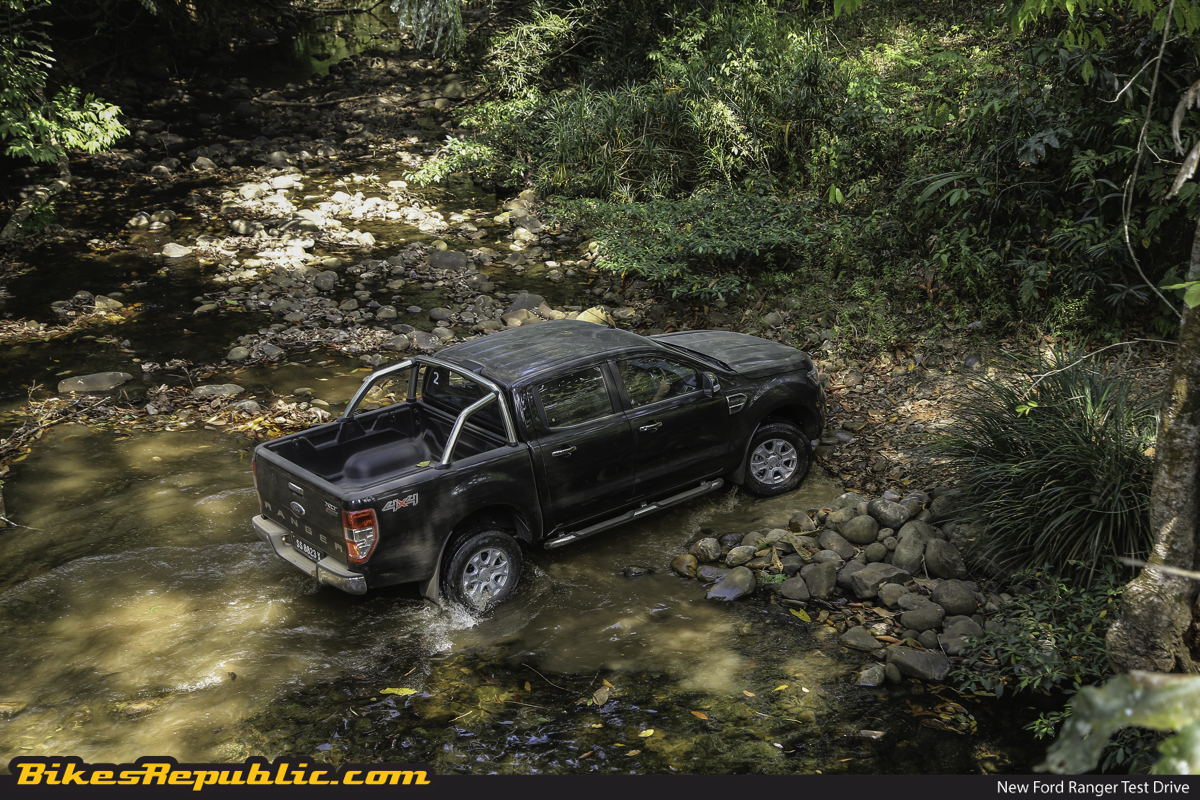
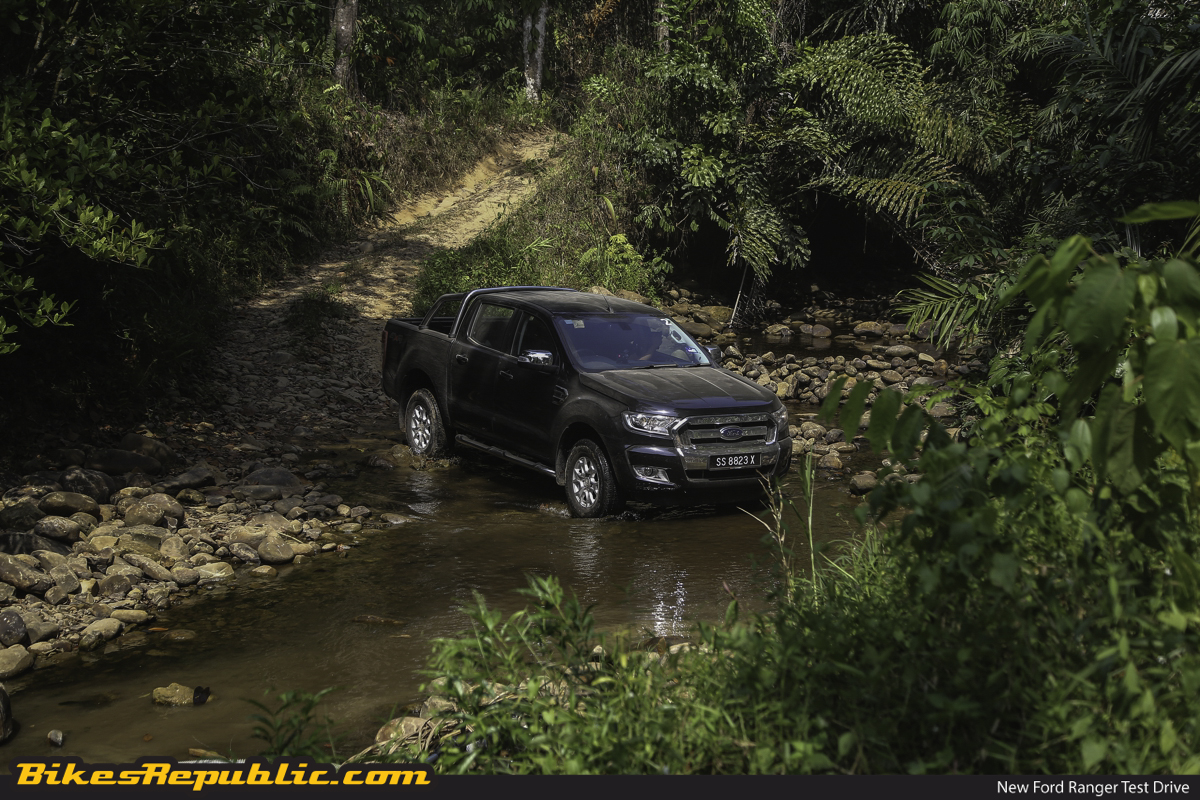
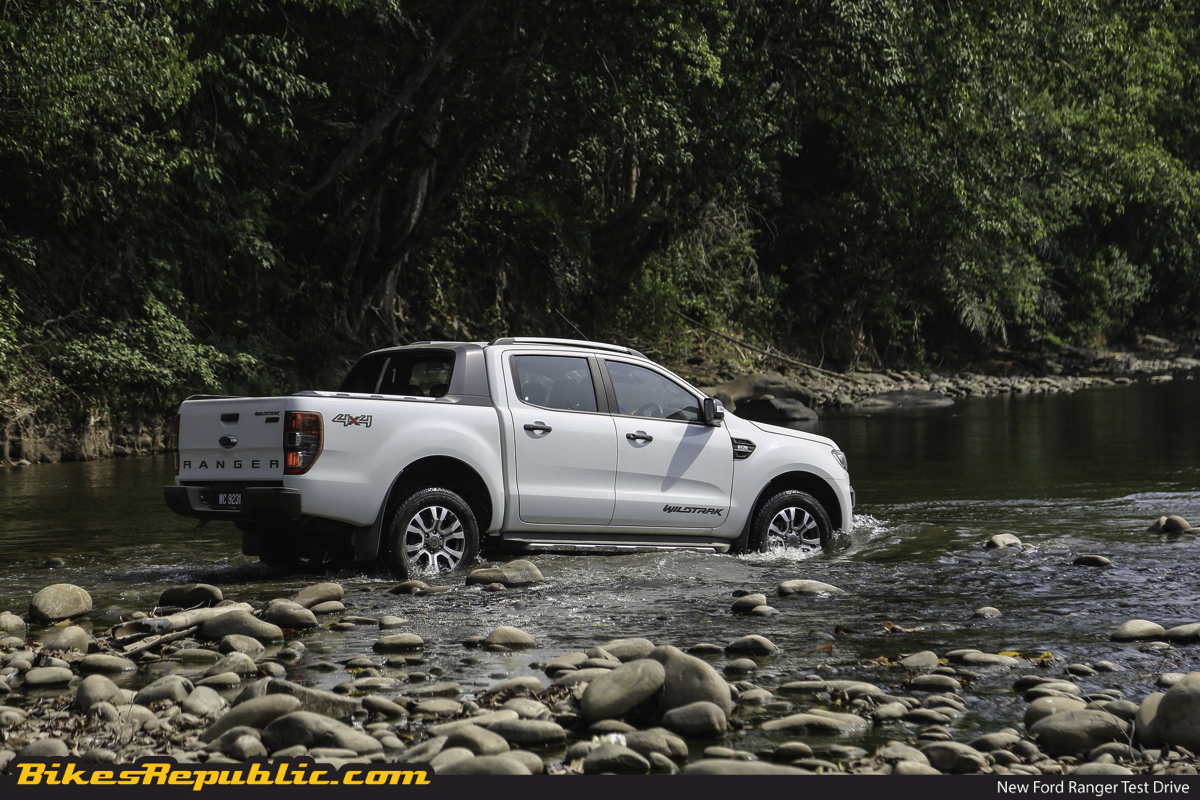
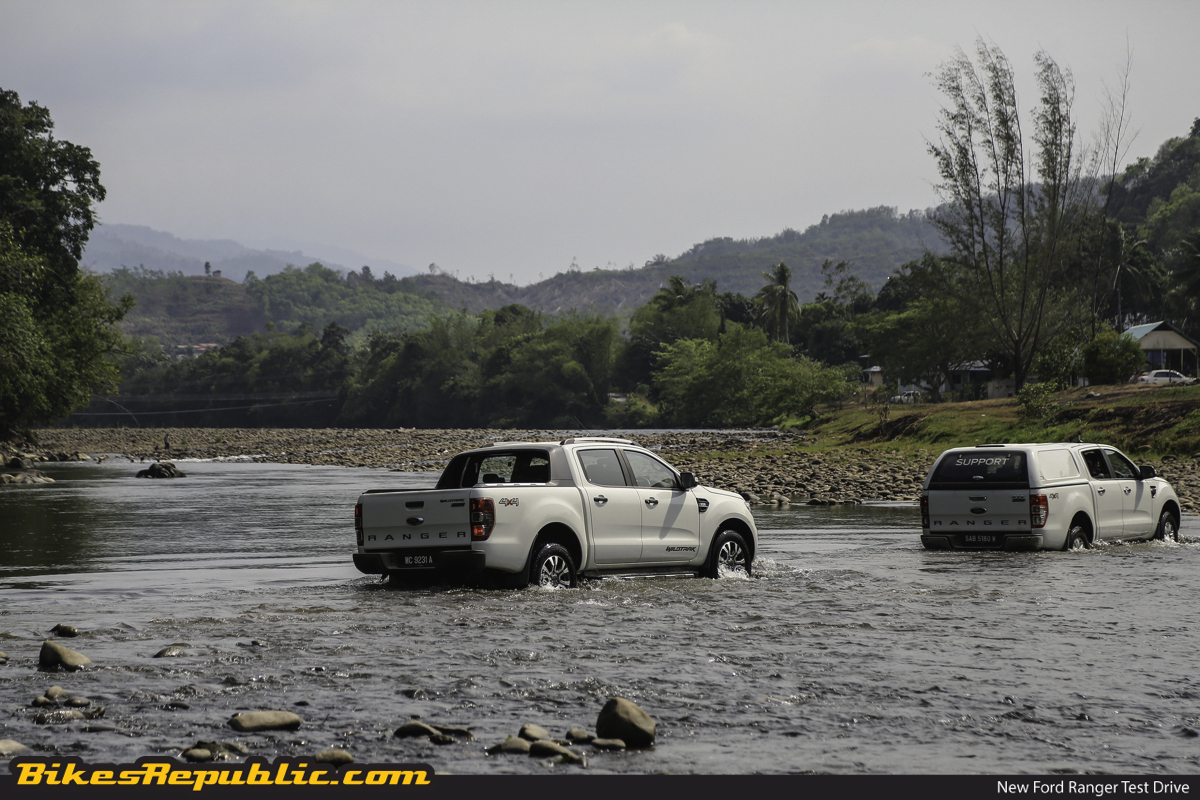
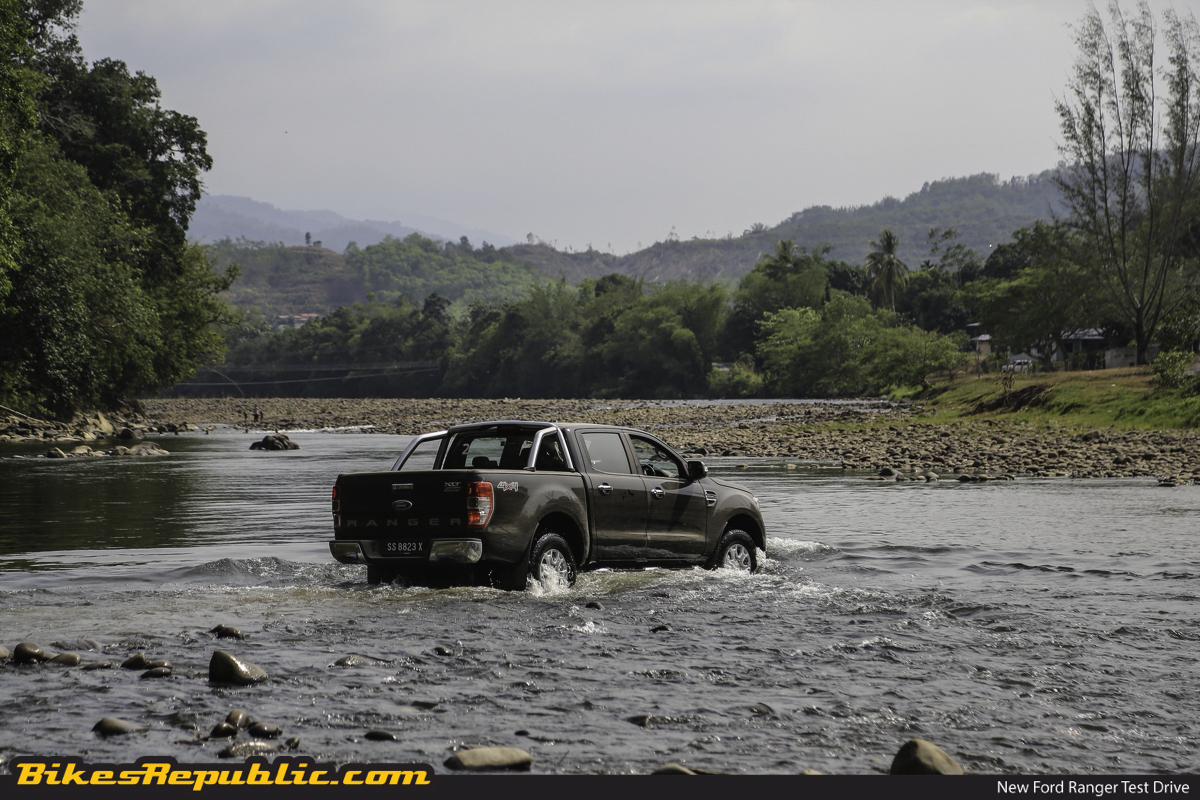
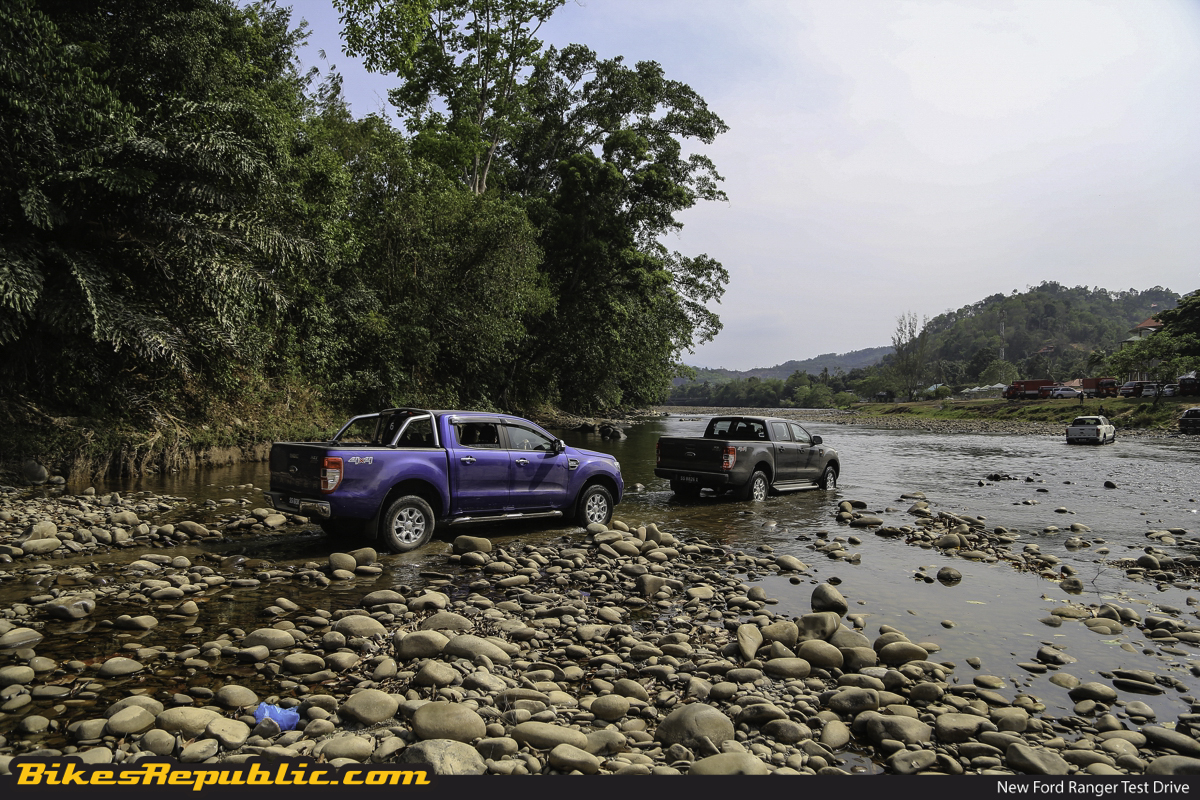
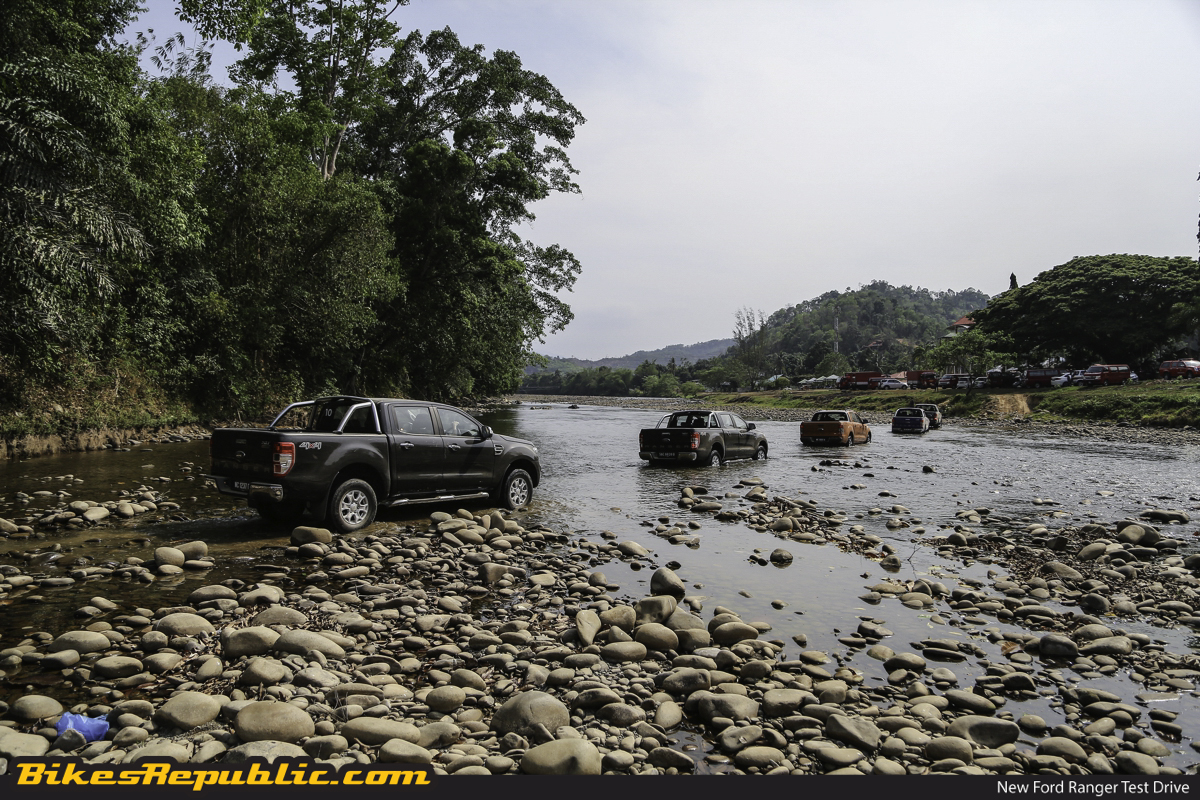
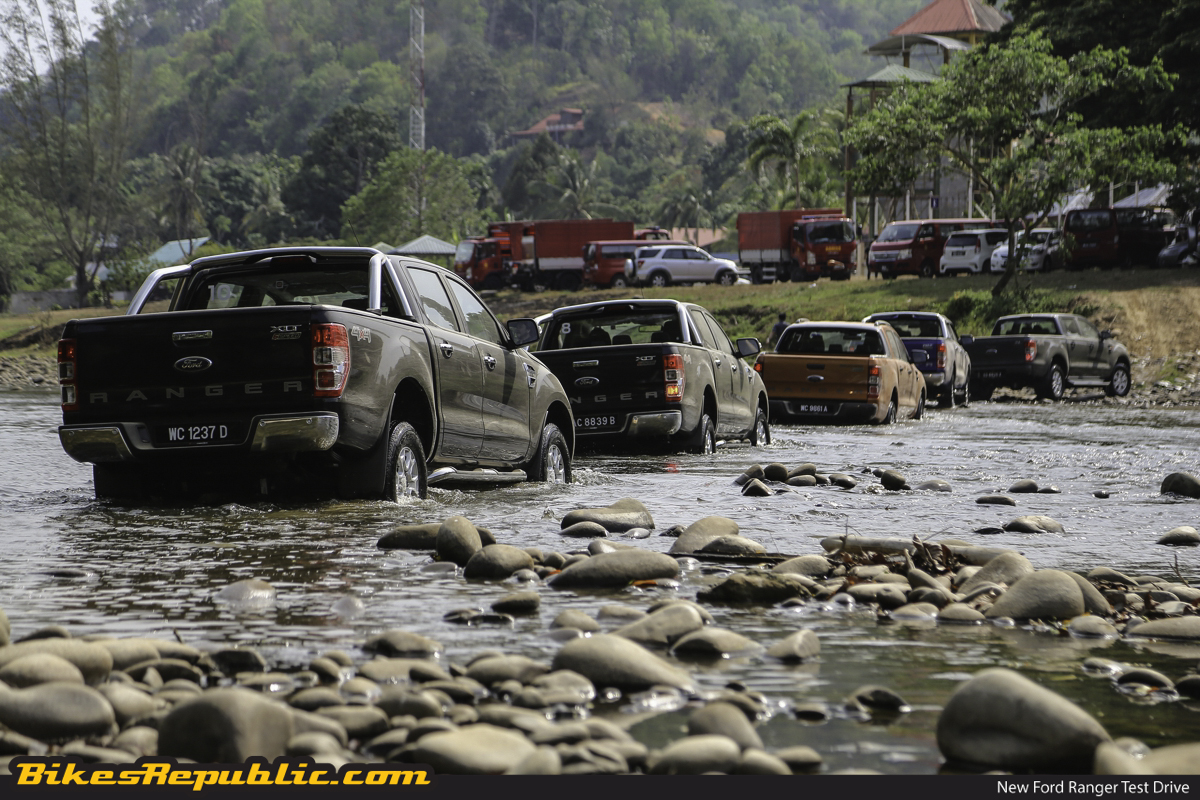
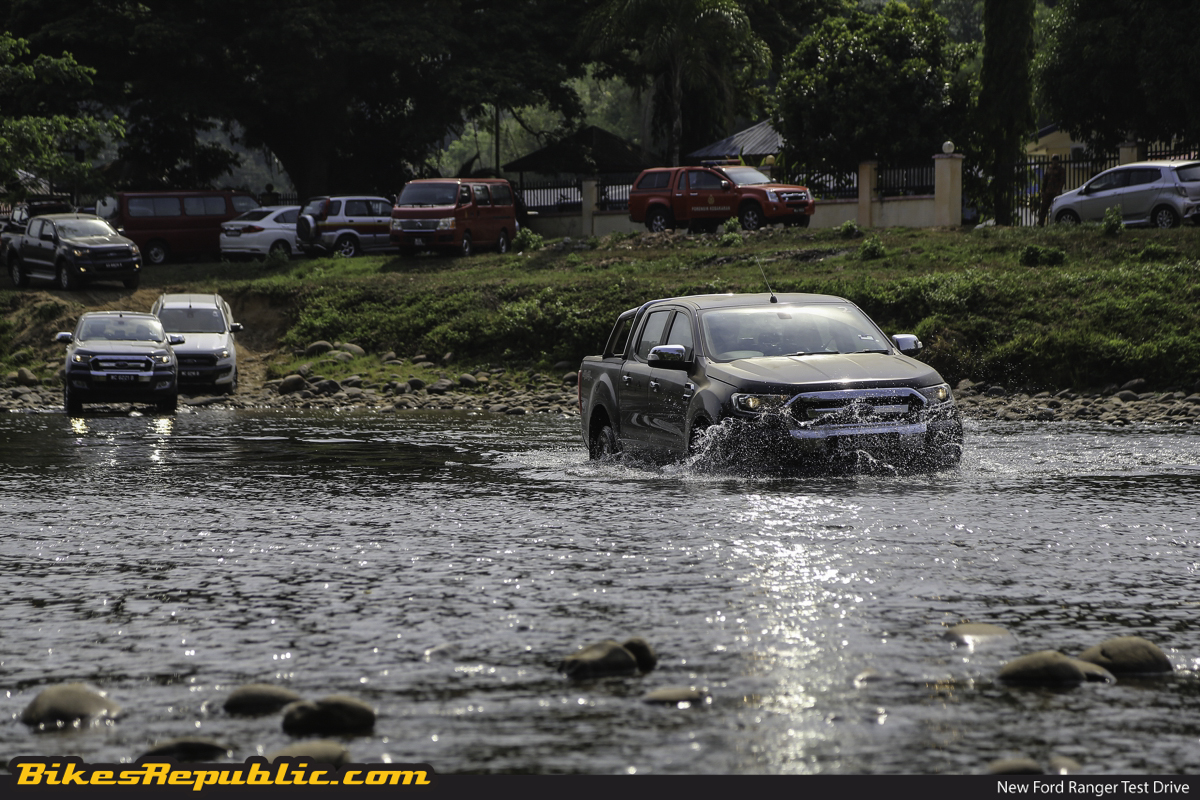
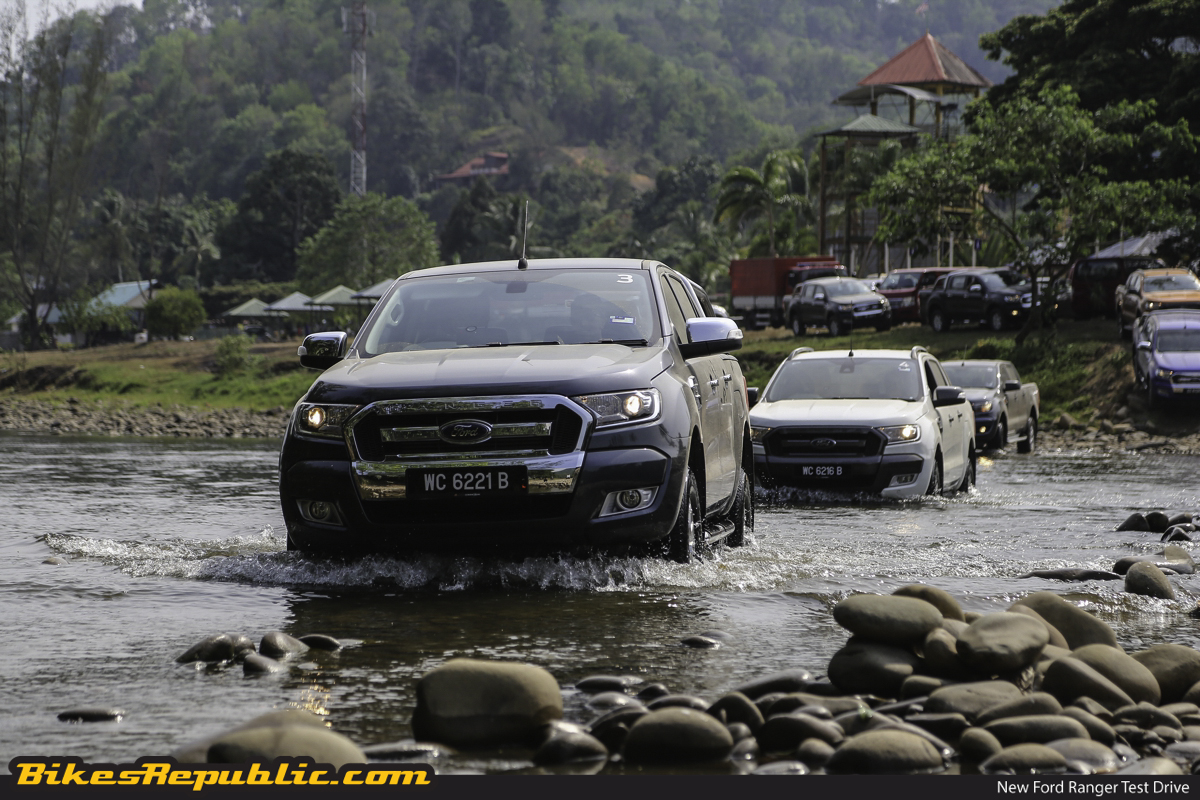
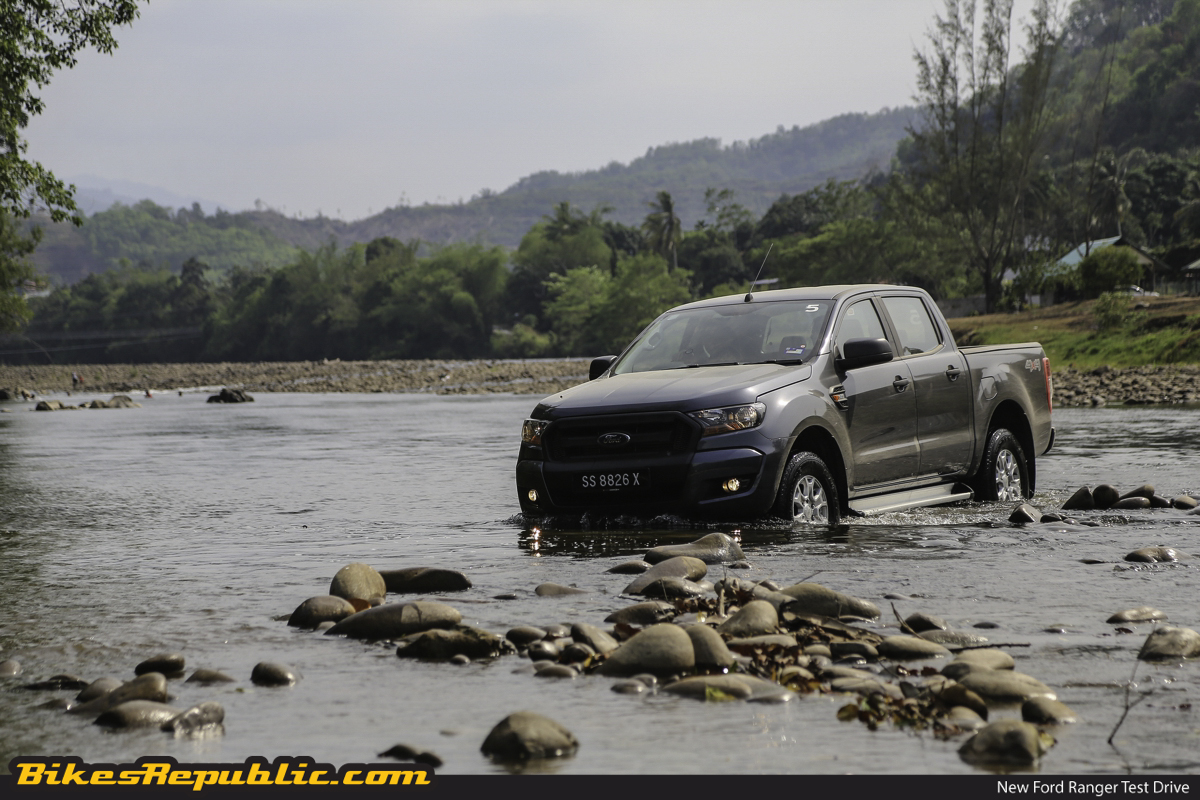
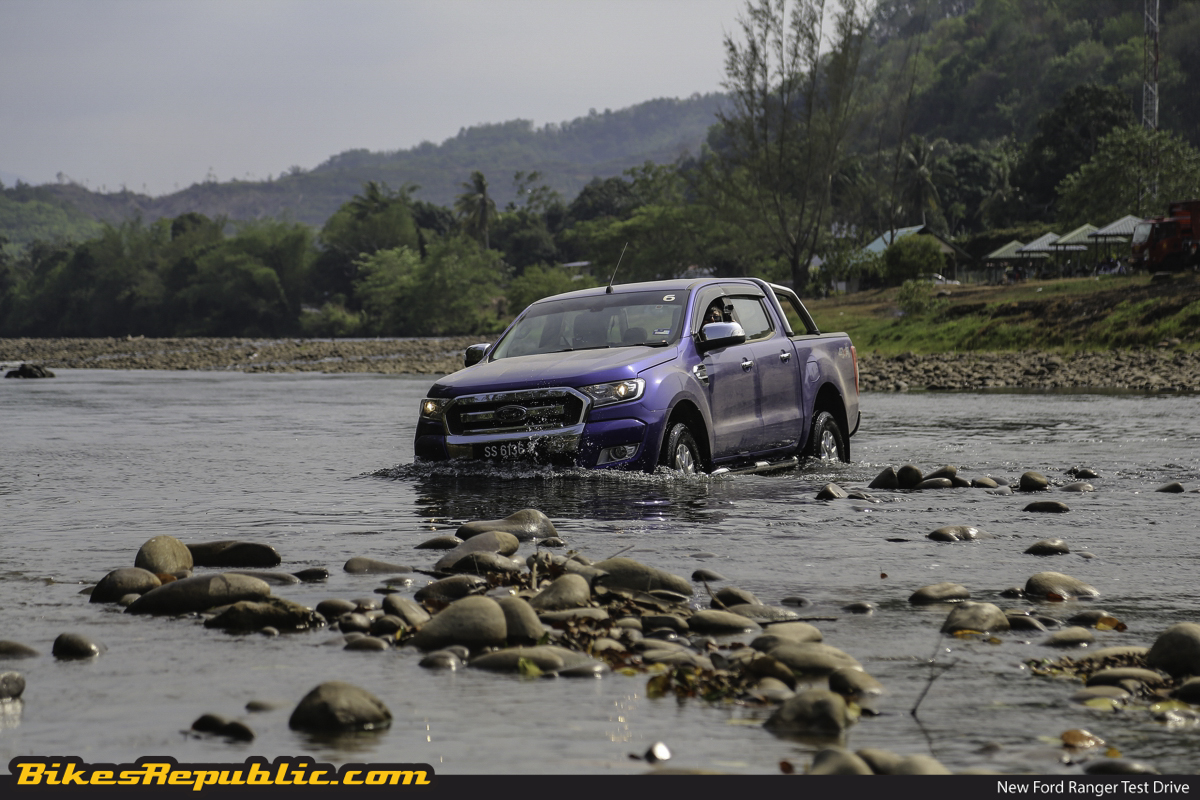
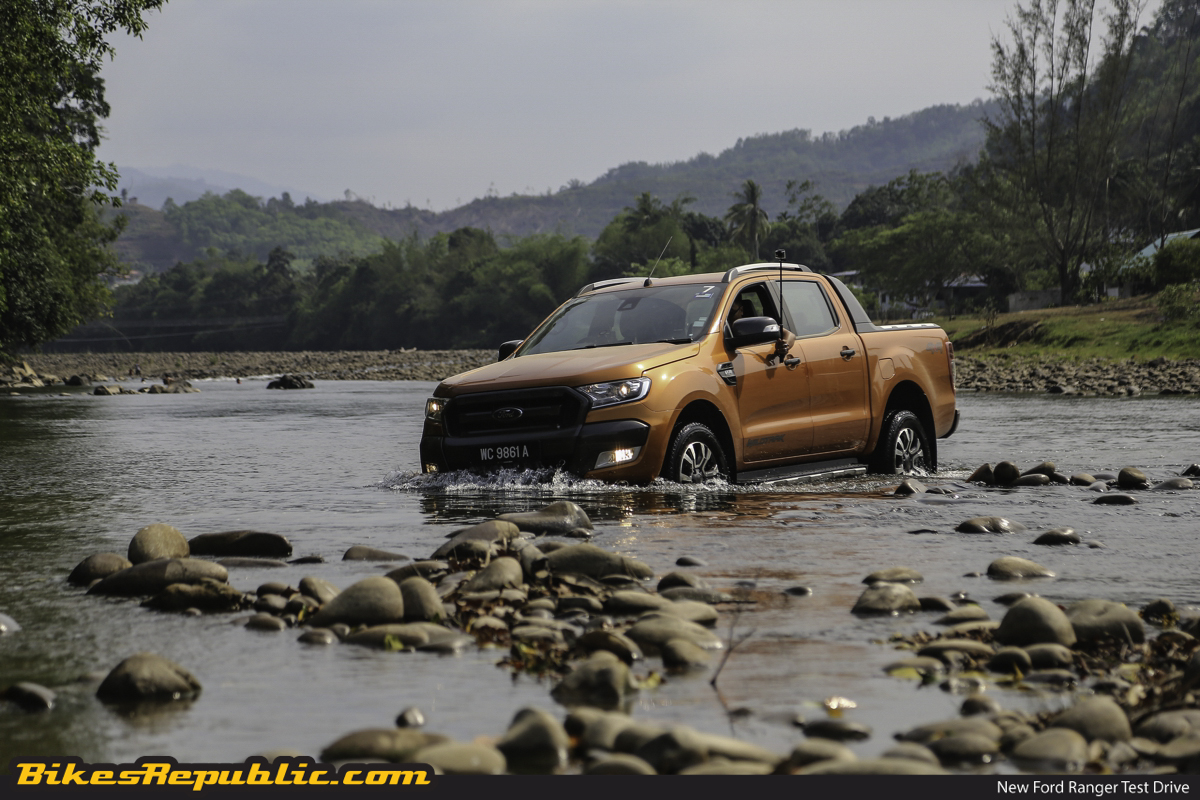
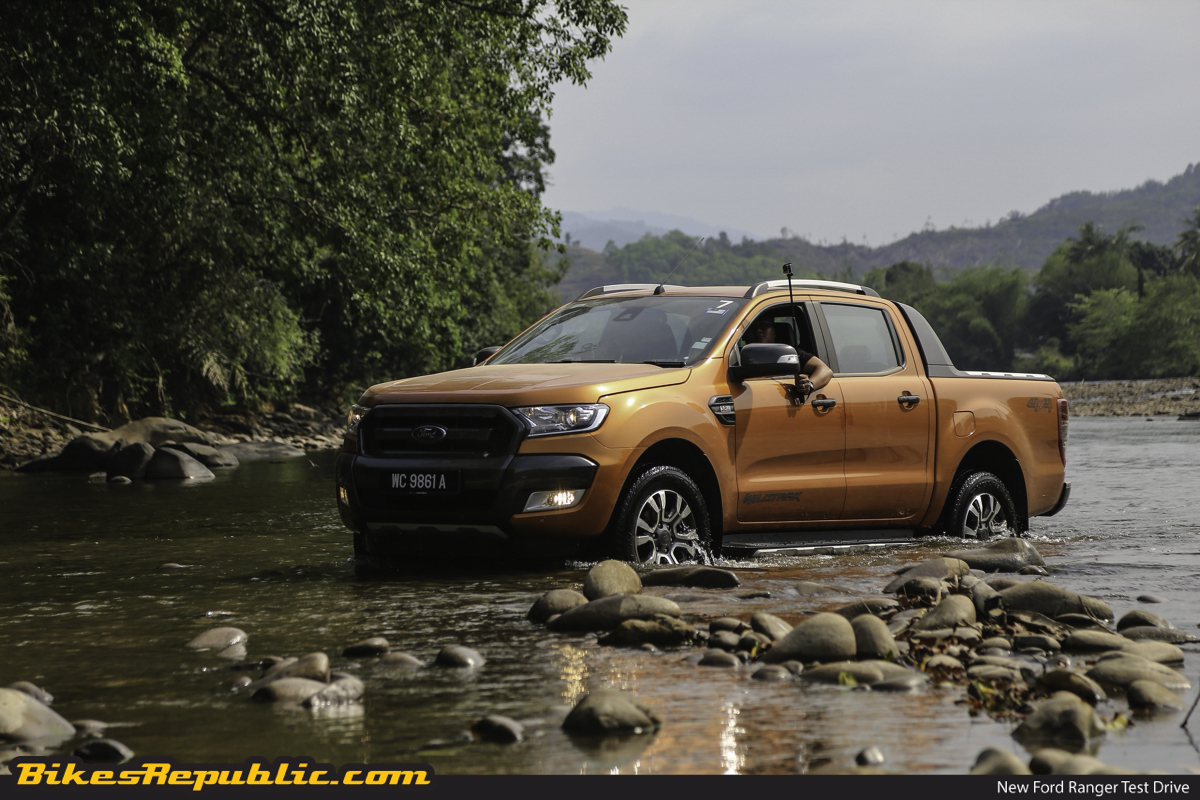
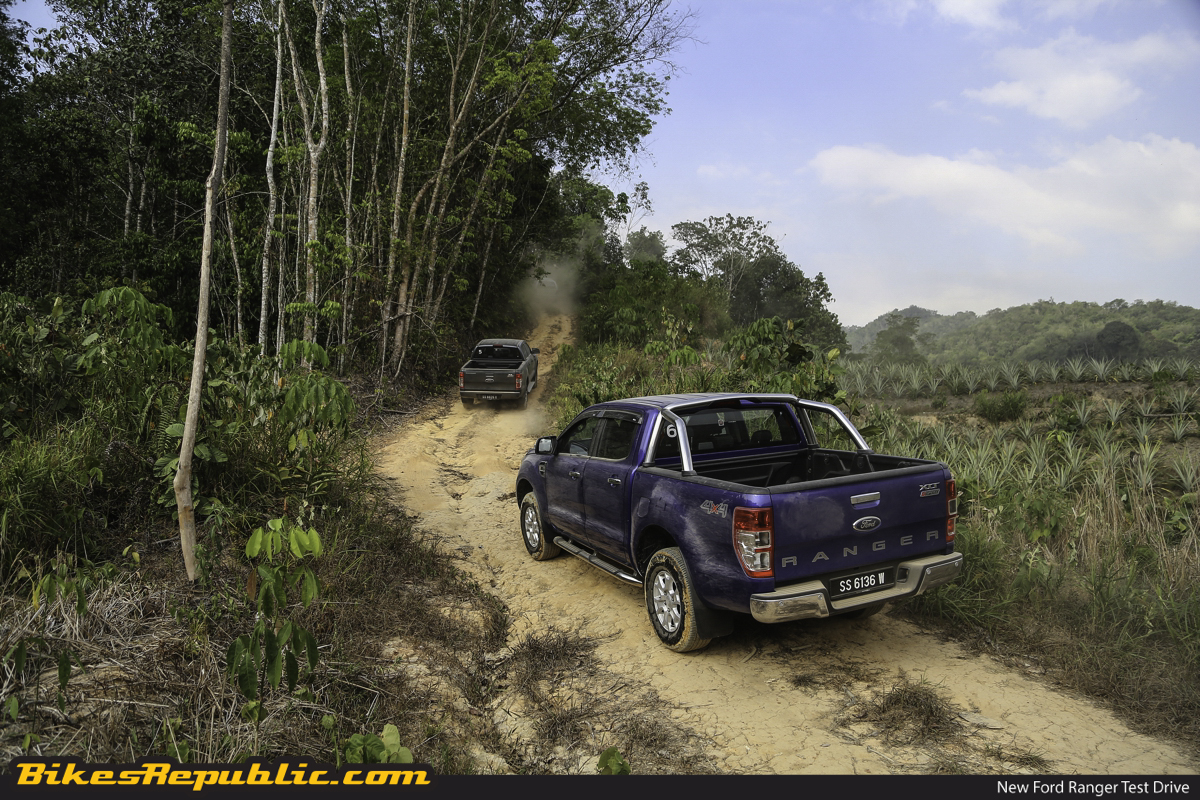
FordRangerEastMsiaMediaDrive_Day2-3Do not let the high on-road comforts fool you, the Ranger is still a highly capable thing when taken off the beaten path. Engaging its four-wheel-drive modes is as easy as turning a knob and takes just a few seconds. Whether you want to conquer a steep near-30-degree hill covered in dirt, gravel or mud, or perhaps cross a rocky river stream whilst wading water levels up to 800mm, the Ranger can truly tackle the rough stuff. Much of these capabilities are fuelled by features like Hill Descent Control, Hill Start Assist and Roll Over Mitigation that is primed across all variants – even in the basic 2.2XL MT.

What really is a game changer is the advanced new active and passive safety features primed in the range-topping 3.2 Wildtrak. Highlights here include Lane Departure Warning and Assist, Forward Alert and Collision Mitigation system, as well as a Distance Indication Alert. Having tested all three features on the road whilst enroute back to Kota Kinabalu city, we can safely report that the revised Ranger 3.2 Wildtrak stands as the safest pickup truck money can buy in our market currently.

FordRangerEastMsiaMediaDrive_Day2-9In a nutshell, the new and face-lifted Ford Ranger range has properly defended its title as the segment’s best. Offering better on-road drivability and comforts, unbeatable off-road capability, as well as becoming safer and smarter than ever, it is easy to see why distributor Sime Darby Auto Connexion (SDAC) are dealing with the good ‘problem’ of demand outweighing supply with the Ranger amongst Malaysian buyers, resulting in a long waiting list the firm currently holds.

FordRangerEastMsiaMediaDrive_Day2-25Besides the subsequent waiting period, one only needs to deal with another challenge, and that is meeting the Ranger’s princely asking prices. Things start from RM91,588 for the base Ranger 2.2XL MT, from RM109,688 for the Ranger 2.2XLT AT, and from RM119,238 for the Ranger 3.2XLT AT. Capping things off is the Ranger 3.2 Wildtrak which, with all its added safety features and premium amenities, commands a starting figure of RM137,488 instead.

Though steep, the improved new Ranger’s outstanding capabilities, comfort and full spectrum of safety features are worth every single penny it rightfully commands. Said prices include SDAC’s offer of a three-year or 100,000km manufacturer’s warranty for added peace of mind.

2016 Ford Ranger 2.2

ENGINE
  • 2.2-litre turbocharged
  • in-line four-cylinder
  • TDCi diesel
OUTPUT
  • 158HP @ 3,200RPM
  • 385Nm @ 1,600RPM
TRANSMISSION
  • 6-speed manual
  • 6-speed automatic
PRICES (OTR without insurance)
  • RM91,588 (2.2 XL MT)
  • RM101,388 (2.2 XLT MT)
  • RM108,788 (2.2 XLT AT)

 2016 Ford Ranger 3.2

ENGINE
  • 3.2-litre turbocharged
  • in-line five-cylinder
  • TDCi diesel
OUTPUT
  • 197HP @ 3,000RPM
  • 470Nm @ 1,750RPM
TRANSMISSION
  • 6-speed manual
  • 6-speed automatic
PRICES (OTR without insurance)
  • RM110,888 (3.2 XLT MT)
  • RM118,388 (3.2 XLT AT)
  • RM132,188 (3.2 Wildtrak AT)

Gallery
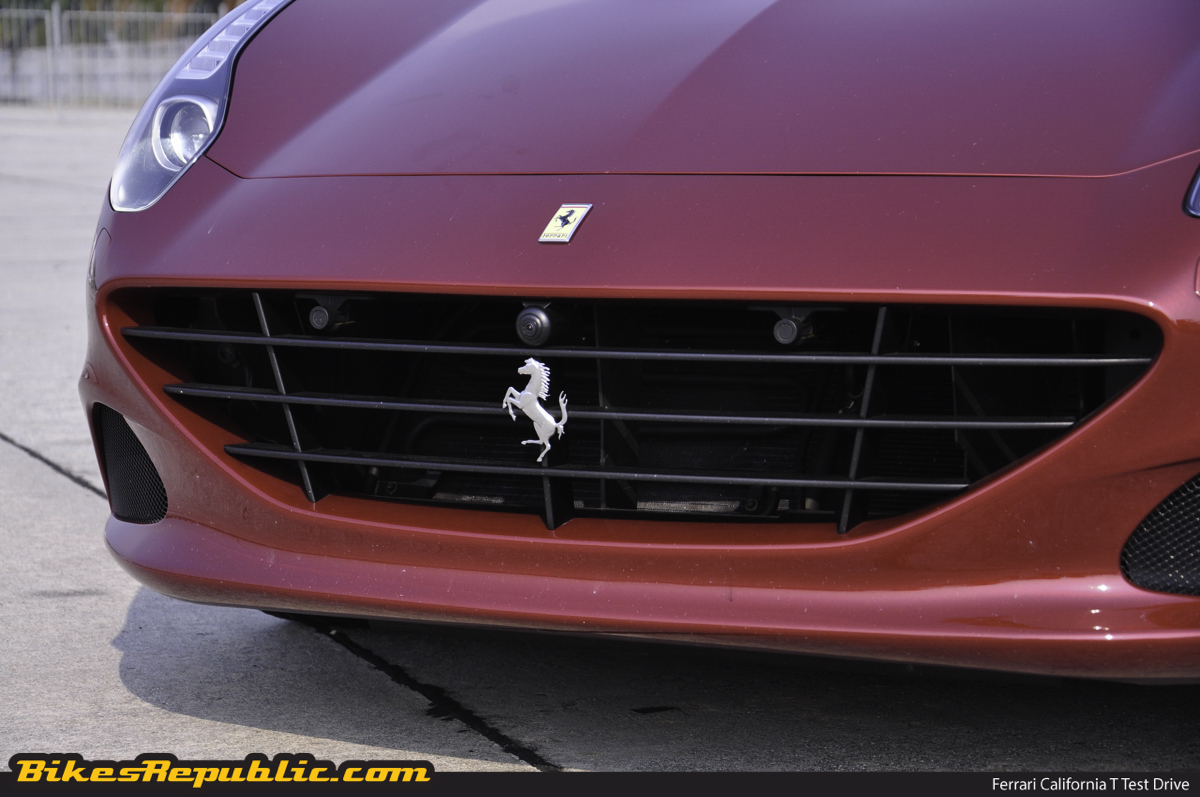
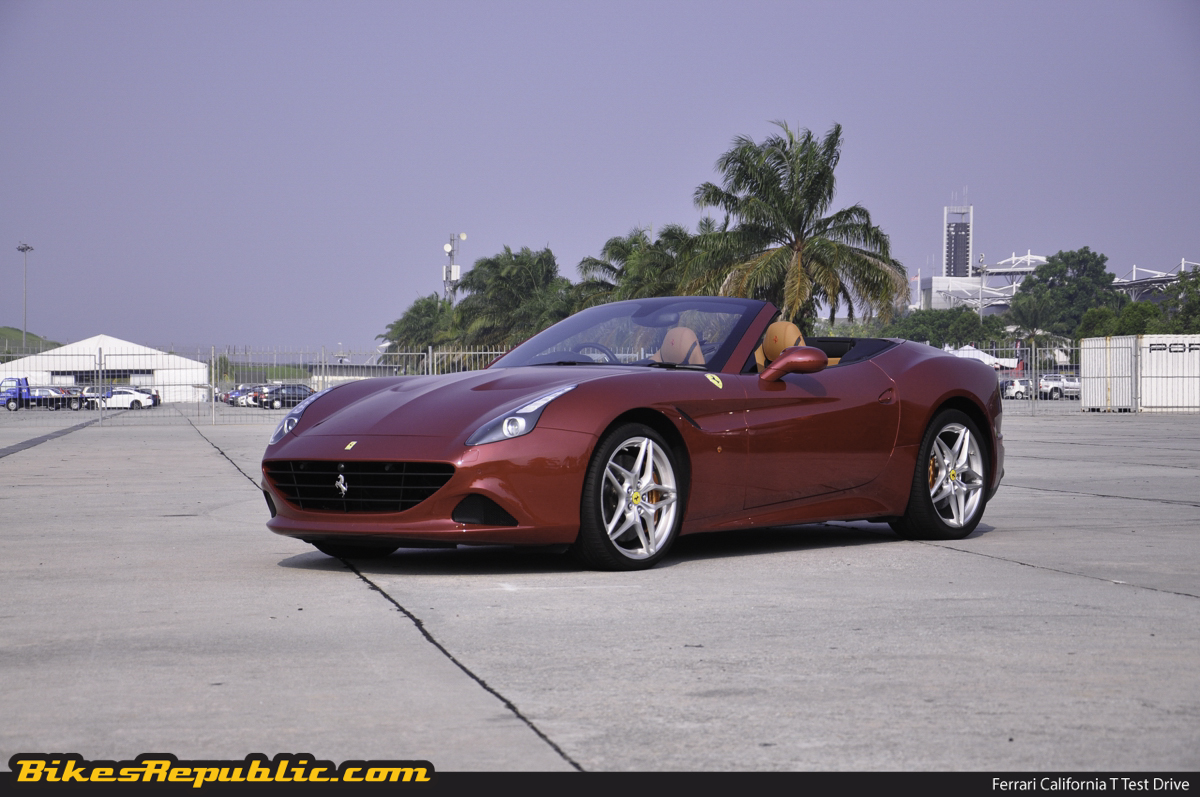
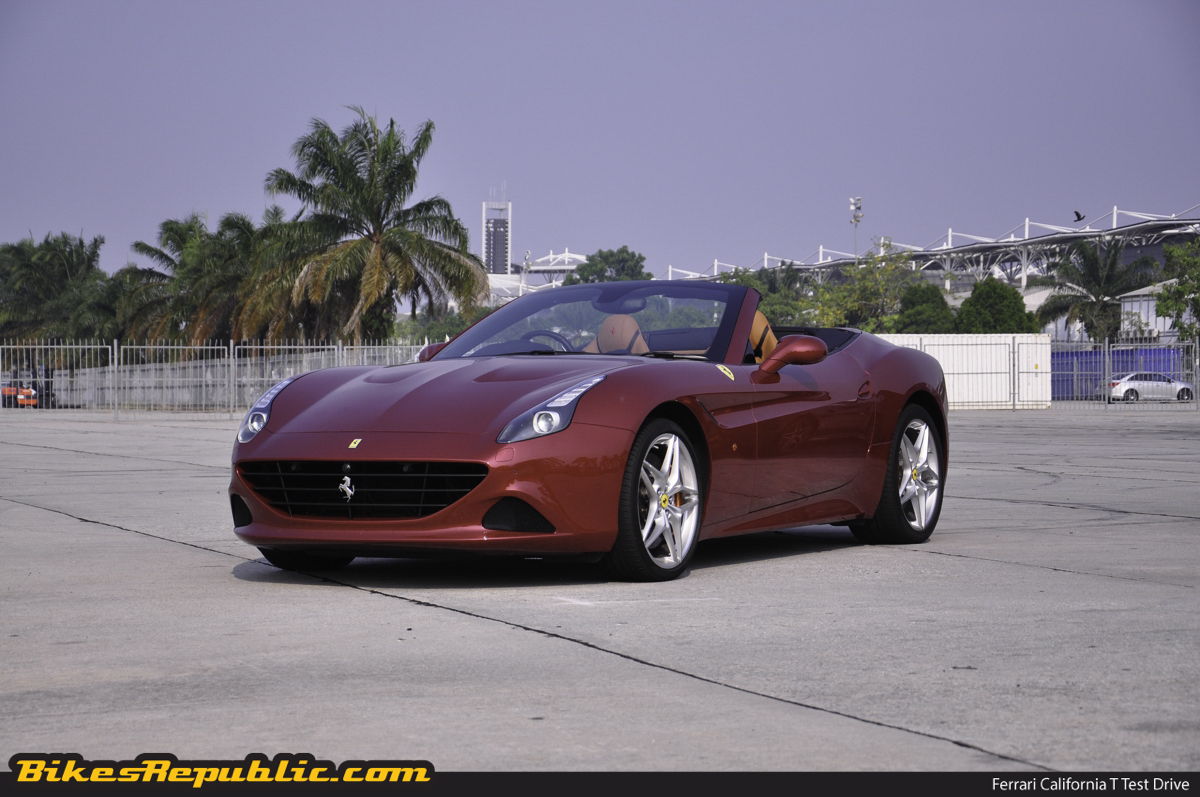
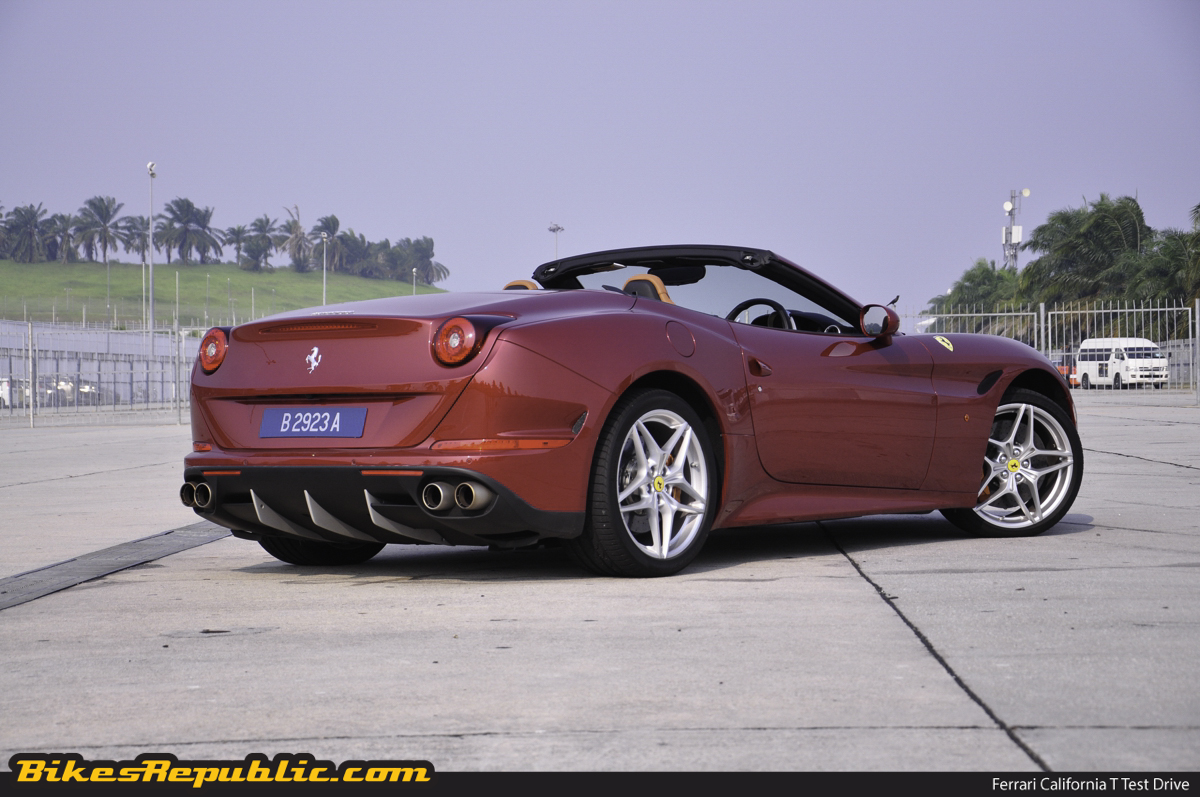
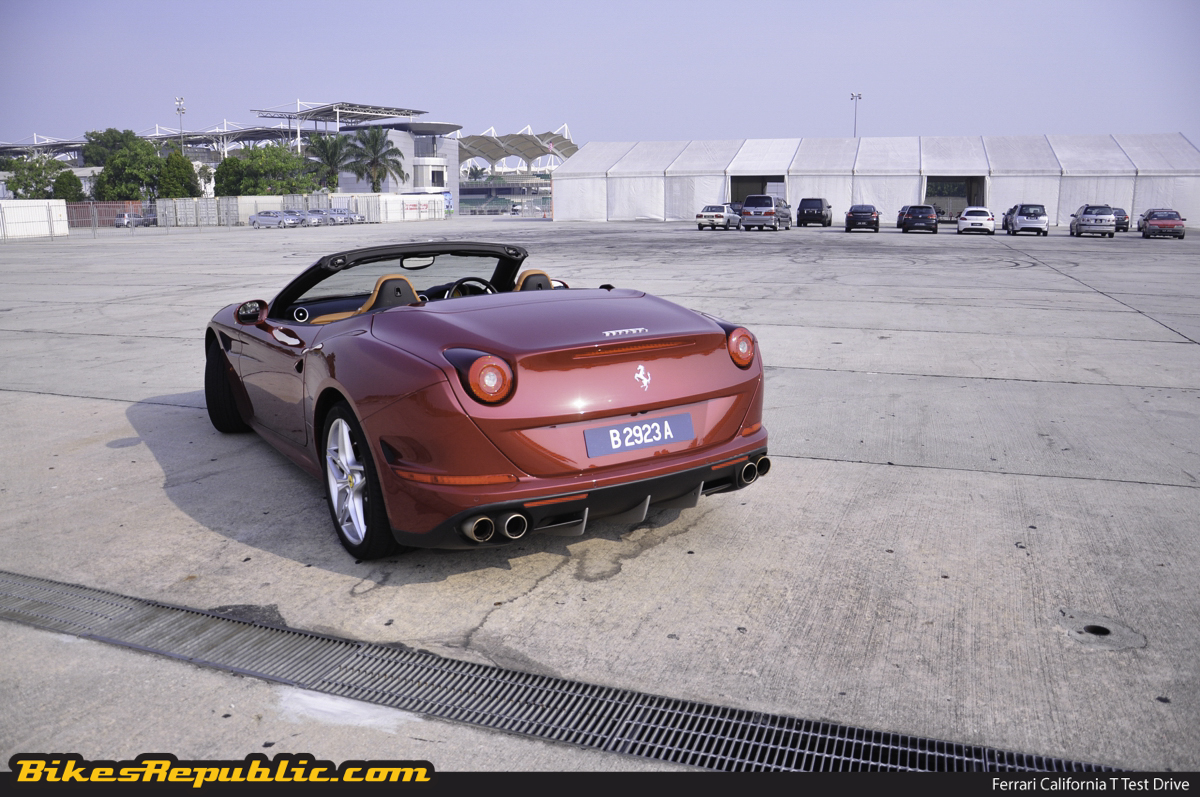
Maranello’s famed prancing horse badge is perhaps one of the most celebrated sports car marques in history. Though fames for making some of the planet’s most coveted race-bred performance sports cars, Ferrari has indeed produced some of the greatest grand touring cars of all time too, with the brand’s new California T fast becoming one of the latter in recent times.

DSC_0572Introduced back in 2014 at the Geneva Motor Show, the California T became the first turbocharged roadcar conceived by Ferrari since its iconic F40 of the 1980s. The ‘T’ in California T symbolises that fact, with Ferrari also granted it with a host of enhancements over the naturally aspirated California model it succeeds.

DSC_0577Unlike the mid-engined 458 Italia and manic F12berlinetta, the California model was conceived as a 2+2 grand touring cabriolet for the jet-set that offered a milder performance level as oppose to Ferrari’s other race-bred creations. Fuelling that fact further is the California’s offer of a retractable hard-top (RHT) roof, which allows you to enjoy that coveted wind-in-your-hair driving thrills, with the system taking just 14 seconds to fully retract and deploy. In other words, if ever you wanted a stylish Ferrari that wasn’t seriously focused on conquering the track, you’d want the California.

DSC_0597Whilst the original California that debut in 2008 did indeed win hearts in terms of styling, many of its intended buyers perceived it to be ‘too soft’, resulting in it being dismissed rather quickly in favour of rivals such as the Bentley Continental GTC and the pricier Aston Martin DBS Volante. Realizing, this Ferrari promptly gave the California an extensive mid-life makeover, resulting in the California T.

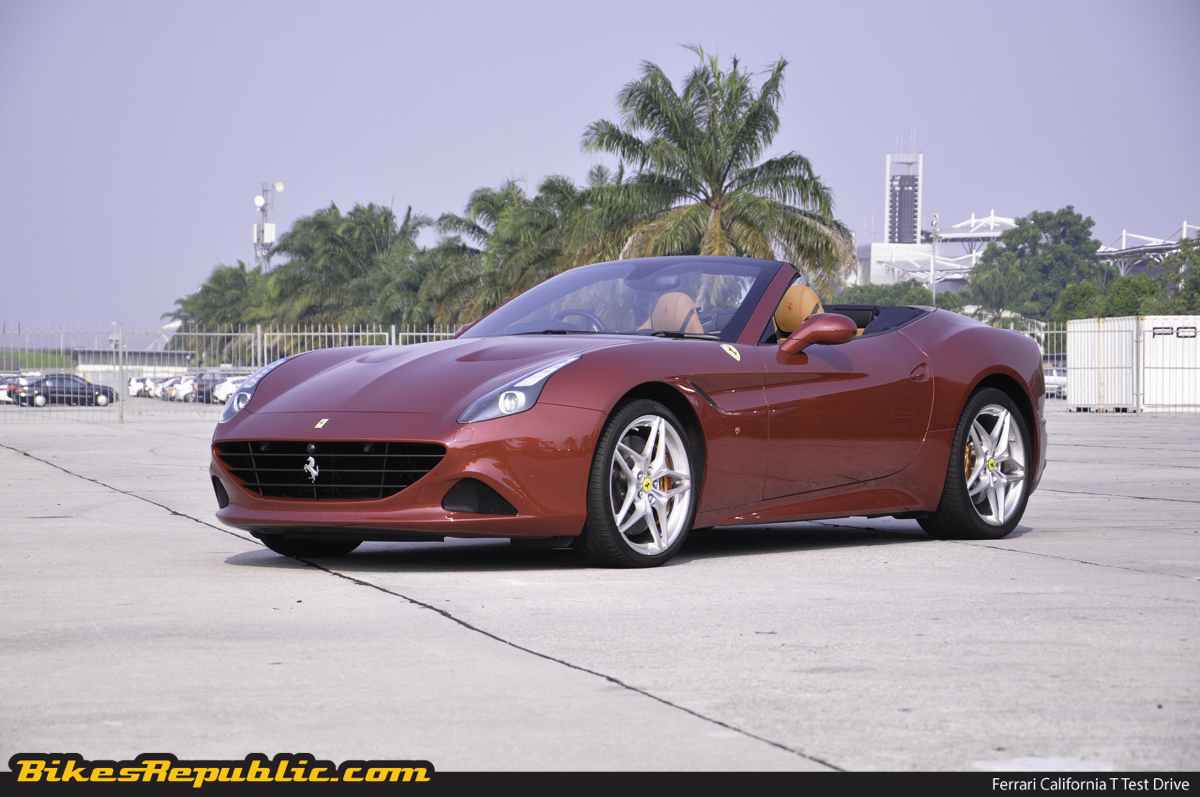
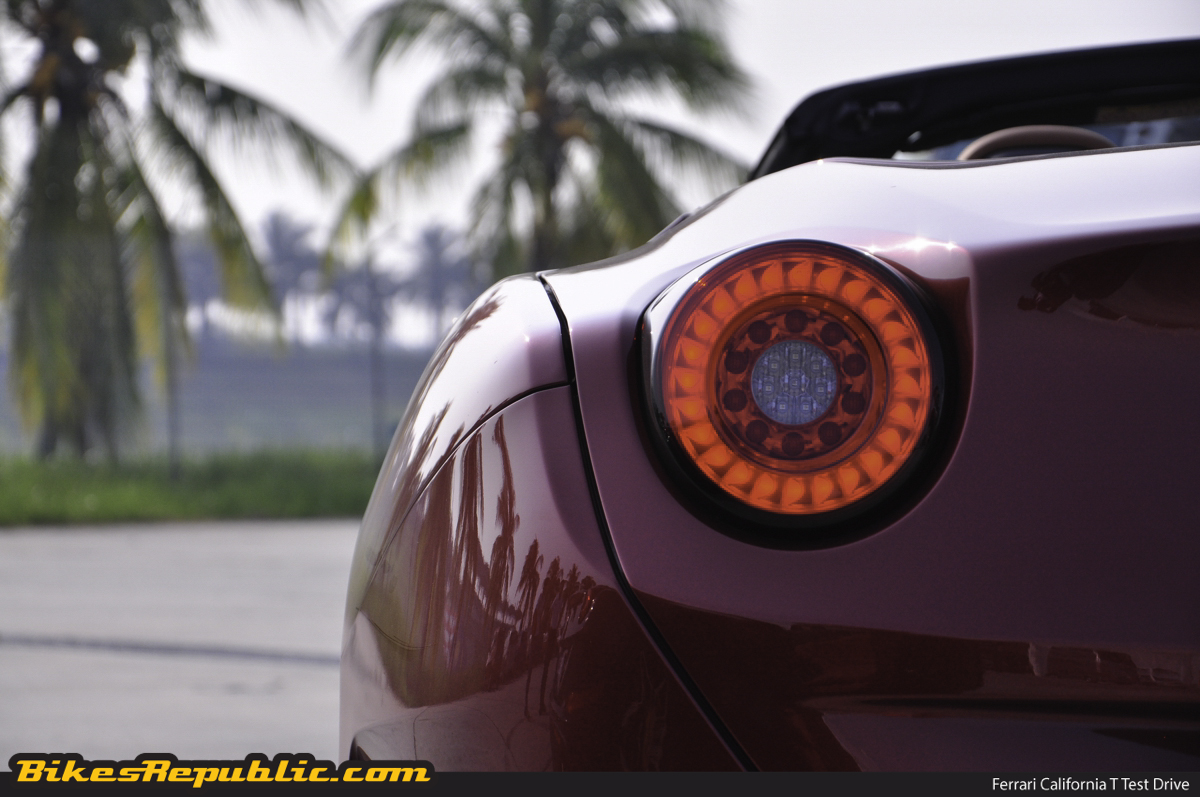
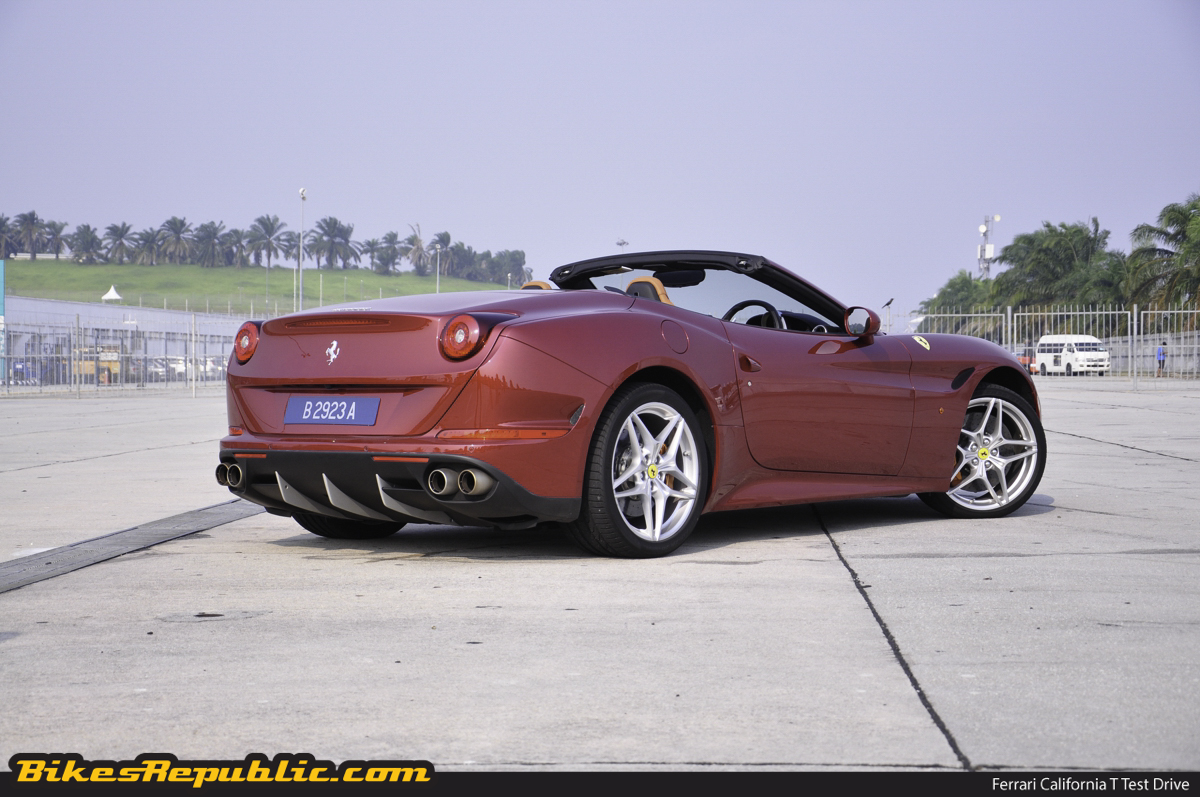
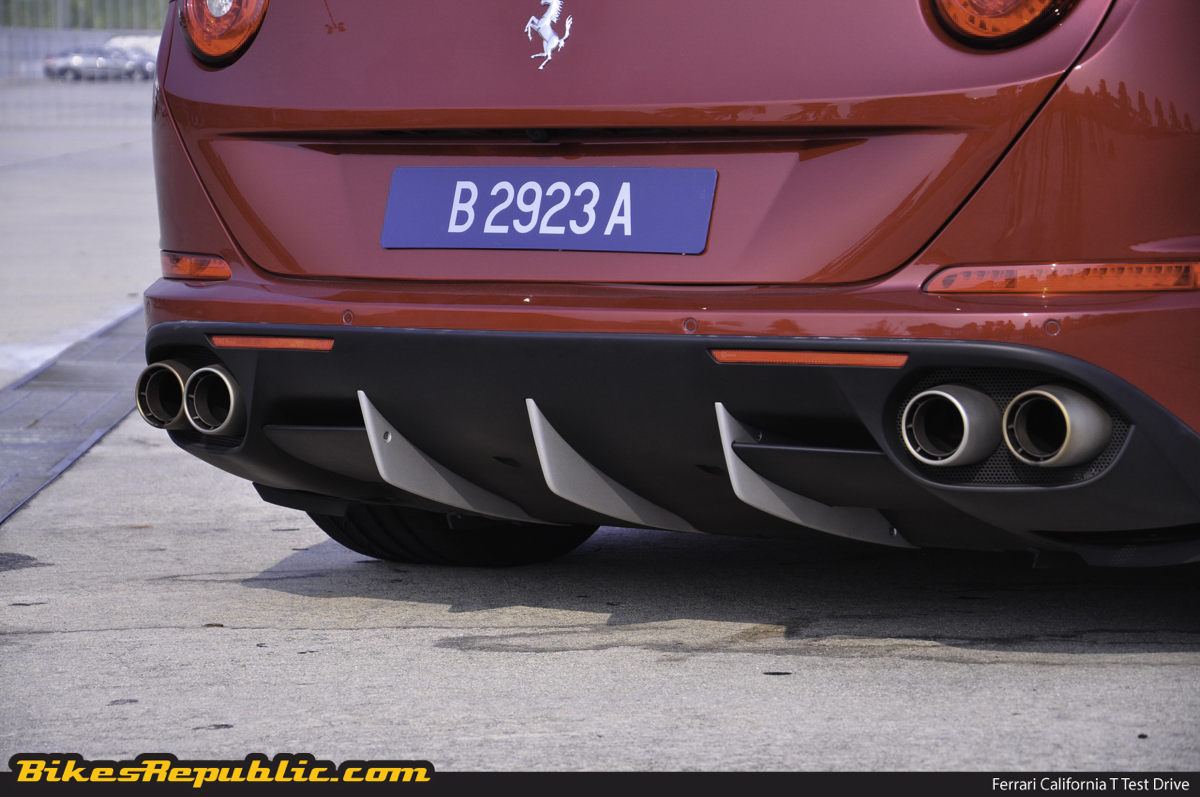
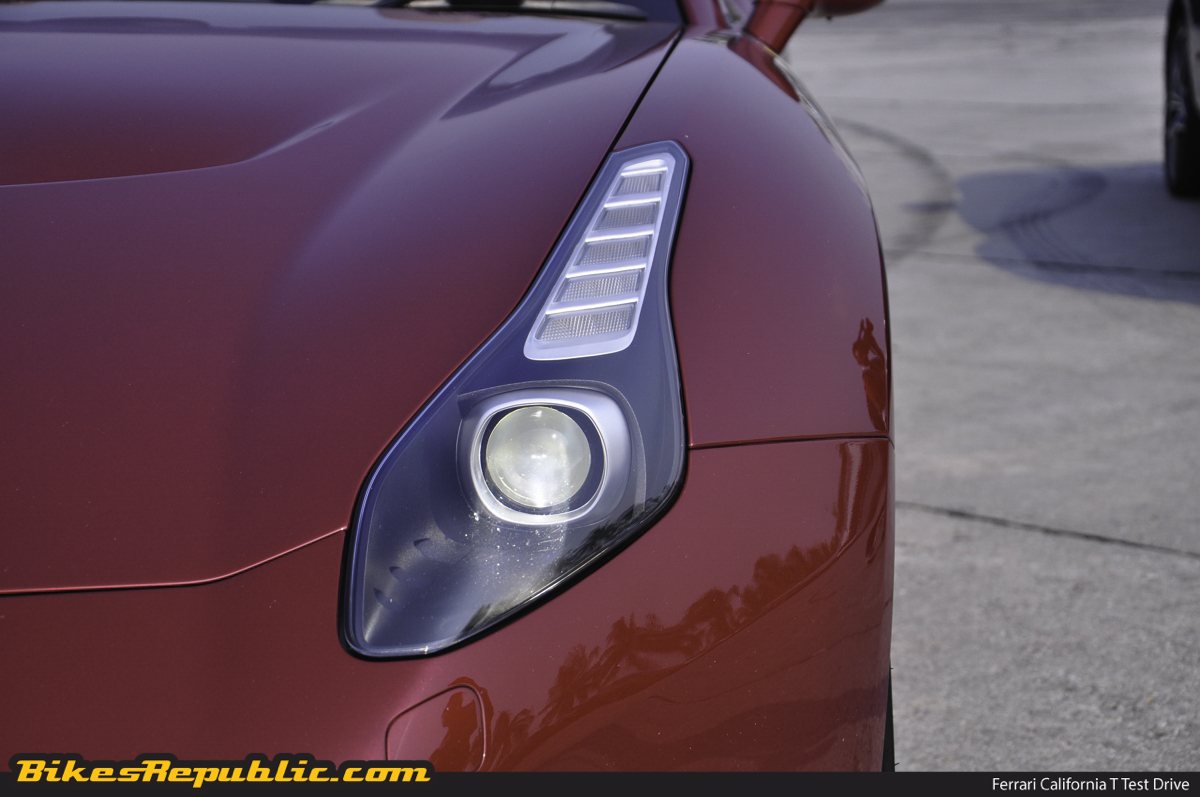
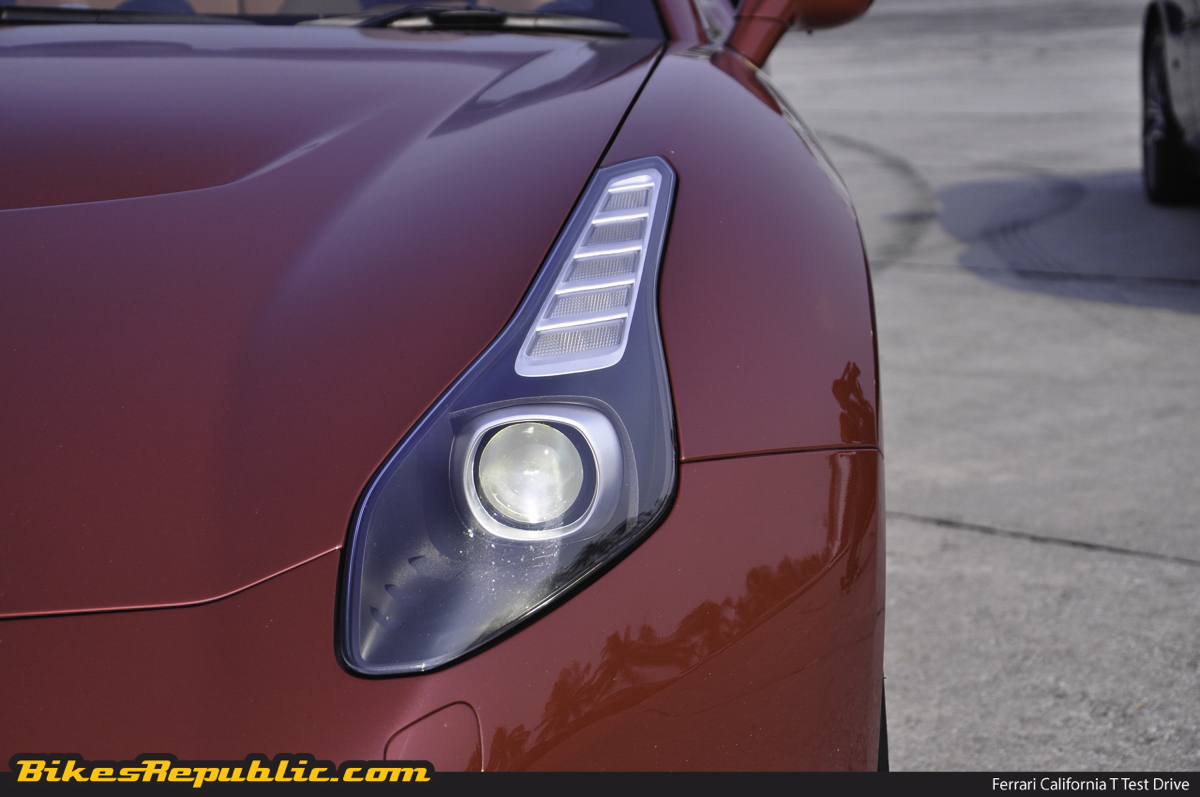
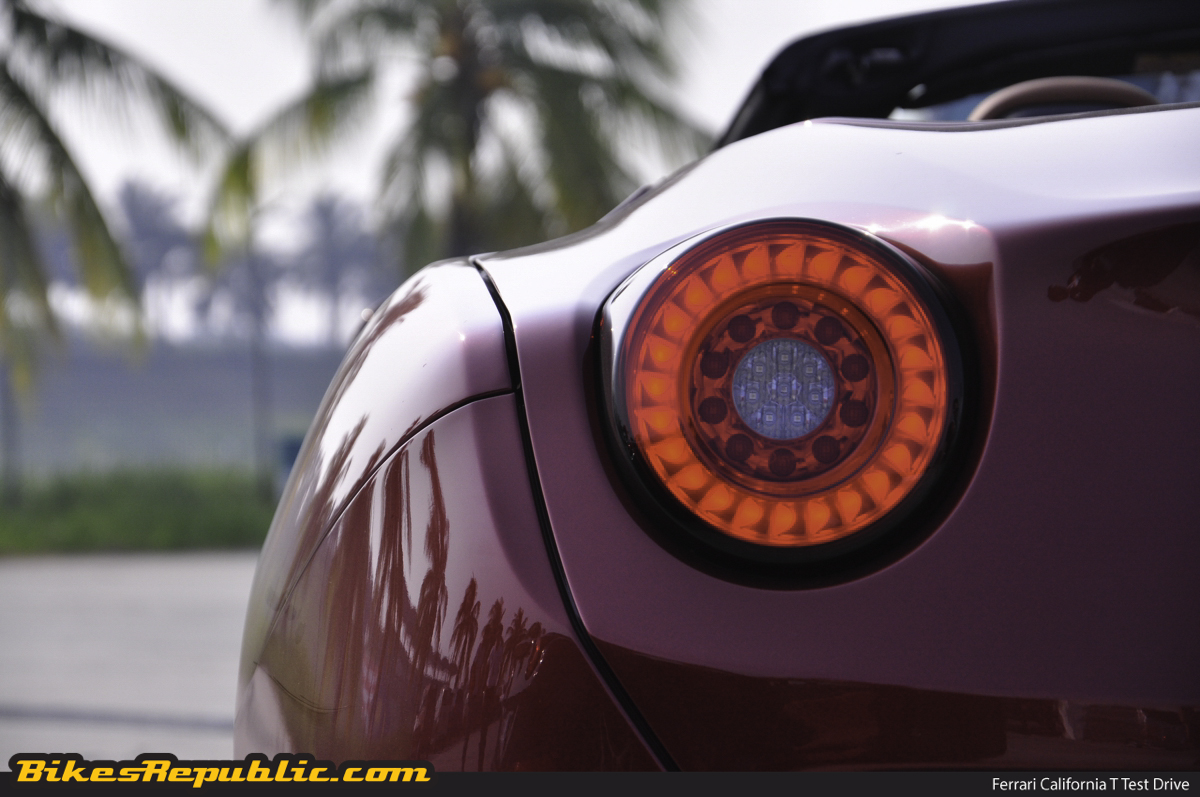
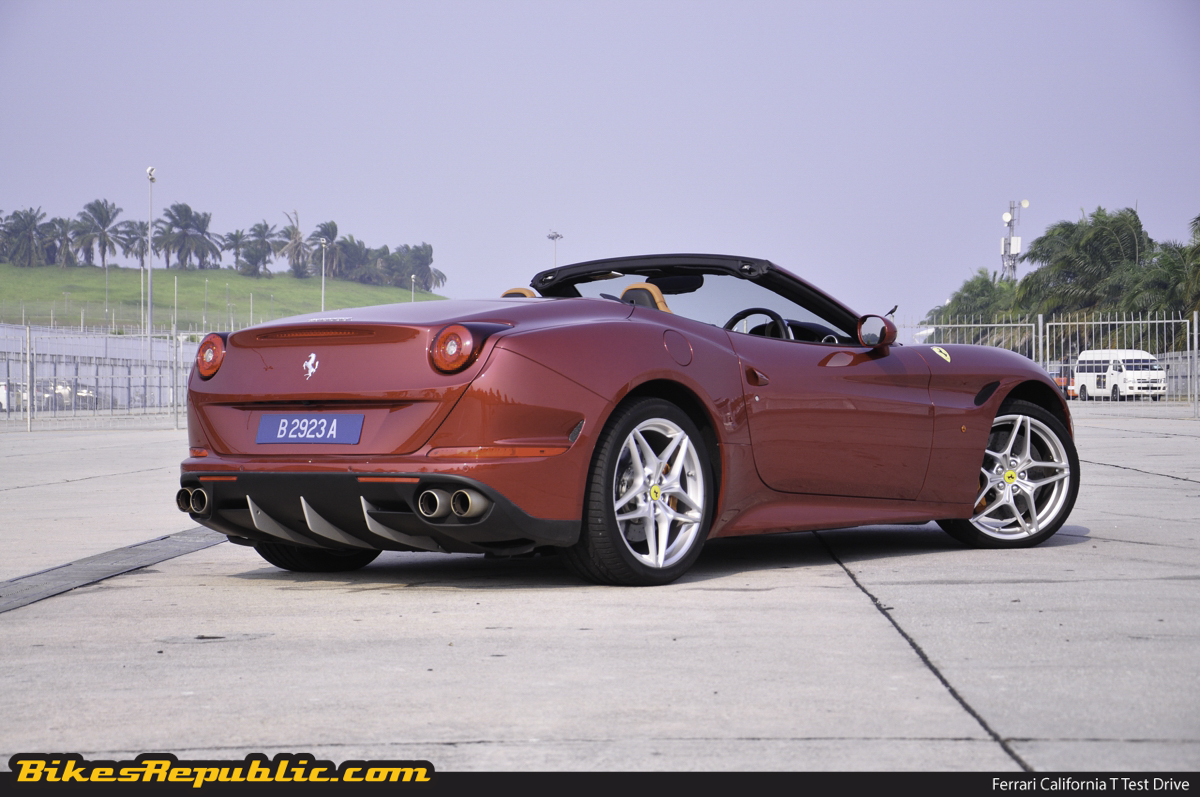
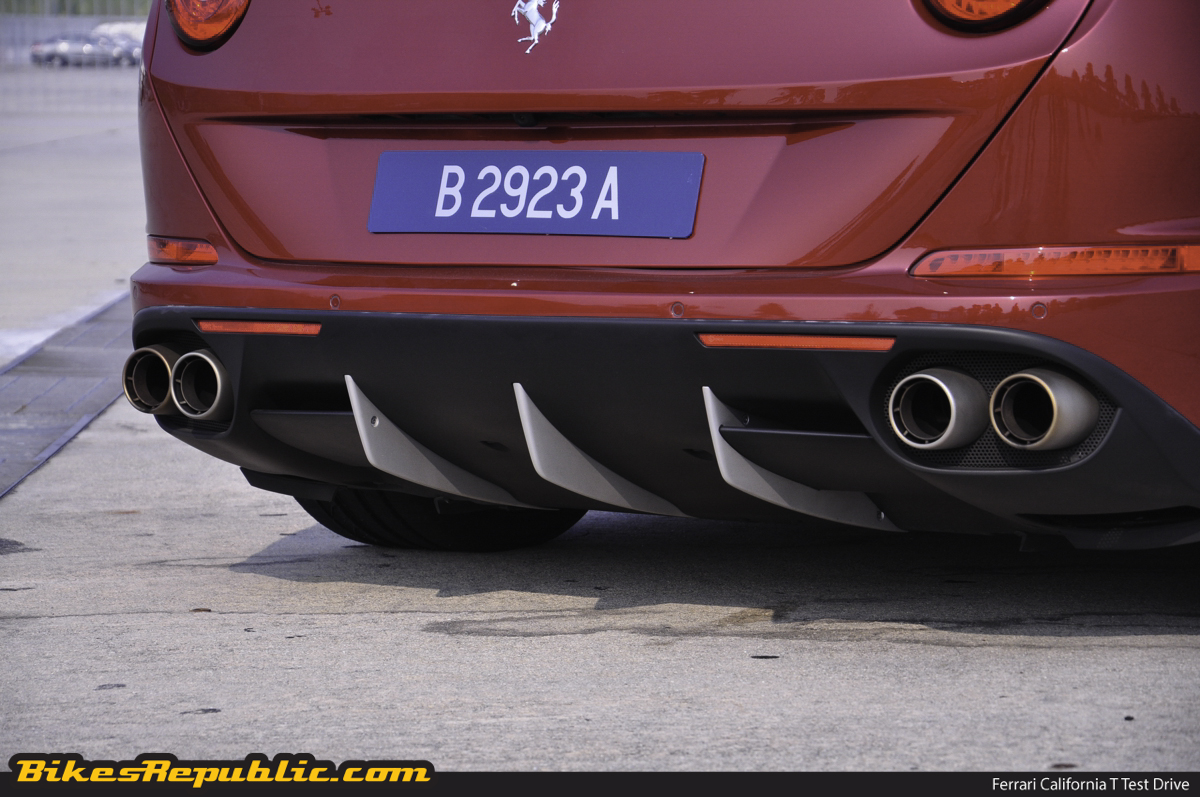
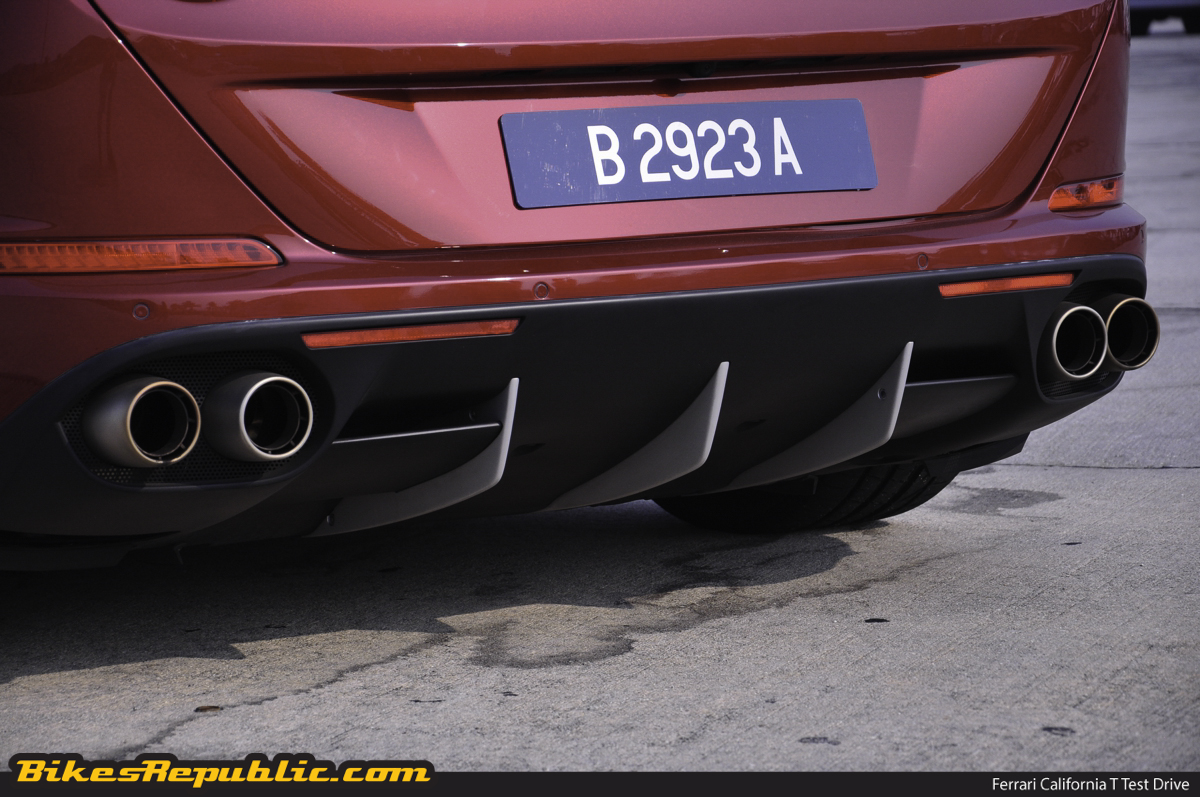
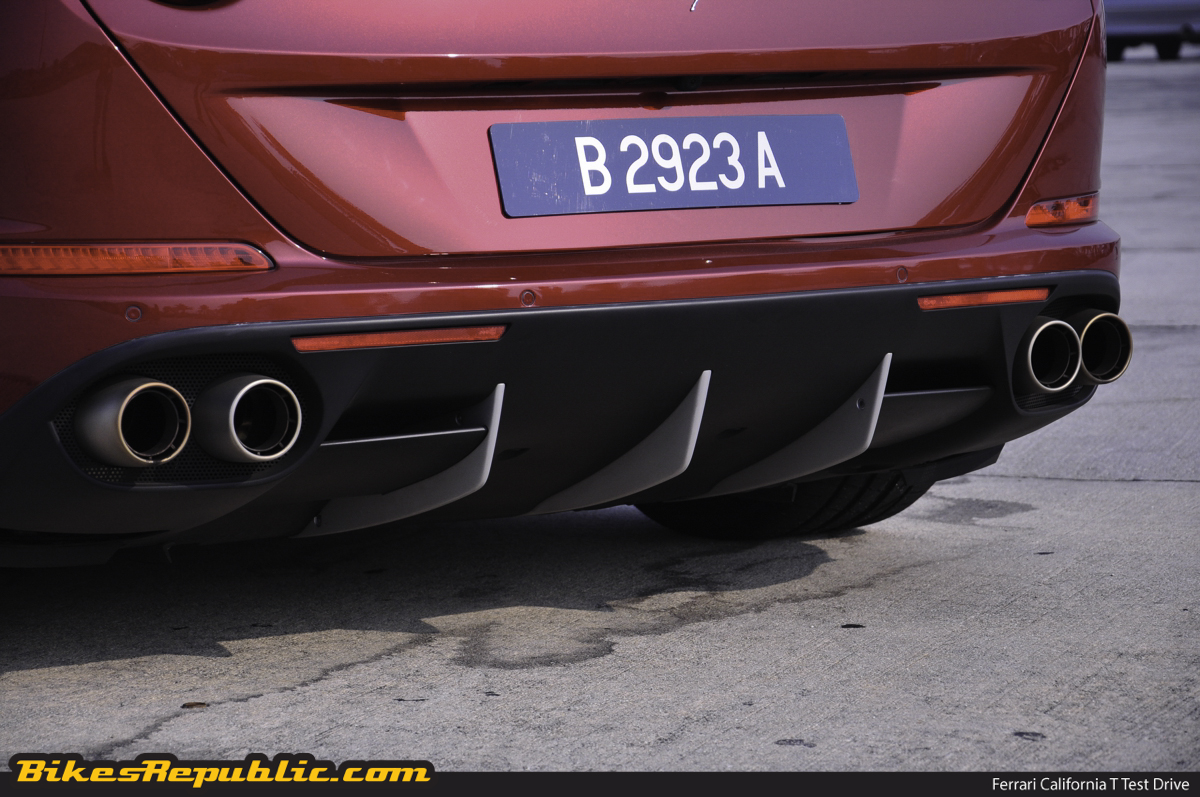
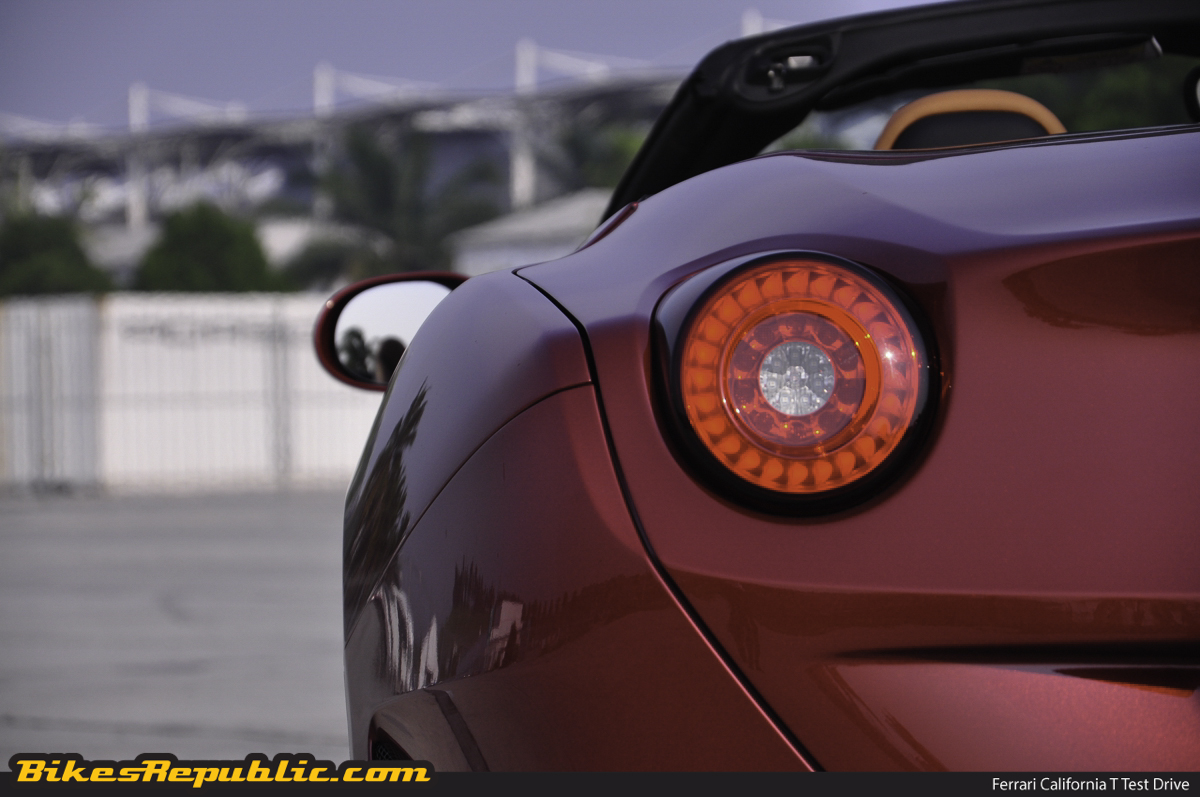
Whilst the exterior styling did not win as many hearts as its predecessor did, it is still quite a looker in our eyes. We love the traditional yet sleek styling penned by Pininfarina,  and it still looks fit for a cruise down the scenic coastlines roads of Italy or Southern France.

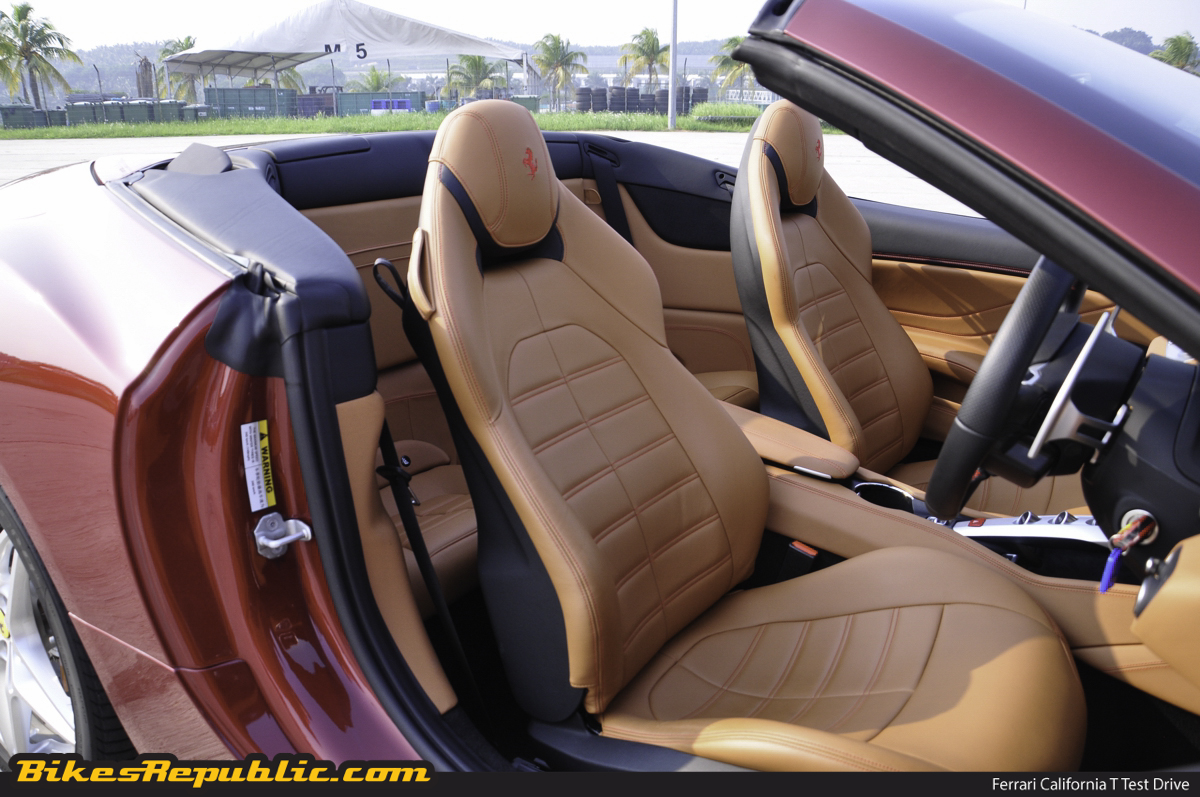
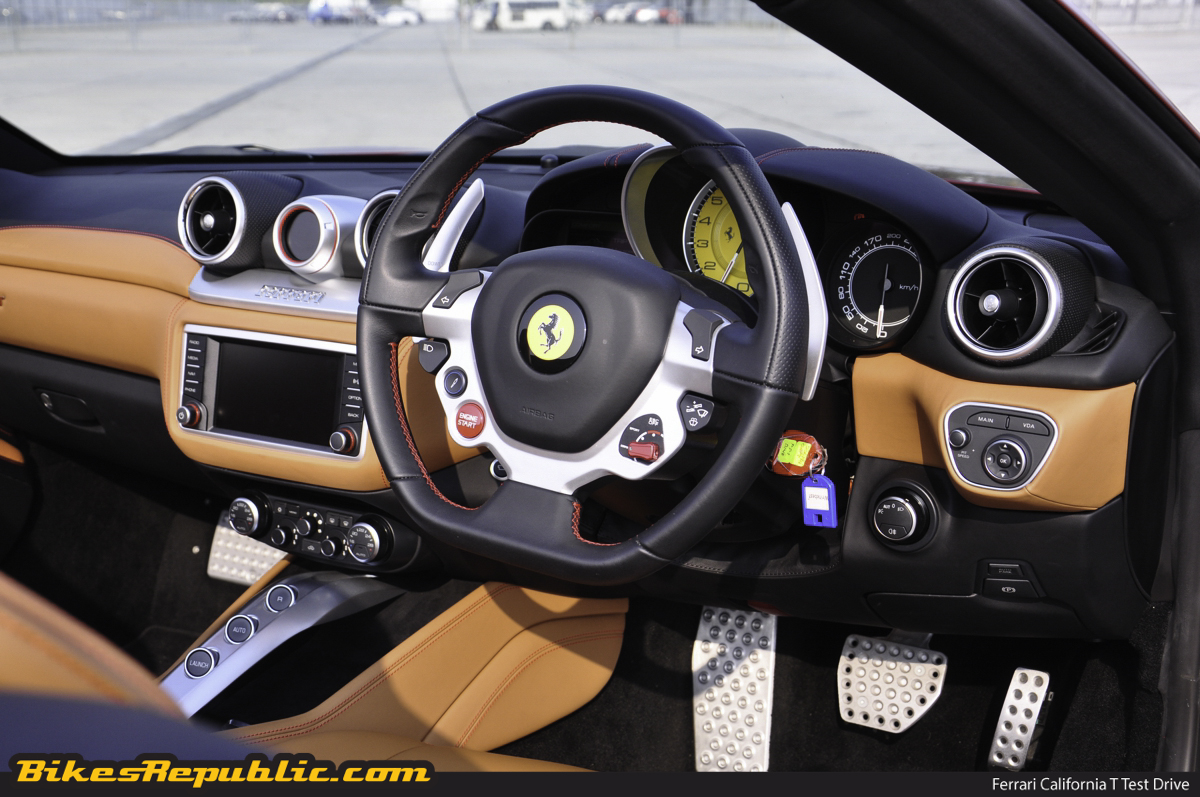
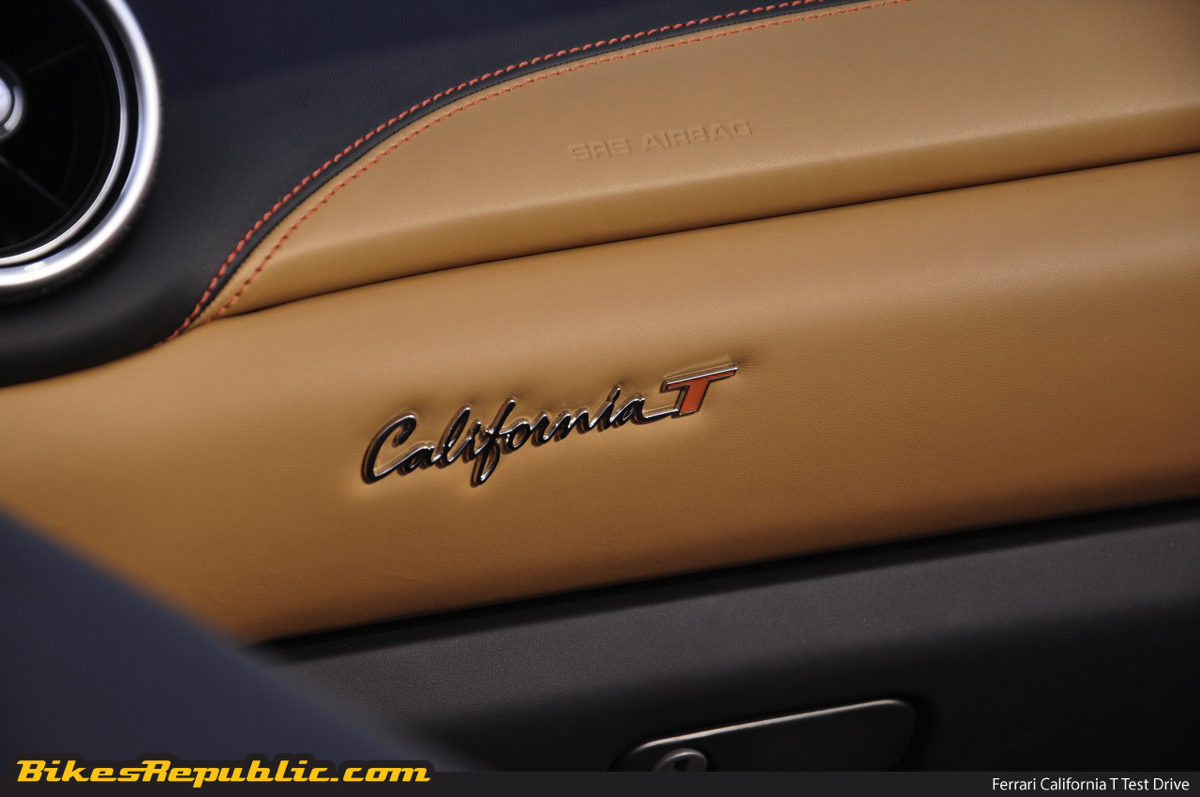
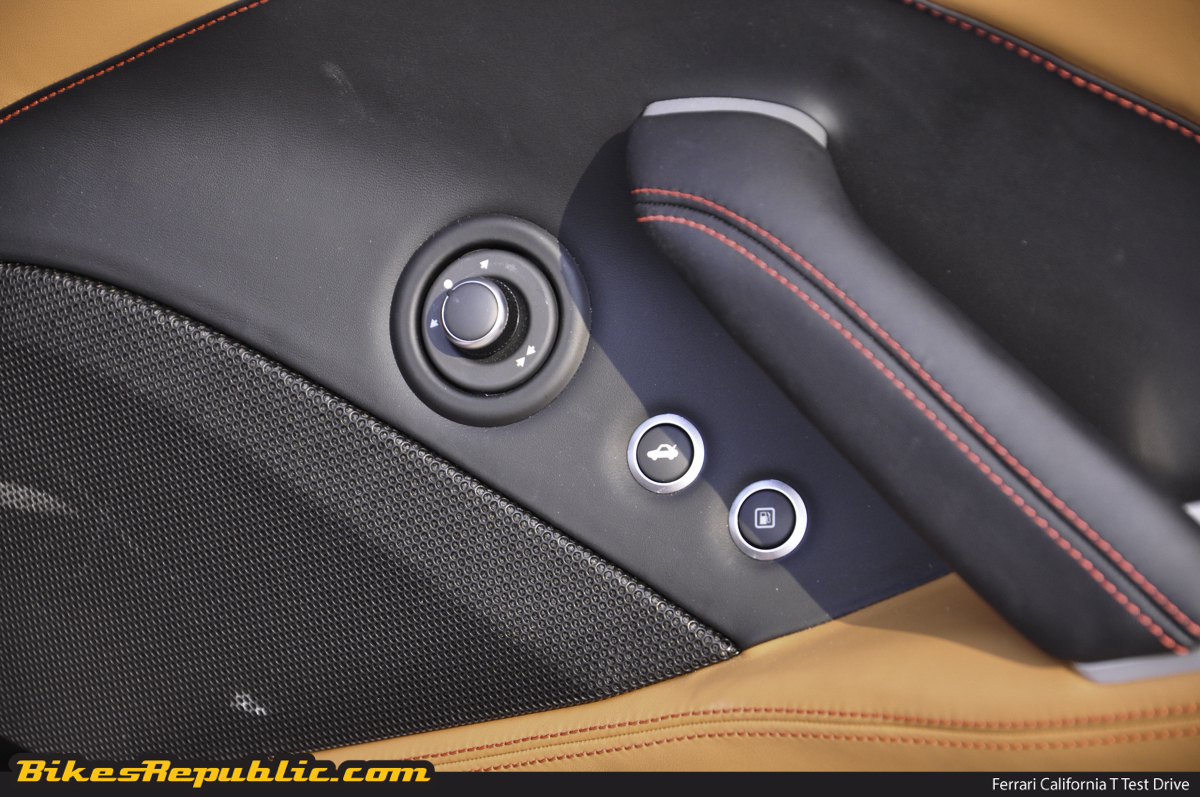
DSC_0606Climb aboard and things inside the cabin look just as stylish with a lot of flair as the exterior. Depending on how you’d like to spec it, you can have the California T’s cabin lined with a vast selection of bright-coloured and plush leather trims just like the red-coloured test unit featured here, or you could opt for a more darker and racier outlooks with aluminium, Alcantara and carbon fibre trim options.

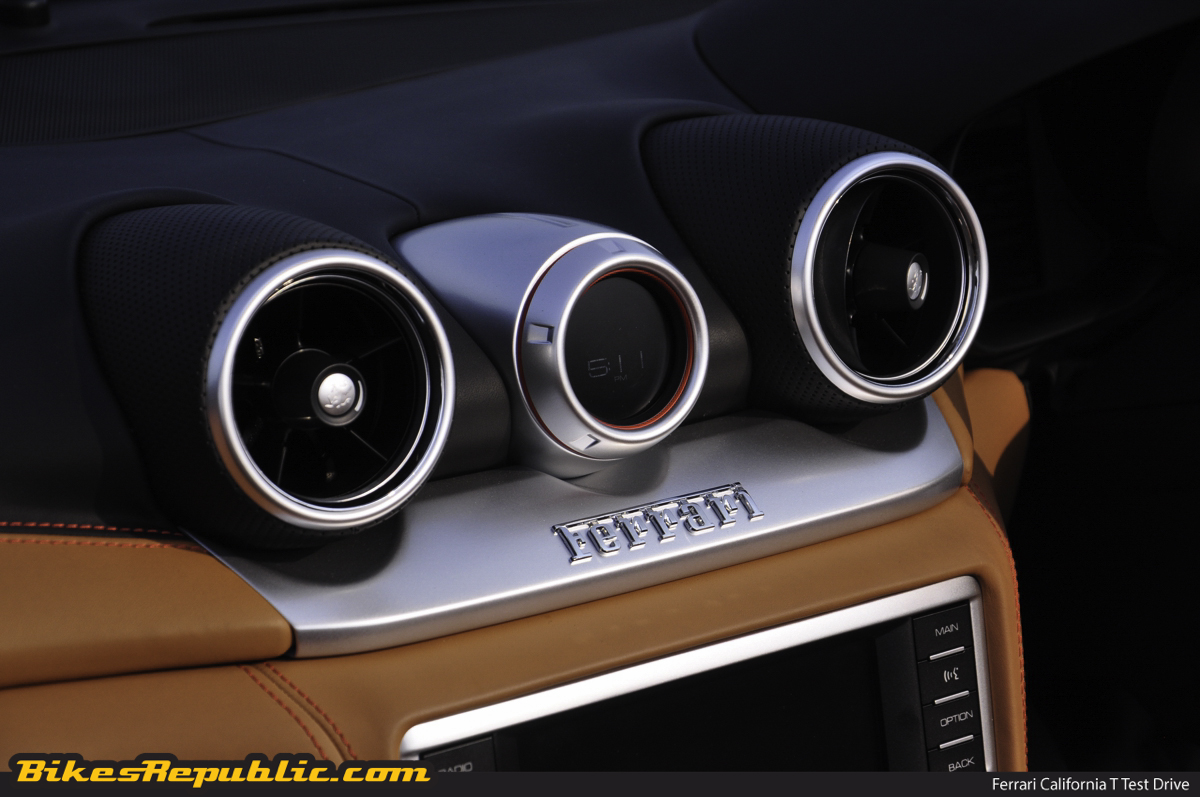
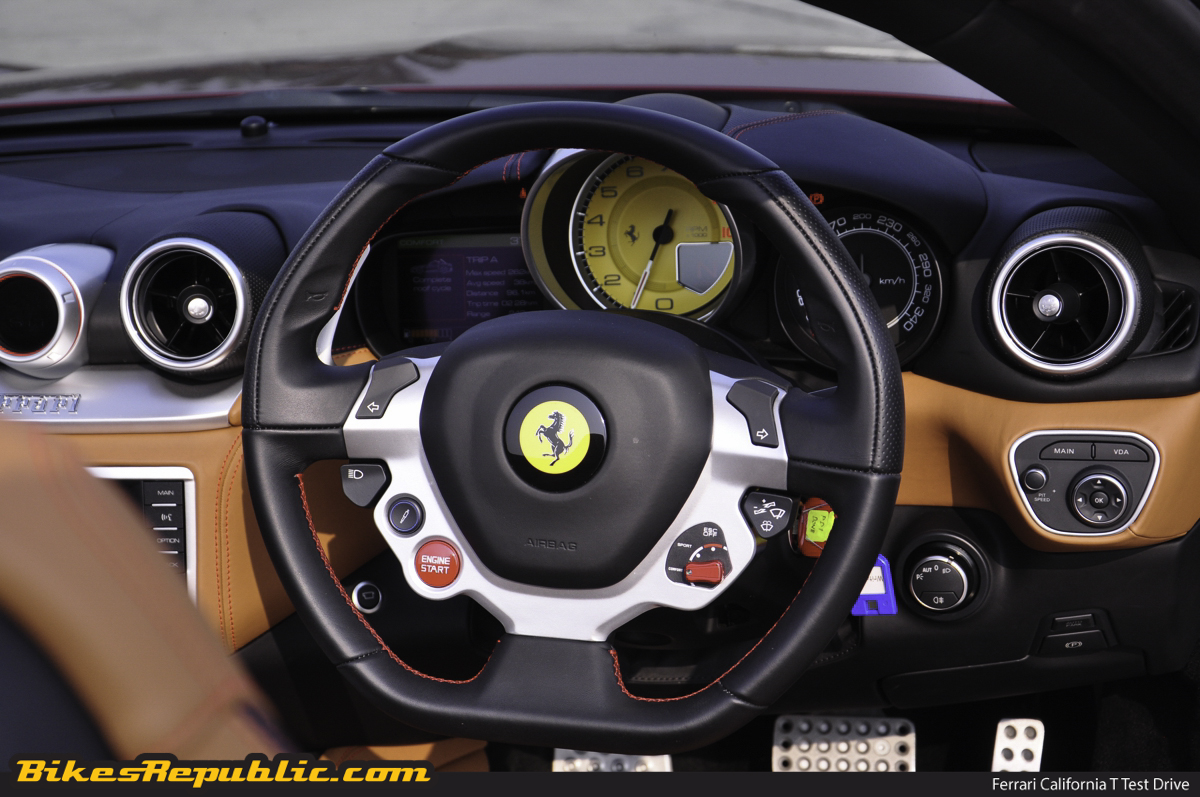
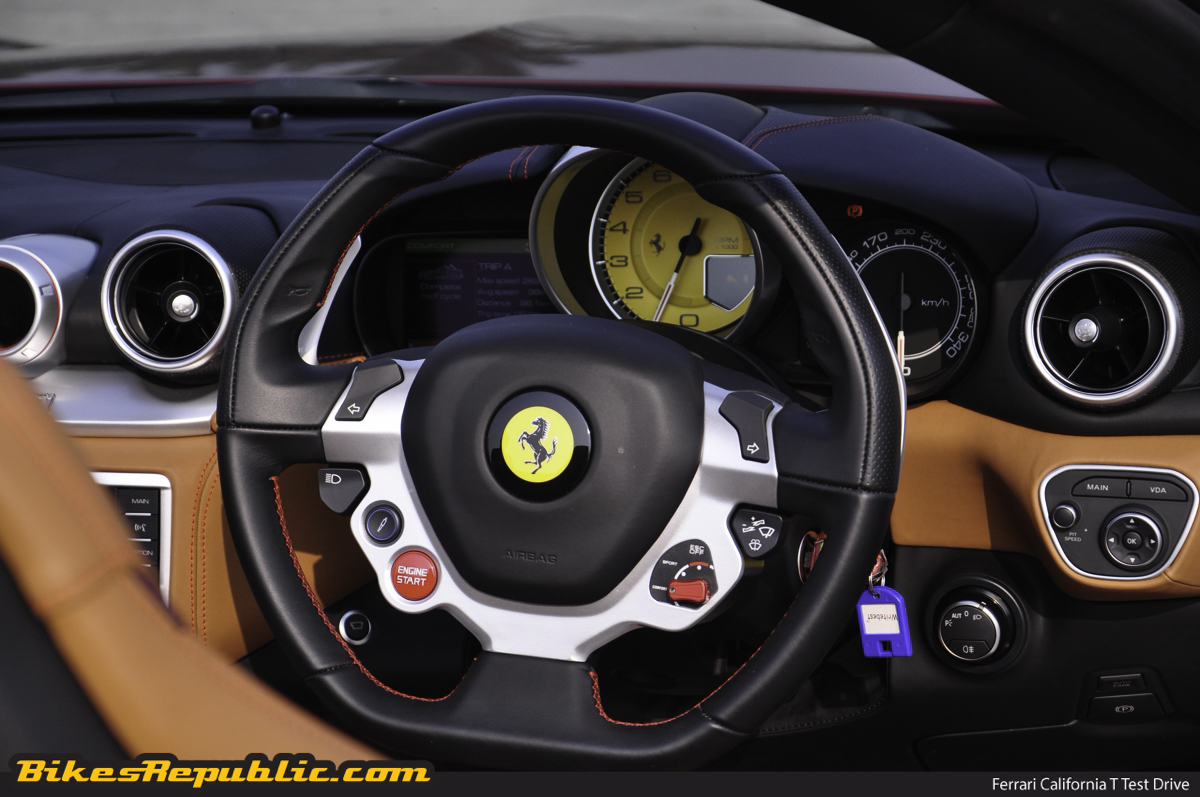
DSC_0613Either way, the feeling is just about the same, and that being the note of having something special yet purposeful thanks to things like the large central rev-counter dominating the instrument panel, and the absence of a traditional gear level in favour of buttons and paddle-shifter actions. What really felt sublime was having that mild racy traits combined with the plushness of the premium cow hide covering the dash, steering wheel and seats.

DSC_0629Of course, this being a Ferrari, the real fun begins the moment you hit the engine start button to fire up this California T’s front-mid-mounted heart. Underneath the stylishly crafted Italian metal sits a brand new 3.9-litre twin-turbocharged V8 engine christened as the F154 by Ferrari. It replaces the previous California’s naturally-aspirated 4.3-litre V8, offering 552hp at 7,500rpm and a whopping 755Nm of torque at 4,750rpm when its two turbochargers are at spooling at full.

Ferrari opted to go down the turbocharged route as a means of adapting to strict emissions restrictions in Europe, with the trend these days favouring lower displacement with force induction. Though it has shrunk in size slightly, the new mill is indeed more powerful than the one replaces, but more importantly, it is much greener as well thanks to the presence of automatic idling stop-start and an intelligent transmission as well.

DSC_0631On the move, what surprised us was the way this mill acted, having almost no noticeable lag with a very precise and direct delivery much akin to a naturally aspirated mill. The dead giveaway of its forced-induction nature only comes when you let off the throttle at the higher rev-band, where the unmistakable wastegate whistle and hiss comes into fruition, albeit at very mild volume level indeed. Ferrari have worked hard at making this mill not feel and sound like a turbocharged one, and the result is pretty impressive to say the least.

All power generated my the twin-turbo V8 is sent to the rear wheels via a revised version of Ferrari’s seven-speed dual-clutch transmission (DCT), which is paired with Ferrari’s CST and F1 TRAC stability and traction control suites. The powertrain grants the California T with an impressive century sprint time of 3.6 seconds, whilst the claimed top speed stands at 315km/h.

DSC_0640What we loved here besides the engine was the smooth action of the 7-speed DCT both at speeds and in an urban cruise. What was an event on its own as well as the way this transmission automatically downshifts whilst under braking for corners and what not, with the on-board electronics blipping the throttle and engaging the gears precisely in just milliseconds. This is perhaps a testament to the prancing horse badge’s intimate knowledge garnered from a century of racing.

What complemented this in full was the California T’s highly engaging driving dynamics and chassis. Amongst the many electronic wizardries primed on board the California T, the most crucial contributors to its dynamic feel are the Manettino driving mode selector tailored for Ferrari by Magnetti Marelli, followed by the Magnaride adaptive suspension suite as well.

DSC_0586With the ‘Comfort’ mode engaged, the California T felt rather docile and compliant, even when charting down a slightly bumpy and twisty set of roads as we did in our test drive in and around the roads surrounding roads of the Sepang International Circuit. Also altered here are the DCT’s shift points, followed by the reduced throttle sensitivity, and the lightened steering weight.

With this mode, the magnetic adaptive suspension works overtime in granting the most comfortable ride possible, with the system actively adjusting the suspension travel rate and dampers in milliseconds. This is the mode you want engaged when enjoying a drive down a scenic coastal road.

However, things quickly change once you flick the Manettino into ‘Sport’ mode. Here, the throttle sensitivity is sharpened, the DCT’s shift points re-optimised, followed by the increased weight in the steering wheel.

This mode also sees the active suspension and dampers firming itself up, where it almost eliminates the noticeable body roll in ‘Comfort’ mode, offering a much stiffer ride as well. In this mode, the California T is fully re-optimised for you to conquer a stretch of twisty and windy B-roads, inspiring lots of driving confidence here as well.

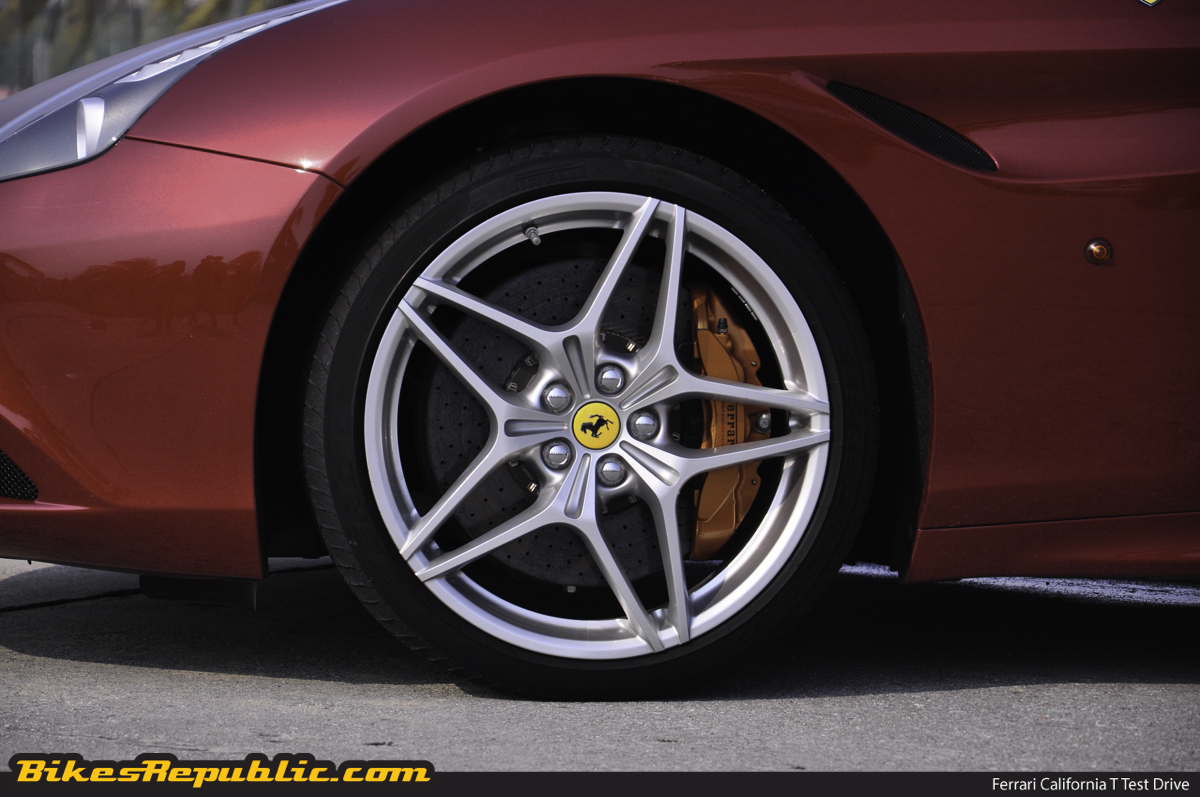
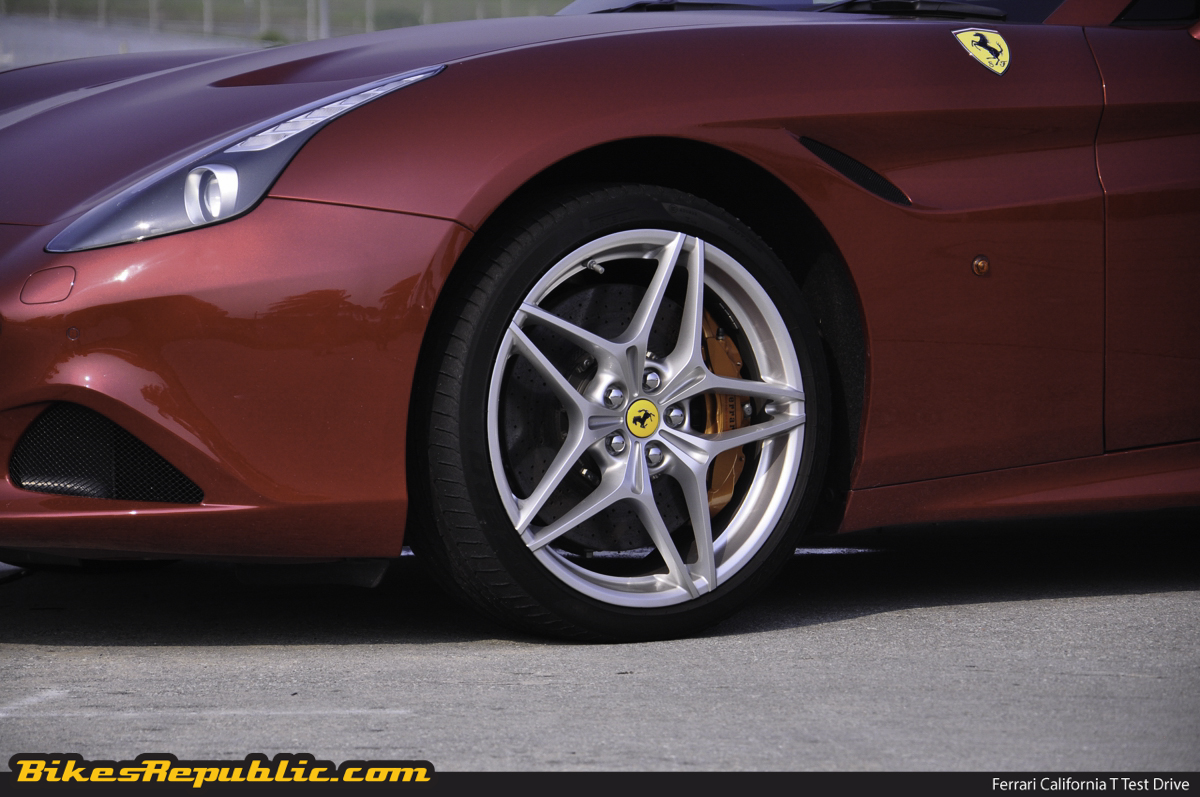
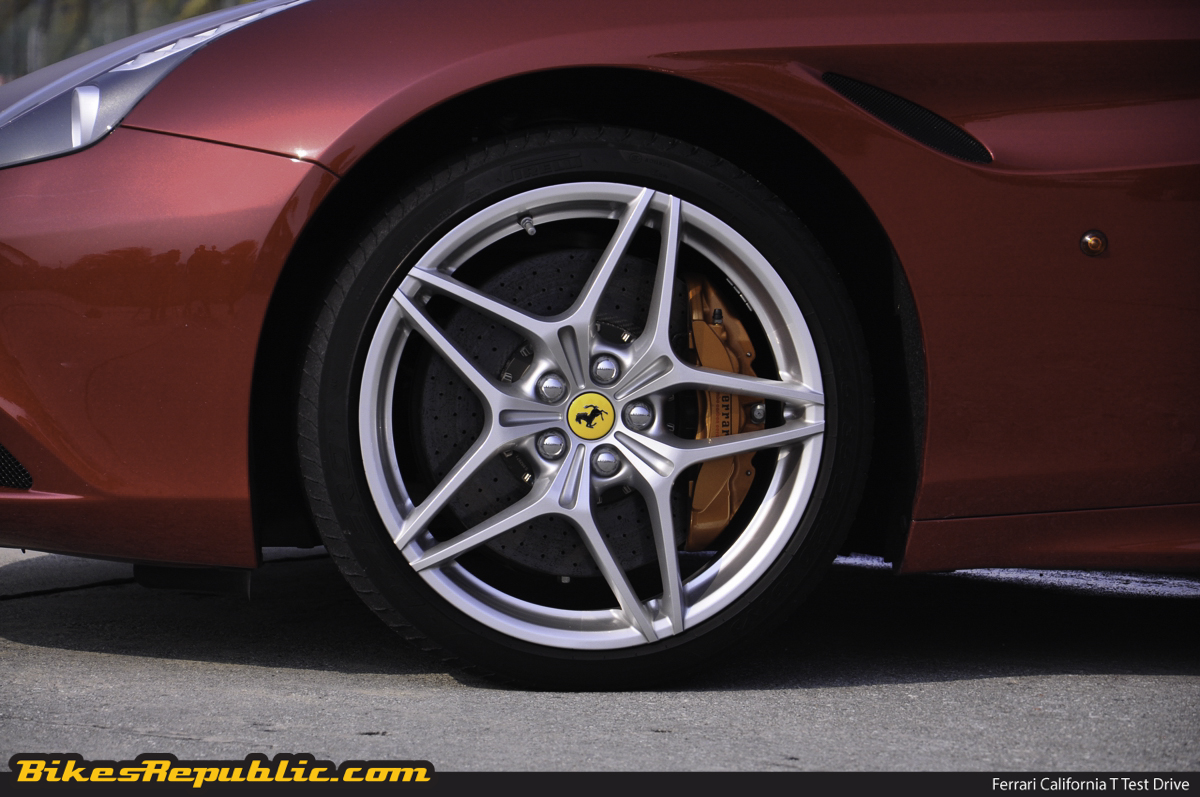
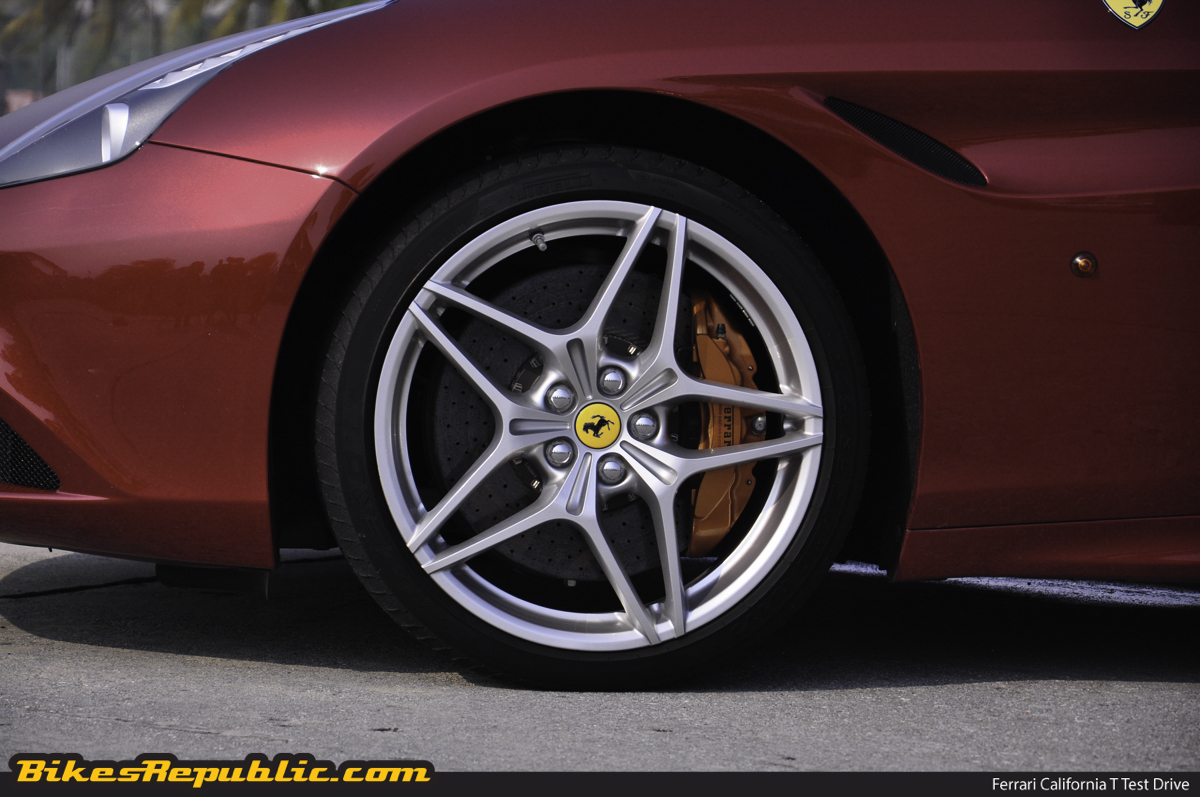
DSC_0602What deserved praising here as well were the large and powerful CCM3 carbon ceramic brake (CCB) rotors with equally large brake pads hiding behind the stylish alloy wheels at all four corners. They do need warming up initially, but once they’re at optimal operating temperatures, the bite and stopping power is just as phenomenal as the way it gets up to speed, not to mention the highly responsive ABS suite as well. This is one reassuring bit of kit indeed, especially in a car as potent as the Ferrari California T.

Our only gripe with the handling and driving dynamics was, naturally, the artificial feel of the electric steering system. Whilst it takes the fun out of driving to a certain extent, especially in a high performance car as such, one easily forgives it simply because it makes driving the Ferrari California T much easier when one isn’t in the right mood for an adrenaline rush.

Overall, the Ferrari California T does what it was designed to do brilliantly, and that being the offer of a luxurious and stylish open-top grand tourer with an exceptional level of performance for the road.

If you really wanted a proper rush and a test of your driving skills, then you are better off with the mid-engined 458 Italia or its new and turbocharged 488 GTB successor. However, you wanted a stylish grand tourer that is still capable of keeping up with said mid-engined sports coupes, the Ferrari California T sate this need brilliantly.

DSC_0549Of course, as the old saying goes, if you had to ask how much one would cost you, you can’t afford it. But to sate your curiosity, Malaysian importer and distributors Naza Italia Sdn Bhd have priced the Ferrari California T at RM888,800 sans taxes, duties, options, and the necessary registration and insurance costs. Realistically, you’d probably need at least RM1.4 million (our best estimate) to drive one out of the showroom.

All of a sudden, the all new Mazda MX-5 roadster launched here not too long ago much more do-able at its RM226,376.82 price tag. Still, no bargain-priced alternative comes close to an Italian thoroughbred such as the Ferrari California T, and we end with the same wishful dream of owning one as much as you are.

SPECIFICATIONS

ENGINE
  • 3.9-litre twin-turbocharged 90° V8
  • petrol with direct injection
TRANSMISSION 7-speed DCT (Dual-Clutch Transmission)
POWER 552hp @ 7,500rpm
TORQUE 755Nm @ 4,750rpm
0-100KM/H 3.6 second
TOP SPEED 315km/h
FUEL ECONOMY 10.5 litres/100km (claimed)
PRICE RM888,800 (base price without duties, taxes, insurance and registration costs)
WARRANTY Ferrari 7-year Scheduled Maintenance Programme
FROM Naza Italia Sdn Bhd
http://www.kualalumpur.ferraridealers.com/

Gallery
 

Archive

Follow us on Facebook

Follow us on YouTube