Bikesrepublic

Reviews

Carbon brakes are only used in the top echelons of motorcycle (MotoGP) and automobile racing (Formula One).

But why do only MotoGP bikes use them?

In the beginning

Braking duties began with drum brakes, which gave way to disc brake systems. But these had several limitations including overheating because they are enclosed (despite the efforts of having air inlets), and needed to be adjusted manually as the pads wear. Also, the swingarm’s movements drag the actuation arm along with it i.e. applies the brakes when the rear compresses, and unloads when the rear jacks up.
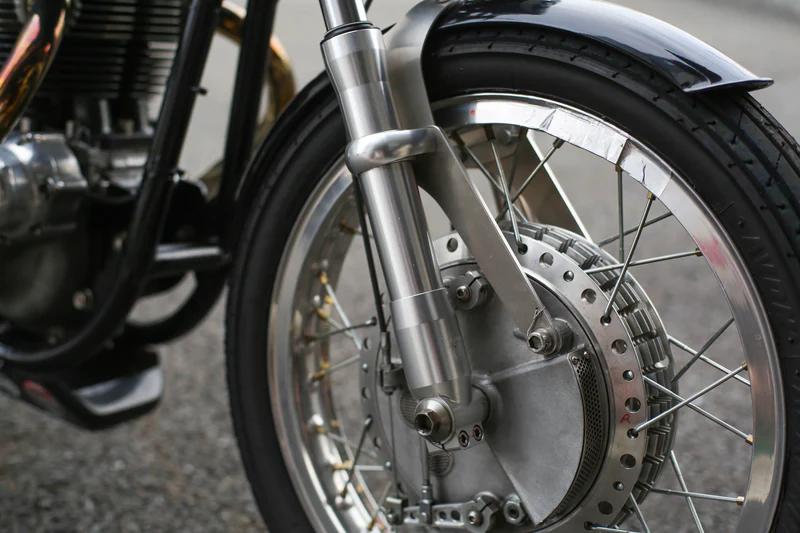
MV Agusta was the first manufacturer to fit disc brakes to their bikes in 1965, albeit on a small scale, but it was the Honda CB750 in 1969 which popularized the disc brake for road bikes.
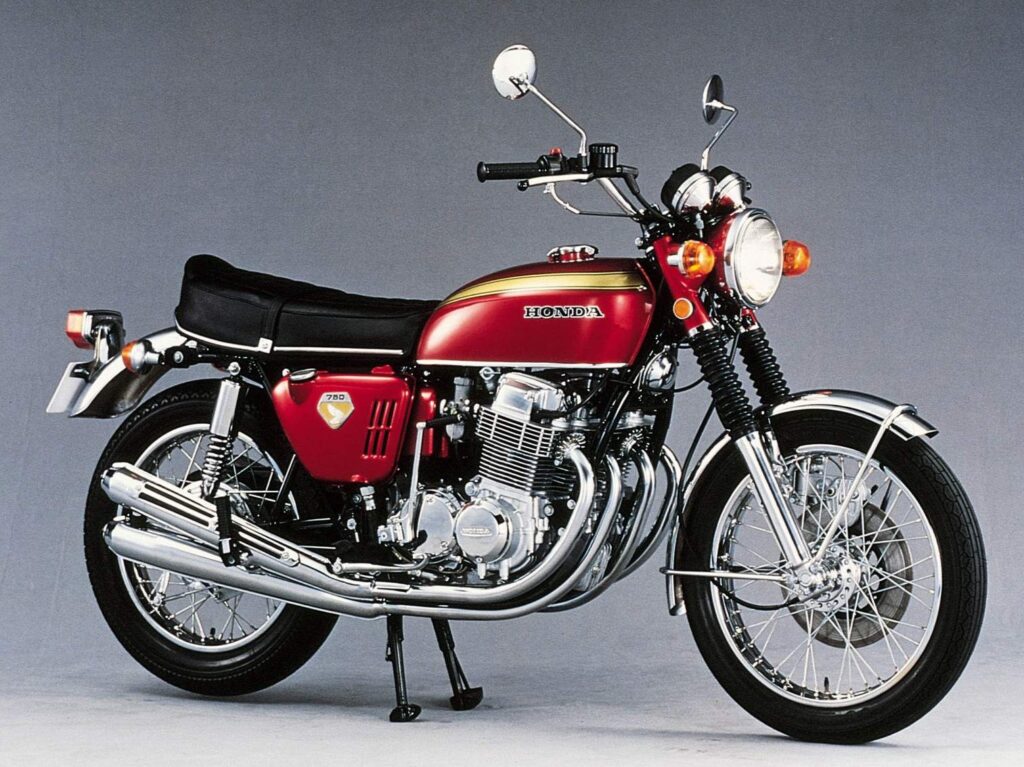
The disc brake offers many advantages as is self-adjusting as the pads and disc wear down, it does not  influence the movements of the swingarm; it is self-cooling as the disc(s), caliper(s), and pads are exposed to air flow.
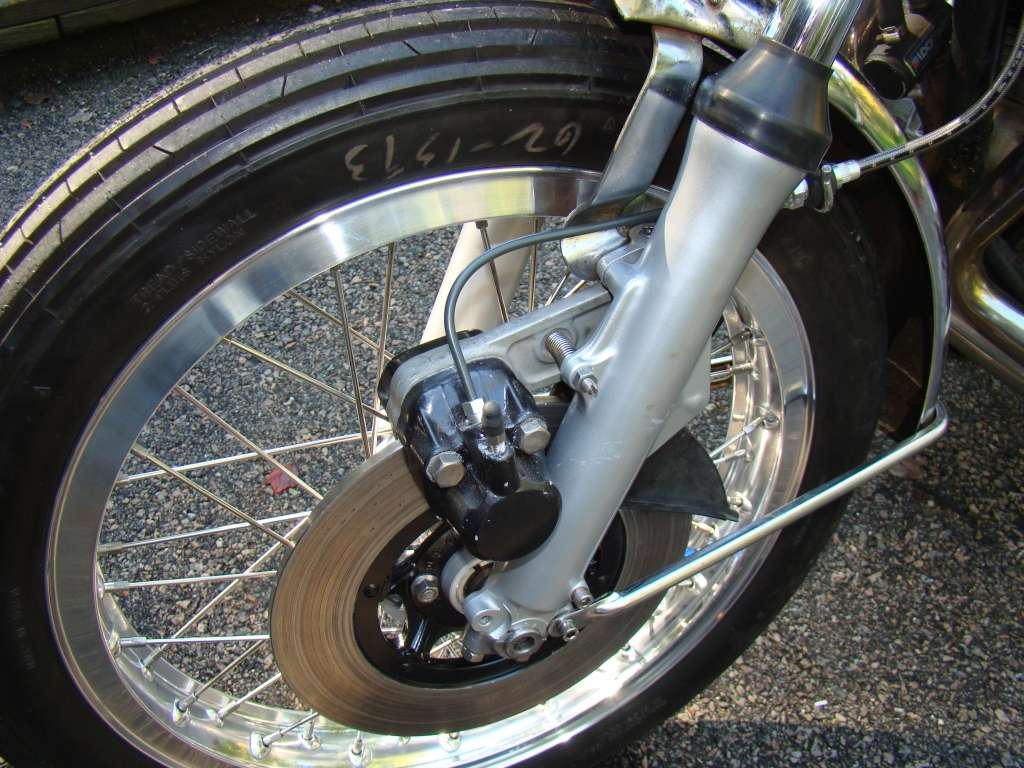
Consequently, brake makers started making them more and more powerful by upgrading the master pump, calipers, discs, and pads. The calipers started from containing a single piston, to two pistons, increasing to four, and even six at one point in time.

As power increased, riders discovered they could brake harder and harder. Likewise, motorcycle manufacturers introduced bikes that went faster and faster. The more aggressive braking did not give the disc enough opportunity to cool sufficiently, especially at the track. This resulted in the disc being warped like a dinner plate i.e. the braking track began to turn outside or inside away from the carrier. When this happens, the pads couldn’t bed themselves completely onto the braking track (where the pads contact the disc). For the rider, the brake lever kept coming backwards towards the handlebar. The disc warp may not be seen with the naked eye, but the effect is there.
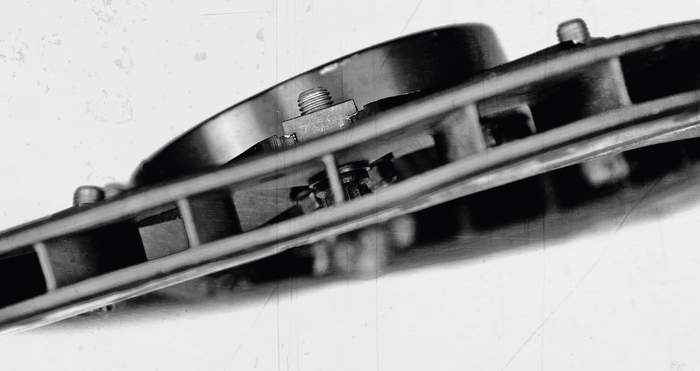
Brake manufacturers overcame this by producing better materials for the discs and pads to promote faster cooling. However, bikes continued to get faster and faster, so once again braking power increased and riders braked even later and harder. The lever started coming back to the bar again!

How’s that for a solution creating another problem?

The beginning of carbon brakes

The answer came from the aviation sector. As aircraft grew larger and heavier, they had to land at higher speeds otherwise they would stall. They thus needing more braking power to stop them when they touched down.

Then there was the supersonic Concorde airliner: Its delta wings required higher landing speeds. The kind of forces needed to stop the plane would melt conventional steel brakes.
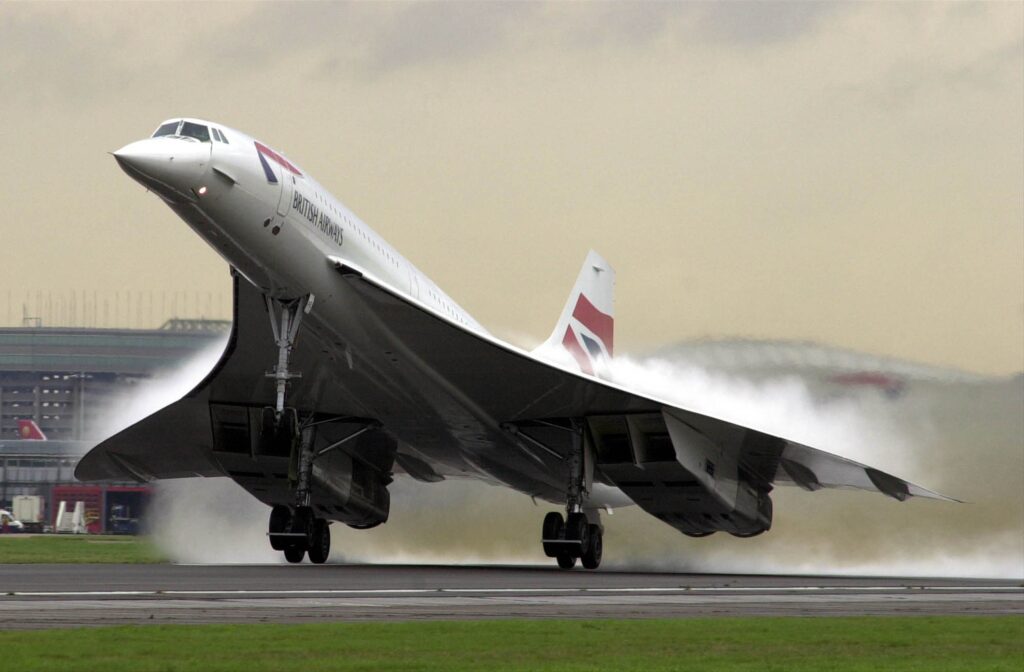
Hence, Dunlop developed the first carbon-reinforced brake discs and pads in 1969.

Use in competition

Formula One cars were also getting faster and faster, especially after Lotus engineer Colin Chapman discovered the benefits of aerofoils and fitted to the Lotus 49 in 1968. From then on, the cars gained more and more downforce – grip, in other words. Consequently, drivers soon found they were stomping their brake pedals all the way down!
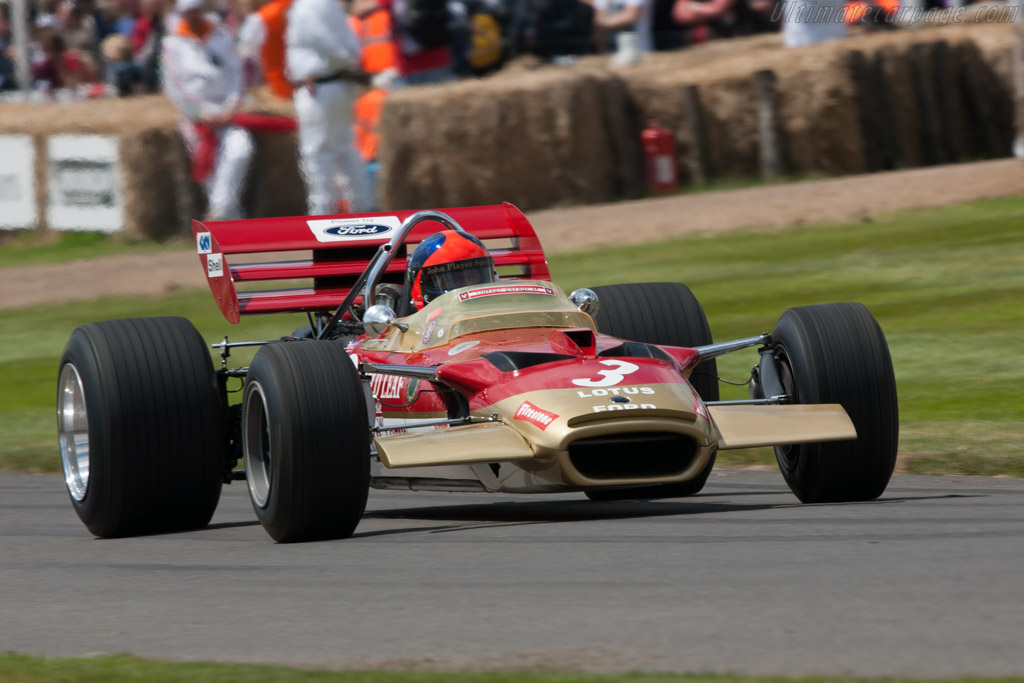
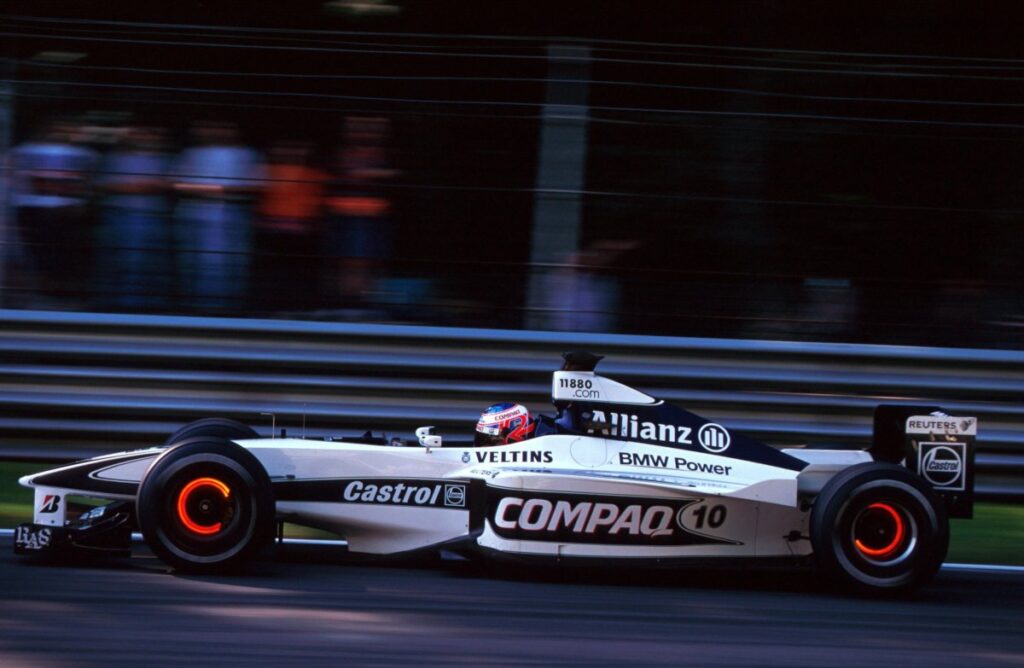
Brabham decided to seek out Dunlop who had developed the brakes for the Concorde, resulting in the first Formula One car to be fitted with carbon brakes in 1976.
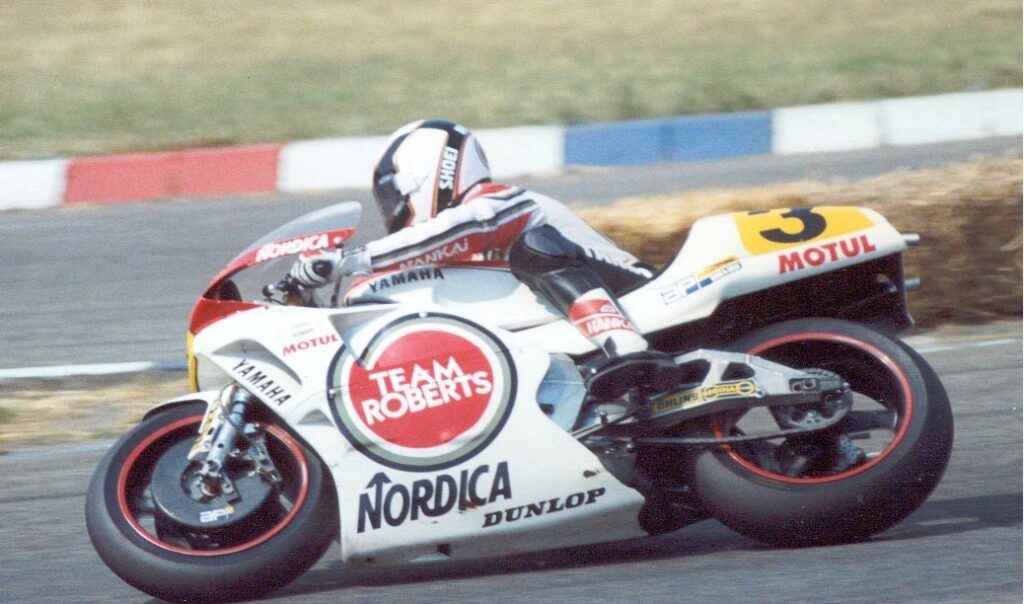
As for motorcycles, Wayne Rainey tried them on at the 1988 British GP and was impressed by their performance and went on to win the race. Carbon brakes was here to stay in the 500cc Grand Prix class.
Benefits of carbon brakes

Carbon brakes need heat to work, in other words, heat needs to be generated and stored in the discs for the system to work at its optimum level.

This is in direct opposite to steel or iron discs, which needs to cool down, otherwise continuous heat would soon warp them or even push them into the melting point.
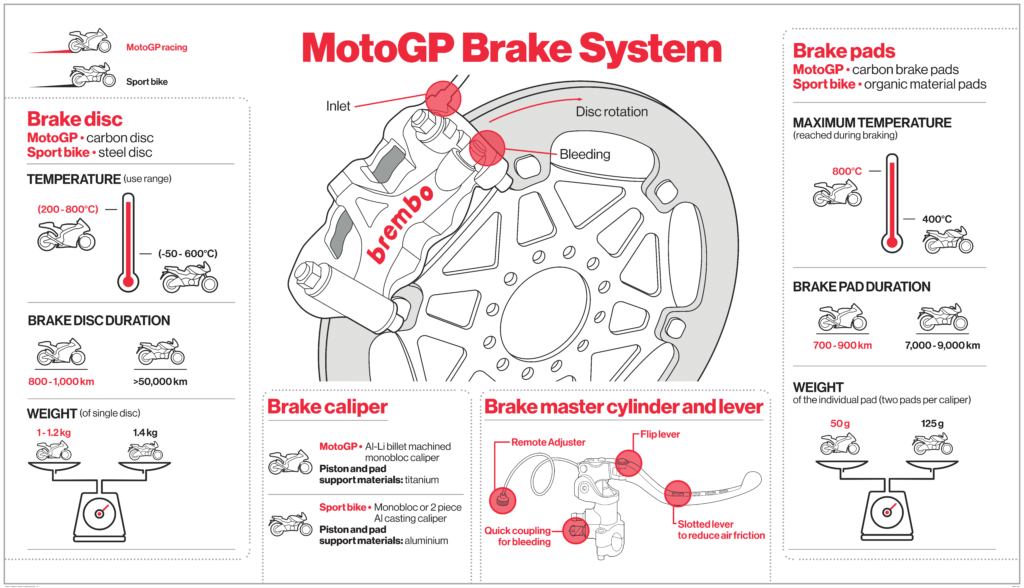
The first carbon brakes needed the riders to apply some pressure on the front brake lever in the first few laps to keep the discs hot. But further research and development has resulted in the materials of today.

The latest system doesn’t require the rider to keep holding on to the bar to warm the brakes up. Instead, the riders only have to perform some hard braking during the Warm Up Lap. The discs will reach their operating temperature of 200 deg Celsius by the start of the race and would continue to work when kept between 200 deg to 800 deg Celsius.
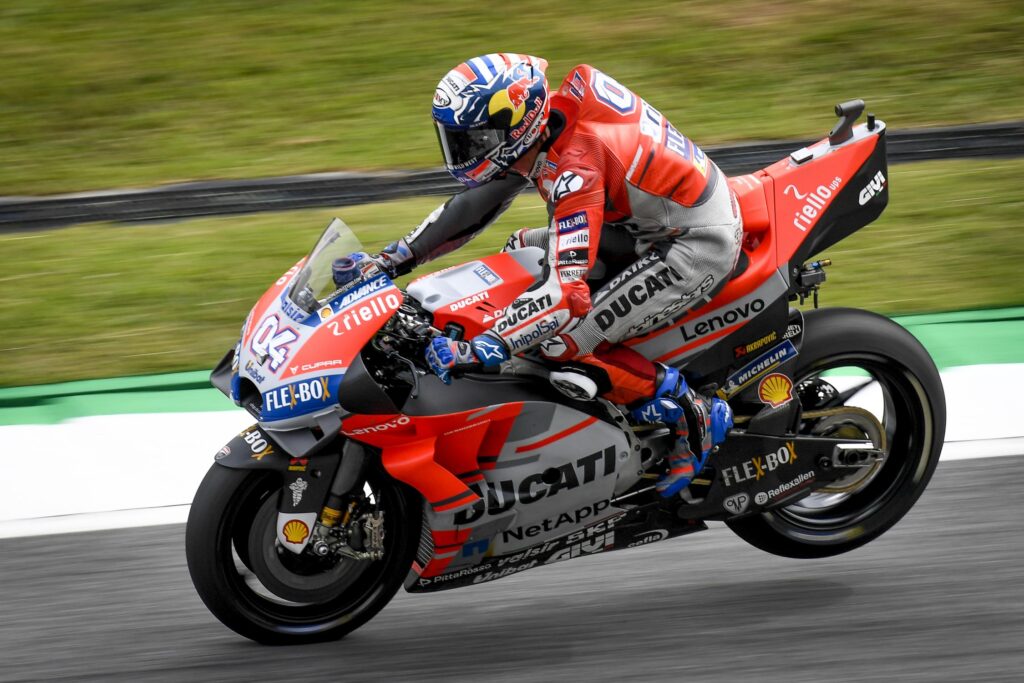
But because they need heat to work, teams would swap them out for the venerable steel discs and sintered pads when racing in the rain. However, this changed when Bradley Smith finished in second place at the San Marino Grand Prix in 2015 with carbon discs and pads despite the rain. Still, it was due to the nature of the track which calls for heavy braking that manages to build up the required heat, whereas certain other tracks do not call for crazy braking.

The new brakes have much higher friction coefficiency and are so powerful that they could slow a bike from 355 km/h down to 90 km/h in less than 300 metres, in less than 5 seconds.

Another benefit of using carbon brakes is the lower unsprung weight hence reduced gyroscopic forces.

So, no wonder they cost USD 20,000 each!

But why aren’t they used in other classes?

Cost, hence the organiser Dorna and FIM decided that is would be best to mandate steel brakes for the other classes to encourage more participation. This is why carbon brakes are used only in MotoGP, while steel is the material in Moto2, Moto3, World Superbike and so forth. They were used in the 250cc class at one time but the Moto2 class has since reverted to steel brakes.
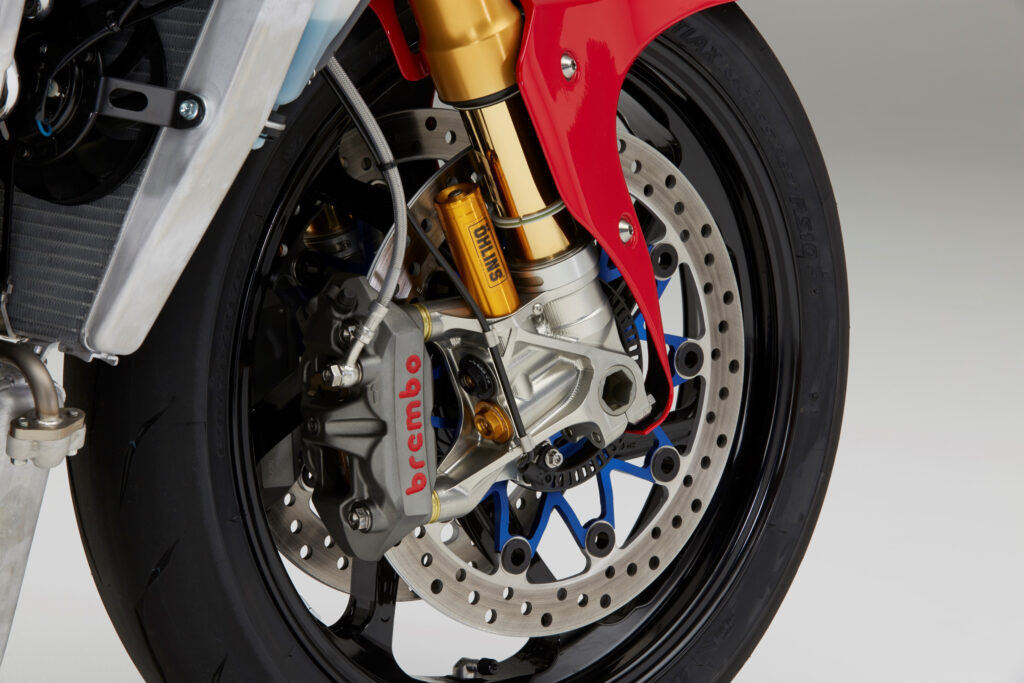
Can I use them on the streets (if one could afford them)?

No, it is too impractical for road use. There will be no way one could keep build up and hold the operating temperature in the discs in dry weather, what more when it rains and during the colder months. The only way to generate enough heat and retain it would be to keep the brake lever pressed at all times. On the other hand, steel brakes on road bikes work between -50 to 600 deg Celsius.

Besides that, the carbon discs last for only about 1000 kilometres.

The current carbon brake systems are all supplied by Brembo who had invested heavily into the technology.

This article was probably best-timed for the first Top Gun film which came out in 1986, but hey, the internet was not born yet. But this author had just rewatched the film (for the millionth time) and felt compelled to write about the original Top Gun bike: Kawasaki GPZ900R Ninja.

Here are 5 interesting stuff you may not know about.

1. 6-year Top Secret Project

Kawasaki needed a bike to succeed the successful and iconic Z1. They needed something that is more powerful than what everyone else had in the market, as well as introduce a fresh design. The motorcycle world had headed into the early 80s by then, which was a decade of excess. Everything had to be more powerful and faster, and on top of that, with groundbreaking design.

Kawasaki worked on the bike over and over. No spyshots existed, especially since there was no internet back then. It stayed in secret better than the Darkstar aircraft.

Finally, it was released in 1984 to global acclaim.

2. The first Ninja

The GPZ900R was the first of Kawasaki’s bikes to wear the “Ninja” name to signify its handling and speed. Since then, all Kawasaki faired sportbikes and even sport-tourers from the ZX-250, to the nighty H2R utilised and utilises the Ninja designation.

3. The first DOHC 16-valve production bike

The engine followed the Z1’s 900cc capacity but it was given a DOHC 16-valve head – the first for a production motorcycle. It had liquid-cooling, too, but it was not the first bike to incorporate that feature.

The new features gave the engine a 115hp peak power output and took the bike to a 243 km/h top speed. That in turn earned the GPz900R Ninja the world’s fastest production bike title and laying down the gauntlet for other manufacturers to beat.

4. Tom Cruise wanted it in Top Gun

Ever noticed that Tom Cruise rides a bike in almost every movie of his? He had been a biker even before Top Gun and the Mission: Impossible series became famous. He knew about the GPZ900R and convinced the producers to include it in the movie which came out 2 years after the bike’s introduction.

5. Produced until 2003

The bike was so successful that it was produced until 1996 for the global market, but production kept going until 2003 for the Japanese market. That was a 17-year production run. Many classic bike aficionados are still seeking the bike.

Closing

The new Top Gun: Maverick movie had Maverick riding the Kawasaki Ninja H2, which is all good since it a continuation of the original Ninja and as the world’s fastest production motorcycle. But you just cannot take away the original Ninja’s clout, just like the first Top Gun movie.

We bikers are not immune to alamak moments too because we are simply human. Here are the Top 5 Alamak Moments for Bikers.

The word “alamak” is a Bahasa Malaysia word which we would utter when something goes wrong. Well, there are other curse words but they are unprintable here, so let us stick to this one. It is in the same vein as “blimey,” “oh crap,” “aiyah,” and many others.

1. The (broken) routine

Long-time riders have the “procedures” of getting for a ride down to a routine. But we sometimes get it all so wrong when there is too much to think about or a hot girl walks by. Or just getting old and senile like me.

It goes like this:

  • Walk outside.
  • Insert key in the ignition.
  • Gloves on.
  • Wait a minute… where is the helmet?
  • Alamak! It is in the house.
  • Remove gloves.
  • Dig into pockets for house keys.
  • Go inside house and grab the helmet.
  • Put helmet on.
  • Alamak! Forgot to put in the earplugs.
  • Never mind, am late already! Ride away like an angry hornet.
  • Realise there is the wind feels kind of er… breezy on your hands.
  • Alamak! Did not put on the gloves. In fact, where are the gloves???
  • Insert the most favourite curse words here.
2. Rain suit on or rain suit off

The Oxford definition of Sod’s Law is: The fact that things tend to happen in just the way that you do not want.

You check the weather app and says sunny all day, but you stuffed the rain suit into the space under the seat, anyway, knowing how fickle our weather is.

Breakfast was good and you are leaving. But the sunshine suddenly goes away as if you are under a full eclipse. You begin to hear patters of rain on the mamak restaurant’s roof. So, you rush out to the bike, remove the seat and pull the rain suit out. You pull on the rain suit, wear the helmet… and the clouds part and the sun comes out.

Ah nevermind, you ride off in the rain suit anyway and the sun began to get hotter and hotter. You are now sweating like an Eskimo in the tropics, wrapped up in clothes looking like a parachutist who missed his landing point and ended up on a motorcycle.

So, you decide to stop and take the rain suit off. Ah, what a relief!

Two kilometres down the road, the rain comes down again… Alamak!

3. The charge/non-charging device

The alarm clock rings and you get up quickly. Hey, it is the day for the big ride. You reach for your phone which you had plugged in all night. 12%. What the… Alamak! The switch was off!
But you dress up anyway. But just before starting the ride, plug the phone in, to be greeted with a the charging tone.

You reach your destination and take the phone out for pictures with your buddies. 5%.

Alamak!

4. The wayward earplug

I do not know about you guys, but I refuse to ride without earplugs. I used to refuse to believe in them until I tried them on and what a difference it makes.

xr:d:DAFkBk9pkrA:18,j:47997304779,t:23052616

But… earplugs need to be inserted correctly otherwise they will wiggle their way out of the ear hole sooner or later. And it usually only happens in one ear, especially when you are riding at high speeds. Correcting it needs helmet removal, which follows removing the gloves. So, another alamak moment.

5. Unstrapped chin strap

You are enjoying the ride when you suddenly hear something slapping the side of the helmet. Alamak, you had forgotten to fasten the chin strap. The only way to fix it is to stop the motorcycle, and removing the gloves. Not going to happen when you are in the middle of convoy.

The recent 2025 Ducati Panigale V4’s reveal was kind of a shock for some, especially among the Ducatisti. Gone is the synonymous single-sided swingarm, replaced by a double-sided swingarm.

We have to say that the new swingarm does look the butch, and it is better, engineering wise. Let us examine why.

What does a swingarm do?

The name itself lends to its function of connecting the rear wheel of the motorcycle to the frame via a pivot. So, the rear wheel can move up and down to follow the road’s surface.

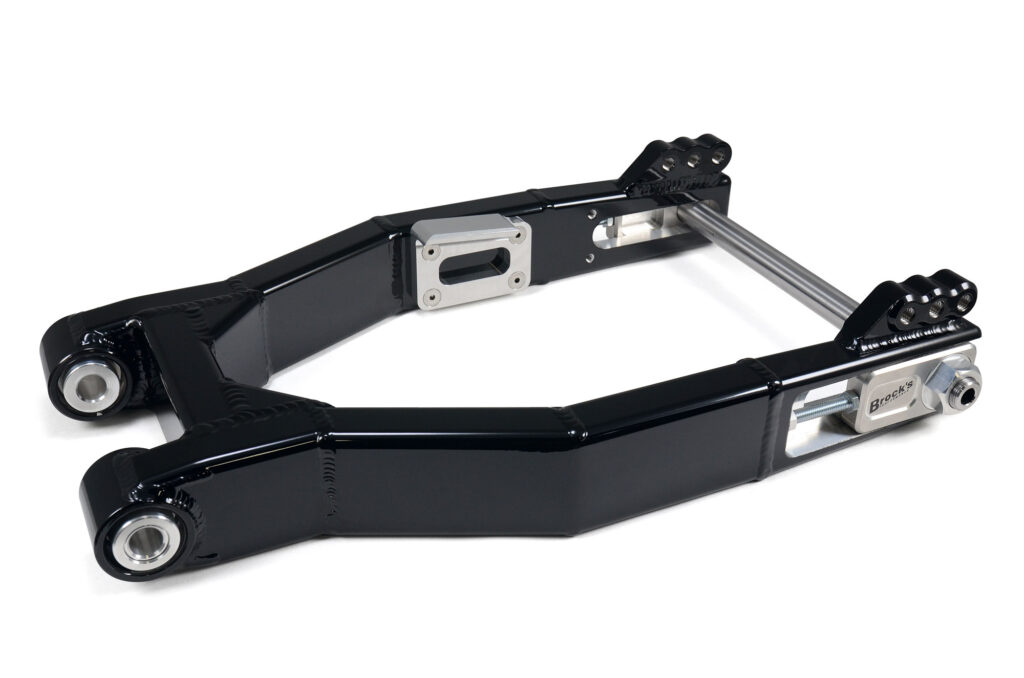
Brock’s Performance swingarm https://brocksperformance.com

However, that is not all as the swingarm also needs to be able to withstand several types of forces such as weight (rider, passenger, luggage, road bumps), lateral loads (when the bike is leaned over so much that road bumps now act vertically on the swingarm’s spar/spars), twisting load imparted by the chain.

That is exactly why swingarms on high-powered motorcycles are so much larger than those simple box-section steel type on simpler bikes.

Single-sided swingarm
Pros:
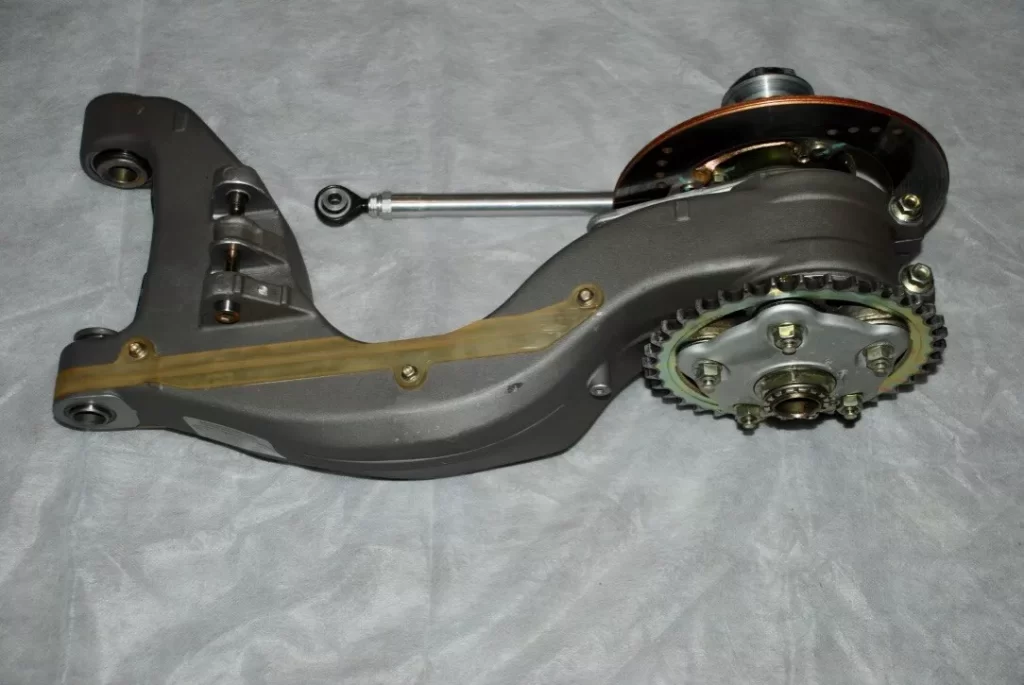
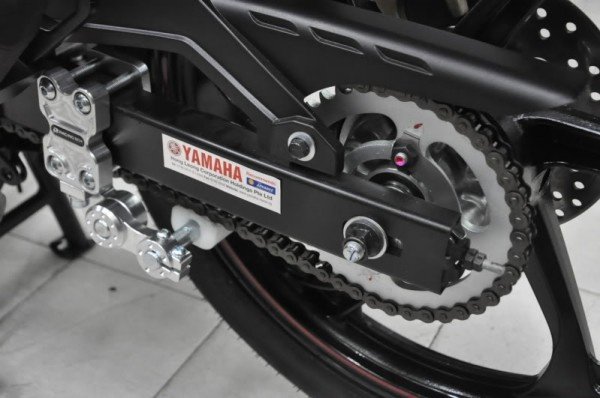
  • Easier Wheel Removal: The single-sided design allows for easier removal of the rear wheel, without upsetting the rear axles alignment, chain tension, and brake pads.

Granted, this setup was first utilised on the Imme 100 in 1948, and the swingarm doubled up as the exhaust. It was later adopted by Moto Guzzi Galletto scooter in 1950. There are still scooters that utilise this arrangement.

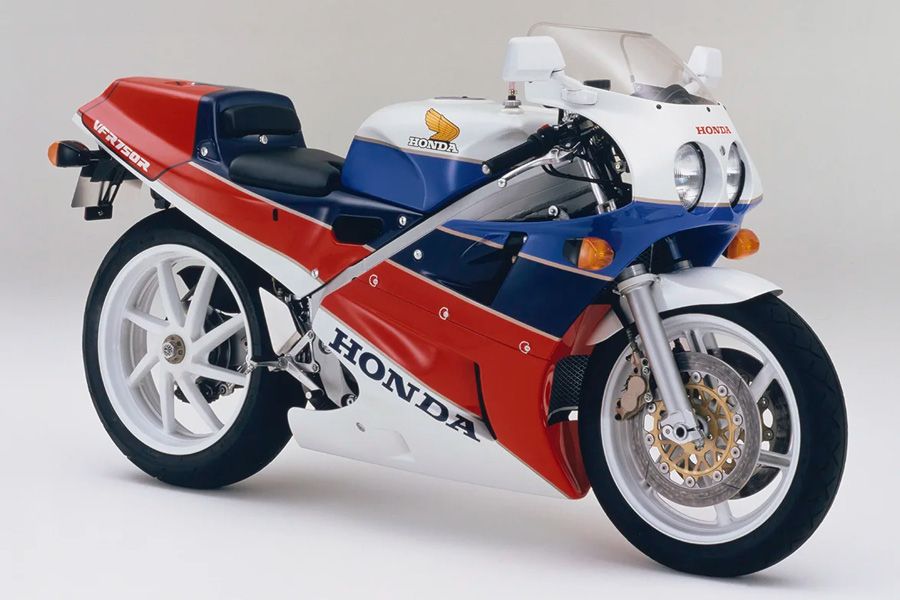
However, it was Honda who first used it on a sportbike in the modern age, namely the VFR range which they used for endurance racing.

  • Aesthetics: The great Massimo Tamburini chose a single-sided swingarm design for the iconic Ducati 916 because it looked “like the rear wheel is not connected to the motorcycle and is floating,” and Ducati had thought of racing it in endurance races, too. It was henceforth that top-of-the-line Ducati sportbikes feature the single-sided swingarm, apart from the 999 and now the Panigale V4.

Cons:
  • Strength and Rigidity: Achieving the same level of strength and rigidity as a double-sided swingarm can be more challenging, which results in the need for material.
  • Weight: Hence, they can be heavier than double-sided swingarms.

  • Less flex: Back in the days of the 70s superbikes, engineers had to contend with frames and swingarms that flex too much, making their bikes wallow in corners. So the frames and swingarms got stiffer and stiffer. Then, when they became too stiff, the bikes do not handle well in midcorner. Why? Because the suspension is most effective in absorbing road shocks when the bike is straight up, but that effectiveness goes away when the bike is leaned over.

So, in the engineers began working on frames and swingarms that offer “tuned flex” in the mid-90s. This flex allows the frame and swingarm to absorb road shocks and road surface imperfections while the motorcycle is leaned over, hence provides better grip to the tyres.

And this is exactly why the Ducati Desmosedici GP bike uses a double-sided swingarm, as with the new Panigale V4. In fact, Ducati says that the new V4’s swingarm is 37 percent LESS stiff laterally.

  • Cost: Single-sided swingarms are often more expensive to manufacture and repair due to their complex design and the need for specialised components. Therefore finding application on high-end bikes only.
Double-sided swingarm
Pros:
  • Cost-Effective: Generally, double-sided swingarms are less expensive to produce and repair. They use more conventional design and manufacturing techniques.
  • Strength and Durability: Engineers can tune their stiffness versus flex characters easier as loads are distributed between two spars.

  • Lighter: Less material is needed to make it stiff, thus is can be made lighter versus its single-sided counterpart.
Cons:
  • Wheel Removal: Removing the rear wheel can be more cumbersome compared to a single-sided swingarm, as it will perturb the chain’s tension and alignment.
  • Maintenance Access: Access to the rear wheel and brake components can be more restricted, making maintenance and cleaning more challenging.

  • Adjusting the chain(!): Adjusting the chain and the rear axle’s alignment is a necessary task but it is often time consuming and frustrating. A wrongly adjusted chain will shorten its lifespan, while a misaligned axle results in handling issues.
In a nutshell

Each type of swingarm has its specific use cases and advantages, so the choice between them often depends on personal preference, intended use, and budget considerations.

We have listed the CE standards’ codes for motorcyclists’ Personal Protection Equipment (PPE), so there is also a CE standard for motorcycle gloves.

By the way, “CE” and “EN” mean the same thing: “CE” stands for “Conformite Europeenne” in French, while “EN” stands for “European Norm.”

The CE standard for motorcycle gloves is:

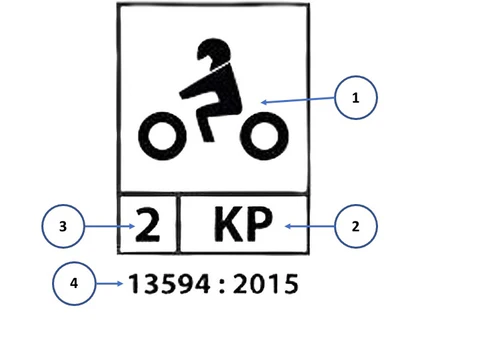
 EN 13594:2015


Referring to the sample label above:

  1. The rider on two wheels with a helmet means this PPE is meant for motorcycling. Not for bicycling, driving, or skateboarding.
  2. If this box says “KP,” it means that the glove’s knuckle protector was tested and provides protection for the knuckles. As such, be careful because some gloves with knuckle protectors may not have this “KP” rating.
  3. The digit here pertains to the level of protection provided by the gloves. There are levels 1 and 2, the latter being more protective. Please refer to the box below.
  4. The CE standard and its year of revision.

In order to qualify as Level 1 or 2, the gloves need to pass these test standards:

So, be careful when you buy gloves that seem to be protective but are actually not.

Motorcycle accidents can happen due to the combination of several factors: Road condition, mistakes committed by other drivers, weather, etc. But accidents also happen due to the rider’s own abilities, or lack of, such as target fixation.

Target fixation may not be the main cause of motorcycle accidents but it is the main reason why we cannot avoid accidents.

Good news is, advanced riding schools and teachers have narrowed down the causes of mishaps creating by the rider. You see, we humans have several built-in defence systems called “survival instincts.” There is no doubt that these instincts have kept our forefathers alive until now, but they can be a hindrance to our survival on motorcycles that go up to 300 km/h or more. Ironic.

And yes, one of these survival instincts is “target fixation,” and there are countless videos that show how those accidents could have been easily avoided if not because of target fixation.

What is target fixation?

The instinct originates in our brains telling us to keep an eye on a dangerous situation or hazard. While it worked well against predators, it unfortunately becomes a bane when we ride motorcycles that travel at much faster speeds. And, the strength of the instinct increases as you increase speed.

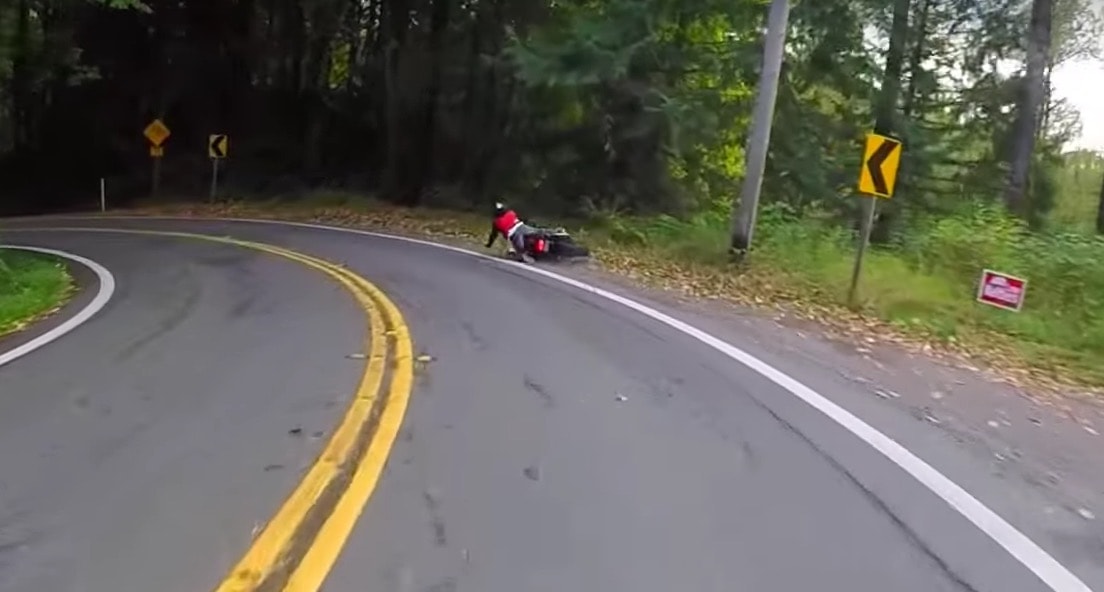
Have you entered a corner a little faster only to find your vision locked onto the outside of the corner instead through it? Or a car pulled out of the junction right in front of you and could only stare at it, wishing that it went away? Or you saw a pothole in the middle of the road and still proceeded to hit it although the hole is only 0.5 metre wide, while the road is 8 metres wide?

Or, just the like in the video below. The motorcycle rider had the entire lane, plus the adjacent lane to himself, yet he ran into those hapless cyclists.

All those issues were caused by your brain telling you to fixate (lock) your vision on the danger, hence, target fixation.

So, how do we fix it?

Like many bad habits, we can train our brain to overcome them, target fixation included. We only need to practice: You do not need to mount those expensive tyres, suspension, etc.

Keep these points in mind:

  1. The motorcycle goes where we look.
  2. Ride with a wide field of view – do not let your vision tunnel down.
  3. A wide field of view lets you open up the road in front of you, thereby creating more space.
  4. With that wide view, look to the sides of the hazard when you spot one.
  5. Steer the motorcycle away from the hazard.

Practice

  1. Find an open road with no traffic. Better yet, a large parking spot.
  2. Start with 40 km/h. Look up and look wide.
  3. Imagine a pothole or any hazard ahead of you (how far ahead depends on your speed).
  4. Look to the either side i.e. left or right of it.
  5. Then steer to either the side. Keep practicing until it becomes a habit, and your muscles will follow suit (muscle memory).
  6. Add 10 km/h at a time and keep practicing.

We once came across a comment from a motorcycle owner/mechanic who to have mixed gasoline in his motorcycle engine to flush the old engine oil.

More surprisingly, there were readers who followed in his footsteps.

What will happen if we did that?

It is true that engine oil will thin out when mixed with petrol, making it easier to remove. BUT, mixing gasoline in the engine is something that should NOT be done at all.

This is because there will be residual engine oil already mixed with petrol left in the engine, especially in the cylinder head and valve train areas, as well as anywhere there are small recesses, even after we drained the old oil. Therefore, the new oil will be mixed with the remaining oil that was mixed with petrol. As a result, the new engine oil is as good as being adulterated.

Apart from that, there is a film of oil that covers the moving parts. Petrol will remove this film, causing in friction between the metal surfaces before the new oil reaches these components. This is especially important between piston rings and cylinders, between gears, piston pins, rocker arm rollers, cam lobes, connecting rod bearings , camshafts, and more. All these parts are oiled when assembled, and this shows how important the oil film is.

In addition, petrol is not environmentally friendly, nor is it friendly to rubber and gaskets. Sooner or later, the gaskets will break and the oil will leak.

Some say, “I’ve done it before but it’s ok.” Yes, we may not feel any damage initially, but believe us, problems will arise later on. You will know the pain when you need to overhaul the engine.

Therefore, DO NOT mix petrol with the engine oil. Instead, use specialised flushing products for the task. For example: Use a screwdriver to drive the screw in, not a hammer.

Another note: You do not need to flush your vehicle’s engine if there is no trace of sludge. However, if do you want to clean the engine’s internal components, regardless, you would be better off by disassembling and overhauling the engine.

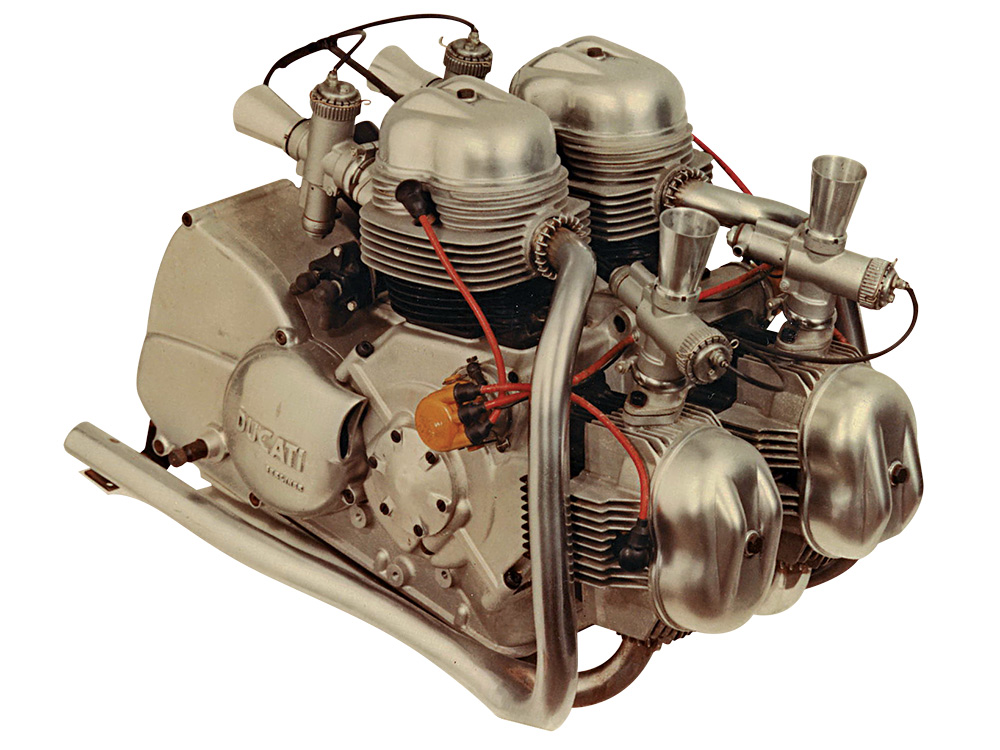
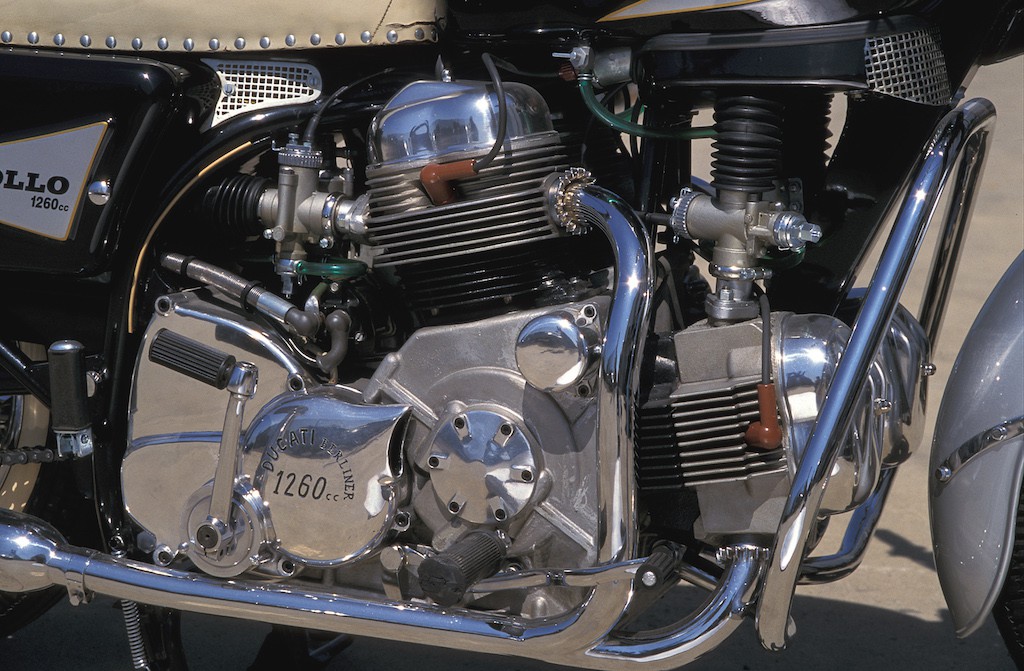
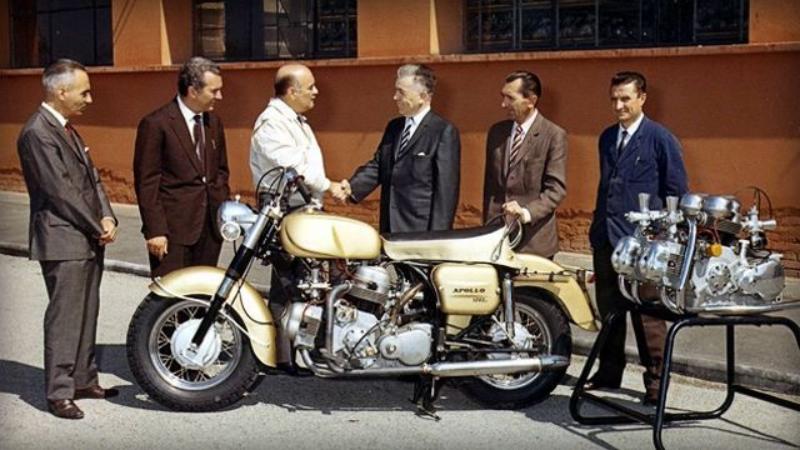
While we revel at the current Ducati’s V4 lineup consisting of the Panigale V4, Streetfighter V4, Multistrada V4, and most recently the Diavel V4, Ducati had actually made a V4 engine even prior to producing their first V-Twin engine. Instead, perhaps ironically, it was the V-Twin that went on to bring the Ducati name to the masses, before they went back to the V4 to dominate the world’s racing circuits. The answer has to do with the machine the engine was fitted to: The Ducati Berliner 1260 Apollo which debuted in 1964.

How it began

Ducati’s United States distributor, the brothers Joe and Mike Berliner of Berliner Motor Corporation were convinced they could sell motorcycles to the American police departments. But they had to compete with Harley-Davidson who had a free run in that segment.

So, Joe Berliner approached Ducati in 1959 with a proposal to build that bike. Ducati was owned by the Italian government at the time and produced only the 20occ Elite. And, they were also in a bad state as with all other Italian motorcycle manufacturers who had to contend with the Fiat 500’s popularity.

However, official US police department specifications were increasingly standardised across the country, and naturally favoured their national product i.e. Harley. They required an engine capacity of at least 1200cc, a minimum 60-inch/1525mm wheelbase, and 5.00-inch x 16-inch tyres.

Mike Berliner shipped two Harley FL Duo Glides to Ducati for evaluation. After considering the design of the archaic 74 cubic inch (1212cc) Harley FL’s engine, Ducati’s chief Dr. Giuseppe Montano and chief engineer Dr. Fabio Taglioni agreed they could produce a more efficient and modern design. Taglioni eagerly accepted the commission as a technical challenge.

Unfortunately the bureaucrats in Rome showed much scepticism which resulted in dragged out negotiations until 1961 before Montana got the green light, and after Berliner promised to underwrite the project including development and production costs.

The name Apollo was chosen by the Berliner brothers in honour of the Apollo moon program which had just begun.

The engine and its performance

Taglioni was told to make the big bigger and faster and so, he designed a 1257cc, air-cooled, two-valved, 90° V4, with a 180 crankshaft. The bores and strokes were 84.5 mm and 56 mm, respectively, making it the most oversquare Ducati engine at the time. Valve actuation was handled by pushrods and rocker arms, rather than tower shafts and bevel gears. It made 100 hp at just 7,000 RPM.

Ducati gave it a 5-speed transmission to up the ante against their rivals who had 4-speed gearboxes. Taglioni even designed a provision to fit an automatic (CVT) in the future.

The engine was mounted in a heavy duty open cradle frame. There was a kick starter for the brave or with steel shins, but there was also an electric starter which looks similar to the Fiat TV1100’s. There was a massive 200w generator on the right side to cater for all the police electrical equipment. Ceriani developed the suspension, and front and rear single leading show drum brakes.

Weigh was finally tallied at 270 kg, dry. Although that is a lot even by today’s standards, it was actually lighter than the Harley’s 291 kg.

Ducati completed the bike’s styling with a peanut-style fuel tank, cowboy seat with a chrome cage grab rail, and forks and shocks that look similar to the FL’s.

Two fully working prototypes were built, one was painted gold for Berliner to demonstrate at shows, while another in black and silver. There were also two extra spare engines.

The test

So, off went Ducati’s test rider Franco Farne on the bike’s maiden test, only for him to return with the verdict: “It handles like a truck.” But the Ducati Berliner 1260 Apollo made up for it in straight-line performance, where it hit more than 200 km/h. It confirmed that it was most powerful the fastest European bike.

Unfortunately, that amazing performance was also its downfall, especially because it was fitted with those 16-inch automobile tyres. Another Ducati tester, and former GP mechanic Giancarlo Fuzzi‚ went out for a high speed test on the Milan-Bologna autostrada when the whitewall rear Pirelli ballooned, detached its tread, and came off the rim at around 160 km/h. Fuzzi called his survival “a miracle.”

The engine was subsequently detuned to 80 hp by lowering the compression ratio and fitting less aggressive cams, but it was still too much for any tyre at the time. Again it was detuned by lowering the compression even more to 65 hp and tyre wear became “acceptable.”

By comparison, the Moto Guzzi Grand Prix 500cc V8 had 20-inch wheels, but its 78 hp also shredded the bike’s tyres.

The end of the project

Berliner was of course happy with the performance and went ahead to print flyers to sell the bike. They planned to sell the detuned ‘normale‘ version to civilians as a touring model, while reserving the fully powered ‘Sport‘ version for law enforcement. In fact, 65 hp from the V4 was still more powerful than Harley’s 55 hp.

However, the detuned version had to contend with other European bikes such as BMW and British Twins.

Harley could also undercut the Apollo’s price of USD 1,500 by saying that they offer something close to that performance and a much cheaper price.

Then the Italian government decided that the limited market did not justify the tooling costs of production, and withdrew project funding. This was a severe blow to Berliner’s business plans.

What it could have been

The Ducati Berliner 1260 Apollo could have been the very first ‘superbike’ had tyre technology been up to the task; that and if it had used 18-inch tyres instead. Instead, the Honda CB750 appeared in 1969 to claim the honour. Even then, it had only 68 hp and a top speed of 201 km/h. Heck, even the “groundbreaking” Kawasaki Z1’s 903cc inline-four in 1972 produced only 81 hp and a top speed of 209 km/h.

Years later, Honda and Suzuki would copy the V4’s design for them to dominate GP racing.

It was indeed as missed opportunity.

However, the V4 engine’s design led Taglioni to design the engine that would bring about Ducati’s dominance in the superbike racing: The 90º V-Twin. But it could be seen that the 1257cc V4 had a place in his heart, which one of the spare engines sat in his office until his retirement in 1984.

Today, the black and silver prototype is owned by Hiroaki Iwashita, and resides in his museum at Yufuin on the island of Kyushu, Japan.

The fate of the gold coloured prototype is unkown.

Will we may see the end of the Ducati V-Twin superbike, with the announcement of the Ducati Panigale V2 Superquardro Final Edition? The factory will still utilise the 90° V-Twin engine in other models, of course, but it will be a sad day to see the absence of a two-cylinder Ducati superbike in the lineup, for it was the V-Twin (Ducati calls it the ‘L’-Twin) that cemented Ducati’s name in the halls of excellence.

So maybe it is a good time to retrace the evolution of the Ducati V-Twin superbike. (This article only covers Ducati’s sportbikes with the Panigale V2 Superquardro Final Edition as the main picture.)

When did the Ducati V-Twin begin?

As with almost all manufacturers, Ducati had started with building single-cylinder engines. The first one was in fact a 48cc unit made by SIATA which Ducati installed in the bicycle in 1950.

Ducati actually built their first V4 engined motorcycle called the Berliner 1260 Apollo in 1964. It was a beast that almost no one could ride and no rear tyre could withstand the engine’s torque and power. Well, why not: The 1257cc air-cooled 90° V-Four engine produced 100 hp at just 7,000 RPM. By comparison, the Harley V-Twin of the era did only 55 hp. (We shall write a story about this intriguing bike soon!)

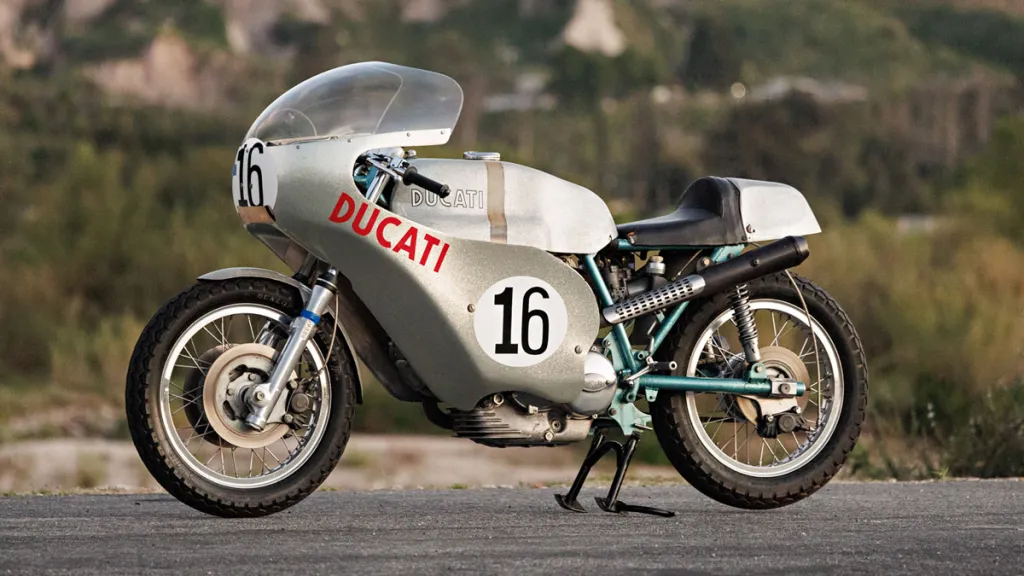
One day, 20th March 1970, Dr. Fabio Taglioni began sketching on a 90° V-Twin engine. It was from here that an entire slew of models came about both in racing and its adoption to street models, including 500cc racebikes and 750cc road bikes. The Ducati 750 Imola Desmo went on to win the Imola race in 1972.

The camshafts were driven off a tower shaft and bevel gear system up to this point. Taglioni introduced the Pantah 500SL with belt-driven cams in 1980. This belt-driven system continued until the Superquardro V-Twin came to light on the Panigale 1199.

Two became four

Dr. Taglioni had experimented with the four-valved head but seemed to have made no headway. Instead, it was his understudy, Massimo Bordi who successfully designed and pushed it through.

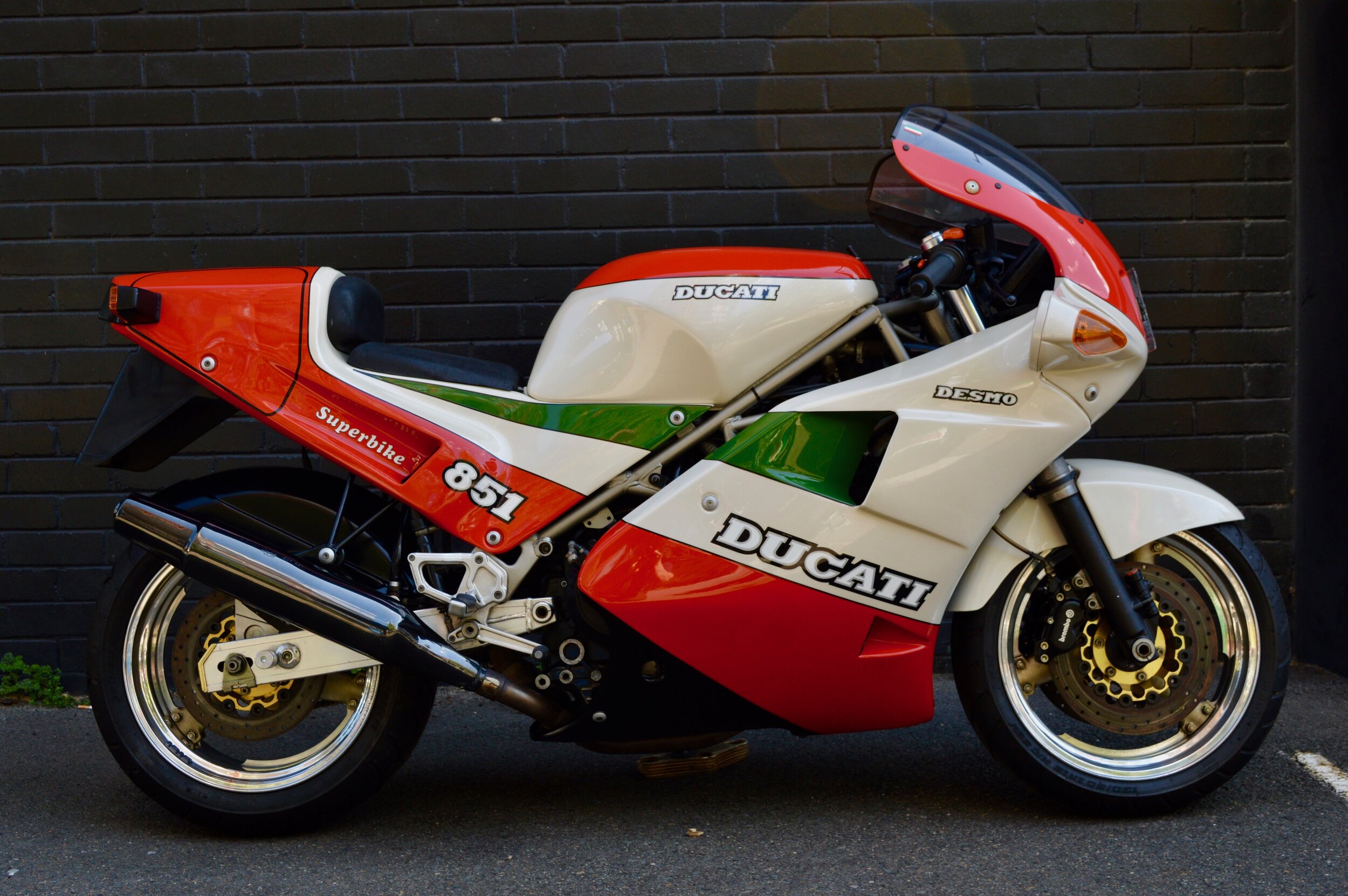
The four-valve 90° V-Twin engine, now known as the Desmoquattro, began in the prototype 748IE Bol d’Or racer in 1986, before being adopted in the Ducati 851 in 1987. At the same time, it was also Ducati’s first liquid-cooled engine. Raymond Roche took the 851 to the first World Superbike crown for Ducati in 1990 hence starting Ducati’s domination in the championship.

The 851 became the 888, then came the iconic 916 that in turn became the 955 (ultra limited SP version only), and finally the 996.

Subcategories of the Desmoquattro

Testastretta

In 2001, Ducati brought out the 996R homologation model. It was essentially used the 998cc engine  which featured the new Testastretta head or “narrow head.” The new Testastretta had the included valve angle reduced from 40 degrees to 25 degrees. As such, the bore could be made bigger to increase the rev limit, hence producing more top end power.

The 999, designed by Pierre Terblanche was a wholly redesigned bike, followed in 2003. However, the design was way too far of its time and was severely panned, despite the 999 being better in almost every department.

Testastretta Evoluzione

The 999 was in turn succeeded by the 1098 in 2007. It was the most powerful V-Twin of the era and was well-received, what with a styling that “evolved” from the 916. The 1098 became the 1198 in 2009.

Superquadro

The 1098/1998 lineup was subsequently replaced by the 1199 Panigale in 2012 hence began the Superquardro engine. It was the most powerful V-Twin at the time, punching out 195 hp and 133 Nm.

There were several changes, most obvious was the deletion of the belt-driven cams for a hybrid gear/chain drive. Ducati made four displacements for this engine, ranging from 898cc to 1285cc.

The smaller V-Twin sportbikes

We need to mention the smaller capacity Ducati sportbikes as they led to the Ducati Panigale V2 Superquardro Final Edition. Amidst the 916 was the smaller 748 which Ducati raced in the SuperSport categories vs. 600cc inline-four superbikes. The 748’s engine was of course, a 90° Desmo V-Twin with four-valves per cylinder, but displaced 748cc. So, to complete the timeline, the 748cc engine started getting bigger becoming the 749, 848, 899, and finally the present 955 with the Superquardro engine. The 955cc Panigale was rebranded as the Panigale V2 following the debut of the Panigale V4 in 2018.


Reaching this stage in life has taught me to appreciate the simplest things in life. I used to crave the fastest, baddest superbike while not paying much attention to the lesser powered motorcycles. But then superbikes became too powerful and complex – you cannot even sort out the fuelling without a diagnostics system anymore… So, has this 2024 Suzuki Burgman Street 125EX show up at the right time?

What is it?

The Burgman range is where you find Suzuki’s luxury scooters, consisting of 125cc, 400cc, and 650cc variants. The Avenis range, on the other hand, consists of the sportier models.

The Burgman Street 125EX is powered by a 125cc, SOHC, two-valve, air-cooled 4-stroke Suzuki Eco Performance-Alpha (SEP-α) engine. It produces 8.6 hp at 6,750 RPM and 10 Nm of torque at 5,500 RPM. It is also equipped with the Engine Auto Stop-Start (EASS) and Suzuki Silent Starter System.

Additional features include the trappings of any scooter such a floorboards, underseat storage, storage bins at the front, a hook in front and another just underneath the front of the seat.

The first thing that strikes you about the Burgman 125 is how large – more like how bulbous – it looks despite being a 125cc scooter. The leg shields extend much further out the sides, and the side panels are similarly rounded to complete the theme. It reminded me of the Suzuki Gladius 650.


Riding the 2024 Suzuki Burgman Street 125EX

Grabbing the handlebar the first time, they are apparently as wide as on bigger bikes. Personally, I prefer wider handlebars because they provide more steering leverage.

You only need to tap the starter button once and let go as the aforementioned Silent Starter System will take over and er… start the engine.

Twist the throttle and… the bike just purred off idle. That was exactly how it was. It did not give a swift punch off the line, even when we nailed it full wide open. It was like a motorcycle with an extremely tall final drive ratio.

However, we soon discovered that Suzuki built it this way for the city. The engine was super smooth – serene even – between 60 – 80 km/h.

Suzuki motorcycles are well known for their easy handling characteristics and this was no exception. It was stable on straight roads, while the wide handlebar provided lots of leverage to steer. It required only the slightest pressure to change directions, allowing you to zip through traffic with ease.

Surprisingly, the scooter had lots of ground clearance despite the low seat height. I tried our best to grind the belly fairing and stands but I never succeeded. (Shhh… I ground a BMW R 1200 GS cylinders in corners before.)


We decided to ride it up to Genting Highlands, as we always did with any test bike. we already know the route like the back of our hands and taking different bikes on the same route allowed us to test the bikes, not the route.

We maxed out the Suzuki Burgman’s horsepower on the highway, hitting 108 km/h on downslopes. The engine continued to be smooth without sounding like it was going to detonate. There was just very little buzzing through the handlebars. Again, credits to Suzuki for building strong engines.

The long wheelbase again showed its benefits as the bike did not swerve or wobble when passing or being passed by heavy vehicles.


But the neat stuff for me was when we climbed that mountain proper, after the first checkpoint. Full gas upslope, the bike did between 60 – 70 km/h. We just held the throttle in its position and steered the bike through all the corners. The bike did not wobble at all unless it hit a pothole or uneven surface. All those luxury car drivers were wide eyed when they saw a little scooter passing them in the corners and pulling away! And that sequence of S-corners just before Gohtong Jaya was so much fun.  Ah, the satisfaction.

We should also mention that the road surface was still damp from the overnight rain. Some scooters we tested before slipped and slid in the corners, but the Burgman held fast. There was one occasion when the rear started to go wide but it was instantly cured by lifting the bike up a little from its lean angle.

But, there must be some disadvantages, surely? Yes, of course, every bike does.

Coming back down the mountain revealed that the front brake needed lots of lever pressure to decelerate the bike with this 85-kg rider aboard. Good news was the rear drum brake never locked up even when hard braking was applied over the yellow speed breakers. So, plan your riding strategy ahead of time and give yourself more room to brake and stop.

Besides that, being a street scooter means the suspension has shorter travel and Genting’s pothole-ridden road did not help. Quite some bump energy was fed through the chassis to the rider. However, we wish to point out that sportbike riders would feel the same, so it is not to say the Burgman 125 specifically was bad in this department.

So, back on Karak Highway, it was full throttle from the on-ramp all the way through the series of corners until that final sharpish left, following that long, long righthand sweeper. The Burgman’s chassis instilled so much confidence, yes, despite the small wheels(!), that blasting corners was almost hilariously fun. We actually overtook several bigger bikes (150cc, 155cc, and a 200cc) in the long sweeper – on the outside.

Back on the straighter sections, it was time to relaxed and I backed it off to 90 km/h, while revelling at how smooth the engine was. The suspension also settled down nicely. The seat was also thickly padded and there was nothing sore at the end of the ride.

Who is the 2024 Suzuki Burgman Street 125EX for?

The way we see it, it is the perfect bike for those who commute daily as something that gets you from your home to your workplace and back without drama and fuss. It is a motorcycle that you get on, thumb the starter button, twist the throttle, and off you go. Simples.

It is also a great choice for Mums (and some Dads) who ferry their kids to school. I did exactly that for my son, zipping past the bleary eyed and irritated parents who had to wake up so early only to get stuck in a traffic jam. The brakes were not grabby for a reason, as it avoids ham-fisted riders from locking up the front tyre in panic situations. The smooth, user-friendly powerband and wide comfy seat will boost any kid’s confidence. My son was upset when I returned it. This is saying a lot because I had carried him on all sorts of bikes. How is that for a passenger’s review?

Last but not least, the engine was really fuel efficient, with the fuel consumption indicator hovering around 46 to 52 km/litre for daily urban riding. That equated to a range of more than 250 km on a full 5.5 litre tank . That “adventure” at the Karak Highway and Genting Highlands took a lot more fuel, of course, bringing it down to 36 km/l.

In closing, we found the 2024 Suzuki Burgman Street 125EX befitting its “street” denotation, and the meaning of appreciating the simple things in life, on two wheels.

2024 Suzuki Burgman Street 125EX Photo Gallery

It is a sight to behold is it not? A rider hanging onto a bike that is leaned way over, knee planted, elbow, even shoulder onto the track’s surface. It is made possible by the technological advances in tyres and motorcycle chassis, and also the unsung hero: The knee slider.

As with all things on the track, the knee slider went through a development process spanning several decades.

Why drag knees on the track?

Dragging the knee allows the rider to gauge how much lean angle he is carrying through a turn.

At the same time, having the torso, bum, and knee off to one side of the bike moves the rider’s centre of gravity (CoG) off the centreline of the bike, thus taking away the rider’s weight from being added to the centrifugal forces acting on the tyres’ contact patches. Too much centrifugal force will cause the tyres’ to wear out quickly and it is also easier for the tyres to lose grip.

Also, with the rider’s CoG off the to the side, the bike leans less in a corner compared to when the rider is sitting in the middle of the seat. This also boosts the tyres’ ability to grip, hence being able to carry more cornering speed and is also relatively safer.

And finally, the rider is able to use that knee to push the bike up ever so slightly off that front tyre’s band of contact patch when it starts to slide (some riders call it “push” or “close”).

When did knee sliding start?

If you see old motorcycle racing pictures prior to the late 70’s, you would see riders sitting straight up on their bikes in corners.

The person who popularised knee sliding on the track was the legendary “King” Kenny Roberts, Sr. Now, he was not the first to do so, because Jarno Saarinen who first did so. The Finnish rider began his career as an ice racer before migrating to road racing. Roberts then witnessed Saarinen moving his body off the centreline of the bike, sticking his knee out in corners, and sliding the rear tyre at the Ontario Motor Speedway in 1972.

Roberts was a dirt track rider himself and used to sliding the bike’s rear tyre, too. He decided to try out Saarinen’s technique, albeit exaggerating his body position by moving his body more off the bike. (Legend has it that he hurt one of his testicles during a dirt-bike crash, hence moving his body as such.) He immediately found that doing so settled down his bike and most famously, the veastly Yamaha TZ750 and the later TZ500 for the corners. Carrying more and more speed into the corners meant that his knee began to touch down on the track’s surface.

Other riders saw how successful he was and began copying his technique and the kneedown cornering technique was born.

Early knee sliders

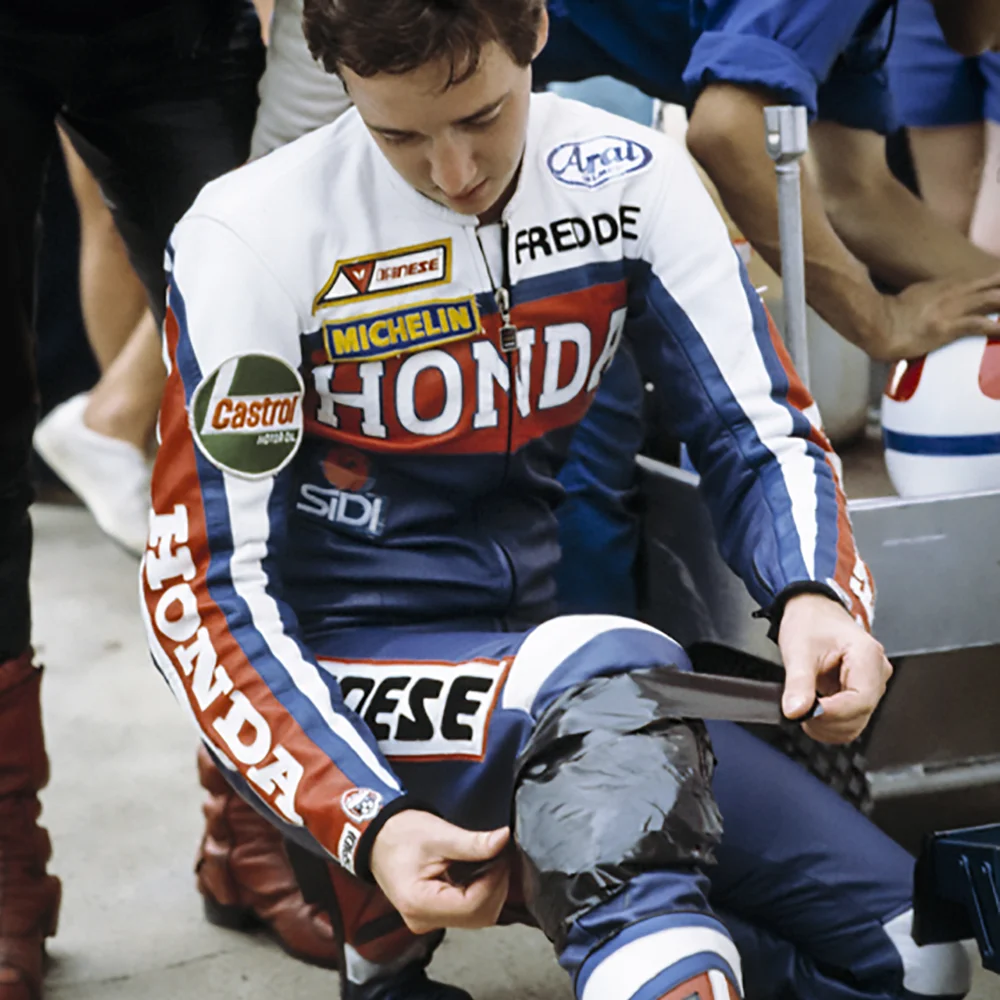
Planting the knees in corners had the friction holing Robert’s leather suit. Besides that, leather does not slide well, and could grab the surface of the track. So he began wrapping the knee region with copious amounts of duct tape.

Freddie Spencer applying duct tape. Lots of it.

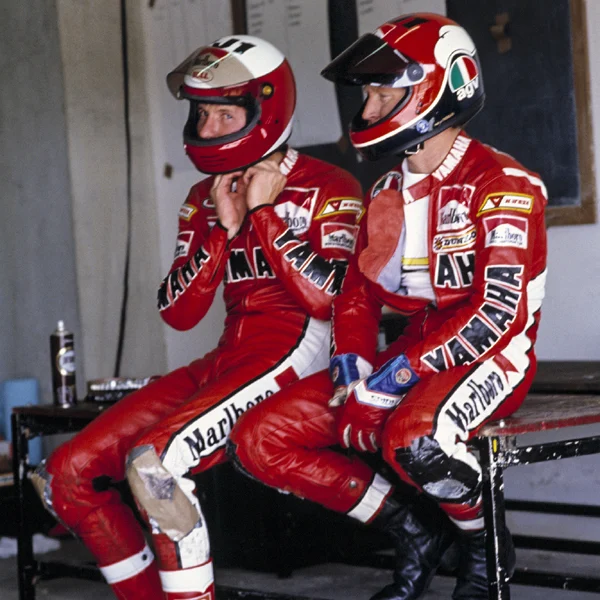
Then someone experimented by taping motorcycle helmet visors to their knees. Is slid smoother but also wore out quickly.

Eddie Lawson on the left, Roberts on the right. Notice the helmet visor on Eddie’s knee.

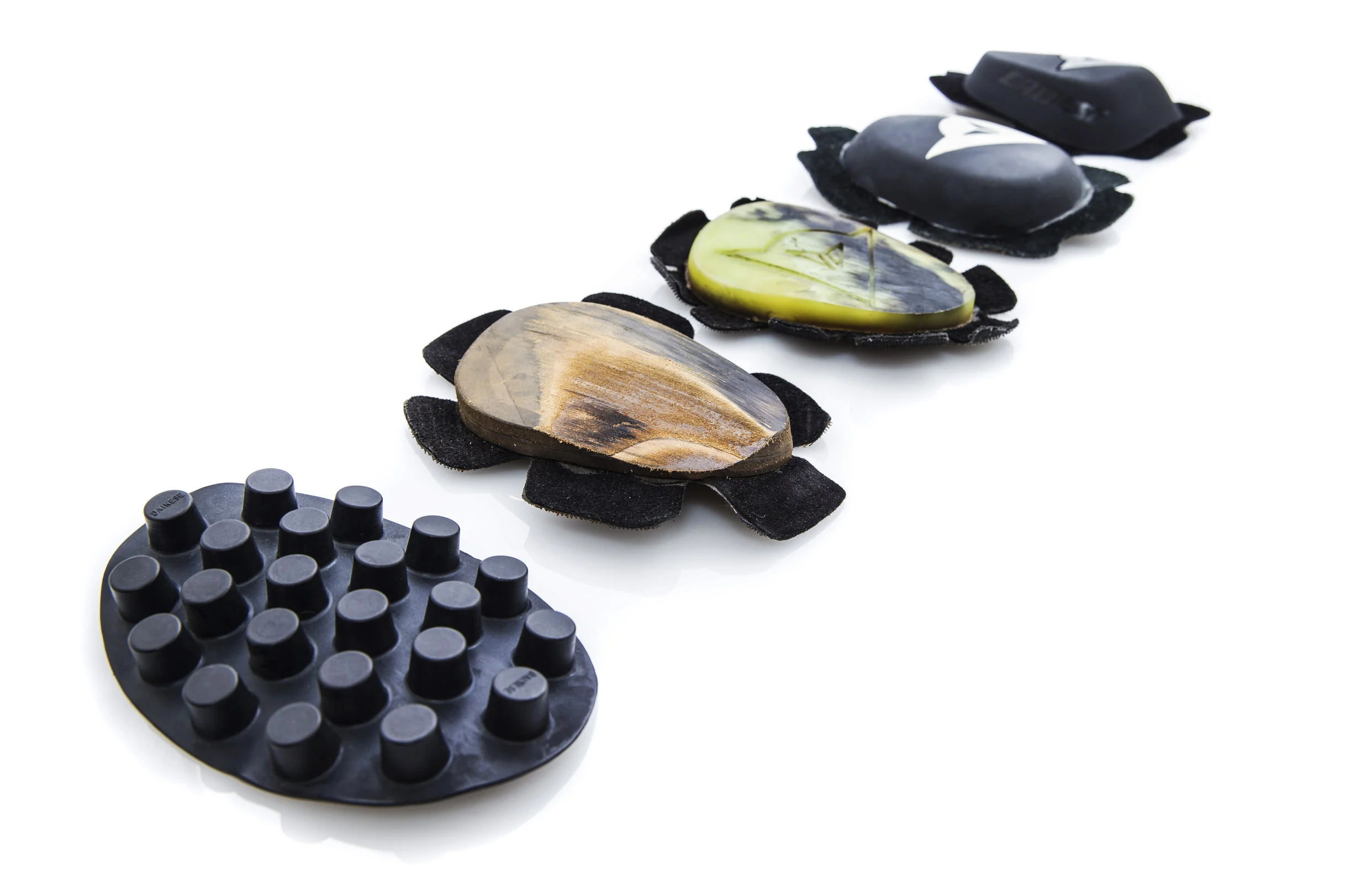
Bear in mind that racesuits had no provision for knee sliders up to this time. Then in 1981, Dainese stepped up by creating a suit with knee sliders stitched in. It had several plastic cylinders poking up from the base, and was dubbed the istrice (porcupine). It proved to be difficult to replace.

The istrice on the left, followed by a leather, and finally plastic knee sliders

Several years later, a suit with Velcro knees pads was introduced. The knee slider was now made of harder leather. Easily replaceable, but not slippery enough for sliding.

In 1986, a new knee slider appeared. It was made of plastic and began to look oval-shaped like what we have now. But the true modern knee slider appeared in 1990 with the shape and materials we see today.

However, several riders continued to voice their objection as the plastic was too grippy. So, suit and knee slider makers kept working at improving the slider’s slipperiness and durability.

Into the new era

Modern knee sliders are made to several criteria: How slippery, how much feel is transmitted to the rider, durability, and, aerodynamics. Also available are rain knee sliders that are thicker so that riders do not lean their motorcycles as much as they do on a dry track.

Oh yeah, elbow sliders and even shoulder sliders are made of the same material.

So, spare a thought for the unassuming knee sliders.


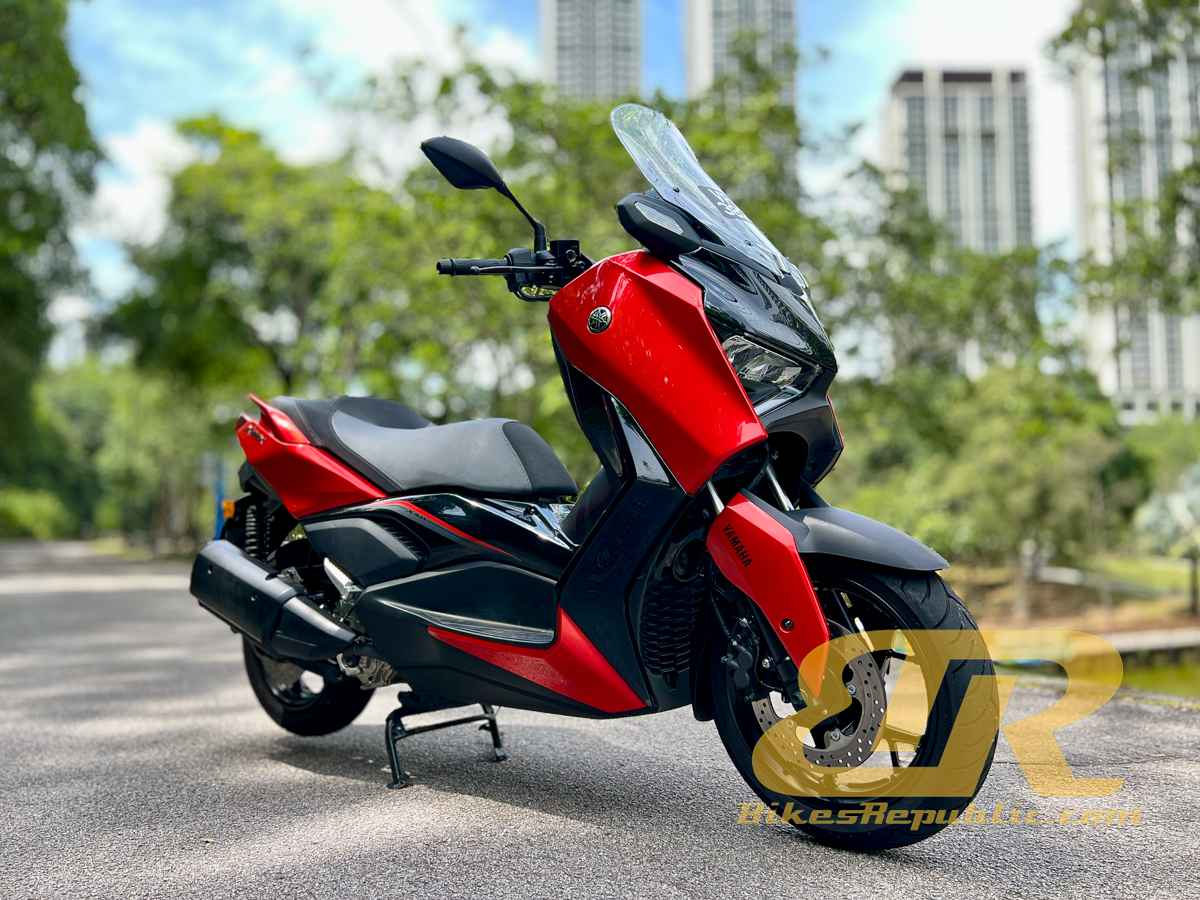
The Yamaha NMAX “Turbo” was recently launched in Indonesia, and the name “Turbo” drew plenty of enquiries which pointed to some confusion. So, let us take a look at how turbo works.

Anyhow, the NMAX “Turbo” does not use a real turbocharger. Instead, it is a mode to switch the CVT into delivering instant torque for speeding up and overtaking.

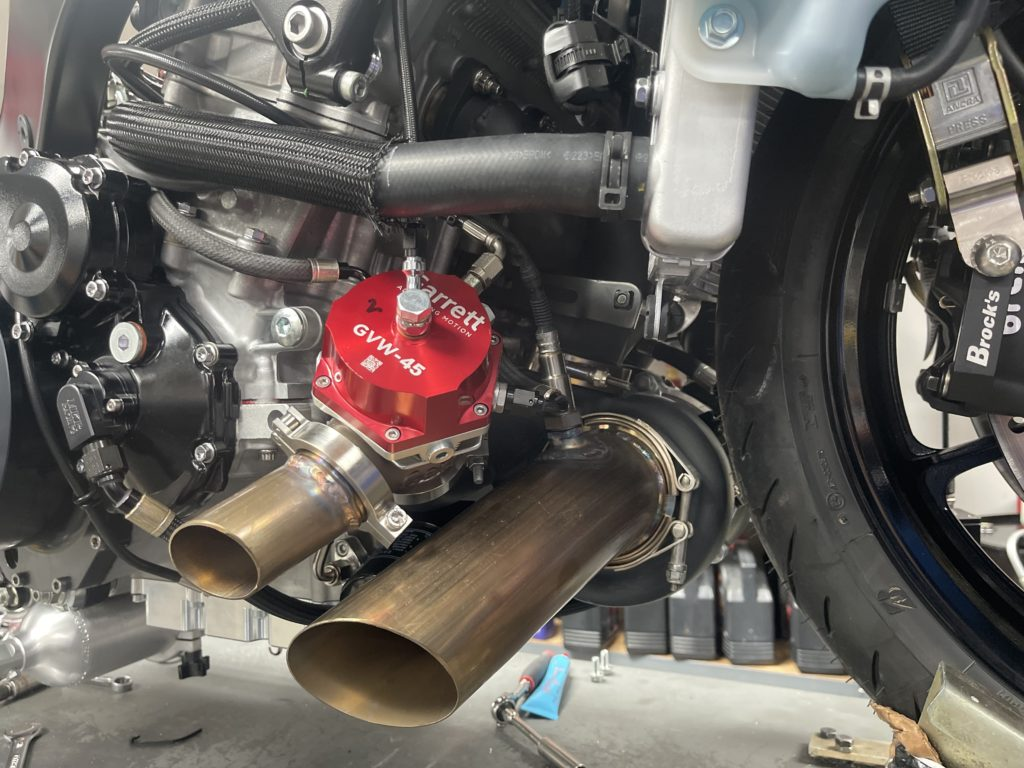
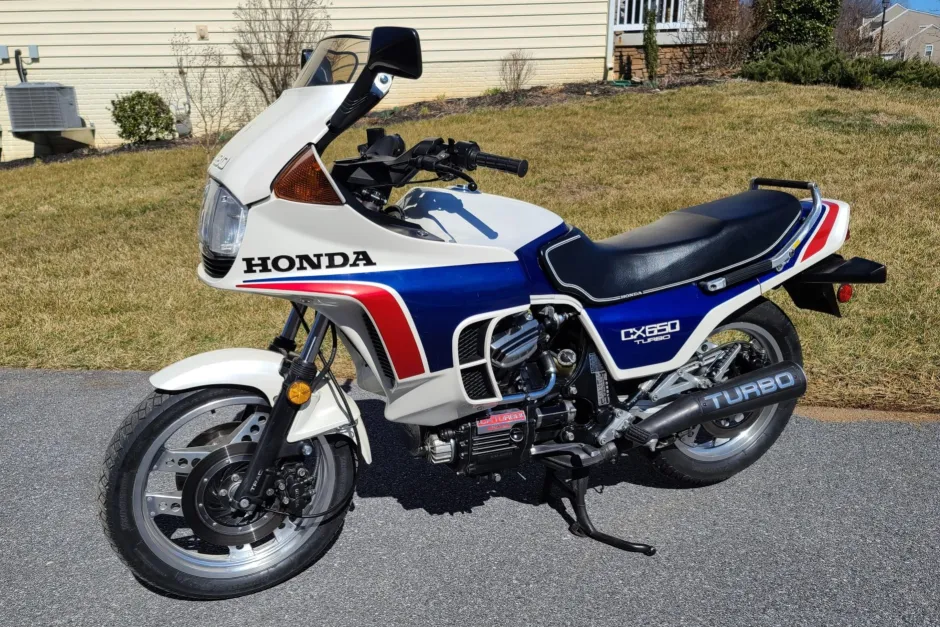
There are several reasons why a turbocharger is not popular among motorcycles, although there was an era of turbocharged motorcycles.

What is a turbo?

An internal combustion engine requires air in order to work. Air is drawn in, mixed with fuel and combusted. This combustion changes the chemical energy in fuel to thermal energy (heat), which in turn pushes the piston down to rotate the crankshaft (kinetic energy).

However, each piston can pull in so much air. Not enough air means you cannot mix in too much fuel, otherwise the unburned fuel is wasted. So, since there is not enough air and fuel, the engine produces limited torque and power.

The turbo changes this by stuffing in more air, to be mixed with more fuel, so the engine can produce more power.

How does it work?

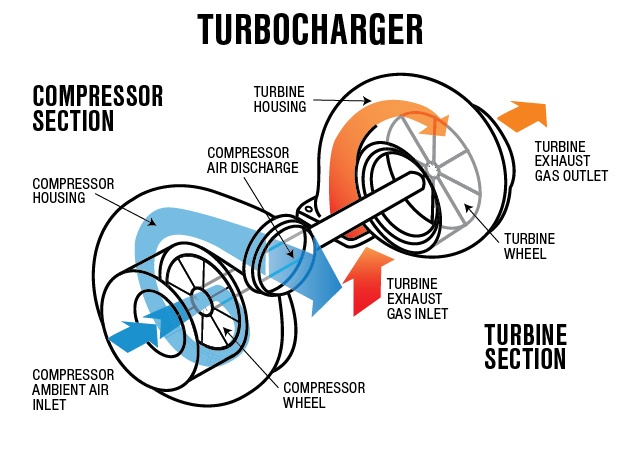
The basic premise is the turbocharger utilises exhaust gas to compress intake air, rather than letting it go to waste.

To be a little more specific, a compressor in the turbocharger pressurises the intake air before it enters the inlet manifold. In the case of a turbocharger, the compressor is powered by the kinetic energy of the engine’s exhaust gases, which is extracted by the turbocharger’s turbine.

The main components of the turbocharger are:

  • Turbine – usually a radial turbine design.
  • Compressor – usually a centrifugal compressor.
  • Centre housing hub rotating assembly.
  • Turbine

The turbine section (also called the “hot side” or “exhaust side” of the turbo) is where the rotational force is produced, in order to power the compressor (via a rotating shaft through the centre of a turbo). After the exhaust has spun the turbine it continues into the exhaust and out of the vehicle.

The turbine uses a series of blades to convert kinetic energy from the flow of exhaust gases to mechanical energy of a rotating shaft (which is used to power the compressor section). The turbine housings direct the gas flow through the turbine section, and the turbine itself can spin at speeds of up to 250,000 rpm.

  • Compressor

The compressor draws in outside air through the engine’s intake system, pressurises it, then feeds it into the combustion chambers (via the inlet manifold). The compressor section of the turbocharger consists of an impeller, a diffuser, and a volute housing.

  • Centre hub rotating assembly

The centre hub rotating assembly (CHRA) houses the shaft that connects the turbine to the compressor. A lighter shaft can help reduce turbo lag. The CHRA also contains a bearing to allow this shaft to rotate at high speeds with minimal friction.

Some CHRAs are water-cooled and have pipes for the engine’s coolant to flow through. One reason for water cooling is to protect the turbocharger’s lubricating oil from overheating.

The cons of a turbocharger

Every engineering solution creates another problem, so it is all a compromise. The same goes for the turbocharger, hence its limited use.

Turbo lag

Turbo lag refers to the delay that occurs between pressing the throttle and the turbocharger spooling up to provide boost pressure. This delay is due to the increasing exhaust gas flow (after the throttle is suddenly opened) taking time to spin up the turbine to speeds where boost is produced (due to the turbine’s inertia). The effect of turbo lag is reduced throttle response, in the form of a delay in the power delivery.

Then, when the boost pressure is sufficient, the engine’s torque suddenly increases and the vehicle takes off, sometimes surprising the operator.

There are ways around this lag, of course, but it requires a lot of tech (read: expensive).

Heat

Needless to say the system generates lots of heat, necessitating the use of oils that could stand up to the torture. Hence, only synthetic engine oils are recommended.

Archive

Follow us on Facebook

Follow us on YouTube