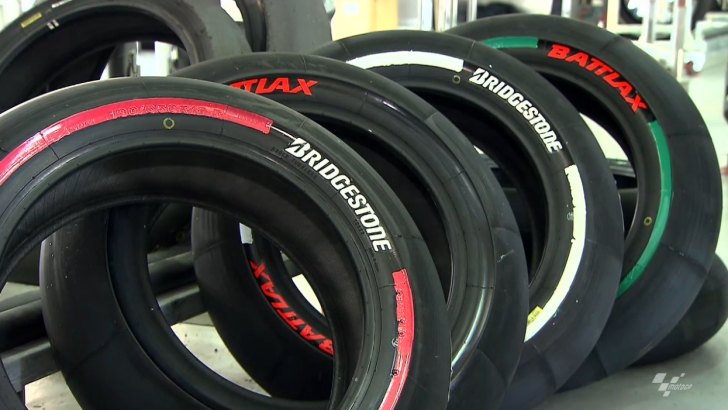
Bikesrepublic

Latest News

  • Slick racing tyres should never be used on public roads.

  • They pose more disadvantages and danger if they are.

  • Current street tyres are already better than some DOT race tyres from just 5 years ago.

We’ve written about it in just about every article about tyres and yet there are still some bikers who continue to use slick racing tyres outside the racetrack i.e. public roads.

Our friend Haizal Omar posted on his Facebook recently that he saw bikers equipping their bikes with slick racing tyres and riding them on the road. He also went to highlight why slicks are a bad idea on public roads.

Haizal is the lead instructor at his Alpha Track Academy and also an instructor at the Ducati Riding Experience (DRE). He’s also completed the instructor modules in the California Superbike School (in California, USA under the tutelage of guru Keith Code). So we listen when he talks.

So, why is using “slicks” such a bad idea? All the MotoGP and professional riders use them to win races, after all. That must mean they grip like crazy, right? They are expensive but they are a necessary part of riding quickly, correct? And since they grip really hard, it means that they also make riding much safer, right?

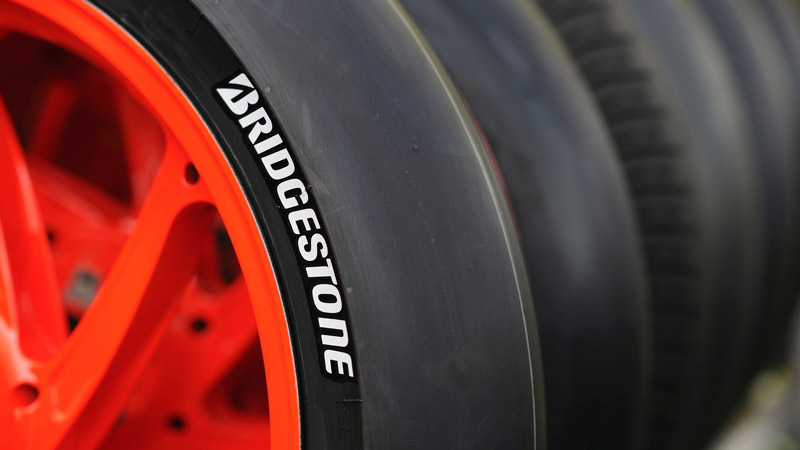
But before we carry on, what are racing slicks? The short answer is tyres that are exclusively meant for racing. They’re called slicks because they’re devoid of grooves on the carcass, in order to present an uninterrupted surface called footprint to the road surface. More footprint equals more grip.
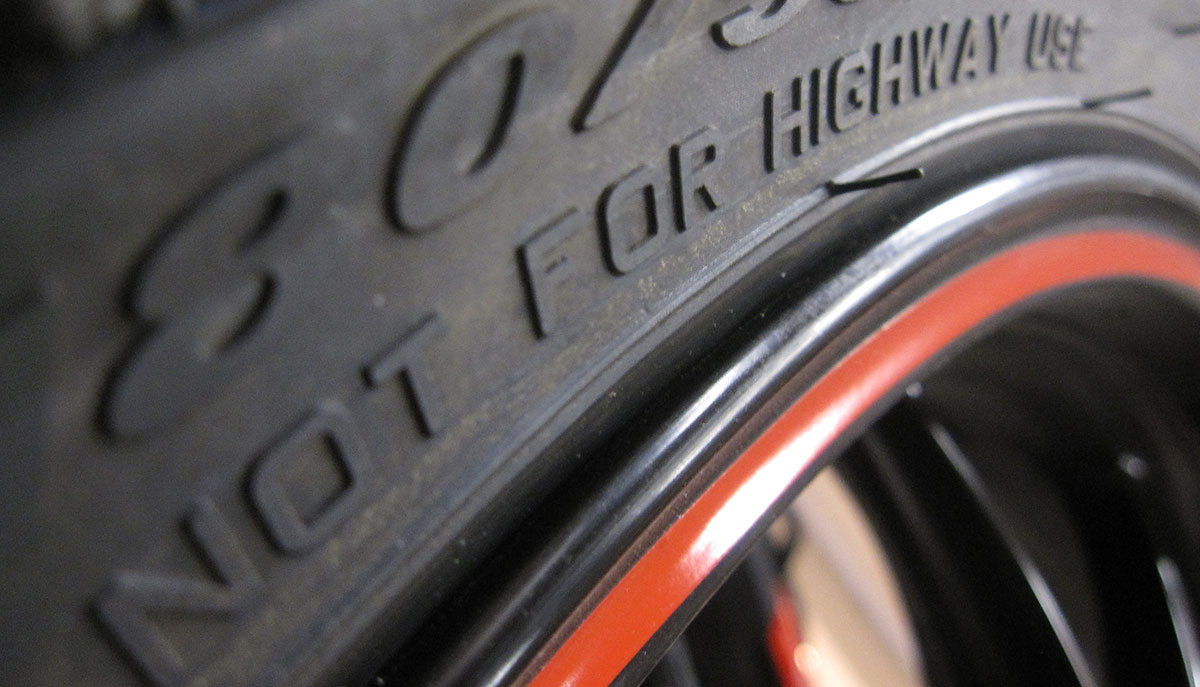
But there are serious caveats why they shouldn’t be used on public roads. Unheeding these conditions will result in (touch wood) unwanted situations sooner or later. 

By why? Let’s examine.

1. Temperature
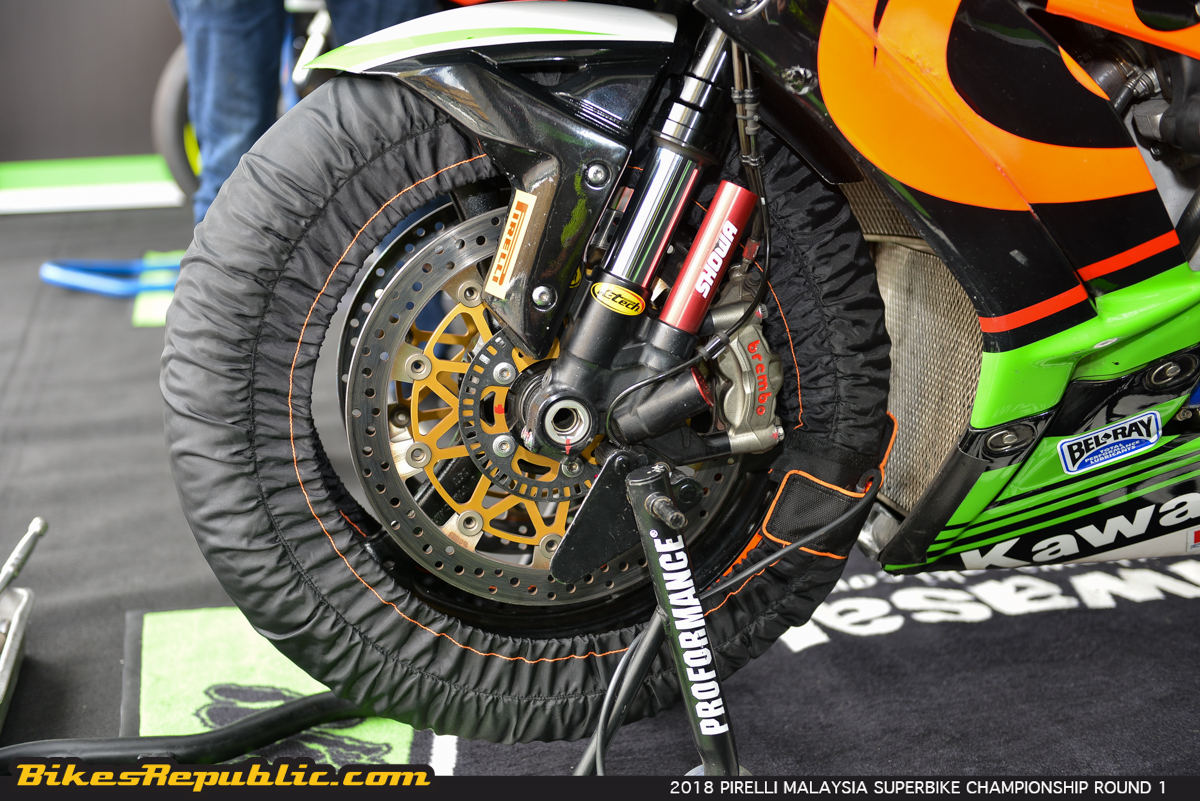
This is the most obvious factor.

All types of tyres work at their optimum levels within a certain heat range. However, slicks work best around 100-degrees Celsius for the front and 120-degrees Celsius for the rear. That’s as hot and hotter than the boiling point of water at sea level.

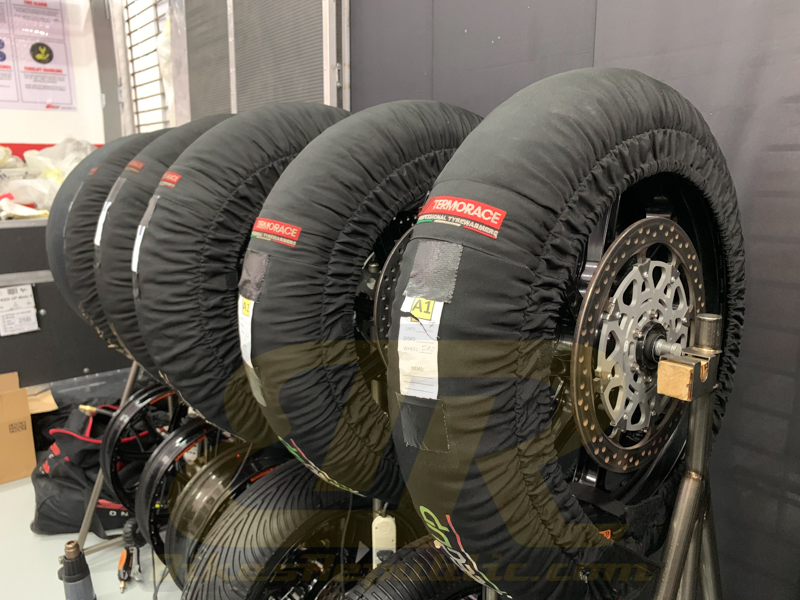
This is why race teams wrap them in tyre warmers prior to a race.

The warmers are set at 90-degrees Celsius, for at least one hour.

Notice why the pro riders usually set their fastest race times after the third lap or in the middle of the race? Why do MotoGP riders keep talking about caring for their tyres?

The answer is temperature and how to maintain it within that range.

The point is, who carries tyre warmers to BHP Gombak for their “Karak Highway GP?” So firstly, the starting temperature’s already incorrect.
Secondly, running on public roads even without traffic will not build up temperature quickly enough, lest the biker rides like a total maniac, thereby endangering himself and innocent members of the public.

Thirdly, even if the rider is able to heat the tyres up to their optimum operating temperature, traffic, road, and weather conditions will conspire slow him down at some point, forcing the tyres to cool down to below their working temperatures.

2. Heat cycles
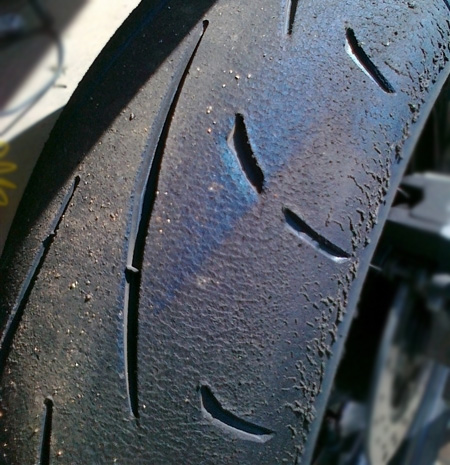
You will see this after you ride hard on the roads or the track — that blue/purple band on the edges of the tyres. The bands are indicative of the tyres releasing their oil after a “heat cycle.” This is natural as tyres DO contain oil as part of their compounds.

A heat cycle means the process of letting the tyres cool from working temperature back to ambient temperature. Depending on brand and compound, a racing slick lasts very few heat cycles, some as low as just 8.

That means even if you could work them up to working temperature, you could only use them for 4 daily commutes — assuming you riding to work and back home.

Regardless if you still have 99% rubber, those slicks are already useless after those cycles. In other words, no grip.

3. Cold shear
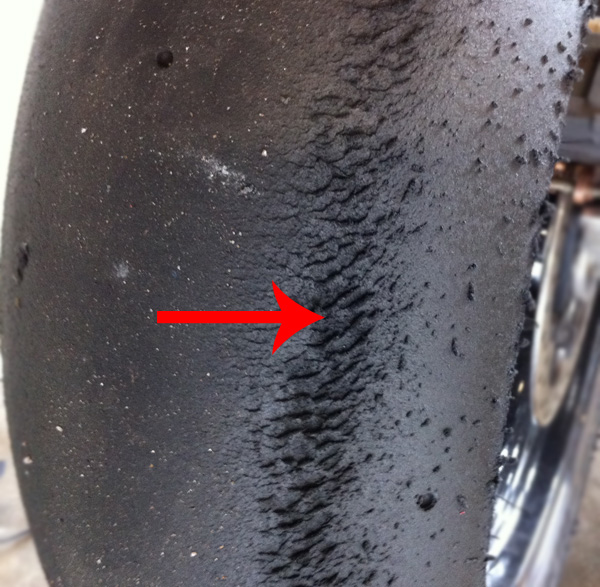
A biker once showed me his rear slick when I suggested that slicks shouldn’t be used on the road. On the edges were these bits of rubber not unlike what you get when you use a rubber eraser on paper.

Riders usually associate this condition to a grippy tyre but these were large and deep, instead.

It’s a condition called “cold shear.” As the name suggests, the surface is torn off due to being used below operating temperature. Instead of the tyre rolling across the road, it actually ploughs through. The tyre may even throw off chunks of rubber in extreme cases.

4. Weather conditions
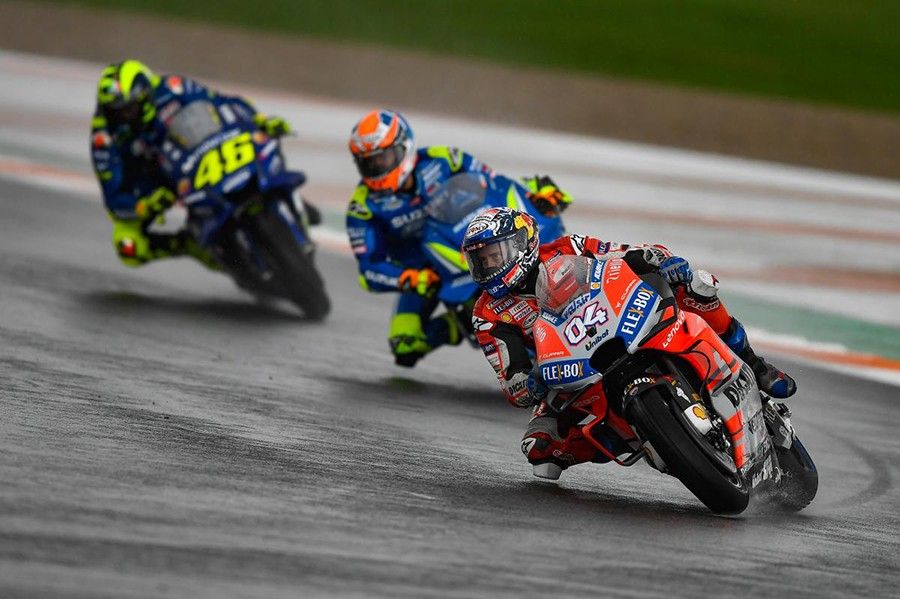
This is the other obvious reason, apart from temperature.

Slicks are meant to work only in one weather condition: Dry. The grooves of a tyre help to evacuate water between the contact patch and road surface and provide grip. Conversely, the lack of grooves will cause the tyre to aquaplane.

To be fair, slicks can work on damp roads (provided they’re up to temperature) but not over standing water. 

5. Suspension settings
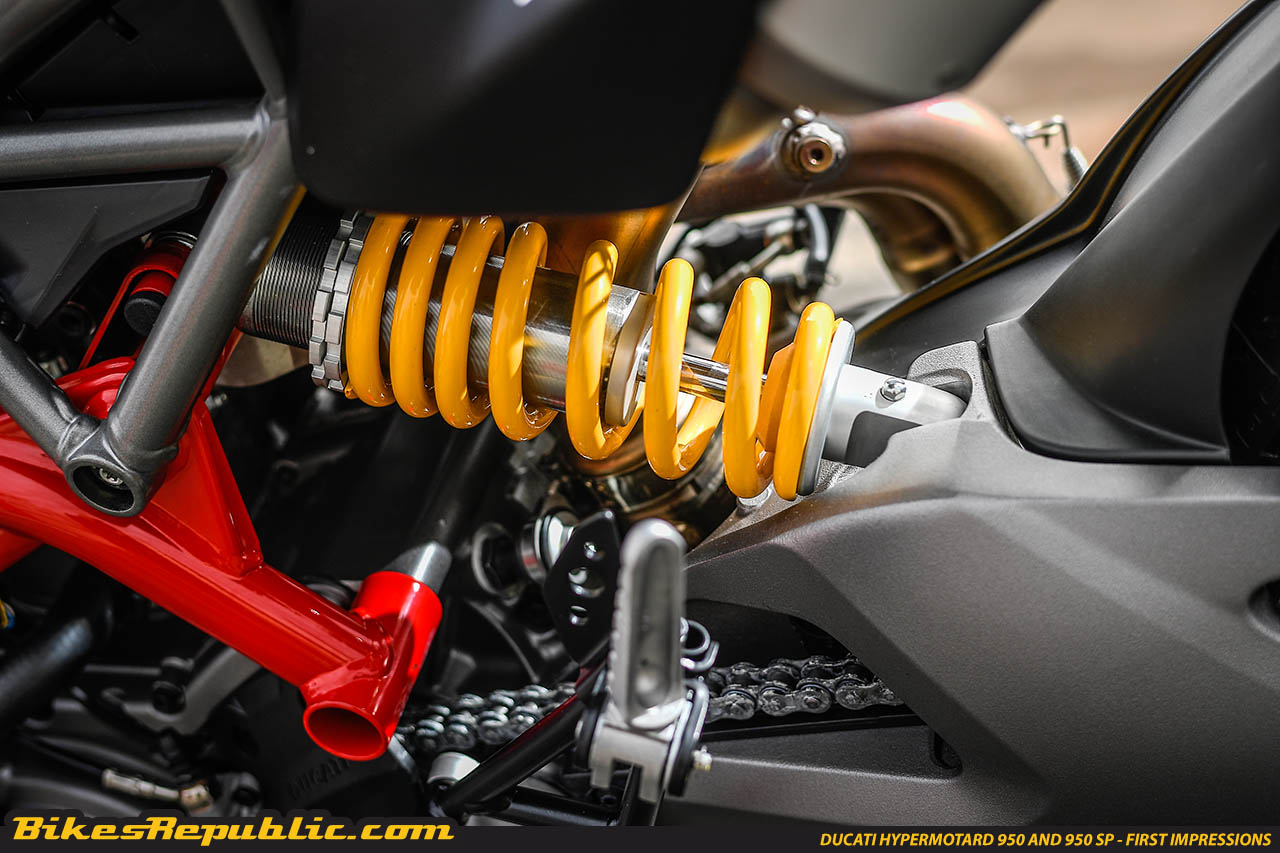
Using different tyres need different suspension settings. However, it’s much less crucial in using street tyres than it is for slicks. On the other hand, using street settings for slicks may not put enough stresses to warm them up. Then again, resorting to track settings for the streets would result in an uncomfortable ride.

6. You’re trying to win… what?
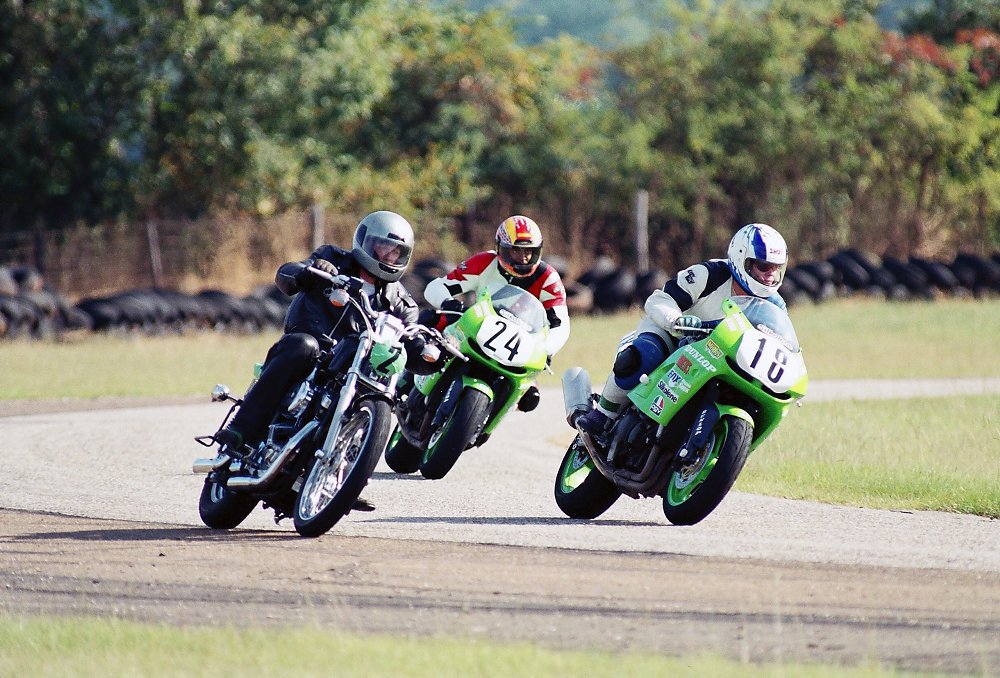
If you really want to experience slicks at their optimum levels, there’s no better place than at the track. Here, your slicks will warm up quicker even if you don’t use a warmer. Just take it easy for the first few laps and then put hammer down when the tyres have warmed up sufficiently

7. Street tyres are awesome
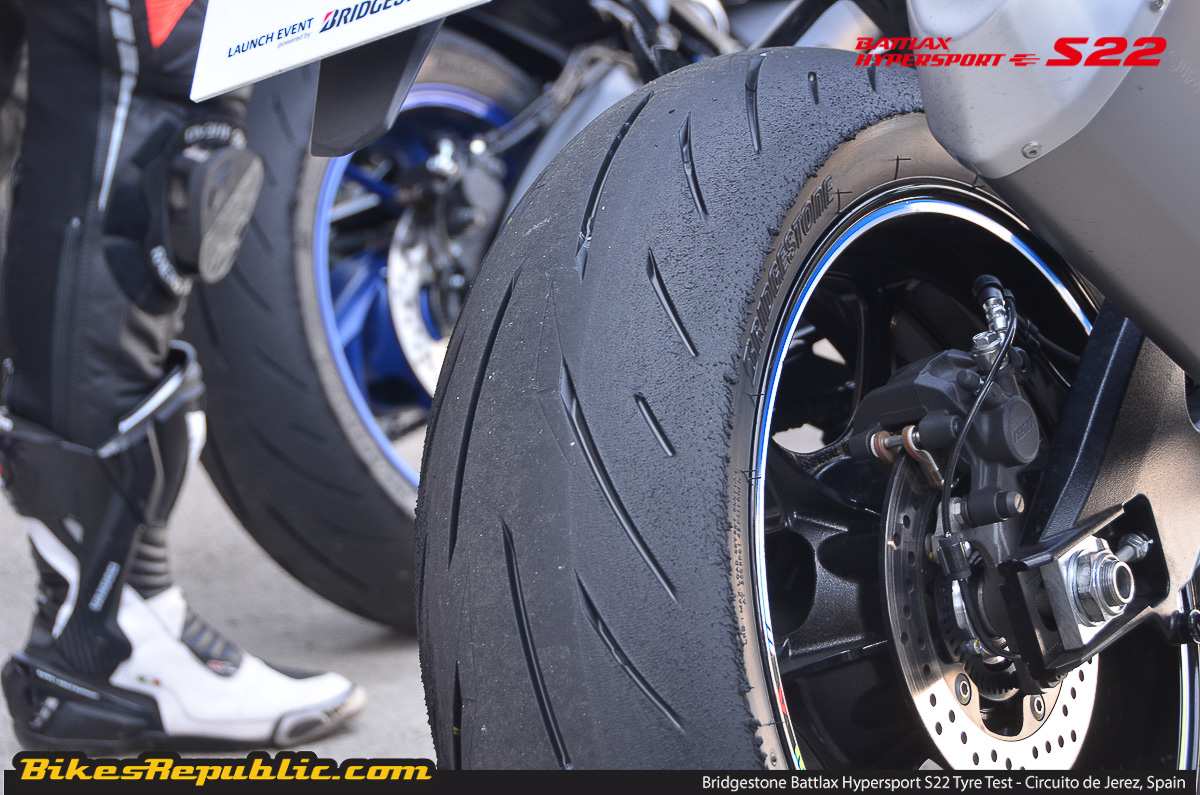
Street tyres these days perform at levels we couldn’t even dream of two decades ago. Sport-touring tyres like the Bridgestone T31 and Pirelli Diablo Rosso III stick like mad in the dry and the rain.

In fact, we rode the Panigale 959 equipped with the Diablo Rosso III at the Buriram circuit during the bike’s launch and not one rider complained about lack of grip.

Our colleague Sep Irran tested the Bridgestone S22 at the Jerez Circuit on a cold day. Again, the tyres gave so much confidence.

In fact, the DOT street race tyres such as the Bridgestone R11, Pirelli Diablo Corsa SC1, Metzeler Racetec RR K3 and others offer so much grip on the latest superbikes we tested that we found them too good for the bikes!

So save your money and your skin and get the latest DOT race tyres. They warm up quickly, can last over many more heat cycles work in any condition, comfortable, and are definitely cheaper and easier to maintain than slicks.

8. Attend riding classes

Through the lessons learned at Most Fun Gym and California Superbike School, tyre and grip “problems” are usually the direct results of incorrect riding techniques. Those schools don’t talk about what bike you ride or tyre you use, instead they look at how you ride to make the most of what you have.

Conclusion

The advantages of using street tyres for public roads far outweigh what could be obtained from using slicks. Which is actually like 10 vs. 0.

We’re not criticising you if you do use slicks but give a thought to what we wrote and switch back to street tyres. You’ll be amazed at what you could do on them.
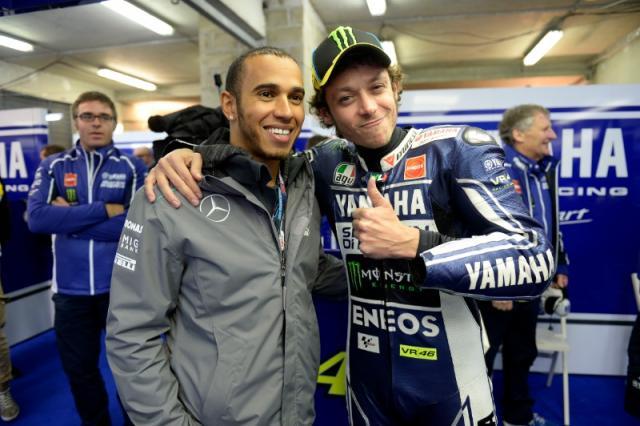

  • Valentino Rossi will go to Formula 1 while Lewis Hamilton will take his MotoGP seat.

  • Rossi will drive Hamilton’s Mercedes AMG PETRONAS car.

  • Hamilton will ride Rossi’s Monster Energy Yamaha YZR-M1.

Valentino Rossi will go to Formula 1 while Lewis Hamilton will take his MotoGP seat.

The swap will happen at Valencia circuit on 9th December. Rossi will drive Hamilton’s Mercedes AMG PETRONAS car. Hamilton on the other hand, will ride Rossi’s Monster Energy Yamaha YZR-M1. The deal was probably pushed through by both men’s sponsor Monster Energy.

Hamilton had expressed his wish to ride a MotoGP bike earlier in the year, but it was Repsol Honda who responded with the message “Bring it on, Bro” in a tweet. But it didn’t happen, as expected, as the Repsol riders are sponsored by Monster Energy’s biggest rival Red Bull.

It won’t be the first time Hamilton rides a motorcycle, although it’s his first time on a MotoGP bike. He had ridden the GYTR Yamaha YZF-R1M with PATA Yamaha WorldSBK riders Michael van Der Mark and Alex Lowes at Jerez. He tweeted “Valentino Rossi I need to come to the ranch ASAP.”

As for Rossi, it’s not the first time he’s behind the steering wheel of a four-wheeler, either. He competes in the Monza Rally annually and has won it seven times up to last year. He had also tested in Michael Schumacher’s Ferrari Formula 1 car many years ago. He impressed the multiple champion so much that Schumacher offered him a spot as a driver.

We can’t wait to see the upcoming event!

  • The Knight Rider returns!

  • As Moped Rider.

  • The hilarious video is for a German online marketplace.

Remember that 80’s show Knight Rider?

Yeah, the one with the fancy black Pontiac Firebird called KITT that talks? Starring David Hasselhoff as Michael Knight whose the car’s driver, the pair fights dastardly criminals all over the United States.

KITT was an almost indestructible advanced crimefighting vehicle featuring a self-aware artificial intelligence, “TURBO BOOST” which gave a sudden kick (usually used to jump over obstacles), and serious weaponry.

The series ran from 1982 to 1986, but it turned the “Hoff” into a bona fide celebrity.

Well, guess what?

The Hoff and KITT are back. Er… mostly.

In this commercial for the mobile.de online marketplace, Michael Knight and moped KITT fight a couple of bank robbers, complete with POWER BOOST and MEGA BOOST for a greater kick. We won’t spoil it for you but Knight did use the MEGA BOOST function.

Fans will recognise the 80’s wardrobe and hairstyle, besides the cheesy action and camera work. But the video was a whole lotta fun and hilarious.

Hasselhoff said during an interview, “I’m just kind of synonymous with making fun of myself and having fun.”

Unfortunately, the commercial is only available in German (The Hoff is German, anyway) although the action takes place in the States. 

  • Remember, the FIM Endurance World Championship is coming to Malaysia.

  • Called 8 Hours of Sepang, the race will be held from 13th to 15th December 2019.

  • Here are 10 basic points to get you up to speed.

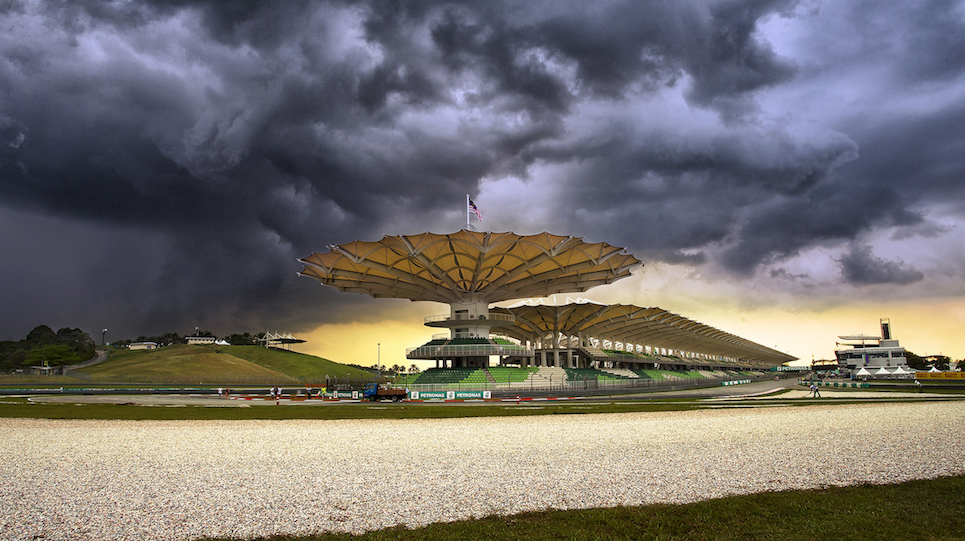
Rejoice! Because the FIM Endurance World Championship (FEWC) is coming to Malaysia.

But what’s the race about, other than taking longer to complete than the usual MotoGP and WorldSBK race? What are the technical rules governing the bikes? What type of bikes do they race?

Let’s start with some details of the Malaysian round.

1. 8 Hours of Sepang

Photo credit FIM Endurance World Championship

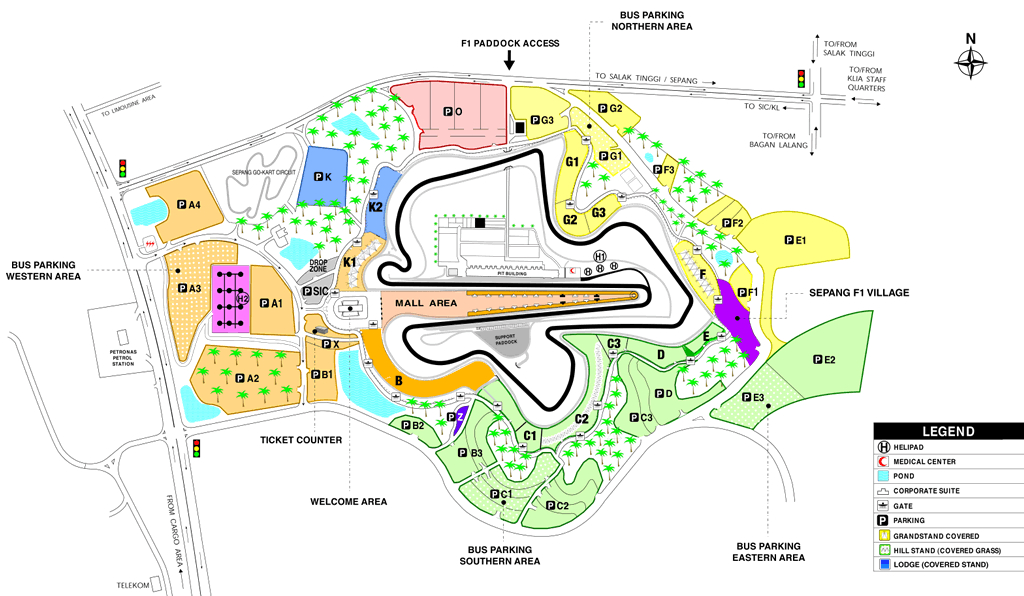
The event is officially known as 8 Hours of Sepang and happens from 13th to 15th December 2019. But since it’s the first time the FEWC visits Malaysia, the event will be a double-header for both motorcycles and cars. The 8 Hours of Sepang for FEWC will begin at 1pm and end at 9pm on 14th December.

The good news is you can watch all the FEWC, World Touring Car Races (WCTR), Formula 3 Asia and Formula 4 Asean sessions and races for just one ticket price.

Please visit the Sepang International Circuit’s website for more ticketing details and prices.

2. Special role of 8 Hours of Sepang

The 8 Hours of Sepang has a special role (besides being a new round to score more points): It will serve as the qualifier round for part-time teams to the season finale Suzuka 8 Hours.

3. What is the FEWC

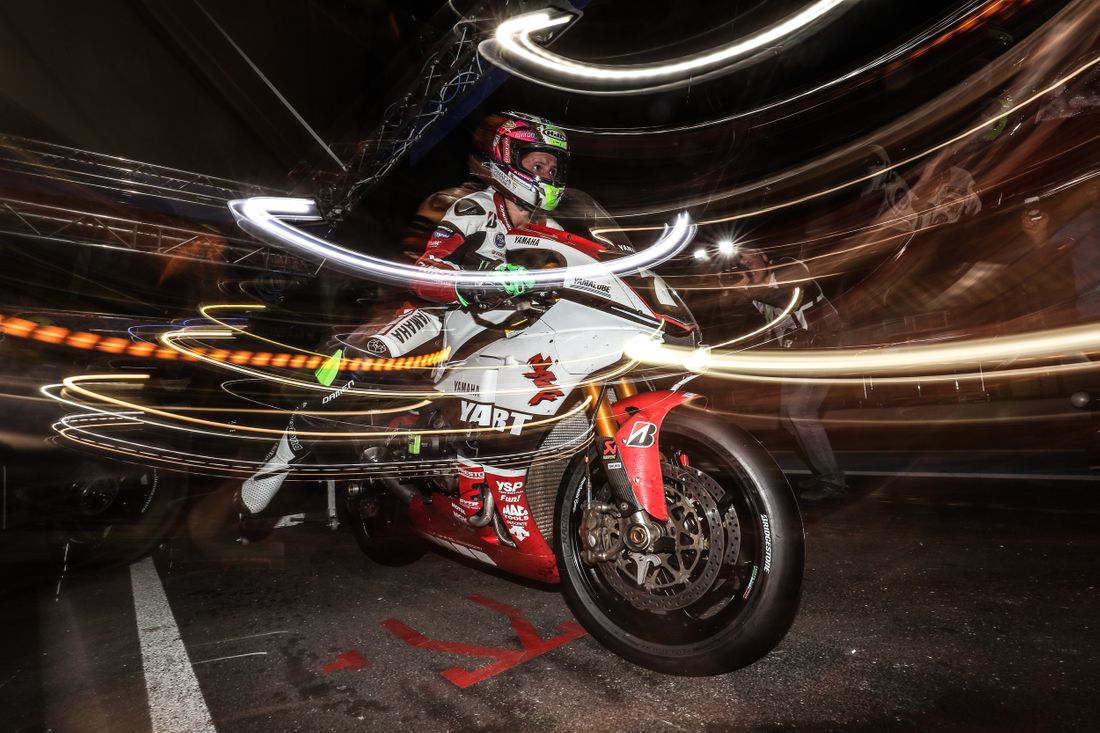
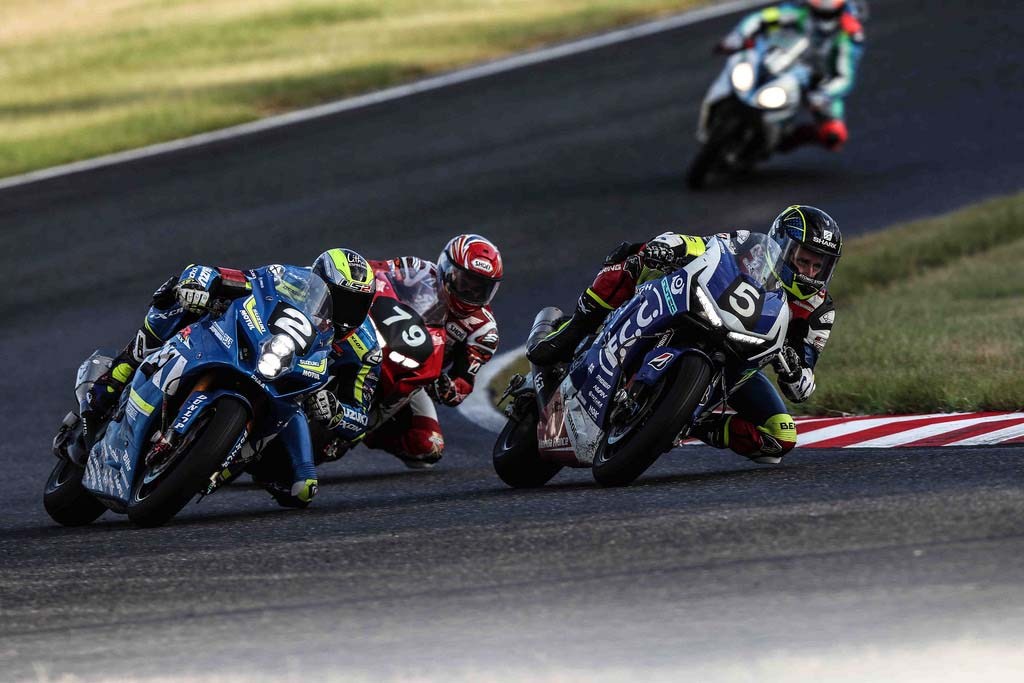
As the term “endurance” suggests, the races test the physical and mental resolve of riders and team members, besides the reliability of the machines throughout the race. There are pits stops and teams can repair crashed bikes and send them back out.

There are a number of race durations throughout the year i.e. 8 hours, 12 hours and 24 hours. As such, each team must have at least two riders. A third backup rider is permitted.

4. Run!

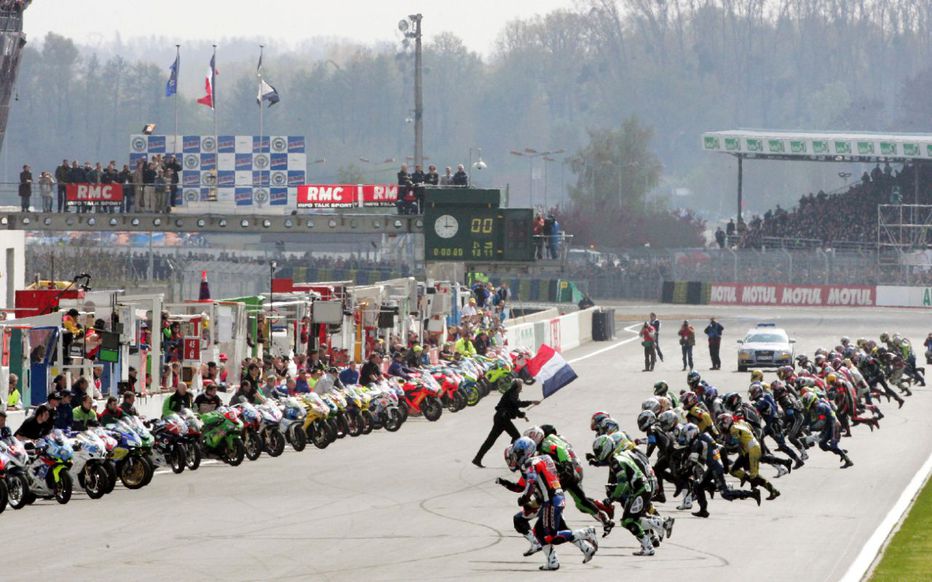
There are qualifying sessions, of course. However, the riders don’t start the races by sitting on their bikes. Instead, the bikes are lined-up along the pit wall with the riders lined up on the opposite side. At the drop of the flag, they run to their machines, start them up and off they go.

5. There are pit stops

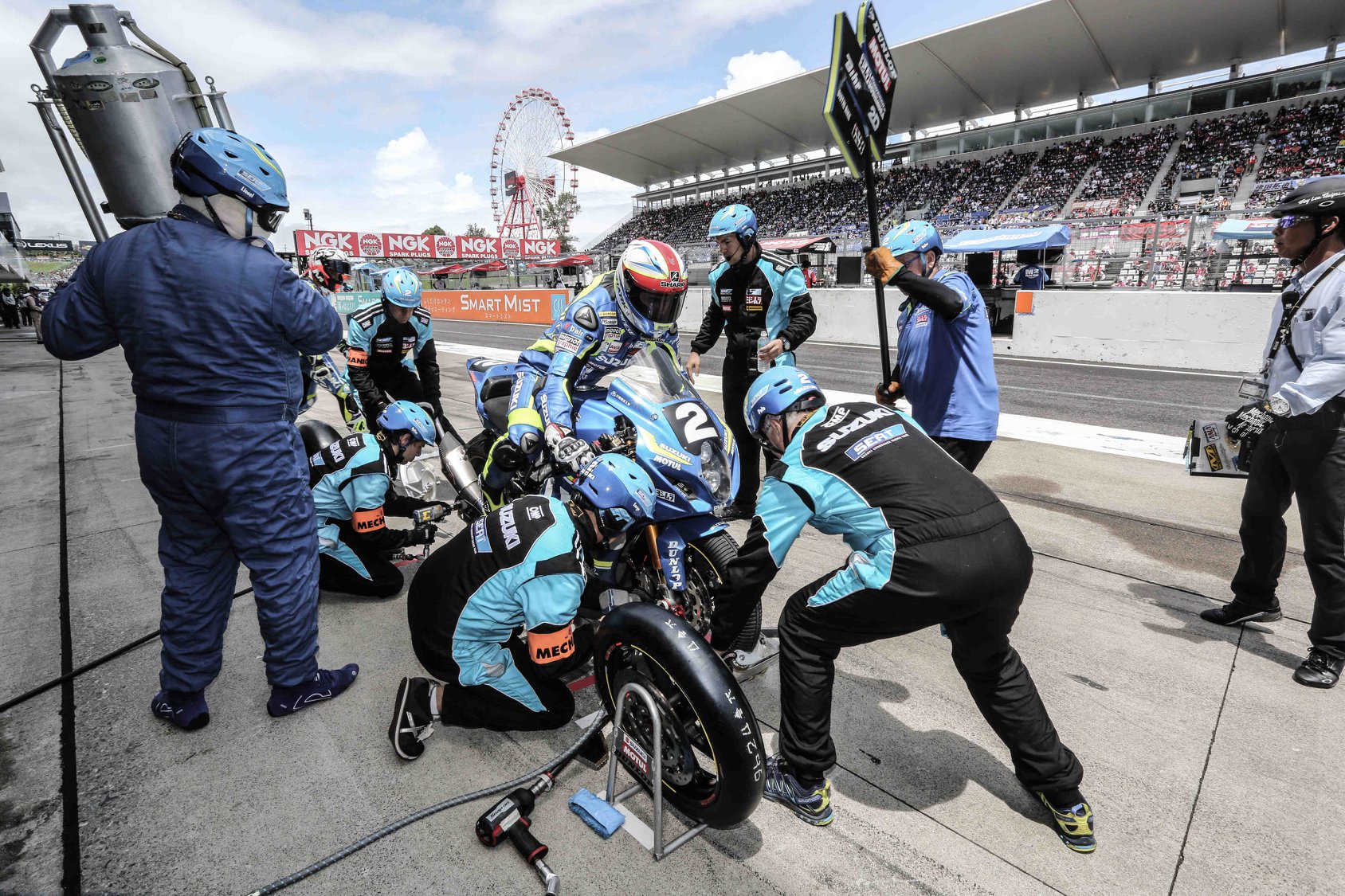
Racing for such extended periods require pitstops, of course. The bikes will come in for fresh tyres, fuel and to exchange riders. Brake pads are also replaced usually during the 12-hour and 24-hour races.

But get this: Only four persons are allowed to work on each bike on the “hot” pit lane. Should the rider help, he is considered one of the four. Having an extra person will incur a hefty penalty.

So, unlike MotoGP mechanics who “sign off” the bikes until after the race, endurance racing mechanics must be on their toes at all times. It’s not uncommon to see them running around like mad rabbits especially when they need to fix a crashed or malfunctioning bike.

6. Who wins?

The races are limited by time, not by a predetermined number of laps. So, the team who accomplishes the highest number of laps within that period is the winner.

Should more than one rider be on the same lap at the end of the race, the first rider to cross the finish line is the winner.

So, endurance racing rewards not who has the fastest bike or rider, but one who’s fastest on a consistent basis.

7. What are the technical rules?

There’s just too many to fit in here, as listed in the FIM’s rulebook. But these are the main points.

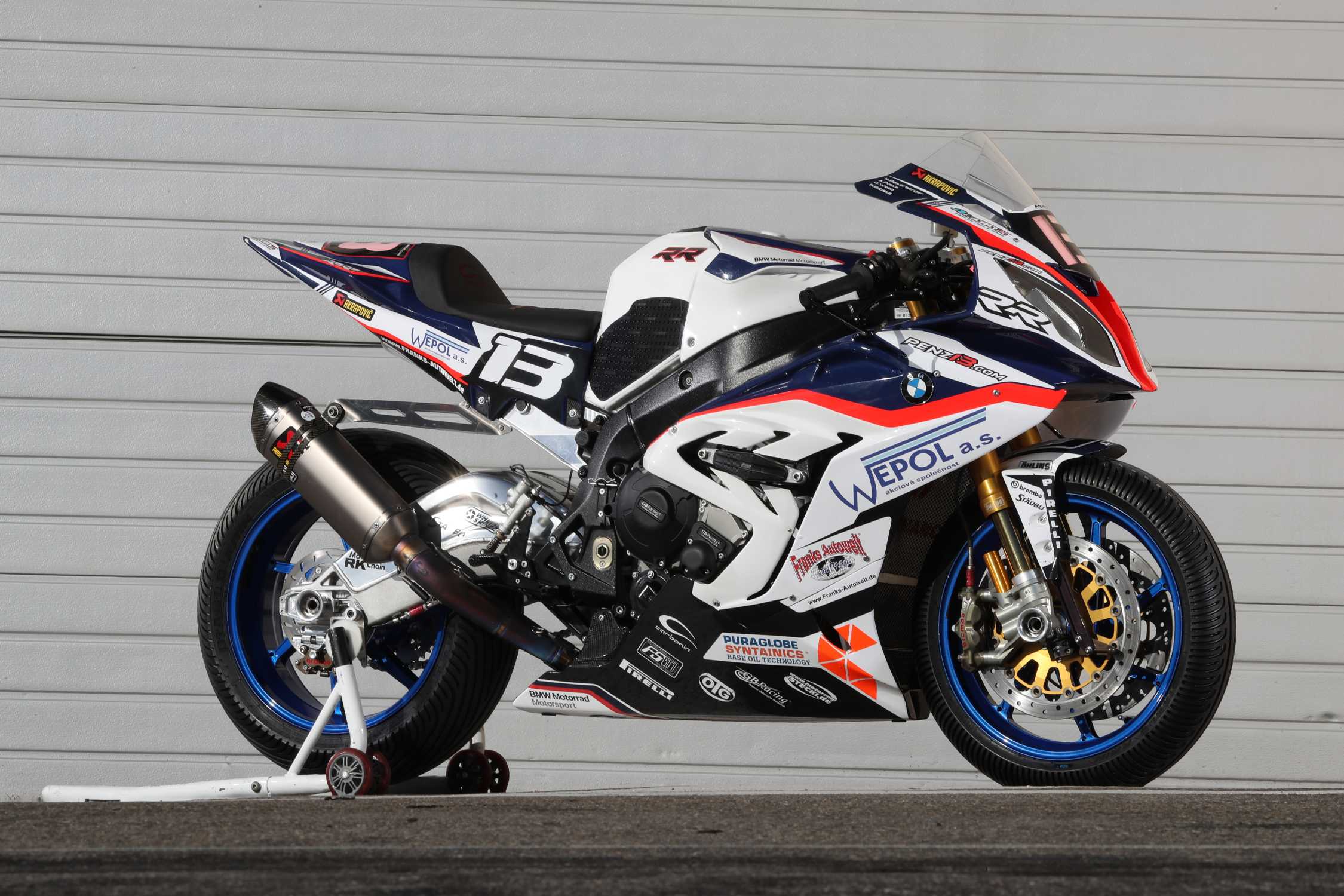
  • The FEWC is a production-based racing series.
  • Superbikes is the short answer, but the homologation model cannot exceed the retail price of € 40,000 (including taxes).
  • Only four-stroke engines are permitted.
  • Engine capacity limits are 600cc to 1000cc for 4 cylinders; 750cc to 1000cc for 3 cylinders; 850cc to 1200cc for two cylinders.
  • The frame must be in the dimensions and material of the homologated bike.

The field is divided into two classes: The premier EWC Formula and Superstock.

The former allows upgrades to the forks, rear shock, swingarm, brakes, radiator and exhaust. Teams can soup up the bike’s performance, but the rules are still very restrictive i.e. the piston, rings conrod must all be stock. Maximum fuel load is 24 litres. Minimum weight is capped at 175 kg (when weighed at the end of the race!).

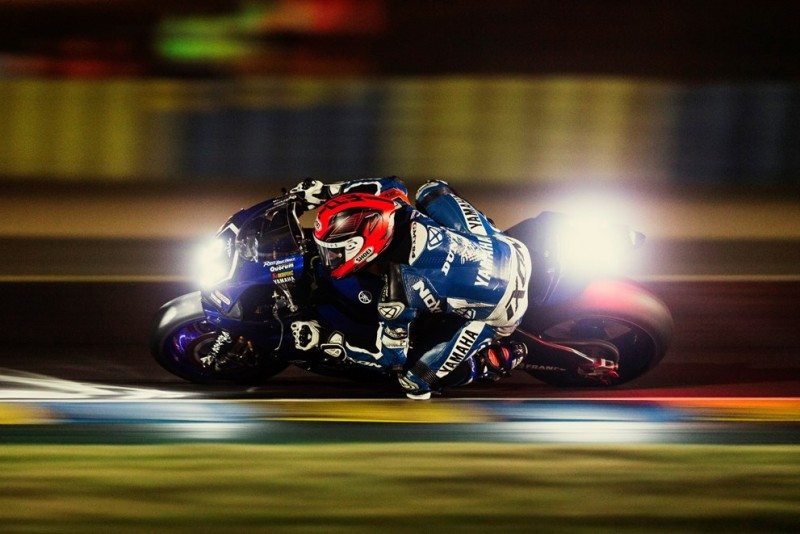
On the track, the EWC Formula bikes wear their race numbers on black backgrounds and have white-light headlamps.

As for the Superstock class, the bikes can be differentiated by race numbers of red backgrounds and use yellow headlights.

If modifications in the EWC Formula class are restricted, the Superstock bikes are practically taken from the showroom floors. However, ECU remapping, fuel injector replacement, clutch reinforcement and replacement of the exhaust silencers (not full system) are allowed. Maximum fuel load is 24 litres. The minimum weight for Superstock machines is 168 kg, at the end of the race.

There are other sub-rules for races that include nighttime or do not.

Limiting the number of modifications encourages manufacturers to produce better roadgoing bikes that can be obtained by the public, rather than ultra-exotics that no one could afford.

8. What tyres do they use?

The FEWC is where you find a proper tyre war. Instead of sticking to one brand of control tyre, Bridgestone, Dunlop and Pirelli duke it out here. The series encourages tyre makers to produce grippy yet high mileage tyres.

9. Which motorcycle manufacturers are involved?

Currently, Suzuki, Honda, Yamaha, BMW and Kawasaki are racing full time. Ducatis are entered without Ducati Corse involvement at the moment.

10. It’s currently the 2020 championship season

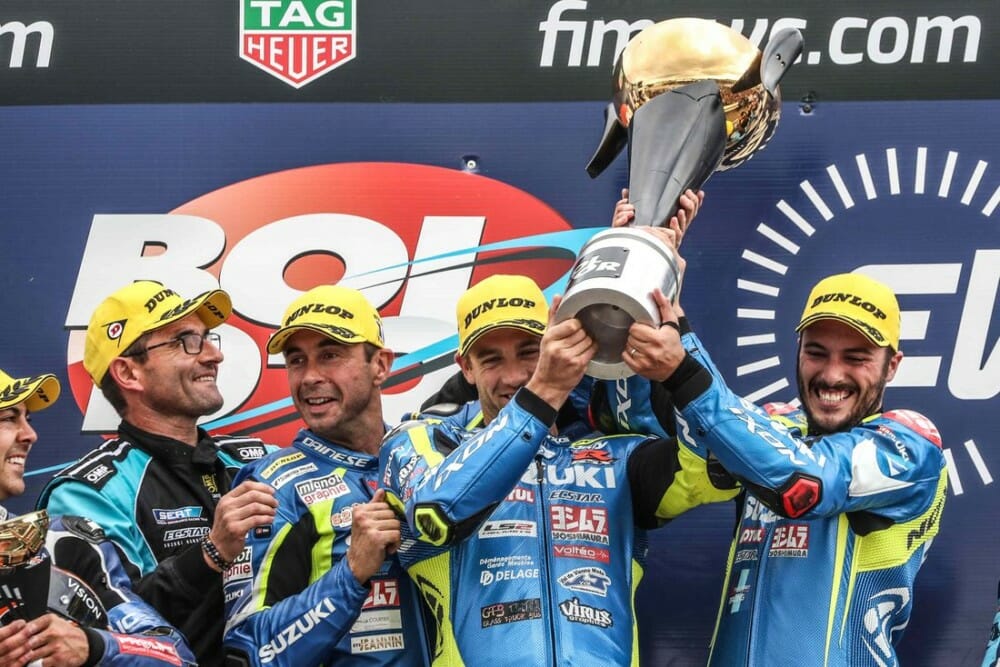
Suzuki Endurance Racing Team won the Bol D’or 24-Hour 2019

The FEWC season follows a different timetable compared to possibly all other racing series. Instead of beginning in the early part and concluding at the end of the year, the FEWC season begins in September and ends in July of the following year.

For the 2019 – 2020 season, the championship began with the Bol d’Or in France, then to 8 Hours of Sepang in Malaysia, over to the 24 Heures du Mans Moto at Le Mans back in France, followed by the 8 House of Slovakia Ring in Slovakia, then the 8 Hours of Oschersleben in Germany, and finally the Suzuka 8 Hours.

Conclusion

So, do book your tickets early for this prestigious event. It’s certainly a bang for your buck!

  • FSR Technology, the maker of TuneBoss donated RM 5000 to the #HelmetsOn Campaign.

  • The programme hopes to reach more than 200,000 children in 200 schools and equipping at least 50,000 children with correctly sized helmets.

  • Statistics show currently on 15% of Malaysian children wear proper safety gear while going to school.

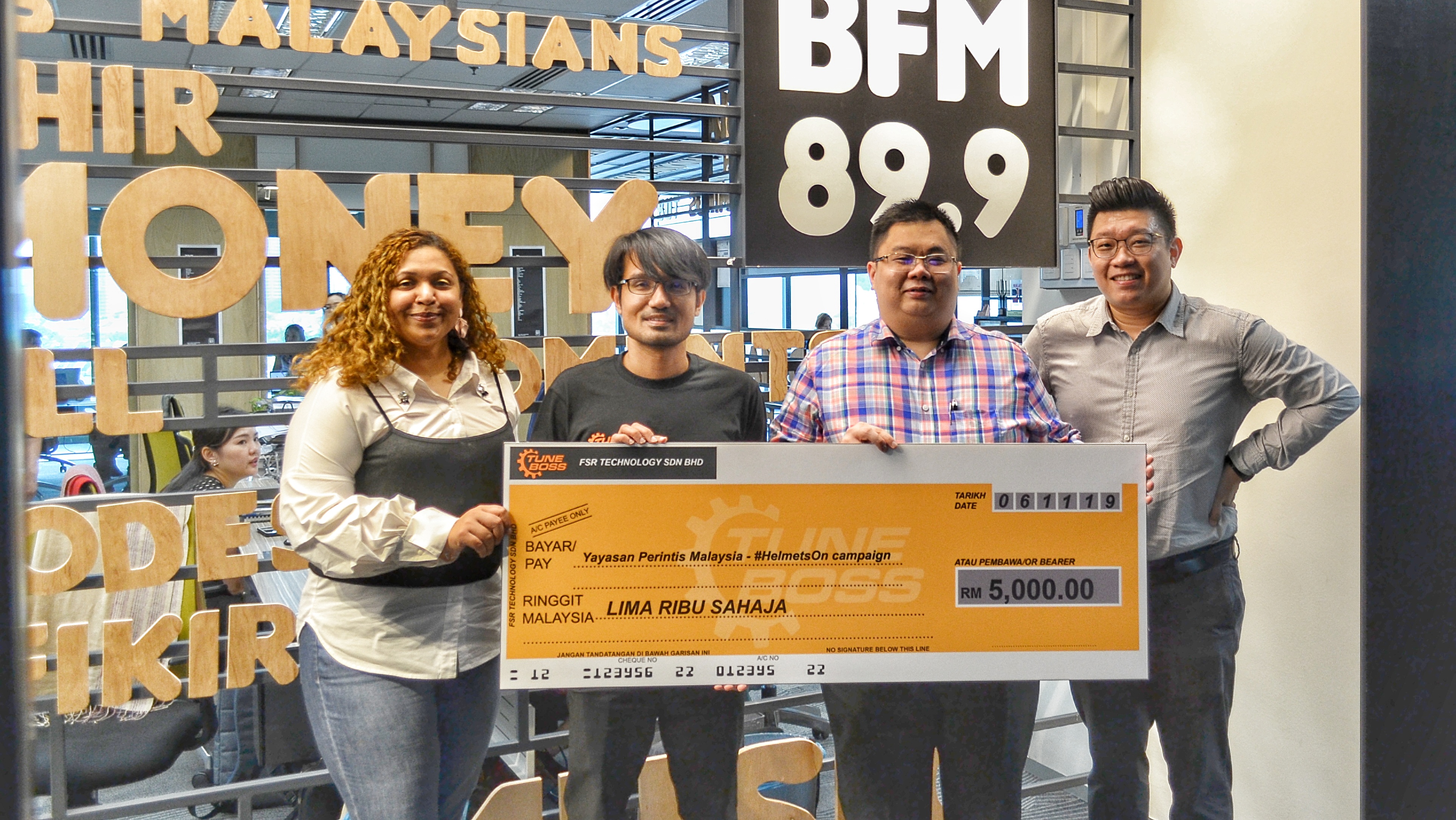
FSR Technology, the company behind TuneBoss, recently donated RM5000 to the MyPerintis and BFM Radio’s #HelmetsOn Campaign.

A mock cheque presentation ceremony was held at the BFM radio office, in Menara Ken TTDI between Farhan Ali of FSR Technology to Dato Lawrance Low of MyPerintis on the 20th of November 2019.

“It is a way for us to give back to the community that helped us grow and this campaign allows us to be part of the solution, to help those who need it,” said Farhan, FSR Technology CEO.

In March 2019, MyPerintis, a non-governmental organisation, joined the Ministry of Education to launch a helmet and road safety campaign called the Adiwira Topi Keledar Pilot Programme. 

The pilot campaign was a considerable success – distributing 1,500 helmets to 30 primary schools in Kota Bharu, Johor Bharu and Klang Valley, and educating over 27,000 children about the importance of helmets and road safety.

Following the successful pilot programme, the initiative has been renewed with the support of BFM89.9 in hopes of reaching more than 200,000 children in 200 schools nationwide and equipping at least 50,000 children with correctly sized helmets.

The campaign pledges to buy children motorcycle helmets at RM50 each, and to be given out to children in need of the safety device.  

Statistics from the Malaysian Institute of Road Safety Research (MIROS) show that only 15% of Malaysian children wear proper safety gear when riding pillion on their way to school.

  • Hafizh Syahrin will take part in the Sepang 1000 km Endurance (S1K) this weekend.

  • The race is his preparation for the World Touring Car Races in December.

  • He will also ride in the FIM Endurance World Championship.

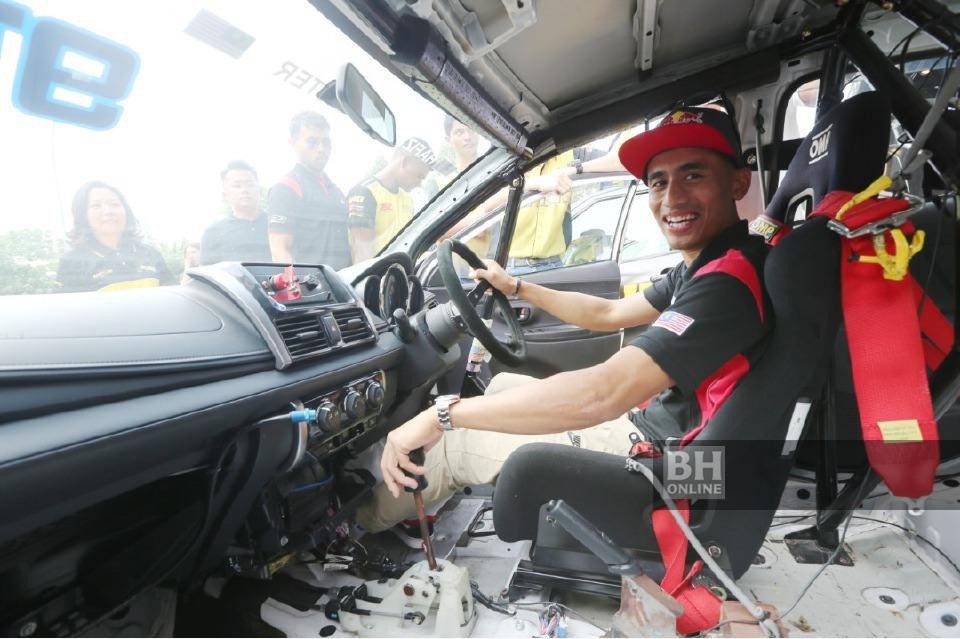
Hafizh Syahrin is excited to try his hand at four-wheels racing in the Sepang 1000km Endurance (S1K) this weekend.

Using his time out away from his usual vocation, Hafizh had been training with Hi-Re SIC Dream Chaser team a week before the season ending race at Valencia. The training aim to bring him up to speed in the world of four-wheeled racing at the Sepang International Circuit.

Hafizh said that the S1K will be his preparation for the World Touring Car Races (WCTR) which will be held back-to-back with the FIM World Endurance Championship (FEWC) motorcycle endurance from 13th to 15th December.

He will also race in the FEWC in a Petronas and SIC backed team which consists of Franco Morbidelli besides another rider.

“I have to prepare myself in mental and physical aspects. I have to familiarise myself with different sensations and feel in a car on the track.”

He will be driving a Toyota Vios with the number 910 along with 17-year-old up and coming driver Bradley Benedict Anthony, and Alister Yoong who is the  son of former Malaysian Formula 1 driver  Alex Yoong.

72 cars will fill the SIC grid this weekend.

Archive

Follow us on Facebook

Follow us on YouTube