-
Each decade has its defining motorcycles.
-
The 70d saw a great number of iconic bikes.
-
We’ll continue with the 80s next week.
Motorcycles evolve hand-in-hand with the sentiments of the day.
Of course, the manufacturers always searched for ways to outdo their peers but motorcycle development also depended largely on technological know-how and discoveries, there were other influences such as economics, culture, fashion, so on.
The Backdrop
Ah, the 70s. It was a period of pivotal change in world history.
The most famous conflict of the time, the Vietnam war (“war” spelled with a small “w” as the United States never formally declare war with North Vietnam) would end with the fall of Saigon (now Ho Chi Minh City) in 1975.
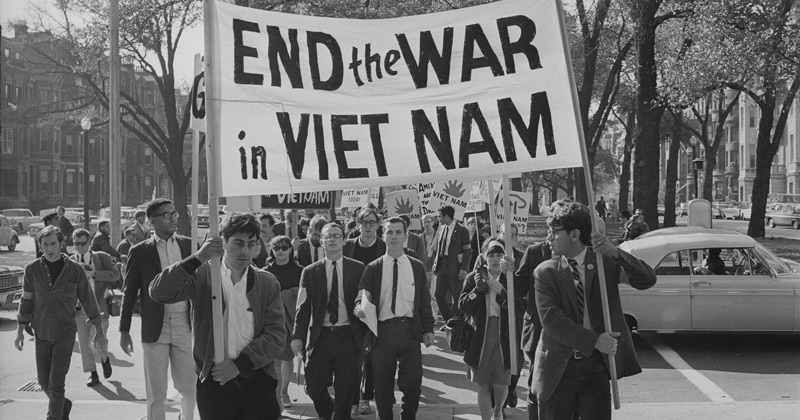
It was a time of self-discovery, often with people stating their claims to more egalitarian societies, no doubt led by “hippy” protests against the Vietnam war in the late-60s. This led to higher freedom of expression.
At the same time, there were energy concerns, specifically over the black gold – oil. The oil producing nations, OPEC, embargoed oil exports against nations that supported Israel during the Yom Kippur war. It triggered the Oil Crisis of 1973.
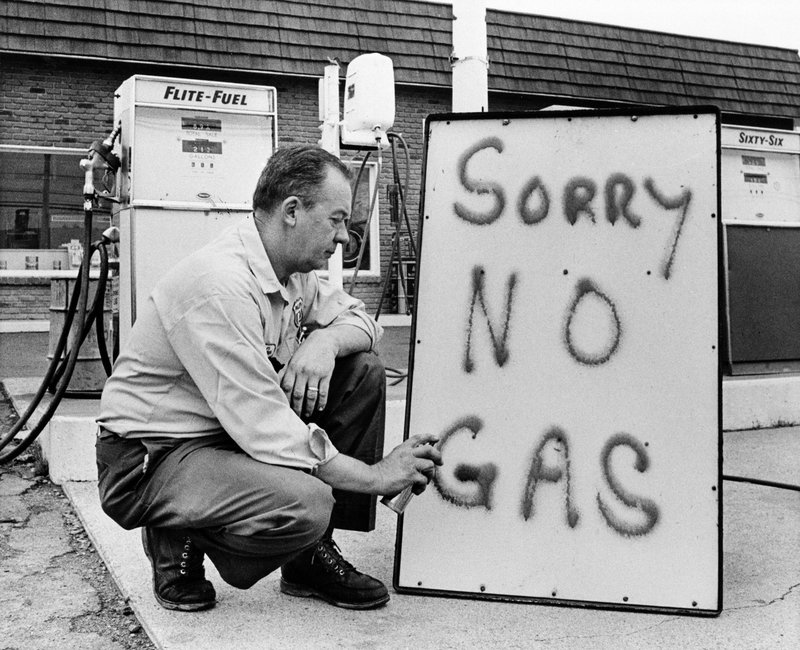
Another Oil Crisis happened in 1979 with the Iranian Revolution which saw the Shah outside by Ayatollah Komeini’s forces.
But science did progress.
It was during this decade that first saw an explosion of development in the integrated circuit (IC), besides others. The decade also saw other nations joining the Americans and Soviets in the space race.
The Motorcycles
Which leads us to the motorcycles.
The motorcycles scene of the 70s saw the decline of “continental” brands and the rise of the Japanese Big Four. The latter offered higher performance, better quality, reliability, better economy at much lower prices.
Thus the decade saw a bona fide arms race between manufacturers to build the biggest and baddest bikes. Sure, we saw the same happen decades earlier and four decades on, but the 70s saw some of the biggest breakthroughs in motorcycling whose impacts echo down later generations.
Honda CB750 (1969)
But we have to start with 1969.
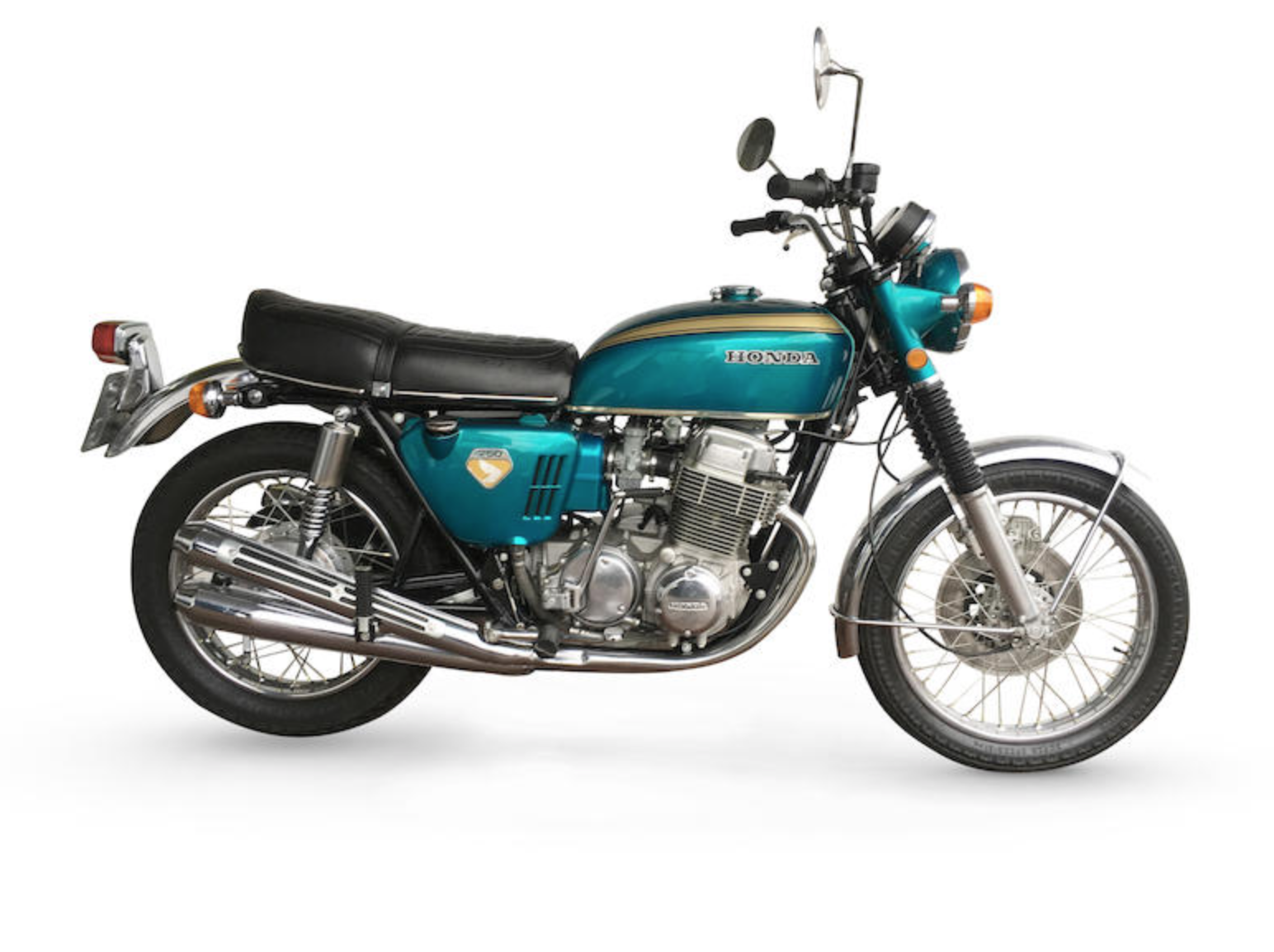
It was the year the Honda CB750 came out.
It introduced the inline-Four engine, disc brakes and upright seating position to the masses. It also inspired the kind of motorcycles design which was adopted by every Japanese manufacturer henceforth, which came to be known as the “UJM,” for Universal Japanese Motorcycle.
The engine produced 67 bhp and propelled the 218 kg bike to 201 km//h, making it the fastest production bike of the time.
Mind you, the bike was rolling on a 3.25-inch (82.5 mm) front and 4.00-inch (102 mm) rear tyres!
The term “superbike” was thus coined.
Moto Guzzi V7 Sport (1971)
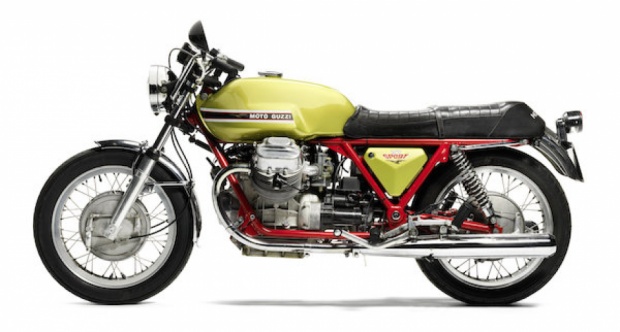
Based on the standard/roadster V7, the V7 Sport was the company’s cafe racer, complete with clip-on handlebars. It was also the first production bike which had a five-speed gearbox. Being stripped of superfluous parts, it was lighter and handled better. The later Uber-desirable Le Mans was based on this bike.
Guzzi commemorated the bike with the V7 Special in 2008 and again in 2012.
Suzuki GT750 (1971)
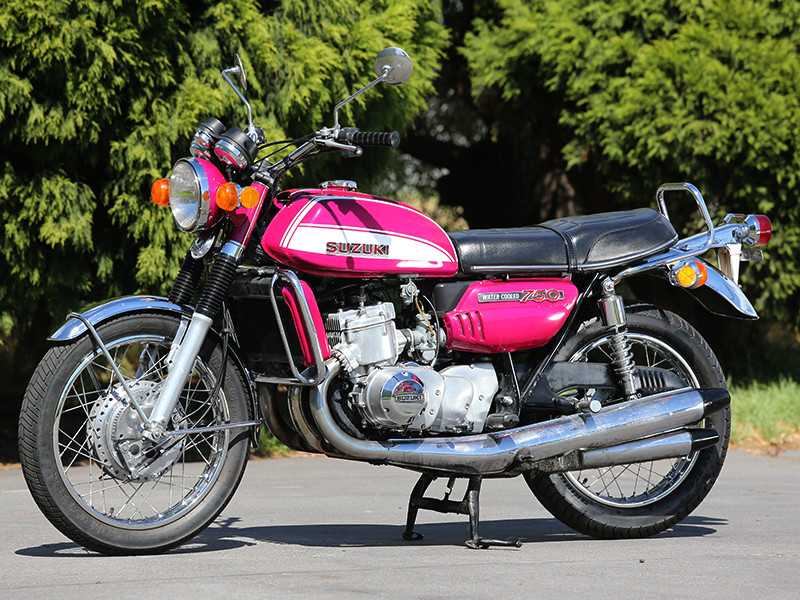
While Honda and Kawasaki traded blows and counterblows to produce the world’s fastest bikes using four-stroke engines, Suzuki and Yamaha duked it out with two-strokes.
The GT750 was a 3-cylinder, 2-stroke bike. But it was the first Japanese bike to feature water-cooling.
Hence it became affectionately (or otherwise) known as the “Water Buffalo.”
Benelli Sei (1972)

“Sei” meant “six” in Italian. The inline-Six was based on the Honda CB750’s inline-Four but with two more cylinders added on. As such, it became the first production motorcycle with a six-cylinder engine. Just as iconic were the six exhaust tips, to beat the Honda’s four.
The Sei first started as a 750 and became a 900 in 1979. It’s styling changed from round to angular, with a bikini fairing closely resembling the Moto Guzzi Le Mans added on.
Triumph X-75 Hurricane (1972)

This bike is credited as starting a new class of motorcycles called “cruisers.” The factory had enlisted the help of fibreglass specialist Craig Better to design the bodywork for the bike. It was originally unveiled as a BSA Rocket Three in 1969 but was sold as the X-75 Hurricane when production began in 1972.
Kawasaki H2 Mach IV (1972)
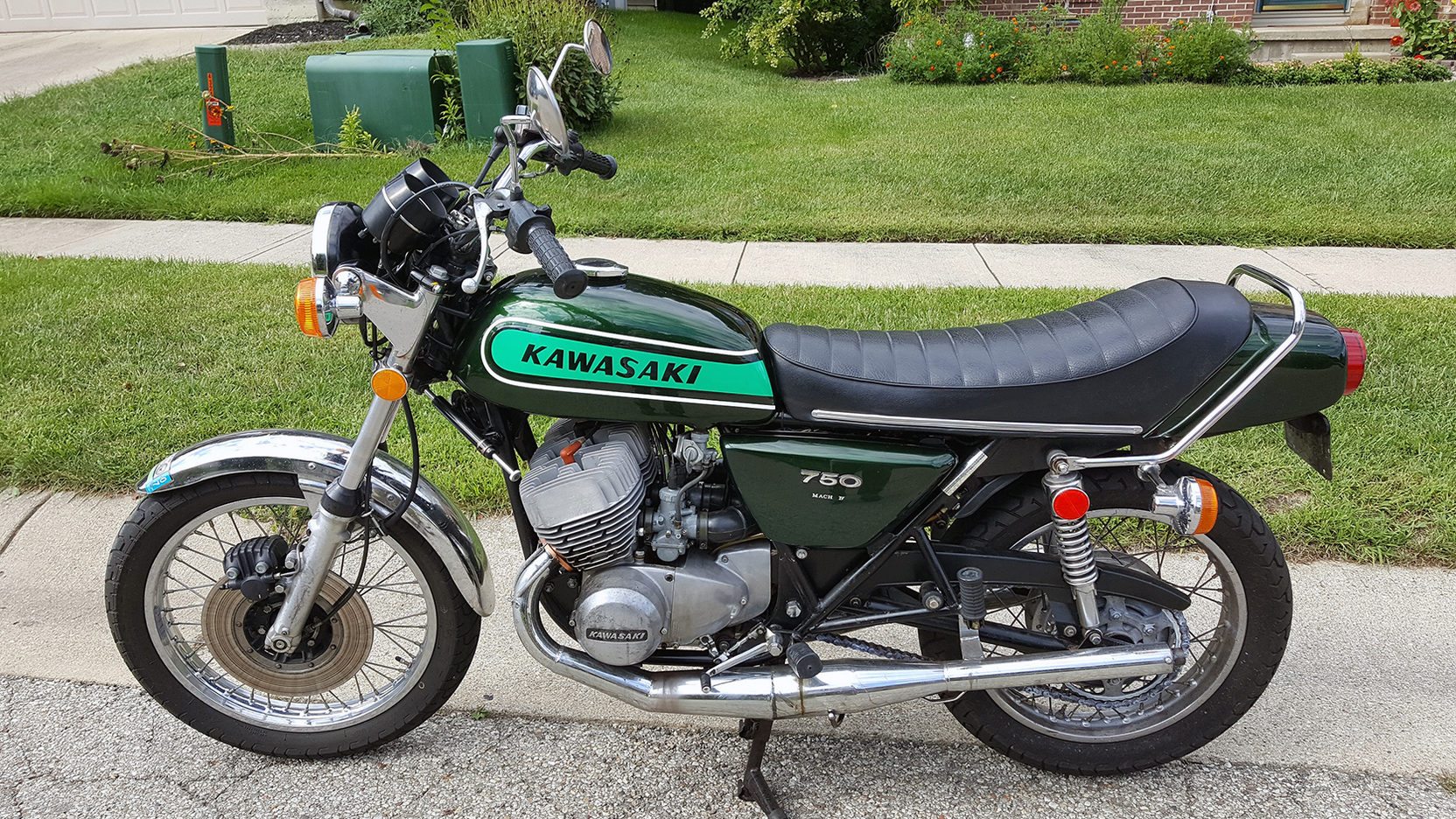
The H2 Mach IV superseded the H1 Mach III. But the design brief stayed the same: To build the fastest accelerating motorcycle.
The 500cc, two-stroke triple H1 was built for the American market where traffic light drag racing was the most prominent. Hence the bike was made as light as possible. To do this, the engineers made the frame thinner and the forks looks like they were taken off a moped. Consequently, the bike was fast but didn’t handle.
The H2 Mach IV was to improve on its predecessor. It debuted with a new 750cc, three-cylinder, two-stroke engine which produced 74 bhp. It was the world’s fastest accelerating bike but didn’t have the top speed of the Z1. The H2 is said to be the bike which killed the British motorcycle industry.
Now you know where the current supercharged Ninja H2 name originated from.
It was sold alongside the Z1 until 1975.
Kawasaki Z1 (1972)
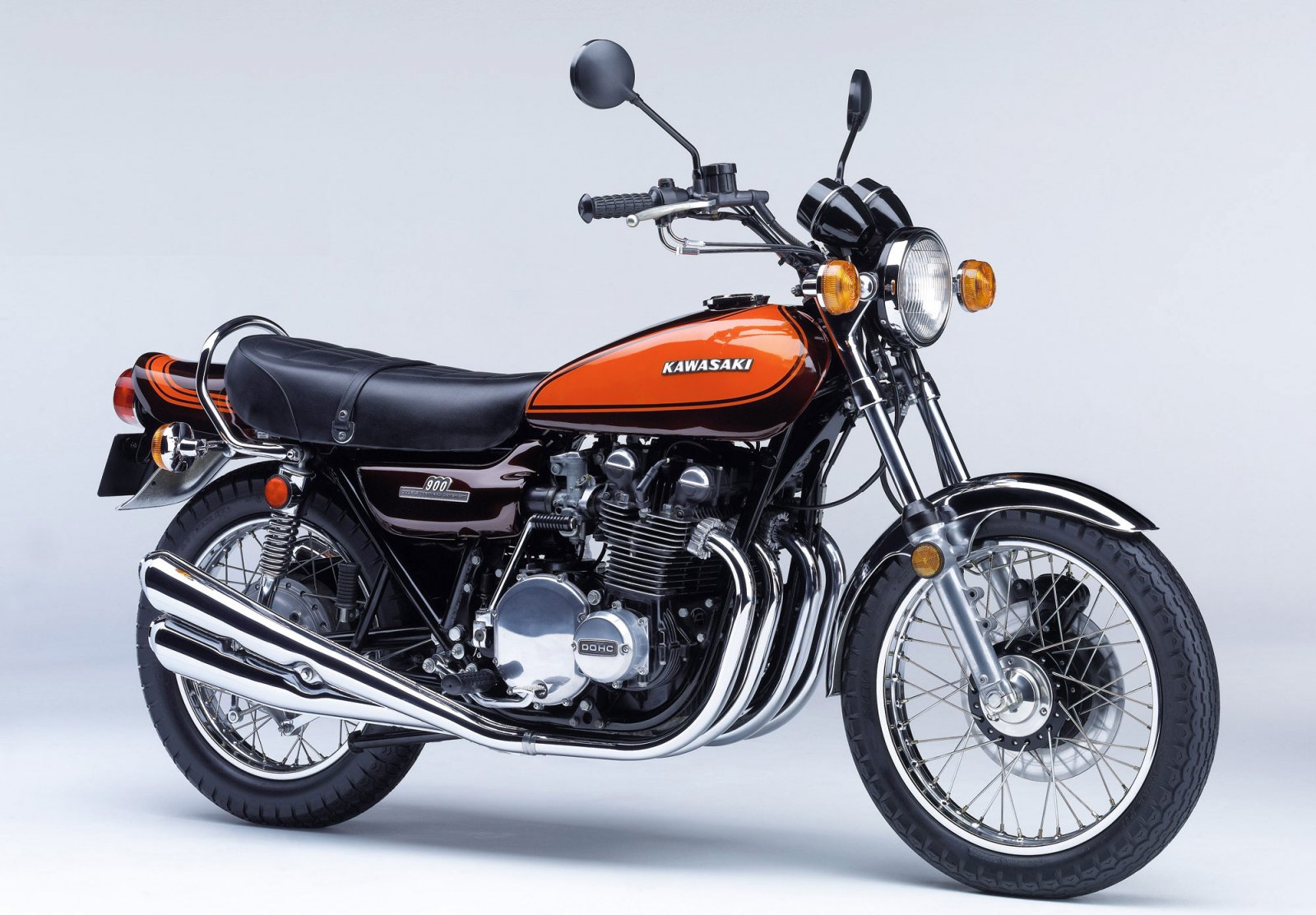
Kawasaki had planned to introduce an inline-Four 750 that year, too. Finding themselves beaten to the punch, the went back to the drawing boards and came out with the iconic Z1 in 1972.
The manufacturer upped the displacement to 900cc and added another camshaft to DOHC to take the fight to Honda, resulting in 81 bhp and a 212 km/h top speed. It was now the fastest production motorcycle.
In that same year, the Z1 set a new world FIM and AMA 24-hour endurance racing record on the Daytona racetrack. It covered a total of 4234 kilometres at an average speed of 176.45 km/h. And yes, it had 82.5 and 102 mm tyres, too.
The Z1 was voted by MCN readers as the “Machine of the Year” from 1973 to 1976, too.
BMW R90S (1973)
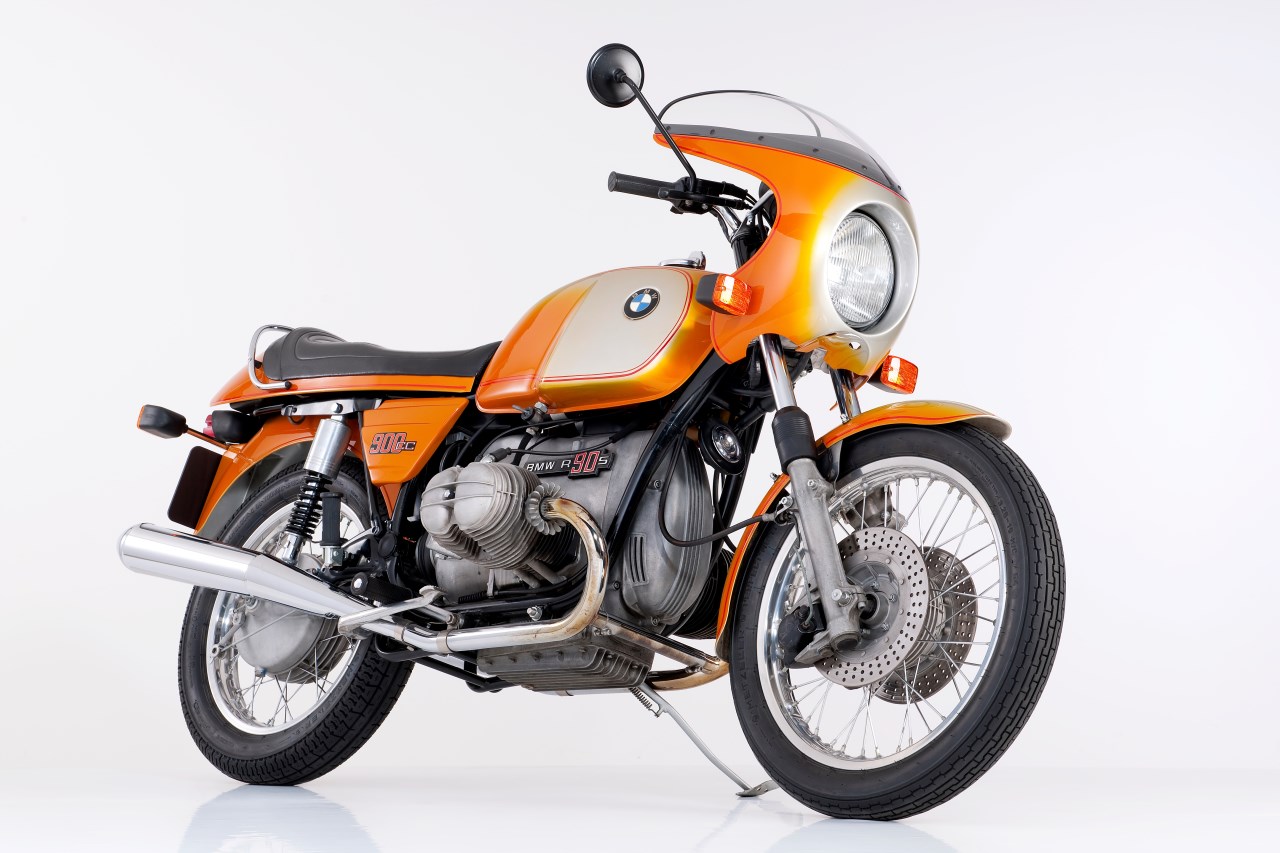
BMW had an image problem prior to 1973. People came to regard their bikes as too gentlemanly. Think about a man in a smoking jacket with a pipe.
BMW knew they needed to change that. They employed a certain designer called Hans Muth to redo their bikes. Thus, the R90S was born.
It was the first production bike to feature a fairing, albeit on the headlamp only. It went on to win at Daytona in 1976. BMW issued a special two-tone Daytona Orange paint scheme to commemorate the victory.
Yamaha RD350 (1973)
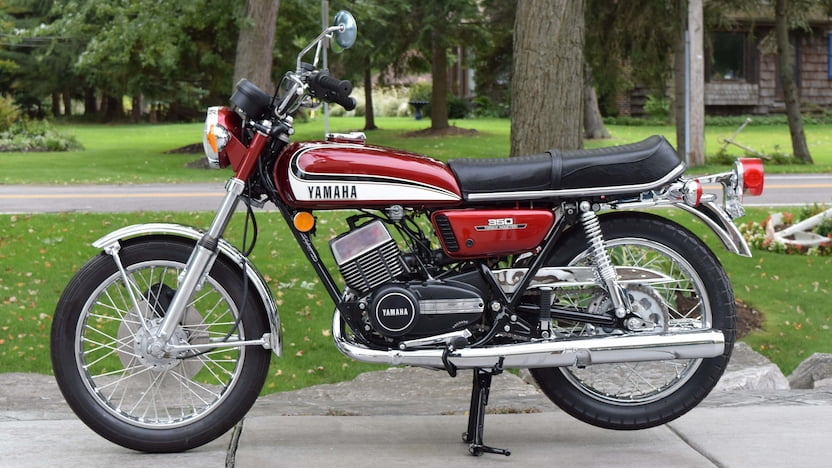
It’s hard to believe that the later RD350LC began as such a staid-looking bike! The parallel-twin two-stroke featured piston port induction with reed valve. It also had the signature Yamaha Autolube automative two-stroke oil (2T) injection, which did away with having to manually mixing with gasoline in the fuel tank.
Suzuki RE5 (1974)
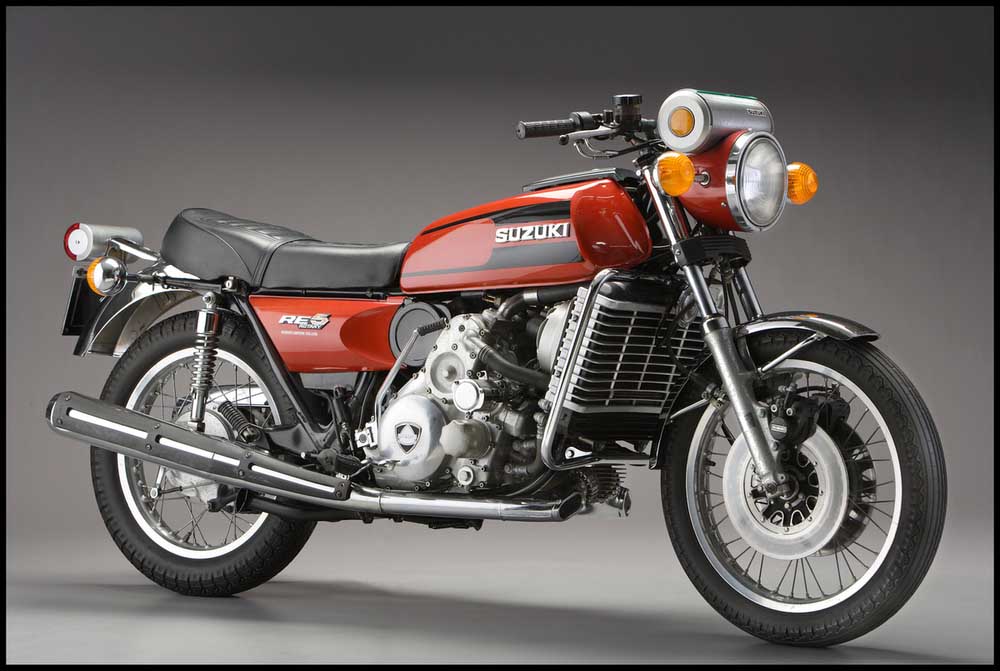
Oh yes, motorcycle manufacturers flirted with Wankel rotary engines before. A rotary engine was supposed to produce more horsepower per cc when compared to a piston engine engine of the same capacity.
But because it produced more heat (make that WAY more heat), the engine required a whole bunch of sub-systems to keep it cool. In fact, the exhaust temperature reached 930-degrees Celsius so the exhaust has four layers.
It made the bike heavy and overly complex, negating the power gains.
On top of that, that funky design by Giugiaro was roundly criticised.
Yamaha YZ250 (1974)

Scramblers were a huge thing in the 70s. Every manufacturer fought for honours in the dirt, including in Malaysia. The YZ250 went up against the offering from Honda and Suzuki.
Honda GL1000 Gold Wing (1975)

First, it had only four cylinders. Secondly, it was only 1000cc. Oh how you’ve grown.
Honda had wanted a flagship superbike due to the success of the CB750. The CB750 was already being called the “King of Superbikes” thus the new bike would be called the “King of Kings.” However, they couldn’t resort to another 750 since Kawasaki had upped the game by introducing a 900cc inline-Four.
However, when the design team learned that American riders were touring heavily, they decided to change the bike’s intended purpose to a comfortable long-distance runner.
The development team decided on a 1000cc, liquid-cooled, horizontally-opposed flat-four with a shaft final drive. That arrangement remain until today, although the current Gold Wing has an 1800cc horizontal-opposed flat-six.
BMW R100RS (1977)

An evolution of the R90S, the R100S was also designed by Hans Muth. It was the first production bike to use a full-fairing. It was this design that carried on until today.
Harley-Davidson XLCR (1977)
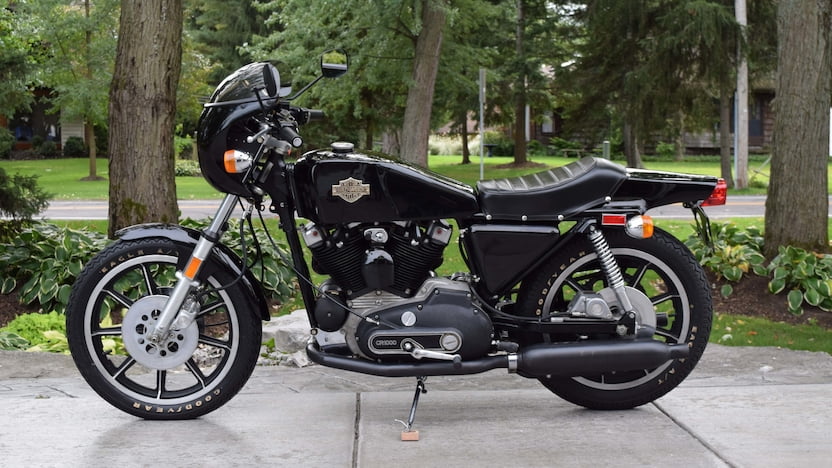
“CR” stood for cafe racer. It was rumoured that Willie G. Davidson had designed the XLCR from the XLCH (grandaddy of the Sporster) as his personal ride. But it was actually designed by three people. It did however, take on some of the styling cues of the company’s XR750 flat track racer.
Largely panned by critics back then, it has since become a collectors item.
Kawasaki Kz1000 (1977)
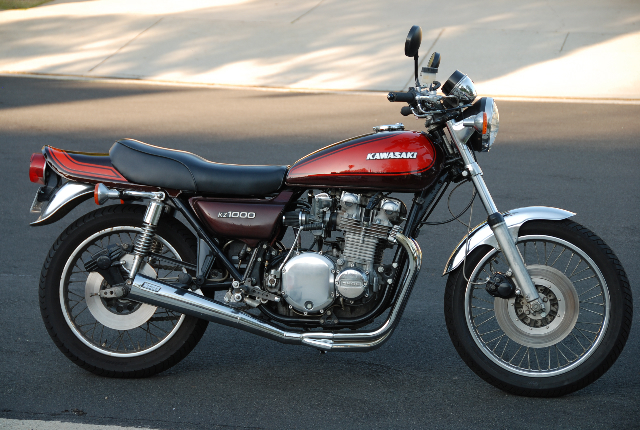
The descendent of the Z1, the mighty Kz1000 was even faster. So much so it was the fastest production bike of its time. It proved to be so on the tracks too. A number of future 500cc legends road it to victories including Freddie Spencer, Wayne Gardner and Eddie Lawson.
Suzuki GS750 (1977)

Back then, people meant this bike when they spoke of the “GS.” It was Suzuki’s attempt to turn away from two-strokes and the start of the “GS-series.” Just like its UJM peers, it had a 750cc inline-Four four-stroke engine. It was the basis of all four-cylinder, four-stroke engines until the GSX-R was introduced.
The engine was mounted to a double cradle frame and the bike was lauded for its good handling characteristics.
Honda CBX/CBX1000 (1978)

Honda would fight back against Kawasaki with the CBX. It was as audacious as it was jaw-dropping.
It was fitted with a 1000cc, DOHC, 24-valve, inline-Six which was inspired by Honda’s six-cylinder RC racing motorcycles in the 60s. It produced 105 bhp, punching the 247 kg bike to 225 km/h. Honda regained the world’s fastest superbike crown.
Moto Guzzi 850 Le Mans (1976)
As we mentioned earlier about the 1971 V7 Sport, the 850 Le Mans sees its displacement upped to 850cc. It was the fastest and best-handling motorcycle at the time. It was named Le Mans after the famous racetrack and 24-hour endurance race. The 850 Le Mans is the most collectible Italian bike.