Bikesrepublic

Latest News

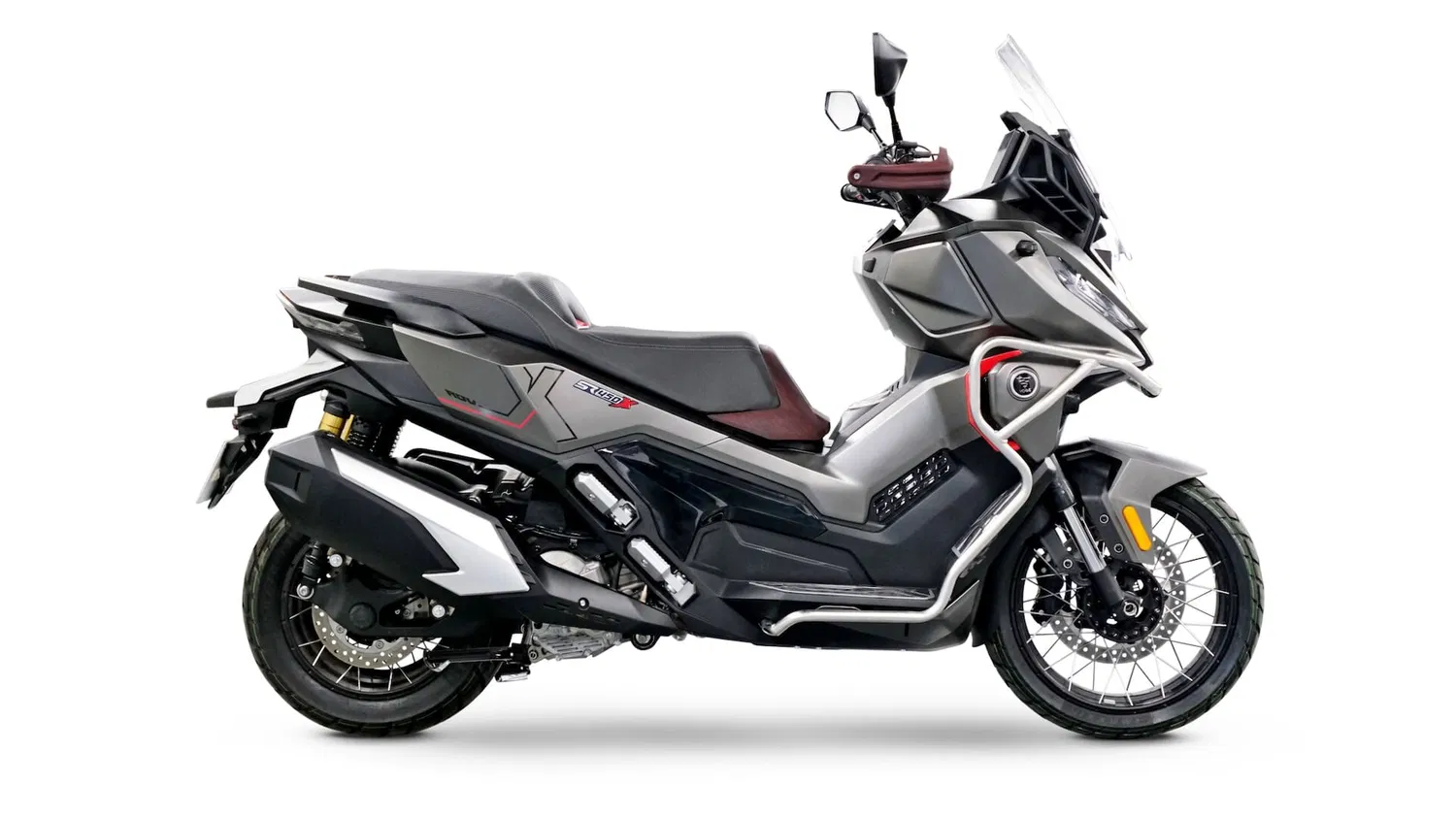
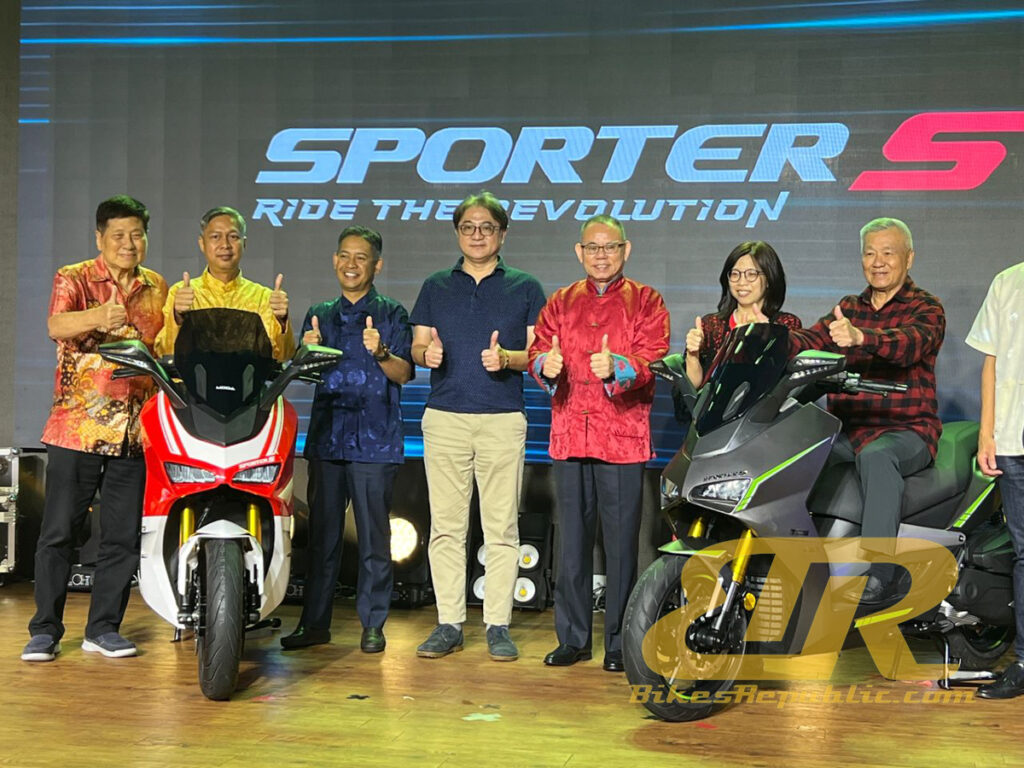
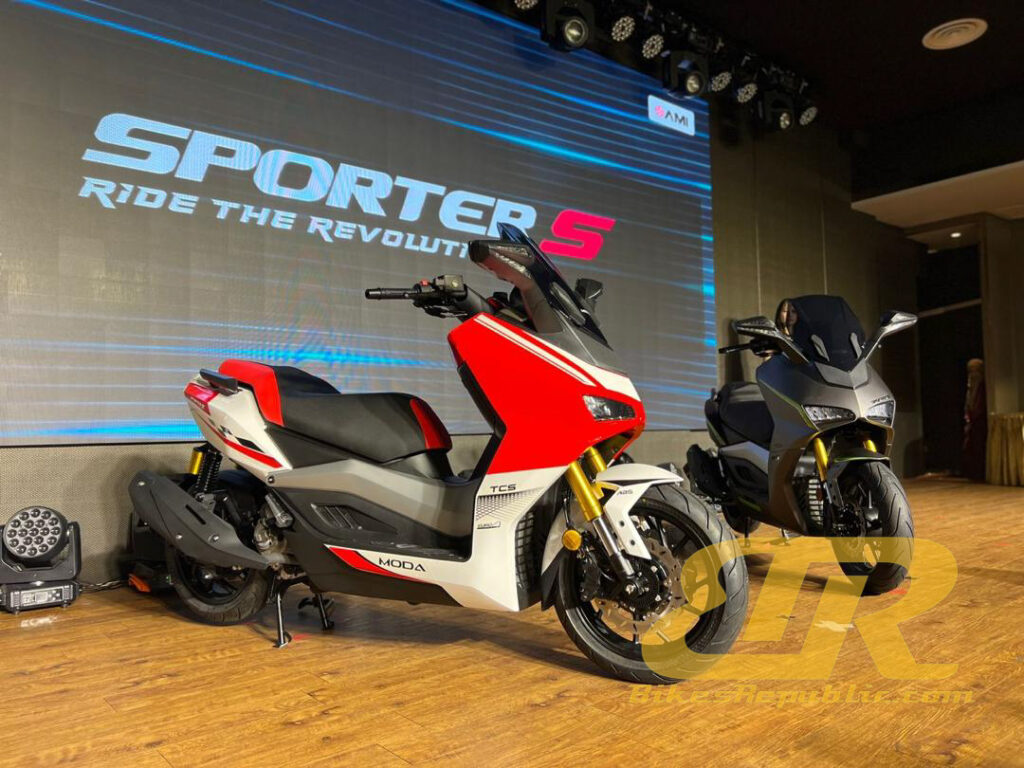
The 2025 MODA Sporter-S was launched on 2 January, with the distinction of being a locally-made 250cc sport scooter.

From the press release:

Mdua Motor Sdn. Bhd., a subsidiary of AFY Mobility Industries (AMI) today launched a new local motorcycle brand MODA, which focuses on marketing scooter products to the entire Malaysian market. Also launched at the event today was the MODA Sporter-S which is powered by a 250cc engine.
The introduction of this scooter model by MODA is in line with the rapid development of the scooter segment in Malaysia. There is no doubt that scooters are now becoming the main choice due to their diverse functions, affordability, and practicality in urban areas. In countries such as Indonesia, Thailand, and Vietnam, scooters have already dominated the market by controlling more than 70% of total motorcycle sales.
In Malaysia, scooter sales and market are also increasing as it is driven by awareness of the need for fuel-efficient and more environmentally friendly vehicles. The scooter market is directly expected to generate a total revenue of US$0.51 billion in 2024 and grow at a CAGR of 3.98% to reach US$0.62 billion by 2029.
The introduction of the MODA Sporter-S has indirectly opened up a new segment with a design inspired by sportsbikes that features a more aerodynamic and bold design. As is well known, currently most scooters in the Malaysian market mostly feature sporty and unique designs like this, which will certainly attract the interest of motor sports enthusiasts in Malaysia.
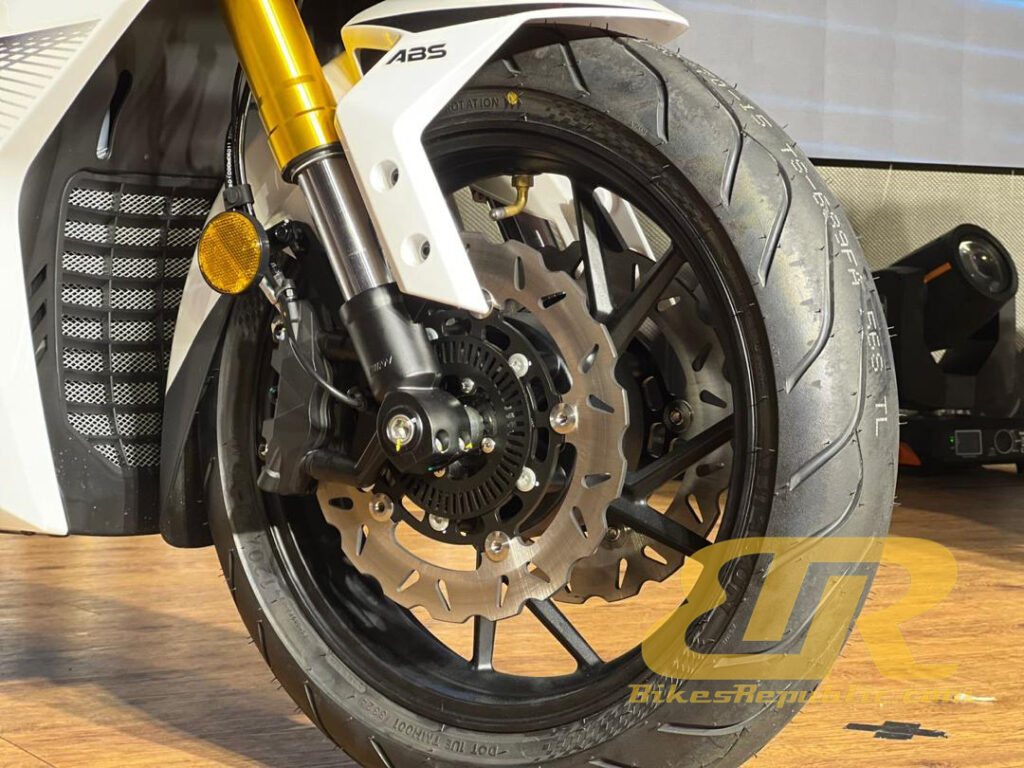
The Sporter-S is also equipped with advanced safety features with the characteristics of a sportsbike. Among them are twin disc brakes at the front combined with a dual-channel ABS system (front and rear) equipped with 4-piston caliper brakes for more precise braking force. The Traction Control System (TCS) technology on the Sporter-S also ensures stability when cornering on challenging surfaces.
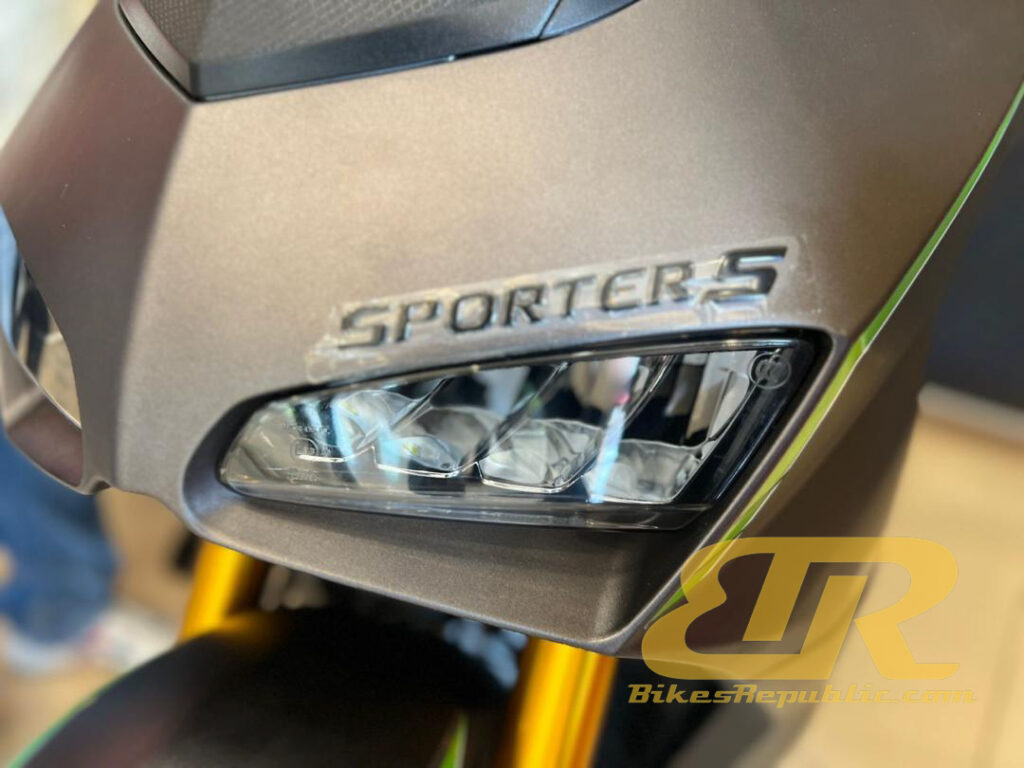
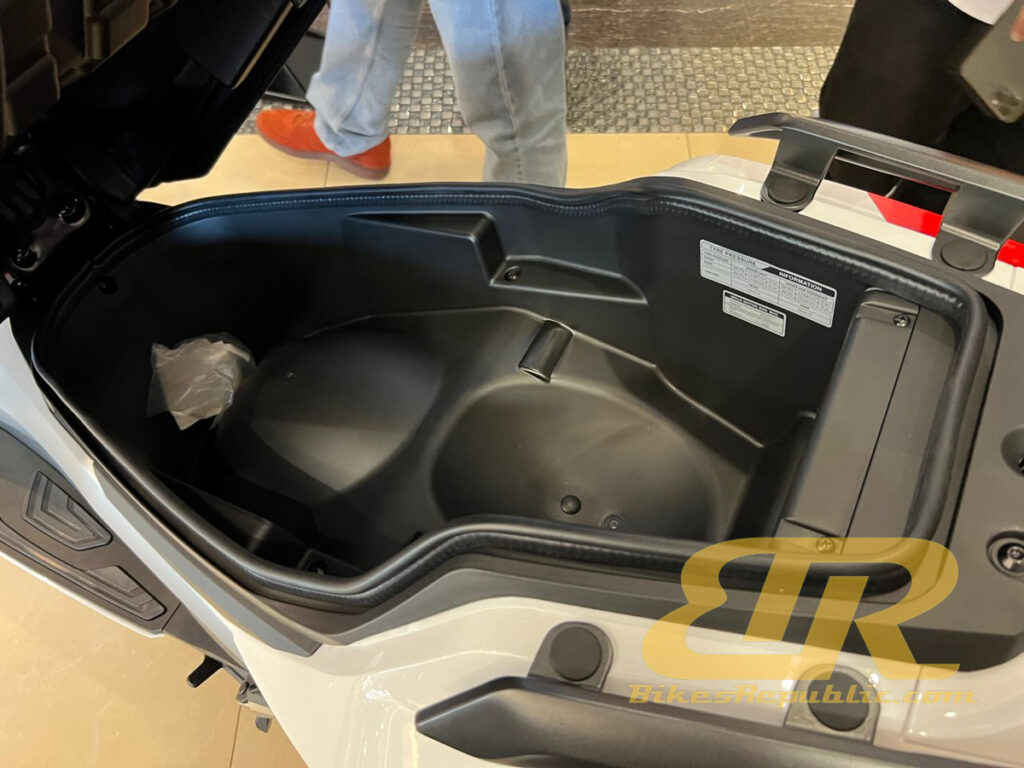
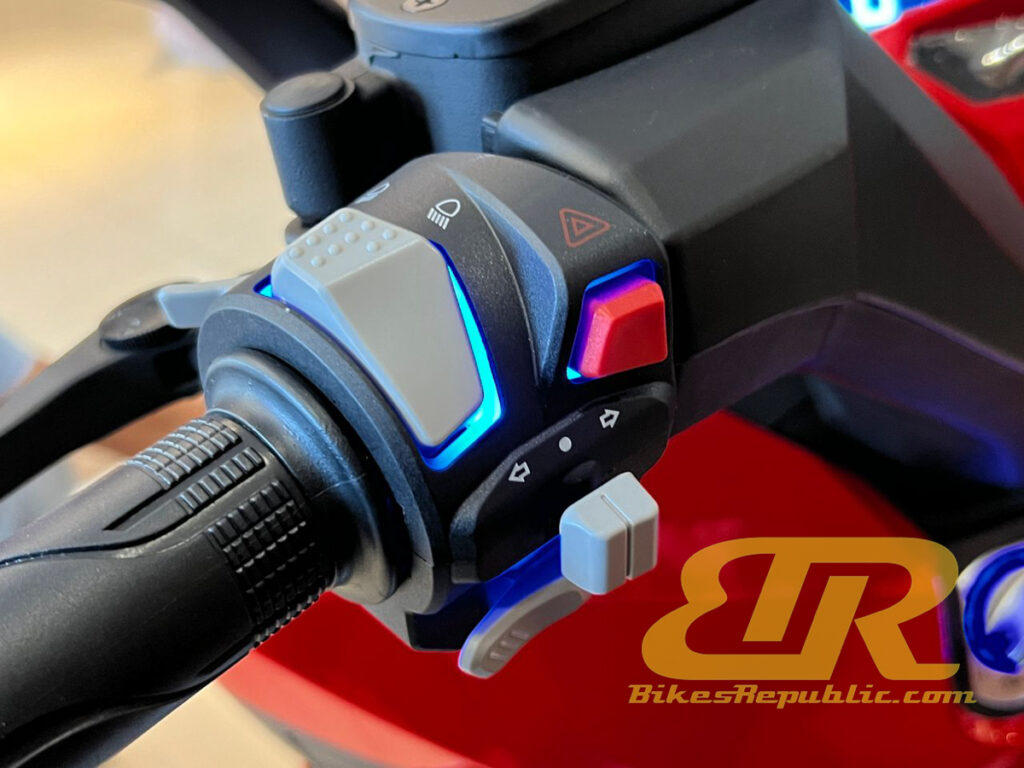
In addition, this scooter also has a fuel tank with a capacity of 13 liters, which is sustainable for long trips. In addition, the storage space under the seat can accommodate two full-size helmets, providing additional convenience for daily riders. Interestingly, it is also equipped with several interesting features such as an ultra-bright LED Matrix headlight, smart key, wireless connection between mobile devices and a large 6.2-inch TFT color screen that supports calls and full navigation while riding.
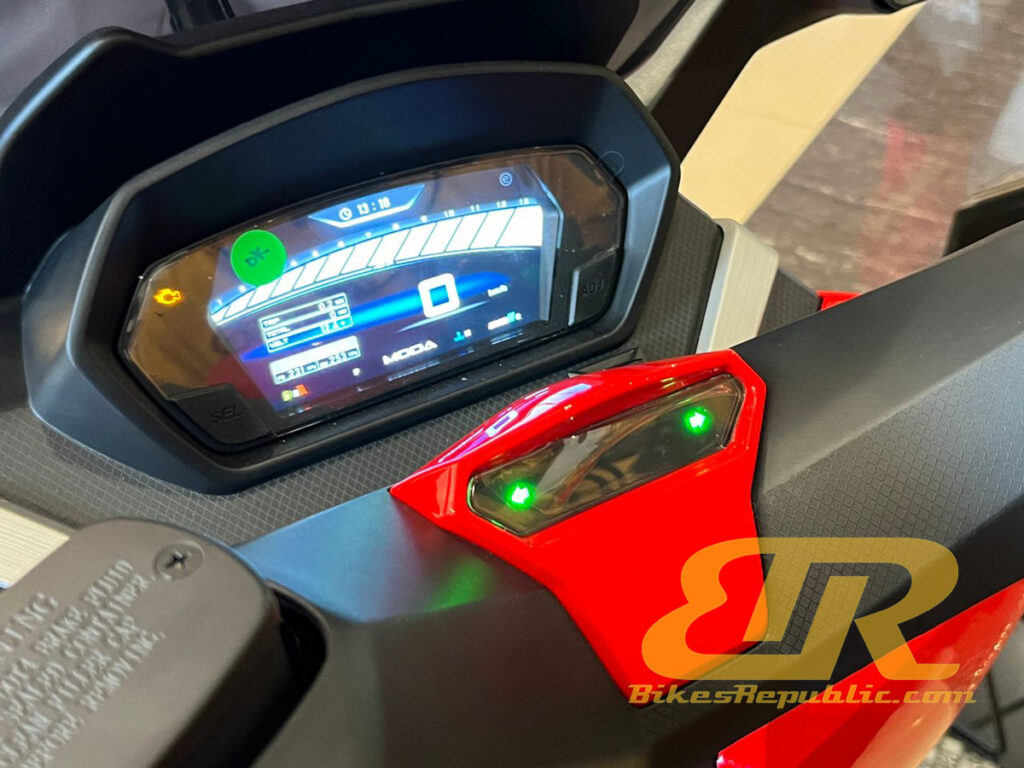
Overall, with the offering of a 250cc scooter that generates 24.8hp of power, it is enough to be categorized as one of the best and most powerful scooters in its class.
According to Micheal Yeoh, Assistant General Manager of Mdua Motor Sdn. Bhd., the MODA Sporter-S has been designed and developed with the principle of ‘By Bikers, For Bikers’ in mind. He added that the Sporter-S will be the ideal choice for bikers in Malaysia with its sporty, aerodynamic design, and features such as ABS braking system and Euro-4-spec engine that is fuel-efficient.
Offered in two attractive colours, Sporty Red and Meteor Grey, the Sporter-S is now available at MODA authorised dealers nationwide. For more information, visit the official website at www.modamotorcycles.com.
Specification:
  • 4-Valve, 1-Cylinder, SOHC Engine
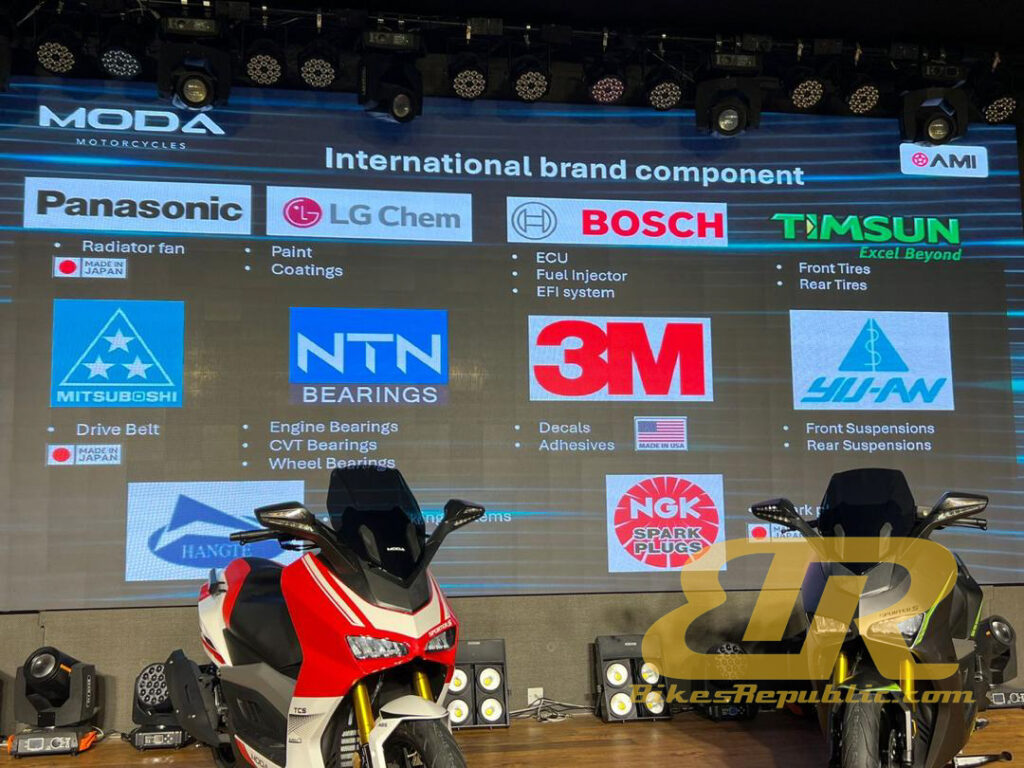
  • Electronic Fuel Injection System (BOSCH EFI)
  • Electronic Engine Management (BOSCH)
  • Electric Starter
  • Full Transistor Ignition
  • CVT Transmission
  • Euro 4 Certification
  • Engine Capacity 244cc
  • Maximum Power 24.8 Hp @ 8500 rpm
  • Maximum Torque 22.5 Nm @ 6500 rpm
  • Liquid Cooling System (Panasonic Radiator)
  • Front Brake ABS 260mm Dual Floating Disc
  • Rear Brake ABS 240mm Single Disc
  • Front Suspension Inverted Fork
  • Rear Suspension Adjustable Shock Absorber
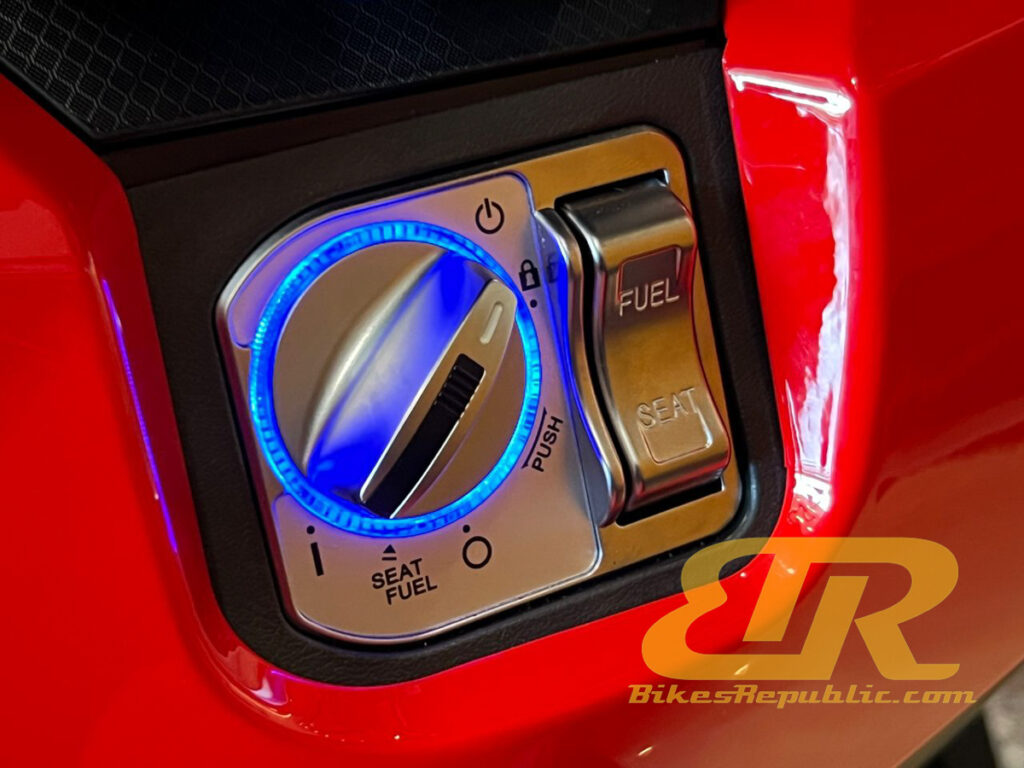
  • Smart Key Lock System (Wireless)
  • Wheelbase 1538 mm
  • Minimum Ground Clearance 165 mm
  • Weight 186 Kg
  • Tank Capacity 13 Liters
Picture gallery:

The Malaysian government will not provide free tolls for this year’s festive season.

Works Minister Datuk Seri Alexander Nanta Linggi said this was because the government had decided last year would be the last year for free tolls.

He said the decision, which was made at a cabinet meeting last year, would however be replaced with a more targeted approach.

“If it follows the decision (of the cabinet), there will be none. If there are, there may be other considerations, we will announce them. (Regarding free tolls for Chinese New Year).

“The government has also coordinated subsidies for a more targeted approach for Malaysians, the details of which we will announce in the near future,” he said.

He said this when met by reporters after officiating the opening of Section 2 of the West Coast Expressway (WCE) here, today.

The Chinese New Year celebration starting on January 29 is the first festive season this year.

Meanwhile, Alexander said that an estimated 150,000 users per day will use the WCE to travel from the West Coast of Selangor to Perak and then to the North.

The government has been spending RM38 million annually on toll exemptions.

– KOSMO! ONLINE

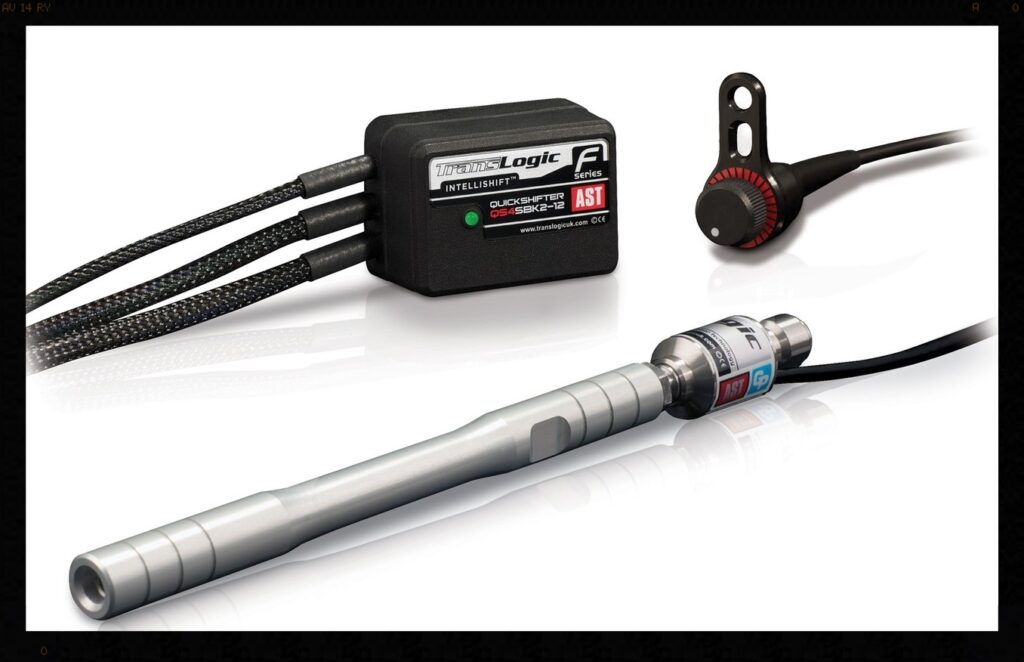
Another feature that many motorcycle buyers seek these days is the quickshifter. As in the system that allows you to change gears without pulling in the clutch lever while the motorcycle is in motion.

As with many modern motorcycle features, the quickshifter began as race application only. Now, you can even find them on adventure bikes and there are aftermarket options for retrofitting to even kapchais.

How does the clutch work – briefly!

The earliest vehicles were direct drive, meaning the engine is hooked up directly to final drive. Problem is, it can only be switched on and move, and you have to shut off the engine when you reach a junction. Plus, the engine is stressed to provide acceleration and deceleration.

Then someone applied the principle of using gears to modify torque, and the transmission was born. Still, there needs to be a device to decouple and reengage the driveline. That is the job of the clutch.

So the clutch is a device to decouple the engine’s power pulses from the transmission, to enable smoother gear shifts.

So why do we need the quickshifter?

The clutch plates are meshed together by springs during normal drive to transmit the engine’s torque to the transmission. So, in order to change gears, we pull in the clutch lever which pushes a rod to push the clutch plates apart slightly to reduce the engine’s torque, and complete our gear shift.

Try shift gears without the clutch and see what happens! The gears in the transmission are still meshing against each other and other gears that are not meshing needs to synchronise to the running speed. Changing gears without the clutch, while on the throttle will cause the gears to grind.

So, the correct way of changing gears is by rolling out the throttle and pulling in the clutch lever simultaneously, change gears, slip out the lever and opening the throttle at the same time. Lots of work, but pleasurable when done right, especially when under pressure at the track.

However, knocking off the throttle and reopening it takes time and it causes the revs to drop. The bike needs to reaccelerate. Also, the motorcycle’s balance changes when you roll off and back into the throttle. The bike pitches forward and backwards, upsetting the suspension and the tyres’ footprint, changing traction.

A quickshifter, on the other hand, provides near instantaneous gearshifts to avoid too much rev drop and shifting the bike’s balance.

How does it work?

The quickshifter system stops the engine’s ignition momentarily (that is why you get some backfire out of the exhaust sometimes), taking the load off the gearbox to let you shift up the gears without backing off the throttle. The secret lies in interrupting the engine faster than is humanly possible to operate the throttle so time spent shifting gear plummets typically to between 15 and 50 milliseconds (0.015 to 0.050 second).

The quickshifter comprises a mechanical sensor that triggers an electronic interrupt device to the bike’s ignition. On a bike fitted with old-style carbs, this box is hardwired into the ignition coil wires to interrupt the ignition’s electrical supply, while on the device interrupts the ignition via the wiring harness at the ECU. Translogic has developed a system for fuel injected bikes that interrupts the signal from the ECU to the injector hence cutting the fuel supply.

The mechanical sensor also varies. It is either positional – i.e. you adjust it to the positioning of the gear lever, and as the lever’s position moves it sends a trigger to the electronic interrupt box. Or it is a pressure sensor – i.e. shifting the lever without shutting the throttle puts pressure on the gearbox, and a pre-determined amount of pressure triggers the control box. A positional system tends to fall out of adjustment and if you need to replace the gear lever at the track (ie after a crash) you have to re-adjust the entire system, hence GP and WSB teams opt for the pressure trigger: it’s more convenient to install and is less likely to fall out of adjustment, but it puts pressure on the gearbox and because it works with greater tolerances.

Is the quickshifter hard on the clutch and transmission?

There are stories of bikes’ drivelines suffering damage due to the use of quickshifters. This can be rather true for aftermarket quickshifters but we have also seen damage on factory equipped ones.

Truth is, the quickshifter is best used only at higher RPMs like 6,000 RPM and above. All the spinning parts like the crank and gears are moving at high speeds, so there is less shock when the quickshifter is activated. But let us cover this topic in another article.

You may remember that Ducati touted a counter-rotating crankshaft for the Panigale V4 was introduced. It is now a shared feature among their V4-engined family.

It is all about forces

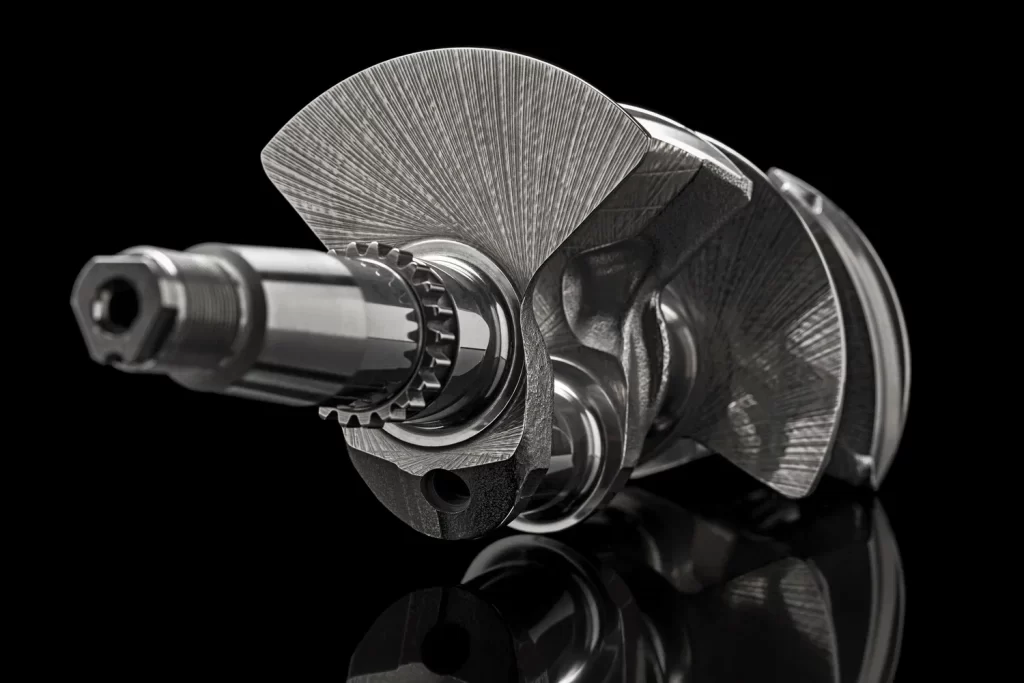
Inside almost every motorcycle ever built the crankshaft turns in the same direction as the wheels. But in recent years a handful of exotic bikes have started spinning their cranks backwards. If you’ve heard the term ‘counter-rotating crankshaft’ but aren’t entirely sure what it means, what the advantages are or which bikes have one, read on.

(Quick point of order: we’re focusing on bikes with across-the-frame cranks here. Bikes with inline cranks, such as BMW boxers, Honda Goldwings and Moto Guzzi V-twins, can sit this one out. They’re free to spin either way.)

Spinning things like to stay spinning, called inertia, while the spinning motion causes gyroscopic and centrifugal forces.

When you’re riding along in a straight line, both wheels whizzing around beneath you, everything’s fine and dandy. But try to lean the bike over, shifting multiple spinning objects (wheels, brake discs, tyres, crankshaft) away from the plane in which they were quite happily turning, and they’ll resist.

How big this gyroscopic resistance is – which affects how much physical input you need to move the bike off line – depends on the weight of each spinning object, its diameter and the speed at which it’s spinning. One solution would be to reduce any (or all) of the above: lighter wheels (expensive), smaller wheels (wobblier), or slower wheels (boring).

Another fix is to introduce something spinning in the opposite direction. Something like, say, the crankshaft. It might be small, but it can spin really fast. At 100-110 km/h a typical 17-inch front wheel turns at just 1000 RPM; the crank, meanwhile, could be spinning ten times as fast.

Well, alrighty then. Simply spin the crank the other way and you’re reducing the bike’s total gyroscopic resistance. This means less effort is needed to get the bike turn, making for increased agility, lighter steering, nimbler handling and other great road test cliches.

But wait, there’s more! Spinning the crank backwards also gives a second benefit, in the form of an anti-wheelie effect. This is down to a torque reaction from the crankshaft accelerating. When a forwards-spinning crank accelerates, the rest of the bike rotates backwards: the nose lifts and the tail drops. With a counter-rotating crank, the nose instead drops, meaning less wheelie, allowing better acceleration.

So why don’t all bikes have it?

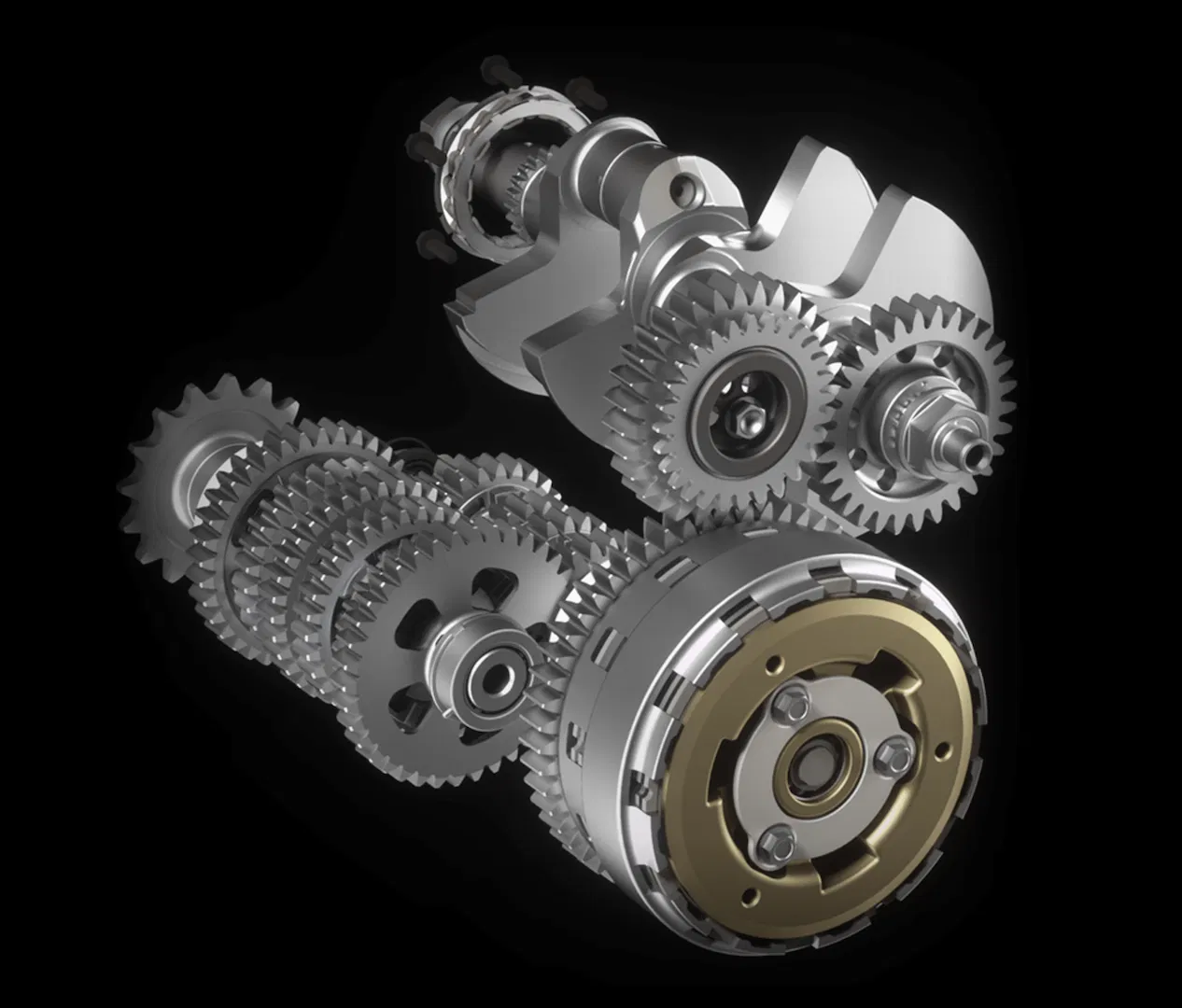
Spin the crank backwards and your rear wheel also turns backwards. To fix this mild inconvenience you have to add an additional shaft inside the engine (an idler gear/countershaft/jackshaft) to keep the rest of the powertrain moving the right way. This extra shaft adds weight, cost and complexity, plus it saps power due to friction.

The trade-off is worth making in MotoGP, where every bike on the 2023 grid uses a counter-rotating crank. It’s not actually an especially new idea in racing: Honda’s 1987 NSR500 had one, as did Yamaha’s first YZR-M1 in 2002, a year before the Petronas FP1 (which used a backwards-spinning crank by virtue of its completely back-to-front engine) in World Superbikes.

Who else uses it?

On the road, just two major manufacturers use counter-rotating cranks today: Ducati, in all its V4s and MV Agusta, in its triples. A tiny number of other two-wheelers have used them in the past, including – of all things – the Aprilia SRV850 maxi-scooter, which shared its 839cc V-twin and CVT with the Gilera GP800 and Aprilia Mana, both launched back in 2008. Curiously, Aprilia never thought to mention this feature until the SRV arrived in 2012.

We have written about fuel octane, or more specifically, what it does and why do we have different RON ratings at the pump. Fuel octane is directly tied to the engine’s compression ratio.

What is compression ratio?

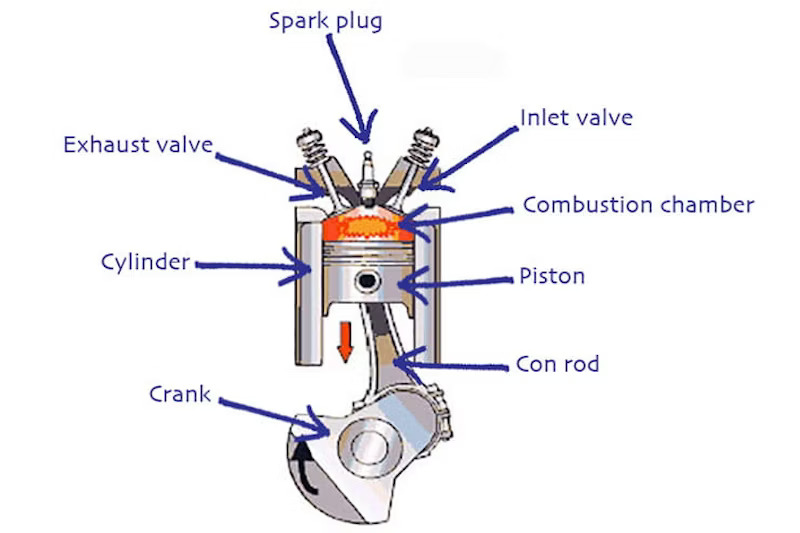
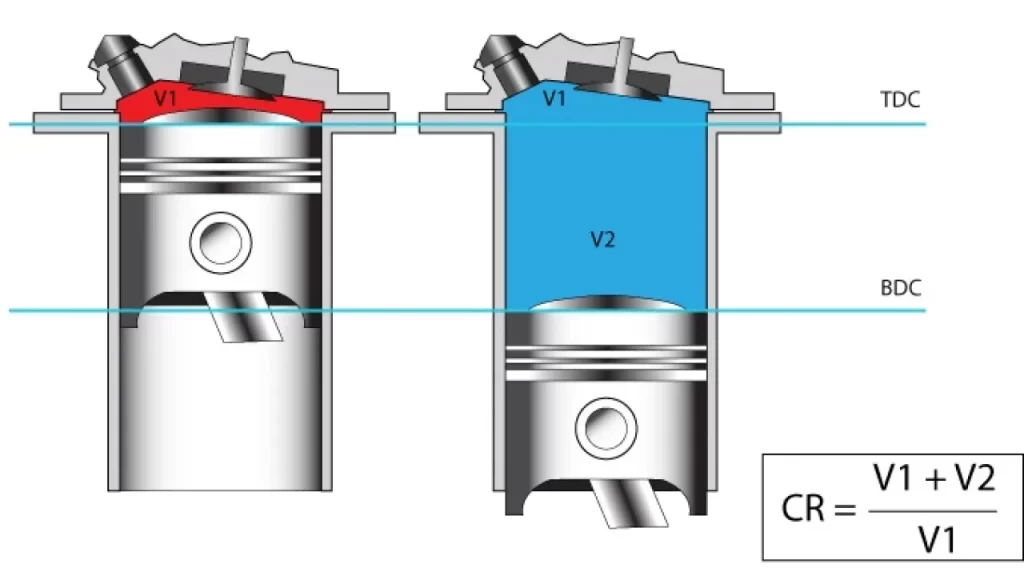
A ratio means something divided by another thing. Firstly, take the cylinder’s volume when the piston is fully at the bottom of its stroke (bottom dead centre/BDC), and add the combustion chamber’s volume. Secondly, take the volume of the cylinder when the piston is fully at the top of its stroke (top dead centre/TDC). Now take the BDC volume and divide against the TDC volume. This is why compression is expressed as 10:1. 11:1. 13:1 and so forth.

The higher the ratio means the fuel air mixture that enters the cylinder is squeezed into a much tighter space. Higher compression is good for making more power as more of the heat from combustion is transferred to kinetic energy in pushing the piston down.

Whichever way we go about it boosting the compression ratio is an easy route to more power. High compression pistons are in essence “bolt-on horsepower”. Modern bike engines tend to run compression ratios in the 10:1 to 12:1 region.

However, there is a limit

But there are limits to how high the compression ratio can go.

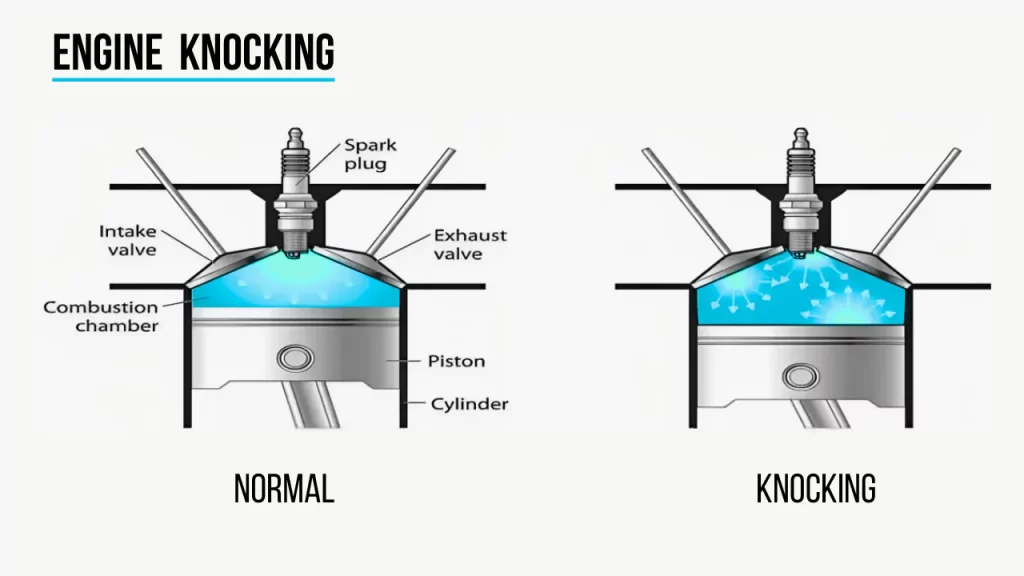
Any medium, whether is it just air or the fuel air mixture will get hot as it is compressed more and more. The higher the compression, the higher heat the medium will achieve. And, when the heat becomes too high, the fuel air mixture will self ignite before the spark plug ignites it at the correct timing.

This self-ignition sends shockwaves around the combustion chamber that can cause catastrophic failure. These shockwaves can be audibly heard and has a metallic knocking sound, hence called “knocking” or “pinging.”

In fact, diesel engines work this way. They employ very high compression ratios and compressed air alone until it gets really hot before diesel is injected into the combustion chamber. This mix causes instantaneous ignition. It is also why diesel engines produce that signature clacking sound.

So, how do we stop self-ignition? There are three methods: Lowering the compression ratio, retarding the ignition timing, or using fuels with higher octane rating. We shall explore this in another article.

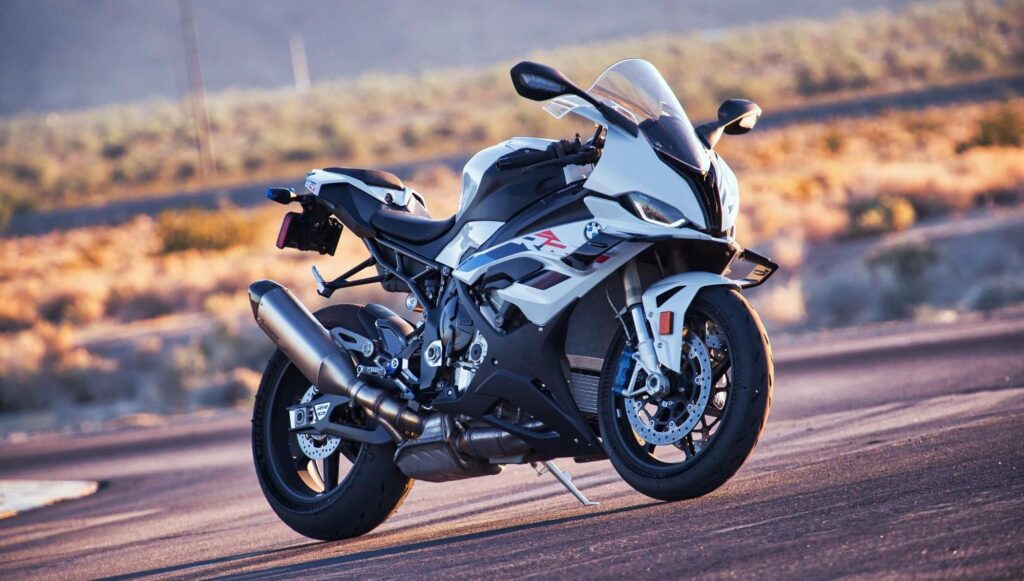
BMW Motorrad sales broke records again in 2024, with the German marque claiming to sell a total of 210,408 new bikes.

The biggest seller was of course, and without doubt, the new R 1300 GS and the previous R 1250 GS. Their biggest market was once again in their homeland.

Top sales region and countries:
  • 118,727 new bikes were sold in Europe, making making it the most valuable region.
  • Sales in Germany were up eight per cent with 26,177 bikes.
  • France was the next best-performing country, with 20,693 units.
  • Followed by Italy, with 16,617 units.
  • Central Europe, which includes countries like Poland, Romania, Switzerland and Serbia collectively sold 11,411 new bike sales. It was a 12 per cent increase from the previous year.
Best-seling models:
  • As mentioned ealier, R1300 GS and R1250 GS were the most popular, selling 68,000 worldwide.
  • The S 1000 RR was the best-selling four-cylinder model, with 11,610 shifted
  • The entire four-cylinder family (S 1000 RR, M 1000 RR, S 1000 R, M 1000 R, S 1000 XR, and M 1000 XR) sold 27,147 units worldwide.

Markus Flasch, head of BMW Motorrad, said, “I would like to extend my heartfelt thanks to our customers and community around the world for the tremendous trust they have placed in us once again in 2024. With the strongest sales result in company history, BMW Motorrad remarkably claims the 1st Place in the global Premium Motorcycle segment. Our market leadership in numerous segments and markets in based on our claim to innovation leadership, our highly attractive product offering as well as the consistent strategic focus on brand strength. Based on these success drivers, BMW Motorrad is well-positioned for the future and so I approach the year 2025 with a very positive outlook.

Archive

Follow us on Facebook

Follow us on YouTube