Bikesrepublic

Latest News

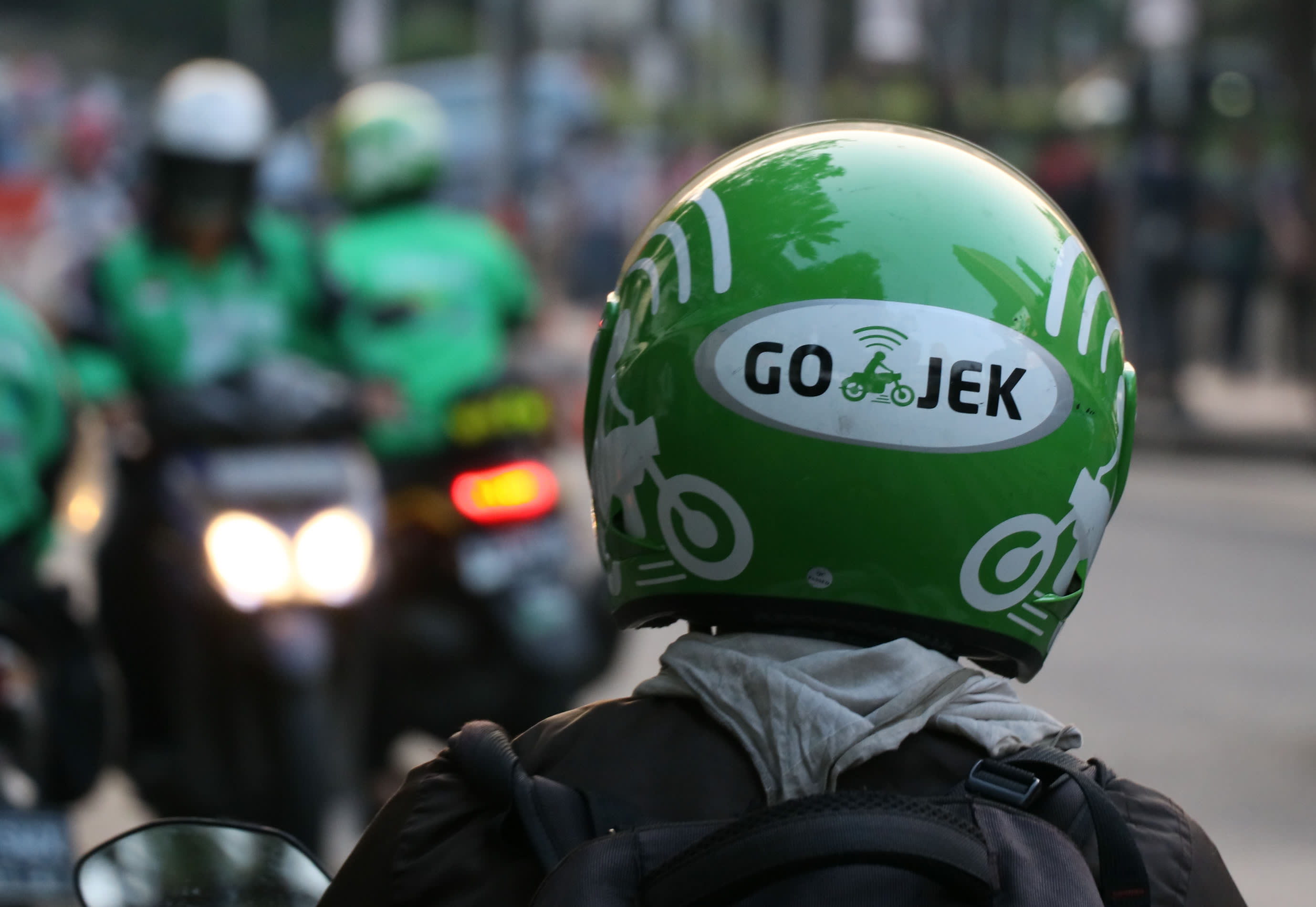
  • Youth and Sports Minister YB Syed Saddiq Syed Abdul Rahman wants motorcycle ride-hailing service Go-Jek to begin in Malaysia.

  • He says it will provide much needed jobs to Malaysian youths.

  • The decision will be made during the Cabinet meeting on 21st August.

Youth and Sports Minister YB Syed Saddiq Syed Abdul Rahman wants motorcycle ride-hailing service Go-Jek to begin in Malaysia.

He said that such service would help Malaysian youths in having jobs, adding that it is not enough for the government to organize programs or build race tracks.

“They want jobs. That is a more pressing issue,” he said in a video posted via Twitter.

Syed Saddiq said that he had brought Go-Jek’s founder Nadiem Makarim to meet with Prime Minister Tun Dr. Mahatir Mohamad and Transport Minister Anthony Loke on August 19th.

The presentation was “accepted kindly” and the discussion will be finalized in the upcoming Cabinet meeting on 21st August.

The minister stressed that he would like to create “hundreds of thousands” of job opportunities for motorcyclists.

Go-Jek is based in Jakarta, Indonesia and is the direct competitor to Grab Ride in a number of Southeast Asian countries, including Thailand, Vietnam, Singapore and home base Indonesia.

Grab on other hand, originated in Malaysia.

The minister’s recommendation is good, in our opinion, as many have taken up motorcycle-based food delivery jobs such as Food Panda, Grab Food, and so forth.

On the flip side, it will contradict what YB Anthony Loke’s decision to ban motorcycle ride-hailing service. He had issued an order to ban Dego Ride last year and did not allow Grab Ride to go ahead.

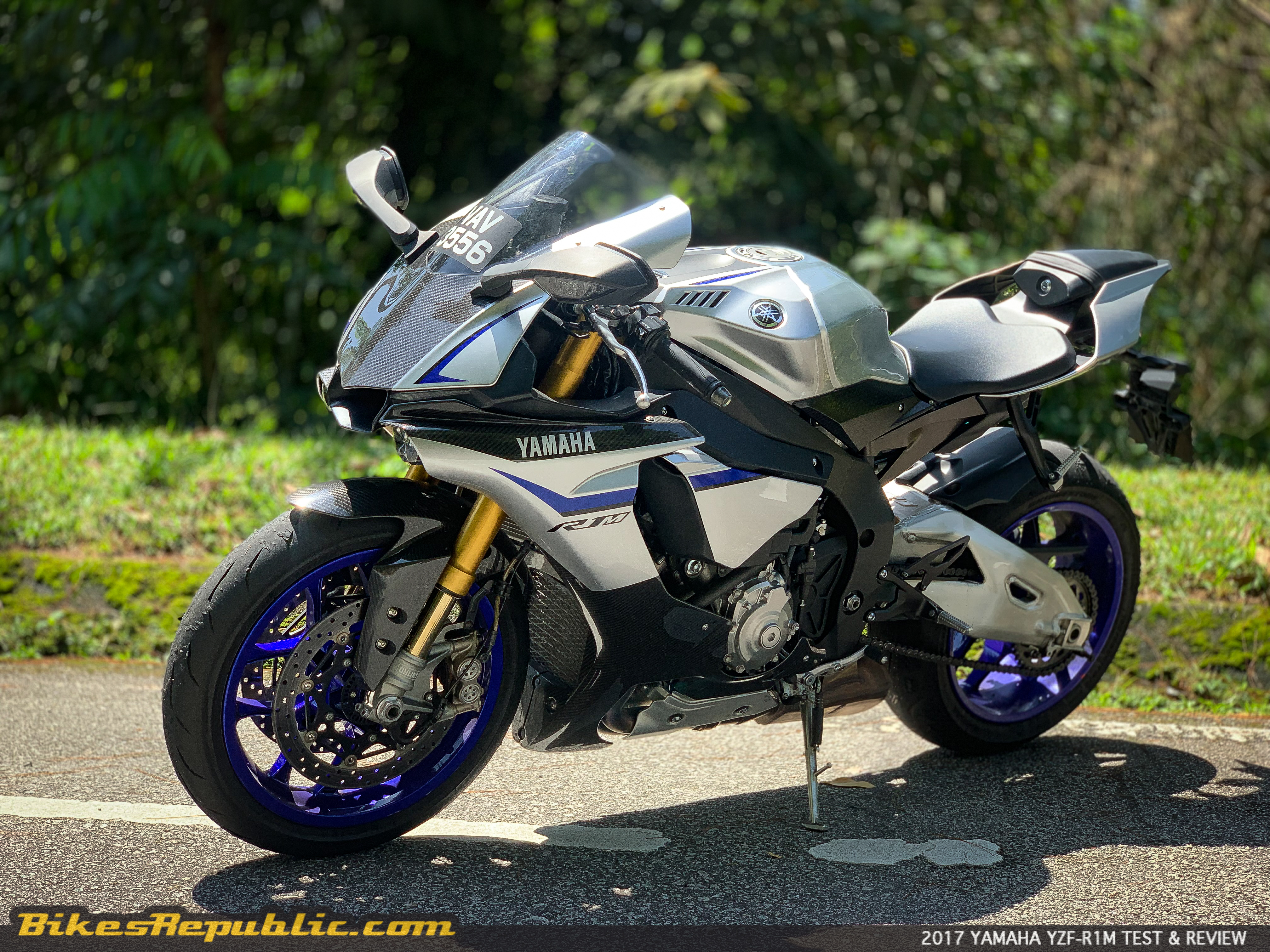
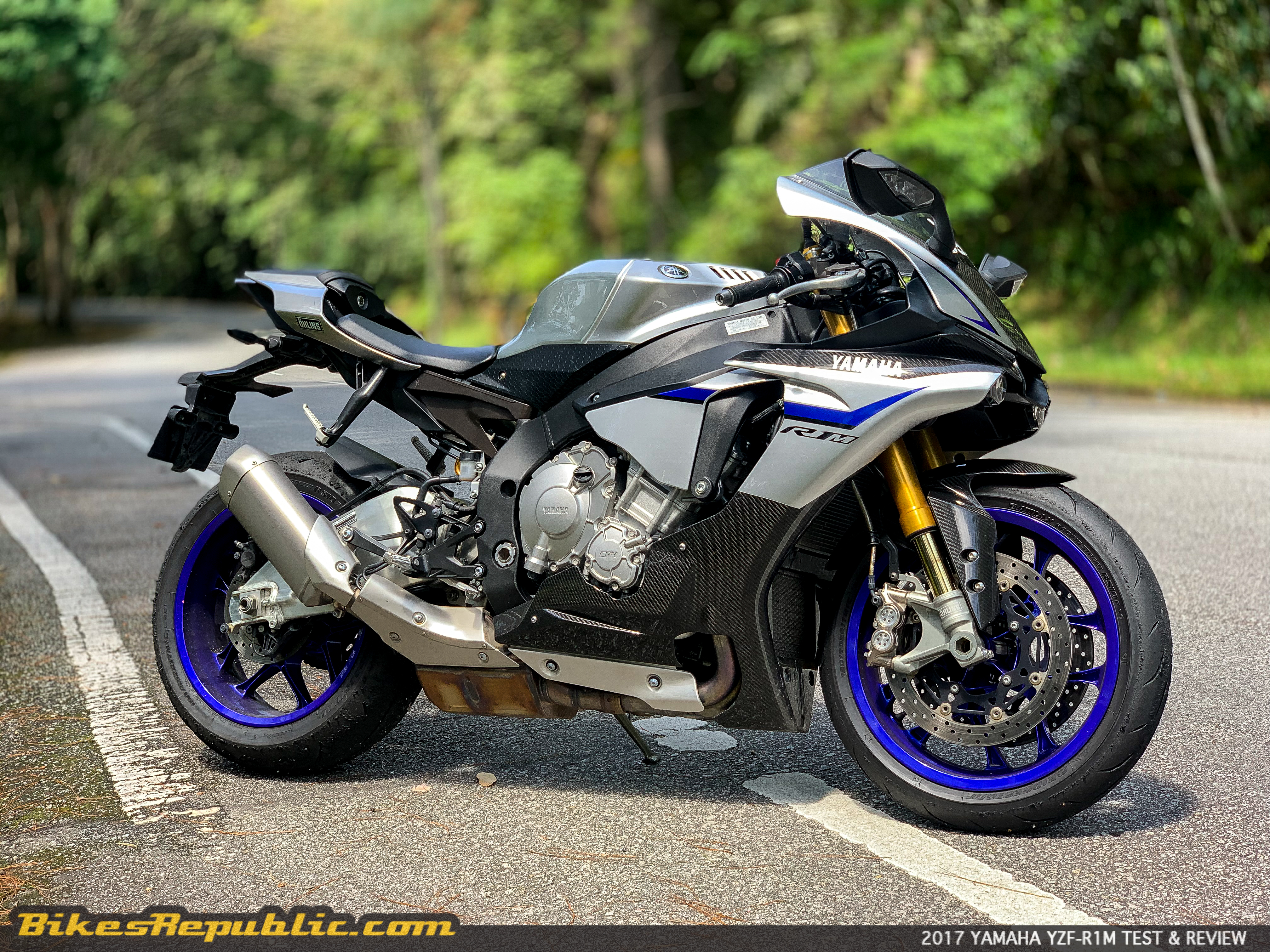
  • The 2017 Yamaha YZF-R1M is the “special edition” R1.

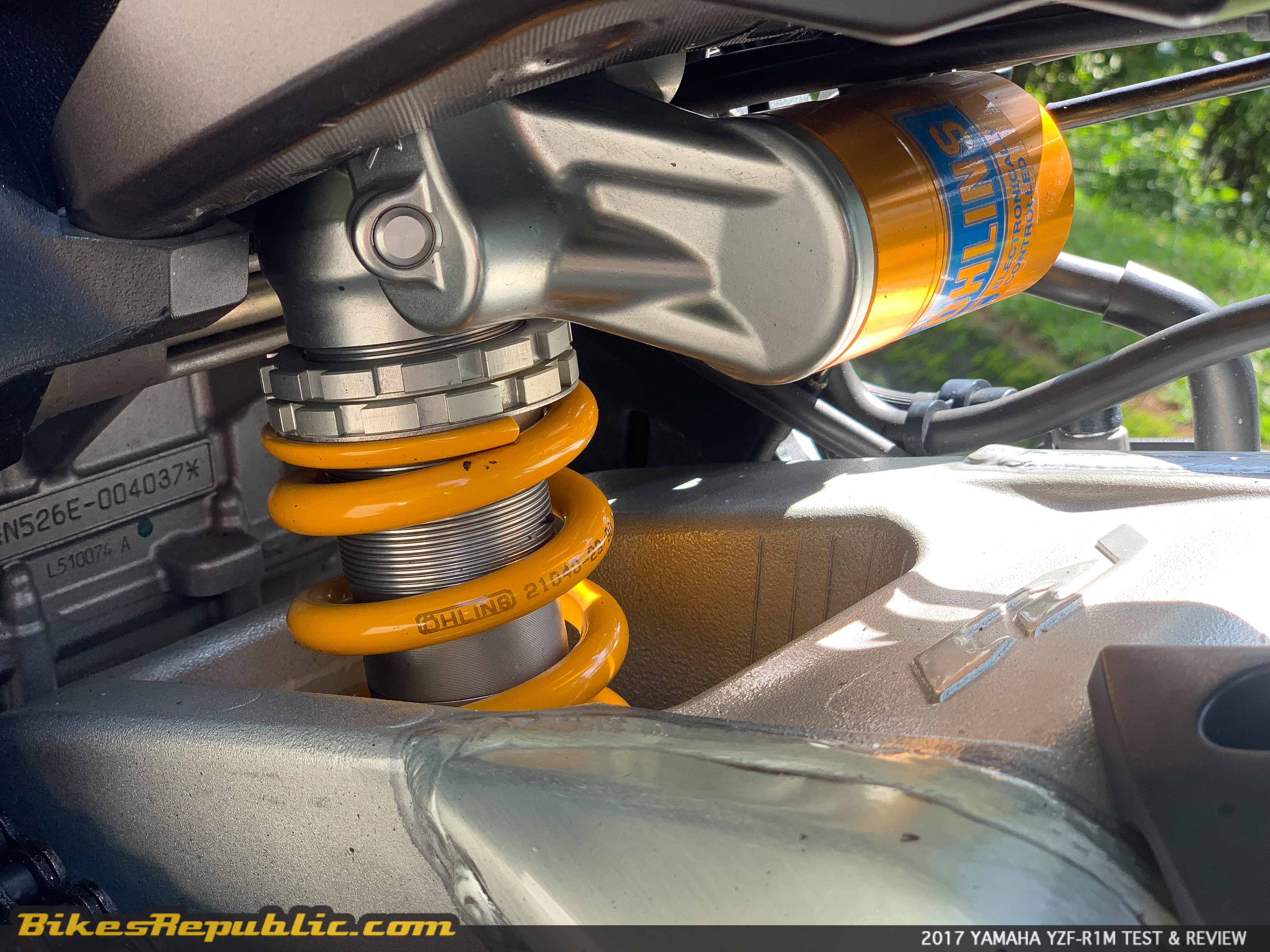
  • It was among the very first bikes to incorporate the 6-axis IMU and Öhlins Electronic Racing Suspension.

  • It was also among the first to feature comprehensive electronic settings.

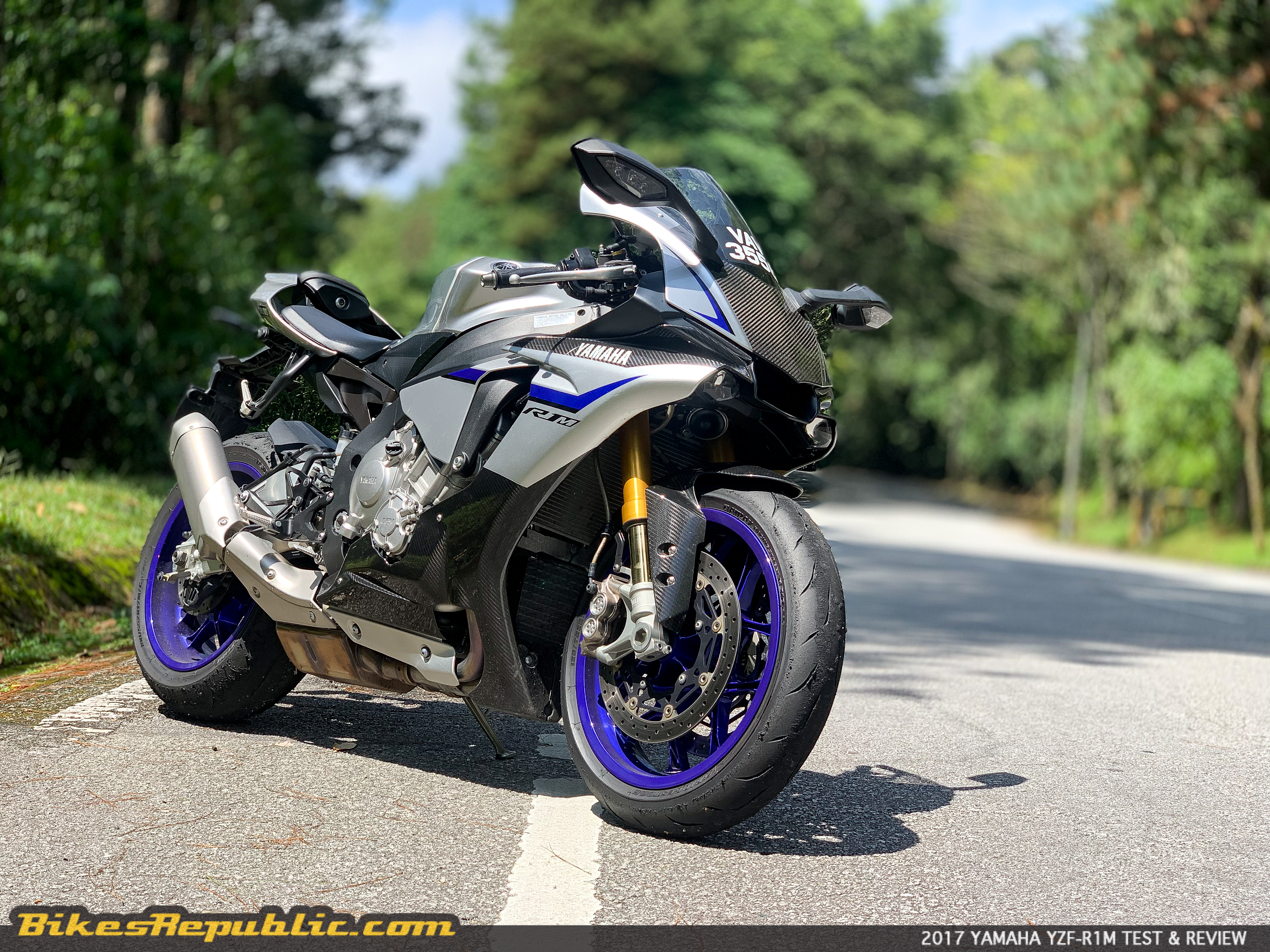
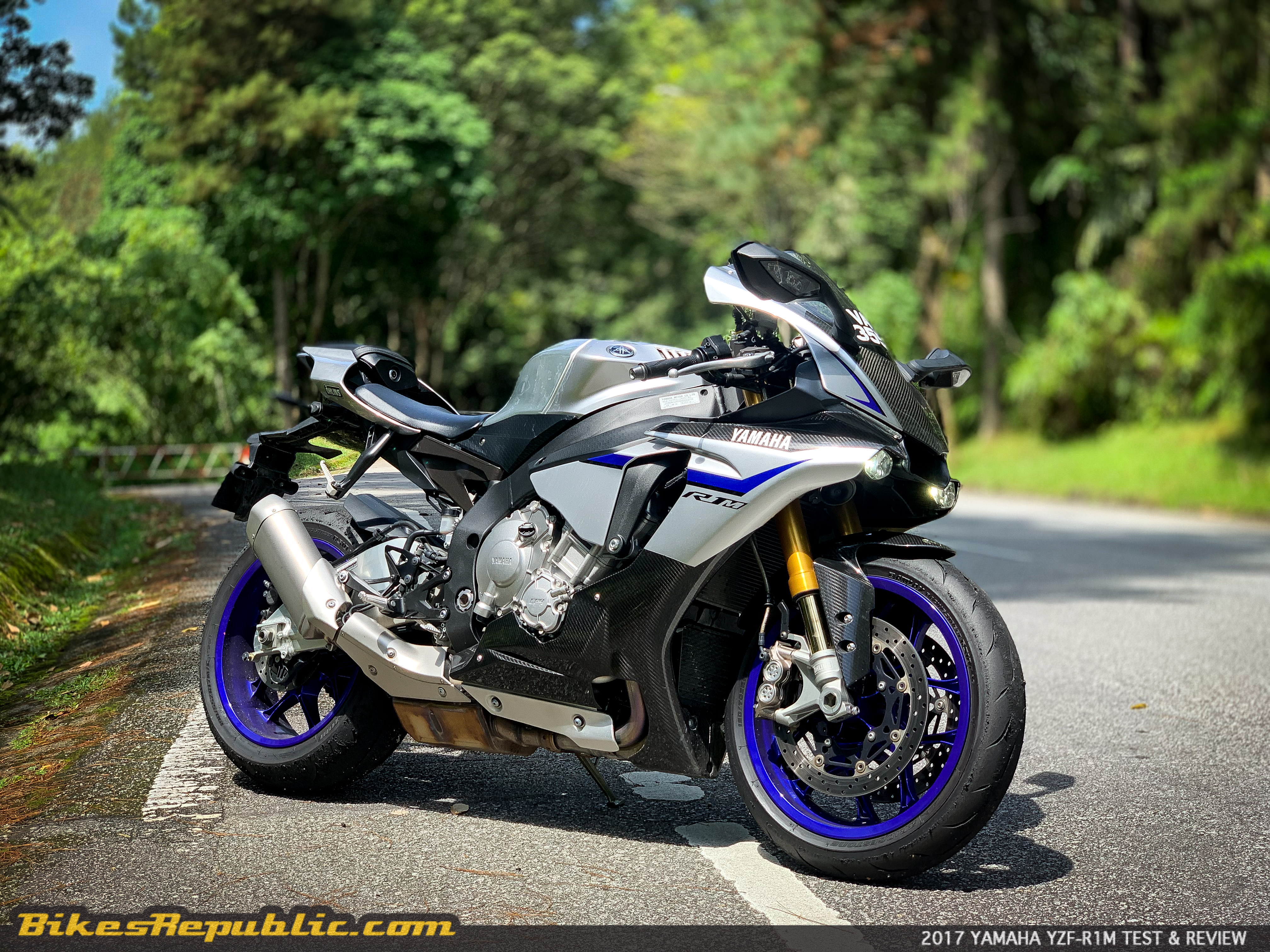
The Yamaha YZF-R1 or in this case the 2017 Yamaha YZF-R1M seems to hold a special place in the hearts of sportbike enthusiasts in Malaysia.

Many other superbikes have come along to take bites out of this models’ pie since its introduction in 2015. So, how does it hold up against the competition?

Introduction to the Yamaha YZF-R1M

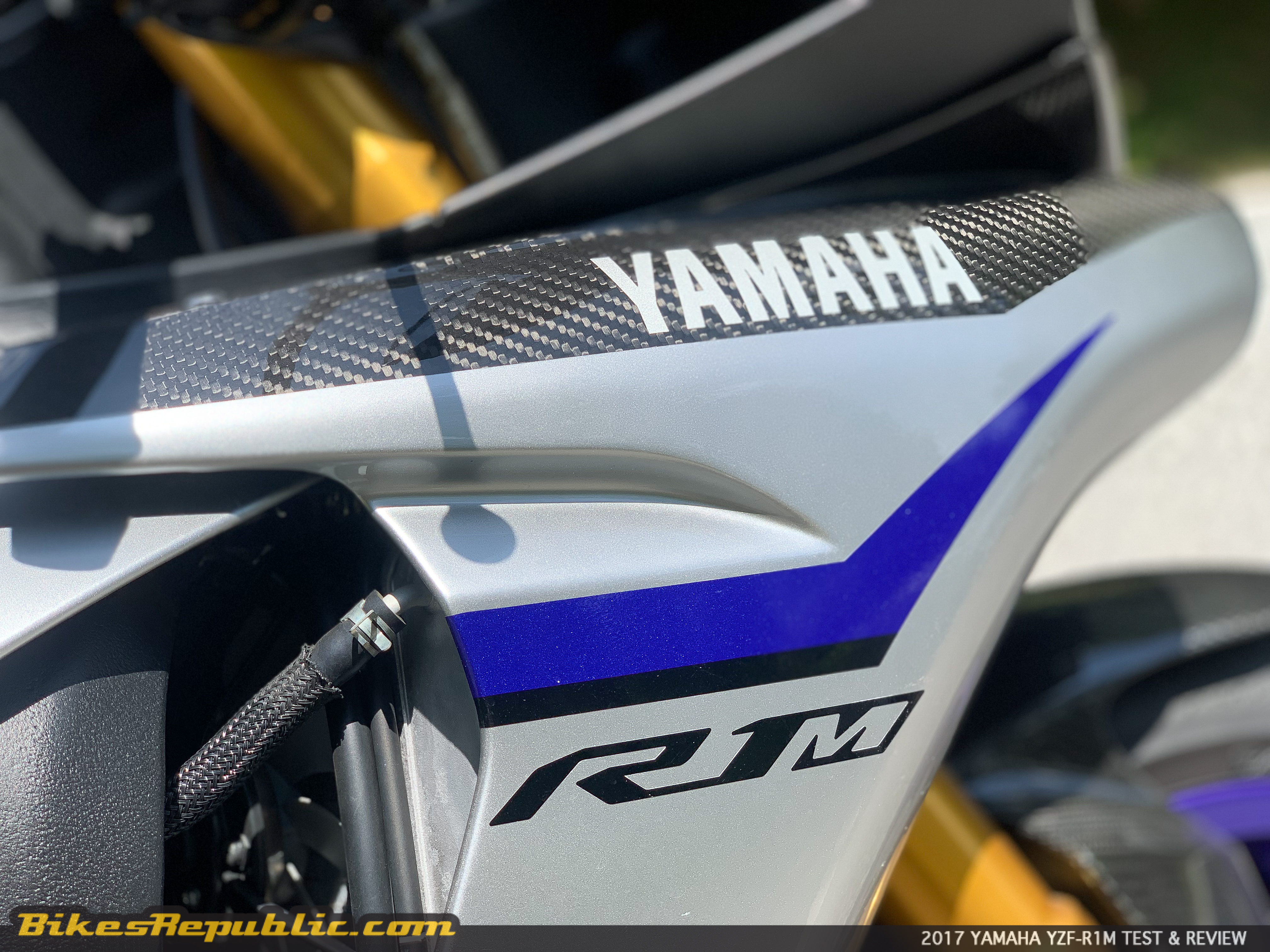
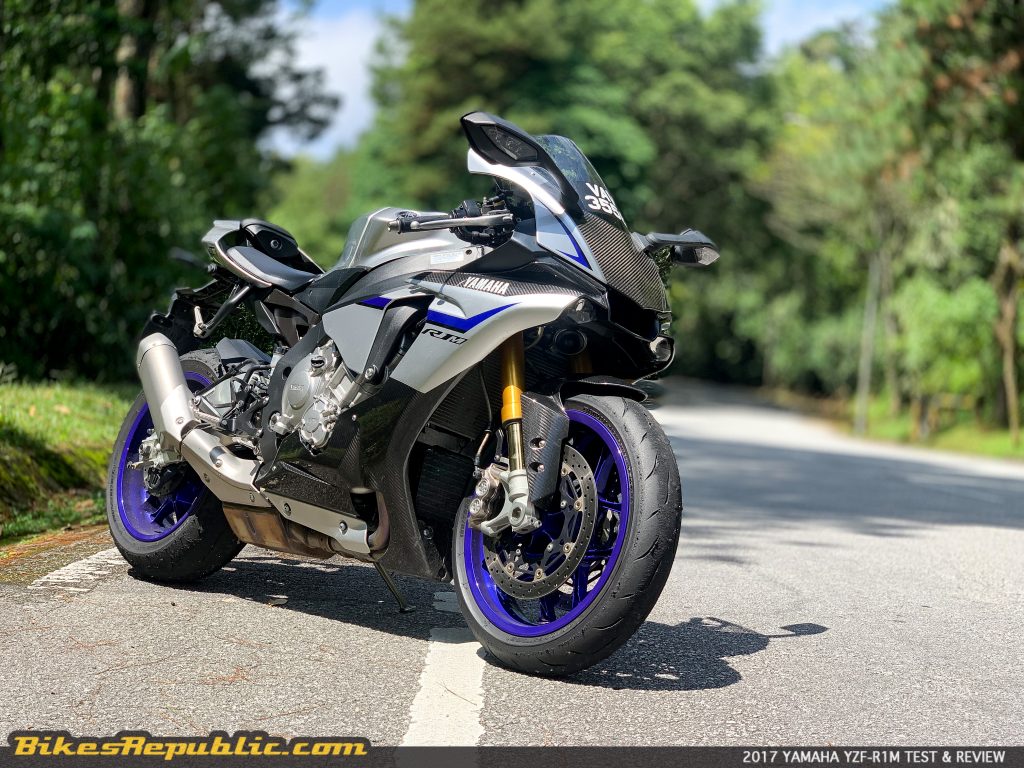
This is the third generation R1 which debuted in 2015. There are two variants: The “regular” YZF-R1 and the higher spec’ed YZF-R1M in this test.

Its styling was generally well-received, but the front proved to be controversial back then. While it followed Rossi’s bike (large space for a number plate), the headlamp placing was initially panned. But it’s grown on us since then.
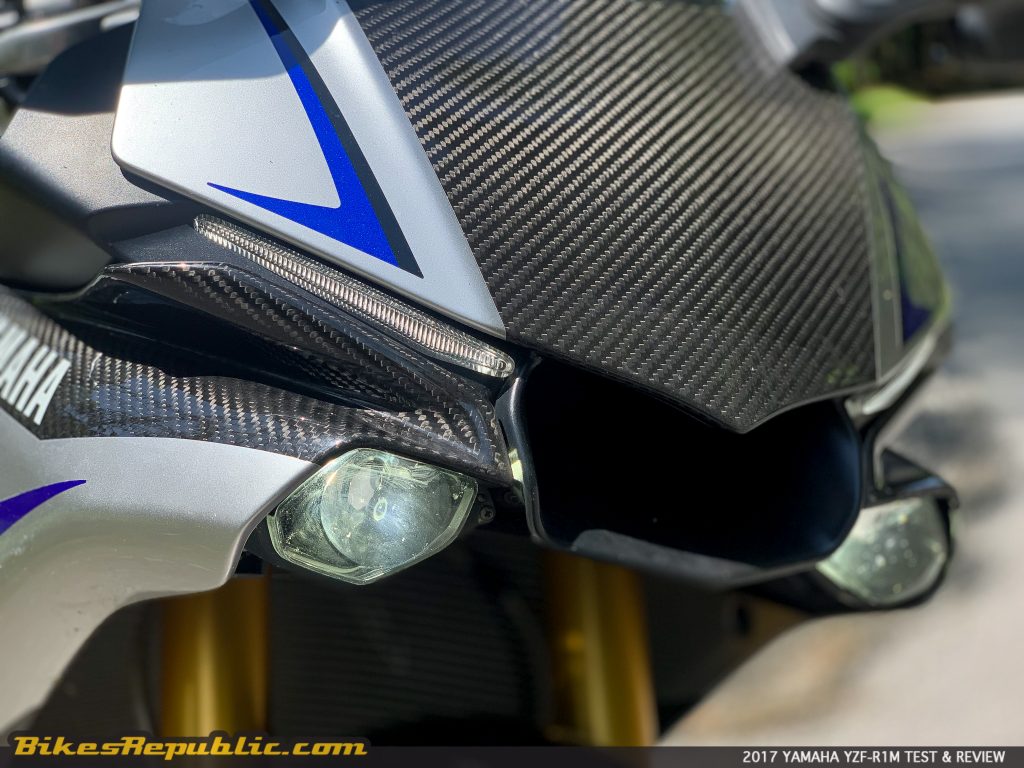
Looking at it now, the rest of the bike does look kind of old school. Yes, 4 years is too many in sportbike terms. While the newer bikes have more smooth panels, the R1M’s consists of many angles and pieces, making it look busy. Its silhouette is nice though: Aggressive and distinctive.

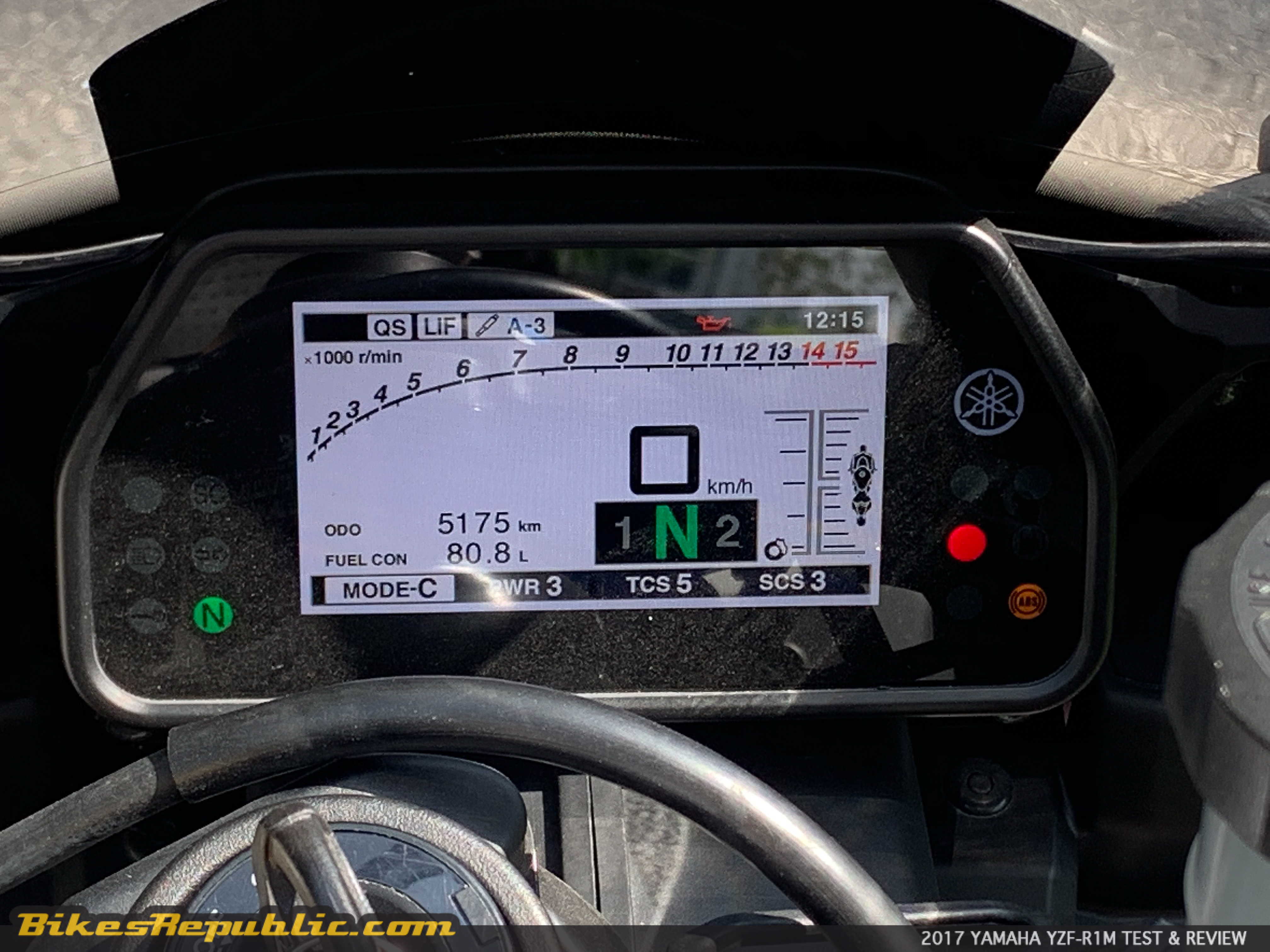
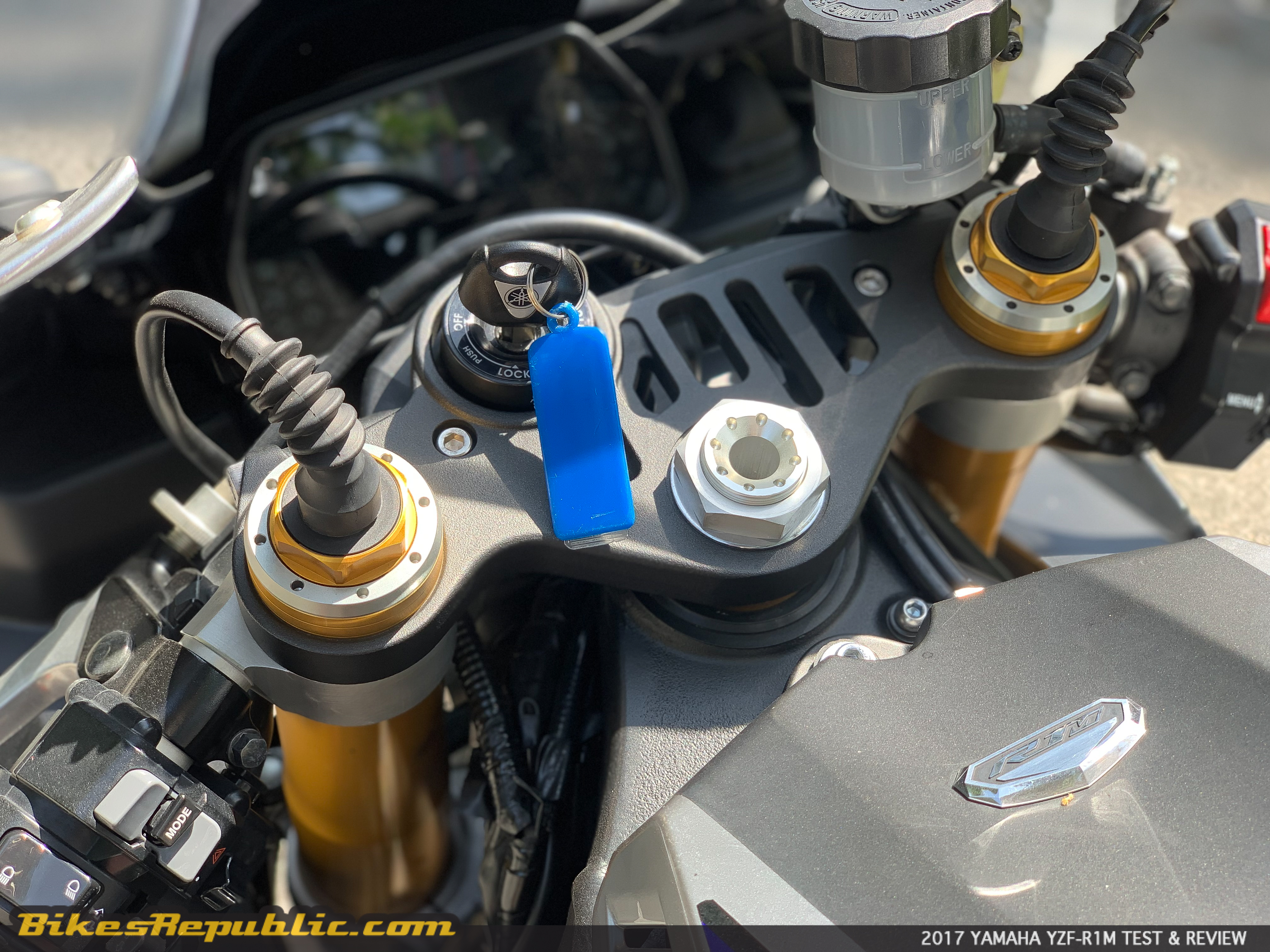
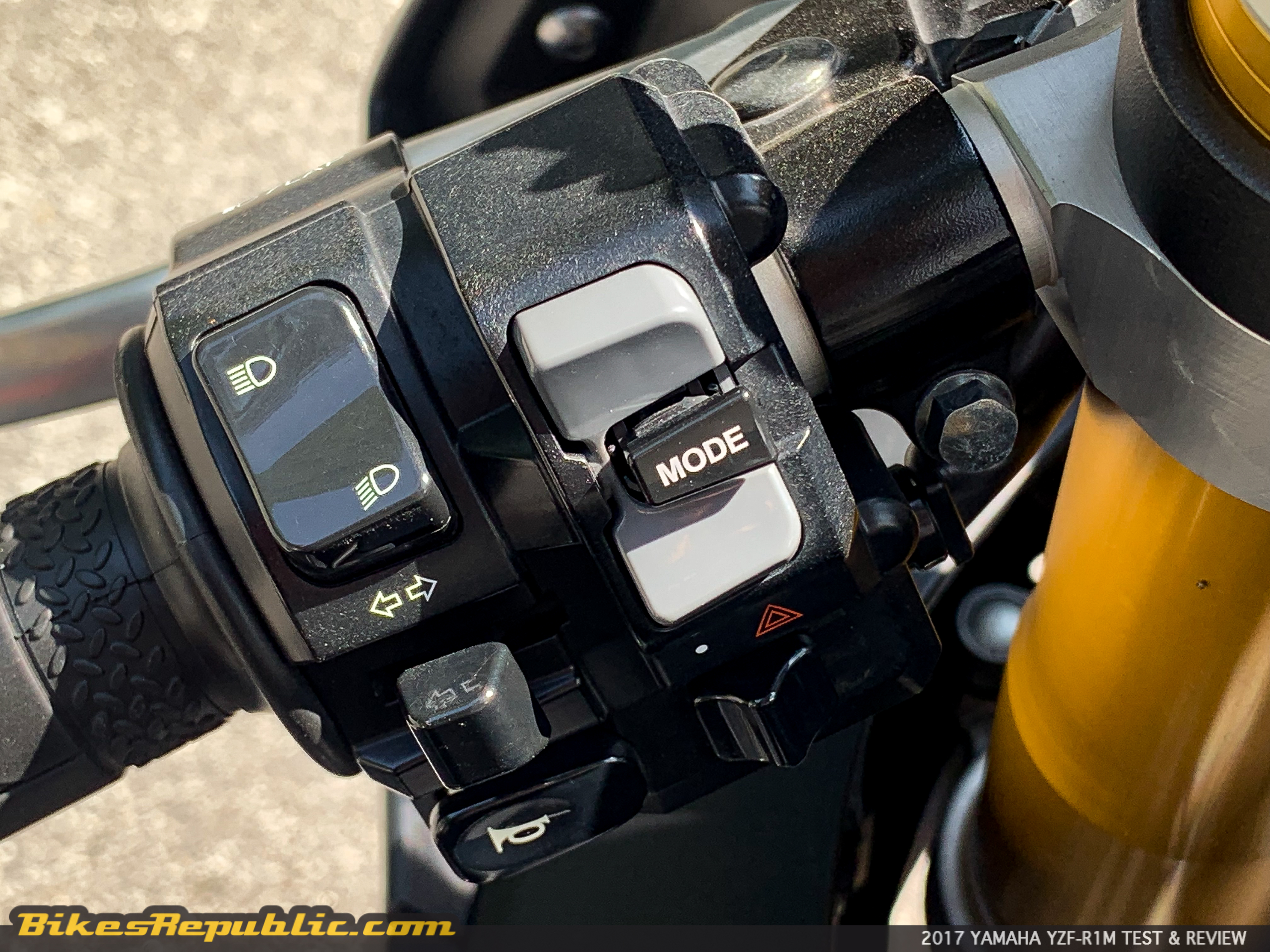
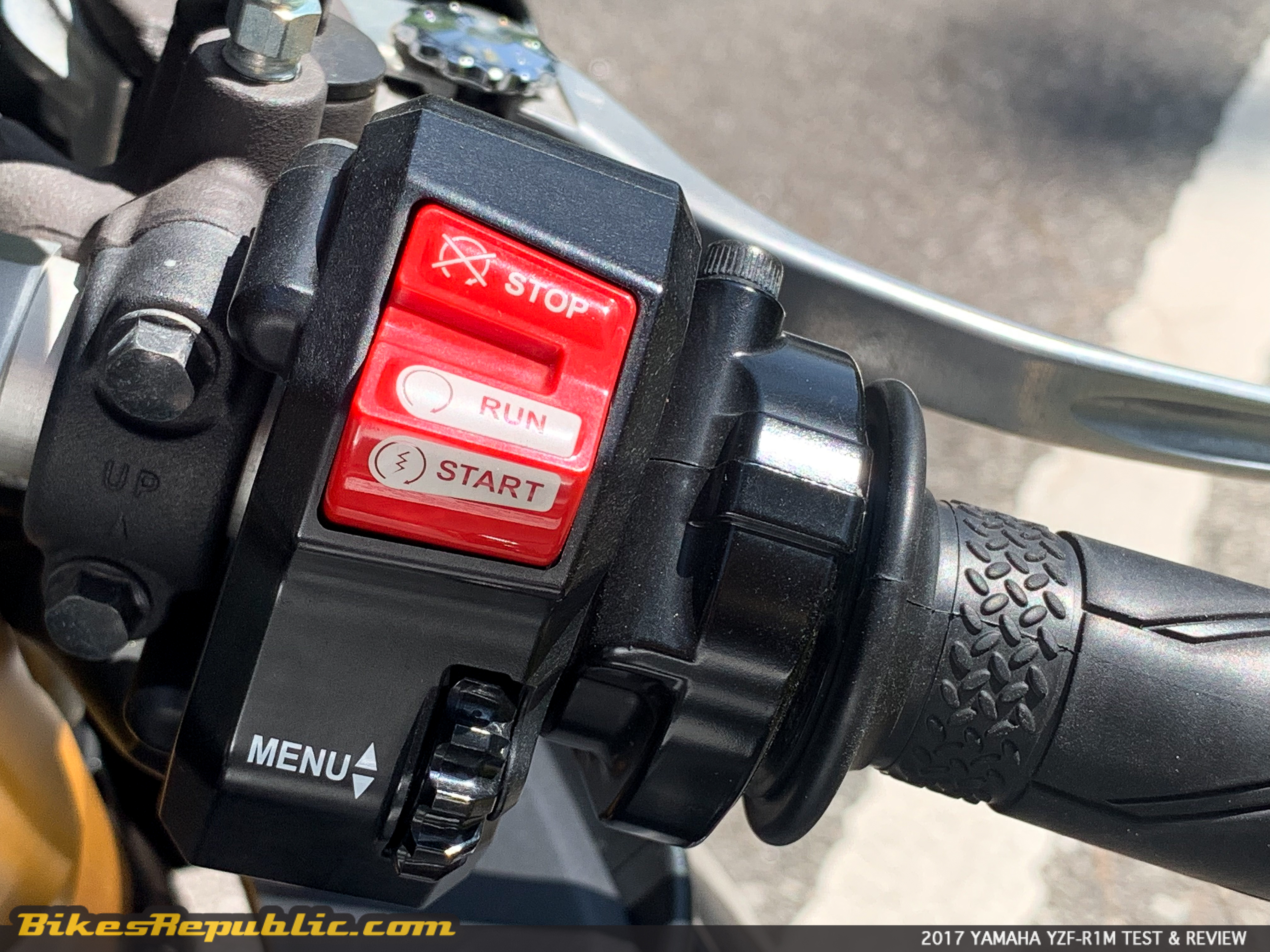
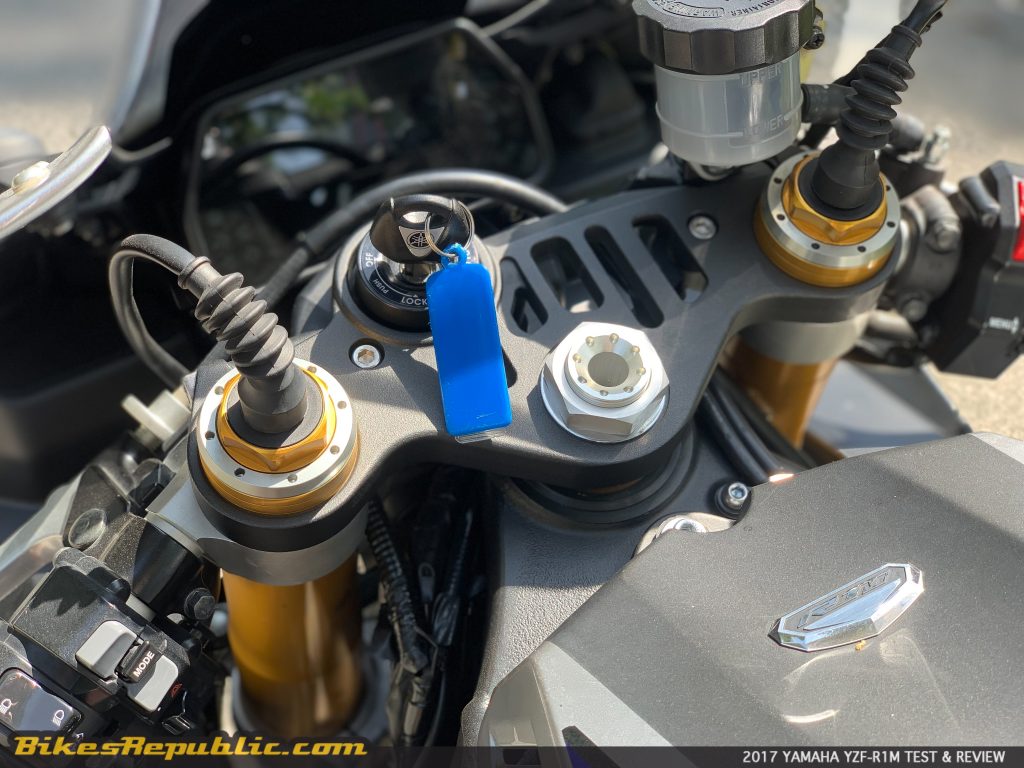
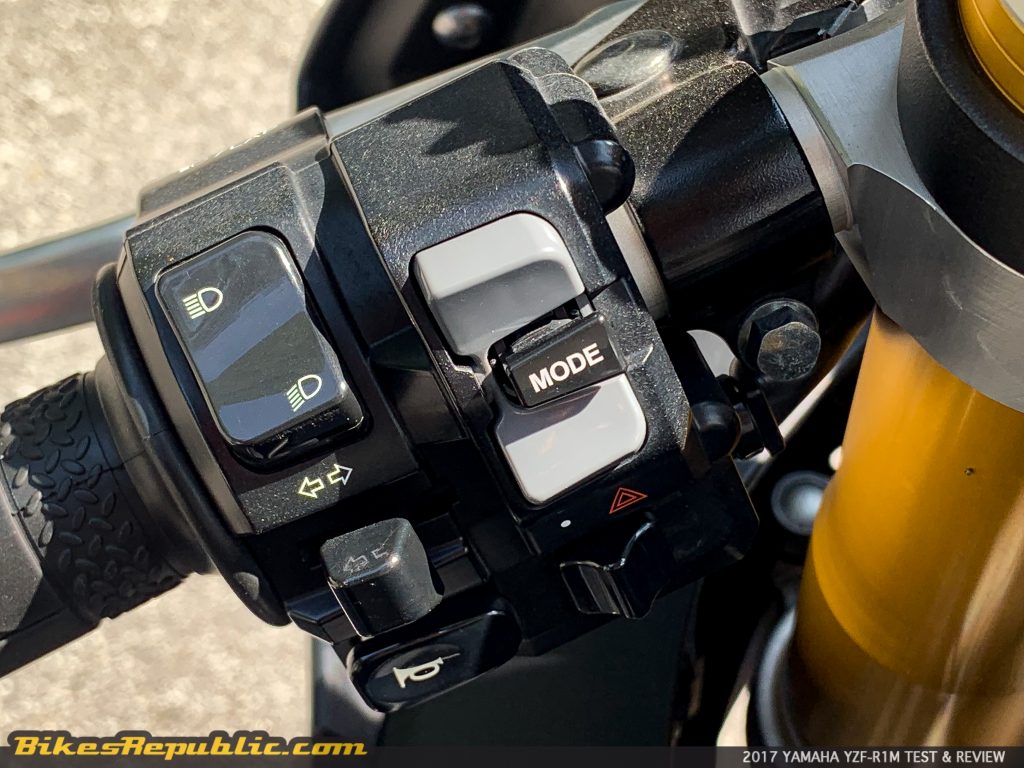
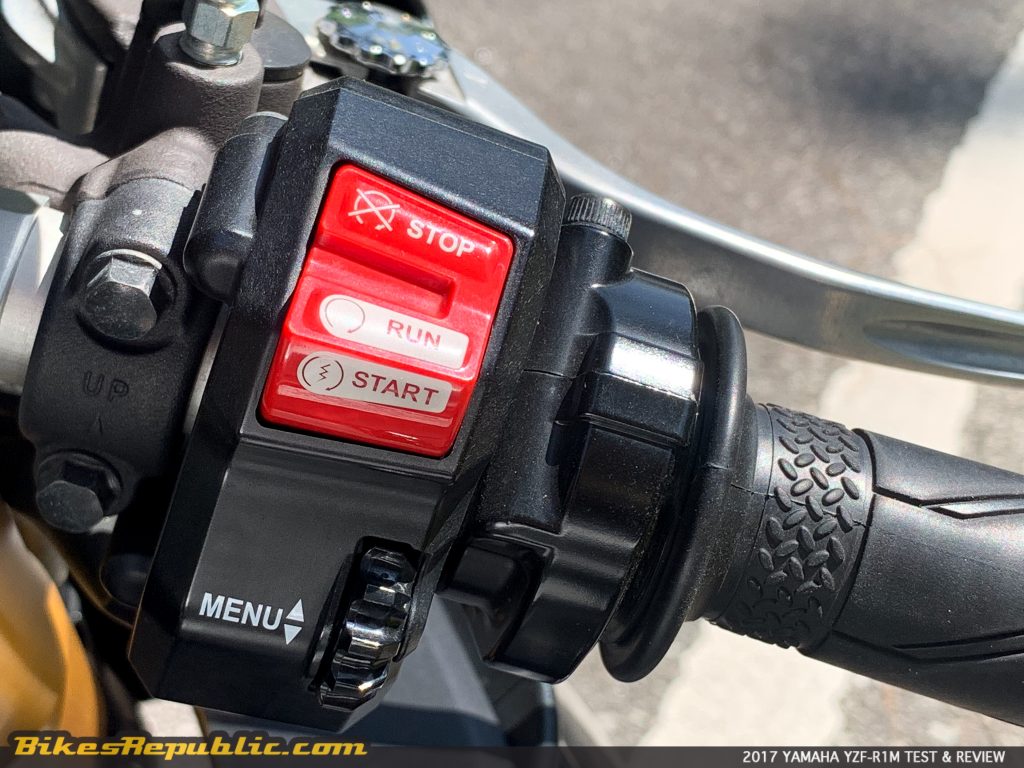
But the R1M was the first Japanese superbike to feature electronically controlled… well, everything. Engine power modes, engine back torque, traction control, suspension settings as well as the detailed controls are all accessed through the TFT screen’s menus. Sorry, I can’t find the control to make a caramel latte.
Riding the Yamaha YZF-R1M

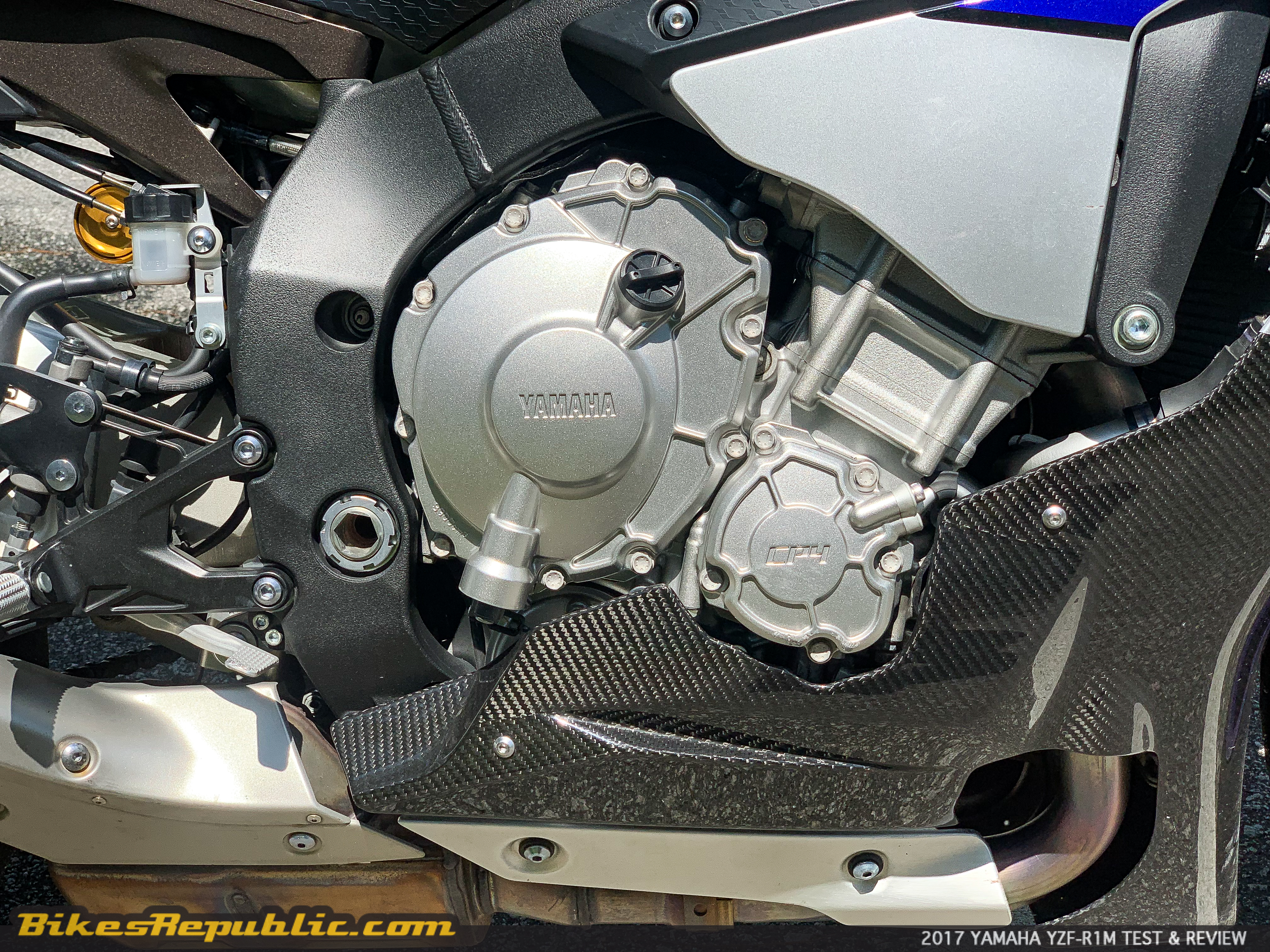
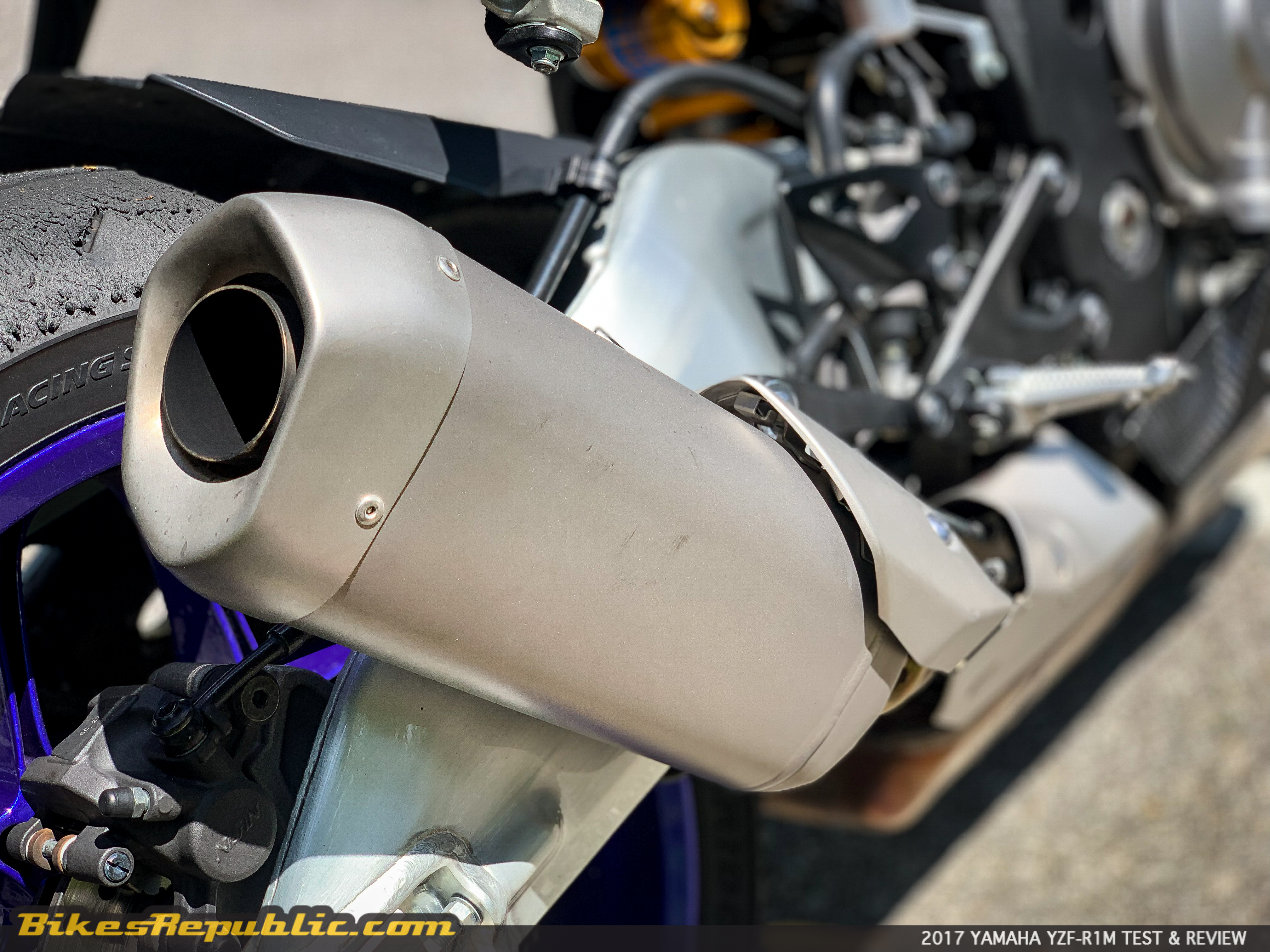
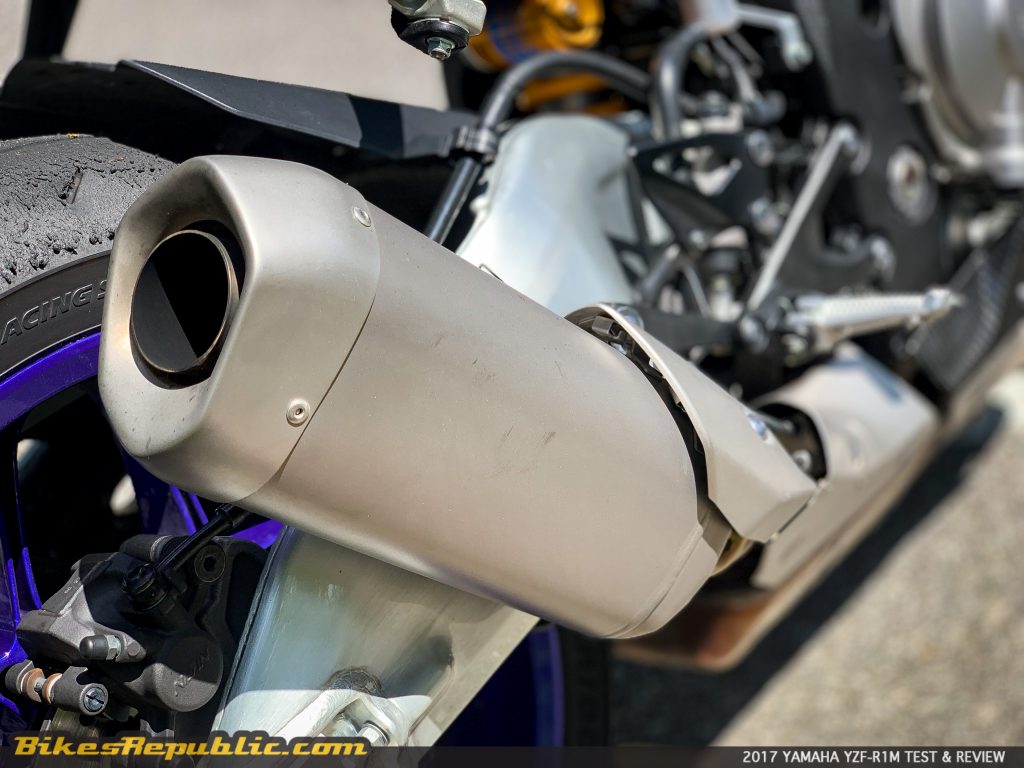
The engine fired up with an immense roar, as if it’s got an aftermarket exhaust. The engine also emitted loud sounds, but that’s probably attributed to the thin walled engine covers.

But before moving off, it’s time to go through the settings. There were 4 power levels (1 being the lowest), 4 TC levels (1 provides the most intervention), 2 quickshifter modes, 3 engine braking levels, 4 suspension modes. Choosing a power level also changes the settings (except suspension) by default. However, you could choose the power level to your liking while customing the other parameters to your liking.
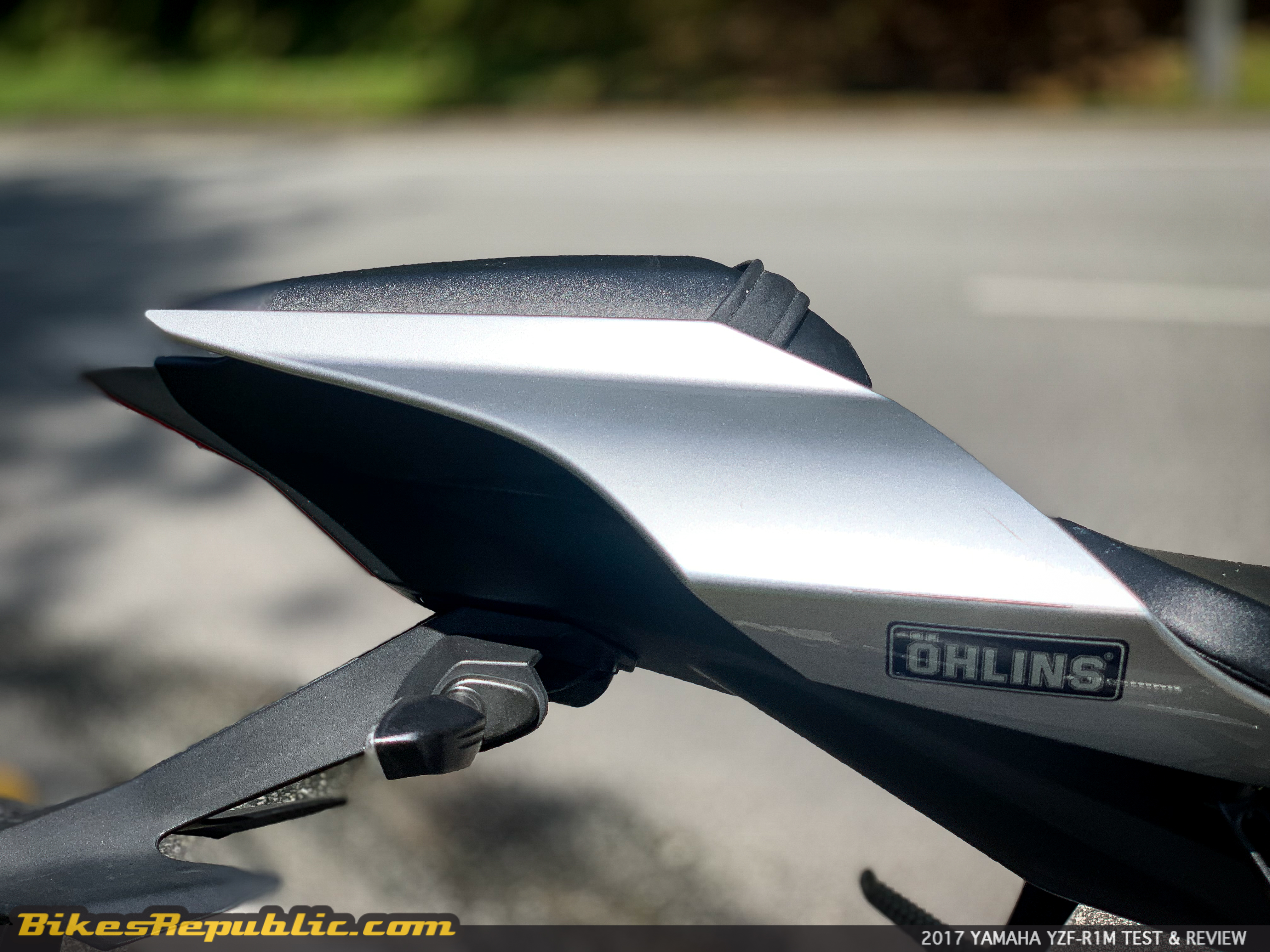
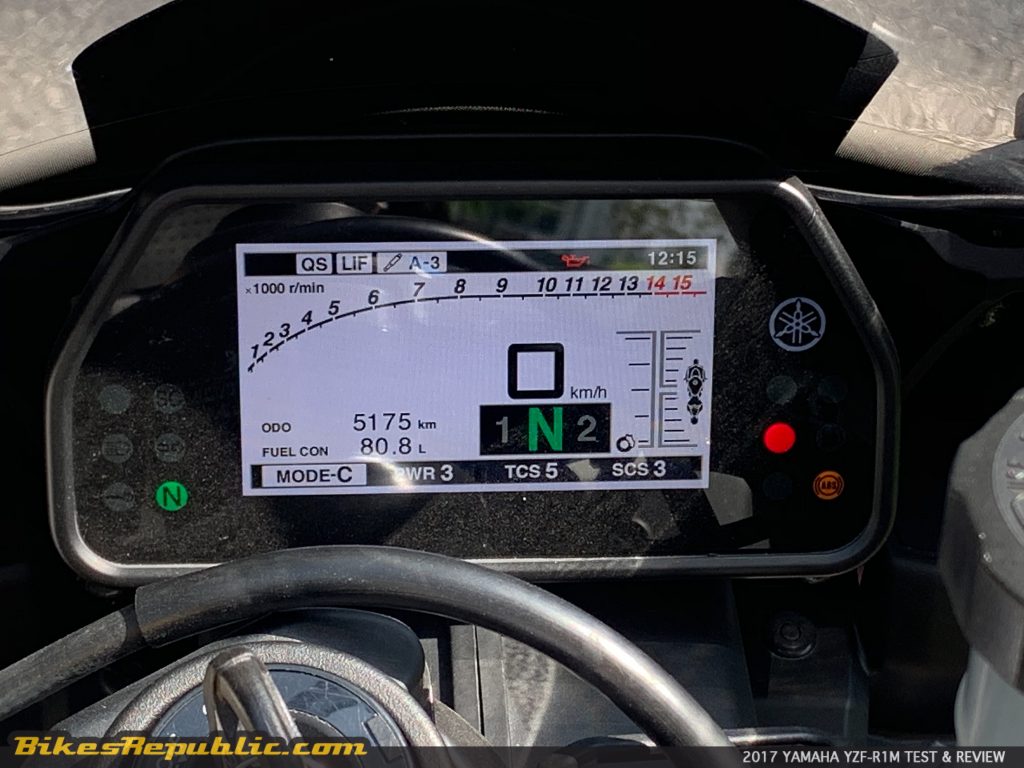
As for setting the Öhlins Electronic Racing Suspension, the first, marked A-1 (automatic-1) is the stiffest with the most damping, while A-4 is the softest. I chose A-4 for road riding.

Flip another page on the menu and you’ll find the suspension’s fine tuning. The best thing about the menu system is that it shows you where your starting point (after choosing the A level). If you reduce a parameter, the menu will show -1, up to -5, and vice versa. Awesome! This way, you don’t have to guess and go all bananas.
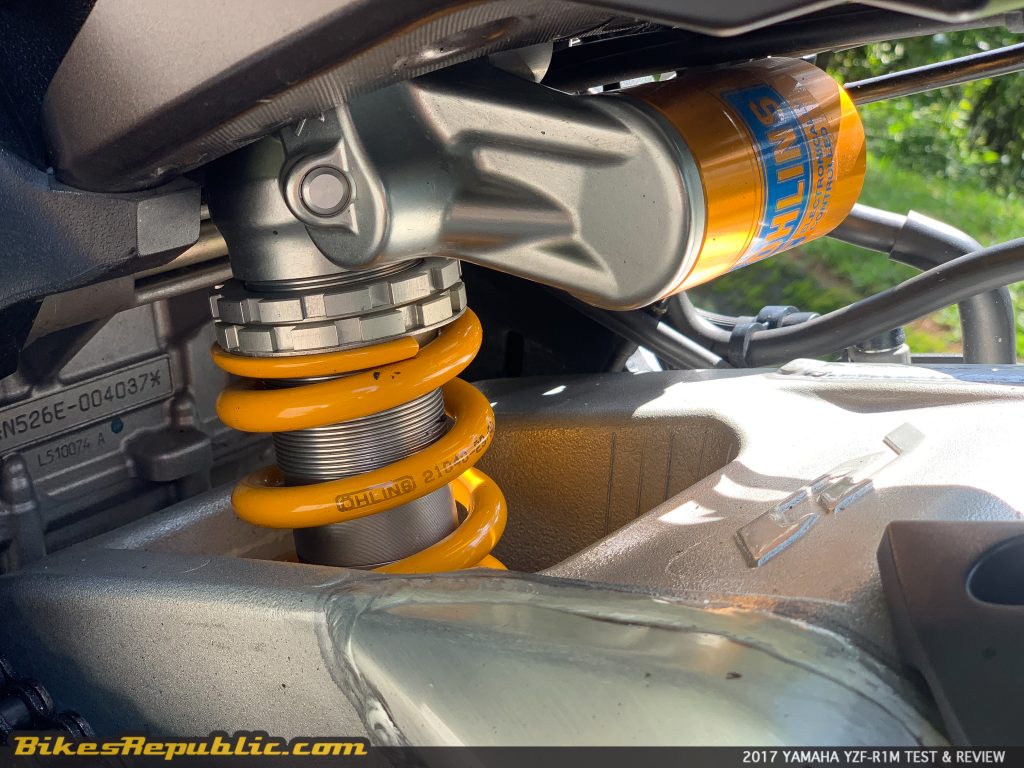
You can choose to set up the suspension manually and independent of the automatic settings too and save the settings in M-1, M-2 and M-3. There are 32 “click” to play with for each parameter just like those manual racing suspensions, but electronically.

Exiting the menus and back out the main screen, it shows all the pertinent data you’ll ever need. The top row shows your settings and you could change them on the fly. In ROAD mode, the screen displays speed in the middle. But if you switch to RACE mode, the speed display changes to a lap timer. Cool!

That’s 20 minutes gone just to set it up. Phew!
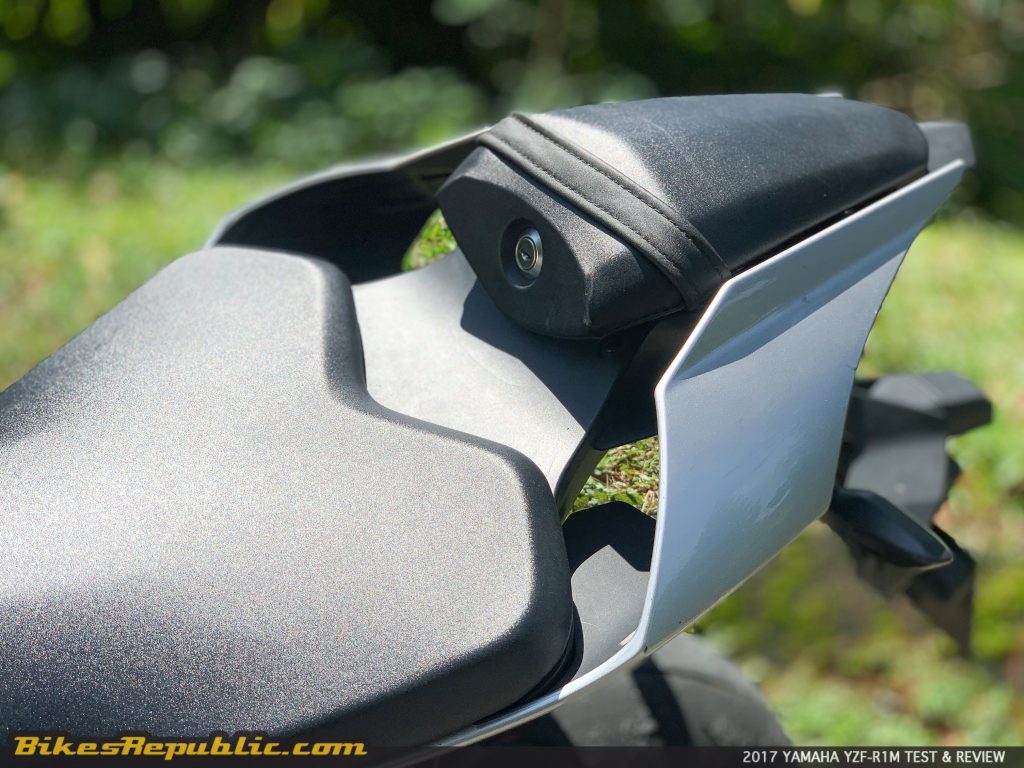
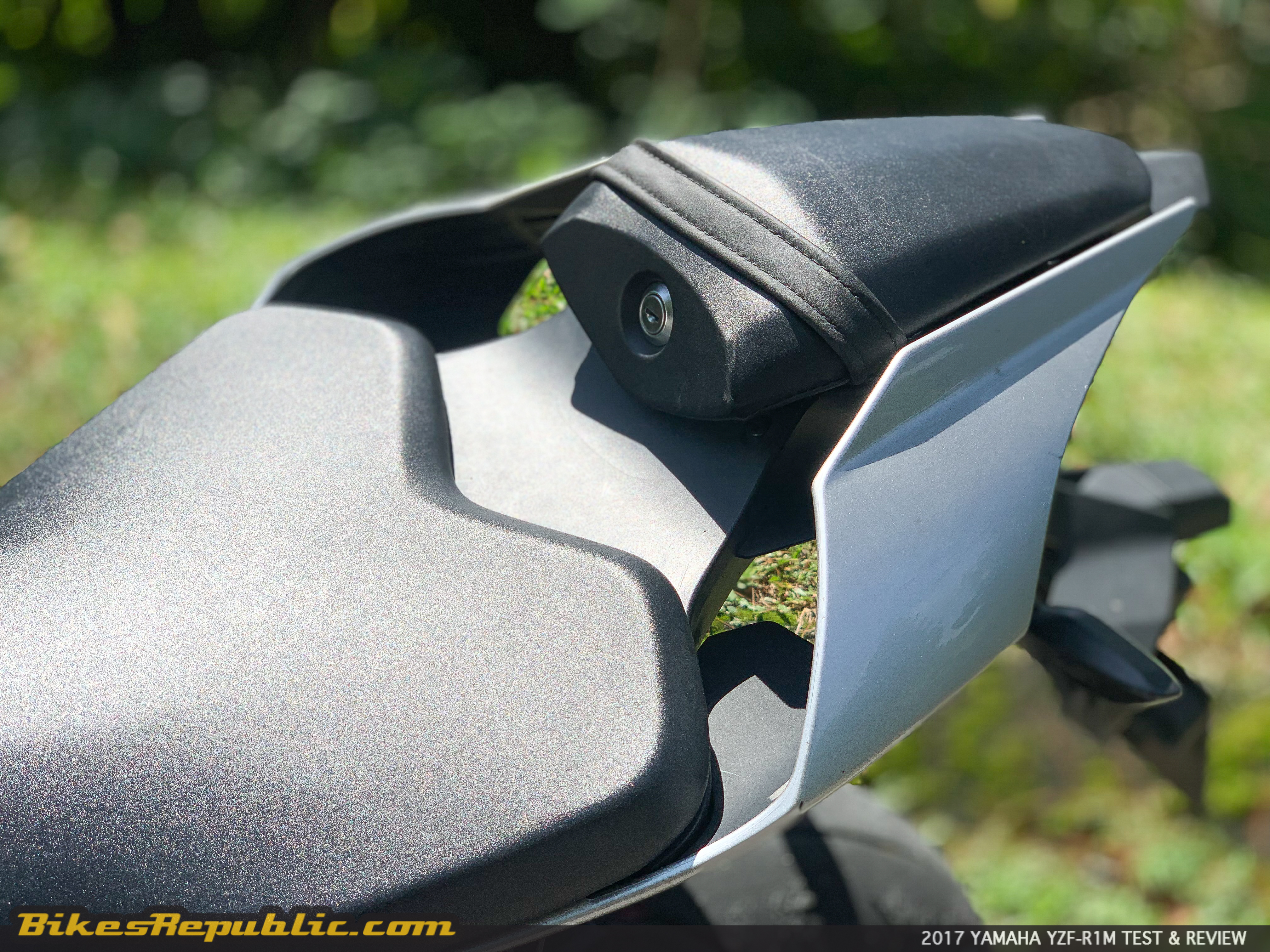
The seat was the tallest among all sportbikes even with the rear shock’s preload wound all the way out. The clip-ons were set low but reach to them was thankfully short, so you don’t look stretched out like roti canai dough.

I took a liking to the bike immediately.

Sat in the correct position (crotch about 2.5 cm/1 inch from the tank), the steering was light and didn’t feel like it needed herculean efforts to turn it. The fuel tank’s knee cut outs were right there where my knees were instead of being higher up.
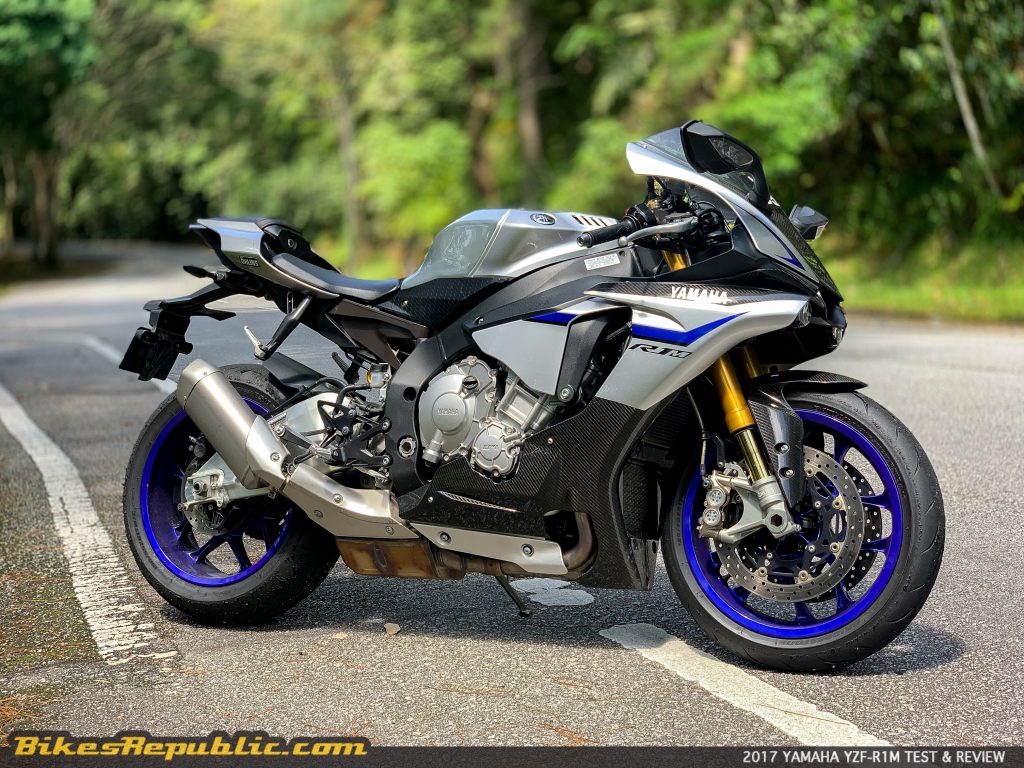
The first gear was very long so I’d usually short-shift into second. Give it a fistful of gas and the bike just took off with one of the most beautiful soundtracks. Low down, it sounded like a V-Four but once the tach swung past 8,000 RPM it produced the V-Four roar mixed with an inline-Four wail. It’s one distinctive warble that no other bike produces.

That torque was the loveliest thing on this bike. Whereas certain inline-Four superbikes took time to accelerate from down low, the YZF-R1M took off like a missile homed in on its target. And that was in the lowest power level!
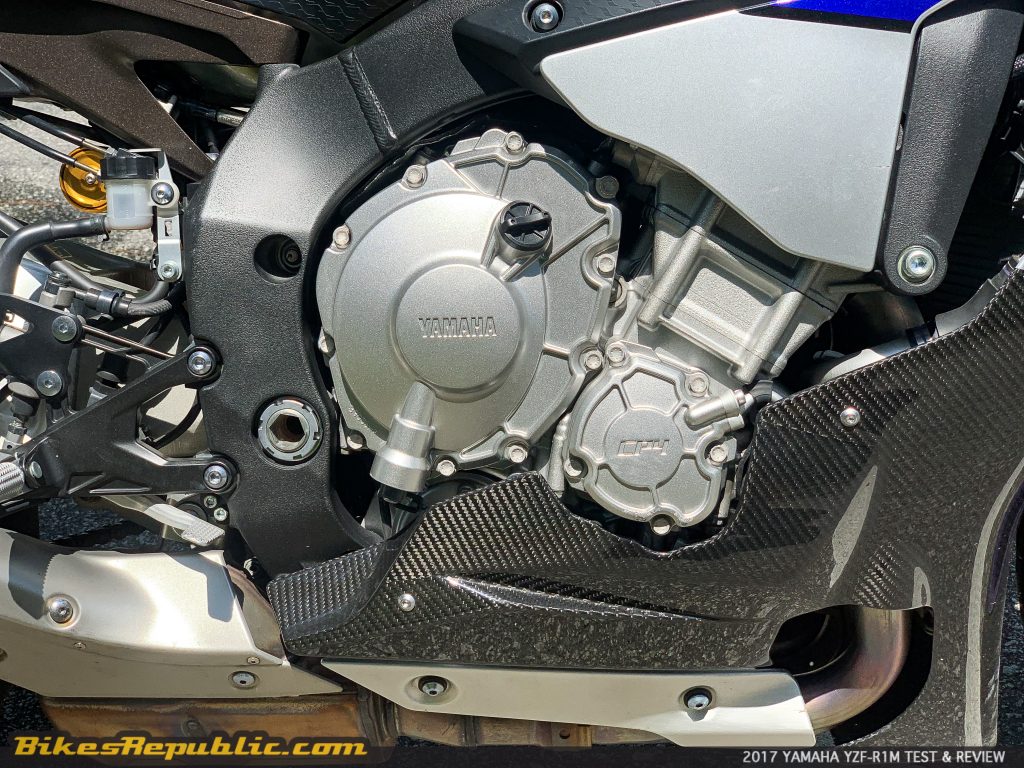
But even as speeds went well into triple digits, the bike stayed straight almost without a single weave. Most sportbikes will weave slightly since they were made to be super agile but the R1M stayed the course like it was on proverbial rails.

Yet, it was so easy to flick the bike over onto its side and making great use of the 200-section rear tyre. I credit that to the knee cutouts in the tank which enabled me to push my outside knee into it and help turn the bike. Additionally, the tank’s edges provided support for the forearms.
But again, the bike was super stable in midcorner. Choose your line, flick it in and throttle out. Done. It wasn’t only so in those long high-speed corners, for it exhibited the same kind of tenacity in slow corners going up Genting as well. Other bikes would push the front tyre in those slow hairpins but the R1M seems resolved to track through any corner.

This superb performance is credited to the Öhlins Electronic Racing Suspension. It But that’s only half of the story as the YZF-R1M was among the very first motorcycles to incorporate the 6-axis inertial measurement unit (IMU) technology. Data from the IMU is fed to the suspension’s control unit which monitors many parameters every few miliseconds and determines the best damping while braking, cornering and accelerating.
Thus, besides suspension control, the IMU data also serves the bike in terms of lean angle sensitive traction control (TCS), rear wheel slide control system (SCS), front lift control system (LIF) i.e. wheelie control, and launch control (LCS).

The tops of the tank’s knee cutouts were not far from the top my things and brace against them when I braked hard. They were absolutely perfect from my 167cm height, but I imagine those with long legs might find them a bit troublesome.
Speaking of braking, those calipers gripped like mad, despite not being the fangled Brembo. They’re not even monoblocs. I thought I was going to be thrown over the windshield the first time I clamped down with two fingers.

Verdict

The Yamaha YZF-R1M certainly changed the superbike game when it came out and still remains a powerhouse. 197 hp at 13,500 RPM and 112.4 Nm of torque is nothing to sneeze at!

The 2020 Yamaha YZF-R1 and YZF-R1M have been launched recently and we could only guess at how much better it would be!
PICTURE GALLERY
  • The 2020 KTM 1290 Super Adventure was caught testing recently.

  • It may feature radar-assisted cruise control.

  • The bike also shows many new changes.

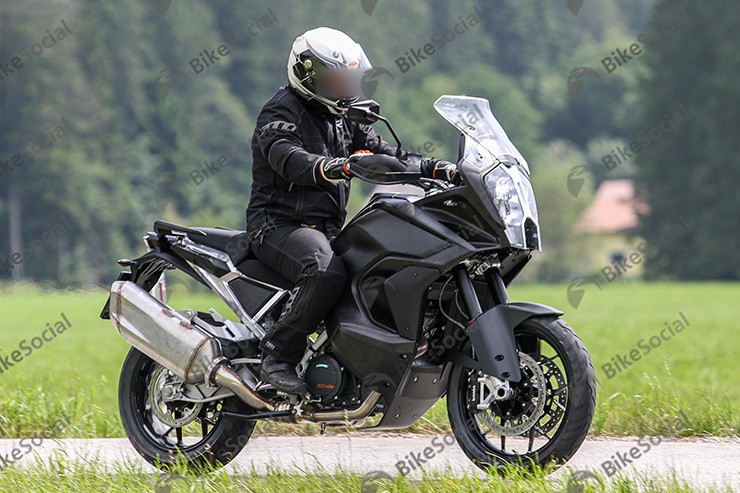
The 2020 KTM 1290 Super Adventure was caught testing recently.

Spy shots show that the bike has “evolved” headlamps that are much larger, but with an obvious void at the bottom centre. This could be due to the widely rumoured radar unit which assists cruise control.

The new bike seems to be dominated by the huge headlamps, at a time when other manufacturers are making smaller front sections. It may very well be because the cornering lights are integrated into the headlamps.

The flanks around the fuel tank have grown but look closely and you’ll spot a large bulge in front of the rider’s shin. That’s where the fuel tank really resides in the 790 Adventure’s fashion. Doing so lowers the bike’s centre of gravity, consequently making the bike more agile and stable at the same time.

Look behind the front wheel and you’ll see no radiator. The 1290 Super Adventure is most probably employing split radiators that are placed inside the fairings. Doing so allows cooling air to move through the engine bay more effectively. Also, it keeps them from stone damage.

Moving backwards, the subframe is new and looks detachable and made from aluminium. The swingarm is still KTM’s signature open latticework design.

But how could we miss the size of that exhaust silencer?! Again, remember that the Euro5 regulations govern noise emission, as well.

There ought to be two versions, as usual. The road-centric “S” model will feature 19-inch front and 17-rear alloy wheels, while the off-road biased “R” model will use 21-inch front and 18-inch rear spoked wheels.

Source: Bennets UK

  • The Triumph Street Triple will be updated for 2020.

  • A filing with the California Air Resources Board (CARB) shows updates to the exhaust system and emission levels.

  • The new bike looks to have new headlights and radiator shrouds.

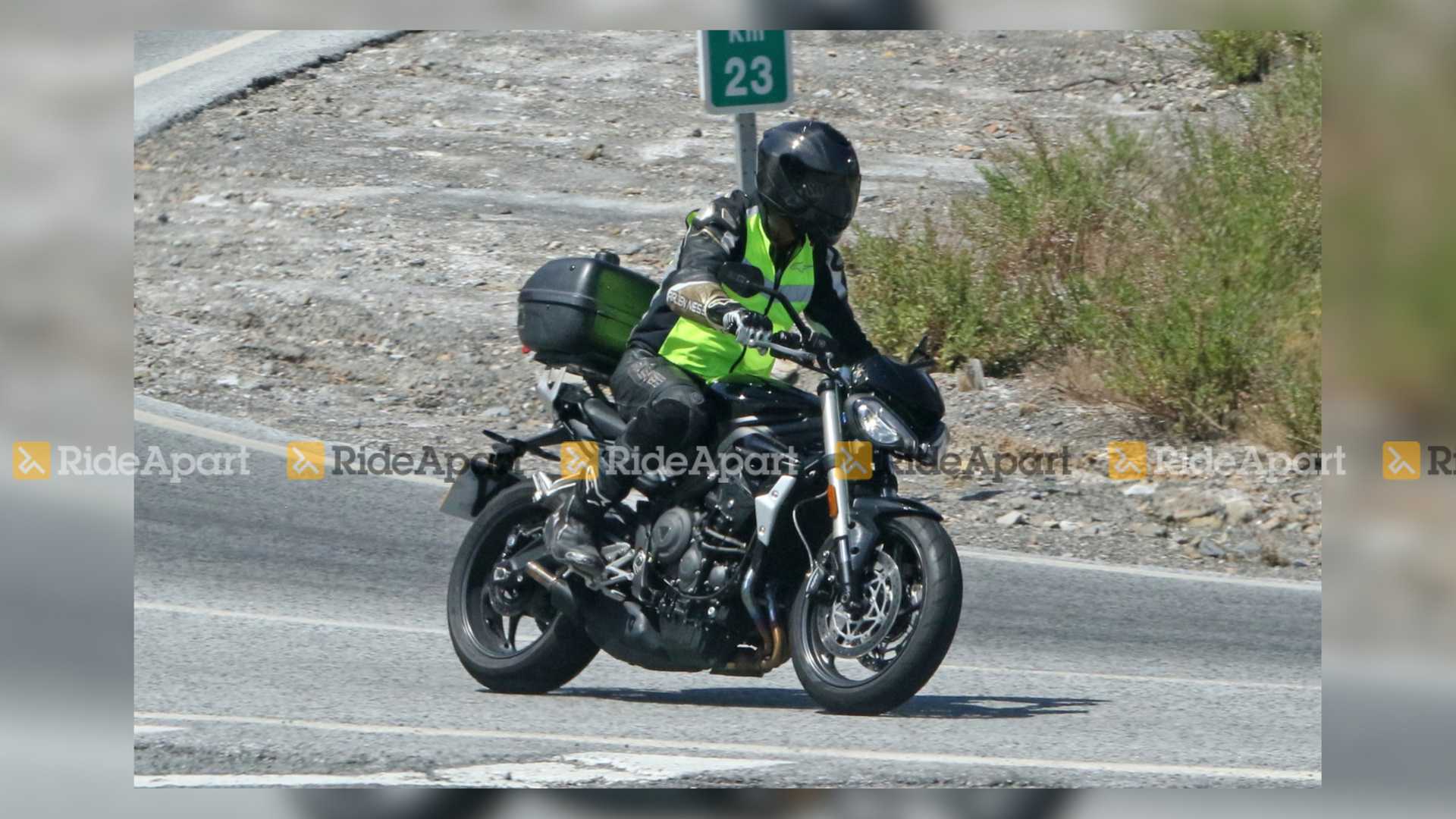
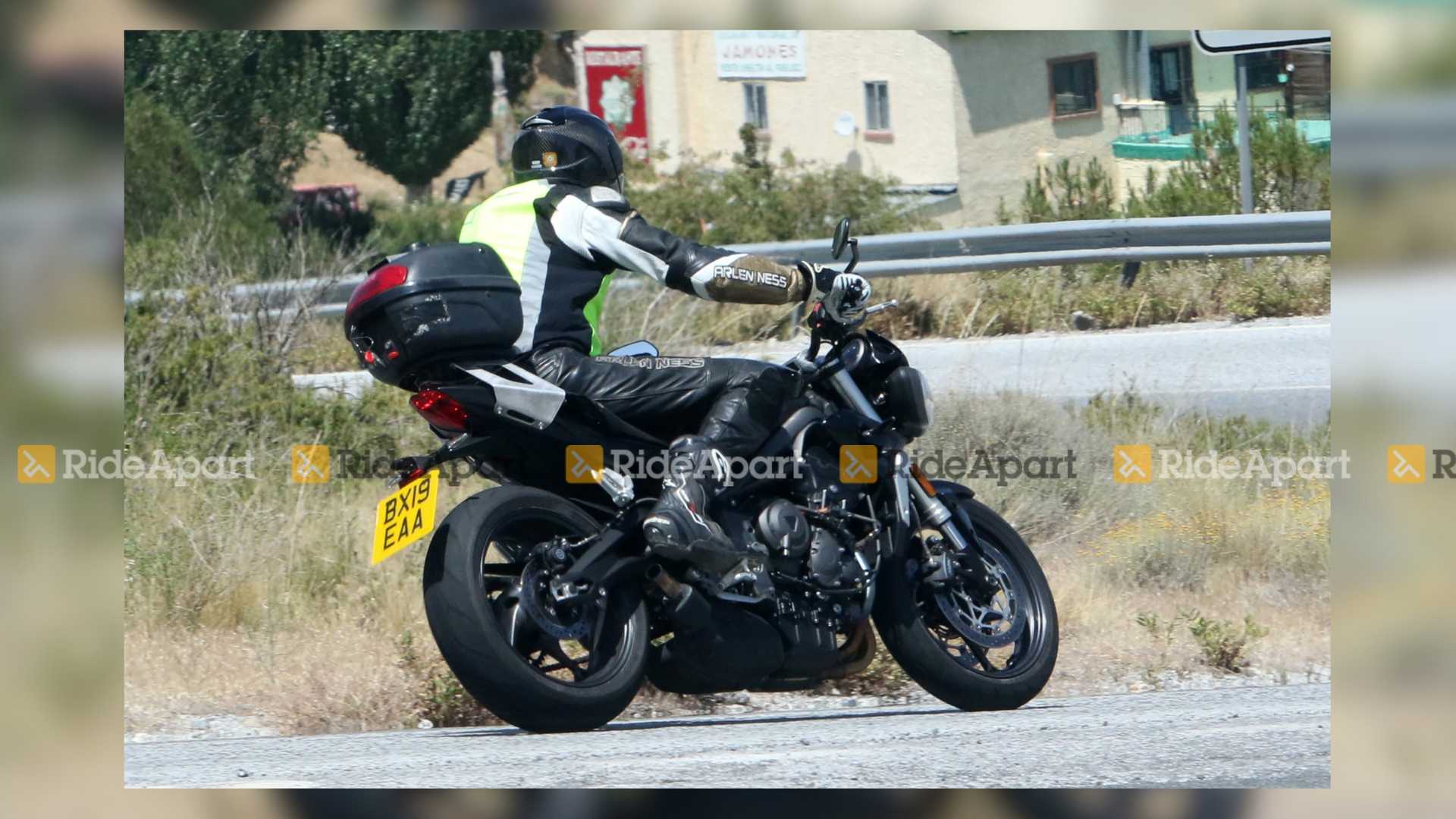
Filings with the California Air Resources Board (CARB) suggests that the Triumph Street Triple will be updated for 2020.

With the spate of updates and new model testing carried out by Triumph, it’s perhaps of no surprise that the rip-roaring fun Triumph Street Triple will also be updated for next year. 2019 is a busy year for all motorcycle manufacturers as they prepare for the implementation of Euro5 emission standard in 2020.

However, updates to the Street Triple isn’t confined to just the engine or exhaust system. The bike will get a makeover, as well.

The headlights will be more streamlined, while retaining that praying mantis look. Robo mantis, anyone? The radiator shrouds are also new.

However, suspension and wheels look identical to the 2018/2019 model. The frame and subframe look somewhat different, though. The upper spar looks more streamlined and squarish, compared to the present one which is rounder.

According to the document, the exhaust collector hides two catalytic converters, one more than the present one.

The picture shows the bike undergoing road tests. The GIVI top case tacked on behind the rider contains the data logging equipment.

Interestingly, Triumph submitted two models in the CARB document, leading us to believe that only the S and RS versions will be available henceforth.

Source: Ride Apart, Motorcycle.com

  • A German patent application showed that BMW is working on an electrically supercharged superbike based on the S 1000 RR.

  • An electrical supercharger boosts performance without sapping engine power.

  • Power and torque are boosted without needing higher RPM.

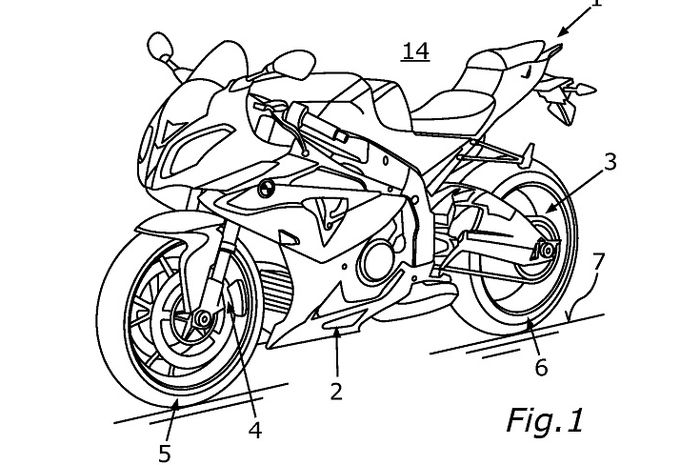
A German patent application showed that BMW is working on an electrically supercharged  S 1000 RR.

Forced induction isn’t something new and neither is an electrically driven supercharger. but an electric supercharger offers more advantages than an engine-driven or exhaust-driven supercharger.

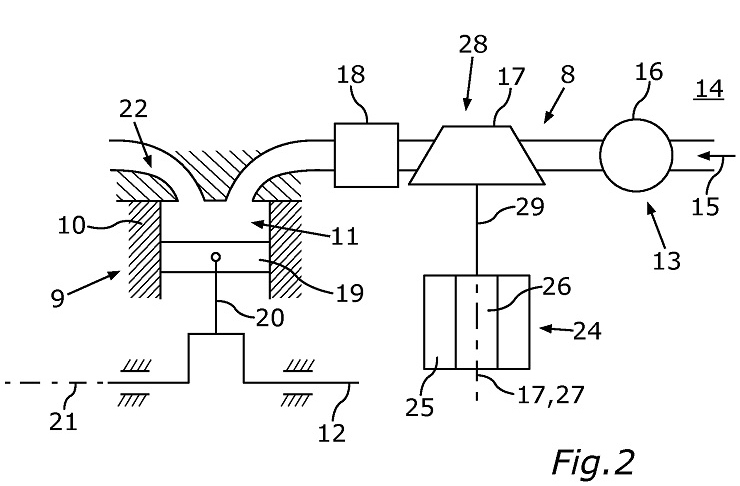
An electric supercharger has the potential to spool up quickly, thereby eliminating or reducing lag when the throttle is snapped open. The compressor should be driven by a motor which gets its power supply from a battery or capacitor.

On the other hand, engine-driven supercharger like the Kawasaki Ninja H2’s saps the engine’s power. The H2 may not lack power but the output could be potentially higher.

An exhaust-driven supercharger (or turbocharger) creates a blockage in the exhaust system and produces turbo lag. Another critical part is keeping the supercharger or turbocharger’s bearing oiled.

The document shows a simplified drawing of the system. The electric motor (24) drives the supercharger (28), which stuffs air into the combustion chamber (11).

Having a supercharger not only boosts top end power but also torque throughout the engine’s rev range. It certainly does away with needing tons of RPM. Besides that, engine emissions could also be reduced.

Will we see a supercharged S 1000 RR soon? Who knows, but remember that BMW patented a carbon frame and it resulted in the S 1000 RR HP4 Race.

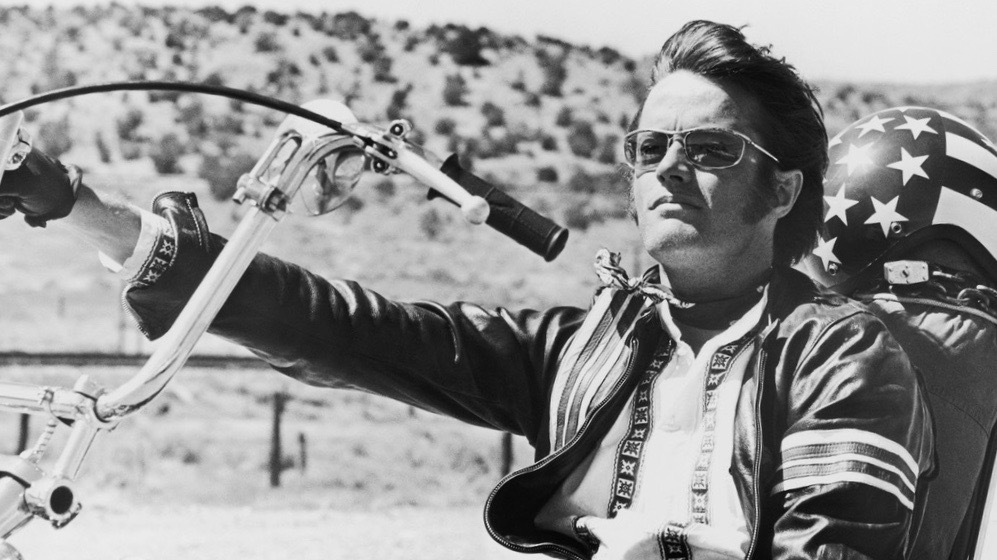
  • Peter Fonda, the star of the iconic 1969 film “Easy Rider” has passed away at age 79.

  • He wrote, produced and starred in the movie.

  • Fonda had played many biker characters and in motorcycle movies.

Peter Fonda, the star of the iconic 1969 film “Easy Rider” has passed away at age 79, due to lung cancer. The sad news was confirmed by his wife Margaret (Parky) DeVogelaere and actress sister Jane Fonda.

Fonda became known as the motorcycle actor of Hollywood through his many characters as bikers and bike flicks.

He first shot to fame in the controversial film “The Wild Angels” in 1966. The film portrayed a group of bikers as a modern-day barbaric horde whose only objective total anarchy i.e. sex (as in sexual assault), drugs and motorcycles. Director Roger Corman revealed later that the US State Department has tried to block its screening in Venice because “it didn’t portray the real America.”

Fonda decided that bikers should be portrayed in a better light, hence he began writing on “Easy Rider.” Teaming up with the late Dennis Hopper, he became the producer and handed the director’s chair to the latter.

The film received a nomination for the Best Picture of the Year, while Jack Nicholson won the Oscar for the Best Supporting Actor. Easy Rider has since been inducted into the US National Film Registry, having been deemed “culturally, historically or aesthetically significant.” Easy Rider just celebrated the 50th anniversary of its first screening.

Fonda continued being cast in biker roles through the years.

He then received a nomination for Best Actor in the 1997 film “Ulee’s Gold” but lost out to Jack Nicholson for his role in “As Good as It Gets.”

We saw him again in later years, case opposite Nicholas Cage in “Ghost Rider.” He also made an appearance in “Wild Hogs.”

While Fonda was invariably associated with Harley-Davidson (especially the bike called Captain America), he had owned a number of brands including Triumph, BMW, Ducati, MV Agusta.

He had also worked with Evel Kenevel to promote riding with gear on. That’s a normal thing these days, but it was different in the 70’s.

Ride in peace, Peter.

Archive

Follow us on Facebook

Follow us on YouTube