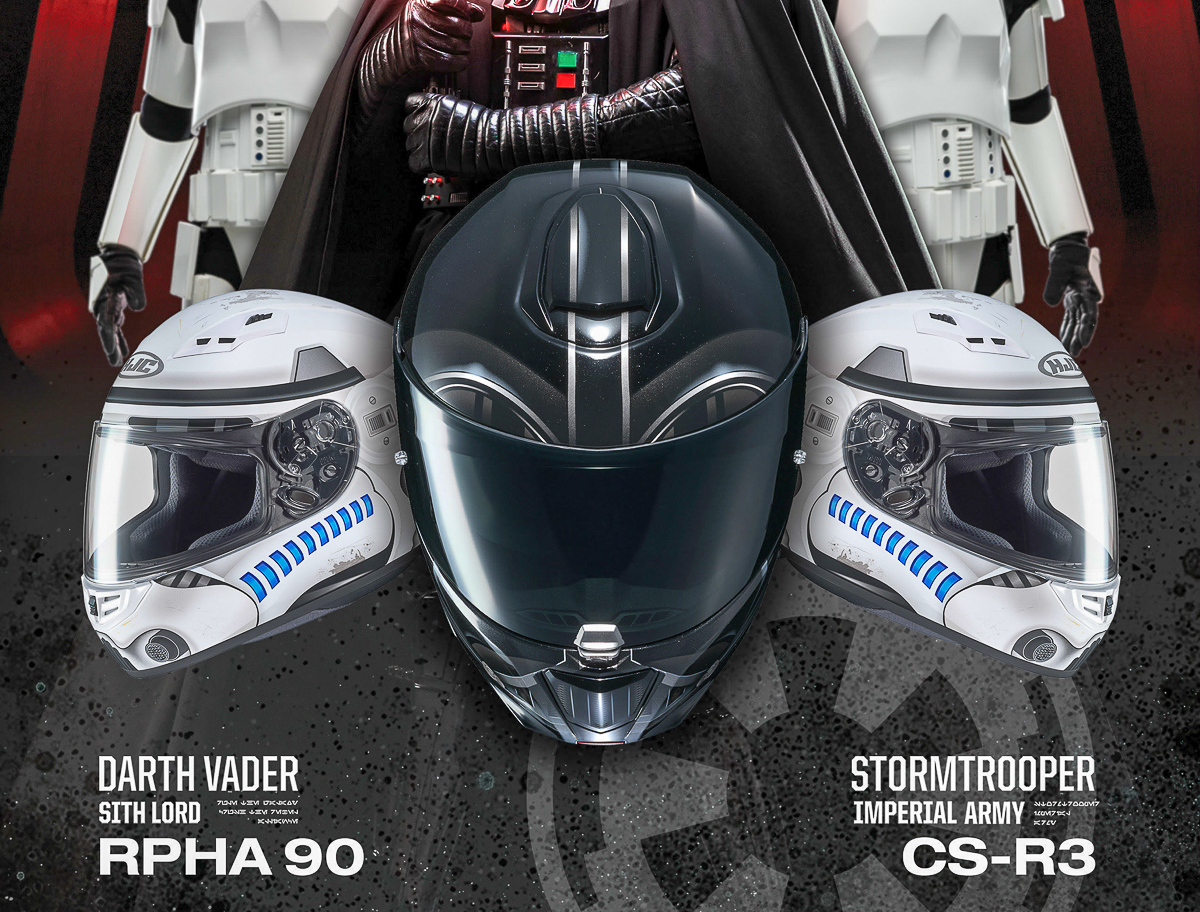
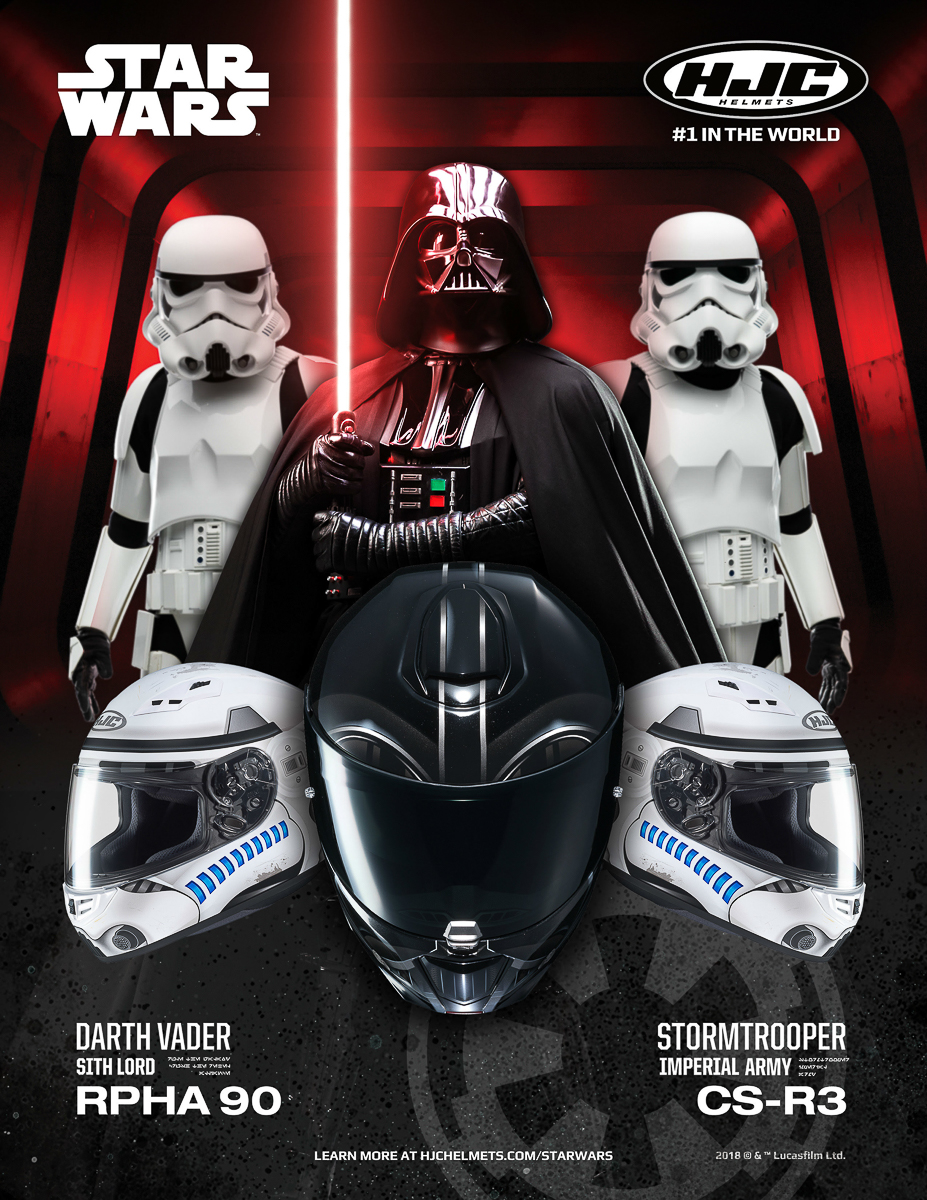
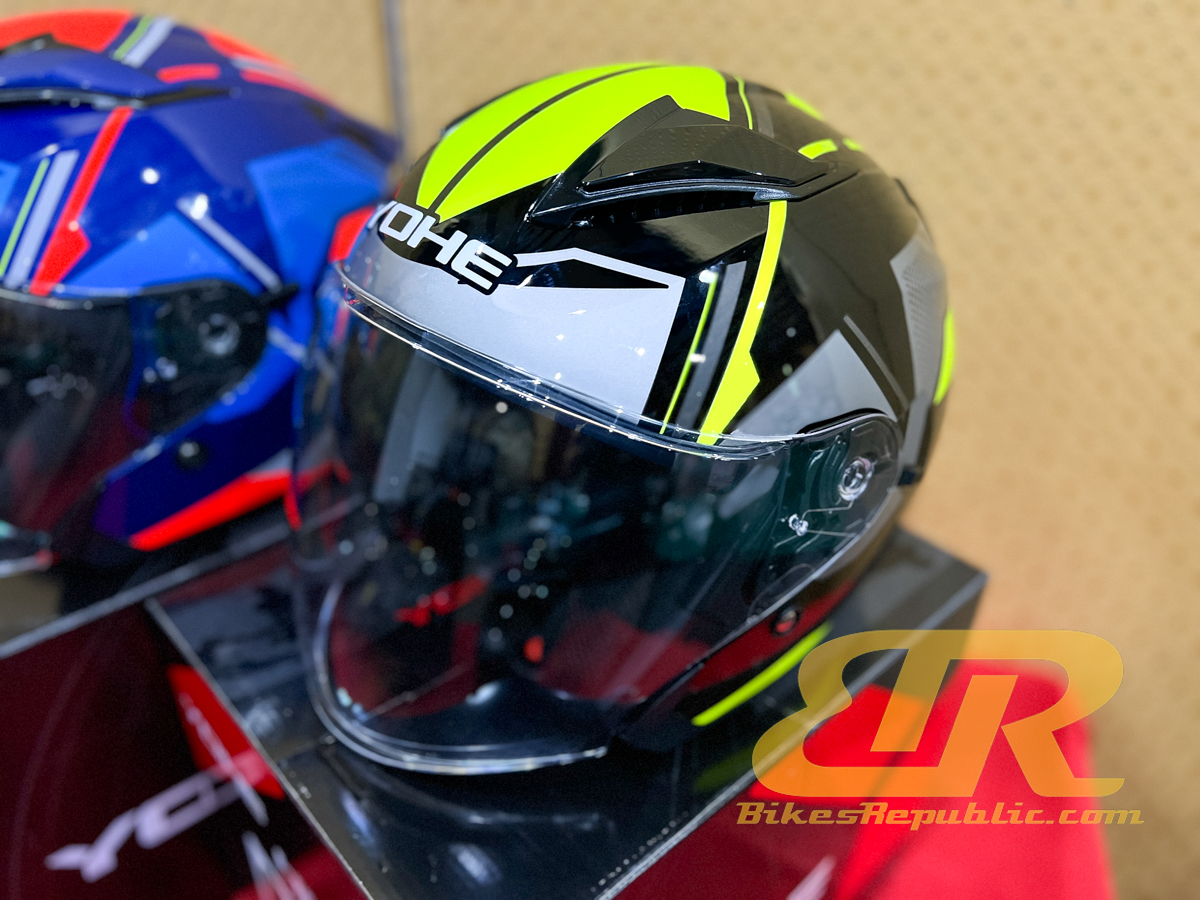
HJC Helmets is proud to announce their latest Star Wars collection; the HJC RPHA 90 Darth Vader and CS-R3 Stormtrooper.
The Darth Vader inspired helmet is designed on HJC’s latest compact sport modular helmet, the RPHA 90.
The full-face Stormtrooper helmet comes in two models; the CS-R3 for US and CS-15 for Europe.
Star Wars fans, these ones are for you! HJC Helmets is proud to announce their latest addition into their Star Wars helmet collection and boy oh boy, are they nice. For 2018, they’ve launched the HJC RPHA 90 Darth Vader and HJC CS-R3 Stormtrooper full-face helmets so you can get your dark side on! (more…)
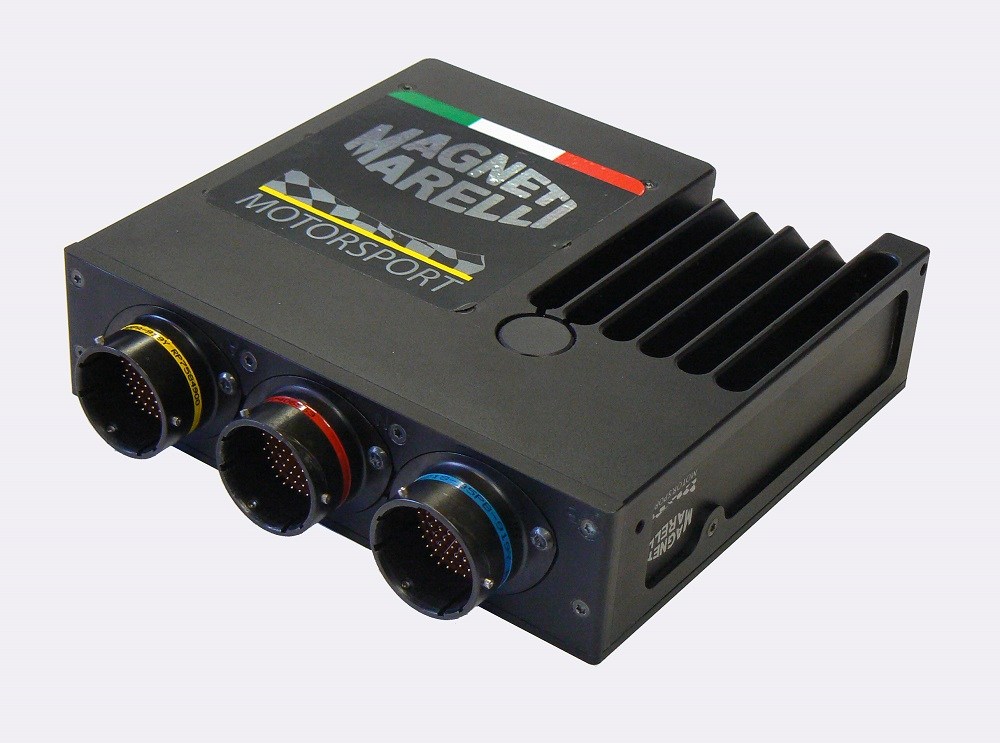
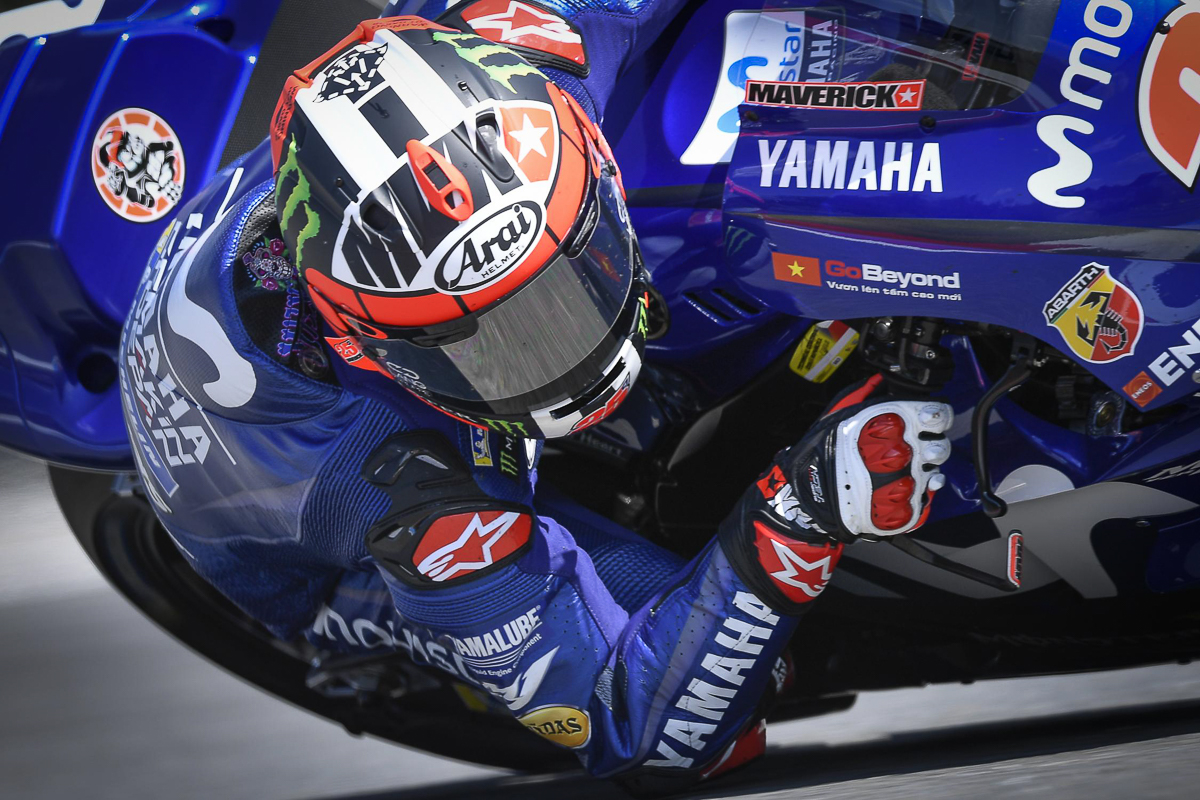
MotoGP rights holder, Dorna, will be introducing a standard IMU from the 2019 season.
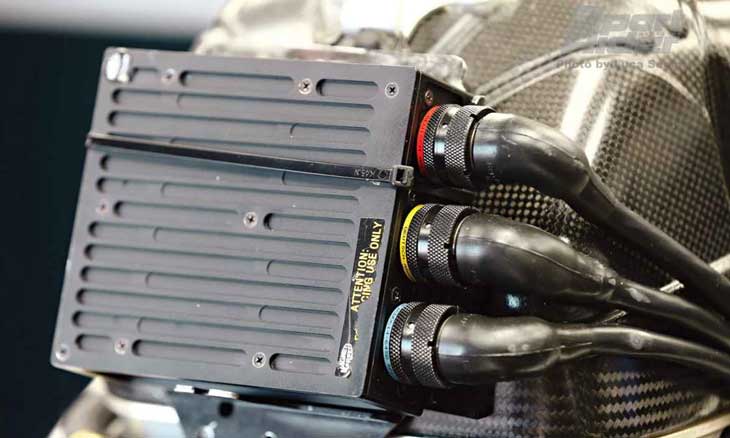
The IMU (Inertial Measurement Unit) measures the bike’s “attitude” for traction control strategies.
Dorna suspected some teams were using their tailormade IMUs to enhance traction control within the parameters of the standard ECU.
Wonder if you could recall the 2016 MotoGP season. It all started with an excitement of uncertainties, as apart from switching to Michelin tyres, it was the year when Dorna finally won through on their long-time proposal to have the teams use a standard Dorna-issued ECU and software.
Dorna had hoped that the standard ECU and software closed the performance gap between different manufacturers and teams, giving more control back to the riders, rather than relying on the algorithms inside a black box.
The changes yielded the most unpredictable hence exciting MotoGP season for a long, long time which saw 9 different race winners, including wins by Jack Miller and Cal Crutchlow on their satellite Hondas.
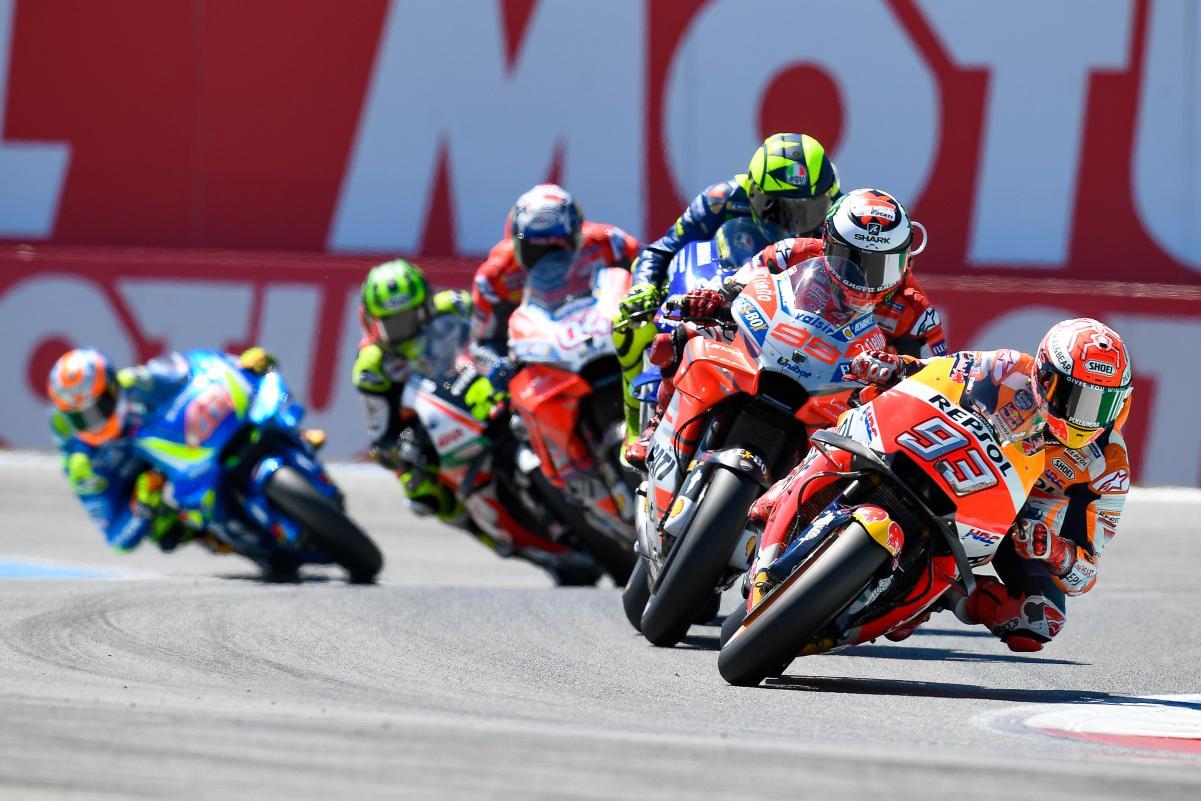
It was perhaps from the 2016 season that MotoGP spectatorship swelled to even larger proportions. We watch MotoGP because we relish the overtakes, the close racing and mayhem like the one at Phillip Island, Australia last year and at Assen, The Netherlands last month (a total of 175 overtakes). If we get a single rider blasting off into the distance leaving the rest of the field to complete a procession, we might as well watch **cough** Formula One.
Assen MotoGP 2018 – Courtesy of MotoGP.com
Now, Dorna will take MotoGP rider assistance electronics down another rung. The decision was derived from their suspicions that certain riders and teams were benefitting unfairly from using tailormade IMUs (Inertial Measurement Unit).
But what’s an IMU? You may have heard of this term lately especially in high-end bikes as KTM’s 1290 Super Duke and 1290 Super Adventure series, the Ducati Panigale V4, and MV Agusta F3 800, among others.
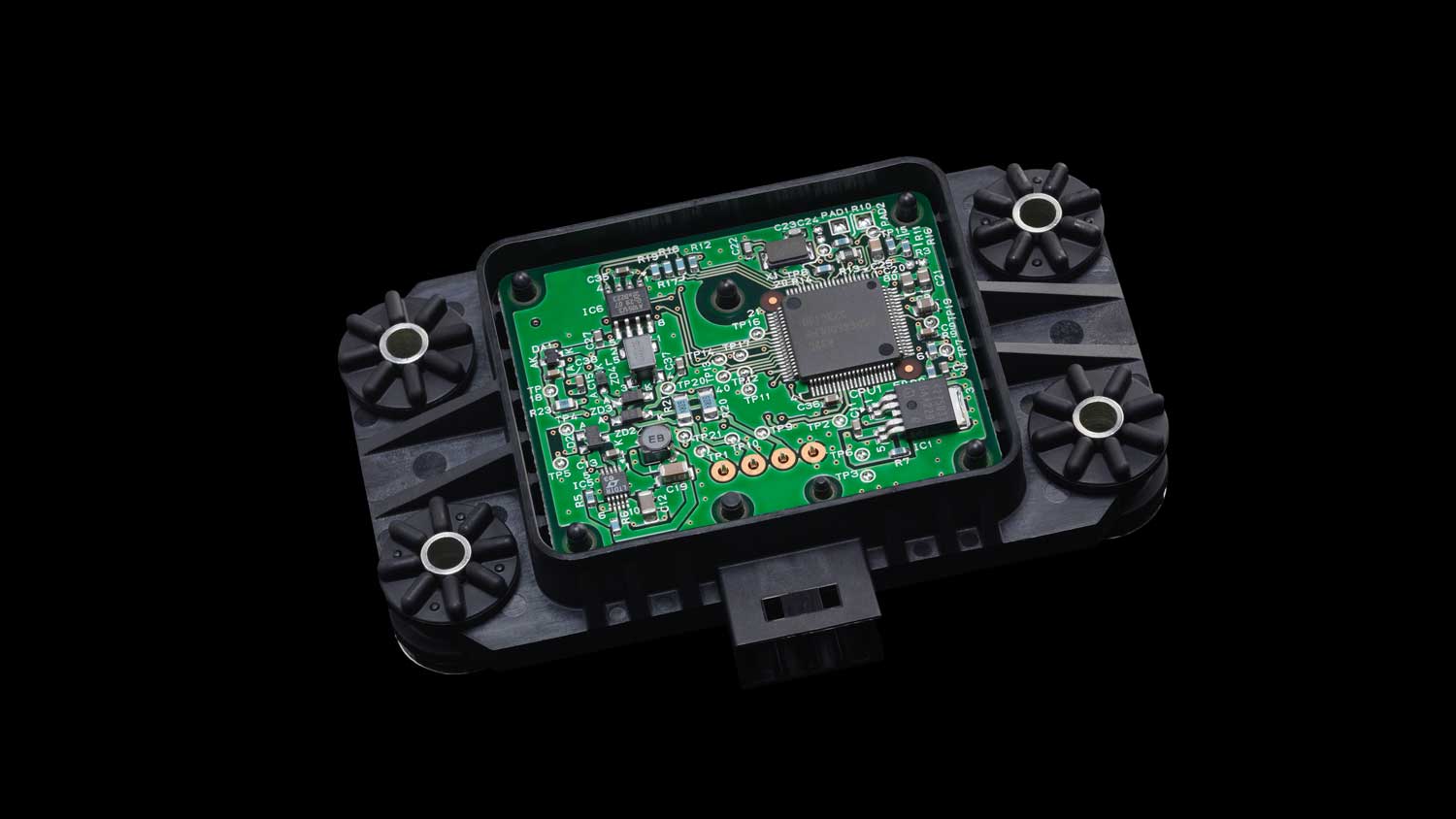
IMU from the 2015 Yamaha R1M
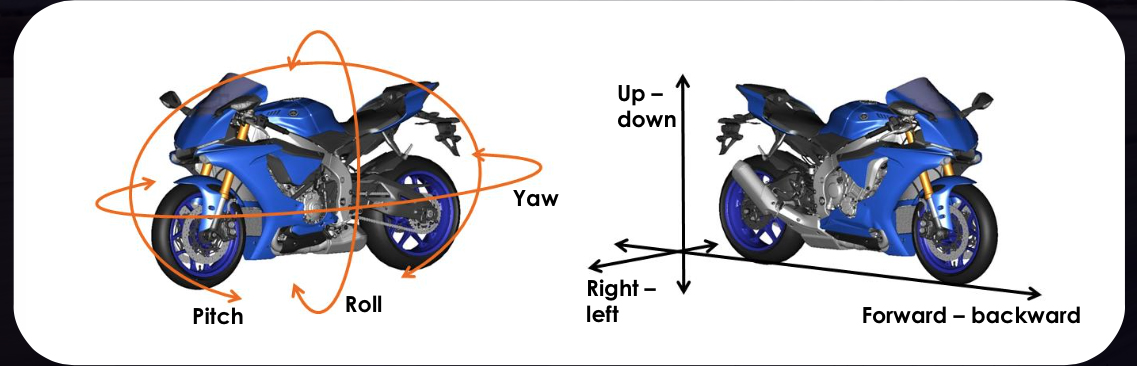
The IMU is made up of gyroscopes and accelerometers that gather information on the bike’s chassis attitude. It’s akin to your balance and sensory system to your brain. The IMU is usually a 6-axis system and measures: Pitch (up and down movement, front-to-back i.e. front dive under braking or lift from a wheelie), yaw (side-to-side, front-to-back axis i.e. rear wheel slides), roll (lean angles i.e. cornering). The information is sent to the ECU to process the traction control strategy and regulate the engine’s power delivery. It’s from the advent of the IMU that we now have lean angle sensitive Cornering ABS (although ABS is banned in MotoGP), traction control, wheelie control, engine-braking control and launch control.
For example, if a rider leans his bike fully over and the rear end starts to slip when he applies the throttle, the ECU will act on the IMU’s signal and reduce the engine’s torque accordingly. But isn’t this the same with traction control without IMU? Without an IMU, the ECU doesn’t know if the bike is leaned over or going straight and will intervene whenever the tyre slips. The IMU is more sensitive as it measures the aforementioned 6-axis, hence more accurate in terms of the level of assistance.
And this exactly what worried Dorna. A certain team could, for example, use the IMU’s data as a means to regulate tyre wear. Current IMUs are all tailormade for the specific bikes in the MotoGP paddock, which means their signals could be tweaked to send certain information to standard traction control software in the standard ECU. (The standard software means teams have to work within the parameters programmed within unlike when teams were free to use their own programs.)
Using the IMU for this purpose is illegal of course, but it was impossible to check. Conversely, a standard-issue IMU should address this concern.
A good question was brought up regarding all this, and it was about the factory Movistar Yamaha team who are having a nightmare season. It’s of no secret that Rossi and Vinalez’s struggles are down to electronics, so does it have to do with their IMU since they run out of tyres by the end of the race?
Maybe, but it could also be because other teams have either employed Magneti-Marelli ex-staff or sent their crew for training at Magneti-Marelli to learn of the standard software’s algorithms and maps more effectively (Magneti-Marelli is the ECU and software supplier). Yamaha on the other hand, insists on unlocking the mysteries of the black box by themselves in the interest of in-house R&D. It can be done, of course, but it will take time.
So, that’s why it’s better to have some control than none. Detractors may accuse of such decision stunting motorcycle technological developments, but spectators love to watch close racing.
In closing, since we aren’t sure what the standard IMU ruling will bring about, let’s just brace ourselves for another storming season!
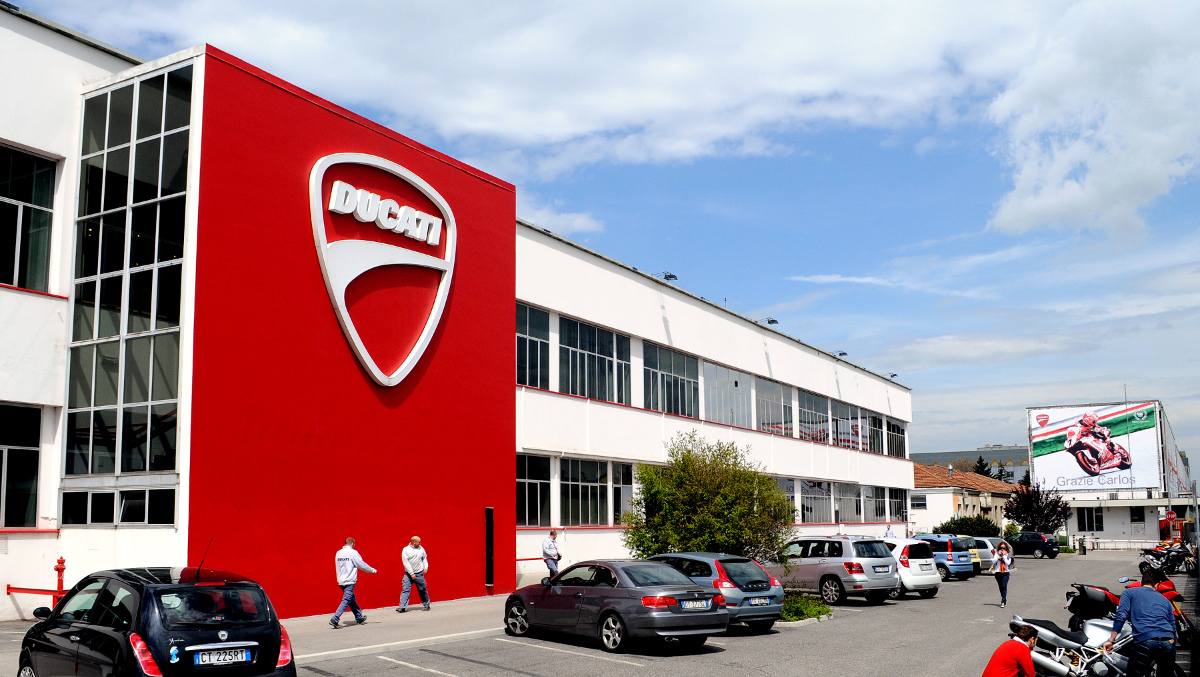
After announcing that Ducati isn’t for sale in April, VW Group CEO hinted at the possibility of selling Ducati again.
The Volkswagen Group is looking to recover losses due to the Dieselgate scandal in 2015.
This announcement could also mean Ducati will expand into other categories or engine capacities.
Volkswagen Group (VW) started a couple of firestorms before when they announced the possibility of selling the Ducati brand in order to recover the losses they experienced through the “Dieselgate” scandal in 2015.
The scandal broke after it was discovered that VW had cheated in engine emissions tests in the US and Europe. The revelation cost the conglomerate billions of Euros, causing them to plan the offloading of some assets, including Ducati which is considered a “non-core” business.
Other companies were quick to jump on the chance, with Harley-Davidson and Bajaj Auto Limited readying to go into a bidding battle.
However, VW announced in April 2018 that the Italian brand “is not for sale,” putting an end to all speculations. (Please click on the link below for the report.)
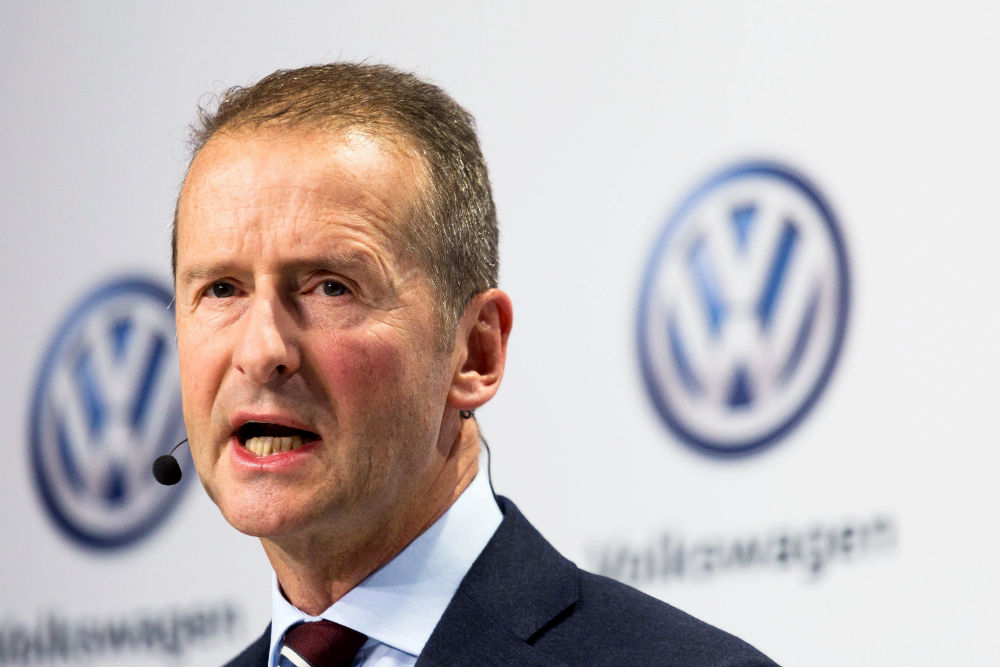
But just a last week, Volkswagen AG Chief Executive Office, Herbert Diess, opened the rift all over again during an interview with Bloomberg TV. According to him, VW will either expand or sell their motorcycle business, saying, “Either we find a way for Ducati, which provides some growth, or we have to look for a new ownership.”
Let’s roll our eyes in exasperation.
But, but, but why offload a brand that makes money? Ducati is the second most profitable entity in the VW Group – the first being Porsche, outranking Bentley, Audi, Seat and Skoda by wide margins. In fact, Ducati returned 9.5% compared to 8.2% during the first half of this year alone.
We won’t pretend to be financial experts, but we would hold on to a money maker with all our lives!
Audi released a statement last Friday, “The new Volkswagen Group structure aims to develop sustainable future perspectives for non-core businesses – calmly and with the necessary thoroughness. This can be expansions and growth strategies, but divestments are conceivable as well.”
Notice that the word “expansion” keeps cropping up. Could we expect Ducati to start producing smaller capacity bikes like how BMW did with their G-series and what Harley-Davidson announced last week? Think about it, a new range of 250cc Panigales or Monsters for the SEA and Indian markets. They could go electric too, since most countries are adopting the electric vehicles only ruling within the next 10 to 15 years.
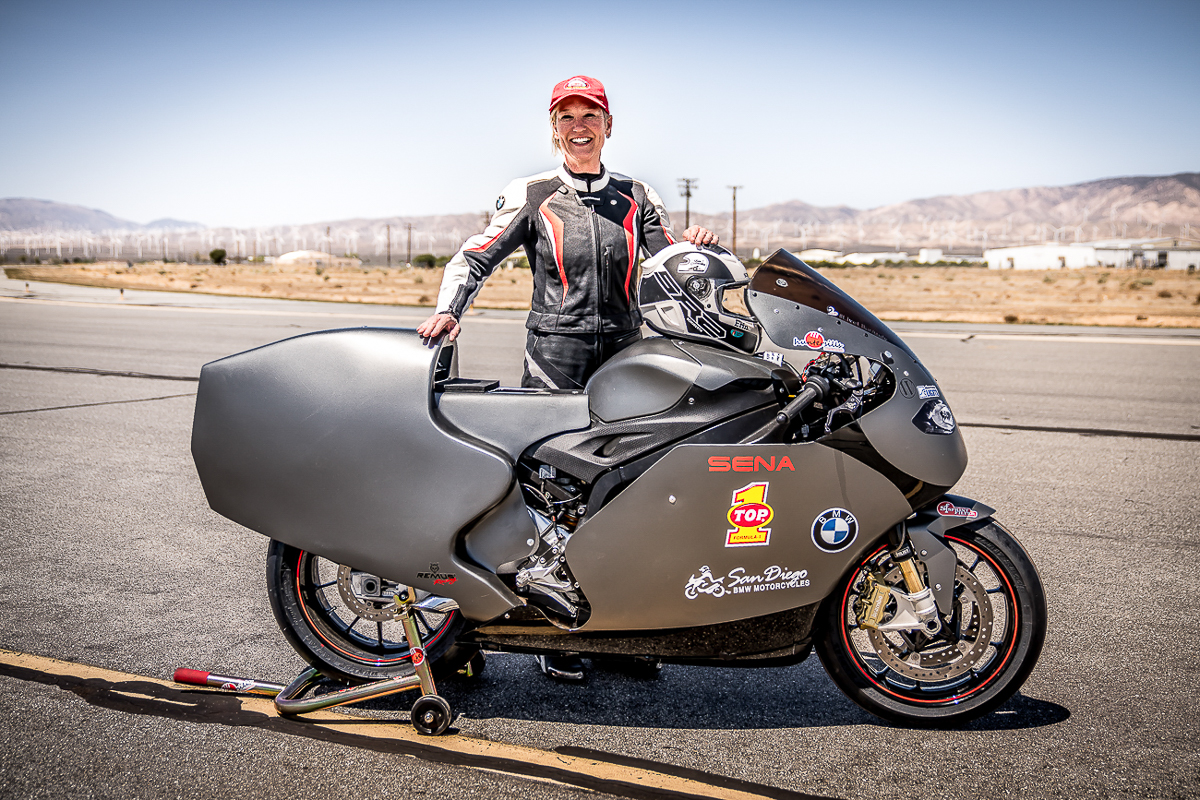
The world’s fastest BMW S 1000 RR recently set a new world speed record at the Cook’s Top Oil Land Speed Shootout held in Bolivia last month.
Nicknamed “The World’s Fastest BMW Motorcycle”, the partially streamlined bike was built by Hunter Sills Racing.
The recorded a new official world record at 229mph (369kmh) but their highest speed was recorded at 237mph (381kmh).
The BMW S 1000 RR is considered by many as one of the best superbikes in its class. With a cult-like following all around the world, the German crotch rocket can blast down front straights and carve through corners like butter. However, there is one particular machine out there which has gained one hell of a title; the World’s Fastest BMW Motorcycle. (more…)
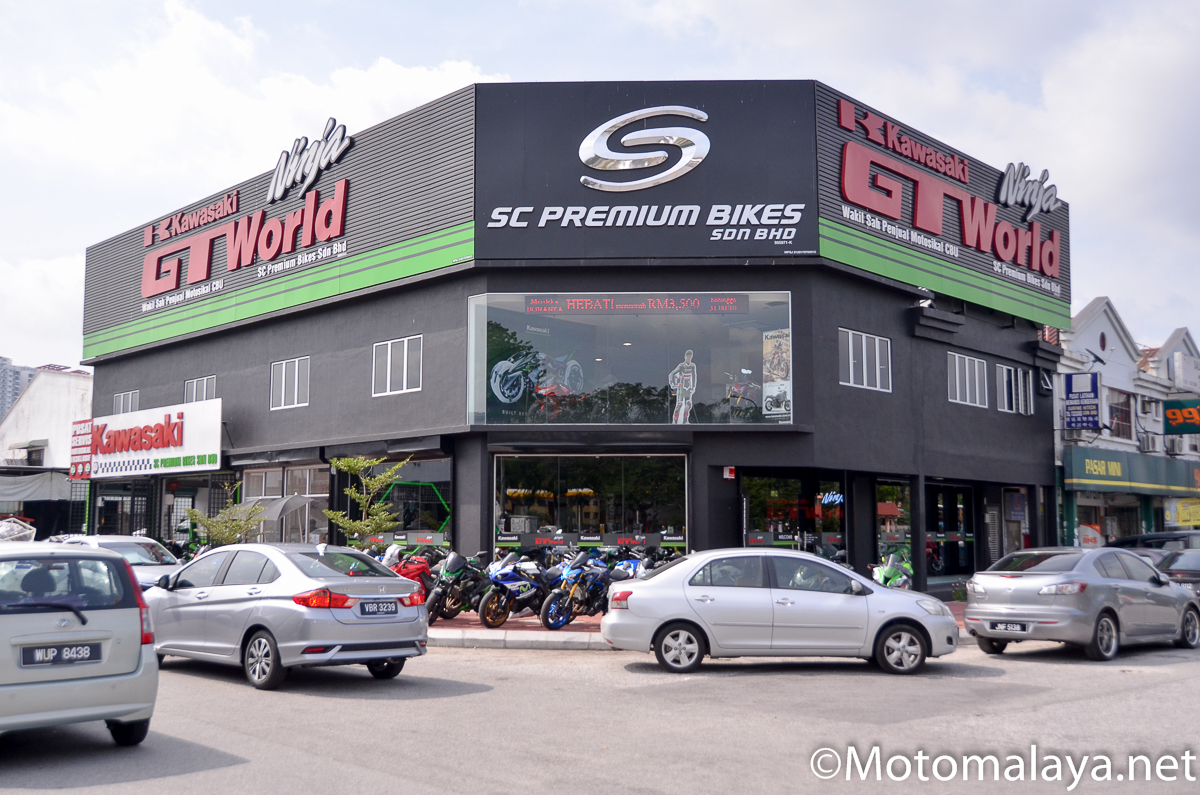
SC Premium Bikes Sdn Bhd (SCPB) has launched an exciting initiative for the Tabung Harapan Malaysia Fund.
The initiative has been organised in conjunction with their Kawasaki GT World Ninja new showroom launch happening next month.
SC Premium Bikes new Kawasaki GT World Ninja showroom and service centre will be officially launched on 6 September 2018.
In conjunction with the grand opening of SC Premium Bikes Sdn Bhd (SCPB) new Kawasaki GT World Ninja showroom and service centre in Bandar Sunway, the good folks over at SCPB has launched a heart-warming Tabung Harapan Malaysia initiative to help ease the country’s financial burdens. (more…)
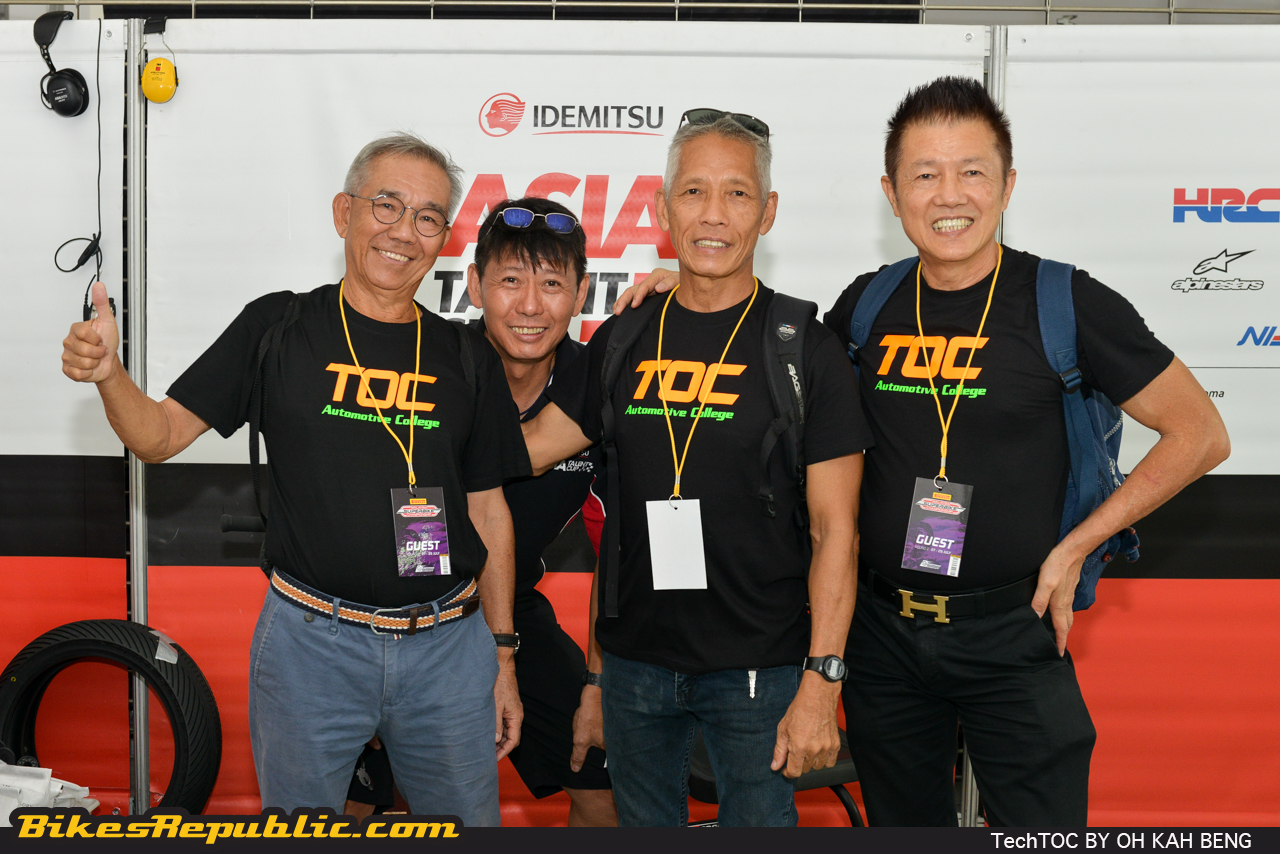
“Foreman” Oh Kah Beng answers a good question about tyre wear in this edition of TechTOC with “Foreman” Oh.
It goes without saying that your bike is only as good as the tyres it wears. Tyre wear must be kept an eye on at all times.
QUESTION:
How do I know when is the right time to change my tyres? Manufacturers say when the threads are worn to certain depth but my friends say I could use them until they look like racing tyres. Out of curiosity, how does one check the wear on racing tyres?
Ahmad Sukri – Johor Bahru
ANSWER:
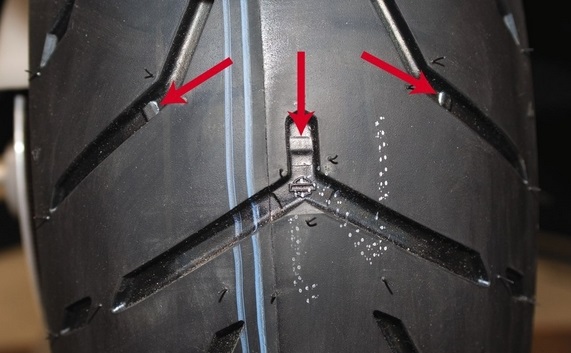
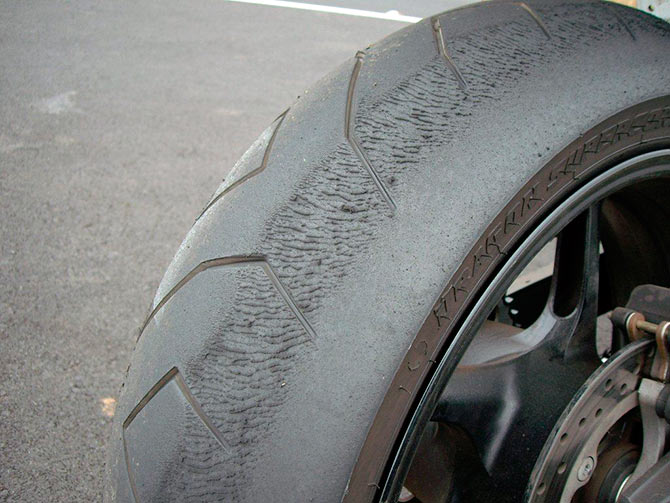
On street tyres, there are small “TWI” prints embossed on the outer edges of the thread surface to specify the locations of the respective “thread wear indicator.” Now, move your sight directly across the width of the tyre from the TWI print and you should spot a little “knob” which protrudes inside the tyre’s groove. If the surrounding tyre threads have worn down to this knob, it is time to replace the tyre. Allowing the tyre to wear beyond that indicator isn’t a good idea as there isn’t enough groove depth to evacuate water. This is considering normal wear.
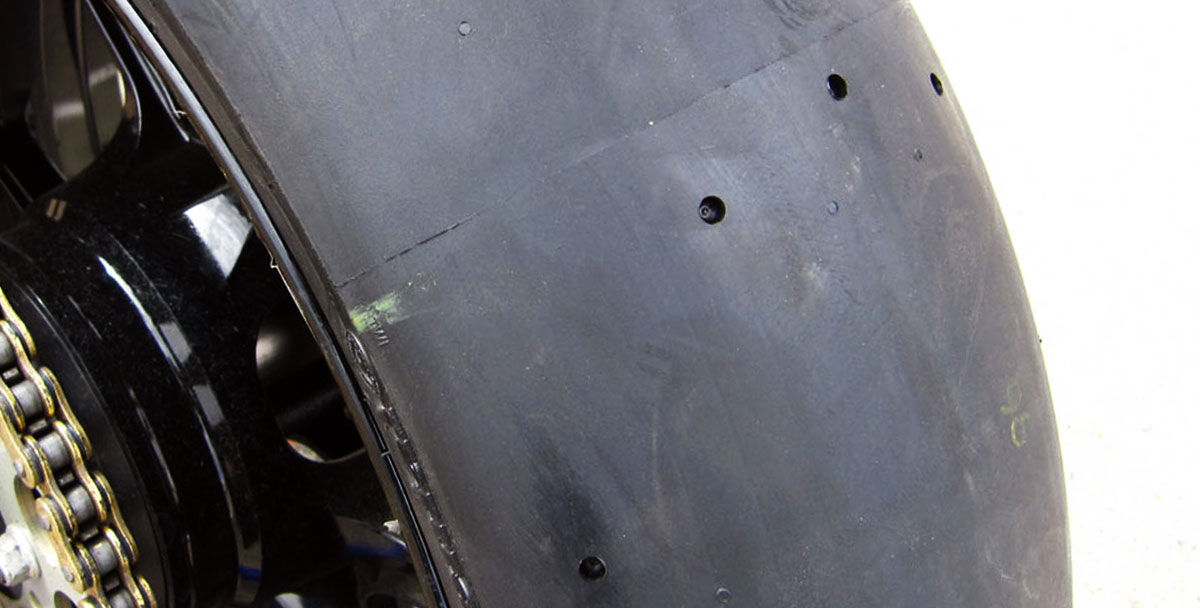
As for a slick racing tyre, the wear indicators are signified by visible pin holes from left to right across the tyre.
There are other factors that you should also consider such as age of the tires (5 years from time of manufacture), signs of abnormal wear (one side worn more than the other), signs of heavy damage (parts of the thread peel off, for example), already patched too many times, obvious signs of deterioration such as cracks.
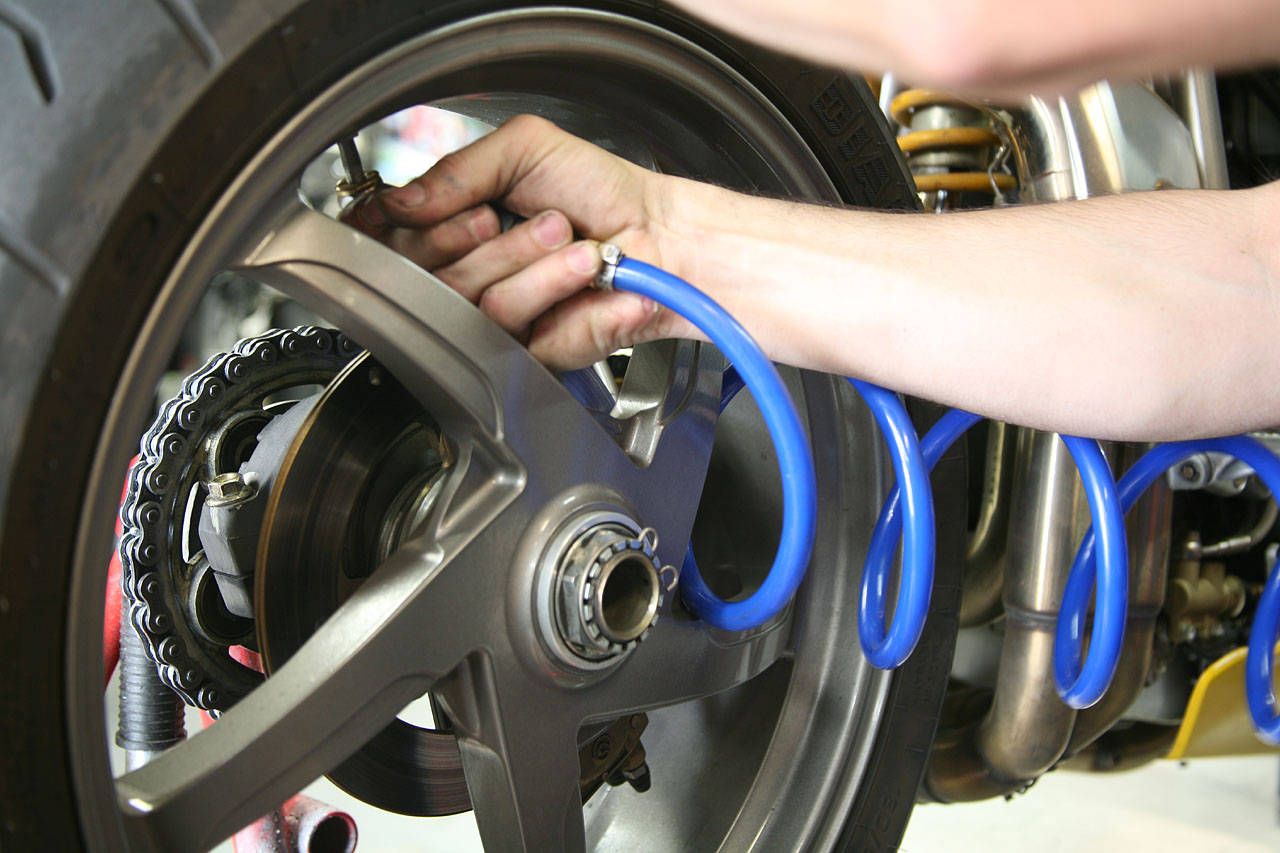
Just one word of advice, please remember to check your tyre pressure at least once a week. This is the time when you may pick up on the condition of the tyres, also.
Keep sending in your questions to me at TechTOC with Foreman Oh to stand the chance of receiving a complimentary session at Most Fun Gym.
Please visit the TOC Automotive College Facebook page or their campus (map below) or call call (+603) 7960 8833 for more information. Likewise, you can find more information about the TOC Bina Bakat Program here, or email info@toc.edu.my. Please click on this link for further information on the TOC Superbike Technician Course.