Bikesrepublic

Latest News

Honda Powersports US has collaborated with Forever 21 in coming up with a brand new clothing line called the F21xHonda collection.

The motorsport-branded fashion items are based on the glory days of Honda racing back in the late 80s and 90s.

Although the partnership was unexpected, Honda is known for their amazing strategies in marketing campaigns dating back to the 1960s.

With fashion today rapidly growing into something that is getting mixed perceptions, there’s no doubt that it is one of the biggest businesses each and every year. So it comes as no surprise (well, maybe a bit surprised) when American Honda hooked up with Forever 21 to create a modern clothing line for today’s youths based on the late 80s and early 90s motorcycle scene called F21xHonda collection. (more…)

  • The ABS (Antilock Brake System) is now integral with motorcycling.

  • It allows the rider to apply maximum braking pressure without locking the wheel(s).

  • ABS technology has evolved to the stage that it allows for added functionalities.

We covered the basics on how a motorcycle brake system works in Part 1 and now let’s expand it to the Antilock Brake System (ABS). The basic premise of ABS is to prevent the wheel or wheels locking up (stop rolling or jem brek, as we call it locally) when the rider grabs a handful of brake lever or when braking hard on slippery surfaces.

ABS is now an integral part of motorcycling, although there are a number of models not equipped with it in Malaysia. The European Union has mandated that all motorcycles above 125cc are equipped with it since 2016.

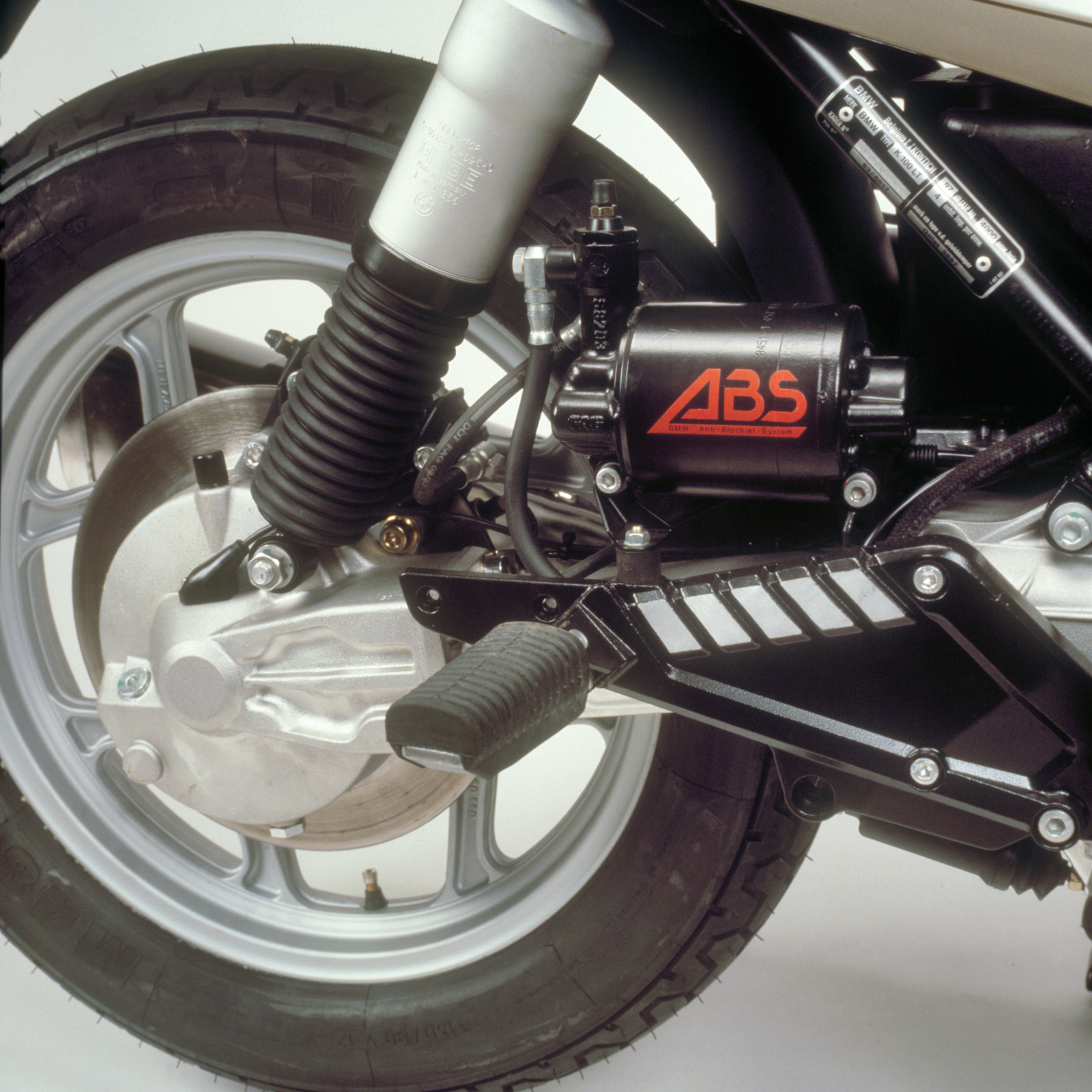
BMW was the first to introduce an electronic/hydraulic ABS on a motorcycle, on the 1988 K100. It added 11 kg to the bike. Honda and Yamaha followed suit in 1992, offering the system as an option on the ST1100 and FJ1200, respectively. In comparison, the current system offered by Bosch weighs a scant 0.7 kg for the base version and 1.6 kg for the enhanced variety.

ABS was once viewed as a weight handicap, besides added complexity and cost, as such, most motorcycle manufacturers offered it as an extra option.

The first versions were adopted from cars. Whereas cars have all four tyres on the road and isn’t very prone to large fore-and-aft weight transfers, certain challenges were faced when adopted to motorcycles. For example, the system triggered too early even before a rider could really brake hard enough, in addition to the brake lever and pedal pulsating upon activation and surprised riders into releasing the brakes. It was an unnecessary distraction riders could live without.

However, the continual advancement in electronics has brought on many positive improvements in ABS technology to where it is presently. New ABS systems work almost imperceptibly.

Maximum braking force for any wheeled vehicle is when the wheel is just about to lock. However, it’s a different story when the wheel does lock up as there are many variables depending on road friction which in turn depends on weather and road conditions. Moreover tyre wear, tyre pressure, different tyre sizes, suspension, the dynamics of weight transfer during acceleration or deceleration, and cornering.

This is where ABS comes into play.

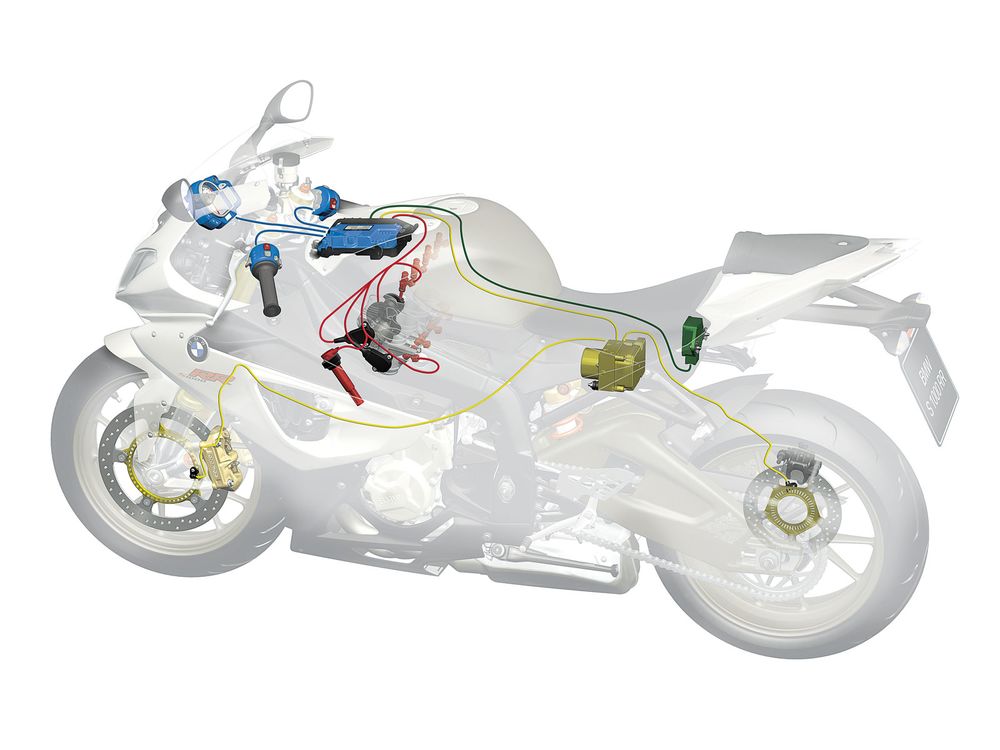
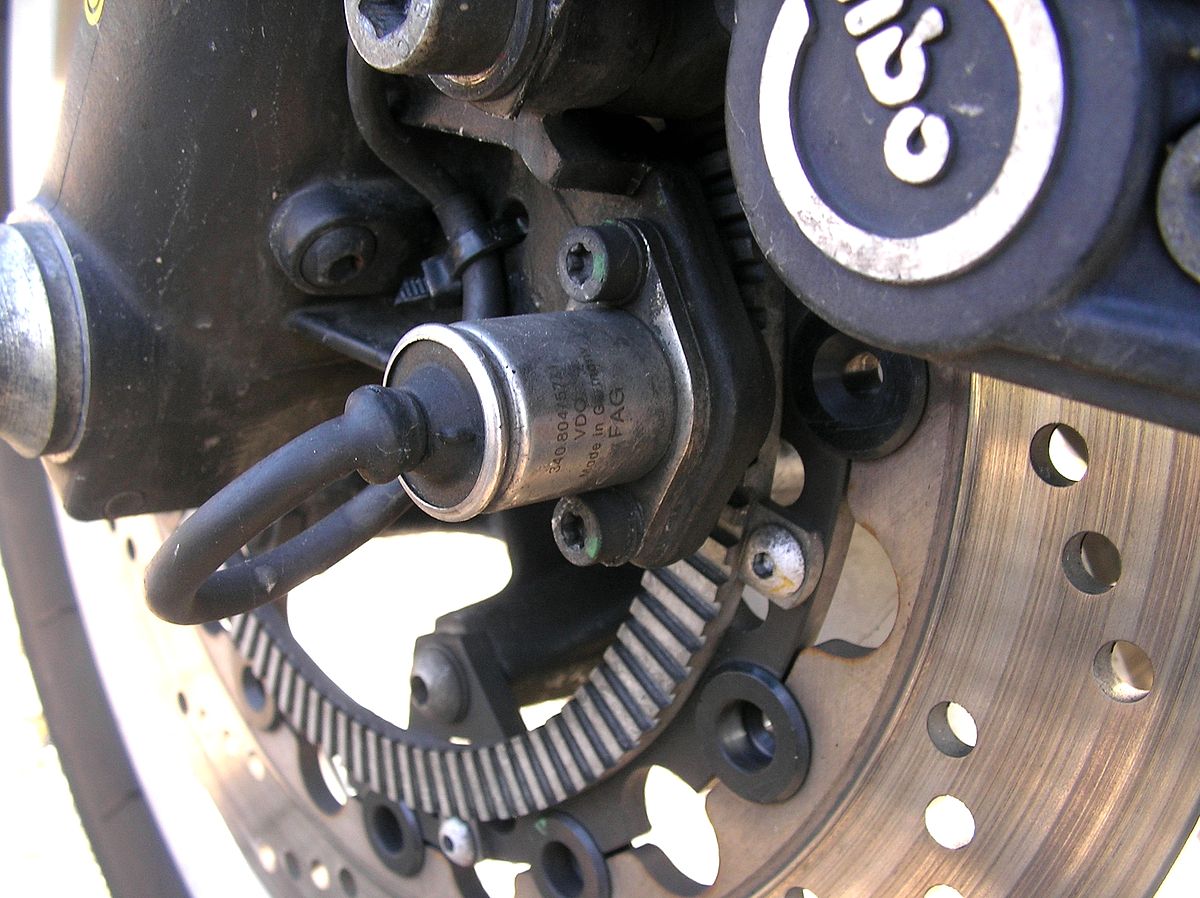
Wheel speed sensors are mounted above slotted rings on each wheel to measure and compare wheel speeds. The signal is sent to the ECU (electronic control unit) for monitoring. The ECU calculates based on information from both wheels for two parametres: whether the deceleration of one wheel exceeds a fixed threshold, and the other whether there is brake slip. These factors indicate a locked wheel.

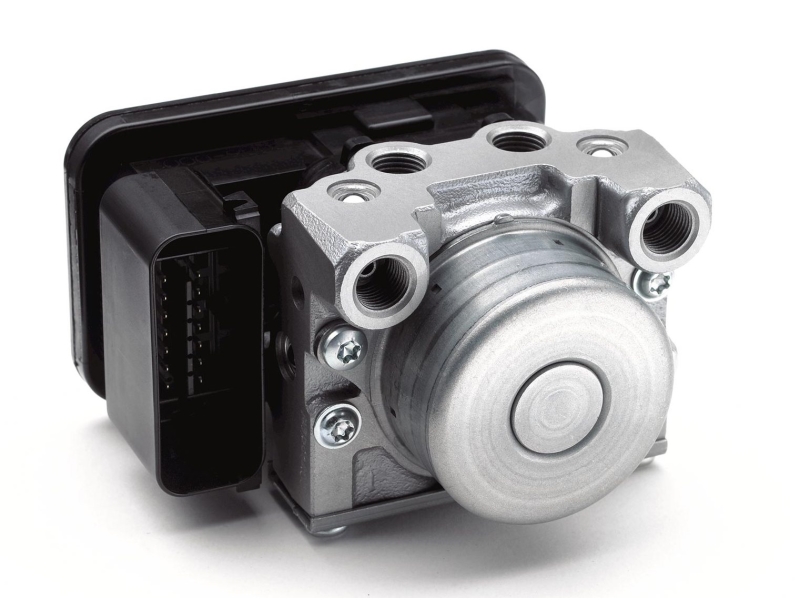
The ECU signals the hydraulic unit to hold or release brake pressure, just momentarily before reapplying the brake pressure, to get the wheel back to the point of maximum braking force just prior to locking up. This pressure modulation allows the tyres to regain grip and enable the rider to control and steer his bike. In other words, ABS allows the rider to apply maximum braking force without locking the wheels and losing control. That’s why ABS is banned from top echelon racing such as superbikes, and all classes of MotoGP.

There are a few types.

The first and older ABS I (in 1988) was also known as piston systems. Using a spring-tensioned piston, a motor pulls back the plunger piston to open increase the space for the brake fluid, effectively lowering its brake pressure. ABS II (in 1993) still uses the spring-tensioned piston, but replaced the plunger with an electronically controlled friction clutch. Both were used on BMWs although Honda used the second system on their touring and large bikes.

The newer valve and pumps systems uses solenoid inlet and outlet valves, pump, motor and accumulators/reservoirs. When the system is activated, the brake fluid is stored in accumulators to release the pressure. A pump er… pumps back the fluid. That’s what cause the pulsation on the brake lever or foot pedal.

The best ABS systems cycle through this process at 24 Hz (Hertz, times per second). No human could possibility emulate this feat.

Again, with the advancement of electronics, the ABS has seen some intriguing added functionalities, too, such as dual-channel, combined braking, cornering, rear lift-up mitigation (anti-stoppie, or anti-wekang), supermoto, and offroad ABS. Even traction control depends on the sensors and ECU for speed and tyre slip signals.

But those are stories for another time.

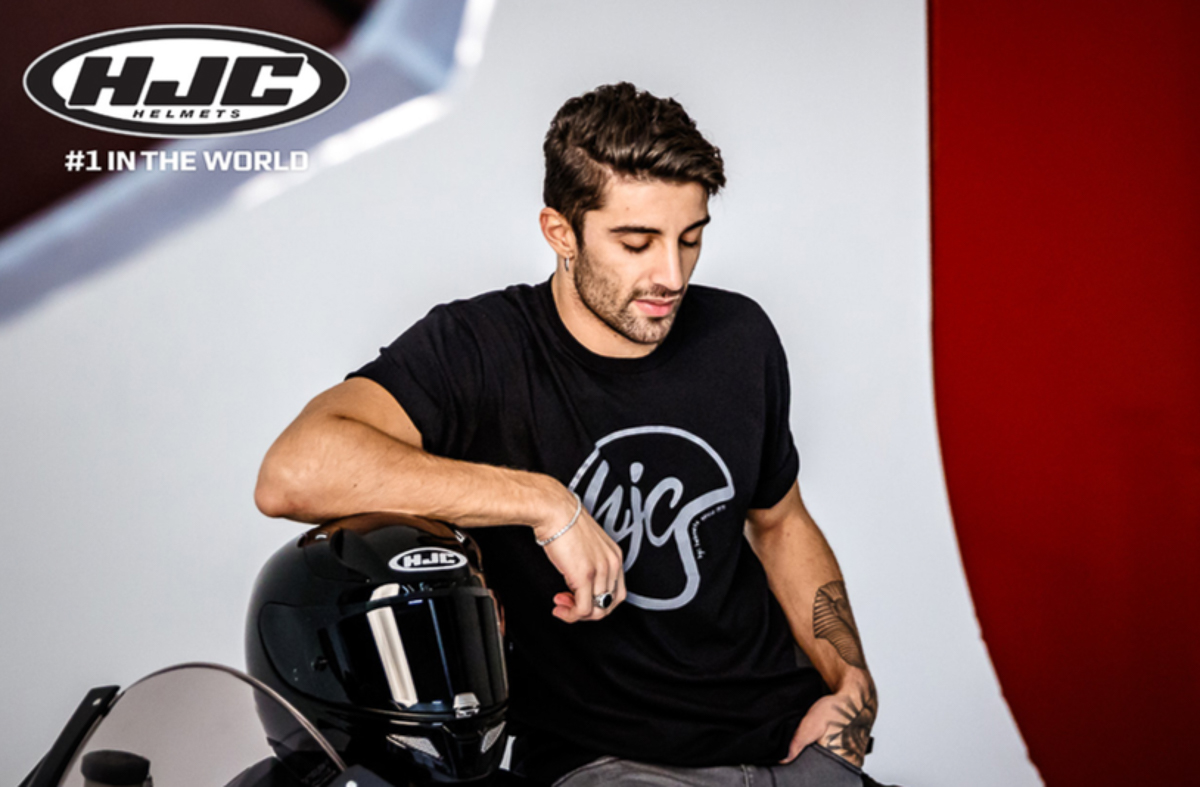
HJC Helmets has announced that they will be sponsoring Andrea Iannone for the 2018 and 2019 MotoGP seasons.

The 29 year old Italian from the Suzuki ECSTAR team will be using a brand new professional racing helmet based on their highly-regarded HJC RPHA 11.

Catch Iannone and his brand new HJC helmet this Sunday during the MotoGP 2018 Sepang winter test.

HJC Helmets is proud to introduce their latest sponsored rider, Andrea Iannone from the Suzuki ECSTAR of MotoGP. The number 1 brand helmet in North America has signed the 28 year old Italian rider for the 2018 and 2019 MotoGP seasons. (more…)

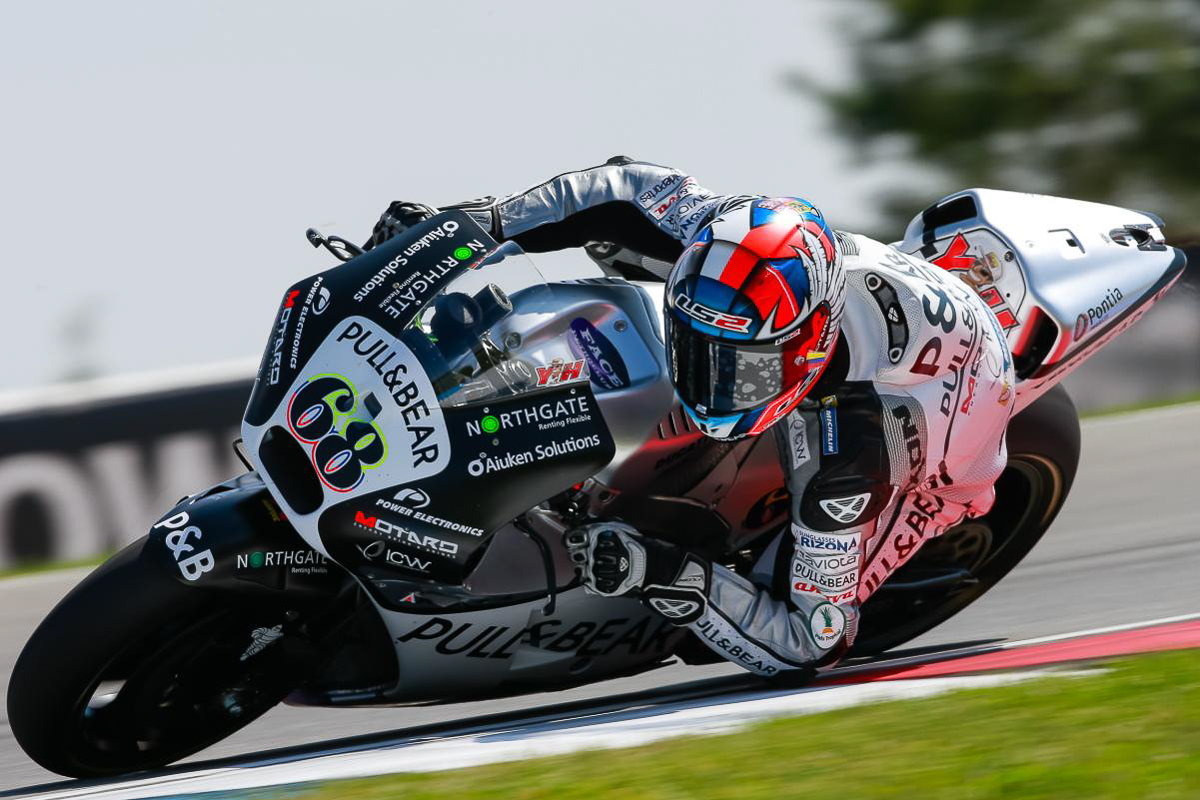
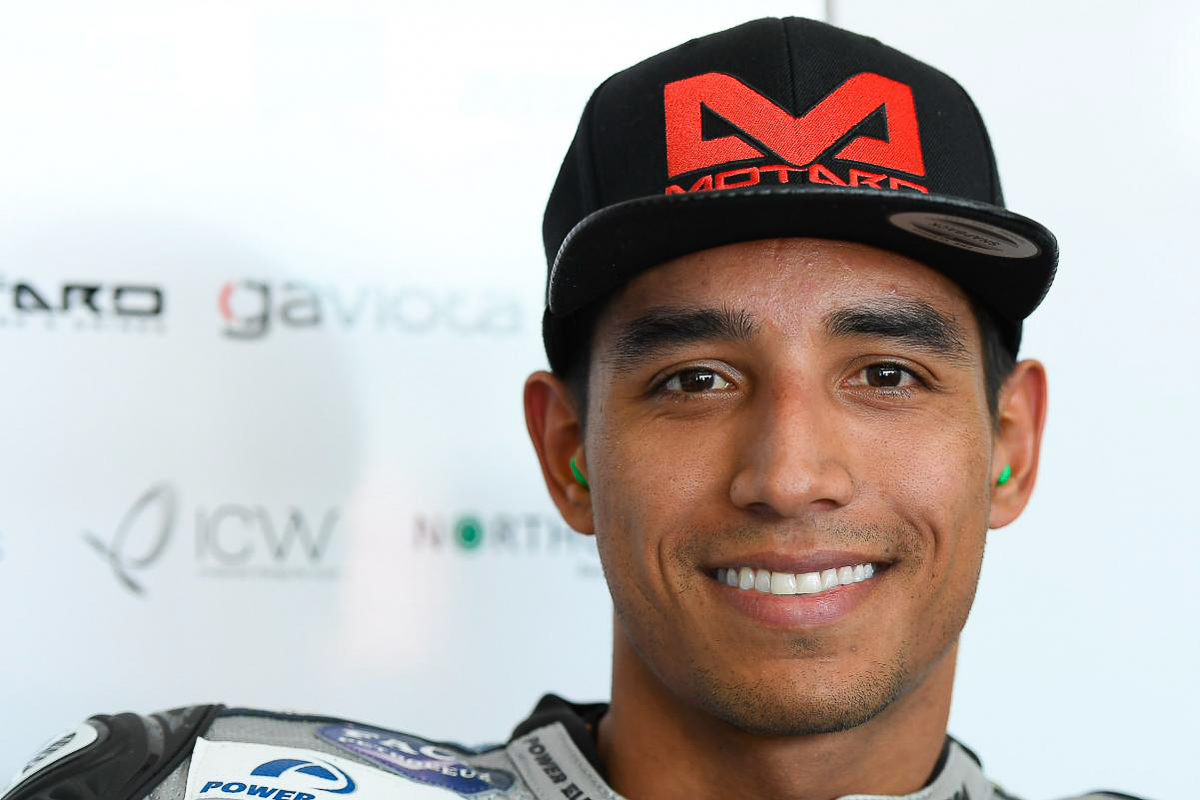
Former Aspar MotoGP rider Yonny Hernandez will be stepping in for Jonas Folger to assist the Monster Yamaha Tech 3 team during the Sepang winter test.

The 29 year old Columbian will showcase his skills for the very first time on board the Yamaha M1 MotoGP bike.

Hernandez is also said to be one of the riders shortlisted for the 2018 rider with the Monster Yamaha Tech 3 squad.

The Monster Yamaha Tech 3 team has announced that Yonny Hernandez will be replacing in for Jonas Folger this coming weekend at the Sepang winter test 2018. The 29 year old Columbian was selected for his vast experience on MotoGP machinery of over five years. (more…)

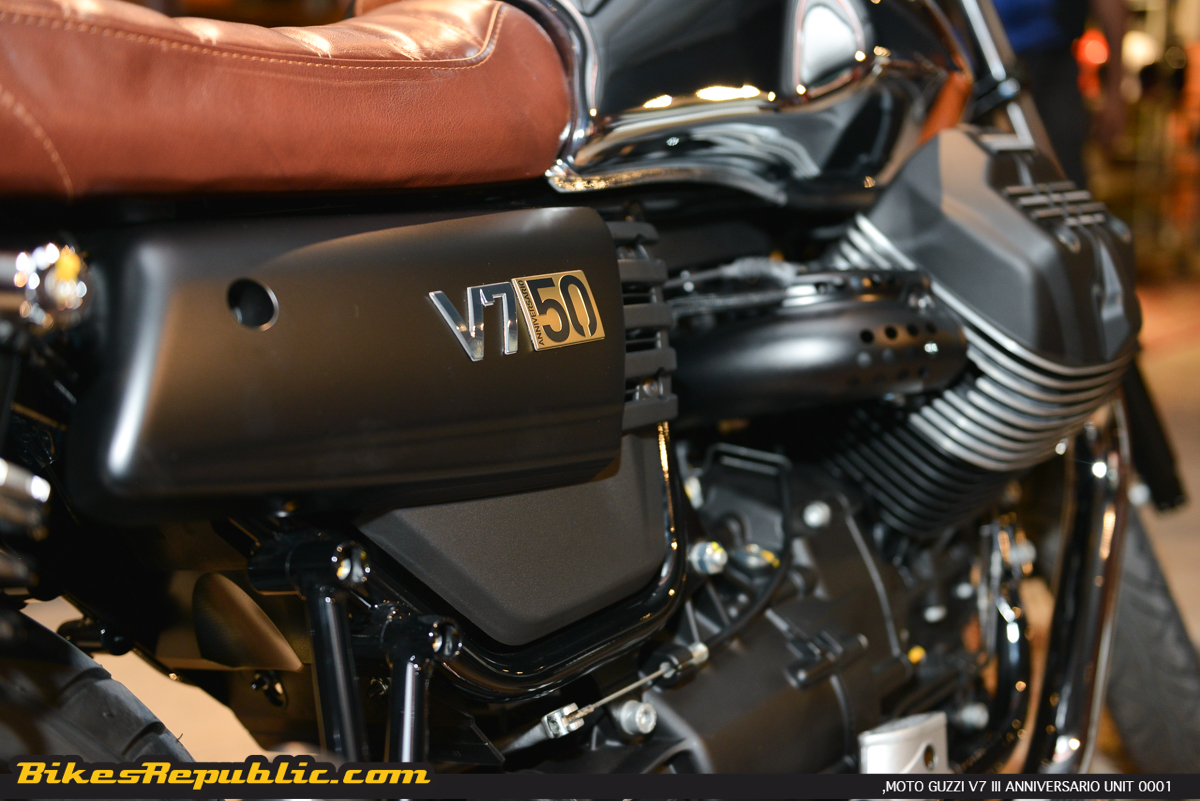
  • Moto Guzzi Malaysia has acquired Unit 0001/1000 of the limited edition V7 III Anniversario.

  • Production of the model is limited to only 1000 units worldwide.

  • The bike is priced at RM 80,900 (incl. of 6% GST, but not on-the-road).

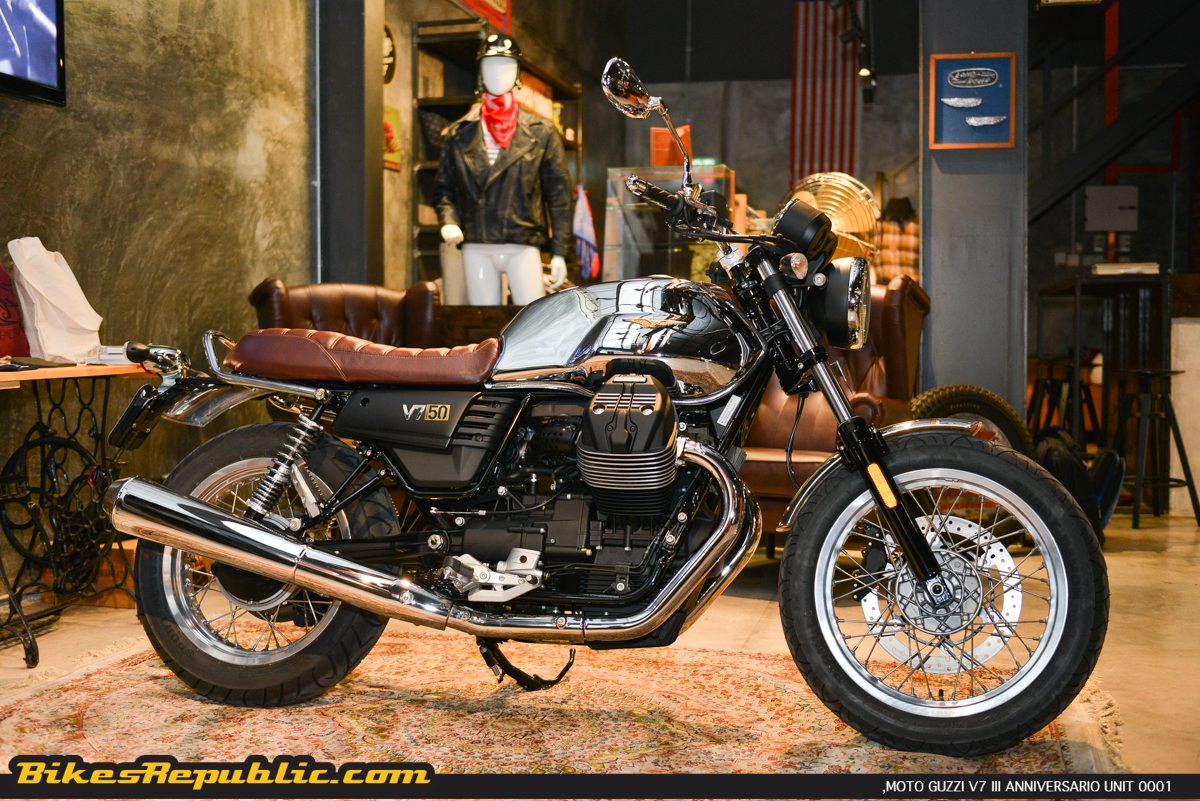
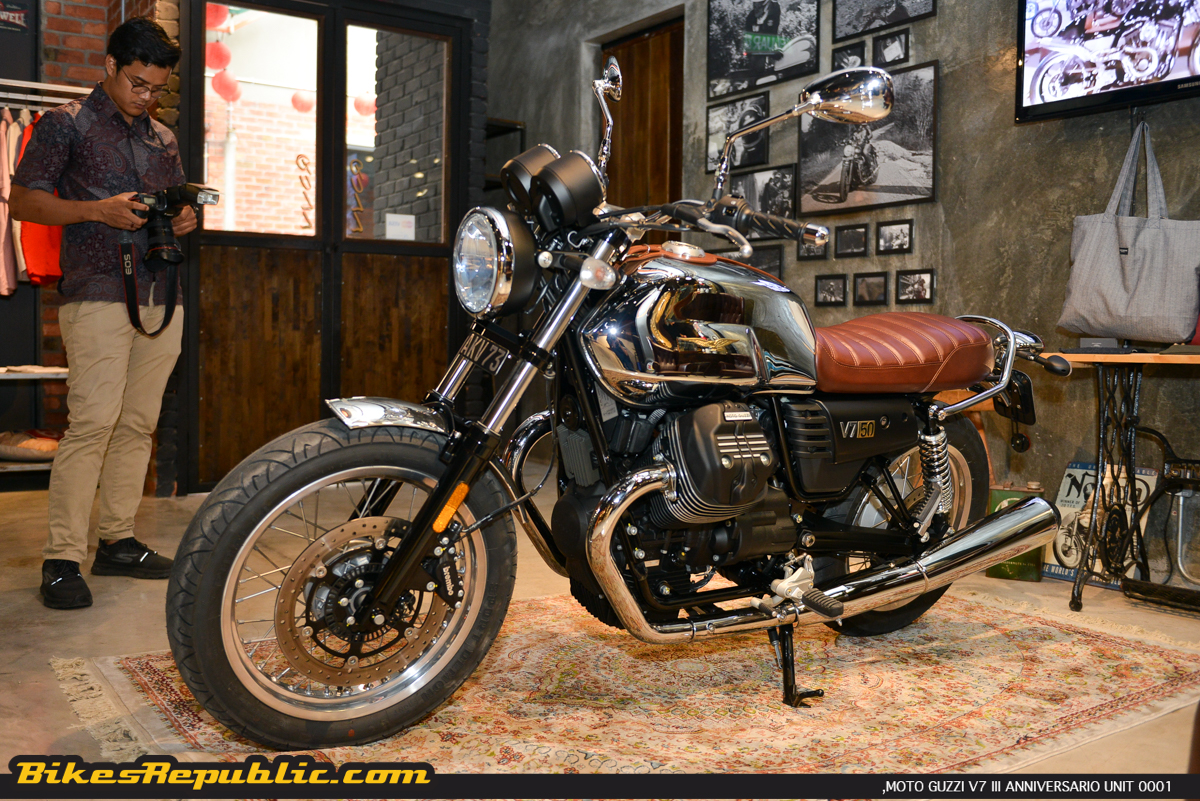
Moto Guzzi Malaysia has acquired Unit 0001 of the V7 III Anniversario. It’s of great significance as production of the model is limited to only 1000 units worldwide.

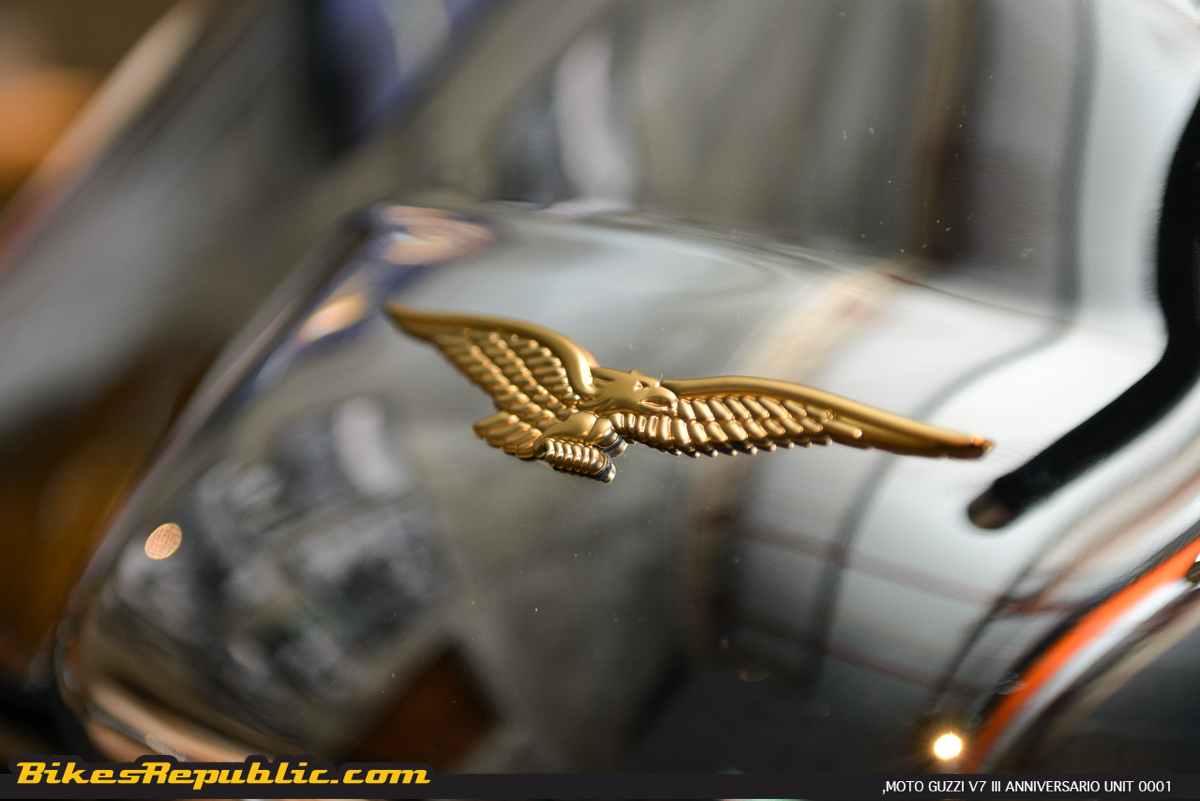
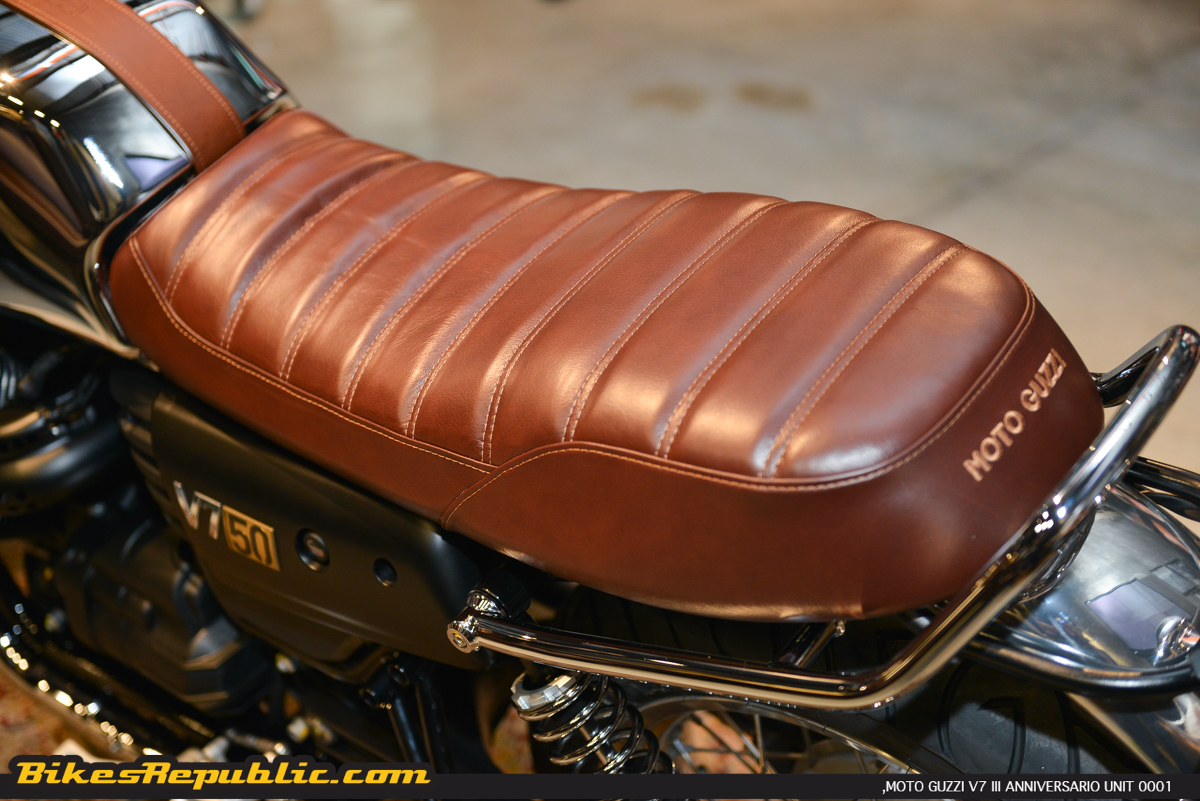
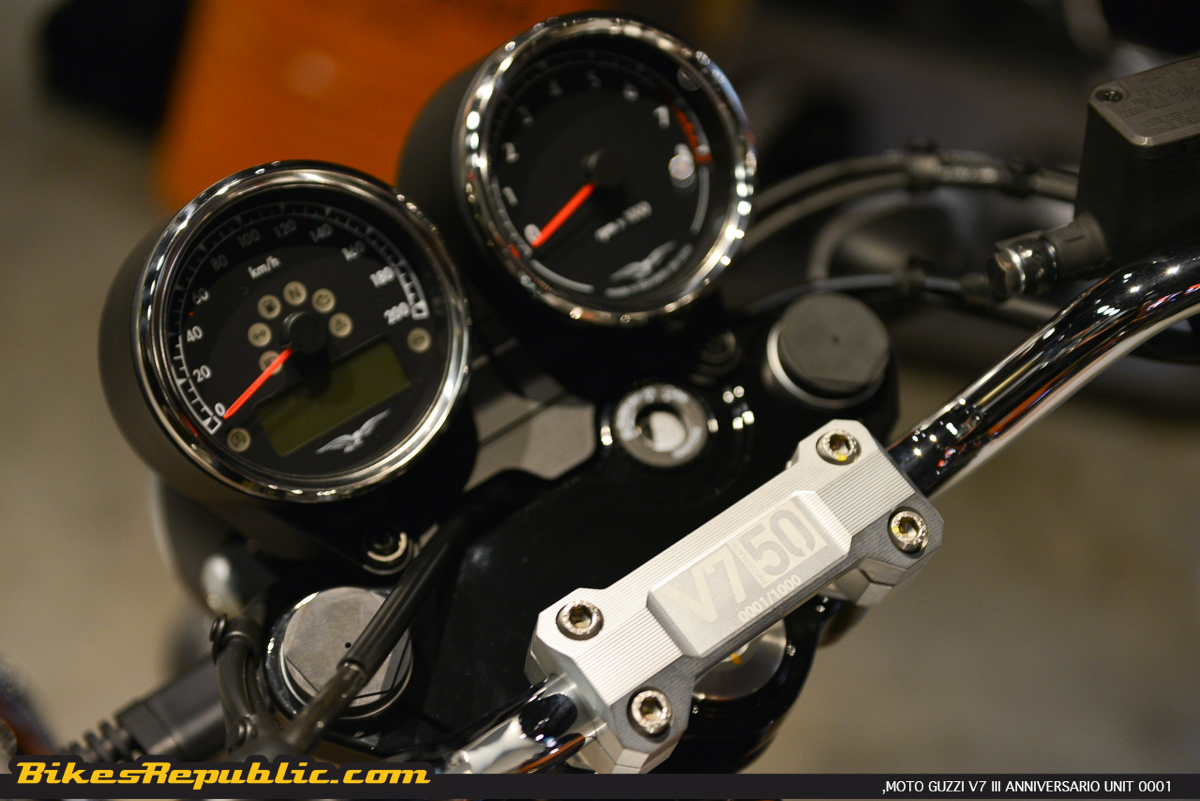
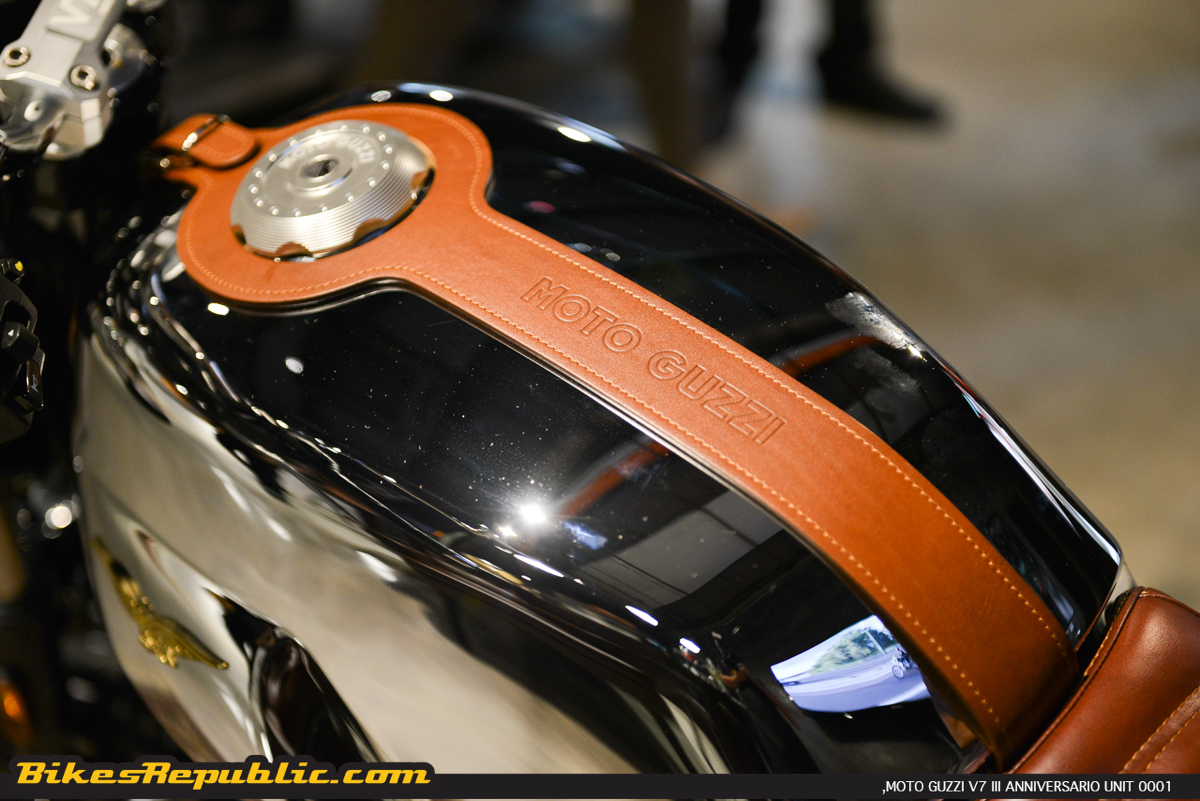
The V7 III Anniversario commemorates the 50th year of the legendary Moto Guzzi V7, and is distinguished from the unlimited run V7 III by numerous exclusive details such as the gold-coloured Moto Guzzi eagle emblem on the chrome fuel tank, brand new genuine leather seat, and billet aluminium locking fuel tank cap.

The mudguards are polished aluminium, the passenger grab bar is chrome plated steel, while the wheels get exclusive polished channels and grey hubs.

Perhaps most importantly, the handlebar riser is laser inscribed with the production number XXXX/1000.

While based on the V7 III Special, the Anniversario’s engine has been tuned for a 10% power gain. The steel frame with dismountable double cradle maintains the same 46/54% front/rear weight distribution, however the front portion has been revamped and reinforced with a new steering geometry for better handling, cornering and stability.

These features produce makes the Moto Guzzi V7 III Annivesario a handcrafted work of art worthwhile for collectors.

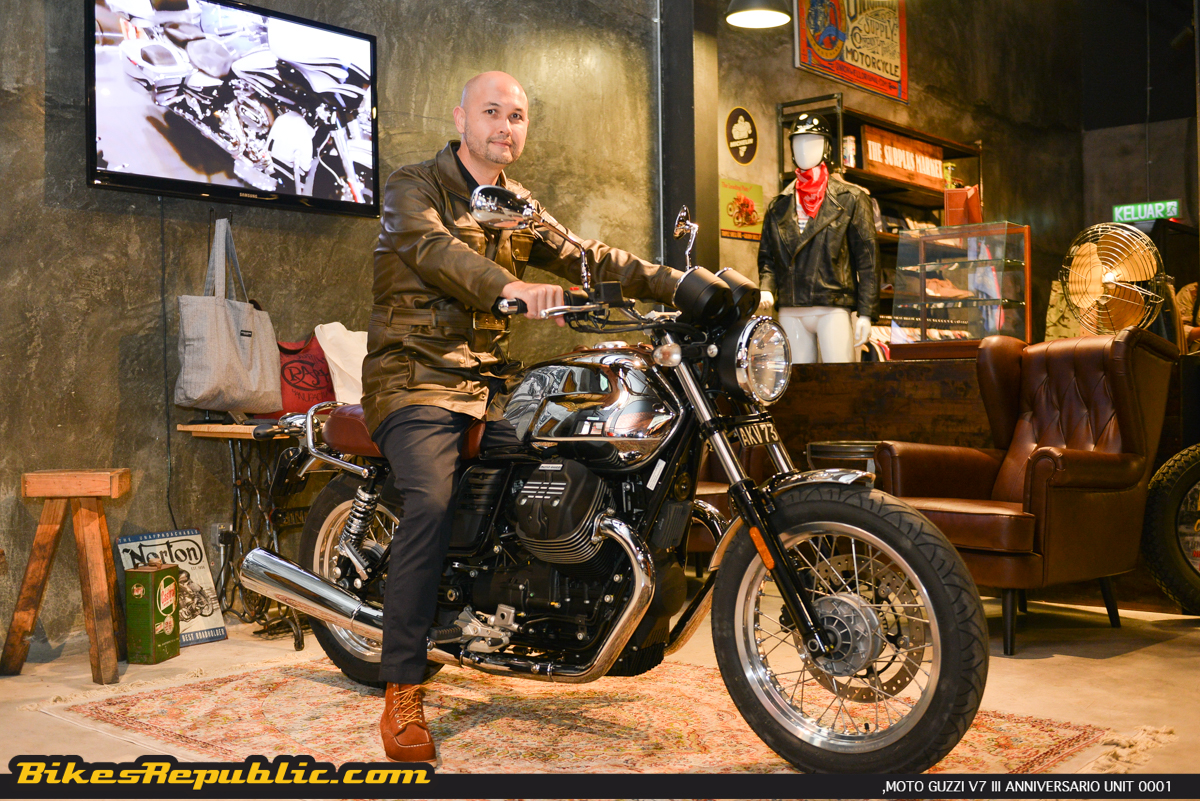
“I am proud that we managed to acquire the 0001 unit of the III Anniversario and this would also be a pride for Moto Guzzi enthusiasts in Malaysia,” said Rewi Bugo, Chairman of Didi Resources Sdn. Bhd. Didi Resources is the official importer and distributor of Moto Guzzi motorcycles in Malaysia.

Rewi Bugo, Chairman of Didi Resources Sdn. Bhd.

The Moto Guzzi V7 III Anniversario is available for viewing at The Gasket Alley, Petaling Jaya, and priced at RM 80,900 (inclusive of 6% GST but not on-the-road).

For more information, please visit http://www.motoguzzi.com/my_EN/ or their official Facebook page.

  • The hydraulic brake system’s operation is easy to understand.

  • It consists of only a few main parts.

  • However, pay attention to your brake fluid and hoses.

Everytime we squeeze and press down on the brake levers, the brake system causes the motorcycle to slow down. it works day in, day out, throughout the bike’s lifespan. But have you ever thought about how it actually works?

While the traditional cable-operated drum brakes are available on a certain number of bikes, they are being phased out for the hydraulic brake system, more commonly called disc brake system.
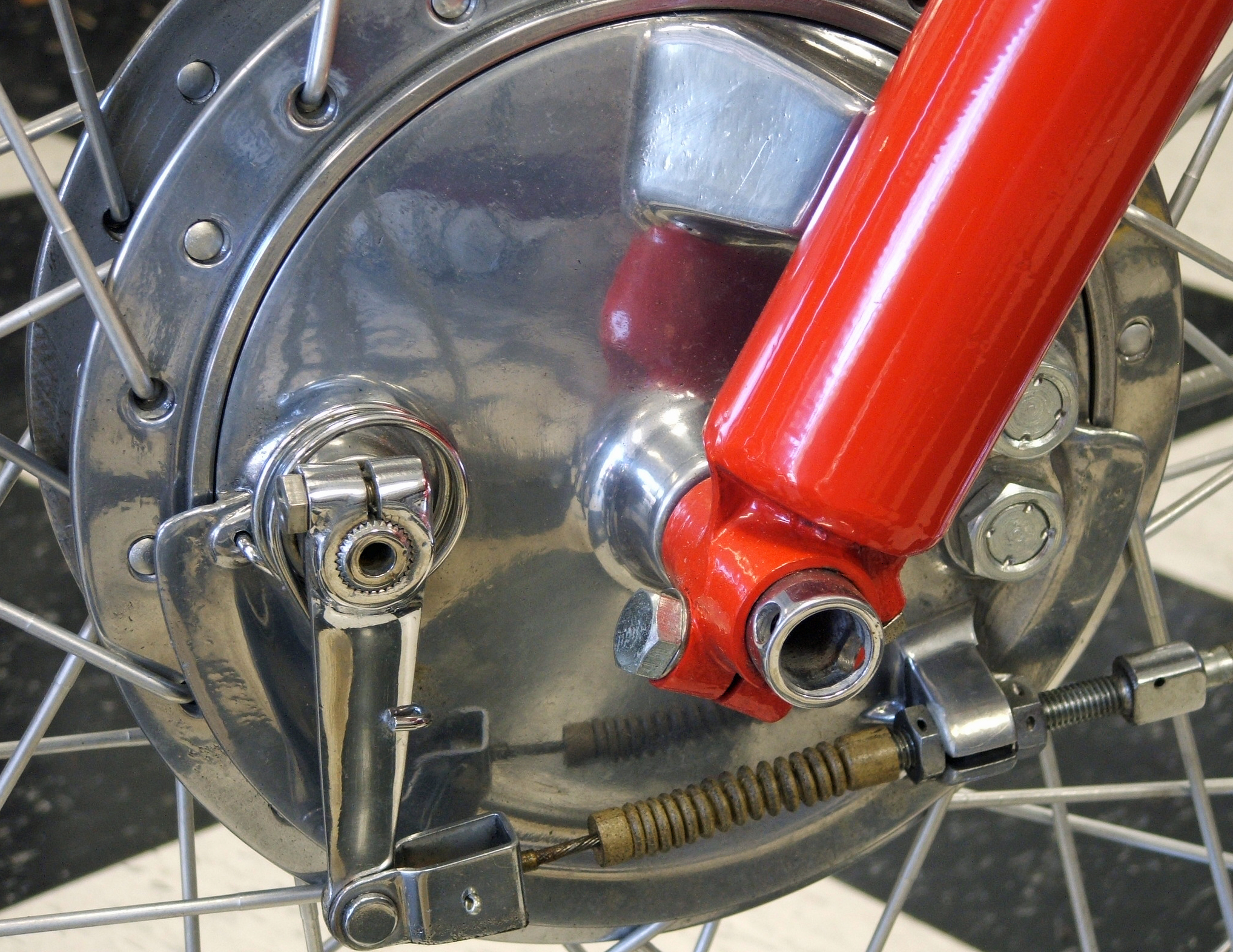
The brake system converts kinetic energy (contained in a moving object) to thermal energy (heat) by using friction. Brakes have evolved over time and some brake systems could actually slow a bike quicker than the latter could accelerate. In a recent overseas test on the BMW S 1000 XR, the bike accelerated from 0 to 160 km/h in 6.1 seconds, covering 151 metres. That fast! But it slowed from 160 to 0 km/h in 5 seconds in less than 100 metres.
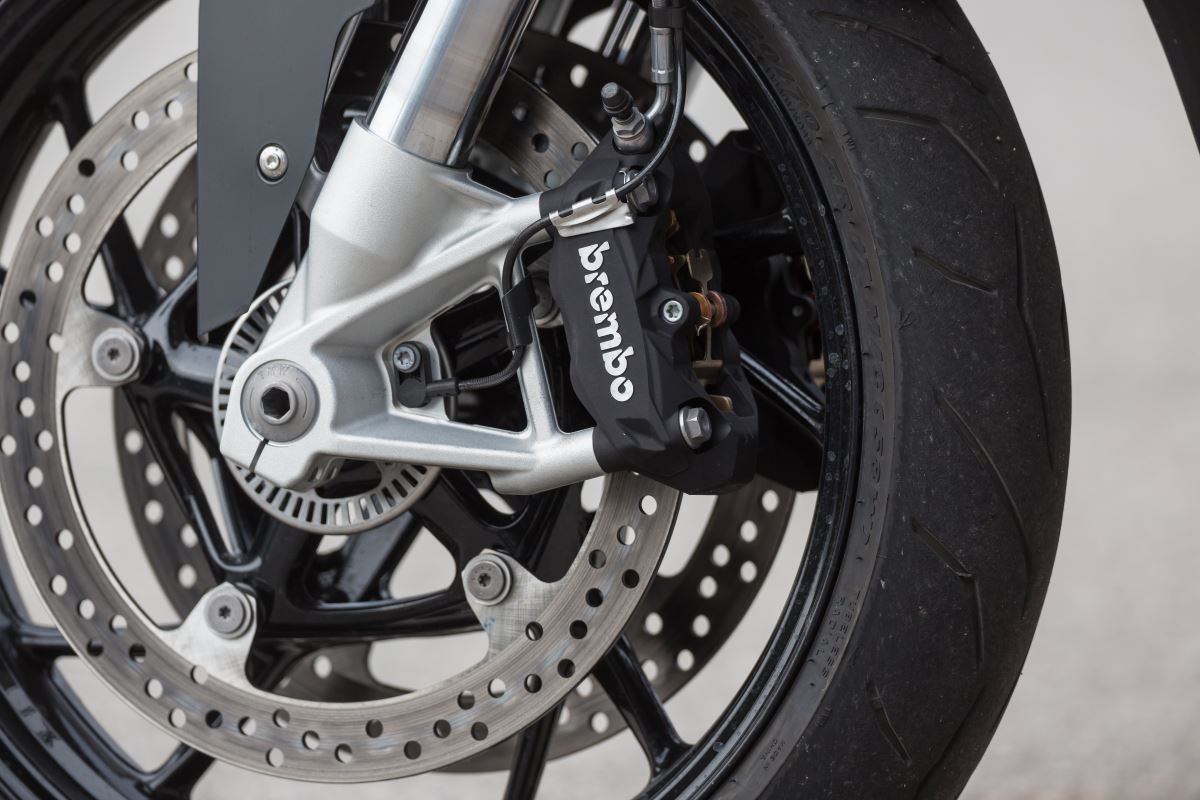
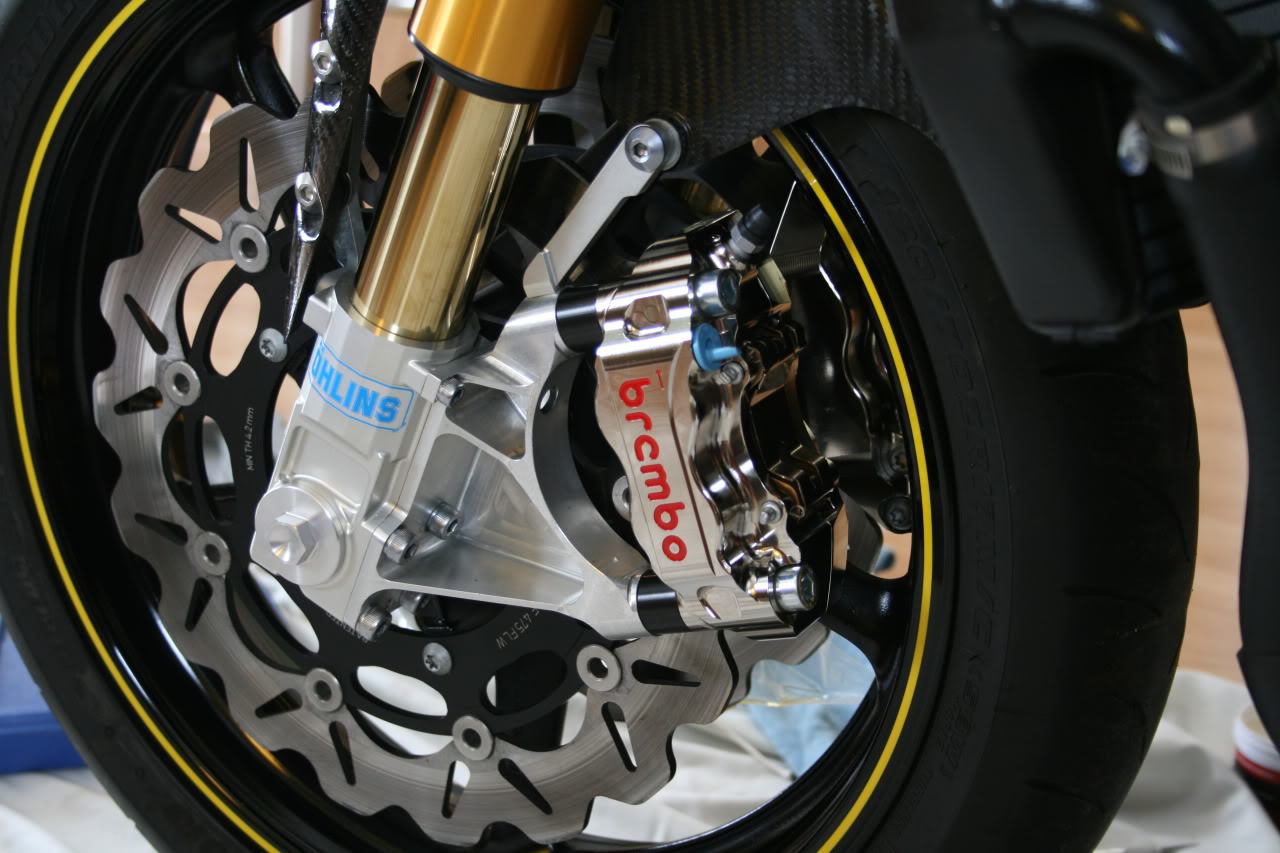
The basic working principles of the hydraulic disc brake system is easy to understand. When you press the brake lever, the master cylinder pump pushes the brake fluid through the brake hoses to the calipers. In turn, this pressure pushes on the caliper’s pistons which have brake pads attached to them. The pads are compressed on to the brake disc.
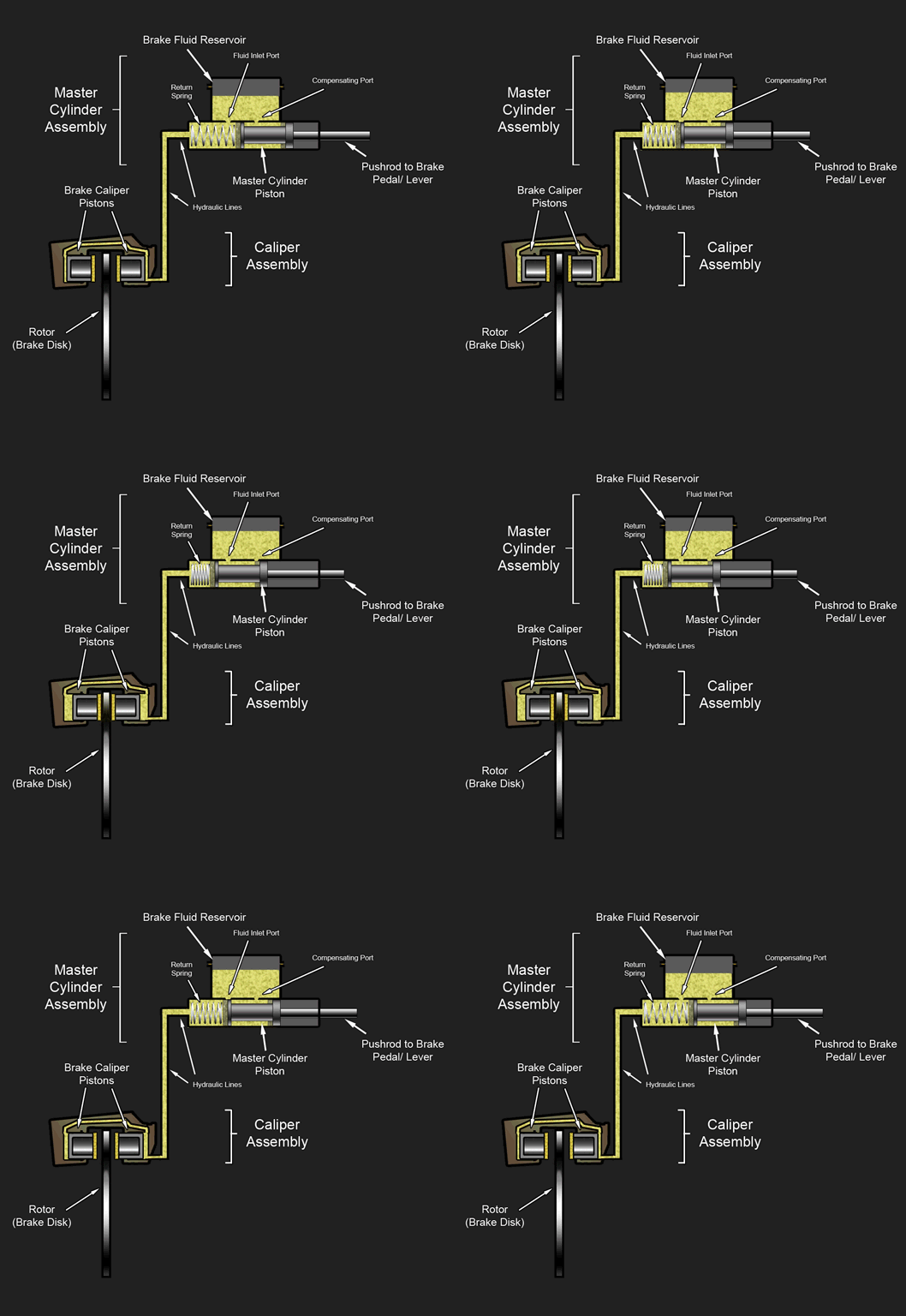
Let’s look at the parts of a hydraulic brake system:

Master cylinder

More commonly called the “brake pump” or (“bulek pom” by your typical Chinese mechanic at the kedai motor), it converts mechanical force (when you press the lever) into hydraulic pressure. The brake lever pushes on a piston that presses on the brake fluid. The force with which you pull the lever is the leverage ratio and the size of the master cylinder piston determine the amount of pressure is subjected through the system, sometimes exceeding 1,000 kPa.

Brake Hoses

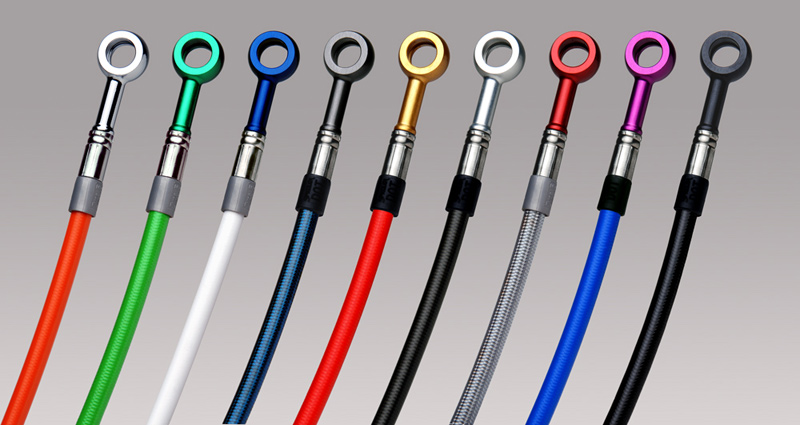
Hoses transmit pressure from the master cylinder to the calipers. They are typically multilayered, with a Teflon inner lining surrounded by braided nylon, or Kevlar, or stainless-steel reinforcing layer, and finally wrapped in a protective sheathing.
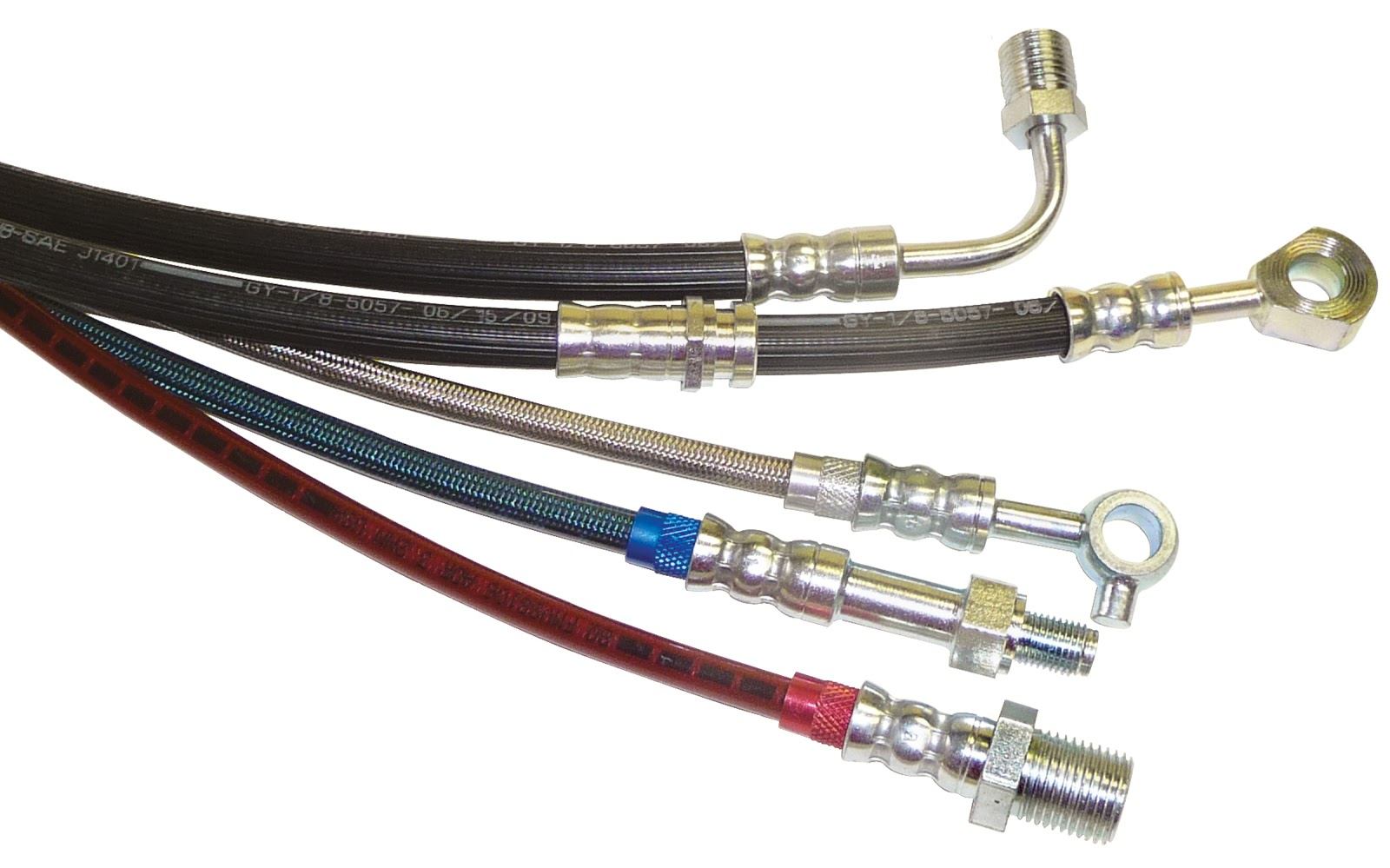
Contrary to popular belief, stainless steel-braided hoses DO NOT stronger braking. They provide a more consistent braking feel as they don’t expand like rubber hoses do when subjected to eyeball-popping hard braking.

Rubber hoses lose their strength over time, thus need to be replaced every four years.
Brake caliper

This is also inexplicably called the bulek pom in the workshops. The real job of pumping braking fluid is handled by the master cylinder.

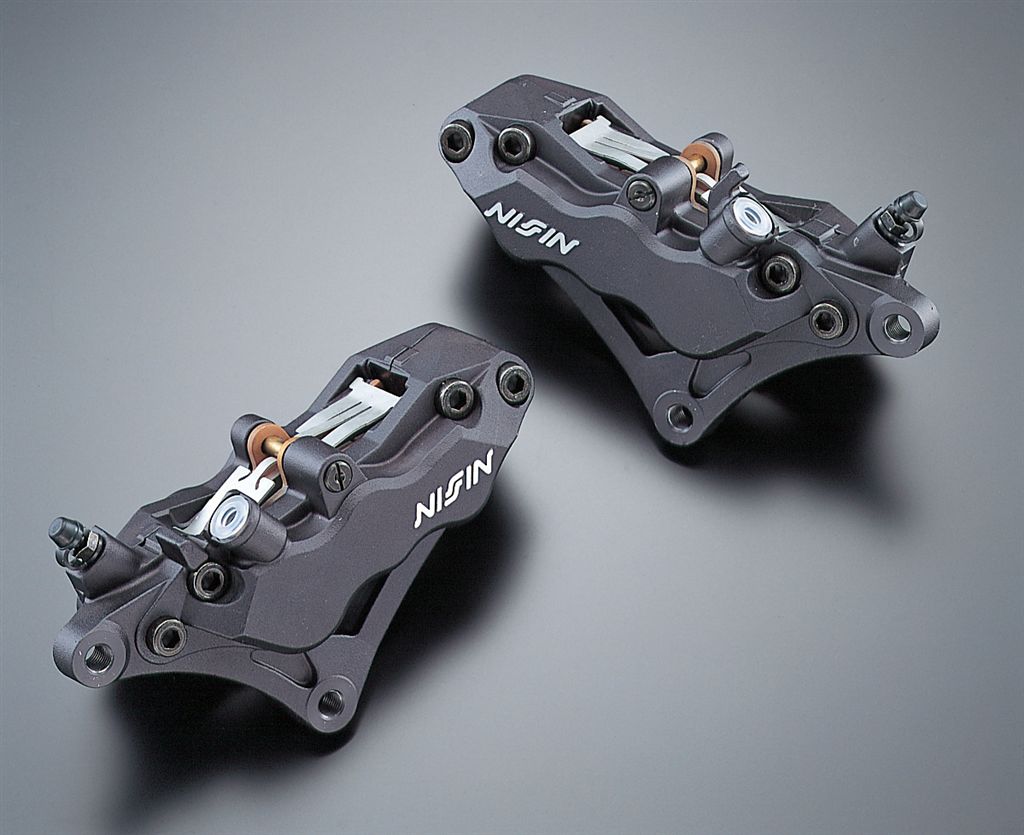
Anyway, it’s at the caliper where the hydraulic pressure is multiplied. This is because the pressure from the master cylinder is exerted uniformly on the much larger area of the caliper pistons. An adult male’s hand grip typically exerts only between 0.4 to 0.6 kPa, thus that has to be increased to more than 1,000 kPa.
Brake Disc

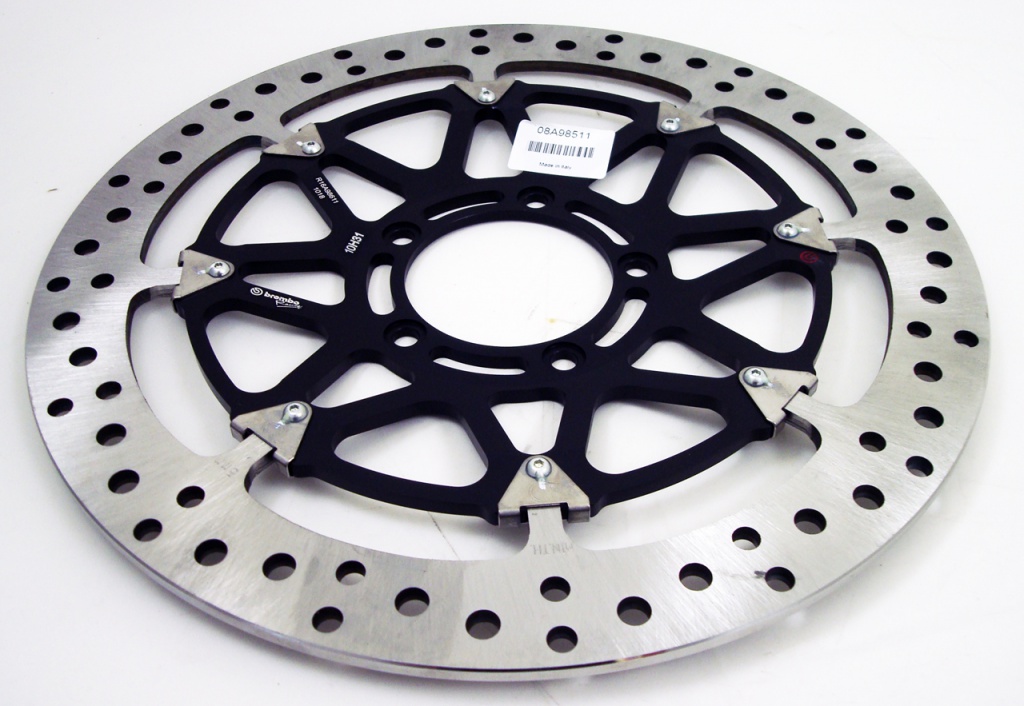
The disc transfers the brake pads’ resistance to the tyre contact patch. Brake discs are usually made of stainless steel with variable amounts of iron. Modern discs are also drilled to assist in cooling, besides shedding water and debris.
Brake fluid

Another incorrectly named item, usually called minyak brek (brake oil). It has nothing to do with oils. The misconception probably arose from being referred to industrial hydraulic fluids that are petroleum based.

The brake fluid is the medium which transmits force from the brake lever to the brake pads. The brake fluid isn’t as simple as one may be inclined to think. Other than being non-compressible to effectively transfer the pressure, it needs to have low viscosity to work with ABS components, has good lubricity for the master cylinder and caliper piston seals, offer corrosion resistance, and importantly has high boiling point.
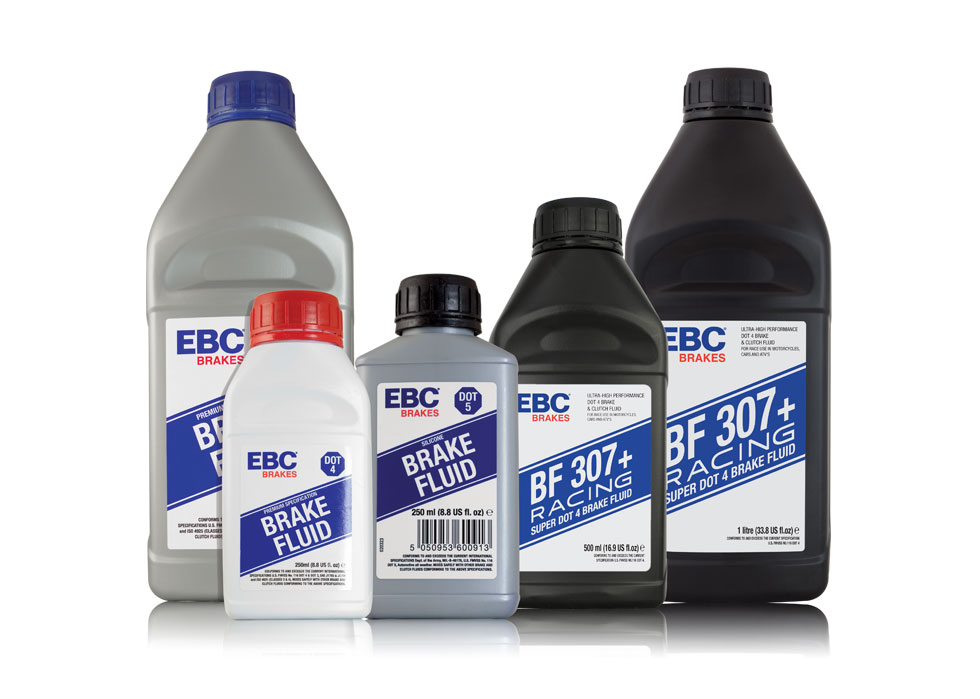
There are four grades of brake fluids. Glycol-based ones are DOT 3, 4, and 5.1, hence are mixable. DOT 5 is silicone-based and can’t be mixed any other type.

The glycol-based fluids are hydrophilic, meaning they suck in and absorb moisture from the air. Mixed with water, the brake fluid’s boiling point is lowered, causing brake fade. That’s why brake fluids need to replaced every two years.

DOT 5 on the other hand, is hydrophobic and rejects water. However, after repeated heating and cooling cycles, bad master cylinder and caliper seals, it will also ingest water eventually. However, DOT 5 brake fluid does not pull moisture out of the air own its own, thus have a longer lifespan. Military vehicles usually use DOT 5 since they sit idle for long periods of time.

Additionally, being silicone-based, it’s not caustic leading Harley-Davidson to using this previously.

Does this mean we should all convert to DOT 5? The short answer is “NO.” DOT 5 brake fluids are expensive, has high compressibility and higher viscosity (thicker) and thereby unsuitable for everyday use. Harley-Davdison has since reverted to DOT 4.

Each grade usually denotes the fluid’s boiling point, from the heat resulting from friction, rather than its chemical contents.

The US Department of Transport (DOT) specified each grade’s “dry” and “wet” boiling point. The latter is deemed to be completely free of moisture, while the latter contains 3.7% water, common after a year of regular use.

DOT 3: 205 oC (dry), 140 oC (wet).
DOT 4: 230 oC (dry), 155 oC (wet).
DOT 5: 260 oC (dry), 180 oC (wet).
DOT 5.1: 260 oC (dry), 180 oC (wet).

Observe how much performance drops away between dry and wet. That’s why brake fluid should be replaced every two years. Since the standard was set in the USA, we may need to replace it even earlier due to our climate’s high humidity and constant rain.
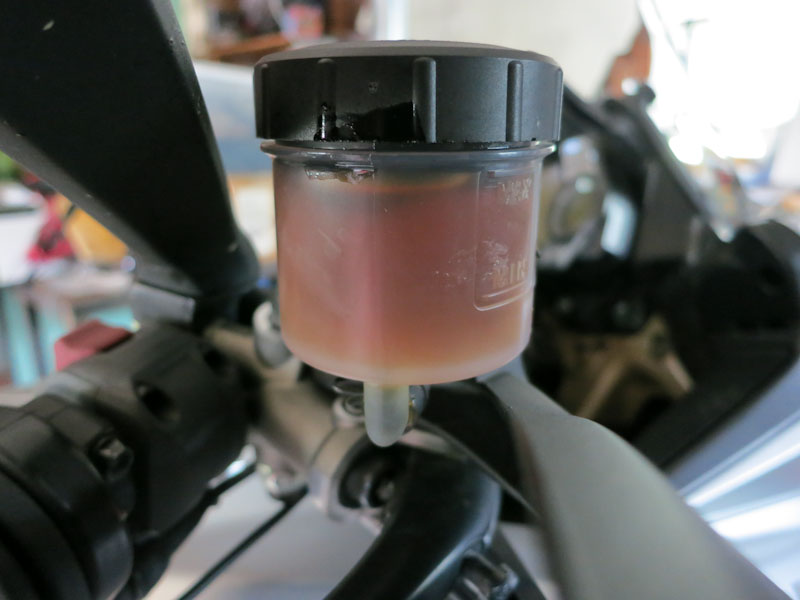
Water in the fluid lowers its boiling point, casing the brake lever to feel spongy and reducing braking performance – called “brake fade.”

That’s it for Part 1. We’ll talk about brake pads, caliper mounts, ABS, carbon brakes and so forth next time.


Archive

Follow us on Facebook

Follow us on YouTube