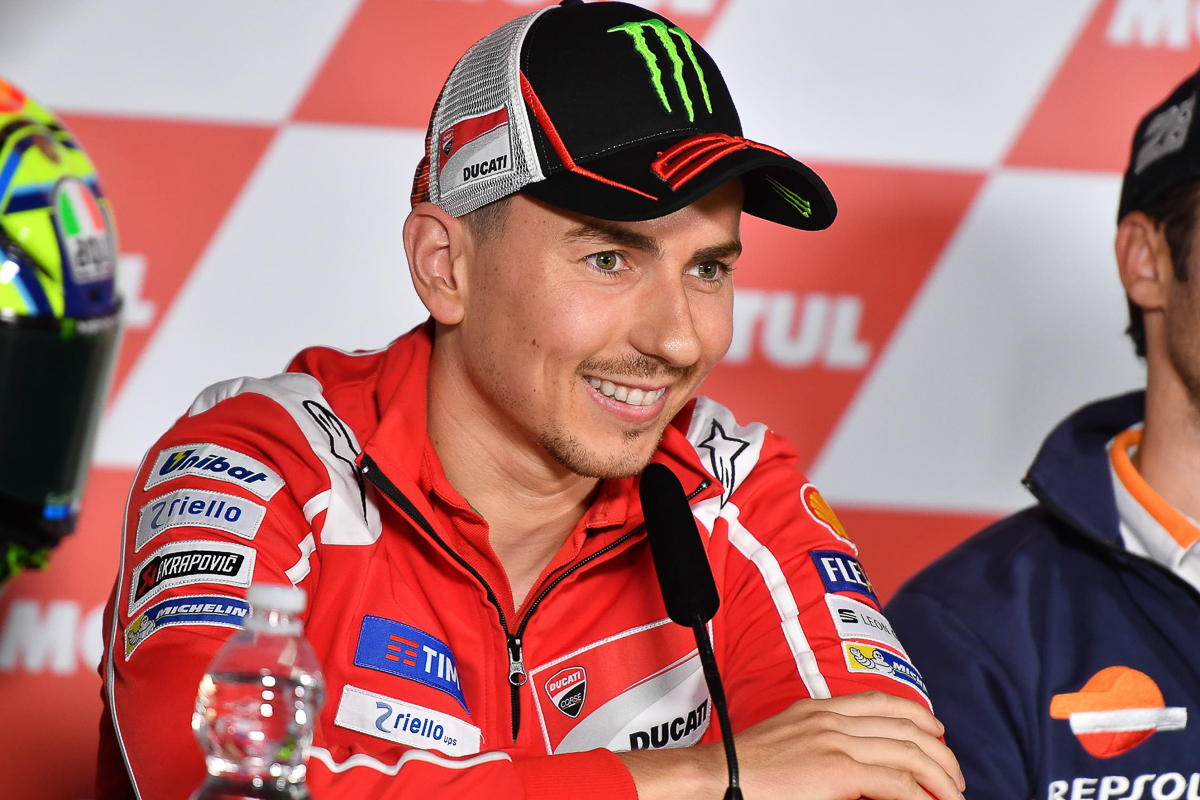
It’s not even 2020 yet and already talks about the recently retired Repsol Honda rider, Jorge Lorenzo, making a MotoGP comeback for next season. We’re still not sure on what his new role will be in the MotoGP paddock but rest assured, it won’t be competing in the races (at least, not anytime soon). (more…)
There a great number of helmet standards the world over.
However, the most widely accepted now is the ECE R22.05 (UN R22.05).
We don’t say which is better, but you can see the differences for yourselves.
There are a number of helmet standards around the world that helmets need to adhere to for them to be sold in different markets. The most widespread worldwide and also accepted in Malaysia is the ECE R22.05 (UN R22.05).
Before we go further, we would like to tell you about how these standards lead to the FIM FRHPhe homologation. Beginning 2019, the certification is employed for racing series governed by the FIM, including but not limited to MotoGP, Moto2, Moto3, WorldSBK, FIM EWC, etc.
What is ECE R22.05 (UN R22.05)?
ECE stands for “Economic Commission for Europe.” It was created by the United Nations (UN) in 1958, referring to the set of regulations concerning wheeled vehicles, equipment and parts. The numbers indicate regulation no. 22, incorporating the 05 series of amendments to the standard. ECE R22.05 is currently accepted in 62 countries.
Since the ECE was set up by the UN, this is why you could see the UN R22.05 sticker on certain helmets.
Regulation No. 22 was issued in 1972 and contained the requirements for coverage of the head, field of vision, user’s hearing, projections from the helmet, as well as durability of materials. Also, the helmets will be tested for cold, heat and moisture treatment, shock absorption, penetration, rigidity, chainstrap strength and flammability. It also stipulates the maximum helmet shell mass of 1 kg.
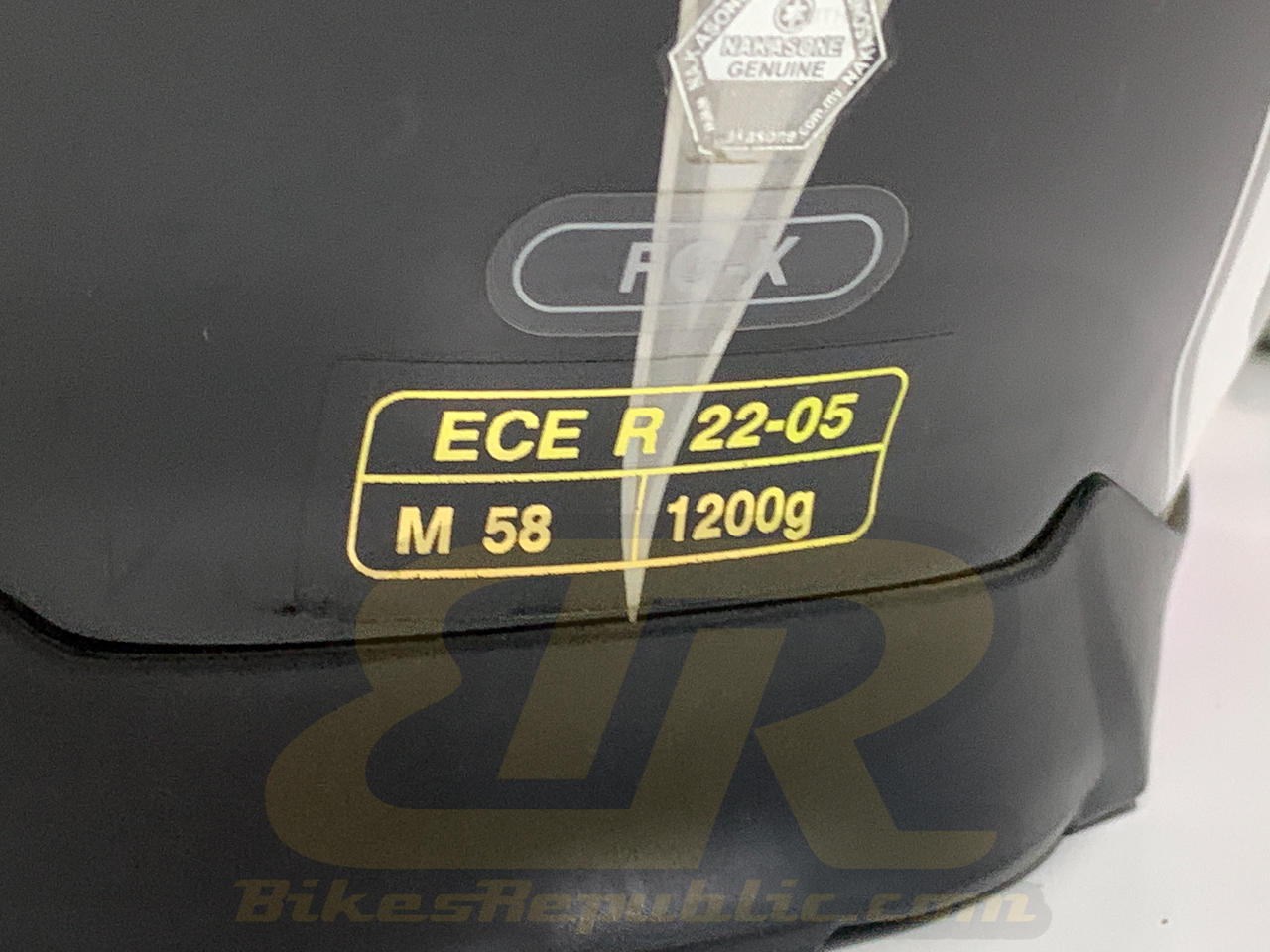
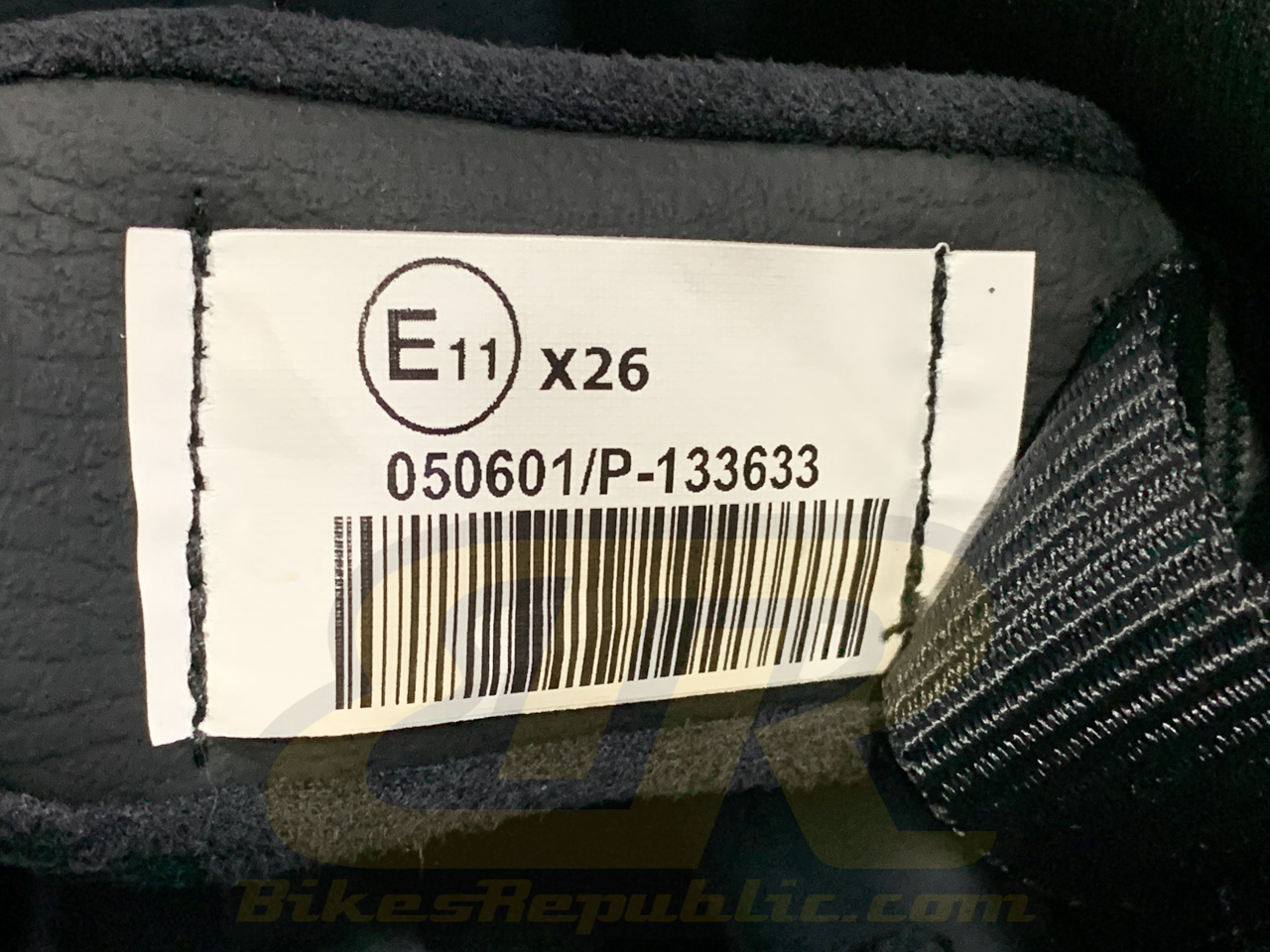
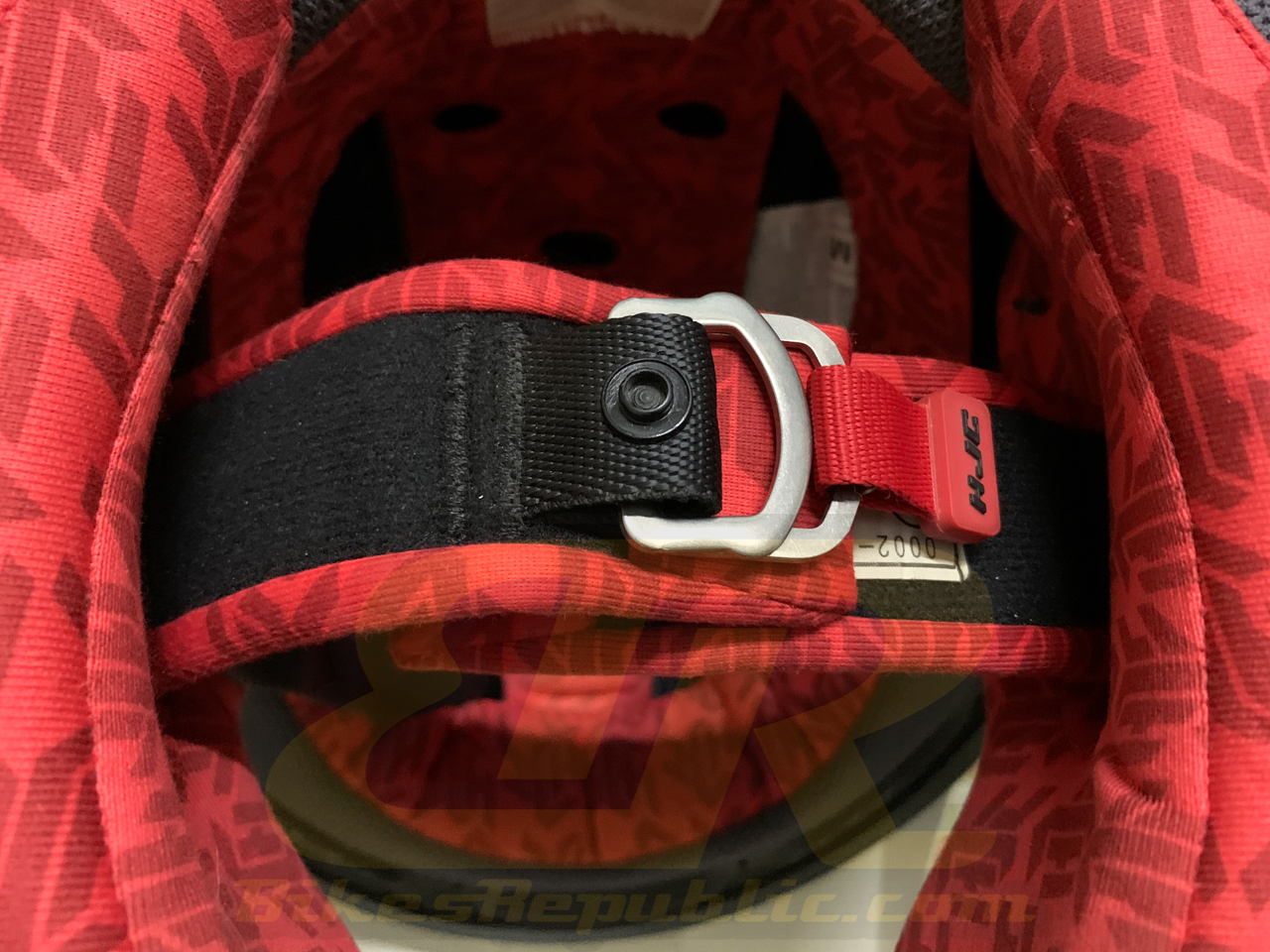
The regulation also prescribes how helmets must be labeled. Information include size and mass, besides information on how to wear the helmet. Apart from that, the type approval mark (stitched onto the chinstrap) must be specified.
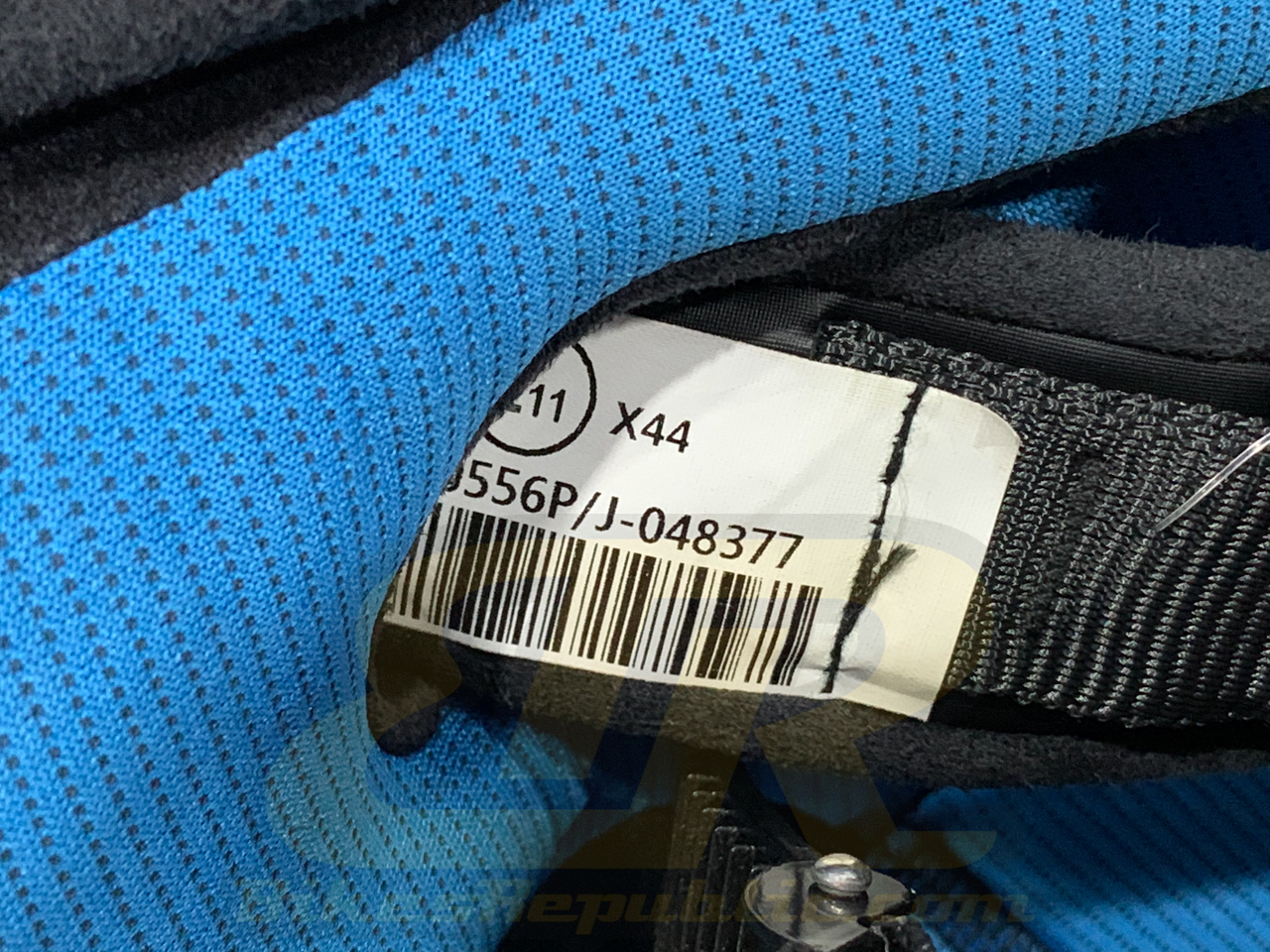
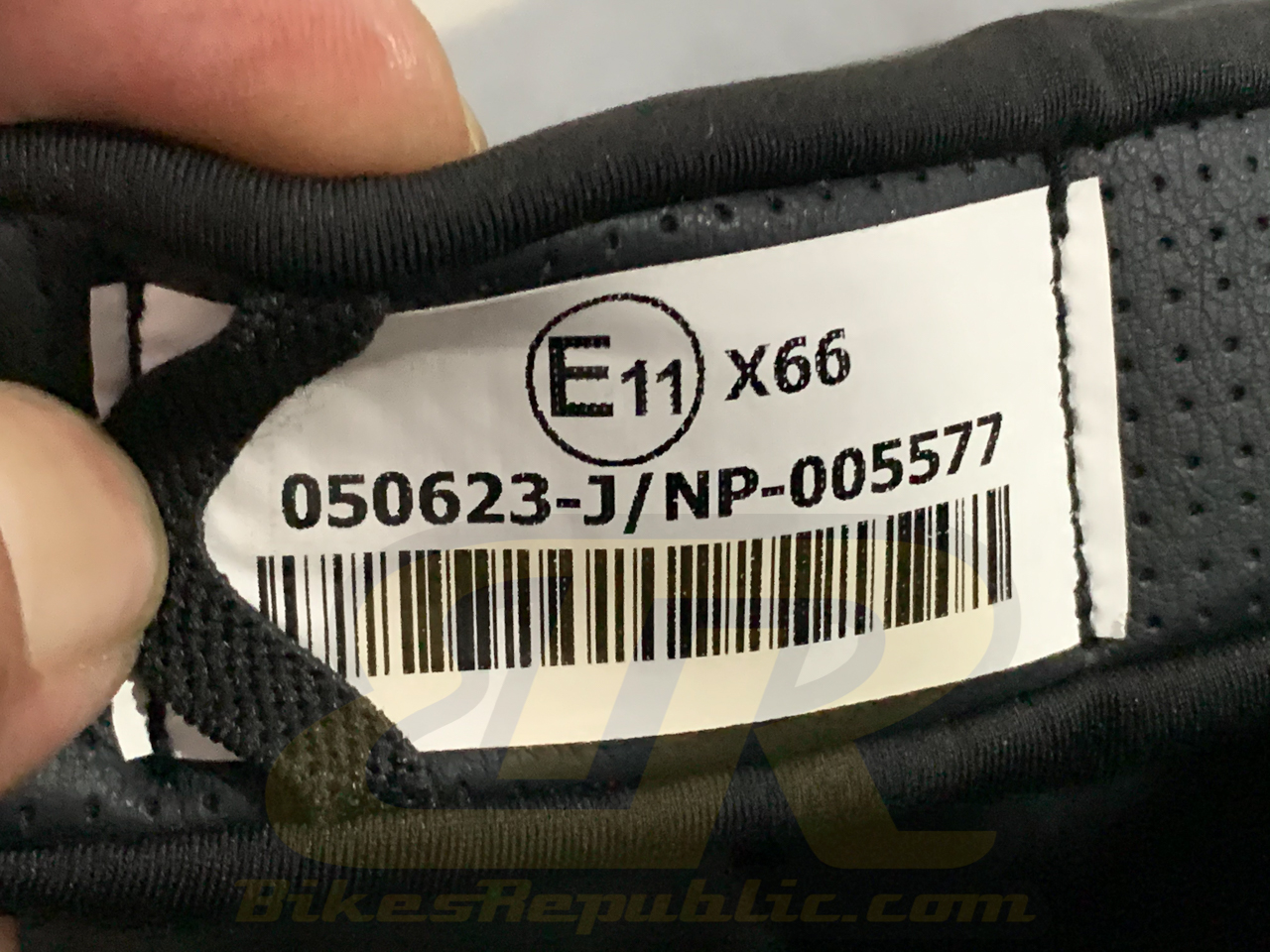
The type approval mark includes the “Eaa 05bbbb/c-ddd” code.
These codes mean the helmet was certified in United Kingdom (E11), conforms to amendment number 05, and is a jet type (P).
These codes mean:
Eaa (within a circle) pertains to which country’s authority approved the helmet.
E1 – Germany
E2 – France
E3 – Italy
E4 – The Netherlands
E5 – Sweden
E6 – Belgium
E7 – Hungary
E8 – Czech Republic
E9 – Spain
E10 – Yugoslavia
E11 – United Kingdom
E12 – Austria
E13 – Luxemborg
E14 – Switzerland
E16 – Norway
E17 – Finland
E18 – Denmark
E19 – Romania
E20 – Poland
E22 – Russia
E23 – Greece
E24 – Ireland
E25 – Croatia
E26 – Slovakia
E27 – Slovenia
E28 – Belarus
E29 – Estonia
E31 – Bosnia and Herzegovina
E32 – Latvia
E34 – Bulgaria
E36 – Lithuania
E37 – Turkey
E39 – Azerbaijan
E40 – Macedonia
E42 – European community (this is unused)
E43 – Japan
E45 – Australia
E46 – Ukraine
E47 – South Africa
E48 – New Zealand
05: Series of amendments.
bbbb: Approval number issued by the approving authority.
c: Type of helmet i.e.
“J” – jet-type or open-face.
“P” – protective lower face cover, for example the chinbar of a full-face helmet.
“NP” – Non-protective lower face cover.
The type codes on a modular helmet. “J” is jet-type (open-faced) while “P” means the lower face cover is protective
NOTEon type of helmet code. Pay attention when you buy modular/flip-up helmets. Certain ones are certified as J/P (or P/J), but there are also ones certified as J/NP (or NP/J). The latter means that the chinbar is non-protective or not tested for protection. Modular helmets are certified as “J”-type as the flip-up portion is considered an attachment.
The type codes on another modular helmet. “J” is jet-type (open-faced) while “NP” means the lower face cover is non-protective
Testing and certification
The helmets must be tested in order to obtain certification. As mentioned, the standard specifies the types of tests and specifications required.
Among the main criterias:
Peripheral vision (“side vision”) through a 105-degree arc from the helmet’s midline.
Impact absorption test must see less than 275 G of peak acceleration. A headform is fitted with the helmet and dropped from a fixed head onto a steel anvil.
The retention system (chinstrap) must not move more than 35mm. Test involves a free-fall drop of a 10 kg weight attached to the chinstrap from 750 cm.
Chinstrap buckle system cannot slip under abrasion resistance and tension failure load of 305.9 kg.
Chin cups are banned.
The helmet is also tested for abrasion resistance. The helmet’s surface is required to either sheer away or lets the test surface slip past. Sheering away and slipping past means the helmet doesn’t “stop” when its sliding across the road. If it stops, it’ll introduce rotational forces to the neck i.e. twisting it! This is why projections from the helmet cannot exceed 2 mm.
Helmet shell rigidity is also tested and must withstand more than 64.2 kg. It fails if it deforms.
For quick-release mechanisms (such as the micrometric buckle), tests are performed to check for accidental operation, ease of release and durability. The buckle is tested every 2 seconds for 5,000 times. For buckle mechanisms containing metal, the release test is conducted after the mechanism was exposed to corrosive solution.
The ECE 22.05 does not require penetration test.
There are tests for the visor, as well:
Ultraviolet conditioning.
Mechanical impact test checks for sharp splinters.
Light transmission through the visor, there are also specifications for tinted visors for daytime use only.
Light diffusion as in how much light scatters towards to eyes.
Scratch resistance to measure light diffusion (the “star effect”) of a scratched visor.
Anti-fogging if the visor has been treated for it.
Ease of lifting the visor out of view with one hand.
ECE compliant helmets are batch tested when production begins. The manufacturer is required to submit up to 50 sample helmets and/or visors to a designated laboratory working for the local government which uses the ECE standard.
Hope this tells you a bit more about what’s involved in helmet testing and their certification.
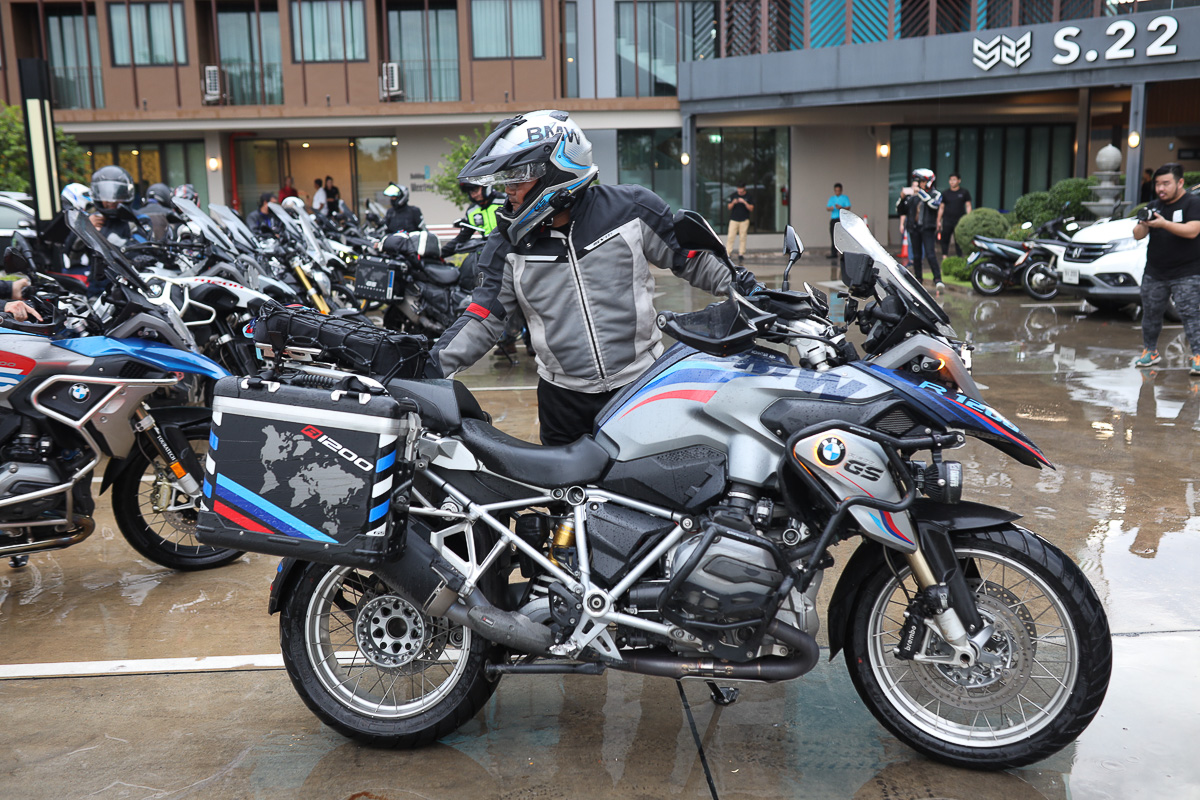
Auto Bavaria, the official custodian for BMW, MINI and BMW Motorrad here in Malaysia, recently organised its first-ever overseas ride dubbed the Auto Bavaria Ride to Khao Yai. The six-day day was held in conjunction with BMW Motorrad Day in Thailand last month where 20 invited BMW bike owners travelled around 3,000km from Auto Bavaria Glenmarie showroom all the way to Khao Yai, North Thailand, and back. (more…)
BMW Motorrad UK has already begun accepting deposit for the production-based BMW R 18 Concept. This means that the bike is well on its way to the production line in the factory but none of us have actually seen the actual model that’ll go on sale. With that being said, is there any of you out there interested enough to book one before ever seeing the bike? (more…)
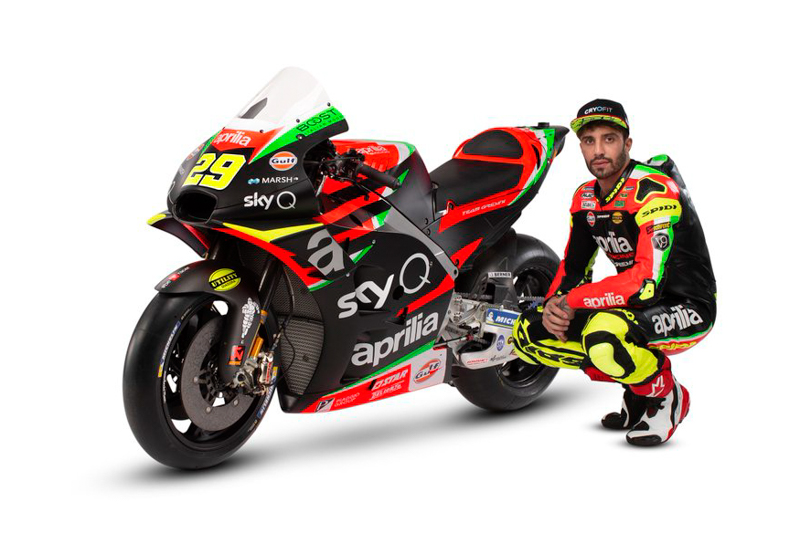
MotoGP rider Andrea Iannone has been suspended for using banned substances (i.e. doping).
The WADA lab found the substances in his urine sample.
The samples were taken during the Malaysian Grand Prix.
MotoGP rider Andrea Iannone has been suspended for using banned substances (i.e. doping).
The Federation Internationale de Motocyclisme (FIM) made the announcement today. They also ruled that Iannone’s suspension takes effect immediately, albeit calling it “provisionally” as per Article 7.9.1 of the 2019 FIM Anti-Doping Code (CAD). He is prohibited from taking part in any motorcycle competition until further notice.
According to the press release, Iannone’s urine sample from the 2019 Shell Malaysia Motorcycle Grand Prix was found to contain “a non-specified substance under Section 1.1 a) of the Exogenous Anabilic Androgenic Steroids (AAS) of the 2019 Prohibited List.” The World Anti-Doping Agency accredited laboratory in Kreischa b Dresden in Germany found the banned substances from in the rider’s A sample.
The FIM also said that Iannone has the right to request and attend the testing of his B sample. If found tainted again, he can file an appeal to the Court of Arbitration for Sport (CAS) to reduce his suspension.
He may also request the lifting of his provisional suspension.
Why did it take so long to know of the results? Negative results are usually known right away. However, should WADA will carry out further tests if the find or suspects the ue of banned substance. The process takes about two weeks depending on the tests carried out.
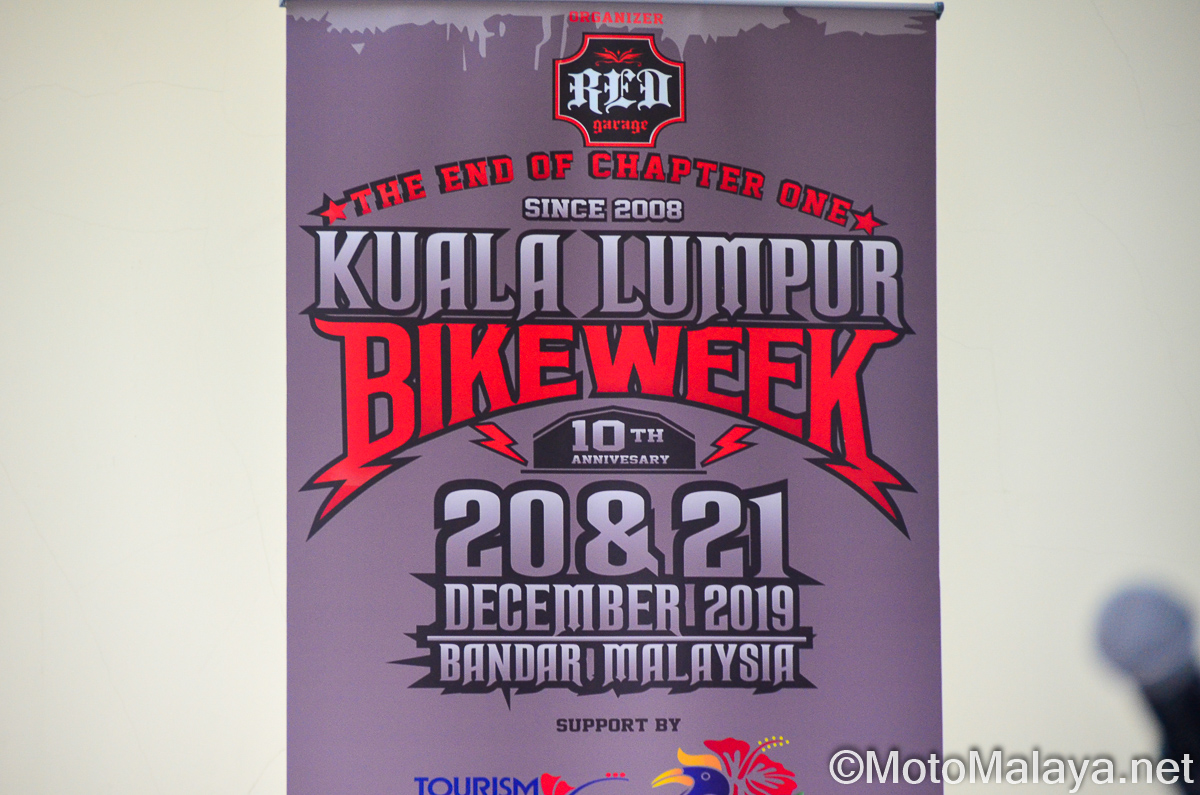
The KL Bike Week 2019 is happening this weekend from 20-21 December 2019 (this Friday & Saturday) and it promises to be one of the biggest and most happening bike weeks to be held in Malaysia. Organised by Red Garage Enterprise and supported by Tourism Malaysia, attendees are in for a treat for the whole family, including a chance to win a brand-new Harley-Davidson Sportster Custom! (more…)