
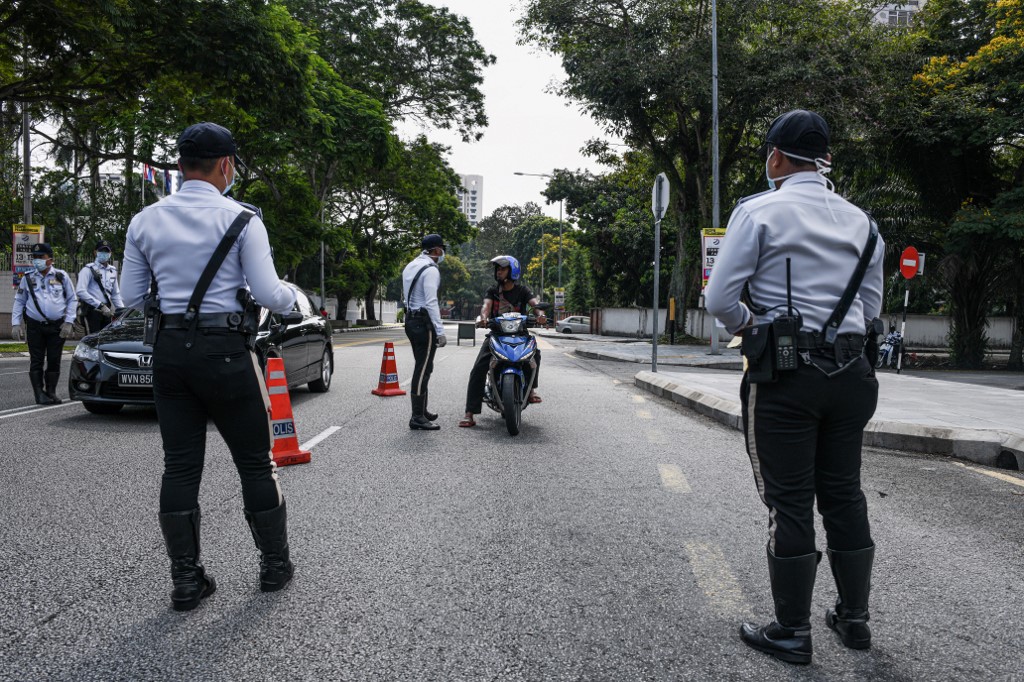
The Kuala Lumpur Police said the ‘honeymoon’ period for traffic offenders in the capital city has now ended, following a one-month advocacy program conducted by the Kuala Lumpur Police through Op Law Compliance (Op PUU).
Kuala Lumpur Police Chief, Datuk Fadil Marsus, said they will begin full enforcement action by issuing immediate summonses to stubborn and non-compliant road users starting October 1st. They will not compromise, given that the previous advocacy period seemed to have no profound effect on a large portion of the public.
“The statistics during the advocacy campaign, which began on September 6, are very concerning, with nearly 70,000 advocacy notices issued in focus areas around the capital.”
“This is what’s worrying; in less than a month, nearly 70,000 advocacy notices were given. This shows that many are aware they are committing offenses, but still defy and intentionally violate the rules,” he said when interviewed on the Selamat Pagi Malaysia program broadcast on TV1 today.
Among the most frequently detected offenses were causing traffic obstructions, such as double parking, stopping on white lines and pedestrian crossings, running red lights, and not wearing or improperly fastening helmet straps.
“This enforcement is not a ‘flash in the pan’; instead, it will be conducted continuously, 24 hours a day, throughout the year, across all of Kuala Lumpur.”
“All personnel from every district in Kuala Lumpur will be mobilized. This operation will not have an end date; it will continue indefinitely until we see a positive change in the public’s attitude,” he said.
Commenting on modern approaches, Fadil said they would continue to use the power of social media to expose traffic offenders to raise awareness and provide lessons to the public.
“We will use all social media platforms as much as possible. Let the message get through, and let those who are wrong know their actions are being watched. Perhaps through this method, a sense of shame and awareness will arise,” he emphasized.
He said the ultimate goal is to educate the public and change the culture of law compliance, starting with the most basic rules.
“We want to make the citizens of Kuala Lumpur an example, where our level of law compliance is on par with developed nations. It must start now, not tomorrow,” he said.