Bikesrepublic

Reviews

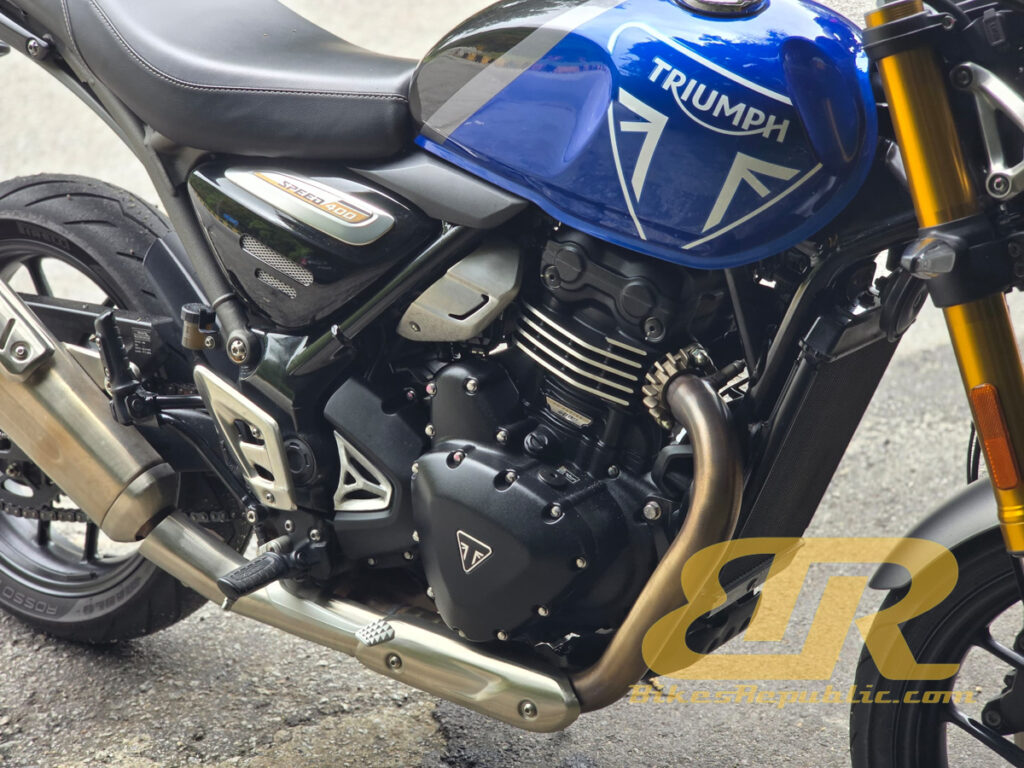
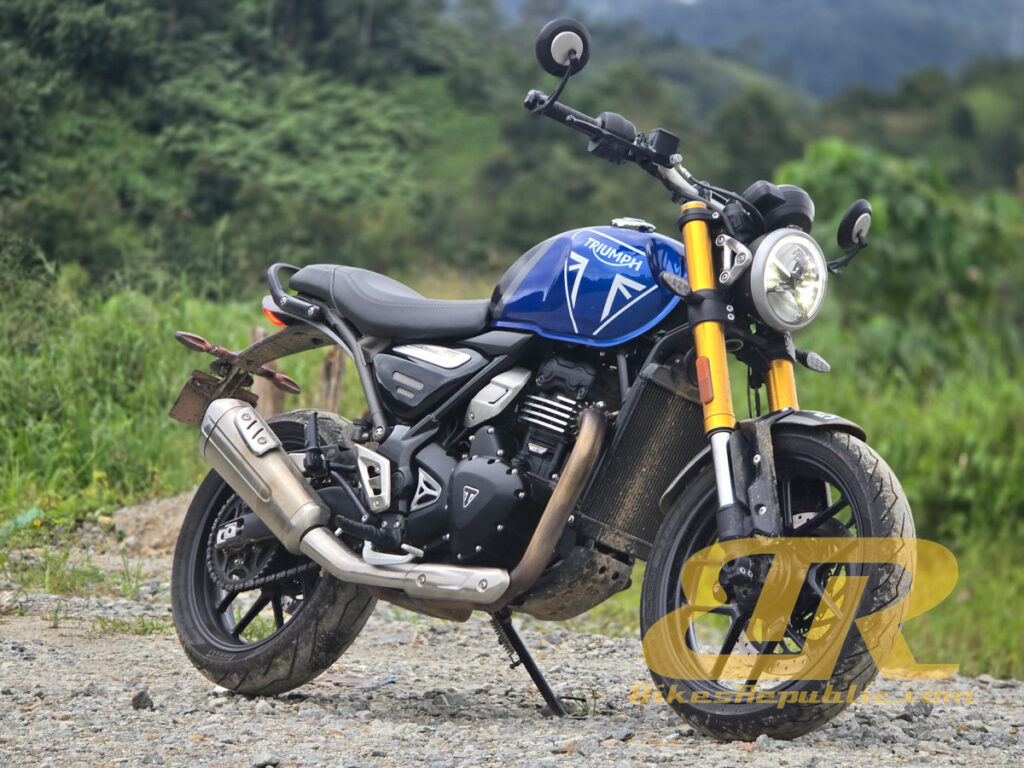
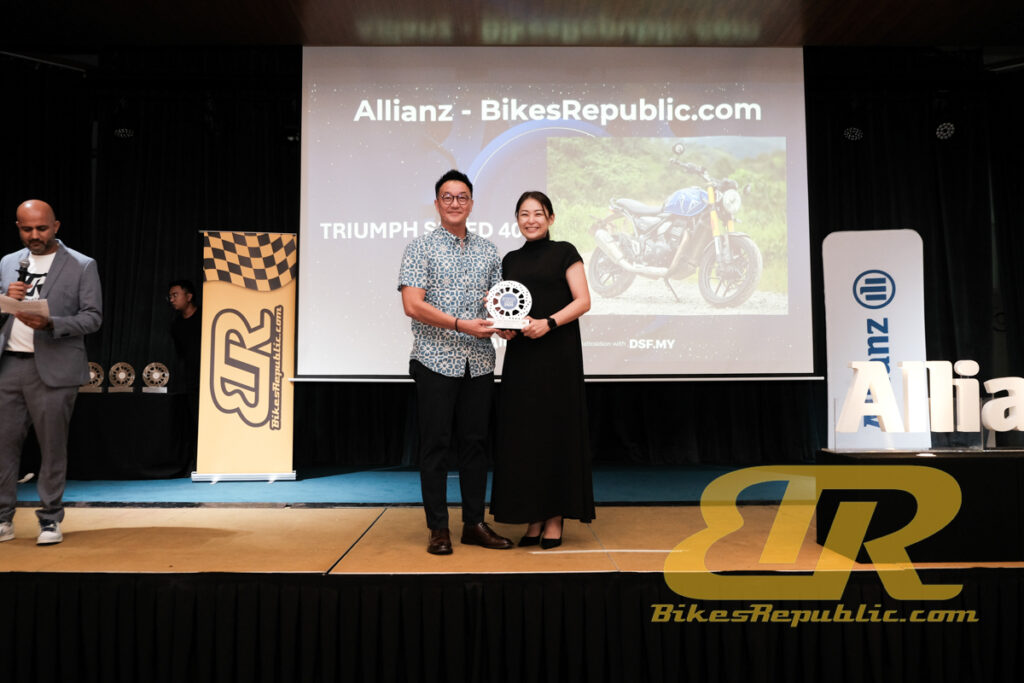
No better motorcycle deserves the Modern Classic of the Year (Below 500cc) award at the Allianz-BikesRepublic.com Motorcycle of the Year Awards 2025 than the Triumph Speed 400.

Anyone has to ride it just once and know how good it really is. Even we got blown away.

Why did the Triumph Speed 400 win?

The new Triumph 400 line up had been in the works for so many years that some had begun to think that it would not come to fruition. The child of the Triumph UK and Bajaj Auto collaboration, the former had wanted to access the lower capacity market, which is especially lucrative in Asia.

But oh it was worth the long wait!

The Triumph Speed 400 is not what you think. It is a very complete and supremely capable motorcycle, despite its price.

The main character of any Triumph is the handling and this one demonstrates that philosophy the best, even among Triumphs. In fact, its handling is so good that if the motorcycling cliché “telepathic connection,” had not existed, it would have been written to describe it.

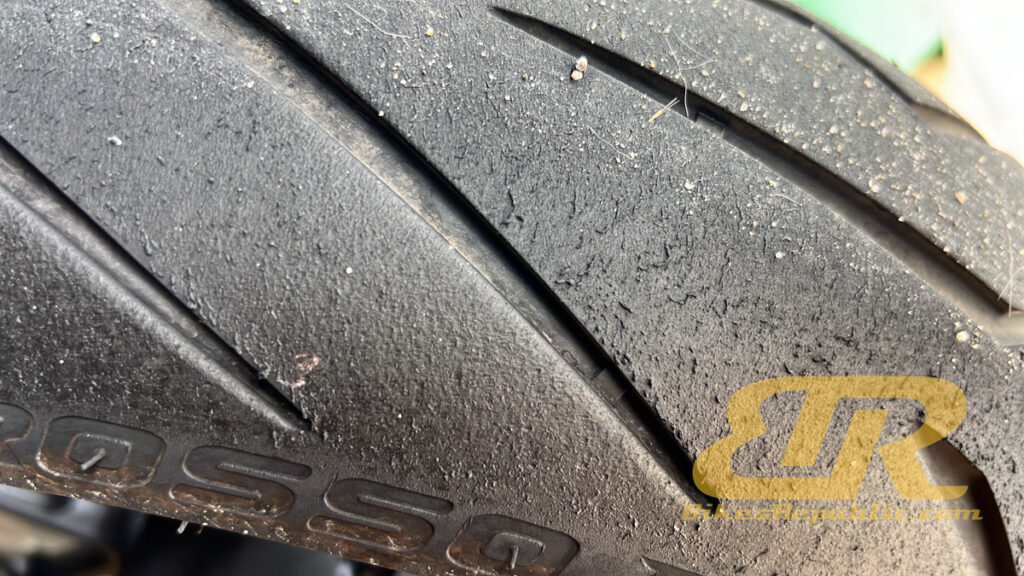
See that corner up ahead? Just pick your line and you are already at the exit, applying power. It did not matter what kind of corner, camber, radius, the Speed 400’s suspension lets the tyres bite into the road and flings you through them. We were even surprised to see the scuffed up the tyres – on a classic looking 400.

And that TR Series 398cc engine. (It is not shared with the Bajaj Dominar 400!) So torquey and has so much grunt up high in the rev range that you will not believe it is a single.

The whole package lets the bike handle like a 150cc motorcycle but with more torque, power, and better suspension. But wait, what sealed the deal for us was its relaxed riding position, practicality, and accessibility. Speaking of accessibility, anyone can ride well on this bike, without needing mountains of skill to conquer the er… mountain (no pun intended).

And it sells for only RM 26,900 which cost just a little more 250cc bikes. What value!

What we liked: Superb handling, easy to ride, practical, good engine, quality, value for money.

What we did not like: The first and second gears are too short.

Nett selling price: RM 26,900

Ah, the modern classic motorcycle. It harks back to the days when all motorcycles were of this form whether you rode them on the streets, raced them at the track or even off-road (modified suspension, of course). They were pure motorcycles without the modern-day segmentation, hence they could be called “standards.” And the Royal Enfield Shotgun 650 embraces that spirit perfectly to win the Modern Classic Bike of the Year 2025 category in the Allianz-BikesRepublic.com Motorcycle of the Year 2025 Awards.

Why did the Royal Enfield Shotgun 650 win?

The Shotgun 650 has sportier ergonomics compared to the Interceptor 650. Additionally, the Shotgun has a custom bike feel to it. In fact, Royal Enfield stresses that they offer a large selection of accessories for this particular model (including the passenger seat).

Riding the Shotgun 650 is an experience of its own. As with other REs, it is not about going fast. Instead it is about feeling the thumps from the parallel-twin engine with a 270° crank. (It was a 360° crank which has the pistons rise and fall as a pair in the past.) The motor has a longer stroke, so it is all about torque.

Riding it up Genting Highlands was a joy as it thumped-thumped-thumped from corner to corner without bogging down and requiring multiple gear changes, apart from the two hairpins. Again, it is not about setting the fastest climb, but to destress on your off day on a bike.

It is of course a great bike for the daily commute, too, which returns us to the subject about the standard motorcycle.

What we liked: Thumping engine, good torque.

We we did not like: A little heavy.

Nett selling price: From RM 34,900

Surprised that the Honda Transalp 750 won the Adventure Bike of the Year 2025 (Below 800cc) category? So were we! It beat out a whole wave of contenders in its class, some with racing success, some are among the best selling motorcycles.

Why did the Honda Transalp 750 win?

Did you know that Honda launched the XL600V Transalp in 1986, two years before the XRV650 Africa Twin? The latter was built upon Honda’s Paris-Dakar Rally concept and subsequent winner, thus it went on to become an icon. The Transalp meanwhile escaped buyers’ radars, although Honda did debut two new versions in 2000 and 2008.

Come the 2020s, Honda found themselves with midrange adventure bike vacuum. Buyers could either opt for either the CRF250 Rally or the XL1000 Africa Twin (before it became the XL1100). So, in 2023, Honda launched the Transalp 750.

And it was worth the wait.

Despite having 21-inch front and 18-inch rear wheels, Honda made it a solid all-rounder, with the ability to coddle new adventure riders and provide ample capabilities to veteran riders. The seat is not too tall, the body is slim, and the ergonomics is touring friendly. With a claimed wet weight of just 208 kg, it works as a daily commuter, too.

The engine is a 755cc parallel-twin with a 270° crank, producing 90.5 HP at 9,500 RPM and 75 Nm at 7,500 RPM. So, it is no slouch.

Last but not least, it looks great. It is priced competitively too, and well below some of the players in the segment.

What we liked: Very good all-rounder.

What we did not like: Needs a 19/17-inch version, perhaps?

Nett selling price: RM 56,800.

We live in the age of adventure bikes and as such, virtually every manufacturer – even the most sportsbike-centric ones – has at least one adventure model. There are many reasons for this phenomena, but let us begin by saying that the Triumph Tiger 900 GT Pro took home the Adventure Bike of the Year 2025 (Above 800cc) category win at the Allianz-BikesRepublic.com Motorcycle of the Year Awards 2025.

Why did the Triumph Tiger 900 GT Pro win?

The Tiger 900 consists of two distinct variants, one which is road-centric and another which is off-road biased. The former variant has the ‘GT’ moniker attached and is further split in two, namely the base Tiger 900 GT and Tiger 900 GT Pro. Well yeah, you know how some netizens can be, some one them calling out Triumph for naming the line up like iPhones…

No surprise here that the Tiger 900 GT Pro is the higher-specification variant. Extra features include Triumph Shift Assist (fancy name for a quickshifter), 7-inch colour TFT display, tyre pressure monitoring system (TPMS), and heated grips. All three Tiger 900 variants get Brembo Stylema brake calipers.

As with all Triumphs, the Tiger 900 GT Pro’s strongest suite is its handling. In fact, it rides like a tall sportsbike with an upright riding position. See that corner? Done and dusted. See that bump? What bump? The chassis, although made of venerable steel tubing connects you, the rider, like you are a part of it, communicating what the tyre contact patches are doing.

Speaking of being part of the bike, the throttle control is as if your fingers are directly opening the butterfly valves in the throttle bodies.

Adding to this is its ability to tackle (light) off-road trails with ease, ensuring that your favourite durian orchard is never out of reach.

What we liked: Superb chassis and handling, torquey engine

What we did not like: The engine’s new firing order is buzzy at higher RPMs.

Nett selling price: RM 82,100

This is another difficult category as any motorcycle that is not ‘clothed’ in a fairing can be considered as a naked bike to some degree. However, after much gnashing of the teeth and rising voices (no, just joking), the Yamaha MT-09 won out as the best Naked Bike of the Year 2025 (Below 1000cc) category in the Allianz-BikesRepublic.com Motorcycle of the Year Awards 2025, but only just.

Why did the Yamaha MT win?

The bike is the embodiment of what a naked bike (sportsbike) should be: Light, flickable, and rowdy. But Yamaha pushed it toward the ‘streetfighter’ end of the spectrum. Stripped of superfluous parts but given an outlandish and purposeful look.

In fact, the MT-09 was designed from the ground up to be a hooligan bike. If you are riding it like a law-abiding citizen, the you are not riding it right. It is the bike encourages you to cut loose and be naughty. It wants you to blast off the lights while pulling a wheelie, scythe through traffic like a bat out of hell, and chucked  into corners like a supermoto.

To recap, “MT” stands for Monstrous Torque, and that is what the engine delivers in spades. How do you wheelie without torque?!

It is of no surprise that many stunt riders overseas use it, including one in Australia who fitted a turbocharger.

What we liked: Monster torque(!), lithe body, madcap character.

What we did not like: Running out of excuses why we rode like maniacs.

Nett selling price: RM 57,900

Cruisers, yes, motorcycles that do everything it in style. Some of them can be considered the queens (or kings) of motorcycles, and none more so than the Harley-Davidson Road Glide which won the Cruiser of the Year category.

Why did the Harley-Davidson Road Glide win?

We shall start off by saying that it was not an age thing, because our judging panel consisted of both young and older individuals. Nor was it because of being wannabe ‘bad boys’. No, it is more subtle possibly enigmatic.

As regulations choke motorcycles more and more, they start to lose their character. Instead of providing something palpable, bikes are starting to feel very machine-like. Their souls have been robbed and are increasingly muted. It is like someone installed an AI program in your brain and it is starting to take over. Yes, yes, there are more refined and comfortable cruisers in the market but the Harley sticks two fingers in their faces.

Make no mistake, the new Road Glide has been refined a lot. The build quality, fitting, can be seen and felt. The audio system is now much better, the switches are more tactile instead of feeling cheap, and the suspension does not feel like you hit a mountain instead of a speed bump.

The heart of ‘Glide is the Milwaukee Eight 117. That is 117 cubic inches which translates to 1917cc to us Metric people. It produces 115 HP and 188 Nm. It rumbles along at less than 1,500 RPM at 110 km/h. By comparison, a 1000cc inline-four sportsbike would be turning nearly 5,000-plus RPM at that speed.

Vibration? Of course the Harley vibrates. But, the difference is that Road Glide’s engine beats like a huge mechanical heart, inline-four’s buzziness numbs your hands and arms.

And there is the torque. The engine does not feature high specific horsepower but its torque is useful in the real world. Open up and the heart beats faster but still feel lazy at the same time, while you overtake a whole line of cars.

And that was why the Harley-Davidson Road Glide won.

Nett selling price (base model): RM 211,900

What we liked: Character!

What we did not like: If there was, then we would be missing the plot.


The Triumph Daytona 660, oh what a love affair.

Winning the Sportsbike of the Year 2025 category in the Allianz-BikesRepublic.com Motorcycle of the Year Awards 2025 means knocking out some very advanced and powerful contenders, some of which are of World Superbike Championship winning pedigree.

So why did the Triumph Daytona 660 win?

You see, we ourselves love the 1000cc supersports bikes too. However, we cannot ride them on a daily basis, no matter how hard we try. The roads conditions are not getting any better, and there are increasingly more poorly skilled drivers out there who would add you to the national road accident statistics.

Also, the closest the 8 out of 10 supersports bike get to a track is the parking lot.

The segment in which the Daytona 660 resides is itself hotly contested. These are “everyday” sportsbikes that you can commute and tour on, and then ride on trackdays. And this was the biggest consideration.

Built on the amazingly popular Trident 660 platform, it provides superb handling, confidence, ease of controls, and a super punchy engine. The way it was designed even allows for saddlebags should you want to go touring. The seating position does not have your buttocks in the faces of other road users. And the handlebars are not placed so low that have you doing push-ups.

Let us not forget that engine. Triples usually have an aggressive punchy (along with a rowdy exhaust to it). However, Triumph have always worked hard to produce linear throttle response for all their bikes. As such (along with confidence inspiring handling), new and inexperience riders will not find it intimidating, while veteran bikers will still find it entertaining.

And that was why the Triumph Daytona 660 is the Sportsbike of the Year.

Nett selling price: RM 49,500

What we liked: Everyday usability, styling, handling, character.

What we did not like: No fully adjustable suspension.


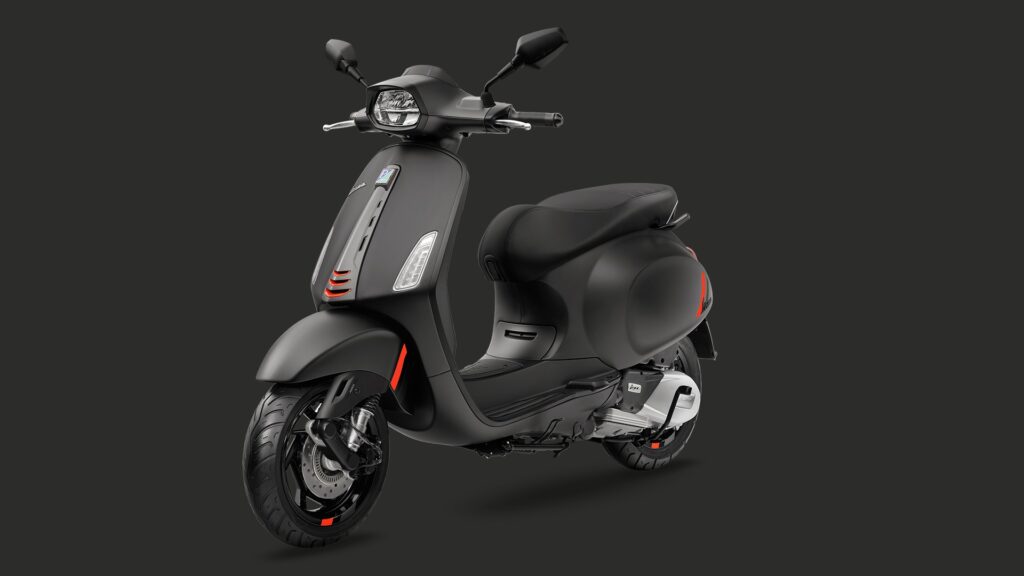
The Best Scooter of the Year (Below 250cc) category is another segment that proved supremely difficult to determine the winner for the Allianz-BikesRepublic.com Motorcycle of the Year Awards 2025, as there are more than 10 models. And all of them are worthy. However, one stood out and that was the Vespa Sprint 150 S.

Why did the Vespa Sprint 150 S win?

Firstly, the Vespa Sprint 150 S is not the fastest scooter. Nor is it the more powerful.

But motorcycling is a way of life. It goes further than about how many HP and Nm. It transcends the top speed of a motorcycle. It is not about about how much a motorcycle costs to buy and maintain. Sometimes, it does not even matter if the motorcycle has the latest features.

The bike evokes emotions, albeit differently, to those young and old. The younger generation sees it as hip, while oldies like me look at it behind nostalgic glasses. Some spend thousands more than the price of the bike to personalise it. Some just want to enjoy the wind on their faces and hair, just like in the Roman Holiday (the 1953 version). You do not even have to understand it: Love the best parts, and live with the flaws.

This model continues the traditions of the very first Vespa, such as the wasp-like body, wide floor boards, seating position, but is as modern as it can be without trampling on those long-lived features.

It is about La Passione (the passion – make sure to include the hand gesture).

And that, our friends, is what the Vespa Sprint S embodies to a tee.

Nett selling price: RM 20,900

What we like: Easy going, undying style.

What we did not like: We will be missing the point is there was something we did not like!

Scooters, well, more specifically adventure scooters are all the rage these days. It all began when Honda introduced the X-ADV (750), which turned out to be a sales success. Before long, Honda scaled things down to the ADV160. Since then, almost every manufacturer has an “adventure scooter.” Finally, the Honda ADV350 “Urban Adventure Scooter” was launched amidst heady anticipation in 2022 and arrived in Malaysia in 2024.

The ADV350 was the first 350cc adventure scooter in market when it was launched, and continues to enjoy steady sales despite several new challengers. This maxi adventure scooter category is definitely heating up.

Why did the Honda ADV350 win?

First and foremost, it bears striking resemblance to its bigger X-ADV brethren, more so that the ADV160. A big sized body, which also ensures maximum space for storage and the seats, in addition to providing protective features such as a large screen from the elements. It looks great, too, maybe even more so than the bigger bike.

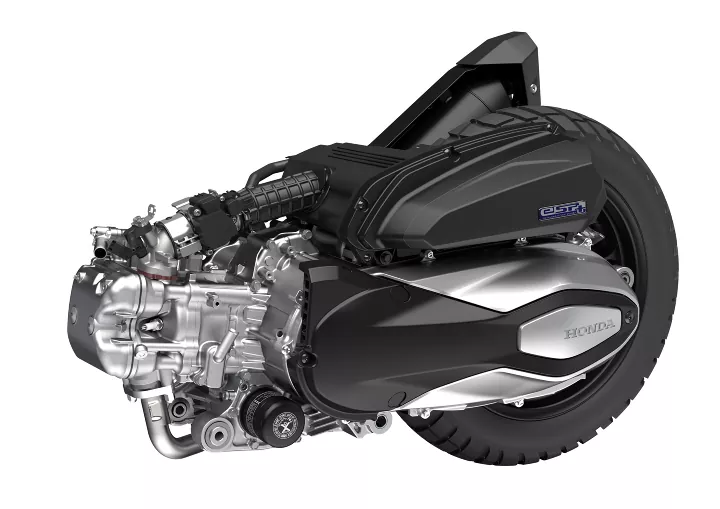
Powered by a 330cc, single-cylinder, SOHC, liquid-cooled engine equipped with PGM-FI fuel injection with enhanced Smart Power Plus (eSP+) technology, it produces 28.8 HP at 7,500 RPM and 31.8 Nm at 5,250 RPM. It provides punchy torque and power, while maintaining frugal fuel consumption.

Its transmission is CVT, unlike the X-ADV’s trick Dual-Clutch Transmission (DCT).

One nifty feature is the Emergency Stop Signal (ESS – Emergency Stop Signal) which flashes the brake lights when the rider apply sudden and hard braking. it is the first for a scooter.

Lighting is LED all-around, the underseat ‘trunk’ can accommodate two full-faced helmets, the TFT screen provides Bluetooth connection, and fuel capacity is 11.7 litres.

These are the aspects that endeared us to the bike. Talk about having your cake and eating it.

Nett selling price: RM 33,999

What we liked: Practicality, great looks, build quality, torque.

What we did not like: The waiting period!

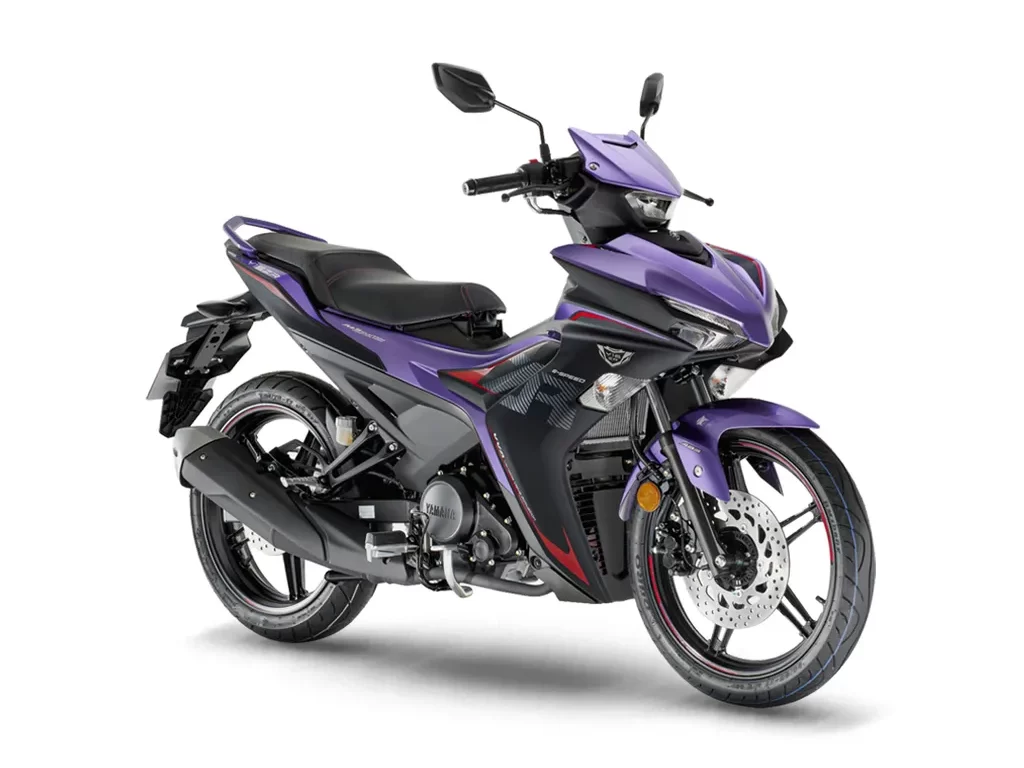
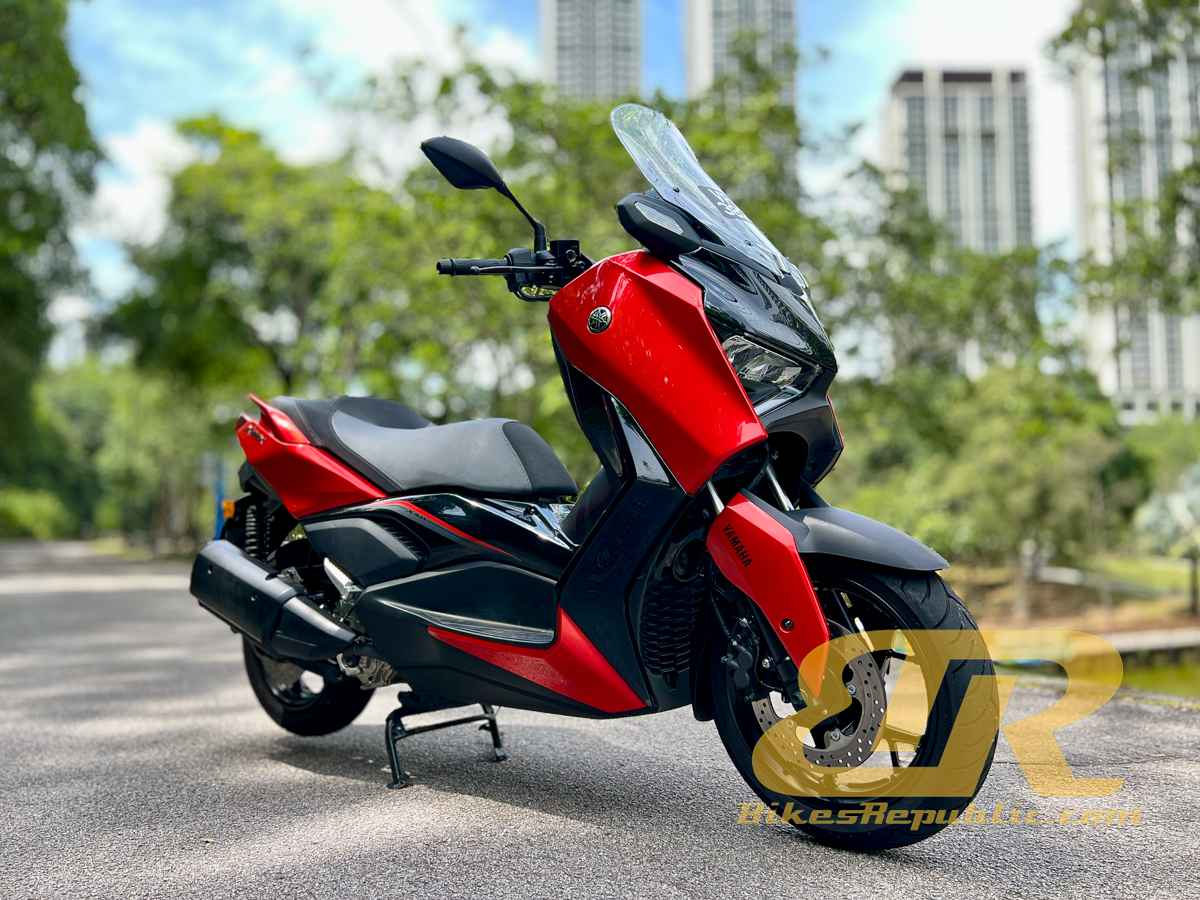
Winning the Best Kapcai of the Year category for the Yamaha Y16ZR in the Allianz-BikesRepublic.com Motorcycle of the Year Awards 2025 is no easy feat.

This is a hard-fought category, chock-full of motorcycles that are truly capable, showing us just how far kapcais have come. It used to be that kapcais were just a means of getting from Points A to B, but there are so many these days that are full of great features. It is no surprise that even veteran bikers buy kapcais to get their adrenaline fix while revelling in the bike’s practicality.


Supporting this category of motorcycles is a fully mature aftermarket industry that provides all the solutions to customise one’s kapcai from bog stock to personalised, and of course, the upgrade the bikes’ performance from mild to wild.

So why did the Yamaha Y16ZR win?

Launched in 2021, the model took performance kapcai category to a new level, even overshadowing its long-running cousin, the Y15ZR, more commonly known as the YSuku.

Central to this shift is the Yamaha Y16ZR’s engine. The 155cc, liquid-cooled, SOHC with Variable Valve Actuation (VVA) powerplant produces 17.7 HP at 9,500 RPM and 14 Nm at 8,000 RPM. It remains as the only kapcai to utilise an engine with VVA, and was the first to feature a slipper and assist clutch.

Heck, this engine platform is so good that it powers another three of Yamaha’s super popular motorcycles, namely the YZF-R15/R15M sportbike, MT-15 naked bike, and the NVX scooter.

The VVA features ensures that the bike pulls hard from the lights, and continues to pull all the way to its redline. Overtaking is a breeze, too, as there is torque and power available throughout the rev range.

While there is one particularly more powerful kapcai in the market, the Y16ZR boasts a well-rounded character, in terms of performance, handling, (passable) comfort, practicality, and features. Its overall build quality is fine, too.

Last but not least, although it is not something we recommend, there are plenty of aftermarket parts and accessories to support the model.

These are the reasons why the Yamaha Y15ZR is the Best Kapcai of the Year in the Allianz-BikesRepublic.com Motorcycle of the Year Awards 2025, despite being launched 4 years ago.

What we liked: Flexible engine, sportiness, handling.

What we did not like: Seats need more cushioning.


It it probably morbid, but while the Second World War saw more and more new technologies to kill another human being more effectively, the conflict also gave rise to many innovations that fast-forwarded technologies for better everyday living thereafter.

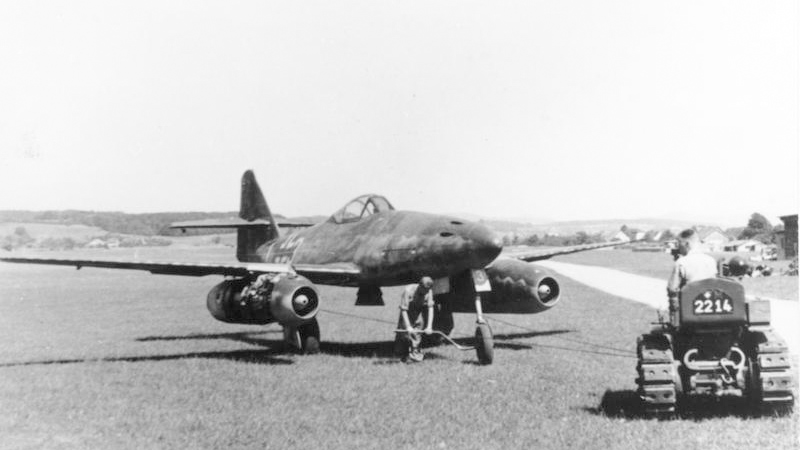
WWII also saw the rise of the jet engine. However, these engines did not work like piston engines. Instead, air is pulled in at the front, compressed, burned and expelled out the rear to push the aircraft forward. And they burn much hotter. They lubricants in the engine must withstand this heat in order to keep the bearings turning.

Conventional oils broke down quickly, along with the parts of the jet engine. Hence, synthetic oils became a necessity, especially when the U.S.A. and Soviet Union began to push the envelope on jet aviation along with supersonic flight.

Born to fly

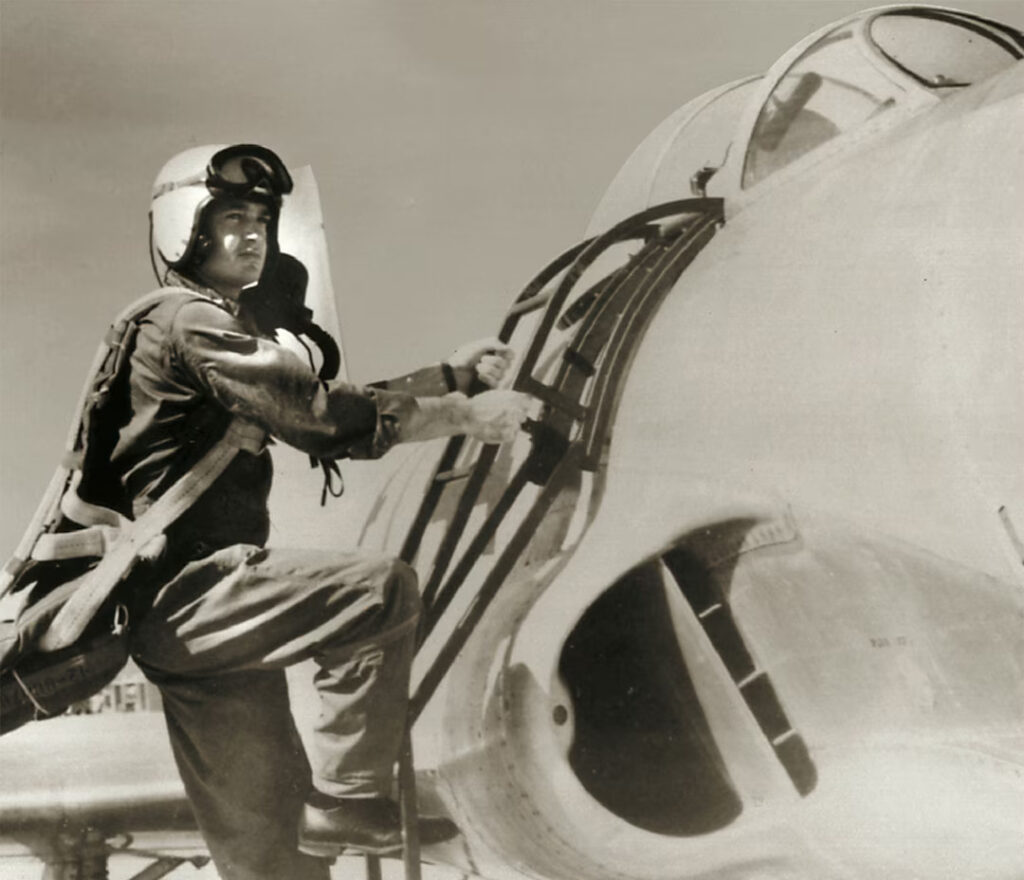
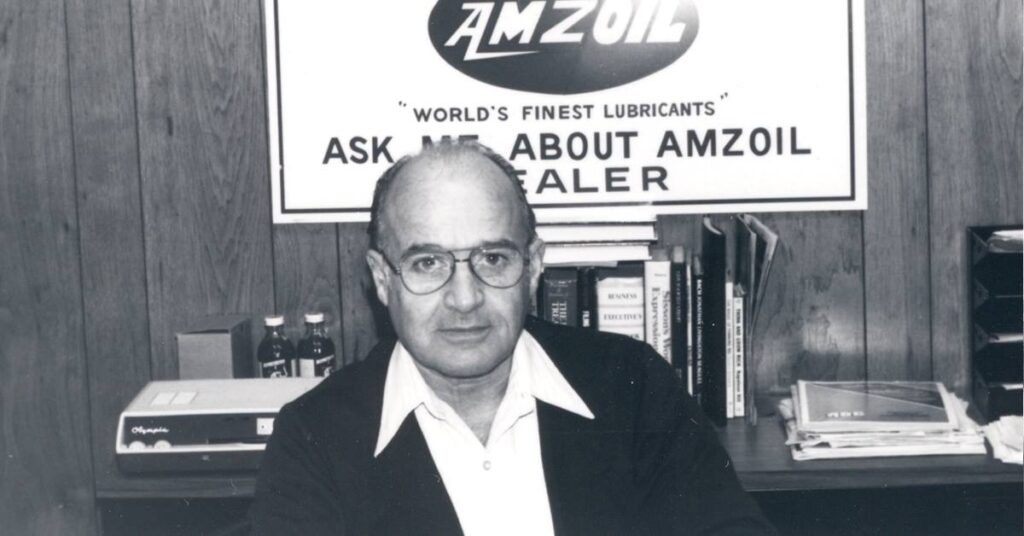
One person who’d come to understand this firsthand was Al Amatuzio, Lieutenant Colonel and squadron commander in the Minnesota Air National Guard. Stationed in Duluth, Minn., Amatuzio had experienced the benefits of synthetic lubricants in his squadron’s jet aircraft.

Amatuzio had taken an interest in aviation from a young age as he watched the Sikorsky mail plane fly over his neighborhood on its way to Lake Superior’s St. Louis Bay. At 12, a short ride in a Piper Cub cemented his love of aircraft.

In 1942, Amatuzio answered America’s call during WWII. He attended Naval Air Corps training until the Navy closed the program. After the war and eager to again pursue his dream of flying, Amatuzio joined the Air Force. He helped usher in the era’s new jet-aircraft technology by flying the F80 Shooting Star.

“If it works that well in aircraft…?”

Seeing synthetic oil in action, Amatuzio wondered why it wasn’t used in automobile engines. He reasoned that the same performance benefits could be applied to the vehicles and equipment people depended on every day for work and fun.

When Amatuzio began researching synthetic oil in the 1960s, motor oil quality was poor and engines didn’t last long.

Then-modern oils were susceptible to breakdown in high heat and contributed greatly to hard-starting in cold weather. Oil industry giants thought conventional oils were good enough and thought synthetic oil was unnecessary for passenger cars.

Amatuzio undertook an intense period of research and development. He experimented with various formulations. He studied chemistry and learned about additives. In 1966, Amatuzio had formulated his first synthetic motor oil. To test his formulation, he asked one of his pilots to use it in his brand-new 1966 Ford station wagon.

Throughout the late 1960s, Amatuzio continued to develop and sell synthetic oils under a variety of names. By 1968, he was commercially selling his synthetic motor oil. He incorporated “Life-Lube, Inc.” on May 23, 1969 and continued to commercially sell various synthetic motor oil formulations.

By 1970, Amatuzio had settled on a single formulation and had renamed his company “AMZOIL” – an amalgamation of his name and “oil” – which he’d later change to “AMSOIL.”

Still serving in the Air National Guard, Amatuzio ran his company in his spare time, working from his basement and warehousing product in his garage.

His financial resources, however, didn’t match his energy, and he nearly bankrupted himself leading his fledgling company. Since no one believed in his idea, no one would lend him money. And few motorists were willing to pay for synthetic motor oil no matter how profound its performance benefits since it cost several times more than conventional motor oil.

Ah, MV Agusta. The name alone sounds like a Shakespearean tragedy or a particularly fancy pasta dish. But no, it’s one of the most iconic motorcycle brands in history—a brand that combines speed, style, and a healthy dose of Italian flair.

If motorcycles could talk, MV Agusta (as in Meccanica Verghera Agusta) would be the one wearing a leather jacket, sipping espresso, and dramatically gesturing about the meaning of life. Let’s dive into the history of this legendary marque, where passion, performance, and a touch of chaos collide.

Act 1: The Birth of a Legend (1945)

Our story begins in the aftermath of World War II, a time when Italy was rebuilding itself and Count Domenico Agusta was looking for something to do. You see, the Agusta family had been in the airplane business, but post-war regulations said, “Hey, maybe let’s not build warplanes anymore?” So, Domenico did what any sensible Italian aristocrat would do: he pivoted to motorcycles. Because nothing says “rebuilding a nation” like two wheels and a screaming engine.

On January 19, 1945, in the town of Cascina Costa (near the Malpensa airport near Milan), a private company, Meccanica Verghera S.r.l., was registered.

The first MV Agusta bikes were humble, utilitarian machines designed to get Italians from point A to point B without breaking the bank.
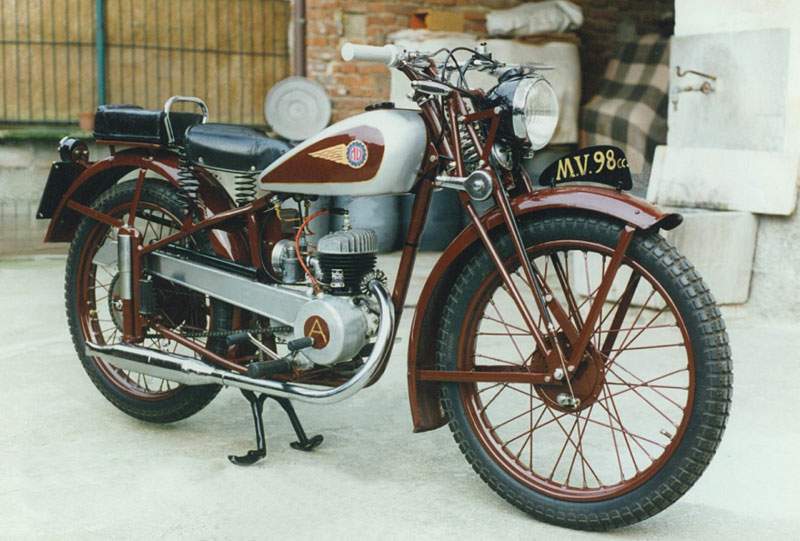
Using an engine that had been prepared by August 1943 which was a 98 cc single-cylinder two-stroke with a two-stage gear box, and spare parts obtained from the black market to bypass shortages, a prototype motorcycle was constructed. The prototype was exhibited to the press in late October 1945 at a dealership on Via Piatti in Milan. It was light motorcycle with a steel tube rigid frame, a girder fork, 19-inch wheels, and a gas tank marked with a large M and V. It was initially called “Vespa 98” before being renamed to “MV 98” to avoid confusion with the Vespa scooter produced by Piaggio.

The MV 98 was first produced en masse in 1946. Two versions were sold to consimers: Economica, based on the prototype presented a year earlier, and Turismo, distinguished by the presence of a three-speed gearbox and a rear suspension. The Turismo proved to be so overwhelmingly popular that before long, the Economica was discontinued. In 1946, about 50 units were produced.

But Domenico had bigger dreams. He wanted to race. And not just race – he wanted to win. Thus began MV Agusta’s love affair with motorsport, a relationship that would define the brand for decades.

Act 2: The Golden Era (1950s–1970s)

Count Domenico was likened to Enzo Ferrari. The Agusta family produced and sold motorcycles almost exclusively to fund their racing efforts. So soon after the start of production of its first model MV 98, the company launched its own factory racing program.

But here’s the thing: MV Agusta didn’t just win races—they did it with style. Their bikes were works of art, with sleek lines, vibrant red paint, and that iconic “MV” logo that looked like it belonged on a Renaissance painting. Even their engines sounded like opera singers hitting high notes. It was as if every bike came with a built-in soundtrack of Ennio Morricone music.
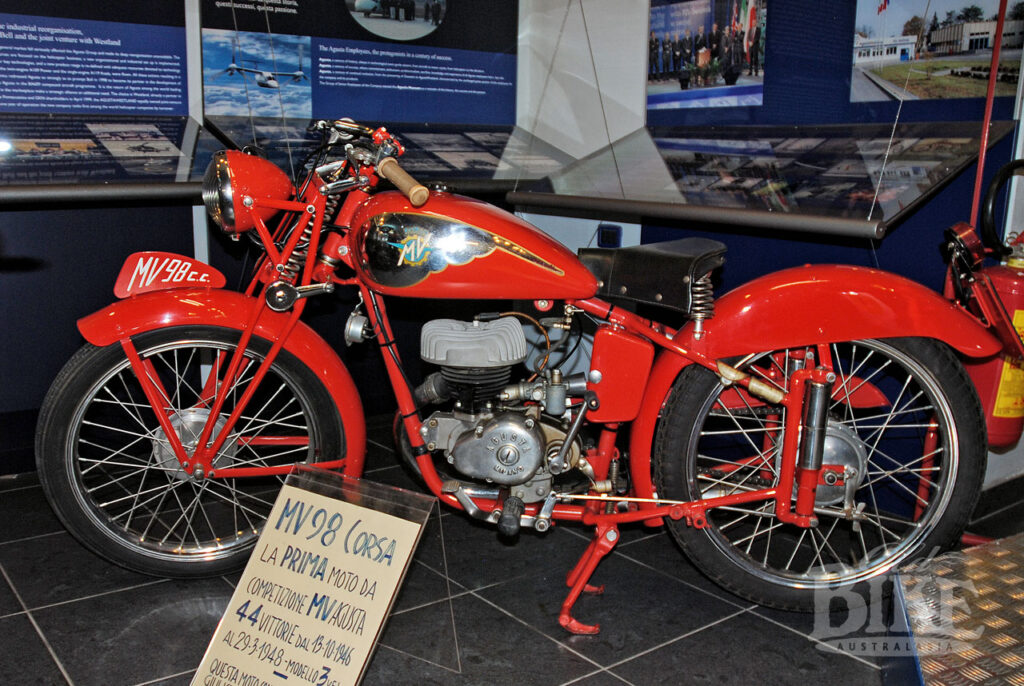
Vicenzo Nincioni delivered the brands’s first victory when he won the La Spezia road race on October 6, 1946. Just a week later, he took the third place in Valenza, where the first place was also taken by the MV racer Mario Cornalea. On November 3, in Monza, MV racers Vicenzo Ninconi, Mario Cornalea and Mario Paleari occupied the entire podium for the first time in MV racing history. It was the start of the MV Agusta dominance.

In 1961, British racer, Mike ‘The Bike’ Hailwood joined the Italian team. He also won the rode the 500cc four-cylinder MV Agusta racebike in its signature red and silver paint to several wins including the 1965 Tourist Trophy (TT).
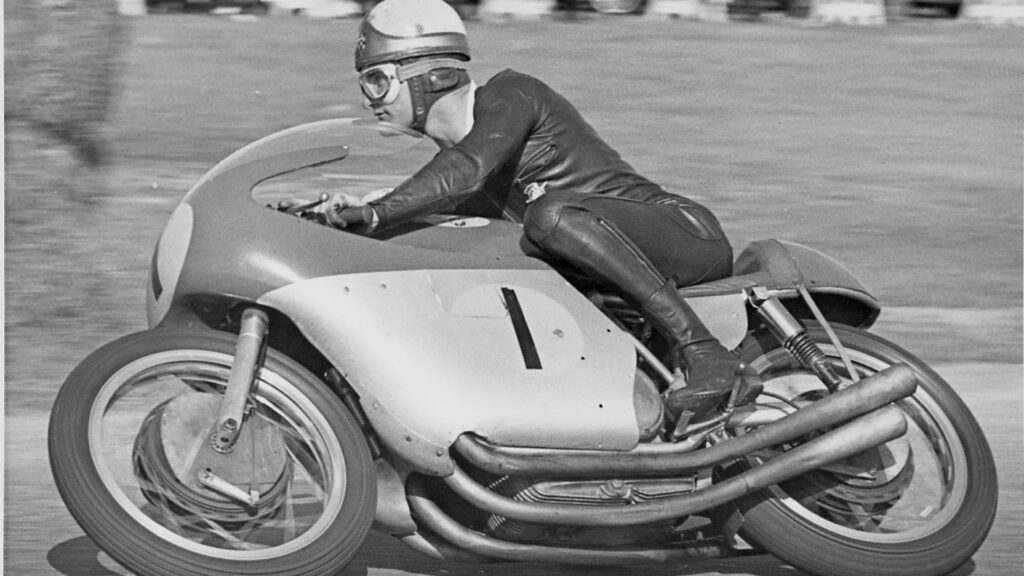
And then, in 1965, an Italian racer by the name of Giacomo Agostini signed up to ride the factory’s three cylinder race bikes. He went on to win 311 races, 18 Italian championships, and 13 world championships, thereby cementing both his and MV Agusta’s names as legends.
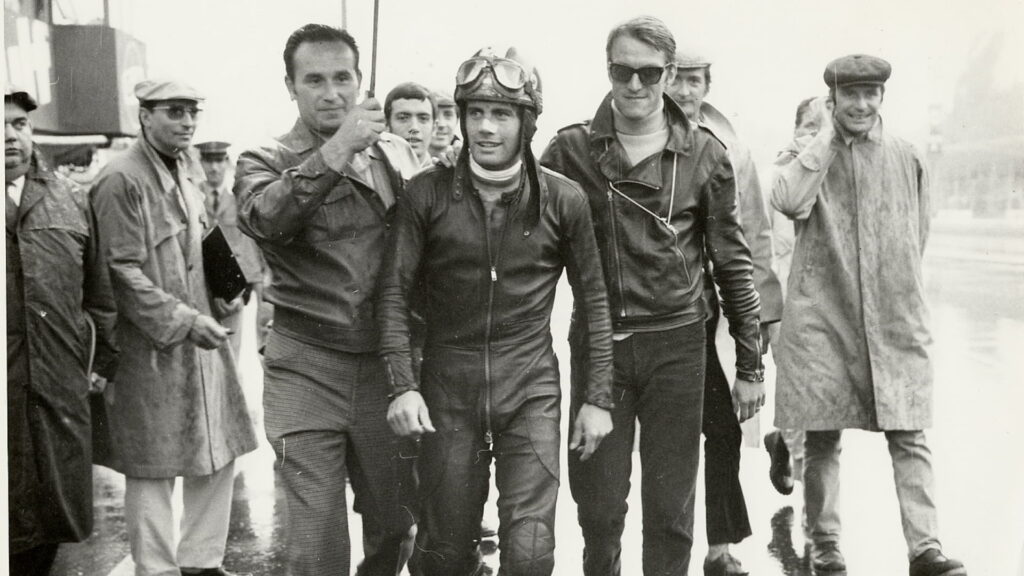
So, if MV Agusta were a movie, this would be the montage where they win everything and look impossibly cool doing it. They won 37 World Championships, 270 Grand Prix races, and basically every trophy they could get their hands on.

End of Part 1

We shall look at the 70s and through to modern day in Part 1, so stay tuned!
Archive

Follow us on Facebook

Follow us on YouTube